folios
The Magazine of the Washington and Lee University Library
Dear Friends,
Welcome to the fall 2025 issue of Folios, the magazine of the Washington and Lee University Library!
In addition to our regular reports, this year I am proud to share with you two major advancements in our support for our unique digital and physical collections. These were both supported by endowments and gifts from members of the Friends of the Library. Over the course of the last year we have migrated our digital archives, most of which are W&L institutional and/or local history, to a new home. I trust that after reading Paula Kiser’s article, “W&L’s Digital Archive” (p.16), you will want to explore the new Digital Archive online.
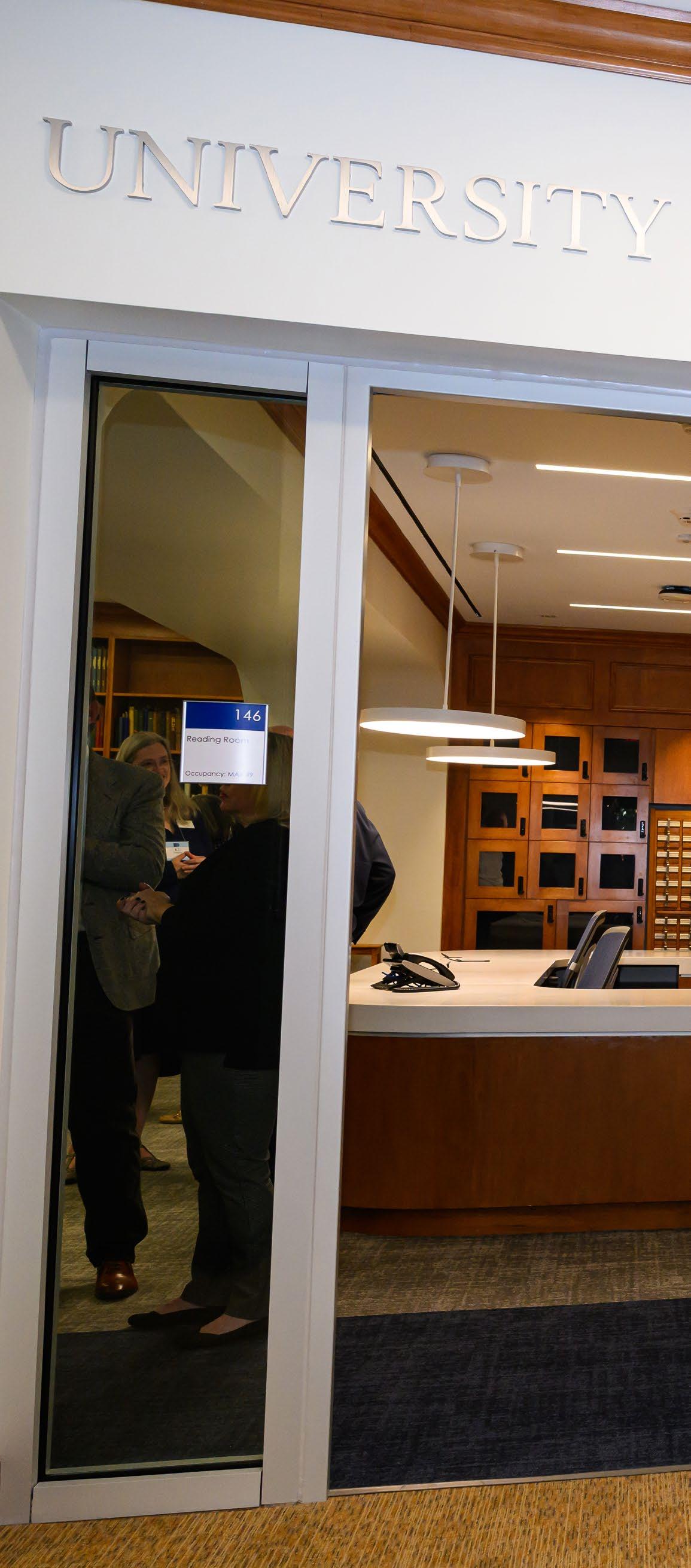
After many years of planning and a few months of renovation, we held the grand reopening celebration for the newly rechristened Tom Wolfe Reading Room on Oct. 3. It was a joy to celebrate this moment with Friends of the Library, Five-Star Festival attendees and select other guests. The room’s radical transformation truly reflects the world-class collections and staff that it supports. Many thanks to Sheila Wolfe, the Van Leer family, Professor of English emeritus George Ray and supporters of the University Library’s Special Collections and Archives. Jessica Luck’s article, “The Grand Opening,” (p.2), first ran in the Columns and is reprinted here.
In 2026, the University Library will mark 250 years since its founding at Washington and Lee University. Although our actual “birthday” is March 14, we will be celebrating all year. Please check out our website, go.wlu.edu/library-250, for semiquincentennial events sponsored by the Friends of the Library. We’re collecting birthday cards from alumni and colleagues across the country. I hope to hear from you!
Yours,
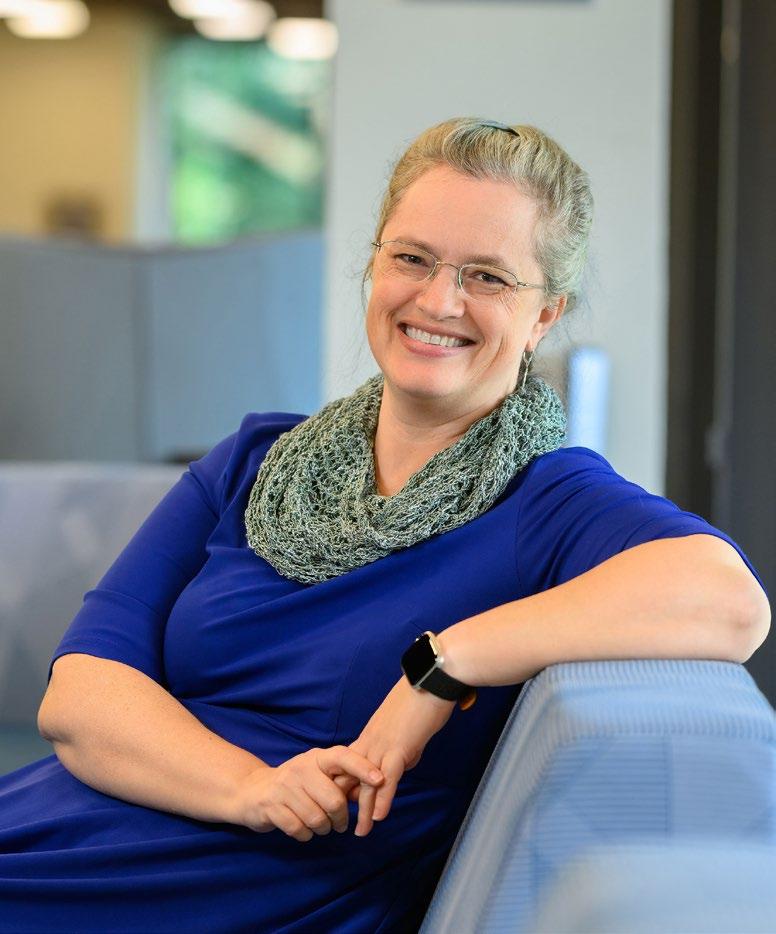
KT Vaughan , MSLS, EdD Professor and Hal F. and Barbra Buckner Higginbotham University Librarian, Washington and Lee University kvaughan@wlu.edu
Support the Library — Join the Friends! go.wlu.edu/supportfriendsofthelibrary
The University Library Special Collections and Archives
Reading Room received several modern upgrades to better serve the research needs of our entire W&L community — Jessica Luck has the details.
[About a decade ago, members of the Friends of Library Board of Directors, which traditionally met in the Boatwright Room in Washington and Lee University’s Special Collections and Archives, started noticing significant challenges the space was facing. Dating back to the original construction of Leyburn Library in 1979, it simply wasn’t built to meet the needs of a modern-day user.
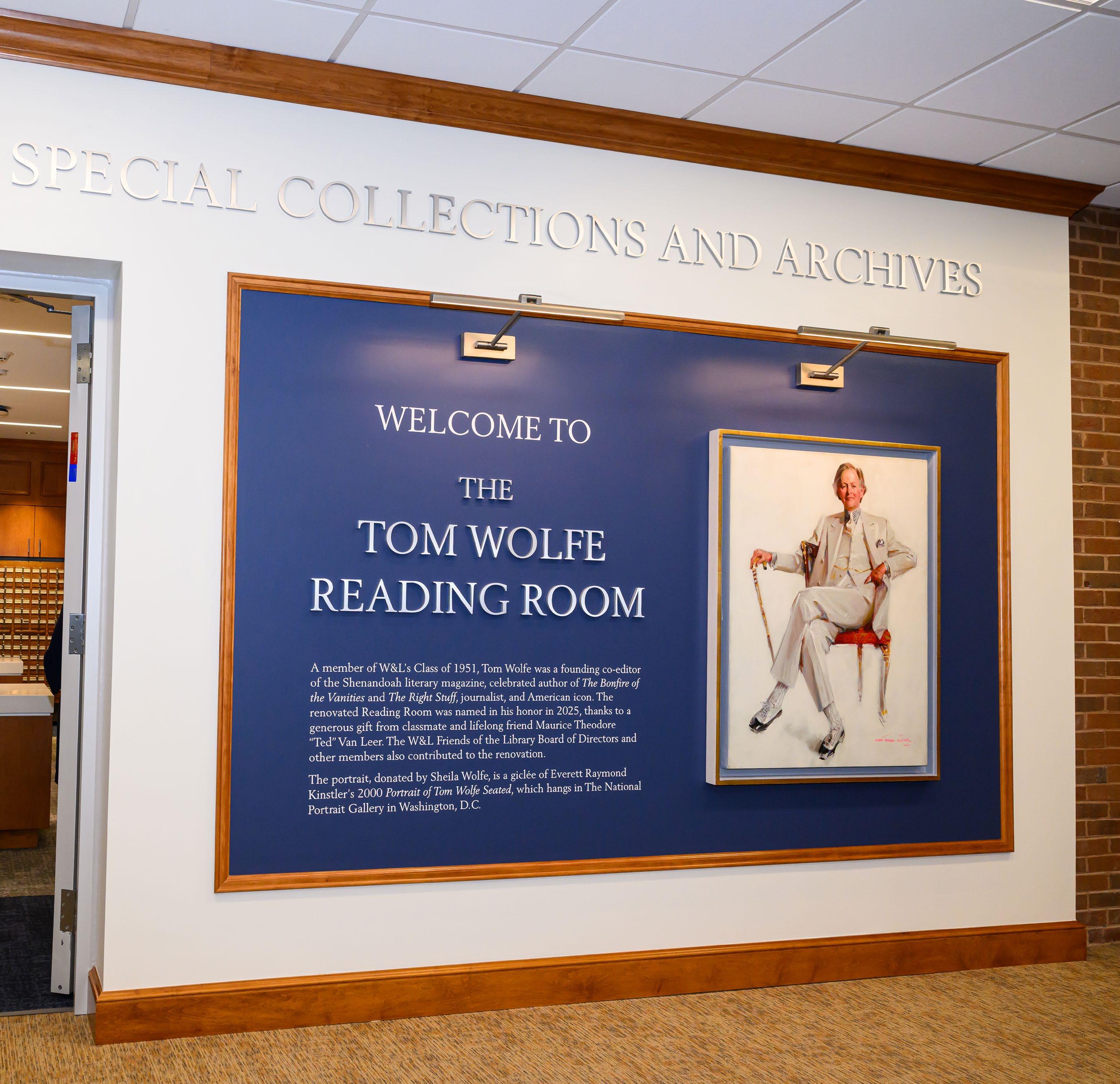
was a very critical thinker, great observer and had a good sense of humor.”
—Tad Van Leer ’77
The Friends of the Library, which supports the academic mission of Washington and Lee University through activities that strengthen the library’s collections and services, has a long history of funding library improvement projects, including installing new patio furniture and electrical outlets in needed spaces as well as renovating the Northen Lobby. In 2021, George Ray, professor of English emeritus and then chair of the Friends of the Library board, championed the idea of making modest updates to the Boatwright Room. Ray, who gave the project’s initial leadership gift, believes the renovation aligns with the group’s mission to strengthen Leyburn for the W&L community and beyond.
“That was one reason why I wanted to give greater attention to Special Collections — so that the wider university community would become aware that Washington and Lee is rich in these materials,” he says.
The group initially raised $150,000, which was matched by another $150,000 from the university. However, it soon became apparent that additional funding would be necessary to accommodate the growing needs of today’s learning and research environment. Longtime member of the Friends of the Library group Theodore J. “Tad” Van Leer ’77 was searching for a way to honor his father, the late Maurice Theodore “Ted” Van Leer ’51, who was a generous benefactor of W&L and had earmarked a portion of his estate to support the university after his death in 2023. Ted Van Leer was a close friend of the journalist and novelist Tom Wolfe ’51, and the two enjoyed a great friendship from their early days at W&L and throughout their lives. Tad Van Leer chose to designate his father’s estate gift to support the $1.35 million renovation of the space, which he requested be named in honor of Wolfe.
“Tom Wolfe was a very critical thinker, a great observer and had a good sense of humor,” Tad Van Leer says. “He was a great mentor and exemplified the W&L spirit. This gift honors the important relationships my father’s friends at W&L had that lasted all their lives.”
When Wolfe passed away in 2018 at the age of 88, his wife, Sheila, began receiving inquiries from museums and other institutions throughout the country that were interested in showcasing her husband’s artifacts and belongings. After a conversation with W&L Special Collections and Archives staff, Sheila Wolfe began sending some of Wolfe’s things to the university, including his typewriter, which was recently on display as part of the exhibit for the 75th anniversary of “Shenandoah,” the literary magazine Wolfe helped launch as a student editor. Both Sheila Wolfe and Tad Van Leer worked closely with library staff during the room’s renovation process.
In addition to the functional changes, the space was designed to honor Wolfe’s legacy as a prominent intellectual and significant figure in 20th-century American literature. In consultation with Sheila Wolfe, the room was recast in Wolfe’s signature colors, navy blue and cream, and the reference desk’s shape, in the form of a parenthesis, mimics the style of Wolfe’s personal desk.
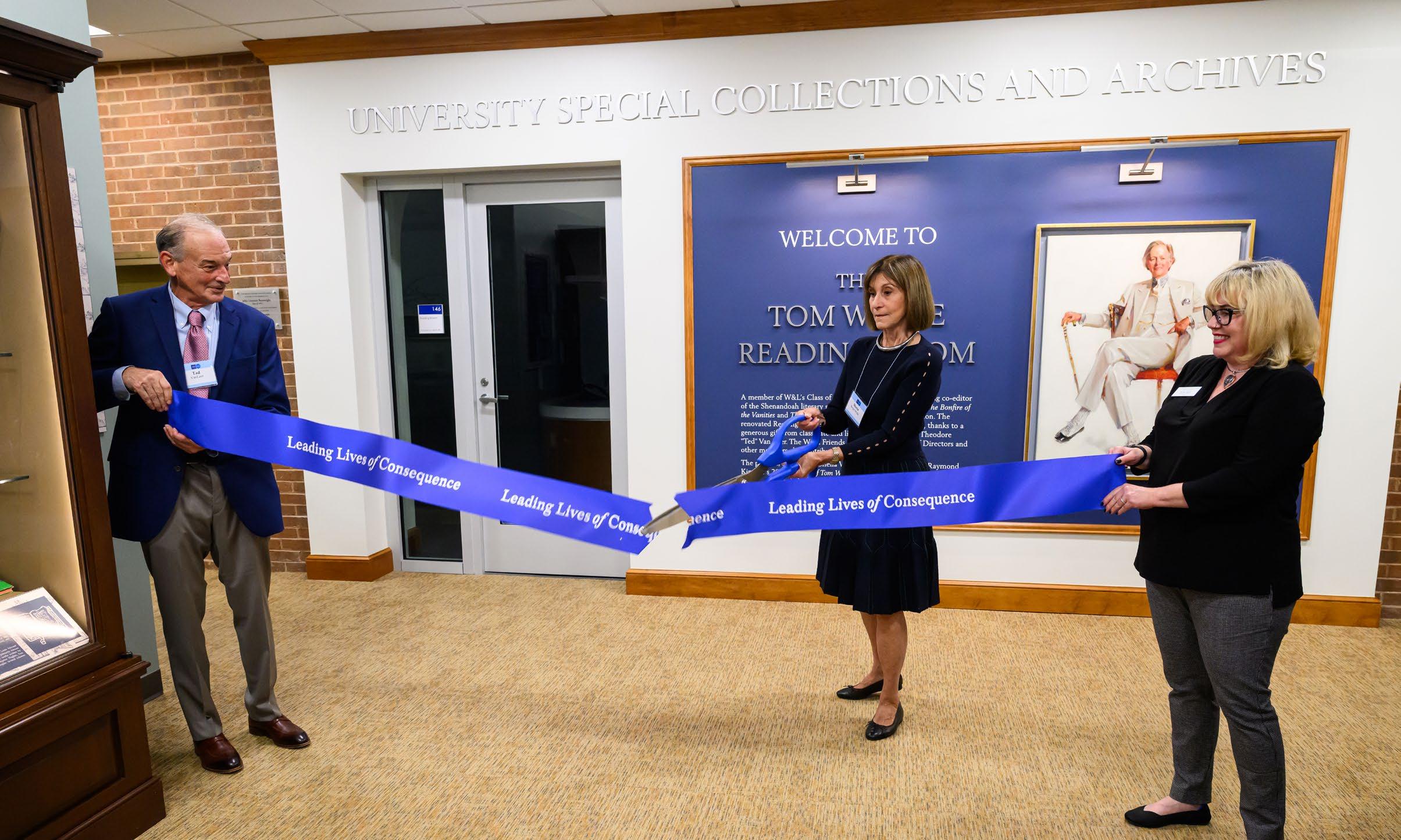
OPPOSITE, TOP: Theodore J. “Tad” Van Leer ’77, Sheila Wolfe, wife of Tom Wolfe ’51, and Kim Sims, associate university librarian for Special Collections and Archives, cut the ribbon at the reopening of the Tom Wolfe ’51 Reading Room on Friday, Oct. 3.
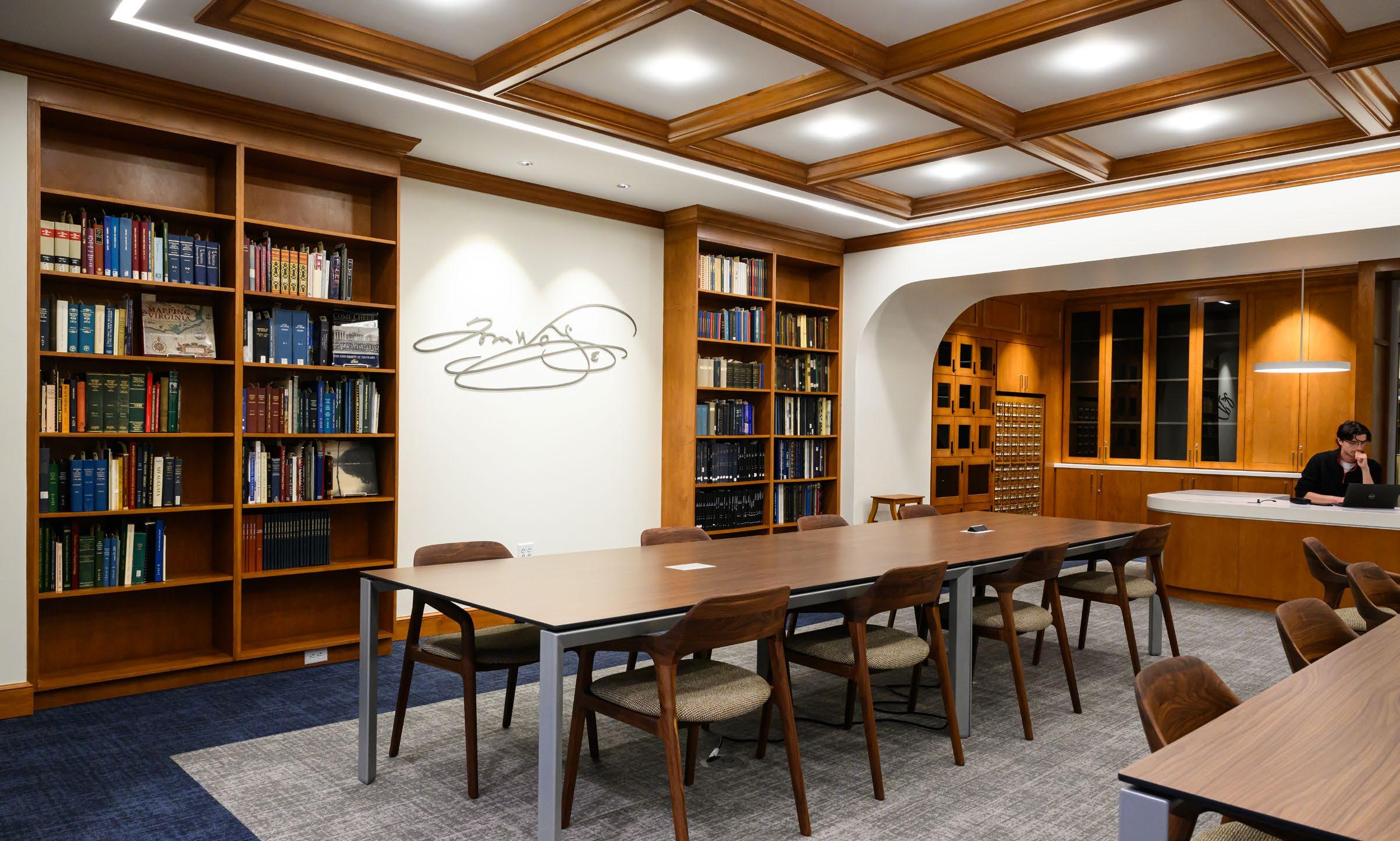
BOTTOM: Tom Wolfe’s signature on one of the walls is taken from one of his signed books in the Special Collections and Archives.
Various artifacts, letters and manuscripts will be on display inside the area, while a giclée portrait of Wolfe in his signature white suit is featured at the room’s entrance as a defining visual element for the space; the original hangs in the National Portrait Gallery.
“It really is perfect to have his name attached to our reading room, because his nonfiction and fiction writing covers different genres,” said Kim Sims, associate university librarian for Special Collections and Archives. “His work is eclectic, and we’ve got an eclectic mix in our collections. It’s not just a one-stop shop; we’ve got a menagerie of subjects.”
,,
Functional renovations of the room support both the user research experience as well as serve to best preserve materials brought out from collections. Among the changes are a complete upgrade to the lighting systems, a new wood coffered ceiling and entry doors, comfortable, researcher-friendly seating, upgraded electrical and technological infrastructure, new shelving and casework, personal storage lockers, public-accessible computers and displays capable of handling presentations and highlighting digital collections.
“We’ve got the ability to do things in here that we couldn’t do before,” says KT Vaughan, the Hal F. and Barbra Buckner Higginbotham University Librarian. “I also think that the whole feel of the space is much more tied into who we are as a library, recognizing one of our notable alums and using the support of many of our wonderful alums and community members. People can come into the space, and the space does justice to the work that they’re doing here.
“We have world-class collections for Special Collections and Archives that are really a cut above most of our peer institutions, and we did not have a space that reflected that. Now we do,” she continues. “It’s really lovely.”
On Friday, Oct. 3, longtime library supporters, faculty, staff and alumni, including those in town for the Five-Star Festival reunion weekend, came together to celebrate the grand reopening and rededication of the Tom Wolfe ’51 Reading Room. Many of those recognized for their leadership support for the project were in attendance, including Barbra Buckner and Hal F. Higginbotham ’68, George Ray, Tad Van Leer and Sheila Wolfe (other key supporters not in attendance were Jane N. and Preston C. Manning Jr. ’52, Alison and Jamie Small ’81 and Ray’s wife, Pree). Sims, Tad Van Leer and Sheila Wolfe cut the ribbon at the event.
“This is a really important space to the university and to the teaching and the scholarship that takes place here on campus,” said President Will Dudley at the ceremony. “Many of our classes make use of the collections, the archives and the rare books and manuscripts that we have here in Special Collections — some of them that you would expect, like history classes and English classes, but also many classes you wouldn’t expect, like geology and accounting. It’s used by faculty across the whole curriculum.
“More than 500 visitors a year come to make use of our collections,” he continued. “It’s a very active space that contributes a lot to the university.” n
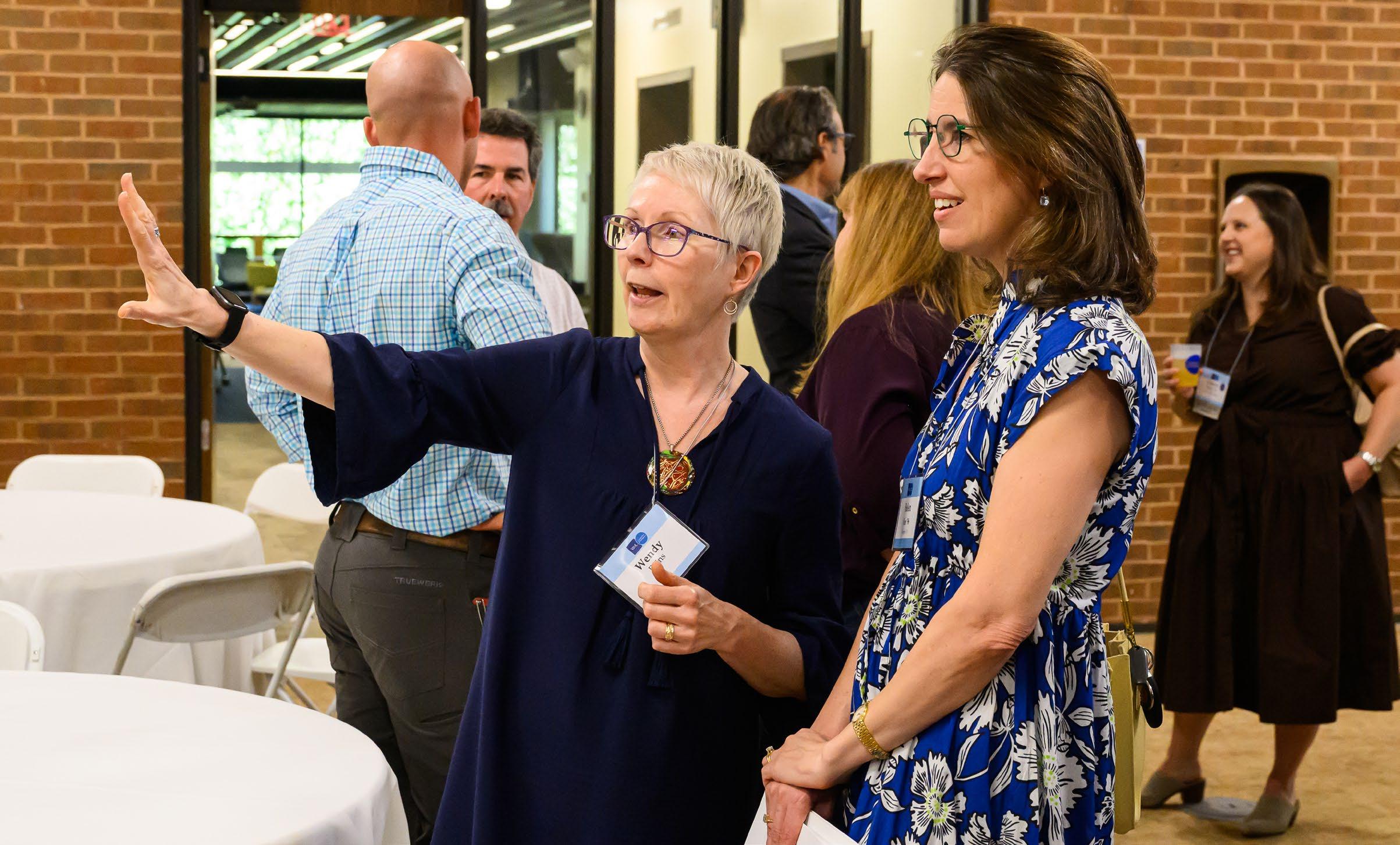
OPPOSITE, TOP: University Library Office Manager Wendy Rains shows off the new space.
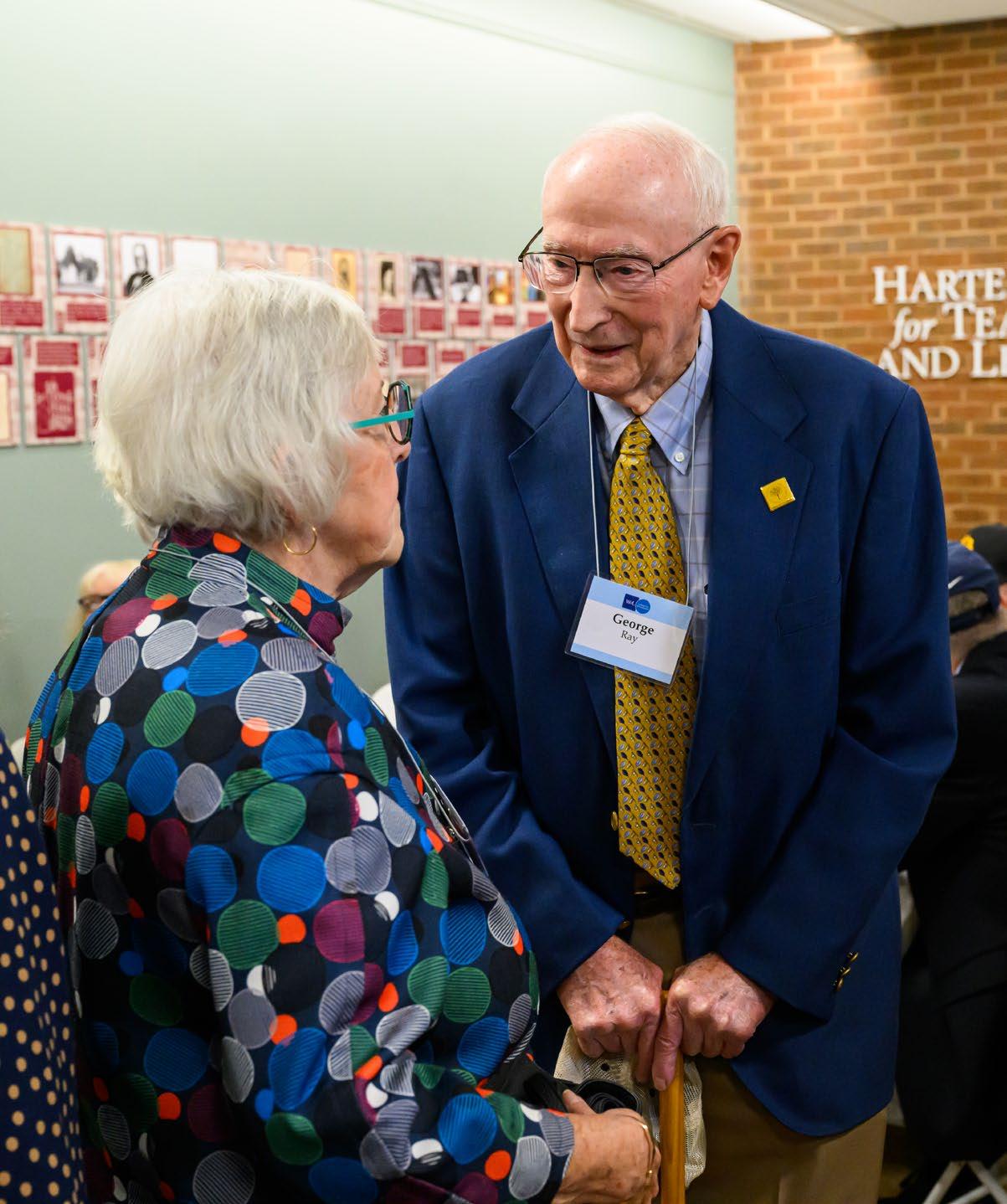
BOTTOM LEFT: George Ray, professor of English emeritus and former Friends of the Library Board chair, celebrates the room’s opening with Sally Wiant, professor of law emerita and current member of the Friends of the Library Board.
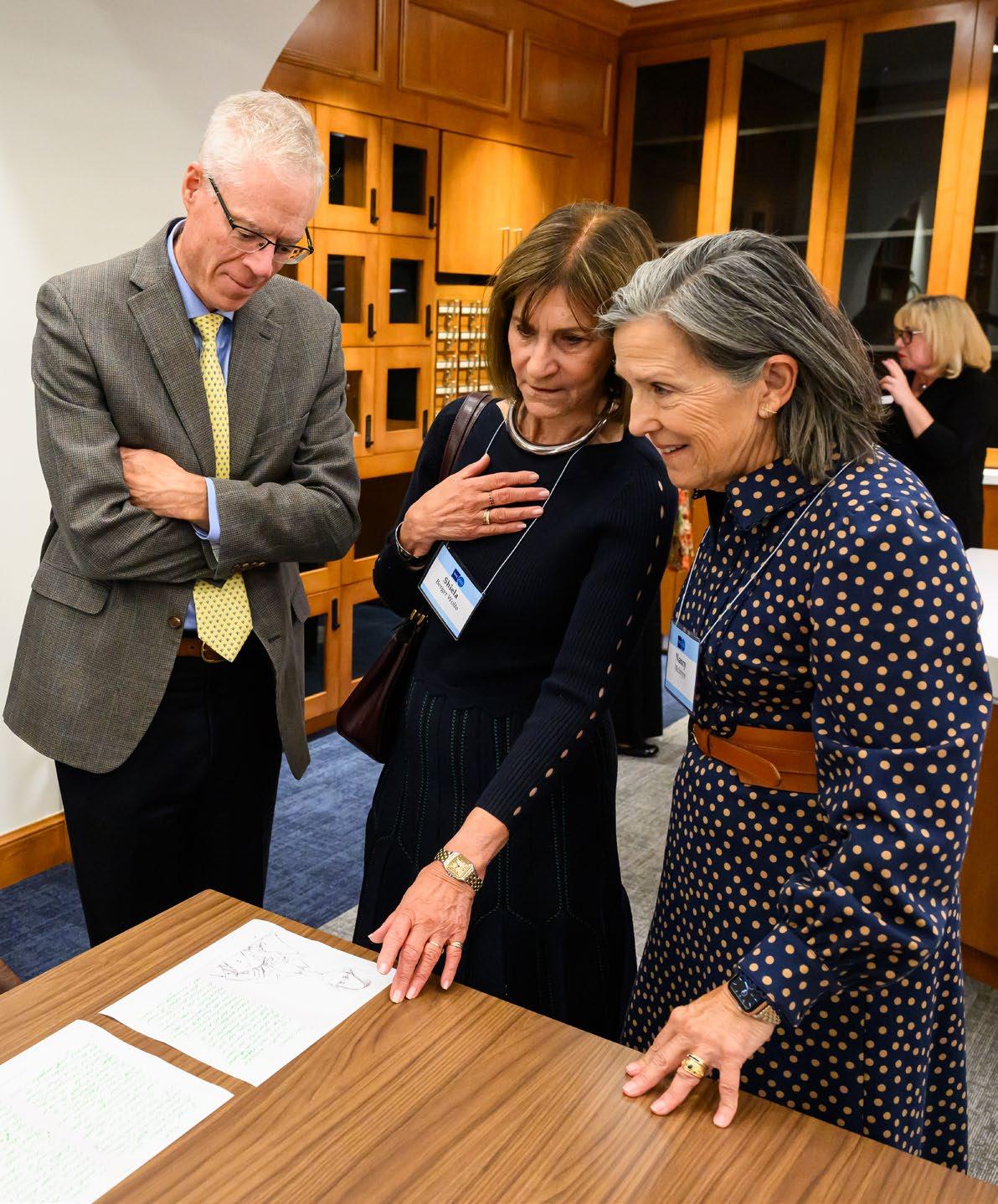
BOTTOM RIGHT: President Will Dudley, Sheila Wolfe and Nancy McIntyre, director of University Academic Development, look through some of Tom Wolfe’s writings on display.
e’ve got the ability to do things in here that we couldn’t do before.”
—KT Vaughan
[W&L Connection
Washington and Lee University held a special place in the heart of late author Tom Wolfe. Wolfe, who graduated with a Bachelor of Arts in 1951 and was a member of the baseball team while he was a student, initially tried out for the New York Giants before hanging up his cleats to pursue writing.
Wolfe’s wife, Sheila, says he was often stopped on the streets of New York City, where he lived, and he was always happy to say hello to anyone. But when someone told him they were a fellow W&L graduate, his face lit up, and he spent the next 15 minutes swapping stories.
“If you said you were from W&L, it made a difference,” Sheila Wolfe says. “He loved coming back and visiting and showing me around; he was so proud.”

TThe University Library Special Collections and Archives strives to be a proactive contributor to the university ecosystem by fostering classroom engagement with the collections as well as curating materials to best serve the curriculum and community. In Spring Term 2025, I had the opportunity to combine these crucial roles through a collaboration between the department and Theodore Van Loan, former visiting assistant professor in art and art history.
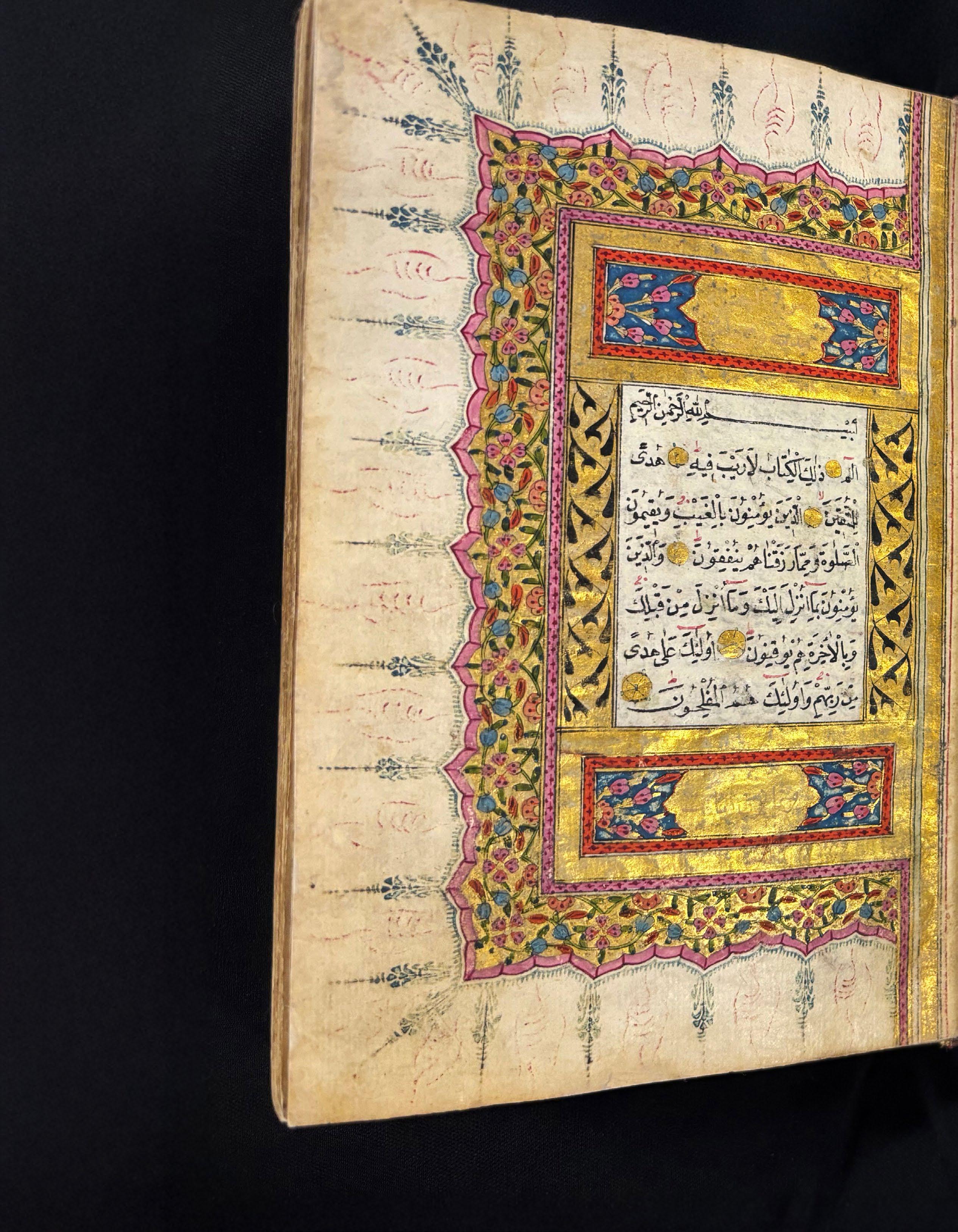
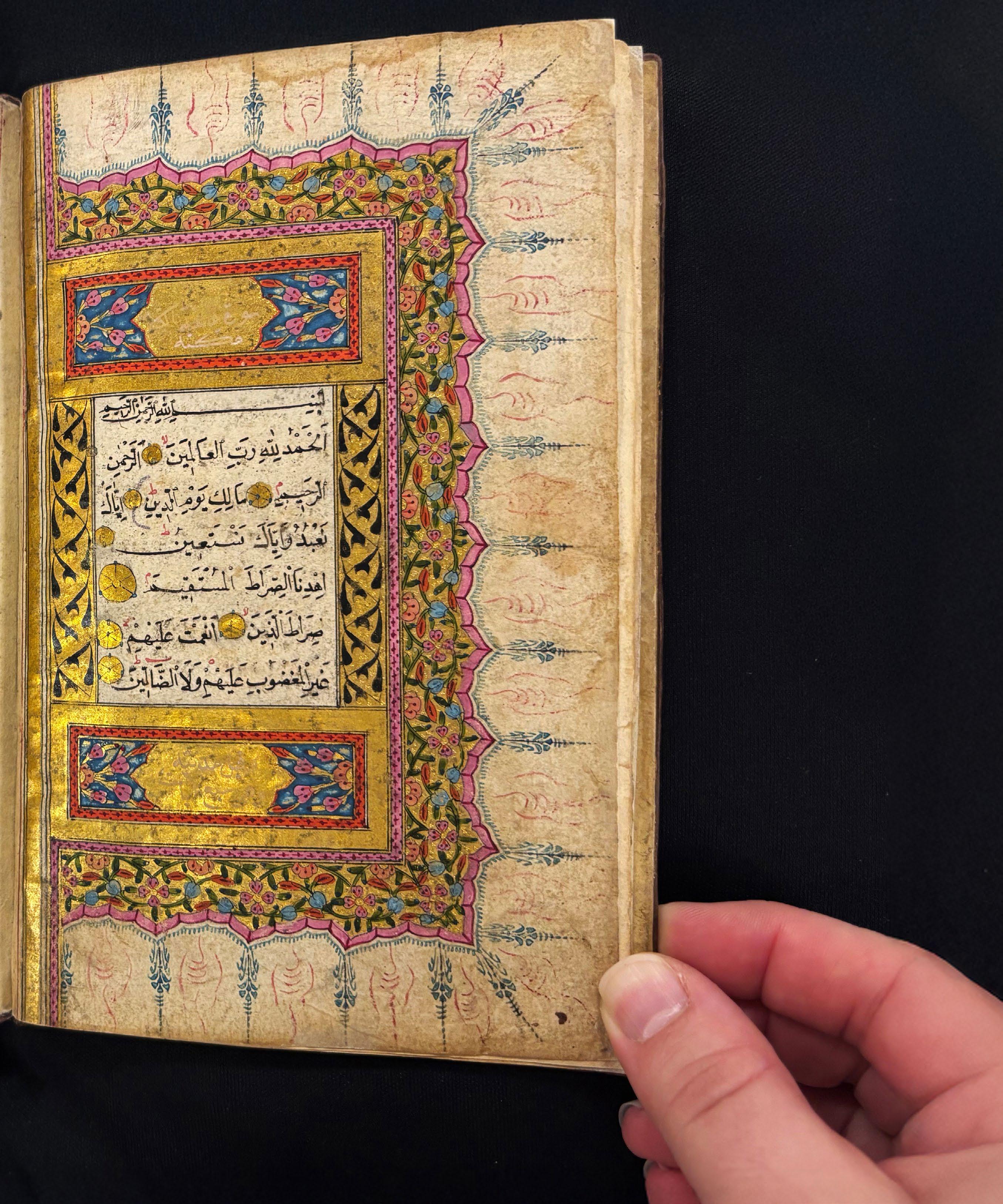
THIS PAGE: A handwritten and illuminated Qur’an from Ottoman Turkey, circa 1800. This item, and the ones on the following pages, were conserved and digitized shortly after acquisition.
art
Mattie Clear shows how students
selection helped expand our Qur’an holdings.
During the past three years, the department has worked to improve and expand our ability to support the curriculum through targeted outreach and acquisitions. As a result, course engagement with Special Collections and Archives has nearly doubled — from 27 courses in the 2021–2022 academic year to 48 in 2024–2025. Each course that utilizes Special Collections and Archives receives a customized experience shaped by the goals of the instructor. As the number of courses has grown, so too has our ability to experiment with various assignments and activities — ranging from short blog posts on selected items to semester-long research projects.
In preparation for Spring Term 2023, Van Loan and I collaborated on the first iteration of his course, The Art History of the Qur’an. We both joined Washington and Lee in fall 2022, so I was already aware of the gaps in our holdings related to his area of study — particularly materials related to the Qur’an. To address this, I worked with the Hal F. and Barbra Buckner Higginbotham University Librarian, KT Vaughan, to acquire two handwritten and illuminated volumes from circa 1800 Ottoman Turkey: a Qur’an and a prayer book. With these additions, Van Loan restructured his course to center on the new acquisitions.
Throughout spring 2023, I visited the class five times — sometimes with materials from Special Collections and Archives and other times joined by guest speakers. Many of our discussions focused on the ethics and process of acquiring materials from the Middle East. To enrich these conversations, we invited a mutual friend, Matt Saba, program head of the Aga Khan Documentation Center at MIT, to speak to the class virtually.
When Van Loan announced that he would teach the course again in spring 2025, we met to explore ways to expand and refine the course’s engagement with Special Collections and Archives. Together, we developed a course that went beyond the Qur’an and prayer book acquired two years earlier.
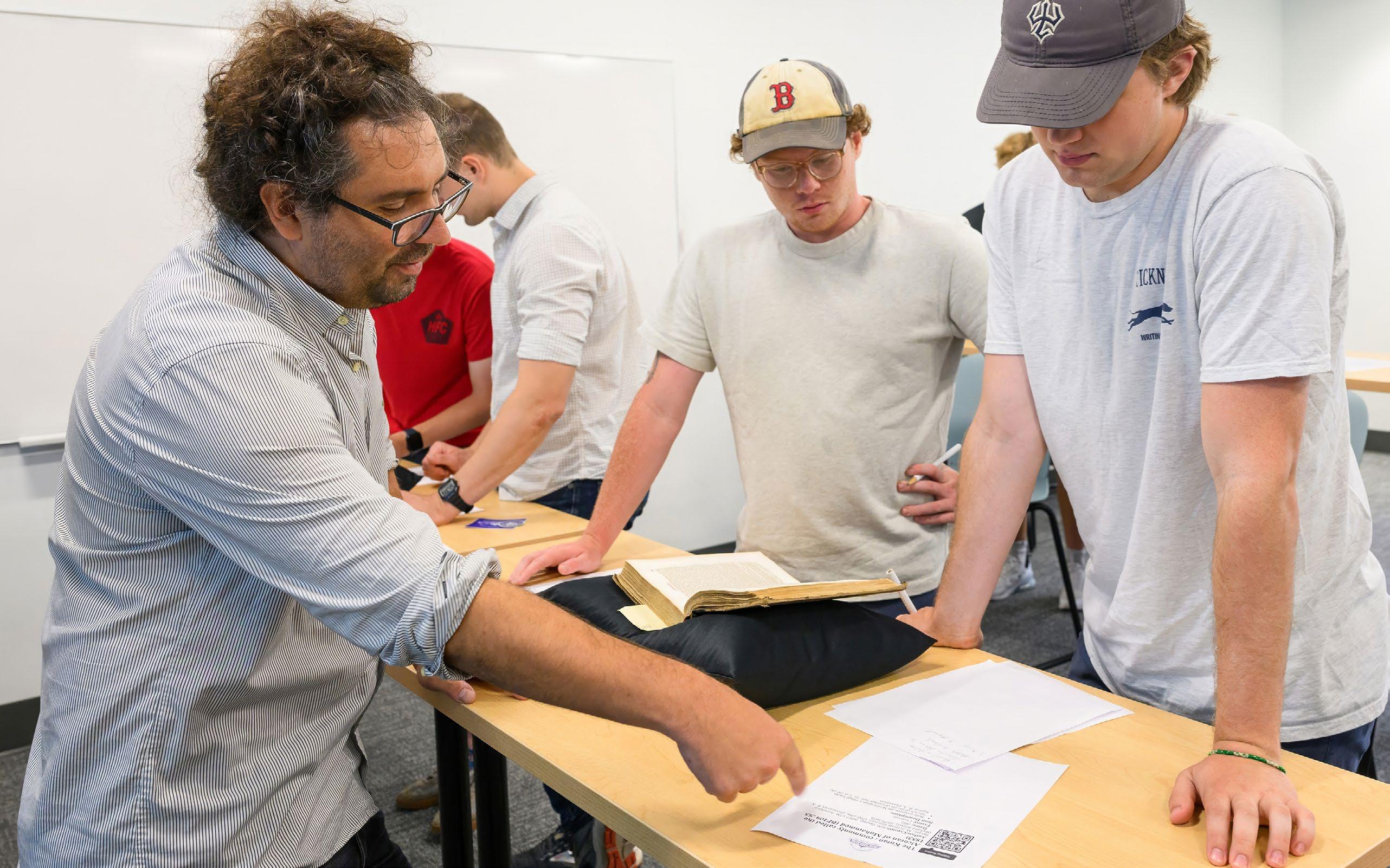
In the first week of class, students visited Special Collections and Archives to explore our Qur’anrelated holdings. This session also included discussion about the acquisition process and the strengths and weaknesses of our current collection — setting the stage for the rest of the course.
In the second week, I introduced two major assignments. The first required students to select an item from a Christie’s catalog and deliver a mock acquisition pitch to Special Collections and Archives staff — with the understanding that we would not be able to purchase the items. Their presentations needed to address several investigative questions:
l How would the item support teaching and learning?
l How would the item fill gaps or complement existing holdings?
l What is the item’s significance to the broader history of the Qur’an?
l What is the condition of the item, and are there any conservation or storage concerns?
l Is the price for the item reasonable?
The second assignment was similar in structure but involved choosing one or two items for actual purchase from a small list of pre-vetted materials available from trusted vendors. These purchases were made possible thanks to the John Roser Bestor ’82 Library Endowment.
In the final week of class, I was joined by Kim Sims, associate university librarian for Special Collections and Archives, and Jenny Mitchell, archivist and special collections librarian for the Lewis F. Powell Jr. Archives, to attend the students’ Christie’s presentations, ask questions and offer feedback. On the last day of class, I returned to hear informal pitches for the pre-approved items. Within the allocated budget, the students selected two items for acquisition:
1 2
A 1682 Arabic grammatical manuscript, chosen to complement our existing Qur’ans. This manuscript provides essential context on Arabic grammar, syntax and pronunciation — knowledge crucial for interpreting Qur’anic text and classical Arabic poetry.
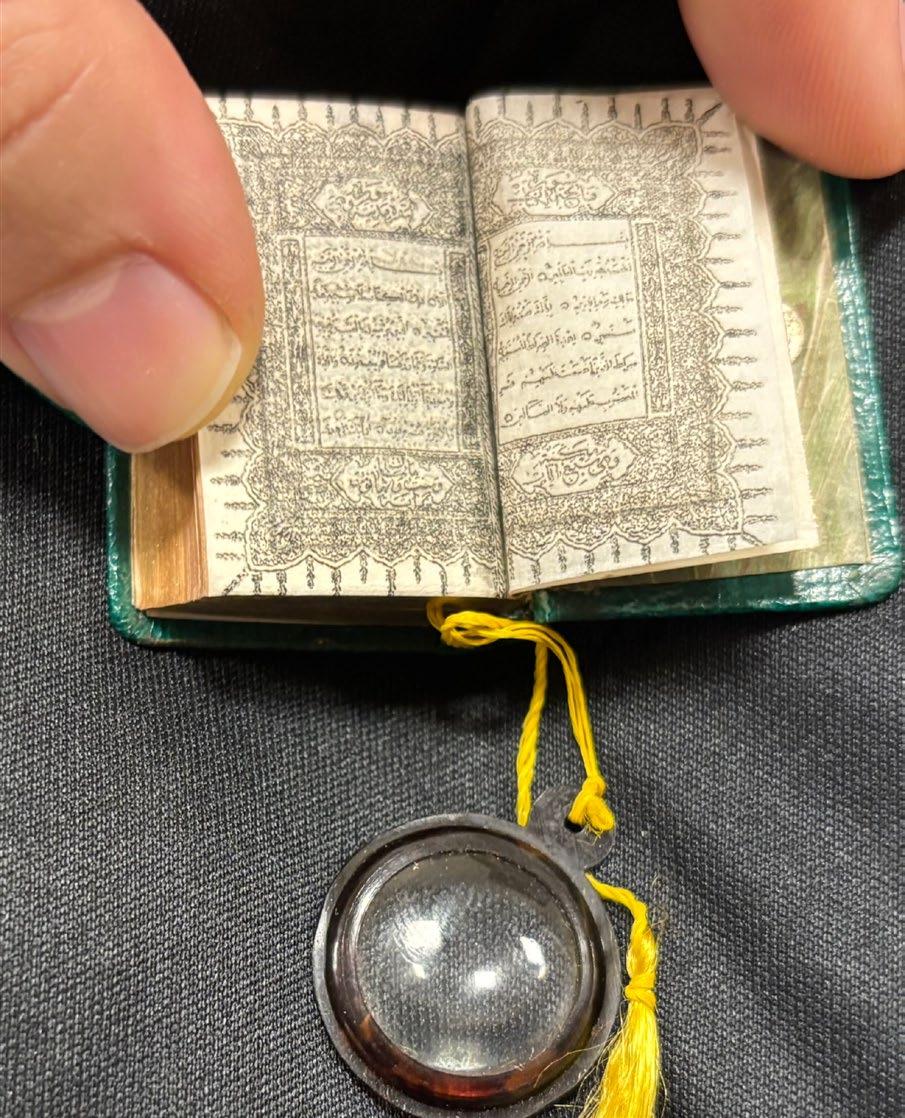
A miniature Qur’an with a green binding, selected to enhance our holdings of miniature and artist books. Green was chosen from among several available binding colors due to its deep symbolic significance in Islam — representing paradise, purity and prosperity.
While course visits to Special Collections and Archives are always meaningful, this project offered something even more special: the opportunity for students to serve as content experts and active contributors to our collection development. We look forward to incorporating these new acquisitions into future courses and continuing to build a collection that meaningfully supports the curriculum. n
LEARN MORE: Full scans are available at digitalarchive.wlu.edu/islandora/rare-books
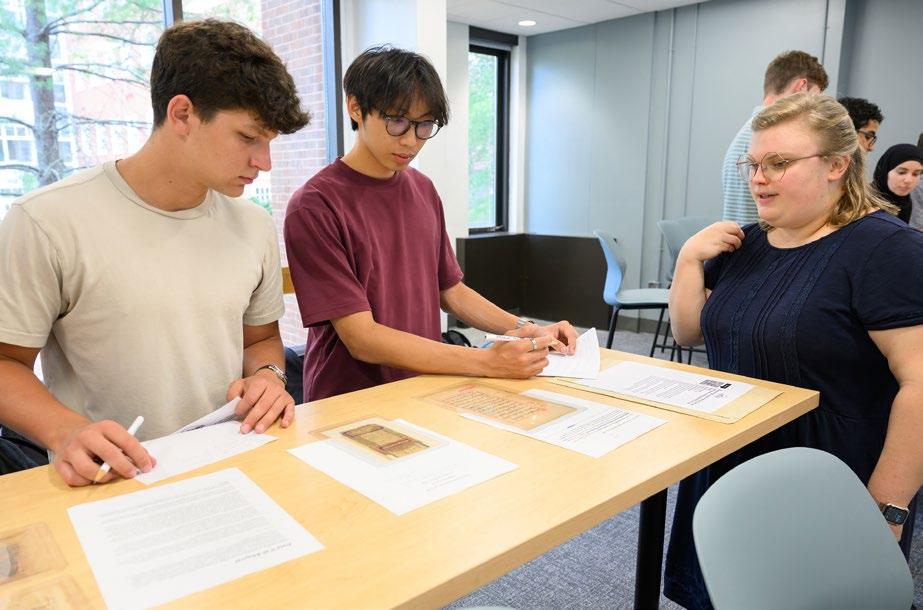
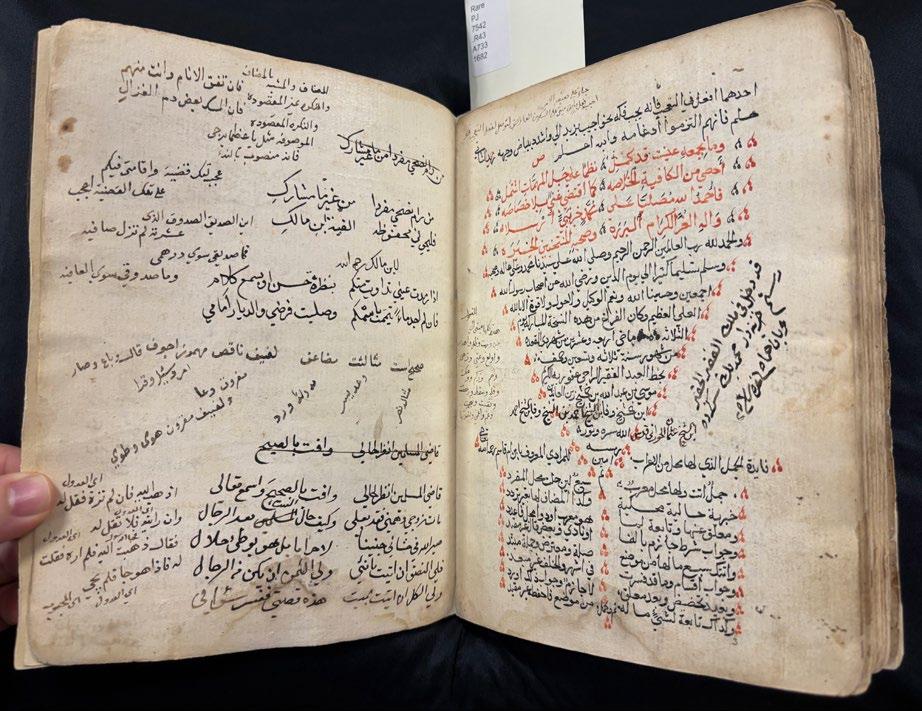
TOP: Instruction and Outreach Archivist and assistant professor Mattie Clear leads a Special Collections and Archives session during Spring Term 2025 for the course Art History of the Qur’an.
BOTTOM: Arabic grammatical manuscript, circa 1682.
Jenny Mitchell explores the life and legacy of one of W&L’s most accomplished alumni via an invaluable collection of his archival papers. >>>

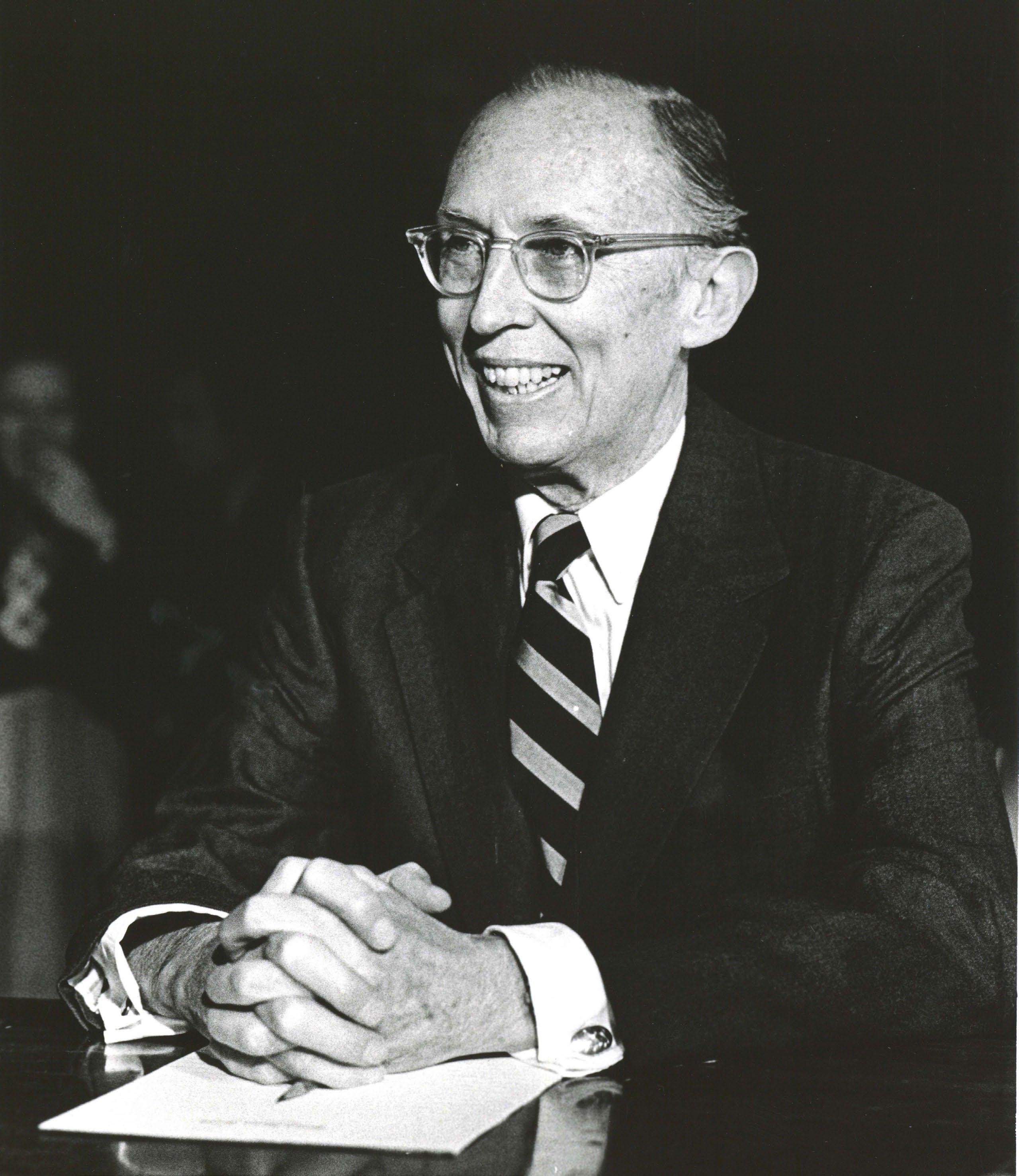
Atrove of American legal and social history resides in the Lewis F. Powell Jr. Papers, a vast collection housed at the Wilbur C. Hall Law Library. Spanning from 1921 to 1998, these papers offer an intimate look into the life and career of a man who rose from being a Richmond, Virginia, attorney to an associate justice of the United States Supreme Court. The collection, the cornerstone of the Lewis F. Powell Jr. Archives, provides an invaluable resource for scholars, students and anyone interested in the evolution of American law and society in the 20th century.
The papers meticulously document Justice Powell’s multifaceted life. His connection to Washington and Lee University was profound. He earned both his undergraduate and law degrees from the institution (in 1929 and 1931, respectively), graduating first in his law school class in 1931. Powell’s dedication to his alma mater continued throughout his life, culminating in the decision to leave his papers to the university, where they are housed in a specially constructed wing of the law library. This lasting gift ensures that future generations of Washington and Lee students, and researchers from around the world, can learn from his example.
While his early legal career is not as extensively covered, the collection shines in its comprehensive documentation of his public service. His leadership roles in a variety of civic and professional organizations are well-represented, offering insights into the workings of the American Bar Association, the Colonial Williamsburg Foundation and the Virginia State Board of Education, among others. These materials paint a picture of a man deeply committed to his community and the legal profession.
Powell’s dedication to his alma mater continued throughout his life,
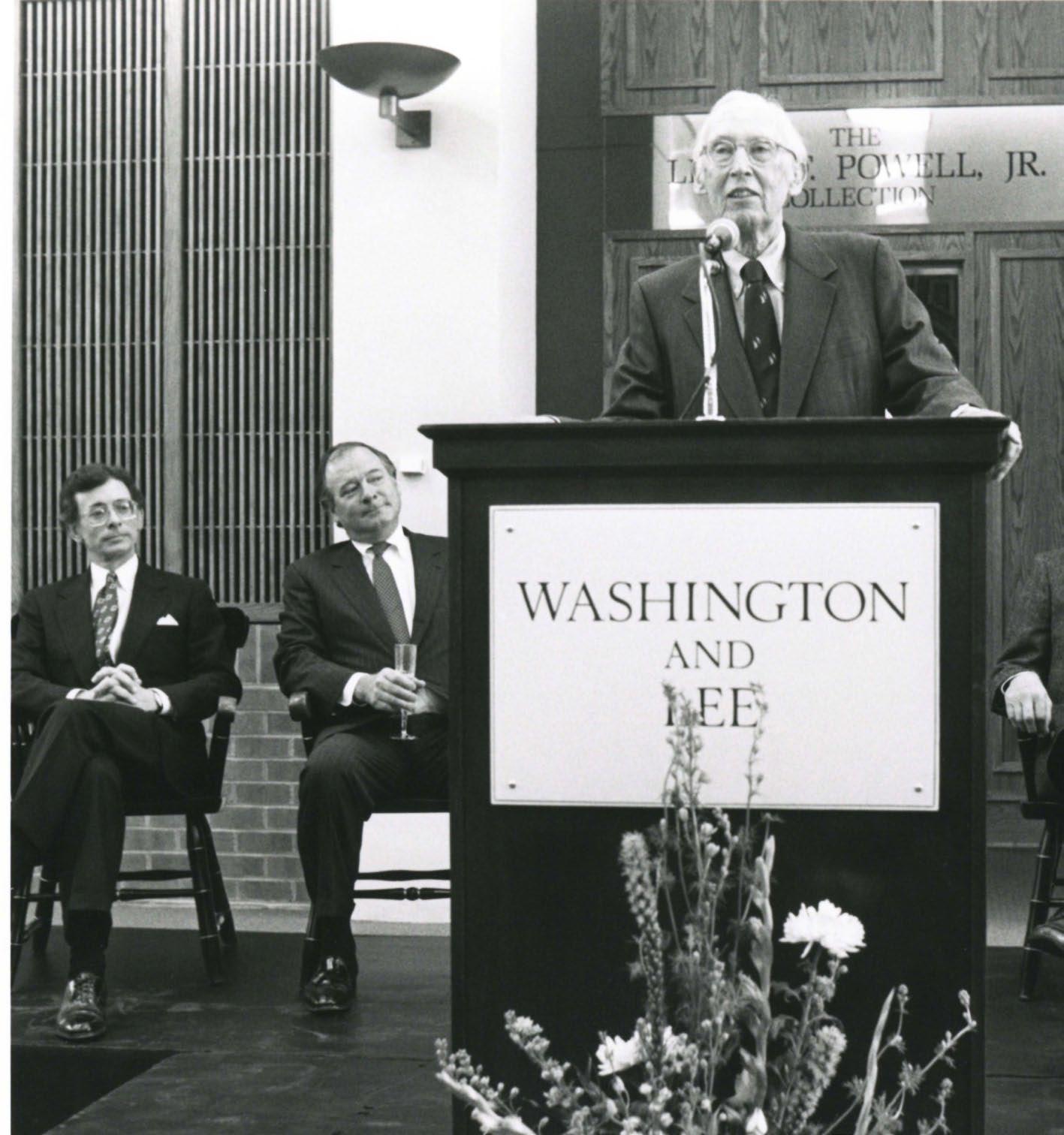
A significant portion of the collection is dedicated to Justice Powell’s service on the Supreme Court, from his appointment in 1972 until his retirement in 1987. These case files, which form the bulk of the collection, offer a rare glimpse into the inner workings of the nation’s highest court during a pivotal period. Researchers can trace the development of landmark cases, explore the deliberations behind key decisions and gain a deeper understanding of Powell’s own judicial philosophy. His reputation as a thoughtful and pragmatic jurist, often casting the deciding vote in closely divided cases, is well-documented in these files.
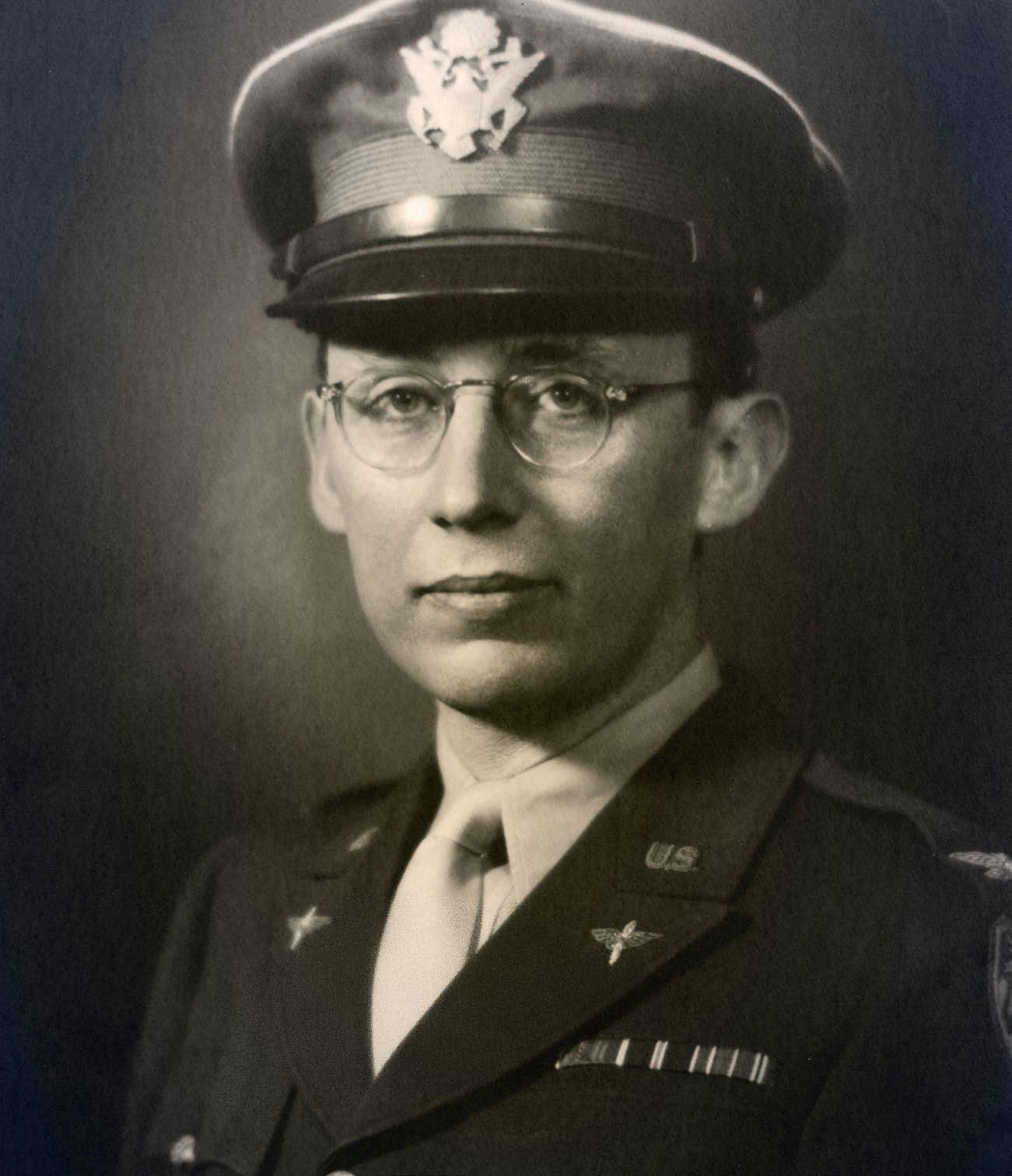
The collection also provides a personal dimension to this public figure. Correspondence with family, friends and colleagues reveals a man of warmth and integrity. His military service during World War II, which he served as an intelligence officer, is also documented, offering a different perspective on his life of service. The Lewis F. Powell Jr. Papers are more than just a collection of documents; they are a testament to a life dedicated to the law and public service. They offer a rich and nuanced portrait of a man who played a significant role in shaping American society, and they serve as a vital resource for understanding the legal and social history of the 20th century. For anyone seeking to understand the complexities of the American legal system and the life of one of its most influential figures, this collection is an essential destination. n
If you have questions or would like to make an appointment to view materials from the Powell Archives, reach out to Jenny Mitchell, archivist and special collections librarian, at powell@wlu.edu
culminating in the decision to leave his papers to the university.
Paula Kiser shares how a new look and smarter search tools provide easier access to our institution’s shared history.
THE PROCESS TO BRING OVER THE LEGACY COLLECTIONS IS NEARLY COMPLETE.
The University Library is excited to present the new and improved Digital Archive! The Digital Information Management and Education (DIME) team has been working hard for over a year in collaboration with Born-Digital to customize the digital asset management system Islandora 2.0 to provide access to digitized materials held in Special Collections and Archives. The new Digital Archive makes it easier for researchers to browse and search through the digital collections. The full text of the Ring-tum Phi, the Calyx, the Alumni Magazine/W&L Magazine and many other collections can now be searched at the page level, and they are also better organized. Researchers can easily listen to oral history interviews, such as those that Mame Warren conducted for her book, “Come Cheer,” while simultaneously reading a transcript of the interview. The image viewer now allows users to zoom in, view side-by-side pages and utilize a variety of image filters.
The DIME team has been reuploading the collections from the older Digital Archive site after checking each collection for accurate metadata and scanned items. They have rescanned several collections, improved and expanded descriptions and added newly scanned items. The process to bring over the legacy collections is nearly complete, and the library has added several new digital collections. The Rockbridge Historical Society Proceedings, Anderson Family Scrapbooks and the Brownsburg Museum Oral History Collection are now available in the Digital Archive. Through a generous donation from members of the Class of 1974, the existing film reels from the 1974 lacrosse season are now digitally available in the Digital Archive. These films, along with other materials from W&L’s Special Collections and Archives and interviews with members of the team, were instrumental in the documentary about the 1974 Generals lacrosse team by Phifer Helms ’74. We have also added five photograph albums from the Thomas Hills Collection that show the Vassar College geology professor’s family trip through Africa and the Middle East in the early 20th century.
We are currently working on digitizing the Southern Collegian and look forward to adding more manuscript collections from W&L, Rockbridge Historical Society and the Brownsburg Museum. n
LEARN MORE: Explore W&L’s Digital Archive at go.wlu.edu/digital-archive
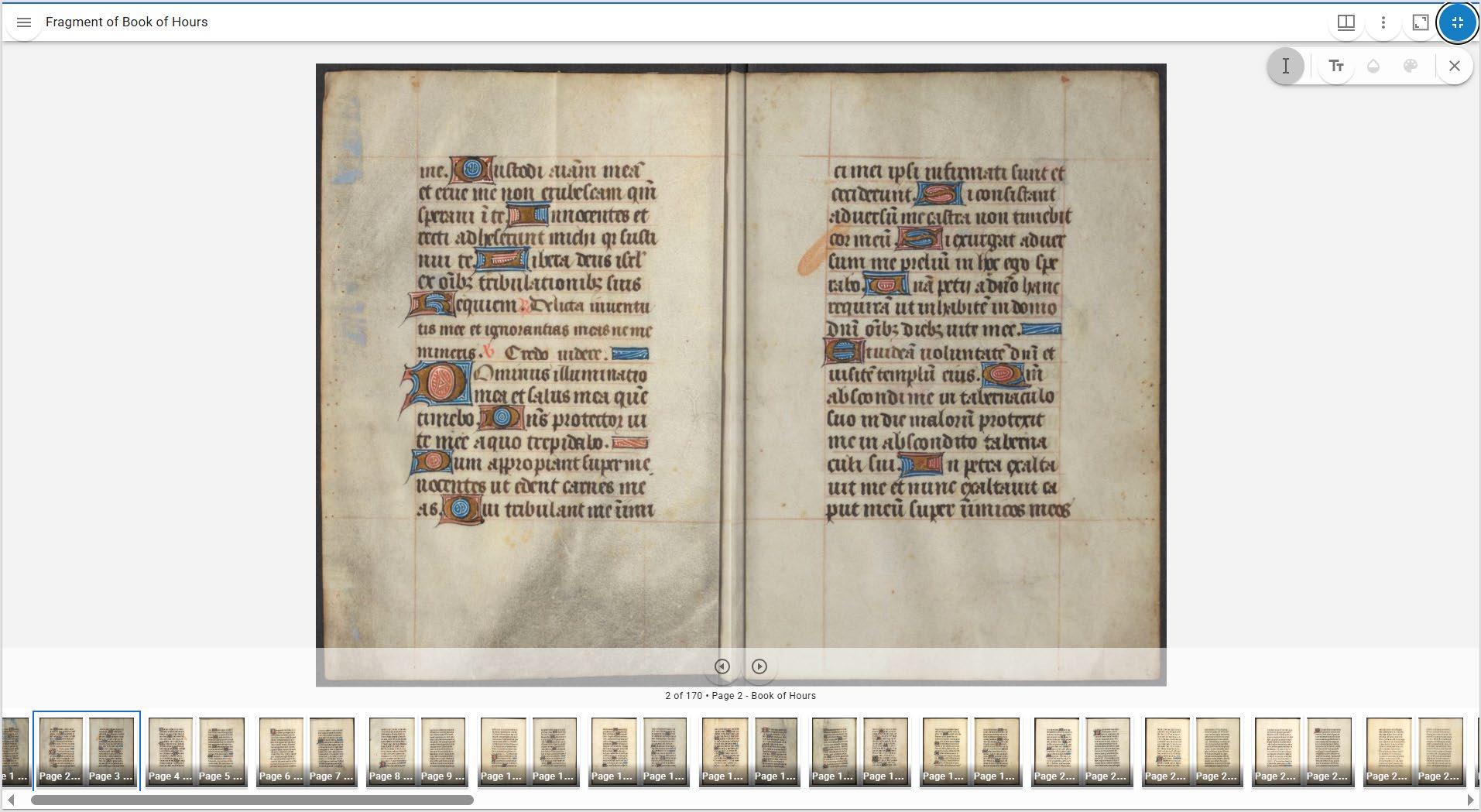
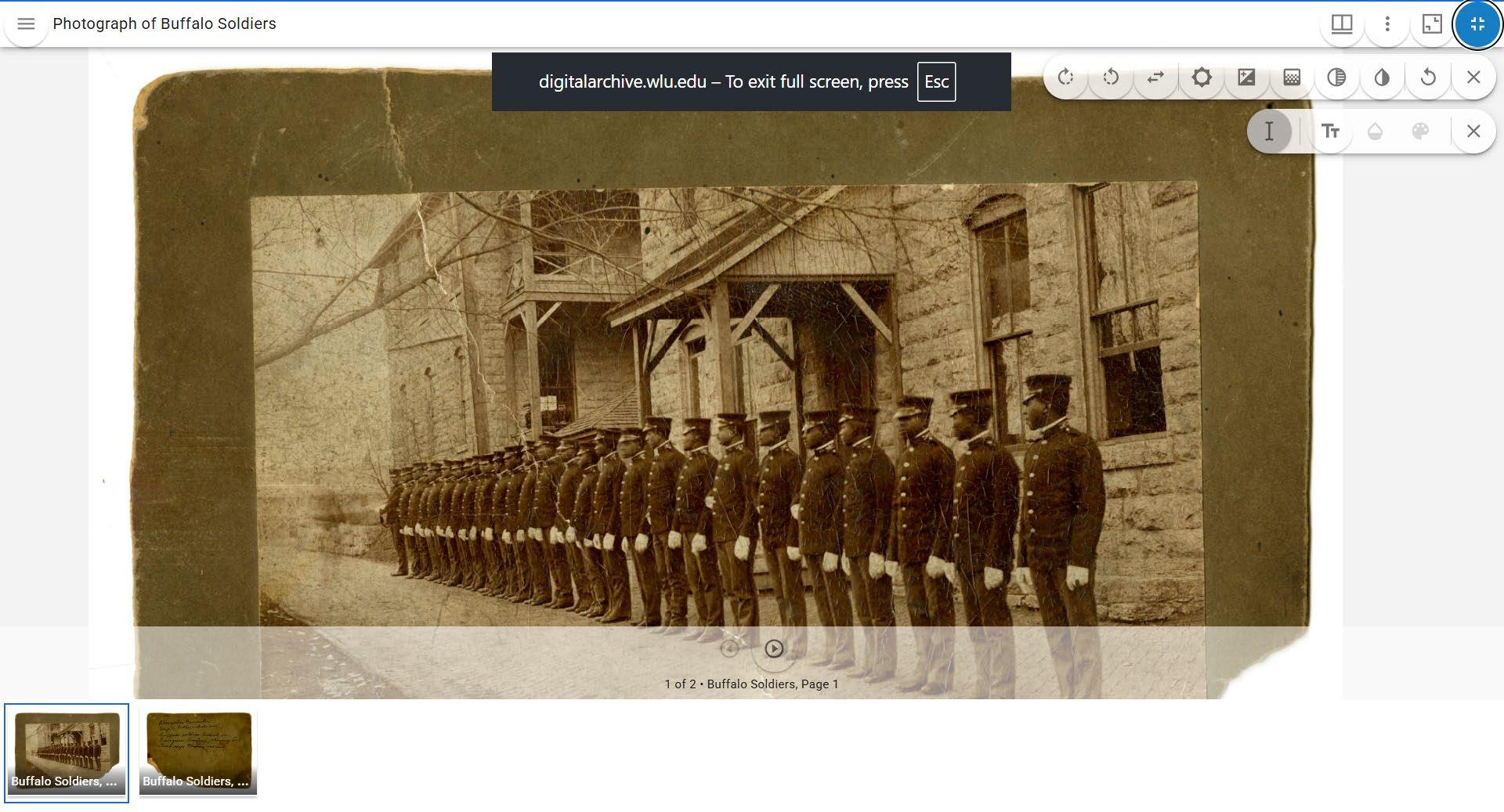
A document related to the fundraising and the construction of Liberty Hall Academy in Lexington — one of thousands that are now easier for researchers to discover.
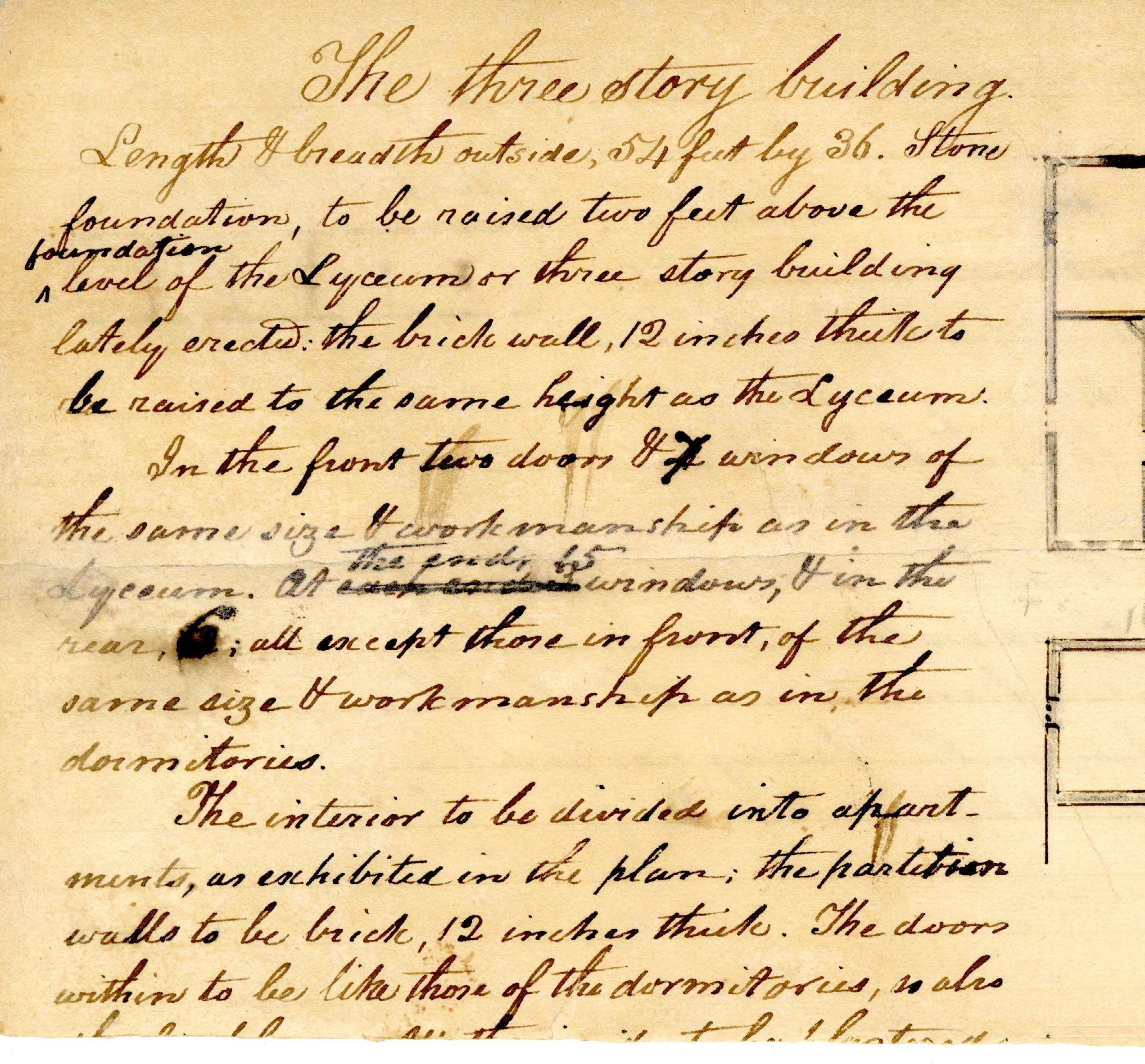
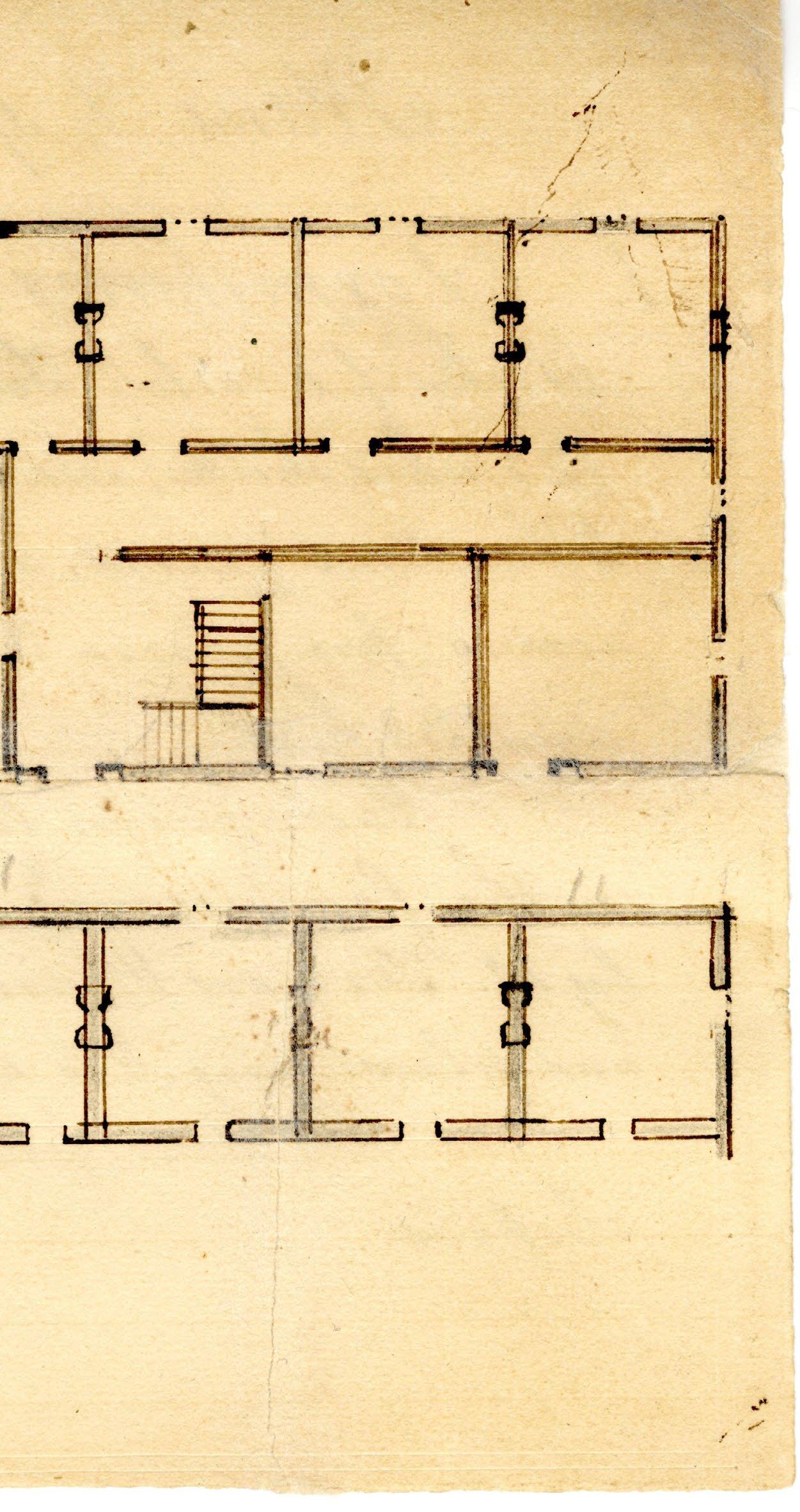
The University Library Special Collections and Archives acquires resources, provides access to those resources and offers research support. Unlike the University Library’s circulating collection, our materials do not circulate outside of our reading room. We also have guidelines and procedures in place to ensure the security and proper handling of the items under our stewardship to make certain that they will continue to be available to future generations of researchers. I’m sure none of this is surprising to anyone reading this. You likely also know that our rare books and university publications are cataloged for discoverability in the library’s online catalog system. But what about manuscript and archival collections? There is a critical function of our work as archivists between acquisition and access that often goes overlooked and is taken for granted — that is the function of arrangement and description.
WIf I try and describe the work arrangement and description entails, it sounds basic, but I can promise you that it isn’t.
—Kim Sims
I ,, ,,
hen I began working at W&L as the associate university librarian for Special Collections and Archives, I prioritized managing and performing the function of arrangement and description. This function is the foundation of my career, and arrangement and description are essential to the discoverability and accessibility of our manuscript and archival collections. The core guiding principles of archives haven’t changed (provenance, respect des fonds, original order), but our descriptive standards and methods of discoverability have. Before online databases existed, before we printed out inventories and placed them in three-ring binders, the practice was to index collections by subject or name in card catalogs. This is true not only at W&L but also at other institutions where I’ve worked. In the early 1980s, W&L retired faculty member and administrator William Webb Pusey created subject and name index cards for several collections, and we continue to consult them. There’s evidence to suggest that he also organized some of the archival collections. The work I’m doing is building on, and sometimes undoing, the work started by him. This work includes creating online finding aids for new acquisitions, enhancing existing finding aids and revisiting and reprocessing collections according to archival standards. A finding aid is a detailed description of a collection which helps researchers navigate its contents and serves as a discoverability tool. If I try and describe the work arrangement and description entails, it sounds basic, but I can promise you that it isn’t. It involves more than putting contents into acid-free folders and boxes. We’re actively appraising each collection (not everything needs to be or should be kept), identifying preservation concerns and analyzing the content. The analyzation is the main component of descriptive work. What is in the collection? Correspondence? Financial records? Photographs? Publications? If there is no original order, what should the arrangement be? What will prove the most useful to researchers? These are questions I ask myself each time I’m working on a collection. In early 2025, I reviewed and decided to reprocess a collection originally titled Washington and Lee University Miscellaneous Archives. As an aside, I have a love/hate relationship with the word “miscellaneous.” You’re likely going to find some good stuff, but it isn’t helpful to researchers. I once worked on a collection that included a folder titled “Miscellaneous Miscellany.” What does that even mean? Our Miscellaneous Archives collection was heavily consulted by Ollinger Crenshaw for his book General Lee’s College, but it was not fully indexed in the card catalog, making the majority of its contents harder to discover without reviewing each and every folder. Not only did the collection deserve and need a more appropriate title, but it also needed to be reevaluated for content and organized and described in a way that would be useful to both researchers and Special Collections staff and to also increase discoverability. The collection is a mix of materials of varying provenance, including Board of Trustees records, faculty minutes, presidential correspondence and treasurer’s records, yet the collection was originally arranged chronologically with Miscellaneous Papers and Miscellaneous Bills, Receipts, and Vouchers as the folder titles. In addition to administrative content, there are also documents regarding student conduct, student petitions and even a document dated May 1849 signed by faculty and officers of both Washington College and Virginia Military Institute speaking out against the Lexington Bowling Alley. The arrangement I decided on was to organize the collection into the following series (records that are logically related): Business Records, Administration, Faculty, Students, General and Printed Material. The Business Records series primarily includes documents related to the financial history of the university and includes related correspondence, invoices and receipts. I noted which folders contain documents that reference the sale or hiring out of enslaved individuals and
their names if recorded. The Administration series includes correspondence sent to or written by trustees, presidents or other officers of the university. The Faculty series includes correspondence and faculty business. The Students series includes documents related to student conduct, student petitions, recruitment and admissions. Of note are documents from 1858 regarding an incident in which students were dismissed from school for drinking and the eventual burning in effigy of the two professors who caught and dismissed them. The General series consists of requests for catalogs and subject files, and the Printed Material series includes broadsides, circulars and publications. Because the collection contains records created by different administrative units within the university, it was renamed Administration Records collection.
While working on the collection, a multi-page document dated 1811 caught my attention. Written on the back of the last page is the descriptor “Rules and Regulations for the Government of a Company of Juvenile Volunteers, Washington College.” The document was written by Washington College students in response to events that eventually led to the War of 1812. It includes a preamble, 10 articles and the names of officers and soldiers. There is a postscript that notes the company “Washington Juvenile Volunteers” paraded July 4, 1811, and received “the praise of a large concourse of people,” and member Gustavus A. Jones delivered an oration afterward at the Lexington courthouse.
Iam obviously not the first person to know of this document’s existence. It received a Barrow lamination treatment in 1977. However, it is not listed in the card catalog index nor is it mentioned in Crenshaw’s book. It was also unfamiliar to my colleagues. While it goes against the principle of provenance to mix collections from different sources, even if the subject (or person, family, event, etc.) is the same, the material within the Miscellaneous Archives collection came from a variety of sources and was combined many years ago. Because it was already a mishmash of provenance that cannot be undone, and because of the uniqueness of the document itself, I made the decision to treat the “Washington Juvenile Volunteers” document as a one-item collection. It now has its own finding aid that allows for discoverability, which it did not have before. In addition to making our collections discoverable, we also take note of preservation concerns. Unfortunately, the Barrow lamination treatment this document received has detrimental effects over time. The treatment created by William Barrow used cellulose acetate film as a base to preserve fragile documents. However, just like with cellulose acetate film negatives, the acetate emulsion will break down over time, giving off the smell of vinegar, which we call “vinegar syndrome,” and destroying the document in the process. Thankfully, the lamination process can be reversed without damaging the item, and the “Washington Juvenile Volunteers” document is currently undergoing conservation treatment to do so. We are grateful for the financial support of individuals, in this case the Class of 1966, whose generosity makes it possible for this necessary and important conservation work to happen. Dear reader, if you’ve made it this far, what I hope this article has offered you is a deeper understanding of and appreciation for the vital, behind-the-scenes work archivists do to ensure that the collections in our care remain discoverable, accessible and well-preserved for generations to come. n
LEARN MORE: Our finding aids can be accessed by going to archivesspace.wlu.edu
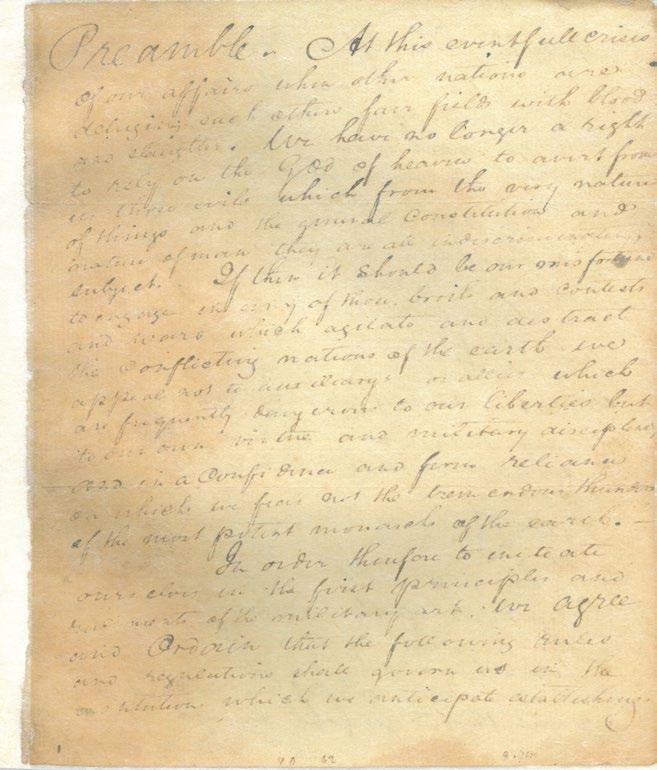
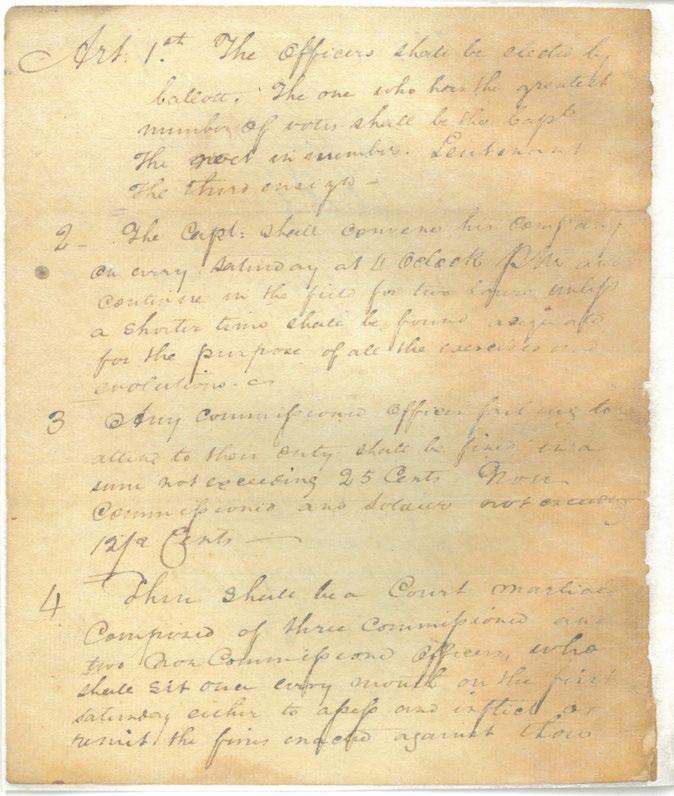
ABOVE: Both of these documents are part of the Washington Juvenile Volunteers collection, circa 1811
This year, KT Vaughan, Hal F. and Barbra Buckner Higginbotham University Librarian, presented work in her two key areas of interest: recruitment and retention of librarians and building a universal design for library management framework. She and co-author Christine Woods (St. Leo University) presented the poster, “How are Virginia’s Academic Libraries Growing Library Workers?” at the Virginia Library Association (VLA) annual meeting in fall 2024. The poster reported quantitative results and comments from a survey of academic library directors and was tied to a VLA Presidential Initiative. In spring 2025, Vaughan served as an expert panelist for the Association of College and Research Libraries (ACRL) Science and Technology Section’s spring webinar, “Inclusive Libraries: Practical Strategies for Disability Justice.” The session focused on how libraries can
of library resources and services for Virginia higher education students and faculty.” Teaff co-presented at VIVA’s 2023 Interlibrary Loan Forum, providing tips and tricks for best practices and guidelines for using the OCLC Policies Directory, which serves as the repository of lending and copying policies for libraries participating in a multitude of interlibrary loan systems. She also co-presented the VLA’s Conference’s VIVA/EAST update, covering best practices for VIVA institutions participating in the Eastern Academic Scholars’ Trust (EAST) shared print program. EAST’s program constitutes a collaborative effort among several academic and research libraries to document, protect and provide long-term access to their print collections. Teaff further contributed to VIVA’s efforts by co-moderating VIVA’s Tipasa (interlibrary loan system) user group meeting in 2023, 2024 and 2025, during which participants discussed issues and best practices. Representing W&L’s Special Collections and Archives, Mattie Clear,
American Historical Association, titled “Institutional Histories and the Work of Archivists,” discussing the important role institutional histories play in the collection and instruction programs of special collections and archives. With colleagues Rachel Grove Rohrbaugh, Jennifer Strain and Morna Gerrard, Clear also presented “TPS [Teaching with Primary Sources] for STEM: Undergraduate Case Studies” at the Teaching with Primary Sources Collective Fest. In this presentation, Clear provided an overview of W&L Special Collections and Archives’ instruction program and her work with Nicholas Barber, assistant professor of earth and environmental geoscience. Mackenzie Brooks, digital humanities librarian, published “Teaching with Institutional History Data,” a chapter in “Data Culture in Academic Libraries: A Practical Guide to Building Communities, Partnerships and Collaborations” (ACRL, 2025). The book’s goal is to support librarians and academic data specialists in fostering data partnerships and communities within their libraries,
incorporate frameworks such as universal design and practical tools like accessibility checkers to improve library culture and service.
Elizabeth Teaff, associate university librarian for access and discovery, has cooperatively presented at and moderated events multiple times since summer 2023 for the Virtual Library of Virginia (VIVA), a consortium of nonprofit academic libraries within the Commonwealth of Virginia. VIVA’s members include all 39 state-assisted colleges and universities, 31 private institutions and the Library of Virginia. VIVA’s mission is to build “an equitable, accessible and robust infrastructure
instruction and outreach archivist, and Kim Sims, associate university librarian for Special Collections and Archives, presented at the annual meeting of the Rare Books and Manuscripts Section (RBMS) of ACRL, a division of the American Library Association. RBMS represents and promotes the work and interests of librarians and archivists who work with rare books, manuscripts and other types of special collections. Clear also co-presented twice in spring 2025 with archivist colleagues external to W&L. Clear joined Dana Dorman, Joseph Leuck, Rebecca Fenning Marschall and Lindsay Sheldon in a roundtable presentation for the
institutions and beyond. Brooks has also been involved with the Institute for Liberal Arts Digital Scholarship (ILiADS) since its inception in 2015 at Hamilton College and served as chair of the Steering Committee this year. Approximately 50 students, staff and faculty gathered in teams at the weeklong summer institute to receive expert guidance from digital scholarship practitioners on their projects. Finally, Brooks conducted two virtual presentations in fall 2024 on digital pedagogy, one for the Association for Computers and the Humanities and another for the Digital Library Federation and Council on Library and Information Resources.
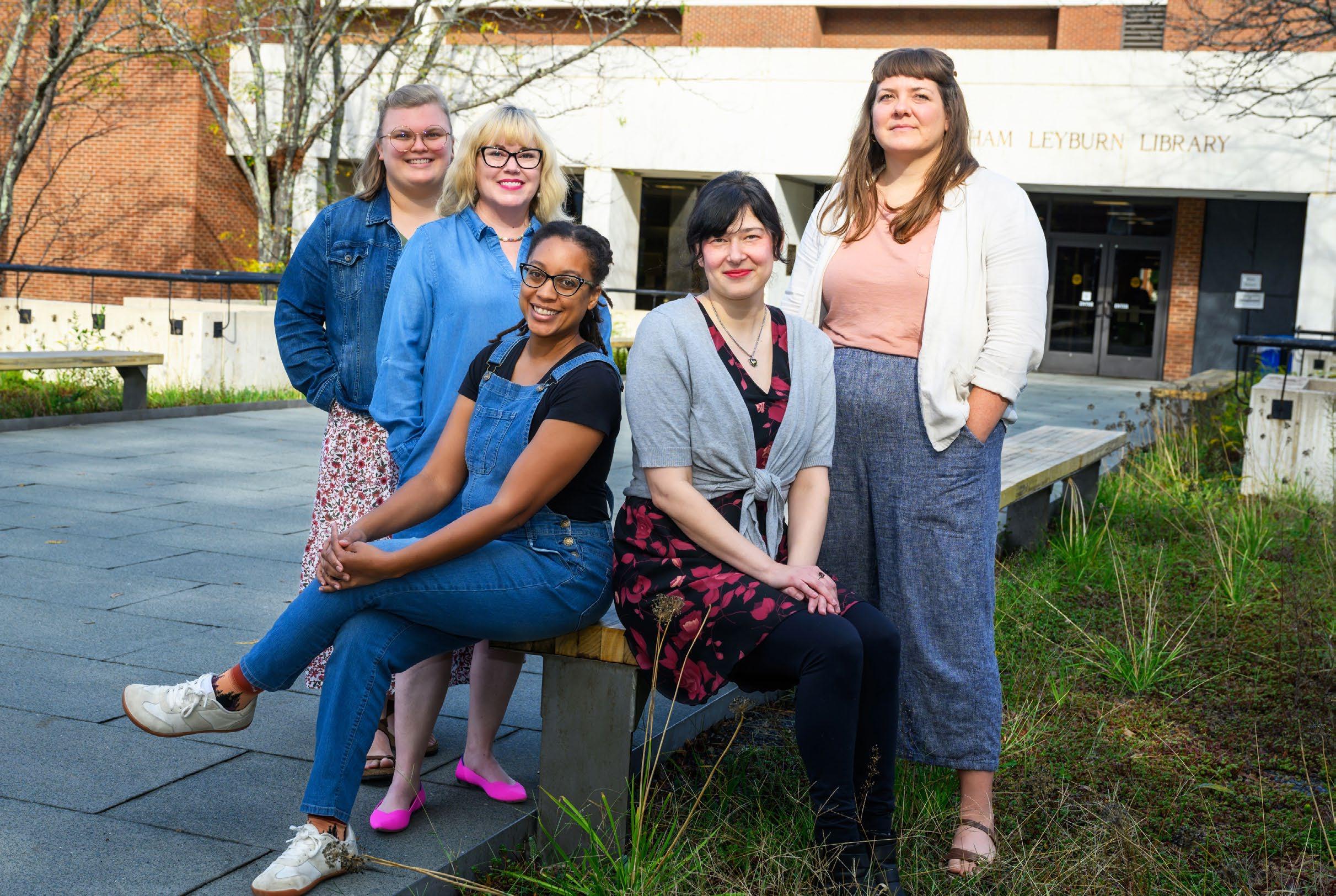
From instructional gamification to universal design, head of research services and associate professor Renae Watson showcases the diverse scholarship of W&L’s library faculty.
Instruction librarians Emily Cook and Amira Walker (Research Services) are continuing their exploration of instructional gamification this year, previously presenting at Canada’s premier conference on information literacy and library instruction. They have added fellow instruction librarian Jenny Carlos as a collaborator and will present a talk for the W&L community, organized by the Houston H. Harte Center for Teaching and Learning, in November 2025, “From Soliciting Groans to becoming the GOAT: Partnering with AI to Gamify Dry Curricular Content.” Cook, Walker and Carlos will synthesize current scholarship on pedagogical gamification
while offering practical strategies for engineering AI prompts that support gamified instruction.
In addition to providing instruction and research support for the humanities at W&L, Cook supervises student workers who staff the library’s virtual chat service and engage in student outreach activities, such as posting on library social media accounts, creating marketing materials and organizing book displays. Cook provided guidance on developing a sustainable social media marketing plan based on her experience in “How We Tell Our Stories,” a presentation at the 2025 VIVA Interlibrary Loan Forum.
Finally, as head of Research Services, I presented “Rising Together: Centering Inclusion in a Faculty Mentorship Program” at the ACRL 2025 Conference with her former colleagues, Khaleedah Thomas, Jimena Bretón and Michelle Wilde. They discussed their multi-stage project to center inclusivity in Colorado State University Library’s mentorship program in order to ensure a sense of belonging and support professional growth and success for both mentees and mentors. The ACRL Conference is a national biannual conference hosting 2,000-plus academic library faculty and staff, exhibitors and more. n
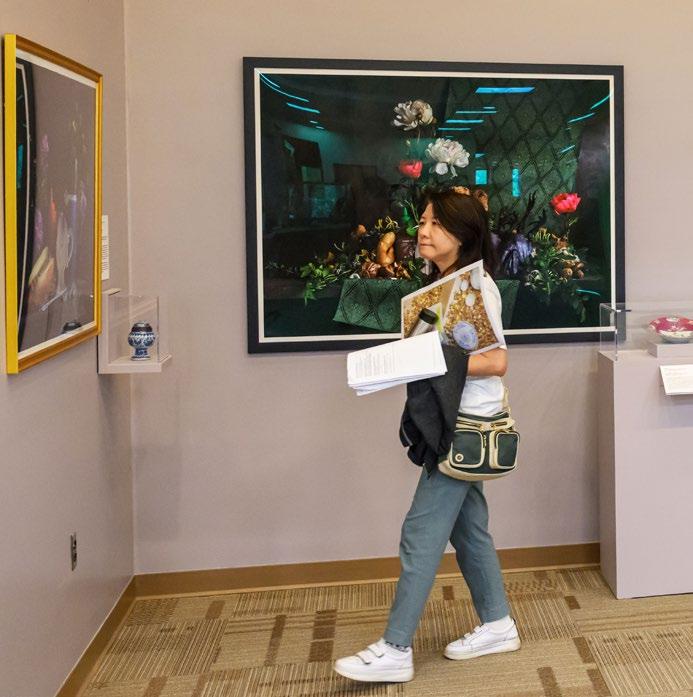
Last summer, Art Museum and Galleries at Washington and Lee University installed an exhibit of select photos by the artist Stephanie Shih. During the last academic year, they hosted an exhibit titled “Stephanie Shih: LONG TIME NO SEE” in the Reeves Center. This exhibit included 15 life-size photographs along with video-based still life installations. Shih was the inaugural artist-in-residence for the Art Museum and Galleries and worked on campus to create her work. According to the Art Museum and Galleries’ website, the original Shih exhibition was “an immersive exploration of hidden narratives and voices within the Art Museum and Galleries at W&L’s nationally renowned Reeves Collection of Chinese export porcelain.” The reimagined smaller exhibit in Leyburn Library includes several of Shih’s photographs and once again puts them in dialogue with ceramic pieces from the Reeves Collection. The exhibit in Leyburn Library will run through the end of 2025.
LEARN MORE: The exhibit’s print catalog is located on the third floor of L eyburn Library, and the companion website can be found at go.wlu.edu/shih-exhibit
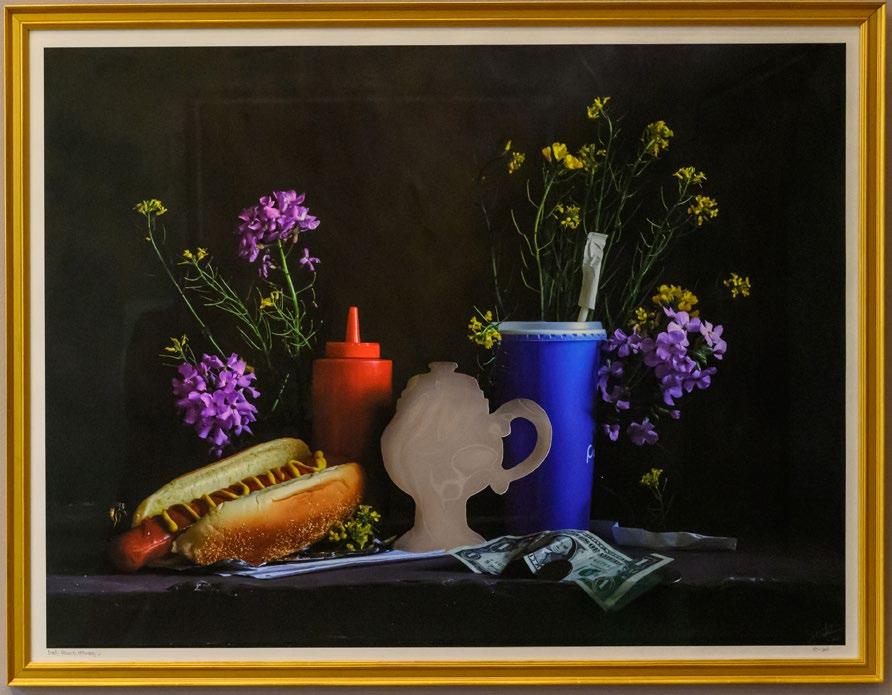
➤ From Stephanie Shih’s artist statement about the original exhibit: “LONG TIME NO SEE” is a series of photographs and motion-based still life installations that delve into the complexities of the diasporic experience in America: presence/absence, integration/alienation, trauma/healing. The project mines the Asian export porcelain collection at the Art Museum and Galleries at Washington and Lee, drawing pieces from before the first major waves of Asian immigration to the U.S. in the 1800s through the early 20th century. In the project, I directly intervene in the ongoing biographies of these export ceramics — themselves also diasporic objects — and create layered conversations with archival materials, personal experiences, art and cultural histories and the natural world around southwestern Virginia, where the ceramics now reside. The resulting installation, which couples altered photographs with three-dimensional museum objects, is a physical metaphor for presence and absence, challenging the viewer to actively confront the (ir)recoverability of wholeness in the face of history.
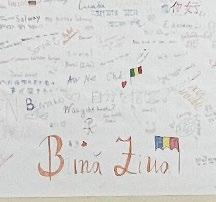
W&L’s World Languages and Cultures Department invited visitors to Leyburn Library to “show your global competency!” Colorful markers were provided, and students, faculty, staff and community members were asked to leave a message on the wall in a language other than English.
This was just the latest iteration of the graffiti wall — the World Languages and Cultures Department used space in Leyburn Library in the past to create similar interactive exhibits. Washington and Lee offers many majors, minors and coursework in languages from all over the world.
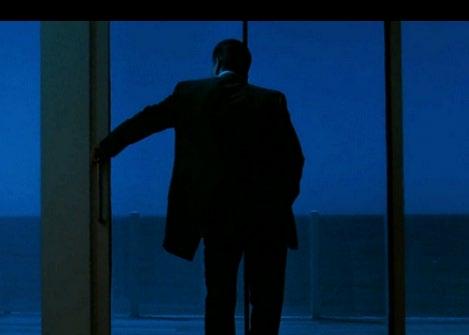
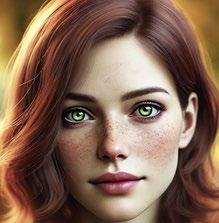
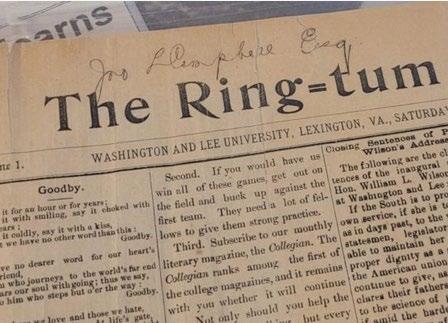
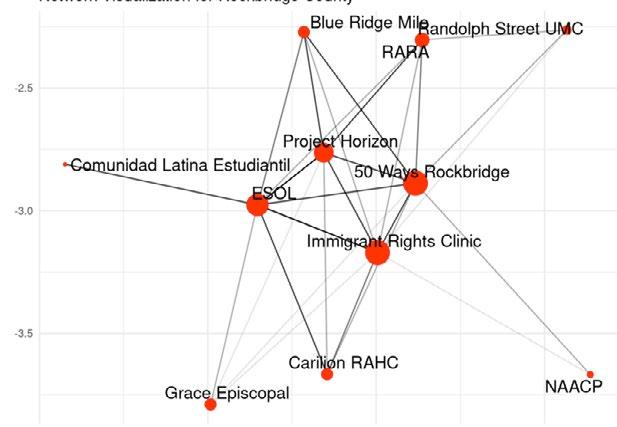
LEFT TO RIGHT: “Michael Mann: The Architect of Cool,” “AI & Body Image: The Future of Unrealistic Beauty,” “Unwritten Rules: Understanding the W&L Honor System” and “Networks of Resistance: How Undocumented Immigrants and Allies Organize for Rights.”
of the best parts of teaching the digital culture and information minor capstone course is helping students to approach a familiar topic from a new perspective. In this year’s capstone, students used the skills they built in data analysis and digital presentation to understand a wide range of topics. All four students were simultaneously enrolled in other DCI courses taught by professors Emily Cook, Julie Kane, Elizabeth Teaff and Amira Walker. It was exciting to see them bring skills and knowledge from those classes into the capstone. n
Cecchini decided to branch out of his normal politics and business majors into film studies. He used the cutting-edge Distant Viewing Toolkit to computationally analyze the films of Michael Mann in order to answer the question: “What is cool?”
As a strategic communication and business administration double major, Kolosova has spent a lot of time thinking about generative AI and its impacts. In fact, her final project in DCI 101 was on text generation in journalism, mere weeks before the launch of ChatGPT. This time, she chose to focus on the intersections of beauty standards and generative AI by comparing the output of different image generation tools when asked to produce various images of women.
Lotruglio, a cognitive and behavioral science major, was also inspired by generative AI in her final project but took a more historical perspective. She was curious about the impact of technology on the Honor System through time and decided to use the Ring-tum Phi text corpus to understand how students thought about this foundational part of the W&L experience.
Ventura chose to combine her DCI capstone with her sociology and anthropology capstone to produce a network analysis project titled, “Networks of Resistance: How Undocumented Immigrants and Allies Organize for Rights.” Ventura compared the community organizations of Rockbridge County with a larger more urban area in Maryland to understand how geography shapes the resources available.
Laura Hewett showers well-deserved praise on this year’s best of the best.
Several departments inWashington and Lee’s University Library hire student assistants each year. Many of them stay all four years; some are only here for a few. These students touch almost every aspect of the library and assist in providing the W&L community with services that aid in achieving their educational goals.
Each spring we ask our seniors to select a book that is meaningful to them. These books receive a bookplate that honors the students’ contributions to the library — there’s also a display on the main floor of Leyburn Library during Spring Term through graduation. n
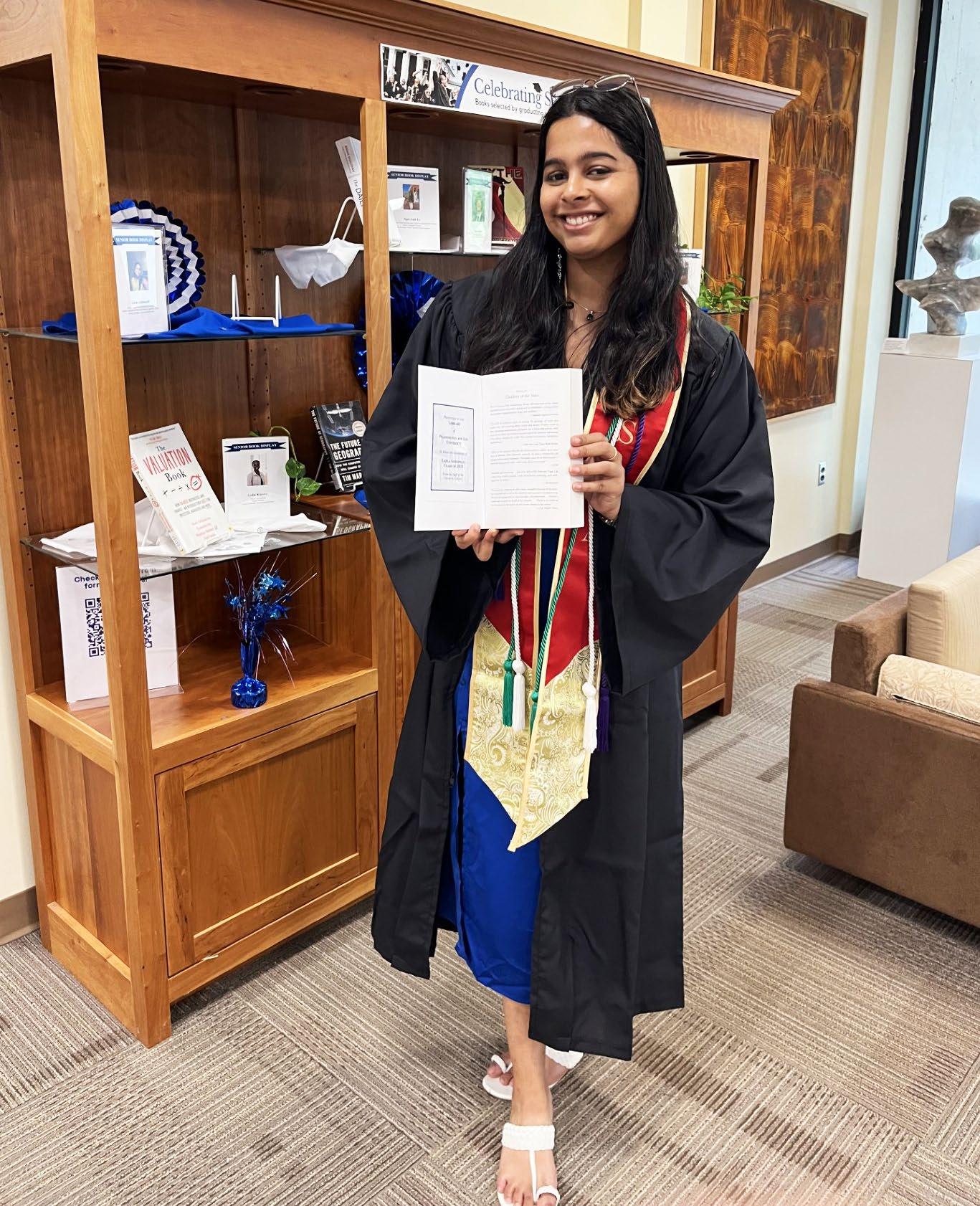
We'd like to give one more THANK YOU to the students listed below. We wish them all the best — they'll be missed!
AKUA JEW-ARTHUR
ISAAC BARBER
LEELA ADDEPALLI
LYDIE KIPAWA
ROBBIE HARTSFIELD
SARAH EATON
Research Help
DEVANSHI MEHTA
NGOC ANH LE
Special Collections
JACKSON FLOWER
W&L's Library Student Advisory Board wraps up a year of building community. (And they did it one book, one game and one gathering at a time.)
itwas an energetic and creative
2024–2025 academic year for the Library Student Advisory Board (LSAB), building community and enhancing the student experience through events, outreach and library space improvements.
Made up of 23 students from across class years and majors, LSAB met regularly throughout the year to plan programs and share feedback on library services. They hosted two study breaks and two seasonal positivity stations, brought joy with a succulent giveaway at the fall Student Activities Fair and hosted book sales in both fall and spring. Going beyond celebrating a culture of bookishness, these sales promote the sustainable reuse of personal books while supporting future LSAB initiatives.
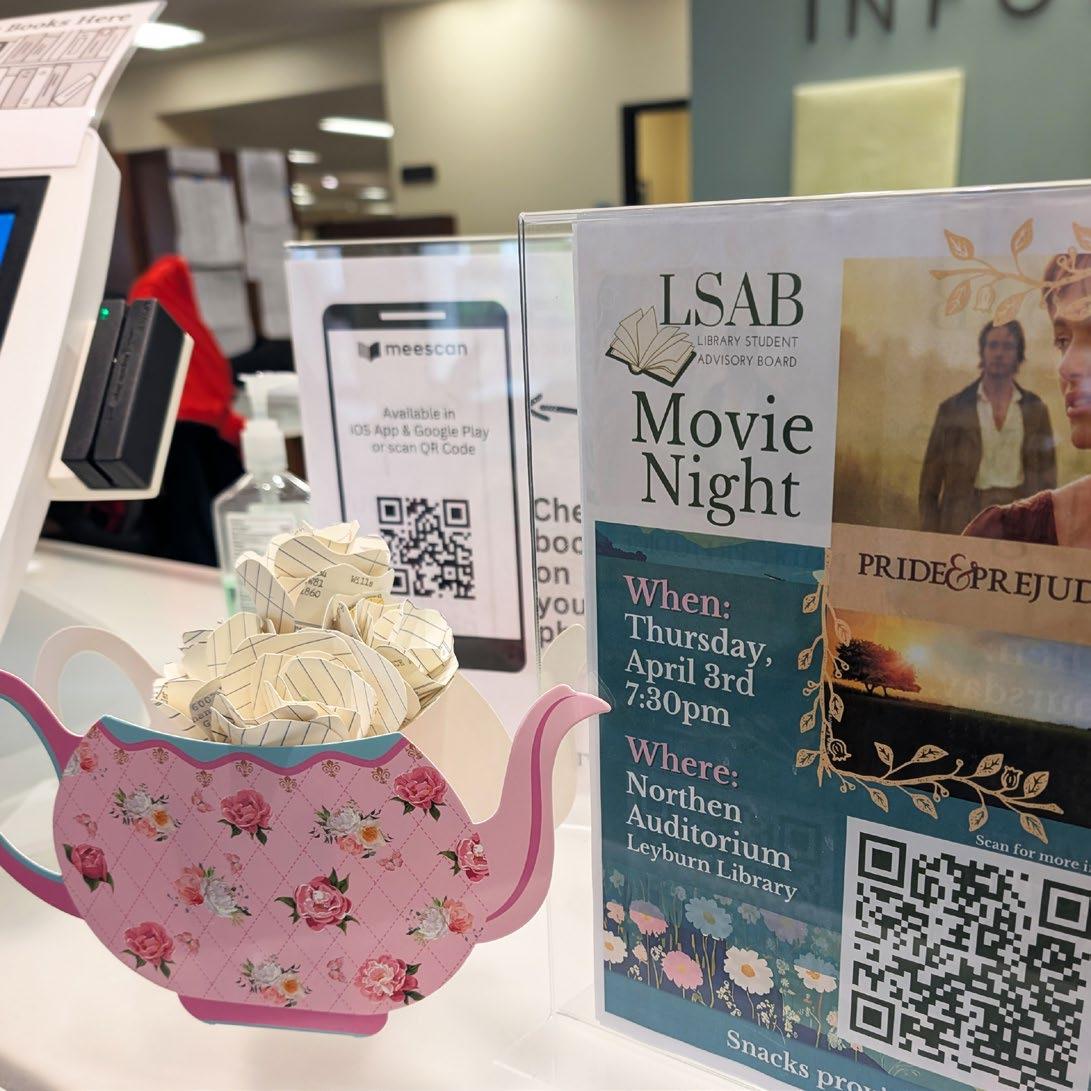
The group’s members also ventured off campus in October to the Rockbridge Regional Library, where they signed up for public library cards and gained access to additional recreational reading. March proved busy, as members got crafty with paper roses for an LSAB-sponsored “Pride and Prejudice” movie night and co-hosted a game event with the W&L Chess Club. In May, they gifted potted plants to graduating student workers and digital culture and information minors.
LSAB also played a key role in two student-centered space projects:
l Game Zone Updates
LSAB was instrumental in the addition of signage, bean bags and storage lockers.
l Sensory Study Room
Located in Leyburn 312, this new space offers a quiet, calming environment to support student wellness.
We’re grateful to the Friends of the Library for their generous support of LSAB initiatives. Their partnership helps make these student-driven efforts possible!
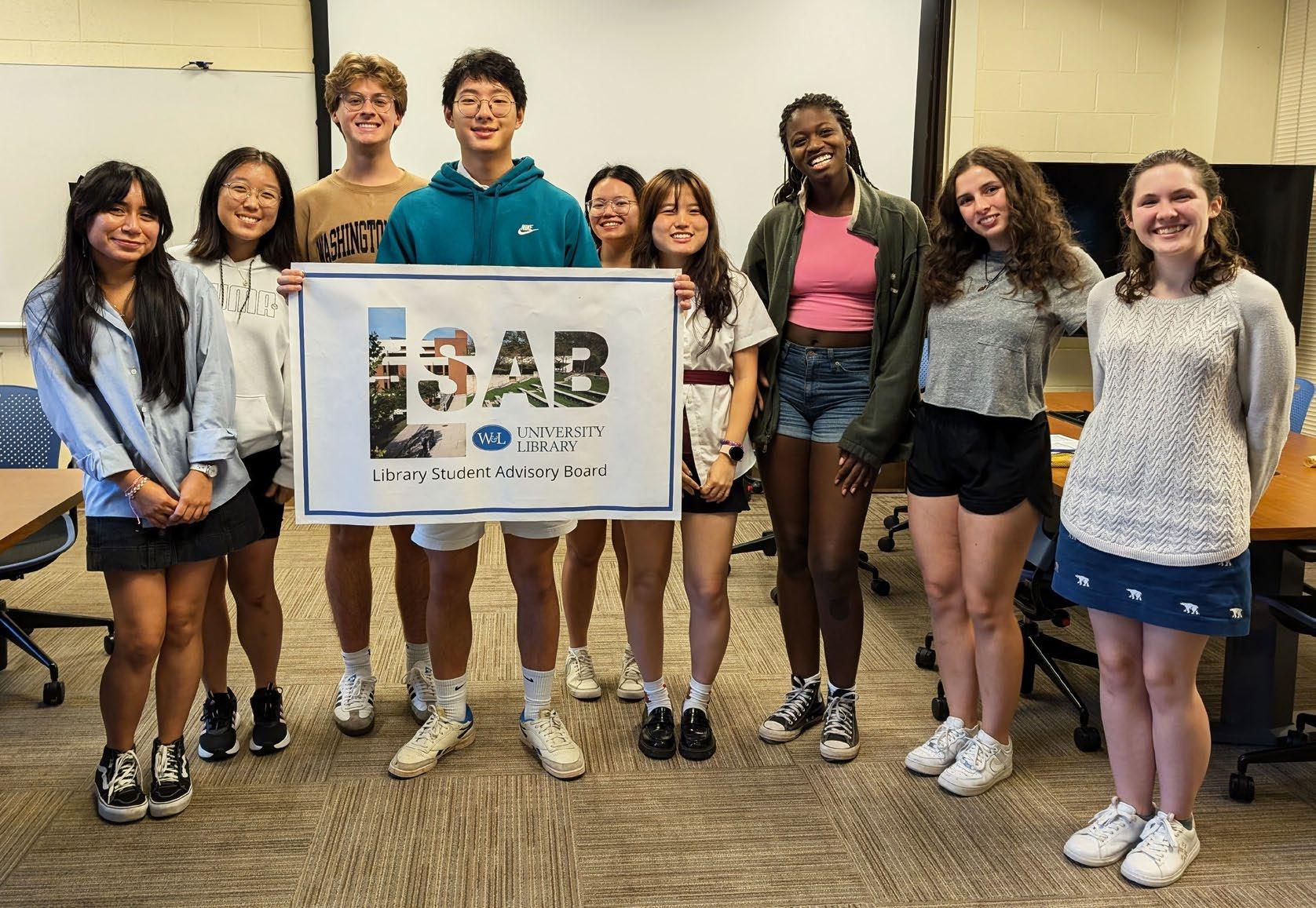
ABOVE: Library Student Advisory Board members smile for a group photo during their first meeting of the 2024/2025 academic year.
RIGHT: Handmade bookmarks were given to attendees of the “Pride and Prejudice” screening. Visitors also enjoyed locally made scones, tea and a host of other snacks.
The University Library welcomes three new faces.
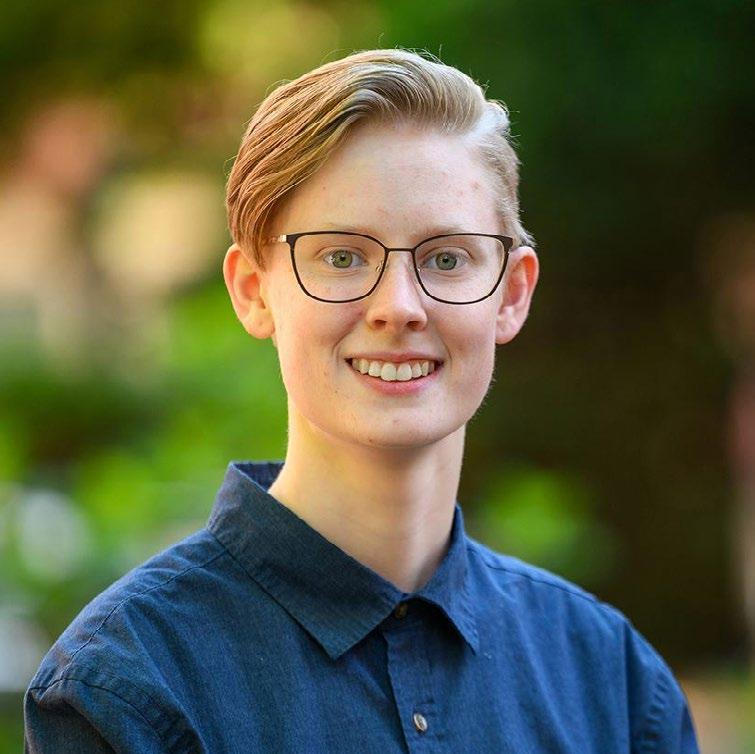
I started at W&L’s Law Library in May 2025 as an administrative assistant.
Prior to this, I graduated from Virginia Tech with my bachelor's degree in Arabic in the fall of 2024 and moved to Staunton, Virginia, shortly after.
I am excited to begin working on my master’s in library and information science at the University of WisconsinMadison this fall. When I ’m not busy with work or studying, I love to spend time with friends playing DnD and video games, cooking or listening to music. n
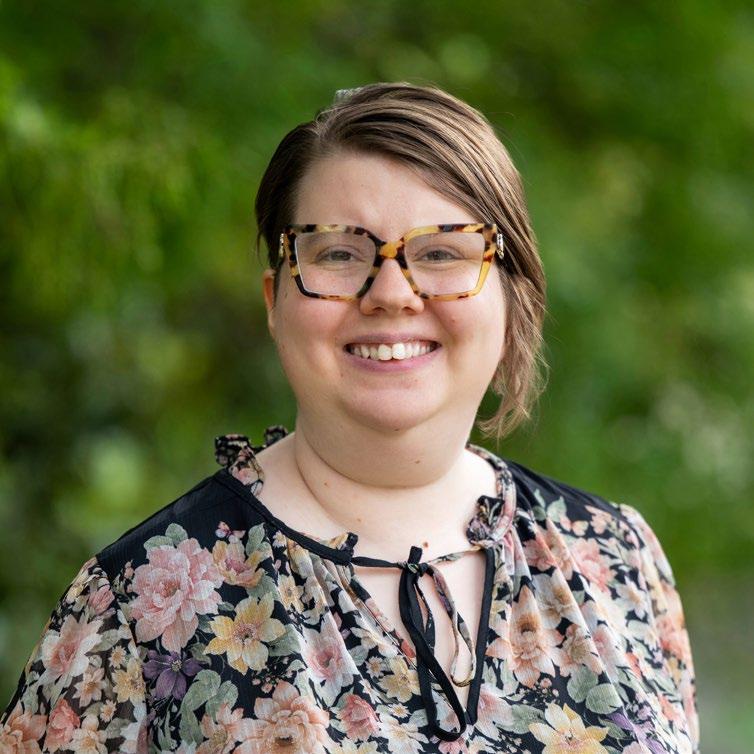
Last February, I came to Washington and Lee University as a library assistant, and I split my time between Special Collections and Access Services. Although I was born in Connecticut, I spent 2016-2022 in Provincetown, Massachusetts, and I worked at their public library as a circulation assistant (as well as performing other odd jobs around town). I recently graduated from Wellesley College’s Davis Degree Program for non-traditional students with a bachelor’s in geosciences. I will be taking library science courses via Louisiana State University’s online program starting this fall. I love what I do, and I’m happy to be here! n
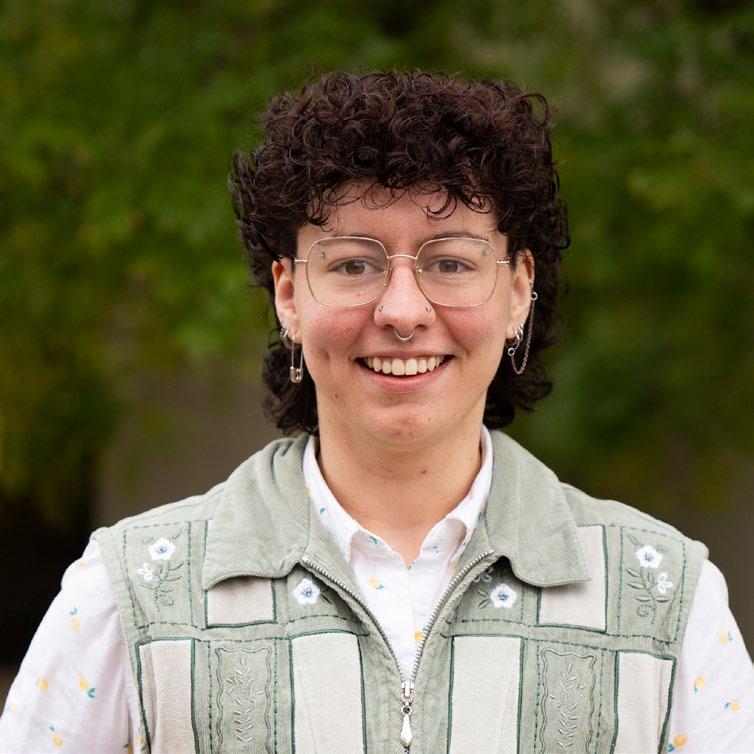
Originally from Texas, I joined W&L as the open scholarship and data resident librarian in July 2025, after serving in Information Desk and classroom technology support. My background includes positions at the District of Columbia Public Library and the Texas State Law Library. I hold a Master of Science in information studies from The University of Texas and a Bachelor of Arts in English with a computer science minor from Texas A&M University. My work focuses on open access initiatives, research data support and digital scholarship preservation. n
9
692,720
1,270,119
215
157
294,103
14 10
2,178
editors
Wendy Rains
KT Vaughan contributors
Mackenzie Brooks
Emily Cook
Mattie Clear
Laura Hewett
Paula Kiser
Jessica Luck
Jenny Mitchell
Kim Sims
Elizabeth Teaff
KT Vaughan
Renae Watson designers
Jamie Lipps
Billy Chase
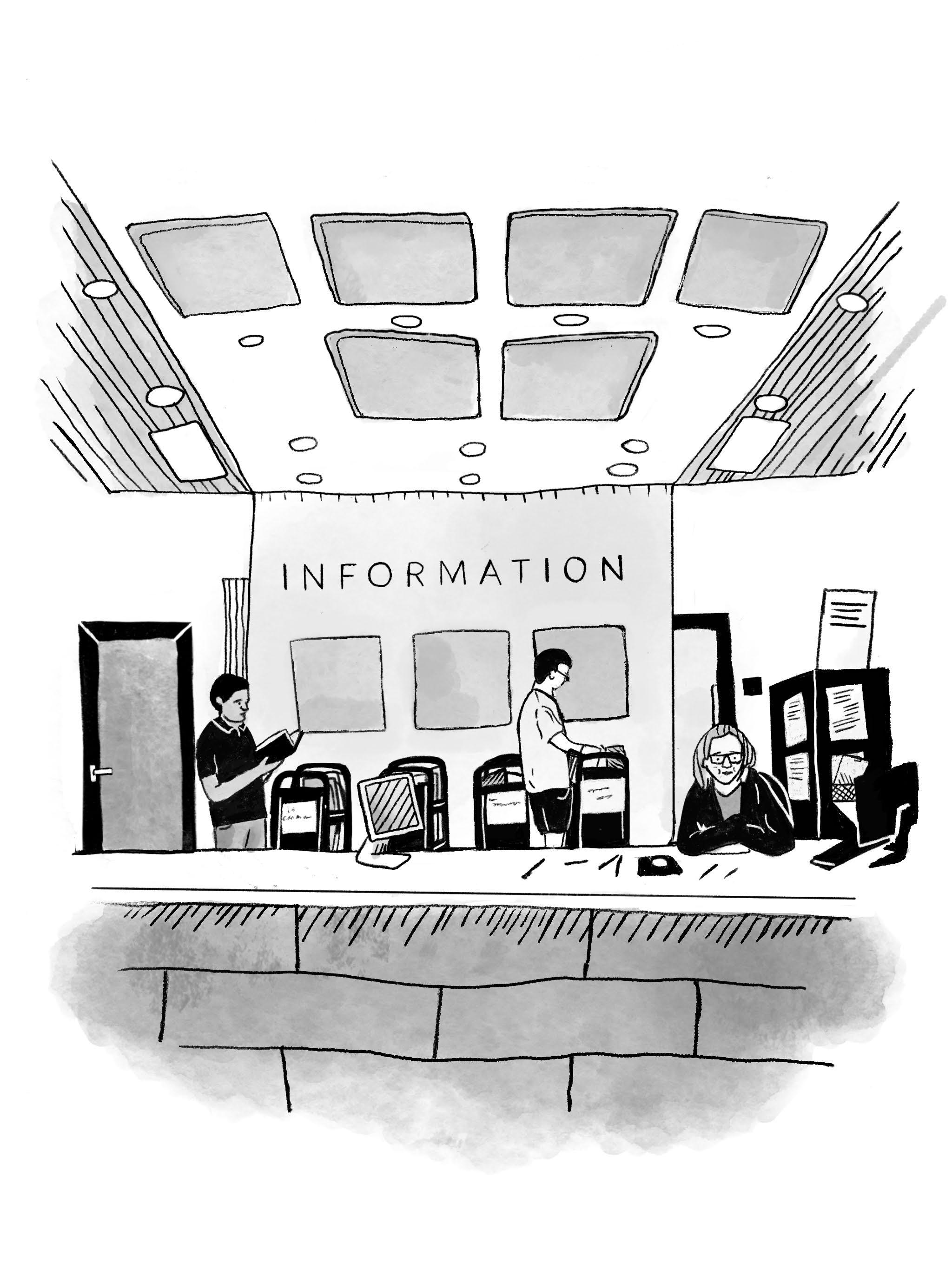
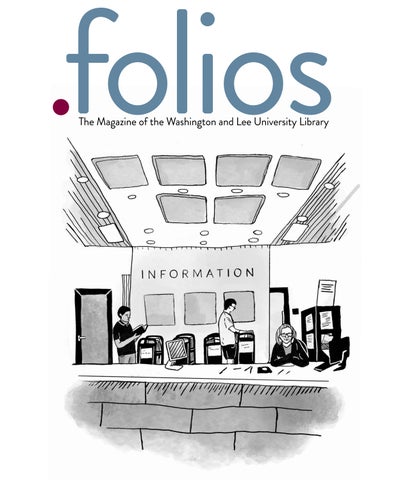
Kolton Cannon publisher Washington and Lee University Library 204 W. Washington Street Lexington, VA 24450 talk to us library@wlu.edu ON THE COVER: Original artwork of Leyburn Library interior by Emmaline Nelsen
Join us in 2026 as we celebrate 250 years of learning, discovery and community at the Washington and Lee University Library! Throughout the year, we’ll honor this milestone with special events, exhibits and stories showcasing our library’s rich history and bright future. From rare treasures in our collections to the innovative scholarship of today’s students and faculty, the W&L Library continues to be a place where ideas thrive and and connections are made. How can you participate?
Visit our 250th anniversary webpage to stay up to date on special events, exhibits and other happenings: go.wlu.edu/university-library-250th-anniversary
Send the library a birthday card at: W&L University Library, 204 W. Washington Street, Lexington, VA 24450 Attn: Wendy Rains
Share your well wishes, favorite library stories or photos of you in the library: Library250@wlu.edu.
Join the celebration on social media — post your favorite library memories and tag us: @WLULibrary and @WLUNews
Stay tuned for even more ways to help us celebrate! plus: Learn how to become a Friend of the Library at
go.wlu.edu/supportfriendsofthelibrary