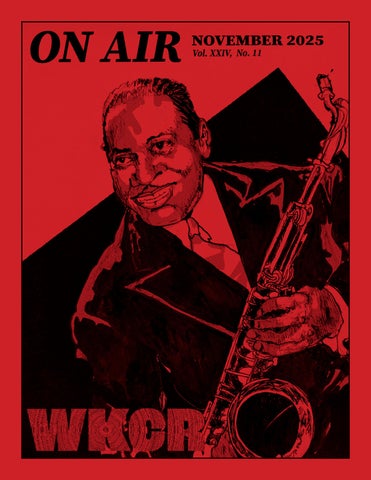
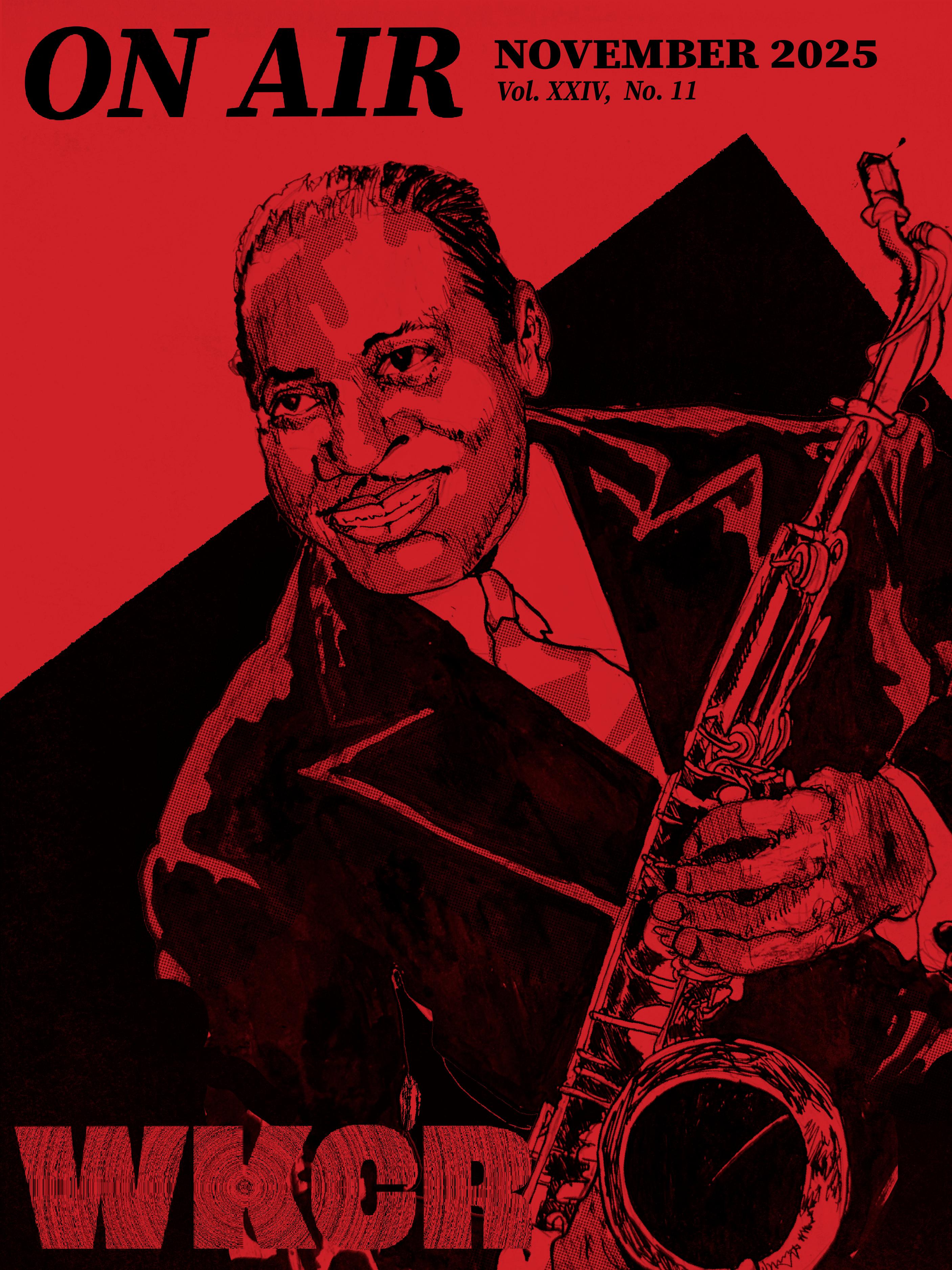
Happy November! We have an exciting month of programming coming up here at the station. Another great year of our Coleman Hawkins Birthday Broadcast returns for his 121st on November 21st. Additionally, we start out the month strong with a great Hip Hop Festival overnight on November 6th—-plenty of live guests and local artists will be featured on this broadcast so make sure to tune in! We once again leave the halls of WKCR to broadcast live the Brooklyn Folk Festival from on site on November 8th. Additionally, stay tuned for a fantastic month of Sunday Profiles every Sunday from 2pm-7pm starting with Kenny Barron, Freddie Hubbard moving to Gigi Gryce and ending with Billy Strayhorn.
In this month of the On-Air Guide we also have some fantastic articles you can read. First and foremost, an interview of our former station manager and current archivist, Ted Schmiedeler, by our sports director CJ Gamble is definitely worth the read. Additionally, we have a great article on Jazz Nicknames and two exciting reviews. One of a concert at Pianos in the East Village, and another of the new Nine Inch Nails album.
Radio On, Casey Lamb Station Manager
NEW MUSIC
Bjork at 60
by Jasper Dabbs
The landscape of Iceland is fire and ice: lush and green in the summer and otherworldly in winter; churning oceans, sublime glaciers, volcanoes. The ecology of the Arctic Circle island seems like another planet, regardless of the time of year. In Reykjavik, the capital, a girl was born in 1965, the daughter of an electrician and a fortune-teller. Turning 60 this month, Björk boasts countless awards as a singer-songwriter, visionary electronic musician, producer, and actress. She has been active as a musician for 49 years.
During an appearance on Late Night with Conan O’Brien after the release of Debut, her first solo album, Björk was asked about the music scene in her native Iceland. Tilting her head like a bird as she talks, she answers:
“Oh, it’s a lot of, sort of isolated people, who actually know how to control and operate electricity. (A lot of good music comes from that situation!) They kind of sneak and listen to American radio, and they kind of – they get sort of what’s going on in Europe as well – and then they… they misunderstand it all in a very beautiful way.”
So, the world has been blessed with Björk. Her soundscapes are lush, rich, ecological: alive. She has one of those voices that is undeniably an instrument of its own –boasting a three-octave range and an uncanny ability to make contorting, animal noises. Her first four albums, Debut, Post, Homogenic, and Vespertine, are essential listening for any fan of alternative music. Hands-down. Stop reading and go listen. 2004’s Medúlla is just as excellent, a haunting, primal album that pushed well
outside the bounds of pop.
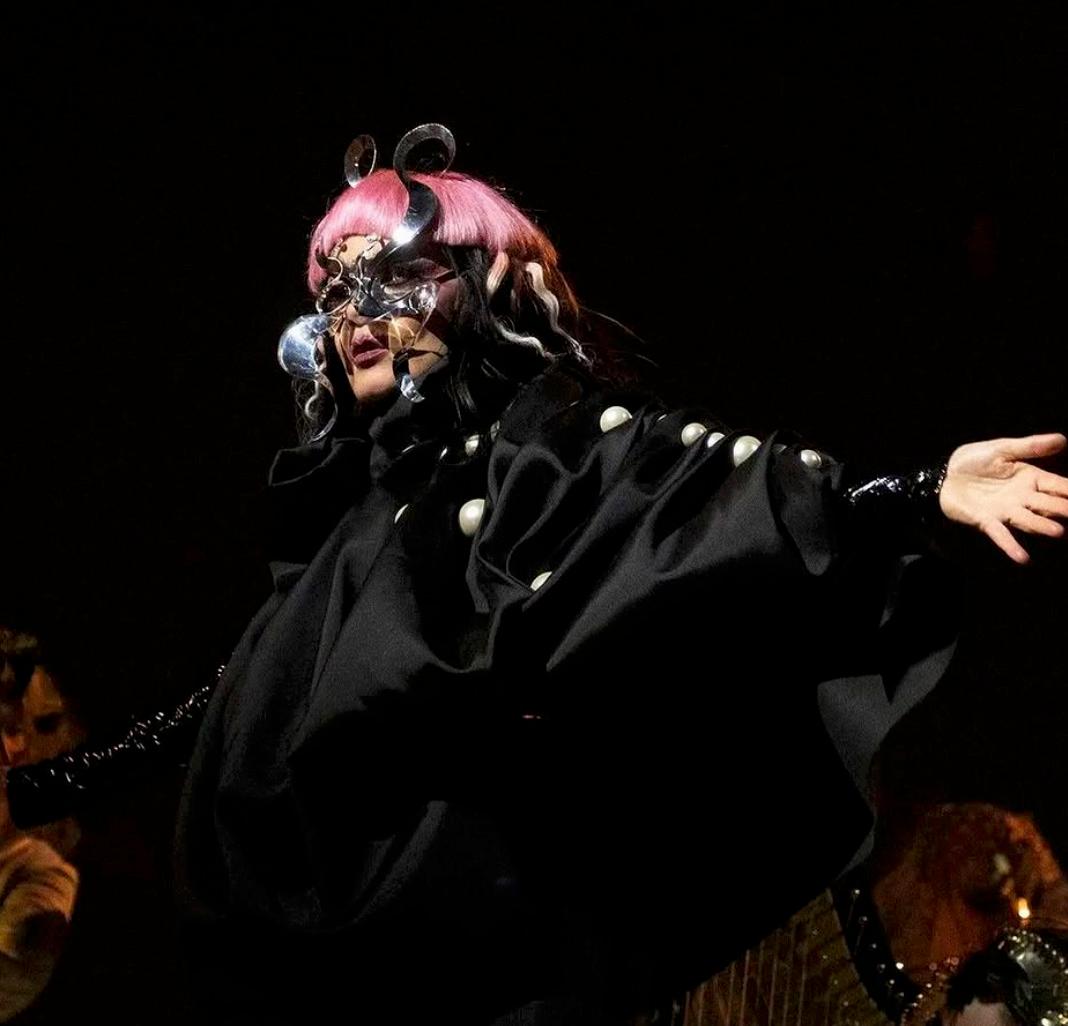
Volta (with a wonderfully weird album cover – Bjork called the brightly colored costume an “earth-mother, electronic, with a sense of humor” – very fitting) was hyped as a return to Björk’s pop roots through her collaboration with Timbaland. He worked on seven of eleven tracks on the album, which was not the pop or hip-hop sound listeners expected; the album is challenging, not smooth, even discordant at times. Working as always with lyrics themed around nature and sensuality, the ambitious Biophilia (2011) carried Björk into delicately layered sonic territory. It was a notable conceptual effort: Biophilia is both a concept album shaped around the Icelandic financial crisis of 2011 and a unique multimedia release, accompanied by iPad apps that expanded on each song. Tread with excitement and at your own risk. Vulnicura and Utopia (2015 and 2017) are both products of deep collaboration and friendship with massively acclaimed, avantgarde producer Arca. Björk’s newest album is 2022’s Fossora, which was accompanied by stunning stage shows and elaborate costumes (available to watch as CORNUCOPIA: Live).
On stage, Björk hasn’t always been Björk. The artist first rose to critical acclaim as the frontispiece of The Sugarcubes, a band she shared with her ex-husband Þór (pronounced Thor) Eldon, also the father of her first child. According to group legend, the band formed on the same day that Björk gave birth to their son. Jangly and sweet, The Sugarcubes floated away from the post-punk sounds of her earlier bands.
This obscure lore, the tale that the band was formed on an auspicious day, is just one
story that floats around Björk. Also well-known is the infamous “TV interview” in which Björk takes apart a television set and muses about Icelandic poetry. For the new Björk listener, don’t overlook the trove of digital artifacts: music videos (which have themselves won awards!), interviews (showcasing Björk’s delightful personality), and the copious archive of other artful promotional material.
In 2001, the first stop of the Vespertine tour was in a familiar place, just up the street from Columbia: Riverside Church, which was transformed into a sound hall for the concert. Eleven Icelandic choir girls and a smattering of instruments and synthesizers and a harp and harpist and the colorful being of Björk filled the space. The recording survives online – just over thirty minutes of characteristically techno-folksy assemblage.
Björk has been compared innumerable times to an “alien” or a “baby-woman” or any other term one can think of that says that she seems more than human, “elf-like” and all ages at once. It’s true that her presence is as ethereal as it is powerful. It’s also true that “baby-woman” is far from the truth of Björk’s story. Listen for themes of love and selfdiscovery, what one has to give up for a lover, of motherhood, death and life, and attention to
beauty in submerged, unusual, visceral places. “Big Time Sensuality” (Debut) is one of Björk’s best songs, and it encapsulates her power to hold your hand and take you into a little world, all of her creation, a little cave of sound and light. “Army of Me” (Post) and “It’s Oh So Quiet” (Post) are brash, powerful songs with utterly fantastic music videos. On “Aeroplane,” (Debut) instruments scuttle and shake like insects, music trembling as it fades out. From Post, “Hyperballad” is a psychoanalytic dream. “Desired Constellation,” nestled halfway through Medúlla, is strangely moving, a capella. Björk has employed the locrian mode (“Army of Me”); makes frequent use of harps as well as pioneering electronic music technology; a sound machine that used a Tesla coil (“Thunderbolt,” live); and screams, groans, and growls more times than I could list. Her eclectic tastes shouldn’t be discouraging, though. For the new Björk listener, start with Debut and advance through her discography in a linear fashion: her beginnings are more accessible than you may have been led to believe. A single Björk track may sound difficult on its own, but fit seamlessly into the album at large.
“The Anchor Song” (the final track on Debut) is a lovely feature in Björk’s oeuvre – a stripped-down, grounded song about dropping her anchor and finding home near the coastline. Sometimes, Björk does come down from the dizzying heights of the dancefloor and her lush stage-worlds. Usually, she returns in some form to Iceland’s land of extremes, and as listeners, so should we – never forget with Björk that the beauty and wonder are in the intertwining of the ecology and the sensual body, the link between technology and embodiment in the modern world, of emotions and the landscape around us. The fortune-teller and the electrician are alive and well inside her music. Björk is above all a masterfully poetic artist. Listen closely, and watch for what her next vision for us is. In every song, Björk is crafting a world. Let her take you there.
Happy birthday, Björk!
Björk onstage during CORNUCOPIA: Live via Björk’s Instagram
MEET A MEMBER
IAn Interview with Ted Schmiedeler
first met Ted Schmiedeler during tech office hours last fall, as an intern anxiously preparing for WKCR’s licensing exam— the only thing standing between me and announcing the men’s basketball home opener. I remember sitting there overthinking everything I had learned in my tech classes, but Ted’s lighthearted demeanor made it all less overwhelming. He treated me and all the other interns as if we were already a part of the KCR community.
When I left that evening, I joked that I would see him on Media Day if I passed. I did.
Ted has formerly served as WKCR’s Station Manager (2024-2025) and Student Life Director (2023-2024), and he’s currently the Head Archivist (2025).
Outside of these titles, he’s done just about everything there is to do around the station. He’s the kind of person you can find anywhere— always doing something KCR-related. Whether it’s helping someone troubleshoot with the board in the station’s recording studio or answering a Facetime call from me and my Sports Co-Director, Mason Lau, after his race to help us remember the tech set up he had explained less than 24 hours prior: Ted seems to have a hand in everything. Not because he has to, but because it’s simply what he does.
However, what’s most impressive about Ted is not just how much he has done, but how he shows up so fully for everything he does. He gives so much of himself to this place that it’s hard to imagine what next year is going to be
by CJ Gamble
like without him.
He’s a great friend and an inspiring role model—the kind of KCR member I hope to be someday.
CJ Gamble: You’ve worn many hats here at WKCR: station manager, student life director, and now you’re finally kicking off your senior year. It’s hard to sum up everything you’ve done here, but could you give an overview of your involvement at the station?
Ted Schmeideler: That’s a big question. I started at the very beginning of my freshman year, got super involved, and this was when KCR was still kind of coming out of the pandemic so there was a lot of opportunity for growth. The station now has this vitality, almost, to it because people put in a lot to rebuild us after COVID. I mean, we were literally down to six people during COVID. One of the first things I did was I spoke a lot with Red Stein (CC ‘22), who, ya know, never will get enough credit in the KCR history debates about the importance they played, but they basically carried the station through COVID, them and Mac Waters (CC ‘22), and then handed it off to the Josh Kapilian (SEAS ‘23) and Benny (Magid, CC ‘23) generation. And then I came in, and they were seniors, [and] they really had a lot of energy, as did other juniors that year. So, Maria Shaughnessy (BC ‘24) and Sarah Barlyn (BC ‘24) joined that semester with me. At the beginning there, I joined, I got super involved, and then, there [were] all these opportunities to rebuild the station after COVID. So Benny, Josh, and I restarted the sports department. We hadn’t
done sports in like three years. Now we’ve got press passes with the Yankees and the Mets, and we cover women’s basketball, which means we can travel for that; it’s become this much bigger thing. Sarah Barlyn really took charge on restarting Live Constructions, and I was really happy to be there from the beginning. I booked the first show back after that, and we hadn’t done that consistently since before COVID, and now it’s a staple of the Sunday schedule. Same with the On Air Guide, which is why this interview is so special and beautiful. Ale DíazPizarro (CC ‘25) and Maria really had this grand vision for bringing back the On Air Guide. And as a young freshman who had this kind of earnest sense of just really wanting to get involved with the station, it was another great opportunity for me to just throw myself into the deep end and help them restart that. Then, I ran for student Life Director and was elected. We had that Fund Drive my freshman year in the spring of ‘23... Sam Seliger (CC ‘24), the outgoing program director, was like, ‘this [the Spring 2023 Fund Drive] is do or die here.’ We got called into some meetings with Columbia admin, and they basically were saying ‘you guys have been in the red since COVID, you’re not making enough money… if you guys don’t meet your operating costs for this year, we’re going to have to have some very serious conversations about the direction that we’re going to take the station.’ I was very concerned when they said, “We’re going to take the station,” because it was insinuating that they were going to come in— without knowing the importance of KCR—and make decisions. It was in this very formative period of my KCR journey; I saw the listeners really rally behind us, and we said, “We need to raise a bunch of money,” and they had our backs there. We totally kill[ed] our fundraising goal. We were able to keep the administration kind of out of KCR in a way that was meaningful and allowed us to maintain our independence. I eventually just decided to run for station manager, sophomore year into junior year, and then we hit protest coverage, which was a really big thing. There were other big things during my station manager tenure—bringing
back the Bix Biederbecke birthday broadcast was big, [so was] Porch Stomp—but I’m sure like 10 to 15 years down the line, people are going to look back and be like, ‘okay, what this group of people did was protest coverage.’ It was a crazy experience, you know; we were just trying our best to meet the moment, and doing so in a way that felt true to KCR and true to who we all were, and everyone was really coming together and pouring their, like, heart and soul into bringhing the news to people in a way that countered the university narrative and the mainstream narrative. Which was really awesome. After that, [reaching the] term limit for eboard, I needed to take a few months to kind of just be like—there’s life outside of the radio station. I then came back as the head archivist and [have] launched the archive team in a meaningful way. I say team as important because previously it was kind of just one person who knew everything about the archive. Some things about the archive and then they would pass that on to the next one person who would pass it on to the next one person. So I feel very strongly about making it a team, making it a community, bringing in more people and making sure that knowledge doesn’t get lost and we don’t break that chain. So that’s where we’re at now.
You’ve spoken a lot about “we’s”. What has been your experience with building a community here at KCR? Did you join with friends, or was this a decision you made all on your own?
This was a decision I made all on my own. I saw the flyer; I knew I wanted to try out college radio. But this is just such a place ripe for community. I think any place that gives people the opportunity to throw their whole selves into something, in a way that can kind of be unhealthy at times. Ya know, you start neglecting other parts of your life, whether that’s like, okay, I should have called my mom this week or maybe I should have started harder for that quiz, maybe I’m not getting enough sleep. You just throw your whole self into this thing and just just kind of
like ripe for when you’re in when you’re in a space where everyone is doing that, it’s this beautiful opportunity for coming together. So the community here has been a kind of foundation for what keeps me here. Some of the most meaningful friendships of my life have come out of here. People, I will continue to see into the last years of my life, I hope. It’s a really wonderful thing. And of course, like you come for the radio, right? You come for the music. There is this really interesting analog technology. There’s the records, there’s the archive. There’s all this other stuff that I care about in the abstract. Like, I enjoy music, I enjoy archiving, I enjoy writing for the On Air Guide. But the community really brings that all together and kind of makes it a cohesive force.
Along those lines, everyone knows KCR is so much more than its student programming body. Who has been your favorite alumni you’ve had the opportunity to meet or work with while at KCR?
That’s such a good question. I think I’ll name three people really quick. One was Sid Gribetz (CC ‘77, longstanding programmer of Daybreak Express on Tuesday mornings), who is a legend, of course, here. But when I first joined, I didn’t know that. So when I first joined, I was very eager, so I took the Monday night Transfigured Night. So Tuesday morning is really 1 a.m. to 5 a.m. and I’d wake up for my 10:10 a.m. Latin class and be totally exhausted. Sid would come in for Daybreak Express right after me, so I’d be super tired trying to just pull myself together, and Sid would come in and just give me these nuggets of just wisdom about KCR and radio. Sometimes I’d stay, ya know, 5:10, 5:15, 5:20, and it’s like, I got to get to bed— I got class in four, five hours. But, Sid is a real kind of guide there in a really awesome way. Then my sophomore year, I started doing a talk show on Monday nights, and I was sandwiched between Mitch Goldman (CC ‘87, biweekly programmer of Jazz Alternatives on Monday evenings)–who’s just a stellar human being in every sense of the word—always there for KCR, always has a smile on his face, always, you know, greeting
me with joy, and then Germán Santana, who is, on the other end of me…It was something I looked forward to on my Mondays. I was like, oh, I get to do my show, but I also get to see Germán and that’s kind of one of the really awesome things about KCR’s is all these like more tangential relationships where it’s like, I’m not going to be all buddy-buddy going out to get a meal or get drinks with like Mitch or Germán, but it’s still really meaningful. I care about those people, they care about me, and it brings me joy to see them. So I’d say those three. Three is a little bit of a stretch, maybe.
How do you think your time at the station has shaped how you are now?
Mmm. I think KCR’s really pushed me in a lot of ways, pushed me outside of my comfort zone, because it’s given me so many opportunities to try new things and to be a leader and to do important things. I feel like when there’s stakes involved, there’s a real opportunity for people to rise to meet those stakes. At other college stations, there’s often not as much stakes. You know, if you’re online only, you don’t have a lot of listeners, it might seem like it doesn’t really matter and you’re just doing it for yourself. We’re doing it for ourselves and because we love doing it, but we’re also doing it because there’s a large body of people who have us incorporated into their day to day life as part of their commute or listening habits. So there are people who all of our things affect. I think that has pushed me to take things a lot more seriously and to really be organized. I think coverage especially pushed me to think critically about the world, about journalism, about community, about sacrifice, about kind of leaving everything behind to do something you really care about. If that in the immediate moment is the big thing. It’s important to plan for the future, but I’ve come to have this sense of like, this thing that I’m doing right now is so important to me, and I just want to give my whole self to it, just do it in its entirety. I think that feeling has been unlocked by KCR, and I hope that I find other things in life where I feel the same sense of like, kind of endless giving,
because it’s giving me endless in endless ways back.
Looking back, can you pick a defining moment that made you realize what WKCR meant to you or that changed how you view your place here now?
“Defining moment” is tough. I think that there’s a lot of big moments that happen here, because that’s just the nature of what we do. I think, honestly, the small moments are almost more important and more meaningful, because they often just fall between the cracks of our memories. I would say a defining moment, and this is a little bit silly, but it just brings together, a big strand, of a lot of different strands. In my KCR experience was, alumni Ben Garber (CC ‘18), who rejoined the station after listening to our protest coverage. He needed help moving, in Brooklyn, [at the time he lived in Bedstuy]. So he called me and Georgia Dillane (BC ‘24), who I’m very dear with, up and he was basically like, “Can you guys come help me move?” And I was like “Okay sure! This alumni needs help, I’m free, Georgia’s free, we’ll head down together. It’ll be fun.” So we go down and he’s like, “Okay Ted, here are the keys,” and I’m like
“What are you talking about?” and he’s like, “Well, I don’t have a driver’s license and I don’t think Georgia does either, so you need to drive.” I thought he was kidding, but he was being dead serious. Now here [we are], it’s 8 a.m. on a Friday, I’m in the middle of Bedstuy, far away from where I thought I was going to be two days before driving this massive U-Haul truck down the street after not [having] driven since I had been back home winter break. Georgia and I just [help] move all this stuff out of this apartment and drive it to the storage unit and, you know, we’re just going to go about our day. I think that just encapsulates so much of what this is about, which is bringing people together. I had a great time and Georgia also had a great time. There’s that community aspect to it and also this sense of giving, everyone gives so much to each other and to the station. It’s this an outpouring of love for the community and a very human [form of] coming together. And I think that’s what radio is, right? We can all go to our own individual boxes and listen to our own individual music if you want, but you turn on the radio, and there’s hundreds of people listening with you. And someone is on the other end of that, communicating directly to you.
What are your favorite shows to program
here? What have your regular slots been over the years?
Freshman year, I did Transfigured Night and Offbeat weekly, which are both overnight; I did eight hours of overnight programming a week. My sleep schedule was ridiculous. Then I did Free Samples, which was a hip-hop samples talk show for a year, which was great. Then I did extended technique for a year as well, so those have been all my regular shows. Outside of that, I pretty much programmed almost every show, except for the longstanding alumni shows. One of my favorite memories was programming for 24 straight hours. Over the summer [in 2024] when I was a station manager, I just took the entire Sunday, midnight to midnight, like start[ing] with Saturday at the Opera and went all the way through and [programmed] all of it.
What’s your favorite special broadcast here at KCR?
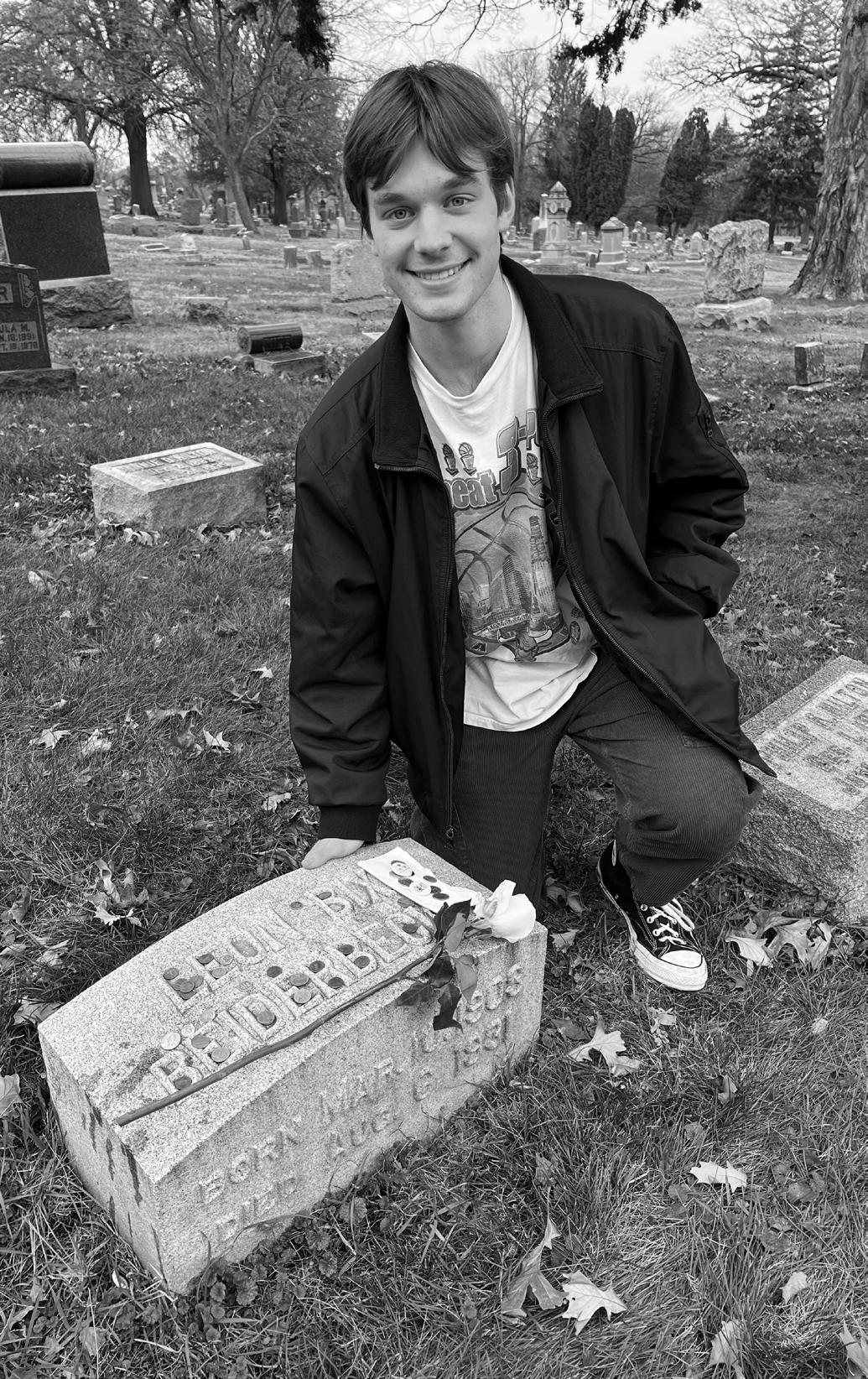
That’s a great question. I have a special affinity for the Bix Biederbecke birthday broadcast because I was getting personally named in hate mail when the decision was made to cut it, even though I played no part in that decision. Listeners were telling me that I was going to cause “irreparable economic damage” to the station. Then we brought it back and I visited Bix Biederbecke’s grave when I went to see my grandma in Iowa for Thanksgiving. I think Ragas Live is just an incredible day, just an absolutely incredible day of music. I’d probably put that in my favorite, special broadcast, but on a personal note the Bix really tugs at my heart strings. Also Antonio Carlos Jobim, I love programming that one every year.
You have spoken a lot about adversity during your time as station manager. How do you approach challenges that come to you both here at KCR in life?
I think adversity is something that we’re all going to face. Especially at KCR. I think being really on top of things is important. Being hyperorganized, trying to manage as much as possible, any sort of contingency or unexpected, so you can lay out all your options
as best you can and try to anticipate what’s going to happen. When you have control over the situation, you can try to not let it get out of hand. I also think working with other people is so important, recognizing that you won’t have all the answers, that you need to use other people, and that there are other people who actually want to help you through adversity. Meeting it head on and recognizing like this is going to be tough, but important things are tough. If it’s hard, it’s probably worth doing or at least trying to do.That was one of the questions of coverage. I found out about it and I went to the e-board and I said, “Hey, this is going to happen. Do we want to do this?” And pretty much immediately everyone’s like, “Yeah.” And I’m like, “Good. I think we absolutely should.” And there [was] a world where this goes really badly—with the listeners; with the students— there’s a world where this goes really badly because it’s going to be this high stakes adverse situation. I think just like saying like, this is going to be hard, but we’re still going to soldier on.
Many people, including myself when I first joined KCR, thought of the station manager as this elusive, kind of tucked away figure that just keeps this place running. However, within my first couple weeks here, I remember you hosting tech office hours and even joking together in those office hours about how I would see you at the basketball media day if I passed my exam. How did you maintain that approachability and stay so connected to the community here while leading it? The role of the station manager, there’s so much behind the scenes stuff that you got to do. You’ve got to constantly be making sure everything gets done. There’s all the behind the scenes stuff, and it’s really easy to get swept away. But, I think this is just a general philosophy of leadership, being out and about and visible ,and still doing the things that got you involved in the thing you are leading. No one [gets] involved to be a leader. They got involved to do something and then became a leader through that. I didn’t join KCR so I could
send Philip a bunch of emails and make sure the op-logs are correct. I joined KCR because I love radio. So not giving up that love of radio; and still doing the sports department, still teaching the tech classes, still writing for the on-air guide, all of that. I think also, the style of leadership where you’re out in the community inspires other people to be active as well. Which is beautiful because it becomes this reciprocal, we’re all feeding on each other’s positive energy and we’re all kind of pushing each other to be the best version of ourselves. It was very important for me to feel like I was still active and approachable; of course I am the station manager, but I also want to talk to the people who haven’t been licensed yet. [I wasn’t] trying to create this hierarchy, but where I am so like, you know, cool and separated and experienced and I’m speaking down at all of these people who are new. I wanted it to be a more horizontal thing where, you know, I’m station manager–I’ve got all these other rules–but I’m still meeting you as a person, as a programmer, at whatever level we’re at.
Well, you’ve described a lot of being such a big part of the community and shaping WKCR here. What hopes do you have for the future of all of us here at KCR?
Wow, you’re going to make me cry. I think that one of the beauties of KCR is that it’s essentially the same. The place stays the same and the people that rotate in and out, but the essence remains the same. The people cycle out, but in five years, there’s going to be another group of us and we will not know any of them, but the KCRness of it will not change. I hope that the new people are able to find the same joy that I found in it, and grow with it into a more mature understanding of what they’re dealing with. I hope that people are able to make the same lifelong friendships, and that I have been able to affect some of the younger folks in the same way that the older folks that I was around were able to kind of effect and inspire me. I think those chains of institutional knowledge and passing that along in the community are really important.
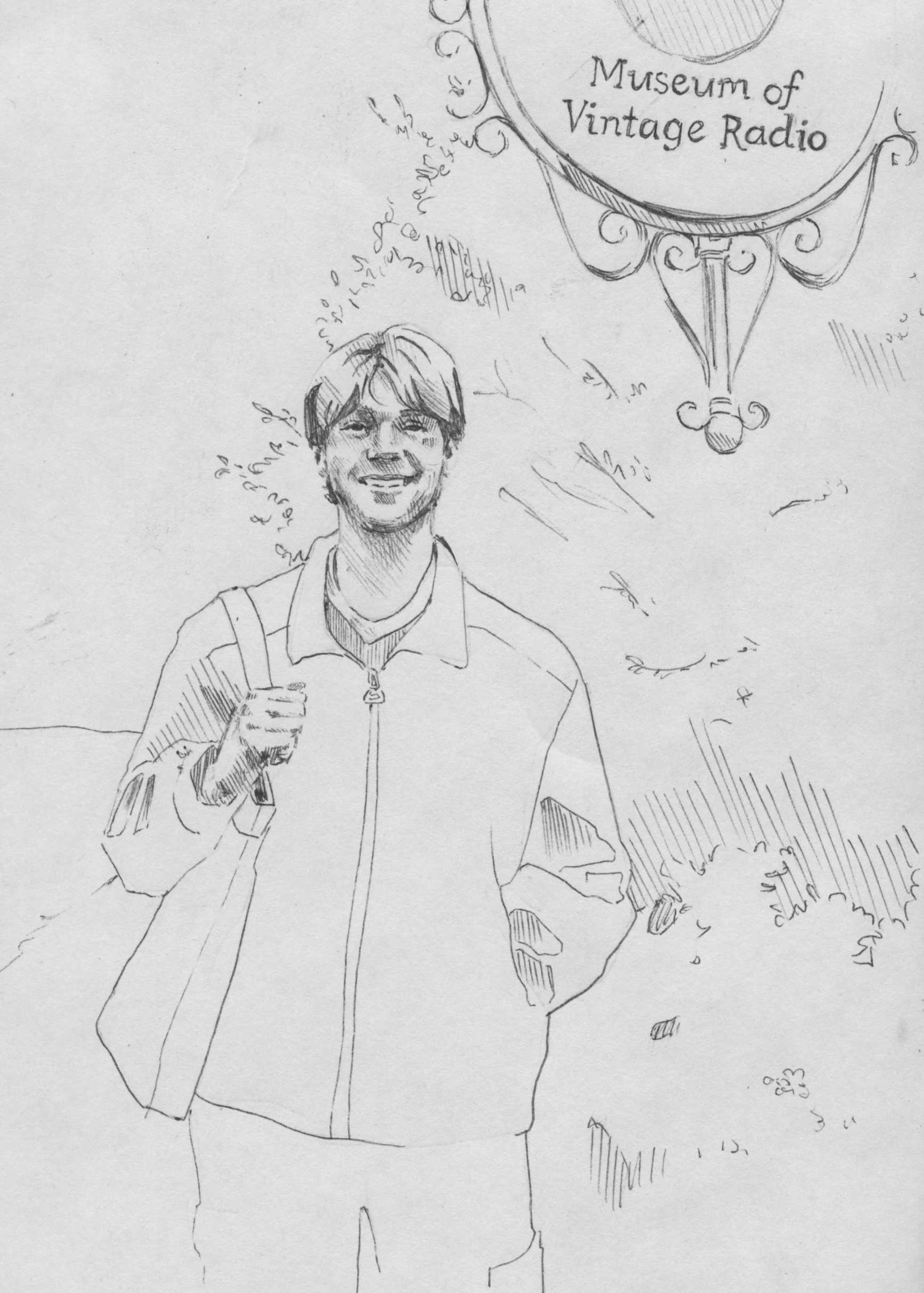
previous page: illustration by McCartney Garb above: photograph of Ted at Bix Beiderbecke's grave
Nine Inch Nail's Return to Form on Tron: Ares
by Jem Hanan NEW MUSIC
When Disney announced a new installment in the Tron canon, Tron: Ares, a unique question immediately became a part of the buzz: who would compose the score?
Tron: Legacy, the sequel to Tron (1982), famously featured a score from electronic music duo Daft Punk. Approached by director Joe Kosinski before the project was even greenlit, Daft Punk were initially slated to only create a song for the club fight scene, titled “Drezzed.” However, the duo pushed to compose the entire soundtrack, and worked with orchestrator Joseph Trapanese to create a score that featured electronic sound in addition to an 85-piece orchestra. While Thomas Bangalter did have some experience scoring for film, having worked on Gaspar Noé's 2002 Irréversible, the scope of Tron: Legacy was unlike anything the duo had worked on before. Daft Punk’s score became an integral part of the film’s creation, too. While traditional movie scoring is done after a movie is shot and edited, Daft Punk composed concept music before filming even began. Their music played a major role in shaping the aesthetic and atmosphere of the Tron franchise, revamped for the modern day. Sonically, the music is full of clean synths and pulsing basses blended with warmer, symphonic tones. Certain songs, such as “Overture,” lean more heavily into classic movie score arrangement, while others, like the aforementioned “Drezzed,” are more reminiscent of Daft Punk’s usual French house style. The final product is a score not quite electronic and not quite orchestral, but made harmonious through melodic motifs and a thrumming energy throughout. In February 2021, Daft Punk announced
their split, marking the end of an incredibly influential and prolific career. Almost exactly three years later, in February 2024, Tron: Ares, the third film in the Tron franchise, was announced. Without Daft Punk, it remained to be seen who would take up the mantle for the film's soundtrack. Enter Trent Reznor and Atticus Ross.
Unlike Daft Punk, this duo was no stranger to film scoring. In fact, one could argue the two have separate careers just in composing soundtracks, with their not insignificant filmography including The Social Network, The Girl with the Dragon Tattoo, and Challengers—all of which have received critical acclaim. However, when Reznor began making music, and was later joined by Ross, it was under the moniker Nine Inch Nails (NIN). In many ways, the sounds of Reznor and Ross as scorers versus a band could not be more different. The former: subdued, intentional, adapting to the needs of the story. The latter: unabashed, forceful, rough around the edges. However, that’s not to say the two are entirely at odds. In NIN’s more delicate pieces, you can hear the melodic echoes of pieces like The Social Network’s “Hand Covers Bruise.” In their more intense scoring, sharp dissonances are the backbone of albums like Pretty Hate Machine and The Downward Spiral. Reznor and Ross were, apparently, “at the top of ‘a very short list’ of composers”1 director Joachim Rønning had in mind for the Ares 1 https://www.billboard.com/culture/tv-film/ tron-ares-nine-inch-nails-film-score-director-interview-1236042358/#:~:text=After%20the%20ask%20 was%20out,on%20a%20perilous%20mission%20 %E2%80%94%20unfolds.
score. While not the most obvious Daft Punk successors, Nine Inch Nails was an intuitive choice for the “grittier version of Tron” which Rønning had in mind. What was surprising, however, was the decision to produce the score under the “Nine Inch Nails" discography and not that of “Trent Reznor and Atticus Ross.” They have only done this once before, in 1996, when they scored the soundtrack for the video game Quake; even then, it was murky if the Quake soundtrack was truly a NIN (and not Trent Reznor) production, until the 2020 rerelease under the NIN moniker. When asked why they decided to use the NIN name rather than their own, Reznor and Ross said, “It's still the same two people, but we're in a different mindset. We feel like we can play by different rules a bit, and the people working on the film were excited about that, so we thought we'd try it.” 2
On the soundtrack’s single, “Alive As You Need Me To Be,” you can hear the “grittier” Nine Inch Nails sound in full force, which I had the privilege of hearing live. “Give me something to believe in,” Reznor rasps, “All these hands have got a hold of me.” In the scoring process, Rønning made it clear that, “It’s their band, it’s their sound. And I wanted their take on the movie, their take on the story.” It's immediately apparent how Rønning providing Reznor and Ross the breathing room to explore their sound affected the production. Unlike Daft Punk’s score, NIN’s leans heavily into industrial electronic textures and pulls back from bighter, symphonic elements, mirroring the darker themes in Ares. The pieces most reminiscent to traditional scoring are the ones where the duo’s The Social Network display, such as “Echoes”; more subdued, but Reznor and Ross’s unique ambience all the same. Another obvious difference between the Legacy and Ares scores is that the latter features four songs with Reznor’s vocals: the aforementioned “Alive As You Need Me To Be,” “I Know You Can Feel It,” “Who Wants To Live Forever” (with additional vocals by Judeline), 2 https://bleedingcool.com/movies/tron-arestrent-reznor-explains-why-they-are-scoring-as-nin/
and “Shadow Over Me.” These songs easily slot into the NIN discography while still feeling like they belong to the atmospheric coherence of the Tron franchise.
The score as a whole is industrial and melodic, with some tracks more pensive and others high in intensity. In many ways, it harkens back to the ‘80s origins of the first film, but with a modern twist to mirror the introduction of an AI entity to the franchise. Where the Legacy tracks are clean, the Ares ones are messier—melodies created through distortion, bass that seems to be spilling from the confines of its own production, and soundscapes filled to the brim with electronic ornamentation. While the shadow by Daft Punk loomed large over the franchise, Reznor and Ross embraced their sound and produced a score that represented the evolution of Tron (arguably more effectively than the film itself did).
In the end, Tron: Ares demonstrates that a franchise’s musical identity can evolve without losing its core pulse. Reznor and Ross take up the mantle left by Daft Punk, not by recreating their sleek futurism, but by pushing the aesthetic forward into a denser, darker,
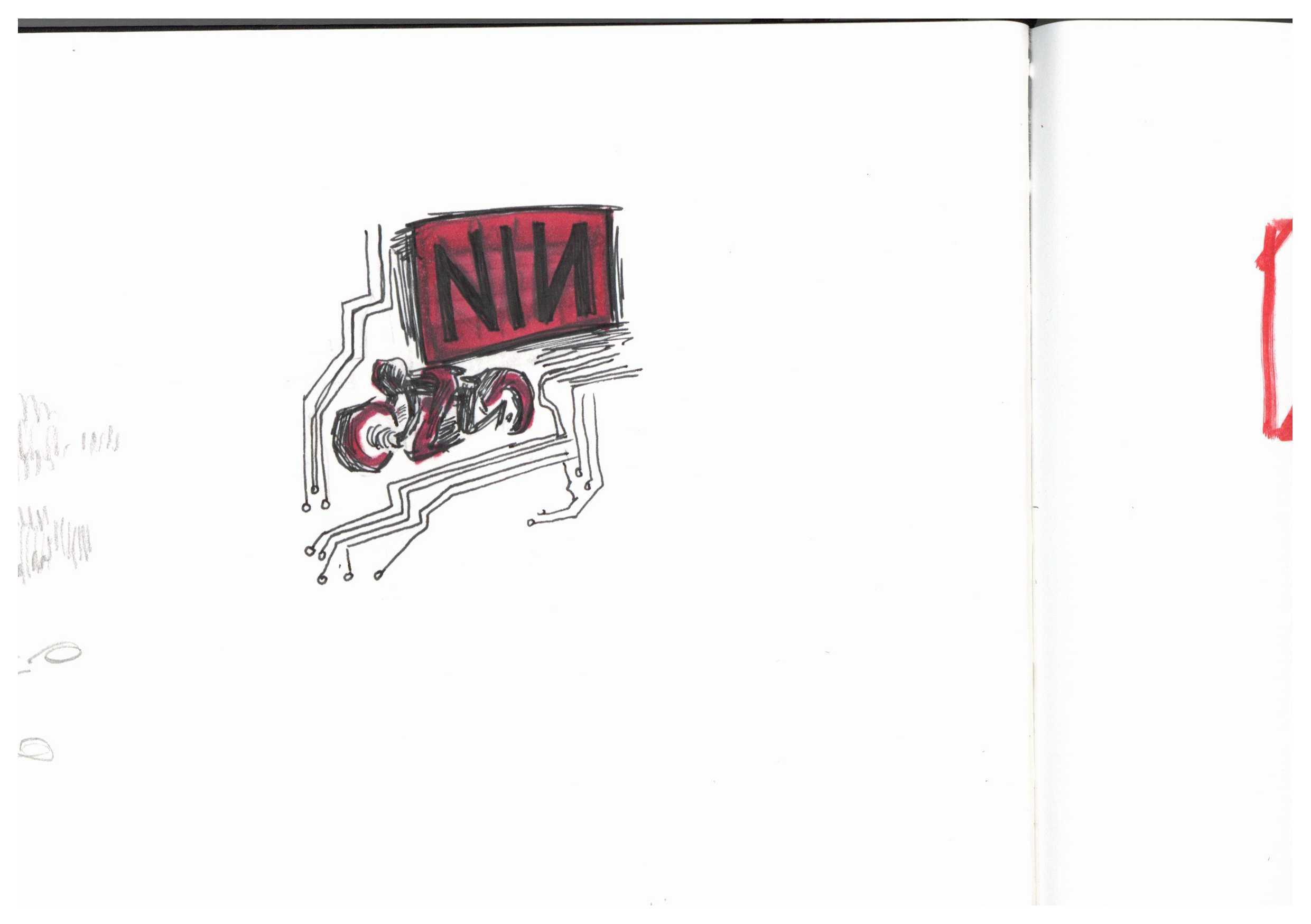
Illustration by Jasper Dabbs
am
am
am
am
am
am
Sin Fronteras
Jazz Alternatives
Nueva Canción
Som do
Special Broadcasts
SPECIAL BROADCASTS
Hip-Hop Festival
Thursday, November 6, 10 PM -
Friday, November 7, 6 AM
This year’s hip-hop festival, which runs for 8 hours, is a live celebration of this American genre, from the classics to today. The broadcast will feature interviews and live freestyles. Confirmed guests include Yah Sins, Frank Knight, and Mickey Fatz.
Live from Brooklyn Folk Fest
Saturday, November 8, 1:40 PM start
WKCR will broadcast one set live from Jalopy’s Brooklyn Folk Fest: Ma Rainey’s Living Tradition of the Blues. More information about the festival is available on their website: https://www. brooklynfolkfest.com/.
Coleman Hawkins Birthday Broadcast
Friday, November 21 all day
In keeping with WKCR tradition, we celebrate the 121st anniversary of Coleman Hawkins’s birth with a 24-hour birthday broadcast. Hawk (or Bean, as he was also known) helped establish the saxophone as a primary instrument in jazz. He is known for his work in swing and early bebop, particularly for his iconic recording of “Body and Soul.”
SUNDAY PROFILES
Jimmy Forrest
November 2, 2:00-7:00PM
Host: Sid Gribetz
The first Sunday Profile of the month comes to you from WKCR’s archival collections. Jimmy Forrest played in the bands of Jay McShann, Andy Kirk, and Duke Ellington; he led his own groups; he played with Miles Davis and Harry “Sweets” Edison. We give a loving nod to him every week here on WKCR with our Wednesday morning soul program, Night Train (1-5 AM).
Kenny Barron
November 9, 2:00-7:00PM
Host: Rachel Smith
While most of our Sunday Profiles celebrate departed geniuses, on November 9, host Rachel Smith will confer the honor of a five-hour broadcast to a living artist: master pianist and composer Kenny Barron. From the start of his career, Mr. Barron dove into the deep end of jazz, playing with Yusef Lateef even before he finished high school. He has an impressive discography in terms of band variety and style. But what strikes an audience the most is his sensitivity to melody and, as a result, his ability to move people. This Sunday Profile will take you through Mr. Barron’s career, from the early days right through to the present (and future).
Freddie Hubbard
November 16, 2:00-7:00PM
Host: Rachel Smith
One of jazz’s finest trumpeters, Freddie Hubbard played with the best of the best and led his own bands. He played in Art Blakey’s Jazz Messengers in the ‘60s during one of the group’s most beloved iterations––a testament to the musical status he had achieved by then and a laboratory for him to develop future musical ideas. He straddled a wide variety of styles, from Blakey to Coltrane to Bill Evans. This Sunday Profile will be marked by formative recordings that show his development as a true artist.
Gigi Gryce
November 23, 2:00-7:00PM
Host: Sid Gribetz
This year marks the centennial of the jazz saxophonist, flautist, and composer Gigi Gryce. In the early 1950s, he wrote for Max Roach and Horace Silver and played with Tadd Dameron and Howard McGhee. He joined Lionel Hampton’s band in 1953, where he met Clifford Brown. He would record with Brownie on some of his best-known sessions. He formed a quartet with Art Farmer the next year, which cemented his status as a major figure in jazz. WKCR’s own Sid Gribetz will present an in-depth curated look at Gryce’s discography. Profile will be marked by formative recordings that show his development as a true artist.
Bill Strayhorn
November 30, 2:00-7:00PM
Host: Emma Lacy
One day after the 110th anniversary of his Birthday, Jazz Department Director Emma Lacy presents a Sunday Profile in honor of the great Billy Strayhorn. Best known for his close collaboration with Duke Ellington, which lasted over 25 years, Strayhorn was one of the finest composers and arrangers in the history of the music (in addition to his own musicianship, of course). His pen gave birth to beloved standards like “Lush Life” and “Take the A Train.” This five-hour profile will present both his iconic and lesser-known works for a full look at the career of this jazz legend.
Show Listings
JAZZ
Daybreak Express, Mon.-Fri. 5-8:20am
Out to Lunch, Mon./Tues./Thurs./Fri. 12-3pm
Jazz Alternatives, Mon.-Fri. 6-9pm
The core of our jazz offerings, these three programs span the entire range of recorded jazz: everything from New Orleans jazz, jazz age, swing era, bebop, hard-bop, modal, free, and avant-garde. Hosts rotate daily, offering an exciting variety of approaches, some of which include thematic presentation, artist interviews, or artist profiles.
On the first Wednesday of every month, Jazz Alternatives becomes “The Musician’s Show” and is hosted by a professional working musician.
Birdflight, Tues.-Thurs. 8:20-9:30am
Archival programs from the late Phil Schaap, one of the world’s leading jazz historians, producers, and an NEA Jazz Master, who hosted this daily forum on the music of Charlie Parker for about 40 years.
Now's The Time*, Fri. 8:20-9:30am
The newest show from WKCR Jazz is dedicated to jazz as a living art form and features the music of young, upand-coming musicians pushing the genre forward.
Traditions in Swing, Sat. 6-9pm
Archival programs from the late Phil Schaap. This awardwinning Saturday night staple presents focused thematic programs on jazz until World War II. Schaap presents the music, much of it incredibly rare, from the best sound source—often the original 78 issue.
Phil Lives*, Mon. 3-5am
Selections of archival programs from late Phil Schaap. This show features interviews, tributes, and portions of longform programs.
Jazz ‘til Dawn, Sun. 4-6 AM
An early Sunday morning jazz program, limitless in era and style.
The Early Music Show, Fri. 9:30am-12pm
Dedicated primarily to European medieval, Renaissance, and baroque music before c. 1800.
Extended Technique*, Wed. & Thurs. 3-6pm
WKCR’s first interdepartmental show (in the New Music and Classical departments) dedicated to contemporary classical music. Under the direction of the New Music and Classical departments, this program is dedicated to experimental classical music.
Afternoon Classical, Fri. 3-6pm.
Two hours of unrestricted classical music selections followed by one hour dedicated entirely to the music of J.S. Bach.
Saturday Night at the Opera, Sat. 9pm-12:30am.
One of NYC’s longest running opera shows, Saturday Night at the Opera features one opera in its entirety, with time for history and commentary, each week.
NEW MUSIC
Afternoon New Music, Mon. & Tues. 3-6pm
Our daytime new music program features a wide variety of music that challenges boundaries and subverts categorizations. Shows include everything from seminal new music compositions to the most challenging of obscure deep cuts and new releases.
Transfigured Night, Tues./Thurs. 1-5am and Sat. 2-6am
Our overnight explorations into the world of new music, Transfigured Night rewards our late night listeners with a wide range of sounds and experimental music.
Workaround*, Fri. 9-10pm
WKCR presents live sets from local professional and student DJs.
Live Constructions, Sun. 10-11pm
This weekly program features a live in-studio performance or a previous performance recorded at WKCR.
Cereal Music, Mon.-Thurs. 9:30am-12pm
An entirely open-ended classical show to start your weekdays.
* Indicates show was created after January 2022
LISTINGS FOR LISTENERS
Honky Tonkin’, Tues. 10-11pm
One of WKCR’s longest-running American music programs, Honky Tonkin’ focuses on country music from the 1930s through the 1950s.
Tuesday’s Just as Bad, Tues. 11:30pm - Wed. 1am
For the first hour, Tuesday’s Just as Bad explores the world of blues prior to World War II. In the final half hour, hosts turn to the post-war years.
Night Train, Wed. 1-5am
All aboard! One of two overnight programs in the American Department, Night Train rolls through the post-war R&B and soul tradition, from the genre’s emergence in the 1940s and ‘50s through the funk revolution in the ‘70s. Shows often feature extended live recordings and concerts.
Offbeat, Fri. 1-5am
Offbeat exposes undiscovered, underplayed, or up-andcoming new hip hop artists, including experimental instrumental artists not typically played on mainstream hip hop radio.
Across 110th Street, Sat. 12-2pm
Across 110th Street airs soul, funk, and dance music from the 1960s through the ‘80s and ‘90s.
Something Inside of Me, Sat. 2-4pm
WKCR’s Saturday afternoon blues show, Something Inside of Me focuses on electric and post-war styles.
Hobo’s Lullaby, Sat. 4-6pm
Rooted in the folk revival of the 1950s and ‘60s, Hobo’s Lullaby airs American folk and traditional music styles from the early 20th century through the present day. Shows feature old staples like Leadbelly, Elizabeth Cotton, and Woody Guthrie through contemporary stalwarts like the Carolina Chocolate Drops.
Notes from the Underground, Sun. 12:30-2am
Notes from the Underground showcases contemporary hip hop and rap music with an emphasis on emerging and experimental artists. The program also hosts local and visiting artists for interviews, freestyles, and guest curation.
Amazing Grace, Sun. 8-10am
Greeting listeners on Sunday morning, Amazing Grace shares the African-American gospel tradition.
The Moonshine Show, Sun. 10am-12pm
On the air for nearly 60 years, The Moonshine Show showcases the American Bluegrass tradition, from the earliest roots in vernacular string-band music, the genre’s pioneers in the 1940s and 50s and advancements in the 60s and 70s, through the leading innovators of today.
The Tennessee Border Show, Sun. 12-2pm
The Tennessee Border Show highlights the singersongwriter tradition, from Hank Williams and Townes Van Zandt to Lucinda Williams.
Caribe Latino, Mon. 10pm-12am
Caribe Latino features the diverse, upbeat music from Latin communities in the Caribbean. Popular Latin rhythms such as Salsa, Merengue, Bachata and Latin Jazz take center stage throughout the program.
Urbano Latinx, Tues. 12-1am
From salsa and merengue to Latin punk rock, Urbano Latinx airs contemporary sounds from Latin America, the Caribbean, and the diaspora.
Sin Fronteras*, Wed. 12-3pm
Occupying the time slot of Out to Lunch on Wednesday afternoons, Sin Fronteras explores the tremendous and growing tradition of Latin Jazz.
Nueva Canción, Wed. 10-11pm
Nueva Canción explores protest music created throughout Latin America during the 1960s and ‘70s, on its own and in the context of protest music from other countries and during time periods.
Som do Brasil, Wed. 11pm - Thurs. 1am
From samba and bossa nova to MPB, Som do Brazil features the enchanting sounds and rhythms of Brazil.
Sonidos Colombianos, Fri. 10-11pm
Sonidos Colombianos presents music from Colombia. The bilingual musical tour includes not only cumbia, but also the guitar-based bambuco from the Andean region, the harp llanero music from the Eastern Plains, the marimba-infused currulao from the Pacific Region, and the accordion-driven vallenato of the North Atlantic Coast.
* indicates show was created after January 2022
LISTINGS FOR LISTENERS
The Mambo Machine, Fri. 11pm - Sat. 2am
The Mambo Machine is the longest running salsa show in New York City. The program plays a wide spectrum of Afro-Latin rhythms perfect for dancing.
El Sonido de la Calle*, Sun. 2-4am
The Latin companion to Sunday morning’s Notes from Underground, El Sonido de la Calle highlights the diverse world of contemporary Spanish-language hip hop and dance music.
IN ALL LANGUAGES
The Celtic Show, Mon. 12-1am
Music from across the island of Ireland throughout the era of recorded music, particularly focusing on traditional folk and vernacular music forms.
Coordinated Universal Time, Mon. 1-3am
Coordinated Universal Time brings listeners the latest cut of music from across the globe, especially highlighting music that does not get attention in America.
The African Show, Thurs. 10pm-12am
The longest running African music radio show in the United States, The African Show brings listeners a variety of music from the entire continent of Africwa.
Middle Eastern Influences, Fri. 12-1am
Middle Eastern Influences features selections from the Middle East and North Africa, with particular attention on traditional forms.
Sounds of Asia and Couleurs Antillaises, Sat. 6-8am
Previously Sounds of China, Sounds of Asia explores the recorded musical traditions and innovations of Asia and the Pacific Islands. Couleurs Antillaises features music from Haiti and the French-speaking Carribean. These shows alternate in the Saturday morning timeslot so each airs every two weeks.
Eastern Standard Time, Sat. 8am-12pm
One of New York’s most popular Reggae programs, Eastern Standard Time captures listeners with the hypnotic sounds of Reggae and Jamaican dance music.
Field Trip, Sun. 6-8am
Field Trip focuses on the music and practice of field recordings: music recorded outside of a studio. This definition is expansive and includes everything from released recordings to street music documented by WKCR.
Raag Aur Taal, Sun. 7-9pm
Raag Aur Taal (which means “melody and rhythm”) explores the classical musical heritage of South Asia.
Back in the USSR, Sun. 11pm-12am
Back in the USSR features music from Eastern Europe, East Asia, and Central Asia, from the mid-20th century through the present.
NEWS & ARTS
Monday Morningside*, Mon. 8:30-9:30am
WKCR’s morning news broadcast, Monday Morningside features segments on events around Morningside Heights and upper Manhattan. All episodes are available as podcasts on Spotify.
News and Arts Program, Sun.-Thurs. 9-10pm
These programs form the core of our News and Arts programming. On Sundays, “Soundstage” features a live reading of a play; on Mondays, “Late City” offers retrospective coverage on local cultural happenings; on Thursdays, “Playlist Profiles” characterize a person through music. As news is constantly evolving, note that these programs are subject to change and preemption.
SPECIAL BROADCASTS
Sunday Profile, Sun. 2-7pm*
This five-hour program dedicated to a longform, researched profiles of a pioneering artist, label, or musical movement. Originally known as “Jazz Profiles,” this show has expanded its scope; today, it may feature any of the musical traditions represented by WKCR’s programs.
Pianos: A Night in the East Village
by Gwynn Schliesser
Walking through the East Village is like entering a counterculture jungle. The streets are lined with hip thrift stores, tattoo parlors, and nonconformists hanging out on the sidewalk. Tucked away on Ludlow Street sits the bar Pianos. On a Tuesday night, I wandered into the raw, low-lit venue. In an age dominated by trending clubs, it was refreshing to be in an authentic, albeit gritty atmosphere (the affordable drink menu was an added bonus). Pianos has two stages: an intimate lounge upstairs and a worn-in, larger area downstairs, perfect for dancing and complete with a disco ball. Keeping with the bohemian legacy of the neighborhood, it attracts emerging artists from all genres, hosting performances every night of the week. Kyra Baskin, ewan., and Arianna Barricelli were the three acts I saw that night. Baskin’s stripped-down sound was reminiscent of a modern Joni Mitchell, while ewan. channeled a punked-out Jeff Buckley. Their talent was evident, but nerves and naivety, evident in their shut eyes and stillness, kept their performance from fully blooming. While talented musicians, I look forward to observing them grow as performers. I expected a similar energy from the last act—a set full of talent, but with an inexperienced stage presence. Instead, Arianna Barricelli filled the space with her hauntingly beautiful voice and charismatic nature. The Brooklyn-based Philadelphia native focuses on alternative folk and indie. After her performance, I caught up with Arianna to talk about songwriting, roots, and what it’s like navigating New York’s music scene as a young, rising artist.
Gwynn: How did you first get involved in music?
Arianna: I didn’t pick up my guitar, sad to say, until I went through a breakup. I needed to put all of those feelings and frustrations into something. But I’ve been writing music forever.
How did your upbringing influence your music?
When I was 10 years old, I was diagnosed with cancer. I couldn’t play sports well, and it was killing my ego. My mom found a musical theater camp to go to, and that pushed my love of singing forever.
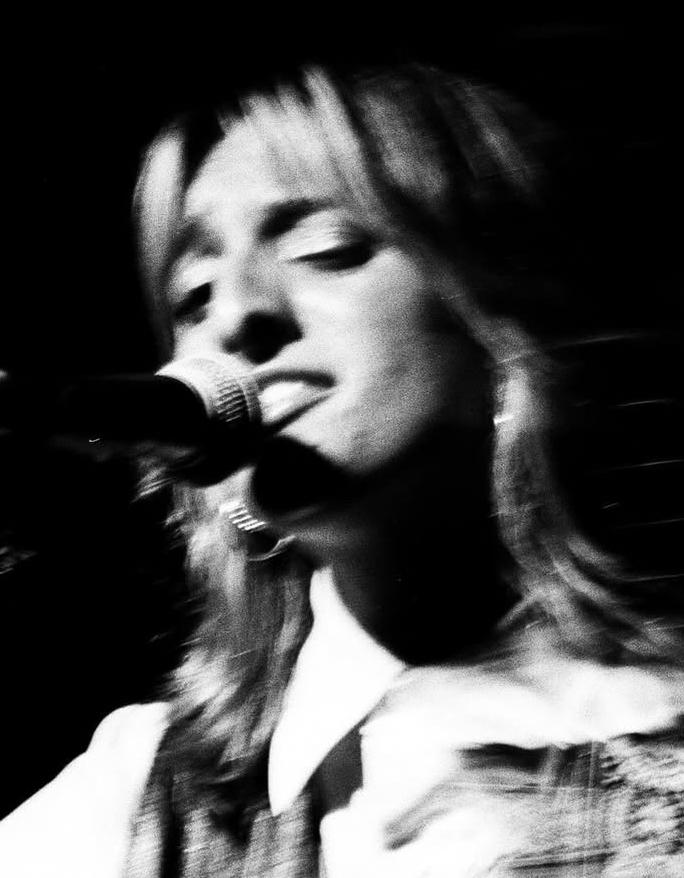
Image of Arianna Barricelli by Gwynn Schliesser
What was your first conscious experience with music where you thought, “Wow, this is a really powerful tool?”
I have those all of the time. My first ever one was the Hannah Montana/Jonas Brothers concert. All I could think was, ‘I want to be Hannah Montana so bad.’ And then the most recent feeling of thinking I could write music forever was Phoebe Bridgers and Kevin Atwater. I went to a Kevin Atwater show. I went on such a writing high from that. I thought that music was amazing.
The two other performers had a sense of nervousness. But when you came out, you seemed so relaxed. You had a fantastic stage presence on top of that. How do you usually feel before a performance?
I don’t get nervous because I love to do it. It’s more nervous that people aren’t going to enjoy it as much as I’m enjoying it. I’ve done larger-scale stuff that’s pushed me to not feel nervous. Right before the Piano’s show, I sang the national anthem for the Philadelphia Eagles. It sounds cocky, but I know I’m good.
The Philadelphia Eagles, that’s a big deal. What was that like?
It was insane. I wore in-ears for the first time. I typically don’t wear them, but it’s so loud in that stadium. It was a really cool experience. I blacked out and realized, ‘Well, I’m done now.’
I view the music industry very much as a boys’ club. What has your experience been in New York City as a female musician?
Women are front-facing in music. When you look at the Grammy Award winners, it seems like women are taking over. But then you look at their producers, managers, and staff– it’s men. And most producers that I work with are men. A lot of the men that I’ve worked with in the past are ‘it’s my way, and that’s it’. It’s just much easier for men to not care about perception– women don’t feel that way.
My favorite song you performed was “Pretty Girl.” You introduced it by saying you wrote
it in a bathroom during a birthday party. How would you describe your songwriting process? Is it usually impulsive?
A lot of them are impulsive. For “Pretty Girl,” it was my friend’s birthday. My other friend and I were in the bathroom, and I was so upset. This guy that I was talking to was being hurtful, and our other friend was falling in love right in front of us. I thought, “Wow, it’s so easy for her—if I was pretty, everything would work out.” I wrote it in my phone, and I went home and wrote that song. A lot of my songs are very situational.
It’s a very universal feeling.
t’s crazy the amount of people who have come up to me and said they feel that way, and they’re the most beautiful person. The age range of people who relate to this song is also insane. It goes up to my mom and her friends.
What song are you most proud of?
“Forgettable.” It’s the saddest of my songs. I love the way it’s produced. It sits heavy when you’re in your 20s. No matter what type of breakup I’m going through, it hits the same. I’m very proud I made it.
Do you have any last things you want to say to our readers?
I’ll have more live shows happening in New York, and I’m currently working on some new music. I have a show coming up on November 23rd at Cassette in Bushwick. I post new songs on my Instagram, TikTok, and YouTube every Friday. Everything is on my Instagram and TikTok.
Overall, Arianna’s performance, full of passion and honesty rather than perfection, pulsed with the same energy as the East Village– and Piano’s remains an ideal venue for that raw energy to breathe.
Jazz Nicknames
No matter what time you tune into WKCR on November 21, you’ll hear the unmistakable rhythmic tootin’ of jazz legend Coleman Hawkins. For 24 hours, WKCR will feature the tenor saxophonist, born on November 21, 1904.
Between pieces of improvisational mastery, you may hear Hawkins referred to as “Bean” or “Hawk.”
Far less self-explanatory than the latter nickname, the origin of “Bean” is disputed. One tale says it stems from Hawkins’ frugality. The story goes that Hawkins once told his friends, “I haven’t but a bean,” and they never let him live it down. Another theory is that it resembles the shape of Hawkins’ eyes, notably beanesque. Some say the name comes from the shape of his head, others say it’s a nod to his intelligence, but the truth is, we don’t know the exact origins. Still, the various theories and stories offer insight into Hawkins’ life and the people he surrounded himself with.
There is a long-standing tradition of nicknames within the jazz scene. Jazz musicians are often some of the most freespirited people, quick with enthralling stories and a distinct humor; the nickname tradition seems only natural.
Some early nicknames arose in the 1920s from what is known as “Jazz Royalty.” To be considered Jazz Royalty, a musician had to have been exceptionally talented and respected. One of the earliest figures within Jazz Royalty was Paul Whiteman, “The King of Jazz.” Jazz zealots, however, may take issue with this title, as Whiteman wasn’t strictly a traditional jazz musician. Rather, he was more focused on technicality than improvisational and, indeed,
by Jack Serpick
he honored himself with the nickname as part of a publicity stunt for the Buescher Band Instrument Company in 1923.
Another member of Jazz Royalty, Count Basie, took on his name in the late 1920s. He explains in his autobiography, Good Morning Blues, that he wanted to break into the “Jazz Royalty of the time.” Later, in an interview for Nat Hentoff and Nat Shapiro’s story, Hear Me Talkin’ To Ya: The Story of Jazz As Told By The Men Who Made It, Count Basie explains the nickname’s true origin: “I got the name Count right in Kansas City in 1936 while at the Reno Club. I was known as Bill Basie at that time. One night, while we were broadcasting, the announcer called me to the microphone for those usual few words of introduction. He commented that Bill Basie was a rather ordinary name, and, further, that there were a couple of well-known bandleaders named Earl Hines and Duke Ellington. Then he said, ‘Bill, I’ll call you Count Basie from now on. Is that all right with you?’ I thought he was kidding, shrugged my shoulders and replied, ‘OK.’ Well that was the last time I was ever introduced as Bill Basie. From then on, it was Count Basie, and I never did lose that nickname. It’s funny the way those things will stick.”
Duke Ellington, a member of “Jazz Royalty” himself, acquired his nickname at a much earlier age than most. In his childhood, his friends noticed Duke’s casual manner and dapper fashion, leading them to call him “Duke.” In his autobiography, Music is my Mistress, Ellington explains that his friend, Edgar McEntee, gave him the name: “I think he felt that in order for me to be eligible for his constant companionship, I should have a title.
So he called me Duke.”
These nicknames are, more often than not, given by friends and contemporaries. Such was the case with Charlie “Yardbird” Parker, who was given his nickname by his friends in honor of his love for chicken. In the deep south, where Parker hails from, domestic chickens are often referred to as “yardbirds.” Parker loved these birds - or, rather, loved to eat these birds - so much that his friends started calling him “Yardbird.” Pianist, Jay McShann, told a story in a 1999 interview about a time he was driving with Parker and accidentally hit a chicken with his car: “Charlie yelled, ‘Back up. You hit a yardbird!’ He got out of the car and got it and carried the chicken on into Lincoln. He had it cooked and ate it all in one sitting.”
Eating habits seem to be a frequent inspiration for nicknames. Take Cannonball Adderley. Cannonball was given the name on account of his insatiable appetite, which led his friends to call him “Cannibal.” Over time, in a telephone-like manner, this nickname transformed into “Cannonball”, which became his lasting and iconic nickname. Similarly, Johnny “Rabbit” Hodges got his name from the way he would nibble on a sandwich, taking small, rapid bites. There are, however, other rumored explanations behind Hodges’ name, like his quick speed on foot and his rabbitesque look while playing the saxophone.
I would be remiss not to mention jazz icon, Louis Armstrong, who had many well-known nicknames. The earliest of these nicknames were derived from the shape of his mouth. As a child, Armstrong’s friends started calling him names like “Gatemouth”, “Dippermouth”, and “Satchelmouth” - all of which stuck, to varying degrees. Later, while visiting Great Britain, Armstrong was exposed to the name that he fell in love with: “Satchmo.” The story goes that British journalist, Percy Brooks, greeted Armstrong and accidentally called him “Satchmo” instead of his established nickname, “Satchelmouth.” Armstrong loved the name so much that he inscribed it on several trumpets and titled his second autobiography after it. This isn’t the last of Armstrong’s nicknames,
though. Many of his contemporaries called him “Pops” - a name given to him by none other than Billie Holiday.
Louis Armstrong wasn’t the only one Billie Holiday bestowed a nickname upon. In fact, upon joining Count Basie’s band in 1937, Billie Holiday exchanged nicknames with saxophonist Lester Young; she called him “Prez,” and he called her “Lady Day.”
These nicknames reflect more than jazz music can reflect on its own. They are a testament to - and a byproduct of - the robust jazz culture that dominated the early and mid20th century. These nicknames give us a way to keep stories alive and recount aspects of the captivating lives of captivating musicians.
Jack
loves to program Daybreak Express from 5AM to 8AM.
Serpick
Preston Pressoir, Programmer: Mindless Behavior's Mrs. Right music video on Vevo. Did absolute numbers in my house, shout out to my sister for having good taste.
Charlie Kusiel King, Classical Head: It's a tie between The Beatles's Abbey Road and Glenn Gould's 1981 Goldberg Variations recording. Sonically, they're quite different works (or are they?) but both fostered a love of music in me as a kid that sticks to this day.
Maxim Koretsky, Programmer: Being ~7 years old when 'single ladies' by Beyonce came out is my first memory of music. Even then I was like "woah, this song makes me feels different in a good way, I want to move to this."
Sawyer Huckabee, Programmer: Watching Fantasia as a kid.
Nathaniel B, Programmer: is Lorelei
Francisco Reyes, Programmer: Dad’s record collection and my mom singing to her ‘70s music.
Katherine Evelyn Speer, Programmer: When I was little, my mom got me a CD of Taylor Swift’s Speak Now from the library, and we listened to it together in the car!
Sophia Woo, Programmer: lowkey…Dodie during peak British YouTubers era.
Kurt Gottschalk, Programmer: Honestly? KISS.
Jem Hanan, Programmer: When I was six, my parents took me to a They Might Be Giants concert because they had multiple albums made for children (abcs, 123s, science), and it was such a surreal experience to see the songs I’d listened to on repeat played in real life by the real guys. At the very end of the concert, a confetti cannon went off and with multicolored tissue paper in the air, I decided I loved music.
Jasper Dabbs, Programmer: Pestering my dad with questions about the meanings of Steely Dan lyrics.
Ted Schmiedeler, Head Archivist: I played violin up through high school, and in elementary school I would get pulled out of class to go to my lesson in the school basement and would run full speed through the halls to and from as to miss minimal class time. I didn’t really see the value in lessons until I was old enough to play in the orchestra and experienced the magic of music in a community.
Ben Rothman, American Head: Birdhouse In Your Soul, They Might Be Giants
McCartney Garb, On-Air Editor: dad sat me down in front of the family computer and opened up YouTube. He told me he was going to play some ‘important’ songs for me. The first thing that he searched up was "American Pie" by Don McLean. I stared at the computer for the full eight minutes and thirty-seven seconds, absolutely enthralled by the fastpaced narrative and catchy chorus that I did not at all understand. When it came time to fill in the favorite song section of one of my first-grade “Get to know me” papers, I didn’t hesitate to put down American Pie.
Ale Díaz, Programmer: Pink Floyd - The Wall. Bowled me over with sheer sonic force and narrative scope. "Soñé” - Zoé. Heard it at a sausage restaurant at 12 and couldn’t rest until I tracked it down. Start of my own not-parent-given music taste.
Solène Millsap, Business Manager: Cut Your Bangs by Girlpool. My friend’s dad played it during carpool in junior high and I was changed
Eli Arguello, Programmer: Up the Junction by Squeeze.
Ella Werstler, On-Air Editor: Watching David Byrne give his entire self to his performance in the Stop Making
Rachel Smith, Program Director: This has to be said, so I’ll say it: WKCR. Of course, many of us arrive already as music lovers. I certainly did. But hosting jazz shows on WKCR has give me a much deeper appreciation of the music I instinctively knew I enjoyed. Ever since then, I’ve never looked back: I’m still hungry for more of this music. The more I hear it, the more I love it. The more I learn about it, the more I love it. The more I talk about it with my listeners and friends and the musicians who make it, the more I love it. Suffice it to say that WKCR has fundamentally changed the way think about myself as a music lover.
SUPPORT WKCR
TOP 5 REASONS TO DONATE TO WKCR
1. You’d be helping a student-run, listener-funded, and volunteer-based radio station continue to bring you the absolute best in what radio has to offer. Music, arts, news, and sports— we’ve got the works!
2. You wouldn’t be a free-rider anymore.
3. WKCR donations are tax-deductible (so make sure you donate before tax season). For more info on that, or anything else business-related, email business@wkcr.org
4. Being “the Original FM,” our equipment is getting a bit old. Thanks to your 2023 donations, we were able to retire Buzz, the hamster that ran the wheel powering us. But our new hamster, Roach, needs to start saving for retirement... can you blame him?
5. Isn’t OnAir cool? Without proper funding, projects like this can’t come to fruition and, if they do, don’t make it very long. Donate to allow the little OnAir minions to stay in the job (we are all OnAir minions).
HOW TO DONATE TO WKCR IN 4 STEPS
BY MAIL
Step 1: Locate your nearest checkbook
Step 2: Indicate “WKCR” as payee and fill out as usual
Step 3: Mail check to CU Gift Systems, 622 West 113th Street, MC 4524, New York, NY 10025
Step 4: ...and VOILÀ! Just like that, you have become a WKCR supporter!
WKCR also accepts checks to our direct address. Just follow the same steps listed above but mail the check to: 2920 Broadway, New York, NY 10027
ONLINE
Step 1: head to www.wkcr.org
Step 2: Click the yellow “DONATE TO WKCR” banner at the top of the page
Step 3: Fill out the form in the giving portal and enter your information...
Step 4: ...and VOILÀ! Just like that, you have become a WKCR supporter! Did you know you can make recurring donations to WKCR when you donate online?
Just indicate your frequency preferences on the giving portal when prompted!
The editorial team for this issue was Ben Rothman, Cecilia Roberts, Charlie Bloomer, Charlie Kusiel King, Emma Lacy, Izzy Rosales, Katherine Speer, & Sylvia Lipsyte, Jonah Stockwell Special thanks to Ale Díaz, Eli Arguello, Francisco Reyes, Kurt Gottschalk, Maxim Koretsky, Nathaniel B, Preston Pressoir, Rachel Smith, Sawyer Huckabee, Solène Millsap, Sophia Woo, & Ted Schmiedeler
On Air 's editorial board is McCartney Garb, Ella Werstler, Jem Hanan, & Olivia Callanan