Jazz Emma Lacy & Hadassah Weinmartin jazz@wkcr.org
New Music
Phi Deng newmusic@wkcr.org
Classical
Charlie Kusiel King classical@wkcr.org
American Ben Rothman american@wkcr.org
In All Languages
Jayin Sihm ial@wkcr.org
Latin Damaris Lindsay latin@wkcr.org
News & Arts
Ian Pumphrey news@wkcr.org
Sports Mason Lau sports@wkcr.org
Dear Listeners,
As the year comes to an end we have a spectacular month of programming ahead here at WKCR. But first, a quick November recap. We had a very successful pledge drive and reached our goals for the year. Thank you for the outpouring of support. We are truly grateful for your generosity which allows us to continue bringing you fantastic music on the airwaves. We also celebrated another great year of our Coleman Hawkins Birthday and other great broadcasts like our overnight Hip Hop Festival and our live broadcast at the Brooklyn Folk Festival.
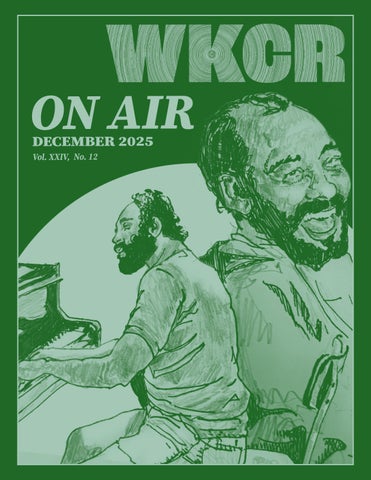
This month we have another slew of fantastic special broadcasts, including a celebration of New York legend Eddie Palmieri who passed away this year on his birthday on December 15th. Additionally, Bachfest returns for another fantastic year. This year we will have some exciting interviews on the airwaves. The program will run eight straight days, playing only Bach starting on Christmas Eve and ending as the New Year begins. Furthermore, there are Sunday Profiles on Black Saint Records, Palestrina, and a musician chosen by Sid Gribetz (Host, Daybreak Express) that will air each Sunday.
In this edition of the On Air Guide, you can read exciting articles about Bach (written by our Classical Director, Charlie King), a review of up and coming Brooklyn band Geese’s new album Getting Killed, an article on some Lower East Side music history, and an interview with the hosts of our Offbeat hip hop program that runs every Friday morning (1am-5am)!
Thanks again to all the dedicated listeners and readers who donated last month and helped us reach our goal. We truly appreciate your support. Lastly, we have new merchandise that can be found on our website for both WKCR and for Bachfest! Take a look—this year's crop of merchandise looks fantastic.
Radio On,
Casey Lamb Station Manager
Mailing Address 2920 Broadway New York, NY 10027 USA
CLASSICAL
JWhy Does Bach Matter?
by Charlie Kusiel King
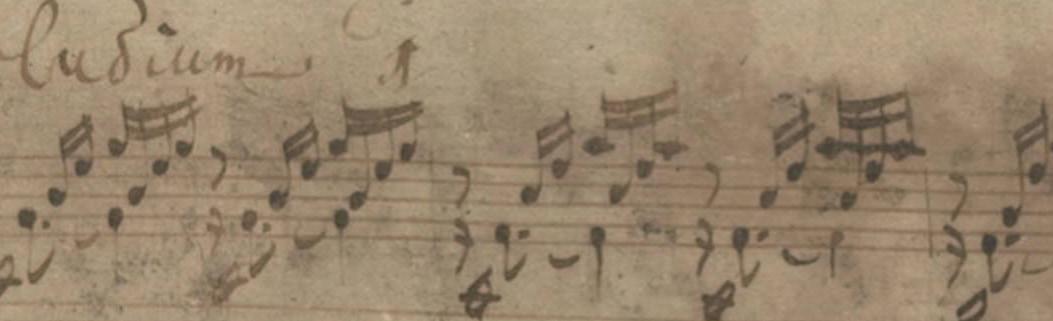
uly 28, 2025 saw the 275th anniversary of the death of Johann Sebastian Bach, who passed away in Leipzig, Germany, at the age of 65. This December, WKCR presents the 48th iteration of my favorite annual tradition, BachFest.
To many musicians and listeners, the music of J.S. Bach seems inevitable: something that is part of the world and always has been. We raise up Bach so that he ceases to be a person but a predestined idea which nature miraculously sprung into existence, certainly to an extent that we do for no other figure in the history of western classical music (save perhaps for Mozart, who even then we collectively regard as something of a genius, and still a man). In his biography of Bach, Music in the Castle of Heaven, John Eliot Gardiner affirms this, writing that “Bach’s sheer stature as a composer is baffling and in many respects out of scale with all normal human achievement, so we tend to defy him or to elevate him to the superhuman.” It is not enough, though, to say that J.S. Bach was “inevitable” or “superhuman.” Nearly three centuries after his death, when all but a few names have faded into history, why do we continue listening to his music? What makes J.S. Bach relevant in the year 2025, and more importantly, should he be?
To answer these questions, we must first understand that Bach led a relatively normal life. While the lives of practically all other composers throughout the western classical canon were heavily documented, Bach’s relative anonymity is what makes it possible to separate the man from his music and think of him as something holy. Compare, for instance, Tchaikovsky, who recorded his life in extensive diaries and letters, and whose struggles of sexual identity are inextricably tied to his monumental Sixth Symphony, or Leonard Bernstein, who was nothing short of an a-list celebrity during the twentieth century. By all accounts, Bach was a regular person. He lived in small towns, never traveled abroad, and had little contact with the elites of his time. He was very private, and devoted nearly all of his time to his family, composition, and religious practice. Bach’s existence, according to biographer Robert L. Marshall, was “notoriously and frustratingly uneventful.” Today, we have little knowledge of his personal life; there are no surviving personal accounts or letters to his family. Our greatest sources of insight come from more official sources, which often detail him as grumbling about his workplaces, colleagues, and pay. One such account (a formal complaint brought against him), describes how in 1705 he berated a bassoon player. In the little written about him by his family, he was noted as having a fairly aggressive personality and a great sense of humor, frequently sexual and explicit in nature.
J.S. Bach was born in Eisenach, Germany in 1685, following decades of war, famine, and rampant disease
which perpetually wiped out large percentages of the shrinking population. Life expectancy was barely 30, and the community suffered from a “fear of death… matched by fear of life itself.” Bach came from a lineage of musicians and had a deep passion for genealogy, likely inspired by the loss of his parents at the age of 10. The remainder of his childhood was spent in the care of his brother, Johann Christoph. A close inspection of Bach’s youth reveals a truly complex and wounded individual who was never able to fully recover from his trauma. In his devout commitment to Lutheranism, an endless searching for answers about the basic human experience, reflected and documented throughout his nearly 1,200 catalogued compositions. His musical and religious practices were fundamentally intertwined (he spent his career as a church composer, after all) and through them he continuously explored grief and death. It could even be said, perhaps, that his excessive complaining over day-today minutiae and ability to cause problems in the workplace were methods of avoiding the suffering that plagued him; and in his (first) marriage to his first cousin and subsequent need to have twenty children, a remedy to his fear that the Bach family legacy may die with his parents.
While we as modern interpreters and audiences may find it easy to regard Bach simply as a supreme figure who transcended mankind, a cursory look at the Bach “the man” tells us not only that he was quite ordinary, but that he, like most people, dealt with troubles which he spent his entire life trying to overcome. As Gardiner wrote, “any God-like image that we superimpose on Bach blinds us to his artistic struggles, and from that point we cease to see him as a musical craftsman par excellence.” In certain ways, putting him on such an incredibly high pedestal ultimately does his life and music a disservice, ignoring the struggles in which his art is profoundly entrenched.
However, it is this same relative anonymity and elevation of Bach’s music to a “God-like” status which can allow us as listeners
to truly engage with something which we may call the ‘divine.’ Bearing in mind his faith, it is easy to imagine that this connection to the divine through his music is perhaps what Bach himself would have wished for from audiences over any sense of personal recognition. “Bach’s Lutheran faith is encapsulated in [his] extraordinary music,” writes Gardiner. “It carries a universal message of hope that can touch anybody regardless of culture, religious denomination or musical knowledge. It springs from the depths of the human psyche and not from some topical or local creed.”
The relevance of J.S. Bach is therefore paradoxical. It is imperative to remember that he was an ordinary person whose music was a direct result of his struggles while living through immensely difficult times. His compositions are and should be a place of sympathy to the complex and frightening world we live in today, and with this, his genius is a testament to the vast expanse of human achievement. But Bach was also a staunchly devotional composer. In separating him from his work, we are more able to encounter the profound spiritualism of his music. This, too, is a testament to his incredible artistry. Though the world of J.S. Bach’s lifetime and that of 2025 are immeasurably different, in Bach’s music, we find a refuge through both of these means: a conversation with a fellow person, and simultaneously another with God.
WKCR is excited to present the music of J.S. Bach for eight days this month, beginning on December 24 at 12:00am. BachFest will continue through the end of the year, finishing at 1:00am on January 1, 2026, with his legendary St. Matthew Passion. Stay tuned in the coming weeks for details on the broadcast, including hosts, repertoire selections, interview announcements and more, which will be found on our website and social media platforms.
Charlie Kusiel King is Classical Department Director and a regular host of The Early Music Show. He was born to the keyboard music of J.S. Bach as interpreted by Edward Aldwell.
MEET A MEMBER
WAn Interview With the Offbeat Team
Ben Rothman, Brendan Sarpong, & Perry Wakatsuki
hy don’t we start by introducing ourselves?
Perry Wakatsuki: I’m Perry. I’ve been doing Offbeat since fall of my sophomore year. So, for the last three years at this point.
Ben Rothman: I joined WKCR as a sophomore, and I started programming for Offbeat in the spring of my sophomore year. I’m currently the head of the American department at WKCR, and I program Hobo’s Lullaby, which is our folk show, every other week.
Brendan Sarpong: I’m Brendan. I’m a senior at Columbia. I’m also a part of WKCR, Offbeat, and Notes from Underground. I’ve been doing Offbeat since last year, I think the fall of 2024.
it was just me doing it by myself and being a programmer every week. I have learned that programming by yourself is a lot harder, a lot less fun. It’s hard to bring the energy when it’s just you.
Sophomore spring was the first iteration where I was like, ‘I wonder if I could make Offbeat a more collaborative show and bring lots of people in with their own tastes in music.’ When the vibe is right, the social dynamic of having lots of people in the studio makes a show a lot more energetic. It’s like they’re friends hanging out and their microphones just happen to be there.
I think that most days junior fall, it was just us three, and that was fun, but I think this year, it’s hit another level. Asha [Chattopadhyay], Armando [Gimenez], and Chris [Brown] have been the recurring cohosts, and they are so fun and bring a lot of energy.
BR: My first question is for Perry. Offbeat has gone through a couple of incarnations in the past couple of years, starting with you hosting the show by yourself in the fall of 2023 and leading to a more expansive list of hosts and guests since the spring of 2024. How has the change in the style of the show changed your style as a host? You’re the one behind the boards in most of our shows.
PW: Well, before I started doing Offbeat, it was open a lot of the weeks, and there’d be a rotating cast of programmers. I thought that it could be more, thinking about what that time slot used to be with Stretch and Bobbito. The potential of having a really cool hip-hop show… I thought that it was there. And so for the first semester,
How I’ve changed behind the boards… very bluntly, I think I used to just be cringe while doing my mic breaks, but I’ve found a balance between allowing people to have fun on the mic and doing a serious show. And you can still always do better. You can always have the perfect mic break, and you can always, you know, host better and make people feel more involved or ask a better question. So, it’s always a work in progress.
BS: Ben, to my knowledge, you’ve had a little bit of experience in the more general body of WKCR as well as the board. Especially as someone from New York, which is the birthplace of hip-hop, I wanted to ask your thoughts on the attention that hip-hop gets at this station—what you think can improve,
and maybe why you think there isn’t as much attention to it. How do you think that Offbeat, Notes from Underground, and everyone else have been involved in and revitalized hip-hop at the station? And what are you most excited to see going forward in regard to hip-hop at the station?
BR: When I got involved in WKCR, I wanted a more music-focused community that could really let me build an identity for myself in terms of building my taste and finding people who were hungry for music discovery. I got my start in the American department, programming the Tennessee Border Show. I loved the physical nature of our library, being able to learn from the records and CDs that we have.
With regard to hip-hop, I got started when we did our 3-day hip-hop festival to celebrate 50 years of hip-hop. Ted [Schmiedeler, former station manager and current archivist] put that all together, and it was really amazing, and I think that it brought a lot
continue doing hip-hop stuff at the station— that’s where Perry and I met, and that’s sort of where the idea started coming for doing Offbeat in the more communal variety show style that we’ve built into what it is today.
Hip-hop programming at the station, particularly within the American department— which I’m now the head of—is so interesting because it’s all relegated to the dark hours of the night. I think that might be why it doesn’t get as much attention. Offbeat is from 1:00 to 5:00 a.m. on Thursday nights, and Notes is from 12:30 to 2:00 am on Saturday nights, so they’re really tough slots, and what does help is that the people running those shows are so dedicated. I also think that the festival that we did this year [a collaboration between Offbeat and Notes from Underground, featuring interviews and performances from many rappers] was a little bit of a culmination of what we had been building toward over two years of thinking about hip-hop programming at the station and thinking about how to bring more eyes to the genre.
In the future, I want to see more people who are just as dedicated as us picking up the mantle and doing the shows. I want to see more interviews and performances happening. I can see a yearly hip-hop festival that is similar in structure to what we did this year. Overall, becoming more of an and continuing to profile within
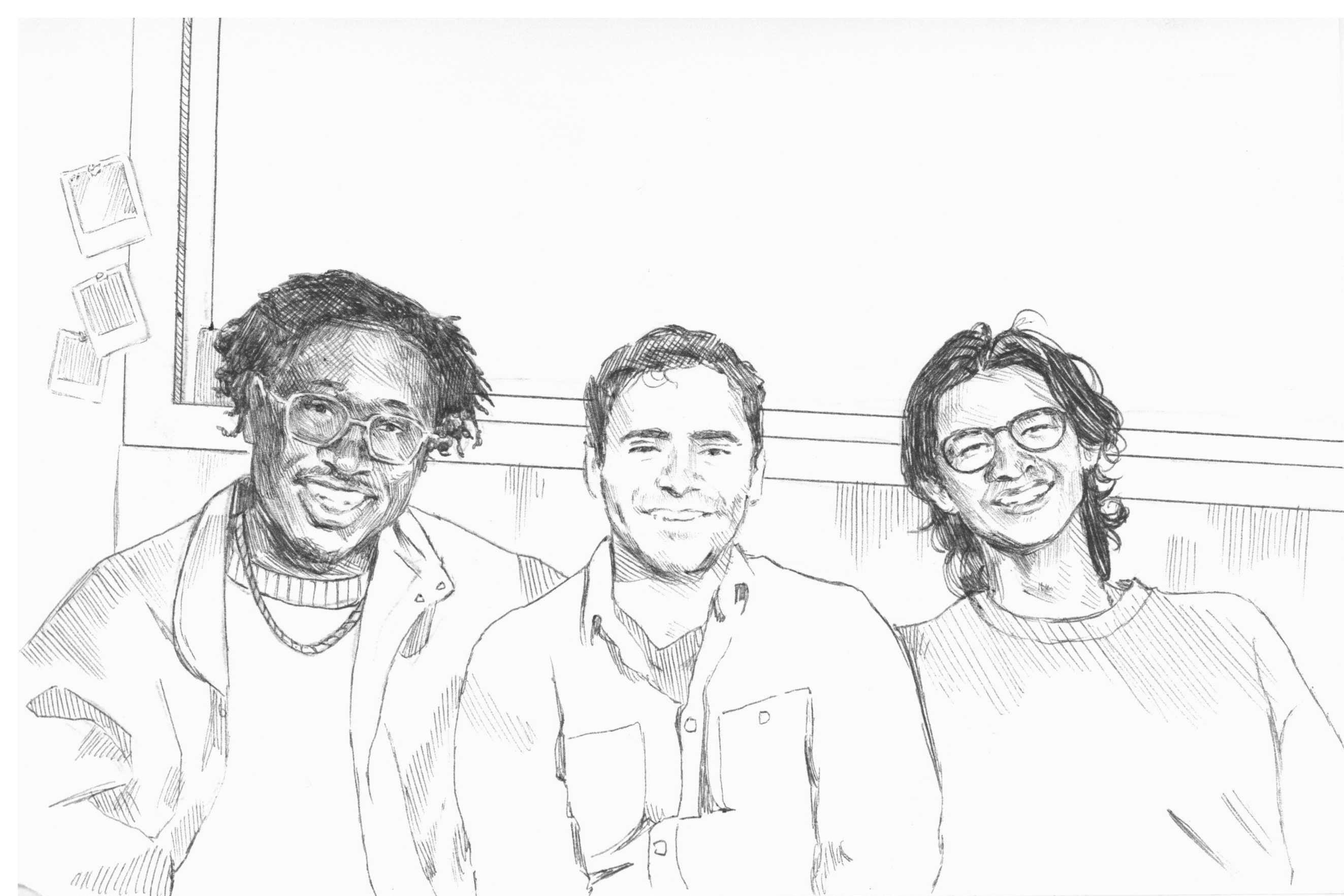
Illustration by McCartney Garb
PW: You guys have programmed different shows that aren’t hip-hop and are in other departments. How do you think that hiphop programming and Offbeat compare and contrast with some of those other shows? What can they provide or how are they different?
BS: One thing that I really love about hip-hop is the interactivity. I feel like you don’t get that on any other show. Sometimes it’ll be 15 people in the studio at 2:00 a.m., spilling about their love of hip-hop. There’s such an authentic level of compassion for music and appreciation for each other that I think you don’t really see on a lot of other shows, and I feel like it’s all centered around hip-hop, which I appreciate. On Notes from Underground this past week, we were doing an interview, which was fantastic. We had this artist named Sumaya Nazar. She was rapping; she was singing. There was that live component. It’s very authentic. We do a lot of interviews, pretty much weekly, on Notes, which is what I love about hip-hop at the station. I think that, again, there’s that sense of community that you don’t really get at a lot of other places, whether at the station or on campus, and I think that’s why–to put it in Ben’s words–after we leave, I think hip-hop’s gonna become more of an institution.
BR: I agree with what Brendan said about the communal nature. Hip-hop is also such a collaborative genre. I often find that, during Offbeat, we talk about the samples in a song and the production, or even the record label, just as much as we talk about the vocalist. So say we’re talking about Spillage Village [an Atlanta rap collective with members including JID and EARTHGANG]; we also talk about Dreamville, which is J. Cole’s label that houses many of those artists. We can talk about each rapper’s verse on a given song and really go into depth about it, breaking down those lyrics. Being a four-hour show, Offbeat also has the room to really have that loose format and that ability for people to break down the music.
BS: I like what you said about the collaborative aspect, because like [New York rapper] MIKE said, rap is kind of like a long conversation. I think that really contributes to the amount that we’re allowed to talk about it. There are just so many intertwining things that make it really interesting to discuss.
BR: When we started this iteration of Offbeat in Spring 2024, we envisioned it as being more of a variety show of people doing different segments. That didn’t really happen, but one segment that actually has come about is Brendan’s iconic trivia. What does it say about hip-hop and about Offbeat that we have a trivia segment?
BS: It’s honestly my favorite part of the week, too. I think looking into the history of hip-hop and finding weird facts that I didn’t even know, seeing all the intercombined narratives, all the random connections that people have within hip-hop, is really fun. I think that, even if we’re not always playing for a prize, just being able to share that information is really sick. I learn a lot.
I try to prepare a little bit in advance, so I can give it some buildup. I don’t know if you’ve noticed, but I have, like, a little preface before I do it that sometimes has nothing to do with the actual trivia, and then I’ll segue into it randomly in the middle, which I think is cool.
BS: My question is kind of circling back to a discussion we’ve been having in the studio a lot lately, which is legacy. Even outside of the studio, I’ve been thinking a lot about the topic of legacy and passing the torch. There was a moment before Asha got licensed where I was really nervous that we would have no one to take over the show, and it would just revert back to the pre-sophomore year state where it was just a remote recording or someone randomly covering it. How do you guys plan on kind of passing that torch? Do you see the format of it changing?
PW: I don’t know if there is one objectively best
way to do a show. I certainly think that the show has been better when there is one consistent host, and we sort of get to build the chemistry and the vibe over repeated weeks. I would love to have a similar format once we all graduate. I would love for whoever the next people are to just have that chemistry… they could take the show in different directions as they want, like, maybe they’re less focused on mic breaks and are more laser-focused on the music, which would be wonderful too. But I would love to pass it off to two to three people to let them have the chance to build up the show in their image.
BR: I agree with Perry that the style of having a group of people do it, no matter what direction they take it in, is very good for this type of show, for both the fact that it is an overnight show and the fact that it is a hip-hop show. Whoever takes it, they should have the stamina to stay up late, a love for hip-hop, and a desire to talk about it in depth. I think a diversity of perspectives is important too.
PW: The Notes from Underground people now [programmers Jude Fairchild, Emet VitalePenniman, and Grant Parris] are probably doing it differently than what [former hosts] Dylan [Farley] and Kaleb [Starks] did before. So it’s not about making an exact clone of what we’re doing, but more like having those prerequisites, so that, whatever they’ll do with it, I can feel confident about being happy with it when I tune in in a few years.
PW: What’s your guys’ Thursday routine preOffbeat, and then your routine on Friday after the show?
BR: I know Perry naps beforehand. I never do that. If I have plans beforehand I go to those plans, and if not, I will keep myself up. Maybe I’ll do a little bit of homework. But I will be awake. I have a ritual of going to West Side Market at midnight and buying a handful of mint-flavored Yerba Mate cans. We use those to fuel ourselves for the rest of the night… and
then the morning after, I try my best to just sleep in as long as possible and shake it off. I let my Friday be a little bit of a liminal space. I think I usually sleep about 6 hours.
BS: That’s good. That’s pretty similar to mine. Like you said, I don’t take a nap like Perry does. I used to program the African Show [10:00 p.m. to 12:00 a.m. on Thursdays] on KCR very infrequently, and during those times, I would just stay in the station for the hour after and chill during Middle Eastern Influences. I always try to wake up at, like, 10:00 or 11:00 too, which probably isn’t the smartest thing to do, but I’ll do it anyway because I don’t like wasting the day or sleeping in. I try to have some type of semblance of a regular Friday.
PW: I like to nap before, since I have to stay for all four hours of Offbeat, and I want to be as energetic behind the boards as possible. My Friday’s f****d. I go to bed at 5:30 or 6:00, and then wake up for a 10 o’clock meeting on Zoom… after that, I go back to sleep and wake up at like 2:00 or 3:00 p.m.
BR: Who is your favorite hip-hop artist to talk about on Offbeat? I feel like we each have our respective niches or particular things that we’re passionate about.
PW: I do love to talk about JPEGMAFIA. He’s got some crazy lyrics, but also some of the oddest samples you’ll find, and I love that 99% of the time, he produces all of his own stuff. So he’s very much in that lineage of a rapper-producer that does it all himself. It’s like, ‘I have this one vision, and I will work tirelessly to make this vision a reality.’ My personal favorite album is All My Heroes Are Cornballs. I love that vaporwave sound, but even last year’s I Lay Down My Life for You is one of my favorites.
BS: I love Cornballs. I think that’s what really got me into him because I didn’t listen to Veteran when it came out.
One artist that I was excited to bring into the show… I think for me it would be Lauryn Hill.
There was a show where I played a lot of her music. She’s had a short but prolific career, and also being from New Jersey, I feel like I gotta rep her. She put on for Jersey very heavily in the pop culture scene, you know, in the late ‘90s, and I really appreciate her music. I love her work with the Fugees. I loved her solo work. I like her MTV Unplugged album. I think she’s just such a fantastic multifaceted artist.
BR: I came into Offbeat very excited to talk about Little Simz. She’s a rapper from the UK who makes very soulful, lyrically intricate music that often incorporates live instrumentation. She crafts very conceptual albums that I always really appreciate. I remember a great conversation that we had where we talked about her song “I Love You, I Hate You” [from the 2021 album Sometimes I Might Be Introvert]. It’s based around a ‘sample,’ which is actually just a recording of Simz singing. So we were talking about: is it really a sample, or is it something else? And how does that change
the message of the song?
PW: When does Offbeat click the best? When are the vibes best for all of you guys? What’s happening in those moments?
BS: I think I know it’s been a good mic break when we go on too much of a tangent and have to have Perry reel us back in. I’m like, ‘oh, we were really having a good session there.’
BR: I think every mic break we do is great nowadays, but when we really talk, when we really dig into hip-hop and the details of hiphop, and we start joking around about that and bantering about that, it’s really special. It’s like what I said before with our conversation about Little Simz and sampling.
PW: I think it’s all about the mix. There’s the more hip-hop-centered mic breaks that are awesome
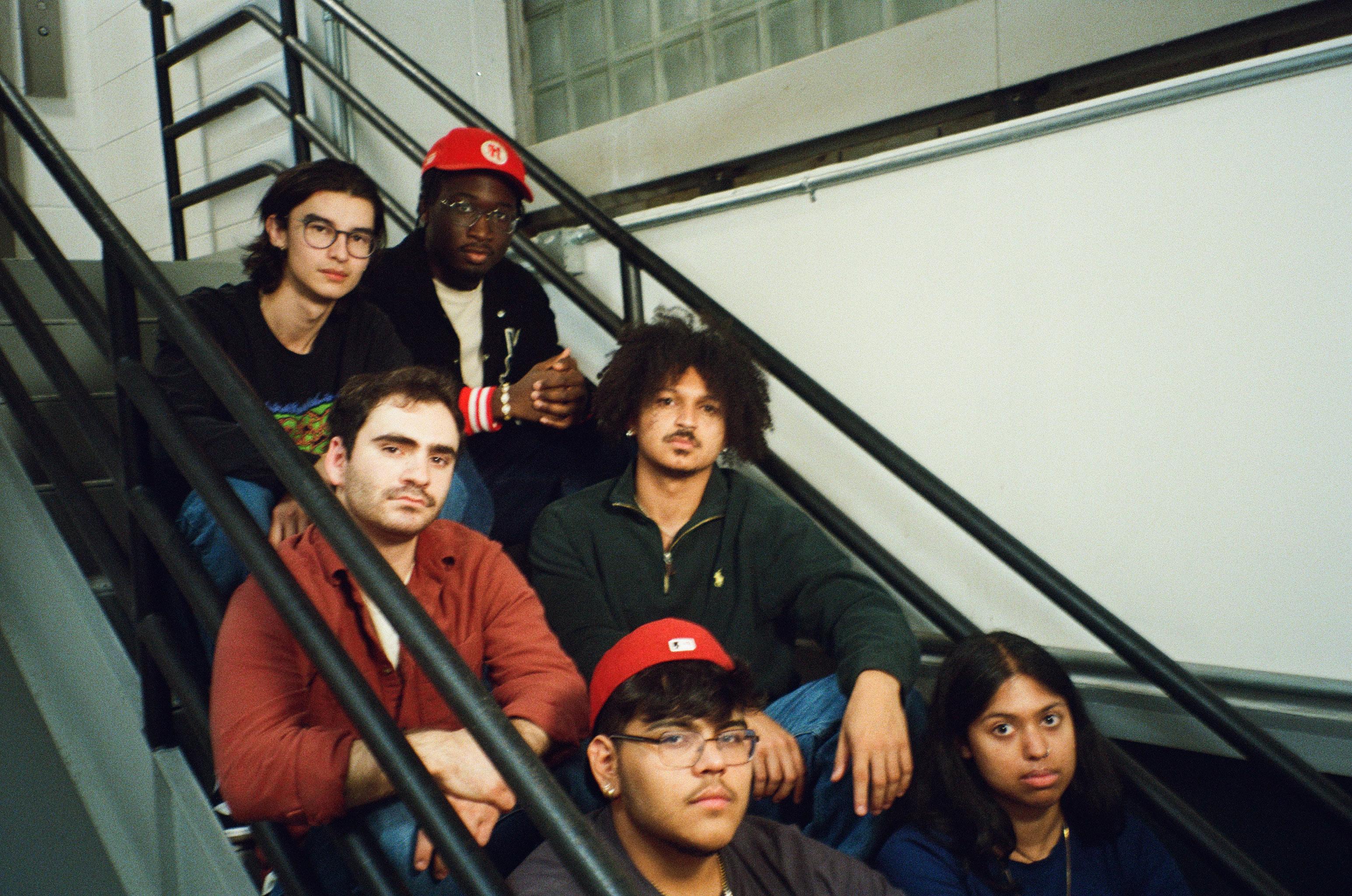
Offbeat programmers Perry Wakatsuki, Brendan Sarpong, Ben Rothman, Chris Brown, Armando Gimenez, and Asha Chattopadhyay.
and wonderful, and I think they provide their own value, and then we’ll go completely off the rails just for fun conversations, which are also some of my favorites. I think my favorite breaks are the ones where I don’t have to say much of anything. Like, if I can do a mic break and just have everyone chiming in and showing their personalities? I have my little soundboard. I hit the explosion sound effects, and then after 5-10 minutes of everyone talking and having a good time, we go to the next song. I feel like that’s happened a lot.
BS: I liked Ben’s point about everybody kind of reaching a flow state. Watching you guys have these little asides about hip-hop history and just sitting and listening and learning to people who are just really passionate about music is so sick. I’ve learned so much just by you guys choosing a song and explaining your own personal history with it. I’ve learned so much from Perry about a lot of different artists, whether it’s [Swedish rap collective] Drain Gang or [enigmatic New York rapper] Billy Woods, from your stories about your concert experiences or your experiences just listening to hip-hop.
BS: What’s one rap song or lyric that you guys would use to describe the year that we’ve had on Offbeat together, and one song or lyric you would use to describe how you feel about the year coming forward?
PW: For this year, “Grove Street Party” by Waka Flocka. ‘It’s a party, it’s a party, it’s a party.’ Next year, for the people taking Offbeat, I’ll say “The World Is Yours” by Nas.
BR: I think I would say, for right now, it would be a line from “Roc Boys” by JAY-Z, off the album American Gangster: ‘Oh, what a feeling, I’m feeling life.’ And then for the next year, I would take a lyric from Liberation by Outkast, which is ‘shake that load off and sing your song.’ I say that to the next generation.
BS: I guess this is an album title, but I Lay Down
My Life for You [JPEGMAFIA]. We sacrificed so much to be here from 1:00 to 5:00, but it’s always been worth it, kind of like the album says. There’s a lot of sacrifice involved in doing what you love. So I think that’s kind of the ethos for this year. The song that I would use to describe what comes after this year would be “The Magic Number” by De La Soul. We had great chemistry, and I hope they find another trio to kind of replace this.
BR: Do we have any final notes?
PW: I think Offbeat is only as good as the energy that the other cohosts are bringing, and I remember doing just the show by myself. So I’m deeply appreciative, because I definitely cannot host a show like this unless people show up every week and have fun with it. So much love and appreciation.
BS: I also want to thank you guys for welcoming me so openly into this world. I came in, I think, my junior year, and you guys were just really incredibly welcoming, and from the very beginning, I knew it was going to be a very long and prosperous show.
BR: I think it’s great that hip-hop lives on at WKCR. It’s been great. I love programming here at WKCR, whether it’s in hip-hop or whether it’s in other genres; it’s been such a great experience.
Listen to Offbeat every Friday from 1AM to 5AM on 89.9FM or at wkcr.org.
by Jack Serpick AMERICAN
TFrom Grit to Glut: The Descent of The Lower East Side’s Music Scene
he sole waitress, a senior at NYU,delivers a 3-foot-tall Bud Light dispenser with a tap at the bottom to a table of Green Bay Packers fans in their late 20s. The place turns raucous as running back Emanuel Wilson sprints into the endzone. Most of the patrons seem to be regulars, ordering without hesitation and shouting across the bar. Televisions line the ceiling and black-and-white pictures cover the walls, telling the story of a sports bar born in 2012; it’s called Hair of the Dog, and it stands at 168 Orchard Street on the Lower East Side. Hair of the Dog caters to a familiar crowd: corporate post-grads, ex-frat brothers, and the like.
It’s not only a sports bar, though. Hair of the Dog hosts DJs on most Fridays and Saturdays, but they don’t have live music anymore—not since the host/bouncer I chatted with started working there a few years ago.
As far as food goes, it’s not too shabby for a run-of-the-mill sports bar. One Yelp reviewer, a caricature of Hair of the Dog clientele named Ryan K., says, “the buffalo chicken quesadilla is the tits.” Another reviewer, Robin T., just about sums up the place: “You get what you expect.”
But almost three decades earlier, another bar/venue stood at 168 Orchard Street: Baby Jupiter. A far cry from Hair of the Dog, Baby Jupiter was a renowned venue for New York’s underground, indie artists on the rise. In the late ‘90s and early 2000s, it hosted some of the biggest indie-rock stars to be including The Strokes, Interpol, and Soulive, to name a few. Along with po’boys and Creole-style dishes, attendees were able to enjoy everything from poets to DJs in a sectioned-off room towards the back of the venue. Notably, there was no
stage, no separation between the artists and their devotees.
Ariel Palitz, former Executive Director for New York City’s Office of Nightlife, recounts over a call, “It wasn’t mostly anything. It could be a dance performance, it could be a jam session, it could be a DJ, it could be a mash-up of those things. It could be a party, it could be a poetry session. There wasn’t a genre; it was like an artist salon in the back of a New Orleans Creole restaurant.”
She continues, “Baby Jupiter, at the time, was a real nexus for underground Lower East Side culture, so much so that the French government, in 1999, came and recruited a plane full of Lower East Side musicians and artists from Baby Jupiter to ring in the big year 2000. They had this big festival in Nantes, France.”
These two bars, Hair of the Dog and Baby Jupiter, exemplify a shift in the Lower East Side’s music scene. In the earlier era, the ‘90s and 2000s, Palitz describes that there were clubs like Max Fish—which closed down after COVID—on Orchard Street, that had a “sublevel underneath where there were rehearsal spaces,” and people would stop in and watch for a while. “It was a vibe.”
New York Times Pop Music Editor Caryn Ganz, contacted via Instagram, remembers the earlier Lower East Side: “The vibe was scrappy, raw—a fertile ground for a budding music scene. A lot of soon-to-be indie-rock stars were living in Williamsburg, Brooklyn (where huge industrial lofts were plentiful and cheap) and in the East Village and Lower East Side, where artist misfits had always felt at home, and playing shows at these small clubs. Eventually, it all
coalesced into a music scene: a network of clubs and a familiar cast of characters (musicians, promoters, scenesters, journalists) to support them. The area around Ludlow and Orchard streets between Delancey and Houston was filled with people who were part of this movement and hungry to carry on the downtown rock traditions of the ‘70s and ‘80s.”
Walking around the Lower East Side today, you don’t see things like open practice sessions and live music spilling out of small bars onto the street. The vibe has changed. Between community boards, which “took a chokehold,” as Palitz puts it, on nightlife, and Michael Bloomberg’s 311 call system, which allowed anonymous complaints, bars like Baby Jupiter and Max Fish were bound to take a hit. And, indeed, a hit they took.
Now, the Lower East Side’s music scene is a shell of its former self. Ganz describes its current state as a “glut of bars and nightspots with no particular artistic or musical significance.” Not to mention the rent, which is “prohibitively high.”
It’s not that the Lower East Side music scene doesn’t exist any more— it does. In fact, right next to Hair of the Dog lies a lively music venue, Arlene’s Grocery, which hosted a young Lana Del Rey in 2009 and hosts live music artists almost every night. Clubs like The Delancey Rooftop host a range of underground Lower East Side artists, with everything from Young and Doomed’s emo rock to Kep Lockhart’s R&B.
There is no shortage of emerging artists in the Lower East Side; they’re just different. What’s changed is the effortless grit that came with cheaper housing, looser regulations, and an unquenched thirst for new music. Now, an effort is being made, and needs to be made, to bring back this grit, artificial as it may be. Many venues have split. Some, like Hair of the Dog, have opted to lean into the evolving Lower East Side; this is the economically calculated thing to do, especially as a newer venue without a legacy to uphold. Others, like Arlene’s Grocery and The Delancey Rooftop, have committed to the effort of preserving the Lower East Side’s grit.
This effort has seeped onto the front page of Arlene Grocery’s website. It reads, “Formerly a bodega, Arlene’s Grocery opened its doors in 1995 as one of the first live music venues on the Lower East Side. 30 years later, Arlene’s continues to bring you top-tier talent and hospitality while staying true to our New York City roots.”
Amen.
Jack Serpick loves to program Daybreak Express from 5AM to 8AM.
Hair Of The Dog logo
am
am
Sin Fronteras
Jazz Alternatives
Nueva Canción
Som do
Special Broadcasts
SPECIAL BROADCASTS
Eddie Palmieri Birthday Broadcast
Monday, December 15, during jazz programs
We celebrate the music and legacy of the late great Eddie Palmieri by dedicating our three weekday jazz programs, Daybreak Express (5-8:30 AM), Out to Lunch (12-3 PM), and Jazz Alternatives (6-9 PM), to the pianist and bandleader.
Bachfest
Thursday, December 24-Wednesday, January 31
WKCR’s favorite tradition returns! Bachfest features eight days straight of the music of J.S. Bach. A schedule detailing the themes of each slot will be released on our website and social media as Bachfest approaches. As usual, the seven-day broadcast will feature traditional performances alongside jazz and experimental interpretations. From all of us at WKCR, happy holidays and a happy new year!
THEMED SHOWS
SUNDAY PROFILES
Sundays 2:00-7:00 PM
Labeled: Black Saint Records
December 7
Host: Jack Cohn and Steve Mandel
The first Sunday Profile of the month comes from the WKCR Archives. Originally hosted on October 8, 2023 by Jake Cohn and Steve Mandel, this five-hour deep dive focuses on the output of the Italian label Black Saint Records, founded in 1975 and specializing in avant-garde jazz.
Giovanni
Pierluigi da Palestrina
December 14
Host: Charlie Kusiel King and Anika Strite
One of the foremost composers of the Renaissance, Palestrina celebrates his 500th birthday on December 17. Palestrina was prolific, composing over 100 masses and 250 motets; his influence touches both sacred and secular works. Our two hosts of the Early Music Show, Classical Department Director Charlie Kusiel King and Anika Strite, will co-host this special five-hour program.
TBD
December 21
Host: Sid Gribetz
WKCR’s iconic Sunday Profile host, Sid Gribetz, returns with a five-hour broadcast diving into the life and work of a jazz great.
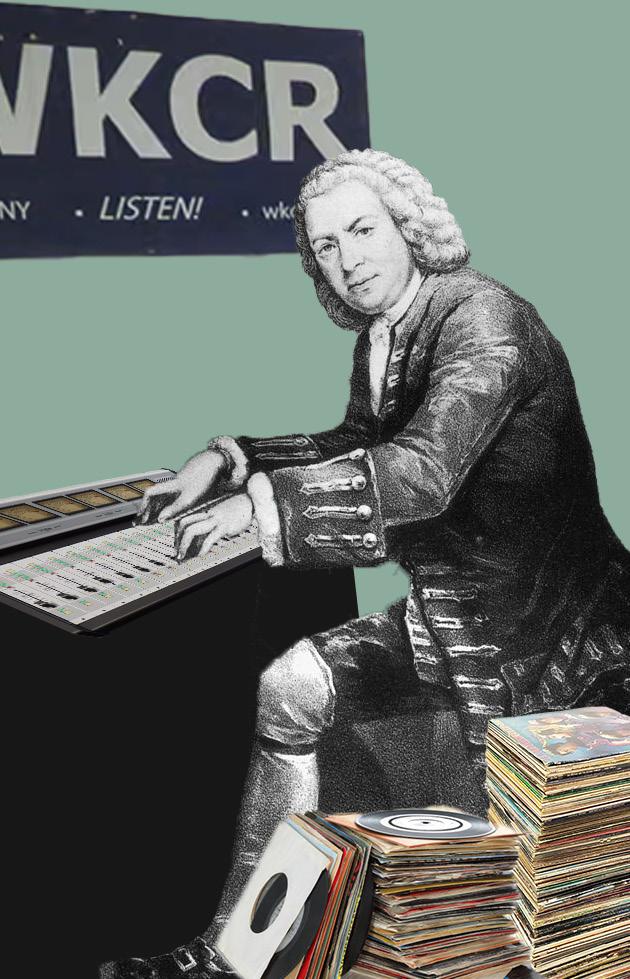
Bach collage by Ella Werstler
Show Listings
JAZZ
Daybreak Express, Mon.-Fri. 5-8:20am
Out to Lunch, Mon./Tues./Thurs./Fri. 12-3pm
Jazz Alternatives, Mon.-Fri. 6-9pm
The core of our jazz offerings, these three programs span the entire range of recorded jazz: everything from New Orleans jazz, jazz age, swing era, bebop, hard-bop, modal, free, and avant-garde. Hosts rotate daily, offering an exciting variety of approaches, some of which include thematic presentation, artist interviews, or artist profiles.
On the first Wednesday of every month, Jazz Alternatives becomes “The Musician’s Show” and is hosted by a professional working musician.
Birdflight, Tues.-Thurs. 8:20-9:30am
Archival programs from the late Phil Schaap, one of the world’s leading jazz historians, producers, and an NEA Jazz Master, who hosted this daily forum on the music of Charlie Parker for about 40 years.
Now's The Time*, Fri. 8:20-9:30am
The newest show from WKCR Jazz is dedicated to jazz as a living art form and features the music of young, upand-coming musicians pushing the genre forward.
Traditions in Swing, Sat. 6-9pm
Archival programs from the late Phil Schaap. This awardwinning Saturday night staple presents focused thematic programs on jazz until World War II. Schaap presents the music, much of it incredibly rare, from the best sound source—often the original 78 issue.
Phil Lives*, Mon. 3-5am
Selections of archival programs from late Phil Schaap. This show features interviews, tributes, and portions of longform programs.
Jazz ‘til Dawn, Sun. 4-6 AM
An early Sunday morning jazz program, limitless in era and style.
NEW MUSIC
Cereal Music, Mon.-Thurs. 9:30am-12pm
An entirely open-ended classical show to start your weekdays.
The Early Music Show, Fri. 9:30am-12pm
Dedicated primarily to European medieval, Renaissance, and baroque music before c. 1800.
Extended Technique*, Wed. & Thurs. 3-6pm
WKCR’s first interdepartmental show (in the New Music and Classical departments) dedicated to contemporary classical music. Under the direction of the New Music and Classical departments, this program is dedicated to experimental classical music.
Afternoon Classical, Fri. 3-6pm.
Two hours of unrestricted classical music selections followed by one hour dedicated entirely to the music of J.S. Bach.
Saturday Night at the Opera, Sat. 9pm-12:30am.
One of NYC’s longest running opera shows, Saturday Night at the Opera features one opera in its entirety, with time for history and commentary, each week.
NEW MUSIC
Afternoon New Music, Mon. & Tues. 3-6pm
Our daytime new music program features a wide variety of music that challenges boundaries and subverts categorizations. Shows include everything from seminal new music compositions to the most challenging of obscure deep cuts and new releases.
Transfigured Night, Tues./Thurs. 1-5am and Sat. 2-6am
Our overnight explorations into the world of new music, Transfigured Night rewards our late night listeners with a wide range of sounds and experimental music.
Workaround*, Fri. 9-10pm
WKCR presents live sets from local professional and student DJs.
Live Constructions, Sun. 10-11pm
This weekly program features a live in-studio performance or a previous performance recorded at WKCR.
* Indicates show was created after January 2022
LISTINGS FOR LISTENERS
AMERICAN
Honky Tonkin’, Tues. 10-11pm
One of WKCR’s longest-running American music programs, Honky Tonkin’ focuses on country music from the 1930s through the 1950s.
Tuesday’s Just as Bad, Tues. 11:30pm - Wed. 1am
For the first hour, Tuesday’s Just as Bad explores the world of blues prior to World War II. In the final half hour, hosts turn to the post-war years.
Night Train, Wed. 1-5am
All aboard! One of two overnight programs in the American Department, Night Train rolls through the post-war R&B and soul tradition, from the genre’s emergence in the 1940s and ‘50s through the funk revolution in the ‘70s. Shows often feature extended live recordings and concerts.
Offbeat, Fri. 1-5am
Offbeat exposes undiscovered, underplayed, or up-andcoming new hip hop artists, including experimental instrumental artists not typically played on mainstream hip hop radio.
Across 110th Street, Sat. 12-2pm
Across 110th Street airs soul, funk, and dance music from the 1960s through the ‘80s and ‘90s.
Something Inside of Me, Sat. 2-4pm
WKCR’s Saturday afternoon blues show, Something Inside of Me focuses on electric and post-war styles.
Hobo’s Lullaby, Sat. 4-6pm
Rooted in the folk revival of the 1950s and ‘60s, Hobo’s Lullaby airs American folk and traditional music styles from the early 20th century through the present day. Shows feature old staples like Leadbelly, Elizabeth Cotton, and Woody Guthrie through contemporary stalwarts like the Carolina Chocolate Drops.
Notes from the Underground, Sun. 12:30-2am
Notes from the Underground showcases contemporary hip hop and rap music with an emphasis on emerging and experimental artists. The program also hosts local and visiting artists for interviews, freestyles, and guest curation.
Amazing Grace, Sun. 8-10am
Greeting listeners on Sunday morning, Amazing Grace shares the African-American gospel tradition.
The Moonshine Show, Sun. 10am-12pm
On the air for nearly 60 years, The Moonshine Show showcases the American Bluegrass tradition, from the earliest roots in vernacular string-band music, the genre’s pioneers in the 1940s and 50s and advancements in the 60s and 70s, through the leading innovators of today.
The Tennessee Border Show, Sun. 12-2pm
The Tennessee Border Show highlights the singersongwriter tradition, from Hank Williams and Townes Van Zandt to Lucinda Williams.
LATIN
Caribe Latino, Mon. 10pm-12am
Caribe Latino features the diverse, upbeat music from Latin communities in the Caribbean. Popular Latin rhythms such as Salsa, Merengue, Bachata and Latin Jazz take center stage throughout the program.
Urbano Latinx, Tues. 12-1am
From salsa and merengue to Latin punk rock, Urbano Latinx airs contemporary sounds from Latin America, the Caribbean, and the diaspora.
Sin Fronteras*, Wed. 12-3pm
Occupying the time slot of Out to Lunch on Wednesday afternoons, Sin Fronteras explores the tremendous and growing tradition of Latin Jazz.
Nueva Canción, Wed. 10-11pm
Nueva Canción explores protest music created throughout Latin America during the 1960s and ‘70s, on its own and in the context of protest music from other countries and during time periods.
Som do Brasil, Wed. 11pm - Thurs. 1am
From samba and bossa nova to MPB, Som do Brazil features the enchanting sounds and rhythms of Brazil.
Sonidos Colombianos, Fri. 10-11pm
Sonidos Colombianos presents music from Colombia. The bilingual musical tour includes not only cumbia, but also the guitar-based bambuco from the Andean region, the harp llanero music from the Eastern Plains, the marimba-infused currulao from the Pacific Region, and the accordion-driven vallenato of the North Atlantic Coast.
* indicates show was created after January 2022
LISTINGS FOR LISTENERS
The Mambo Machine, Fri. 11pm - Sat. 2am
The Mambo Machine is the longest running salsa show in New York City. The program plays a wide spectrum of Afro-Latin rhythms perfect for dancing.
El Sonido de la Calle*, Sun. 2-4am
The Latin companion to Sunday morning’s Notes from Underground, El Sonido de la Calle highlights the diverse world of contemporary Spanish-language hip hop and dance music.
IN ALL LANGUAGES
The Celtic Show, Mon. 12-1am
Music from across the island of Ireland throughout the era of recorded music, particularly focusing on traditional folk and vernacular music forms.
Coordinated Universal Time, Mon. 1-3am
Coordinated Universal Time brings listeners the latest cut of music from across the globe, especially highlighting music that does not get attention in America.
The African Show, Thurs. 10pm-12am
The longest running African music radio show in the United States, The African Show brings listeners a variety of music from the entire continent of Africwa.
Middle Eastern Influences, Fri. 12-1am
Middle Eastern Influences features selections from the Middle East and North Africa, with particular attention on traditional forms.
Sounds of Asia and Couleurs Antillaises, Sat. 6-8am
Previously Sounds of China, Sounds of Asia explores the recorded musical traditions and innovations of Asia and the Pacific Islands. Couleurs Antillaises features music from Haiti and the French-speaking Carribean. These shows alternate in the Saturday morning timeslot so each airs every two weeks.
Eastern Standard Time, Sat. 8am-12pm
One of New York’s most popular Reggae programs, Eastern Standard Time captures listeners with the hypnotic sounds of Reggae and Jamaican dance music.
Field Trip, Sun. 6-8am
Field Trip focuses on the music and practice of field recordings: music recorded outside of a studio. This definition is expansive and includes everything from released recordings to street music documented by
Raag Aur Taal, Sun. 7-9pm
Raag Aur Taal (which means “melody and rhythm”) explores the classical musical heritage of South Asia.
Back in the USSR, Sun. 11pm-12am
Back in the USSR features music from Eastern Europe, East Asia, and Central Asia, from the mid-20th century through the present.
NEWS & ARTS
Monday Morningside*, Mon. 8:30-9:30am
WKCR’s morning news broadcast, Monday Morningside features segments on events around Morningside Heights and upper Manhattan. All episodes are available as podcasts on Spotify.
News and Arts Program, Sun.-Thurs. 9-10pm
These programs form the core of our News and Arts programming. On Sundays, “Soundstage” features a live reading of a play; on Mondays, “Late City” offers retrospective coverage on local cultural happenings; on Thursdays, “Playlist Profiles” characterize a person through music. As news is constantly evolving, note that these programs are subject to change and preemption.
SPECIAL BROADCASTS
Sunday Profile, Sun. 2-7pm*
This five-hour program dedicated to a longform, researched profiles of a pioneering artist, label, or musical movement. Originally known as “Jazz Profiles,” this show has expanded its scope; today, it may feature any of the musical traditions represented by WKCR’s programs.
* indicates show was created after January 2022
Geese Comes Alive in Their Third Album, Getting Killed
by Eva Wuerth
Staying true to the zany, punchy rock of their first two albums, Geese propels themselves into deeply moving sentiments of falling apart, running away, feeling, dancing, trying and dying in their third album, Getting Killed. Spearheaded by lead vocalist Cameron Winter, Geese is already far from infancy. The band is the product of an eccentric Brooklynbased childhood friendship between Winter, drummer Max Bassin, guitarist Emily Green and bassist Dom DiGesu. With two indie-rock albums, Projector and 3D Country, already behind them, Getting Killed solidifies Geese as an established, while wholly unique and evolving, sound – poised not merely with potential but with mounting recognition and acclaim. Getting Killed naturally confronts the existentialism inherent in both the youth of the band and of its members, all of whom are freshly in their twenties and already on the road for their international tour.
With his idiosyncratic, baritone voice, Winter tackles Getting Killed with newfound horsepower and vulnerability. With salient repetition of a few lines in each song, the album’s lyricism is as intentional as it is intricate while reckoning with this jumble of sentiments. Winter’s unmistakably raw, versatile vocals express much of the emotional weight of the tracks, most of which notably lack a chorus. The countless lyrical contradictions, though, are impossible to ignore: Getting Killed reminds us of having no idea where to go and going anyway, of seeing and blindness, and of running away and still coming home, all at once.
"Trinidad,” in many ways, mirrors 3D Country’s first song, “2122:” chaotic, charged
and craftfully haywire. Winter bellows, “There’s a bomb in my car” again and again, establishing the repetition that lingers in each of the remaining 10songs. Morbidity is impossible to ignore as Winter repeats a story of going blind and deaf, of a dead family and bombs in his car; a cycle that— as many lyrics of the album do—goes “on and on and on.”
This urgency, though, swings to a melodic brightness in “Cobra.” Framed as a letter to his “baby,” the second song of the album holds an undeniable catchiness. Wanting to “dance away forever,” Geese presents listeners with one of the most danceable songs on the album, all the while begging to get “away.” Images of pain, shame, and seeking out what hurts hint at the vulnerability of youth and the patterns of self-sabotage it can so often carry. The cobra itself “calls” back; pain is often as destructive as it is magnetic. Yet, the melody’s repeating electric guitar riff is unmistakably sweet, and Winter’s voice oscillates to a tender vibrato on the final line, “There’s a cobra in my hand / Calling me.”
The following three songs (“Husbands,” “Getting Killed,” and “Islands of Men”) are littered with a series of questions: “Will you know what I mean?” “Will you stop running away / From what is real and fake? Will you stop running away?” Directed at us as listeners, these uncertainties again mirror the selfprobing mystery of youth, loneliness, reality and running away, and echo the ambiguity within of Geese’s own lyrics. As Winter himself sings, “I’ll repeat what I say / But I’ll never explain.” These layered queries are sandwiched between a punchy “Getting Killed,” where Geese alludes to the chaos and claustrophobia
of life – one analogous to being stuck in a gumball machine.
Over halfway through the album, Winter has “no more thinking to do.” In “Half Real”, he longs for peace: a respite from the onslaught of existentialism of the first six songs. Repeatedly addressing a “he,” “Half Real” speaks to the exhaustion of past love and the lingering perceptions of it that so often don’t quite do it justice. Holding this exhaustion in the “Back of [his] mind,” Winter seeks a lobotomy to “Get rid of the bad times / And get rid of the good times too.” A clean slate is tempting; doing away with everything, including the good times, becomes a paradoxical comfort. “Getting Killed” alludes poignantly to Geese’s confrontation with sociopolitical status quos, which they analogously recognize as mentally overpowering. “I, I can’t even hear myself talk,” Winter sings among a chaotic melody; “I, I can’t even taste my own tears / They fall into an even sadder bastard’s eyes.”
“100 Horses” continues to invoke this rhetoric as it references the subjugation of “all people:” they must “smile,” “go now to the circus”, and “must go dancing” in times of war.
“Taxes” drives these allusions home with its simple, yet equally kinetic, line “If you want me to pay my Taxes / You better come over with a crucifix / You’re gonna have to nail me down.” With a striking descending piano progression, “Taxes” speaks to the spirit of the album: uninhibited, bold, and wholeheartedly embodying a defiance that repeatedly comes to characterize younger generations. In this sense, Getting Killed successfully contends with both the internal and the external as songs waver between the intimacy of the mind and a broader, collective anger.
“Au Pays du Cocaine” carries a tragically bittersweet, chiming melody. Introduced
by a simple descending riff, the guitar is immediately reminiscent of a lullaby, with Winter speaking directly to himself as a child: “You can be free,” he says, “and still come home.” “You can change, and still choose me.” Winter himself wavers between the widening gap of his emerging identity as an adult and the child he once was, shifting the meaning of “baby” to, quite literally, his own former self. He transitions from reassuring this version of his identity in expressing “you can change,” and “you can be free,” to “I’m alright” in the last line. Begging for a reconnection – perhaps for a reconciliation, or union – between pieces of himself, Winter’s voice takes on a newfound urgency, persistence, and conviction as he pleads. The next track, “Bow Down,” immediately references the perpetual fluctuations in his identity: “I was a sailor,” he describes, “And now I’m a boat.” “I was a car,” he continues, “and now I’m the road.” Constantly in motion and indefinitely changing forms, his references to transportation allude to inevitable and everlasting transformation as he sails and drives forward.
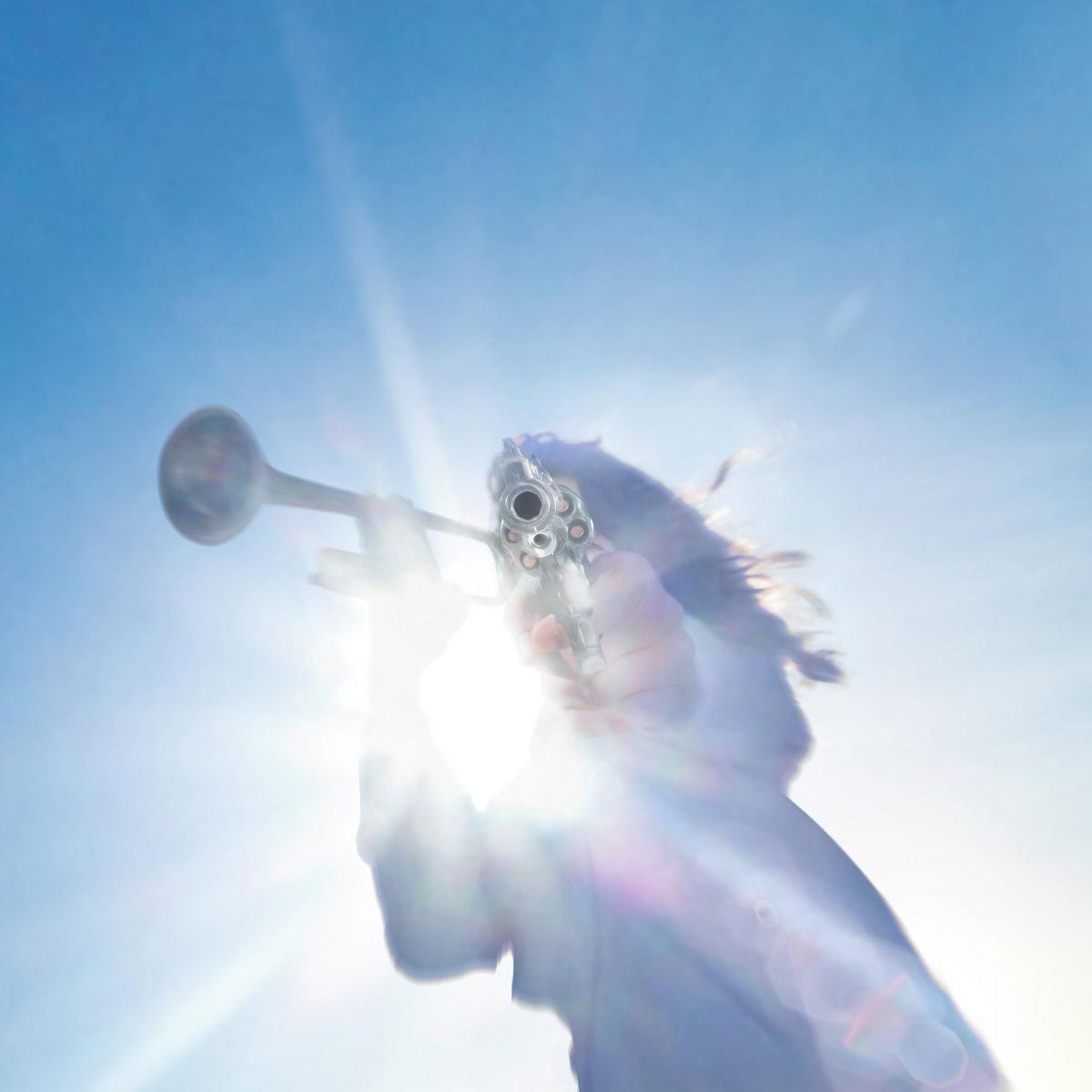
Getting Killed by Geese
Geese concludes Getting Killed with their closing number, “Long Island City Here I Come.” Amid a trail of biblical and musical references, a steadily upbeat, nearly seven-minute-long tempo builds into a final, mounting crescendo; Geese certainly doesn’t ease their listeners toward a peaceful culmination as Winter repeatedly bellows “Here I come.” This conclusion is in and of itself a journey. We run with Geese to the unceasing drum, having “no idea where [we’re] going.” Bookended by the first and last lines of “I tried” and “Here I come,” Getting Killed reminds us of surrendering to uncertainty and committing to an unpredictable momentum that is wholly ours.
Sawyer Huckabee, Programmer: The Social Network (2010) and Gone Girl (2014) by Trent Reznor and Atticus Ross are both great ambient noise for reading (especially for tense novels), but my favorite of the current movie season is the jazzy soundtrack for One Battle After Another (2025).
Ben Rothman, American Head: The Sinners (2025) soundtrack—incredible blues singing from Miles Caton, Rhiannon Giddens, and more with a haunting score from Ludwig Göransson. My mom really enjoys the Barbie (2023) soundtrack, exec. produced by Mark Ronson! She says it's fun to run to and listen to in the car with the top down.
Sam Seliger, Former Program Director: Philip Glass's score for The Thin Blue Line (1988) is really tremendous. One of the only documentary scores to become an indispensible part of the film. Also, O Brother, Where Art Thou? (2000).
AROUND THE
What favoriteis soundtrack?
Ted Schmiedeler, Head Archivist: Ryuichi Sakamoto's compositions for The Revenant (2015)—atmospheric and beautiful.
Nicholas Coamey, Programmer: Jerskin Fendrix’s album for Poor Things (2023).
Charlie Kusiel King, Classical Head: Such a hard one! My favorite original score could be either Joe Hisaishi’s music for Princess Mononoke (1997)—and the symphonic suite version does it justice!—or Georges Delerue’s “Theme De Camille” from Contempt (1963). Delerue’s theme is simple and short, but somehow incredibly powerful and melancholic. My favorite soundtrack is definitely from Trainspotting (1996). Underworld, Leftfield, Lou Reed … what’s not to love?
Kurt Gottschalk, Programmer: I have to go with Michel Legrand's score for The Umbrellas of Cherbourg (1964). It’s great, essentially one pop song that lasts the entire movie.
Kitty Speer, On Air Contributor: I love the soundtrack to Over the Garden Wall (2016), composed by The Blasting Company! (not technically a movie but almost).
Emma Lacy, Jazz Head: While I truthfully haven't seen the movie, the improvised soundtrack to Louis Malle's Ascenseur Pour L'échafaud (1958) is one of my favorite Miles Davis records. It's beautifully moving, as well as significant and symbolic of the emergence of the cool jazz movement in Paris (if you tuned into my "The History of Jazz in Paris" Sunday Profile in August, you know what's up)
THE STATION is your movie soundtrack?
Ella Werstler, Programmer: Sophia Coppola's Marie Antoinette (2006) amazed me by working The Radio Dept., Aphex Twin, New Order, and others into scenes of such lavish aesthetics. It is really effective in my opinion!
Hadassah Weinmartin, Jazz Head: Maybe O Brother, Where Art Thou? (2000) or Scott Pilgrim vs. the World (2010), but I do have to mention John Williams’ soundtrack to the first Harry Potter.
Yan Shan Zou, Programmer: The soundtrack to Your Name (2016) by RADWIMPS, though any Studio Ghibli film is good as well.
Olivia Callanan, Programmer: I just watched
Ale Díaz-Pizarro, Former Station Manager: The soundtrack to Goodfellas (1990) really cements Scorsese as the king of needle drops. Every song hand-picked by Scorsese himself, with an eye to detail beloved by music pedants everywhere: each song is not just time period appropriate, but Scorsese only uses songs that would have been released by the date the scene takes place. The movie’s relentless forward motion is propelled by a forward-reeling soundtrack. Incredible stuff.
Thank You
WKCR’s winter fundraiser, held November 13th-16th, continued WKCR’s yearly fundraising efforts to remain financially independent from Columbia University. Thank you to everyone who donated (whether via phone, check, or online) for helping us end 2025 financially strong, and for supporting us for many years to come.
The following names are of listeners who pledged $100 or more over the phone and consented to having their names printed in this guide. We thank all contributors, of any amount and through any medium.
Matt Andersen
Nick Barnwell
Patricia Bases
Scott Bassett
Michael Behar
Rebecca Behle
Barry Beydoun
Jonathon Booth
Christopher Brunson
Adam Casdin
David Chorlian
David Conrad
Bob Curtis
Thomas Cuscito
Greg Daugherty
Herb Decondova
Theresa Demoriet
Lisa Dresner
Christina Dugger
Jonathan Edelman
John Estosito
Deborah Finston
Jonathan Flothow
Dean Forbes
Nancy Freshley
Lawrence Garment
Diana Gavagan
Mark Gianni
Angelo Gonzalez
Mordekai Gordon
Rosemary Gould
Jay Grossman
Katherine Hall
Jim Hanrahan
George Huckins
Paul Jenny
Ben Jones
Alison Kelly
Roger Keran
Julie King
Steven Lacy
Chares Lee
Gerald Love
Kevin Lutke
Ali M. Khonsari
Michael Mahal
Ben Matos
Heather McCabe
Michael McGarty
Kevin McGrath
Wayne Miller
Arlene and Jeffery Katz
Nichols
George Nixon
William Parker
Ira and Rachel Perelson
Nathaniel Rahav
Courtney Randall
Margery Reifler
Bob Rich
James Rothman
Clifford Salter
Anthony Schloss
Sara Schoenwetter
Ava Schwabecher
Blair Scribner
Susan Sonders
Gary Spence
Tamio Spiegel
Alicia Svigals
Louis Szeckely
Craig Tracey
Thomas Troyer
William Turner
Jennifer Urbanowski
Tina Vaughn
John Waterson Law
Abigal Weinberg and Nathan Martin
Eileen Weitzhan
Vanessa Willoughby
Gus Yero
SUPPORT WKCR
TOP 5 REASONS TO DONATE TO WKCR
1. You’d be helping a student-run, listener-funded, and volunteer-based radio station continue to bring you the absolute best in what radio has to offer. Music, arts, news, and sports— we’ve got the works!
2. You wouldn’t be a free-rider anymore.
3. WKCR donations are tax-deductible (so make sure you donate before tax season). For more info on that, or anything else business-related, email business@wkcr.org
4. Being “the Original FM,” our equipment is getting a bit old. Thanks to your 2023 donations, we were able to retire Buzz, the hamster that ran the wheel powering us. But our new hamster, Roach, needs to start saving for retirement... can you blame him?
5. Isn’t On Air cool? Without proper funding, projects like this can’t come to fruition and, if they do, don’t make it very long. Donate to allow the little On Air minions to stay in the job (we are all On Air minions).
HOW TO DONATE TO WKCR IN 4 STEPS
BY MAIL
Step 1: Locate your nearest checkbook
Step 2: Indicate “WKCR” as payee and fill out as usual
Step 3: Mail check to CU Gift Systems, 622 West 113th Street, MC 4524, New York, NY 10025
Step 4: ...and VOILÀ! Just like that, you have become a WKCR supporter!
WKCR also accepts checks to our direct address. Just follow the same steps listed above but mail the check to: 2920 Broadway, New York, NY 10027
ONLINE
Step 1: head to www.wkcr.org
Step 2: Click the yellow “DONATE TO WKCR” banner at the top of the page
Step 3: Fill out the form in the giving portal and enter your information...
Step 4: ...and VOILÀ! Just like that, you have become a WKCR supporter! Did you know you can make recurring donations to WKCR when you donate online?
Just indicate your frequency preferences on the giving portal when prompted!
On Air 's editorial board is McCartney Garb, Ella Werstler, Jem Hanan, & Olivia Callanan
The editorial team for this issue was Charlie Bloomer, Kitty Speer, Maya Phillips, & Sylvia Lipsyte
Special thanks to Ale Díaz-Pizarro, Ben Rothman, Ethan Thacker, Emma Lacy, Eva Elizabeth Arroyo, Hadassah Weinmartin, Jonah Stockwell, Kurt Gottschalk, McKenna Roberts, Nicholas Coamey, Olivia Callanan, Sam Seliger, Sawyer Huckabee, Ted Schmiedeler, & Yan Shan Zou