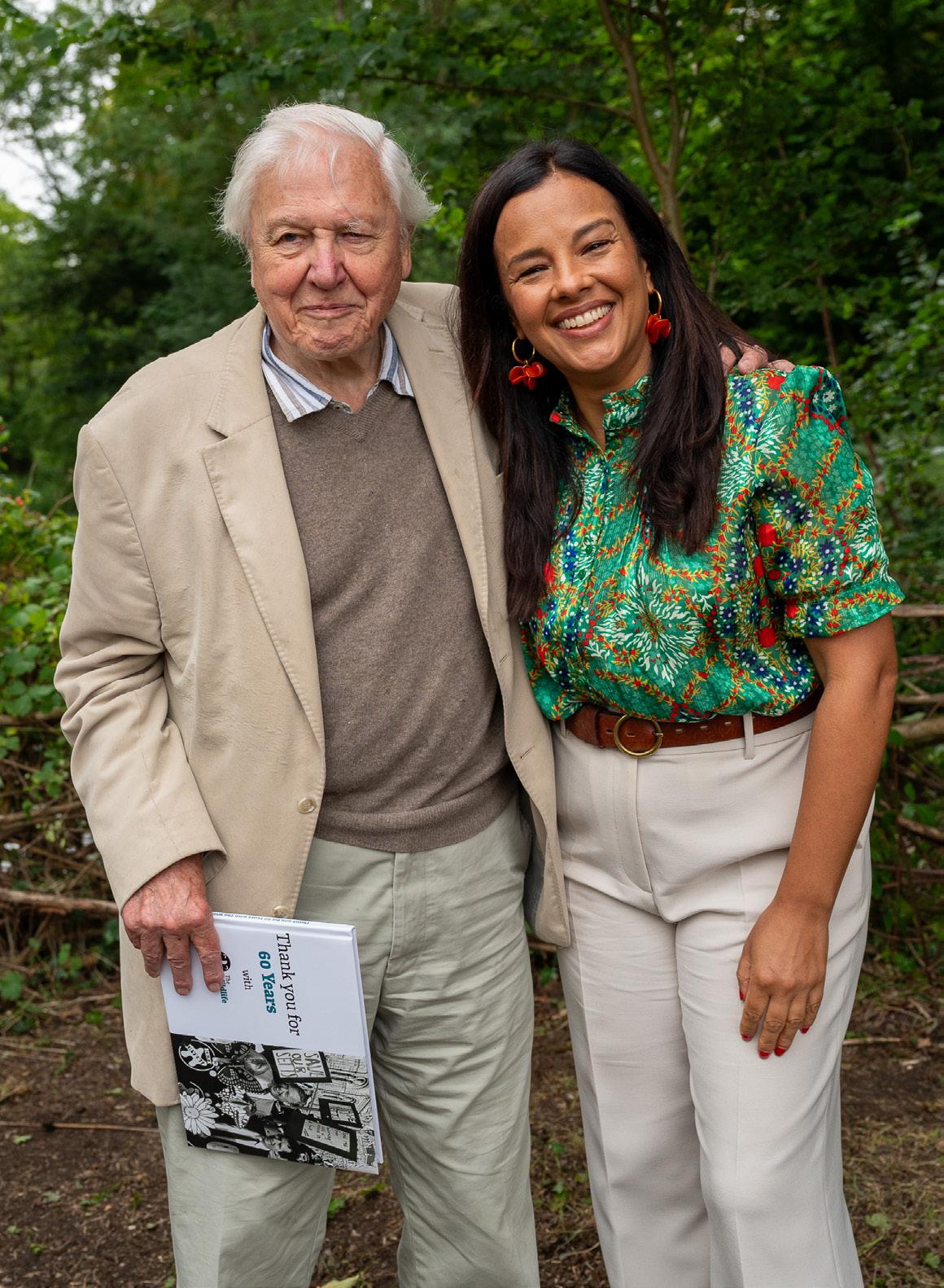
Serving as President of The Wildlife Trusts remains a true privilege, and to learn from the dedicated individuals who strive to protect wildlife during these challenging times has been one of the most rewarding experiences of my career.
Over the past year, I’ve had the great pleasure of meeting more of you across the British Isles—from federation leaders, to staff and supporters. These moments of connection have been deeply energising for me, and I can see just how much our shared mission to restore nature is being strengthened through our collaboration across the movement.
It’s been an extraordinary year, and I’m excited to support our collective journey into 2026.”
Liz Bonnin
President, The Wildlife Trusts
Key people and supporters
Patron
HM King Charles III
President
Liz Bonnin
Presidents Emeriti Vice Presidents
Sir David Attenborough
Dr Amir Khan
Simon King Iolo Williams
Tony Juniper
Ambassadors
Dr Mya-Rose Craig
Prof Dave Goulson
David Oakes
Sophie Pavelle
Cel Spellman
Alison Steadman
Richard Walker
James McVey
Maddie Moate
Rhiane Fatinikun
Prof Chris Baines
Nick Baker
Prof David Macdonald
Bill Oddie
Julian Pettifer
Sir Robert Worcester
Chair
Duncan Ingram
Chief Executive
Craig Bennett
As we reflect on the past year, characterised by constant change and a shifting political landscape both at home and overseas, it’s clear that nature’s recovery is no longer a distant aspiration—it’s an urgent necessity.
Across our federation of Wildlife Trusts and the wider movement of supporters, we’ve seen extraordinary commitment from communities, partners, funders and volunteers who are helping us turn ambition into action and purpose into progress. Whether it’s restoring vital habitats, acquiring land for rewilding and renewal, supporting young people and communities to make a difference in their local area, pioneering new nature markets to tackle greenwashing or calling out poor decision-making in the political sphere, our work is shaping a wilder, healthier future for nature and people alike.
This year’s Impact Report marks a pivotal moment. With a new government now in place for over a year and showing no signs of understanding or prioritising nature’s recovery, and the climate crisis intensifying, we must bolster our efforts to hold decision-makers to account and move nature to the top
of the agenda. Strategy 2030 continues to guide our work, emboldening us to think bigger, act faster and collaborate more. From purchasing land to return Atlantic rainforest to the west coast of the UK and raising funds for large-scale projects like The Rothbury Estate in Northumberland, to the reintroduction of beavers, pine martens and osprey or the galvanising of communities creating new spaces for nature in urban settings, we’re demonstrating what’s possible when vision and passion meets grassroots energy and the power of the 47 Wildlife Trusts working in unison.
We invite you to explore the stories, statistics and strategic shifts that defined our year. They are a testament to the power of collective action—and a reminder that the fight for nature is the fight for our future.
Thank you for your ongoing support of The Wildlife Trusts.
Duncan
Craig Bennett
Chief Executive of The Wildlife Trusts
Ingram Chair of The Wildlife Trusts
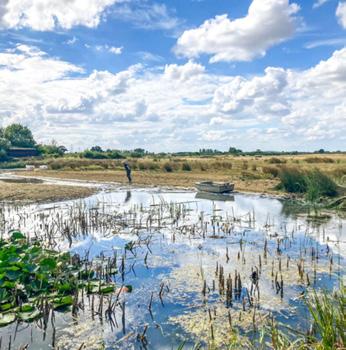
Durham Wildlife Trust celebrated the return of wetland birds to Woolsington as part of the Bluespaces Scheme funded by Northumbrian Water. The Wildlife Trust has been making habitat improvements on site and created a footpath so that the local community can better enjoy their visits. This is part of a long-term ambition to create a highquality nature reserve. Over time it will become an oasis where wildlife can thrive and people can improve their well-being, establishing a deeper connection to nature.
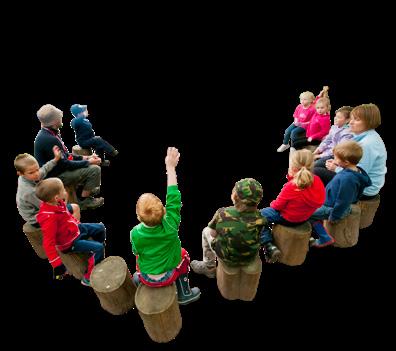
Herts and Middlesex Wildlife Trust launched their Wilder Schools programme, which gives every school in the region an opportunity to become a wilder space for nature and their students. All 600 schools in the area were invited to book a visit from a Wilder Schools champion, who helps to celebrate existing work and offers advice on how to bring more nature into their outdoor spaces. The initiative is part of the Wildlife Trusts’ efforts to mobilise young people into taking action for nature’s recovery.
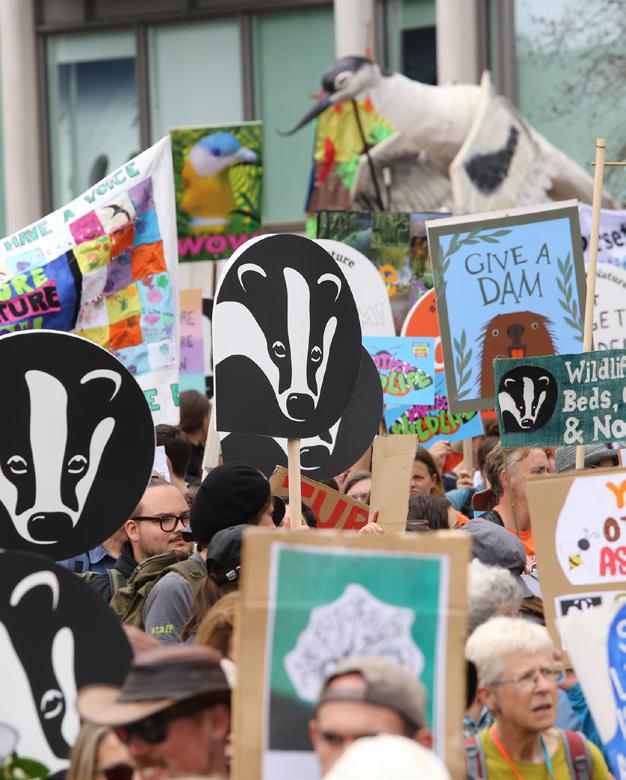
In the 12 months prior to the 2024 General Election, The Wildlife Trusts’ federation prepared for co-ordinated campaign work by creating resources, gathering insight data on prospective parliamentary candidates and green issues in local communities, and using the voices and stories of our supporters to demonstrate the importance of nature to the general public. Once the election was called, we moved into action— holding 15 local hustings, a national hustings with representatives from all the main parties, campaigned in 580 out of 650 constituencies and generated significant media coverage for environmental issues.
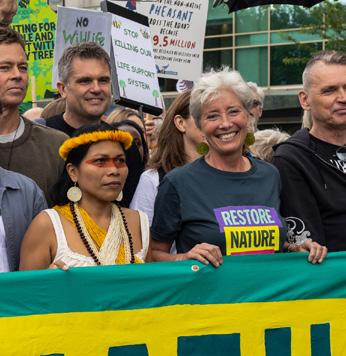
“It was incredibly powerful to see so many different individuals, groups and campaigners coming together to demand that our politicians give the priority needed to nature and climate. Without radical action our natural world will continue to decline and that is a crisis that will affect us all. This is a major moment for nature and a major moment for politics.”
Emma Thompson Actor and campaigner, Restore Nature Now March, London
Ulster Wildlife’s Balloo Wetland Nature Reserve nearly doubled in size after the neighbouring land was given over to Ards and North Down Borough Council by a housing developer. The land was exchanged following the completion of a nearby housing project and will be managed by the Wildlife Trust, who plan to allow it to rewild. Located in an urban area, this site helps to create a bigger and more connected wild space for nature’s recovery, benefitting local wildlife, but also the people living on its doorstep.
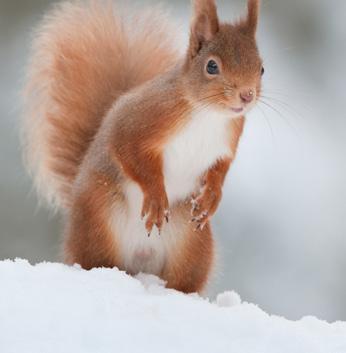
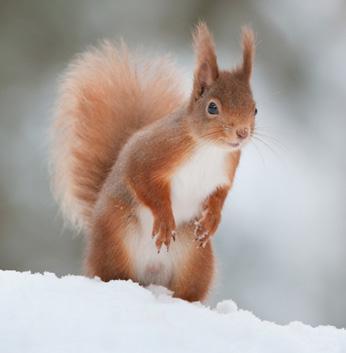
Cumbria Wildlife Trust installed 100 nest boxes, with thanks to support from Cumberland Building Society. These nest boxes are helping to support endangered species, including red squirrels, whose numbers had fallen drastically, so that only four individuals remained in the area. Happily, the installation of these boxes has seen numbers grow, prompting the building society to commit another £21,500 to support the project for a further year and bolster the red squirrel population even more.
September October
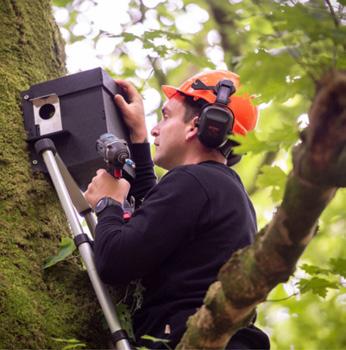
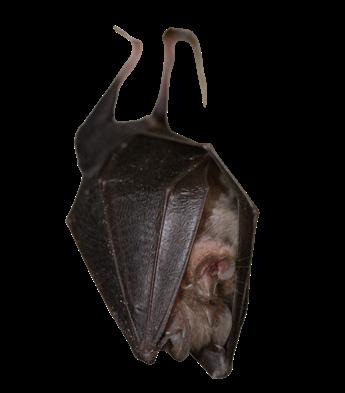
Worcestershire Wildlife Trust converted a disused treehouse into a ‘bat hotel’ on the Knapp and Papermill Nature Reserve. The treehouse was donated by a local family and is now in use as a roost for lesser horseshoe bats. Perch points were installed, alongside insulation and blackout material as part of the Wildlife Trust’s Natural Networks programme with Worcestershire County Council. The project is enhancing nature connectivity for wildlife throughout the area and providing bats with ideal breeding and foraging grounds.
A unique partnership between Surrey Wildlife Trust and the Surrey County Cricket Club (SCCC), who play in the world-famous Kia Oval cricket ground, has been launched to help boost wildlife in the county. The SCCC is using its influential platform to raise awareness of nature’s decline and the need for its recovery amongst its cricket fans, whilst the Wildlife Trust is providing expert advice and support to help the cricket club improve the wild habitats within and around the grounds.
November December January
A report on Nextdoor Nature, a two-year £5million programme funded by The National Lottery Heritage Fund, revealed incredible results and extraordinary transformations in communities across the country. The programme, which aimed to help people reconnect with nature and improve health and well-being by working with local Wildlife Trusts, reached more than 1,600 communities (eight times over the original target of 200) and 95% of the participants said there is now greater collaborative working between residents and local organisations and groups.
Berkshire, Buckinghamshire and Oxfordshire Wildlife Trust was awarded over half a million pounds to restore nature across the counties of Buckinghamshire and Oxfordshire. They are working in partnership with 11 other organisations, with the aim of reversing habitat decline in the region, which is under siege from inappropriate development, intensive agriculture and climate change. In the longterm, it is hoped the wild landscapes and species that call them home will recover, for the benefit of wildlife and people.
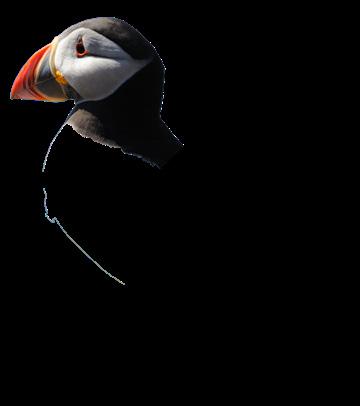
Bucking the global trend, puffins on Alderney have been shown to be on the increase. Alderney Wildlife Trust has been monitoring numbers of these fantastic birds and their records show that the population has trebled over the last 20 years. In 2024, 330 active nests were recorded on the small island of Burhou, compared to 120 as recorded in the first survey in 2005. Whilst the birds are still regarded as vulnerable, the increase in nests is great news for the Wildlife Trust and local community and a reason for hope.
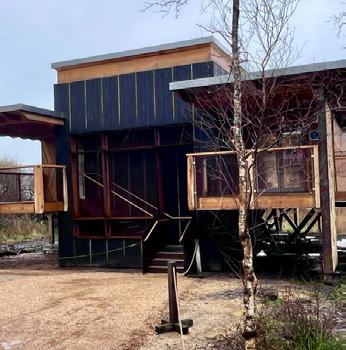
In an exciting partnership, Dorset Wildlife Trust and National Trust have opened a new, state-ofthe-art bird observatory station for visitors to the popular Brownsea Island.
Called ‘The Lookout’, the innovative design of the building incorporates new boardwalks, improving access to bird hides and providing more people with the opportunity to immerse themselves in the rich birdlife of Brownsea Lagoon and the rest of the island’s remarkable wildlife. Forming part of the Purbeck National Nature Reserve, Brownsea Island is an internationally important area for wildlife.
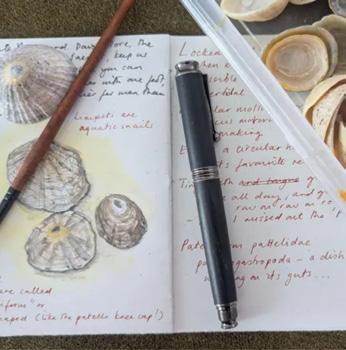
Tees Valley Wildlife Trust appointed its very first artist in residence to create engaging and thought-provoking art to help showcase the region’s wildlife and wild places. Kirstin Luckins, who grew up in the area, is using her unique artistic talents to bring people closer to nature and create space for conversations around the deeper connections that exist to local greenspaces and the wildlife living within them. Kirstin plans to “do justice” to the role by highlighting the unique natural and industrial landscape of the region.
Two new programmes for young people with special education needs including autism, ADHD, dyslexia and dyspraxia have been launched by Herefordshire Wildlife Trust thanks to funding from Herefordshire Council. Recognising the importance of establishing an early connection with nature to help support all areas of development, it is hoped the programmes will help the young people involved to make new friends and provide opportunities to socialise with a wider network, have fun in nature, learn new skills and build overall confidence.
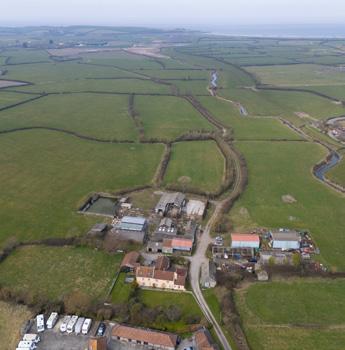
In one of its largest projects to date, Avon Wildlife Trust acquired a former dairy farm and is now in the process of transforming it into a new climate-resilient nature reserve, thanks to support from Esmée Fairbairn Foundation. The site is in an ideal location, close to the Severn Estuary, providing space for wading birds and wildfowl to roost when the tide is high. It also provides a space to engage with the local community, with new visitor facilities and an education and events programme underway.
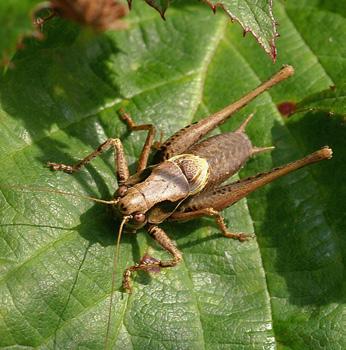
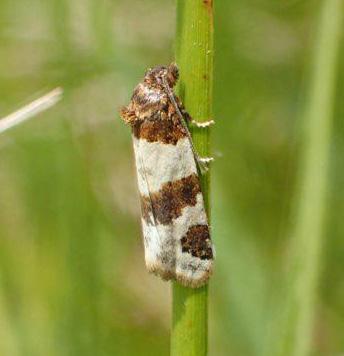
A moth long thought to be extinct in England was discovered at Kent Wildlife Trust’s Lydden Temple Ewell Nature Reserve.
Previously known as the Dover tortrix but recently renamed as the ‘Tiree twist’, the Periciepsis cinctana moth, which has a creamy white body with contrasting brown stripe on its wings, has not been recorded in England since 1952. Its dramatic return has stunned experts, who had believed it only clung on in the UK on the remote Scottish island of Tiree.
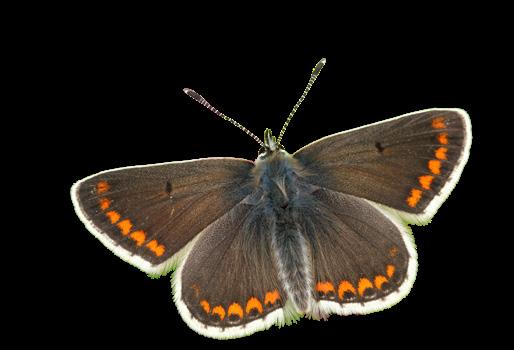
This summer, Suffolk Wildlife Trust’s Lackford Lakes Nature Reserve recorded its highest number of butterflies in seven years with more than 200 sightings submitted in one day by volunteers. Whilst the weather this year is likely to be a factor, the Wildlife Trust has ensured the nature reserve is an oasis for butterflies through careful management, such as restoring and maintaining the unique Breckland heath habitats, providing the ideal environment for these pollinators to thrive.
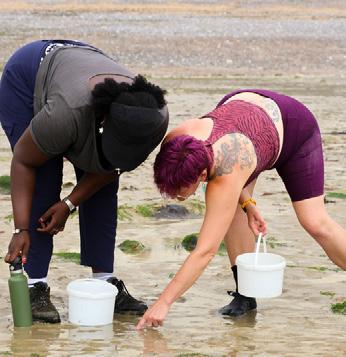
Sussex Wildlife Trust hosted a successful two-day beach training course on Eastbourne beach this summer. Ten ‘blue mentors’ shared their marine conservation skills with young people, who are taking part in environmental social action projects. Following the course, attendees are better equipped to know how to recognise and help marine wildlife and will hopefully be inspired to act to help save it. The course was part of a £2.25 million scheme, which aims to work with over 4,000 young people over three years.
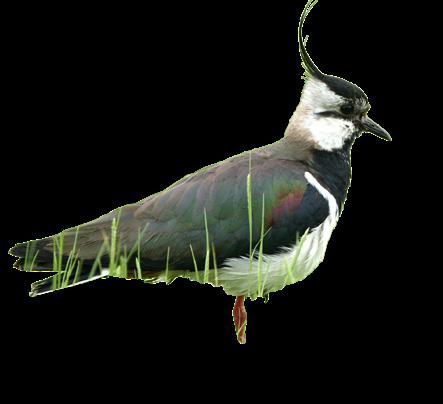
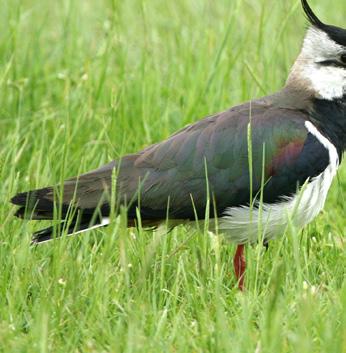
Wiltshire Wildlife Trust embarked on a partnership programme working with the Soil Association, The British Deer Society and five farm clusters to help restore nature and promote sustainable farming across more than 40,000 hectares in the North Wessex Downs. The Chalkland Revival Project will combine practical action with innovative monitoring to help safeguard declining species like lapwing and facilitate collaboration between land managers on issues such as deer management.
A huge threat to one of the last remaining red squirrel populations in Wales was posed by a planning proposal for a new energy park, prompting The Wildlife Trust of South and West Wales to launch a public campaign to defend them. The development, if it goes ahead, will clear trees, fragmenting and destroying parts of the red squirrel’s habitat and threatening other rare and protected species too, including pine martens, water voles and bats. Following the campaign’s launch, 3,543 emails objecting to the development were sent in just two weeks by local supporters.
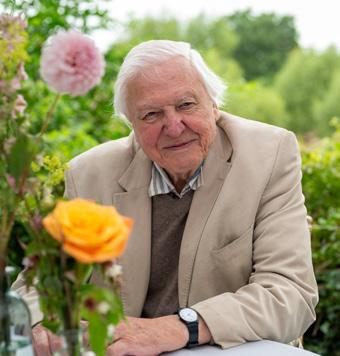
Marking one year since RSWT and Northumberland Wildlife Trust began a campaign to purchase The Rothbury Estate, a new film—featuring renowned naturalist and presenter Sir David Attenborough—was launched to show what could be achieved if the estate was safeguarded for nature. The film struck a chord with media and the general public. A huge amount of online, print and broadcast coverage followed, along with donations of just over £800,000 in just a few days, giving the appeal a huge boost towards its £30million target.
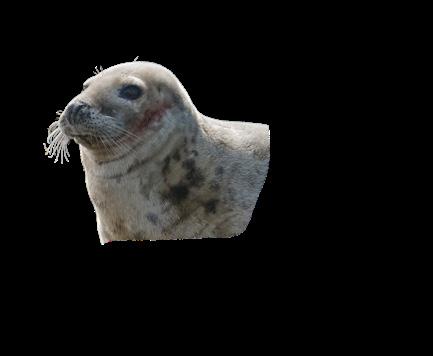
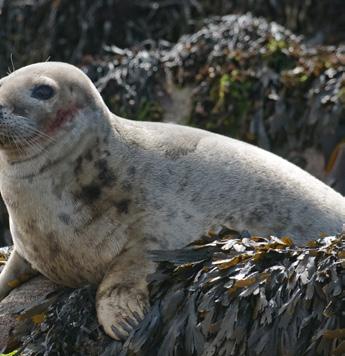
Throughout breeding season, Isles of Scilly Wildlife Trust supported research teams monitoring grey seal population trends on the islands, which house one of the most important colonies of seals in south-west England. Working with researchers from the University of Oxford, staff at the Wildlife Trust have learned more about the methods and techniques being used to minimise disturbance to the seals and any other vulnerable wildlife. The data being collected will help indicate how healthy the seals are and help project population numbers in the future.
OF OUR WORK
47 independent charities
4,100 dedicated employees
33,000 passionate volunteers
945,000 supportive members
One powerful movement.
We
are The Wildlife Trusts.
The Wildlife Trusts are a dynamic movement of locally rooted, independent charities working across the UK and its Crown Dependencies to restore nature and inspire action. Whether you’re in England, Scotland, Wales, Northern Ireland, the Isle of Man or Alderney, a Wildlife Trust near you is helping wildlife thrive and supporting communities to make a real difference for the natural world.
Together, we care for over 2,600 nature reserves and operate 120 information centres, welcoming almost 14 million visitors annually. We engage with more than 231,000 children and young people from over 2,400 schools, colleges, universities and youth groups, and facilitate 7,300 corporate volunteering days every year—connecting people with nature in new and meaningful ways.
Our network of 47 charities, which includes our national body, the Royal Society of Wildlife Trusts, stand united in campaigning for nature at local, national and global levels. We are a growing force for change, driven by shared values and a bold ambition: to reverse the decline of wildlife and confront the climate crisis head-on.
Strategy 2030 is our collective roadmap to a thriving natural world. The three goals at its core set out how we will play our part in achieving ‘30 by 30’: at least 30% of land and sea protected and connected for nature by the end of this decade.
The five Strategic Transformations and five Enabling Priorities set out in Strategy 2030 underpin our efforts to achieve the three core Strategic Goals. Throughout this report, you’ll find inspiring stories and examples of how Wildlife Trusts— individually and together—are making tangible progress toward these.
As a movement of passionate people, dedicated charities, committed supporters and visionary partners, we are building a wilder, more resilient future for nature— and for all of us.
STRATEGY 2030
The United Nations’ 17 Sustainable Development Goals form a unified framework for advancing peace, prosperity and environmental stewardship—both now and for future generations.
These interconnected goals call on all nations, regardless of development status, to take action to eradicate poverty, enhance health and education, reduce inequality and foster inclusive economic growth. At the heart of the Sustainable Development Goals lies a critical theme: the intrinsic link between climate and nature. When we neglect the climate, nature deteriorates—and when nature suffers, humanity does too. The Wildlife Trusts are proud to champion the Sustainable Development Goals within a UK context, embedding those directly relevant to our charitable purpose at the core of our Strategy 2030.
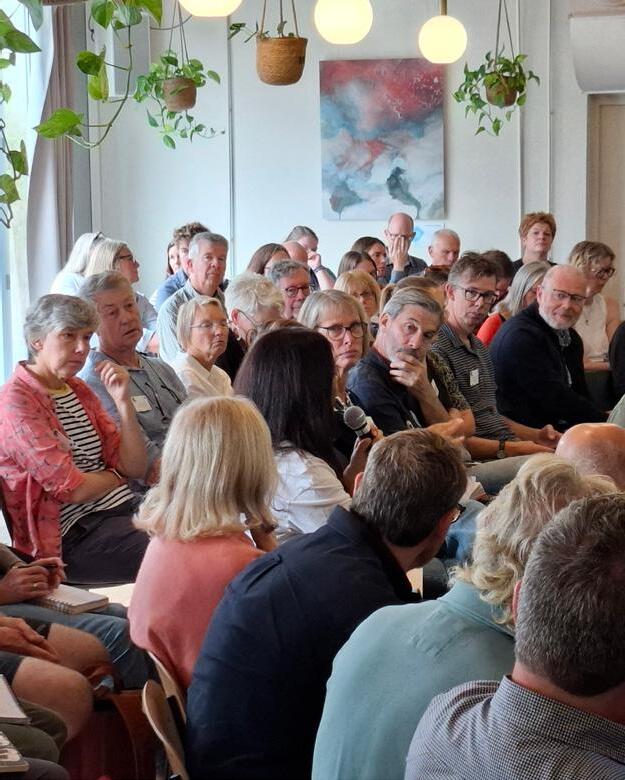
Representatives from The Wildlife Trusts contributing to the discussion at the IUCN World Conservation Congress 2025
Supporting a global vision for people and planet
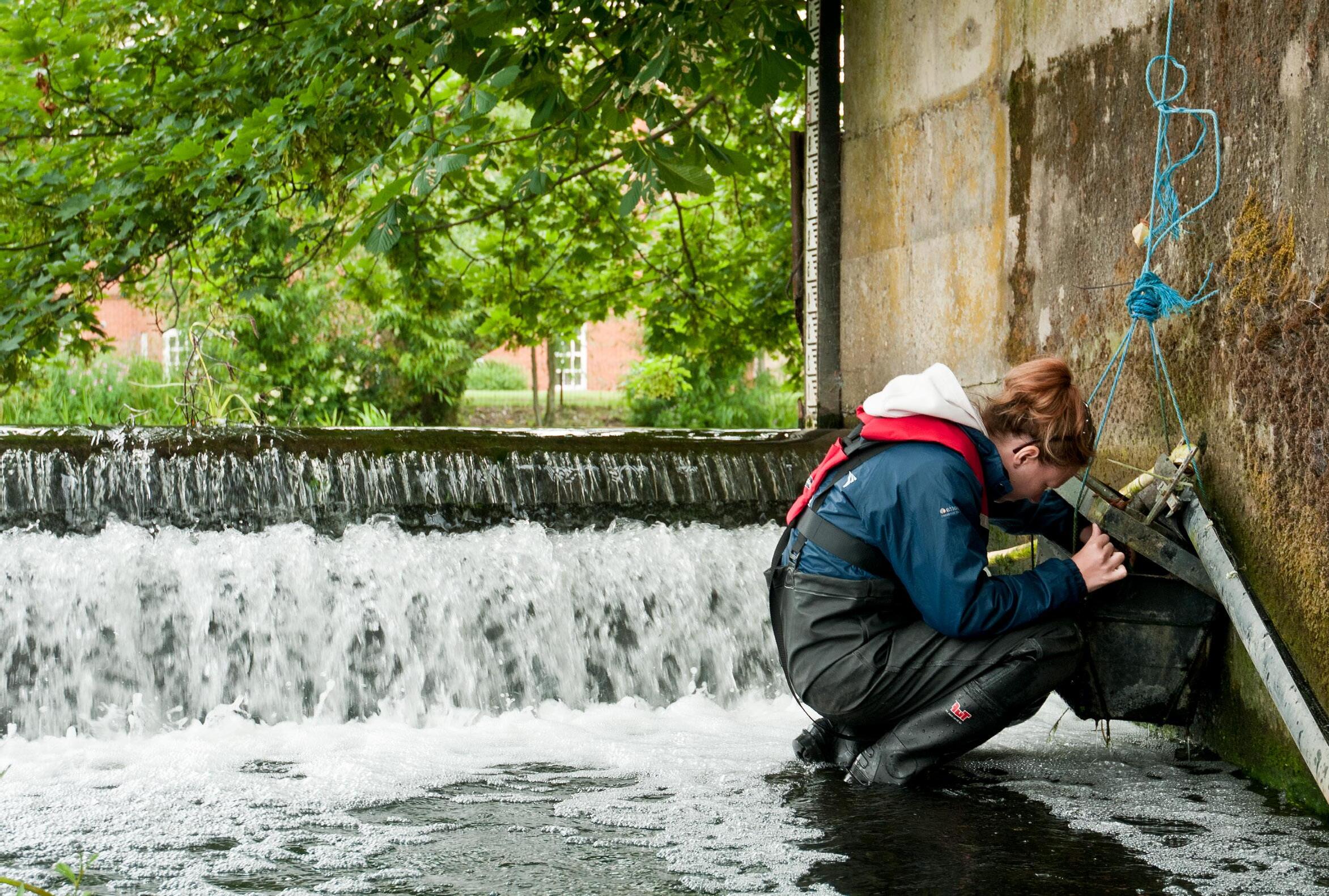
Access to water is a human right. The UK’s rivers, streams and coastal waters are facing mounting threats, including climate change, unsustainable farming and development, urbanisation and abstraction. Urgent, coordinated action in the UK is needed from governments and stakeholders. We’re restoring damaged habitats, delivering nature-based solutions to combat drought and flooding and campaigning for better laws.
Climate change is occurring at rates faster than anticipated and its effects are being felt worldwide. We are advocating and taking action to reduce greenhouse gas emissions and adapt to the effects of climate change, with nature playing a central role in both. As well as restoring natural habitats to help store carbon, we are committed to reaching net zero carbon emissions as an organisation by 2030.
Nature is vital for sustaining human life—and yet nature loss continues. Work to save the UK’s wildlife and wild places and help them recover has been a central aim of our work throughout history. We are reconnecting and restoring habitats, reintroducing vital keystone species and driving investment in nature-based solutions, working closely with farmers, policymakers, councils, businesses and others.
A vibrant natural environment isn’t just good for wildlife, it’s vital for human health too. Research shows that access to nature strengthens mental resilience and improves overall well-being. We campaign for increased publicly accessible greenspace and partner with the NHS and other organisations to champion green social prescribing.
Half the world’s population lives in cities; in the UK this number is higher. Despite the known benefits of nature connectedness, many people in our cities lack good access to greenspace. Our work involves close collaboration with councils, businesses and decisionmakers to weave wildlife into the fabric of urban planning and support local communities to create—and advocate for—their own nature-rich spaces.
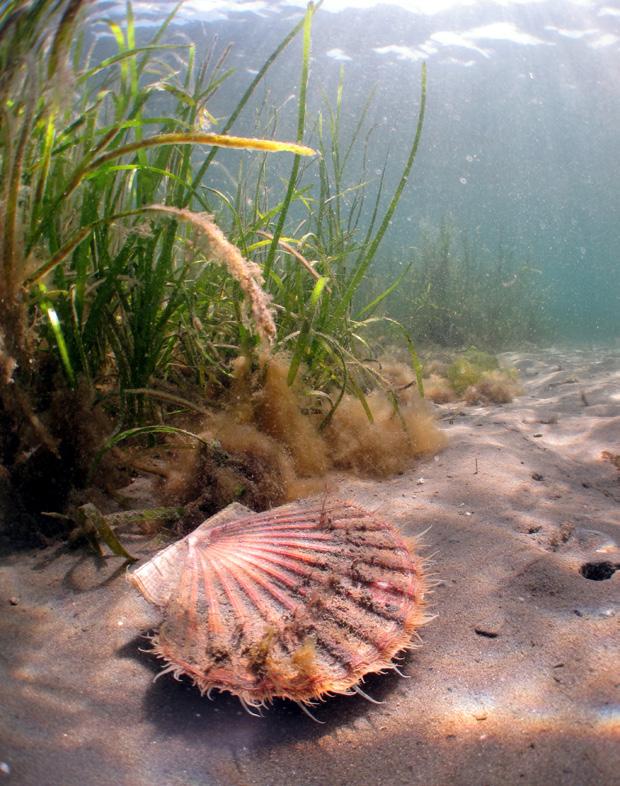
The world’s oceans provide key natural resources and our coastal ecosystems act as buffers for our communities living by the sea, and yet decades of over-exploitation have left our seas damaged. Having successfully campaigned for the creation of Highly Protected Marine Areas, we are now calling for them to be properly managed and for a ban on destructive practices, such as bottom trawling. Through our research, including on the UK’s blue carbon, we are also raising awareness of the ocean’s vital role in combatting the climate crisis.
To achieve the Sustainable Development Goals, action is required by all countries and can only be realised through partnerships between governments, the private sector and civil society. We are establishing and growing relationships with regional, national and international networks, and ensuring we are present at influential global events, including COP15 and the IUCN World Conservation Congress.
LOCAL TO GLOBAL
We care for 2,600 nature reserves, protecting and restoring vital habitats
Nature is in recovery with abundant, diverse wildlife and natural processes creating wilder land and seascapes where people and nature thrive.
10,120km of watercourses and 112,000 hectares of land are managed by Wildlife Trusts
We responded to more than 4,400 planning applications in the last year, saving wildlife and bringing more nature into developments
CASE STUDY
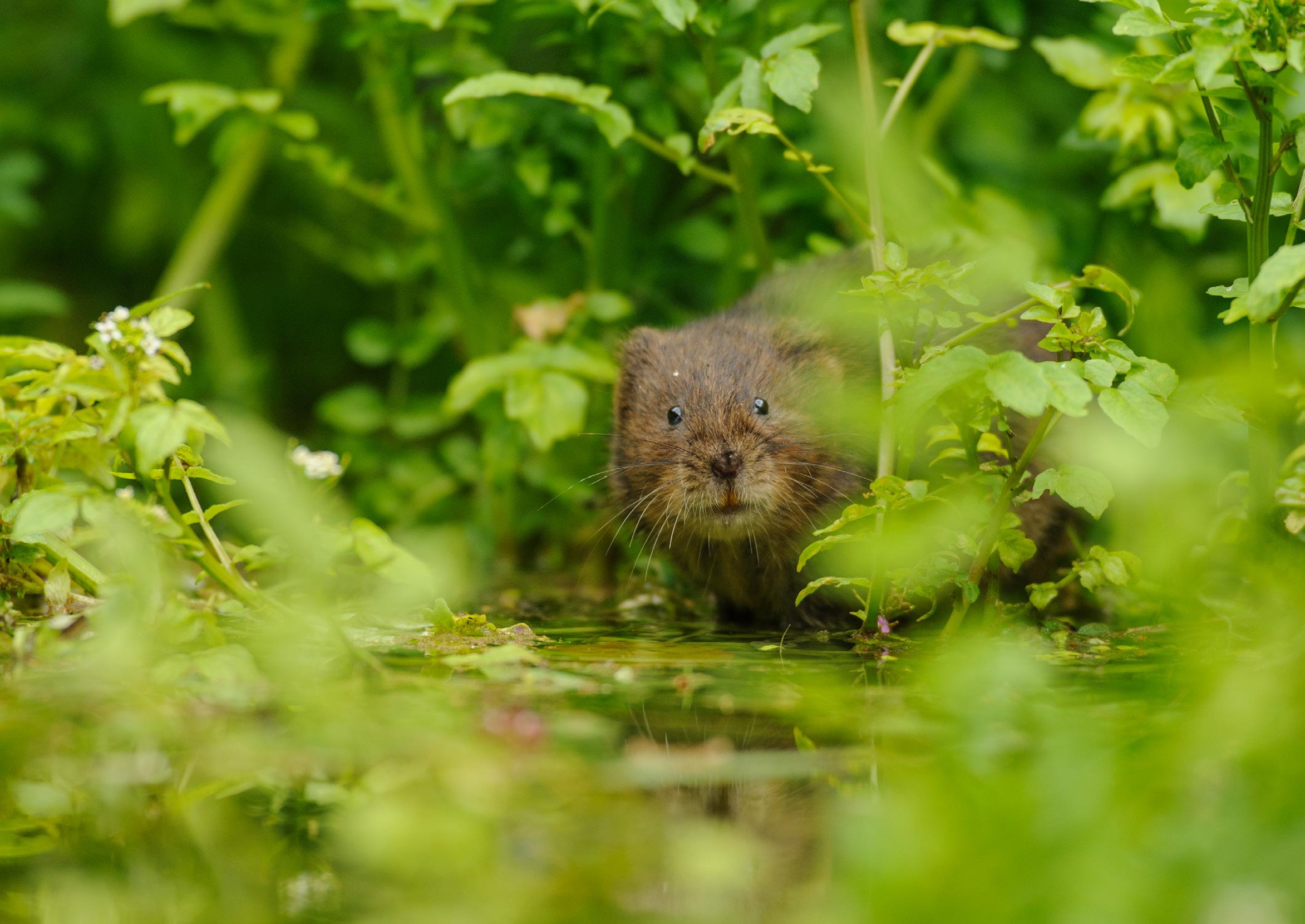
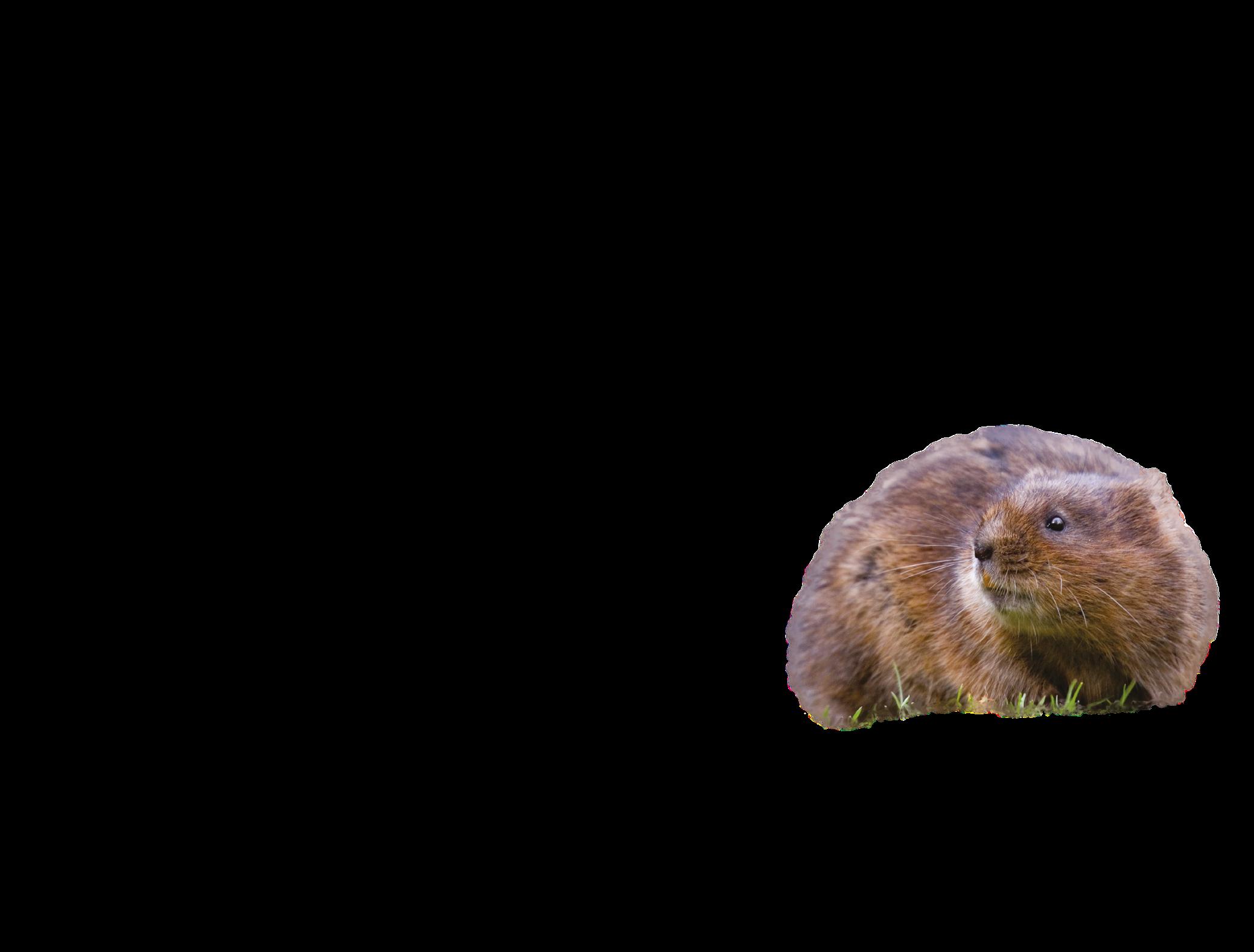
Water voles making a comeback in East Anglia
Over the last 50 years, water vole numbers have declined by more than 90% in the UK. A combination of habitat loss and predation by the invasive American mink decimated the popular, water-loving mammals, but thanks to the efforts of Essex Wildlife Trust and partners, they’re making a comeback.
Essex Wildlife Trust has been involved with water vole recovery for over 20 years, striving to help water vole populations on the brink of extinction return to the county’s rivers. In 2019 they joined the Waterlife Recovery Trust (WRT), a group of conservation charities and water management bodies, to tackle the issue together and protect the at-risk rodents.
New methods to humanely control the mink population were introduced, including ‘smart traps’ located on floating rafts and the use of scent lures. These were placed in specific locations on local rivers and helped to create a mink-free area for the water vole population to live and breed.
The project has been a huge success and water vole populations are in recovery, and in some cases thriving, throughout Norfolk, Suffolk and Essex.
The success of the project has been helped by the partnership approach taken by Essex Wildlife Trust, Suffolk Wildlife Trust, Herts & Middlesex Wildlife Trust and multiple external partners such as Natural England, Norfolk County Council, RSPB, Anglian Water and Cambridge University to name a few. This is a project that can now be scaled up for delivery across the whole of the UK, with support available from the organisations involved in the Waterlife Recovery Trust.
The revival of water voles, and other keystone species such as beavers and otters, is a key piece of the nature recovery jigsaw, alongside reconnecting habitats on a landscape scale and creating vital corridors for wildlife to repopulate places where they were once in abundance.
“The eastern region is currently the only place in the UK with a naturally recovering water vole population. This is a major conservation success story for the 21st century.”
Darren Tansley
Wilder rivers and protected species manager at Essex Wildlife Trust
GOALS
Over 33,000 volunteers gave their time this year to help improve the wild spaces they love
People are taking meaningful action for nature and the climate, resulting in better decision making for the environment at both the local level and across the four nations of the UK.
We are proud to have over 945,800 members (an increase from 944,000 last year)
102,043 new people got involved in advocacy and engagement campaigns this year
CASE STUDY
Connecting communities and nature
CityFibre is transforming digital connectivity for over 1.3 million premises through Project Gigabit, part of the UK Government’s drive to bring lightning-fast broadband to hard-to-reach communities. But this isn’t just about cables—it’s about creating social value where it matters most.
Under the Procurement Act, major suppliers like CityFibre must ensure local communities benefit from their work. That’s where The Wildlife Trusts come in. Together, we’re pairing broadband rollout with projects that restore nature and strengthen community ties.
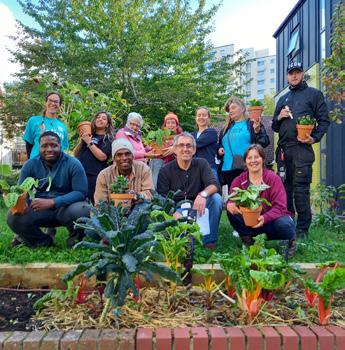
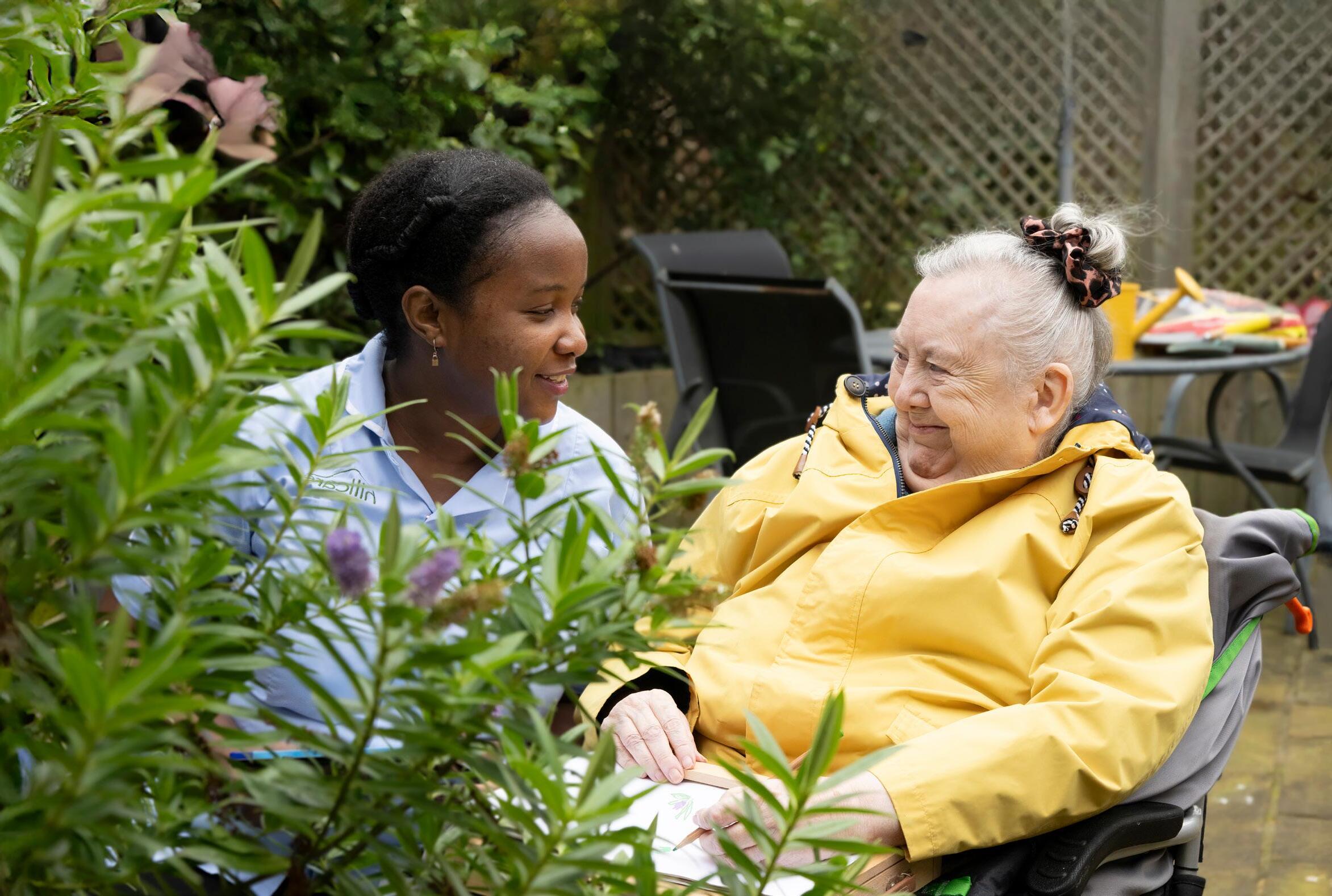
The partnership spans six Wildlife Trusts—Bedfordshire, Cambridgeshire & Northamptonshire, Leicestershire & Rutland, Warwickshire, Sussex, Kent and Hampshire & Isle of Wight—each using a community organising approach to work with schools, youth clubs and care homes. Thanks to CityFibre’s support Wildlife Trust staff have built relationships with local people, helping them gain the skills and confidence to lead lasting change for nature and themselves.
From creating wildlife corridors at Belgrave Library Community Garden in Leicester, to empowering Warwickshire groups to speak up for vulnerable species like water voles or raising environmental concerns directly with MPs, and supporting SEND students at Nene Wetlands in Northamptonshire through Forest School sessions, the impact is clear. CityFibre’s investment has helped embed Wildlife Trust staff within neighbourhoods so they can nurture local leadership and sustain grassroots action.
This work isn’t about the Wildlife Trusts doing the action—its ensuring communities own it.
“What we are seeing, from Warwickshire’s growing network of empowered groups to the ripple effect of resident-led projects in Leicestershire, is the start of long-term transformation. CityFibre has helped lay these foundations, shaping how Wildlife Trusts support communities to lead for nature, for place and for future generations.”
Bryony Carter Community organising manager at The Wildlife Trusts
STRATEGIC GOALS
Nature is playing a central and valued role in helping to address local and global problems.
33,504 people took part in a Wildlife Trustled health and well-being programme (an increase from 21,063 last year)
664 hectares of land acquired for rainforest expansion Wildlife Trusts manage 206 natural flood management programmes
CASE STUDY
Rainforest recovery on the Isle of Man
The Wildlife Trusts’ long-term and visionary partnership with Aviva aims to restore Britain’s lost temperate rainforests. However, it is not just about bringing back these magical woodlands—it is reimaging how nature, climate and community can thrive together, building resilience for generations to come.
The Wildlife Trusts’ partnership with Aviva funds the restoration of temperate rainforests in areas where they used to grow along the damper, western climes of Britain and Ireland.
In a landmark achievement, Manx Wildlife Trust has acquired 454 hectares at Glen Auldyn, creating the largest tree-planting site since the start of the UK programme and establishing the biggest nature reserve on the island. It also means Manx Wildlife Trust’s reserves now cover 2% of the Isle of Man.
The restoration of Glen Auldyn will create vital habitat for rare and threatened wildlife, support flood resilience in a high-risk area, capture carbon to fight climate change, offer new educational, employment and volunteering opportunities for local communities and enhance the island’s role as a UNESCO Biosphere Reserve leader. Tree seeds will be gathered from the glens and
grown in the Wildlife Trust’s nursery at Milntown at the base of Glen Auldyn. Volunteers are already involved in the tree nursery, which was initially set up to provide trees for rainforest restoration at the first two sites of Creg y Cowin and Glion Darragh. Local residents will be closely involved with the new site and are set to benefit from further volunteering, educational and employment opportunities. The project will spend an initial two years conducting ecological surveys of the moorland, peatland, glens and existing woodland.
The Glen Auldyn annoucement was swiftly followed by another rainforest restoration land purchase by Cornwall Wildlife Trust, who are beginning to restore land at a 60 hectare site in West Muchlarnick.
“This project restores a piece of the Isle of Man’s natural heritage and creates a model for future land management that benefits both people and nature. It is also an important contribution to the island’s international obligation to protect and manage 30% of land for nature by 2030.”
David Bellamy, Head of conservation and land at Manx Wildlife Trust
GOALS
Supporting and developing Wildlife Trusts as strong and effective independent actors
The Wildlife Trusts’ federation thrives by balancing local knowledge with national influence. Each Wildlife Trust brings unique insight into regional challenges, while our collective voice drives change.
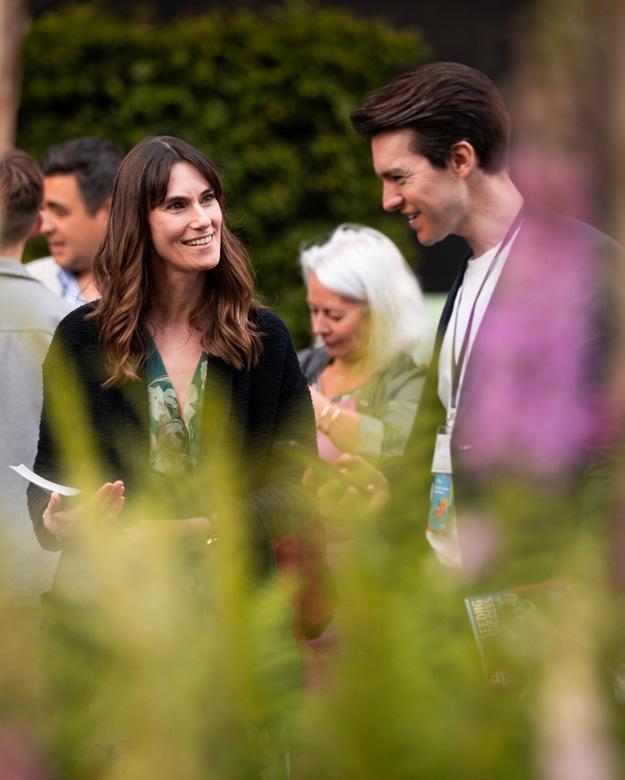
We share expertise across our Wildlife Trusts and learn internationally, drawing inspiration from innovative approaches to nature’s recovery and community mobilisation. Through our Seeing is Believing events, our leaders witness bold solutions and bring home ideas. Recent visits include experiencing rewilding on the Isle of Wight, large-scale nature restoration in the Netherlands and projects linking nature to health and well-being in Paris.
Working effectively as a distributed network and collective movement
When Wildlife Trusts join forces and work together, we can assert significant influence and effect change, utilising our collective power for the good of nature.
Our united campaign against bottom trawling—a destructive fishing method that destroys the seabed and releases carbon, contributing to climate change— led to a UK Government announcement that they planned to ban the practice in vulnerable marine habitats in England, to protect important and rare sealife. This victory shows the power of collaboration and public action. We will continue to press for wider protections to restore our ocean ecosystems.
Inspiring community organising and mobilising, especially amongst young people
Young people are a vital force for ensuring nature’s recovery and protection in the future. Across The Wildlife Trusts’ federation, initiatives like traineeships, youth boards and internships open doors to help young people get involved and foster a connection with nature.
At the Norwich City Council-owned Sloughbottom Meadows, Norfolk Wildlife Trust is championing an exciting youth-led approach to managing a nature reserve. 17 young wardens, aged 16-25 years old, are managing the habitats on site and improving access for the local community, with the support and advice of wildlife experts.
Undergoing a ‘root and branch’ digital transformation
Technological innovation is accelerating nature conservation—helping us tackle today’s challenges and prepare for those in the future.
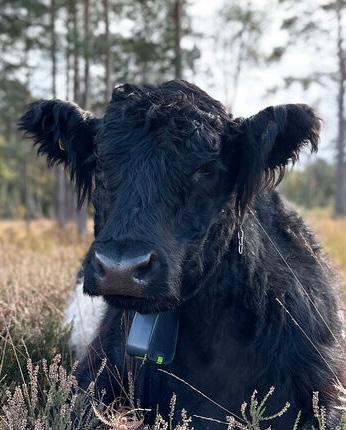
Lincolnshire Wildlife Trust has established a Motus station (a network of radio receivers for tracking signals) at Gibraltar Point, tracking the movement of birds and bats and contributing the data to advance global research. Meanwhile several Wildlife Trusts, including Beds, Cambs and Northants Wildlife Trust are using GPS collars on their conservation grazing livestock to help manage nature reserves without the need for installing fences.
Delivering a step-change in the scale and diversity of funding for nature’s recovery
Funding nature’s recovery requires bold and innovative approaches, developing corporate partnerships and philanthropic loans to unlock large-scale land acquisitions.
Wild Whittingdon in Chesterfield exemplifies this: Derbyshire Wildlife Trust purchased 24 hectares through fundraising and loans, creating vital habitat corridors and space for rewilding. Since 2023, wildlife has started to return, including skylarks, owls and grass snakes. In 2024, it became Derbyshire’s first Biodiversity Net Gain habitat bank, generating income for restoration. This pioneering model shows how collaboration and ingenuity can transform landscapes and secure nature’s recovery for generations to come.
GAVIN DICKSON
Getting our own house in order
Every organisation faces the challenge of cutting carbon as we tackle the climate crisis. For The Wildlife Trusts, with thousands of staff, offices, visitor centres and vehicles, the journey to net zero is one we take seriously.
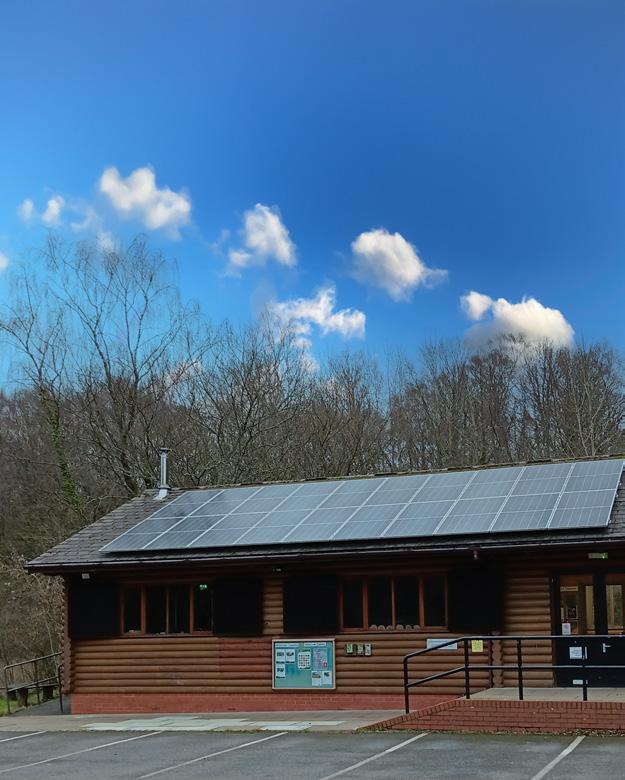
Collectively, we are working smarter, whilst individual Wildlife Trusts take innovative and cost-effective steps to reduce their estate’s carbon footprint. One example, showing how innovation and determination can drive change, is Hampshire and Isle of Wight Wildlife Trust’s Swanick Education Centre. Retrofitted with solar panels, it now generates clean energy and offers EV charging, demonstrating sustainability in action to visitors.
Ensuring our nature reserves and land assets are the foundation for nature’s recovery
The Wildlife Trusts’ nature reserves are at the heart of our programme of recovery, helping to protect habitats and connect people with wildlife. They show what is possible.
Across the UK, Wildlife Trusts are restoring land, enabling threatened species to return and safeguarding natural carbon stores. Cheshire and Lancashire Wildlife Trusts have together created a new 529 hectare peatland site between Liverpool and Manchester that will provide homes for lapwing, curlew and sundew as part of the King’s Series of National Nature Reserves. These landscapes are living proof that bold action can heal ecosystems and secure a wilder future for generations.
Develop clear and consistent evidence-based policies
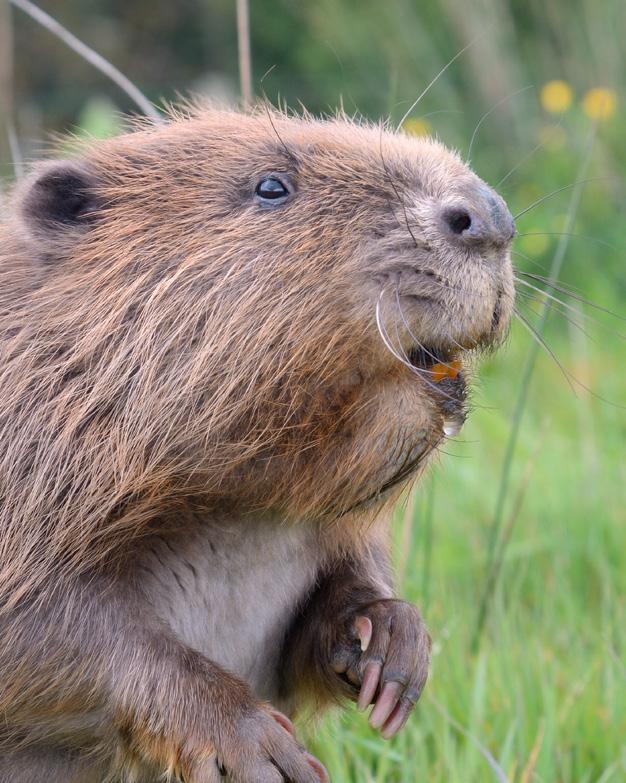
Turning research into action is at the heart of The Wildlife Trusts’ mission. Years of evidence and campaigning have delivered a landmark win: licensed beaver reintroductions into the wild in England and Wales.
Beavers—nature’s engineers—restore rivers, reduce flooding and revive wetlands. This breakthrough follows decades of work by Wildlife Trusts, who had introduced beavers into enclosures—starting with Kent Wildlife Trust in 2001 and Scottish Wildlife Trust in 2009—and launched a collective vision for their return. It proves that science, persistence and collaboration can change laws and policies and help to bring back species that shape thriving ecosystems.
Invest in a high-skilled and diverse staff and volunteer network, and build a movement-wide learning culture
Nature’s future depends on people—and the actions we take. The Wildlife Trusts are creating opportunities for young people to shape decisions through our first national Steering Group for Young People, launching in 2026. This group will bring fresh perspectives to our Council and inspire the next generation of nature champions.
From traineeships to our Next Gen Network for young employees, and even a Discord server, we are breaking barriers to conservation and building connections. The Wildlife Trusts’ Hope Week is an annual celebration of these efforts, proving that when we invest in talent and diversity, we create a stronger movement ready to protect nature for generations.
Speak
with a bold and confident voice, further increasing our impact and influence
Influencing those in power is vital to nature’s recovery. From local planning battles to national campaigns, Wildlife Trusts fight for wildlife every day.
In June 2024, we were part of a coalition of organisations at the Restore Nature Now march in London, demanding political action in the run-up to the General Election. Joining over 60,000 people, staff, volunteers and supporters stood alongside influential voices, sending a clear message: nature cannot wait. This united call captured headlines and hearts, proving that when we speak boldly and act together, we can drive change to help secure a wilder future.
TheWildlife Trusts
Develop and strengthen The Wildlife Trusts’ federation
RSWT plays a vital role in supporting and strengthening the 46 individual Wildlife Trusts across the UK, providing essential infrastructure and expert guidance to help local Trusts operate effectively. This includes legal, financial and communications support, as well as access to shared resources and training. By fostering collaboration and knowledge exchange, RSWT acts as a conduit for Trusts to learn from one another and tackle national challenges collectively.
Representing •Connecting
The Royal Society of Wildlife Trusts (RSWT) supports The Wildlife Trusts federation, providing a unified national voice for wildlife. It helps to coordinate Wildlife Trusts, influences UK policy, manages key funding and corporate partnerships and delivers shared programmes.
RSWT operates according to three defined core purposes:
• Strengthening the federation
• Driving Strategy 2030
• Achieving national impact
Over the past year, RSWT has delivered a wide range of initiatives to support and strengthen The Wildlife Trusts’ federation. A major highlight was the launch of the Wild About Learning programme, which included outdoor coaching, membership to the Charity Mentoring Network and training aimed at diverse groups of Wildlife Trust staff at every level, designed to develop talent and skills throughout the movement. RSWT also ran a successful Federation Conference in Aberystwyth, hosted induction days for staff and trustees, and facilitated leadership development.
To improve operational efficiency, RSWT led on advanced automation projects such as the Volunteer Management System and selected a provider for the HR Automation Project—due for launch in 2026. RSWT also enhanced digital infrastructure and internal communications by further developing a shared CRM data hub and appointing a user experience specialist to review and develop the intranet, which included the launch of a federation-wide document library that ensures all policies and position statements are stored and accessible in one place. A new Articles of Association template was introduced to streamline governance reviews, alongside guidance on board diversity and recruitment.
RSWT supported the delivery of major funding programmes such as the Aviva temperate rainforest initiative, developed climate adaptation resources and helped strengthen fundraising through the launch of the Legacy Ladder Toolkit—helping Wildlife Trusts assess and improve their approach to legacy fundraising.
Knowledge-sharing was promoted via blogs, webinars, Communities of Practice and the publication of Wild Science, the federation’s first data, research and evidence report.
Co-ordinate and ensure successful delivery of Strategy 2030
Connecting leaders and staff from across The Wildlife Trusts to share insights and collaborate has been instrumental in advancing the strategic goals, transformations and enabling priorities that make up Strategy 2030—the shared strategy that shapes the federation’s core priorities. By embracing innovative approaches to bring people together, we have built momentum, strengthened collective impact and moved the federation forward toward our ambitious aims.
Over the past year, RSWT has made substantial progress across strategic, digital, environmental and policy fronts. Key milestones include advancing the federation’s data lake and Digital Centre of Excellence, both central to Strategy 2030. We celebrated a successful General Election campaign collaboratively delivered with 24 Wildlife Trusts, and used the learnings to inform future planning and resource allocation. We also published our 2023/24 carbon and greenhouse gas accounts and launched a net zero pathway to guide Wildlife Trusts toward 2030 targets. In September 2025, thanks to players of People’s Postcode Lottery, we launched A Space for Everyone—a new guide to help improve access to outdoor places for visitors.
Major biodiversity initiatives included successful bids to deliver Biodiversity Net Gain services and the launch of a vision for beaver reintroductions in England and Wales— followed by the news that beavers would be granted licences for release into the wild the following year. RSWT also hosted a Building the Bridge residential, uniting youth and education leaders to shape future engagement strategies and developed an education pathway to embed nature and climate into learning through traineeships.
Policy engagement remained strong, with RSWT participating in the Oxford Farming Conference and supporting Wildlife Trusts through changes in agri-environment schemes. RSWT has facilitated webinars, developed a climate adaptation toolkit and progressed an Outcomes Framework to streamline data collection. RSWT also prepared for the mid-point review of Strategy 2030, including regional roadshows throughout the UK to capture the input of staff across a wide range of local Wildlife Trusts.
Deliver direct external impact
As the national voice of The Wildlife Trusts, RSWT leads engagement with the UK Government on key policy issues and coordinates federation-wide campaigns. Through traditional and digital media, it communicates on matters affecting all Wildlife Trusts. RSWT’s influential reports and events raise awareness, challenge decision-makers and harness the strength of the collective movement to drive change and address the pressing threats facing nature in the UK and beyond.
RSWT published its second annual climate adaptation report in August 2024, Embracing Nature, which identified drought as the leading threat to nature reserves and gained national media attention. This was followed by a third report in 2025, Resilient Nature, which revealed the frightening pace of climate change, the devastating impact it is having on nature and how much more we need to do to prepare for what is an accelerating threat to us all.
In August 2025, The Quantifying the Environmental Risks from Pig & Poultry Production in the UK report was launched which, for the first time, investigated the cumulative impact of the UK pig and poultry sector on the wider environment and again, sparked debate through the media coverage it generated.
The blue carbon project mapped the seabed and estimated how much carbon was stored in marine habitats. Resulting in a first-of-its-kind publication, the project concluded that UK seas were as important to the climate as habitats on land such as forests and peatland. The resulting reports, co-published with WWF and RSPB, are helping to inform national policy.
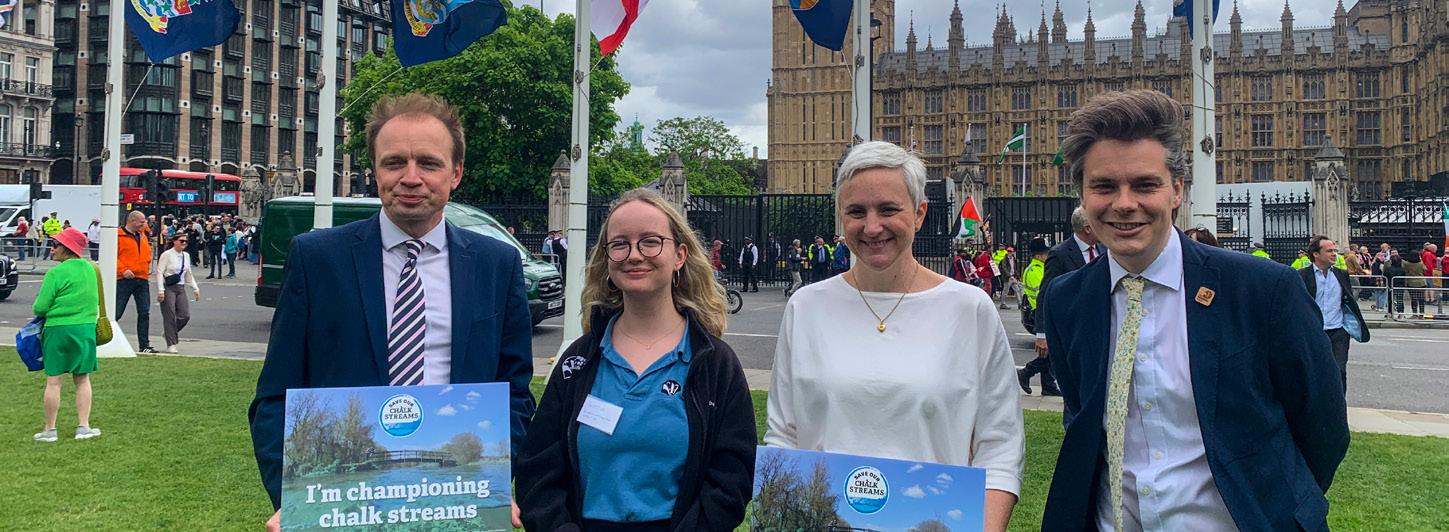
RSWT’s advocacy influenced planning reforms, farming policy and marine protection and celebrated a major win in halting bee-killing neonicotinoid pesticide use after years of pressure and campaigning.
RSWT’s growing influence with decision-makers and journalists, and partnerships with businesses that are now recognising their impact on the climate and role in contributing to nature’s recovery, reflects the rising authority of its voice in local, national and international arenas. On the global stage, a delegation from RSWT attended COP16 in Colombia in October 2024 and the IUCN World Conservation Congress in Abu Dhabi in October 2025. These events bring together governments and policymakers to tackle nature loss and promote sustainable development, with key motions voted on to shape the future of nature conservation.
Wildlife Trusts Wales
Wildlife Trusts Wales plays a vital role in shaping progressive environmental policies in Wales through building relationships with and influencing the Welsh Government and advocating for increased funding to support nature’s recovery and climate solutions.
Part of RSWT, Wildlife Trusts Wales collaborates with the five Welsh Wildlife Trusts to improve joined-up working and help build a more nature-rich country. Together, the Welsh Wildlife Trusts employ over 180 staff, engage more than 2,000 volunteers and are supported by 32,000 members who help manage over 230 nature reserves.
Over the past 18 months, Wildlife Trusts Wales has played a pivotal role in addressing the climate and nature crises through advocacy, research and community engagement. A major focus has been on influencing the Welsh Government’s Sustainable Farming Scheme to push for recognition of farming’s important role in nature’s recovery. Wildlife Trusts Wales also supported Gwent Wildlife Trust’s campaign against threats to vital habitats on the Gwent Levels, where large-scale solar developments risk damaging irreplaceable wetlands.
Wildlife Trusts Wales raised awareness about worsening river pollution, highlighting that seven of nine designated Welsh rivers are heavily contaminated with phosphorus. It also published a landmark report on Wales’s rare temperate rainforests, calling for urgent protection and restoration. The Welsh Government’s support for beaver reintroduction marked a significant win for the long-term vision of ecosystem restoration by recognising European beavers as native species and awarding them with full protection.
Marine conservation was another priority, with Wildlife Trusts Wales contributing to reports on carbon storage in seabed habitats and advocating stronger protections for the Welsh coast and Irish Sea.
Public engagement efforts included the Big Wild Walk fundraising challenge and calls for fresh thinking to tackle biodiversity loss, as one in six species in Wales faces extinction.
Through these initiatives, Wildlife Trusts Wales continued to build momentum for a wilder, more resilient Wales, combining science, policy influence and grassroots action to influence decisionmakers and make a positive impact for nature’s recovery.
High impact partnerships
ECOLOGICAL RESTORATION FUND
The Ecological Restoration Fund is supporting our work to protect and restore marine ecosystems and restore nature across large areas of land. This includes bringing back missing keystone species that help to create habitats for a diverse range of wildlife.
In the last 12 months this funding has enabled Wildlife Trusts to make several strategic land acquisitions across England, Wales and Northern Ireland, providing connectivity across landscapes. As part of this programme Wildlife Trusts have been supported to submit 20 Expressions of Interest to Natural England to reintroduce free-living beavers or to release currently enclosed beavers, and a tree nursery has been established on the Isle of Man. The trees grown here will enable the Manx Wildlife Trust to restore temperate rainforest to 2% of the land and provide trees for the Isle of Man into the future.
THE ERNEST COOK TRUST
The Ernest Cook Trust is supporting our new ‘Bringing Nature into Teaching’ programme. With their funding we will develop new ways of training and supporting school staff to bring nature into the classroom, take lessons outside and meaningfully integrate wildlife into pupils’ daily school life. Over the next three years we will be supporting TAs, teachers and leaders in schools to feel confident leading learning outdoors.
ESMÉE FAIRBAIRN FOUNDATION
Esmée Fairbairn Foundation has supported our work to restore nature on land and at sea, in particular our work to engage more young people in nature’s recovery and our work to protect marine wildlife from the damaging impacts of development at sea. This funding has supported work to reduce the negative environmental impact of offshore wind developments by providing specialist advice and working with others to ensure offshore wind development is planned strategically. Funding has also supported us to establish a young adults’ steering group to guide the work of The Wildlife Trusts.
PEOPLE’S POSTCODE LOTTERY
The generous support of players of People’s Postcode Lottery over many years has transformed our work across The Wildlife Trusts. We are now stronger together, more ambitious and having an even greater impact for nature. This year, thanks to funding raised by players, 600,000 people got closer to nature through our 30 Days Wild challenge and people all over the UK spoke up for nature through our campaigns.
We produced a guide to make nature reserves more accessible, so that everyone can enjoy spending time in nature. Wildlife Trusts were able to care for special wild places in Yorkshire, Northumberland, Scotland and Wales where local people can learn about the wonderful wildlife around them. Inclusive badger-watching events in Scotland, osprey watch in Northumberland, volunteer and skills development in Yorkshire, and young people’s forums in Wales are just some of the activities Wildlife Trusts were able to provide.
PRUDENCE TRUST
The Prudence Trust is supporting us to dramatically scale up our engagement with 11–16-year-olds across the UK. With their generous funding, The Wildlife Trusts will work directly with young people in their schools and communities to increase their access to nature to support their mental health and well-being. This programme will enable us to build the bridge between our incredible work with early years and young adults, transforming how we work with young people.
THE NATIONAL LOTTERY HERITAGE FUND
Thanks to National Lottery players, funding will support us to lay the foundations for the future of the Rothbury Estate in Northumberland. In partnership with Northumberland Wildlife Trust, we have purchased part of the estate, with plans to purchase the remainder by October 2026. This funding will enable us to plan how the working landscape of the Rothbury Estate can play a critical role in nature’s recovery and benefit the people who live and work there. Our ambition is to transform the Rothbury Estate into the beating heart of a 40mile nature recovery corridor across northern England.
With The Rothschild Foundation’s support, we are developing a land advice skills programme which equips land advisors all over the UK with the knowledge and skills they need to meet the emerging needs of the agriculture sector and drive a transition to nature-positive farming. A key part of this expansion is supporting land advisors to confidently facilitate farm cluster groups to promote peer learning and collaboration.
WORWIN UK FOUNDATION
With support from Worwin UK Foundation, The Wildlife Trusts are working to help farmers help nature through our land management advice service and policy advocacy. Around 70% of land in England is used for farming. In the nature and climate crises that we face, where and how we grow food has a huge impact on nature’s recovery. We want to see government support for nature-friendly farming practices and are working to influence policy at the same time as creating change on the ground through our land advice services.
WITH ADDITIONAL THANKS TO...
John Ellerman Foundation supported our work around nature-friendly farming, enabling us to better help farmers to bring about nature’s recovery through their land management practices. King Charles III Charitable Fund backed our work to ensure that more land around the UK is managed in a nature-friendly way and that we are able to explore new opportunities for green finance. Worwin UK Foundation supported our work to protect and restore peatlands, which are home to rare wildlife and store huge amounts of carbon. The Gatsby Charitable Foundation enabled us to offer work placements to T-level students and Zephyr Charitable Trust and European Climate Foundation supported our work with young people and the development of ways for them to be involved with The Wildlife Trusts. We would also like to thank Mr and Mrs Nick Razey, Mr and Mrs George Cornelius and Mr and Mrs Roger De Freitas for their kind donations.
ANONYMOUS FUNDERS
Thank you to all of our other funders who wish to remain anonymous. Their generosity and donations are helping us to restore nature and protect wildlife at scale.
Purchasing land for nature’s recovery
In 2024-25, The Wildlife Trusts continued to acquire land to restore, protect and rewild, as part of our commitment to reach 30 by 30: 30% of land and sea, managed in a way that allows nature to recover, by the year 2030.
Acquiring land is an expensive and time-consuming challenge that is in part dependent on the generosity of our major donors and philanthropic lenders. Philanthropic lenders have enabled Wildlife Trusts to rapidly purchase important land that has become available without the need to raise the funds first, which can lead to missed opportunities.
This ensures the land can be used for nature recovery projects rather than being at risk from damaging construction and development projects that further reduce space for wildlife.
The Esmée Fairbairn Foundation Land Purchase Facility has enabled Wildlife Trusts across the UK to purchase land of high current or potential conservation value. Once purchased, Esmée Fairbairn Foundation leases the land to Wildlife Trusts for them to buy within a two year time frame, allowing an opportunity to fundraise. Between April 2024 and September 2025, Esmée Fairbairn Foundation approved five applications from five Wildlife Trusts totalling £6.7 million.
Our philanthropic lenders enabled 3,653 hectares across the UK to be secured for nature, at a cost of over £35 million.
to all our funders, we couldn’t do it without you!
Our national corporate partners
The Wildlife Trusts work with businesses that share our commitment to restoring nature and building healthy, resilient communities. These partnerships support our 2030 goals and operate at local, regional and national levels—either led by local Wildlife Trusts or coordinated at scale through the Royal Society of Wildlife Trusts.
Together, we deliver measurable impact: restoring landscapes, creating habitats and embedding naturebased solutions across business operations. Our work supports biodiversity enhancement, natural flood management and meaningful engagement with employees, customers and communities.
For our partners, we aim to bring strategic value through ecological expertise and deep local connections. Our support helps businesses meet regulatory requirements, fulfil Environmental Social Governance (ESG) targets and embed nature-positive practices across their value chains.
Each partnership is designed to create and inspire lasting change. From shaping nature strategies to transforming supply chains, we help businesses become active contributors to nature’s recovery— for people, for wildlife and for the future.
Some of the businesses we work with include:
INTACT INSURANCE
Advancing nature-based solutions to flooding
The collaboration between The Wildlife Trusts and Intact Insurance is rooted in a shared ambition: to advance the scientific and social understanding of nature-based solutions to flooding, while also delivering tangible, local impact. The need is critical: by 2050, flood risk is expected to at least double and the UK faces a projected daily water shortfall of 4 billion litres, even without drought conditions.
In March 2025, we published new research exploring the benefits and mechanisms of Natural Flood Management (NFM). This research found the average total benefits of Wildlife Trust Natural Flood Management schemes were estimated at £4 for every £1 spent over 10 years, with that benefit rising to £10 for every £1 spent over 30 years.
On the ground, Gloucestershire Wildlife Trust and Intact Insurance have partnered to create Waterscapes, a programme
that uses nature-based solutions to help solve flooding in Gloucestershire. As a Founding Partner, Intact Insurance funded Phase 1, to demonstrate how working with nature can reduce flood risk while boosting wildlife in Cheltenham and Gloucester. Highlights from this phase of the Waterscapes programme include 2.9 million litres of water storage created, 120m² of impermeable surfaces removed and 30 community events delivered engaging over 3,500 people, including 1,000 school children.
Looking ahead, The Wildlife Trusts and Intact Insurance, alongside the Rivers Trust, have launched Rivers 2040. This 18-month project will map and assess the economic, environmental and social benefits of restoring nature along the entire River Trent, from source to sea.
A national partnership between The Wildlife Trusts and BT is helping breathe new life into local nature reserves by securing vital funding to improve habitats for wildlife and local communities.
The model implemented by BT facilitates colleague volunteering, fundraising and also weaves place-based environmental projects into public procurement bids, helping to meet their social value commitments while funding projects that make a measurable difference to nature. The projects are then delivered by local Wildlife Trusts on the ground who have a deep understanding of the wildlife they care for every day and the communities in which they are based.
The first project through this partnership is a £95,000 investment over three years funded through a Ministry of Justice contract, transforming two beloved Northumberland Wildlife Trust reserves: Holywell Pond and St Nicholas Park.
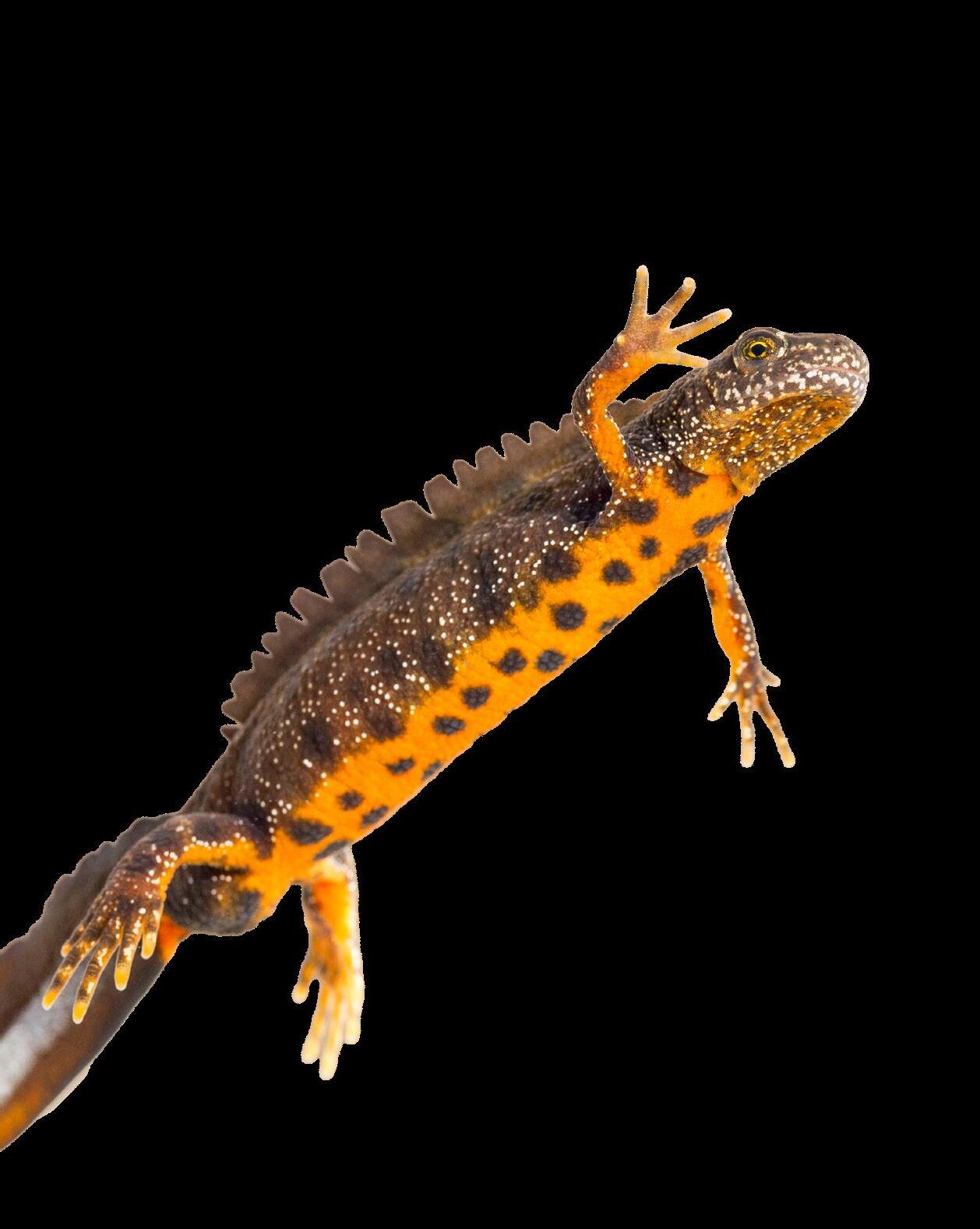
At St Nicholas Park, two ponds are being restored, creating safe breeding grounds for frogs, toads and newts. Volunteers and staff are enhancing meadows, tending wildlife gardens, maintaining bird boxes and upgrading footpaths—making the park richer for wildlife and more welcoming for visitors.
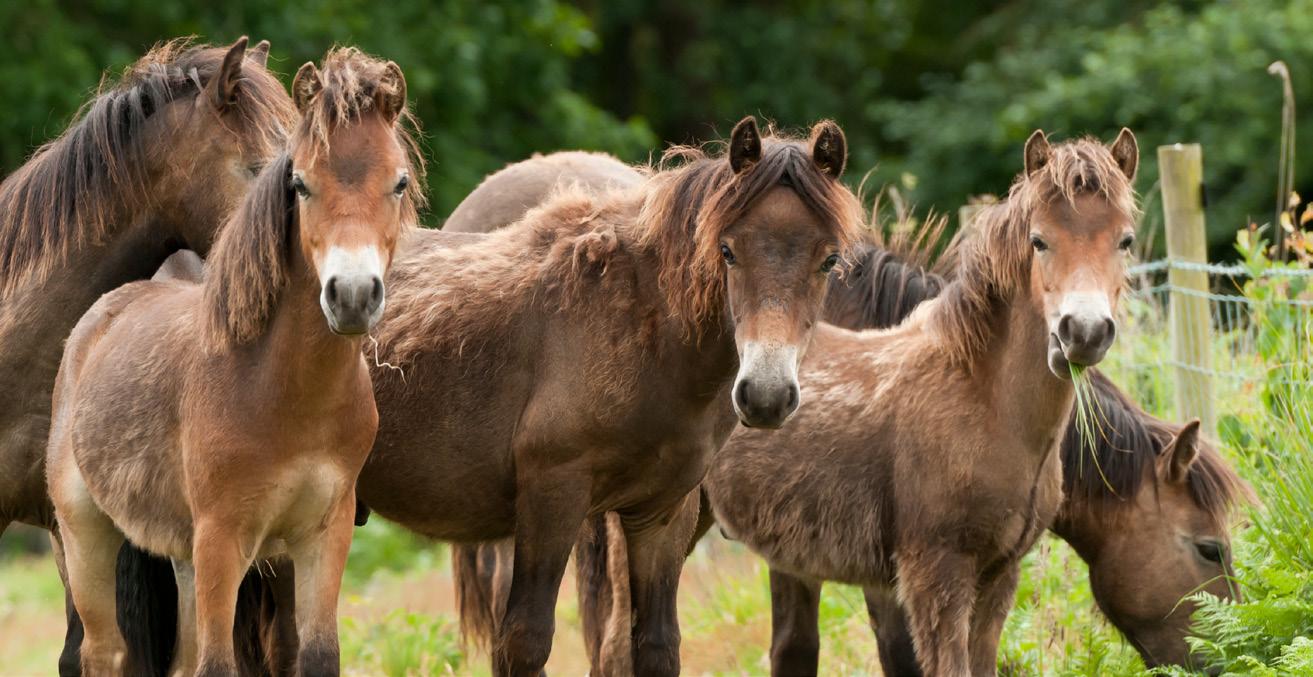
At Holywell Pond, a haven for birdwatchers, BT’s support is enabling woodland and meadow management to boost habitats for birds and pollinators. A vandalised hide is being replaced with a sturdy viewing screen, Exmoor ponies will graze the meadows as part of natural habitat care and volunteers will learn the traditional craft of hedge-laying.
To mark this new collaboration, the BT Tower lit up earlier this year to celebrate 30 Days Wild, helping to inspire thousands to connect with nature throughout June as part of The Wildlife Trusts’ annual major engagement campaign.
BT
A national partnership with local impact
Biodiversity Benchmark
Everyone has a role to play in reversing the nature crisis. By managing the land they own in a wildlife-friendly way, businesses can take an important step in helping nature’s recovery
Since 2007, Biodiversity Benchmark has been helping landowning businesses become a positive force for nature’s recovery in the UK. This unique certification scheme tests the design and implementation of a business’s management systems to achieve continual biodiversity enhancement and protection on their landholdings.
Certification has been achieved across 51 sites covering 8,200 hectares of land managed by 17 organisations.
These organisations span sectors including business parks, leisure, transport, automotive, energy and aggregates.
CASE STUDY
MIRA Tech Park
MIRA Technology Park, covering 344 hectares, achieved its Biodiversity Benchmark accreditation in 2024. This site, historically farmland and later an RAF station, is now a global hub for sustainable mobility innovation.
It hosts 22 hectares of biodiversity-focused areas across six distinct plots, including grasslands, woodlands, ponds, hedgerows and dense scrub. These habitats support a wide range of species, including great crested newts, bee orchids, grass snakes, bats, badgers, deer and numerous bird species like chiffchaff and buzzard.
MIRA’s commitment to biodiversity has driven substantial positive impacts, including the planting of 11 hectares of wildflower meadows, installation of 150 bat and bird boxes, creation of over one hectare of wetland habitat and the planting of 600 new trees. These efforts enhance the site’s ecological value and support regional conservation goals, while also aligning with MIRA’s mission to lead in sustainable technology.
“For the past 12 months, our business has been diligently focused on all aspects of its Environmental, Social and Governance programme to take a leadership position on net zero vehicle development. The Benchmark recognises our specific progress in the active management of our site biodiversity.
“It means that our established equipment clients have immediate downstream compliance for their engineering and testing requirements, and our newer, scaling tech customers have to spend less time and resource to satisfy investor requirements or achieve positive bid scores. For all our customers, the Biodiversity Benchmark is yet another way we enable every aspect of their business requirements.”
Our collective finances
This is 2024 data from 38 Wildlife Trusts.
RSWT figures are for national work completed on behalf of The Wildlife Trusts’ federation.
RSWT income is £13m (excluding a BIFFA grant of £5.1m and inter-Trust grants of £12.5m). RSWT expenditure is £10m. There is a small unrestricted fund surplus of £0.7m, with the balance of £2.3m in restricted funds for future years.
£13 m
£216.7 m £230.4 m
The combined total income for all 46 Wildlife Trusts is £230.4m, with an expenditure of £216.7m. The federation surplus is £13.7m, of which £14.5m is in restricted funds to be carried forward to fund projects in the next financial year, with a loss of £1m in unrestricted funds—an improvement on previous years.
£10 m
Help us achieve our vision of 30% of land and sea to be connected and protected for nature’s recovery by 2030...
The Wildlife Trusts are a federation made up of 46 Wildlife Trusts and a central charity (the Royal Society of Wildlife Trusts). Each is an independent charity with a shared mission. Find out more at wildlifetrusts.org/support-us
• Joining us as a member
• Remembering us in your will
• Speaking up for wildlife
• Volunteering your time
• Working with us Get in touch... enquiries@wildlifetrusts.org @thewildlifetrusts @wildlifetrusts @the-wildlife-trusts 01636 677711 @wildlifetrusts wildlifetrusts.org @thewildlifetrusts