BEHIND THE BRAVADO
How mountain culture masks men’s mental health















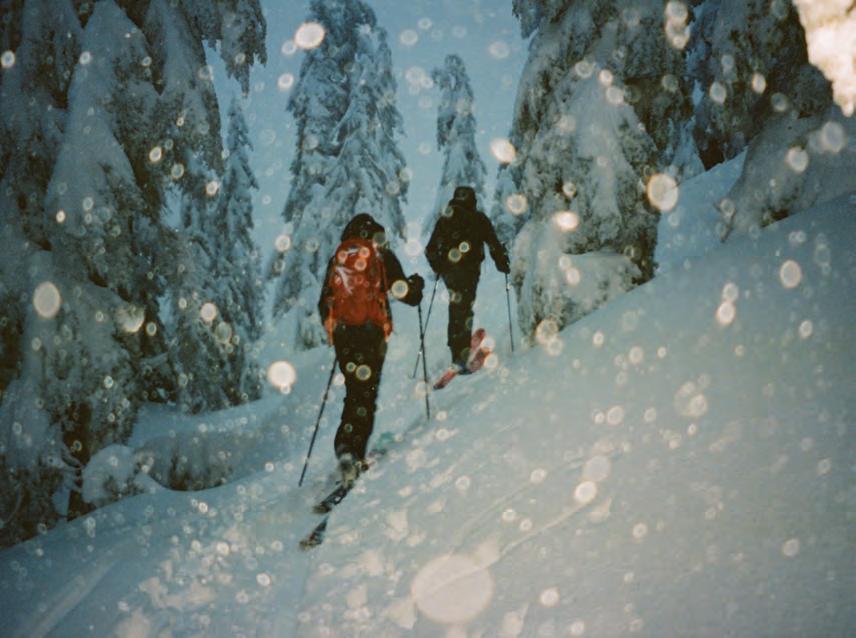
Behind the bravado
How mountain culture masks men’s mental health. - By Caroline Egan
06 OPENING REMARKS There are multiple ways to get involved in supporting the museum here in Whistler, writes editor Braden Dupuis.
08 LETTERS TO THE EDITOR This week’s letter writers share gratitude for Whistler’s festive light display, and weigh in on pipeline politics in B.C.
22 THE OUTSIDER When is the appropriate time to buy new skis? The answer varies from “when I have to” to “when I feel like it,” writes Vince Shuley.
46 PIQUE’N YER INTEREST That commercial rents continue to climb reflects a fundamental flaw in Whistler Village’s design, writes tobias c. van Veen: we don’t own it.

10 FUNDING HISTORY The Whistler Museum is developing a fundraising plan for its long-awaited new building for launch this spring or summer.
12 BUILDING A BUDGET Whistler’s mayor and council reinstated $719,000 in proposed cuts during its latest round of budget deliberations on Dec. 2.
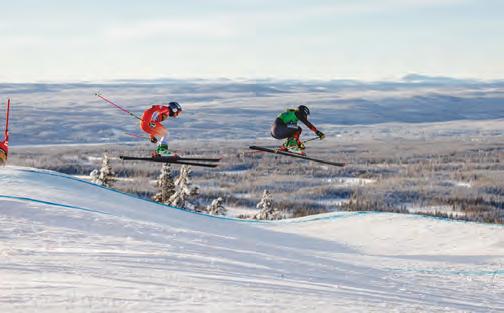
30 RACE TO THE RINGS Checking in on Canada’s world-class ski-cross team ahead of the 2026 Winter Olympics.
34 HOLIDAY HEIST Piano Heist returns to Whistler’s Maury Young Arts Centre on Dec. 12 with “A Very Merry Heistmas.”
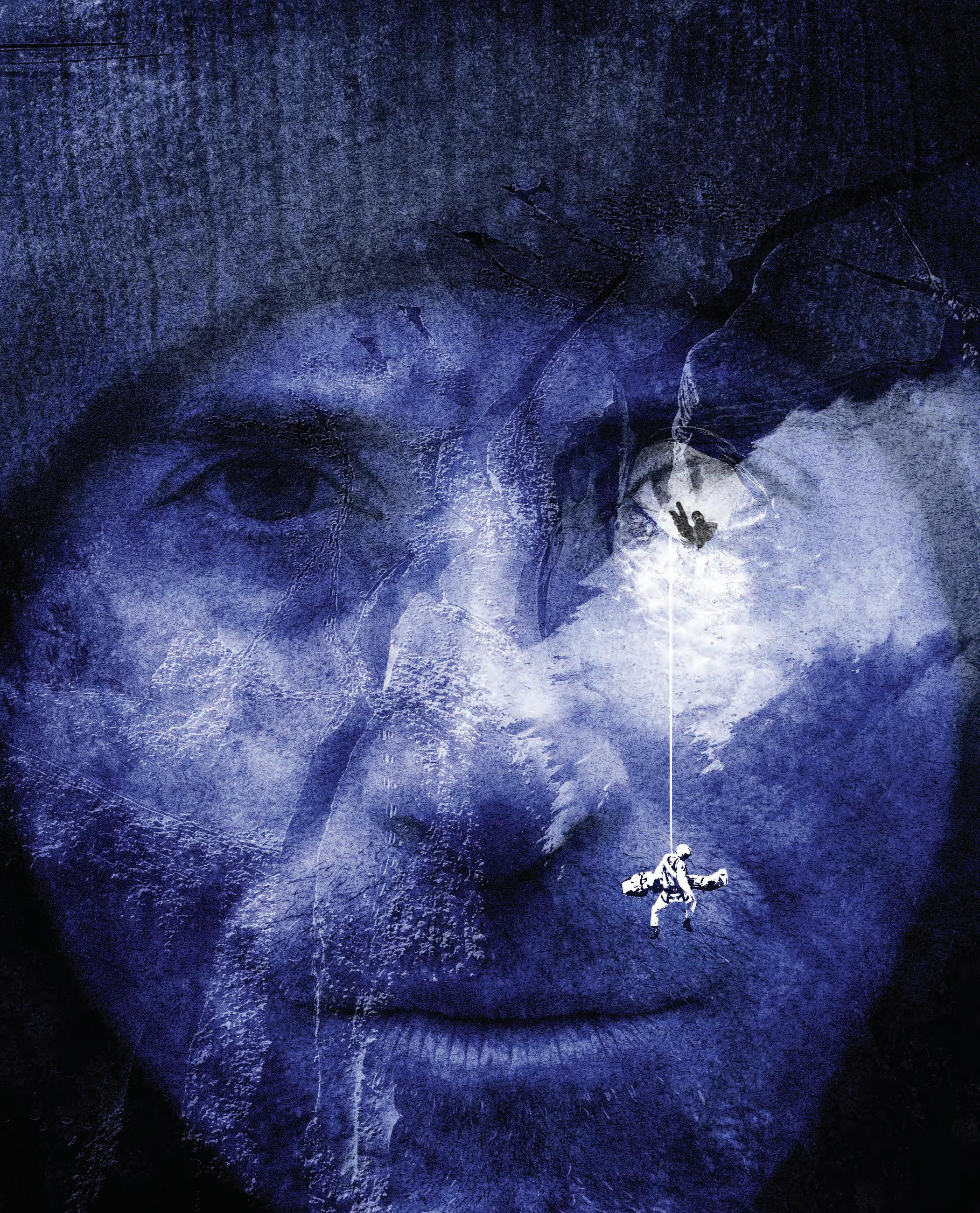
COVER While I’ve never had a choice about being a crybaby, I’m grateful to have been given the tools to be OK with it. Also could’ve used those tools much earlier in my life! - By Jon Parris // @jon.parris.art
Publisher SARAH STROTHER - sstrother@piquenewsmagazine.com
Editor BRADEN DUPUIS - bdupuis@piquenewsmagazine.com
Sales Manager SUSAN HUTCHINSON - shutchinson@piquenewsmagazine.com
Production Manager AMIR SHAHRESTANI - ashahrestani@piquenewsmagazine.com
Art Director JON PARRIS - jparris@piquenewsmagazine.com
Advertising Representatives
TESSA SWEENEY - tsweeney@wplpmedia.com
ANDREW BUDRESKI - abudreski@piquenewsmagazine.com
Digital/Sales Coordinator KATIE DOUGLAS - kbechtel@wplpmedia.com
Reporters
LUKE FAULKS - lfaulks@piquenewsmagazine.com
DAVID SONG - sports@piquenewsmagazine.com
Office Manager HEIDI RODE - hrode@wplpmedia.com
Classifieds and Reception - mail@piquenewsmagazine.com
Contributors G.D. MAXWELL, VINCE SHULEY, LESLIE ANTHONY, GLENDA BARTOSH, ANDREW MITCHELL, LISA RICHARDSON, LIZI MCLOUGHLIN, TOBIAS C. VAN VEEN
Founding Publishers KATHY & BOB BARNETT www.piquenewsmagazine.com
Canadian Publications Mail Product. Sales Agreement #40016549.

LOCALS’ DEALS LOCALS’ DEALS
TOGETHER, WE GO BIG.
WHISTLER BLACKCOMB SPIRIT PASS / THE GROCERY STORE / BUS PASS
ALGN Whistler / Canadian Wilderness Adventures / Escape! Whistler / Lost Lake Nordic Trails / Meadow Park Sports Centre / Mountain Skills Academy & Adventures / The Adventure Group / The Callaghan & Journeyman Lodge
Whistler Bungee / Whistler Eco Tours / Whistler Olympic Park / Whistler
Sliding Centre / Whistler Tasting Tours / Ziptrek Ecotours
Alpha Café / Alta Bistro / BBQ Bob’s / BeaverTails / Blenz Coffee / Braidwood
Tavern / Caramba Restaurant / Cinnamon Bear / Gibbons Après Pass / Hunter
Gather / The Living Room at Pangea / Lorette Brasserie / Mekong Restaurant
Naked Sprout Café / Tandoori Grill / Wild Wood Cafe
Advanced Parking / Alpenglow Immigration Canada / Black Tie Ski Rentals
Borealis Immigration Law / Park’N Fly / Spicy Sports
Whistler Valley Tours & Charters / Underground Tuning & Cycle Whistler
A Little Bud Cannabis / Amos & Andes / Cool As A Moose
McCoo’s / Premium Mountain Rentals
Prior Snowboards & Skis / Profile Ski & Snowboard Services
Spiritleaf Cannabis / The Circle & The Circle Kids
Audain Art Museum / Laugh Out LIVE!
Blackcomb Springs Suites by Clique
HI Hostel Cheakamus/ Whistler Village Inn & Suites




Who remembers Whistler?
IN A PLACE LIKE Whistler, where the population spins like a ski lift, time tends to slip through the cracks. People come, people go, work shifts with the seasons and the snowpack, rents rise, housing disappears. And so often lost in the constant turnover are the memories, the stories, the local history.

BY BRADEN DUPUIS
That’s why non-profits like the Whistler Museum and Archives Society (WMAS) aren’t optional extras. They are the town’s memory, the place where we store what might otherwise vanish. Without those institutions, we risk being nothing more than a tourist brochure: glossy and disposable.
So it’s encouraging to see the WMAS moving ahead with its long-gestating plans for a new facility (see related story on page 10).
The initiative to find a permanent home for the museum dates back decades, though efforts have certainly gained steam in recent years, helped along by a 60-year lease signed with the Resort Municipality of Whistler in 2023.
Official cost estimates now peg the spend at about $16 million—a daunting figure organizers say is made more imposing by recent changes to Canadian Heritage’s cultural spaces fund.
The fragility of heritage infrastructure should alarm anyone concerned with memory, identity and place. According to the latest Government of Canada Survey of Heritage Institutions (GCSHI 2021), there are roughly 2,700 notfor-profit heritage organizations in Canada—museums, galleries, archives, historic sites, zoos and botanical gardens. Museums alone account for more than 57 per cent of that total.
But for many of these institutions, the financial picture is precarious. In 2020 the sector generated about $2.5 billion

in revenue—a roughly five-per-cent drop from 2017.
More than half of those institutions reported net profits of $10,000 or less, while a substantial portion operated at a loss.
The COVID-19 pandemic delivered an especially violent blow: heritage institutions recorded only 16.9 million physical visits in 2020—a steep 79-percent decline from the 79 million visits recorded in 2017. Museums saw their visitation drop to 5.1 million, down roughly 86 per cent.
Nor did volunteers escape unscathed. The number of volunteer contributors plunged from more than 114,000 in 2017 to just 56,000 in 2020—a 51-per-cent drop.
Many institutions now rely heavily on public-sector support, grants, and whatever earned revenue they can muster.
In a stable city, local museums can rely on repeat visitors, memberships and school groups: children growing up, families coming back, generations forming connection to place. Not so in a
collect, preserve, archive, and explain, we lose more than objects and photographs. We lose context. Identity. A sense of place beyond postcards and ski packages.
Left unchecked, the version of “Whistler history” that remains will be curated by marketing budgets: sleek, sanitized and built for outside consumption. It’s cultural erasure in its most casual, passive form.
If we care about heritage then “support” can’t mean once-in-a-while fundraising galas. It needs to be practical and long-term—think multi-year base funding, not project-by-project grants; or housing that recognizes cultural workers as essential.
The biggest piece of the puzzle is likely support from higher levels of government. The current federal survey that tracks heritage institutions is a good start. But we also need consistent funding— not just stop-gap COVID-era money, but recurring base funding, especially for small and remote institutions (like those serving resort- or rural-town
change, we anchor it in respect. We ensure Whistler doesn’t forget it is more than a ski-lift and slopes, a playground for the rich or an ATM for faceless corporations— that it is a real community built by people, labour and continuity.
And there are multiple ways for each of us to get involved in supporting the museum here in Whistler.
Buy a membership, volunteer. Show up. If you belong to a local business, developer, or tourism-related enterprise, consider a partnership where a share of profits supports heritage infrastructure.
If you vote, or rent, or own: push council to commit to stable, long-term funding rather than annually reviewed fee-for-service funds. If you’re a teacher or parent: bring school groups. Ask that local history be part of the lesson.
Even if you’re just passing through, you can choose to support heritage as a principle. Add an afternoon at the Squamish Lil’wat Cultural Centre and/ or WMAS to your weekend itinerary. Demand that the marketing-driven
The fragility of heritage infrastructure should alarm anyone concerned with memory, identity and place.
resort town where many residents rotate every few seasons.
Whistler is full of newcomers— workers chasing a season, tourists just passing through, people drawn by the liftlines, the lodges, the promise of a lifestyle. Few stay. Fewer put down roots. The oldtimers and the long-term locals are often nudged out by rising housing costs and the always evolving tourism job market.
Those people carried stories. Real narratives about guiding, mountainculture, labour in hospitality, relationships with the land and local Indigenous communities. When they leave there’s often no one to remember.
If we don’t invest in institutions that
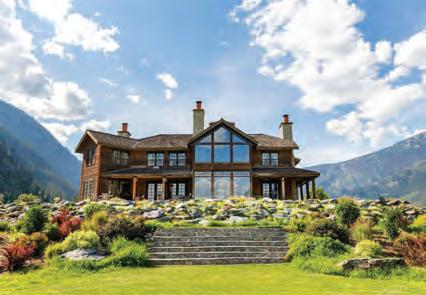
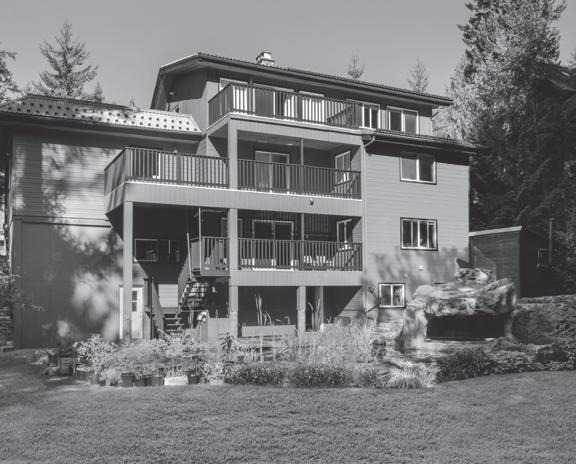
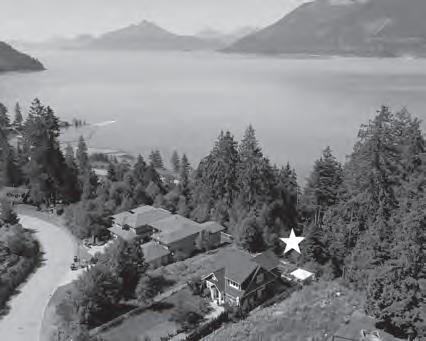
Looking foraspacious Whistlerhomethat's perfectasaprincipal residenceandoffers excellent rentalincomepotential?9548Emerald Dr featuresalargeprivatelotwithstonehot tub, wood-firedsauna,andkoipond. The open-conceptmainhomeincludesstainless appliances,heatedtilefloors, and two wood stoves.Enjoymountainlivingwitha two- car garage,amplestorage, andeasyaccess to trails, thevillage, andskihills.
Askingprice-$2,995,000 9548Emerald Drive

communities). Recent consultation on a renewed Canadian Museum Policy shows direction, but not commitment.
Critics might argue enforcing all this slows growth, or that tourists don’t care. But that’s missing the point. Museums and heritage don’t hinder development, they give it meaning, depth, and accountability.
When a new development breaks ground, our collective memory should speak up. Who lived here first? What jobs did they have? What land was reshaped? What was lost, and what was gained? Without memory, we risk repeating mistakes.
By preserving history, we don’t resist
version of “Whistler” carry some trace of the real past.
Because if we don’t, we risk being a place with no memory—a town with a constantly changing face and the same uninhabited story repeated again and again.
If we lose the people who remember, and we lose the museums that collect their stories, what remains is a hollow echo of a place that once had roots. Maybe that’s convenient for some developers. But it should concern anyone who calls this place home, even for a season.
Preserve heritage. Fund the institutions. Live the stories—don’t throw them away. n




Whistler’s Christmas light display is ‘magical’
After 35 years living in Whistler, I have seen and experienced the best winter light and celebration display ever! The Olympic Plaza, Village Gate and Lorimer Road, as well as Village Stroll, are magical. Thank you and congratulations to the Resort Municipality of Whistler village crew for their hard work and imagination to make it happen. Thanks also to the participating businesses. Fantastic job! (Need to find ways to attract locals. I saw zero in my one hour of strolling.)
B.K. Buchholz // Whistler
On pipeline politics
I think the cartoon by Greg Perry in last week’s Pique is spot on. The elephant in the room nowadays in B.C. politics is clearly depicted. I also appreciated the thoughtful letter to the editor by Omer Dagan pointing out that Whistler’s future as a winter sport destination is under threat from shrinking snowpacks and erratic weather patterns. The reason


behind the decline of snow conditions in Whistler and around the world, obviously, is global warming. And the major reason for global warming—so science tells us—is the pollution of the atmosphere from greenhouse gas (GHG) emissions, ergo burning of fossil fuels. From this point of view, the pipeline deal between the federal government and Alberta to increase oil production, pipe the stuff from the Alberta oil sands to our North Coast, ship it to Asia where it gets burned and

so spew billions of tons more GHG into the atmosphere, is actually quite surreal. To add insult to injury, the B.C. government and B.C. Coastal First Nations were not at the negotiating table with the feds and Alberta, even though both have justified concerns about the potential catastrophic effect a bitumen tanker spill would have on our coast line and the economy of Coastal communities. Patrick Weiler is our Liberal MP representing the people of Whistler and up and down the corridor. Anybody
“The reason behind the decline of snow conditions in Whistler and around the world, obviously, is global warming.”
- ERICH BAUMANN
who has concerns about the pipeline deal and its implications for our environment should let Ottawa know by contacting our MP and/or write to the federal ministers concerned, including the PM.
Erich Baumann // Pemberton
Write to us! Letters to the editor must contain the writer’s name, address and a daytime telephone number. Maximum length is 450 words. Pique Newsmagazine reserves the right to edit, condense or refrain from publishing any contribution. Letters reflect the opinion of the writer and not that of Pique Newsmagazine. Send them to edit@piquenewsmagazine.com before 11 a.m. on Tuesday for consideration in that week’s paper.



Backcountry Update
AS OF WEDNESDAY, DEC. 3
The winter season is off to an encouraging start—at least above treeline. In the alpine, snowpack depths reach up to 150 cm, but lower elevations (1600 m and below) have very limited coverage. Early-season hazards like rough travel, alder, stumps, and open creeks make getting around challenging. Those who have made it up high have found some decent riding—but remember, if it’s deep enough to ride, it’s deep enough to slide.
A storm pulse is expected through the weekend, bringing up to 20 cm or more of new snow and strong southwest winds. This will replenish the powder while likely creating avalanche problems like storm slabs and wind slabs, particularly at treeline and above. The new snow will sit on a mix of old surfaces—faceted snow, firm wind-packed snow, and surface hoar— resulting in weak bonds between the

new snow and the old surface. The highest avalanche hazard will likely be in sheltered areas where surface hoar developed, and on leeward (downwind) slopes prone to wind-loading.
The good news? This short-term instability may set us up for better conditions later. Avalanche hazard will peak during or just after the storm, but once the new snow stabilizes and bonds, we can hopefully look forward to some excellent December riding.
If you’re heading into the backcountry this weekend, check the avalanche forecast—it’s updated daily at 4 p.m. on avalanche.ca, or on the Avalanche Canada mobile app. Always bring a friend and essential avalanche rescue gear (meaning avalanche transceiver, shovel, and probe), plan for early darkness and potentially difficult egress, and consider taking an avalanche course early in the season to strengthen your knowledge, decisionmaking, and companion rescue skills.n
CONDITIONS MAY VARY AND CAN CHANGE RAPIDLY Check for the most current conditions before heading out into the backcountry. Daily updates for the areas adjacent to Whistler Blackcomb are available at 604-938-7676, or surf to www.whistlerblackcomb.com/mountain-info/ snow-report#backcountry or go to www.avalanche.ca.








NickDavies, Whistlerlocal andexperiencedfamilylawyer practisingacrossBCandYukon.
Callat 604-602-9000 or visit www.macleanlaw.ca
MacleanLawisheadquartered inVancouverwithofficesacross BritishColumbia.
$995,000

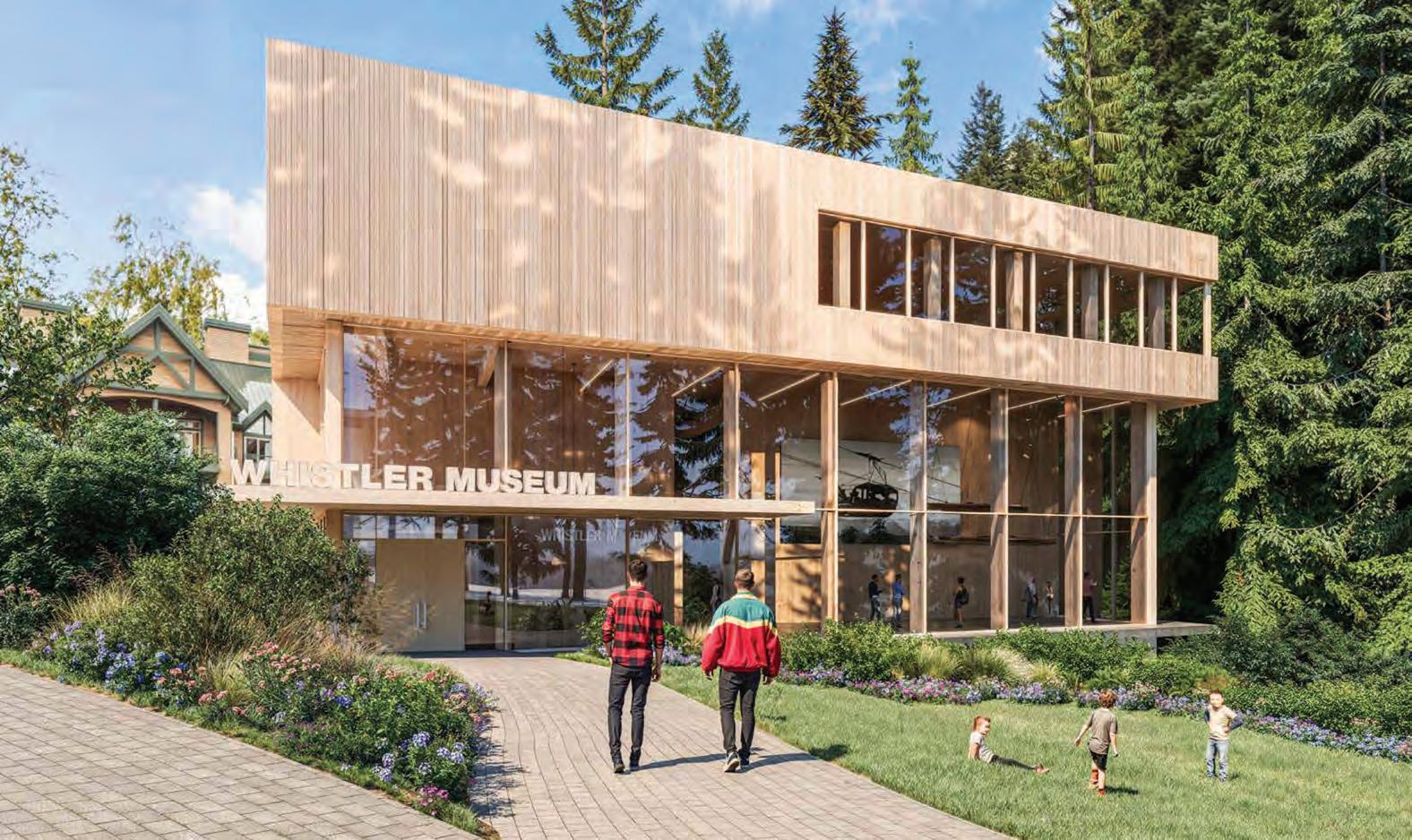
Whistler Museum charts course for new $16M purpose-built facility after years in portables
THE PROPOSED NEW DESIGN WOULD HELP SAFELY HOUSE A GROWING COLLECTION OF ARCHIVES, EXPAND PROGRAMMING, AND ENHANCE CULTURAL CONNECTIONS
BY LUKE FAULKS
Local Journalism Initiative Reporter
“IT’S IN A WONDERFUL location, but it’s also repurposed double-wide trailer.”
That’s the state of play for the current Whistler Museum and Archives Society (WMAS), according to John Rae. The Resort Municipality of Whistler (RMOW)’s former manager of cultural planning and development is currently chairing the fundraising committee for a new Whistler museum building.
He and fellow campaigners are looking for a new building befitting the museum’s growing collection of archives and increasing number of annual visitors.
They’ve proposed a 15,375-squarefoot building, designed by Hemsworth Architecture, in the museum’s current footprint in Florence Petersen Park. The new facility will feature mass timber
construction, immersive exhibit spaces and climate-controlled archives.
“The new museum will be a landmark in Whistler Village, a place where residents, visitors and researchers can connect with the community’s rich natural and cultural heritage,” materials from the Museum’s new building pitch read.
“More than a building, it will serve as a hub of activity, education and storytelling.”
While the project has been years
have brought the plan closer to reality.
DECADES IN THE MAKING
The push for a dedicated museum space dates back nearly 40 years.
Founded in 1986, the Whistler Museum first opened in an 11-by-17 corner of the municipal hall basement.
The museum was founded by Florence Petersen, who started it as a promise to Whistler pioneer Myrtle Philip to document the community as it existed
“When you go to the museum— overstated to make the point—but it feels a bit like a rabbit warren.”
- JOHN RAE
in the making, recent milestones— including a 60-year lease with the Resort Municipality of Whistler (RMOW) and a finalized cost estimate pegging the new facility at $16 million—
before the ski industry transformed the area.
A year later, it moved to a standalone site 15 minutes south of the village, before relocating to a semi-temporary facility
on Main Street in 1994. The museum’s then-new space consisted of a series of retrofitted portables. The RMOW began allocating funds for a combined museum and library facility the same year.
In the early 2000s, plans for a joint museum-library facility advanced under the RMOW’s “Millennium Project.” The Project ultimately resulted in the construction of the Whistler Public Library building and the Maurice Young Millennium Place (now Maury Young Arts Centre).
But the vision for a new museum collapsed after a failed capital campaign in 2003. The museum later reopened in 2009 in the conjoined portals previously used by the public library building—still a temporary solution.
“It was always known when we moved in 2009 that we were here temporarily,” said museum executive director Brad Nichols. “Eventually, we would continue to try to develop a purpose-built museum facility.”
After settling into the space for several years, Nichols said, the team “started making major kind of pushes to develop a new museum facility and started making presentations and
looking at different areas around the village.”
That effort formally resumed in 2014, with architects assessing several potential sites, including Whistler Olympic Plaza and the Delta Suites Building, before Petersen’s pet project returned to her eponymous park.
The RMOW and the museum signed a 60-year lease for the site in 2023, following nearly a year of legal and zoning review.
It’s on that same site, in roughly the same footprint, that the new museum is taking shape.
‘RABBIT WARREN’
WMAS has outgrown its current home.
“The building itself was not purpose-built for museum operations,” Nichols explained. “It’s been a post office, a public library and at different points its infrastructure was never designed to maintain stable humidity or temperature for archival preservation.”
“It’s currently a very small space,” said Rae. “When you go to the museum— overstated to make the point—but it feels a bit like a rabbit warren.”
He noted that while the team currently meets a basic archival standard (Class C) for seasonal humidity control to prevent active mould growth and extreme desiccation, the limitations are significant.
“We control it as best we can,” Rae said. “But we’re not just trying to preserve things for the next 10, 15, 20 years. We’re hoping that collections and materials that we have, that people and researchers in 400 years will be able to access these without any degradation.”
Nichols added the museum’s modest layout and retrofitted walls severely limit research, education and collections access.
“We don’t have an area where a researcher can work,” said Nichols. “We actually have to close on Wednesdays to accommodate research appointments.”
A NEW VISION
The new building will provide 2,500 sq. ft. of permanent exhibition space, a 1,100-sq.-ft. temporary gallery, and a 1,150-sq.-ft. programming room for talks, film nights and events.
Visitors will enter through a bright, do uble-height lobby with reception and gift shop, flanked by entrances from both Main Street and the park. Upstairs, staff offices, a 1,300-sq.-ft. public research room and 3,000 sq. ft. of climate-controlled storage will support long-term preservation and public access.
“Throughout the building, colourcoded sections, clear sightlines, interactive zones and accessible exhibit design will create a visitor experience that is welcoming, intuitive and engaging,” organizers boast.
Exhibit concepts include a largescale Coast Mountains diorama, immersive environments, First Nations storytelling integrated
NEWS WHISTLER
throughout and artifact-rich displays covering skiing, biking, the Olympics, early tourism and natural history.
The museum will also serve as a key node in Whistler’s Cultural Connector” walking route.
“We collaborate with the SLCC, with Arts Whistler, with the library and with PassivHaus,” said Rae of the Connector route. “All of us are kind of in the same macro initiative of ensuring that people are aware that there’s a whole lot happening on the mountain—but there’s a whole lot happening on the Cultural Connector at the same time.”
BUILDING AWARENESS AND PREPARING TO FUNDRAISE
While the museum does not yet have a finalized fundraising strategy, it has begun public engagement and soft outreach. An open house on Nov. 26 drew more than 70 attendees and yielded positive survey feedback, Nichols said.
“There was a positive energy around moving forward and seeing that we’re making major steps towards developing this facility and making it something that will come to fruition,” he told Pique. Feedback included suggestions around rentals, events and facilities— though Rae said the museum has ruled out an industrial kitchen: “We’re not counting on our sources of revenue being selling the space for functions.”
The capital cost—initially imagined at $10 to 11 million—is now estimated at more than $16 million. That figure is more daunting given recent changes to Canadian Heritage’s Cultural Spaces Fund (CCSF), which covered up to 50 per cent of purchase, construction or renovation costs for cultural institutions like museums and art galleries. But due to limited funding, the CCSF stopped accepting construction projects in 2024, focusing instead on specialized systems and equipment.
“We were counting on the CCSF,” Rae acknowledged. “Now the amount we need to raise is greater, and we don’t have what we imagined would be our major funder picking up half of the tab.”
Museum leadership is developing a fundraising plan for launch in spring or summer 2026. Goals include both capital fundraising and establishing an endowment to cover increased operating costs—anticipated to rise from $430,000 to accommodate a much larger and more complex building.
A portal is already active on the museum’s website. Visitors can direct gifts toward operations or the building fund and will receive tax receipts. The museum has also partnered with the Whistler Community Foundation to facilitate donations of securities and estate gifts.
More information on the new museum building is available on whistlermuseum.org. n
At St ilh av n,su cce ss isn’tsolitary.I t’ss hared We ’reg rowingwithagent sw hobelieve th at co llaborat ionan dp ro fess ionalismel eva te usall. Lo oking to ra isethebar ?





$4,799,000 4 4.5 SQFT:3,511
•Brightsouth west viewsona 20,000sqft+lot
•Vaulted ceilingsandexpansive windows
Vi sit st ilhavn .com/join fo rm orei nformation. JOSHCRANE 6049026106
•Designedwithseamless flowandtimeless elegance
•Every detailthoughtfullyappointed josh@joshcrane.ca• whistlerrealestatemarket.com

Whistler council reinstates $719K in draft budget project and operations spending
THE RESORT MUNICIPALITY IS
ALSO
LOOKING AT INCREASED MILL RATE FOR REC PROPERTIES TO REDUCE TAXES
Meadow Park admissions.
BY LUKE FAULKS Local Journalism Initiative Reporter
WHISTLER’S COMMITTEE of the Whole took up the third round of budget talks on Dec. 2.
The two-part meeting saw council receive a report on increased staff hours and resulting payroll expenses next year, followed by a series of projects being added back into the capital plan—including several that were previously axed to reduce the overall spend and resulting tax increase next year.
The Resort Municipality of Whistler (RMOW) is projecting a total increase of 887 staff hours in 2026, resulting in $2.4 million in additional salary and benefits expenditures.
Salary increases this year stem primarily from previously negotiated collective agreements, annual step increases, and a handful of additional hours in key departments. Chief administrative officer Ginny Cullen added that since 2022, staff cost growth— excluding wage settlements—has largely mirrored increases in non-tax revenue like parking fees, building permits and
The largest cut reversed was the annual $50,000 contribution to the Pemberton Commuter transit line. Pemberton’s council flagged it as an impact to the Village’s budget after Whistler’s initial 2026 draft budget cut the contribution in its entirety.
The Fitz Skills Park lighting project was reinstated at $30,000.
Council also approved adding a $30,000 feasibility study to add a shower, update the fitness desk, and remove the fitness centre refuge area at the Meadow Park Sports Centre.
Another returned spend was related to the Big Moves campaign, $5,000 covering climate change and emergency management messaging within the Whistler Alert system.
Council’s project budget changes totalled $80,000 in net expenditure additions after a $35,000 set of Equity, Diversity and Inclusion initiatives was removed.
Meanwhile, a series of reinstated operational line items pushed the total operations expenditure increase to $638,500.
First among them: the $28,000
Sister City program, which multiple councillors described as an important investment in youth and international learning. Councillor Ralph Forsyth noted the Japanese partner city Karuizawa’s significant investment in the exchange.
He also motioned to have staff return a $17,000 spend on recreation advertising, most of which is spent in Pique.
A $4,500 Wi-Fi line item—funding internet access at three community schools—prompted unexpectedly vigorous debate. Staff clarified the Wi-Fi systems were already installed; the line covered annual service fees.
Meanwhile, $98,000 in free weekend and holiday transit funding was removed and reallocated to lower the cost of local transit passes.
Council also motioned to contribute an additional $750,000 into the general capital reserve and $250,000 into the employee housing reserve.
“We have challenges like aging infrastructure, the cost of everything has gone up, and a desire for new things in a growing community,” said Councillor Jeff Murl. “And so when you match that with stagnant growth and reserves, we have flat-lined and we’re not growing them when they should be.”
The largest revenue-side change was a $390,000 projected increase from an adjustment to non-monthly pass paid parking, pending ascent from the Day Lot Operating Committee.
Council also moved to cut an additional $21,000 from the operations fuel budget, representing about a total 10 per cent of the annual fuel budget. A staff report noted the cuts are blunted by a “combination of reduced price and better fuel efficiency.”
In addition to the $2.4-million increase in payroll, Whistler council’s budget changes brought the combined project and operating expenditure increase to $718,500, with several councillors cautioning that any further adds must be matched with additional tax revenue.
The new draft also increases the mill rate on Class 8 (recreational) properties from 10x to 20x that of residential properties. Class 2 (utilities) are also set to be taxed at the maximum legislated rate of $40 per $1,000 assessed value. The move is expected to reduce the year-over-year increase for residential, business and industrial (Classes 1/5/6) taxpayers to 6.7 per cent, down from a proposed 8.4 per cent.
The final tax increase amounts will be presented for consideration on Dec. 16. Read the full story at piquenewsmagazine.com. n












































































Whistler council backs parking and towing fee increases for 2026
NEW INCREASES COME AS STAFF SAY PARKING DEMAND IS HITTING PEAK LEVELS ACROSS MULTIPLE MUNICIPAL LOTS
BY LUKE FAULKS Local Journalism Initiative Reporter
WHISTLER COUNCIL has approved a bylaw update that will increase hourly, daily, monthly and towing fees across municipal parking lots beginning early next year, citing rising demand, climate goals and the need to fund transit and maintenance.
The proposed changes, detailed in a presentation delivered on Nov. 18 and adopted Dec. 2, represent the first major adjustment to municipal streetparking rates since April 2023, and follow a series of increases in Day Lots 1–5 implemented in July 2025. Staff said the new adjustments are needed to manage occupancy, reduce car reliance and ensure parking users, rather than property taxpayers, shoulder associated costs.
Manager of protective services Lindsay DeBou told council the municipality has three overarching reasons for pay parking.
“The first is parking availability. So, in our community, we want to
provide sufficient available parking for customers and visitors and to encourage faster parking turnover,” she said. “Secondly, financial. [We] have a user-based pay system. This contributes the cost of maintaining facilities and services, as well as providing funding to our transit system through the community transportation initiatives. And the third reason is climate. [We] really want to incentivize more sustainable transportation options.”
WHAT’S CHANGING
Under the proposed bylaw, hourly street-parking rates rise from $2.50 to $2.75, while the Conference Centre underground rate climbs more steeply from $2.50 to $3.25 per hour. Municipal park lots increase from $2 to $2.50 per hour. Evening rates at the Library and Conference Centre increase from $6.25 to $7, and daily rates at both underground lots move from $25 to $33. The monthly pass for Conference Centre Level 4 rises from $88 to $98.
DeBou highlighted particularly
For every legacy maker
strong demand for the existing Conference Centre Level 4 monthly pass, which is set to rise from $88 to $98.
“We currently have a really long wait list,” she explained. “It’s a twoyear wait list to get that pass. As well as we have over 200 people waiting for that parking pass.”
The bylaw also updates the town’s towing-fee structure with a flat $160 impound fee for most vehicles, with additional charges applying only in unusual recovery situations.
“The majority of our towing services related to bylaw are similar in time and effort, but we do have some additional fees when there’s snow clearing or recovery process involved,” DeBou said.
Councillor Jeff Murl confirmed the revenue increase had already been incorporated into the draft 2026 budget.
“So there’s no windfall here from approving this today. It’s already been factored in,” he said.
Responding to a question from Coun. Jessie Morden, staff confirmed
there is no increase to monthly passes in Day Lots 4 and 5.
Lastly, there is also an increase to the municipal commercial parking decal (CPD) program, from $40 to $50 for each vehicle for up to 10 vehicles (or $500) per business. After the 10th vehicle registered under the CPD, additional decals are not chargedWhen the changes might take effect
Staff expect to implement the new rates on or after Jan. 19, 2026, allowing time to reprogram meters and launch a communications campaign.
Revenue from parking in municipal street and parks lots was $1.58 million in 2024. A staff report projects the revenues for 2025 at $1.62 million and for 2026— based on the new street parking rates alone—at $1.79 million.
Mayor Jack Crompton supported the move as part of Whistler’s user-pay approach.
“This is an example of us seeing tourism pay for tourism, and that’s important to me,” he said. “So, I’m pleased that we’re able to actually move forward with policies like this that see that happen in better ways.” n


Make an Impact












New Whistler Pride Festival set to launch in
January 2026
TOURISM WHISTLER TAKES OWNERSHIP OF ANNUAL WINTER PRIDE WEEK WITH NEW FESTIVAL MANAGER, FRESH PROGRAMMING AND A FOCUS ON LONG-STANDING COMMUNITY TRADITIONS
BY LUKE FAULKS
Local Journalism Initiative Reporter
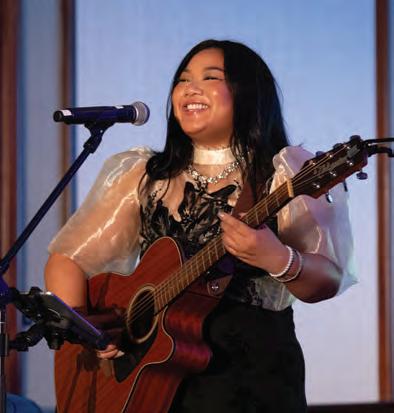
A NEW CHAPTER for winter Pride in Whistler begins next season, as Tourism Whistler prepares to host the annual celebration of the 2SLGBTQ+ community from Jan. 25 to Feb. 1, 2026,
“Whistler has a long and proud history of being welcoming and inclusive to all and we are looking forward to ushering in a new era of Pride celebrations in the resort,” said Tory Kargl, vice president of destination and market development at Tourism Whistler, in a press release.
“This will be a transition year for the Whistler Pride Festival as we establish our new vision. We are excited to work with our community and our new Festival Manager to continue this beloved tradition and signature Whistler event.”
Whistler’s winter Pride festivals date back more than 30 years, starting with a comparatively small and discreet event back in 1992. Now, the resort boasts the
annual pride celebration ranks as “one of the most visible annual events in Whistler and the largest event of its kind internationally.”
Tourism Whistler moved to create the new festival after ending all business dealings and affiliation with the Whistler Pride and Ski Festival earlier this year,
for both festival attendees and businesses,” said Bree Eagles, manager of events at Tourism Whistler.
“The Whistler Pride Festival will be a fresh start that honours long-standing traditions while introducing new events and experiences.”
Programming this year will be
“Whistler has a long and proud history of being welcoming and inclusive to all and we are looking forward to ushering in a new era of Pride celebrations in the resort.”
- TORY KARGL
after “unresolved financial issues and a complete absence of communication.”
“We felt it was important to step in and take ownership of Whistler’s annual Pride celebration to ensure a collaborative and united approach, as well as a positive and reliable experience


led by TFD Presents, a queer event production company from Vancouver. TFD was selected by Tourism Whistler this fall after an open call for proposals from potential programmers.
“I am incredibly honoured and humbled to have been chosen to lead

the Whistler Pride Festival into a new era,” said Tommy Dolanjski, CEO of TFD Presents.
“Over 20 years ago I walked into my first Whistler Pride event and I have never felt like I belonged somewhere more. To be surrounded by a community where I felt welcomed and safe was something that has lived with me since then. My team and I look forward to welcoming everyone to Whistler in 2026 and hope that what we create together brings that same feeling I had two decades ago to everybody that comes to the festival.”
While the full festival schedule is expected in December, Tourism Whistler said the next Pride Festival will combine ski days, après, parties and inclusive arts and culture. The long-running free daily guided ski and snowboard program for riders of all abilities will continue under veteran volunteers.
More information is available at whistlerpridefestival.com. Additional details for 2SLGBTQIA+ travellers is available at whistler.com/gay-friendlywhistler. n


NEWS WHISTLER
SLRD passes modernized mobile home park bylaw
SLRD BRIEFS: FORD, MACK RE-ELECTED AS CHAIR AND VICE-CHAIR
BY JENNIFER THUNCHER
The Squamish Chief
WHEN THE ORIGINAL regional district bylaw was first written, Vancouver’s Granville Island Public Market had just opened, fashionable boys were wearing plaid and striped pants with matching vests, and Anne Murray’s “I Just Fall in Love Again” was a top song by a Canadian artist.
At its Nov. 19 meeting, the SquamishLillooet Regional District board unanimously passed three readings and adoption of a new bylaw for mobile home parks within its jurisdiction, which replaces the outdated bylaw.
The original bylaw was adopted in 1979, and an amendment was last made in 1985.
“We may start to see more opportunity for mobile home parks as a housing strategy, and we need an updated bylaw to reflect that,” Claire Dewar, SLRD senior planner, explained to the board. She added that there have been public requests to add to the supply of existing mobile homes, so that’s addressed under this new bylaw.
The revised bylaw allows residents to add habitable/conditioned space to mobile homes so long as the provisions of the BC Building Code are met.
Currently, the only zoning bylaw that has a mobile home park zone is the electoral Area C—Pemberton Valley/ Mount Currie-D’Arcy. So right now, this mobile home park bylaw would only apply in Area C.
“But as we could see additional mobile home parks being built, it would apply throughout the regional district,” Dewar said.
Some of the updates are simply adding requirements that didn’t exist before.
For example, previously, there was no requirement that mobile home park applicants had a Fire Protection, Safety Plan, and Emergency Management Plan.
The new bylaw has a section requiring such a plan for all properties.
The old bylaw also had no requirements for the management of wildlife attractants. The new bylaw has a provision that applications must describe how they will address the requirements of the SLRD Wildlife Attractant Bylaw.
“I think this is a positive move to update and modernize our perception of what a home can be. So appreciative of this work,” said board chair Jen Ford.
DIRECTOR INJURED
The Squamish-Lillooet Regional District announced at the Nov. 19 meeting Area D director Tony Rainbow has been injured and will not be able to perform his duties at the board for the near future. Paula De
Jong is filling in as Rainbow’s alternate.
She filled in for the October and November meetings.
He likely will not return for December, Ford said.
The board passed a resolution to support a medical leave of up to six months for Rainbow, and will revisit the decision should he not be able to return in April.
“This is in line with the Local Government Act because otherwise he would be disqualified from holding office for the remainder of the term. We do not want that. I want Tony to have the time and space to go through his treatments and return when he is ready,” Ford said.
FORD, MACK RE-ELECTED
The Squamish-Lillooet Regional District (SLRD) Board has reappointed Resort Municipality of Whistler director Jen Ford as board chair and Electoral Area C director Russell Mack as vice-chair for another one-year term. Both were acclaimed during the Nov. 19 board meeting, marking Ford’s sixth year in the role and Mack’s third consecutive year as vice-chair.
In a statement, Ford thanked her colleagues and emphasized the importance of collaboration in regional governance.
“I am grateful to my colleagues for their trust and confidence,” said Ford. “It is a privilege and an honour to serve as Chair of the Regional District Board, and I do not take the challenge lightly. I would like to thank my colleagues at the Board for their continued commitment to collaboration and community.”
The SLRD’s 11-member board includes four electoral area directors—each elected during general local elections—and seven municipal directors appointed by their respective councils. Current municipal representatives include directors from Lillooet, Pemberton, Whistler and Squamish. Under the Local Government Act, regional district board composition and voting strength are determined through a provincial formula.
In addition to sitting on the full board, directors also serve on a variety of standing committees, select committees and external bodies—from the Regional Hospital District board to Agriculture Advisory Committees. The full list of appointments for the coming year will be published on the SLRD’s website.
“As we look ahead to the coming year, our focus remains clear; to build on the momentum we’ve created and continue to move key projects forward. For all projects within our strategic priority areas, we are united in our purpose to deliver meaningful results for the people we serve,” added Ford.
-Luke Faulks, Local Journalism Initiative Reporter n
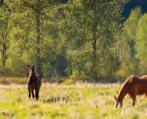


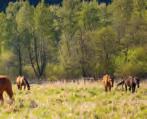

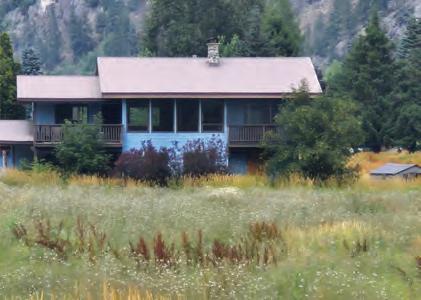
Discover40acresofsun,mountains, andwide -openbeauty. The Swiss-style 5-bed,2-bathmainhomeoffers warmth andcharacter, fromthe cozy fireplace to theinvitingpool.Afullyseparate2-bed, 2-bathsuiteaddsflexiblelivingor rental opportunities. Completewithabarn, gardens, andorganicfields,thisacreageis per fect foranyoneseekingspace, serenity, andpossibility. Price$3,250,000 7869 Pember ton MeadowsRd.
lisah@wrec.com

Sue Adams
7, 1945 –
The Resort Municipality of Whistler from time to time recognizes certain persons in the community who have contributed of themselves to help make Whistler a better place for all to enjoy.
The community recognizes these outstanding contributions by declaring them: “Freeman of the Resort Municipality of Whistler.”
BY BOB BARNETT
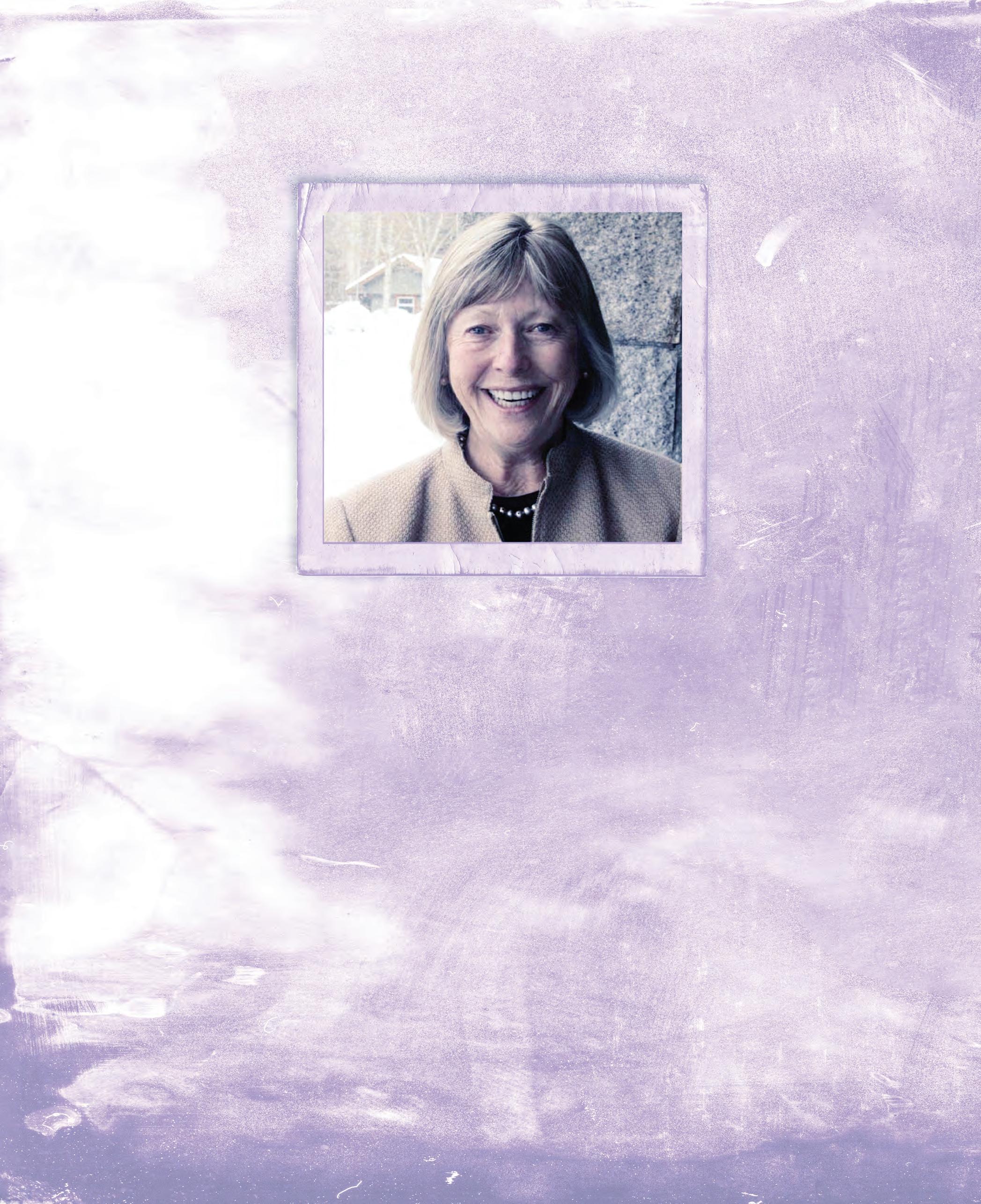
SHE’S NOT INVOLVED in choosing who is honoured with the Freedom of the Resort Municipality of Whistler (RMOW), but Maureen Douglas has her own criteria for evaluating recipients: What would Whistler be lacking if it wasn’t for that person?
“With Sue Adams, it’s a long list,” says the executive director of Arts Whistler.
“There’d be big chunks of Whistler’s heart and soul missing if she hadn’t been that leader, that doer, making it happen.”
Summer concerts in Olympic Plaza. Arts Whistler in the Maury Young Arts Centre. The Audain Art Museum’s place in the community. Young people in prominent roles at the Whistler Institute, the Audain and businesses throughout Whistler and Vancouver. Sue has played an important part in making these things happen.
“It’s always about the people,” Sue says.
“The thing that really enthuses me is working with the young people. I’m thinking of the Brianna Beacoms, the Mandy Rousseaus… the young people who have worked for us, just watching them take risks and grow—and then learning from them, as well.”
Douglas has seen that respect for young leaders first-hand, starting in the late ’80s when Mo was in her 20s and programming street entertainment outside the Grocery Store, Sue and Bob Adams’ first Whistler business.
“She’s investing in the younger people she sees who are going to carry that torch. And not every leader does that. Not every leader thinks about the next generation,” she says.
The Grocery Store was one step on the Adams’ road to Whistler. It began when Sue arrived in Vancouver, from her native Australia, in 1967. She was an occupational therapist working in mental health, where she met Bob, a social worker. After a few years in public health they decided to go in a different direction, pursuing one of Sue’s life-long passions: food. They opened The Amorous Oyster and The Contented Sole restaurants in Vancouver while Sue also started a catering company. Bob, meanwhile, got involved in property development.
In the late 1970s they built a weekend home in Whistler, thinking they might move to the community when it got a little bigger. By 1988 Whistler was big enough. They bought the Grocery Store, improved the selection and service and then began to look for new projects.
“We had a team. They knew what they
were doing. We didn’t need to be there 24/7,” Sue says.
“I sort of had itchy feet or fingers or whatever and needed to get involved in stuff.
“It was probably Tim Wake who said, ‘we need you to join the board at Millennium Place.’”
But that was hardly Sue’s first foray into boards and committees. She started Women of Whistler for female entrepreneurs in the mid-’80s, before moving full-time to Whistler. That organization was born out of her experience as chair of the Western Businesswomen’s Association. And that came about after working with Tourism Vancouver.
“Because our little restaurants were so unique, and the names were so catchy, I got caught up doing all sorts of things for Tourism Vancouver,” Sue says.
She also did volunteer work with the YWCA.
Whistler, however, offered unique opportunities. Around 1990, as Sue recalls, they were invited to a town hall meeting and asked to facilitate a table discussion on air and water quality.
“How many people have an opportunity to be part of a planning process of how a town is going to be?” Sue asks.
“Well, we didn’t have a clue what was going on, but the opportunity was amazing. I didn’t know that you could make decisions about water and air quality.”
From air and water Sue moved on to health-care, chairing the committee for Indulge, an annual fundraising event for the Whistler Health Care Foundation. She got close friend and then-employee Sandra Cameron involved in Indulge. After a few years Sandra was “volun-told” by Sue she
should join the board of the health-care foundation. Sandra served several years as treasurer and then as chair.
“I think that gave Sue great pleasure,” Sandra says. “She likes seeing people succeed.”
And Sue has seen a lot of success. The fusing of the Whistler Arts Council and Millennium Place (now known as Arts Whistler and the Maury Young Arts Centre) was a big one.
“I think that’s the thing I’m most proud of,” Sue says. “I really drove that amalgamation, and everyone said it will never happen,” she laughs. “That’s a red flag.
“So I did work with Joan (Richoz) on that. It wasn’t well received, at first, but it was absolutely a great outcome, I think, for the community.”
Bringing the two together was complex, with the Interfaith Chapel Society owning the heavily-financed building but having very little income. The arts council had programs—and a mandate to grow the arts—but no home.
BlueShore Financial held the mortgage on the building. And who happened to be chair of the BlueShore board? Sue Adams, of course.
One of the requirements of the merger, which took place shortly after the 2010 Olympics, was that Sue had to remain on the board of Arts Whistler for six years. And one of the benefits was Sue brought her knowledge of governance to Arts Whistler, and then to other non-profits in Whistler.
“So, I was chair of the fourth-largest credit union in the province, and then the financial crisis hits,” Sue recalls. “And what was that all about? It was about governance, or the lack of.
“I had thousands of dollars spent on me learning governance. That gave me the background, I guess, and then the understanding of how things should work in governance.”
She pushed for a governance course in Whistler.
“I think that’s been a really useful thing in the community, it really helped a lot of boards understand what they’re doing, people understanding what their role is,” she says.
“We have incredible not-for-profits here in this town that make much of the community work.”
Sue has chaired the boards of the Whistler Chamber of Commerce, the Vancouver International Wine Festival, the Whistler Institute and, for 13 years, the municipality’s Festivals, Events and Animation committee. She’s also served on the boards of the Audain Art Museum and the Whistler Development Corp., among others.
“She has taken on some really challenging board positions,” says Bob Cameron, Sandra’s partner. “The Whistler Development Corp. (was a) testosteronefilled board. I know it was a challenge to rein those boys in and put her stamp on the governance model there.”
“I felt I had things to add, joining those committees,” Sue says.
“But the passion for that was my business background. Back in the day, bringing business acumen to not-forprofits, I perceived as adding value. I think it’s different now because ... not-for-profits have to think about how they’re running their business.”
While Sue has worked with business leaders and politicians at the highest levels, she has also stocked grocery shelves and guided novice committee chairs, and earned respect from all.
“She’s not the person who comes in, and in no way do you get: ‘I’m the smartest person in the room.’ It’s: ‘How can I be of service?’” Douglas says.
“She’s an incredibly accessible volunteer but also this successful community leader. A word I would use to describe her: she has gravitas. People like Peter Alder had that kind of vibe, and when they speak you listen.”
“There’s always been opportunities in front of us, all the way along,” Sue says. “So, I don’t know, I just always think that most things are possible.”
Sue Adams was awarded the Freedom of the RMOW in 2015. She continues her work on several boards as well as being co-owner of Pemberton Valley Supermarket.
This is Part 14 in a 21-part series recognizing Whistler’s Freedom of the Municipality holders, in honour of the Resort Municipality of Whistler’s 50th anniversary. Watch for the others in the weeks ahead, and find them all at piquenewsmagazine.com.
Bob Barnett is the founding editor and co-publisher of Pique Newsmagazine. n
FILE PHOTO
Backin Ac tionPhysiotherapy: Welcometoour team
Forappointments
JoshBugeja B.Clin.Sc,M.Ost.Med
Osteopathicmanualtherapy
Whole bodyfunction
Performancecoaching &improvement
Pain relief :headaches,concussion,& joint/musclepain
backinactionphysiotherapy.janeapp.com
CALL604962-0555



Developmentofa Pest Management Plan(PMP)
SOUT
HCOA STREGIONFORESTHEALTH PROGR AM PM P: 2025TO2030
Contact: DavidRuschor TaylorHolt cafh@gov.bc.ca Ministr yofForests,2100Labieux Road,Nanaimo,B.C.,V9T6E9
Telephone:250739-8750
Theuseofpesticidesisintendedwithinthearea to whichthe Pest Management Plan(PMP)applies.The PMPappliestothesurroundingor nearareasofChilliwack ,Squamish, Powell River, Sechelt,Whistler,Hope, Pember ton,andHarrisonHotSprings. Thedurationofthe PMPisfrom 2025to2030.Thepesticideproposedto beusedunder the PMPis:
TradeName: Foray48B
Ac tiveIngredient: Bacillusthuringiensisvar.kurstaki
Thepesticideproposed foruseunderthe PMPwillbeapplied by air usingfixed-wingor rotar yaircraft equippedwithspray boomshaving aminimumof 4Beecomistor4A.U.4000micronairatomizers (or equivalent).
Notreatmentsitesarecurrentlyproposed. Aseparatenotification willbeconductedshowinganyproposedtreatmentsitesplanned for 2026intheareaundertheplan.
Copiesoftheproposed PMPmay beexaminedatthe following Ministr yofForestsoffices:
•ChilliwackNatural ResourceDistrict Office,46360Airpor tRd. Chilliwack ,B.C.V2P1A5
•Sea to SkyNatural ResourceDistrictOffice, 101-42000 LoggersLane, Squamish, B.C.V8B0H3
•Sunshine CoastNatural ResourceDistrictOffice, 7077DuncanSt., Powell River, B.C.V8A1W1
Orfromthe B.C.governmentwebsite: www2.gov.bc.ca/gov/content/industry/forestry/managing-ourforest-resources/forest-health/news
Apersonwishing to contributeinformationabout aproposed treatmentsite, relevant to thedevelopmentofthe Pest ManagementPlan(PMP),may send copiesoftheinformation to theapplicantattheaddressabove within30days ofthe publicationofthisnotice.

$69
DECEMBER6–18 ,2 02 5 5PM-9PM
*Taxesandservicechargeapplies.Priceisper person,minimum2 peoplepertable.Subjectto changewithoutnotice.Reservationsare strongly recommended.À lacartemenuavailableupon request.
Canada’s first volcano monitoring station set to be installed on Mount Meager in spring
‘IT’S ACTIVE, BUT IT’S NOT ACTIVELY ERUPTING,’ SAYS VOLCANOLOGIST GLYN WILLIAMS-JONES
BY NICOLA JONES
PLANS ARE UNDERWAY to install a “gold standard” monitoring station on Q ’ welq ’ welústen/Mount Meager in spring 2026, to listen for signs of unrest on the active volcano.
The installation is an important step on the path to monitoring the mountain, which is one of Canada’s highest-threat volcanoes. At present, no one knows if or when Mount Meager might erupt or experience a dramatic landslide. “If we’re not looking, we can’t take the pulse,” said Glyn Williams-Jones, a volcanologist at Simon Fraser University (SFU) who talked about the plan during a public lecture at the Whistler Public Library on Nov. 20. “We can’t say: is the patient
awake or not?”
The new station—with a continuous real-time data stream from a seismometer, GPS, cameras and infrasound sensors—will provide the first continuous monitoring of any volcano in Canada, Williams-Jones said. The data is intended to feed into a warning system that should be developed over the next few years.
Funding for the work comes from a grant obtained by the Squamish-Lillooet Regional District and partners last year.
“I’ve spent three years trying to get this across the finish line,” said Pemberton Dyking District manager Kevin Clark. “It’s gonna happen, finally,” added Williams-Jones.
A study in the Canadian Journal of Earth Sciences last year surveyed 28 volcanoes across Canada and put just two in the “very high threat” category, both in the Sea to Sky corridor: Mount Garibaldi and Mount Meager. Although Mount Meager is one of the best studied volcanoes in Canada, that report
concluded, its monitoring is inadequate.
Some Canadian volcanoes can be spied on by a network of existing seismometers, but these are designed to watch for large earthquakes rather than volcanic events or landslides. Mount Meager currently sports two cameras, and an inexpensive citizen-science seismometer that isn’t livestreaming information, Williams-Jones said. The new station will step that up significantly.
“I see this as a start,” said WilliamsJones. “We need at least six seismometers on top of the volcano. We will hopefully build out two or three more in the next year or two, if all goes well.” The US Geological Survey recommends at least 12 real-time seismometers on a “very high threat” volcano like Mount Meager.
Mount Meager’s surface is also trackable by satellite: Canadian radar satellites that snap images of the area every four days have seen sliding in some spots on its slopes on the scale of centimetres per month in recent years. If an area near some active volcanic
fumaroles were to all collapse, said Williams-Jones, this could in theory create an event 10 times larger than Mount Meager’s dramatic 2010 landslide, which was the largest ever documented in Canada. “A lot of ‘ifs,’ a lot of things would have to line up, but this is something very much of concern, and so we are starting to monitor these slopes,” said Williams-Jones.
ACTIVE AND UNSTABLE
Mount Meager, which sits about 60 kilometres northwest of Pemberton at the head of the Lillooet River, is a very unstable mountain that experiences frequent landslides. It last erupted 2,400 years ago. “Geologically, that’s yesterday,” said Williams-Jones.
That eruption was a Level 4 event on the “volcanic explosivity index,” which runs from 0-8, with each level representing an eruption 10 times bigger than the level below it. That’s about one tenth the size of the 1980 eruption of
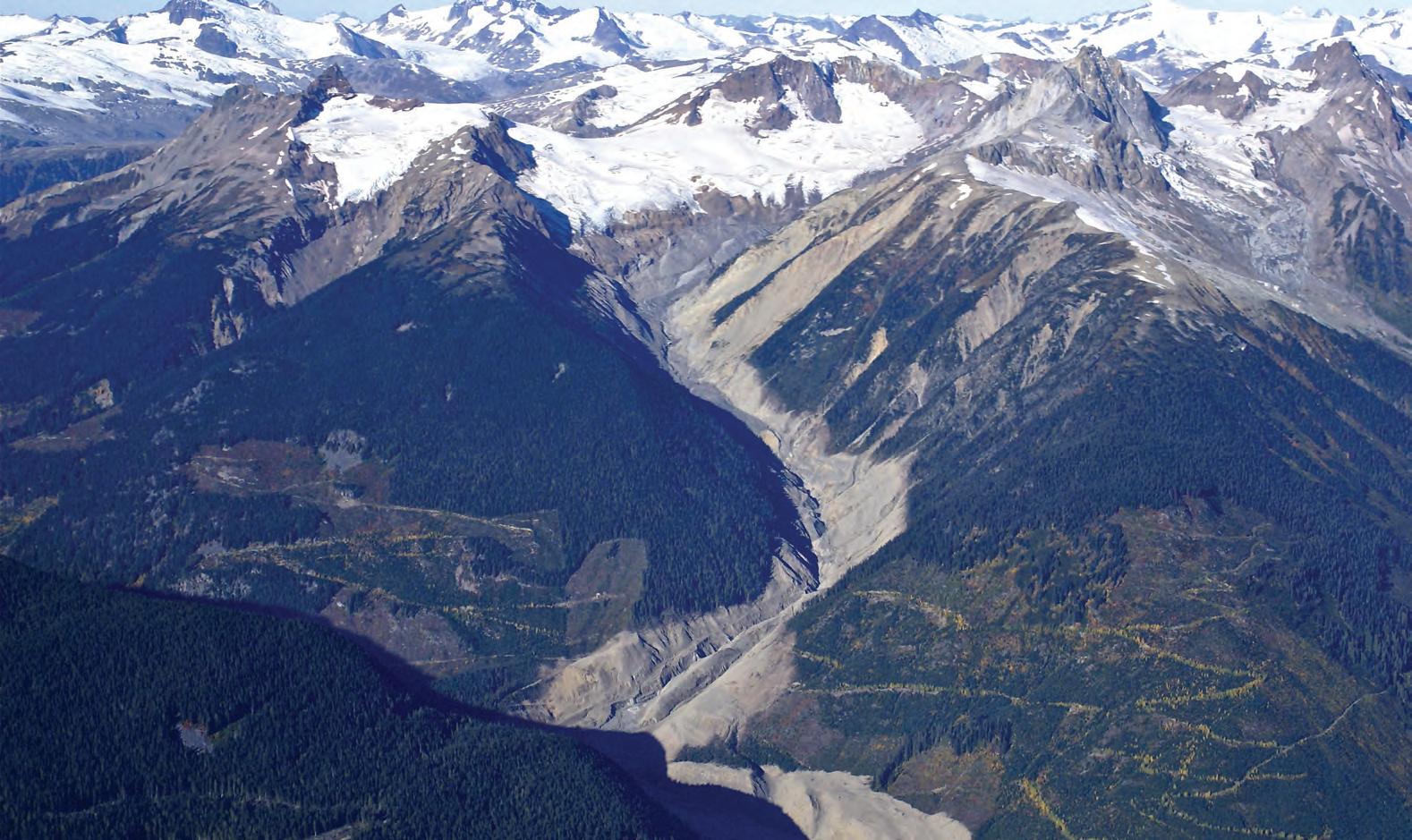
WATCH AND LEARN The Mount Meager landslide in 2010 caused significant debris flow down Capricorn Creek.
FILE PHOTO BY FRANK BAUMAN
Mount Saint Helens, which was a Level 5 event. The Mount Meager eruption created a plume 15 km high, ejecting about 0.8 cubic kilometres of ash, lava and rock—about 400 times the volume of the Great Pyramid of Giza in Egypt. Ash landed as far away as 530 kilometres east in Alberta. An 800-C toothpaste-texture flow of ash and car-sized rocks solidified into a 110-metre-high dam at the top of the Lillooet River. That failed a month or two later, in a catastrophic eight-hour flood.
No one knows what size of eruption Mount Meager is capable of, but scientists do know that it is active and unstable. “It’s active, but it’s not actively erupting,” said Williams-Jones. There are some fumaroles on the mountain, for example, that are emitting hot, toxic gas.
In 2010, a huge chunk of the Capricorn peak on Mount Meager fell down, creating a debris flow of 53 million cubic metres that temporarily dammed Meager Creek and prompted evacuation orders. Climate change is melting ice and further destabilizing the slopes of the mountain, WilliamsJones has told Pique in the past. “It’s an unstable mountain that keeps falling down.” A large slide could also theoretically trigger an eruption.
Pemberton is still living with the
sediment, but Washington-based environmental engineering company Natural Systems Design has costed this project at about $22 million dollars. “That would be really exciting,” Woodruff said. “We could transform ecosystems.”
NO WARNING
Right now, if Mount Meager were to erupt or collapse, residents would have no official warning. Most volcanic eruptions are preceded by signs for hours or even years before an event, such as an in increase in seismic activity, that the new station should be able to detect.
“As a scientist I cannot say with 100-percent confidence it’s not going to erupt tomorrow,” said Williams-Jones. “It’s highly unlikely. But I can’t say absolutely no.” On the other hand, it might not erupt for tens of thousands of years.
What would an eruption be like? That depends, said Williams-Jones, on how big it is. An eruption similar in size to what occurred thousands of years ago would require an evacuation, he said. It might be visible as a red glow on the horizon to residents of Pemberton. Volcanic mudflows might reach tens of kilometres down the valley. If the wind is blowing towards Pemberton, tens of centimetres of ash could accumulate in
“A lot of ‘ifs,’ a lot of things would have to line up, but this is something very much of concern, and so we are starting to monitor these slopes.” -
impacts of the 2010 slide today. The slide’s sediment is still building up at the bottom of the Lillooet River, reducing its capacity to hold water and “really increasing our flood risk,” said Veronica Woodruff, consultant and founder of local company Nature Generation, who wrote a recent master’s thesis on managing flood risk in Pemberton and who also presented at the Whistler public meeting. As of a 2018 study, she said, what was a one-in-200-year flood event in 2003 is now a one-in-50-year flood event. “All of our flood infrastructure is now undersized,” Woodruff said.
The Pemberton Valley Dyking District actively removes 60,000 cubic metres from the river at a cost of $600,000 to 800,000 each year to try to mitigate this risk, but the annual deposition is estimated to be about 180,000 to 210,000 cubic metres. Dyking District manager Clark says he is hoping to quantify the precise sediment load over the next four years.
Since 2023, Woodruff and Lil’wat Forestry Ventures have planted 250,000 trees and shrubs in the slide area, both for wildlife and to help stabilize the sediments. Another idea is to build a network of dozens of log jams to capture
town; if blowing towards Vancouver, modelling has shown it could shut down the international airport. Volcanic ash is also a breathing hazard.
A volcanic eruption is a very low probability event in any given year; a landslide is more likely, and forest fires more likely still. The kinds of preparations that locals might make are similar, such as having a grab-bag of essential survival items.
A volcano’s threat level is determined by a combination of its explosive potential along with its proximity to developed property and people. Mount Meager gets a high score mainly because of its ongoing unrest and previous explosivity. Mount Garibaldi, which last erupted about 10,000 years ago, gets a high score because it is close—about 20 to 30 km—to large populations in Squamish and Whistler. “We need more monitoring all along the Sea to Sky,” said Williams-Jones.
Canada has an Interagency Volcanic Event Notification Plan, which was set up in 1990, focused on building basic knowledge and laying out strategies for communication in the event of an eruption. “It needs to be updated,” said Williams-Jones. n


Nerding out on new skis
WHEN IS THE APPROPRIATE time to buy new skis? The answer to this question varies from “when I have to” to “when I feel like it.” Some folks like to flip their skis every couple of years in order to keep things fresh. Personally, I’m in the “ski ‘em til they’re dead” camp, so a new ski purchase is quite rare for me these days,

BY VINCE SHULEY
at least compared to the 100-day seasons of my past. This rarity makes my choice of the next ski to purchase all the more considered. Unless I absolutely hate it and try to offload it straightaway, this is a ski I need to be happy with in the longterm. It needs to motivate me to get up on the hill, even when conditions aren’t stellar. It needs to give me that rush when I lay it over on edge at the apex of a GS turn. It needs to feel lively enough to give me a definitive response when I push it, yet damped adequately so I don’t feel every small piece of chunder under my boots. I ask a lot from a pair of skis, and if I could give them a dating app profile relationship preference, it would be “longterm, open to short.”
Before I get into the journey of how
I arrived at my latest ski purchase, let’s break down skis into a few categories. On any ski brand’s website, you’re going to see terms like “All-Mountain,” “Freeride,” “Freestyle,” “All-Terrain” and any other number of vague marketing terms that product managers concoct. If I’m looking for a ski that’s going to work for me in Whistler, I break it down into the following (in no particular order):
1. On-Mountain - Hardpack
2. On-Mountain - Pow Day
3. Backcountry Touring
Now, some skiers may buy one pair of skis and use them for all three of these applications, and that’s fine. But it’s not my idea of optimal skiing. We all need a pow day pair of skis, something that lets us float through the deep snow Whistler is known for. I find the 105 to 115mm underfoot the sweet spot in our region.
on-mountain pow day ski, but I don’t like smashing my touring bindings and lighter-weight touring boots into the kind of mid-mountain cement conditions we ski by 11:30 a.m. on a Whistler pow day. A sturdy pair of alpine boots and bindings is always the right tool for that job.
Speaking of the right tool for the job, that leaves the hardpack ski. This category is overlooked by many skiers simply because a) the other categories of ski are capable of doing it, and b) who cares about hardpack conditions anyway? This is something I’ve grappled with over the last few years as my overall ski days decreased in number (thanks, full-time job) and consistent snowfall became, well, less consistent. So for the first time in over a decade, I’m buying a ski that’s less than 90mm underfoot. What a nerd!
Now, when it comes to selecting a ski in this category, you literally have
We all need a pow day pair of skis, something that lets us float through the deep snow Whistler is known for.
Anything more than that and you’re on a ski that’s only good for two or three runs before heavy skier traffic eats all of your pow.
You could use your backcountry touring ski for the same purpose as your
dozens of choices, and if possible, you should rent a demo ski and see if you like it. This isn’t hard with brands carried locally here in the Whistler shops, but it’s not always practical (good luck finding a shop that would let you demo new skis
in the current thin snowpack conditions, for example).
Over the years, I’ve gravitated to certain brands that fit my ski style. One of the smaller players is RMU, whose Apostle series of skis have that incredible versatility that Whistler terrain and conditions need. Of the big brands, my favourite has always been Völkl. They build many of their mountain skis like race skis with the stiffness, dampness and responsiveness that I haven’t quite found with the other brands. Plus, they seem to last longer than most.
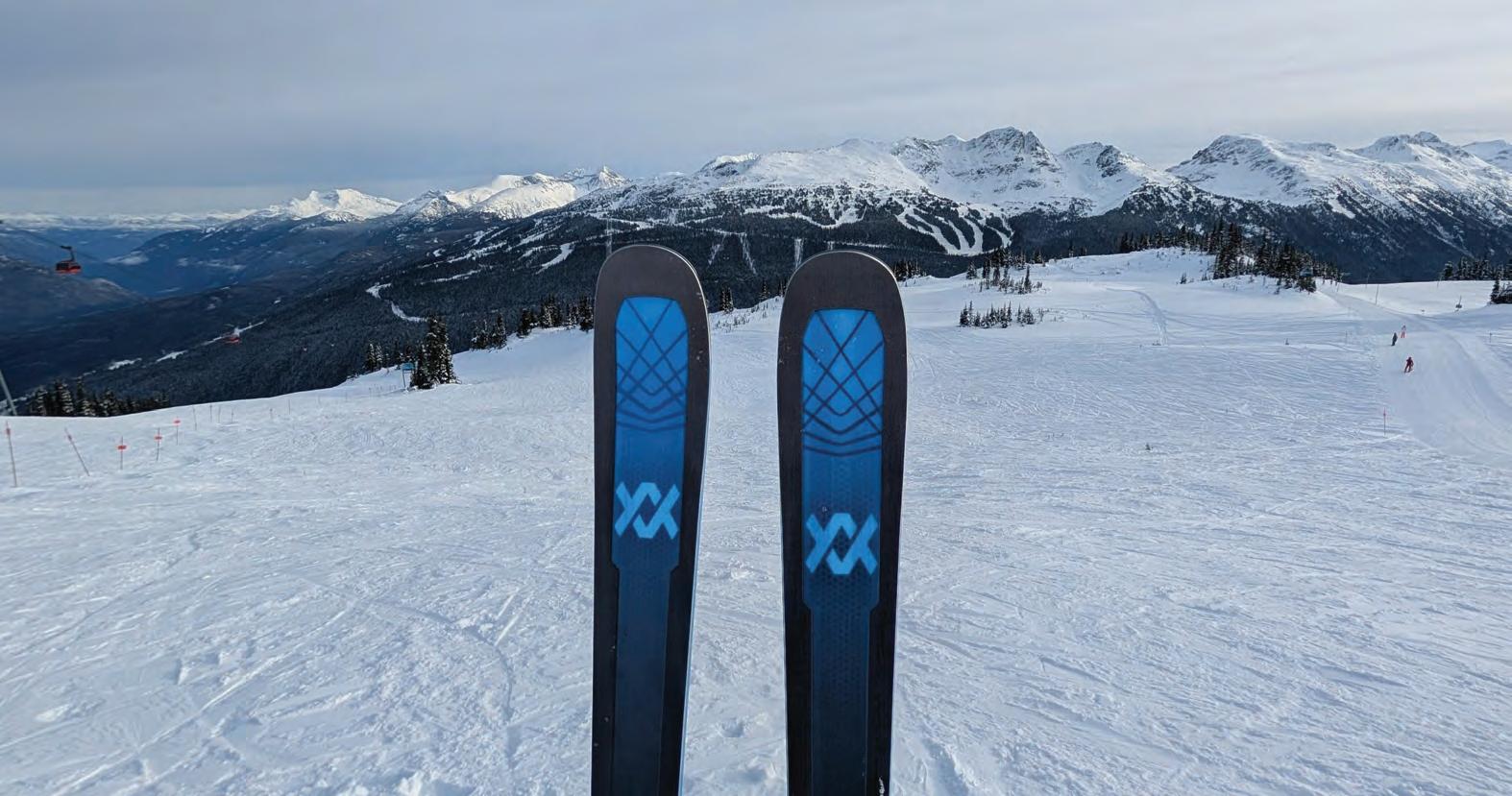
So, for a hardpack ski for my 2025-26 season, I went with the Völkl Mantra 88. I was tentative about taking a brand new ski onto the current 70cm base up on the hill, but I found some snowmaking lanes on Whistler Mountain last weekend that were perfect for testing the ski’s edge and turn radius. And what fun! We freeride skiers get so caught up in steeps, couloirs and pow stashes we can often forget the pleasure of railing a GS turn on hardpack, and the edge of the ski actually gripping on the ice. The instructors and patrollers know this all too well, which is why you won’t find fat skis under their feet this time of year.
The tide may be low, but skiing is what you make it. If you’re lamenting the lack of rad terrain available to you this early season, maybe try skinny skis again. You never know what you may re-awaken.
Vince Shuley is a ski nerd. For questions, comments or suggestions for The Outsider, email vince.shuley@gmail.com or Instagram @whis_vince. n
PHOTO BY VINCE SHULEY
Fossil fuel interests and petrostates dash hopes at COP30
IT’S BEEN 37 years since climate scientist James Hansen warned the United States Senate that human activity was warming the planet, which would lead to unstable weather.
Thirty years of international “conference of the parties” climate summits. Ten years since the world’s nations signed the Paris Agreement to keep global average temperatures from rising more than 2 C (ideally 1.5 C) above
secure than fossil fuels. Shifting from coal, gas and oil to renewables would create far more good jobs, economic benefits and cleaner air, water and land.

It’s good that all the world’s countries are meeting regularly to discuss these issues, but acting as if we still have time to deal with them is folly. That fossil fuel lobbyists and industry representatives outnumber delegates from many of the countries most affected is also a recipe for failure.
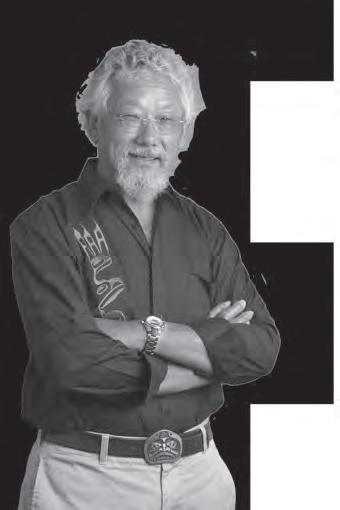
BY DAVID SUZUKI
pre-industrial levels. More than 200 years Joseph Fourier discovered that certain gases in the atmosphere trap solar radiation, potentially causing the planet to heat— now known as the “greenhouse effect.”
After all those years, all that evidence, all the predicted impacts now descending on us, delegates to November’s COP30 in Belém, could not agree on the necessity to “transition away from fossil fuels” and whether wealthy countries responsible for most of the heating should pay to help poorer countries that bear the brunt of the impacts.
It’s absurd, tragic and stupid.
Countries including Russia, Saudi Arabia, the United Arab Emirates, India and others lobbied to remove any mention of fossil fuels from the final agreement. The U.S. government is now in full denial about the crisis and didn’t even send representatives. Canada appears to be giving up, moving full steam ahead on liquefied “natural” gas expansion and more pipelines.
Does our species care so little about our children and those yet to be born that we would sacrifice their futures for some illusory short-term gain and massive profits for oil industry executives and shareholders?
It shouldn’t need to be repeated, but even if we stopped burning coal, oil and gas immediately and protected natural systems that store carbon—such as forests, wetlands and the ocean—Earth would continue to heat as these gases remain in the atmosphere for a long time.
There’s no justification for it. We use excessive amounts of energy and consume too many goods, especially in countries such as Canada and the U.S. We could reduce emissions and other environmental damages if we just stopped using so much.
Renewable energy is far more efficient, less expensive and more
What will it take for us to address the climate crisis with the urgency and seriousness it demands? How much more evidence do we need? All credible scientists who study climaterelated topics, from oceanography to atmospheric physics, agree that our actions are rapidly heating our only home to dangerous levels, that we’re teetering over disastrous tipping points, that the impacts are accelerating at alarming rates.
Almost all agree on the overall solutions: We must stop exploiting and burning fossil fuels and protect and restore ecosystems that sequester carbon and keep it from entering the atmosphere.
But we’re up against a sector that puts massive amounts of money and resources into spreading disinformation, creating organizations that mislead the public about the crisis, controlling news media that downplay or reject the evidence and sponsoring politicians to look out for industry interests at the expense of the people they were elected to represent.
It’s bewildering and appalling. We have a relatively recent consumerist economic system—fuelled by oil, gas and coal—that we now know is causing great harm and putting all life at risk. But we refuse to change our ways. Even incremental change—already too little, too late—seems out of the question.
Politicians can’t seem to think of any ways to govern, to deal with the issues of production and distribution, than pillaging raw resources and selling them off as quickly as possible. So we burn more polluting fossil fuels, cut down more forests, pave over more wetlands, create more weapons...
When will it end?
COP30 shows the failure of our governance and economic systems to confront the greatest threat humanity has ever faced. We need a mass movement to demand change.
David Suzuki is a scientist, broadcaster, author and co-founder of the David Suzuki Foundation. Written with David Suzuki Foundation Senior Writer and Editor Ian Hanington. Learn more at davidsuzuki.org. n

Three Course Menu | Ends Dec 11
Wine + Zero Proof Pairings
Available Sunday to Thursday from 5pm

Complimentary Underground Parking






What:
NoticeofAnnualGeneralMeeting
Who: NoticetoMembers
When: FridayDec12th,2025at11:00am
Where: VirtualviaZoom
PleaseemailWVHS.info@gmail.comforZoomcallin information, acopyoftheagendaandtheproposed BylawstobeadoptedattheAGM.
TheWhistlerValleyHousingSocietyisa not-for-profit establishedin1983andtheownerofTheNest, a30-unit rentalhousingprojectaswellasthe ownerofWatsonCourt, a20-unitrentalhousingproject. OurtenantsareClientsof SocialService Agencies,Essential ServiceWorkersandother Whistleremployees.
OurVision Toprovide,andadvocatefor,a broaderspectrumofhousing opportunitiesfortheWhistlercommunity.
ContactWVHS.info@gmail.com foradditional information.






Compactcarstarting@

$39.95perdayunlimitedkm*
$199.95perwkunlimitedkm*$99.95 onewaytoYVR
Fullselectionofcars,mini-vans,sportutilities ...whilesupplieslast.
6049321236
4315NorthlandsBlvd.












































Christmastrees ,Wreathsandwreathmakingsupplies, Poinsettias, Holidayar rangements ,Christmasdecorations, Giftideas galore! OpenDailyfrom10am- 5pm 1100MillarCreekRoad,FunctionJunction -Whistler














GI VE AW AY CO NTES T
Enter fora Chance to WIN Our WeeklyHoliday Giveaways!
Thegrand prizeisvaluedat $1020 Winner to bedrawnMonday,Dec22
Enteroncetoqualifyforallthe availableprizesatthe time ofentry. PiqueNewsmagazineChristmasGivingGiveawayContestrules:Nopurchaserequired.Thecontestbegins onDecember5,2025,at10a.m.PSTandendsonDecember19.2025,at11:59p.m.PST.Thereis atotalofone[1]prize availabletobewon[clickontheboxesaboveforprizedetails).Skill-testingquestionrequired.Opentolegalresidentsof BritishColumbia,Canada,whoaretheageofmajorityintheprovinceatthetimeofentry.Oddsofwinningdependonthe numberofeligibleentriesreceivedbeforethecontestcloses.Limit1 entryperperson.




























By Caroline Egan
The mountains have always demanded toughness. For people throughout the Sea to Sky corridor, that demand has created a culture where admitting you’re struggling feels like you’re admitting failure—a dynamic mental-health experts say is putting lives at risk.
“There’s this bro mentality. Everybody in Whistler claims to be a pro skier or pro this or pro that,” says Ian MacLeod, a Whistler-based counsellor specializing in substance use disorders.
“There’s such a competitive nature and this extreme pushing of limits to gain respect and attention. There’s no room for weakness. No room for sharing feelings.”
This distorted competitive culture isn’t unique to mountain towns, but research suggests it thrives in environments built around risk-taking and physical prowess. A 2018 study published in the Journal of Social Issues identified masculinity contest cultures in workplaces where success requires suppressing vulnerability, demonstrating physical stamina, putting work above all else, and engaging in cutthroat competition. It is a description that translates to much of the outdoor industry that shaped Whistler’s identity for decades.
The consequences are measurable. Roughly 75 per cent of suicide victims in Canada, according to Statistics Canada, are male. Many experts believe the true toll is concealed by underreporting and a reluctance to seek help; a concept misconstrued as masculine for generations.
TRADING VULNERABILITY FOR VERTICAL
Brian Jones, owner of Canada West Mountain School and a fixture in the guiding community for more than 40 years, has watched the culture around men and mental health evolve. Though not always quickly enough.
“When I first started, it would never come up at a debrief to discuss how are you feeling,” Jones recalls. “You’d examine the technical aspects of an incident. It wasn’t discussing the impact. That was just assumed that you would deal with it.”
When Jones started working as a guide in his early 20’s it was unmistakably a male-dominated industry.
“Very much an industry dominated by people that success did not include
BEHIND THE BRAVADO
How mountain culture masks men’s mental health
discussing anything that was perceived as a weakness,” he adds.
Jones says if you weren’t pushing to take risks as a mountain guide in those days then you had failed at your mission.
“And that spilled over, I think, into mental-health issues,” he says. “I’m sure it contributed to it, but it also wasn’t discussed because that was considered a weakness. Considered a failure.”
The assumption that men should simply “deal with it” reflects what researchers call precarious manhood; the belief that masculinity must be continually proven and can be easily lost. A 2008 study in the Journal of Personality and Social Psychology found when men’s masculinity was threatened they exhibited heightened anxiety and aggressive thoughts. Meanwhile women showed no such response to similar threats to their femininity.
This pressure to constantly perform extends to the mountains. The concept of “no bad days” creates an environment where expressing emotional struggle feels incompatible with living in what many call paradise. Trauma becomes reframed as the price of admission rather than a wound requiring care.
Jones acknowledges the shift has progressed.
“It’s becoming part of the language now,” he says. “If somebody has a close call, we’ll ask, ‘how’s everyone feeling? How are you coping? How are your partners at home doing?’”
But these conversations still have limits.
“As much as every guy will talk about their friends, they’re also their co-workers,” Jones notes about his team. “There is that boundary of, ‘this is my personal life, and as long as it doesn’t impact my work life, I’ll talk to a certain degree.’”
WHEN SILENCE IS THE POLICY
There are various institutional barriers that inhibit healing. Jones describes how legal pressures following workplace accidents often impose silence on guides.
“Lawyers are not wanting to hear you say, ‘I might have been responsible for that,’” Jones explains. “If you are a guide who has been involved in an incident and you feel responsible, and you want to talk with somebody about it, you can’t, because lawyers don’t want that.”
The legal system’s demand for self-protection directly contradicts the human

need for openness, creating what Jones calls an unhealthy dynamic which leaves guides isolated with their trauma.
The problem intensifies in an industry where reputation equals livelihood. A guide’s admission of emotional struggle after an accident could be interpreted as professional weakness, potentially costing future work in a community where everyone knows everyone.
FINDING FOOTING ON NEW TERRAIN
Some organizations are working to change the narrative. Mountain Muskox, a mentalhealth initiative founded in Alberta’s Bow Valley, has established support groups specifically for people dealing with mountain-related trauma and stress.
Zac Hoffman, former mogul skier and current filmmaker, began working with Mountain Muskox’s Sea to Sky chapter after surviving a crevasse accident. He initially hesitated to seek help.
“I was nervous it would be like, ‘how do we get you back in the mountains,’” Hoffman recalls. “But very quickly I was like, ‘Oh, this is just a great place to feel validated and talk to people who understand what you’re going through.’”
Hoffman’s accident triggered years of panic attacks and severe anxiety. Challenges that defied the “just be happy you survived” narrative he expected to follow. Through Mountain Muskox’s support groups he found a community that didn’t pressure him with outdated ideals.
When asked if his friendships were only about skiing or riding, Hoffman admits that used to be the case.
“If you asked me that question a couple years ago, or even a year ago, I would have very much been in that camp,” he says. ”After my accident, I found myself very drawn to the people in my life that aren’t outdoor sports people, because the conversations weren’t [just] around, ‘oh, when are you going to be ready to go ski-touring again?’”
Nowadays, success for Hoffman is about being healthy and having fun. He’s not skiing to push his limits anymore.
“I’m going skiing to have fun with my friends and have good chats in the lift line,” he says.
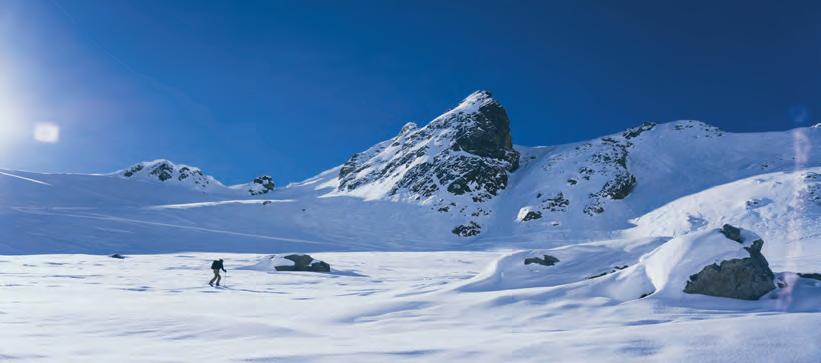
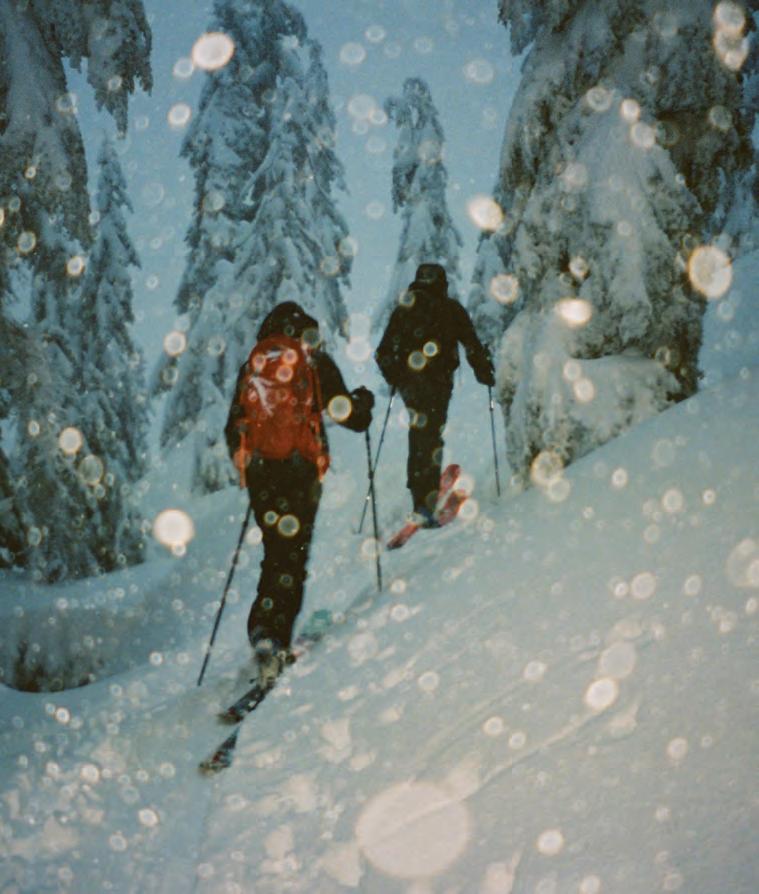
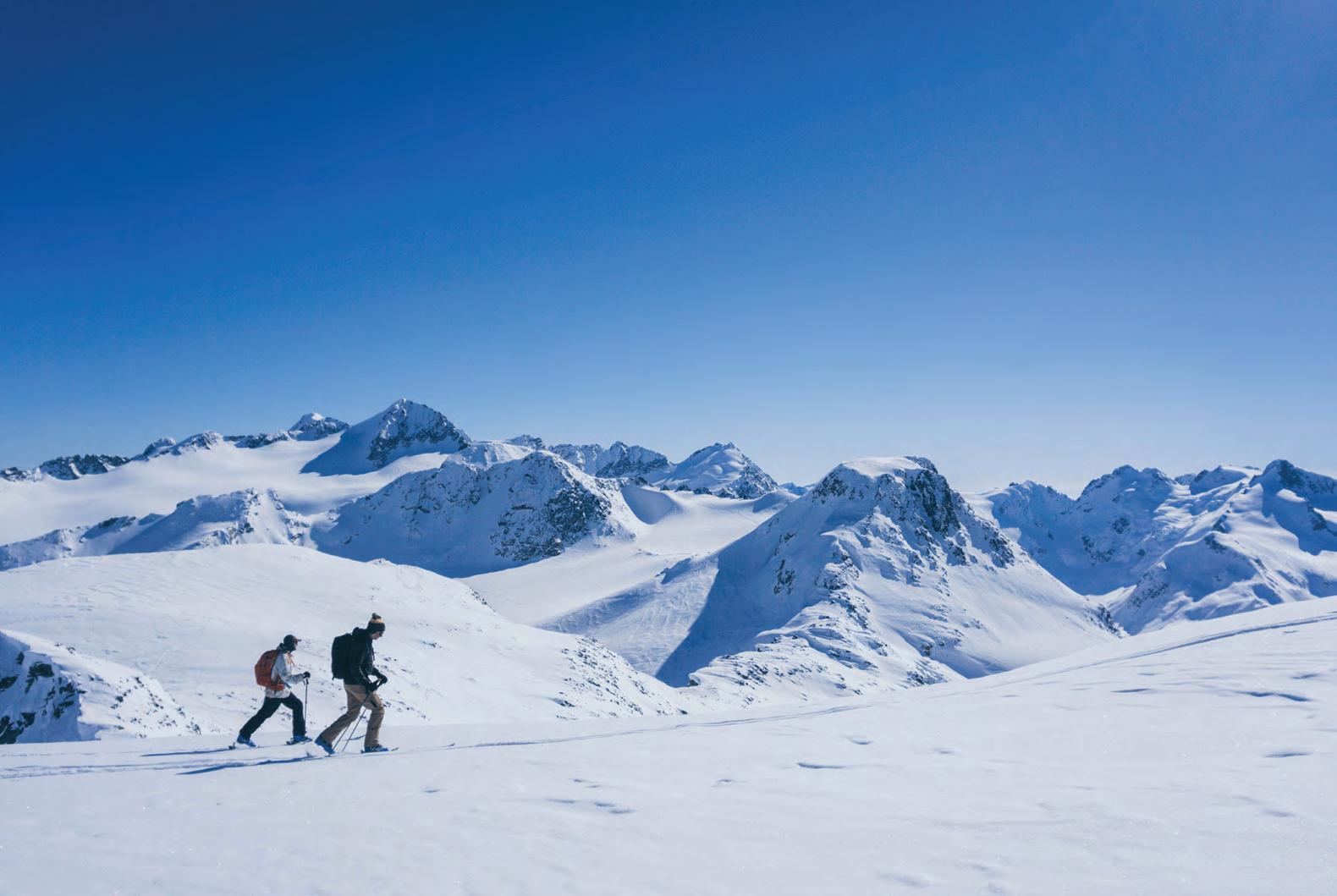
“THE TOOLS ARE OUT THERE AND THE RESOURCES ARE OUT THERE. BUT BECAUSE IT’S RELATIVELY RARE [WE] DEAL WITH THIS STUFF, VERY FEW OF US ACTIVELY GO OUT AND TRAIN OURSELVES UP.”
- BRIAN JONES
FEATURE STORY
POWDER DAYS AND PARTY NIGHTS
There’s another side to Whistler that creates its own complications. The après and party scene.
MacLeod estimates 90 per cent of his clients also battle with substance abuse.
“Whistler is such a party town that you can go out every night of the week and party and not look like you’re an addict or alcoholic,” MacLeod explains. “In another town, people would be like, ‘Hey, I think you need some help.’ But there’s no one calling them out here.”
The transient nature of resort towns compounds the problem. Without longterm community accountability destructive patterns can go unnoticed. Seasonal workers cycle through, establishing surface-level friendships centred around the next adventure rather than meaningful connections. MacLeod himself admits to lacking deep male friendships in Whistler despite living here for years.
“My best relationships are with women because women can talk about things that are more meaningful and genuine,” he says. “With the guys, the only communication is like, ‘riding this weekend?’”
Isolation extends beyond personal relationships. MacLeod points to systemic barriers like the lack of affordable mental-health resources and physical space for counselling services in Whistler.
“The municipality could find a space that could facilitate providing counselling services for the community,” MacLeod says. “That would reduce a barrier right there.”
For Indigenous communities in the Sea to Sky region, these barriers multiply. MacLeod’s research into Indigenous youth mental health revealed layers of discrimination, stigma, economic barriers and racism that make accessing resources even more difficult. When people seeking help face discrimination from the very systems meant to support them they lose trust in those resources entirely.
THE HUMAN COST OF HARDCORE
The challenges men face with mental health not only affect them, but also everyone in their communities. When their health is poor, it impacts their friends, families and peers.
MacLeod sees the personal toll daily but focuses on a way through.
“I really stress the importance and encourage men to cry and open up and access their feelings,” he says. “I explain that crying is an amazing mechanism we’re designed with. It’s a huge release and it’s not a sign of weakness.”
However, changing deeply ingrained cultural norms requires more than individual counselling. It requires confronting the fundamental contradiction at the heart of mountain culture: the same landscape that draws people seeking fun and freedom can also foster a space where men feel further compelled to hide their emotions.
Jones believes the industry has made progress, even if slowly. Younger guides seem willing to discuss their emotions, and organizations like Mountain Muskox now routinely offer mental-health resources following incidents.
“The tools are out there and the resources are out there,” Jones says. “But because it’s relatively rare [we] deal with this stuff, very few of us actively go out and train ourselves up.”
REDEFINING STRENGTH AT ALTITUDE
Mountain communities face unique pressures that demand targeted solutions. The transient workforce, party culture and the industry’s glorification of risk-taking all conspire to make mental-health problems easily masked. Add the lack of accessible help, and an ideal that conflates emotional vulnerability with male incompetence and you end up in a storm of suffering.
The stakes are too high. More men are dying because saying they’re not OK feels impossible in a culture that promises endless epic descents and party scenes that numb the problem rather than resolve them. Real change requires more than awareness. It demands systemic shifts as these problems affect all members of this community.
For men like Hoffman the answer starts with redefining what strength means.
“For a lot of people, there’s this stigma around admitting you need help,” he says. “I think it’s just the challenge of do I reach out for help? Am I that person? That’s a hard one.”
These outdoor spaces that have been dominated by male cultures are seeing the winds shift, but until more people actively embrace vulnerability as essential to survival then the men who live within their rugged culture will continue suffering beneath the bravado. The mountains will still be there tomorrow. The question is whether the people who love them will be, too. n
WHERE TO GET HELP:












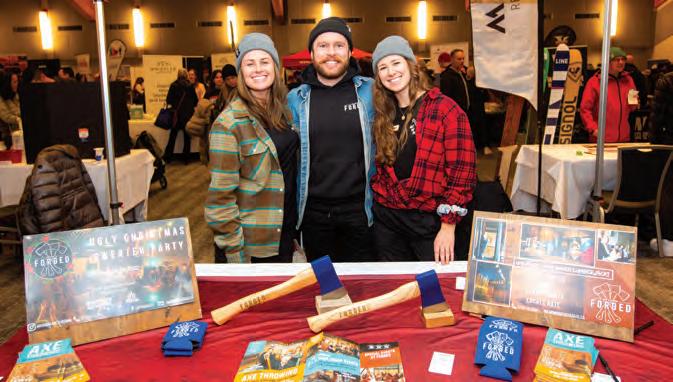

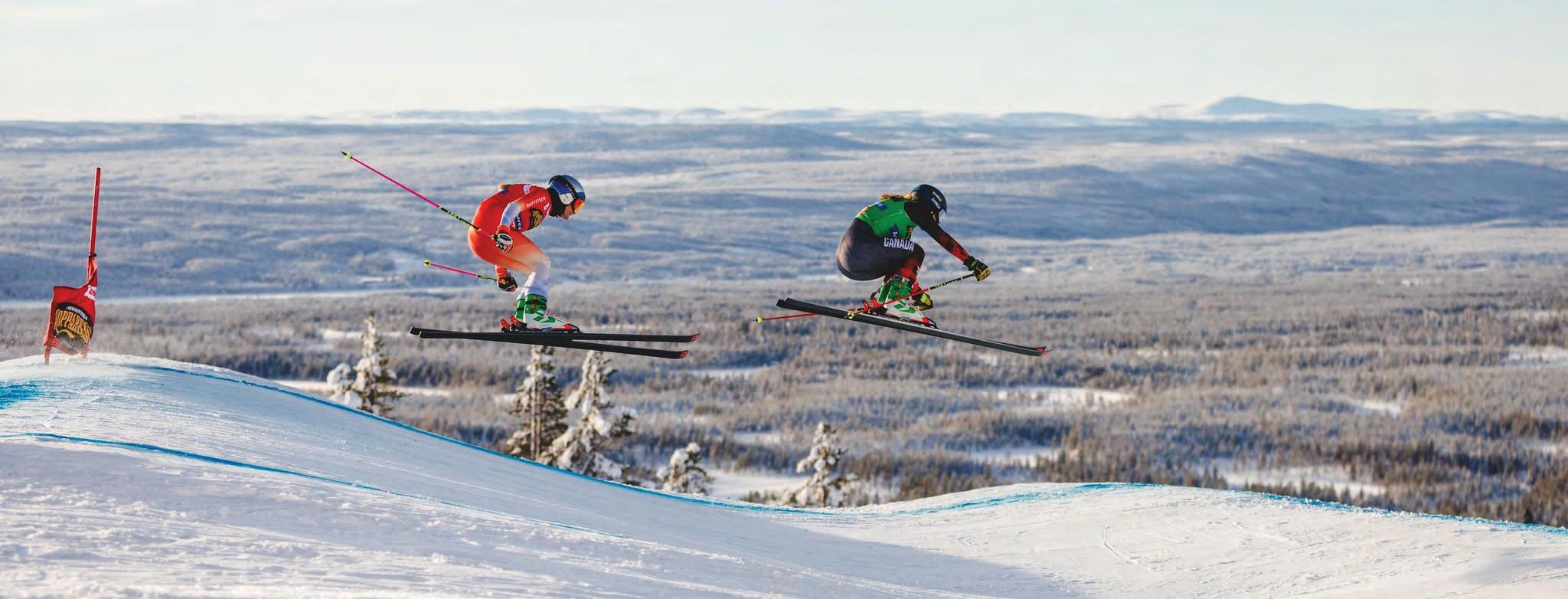
‘You know you’re part of the best team in the world’
WHISTLER ATHLETE TIANA GAIRNS ASSESSES THE CANADA SKI-CROSS PROGRAM AHEAD OF MILANO CORTINA 2026
BY DAVID SONG
HEADING INTO the 2026 Winter Olympics, one particular ski cross team is going to have a bullseye on its back: Canada.
Canucks have won four straight FIS Nations Cups to date (and 12 out of 18 total) as the sport’s most decorated group. Their women have never failed to podium at an Olympic Games: Ashleigh McIvor blazed her trail to gold at Vancouver 2010, Marielle Thompson and Kelsey Serwa Rey finished one-two at Sochi 2014, Rey emerged victorious four years later in Pyeongchang with Brittany Phelan second, and Thompson grabbed silver at Beijing 2022.
Among men, Brady Leman triumphed at Pyeongchang 2018 in a career that also saw him earn World Championship silver (2019) and two X Games medals (gold in 2016, bronze in 2010).
Team Canada is ready to maintain its tradition of excellence with Thompson leading the way. She boasts a quartet of Crystal Globes, 36 World Cup victories and 73 medals to date and is no doubt an all-time great. The Whistlerite tore the lateral collateral ligament off her right fibula on Feb. 28 in Gudauri, Georgia, but managed a mid-November return to snow in Nakiska, Alta. and is approaching the season patiently to improve her odds of a fourth Olympic berth.
Thompson said during a May interview with Pique that previous knee ailments, like an ACL and MCL rupture
from October 2017, actually give her confidence she will be able to return to form once again.
“Mar is a powerhouse. She puts her head down and she works hard,” said Tiana Gairns, herself a Canadian ski crosser recovering from lower-body injuries in consecutive years. “Whenever I’m in the gym, she’s in the gym, pretty much. It’s always cool to see someone progress through rehab, because you watch them at the beginning … her knee was twice the size that a knee should be, and now she’s jumping around.”
Reece Howden is the most decorated member of the men’s team with three Crystal Globe overall titles under his belt.
The Cultus Lake, B.C. native began skiing at two years of age before transitioning from alpine to ski cross as a teen. Now 27, he was ninth in Beijing and hungry for
alone several—with a top-heavy roster, but Thompson and Howden have plenty of supporting talent at their backs.
Courtney Hoffos is the incumbent women’s national champ and World Championships silver medallist, who rebounded from injury last year to earn six World Cup podiums. India Sherret led the Crystal Globe race for parts of 2024-25 and won two races. Hannah Schmidt netted three medals during an injury-truncated campaign last winter, while Gairns hopes to add to her lone bronze.
Meanwhile, Kevin Drury is the first Canadian man to secure a Crystal Globe (pulling it off in 2019-2020) and a veteran leader at 37 years old with two Olympic appearances. Jared Schmidt is looking to replicate the best stretch of his career: three consecutive wins
“Every single one of my teammates has been pushing, and it makes me also work hard and push to keep up with them.”
- TIANA GAIRNS
his first taste of Olympic hardware.
“The goal has been three Globes and while I haven’t been able to go back-toback, to do it in five years is amazing,” Howden told CBC in March after his latest season title. “There are a lot of ups and downs in this sport and having confidence is key. As I’ve matured, I know what I’m capable of and I’m able to move on from the bad days.”
‘THIS INNATE SENSE OF CONFIDENCE’
One cannot secure a Nations Cup—let
in December 2023. Kristofor Mahler is the reigning national bronze medallist, bouncing back nicely after suffering a broken neck two years ago.
Sea to Sky denizens may also want to keep an eye on Nicholas Katrusiak. He enters his first year on the senior ski cross team after an excellent 2024: two World Juniors silvers and top spot in the Nor-Am overall ranking.
Alpine racer Sascha Gilbert posited the unit may be aiming for Olympic podium sweeps come February: a notion Gairns would tentatively endorse.
“That’s a big statement to put out there, but I don’t think it is unrealistic,” she remarked. “I think especially our women’s side has shown that we’re capable of it, seeing that not just last year but the year before we had sweeps of the [World Cup] podium. Every single one of my teammates has been pushing, and it makes me also work hard and push to keep up with them.”
During an era where many Canuck athletes are desperate for funding amidst an unfavourable political landscape, the ski-cross group is betteroff than most due partially to their consistent results. Budget cuts are still a factor, compelling racers to do more with less as expenditures keep rising, but Gairns praises her team’s staff for optimizing allocation of resources to the best of their ability. She emphasized that she and her peers count their blessings while calling the plight of other athletes “heartbreaking.”
Nonetheless, the Milano Cortina Games are on the horizon and once its ski-cross portion begins on Feb. 20, Canada’s best will be gunning to dethrone incumbent Olympic champions Ryan Regez of Switzerland and Sandra Näslund from Sweden.
“When we’re skiing a slope, or we come to a venue, or we’re at the top of a race, you have this innate sense of confidence … you know you’re part of the best team in the world,” Gairns said. “It instils you with pride that you wouldn’t get otherwise. Canadians have done very well at the Olympics in the past, and it’s something I keep saying— the word pride—but it is something we carry with pride.
“Of course there is pressure with any big game that you come into, any big competition, and I hope we can use that pressure to create something good.” n
AIR CANADA Tiana Gairns (right) goes airborne during a ski-cross event in Idre Fjäll, Norway. PHOTO COURTESY OF FIS FREESTYLE
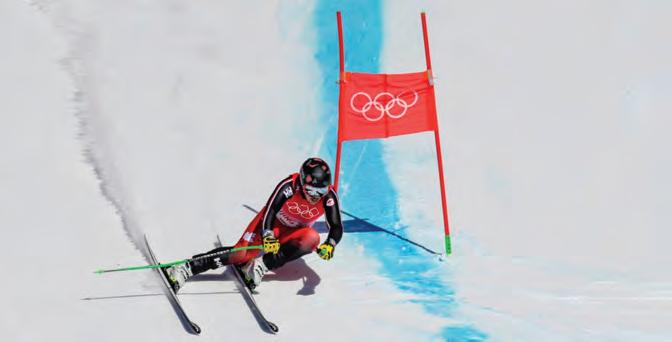
Jack Crawford leads Canadians in 16th place at World Cup super-G opener
SPORTS
BRIEFS: SEA TO SKY LUGERS HIT THE TRACK; BOZIC DEFEATS GURASEES WARRYA BY UNANIMOUS DECISION
BY DAVID SONG
WHISTLER’S alpine skiing men returned to World Cup action on Nov. 27 in Copper Mountain, Colo. Jack Crawford led the pack in 16th, registering a time of one minute and 8.66 seconds.
Yet it was incumbent and three-time Crystal Globe titleholder Marco Odermatt who seized gold (1:07.70). The perennial Swiss powerhouse narrowly bested silver medallist Vincent Kriechmayr (1:07.78) as Kriechmayr’s fellow Austrian, Raphael Haaser, earned bronze (1:07.83).
Riley Seger and Jeffrey Read were the next highest-placing Canadians in a tie for 42nd (1:09.67).
“I crossed the finish line and I was like, ‘That was not too bad.’ I hoped the feeling matched the time,” Odermatt told the media. “So I had a great run from the top to the bottom, I had a good plan in my mind … and happy with my performance.”
SEA TO SKY LUGERS HIT THE TRACK
Three Sea to Sky lugers have officially taken their first competitive cuts on the Olympic sliding track in Cortina d’Ampezzo, Italy.
Embyr-Lee Susko paced her compatriots in 14th place last Saturday with a two-run time of one minute and 46.91 seconds. Trinity Ellis, the Beijing 2022 Olympian from Pemberton, was 15th (1:47.00) and Caitlin Nash found herself 18th (1:47.26).
Merle Fraebel snagged gold (1:45.771) and fellow German Julia Taubitz obtained silver (1:45.86). Austria’s Lisa Schulte took bronze (1:46.07).
“I’m really happy with my first race of the year here in Cortina,” said Susko, who was fourth at this year’s Luge World Championships in Whistler. “I’m really liking the flow of this track and I’m














stoked that I was able to pull together two clean runs for race day.”
A women’s doubles event also took place on Nov. 29, with Germany’s Dajana Eiterger and Magdalena Matschina on top (1:46.41). Canadians Beattie Podulsky and Kailey Allan raced to 15th (1:49.46).
Back on Feb. 8, Podulsky and Allan teamed up with Susko, Theo Downey and the men’s pairing of Devin Wardrope and Cole Zajanski to grab a surprise team relay bronze at Luge Worlds.
BOZIC DEFEATS GURASEES WARRYA BY UNANIMOUS DECISION
Blake Bozic added a victory to his record on Nov. 22, overcoming fellow 135-pound boxer Gurasees Warrya by unanimous decision at Griffins Boxing and Fitness in North Vancouver.
Bozic, who trains out of the Whistler Boxing Club (WBC), maintained control
“I’m really happy with my first race of the year here in Cortina”
- EMBYR-LEE SUSKO
of the fight despite the pace and intensity put on by his opponent from Golden Glory Martial Arts.
“The win followed three weeks of preparation, during which Bozic focused on conditioning, technical development, and sparring. He was seconded on fight night by Geoff Bates and Devyn Frame,” said WBC head coach Sasha Gier. “The Whistler Boxing Club acknowledges the support of Dave Brett and the coaching staff at Griffins Boxing, who contributed to Bozic’s training camp. We are planning to return to fighting in January.” n













































GATE CRASHER Jack Crawford competes in the men’s Super-G during the Beijing 2022 Olympic Winter Games on Tuesday, February 08, 2022.
PHOTO BY KEVIN LIGHT/COC
Pinot and poutine at Lorette: Whistler’s new holiday pairing makes a case for indulgence
TWO
SPECIALTY
POUTINES
AND HALF-PRICE PINOT NOIR ARE ON OFFER NIGHTLY FROM 8 TO 10 P.M., DEC. 6 TO 18
BY LUKE FAULKS
Local Journalism Initiative Reporter
WHISTLER’S WINTER kickoff is about to get a little cozier.
Lorette Brasserie, the newest restaurant from Whistler’s Paré family of operators, is launching a short-run Pinot & Poutine promotion this month, offering two limited-time poutines and half-price Pinot Noir between 8 and 10 p.m., nightly, from Dec. 6 to 18.
Co-founder and executive chef James Paré said the idea came out of internal discussions this fall as the team looked for a late-evening offer suited to the preholiday shoulder period.
“Lorette just opened this April, so we’ve been playing around doing a few different things,” he said. “We just wanted to spark a little interest before the winter, do something a little fun. We’ve been toying with the idea of putting a poutine on the menu, but we haven’t really committed to it full time.
“So we thought, let’s lean in; we picked two different poutines, picked some nice Pinot—two wines that we think would go with either dish—for guests to experience. It’s just something simple and very approachable.”
FOIE GRAS AND MUSHROOMS ANCHOR THE TWO-ITEM MENU
The feature menu includes a foie gras poutine ($25), with a seared 60–70 gram piece of foie gras, cheese curds and a gravy fortified with blended foie; and a mushroom poutine ($19), made with sautéed wild local mushrooms, vegetarian mushroom gravy, cheese curds and chives.
Paré described the foie preparation as the richer option.
“We thought the foie gras poutine would be delicious… gravy with alpha
variety; chanterelles, pines, morels. We’re just trying to see what we can get and what products suppliers will have for us. The mushroom gravy is completely vegetarian, super delicious, with unique flavours.”
He noted the vegetarian option was included deliberately to keep the offering accessible.
“We could probably do four different poutines, but we were like, well, let’s keep it to two,” he said. “Keep one that’s more of a vegetarian variety, just so that it kind of appeals to everybody.”
“As long as our guests walk away loving it, that’s what we strive for.”
- JAMES PARÉ
cuts of the foie gras pieces with some cognac and some aromatics,” he said. “We blend a bunch of foie gras into it and then pass it, and the actual foie gras we sear and put on top. With the rich, luxurious gravy and then cheese curds, it’s indulgent.”
The mushroom version is built around the fungi B.C. foragers bring in during the early winter shift in availability.
“We have a couple local mushroom pickers that come and tell us what they have,” Paré said. “It could be a
The promotion includes halfprice Tantalus Pinot Noir and Vignerons de Buxy Bourgogne Côte Chalonnaise by the glass or bottle. But while the Tantalus, which has been on Lorette’s menu since the venue’s opening, normally sells for $16 a glass or $65 a bottle, the price will be cut in half during the promotion.
“We wanted to keep it simple. Let’s do one local Pinot Noir, the Tantalus.” Paré said. “And let’s go with a Burgundy. We have it on the list for $75, so offering half off is not bad.
“Both have a little fruitiness to cut through the richness of the foie gras, and the mushroom is pretty rich itself. Price point, they work well, we’re selling them, and we’re proud to have them on the list.”
FITS WITHIN A TIGHT KITCHEN FOOTPRINT
The 8 to 10 p.m. timing was chosen to fall outside Lorette’s main dinner rush and to complement the restaurant’s ongoing prix-fixe offerings.
“We’re offering it after the main rush,” Paré said. “This is just to showcase this type of deal at eight to 10 just over the next few weeks, with the locals still in town and some Christmas parties coming in.”
The team has run other seasonal programs—including a stone-fruit menu in August. Paré said the shorter features give the restaurant flexibility without overextending its supply chain.
“We want to make sure we have a menu that we can cook every night and not run out of everything,” he said. “It’s just another fun item we can do and adapt as we go, working with local farms and what’s available.
“So, it’s just about putting on something on that we think people enjoy,” he added. “As long as our guests walk away loving it, that’s what we strive for.”
Pinot & Poutine runs at Lorette nightly from Dec. 6 to 18, from 8 to 10 p.m. n
OH, CANADA The French-Canadian classic dish will be paired with half-off Tantalus Pinot Noir and Vignerons de Buxy Bourgogne Côte Chalonnaise. PHOTO COURTESY OF LORETTE BRASSERIE


MEADOW PARK SPORTS CENTRE


REGISTERED FITNESS Registered fitness classes have a separate fee and a defined start and end date. Pre-registration is required for the entire set of classes.
I INCLUDED FITNESS These classes are included with your price of admission for no extra charge.

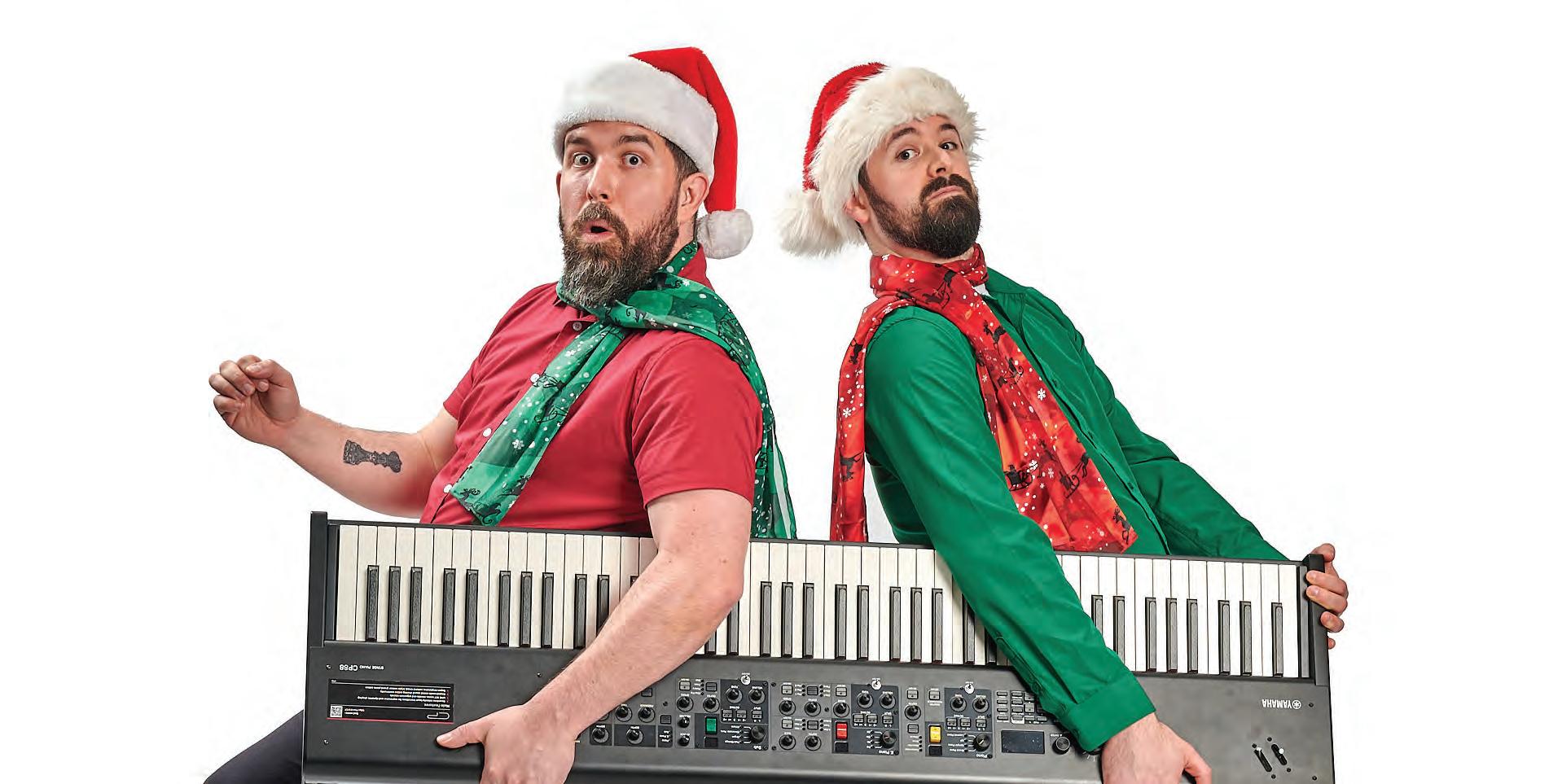
Piano Heist returning to Whistler with ‘A Very Merry Heistmas’
THE HOLIDAY-THEMED CONCERT WILL TAKE PLACE DEC. 12 AT THE MAURY YOUNG ARTS CENTRE
BY DAVID SONG
PIANO HEIST frontmen Nico Rhodes and Patrick Courtin last visited Whistler on Jan. 18, and they’re returning to bookend the year with a holiday-themed show.
“A Very Merry Heistmas” is not your typical Christmas concert. Envision two men wearing over-the-top colonial era wigs and playing George Frideric Handel’s “Messiah” on their melodicas. Add to that a kickline cabaret version of “Rudolph the Red-Nosed Reindeer,” or a guitar cover of the Nutcracker Suite performed in tiaras, and you’ll begin to have an accurate picture of what you’re in for.
Since its inception as a brand three years ago, Piano Heist has aimed to marry excellent musicianship with theatricality.
“With Christmas, people know what to expect, same with classical music, jazz music, all this stuff,” Rhodes says. “Where we like to live now is in the unexpected. If you’re coming to hear a traditional Christmas show with traditional Christmas songs, there are a lot of people who do that and they’re great at it—and that’s not us. We’re here
to take the path less trodden.”
Piano Heist sold out the Maury Young Arts Centre during its last visit, and what its talents remember most vividly was the energetic audience that showed up in support.
“They were the kind of audience we love because they seemed to be on board with us right away,” Courtin remembers. “We like to throw a lot to our audience without making it feel like their
New projects, including “A Very Merry Heistmas” and a Canadian sing-along performance (think a hybrid karaoke choir with audience involvement) are in the works.
Rhodes and Courtin feel they’ve hit their professional stride, learning more about themselves and the music industry after hundreds of shows. Both were once accustomed to backstage roles: conducting, composing and
“If you’re coming to hear a traditional Christmas show with traditional Christmas songs, there are a lot of people who do that and they’re great at it—and that’s not us.”
- NICO RHODES
participation is mandatory. We open the door for people to sing along if they want to, and that’s what the Whistler audience did.
“They were so willing to go with us to the places we were going to go, musically and comedically, and they were just such a joy to play to. We’re super stoked to hopefully come back to another audience like that.”
It’s been a busy 2025 for Piano Heist, touring up and down the United States west coast and as far east as Ontario.
playing accompaniment, but now they’re emboldened to get on stage and present the fruits of their creative labour authentically.
Some of the best in the business, such as late B.C. folk musician Rick Scott and Rhodes’ mom Joëlle Rabu—a Juno-nominated multilingual singer and two-time Jessie Award recipient— have played a key role in Piano Heist’s evolution.
“We’ve had some fantastic mentors who’ve given us advice on how far you
go with moments and jokes, and how you give the audience room to respond to something … how much of a silly prop is a good idea,” says Courtin. “We’ve gotten a feel for incorporating props into our physical comedy, and we’ve also really dialed in the choreography of being two people at one piano, getting our arms on top of each other and still making sure we’re delivering a fantastic musical performance, which we put a lot of importance on.”
Rhodes adds: “We’re way more confident going out there and driving the bus. The Whistler audience … they’re in it for a good time so we can just start that fun ride right from the downbeat. Growing up, you just learn to embrace who you are and put your best foot forward.
“Now we’re like: ‘listen, if [our show’s] not for you, that’s fine, but we know there’s a lot of people out there who are going to smile and have a good time.’ I’ll say that we’ve gotten way better at napping in the car too because we’re older now, and those naps are more precious than they were a couple years ago.”
“A Very Merry Heistmas” is scheduled for Dec. 12 at 8 p.m. in the Maury Young Arts Centre, with Rhodes and Courtin emphasizing that it’s suitable for all ages.
Visit artswhistler.com/calendar/avery-merry-heistmas for tickets and details. n
LOCK AND KEYS Piano Heist musicians Nico Rhodes (left) and Patrick Courtin return to Whistler on Dec. 12. PHOTO COURTESY OF BECKY SMYKALA / ARTS WHISTLER
Woven Pathways: SLCC’s new exhibit bridges land, identity and fashion
GUEST
CURATOR REBECCA BAKER-GRENIER’S LANDMARK
INDIGENOUS
FASHION
EXHIBITION
RUNS UNTIL APRIL 5, 2026
BY LUKE FAULKS
Local Journalism Initiative Reporter
THERE’S A WATERFALL flowing in the Squamish Lil’wat Cultural Centre (SLCC). But instead of water flowing, it’s second-hand garments in varying shades of blue cascading from the ceiling.
The waterfall is a statement on waste, excess and the throwaway culture that dominates much of mainstream fashion—a contrast to Indigenous fashion values.
“I think about the scale of waste that fashion has,” designer Rebecca BakerGrenier tells Pique. “Indigenous fashion doesn’t focus on the trends. We create pieces that can be legacy, pieces that are handmade. A lot of people are creating one-of-one pieces [in] the hope they outlive us.”
The faux-water feature is a visual anchor for Baker-Grenier’s first-ever exhibition at the SLCC, which invites visitors to rethink fashion not as fleeting trend, but as a vessel of ancestral memory and intergenerational knowledge.
Woven Pathways: Indigenous Fashion and Cultural Continuity brings together the work of 18 Indigenous fashion designers. The exhibit runs through April 5, 2026 and features a slate of designers from the Squamish and Lil’wat Nations, as well as neighbouring Coastal communities connected through shared water and territories.
“This exhibit is a celebration of the Indigenous artists whose fashion embodies exemplary creativity focusing on the interconnections between land, identity, and cultural knowledge,” says Baker-Grenier in the official announcement.
“It stands as a testament to the resilience and strength of our ancestors, and as a symbol of love for the generations to come.”
The exhibition includes works from leading designers like Himikalas Pam Baker, Curtis Oland, Kolten Khasalus Grant, Cheximiya Allison Burns-Joseph, and many others. Baker-Grenier also contributed some of her own pieces, bridging her past work in regalia-making with contemporary fashion.
“I think that’s why I went into fashion, because when I was designing regalia, there was a certain level of creativity that I wanted to push myself to. But within regalia, there’s boundaries that you work within,” she explains. “Fashion was kind of a natural next step, where I could share my work publicly.”
Baker-Grenier is of Kwakiuł, Dzawada’enuwx and Sk_wx_wú7mesh (Squamish) ancestry. She holds a BA in Indigenous Studies from UBC and
apprenticed under master designer Pam Baker from the Sk_wx_wú7mesh Nation.
Since launching her design career in 2021, she has presented collections at New York Fashion Week, Vancouver Indigenous Fashion Week and the Santa Fe Indian Market. She has been featured in Vogue, Elle Canada and multiple museum exhibitions. She’s also the regalia designer for the Indigenous dance company Dancers of Damelahamid, with her works performed on stages around the world.
Her work honours traditional materials and methods, like cedar bark, ermine, and beadwork, while inviting contemporary forms of expression.
Woven Pathways marks a first-time foray into curation for Baker-Grenier. It’s an experience she approached with a storytelling mindset.
“I’ve never actually curated a show before,” she says. “But it seemed like the process started with the story. What was the story that we wanted to tell? I really looked at the pieces and asked what stories their artwork told, what was their inspiration, and went from there.
“We ended up looking at how artists connect to their identity through their clothing and accessories, and how they express that in contemporary form,” she explains. “How land and water are the influence behind a lot of the artwork.”
Though Baker-Grenier’s work has graced red carpets, international runways and major museum collections, she says the SLCC offered something rare: a valuesaligned space that centres Indigenous community voices.
“What I’ve grown to appreciate about the SLCC is that they do things differently as an institution,” she says. “Too often we say that, ‘Oh, we can’t do this. We can’t do that because there’s red tape,’ but really, you have to be flexible and make the necessary changes in order to have a good relationship with community, with artists.”
That community-first approach shaped the exhibit’s design as much as its content. The show challenges the more boiler-plate, outfits-on-mannequinsapproach visitors might expect from a fashion exhibit.
“Some of the pieces are inside a bent wood box. Some of the pieces are displayed on log, as opposed to just mannequins,” Baker-Grenier says. “It kind of puts the clothes in a space that is more culturally rooted in the stories, as opposed to strictly museum spaces.”
Woven Pathways is open through April 5, 2026, on the mezzanine level of the SLCC. Entry is included with general admission, and the show will be accompanied by hourly What We Treasure guided tours.
More information is available at slcc. ca/woven-pathways. n




















































ARTS SCENE
PIQUE’S GUIDE TO LOCAL EVENTS & NIGHTLIFE
Here’s
and beyond.

ALTA LAKE BIRD WALK
PORTOBELLO AFTER DARK

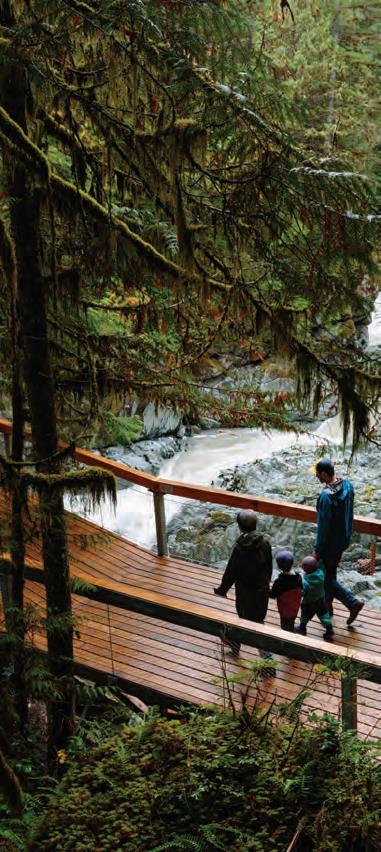
Get ready to put your stomach and your brain to the test! Portobello is unleashing the ultimate pairing: All you can eat ribs, combined with a hilarious and challenging trivia or comedy bingo, all hosted by the legendary Laugh Out Live team! Enjoy this epic culinary and comedic mashup, featuring special comedy performances woven throughout the evening for a night full of flavour and laughter.
> Dec. 5, 6 p.m.
> Portobello
WFF 25TH SILVER ANNIVERSARY PARTY
Celebrate 25 years of unforgettable film, creativity, and connection at Whistler Film Festival’s legendary Silver Anniversary Party! Join fellow filmmakers, talent, and friends for an evening filled with music, dancing and local flavour, featuring Whistler’s most iconic band, The Hairfarmers and refreshments from Whistler Brewing. Don’t forget to bid on the Silent Auction and get your holiday gift shopping done early all while supporting the Film Festival.
> Dec. 5, 9 p.m.
> Garibaldi Lift Co.
ALTA LAKE BIRD WALK
Join the Whistler Naturalists on the first Saturday of the month for a walk to Rainbow Park. Open to anyone interested in learning about birds and contributing as a citizen scientist. Connect with experienced birders who are happy to share their knowledge. More information at whistlernaturalists.ca/birding.
> Dec. 6, 9 a.m.
> Meet at the bottom of Lorimer Rd. by the catholic church.
SEEK BESPOKE MARKET
Come explore the Bespoke Market for a curated holiday shopping experience showcasing creative entrepreneurs including designers, small shop owners, and makers. Socially conscious shoppers will find a selection of items such as handcrafted jewellery, one-of-a-kind art, natural skincare, artisanal foods and beverages, slow fashion and home goods from 35+ vendors.
> Dec. 6, 11 a.m. and Dec. 7, 5 p.m.
> Audain Art Museum
HOLIDAY SINGAPALOOZA WITH BARBED CHOIR
Jeanette Bruce and their musical friends are back to spread holiday cheer with a lively set of festive pop songs, perfect for a fun and spirited sing-along! Join in this fun holiday tradition as Barbed Choir leads everyone in some holiday favourites and then works with the audience as a group to learn a version of a holiday classic—including harmonies! Minimum $5 entry by donation. All donations support the Whistler Community Services Society Holiday Helper Program.
> Dec. 10, 7 p.m.
> Maury Young Arts Centre
A WINTER’S SONG SOLSTICE CONCERT
Trio Elysium, harpist Alison Hunter, flautist Anne Elise Keefer, and vocalist Jeanette Bruce, fills Istken Hall at the Squamish Lil’wat Cultural Centre with the magic of the season for an evening of festive holiday music. Enjoy a joyful mix of Christmas classics, seasonal favourites, and elegant arrangements that capture the warmth and spirit of the holidays.
> Dec. 11, 7 p.m.
> Squamish Lil’wat Cultural Centre
FILE PHOTO BY VICTOR ALFONSO
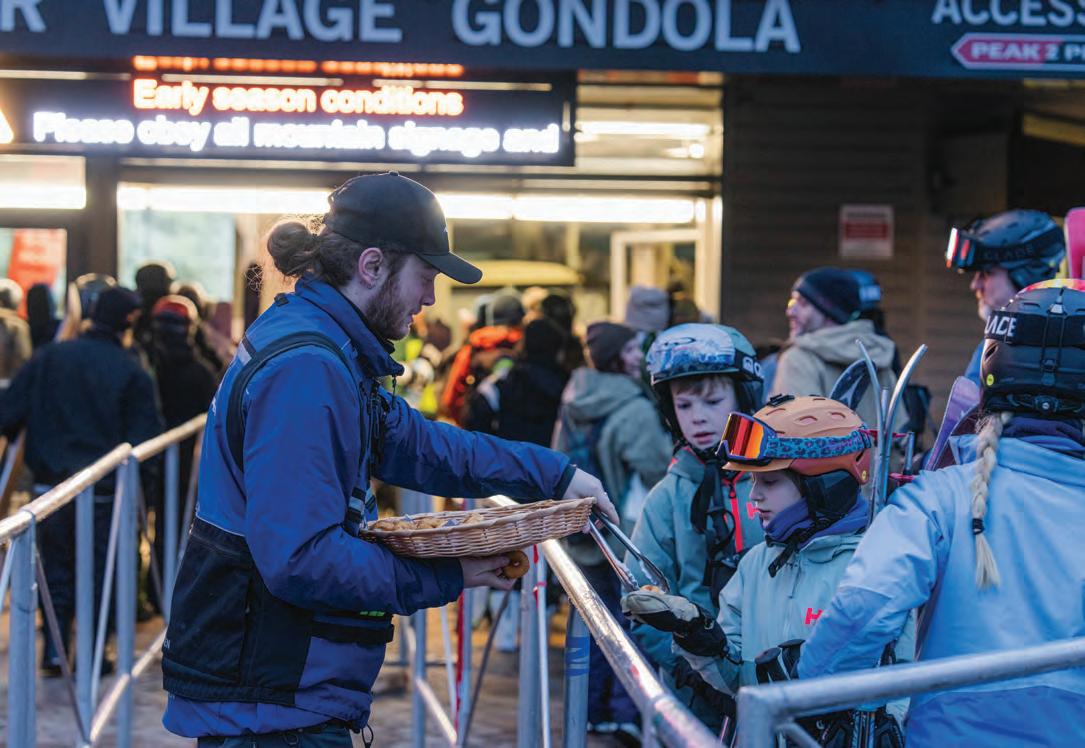

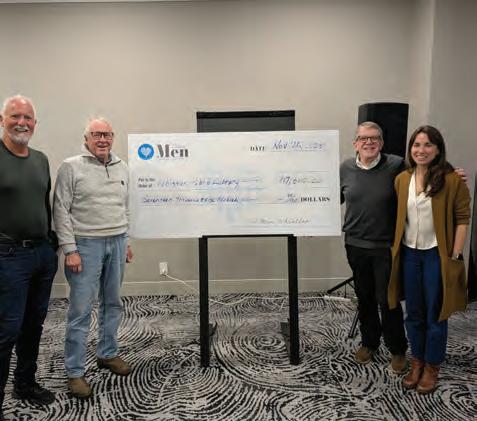












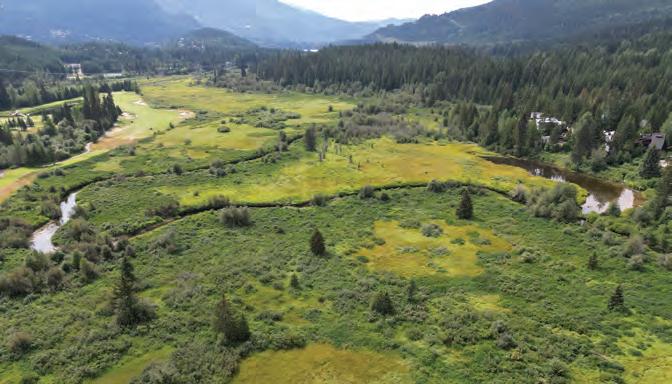
Wetlands: Nature’s undervalued superheroes
BY KRISTINA SWERHUN
“I don’t understand why when we destroy something created by man, we call it vandalism, but when we destroy something created by nature, we call it progress.” – Ed Begley Jr.
FROM THE OUTSET and as indicated in Whistler’s first Official Community Plan, the Resort Municipality of Whistler (RMOW) intended to protect nature. However, it’s difficult to build a resort municipality without impacting nature and, unfortunately, wetlands are located exactly where the RMOW and developers wanted to build—the flat valley bottom.
Biodiversity is the foundation of healthy, functioning ecosystems upon which all life depends. Wetlands are vital to biodiversity, and not just to the many species that can survive nowhere else. Wetlands also benefit humans by purifying water, protecting against floods and drought, recharging aquifers, and acting as effective wildfire barriers— roles that are increasingly important as the climate changes.
WHISTLER’S WETLAND HISTORY
In 2007, wetland loss was the subject of a Simon Fraser University (SFU) study that compared aerial photos of Whistler taken in 1946 and 2003. Researchers found Whistler’s wetlands decreased by 72 per cent. Note the study area extended south of Whistler to Daisy Lake, and doesn’t contain earlier and more recent losses, including when the new BC Transit station was built on a wetland near Nesters ahead of the 2010 Olympic and Paralympic Winter Games.
According to the SFU study, Whistler’s largest wetland area today— which follows the River of Golden Dreams—used to be two to three times its current size. Within this corridor,
roughly half of the wetlands were lost to residential development, while the other half were lost to the Whistler Golf Club (1983) and Nicklaus North Golf Course (1996).
There’s some good news, too. Before Nicklaus North opened, 650 people attended a public hearing over concerns about wetlands. This support and advocacy by the then-nascent Association of Whistler Area Residents for the Environment (AWARE) and others saved 28 hectares (70 acres) of wetland from being filled in by the golf course. Also, the River of Golden Dreams corridor now has protected areas along its length, which is the subject of next week’s article.
BEAVERS FOR THE WIN
The health of wetlands is directly tied to the presence of beavers; one cannot thrive without the other. The 1935 Mammals of the Alta Lake Region report states that “the beaver has been completely trapped out in the district for over 20 years.” Even after the demand for fur stopped, beavers were affected by development and loss of their wetland habitat. Despite these challenges, beavers are on the road to recovery. In 2024, researcher Bob Brett documented 60 inhabited beaver lodges and estimated that 300 to 350 beavers live in Whistler. This example of nature’s resilience shows us recovery is possible, provided we offer life the opportunity to return.
A community-wide effort is essential for protecting Whistler’s remaining wetlands. In 2024, the RMOW developed the Priority Habitat Framework, a plan to help protect Whistler’s most important natural habitat, including wetlands. Another way to protect nature is through grassroots advocacy. When community members speak up about their concerns and show they care for nature, it not only raises awareness—it also fosters hope and inspires others to take action. n
EVEN FLOW The River of Golden Dreams wetlands with Nicklaus North Golf Course on the left and Alta Lake in the background.
PHOTO BY DIAMOND HEAD CONSULTING
Free Will Astrology
WEEK OF DECEMBER 5 BY
ARIES (March 21-April 19): Here are two of your birthrights as an Aries: to be the spark that ignites the fire and the trailblazer who doesn’t wait for permission. I invite you to embody both of those roles to the max in the coming weeks. But keep these caveats in mind: Your flame should provide light and warmth but not rouse scorching agitation. Your intention should be to lead the way, not stir up drama or demand attention. Be bold and innovative, my dear, but always with rigorous integrity. Be sensitive and receptive as you unleash your gorgeous courage. In my vision of your future, you’re the wise guide who inspires and includes, who innovates and reflects. You fight for interdependence, not dominance.
TAURUS (April 20-May 20): Here’s a key theme: microdoses of courage. You don’t need to summon splashy acts of epic heroism. Subtle rebellions against numbness and ignorance may be all that’s required. Your understated superpowers will be tactful surges of honesty and gentle interventions in challenging transitions. So be brave in ways that feel manageable, Taurus. Don’t push yourself to be a fearless warrior. The trembling truth-teller is your best role model. As an experiment to get started, say yes to two things that make you nervous but don’t terrify you.
GEMINI (May 21-June 20): Your inner ear contains three canals filled with fluid. They act like gyroscopes, telling you which way is up, how fast you’re moving, and when to stop. Your ability to maintain your balance depends on their loyal service. Without them, you couldn’t orient yourself in space. Moral of the story: You stabilize yourself through constant adjustment. Let’s make this a metaphor for your current assignment. Your ability to remain poised, centred, and grounded will require ongoing adaptations. It won’t work to remain still and fixed. You will have to keep calibrating and adapting.
CANCER (June 21-July 22): Let’s extol the value of productive confusion: the disorienting state when your old maps no longer match the territory. Your beloved certainties shudder and dissipate, and you don’t know what you don’t know. This isn’t a failure of understanding, but the ripe precondition for a breakthrough. The caterpillar doesn’t smoothly or instantly transition into a butterfly. First it dissolves into chaotic goo and simmers there for a while. Conclusion: Stay in the not-knowing a little longer.
LEO (July 23-Aug. 22): Coffee from Java, orchids from Iceland, and grapes from Vesuvius, Italy: What do these bounties have in common? They flourish in the extra fertile soil created by volcanic eruptions. The molten lava that initially levelled everything in its path later cooled and became a repository of rich nutrients. I expect a milder version of this theme for you, Leo. Events and energies that at first cause disruption will eventually become vitalizing and even healing. Challenges will lead to nourishment.
VIRGO (Aug. 23-Sept. 22): Gardeners in Japan spend years training bonsai trees to grow into elegant shapes. The process requires extraordinary patience, close listening, and an intimate relationship with an ever-changing life form. I invite you to approach your current projects with this mindset. You may feel tempted to expedite the growth that’s unfolding. You might feel pressure to “complete” or “optimize.” But the flourishing of your work depends on subtle attunement, not brute progress. Pay tender attention to what wants to emerge slowly. Tend to it with care. Time is your collaborator, not your enemy. You’re weaving lasting beauty.
LIBRA (Sept. 23-Oct. 22): The Swedish concept of lagom means “not too much, not too little, but just right.” It suggests that the best option may be in the middle rather than in the extremes. Yes, sometimes that means an uneasy compromise. But more often, it’s how the power and virtue come fully alive and thrive. Many people don’t like this fact of life. They are fixated on the delusion that more is always better. In the coming weeks, Libra, I invite you to be a connoisseur of lagom. To do it right, you may have to
ROB BREZSNY
strenuously resist peer pressure and groupthink.
SCORPIO (Oct. 23-Nov. 21): In Bangkok markets, elderly women sell caged birds. Why? For the specific purpose of releasing them. Those who buy a captive sparrow or dove immediately open the cage door and let the creature fly away in a symbolic gesture of compassion and spiritual aspiration. It’s a Buddhist act believed to bring good karma to the person who sets the bird free. I invite you to imagine yourself performing this sacrament, Scorpio, or perhaps conducting an actual ritual with the equivalent purpose. Now is a fun and fertile time to liberate an outdated belief, a conversation you keep replaying, or a version of yourself that’s no longer relevant. Take your cue from the signs that appear in the Bangkok market: Letting go is a form of prayer.
SAGITTARIUS (Nov. 22-Dec. 21): The world’s oldest known musical composition is the Hurrian Hymn No. 6. It was discovered etched on clay tablets in Syria, dating back to 1400 BCE. When finally decoded and performed, it revealed harmonies that still resonate with modern listeners. Your projects in the coming months could share this timeless quality, Sagittarius. You will have an enhanced power to bridge your past and your future. A possibility you’ve been nurturing for months or even years may finally ripen into beautiful completion. Watch for opportunities to synergize tradition with innovative novelty or deep-rooted marvels with sweet, breezy forms of expression.
CAPRICORN (Dec. 22-Jan. 19): I’m taking a risk here by urging you cautious Capricorns to at least flirt with the Finnish tradition of drinking alcohol at home alone in your underwear with no intention of going out. I’m certainly not encouraging you to get so hammered that you can’t safely wander outdoors. My point is to give yourself permission to celebrate your amazing, mysterious, beautiful life with a bout of utterly uninhibited relaxation and totally indulgent contentment. I authorize you to be loose and free and even slightly irresponsible. Let your private pleasures reign supreme.
AQUARIUS (Jan. 20-Feb. 18): In the Quechua language, the word ayllu refers to a kinship system not just of people, but of animals, ancestors, dreams, and nature. To be aligned with one’s ayllu is to live in reciprocity, in the ongoing exchange of care and meaning among the entire web of life. “We belong to what we love,” the Quecha elders say. Aquarius, I believe you’re being asked to focus on your ayllu. Who or what comprises your circle of belonging? Which beings, places, and unseen presences help weave the pattern of your treasured destiny? Whom do you create for—not as audience, but as kin who receive and answer your song? As you nourish your connections in the coming weeks, pay special attention to those who respect your idiosyncrasies. It’s not your birthright to simply fit in. Your utter uniqueness is one of your greatest gifts, and it’s your sacred duty to give it.
PISCES (Feb. 19-March 20): In Yoruba cosmology, the divine spirit Oshun presides over rivers, love, beauty, and sweet water. But her sweetness isn’t a weakness. It’s a sublime power, as evidenced by how her waters once restored life to the barren earth when every other force had failed. You Pisceans are now channeling extra strong currents of Oshun energy. Your tenderness is magnetic. Your imaginative flourishes are as valuable as gold. And your love, when rooted in your sovereign self-respect, is healing. But don’t let your nurturing be exploited. Choose wisely where you share your bounty. The right people will honour your flow, not judge it or try to change it. Your duty is to be uninhibitedly yourself and let your lyrical truths ripple freely.
Homework: Could you heal someone else by teaching what healed you? Newsletter.FreeWillAstrology.com.
In addition to this column, Rob Brezsny creates EXPANDED AUDIO HOROSCOPES In-depth weekly forecasts designed to inspire and uplift you. To buy access, phone 1-888-499-4425. Once you’ve chosen the Block of Time you like, call 1-888-682-8777 to hear Rob’s forecasts. www.freewillastrology.com

Î Secure & scamless
Î Fully searchable
Î Targeted online community
Î Categorised listings
Î No reposting
Î Trusted by locals
Î Make your listing stand out with featured locations CALL
Handmade Christmas bandana’s




GroupFitnessClasses
Friday
I9:00-10:00a.m.FunctionalStrength-Jess Saturday I10:30-11:30a.m.Zumba-Susie Monday
F6:00p.m.Spin-Courtney Tuesday
I6:45-7:45p.m.Strength&Mobility-Jess Wednesday I6:30-7:30p.m.Zumba-Carmen Thursday
8:45-9:45a.m.AquaFitShallow-Sharon
Seeourfullpage scheduleadin thisissueofPique fordetails





UllusCommunityCentre
•HumanResourcesGeneralist($57,330.00to $64,610.00peryear)
Lil’watHealth&Healing+PqusnalhcwHealth Centre
•HealingProgramManager($57,330.00to $64,610.00peryear)
•CommunityHealthNurse($41.42to52.81per hour)+$2.15hourlypremium)
CommunityProgram
•EarlyChildhoodEducator-Infant Toddler ($24.00-$29.45/hrbasedonexperience+this positioniseligibleforwagetopup)
CommunityDevelopment
•ShelterSupervisor($25.65to$35.15perhour)
Xet’òlacwCommunitySchool
•LanguageResource WorkerorLanguage Teacher ($46,683to$109,520peryear)
• ElementarySchool Teacher($65,823.00to $109,520.00peryear)
•Custodian($17.85-$20.90perhour)
Pleasevisitourcareerpageformoreinformation:https://lilwat.ca/careers/


Rentals: FrontDeskStaff
$22/hour
F/T&P/Thoursavailable **nostaffaccommodationavailable**
FrontDeskdutiesincludeproviding resort information&directions,providing informationaboutthelodge.
Additionallodgedutiesincludeprearrival& postdeparturecheckofvacation rentalunits: thisincludeschanginglightbulbs, troubleshootingWIFIorcabletvwithinunits, unloadingtheoccasionaldishwasheror wipingdownacountertopifneeded. We arelookingforsomeonewhohas attentiondetail,isabletoworkindependently, cancommunicateclearly,isaproblem-solver, willingtouseacomputerand canselfleadcompletingdailytasks.
Pleasesend resumesto: info@acervacations.com





Watercaretechnician
•Responsibletovisitpropertiestomaintainwaterquality.
•Experiencebeneficialbutnotnecessary astrainingisprovided
•Car, equipmentandphonesuppliedand availablefor limitedpersonaluse
• Wa ge$24/hrplusskipassprovided
• Four10hourworkdaysperweek
Contactderek@splashhottubspools.com





Come buildandgrow withthebestteam.
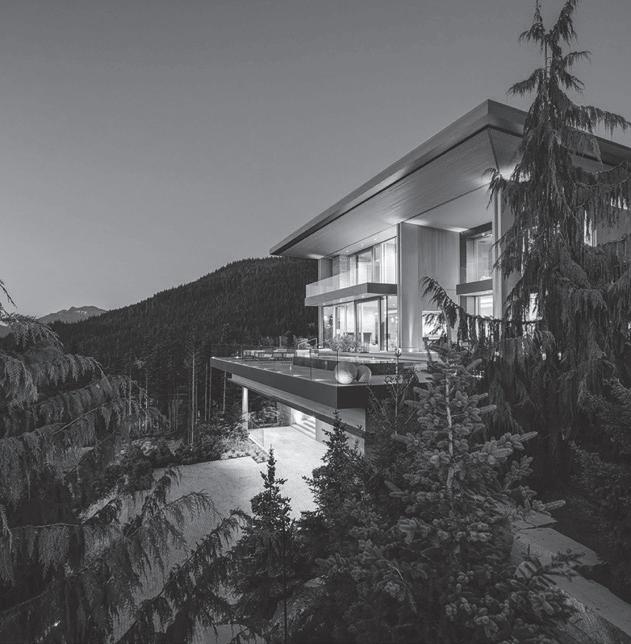
Ourteamofpeopleis whatsetsusapartfromotherbuilders.As wecontinue to growasthe leaderinluxury projectsinWhistler,ourteamneeds to expand withus. We are currentlyhiring:
Labourers ($20-$30hourly)
CarpentersHelpers/Apprentices1st to 4th year ($25-$35hourly)
ExperiencedCarpenters ($30-$45hourly)
Carpentry Foremen ($40-$50hourly)
SiteSupervisor
Rates vary basedonexperience andqualifications.RedSealisabonusbutnot required.Crane Operatorexperienceconsideredanasset.
EV R is commit te d to th e long-t er m re tent io n an d sk ills deve lopm en t ofou r te am .We are passionateaboutinvestinginourteam’s future
WE OFFER:
• Top Wagesanda Positive WorkEnvironment
•FlexibleSchedule- WorkLife Balance (Wegetit, we love to skiandbike too.)
• Training& TuitionReimbursement(Needhelpgetting yourRedSeal?)
•Support with workvisaand PermanentResidency (We canassist)
BENEFITS &PERKS:
• AnnualLeisure& ToolBenefit – Use toward ski/bike pass, toolpurchase, etc. – you choose!
•ExtendedHealthandDentalBenefitsfor youand yourfamily
We promotefrom withinandarelooking to strengthenouramazingteam.Opportunitiesfor advancementinto managementpositionsalwaysexistfortheright candidates.Don’t missout onbeingable to build withtheteamthatbuildsthe mostsignificantprojectsinWhistler.
Send your resume to careers@evrfinehomes.com. We lookforward to hearingfrom you!


HEAVYDUTYMECHANIC—SABRERENTALS LTD.
SabreRentals isatrustednameinequipmentrentalsforconstruction,earthmoving,and industrialworkacrosstheSea-to-Skyregion. We arehiringa HeavyDutyMechanic to joinourserviceteamandkeepbothourfleetandourcustomers’machinesrunningstrong. Thisisafull-timepositionworkingonheavyconstruction,earthmoving,andliftequipment. Thejobincludesadvanceddiagnostics,majorrepairs,andfull-cyclepreventative maintenance. You’llworkbothintheshopandinthefield—outdoors,inallweather.A fullyequippedservicetruckisprovidedforfieldcalls.
KeyResponsibilities
• Performpreventativemaintenanceanddiagnosticsonheavyequipment
•Inspectreturnedunitsforwear,damage,andmissingcomponents
•Rebuildandrepairmajorassemblies,includinghydraulichosefabrication
•Identifyfaults,documentrepairneeds,andreporttotheServiceManager
•Maintainshopandtruckinventory;assistinpartsordering
•Keepallworkareassafe,organized,andcompliantwithsafetyprotocols
•Attendregularteamandsafetymeetings
WhyMechanicsChooseSabre
•Modernfleet—themajorityofequipmentisunder10yearsold
•Cleaner,moreorganizedworkcomparedtodrilling,rig,orremoteindustrial mechanicalroles
•Morediagnosticsandplannedmaintenance;fewercatastrophicfailuresand emergencybreakdowns
•HomeeverynightintheSea-to-Skycorridor—nocamps,rotations,or long-haulschedules
What YouBring
•Hands-onexperiencewithheavyequipment,hydraulicsystems,anddrivetrains
•Abilitytoliftupto70lbsandperformphysicallydemandingtasks
• Comfortableworkingaroundfuels,solvents,andinoutdoorenvironments
•StrongunderstandingofsafeworkpracticesandPPE
•CSA-approvedworkbootsrequired
• FirstAidcertificationisanasset
•Solidcommunicationskillsandateam-focusedmindset
Qualifications
•HighschooldiplomaorGED
•JourneymanHeavyDuty Technician(RedSeal) orequivalentisamust
Compensation
$80,000–$110,000annually, dependingonexperienceandcertification. Applyinstoreoremailyourresumetojobs@sabrerentals.com.

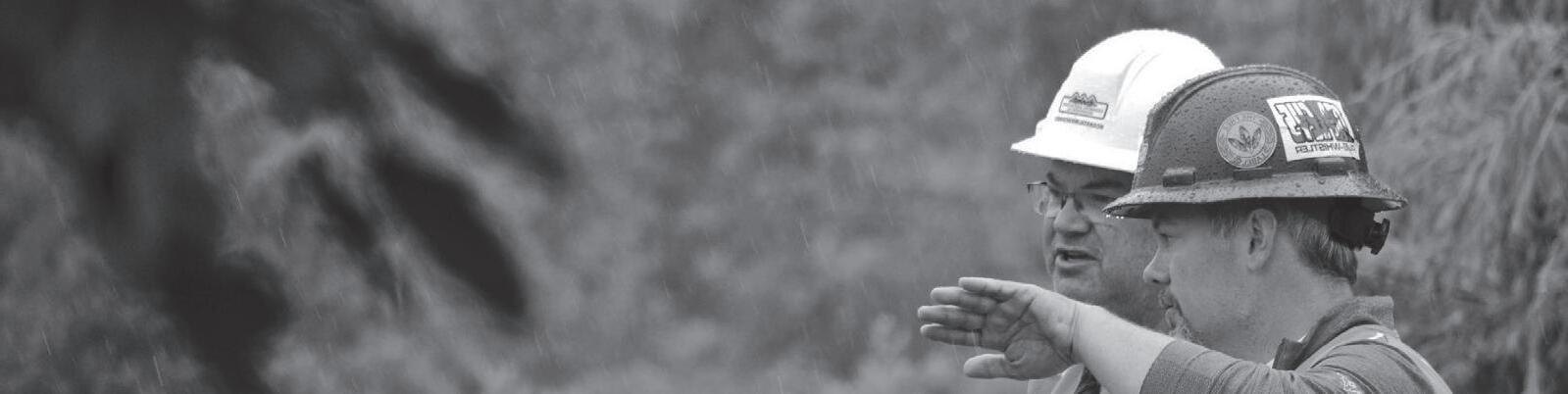





Minimum 5yearsor5,000hoursoperatingexperience onexcavator.Full-time,Monday –Friday.$33-$46perhour.
CONSTRUCTIONLABOURER– Greatopportunitytolearn on-the-job.Staminaforphysically demandingworkandperseverancetobraveinclementweather required. Previousexperiencepreferredbutnot required. Trainingprovided.$28-$33perhour.
PIPELAYER –Minimum5yearsexperienceincivilconstruction. Full-time,Monday –Friday. $33-$43perhour.
TRUCKDRIVER –BCDLClass 1orClass 3withairbrakesrequired.Manualtransmission. 2yearsexperiencepreferred.$35-$41.50perhour.
PROJECTMANAGER –Minimum10yearsexperiencepreferred.CivilEngineeringdegreeor Civil Technologydiplomapreferred.Full Time,$90,000to$125,000peryeardependingon experienceandqualification.
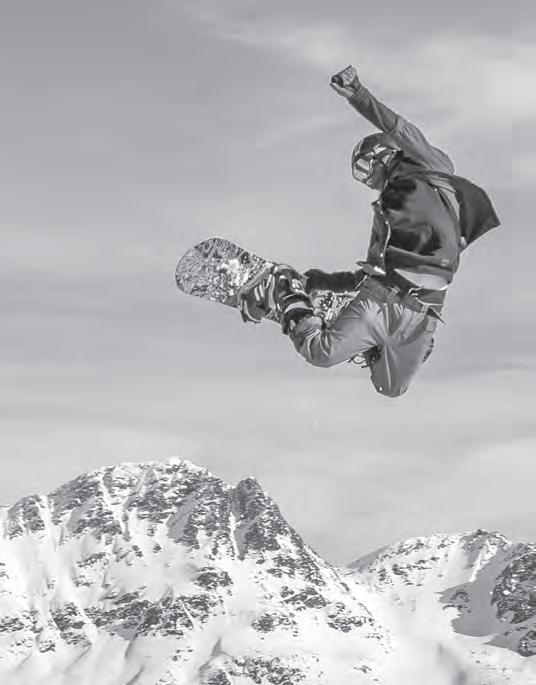

SENIORBOOKKEEPER– Ensuresaccurate,compliantfinancialoperationsandanalysiswhile maintainingefficientsystems,accountability,andteamalignmentwithcompanygoals.CPA or workingtowardsdesignationpreferred.$30-35perhour.
CRUSHING&EARTHWORKSMANAGER– Musthaveexperiencewithcivilconstruction. $33-$46perhour.


If you’re passionateabouthelpingrural,remote, and Indigenous organizationsbring meaningfulprojectsto life, this couldbeyournextrole!
In this role,you’llfindfundingopportunities,write compellingproposals,and support organizationsto turn ideasintoaction.This permanentpart-timeor full-timeremote positionoffers benefits,professional development, annualbonus,flexibility,and autonomy $35–$46 hour,commensuratewithexperience clearcourse.ca/careers;applybyDec 12
areality.







BLACKCOMB CHIMNEY
LTD.










Who is Whistler Village for, anyways?
WHO IS WHISTLER VILLAGE for, anyways? This question has haunted me since about the last millennium. Whistler Village was built for local business—or such was the case made when they paved over the garbage dump back in 1977. It was, of course, designed for the purpose of tourism, but it was nurtured and established by the locals who lived here. Founding tenants like

BY TOBIAS C. VAN
Sushi Village and Araxi—I would mention more, but most are gone—established eateries, clothing stores, utility and outdoor shops to serve the needs of not just our visitors, but the working population that allows tourism to flourish.
My feeling these days is that the Village itself doesn’t seem to know whom it is for. The place of local business seems increasingly uncertain. Let’s just take one example: since the late 2000s, we have lost close to a dozen local outdoor shops. Some of the storefronts became loss-leaders and big brands. Others have been bought out, including several by Whistler Blackcomb Vail Resorts.
More recently, it is hard not to miss how Seattle’s Evo has scooped up some five storefronts, four of which used to be independent outdoor retailers. Those shops once offered spicy deals and specialties, ensuring healthy competition and diverse selection. Having a single (American) conglomerate not only reduces competition—leaving us in the grips of yet
another pricing monopoly—but hinders the growth of homegrown wealth. Simply put, if we’re not growing wealth ourselves, we’re giving it away to others.
Looking at this with my political economy hat on, it’s hard to believe the pattern of selling-out to multinationals and monobrands is how we sustain—nevermind grow—local business in the Valley.
Sustainable growth requires continual reinvestment in our local economy. Local business means local owners—many with families. Local businesses donate to local causes that locals prioritize because we, as locals, live it. We support schools, events, and charities, and not just star-studded galas. But if we don’t own, we don’t keep profits at home. If we are owned by others living elsewhere, we lose the knock-on effect of a communal market. We lose momentum that would otherwise arise from growing our own ancillary services. We’ve seen the downsides of selling-out when Vail Resorts bought out WB. Vail closed local head offices and outsourced customer support. It severed contracts with local businesses that for years had provided blue and white collar backend services. All those jobs are now elsewhere. It matters not a whit to multinationals whether we, as locals, can survive here or not.
So what is Whistler Village, today, as an economic model? Well, one could argue it’s a pseudo-locality whose primary activity is to suck profits from Whistler. In short, it has become a fake “Whistler” Village, in name only. One can look to history for the fate of Potemkin Villages, built to impress. Needless to say they do not lead to local success. So I have to ask, with yet more local business shuttering up shop: what have we learned after all these decades of managing Whistler Village? Well, it appears not much. We’ve become an exporter of our own effort and innovation, selling it off at lowest dollar without much hope of buying it
back. We’ve learned nothing about taking care of—and keeping control over—our own backyard.
Walking through the Village, it is hard not to notice the boarded-up storefronts. The loss of social anchors like the movie theatre has led to a graveyard effect. Indeed, that strange square by the ol’ theatre is a textbook case of urban blight. Even Situationist Guy Debord would be impressed: deep in the midst of a multimillion dollar tourist attraction, the esoteric laws of psychogeography remain punishing. But space is only half the story. Speaking with local owners, the refrain is clear: if rent was actually affordable, on parity with income, it is more than likely destination-based, local business would not only survive, but thrive, even in the weirdest spots of Whistler Village. Last-generation locals lament how their children have fled Whistler because of its unaffordability. It’s also a lack of opportunity.
The main culprit in our Village Simulacrum is less about architecture and more about rent. And that rents continue to climb reflects a fundamental flaw in the Village’s design: we don’t own it. And by “we,” I mean the community as a whole. Like most colonial outposts imposed on stolen Indigenous land, the Village was carved up and sold to the highest bidder. No real attempt was made to bring the Village as a whole into the property remit of the Resort Municipality of Whistler, and no attempt has been made since to establish commercial rent control, or to permit leases to locally-owned business that would guarantee sustainable occupancy over the long-term. It is unclear whether such things could even be accomplished today, at least not without some level of local revolt against the sacred cows of commercial property. And so, that fatal flaw, baked into property law that favours might over right, has undermined the success of Whistler Village to this very
day. (I hope we all appreciate the irony that a colonial regime built upon stealing others’ land has now been sold out from underneath us.)
But we can dream dangerously… and we can certainly dream of a Whistler Business Authority modelled after the WHA. I mean, why not? The entire idea of Whistler Village is modelled upon the Alps, save for one crucial aspect: we didn’t put the laws in place to protect it. Whistler Village remains a simulacrum of the real thing because we lack the substance of heritage laws, rent control, and (in Switzerland) the direct democracies of the cantons that ensure wealth, culture, and tradition are carried on.
In my dream Whistler Village, the community would own the whole damn thing. Rents would be exorbitant for the multinationals, of course, with limited storefronts for brands wanting exposure in this very international tourist destination. Locals, however, would get long-term leases at indexed rates to ensure success. First Nations would get a percentage of all biz and legacy space for shops, furthering meaningful reconciliation on economic terms. All kinds of tax incentives would be in place to encourage local business to support local needs, and to ensure that we continue to not only survive, but thrive, in this town. With collective ownership of the Village, we wouldn’t be losing the late-night eateries, social spots, or independent retailers. Instead, such spots would be passed along to locals with insight and spirit who care for this community—and not just serving someone else’s bottom line.
tobias c. van Veen believes a little local revolt is a good thing. Claim your cash from the Canadian Packaged Bread Class Actions Settlement by Dec. 12 at canadianbreadsettlement.ca. n
VEEN
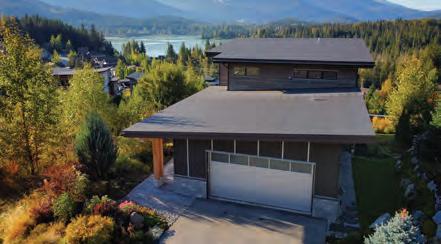
8409 Big Sky Terrace, Whistler
3 Bed | 2.5 Bath | 3,152 sq.ft.
$4,395,000

604-902-3335
Steve Legge PREC* steve.legge@evrealestate.com

#205 4338 Main Street, Whistler
2 Bed | 2 Bath | 868 sq.ft.

$1,829,000 604-966-764
Ken Achenbach ken.achenbach@evrealestate.com
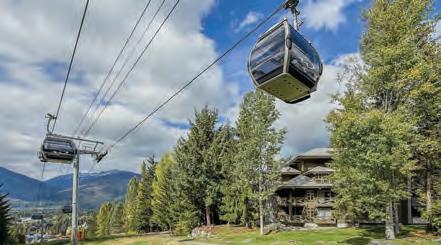
#146- 4899 Painted Cliff Road, Whistler
2 Bed | 2 Bath | 807 sq.ft.


$1,099,000 604-902-3309
Peter Lalor broker@evwhistler.ca
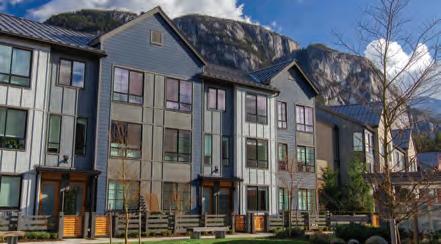
38045 Keel Way, Squamish
4 Bed | 3 Bath | 1,522 sq.ft

$1,189,000 778-318-5900
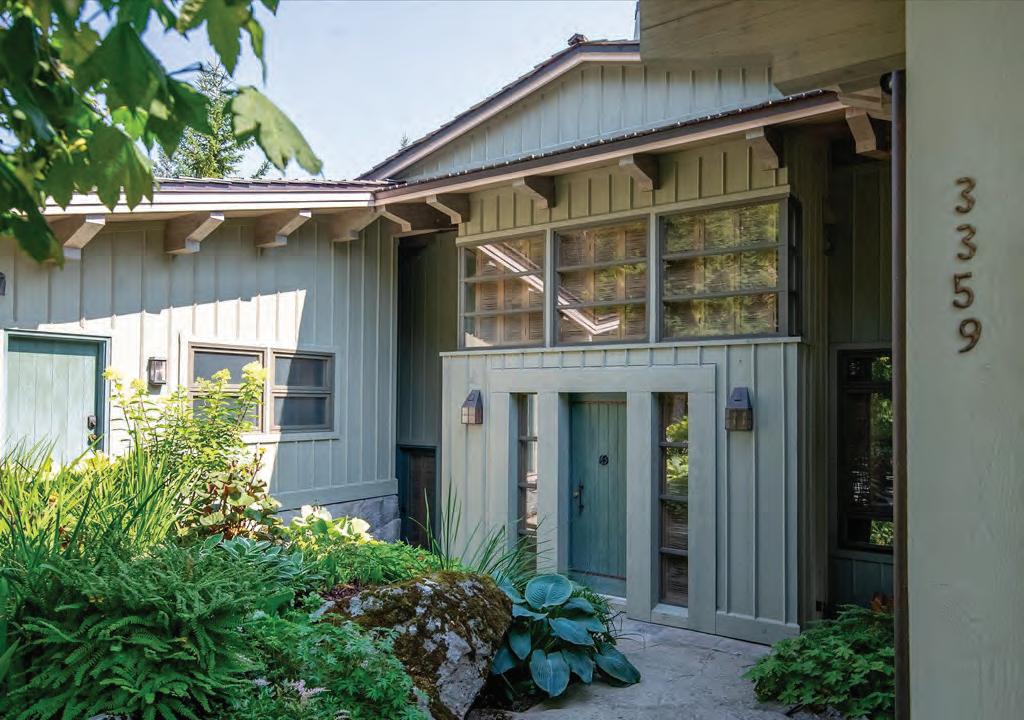

8505 Matterhorn Drive, Whistler 5 Bed | 3 Bath | 2,576 sq.ft.
$3,195,000

604-935-0700
Janet Brown janet.brown@evrealestate.com
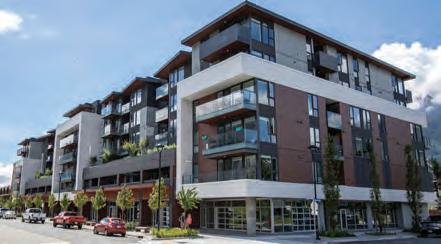

Valerie Phillipson valerieaphillipson@gmail.com
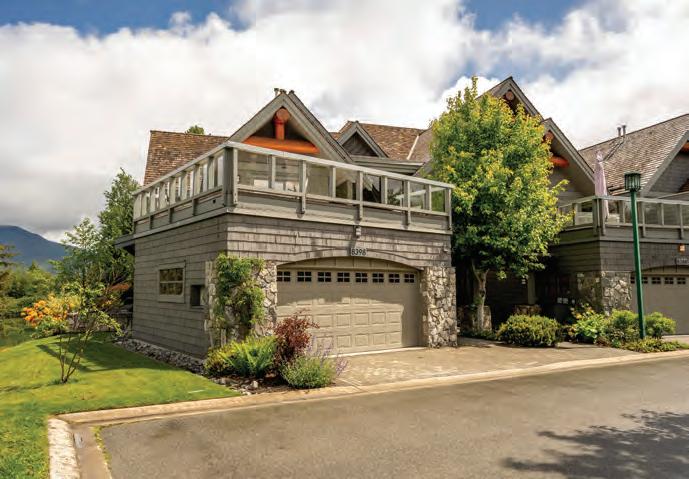
PREC* +1-604-905-8199
maggi.thornhill@evrealestate.com
Maggi & Max Thornhill Team