
Endure Carbon helps you maximize your carbon assets, by giving you access to three carbon markets via a single data platform. Earn potential premiums for adopting approved sustainable practices and delivering grain to eligible facilities within designated counties.
Our goal? To empower growers with continuous improvement, tracking environmental and operational metrics that support the long-term adoption of regenerative agriculture. Choose from Land -Based Carbon Offset, Scope 3 Carbon Inset, Biofuels Inset, or Enhanced Rock Weathering markets—all backed by the seamless support of FS and our partner, Indigo Ag.
Talk to your FS Crop Specialist today.

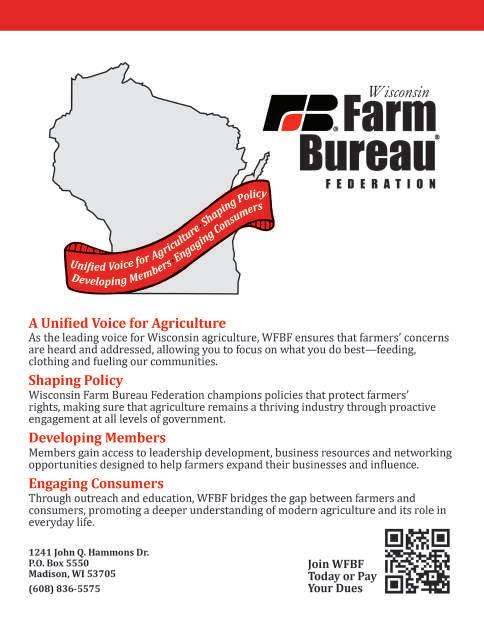
As the leading voice for Wisconsin agriculture, WFBF ensures that farmers’ concerns are heard and addressed, allowing you to focus on what you do best — feeding, clothing and fueling our communities.
Wisconsin Farm Bureau Federation champions policies that protect farmers’ rights, making sure that agriculture remains a thriving industry through proactive engagement at all levels of government.
Members gain access to leadership development, business resources and networking opportunities designed to help farmers expand their businesses and influence.
Through outreach and education, WFBF bridges the gap between farmers and consumers, promoting a deeper understanding of modern agriculture and its role in everyday life.
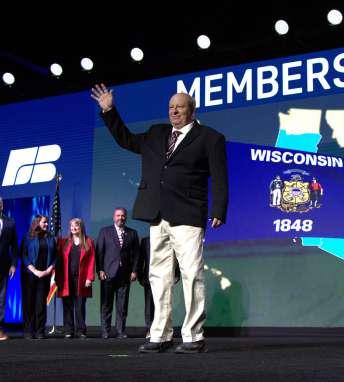
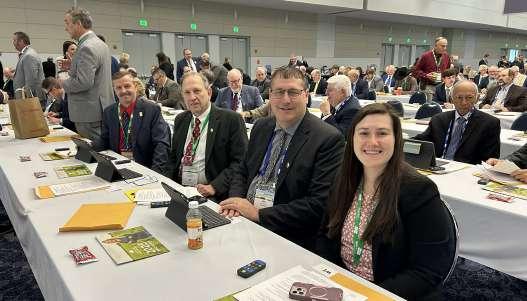
Wisconsin members head to California for the AFBF Convention.
Farm Bureau member testifies in support of a bill that would bring butter back to schools.
AG DAY AT THE CAPITOL
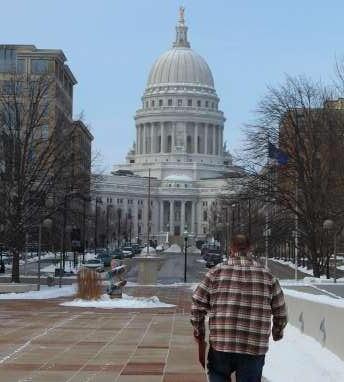
More than 300 farmers and agriculturists head to the Capitol to advocate for agriculture.
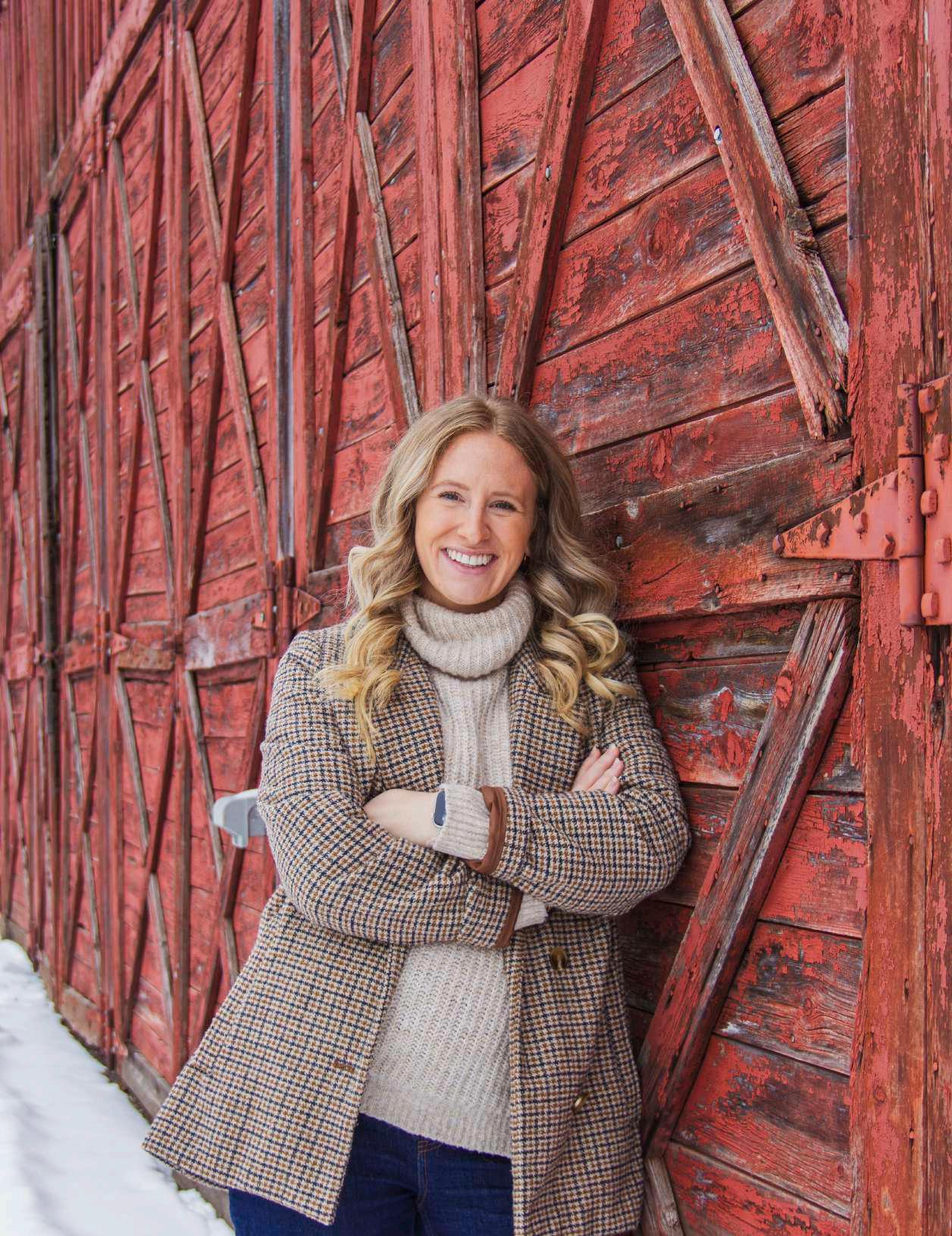
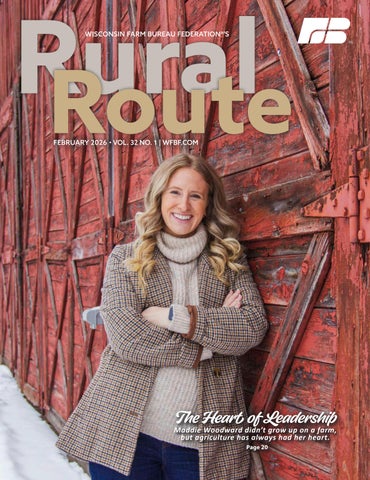
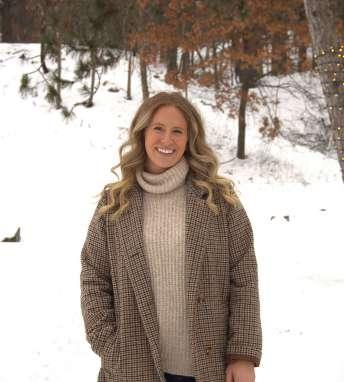
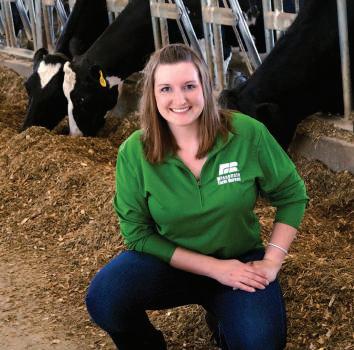
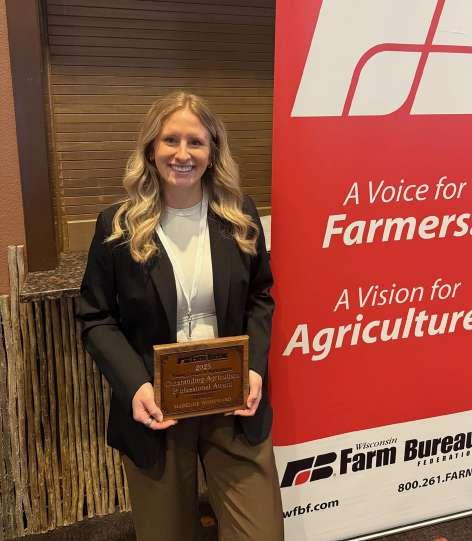
Maddie Woodward has grown her love for Farm Bureau since getting involved.
See what members have to say about their Farm Bureau member benefits.
Learn more about setting boundaries on the farm and off.
VOICES
Hear from Duvall, Olson, Hetke and Wokatsch.
GATHER AROUND THE TABLE
Comforting casseroles from the 2025 Wisconsin State Fair recipe contest.
Farm Bureau have been out in their communities making an impact.
AG IN THE CLASSROOM
Ag in ALL Classroom grant recipients announced.
undation through auction donations. RURAL MUTUAL
Learn about a unique Wisconsin crop: ginseng.




February is known as the month of love. I’m not really sure if that resonates with farmers and many others in the agricultural community who have to work out in the elements during the month of February.
However, I do think that many mumble “For the love of … ” probably weekly in the winter months, so maybe it’s right on.
If farmers were to write a love letter right now, it might look more like the one written to Darla in the movie The Little Rascals.
“Dear Darla, I hate your stinking guts. You make me vomit. You're scum between my toes! Love, Alfalfa.”
I think it’s fair to say that in farming, love isn’t usually shown through cards, chocolate or flowers. Mostly it’s shown through commitment, early mornings and, in general, just showing up for their community.
It’s true — when I think of our members, I think about how they show up and rise to just about any occasion. They all love what they do, and they bring that with them to Farm Bureau events, programs and policy discussions.
You’ll see that reflected in this issue with the feature story sharing how one Farm Bureau member got involved and has grown her love for Farm Bureau in many ways.
It’s full-on conference and meeting season in agriculture. In this issue, you’ll catch the recap from Ag Day at the Capitol where the agricultural community comes together to share their passion and stories with legislators and the AFBF Convention where Wisconsin was well-represented at the national level.
At Wisconsin Farm Bureau, our heart will always be our membership. You shape how we grow, how we lead, advocate and how we will show up for the next generation. So, with minor help from Chat GPT here is a little love letter to you:
Tractors can be red. Tractors can be green. Some days are dirty, And some just plain mean.
Hands may be weathered. Boots worn thin.
But your hearts stay steady, Through thick and through thin.
No matter the job, No matter the need, Our members show up, And are determined to lead.
You make us proud, And continue to be, Exactly what Farm Bureau Needs you to be.
As always, thanks for reading,
Amy Eckelberg Rural Route Editor
Wisconsin Farm Bureau Federation
Address of Publication
Wisconsin Farm Bureau Federation PO Box 5550
1241 John Q. Hammons Dr. Madison, WI 53705-0550
Postmaster: Send address changes to Wisconsin Farm Bureau Federation PO Box 5550 Madison, WI 53705-0550
Contact Information
608.836.5575
800.261.FARM (3276) wfbf.com info@wfbf.com
WFBF Board of Directors
Brad Olson, Frederic (President)
Joe Bragger, Independence (Vice President) Jim Renn, Hartland Arch Morton Jr., Janesville
Robert Nigh, Viroqua
Pete Badtke, Ripon
Dan Meyer, Kiel Brian Preder, Weyauwega Kim Bremmer, Loyal Steve Mueller, New Richmond (Promotion and Engagement Committee Chair) Ashley Lisowe, Calumet (Young Farmer and Agriculturist Committee Chair)
Wisconsin Farm Bureau Federation’s Rural Route (ISSN 1082-1368) (USPS 39940), the official publication of the Wisconsin Farm Bureau Federation, is published six times per year in February|March, April|May, June|July, August|September, October|November and December|January. Subscription of $5 is included in Farm Bureau dues. Periodical postage is paid at Madison, Wisconsin. All rights reserved. No portion of this magazine may be reproduced in whole or part without written consent.
For advertising rates and information: National accounts contact Casey McNeal at 800.798.2691 ext. 334 or casey@iafalls.com. For general inquiries, contact Amy Eckelberg at 608.828.5706 or aeckelberg@wfbf.com.
Farmer and rancher delegates adopted policies to guide the organization's work in the coming year during the American Farm Bureau Federation's 107th Convention in Anaheim, Cali. on January 13. Key topics ranged from labor to animal health to risk management.
For the fourth year, delegates were polled during the voting session regarding their farms. The results show almost 99% of those who cast votes operate family farms and more than two-thirds represent small- to mid-size farms as defined by USDA. Policy discussions highlighted the fact that farmers across the spectrum and across the country are struggling.
“America’s farmers and ranchers are facing unprecedented challenges in agriculture, including high supply costs, trade imbalances, and low commodity prices. Today, our members gave us clear guidance on how we should address those challenges in the coming year,” said AFBF President Zippy Duvall. “Farm Bureau’s strength was on display today, as our grassroots set the policy for this organization. We look forward to taking their stories to leaders in Washington, as we work to ensure farmers and ranchers can continue to fill pantries for families across the country.”
Delegates adopted policy to improve labor programs to meet the needs of America’s farmers and ranchers, including formalizing support for the new Adverse Effect Wage Rate methodology, and further revisions to avoid unpredictable rate swings in the future.
They voted to support federal funding for research and biosecurity facilities to better identify and combat illnesses and pests that threaten the health of crops and animals. New policy also includes committing more resources specifically to eradicate the New World screwworm, and keeping the U.S.-Mexico border closed to cattle trade until the screwworm is controlled.
Delegates revised national farm policy to provide more protection for dairy farmers who may suffer losses due to market challenges.
Delegates also formalized support for prioritizing locally grown fruits, vegetables, bread and proteins in institutional purchases such as schools and government facilities.
Specifically Wisconsin delegates successfully advanced several important policy updates, including prioritizing USDA staff during a government shutdown and supporting an accelerated large-animal veterinarian program to address workforce shortages. These efforts reflect Wisconsin Farm Bureau’s continued focus on practical, farmer-driven solutions to real challenges facing agriculture.
Voting members also requested that the board of directors analyze several agricultural issues, including the impact of tariffs and the lack of affordable insurance options for poultry farmers.
Beyond policy changes, AFBF President Zippy Duvall and Vice President Scott VanderWal were unanimously re-elected for another two-year term.
Delegates also elected members to serve on the AFBF board of directors and national program committees. Stacy Simunek, Oklahoma (Southern Region), was elected to fill a one-year term on the AFBF board of directors. Joyce Brady, New Hampshire (Northeast Region), and ValJay Rigby, Utah (Western Region), were elected to two-year terms.
Eleven other state Farm Bureau presidents were re-elected to two-year terms to represent their regions on the board. From the Midwest Region—Garrett Hawkins, Missouri; and Mark McHargue, Nebraska. From the Northeast Region—Chris Hoffman, Pennsylvania. From the Western Region—Carlyle Currier, Colorado; and Rosella Mosby, Washington. From the Southern Region—Eddie Melton, Kentucky; Harry Ott, South Carolina; Jimmy Parnell, Alabama; Scott Sink, Virginia; Jeb Smith, Florida; and Dan Wright, Arkansas.
Julie Hardy of Georgia (Southern Region) was elected to a two-year term on the Women’s Leadership Committee. Mindy Orschell of Indiana (Midwest Region), Dot Jensen of Utah (Western Region) and Jennifer Cross of Maryland (Northeast Region) were re-elected to two-year terms.
Heidi Cooper of Massachusetts was elected chair, Steve Breeding of Delaware was elected vice chair and Lynn Leahy of Wisconsin was elected secretary of the Promotion & Engagement Committee. They will each serve one-year terms.
Tommy Salisbury of Oklahoma was elected chair, Cleve Jackson of Georgia was elected vice chair and Katie Wiese of Minnesota was elected secretary of the Young Farmers & Ranchers Committee. They will each serve one-year terms beginning in March at the end of the YF&R Conference.
AFBF appreciates the 110 speakers and 4,500 registered attendees who helped make the 2026 Convention such a success.
Planning for the American Farm Bureau’s 2027 Convention has already begun. Mark your calendar to join us Jan. 8-13, 2027, in Charlotte, North Carolina.
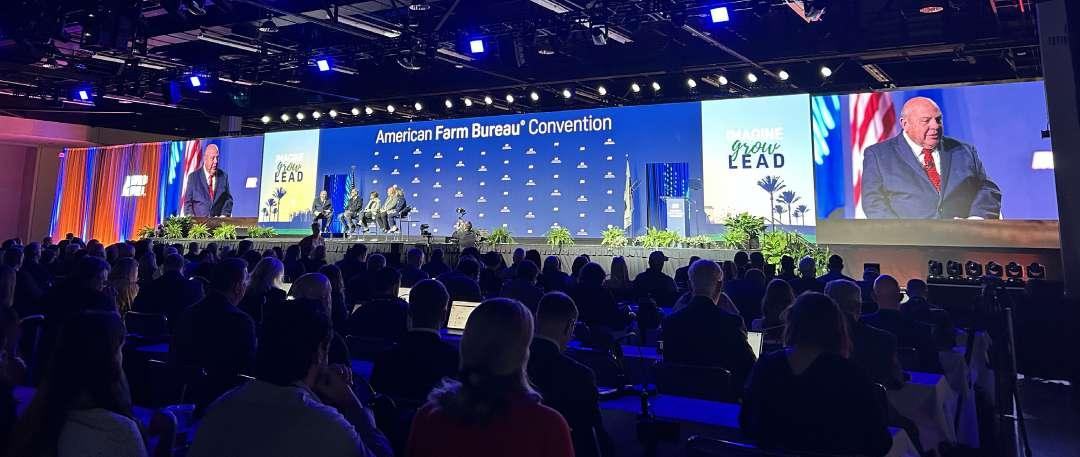
The American Farm Bureau Convention was stacked with keynotes, workshops and networking opportunities.
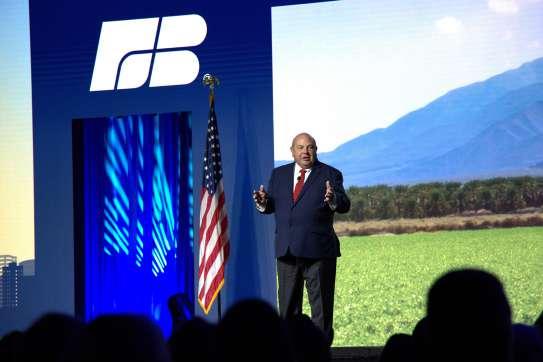
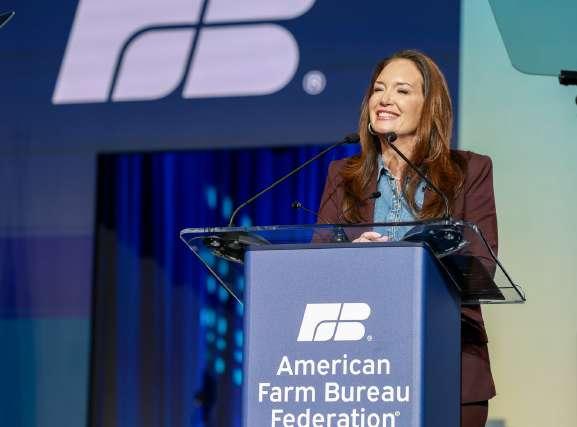
During his keynote address, AFBF President Zippy Duvall encouraged each and every member of the audience to imagine the possibilities before them and dream of growing an even brighter future for agriculture. He challenged attendees to strive for servant leadership, even when there are costs and sacrifices associated with serving.
“Leadership will take all you can give, and then some,” Duvall said. “It isn’t something you take on for yourself—leaders are driven to help and serve others. They believe in their hearts that giving their all can and will make a difference. Maybe not today, and maybe not even next week or next year, but how you lead right now matters.”
Duvall also encouraged farmers and ranchers to engage with the administration, lawmakers and consumers to explain what farmers are doing every day to grow a safe, healthy food supply.
“Every conversation, every engagement bridges the gap—from stories on social media to meetings at your statehouse, and even the White House,” Duvall told attendees. “We believe it’s critical for consumers and lawmakers to hear straight from farmers.”
In a rare joint appearance, all four leaders of the congressional agriculture committees came together on the main stage to discuss issues important to rural America during the mid general session. The chair of the U.S. Senate Committee on Agriculture, Nutrition, and Forestry, Sen. John Boozman (R-Ark.), and Ranking Member Sen. Amy Klobuchar (D-Minn.) as well as the chair of the U.S. House Committee on Agriculture, Rep. Glenn “GT” Thompson (R-Pa.), and Ranking Member Rep. Angie Craig (D-Minn.) covered priority issues including passing a new five-year farm bill, developing domestic and international markets for agricultural products, providing access to a stable workforce for farmers and ranchers, and the importance of grassroots involvement in advocacy.
Max, a Border Collie from Oklahoma, was named the 2026 Farm Dog of the Year, and “I LOVE Blueberries,” a sequel to the beloved book “I LOVE Strawberries,” by Shannon Anderson was announced as the Foundation for Agriculture’s 2026 Book of the Year.
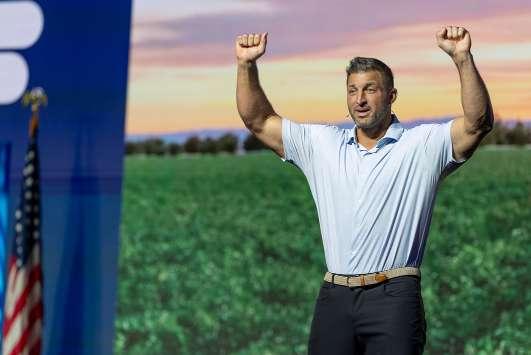
During the closing general session, Agriculture Secretary Brooke Rollins shared remarks, and attendees were inspired by a keynote address from Heisman Trophy winner, former NFL player and five-time New York Times best-selling author Tim Tebow.
FarmMind, a Louisiana startup that brings agricultural workflows together in one place, was named the 2026 Ag Innovation Challenge winner, while KiposTech from Pennsylvania was named runner-up. FarmMind will receive a total of $100,000 in prize money sponsored in part by Farm Credit, Bayer Crop Science, John Deere, Farm Bureau Bank, Farm Bureau Financial Services and T-Mobile.
Wisconsin Farm Bureau was recognized for excellence in implementation of member programs and membership achievement in 2025. The Awards of Excellence recognize state Farm Bureaus that demonstrated outstanding achievements in four program areas: Advocacy, Coalitions & Partnerships, Engagement & Outreach and Leadership & Business Development.
WFBF was recognized in all four categories.
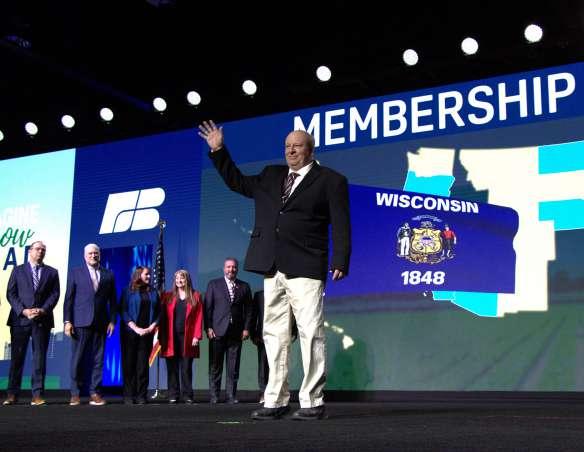
Wisconsin was one of 16 states that made a membership gain in 2025 and was recognized as one of only nine states that reached Navigator Status, signifying a membership gain of 2.5% or more.
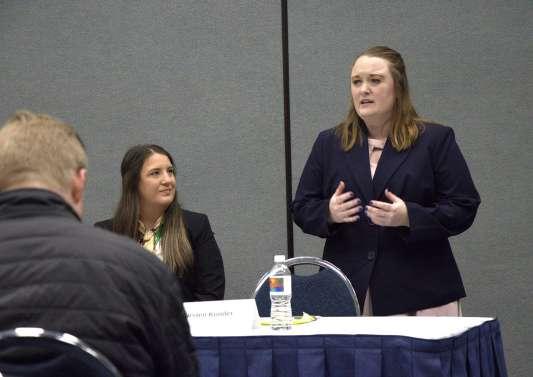
Kirsten Konder of Polk Burnett Farm Bureau was named the WFBF YFA Discussion Meet winner in December. She represented Wisconsin in the YF&R Discussion meeting at the AFBF Annual Convention in Anaheim, California.
Konder teaches middle and high school agriculture and technology education at the School District of Amery. She and her significant other, Reggie Lee, live near Star Prairie with their daughter, Arianna, where they raise chickens and ducks on their 20-acre property. As a fifthgeneration farmer raised on a Holstein dairy farm, Konder is passionate about teaching the next generation about agriculture.
The Discussion Meet provides members with an opportunity to demonstrate their speaking skills on agricultural-related topics. A contestant is judged on their problem-solving skills as they discuss timely topics with colleagues.
Lynn Leahy serves on AFBF’s Promotion and Engagement Committee. During the AFBF Annual Convention, she helped facilitate multiple workshops and was elected as the committee’s inaugural secretary.
Lynn Leahy is a research agronomist at Heartland Farms, Inc., a 9,000-acre farm growing potatoes for potato chips near Hancock. She grew up on an 80-cow dairy farm in Argyle. Leahy holds a bachelor’s degree in dairy science and a master’s degree in horticulture, both from UWMadison. Leahy is a graduate of Wisconsin Farm Bureau’s Leadership Institute Class VIII. Leahy and her husband, Mike, reside in Plover.
Farm Bureau’s Promotion and Engagement program empowers Farm Bureau members to engage with consumers and share the story of agriculture. The program is designed to build awareness and understanding of agriculture through consumer engagement, grassroots education and training and advocacy.
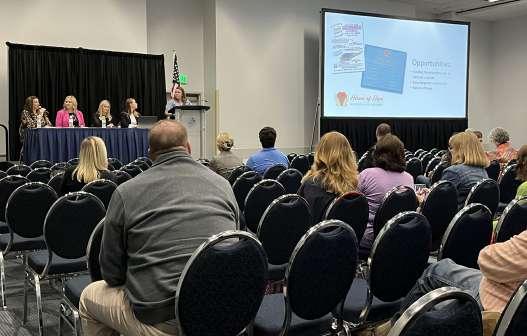
Wisconsin Farm Bureau Executive Director of Public Relations Amy Eckelberg participated in a mental health workshop during the American Farm Bureau Federation Convention.
Eckelberg shared how Wisconsin Farm Bureau's #FarmNeighborsCare program raises awareness, expands access to resources and supports the emotional well-being of farmers. Amy was joined by Farm Bureau leaders from across the country who are stepping up to break the stigma and strengthen mental health in farm communities.
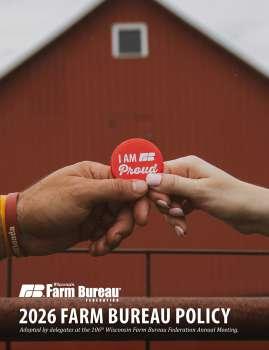
Want to know where Wisconsin Farm Bureau Federation stands on an issue? The 2026 policy book is available at wfbf.com. The document reflects the most recent policy directives established by voting delegates at the 106th WFBF Annual Meeting in December.
“Farm Bureau’s policy is established by members through a structured policy development process,” said WFBF President Brad Olson. “It makes me proud that suggestions and policy ideas come directly from members at the county level. Through this grassroots process Farm Bureau can work to represent its members’ needs. I encourage you to review our policy book and get involved in the process of policy development.”
To view the policy book online, visit wfbf.com/policy/policy-development.
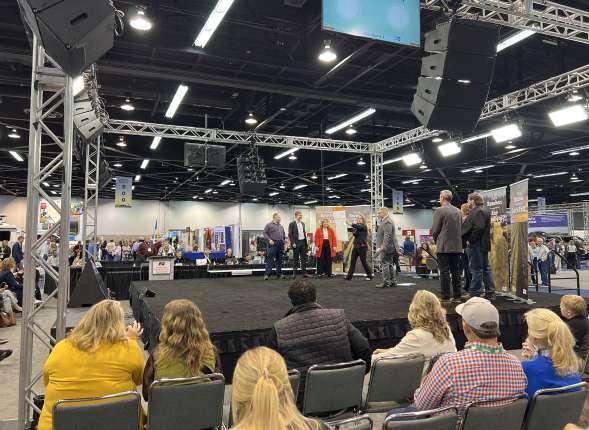
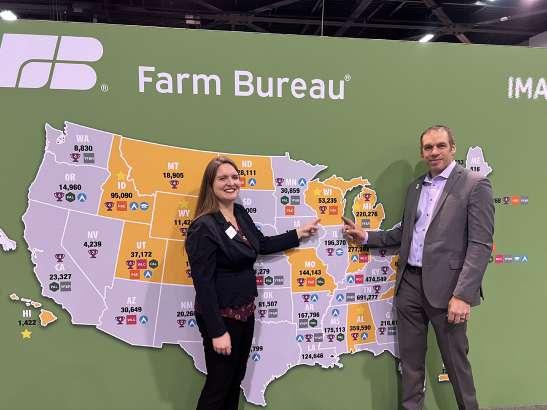
LynnLeahyandSteveMuellerpointedtoWisconsin'smanyachievements onthemembershipmaponthetradeshowfloor.
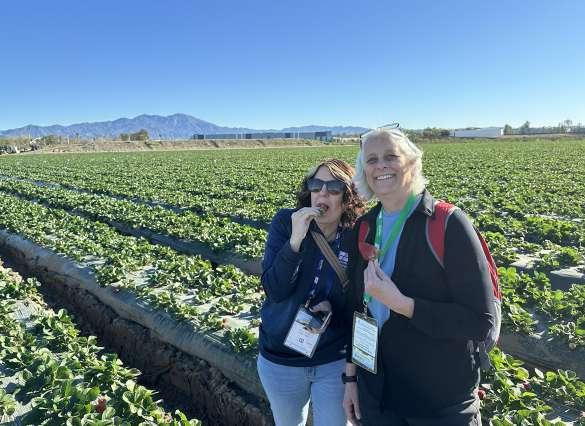
While in California, members could attend tours to learn more about the local agriculture. Becky Meyer and Lori Badtke enjoyed their time visiting a strawberry farm.
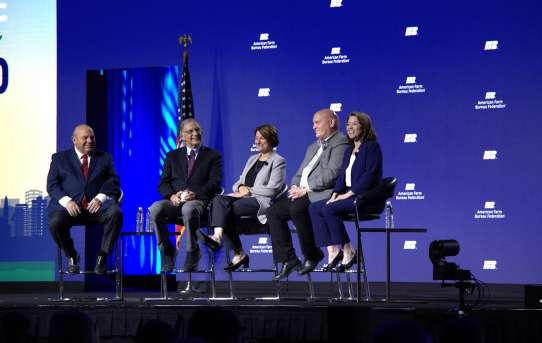
In a rare joint appearance, all four leaders of the congressional agriculture committees came together to discuss issues important to rural America. Picture is AFBF President Duvall with the chair of the U.S. Senate Committee on Agriculture, Nutrition, and Forestry, Sen. John Boozman (R-Ark.), and Ranking Member Sen. Amy Klobuchar (D-Minn.) as well as the chair of the U.S. House Committee on Agriculture, Rep. Glenn “GT” Thompson (R-Pa.) and Ranking Member Rep. Angie Craig (D-Minn.)
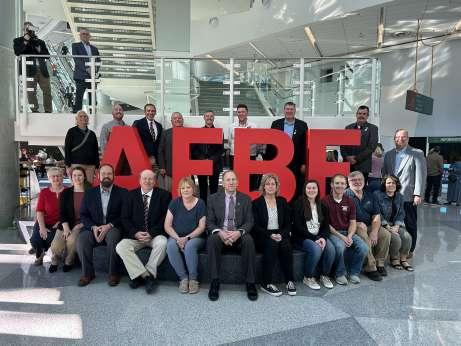
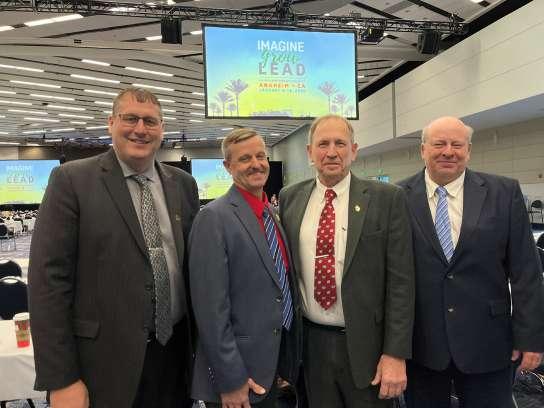
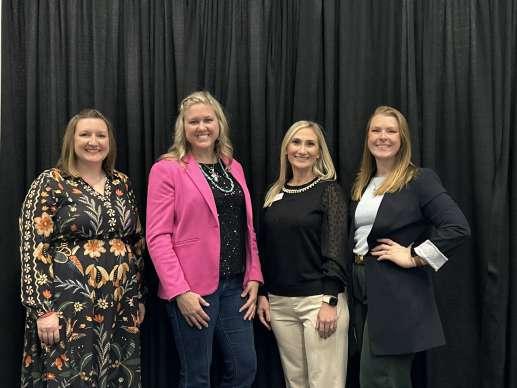
Wisconsin had more than 30 people attend the AFBF Convention this year.
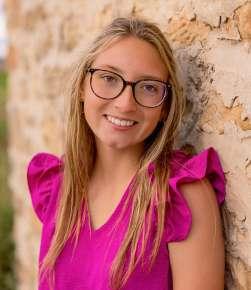
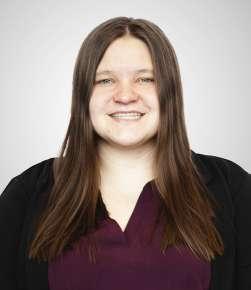
Josie Bailey has been selected as WFBF’s Leadership and Programs intern. Bailey is a student at the University of Wisconsin–River Falls majoring in agricultural education and currently serves as the National Guernsey Queen.
Bailey is the daughter of Brock and Nelda Bailey and was raised on a fifth-generation dairy farm near Tomah. Her leadership background includes extensive involvement in FFA and dairy youth organizations, earning state and national recognition in agricultural communications, discussion meets and industry advocacy.
During her internship, Bailey will support the organization’s leadership development programs including Young Farmer and Agriculturists and FFA. She will assist with social media content creation and program promotion across the state. Bailey will begin her duties in May.
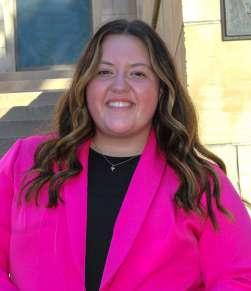
Faith Burgess has been selected as WFBF’s Communications Intern. She grew up near Shullsburg, Wis. and is currently studying agricultural communications at Iowa State University.
Burgess’ passion for agriculture began having been raised in a rural community and strengthened through her involvement in FFA. Her FFA experiences helped her develop a voice for sharing the story of agriculture. Burgess looks forward to learning, bringing fresh ideas and contributing to a team that advocates and supports Wisconsin farmers.
During her internship, Burgess will assist in managing the organization’s social media presence, creating content for WFBF communication channels and contributing to the organization’s blog. Burgess began her duties in January.
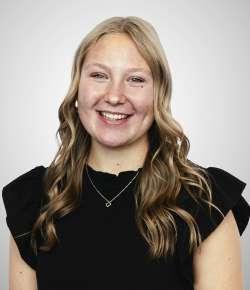
Victoria Havlik has been selected as the organization’s Wisconsin Agriculture in the Classroom intern. She grew up on a diversified livestock farm near Clintonville, Wis. and is currently studying agricultural education with minors in Spanish and agricultural business at the University of Wisconsin - River Falls.
Alongside her partner, Havlik operates a 200-acre crop farm growing alfalfa, corn and soybeans. She founded the nonprofit organization Next Gen Leaders and Learners to support and inspire young people in agriculture. She enjoys using her skills in marketing and communications to promote agricultural literacy and engage others through education-focused initiatives.
During her internship, Havlik will design agricultural literacy lessons, supporting materials and training resources, tailored for volunteer agricultural literacy programs. She will assist with communicating Agriculture in the Classroom programming efforts and provide programming coverage throughout the summer. Havlik will begin her duties in May.
Brooke
Mallek has been selected as the organization’s Gather Wisconsin intern. Mallek grew up on her family’s farm in central Wisconsin, raising and showing livestock through 4-H and FFA. She is currently studying agricultural education at the University of Wisconsin –Platteville.
Mallek serves as the vice president of UW-Platteville’s Agriculture Education Society and previously served as president and historian/reporter. She enjoys exploring all realms of agriculture and sharing stories from the field through creative storytelling and photography. She looks forward to connecting farmers with consumers by promoting understanding and appreciation for Wisconsin agriculture.
During her internship, Mallek will assist in the dayto-day management and marketing of GatherWisconsin. com, its social media presence and promotional events throughout the summer. Mallek began her duties in January.
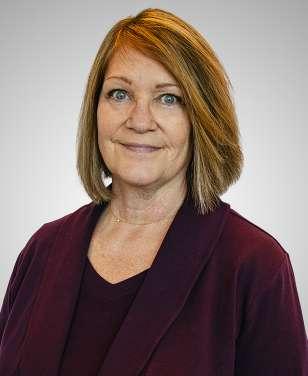
Sheri Springer

Sheri Springer has been hired by Wisconsin Farm Bureau Federation to serve as its Treasurer and Executive Director of Operations.
In this role, Springer will be responsible for overseeing and managing the responsibilities of WFBF's operations division. She will direct and coordinate the organization’s treasury activities and analyze financial records to forecast future financial positions and budget requirements.
“Sheri brings diverse experience and agricultural knowledge to Wisconsin Farm Bureau,” said WFBF Chief Administrative Officer Bradley Uken.
“We know Sheri will be a great addition to our organization and are excited to welcome her to the team.”
Springer brings a wide depth of background and experience to the position. She is a licensed CPA and has held positions in the financial field with SVA Certified Public Accountants and CliftonLarsonAllen (CLA). Additionally, she is a part of a beef cattle ranch near Linden, Wis.
Want to meet more WFBF staff? Learn more: wfbf.com/about/staff.
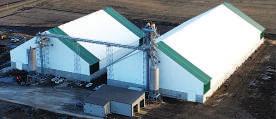

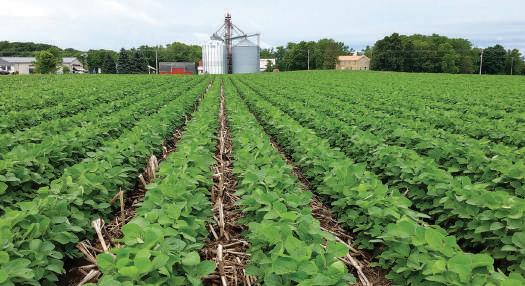
Anew analysis from the American Farm Bureau Federation confirms what many farmers are experiencing firsthand: the farm economy remains under significant strain, even with recent federal assistance programs. Elevated input costs, including fertilizer, fuel, labor, land and interest, continue to pressure farm balance sheets, while commodity prices have softened from recent highs. As a result, many producers are struggling to cover their full cost of production.
AFBF’s analysis shows that per-acre returns for major commodities remain negative even after accounting for both market revenue and federal assistance. While programs such as the Emergency Commodity Assistance Program (ECAP) and other ad hoc payments have provided important short-term relief, those payments generally offset only a portion of total losses. They have not restored profitability or provided the stability needed for long-term planning. Over the past three years, cumulative losses across the U.S. farm sector are estimated to exceed $50 billion, underscoring the depth and duration of the current downturn.
These economic conditions create real challenges for farm leaders and rural communities. Tight margins limit producers’ ability to reinvest in their operations, service debt, and manage risk. Prolonged financial stress also raises concerns about access to operating credit and the long-term viability of family farms, particularly for young and beginning farmers.
This environment reinforces the need for clear policy priorities and a unified message to lawmakers. Expanding export markets through new and updated trade agreements must be a top priority. While farmers support efforts to prioritize American interests and strengthen domestic industries, tariffs are not a long-term solution for agriculture. Retaliatory tariffs reduce market access, suppress commodity prices and prolong economic stress at the farm gate.
Agriculture depends on open and reliable trade. Free and fair trade, along with expanded access to international markets, is essential to moving surplus production and restoring prices from their current depressed levels. Strong export demand remains one of the most effective tools for improving farm income and creating long-term stability across the agricultural economy.
At the same time, policymakers must recognize that rebuilding markets takes time. As long as producers remain caught between high costs and weak prices, additional financial assistance may be necessary to help farms bridge the gap. Any support should be timely, targeted, and designed to complement, rather than replace, market-based risk management tools and a strong farm safety net.
Another emerging issue that could significantly affect Midwest agriculture is the potential merger between Union Pacific and Norfolk Southern. If approved, such a merger could further consolidate rail service in key agricultural regions, potentially reducing competition and increasing transportation costs for farmers. For Midwest producers who rely heavily on rail to move grain, fertilizer and other inputs, fewer rail options could mean higher costs, less reliable service and greater vulnerability to supply chain disruptions. This underscores the importance of strong oversight and policies that ensure competitive, reliable and affordable transportation for agriculture.
As Congress debates trade policy, mergers, and broader economic priorities, it is critical that agriculture’s message is clear and consistent: farm losses are real, widespread and ongoing. Solutions must focus on expanding markets, restoring trade certainty, strengthening infrastructure and competition, and providing stability for producers as the farm economy works its way through this prolonged downturn.
USDA has announced a new Farmer Bridge Assistance (FBA) Program, part of a $12 billion one-time economic support package for U.S. farmers, with up to $11 billion targeted at row crop producers growing commodities such as corn, soybeans, wheat, cotton, rice, sorghum, oats and more.
The Farmer Bridge Assistance payments are designed to provide timely cash-flow support for the 2025 crop year while producers prepare for the next planting season and until longer-term farm safety-net enhancements are in place under the One Big Beautiful Bill Act (OBBBA), which phases in improved crop insurance and higher reference prices in 2026.
Rather than tying support to specific farm receipts, FBA uses a uniform, per-acre payment formula based on USDA Economic Research Service cost-of-production estimates, FSA acreage data, and national yield and price projections. Payment rates vary by crop and reflect modeled loss intensity during the 2025 crop year. Producers must have reported eligible acres by the December 19, 2025 acreage reporting deadline to participate, and payments are expected to begin being issued by February 28, 2026.
As the farm economy continues to grapple with market challenges, this assistance underscores the need for both strong trade opportunities and a resilient safety net to support producers through extended periods of financial stress.
The Whole Milk for Healthy Kids Act is a bipartisan federal law passed by and signed by President Trump that restores the ability for schools participating in the National School Lunch Program to offer whole milk and 2% reduced-fat milk, in addition to low-fat and fat-free options. Previously, federal regulations stemming from the 2010 Healthy, Hunger-Free Kids Act limited schools to serving only low-fat or fat-free milk.
Under the new law, schools have greater flexibility to offer a full range of milk choices, including whole, reducedfat, low-fat, and fat-free milk, flavored or unflavored, without penalizing saturated fat limits for meal reimbursement purposes.
Milk consumption in schools declined sharply after higher-fat options were restricted, contributing to lower student participation in school milk programs. Wisconsin Farm Bureau, joined by American Farm Bureau, argued that restoring whole milk options would improve children’s access to nutrient-rich foods while also supporting dairy farmers by helping boost demand for fluid milk.
The act gained support from a broad coalition of lawmakers, nutrition professionals, school food service administrators, and dairy groups. It moved through both the Senate and House with broad bipartisan backing and was championed by farm-state members of Congress who highlighted its benefits for child nutrition and dairy markets. Wisconsin’s Tom Tiffany, one of the fiercest proponents of the bill, gave an impassioned speech about the significant nutritional value of whole milk.
Upon its signing into law, WFBF President Brad Olson publicly applauded the Whole Milk for Healthy Kids Act, noting it restores meaningful milk choices for students and provides a positive market signal for Wisconsin dairy farmers producing high-quality milk.
During a time of significant farm market strain, the Whole Milk for Healthy Kids bill may not make huge changes to market conditions but its passage sends a strong signal that Congress and President Trump are still working to overturn the mistake of the past and increase market opportunities for Wisconsin dairy farmers.
The idea behind Assembly Bill 664 didn’t originate in a policy think tank, it came from a kitchen table conversation. Iowa County Farm Bureau President and dairy farmer Krista Dolan learned from her son that margarine rather than butter was offered with his school meal. As both a parent and a dairy farmer, she asked a simple but compelling question: why does Wisconsin law require butter to be served in correctional facilities, but not in schools? That question sparked a conversation at her county Farm Bureau meeting which included local lawmakers, ultimately leading to the introduction of this legislation.
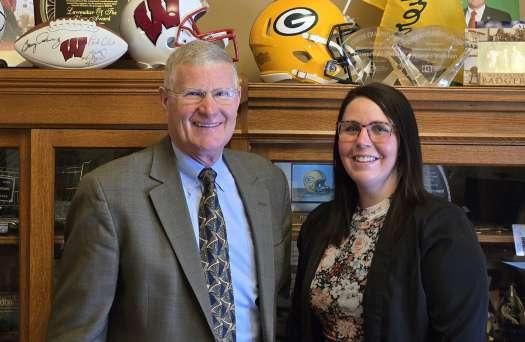
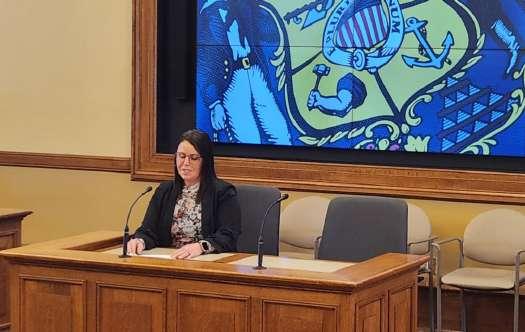
The bill establishes a clear default standard requiring that meals served to students in public, private and tribal schools use butter rather than margarine. Importantly, the legislation includes reasonable flexibility. Margarine may still be provided when specifically requested by a student or parent, or when required to meet the medical needs of a student as directed by a health care provider. The result is a balanced approach that prioritizes real dairy while respecting individual dietary and health considerations. This is a textbook example of grassroots advocacy at work. Organizations like Wisconsin Farm Bureau provide farmers and families with a constructive pathway to raise concerns and engage with policymakers. In this case, a real-world experience led to a practical policy solution that supports Wisconsin's dairy industry and aligns standards across taxpayer-funded cafeterias.
Veterinarians are essential to the health of Wisconsin’s farms, food supply and rural communities, yet it’s getting harder to recruit and retain them in rural areas. The cost of earning a veterinary degree often exceeds $200,000, making it financially challenging for new vets to choose lower-paying rural jobs.
Senate Bill 501/ Assembly Bill 505, authored by Representative Joel Kitchens and Senator Rachel CabralGuevara, creates a rural Veterinary Loan Repayment Grant Program to help veterinarians pay off student loans when they choose to work in rural Wisconsin and commit at least 25% of their practice to farm animal treatment.
Each year they complete qualifying work, veterinarians can receive up to $25,000 toward their student loans. These incentives are modeled on other similar loan forgiveness programs that have successfully incentivized teachers, medical and other professionals to live and work in rural areas.
The bills have received unanimous support by committees in both the Assembly and Senate but need votes in the full Senate and Assembly to reach the Governor's desk.
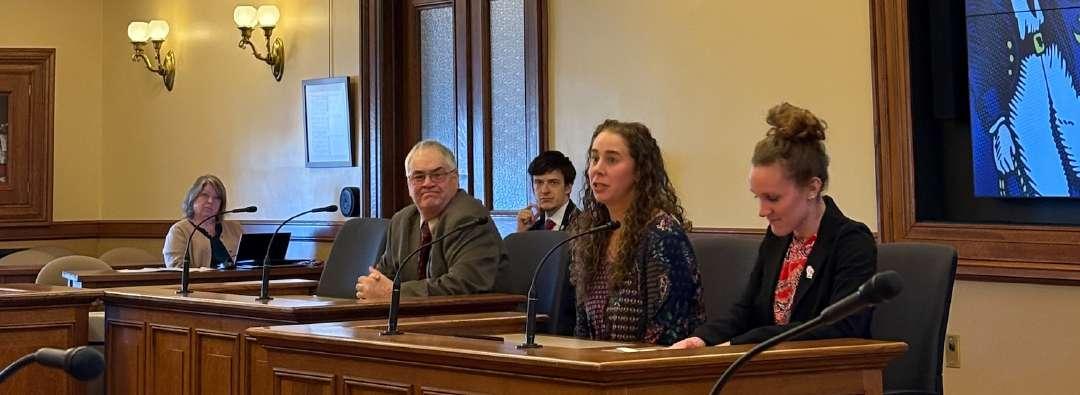
to authorize Wisconsin Farm Bureau Federation to offer a health plan as a member benefit was introduced in 2023. Hearings on the legislation were held in January 2024 in their respective chambers’ insurance committees. The legislation did not pass during the 2023-2024 legislative session, but was reintroduced this session.
Assembly Bill 860/Senate Bill 450 was introduced in September 2025 to once again try and secure this benefit for Wisconsin Farm Bureau members. A hearing was held in early January where members expressed the need for other healthcare options and staff shared more details of how the plans would work.
Members from around the state who have testified in favor of Farm Bureau Health Plans include Jefferson County farmer Libby Hafften.
“My sister and I are the second generation on our farm to be full-time farmers,” said WisGO Team member Libby Hafften. “My husband wants to come join the farm, too, but now that we’re married, we’ve decided he’s going to stay off the farm until we’re done having children because he’s the reason we have health insurance. The opportunity
this bill presents is huge in terms of keeping people in the agriculture industry.”
Senior Director of Government Relations Tim Fiocchi shared testimony to help answer frequently asked questions about the legislation:
“While many of the concerns I’ve discussed are addressed by codifying our current practices into law, the most important assurance we can offer is who we are as an organization. We are not a corporate insurer primarily accountable to shareholders. We are a memberdriven organization that has served Wisconsin farmers for more than 100 years. Our members are the end users of these plans, and they elect the Board of Directors that ultimately governs our operations. Our mission is to serve those members responsibly and sustainably. For these reasons, we believe this legislation strikes the right balance between innovation, consumer protection, and market stability, and we respectfully ask for your support.”

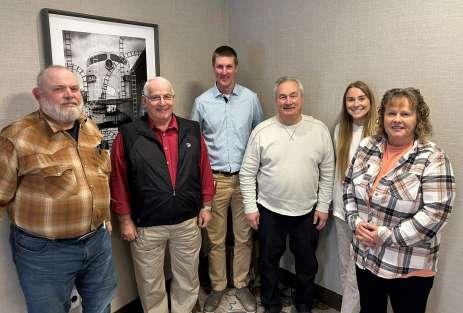
New President Huddle participants included (from L to R) Allen Johnson, Grant County, Sam Skemp, Dane County, Chad Bruss, Green Lake County, Duane Ducat, Kewaunee County, Gabriella Haack, Chippewa County and Mary Brand, Pierce County.
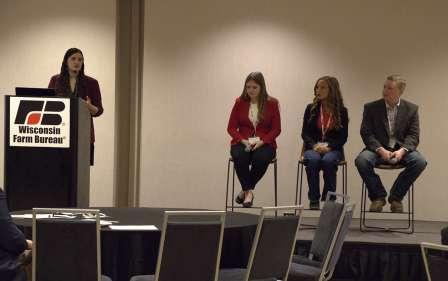
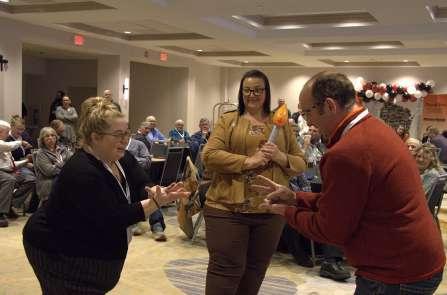
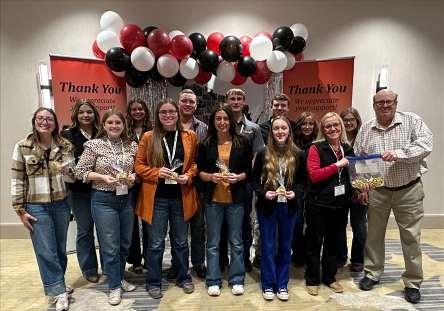
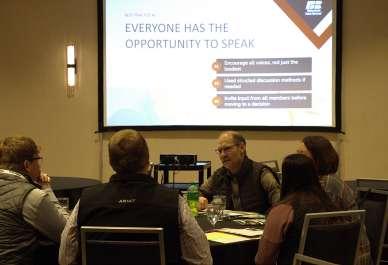
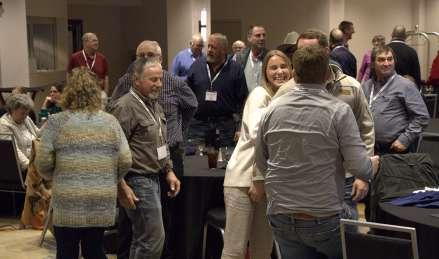
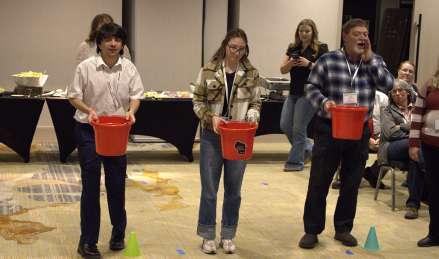
Collegiate Farm Bureau members networked with county leaders and were awarded the gold while participating in the Ag Olympics. As attendees of the first-ever Grassroots to Government Summit, the members also learned more about policy development, important agriculture issues, engaging with elected officials and advocating with confidence.

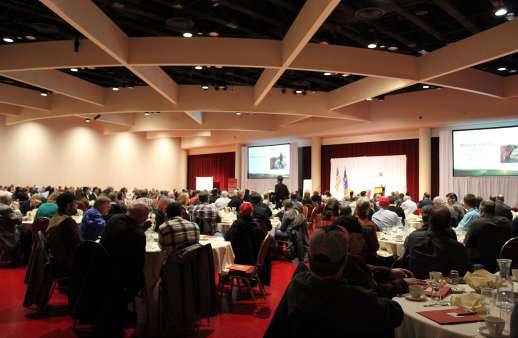
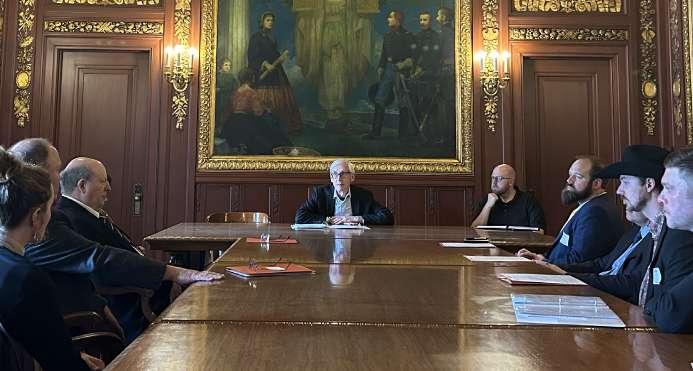
More than 300 farmers and agriculturists gathered at the Monona Terrace in Madison today for Ag Day at the Capitol.
Ag Day at the Capitol is the largest advocacy day for Wisconsin farmers and agriculturists, bringing together a variety of farm groups to learn more about state issues affecting agriculture and meet with their state legislators. Attendees were welcomed by Wisconsin Farm Bureau President Brad Olson and listened to remarks from Department of Agriculture, Trade and Consumer Protection Secretary Randy Romanski. Sec. Romanski shared a recap of the recent agricultural legislative success stories, updates from the department and commended those in attendance for their involvement in agriculture advocacy.
“Your voice has influenced many things in the last few years,” said Sec. Romanski. “Share your story, share your experience because it makes a difference.”
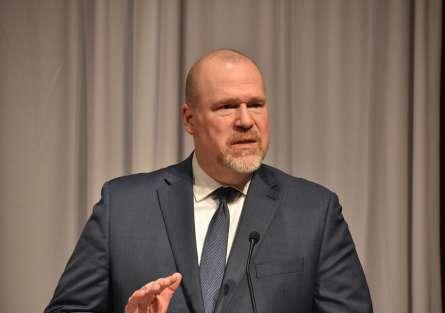
DATCP Secretary Randy Romanski welcomed participants to Madison and reminded them that their voices have influence at the Capitol.
Following Sec. Romanski’s remarks, Marcus Landry, former UW-Madison Badgers basketball player, delivered a keynote speech. Landry, who has started a family farm following his basketball career, shared his story of getting involved in agriculture.
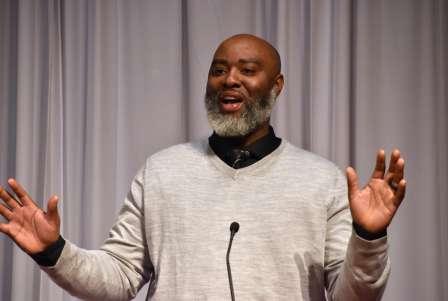
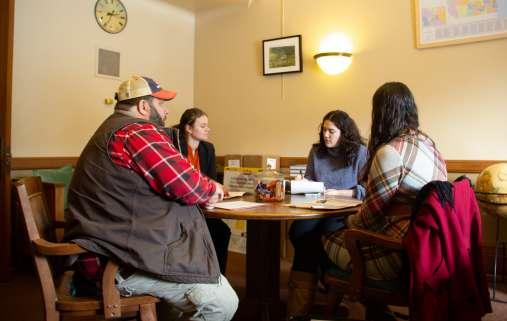
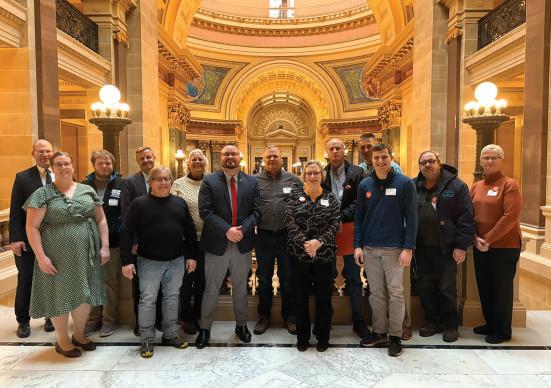
The afternoon program featured issue briefings on a variety of topics supporting agricultural market development, farm family stability, farm resilience, market transportation, and conservation and wildlife. Following the program, attendees walked to the Capitol to meet with their legislators. Inside the Capitol Rotunda, attendees explored Farm Bureau spotlight booths and connected with Wisconsin Ag Coalition partners.
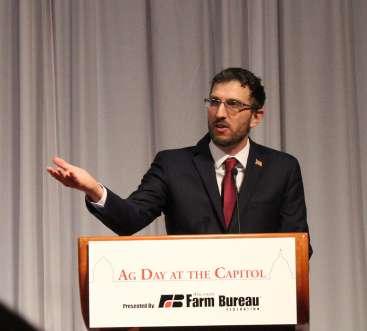
Rep. Travis Tranel shared his appreciation for the farmers in the room at Ag Day at the Capitol. "I know you all have a million other things that you could be doing right now ... but I can not over emphasize how important this is."
“I am a part of this farm community and I wouldn’t change it for the world,” said Landry. “When we come together and show unity, we can make a huge difference.”
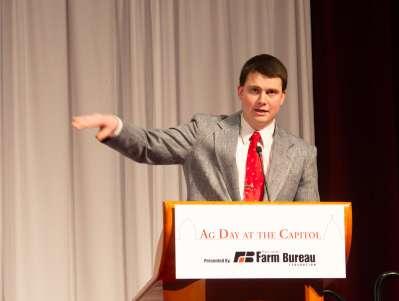

“Each one of you is a powerful voice for agriculture,” said WFBF President Brad Olson. “When lawmakers hear directly from the people who live these issues every day, it changes the conversation.”
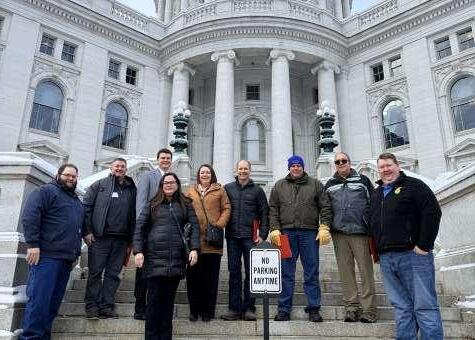
Rural Mutual Insurance Company and GROWMARK Inc. are major sponsors of the event. Co-sponsors of the event, with Wisconsin Farm Bureau Federation, include the Dairy Business Association, Professional Dairy Producers of Wisconsin, Wisconsin Cattlemen’s Association, Wisconsin Corn Growers Association, Wisconsin State Cranberry Growers Association, Wisconsin Hemp Alliance, Wisconsin Horse Council, Wisconsin Pork Association, Wisconsin Potato & Vegetable Growers Association, and Wisconsin Soybean Association.

SCAN HERE FOR MORE INFORMATION ON PRIORITIES

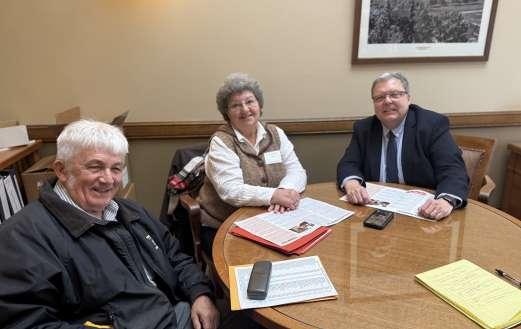
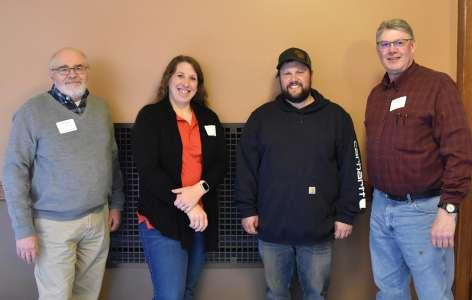






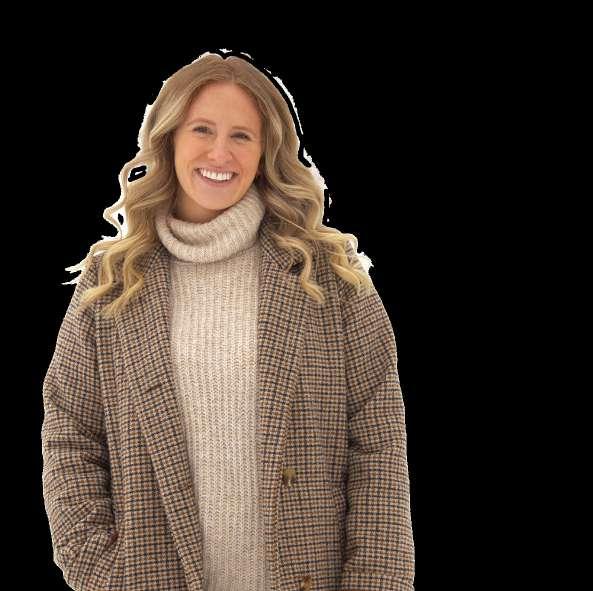
Maddie Woodward didn’t grow up on a farm, but agriculture has always had her heart.
s the daughter of an agricultural educator, she found early inspiration at FFA events, watching how those experiences shaped students’ lives. That spark never faded. It carried Maddie through her childhood, college years and into her role today as a territory manager with Pioneer Seed and as a member of the Chippewa County Farm Bureau board of directors.
Her passion for community and connection beats at the center of everything she does because for Maddie, giving back isn’t work; it’s love in action.
Maddie’s earliest exposure to agriculture came from her father, James Weninger. Raised on a dairy farm near Fond du Lac, James went on to teach agricultural education and advise the Howard Lake Waverly Winsted FFA Chapter in Minnesota. Those early days of attending FFA events planted a seed in Maddie’s heart: a love for agriculture that would

“I loved attending the different FFA events with my dad,” Maddie said. “I saw how FFA exposed students to agriculture and the impact that could have.”
That love story with agriculture deepened when Maddie discovered Farm Bureau through the Discussion Meet, a competition that gives young members a chance to demonstrate their speaking skills. Surrounded by mentors who cared as much as she did, Maddie learned what it means to be part of a grassroots organization built on connection and community.
“I have always been fortunate with great mentors around me,” Maddie said. “Minnesota Farm Bureau board member Kevin Dahlman helped me understand agricultural policy and Farm Bureau’s grassroots process.”
After graduating college and accepting jobs in the area, Maddie and her husband, Danny, made Chippewa Falls their home. With Maddie’s roots in Minnesota and Danny’s in Nebraska, moving to Wisconsin meant starting fresh and finding a sense of belonging in a place that was completely new to them.
Farm Bureau became that connection. Maddie had first experienced its spirit through FFA and later as the Minnesota Young Farmers & Ranchers Discussion Meet winner in 2020. Joining Chippewa County Farm Bureau felt like the natural next step and a way to put her heart into the new community.
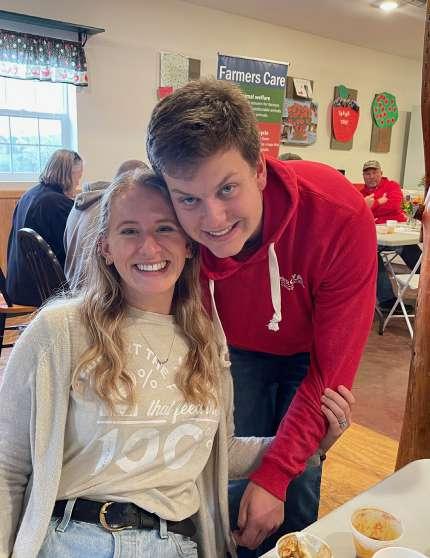

“I knew right away I wanted to get involved,” Maddie said. “Joining the board of directors was an outlet to meet new people while not being originally from the area.”
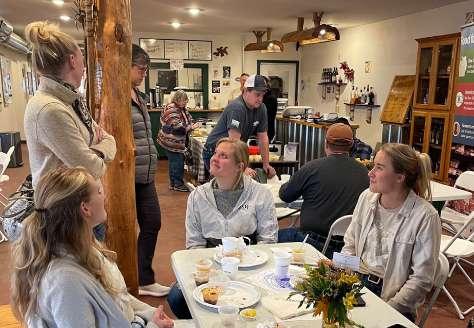
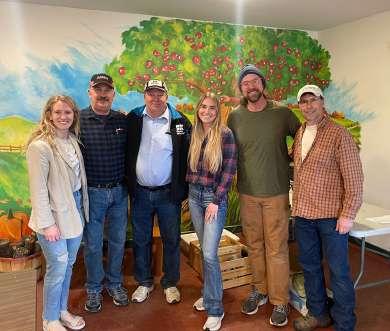

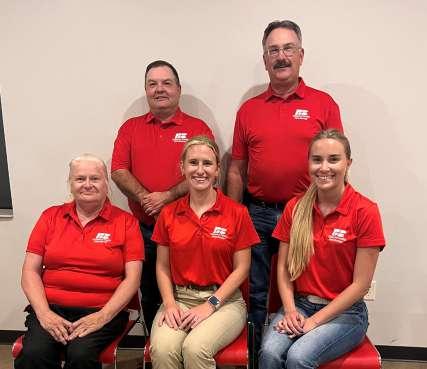
From the start, Maddie saw Farm Bureau as more than an organization. It was a chance to give back to agriculture and help others find the same connection she discovered years ago.
“My connection to agriculture came from FFA events with my dad, so I saw the value events could have in helping others find their connection to agriculture,” Maddie said.
Maddie and her fellow Chippewa County Farm Bureau board members decided to plan a chili cookoff event in 2023. The event encouraged area businesses and organizations to submit a chili recipe with the criteria that each submission contain at least one ingredient from Chippewa County.
“Our mindset has a local focus. We wanted to find ways to support local businesses and agriculture while helping the public better understand where their food comes from,” Maddie said.
The board shared the inaugural chili cookoff event to Facebook where it caught the attention of a local television reporter and landed Maddie a live segment on the local news broadcast. The opportunity garnered a lot of public interest and attendance at the event.
For Maddie, events like the chili cookoff are just as much about connections as it is about food.
“We want to provide value and connect people with local experts on topics in food and agriculture,” Maddie said. “Being in a large area, people are more removed from agriculture and Farm Bureau is an outlet to bridge those connections.”
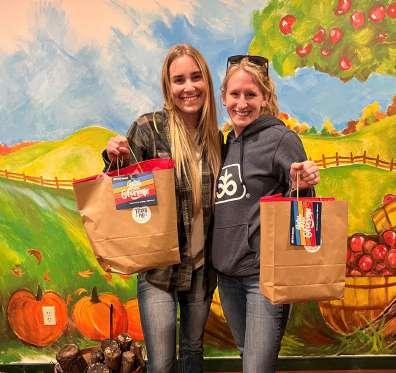
That sense of community is something Maddie hopes every member feels.
In recent years, the board has made it a point to connect with new members as they start their Farm Bureau membership journey. To make that happen, the board personally visits with new members with information, promotional items and tips to get the most out of their membership.
“I’m proud to be in Farm Bureau because our members actively listen to the challenges in agriculture and find ways we can help,” Maddie said. “There are endless opportunities in Farm Bureau.”
For Maddie, those opportunities are more than programs and events; they’re proof of what happens when people lead with heart. The same spark that started with her dad at FFA events now beats at the center of her volunteerism within Farm Bureau: love for agriculture, love for community and love in action.

Super Duty or F-150 Lightning®. Not available on any other Ford or Lincoln vehicles, or F-150 Raptor®, F-150 Raptor R™, Ranger Raptor or F-650® and F-750® Super Duty. Vehicle eligibility may change at any time. Available to
with most other Ford private offers. See an authorized Ford Dealer or go to https://www.fordrecognizesu. com, for complete details and eligibility (PGM# 32900). Due to high demand and global supply chain constraints, some models, trims, and features may not be available or may be subject to change. Check with your local dealer for current information. Offer subject to confirmation of eligibility.
2 Available on the purchase of an eligible certified used 2021-2027MY Ford Blue Advantage Gold, EV (F-150 Lightning only), or Blue Certified, Ford Maverick, Ranger, F-150, Super Duty or F-150 Lightning with under 80,000 miles. Not available on any other Ford or Lincoln vehicles, or F-150 Raptor, F-150 Raptor R, Ranger Raptor or F-650 and F-750 Super Duty. Vehicle eligibility may change at any time. Available to U.S. residents only. This offer is not eligible for customers purchasing a vehicle in the state of Texas. Take delivery from an authorized Ford Dealer’s stock by 1/4/2027. Limit of five purchases per household during the program offer (PGM# 32902). Offer subject to
ASHLAND FORD CHRYSLER 715-682-8400 www.ashlandfordchrysler.com BALDWIN LUPIENT FORD 715-684-4520 www.lupientford.com
www.toycenford.net

Tell us a little about yourself.
1 Available on the purchase or lease of an eligible new 2025/2026/2027MY Ford Maverick®, Ranger®, F-150®, Super Duty or F-150 Lightning®. Not available on any other Ford or Lincoln vehicles, or F-150 Raptor®, F-150 Raptor R™, Ranger Raptor or F-650® and F-750® Super Duty. Vehicle eligibility may change at any time. Available to U.S. residents only. Place a new retail order or take new retail delivery from an authorized Ford Dealer’s stock by 1/04/27. Limit of five purchases/leases per household during the program offer (PGM# 32900). Offer subject to dealer participation. May not be used/combined with most other Ford private offers. See an authorized Ford Dealer or go to https://www.fordrecognizesu. com, for complete details and eligibility (PGM# 32900). Due to high demand and global supply chain constraints, some models, trims, and features may not be available or may be subject to change. Check with your local dealer for current information. Offer subject to confirmation of eligibility.
1 Available on the purchase or lease of an eligible new 2025/2026/2027MY Ford Maverick®, Ranger®, F-150®, Super Duty or F-150 Lightning®. Not available on any other Ford or Lincoln vehicles, or F-150 Raptor®, F-150 Raptor R™, Ranger Raptor or F-650® and F-750® Super Duty. Vehicle eligibility may change at any time. Available to U.S. residents only. Place a new retail order or take new retail delivery from an authorized Ford Dealer’s stock by 1/04/27. Limit of five purchases/leases per household during the program offer (PGM# 32900). Offer subject to dealer participation. May not be used/combined with most other Ford private offers. See an authorized Ford Dealer or go to https://www.fordrecognizesu. com, for complete details and eligibility (PGM# 32900). Due to high demand and global supply chain constraints, some models, trims, and features may not be available or may be subject to change. Check with your local dealer for current information. Offer subject to confirmation of eligibility.
1 Available on the purchase or lease of an eligible new 2025/2026/2027MY Ford Maverick®, Ranger®, F-150®, Super Duty or F-150 Lightning®. Not available on any other Ford or Lincoln vehicles, or F-150 Raptor®, F-150 Raptor R™, Ranger Raptor or F-650® and F-750® Super Duty. Vehicle eligibility may change at any time. Available to U.S. residents only. Place a new retail order or take new retail delivery from an authorized Ford Dealer’s stock by 1/04/27. Limit of five purchases/leases per household during the program offer (PGM# 32900). Offer subject to dealer participation. May not be used/combined with most other Ford private offers. See an authorized Ford Dealer or go to https://www.fordrecognizesu. com, for complete details and eligibility (PGM# 32900). Due to high demand and global supply chain constraints, some models, trims, and features may not be available or may be subject to change. Check with your local dealer for current information. Offer subject to confirmation of eligibility.
1 Available on the purchase or lease of an eligible new 2025/2026/2027MY Ford Maverick®, Ranger®, F-150®, Super Duty or F-150 Lightning®. Not available on any other Ford or Lincoln vehicles, or F-150 Raptor®, F-150 Raptor R™, Ranger Raptor or F-650® and F-750® Super Duty. Vehicle eligibility may change at any time. Available to U.S. residents only. Place a new retail order or take new retail delivery from an authorized Ford Dealer’s stock by 1/04/27. Limit of five purchases/leases per household during the program offer (PGM# 32900). Offer subject to dealer participation. May not be used/combined with most other Ford private offers. See an authorized Ford Dealer or go to https://www.fordrecognizesu. com, for complete details and eligibility (PGM# 32900). Due to high demand and global supply chain constraints, some models, trims, and features may not be available or may be subject to change. Check with your local dealer for current information. Offer subject to confirmation of eligibility.
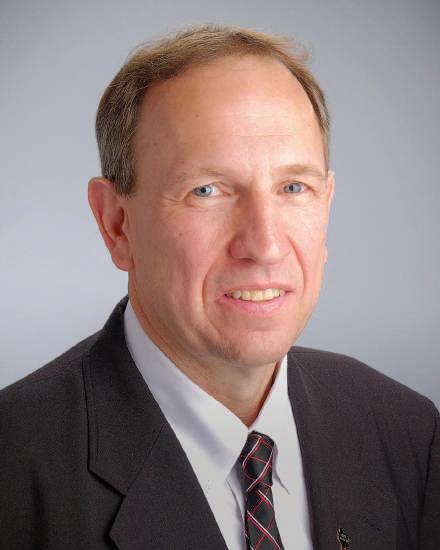
I grew up on our family dairy farm southeast of Janesville. I graduated from Clinton High School in 1976 where I was very active in 4-H and FFA. After high school I attended Farm and Industry Short Course at UW-Madison. While at Short Course, a devastating fire destroyed our dairy herd and the barn. Then, I decided to go back for a second year to ensure that rebuilding the barn and the herd was the right decision. With the help of my parents, I got back into dairying in October 1978. I milked for another 30 years until December 2008, when it was time to sell the cows and have more time for other interests. Now, I still farm growing corn, soybeans and alfalfa. My brother, two nephews, a niece and I all farm. We each have our own crops, but work together, especially during planting and harvesting. I have served on the WFBF Board of Directors since 2014 along with a number of committees at the local, state and federal levels over the years.
What do you enjoy most about your career in agriculture? Why?
I enjoy being part of the agricultural community, in my neighborhood and throughout this great state.
2 Available on the purchase of an eligible certified used 2021-2027MY Ford Blue Advantage Gold, EV (F-150 Lightning only), or Blue Certified, Ford Maverick, Ranger, F-150, Super Duty or F-150 Lightning with under 80,000 miles. Not available on any other Ford or Lincoln vehicles, or F-150 Raptor, F-150 Raptor R, Ranger Raptor or F-650 and F-750 Super Duty. Vehicle eligibility may change at any time. Available to U.S. residents only. This offer is not eligible for customers purchasing a vehicle in the state of Texas. Take delivery from an authorized Ford Dealer’s stock by 1/4/2027. Limit of five purchases per household during the program offer (PGM# 32902). Offer subject to dealer participation. May not be used/ combined with most other Ford private offers. See an authorized Ford Dealer or go to https://www.fordrecognizesu.com, for complete details and eligibility (PGM# 32902). Due to high demand and global supply chain constraints, some models, trims, and features may not be available or may be subject to change. Check with your local Ford Dealer for current information. Offer subject to confirmation of eligibility.
What is one agriculture experience that has defined you and why?
2 Available on the purchase of an eligible certified used 2021-2027MY Ford Blue Advantage Gold, EV (F-150 Lightning only), or Blue Certified, Ford Maverick, Ranger, F-150, Super Duty or F-150 Lightning with under 80,000 miles. Not available on any other Ford or Lincoln vehicles, or F-150 Raptor, F-150 Raptor R, Ranger Raptor or F-650 and F-750 Super Duty. Vehicle eligibility may change at any time. Available to U.S. residents only. This offer is not eligible for customers purchasing a vehicle in the state of Texas. Take delivery from an authorized Ford Dealer’s stock by 1/4/2027. Limit of five purchases per household during the program offer (PGM# 32902). Offer subject to dealer participation. May not be used/ combined with most other Ford private offers. See an authorized Ford Dealer or go to https://www.fordrecognizesu.com, for complete details and eligibility (PGM# 32902). Due to high demand and global supply chain constraints, some models, trims, and features may not be available or may be subject to change. Check with your local Ford Dealer for current information. Offer subject to confirmation of eligibility.
2 Available on the purchase of an eligible certified used 2021-2027MY Ford Blue Advantage Gold, EV (F-150 Lightning only), or Blue Certified, Ford Maverick, Ranger, F-150, Super Duty or F-150 Lightning with under 80,000 miles. Not available on any other Ford or Lincoln vehicles, or F-150 Raptor, F-150 Raptor R, Ranger Raptor or F-650 and F-750 Super Duty. Vehicle eligibility may change at any time. Available to U.S. residents only. This offer is not eligible for customers purchasing a vehicle in the state of Texas. Take delivery from an authorized Ford Dealer’s stock by 1/4/2027. Limit of five purchases per household during the program offer (PGM# 32902). Offer subject to dealer participation. May not be used/ combined with most other Ford private offers. See an authorized Ford Dealer or go to https://www.fordrecognizesu.com, for complete details and eligibility (PGM# 32902). Due to high demand and global supply chain constraints, some models, trims, and features may not be available or may be subject to change. Check with your local Ford Dealer for current information. Offer subject to confirmation of eligibility.
How do you usually bring up Farm Bureau in conversation with someone who isn’t a member?
Sometimes I bring up Farm Bureau by mentioning what we’ve been doing lately. I especially like it when someone else brings it up in conversation first. That way, it shows me that they are interested. When I ask someone to join, I’ll usually have our district newsletter, Rural Route magazine, policy book and application forms with me. If I can find out what they are interested in, then I will go in that direction.
2 Available on the purchase of an eligible certified used 2021-2027MY Ford Blue Advantage Gold, EV (F-150 Lightning only), or Blue Certified, Ford Maverick, Ranger, F-150, Super Duty or F-150 Lightning with under 80,000 miles. Not available on any other Ford or Lincoln vehicles, or F-150 Raptor, F-150 Raptor R, Ranger Raptor or F-650 and F-750 Super Duty. Vehicle eligibility may change at any time. Available to U.S. residents only. This offer is not eligible for customers purchasing a vehicle in the state of Texas. Take delivery from an authorized Ford Dealer’s stock by 1/4/2027. Limit of five purchases per household during the program offer (PGM# 32902). Offer subject to dealer participation. May not be used/ combined with most other Ford private offers. See an authorized Ford Dealer or go to https://www.fordrecognizesu.com, for complete details and eligibility (PGM# 32902). Due to high demand and global supply chain constraints, some models, trims, and features may not be available or may be subject to change. Check with your local Ford Dealer for current information. Offer subject to confirmation of eligibility.
The agricultural experience that has defined me the most is the WFBF Leadership Institute. I’m a very proud graduate of Class 3 (2009). It has opened many doors for me, not only in Farm Bureau, but in many things that I am involved in. I am constantly promoting it and encouraging members to apply to participate in the Leadership Institute.
What is a Farm Bureau experience that you are most proud of and why?
I’m most proud of the way that I have been able to balance the work on the farm with my roles in Farm Bureau, the town board and other community organizations.
Why are you proud to be a Farm Bureau member?
I’m proud to be a Farm Bureau member because of the many things we do for our members and for Wisconsin agriculture, as well as all the great members that we work together with.

What’s at the heart of a Farm Bureau membership for you?
The heart of a Farm Bureau membership for me is being a part of something special, an organization that supports its members, who are the most important part of our organization.


















*WFBF member benefits may be changed or discontinued at any time without notice.* Learn more about your Farm Bureau member benefit savings by scanning the QR code or visiting wfbf.com/membership/member-benefits.


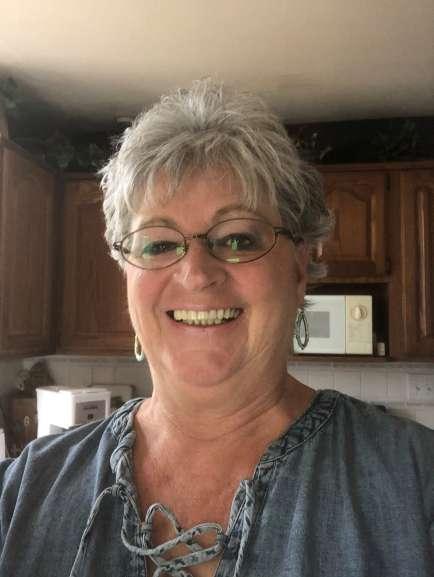
Debbie Jutrzonka, a Farm Bureau member from rural southeastern Wisconsin, grew up surrounded by agriculture. Born and mostly raised in Gleason, her childhood was shaped by time spent on family dairy and beef farms. From playing in the barn as a kid to returning to the Northwoods in spring to see newborn calves, agriculture has always been a source of comfort, connection and calm for Debbie.
Like many farm families, Debbie was raised to prioritize caring for others: the farm, animals and people around her. But self-care often falls to the bottom of the list. That’s why Debbie decided to take advantage of the Life Line Screening member benefit offered through Wisconsin Farm Bureau.
Life Line Screening provides state-of-the-art vascular screenings at discounted rates for Farm Bureau members. These non-invasive ultrasound screenings can help detect blockages that could lead to strokes, aortic aneurysms and other artery diseases. Members also receive a free osteoporosis risk assessment.
“It was easy to schedule,” said Debbie. “I did it all online.”
Wisconsin Farm Bureau understands that caring for family, friends and the farm can leave little time to focus on your own health. The Life Line Screening member benefit makes prioritizing your well-being simple, accessible and affordable.
“I always wanted to do the Life Line Screening but never actually made the appointment,” Debbie shared. “When I saw it listed as a member benefit, I didn’t hesitate.”
Now, Debbie encourages others to do the same.
“I tell everyone to get the Life Line Screening done,” she said. “I know I’ll use this benefit again next year.”
Debbie’s experience highlights the value of Farm Bureau member benefits and reflects the organization’s commitment to supporting the health and well-being of its members, on and off the farm.
To find a screening location near you, visit www. lifelinescreening.com/partner/wifb. For more information on all Wisconsin Farm Bureau member benefits, visit wfbf. com/membership/member-benefits.
1. Go to www.wfbf.com (or scan the QR code) and log into your account.
2. Under the My Account tab, select Automatic Renewal and add a payment method.

In today’s always connected world, it can feel like we are expected to be available all of the time to our family, friends, coworker's and the many organizations and communities that we care about. Conversations extend way beyond the workday, commitments stack up and saying "yes" becomes the default.
Over time, the constant availability can quietly and quickly drain energy, increase stress and leave little room to recharge.
We know that taking care of yourself is essential in taking care of others. One of the most effective and often overlooked (or even hardest to implement) tools for protecting your well being is setting healthy boundaries.
Boundaries are often misunderstood. Boundaries are clear expectations, healthy limits, respect for your time, energy and well-being and a form of self-care.
Boundaries are not selfish, rude, a lack of commitment on your part or pushing people away.
The reality is that boundaries help protect relationships by reducing resentment, miscommunication and burnout. Reframing boundaries can help protect not only relationships but the farm as well.
If you were raised in agriculture, you were raised to be a helper, problem solver and team player. Whether at home, work, school or in your community, we often feel pressure to:
• Be dependable at all times.
• Avoid disappointing others.
• Keep the peace by staying silent.
• Take on more because we can handle it.
And in agriculture, boundaries can be even harder. We feel the pressure to always be available, feel guilty when trying to take time off, carry unspoken expectations that lead to resentment and avoid those difficult conversations to keep peace within the family.
Boundaries feel uncomfortable because they challenge the long-standing expectations. However, when boundaries are absent, stress builds, sometimes slowly but sometimes all at once. And as a reminder, stress doesn’t always show up in a crisis. Often, it looks like exhaustion, irritability, trouble sleeping and feeling stretched too thin.
Boundary challenges can show up in many parts of life. Work conversations bleed into personal time, family expectations that feel overwhelming, friendships where support becomes one-sided and feeling guilty for taking time off or stepping back. The list can go on and on.
This can become even more difficult when working with others on the farm. Work conversations dominate family time, expectation that some family members just handle the situation at hand, succession conversations being delayed or avoided.
Recognizing where boundaries are needed is an important first step toward reducing stress and improving wellbeing.
Here are a few ways to start setting boundaries on the farm:
• Define roles and responsibilities and if possible, have them written down.
• Use regular check-ins instead of constant conversations.
• Agree on how decisions will be made and who is responsible for making them.
• Listen to understand instead of listening to respond in conversations.
• Set off limits times or space for farm/business discussions.
Boundary conversations can be awkward, especially when emotions or long standing relationships are involved. Here are a few tips to get started:
• Start from a place of respect and shared goals
• Use “I” statements to express your needs
• Keep the focus on clarity, not conflict
• Remember that boundaries can change over time
Taking care of yourself is not a luxury, it is a necessity. Ongoing stress can affect mental health, physical health, decision making and relationships. Boundaries are just one way that you can protect your well being while continuing to show up for people and causes you care about.
1. Farmer 24/7 Wellness Hotline | 888.901.2558 | Experienced Stress Counselors provide immediate, in-the-moment care for farmers and farm families.
2. Veterans Crisis Line | 800.273.8255 and press 1
3. Kids in Crisis | 203.661.1911 | Specialized for kids and teens in crisis.
Rural Realities Podcast – conversations about farm stress, family and finding balance
Peer Support Groups – organized by the Wisconsin Farm Center
Farm Neighbors Care – resources for helping you and your neighbors from WFBF
Farm State of Mind – resources for helping you and your neighbors from AFBF
Local Support Contacts
Neighbor/Friend:
Doctor/Clinic:
Pastor/Advisor:
If you or someone you know needs immediate assistance, call or text 988. (Cut it out, hang it up, pass it along!)
Hang this on a wall, fridge and/or bulletin in your home, shop or barn. Share a copy with two neighbors, because wellness grows when we look out for each other.
assistance Call or Text 988
Farm Center 24/7 Hotline 888.901.2558
Text FARM to 741741
Keep in your wallet. Share with a friend.
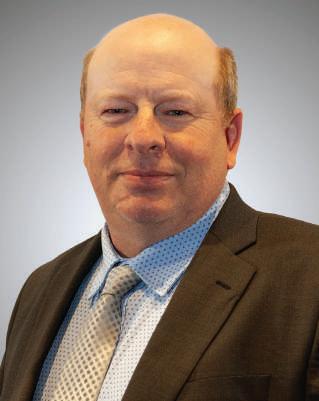
Built by farmers, led by farmers and grounded in a shared belief that a strong agricultural community is essential to a strong Wisconsin: that is who we are at Wisconsin Farm Bureau. Farm Bureau membership is more than a card or benefits; it is a commitment to our members from advocacy, education, leadership and unity across all of agriculture. We represent a united voice for farm families, rural communities and the future of food and fiber produced in our state.
At the forefront of membership is the work we do advocating for agriculture. Farmers face an everchanging landscape of issues from regulations, public policy debates and economic pressures that are often shaped far from home. Being from the northern part of the state, I know that feeling all too well. At times it feels impossible to be heard.
When we work together through Farm Bureau we have a seat at the table. From our county Farm Bureau boards to the State Capitol to Washington D.C., you help shape policy on issues that directly impact agriculture-land use, regulations, trade policy, transportation, labor and healthcare to name a few. Our grassroots structure ensures that policy is not handed down from the top but instead rises from members who live and work these issues every day.
Equally important is the role we play in education and engagement. As fewer Americans have direct ties to farming, the disconnect between farmers and consumers continues to grow. Farm Bureau works to bridge that gap by telling agriculture’s story in a clear, honest and relatable way. From how food is grown, to conservation practices used, and to what modern agriculture looks like. Through our Promotion and Engagement program, outreach efforts like Gather Wisconsin and classroom education through our Ag in the Classroom program, Farm Bureau members serve as the trusted voice building understanding and confidence in Wisconsin agriculture.
While agriculture is diverse –different commodities, production methods, farm size and philosophies – Farm Bureau brings these differences together, recognizing that while our farms differ our goals are often the same. Input costs, regulation, public perception and market access affect all of agriculture in one form or another. By focusing on common ground rather than divisions, Farm Bureau helps agriculture speak with one voice, in a polarized political environment, which is both rare and invaluable.
Across the state our members volunteer their time, share their experiences and advocate not just for themselves, but for the future generations of farmers. We understand the groundwork laid today leads to the success of tomorrow through education, policy and leadership. When those of us producing our food are willing to stand up and speak out at our local, state and national level our voices are heard. No one has higher trust than farmers, so let’s use that and keep advocating for our future and the next generation.
The heart of Wisconsin Farm Bureau is its members, and through your commitment as members, Wisconsin agriculture continues to move forward-stronger, more unified and ready to meet the challenges ahead.
Olson was first elected President of Wisconsin Farm Bureau in 2023. He is a crop farmer near Frederic in Polk County.
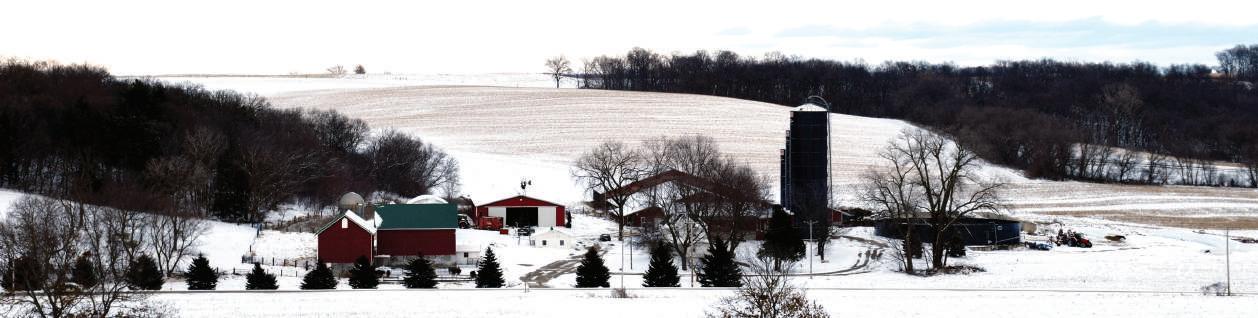
Fresh from the farm. American grown. Those words bring to mind quality and value, thanks to the hardworking men and women across this country who are proud to be called farmers. Nearly everything we need for our daily lives and wellbeing begins on the farm, and at Farm Bureau, that’s where our policy rightly begins too.
This will soon be on full display when thousands of farmers and ranchers gather in Anaheim, California, for the 107th American Farm Bureau Convention this week. This event is the climax of months of hard work and grassroots policy development across our federation. But it’s just the beginning of a new year of work at the American Farm Bureau, with the agenda set by our grassroots leaders. Everything we do, at every level of Farm Bureau, begins on the farm. I am proud to be a farmer and to serve an organization that has been—and continues to be—built, led and driven by farmers and ranchers.
While this year marks the 107th year of the American Farm Bureau Federation, there are county and state Farm Bureaus older than the national federation. And that’s just as it should be. Farm Bureau didn’t start at the national level. It began with a county. Back in 1911, farmers in Broome County, New York, came together to address the challenges of their time. Soon more county and state Farm Bureaus cropped up across the country, and then in 1919, farmer leaders met together to form the American Farm Bureau. They believed they could be stronger together, and that value has stood the test of time. And, while farming and Farm Bureau have grown and adapted over the years, our values and our fundamental structure have not changed. Everything we do begins on the farm.
In the months and weeks leading up to our national gathering, I have had the privilege of traveling the country to meet with our members as they set policy to direct our work in Washington. I’ve taken part in that process firsthand, too, from the county and state level over the years. Grassroots advocacy is what got me involved in Farm Bureau as a young farmer, as I looked to make a difference for my family and my
is grown at the local level. Our members gather with their neighbors and talk through the issues facing their farms and ranches. Together, they work out solutions and make policy recommendations. Those policy resolutions are then sent on for state level consideration by farmer and rancher delegates to guide state advocacy. Finally, our grassroots members send policy recommendations that have broader relevance on to the American Farm Bureau. This all comes together at the national level when farmer delegates from across the country review our policy book and discuss changes needed to strengthen farms, ranches and rural communities across the country.
Every step of this process, every decision, is led and driven by real farmers and ranchers. These decisions are made by men and women who come from all corners of agriculture. They raise a wide variety of commodities and run farms of all sizes. Farm Bureau is the largest general farm organization because farmers know the power of our united, grassroots voice. A vast majority (97%) of our farmer delegates come from family farms, and nearly two-thirds represent small- to mid-size farms as defined by USDA. Our members understand the outsized impact that a farm of any size can have when we work together. Our commitment to farmerled advocacy has been strong for more than one hundred years, making us the united, national Voice of Agriculture. And it’s the work we’ll continue doing for many more years to come.
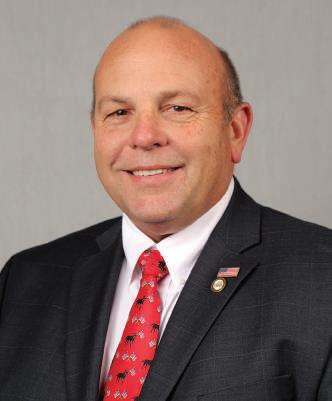
President of the American Farm Bureau Federation, Duvall raises beef cattle, hay and poultry in Greshamville, Georgia.

By Randy Wokatsch
Farm Bureau members are the lifeblood of our organization and our clout in Madison and Washington, D.C is dependent on membership numbers. Signing up members is a vital part of Farm Bureau and I’m here to help encourage you to join in the effort.
Farm Bureau is run by quality people with the important mission of being the “voice of agriculture.” Who wouldn’t want to buy into that? Memberships can sell themselves but sometimes it helps to have a few tips up your sleeve.
Here are some of my top tips to help you in recruiting new members:
1. Pick the low-hanging fruit.
Your friends, neighbors, relatives, local farmers and those you do business with know that Farm Bureau must be a good organization because they know and trust you.
2. Enthusiasm is contagious.
I am passionate about Farm Bureau. I believe in what I’m selling and I think prospects can tell this.
3. Set goals.
Tell people how important it is to your county to make its membership goal. Also, have a personal goal. Mine is to be one of the top ten membership workers each year.
4. Bridge the generation gap. Consult with young farmers. They have a wealth of info on names and contact numbers which may not be in phone books or your contact list.
5. Make a list of prospects and prioritize them.
We all have limited time. Go to those you are sure will listen and your success with them will grow your confidence.
6. Don’t forget memberships come with benefits.
Many people like our discounts on lodging, Grainger supplies and Ford vehicles. Really you can highlight any benefit listed on the website that might be of interest to the person you are talking with. You can find all the information here: wfbf.com/ memberbenefits.
7. Use Your Voice.
Land-use assessment and fighting environmental activism are two topics that can highlight the need for a strong Farm Bureau. You can always reach out to the Farm Bureau staff to help you highlight recent legislation
8. Don’t burn bridges.
Be polite when getting turned down. I’ve signed many members on the second or third try.
9. Know the Members.
I always carry a Marathon County membership master list. Folks are very impressed by our more than 1,900 members, including many people they know. Also mention we have more than 50,000 state members.
10. Teach others.
Explain how we are set up as a grassroots organization. Our policy truly starts with our membership. It’s a winning concept and proves that all farms of all sizes have a say.
11. Be Ready!
Have your membership info handy at all times. I’ve got an accordion file with membership applications, benefit sheets, Rural Routes and informational flyers right inside my house door. Prospects can drive into your yard at any time.
The Farm Bureau Proud meal is really good and the exclusive seating during the WFBF Annual Meeting is really nice. If you’ve been there, you know enough to get five more memberships next year! And if you haven’t, shoot for that goal this year. It takes a team to work on membership, so suit up and help us out with this vital part of Farm Bureau.
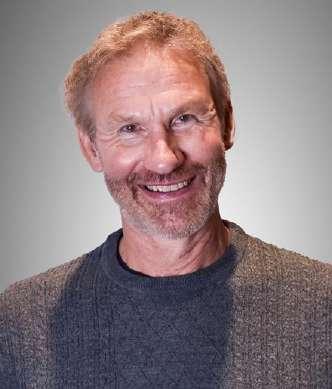
Wokatsch and his wife Kerry farm in Marathon County.
By Sarah Hetke
“Why should I join Farm Bureau?”
Have you ever received that question? It usually leaves me wondering, “Where do I even begin?” There’s something for everyone, but what I find value in may not be the same as my neighbor.
I had the opportunity to serve on Wisconsin Farm Bureau’s strategic planning task force. Alongside fellow members from across the state, representing a wide range of commodities, farm sizes and experiences, we spent many hours talking about where Farm Bureau has been, where it needs to go and how the organization can best serve members now and into the future. Outside of developing the current strategic plan, we were asked to develop a membership value statement.
At its core, the value statement answers a simple but important question: "Why should I join Farm Bureau?" With more than 53,000 members across the state, it is difficult to define membership value in a sentence or two. We wanted language that reflects the full breadth of what this organization delivers for Wisconsin agriculture yet knew we needed to keep it concise.
After several hours of conversation, we landed on, “A unified voice for
agriculture shaping policy, developing members and engaging consumers.”
“A unified voice for agriculture,” resonated deeply with our task force. Agriculture in Wisconsin is incredibly diverse, yet we are strongest when we come together to advocate for policies that allow farms, agribusinesses and rural communities to thrive. Farm Bureau provides the structure, relationships and credibility needed to ensure farmers’ voices are heard at every level of government.
Personal and professional development is another important aspect of Farm Bureau membership. Countless members have found value from participating in programs like the Leadership Institute, Campaign School and the WisGO Team to name a few. I have met members of all ages who have developed lifelong friendships from participating in the Leadership Institute, Young Farmers and Agriculturist Committee and so much more.
Farm Bureau value doesn’t stop within the agriculture community. Equally important is our role in engaging consumers. As agriculture evolves, the gap between farmers and the public continues to grow. Farm Bureau helps bridge that gap through outreach, education and storytelling that builds trust and understanding. That work is essential, not only for the future of our farms, but for the future of food itself.
What I appreciate most about this value statement is how, after many rounds of brainstorming, we were able to concisely package major areas that show value to a diverse membership. It is not focused on one type of farm or one segment of agriculture. It reflects the diversity of Wisconsin Farm Bureau members
and the wide range of services and support the organization provides every day.
Now, the value statement belongs to all of us. It is more than words on paper. We can use it to explain why we are members, to invite others to join and to remind ourselves of the collective impact we have when we work together. I encourage you to reference it often as you attend community events where you connect with potential new members. It is a tool that our taskforce hopes you find easy to use when recruiting new members and answering the question, “Why should I join Farm Bureau?”
Hetke is a member of Sauk County Farm Bureau.
Get to know the members who are leading Wisconsin Farm Bureau’s Young Farmer and Agriculturist Program.
FARM BUREAU MEMBER SINCE: 2019
Why do you value your Farm Bureau membership?
I value my Farm Bureau membership for the relationships and opportunities it has given me. I started as a Collegiate Farm Bureau member at UW-Madison and have continued my involvement as a member after graduating. Farm Bureau has allowed me to continue to grow and develop as a young professional working in agriculture. The networking and connections that Farm Bureau provides is incredible and everyone in the organization is passionate about being a voice for all farmers and agriculturists.
What has been your favorite Farm Bureau event and why?
My favorite Farm Bureau event is the YFA Conference because it’s a great way to meet other YFA members and catch up with old friends. The YFA Conference is also where annual award winners are honored and it’s so fun to celebrate the accomplishments of fellow members.
What would you tell YFA members about getting involved in the YFA program?
YFA is a great program to be involved in, especially living in a heavily digital age. It’s a wonderful way to meet other YFA members in person and you don’t have to live on a farm. YFA is for anyone passionate about agriculture under the age of 35 and offers many opportunities for training, networking and personal growth and development.
Best words of advice/words of wisdom.
Don’t be afraid to say yes. Whether it’s attending a county YFA or Farm Bureau event, going to the WFBF Annual Meeting and YFA Conference for the first time or being asked to serve in a leadership role, saying yes to any of these opportunities can create lifelong friendships, personal growth and professional relationships within Farm Bureau. Everyone is busy but know that you can always make a difference when you become involved in Farm Bureau and YFA.
Wisconsin Farm Bureau's Young Farmer and Agriculturist Program is supported by the Wisconsin Farm Bureau Foundation.


By Lynn Leahy, AFBF Promotion and Engagement Representative
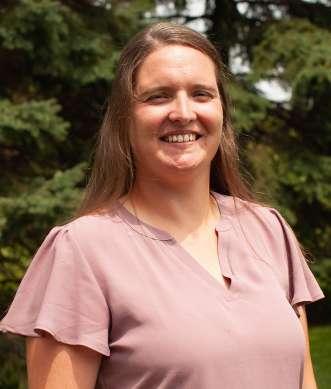
My involvement with the Promotion and Engagement Committee (formally Promotion and Education) began in 2016 when W FBF Disctrict 5 Coordinator Becky Hibicki invited me to join the state committee as the District 5 Representative.
At the time, I was unfamiliar with P&E. I was still serving as Waushara County’s YFA chair, and our county had a strong, active Women’s Committee. I didn’t realize I was stepping into the Wisconsin P&E Committee’s inaugural year. I served on the WFBF P&E Committee for the first six years of its existence and witnessed many changes in the program, including a shift in focus from Agriculture in the Classroom to hands-on adult consumer engagement and sharing our agricultural stories, which have shaped agricultural outreach across the state.
Since I first joined, both state and national programs have clearly defined their purpose and lanes. Both committees are similar in that many programs have been sunset in the last five years, but new, more relevant programming has taken their place to align with the mission of engaging with adult consumers about agriculture.
In 2025, both AFBF and Wisconsin committees rebranded as Promotion and Engagement to better align with our goal of promoting agriculture and engaging with adult consumers. This evolution demonstrates our commitment to remaining relevant and impactful in today's agricultural landscape.
I served on the WFBF P&E committee from 2016 to 2022. In March 2023, I was appointed to the American Farm Bureau Promotion and Engagement Committee, where I will serve until March 2027. These roles have helped me forge many friendships and enhance my leadership skills. As an introvert, participating on these committees has pushed me out of my comfort zone. I chaired the WFBF committee in 2021.
While I was on the committee, I helped plan several leadership training workshops designed to provide members with resources on current hot topics in agriculture.
We also launched the Ag LEAD Conference, which provided Farm Bureau members with opportunities for professional growth and advocacy. While serving on the national P&E Committee, I led the P&E Convention subcommittee in 2024. Currently, I chair the Target Training subcommittee, our main consumer engagement event scheduled for March 26-28 in Washington, D.C. During my time on the national committee, we developed and launched an 'Ask a Farmer' program, which is adaptable nationwide and allows Farm Bureau members to connect with people at their farms or in their communities.
A key place to meet consumers is in their kitchens, where they have purchased ingredients and now need to prepare meals. We have been building relationships with culinary schools to ensure future chefs understand the farm-to-table connection. We have partnered with the Auguste Escoffier School of Culinary Arts for the past three years.
I have always been passionate about explaining how food is grown, sold, processed and marketed, making P&E an ideal fit for me. I have helped shape how Farm Bureau connects with adult consumers at both the state and national levels. Many people want to know how food reaches stores, and the Farm Bureau acts as a bridge. P&E helps members become effective communicators, collaborators and influencers, building consumer trust in American agriculture.
As a member, you can share your farm experiences with your community and consumers. If you enjoy talking about agriculture, P&E is for you! These nationwide programs give farmers and ranchers opportunities to engage with consumers and tell their stories, strengthen communication skills, build connections and promote trust in agriculture. Your involvement can positively influence perceptions and confidence.
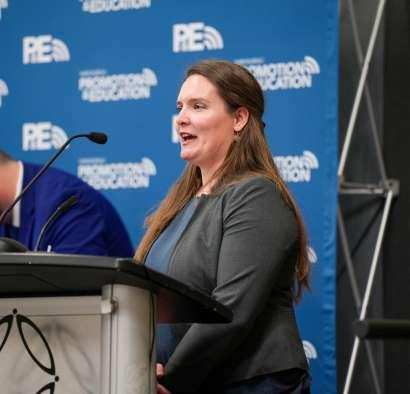
Visit gatherwisconsin.com for more recipes.
• 2 cups cooked shredded chicken breast
• ½ cup cooked bacon, crumbled
• 2 cups shredded cheddar cheese
• 1 bag frozen tater tots
• ½ cup ranch dressing
• 1 can cream of chicken soup
• 1 can corn, drained
1. Preheat oven to 375 degrees. In a large mixing bowl, combine shredded chicken, bacon crumbles, soup, dressing, cheese and corn. Stir until well mixed.
2. Grease a 9x13 dish and spread mixture evenly into the dish.
3. Arrange frozen tater tots on top of the mixture, covering the entire surface.
4. Bake in the oven for 30-35 minutes or until tater tots are golden brown and casserole is heated through.

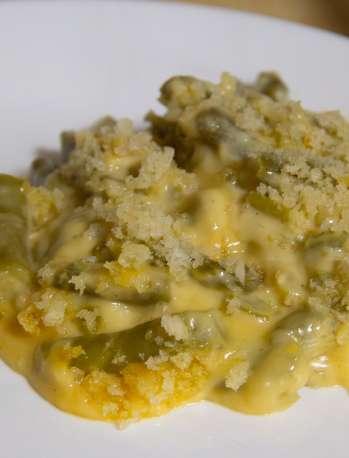
• 5 tbsp Butter (divided)
• ½ cup flour
• ½ cup lager beer
• 1 ½ cup shredded cheddar cheese
1. Preheat oven to 350 degrees.
• 1/8 tsp. paprika
• 6 cups of green beans
• 1 cup milk
• ½ tsp. salt
• ½ cup breadcrumbs
• 1 cup Bella mushrooms, sliced
• ½ tsp. Worcestershire sauce
• 1/8 tsp. cayenne pepper
• 1 Tbsp. chopped onion
2. In a large saucepan, melt 4 Tbsp. of butter and stir in flour until smooth. Whisk in the milk and beer and cook until thick. Add cheese, salt and all other seasonings.
3. Add beans and onions. Stir to combine and transfer to a 2 qt. baking dish.
4. Melt the remaining butter and stir in breadcrumbs and then sprinkle over the casserole.
5. Bake uncovered for 30 to 35 minutes, until bubbling and top becomes golden brown.
2025 Wisconsin State Fair Recipe Contest winner courtesy of Barbara Strahler of Reedburg.

F arm Bureau prides itself on being a grassroots organization. Members belong to one of the 61 county Farm Bureaus. Throughout the state, local members advocate for Farm Bureau and agriculture in a variety of ways. Here are some of the activities and projects happening locally.
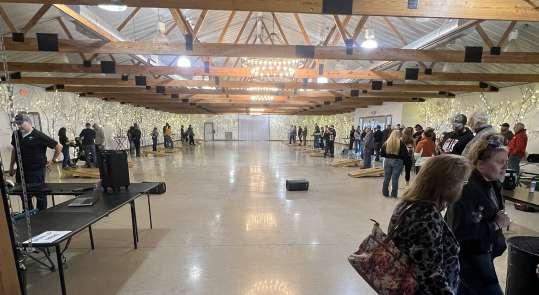
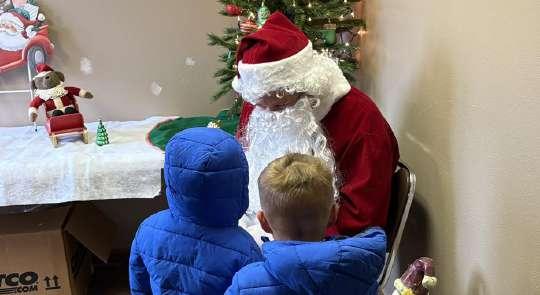
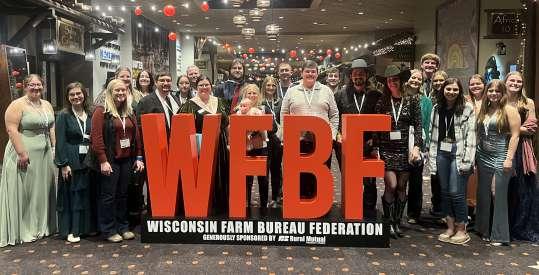
Racine County Farm Bureau Young Farmers and Agriculturists hosted a bags tournament on Jan. 10, at County Line Hall. Twenty-five teams competed and there was prize money for the top 3 teams. In addition to the bags tournament, there was also a silent auction, gun raffle and attendees played Over-Under. Union Grove FFA coordinated the food.
Sauk County Farm Bureau hosted its Milk and Cookies with Santa event on Nov. 22 at the Farm Bureau building in Baraboo, ahead of the city’s holiday light parade. Families enjoyed taking photos with Santa and sampled delicious homemade cookies from several Farm Bureau families. Each child also received a goodie bag filled with Ag in the Classroom activities, bringing a fun and educational agricultural twist to the holiday festivities. The event provided a cheerful way for the community to kick off the holiday season while learning more about food and farming.
The County Farm Bureaus from District 3 were well represented at this year’s WFBF Young Farmer and Agriculturist Conference. Members embraced the “Shine Bright, Lead Boldly” theme and enjoyed an energizing weekend of learning and networking. The conference featured a strong lineup of workshops, activities and keynote speakers that offered valuable insight and inspiration for attendees.
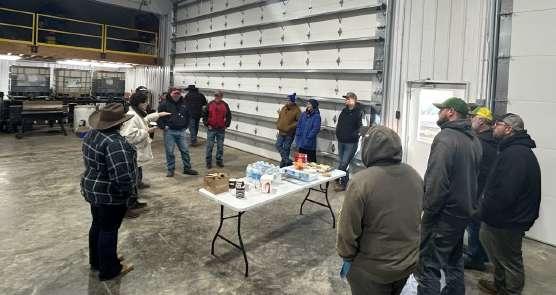
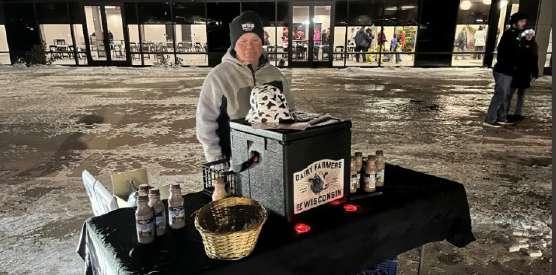
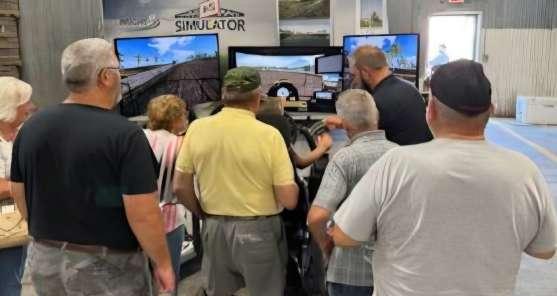
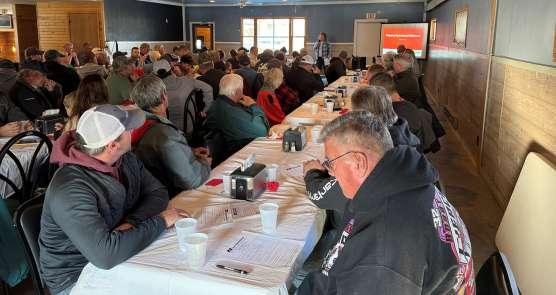
Clark County Farm Bureau recently hosted its first-ever Farm Gate, bringing together county board members, Land and Water Conservation Department staff and local farmers for a unique behind-the-scenes experience. Participants toured Meyer Family Dairy’s new manure lagoon and had the opportunity to network with area farmers, learning firsthand about recent expansion projects and day-to-day operations.
The Winnebago County Farm Bureau and Dairy Promotion committee handed out chocolate milk to racers at the Race for the Light run in Oshkosh on Dec. 6. This was the 23rd Annual Race for Light event held at the EAA grounds in Oshkosh. Farm Bureau has participated for many years in this event by handing out chocolate milk to runners at the end of the race.
Langlade County Farm Bureau members recently toured the Insight FS facility in Antigo, learning about the key role their cooperative plays in supporting local agriculture. The group saw custom applications, soil sampling and variable rate technology that boost yields and sustainability. The visit-built connections among farmers and highlighted cooperatives’ importance in Langlade County’s strong potato and dairy sector. Insight FS carries on its longstanding tradition of serving local farmers.
More than 70 farmers and community members attended a Pierce County Farm Bureau meeting on December 2 in El Paso focused on operational ordinances and local involvement. The discussion highlighted how local decisions impact agriculture and encouraged farmers to stay engaged, attend meetings and consider serving in local leadership roles to ensure agriculture’s voice is heard at the grassroots level.
Dominate your residue with the Versatile Fury. Fast and flexible, the Fury is designed to cut, chop, size and mix your residue at speeds of 5-12 mph (7.5-20 km/h).
Dominate your residue with the Versatile Fury. Fast and flexible, the Fury is designed to cut, chop, size and mix your residue at speeds of 5-12 mph (7.5-20 km/h).
Dominate your residue with the Versatile Fury. Fast and flexible, the Fury is designed to cut, chop, size and mix your residue at speeds of 5-12 mph (7.5-20 km/h).
The Fury has a narrow 12’ transport width and is fully configurable adapting to any field condition with a choice of blade sizes and three rear finishing attachments.
The Fury has a narrow 12’ transport width and is fully configurable adapting to any field condition with a choice of blade sizes and three rear finishing attachments.
The Fury has a narrow 12’ transport width and is fully configurable adapting to any field condition with a choice of blade sizes and three rear finishing attachments.
LUXEMBURG
www.versatile-ag.com
www.versatile-ag.com
www.versatile-ag.com
LUXEMBURG MOTOR COMPANY 920-845-2011
www.luxemburgmotor.com



The Wisconsin Farm Bureau Leadership Institute is a year-long, hands-on agricultural leadership experience that equips Farm Bureau members with the skills, confidence, and connections to lead boldly in their farms, businesses, and communities.

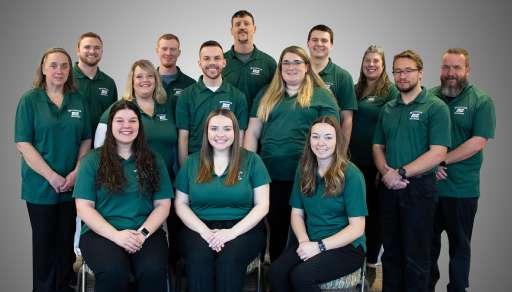
Expanded professional network
Deeper understanding of ag issues
Stronger leadership and communication skills
Personal growth
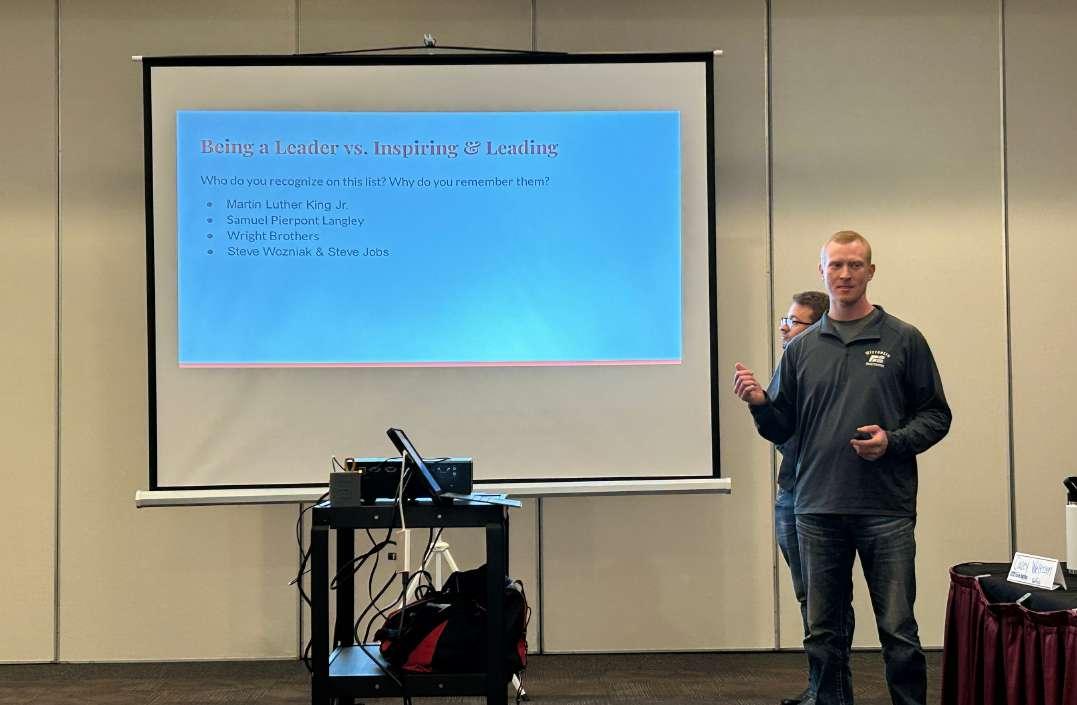
The Mike & Shirley Duerst Institute scholarship program. Institute applicants who are not sponsored by their County Farm Bureau, employer or other organization and have financial need can apply for a scholarship to cover their participation fee.
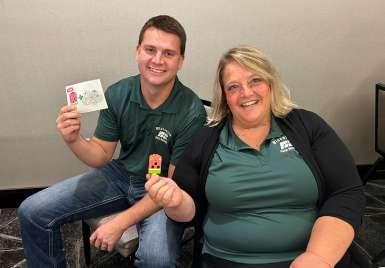
Wisconsin Agriculture in the Classroom continued to grow agricultural awareness and understanding in 2025 through expanded teacher engagement, classroom resources and volunteer support. This growth would not be possible without the dedication of volunteers, educators and Farm Bureau members across the state.
County Farm Bureau programs were instrumental in supporting educators and students through numerous activities and initiatives in 2023-2024. Highlights include:
participated in professional development, used AITC lessons and resources, or hosted an Agriculture in the Classroom experience.
contributed 14,174 hours planning and delivering agricultural literacy programs.
171,866
participated in an agriculture-related lesson, activity or event.
18,600
visited wisagclassroom.org – an increase of 22.3%
Growing agricultural knowledge can start with just a few moments of your time.
- Volunteer to read accurate agriculture books at your local school or library
- Support the AITC Essay Contest by mentoring students, reading essays or sharing information with schools and libraries
- Partner with teachers and schools to continue Wisconsin’s tradition of farm and community agricultural tours
- Work with FFA and 4-H to mentor future agricultural literacy leaders
Learn more about how to get involved with Wisconsin Agriculture in the Classroom at wisagclassroom.org.
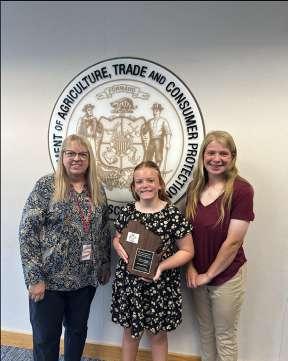
Bees, composting and cows are just a few of the agricultural topics that will be integrated into Wisconsin classrooms this school year with the support of $10,000 grants to twenty schools from the Wisconsin Farm Bureau’s Agriculture in the Classroom program.
Grant dollars will support innovative core curricula initiatives that incorporate agriculture concepts while helping students meet academic standards and develop career readiness skills.
Groups, schools and educators can apply for up to $500 as part of the Agriculture in the Classroom Ag in ALL Classrooms grant program.
AGRICULTURAL LITERACY PROJECTS THAT HAVE BEEN AWARDED FUNDING INCLUDE:
• Arcadia High School, Arcadia School District
• Easterseals Wisconsin
• Fall River MS/HS, Fall River School District
• Gilmanton Middle School/High School, Gilmanton School District
• Langlade County Farm Bureau
• Lemonweir Academy, Mauston School District
• Maple Grove Charter School, Athens School District
• Merrill High School, Merrill Area Public Schools
• Ouisconsing School of Collaboration (OSC), Lodi School District
• River Trail School of Agricultural Science, Milwaukee Public Schools
• Riverside Elementary School, D.C. Everest Area Schools
• Sauk County Agricultural Society, Sauk County Fair Inc.
• Savanna Oaks Middle School, Verona Area School District
• St. Mary School, Richland Center
• Stetsonville Elementary, Medford Area Public School District
• The Academies at Jerstad Agerholm, Racine Unified School District
• Trempealeau Elementary, Gale-Ettrick-Trempealeau School District
• Wadewitz Elementary School, Racine Unified School District
• Waupaca High School, School District of Waupaca
The next Ag in ALL Classrooms request for proposals will open in Fall 2026. This program is made possible by Agriculture in the Classroom partners Compeer Financial, the Wisconsin Soybean Marketing Board and AgCountry Farm Credit Services, as well as the Wisconsin Farm Bureau Foundation.
Wisconsin Agriculture in the Classroom is teaming up with RAYN Growing Systems to bring cutting-edge agricultural learning into Wisconsin schools. This winter, one lucky Wisconsin teacher will win an EdRack Hydroponic System, valued at $5,000, complete with professional training to support successful classroom implementation.
From February 4 through March 15, Wisconsin teachers are invited to enter the giveaway online. The winning teacher will be announced on National Ag Day, March 24 —a fitting celebration of innovation, education and agriculture working together.
The EdRack Hydroponic System offers students a handson way to explore plant science, sustainability, food systems and technology through project-based learning . From seed to harvest, students can investigate real-world agricultural challenges while building skills in science, math and problem-solving.
AITC is excited to partner with RAYN Growing Systems to further our shared commitment to growing agricultural literacy and supporting educators with meaningful, modern tools that bring agriculture to life for students across Wisconsin.
Encourage the teachers in your community to apply and help grow the next generation’s understanding of agriculture, right in the classroom.

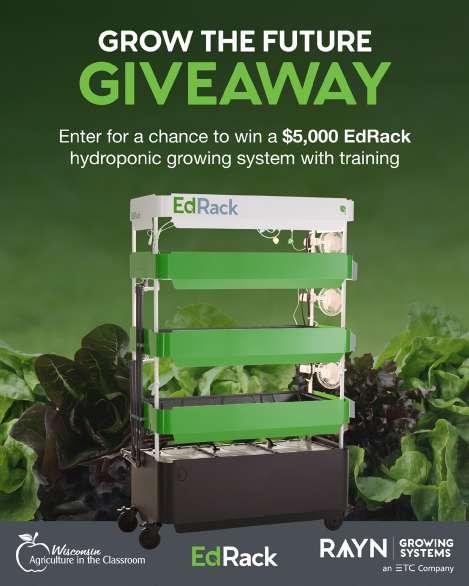

This past year, the Wisconsin Farm Bureau Foundation continued its work supporting programs that help create informed consumers, engaged leaders and strong farmers – reaching hundreds of thousands across the state.
A few highlights of your investment’s impact include:
- Agricultural literacy programming reaching over 159,000 K-12 students through our Wisconsin Agriculture in the Classroom program.
- Increased engagement between tens of thousands of consumers and farmers through Gather Wisconsin.
- With a focus on mental health and wellness, over 1,000 farmers and their families being impacted by Farm Neighbors Care grants and programming.
- Class 16 of our Leadership Institute participating in real-world leadership development curriculum centered on advocacy, professional strengths and teamwork.
- Over 500 young individuals taking part in district networking, competitive events and their annual Young Farmer and Agriculturist conference.
- The Promotion and Engagement program engaging with thousands of consumers and developing member training opportunities including a new event, Cultivate & Connect.
- Over 150 Collegiate Farm Bureau members promoting agriculture during three Ag Day on Campus events and through the Collegiate Discussion Meet contest.
Thank you for your continued investment in education, leadership development and strengthening agriculture!
• Dave and Kim Daniels
• Peter and Annette Pelizza
• Steve Severson
• Wayne and Alice Everts
• James Heisner
• Elaine Wagner
• Vicki Denk

• Roland and Bonnie Denko
• Jesse Wileman
• Karen Kerner
• Mary Benisch
• Peter and Christina Winch
• James and Nodji Van Wychen
• Donald and Cheryl Brenengen
• Jeffrey and Cassie Maier
• David Kruschke
• Margaret Jentges
• Nancy and Mark Steinhorst
The Wisconsin Farm Bureau Foundation was established in 1988 to provide support for agricultural education and leadership programs. Through donations and other contributions, the foundation invests time and resources to support the next generation of agriculturists.
to the Following WFB Foundation Donors: (Donations were made between Dec 10, 2025, and Jan 27, 2026)
• Waukesha County Farm Bureau in memory of Dave Swan
• Randall Mitchell in memory of Karen Gilbert
• Tyler Franklin in memory of Tim Franklin
• Rebecca and Matthew Hibicki in memory of James and Sandy Badtke
• John and Darlene Arneson in memory of Mary Sawle
• John Hromyak in memory of Mary Sawle
• Bob and Lisa Leege in memory of Mary Sawle
Your support helps create informed consumers, engaged leaders and strong farmers by funding programs like Agriculture in the Classroom, Young Farmers and Agriculturists, Promotion and Education, Farm Neighbors Care, Gather Wisconsin and more.
Scan the QR code to donate today!
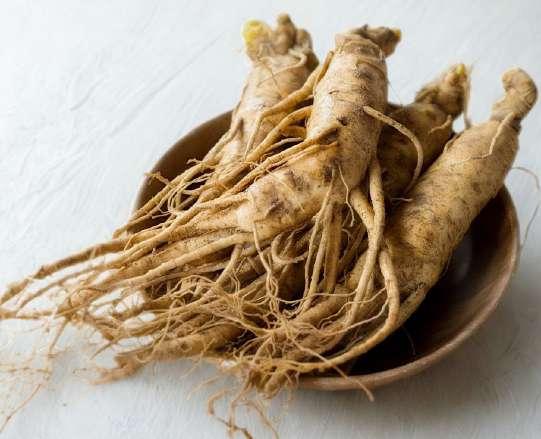
Most of the world celebrates the New Year on January 1 with traditions like champagne toasts or New Year’s resolutions. But there’s another New Year’s celebration where Wisconsin agriculture becomes a central tradition –Lunar New Year, also called Chinese New Year.
About one-quarter of the world’s 8.2 billion people will start celebrating Chinese New Year on February 17, beginning with the new moon. Across much of Asia, it marks a pause in work and a time for travel, resulting in one of the largest annual human migrations in the world. The 2026 celebration ushers in the Year of the Fire Horse.
You might not think it, but this annual event has a direct impact on America’s Dairyland, as Chinese New Year is traditionally peak buying season for ginseng.
Although Wisconsin is known as a leading dairy producer, it’s also number one in the U.S. in ginseng production, accounting for up to 98 percent of all ginseng produced in the country, according to the state Department of Agriculture, Trade and Consumer Protection.
Here are five things to know about this valuable Wisconsin specialty crop.
According to Wisconsin Ginseng Director Jackie Fett, the Chinese holiday is the biggest time of year for Wisconsin ginseng growers. This is because the world-renowned American ginseng has cultural significance as a gift, especially to the elderly, which shows a sign of respect. Wisconsin produces roughly one million pounds of ginseng, she says, with 80 percent of it going to Asian markets. China is the largest buyer.
Retailers and wholesalers often increase purchases ahead of the holiday to meet consumer demand for ginseng.
Many Asian cultures believe American Ginseng is effective in creating a calming effect, supporting improved energy and longevity. According to the Ginseng Board of Wisconsin,
many Native American tribes used ginseng to treat headaches, fever and indigestion. Today, the promise of the health benefits of American Ginseng is drawing attention from Western researchers.
The primary active ingredients of American Ginseng are ginsenosides and polysaccharide glycans. These compounds are believed to provide “adaptogen” benefits that balance hormones and help the body stay calm. Adaptogenic herbs have been used for thousands of years as natural remedies and have exploded in popularity over the last couple of years.
According to Dave Schumacher, vice president of the Ginseng Board of Wisconsin, there are two barriers to trade into their top market: tariffs and permits. In addition, he says the industry is also competing with other countries that grow ginseng at a cheaper rate.
Schumacher says the board is exploring new market opportunities to offset barriers to China, including domestic markets through programs like Alice in Dairyland.
“We will continue to work on the medical research side for that reason,” he says. “If we can prove what ginseng is good for, then people are more accustomed to trying it.”
American ginseng, unlike soybeans, hay, corn, or other well-known Wisconsin crops, takes a minimum of three to four years to reach maturity after planting.
Once you grow American ginseng on a piece of land, it will never grow there again. Even after 100 years, ginseng will not repopulate the same field.
Marathon County is the top ginseng-growing county in the state, producing about 95 percent of Wisconsin’s annual crop.
You can buy Wisconsin ginseng fresh or dried. It comes in slices, pieces, powders, capsules or whole roots. You’ll also find it on its own or combined with other ingredients for teas and supplements.
This year’s Chinese New Year celebration is 16 days long, ending with the Lantern Festival on March 3 (full moon). You can find trusted Wisconsin ginseng retailers at realwisconsinginseng.com.




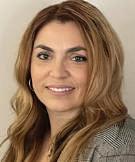
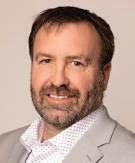
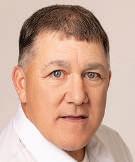
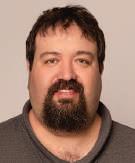
From the pastures of Waupaca County to leadership tables across Wisconsin, Rachel Bouressa wears many hats, including beef farmer, agriculture advocate and conservation coach. On her family’s farm near Royalton, she practices rotational grazing and helps other farmers navigate the ups and downs of conservation work.
Conservation is an important part of farming for several reasons including protecting soil health, efficiently managing water use, maintaining biodiversity and encouraging sustainability to ensure long term success.
Here are five ways to help you get started on your conservation journey.
Find the right network of peers and mentors. This could include connecting with the Natural Resources Conservation Service for cost-share and technical support, your county conservation staff who know the local landscape or farmer-led watershed groups that offer on-the-ground experience and camaraderie.
Connecting with like-minded individuals not only gives you advice but also presents you with new, innovative ideas.
Agriculture is a science, and experimentation is a part of the process. This is where you can make farming fun and interesting.
Whatever you decide to experiment with, start small; test a new practice on a marginal field or split your field into test plots. Experiments could include drone-seeding cover crops or planting new cover crops to break up soil compaction and attract pollinators.
Diversity builds resilience, whether it’s in your soil or income. For example, as a beef farmer, partner with a neighboring dairy farm to grow cover crops that benefit both farms. It improves soil health for the dairy farmer, while extending the grazing season as a beef farmer. Creative ways to collaborate include:
• Can livestock and crops work together on your land?
• Can neighbors share seed, data or equipment?
• Can you find alternative markets for new crops?
Many farmers hesitate to try conservation practices because of perceived risk, whether it be cost, uncertainty or the fear of failure. Instead, reframe risk as an opportunity. By starting small, you minimize financial exposure while learning what works. With cost-sharing programs available through NRCS or local initiatives, support is often just a conversation away.
Look for more than yield when measuring success. Take a shovel to your soil and look for worms and structure, watch how water moves after a rainfall and listen for birdsong in your pastures. Yield still matters too, but biodiversity, soil health and inspiring others to try something are also long-term indicators of success.
As the number one farm insurer in Wisconsin, Rural Mutual Insurance Company provides knowledge and insight to help you make the best decisions to protect your farm and way of life. Reach out to a local agent to learn more.
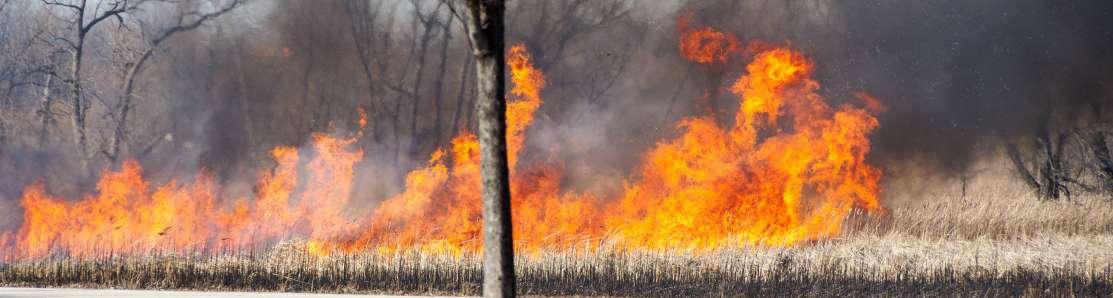
Believe it or not, Wisconsin’s wildfire season is just around the corner. According to the Wisconsin DNR, it peaks in early spring, shortly after snowmelt and before vegetation greens up. This is when dead grasses, leaf litter and pine needles are driest and conditions (warmer temperatures, frequent winds and low humidity) favor ignition and rapid spread. This is also when people are more likely to conduct post-winter yard and brush burning.
• Stay updated on fire conditions and whether any Red Flag Warnings have been issued.
• If high fire danger conditions are present, avoid all outdoor burning until conditions improve.
• Operate equipment in the early morning or late day to avoid sparks at peak burn hours. This includes wood cutting, lawn
mowing, recreational vehicles, parking hot exhaust systems on dry grass, etc.
• Watch for fire hazards like broken light fixtures, exposed electrical wires, loose outlets, clutter of flammable materials and blocked exit pathways.
• Secure dragging trailer chains on your equipment, campers, boats, etc.
• Delay campfires until the evening hours as fire conditions tend to improve.
A fire is a devastating loss. Talk with your local Rural Mutual agent about fire safety resources and other ways we can help you protect your farm.
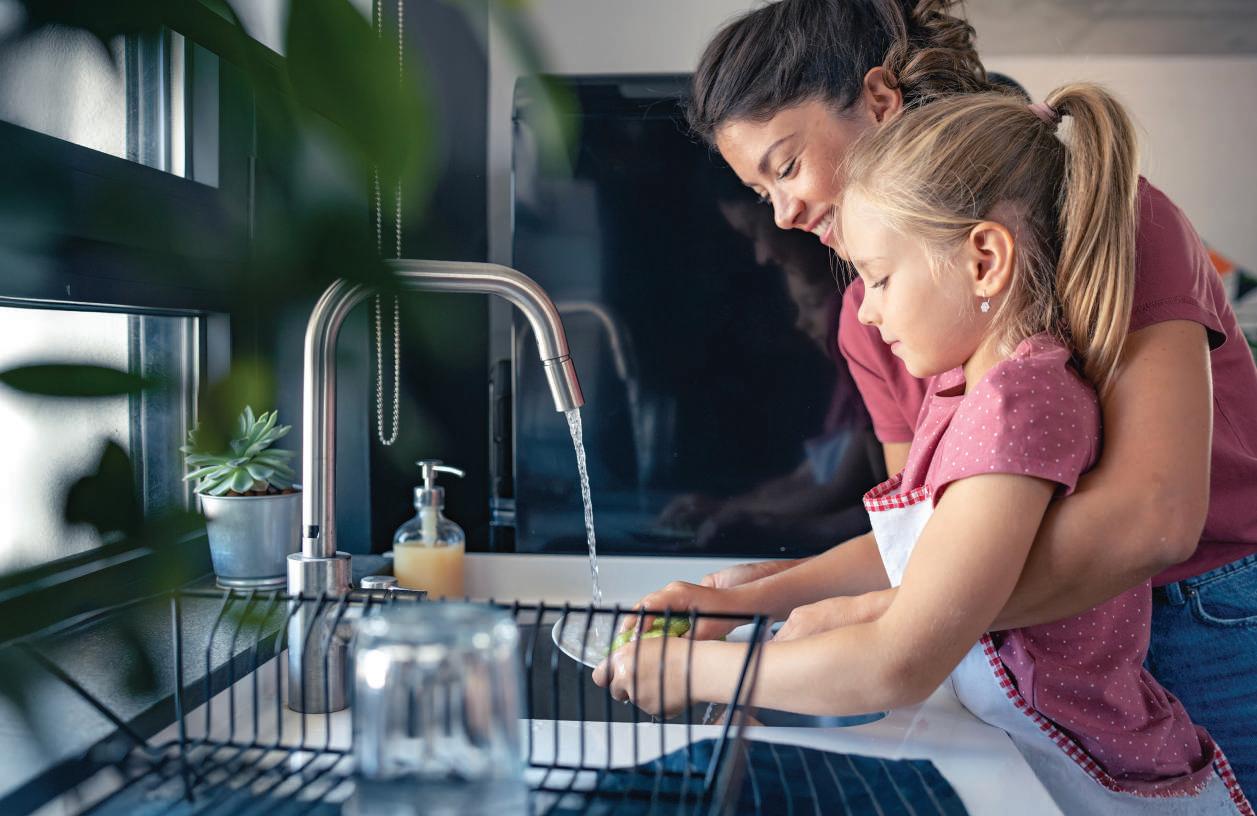
Your future self will thank you.
When it comes to planning for the future, sometimes getting started is the hardest part. That’s where we come in. From life insurance and annuities to retirement planning and more, we’ll help you get started and stay with you every step of the way.
Contact your local agent, and together, we’ll make your future self proud.
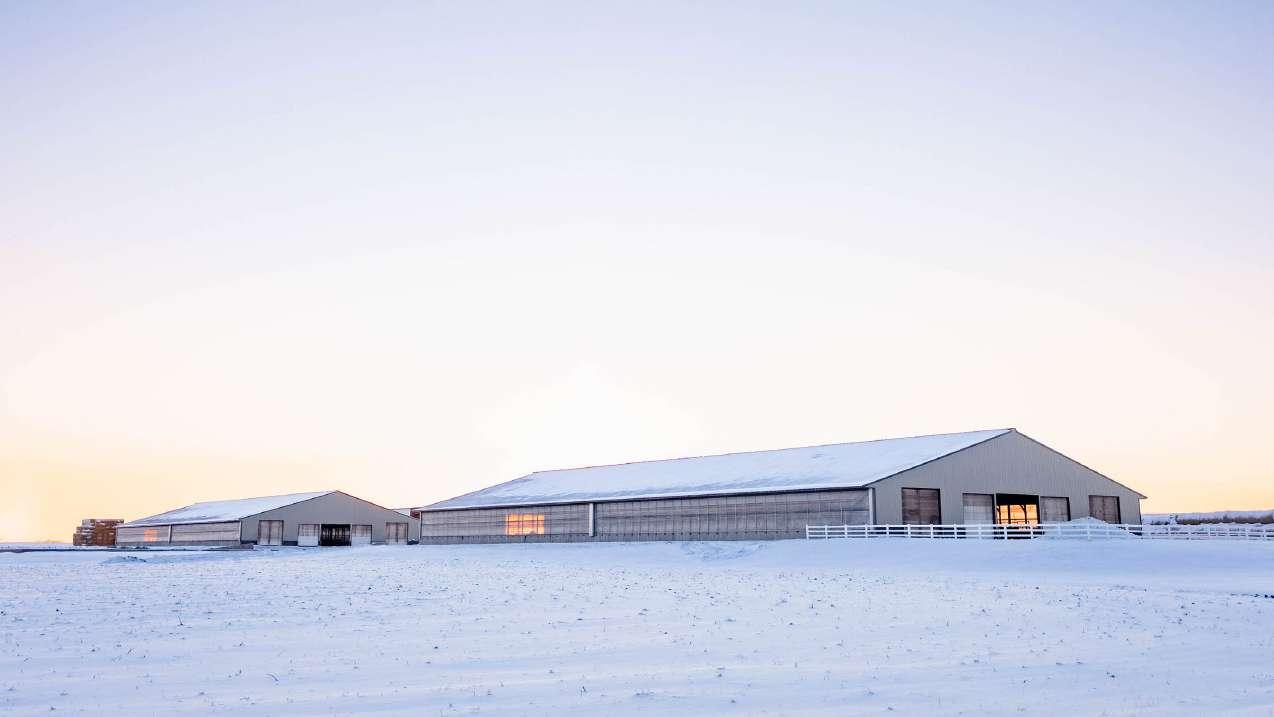
When winter snow blankets your farm, the right insurance can warm your peace of mind. As Wisconsin’s #1 farm insurer, we’re here to protect your family, future, and livelihood—snow or shine.



Connect with your local agent