
NOVEMBER - DECEMBER 2025 HAlF TERm 2
Contents
Inspired Orchestra DayEttore T, Year 12
Year 9 Residential - William B-C, Year 9
U19 Chess Tournament - Juan G-C, Year 12
Geography Scholars at the Royal Geographical SocietyJay J, Year 12
History Trip to Churchill’s War Rooms - Ben C, Year 12
Pan’s Labrynth at the BFI - Ben C, Year 12
Economics Lecture - Jay J, Year 12
Online Crime Talk, Felix W, Year 13
The Importance of Representation - Zain S, Year 13
Roots - Theo N, Year 12
Euston Food Bank - Santi Q, Year 10
Robotics ScrimmageDomenico C, Year 10
Why Students Should Read the FT: Understanding the World Before It Happens to UsTommy S, Year 12
Should AI Take Over Education? - Harry M, Year 10
Fulham Football Club (1879-)Henry C, Year 8
On The Eve of Exams - Minh B, Year 11
Global Festivities - Alexander M, Year 9
The Shawarma - Domenico C, Year 10
Karate - Thomas C, Year 10
Cover photograph - Jack A, Year 10
Contributing to the Barometer is a great way to earn gold notes, improve your writing, and it looks great on your CV
To submit articles or cover photos, join the Barometer club at Friday lunchtimes (B11) Or, you can email Mr s Bradley at nicola.bradley @wetherbysenior.co.uk
Read the latest issue at https://issuu.com/wetherbysenior
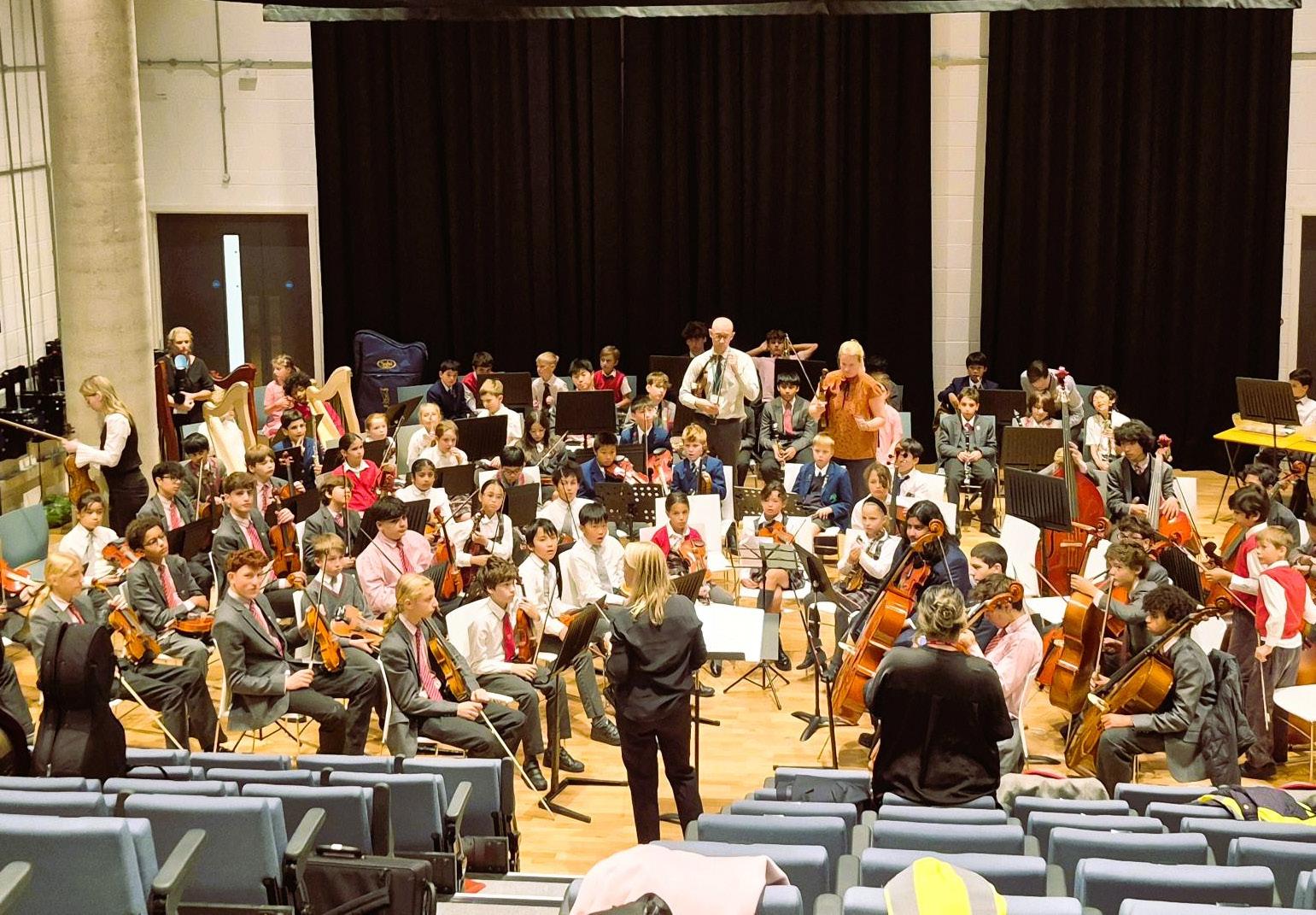
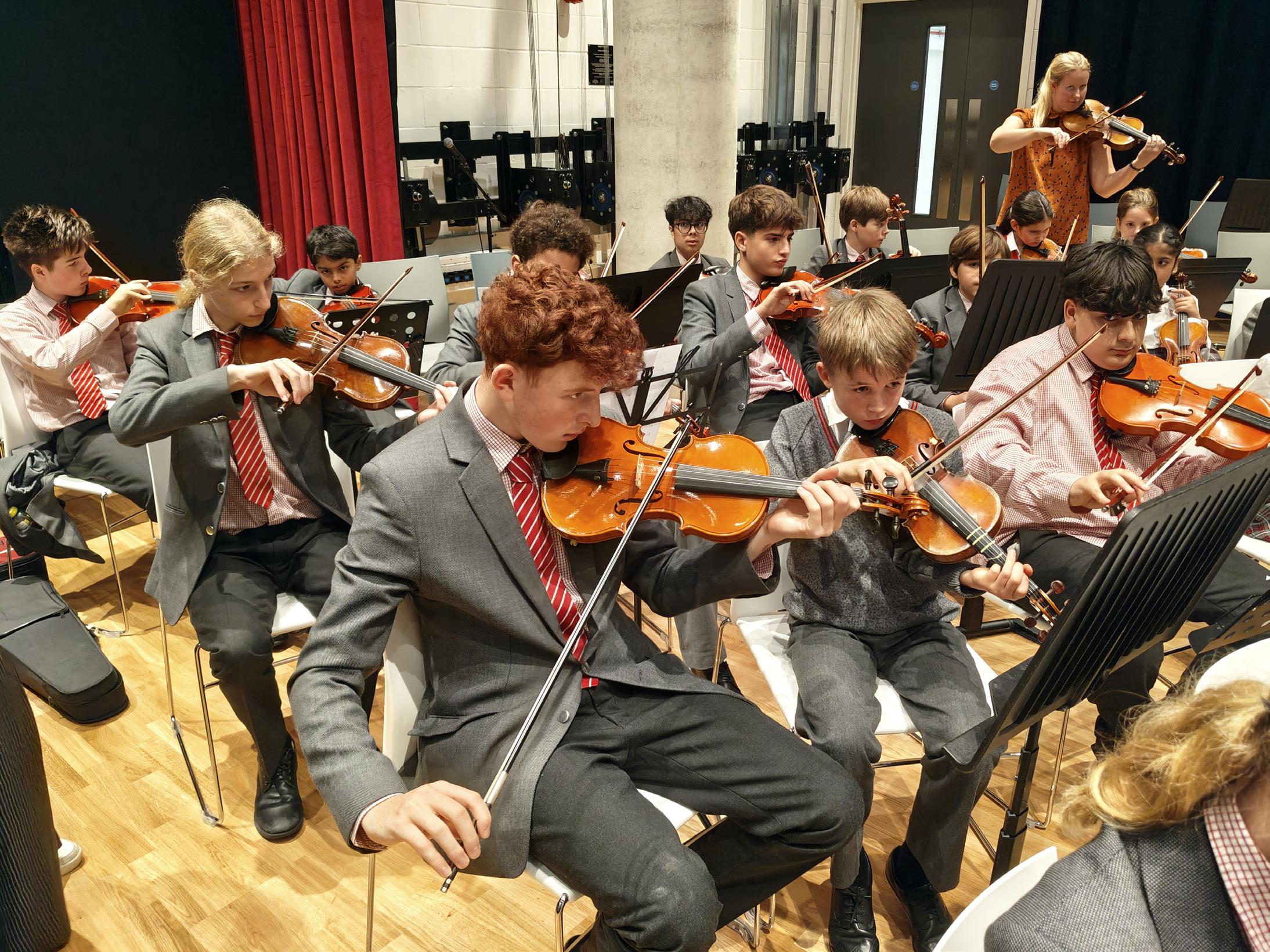
On Wednesday last week, Wetherby’s Orchestra was invited to take part in the first of many Inspired Orchestra Days. It was an exciting opportunity where several London-based schools across the Inspired network came together to make music and new friends. Wetherby Pembridge hosted this awe-inspiring event, during which students developed vital skills in teamwork and musical performance.
It was a truly impressive organisational feat, made possible by the tireless work of many members of staff, including our own Mr Martin, who consistently goes above and beyond to ensure every musician in the school can
participate in these spellbinding experiences. In turn, every student who took part expressed real gratitude for the opportunities
presented to them and is filled with irrepressible excitement for future events.
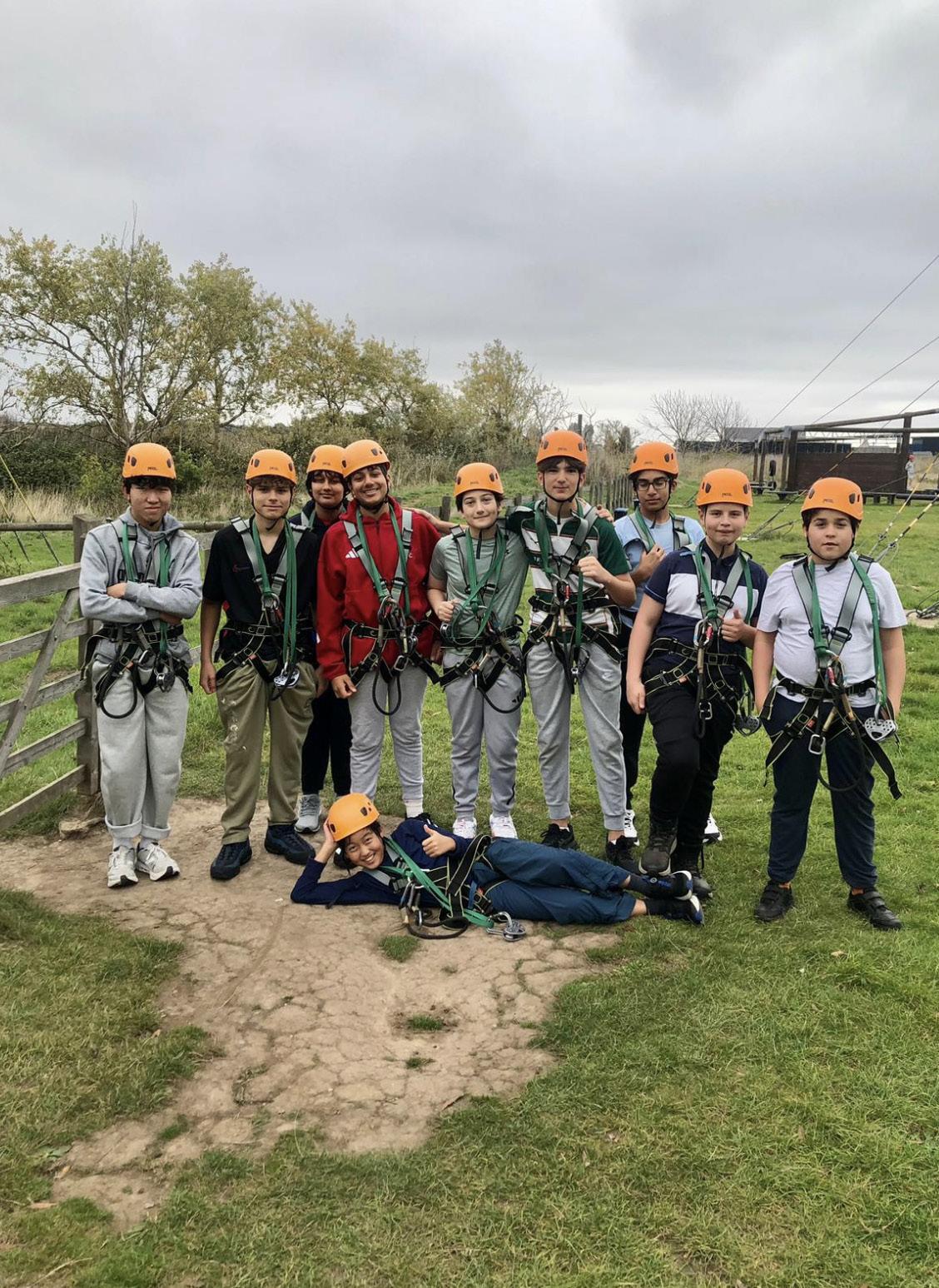
On the 8th of October at eight a.m. in Hannah House Hall, the Year 9 boys were waiting eagerly for their trip to Mersea Island in Essex. As the coaches were being loaded with the many bags, the boys boarded and began the two-hour journey. The first coach arrived on schedule at the camp, but the second coach arrived about two hours later, which meant that some boys later repeated activities and missed out on others. Because I was on the
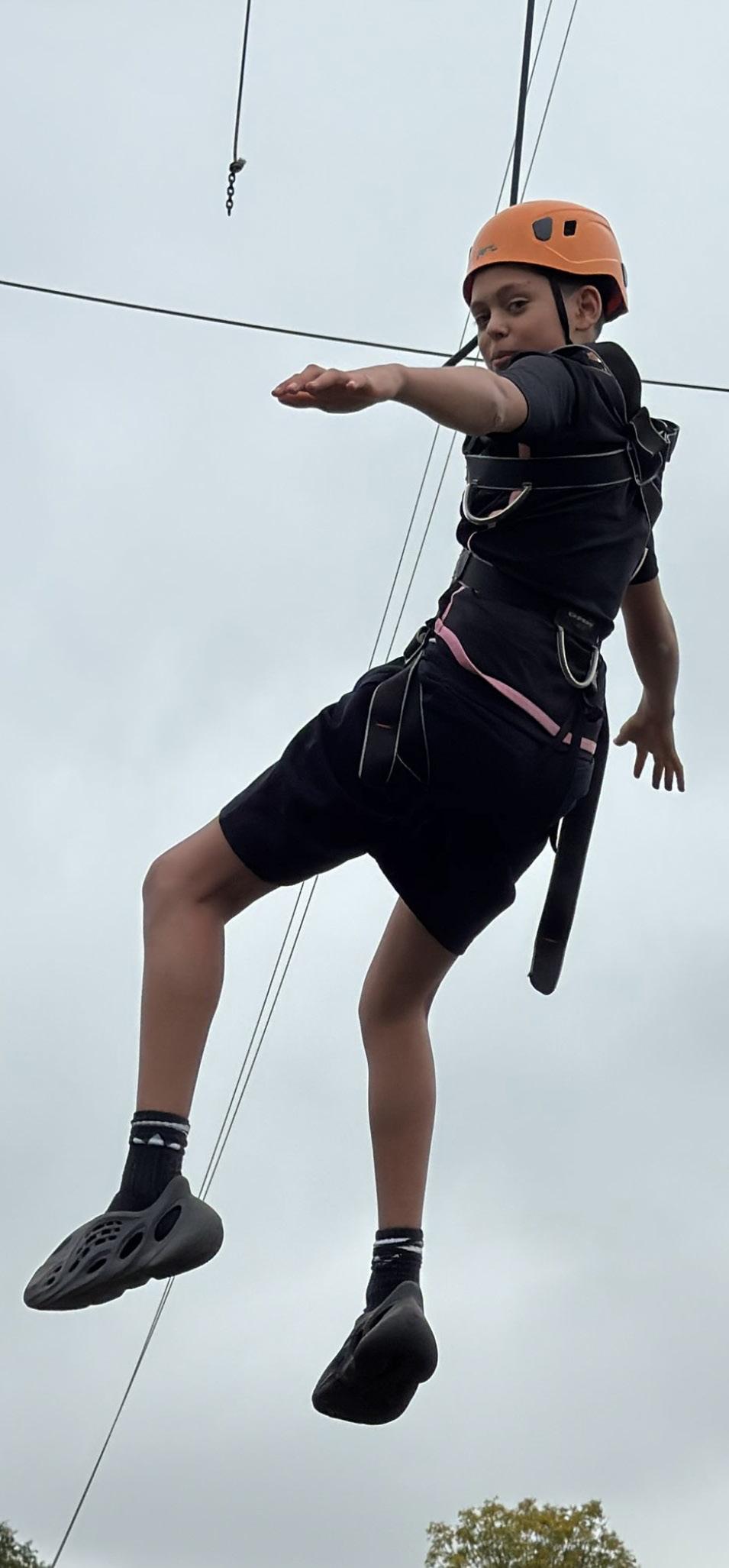
coach that arrived early, my form tutor took us to do the zip-lining activity. We walked to a tower and climbed a set of very steep stairs. You could walk off backwards, walk off forwards, or even run off the tower — and you could do something funny on the way down.
After that activity, the second coach had arrived. It was lunchtime. Every day we had baguettes split into ham or cheese fillings. After lunch, we sorted out our rooms, took our luggage into
our dorms, and were placed into our groups. Then we went to do the Adventure Challenge, where we had to carry a bucket of water around an obstacle course while trying not to spill it. After that, we did caving. The cave had been dug into the side of a hill, and I explored every tunnel.
Once those activities were finished, we had some free time before dinner. We went over to the other camp, and I played frisbee with some of my friends. Dinner was crumbed chicken, served by the teachers. Afterwards, we could choose to watch a movie or go to bed. For those who wanted to watch a film, there were two options: Black Panther or The Incredibles. Naturally, Black Panther won, but because it is two and a half hours long, we only
watched half before going to bed.
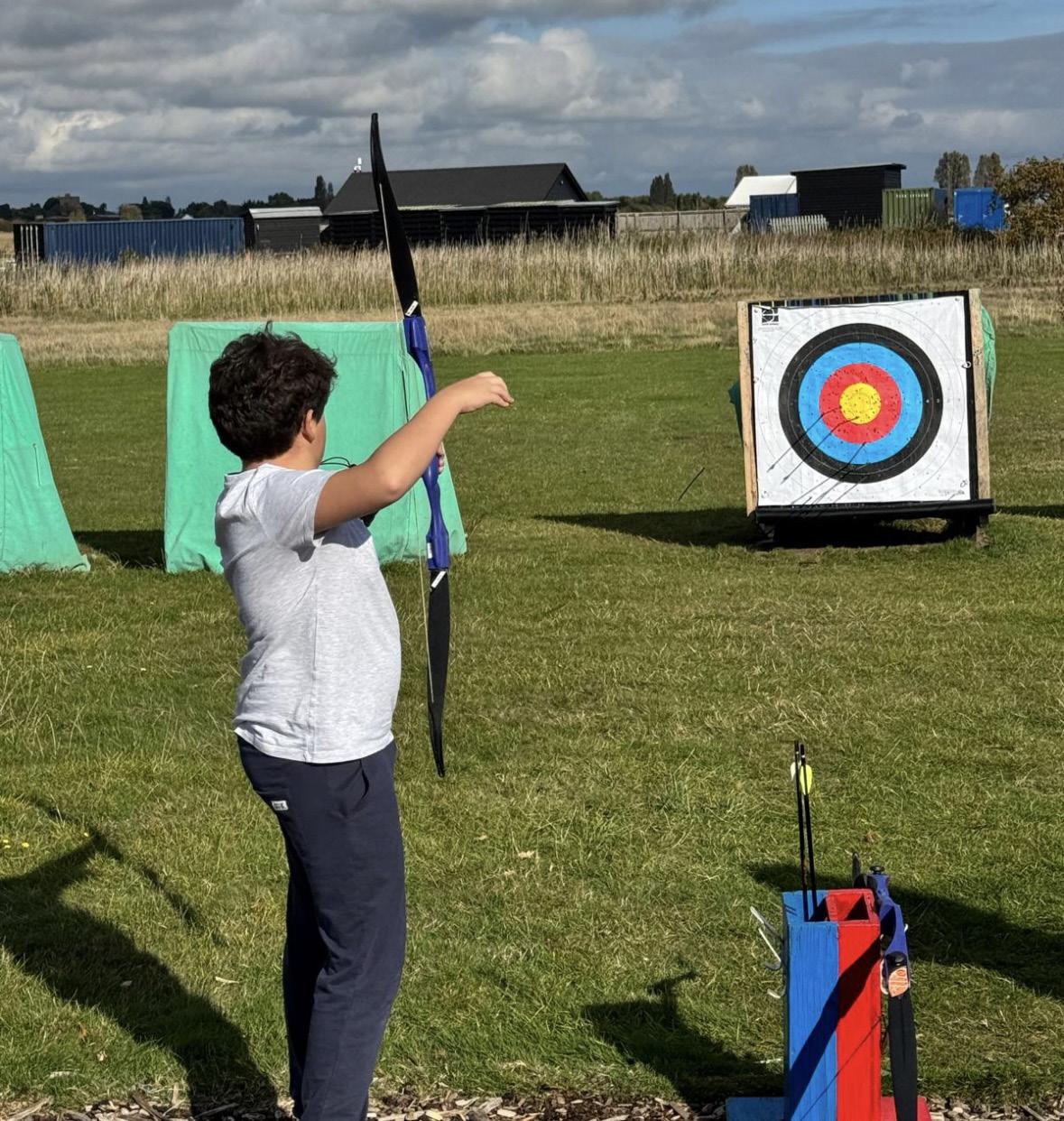
The next day, we woke up and were told to get ready for breakfast, which was toast and cereal. Apparently, some people had tried to put baguettes in the toaster, and it caught fire. After breakfast, we did the Team Challenge, where you had to work together to achieve a goal. Then we did the zip-line again. After lunch, we did the Leap of Faith, where you had to climb a wooden pole that swayed in the wind; once at the top, you had to stand up and jump to try and grab a metal bar. Next, we did archery, where some boys wrote down fake names that had nothing to do with their real ones. One boy in my group scored the highest the instructor had ever seen.
After that, we had dinner and finished watching Black Panther. When we woke up the next
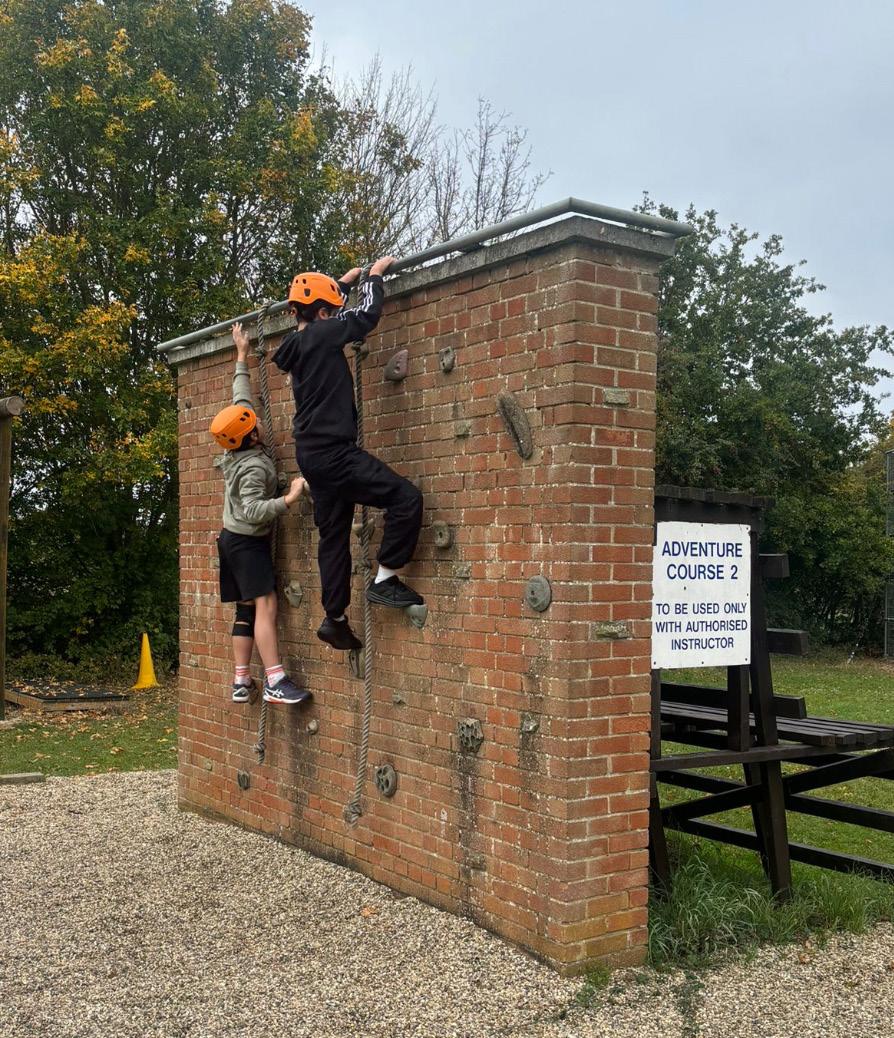
morning, we had to take our luggage to the white tent before going to breakfast, which again was cereal and toast. Then we had our final two activities, which for my group were rock climbing and low ropes. Being a NICAS Level 3 climber, I enjoyed the climbing a lot. During low ropes, we had to complete challenges while being sprayed with a water gun. After that, we had a quick lunch before getting on the coaches. My coach arrived back before the other one, and we unloaded the bags and went home.
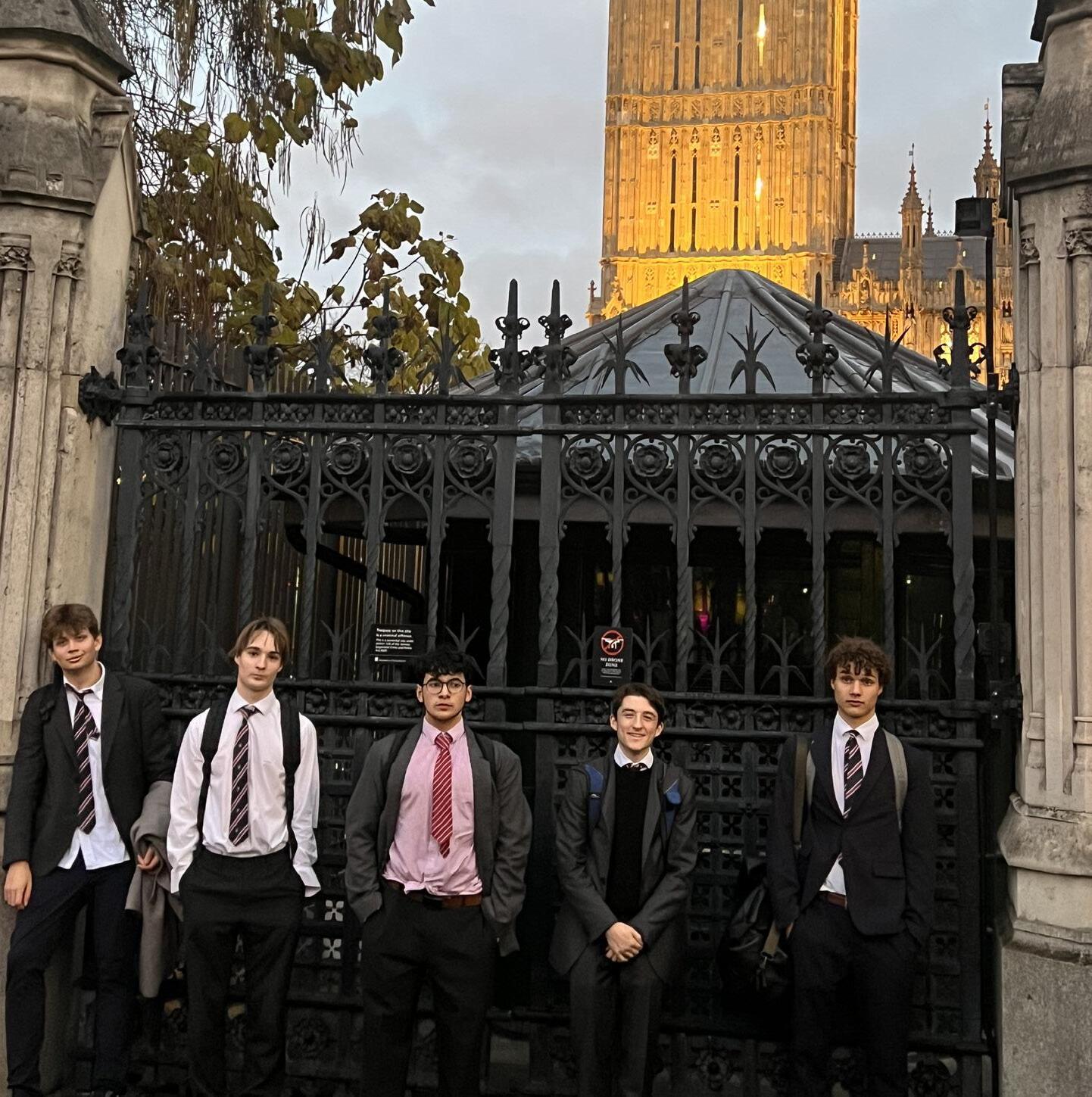
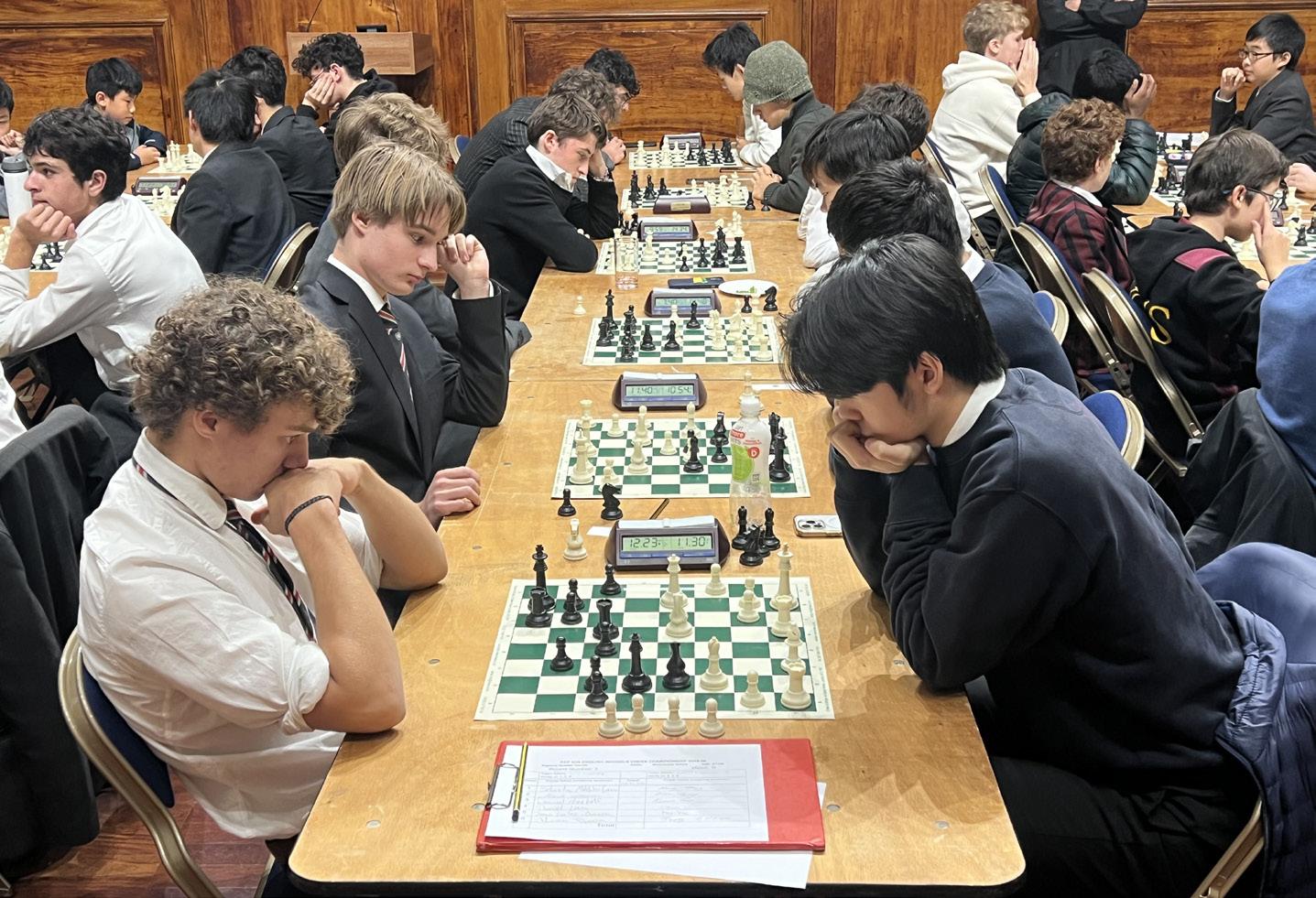
The Wetherby School Chess Team recently travelled to Westminster to take part in a U19 tournament hosted by Westminster School. The team consisted of six members: Sebastian M-G, Mark S, Daniel A, Daniel L, Juan G, and Theophile N. We departed from Hannah House at 16:30, accompanied by Mr Brennan, and arrived in Westminster around 17:15, where we waited patiently for the event to begin.
In the first round, the opposing school had a shortage of players, so Boards 4–6 had the chance to play against other schools as well as each other, while Boards 1–3 faced the competing team. The first round went well for Wetherby — we won our games fairly quickly and were able to enjoy the
complimentary snacks and watch the ongoing matches between other schools.
In the second round, Wetherby played against the competitive Westminster B. We held our ground against some very strong players; Board 5, in particular,
maintained a winning position leading up to the endgame but was undone by time pressure. Between rounds, Mr Brennan was supportive and calm, praising our efforts and encouraging us for the upcoming games.
Our third round was against Westminster A. Boards 1 and 3 both played excellent games, with Board 3 securing a strong win against a tough opponent and Board 1 fighting into a tense, competitive endgame. The rest of the team played well but were affected by fatigue as the event went on.
The tournament concluded with Wetherby securing seven wins out of the eighteen games we played. Although we did not qualify for the next round, we played with focus and intensity throughout, showing strong spirit and determination in every match — something Mr Brennan greatly appreciated. The tournament was a valuable experience for the team, prompting us to refine our play, deal with pressure, and grow as players.
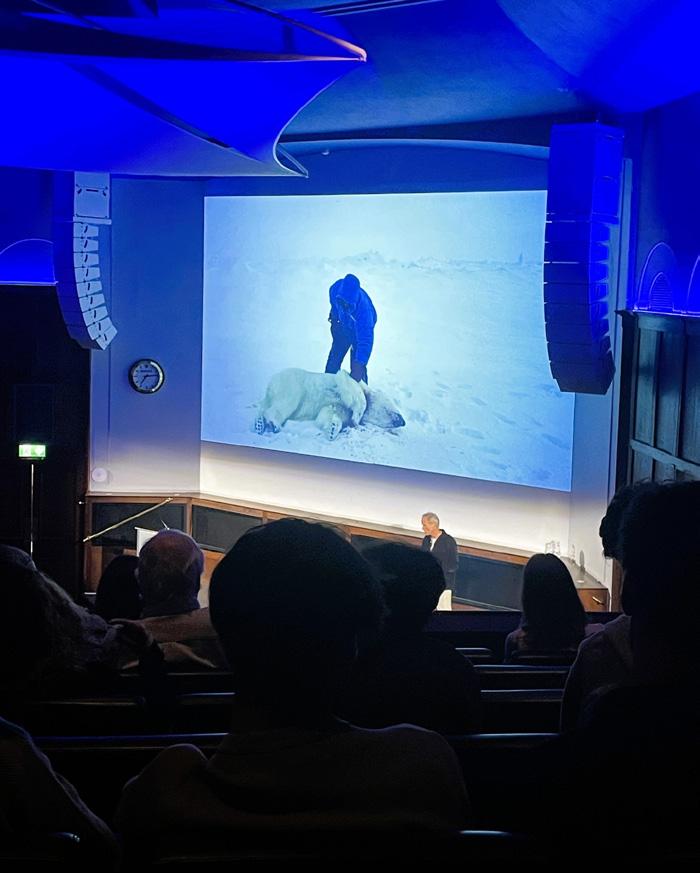
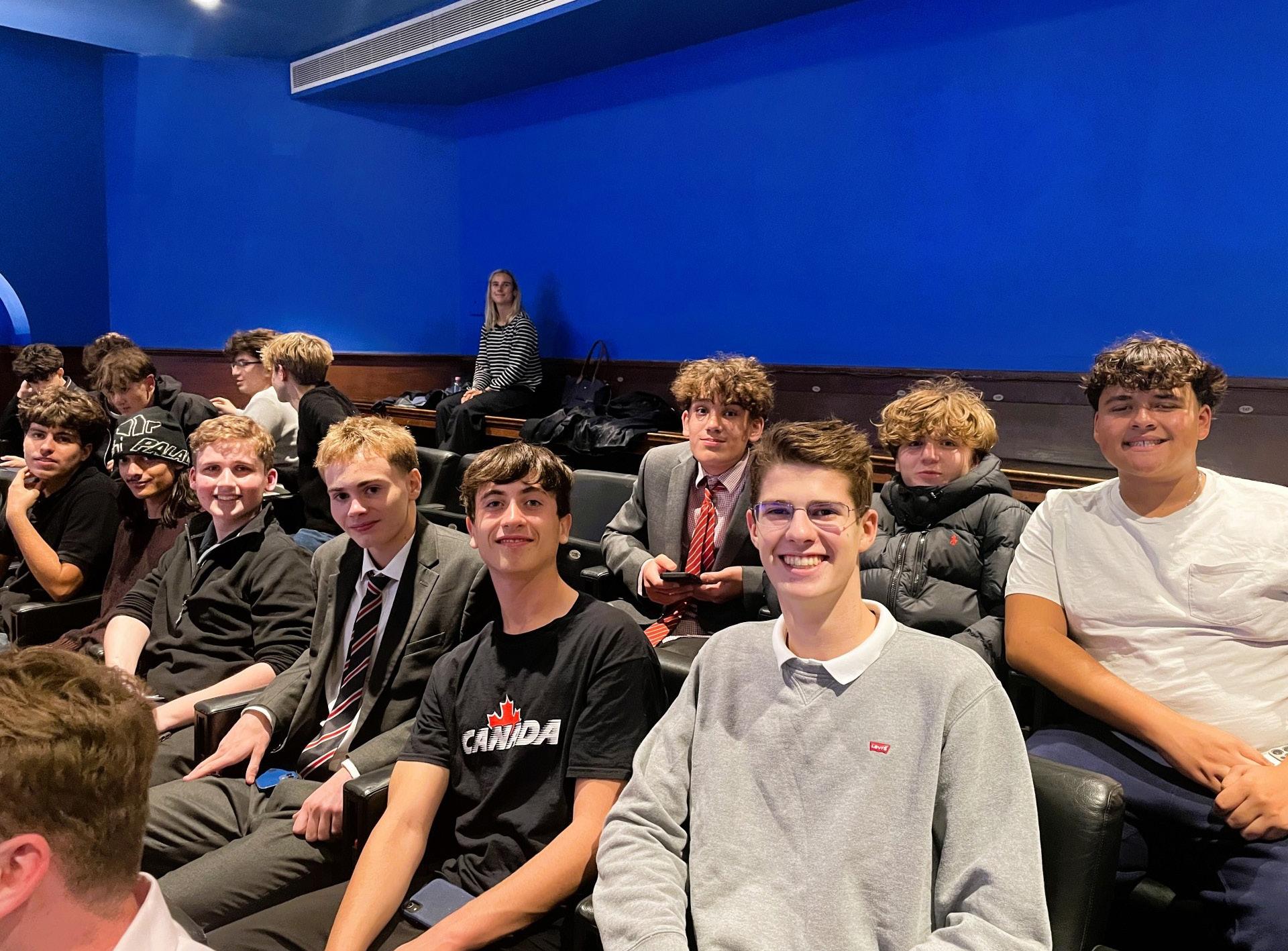
On Monday 13th October, the Geography Scholars travelled to the Royal Geographical Society for a special lecture by the Norwegian
explorer Erling Kagge. Famous for being the first person to reach the North Pole, the South Pole, and the summit of Mount Everest on foot, Kagge shared stories that went far beyond the usual reports of adventure. He spoke specifically about the discipline required to keep moving in such extreme conditions.
The Scholars had the opportunity to ask questions, and Kagge’s answers offered a rare glimpse into the mindset of someone who has challenged human endurance on multiple occasions. He discussed the practicalities of polar travel, the psychological hurdles of loneliness, and how exploration today is as much about mental understanding as it is about
reaching the destination. His reflections on his books, which blend philosophy with geography, encouraged students to think about the deeper meaning of exploration and its relevance in everyday life.
After the half-term break, the Scholars returned to the Royal Geographical Society for a contrasting lecture from Professor Tom Rippeth, a leading expert in physical oceanography. Professor Rippeth explored how the world’s oceans behave, the forces that shape their movements, and the significant changes currently taking place within marine systems.
Ben
C, Year 12 writes...
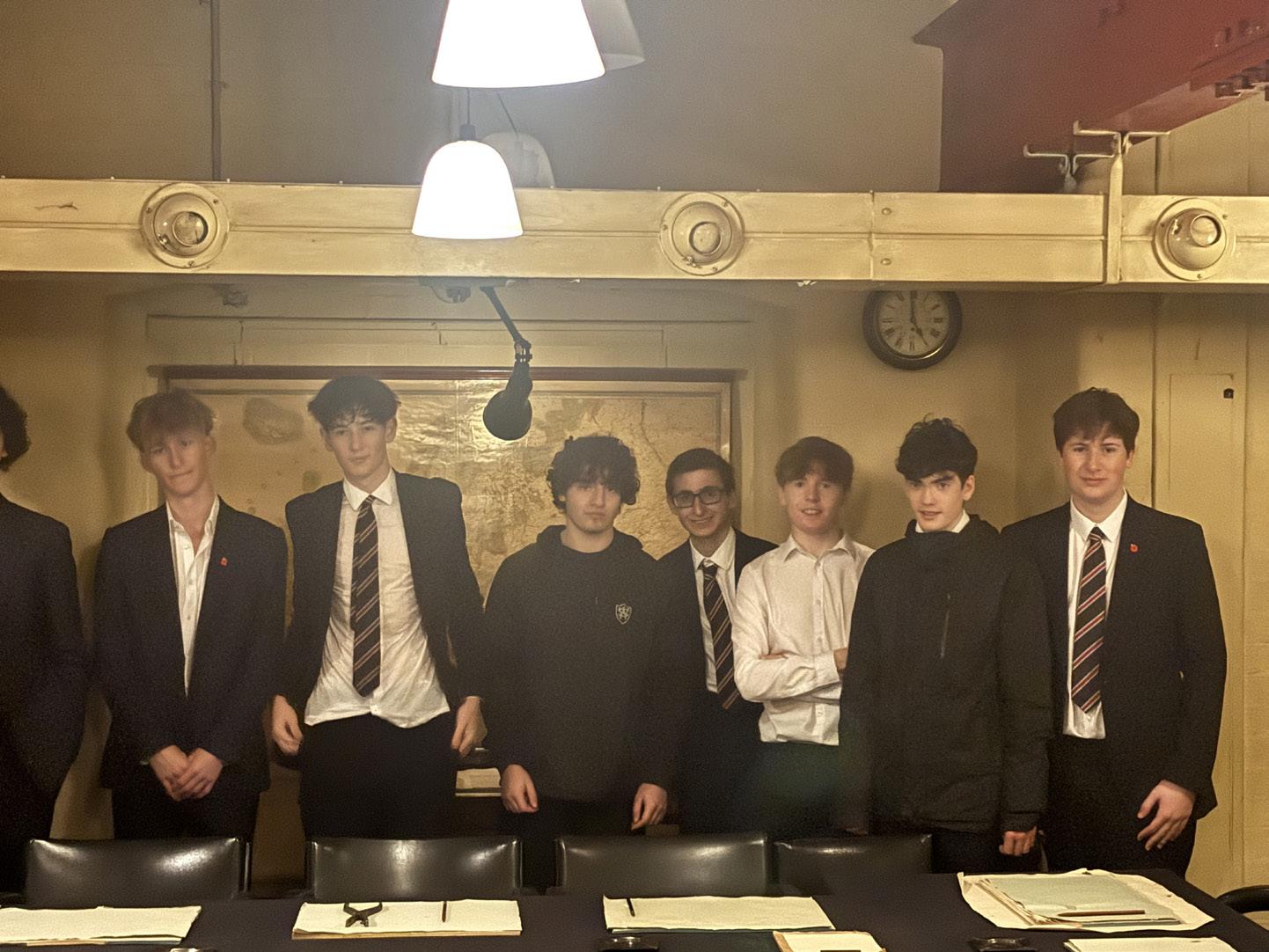
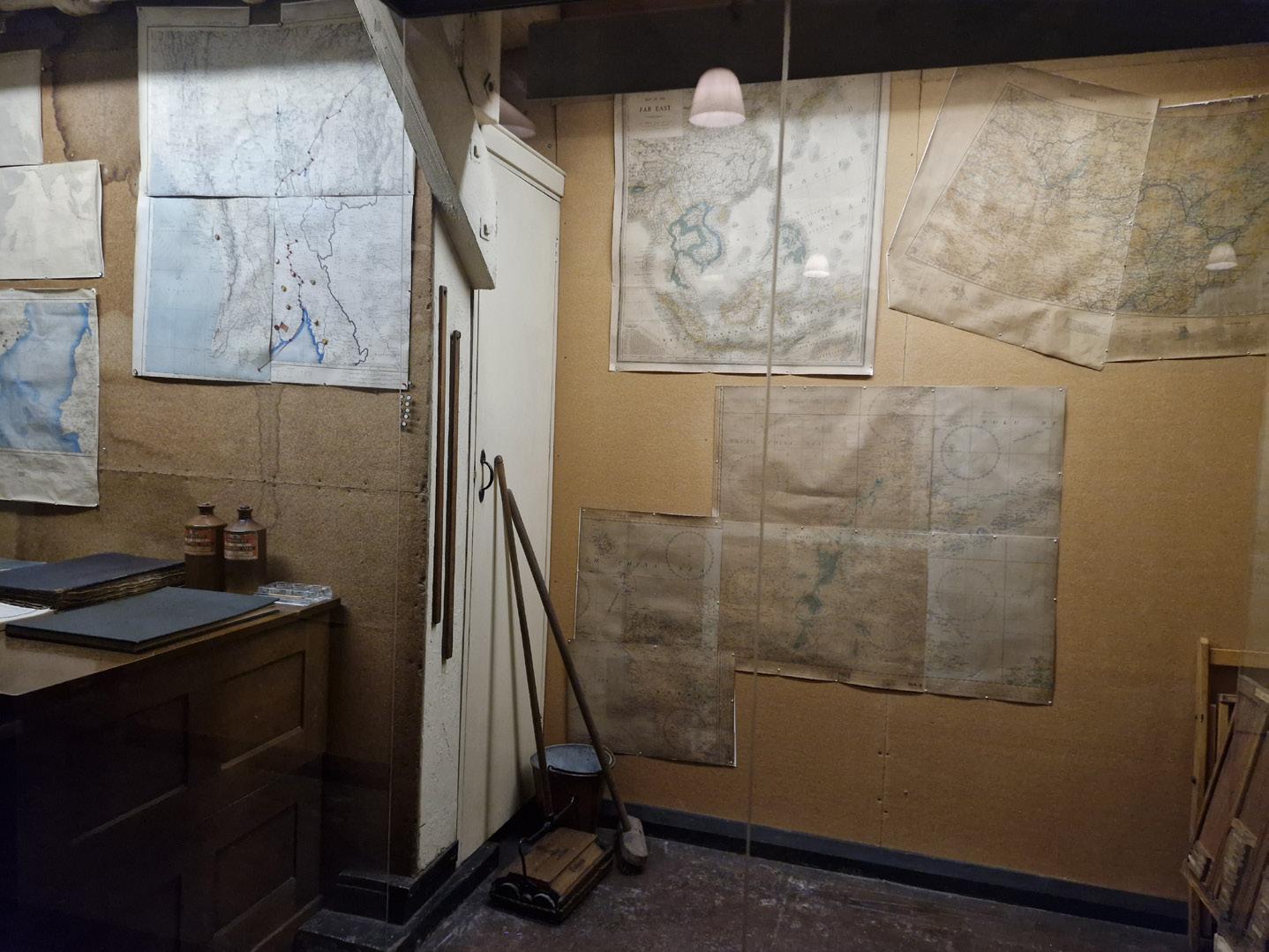
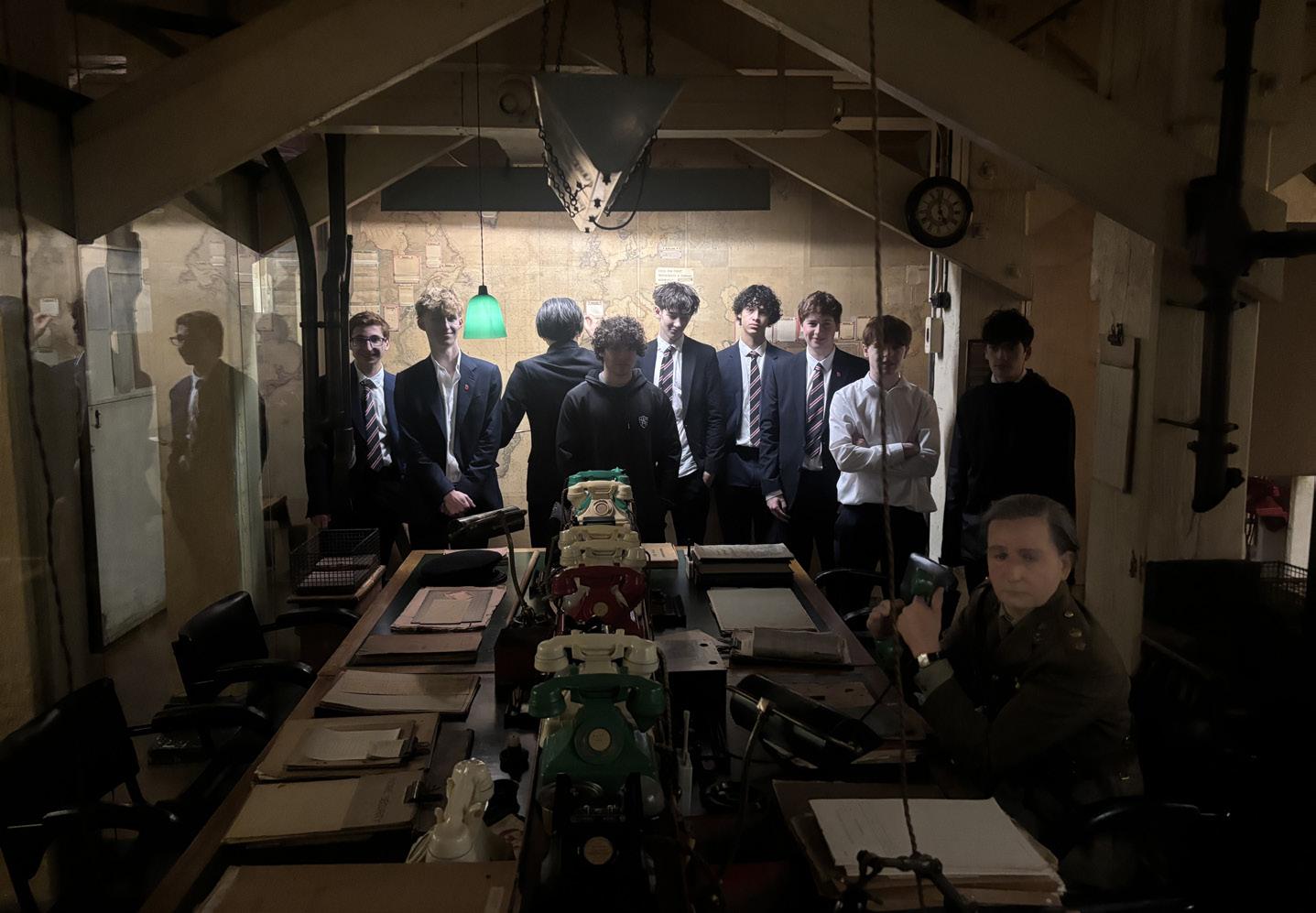
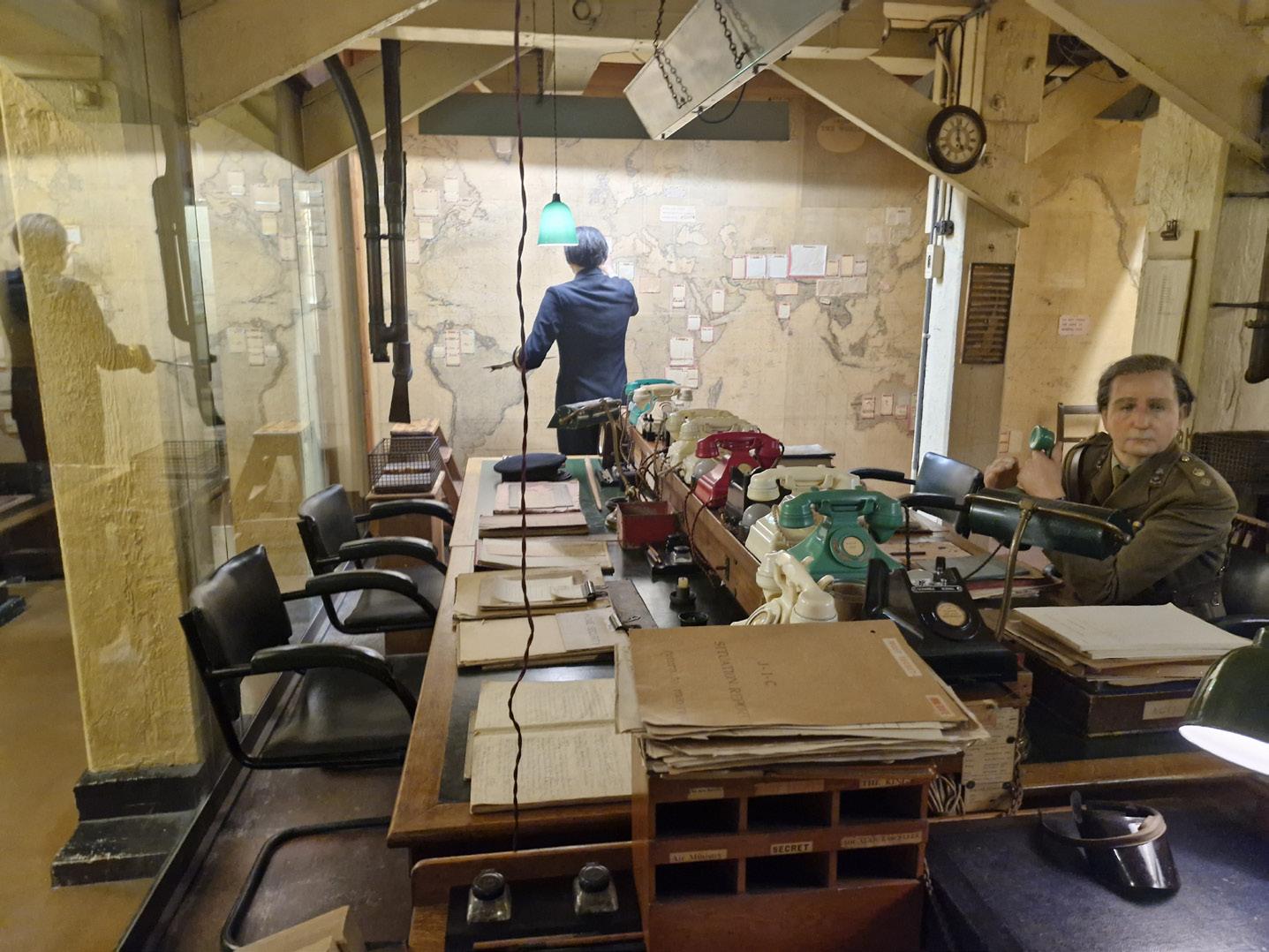
On Friday 14th November, Year 12 History and Politics A Level students headed to Whitehall to explore the subterranean world of Churchill’s War Rooms, a labyrinth of tunnels and meeting rooms used by Churchill and his war cabinet to convene in safety during the Blitz. Our tour was exceptional, giving us access to usually off-limits areas, including Churchill’s bedroom and the Map Room, which was used to monitor Allied shipping in the Atlantic and track Luftwaffe aircraft sightings across the English Channel. All of the rooms we visited remained largely untouched since the end of WWII in 1945, and mannequins added even more authenticity to the experience.
The Spanish Civil War, which lasted until April 1939, was the first conflict in which aerial bombardment was used to destroy military and civilian targets. When the UK Air Ministry witnessed the devastation inflicted on urban
areas through these bombing campaigns – for example, the destruction of the town of Guernica, depicted in Picasso’s famous painting – it promptly acted to construct the War Rooms, which could be used by the war cabinet to shelter from enemy attacks.
Dug below the Treasury building
on Whitehall, the bunker was believed to be bomb-resistant, reinforced with protective concrete casing and iron-beam supports. Our tour guide was quick to point out that whilst this protected the War Rooms from vertically falling bombs, these defences could not stop a bomb landing at an angle – which is precisely what happened when a bomb struck Clive Steps, directly above the War Rooms. Luckily, it did not explode, and the unexploded bomb now hangs from the ceiling in an exhibit room.
The first leg of our tour took us to the conference room in which Churchill met with his generals and high-ranking cabinet ministers. Churchill sat at the head of a square-shaped table, with his generals directly facing him and his ministers on either side. As depicted in the 2017 film The Darkest Hour, which was filmed in the War Rooms, Churchill often fiercely scolded his generals
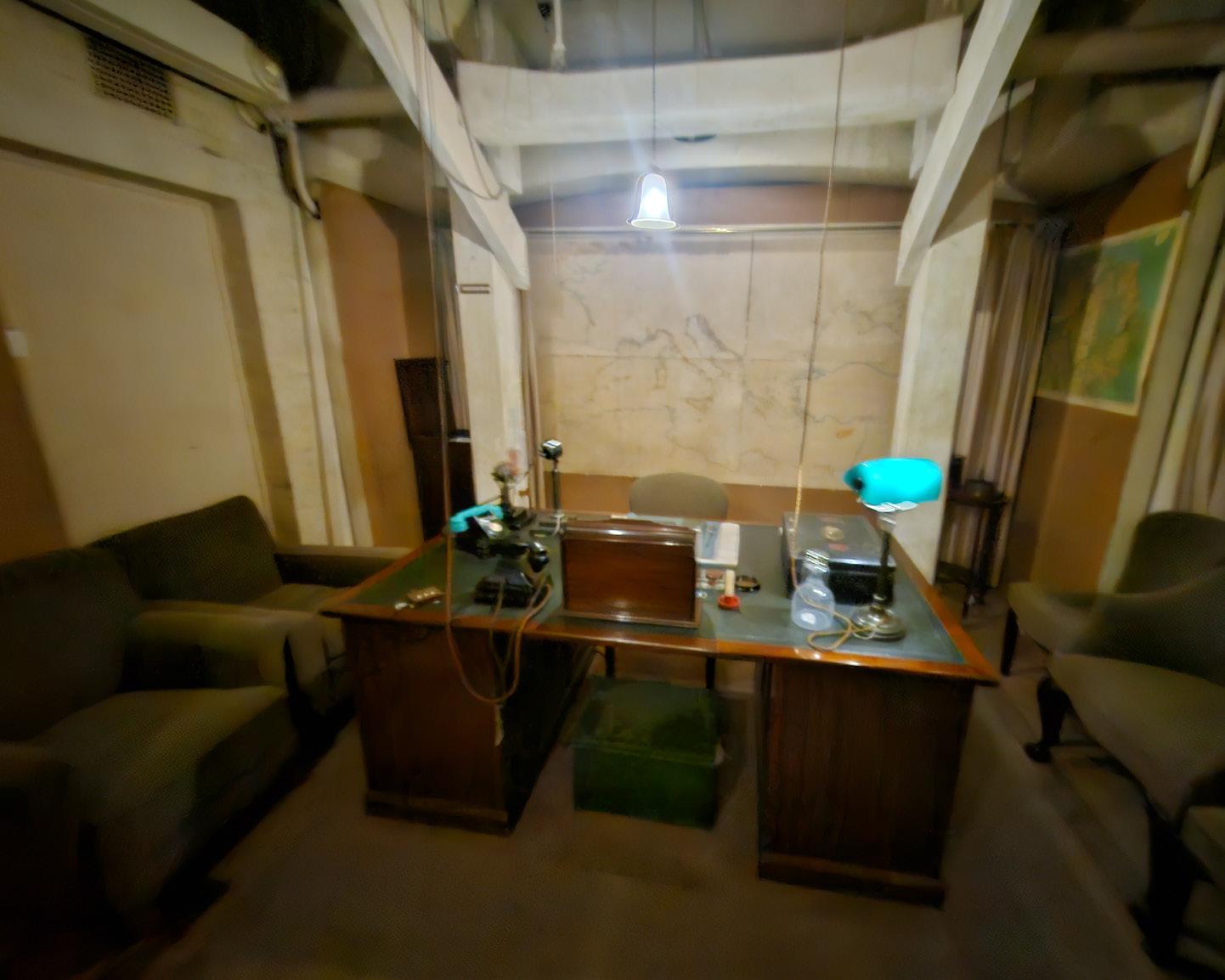
and called sporadic meetings at all times of day. In reality, the meetings were often much smaller than the film suggests; a meeting of ten was considered large. However, the movie did accurately portray Churchill’s furious temper: the arms of his chair were dented from him slamming his signet ring during passionate speeches. We also noticed that the rooms were quite warm due to the lack of circulating air. Our guide explained that although there was ventilation, air drawn from street level was often significantly dirtier, full of dust and debris from bombing.
There were a number of rooms strictly off limits to anyone other than Churchill, most famously the telephone booth disguised as a toilet, which housed a direct phone line between the White House and Downing Street. We were told that these phone conversations had to be monitored closely to ensure that neither President Roosevelt nor Churchill revealed sensitive information, as there was constant fear that the Germans were listening in. Everything that went on in the War Rooms was highly classified, and those who worked there were not allowed to disclose what they were doing to anyone.
Overall, visiting the War Rooms was an unforgettable experience that gave us invaluable insight into the operations of Britain’s wartime leader and his ministers. It is difficult to fathom how so many of Britain’s most important and strategic WWII decisions were made in the perfectly preserved rooms we are able to walk through 80 years later.
Ben C, Year 12 writes...
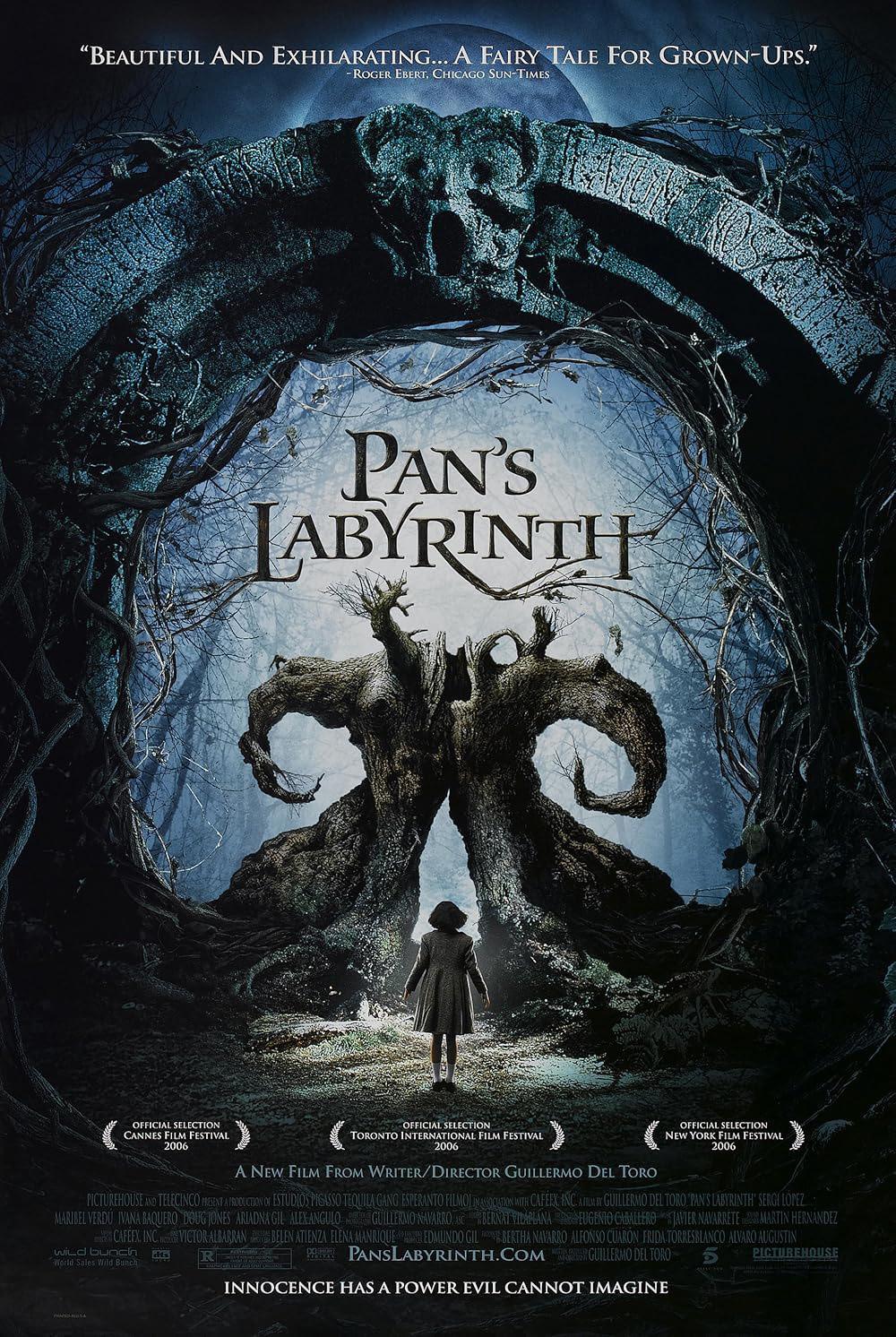
On Friday 21st November, A Level Spanish students attended a brilliant seminar hosted at the BFI on the Southbank. We participated in lectures and watched a screening of our A Level Spanish film, Pan’s Labyrinth. The lecture, which was very insightful and helped us gain a deeper understanding of the themes and techniques used in the film, was attended by students from all across the UK. The talk, given almost entirely in Spanish, took us through how the director, Guillermo del Toro, presents the characters and uses cinematography techniques to enhance emotion and strengthen the connection between audience and characters. Interestingly, we also learnt about the historical context of the film and how del Toro drew inspiration from many other fairytales, particularly those by the Brothers Grimm, incorporating them into his production.
The film, which is set in the wake of the Spanish Civil War, follows a young girl forced to relocate from her family home after her mother remarries a Falangist captain. It is in this new home that the girl discovers an ancient labyrinth, in which she finds a magical faun who reveals to her that she is actually a lost princess from an otherworldly kingdom. In order to cross over into her kingdom, the girl must complete three tasks to ensure she has not become mortal. Meanwhile, her stepfather, an incredibly cruel and violent man, fights against rebels who oppose the ruling Francoist regime. The film is marked by violence and
tragedy and is incredibly moving and well-directed; I would highly recommend it to anyone.
During the discussion segments of the seminar, our boys were brave in answering the questions asked by the lecturer (who was a visiting professor from a Spanish university). Their responses were very impressive. An additional aspect of the talk was to cross-
examine other del Toro works to give us a better understanding of his unique style. We analysed clips from The Devil’s Backbone, which uses music and light in a similar way to Pan’s Labyrinth, creating tension. Overall, the experience was invaluable, giving us plenty to discuss in our essays, and was a thoroughly entertaining field trip.
Jay J, Year 12 writes...
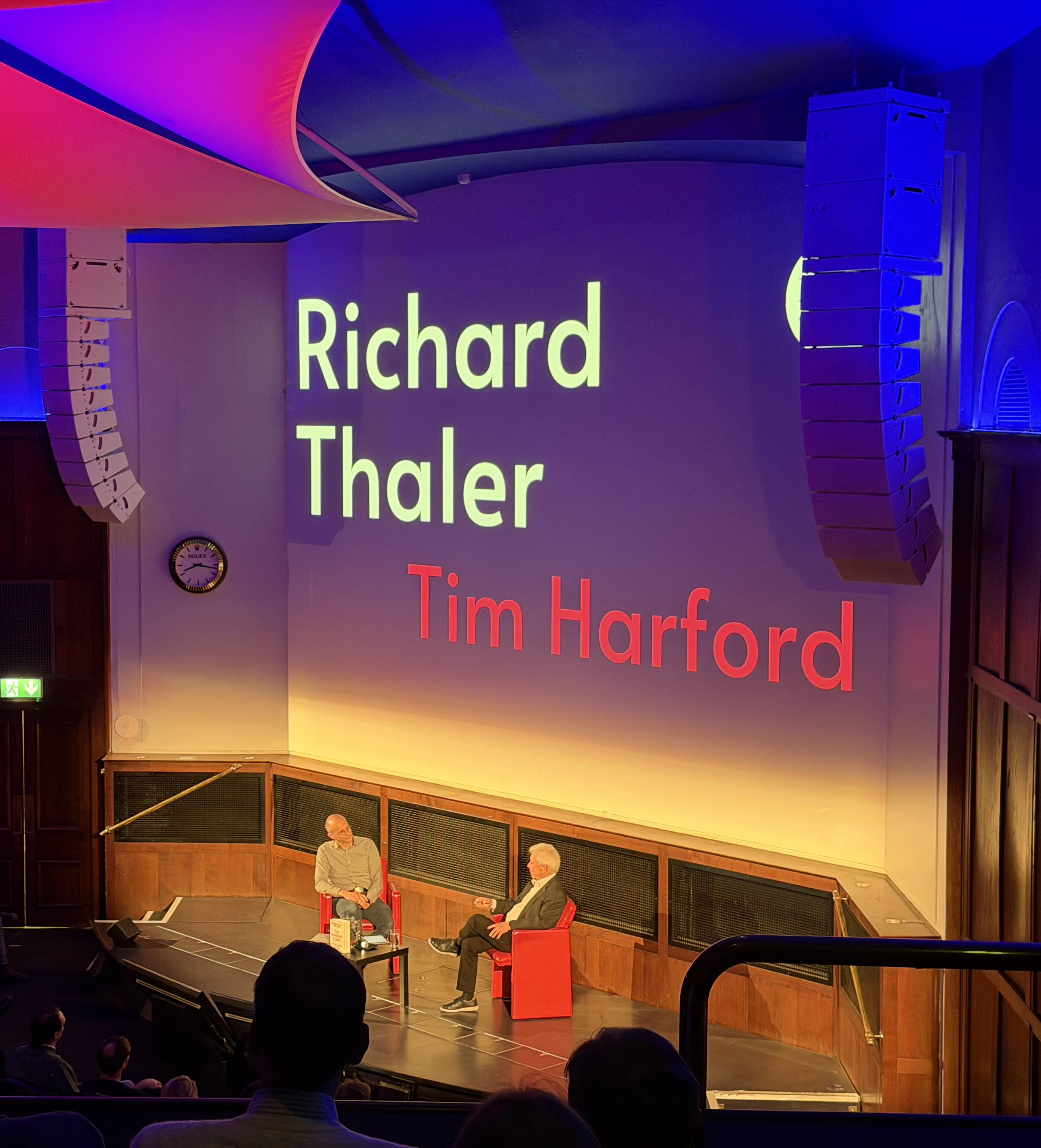
To start off the half term, Economics students from both Year 12 and Year 13 attended an engaging lecture by Tim Harford and Richard Thaler at the Royal Geographical Society.
Thaler, a Nobel laureate and one of the pioneers of behavioural economics, explored how his influential insights continue to apply in today’s unpredictable world of meme stocks, Dogecoin, and growing artificial intelligence. In conversation with Harford, he examined how real-world
behaviour often challenges traditional economic theory and discussed his collaboration with Cass Sunstein on the international bestseller Nudge, showing how small changes in the way choices are presented can help people make better decisions.
Felix W, Year 13 writes…
On Wednesday 15th October, Dr Holly visited Wetherby to give a talk to several year groups about the dangers of online criminal activity, especially its impact on young people.
This insightful talk not only taught us new information about online criminality but also cleared up countless ambiguities surrounding whether certain online behaviours are illegal. Dr Holly gave us a clear sense of how much online crime actually occurs in the UK, and how it is a growing issue, particularly among younger generations. In fact, she informed us that the majority of online
crime victims are aged between 18 and 30, demonstrating that this demographic is the most exposed to crimes such as hate crimes, cyberbullying, harassment and many more.
Dr Holly conveyed the sad reality that young people frequently face online, reinforced by the statistic that only one in four online criminal acts are ever reported to the police. Through numerous examples, we were shown the wide variety of offences that take place on social media platforms, illustrating how the rapid growth of social media over the past decade has opened the UK—especially younger generations—to a whole new
category of criminal activity. She also explained that Parliament is increasingly passing legislation relating to online safety, and that the government is actively working to make the digital world safer for everyone.
Overall, this talk was delivered brilliantly by Dr Holly and provided us with an invaluable insight into the realities of online crime. The use of examples and clear explanations enabled all of us to understand the information and ask follow-up questions. These were answered clearly and concisely, with a high level of detail, further helping the audience to grasp the central message of her talk.
Zain S, Year 13 writes...
Imagine growing up without seeing anyone who looked like you on TV. Imagine reaching for your dreams in a world where you never see anyone who shares your experiences or voices your struggles.
Films, TV and books shape how we understand and perceive the world around us and ourselves. However, when we don’t see people who represent our experiences in the media, we may feel that our stories, our cultures and ultimately our identities don’t matter. It can even lead us
to believe that we can’t reach our dreams, simply because we never see people like us achieving them.
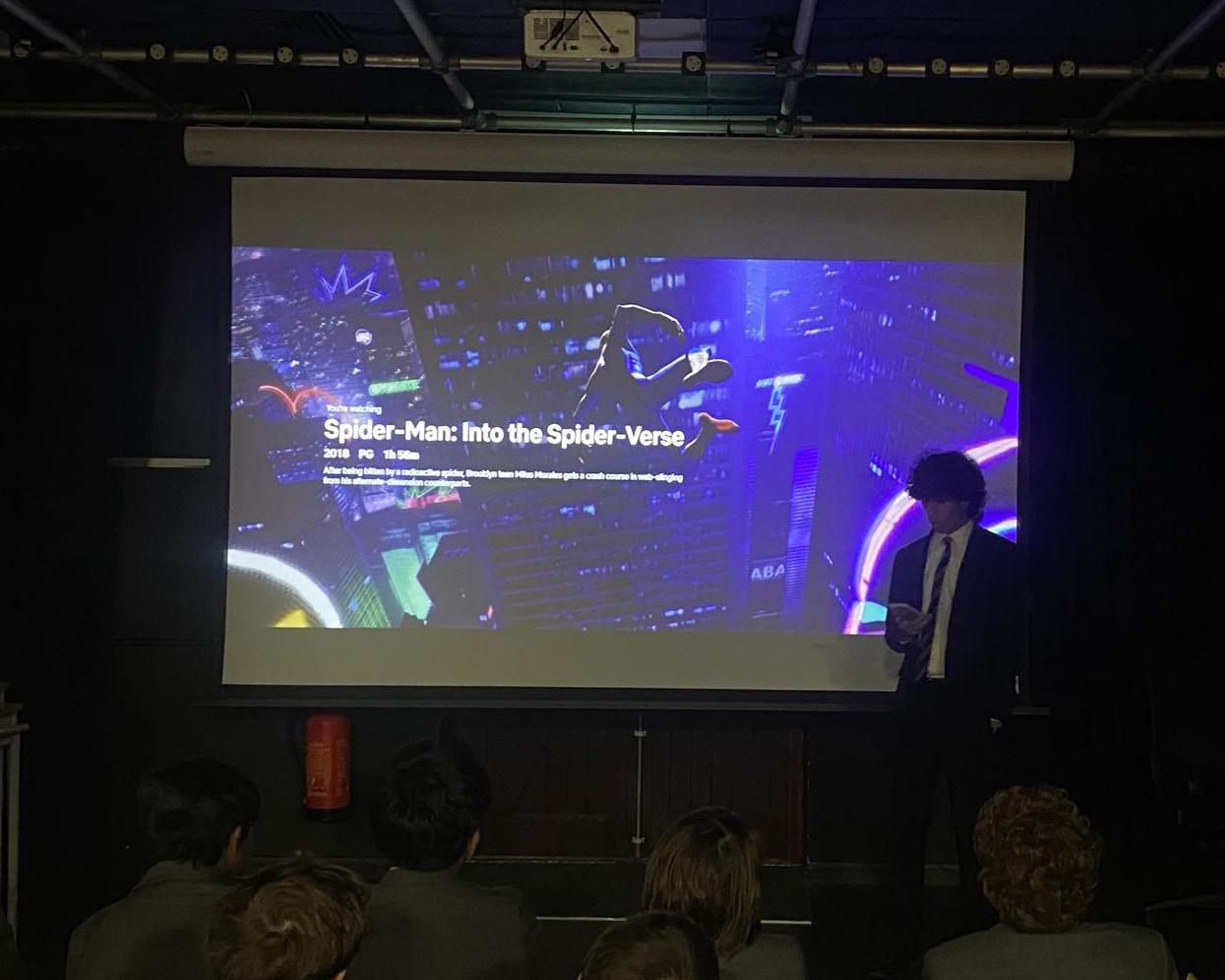
On Thursday 20th November, 24 Lower School boys gathered in the Drama Studio to watch SpiderMan: Into the Spider-Verse for the Diversity Committee’s first after-school event of the year. We chose this film to highlight the importance of representation, as the protagonist, Miles Morales, is a Black and Latino superhero who faces challenges that reflect his identity and experiences. The movie doesn’t just tell a story about a hero saving the city; it tells a story about belonging,
identity and owning who you are in a world that often overlooks or misrepresents voices of colour.
The boys thoroughly enjoyed watching the action-packed film while eating the delicious snacks provided! We hope that the event also encouraged them to think about the importance of representation.
We are now launching a Junior Diversity Committee for Lower School boys. If your son is interested in joining, he should speak to Zain Shamsee or Miss Nash.
Theo N, Year 12 writes...
Recently, eleven of my peers and I participated in a fabulous programme called Roots. Roots is designed to bridge the gap between private and state school students and to highlight the growing wealth inequality in this country. We engaged in spirited debates, took part in teambuilding activities and spent a day at Park Academy (the state school we partnered with).
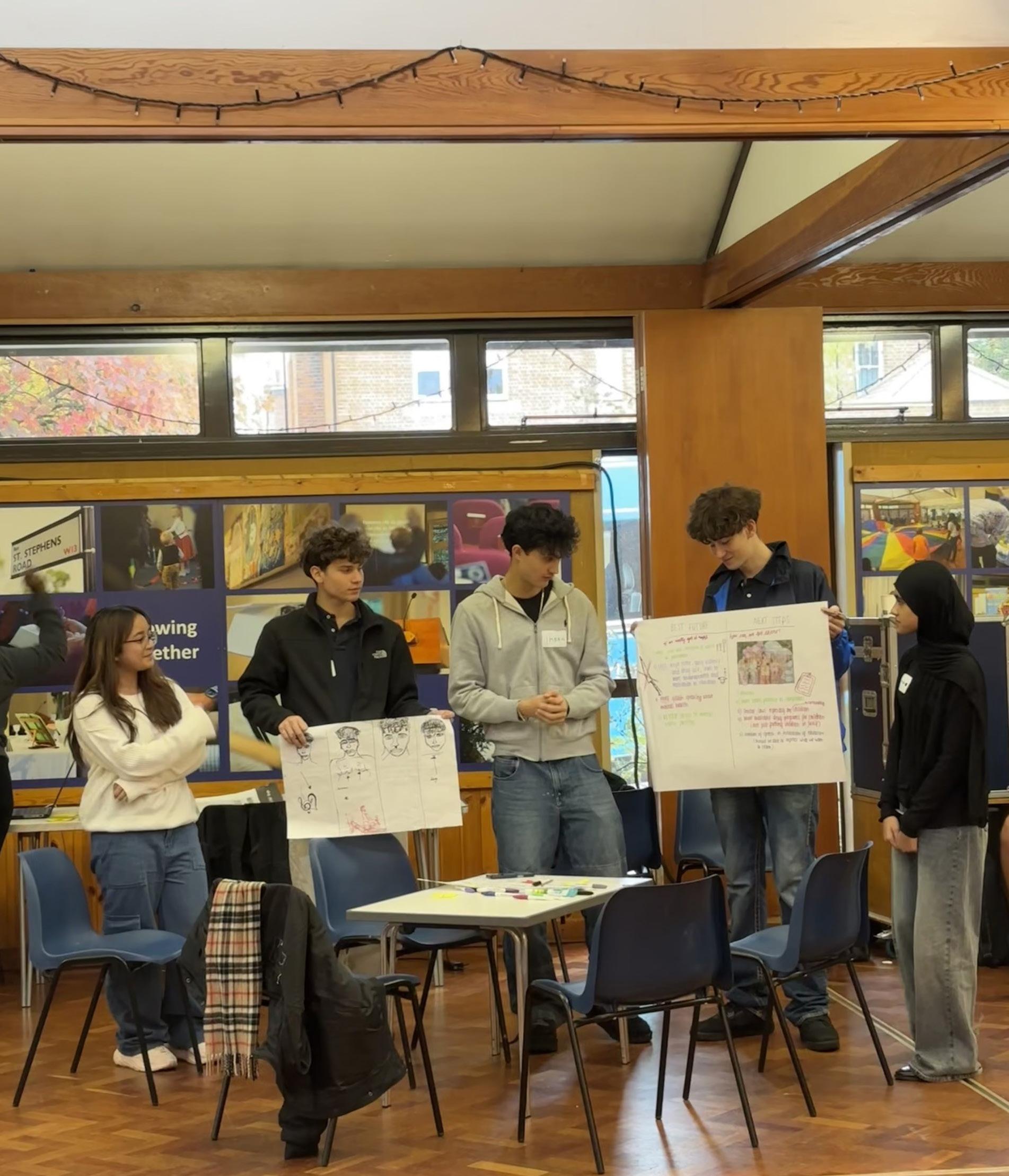
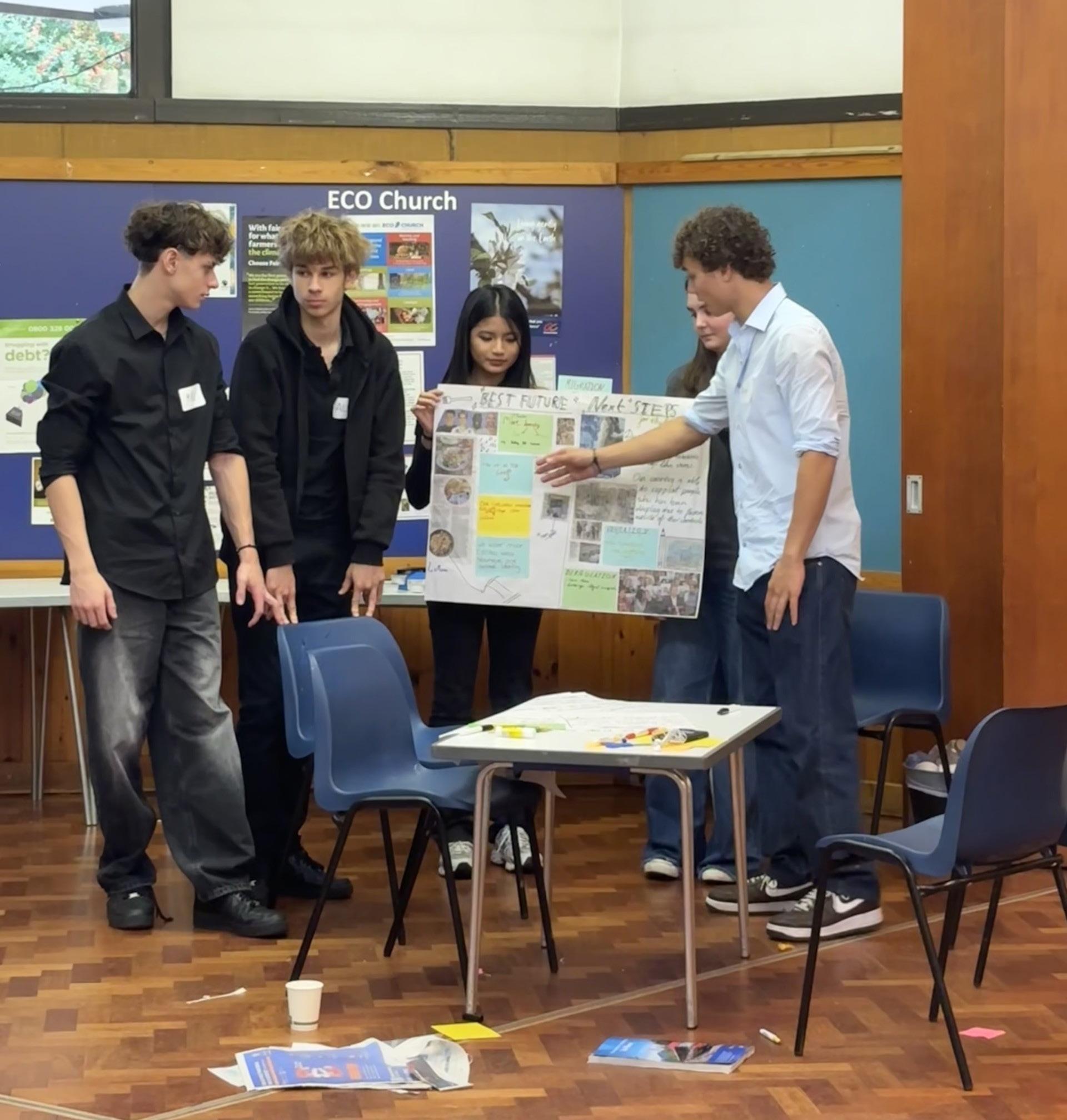
On 13th October, we made our way to a church in Ealing at 8:45am. We met our organiser, Chris, along with the Park Academy students. We began with various icebreakers before focusing on the aim of the day: discussing the problems affecting young people in the UK today. One of the main tasks we used to explore these issues—and to see the differences in perspective between the two schools—was
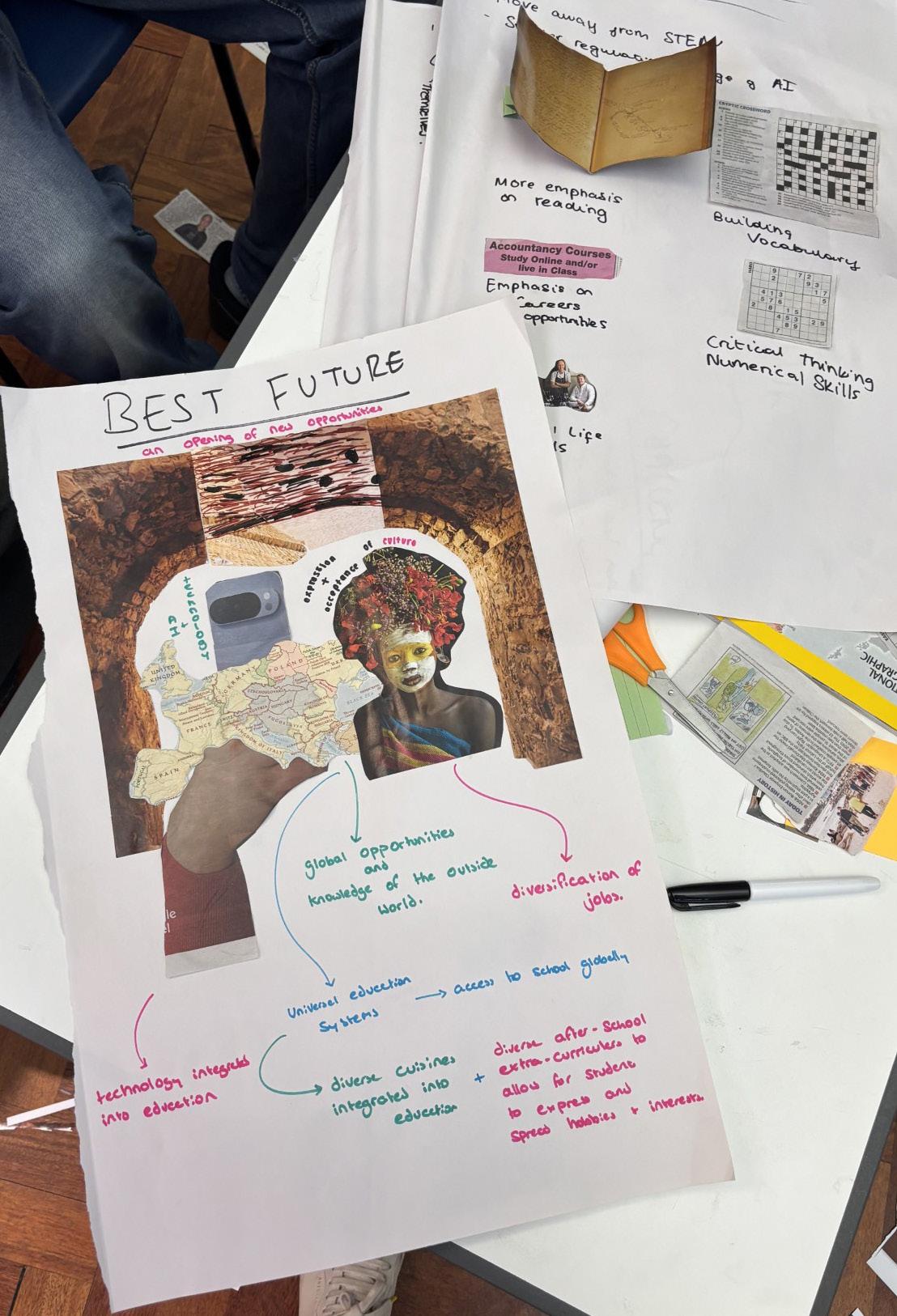
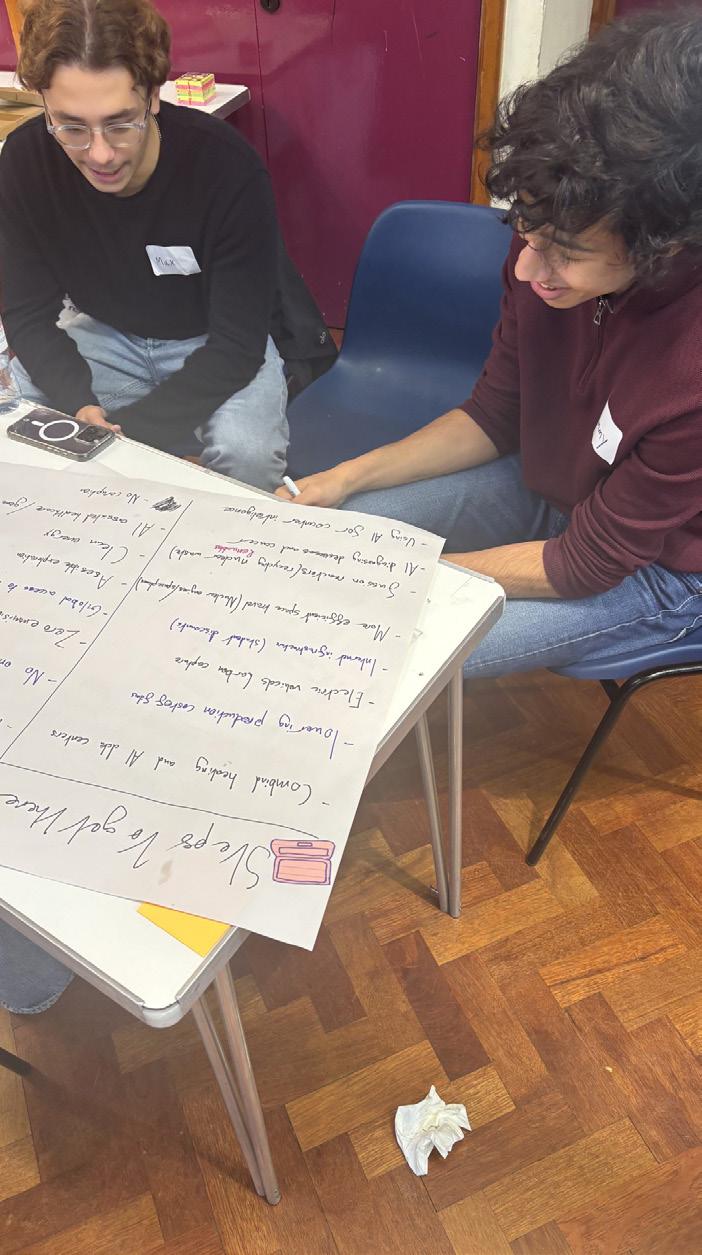
splitting into groups, choosing a problem facing young people, and creating posters about it.
At the end of the day, each group presented their findings and opinions. We found this exercise enriching; we gained a deeper understanding of the issues facing us today, the challenges that may threaten our future, and the extent to which these issues affect Park Academy students differently. We ended the first day with a debrief, looking forward to visiting Park Academy on their site.
On 6th November, Miss Maroudi accompanied us to Park Academy, where we spent a day learning about life at their school. We began by reacquainting ourselves with the students before splitting off for break. During break, nine of us were asked to play a football match against their Year 10s. We suffered an embarrassing 4–0 loss in front of what felt like the entire
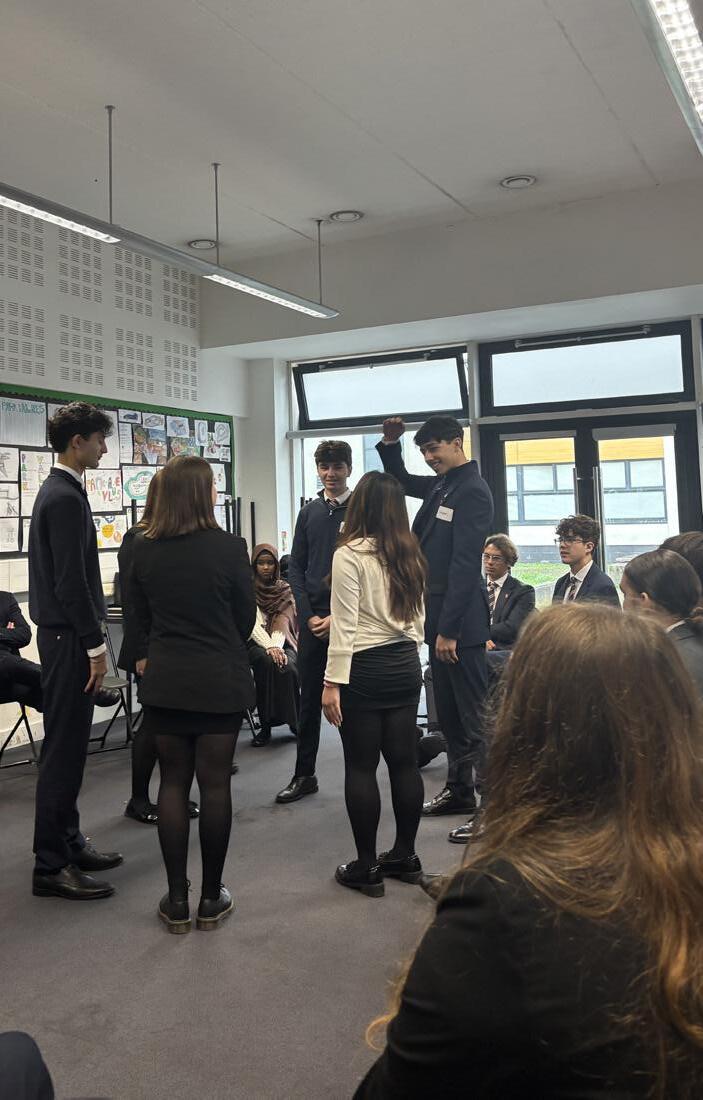
school. After mentally recovering from our defeat, we paired up and joined the Park students for one of their lessons. Afterwards, we had the opportunity to speak with their deputy head and ask questions about their school and what it is like to run a stateowned organisation. We ended the day with a reflection task and a discussion about the differences between state and private education.
The following week, we hosted the Park Academy students at Wetherby, giving them a tour of our facilities, welcoming them into our lessons and joining them for a conversation with Mr Garvey.
After three days spent in total with the Park Academy students, I think I speak for all of us when I say that we thoroughly enjoyed the experience. We learnt a great deal about the privileges we may previously have taken for granted and gained a broader perspective on life in this country.
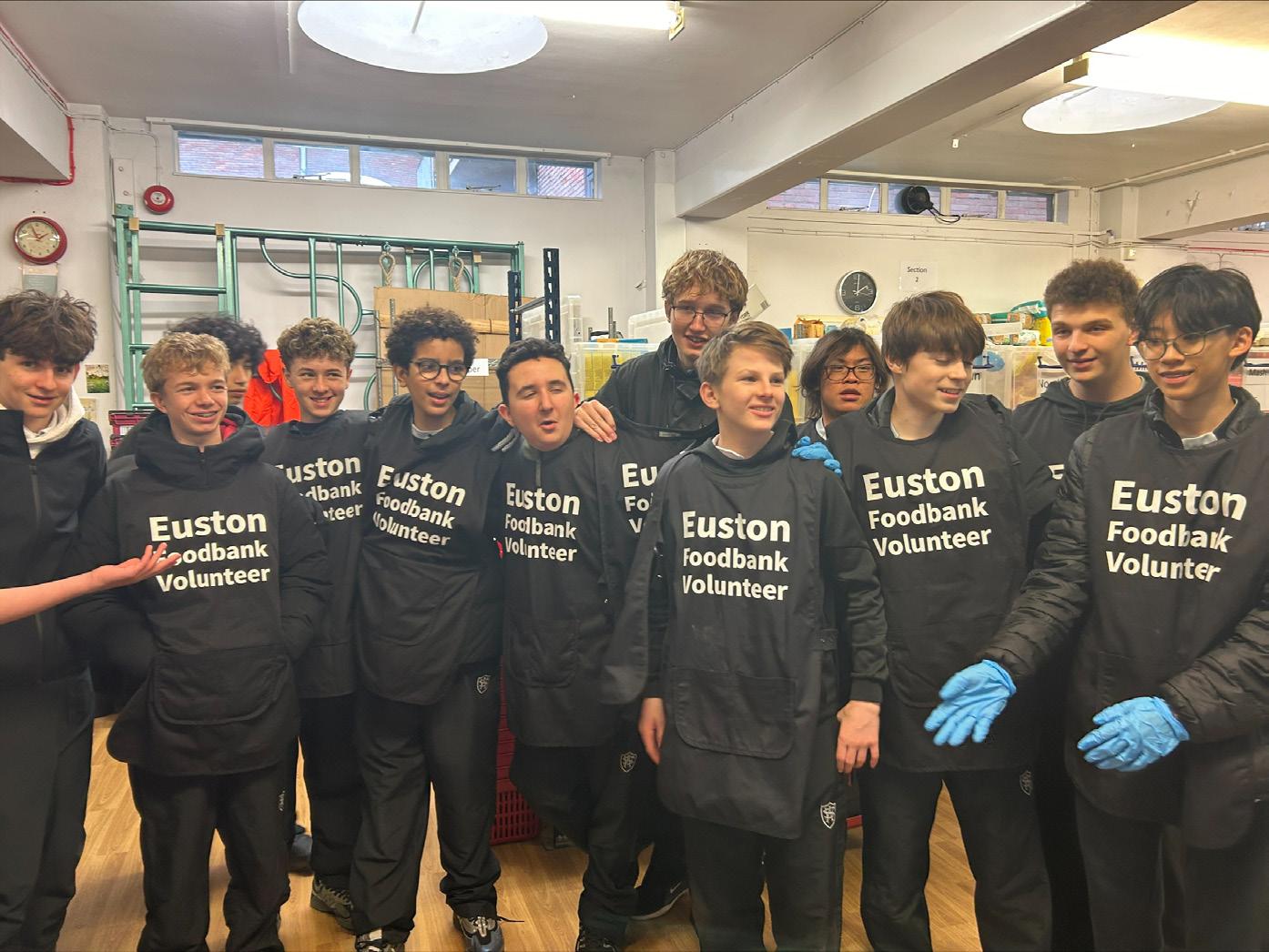
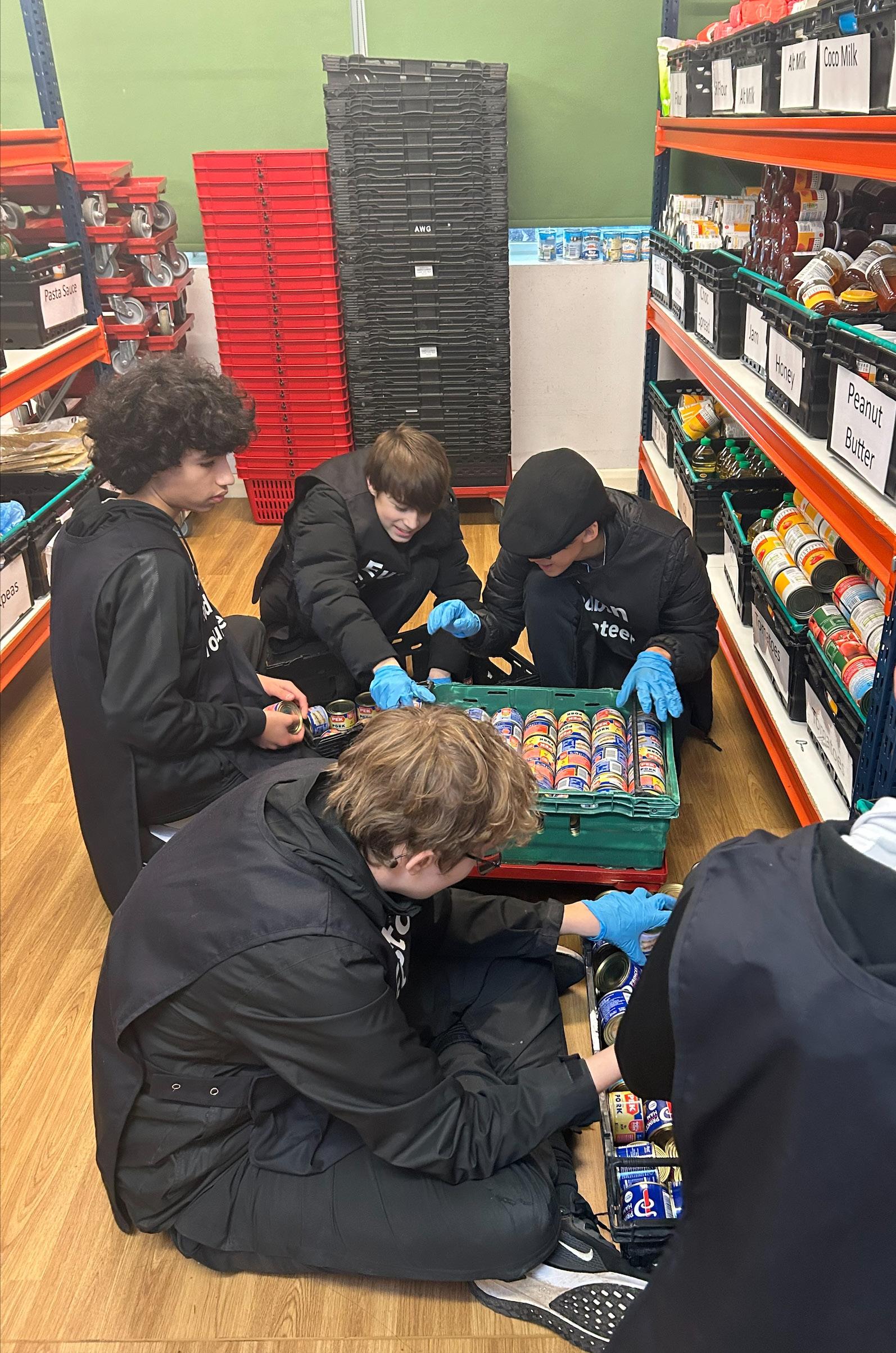
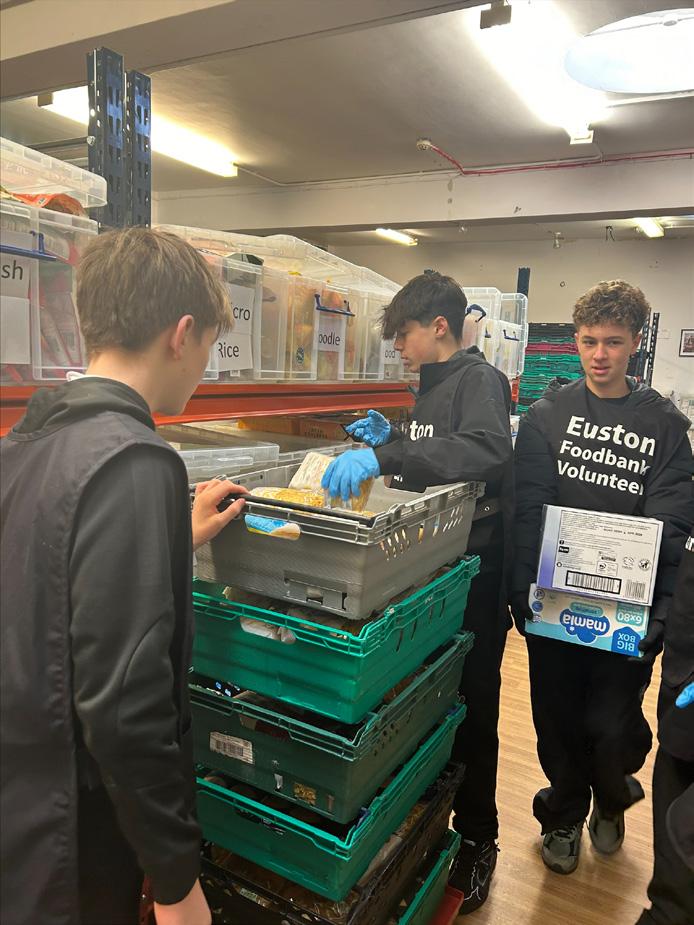
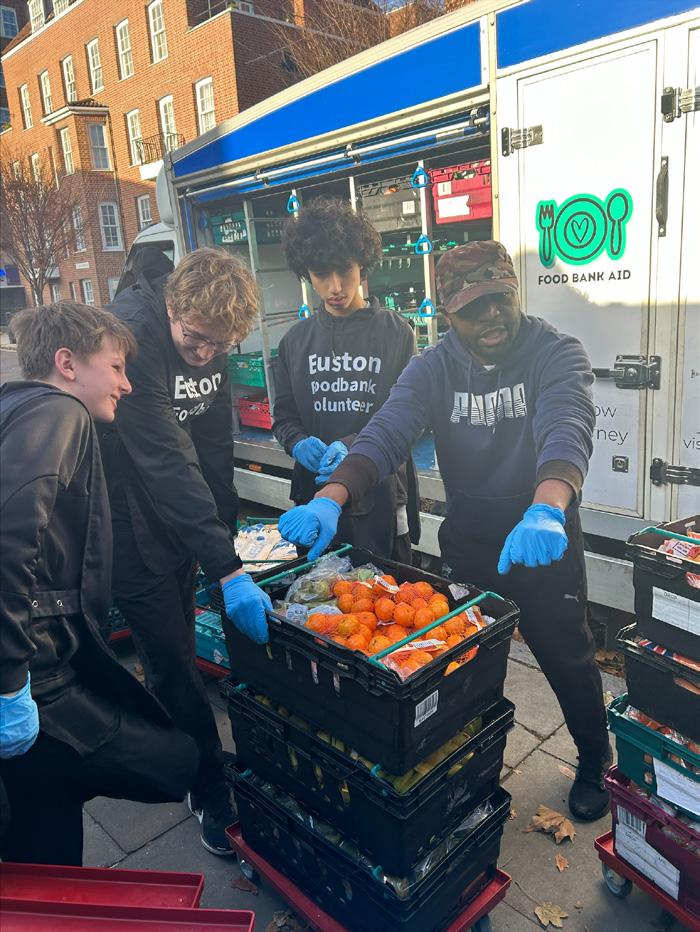
Last Tuesday, on the 25th of November, I, along with other volunteers, spent a few hours at the Euston Food Bank, which provides food and essential resources—such as toiletries and baby formula—to thousands of individuals and families every week, including some who are homeless.
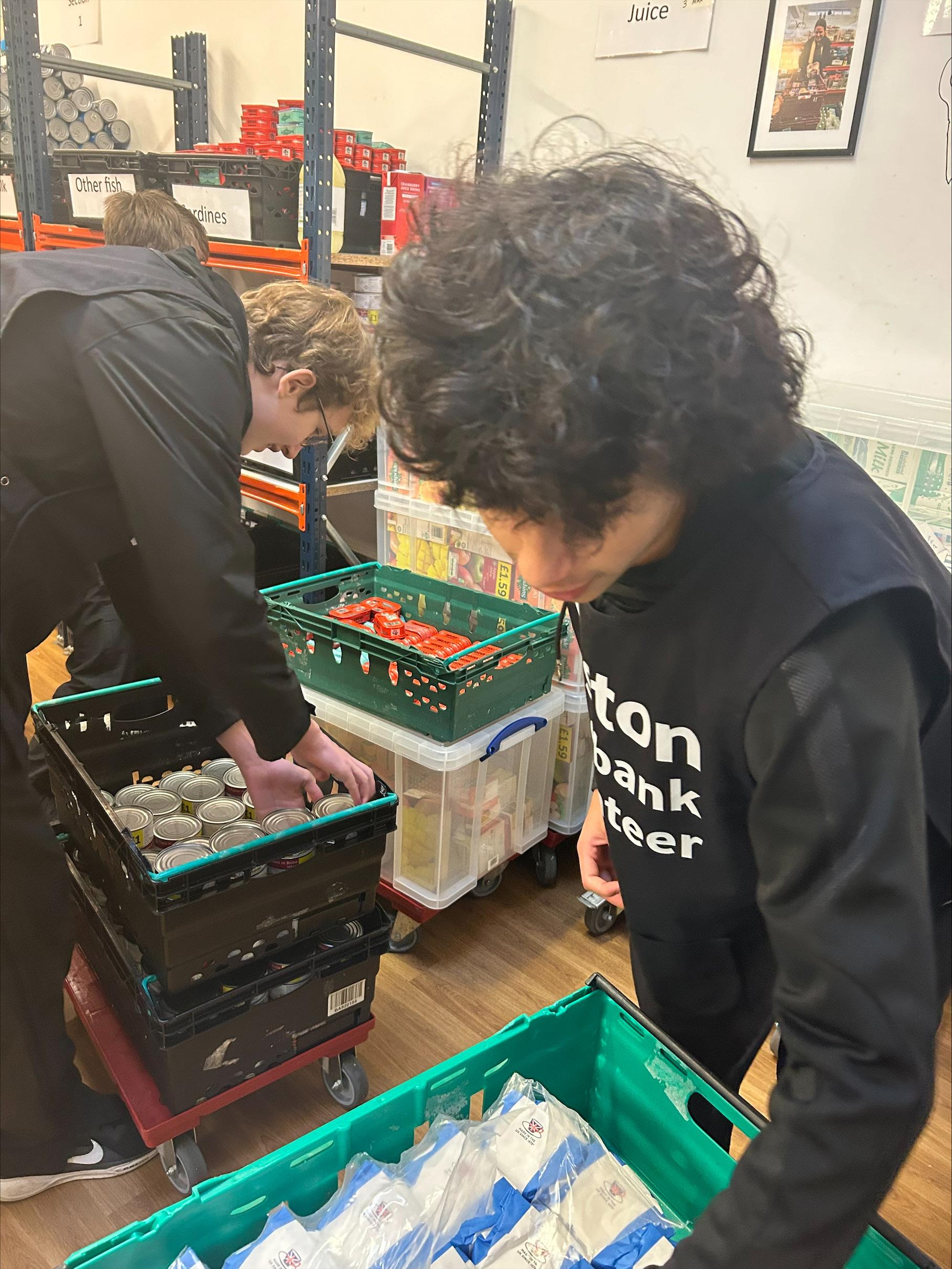
When we arrived, we were briefed on our tasks and what we needed to do. Initially, we were split into different roles: some handled deliveries from private donors or aid from Food Bank Aid, which distributes tens of thousands of food items to food banks like Euston, while others worked on repackaging, restocking and opening supplies.
After this, each volunteer chose a section to work in:
• Section 1: rice pudding, custard, jelly, canned foods, salt and sugar
• Section 2: toiletries and items needed to care for oneself or a child
• Section 3: fresh fruit and
vegetables
I chose to work in Section 3.
Once we were settled, we began processing people’s needs. Each individual or family, after a successful application, was given a sheet. The sheet had different sections corresponding to the areas above, where they could indicate what they needed. At the top, they could provide their name, cooking equipment and status if necessary (e.g., NFA for “no fixed abode” or SH for “street homeless”).
The allocation depended on household size: 1; 2–3; 4; or 5+ people, with extra items available for babies or pets. Some families had as many as nine or ten people living together.
Visiting the food bank was eyeopening. I, along with many others, learned about the wide range of people in need—not just in London, but in other cities and countries as well. In the media, immigrants, refugees and poorer people are often demonised, but
the reality is very different. The people attending the food bank weren’t bad or criminal—they were ordinary people who had fallen on hard times.
For example, if you don’t know how long it takes for the UK to decide on a refugee claim, it can take 6–12 months for many, and up to two years in some cases. Many flee war zones and civil unrest, leaving everything behind to seek safety. According to the manager of the Euston Food Bank:
• 28% of visitors are single men
• 15% are refugees
• 30% are families, some living in small homes with limited resources
• 10% are elderly individuals with little protection
As mentioned earlier, the food bank supports around 1,000 families per week, making a real difference in their lives, whether they are homeless or living in very difficult conditions.
If you have the opportunity, I highly encourage you to volunteer or donate to any food bank—it’s an experience that truly opens your eyes and makes a real, tangible impact. The Euston Food Bank can be contacted at info@ euston.foodbank.org.uk
Domenico C, Year 10 writes...
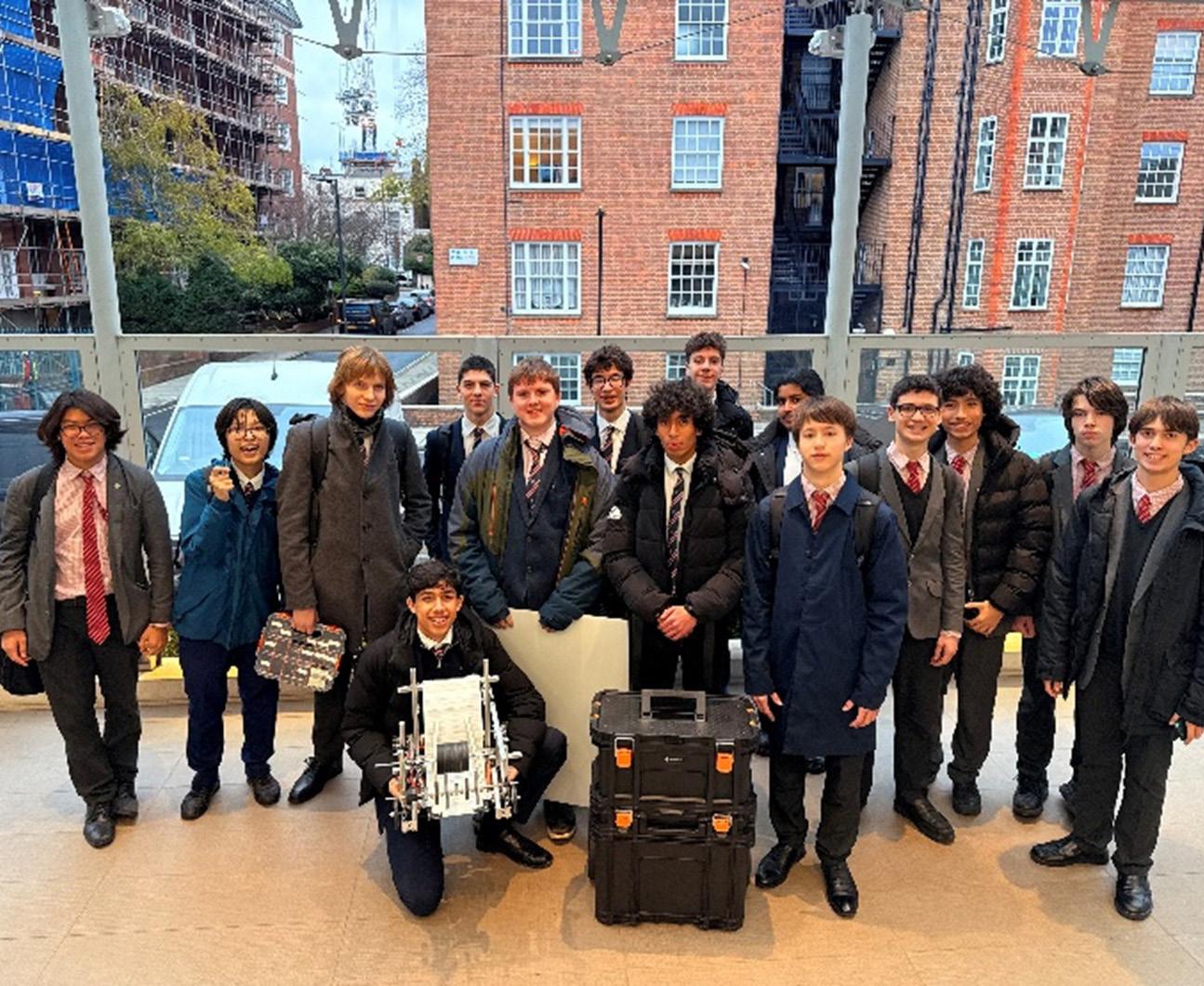
On 27th November 2025, the school’s Senior Robotics Team attended a scrimmage event at the American School in London (ASL), near St John’s Wood. This occasion involved discussions with judges, exciting workshops and useful practice matches, accompanied by many other schools.
The First Tech Challenge (FTC) is the competition that follows the First Lego League (FLL). Both require teams to construct a robot and create programmes to accomplish set tasks. Alongside this, various other aspects of the competitions (for FTC, a portfolio detailing the team’s progress) give teams the chance to win numerous awards and progress further.
In FTC, the robot competes in a two-minute-and-thirty-second match. For the first 30 seconds, it runs pre-programmed algorithms in the Autonomous, or AUTO, section. After a seven-second transition period, the robot switches from AUTO to remote operation, run by the drive team, who control the robot for the remainder of the match.
A team progresses by competing in qualification matches, then fighting through playoffs to crown a winning alliance. From here, teams can advance to a regional qualification before reaching the More Than Robots UK Championships. The overall winner of this national stage is invited to represent Great Britain at FIRST Global, the international
stage of the challenge. The scrimmage event we attended was non-competitive, used primarily to test and improve robots and refine gameplay strategies.
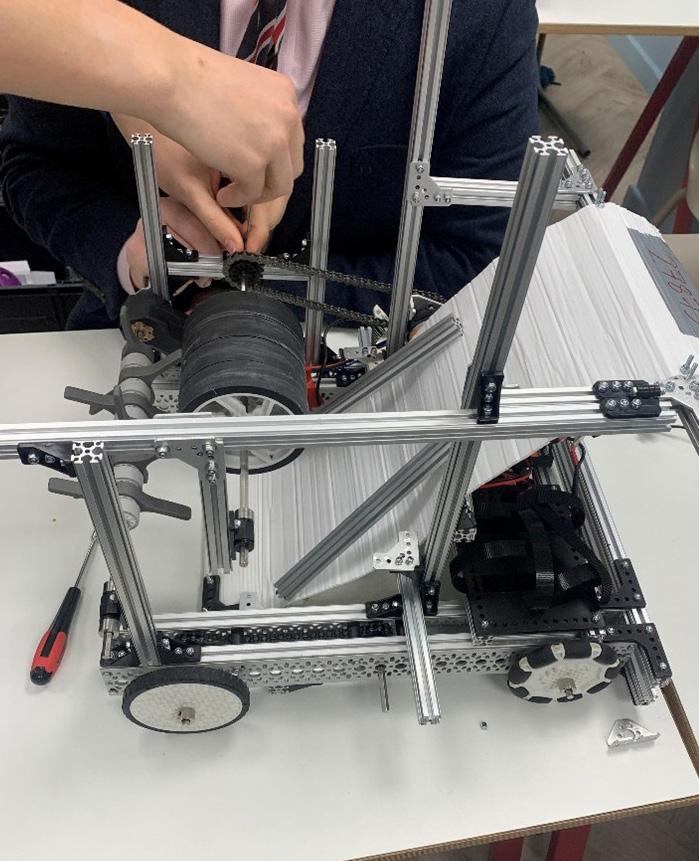
The Wetherby robot is an 18 by 18 by 18-inch Evolved Mega Knight Hut, equipped with an intake and outtake system. The intake system collects a ball from the field and pulls it into the robot, while the outtake system spins the ball up a ramp and launches it at an upward angle.
Intake System: A motor spins an axle fitted with rectangular rubber rotating brushes. When it spins, the controller reverses the robot so that a ball is hooked by a rubber brush and pulled into the machine. From here, the outtake system completes the process.
Outtake System: Three wheels attached to a long axle spin at high speed. When the intake
system pushes the ball into the spinning outtake mechanism, the wheels accelerate the ball forward, sending it up the ramp and into the air. The spinning axle is powered by a motor beneath the ramp that uses a chain mechanism to rotate it.
The venue hosted many talks and opportunities to deepen understanding of the game and its rules. These included:
• Robot Consultation
• Autonomous Programming Workshop — Students coded alongside ASL computer scientists, learning procedures for the autonomous portion of the competition and exploring how different teams approached this challenge.
• Competition Strategy Workshop — Students were introduced to scouting: observing and questioning other teams to devise strategies that complement allies
or counter opponents.
• Fundraising Workshop
• Mechanical Workshop — Informers explained the mathematical and theoretical methods behind designing a mechanical system capable of shooting a ball. Factors such as compression, RPM and friction were discussed, along with how too much or too little of these could negatively impact consistency.
• Judging Consultations
Using the arena at the venue, the Wetherby Team successfully launched their game artifact into the goal, scoring points. Discussions with other teams gave us insight into alternative designs and strategies, along with their respective pros and cons. Comparing our robot with the others, we currently seem to be ahead and look forward to a successful season.
The Wetherby team took part in their first scrimmage match, achieving a resounding victory
of 16–7, followed by a tough loss of 6–15. However, this defeat served as a foundation for future
improvement, revealing several critical errors in our game strategy, which led to a final win of 26–9. As we are still in the early stages of the competition, our robot—and those of other teams—will continue to undergo significant changes, meaning gameplay will evolve substantially in the coming months.
Overall, the event was a promising start for the team, and we hope to see further progress and success by continuing on our current trajectory. Around four months remain until the competition begins, by which time the robot should be completed.

Tommy S, Year 12, FT Student Advocate writes...
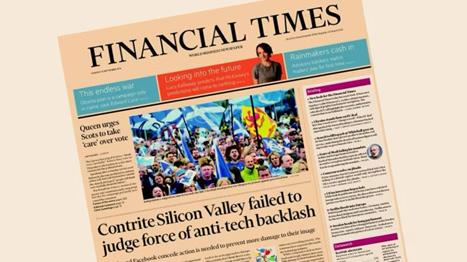
Most of us scroll through headlines without really noticing them—whether it’s inflation rising, interest rates changing, artificial intelligence revolutionising everything, or energy prices spiking again. But whether we realise it or not, these headlines shape the world we are about to step into.
The Financial Times offers a different perspective on today’s news. In a time when information spreads faster than we can process it, the FT slows the world down and asks the questions young people increasingly need answers to. Why is everything more expensive? Will AI create more jobs or replace them? Why do global events suddenly affect the price of basic things here in the UK? What skills will matter most by the time we graduate?
For students, these aren’t distant concerns. They influence university choices, career paths, living costs and the opportunities available to our generation. Behind every major story lies a bigger picture—one that’s often
missed in quick headlines or social media summaries.
The FT excels at uncovering that bigger picture. Instead of simply reporting that house prices or energy bills have risen, it explains why. Instead of saying that a company has collapsed, it explores what this means for workers, markets and future industries. It connects developments in technology, politics and economics in a way that feels accessible rather than overwhelming.
Crucially, reading quality journalism builds skills far beyond subject knowledge. It strengthens critical thinking, encourages curiosity and helps students understand how decisions made in boardrooms or parliaments eventually shape daily life. This broader awareness is valuable not just for those studying economics or politics, but for anyone preparing for a world where global issues increasingly influence local realities.
The FT’s coverage also goes beyond economics. It explores culture, climate change,
entrepreneurship, education and shifting social trends. Whether you’re interested in science, technology, the environment or global affairs, there is something highly relevant—and often surprisingly fascinating—for every reader.
In a rapidly changing world, staying informed is one of the most powerful habits a young person can develop. Reading the FT, even briefly each week, helps students navigate that world with confidence rather than confusion.
Thanks to the FT Schools Programme, every student in our community has free access to the full Financial Times website. Signing up takes less than a minute, and the habit you build could shape how you understand the world for years to come.
Free FT access for all students: Sign up here: https://www.ft.com/ schoolsarefree

Harry M, Year 11 writes...
As Artificial Intelligence becomes more advanced day by day, its role in education is progressing rapidly too. A common question is whether it should take over everyday jobs such as teaching.
One of AI’s most promising advantages is its ability to adapt easily to different teaching and learning styles. AI is highly informative, although at times it can be a little too detailed or use unnecessarily complex language. Unlike traditional classrooms, where students are often taught in one fixed style, AI can adapt to match individual learning strengths, pace and weaknesses. This can benefit students greatly and may even boost their grades— something teachers also do, but which becomes much harder in a class of more than five students.
Despite AI’s huge benefits, it also has significant disadvantages. Relying on AI to teach can raise issues such as reduced human interaction or becoming overly dependent on technology, which can create poor study and work habits. Although AI can deliver essential information and sometimes offer perspectives a teacher may not immediately consider, it cannot mentor or provide the emotional support a student may need—for example, motivation to revise for a cycle test. Another major issue is bias: AI systems are trained on large datasets that can contain errors, leading to inaccurate or misleading outcomes. Overreliance on AI can also weaken students’ thinking and problemsolving skills, especially in subjects that rely heavily on mathematics or statistics. Students may
become trained to rely on AI to solve equations or problems for them. These risks highlight how important it is that teachers remain central to education, and why we should be cautious about shifting too far towards AIdependent learning.
Teachers remain the heart of education, building knowledge across all age groups. In the end, whilst AI is reshaping education in both positive and negative ways, it does not match many of teaching’s key characteristics. A teacher’s ability to connect with students is unmatched—something no non-human system can achieve. AI is very good at providing information, but it has flaws that must be addressed, including bias. From this, we can conclude that AI is not yet suitable to replace teachers within the education sector.

Henry C, Year 8 writes...
The phrase “it’s the hope that kills you” is very well known to Fulham fans around the world, and it is, unfortunately, very true.
Fulham Football Club began in 1879 at St Andrew’s Church, Fulham Fields, which still stands today. From the beginning, Fulham has been London’s original team. The first kit featured blue shirts and white shorts, which changed in 1896 to red and white. In the 1903–1904 season the club adopted white shirts and black shorts, a combination they have kept ever since.
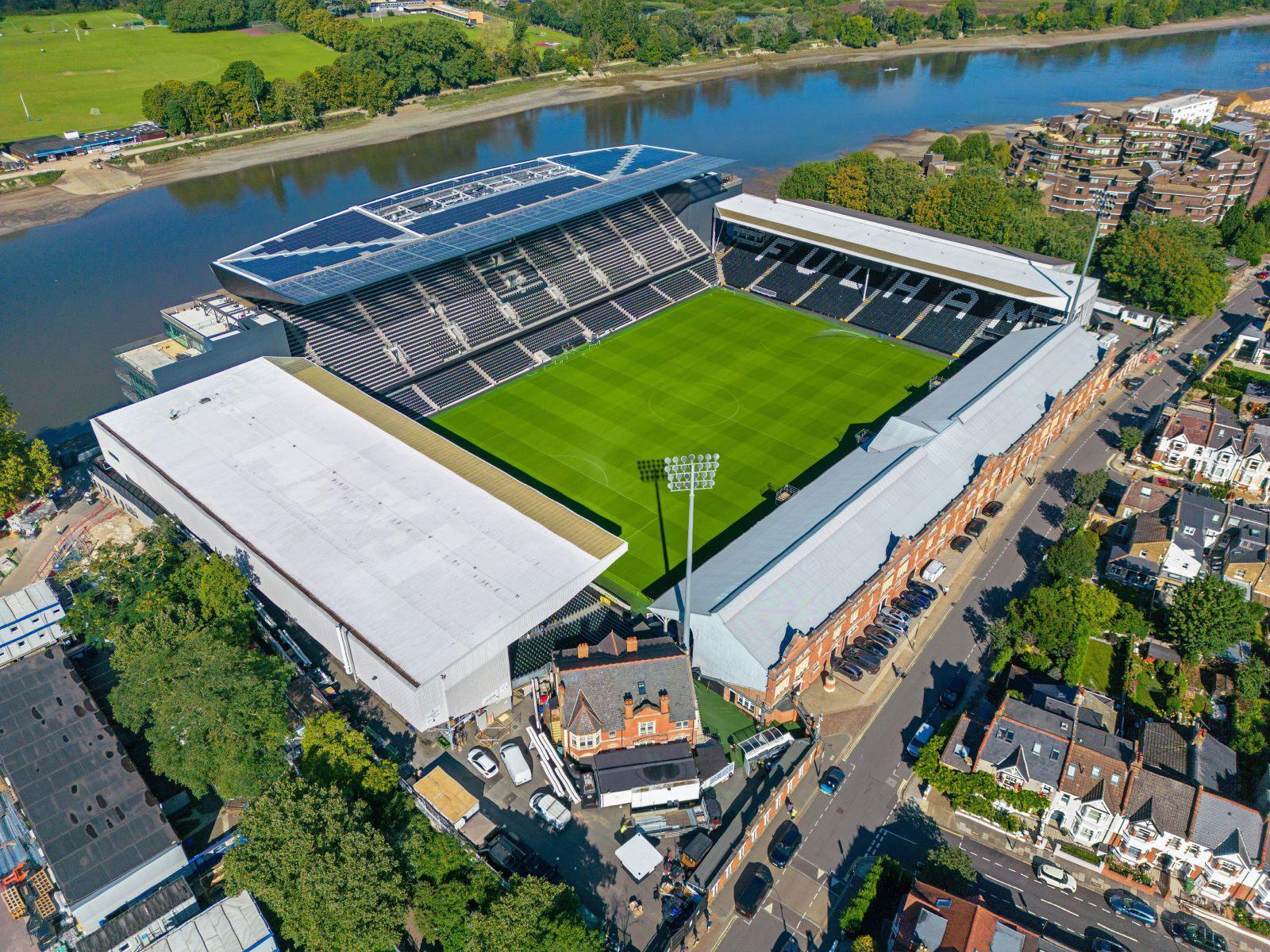
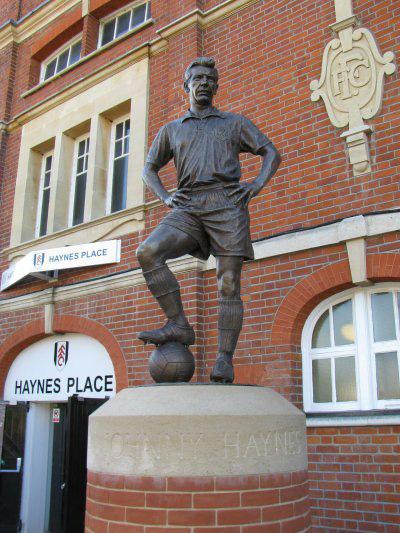
Located on the banks of the River Thames, Fulham’s stadium, Craven Cottage, is one of the most distinctive in England and is the reason for the nickname “The Cottagers.” Built in 1780 as a grand house by William Craven, the structure was destroyed in a fire in 1888. The site remained empty until Fulham settled there and played their first match in 1896. Craven Cottage has witnessed many highs and lows in the club’s history. Today it has a capacity of almost 30,000, offering impressive hospitality and a strong sense of heritage. The Johnny Haynes Stand, named after one of the club’s greatest players, still has its original wooden seats from the
1960s, which came from a theatre in Leeds. The other stands are the Hammersmith End, the Putney End, which is partly allocated to away fans, and the Riverside Stand, which recently underwent a major redevelopment.
The past two decades have been the most successful in Fulham’s history. Highlights include reaching the Europa League Final in 2010 (where they lost to Atlético Madrid), winning at Wembley in 2018, winning there again in 2021, and achieving a record Premier League points total in 2025.
Cup Finals and Wins
In 1975 Fulham reached their first major final, facing West Ham and losing 2–0. In 2002 they won the Intertoto Cup, beating Bologna 5–3 in the final. Eight years later they reached the Europa League Final in Hamburg. Their run included some of the most famous matches in the club’s history, such as overturning a 3–1 deficit to beat Juventus 5–4 on aggregate and defeating Hamburg, inspiring the iconic commentary line: “Hamburg will host the final, Fulham will play in it.” In 2019 Fulham beat Aston Villa 1–0 at Wembley with a goal from Tom Cairney. Another trip to Wembley followed in 2021, where Fulham defeated Brentford 2–0 with two goals from Joe Bryan.
Johnny Haynes (born 1934, died 2005, played for Fulham from 1952 to 1970): widely regarded as one of the club’s all-time greats. A statue of him stands on Stevenage Road.
George Cohen (born 1939, died 2022, played for Fulham from 1956 to 1969): the only Fulham player ever to win the World Cup for England while at the club. He also has a statue on the Riverside.
Tom Cairney (born 1991, at Fulham since 2015): the club’s longest-serving current player. He has scored at Wembley and at Craven Cottage many times. He is the only Fulham player to have
a documentary made about him, in which the writer of this article appears in the credits because the filmmakers included videos from fans.

Minh B, Year 11 writes...
The winter evenings tighten round my desk, Where pages fade beneath my tired gaze. Each task returns, stern and grotesque, A swelling tide that drowns the measured days. My thoughts grow heavy beneath the mounting strain, As deadlines gather like unremitting rain.
My mind is as a maze of troubled ways, Where every footstep wakens the fears I cannot hide. The mocks draw close with cold and ruthless days, And whispers of my own failings are spread. I chase my work that gathers too fast, Yet feel it slipping from my grasp at last.
Yet through the tumult comes a gentle word. Faith speaks my name and stills the tempest’s storm. It holds me firm when all my strength is stirred, And brings peace where doubt prevailed before. Though shadows rise and grievous burdens cease, In faith my fainting soul shall rest in peace.

Across the world, Christmas is celebrated in many different ways. Not just how it is done here in the UK with Christmas trees, roast dinners and Santa on his sleigh, but with unique ideas, traditions and practices. This article will explore a couple of these celebrations.
In Spain, Christmas places more emphasis on the Three Wise Men from the Nativity story. Christmas Day is less of a celebration and more of a day to relax with family and friends. Gift-giving happens on the 5th and 6th of January. On
these days, a parade called the Cavalcade of Magi takes place, featuring the Three Wise Men who throw sweets into the crowds. People also receive their presents at this time, not on Christmas Day. Finally, a lottery known as El Gordo takes place on the 22nd of December. It is considered the biggest lottery in the world, with the top prize being €4,000,000.
In Australia, due to the very different climate, some equally different customs have developed. Australian Christmases often mean beaches, barbecues, seafood
and ice cream. Christmas trees are decorated with summery ornaments such as orange flowers. Even Santa is more laid-back, wearing summer clothes and often depicted surfing.
In conclusion, there are many interesting and unique ways that Christmas is celebrated across the globe, all of them adding to the reasons why Christmas is such a special holiday.


Corrected Version
Domenico C, Year 10 writes...
There are few dishes as present in any city as the shawarma. This article covers its long and storied history, the path to its modern form, some of the challenges it has faced over time, and the ways in which shawarma blends with other cultures to adapt accordingly.
Mexico – Al Pastor
This variant is perhaps the most similar to the Levantine shawarma. The name, meaning “in the style of the shepherd”, is not entirely fitting because the dish is almost always made with pork, which is the only significant difference between Al Pastor and shawarma.
The Döner is claimed to have been popularised in Germany by Turkish man Kadir Nurman in 1972 in West Berlin. Since then, it
has become a national sensation, with over 18,000 businesses selling
The donair is derived from the Greek gyros. Although disputed, it is widely believed that the dish was introduced in the early 1970s by Greek immigrant Peter Gamoulakos, who modified the traditional recipe by using spiced ground beef, Lebanese flatbread and a specially created donair sauce. The donair was named the official food of Halifax in 2015. It is primarily eaten in Nova Scotia but is steadily spreading across Canada.
Greece – Gyros
Gyros emerged from the Döner kebab. The word “gyros”, meaning “turn”, is a calque, meaning a direct translation, of the Turkish word “döner”. The vertical spit used to prepare gyros was brought to Greece by Anatolian Greeks during the 1923 population exchange between Greece and Turkey. After the Second World War, the dish became widespread in Greece, particularly in Athens. Gyros differ from shawarma primarily because they are made with pork and Tzatziki sauce.
Shawarma has its roots, like many other dishes, in the ancient practice of roasting meat on a spit, also known as rotisserie cooking. This technique likely followed soon after the discovery of fire, but the earliest known examples of spit cooking are found in ancient Greek, Roman and Arabian civilisations. It is even mentioned in the Iliad after a sacrifice to Apollo. This early form involved cooking meat on a horizontal skewer. It is highly probable that this method inspired many Eastern Mediterranean

dishes, including gyros and, most importantly, shawarma.
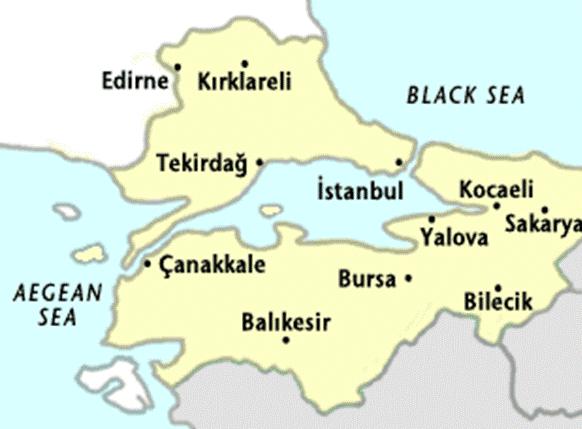
The next major development took place in the Ottoman Empire during the nineteenth century in the city of Bursa, in modern day Turkey, specifically in the central Marmara region. Here, the vertical rotisserie was invented. Although the exact inventor is not known, it is often credited to İskender Efendi, who came from a family of butchers. He flipped the horizontal spit vertically, creating the traditional rotisserie now used for shawarma. This allowed for more even flavour distribution and caused the meat juices to run down the column rather than baste the meat horizontally. The new style of preparation produced what became known as the “döner kebab”. İskender is immortalised in his “İskender Kebap”, a dish still widely served in Turkey.
(Above: first known image of a shawarma stand, taken in the Ottoman Empire during the 1850s to 1860s. Below: a map of the Turkish region of Marmara, where Bursa is located.)
However, the döner kebab had not yet evolved into the shawarma. Its final form developed in the Levant, especially in modern day Syria and Lebanon. In major
cultural centres such as Damascus, Aleppo and Beirut, the döner evolved from a plated dish into a type of street food. Key changes included:
• the addition of spices to create a stronger flavour,
• the use of marinades and juices to increase complexity,
• the introduction of sauces such as tahini,
• the widespread inclusion of chicken alongside beef and lamb,
• and the shift from being served on a plate to being wrapped in pita bread.
Although not supported by firm data, it is plausible that widespread poverty after the First World War
accelerated these developments, as most people in the region could not afford restaurant meals such as the Ottoman kebab.
Shawarma became globally known and accessible thanks to the migration of Lebanese and Syrian communities around the world. This began with movement across the French Empire, especially French West Africa.
After 1945, instability in the region increased emigration. In Lebanon, the brief crisis of 1958, driven by tensions between Christians and Muslims, strengthened existing diaspora networks. It was the fifteen year Lebanese Civil War, however, that led to a mass exodus of nearly one million people.
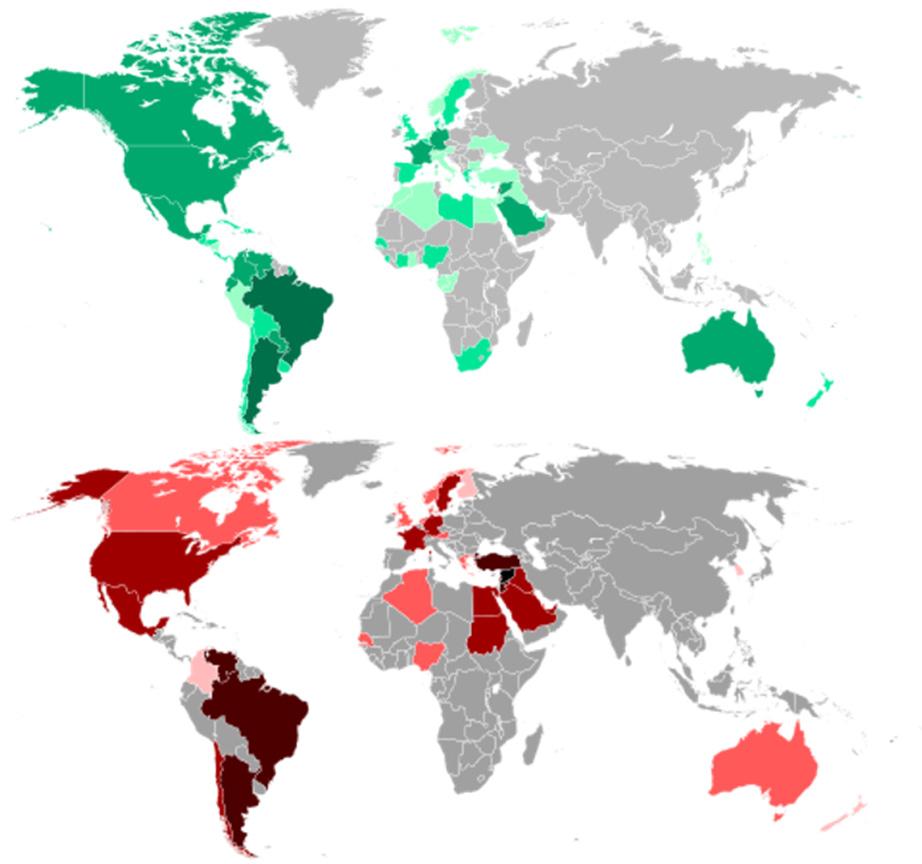
This migration spread Levantine culture, including cuisine, across the globe, from the Americas to Europe, Australia and more stable Arab nations. Sadly, mass migration continues today, especially in Syria, where six million people have fled the country due to the ongoing civil war.
Thomas C, Year 10 writes...
Karate’s origin is a peculiar one. While other martial arts have a known founder or a clear date when they were first taught, karate has no specific invention date or original sensei.
Karate’s origins are roughly traced back to the fifteenth century, when it was known as “Ti” or “Te” and developed in the Ryukyu Kingdom of Japan. Over the next couple of centuries, it was heavily influenced by Chinese martial arts such as Kung Fu. This is thought to be because of the extensive trade between Japan and China in the seventeenth century.
Karate was formally introduced as a complete martial art to Japan in the 1920s. Its modern name is believed to have been given in the early 1900s by the Japanese. “Karate”, meaning “open hand”, symbolises the rejection of weapons and the idea that an open hand alone is enough for self defence.
Countries outside Japan with prominent karate cultures include France, America, Russia and Iran. There is no single reason why karate spread to these countries. For example, America’s karate culture developed through the American military presence in Japan during the Second World War, while Iran’s emerged from an already strong martial arts tradition in Varzesh e Bastani, an ancient Iranian fighting discipline used historically to defend against invaders.
Karate is also well known for its presence in Hollywood, with
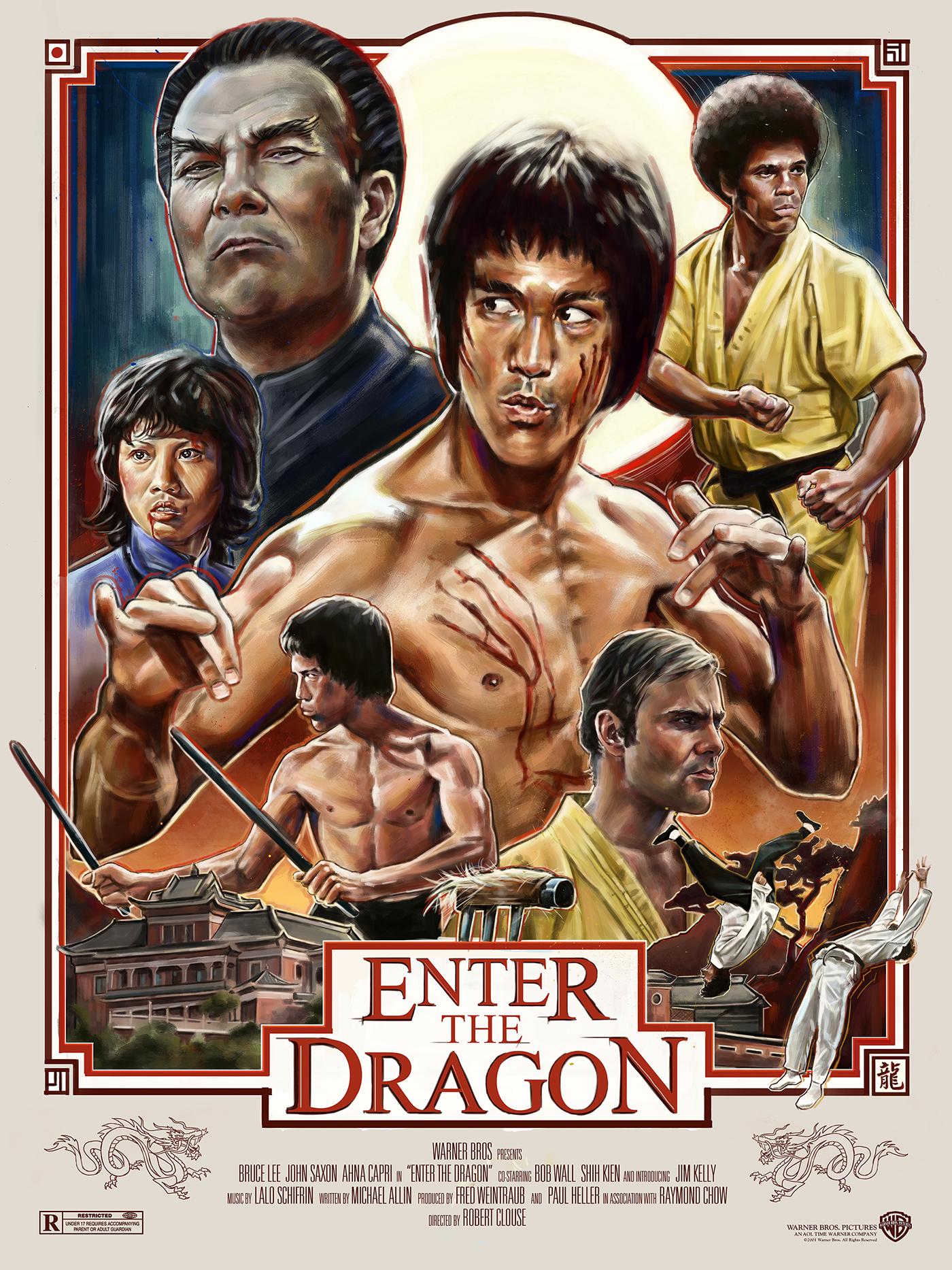
famous action stars who trained in karate such as Chuck Norris, Jean Claude Van Damme, Jackie Chan, Bruce Lee and Wesley Snipes. One of the first films to popularise karate was Enter the Dragon, starring Bruce Lee. The movie follows a Shaolin fighter aiding British intelligence to take down the villain Mr Han. It is famous for its high level choreography and accurate depiction of karate techniques.
Some fun facts about karate include:
• Karate was once only taught at night.
• In its early years, only those aged over twenty could learn.
• Black belts were once so rare that it was said to be more likely to win the lottery than to meet one.
Merry Christmas
The Barometer Team