

Suit your unique picking needs with custom picking and plating
Keep samples & people safe and clean
• Modes include red/white and blue/white fluorescence
Be more e cient managing data
Modify the QPix system decks to be compatible with a variety of standard and non-standard labware
Con gure picking heads, plate holders, plating and streak ing patterns, and software tools for those non- conventional microbes.
Add in robotic automation to increase throughput, eliminate human errors, and achieve consistent sample handling

Simplify workflow and export with software customization.
Screen colonies based on attributes such as size, colour, and uorescence
• Modular automation design-components can be added in upgradeable modules

Bio-Strategy PTY moleculardevices@bio-strategy.comLtdwww.bio-strategy.com
Customize cameras, lters and detection algorithms to see and pick more
Accommodate a wide range of labware
Minimize contamination with optional additions of HEPA lters, interlocked safety guards, and more.
• Integrate with LIMS and data management systems through API
Reduce hands-on FTE time with robotic operation
38 ‘Y’ ARE MEN AT HIGHER RISK OF HEART ResearchersFAILURE?haveshownthat the loss of the male sex chromosome as many men age causes the heart muscle to scar and can lead to deadly heart failure.

LAB+LIFE SCIENTIST - Aug/Sep 2022 | 3www.LabOnline.com.au | www.LifeScientist.com.auContents6UPRIGHTLIQUIDNITROGENBIOREPOSITORIES:SAFE,RELIABLEANDCONTROLLABLEUprightfreezersremovetheriskofdirectcontactwithliquidnitrogenassociatedwithcryovats,whileeliminatingthecompressorandrefrigerantdesignutilisedinmostbiorepositories.14SYNTHETICEMBRYOMODELSCREATEDSOLELYFROMSTEMCELLSThemethodopensnewhorizonsforstudyinghowstemcellsformorgansinthedevelopingembryo,andmaymakeitpossibletogrowtissuesandorgansfortransplantation.16LIQUIDBIOPSYDETECTSBREASTCANCERMARKERSIN4.5HOURSCompatiblewithacommerciallyavailablemoleculartestingplatform,thetestcouldbeusedtoquicklyhelponcologistsdetermineifcancertreatmentsareworking.26NOTANOVERNIGHTSUCCESS,BUTDECADESINTHEMAKING:RNA’SIMPORTANCETOAUSTRALIAProfessorPall(Palli)Thordarson,anaward-winningresearcher,issettokickstartRNAcapabilitiesinNSWandfinallylaunchourgeneticmedicineecosystem. 3016 This issue is available to read and download atREAD ONLINE! www.labonline.com.au/magazine aug/sep 2022
30 DIABETES DRUG TO PATAS,ABNORMALITIESMETABOLICCORRECTpartofanewclass of antidiabetic drugs, can correct the metabolic abnormalities leading to type 2 diabetes and its associated comorbidities — including insulin resistance.
2614 Cover image: ©stock.adobe.com/au/Budimir Jevtic

41 FROM DISRUPTION TO fromConference,TheRETURNSAACBINNOVATION:CONFERENCEAACB59thAnnualScientificbeingheldinPerth18–20October2022,willbe a great opportunity to reconnect with colleagues after a long hiatus.


Earth-based breakthroughs, some of which we will be showcasing this issue. The article on page 14 highlights how researchers have grown synthetic embryo models of mice outside the womb by starting solely with stem cells cultured in a petri dish — no eggs necessary — while the story on page 38 investigates the reason why biological men tend to die on average earlier than women (sorry fellas). You can also learn about the benefits of upright liquid nitrogen freezers in our lead story (page 6) and how an automated liquid biopsy test can detect the presence of cancer DNA in under five hours (page 16).
Leditorial
STScI.andCSAESA,NASA,credit:Image

Now if you’ll excuse me, I will bid you farewell before I break out into Monty Python’s ‘Galaxy Song’…
More things in heaven and Earth
4 | LAB+LIFE SCIENTIST - Aug/Sep 2022 www.LabOnline.com.au | www.LifeScientist.com.au
LLS@wfmedia.com.auLaurenRegards,Davis
people’s risk of becoming depressed, more so than low serotonin levels resulting from a chemical imbalance — with the team going as far as to suggest that there is no convincing evidence that depression is caused by serotonin abnormalities at all. It’s a bold claim to make — one which will no doubt have its detractors — but the researchers hope it will lead to further research into treatments that might better help people to deal with stressful or traumatic events, as well as to address underlying contributors such as poverty, stress and loneliness.

ooking through the news headlines from the past few months, it’s been easy to focus on the negatives. Monkeypox has been declared a Communicable Disease Incident of National Significance; COVID-19 has become so persistent that even some toddlers are now eligible for vaccination; and the 2021 State of the Environment report has described the trend of the Australian environment as “poor and deteriorating” (and it is questionable whether Labor’s 43% cut to emissions by 2030 will be sufficient to address this). And Australia isn’t the only place to have climate concerns: new research from the University of Canterbury has revealed the presence of microplastics in freshly fallen Antarctic snow; separate research from US and UK researchers has found that two major glaciers in West Antarctica may be losing ice faster than they have in at least the last 5000 years; and scientists from NTU Singapore have shown that Earth could be both delivering more and removing less methane into the air than previously estimated, with the result that more heat is being trapped in the atmosphere.
Lauren Davis
One thing that can help with moments of depression is the realisation that we are all so small, and so insignificant, when compared to the wonders of the ever-expanding universe that we are so lucky to inhabit. This became abundantly clear with the release of the first images from the James Webb Space Telescope (JWST), showcasing various cosmic phenomena in exquisite detail as well as the deepest and sharpest infrared image of the distant universe so far — specifically, the galaxy cluster SMACS 0723 as it appeared 4.6 billion years ago. The Director of the Space Telescope Science Institute (STScI), Kenneth Sembach, described the work as “the start of something truly revolutionary in astronomical research”, claiming, “The universe will never look the same again — it will appear grander, more dynamic and more detailed than ever Ofbefore.”course this is not to belittle the efforts of those scientists who have achieved their own
With all the bad news, it’s no wonder that mental illness and depression continue to be major issues in our society. Indeed, a research review by University College London has reiterated that stressful life events exert a strong effect on
Del Williams*
Upright LN2 freezers remove the risk of direct contact with liquid nitrogen associated with cryovats, while eliminating the compressor and refrigerant design utilised in most biorepositories.

n the pharmaceutical and medical industries, cryogenic freezers are utilised as biorepositories for the long-term preservation of biospecimens such as tissue, blood, plasma or urine. These biorepositories are essentially ‘libraries’ where biospecimens are stored for clinical or research purposes. Consequently, biorepositories are vital for understanding diseases and genetics; developing prophylactic and therapeutic agents; and monitoring human population health including outcomes related to environmental exposures.
Upright liquid andsafe,biorepositories:nitrogenreliablecontrollable
With so much at stake, the failure of a cryogenic freezer to properly maintain biological samples at the required temperatures can be potentially catastrophic and costly. In addition, personnel need to be protected when storing or retrieving samples that are stored at extremely low cryogenic temperatures.
I
The challenge is that conventional options for biorepositories — traditional stainless steel vats (cryovats) that contain LN2, and compressorbased systems — pose significant disadvantages in terms of safety, reliability and temperature control. In response, a new category of upright
6 | LAB+LIFE SCIENTIST - Aug/Sep 2022 www.LabOnline.com.au | www.LifeScientist.com.au
When using conventional cryovats, there are significant hazards in having any direct contact with LN2, including extremely cold vapour that can rapidly freeze skin tissue and eye fluid

“Upright liquid nitrogen freezers are designed to prevent direct contact with LN 2. The liquid nitrogen is self-contained, so there is no exposure to the user or the products,” Boyce said.
liquid nitrogen freezers is improving both operator and sample safety, while offering greater reliability, along with adjustable temperatures down to -160°C and faster freeze times.
Today, modern upright freezer designs address many of these potential safety issues associated with cryovats.
Since LN 2 is liquefied under high pressure, it can expand to a very large volume of gas. Consequently, vaporisation of liquid nitrogen can create oxygen deficiency in the immediate environment and cause unconsciousness, and even death in rare cases. In addition, pressure build-up and explosions can occur without adequate venting or pressure-relief devices that allow cryogen evaporation.
With this approach, LN 2 circulates within the walls of the freezer, keeping the contents frozen while preventing direct exposure to users. The units provide the convenience of an upright freezer with good temperature uniformity throughout. The design minimises the need for maintenance since there are few moving parts and no high-maintenance mechanical compressor.
“Cryovats are basically passive systems that utilise LN 2, where there is really only one temperature,” Boyce said.
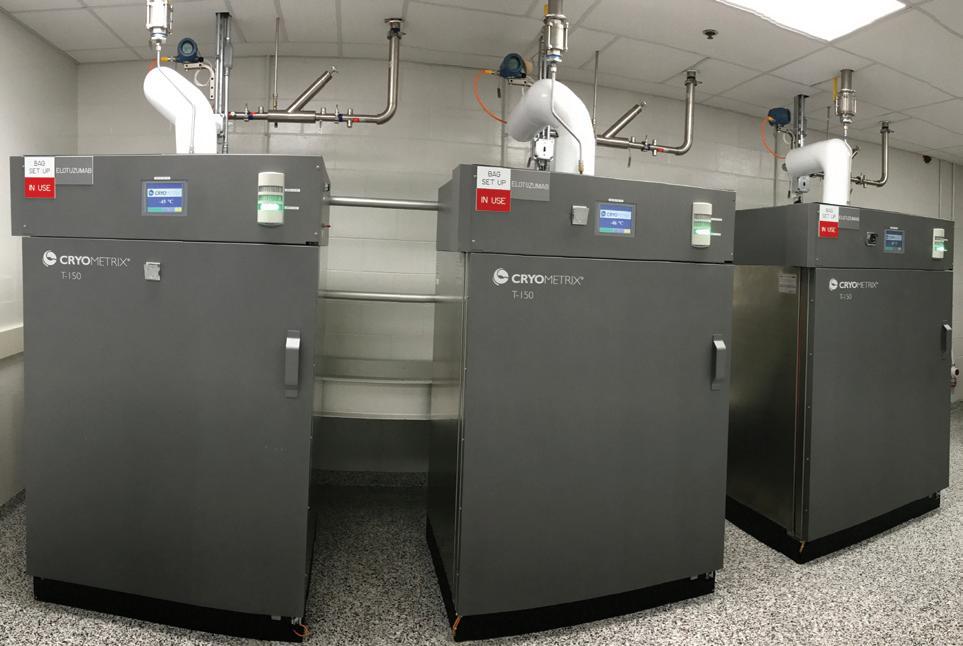
In the case of Reflect Scientific’s Cryometrix T-160 Ultra Low Temp Freezer, the unit utilises LN2 within but prevents user contact. The upright freezer provides adjustable temperatures from +20 to -160°C, which is lower than conventional upright freezer options, enabling faster freeze times. The design also provides temperature
When using conventional cryovats, there are significant hazards in having any direct contact with LN 2, including extremely cold vapour that can rapidly freeze skin tissue and eye fluid, resulting in cold burns, frostbite and permanent eye damage even through brief exposure.
cryogenics
“When cooled below -150°C, liquid nitrogen turns into a frigid vapour that keeps the samples frozen. But the liquid nitrogen can be hazardous during loading and unloading when personnel place items into vats of LN 2,” said Kim Boyce, President of Reflect Scientific, a Utah-based manufacturer that develops and markets innovative cryogenic cooling technologies for
LAB+LIFE SCIENTIST - Aug/Sep 2022 | 7www.LabOnline.com.au | www.LifeScientist.com.au ©stock.adobe.com/au/monkeybusinessimages
Given the risks, liquid nitrogen should be handled only in well-ventilated areas when used with vats indoors, and the LN 2 should be handled slowly and carefully to minimise boiling and splashing. Tongs should be used to withdraw objects immersed in the LN 2 and personnel should never touch non-insulated vessels containing it. In many cases, personal protective equipment is recommended, as well as extensiveControllingtraining.temperature in vats is also difficult, even impossible, since there is no safe, reliable means of adjusting the temperature of the LN 2 within the vat. Cross-contamination can be an issue within vats as well when multiple samples are stored in the same vicinity.
Overcoming conventional cryogenic freezer challenges
the biotechnology, pharmaceutical, medical and transportation markets. The company has more than 30 patents relating to the use of liquid nitrogen with low-temperature freezers, chillers and refrigerated systems.
In contrast, the Cryometrix upright liquid nitrogen freezers eliminate the need for a compressor and refrigerants. This eco-friendly product features a simplified design with minimal moving parts to order to improve reliability and reduce maintenance, enabling the company to offer a 20-year warranty on the cooling system.
Theenvironments.pharmaceutical and medical industries have long used conventional cryogenic freezers and vats while tolerating the limitations. However, upright liquid nitrogen freezers are now providing industry professionals with a safe, reliable and eco-friendly alternative that enables good temperature control.
8 | LAB+LIFE SCIENTIST - Aug/Sep 2022 www.LabOnline.com.au | www.LifeScientist.com.au
uniformity ±7°C throughout, protecting the integrity of all samples within the unit.
At the other end are compressor-based systems that use refrigerants as an essential part of the cooling process cycle. Even though compressor-based systems allow temperature setting, mechanical compressors work constantly and have many moving parts that are susceptible to breakdown. Consequently, these systems can require significant maintenance and repair while lacking necessary reliability. A wide range of causes can contribute to compressor breakdown, such as electrical failure, insufficient lubrication, blocked condenser coils and overheating due to dusty coils, low refrigerant levels or inadequate insulation.“Compressor-based systems can accommodate a wide range of temperatures but need to run 23 out of 24 hours a day and have a lot of moving parts, so they break down and require frequent maintenance,” Boyce said.
The other concern is that compressor-based systems use refrigerants, such as CFCs, which contribute to global warming as extremely potent greenhouse gases and can damage the ozone layer.
Reflect www.cryometrix.comScientific
cryogenics
*Del Williams is a technical writer based in Torrance, California.
The approach also uses up to 90% less energy than mechanical, compressor-based units, which reduces operating costs. Unlike compressor-based systems, no heat is exhausted to the room, eliminating the need for expensive HVAC systems for cooling. The freezer has a small footprint that suits space constrained storage

that processes can continue uninterrupted even upon loss of power.
In addition, upright liquid nitrogen freezers minimise the risk of sample warming and quality deterioration due to door open-close events and offer some of the fastest recovery times in the industry. To safeguard sample integrity, stateof-the-art temperature and data logging can also be easily accessed, and multiple security levels set. The redundant cooling system and onboard seven-day battery backup further mean
Using the ‘electroretinogram’ (ERG) — a diagnostic test that measures the electrical activity of the retina in response to a light stimulus — the researchers found that children with ADHD showed higher overall ERG energy, whereas children with ASD showed less ERG energy. Constable said the preliminary findings, published in the journal Frontiers in Neuroscience, indicate promising results for improved diagnoses and treatments in the future.
“Retinal signals have specific nerves that generate them, so if we can identify these differences and localise them to specific pathways that use different chemical signals that are also used in the brain, then we can show distinct differences for children with ADHD and ASD and potentially other neurodevelopmental conditions,” he said.
Uterus transplant safe and effective at combating infertility
After seven of the study’s nine transplants, IVF treatment ensued. In this group of seven women, six (86%) became pregnant and gave birth. Three had two children each, making the total number of babies nine. The probability of pregnancy per individual embryo returned to a transplanted uterus was 33%, which is no different from the success rate of IVF treatments overall.
“ASD and ADHD are the most common neurodevelopmental disorders diagnosed in childhood. But as they often share similar traits, making diagnoses for both conditions can be lengthy and complicated,” said Flinders research optometrist Dr Paul Constable.
©stock.adobe.com/au/famveldman
“Our research aims to improve this. By exploring how signals in the retina react to light stimuli, we hope to develop more accurate and earlier diagnoses for different neurodevelopmental conditions.”
The eyes may be able to signal neurodevelopmental disorders such as autism spectrum disorder (ASD) and attention deficit hyperactivity disorder (ADHD), according to new research from Flinders University and the University of South Australia (UniSA).

The study, published in the journal Fertility and Sterility, covers transplantation of uteri from living donors. The operations were headed by Mats Brännström, Professor of Obstetrics and Gynaecology at Sahlgrenska Academy, University of Gothenburg, and Chief Physician at Sahlgrenska University Hospital.
The research group has since passed on its methods and techniques through direct knowledge transfer to several research centres outside Sweden. By yearend 2021, the number of uterine transplants in the world was estimated at 90, of which 20 had been performed in Sweden. Worldwide, some 50 children have been born after uterine transplantation.
©stock.adobe.com/au/irena_geo
LAB+LIFE SCIENTIST - Aug/Sep 2022 | 9www.LabOnline.com.au | www.LifeScientist.com.au movers&shakers
Eye-opening biomarkers for autism and ADHD discovered
Transplanting a uterus is an effective and safe method to remedy infertility when a functioning uterus is lacking, according to the first known complete study of uterine transplantation.

Most of the research groups around the world contribute data on donors, recipients, transplants, births, complications and other information to the international uterus transplant register, which was initiated and is maintained by the Gothenburg researchers. This register, under the aegis of the International Society of Uterus Transplantation (ISUTx), is expected to be a highly valuable research instrument in the future, serving to make the procedure even safer and more efficacious.
impulsive behaviours. ASD is also a neurodevelopmental condition where children behave, communicate, interact and learn in ways that are different from most other people. According to the World Health Organization, one in 100 children has ASD, with 5–8% of children diagnosed with ADHD.
The first birth after uterine transplantation took place in Gothenburg in 2014. Another seven births followed, within the framework of the same research project, before anyone outside Sweden gave birth following uterine transplantation.
Working with McGill University, University College London and the Great Ormond Street Hospital for Children, the researchers found that recordings from the retina could identify distinct signals for both ADHD and ASD, providing a potential biomarker for each condition.
ADHD is a neurodevelopmental condition characterised by being overly active, struggling to pay attention, and having difficulty controlling
“The study also shows positive health outcomes: the children born to date remain healthy and the long-term health of donors and recipients is generally good too.”
“This is the first complete study that’s been done, and the results exceed expectations in terms both of clinical pregnancy rate and of the cumulative live birth rate,” Brännström said.
Existing drug may help treat spinal cord injury
The researchers used animal models to demonstrate that AZD1236 halts SCI-induced oedema, and reduces BSCB breakdown and scarring at the site of the injury. They also examined the effect of AZD1236 dosing on MMP-9 and MMP-12 activity in both the bloodstream and cerebrospinal fluid, which surrounds the spinal cord. Here they demonstrated significant suppression of enzyme activity after both oral dosing and intrathecal dosing (injection into the spinal canal). Oral dosing reduced enzyme activity by 90% in serum and 69–74% in the cerebrospinal fluid. Intrathecal injection delivered higher levels (88–90%) of suppression in the cerebrospinal fluid.
Lancaster University researchers have developed a camera-like device that is able to image mini whirlpools in quantum liquids, believed to be a world first. Their work has been published in the journal Physical Review B
One of the key drivers of SCI secondary damage is breakdown of the blood–spinal cord barrier (BSCB). This results in oedema (excess fluid build-up around the spinal cord) and triggers an inflammatory response that can ultimately hinder the healing process and lead to nerve cell death.
Further studies showed that AZD1236 suppressed the formation of proinflammatory cytokines (molecules that are known to contribute to the development of long-lasting neuropathic pain) by 85–95%. The drug was also found to be 82% more effective at alleviating SCI-induced neuropathic pain sensitivity to cold, heat and touch when compared to currently used pain medications such as pregabalin (Lyrica) and gabapentin.
Scientists at the University of Birmingham have shown that an existing drug may reduce damage after spinal cord injury (SCI), by blocking the inflammatory response in the spinal cord. Their research, published in Clinical and Translational Medicine, demonstrates that AstraZeneca’s AZD1236 can significantly reduce ‘secondary damage’ caused by the body’s response to SCI.

Physicists led by Dr Theo Noble have now developed a new type of camera which uses particle-like disturbances to take images of collections of vortices instead of light. The camera is a 5x5 array of pixels; each of the 25 pixels is a millimetre-sized cylindrical cavity with a quartz tuning fork in theThemiddle.team tested the camera on vortices created by a vibrating wire in a form of ultra-cold helium. Noble explained, “The experiment works like shining a torch on a shadow puppet. We then measure the shadows cast by quantum vortices across the camera.”
The study showed that AZD1236 can promote significant nerve regeneration, with a dramatic 80% preservation in nerve function following spinal cord compression injury — which translated into an 85% improvement in movement and sensation. These effects were observed following only three days of treatment with AZD1236, starting within 24 hours post-injury. Within three weeks, the AZD1236-treated animals were said to be showing unprecedented recovery, while controls still showed significant deficits at six weeks post-injury.
10 | LAB+LIFE SCIENTIST - Aug/Sep 2022 www.LabOnline.com.au | www.LifeScientist.com.au movers&shakers
Camera developed to image quantum vortices
Vortices form in stirred fluids, when water drains into a plughole, and in tornadoes and cyclones. These vortices are unpredictable — unlike in quantum liquids, where the vortices always have the same size due to quantum effects that only arise at very cold temperatures such as with the superfluid liquid helium-3. The problem is that quantum vortices by their very nature are too small to be captured without tracer particles by a conventional camera.

Even with its low number of pixels, the new camera uncovered that most vortices form above the vibrating wire instead of developing all around it. According to Dr Viktor Tsepelin, Head of the Ultra Low Temperature Laboratory at Lancaster University, this result was not predicted by mathematical theories or numerical simulations.
©stock.adobe.com/au/rybindmitriy Insider©stock.adobe.com/au/Anatomy
“It is exciting to see that our prototype is working,” Tsepelin said. “The high-resolution camera could also be used to image other topological defects existing in superfluid helium-3, allowing us to have a glimpse at an analogue of the early universe.”
AZD1236 is a potent and selective inhibitor of two enzymes, MMP-9 and MMP-12, which are implicated in the inflammatory process.
Tsepelin’s goal now is to build a 90-pixel camera with a high enough resolution to image the details of development and decay of carefully prepared collections of vortices. This ability to observe the dynamics of superfluid helium-3 will improve the understanding of the turbulent motion of quantum fluids and turbulence in general.

The researchers assessed blood plasma levels of 182 neurodegenerationrelated microRNA in three different groups: a group of people who had tested amyloid positive in PET scans but were cognitively normal, another group of people living with mild cognitive impairment, and another group that had been diagnosed with Alzheimer’s disease.
“We found that plasma microRNA are dynamically expressed during the progression of Alzheimer’s disease,” Guévremont said. “Those specific microRNA are altered at specific diseases stages, including a group which are correlated with levels of the neurotoxic molecule amyloid ß.”
Now research led by QIMR Berghofer cancer immunologist Dr Kyohei Nakamura has discovered that a much less common type of immune cell, known as an invariant natural killer T (iNKT) cell, is like the key that turns on the missile control system enabling the immunotherapy to guide the T cells to destroy the cancer cells. By boosting the numbers of these iNKT cells, the immunotherapy is significantly more effective.
Alzheimer’s is a slow-progressing neurodegenerative disorder that begins long before people notice problems with their memory, with no easy method of early detection. As noted by lead author Diane Guévremont, “It is possible to quantify levels of toxic molecules in the brain or changes in brain structures, but it is not possible to measure these early changes without repeated use [of] expensive and invasive procedures that are only available in highly specialised centres and not currently suitable for routine screening.
A new type of immunotherapy called T cell engaging bispecific therapy has shown great potential for treating blood cancers and is already being widely tested in clinical trials. It acts like a missile control system by alerting and guiding the body’s own T cells to attack and eliminate blood cancer cells. However, it has remained unclear precisely how this process works, and unlocking the science behind it is critical to further developing and improving the treatment to ensure better long-term results.
“A blood test, however, can be done simply, and although may not be as precise as positron emission tomography (PET) scans, may be a valuable tool to discover those at risk of developing Alzheimer’s disease,” Guévremont said. This would allow for early intervention with current therapies such as lifestyle modifications and new drug therapies which are being developed.
New research led by the University of Otago has shown that levels of microRNA in blood plasma dynamically change as the symptoms of Alzheimer’s disease get worse — a breakthrough that could assist with early detection of the disease via a blood test. The results of the study were published in the journal Alzheimer’s & Dementia
Danti©stock.adobe.com/au/Andrea Нагирняк©stock.adobe.com/au/Тарас
12 | LAB+LIFE SCIENTIST - Aug/Sep 2022 www.LabOnline.com.au | www.LifeScientist.com.au
Alzheimer’s could be detected via microRNA in plasma
“Until now, iNKT cells have been underestimated,” said Nakamura, who is Head of QIMR Berghofer’s Immune Targeting in Blood Cancers Laboratory. “Our research for the first time shows how important these iNKT cells are and their critical role in boosting the efficacy of the T cell engaging bispecific therapy. We believe that this study fills in the gaps in our understanding of how the immune system is working during this therapy.”
QIMR Berghofer’s Mika Casey, the lead author of the study, said iNKT cells are scarce in the body, and numbers are even lower in cancer patients, but they can be boosted using a relatively straightforward vaccine approach to stimulate their production.
“These iNKT cells are powerful but also they are quite rare in number,” Casey said. “Boosting the numbers of these iNKT cells has been shown to be effective and safe in patients with multiple myeloma. We hope this approach could be a new fundamental strategy for T cell engaging bispecific therapy.”
Boosting iNKT cells improves blood cancer immunotherapy

Team leader Associate Professor Joanna Williams said the research team hopes the findings will allow intervention at a time in the disease where therapies are most likely to be effective. Expansion of the work will allow researchers to firmly establish a biomarker of preclinical Alzheimer’s disease and will bolster the development of a simple blood screening tool to pick up those at risk of developing the disease.
“Our goal is to use blood as a window into the brain, to find biomarkers that can help us diagnose Alzheimer’s disease early, long before symptoms appear and the brain is too damaged for interventions to be effective,” Williams said.

movers&shakers
Australian researchers have discovered a new clue to improving immunotherapy to fight blood cancers such as leukaemia and myeloma, with their results published in the journal Blood Advances





reprogramming had won a Nobel Prize in 2012. But causing stem cells to differentiate into specialised body cells, let alone to form entire organs, has proved much more problematic.
The research team was led by Professor Jacob Hanna, who explained that scientists already know how to restore mature cells to ‘stemness’ — pioneers of this cellular
Synthetic embryo models created solely from stem cells
14 | LAB+LIFE SCIENTIST - Aug/Sep 2022 www.LabOnline.com.au | www.LifeScientist.com.au
Researchers from the Weizmann Institute of Science have grown synthetic embryo models of mice outside the womb by starting solely with stem cells cultured in a petri dish — that is, without the use of fertilised eggs.

“Until now, in most studies, the specialised cells were often either hard to produce or aberrant, and they tended to form a mishmash instead of well-structured tissue suitable for transplantation,” Hanna said. “We managed to overcome these hurdles by unleashing the selforganisation potential encoded in the stem cells.”
Hanna’s team built on two previous advances in his lab. One was an efficient method for reprogramming stem cells back to a naïve state
ublished in the journal Cell , the method opens new horizons for studying how stem cells form various organs in the developing embryo, and may one day make it possible to grow tissues and organs for transplantation using synthetic embryo models.
P
“We gave these two groups of cells a transient push to give rise to extraembryonic tissues that sustain the developing embryo,” Hanna said.
LAB+LIFE SCIENTIST - Aug/Sep 2022 | 15www.LabOnline.com.au | www.LifeScientist.com.au
Soon after being mixed together inside the device, the three groups of cells convened into aggregates, the vast majority of which failed to develop properly. But about 0.5% — 50 of around 10,000 — went on to form spheres, each of which later became an elongated, embryo-like structure. And since the researchers had labelled each group of cells with a different colour, they were able to observe the placenta and yolk sacs forming outside the embryos and the model’s development proceeding as in a natural embryo.

In the new study, the team set out to grow a synthetic embryo model solely from naïve mouse stem cells that had been cultured for years in a petri dish, dispensing with the need for starting with a fertilised egg. This approach is extremely valuable because it could, to a large extent, bypass the technical and ethical issues involved in the use of natural embryos in research and biotechnology. Even in the case of mice, certain experiments are currently unfeasible because they would require thousands of embryos, whereas access to models derived from mouse embryonic cells, which grow in lab incubators by the millions, is virtually unlimited.


These synthetic models developed normally until day 8.5 — nearly half of the mouse 20-day gestation — at which stage all the early organ progenitors had formed, including a beating heart, blood stem cell circulation, a brain with well-shaped folds, a neural tube and an intestinal tract. When compared to natural mouse embryos, the synthetic models displayed a 95% similarity in both the shape of internal structures and the gene expression patterns of different cell types. Furthermore, the organs seen in the models gave every indication of being
In addition to helping reduce the use of animals in research, synthetic embryo models might in the future become a reliable source of cells, tissues and organs for transplantation. Hanna stated, “Instead of developing a different protocol for growing each cell type — for example, those of the kidney or liver — we may one day be able to create a synthetic embryo-like model and then isolate the cells we need. We won’t need to dictate to the emerging organs how they must develop. The embryo itself does this best.”
Image shows a synthetic mouse embryo model on day 8 of its development; it has a beating heart, a yolk sac, a placenta and an emerging blood circulation.
— that is, to their earliest stage — when they have the greatest potential to specialise into different cell types. The other was the electronically controlled device the team had developed over seven years of trial and error for growing natural mouse embryos outside the womb. The device keeps the embryos bathed in a nutrient solution inside of beakers that move continuously, simulating the way nutrients are supplied by material blood flow to the placenta, and closely controls oxygen exchange and atmospheric pressure. In the earlier research, the team had successfully used this device to grow natural mouse embryos from day 5 to day 11.
Development of synthetic embryo models from day 1 (top left) to day 8 (bottom right). All their early organ progenitors had formed, including a beating heart, an emerging blood circulation, a brain, a neural tube and an intestinal tract.
stem cells iStockphoto.com/D-Keine©
“Ourfunctional.nextchallenge is to understand how stem cells know what to do — how they self-assemble into organs and find their way to their assigned spots inside an embryo,” Hanna said. “And because our system, unlike a womb, is transparent, it may prove useful for modelling birth and implantation defects of human embryos.”
Before placing the stem cells into the device, the researchers separated them into three groups. In one, which contained cells intended to develop into embryonic organs themselves, the cells were left as they were. Cells in the other two groups were pre-treated for only 48 hours to overexpress one of two types of genes: master regulators of either the placenta or the yolk sac.
Comprehensive Cancer Center are developing an automated liquid biopsy test that can accurately detect the presence of cancer DNA in the blood of patients with metastatic breast cancer in under five hours.
“Further prospective clinical trials will evaluate LBx-BCM’s detection sensitivity and its ability to monitor therapeutic response during treatment for advanced breast cancer,” Sukumar and colleagues wrote.
Researchers at Johns Hopkins University’s Sydney Kimmel
urrently a prototype for research use only, and compatible with a commercially available molecular testing platform called GeneXpert, the test could be used to quickly help oncologists determine if cancer treatments are working. A validation of the test and its potential uses has been published in the journal Cancer Research Communications
“Our goal was to develop an assay that would be sophisticated yet simple to perform worldwide and could be used at the point of care to provide same-day feedback to clinicians and patients,” Sukumar said. “If we are able to show by this cartridge assay that we are indeed successful in predicting the course of treatment, we might be able to institute changes in the way we look at chemotherapy and the way we treat patients for metastatic breast cancer.”
With the Liquid Biopsy for Breast Cancer Methylation (LBx-BCM) test, developed in collaboration with scientists at molecular diagnostics company Cephied, a technician can place blood or plasma samples from cancer patients in tubes

The team also studied the test’s ability to detect metastatic breast cancer in two sets of samples from previous studies at Johns Hopkins. They examined cumulative methylation of the nine genes in 20 serum samples from patients with metastatic breast cancer and 20 from people without breast cancer. A second set of samples from 40 people with metastatic breast cancer, 17 with benign breast disease and nine without breast cancer was also analysed.
C
containing a reagent (a mixture used for extracting DNA), place the contents in cartridges for the commercial system to chemically modify the DNA, and then amplify and detect methylated genes, returning results quickly. The assay looks for methylation markers (chemical alterations to DNA particular to cancer cells) among a panel of nine genes that are altered in breast cancers. The genes are AKR1B1, TM6SF1, ZNF671, TMEFF2, COL6A2, HIST1H3C, RASGRF2, HOXB4 and RASSF1.
16 | LAB+LIFE SCIENTIST - Aug/Sep 2022 www.LabOnline.com.au | www.LifeScientist.com.au
cMethDNA can detect up to 90% of patients with metastatic breast cancer and can help predict response to treatment and long-term patient outcomes. However, it takes 10 days to complete and requires a high degree of technical competence. LBx-BCM builds on this work and, because it is automated, takes much less time — requiring less than 15 minutes of handson time by a laboratory technician and returning results in 4.5 hours.
a treatment is effective. Imaging can be effective at detecting changes in larger tumours, but it is nearly impossible to identify changes in smaller tumours.
Liquid biopsy detects breast cancer markers in 4.5 hours
Senior study author Saraswati Sukumar, a professor of oncology and pathology at Johns Hopkins, explained that many patients with breast cancer do not respond to chemotherapy but go through multiple cycles of treatment before oncology teams can perform imaging studies to determine if
The Johns Hopkins team previously developed a liquid biopsy laboratory assay called cMethDNA, which identified the presence of hypermethylation among 10 genes altered in breast cancers. Hypermethylation is a chemical alteration to DNA that often silences the function of genes that keep runaway cell growth in check. Its appearance in the DNA of breast cancer-related genes shed into the blood indicates that cancer has returned or spread.
clinical chemistry world©stock.adobe.com/au/Connect
To test LBx-BCM, investigators first had two individuals run the test on separate days, using stored samples from 11 patients with metastatic breast cancer and four without breast cancer. Results were the same for more than 90% of the cases.
In both sets, LBx-BCM detected two- to 200-fold more methylated DNA in plasma samples from those with breast cancer than in normal or benign samples. The test was found to correctly detect cancer 83% of the time and correctly rule out cancer 92% of the time, for an overall diagnostic accuracy of 85%.
Do MORE in less time to enable rapid and accurate treatment forAerospray®patients.SlideStainer Cytopro® Cytocentrifuge ChloroChek® Chloridometer Automated ESR Testing Vapor Pressure Osmometry Freezing Point Osmometry World’s BEST solutions in performance, consistency, and reliability ELITechGroup email:www.elitechgroup.comAustraliaau.info@elitechgroup.comcall:1800815098


Colony picking is an essential step in biological research, as scientists often isolate microbial clones to mass produce DNA or proteins for a variety of applications downstream. Traditionally, colony picking is performed manually using sterile pipette tips or inoculation loops, which are usually slow, labourintensive and time-consuming.
18 | LAB+LIFE SCIENTIST - Aug/Sep 2022 www.LabOnline.com.au | www.LifeScientist.com.au what’s new
The QPix HT Microbial Colony Picker is a flexible, modular and fully automated colony picking and library management system, ready for robotics integration for high throughput and walkaway time. By leveraging colony picking technol ogy to alleviate bottlenecks and efficiently screen through massive genetic libraries, the easy-to-use, intuitive software guides users through setting up colony picking runs where precision robotics can be used to pick the right colonies every time.
Thermo Fisher thermofisher.comScientific
The sample preparation platform, designed with an experimental design tool, combines reproducible hardware with easy-to-use software and commercially available reagent kits for both label-free and TMT multiplexing ap plications. A software wizard guides users through each step, facilitating proteomics research to newcomers to the field. The platform is optimised to fit into the Thermo Scientific Orbitrap MS ecosystem. End-to-end software, sample and study factor information are transferred from sample input all the way through to LC-MS acquisition through data analysis with Thermo Scientific Proteome Discoverer Software.
Thermo Fisher Scientific is looking to help proteomics researchers increase productivity and free up time for more value-added activities when generating high-quality samples for analysis, using an automated sample prepa ration system that integrates within any LC-MS workflow.
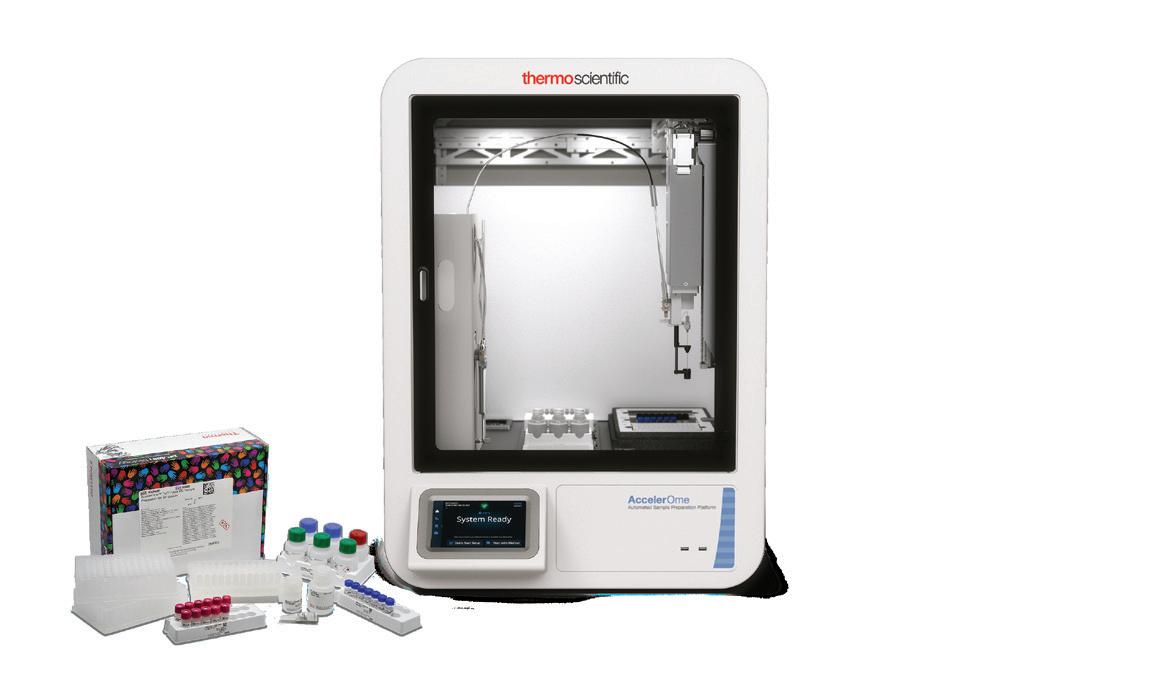
A novel built-in UV measurement of final peptide concen tration prior to LC-MS analysis allows the standardisation of sample peptide input for LC-MS analysis — another metric that adds to the quality and robustness of the final experimental result. The platform supports the use of peptide standards to monitor LC-MS system performance, enabling instrument health monitoring during acquisition or through post-acquisition data analysis.
The 3M Harvest RC utilises fibrous anion exchange (AEX) chromatography to efficiently separate cells, cell debris and DNA from the harvest fluid containing the target product. Precision quaternary ammonium (Q) functionalised polypro pylene fibre, combined with a 0.2 µm PES membrane, provides predictable clarification that is scalable from discovery to commercial manufacturing.
The Thermo Scientific AccelerOme Automated Sample Preparation Platform eliminates the need for labourintensive, manual sample preparation for LC-MS analysis, including the associated method development and reagent sourcing. This allows users to focus on higher value tasks. Automated sample preparation also overcomes the challenge of maintaining reproducibility with manual methodologies, and the platform’s pre-built validated methods and kit format reagents should reduce further any risk of user error. The resulting peptide samples are of consistent high quality.
In addition to microbial screening, the system automates several sample preparation and plate handling processes such as flexible plate replication, gridding, hit picking, transfer of bacterial liquid culture and plating on agar. Automated plating and streaking of 96 samples can be done in 30 min, pro viding walkaway time. Automated plate handling and data tracking streamlines downstream assay and sample management.
Automated microbial colony picker
Chromatographic clarifier
Automated proteomics sample preparation platform

The colony pickers support a wide variety of microorganisms with a suite of organism-specific pins, options of blue/white selection, size and proximity, and zone of inhibition. They can pick up to 3000 colonies/h in white light or 2000 colonies using fluorescence intensity, with a picking efficiency of >98%. Bio-Strategy Pty www.bio-strategy.comLtd
3M Australia - Separation & Purification Sciences www.3mpurification.com.au
The product enables a single-stage clarification process of low- to high-density cell culture (> 40 million cells per mL) with high recovery, and high fidelity of soluble and insoluble contaminant separation. Cells are bound inside the media by electrostatic charge interaction with the AEX chromatographic fibres. This results in the efficient retention of large and small particulates without de veloping a surface cake layer. The media can also remove soluble impurities, which is said to result in cleaner effluent than centrifugation or depth filtration.
This enables you, for example, to generate fast overviews with widefield at low magnification, gradually zoom in on the regions of interest, and switch to confocal when and where needed without ever moving the sample to a different system.
With the simple push of a button, you have everything you need — all in one place — to supercharge fluorescence imaging workflows and get meaningful scientific results faster.
Mica unifies transmitted and fluorescence light imaging modalities. You can select from multiple imaging modalities all within one Microhub, including widefield, confocal, THUNDER imaging, LIGHTNING, Z-stacks, time-lapse and more.
Mica allows you to reduce over 60% of process steps through system intelligence, reduce time and effort from sample to insight by simplifying your entire workflow.
Enable 100% reproducibility and repeatability throughout your experiment.

Contact us to find out how the new Mica Microhub can help accelerate your research. Microsystems
Live cell experiments require the cells to be in optimal shape. Typically, 2D and 3D cells in

SPONSORED CONTENT Leica
Pty www.leica-microsystems.comLtd

media require the temperature and the pH (via CO2) in the environment to be controlled. Stable nutrition and ion concentrations require the evaporation to be minimal. Some experiments even demand the O2 to be mimicked closer to physiological levels. Mica can provide the right conditions in the live cell configuration.
Intelligent automation and AI-supported analysis enables greater efficiency and a faster track to publication.
MoreMicathana
The world’s first imaging Microhub.
highly automated microscope, Mica unites widefield and confocal imaging in a sampleprotecting, environment.incubating

The Microhub enables you to simultaneously capture all 4 labels or different structures in a single acquisition for both widefield and confocal, without ever moving your sample. This overcomes the spatiotemporal mismatch between labels of moving objects during sequential acquisition.

Bestech Australia Pty www.bestech.com.auLtd
The STX4 electrode (not included) was designed for easy insertion into 12- and 24-well plates. It is location re-placeable in the insert for repeatable and consistent measurements. The shielded electrodes are now designed to minimise electrical interference and to be more easily maintained. The weighted, self-standing electrode enables hands-free stable measurements.
Food texture analyser for testing meat chewiness
20 | LAB+LIFE SCIENTIST - Aug/Sep 2022 www.LabOnline.com.au | www.LifeScientist.com.au what’s new
The TA1 food texture analyser also has a large working area up to 180 mm for testing a larger sample. This configuration provides flexibility for a wide range of applications. The load cells used in this material testing machine of fer accuracy of ±0.5% and the system has a high data sampling speed up to 8 kHz. Additionally, users can also configure up to 10 test set-ups and store up to 600 test results for easy traceability. The texture analyser has builtin software for onboard data analysis. It allows the operator to control and monitor all aspects of the system, from testing and configuration to data analysis. Users can also optionally upgrade to advanced NexyGENPlus data analysis software to access a direct interface with Excel, Word and current operating systems.
TEER measurement instrument
Eliminating the need to log data by hand, the EVOM Manual writes the resistance or voltage information to a USB drive in CSV format for easy transfer to spreadsheets and data analysis programs. When used with the foots witch, it enables hands-free recording of measurements.

The EVOM Manual from WPI is designed to deliver improved workflow efficiency, offering more stable and repeatable measurements versus traditional transepithelial electrical resistance (TEER) meters.
Providing users with vital feedback during experiment measurements, the unit’s large screen offers a range of informational views. The graphical displays for trend analysis and measurement values help scientists deliver simple, stepwise methodology during experimental meas urements. The touch screen interface provides an intuitive, easy-to-use menu for configuration.
For example, the system can be fitted with fixtures such as Volodkevitch Bite Sets, Kramer Shear Cells or the Warner Bratzler Shear Blade to test the textural quality of steak, burger patties or plant-based meat products. These jigs are designed to mimic the actions and forces required to shear through the samples. The results can be correlated to the tenderness, chewiness or firmness of the products which determines their eating quality.

The Lloyd TA1 food texture analyser is suitable for conducting detailed texture analysis on food and packaging with applica tions up to 1 kN. The laboratory-scale texture analyser can be fitted with a variety of jigs and fixtures to test a wide range of food products.
Coherent Scientific Pty Ltd www.coherent.com.au


• Gas mixtures tailored to your application needs
• Safe handling and storage
VT-iSIM uses multi-point confocal scanning to gener ate super-resolution images with low photo-bleaching, and the ability to image thicker samples such as tissue sections or whole animals. The system also features variable pin hole size selectable from 10–64 µm and an automated three-position dichroic changer. Other features include a regular or high-speed sixposition emission filter changer and excitation is achievable with up to six SS lasers from visible range (405, 445, 488, 514, 532, 561, 642). Camera and excitation sync comes as standard. For the most accurate sampling, the camera must have pixel size <6.5 µm and the camera connection is via regular c-mount.

what’s new
• Calibration mixtures designed to support your instruments
• Supply of gas mixtures at certified standard and NATA
Accreditated
The VT-iSIM can be added to any regular epi-fluorescent microscope (upright or inverted, eg, Nikon, Olympus, Zeiss or Leica) to enable a path into high-speed super-resolution imaging. The upgrade can be performed onsite with other software platforms including VoxCell Scan, Meta-Morph and NIS Elements.
Multi-point super-resolution imaging system
The system can image at spatial and temporal resolutions and does not require any specific fluorophores, immersion oils, objective lenses or microscope frames to work. If a sample fluoresces, the user can enhance their spatial and axial resolution by up to 2x regular for wide-field microscopy. VT-iSIM produces images beyond the diffraction limit in real time onto a 2D array detector such as an sCMOS camera with no post-processing required. With an sCMOS camera, the achievable capture rates are 200 fps @ 1024 x 1024, 400 fps @ 1024 x 512 and 800 fps @ 1024 x 256.
The product can chromatically split the fluorescence emis sion by wavelength onto multiple array detectors or even onto a single array detector to enable parallel multi-colour image acquisition at spatial resolutions of 120 x 120 x 300 and temporal resolu tions of up to 1 KHz.
SciTech Pty www.scitech.com.auLtd
LAB+LIFE SCIENTIST - Aug/Sep 2022 | 21www.LabOnline.com.au | www.LifeScientist.com.au
Specialises in Specialty Gases and Related Equipment for Laboratories


The VT-iSIM from VisiTech International is a multi-point superresolution imaging system, enabling parallel processing of emitted photons through the emission micro-lens array optic and thus allowing super-resolution images to be collected at up to 200 fps at a pixel resolution of 1024 x 1024 and FOV of 66.56 x 66.56 µm. Spatial resolution at this rate of acquisition is maintained at 120 nm in X and Y and 300 nm in Z, without the requirement for additional magnification.
Call us on 13 78 72, visit supagas.com.au or email our Specialty Gas Team today at SpecialtyGasSales@supagas.com.au
• Friendly team to assist with onsite safety evaluations
Flow switch
The Biotage Selekt Enkel is the latest addition to the Biotage family of flash purification systems. The product is a dedicated, purification workhorse, with a modular design that facilitates application customisation. It also has a low-solvent-consumption workflow, for green operation and sustainability.
Pacific Laboratory Products offers a range of Axygen Axypet Pro pipettors, in volumes including 0.5–10, 2–20, 10–100 and 100–1000 µL. They come in single-channel configurations, with 8- and 12-channel options available on request.

The device has a user-friendly and intuitive interface, mak ing it a powerful and efficient purification platform. It can also be upgraded with the Biotage Spektra software package for additional enhanced functionality, which should lead to purer samples, reduced solvent use and more efficient operation. Shimadzu Scientific Instruments (Oceania) Pty Ltd www.shimadzu.com.au
For applications in potentially explosive dust or gas environments, the switch is suitable for installation in Div 1/Zone 1 areas and certified to local standards of FM, FMc, ATEX, IECEx, NEPSI, EAC, Inmetro, UKCA and EQM/ECAS. It also meets the EC directives for EMC and LVD and the flow element complies with Canadian Electrical code requirements of ANSI/ISA 12.27.01-2011 as a single seal device.
Maintaining the small footprint and compact design of the existing systems, the robust instrument is designed to perform routine purifications in the drug discovery workflow with a reduced environmental impact. The system features one column lines and two solvent lines, enabling separations to be performed in either normal or reversed phases, using high-loading Biotage Sfär flash columns.
Pipettors
Pacific Laboratory www.pacificlab.com.auProducts
The flow sensor element is an all-welded design and constructed of 316L stainless steel. It has no moving parts to break or orifices to foul or clog, so there is no routine maintenance needed. The instru ment is available in a choice of rugged, all-metal enclosures that are NEMA 4X/IP66 rated for long service life in demanding installations and environments. Electronics can be mounted integral with the flow element or remote mounted a distance away from hazardous areas.
Plant engineers and maintenance staff responsible for the operation of positive air flow pressure and exhaust ventilation systems for clean rooms, labs, analyser houses or production areas will find the FLT93F Flow Switch from Fluid Components International (FCI) provides a sensitive solution to monitor and alarm if their system is degrading, not operating to specifications or has shut down.
Flash purification system
The product introduces a digitised approach to instrument design, with a novel modular construction. Laboratories can decide whether they wish to add optional features, such as automated handling of purified sample collection racks or an extended collection bed, and thus tailor the system to suit their particular workflow.
The pipettors feature smooth plunger movement and low pipetting forces to reduce wrist strain and fatigue (RSI). They are designed to maintain their calibration, even after repeated use and autoclaving. A calibration key is included with each pipettor for easy in-house calibration.
AMS Instrumentation & Calibration Pty Ltd www.ams-ic.com.au
The pipettors feature colour-coded push-buttons to match the Axygen MultiRack tips and allow easy size identification and intuitive tip inserting. Their lightweight construction, contoured handle and 4-digit counter are designed to provide comfort and control.

22 | LAB+LIFE SCIENTIST - Aug/Sep 2022 www.LabOnline.com.au | www.LifeScientist.com.au what’s new
The flow switch is specifically designed for air and gas flow detec tion. It is both fast responding and capable of detecting even slight changes in air flow. It is available in a variety of process connec tions for ease of installation in most pipes, vents or duct sizes. Its universal power supply supports powering by 115 VAC, 230 VAC or 24 VDC. Its trip-point/alarm points are easily user set in the field, at the installation. It comes with fail-safe, heavy-duty dual alarm (SPDT) or DPDT relay outputs.

“Core to Google Cloud’s DNA is open-source collaboration, and biomedical research is no different,” added Alister Dias, Vice President, Australia and New Zealand, Google Cloud. “We know that solving some of the world’s biggest challenges doesn’t happen in a vacuum.
The collaboration between Google Cloud and Garvan addresses the challenges researchers and clinicians face when tackling big questions in biomedical research — including storing, analysing and sharing genomic data. Overcoming these challenges requires expertise and investment in population
Google Cloud helps Garvan hit genomic sequencing milestone

“Recent, substantial improvements in the national genomics landscape have resulted in the assembly of large-scale biobanks with hundreds of thousands of genomics-ready DNA samples and associated deep clinical data,” said Associate Professor Sarah Kummerfeld, Director, Data Science, Garvan. “This dramatic expansion of access to clinical genomics requires scalable, coordinated data infrastructure. Google Cloud offers infrastructure built for scaling and efficiency. Without it, this genome project would have taken much longer.”
LAB+LIFE SCIENTIST - Aug/Sep 2022 | 23www.LabOnline.com.au | www.LifeScientist.com.au
what’s happening
“Google Cloud’s scalable and secure infrastructure enabled Garvan to analyse massive amounts of biomedical information at unprecedented speed. The potential of this research to quickly understand and find cures for gene-related diseases is significant, and one we’re proud to be a part of.”
Garvan.andPattersonKatecredit:Image
By deploying scalable Google Cloud technologies, including Google Compute Engine (GCE), Google Cloud Storage (GCS), Cloud Life Sciences API, Google Kubernetes Engine (GKE) and Artifact Registry, Garvan says it is leading the way in genomic data management, processing and analysis, while making data science more accessible to researchers.
Google Australia Pty www.google.com/enterpriseLtd
Google Cloud and the Garvan Institute of Medical Research have collaborated on what is believed to be the largest genome sequencing sample ever performed in Australia, processing 14,000 genomes in less than two weeks. This is a significant step forward for genomic research, which proves the power of cloud-based genomic processing and its potential to lead to earlier diagnoses, interventions and targeted treatments of gene-related health issues.
Google Cloud supported Garvan by demonstrating the scalability of a secure-by-design, cloud-based solution. By storing genomics data on Google Cloud and leveraging the Broad Institute’s Terra workflow and data management system, Garvan was able to process the largest genomics dataset ever examined in Australia while meeting security and international genomics standards. Running the same analysis without cloud computing would be significantly more expensive and timeintensive, Garvan said.
genomics — the generation and analysis of massive-scale datasets of human genetic variation, combined with information on health and clinical outcomes. The dataset generated by this particular project will be used by researchers at the Centre for Population Genomics (CPG), a partnership between Garvan and the Murdoch Children’s Research Institute (MCRI), to explore the distribution of genetic variation across populations and improve the diagnosis of rare genetic disorders.
“In order for genomics to provide better prediction, diagnosis and treatment of disease for all Australians, we need the ability to analyse human DNA at massive scale,” said CPG Director Professor Daniel MacArthur. “This project demonstrates the value of a cloud computing model to achieve this.”
what’s and 4 x 1.5 L rotor
new High-speed centrifuge

24 | LAB+LIFE SCIENTIST - Aug/Sep 2022 www.LabOnline.com.au | www.LifeScientist.com.au (02) 9484-0931 | info@bionovuslifesciences.com.au www.bionovuslifesciences.com.au Premium producer of infectious disease antigens and antibodies • Proprietary VirtuE™ Expression System o Derived from a HEK293 human cell line o Ensures native-like glycosylation and proper folding of antigens o Maximises antigen specificity and performance in assays • Diverse range of antigens and antibodies o Over 60 viral and bacterial diseases o Extensive range of human Coronavirus products - Over 90 antigens and over 50 antibodies available for: * Alpha and beta Coronaviruses * MERS, SARS-CoV & SARS-CoV-2 o Japanese Encephalitis Virus (JEV) o Ross River Virus and many more • Contract and Custom Services o Vector design o Protein expression and purification o Antibody generation o ELISA development o Virology testing

Eppendorf’s high-speed Centrifuge CR22N is an optimal solution for support ing everyday centrifugation tasks such as harvesting of biomass in volumes of up to 6 L per run; pelleting of cells, subcellular organelles or larger viruses; or extraction, precipitation, concentration and purification of nucleic acids in up to 50 mL tubes. With high speeds up to 58,700 x g (Rotor R27A) and a capacity of up to 6 L per run, the centrifuge is made to suit the user’s workflows.

A selection of four different kits are available for Centrifuge CR22N, containing the rotor and consumables tailored to the user’s applicational needs — including various swing-bucket and fixed-angle rotors. Service plans are also available to enable maximum service life and optimal performance.
The innovative 4 x 1.5 L Rotor R9A2, in combination with the company’s triangular 1.5 L bottles, helps to speed up the biomass harvesting workflow by reducing the number of bottles that need to be handled. The large touch opera tion panel with up to 30 programs provides quick and easy operation. The user management and documentation function supports those working in a regulated environment. Additionally, the self-locking rotor system with immediate rotor recognition and sophisticated safety features enables safe and convenient everyday operation of the device
Eppendorf South Pacific Pty Ltd www.eppendorf.com.au
The 1.5 L triangular bottle allows flexibility — no minimum filling level means users can spin samples between 0 mL and 1.5 L without worrying about bottle stability or the need to fill up their sample with additional media and no need to switch bottles or rotors. The option to spin down up to 6 L in just four bottles, instead of six, reduces time-consuming handling steps such as switching to smaller rotors and precooling them, as well as decanting the supernatant, resuspension of the pellet and cleaning the bottles after the centrifugation run.
LAB+LIFE SCIENTIST - Aug/Sep 2022 | 25www.LabOnline.com.au | www.LifeScientist.com.au Tel: (03) 9699 7355 www.pressureandsafetysystems.com.au 9334/BP&SS-WNIFT We handle Pressure ® STAINLESS STEEL SurfAcE poLIShEd vALvES IdEAL for dAIry procESSINg, BEvErAgE inc MIcro BrEwEry, food, phArMAcEuTIcAL, chEMIcAL pLANTS. gasclean-in-placeblanketingcarbonating what’s new
The TopWave 229 is the latest addition to TOPTICA’s industrial deep UV laser line-up. With its short wavelength and an ultranarrow laser linewidth, the product provides the key features to take on an important role as excita tion source in the field of deep UV Raman and deep UV fluorescence spectroscopy. It is suitable for deep UV spectroscopists looking for an easy-to-use laser that enables the user to focus on their application rather than worrying about the light source.
Lastek Pty www.lastek.com.auLtd
As a CW laser system, the product avoids non-linear and saturations problems common with pulsed laser sources. With its state-of-the-art laser controller, it offers a wide range of options for operation. While laboratory users might prefer the controller’s touchscreen interface or the TOPAS PC GUI, system integrators will appreciate the comprehensive command language that enables smooth integration with their control software.
The compact footprint and low heat dissipation of the laser head allow for easy integration in space-restricted and temperature-sensitive application environments. Comfortable, hands-off operation over the system lifetime (typ 10,000 h) is enabled by fully automated optimisa tion routines for the internal opto-mechanics. To provide consistent, diffraction limited beam quality (M2 <1.3), the complete UV beam path is enclosed in a specially sealed compartment.


Excitation below 250 nm is crucial for fluorescence-free Raman, as this avoids the overlap between the spectral regions of the Raman signal and the native fluorescence. Compared to fluorescence, the Raman effect is orders of magnitude weaker, so that even minimal fluorescence is sufficient to mask Raman emission. Fluorescence spectroscopy also benefits from the 228.5 nm emis sion, because it allows the detection of molecules with fluorescence spectra in the range ≤270 nm, which can only be excited with shorter wavelength light.
Industrial CW laser

T
The NSW Government is now involved, together with 14 universities that constitute the NSW RNA Bioscience Alliance and the dozen research organisations within the NSW RNA Production Research Network.2 The goal to create a national genetic medicine manufacturing facility in Australia was captured during an early meeting of the Australian RNA Production Consortium (ARPC). It is inspiring to see so much occurring around the nation knowing each of the original members of the ARPC is tirelessly working to build this, in a fashion that is not simply replicating facilities in each state, but building a collaborative web of skills and infrastructure. These people have changed the future for scientific research in Australia — thank goodness for this cognisant few!
Whilst there is a great deal of investment into Victoria and some in Queensland, there are synergies between the research institutes and many
The importance of driving onshore advances in RNA research and therapies
his is quite extraordinary, given that prior to the COVID-19 outbreak, few people outside the RNA research community were aware that this technology even existed. That Australia is still unable to manufacture mRNA vaccines — despite their proven success against the SARS-CoV-2 virus — presents a huge opportunity.
iStockphoto.com/ipopba©
As RNA science continues to make headlines around the world as the new way of making safer, more targeted medicines, it has sparked a wave of new studies that offer significant potential not only for broad-spectrum vaccines but also treatments for cancer, genetic and autoimmune diseases.

Not an overnight success, but decades in the making: importanceRNA’s to Australia
The COVID-19 pandemic brought together world-leading researchers in a mass response from across many fields, diverting resources to deliver a vaccine that could help save millions of lives. Scientists stepped up and worked tirelessly despite the myriad of challenges, the biggest one of which was the challenge of vaccine supply. Recognising this challenge, and the need for building local capability, a humble yet exceptionally talented scientist from Iceland chose to step up and run the first RNA institute in Australia.1
Davis
It seemed puzzling to find a chemistry expert amongst so many RNA giants; however, as time passed, it became clear the sheer value someone like
Palli had in such a forum. Palli’s fascination with RNA began to emerge early in his PhD: “I remember looking at RNA and RNA-based systems biology as a PhD student and thinking, ‘These are the most fascinating chemical machines in the world’,” he said. Palli has long tried to connect the dots between the pure chemistry world and the biological sciences and just how that chemical machine results in a biological translation.
Peter
As we expend inordinate efforts to educate and develop a constant crop of scientists, from high school to early-career researchers, we hear the same things from PhD students today as we did back in the 1980s and I suspect before: “We can’t find work as we are either too inexperienced or we are overqualified!” Such enormous investment into this ecosystem can only help resolve much of this.
Australia’s RNA capability strengthens as UNSW RNA Institute opens Professor Pall (Palli) Thordarson, an award-winning researcher and chemistry professor at UNSW Science, is set to kickstart RNA capabilities in NSW and finally launch our genetic medicine ecosystem. Fuelled by his interest in the interface between chemistry and biology, Palli has always been fascinated by the role of RNA, and now this molecule is the focal point of his work. RNA science seems like an overnight success, but it has been decades in the making and holds huge potential for making critical contributions towards advancing human health. The UNSW facility will allow scientists to connect and network with industry partners and other collaborators to meet research and manufacturing needs.
26 | LAB+LIFE SCIENTIST - Aug/Sep 2022 www.LabOnline.com.au | www.LifeScientist.com.au
1. institute-opensaustralias-rna-capability-strengthens-unsw-rna-https://newsroom.unsw.edu.au/news/science-tech/WebsiteAccessed19July2022.

For those who assume it is just medical, think again. The agricultural industry is set to benefit from multi-millions in investment with the help of Palli to aid in biosecurity, disease prevention and control — think lumpy skin or foot-and-mouth disease in cattle. It is hard to see any downside to what Palli has orchestrated. It is visionary and all power to UNSW backing him to run down this path. Nice to see Palli back on the farm.
3. https://www.precisionnanosystems.com/ Website accessed 19 July 2022.
rna
Next-generation technologies will nurture a wide range of genetic medicines

ATA Scientific Pty www.atascientific.com.auLtd
UNSW RNA Institute laboratory.
LAB+LIFE SCIENTIST - Aug/Sep 2022 | 27www.LabOnline.com.au | www.LifeScientist.com.au
UNSW RNA Institute official opening.
Now humble should not elicit the thought that it is simple — far from it — however, it has been made a great deal simpler by the NanoAssemblr platform.3 These technologies create very small particles, quickly and repeatedly. They encapsulate a payload, such as mRNA, a peptide, protein or small molecule for delivery to the cell by stealth. Imagine you are a cancer researcher and you have figured out the mechanism of how cancer cells are replicating and where they stem from. Using a Nobel Prize-winning technique called CRISPR, you edit the RNA — how do you do this? Hitch a ride inside a lipid nanoparticle, slip into the tumour and stop it in its tracks! This is elite science happening in Sydney with team collaborations across the nation. We can do wondrous science that will save lives — this is what drives the scientist. The government sees the billions in revenue and the possibility of jobs, jobs and jobs. It makes ethical and economic sense!
Being privy to much of the research, and seeing the technologies you supply have material impact in the future lives of potentially millions of people is inspirational. Consider this technological revolution answers the question we didn’t even know existed — to solve a problem we didn’t know we had. As Palli often states: the missing link to this manufacturing ecosystem is the humble lipid nanoparticle.
2. across-14-universitiescelebrates-119m-funding-support-rna-research-https://newsroom.unsw.edu.au/news/general/unsw-Websiteaccessed19July2022.
collaborations. The global nature of science has throughout history proven there are no boundaries, no borders and only one tribe — the science tribe. We see beyond nationality and we travel the planet in a quest for knowledge, going to where the research is. To be part of this global community, Australia needs vision such as shown by Palli; without this, we could never attract the best of the best to come to Australia, nor would we retain our global giants.

28 | LAB+LIFE SCIENTIST - Aug/Sep 2022 www.LabOnline.com.au | www.LifeScientist.com.au ISOQuality9001 Contact us for a quote today! LABTEK PTY LTD 1300 881 318 | sales@labtek.com.au labtek.com.au LABORATORY & SCIENTIFIC SUPPLIES Pette Variable Volume Pipettors 0.1µL up to 10mL constructionDurable resistant to shock, UV chemicals& maintenanceSimple no requiredtools autoclavable&disassemblyforadjustment; Usercalibrationfriendly with the IKA calibrationPipettesoftware designErgonomic perfectgripsexchangeableforahandfit Certified quality supplied with quality certificate &accordingcalibrationcertificatetoISO8655
what’s new
AMS Instrumentation & Calibration Pty Ltd www.ams-ic.com.au

Single-cell analysis system for cell line development


Sphere Fluidics’ Cyto-Mine is a single-cell analysis platform that enables individual cells to be encapsulated within picolitre-sized aqueous droplets in a biocompatible carrier oil (picodroplets). Each picodroplet provides a controlled, defined and adjustable environ ment that maintains cell viability. Single cells may be screened with speed and precision while secreted proteins are trapped within the picodroplets, making them easily accessible for characterisation.
The flow meter series offers a good performance of ≤0.8% Rd. Features include an onboard PID-controller, totaliser and alarm functions, and many communication buses, followed up by the dedicated Bronkhorst sales and service network.

The ultrasonic flow meters are compact, versatile (liquid in dependent), easy to clean and provided with a straight sensor tube. They have a low internal volume and low-pressure drop in relation to sensor diameter, and are equipped with advanced signal processing (dosing functionality).
Capella www.capellascience.com.auScience
Flow meter
Multiple procedures and assays within the cell line development pathway can be miniaturised and integrated within the platform, al lowing tasks that would previously have taken weeks to complete to be undertaken within one day. Approximately 200,000 individual cells can be screened in a matter of hours using this approach, compared with around 10,000 cells with manual analysis techniques. Quality and quantity of molecular product (monoclonal antibody) are also enhanced as screening can be conducted at an early stage, so that only cells expressing the protein of interest, and the best-performing cells within this pool, are taken forward in the development process.
Single cells are visualised using the specially designed Cyto-Mine picodroplet imaging technology and monoclonality data can be provided to support regulatory submissions. The complete analyti cal process is biocompatible and low-stress for cells. The platform is designed using integrated, user-friendly software that requires minimal specialist training to understand and implement effectively.

Bronkhorst has released the latest model in its ES-FLOW family — the ES-1x2C — designed to cover the flow range just below the existing ES-1x3I or ES-1x3C. The market for low liquid flow range of ≤ 1000 kg/h or L/h measurement and control is important to Bronkhorst, due to its size and the expected future growth of this segment.

The Tomocube HT-X1 uses a conventional single-beam white light LED instead of a laser light source. Instead of rotating the laser beam to illuminate the sample at various incidence angles, it illuminates the sample with various beam patterns specifically designed to retrieve the refractive index and captures a sequence of holograms from different positions.
A 40x 0.95 NA air objective lens allows rapid imaging of multiple locations with a lateral resolution of 156 nm. The high numerical aperture allows illumination for fluorescence imaging, while the large 160 x 160 µm field of view allows rapid and easy imaging of multiple locations.
The Tomocube HT-X1 optical microscope uses incoherent light to generate holographic images of unlabelled live cells. This technology un locks label-free 3D and 4D live cell imaging on standard imaging plates for highthroughput and automated screening applications due to its ability to image multi-well plate formats, large field of view, laser autofocus system and a high-performance 0.95NA objective. Core imaging facilities will also value its integrated gassed incubator for long-term, time-lapse studies and its software-driven approach, allowing multiple users to access its performance simply and quickly through its intuitive GUI, TomoStudio X.

The product incorporates a 450 nm LED light source for trans mitted light together with a customisable 5-channel fluorescence filter engine, with any three of the channels being captured for overlaying. The large, motorised stage will easily accommodate 24-, 12- and 6-well plates and standard 35 mm imaging dishes in the integrated incubator, which is equipped with a sealing lid to allow gassing and combines with a motorised laser-powered autofocus module for repeatable monitoring of locations during long-term studies.
LAB+LIFE SCIENTIST - Aug/Sep 2022 | 29www.LabOnline.com.au | www.LifeScientist.com.auwhat’s new
This single-beam technique simplifies the imaging process by eliminating the need for background calibration and allowing imaging in confluent samples without an increase in light intensity. As well as being easily combined with complementary imaging modalities, it should be more mechanically stable and less sensi tive to speckle noise for high contrast imaging.
microscopeholotomographyHigh-resolution
SciTech Pty www.scitech.com.auLtd
The product builds on the optical diffraction technology (ODT) of Tomocube’s HT-1 and HT-2 microscopes. Like these instruments, it presents morphological, mechanical and chemical properties of individual living cells through the 3D refractive index (RI) tomo grams quickly and simply without any sample preparation, and molecular specificity information through fluorescence imaging.
T
The role of adipocytes
Diabetes drug to correct metabolic abnormalities

The researchers then went on to focus more closely on ALMS1 and how it interacts with other proteins within the adipocytes. In particular, they have shown that in the absence of insulin, ALMS1 binds to another protein called PKC alpha. The activation of insulin in the adipocytes induces the separation of ALMS1 and PKC alpha, resulting in glucose entry into cells. In people with diabetes, who are insulin-resistant, this link between the two proteins is maintained.
he prevalence of type 2 diabetes, which is characterised by high levels of glucose in the blood, has been increasing for decades due to population aging, inactivity and poor diet. Available drugs treat the consequences of type 2 diabetes by focusing mainly on lowering blood glucose, but they do not target the underlying biological mechanism that causes the disease. Furthermore, despite the need for new and more effective treatments, there have been no disruptive therapeutic innovations to reach market in over a decade.
Drawing on this knowledge, the scientists developed the peptide PATAS, which works by breaking the interaction between ALMS1 and PKC alpha — thus restoring insulin signalling in the adipocytes. Their latest study, conducted on animal models and published in the journal Diabetes, confirms that PATAS restores glucose uptake in the adipocytes, resulting in the treatment of insulin resistance with beneficial effects on the whole body.
“Thanks to PATAS, the adipocytes that could no longer access glucose were once again able to absorb it and then metabolise it in order to synthesise and secrete lipids which are beneficial to the entire body,” Marion said. “These positive effects are visible in our animal models, with a marked improvement in insulin resistance. Other parameters and comorbidities are also improved, including better blood glucose control and decreased liver fibrosis and steatosis.”
30 | LAB+LIFE SCIENTIST - Aug/Sep 2022 www.LabOnline.com.au | www.LifeScientist.com.au
The successful development of a new class of antidiabetic drugs could have significant implications for public health, not only to treat type 2 diabetes but also many other cardio-metabolic disorders in which dysfunctional adipocytes and insulin resistance are problematic. And with promising results in animals, the researchers plan on organising a clinical trial as soon as possible, in order to test PATAS in humans.
Mouse nucleifluorescentlyadiposevisceraltissuelabelled;colouredblue. Marion.VincentcourtesyImage pharma iStockphoto.com/VioletaStoimenova©

This is the objective of the research led by Vincent Marion, from the French National Institute of Health and Medical Research (Inserm), and his team at the University of Strasbourg. In collaboration with the University of Birmingham and Monash University, the scientists developed a product called PATAS in a new class of diabetes drugs called ‘Adipeutics’. PATAS works by specifically targeting the adipocytes (fat cells), restoring glucose entry and thus correcting and re-establishing the metabolic physiology of the adipose tissue.
In previous research, published in 2020, the research team had identified a new therapeutic target for type 2 diabetes when investigating an ultra-rare monogenic disease known as Alström syndrome. They showed that adipose tissue abnormalities caused by a dysfunctional protein called ALMS1 led to extremely severe insulin resistance associated with early-onset type 2 diabetes in people with Alström syndrome. In animal models, restoring the function of this protein within the adipocytes re-established blood glucose balance.
Type 2 diabetes is a major public health problem that affects millions of people worldwide, so developing new drugs to help better treat its underlying causes is something of a priority. An international team of scientists has now developed a peptide known as PATAS, part of a new class of antidiabetic drugs, which can correct the metabolic abnormalities leading to type 2 diabetes and its associated comorbidities — including insulin resistance.
The GC 2400 Platform’s smart features, automated processes and flexibility throughout the day are driven by SimplicityChrom CDS Software, which connects and integrates all steps of the GC workflow in a way that simplifies the processes. It’s intuitive and flexible, enabling you to achieve your analytical goals and get results quickly. For labs that test highly regulated samples such as pharmaceuticals and food, the software supports compliance with 21 CFR Part 11.
Sampling MaximizedProductivity
Engineered for Perfection
In addition, the platform features smart gas management to reduce its gas consumption, and uses hydrogen as a carrier gas with a builtin sensor to improve lab and operator safety. Its flexible, smart sampling capabilities can support sustainability and are designed to grow in sync with your lab’s needs.
Designed with You in Mind
Complete, WorkflowsIntegrated
With the SimplicityChrom CDS Software and Asset Genius™ solution for laboratory monitoring, you can return time to your scientists by automating the collection, visualization, and reporting of key performance data for insights into your most critical lab assets, including the GC 2400 Platform. And with 24/7 monitoring and alert notifications, you can have total confidence in your assets — and your lab environment.
Fully integrated into the GC 2400 Platform, the MS 2400 SQ Detector is a powerhouse. Offering accurate detections in full-scan mass spectra, selected ion full ion (SIFI) and selected ion monitoring (SIM) modes, the single-quad
Simplicity Vision is a browser interface that provides flexible access to the GC 2400 Platform. The technology allows for real-time status updates and monitoring of every step of the GC workflow as well as instrument setup and prerun manual operations. Used as a single or multi-instrument interface, operators can benefit from working remotely and making decisions on the go.
SPONSORED CONTENT
system gives your lab the flexibility it needs to maximize sample throughput and operate smoothly and efficiently.
The GC 2400 Platform can be used in many different analytical sectors and applications, from industrial and environmental analysis to food and pharmaceutical quality and safety testing. The platform offers the power of connectivity and workflow integration throughout the entire process, with its innovative design and smart features making it easier than ever for cuttingedge labs to access, operate and monitor their gas chromatographic separations.
Every day, analytical laboratories are challenged with balancing high productivity with efficient operations. And with the growing trend of hybrid work models, gas chromatography operators seek remote access to their GC — whether they’re working in a different part of the lab or at a completely different location.

workflows are automated and comprehensive so that users can focus on results.
The GC 2400 Platform offers smart sampling capabilities to optimise operations, as well as status notifications and easy-to-maintain hardware. Tasks are driven by software and
The DetachableGCSeparations:BehindSmart2400PlatformwithTouchscreen
Discover the GC 2400™ Platform, offering innovative technology that enables access to real-time information on the go. The smart simplified and sustainable platform enables users to experience innovative GC workflows, backed by a portfolio of separation chemistries and solutions that offer labs an efficient workflow experience.
With single- and dual-tower capabilities, the AS 2400 Liquid Sampler features plug-andplay towers that can be easily moved from one analytical channel to another, or from one GC to another, without the need for manual reconfigurations. Downtime is minimized, enhancing your lab’s overall output and ROI.
PerkinElmer Pty the-gc-2400-platformwww.perkinelmer.com/au/category/discover-Ltd

Visualize Better Efficiency
Boasting sensitivity, pinpoint precision and ease-of-use, the robust HS 2400 Headspace Sampler features pressure-balanced sampling technology that introduces samples into the column without the use of a gas syringe or valve and loop. By eliminating the valve and loop, many sources of variability and contamination are decreased, allowing the sampler to avoid dead volumes, carryover, and peak distortion. That leads to sharper peaks, exceptional reproducibility, and more accurate results.
Increased Productivity and Confidence in Results
Welcome to a New GC Experience
The exclusive Marathon™ Filament technology boasts exceptional durability and extended lifetime. SMARTsource™ Technology provides tool-free source access, cleaning, and maintenance — giving your lab greater instrument uptime and sample throughput.
The innovative GC 2400 System brings a new experience to GC operators. The touchscreen, complete with customizable LEDs and sounds, provides status updates and notifications that deliver crucial information at a glance — inside and outside the lab — helping you make better decisions, faster. With automation capabilities and simplified maintenance features, the system supports lab productivity and increases instrument uptime.
Setting the benchmark in the temperature range of -40°C to -86°C, our new ULT Freezers are engineered to store highly sensitive substances that meet the special safety & hygiene regulations required for vaccines! home.liebherr.com.au 1800 685 899
32 | LAB+LIFE SCIENTIST - Aug/Sep 2022 www.LabOnline.com.au | www.LifeScientist.com.au
Each facility is designed as a collaborative, multi-tenant environment, combining dedicated and secure client-specific technical spaces with collaborative common areas such as hot desks, meeting rooms, kitchen, break-out areas, reception and goods in–out.
Such spaces are a key ingredient to success for any entity in the STEM sector to advance research, clinical trials, pre-market and production phases and beyond. The issue with finding such space is to get the right lab or cleanroom space for the process, at a time when many institutions are pushed for space for educating the next generation of budding scientists.
“We will be expanding to a team of 15–20 over the next 18 months and will be looking for additional lab space with Yild and potentially conducting small batch manufacturing in clean rooms (all which can be provided via Yild).”
Client Eldin Rostom, founder and MD of Diagnose Medical and a client of Yild Melbourne, said, “Yild provided PC2-compliant infrastructure which allows our scientists to work in a safe environment.
Safe Storage at Ultra TemperaturesLow
Yild Technical Spaces Pty Ltd www.yild.com.au

and ISO-grade cleanrooms in a fully serviced model, including customised features such as fume cupboards; biosafety cabinets; specialty lab gases; lab waste solutions; and DG storage.

Servicedhappeninglab space in Melbourne — filling a need in STEM
Laboratory & Pharmaceutical Distributed by: Contact Us:

what’s
However, the tide has started to turn in 2022 for clients who have joined a new facility provided by Yild Technical Spaces (Yild) in Melbourne, adding to the success of the Yild Sydney location, which has been operating since 2019.
Yild provides customised laboratory space for almost any scientific, clinical or commercial use — a proven success since 2019 in Sydney and now available in Melbourne within a few minutes of the CBD. The company is delivering modern PC2 labs

For any scientists who are looking for a facility that caters to startups, scaleups and mature science enterprises, with code-compliant PC2-capable and cleanroom spaces, plus great support, such a space is normally not easy and sometimes impossible to find.

TrendBio Pty www.trendbio.com.auLtd
LAB+LIFE SCIENTIST - Aug/Sep 2022 | 33www.LabOnline.com.au | www.LifeScientist.com.auwhat’s new
Dolomite Bio is launching two hydrogel-focused reagent kits, enabling high-throughput encapsulation of cells in hydrogel scaffolds. The kits address the needs of researchers explor ing both agarose encapsulation and collagen-based hydrogel projects for the 3D cell culture space.

Current methods for constructing hydrogel scaffolds involve time-consuming ‘home brew’ batch methods, with few com mercially available solutions. For this reason, Dolomite Bio is launching the nadAROSE kit for the encapsulation of cells in agarose and the nadia3D kit for 3D cell culture research. Both kits are complete and standardised solutions, containing all the single-use, prefabricated consumables needed for scaffold production on the company’s Nadia Instrument.

Due to the flexible nature of the Nadia Instrument, researchers can perform high-throughput encapsulation of up to 1 million cells in one run, with a choice of running one, two, four or eight lanes in parallel, in under 30 min. The fully automated instru ment guides users through all relevant steps of the experiment via an easy-to-use touchscreen interface. With single-use chips and precise temperature control, the instrument is suitable for hydrogel research projects. Additionally, researchers will ben efit from the wide sample compatibility, opening up research areas involving large cells of over 50 µm in diameter, such as Bothcardiomyocytes.kitscanoffer control over monoclonality, giving research ers access to a variety of downstream workflows such as cell secretion studies, cell-cell interactions and microbial cell culture. Furthermore, the nadAROSE kit is compatible with cytometric analyses. The nadia3D kit opens up downstream workflows in the development of novel culture techniques for fastidious cell lines, disease modelling, identification of novel drug targets and pharmaceutical screening.

Hydrogel reagent kits

Genome-wide analysis of histone marks
Cleavage Under Targets and Tagmentation (CUT&Tag) is a method to investigate genomic localisation of histone modifications, and some transcription factors, which reveals interactions between proteins and DNA or identifies DNA binding sites for proteins of interest.
PCR clean wipes
Unlike MNase-Seq or ATAC-Seq methods which target open chromatin, and are therefore dependent on chromatin accessibility, CUT&Tag utilises an antibody-based enzyme tethering strategy to target specific histone modifications or proteins to reveal chromatinbinding information that is specific to those sites or proteins of interest.
AB Sciex Australia Pty Ltd www.sciex.com
CUT&Tag can rapidly produce high-quality results from less starting material than ChIP-Seq and enable robust analysis from lower sequencing depths. CUT&Tag-IT Assay Kits from Active Motif are compatible with as few as 5000 cells; exhibit low background signals, enabling low sequencing depth; and come complete with all reagents required along with an optimised protocol.
United Bioresearch Products Pty Ltd www.unitedbioresearch.com.au
The Central Administration Console feature brings project management, user profiles, permissions and security into a simple and navigable interface. In addition, users will now be able to operate the software in nine languages: Chinese (simplified), English, French, German, Italian, Japanese, Korean, Portuguese and Spanish.
SCIEX OS software v3.0 is a software ecosystem built on accessibility, connectivity and integration. The software powers mass spectrometers across the SCIEX portfolio and was designed to help deliver better quality data, boosted workflow efficiencies and comprehensive auditing advancements.

In addition to enabling SCIEX’s Zeno SWATH DIA (data-independent acquisition) method, the software features stMRM — a data-rich, scout triggered MRM workflow. stMRM couples efficiency with high-quality data across vast screening workflows. It utilises the intelligent monitoring of marker compounds to trigger the acquisition of later eluting dependent transitions to identify dependent compounds. stMRM removes analytical dependencies of chromatographic retention times, which should allow for improved cycle and dwell across compound transitions.
False positive and false negative PCR results are caused by in-house cross-contamination of amplified DNA from previous tests conducted in the laboratory. This contamination is often caused by aerosols generated from opening tubes or via pipetting. The aerosol can travel easily throughout the work space, potentially contaminating work surfaces, equipment and pipettes used for testing. Routine cleaning of the surfaces in the laboratory is recommended to combat this potential threat to correct results.
PCR Clean Wipes are a ready-to-use wet wipe which is conveniently presented in a canister and stored at room tem perature. Simply wipe the surface and contaminating DNA, RNA, DNase and RNase will be eliminated within seconds. The wipes are pre-soaked with a solution containing a surfactant and a non-alkaline and non-carcinogenic agent. The wipes are safe to use on a variety of surfaces including glass, ceramic, plastic, rubber, steel and precious metals.

PCR Clean Wipes are a useful tool for both research and industry laboratories. A convenient refill pack is also available.
Mass spectrometry software
34 | LAB+LIFE SCIENTIST - Aug/Sep 2022 www.LabOnline.com.au | www.LifeScientist.com.au what’s new
Australasian Medical & Scientific Ltd www.amsl.com.au
CUT&Tag is based on the same principles as ChIP-Seq, but with several changes to the protocol that are advantageous in certain situations. Instead of the sonication of fixed chromatin and immu noprecipitation steps performed in ChIP-Seq protocols, in CUT&Tag, fresh (not frozen) unfixed cells are bound to concanavalin A beads and the antibody incubation is performed with cells in their native state. Directly following antibody binding, the chromatin is digested and NGS libraries are prepared in a single step by tagmentation using the protein A-Tn5 (pA-Tn5) transposome enzyme that has been pre-loaded with sequencing adapters.
The S-Monovette is an innovative enclosed blood collection system that allows the user to draw blood from the patient using the syringe or vacuum method, uniting the advantages of both techniques in a single product.
When used as a syringe, the phlebotomist has full control over the speed at which the blood is drawn into the tube. This is particularly useful for patients with fragile veins, such as the very young or elderly, where the use of the aspiration technique prevents even the most fragile veins from collapsing. When the tube has been filled, the plunger is simply snapped off to leave a primary sample tube which can be centrifuged and is compatible with all major analysers.TheS-Monovette can also be used as an evacuated tube by drawing the plunger fully down and snapping it off immediately
Sarstedt www.sarstedt.comAustralia

LAB+LIFE SCIENTIST - Aug/Sep 2022 | 35www.LabOnline.com.au | www.LifeScientist.com.au SPONSORED CONTENT
The S-Monovette needle is ready to use so that there is no need for assembly to
The S-Monovette® is the revolution in blood collection.

prior to blood collection. This creates a fresh vacuum and ensures a precise filling volume, ensuring a correct dilution ratio.
a holder. The needle is of a compact, low profile design, which reduces the chance of haematoma by allowing for a reduced angle of puncture and eliminates the possibility of needle stick injury caused by assembly of the needle and holder. The compact design also results in approximately one sixth of the sharps volume caused by using a preevacuated system, giving significant cost savings.Ifyou would like a visit from one of our Sales Representatives to demonstrate this system, please contact us on toll free 1800 803 308
The reduced vacuum pressure in the S-Monovette drastically reduces the rate of haemolysis and vein collapse, meaning increased sample quality and reduced costs associated with repeat collections. Furthermore, unlike pre-evacuated tubes, the S-Monovette does not have to hold a vacuum for many months after manufacture, which allows the membrane stopper to be thinner and more easily penetrated by the needle sheath. This minimises the movement of the needle in the vein when attaching the tube, ensuring optimum patient comfort.
Monkeypox antigens
The column delivers good separation performance over a wide range of flow rates, offering the ultrahigh resolution needed to extract maximum information from complex samples. As a result, laboratories should be able to identify a greater number of proteins and peptides in their proteomicsManufacturedexperiments.usingthe same lithographic mask, each column is close to identical, said to provide better column-to-column consistency and extended product lifetime relative to packed-bed column alternatives. The reduced need for column changes and resultant increased system uptime means method development, validation and large-scale studies should be more streamlined. Ease of use is enabled through a suite of additional features, including the Thermo Scientific NanoViper Fingertight Fittings that enable swift connections to reduce errors and the need for repeat analysis.
VP8 (L4R, P25K) is a major structural core DNA-binding protein and will be presented as the mature protein without its 39kDapropeptide.protein (A5L) is an immuno dominant protein expressed late during infection and is present in the viral core.
P4B (A4L) is another major component of the virion core and will be presented as the mature protein without its propeptide.
Thermo Fisher thermofisher.comScientific
Bio-Rad Laboratories has launched the CFX Opus Deepwell Real-Time PCR Detection System to support researchers in developing nucleic acid detection as says. With a 96-well block and the largest reaction volume available in the CFX Opus range — up to 125 µL — the system is designed to offer precise quantification to support assay development.

Bio-Rad Laboratories Pty Ltd www.bio-rad.com
The Native Antigen Company has moved to develop a series of monkeypox antigens to support research into this disease. The four core proteins P4A, P4B, VP8 and 39kDa protein, and the major envelope protein F13L, are now in development, and will be commercially available in the spring of 2022.
Real-time PCR detection system
P4A (A11L) is the most abundant pro tein in the virion and will be presented as a precursor, consisting of the 62kDa peptide and the 23kDa protein. In vivo P4A undergoes proteolytic cleavage by the I7 protease during the transition from immature to mature virion.
The system’s deeper sample wells are designed for workflows that require larger reaction volumes for pooling, certain sample prep procedures or other specialised protocols such as in food and industrial testing, and human and veterinary pathogen detection. It can multiplex up to five targets simultaneously and supports fluorescence resonance energy transfer (FRET) applications.
F13L is a critical component in the production of wrapped virions which is required for cell-to-cell spread of the virus, a major envelop antigen of extracellular virions and a target for phospholipase inhibitors like tecovirimat. This protein will have its two cysteine palmitoylation sites changed to alanine.
The system delivers uniform thermal cycling and powerful software that can be linked to Bio-Rad’s BR.io platform, providing remote set-up, instrument monitoring and cloud data management capabilities.
HPLC column

The Native Antigen Company develops and manufactures high-quality recombinant antigens and antibodies as well as offer ing a range of services for the diagnostic and biopharmaceutical industries. The company’s VirtuE mammalian expres sion system has been developed for the purpose of producing native-like proteins, which are being widely adopted by in vitro diagnostic, vaccine and academic groups in cutting-edge R&D, where correct fold ing and glycosylation are vital. Contract services range from antibody generation to scale production of recombinant and native antigens, bespoke assay develop ment and QC.
36 | LAB+LIFE SCIENTIST - Aug/Sep 2022 www.LabOnline.com.au | www.LifeScientist.com.au what’s new
Thermo Fisher Scientific is providing pro teomics and biopharmaceutical research laboratories with a micro-pillar array column as part of an end-to-end LC-MS workflow that should simplify complex bottom-up proteomics analyses. The Thermo Scientific µPAC Neo HPLC Column, initially available to pre-order with the Thermo Scientific Vanquish Neo UHPLC System and Thermo Scientific Orbitrap Mass Spec trometers, delivers a comprehensive, single-solution LC-MS workflow complete with a detailed start-up protocol. This should help users accelerate their experimental set-up with the reassurance of high performance across every component of the workflow.
BioNovus Life www.bionovuslifesciences.com.auSciences
250 years of collective experience in working with RNA, the Shine-Dalgarno Centre for RNA Innovation brings together experts in RNA biology from across the ACT region to focus their expertise in RNA biology to deliver innovative research for RNA-based health care.3 The UNSW RNA Institute (RNAI), Australia’s leading RNA science, therapeutics and translational facility, has officially opened.4 Countless hours of planning and developing have transpired; now the Director of the Institute, Professor Pall Thordarson, says “the RNA revolution is just getting started”4. RNA-based technology offers more than just vaccines, it has the potential to also treat disorders such as arthritis, cancer and malaria and for plants and animals improve productivity and reduce environmental pressures.5 The new BASE facility located at the University of Queensland is a leading national facility for manufacturing and research of mRNA technologies to support the next generation of advances in health, industry and agriculture.6
www.atascientific.com.auLtd
6. Synthetic RNA DNA manufacture (basefacility.org. au) https://bit.ly/3PnHcbs
Calling all RNA biotechs — let’s collaborate
Australia is host to some of the world’s leading experts in RNA science. The inaugural A-RNA Conference held during May this year in Thredbo, NSW, brought together much of the RNA biotechnology community to discuss the latest developments, with speakers including Melissa Moore (Moderna), Dan Peer (Tel Aviv) and national speakers Tim Bredy (UQ), Eduardo Eyras (ANU), Sue Fletcher (Murdoch/PYC Therapeutics) and Damien Purcell (Doherty Institute). The event facilitated networking and collaboration opportunities for both academics and industry to enable a worldclass Australian Genetic Medicine ecosystem to be built comprising RNA-based R&D and biotech
References
1. Proceedings—National RNA Science and Technology Roundtable | Australian Academy of Science https://bit.ly/3Omj1J3
7. Victoria makes Australia’s First mRNA vaccine candidate https://bit.ly/3zmczh5 Scientific Pty
5. Can Australia build a world-leading RNA sciencebased biotech industry? https://bit.ly/3B4MDb3
ATA Scientific is helping Australia build a worldclass RNA science-based biotech industry.


Let us help transform your RNA world
Severalindustries.initiatives have already started to take shape in Australia, as a direct result from collaborations between scientists and government, particularly following the National RNA Science and Technology Roundtable1 and the announcement of the government’s Modern Manufacturing Inititiative.2 With over
2. Enabling Australia’s onshore mRNA manufacturing capability: approach to market https://bit.ly/3IFEEkG
SPONSORED CONTENT ATA
4. Australia’s RNA capability strengthens as UNSW RNA Institute opens https://bit.ly/3IKQs5y
The NanoAssemblr platform from Precision NanoSystems (PNI) enables the rapid, reproducible and scalable manufacture of nanoparticle formulations such as LNPs to encapsulate RNA. Particle size can be finetuned to create highly reproducible LNPs with high encapsulation efficacy and potency within seconds. NxGen microfluidics mixing technology simplifies and accelerates nanomedicine formulation by enabling all scales of development through one single mixing element — from formulation to full GMP. To address challenges of limited access to ionisable lipids, PNI has developed a proprietary ionisable lipid library and a commercially available LNP reagent mix, GenVoy-ILM, that allows for rapid preclinical development of RNA vaccines.
But the question is: are we ready to take these RNA breakthroughs to the next level and scale up to manufacture locally? Yes, we are already making this happen using the NanoAssemblr from Precision NanoSystems.
3. Towards leadership: Australia’s priorities in RNA science and technology https://bit.ly/3v6CXcf
This technology is clearly a gamechanger particularly for the biotech industry and a catalyst for all research scientists in this field. Let’s not overlook the astounding work by Prof Colin Pouton of Monash University — Australia’s first RNA Vaccine7 using this platform.
ATA Scientific has been at the forefront in the development of a Genetic Medicine Ecosystem in Australia. We are committed to establishing a network of scale-up platforms throughout Australia to service the growing research need to translate drug candidates through to the clinic. Contact ATA Scientific for more information, to request a demo or a meeting to discuss your project. Call Peter Davis 0417 778 971 or email pdavis@atascientific.com.au.
Subsequently,death.
W
hile biological women have two X chromosomes, men have an X and a Y. But many men begin to lose their Y chromosome in a fraction of their cells as they age, predominantly in cells that undergo rapid turnover such as blood cells; this is called mosaic loss of Y chromosome (mLOY). Haematopoietic mLOY is known to increase with age and tobacco use; it is detectable in 40% of 70-year-old men and 57% of 93-year-old men, depending on the method of measurement.
An international research team has shown that the loss of the male sex chromosome as many men age causes the heart muscle to scar and can lead to deadly heart failure. Published in the journal Science, the finding may help explain why men die on average several years younger than women.
the team hypothesised that the excessive activation of fibroblasts observed in the mLOY mouse model of heart failure was due to some blood cells that did not have the Y chromosome acting on fibroblasts, so they then investigated the differences in the function of blood cells with and without the Y chromosome. In heart failure, leukocytes collect in the damaged heart, which leads to inflammation and fibrosis. Hence, the researchers removed hearts from each
38 | LAB+LIFE SCIENTIST - Aug/Sep 2022 www.LabOnline.com.au | www.LifeScientist.com.au
Scientists have previously observed that men who suffer Y chromosome loss are more likely to die at a younger age and to suffer age-associated maladies such as Alzheimer’s disease, solid tumours

‘Y’ failure?ofhighermenareatriskheart
©stock.adobe.com/au/Kiwis
Since this analysis could not determine whether mLOY is a direct cause of cardiovascular disease, the research team conducted experiments in mice to verify any causal relationship between the two. Having used CRISPR gene-editing technology to develop a special mouse model, the researchers found that mice in which blood cells had lost the Y chromosome (mLOY mice) experienced accelerated age-related diseases, which made the mice more prone to heart scarring and led to earlier
A group led by OMU’s Dr Soichi Sano analysed data from the UK Biobank to determine the statistical relationship between mLOY and heart failure. The results showed that a 1% increase in the rate of mLOY resulted in a 1.0054-fold increase in mortality from cardiovascular disease. Furthermore, for mLOY>40% (when the percentage of cells without the Y chromosome is greater than 40%), the mortality rate due to cardiovascular disease was 1.31 times higher; within this category, the hypertensive heart disease rate was 3.48 times higher, the heart failure rate was 1.76 times higher (the congestive heart failure rate was 2.42 times higher), and the aortic aneurysm and dissection rate was 2.76 times higher.
such as prostate and colon cancer, heart attacks and strokes. The new research, involving the University of Virginia (UVA), Uppsala University and Osaka Metropolitan University (OMU), is believed to be the first hard evidence that the chromosome loss directly causes harmful effects on men’s health.
of the mLOY and control mice that had heart failure, separated the cells using an enzyme, and collected the leukocytes accumulated in the hearts. Then, they analysed the differences in properties of leukocytes with and without the Y chromosome.
The results showed that among cardiac macrophages, a type of immune cell classified as white blood cells, those without the Y chromosome produced more substances that acted on and activated fibroblasts than did normal macrophages. This suggests that cardiac macrophages without the Y chromosome promote fibrosis.
While doctors currently have no easy way to determine which men suffer Y chromosome loss, Uppsala’s Lars A Forsberg has now developed an inexpensive PCR test that can detect Y chromosome loss. Walsh speculated, “If interest in this continues, and it’s shown to have utility in terms of being prognostic for men’s disease and can lead to personalised therapy, maybe this becomes a routine diagnostic test.”
The team also investigated how fibroblast activation by mLOY macrophages affects the pathogenesis of heart failure. The results revealed a mechanism by which mLOY macrophages are involved in the overproduction of TGFβ1, a key effector molecule in the fibrosis process, and activate fibroblasts. This finding suggests that mLOY has a significant effect on the exacerbation of heart
LAB+LIFE SCIENTIST - Aug/Sep 2022 | 39www.LabOnline.com.au | www.LifeScientist.com.au

“Tissuefailure.fibrosis is associated significantly with severe heart failure, pulmonary fibrosis and renal failure, which are major causes of death in
The findings suggest that targeting the effects of Y chromosome loss could help men live longer, healthier lives. Study co-leader Dr Kenneth Walsh, from UVA, notes that one potential treatment option might be a drug known as pirfenidone, which has already been approved by the US FDA for the treatment of idiopathic pulmonary fibrosis, a form of lung scarring. The drug is also being tested for the treatment of heart failure and chronic kidney disease, two conditions for which tissue scarring is a hallmark. Walsh believes that men with Y chromosome loss could respond particularly well to this drug, and other classes of antifibrotic drugs that are being developed, though more research will be needed to determine this.
Approximately 40% of men will lose their male sex chromosome in certain cells by age 70, and that can lead to deadly heart failure. Illustration by Katriel E Cho.

men’s health
the elderly,” Sano said. “In this study, we found that mLOY promotes fibrosis in not only the heart but also other organs, including the lungs and kidneys. Currently, clinical trials using antifibrotic agents are being conducted to treat fibrosis-related diseases such as heart failure, idiopathic interstitial pneumonia and cancer. Understanding the mLOY status of patients could allow the detection of highrisk groups for certain diseases, contributing to better treatment decisions in the future.”
Establishing new specifications for critical process parameters including total flow rate (TFR) for large-scale preclinical and clinical systems is critical for successful scale-up. Ignite+ allows users to perform these stud ies at the bench scale, enabling the direct protocol transfer of formulation and process parameters to larger systems, new teams or manufacturing facilities. This means CQAs are maintained across scales, saving time and resources while reducing risk during technology transfer.
40 | LAB+LIFE SCIENTIST - Aug/Sep 2022 www.LabOnline.com.au | www.LifeScientist.com.au what’s new
Gaining recognition for its speed and ease of use, the NanoAssemblr platform from Precision NanoSystems (PNI) is making critical contributions around the world to advance the development of treatments for cancer, rare genetic disorders and vaccines for current and future infections including COVID-19. As a global leader in non-viral delivery of genomic medicines, the NanoAssemblr platform with NexGen technology offers controlled mixing conditions for reproducible nanoparticle formulation at all stages from discovery to commercial manufacturing. The latest addition, the NanoAssemblr Ignite+, is designed to simplify the transition into clini cal development and manufacturing by maintaining the same process parameters as the NanoAssemblr Blaze and GMP System.
Ignite+ expands the current capabilities of the Ignite with increased flow rates of up to 200 mL/min pre-dilution and volumes of up to 60 mL, enabling larger preclinical and early process development studies. Using the NxGen 500 microfluidic mixer, which is also used in larger sys tems, should ensure consistent critical quality attributes (CQAs) with the transition to clinical development and manufacturing while maintaining the familiar workflow of Ignite. Larger volumes enable the incorporation of downstream process development including tangential flow filtration (TFF) at the earliest stages of preclinical development and expand efficacy and toxicity testing for large-cohort small-animal and larger animal studies including non-human primates (NHPs).
ClaimedmL.to have an ergonomic feel combined with precise performance, the pipettes can be used for many applications in the modern laboratory. The diamondlike coated tip cone is resistant to impact, UV and chemicals, providing long-term, steady dosing.
With the end user in mind, the IKA Pette accepts universal pipette tips. The volume locking feature is designed to provide accuracy and precision.
Platform for preclinical drug development
Supagas Pty www.supagas.com.auLtd
Variable pipettors
Supagas Hydrogen Balance Nitrogen is a gas mixture which is provided in cylinder and pack form. Nitrogen H5 is available in D, E, G cylinders and a 12-pack, whereas Nitrogen H10 is available in a G size cylinder.
Designed and manufactured in Germany, the IKA Pette vario range of pipettors is available in eight different sizes from as little as 0.1–2 µL and as large as 1–10
Each IKA Pette is calibrated completely by robots and comes with an individual quality certificate and calibration certificate according to ISO 8655. There are no tools required for disassembly or adjustments.
ATA Scientific Pty www.atascientific.com.auLtd
The H5 and H10 gas mixtures are used in a wide ap plication field which includes scientific applications in commercial businesses and facilities. The H5 gas mixture in particular is widely used as a tracer gas in pipeline systems, using a hydrogen leak detector to find and repair pipeline leaks, including HVAC and plumbing pipe applications.

IKA pipettes are supplied with three exchangeable grips in different shapes and materials, allowing the end user to find the right fit for a comfortable and ergonomic experience.

www.labtek.com.auLabtek
Ignite+ is designed to lower the barrier to developing nano medicines. The simple, low-vol ume workflow and automated synthesis of nanomedicines require minimal set-up and operator training to en able robust and reproducible formulations. This saves time and reduces raw materials, waste volumes and associated costs.

Nitrogen H5 and H10 gas mixture
The gas mixture can be tailored to the user’s application needs, calibrating mixtures designed to support the user’s instruments. Supagas gas professionals will provide information on safe handling and storage, as the team can assist with onsite safety evaluations in supplying gas mixtures at certified and NATA accredited standards.
LAB+LIFE SCIENTIST - Aug/Sep 2022 | 41www.LabOnline.com.au | www.LifeScientist.com.au
he AACB 59th Annual Scientific Conference, being held in Perth from 18–20 October 2022, will be a great opportunity to reconnect with colleagues after a long hiatus, to exchange ideas and update ourselves on the latest developments in clinical and laboratory science. The Scientific Program Committee has put together an exciting scientific and educational
There will also be a satellite meeting on patientbased real-time quality control (PBRTQC) held one day prior to the conference, looking at the advantages and disadvantages of PBRTQC and its implementation into practice.
What AACB 59th Annual Scientific Conference When 18–20 October 2022 Where Perth Convention and Exhibition Centre Web com/aacb-59th-annual-https://aacb.eventsair.scientific-conference/
©stock.adobe.com/au/f11photo
AACB (Australasian Association for Clinical Biochemistry and Laboratory Medicine) www.aacb.asn.au conference
precinct. Whilst the conference will have a hybrid format, interested parties are strongly encouraged to attend in person to obtain the maximum benefits of participating in the scientific conference: networking with colleagues, engaging in the faceto-face interactive scientific sessions and lively social programs, as well as enjoying the vibrant city of Perth and the natural beauty of Western Australia.
Registration is open and provides both in-person and virtual options. For more details, visit the conference website at com/aacb-59th-annual-scientific-conference/.https://aacb.eventsair.
program, under the theme of ‘From Disruption to Innovation’, covering the breadth and depth of clinical biochemistry, laboratory medicine and clinical medicine including updates on all aspects of COVID-19.Therewillbe a broad spectrum of international, national and local experts and opinion leaders providing updates on the latest developments in health care and clinical science, as well as presentations on professional matters. There is also the opportunity to present your research and development work through poster and oral presentations. There will also be an extensive industry exhibition featuring the latest products and advances in diagnostic technologies presented by all the leading manufacturers.
The conference venue is the state-of-the-art Perth Convention and Exhibition Centre on the shores of the beautiful Swan River, adjacent to the new Elizabeth Quay entertainment and leisure

The Australasian Association for Clinical Biochemistry and Laboratory Medicine (AACB) invites you to attend its annual
From disruption to innovation: AACB conference returns
Tconference.
Stock.Adobe.com/au/Paulista©
AusBiotech 2022
42 | LAB+LIFE SCIENTIST - Aug/Sep 2022 www.LabOnline.com.au | www.LifeScientist.com.au Tell the world about your event: email LLS@wfmedia.com.au event horizon
Art/Production Colleen Sam, Linda Klobusiak
The International Microreaction Technology Conference
AACB 59th Annual Scientific Conference
Australian Institute of Physics (AIP) Congress
Editor Lauren LLS@wfmedia.com.auDavis
Julie Wright
November 22–24, Canberra and events/science-shine-dome-2022https://www.science.org.au/news-and-events/online
Conference streams will cover Proteins, Peptides and Structural Biology; Plant Biology; Development, Stem Cell and Regenerative Medicine; Evolutionary and Ecological Genetics; Mechanisms of Disease; Genomics, Genome Editing and Systems Biology; Biochemistry and Metabolism; Cell Biology and Signalling; and https://www.combio.org.au/combio2022/Education.
September 26–28, https://genetherapyconference.com/Melbourne
August 31–September 2, Melbourne and online https://ascia2022.com/
Westwick-Farrow Media
November 27–30, IMRET2022/Home.aspxhttps://imret2022.com/IMRET2022/home/Melbourne
ACTIVATE 2022
Head Office Unit 7, 6-8 Byfield Street, (Locked Bag 2226) North Ryde BC NSW 1670, Ph:AUSTRALIA+6129168 2500
International Biohydrometallurgy Symposium
November 20–23, https://cytometryconference.org.au/Melbourne
A.B.N. 22 152 305 www.wfmedia.com.au336
The 6th International Conference on Frontiers of Composite Materials December 28–30, http://www.icfcm.org/Melbourne
October 26–28, AusBiotech2022https://www.ausbiotech.org/events/event/Perth
32nd International Congress of Antimicrobial Chemotherapy November 27–30, Perth http://32icc.org/
Publishing Director/MD
Australasian Cytometry Society Conference
BioProcessing Network Conference 2022
Human Genetics Society of Australasia Annual Scientific Meeting
October 18–20, scientific-conferencehttps://aacb.eventsair.com/aacb-59th-annual-Perth
Science at the Shine Dome 2022
Materials Oceania 2022
November 20–23, Perth and online https://ibs2022.com.au/
AIMS WA Branch - ASM - WACRA Joint Scientific Meeting 2022
10th International Conference on Environment Pollution and Prevention December 16–18, http://www.icepp.org/Sydney
ISSN No. 2203-773X
ComBio2022
ComBio2022 incorporates the annual meetings of the Australian Society for Biochemistry and Molecular Biology; the Australian Society of Plant Scientists; the Australia and New Zealand Society for Cell and Developmental Biology; the Genetics Society of AustralAsia; and the New Zealand Society for Biochemistry and Molecular Biology.
September 27–30, Melbourne
All material published in this magazine is published in good faith and every care is taken to accurately relay information provided to us. Readers are advised by the publishers to ensure that all necessary safety devices and precautions are installed and safe working procedures adopted before the use of any equipment found or purchased through the information we provide. Further, all performance criteria was provided by the representative company concerned and any dispute should be referred to them. Information indicating that products are made in Australia or New Zealand is supplied by the source company. Westwick-Farrow Pty Ltd does not quantify the amount of local content or the accuracy of the statement made by the source.
Printed and bound by Dynamite Printing
Cutting Edge Virtual Symposium on Coronaviruses with “Disease X” Potential September 28–30, Coronaviruses-Disease-X-Potentialhttps://events.csiro.au/Events/2022/June/16/CES-online

Art Director/Production Manager
Advertising Sales Sales Manager: Kerrie Robinson Ph:0400 886 Iftthompson@wfmedia.com.auPh:Timnedwards@wfmedia.com.auPh:Nikkikrobinson@wfmedia.com.au311Edwards0431107407Thompson0421623958youhaveanyqueriesregardingour
August 29–31, https://www.energyconferenceaustralia.com/Melbourne
privacy policy please email privacy@wfmedia.com.au
ASCIA 2022 Conference
October 25–27, Sydney and https://atse.eventsair.com/activate-2022/online
International Human Gene Therapy Conference
November 24–27, scientific-meetinghttps://aacb.eventsair.com/hgsa-45th-annual-Perth
Copy Control Mitchie copy@wfmedia.com.auMullins
Geoff Hird
Energy Oceania 2022
October 18–20, conference/https://www.bioprocessingnetwork.org.au/Sydney
Circulation Dianna circulation@wfmedia.com.auAlberry
November 4–6, Coffs coast-div-conference-2022https://www.aims.org.au/events/event/nsw-north-Harbour
AIMS NSW North Coast Div Conference 2022
December 5–8, Gold https://www.materialsconferenceaustralia.comCoast
December 11–16, https://aip-congress.org.au/Adelaide
CELEBRATINGYEARS
November 12, branch-asm-wacra-joint-scientific-meeting-2022https://www.aims.org.au/events/event/aims-wa-Perth
Print Post Approved PP100008671


