

Editors: Valerie Wong and Ainsley Fielden
Teacher Advisor: Ms. Grey-Sortland
Over the course of human history, the average human life expectancy has slowly been increasing as our lifestyles and knowledge improves For example, in 1770, the average life expectancy for humans was 28.5 years, while in 2023 it has risen to 73.2 years. If our life expectancy has more than doubled in the last 250 years, what might happen in the next few hundred years? What scientific breakthroughs might change the way we view our lives? Maybe in the year 2300, it will be normal for humans to live until 150
Although that age seems impossible, scientific discoveries have already been made that make this seem like it might become a reality sooner than we think. Researchers at Queen Mary’s University of London’s School of Biological and Behavioural Sciences were performing tests on drugs for a class called TOR inhibitors, which are used to slow the growth of cancer cells During their research on a new TOR inhibitor, called rapalink-1, they discovered something unexpected. Not only did rapalink-1 help against cancer growth, but it also extended the lifespan of yeast.
TOR is a conserved signalling system present in everything from yeast all the way to humans This system regulates growth, aging, and is connected to both cancer and neurodegeneration. Researchers had already known that TOR inhibitors help to slow down cancer growth, but they only recently discovered that it might also help to slow down aging
Researchers also discovered an important enzyme, called agmatine, which help regulate the TOR system and stop it from getting out of control When yeast was given more of this enzyme, their lifespans and performance increased.
Although it is still unclear exactly how agmatine might affect humans and our life expectancies, agmatine supplements are currently available in stores. However, this enzyme could potentially have negative impacts since the current research on it is so limited and new. Soon, it might be normal to buy supplements from stores that help us expand our lifespans In a few short years, who knows what might be possible.
References
Dattani, S , Rodés-Guirao, L , Ritchie, H , OrtizOspina, E , & Roser, M (2023) Life Expectancy Our World in Data https://ourworldindata org/life-expectancy
Kumar, J , Ng, K , & Rallis, C (2025) Rapalink-1 reveals TOR-dependent genes and an agmatinergic axis-based metabolic feedback regulating TOR activity and lifespan in fission yeast Communications Biology, 8(1), 1364 https://doi org/10 1038/s42003-025-08731-3 (N.d.). Scitechdaily.com. Retrieved December 2, 2025, from https://scitechdaily.com/nextgeneration-cancer-drug-found-to-slow-agingand-boost-longevity-in-lab-study/
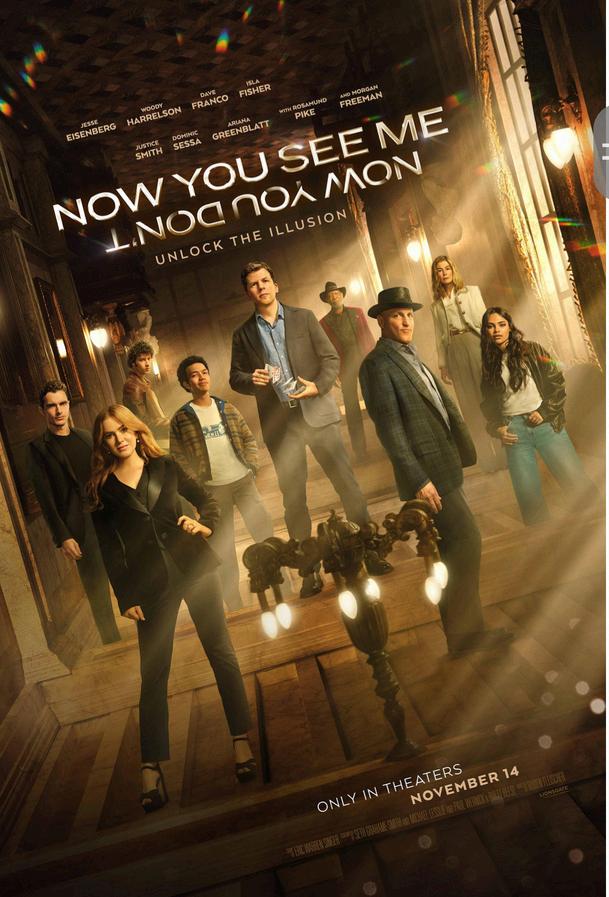
After over nine years, the highly anticipated third movie in the hit franchise, Now You See Me , has finally hit the big screen The first movie was originally released in 2013, and while it performed extremely well at the box office, it didn’t perform so well among critics It only ended up receiving a 51% score on Rotten Tomatoes; one reviewer even stated that ‘ Now You See Me is a wreck in every sense of the word’.
The second one, released in 2016, did significantly worse with the critics, earning a shocking 34% score on Rotten Tomatoes However, despite these undeniably low ratings, Now You See Me: Now You Don’t , the third installment still was one of the most highly anticipated movies of the year.
On its opening weekend, it grossed around $75.5 million dollars and, as of late November, its worldwide gross was $186 9 million However, the film still received a 62% Rotten Tomato score, which, although that is considered good, is still not considered great
Despite what critics say about the franchise, it still remains one of the most beloved by many fans globally. While it may not be the deepest and most thought-provoking film series of the past decade, the overwhelmingly positive fan response shows that it has clearly remained, and will continue to remain, an entertaining and exciting feel-good experience for all.
Now You See Me: Now You Don’t begins ten years after the events of the second film, when ‘The Four Horsemen’, our protagonists, had successfully exposed the crimes of Walter Mabry, the son of the original antagonist from the first movie The second movie also introduced a new character, Lizzy Caplan ’s Lula May, who had replaced Isla Fisher’s iconic character Henley Reeves , after Fisher was unable to return to film the second installment due to her pregnancy However, fans were happy to see Fisher return to her role in the third film, as well as the return of Lizzy Caplan and many other of the beloved original actors , such as Jesse Eisenberg as J Daniel Atlas, Woody Harrelson as Merritt McKinney, a nd Dave Franco as Jack Wilder.
Many people who watched the first two films in this hit series know that the Now You See Me franchise is known for its intricately planned scenes, entertainingly confusing tricks, and shocking plot twists And although many critics have shared that the plot may not always be the most organized and thought-provoking, many viewers believe that that is what gives this series its charm and ability to never really be taken too seriously
Through the unexpected jokes and impecc able comedic timing, the whole franchise serves as the perfect mix of comedy and thriller, making for the ideal friend or family movie night.
Now You See Me: Now You Don’t blends in perfectly this way with the genre and overall ‘vibe’ of the first two installments. There is absolutely no shortage of seemingly impossible card tricks, slights of hand, and vanishing objects, and, in classic Now You See Me style, the plot twist at the end of the movie will leave you questioning the entire movie you just witnessed. This third installment perfectly incorporates new characters and plots, all while keeping the nostalgic charm of the first two.
Taking all of this into account, even if you might share some of the criticisms from the reviewers about the first two films, it’s is highly unlikely that you will leave this movie without having had at least one laugh at one of the jokes, without being surprised by one of the card tricks, or even without having experienced just a sliver of anticipation about how this exciting and electrifying movie unfolds.
What is Meat Printing
A newer technology is emerging that allows for meat to be grown in labs instead of farms. There are two different variations of the technology: cultured meat and plant- based printed meat In this article, we will focus on cultured meat, which is made from actual animal stem cells grown in a bioreactor. These cells are combined with a supportive scaffolding material, and together they form what is known as a “bio-ink”
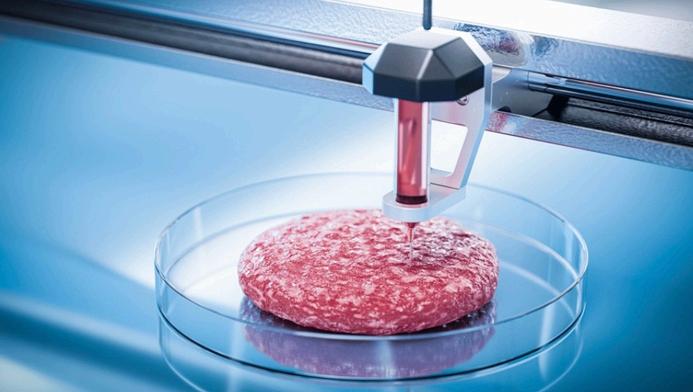
A common question is whether this can truly be considered “real meat” The simple answer is yes Because the process starts with animal cells and allows these cells to grow and multiply, the final product is biologically identical to meat from a living animal. However, it is produced without raising or slaughtering one.
This bio- ink is deposited in layers through a nozzle on a specialised type of 3D printer that gradually builds a structure The result produces a meat that highly resembles the appearance and texture of those grown on farms. Once printing is complete, the meat will be incubated to allow cell maturation and muscle fibres to develop and, in some cases, even create marbling.
Health Canada has strict rules when it comes to novel foods Before any new product like this meat can be sold or even advertised, it must be officially approved by Health Canada. Right now, there is no approval, so 3-D printed or cultured meat isn’t available in Canada
However it doesn’t mean nothing
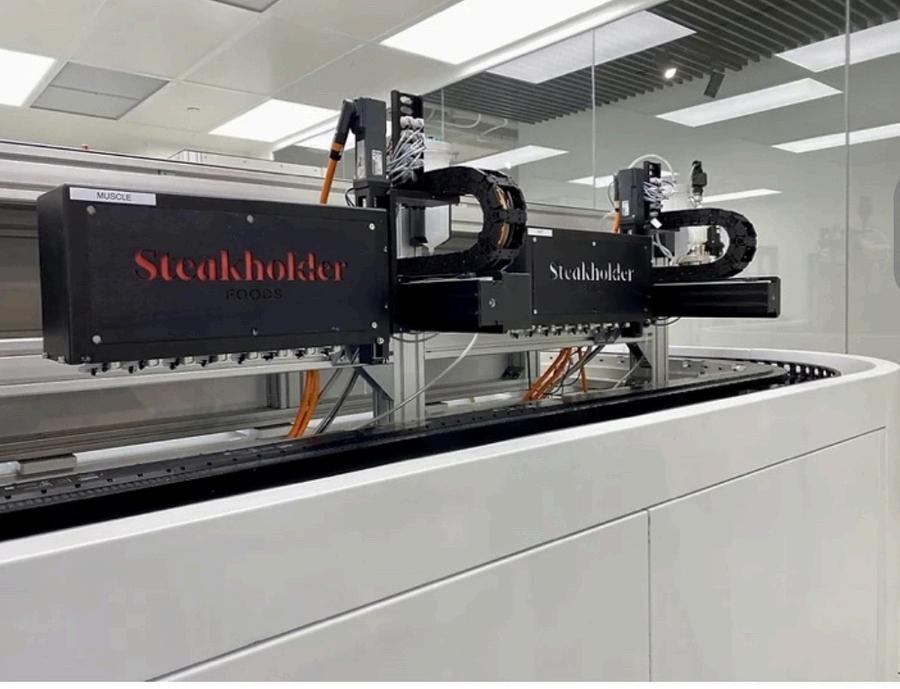
However, it doesn’t mean nothing is happening behind the scenes. Many companies are currently applying for and holding patents, bringing them closer to the food market According to Farmers Forum, Steakholder Foods Ltd has recently received approval for a patent in Canada for something called “Physical Manipulation of Cultured Muscle Tissue”. Steakholder Foods is an international deep-tech food company that is considered one of the most advanced in the whole cultivated meat industry. There is expected to be a lot of evolution and representation in the next few years.
When 3-D printed meat become available in Canada, it will bring a multitude of benefits Firstly, it is more ethical as no animals would have to be raised or slaughtered since the meat is derived solely from cells Also, it would be more positive for the environment since less land and water would be used.
Currently, 1,910 gallons of water is being used for each pound of edible beef produced (beefresearch ca) If we are able to find a more environmental solution, it could drastically reduce these large numbers and lead us towards a more sustainable future. Another important thing to consider is that, because this meat would be made in such a controlled lab, there is a much lower chance of bacterial contamination – adding a level of safety Finally, scientists would be able to adjust different variables of the meat and in a way “design” it. They can adjust fat levels, texture, and marbling, making the meat more consistent for buyers.
References
Although 3-D printed meat is not yet distributed for purchase in Canada, it’s clear that this technology is moving towards that direction. With companies securing patents and making scientific progress, cultured meat is becoming a realistic part of our future. It offers many potential benefits – from reducing environmental strain to creating safer and more reliable meat – which explains why many researchers are interested in this field As these developments continue, 3-D printed meat could eventually become a meaningful part of Canada’s food advancements
3D printed meat. (n.d.). Steakholderfoods.com. Retrieved December 4, 2025, from https://www steakholderfoods com/blog/3d-printed-meat
Becher, B (2023, April 18) What is 3D-printed meat? Built In https://builtin com/articles/3d-printed-meat
Beef Research (2019, February 27) How much water is used to make a pound of beef? BeefResearch.Ca. Beef Research. https://www.beefresearch.ca/fr/blog/cattle-feed-wateruse/
Brehaut, L (2025, November 3) Cloned meat is quietly getting closer to being sold in Canada but people may not know they’re buying it National Post https://nationalpost com/life/food/cloned-meat
Canada Grants Patent Approval for Steakholder Foods’ 3D printed meat. (2023, February 15). Farmersforum.com. https://farmersforum.com/canada-grants-patent-approval-forsteakholder-foods-plant-protein/ Health Canada (2023, December 5) Cellular agriculture Canada Ca https://www canada ca/en/health-canada/services/food-nutrition/cellularagriculture html?utm source=chatgpt com
Your next real steak could come from a 3D printer. (2023, April 10). CNN. https://www cnn com/videos/tv/2023/04/07/next-frontier-3d-printed-cultivated-meatsteakholder-foods-spc-intl cnn