Impact Report
2024/2025
Vision, purpose and values
Our Vision Tō mātou moemoeā
We are a trusted and reliable ambulance service providing excellence in emergency response and connected services that move our communities to better health.
Our Purpose Tō mātou whāinga
Wellington Free Ambulance exists to deliver an ambulance service that excels in emergency response and clinical communications, underpinned by proactive partnerships to deliver equitable health and wellbeing outcomes for our community.
Our Values Ō mātou Uara



From the Chief Executive
Tēnā koutou katoa, Nau mai, haere mai and welcome to Wellington Free Ambulance’s Impact Report for the 2024/2025 financial year. We’re proud to share our achievements, which mark the completion of the first phase of our journey towards achieving our vision set out in Kia ora te Tangata | Strategy 2030.
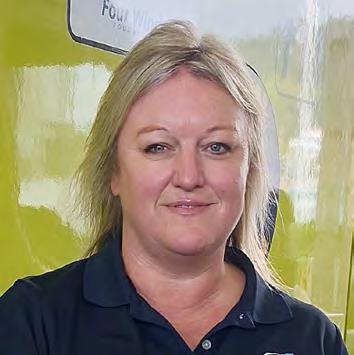
Dave was a compassionate and thoughtful leader, who during his time as Chief Executive earned the respect and support of our people and partners. It is my pleasure to share our achievements and to acknowledge Dave’s outstanding leadership, which played a key role in making them possible.
This year also marks the conclusion of a special chapter in our history, with Chief Executive Dave Robinson stepping down.
Wellington Free Ambulance Executive Leadership Team
Ngā Pou Whakahaere (as of 30 June 2025)
David Robinson Chief Executive (not pictured)
Claire Carruthers General Manager Fundraising and Communications
Eric Tibbott General Manager Operations
Erica Douglass Executive Medical Director
Liz Belke General Manager People and Enabling Services
Kia ora te Tangata | Strategy 2030 positions Wellington Free Ambulance for the future. The six strategic goals that form this report are the areas we continue to focus on to ensure our service, people and organisation are prepared to meet the needs of our current and future communities and workforce.
There’s so much to recognise and celebrate from the last financial year, and we are so proud of our progress. We’ve developed different ways to deliver care safely, by expanding our Clinical Hub and telehealth services to meet increased demand for our services. We’ve made significant strides in creating infrastructure that is sustainable and fit for purpose, including the bespoke design of a new type of van ambulance and completing the build of our new Wairarapa Station. We’ve also continued to prioritise our people by investing in education and scholarships and our ongoing focus to keep our team safe and well. Community support remains unwavering, with this being our most successful fundraising year to date.
In the following pages, you’ll learn about our strategic goals and the progress we’ve made in each area. These achievements – and our ability to remain a uniquely free ambulance service –are thanks to the commitment of our incredible team, and the generous support of our donors, supporters, funders and partners. Together we have achieved so much this year!
A shared belief in the importance of providing an equitable and accessible health service for all makes everything we do possible – thank you.
Ngā mihi nui, Liz Belke Acting Chief Executive
(as of September 2025)
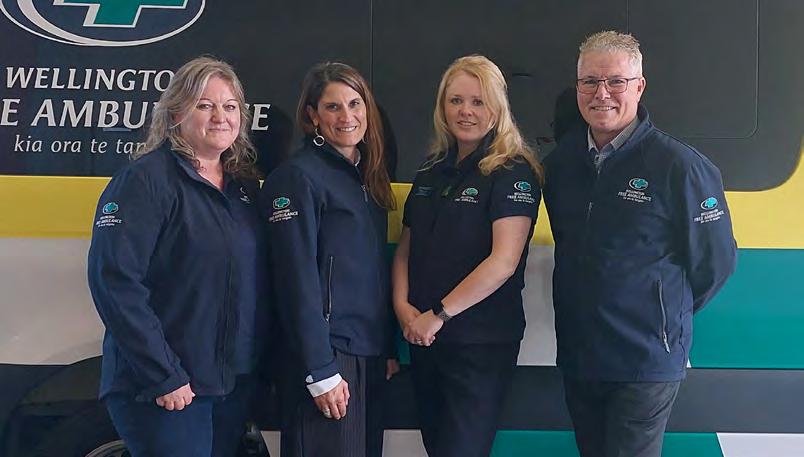
Pictured left to right: Liz Belke, Erica Douglass, Claire Carruthers, Eric Tibbott
From the Board Chair
Kia ora koutou,
It’s my privilege, on behalf of Wellington Free Ambulance’s Board, to present our latest Impact Report for the 2024/2025 financial year.
At the heart of everything we do at Wellington Free Ambulance is our founding commitment to provide free care to anyone who needs it. This ethos continues to guide the achievements and aspirations seen in this report today.

Finally, we extend our sincere and heartfelt thanks to the community of supporters, donors, and funders who give generously to enable our essential work. Your support helps Wellington Free Ambulance move our communities to better health.
Ngā mihi,
Dame Kerry Prendergast Board Chair
Wellington Free Ambulance has been part of Aotearoa New Zealand’s healthcare system for close to 100 years. In that time, the service has changed significantly. The accomplishments of the past year are a testament to our ongoing ability to adapt and grow.
These accomplishments have been achieved at a time of high demand for Wellington Free Ambulance’s services, resources and people. In the last financial year, paramedic crews responded to over 55,600 incidents, our Clinical Communications Centre answered over 179,000 emergency 111 calls, we completed over 43,800 patient transfers across the region, and provided medical support at over 500 events.
To continue this legacy of free care, all while looking ahead to the future, is nothing short of incredible.
As always, the Board and I are incredibly proud of all the highly-skilled individuals who make up the Wellington Free Ambulance team. We are sincerely grateful for all that you do every day.
This year, we sadly recognised the departure of David Robinson, whose people-centric leadership has been valued by all. We thank Dave for his compassion and the strong foundations he helped build through Kia ora te Tangata | Strategy 2030 during his time with us.
To my fellow Board members, stakeholders, and partner agencies across the region, thank you for your passion and collaboration.
Wellington Free Ambulance Board Te Poari o Kia Ora Te Tangata (as of 30 June 2025)
Dame Kerry Prendergast – Board Chair
Alan Isaac – Deputy Chair
Dr Chris Masters
Leanne Southey
Louise Marsden
Michael Quigg
Neil Paviour-Smith
Ria Earp
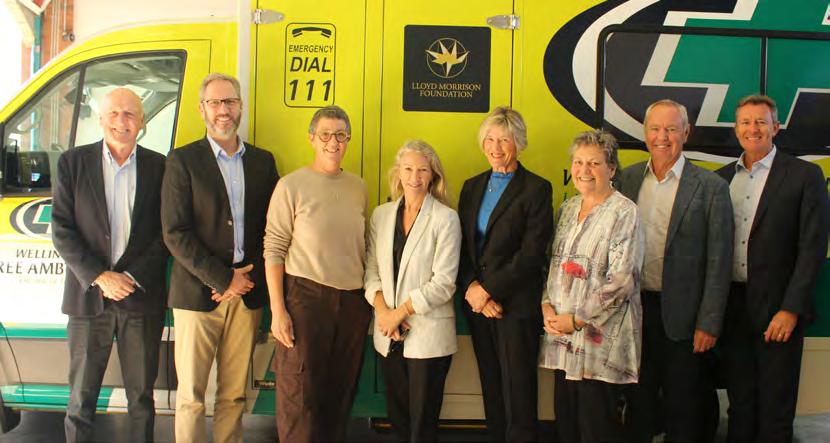
Pictured left to right: Michael Quigg, Dr Chris Masters, Leanne Southey, Louise Marsden, Dame Kerry Prendergast (Chair), Ria Earp, Alan Isaac (Deputy Chair), Neil Paviour Smith.
Wellington Free Ambulance’s impact
Tō Kia Ora Te Tangata Whakaaweawe
Emergency Ambulance Service
Providing urgent medical assistance and emergency ambulance response to our communities 24 hours a day, seven days a week, 365 days a year.
55,690 incidents attended 39,319 patients transported for further treatment 16,371 patients treated at home
30 specialist Rescue Squad incidents

338 responses by Pōneke Promise
2,634 responses by Urgent Community Care Team 108 Co-Response Team incidents

Clinical Communications
Answering emergency 111 and non-urgent calls, and dispatching ambulances across the region.

236,821 calls answered
179,133 emergency 111 calls answered 57,688 non-urgent calls answered

111

2,560,569 kms travelled by Emergency Ambulance Service fleet

Clinical Hub
Providing expert telehealth clinical care and support over the phone.
23,186 calls supported by Clinical Paramedic Advisors

8,759 incidents treated over the phone

Patient Transfer Service
Taking people to and from scheduled medical appointments and treatments across the region.
43,818 patient transfers completed

1,399,017 kms travelled by the Patient Transfer Service fleet

The Lloyd Morrison Foundation Heartbeat Programme
Providing community training on how to perform CPR and use an AED, free of charge.
9,133 people taught CPR, between the ages of 5-75 years old
230 Maintaining 502
119 community courses and events
74 business courses and events
28 student courses and events
9 Pasifika courses and events
training sessions held, including: public automatic external defibrillators (AEDs) in the community
Event Medical Services
Providing medical support at a range of events across Greater Wellington and Wairarapa.
502 events supported by Event Medics

11,239 hours spent at events by Event Medics

Patient feedback
agreed/strongly agreed that they were treated with kindness and respect
were satisfied/very satisfied with Wellington Free Ambulance’s service
agreed/strongly agreed we provided care sensitive to their cultural needs
agreed/strongly agreed our paramedics did everything to control pain
agreed/strongly agreed they found the call takers very helpful and reassuring
Cost to anyone across Greater Wellington and Wairarapa needing help: $0 thanks to our communities who donate to support our work.
Kia ora te Tangata – Strategy 2030
The whakatauki Kia ora te Tangata was bestowed on Wellington Free Ambulance and translates to “keep people living.” This meaning is carried on our vehicles that bring lifesaving and life-changing support every day.
Kia ora te Tangata | Strategy 2030 considers our service as a living system that works together to nourish and sustain our patients and our people.
Our patients are at the heart of everything we do. They stand in the centre, supported by their whānau and the structures that support
Strategic
Goals:
their wellbeing (seen in the model Te Whare Tapa Whā). We need to work with our patients, communities and partners in health in order to be successful.
Two strong mountains support this strategy, protecting and supporting the patient: models of care, the way we deliver our services, and our workforce. We need to get these right if we are to succeed. Equity is a stream that runs throughout.
The whenua that supports these peaks and forms are our strong foundations: finance, infrastructure and systems and insight must be fit for purpose to sustain us.
Summary
Ngā tauira manaaki hei whakaea i ngā hiahia o ngā tūroro Models of care to meet patient needs
4 Toitū ā-pūtea Financial sustainability
1 $
2 He ohu mahi akiaki me te momoho A dynamic and thriving workforce
5 Tūāhanga hāngai ki te kaupapa Fit for purpose infrastructure
3 Mana taurite Equity
6 Ngā pūnaha me ngā kitenga atamai ake Smarter systems and insights
Phase 1: The Fundamentals 2024-2025
To support us in achieving the strategic goals of Kia ora te Tangata | Strategy 2030, we’ve separated the six-year plan into a focused roadmap with three phases.
Each phase aligns the team with our priorities, shows the work that will help us get there, and ensures we’re all collaboratively working towards the desired outcomes.
2024/2025 is the first phase of our roadmap. It’s focused on the fundamentals with the following priority objectives:
Models of care to meet patient needs
Overview
Increasing pressure across the health system, including primary care and hospital emergency departments, has increased the job volume, complexity and demand for ambulance services. We need to adapt our services and models of care to provide support in a way that considers our limited resources but offers the best clinical care for our communities.
Guiding Principle
We will develop the models we use to deliver care to safely meet increased community need.
Overview
A dynamic and thriving workforce
A thriving workforce is at the heart of a thriving organisation. Our people need respite and support structures to sustain them in complex and demanding roles. We need to consider how we deploy our people to make the best use of their skills, and ensure roles are available that match changing workforce expectations.
Guiding Principle
We will invest in our people, embracing contemporary and dynamic models to develop and retain our workforce.
• Increased successful out-of-hospital care
• Deployed our resources to better meet patient needs
• Improved triage accuracy – getting people the right care, at the right time
• Faster response times to people who call us
• Decreased late or missed meal breaks for the Wellington Free Ambulance team
• Positive feedback on Wellington Free Ambulance as a great place to work
• Decrease in our people working late or doing overtime
• Improving retention and creating a workplace where people choose to stay
• Reduced fatigue in our workforce
• Increased the income we’ve received while working to minimise costs
• Successfully designed a bespoke van body ambulance
• Built an IL4 (Importance Level 4) stateof-the-art ambulance station in Wairarapa

Models of care to meet patient needs
Ngā
tauira manaaki
hei
whakaea
i ngā hiahia o ngā tūroro
We will develop the models we use to deliver care to safely meet increased community need.
Enhanced Virtual Care: Expanding the Clinical Hub
Demand for services continues to grow each year, so we’re evolving how we deliver care. Enhanced Virtual Care is our strategic response – delivering community-based care through telehealth services and an expanded clinical hub.
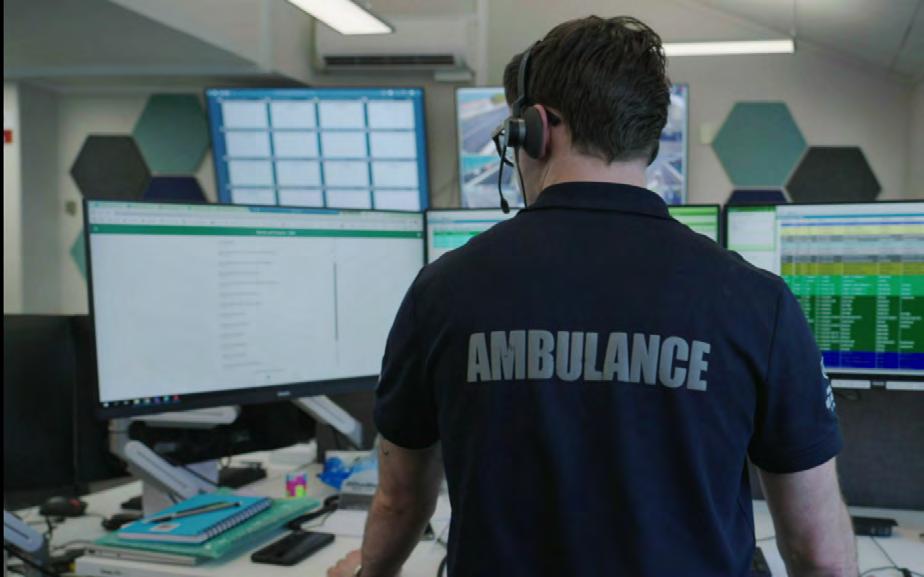
Based in our Clinical Communications Centre, Wellington Free Ambulance’s Clinical Hub now has more clinical paramedic advisors (CPAs), has introduced telehealth clinicians, and is piloting a clinical hub doctor.
Using their experience, clinical judgement and digital tools, the Clinical Hub identifies emergency 111 calls that may need further investigation. They determine the best response or who can be helped over the phone or through video call or may require a referral to elsewhere. The Clinical Hub also supports our emergency ambulance crews, offering clinical guidance and second opinions for complex or challenging cases, helping to deliver the best care possible.
Enhanced Virtual Care’s impact over 2024/2025
More people safely treated over the phone
38% of incidents reviewed by Clinical Hub were safely treated over the phone, with no ambulance required. 24 ambulance responses were able to be safely diverted each day on average, to attend patients with a greater need. 6% of incidents (4,257) received the clinical care they needed over the phone, or via a community-based referral, avoiding a trip to an emergency department.
Improved triage accuracy by Clinical Hub, compared to Medical Priority Dispatch System (MPDS) 30.1% improvement in identifying urgent incidents with an immediate threat to life. 25.8% improvement in identifying and upgrading serious incidents to urgent, ensuring a faster response. 14.4% improvement in safely identifying and downgrading non-urgent incidents.
Matching resources to need 3.45% increase in low acuity vehicle use compared to the previous year. 8% increase in targeted deployment of extended care paramedics. 3% increase in targeted deployment of intensive care paramedics and critical care paramedics.
Enhanced Virtual Care helps keep our emergency services sustainable and targeted, with patient outcomes at the heart of everything we do – getting people the right care, from the right person at the right time.
Matching
our resources to community
need through Project Low Acuity Incident Fast Triage (LIFT)
Through Project LIFT, Wellington Free Ambulance has dedicated an ambulance to our fleet, specifically designed to respond to low acuity calls and referrals from healthcare professionals.
Demand from patients who need timely care but are not in immediate, life-threatening situations is the driver to Project LIFT. Many are low acuity or come as referrals from healthcare providers (totalling 10,403 calls).
Crewed by patient transfer officers from our Patient Transfer Service, this ambulance helps
ease pressure on paramedic teams, improve response times, and enhance experiences for patients and clinicians alike.
Project LIFT matches resources to the lowacuity calls and operates from Kāpiti to Wellington - where need is highest. It’s supported by improved triage and dispatch from Enhanced Virtual Care, with the Clinical Hub responsible for identifying appropriate incidents and arranging the ambulance’s deployment.
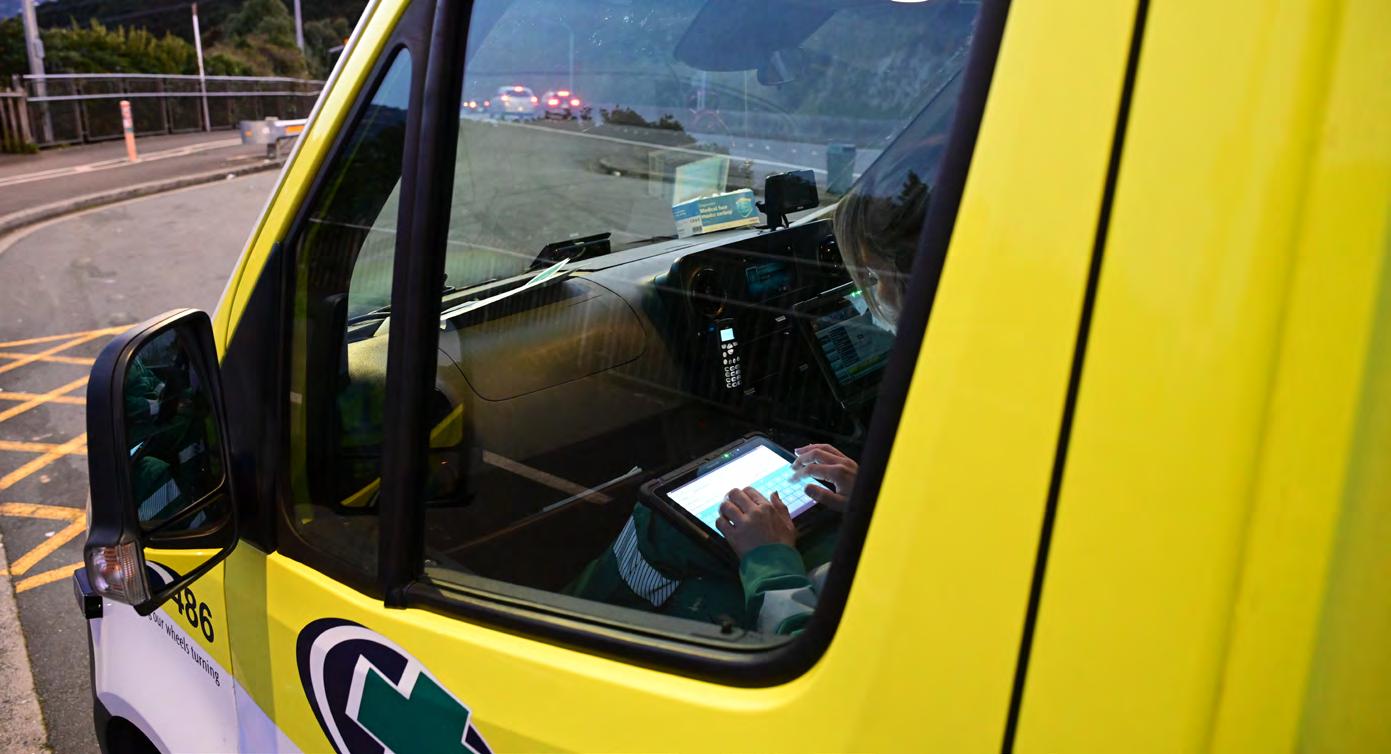
Project LIFT matches resources to the low-acuity calls and operates from Kāpiti to Wellington - where need is highest.
Two new care pathways
Two new joint ventures with health providers and community organisations are providing alternative care pathways for patients.
• Whakamaru Crisis Café: This partnership offers paramedics an alternative option to transport patients to a safe and welcoming space during challenging times. At Wellington City Mission’s Crisis Recovery Café, individuals can connect with trained kaimahi (workers), who offer guidance, care and resources in a calm and supportive environment.
• Kenepuru Accident and Medical Clinic: This pathway gives paramedics an alternative option for patients who need treatment and care but may not require the specialist services of Wellington Regional Hospital. Kenepuru Accident and Medical Clinic provides urgent care and general medical support to the Porirua community, ensuring people can receive timely and appropriate care closer to home.
These proactive partnerships help to ensure individualised patient care, improve long-term health outcomes and ease pressures on the healthcare sector.
Strategic Goal
A dynamic and thriving workforce
He ohu mahi akiaki me te momoho
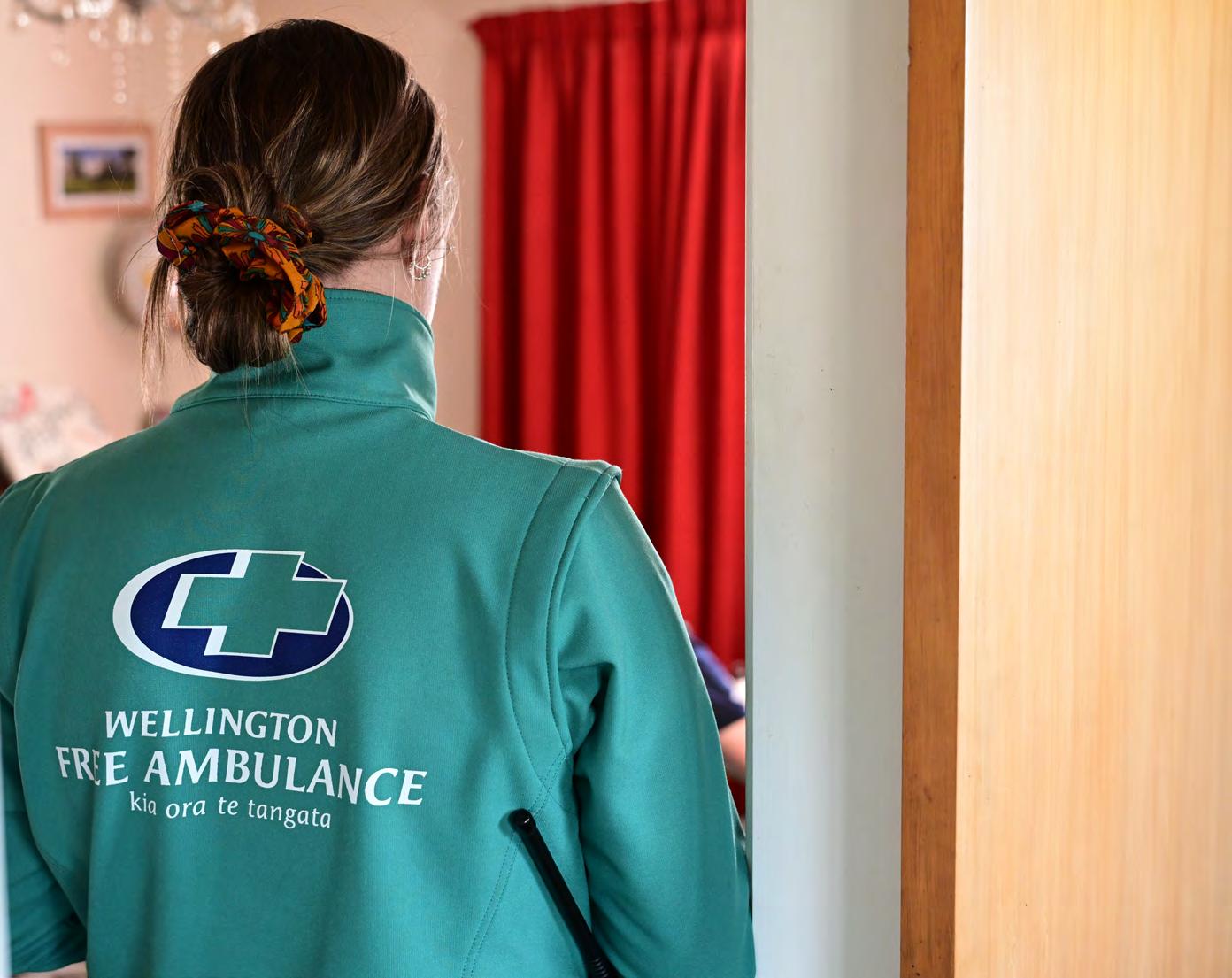
We will invest in our people, embracing contemporary and dynamic models to develop and retain our workforce.
Supporting staff education through the STEP Programme
Learning and development opportunities are important to Wellington Free Ambulance’s workforce. To support how we deliver education, we’ve created the STEP (Staff Training and Education Pathways) Programme.
Over two years, the STEP Programme will include 14 initiatives focused on creating more learning opportunities, clearer learning pathways and supporting internal career development within Wellington Free Ambulance.
The STEP programme is funded by a generous bequest from Peter Macdonald.
Peter was deeply passionate about education and innovation. Through this contribution, Peter will be remembered not only for his generosity but for his commitment to advancing education in emergency pre-hospital care.
The initial focus is on eight initiatives, including:
PoWeR Learning (Podcasts, Webinars, Resources)
• Focused on specific areas of clinical practice.
Priority Learning Programme
• An organisation-wide learning programme for all of Wellington Free Ambulance’s people, prioritised and decided by the workforce.
Induction Programmes
• Improving the induction experiences for everyone new to Wellington Free Ambulance.
Clinical Communications Review of Learning
• Supporting initial and ongoing learning and development opportunities within Clinical Communications.
ELMO Enhancements
• Improving Wellington Free Ambulance’s learning and development platform.
Development funding and scholarships
• Making it easier for the team to understand what, how and when they can apply for scholarships or funding that supports their growth.
Adjunct Educators
• Growing face-to-face learning opportunities by increasing the number of people who can deliver training.
People Capability Framework
• Helping individuals understand and plan their development, career pathways and set goals for the future.
Keeping our people safe
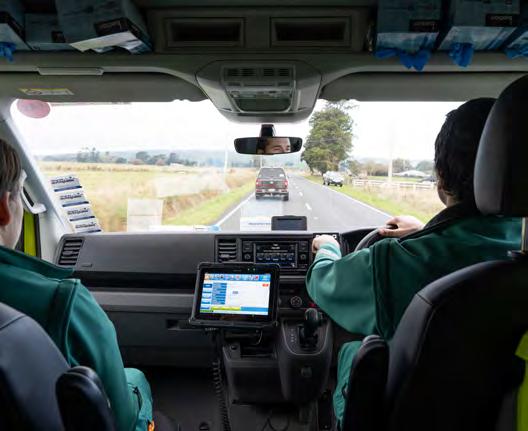
We work in often unpredictable and high-pressure environments. The nature of our work means our people can sometimes be subject to violence or aggression. We do not tolerate this behaviour and it’s a risk that we take very seriously.
To help keep our people safe, we’ve developed a high-risk notification process. This system immediately alerts on-road crews of any known history of violent or aggressive behaviour linked to the address they’re responding to. Accurate and up-to-date information is immediately added to any dispatch notes – so responding crews have essential situational awareness before they arrive on scene. This also includes regular reviews and checks to make sure the process supports the teams’ safety without compromising clinical care.
Since its launch in 2024, 100 highrisk addresses have been recorded. Wellington Free Ambulance crews have benefited from faster and more accurate risk notifications, giving them greater confidence and better oversight of the violent and aggressive behaviour they may encounter.
Reducing fatigue and improving welfare
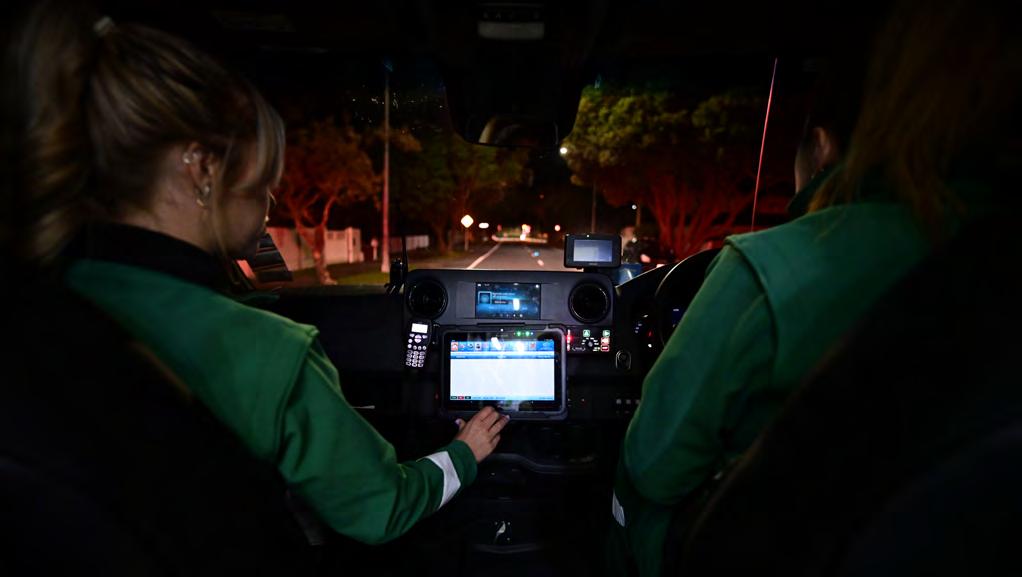
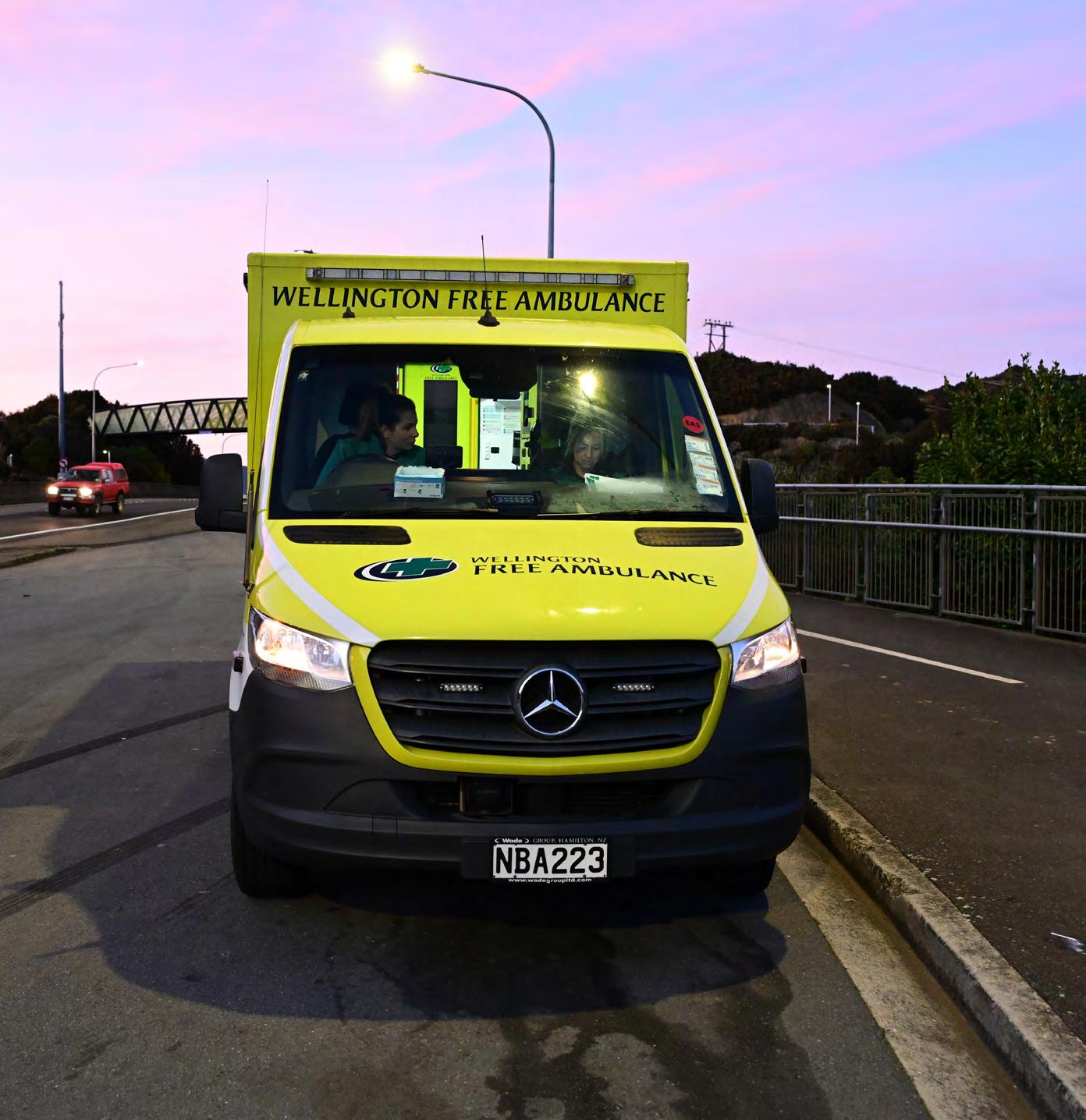
We’ve introduced several initiatives to combat fatigue within Wellington Free Ambulance’s workforce. The nature of our work, growing demand, and the reality of shift work make fatigue a key risk. Supporting the team to rest and recover is vital, so they can continue providing the best care.
Between July 2024 to June 2025, compared to the previous year, we’ve seen:
61% decrease in missed rest breaks
16% decrease in rest breaks that were cut short
12% decrease in late rest breaks
These improvements are possible thanks to several initiatives:
Growing our team
We increased our workforce by 5% so we can better support each other.
Bringing choice and flexibility
We now offer three different shift patterns to paramedic crews.
• The traditional 4:4 shift pattern, working two days and two nights, followed by four days off.
• The 3:3 shift pattern, working one day, one swing shift and one night, followed by three days off.
• Awatea (Day) vehicles that operate eight-hour shifts aligned to peak periods.
Protecting people’s breaks
We’re prioritising the wellbeing of our team by safeguarding the last 10 minutes of someone’s break, with stringent checks to ensure uninterrupted highquality care for those who need us. As our workforce grows and through new processes, we strategically deploy resources from elsewhere to maintain a reliable response to patients in need and make sure care isn’t compromised.
Matching our resources to community needs
Initiatives like Enhanced Virtual Care (page 8) help us to use resources more efficiently.
By
adopting a people-centric approach, we’re caring for our people so they can continue caring for others.
Equity Mana taurite
We will operate in a way that uplifts the mana of our communities.
Growing cultural competency through education
This year, we released a new learning tool for everyone at Wellington Free Ambulance, aimed at nurturing the team’s cultural competency, safety and awareness called AKŌRERO.
This cultural education podcast is led by the Māori & Equity team, with the first episodes focused on a different aspect of Te Ao Māori and the fundamentals, including pronunciation, marae protocol, pepeha, karakia, tikanga, waiata and Te Tiriti o Waitangi.
With special guests, resources, classes and information – this allows our kaimahi (workers) to grow their cultural competency in a way that suits them – whether on the road, at station or at home.
Episode one:
Equity and how AKŌRERO aligns with Wellington Free Ambulance’s mission.
Episode two:

Māori language pronunciation –full of practical tips and real-world examples.
Episode three:
Te Tiriti o Waitangi, with a focus on advocacy, cultural safety, and upholding cultural protocols.
Learning doesn’t always need a classroom; sometimes, it just needs kōrero (a conversation, a chat, a safe space to talk). That’s where AKŌRERO is a great tool – it’s a small, ongoing way to engage, reflect, and take steps toward a more equitable and culturally safe ambulance service.
Yvonne Gemmell, Head of Māori and Equity (Kaihautū)
Nurturing relationships with Ngāti Toa Rangatira
As part of our partnership with Ngāti Toa Rangatira, we welcomed a group of their ākonga (students) to do placement shifts within our Clinical Communications Centre and Patient Transfer Service over several weeks. These ākonga have been working towards their New Zealand Certificate in Emergency Care, and their stay with us was their first opportunity to see ambulance life in action.
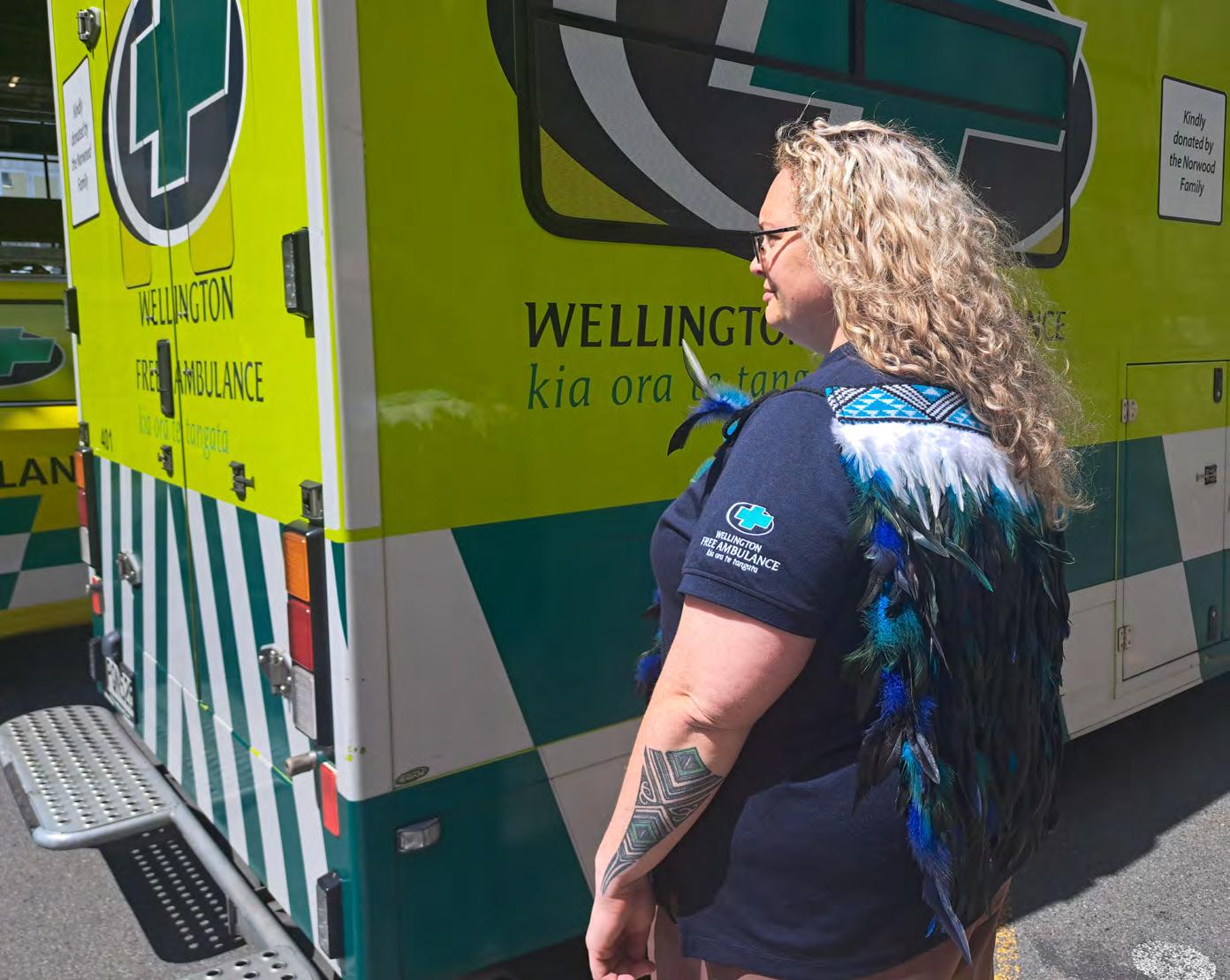
Ka Mate, Ka Ora – welcoming Wellington Free Ambulance’s first kahu huruhru
We wanted a way to reflect the culture and mahi of Wellington Free Ambulance. With that vision, Brenda from Contemporary Korowai Ltd - who is also part of our whānau as an event medic - kindly created and gifted a kahu huruhuru (cloak) to Wellington Free Ambulance as a gesture of aroha (love) and gratitude.
The cloak was blessed and named Ka Mate, Ka Ora by our Tai Pakeke, Danny Karatea-Goddard. The name comes from the haka composed by Te Rauparaha, a Rangatira (leader) of Ngāti Toa Rangatira – iwi mana whenua (indigenous) to many of the areas we serve.
For Wellington Free Ambulance, Ka Mate, Ka Ora speaks to our unique role in standing alongside people in moments of life, in moments of death, and everything in between. The kahu huruhuru now sits in Thorndon Station and Office’s Board Room, and a twin cloak has been created that will be hung at our new Wairarapa Station based in Masterton.
Ka Mate, Ka Ora speaks to our unique role in standing alongside people in moments of life, in moments of death, and everything in between.
Financial sustainability
Toitū ā-pūtea
We will achieve financial sustainability, including service streams and right-sided reliance on fundraising. Contracts will be reflective of real costs, diversified income.
Acknowledging our communities of supporters, donors and funders
The community who supports Wellington Free Ambulance in a number of ways are integral to the continuation of our ability to provide care free of charge. Philanthropy continues to fund all infrastructure and capital expenditure like our facilities, stations, ambulances and the key equipment our team needs.
Where Wellington Free Ambulance’s donations came from (For the 2024/2025 financial year)
In 2024/2025 the community donated approx. $13.6 million.
Bequests – 59%
87 gifts in wills contributed over $7.9 million. These are from special individuals who chose to give to us in this heartfelt way.
Grants from trusts, foundations and councils – 15%
Over $2.05 million was raised through grants. Of those, approximately $1.75 was gifted by trusts and foundations, and $300,000 from regional councils.
Community and business – 15%
Individuals, community groups, businesses and organisations across our region raised over $2.04 million to help keep us free.
Direct mail appeals– 6%
We received over $826,000 from three appeals that share the stories of our people and patients.
Regular giving– 5%
Community Champions are individuals who donate regularly to Wellington Free Ambulance, raising over $726,000.
Helping make our communities safer and stronger:
Wellington Free Ambulance’s 10-year collaboration with Cornerstone Partner Julie Nevett and The Lloyd Morrison Foundation
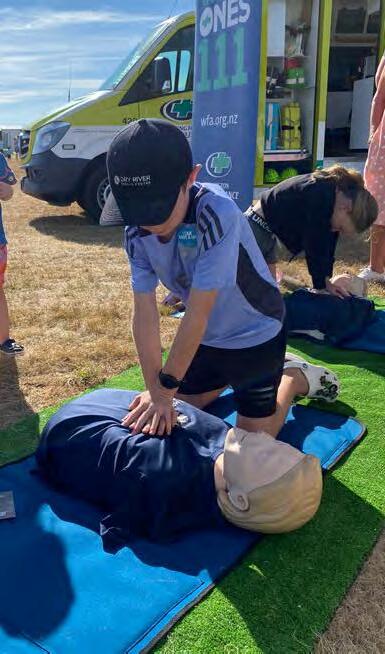
A unique part of our services is The Lloyd Morrison Foundation Heartbeat Programme, where we connect with our communities to empower them with lifesaving CPR (cardiopulmonary resuscitation) skills, free of charge. These essential skills can make all the difference in an emergency where someone is having a cardiac arrest. We also install and maintain hundreds of AEDs (automated external defibrillators) across the region.
This programme is unique to the people of Greater Wellington and Wairarapa and is only made possible thanks to the incredible generosity of our Cornerstone Partner – Julie Nevett and The Lloyd Morrison Foundation, who’ve donated over $6.05 million since 2015.
We are hugely grateful for their unwavering support and significant financial contributions.
Over the years, their partnership and collaboration has allowed us to reach and teach thousands of people with these lifesaving skills and help make our communities safer and stronger.
Keeping the wheels turning with The Lloyd Morrison Foundation
Since 2015, Julie Nevett and The Lloyd Morrison Foundation have also donated nine ambulances that form a vital part of Wellington Free Ambulance’s fleet. In the last financial year, these ambulances collectively enabled our crews to respond to more than 19,200 incidents across the region, travelling over 447,000 kilometres.
Over their lifetime on the road, these vehicles have attended more than 132,000 incidents in the community and travelled over 3.2 million kilometres – helping to save and change thousands of lives.
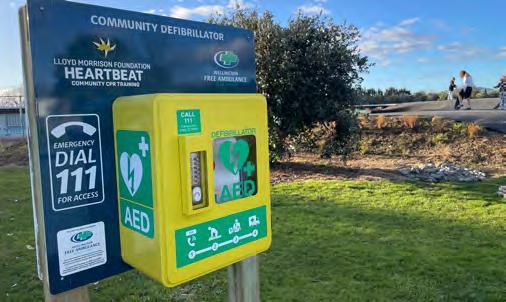
Community AEDs installed across the region in the programme’s lifetime
Private AEDs across the region
Fit for purpose infrastructure
Tūāhanga hāngai ki te Kaupapa
We will create an infrastructure that is sustainable and fit for purpose.
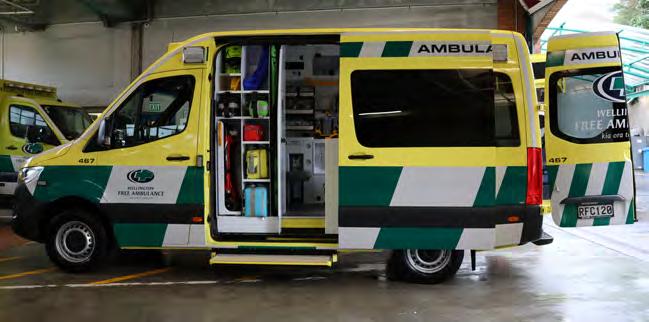
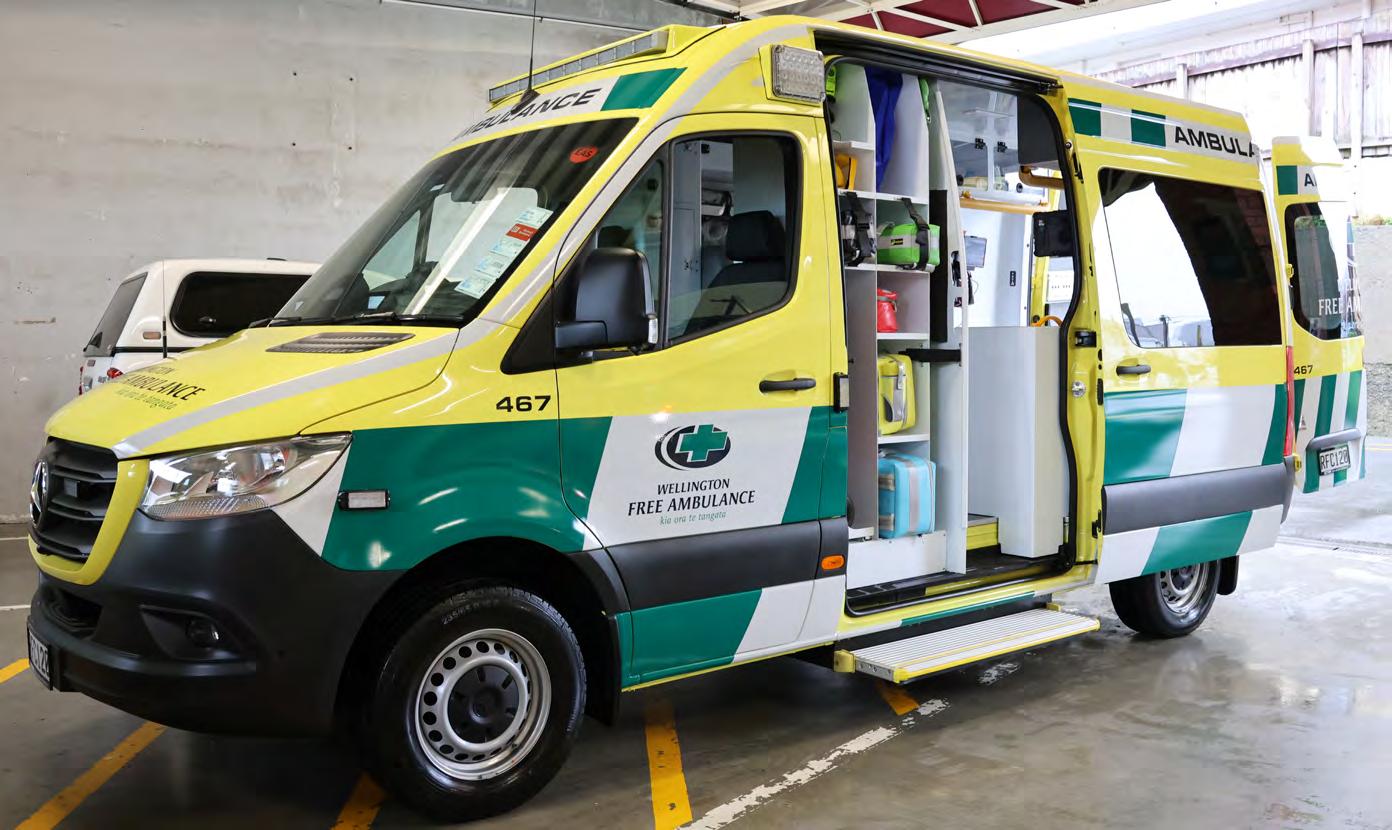
Van ambulances - enhancing the fleet capability
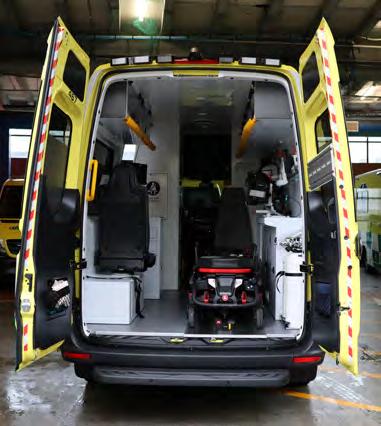
This year, we’re proud to introduce a new fit-for-purpose van ambulance design. Van ambulances are lighter, more fuel-efficient, and better suited to navigate Greater Wellington and Wairarapa’s unique landscapes.
Considerable planning has gone into the design over several months. A dedicated working group of people from across Wellington Free Ambulance focused on maintaining a functional, safe and practical design that’s adaptable to a range of different clinical scenarios.
The first two van ambulances are on the road as of 2024/2025, with 14 expected across the region by the end of 2025. All ambulances are philanthropically funded by our communities and equipped to respond to any emergency.
14 further new ambulances expected across the region by the end of 2025
Building Wairarapa Station
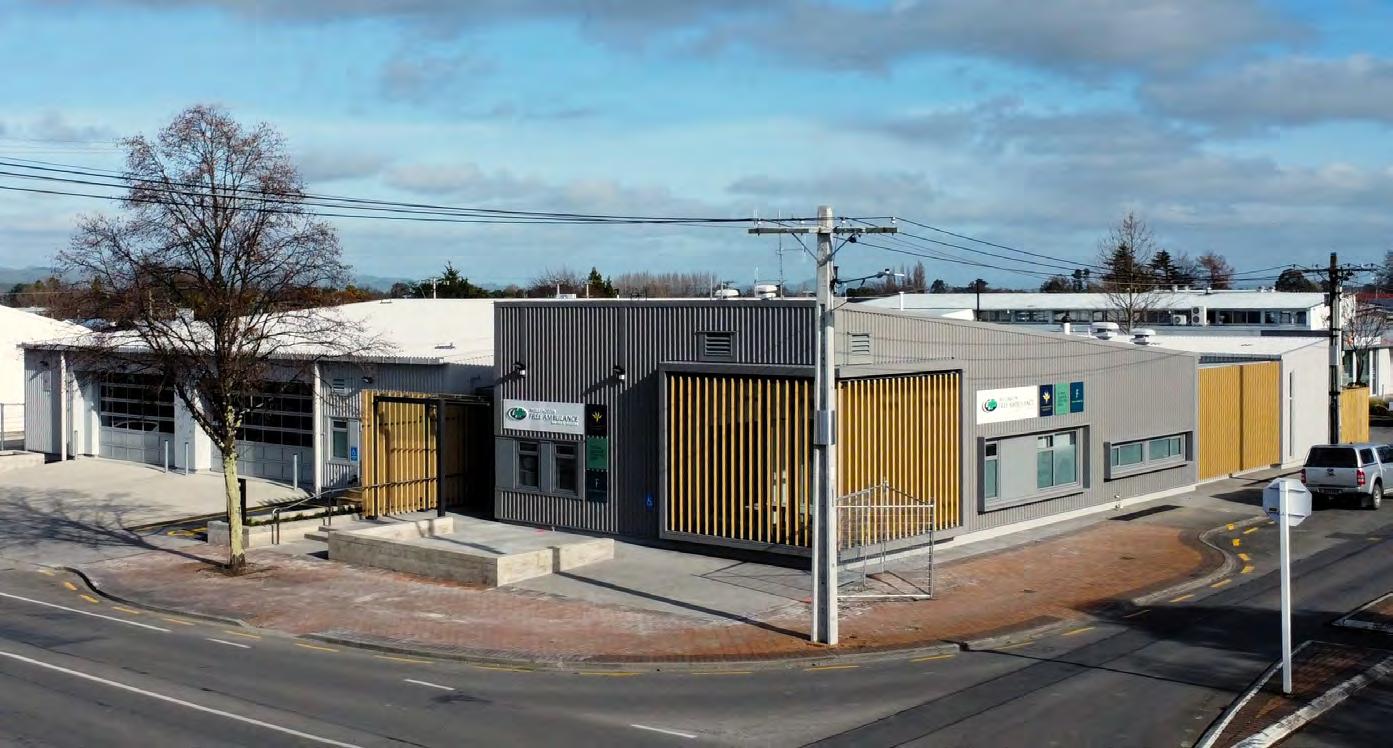
Over the last year, significant progress has been made in building Wairarapa Ambulance Station ahead of its official opening in August 2025. As the only emergency ambulance service for the Wairarapa region, the purpose-built ambulance station serves as a permanent whare for 30+ ambulance personnel and acts as a central hub for our services in the region.
Built for the community, by the community: Wairarapa Station was made possible through an over $8.7 million partnership between Wellington Free Ambulance, the Government and our communities.
• $3 million funded by Wellington Free Ambulance’s trust.
• $1.2 million contribution by Government.
• $4.5 million generously donated and fundraised from across our communities.
With Wairarapa Station becoming fully operational from August 2025, we extend our thanks to our incredible community, whose support made the station a reality, and to everyone across Wellington Free Ambulance who played a part in its creation.
Wairarapa Station’s key features:
Based in Masterton, on the corner of Queen and Russell Street, Wairarapa station is:
• Designed with purpose-built facilities tailored to our crew’s needs. This includes agile workspaces, a fully-equipped garage, storage and supply areas, kitchens and soundproof sleeping rooms.
• Home to The Lloyd Morrison Foundation Heartbeat Training Centre, providing free CPR and AED training to community groups across the region.
• Built to IL4 (Importance Level 4)standards, designed to withstand a greater level of seismic shaking than standard commercial structures.
Smarter Systems and Insight Ngā pūnaha me ngā kitena atamai ake

We will improve integration across systems and better use frontline data insights for greater impact.
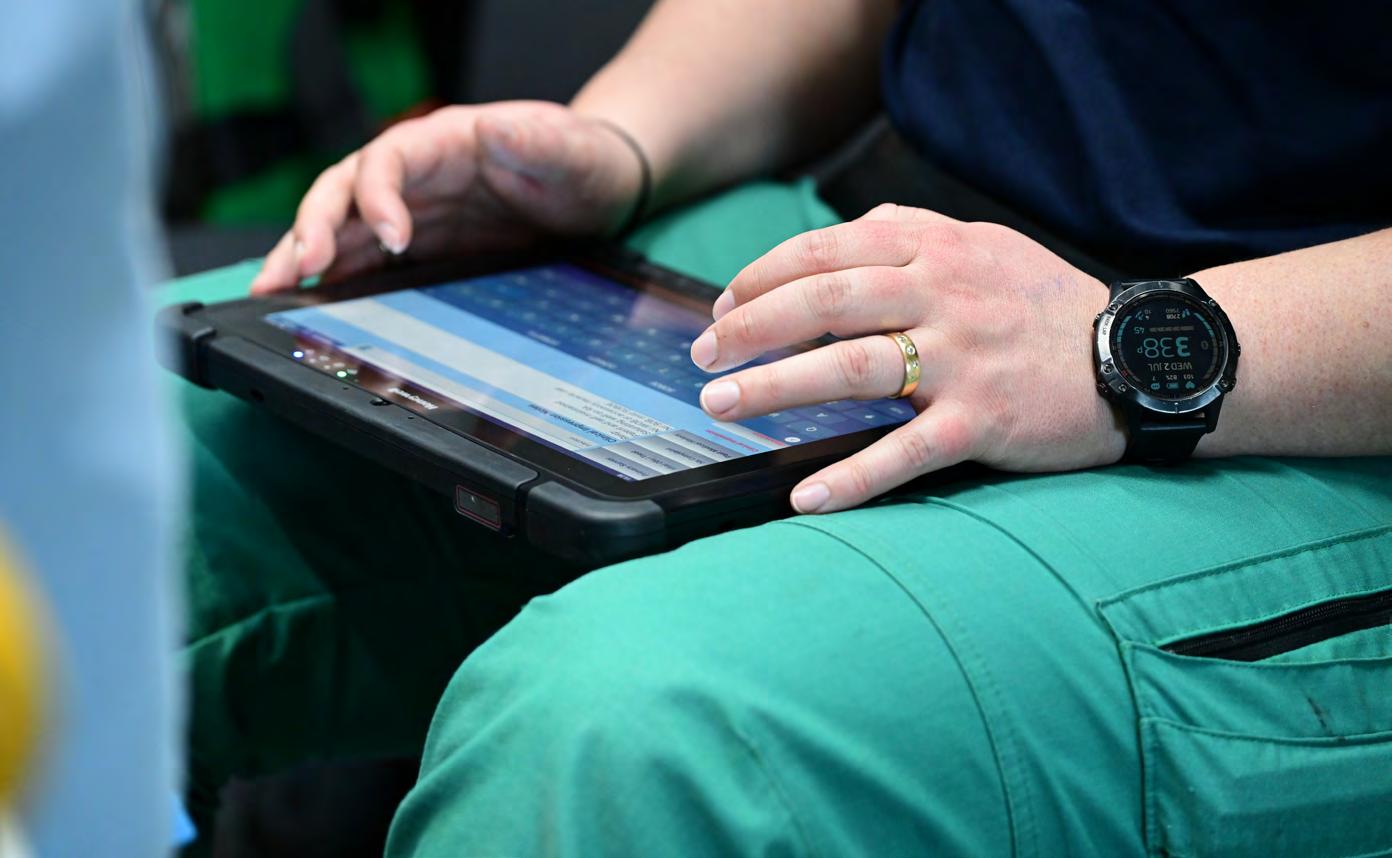
Enhancing the Electronic Patient Report Form
We’ve made improvements to how we access and share patient information with regional hospitals by integrating two separate systems into one for a better experience for paramedics, patients and hospital emergency departments.
This integration helps us to provide faster and more coordinated care, making patient handover faster and more efficient for everyone involved.
When Wellington Free Ambulance responds we use an Electronic Patient Report Form (ePRF) to record essential patient information, treatment and care provided. Any medically relevant information can be accessed by healthcare providers if further care is needed.
Previously, Wellington Free Ambulance and hospitals used separate systems to access information on ePRFs, adding administrative time during patient handover. To improve this, we’ve collaborated with the Data and Digital Team at Health New Zealand | Te Whatu Ora, and emergency departments at Wairarapa Hospital, Wellington Regional Hospital and Hutt Valley Hospital to bring ePRFs under one secure, connected system.
Ambulance telestroke technology
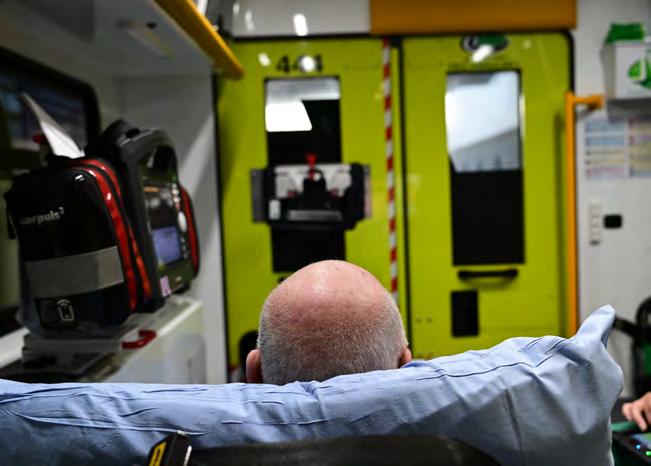
When someone has a stroke, every second counts. Wellington Free Ambulance now harnesses telestroke technology to connect paramedics and stroke patients virtually with Wellington Regional Hospital’s Neurology Team while en route to hospital – reducing triage times and ensuring timely access to vital stroke treatment.
Using videoconferencing technology, telestroke allows specialists to diagnose, create a care plan, and pre-arrange treatment before the patient arrives at hospital. Since its launch in 2024, this has become a standard practice in Wellington Free Ambulance’s stroke response, with 36 ambulances equipped with this innovative equipment, and 82 patients benefitting from telestroke technology.
A 70-year-old patient suffered a stroke one hour’s drive from Wellington Hospital. The ambulance crew attended promptly and found that she was completely paralysed down one side. Telestroke consultation allowed us to achieve a hospital door-to-treatment time of 13 minutes - the national target is 30 minutes. The patient was transferred directly to the radiology suite for further specialist treatment, accessing this within 32 minutes of ED arrival. The national target is 75 minutes. After three days, the patient was completely independent with no neurological deficit and was able to be discharged and return home. This story shows what ambulance telestroke can achieve.
Dr Andy Swain, Medical Director
Modernising Wellington Free Ambulance’s rosters
Wellington Free Ambulance’s work sees many different teams at multiple locations at any time. This is complex and requires a reliable and fit for purpose roster system. To best support the team and future-proof how we roster people and resources, we’ve completed our shift to a modern online rostering system – called Optima and a new tool for staff to view their roster - Loop.
They’re now used by all rostered staff within Wellington Free Ambulance. These systems mean rosters are created faster and more efficiently, better aligning our resources to when and where they’re needed most. Updated in real-time, it allows our team to easily view their own and their team’s roster, bringing more accessibility, flexibility and efficiency to the dayto-day work of Wellington Free Ambulance’s people.
Acknowledging our community of supporters, donors and funders
Te
whai whakaaronui ki ō tātou kai tautoko me ngā kaituku pūtea
Ambulance and vehicle donors
Cornerstone Partner
We extend a special thank you to our Cornerstone Partner – Julie Nevett and The Lloyd Morrison Foundation.
Our thanks go to those who’ve made the extraordinary commitment and funded a new ambulance or vehicle that will join Wellington Free Ambulance’s future fleet.
Ambulance donors
Anne Conwell
Ian Lindsay
Lloyd Morrison Foundation
Patrick “Jack” Pearse Feeney
Pub Charity
Ray Thomas
Robert Douglas Nisbett
Walter and Rana Norwood Charitable Trust
This also includes the following contributors to specialist vehicles:
Bhaniben Sukha
Bob and Dorothy Garratt Family Trust
Freemasons NZ Westminster Lodge
Garratt Family Trust
Grassroots Trust Central
James Smith Kersley Charitable Trust
KPMG
Nikau Foundation
One Foundation
Pelorus Trust
Pub Charity
The Lion Foundation
The Trusts Community Foundation
Business Partners
Every one of our business partners plays a crucial role in keeping the free in Wellington Free Ambulance.
KPMG
MedicAlert Foundation NZ
Mitsubishi Motors NZ
Moore Wilson & Co.
New World Thorndon
Tommy’s Real Estate
Western Mailing Limited
Support Crew Partners
We’re grateful to have the support of organisations across the region who form our dedicated Support Crew.
Support Crew Gold Partners
Allworks Limited
Arthur D. Riley & Co.
Brendon Motors Group
Co-operative Bank
Jade Property Management
Jina’s World of Fresh Produce
KJ & LM Burns
Mojo Coffee
Silicon Systems Limited
Specsavers New Zealand
The Integral Group Limited
Ultibend Industries
Wellington Registered Master Builders’ Association
Z Energy
Support Crew Partners
AD Architecture
Archway Recruitment
Arobake
Arthur Holmes Limited
Blue Star Group (New Zealand)
EndGame
Flick
Higgins Contractors
Highflo Co.
Holmes Construction Group
Inferno Fires Ltd.
J. A. Russell
Kleenrite
Masterton Medical
Momentum Consulting
Moneybox
Roof Wellington
Sole Landscapes Limited
Southey Sayer Chartered Accountants
Spiral Web Solutions
The Featherston Tavern
Yellow Brick Road
Yus Homes
Grants from trusts, foundations and councils
The following funders, charitable estates and trusts generously contributed grants in support of our vital work in the community.
AB de Lautour Charitable Trust
Alan Thomas Foundation Trust
BEA Trust
BH & SA Dymond Family Trust
Bowen Trust
Brian Whiteacre Trust
David Trustrum
Dorothy L Newman Charitable Trust
E M Pharazyn Trust
Elizabeth Cobb
Four Winds Foundation
Frances Henrietta Muter Charitable Trust
Freemasons New Zealand - Westminster Lodge
Gaynor Charitable Nominees Limited
Grassroots Trust Central
Greytown Lands Trust
Heretaunga Bookfest Charitable Trust
Hilda Curtis Charitable Trust
Hinemoa Kairangi Lodge Charitable Trust
Ian & Beverley Newton Family Trust
Irene Phyllis Munro Charitable Trust
James Smith Kersley Charitable Trust
Kennedy Foundation
Lloyd Morrison Foundation
Maysie & Henry Hill Charitable Trust
Michael Williams Family Trust
Mokoia Masonic Perpetual Trust
New Zealand Community Trust
Nikau Foundation
One Foundation
Paddy Brow Charitable Trust
Pelorus Trust
Penrose Charitable Trust No. 2
Polmadie Charitable Trust
Pub Charity
Ray and Vivien Ward Charitable Trust
Ray Watts Charitable Trust
Society of Mary Trust Board
Sybil Lane Charitable Trust
The Gift Trust
The Jack Jeffs Charitable Trust
The Janne Zabell Trust
The Lion Foundation
The Mohan Trust
The Nick Lingard Foundation
The Rotary Club of Masterton Charitable Trust
The Rotary Club of Masterton South Charitable Trust
The Trusts Community Foundation
Tonks Family Foundation Limited
W N Pharazyn Trust
Wigley Family Trust
This includes funding from the following councils:
Carterton District Council
Kāpiti Coast District Council
Masterton District Council
Porirua City Council
South Wairarapa District Council
Upper Hutt City Council
Wellington City Council
Gifts in wills
We’d like to acknowledge and thank the people who left a gift in their will for Wellington Free Ambulance.
Arthur N Button Charitable Trust
Beatrice & Arthur Wade Charitable Trust
Betty Stoker Charitable Trust
Bob and Dorothy Garratt Family Trust
Estate of Alison Margaret Sweetman
Estate of Ambrose Meele
Estate of Anne Conwell
Estate of Anne Jean McKay
Estate of Annette Reidy
Estate of Anthony John Crawford
Estate of Audrey Harper
Estate of Bethanna Marie Jackson
Estate of Bryan Hollis Thornton
Estate of Carole Lunn
Estate of Carolyn Frances Huxtable
Estate of Daphne Jean Greig
Estate of Desmond Leahy
Estate of Doreen Elizabeth Cutfield
Estate of Dorothy Jean Douglas
Estate of Eileen Myra Josephine Thompson
Estate of Eleanor June Brown
Estate of Frank John Healy
Estate of Gary Wilson Morris
Estate of George Braithwaite
Estate of George Ewen Dunn
Estate of Gillian Cavell
Estate of Gray Charles Goddard
Estate of Gwendolen Esmee Dixon
Estate of Jean McGilvary
Estate of Jillian Hawthorne
Estate of John Severin Soeberg
Estate of Kay Teresa De Bernardo
Estate of Kenneth Alexander Roberts
Estate of Laurel June Smith
Estate of Lynne Elizabeth Smith
Estate of Margaret Macpherson
Estate of Marion Wilkinson
Estate of Marjorie Billington
Estate of Mary Adele Flavell
Estate of Maureen Jack
Estate of Michael Patrick McParland
Estate of Noel Edward Parker
Estate of Owen Dickson Cocker
Estate of Pam Kirbisch
Estate of Patricia Theresa Wilson
Estate of Patrick Pearse Feeney
Estate of Peter John Lorimer
Estate of Phyllis Cooke
Estate of Robert Douglas Nisbet
Estate of Robert Howie
Estate of Ronga McKinley
Estate of Ross Dunn
Estate of Ross Wilson
Estate of Ruby Lawrence
Estate of Sharon Lawson
Estate of Sharon van der Gulik
Estate of Shirley Wakely
Estate of Tanza Knowles
Estate of Veronica Lucy Kerr
Estate of Violet Elizabeth Punua Te Au
Estate of Wendy Frances Bryant
Estate of William Hanna
Estate of William James Peter Macdonald
G R Dobbs Charitable Trust
Kelleher Charitable Trust
Margaret Ann Tibbles Charitable Trust
Mary Hobbs Trust
The Norman Francis Paton Charitable Trust
The Roger Vernon Charitable Trust
Z & R Castle Memorial Trust
Summary financial statements
Compliance Statement
Presented on pages 25 to 30 are the Summary Financial Statements of the Wellington Free Ambulance Group (“the Group”) for the year ended 30 June 2025 which were extracted from the Consolidated Performance Report and were authorised for issue by the Board Members on 29 October 2025. An unmodified audit opinion was issued on the full Financial Statements for the year ended 30 June 2025 on 31 October 2025.
The Consolidated Financial Statements of the Group, have been prepared in accordance with New Zealand Generally Accepted Accounting Practice and they comply with “Not-For-Profit (NFP) accounting standards as appropriate” for a Tier 1 NFP. The Board Members have made an explicit and unreserved statement of compliance with NZ NFP in the notes to its Consolidated Financial Statements.
As the Summary Financial Statements do not include all of the disclosures that are included in the Consolidated Performance Report, it cannot be expected to provide as complete an understanding as produced by the Consolidated Statement of Comprehensive Revenue and Expense, Statement of Financial Position and Statement of Cash Flows of the Group. These Summary Financial Statements are in compliance with PBE FRS-43: Summary Financial Statements and the Consolidated Performance Report complies with NFP standards.
The reporting currency is New Zealand Dollars.
Summary Statement of Comprehensive Revenue and Expense FOR THE YEAR ENDED 30 JUNE 2025
Summary Statement of Comprehensive Revenue and Expense (continued) FOR THE YEAR ENDED 30 JUNE 2025

Notes to the Summary Financial Statements FOR THE YEAR ENDED 30 JUNE 2025
NOTE 1: REVENUE FROM NON EXCHANGE TRANSACTIONS
Included in Revenue from Non Exchange Transactions are the following:
SUMMARY CONSOLIDATED STATEMENT OF SERVICE PERFORMANCE FOR THE YEAR ENDED 30 JUNE 2025
OUR VISION
We are a trusted and reliable ambulance service providing excellence in emergency response and connected services that move our communities to better health.
OUR PURPOSE
Wellington Free Ambulance (WFA) exists to deliver an ambulance service that excels in emergency response and clinical communications underpinned by proactive partnerships to deliver equitable health and wellbeing outcomes for our community.
OUR MAHI
WFA operates a 24/7 emergency ambulance service through the WFA Service (Service) with financial support from the WFA Trust (Trust). Collectively the consolidated entity is the WFA Group (Group). We also provide clinical expertise to our community through our patient transfer service and clinical communications centre. WFA trains people each year in CPR and how to use an AED through The Lloyd Morrison Foundation Heartbeat Programme. We are here for the people of Greater Wellington and Wairarapa free of charge. The Event Medical Services team provides medical support to a large range and number of events each year, this is a fee paying service.
During the 2024/2025 financial year we continued to focus on service delivery and organisational development in accordance with Kia ora te Tangata – our Strategy looking forward to 2030.
The Statement of Service Performance (SSP) describes what the Group and Service has achieved throughout the reporting period to deliver on its performance objectives. Operational performance, patient experience and organisational performance remain key areas of focus to ensure we are able to meet our vision of being a trusted and reliable ambulance service providing excellence in emergency response and connected services that move our communities to better health.
With our professional and dedicated workforce we contribute to better health outcomes for our communities by being:
• Committed to the delivery of world-class emergency medical care through clinical excellence that save and improve lives in our communities
• Conversant in the principles of Te Tiriti o Waitangi and Te Aō Māori
• People focused, respectful of choice and individual rights
• Equitable, respectful of diversity and inclusive
• Evidence-based, safe, effective, efficient and timely
• Innovative, future-focused and embracing of change.
Kia ora te Tangata – Strategy 2030 identifies six strategic goals that will be achieved over the six-year period of the plan:
1. Models of Care to Meet Patient Needs | Ngā Tauira Manaaki hei Whakaea i Ngā Hiahia o Ngā Tūroro
2. A Dynamic and Thriving Workforce | He Ohu Mahi Akiaki me te Momoho
3. Equity | He Ohu Mahi Akiaki me te Momoho
4. Financial Sustainability | Toitū ā-Pūtea
5. Fit for Purpose Infrastructure | Tūāhanga hāngai ki te kaupapa
6. Smarter Systems and Insight | Ngā pūnaha me ngā kitenga atamai ake
For consistency we have aligned the strategic goals with the measures reported on in previous years. The Service is primarily funded through the Te Whatu Ora’s National Ambulance Team. The Ambulance Team commission emergency ambulance services on behalf of Te Whatu Ora and the Accident Compensation Corporation (ACC). In preparing the SSP, we have focussed on key measures that we report quarterly to the Ambulance Team for Operational Performance and Patient Experience. These measures are considered important indicators of performance to the Ambulance Team and align with our quality standards and contract for services. These measures apply equally to the Service and the Group.
We have also included Organisational Performance measures within the SSP. These measures are considered important to ensure the ongoing sustainability of the Service and Group. As part of the Group, the Trust holds an investment portfolio. The safeguarding of these investments remains an important part of ensuring the long-term financial sustainability of the Group. Measures relating to investment activities apply to the Group only.
For the purposes of the Summary Consolidated Statement of Service Performance, we have focused on the two key measures that we report quarterly to the Ambulance Team for Operational Performance and Patient Experience.
1. Operational performance (Service and Group)
Achieve performance and patient outcomes. (Goal 1 and 3 of Kia ora te Tangata - Models of care to meet patient needs & Equity, Dynamic & Thriving Workforce & Equity)
We need to drive and turnaround performance indicators, meet targets, and implement opportunities for continuous improvement for better patient outcomes.
Response appropriate to need – The service achieves the desired result with the service user having been correctly triaged and provided with the right care at the right place at the right time
* This measure was changed by Ambulance Team in the year to 30 June 2025. The target response time was increased from 30 mins to 33 mins. The comparative for the year to 30 June 2024 has not been restated.
Response times remain an obvious and important measure for an ambulance service. As in previous years there are many factors that influence these, some of which are external and complex in their nature. These include consistently increasing demand and changing demographics leading to increasing pressure across the health system.
In the context of funding constraints and service delivery challenges, we are constantly striving to ensure that we meet expected response times and are proud of improved performance on all KPI levels. We continue to work on ways to adapt our service to ensure we are able to safely meet increased community need.
The background to these response statistics is the continuing trend of significant increases in job volume, complexity, and demand for ambulance services. We also face significant challenges with the recruitment and retention of staff due to a highly competitive employment market with skills shortages and intense international competition for paramedics.
2. Patient experience (Service and Group)
Extend core models of care. (Goals 1, 2 and 3 of Kia ora te Tangata – Models of care to meet patient needs, Dynamic & Thriving Workforce & Equity)
We need to define and extend our core models of care and response, which enable us to appropriately meet demand within resource levels, safely.
patient experience – Service meets the expectations of service users.
Demand management - Service users’ needs are met through strategies and plans to manage demand.
Positive patient experiences remain higher than target.
This year we started our Enhanced Virtual Care project with an aim to substantially increase the number of calls resolved by clinical telephone advice. This is most effective way of relieving pressure not only on frontline ambulance employees but also on emergency departments. Our achievement increased progressively through the year and achieved the increased target of 7% in the last quarter. The overall average for the year is shown above.
Independent Auditor's Report
To the Members of Wellington Free Ambulance Service (Incorporated)
Report on the summary consolidated financial report
Opinion
In our opinion, the accompanying summary consolidated financial report of Wellington Free Ambulance Group on pages 25 to 30:
i. have been correctly derived from the audited consolidated financial report for the year ended 30 June 2025; and
ii. Are a fair summary of the consolidated financial report in accordance with Public Benefit Entity Financial Reporting Standard 43 (‘PBE FRS 43’) Summary Financial Statements (PBE FRS 43 Summary Financial Statements).

Basis for opinion
In our opinion, the accompanying summary consolidated financial report of Wellington Free Ambulance Service (Incorporated) and its subsidiaries (the “Wellington Free Ambulance Group”) presents fairly in all material respects:
‒ the summary consolidated statement of financial position as at 30 June 2025;
‒ the summary consolidated statements of comprehensive revenue and expense, changes in net assets/equity and cash flows for the year then ended; and
‒ the summary consolidated statement of service performance on pages 28 to 30
We conducted our audit in accordance with International Standard on Auditing (New Zealand) 810 (Revised) Engagements to Report on Summary Financial Statements (ISA (NZ) 810 (Revised)).
We are independent of Wellington Free Ambulance Group in accordance with Professional and Ethical Standard 1 International Code of Ethics for Assurance Practitioners (Including International Independence Standards) (New Zealand) issued by the New Zealand Auditing and Assurance Standards Board and the International Ethics Standards Board for Accountants’ International Code of Ethics for Professional Accountants (including International Independence Standards) (IESBA Code), and we have fulfilled our other ethical responsibilities in accordance with these requirements and the IESBA Code.
Our firm has provided other services to Wellington Free Ambulance Group in relation to advisory services Subject to certain restrictions, partners and employees of our firm may also deal with Wellington Free Ambulance Group on normal terms and conditions within the ordinary course of trading activities of the business of Wellington Free Ambulance Group. These matters have not impaired our independence as auditor of Wellington Free Ambulance Group

Summary consolidated financial report
The summary consolidated financial report does not contain all the disclosures required for a full consolidated financial report in accordance with Public Benefit Entity International Public Sector Accounting Standards (PBE Standards) issued by the New Zealand Accounting Standards Board. Reading the summary consolidated
financial report and the auditor's report thereon, therefore, is not a substitute for reading the audited consolidated financial report of Wellington Free Ambulance Group and the auditor's report thereon. The summary consolidated financial report and the audited consolidated financial report do not reflect the effects of events that occurred subsequent to the date of our audit report on the consolidated financial report

Use of this independent auditor’s report
This independent auditor’s report is made solely to the Members. Our audit work has been undertaken so that we might state to the Members those matters we are required to state to them in the independent auditor’s report and for no other purpose. To the fullest extent permitted by law, none of KPMG, any entities directly or indirectly controlled by KPMG, or any of their respective members or employees, accept or assume any responsibility and deny all liability to anyone other than the Members for our audit work, this independent auditor’s report, or any of the opinions we have formed.

Responsibilities of the Governance Board for the summary consolidated financial report
The Governance Board , on behalf of Wellington Free Ambulance Group, are responsible for:
‒ the preparation and fair presentation of the summary consolidated financial report in accordance with PBE FRS 43 Summary Financial Statements; and
‒ implementing necessary internal control to enable the preparation of a summary consolidated financial report that is correctly derived from the audited consolidated financial report

Auditor’s responsibilities for the summary consolidated financial report
Our responsibility is to express an opinion on whether the summary consolidated financial report is a fair summary of the audited consolidated financial report based on our procedures, which were conducted in accordance with ISA (NZ) 810 (Revised)
We expressed an unmodified audit opinion on the consolidated financial report in our audit report dated 31 October 2025.
For and on behalf of:

KPMG Wellington 31 October 2025
From the Patron – Wayne Norwood
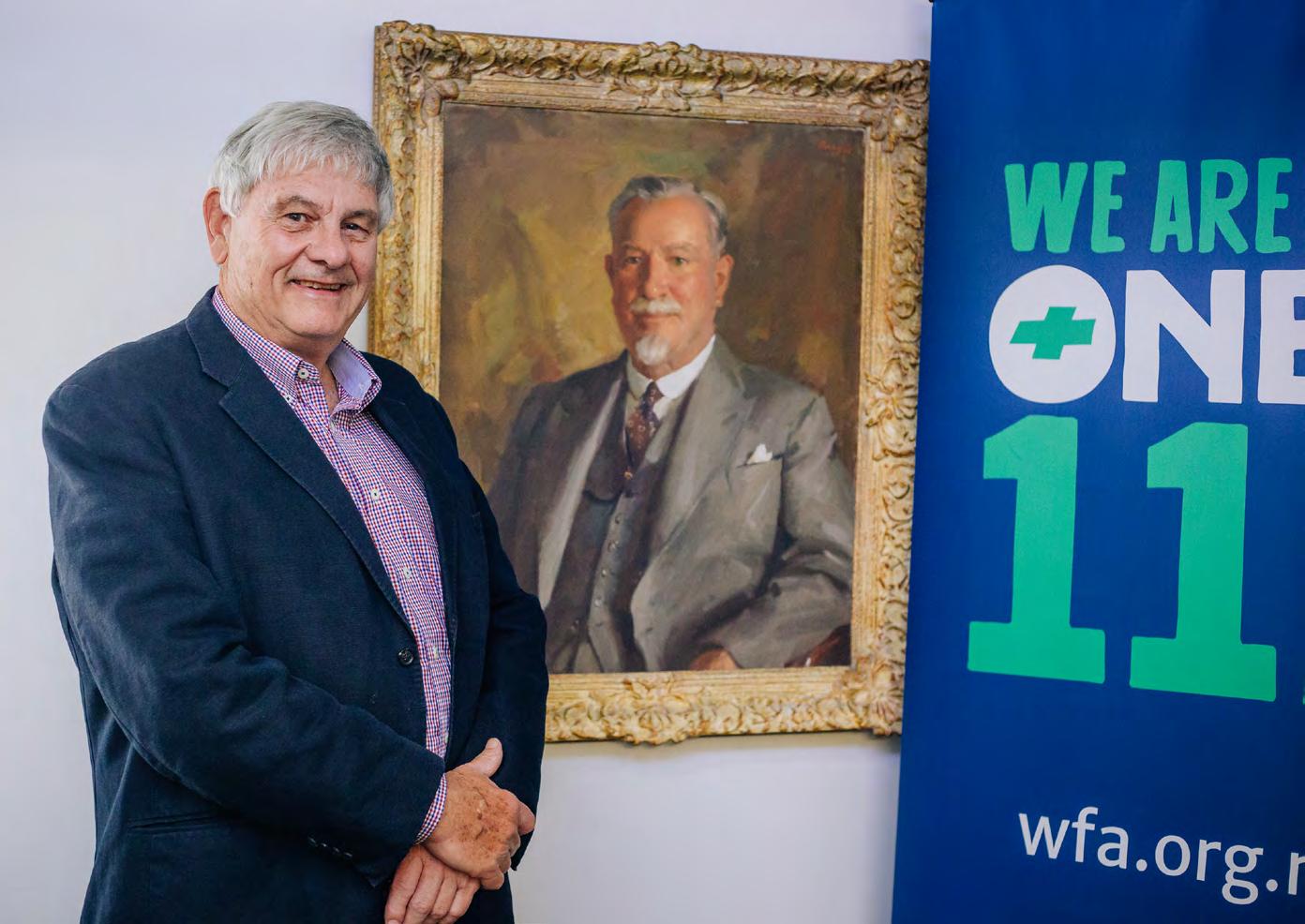
As patron of Wellington Free Ambulance, I am deeply proud to stand alongside an organisation whose purpose and values have touched generations of lives across our region.
For almost a century, Wellington Free Ambulance has been there for our communities offering care, comfort and compassion with every response.
This connection is personal to me. My grandfather, Sir Charles Norwood, served as Mayor of Wellington and founded Wellington Free Ambulance in 1927. His vision was simple yet significant: he believed that emergency medical care should be free for everyone, regardless of circumstance, wherever and whenever it’s needed. To see my grandfather’s vision not only endure but continue to evolve, as reflected in the achievements in this Impact Report, gives me and my whānau immense pride.
Kia ora te Tangata is more than just a strategy, it’s a promise and commitment to a healthier, more connected future for everyone.
Kia ora te Tangata is more than just a strategy, it’s a promise and commitment to a healthier, more connected future for everyone. It puts people at the centre of everything Wellington Free Ambulance does and strives to be –the patient, their family and friends, the communities we serve, and the dedicated teams who make it all possible.
My sincere thanks go to all who serve, support and believe in Wellington Free Ambulance’s mission, and whose generosity and spirit has kept this remarkable legacy alive.