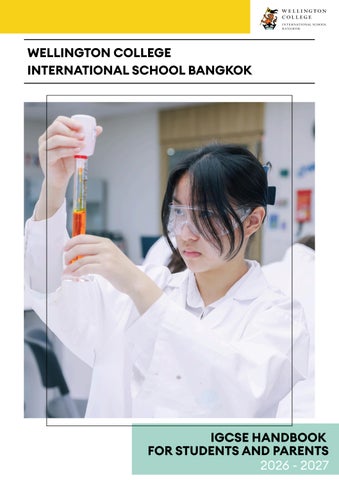

WELLINGTON COLLEGE
INTERNATIONAL SCHOOL BANGKOK
STUDENTS AND PARENTS

INSPIRED INTELLECTUAL INCLUSIVE INDEPENDENT INDIVIDUAL
At Wellington College Bangkok our values shape everything that we do every day. They are in every lesson, every game, every conversation. We are proud to be Wellingtonians and to walk in the footsteps of Wellingtonians before us..
Our pioneering education will help prepare students to serve and to help shape the world of tomorrow.

CONTENTS
Message from the Head of Senior School
Welcome to the IGCSE Programme at WCIВ
At Wellington College International School Bangkok, we teach the British curriculum. Between the ages of 14 and 16 (Key Stage 4), students follow a set of two-year academic courses which lead towards externally assessed IGCSE examinations.
IGCSEs (or International General Certificates of Secondary Education) are the international version of the British government’s GCSEs –exams which all students in England take at the end ofYear 11. They are the most popular international qualifications for 14- to 16-year-olds in the world.
At WCIB, all students take four to seven Core Subjects at IGCSE, as well as some additional non-examined subjects. Students then have the option to choose three further IGCSE subjects from a wide range of further options.
Most IGCSEs are assessed at the end of year 11; some have practical as well as written exams; a few have coursework elements to be completed at different points during the two-year study
programme. As each subject is studied separately, at the end ofYear 11 students receive a number of separate IGCSE qualifications. Although students need to do further qualifications to gain university entrance, IGCSE results are nonetheless recognised and scrutinised by universities as indicators of student potential.
Our students achieve exceptional outcomes. In Summer 2025, we celebrated outstanding IGCSE results, with over 70% of grades at A*/A and 10 subjects achieving all A*/A grades. These results reflect our commitment to high standards and personalised support for every learner.
This is an exciting time for students who are now invited to explore different subjects and options and to take greater ownership of their journey through education. We have designed the IGCSE Programme at Wellington to provide students with a solid core of subjects and a range of options which helps to ensure that choices made now will keep options open in the future.
This handbook is designed as a guide to IGCSEs and to those choices. I hope you find it helpful.
Ms Jane Sharp Head of Senior School
Option, Pathways, Careers
The
Options and Careers Programme
The WCIB Options and Careers Programme is a five-year programme launched in Year 9 and aims to support and guide our students as they advance through the Senior School. Through regular workshops, one-to-one meetings and coaching sessions we steer our students towards key moments of choice, allowing them to realize their ambitions for the future.
Supported by our Lead Tutors and their Houses, our programme provides students with a platform from which to work backwards from their goals in order to make the right choices for today. As students grow and develop their ideas, we build up a comprehensive picture of each individual and work together with teachers, tutors and families to get them to where they want to go at the end of their Wellington journey.
The WCIB Options and Careers Programme is preceded in Year 7 and 8 by the Pathways Programme. This programme introduces our younger students to some of the key skills for future choice making including self-reflection and self-awareness. These exercises play a pivotal role in helping our students to understand who they are and where they want to go. With regular sessions we cover everything from 21 Century life skills to debate and global citizenship. st
The British Curriculum
WCIB
Academics in Years 9-13
What are these years about academically?
As students move their way up through the key stages of the British Curriculum, they become increasingly independent in both their learning and in the control that they are given to create their own educational pathways. In June of Year 9 students reach the end of the National Curriculum Key Stage 3 and on entering Year 10, they will begin a two-year programme called the International General Certificate of Secondary Education (IGCSE). This course is the principle means of assessing student attainment through examinations at the end of Year 11 and it marks a vitally important step in the academic pathway of students, with IGCSE results potentially having an impact on future subject choice at A Level and options beyond, including university applications.
The subject choices forYear 9 students are presented within this curriculum guide. At WCIB we aim to offer a broad and balanced curriculum for all. We speak to each student individually in order to ascertain their strengths, their ambitions and their goals for the future. Through a mixture of core and optional choices we ensure that every student experiences a broad range of subjects that will equip them with the knowledge and the skills needed to progress. The curriculum includes core subjects which are compulsory for all students in Years 10 and 11, as well as a diverse range of optional subjects that can be selected by the student.
WCIB Timeline and Key Dates
Below is an overview of the IGCSE options process forYear 9 with some key dates for your diary.
Date
Event Attendee
October 19 IGCSE Launch and introduction to the WCIB Options and Careers Programme
December 9
January 15
January 30
IGCSE Student Options Fair
Year 9 Parents' Evening
IGCSE Options Deadline
Parents and Students
Students and Parents
Parents and Students N/A
*Throughout Terms 1 and 2 students take part in timetabled careers sessions and workshops within their wellbeing lessons. These sessions focus on self-awareness and reflection, skills, strengths, and ambitions for the future
AN INTRODUCTION TO THE IGCSE
The International General Certificate of Secondary Education (IGCSE) is a two-year course that forms the main method of measuring student achievement, with final examinations taken at the end ofYear 11. Beginning this programme represents a significant stage in each student’s academic journey, as their IGCSE outcomes influence future subject choices at A Level and can play an important role in shaping opportunities for further study, including university applications.
THE BRITISH CURRICULUM
This handbook sets out the subject options and core programme available to students entering Year 9. At WCIB, we strive to ensure that every student follows a curriculum that is both broad and balanced. To support this, we meet with each student individually to understand their strengths, ambitions, and long-term goals. By combining compulsory core subjects with a wide selection of optional choices, we enable students to study a rich variety of disciplines that develop the knowledge and skills needed for future progression whether into A Levels or later university and college pathways. In Years 10 and 11, all students follow the required core subjects alongside their chosen optional subjects.
The Options and Careers Programme launched in September 2021 with the inaugural Year 9 cohort. The programme aims to contribute towards students’ development of the Wellington Identity – that they become independent, intellectual, inspired, inclusive individuals.
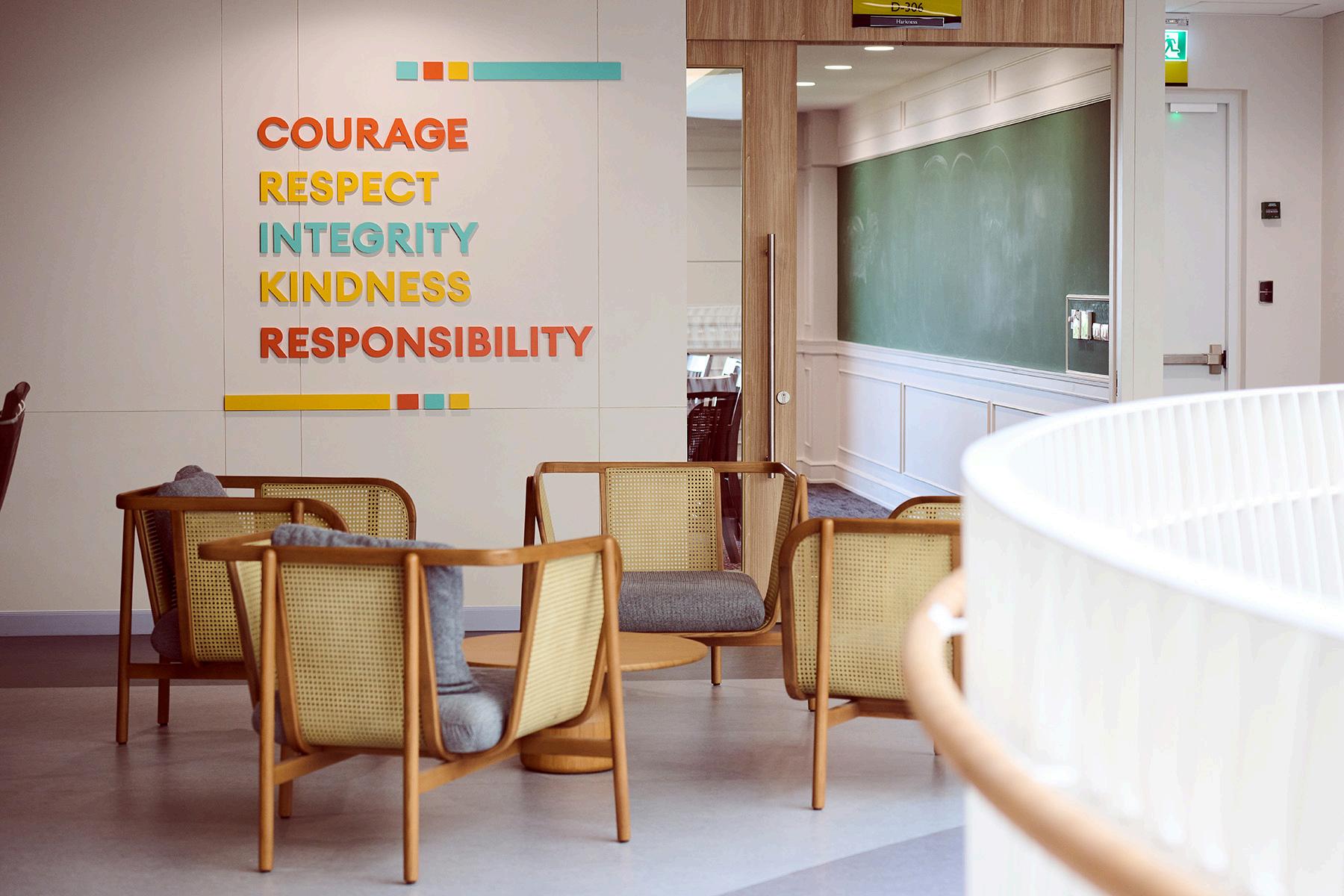
The importance of courage, one of our core values, has remained a core theme throughout the academic year as we have supported students to look deeper into their ambitions, exploring options and asking big questions of themselves and the world around them. Wellingtonians are reflective learners who are curious and ambitious. It is important that students own their choices by making choices themselves in accordance with subjects they really do want to study at a more advanced level. We know that choosing subjects you don’t enjoy is unlikely to result in success.
CHOOSING THE 'RIGHT' SUBJECT
The following list of questions has formed the basis of conversations with students, and we encourage students to take these questions (and answers) home to discuss further with family and friends, and of course, with individual subject teachers and tutors.
What subjects do you like and why?
What subjects do you dislike and why?
What are you good at?
What have you been recommended to do by teachers?
How far ahead have you looked? What do you need to get there?
What skills do you have?
WHYYOU SHOULD NOТ CHOOSE A SUBJEСТ
Students should not allow themselves to be influenced by:
Whether they like or dislike their current teacher in a particular subject
What their friends are choosing
As with all things in life, it is often helpful to talk things through. IGCSEs are new to students and many parents, but they are not new to us as teachers and educators. No question is too big or small – just ask.
Introduction to Subjects
Most students will complete between 6 and 9 IGCSEs in total. These include the examined core subjects of Mathematics, English Literature, English Language and Science, which all students
must take, as well as the non-examined core subjects of Physical Education, Wellbeing and Enrichment. Thai will also be a core subject for students with Thai nationality.
In addition to the core subjects WCIB students will be offered a range of optional subjects from which to construct their own pathway. This mixture of optional subjects will be carefully selected by the student and guided by the Head of IGCSE, Lead Tutors and subject specialists and aims to reflect the unique skills and ambitions of each student.
Introduction to Subjects
As we support our students, we will encourage them to be both reflective and curious, to follow a broad and balanced range of options in order to keep doors open for the future whilst pursuing the subjects that suit their strengths and interests.
Optional IGCSE Subjects* (students typically choose up to 3)
Art and Design
Business Studies
Computer Science
Design and Technology
Thai as a First Language
*subject to change
Useful Links:
Drama
French
Geography
History
Economics
Mandarin as a First Language
Music
Physical Education
Spanish
Mandarin as a Second Language
Art and Design
In IGCSE Art and Design, students will:
Develop knowledge and understanding ofArt in historical and contemporary contexts, societies and cultures
Develop critical understanding through investigative, analytical, experimental, practical, technical and expressive skills
Acquire and develop technical skills through working with a broad range of media, materials, techniques, processes and technologies with purpose and intent
Develop and refine ideas to reach personal outcomes or solutions with increasing independence, whilst becoming confident to take risks and learn from experience
Develop creative, imaginative and intuitive capabilities when exploring and making art
Examination Board: Pearson Edexcel International GCSE in Art and Design: Fine Art (4FA1)
This course has been designed to offer a broad choice of media and approaches to making Art, so that students can experiment with a wide range of materials, techniques and processes and produce personal responses based on their interest and strengths. The areas of study for Fine Art are:
Drawing
Painting
Printing
Mixed media
Sculpture
lens / light-based media
Whilst students are encouraged to produce work in response to all these areas of study, they can choose to specialise in one or more of them as they embark on their personal work.
Art and Design
Reasons to studyArt and Design:
The study ofArt and Design appeals to learners who enjoy coming up with ideas, engaging in practical work, experimenting with materials and solving problems. As well as gaining a broad range of technical skills, students will gain aesthetic awareness, develop their visual literacy and learn to effectively organise, present and communicate ideas visually. The emphasis placed on exploration and personal perspective will stimulate students’ imagination, whilst developing their independence and abilities to think critically, conceptually and creatively.
Thinking creatively is an important transferable skill that is relevant to all aspects of life. Creativity allows us to view and solve problems more openly and with innovation. It broadens our perspectives and can help us overcome challenges. An Arts education can give students the foundation for hundreds of possible careers, as most industries require creative people who can think outside of the box and communicate visually, in our ever-growing visual world.
How will I be assessed?
Students will take two components, each worth 50% of the total mark. All work is externally marked, using a 9-1 grading scale.
Component 1: Personal Portfolio
Students research, develop and realise a project in response to a chosen theme. Students must submit:
Three A2 sheets of supporting studies
A final outcome
Component 2: Externally Set Assignment
Students research, develop and realise a project in response to a theme set externally.
There are two parts to the assignment:
Three A2 sheets of supporting studies
A final outcome produced during a supervised 10 hour exam
Where can I find more information?
IGCSE Art and Design Specification: Art and Design Specification (https://shorturl.at/gkKQR) Head of Department: Duna Carbonell (d.carbonell@wellingtoncollege.ac.th)
Biology
What is Biology all about?
Biology is the scientific study of life. It is a natural science with a very broad scope but with several unifying themes tying it all together. For instance, all organisms are made up of cells that contain DNA that can be passed on to future generations. This principle forms the basis of evolution and is one of the founding principles for all living organisms.
Throughout this course students learn about life and the interaction between all life on the planet. Key units of this course cover the nature and variety of living organisms, the structures
In IGCSE Biology, students will:
Acquire knowledge and understanding of biological facts, terminology, concepts, principles and practical techniques
Learn practical, experimental and investigative skills
Understand some of the applications and challenges of science in the real world
Prepare for more advanced courses in Biology
Examination Board:
and functions of cells, tissues and organs, reproduction, genetics and inheritance, ecology and the environment and the use of biological resources in industry.
This exciting course pushes students to look at real world examples of science, applying and debating our knowledge and understanding of the challenges we face as a species in global warming, extinction, medical advancement, disease, evolution and even cloning.
Reasons to study IGCSE Biology:
Science is a core subject at IGCSE and is therefore compulsory for all students. Through studying Biology you will gain a bank of important scientific skills that can be used across many different subjects as well as gain an appreciation for the living world and our place in it.
How will I be assessed?
Students will sit two externally assessed written papers at the end of the two-year course. All teaching units will contain elements of theory as well as practical (laboratory) work. Core practicals are integrated into the content and are examined as part of the written examinations.
Paper 1 - 61.1% of total IGCSE, 2 hours
Paper 2 - 38.9% of total IGCSE, 1 hour 15 minutes
IGCSE Biology is graded on the 9-1 scale.
Where can I find more information?
IGCSE Biology (9-1) Specification: Biology Specification Head of Deрartment: Will Statham (w.statham@wellingtoncollege.ac.uk)
Business
In IGCSE Business, students will develop the abilityto:
Read sources to interpret and evaluate business Information
Write extended responses
Respond appropriately to a range of question types, including multiple-choice, short-answer, data-response and openended questions
Develop an understanding of business concepts and apply these concepts to reallife situations.
Examination Board: Edexcel IGCSE (4BS1)
What is Business all about?
This course is designed for international students, building an understanding and awareness of business concepts and applying them to real-life situations. Students will gain an understand how the main types of business are organised, financed and operated and learn to apply knowledge, understanding and
skills to contemporary business issues in a wide range of scenarios from small enterprises to large multinationals operating in local, national and global contexts. The content develops students’ ability to participate effectively in global society as citizens, producers and consumers.
Reasons to study Business
The Pearson Edexcel International GCSE in Business qualification enables students to foster an interest in and enthusiasm for the study of business. Students will build an understanding of business concepts, terminology, objectives and business activity.
Students will learn important critical-thinking and enquiry skills to distinguish between facts and opinion, calculating, interpreting and evaluating business data, to help them build arguments and make informed judgements. Students will also glean an understanding of the dynamics of business activity and the related considerations of ethics and sustainability for global businesses.
International GCSEs enable successful progression to A level qualifications in business and other subjects.
How will I be assessed?
This course is a linear, two-year qualification. There are two equally weighted exam papers which have a consistent approach and assessment structure. Both papers are 90 minutes long and are worth 80 marks each.
Paper 1 will draw on the full content of the specification in a small business context.
Paper 2 will assess the full content of the specification in a large business context.
Where can I find more information?
Hyperlink to specification: Pearson Edexcel Business IGCSE (9-1) Head of Department: Joel Holliday (j.holliday@wellingtoncollege.ac.th)
Chemistry
In IGCSE Chemistry, students will:
Learn about unifying patterns and themes in chemistry and use them in new and changing situations
Develop practical, experimental and investigative skills
Understand some of the applications and challenges of science in the real world
Prepare for more advanced courses in chemistry and for other courses that require knowledge of chemistry
Examination Board: Pearson Edexcel International GCSE (9-1) in Chemistry (4CH1)
What is Chemistry all about?
Chemistry is a branch of science that deals with chemical elements and compounds, and how they work together and change. It is the study of fundamental properties of matter and chemical reactions, the study of substances and their transformations. In chemistry IGCSE students will look at principles of chemistry (an introduction to the fundamentals of the subject including states of matter,
the periodic table and bonding), inorganic chemistry (including the reactivity series, gases in the atmosphere, extraction and use of metals acids, bases and salt preparations), physical chemistry (energetics, rates of reaction and equilibria) and finally organic chemistry (the chemistry of hydrocarbons including alkanes, alkenes, alcohols, carboxylic acids, esters and synthetic polymers).
Reasons to study Chemistry
Science is a core subject at IGCSE and is therefore compulsory for all students. Through studying Chemistry you will gain a bank of important scientific skills that can be used across many different subjects as well as an understanding of the building blocks of our world.
Everything you touch, wear, eat or drink is the result of a chemical process. Mathematical skills are key aspect of the study of chemistry.
How will I be assessed?
Students will sit two externally assess written papers, both containing a mixture of all topics within the course.
Paper 1- 61.1% of total IGCSE, 2 hours
Paper 2 - 38.9% of total IGCSE, 1 hour 15 minutes
IGCSE Chemistry and/or Double Science will be awarded on a grade scale of 9 (the highest grade) to 1 (the lowest grade).
Where can I find more information?
IGCSE Chemistry (9-1) Specification: Chemistry Specification Head of Department: Will Statham w.statham@wellingtoncollege.ac.th
Computer Science
In IGCSE Computer Science, students will: (40-80 words)
Computational thinking skills
An understanding of the main principles of solving problems using computers
The skills necessary to solve computer-based problems using a high-level programming language • an understanding of the component parts of computer systems and how they interrelate
An understanding of the internet as a means of communication and its associated risks
An understanding of the development and use of automated and emerging technologies
Examination Board: Cambridge IGCSE
What is IGCSE Computer Science all about? (50-100 words)
Cambridge IGCSE Computer Science provides an ideal foundation in computer science. Learners gain confidence in computational thinking and programming, an appreciation of automated and
emerging technologies and the benefits of their use. They develop an understanding of the main principles of problem-solving by creating computer-based solutions using algorithms and a high-level programming language.

Computer Science
Reasons to study IGCSE Computer Science
IfIf you really enjoy Mathematics and Computing, then this is the option for you. There is an explosion in the Computer Science industry with particular demand for programmers, web developers and systems analysts. If you are looking at a career in Medicine, Business or Engineering this course is looked upon favourably by universities and will develop skills that will be useful to your future study.
How will I be assessed?
Students will sit two written papers. Grading scale used: 9-1
Paper 1: 1 hour 45 minutes: Computer Systems (50% -75 marks)
Short-answer and structured questions. Externally assessed
Questions will be based on Topics 1-6 of the subject content.
Paper 2: 1 hour 45 minutes: Algorithms, Programming and Logic (50% - 75 marks)
Short-answer and structured questions and a scenario-based question. Externally assessed Questions will be based on Topics 7-10 of the subject content.
Where can I find more information?
IGCSE Computer Science: https://www.cambridgeinternational.org/programmes-andqualifications/cambridge-igcse-9-1-computer-science-0984/ Head of Department: Dax Ward, j.ward@wellingtoncollege.ac.th
Design and Technology
In IGCSE Design Technology, students will:
This qualification aims to relate authentic realworld awareness of design practices and strategies used by the creative, engineering and manufacturing industries. Learners will be required to use critical thinking, leading towards invention and design innovation. They will design and make prototypes that solve real and relevant problems, considering their own and others’ needs, wants and values.
Examination Board: Cambridge IGCSE
What is Design Technology all about?
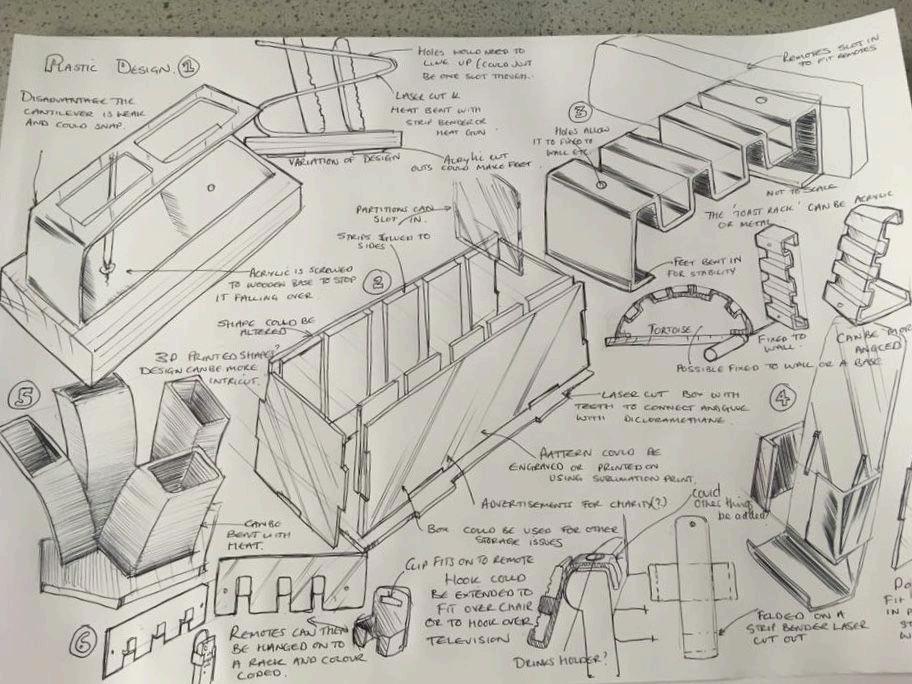
The course involves both theory and practical elements. Pupils will need to know various manufacturing techniques for wood, metal, plastic and textiles and how the use of these materials can impact on the environment.
They will use both 2D and 3D modelling software to produce product outcomes using 3D printers and a laser cutter. There are also strong links to Maths and Science where pupils are expected to be able to apply their knowledge from both of these subjects.
Design and Technology
Reasons to study Design Technology
Learning about Design and Technology will encourage learners to develop design and thinking skills that open up a world of possibility, giving them the tools to create the future. This qualification will excite and engage learners with contemporary topics covering the breadth of this dynamic and evolving subject.
Design and Technology is a subject that brings learning to life, requiring learners to apply their learning to real-life situations.
How will I be assessed?
All candidates take two exams and one Project. Candidates will be eligible for grades A* to G.
Assessment weighting in IGCSE %
Where can I find more information?
Cambridge IGCSE Design Technology: https://rb.gy/3q3bij
Head of Department: Mr. Simon Hamilton E-mail: S.Hamilton@wellingtoncollege.ac.th
Drama
In IGCSE Drama, students will:
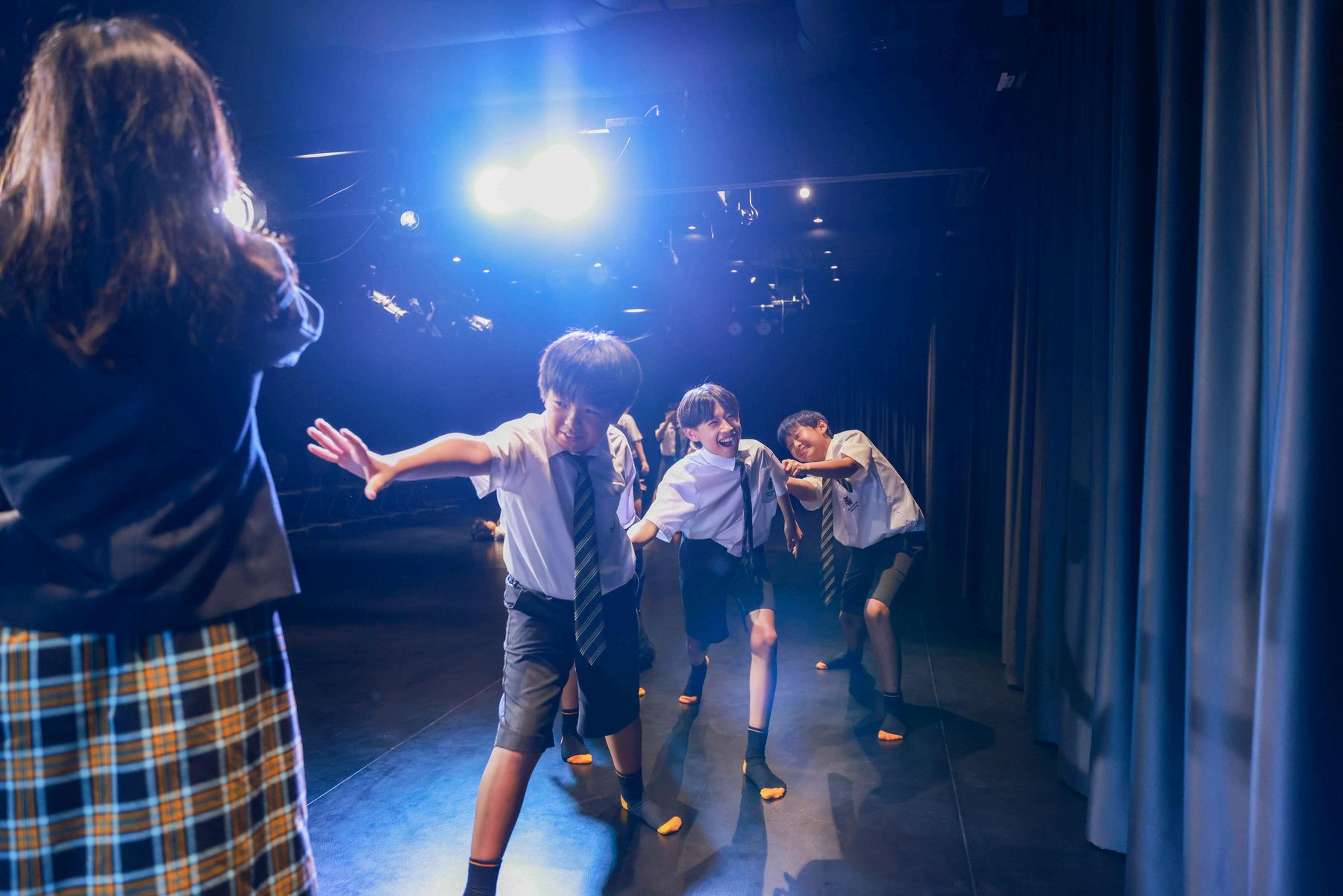
IIn GCSE Drama, you will unleash your creativity and passion for theatre. Step into thrilling characters, build unforgettable performances, and explore powerful themes that impact the world. Through acting, devising and the study of play texts, you’ll gain confidence, develop your collaboration and performance making skills, and deconstruct storytelling conventions.
You will study:
how to explore practitioner techniques and performance conventions in a range of projects. how to devise, develop and structure original dramatic material from stimuli such as poems, pictures, songs, historical events and stories. how to work with extracts from published plays as an actor, director and designer. how to analyze set play texts and live theatre productions.
Examination Board: Pearson Edexcel
What is Drama all about?
Drama is all about bringing stories to life! It’s where imagination meets expression, allowing us to explore new perspectives, connect with others, and understand the contemporary world in dynamic ways. Drama offers an opportunity for all to develop lifelong skills, such as public speaking, performance and persuasion.
Through Drama, you’ll master skills which can be applied to all pathways of the future. You will become resilient, insightful and independent thinkers, ready to take your place on the world stage, whether through academia, business, politics, media or entertainment.
Over the 2-year program, you will work in groups, and as individuals. You will create, break down and analyse creative choices in a way that prepares you for a wide variety of work environments.
You will develop:
An interest in and enjoyment of drama and theatre
An understanding of the dramatic process of moving from script to performance
Skills in devising original drama
Practical performance skills as individuals and within a group
An understanding and engagement with acting, directing and designing
An understanding of how performers communicate with an audience
An awareness of themes, genres, structure, form and style when deconstructing theatre works

Reasons to study Drama
The skills acquired in studying Drama are for life.
Public speaking, performance and persuasion are evermore relevant in the increasingly social media driven world in which we live, study and do business.
The leaders of tomorrow will be those whose voices can be heard.
How will I be assessed?
There are two parts to the assessment.
There are three components you will be assessed on.
Component 1: Devising (40%)
An original devised performance A 2,000-word portfolio that documents and analyses the devising process
Component 2: Performance from Text (20%) Performance of two key extracts
Component 3: Theatre Makers in Practice (40%)
At the end of the 2-year course, there is a written exam that lasts 1 hour 45 minutes
The exam has two parts.
Part 1 - Bringing Texts to Life: Questions about a play studied throughout the program.
Part 2- Live Theatre Evaluation: Questions about a piece of live theatre viewed.
Where can I find more information?
Hyperlink to specification: https://qualifications.pearson.com/en/qualifications/ edexcelgcses/drama-2016.html
Teacher of Drama: Ashley Edwards (a.edwards@wellingtoncollege.ac.th)
Economics
In IGCSE Economics, students will develop the abilityto:
Read sources to interpret and evaluate economic information and write extended responses
Respond appropriately to a range of question types, including multiple-choice, short-answer, data response and open-ended questions
Respond appropriately to a range of question types, including multiple-choice, short-answer, data-response and open-ended questions
Develop an understanding of economic concepts and apply these concepts to real-life situations.

Examination Board: Edexcel IGCSE (4EC1)
What is Economics all about?
Economics is a social science that focuses on the production, distribution, and consumption of goods and services, and analyses the choices that individuals, businesses, governments, and nations make to allocate resources.
Economics focuses on efficiency in production and exchange and is split into two branches. Microeconomics studies how individual consumers and firms make decisions to allocate resources
Whether a single person, a household, or a business, economists may analyse how these entities respond to changes in price and why they demand what they do at different price levels
Macroeconomics studies the behaviour and performance of an economy as a whole (aggregated). Its primary focus is the recurrent economic cycles and broad economic growth and development.
Reasons to study Economics
The study of economics helps people comprehend the world around them. It enables people to understand people, businesses, markets and governments, and therefore better respond to the threats and opportunities that emerge when things change.
Economics students are well-positioned in an everchanging world because they have problem solving and analytical skills that allow them to succeed in variety of career paths.
How will I be assessed?
This course is a linear, two-year qualification. There are two equally weighted exam papers which have a consistent approach and assessment structure. Both papers are 90 minutes long and are worth 80 marks each.
Paper 1 assesses the microeconomics and Business Economics syllabus.
Paper 2 assesses the full content of macroeconomic and the global economy syllabus.
Where can I find more information?
Hyperlink to specification: Pearson Edexcel Economics IGCSE (9-1)
Head of Department: Joel Holliday (j.holliday@wellingtoncollege.ac.th)
English First Language
In IGCSE English First Language, students will:
Read a wide range of texts, fluently and with good understanding, enjoying and appreciating a variety of language
Read critically, and use knowledge gained from wide reading to inform and improve your own writing
Write accurately and effectively, using Standard English appropriately Work with information and with ideas in language by developing skills of evaluation, analysis, use and inference
Listen to, understand, and use spoken language effectively
Acquire and apply a wide vocabulary, alongside a knowledge and understanding of grammatical terminology and linguistic conventions.
Examination Board: Cambridge Assessment International Education
What is English First Language all about?
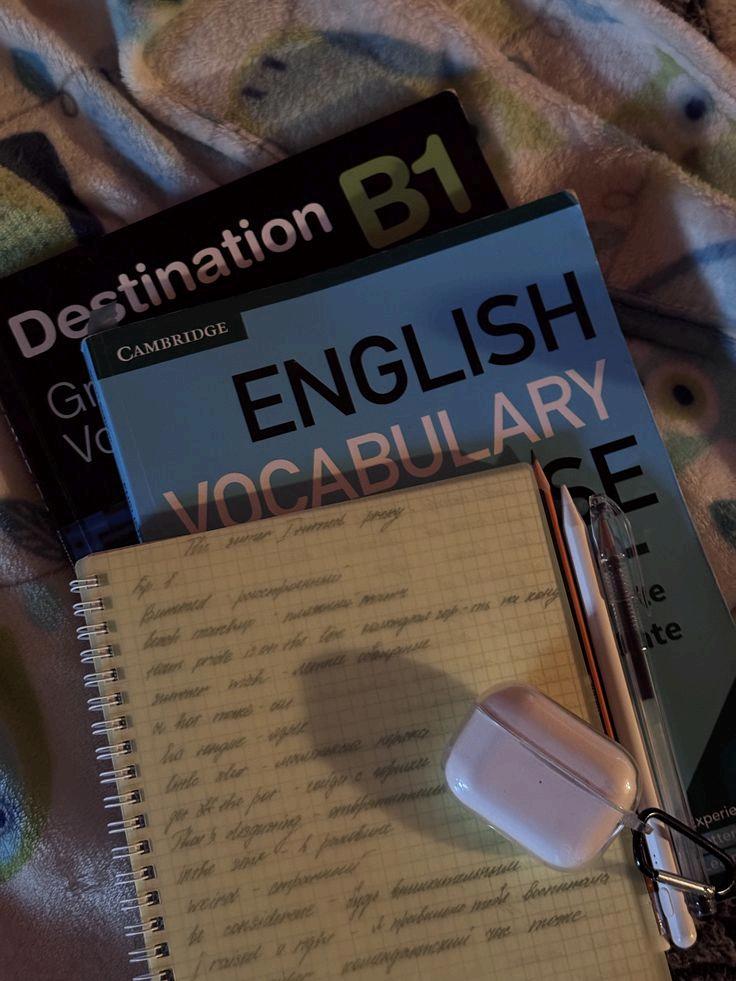
English First Language is about developing your ability to communicate clearly, accurately and effectively when speaking and writing; to use a wide range of vocabulary, and the correct grammar, spelling and punctuation, and to develop a personal style and an awareness of the audience being addressed.
You will also read widely, both for your own enjoyment and to further your awareness of the ways in which English can be used. This IGCSE also develops more general analysis and communication skills such as inference and the ability to order facts and present opinions effectively.
English Language
Reasons to study English First Language
English Language is more than just learning how to read, write and speak in English. With an IGCSE in this subject you will demonstrate you have the ability to communicate effectively in both the spoken and written word, in addition to understanding, interpreting and analysing a range of text types.
It is possibly the most important subject you will study as the skills you will learn and develop are transferable to all your other subjects.
How will I be assessed?
You will sit two externally assessed written papers at the end of the two-year course.
Paper 1- 50% of total IGCSE, 2 hours
Paper 2 -50% of total IGCSE, 2 hours
IGCSE English First Language will be awarded on a grade scale ofA* (the highest grade) to U.
Where can I find more information?
English First Language 2024-26 Syllabus
Head of Department: Claire Bope c.bope@wellingtoncollege.ac.th
English Literature
What is English Literature all about?
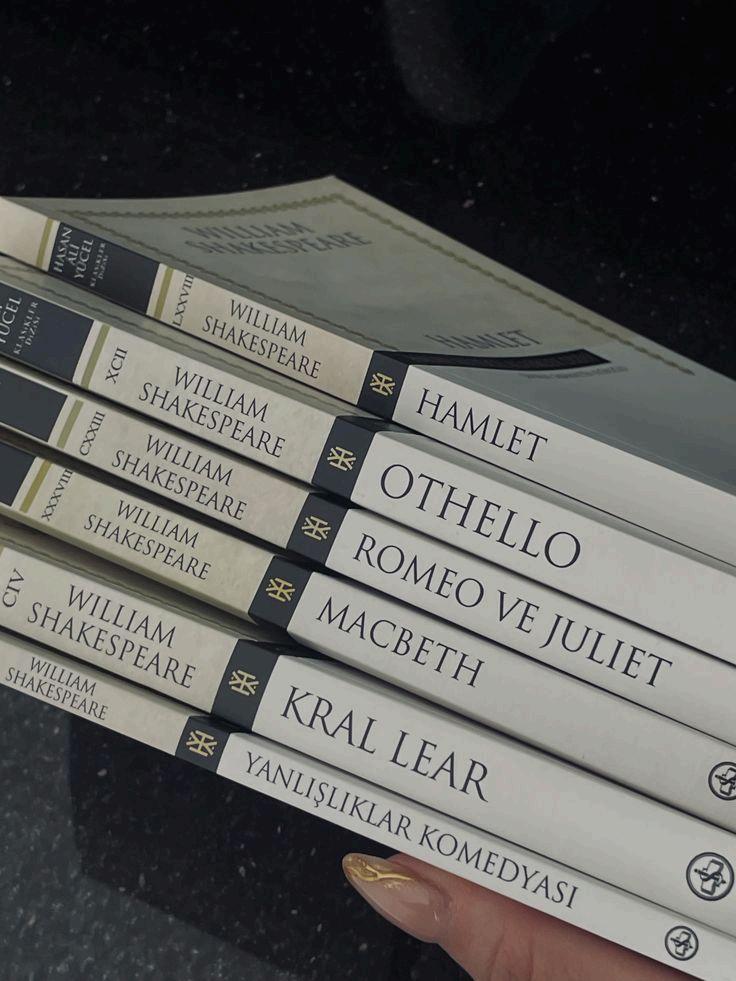
English Literature is about reading, interpreting and evaluating texts. You will develop an understanding of literal meaning, relevant contexts and of the deeper themes or attitudes that may be expressed. Through your studies, you will learn to recognise and appreciate the ways in which writers use English to achieve a range of effects
In IGCSE English Literature students will:
Enjoy the experience of reading literature
Understand and respond to literary texts in different forms and from different periods and cultures
Communicate an informed personal response appropriately and effectively
Appreciate different ways in which writers achieve their effects
Experience literature's contribution to aesthetic, imaginative and intellectual growth
Explore the contribution of literature to an understanding of areas of human concern.
Examination Board: Cambridge Assessment International Education
and will be able to present an informed, personal response to the material you have studied. You will also be encouraged to explore wider and universal issues, in order to promote a better understanding of yourself and of the world around you.
English Literature
Reasons to study English Literature
A qualification in English Literature enables you to gain a wider perspective of the world as your horizons are broadened through the experience of cultures, situations and experiences you would otherwise never encounter. You learn to think critically and independently, as you explore texts and consider the intentions of writers and the effects they wish to achieve. It really does open up a world of inspiration and imagination!
How will I be assessed?
You will sit three externally assessed written papers at the end of the two-year course.
Paper 1 Poetry and Prose- 50% of total IGCSE, 1 hour and 30 minutes
Paper 2 Drama and Unseen – 50% of total IGCSE, 2 hours
IGCSE English Literature will be awarded on a grade scale ofA* (the highest grade) to U.
Where can I find more information?
Cambridge IGCSE 0475 Literature in English Head of Department: Claire Bope c.bope@wellingtoncollege.ac.th
English as a Second Language
What is English as a Second Language all about?
Cambridge IGCSE English as a Second Language offers learners the opportunity to develop practical communication skills in reading, writing, listening and speaking. Learners will be presented with a variety of texts that will build up their skills in reading and writing. They will learn to select relevant details, understand the difference between what is directly stated and implied, and practise writing for different purposes and audiences.
In IGCSE English as a Second Language students will:
Develop their ability to use English effectively for the purpose of practical communication
Develop their awareness of the nature of language and language-learning skills
Develop transferable skills to complement other areas of the curriculum
Focus on personal development and enjoyment.
Examination Board: Cambridge Assessment International Education
Learners will listen to a range of spoken material, including talks and conversations, to develop listening skills. Learners will engage in conversations on a variety of topics and develop their skills in responding to different situations and audiences with a degree of accuracy and clarity. Cambridge IGCSE English as a Second Language will enable learners to become independent users of English both to support further study and to communicate effectively in a variety of practical contexts.
English as a Second Language
Reasons to study English as a Second Language
Our approach encourages learners to be:
Confident, using a range of language to communicate ideas and information effectively in writing and speaking
Responsible, seeking opportunities to use and develop their language skills
Reflective, considering different opinions and information in written or spoken form, and responding to them appropriately
Innovative, using language creatively to express ideas and information
Engaged, developing different learning strategies and using their language skills in a range of situations.
How will I be assessed?
You will sit two externally assessed written papers:
Paper 1 Reading and Writing - 70% of total IGCSE, 2 hours
Paper 2 Listening - 30% of total IGCSE, 50 minutes
You will also take:
Paper 3 Speaking - Separately endorsed, 10-15 minutes
40 marks - internally assessed and externally moderated
IGCSE ESL will be awarded on a grade scale of A* (the highest grade) to U.
Where can I find more information?
IGCSE English as a Second Language Specification
Head of Department: c.bope@wellingtoncollege.ac.th
In IGCSE French, students will: (40-80 words)
The IGCSE course aims to develop the ability to use the French language for practical communication. The course will enable pupils to acquire the skills required for further study of the language and to develop an understanding of the culture and civilization of French speaking countries The course concentrates on authentic situations to allow pupils to practice the four different skills (reading, writing, listening and speaking) and covers topics such as home and family, holidays, school and future plans, trips abroad and daily life.
Examination Board: Cambridge IGCSE
What is French all about?
The five topic areas are as follows:
A. Everyday activities
B Personal and social life
C. The world around us
D. The world of work
E. The international world
Reasons to study French: (100 words max) - SHORT SALES PITCH
First and foremost, learning French is the pleasure of learning a beautiful, rich, melodious language that is often called the language of love. French is also an analytical language that structures thought and develops critical thinking, which is a valuable skill for discussions and negotiations.
Also, French is the second most widely learned foreign language after English, the fifth most widely spoken language in the world, and the second most useful language in the world of business.
Furthermore, studying French will bring you important life-skills and an enriching academic discipline. It will also broaden your horizons in terms of travel, culture and employment.
How will I be assessed?
All candidates take four papers assessing the four skills. Candidates will be eligible for grades A* to G. Assessment weighting in IGCSE %
Where can I find more information?
Cambridge IGCSE French Head of Department: Julie Laporte (j.laporte@wellingtoncollege.ac.th)
Geography
What is Geography all about?
In IGCSE Geography there are two main written exam papers: Physical Geography and Human Geography. focuses three key themes, the first theme is population and settlement which looks at urbanisation, migration, population density and urban and rural settlement. The second theme is the natural environment
In IGCSE Geography, students will:
Gain an understanding of location, a sense of place & space on a local, regional, and global scale. Develop an awareness of the characteristics, distribution, and processes affecting contrasting physical and human environments.
Gain an understanding of the ways in which people interact with each other and with their environment.
Gain an awareness of the contrasting opportunities and constraints presented by different environments.
Gain an appreciation of and concern for the environment.
Gain an appreciation of the earth including its people, places, landscapes, natural processes and phenomena.
Examination Board: Pearson Edexcel
which looks at rivers, coasts, climate, earthquakes, volcanoes and weather. The final theme is economic development which looks at tourism, food production, industry, energy, water and development.
Geography
Reasons to study Geography
Universities see geography as a robust academic subject rich in skills, knowledge, and understanding. As a subject linking the humanities and the sciences, it is highly flexible in terms of what you can combine it with, both at IGCSE and A Level. Studying geography helps us to have a sense of place. All places and spaces have a history behind them, shaped by humans, earth, and climate, as well as how they will continue to be shaped into the future. Studying geography gives meaning and awareness to places and spaces, which becomes vital as we move into an ever-changing and dynamic world.
Potential job sectors associated with the study of Geography: Finance & Banking, Data Analyst, Cyber Security, Pilot, Astronaut, Diplomacy/Politics, Conservation & Sustainability, Mining & Energy, Cartography, Environmental Science, Town planning & Urban Planning, Education, Architecture, Geographical information systems (GIS), Surveyor (Civil Engineering).
How will I be assessed?
Students will sit two externally assessed written exams at the end of the two-year course.
Paper 1: Physical Geography - 70 marks or 40% of total IGCSE, 1 hour 10 minutes.
Paper 2: Human Geography – 105 marks or 60% of total IGCSE, 1 hour 45 minutes.
IGCSE Geography will be awarded on a grade scale of 9 (the highest grade) to 1 (the lowest grade).
Where can I find more information?
IGCSE Geography (4GE1): Geography Specification Head of Department: Paul Mccraw (p.mccraw@wellingtoncollege.ac.th)
History
In IGCSE History, students will:
Develop and extend their knowledge and understanding of specified key events, periods and societies in history; and of the wide diversity of human experience
Engage in historical enquiry to develop as independent learners and as critical and reflective thinkers
Develop the ability to ask relevant questions about the past, to investigate issues critically and to make valid historical claims by using a range of sources in their historical context
Develop an awareness that different people, events and developments have been accorded historical significance and how and why different interpretations have been constructed about them
Organise and communicate their historical knowledge and understanding in different ways and reach substantiated conclusions
Examination Board: Pearson Edexcel International GCSE in History (4H11)
What is History all about?
History is the study of the past and allows us to understand the present and often the future. History is based around the development of historical skills and acquiring knowledge. Skills in IGCSE History include investigation, analysis, evaluation and communication skills.
IGCSE History is a modern history course where pupils study four main topics: (1) Weimar and Nazi Germany, 1918-45 (II) Russia and the Soviet Union, 1905–24 (III) China: conflict, crisis and change, 1900–89 (IV) A divided union: civil rights in the USA, 1945–74.
Reasons to study History
History is far more than learning about dates, facts and events, it shapes the world around us and how we interact with it. History has made our world what it is and history can also be a key part of your future. Choose History if you enjoy problem solving, analysis, learning about the past and creating links through the idea of cause and consequence.
Potential job sectors associated with the study of History: law, journalism, politics, archivist, teaching, author, further education, librarian, business, curator, economist, analysist.
How will I be assessed?
Pupils will sit two ninety minute, externally assessed written exams at the end of the twoyear course. Paper1will focus on knowledge and understanding, and the extended answers will require pupils to explain, analyse and make judgements. Paper II will focus on source analysis and pupils will analyse historical interpretations.
IGCSE History will be awarded on a grade scale of 9 (the highest grade) to 1 (the lowest grade)
Where can I find more information?
IIGCSE History Edexcel History specification
Head of Department: Paul McCraw (p.mccraw@wellingtoncollege.ac.th)

Physical Education
What is Physical Education all about? (50-100 words)
GCSE PE combines high-level theory with applied practical performance. Students study anatomy and physiology, movement analysis, training methods, sports psychology, health, fitness and well-being, and the socio cultural factors that influence participation in sport. Lessons are predominantly theory-based, using practical examples and students’ own sporting experiences to bring the content to life
IIn IGCSE Physical Education, students will: (40-80 words)
Develop a strong understanding of both the theoretical and practical aspects of Physical Education. The course explores how the body and mind respond to exercise, how to train safely and effectively, and how an active lifestyle supports long term health and well being. While students are assessed in practical performance, much of the course is classroom based, giving them a solid academic foundation in sports science and Physical Education.
Examination Board: Pearson Edexcel – GCSE (9–1) Physical Education
We strongly advise that pupils choosing GCSE PE already participate regularly in at least one sport from the list provided by Edexcel.
Physical Education
Reasons to study Physical Education: (100 words max) - SHORT SALES PITCH
GCSE PE is an excellent choice for students who are both passionate about sport and keen to understand the science and theory behind performance. The course is academically demanding, with a substantial theoretical component that develops analytical thinking, problem-solving and extended writing skills. Students learn how the body and mind work in sport, and how training, psychology and lifestyle choices affect performance.
Most practical development takes place through school teams, Games Afternoons, Enrichment and external clubs, while classroom lessons focus on the theory that underpins performance – ideal preparation forA Level PE and related pathways.
How will I be assessed? (50-80 words)
Written examinations: 60%
Two exams (1 x 1 hour 45 minutes, 1 x 1 hour 15 minutes) assessing applied anatomy and physiology, movement analysis, physical training, sports psychology, socio cultural influences, and health, fitness and wellbeing.
Non exam assessment (NEA): 40%
Assessment in three practical activities (one team, one individual and one free choice from the approved list) plus a Personal Exercise Programme (PEP), where students plan, carry out and evaluate a training programme using theoretical knowledge.
Grade system: 9–1
Where can I find more information?
Edexcel GCSE Physical Education (2016) | Pearson qualifications Head of Department: Helen Mathews; h.mathews@wellingtoncollege.ac.th
Physics
In IGCSE Physics, students will:
Learn about unifying patterns and themes in physics and use them in new and changing situations
Apply the principles and concepts of physics, including those related to the applications of physics, to different contexts
Analyse, interpret and evaluate data and experimental methods, drawing conclusions that are consistent with evidence from experimental activities.
Develop a logical approach to problem solving in a wider context
Prepare for more advanced courses in physics and for other courses that require knowledge of physics.
What is Physics all about?
Physics is the study of matter and energy. It is one of the most fundamental scientific disciplines with the goal of understanding how the universe behaves Physics uses logic, imagination and abstract thought to help us explain what we experience in our every-day lives.Students will study the behaviour of the microscopic as well as the beginning of the very universe itself whilst developing their understanding of the scientific method. Physics helps us find the fundamental mechanisms behind the natural world.

Examination Board: Pearson Edexcel International GCSE (9-1) Physics (4PH1)
Reasons to study Physics
A qualification in Physics is a demonstration of the cognitive ability to solve problems. It is valued in all professional sectors at both IGCSE and A-Level as it demonstrates the ability to use information and concepts in new contexts and overcome challenges which is an important and transferable skill applicable to many occupations all around the world. Apart from technical careers such as architecture and engineering, Physics can help provide a gateway into Medicine, Law and the financial sector..
How will I be assessed?
Students will sit two externally assessed written papers at the end of the two-year course. All teaching units will contain elements of theory as well as practical (laboratory) work. Core practicals are integrated into the content and are examined as part of the written examinations.
Paper 1- 61.1% of total IGCSE, 2 hours
Paper 2 - 38.9% of total IGCSE, 1 hour 15 minutes
IGCSE Physics and/or Double Science will be awarded on a grade scale of 9 (the highest grade) to 1 (the lowest grade).
Where can I find more information?
IIGCSE Physics (9-1) Specification can be downloaded here: Physics Specification Head of Department: Will Statham (w.statham@wellingtoncollege.ac.th)
Mandarin First Language Chinese
In IGCSE Mandarin, students will:
Develop the ability to communicate clearly, accurately and effectively when writing. Learn how to use a wide range of vocabulary and correct grammar, character formation and punctuation. Develop a personal style and an awareness of the audience being addressed. Learners are also encouraged to read widely, including classical texts, both for their own enjoyment and to further their awareness of the ways in which Chinese can be used.
Examination Board: Cambridge IGCSE
What is Mandarin Chinese-Foreign Language all about?
Cambridge IGCSE First Language Chinese offers candidates the opportunity to respond knowledgeably to a range of reading passages. Candidates will use some of these passages to inform and inspire their own writing and write in a range of text types for different audiences. The passages cover a range of genres and types, including fiction
and non-fiction, and may also include other forms of writing, such as essays, reviews and articles.
Learners will have the opportunity to read Classical Chinese prose texts to help to deepen their knowledge of Chinese culture. We encourage learners to become appreciative and critical readers and writers of Chinese.
Mandarin First Language Chinese
Reasons to study Mandarin Chinese-Foreign Language
Cambridge IGCSE First Language Chinese is designed for learners whose mother tongue is Chinese. Learners are encouraged to read widely, including classical texts, both for their own enjoyment and to further their awareness of the ways in which Chinese can be used. The course also develops more general analysis and communication skills such as synthesis, inference and the ability to order facts and present opinions effectively. Cambridge IGCSE First Language qualifications are accepted by universities and employers as proof of knowledge and understanding of a language..
How will I be assessed?
All candidates take two components. Candidates will be eligible for grades A* to G.
Paper 1 - Reading, Directed Writing and Classical Chinese 2 hours 15 minutes, 60 marks,50%
Paper 2 - Writing 2 hours, 50 marks, 50%
Where can I find more information?
Hyperlink to specification: Cambridge IGCSE Chinese - First Language (0509) Head of Department: x.mo@wellingtoncollege.ac.th
Mandarin Chinese-Foreign Language
In IGCSE Mandarin Chinese-Foreign Language, students will:
Be expected to read and understand a variety of written and spoken texts on familiar topics. Students will be required to demonstrate understanding of the main ideas, opinions, and attitudes, as well as select and extract relevant details and deduce the meaning of occasional unknown words from context. They will also have opportunities to write in Chinese on familiar, everyday topics, and to speak the language by taking part in everyday conversations.
What is Mandarin Chinese-Foreign Language all about?
The subject content is organised in five broad topic areas. The study of these topic areas enables students to gain an insight into countries and communities where Chinese is spoken.
Examination Board: Cambridge IGCSE
A. Everyday activities
B. Personal and social life
C. The world around us
D. The world of work
E. The international world
Mandarin Chinese-Foreign Language
Reasons
to study Mandarin Chinese-Foreign Language
If you have an interest in the culture and society of countries and communities where Chinese is spoken. This subject develops awareness of the nature of language and language learning, encourage positive attitudes towards speakers of other languages and a sympathetic approach to other cultures, provide enjoyment and intellectual stimulation, develop transferable skills to complement other areas of the curriculum, form a sound base of the skills, language and attitudes required for progression to work or further study, either in Chinese or another subject area.
How will I be assessed?
All candidates take all four papers. Candidates will be eligible for grades 9 to 1.
Paper 1 – Listening
60 marks
25% of the qualification
Approx. 30 minutes + 5 minutes reading time
Paper 2 – Reading and Writing
65 marks
50% of the qualification
Approx. 1 hour 45 minutes
Paper 3 – Speaking
Students complete one of the following options:
Paper 3C (Communicative Task) OR Paper 3H (Picture-based + Open Conversation)
40 marks
25% of the qualification
Approx. 8–10 minutes + preparation time
Where can I find more information?
Hyperlink to specification: Edexcel IGCSE Chinese 4CN1 Head of Department: x.mo@wellingtoncollege.ac.th
Chinese as a Second Language
In IGCSE Chinese as a Second Language 0523, students will:
Develop practical communication skills in listening, speaking, reading and writing. The course will enable learners to become independent users of Chinese and to use Chinese to communicate effectively in a variety of practical contexts
What is Mandarin Chinese-Foreign Language all about?
Learners will be presented with a variety of stimuli that will build up their skills in reading and writing. They will learn to select relevant details, understand the difference between what is directly stated and implied, and practise writing for different purposes and audiences. Learners will listen to a range of spoken material, including talks
Examination Board: Cambridge IGCSE
and conversations, in order to develop listening skills. In both written and spoken Chinese, learners will be able to respond to factual information as well as abstract ideas. Learners will engage in conversations on a variety of topics and develop their skills in expressing their viewpoints with a degree of accuracy and clarity.
Chinese as a Second Language
Reasons to study Mandarin Chinese-Foreign Language
Develop the ability to use Chinese effectively for the purpose of practical communication
Form a sound foundation for the skills required for further study or employment using Chinese as the medium
Develop an awareness of the nature of language and language-learning skills
Promote learners' personal development.
How will I be assessed?
All candidates take three components. Candidates will be eligible for grades A* to G.
Component 1- Reading and Writing, 60 marks, 60% (2 hours)
Component 2- Listening, 30 marks, 20% (Approx. 35-45 minutes)
Component 3 - Speaking, 60 marks, 20% (Approx. 10-13 minutes)
Where can I find more information?
Hyperlink to specification: IGCSE Chinese as a Second Language0523 Head of Department: x.mo@wellingtoncollege.ac.th
Mathematics
In IGCSE Mathematics, students will:
Develop confidence and fluency with mathematical concepts and methods
Apply mathematics to both abstract and real-life contexts
Reason, interpret, and communicate mathematically
Acquire problem-solving skills essential for higherlevel study and analytical thinking
Appreciate the usefulness, elegance, and creativity of mathematics
Examination Board: Edexcel, Pearson Edexcel International GCSE in Mathematics (Specification A)
What is Mathematics all about?
The course covers Number, Algebra, Geometry, and Statistics in depth. Students learn to connect different mathematical ideas and apply their skills in practical, investigative, and theoretical contexts. The course builds reasoning and analytical skills needed forA Level Mathematics and related subjects
Reasons to study Mathematics
Mathematics develops logical thinking, precision, and resilience. It supports students in subjects such as Physics, Chemistry, Economics, and Computer Science, and provides a strong foundation for future academic and career pathways.
How will I be assessed?
Students will sit two written papers:
• Paper 1HR and Paper 2HR (HigherTier)
• Each paper is 2 hours long and worth 100 marks
• Both papers allow the use of a calculator
• Each paper contributes 50% to the final grade
• Grades are awarded from 9 to 1
Where can I find more information?
International GCSE Mathematics A Specification Head of Mathematics: Dr Shakira Suwan s.suwan@wellingtoncollege.ac.th
Further Pure Mathematics
IIn IGCSE Further Mathematics, students will:
Consolidate and extend their mathematical skills, applying them to advanced techniques and unfamiliar problems.
Deepen their understanding of mathematical concepts and use them to model real situations. Develop precision, logical reasoning, and fluency in working with algebraic, trigonometric, and calculus-based ideas.
Build confidence in handling complex mathematical information and expressing solutions clearly.
Form a strong foundation for further study in Mathematics, including A Level Mathematics and Further Mathematics.
Appreciate the interconnected nature of mathematical ideas and their role in explaining and predicting real-world phenomena
Examination Board: Edexcel, Pearson Edexcel International GCSE in Further Pure Mathematics (4PM1)
What is Mathematics all about?
The course extends knowledge across Algebra, Geometry, Trigonometry, and Calculus, while strengthening number fluency and reasoning skills. Students learn to connect different mathematical ideas and apply them creatively to unfamiliar contexts. The course encourages problem solving, analytical thinking, and perseverance, which are essential skills for higher-level mathematics and related fields.
Further Pure Mathematics
Reasons to study Further Mathematics
Cambridge IGCSE Additional Mathematics encourages learners to further develop their mathematical ability in problem solving and provides a stronger progression for advanced study of mathematics or highly numerate subjects.
Pathway and Entry Criteria
Further Mathematics is now offered to highachieving students in Year 9 who demonstrate strong mathematical ability and interest. This course is designed for students who are ready to go beyond the standard IGCSE Mathematics content and begin exploring advanced topics.
At the end ofYear 9, students will sit an internal IGCSE-style examination to confirm readiness for the Edexcel IGCSE Further Mathematics pathway in Year 10.
To qualify for this pathway, students are expected to:
achieve a Current Attainment Grade (CAG) of A2 or above in Mathematics maintain an average Learning Behaviour grade of 1
score at or above A2 in the Year 9 End ofYear Examination show consistent effort, curiosity, and resilience in mathematical study
Students who meet these criteria will be invited to join the IGCSE Further Mathematics group in Year 10.
How will I be assessed?
Two written papers (4PM1/01 and 4PM1/02) Duration: 2 hours each 100 marks per paper
Both papers may cover any topic from the syllabus
Grades 9–4 available
Calculator allowed
The exams assess both procedural fluency and the ability to reason mathematically, communicate solutions, and apply methods to unfamiliar problems
Where can I find more information?
International GCSE Further Pure Mathematics Specification Head of Mathematics: Dr Shakira Suwan s.suwan@wellingtoncollege.ac.th
What is Music all about? (50-100 words)
When studying Music, students listen to, perform and compose music, encouraging aesthetic and emotional development, self-discipline and, importantly, creativity As a result, learners enhance their appreciation and enjoyment of music, an achievement that forms an ideal foundation for future study and enhances lifelong musical enjoyment. Learners study music of all styles; each style is placed in its historical and cultural context, and learners are encouraged to be perceptive, sensitive and critical when listening
In IGCSE Music, students will:
·acquire and consolidate a range of basic musical skills, knowledge and understanding, through the activities of listening, performing and composing.
·develop a perceptive and critical response to the main historical periods and styles of Western music
·recognise and understand the music of selected non-Western traditions, and thus to form an appreciation of cultural similarities and differences.
·gain a foundation for the development of an informed appreciation of music. build a foundation for further study in music at a higher level.
Examination Board: Cambridge IGCSE Music (0410)
There are seven focus areas of study Learner's study music of all styles; each style is placed in its historical and cultural context, and learners are encouraged to be perceptive, sensitive and critical when listening. There are seven focus areas of study which include the music of baroque, classical, romantic eras, music and words, dance music, ensembles which include world traditions and music for stage and screen.
Reasons to study Music: (100 words max)
Studying music can give you the magical mix of social, technical and business skills, which can all help in acquiring the seven skills that define employability. While some of these skills are acquired by students of all subjects, for example, teamwork, good communication and selfmanagement, music students have an edge. In the words ofAlbert Einstein, well known for his love of music: “The greatest scientists are artists as well". Music is part art, part science. Music is history, it is math, it is language. Which means it will help you build your problem solving, research, planning, analytical and critical thinking skills, as well as develop your creativity. Not to mention discipline, composure under pressure, time management, communication, team and individual working ability - all gained from practice and performing. Most importantly, music is everywhere and in everything we do. It is our world and what makes us as people, human.
How will I be assessed? (50-80 words)
All students will be assessed in three components.
Listening- 40% A 75-minute written exam.
Performance- 30% to include solo and ensemble work.
Composition- 30% two contrasting compositions.
Where can I find more information?
Hyperlink (rather than full URL) to specification: Cambridge IGCSE 0410 Music syllabus for examination in 2026, 2027 and 2028
Rayad Denyer-Green r.denyer-green@wellingtoncollege.ac.th
Sinead Corrigan s.corrigan@wellingtoncollege.ac.th
Spanish
In IGCSE Spanish, students will: (40-80 words)
The IGCSE course aims to develop the ability to use the Spanish language for practical communication. The course will enable pupils to acquire the skills required for further study of the language and to develop an understanding of the culture and civilization of Spanish speaking countries The course concentrates on authentic situations to allow pupils to practice the four different skills (reading, writing, listening and speaking) and covers topics such as home and family, holidays, school and future plans, trips abroad and daily life.
Examination Board: Cambridge IGCSE
What is Spanish all about? (50-100 words)
The five topic areas are:
Everyday activities
Personal and social life
The world around us The world of work
The international world
Reasons to study Spanish: (100 words max)SHORT SALES PITCH
Spanish is the official language of 22 countries, many of which are economically well developed. People from these countries are likely to be business associates or colleagues in your future career
Spanish is also the second most common first language across the world and the second most spoken language in USA. Knowing Spanish will seriously enhance your future CV and your travelling experience. A solid grasp of Spanish will allow you to experience the cultures of Spanish-speaking countries more fully like Mexico, Colombia, Peru, Chile and Cuba.
Studying Spanish will bring you important lifeskills and an enriching academic discipline. It will also broaden your horizons in terms of travel, culture and employment.
How will I be assessed? (50-80 words)
All candidates take four papers assessing the four skills. Candidates will be eligible for grades A* to G. Assessment weighting in IGCSE %
Where can I find more information?
Cambridge IGCSE Spanish
Head of Department: Julie Laporte (j.laporte@wellingtoncollege.ac.th)
Thai as First Language
Curriculum Content:
Wellington College International School Bangkok’s Thai program is comprehensive, and our students have been achieving a high standard in speaking, spelling, reading, and writing. Through consistent exposures and unique teaching methodologies, our program ensures that our students will benefit from the ability to communicate clearly, accurately, and effectively in speaking and writing. Our teachers emphasized to our students the importance of having a diverse vocabulary as well as correct grammar, spelling, and punctuation. At the same time, our program guides students to develop a personal writing style and to take account of the audience's perspective being addressed.
As our students follow the same curriculum, at the end ofYear 10, students will be required to take the Cambridge IGCSE First Language Thai examination, which is designed for candidates whose mother tongue is Thai.
Cambridge IGCSE First Language qualifications are accepted by universities and employers as proof of knowledge and understanding of a language. Successful candidates gain life-long skills in the usage ofThai, which will be beneficial for students who are planning to reside and work in Thailand.
Areas of Study:
The course is based on Cambridge International Examinations Syllabus 0518. It is studied over a two-year period before the examination, as recommended by the examination board.
Statement of Purpose:
The course is provided forThai national students who are able to read and write fluently The course incorporates Thai language and Thai social studies
The aims are to:
1. enable students to communicate accurately, appropriately, and effectively in writing.
2. enable students to understand and respond appropriately to what they read.
3. encourage students to enjoy and appreciate the variety ofThai language and culture
4.Complement the students’ other areas of study by developing skills of more general application (e.g., analysis, synthesis, drawing of inferences).
5.Promote the students’ personal development and an understanding of their own and others' cultures.
Areas of Study:
The course is not based on an examination syllabus, but is assessed internally within the school. The course incorporates reading, writing, listening, speaking skills, and grammar drills, as well as Thai culture.
Statement of Purpose:
The course is provided forThai national students who are able to read and write fluently. The course incorporates Thai language and Thai Social Studies
The aims are to:
Enable students to communicate accurately, appropriately and effectively in writing
Enable students to understand and respond appropriately to what they read.
Encourage students to enjoy and appreciate the variety ofThai language and culture.
Complement the students’ other areas of study by developing skills of more general application (e.g. analysis, synthesis, drawing of inferences).
Promote the students’ personal development and an understanding of their own and others' cultures.
The materials used are selected from a variety ofThai textbooks, news, magazines and journal articles, literature, and contemporary literature The students will attend a field trip and also be involved with Thai crafts
During the two years course they studythe following topic areas:
Area A: Reading and Directed Writing
Students should be able to:
Understand and convey information. Understand, order and present facts, ideas and opinions
Evaluate information and select what is relevant to specific purposes
Articulate experience and express what is felt and what is imagined
Communicate effectively and appropriately.
Area B: Continuous Writing
Students should be able to:
Order and present facts, ideas and opinions; Articulate experience and express what is felt and what is imagined;
Communicate effectively and appropriately.
Area C: Usage
Students should be able to:
Exercise control of appropriate grammatical structures;
Understand and employ a range of appropriate vocabulary;
Demonstrate an awareness of the conventions of paragraphing, sentence structure, punctuation and spelling;
Show a sense of audience and an awareness of register and style in both formal and informal situations.
Thai – Beginner
Areas of Study:
The course is not based on an examination syllabus but is assessed internally within the school. The emphasis is placed on the acquisition of basic language skills, listening, speaking and the vocabulary development. Students learn to follow and respond to instructions. They askY/N questions, answer with phrases, short statements and negative statements using polite ending particles. They use polite expressions for making requests, asking pardon, and thanking people. They use appropriate pronouns and vocabulary that is appropriate for adults and peers at school. The students are encouraged to use the target language through a variety of language activities. For reading and writing, they learn to write letters of their own names, some Thai numbers, and basic simple words. They also read and recognize common public signs. They understand and participate in cultural activities in school and outside. They learn part of speech, such as, pronouns, verbs, adjectives, simple classifiers, prepositions, and conjunctions including and / but They use polite gestures and ending particles They learn to recognize two different tones
Statement of Purpose:
The course is provided for non-Thai students. The course involves developing all language skills; speaking, listening, reading, and writing. They will be able to communicate and express themselves accurately, appropriately, and effectively and be able to read and write some basic simple words accurately. In addition, they will be able to understand and learn about Thai culture and history in different aspects through the lessons learned in class, school events and outside school in the form of the field trip.
During the two years course the following areas are studied:
Area A: Thai Language Skill - Students will:
Learn, practice, and describe about themselves, career in community, exploring Thailand, and children story
Apply and present the lessons learned in class to outside classroom or school
Read and write the simple words
Do reading comprehension
Area B: Thai Grammar - Students will:
Learn communicative sentence structures (Question and answer forms)
Learn Thai reading grammar
Practice and develop their writing
Area C: Thai Culture - Students will:
Learn and participate in Thai celebrations and festivals (Teacher appreciation day (Wan Wai Kru), Loy krathong and Songkran)
Learn and practice Thai arts and crafts
Thai cooking
Learn about Thai kings
Thai dance
Tearn Thai etiquettes in many aspects
Method(s) of assessment (Internal and External and proportion oftotal marks)
Areas of Study:
Candidates for Cambridge IGCSE First Language Thai take two compulsory components Paper 1 and Paper 2. Both papers are externally assessed.
Paper1: Reading and Directed Writing (2 hours=50%)
Section 1 Comprehension and Use of Language (25 marks)
Section 2 Directed Writing (25 marks)
Paper 2: Compositions (2 hours = 50%)
Section 1 Argumentative/Discursive (25 marks)
Section 2 Descriptive/Narrative Writing (25 marks)
Where can I find more information?
Support materials and resources www.cie.org.uk/i-want-to/resource-centre/

Wellington College
International School Bangkok 18 Krungthep Kreetha Road, Thap Chang, Saphan Sung, Bangkok
info@wellingtoncollege.ac.th 02 087 8888
wellingtoncollege.ac.th
#WeAreWellington