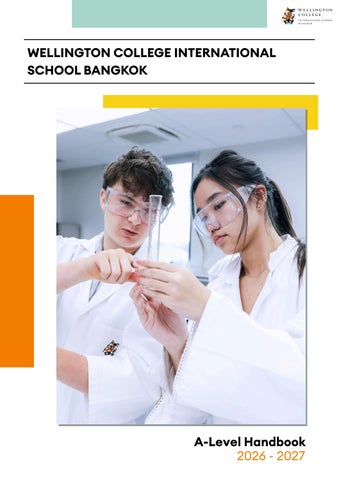

WELLINGTON COLLEGE INTERNATIONAL SCHOOL BANGKOK

KINDNESS COURAGE INTEGRITY
RESPONSIBILITY RESPECT
At Wellington, values shape everything that we do, every day. They are part of every lesson, every conversation, every game. They provide continuity from year to year, and we are proud to walk in the footsteps of Wellingtonians before us.
The pioneering Wellington education, steeped in these values, prepares students to serve, and help shape the world of tomorrow.
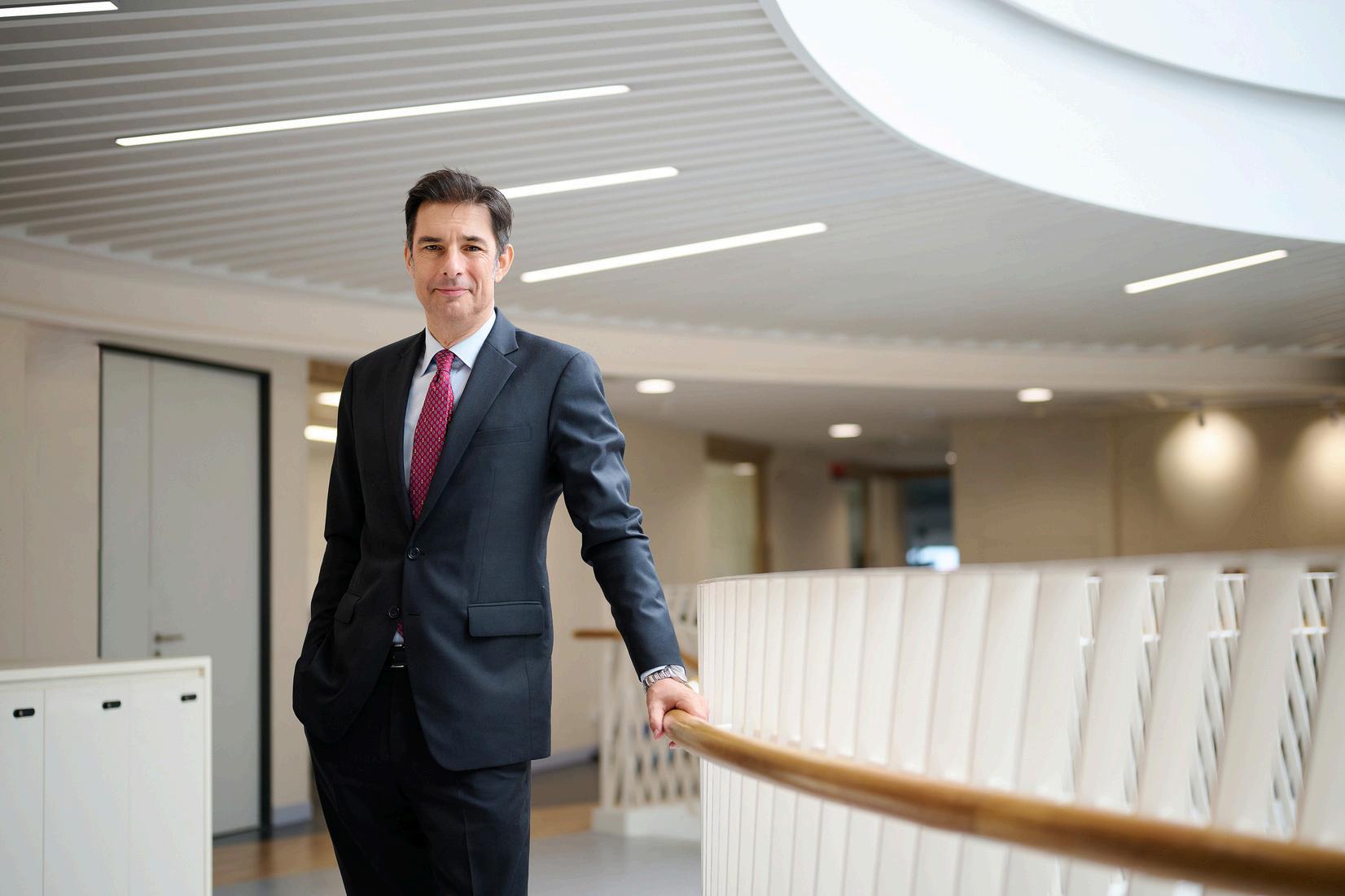
Welcome to Wellington
AWellington Sixth Former is confident, but not arrogant. Motivated and hardworking, but not narrowly-focused. Friendly and positive. Successful. And the Sixth Form is an extraordinary time in your life. No more school uniform (though the dress code is still quite formal) Being a Sixth Former is like being an adult. Teaching a Sixth Former is like teaching an adult. You only study a few subjects - but you study them really deeply.
Once you get to this age, you realise that you actually can change the world. People younger than you have done so. You realise that waiting to be told what to do is for children. You realise that your future is in your own hands. Yes, the school supports you every step of the way. The kind of help you would expect from the world-renowned Wellington College. But this, now, really is your life. Time to live it!
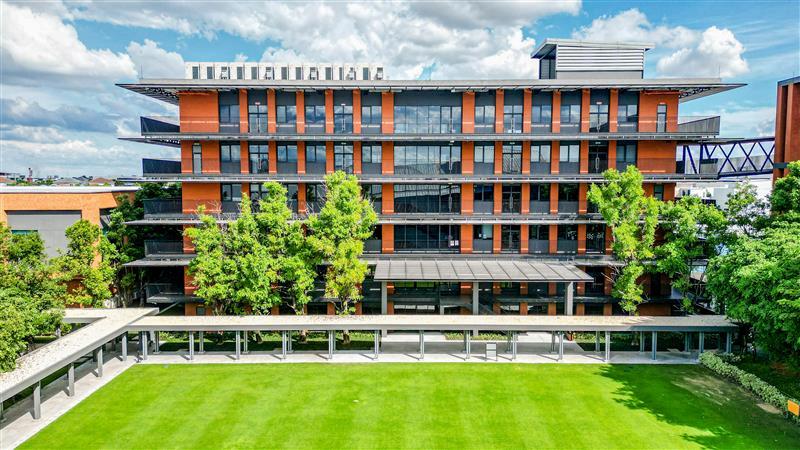
Welcome to Senior School
Th Wellington College Sixth Form offers a varied curriculum and a wealth of opportunities that enable you to explore your strengths, talents and prepare for your future with confidence. Sixth Formers at Wellington will develop a strong academic profile, coupled with independence, self-motivation, communication skills, and diligence, whilst also being intellectually stimulated far beyond theirA Level studies.
Your potential is huge, and we hope to help you to realise it. These final years of formal education will provide you with a solid and powerful springboard to the next stage of your education, and onwards into 21st century society.
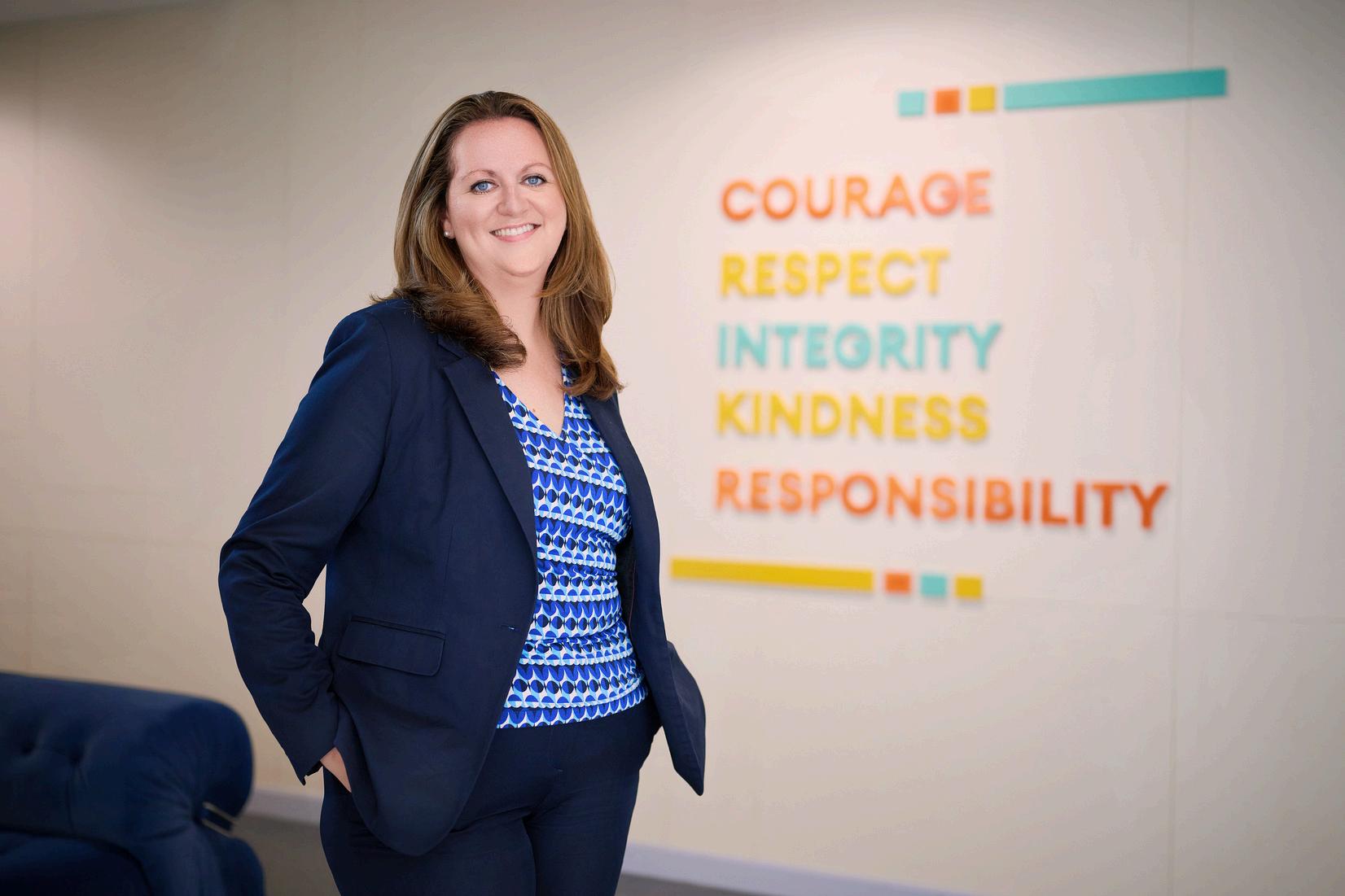
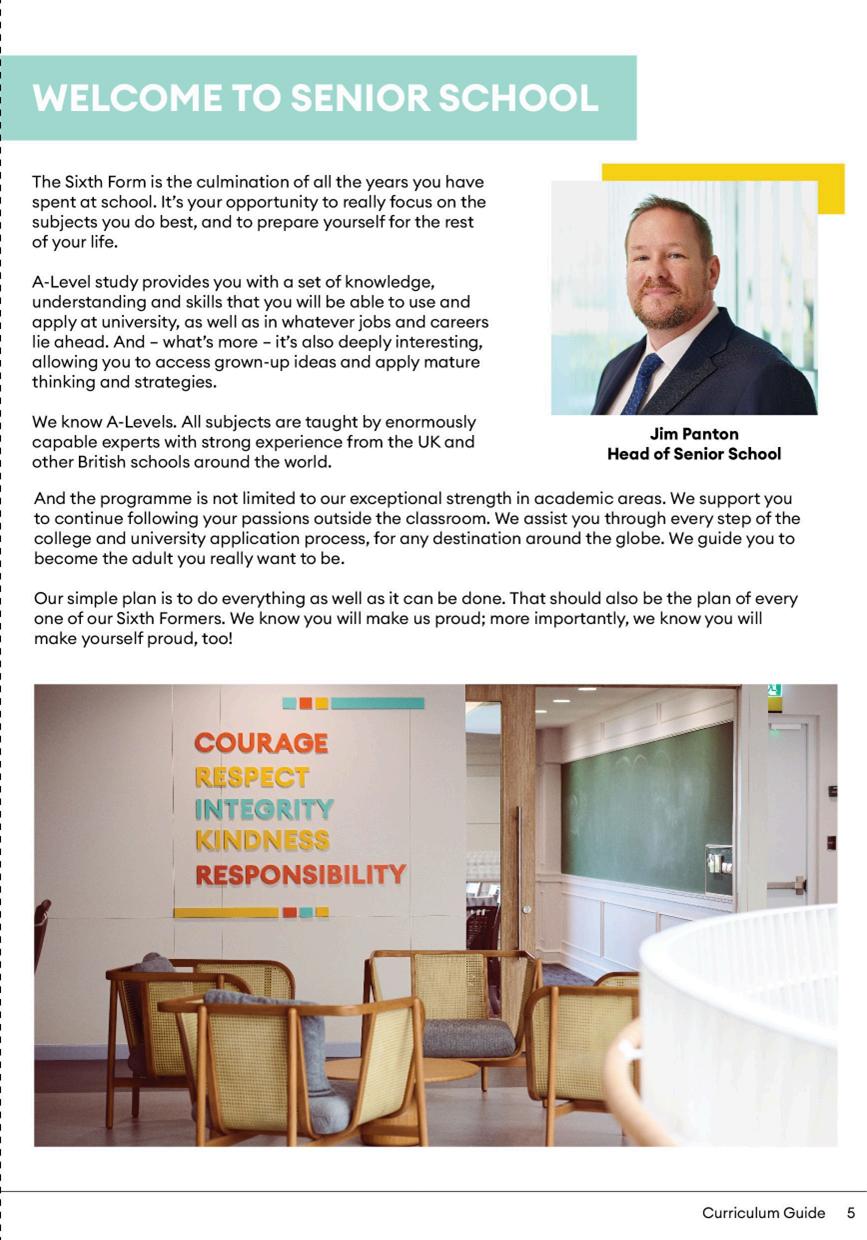
Life in the Sixth Form is a liberating experience. For the first time in your educational career, you will be able to study the subjects you love. You must be prepared for the fact that the move into the Sixth Form is a significant step. You will normally choose three or four subjects in Year 12, and you will find the increasing emphasis on individual study gives you more space to develop your own ideas and sense of personal involvement in your work. The Sixth Form is both challenging and rewarding, and those who benefit most are those who are prepared to work hard and get involved.
With the excellent balance the Sixth Form programme provides, we are confident that you will leave us with the qualifications and skills you require to move on to the next phase of your life. Wellington Sixth Form students excel in a wide range of pursuits. From the more academic opportunities to the more holistic, from the sports field to the Art Room, singing in a band or acting on stage, and from designing and building drones to raising money for charity, whatever they may be, you will be encouraged to develop your passions to the highest level, and maybe even discover a new one on the way, while also achieving top academic results.
We have high expectations of our students, but we also provide a supportive and caring environment, assuring that every student gets the most out of their time at Wellington College. Our simple plan is to do everything as well as it can be done. That should also be the plan of every one of our Sixth Formers. We know you will make us proud; more importantly, we know you will make yourself proud, too!
Choosing A-Level Options
As students' progress through the British Curriculum, they become increasingly independent in both their learning and in the control that they are given to create their own educational pathways. In Year 11 students begin to think about their subject choices for Sixth Form and how these relate to both their personal strengths and interests, and to their future university aspirations. Selection of courses takes place in the Lent Term ofYear 11, and students begin this course at the start ofYear 12. The subjects that students choose will directly affect the university courses that they are eligible to apply for, and a great deal of thought and discussion is put into the selection of these.
The subject choices forYear 11 students are presented at the end of this curriculum guide, and you can find further detailed information on the courses offered at Wellington below. At Wellington we aim to offer a broad and balanced curriculum for all, offering a total of 21 different subjects for Sixth Form study. We speak to each student individually in order to ascertain their strengths, their ambitions and their goals for the future. Through a mixture of guided and independent research, we ensure that that every student pursues the right combination of subjects for them.
For students who do not have a particular degree course in mind, there are eight 'facilitating' subjects listed by Russell Group (UK) universities to help you keep your degree options open until you decide which course to take. These subjects are Biology, Chemistry, English Literature, Geography, History, Maths and Further Maths, Modern and Classical Languages and Physics.
Other factors to consider when choosing A-Levels include:
What you're good at -your career or degree plans may change so make sure you choose subjects that you can do well in
What you enjoy -if you don't enjoy a subject at A-Level but need it for a specific university course, you might want to reconsider your degree preference
A standard number of three A-level is expected for many university applications and so many of our students will continue with at least three subjects into year13. Exams taken in this final year are known as A2 exams. Students will be awarded an A-Level Certificate from the examination boards in the summer after they finish Year 13 and this will consist of both theirAS and A2 exam results.
For subjects that have been taken through to Year 13, the overall result is usually an average of the AS and A2 exam grades.
The British Curriculum
Secondary Education Senior School
Year 7 to Year 11
Key Stage 3 ( Y?-9)
Key Stage 4 ( Yl0-11) IGCSE
Maths
Further
English
Year 12 to Year 13
Key Stage 5 ASLevel/A-Level
History
Geography
Art & Design
Design & Technology
Physical Education
Theatre Studies
Computer Science
Business
Economics
Music
Option and Careers Programme
The Wellington Options and Careers Programme is a 5 year programme launched in Year 9 which aims to support and guide our students as they advance through the Senior School. Through regular, timetabled sessions, workshops, 1-to-1 meetings and in collaboration with the wellbeing and tutoring systems, students are guided towards key moments of choice, allowing them to realise their ambitions for the future.
Supported by our Lead Tutors and the Senior Leadership Team, our programme provides students with a platform from which to work backwards from their goals, reflecting regularly on their strengths and their progress, making the right choices for today. As students grow and develop their ideas, we build up a comprehensive picture of each individual and we work together with families to get them to where they want to go at the end of their Wellington journey.
The Wellington Options and Careers Programme is preceded in Year 7 and 8 by the Pathways Programme and will continue to work closely alongside the Wellbeing and Enrichment Programmes in the Sixth Form. This programme continues to develop the key skills for future success, life skills, choice-making, self-reflection and self-awareness. Students take part in sessions that play a pivotal role in helping them to understand who they are and where they want to go. With regular workshops and meetings, we cover everything from 21st Century life skills to debate and global citizenship.
University Counselling at Wellington
Here we begin to understand the individual aspirations of our students and their goals at the very start of their time in the Senior School By the time they reach Year 9, conversations are beginning to paint a clearer picture of the future that our students want.
With regular activities promoting an increasing level of reflection and thought, students begin to formulate more precise ideas about what matters to them, who they want to be, where they want to be and what kind of life they hope to live. Research into careers and subjects plays an important role as students first select their IGCSE options and then progress towards A-level choices. Upon joining the Sixth Form, conversations become targeted towards further education and university.
Dedicated university and careers sessions are timetabled as part of the Sixth Form Curriculum and students can meet regularly with their tutors and the University Counsellor to discuss their ideas. With a breadth of experience and membership to a nation-wide group of university counsellors as well as to our Wellington Family of schools, we are well equipped with the most up to date information and advice for applying to university across many different countries.
As a member of CIS, we are in direct contact with admissions tutors from the best universities in Thailand and the rest ofAsia, Australia, Europe, the UK, Canada and the US. We host regular visits and take students to University Fairs across the city. As we continue to grow, our network will expand and we look forward to a future when WCIB alumni can offer their own insight and expertise to the younger generations of WCIB students that follow.
Over the course ofYear12 and Year13 students will be guided towards each deadline, advised on application completion, essay writing, interview preparation and exam testing. Students hoping to pursue an Oxbridge or medical/ dental application will be entered into the Oxbridge/ medic preparation programme which will give them specific advice and support as they approach these very unique applications.
What do the two years look like?
Year12
Michaelmas Term
University and career research
University visits and University fairs
Oxbridge/Ivy League/Medic programme
Lent Term
University and career research
Personal Statement/College Essay writing
Oxbridge/Medic interview preparation
SummerTerm
Sitting AS exams
Personal statement/College Essay writing
Year13
Michaelmas Term
Finalizing personal statement/college essays
Completing and submitting UK applications (Early)
Oxbridge/Medic interviews
EarlyAction US application deadline
Lent Term
Regular Decision US application deadline
Canada application deadline
China application deadline
Receiving offers of university places
Completing UK applications (Standard)
SummerTerm
Sitting A level exams
Australia application deadline
Receiving offers of university places

The Wellington Certificate
At Wellington College Bangkok students in the Sixth Form are given the opportunity to pursue a diverse curriculum encompassing both academic and non-academic courses. Through the pursuit of this curriculum students gain a breadth of experience which readies them for further education and progression into the wider world as true global citizens.
Students are awarded the Wellington Certificate upon successful completion of each strand of the Sixth Form curriculum and the receipt of this Certificate will provide an enduring demonstration of each students' commitment, intellect and independence. Students must complete each of the strands of the Wellington Sixth Form Curriculum in order to receive the Certificate at the end ofYear 13.
The Wellington Curriculum:
Academic Study
Global Citizenship and Service
Enrichment
Sport
Theory of knowledge
Extended Project Qualification (or similar)

Students may choose any of the following pathways. Student need and preference are key and can be discussed with the Head of Sixth Form at any time.
All subjects follow international A level syllabuses and are generally examined in the May/June of each year.
Four subjects over two years
Three subjects over two years and one subject over one year
Three subjects over two years and an EPQ over one year
Three subjects over two years
Who does it suit? Who does it suit? Who does it suit? Who does it suit?
Students who have already achieved excellent grades in all/ most IGCSE subjects
Students who have very good IGCSE grades in their chosen A level subjects
Students who have good grades in their chosen A level subjects who prefer to carry out a research project instead of a fourth subjects
Students who have good grades in their chosen A level subjects who need additional time to pursue extracurricular activities, such as sport
Each subject is taught in 11 x 60 minutes sessions over two weeks. Private study time in our common room is also available for each pathway.

Wellbeing
Wellbeing lessons will continue during the Sixth Form, and we aim to equip you with some of the skills and knowledge that will allow you to thrive when you head off to University, or start the next chapter of your life.
The Curriculum will be based on the PSHE Association syllabus and the core topics are Health and Well being, Relationships and Living in the Wider World.
All topics will be adapted and written to fit with our Wellington College values; our setting in Thailand; and you, the students.
As the possibility of moving further from home approaches, there will be a greater focus on independent living and decisions. We will look at managing finances, opportunities and laying foundations for future experiences and opportunities.
Academic Extension
Here at Wellington, we are committed to offering all our students the opportunity to develop skills and knowledge outside and beyond the curriculum. Not only does this allow us to nurture their intellectual curiosity, but also build valuable attributes such as research and critical thinking skills that are highly valued by university admissions officers and employers alike. Some of our many offerings include fortnightly Lunchtime Lectures, delivered by members of our staff body and covering a wide spectrum of topics as well as an array of competitions and enrichment activities, such as Debating and MUN (Model United Nations). In addition, students will be invited to hone their leadership skills by founding and running academic societies based on a diverse range of disciplines, from Literature to Law and Medicine. As well as demonstrating an interest in intellectual concerns, this will enable our students to demonstrate drive and initiative, qualities that are seen as desirable by elite universities.
Aside from A-Levels, the 6th form curriculum at Wellington includes the Extended Project Qualification (EPQ), an externally assessed qualification that develops ambitious students' research and public speaking skills and is equivalent to 50% of a total A-Level.
Highly regarded by many universities, students have the freedom to choose the topic for their EPQ, though we recommend they choose something that is likely to support a university application and therefore related to their future degree choices. The qualification often takes the form of a dissertation or essay (approximately 5000 words) but can take alternative forms such as musical or dramatical composition, report or artefact. Students will be assigned an EPQ mentor, a member of staff from a faculty related to their topic of choice, who will guide and proofread their work over the course of the whole project.
In conjunction with the EPQ, 6th form students at Wellington will benefit from the Theory of Knowledge (TOK) course, a non-examined course based on the International Baccalaureate (1B). A prerequisite for the Wellington Certificate, the TOK promotes intellectual curiosity through critical thinking, providing ample opportunity for intellectual exploration, discussion and debate in a setting free from the pressure of examinations. Although TOK is not a philosophy course, it draws on aspects of epistemology in a practical way, developing critical thinking and analytical skills vital for the preparation of university study.
The Extended Project Qualification
Course Title: International Extend Project Qualification (EPQ)
Examination Board: OxfordAQA
Course code: 9695
Specification link: https://www.oxfordaqa.com/ qualifications/international-epq/ Introduction
The Extended Project Qualification (EPQ) aims to develop and extend from one or more of the student's A Level study areas and/or from an area of personal interest or activity outside their main programme ofA Level study. The scope and theme of the project will be based on a topic chosen by the student and agreed as appropriate by the school. The purpose of the EPQ is to learn how to plan, resource, complete and evaluate a detailed study in a manner that would be recognised by academic and business institutions. The EPQ involves approximately 120 hours of work, including 30 hours of taught skills and 90 hours spent completing a project - a piece of coursework that will be assessed and moderated internally, with the exam board choosing a selection of completed work to be externally assessed.
Assessment Objectives:
AOl: Selection of topic - Identify and select an area of interest, devise aims and objectives and establish a working title using a selection of appropriate sources {10%).
A02: Planning, monitoring and developingProduce a project plan which incorporates a time schedule, undertake a risk assessment and monitor progress against objectives (20%).
A03: Demonstration of research skills - Research, select, organise and scrutinise a range of information and resources, justifying the selection of any secondary and primary sources used (20%).
A04: Analysis and application of researchImplement the project plan, analyse the findings of the research and synthesise these findings into a 5,000 word report with references and bibliography. Include a conclusion and communicate outcomes in both a report and a presentation (40%).
A05: Evaluation of product, process and self- Evaluate the strengths and weaknesses of the project process (including review of own learning arising from it) and product (10%)
Who is this course for?
With the support of an allocated supervisor, the EPQ is designed for students who are self-motivated and capable of managing their own learning. It is ideal for those who are driven to achieve their goals, can work independently, and possess good time management skills. Successful students in this course are proactive, disciplined, and able to balance academic requirements with other commitments, ensuring steady progress throughout their studies. This means that research, structure and composition of the project is down to the student, as is meeting deadlines.
This approach is much closer to what will be expected at university (or even in the workplace) and can be a good way to help students develop the skills they will need when they leave school. However, this style of working doesn't suit everyone, particularly if a student has an already demanding school schedule.
Where can the course lead?
The EPQ is a wonderful opportunity to show your skills in independent research, improving your critical thinking skills as well as presentation skills. It's also a great way to build your confidence in public speaking and learn how to answer questions about your subject. These are all great skills you can add to your university application.
Timeline
The following provides an example of the timeline that students follow; these dates are subject to change
Year 11 summervacation project ideas, thinking about titles, themes
Year 12 Lent Term Research time
Year 12 SummerTerm AS exams followed by completion of research
Year 12 summervacation project write ups
Year 13 Michaelmas Term Draft submissions and presentations
Year 13 End of Michaelmas Term EPQ submission deadline
Theory of Knowledge
The purpose of any robust Sixth Form curriculum is to broaden the minds of the young adults who we teach. Through a variety of courses, both academic and otherwise, Wellington students gain access to the wider world, exercising their curiosity, their understanding and developing the skills needed for a successful transition into adult life and further study. At Wellington, Year 12 and 13 students will pursue a special course called Theory of Knowledge (TOK). Completion of this course (which is non-examined) is a prerequisite for the Wellington Certificate and it is therefore compulsory for all students.
A core component of many Sixth Form curricula, including the IB Diploma, TOK promotes intellectual curiosity through critical thinking and reflection about what we know. It works in collaboration with other components of the Sixth Form such as the Extended Project Qualification (EPQ) to bring students together for intellectual exploration. Students have the opportunity to develop their curiosity in a setting free from the pressure of examinations under the unique aim of instilling a love of discussion and debate.
Although TOK is not a philosophy course, it draws on aspects of epistemology in a practical way, developing critical thinking and analytical skills vital for the preparation of university study.
In summary, the Wellington TOK programme will enable our students to:
Explore different ways of knowing and reflect critically on approaches and methods of gaining knowledge
Make connections between different subjects areas and explore the way knowledge is produced across disciplines
Become open-minded 'thinkers' and 'inquirers' around beliefs and opinions
Develop academic skills through formal essay writing and internally assessed exhibition
Consider the role and nature of knowledge in their own culture, in the cultures of others and in the wider world
Be aware of themselves as thinkers, encouraging them to become more acquainted with the complexity of knowledge
Recognize the need to act responsibly in an increasingly interconnected but uncertain world
Sixth Form Sport
Embark on a dynamic sixth form journey, where sports are intricately woven into your school life. Games Afternoon will continue to be seamlessly integrated into your timetable, offering a blend of competitive and non-competitive sports, providing a canvas of opportunities for all. It's more than a session; it's a portal to an active lifestyle, a deliberate investment in physical well-being, teamwork, and personal growth for Years 12 and 13.
Gear up for an enriched football and basketball experience, as our programmes expand to offer more gameplay opportunities and a heightened focus on skill development. Whether you're a seasoned player or a beginner, these initiatives cater to all levels, emphasising growth, teamwork, and a commitment to improvement on the field .
Join us on a journey where every match and practice contributes to a future brimming with exciting possibilities. With the school's growth, our sport offerings will diversify, unveiling a spectrum of activities to kindle your passion. Whether it's exploring new team sports, delving into individual pursuits, or discovering unique fitness regimes, the future of sport at Wellington promises opportunities tailored to every interest.
Sixth form sport is your rendezvous with vitality-a conscious choice to break from routine and champion health and activity. As the echoes of Games Afternoon reverberate, envision a narrative unfolding beyond timetables, shaping yourYear 12 and 13 experience in unexpected and meaningful ways. Step into the vibrant world of Sixth Form sport-a chapter waiting to be explored, defined, and celebrated.
Enrichment
The Sixth Form enrichment programme will give our students the opportunity to determine their own path by choosing from a wide range of activities and societies that are meaningful to them. We seek to inspire every pupil and help them to grow as individuals by choosing the interests they wish to pursue outside of the classroom.
Students can challenge themselves intellectually and develop their academic profile by playing a leading role in societies including but not limited to: the Mathematics society; the Debating society; the Robotics club or the Model United Nations society, where there are opportunities to compete in globally recognised competitions.
Alternatively, students may choose to engage in an array of more creative pursuits. Our enrichment programme at present offers pupils the chance to participate in whole school theatre productions, modern and classical music performances as well as clubs focused on the further development of their artistic skills.
Our leading actors, artists and musicians will have the opportunity to broaden and deepen their experiences in these areas.
Enrichment also offers opportunities for our young athletes to further develop their skills. Our swimming and golf programmes have already achieved outstanding success both regionally and globally thanks to the support and guidance offered by our expert coaches. Enrichment sessions present opportunities for our young athletes to access 1-1 or small group coaching sessions in their preferred sport and engage in guided strength and conditioning sessions.
We recognise that each individual student will want to get something different from our programme. For those students who are aiming to pursue a career in music or professional sport it will be an opportunity to engage in focused training, whilst for others it will be an opportunity to relax and unwind by doing something fun and learning something new outside of the classroom.
Global Citizenship
We believe our Sixth Form community is a place where education transcends classroom walls and embraces a holistic approach to personal growth. We are excited to introduce the Global Citizenship Program-an initiative that goes beyond academic excellence, shaping compassionate and responsible individuals.
Within this programme, students will embark on a transformative journey of service and voluntary work, both within our campus and in the broader community. Collaborating not only with ourJunior School but also various departments, our Sixth Formers will be deeply involved in teaching activities, fostering a sense of unity across different age groups and academic disciplines.
Students will collaborate with various charities, offering them diverse service opportunities to extend their impact in the wider community. The program additionally provides students with various chances to cultivate their leadership skills. They will play a pivotal role in decision-making, event organization, and the coordination of various projects. The service and progress of all students will be systematically tracked and recorded, serving as proof and evidence for their Wellington Certificate.
Whether engaged in volunteering, participating in community projects, or organising events, our students will actively contribute to the creation of a better society.
Duke of Edinburgh Award
For four years now, Wellington College Bangkok has proudly offered the Duke of Edinburgh's International Award programme. In 2021, we witnessed a fantastic response as all of ourYear 10 students enthusiastically embarked on the Bronze level of the programme. The following year, 34 dedicated individuals successfully achieved the Bronze Award, and in the current year, we are delighted to see 28 students moving on to pursue the SilverAward, demonstrating their unwavering commitment to the programme We have high hopes that these Silver recipients will progress to the Gold level in Year 12 and maintain their dedication throughout the Sixth Form.
At each level of the Duke of Edinburgh's International Award, our students are tasked with a variety of activities, including skill improvement, sports engagement, community service, and adventurous journeys.
These experiences are designed to equip young people for life, irrespective of their backgrounds, cultures, physical abilities, skills, and interests. The programme challenges young individuals to push their personal boundaries and duly acknowledges their accomplishments and dedication.
Through these diverse components, students are not only encouraged to acquire new skills but also to make substantial contributions to their communities over an extended period while fostering positive lifestyle habits. The wealth of opportunities provided during our enrichment activities and after-school programs seamlessly complements the Duke of Edinburgh's International Award, and we wholeheartedly encourage all our students to participate, as it forms an integral part of our Leadership and Service Curriculum.
Art
Course Title:
Level 3
Advanced GCE in Art and Design (Fine Art)
Examination Board: Pearson Edexcel
Course Code: Fine Art (9FA0)
Course Entry Guidance:
While GCSE Art and Design is not a prerequisite, it is highly desirable. We recommend that students achieve a minimum grade B/6 or above in GCSE Art and Design to be well prepared for the A Level Art & Design course. Students should be able to demonstrate strong observational drawing skills, creative experimentation, and independent project work that reflects a standard equivalent to grade B/6 or higher.
As A Level Art & Design is a highly creative and investigative subject, students are expected to demonstrate a genuine interest in art, design, and visual culture, alongside a commitment to engage critically, reflectively, and imaginatively throughout the course. They should also be able to work independently, manage their time effectively, and sustain long-term creative investigations with consistency and discipline.
Specification Link (URL):
Pearson Edexcel A Level Art and Design
Assessment Overview:
The Advanced GCE in Art and Design is a 2 year course, which consists of two components, both internally assessed and externally moderated.
Component 1: Personal Investigation
60% ofthe total qualification
Completed during Year 12 and half ofYear 13
Incorporates three major elements:
-Supporting studies and practical work (a portfolio of development work and outcomes based on themes and ideas developed from personal starting points)
-Personal study (a minimum of 1000 words essay with integrated images). The personal study comprises 12% of the final grade.
Component 2: Externally Set Assignment
40% ofthe total qualification
The externally set assessment is released on the 1 of February st
Incorporates two major elements:
-Preparatory studies (a portfolio of practical and written development work based on the Externally Set Assignment)
-15-hour practical exam
Course Content:
Students will take the Fine Art endorsement and can explore some or all of the following disciplines: drawing, painting, printmaking, sculpture, textiles, lens-based media.
Throughout the course students will:
Develop ideas through sustained and focused investigations informed by contextual and other sources, demonstrating analytical and critical understanding
Explore and select appropriate resources, media, materials, techniques and processes, reviewing and refining ideas as work develops Record ideas, observations and insights relevant to intentions, reflecting critically on work and progress
Present a personal and meaningful response that realises intentions and, where appropriate, makes connections between visual and other elements
Who is this course for?
This course is recommended for any student who enjoyed IGCSE Art and Design and has ambitions to study in an Art related field in the future. It appeals to learners who wish to explore practical work through a range of two- and/or threedimensional processes, including new media and technologies. It suits those who enjoy creativity, coming up with ideas, experimenting and problem solving. The course offers great flexibility for students to pursue areas of their interest and focus on their strengths. A personal and independent perspective is encouraged to allow students to really engage with their work by making it personal
Art
Where can this course lead?
An Arts education doesn’t prepare you for one specific job it gives you the foundation for hundreds of possible creative careers. In a world that increasingly communicates visually, developing strong creative thinking and visual literacy skills is essential. Many industries value problem-solvers who can innovate, experiment, and generate original ideas.
Here are some of the main areas you can progress into:
Spatial design: architect, urban designer, interior designer, film/theatre set designer
Fashion & textiles: fashion designer, stylist, costume designer, fibre artist, fashion consultant
Graphic design: advertising director, branding designer, book or packaging designer
3D product design: industrial designer, toy/product designer, prop designer, jeweller
Digital / multimedia: animator, concept artist, digital illustrator, 3D modeller, UX or web designer, film producer, VFX artist, video game designer, multimedia programmer
Photography: advertising photographer, fashion photographer, food or underwater photographer, photojournalist, director of photography
Fine Art: painter, sculptor, illustrator, storyboard artist, cartoonist, special effects makeup artist Organisation & management: conservator, museum curator, gallery owner, art consultant, art therapist, lecturer, creative director
Writing & research: art historian, art critic, arts administrator, graphic novel author
With the ever-increasing range of interdisciplinary university courses, studying Art can also lead to further study in fields such as automotive engineering, human–computer interaction, digital marketing, biomedical visualisation, environmental design, arts economics, fine art, and business. Many degrees now combine creativity with science, technology, and entrepreneurship, making Art an excellent foundation for flexible future pathways.
Some examples of university degree courses that typically require or strongly benefit from an A Level in Art and Design include Fine Art, Textile Design, Fashion Design, Graphic Design and Advertising, Photography, Multimedia Arts, Architecture, Product Design, Illustration, and Art History.
https://www.careerpilot.org.uk/job-sectors/subjectsuse this search tool to find out what degrees and jobs relate to the study ofArt.
Further Reading:
Art pathways: https://www.studentartguide.com/articles/artcareers-list, https://www.ucas.com/explore/subjects/creativearts, https://www.careerpilot.org.uk/jobsectors/subject/art, https://www.unifrog.org/knowhow/what-you-can-do-with-a-degree-in-history-ofart
Netflix series: Abstract: The Art of Design, The world’s most extraordinary homes
Podcasts: https://www.artcuriouspodcast.com/artcuriouspodc ast, http://www.thelonelypalette.com/
Magazines: www.illustoria.com, www.uppercasemagazine.com, www.frieze.com, www.whitehotmagazine.com, www.artspace.com, www.artforum.com
Other: What NFTs mean for the future ofArt creation, curation and commerce, This 12-year-old coder is set to earn over $400,000 after about 2 months selling NFTs

Course Title: AS and A-Level Biology
Examination Board: Pearson Edexcel
Course Code: XBlll
Course Entry Guidance:
We recommend that students should have achieved a minimum grade B/6 or above in IGCSE Biology and B/6 in IGCSE Mathematics to studyA Level Biology. IGCSE Chemistry is preferable but is not a prerequisite.
Specification Link URL: A level Biology Specification
Assessment Overview:
International AS level consists of three written papers that are externally assessed in June ofYear 12. The International A level (A2) consists of three further written papers that are externally assessed in June of Year 13.
ForAS Level:
Unit 1 – written 1 hour 30 minutes – 40% of total AS Unit 2 – written 1 hour 30 minutes – 40% of total AS Unit 3 – practical skills 1 hour 20 minutes – 20% of total AS
ForA Level:
Unit 4 – written 1 hour 30 minutes – 40% of total A2
Unit 5 – written 1 hour 30 minutes – 40% of total A2
Unit 6 – practical skills 1 hour 20 minutes – 20% of total A2
Course Content:
AS Content:
Students will cover molecular biology, diet, transport and health, exploring the biochemistry of life and making links to human health and the cardiovascular system. In the second unit we look at cells, development, biodiversity and conservation. Students will cover core practicals and practice following the scientific method.
A Level Content:
Students will cover energy, the environment, microbiology and immunity. In the second unit we will look at respiration and its role in muscle contraction and the heartbeat as well as coordination and the nervous system. Students will cover core practicals and practice following the scientific method.
Who is this course for?
This course is recommended for any student who enjoyed IGCSE Biology and has ambitions to study in a biology-related field in the future. If you are interested in the science of life, the environment, what makes our bodies work, evolution, disease and the exciting future of genetics then this course would be a good choice for you. Students interested in problem-solving and investigative work, particularly in a laboratory setting, would enjoy the practical elements of this course.
Biology goes well with other sciences such as chemistry, maths, psychology and geography and is considered by many universities as a 'facilitating subject' which can lead on to many future options.
Where can this course lead?
You'll need biology for most degrees in medicine, biology, biomedical sciences, dentistry, physiotherapy, and veterinary medicine. Biology is usually required or recommended for courses in biochemistry, environmental science, nursing, occupational therapy, optometry, pharmacy, sports science, physiology and speech therapy.
https://www.careerpilot.org.uk/jobsectors/subject/biology - use this search tool to find out what degrees and jobs relate to the study of biology.
Further reading: https://wwwthenakedscientists com/ - Articles about biology, genetics, ecology and evolution, insects, mammals, marine science, plants and zoology.

Business
Course Title:
Cambridge International AS & A Level Business
Examination Board: Cambridge
Course Code: 9482
Course Entry Guidance:
To studyA level Business, we recommend a grade 5/C or above IGCSE English Language and Mathematics.
Specification Link URL:
https://qualifications.pearson.com/en/qualifications /edexcel-international-advanced-levels/business2018.html
Assessment Overview: Assessment forAS and A Level Business is by external examination only.
Candidates sit two papers at AS Level and a further two papers at A Level.
ForAS Level:
Paper 1 - Marketing and people (120 minutes)
Paper 2 - Managing business activities (120 minutes)
ForA Level:
Paper 3 - Business decisions and strategy (120 minutes)
Paper 4 - Global business (120 minutes)
Course Content:
AS Content
Unit 1: Marketing and people
Meeting customer needs
The market
Marketing mix and strategy
Managing people
Entrepreneurs and leaders
Unit 2: Managing business activities
Planning a business and raising finance
Financial planning
Managing finance
Resource management
External influences
A-Level Content
Unit 3: Business decisions and strategy
Business objectives and strategy
Business growth
Decision-making techniques
Influences on business decisions
Assessing competitiveness
Managing change
Unit 4: Global business
Globalisation
Global markets and business expansion
Global marketing
Global industries and companies (multinational corporations)
Who is this course for?
A student who enjoys studying A-level Business is likely to have a keen interest in the world of commerce and entrepreneurship. They should be curious about how businesses operate, make strategic decisions, and navigate the dynamic marketplace. Strong analytical skills are essential, as Business A-level involves data analysis and problemsolving. An ability to communicate effectively and work collaboratively is also valuable, as business often involves teamwork and presentations. Additionally, a forward-thinking student with a passion for innovation and a desire to understand the broader economic and global factors influencing business success would thrive in this subject.
Where can this course lead?
An A-level in Business opens up diverse opportunities in education and the professional world. Many students choose to pursue higher education, enrolling in a bachelor program in Business, Management, Finance, Marketing, or related fields, which can lead to more specialized careers and leadership roles. They may also consider entrepreneurship, using their business knowledge to start and manage their ventures. The critical thinking and analytical skills developed during A-level Business studies are highly transferable, making graduates valuable assets in multiple sectors, including finance, consulting, and management. Overall, A-level Business provides a strong foundation for both further education and a broad range of career paths in the business world.
Business
https://www.theuniguide.co.uk/a-level-explorer - this allows students to explore the degree options available to them with different combinations ofA level subjects https://www.careerpilot.org.uk/job-sectors/subjects - this allows students to select your subject and find out where this might lead for a future career
Further Reading:
https://www.topuniversities.com/courses/business-management-studies/why-study-business https://ca.indeed.com/career-advice/career-development/why-study-business
Chemistry
Course Title: AS and A-Level Chemistry
Examination Board: Pearson Edexcel
Course Code: XCHll
Course Entry Guidance:
We recommend that students should have achieved a minimum grade B/6 or above in IGCSE Chemistry and B/6 in IGCSE Mathematics to studyA Level Chemistry.
Specification Link URL: International-A-Level-Chemistry-Spec.pdf (pearson.com)
Assessment Overview:
Assessment consists of three written papers at International AS level that are externally assessed in June ofYear 12. The International A level (A2) consists of three further written papers that are externally assessed in June ofYear 13.
ForAS Level:
Unit 1 - written 1 hour 30 minutes - 40% of total AS
Unit 2 - written 1 hour 30 minutes - 40% of total AS
Unit 3 - practical skills 1 hour 20 minutes - 20% of total AS
ForA-Level:
Unit 4 - written 1 hour 30 minutes - 40% of total IA2
Unit 5 - written 1 hour 30 minutes - 40% of total IA2
Unit 6 - practical skills 1 hour 20 minutes - 20% of total IA2
Course Content:
Students will cover in Unit 1: Formulae, Equations and Amount of Substance. Atomic Structure and the Periodic Table, Bonding and Structure, Introductory Organic Chemistry, Alkanes and Alkenes. Unit 2 Energetics, Group Chemistry, Halogenoalkanes and Alcohols and finally in Unit 3:
This unit will be based on Core Practical Knowledge, which will assess students' knowledge and understanding of experimental techniques to familiar and unfamiliar situations.
Who is this course for?
This course is recommended for any student who enjoyed IGCSE Chemistry and has ambitions to study in a chemistry-related field in the future. Students will study atomic structure, and this gives some insight into the methods that scientists use to study the structure of atoms. This leads to the introduction of the mass spectrometer and its importance in sensitive methods of analysis in areas such as space research, medical research, and diagnosis, in detecting drugs in sport and in environmental monitoring. Chemistry goes well with other sciences such as physics, maths, psychology, and geography and is considered by many universities as a 'facilitating subject' which can lead on to many future options.
Where can this course lead?
You'll need chemistry for most degrees in medicine, chemistry, biochemistry, dentistry and veterinary medicine. Chemistry is usually required or recommended for courses in environmental science, nursing, occupational therapy, research chemist, pharmacy, sports science and psychology. It is also one of the most popular degrees for investment banking and business because of the breadth of skills that you cover!
Careerpilot : Jobs by subject- use this search tool to find out what degrees and jobs relate to the study of chemistry.
Further reading:
Useful chemistry websites such as The Royal Society of Chemistry (rsc.org) and www.physicsandmathstutor.com contain examfacing chemistry resources
Articles about chemistry, new developments, climate change, the science of space New Scientist | Science news, articles, and features.
Computer Science
Course Title: AS and A-Level Computer Science
Examination Board: Cambridge
Course Code: 9618
Course Entry Guidance:
Typically, we recommend students to achieve a minimum grade B/6 or above in IGCSE Computer Science to study the A Level Computer Science course
Specification Link URL: https://www.cambridgeinternational.org/Images/636 089-2024-2025-syllabus.pdf
Assessment Overview:
Assessment consists of two written papers at International AS level that are externally assessed in June ofYear 12. The International A level (A2) consists of two further written papers that are externally assessed in June ofYear 13.
ForAS Level:
Paper 1 - Theory Fundamentals - written 1 hour 30 minutes - 50% of the AS Level - 25% of the A Level
Paper 2 - Fundamental Problem-solving and Programming Skills - written 2 hours - 50% of the AS Level - 25% of the A Level
ForA Level:
Paper 3 - Advanced Theory - written 1 hour 30 minutes - 25% of the A Level
Paper 4 - Practical - written 2 hour 30 minutes - 25% of the A Level
Course Content:
AS Content:
For Paper 1, students will cover the following topics: Information representation, Communication, Hardware, Processor Fundamentals, System Software, Security, privacy and data integrity, Ethics and Ownership and Databases.
For Paper 2, students will cover the following topics: Algorithm Design and Problem-solving, Data Types and Structures, Programming, and Software Development.
A-Level Content:
For Paper 3, students will cover the following topics: Data Representation, Communication and internet technologies, Hardware and Virtual Machines, System Software, Security, Artificial Intelligence (AI).
For Paper 4, students will cover the following topics: Computational thinking Problem-solving and Further Programming.
Who is this course for?
This course is recommended for any student who enjoyed IGCSE Computer Science and has ambitions to study in a Computer Science-related field in the future. It is a practical and challenging course designed for students who enjoy problem-solving, logic and ‘hands-on’ computer programming.
Computer Science combines particularly well with STM subjects (Science, Technology, Engineering and Mathematics).
Where can this course lead?
This course will prepare you thoroughly for Computer Science courses at university or if you want to study Computer Science-related courses such as computer forensics, artificial intelligence, robotics, app development and games programming or related courses such as engineering.
It gives you knowledge and skills which are relevant to hundreds of different types of cutting-edge jobs across many industries, like cyber security, working for high-tech companies and artificial intelligence.
https://www.careerpilot.org.uk/jobsectors/subject/computing - use this search tool to find out what degrees and jobs relate to the study of Computer Science.
Computer Science
Further Reading:
https://www.w3schools.com/ - Offers easy-to-understand examples and in-depth tutorials on a range of programming languages.
https://www.codecademy.com/catalog - Offers support for students interested in learning to code on a professional level.
Design &Technology
Course Title: AS and A-Level Design & Technology
Examination Board: Cambridge International
Course Code: 9705
Course Entry Guidance:
Typically, we recommend students to achieve a minimum grade B/6 or above in IGCSE Design Technology to study the A Level Design Technology course.
Specification Link URL: https://www.cambridgeinternational.org/ programmes-and-qualifications/cambridge -international-as-and-a-level-design-and -tech nology-9705/
Assessment Overview:
Cambridge International A Level candidates have two choices. Candidates who want to take the whole of the Cambridge International A Level qualification at the end of a course of study take all four components together. Candidates who want to take the Cambridge International A Level qualification in two stages take the Cambridge International AS Level first. If they pass Cambridge International AS level, they then only need to take Components 3 and 4 in order to complete the Cambridge International A Level.
ForAS Level:
Component 1– written 3 hour– 50% of total AS
Component 2 – coursework project 40-50hours –
50% of total AS
ForA Level:
Component 3– written 3 hour– 50% of total A Level
Component 4– coursework project 40-50hours –
50% of total A Level
Course Content:
The course covers essential design skills, including problem recognition and the creation of precise design briefs.
Students develop expertise in research, generating design solutions, and conducting critical appraisals. They also explore practical modelling techniques. In the development phase, students formulate detailed design proposals and identify resource needs. Implementation involves resource organisation and safe tool usage, while testing and evaluation assess product success and suggest improvements.
The curriculum emphasises the broader impact of design on society, including resource conservation, obsolescence, and recycling. Aesthetics are explored through elements like line, colour, and shape, and their effects on design. Ergonomics focuses on userfriendly product design. Energy sources and control principles, including computer-aided design, are studied.
Materials knowledge is vital, including properties and material selection. Materials processing techniques, product analysis, and health and safety procedures are covered.
In the Product Design focus, students delve into design concepts, economics, and mass production principles. They study materials like metals, wood, and plastics, along with tool maintenance. The curriculum also explores various processing techniques for materials, including cutting, molding, joining, and finishing methods.
Who is this course for?
This course is tailored for students with a strong enthusiasm for engineering, product design, and manufacturing. It provides them with the chance to explore the intricacies of engineering principles and design concepts at a deeper level. Those possessing a creative inclination and a enthusiasm for crafting products are naturally inclined toward this program, which serves as a stage for cultivating and refining their design abilities. Individuals who are captivated by technology, innovation, and the evolution of products frequently discover a strong attraction to this course. It delves into the nexus of technology and design, making it an appealing choice for students who relish challenges, critical thinking, and problemsolving.
Where can this course lead?
Design &Technology
Depending on your specific interests, a range of degree programs is available. If you have a passion for creating functional and aesthetically pleasing products, Industrial Design might be the perfect choice. Mechanical Engineering programs emphasise the design and analysis of mechanical systems and devices, offering opportunities in manufacturing and robotics. Those intrigued by electronics and electrical systems can explore Electrical and Electronic Engineering, which can lead to careers in electronics design, power systems, and telecommunications. Aerospace Engineering is ideal for individuals who have a keen interest in aviation and space technology, focusing on the design and development of aircraft and spacecraft. Alternatively, for those fascinated by the built environment, Architectural Design programs prepare students for careers in architecture and construction.
As technology continues to grow and evolve, so does the need for people with strong backgrounds in design.
https://www.careerpilot.org.uk/jobsectors/subject/product-design - use this search tool to find out what degrees and jobs relate to the study of design and technology.
Further Reading:
There are an abundance of online resources that can be found.
https://www.stem.org.uk/design-technology
https://www.stemcrew.org/resources/? subject=design-technology – Contextual challenges, physics, mechanism, materials, life cycle
Course Title:
Drama &Theatre
Pearson Edexcel A Level Drama & Theatre
Examination Board: Pearson Edexcel
Course Code: 9DR0
Course Entry Guidance:
Students do not need GCSE Drama. We welcome all creative, curious learners. A minimum C/5 in English is recommended for written analysis. The course builds confidence, public speaking, teamwork, and event management skills. Students beginning this course are not expected to have studied Drama previously.
Specification Link (URL):
Pearson Edexcel Level 3 Advanced GCE in Drama and Theatre
Assessment Overview:
Component 1 (40% ofA Level)
Practical Drama (10-30 minute devised piece, 2,500-3000 word portfolio reflection).
Component 2 (20% ofA Level)
Practical Drama (20-45 minute scripted piece, 150-250 word artistic intention summary, 2-3 minute monologue performance).
Component 3 (40% ofA Level)
Written Exam (2 hrs 30 minutes).
Section A – Live Theatre Evaluation (20 marks)
Section B: Page to Stage – Realising a Performance Text (36 marks)
Section C: Interpreting a Performance Text (24 marks)
A Level Content
Component 1: Devising
The focus of this is to practically develop a devised performance, informed by two stimuli: one key extract from a performance text, and the methodology of one influential practitioner. You will complete a 2,500-3,000 word written portfolio, which documents, analyses and evaluates your rehearsal process.
Component 2: Text in Performance
This is also a practical performance, accompanied by a 150-250 word summary of your artistic intentions. Rather than devising a piece of theatre, you work on two extracts of a script from an existing play and present:
A group performance.
A monologue or duologue.
Component 3: Theatre Makers in Practice
This is a 2 hour 30 written exam taken at the end of Year 13. It is divided into three parts.
Section A: Live Theatre Evaluation (about a live theatre performance you watch during the course).
Section B: Page to Stage – Realising Performance from Text (your realisation of how you would perform, design and direct an extract from a set-text).
Section C: Interpreting a Performance Text (your realisation of how you would perform, design and direct an extract from a set-text, with specific focus on how your process may be informed by the methodology of a practitioner).
Who is this course for?
This course is for any student who is curious, creative and eager to grow in confidence, regardless of whether they have ever studied Drama before. No previous Drama training is required. The only entry recommendation is a C grade in English, ensuring students cab access the written analysis and reflection components of the course.
A Level Drama & Theatre Studies welcomes performers, designers, directors, writers, organisers, problem-solvers and quiet thinkers who are ready to challenge themselves in new and exciting ways. It is ideal for students who enjoy collaboration, presenting ideas, analysing stories, exploring characters or understanding how theatre and live events are created.
The course also appeals to those who want to strengthen transferable skills such as public speaking, leadership, teamwork, resilience and creative decision making that will support all future careers. Drama is an inclusive subject, welcoming students of all personalities, and encourages every learner to find their voice, build confidence and thrive.
Drama &Theatre
Where can this course lead?
An A-level in Pearson Edexcel Drama & Theatre opens doors to an exciting range of careers both within and beyond the theatre industry. Students develop exceptional communication, teamwork, leadership and creative problem-solving skills that are highly valued in fields such as business, law, marketing, education, event management and public speaking.
For those passionate about the arts, the course provides a strong foundation for performance, directing, design, technical theatre, arts management and media. Drama nurtures confidence, adaptability, and professionalism. These qualities are essential for any modern business. Whether students dream of working in the creative industries or want to strengthen skills for future careers, Drama offers powerful, transferable advantages.
Further Reading:
1. Career Path Information: For insights into potential career paths in the world of performance arts and theatre (20 Career Paths forTheatre Majors/A Comprehensive Guide To The Best Careers In Drama | Amber)
2. Explore Degree Options: To discover the various degree options available to Drama students and where your combination ofA level subjects can lead you, visit The 25 Best Drama Schools in the World, 2025 Ranked. This resource will help you make informed decisions about your educational path.
Economics
Course Title: AS and A-Level Economics
Examination Board: Edexcel
Course Code: AS (XECll), A (YECll)
Course Entry Guidance:
To studyA level Economics, we recommend a grade B/6 or above in IGCSE English Language and Mathematics.
Specification Link URL: https://qualifications.pearson.com/en/ qualifications/edexcel-international -advanced-levels/economics-2018.html
Assessment Overview:
Assessment forAS and A-Level Economics is by external examination only. Candidates sit two papers at AS Level and a further two papers at A-Level.
ForAS Level:
Paper 1 - Markets in action (105 minutes)
Paper 2 - Macroeconomic performance and policy (105 minutes)
ForA-Level:
Paper 3 - Business behaviour (120 minutes)
Paper 4 - Developments in the global economy (120 minutes)
Course Content:
AS Content
Unit 1: Markets in action
Introductory concepts
Consumer behaviour and demand
Supply
Price determination
Market failure
Government intervention in markets
Unit 2: Macroeconomic performance and policy
Measures of economic performance
Aggregate demand (AD)
Aggregate supply (AS)
National income
Economic growth
Macroeconomic objectives and policies
A-Level Content
Unit 3: Business behaviour
Types and sizes of businesses
Revenue, costs and profits
Market structures and contestability
Labour markets
Government intervention
Unit 4: Developments in the global economy
Causes and effects of globalisation
Trade and the global economy
Balance of payments, exchange rates and international competitiveness
Poverty and inequality
The role of the state in the macroeconomy
Growth and development in developing, emerging and developed economies
Who is this course for?
A-level Economics can be an engaging subject for students with various characteristics and interests. Those who possess strong analytical skills, have a keen interest in current events and their economic implications, excel in Maths and possess good communication skills are likely to find the subject enjoyable. Additionally, students who are curious about human behaviour in economic contexts, have career aspirations in finance, business, politics, or economics, and are interested in global issues and international relations can derive significant value from studying A-level Economics. An open-minded approach, a willingness to consider various viewpoints, and persistence in problem-solving and learning are also beneficial traits for success in this subject.
Economics
Where can this course lead?
Earning an A-level in Economics offers a range of educational and career paths. It serves as a foundation for higher education, including undergraduate programs in Economics, Finance, Business, and related fields. This educational background can lead to various career opportunities, such as roles in finance, government, business, and public policy. Graduates can work in the finance sector, contributing to areas like investment banking, financial analysis, or asset management. Government agencies and think tanks often seek individuals with economics knowledge to develop economic policies and conduct research. Alevel Economics can also pave the way to teaching, consulting, nonprofit work, entrepreneurship and positions in international organisations.
https://www.theuniguide.co.uk/a-level-explorer - this allows students to explore the degree options available to them with different combinations ofA level subjects https://www.careerpilot.org.uk/job-sectors/subjects - this allows students to select your subject and find out where this might lead for a future career
Further Reading: https://uk.indeed.com/career-advice/career-development/why-study-economics-a-level https://www.tutor2u.net/economics/reference/why-study-a-level-economics
English Literature
Course Title: AS and A-Level English Literature
Examination Board: Pearson Edexcel
Course Code: XET0l, YET0l
Course Entry Guidance:
Typically, we will recommend students to achieve a minimum grade B/6 or above in IGCSE English Literature to study the A Level English Literature course. A strong foundation in reading and analytical writing is essential. Prior experience with extended essay writing and familiarity with literary terminology is preferable but not a prerequisite.
Specification Link URL:
Pearson Edexcel IALAS and A Level English Literature
Assessment Overview: Assessment forAS and A Level English Literature is externally assessed by Pearson Edexcel.
Students will sit two exams at AS level, open book. Students will sit a further two exams at A Level, also open book.
ForAS Level:
Paper 1 - Post-2000 Poetry and Prose: Open book examination, two hours.
Paper 2 - Drama: Open book examination, two hours.
ForA Level:
Paper 3 - Poetry and Prose: Open book examination, two hours.
Paper 4- Shakespeare and Pre-1900 Poetry: Open book examination, two hours.
Course Content:
AS Content:
Students will study a selection of post-2000 poetry, comparing the choices made and the issues presented by modern-day poets. Students will also study prose fiction and will examine the writer's use of narrative alongside an examination of the critical appreciation of the text and its contextual influences.
English Literature
The course provides lots of opportunities to unpick language and the tools writers use to convey meaning. This course is also for students who wish to deepen their understanding of the literary canon and literary movements in English, as students will study a range of well-respected, successful writers. Keen writers should also join this course, as a strong understanding of the literary canon is key for students who wish to develop their own works of literature in the future.
Where can this course lead?
English Literature is a respected qualification and can open up many opportunities for further study and careers, including journalism, law, media, advertising, marketing, politics, performing arts, teaching.
https://www.theuniguide.co.uk/a-level-explorer - this allows students to explore the degree options available to them with different combinations ofAlevel subjects
https://www.careerpilot.org.uk/ job-sectors/subjects - this allows students to select your subject and find out where this might lead for a future career
Further Reading: https://www.tes.com/ magazine/archive/why-levelenglish-priceless
https://www.cife.org.uk/article/guide -individual-alevel-subjects/all-about-a-level -english-literature/
TheInternationalAdvancedSubsidiaryisthefirsthalf oftheInternationalAdvancedLevelqualificationand consistsoftwoIASunits,Units1and2.This qualificationmaybeawardedasadiscrete qualificationormaycontribute50percenttowards theInternationalAdvancedLevelqualification. ThePearsonEdexcelInternationalAdvanced Subsidiaryconsistsoffourexternallyassessed units.
Thisqualificationconsistsoffourexternallyassessed units.
TheInternationalAdvancedLevelconsistsofthetwo IASunits(Units1and2)plustwoIA2units(Units3and 4).StudentswishingtotaketheInternational AdvancedLevelmust,therefore,completeallfour units.
ForASLevel:
Unit1-Spokenexpressionandresponse(8-10 mins,40marks)-30%ofIAS-15%ofIAL
Assessmentoverview
SectionA:Spokenresponse-Requiresstudentsto respondtofourPearson-setquestionsonastimulus relatedtooneofthestudent'stwochosengeneral topicareas(GTAs).
French
Students will be expected to use debating skills and argument to discuss their chosen issue. They will be assessed on their reading and research skills in their chosen issue, as well as their communication skills and quality of spoken language. Centres must record the presentation and discussion for all students and submit the recording(s) electronically to Pearson (see Administrative support guide on our website for further guidance).
Unit 4 – Research, understanding and written response (2.5 hours, 90 marks) - 70% of IA2 – 35% of IAL
Assessment overview
Section A: Listening – Requires students to listen to a range of authentic material recorded in French and to retrieve and convey information given in the recording by responding to a range of questions in French.
Section B: Reading and Grammar – Requires students to read authentic printed materials in French and to retrieve and convey information by responding to a range of questions in French.
Section C: Writing – Requires students to answer one question, in French, from a choice of two, that relates to a topic, a literary text or a film chosen from the prescribed list. Students should write 300-400 words. The assessment rewards students for communicating relevant information effectively as well as for the quality of the French language produced.
Course Content:
The content is relevant and engaging to students and centres. It covers four general topic areas (GTAs) in the IAS and seven GTAs in the IAL. The GTAs are as follows:
1. Youth matters:
Family relationships and friendships
Peer pressure and role models
Music and fashion
Technology and communication
2. Lifestyle, health and fitness:
Food and diet
Sport and exercise
Health issues
Urban and rural life
3. Environment and travel:
Tourism, travel and transport
Natural disasters and weather
Climate change and its impact
Energy, pollution and recycling
4. Education and employment:
Education systems and types of schooling
Pupil/student life
Volunteering and internships
Jobs and unemployment
Course Content for IAL only:
5. Technology in the French-speaking world
6. Society in the French-speaking world
7. Ethics in the French-speaking world
Who is this course for?
This course is aimed at students who have already studied the language for 5+ years at KS3 and KS4 level.
You’ll study culturally sensitive and authentic texts and our general Topic Areas (GTA) focus on France and the wider French language speaking world exploring cultural, social, political, moral, intellectual, technological issues and trends.
On completion, you could go on to pursue a university degree in France or a related subject. Our approach will also suit students who see language as a skill to enhance career or travel prospects
Where can this course lead?
Students can progress from these qualifications to further study at university level. In addition, the study of one language at AS Level and A Level can facilitate and help promote the learning of other languages. The qualification may also add to an individual’s employability profile, particularly for companies based globally. Students can progress to a wide range of careers in areas such as journalism and media, education, science, medicine, the civil service, sales, marketing, retail, and charities.
French
https://www.theuniguide.co.uk/a-level-explorer - this allows students to explore the degree options available to them with different combinations ofA level subjects https://www.careerpilot.org.uk/job-sectors/subjects - this allows students to select your subject and find out where this might lead for a future career
Further Reading:
You can choose to include links to relevant reading/course prep/podcasts/articles/TED talks etc.
Further Mathematics
Course Title: AS and A-Level in Further Mathematics
Examination Board: Pearson Edexcel
Course Code: XFM01 (IAS) and YFM01 (IAL)
Course Entry Guidance:
We recommend that students achieve a grade A*/8 in IGCSE Mathematics to studyA Level Further Mathematics alongside A Level Mathematics. Students who have studied Additional Mathematics at IGCSE level are highly desirable, as this provides them with stronger analytical and rigorous skills, as well as a solid foundation to help them cope more readily with the demands of the course.
Specification Link URL:
International Advanced Level Mathematics/Further Mathematics/Pure Mathematics Specification
Assessment Overview:
Students taking Further Mathematics at Wellington complete 12 units across two years. These units count toward two separate A Levels:
1. A Level Mathematics
2 A Level Further Mathematics
Each qualification uses 6 units. Each unit is worth 16.67 percent of the grade for that qualification.
International AS Level (Year 12)
Students complete six units, all externally examined. Each unit lasts 1 hour 30 minutes. All units have equal weighting.
Pure Mathematics:
Pure Mathematics 1 (P1)
Pure Mathematics 2 (P2)
Pure Mathematics 3 (P3)
Pure Mathematics 4 (P4)
Applied Mathematics:
Statistics 1 (S1)
Mechanics 1 (M1)
These six units complete the AS Mathematics requirement and also count toward the full A Level Mathematics qualification.
International A Level (Year 13 – Further Mathematics)
Students complete six additional units, all externally examined. Each unit lasts 1 hour 30 minutes.
Further Pure Mathematics:
Further Pure Mathematics 1 (FP1)
Further Pure Mathematics 2 (FP2)
Applied Mathematics:
Mechanics 2 (M2)
Statistics 2 (S2)
Statistics 3 (S3)
Decision Mathematics 1 (D1)
Course Content: Year 12 (AS Level)
Pure Mathematics
Pure 1 (P1): Algebra and functions, coordinate geometry, trigonometry, differentiation, integration
Pure 2 (P2): Proof, algebra and functions, sequences and series, exponentials and logarithms, trigonometry, calculus
Pure 3 (P3): Algebra and functions, trigonometry, exponentials and logarithms, calculus, numerical methods
Pure 4 (P4): Proof, binomial expansion, coordinate geometry, differentiation, integration, vectors Applied Mathematics
Statistics 1 (S1): Data representation, probability, correlation and regression, discrete random variables, discrete distributions, Normal distribution
Mechanics 1 (M1): Mathematical models, vectors in mechanics, kinematics, dynamics, statics, moments
Year 13 (A Level Further Mathematics)
Students study two Further Pure units and four Applied units.
Further Pure Mathematic
Further Pure 1 (FP1): Complex numbers, matrices, transformations, series, roots of equations
Further Pure 2 (FP2): Complex numbers, calculus, differential equations, Maclaurin series, polar coordinates
Applied Mathematics
Further Mathematics
Mechanics 2 (M2): Work–energy, impulse–momentum, connected particles, circular motion, centres of mass
Statistics 2 (S2): Continuous distributions, sampling, estimation, hypothesis testing
Statistics 3 (S3): Probability generating functions, chi-squared tests, bivariate distributions, regression
Decision Mathematics 1 (D1): Algorithms, graph theory, spanning trees, route inspection, critical path analysis, linear programming
Who is this course for?
Students with strong mathematical ability who enjoy abstract reasoning and want deep preparation for mathematics-heavy degrees such as mathematics, physics, engineering, economics, and computer science.
Where can this course lead?
Further Mathematics is highly valued for mathematically intensive university courses worldwide. It strengthens applications for mathematics, engineering, physics, computing, and quantitative economics.
Further reading: https://myedspace.co.uk/blog/post/what-unicourses-does-level-maths-lead/
https://amsp.org.uk/students/studying-a-levelmathematics/whats-next/
https://www.mathscareers.org.uk/degree-courses-alevel-mathematics/

Geography
Course Title: International A Level Geography
Examination Board: Pearson Edexcel
Course Code: XGE01 & YGE01
Course Entry Guidance:
There are no formal prior learning requirements; however, the study of IGCSE Geography, whilst not essential, is highly desirable.
Other skills that help: Critical thinking, statistics skills, good foundation in mathematics and literacy.
Specification Link URL: A Level Geography Specification
Assessment Overview: Candidates sit four externally assessed exam papers at the end of each year of the course, equating to four exams in total (after two years of study). They also complete an independent investigation, which is assessed in the Unit 2 external assessment.
Unit 1 Global Challenges 1 hour 45 minutes 30% of the qualification
Unit 2 Geographical Investigations 1 hour 30 minutes 20% of the qualification
Unit 3 Contested Planet 2 hours 30% of the qualification
Unit 4 Researching Geography 1 hour 30 minutes 20% of the qualification
Course Content:
Year l
Global Hazards and Climate change
Globalisation & Economic Geography Coasts
Urban Problems, Planning and Regeneration
Independent Investigation (Fieldwork)
Year 2
Atmosphere and Weather Systems
Biodiversity under threat
Energy Security or Water Conflicts
Superpowers
Researching Geography
Who is this course for?
Planet Earth is a fascinating place, in which nature and humanity are entangled in a great battle for survival. Climate change, deforestation, air pollution, water pollution, war, droughts, floods, famine - these disaster terms are now common household phrases.
But are we all doomed? Not yet! Geography is a subject for those who wish to become part of the solution. Together, we can ask the right questions about what is not working; and start proposing the great changes required for our species to fall back in line with Earth’s natural systems, gaining the skills and most importantly awareness and understanding that can promote positive change at all scales, locally and globally.
Geographers are interested in science, politics, economics, urban design, and sociology They enjoy learning about places all around the world – from the windswept, barren ice fields ofAntarctica; to the throb of Bangkok’s bustling city center.
The course offers a vast array of topics that are dynamically changing to keep up with the everchanging world as well as an opportunity for in-depth study on a topic which is hand-picked by each student – giving them an opportunity to feel what it is really like to be an Undergraduate student. Teachers will provide personalised support forA level students to become independent in carrying out research, and they will be guided on how to produce a research paper which could rival undergraduate degree standards.
Where can this course lead?
Geography at A Level is respected by many career paths because it teaches students a wide range of skills. At degree level, students can specialise in either Physical Geography (BSc) or Human Geography (BA). Other related areas of degree study are:
Environmental Science, Data Analysis, Geology, Agriculture, Engineering (Civil & Structural), Conservation, Town Planning, Architecture, Politics, Sustainable Development, and Cyber Security.
Geography
Some degrees include an overseas placement, and some have the option of a year in professional practice. Joint honours courses are also popular (EG. Geography with Planning & Architecture).
https://www.careerpilot.org.uk/jobsectors/geography - Find geography careers
https://www.theuniguide.co.uk/a-level-explorerCheck yourA level combination
Further Reading:
The Happy Planet Index – TED Talk - Nic Marks on how we measure quality of life
The best stats you've ever seen – TED Talk - Hans Rosling on population
How we can turn the cold of outer space into a renewable resource – Aaswath Raman on alternatives to fossil fuels
PODCAST – 80 Days Podcast - Episodes on interesting places

BOOKS – Prisoners of Geography (2015) and The Power of Geography (2021) byTim Marshall - Maps that explain global politics and reveal the future of our world
History
Course Title: IAS and IA Level History
Examination Board: Edexcel
Course Code: XHI01 (IAS) YHI01 (IA)
Course Entry Guidance:
We recommend that students should have achieved a minimum grade B/6 or above in IGCSE History to study A Level History.
Specification Link URL: International A Level History Specification
Assessment Overview: Assessment forAS and A Level History is by external examination only.
Candidates sit three papers at AS Level and a further two papers at A Level.
For IAS Level:
Unit 1: Depth Study with interpretations- 2hrs, 2 essays from a choice of 4, 50% of the total IAS mark.
Unit 2: Breadth Study with source evaluation- 2 hrs, 2 questions, 50% of total IAS mark
ForA Level:
Unit 1: Depth Study with interpretations- 2hrs, 2 essays from a choice of 4, 25% of the total IA level mark.
Unit 2: Breadth Study with source evaluation- 2 hrs, 2 questions, 25% of total IA level mark
Unit 3: Thematic study with source evaluation- 2 hrs, 2 questions, 25% of total IA level mark
Unit 4: International study with historical interpretations- 2 hrs, 2 questions, 25% of total IA level mark
Course Content: (limit to 200 words)
Edexcel A Level History offers students the opportunity to explore major political, social and ideological transformations that shaped the modern world. Option 1A: India, 1857–1948 examines the establishment, consolidation and decline of British rule following the 1857 rebellion, analysing imperial
governance, economic and social change, the rise of nationalism, Gandhi’s leadership, constitutional reform, communal tensions and the turbulent road to Partition. Option 1C: Germany, 1918–45 focuses on the collapse of the Kaiserreich, the fragility and achievements of the Weimar Republic, the rise of Hitler, the creation of the Nazi dictatorship, and the impact of Nazi rule on politics, society, economy and international relations up to the end of the Second World War.
At A Level, students move into broader thematic and long-term enquiry. Option 1D: Civil Rights and Race Relations in the USA, 1865–2009 traces the struggle for equality from Reconstruction through Jim Crow, the Civil Rights Movement, Black Power, and later debates over affirmative action, policing, and persistent racial inequalities. Option 1D: The Cold War and Hot War in Asia, 1945–90 explores superpower rivalry and conflict in China, Korea, Vietnam and Cambodia, assessing ideology, nationalism, military strategy and the global consequences ofAsian Cold War flashpoints.
AS Content:
Option 1A: India, 1857–1948: The Raj to Partition Option 1C: Germany, 1918–45
A Level Content:
Option 1D: Civil Rights and Race Relations in the USA, 1865–2009
Option 1D: The Cold War and Hot War in Asia, 1945–90
Who is this course for?
A Level History is an intellectually rigorous course for pupils who have a deep interest in the world around them and how our world has been shaped by people and events of the past.
To be successful, pupils must be interested in learning about:
Key figures, societies and cultures in the topics we study.
Key events that have shaped history.
How to separate fact from fiction, a highly valued professional skill in today’s world.
How to make convincing arguments and informed decisions.
History
How to communicate ideas effectively in written and oral form.
Where can this course lead?
History is one of the Russell Group universities’ ‘facilitating’ subjects so called because choosing them at A-level allows a wide range of options for degree study. One of the most flexible of qualifications, History provides an excellent pathway to degrees such as History, Law, English and Philosophy, and beyond that to a range of interesting careers.
After university, History students often progress to rewarding careers in:
National and Local Government, Civil Service and Diplomatic Service
Media and Journalism
Law
Archaeology and Architecture, Conservation and Horticulture
Teaching in Schools
Museums and Galleries
Heritage Sites and Organisations
Archives, Record Offices, Libraries and Universities
Charity Work
The Police and Armed Forces

Mandarin
Course Title: A-Level Chinese
Examination Board: Pearson Edexcel
Course Code: 9CNO
Course Entry Guidance:
Typically, this course is for native or near-native Chinese speakers. We recommend C/5 or above in IGCSE Chinese First Language, B/6 or above in IGCSE Chinese Second Language orA*/8 in IGCSE Chinese Foreign Language.
Specification Link URL:
Specification - A level Chinese (pearson.com)
Assessment Overview:
Paper 1 - Listening, reading and translation-2 hours-8O marks
Paper 2 - Written response to works and translation- 2 hours and 40 minutes- 120 marks
Paper 3 - Speaking- 21 to 23 minutes- 72 marks
Course Content:
The subject content is organised into four themes which address a range of social issues and trends, as well as aspects of the political and artistic culture of the Chinese-speaking world. Each theme is broken into two sub-themes (highlighted in bold). These subthemes are each exemplified further. The course has been developed to inspire all students who have an appreciation of the language, literature, film and culture of the Chinese-speaking world.
The four themes
当代华⼈社会变迁 Changes in contemporary Chinese society 中国⽂化Chinese culture
Evolving Chinese society
The impact of reform and opening in China in 1978
Who is this course for?
The A level Chinese course is ideal for pupils who enjoyed language at IGCSE and are interested in learning more about multiculturalism. It is aimed at pupils who are thinking of studying abroad, spending a year abroad or working internationally. Pupils build on the essential linguistic skills and cultural insights acquired in previous study in order to prepare for progression to further studies or employment.
Where can this course lead?
Students can progress from these qualifications to further study at university level. In addition, the study of one language at AS Level and A Level can facilitate and help promote the learning of other languages. The qualification may also add to an individual’s employability profile, particularly for companies based globally. Students can progress to a wide range of careers in areas such as journalism and media, education, science, medicine, the civil service, sales, marketing, retail, and charities. https://www.theuniguide.co.uk/a-level-explorer - this allows students to explore the degree options available to them with different combinations ofA level subjects.
https://www careerpilot org uk/job-sectors/subjectsthis allows students to select your subject and find out where this might lead for a future career.
Further Reading:
You can choose to include links to relevant reading/course prep/podcasts/articles/TED talks etc.
Mathematics
Course Title: AS and A -Level Mathematics
Examination Board: Pearson Edexcel
Course Code: XMAOl and YMA0l
Course Entry Guidance:
We recommend that students should have achieved a minimum grade A/7 or above in IGCSE Maths to studyA Level Maths.
Specification Link URL:
International Advanced Level Mathematics/Further Mathematics/Pure Mathematics Specification
Assessment Overview:
International AS Level Mathematics
Students take three externally examined units. Each unit lasts 1 hour 30 minutes.
Compulsory units
Unit 1 Pure Mathematics 1 (P1)
Unit 2 Pure Mathematics 2 (P2)
Applied unit
Unit 3 Statistics 1 (S1)
At Wellington, all students take S1 in Year 12. Although the specification allows S1, M1, or D1 forAS, the school fixes S1 as the applied unit.
International A Level Mathematics
Six externally examined units in total. AS units count for 50 percent of the full qualification. Each unit lasts 1 hour 30 minutes.
Compulsory pure mathematics units
Unit 1 Pure Mathematics 1 (P1)
Unit 2 Pure Mathematics 2 (P2)
Unit 4 Pure Mathematics 3 (P3)
Unit 5 Pure Mathematics 4 (P4)
Applied units (two required)
The specification allows students to choose from Mechanics 1 (M1), Mechanics 2 (M2), Statistics 1 (S1), Statistics 2 (S2), or Decision Mathematics 1 (D1).
School structure
All students take Statistics 1 (S1) in Year 12. In Year 13, students choose one applied unit: Decision Mathematics 1 (D1) or Mechanics 1 (M1).
Course Content:
AS Content
Pure 1: Algebra and functions, coordinate geometry, trigonometry, differentiation, integration.
Pure 2: Proof, algebra and functions, coordinate geometry, sequences and series, exponentials and logarithms, trigonometry, differentiation, integration.
Statistics 1: Data representation, probability, correlation and regression, discrete random variables, discrete distributions, the Normal distribution.
A Level Content
Pure 3: Algebra and functions, trigonometry, exponentials and logarithms, differentiation, integration, numerical methods.
Pure 4: Proof, algebra and functions, coordinate geometry, binomial expansion, differentiation, integration, vectors.
Mechanics 1: Mathematical models in mechanics, vectors, kinematics, dynamics, statics, moments.
Decision Mathematics 1: Algorithms, graph theory, spanning trees, route inspection, critical path analysis, linear programming.
Who is this course for?
Students who want to develop strong skills in mathematical reasoning, problem solving, and modelling. The course suits students aiming for subjects that require high mathematical fluency.
Mathematics
Where can this course lead?
Mathematics supports progression into science, engineering, computing, economics, finance, and social sciences. It is a preferred subject for many university degrees.
Further reading: https://myedspace co uk/blog/post/what-uni-courses-does-level-maths-lead/ https://amsp.org.uk/students/studying-a-level-mathematics/whats-next/
Music
Course Title: AS and A-Level Music
Examination Board: Cambridge
Course Code: 9483
Course Entry Guidance:
We recommend that students have completed a GCSE in Music and ideally achieved a grade B/6 or higher. Students who have reached Grade 6 standard (preferablyABRSM) on their main instrument would also be highly desirable.
Specification Link URL:
Cambridge International AS & A Level 9483 Music syllabus for examination in 2025, 2026 and 2027
Assessment Overview:
Assessment forAS and A Level Music is both external examination and teacher-assessed moderated by Cambridge International. Candidates sit one paper and submit performance, composition coursework.
ForAS Level:
Paper 1 – Listening (2 Hours) Comprises of three areas of study;
Compositional Techniques and Performance
Practice (includes Set Works)
Understanding Music (includes Set Works)
Connecting Music (requires a wider knowledge of musical genres and styles)
Component 2 – Practical Music. Comprises of two areas of study;
Performing- a contrasting programme of solo or ensemble pieces from 6-10 minutes in duration is required.
Composing- Two contrasting compositions approx. 2 minutes in duration are required.
ForA-Level:
Candidates choose two from Components 3, 4 and 5. The focus of the second year of study is on candidates learning to develop and apply their skills at a higher level of musicianship. Candidates do this through choosing two from extended studies in performance, composition and investigating music.
Component 3 – Extended Performance- a 15-20 minute single performance with a research report of 1000-1500 words.
Component 4 – Extended Composition- a single 6-8 minute composition with a 1000-1500 research report. Component 5- Investigating Music
The starting point is any music of interest to the candidate. The music studied may be drawn from any tradition. Candidates might choose, for example, to study aspects of: the repertoire of an instrument, national characteristics, a genre, a composer or performer. The primary mode of investigation must be detailed and contextualised listening, to one or more pieces of music. This is presented as an essay of 2500-3000 words.
Course Content: (limit to 200 words)
AS Content: Students focus on listening, composing and performing. For listening, they study set works. These are chosen to support learners in developing their listening skills and understanding of music, including compositional techniques and performance practice. They learn to work with Western notation. Students also listen to and explore other music of their choice and identify and learn to communicate connections across a wide variety of music. Students are also encouraged to build on their own personal musical interests as they study composing and performing. Through this, they learn to develop their own range of compositions and performance programme.
A Level Content:
At A Level, students have the opportunity to build on theirAS Level studies. They choose two areas of interest from composing, performing and investigating music. Learners have the opportunity to develop their musical knowledge, skills and understanding and to communicate these through music and academic writing of more depth. Throughout the course, learners are encouraged to analyse and evaluate and to present work which is underpinned by practical and theoretical understanding. By learning to listen attentively and with purpose, to create and perform, and present understanding of music through academic writing, learners are developing transferable skills.
Music
These will help equip them for higher education or employment.
Who is this course for?
Students who have a genuine passion for music, a good understanding of music theory and proficiency in playing at least one instrument or singing are wellsuited for this course. This course is also academically rigorous, so students need to complete written work as well as their practical coursework. A successful Music student is one who can be creative and analytical.
Where can this course lead?
A-Level music can be a stepping stone to further education in music or a career in the music industry. Students interested in pursuing music at a higher level or working in music-related fields can benefit from this qualification.
https://www.theuniguide.co.uk/a-level-explorer - this allows students to explore the degree options available to them with different combinations ofA level subjects
https://www.careerpilot.org.uk/job-sectors/subjectsthis allows students to select your subject and find out where this might lead for a future career

Photography
Course Title:
Level 3 Advanced GCE in Art and Design (Photography)
Examination Board: Pearson Edexcel
Course Code:
9AD0 (Art and Design – Photography endorsement)
Course Entry Guidance:
There are no formal prior learning requirements. While the study of IGCSE Photography and/orArt & Design is not a prerequisite, it is highly desirable. Having studied IGCSE Photography orArt & Design will place students in a much stronger position when starting A Level Photography, as they will already be familiar with the creative process of developing ideas, experimenting with materials, and refining outcomes. This background provides a solid foundation for understanding the structure and expectations of the course.
A Level Photography is both creative and analytical, and students are expected to demonstrate a genuine interest in visual communication, lens-based media, and contemporary photographic practice. They should also show the motivation to engage critically, reflectively, and imaginatively with ideas and imagery throughout the course. The ability to work independently, manage time effectively, and sustain long-term photographic investigations with consistency and discipline is essential for success.
Specification Link URL: https://shorturl.at/G9sYS
Assessment Overview:
The Advanced GCE in Art and Design (Photography) is a 2-year course, which consists of • two components, both internally assessed and externally moderated.
Component 1: Personal Investigation 60% ofthe total qualification
Completed during Year 12 and half ofYear 13
Incorporates three major elements:
Supporting studies and practical work (a portfolio of development work and outcomes based on themes and ideas developed from personal starting points)
Personal study (a minimum of 1000 words essay with integrated images). The personal study comprises 12% of the final qualification
Component 2: Externally Set Assignment 40% ofthe total qualification
The externally set assessment is released on the 1st of February
Incorporates two major elements:
Preparatory studies (a portfolio of practical and written development work based on the Externally set assignment) 15-hour exam
Course Content:
Throughout the course students will:
Develop ideas through sustained and focused investigations informed by contextual and other sources, demonstrating analytical and critical understanding

Explore and select appropriate resources, media, materials, techniques and processes, reviewing and refining ideas as work develops
Record ideas, observations and insights relevant to intentions, reflecting critically on work and progress
Present a personal and meaningful response that realises intentions and, where appropriate, makes connections between visual and other elements
Photography
Students will explore a wide range of photographic techniques, processes, and concepts, including:
Digital photography (DSLR, mirrorless, and phonebased workflows)
Studio photography (lighting setups, portraiture, still life)
Location photography (documentary, landscape, street)
Darkroom and analogue photography
Experimental and alternative processes (cyanotypes, photograms, mixed media)
Image editing and manipulation using Adobe
Lightroom & Photoshop
Visual communication and narrative
Contextual research: photographers, artists, movements, and contemporary practices
Developing a personal style and portfolio
Who is this course for?
This course is ideal for students who:
Enjoy creating images and visual stories
Want to develop technical and creative skills
Are curious about both traditional and digital photographic processes
Enjoy independent, practical, project-based learning
Want to pursue a career or further study in creative media, visual arts, or design
Are willing to take creative risks and explore personal ideas
Where can this course lead?
An A-Level in Photography can lead to a wide range of creative pathways, including:
Higher Education Options:
Photography
Fine Art
Graphic Design
Film and Media Production
Fashion Photography
Visual Communication
Animation and Game Design
Architecture
Creative Advertising
Journalism and Media Studies
Career Pathways:
Professional Photographer (commercial, portrait, product, wedding, documentary)
Photojournalist
Visual Content Creator
Cinematography/ Film Production
Fashion and Editorial Photography
Advertising and Marketing
Digital Media Manager
Graphic Designer
Social Media Creative
Art Direction
Gallery/ Museum work
PhotographyA-Level also develops transferable skills such as creativity, problem-solving, project management, and critical thinking

Physical Education
SpecificationLinkURL:
A-LevelPhysicalEducationSpecification
AssessmentOverview:
A-Level:
Component 2: Psychological and Social Principles of Physical Education
Written examination: 2 hours
30% of the qualification
Component1:ScientificPrinciplesofPhysical Education
Writtenexamination:2hoursand30minutes 40%ofthequalification.
Content:
Topic1:Appliedanatomyandphysiology
Content:
Topic 3: Skill acquisition
Topic 4: Sport psychology
Topic 5: Sport and society
Topic2:Exercisephysiology&appliedmovement analysis(withbiomechanicsembedded)
Format: Short-answer, long-answer, and two extended-answer questions crossing topic areas.
Format:Short-answer,long-answer,andatleastone extended-answerquestionthatintegratesbroader courseknowledge.Calculatorsarepermitted.
Component 3: Practical Performance
15% of the qualification
Format:
Students perform as either player/performer or coach in one activity from an approved list. Minimum combined preparation and performance time: ~54 hours.
Assessed using activity specific criteria, alongside a set of generic criteria.
Component 4: Performance Analysis and Performance Development Programme
15% of the qualification
Students will complete an in-depth analysis of their own performance in a chosen sport or activity, focusing on both physiological and technical/tactical aspects. Based on this analysis, they will design and implement a Performance Development Programme (PDP) aimed at improving identified areas.
This component assesses students’ ability to: Critically evaluate performance using data and observation
Apply theoretical knowledge to practical improvement strategies
Monitor and reflect on progress throughout the programme
Physical Education
The task combines written analysis with practical application, giving students valuable experience in planning, executing, and reviewing performance enhancement strategies skills that are highly relevant for careers in coaching, sports science, and performance management.
Course Content
The Edexcel A Level Physical Education course is a linear course and provides students with a deep understanding of the scientific, psychological, and socio-cultural principles underpinning physical activity and sport. The course is structured around four key components:
1. Physiological Factors Affecting Performance
Students explore applied anatomy, exercise physiology, and biomechanics, examining how the body responds and adapts to physical activity and training.
2. Psychological Factors Affecting Performance
This component focuses on sports psychology, including motivation, skill acquisition, confidence, and the influence of personality on performance and participation.
3. Socio-cultural Issues in Physical Activity and Sport
Students investigate the role of sport in society, exploring issues such as gender, ethnicity, technology, and the impact of socio-cultural factors on participation and performance.
4. Performance in Physical Education
Students are assessed practically in one chosen sport or activity, either as a performer or coach, and complete a detailed written analysis of their performance alongside a Performance Development Programme.
Who is this course for?
A Level Physical Education is ideal for students with a genuine passion for sport, exercise, and health, combined with an interest in the science and theory behind performance. It suits those who enjoy practical activity but are equally committed to academic study, as the course blends scientific principles, psychology, and socio-cultural issues with practical assessment.
If you are curious about how the body responds to exercise, fascinated by sports psychology, and eager to understand the strategies behind performance, this course is an excellent choice.
Where can this course lead?
A Level PE opens doors to a wide range of opportunities. It provides a strong foundation for higher education in areas such as:
Sports Science
Physiotherapy
Sports Psychology
Physical Education Teaching
It also supports careers in coaching, sports management, officiating, and sports therapy, offering skills that are highly valued in the dynamic sports industry.
This qualification develops analytical, practical, and communication skills, making it a versatile option for students aiming for both personal growth and professional success.
Further Reading & Listening
To enrich understanding of sport, performance, and physical education, students are encouraged to explore the following:
Podcasts
The High-Performance Podcast – Conversations with elite athletes, coaches, and leaders about mindset, resilience, and success.
Books
Mathew Syed – Black Box Thinking, Bounce, Rebel Ideas
(Performance, resilience, and innovation in sport and beyond)
Phil Knight – Shoe Dog (Nike founder’s memoir – insights into business and sport culture)
Kirk Bizley – Sport in Society (Explores the social and cultural impact of sport)
James Afremow – The Young Champion’s Mind (Mental toughness and motivation strategies for athletes)
Physical Education
David Epstein – The Sports Gene (Investigates genetics, training, and talent in athletic performance)
Websites
BBC Sport – Latest news, analysis, and features on global sport
Sport England – Research and resources on participation and development
UK Coaching – Guidance and tools for aspiring coaches
Pearson Edexcel PE – Official specification and assessment resources
Academic Journals
Journal of Sports Sciences
International Journal of Sport and Exercise
Psychology
European Journal of Sport Science




Physics
Course Title: International AS and A Level Physics
Examination Board: Cambridge
Course Code: 9702
Course Entry Guidance: We recommend that students should have achieved a minimum grade B/6 or above in IGCSE Physics and B/6 in IGCSE Mathematics to studyA Level Physics.
Specification Link URL:
Cambridge International AS&A Level
Assessment Overview:
Assessment forAS and A Level Physics is by external examination only.
Candidates sit three papers at AS Level and a further two papers at A Level.
ForAS Level:
Paper 1 – Multiple Choice - 1 hour 15 minutes – 31% of total AS – 15.5% of total A Level
Paper 2 – Structured – 1 hour 15 minutes – 46% of total AS – 23% of total A Level
Paper 3 – Practical and Structured – 2 hours23% of total AS – 11.5% of total A Level
ForA Level: Paper 4 – Structured – 2 hours – 38.5% of the A Level
Paper 5 – Planning, Analysis and Evaluation –11.5% of the A Level
Course Content:
AS Content: Students cover Physical Quantities, Kinematics, Forces, Density and Pressure, Work, Energy and Power, Deformation of Solids, Waves, Superposition, Electricity, DC Circuits and Particle Physics.
A Level Content: Students cover Motion in a circle, Gravitational Fields, Temperature, Ideal Gases, Thermodynamics, Oscillations, Electric Fields, Capacitance, Magnetic Fields, Alternating Currents, Quantum Physics, Nuclear Physics, Medical Physics, Astronomy and Cosmology.
This course deals with the deeper understanding of the fundamentals of Physics with lots of opportunity for practical work including a practical exam with an unfamiliar problem to solve at A Level as well as students proving themselves in the scientific method in the Planning, Analysis and Evaluation at the A Level.
Where can this course lead?
Physics is an ideal A Level if you wish to study Engineering but is also desirable for Medicine, Architecture, Computer Science and even law. An A level in Physics is highly desirable for those wishing to work in Robotics, Environmental Science and Energy solutions but importantly can be a gateway to many non-scientific careers as a highly respected subject intellectually
https://www.careerpilot.org.uk/jobsectors/subjects - this allows students to select your subject and find out where this might lead for a future career
Further Reading: Institute of Physics - For physics • For physicists • For all : Institute of Physics (iop org)
Sean Carrol’s Mindscape – Podcast
Physics World Weekly Podcast
A Brief History ofTime – Stephen Hawking.
Psychology
Course Title: AS and A-Level Psychology
Examination Board: Cambridge International
Course Code: 9990
Course Entry Guidance:
To studyA level Psychology, we recommend a grade B/6 or above IGCSE English Language, and at least one grade B/6 in IGCSE Science (Biology if taking triple science)
Specification Link URL: https://www.cambridgeinternationa 1.org/ lmages/634461-2024-2026-syllabus.pdf
Assessment Overview: Assessment forAS and A-Level Psychology is by external examination only. Candidates sit two papers at AS Level and a further two papers at A-Level.
ForAS Level:
Paper 1 - Approaches, Issues and Debates - 1 hour 30 minutes
Paper 2 - Research Methods - 1 hour 30 minutes
ForA Level:
Paper 3 - Specialist Options (2 available) - 1 hour 30 minutes
Paper 4 - Specialist Options (2 available) - 1 hour 30 minutes
Course Content: (limit to 200 words)
AS Content: AS (year 1)
In the first year, students will explore the different research methods psychologists use and the methodological concepts that underpin these methods. They will also explore issues and debates that are found within psychology such as the ‘nature vs nurture’ debate.
The focus of the first year will be studying four psychological approaches. Within each approach there are 3 key studies. The key studies look at a wide range of research methods, such as experiments, self-reports, case studies, observations, correlations, and longitudinal studies.
A
Level Content: (year 2)
The second year, the A Level, students will study the following specialist options:
Clinical Psychology: This considers the diagnostic criteria, symptoms, explanations and treatments for a variety of mental and behavioural disorders/conditions - Schizophrenia, mood disorders, impulse control disorders, anxiety disorders & OCD.
Consumer Psychology: This reflects consumer society and looks at both consumers and sellers as well as the design of consumer environments. Students will explore five key areas of consumer psychology; the physical environment, the psychological environment, decision making, the product, and advertising.
Who is this course for?
What makes people tick? Why do some people behave the way they do? Why do different things affect your mood and confidence?
If you've ever spent time thinking about these puzzles, psychology might be for you. Psychologists could hold the answers. And if they haven’t yet, you can be sure they are looking for them.
Psychology is the scientific study of the mind and human behaviour. Psychologists observe and conduct experiments to find out more about the way people act and interact. If you study psychology, you’ll be able to hone your analytical and organizational skills and learn about scientific research methods, including collecting and working with data.
Learning about human behaviour can also help to build your communication skills and improve your teamwork and leadership skills.
Where can this course lead?
Psychology is useful for any job that requires lots of interaction or an understanding of human behaviour and development.
People with skills in psychology are sought after in business, management, teaching, research, social work and careers in medicine and healthcare.
Psychology
https://www.theuniguide.co.uk/a-level-explorer - this allows students to explore the degree options available to them with different combinations ofA level subjects including psychology
https://www.careerpilot.org.uk/jobsectors/subject/psychology - find out where psychology can lead in the future
Further Reading:
https://successatschool.org/advice/why-studypsychology/206 - why study psychology?
https://www.ted.com/topics/psychology - the best TED talks on psychology
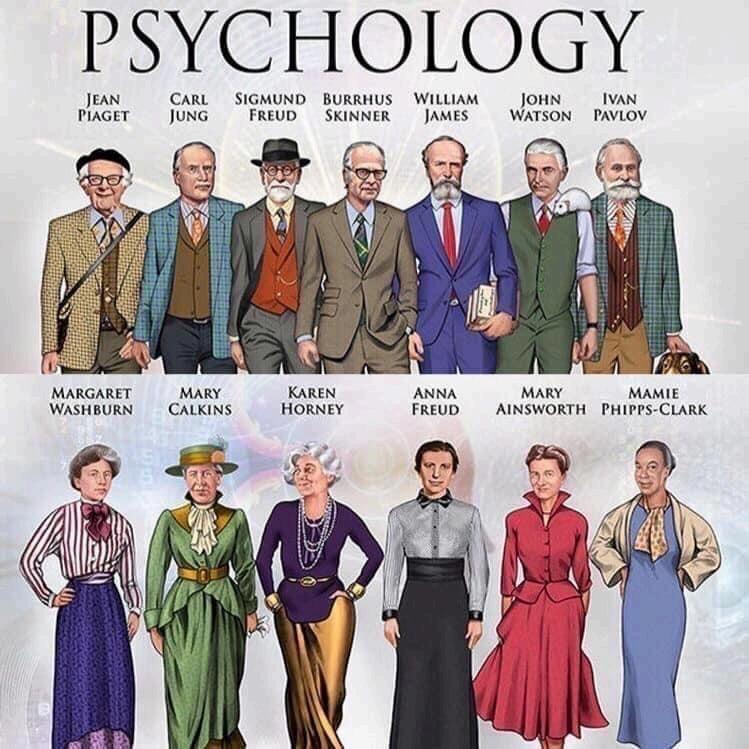
Spanish
Course Title:
INTERNATIONALADVANCED LEVEL SPANISH
SPECIFICATION:
Pearson Edexcel International Advanced Subsidiary in Spanish (XSP0l)
Pearson Ed excel International Advanced Level in Spanish (YSP0l)
Examination Board: Edexcel
Course Codes:
Pearson Edexcel International Advanced Subsidiary in Spanish (XSP0l)
Pearson Edexcel International Advanced Level in Spanish (YSP0l)
Course Entry Guidance:
We recommend that students should have achieved a minimum grade B/6 or above in IGCSE Spanish to studyA Level Spanish.
Specification Link URL: IAL-Spanish-Specification.pdf (pearson.com)
Assessment Overview:
AS Level: The Pearson Edexcel International Advanced Subsidiary in Spanish consists of two externally examined units.
A Level: The Pearson Edexcel International Advanced Level in Spanish consists of four externally examined units.
ForAS Level: Pearson Edexcel International Advanced Subsidiary in Spanish.
This qualification consists of two externally assessed units. The International Advanced Subsidiary is the first half of the International Advanced Level qualification and consists of two IAS units, Units 1 and 2. This qualification may be awarded as a discrete qualification or may contribute 50 per cent towards the International Advanced Level qualification.
Unit 1: Spoken expression and response (8-10 mins, 40 marks)
Content overview: Youth matters; Lifestyle, health and fitness; Environment and travel; Education and employment.
Assessment overview:
Section A: Spoken response – Requires students to respond to four Pearson-set questions on a stimulus related to one of the student’s two chosen general topic areas (GTAs).
Section B: Discussion – Requires the teacher/examiner to engage the student in a discussion that, although still relating to the same GTA and its linked topics, moves away from the main focus of the stimulus.
Unit 2: Understanding and written response (2h 30 min, 90 marks)
Content overview: Youth matters; Lifestyle, health and fitness; Environment and travel; Education and employment.
Assessment overview:
Section A: Listening – Requires students to listen to a range of authentic material recorded in Spanish and to retrieve and convey information given in the recording by responding to a range of questions in Spanish.
Section B: Reading and Grammar – Requires students to read authentic printed materials in Spanish and to retrieve and convey information by responding to a range of questions in Spanish.
Section C: Writing – Requires students to write an email or article of a recommended length of 240–280 words in Spanish based on a short, printed stimulus written in Spanish and four related bullet points.
ForA Level: Pearson Edexcel International Advanced Level in Spanish
This qualification consists of four externally assessed units. The International Advanced Level consists of the two IAS units (Units 1 and 2) plus two IA2 units (Units 3 and 4). Students wishing to take the International Advanced Level must, therefore, complete all four units.
Spanish
Unit 1: Spoken expression and response (8-10 mins, 40 marks)
Content overview:
Youth matters; Lifestyle, health and fitness; Environment and travel; Education and employment.
Assessment overview:
Section A: Spoken response – Requires students to respond to four Pearson-set questions on a stimulus related to one of the student’s two chosen general topic areas (GTAs).
Section B: Discussion – Requires the teacher/examiner to engage the student in a discussion that, although still relating to the same GTA and its linked topics, moves away from the main focus of the stimulus.
Unit 2: Understanding and written response (2h 30 min, 90 marks)
Content overview:
Youth matters; Lifestyle, health and fitness; Environment and travel; Education and employment.
Assessment overview:
Section A: Listening – Requires students to listen to a range of authentic material recorded in Spanish and to retrieve and convey information given in the recording by responding to a range of questions in Spanish.
Section B: Reading and Grammar – Requires students to read authentic printed materials in Spanish and to retrieve and convey information by responding to a range of questions in Spanish.
Section C: Writing – Requires students to write an email or article of a recommended length of 240–280 words in Spanish based on a short, printed stimulus written in Spanish and four related bullet points.
Unit 3: Understanding and spoken response (11-13 mins, 40 marks)
Content overview:
Debate on any issue chosen by the student followed by a discussion of at least two further issues chosen by the teacher/examiner from any of the IAL general topic areas (GTAs).
Assessment overview:
Section A: Presentation and debate – Requires students to demonstrate the effectiveness of their Spanish-language skills by presenting and taking a clear stance on any issue of their choice for about one minute. Students will then interact with the teacher/examiner as they defend and justify their views for up to four minutes.
Section B: Discussion – The teacher/examiner initiates a spontaneous discussion on at least two further issues, moving the conversation away from the students’ chosen issue. If these further issues relate to the IAS GTAs, then they do not have to be rooted in Spanish-language culture. However, if these issues relate to the IA2 specific GTAs, they must be rooted in Spanish-language culture. Students will be expected to use debating skills and argument to discuss their chosen issue. They will be assessed on their reading and research skills in their chosen issue, as well as their communication skills and quality of spoken language.
Unit 4: Research, understanding and written response (2h 30 min, 90 marks)
Content overview:
Youth matters; Lifestyle, health and fitness; Environment and travel; Education and employment; Technology in the Spanish-speaking world; Society in the Spanish speaking world; Ethics in the Spanishspeaking world. Set topics, literary texts and films.
Assessment overview:
Spanish
Section A: Listening – Requires students to listen to a range of authentic material recorded in Spanish and to retrieve and convey information given in the recording by responding to a range of questions in Spanish.
Section B: Reading and Grammar – Requires students to read authentic printed materials in Spanish and to retrieve and convey information by responding to a range of questions in Spanish.
Section C: Writing – Requires students to answer one question, in Spanish, from a choice of two, that relates to a topic, a literary text or a film chosen from the prescribed list. Students should write 300-400 words. The assessment rewards students for communicating relevant information effectively as well as for the quality of the Spanish language produced.
Course Content:
AS Content: Units 1 and 2
1. Youth matters:
Family relationships and friendships
Peer pressure and role models
Music and fashion
Technology and communication
2. Lifestyle, health and fitness:
Food and diet
Sport and exercise
Health issues
Urban and rural life
3. Environment and travel:
Tourism, travel and transport
Natural disasters and weather
Climate change and its impact
Energy, pollution and recycling
4. Education and employment:
Education systems and types of schooling
Pupil/student life
Volunteering and internships
Jobs and unemployment
A Level Content: Units 1, 2, 3 and 4
1 Youth matters:
Family relationships and friendships
Peer pressure and role models
Music and fashion
Technology and communication
2. Lifestyle, health and fitness:
Food and diet
Sport and exercise
Health issues
Urban and rural life
3. Environment and travel:
Tourism, travel and transport
Natural disasters and weather
Climate change and its impact
Energy, pollution and recycling
4. Education and employment:
Education systems and types of schooling
Pupil/student life
Volunteering and internships
Jobs and unemployment
Unit 3: Students will develop their presentation skills in Spanish, by presenting and defending their own views on their chosen issue while sustaining a debate. Students can choose any issue, and they are not restricted to any of the prescribed general topics areas in the other units. Students will develop their debating skills by defending their views and sustaining discussions.
Unit 4 (also includes topics from units 1 and 2):
5. Technology in the Spanish-speaking world:
Scientific advances
Technological innovations
Impact on life and environment
6 Society in the Spanish-speaking world:
Migration
Equality
Politics
Customs
7. Ethics in the Spanish-speaking world:
Beliefs
Law and order
Moral issues
Spanish
Students will also develop their ability to write in Spanish by studying one from a prescribed set of topics, literary texts, and films in Spanish.
Who is this course for?
You’ll study culturally sensitive and authentic texts and our general Topic Areas (GTA) focus on Spain and the wider Spanish language speaking world exploring cultural, social, political, moral, intellectual, technological issues and trends.
On completion, you could go on to pursue a university degree in Spanish or a related subject. Our approach will also suit students who see language as a skill to enhance career or travel prospects.
Where can this course lead?
Students can progress from these qualifications to further study at university level. In addition, the study f l l d l
The qualification may also add to an individual’s employability profile, particularly for companies based globally. Students can progress to a wide range of careers in areas such as journalism and media, education, science, medicine, the civil service, sales, marketing, retail, and charities.
https://www.theuniguide.co.uk/a-level-explorer - this allows students to explore the degree options available to them with different combinations of A level subjects.
https://www.careerpilot.org.uk/job-sectors/subjectsthis allows students to select your subject and find out where this might lead for a future career.
Further Reading:
You can choose to include links to relevant reading/course prep/podcasts/articles/TED talks etc.


Wellington College
International School Bangkok 18 Krungthep Kreetha Road, Thap Chang, Saphan Sung, Bangkok
info@wellingtoncollege.ac.th 02 087 8888
wellingtoncollege.ac.th
#WeAreWellington