Each year, Visit Denver compiles this Marketing Plan, which contains a thorough study of industry information, customer feedback and consumer sentiment, as well as a situation analysis of local, national and international trends. Together, this information helps guide Visit Denver in developing its 2026 strategies and tactics.
The mid-point of 2025 brings an unprecedented degree of uncertainty across the country and around the world that has no real comparison in the lifetimes of most travelers. Domestic political divisions, economic uncertainty, climate change and international strife have always been present, but rarely, if ever, have they been so prevalent all at the same time, and so visibly.
While we explore this volatility in general, and these issues in greater detail throughout this report, one constant will emerge: the Resiliency of Travel.
Throughout recent history, travel has been a poster child for an industry that is at the whims of prevailing winds, whether they are related to a single incident, such as the September 11 terrorist attacks, to macroeconomic forces, such as the 2008 global financial crisis or to a global, generational disaster such as the Covid-19 pandemic.
In each of those cases, travel was significantly impacted, sometimes for longer periods, sometimes for shorter, but always rebounded. As the industry navigates its way through this unique period of volatility, it is encouraging to see that, despite obvious and persistent challenges, the industry is showing its resilience.
“Despite prevailing political and economic uncertainties, U.S. leisure travelers are demonstrating a notable surge in optimism. Confidence in the future of the nation and the world has climbed significantly compared to levels recorded in 2023 and 2024.”
- MMGY’s Portrait of American Travelers, Summer 2025 Edition
Denver’s travel industry has made great strides in the last several years. Domestic travel volume is at near-record levels, as is spending. Attendance and economic impact from groups at the Colorado Convention Center are expected to reach an all-time high in 2025. The Denver product continues to improve, best exemplified in the renovated 16th Street. And the industry is valued as a key contributor to the local economy.
At the same time, as always, there are headwinds. The national economy, while continuing to show signs of strength, is also showing softness due to volatility in prices, with stubborn and persistent inflation, leading to inconsistent consumer confidence. Business travel and hotel occupancy have still not recovered to 2019 levels, and there is downward pressure on Average Daily Rate (ADR). National policy towards immigration, coupled with the ever-changing plan for implementing tariffs on most countries around the world, has led to a sense of unease in visiting the U.S. particularly for countries like Canada, which is seeing double-digit decreases in inbound visitation. The competitiveness of the U.S. as an international travel destination is also threatened due to the 80% reduction in the budget for Brand USA, the national promotional agency for the U.S. Lastly, closer to home, downtown Denver continues to experience the challenges of remote work, even as it celebrates the reopening of 16th Street. And while great strides have been made in downtown crime and safety issues, much work is left to be done.
More recently, the shutdown of the Federal government adds a significant amount of new uncertainty to the mix. While everyone hopes for a fast resolution, a shutdown that continues into 2026 will have sizable impacts on all of Visit Denver’s markets.

In broad economic terms, the U.S. is in a period of simultaneous strength and softness. On July 30, it was announced that the U.S. economy grew in the second quarter at an annual rate of 3.0%, a turnaround from the first quarter, when it grew at just 0.5%. But both of those numbers are qualified, with news reports suggesting that first quarter’s sluggish growth could be partially attributed to businesses stockpiling foreign goods in advance of tariffs, while second quarter’s strong numbers partially attributed to the drop in imports during that period (NPR).
On September 5, the federal government announced that U.S. employers added just 22,000 jobs in August, less than economists expected. Earlier reports also significantly revised down the data on hiring from May and June by a combined 258,000 jobs, suggesting the labor market was weaker than initially reported.
In the University of Michigan’s September benchmark Survey of Consumers, U.S. consumer sentiment fell after earlier month-over-month improvements, leading to continued concerns about the overall economic outlook.
Demand for travel, particularly the domestic market, has been very hard to pin down in the last few months as consumers balance their interest in traveling with broader concerns about the direction of the U.S. economy. The U.S. Travel Association shows a generally stable market for travel right now:
“August extended the momentum from July, with strong domestic air travel and a record-breaking Labor Day weekend. Even as broader economic concerns weighed on consumer sentiment, stable travel prices helped ensure many Americans still carried out their summer travel plans.
• Passenger volumes hit new highs: August traffic rose 1.0% year-over-year, reaching a record 80.3 million passengers. While the 3 million daily passenger threshold wasn’t exceeded, five separate days came close (2.9+ million).
• Labor Day capped the season: Holiday weekend traffic set a new record, with 10.3 million passengers, up 3.3% from last year.
Travel prices held steady: U.S. Travel’s Travel Price Index was only 0.4% higher than August 2024. Lower gas prices (down 6% YOY) played a major role. As a whole these patterns show that Americans still prioritize travel even as they weigh economic concerns. Over a longer horizon, the remarkable post-COVID air travel recovery appears to be flattening—a reminder of the importance of continued infrastructure investments to improve the travel experience.
U.S. Travel Association, in their Fall 2026 Forecast, predicts that in 2026, higher income domestic households will continue to drive growth, with both business and international travel showing strong potential in the longer term.
Visit Denver will continue to monitor these trends through the final submission of this report on Nov. 15, 2025.
Artificial intelligence continues to reshape how visitors and meeting planners discover, research and engage with destinations, including Denver. Increasingly, AIpowered platforms such as ChatGPT and Google Gemini’s conversational search tools deliver immediate, personalized information, guiding our audiences in their inspiration, planning and decision-making processes. As Visit Denver looks ahead, this shift presents both challenges and opportunities for maintaining Denver’s visibility and effectively connecting with the diverse audiences we serve.
To remain influential and relevant, Visit Denver is strategically adapting our approach to content and digital experiences. We are focused on producing clear, authoritative information that directly answers the questions our audiences ask across various platforms and digital channels. Beyond the VisitDenver.com website, new efforts will ensure that Denver’s brand and messaging remain consistent, accessible and highly visible within these AI-driven conversations.
Recognizing these evolving audience expectations, Visit Denver continues to strengthen its overall digital presence, positioning Denver as an accessible and engaging destination within this conversational landscape. By proactively embracing the opportunities presented by AI, Visit Denver is committed to deepening audience engagement, driving meaningful interactions and ultimately inspiring more visitors and planners to choose Denver.
Travel to Denver in 2024, the most recent full year of data, saw a continuation of the strong visitation patterns of 2023. However, after three years (2021–2023) of aggressive, postpandemic, double digit growth, visitation in 2024 was slightly softer than 2023’s record breaking year with both overnight leisure visitation and spending by overnight visitors down 1% versus 2023. So, while this report had previously said that “there is no new normal,” the fact remains that all the markets that Visit Denver oversees have seen stabilization and a measure of predictability.
According to Longwoods International, the U.S. saw overnight travel increase 1.9% in 2024, from 2.17 billion trips in 2023 to 2.21 billion trips last year. For day travel, the U.S. saw a 2.6% increase, from 2.42 billion trips in 2023 to 2.48 billion trips in 2024.
Despite this softness, Denver did experience several notable wins in 2024:
▷ Even when faced with multiple obstacles, travelers are still coming to Denver. In total, 2024 overnight visitor volume estimates experienced a very mild softening, and total expenditure estimates held at the same level as 2023.
▷ In 2024, Denver saw a 7% increase in Marketable visitor trips, which is the segment that is most likely to respond to promotional messages and that spends the most per day on their trip.
▷ Denver also saw significantly less in-state overnight trips versus 2023, when in-state overnight trips had reached a record peak of 29% of total trips. Denver’s in-state overnight trips accounted for only 24% of total trips in 2024.
▷ Additionally, of the total nights away for an overnight trip, the percentage of time spent in Denver was 70% in 2024, up significantly +8% YOY and on par with the record high in 2019 (69%).
▷ In 2024, Denver also saw overnight visitor average household income jump from $74,400 in 2023 to $83,900.
▷ Lastly, Denver saw satisfaction amongst overnight travelers significantly increase by +5% YOY for those who were very satisfied with their overall trip at 67% or twothirds of overnight visitors.
The picture with international visitation remains murkier, with a combination of factors contributing to slow growth in this segment after several years of post-pandemic rebound. A strong U.S. dollar, which makes travel here more expensive, paired with federal government policies, visa fees and rhetoric are contributing to diminished interest in the U.S. as a travel destination from key overnight markets, particularly Canada.
International visits to Denver are expected to decline by 11% (to 493,200) in 2025, as forecasted and adjusted by Tourism Economics. International travel spending in Denver is forecasted to decline by 8% in 2025, to $442.7 million in 2025. These declines are part of Tourism Economics adjustment due to the current administration actions and impact.
Here in Denver, the travel product itself continues to evolve. There has been significant progress in crime and safety issues, particularly downtown and citywide, though much work remains. The initial projects covered under the Denver Downtown Development Authority and Vibrant Denver bonds have the potential to dramatically improve Denver’s infrastructure. Certain sectors of the industry, such as restaurants, have had both high points (e.g. the continuation of the Michelin program, with a record 32 local restaurants recognized, including Wolf’s Tailor earning recognition as Colorado’s first two-star restaurant in 2025, and several James Beard Foundation award nominations) yet continue to struggle with high food and labor prices along with red tape and workforce challenges. Hotels, which enjoyed high rates during the peak of the inflationary period, have not yet seen their occupancy return to 2019 levels, primarily due to softness in the transient market and increased supply. These and other trends will be explored more fully below in the Denver 2025 Product Update section.
There are other widespread trends impacting Visit Denver, most prominently the rise of Generative Artificial Intelligence (AI) chatbots in a variety of forms. While not a threat to travel in general, these tools are fundamentally disrupting the way consumers search for travel, which is a direct threat to the VisitDenver.com website, but also an enormous opportunity to inspire future trips by feeding the AI engines the “right” information.
In response to these opportunities and challenges, Visit Denver continues to develop and execute comprehensive sales and marketing strategies that take advantage of the continued strong demand for travel, and also continues to focus on local product development, issue management and stakeholder engagement to continually ensure that the industry can maintain its well-deserved status as a key economic driver for the city.
Innumerable reasons exist for Visit Denver to continue to lean in: Travel remains a highly competitive global business, with domestic visitors indicating increased demand for international trips, and domestic destinations also putting out savvy marketing messages. The recovery in the meetings market brings with it new demand dynamics that have upended decades of booking patterns. While inbound international demand remains a priority, that market has been upended by domestic issues and has yet to reach their 2019 travel levels.
Despite these headwinds, and with an engaged City administration in place, Visit Denver’s outlook for 2026 is strong. The organization retains a commitment to work through all challenges, known and unknown, with the same diligence and professionalism that has marked its stewardship of Denver’s travel industry for 116 years.
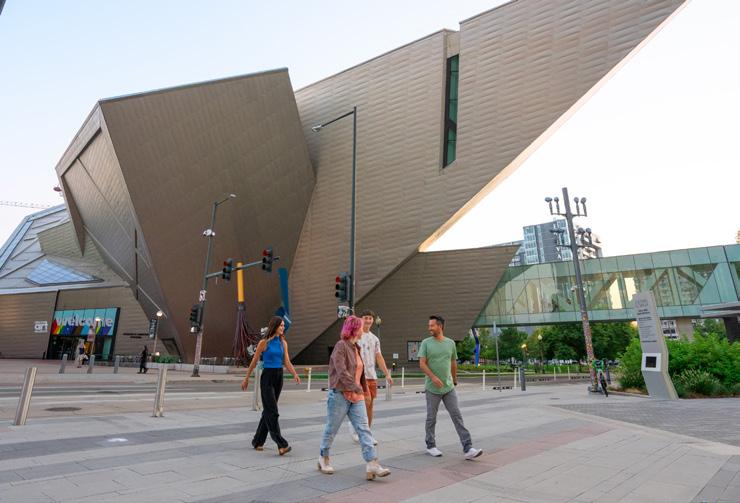
Visit Denver has many ways to measure the impact of the travel industry on the city, but none are so eagerly anticipated as the Annual Visitor Profile from Longwoods International. Longwoods surveys domestic visitors 12 months a year and produces for its clients an annual report on visitation, spending, visitor demographics and more. Their methodology is the industry standard for this kind of study, with a high degree of confidence and a low margin of error. Longwoods has been researching the Denver visitor market since 1994.
In 2024, the latest figures available, Denver welcomed 37.1 million visitors, on par with the previous record set in 2023. These visitors also spent nearly as much money in Denver as they ever have, generating $10.3 billion in tourism revenue, also on par with 2023.
Overnight visitors totaled 19.8 million, generating $8.7 billion in spending, on par with 2023’s record-breaking year. Overnight leisure visitors remained steady with 17.4 million visitors, consistent with 2023.
The 2024 study shows that travel trends, both in terms of visitor numbers and spending, are returning to levels more in line with 2019. When compared to other destinations, Denver enjoyed comparably higher growth suggesting that it benefits from its unique position offering visitors both sought-after urban experiences and easy access to outdoor activities.
The study confirmed that Denver is a year-round destination with overnight visitation spread evenly throughout the year, with a modest surge in the warmer months. Denver saw 22% of visitors in Q1, 26% in Q2, 28% in Q3 and 23% in Q4.
The data further showed how crucial Denver International Airport, and its air service, is for continued strong Denver tourism trends. In 2024, nearly 40% of overnight Denver visitors arrived by plane, in comparison to the national average of 24%. The airport as well as Visit Denver’s partners at the Colorado Tourism Office are key to Denver’s position as both a destination and a gateway to the rest of the state with overnight Denver visitors spending an average of 2.7 nights, or 70% of their trip, and the remainder being in other parts of the Centennial State.
Longwoods International also conducted Return on Investment (ROI) research for Visit Denver’s largest advertising campaign of the year, the 2024 summer advertising campaign. The study revealed strong ROI numbers, showing that the campaign generated 3 million incremental trips, $1.3 billion in incremental visitor spending and $143 million in state and local taxes, including more than $106 million for Denver. Measured against spending, the campaign produced a near-record ROI of $217 in visitor spending and $24 in taxes for every $1 in advertising investment.
Key numbers for 2024 include:
Denver welcomed 37.1 million total visitors in 2024, including 19.8 million overnight visitors and 17.3 million day visitors.
Overnight leisure visitors totaled 17.4 million in 2024, including a record 8.7 million “marketable” visitors which is a 14% increase over 2023.
▷ Denver visitors spent $10.3 billion in 2024, including $8.7 billion from overnight visitors and an additional $1.7 billion in spending from day visitors.
▷ Expenditures by overnight visitors averaged $437 per person per trip with year-over-year increases in each tracked category:
○ Transportation spending within the destination reached nearly $3 billion
○ Lodging spending hit almost $2.5 billion
○ Restaurant Food and Beverage spend reached nearly $1.5 billon
○ Retail Purchases totaled just over $1 billion, with 57% of visitors shopping at locally owned businesses compared to 48% nationally
○ Recreation, Sightseeing and Entertainment totaled $735 million
▷ The top four states sending vacationers to Denver in 2024, apart from Colorado itself, were:
○ California
○ Texas
○ Arizona
○ Florida
▷ The top five cities from outside of Colorado sending leisure visitors to Denver in 2024 were:
○ Los Angeles
○ Phoenix
○ New York City
○ Dallas-Ft. Worth
○ Chicago
Note: All are Visit Denver advertising markets
The following section documents the current state of Denver’s tourism product. It is always important to document the strengths and weaknesses of the city’s infrastructure, since it is an area over which Visit Denver has little control.
In 2024, Visit Denver created a new Denver Tourism Roadmap, a long-term destination strategic plan that guides the organization’s approach to product development. The Visit Denver leadership team and Board, along with input from more than 1,000 stakeholders, created this new plan, building on the lessons of the previous 2016 version as well as the learnings from the COVID era.
Visit Denver worked on the Roadmap with NextFactor, the leading industry consulting firm for destination master plans and the same organization that helped build the original plan in 2016.
The new 2024 Denver Tourism Roadmap, like its predecessor, has gone through a rigorous series of inputs and strategic planning sessions, including:
▷ Visit Denver board input on initiatives for the new report.
▷ NextFactor’s DestinationNext community input survey that was completed by more than 250 stakeholders.
▷ 12 sector-specific focus groups across leisure and hospitality sectors attended by nearly 120 participants discussed ranking of areas of focus and discussion and big ideas.
▷ Input from 17 members of Visit Denver’s Convention & Tourism Advisory Board, who offered a unique outside perspective of the city’s hospitality industry.
▷ 21 one-on-one, in-depth interviews with stakeholders and elected officials including members of Denver City Council and Mayor Mike Johnston.
▷ Resident sentiment survey that polled nearly 620 people citywide, including representative samples within each City Council district, ages, ethnicities and income groups.
In December 2024, the Visit Denver board ratified the Roadmap and the seven areas of focus for the
The TID was formed in 2017 with the help of the Colorado Hotel & Lodging Association (CHLA), to make sure that Denver had the marketing funds available to grow the tourism and convention business well into the future. As part of its formation, the TID also dedicates funds annually to the City for the expansion of the Colorado Convention Center (CCC), and the remaining funds then flow to Visit Denver for sales and marketing efforts. Past efforts using the TID tax revenue include programs such as the annual Mile High Holidays campaign and the operations of the Mile High Tree to drive business in the off-season.
In 2025, the TID remained committed to key strategic areas and its mission of increasing overnight demand by convention and meeting visitors as well as leisure visitors to Denver, especially in the low- and off-peak seasons like major holidays and weekends. Specific programs include funding a holiday season marketing campaign highlighting the Mile High Tree and the new Mile High Drone Shows, client concessions to attract meetings and conventions in future years and regional leisure marketing.
The TID continues to serve a significant role in helping Denver remain competitive when attracting conventions. While competing cities offer convention center discounts and financial incentives to book citywide business, the TID program has helped attract critical business with a robust economic impact. Additionally, there has been increased competition from mega-hotels (facilities so large that the entire meeting can be held in one hotel, eliminating the need for a convention center), competing for convention center business. Since the TID’s creation, Visit Denver has booked 103 groups with a $1.8 billion economic impact and $144 million in tax dollars. In 2025 to date, Visit Denver has booked 15 groups through TID incentives, worth $328.9 million in future economic impact which will result in nearly $26.4 million in tax dollars for our city.
2025 could turn out to be a landmark year for the future of Denver due to the combination of two sets of projects: the Denver Downtown Development Authority (DDA) and the 2025 Vibrant Denver Bond Package.
The DDA, which was initially formed to help finance the reconstruction of Denver Union Station, was recently expanded into the greater downtown Denver area, using Tax Increment Financing to inject as much as $550 million in public funds over the next decade into future private projects that align with the City’s goals, particularly projects that spur new development and adaptive reuse, those tied to economic opportunity, parks and public spaces, arts, culture and activation and connectivity and mobility.
On July 30, the DDA board announced the first $100 million in projects:
Business Support
▷
$2.7 million investment in new downtown retail space for Green Spaces Market
▷ $400,000 to renovate space for the Denver Immersive Repertory Theater
▷
$640,000 to expand and relocate Milk Tea People move to a larger and more visible location along 16th Street
▷ $750,000 to expand Sundae Artisan Ice Cream’s flagship store on Glenarm
Two office-to-residential conversions that will bring 236 new units of housing in the downtown core – including units that will be affordable to working Denverites making between 30 - 80% Area Median Income
▷ $23 million for the DDA to purchase the two parking lots on both sides of Glenarm Place at the Denver Pavilions block on 15th Street, offering significant mixed use private redevelopment opportunities between 15th and 16th Street.
▷ $5 million to improve and activate Skyline Park, making improvements in accessibility, lighting, safety features and activation areas like the performance stage and concessions building
▷ $7 million to help support a reimagined McNichols Building including a ground floor restaurant and outdoor patio/dining area and arts marketplace to further activate Civic Center Park as a destination to visitors to downtown.
▷ $30 million to activate Civic Center Park, working to make the park more accessible and a true neighborhood asset by investing in new infrastructure, lighting, garden walkways and tree canopy.
In addition to the DDA, Mayor Mike Johnston has proposed a series of projects valued at $950 million that, if approved by voters in November, would invest in the city’s future by repairing and improving the vital infrastructure and community spaces that residents and visitors rely on daily—like roads, bridges, parks, playgrounds, recreation centers and libraries— without raising taxes. Projects of particular interest to Visit Denver include:
▷ Improvements to top central Denver cultural facilities such as the Denver Art Museum, Helen Bonfils Theatre Complex, Boettcher Concert Hall, Denver Botanic Gardens, Denver Zoo and others
▷ Upgrades to Red Rocks Amphitheatre
▷ Lighting improvements on the Cherry Creek Trail
▷ Buildout of the new Park Hill Park
▷ And many others
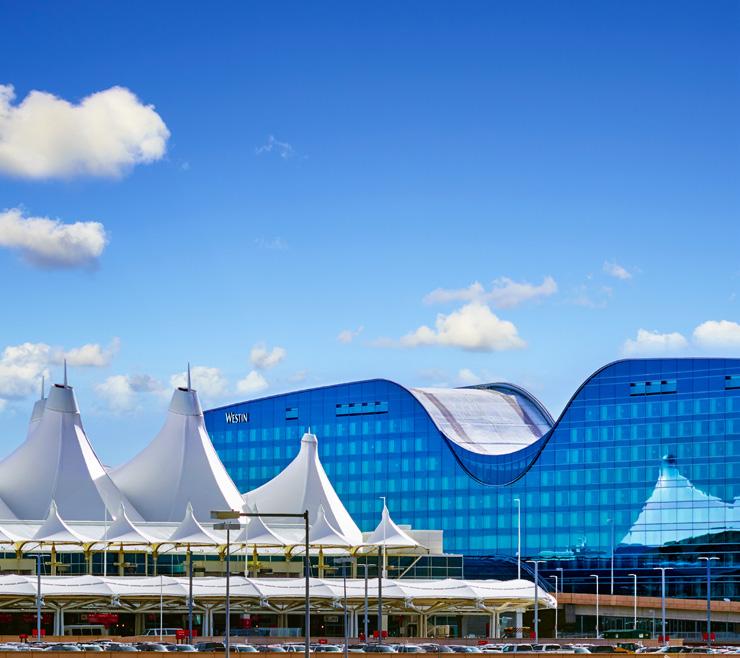
Located almost exactly 1,000 miles from both Chicago and San Francisco, Denver is the most isolated city in North America, 600 miles from the closest city of comparable size and surrounded by minimally populated areas of prairie to the north, east and south and mountains to the west.
Denver’s success in the 21st century, both in the leisure and meetings markets, relies heavily on its accessibility, and primarily on the strength of Denver International Airport (DEN) to provide convenient air service, and ground transportation from the airport to a compact, walkable downtown. DEN is Colorado’s largest economic engine, bringing in $47.2 billion in economic impact in Colorado last year.
DEN continues to outperform nearly every airport in the country, based on the strength of its domestic network, and growing international service. In terms of passenger counts, DEN is the fourth busiest in the country and eleventh busiest in the world (Source: DEN, August 2025 Air Service Profile). In 2024, DEN had 82.3 million passengers, surpassing the previous record set in 2023 by 5.8%. Year-to-date in 2025, passenger traffic is 39.5 million, a 1.2% decline versus 2024 (through August).
DEN currently serves 198 domestic and 35 international destinations with nonstop service. The airport recently welcomed new international nonstop routes to Mexico City, Mexico and United, Punta Cana, Dominican Republic on United and has extended the operation of the Airbus A380 between Denver and Munich, Germany on Lufthansa. Recent new domestic routes include Columbia, MO on United, San Diego, CA on Alaska Airlines as well as Page, AZ and Taos, NM on Contour.
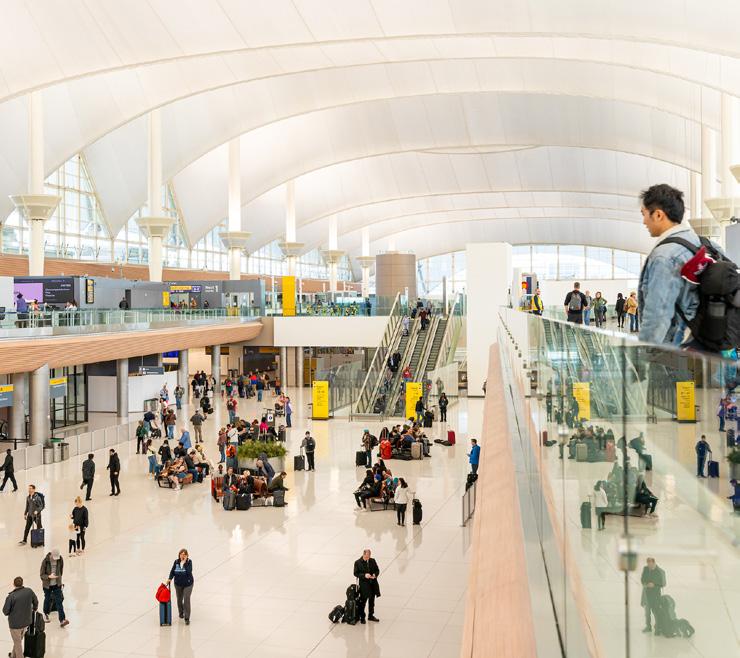
In addition, DEN completed a 39-gate expansion in 2022, increasing overall capacity at the airport by 30%. The new gates, on all three concourses, allow DEN’s airlines the opportunity to grow and for DEN to accommodate new airlines, including international carriers.
DEN is also planning for future growth. Vision 100, the airport’s strategic plan, will enable it to prepare for and reach 100 million annual passengers. The strategic plan will serve as a blueprint to align decision-making and enable accountability so DEN can thoughtfully prepare to serve 100 million passengers in the next eight to 10 years. DEN’s strategic plan is centered on the four pillars of Vision 100 and under each pillar are strategic objectives:
▷ Powering their people
▷ Growing their infrastructure
▷ Maintaining what they have
▷ Expanding global connections
The Regional Transportation District (RTD) & 16th Street
The Regional Transportation District (RTD) is the regional agency operating public transit services in eight out of the 12 counties in the Denver metro area. It operates over a 2,345-square-mile area, serving 3.09 million people.
RTD is governed by a 15-member, publicly elected Board of Directors. Directors are elected to a four-year term and represent a specific district of about 200,000 constituents.
RTD currently runs 85 local, 12 regional, 10 limited and five SkyRide bus routes plus some special services. It also includes six light rail lines and an additional four commuter rail lines with 84 stations and 114.1 miles.
In 2024, the system had a ridership of 65,230,065, or about 248,970 per weekday. Through May, total ridership is slightly down YOY at 26,042,000.
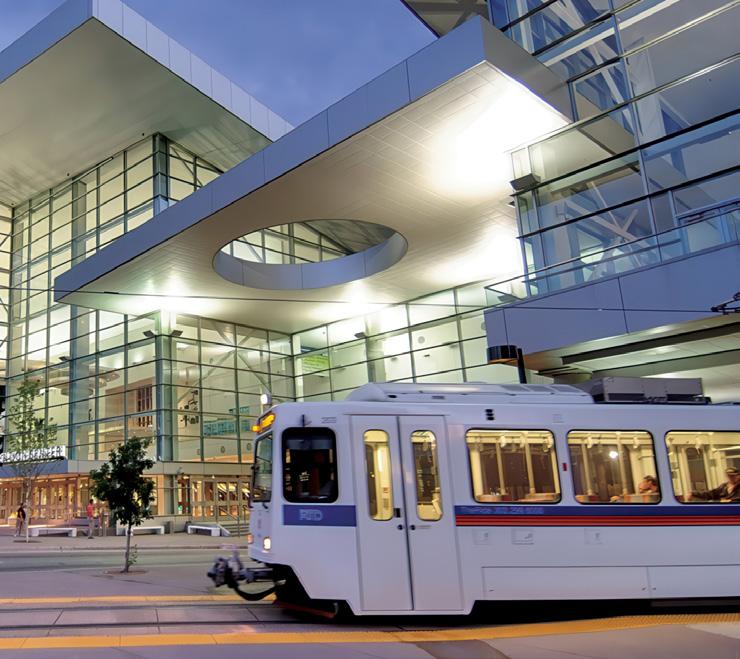
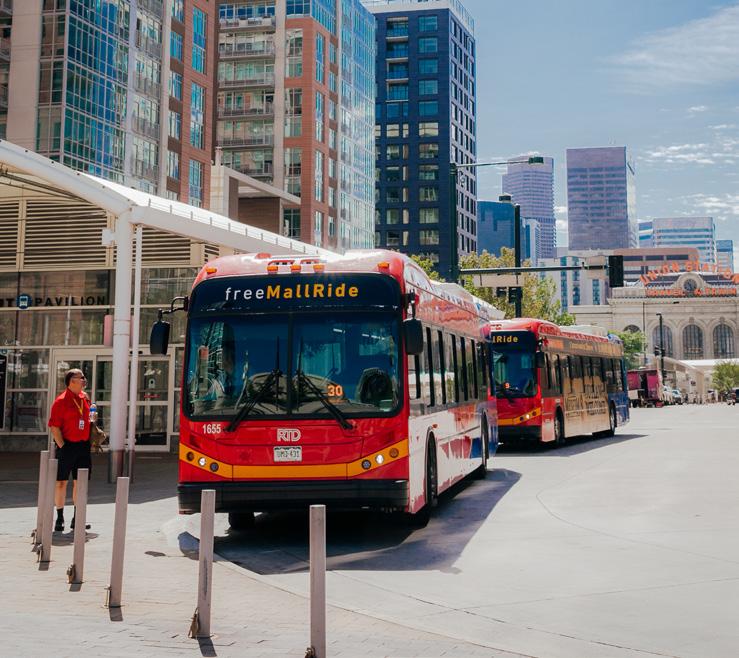
In 2025, RTD has continued with significant infrastructure improvements that, while disruptive in the short-term, should ultimately help the system serve its riders’ needs better for decades to come. Key projects include:
▷ After nearly 30 years, RTD is investing in its oldest rail infrastructure to ensure the long-term integrity of the network. Light rail service began in Denver on Oct. 7, 1994, with 5.3 miles of track connecting 30th Avenue and Downing Street to Interstate 25 and Broadway. Much of today’s downtown track infrastructure, commonly referred to as the Downtown Loop, has been in place since the line was first constructed. This section of track has expanded over the years to now serve 10 rail stations on the D, H and L lines, with street-level trains operating adjacent to pedestrians and vehicular traffic.
▷ The near-term work will occur in four phases, with the first phase completed in August 2024, focusing on track at five key intersections in the Downtown Loop. Phases two through four of the approximately $152 million, fulldepth reconstruction project will occur throughout 2025 and 2026.
▷ Built in 1982, the 40-year-old 16th Street is nearing the completion of a major restoration. The project has reconfigured the street’s layout to create wider sidewalks, a new amenity zone and center-running 16th Street Free Ride shuttle service. Reconstruction is complete between Market and Stout streets and California Street and Tremont Place, with full completion planned for fall of 2025.
▷ After years of studying East Colfax Avenue and gathering significant community input, RTD and the City and County of Denver advanced a center-running bus rapid transit (BRT) service from Broadway to Yosemite with a dedicated transit lane in each direction. The project includes new and enhanced transit stations, service amenities, improved pedestrian and bike connections and placemaking opportunities. West of Civic Center Station to Denver Union Station, BRT will operate in the side-running transit lanes along 15th and 17th Streets. East of Yosemite to I-225, BRT will be side-running in mixed flow traffic with potential enhanced stations that will be coordinated with the City of Aurora.
▷ Upon completion in 2027, the project will reduce transit travel time by 15 to 30 minutes, provide more affordable and reliable access to over 250,000 jobs and community services along the corridor, enhance comfort and safety and create exciting streetscape, placemaking and economic development opportunities.
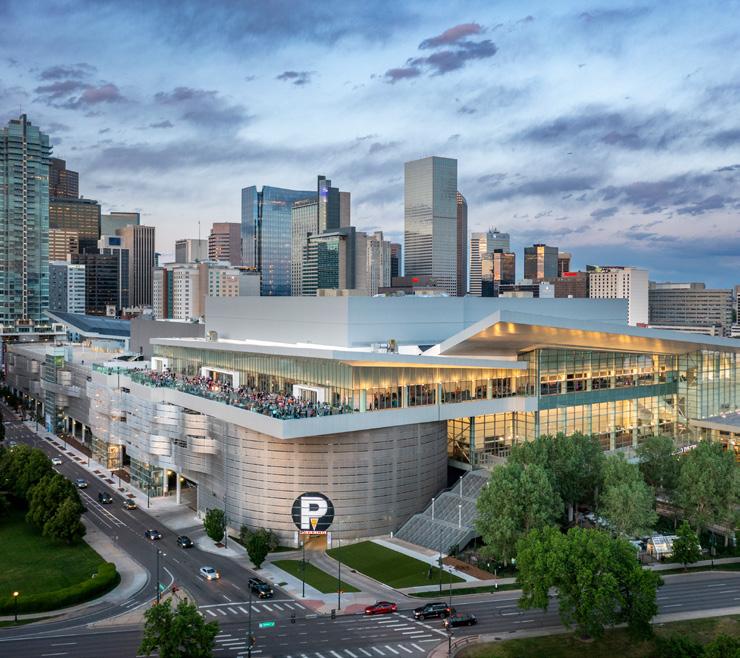
In partnership with the Colorado Convention Center team of ASM Global and Sodexo Live, Visit Denver continues to drive bookings for 2026 and beyond.
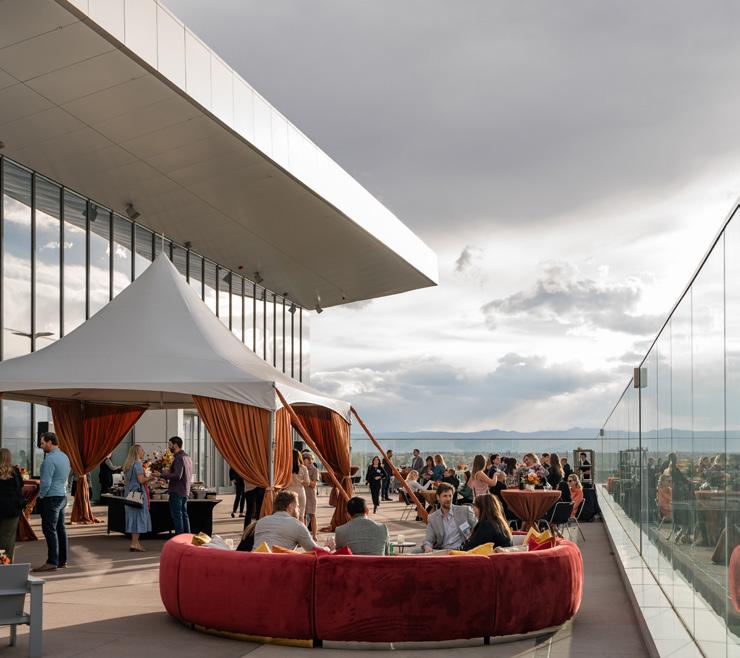
The completion of the Colorado Convention Center expansion in late 2023 marked a transformative milestone in Denver’s meetings and conventions landscape. Now fully operational, the expansion has already proven its value. Since opening, it has enabled Visit Denver to secure 28 new citywide conventions that would not have been possible without the additional space. These bookings are projected to bring more than 176,000 attendees and generate over $430 million in economic impact, further reinforcing Denver’s position as a top-tier convention destination.
At the end of Q1 2025, 1,554 rooms were under construction in the Denver Metro area. Upon completion, the new additions will increase Denver’s room inventory by 2.7%. The largest property underway is the 241-room Virgin Hotel. This luxury property is expected to be completed in 2026 and will be part of Denver’s new Fox Park initiative. The hotel is being built on the former Denver Post printing plant and will anchor the Fox Park development in Globeville, a large project with offices, residences, parks and arts space. While the Virgin Hotel at Fox Park is a welcome addition to Denver’s hospitality scene, it is a limited service/boutique property with modest meeting space.
Travelers choose destinations in part due to the strength of a city’s culinary offerings. Similarly, they may avoid destinations they don’t feel can provide them with the fresh, creative and adventurous dining options they crave. This makes developing and promoting the city’s food and beverage scene a highstakes endeavor.
Denver’s restaurant industry is at an inflection point as 2026 approaches. This sector has always been a key pillar in the
city’s reputation as a sophisticated urban destination. That reputation received a significant boost in the last couple years with the addition of the Colorado Michelin Guide in 2023 and the awarding of Outstanding Restaurateur to Denver’s Id Est Hospitality Group in June 2024 by the James Beard Foundation.
Restaurants are still finding themselves in a state of uncertainty due to factors such as economic uncertainty. Add to these the continued rise in food costs, as well as high labor costs.
Inflation continues to stress the local restaurant industry. Prices continue to rise for food service and hospitality providers in ways that are unsustainable, including taxes and regulatory fees, credit card fees, insurance and the cost of goods.
There have been innumerable stories related to how high prices are causing people to re-think their dining out decisions, leading to a decline in incidences of dining out (though spending is up in part due to higher prices; source: eMarketer, 2024) and putting additional pressure on restaurants. The loss of notable Denver restaurants such as Fruition, Noisette and Farm & Market among others has been felt across the city and has only heightened existing reservations surrounding the precarious nature of the restaurant industry. Ongoing major construction projects such as the Colfax BRT and the revitalization of 16th Street have also been major contributors to restaurant closures as well as diminished foot traffic leading to establishments. However, these issues are not a standalone problem in Denver as other major U.S. cities are facing the repercussions of the political unrest and economic decline nationwide.
This is a sector that has always had its share of ups and downs and, ultimately, there is cause for optimism. The third successful year of the Michelin program was announced in late 2025 and consumers continue to place high value on such ratings, with nearly a quarter of travelers saying Michelin ratings are important to their destination decision, particularly among younger more diverse travelers (Future Partners, 2024).
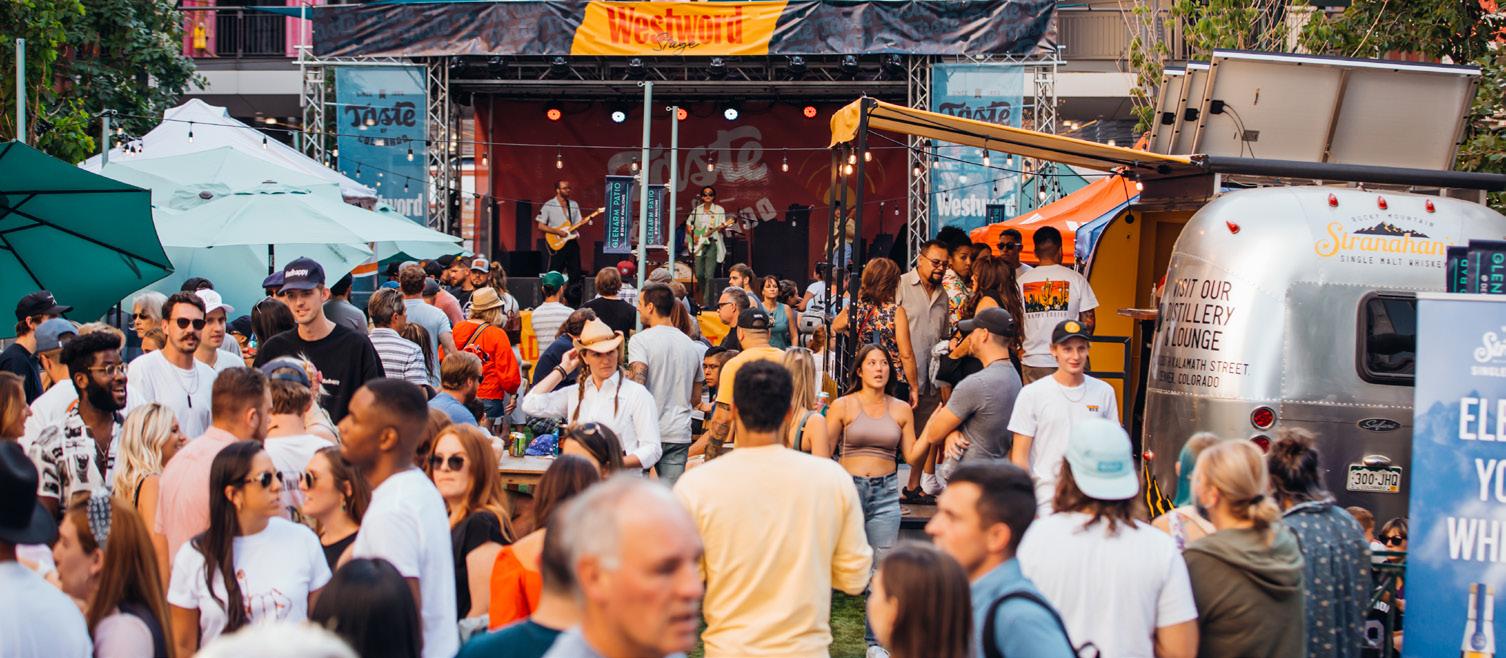
Additionally, Visit Denver continues to have a role in shaping the future of this industry, with the Boredom is Fired workforce campaign and new Restaurant Liaison position that will be evaluating ways for the City and the industry to work closely together.
The latest Colorado Business Committee for the Arts Economic Activity Study reported $2.6 billion in total economic activity in 2022 (the latest figures available), a 14% increase over 2019.
According to Denver Center for the Performing Arts (DCPA), in their 2023/2024 Community Report (the latest figures available), their programs had the following impact and results:
▷ More than $190 million total economic impact
▷ More than 748,000 tickets distributed across nearly4,000 performances of 53 different productions
▷ More than 908,000 total guest interactions
Additionally, according to Denver Arts & Venues, the City has infused art into the resident and visitor experience through their programs, including:
▷ More than 1,000 hosted cultural events
▷ 2.7 million attendees
▷ 350 artists and organizations receiving funding
▷ More than 80 active public art projects
All of this speaks to a city that values culture as one of its defining principles, a quality that is highly visible to visitors who seek to enrich their lives through culture on their visit.
Some other significant cultural developments in the city include:
▷ In June, Denver PrideFest celebrated its 51st anniversary with a weekend-long festival that saw hundreds of thousands of attendees in Denver’s Civic Center Park.
▷ Denver’s other major cultural festivals had strong performances including March Powwow, Cinco De Mayo, Juneteenth, Colorado Dragon Boat Festival, Cherry Creeks Arts Festival and Colorado Black Arts Festival. The city’s robust festival calendar offers locals and visitors alike multiple opportunities throughout the year to connect with the city’s diverse communities and artists.
▷ In 2025, the Denver Art Museum celebrates 100 years of showcasing their indigenous art collection.
▷ Record-breaking participation in Visit Denver’s own 2025 Denver Arts Week, with more than 630 events and more than 230 participating organizations.
Denver’s strong events calendar continues to emerge as a competitive advantage. A combination of large annual festivals, cultural exhibitions and a substantial, year-round music calendar – including more than 200 at Red Rocks alone – combine to make the city’s events calendar a “must check” for visitors of all kinds.
The Denver Sports Commission, an affiliate of Visit Denver, had a busy year in 2025 working to pursue new sports events for Denver, while preparing for first-time sporting events coming to the city.
Denver welcomed the Denver Summit FC of the National Women’s Soccer League in 2025 with their inaugural season officially beginning in 2026.
▷ NCAA March Madness Men’s Basketball Championship Rounds 1 and 2, March 20–22
▷ USA Open Volleyball Championship, May 23–28

▷ U.S. Women’s National Soccer Team vs. Republic of Ireland on June 26
▷ Pacific Nations Cup Rugby Semifinals on Sept. 14
Denver’s Office of Climate Action, Sustainability and Resiliency has led the way in decreasing the city’s greenhouse gas emissions and prioritizing a sustainable future for the city. Likewise, Visit Denver collaborates with its venues, hotels and other partners to ensure that sustainable options are offered that allow both the community and natural environment to thrive. Below are a few of Visit Denver’s sustainability efforts as well as those from its biggest partners:
▷ Visit Denver Environmental and Sustainability Industry Recognitions:
○ Denver was the first destination to achieve Platinum level certification under the Event Industry Council’s Sustainable Event Standards in 2023 and renewed our certification in Feb. 2025. The EIC Sustainable Event Standards are specific standards for environmental and social responsibility within the events industry. Created by the EIC Sustainability Committee in partnership with industry professionals and leading sustainability practitioners, the requirements provide event planners and suppliers with prescriptive actions for producing and delivering sustainable events.
○ In 2025, Visit Denver maintained a Silver Level member status of the Colorado Green Business Network (CGBN). This is a voluntary program that encourages, supports and rewards organizations that make the move toward the goal of true, operational sustainability.

▷ Hotel Sustainability Reports: Every two years, Visit Denver surveys the downtown hotels on their sustainability practices, including waste management, energy conservation, air quality and more. The survey provides meeting planners and visitors with comparable information regarding the sustainable practices of Denver hotels. This survey was updated in 2024.
▷ Green Vendor Directory: Visit Denver provides a onestop resource to showcase vendors’ sustainability practices. The Green Vendor Directory allows visitors to sort businesses by certification type and practice. Visit Denver is proud to support and promote partners and their sustainable efforts.
▷ Colorado Convention Center’s commitment to sustainability:
○ CCC’s certifications include LEED Existing Building – Operations and Maintenance Level GOLD and ISO Standard 14001 – Environmental Management System. The CCC is pursuing LEED Gold certification for the new ballroom and rooftop terrace since completion.
○ The CCC’s Waste Management Program, Energy and Water Conservation efforts, Air Quality policies and sustainable catering support the CCC’s commitment to making all events held at the convention center sustainable.
▷ Denver International Airport’s dedication to energy efficiency and the environment:
○ The airport holds a strong commitment to sustainability. Programs like the Environmental Management System, wastewater reduction, airport solar program, single-stream recycling and a partnership with the CBGN support the airport’s goals to reduce its impact on the environment. In addition, the RTD A Line offers a “green” way to travel to and from the airport.
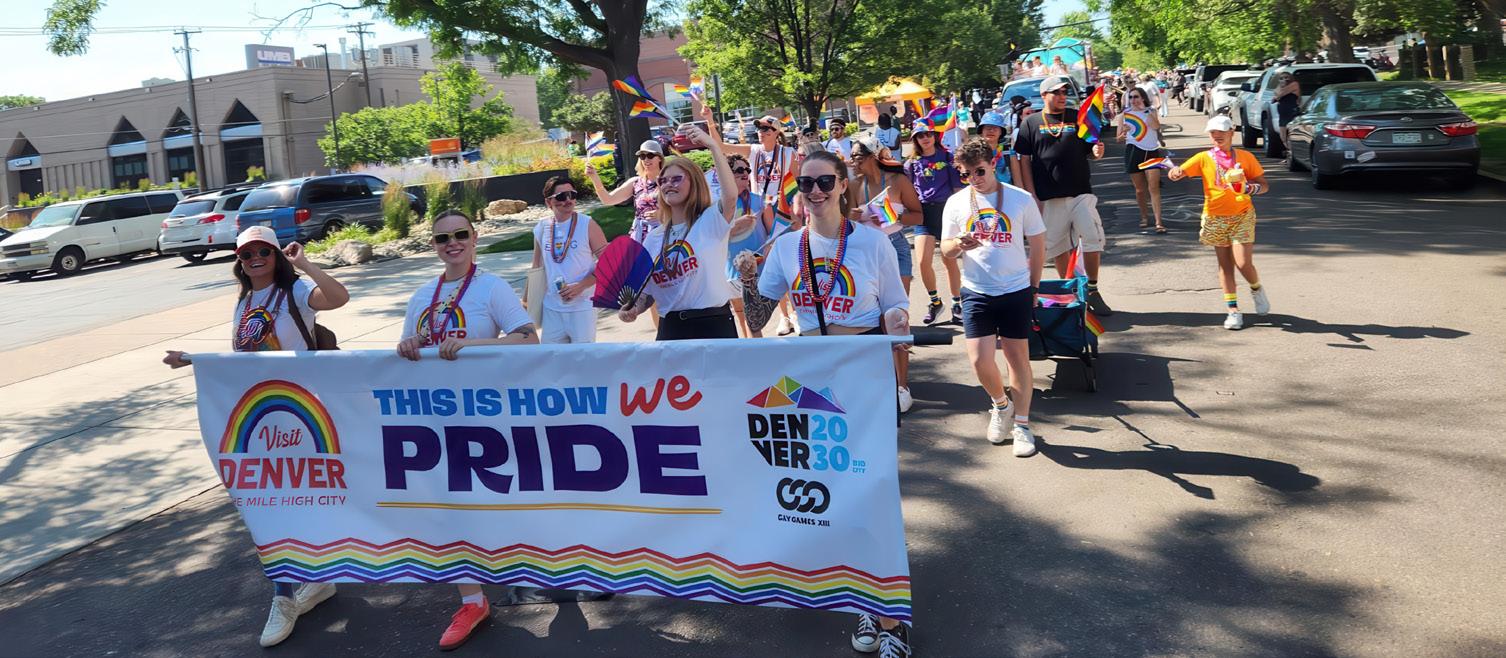
Visit Denver prioritizes the core values of diversity, equity and inclusion (DEI) in all of its operations and sales/marketing efforts. The DEI Board Committee, which was formed in June 2020, provides ongoing input for focus areas of internal policies/practices, community affiliations and support, social impact/work force development efforts and marketing efforts and programs.
With the engagement of Darrell Hammond, Sr., of Higher Ground Consulting, several DEI educational training courses for staff were conducted throughout 2024. All staff members participated in Outward Mindset workshops to gain more skills for interacting with clients, stakeholders and co-workers. In addition, staff recruitment efforts have increased the diversity among Visit Denver employees.
Based on opportunity areas identified by the 2021 DEI Perception Survey, staff-led Impact Teams researched and developed proposals for enhancing internal policies and practices, with the goal of enhancing DEI efforts. Visit Denver’s Board and leadership team have consistently embraced and guided this ongoing journey to enhance the organization’s DEI efforts.
The focus on DEI will remain as a constant thread, in 2025 and beyond, woven into the fabric of all things Visit Denver. There will be a focus on additional training and opportunities to keep an “outward mindset” top of mind through action and conversations, as well as continued work with the Board Committee and the DEI focus areas. This includes the organization’s official Commitment to Diversity, Equity and Inclusion:
The Mile High City welcomes everyone! We are committed to making the core values of diversity, equity and inclusion a way of life for our organization, our partners in the hospitality industry and our visitors.
At Visit Denver, we believe that travel makes the world a smaller and more connected place. It brings people together and fosters interaction among diverse cultures. It builds understanding, appreciation, empathy and respect for one another. This philosophy is essential to who we are as a community and why Denver is one of the top destinations in the country to live and to visit.
Denver celebrates its rich cultural heritage across our vibrant neighborhoods with attractions, restaurants, festivals and events throughout the year. Go to Diverse Denver, where you will find Visit Denver’s Accessibility Guide, Land Acknowledgment to support Indigenous people and more.
▷ Travel demand is strong nationally, despite fluctuating concerns about the economy. Longwoods International’s most recent American Travel Sentiment Survey shows that 94% of Americans have travel plans in the next six months, a figure that has remained stable in the last 12 months. Future Partners’ most recent State of the American Traveler (July 2025) shows increases related to confidence respondents’ personal financial situation and in travel spending.
▷ The Denver brand, which received a major refresh in 2023, along with a new logo in 2025, provides Visit Denver with a strong platform from which to market the city, both from tourism and convention standpoints, positioning Denver as “uplifting by nature,” an outdoor city full of urban exploration and sophistication.
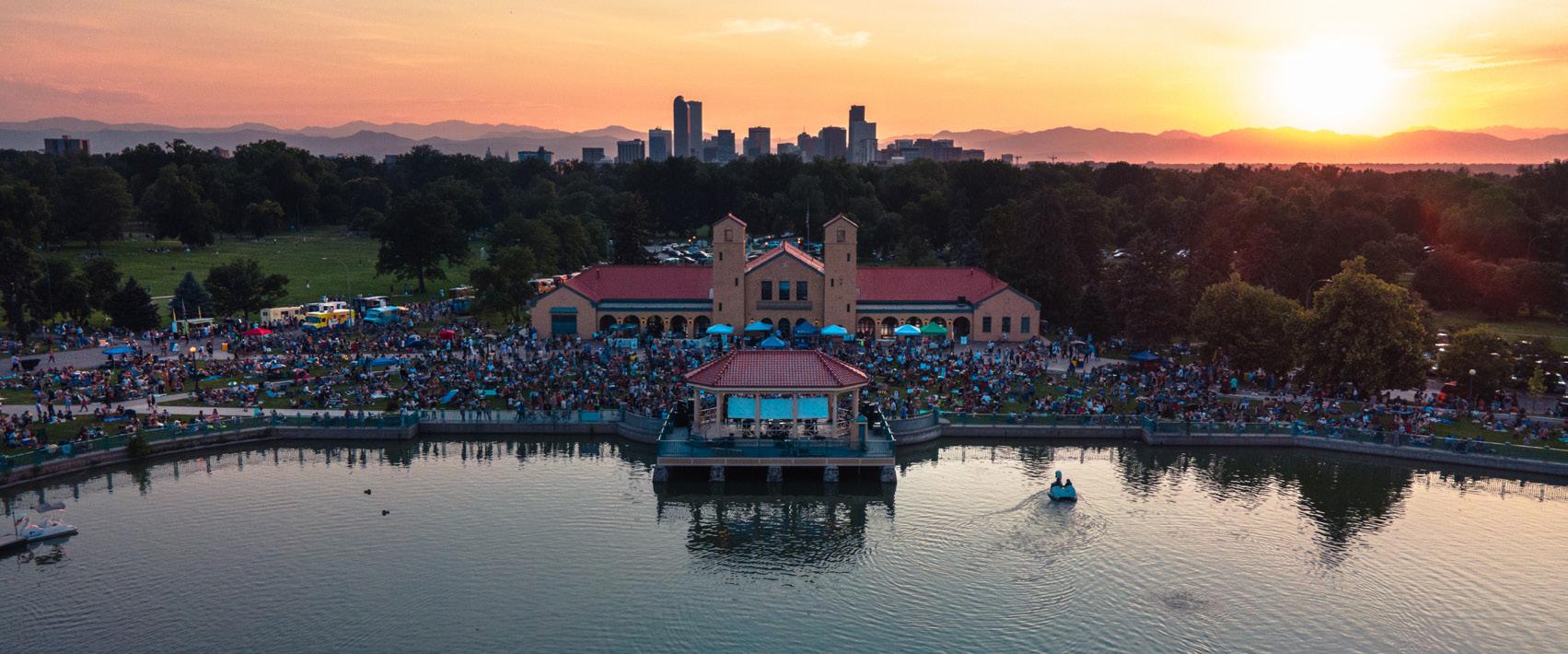
▷ Denver has a mild year-round climate, 300 days of sunshine and easy access to outdoor activities, both in the city and the nearby Rocky Mountains. This has been an important part of the brand in attracting visitors in the post-pandemic era with people who are seeking outdoor and less-populated areas to visit.
▷ Denver has a compact, walkable and vibrant downtown that is easily accessible and includes a wide array of amenities that are attractive to residents and visitors alike, including many options for entertainment, arts and culture, sports, dining, nightlife, retail and outdoor activities.
▷ The reopening of 16th Street, paired with Mayor Johnston’s new Downtown Safety Plan, has improved perceptions of downtown, though there is still much work to do.
▷ Smart use of marketing funds in annual regional and national tourism promotional campaigns, including advertising, public relations, social media and search marketing, will keep Denver top-of-mind for the growing domestic leisure travel market. This includes expanded national advertising in the first and fourth quarters, which are historically soft times for visitation from these segments.
▷ The Colorado Tourism Office is a strong partner of Visit Denver, providing additional domestic and international marketing support, which in turn drives additional visitation for Denver.
▷ A new 10-year Denver Tourism Roadmap, developed in 2024 and ratified by the Visit Denver board in December, will help guide the development of Denver’s tourism product for future years and help this organization focus on the top priorities. The plan, which contains seven high-level categories and dozens of individual initiatives, received input from more than 1,000 people including board members, industry representatives and Denver residents.
▷ The Tourism Improvement District (TID), launched in 2017, continues to generate funds to help maintain the nowcompleted Colorado Convention Center (CCC) expansion, attract meeting business and fund marketing initiatives.
▷ Per CoStar, at the end of Q1 2025, 1,554 rooms were under construction in the Denver Metro area. Upon completion, the new additions will increase Denver’s room inventory by 2.7%. The largest property underway in the central business district is the 241-room Virgin Hotel. Unfortunately for the last decade and a half, there has been very little development of hotels with sufficient meeting space which would allow Denver to benefit from the improved meeting demand.
▷ Denver is a central location for meetings, just 340 miles from the exact center of the Continental United States.

▷ Denver’s status as a regional capital gives the city a leg up in many areas, including dining, retail, arts and culture and sports, as well as with business, medicine, technology and financial services.
▷ Denver’s long-term prospects in the conventions market remain strong. Meeting lead volume continues to exceed 2019.
▷ The expansion of the Colorado Convention Center has greatly increased Denver’s competitiveness in the meetings sector, as shown by the performance to-date. Since opening, Visit Denver has secured 28 new citywide conventions that would not have been possible without the additional space. These bookings are projected to bring more than 176,000 attendees and generate over $430 million in economic impact.
▷ Denver International Airport (DEN) remains a central component of Denver’s success in both the leisure and meeting sectors. DEN is currently ranked as the fourth busiest airport in U.S. and the eleventh busiest in the world (latest figures available), due in large part to its strong domestic network and growing international connections.
▷ In 2024 international passenger traffic at Denver International Airport (DEN) grew by 15% year over year. In 2025, DEN added nonstop flights from Rome, Italy (United), Regina, Canada (United), Mexico City (United) and Monterrey (Volaris), Guadalajara and Monterrey (Aeromexico). These are expected to increase lift, but numbers will be available in 2026.
▷ The recently completed 39-gate expansion has also greatly enhanced DEN’s competitiveness and made the city more attractive, particularly to meeting planners.
▷ The A Line train from DEN to Denver Union Station, which launched in April 2016, provides an efficient option for transportation between the airport and downtown for both meeting planners and leisure travelers, and addressed one of the main complaints from meeting planners.
▷ Denver continues to maintain its position as a top city for “green” meetings and has won many awards and recognition for sustainability, including the first-ever destination to achieve platinum status under the Event Industry Council’s Sustainable Event Standards and Silver Member status with the Colorado Green Business Network.
▷ Denver has a highly regarded medical and bio-science campus at Anschutz Medical Campus, which enhances the city’s reputation as a center for medical meetings and serves as a pool from which Visit Denver can recruit ambassadors to assist in the sales process, as well as provide experts and speakers for related groups.
▷ Denver City Council’s 2016 approval of regulations and a taxing mechanism for short-term rental properties (e.g. Airbnb and VRBO) opened the door for partnerships with these providers and generated additional Lodger’s Tax.
▷ Denver has a growing reputation for its arts and cultural scene with world-class museums, performance venues such as the Denver Performing Arts Complex, blockbuster exhibitions, annual cultural events like the Denver Film Festival and the new Denver Jazz Fest. In addition, there are hundreds of arts and cultural organizations bringing creativity to the city and its neighborhoods, thanks in large part to the unique Scientific & Cultural Facilities District (SCFD) funding that was renewed in 2016 for 10 more years. Innovations like art installations in alleyways and non-traditional, immersive programming by Denver Center for the Performing Arts’ Off-Center programming also represent new ways to appeal to visitors.
▷ Denver Arts Week’s record-breaking participation in 2025, with more than 700 events and more than 250 participating cultural organizations, is proof of Denver’s cultural strength.
▷ Sundance Film Festival’s selection of Boulder and Colorado as the home for this iconic festival for the next decade will further bolster the region’s cultural reputation.
▷ The city’s many tourism, sports, entertainment and cultural-related organizations have been very successful in the last several years in attracting high-demand events, exhibitions and festivals, bolstering the city’s already robust events calendar. Visit Denver’s continued involvement in attracting these events will be an ongoing asset.
▷ Denver celebrates its rich ethnic diversity, including its Black heritage, Hispanic/Latino population, Indigenous communities and its engaged LGBTQ+ community, as well as an expanded focus on people with disabilities, through a wide variety of events, attractions and restaurants.
▷ Visit Denver’s board committee on Diversity, Equity and Inclusion continues to evaluate Visit Denver’s practices, from staffing to marketing, in an ongoing effort to ensure the city’s wide diversity is always represented. A consultant hired in 2021 continues to drive this process.
▷ Visit Denver’s website allows the Bureau to effectively reach visitors across devices and with timely, engaging content. An expanded social media effort, including enhanced social media advertising and increased use of video, is also crucial in communicating with visitors.
▷ Visitors to Denver now have two attraction pass options offering discounted admissions to top attractions. The Denver CityPASS launched in 2018, offers tickets to three, four or five of the eight participating attractions, and the Mile High Culture Pass is a three-day pass providing admission to nine of Denver’s top cultural attractions. The Mile High Culture Pass was relaunched in 2022, and both are selling well.
▷ Denver has a robust culinary reputation that was strengthened in 2023 with the announcement of the Michelin Guide and in 2024 with a national James Beard Foundation award for the Id Est Hospitality Group, operator of two of Denver’s one-star Michelin restaurants. Michelin is the global standard of restaurant reviews, and the launch of Denver’s program has immediately elevated the reputation of the city’s dining scene with domestic visitors, meeting planners and international travelers. The program has a three-year contract term with an option for two additional years.
▷ Denver is known as the country’s leading craft brewing city with more than 130 breweries metro-wide. Additionally, the city is becoming increasingly known for its burgeoning craft distilling culture and innovative wineries.
▷ The Denver metro area has extensive parks and open spaces, nearly 80 golf courses and more than 850 miles of bike paths, underscoring the city’s outdoor brand.
▷ Denver has seven professional sports teams and modern facilities.
▷ The Denver Summit FC, the newest team in the National Women’s Soccer League, will begin playing in Denver in 2026 and will move into their own stadium in 2028 (estimated). Their addition to the market will strengthen Denver’s reputation as a sports fan’s paradise.
▷ The strength of the Denver Sports Commission in identifying, securing and servicing high-value, highimpact sporting events, both professional and amateur, puts Denver in a good position to grow its sporting event footprint.
▷ Red Rocks Park & Amphitheatre hosted a full calendar of concerts, films and fitness events in 2025, with more than 200 total events, extending its season into November and reinforcing the city’s reputation for live music, culture and fitness.
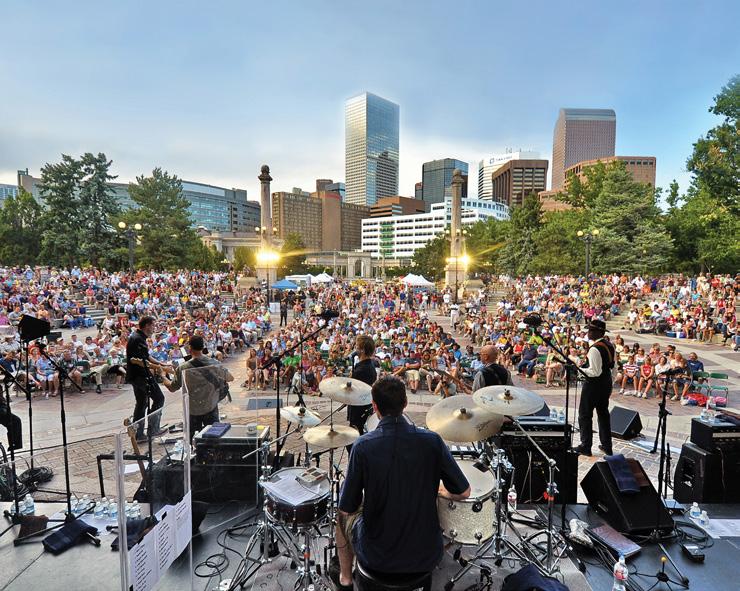
▷ Live music in Denver continues to achieve national recognition with the continued success of the Mission Ballroom in RiNo, the impressive (and largely free) concert calendar at Levitt Pavilion, as well as other smaller venues, especially outdoor ones like Number 38. The success of Denver-based bands OneRepublic, the Lumineers, Nathaniel Rateliff & the Night Sweats and others also aid in this effort.
▷ Denver has a rich Western heritage that is associated with the Rocky Mountain West and anchored by one of the world’s most prestigious livestock shows, the National Western Stock Show & Rodeo. In 2015, voters approved funds for the development of a new National Western Center that is intended to be a year-round destination that will engage local visitors and promote out-of-state tourism in collaboration with partners such as Western Stock Show Association, Colorado State University System, the Denver Museum of Nature & Science and History Colorado.
▷ Denver has a variety of authentic, lively and growing neighborhoods filled with unique restaurants, shops, cultural/historical attractions and parks. Shopping at local merchants is particularly important to international visitors.
▷ Denver’s outdoor brand is supported by the continued development and activation at Civic Center Park, including concerts, events and the Civic Center EATS food truck roundup in the summer.
▷ The Amtrak Winter Park Express ski train offers seasonal, weekend rail service from Denver Union Station to Winter Park Resort, creating an option for skiers to stay at least one night in Denver. The service will return for the 2025/2026 season with expanded frequency and reduced fare prices, delivering a win for visitors and locals alike.
▷ The introduction of the Rocky Mountaineer luxury train from Denver to Moab, Utah adds another high-demand, rail-based option for visitors to experience the West by train. The service will expand in 2026 with the addition of a Denver-to-Salt Lake City product under the new brand name, Canyon Spirit.
▷ Denver offers a wide variety of pre- and post-convention vacation opportunities, as well as leisure day trips in the nearby Rocky Mountains.
▷ Denver has a growing inventory of innovative tours, such as culinary, brewery and walking tours, as well as new virtual options, which increases Denver’s appeal to leisure travelers, both domestically and internationally.
▷ Mayor Johnston has shown himself to be a major supporter of tourism in the first year of his administration, attending many Visit Denver events and press conferences.
▷ Denver is one of the most geographically isolated major cities in America, with a relatively small population within a 600-mile radius, thus generating less drive traffic for tourism and conventions.
▷ Denver is overly dependent on air traffic, with 40% of visitors arriving by air (according to 2024 data from Longwoods), significantly higher than the national average of 24%. This makes the city particularly vulnerable during this period with high gas prices that may cause people to travel closer to home.
▷ There is a misconception that Denver is cold, snowy and has unpredictable weather.
▷ Denver is not as well-known as some major U.S. cities with more long-standing tourism brands.
▷ Denver currently has less recognition for offering unique regional cuisine or specialty cooking than other cities, though the addition of the Michelin Guide has helped alleviate this to a large degree.
▷ The average number of weekday office workers downtown is still only around 65% of pre-pandemic numbers according to July 2025 data from the Downtown Denver Partnership, which impacts the viability of supporting local businesses and the overall vitality of downtown. This number does reflect a 5% increase over June.
▷ Year-to-date, the average number of total daily users in downtown is approximately 216,785, which is slightly higher than the same period in 2024 (215,255). This figure represents 86% of the 2019 total daily visits downtown.
▷ Though much progress has been made, visitors and meeting planners continue to share safety concerns on 16th Street and in surrounding areas, noting multiple closed businesses and boarded-up storefronts, aggressive panhandling and people experiencing homelessness. That said, meeting planners have given Denver better marks on safety concerns in surveys this year.
▷ Downtown Denver lacks major retail on or near 16th Street, a trend that was further exacerbated by COVIDera closures and the reconstruction project. To combat this, the City and Downtown Denver Partnership have embarked on a major effort to attract and incentivize new retailers.
▷ Denver has fewer nonstop international flights compared to many other large U.S. cities, though that number has increased substantially in recent years. Recently however, Air France has reduced capacity on their Paris to Denver flights, though flight frequency has not changed. Turkish Airlines has also dropped plans to add more flights between Istanbul and Denver. Note: Denver is not the only city that these airlines are reducing service to.
▷ Traffic congestion issues exist on I-70 to and from the mountains, especially on weekends.
▷ There is limited public transportation to many of the city’s top neighborhoods, attractions and shopping centers.
▷ There are negative perceptions of Denver’s elevation, including that it can adversely impact a visitor’s stay.
▷ Construction on I-70 and at DEN is greatly increasing traffic congestion from the airport to downtown and creating longer wait times to check in.
Strengths, Weaknesses, Opportunities & Threats
▷ The expanded Colorado Convention Center, which opened in December 2023, allows Denver’s convention and exhibition facilities to stay competitive for years to come. The TID will also provide additional marketing funds, further ensuring the city’s competitiveness in leisure and meetings markets.
▷ The upcoming of signature industry events such as the 2028 Meeting Planners International’s World Education Congress and the 2029 U.S. Travel Association’s IPW will create tremendous business opportunities for Denver far into the future.
▷ The 16th Street project will be fully completed in 2025. The new street will be a focal point for visitors and residents alike, with wider sidewalks, more and larger outdoor patios, an expanded tree canopy and a more consistent bus configuration.
▷ The initial $100 million investments proposed under the expanded Downtown Development Authority (DDA) will bring transformative projects to downtown. The DDA could bring as much as $550 million in new investment to the area over 10 years.
▷ Mayor Johnston’s proposed $950 million Vibrant Denver bonds could enhance city infrastructure and amenities for years to come,
▷ A proposed new headquarters hotel near the CCC, though far off, could dramatically increase the city’s capacity to host large conventions.
▷ The Downtown Denver Partnership’s funding plans to help businesses on 16th Street could contribute to the revitalization of the street.
▷ The renovation at DEN of the Great Hall, ticketing and security areas will improve safety, make the airport more efficient and elevate the passenger experience when complete.
▷ Visit Denver will continue to work with DEN to maintain existing air service and pursue additional nonstop flights to tap un-served and under-served destinations in target markets including Europe, Asia, Oceania and South America. DEN added nonstop flights from Rome, Italy (United), Regina, Canada (United), Mexico City (United) and Monterrey (Volaris), Guadalajara and Monterrey (Aeromexico). These are expected to increase lift, but numbers will be available in 2026.
▷ On-going marketing initiatives, particularly the expanded Winter Campaign that targets Colorado resort intenders, are poised to take advantage of the consistent interest in Denver’s urban appeal.
▷ Visit Denver’s already strong track record in promoting the city’s inclusive communities to diverse audiences will be strengthened in 2026 with the continued operation of the Diversity, Equity and Inclusion Committee and expanded content for multiple diverse markets on the VisitDenver. com website.
▷ Temporary exhibitions at Denver’s cultural attractions have continued throughout the pandemic and provide time-specific marketing opportunities while also enhancing Denver’s reputation as a city that embraces arts and culture. Exhibitions like History is Painted by the Victors and Pissarro’s Impressionism at Denver Art Museum; Angkor: The Lost Empire of Cambodia and Jurassic Oceans: Monsters of the Deep at Denver Museum of Nature & Science; and many others at Denver’s museums will continue to highlight the arts and culture scene into 2026.
▷ The potential hosting of large sporting events like a proposed Indy Car race, 2030 FIFA Women’s World Cup and Rugby World Cup (Men’s in 2031; Women’s in 2033) present opportunities for new business and to raise the city’s international profile.
▷ Visit Denver’s Denver365 events calendar is a key resource and promotional platform for visitors and locals alike, and emerging competitive advantage as events become more important in promotional strategies.
▷ Brand USA’s website content and cooperative advertising and marketing programs offer ways to reach travel trade and consumers in international markets in a cost-effective way.
▷ U.S. Travel Association’s continued advocacy around visas and improvements to the entry process for international travelers improves perceptions of the U.S. as a travel destination, which continues despite other headwinds confronting this segment.
▷ Strong leadership at the City’s Office of Special Events helps ensure that large events are handled smoothly with more streamlined processes.
▷ The Michelin program has given Visit Denver an expanded platform to market its culinary scene to domestic and international visitors, as well as meeting planners and attendees.
▷ The Downtown Denver Partnership’s retail strategy for 16th Street could provide a big boost to the area’s shopping amenities.
▷ Denver’s overall mild climate could be an asset in coming years when compared to other parts of the West.
▷ Denver and Colorado’s central role in vital water issues in the U.S., and particularly the West, could create opportunities for hosting new conferences and businesses related to this critical topic.
▷ Visit Denver’s new workforce promotion efforts could help attract more workers to an industry that still struggles with reputation and still has hiring challenges.
▷ Visit Denver’s new outreach efforts to local realtors and other influencers to provide information on Denver’s vibrant events calendar could help continue to improve the reputation of central Denver across the metro area.
▷ The advent of Generative Artificial Intelligence engines presents a generational opportunity for Visit Denver to create new content that is referenced by these new tools that enhance existing web search efforts and continue to offer valuable resources to potential visitors.
▷ The short- and medium-term prospects of a recession/ economic downturn could negatively impact tourism both domestically and internationally. The impact on the industry is not known, but the prospect alone is enough to be cautious.
▷ The City of Denver is dealing with a $250 million budget shortfall through the end of the next fiscal year, leading to an estimated 12% budget cut, furloughs and layoffs.
▷ Brand USA’s budget was recently cut from $100 million to just $20 million, which will impact the country’s ability to remain competitive in international markets, as are the impacts of the current Federal shutdown.
▷ The entire hospitality industry is struggling to fill open positions. New headwinds make it difficult to find qualified workers include competitiveness with other industries, reputational issues with the leisure and hospitality sector, health and safety concerns, childcare challenges and affordable housing.
▷ University-level leisure and hospitality programs are experiencing lower enrollment across the country, which could lead to future challenges in filling key industry workforce roles.
▷ Work-from-home policies have led to a slower-thanexpected return of the downtown Denver workforce, which has contributed to the shutting of many downtown businesses that serve this market, including food service and retail. Visit Denver is part of several initiatives with the City, local businesses and related agencies like Downtown Denver Partnership to try and address these issues on multiple fronts.
▷ Denver’s restaurant industry seems particularly at risk right now due to a combination of high wages, rents and food costs paired with more caution on the part of consumers and a diminished number of downtown workers. Visit Denver, along with DEDO, has hired a restaurant industry consultant to better understand these issues and make recommendations to the City.
▷ The 1,500-room Gaylord Rockies in Aurora is a top source of lost business for Denver over the long term. The Gaylord Rockies has submitted plans to the city of Aurora that call for adding 450 rooms and a 47,000-square-foot indoor addition to its water park. The expansion would increase the hotel’s capacity from 1,501 rooms to 1,950 rooms.
▷ Several major convention centers across the U.S. have recently, or are currently undergoing significant expansions or renovations, including the George R. Brown Convention Center in Houston, the Kentucky Exposition Center in Louisville, the Los Angeles Convention Center and the Las Vegas Convention Center. The Orange County Convention Center will begin a $560 million expansion in 2026, and the Austin Convention Center is set to nearly double in size by 2029, while the Kay Bailey Hutchison Convention Center in Dallas is undergoing a massive, $3.7 billion renovation and expansion project, also by 2029.
▷ Across the country, many cities, led by their Destination Marketing Organizations, are adding Tourism Improvement Districts to bring in new funds that can increase their competitiveness and act as a war chest to incentivize meetings and events to their markets.
▷ New hotel supply coming online in the metro area will slow the pace of recovery, especially in the meeting and convention sector.
▷ Perceptions of the impacts of construction and traffic congestion, by both locals and visitors, could negatively impact the city’s appeal.
▷ Despite some gains, there are continued safety issues on and near 16th Street that create an ongoing possibility for negative press, as well as the potential for lost business as more high-profile incidents become public.
▷ Once frequently cited by U.S. News as a top place to live (No. 14 last year in 2021 and No. 40 in 2024), Denver did not make the list of the top 250 places to live in the most recent report.
▷ Increased competition exists from a variety of traditional web, mobile and social media sources within both the leisure and meetings outlets.
▷ Online booking options enable meeting delegates to easily find lower rates and book outside the block, and new options like short-term rentals further erode hotel room blocks.
▷ Ongoing competition from third-party travel and meeting planning websites challenges the relevance of DMOs.
▷ There is always potential for new local, statewide or national legislation or ballot initiatives that could have a negative impact on tourism.
▷ Denver residents’ frustration with growth and traffic could be transferred to anti-tourism feelings, leading to a reduction in local and state tourism marketing dollars.
▷ Visit Denver’s success is tied to measurements that may not truly reflect business. Convention room blocks are decreasing due to delegates booking outside the block, so attendee counts and room nights booked are frequently lower than actual numbers. New measurements may be needed to accurately provide a picture of tourism business in the 21st century.
▷ Climate changes in general, and worsening fire conditions across the west in particular, could make wildfires and wildfire-related poor air quality conditions a more frequent issue for Denver and the state.
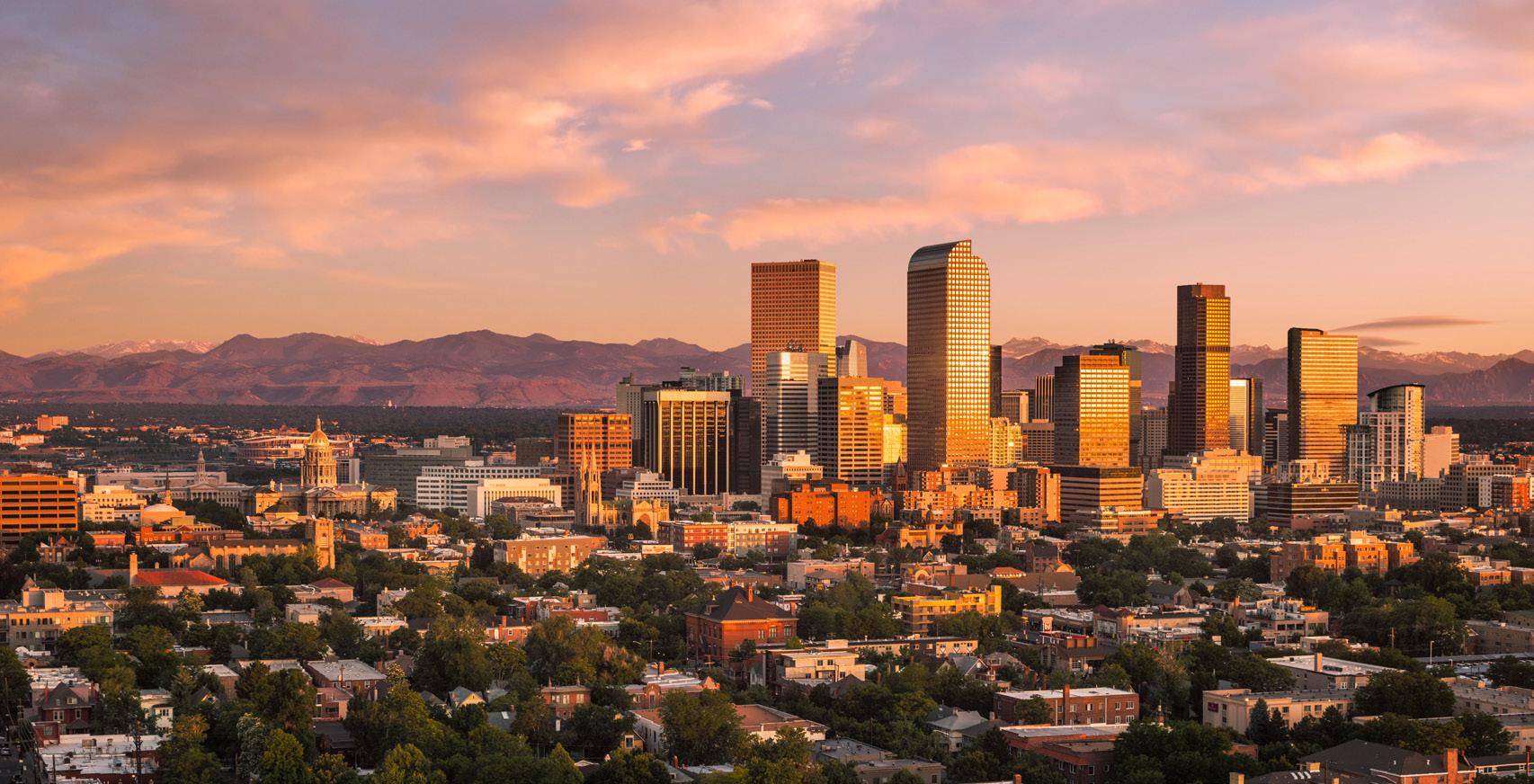
Denver’s appeal rests on a strong brand foundation that combines outdoor adventure and urban amenities. This section will explore how the current brand positioning was developed, and how it will be deployed in 2025 and beyond.
Visit Denver regularly conducts brand awareness research to gauge the current perceptions of the Denver brand in key regional and target markets.
The 2023 research was conducted by Denver-based BrandJuice, the same firm that conducted earlier studies in 2005 and 2013 from which the previous brand positioning was derived, providing continuity for the development of Denver’s brand.
The research showed a significant expansion of positive brand attributes, as well as some unexpected findings, which has provided the basis for Visit Denver’s campaigns for 2024 and beyond.
Travel continues to be a sought-after activity, and the reasons for taking trips shifted dramatically as people looked to meet up with loved ones much more frequently post-pandemic. Rather than escape or adventure as primary motivators, travel is now defined by the idea of reconnecting and doing so in new places. Campaigns to be implemented in 2026 will take advantage of this trend and make Denver generally more welcoming and inclusive.
A strong correlation exists between Denver and the Rocky Mountains in the minds of many respondents, often referred to as “Denver’s Duality.” The single most important icon for Denver is the Rocky Mountains; the city and its mountain backdrop are inextricably linked.
Denver’s urban qualities were put into a new perspective, with particular emphasis on the previous use of the phrase, “urban adventures,” which was somewhat off-putting and not believable, particularly among long-haul audiences and residents of larger cities like New York and Los Angeles.
Denver’s welcoming and open-minded spirit was reinforced as a key brand differentiator.
Denver’s western history was highlighted and also brought into modern times with qualities of entrepreneurship and collaboration.
Uplifting by Nature
Denver is a vibrant outdoor city at the base of the Rocky Mountains with natural energy that heightens every moment.
Known for crisp mountain air, sunshine and expansive blue skies, it’s a destination of discovery that thrives in the beauty of every season — offering an escape that uplifts and invigorates travelers with every visit.
1 2 3 4 5 6 7 8
Vibrant, contemporary atmosphere with an open-minded community that embraces visitors
300+ days of sunshine to enjoy panoramic natural beauty and the allure of every season
Exciting array of attractions and activities for visitors of all ages (arts, culture, shopping)
Creative, contemporary dining scene (including fine dining, “foodie” hangouts, craft breweries, cocktail lounges and urban wineries)
Walkable, safe environment that encourages exploration and discovery of eclectic neighborhoods
Outdoor activities and adventures, both in the city and the nearby mountain playground
Welcoming city for family-friendly fun, providing a variety of opportunities for education and play
Dynamic destination for all types of events and entertainment in one-of-a-kind venues
▷ Travelers who have been to Denver agree that there is a combination of factors that make the city great, but they struggle to articulate one singular selling point.
▷ Defining clear differentiation from this kaleidoscope of elements can ensure Denver’s appeal as a standout destination is more immediately recognized and understood.
▷ Denver is “the best of both worlds,” offering the amenities of the city with the outdoor setting of a mountain town.
▷ While the idea of an “Outdoor City” resonates, more can be done to define what it means to get outdoors within city limits.
▷ Denver’s 300 days of sun are a surprise to travelers who often associate the city with winter.
▷ To sway winter-weary travelers, the brand should explore interesting ways to position the city as a year-round destination.
▷ The rising cost of living and proximity to expensive resorts has created a perception that Denver is an expensive destination, but visitors don’t find this to be true.
▷ In terms of cost, the brand must show the value it offers to help attract new visitors.
▷ Travelers, at best, believe the phrase “urban adventure” makes sense paired with “Outdoor City,” but, at worst, they don’t believe it is a true or desirable description of Denver compared to other cities.
▷ Removing “Urban Adventure” from the strategy is the first step to repositioning Denver as a destination.
▷ To deliver on travelers’ desires to experience new places and different cultures in a unique way, the brand should consider leaning into the spirit of Denver’s wild west roots to create an authentic sense of local culture within the city.
▷ Former Denver visitors believe that the city has something for everyone, while those unfamiliar think of it as an adultonly destination.
▷ To deliver on Denver being a destination for groups of all ages, the brand pillars and messaging should reference more family-friendly attractions.
▷ Red Rocks and seven professional sports teams make Denver an event destination for both regional and national travelers to get away for a long weekend.
▷ The brand should further leverage the appeal of Denver’s events to attract travelers from across markets and spur repeat visits.
Attracting tourists to visit Denver for their vacation — whether as a stand-alone Denver trip or as part of a larger Colorado visit — requires a combination of tactics. Regardless of whether the visitor is from a long-haul target market (e.g., Chicago, New York or Los Angeles), a regional market (e.g., Kansas City, Cheyenne or Albuquerque) or international markets, the decision to come to Denver begins with the city’s brand appeal.
Visitors may make their final decision to come to Denver based on a variety of factors, including short-term exhibitions, special events or the use of Denver as a base for day trips, but the choice to spend time in the city depends first and
• Geographic focus: Colorado (excluding Denver metro) and regional markets
• Main goal: appeal to travelers’ specific interests they can find in Denver, including outdoor adventure, live music, dining and more
• Timing: February–October

• Geographic focus: Colorado (including Denver metro) and regional markets
• Main goal: retail, based on availability of events, exhibitions and performances related to winter holidays including the Mile High Tree and the Mile High Drone Show
• Timing: October–December
foremost on the emotional appeal created by exposure to Denver’s brand.
As the brand research study confirmed, Denver’s appeal as an active, vibrant outdoor city drives interest to visit and likely precedes investigation of specific things to do.
The year-round popularity of the city, combined with an evergrowing list of festivals, events, exhibitions and performances throughout the year, allows marketing campaigns to promote the city 12 months a year. All campaigns have the same goal: to bring more visitors to Denver. Specific tactics and markets change with the individual campaign. Here is a summary of 2025 national and regional campaigns, which are discussed in more detail in the Tourism section of this report:
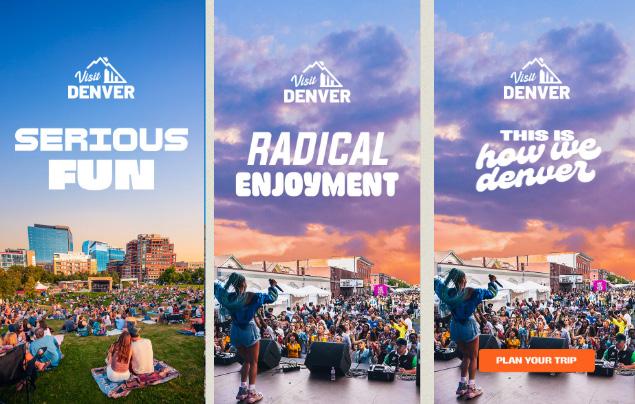
• Geographic focus: large target markets (NYC, Chicago, LA, Dallas and Houston) with smaller test markets (Austin, Orlando, Detroit, Phoenix and others), national overlay
• Main goal: create inspiration through interestbased branding; encourage further research
• Timing: April–August
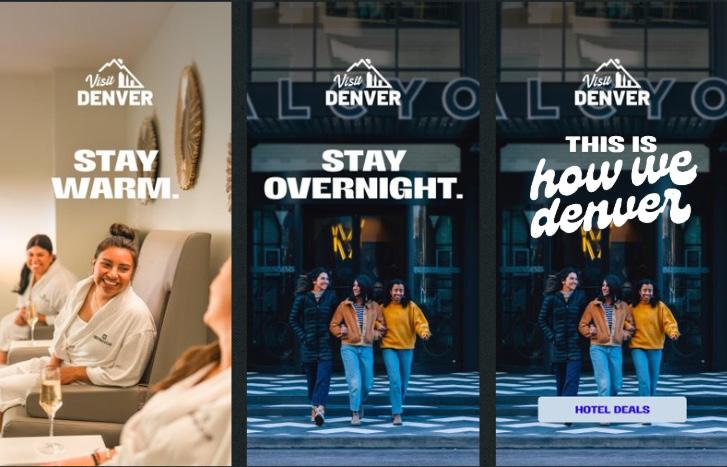
• Geographic focus: National; audience is behavioral, as well as geographic, focusing on interest in outdoor activities and winter vacation intenders
• Main goal: encourage Colorado winter vacationers to stay overnight in Denver before heading into the mountains
• Timing: January–March, October–December
Denver is consistently regarded as a top-tier convention city, offering the essential attributes meeting planners seek: state-of-the-art facilities, a strong hotel package, convenient accessibility, affordability, exceptional service, and a reputation for safety.
To build on this foundation, the sales team can consistently emphasize these strengths while also highlighting Denver’s broader destination appeal. Research shows that “destination appeal” and the ability to attract attendees are among the most important factors for meeting professionals when selecting a city.
Recognizing that meeting professionals have limited time and high demands, Denver’s convention marketing has been retooled to meet them where they are—delivering updates in short, engaging, visually compelling formats, often through digital platforms and innovative offline channels.
Ultimately, Denver’s messaging strategy balances functional strengths with emotional appeal. While the city’s meeting infrastructure and services remain at the core of sales conversations and collateral, advertising and branding efforts focus on creating a strong emotional connection, positioning Denver not just as a functional choice, but as a destination that inspires attendance and delivers memorable experiences.
Therefore, Denver’s advertising messages in the convention market strive to establish an emotional connection with the customer. The city’s “functional meeting attributes” are reinforced, especially in interactions with salespeople and in collateral; however, it is critical to create a balance between emotional appeal and functional attributes.
The following pillars are used to support the Denver Convention advertising campaign:
▷ Accessibility
▷ Affordability
▷ Meeting Facilities
▷ Hotel Packages
▷ Service
▷ Sustainability
▷ Destination Appeal/Safety
The conventions campaign also has components dedicated to the Colorado Convention Center and its recent expansion.
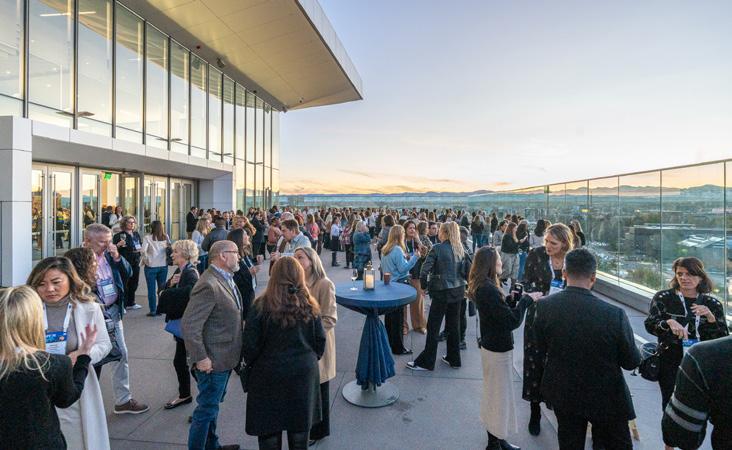
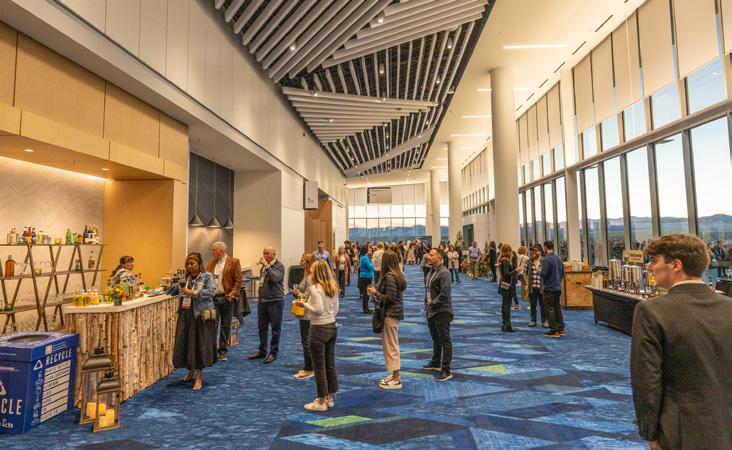
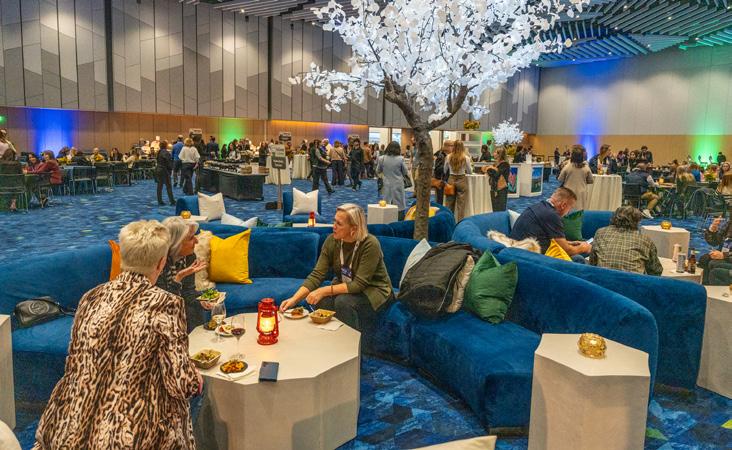
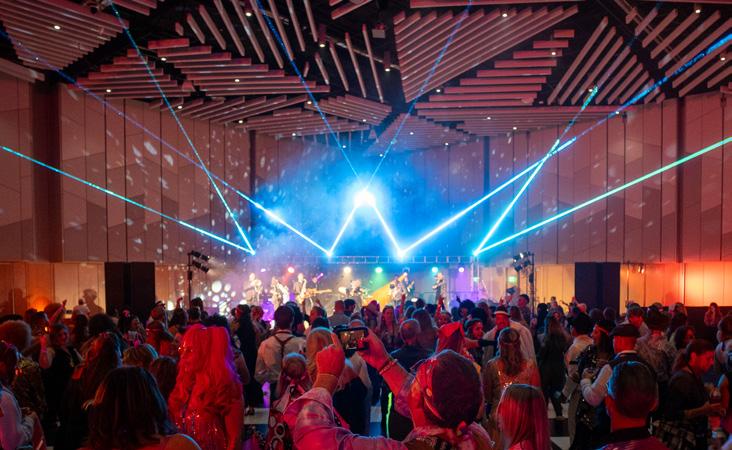
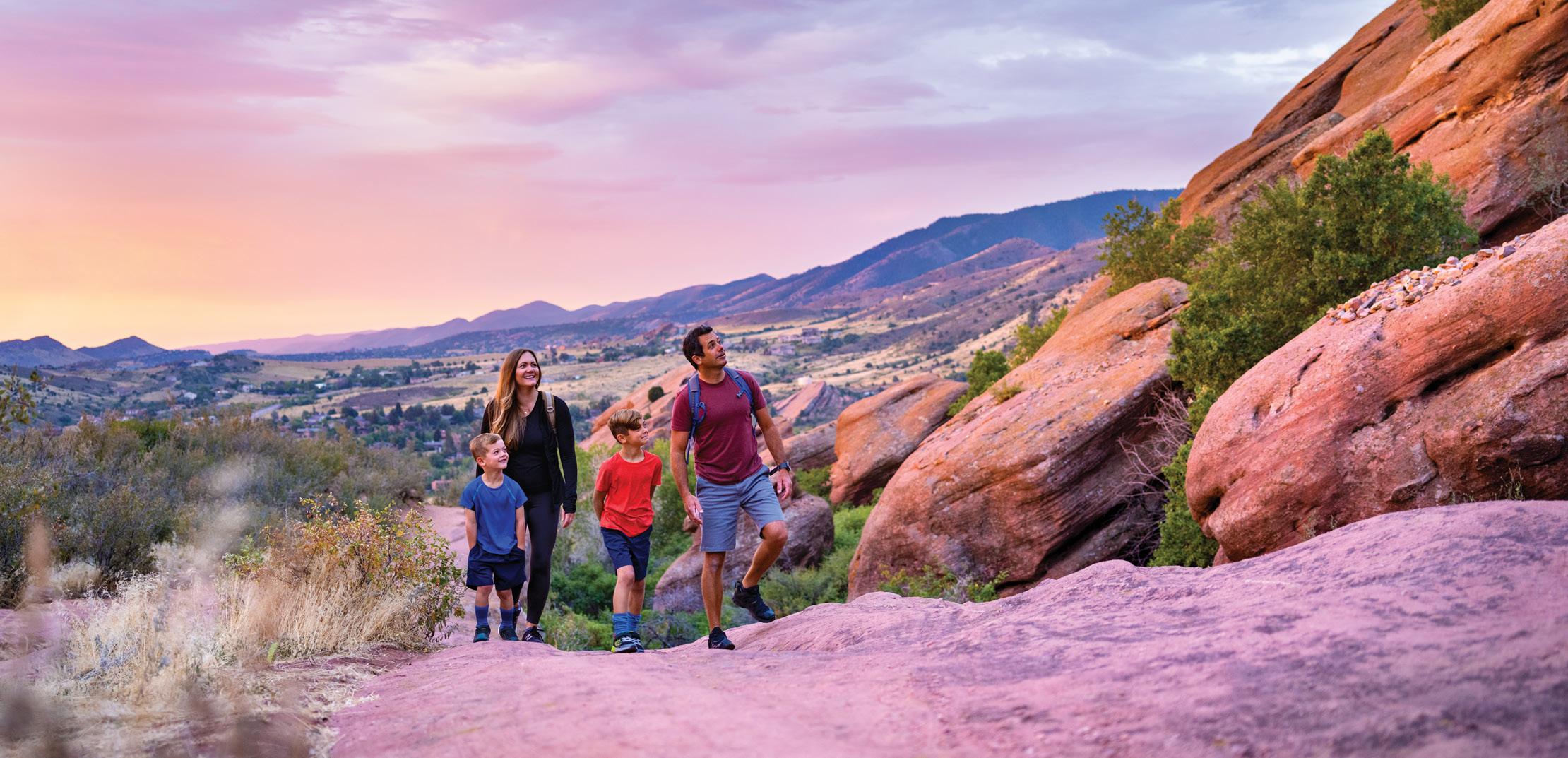
Denver’s appeal rests on a strong brand foundation that combines outdoor adventure and urban amenities. This section will explore how the current brand positioning was developed, and how it will be deployed in 2025 and beyond.
Denver is a SOUGHT-AFTER DESTINATION: In April 2024, Google revealed its top 20 destinations that travelers have taken an interest in for warm weather getaways, with Denver ranking No. 17. TODAY reaffirmed this in April by naming Denver one of the best spring break destinations in 2025. Travelocity cited Denver as one of the top five most popular family vacation destinations for spring and summer travel, and TODAY echoed the sentiment, declaring Denver in the top five sought-after destinations from July through September in June 2023. Men’s Journal’s 2024 Travel Awards highlighted the “50 Best U.S. Vacation Destinations,” where Denver took the No. 25 spot. Similarly, Kayak and Allianz Partners both named Denver one of their top summer travel destinations for 2024. This follows Time Magazine including Denver in their list of the World’s 100 Greatest Places in July 2021. TravelPulse named Denver one of the top “3 Best U.S. Destinations for 2022” thanks to its metropolitan offerings – from fine dining to cultural experiences – as well as 300 annual days of sunshine and proximity to the Rocky Mountains.
Additionally, the Colorado Division of Aeronautics Awards Program recognized Denver International Airport (DEN) as the 2023 Colorado Airport of the Year. In 2024, Denver International Airport set a new record serving 82,358,744 passengers. DEN was named the Overall Winner at the Routes Americas 2025 Awards, as well as triumphing in the Over 20 million Passengers category in February 2025. In
April 2025, the Airports Council International ranked DEN as the third busiest airport in North America for the fourth year in a row and the sixth busiest airport in the world for the second year in a row.
Denver is CULTURED AND CREATIVE: With a robust arts and culture scene, Denver is earning more acclaim as a destination for the arts. In December 2022, Clever ranked Denver among the top 20 best cities in America for its unique culture and identity. After undergoing a $175 million renovation/addition project, the Denver Art Museum was named to Condé Nast Traveler’s “Best New Museums in the World: 2022 Hot List.” Esteemed architecture also makes Denver stand out as a destination with locations like Union Station, which was ranked No. 9 by Time Out’s list of “The 21 Most Beautiful Train Stations in the U.S.” in April 2023. Denver also ranked No. 10 in the June 2023 USA TODAY 10Best Readers’ Choice travel award contest for “Best City for Street Art,” and in February 2025, River North (RiNo) Art District was ranked No. 9 in the country in USA TODAY’s “10 Best Art Districts.” Denver continues to be a top location for musicians and music lovers with hundreds of venues across the city. The iconic Rolling Stone Magazine noted Red Rocks Park and Amphitheatre as the No. 1 “Hottest Music Venue in the Country” in April 2023. In December 2024, Billboard Magazine named Red Rocks Amphitheatre the most attended amphitheater in the world and the most attended outdoor venue in the United States.
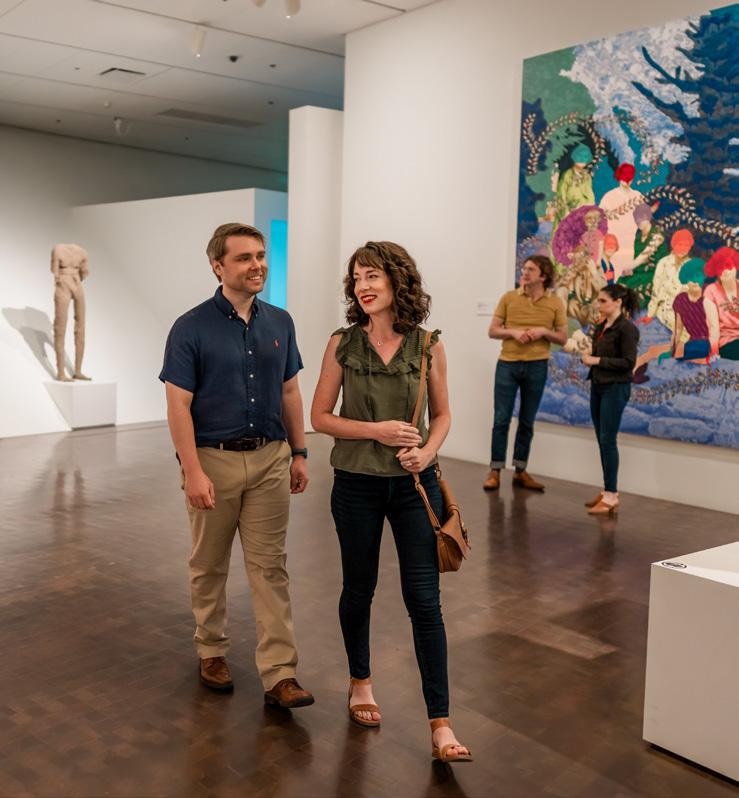
Denver is an AFFORDABLE DESTINATION: Travel + Leisure ranked Denver as the “Most Affordable Solo Vacation Destination” in June 2024. This is not new, as the year prior, Denver was ranked among “The 18 Cheapest Places to Travel in 2023.” In January 2024, Travel + Leisure also declared Denver the No. 1 city on their list of “20 Cheapest Places to Travel Around the World in 2024.” Thrillist supported this view by ranking Denver among the most affordable destinations for summer 2024 vacations, and in 2024 Kayak named Denver one of its top summer travel destinations, based in part on the affordable airfare.
Denver is a CONVENTION CITY: The Events Industry Council (EIC) announced in early 2025 that Visit Denver achieved PLATINUM Level certification to the EIC Sustainable Event Standards for the second year. Denver is the first destination to achieve the highest level of certification. The EIC Sustainable Event Standards are specific standards for environmental and social responsibility within the events industry. Created by the EIC Sustainability Committee in partnership with industry professionals and leading sustainability practitioners, the requirements provide event planners and suppliers with prescriptive actions for producing and delivering sustainable events.
With four hotels on Cvent’s Top 100 Meeting Hotels list and nearly 13,000 hotel rooms downtown, Denver is a top tier convention city. Cvent also named Denver as a top 10 North American meeting destination for 2024. In 2023, they ranked Denver No. 10 in the “Top 50 Meeting Destinations in North America,” noting the destination as a top choice for event planners worldwide. That distinction was reaffirmed in May 2025 when Denver was named the No. 10 “Top Meeting Destination in North America.” In March 2025, Visit Denver was recognized as “Convention & Visitor Bureau (CVB) of the
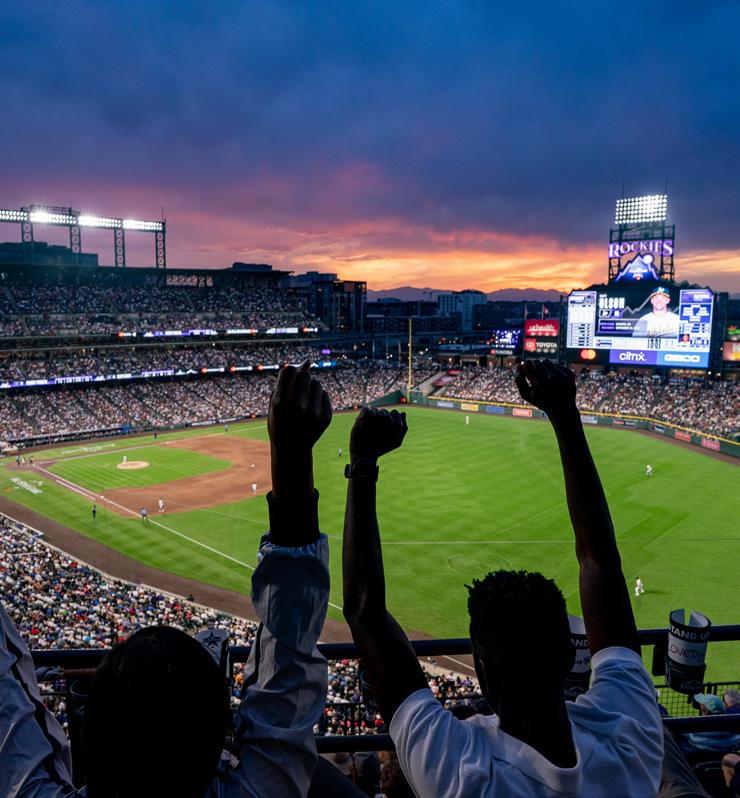
Year” by ConferenceDirect and acknowledged as the “BEST Convention & Visitors Bureau to work with.” Additionally, in October 2024, Meetings Today named Visit Denver one of the best CVB’s/DMO’s in the West. They also named the Colorado Convention Center (CCC) one of the best convention centers in the United States. Denver is one of 13 of the country’s top 25 markets that has already recovered to pre-pandemic volume, according to the Knowland Q3 Performance Index in 2023.
Denver is a SPORTS CAPITAL: In 2026 Denver will be home to seven professional sports teams and countless personal sporting and recreation opportunities. The seventh addition will come with the Denver Summit FC begin play in the 2026 season as the National Women’s Soccer League’s (NWSL) 16th franchise. Following the success of The Colorado Avalanche in 2022 winning the NHL Stanley Cup, The Denver Nuggets won their first NBA Championship in 2023 led by now threetime MVP, Nikola Jokić. Denver was a proud host of rounds one and two of the 2023 and 2025 NCAA March Madness tournaments, the 2023 National Cycling League Cup Series, the USGA U.S. Amateur Championship, the 2023 USGAA Finals, the 2024 and 2025 U.S. Women’s National Team at DICK’S Sporting Goods Park, the 2024 MexTour at Empower Field, the 2025 International Federation of Sport’s Climbing’s (IFSC) sixth Speed World Cup, the 2025 Pacific Nations Cup semi-finals, the 2025 U.S. Men’s National Team at DICK’s Sporting Goods Park and more. In a 2024 roundup of the 13 best NHL Stadium Series showdowns of all time, ESPN ranked the Colorado Avalanche versus the Detroit Red Wings game at Coors Field in 2016 at No. 2, based on environment, hype, the game itself and the teams’ style. Additionally, Empower Field at Mile High was ranked No. 3 for “Best NFL Stadium” and No. 5 for “Best NFL Stadium Food” by USA TODAY in October 2024. The momentum continues following World Rugby’s
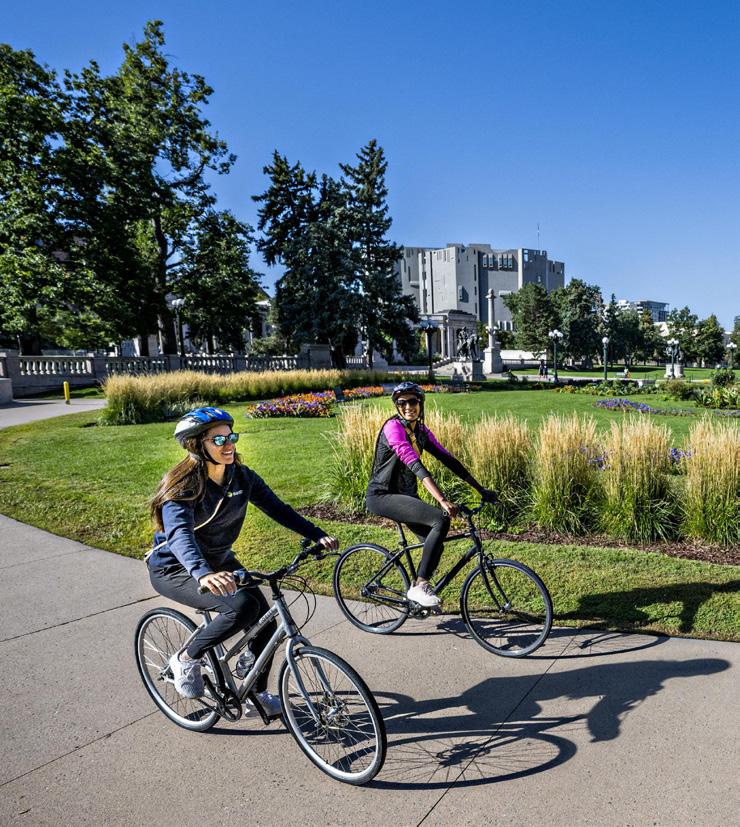
recent bid visit for the 2031 Men’s and 2033 Women’s World Cup; additionally, Denver is the only North American finalist city for the 2030 Gay Games.
Denver is HEALTHY & FIT: Denver is commonly known for its healthy mindset and exercise culture, and the Mile High City consistently earns high rankings as a top healthy city due, in part, to its temperate climate as well as the city’s location with easy access to all the recreational fun of the Rocky Mountains. In April 2025, WalletHub ranked Denver No. 7 among the top U.S. cities for active lifestyles for the second year in a row. Similarly, the American College of Sports Medicine ranked Denver No. 9 on their 2023 American Fitness Index.
Rocket Mortgage named Denver the eighth least stressed city in the U.S. in August 2022, citing the city’s abundance of outdoor spaces, wellness establishments and mental health providers. With extensive miles of paved urban bike trails, metro Denver is a haven for cycling enthusiasts. AnytimeEstimate.com ranked Denver No. 6 on its 2022 “Most Bike-Friendly” list because of the number of bike trails and bike shops per capita in the Mile High City. A study done by Buycycle found Denver to be the fourth best cycling city in the U.S. in June 2025. LawnStarter put Denver at No. 6 on its 2023 “Best Biking Cities in the U.S.” list for similar reasons, but also factored in bike meetups, weather and more.
Denver is a FOODIE CITY: In 2024 Michelin recognized 26 Denver restaurants in the third year of their Michelin Guide Colorado. The famously anonymous Michelin Guide inspectors selected a diverse range of restaurants across the city that exude culinary excellence. Denver joined Boulder, Aspen and Snowmass Village, the Town of Vail and Beaver Creek Resort in the Colorado Michelin Guide, the eighth

Guide destination in North America. 2025 winners will be unveiled in September. More information about the Michelin Guide program is available on the Visit Denver website.
Further advancing Denver’s culinary chops, in 2024, Denver had a strong showing at the James Beard Foundation awards. Erika Whitaker and Kelly Whitaker, of Restaurant Group ID EST (The Wolf’s Tailor, BRUTØ) won Outstanding Restaurateur. Even the airport was recognized in Food & Wine’s 2023 list of “The 10 Best U.S. Airports for Food,” Denver International Airport landed the Editor’s Pick. Additionally, Empower Field at Mile High was ranked No. 5 for “Best NFL Stadium Food” by USA TODAY in October 2024
Colorado as a state is among the top 10 in breweries per capita and one of the top five states with the most craft distilleries. Denver was ranked No. 10 in USA TODAY’S “10 Best Beer Cities,” and Great American Beer Festival was ranked No. 4 in their list of “10 Best Beer Festivals” in March 2025. In 2021, Esquire named Colorado, “one of the foremost states when it comes to craft whiskey,” citing two Denver distilleries, Stranahan’s and Leopold Bros., as top options (even naming the latter its No. 8 distillery in the country). This sentiment was echoed by Travel + Leisure, which ranked Leopold Bros. sixth in the country.
Denver loves the ENVIRONMENT: From prioritizing green spaces to encouraging the use of electric vehicles and alternate fuel sources, the Mile High City does its part for the planet. Denver was ranked the No.15 most sustainable city in the U.S. in 2024 by Coworking Café, recognized for its large number of green buildings and eco-friendly coworking spaces. Denver ranked No. 1 on Architectural Digest’s 2023 list of the “Top 50 Most Climate Resilient Cities” due to factors including fewer threats of extreme weather

damage and city-level initiatives to support clean energy such as solar. Denver is the only U.S. city included on National Geographic’s list of “Eight Sustainable Destinations for 2021 and Beyond,” thanks in part to 125 miles of bike lanes and solar gardens planned throughout the city. Online insurance marketplace Policygenius echoed this sentiment in 2022, naming Denver as the tenth-best city to live in by 2050 for climate change. Denver’s climate and mindset are conducive to enjoying the great outdoors, whether hiking, biking, running or walking. In August 2023, Denver International Airport’s fleet operations was recognized for its sustainable management as the No. 3 fleet in North America by the National Association of Fleet Administrators. The annual ranking recognizes peak-performing operations and honors enhanced practices making a positive impact on the environment and improvements within the fleet industry.
Denver is WELCOMING AND INCLUSIVE: As the largest city in a 600-mile radius, Denver attracts members of the LGBTQ+ community from all over the West and the world, resulting in a well-established gay nightlife, welcoming gay neighborhoods, gay-friendly hotels and numerous annual events that draw huge crowds. Misterb&b’s Queer Safety Index ranked Denver No. 7 in the “Top 30 Safest Cities for LGBTQ Travelers in 2025.” The 2023 State LGBTQ+ Business Climate Index released by Out Leadership, the premier global LGBTQ+ organization harnessing the power of business to drive equality, recognized Colorado in the Top 5 States for LGBTQ+ Equality. LawnStarter ranked Denver No. 4 in their list of 2023’s Most LGBTQ-Friendly Cities, noting Denver’s scores related to equality, community support, affordability, health care access and Pride-Readiness for the LGBTQ+ community.
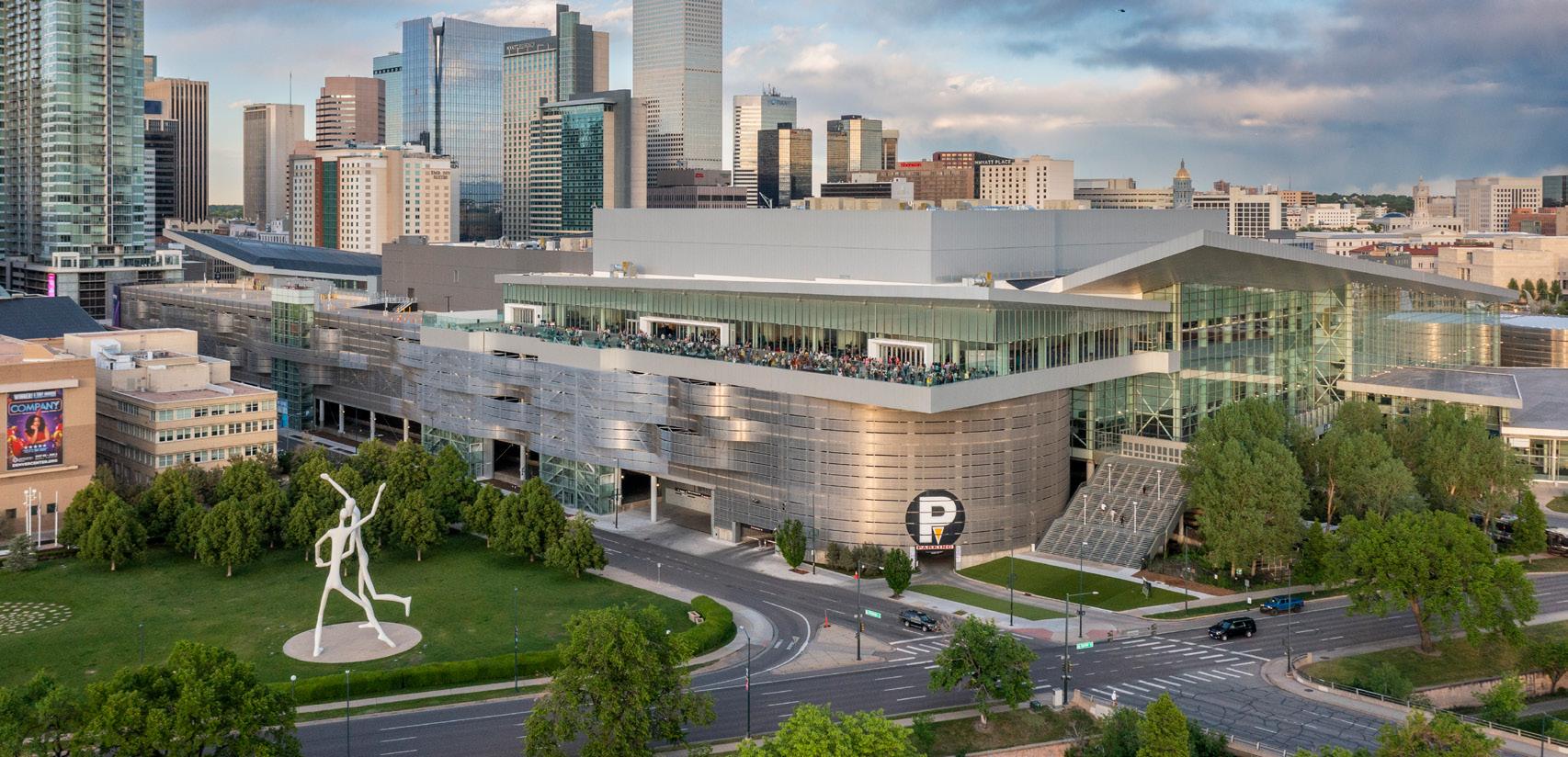
After years of disruption, volatility and rapid recovery after the COVID-19 pandemic, the group meetings and convention sector showed signs of stabilization. From the early return of short-term bookings in 2021–2022, to the surge of pentup demand in 2023, the industry moved through a series of accelerated cycles. Lead volumes climbed well above prepandemic levels, while booking patterns compressed and evolved in response to both uncertainty and opportunity.
among some planners — particularly for smaller, short-term meetings. As a result, while Visit Denver has maintained success securing large-scale, long-term bookings, the industry is seeing a softening in short-term conversion rates.
By 2024, the market slowed in July due to election uncertainty, and by year-end had normalized. Group inquiry volumes settled into patterns more aligned with 2019 benchmarks, and confidence among large meeting planners returned. For the first time since the pandemic, the group segment operated in a more predictable environment, with improved pacing and a clearer view of future business.
This normalization has continued into 2025. Lead volume for Denver remains steady, closely tracking 2019 levels. However, geopolitical tensions and the economic uncertainty typically associated with an election year have introduced caution
In the immediate post-pandemic years, major convention cities such as Denver experienced a sharp increase in shortterm bookings, as planners hesitated to commit to longer horizons. That trend began to shift in late 2023, with a clear return to more traditional booking windows in 2024 and beyond. Still, pickup levels remain below historical norms. Between 2020 and 2022 there was a dramatic dip in the number of citywide bookings with meeting dates four years out and beyond, which continues to impact longterm convention pace. As illustrated in the chart below, future years — particularly four or more years out — reflect this temporary drop in booked business due to pandemic-era uncertainty.
Despite these challenges, the outlook remains optimistic. Larger meetings are once again booking further into the future, and overall lead room nights continue to outpace pre-pandemic levels. This renewed confidence among major planners reinforces Visit Denver’s strategic position as a toptier destination for both near- and long-term group business.
As demonstrated in the above below, Visit Denver has been able to stay on track with citywide convention booking pace in the short term through 2026. However, beginning in 2027, the city has years that are behind where it would normally be this far out. This is directly attributable to citywide convention lost production during the pandemic years. While the Visit Denver team has made great progress on making up for this pace deficit, we continue to strategize and remain laser focused on correcting the pace issues in future years.
Entering 2025, Denver’s convention business was positioned for a record-setting year, driven by unprecedented levels of definite bookings at the Colorado Convention Center (CCC). Thanks to strong long-term sales efforts and sustained interest from major national groups, the CCC entered the year with its most robust convention calendar to date. Despite less than anticipated attendance, this early momentum laid the groundwork for a year defined by high-impact meetings and citywide events that delivered strong economic returns across the hospitality sector.
While the broader hotel market in Denver saw demand softening across several segments, the convention and group sector proved to be a key driver of performance in 2025. The steady return of major meetings, bolstered by successful long-term bookings made in prior years, helped offset some of the softness seen in other areas of the market.
As of July 2025, group occupancy in Metro Denver was down -1.4% year-over-year with downtown growth at a modest 1.9% mostly due to convention center business. Group ADR varied across sub-markets with some neighborhoods doing better than others but overall, Metro Denver was able to grow group rate by 1.2% with Downtown also showing a slight increase at 1.1%. This resulted in group RevPAR holding flat for Metro Denver, while downtown was able to drive a 3.0% increase in group RevPAR.
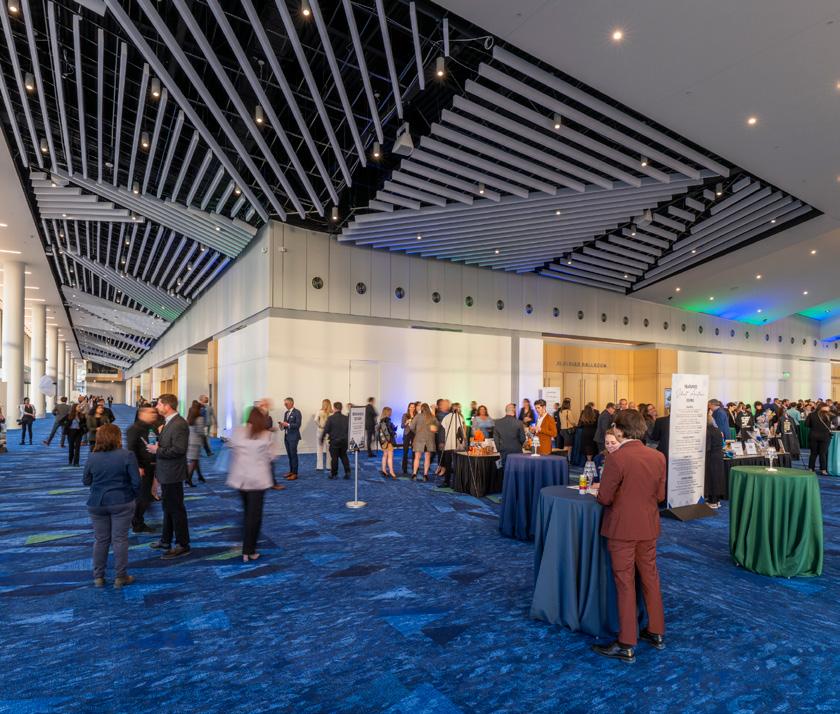
Despite some headwinds — including geopolitical uncertainty and conversion softness among smaller meetings — Denver’s convention segment demonstrated resilience and positive momentum throughout 2025. The performance of the Colorado Convention Center reflects the strength of the destination’s infrastructure, planner confidence and the longterm booking strategies employed by the Visit Denver sales team.
As shown in the CoStar table below, while pre-pandemic occupancy levels have not yet fully returned, Denver’s group segment is on a solid upward trajectory and continues to be a cornerstone of the city’s hospitality recovery.
While Denver’s year-over-year gains in group occupancy, as reported by CoStar, were welcome news, they may have fallen short of expectations for those who anticipated a more dramatic surge based on the exceptionally strong convention center base entering 2025. Interestingly, demand for groups is higher than 2019, however the 4% increase in supply vs. 2019 has impacted overall group RevPAR performance in 2025.
With more citywide business on the books than ever before, there was optimism that 2025 would deliver record-setting consumption across all major group segments. However, pickup on several of the citywide room blocks was affected by geopolitical and economic uncertainty, rising travel costs, lingering international travel trepidation and federal budget constraints that limited travel among government employees and contractors. These external pressures impacted actualized performance, especially among groups with historically strong participation from those sectors.
Colorado Convention Center business was strong in 2025 and up 28% year-over-year in room nights on the books compared to 2024. Part of this strength was the return of several large citywide conferences, which were more inline with pre-pandemic levels as opposed to the smaller conferences that materialized in 2023 and 2024. In fact, every quarter showed an increase over 2024 in room nights associated with convention center groups. Of importance was the 65% increase in Q1 and a 32% increase in Q4. As these winter months are typically lower in occupancy, this was a welcome addition to the group base in the downtown corridor.
Also encouraging is the strength of the convention pace for the year ahead. While Visit Denver does not expect 2026 to be quite as strong as the record setting year of 2025 at the Colorado Convention Center, we are pacing 9% and 17% ahead of same-time-last year for both Q1 and Q4, respectively.
As of August 2025, CoStar and Tourism Economics further downgraded their U.S. hotel growth forecast amid continued underperformance and elevated macroeconomic concerns. Both organizations lowered expectations for 2025 hotel demand by 0.6%, ADR by 0.5%and RevPAR by 1.1%. Their forecast also downgraded expectations for 2026, with projected demand, ADR and RevPAR down 0.5, 0.3 and 0.7 percentage points, respectively. This marked the second time in 2025 that CoStar and Tourism Economics downgraded their hotel forecasts calling out the “unrelenting” uncertainty and inflation, coupled with tough calendar comps and changing travel patterns, which they implied caused lower travel demand.
For Denver, these national trends underscore the strength of having a robust convention calendar already in place. While short-term conversion and travel challenges — particularly from international markets and government sectors — have dampened some expected gains in 2025, the city remains well-insulated thanks to years of strategic bookings and infrastructure investment. As the market stabilizes and heads toward full recovery, Denver’s strong base of large-scale events, competitive assets and planner confidence position it to outperform in the years ahead.
Visit Denver projects that the total number of groups in 2025 will be on par with 2024, remaining slightly below 2019 levels. However, unlike the past two years — when smaller, short-term groups made up the bulk of group business — 2025 is expected to be defined by larger conventions at the Colorado Convention Center driving a more significant impact. As a result, even with flat year-over-year group counts, these larger events are contributing to a meaningful increase in requested room nights and stronger group occupancy across the central business district.
Visit Denver also closely monitors key indicators such as site tours, which serve as a strong signal of group demand and planner interest in the destination. As shown in the chart below, site tour activity remains relatively flat compared to 2024. However, Visit Denver did see a decline in site inspections in Q2 of 2025, possibly a result of the broader uncertainty currently shaping the meetings industry in the wake of geo-political factors.
Group Demand Benchmark: US Aggregate Index (2019=100)
While uncertainty continues to impact shortand mid-term decisionmaking nation-wide, Visit Denver saw strong sales production in 2025 for definite group bookings into future years. Smaller groups operating within short-term windows appear to be the most sensitive to economic and political fluctuations, often delaying commitments or pausing contracting altogether. In contrast, larger groups have returned to traditional booking patterns, with many securing dates four to 10 years out. Lead volume has also stabilized to 2019 levels, at last flattening after pent-up post-pandemic demand — a positive sign of longterm planner confidence.
Each year, Visit Denver’s sales team books meetings worth more than $600 million in future economic impact for the city and its partners. Meeting planners typically base their decisions on the following criteria: accessibility, facilities, affordability, safety, cleanliness, sustainability, service and destination appeal. The destination product and overall experience are vital in keeping Denver competitive and maintaining its status as one of the most desirable top-tier convention destinations in the country.
Rosemont might be smaller than its U.S. peers in terms of total rooms and exhibit space, but it offers the shortest travel time with only a three-minute drive from O’Hare International Airport to the Donald E. Stephens Convention Center. Hotel rates are down 10 percent to $194 per night, and airlift is up 18 percent, adding to its meetings appeal. In fact, Rosemont recently wooed the Chicago Boat Show away from downtown’s McCormick Place.
For over 20 years Visit Denver has been recognized among the top 40 convention cities and Destination Marketing Organizations (DMO) nationwide, taking part in a biannual meeting planner study. This survey, involving 500 key meetings and events professionals, provides comprehensive data and insights on Denver’s overall performance. The most recent 2024 study clearly shows how Denver ranks compared to other top-tier cities in the eyes of meeting and event planners.
About the 2024 Evidenz Meeting Planner Study:
▷ 492 Meeting Planners (MPs) in North America answered the 2024 Study
▷ 82% of MPs have been a meeting planner for 10 or more years
▷ 53% of MPs need 1,000 or fewer peak night rooms for their largest meeting
▷ 47% need more than 1,000 peak night rooms for their largest meeting
Construction projects abound in Las Vegas, including at all three of the city’s convention facilities. Mandalay Bay completed a $100 million remodel in May, while the Venetian is planning to invest $188 million in upgrades beginning this summer. A $600 million renovation of the Las Vegas Convention Center will wrap up in 2025. Monthly flights are up slightly and the city’s safety score (76) is above the U.S. CCi average. Room rates run high, however — averaging $252 per night, up 12 percent from the December index.
▷ 44% of MPs commit to space and sign a contract for space for their largest meeting three or more years in advance
For planners of large events trying to help their organizations make smarter choices in this environment, the NorthStar Convention Cities Index (CCi) is a valuable tool for understanding how these major markets are performing. The CCi uses an in-depth method and weighted ranking system to determine the top 25 U.S. cities and top 25 global destinations for hosting large events. Each city is evaluated across six categories: available exhibit space, total hotel, rooms, average hotel cost, travel time from the nearest international airport to the convention center, the number of direct monthly flights and the city’s overall safety level. CCi data is updated twice a year, with a fully refreshed index published each June and an interim report released in January.
Denver ranks No. 8 in the report out of 25 major meeting destinations.
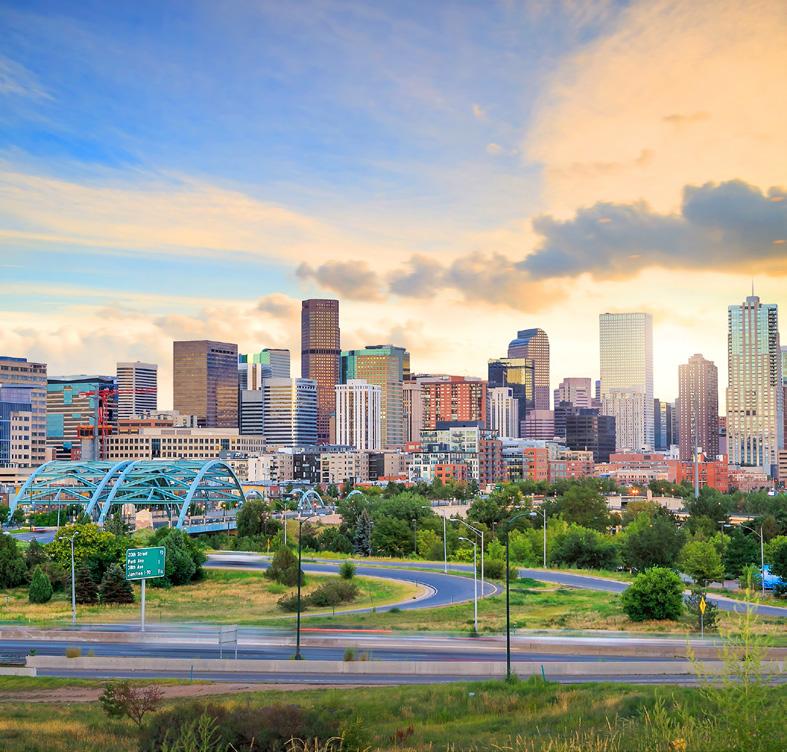
▷ City that is the best fit for their largest meetings: Denver ranks No. 1 for top 40 U.S. cities!
▷ Convention and Visitors Bureaus (CVBs) that have made a proposal (formally or informally) in the past 12 months: Denver ranks No. 1 for top 40 U.S. cities!
▷ City they are already contracted with: Denver ranks No. 1 for top 40 U.S. cities!
▷ Denver ranks No. 1 to its Top 15 key competitors on “Easy to Get To” and “Pitch Frequency,” two of the most powerful drivers of “Best Fit” inclusion.
▷ City that provides the most positive overall convention experience: Denver ranks No. 7 for top 40 U.S. cities!
▷ City with hotels well suited for my largest meetings, Denver ranks No. 21
▷ Likelihood to recommend, Denver ranks No. 18
▷ A city that is safe and secure, Denver ranks No. 22
The Valley of the Sun lives up to its name with an average of 300 days of sunshine per year. Phoenix has the highest safety score of all U.S. CCi cities at 84 points — up 6 percent from December. Nearly 18,000 flights arrive monthly, and it’s a short five-minute drive from the airport to the Phoenix Convention Center.
Planners considering the Mile High City will be happy to hear that rooms rates are down 17 percent to $204 per night, while Denver International Airport has added 4 percent more flights per month. An expansion to the Colorado Convention Center debuted in late 2023, adding the largest ballroom in the state and a rooftop terrace. The city scores high for safety, earning 79 points — 8 percent above the U.S. CCi average.
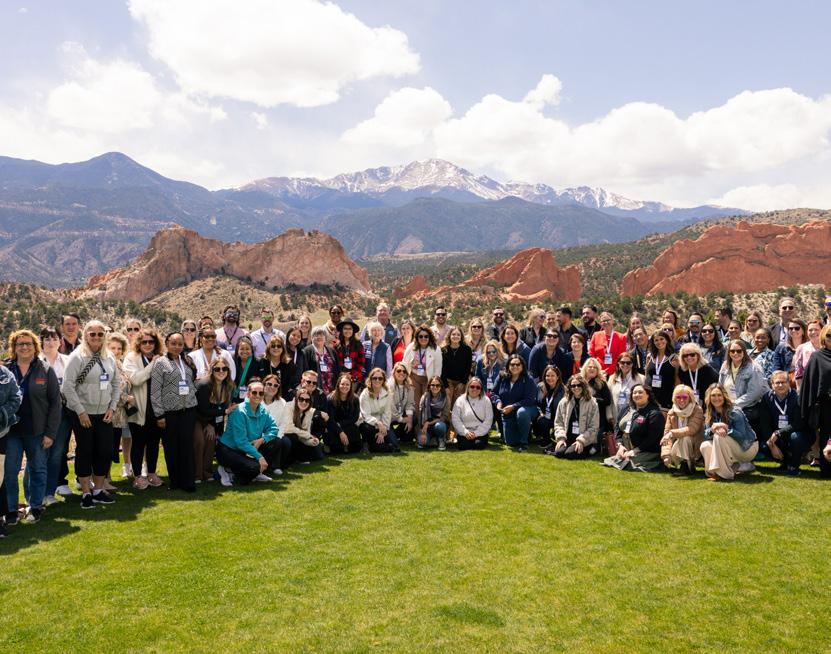
While hotel performance remains strong overall, developers are facing ongoing challenges in bringing new projects to market. High construction costs and the increased expense of financing have significantly slowed the pace of development. Lenders continue to be cautious, often requiring more equity and applying conservative underwriting, which has limited new construction. As a result, even though some submarkets may support additional supply, overall development activity has slowed as the industry waits for more economic certainty.
New supply tends to lag demand due to the time needed to assess feasibility, secure financing and complete construction. As illustrated below, in 2020, total hotel supply declined by 4.0%, primarily due to closures caused by pandemic-related travel restrictions. Supply rebounded in 2021 and 2022 as previously closed hotels reopened and projects that were already underway (pre-2019/20) reached completion. However, in 2023 and 2024, new supply grew by just 0.2% and 0.5%, respectively — a slowdown driven by rising construction costs and higher interest rates. These same pressures are expected to persist, with limited growth projected for 2025 and 2026 at only 0.8% annually.
Hotel inventory in Denver appears to be growing at a steady rate, with a total of 1,300 hotel rooms currently being built across 13 properties which marks a 2.3% inventory growth rate for Denver. This level of construction is consistent with Denver’s three-year average of 1,900 rooms. At the end of Q1 2025, 1,554 rooms were under construction in the Denver Metro area. Upon completion, the new additions will increase Denver’s room inventory by 2.7%. The largest property underway is the 241-room Virgin Hotel that will deliver in Denver’s CBD. This luxury property is expected to be finalized in 2026 and will be part of Denver’s new Fox Park initiative.
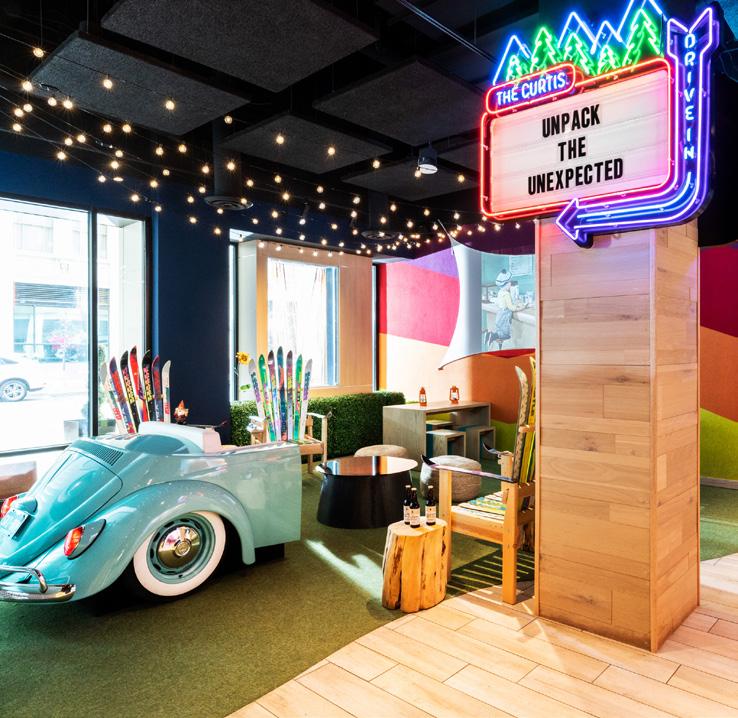
The hotel is being built on the former Denver Post printing plant and will anchor the Fox Park development in Globeville — a large project with offices, residences, parks and arts space.
Over the last two decades, Denver has not seen construction of larger hotels with dedicated meeting facilities that planners typically need. The last major full-service convention hotel that was built downtown was the Embassy Suites near the Colorado Convention Center in 2010, offering 403 rooms and 22,551 sq ft of event space, with ballrooms that can host up to 650 guests. This shortage of full-service, group-oriented hotels continues to put extra pressure on both event planners and the Colorado Convention Center. With no new substantial downtown convention hotel in over a decade, planners still wrestle with limited capacity and rely heavily on the convention center to support existing demand.
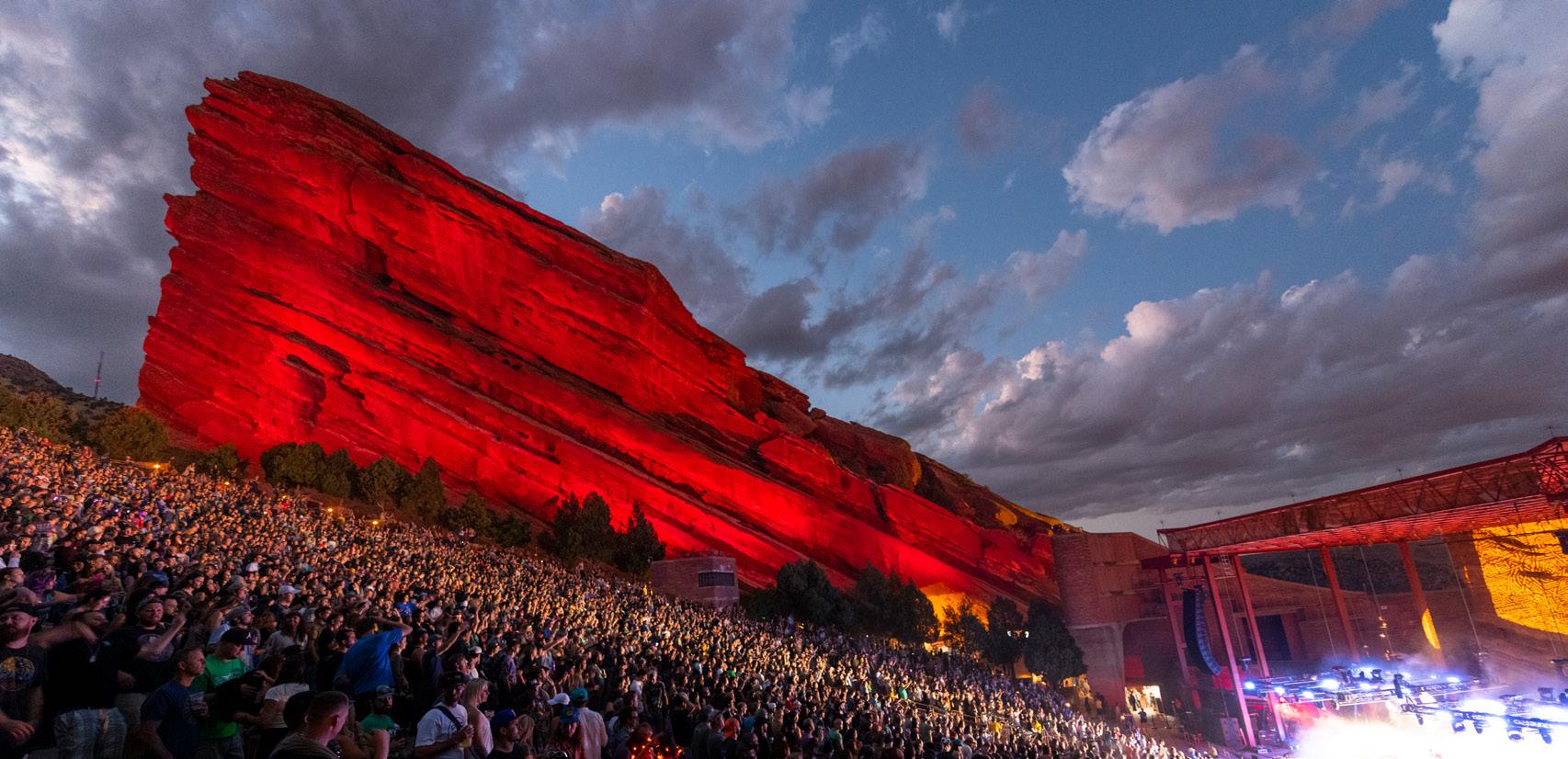
Air access remains crucial for attracting conventions and Denver International Airport (DEN) continues to be one of our city’s standout assets.
▷ Passenger records keep climbing: DEN saw 82.36 million travelers (about twice the population of California) in 2024, a 5.8% increase from the previous year — the first time it surpassed the 80 million mark!
▷ Year-to-date June of 2025, passenger traffic totaled nearly 39.5 million, a 1.2% decline vs. 2024. As of July 2025, Denver International Airport (DEN) recorded 740 nonstop routes to 21 countries served by 73 airlines.
▷ Top-tier global ranking: ACI ranked DEN No. 4 for busiest in North America and No. 11 for busiest globally for total passenger volume.
▷ International reach is expanding: DEN currently offers 35 nonstop international destinations across 19 countries, the most in its history, including new service to Rome and Regina launched in early 2025.
▷ Strategic growth underway: DEN has added four gates in its new Concourse A-East, hosted its first regular Airbus A380 service (Lufthansa to Munich) and is advancing “Operation 2045,” which plans to expand to over 125 million annual passengers by adding 100+ gates.
DEN’s momentum including increasing flight volumes, a booming international network, top-tier global standing and robust expansion plans underscores its critical role in making Denver a premier hub for meetings and events, now and for years to come.
Planners are increasingly favoring distinctive venues like rooftop gardens, galleries and cultural icons over traditional meeting spaces. According to MMGY’s latest Portrait of American Travelers, over 60% of planners now prioritize venues “truly unique to a destination,” citing stronger attendee engagement and memorable experiences. Supporting this trend, Cvent data reports a 20% jump in RFP value for unique venues over the past year.
Denver is well-positioned to capitalize on this trend. The new Bluebird Ballroom and Rooftop Terrace, with its sweeping 150mile mountain views, offers a distinctive branded experience. Beyond that, the city offers an impressive roster of unique venues including Meow Wolf, Red Rocks Amphitheater, Sculpture Park and the National Western Center, all prime real estate for planners seeking authenticity and energy.
The completion of the Colorado Convention Center expansion in late 2023 marked a transformative milestone in Denver’s meetings and conventions landscape
Now fully operational, the expansion has already proven its value. Since opening, it has enabled Visit Denver to secure 28 new citywide conventions that would not have been possible without the additional space. These bookings are projected to bring more than 176,000 attendees and generate over $430 million in economic impact, further reinforcing Denver’s position as a top-tier convention destination.
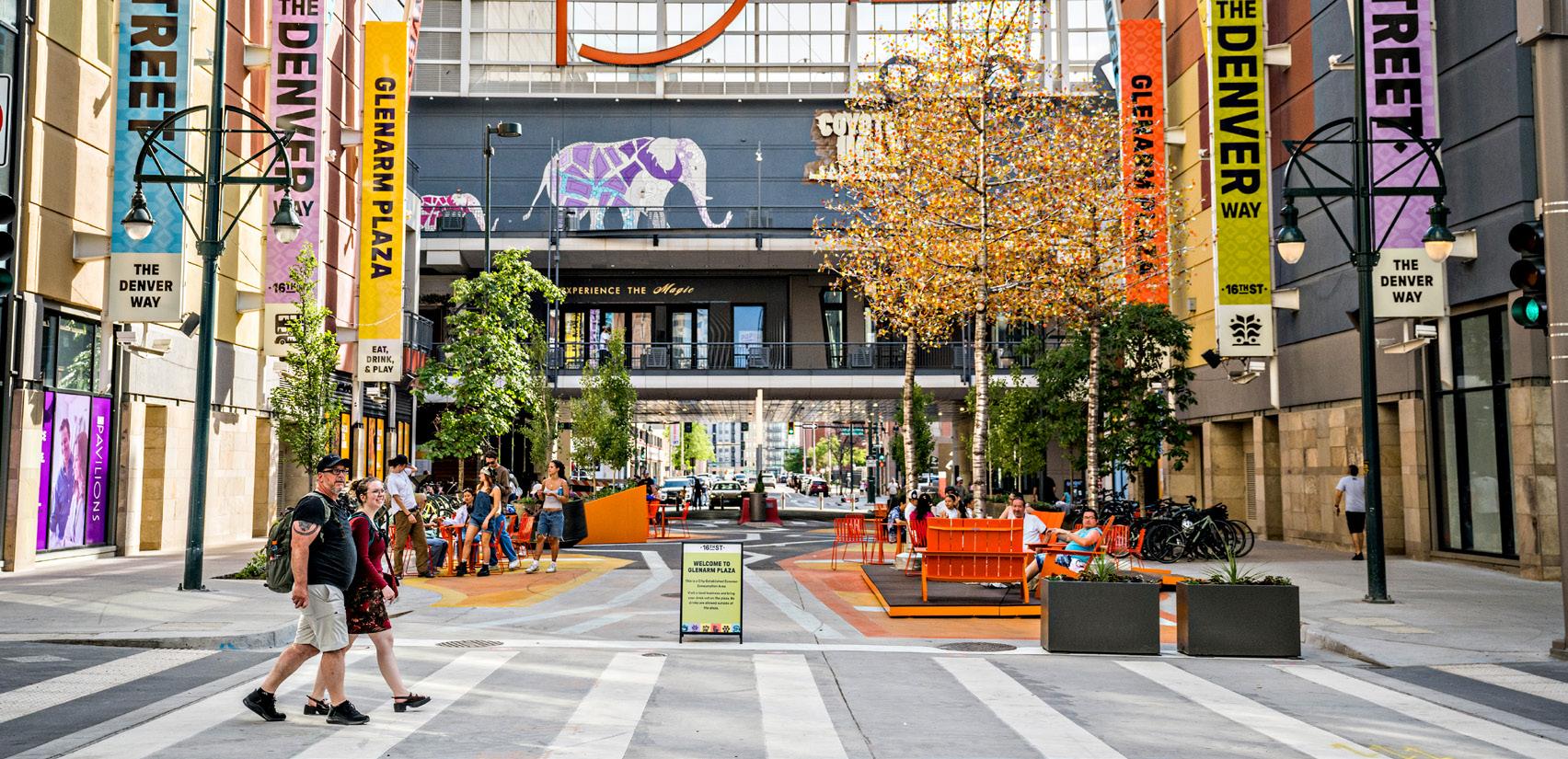
▷ Bluebird Ballroom: The centerpiece of the expansion is the 80,000-square-foot, column-free Bluebird Ballroom. A highly versatile space configurable into 19 subdivisions, accommodates 7,500 guests in a general session setup or 4,600 guests for banquets. With 30-foot ceilings and optimized rigging throughout, it is designed for both flexibility and production excellence.
▷ Pre-function Concourse: A stunning 35,000-square-foot wrap-around concourse offers panoramic views of the Rocky Mountains and direct access to the center’s main lobbies. It serves as a welcoming space for networking, registration and socializing between sessions.
▷ Rooftop Terrace: The 20,000-square-foot rooftop terrace connects seamlessly to the concourse via large accordion-style doors. It offers spectacular 360-degree views featuring the mountains to the west and Denver’s skyline to the east, making it ideal for receptions and indoor/outdoor activations.
With the expansion complete, the Colorado Convention Center now boasts over 2.2 million square feet of event space, including one of the largest and most scenic ballrooms in the country. This added capacity not only meets the evolving expectations of meeting planners who increasingly seek experiential, flexible and destination-defining venues, but also positions Denver to compete more aggressively for high-impact national and international events.
Downtown Denver is the vibrant heart of the city. It is a dynamic hub where leisure travelers, meeting attendees and locals come together to share ideas, connect and experience everything Denver has to offer. While the downtown
environment has improved in meaningful ways, cleanliness and public safety remain top priorities, both for our community and for the success of our meetings and conventions business.
Perceptions of safety play a critical role in a meeting planner’s decision-making process. According to our latest Meeting Planner Post-Convention Survey, concerns such as aggressive panhandling and visible homelessness continue to influence site selection. In partnership with key stakeholders within the downtown Denver community, Visit Denver has taken a collaborative, solutions-oriented approach to supporting a cleaner, safer downtown.
▷ Hired dedicated off-duty police officers for every major convention held at the Colorado Convention Center, adding a visible layer of reassurance and rapid response during peak event times.
▷ Contracted with the Downtown Denver Partnership (DDP) to place a full-time security officer along the convention corridor, ensuring year-round presence and vigilance.
▷ Sponsored 24 hotel properties, Colorado Convention Center and the Denver Performing Arts Complex, to join the DDP’s public safety radio network, allowing hotel security teams and major venues to coordinate more efficiently in real-time.
These integrated safety strategies not only respond to planner concerns—they demonstrate Denver’s ongoing commitment to proactive, guest-centric solutions.
As we look ahead to 2026 and beyond, Visit Denver remains deeply invested in collaborating with city leaders, downtown partners and the hospitality community to continue elevating the standard of safety and cleanliness for all who visit our city.
In an increasingly competitive environment for meetings and conventions, Denver’s community and civic leaders understand that protecting the city’s reputation as a safe, welcoming and vibrant destination is critical. Recognizing this urgency, Mayor Mike Johnston has taken bold, coordinated action to ensure that downtown Denver remains a premier environment for visitors, meeting attendees and locals alike.
In 2024, Mayor Johnston launched the Clean and Safe Downtown initiative, a first-of-its-kind citywide collaboration rooted in the belief that a clean and safe Denver is everyone’s responsibility. These efforts continued in 2025 when Mayor Mike Johnston led a strategic push to revitalize downtown Denver, directly benefiting the city’s appeal as a meetings and convention destination. His Safe Downtown Action Plan increased public safety through expanded patrols, a new police kiosk on 16th Street and coordinated response teams that address homelessness, mental health and crime with the right resources.
These efforts have created a cleaner, more secure environment around the Colorado Convention Center and surrounding hotel corridors, key areas for planners and attendees. Mayor Johnston also continued his All-In Mile High initiative, helping move more individuals experiencing homelessness into housing, reducing encampments in highvisibility areas.
To sustain long-term vibrancy, Johnston proposed the $935 million Vibrant Denver bond, investing in infrastructure and mobility projects that enhance downtown access and experience. These targeted initiatives help ensure that Denver remains a safe, welcoming and competitive city for national and international meetings and conventions.
When it comes to driving attendance for meetings and conventions, destination appeal consistently ranks as the No. 1 motivator; Denver delivers in most categories. Like all major cities, Denver has faced challenges. However, the last two years have ushered in a remarkable wave of investment, innovation and transformation that is reshaping how visitors experience the Mile High City.
Denver is buzzing with energy and evolution. The opening of Meow Wolf’s Convergence Station brought immersive art to new heights, while the Denver Art Museum’s expansion cemented its place as a cultural anchor. Denver International Airport (DEN) continues to soar with record-setting growth, the completion of its gate expansion and steady progress on the Great Hall renovation is improving the traveler’s experience. In addition, Denver’s Union Station is a top-rated train station known for its elegant architecture, historical significance and vibrant atmosphere. Today, Denver’s Union Station is a model for other train stations across the country, providing necessities for modern-day travelers.
In the heart of the city, the Colorado Convention Center expansion has redefined Denver’s meetings infrastructure, while public investments like the refurbishment of 16th Street —slated for completion in fall 2025 — and the revitalization of the National Western Center highlight a city committed to accessibility, walkability and placemaking.
In addition, the city proudly entered the global spotlight with the arrival of the Michelin Guide and the honor of a James Beard Award. These internationally recognized awards affirm what locals and visitors have long known: Denver is a food city worth exploring.

All of this is framed by the unmatched backdrop of the Rocky Mountains, which offer attendees a built-in opportunity to extend their trip with outdoor adventures, wellness experiences and iconic Colorado scenery.
As mentioned earlier, while the downtown environment has improved in meaningful ways, cleanliness and public safety remain top priorities, both for our community and for the success of our meetings and conventions business.
As meetings and conventions return, delivering exceptional service is more important than ever, which starts with people. Across the industry, workforce challenges remain a top concern, with many venues and hotels still working to train, rebuild staffing levels and fill experience gaps left by the pandemic. Planners have increasingly prioritized destinations that not only offer state-of-the-art facilities, but also consistent, high-quality service at every touchpoint.
In response, Visit Denver remains committed to its workforce development program and partners with the hospitality community on workforce development and service initiatives. Through partnerships with local hospitality schools, workforce training programs and city-supported initiatives, Visit Denver and its partners will continue investing in the future of Denver’s hospitality community and working together to elevate the city’s reputation for excellence in service.

Sustainability is no longer a “nice-to-have,” it is a decisive factor for meeting planners when selecting a destination or venue. As corporate and association clients increasingly prioritize environmental responsibility, planners are under growing pressure to align their events with broader ESG (Environmental, Social and Governance) goals. In fact, 70% of planners now cite sustainability requirements like waste reduction, carbon tracking and eco-friendly food and beverage sourcing as major factors in their site selection process. For a city like Denver — renowned for its environmental leadership and commitment to sustainability — there is a distinct competitive advantage when it comes to attracting eco-conscious meetings and conventions. Denver boasts a high concentration of LEED-certified hotels and venues, including the Colorado Convention Center, which was one of the first in the nation to earn LEED certification and continues to lead in energy efficiency, water conservation and green event practices.
In November 2023, Visit Denver became the world’s first destination to earn the EIC’s (Events Industry Council) highest sustainability tier: Platinum Level certification under the Sustainable Event Standards. Visit Denver’s certification journey set a national benchmark. This focus on sustainable meetings will continue, signaling to meeting planners that Denver not only talks about green meetings. It lives them.
Geopolitical uncertainty spanning international conflicts, trade tensions, stricter visa policies and negative global perceptions, is currently casting a shadow over the U.S. meetings industry. According to the U.S. Travel Association, inbound tourism is forecasted to decline 5.1% in 2025, translating to an $18 billion (about $55 per person in the U.S.) loss in international visitor spending. The Global Business
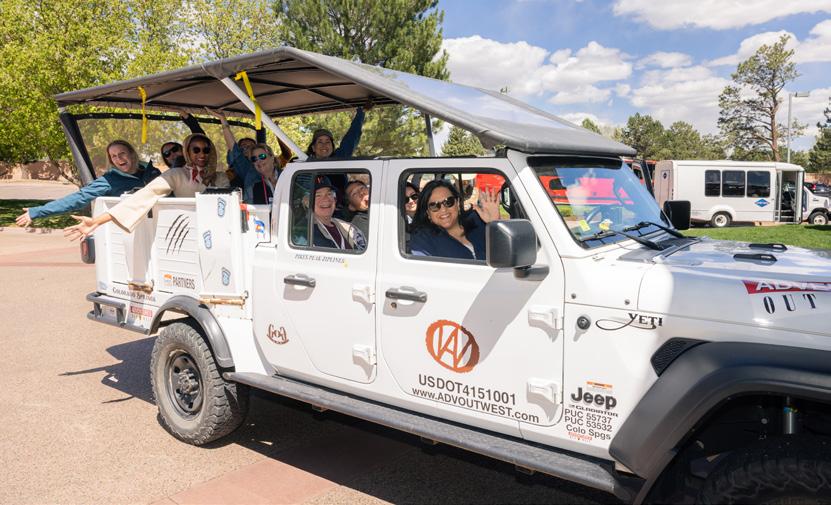
Travel Association reports 29% of travel buyers expect a drop in business travel volume this year, with 27% anticipating a 20% cut in spending. Leading forecasting firms such as PwC and CoStar have revised their 2025 outlooks downward: RevPAR (revenue per available room) growth is now expected at just 0.9% in 2025 and 1.2% in 2026
For Denver, these trends reinforce the need to focus on group business, a segment that remains more resilient. While leisure travel experiences softness in volume and spend, group and convention demand, especially at higher-end venues, offers greater stability. Denver’s strong infrastructure and growing appeal as a compelling domestic choice make it well positioned to navigate these headwinds.
The perpetual issue that continues to plague the conventions industry is housing. The last several years have seen an increasing trend towards last-minute registration by attendees. In this case, group blocks have usually expired and meeting attendees are left to book rooms on their own. Online hotel aggregator sites have negatively impacted room blocks, often making it easy for attendees to find lower rates outside of contracted group blocks. Travel costs and financial concerns worsen this behavior; increasing supply coupled with lagging business travel demand will continue to affect blocks in 2026.
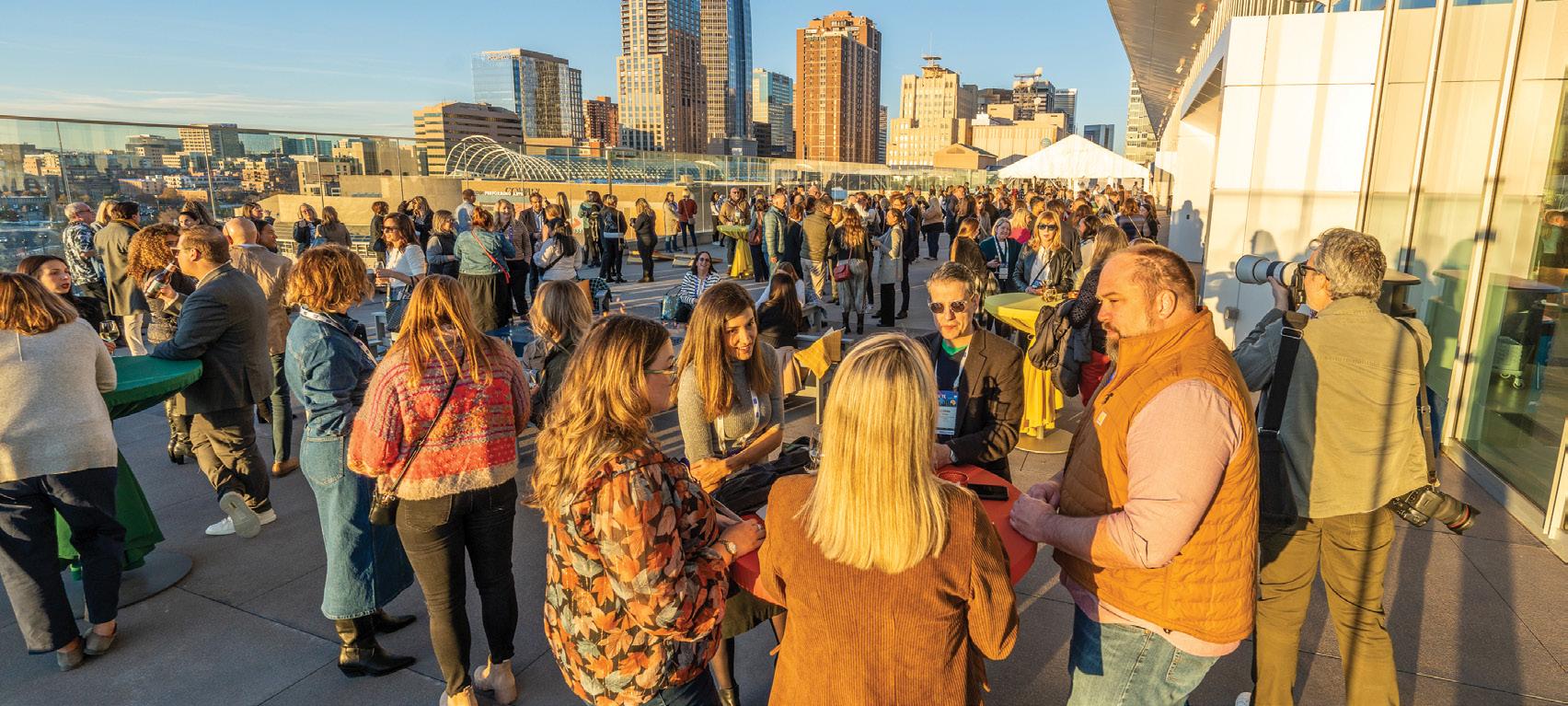
The national convention landscape remains highly competitive as meeting planners regain long-term booking confidence and begin securing future dates well into the next decade. While Denver is experiencing strong convention years in both 2025 and 2026, the broader environment is shifting as rebooking’s from the pandemic era fade and destinations return to a more traditional pace cycle.
As planners re-evaluate their future meeting strategies, competition has intensified — particularly in the pursuit of major citywide conventions. With renewed emphasis on downtown vibrancy, walkability and upgraded infrastructure, cities across the U.S. are aggressively investing in their convention centers and hotel districts to meet evolving planner expectations.
Currently, more than a dozen major convention centers nationwide are undergoing or planning expansions. These include key competitors such as Dallas, Austin, Los Angeles, Las Vegas, Orlando and Salt Lake City. Each with multimillion or multibillion dollar developments either underway or in advanced planning stages. These projects are designed not only to grow capacity but to offer more flexible, integrated experiences for large-scale events.
One notable shift influencing competitiveness is the increasing emphasis planners are placing on attendee safety and convenience. Many now prioritize destinations where the convention center and hotel package are fully integrated, reducing the need for attendees to travel across urban corridors. In this regard, Denver’s walkable downtown and recent Colorado Convention Center expansion position it favorably, though competitors are actively closing the gap with similar investments.
Adding to the pressure, cities are also working to make up for pace deficits incurred during the pandemic, particularly in the long-term window. Both Tier One and Tier Two destinations are aggressively courting future-year business, offering incentives and more flexible contracting terms to secure commitments.
Finally, rising costs remain a challenge across the industry. Inflation continues to outpace many organizations’ event budgets, increasing expenses for housing, food and beverage, labor and ancillary services. As a result, some planners are exploring new revenue strategies or reimagined event models to maintain viability. This economic pressure, combined with intensifying destination competition, means that winning future business will depend not only on infrastructure, but also on flexibility, creativity and strong destination storytelling.
As illustrated earlier, there has not been any large hotel meeting construction in Denver for two decades, which makes it difficult to drive new convention business demand. Over the years there has been phenomenal growth in limited, selected service and small boutique hotels in Denver. Annually lost business reports reveal hundreds of thousands of room nights that are turned away due to the lack of hotel room blocks for convention center business as well as lack of larger hotels with sufficient rooms and meeting space. This along with customer feedback and increased competition, Visit Denver hired JLL to conduct a comprehensive feasibility study for the proposed Colorado Convention Center (CCC) Large Meeting Hotel. The study will help identify infrastructure needs that will secure Denver’s future as a premier convention destination.
The process will include:
Interviews with local stakeholders, meeting and event planners who have used the Center and the existing Hyatt Regency Denver hotel in the past, lost clients and/or potential prospects.
▷ A Colorado Convention Center Historical & Projected Performance Analysis
▷ Lost Business review to determine the groups that cannot meet in Denver due to inadequate hotel room inventory, number of hotels required for adequate walkable room block and quality and age of the available properties.
▷ Economic, Demographic and Tourism Analysis to evaluate Denver’s position as an economic and tourism center of activity. Consider how this activity generates overnight visitors.
▷ Competitive Convention Hotel Package Market Analysis
▷ Local Hotel Market Analysis to determine if new hotels have been absorbed into the market and how any additions or renovations have impacted the performance of the hotel market.
▷ Database Assessment of meetings activity occurring in many markets, reviewing data about meetings and events occurring at competitive conference/convention hotels in and around Denver.
▷ Provide profiles of relevant case study developments and best practices to better understand their components and reasons for success or lack thereof.
As of mid-year, the U.S. hotel industry is experiencing a clear slowdown. Through June, RevPAR increased by just 0.8%, the weakest growth since 2010, not counting the pandemic years. Weekday occupancy has declined for four straight months, and ADR growth has remained soft at just 1.4%. Hotel demand fell slightly in the first half of the year, and many of the gains from Q1 were tied to temporary boosts like weatherrelated displacement and inauguration activity. Those lifted early numbers, but the underlying slowdown became more apparent in Q2, when RevPAR declined by 0.5%.
Group demand, which had shown promise earlier in the year, lost ground in the second quarter, falling by 3% after growing 3.7% in Q1. Meanwhile, transient demand grew slightly but remains inconsistent. Many operators report that meetings are being booked with noticeably short lead times, often “in the quarter, for the quarter,” making it harder to plan and optimize business, especially for full-service hotels in downtown areas.
International travel is also facing headwinds. Tourism Economics expects international inbound travel to drop by 9% in 2025. Tighter immigration policies, visa fee increases and geopolitical tensions are all contributing to reduced interest in U.S. destinations, particularly from Canada and key European markets. Some cities that typically benefit from international traffic, especially coastal and border markets, are already seeing the effects in their occupancy numbers.
Across hotel classes, performance continues to diverge. Luxury hotels are faring better than others, with RevPAR up 3.3%, helped by continued strength in premium air travel and higher-spending guests. On the other end of the spectrum, economy hotels have lost momentum. Earlier in the year, these properties benefited from weather-related displacement, but those effects have faded. In June alone, RevPAR in the economy segment fell by 5%.
New hotel construction has slowed significantly. The number of rooms under construction has dropped below 140,000, its lowest point in five years and well below pre-COVID levels. High interest rates, rising construction costs and uncertainty around tariffs and labor have made it harder for developers to move forward with new projects. While many rooms are still planned, only a portion of those are likely to break ground soon. With timelines stretching three to four years out, new hotel supply will remain limited. Year-over-year, U.S. hotel supply has grown just 0.7%, far below the historical average of 1.6%.
At the same time, costs are climbing. Wages are rising due to a tighter labor market, especially with fewer foreign-born workers available in key service roles. Insurance premiums are also going up, partly due to ongoing risks tied to climate events. While ADR has increased modestly, it still is not keeping pace with inflation. When adjusted for CPI, real ADR remains below 2019 levels.
Looking ahead to the second half of the year, the hotel industry faces several challenges: softer booking trends, cost pressures and ongoing uncertainty in the economic and political landscape. With RevPAR growth projected to finish the year around 1%, 2025 is shaping up to be a modest year for hotel performance nationwide — one that demands careful planning, flexibility and a strong value proposition for destinations competing for group and leisure business alike.
Looking ahead to 2026, the national lodging outlook suggests a slow but steady return to more typical growth patterns. Occupancy is projected to hold flat, just shy of 63.0%, while ADR is expected to rise modestly by 1.1%, pushing RevPAR up 1.1% year-over-year. These figures indicate a cautiously optimistic view for the industry, with growth expected to be driven more by rate than occupancy. The muted occupancy trajectory reflects lingering economic uncertainty and a slower-than-hoped recovery in group and international demand. Nonetheless, with supply growth expected to remain constrained and inflation showing signs of settling, 2026 may offer a more stable environment for operators to rebuild margin, strengthen pricing discipline and refocus on long-term performance. For destinations like Denver, a consistent pace of recovery nationally presents an opportunity to stand out with value, experience and infrastructure already in place.
Two national, independent studies of meeting professionals rank service from a convention bureau, service at the convention center and hospitality from the city in general as some of the most important considerations in selecting a meeting destination.
The expectations for meeting professionals have never been higher; therefore, outstanding convention services are a critical part of a destination’s success.
Planning lead time and staffing levels continue to be a challenge, requiring Destination Services to field many last-minute requests, site visits and planning assistance. Visit Denver must continue to provide turn-key systems and service levels to compete in a fast-paced, ever-changing environment.
Due to budget constraints meeting professionals continue to be more reliant on their vendors and Destination Services Manager (DSM) for support. The DSM needs to be the proactive agent between planners and vendors, serving as both mediator and troubleshooter.
Meeting professionals are working with limited budgets, and Destination Services needs to provide creative, low-cost options to enhance the meeting experience.
Meeting professionals are continually reinventing their programming and looking for unique attendee experiences, both during the meeting and at off-site venues. They often rely on their DSM to provide ideas and examples of what has been done in the convention center, or they may look to their DSM for local vendors to provide these experiences.
Meeting professionals are extremely concerned about maintaining and increasing attendance. Planners are contacting Destination Services for help in attendee acquisition to include data mining by industry, attracting local and regional attendees, securing local speakers, etc.
Meeting professionals are incorporating live-streaming options or virtual components for their attendees who are not willing or able to meet face-to-face.
The overall downtown experience and issues related to crime and safety remain key concerns for meeting planners and their attendees. Meeting professionals rely upon the Destination Marketing Organization (DMO), hotels and venues to provide their current emergency preparedness plan.
Meeting professionals are looking to incorporate more Corporate Social Responsibility (CSR) options and Diversity, Equity and Inclusion (DEI) initiatives into their programming and rely upon their DSM to provide local contacts and resources.
Meeting professionals continue to consider sustainability a key consideration when planning their meetings. Visit Denver must serve as a primary resource for local green vendors, venues, CSR opportunities and tools to help plan a green meeting.
Ancillary events (ICWs) are increasing, but often booking last-minute, which means venue availability can be limited.
Networking opportunities are a top priority for convention attendees. Planners are having to incorporate more networking events and soft seating/pods for attendee interaction.
Attendees expect experiential wellness opportunities to be built into the meeting’s programming. Meeting professionals incorporate options such as fun runs/walks, yoga, relaxation stations, wellness areas, etc.
Convention groups are incorporating smartphone applications and social media to market their meetings, enhance the meeting experience and reduce paper waste. DMOs contribute to these applications’ content, primarily in business listings such as restaurants, shopping and attractions.
Meeting professionals look to DMOs as a resource for accessibility information and assisted language services.
Meeting professionals are looking for ways to create a local experience for their attendees at their conventions and are requesting assistance from their DSM to help curate a local vendor marketplace.
DMOs are reevaluating whether staff must attend prepromotion trips for future meetings. Destination Services will be tasked with curating unique activities or sponsorships to promote Denver in lieu of sending staff.
DMOs are eliminating registration staffing and housing services in favor of referring these services to third-party companies.
Non-citywide, single-hotel meetings and non-bureau bookings continue to use DMOs for services, promotional materials and off-site venue help. These planners continue to request and rely on Visit Denver for site visits, venue referrals and marketing materials.
The media sector of the industry reports on meetings and conventions, travel trends and research and overall industry updates for a diverse audience of travel and meeting professionals. The Visit Denver Public Relations (PR) team works with travel trade media to highlight the city as a top meeting and convention destination.
The team highlighted the first groups taking advantage of the newly completed Colorado Convention Center (CCC) expansion and the resulting economic impact. The 80,000 square feet of flexible meeting and ballroom space, 35,000 square feet of pre-function space and a 20,000-squarefoot outdoor terrace enabled Visit Denver to contract more groups than ever before to host their meeting at the CCC totaling an expected 277,451 attendees and nearly $672 million in economic impact, all of which represent records for the CCC. The team has also celebrated the progress of 16th Street sharing milestones with media touting the pedestrian corridor as both a family-friendly amenity and free and convenient downtown transportation option. Pitched to media in July, these factors contributed to Denver’s meetings and conventions being on track to generate a record $980 million in economic impact in 2025, emphasizing the industry’s vital role in the city’s economy and downtown renaissance. Visit Denver is grateful to this media sector for sharing the positive news about Denver’s growth with industry professionals who further drive the message to businesses and leisure travelers.
As noted in the past few years, the trade media sector continues to change, and many outlets have very slowly recovered from the pandemic or did not survive at all. A few notable trends:
▷ Convention trade magazines continue to see shrinking staff and diminishing resources and many are relying primarily on freelance writers. Most trade publishers have reduced their publication schedule while migrating content from print to online presence. Publications associated with industry organizations like Convene (PCMA (Professional Convention Management Association)), Associations Now (ASAE) and The Meeting Professional (MPI) continue to decrease print circulation to focus more on digital platforms while regionally focused outlets like Colorado Meetings & Events have continued to run on a smaller scale.
▷ Industry outlets such as USAE, Successful Meetings, Meetings & Conventions and Smart Meetings convey most of the industry news via publication websites and digital newsletters.
▷ Trade publications often feature developments (such as renovations, expansions and new projects). These features have been a terrific opportunity for Denver to reach meeting planners and share news about new updated venues as the city is growing and evolving.
▷ Specialized meeting trade magazines such as Black Meetings & Tourism, Insurance & Financial Meetings Management and Colorado Meetings & Events offer another method of keeping Denver in front of meeting planners.
▷ Opportunities continue for advertorials, featured content and “native advertising” for any destination buying convention trade advertising.
▷ Denver news stories in the coming year will feature DEN’s improvements/additions, the first full year of the completed 16th Street construction in downtown Denver, new hotel inventory and enhancements, new restaurants and cultural experiences.
▷ National news topics through 2026 will include the continued recovery of the meetings industry, airline industry challenges, impacts of federal policy and an uncertain global economy.
In 2026, the team will continue to maximize trade media opportunities to position Denver among the country’s top meeting and convention cities. This will include further promoting the CCC and surrounding venues as the best place to meet. The team will continue generating and distributing new, original content about Denver, including destination news and updates, photos, videos and press releases, to convention trade websites and publications. The team will also foster existing and new working relationships with trade journalists through press trips, deskside appointments and industry meetings.
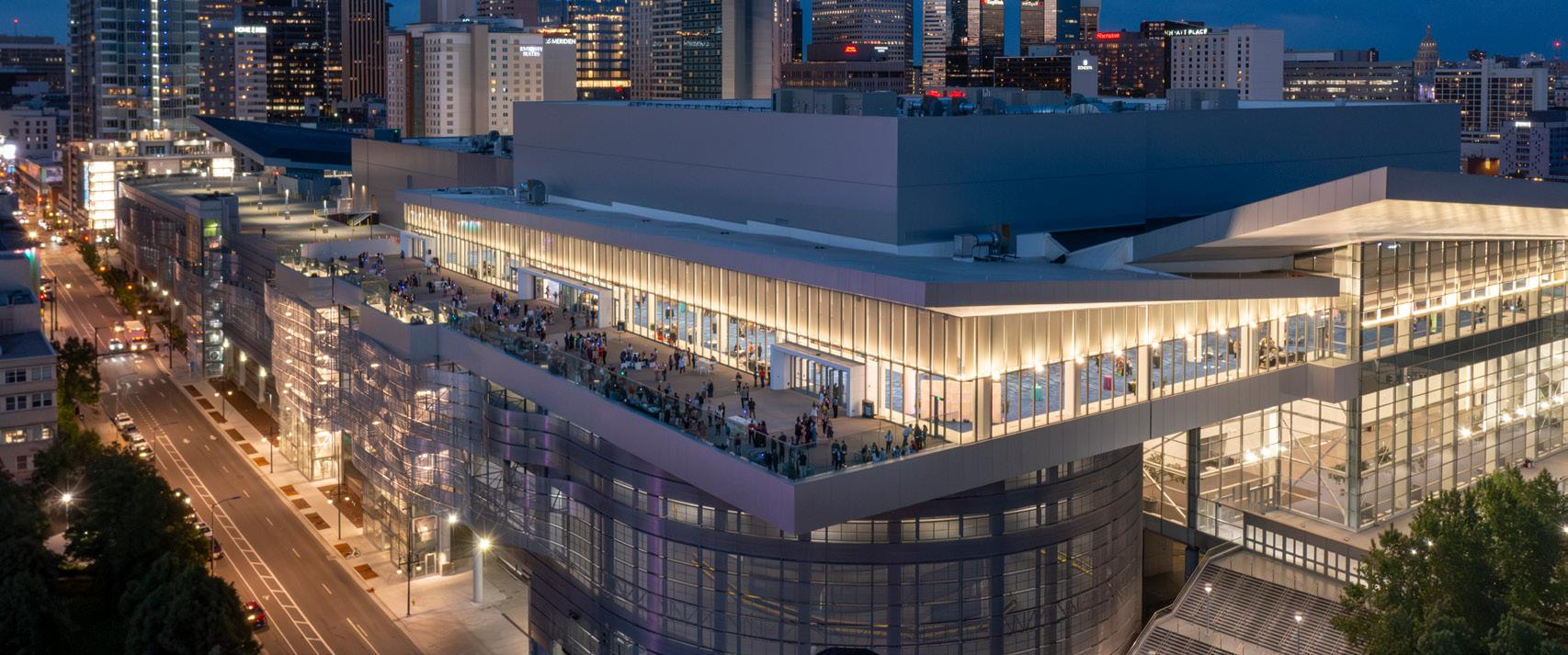
The meetings industry traditionally categorizes group business into three primary market segments: Association, Corporate and Specialty or SMERF (Social, Military, Education, Religious and Fraternal). While all three remain important to Denver, the association segment continues to lead, especially in the areas of health, medical and high-tech organizations. These meetings typically book farther in advance, supporting Denver’s long-term strategy of securing national groups years ahead of arrival. The sales team focuses on building loyalty, targeting medical and scientific associations and continually enhancing the planner and attendee experience.
The last four years have brought considerable disruption to booking patterns. Pandemic-era uncertainty led to short-term rebooking’s and a temporary dip in long-term convention production. As a result, future pace was underbuilt for several
years. While 2023 saw a surge in demand from groups that had not met since 2020, the market faced compression as leisure demand remained high. This led to tough prioritization decisions by hotels and suppliers, suppressing group occupancy despite rising lead volume.
By 2024, conditions stabilized. Lead volume aligned more closely with 2019 benchmarks, and booking behavior shifted back toward traditional long-lead cycles. That trend has continued into 2025, with large associations once again sourcing events 4 to 10 years out. However, smaller corporate and specialty meetings remain more sensitive to broader economic uncertainty, including lingering effects from the 2024 election year and ongoing geopolitical concerns.
The chart below illustrates segment evolution between 2015–2019 and 2023–2027, reflecting both the long-term impact of the pandemic and emerging trends in global industry dominance.
Key shifts include:
▷ Health & Medical remains the top-producing segment at 25% of total rooms, reaffirming Denver’s strength in hosting large-scale medical and healthcare-focused events.
▷ Scientific, Engineering, Tech & Computing has expanded significantly, growing from 12.9% to 17.9% of total group business. This aligns with rising demand in fields like AI, life sciences and quantum research, industries projected to lead the economy over the next several decades.
▷ Educational meetings now represent 10.5%, up from 8.5%, reflecting the return of professional development conferences and credential-based learning formats.
▷ Trade, Commercial and Business events declined from 9.3% to 6.1%, suggesting lasting shifts in corporate travel behavior and increased reliance on virtual options.
▷ New niche segments, Agriculture and Religious, now appear in the top ten. While smaller in volume, their emergence signals new growth opportunities for Denver in nontraditional markets.
These patterns mirror broader global shifts toward what futurists describe as the Information, Life Sciences and Leisure economic eras, industries where Denver is increasingly competitive thanks to its innovation economy, quality of life and planner satisfaction scores.
As competition intensifies and market preferences evolve, Denver’s strategy remains twofold: defend share among core segments (medical, scientific and education) while aggressively pursuing new, first-time events that align with the city’s strengths. This approach is supported by long-term infrastructure investments, most notably the expanded Colorado Convention Center (CCC), new hotels and continued airport improvements.
Business performance in the hospitality industry is closely tied to broader shifts in the economy. Visit Denver tracks not only major customer segments like associations and corporations but also the industries driving long-term growth. Understanding where economic activity is headed helps guide the city’s sales strategy, product development and infrastructure investments. Futurefacing industries such as renewable energy, life sciences, biotechnology, artificial intelligence, aerospace and nanotechnology continue to shape Denver’s long-term opportunity. These sectors are increasingly driving employment and GDP, influencing which associations and corporations are actively booking meetings and where they choose to gather.
Agricultural Until ~1880s Crop production, animal husbandry
Industrial ~1920s Mass-produced goods (textiles, machinery)
Service Mid-1950s Retail, professional services
Information From ~1976 Knowledge, computing, communications
Leisure From ~2015 Entertainment, recreation, hospitality
Life Sciences By ~2100 Biotech, genetics, medical innovation
Mega-Materials 2100–2300 Nanotech, quantum materials
New Atomic Age 2250–2500 Fusion, lasers, atomic tech
New Space Age 2500–3000 Space exploration, astrophysics
The concept of economic sector dominance refers to the period when an industry becomes the largest contributor to employment and gross domestic product. The concept of
the “Nine Eras of Economic Sector Dominance,” seen below, was developed and published by Graham T.T. Molitor, a noted futurist and policy analyst in 2003. As illustrated, the U.S. economy has moved over time from agriculture and industrial production to services, information and now leisure and life sciences. Era
Visit Denver monitors these transitions to anticipate which industries will be booking meetings 5 to 10 years out. A sector in growth mode often leads to more association activity, increased professional development and a need for collaborative gatherings. A declining sector, by contrast, may see reduced meeting volume and budget constraints.
For DMOs and the hotel industry, this underscores the importance of targeting sectors aligned with Denver’s strengths. For example, healthcare and life sciences continue to drive strong room night production. At the same time, tech, AI, aerospace and energy innovation are gaining ground and align with Colorado’s regional economic development priorities. The challenge for destinations is not just recognizing future drivers but also preparing for them. This means ensuring meeting facilities are equipped with highspeed connectivity, advanced A/V and hybrid capabilities, AIintegrated services and flexible layouts. It also means creating an attendee experience that combines business needs with inspiration, wellness and cultural connection.
With the assistance of AI, below is a reimagined, updated future version of Graham Molitor’s “Nine Eras of Economic Sector Dominance,” integrating 21st-century developments while preserving the integrity of the original foresight structure.
Denver is well-positioned in this environment. With targeted growth in industries like clean energy, wellness, AI, IT software, aerospace and creative tech, the city is not just adapting to change, it is helping shape the meetings of the future. Visit Denver will continue to monitor these macroeconomic signals to ensure the destination remains competitive, future-ready and relevant to the sectors that matter most.
Updated Eras of Economic Sector Dominance (Combining Molitor’s Framework + Contemporary Additions)
Platform & Data Economy Era ~2020s – 2050s AI, cloud platforms, digital monopolies, surveillance capitalism
Experience & Emotion Era ~2030s – 2070s
Regenerative & Climate Economy ~2040s – 2100s
AR/VR, gaming, immersive media, influencer economy, affective computing
Carbon tech, circular design, climate resilience, green jobs
Life Sciences & Bio-Design Era ~2100s – 2200s Biotech, genomics, synthetic biology, bio fabrication
Mega-Materials & Quantum Era
New – Splits from Information Era
New – Builds on Molitor’s Leisure Era
New – Elevates climate as central economic force
Expanded – From Molitor’s Life Sciences Era
~2200s – 2300s Nanotech, quantum computing, smart materials As in Molitor, renamed for clarity
New Atomic Era ~2300s – 2500s Fusion energy, hydrogen, advanced atomic manipulation As in Molitor
Decentralized Economy Era
Space Economy Era
~2300s – 2600s Blockchain, Web3, DAOs, tokenized ecosystems
~2500s – 3000+ Space exploration, asteroid mining, interplanetary logistics
New – Reflects long-term decentralization trajectory
As in Molitor (renamed from “New Space Age”)
Large national associations have steadily returned to inperson meetings, with booking patterns continuing to normalize. While the pandemic delayed many sourcing timelines, most organizations have resumed traditional planning cycles. Visit Denver has seen strong engagement from associations booking four to ten years out, reflecting renewed confidence in the market and the essential role these events play in member engagement and revenue.
Associations remain highly motivated to meet. Many have bylaws requiring annual gatherings, and conventions generate a significant share of their income through registration fees, continuing education, trade shows and sponsorship. These events are critical for professional development, certification, networking and highlighting the latest ideas. They often spark innovative ideas and lead to long-term investment across industries. According to the 2024 Evidenz Meeting Planner Study, Denver performs exceptionally well among association planners. Among those targeted, Denver appears more frequently on the “Best Fit” list than any other destination. Planners identified Denver’s accessibility, walkability, downtown appeal and proactive sales outreach as key strengths. However, there is still opportunity to better highlight the new convention center expansion and improve perceptions of collaboration between the CVB and hotel community.
Because associations remain Denver’s most consistent and productive group segment, they continue to be the top priority for Visit Denver’s marketing and sales efforts. Many major
associations are based in Washington, D.C. and Chicago, which is why Visit Denver maintains sales offices in both cities. This allows the team to stay connected through local events, regional meetings and industry partnerships. Sales deployment is aligned by meeting size and headquarters location to ensure effective outreach.
Visit Denver also partners with the Denver Metro Chamber of Commerce and the Metro Denver Economic Development Corporation to pursue association conventions that align with the region’s strongest industry clusters. These events bring national thought leaders to the city, foster collaboration with local experts and open the door to future business opportunities. Highlighting Denver-based speakers and innovators is now a core part of the city’s pitch to association planners.
While Denver’s destination appeal and infrastructure are strong, many planners continue to express the need for a new large headquarters hotel near the convention center. Addressing this demand will be essential to stay competitive with cities that continue to add high-capacity hotel supply. Visit Denver will continue to focus on long-term association bookings, strategic industry alignment and a destination message that reflects what planners value most: accessibility, connectivity, collaboration and a positive experience for attendees.
The corporate meetings segment continues to be defined by shorter booking windows, higher budgets and strong attendance consistency. These meetings are often essential to internal operations, training, product launches or client engagement, which makes them more resilient and time sensitive. While the pandemic temporarily shifted many companies toward virtual or hybrid formats, the return to in-person gatherings has been steady, particularly in sectors where collaboration and face-to-face interaction are essential.
Medical, pharmaceutical and biotech companies were among the first to resume live meetings once health regulations allowed. These industries rely heavily on in-person networking, training and knowledge exchange. As in-person activity resumed, a wave of pent-up demand drove strong corporate meeting volume, particularly in 2023. While the number of leads dipped slightly in 2024 compared to 2019, total lead room nights have increased due to a rise in larger, multi-day meetings being sourced further in advance.
Denver’s corporate market remains a key part of the city’s group business strategy. The city’s appeal as a destination, combined with its robust hotel inventory and ease of access via Denver International Airport, keeps it competitive for both regional and national corporate events. Corporate meetings continue to grow in industries where Denver’s business climate is thriving, including biotech, pharmaceuticals, health sciences, aerospace and technology. The region’s emergence as a life sciences hub is a major driver of corporate interest, with companies choosing Denver for leadership summits, clinical training and product-related meetings tied to research and innovation.
Denver is also well positioned from a product standpoint. Many of the city’s newest hotels fall into the upper-upscale and luxury categories, a preference among corporate planners who often seek full-service, lifestyle or boutique properties with built-in amenities and flexible meeting space. However, post-pandemic compression has made availability a challenge, and planners are more frequently expanding their destination search.
Third-party intermediaries continue to play a critical role in this segment, with many corporate meetings sourced and managed through agency partners. Visit Denver maintains strong relationships with top intermediaries through partnership agreements, education webinars, sales missions and hosted buyer events. Supporting this network remains a priority as sourcing behavior evolves and competition for corporate events intensifies.
SMERF groups tend to be highly rate-conscious and often come with unique planning needs or limitations. Historically, these groups were more flexible with dates and frequently met over holidays or in slower periods for the hotel industry, which was beneficial for Denver. However, many continue to favor second- and third-tier cities that can better accommodate
their rate expectations and budget constraints. Denver’s strong hotel performance, particularly in the summer months, has made it more difficult to compete for large, rate-sensitive SMERF groups during peak periods.
Tight budgets often push SMERF meetings into shoulder seasons, typically November through March, when leisure and business travel is lower. Visit Denver actively targets this segment to help fill need periods and maintain occupancy in the winter months. When sourced strategically, these events can be valuable for hotels and venues looking to optimize occupancy outside of peak travel windows.
Because these groups often have specific requirements, the relationship between the meeting planner and destination is especially important. Visit Denver deploys a dedicated sales manager to oversee all SMERF segments, regardless of group size. This role also includes responsibility for recruiting and managing amateur and participatory sporting events, which often align with SMERF-style sourcing and demand patterns.
Government-related meetings also remain a key part of the specialty market. For the fourth consecutive year, Denver’s federal per diem rates have followed a tiered seasonal model. From November through March, the allowable rate is $165, and from April through September, the rate increases to $215. These tiers reflect Denver’s seasonal business patterns and continue to shape sourcing behavior among federal agencies and contractors. The 2026 fiscal year rates are expected to be announced in October.
As budget sensitivity and planning timelines remain unpredictable for many SMERF and government groups, Visit Denver will continue to prioritize relationship building, flexibility and tailored service to retain and grow this strategic segment.
The multicultural market continues to grow in both influence and economic power across the United States, and Denver remains committed to being a welcoming and inclusive destination for meetings and events that serve diverse communities. Building strong relationships with local chapters of national organizations, and support from civic leaders and elected officials, remains essential to success in this segment. Visit Denver’s long-standing focus on diversity, equity and inclusion (DEI) supports its strategy in this space. The organization’s DEI Board committee continues to guide efforts around internal policy, workforce development, community partnerships and destination marketing. This commitment enhances Denver’s credibility and relevance when engaging multicultural groups and supports broader goals around representation and impact.
For more than a decade, Visit Denver has targeted multicultural meetings, especially within the Hispanic/Latino and Black/African American markets. Engagement with Asian American and Indigenous organizations is also increasing, though these remain emerging segments within the meetings industry. Recent redeployment of a sales manager focused specifically on African American groups builds on this momentum and creates greater alignment with client needs.
Visit Denver continues to prioritize outreach through direct sales, advertising and sustained partnerships with key organizations such as the National Coalition of Black Meeting Planners (NCBMP), the U.S. Hispanic Chamber of Commerce and the Network of Latino Meeting Professionals. These efforts are ongoing and will continue through 2026 as Denver deepens its engagement with multicultural audiences. The city’s selection as host of the NCBMP 2029 Annual Conference further reinforces its position as a trusted, inclusive and forward-looking destination for diverse groups.
These efforts are also supported by destination marketing that includes targeted messaging to multicultural leisure travelers, helping to enrich the attendee experience once on-site. Recognizing the significant buying power of multicultural audiences, Visit Denver’s marketing team continues to invest in digital strategies and authentic partnerships that reflect the values, identity and interests of the groups the city aims to serve. These collective efforts strengthen Denver’s reputation as an inclusive, forward-thinking destination that actively supports and grows multicultural meetings.
The international meetings market continues to face headwinds in 2025. While there has been a gradual return of international groups sourcing U.S. destinations since travel restrictions lifted in late 2021, ongoing geopolitical tension and heightened scrutiny at U.S. borders are now creating new challenges. Recent enforcement trends and visa delays have contributed to a measurable drop in inbound international attendance, particularly among healthcare, science and government-affiliated organizations.
Many associations that rely on global participation are increasingly concerned about the reputational and logistical barriers facing their attendees. Some international delegates are hesitant to travel to the U.S. at all, citing fears of being detained or denied entry. These concerns are especially acute for scientific associations and medical societies, where access to international experts and research collaboration is central to event success. The uncertainty has led some planners to question whether they can confidently commit to U.S.-based meetings two or three years into the future.
Although Visit Denver maintains a targeted international sales effort, the broader focus remains on supporting U.S.-based associations in their efforts to grow international attendance. With domestic membership growth leveling off, international audiences remain one of the few viable paths for expansion. Denver continues to work with planners to provide messaging, tools and local support that help make the destination feel accessible and welcoming to global delegates.
Denver International Airport (DEN) remains a strategic advantage, offering a growing number of nonstop international flights. These air service wins have been the result of longterm collaboration among Visit Denver, DEN, the Colorado Tourism Office, the Denver Metro Chamber of Commerce and economic development partners. While airlift helps reduce friction, policy-related travel challenges remain a critical barrier outside of Denver’s control. Visit Denver will continue to advocate for more open and predictable access for international attendees, while focusing on destination readiness, hospitality and support for associations navigating this evolving landscape.
The Denver Sports Commission (Denver Sports) serves as the central resource for sporting event organizers considering Denver as a host destination. Under the leadership of its executive director, Denver Sports leads the city’s efforts to identify, pursue and secure new opportunities across the amateur, collegiate, Olympic and professional sports landscape.
As a strategic arm of Visit Denver, Denver Sports positions the city to compete regionally, nationally and internationally for high-impact events that generate visitor volume, economic activity and brand visibility. The team works closely with local venues, rights holders, national governing bodies and community partners to establish Denver as a premier destination for sports-related tourism. An advisory board of local business and civic leaders provides insight and guidance to ensure that event recruitment aligns with Denver’s broader economic and community priorities.
Busy meeting professionals continue to widen the list of media they consume for their industry news with a focus on digital channels, leisure channels and existing trade channels. As with most areas of media and advertising, there is less reliance on traditional printed media to educate themselves about potential meeting destinations. So, while many are now working back in the office, the habits formed during the pandemic persist and consequently several industry trade publications have ceased operations or reduced frequency, circulation or both.
This also means that planners are relying increasingly on their in-market, DMO sales and service contacts to keep them up to speed on market updates, which creates a significant
▷ Top-performing e-newsletters from key outlets such as PCMA (Professional Convention Management Association) and Meeting Planners International (MPI)
▷ Digital display advertising
▷ Video advertising
▷ Social media advertising, particularly on LinkedIn
▷ Print and digital advertising in trade publications and their companion websites
▷ Guerrilla tactics at tradeshows
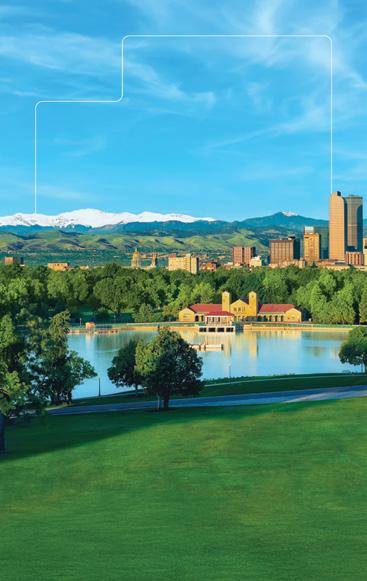


opportunity for organizations like Visit Denver. They are also increasingly turning to AI sources to research destinations, which is a trend that organizations like Visit Denver are just beginning to understand.
Visit Denver’s trade advertising efforts have shifted to meet these new realities. Print advertising has been dramatically scaled back, though not eliminated. Visit Denver expects to continue to use new and emerging digital channels, while still maintaining a small, targeted use of print for those planners who still consume that medium. And given planners’ interest in news directly from destinations, expanded sales and marketing communications about new developments in the city are almost certain to be welcome from Visit Denver clients.
▷ Press releases to trade outlets
▷ Deskside meetings with trade outlet reporters
▷ Reactive efforts for journalists on assignment
▷ Social media tactics, particularly on LinkedIn
▷ Videos exclusive to the convention market
▷ Quarterly destination updates via Visit Denver’s email platform to sales database
▷ Innovative CRM program


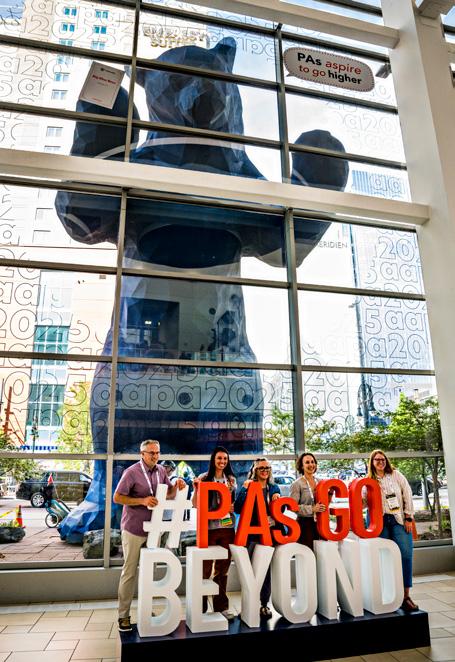
In 2025, Visit Denver launched a new campaign to the meeting planner audience: Meet Uplifted. The campaign is designed to drive awareness of Denver and inspire planners to choose it as a destination, driving leads and bookings for Visit Denver conventions and meetings. The campaign also enables Denver to stay top of mind and differentiated in a very crowded convention market.
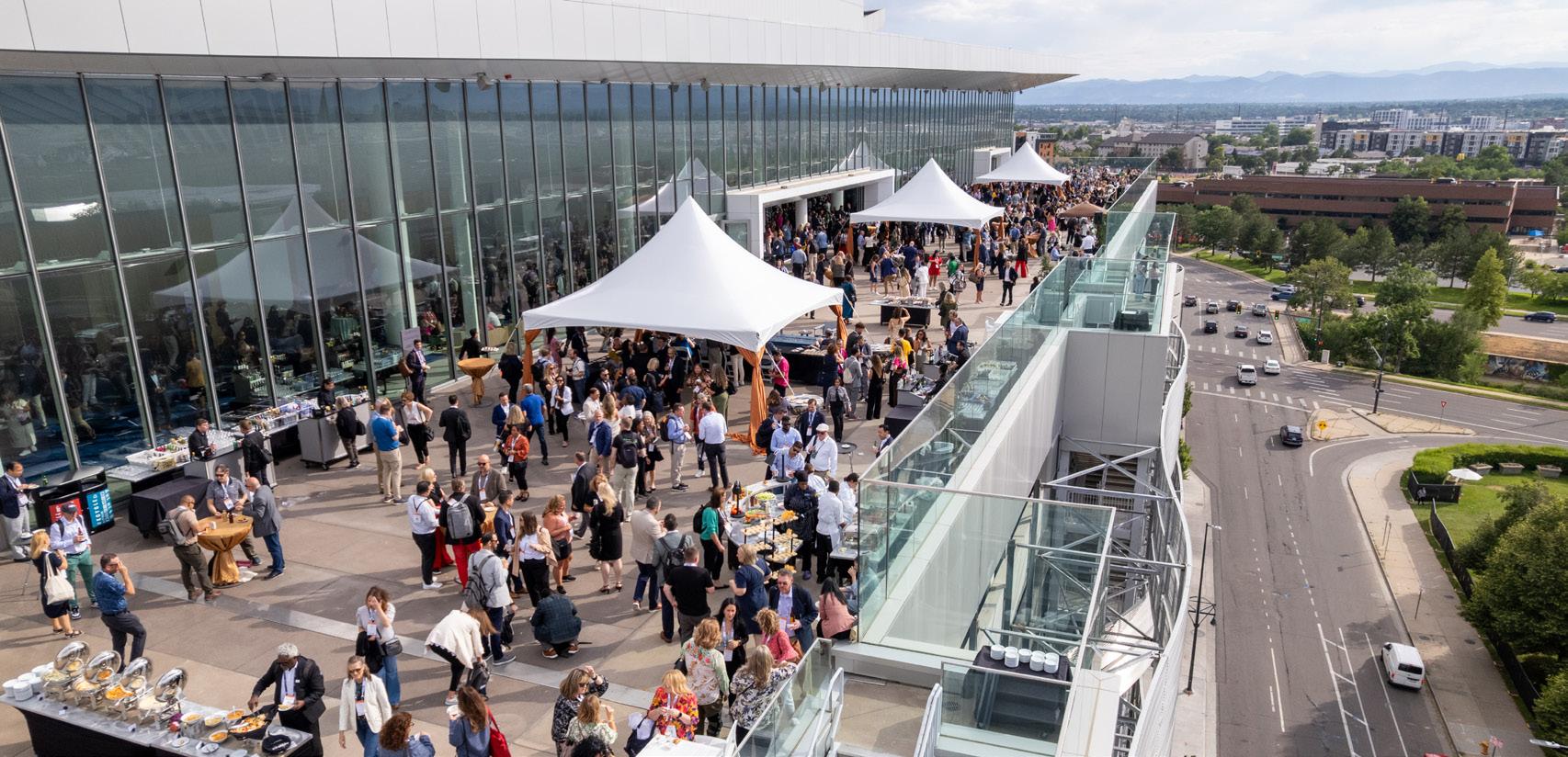
In the first half of 2025, Denver’s meetings industry maintained steady momentum, supported by strong lead volume, a robust convention calendar and renewed planner confidence in long-term bookings. The surge of post-pandemic recovery seen in 2023 has now stabilized, with group demand closely tracking 2019 benchmarks and large-scale meetings booking further into the future. However, elevated macroeconomic and geopolitical uncertainty, including the impact of a U.S. election year, tighter government travel budgets and softening international attendance, has introduced new complexities across the competitive landscape.
While the overall pace of convention business remains healthy, competition among major destinations has intensified. Cities across both tier one and tier two categories are investing heavily in their convention infrastructure, offering expanded facilities, financial incentives and bundled hotel packages to secure future events. Visit Denver continues to perform well in this environment, supported by the Colorado Convention Center expansion, strong national visibility, and improved downtown safety and infrastructure. Still, shortened booking windows and a more cautious mindset among planners have contributed to slower short-term conversion, especially for smaller groups and government-affiliated meetings.
With major convention centers undergoing transformative redevelopment in cities like Dallas, Austin, Houston, Salt Lake City and Los Angeles, Denver must remain proactive in articulating its value proposition and long-term appeal. The shift toward integrated convention districts, large headquarter
hotels and immersive destination experiences has elevated expectations among planners and increased pressure across the marketplace. In this environment, Denver’s upgraded infrastructure, central location and strong performance in key planner rankings serve as essential assets in competing for future business.
Lost business is based on how much convention business, measured in room nights, is awarded to other cities over Denver. While Denver’s conversion of new opportunities has continued to improve since the pandemic, understanding where business is lost remains a key indicator of competitive positioning.
In 2024, Denver lost the greatest share of group room nights to Las Vegas, Chicago and Orlando. These destinations continue to dominate the national convention landscape due to their expansive convention centers, abundant hotel inventory, aggressive incentive offerings and strong air access. Orlando and Las Vegas remain especially competitive during the summer months, when their lower seasonal rates often coincide with Denver’s peak demand season.
The Gaylord Rockies, located just outside Denver in Aurora, remains a strong local competitor. In 2024, it ranked as the fourth most frequent destination selected over Denver, reflecting its national brand reach, all-in-one meeting model and continued enhancements to its property. The Gaylord brand is also expanding with the opening of Gaylord Pacific in Chula Vista in 2025. This new waterfront resort and convention center is expected to attract large-scale meetings with multi-year packages across the Gaylord portfolio, increasing competitive pressure and prompting a need for proactive sales strategy.
Denver also lost significant business to Dallas, San Diego and Atlanta. Each of these cities has continued to invest in its convention product, surrounding infrastructure and downtown experience. These trends reflect an increasingly competitive environment in which destinations across the country are pursuing future business more aggressively and planners are weighing a growing number of viable options.
Competitive & Product Overview
As in previous years, the leading reason Denver lost convention business in 2024 was lack of availability at the Colorado Convention Center (CCC). While the Bluebird Ballroom expansion opened in December 2023 and has already expanded the CCC’s capacity to accommodate larger and more flexible events, demand remains high during peak periods. Year-to-date in 2025, CCC availability continues to be the most frequently cited reason for lost business, particularly for near-term inquiries that overlap with previously confirmed bookings.
Hotel availability remains the second most common reason Denver loses business. In many cases, the challenge is not a lack of rooms overall but the inability to align hotel availability with the desired convention center dates. This includes both citywide groups seeking coordinated blocks across multiple properties and in-house opportunities where a large host hotel is not available. The third reason for lost business is the overall package, with planners citing issues related to space layout, date patterns, hotel block distribution, rates and seasonal climate. In some cases, groups opt for geographic rotation or select destinations that align more closely with their member or attendee base.
While the opening of the Bluebird Ballroom has improved Denver’s competitiveness, the market remains constrained during peak seasons. As more destinations expand their convention products and planners increasingly prioritize flexibility and ease of contracting, addressing capacity alignment between the CCC and downtown hotel partners will remain a top priority. Visit Denver continues to monitor booking patterns closely and is working to optimize availability and responsiveness in both the long- and short-term windows.
Source: Visit Denver
Denver is well established as a tier one city in both product and perception. Denver International Airport continues to expand its reach as one of the busiest airports in the world and remains the top hub for United, Southwest and Frontier Airlines. The airport’s ongoing terminal modernization and gate expansion projects are further enhancing the city’s accessibility for meetings and events. The Colorado Convention Center has also elevated Denver’s convention product with the recent addition of 135,000 square feet of new function space, including the Bluebird Ballroom, which features panoramic views of the Rocky Mountains and increased flexibility for large-scale events.
Historically, Denver has been one of the fastest-growing hotel markets in the country, but recent trends point to a slowdown in new supply. Hotel inventory has declined due to property conversions and the limited pipeline of new full-service development. Some downtown hotels have been repurposed for supportive housing, adding pressure to group inventory availability. At the same time, major public investments are reshaping the city’s core. The 16th Street revitalization continues to advance, with completion expected in fall 2025. This transformation is reactivating Denver’s signature pedestrian corridor with widened walkways, new landscaping, art installations and improved transit flow. For planners,
these enhancements support a more vibrant, walkable and destination-defining urban experience.
Tier one cities are typically defined by their large population base, extensive infrastructure and broad destination appeal. Cities like Chicago, Los Angeles, Atlanta, Boston and Washington, D.C. fall into this category, having built convention reputations over the course of a century. Some cities, such as Orlando, Las Vegas and New Orleans, earn tier one status through major financial commitments to tourism and convention development, even without the same population scale. These destinations continue to compete aggressively by leveraging flexible space, integrated hotel packages and government-supported incentives to attract high-value events.
The broader competitive landscape is evolving. Many secondtier cities are investing in new convention centers, revitalized downtown districts and enhanced hospitality offerings, narrowing the gap with traditional tier-one destinations. At the same time, rising costs, tighter budgets and construction delays have created new friction in the booking process. Planners are increasingly prioritizing destinations that offer cost certainty, operational ease and strong destination partnerships. Key themes shaping the 2025 marketplace include a heightened demand for personalized and engaging attendee experiences, adoption of AI tools for planning and event execution and a renewed emphasis on sustainability, accessibility and authentic local culture.

Negotiations around hotel blocks remain a major challenge in tier one markets. High transient demand and limited new supply have made hotels more reluctant to commit to large blocks, especially during peak leisure periods. This has forced planners to reassess their room strategies and has created added complexity for destinations that rely on strong hotel-convention center alignment. Denver is not immune to these pressures, particularly during high-demand months.
At the same time, Denver’s visibility and planner sentiment have improved. National rankings consistently show the city as a top contender for major events, and ongoing destination marketing efforts continue to build awareness. However, challenges remain. Denver’s central location provides flexibility in geographic rotation but does not carry the same immediate draw as coastal markets. The return of international air service has helped improve global accessibility, but attendance from international delegates still lags due to broader geopolitical uncertainty and visa constraints.
Downtown safety and cleanliness remain important considerations. While the city has made visible progress, concerns around aggressive panhandling, public behavior and homelessness persist in some high-traffic corridors. Mayor Mike Johnston has prioritized public safety and cleanliness through citywide initiatives such as the Clean and Safe Downtown program and the All-In Mile High housing strategy. These efforts have resulted in progress, but planners continue to flag safety as a key factor in site selection. Denver is not alone in this challenge. Cities like San Francisco have experienced a decline in competitiveness due to similar urban issues, highlighting the need for continued investment and collaboration.
While Denver has solidified its status as a top-tier meeting destination, it continues to compete across both tier one and tier two markets that offer strong tourism infrastructure and evolving convention products. Many of these cities have made significant investments in their convention centers, hotel inventory and overall destination appeal, positioning themselves as viable alternatives for large-scale meetings and conventions. Cities like Nashville and Phoenix have expanded their hospitality offerings and elevated their national profile, while others such as Salt Lake City, Indianapolis and San Antonio are leveraging new facilities and revitalized downtown districts to attract more group business.
The competitive landscape has become more fluid in recent years. Several tier two cities have closed the gap with traditional tier one destinations by offering modern venues, streamlined booking experiences and cost advantages. These destinations often appeal to planners seeking value, flexibility or a more localized attendee base. While tier one cities maintain an edge in terms of infrastructure, flight access and established reputations, second-tier destinations are increasingly securing major national events, particularly as planners become more cost conscious and attendee preferences evolve.
Denver’s geographic location allows it to compete effectively across both western and central regional rotations. Situated just 340 miles from the geographic center of the continental United States, Denver is frequently considered in both western and central bids. In a western rotation, the city competes directly with Las Vegas, San Diego, Seattle and Phoenix, each known for their scenic appeal, entertainment offerings or integrated meeting districts. In a central rotation, Denver is evaluated alongside cities like Chicago, Dallas and New Orleans, all of which benefit from central access, large convention venues and diverse hotel packages.
To remain competitive across all tiers and regional patterns, Denver must continue to address the constraints of limited hotel supply and peak-season availability. At the same time, it must capitalize on its strengths, including an expanded convention center, a walkable downtown, strong airport connectivity and a growing reputation for innovative, destination-defining experiences. As second-tier cities continue to rise in prominence, Denver’s ability to differentiate on infrastructure, attendee experience and long-term value will be essential in securing future business.
As planners evaluate future host destinations, the primary decision drivers remain overall costs, accessibility, venues, hotel inventory and destination appeal. As cities add hotel supply, invest in convention infrastructure and improve air access, the competitive landscape for Denver continues to evolve. Planners are weighing financial incentives, availability and new destination investments more closely than ever.
According to CoStar, the number of hotel rooms under construction in the U.S. has dropped below 140,000 for the first time in 20 quarters. This reflects ongoing pressure from high interest rates and construction costs. Even if development activity accelerates later this year, national supply growth will remain modest and is unlikely to impact the market until after 2026.
In Denver, hotel supply growth has slowed considerably. Only 852 rooms opened in the past 12 months, while approximately 500 rooms were removed from inventory through demolitions or conversions. Although 1,349 rooms are currently under construction across 13 properties, development momentum is expected to decelerate further. Many proposed projects remain in final planning, but tighter lending conditions and elevated costs suggest limited nearterm additions beyond 2025.
Current development in Denver mirrors national trends, with most projects falling in the branded, mid-tier categories. Construction is active across all six Denver submarkets, with the Central Business District (CBD) and Denver Airport/East leading in volume. Nearly 80% of rooms under construction in the CBD are in the upscale tier.
Two standout additions this past year include:
▷ Populus Hotel: A 265-room carbon-positive hotel near Civic Center Park, opened in October 2024. As the first of its kind in the United States, it increased Denver’s independent hotel inventory by 5% and has drawn international attention for its sustainability-forward design.
▷ Kimpton Denver Tech Center: Opened in July 2024, this 190-room property is the first new hotel in the Tech Center submarket since 2019 and the first boutique hotel in the area. As an Upper Upscale offering, it expands Kimpton’s footprint and fills a gap in high-end supply in that submarket.
Looking ahead, one of the most high-profile projects in the pipeline is the proposed Virgin Hotel Denver, currently in final planning. This 241-room lifestyle hotel will anchor the Fox Park development and include a rooftop bar, wellness amenities and nearly 11,000 square feet of event space. The brand’s planned entry into Colorado signals continued confidence in Denver’s long-term appeal to developers and meeting planners alike.
The past year marked the first time since 2014 that fewer than 1,000 rooms opened in Denver. From 2017 to 2019, annual inventory growth often exceeded 2,000 rooms. While the current slowdown may relieve short-term compression, competition from other markets remains intense.
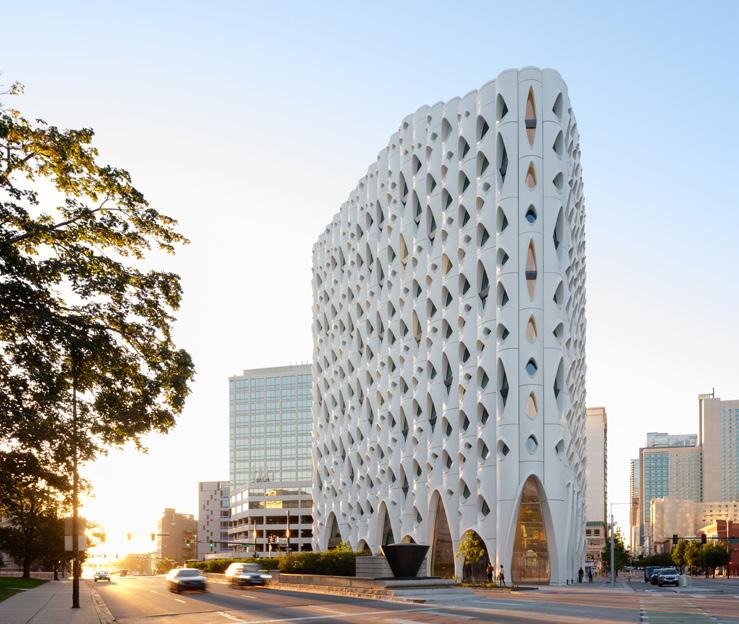

Nationally, the top 25 largest hotel markets account for 38% of rooms under construction. If all current projects open as scheduled, New York City, Phoenix and Nashville will see the highest percentage increases in inventory. Phoenix and Nashville are among Denver’s top competitors for convention business.
The convention center landscape is also shifting. Some cities have scaled back expansions due to rising costs, while others are moving forward with major investments. Las Vegas is in the midst of a $600 million renovation of its convention campus, scheduled for completion in 2025. Dallas is advancing a full replacement of its facility, expected to open in 2029. Austin, Boston and Los Angeles are also pursuing significant expansions, while St. Louis has encountered delays and potential cutbacks due to budget challenges.
While timelines vary, the industry is adapting to postpandemic realities. Flexible design, integrated technology and health-focused features are priorities for new and renovated venues. For Denver, continued investment in the Colorado Convention Center, paired with the revitalization of 16th Street and future hotel growth, will be essential to remain competitive in a rapidly evolving marketplace.
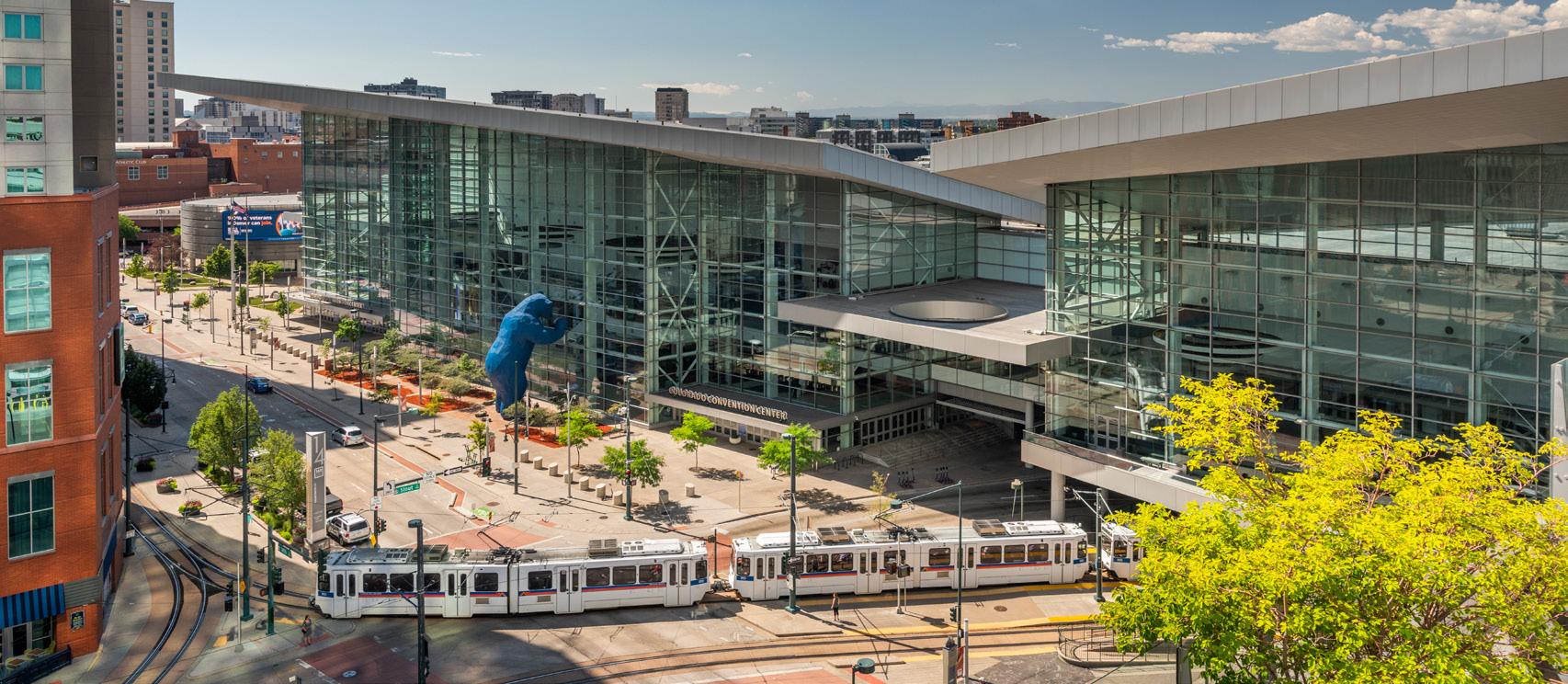
While Denver continues to compete with a broad range of cities, several destinations consistently rank among our top competitors due to their robust infrastructure, destination appeal and long-standing presence in the convention marketplace. Cities like Las Vegas, Chicago and Orlando remain among Visit Denver’s most frequently lost-to destinations, driven by their expansive convention centers, substantial hotel inventory and aggressive incentive offerings. The Gaylord Rockies continues to rise in prominence as a local competitor, climbing to the No. 4 position as it leverages its brand’s national reach and all-in-one meeting model.
Dallas remains a frequent contender due to its central location and large-scale convention center redevelopment plans, though its overall ranking has shifted. Notably, San Diego, Atlanta and Phoenix continue to be strong competitors, particularly for groups rotating through the West, South or Southwest. This year, New Orleans and San Francisco reemerged as top competitors, signaling renewed interest in these destinations post-pandemic. The following represents a snapshot of the cities that Denver competed with most often in 2024.
Key/ Headquarter Hotels
Destination Updates
Hyatt Regency at the Colorado Convention Center: 1,100 rooms
Sheraton Denver Downtown: 1,238 rooms
Denver International Airport is in the final phase of its Jeppesen Terminal modernization, with major construction activity underway in 2025 and full completion expected in 2027. A new East Security Checkpoint on Level 6 opened in August, unlocking the Global Gateway for international arrivals and a living room–style lounge for domestic travelers. These upgrades are part of a broader effort to align the terminal with current passenger demand and reflect Colorado’s cultural identity. At the same time, downtown Denver’s one-mile pedestrian corridor, now known as 16th Street or The Denver Way, officially opened in October. The revitalized corridor features widened walkways, upgraded transit lanes, public art, shade trees and curated summer programming.
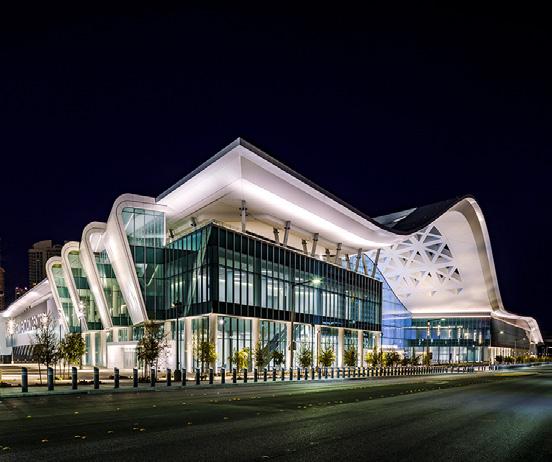
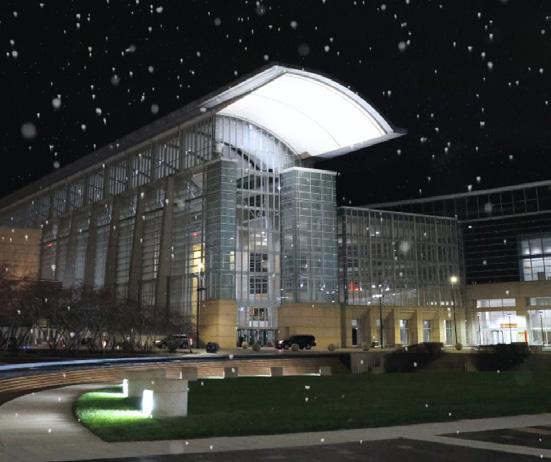
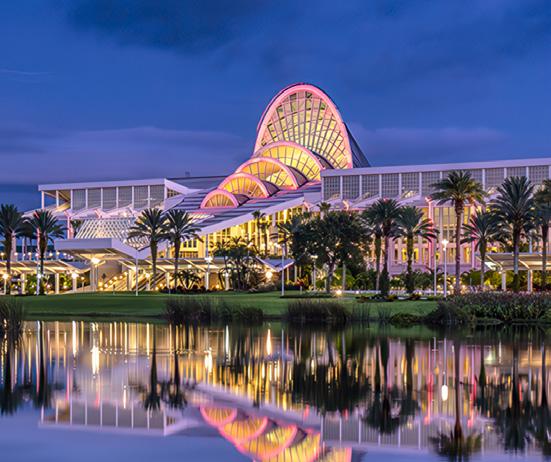
Key/ Headquarter Hotels
Destination Updates
CityCenter (Aria, Vdara, Waldorf Astoria): 5,889 rooms
Luxor: 4,411 rooms
Mandalay Bay, W Las Vegas, Four Seasons: 4,750 rooms
Key/ Headquarter Hotels
Destination Updates
MGM Grand and Signature: 6,852 rooms
Venetian and Palazzo complex: 7,093 rooms
Wynn and Encore: 4,750 rooms
Las Vegas continues to invest in infrastructure to support growing convention demand. At Harry Reid International Airport, a multi-phase modernization plan is underway, including terminal expansions, improved roadway access and renovations to all 113 jet bridges. These upgrades aim to ease congestion and enhance the passenger experience as the airport nears capacity. The Delano Las Vegas has officially rebranded as W Las Vegas, joining the Marriott Bonvoy portfolio while remaining part of the Mandalay Bay complex. Additionally, the Vegas Loop transit system is expanding with new stops at Westgate and Encore, with plans to connect directly to the airport. The Las Vegas Convention Center is also undergoing a major renovation to its legacy campus, with updated lobbies, improved circulation and a climate-controlled concourse connecting all halls. The project is set for completion by December 2025, just ahead of CES 2026.
Hyatt Regency McCormick: 1,258 rooms
Marriott Marquis Chicago: 1,205 rooms
Chicago O’Hare International Airport continues its multi-year modernization through the ElevateT3 project, focused on transforming Terminal 3. Upgrades include a consolidated TSA checkpoint, wider corridors between Concourses K and L, expanded gate areas, reconfigured baggage claim and improved restrooms. The project also adds new concessions and enhances accessibility and energy efficiency. Construction is ongoing through 2025, with full completion expected in 2027.
Key/ Headquarter Hotels
Destination Updates
Hilton Orlando: 1,424 rooms
Hyatt Regency Orlando: 1,641 rooms
Rosen Centre Hotel: 1,254 rooms
Rosen Plaza Hotel: 800 rooms
Orlando International Airport continues to expand following the 2022 opening of Terminal C. By the end of 2025, the airport will add approximately 19 new gates and complete a pedestrian bridge connecting Terminal C to the Brightline Intermodal Terminal, featuring moving walkways and enhanced seating. Long-term plans include a Phase II expansion that could add 16 to 24 more gates, supporting projected growth as passenger traffic approaches 60 million annually. The Orange County Convention Center is also moving forward with its $560 million Phase 5A expansion, which will add 60,000 square feet of meeting space, an 80,000-square-foot ballroom and a new entrance connecting the North and South buildings along Convention Way.
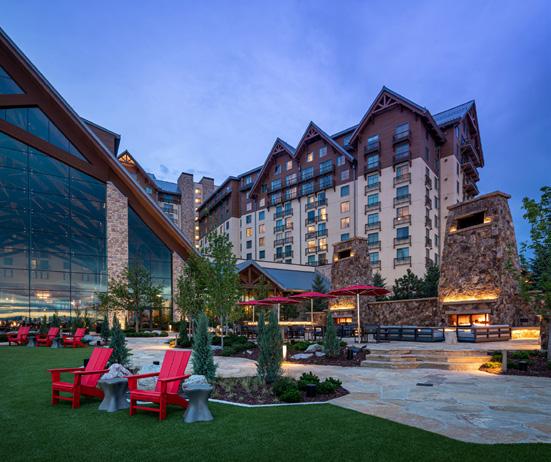
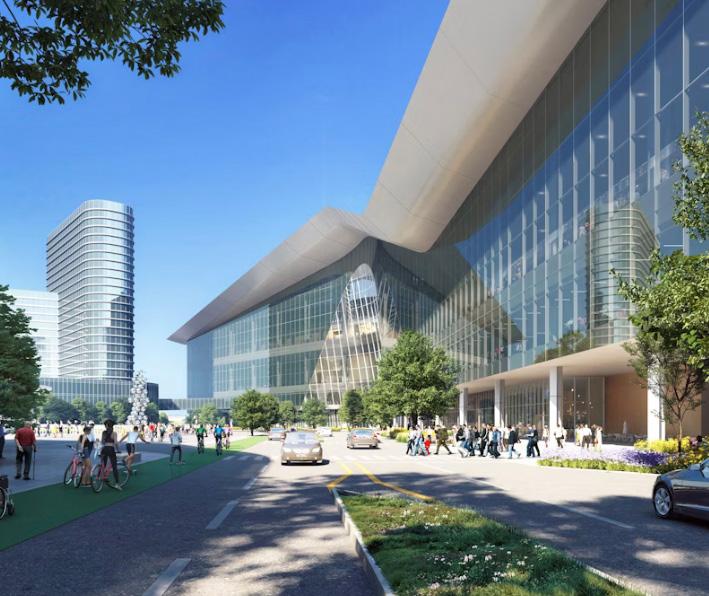
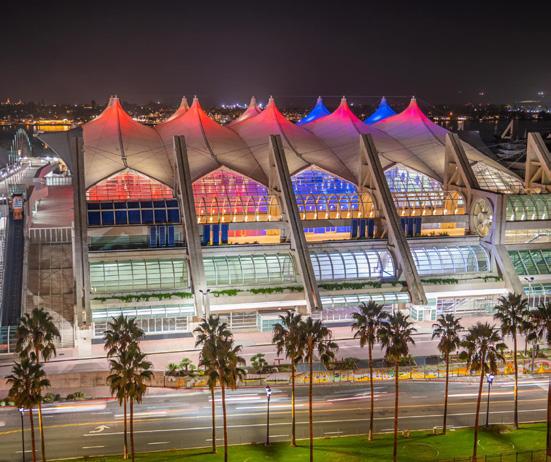
Destination Updates
Key/ Headquarter Hotels
Destination Updates
Gaylord Rockies Resort has completed Phase Two of its enhancements, introducing several new dining venues, including Garden + Grain and a refreshed Old Hickory Steakhouse Bar, along with a 12,000-square-foot Mountain View Pavilion and outdoor event lawns. The resort has also submitted plans for a major expansion featuring approximately 450 additional guestrooms and a 47,000-square-foot indoor waterpark called Soundwaves, which will connect to the existing pool complex. The new waterpark is expected to include a wave pool, two slides, an adventure river, private cabanas, a restaurant and a terrace coffee bar, enhancing the resort’s appeal to both convention and leisure markets.
Omni Dallas: 1,001 rooms
Sheraton Dallas Hotel: 1,841 rooms
Key/ Headquarter Hotels
Destination Updates
Hyatt Regency Dallas: 1,120 rooms
Dallas is in the early stages of redeveloping the Kay Bailey Hutchison Convention Center, following a groundbreaking in June 2024. The new facility is being built on a 2.5 million-square-foot plan featuring approximately 750,000 to 800,000 square feet of exhibit halls, up to 430,000 square feet of meeting space and a 100,000-square-foot ballroom. The design includes elevated ballrooms with outdoor terraces overlooking downtown, a grand lobby, flexible event environments, and walkable streetscapes connecting South Dallas, the Cedars and a deck park over I-30. In early 2025, Dallas City Council approved a $1 billion bridge loan, and over $47 million in design and engineering contracts were awarded. Completion is expected by the end of 2028, with full operation beginning in 2029.
Hilton San Diego Bayfront: 1,190 rooms
Manchester Grand Hyatt San Diego: 1,628 rooms
San Diego International Airport’s $3.4 billion Terminal 1 modernization is approximately 75% complete as of mid-2025 and remains on schedule. The first phase, featuring 19 new gates, a five-story parking plaza, expanded security checkpoints and improved concessions, is expected to open in late summer or early fall 2025. The second phase, adding 11 more gates for a total of 30, is slated for completion by 2028. While efforts to expand the San Diego Convention Center remain paused due to ongoing legal proceedings, the region’s convention capacity has grown with the opening of the Gaylord Pacific Resort & Convention Center in Chula Vista. This new waterfront property, which debuted in May 2025, features 1,600 guest rooms, nearly 140,000 square feet of event space, a four-acre waterpark and 12 dining outlets, offering a major new option for large-scale meetings in coastal Southern California.
Key/ Headquarter Hotels
Atlanta Marriott Marquis: 1,663 rooms
Hilton Atlanta: 1,249 rooms
Hyatt Regency Atlanta: 1,260 rooms
Destination Updates
Key/ Headquarter Hotels
Destination Updates
1,073 rooms
Signia by Hilton Atlanta: 976 rooms
Atlanta continues to build momentum as a leading meetings destination. The Georgia World Congress Center Authority (GWCC) is advancing a master plan to redevelop more than 20 acres of surface parking into a walkable convention district. Still in the planning phase, the $1 billion proposal includes new hotels, restaurants, retail and green space, along with improved pedestrian connections between the GWCC campus, Mercedes-Benz Stadium and the surrounding downtown neighborhoods. This vision complements recent developments like the Signia by Hilton Atlanta, which opened in March 2024 with 976 guest rooms and more than 100,000 square feet of meeting space directly connected to the GWCC. The long-term district plan aims to elevate the attendee experience and create a more dynamic, integrated environment for large-scale events.
Hilton New Orleans Riverside: 1,622 rooms New Orleans Marriott: 1,333 rooms
Hyatt Regency New Orleans: 1,193 rooms
Sheraton New Orleans Hotel: 1,110 rooms
New Orleans continues to enhance its convention and hospitality offerings. Upgrades at Louis Armstrong Airport, including taxiway improvements and faster TSA screening, are helping support ongoing visitor growth. The Ernest N. Morial Convention Center is undergoing a $557 million multi-phase renovation that is delivering new public spaces, modern interiors and technology enhancements. In early 2025, an agreement with Omni Hotels & Resorts was approved to build a 1,000-room headquarters hotel with 100,000 square feet of meeting space directly across from the convention center. Construction is expected to begin in 2026, with opening planned for 2029.
Key/ Headquarter Hotels
Destination Updates
San Francisco Marriott Marquis: 1,500 rooms
Hyatt Regency San Francisco Downtown: 686 rooms
Key/ Headquarter Hotels
Destination Updates
Hilton San Francisco Union Square: 1,921 rooms
The Westin St. Francis San Francisco on Union Square: 1,195 rooms
San Francisco’s Moscone Center has no new renovations planned since completing its major expansion in 2019, which nearly doubled the exhibit space and added new meeting rooms, ballrooms, public plazas, pedestrian bridges and sustainability upgrades. The facility remains fully operational. At San Francisco International Airport, the Harvey Milk Terminal 1 modernization finished in 2024 with new gates, concessions and security upgrades. Terminal 3 West is now under construction, with expanded hold rooms, seismic upgrades and improved passenger areas scheduled to phase in through 2029.
Hyatt Regency Phoenix: 693 rooms
The Sheraton Phoenix Downtown: 1,003 rooms
Renaissance Phoenix Downtown: 521 rooms
San Diego International Airport’s $3.4 billion Terminal 1 modernization is approximately 75% complete as of mid-2025 and remains on schedule. The first phase, featuring 19 new gates, a five-story parking plaza, expanded security checkpoints and improved concessions, is expected to open in late summer or early fall 2025. The second phase, adding 11 more gates for a total of 30, is slated for completion by 2028. While efforts to expand the San Diego Convention Center remain paused due to ongoing legal proceedings, the region’s convention capacity has grown with the opening of the Gaylord Pacific Resort & Convention Center in Chula Vista. This new waterfront property, which debuted in May 2025, features 1,600 guest rooms, nearly 140,000 square feet of event space, a four-acre waterpark and 12 dining outlets, offering a major new option for large-scale meetings in coastal Southern California.
(Listed alphabetically)
The following are notable updates on destinations with which Denver has competed in recent years, though not as frequently as those listed among our top ten competitors. As the convention cycle evolves and new investments reshape the landscape, several of these cities could emerge as more significant competitors in 2026 and beyond.
The Hilton Anaheim, the largest hotel in Orange County, is in the final stages of a multi-hundred-million-dollar renovation, with a grand reopening anticipated around September 2025. The project includes fully redesigned guest rooms, upgraded meeting and event spaces, refreshed public areas and enhancements to the pool and outdoor spaces. The hotel remains operational during construction and continues to accommodate both group and leisure travelers. In addition, Anaheim is actively building a city center through several large-scale projects, including the OC Vibe entertainment district and the revitalization of the Greater Downtown area. OC Vibe, a $4 billion development, will transform 100 acres around the Honda Center into a mixed-use space with entertainment, dining and residential options. The Greater Downtown area is focusing on becoming a well-recognized urban center with a mix of living, working and recreational spaces.
The Austin Convention Center officially closed in April 2025 to begin demolition and reconstruction for a $1.6 billion redevelopment. Construction is now underway, and the facility is not expected to reopen until early 2029, in time for the city’s spring festival season. The project will expand the convention center’s rentable space from approximately 376,000 to 620,000 square feet, with long-term plans potentially increasing that total to 709,000 square feet depending on final configurations. The redesigned facility will support multiple large-scale events simultaneously and improve connectivity throughout downtown. Austin’s major convention hotels, including the Fairmont Austin (1,048 rooms), JW Marriott Austin (1,012 rooms) and Hilton Austin (801 rooms), remain a strong foundation for future meetings business once the new center opens.
The Boston Convention and Exhibition Center, officially renamed the Thomas Michael Menino Convention and Exhibition Center in July 2025, is undergoing a $400 million expansion focused on adding flexible, modern event space. The project includes approximately 200,000 square feet of new space, anchored by the “Pavilion on D,” a 100,000-square-foot multipurpose venue designed to accommodate ballroom functions, exhibitions or entertainment. Construction began in late 2023 and is expected to be completed by early 2026. Funded entirely through the Convention Center Fund, which draws from existing tourismrelated taxes and fees, the project enhances the facility’s indoor-outdoor connectivity along the D Street corridor. Broader expansion plans remain on hold due to a shortage of hotel inventory near the convention center.
Houston is undergoing a $2 billion (about $6.2 per person in the U.S.) transformation of the George R. Brown Convention Center and the surrounding East Downtown (EaDo) district, with construction already underway. The first phase, “GRB Houston South,” will add over 700,000 square feet of new space by May 2028, including two exhibit halls, a multipurpose hall, an atrium flex hall, retail and dining venues and what will become the largest ballroom in Texas at approximately 80,000 square feet. The convention center remains operational during construction, which also includes upgrades to public plazas and sustainability features such as rainwater collection, native landscaping and energy-efficient systems. The broader EaDo redevelopment supports a long-term vision for a walkable, mixed-use convention district with future hotel, residential, retail and entertainment development. These investments are designed to strengthen connectivity between the convention center, Discovery Green, the Toyota Center and surrounding neighborhoods, positioning Houston as a leading destination for major national and international events including the 2026 FIFA World Cup.
Indianapolis is moving forward with a $200 million expansion of the Indiana Convention Center, which broke ground in August 2023 and is expected to be completed by late 2026. The project will add 143,500 square feet of new space, including a 50,000-square-foot ballroom, and will connect via skywalk to the new 800-room Signia by Hilton Indianapolis. The 40-story hotel will be the tallest in the city and will include approximately 90,000 square feet of flexible meeting space to complement the convention center. Together, these projects will enhance Indianapolis’s ability to host multiple large-scale events simultaneously. The downtown hotel market is also growing, with more than 1,500 rooms under construction and over 6,600 rooms in final planning or proposed stages. Recent additions include the 170-room InterContinental Indianapolis, which opened in 2025 following a $120 million renovation, and the 128-room Aloft Hotel Indianapolis Downtown.
The Los Angeles Convention Center is moving forward with a major expansion and modernization project, initially approved in July 2024. The plan includes 340,000 square feet of new space, connecting the South and West Exhibit Halls via a structure over Pico Boulevard and incorporating upgrades to Gilbert Lindsay Plaza and existing facilities. The expansion will add 190,000 square feet of exhibit halls, 55,000 square feet of meeting rooms and 95,000 square feet of multipurpose space. The total project cost has risen to over $2.2 billion, with construction expected to begin in late 2025. Due to planning delays and coordination with the 2028 Summer Olympics, the city is pursuing a phased timeline with full completion anticipated in early 2029. Alongside these efforts, Los Angeles International Airport (LAX) is undergoing a $30 billion capital improvement program that includes the reconstruction of Terminal 5, scheduled for phased reopening through 2028, and the launch of an Automated People Mover in early 2026 to improve transit and terminal connectivity. These combined investments aim to transform Los Angeles into a top-tier global destination for conventions and international events.
Miami continues to strengthen its position as a premier meetings and events destination through significant infrastructure investments. The $640 million expansion of the Miami Beach Convention Center, completed in 2020, added nearly 500,000 square feet (about half the area of Chicago’s Millennium Park) of new space including a 60,000-square-foot grand ballroom, four junior ballrooms and flexible meeting rooms, bringing the total facility size to approximately 1.4 million square feet. Construction on the long-planned 800-room Grand Hyatt Miami Beach officially began in May 2025, with opening targeted for late 2027. The hotel will include meeting space and ballrooms across four floors, 52 suites, a rooftop pool deck, restaurants, bars and retail space, and will be connected to the convention center by a climate-controlled skybridge. Miami International Airport is also undergoing a $7 billion capital improvement program through 2035 focused on terminal modernization, expanded gates, baggage system upgrades and enhanced passenger amenities. Together, these developments are set to elevate Miami’s competitiveness for large-scale national and international conventions.
Nashville continues to invest heavily in infrastructure to support its growing meetings and tourism sectors. Nashville International Airport (BNA) is undergoing a multibillion-dollar improvement program through its BNA Vision and New Horizon initiatives, which include an international arrivals facility, expanded concourses, a terminal garage, an on-site Hilton hotel and plans for a second terminal to accommodate more than 35 million passengers (about twice the population of New York) annually by 2034. In addition, a new privately funded project known as the Music City Loop aims to connect downtown and the convention center to the airport via a zero-emission underground transit system with travel times under 10 minutes. Construction is expected to begin soon, with service projected to launch by fall 2026. These major investments are helping position Nashville as one of the fastest-growing convention destinations in the country.
Philadelphia has focused on maintaining and enhancing its existing hospitality infrastructure through incremental updates. The Pennsylvania Convention Center recently implemented technology and sustainability upgrades, including Wi-Fi 6E, new concession stands and energy-efficient systems. Several nearby hotels, such as the Philadelphia Marriott Downtown and Independence Park Hotel, have completed renovations to refresh guest rooms and amenities. While no major expansions are underway, these improvements support Philadelphia’s continued competitiveness for regional and repeat convention business.
Salt Lake City has strengthened its position in the meetings market with the opening of the 700-room Hyatt Regency Salt Lake City in late 2022. Directly connected to the Salt Palace Convention Center, the hotel adds 60,000 square feet of dedicated meeting space and provides a true headquarter experience for large groups. The Salt Palace remains fully operational and offers more than 700,000 square feet of exhibit space, though a long-term phased renovation and partial redevelopment of the facility is expected to begin in 2027. Plans include a second ballroom, expanded meeting space and improved flexibility to host simultaneous events. The project will proceed in stages to avoid disruption to existing business and is
part of a broader downtown revitalization initiative. Salt Lake City International Airport also continues its multi-phase expansion through 2027, improving capacity, passenger flow and air service options. Together, these developments are enhancing Salt Lake City’s long-term competitiveness in the national convention landscape.
San Antonio is moving forward with a series of long-range investments under the umbrella of Project Marvel, aimed at enhancing the city’s convention and hospitality landscape. The Henry B. González Convention Center is in the planning and design phase for a significant expansion that could add up to 200,000 square feet of new exhibit space, helping San Antonio address capacity constraints and compete more effectively with other major Texas markets. These efforts are supported by a Project Finance Zone, which reinvests local hotel occupancy tax revenue to fund convention and infrastructure improvements, including ongoing renovations to the Alamodome. A new 10-story Marriott hotel has also broken ground downtown and is expected to open in 2026, adding an estimated 400 to 500 guest rooms and approximately 15,000 to 20,000 square feet of meeting space near the convention center. Broader downtown revitalization efforts focused on walkability, connectivity and public space improvements are also underway, positioning San Antonio to attract larger events and improve the overall visitor experience.
Seattle has significantly expanded its convention capacity with the opening of the $2 billion (about $6.2 per person in the U.S.) Summit building in January 2023, a LEED Platinum-certified addition to the Seattle Convention Center. Located just over a block from the original Arch building, Summit adds approximately 573,770 square feet of event space, including 248,450 square feet of exhibit space, a 58,000-square-foot column-free ballroom, more than 99,000 square feet of meeting space across 62 rooms and a 14,000-square-foot rooftop terrace. Together, the Summit and Arch buildings offer over 1.5 million square feet of total space, allowing Seattle to host multiple large-scale conventions simultaneously. Seattle-Tacoma International Airport is also undergoing long-term improvements through its Sustainable Airport Master Plan, with phased terminal expansions and a proposed new north terminal expected to be completed over the next decade. These developments support Seattle’s continued growth as a modern and globally connected convention destination.
Ronald Reagan Washington National Airport continues phased improvements under its DCA Reimagined initiative. Upgrades to Terminal 2 are progressing, with new dining, retail and amenity enhancements throughout National Hall, as well as restroom renovations and gate area improvements scheduled through 2026. At Terminal 1, a full replacement of the existing nine-gate facility was approved in 2025 and remains in pre-construction, with work expected to begin by 2027. At Washington Dulles International Airport, planning continues for a new 14-gate midfield concourse to replace aging infrastructure with a targeted opening in 2026. Additional work includes runway improvements, a baggage facility upgrade and a multi-phase rollout of new dining and retail options across the terminal.
In December 2012, the Board of Directors of the Metro Denver Sports Commission voted to become an affiliate of Visit Denver’s sports marketing efforts, effective January 2013. Former Denver Mayor Michael B. Hancock, an avid sports fan, helped lead the alignment. A Denver Sports Advisory Committee was formed immediately afterward and has been working diligently to fulfill the mission ever since.
As an official affiliate of Visit Denver, the Denver Sports Commission, frequently referred to as Denver Sports, operates as a clearinghouse and resource for all sporting event owners and organizers interested in Denver as a future location. The mission of the Denver Sports Commission is to proactively identify, pursue and attract new regional, national and international sporting events and sports-related business opportunities that generate economic impact, engage the community and support Denver’s brand as an active, healthy city.
Sports tourism is an integral part of local and national economies across the United States. Travelers attending sports tournaments, races and other events — either as a participant or spectator — generate significant economic benefits to households, businesses and governments alike and represent a critical driver of the overall economy. According to Sports ETA and Tourism Economics’ 2024 industry report, overnight attendees accounted for most of total sports tourism figures, with $42.2 billion (about $130 per person in the U.S.), compared to $4.9 billion (about $15 per person in the U.S.) from day-trippers.
For Denver, sports in 2025 hit a high mark in number of highquality, media sporting events. Denver was honored to host several events in 2025 that are keeping the Mile High City in the forefront. To name a few:
Once again, the NCAA brought sold out capacity basketball to Ball Arena in March. Featuring eight teams, including exciting matches with Michigan, Texas A&M and Wisconsin, fans were brought to their feet cheering on another successful spring of “March Madness.”
USA Volleyball’s signature event, the Open National Championship took place at the Colorado Convention Center from May 23–28. This premier event brought together adult volleyball teams from across the country for six action-packed days of competition. With thousands of players, coaches and fans in attendance, the Centennial State showed off again its love for volleyball.
The U.S. Women’s National Team (USWNT) had an electrifying showdown against Ireland at Dick’s Sporting Goods Park. This match marked USWNT’s ninth appearance at the venue, where they boast an impressive 8-0-1 record. This game was part of the team’s preparation for the 2027 Women’s World Cup and is especially exciting as the team features several women who grew up in Colorado. The U.S. Men’s team was also scheduled in the Mile High City in October as they took on Australia, again at Denver’s MLS stadium.
After a 10-year hiatus, the USA BMX National Series came back to Colorado this past summer. Hosted by Mile High BMX in Lakewood, this high-profile event brings elite racers, rising stars and families from across the country to the base of the Rocky Mountains for a full weekend of adrenaline-fueled action.
Denver hosted the semifinal stage of the third biggest annual rugby event in the world with the Pacific Nations Cup coming to town. Teams competed for qualifications in the next Rugby World Cup and featured the national squads from six nations: USA, Canada, Japan, Samoa, Tonga and Fiji.



Denver Sports regularly assesses opportunities to recruit or develop sporting events across five different segments and will continue to do so in 2026. The primary targets of relationship-building and recruitment are as follows:
Based on extensive research conducted during former bid cycles, it has become clear that securing some large-scale NCAA events could have challenges and be cost-prohibitive. Budget requirements for most events come with a hefty fee weighed against the value of hosting these lucrative events. In addition, an important qualifying element is the impact of taking Denver’s high-capacity venues offline. Several NCAA events require a high volume of event-days on the calendar which will be a continuous issue for venues to consider moving forward.
With that said, the men’s basketball tournament each March has previously found an excellent home in Denver, as evidenced by the sold-out weekend this past March 2025.
The upcoming bid cycle for most NCAA Championships will commence fall 2025, and the sports commission will be involved in uncovering all suitable opportunities. This process will go on until mid-2026 and will be targeting signature events like the Frozen Four and multiple rounds of men’s and women’s basketball tournament.
The recruitment and promotion of all amateur/participatory events solicited to Denver will fall under the purview of the Visit Denver sales and marketing teams. Denver Sports will lend support, such as committee representation and promotion, when necessary. With Denver offering several multipurpose facilities, like Dick’s Sporting Goods Park, Ball Arena and DU’s Ritchie Center, there is substantial opportunity to solicit mass amateur participation in several different sports like soccer, lacrosse and rugby. The diverse scheduling of regional parks and sporting complexes can also play a role in more amateur sports bookings. For example, venues like Stenger Soccer Complex and the Schaefer Soccer Complex have a bigger appetite now to schedule more business across their entire footprint. One of the mainstays for Denver is the annual soccer events produced by U.S. Club Soccer and hopefully the annual USA Flag Open that debuted in August 2025 at Dove Valley Regional Park.
Denver Sports remains in close contact with USOC members. With most NGBs headquartered in Colorado Springs, the proximity of these groups running events in Denver can, and has become, an operational advantage for many of the different organizations in the USOC family.
In 2026, the sports commission will continue to work on projects involving some of the nation’s best events with members such as USA Cycling, USA Rugby and USA
Volleyball. USA Volleyball just staged one of their signature events, the Open Championships, in May and are currently looking forward to one of their massive junior events in a future year.
In addition to amateur/participatory events, Denver Sports can recruit events associated with Denver’s professional sports franchises. Since Denver has seven high-profile professional teams in addition to first-class sports venues and top-tier convention infrastructure, the city is well positioned to host these high-profile events. With the number of franchises in top-tier cities, these events can have limited availability and be cyclical in nature. Examples of these events include the NHL Stadium Series outdoor hockey game, the NFL Draft and the annual All-Star Games.
Because of Denver’s inventory of large-capacity venues, like Empower Field at Mile High and Dick’s Sporting Goods Park, another area of recruitment will be to secure attendanceheavy events involving the national teams in rugby and soccer. A notable example of this is the semi-regular hosting of Concacaf’s Gold Cup tournament and Nations League Finals. Denver’s great showing of attendance at this past summer’s International U.S. Soccer matches has also placed Denver in favorable position for future calendars.
Denver’s new franchise, the Denver Summit FC of the National Women’s Soccer League, also puts a new spotlight on professional women’s sports as well as supplies the city with new high-end facilities. These stadiums and training venues will be great recruitment tools for future soccer matches with U.S. Soccer and our friends with Concacaf and FIFA.
With the success of booking convention and transient business over the years, finding available dates in Denver’s calendar to recruit sporting events can be challenging. This, along with the sometimes-high price tag being placed on high-profile events, leads to a need to strategically review opportunities to create owned and operated events that are beneficial for the community and certain niche markets. Members of the Commission’s Advisory Committee have been meeting to discuss implementing this concept under Denver Sports’ supervision and alongside Visit Denver. Creating a unique and Denver-only annual event is the focus and collaboration with city partners will be crucial.
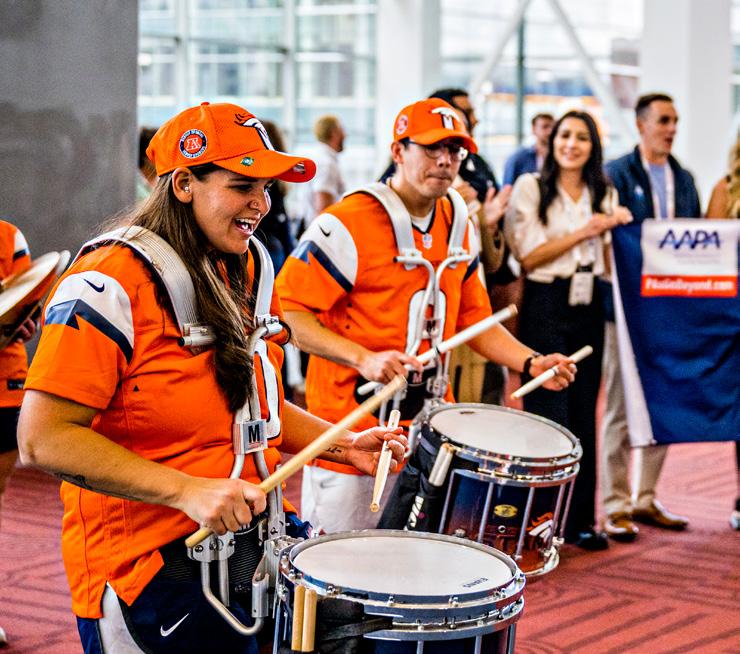
Denver Sports has made it a priority to assess Denver’s position and opportunities in the marketplace when developing strategies and tactics for 2025 and beyond. As the sports event business has returned to normal, the strategies for Denver will not drastically change.
▷ Denver has built a diverse resume of high-impact events. In the last 20 years, Denver has hosted all-star games for six professional sports leagues and staged several types of NCAA events. This brand recognition in the competitive world of event recruiting can boost future conversations with event operators.
▷ Denver has seven professional sports teams, serving as one of the highest numbers of any city in the nation. Three of Denver’s professional franchises claimed championships recently, with Ball Arena staging parts of their journey to the trophy.
▷ Denver and Colorado have colleges and universities that are well known and respected in the collegiate sports arena. Denver Sports has an established partnership with the Mountain West Conference, which has been an outstanding partner for pursuing NCAA college basketball tournament rounds. The University of Denver’s venues have proven to be excellent host sites. In addition, Metro State University is a seasoned host, evidenced by their successful hosting of several NCAA Division II Softball Championships and the NCAA Division II Spring Festival.
▷ Denver has a passionate sports fan base that has set many attendance records for professional games and events as well as NCAA and international sporting events.
▷ Denver has built five state-of-the-art facilities in the last 30 years, all of which have hosted major sporting events. Two of the major downtown facilities are currently evaluating and/or implementing major development projects to improve the fan and team experience, and the new NWSL franchise has plans to build three different high-end venues for soccer and training by 2028.
▷ Denver has 300 days (about 10 months) of sunshine and a mild, dry climate that is extremely favorable for yearround outdoor sports.
▷ Denver is a top-tier convention destination, with a proven record of accomplishment hosting fan events associated with all-star games and international sporting events. Key assets are a world-class airport with direct rail transportation, a state-of-the-art convention center and 55,000 metro-area hotel rooms, including more than 13,000 downtown.
▷ Denver has one of the healthiest, most active populations in the U.S. and sets an example for NCAA and other youth-oriented sporting events.
▷ Elite endurance athletes are attracted to train in Denver, given the cardiovascular benefits of training at altitude. England’s national rugby team is an excellent example of this, training in the altitude as a precursor to the U.K.’s hosting of the Rugby World Cup.
▷ Being centrally located in the U.S. and the largest city within a 600-mile radius, Denver is an ideal location to host nationwide sporting events that require geographic representation in this region of the country.
▷ Denver serves as the gateway to resorts in the Rocky Mountains for people coming to Colorado from abroad.
▷ The plethora of sports options and sporting events in Denver can present a saturation challenge, wherein there may be difficulties in gaining media exposure, sponsorships and ROI (Return on Investment) for the event owner and the city.
▷ Securing venues for sporting events recruited to Denver can be difficult, given the number of professional teams with extensive annual schedules and the need to preserve postseason dates. In addition, the need periods for conventions and tourism are often at the times of the year when sports venues are in maximum use.
▷ Major corporate sponsors in the region are limited, especially for one-time unique events, and most of them are already aligned with existing sports teams and properties.
▷ Generating audiences for new events or one-time events can be challenging, given the saturation of spectatordriven sports in Denver and the small population base in the states surrounding Colorado. Therefore, it is important that Denver Sports strategically targets both local and regional audiences for future events.
▷ Different agendas for business models and financial risk among the parties necessary to achieve a successful sports event bid submission make effective collaboration challenging but imperative.
▷ The City and County of Denver has a limited number of playing fields and sports complexes available for the amateur sports market, and most of the activities are hosted in the metro area, including but not limited to Aurora, Westminster, Lakewood’s Gold Crown facilities and Commerce City’s Dick’s Sporting Goods Park. While these surrounding areas and their complexes are typically partners, all entities are engaged in aggressive efforts to host events to their immediate area.
▷ Mixed Martial Arts (MMA): MMA has a great history in Denver, since the very first Ultimate Fighting Championship (UFC 1) was staged at the former McNichols Arena in 1993. One of the most watched and attended sports in the world now, Denver has become a welcomed home to this discipline, evidenced by Ball Arena hosting two high-profile events in 2024. Denver Sports has evaluated zip code data and visitor tracking to get a handle on the impact of visitation of fans, and the results are incredibly positive — there can be up to 30% of fans visiting from outside the region. This information can assist with pursuing further MMA events in the coming years.
▷ eSports: eSports is an emerging player in the sports landscape. Video gaming has been around in various forms for decades, but new levels of professionalism, viewership and commercialism are emerging. Today there are organized eSports at the youth, high school, college and professional levels. Some locations, such as Las Vegas and Arlington, Texas, have responded with permanent eSports arenas. The Denver Sports Commission has reviewed data that suggests the Denver area has higher than national average numbers in users and devices. In addition, Denver is seeing a growing community in training and participation with venues like the Localhost Arena in Lakewood. The Denver Sports Commission is part of a state-wide eSports council and is exploring signature industry events. The current climate suggests that eSports are here to stay. However, there is plenty of evidence that suggests these signature events pose financial risk as host. Because of this, this committee is still reviewing the best strategy to enter the market in a significant way.
▷ International Events: With the exceptional amenities of DEN, hotel accommodations and mass transit, Denver can be an attractive destination to global events rights holders. These attributes can be beneficial to international competitors too. Denver Sports will continue to explore this territory with international shows featuring federations of different sports, most of which can now be done virtually.
▷ Rugby: Denver has made a compelling case as a rugby hotbed, due in large part to Glendale’s Infinity Park and a long history of hosting international events like the Churchill Cup, Serevi Sevens tournament and the Rugby Town 7s tournament that takes place every year at Infinity Park in Glendale. With the announcement of the Rugby World Cup, the world’s third largest attended event, coming to the United States in 2031 and 2033, the sport will be receiving a great deal of attention in the coming years. Denver Sports will continue to work with USA Rugby, whose headquarters are advantageously located in nearby Glendale, CO, to bring large international events to Denver. Denver Sports feels strongly that hosting high-profile rugby matches in the lead-up to a future World Cup will be desirable to the international rugby community, and Denver Sports hopes that preference will be given to scheduling these bigger events in Denver in 2026 and beyond.
▷ Hockey: Following Denver’s recent claim as Hockey Capital USA, the attention on the sport of hockey has not slowed down. Two of Denver’s primary ice floor venues, Ball Arena and Magness Arena, are actively part of discussions to bring high-profile hockey events to the city. Denver Sports will continue to work closely with the NHL (All-Star Game), NCAA (Frozen Four) and USA Hockey (National Team friendlies) on finding landing spots in their calendar. Denver and Ball Arena have already secured the U.S. Hockey Hall of Fame Game, scheduled for November 2025 and featuring two premier hockey programs in the University of Denver and the University of Minnesota.
▷ U.S. Olympic Committee (USOC) and Associated National Governing Bodies (NGBs): Over the years, Denver Sports Commission has taken significant strides in furthering its relationship with the leadership of the USOC and its related NGBs. Given the city’s proximity to Colorado Springs, where the USOC is headquartered, it makes sense for Denver Sports to continue to foster these relationships and bid to host USOC events. Organizations of the USOC see it as an advantage to stage events within 75 miles of their headquarters. The USOC is always looking to diversify their host destination schedule for their athletes and premier events, and this proximity gives access to more than 20 organizations. Denver’s strong resume of hosting events associated with the Olympic family will continue to be an asset. For example, the recent USA Volleyball Open Championships and the USA BMX Mile High Nationals.
▷ The plans to redevelop the National Western Complex facilities to house a new arena and exposition hall/field could enhance Denver’s ability to solicit and attract events that currently have not chosen the city because of limited venue availability. Denver Sports has participated in discussions for the appropriate use of the competition venue currently planned for the National Western Center. Denver Sports has uncovered many events that could benefit from a fixed-seat facility with an adaptable competition floor; these on-going conversations will be crucial to the success of future sporting events in Denver.
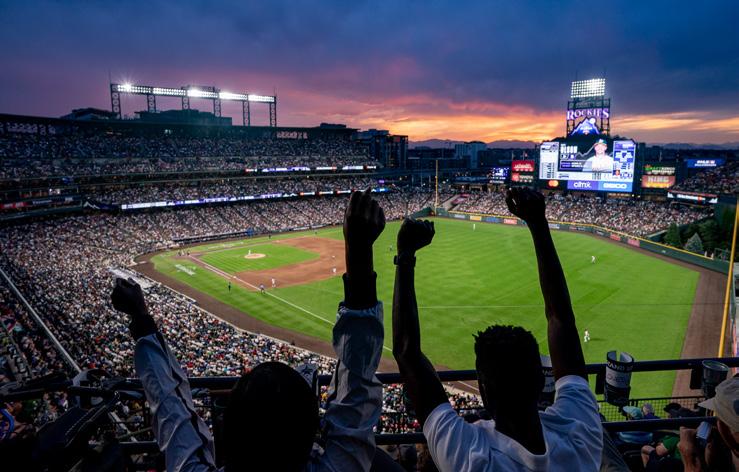
▷ Competition from other cities — Whether funded by government money, privately owned firms or professional teams, the recent proliferation of multi-use venues and sport-specific training sites in other cities brings increased competition for sporting events. These venues offer event owners many options to consolidate their event footprint, especially when many fields, courts, etc. are required. Venues and training sites that provide additional on-site or adjacent amenities can be incredibly attractive to event owners as they decide where to bring their future events. Denver’s foray into the international market, opening the city up to potential new events, will certainly bring new competing destinations into the mix as well.
▷ Event marketing funds in other destinations — Certain cities, counties and states have created tax revenue streams or allocated significant funds to attract sporting events by buying the event, especially when large rights fees to host the event are in place. Although the occurrence of rights fees can be cyclical, Denver Sports will find itself in direct competition with markets that can deliver funding and offset operation costs. Denver Sports has certainly seen a propensity for international events to have a large financial commitment and/or risk attached but is now seeing more domestic events taking a similar approach. The incentive concept will continue to be an element that must be considered for securing events. The emergence of Denver’s Tourism Improvement District (TID) funding source has already played a successful role in landing several events. The ability to show strong returns on this funding will be important in maintaining this resource. Denver Sports has also engaged members of their advisory committee to uncover new funding concepts and anticipate having options to activate in the future.
▷ Higher bid fees — Many second- and third-tier cities view sporting events as an opportunity to gain exposure and brand their destinations. Thus, they are willing to bid up the price by increasing their investment in hosting these events. The result is that event owners are now using this demand to ask for higher bid fees and more concessions.
▷ Perception of inclement weather — Organizers can be swayed by the misperception that the Mile High City experiences severe wintry weather and snow during the entire winter. Denver Sports will continue to work with Visit Denver to carry on marketing efforts to combat this perception, which could pave the way for more events in the non-peak times of the calendar.
Denver Sports has several key strategies and tactics that it will continue to focus on in 2026:
▷ Engage key sports and venue stakeholders in Denver with the mission of Denver Sports and involve them in assessing opportunities to recruit sports events as potential business partners. The recent multi-year process of bidding on FIFA World Cup was a productive exercise in collaboration and team building, and it will pay dividends when bidding on future mega-events like the FIFA Women’s World Cup and Rugby World Cup, scheduled for 2031 and 2033.
▷ Work with the Denver Sports Advisory Committee to be the voice of sports in Denver and establish this office as the go-to for any sports destination opportunities. Continue building on the current work of the office’s Ambassador Program and bring key local partnerships to implement plans. Denver Sports is consistently adding members every year, while also retaining veteran members and establishing a foundation of community stakeholders.
▷ Ensure messaging, strategies and tactics of Denver Sports are aligned with the mission, overall goals, infrastructure and resources of Visit Denver.
▷ Continue Denver Sports’ overall event recruitment strategy and develop the criteria and tactics necessary to analyze and recruit sporting events.
▷ Refine a set of core capabilities for Denver Sports that can be applied and used in support of events recruited to Denver by venues, promoters or grassroots sports organizations.
▷ Continue to aggressively recruit high-profile soccer matches to Denver, since Denver has proven success with frequent matches at Empower Field at Mile High and Dick’s Sporting Goods Park. Concacaf, Major League Soccer, U.S. Soccer and now new partners at the National Women’s Soccer League and Denver Summit FC, have become excellent resources in staging high-profile events in Denver.
▷ With Denver’s desirability and busy calendar, recruiting meaningful events can be a challenge. The Denver Sports Commission has done well with securing quality over quantity and will continue to uncover significant opportunities for the city. The sports commission office looks forward to concluding 2025 and plans for a busy 2026 schedule featuring a new resume of events and partners.
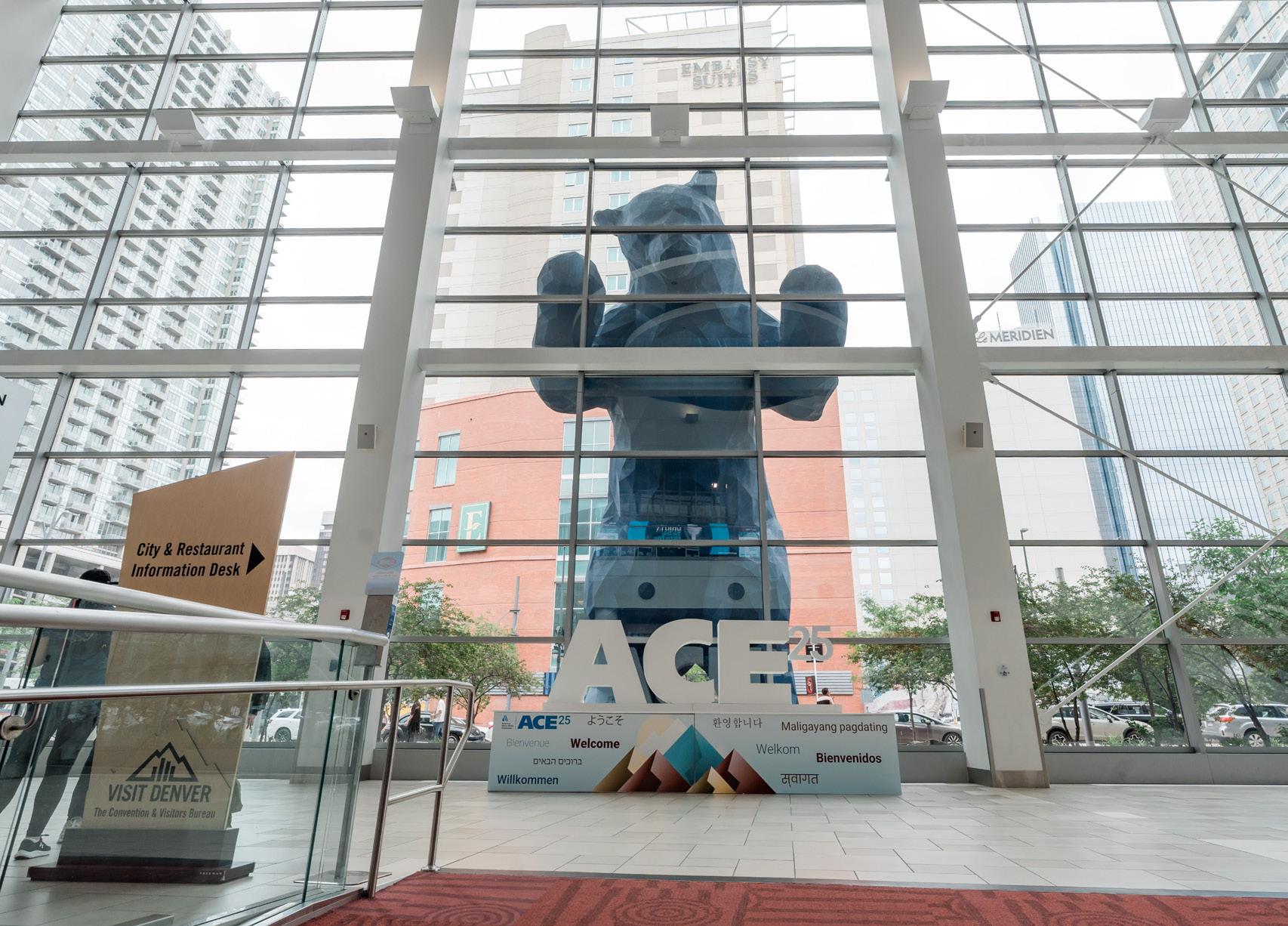
While Denver successfully hosted several large-scale meetings in 2025, some events saw lower-than-anticipated attendance, due to budget constraints and broader economic uncertainty. International delegate participation was also affected by challenges related to visa processing, shifting international travel policies and concerns surrounding the perception of the U.S. as a welcoming destination. The long-term impact of the current geopolitical climate on 2026 performance remains difficult to predict. Additionally, Denver faces increasing competitive pressure from rapidly growing convention markets such as Dallas, Austin, Anaheim, Salt Lake City and Nashville to name a few — cities investing significantly in new infrastructure and large-scale convention hotels. In contrast, the lack of comparable new development in Denver, particularly hotels with meeting space and the absence of new large convention hotels, continues to present challenges in competing effectively within the major meetings and convention landscape.
To establish the appropriate performance metrics for the upcoming year, the Visit Denver leadership team evaluates a range of key performance indicators, including broader economic conditions, national and regional meetings and conventions industry trends and detailed analysis of the competitive set and Denver market. This includes a thorough review of supply and demand dynamics, historical performance and relevant industry research to ensure the goals align with both market realities, the competitive landscape and strategic growth opportunities.
Visit Denver also uses various data points derived from the production and pace reports, and several market analyses from leading companies such as CoStar, formerly Smith Travel Research (STR), CBRE and Tourism Economics.
A look at hotel indicators for metro Denver, Denver City and County and downtown year-to-date through July 2025 follows. There are more than 13,500 hotel rooms in the downtown central business district (CBD), over 25,000 in the City and County of Denver and more than 58,000 hotel rooms metro-wide. As can be seen, occupancy is still down or flat from a high in 2019, while the average daily rate has surpassed 2019 levels.
As of July 2025, metro Denver’s group occupancy is still lagging the percentages seen in 2019. However, in most sub-markets, supply has increased over the last five years. When considering total group demand, 2025 is on-par with 2019 in terms of total group rooms occupied. Group business continues to trend positively, and conventions are drawing similar attendance as they were pre-pandemic. The caveat, as has been stated elsewhere in this report, is that international attendees and government employees and contractors have been affected by recent geopolitical activity.
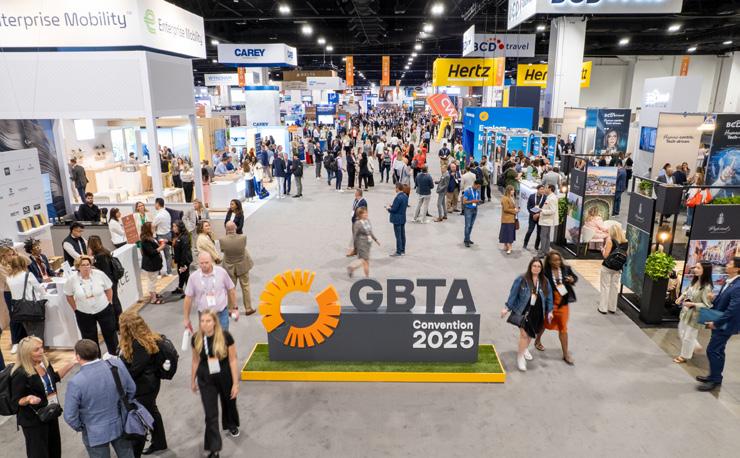
FuturePace delivers enhanced pace reporting for DMOs, helping destinations make more informed decisions based on accurate forecasting data. FuturePace was designed with improved data processing for greater accuracy in the calculation of pace targets, giving Visit Denver the opportunity to identify and solve problems before they arise.
With FuturePace, Visit Denver can use Simpleview’s business intelligence team and a full, dynamic integration with CRM data. The report provides credible information about convention bookings, trends and future projections for 60 cities and tracks all future and tentative bookings by month and year. The future bookings are labeled by market segments and size. The report gives each city the ability to
compare production to other cities and monitor their booking and consumption pace, as well as demand, conversion and market share.
Most importantly, FuturePace delivers deep visibility into industry demand pace from one to seven years out and enables DMOs to create more accurate forecasts and set appropriate booking targets for their market. Created from future-looking data, these reports serve as a tool for DMOs to share a realistic picture of market pressure and to help support hotels’ pricing and inventory initiatives to attract certain groups. The bookings, provided by participating DMOs in markets across the U.S. and Canada, are aggregated, analyzed and configured into the FuturePace Report, which has become an industry standard.
Visit Denver utilizes the FuturePace tools along with industry and local market studies to determine a healthy year-end goal for group business in Denver. Visit Denver then analyzes past booking trends to determine realistic pace targets to achieve those year-end goals in the future. The current long-term pace outlook shows a healthy 2026, 2028 and 2031 but some pace deficits in some of the coming years. Specifically, 2027, 2029, 2030 and 2032 are all behind the pace targets. There is a continue to focus on these “need years” that were impacted by COVID. Current tentative groups with a high probability of booking in the next six months should close the gap for some of the underperforming years.
Per CoStar, at the end of July 2025, 1,333 rooms were under construction in the Denver metro area. Upon completion, the new additions will increase Denver’s room inventory by 2.3%. Unfortunately for the last decade and a half, there has been little development of hotels with sufficient meeting space which would allow Denver to benefit from the improved meeting demand.
Competition remains strong from both tier one and tier two destinations, many of which are moving forward with transformative investments in hotel supply and convention infrastructure. As cities continue to enhance their offerings, planners are weighing more variables than ever, including overall costs, accessibility, venue quality, hotel inventory and destination appeal. Financial incentives, availability and new development are increasingly shaping sourcing decisions.
Denver also faces growing competition from destinations with mega-hotels capable of housing entire meetings under one roof. These properties, often offering complimentary meeting space and bundled services, appeal to corporate and midsize association groups seeking efficiency and value. The 1,501room Gaylord Rockies, located 23 miles from downtown Denver, remains a significant competitor. Its all-in-one model, expansive meeting facilities and leisure amenities such as a waterpark make it an attractive alternative to downtown multiproperty bookings.
Gaylord’s influence is expected to grow with the opening of its sixth resort, Gaylord Pacific, in Chula Vista in 2025. This new waterfront property will feature 1,600 guest rooms and 140,000 square feet of event space. The ability to rotate among sister properties enables the Gaylord network to pursue multi-year, multi-property group contracts. This adds pressure on individual destinations, including Denver and the Gaylord Rockies, to defend their share of national accounts.
At the same time, convention center competition is accelerating. Cities such as Las Vegas, Dallas, Austin, San Antonio and Los Angeles are advancing major expansion and modernization projects. Las Vegas is completing a $600 million renovation of its legacy campus, while Dallas is constructing an entirely new facility scheduled to open in 2029. San Antonio is undertaking “Project Marvel,” aimed at enhancing the city’s downtown area into a sports and entertainment hub, while Anaheim is undergoing significant redevelopment as part of the $4 billion, OC Vibe entertainment district. This includes a new Market Hall, restaurants, a performance venue and urban park space.
Across the industry, flexible design, integrated technology and wellness-focused features have become top priorities for new and renovated venues. These expectations, combined with destination-level investments in safety, walkability and urban appeal, are raising the bar for all convention cities.
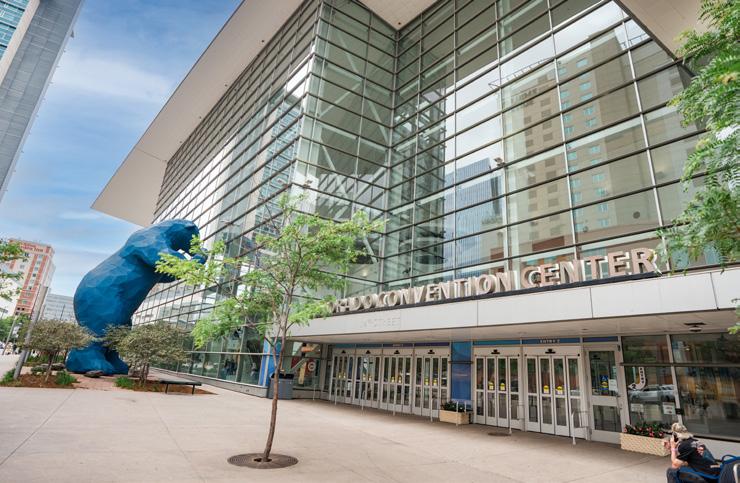
While the broader hotel market in Denver saw demand softening across several segments, the convention and group sector proved to be a key driver of performance in 2025. The steady return of major meetings, bolstered by successful longterm bookings made in prior years, helped offset some of the softness seen in other areas of the market.
As of July 2025, group occupancy in metro Denver was down 1.4% year-over-year with downtown enjoying a 1.9% increase mostly due to convention center business. Group ADR varied across sub-markets with some neighborhoods doing better than others but overall, metro Denver was able to grow group rate by 1.2%. While this resulted in flat group RevPAR for metro Denver, downtown was able to drive a 3.0% increase in group RevPAR thus buoying some of the losses they experienced from transient decline.
Despite some headwinds — including geopolitical uncertainty and conversion softness among smaller meetings — Denver’s convention segment demonstrated resilience and positive momentum throughout 2025. The performance of the Colorado Convention Center reflects the strength of the destination’s infrastructure, planner confidence and the long-term booking strategies employed by the Visit Denver sales team.
2026 Goals & Objectives
Visit Denver carefully analyzed supply and demand data points and market trends gathered from industry leading sources such as CoStar, 2Synergize, hotel partners and members of the Convention & Tourism Advisory Committee. To that end, the following influences are being observed and, to the extent possible, factored into the 2026 goal forecast:
2Synergize, an affiliate of Visit Denver’s CRM, was commissioned by Visit Denver to estimate Denver’s definite room night production target. The definite targets are determined by sophisticated mathematical modeling and correlation analysis.
Destination Attractiveness Comparative Cities (DACC) is an analysis that examines the known variables that attract or repel conventions and attendees to a destination.
The DACC compares Denver to 135+ destinations across the United States along 40 known variables.
Oxford Economics Group Demand Benchmark
New Supply
Limited hotel inventory available to meet “Committable Room Block” requirements for Citywide Conventions
Convention Center Developments
Markets
CoStar Forecast
Key Competitive Cities Expanding
The DACC compares these attractiveness variables on both a national and specific competitive set. The National Market Comparison highlights where Denver ranks amongst 135+ destinations along with a percentile ranking and then a detailed breakdown of the top 20 variables. A Competitive Set Study highlights where Denver ranks amongst its predefined competitive set. The report provides reliable estimates as to what the future definite goals and consumption targets should be. It was determined that Denver’s fair share of the entire convention market, not just the share among the comp set, had a mathematical output of 758,680 room nights.
As of August 2025, CoStar and Tourism Economics have reduced U.S. hotel growth projections for 2025 and 2026, citing decreased demand stemming from economic uncertainty, inflation and changing travel patterns. The revised forecast, presented at the Hotel Data Conference, lowers 2025 demand by 0.6 points, average daily rate by 0.5 and revenue per available room by 1.1, with similar reductions expected in 2026.
April benchmark index for 2026 & 2027 is slightly weaker than January forecast.
No new large meeting hotels added to the market within the last 10 years. The limited supply of meetings and convention hotels in Downtown Denver restricts capacity for large events.
Large hotels prioritizing contract business over group bookings reduce availability for citywide conventions.
New BBB ballroom has been successful.
Government and international markets declined.
Forecasted growth rates were lowered across the top-line metrics: demand (-0.6 pts), ADR (-0.5 pts) and RevPAR (-1.1 pts).
New Convention Center and Entertainment Districts developing: Dallas, Austin, Salt Lake City, LA.
2026 PACE Up 13%
2027 PACE Down 8%
2028 PACE Up 4%
The 2026 goals outlined below have taken the DAC/DAMM analysis and key performance indicators into consideration and have been developed with the best available data as of August 2025. Goals may be different in the final report as production continues to actualize over the next few months and as current national and local industry environment changes.
Considering the analysis and data outlined above and taking into consideration historical production pre-pandemic. The goal recommendations are as follows. As of August 2025, the convention sales team is on pace to meet and exceed the 2025 definite goal therefore, the definite goal forecasted for 2026 is 764,000 total definite room nights, a 3% increase over the 2025 goals.
The pent-up lead demand seen post-COVID in 2023 and 2024, is beginning to normalize to 2019 levels. Therefore, the proposed lead goal is 3,600 leads, while flat to 2025, it remains one of the highest goals in Visit Denver’s history and reflects the uncertainty the hospitality industry is currently navigating.
Aligned with the Lead Goal, the proposed target for lead room nights is 5,133,136 — flat to 2025 and consistent with 2018–2019 pre-pandemic levels. This not only reflects the current geopolitical climate and economic uncertainty but also considers softness among short-term, smaller meetings.
The demand to provide unique and top-rated service to convention planners and their delegates continues to be a top priority. It is vital that close attention is paid to the destination appeal, attendance-building and an upscale visitor experience expected of a first-tier convention city.
▷ Below are the forecasted services goals for 2026:
2026 Goals & Objectives
▷ Generate 13,000 partner referrals for Denver facilities and services information and keep Denver on the “short list” of meeting planners and executives.
▷ Achieve a rating of 90% or higher satisfaction rating of all sales and services customer evaluations. This equates to a four-and-a-half or higher on a one-to-five scale.
Visit Denver follows the public relations industry’s best practice of measuring advertising value equivalency (AVE). All stories that market Denver as a convention destination and have been placed, pitched or assisted by the Communications Department are measured for AVE, which determines how much the space occupied by the story would have cost if it had been purchased as an advertisement. Whether the story appears in USA Today, The New York Times, the Business Journal network, Meetings & Conventions magazine or Successful Meetings, if it promotes Denver as a convention and meeting destination, it is included toward this goal.
Prior to COVID, Visit Denver recognized that the number of trade magazines was shrinking, the number of convention trade websites was increasing, and stories were getting shorter. Since AVE measures by length of story, shorter stories translate into small numbers, meaning that AVE goals of the past are no longer practical. Historically, convention trade magazines would devote multiple pages to a Denver destination report; today, such reports are nonexistent. All of this has made it difficult to generate significant AVE. Add to this the fact that many planners now get their destination information from mainstream news and travel sources, as well as from peers and site visits, and the situation becomes even more challenging.
Despite these challenges in the trade media landscape, before, during and after COVID, the communications team will continue to send press releases to trade media, conduct deskside tours (when allowed), assist journalists from those publications and monitor news trends in the industry to insert Denver into appropriate stories in this market.
▷ Increase the number of meetings and conventions held in Denver and Colorado, and attract business that will have the greatest economic impact, with priority given to bookings at the CCC, driving City and County Lodger’s Tax.
▷ Generate awareness among meeting planners of Denver and Colorado as a preferred meeting destination.
▷ Generate community awareness among city and hospitality constituents, encouraging them to support Visit Denver’s sales and marketing programs.
▷ Confirm 764,000 future definite room nights for Denver to be consumed from 2026 and beyond.
▷ Generate 3,600 leads resulting in 5,133,136 lead/tentative room nights, which represent business that has the potential to be consumed from 2024 through 2030 and beyond.
▷ Generate 13,000 partner referrals for Denver facilities and services information and keep Denver on the “short list” of meeting planners and executives.
▷ Achieve a rating of 90% or higher satisfaction rating of all sales and services customer evaluations. This equates to a four-and-a-half or higher on a one-to-five scale.
Presently, the business booked for 2026 is encouraging due to the relative strength of the meetings and convention pace. To elevate Denver’s standing as a premier destination for conventions and meetings, the sales and destination services teams will introduce several key initiatives in 2026.
1. Maintain an aggressive, solicitation and direct sales effort targeted at meeting planners to market Denver as a firsttier convention and meeting destination.
2. Build upon the collective strengths of the Denver sales team and local hospitality community to maximize the appeal of Denver as a convention destination. This will include unified messaging and promotional materials that highlight Denver’s key advantages and unique offerings.
3. Enhance site tour experiences. Offer a personalized and immersive experience for potential clients to highlight the unique advantages of holding meetings and conventions in Denver. These efforts will help prospective clients visualize their events in Denver, building a stronger connection to the city and its offerings.
4. Maintain and enhance the ongoing strategic Customer Engagement Strategy (CES) program with meeting planners to capture new business, enhance the probability of repeat business and build relationships with third parties who influence customer decisions.
5. Enhance the effectiveness of customer communication and targeted prospecting efforts to address the diverse needs and preferences of decision-makers. This will positively influence the sales conversion rate by delivering a polished and professional experience that aligns with the expectations of decision-makers.
6. Maintain integrated, branded marketing campaigns using advertising, online promotions, digital media, social media, public relations and other tactics to enhance and grow Denver’s image as a premier, first-tier meeting destination and promote the CCC expansion.
7. Enhance the Bureau’s destination services, leverage strong existing relationships and educate the hospitality community.
8. Foster solid communication and positive relationships with Mayor Mike Johnston’s office and Denver City officials to enhance the Denver brand, increase convention business and improve visitor services throughout the community.
9. Align with Denver Economic Development Office (DEDO) and Metro Denver Chamber of Commerce efforts to solicit business segments where Denver and Colorado have an advantage, such as new energy, technology, sustainability, outdoor recreation and emerging markets such as multicultural and international.
10. Educate and solicit assistance from local business leaders, higher education institutions and local/state industry associations to generate contacts and new leads for convention and meeting business.
11. Work closely with key hotels to better align on the importance and impact of citywide convention business and room block participation.
12. Work with definite convention group meeting planners to increase attendance while meeting in Denver and provide a service-focused experience that satisfies postpandemic considerations such as safety and cleanliness.
13. Collaborate with the Denver Sports Commission on highprofile sporting events that generate room nights during fill need periods for the hotel community.
The Bureau’s integrated direct sales efforts are driven by a 19-member sales team and a nine-member destination services team. The sales team is divided into four geographic regions based on the heaviest concentrations of meeting planners (Washington, D.C., Midwest, Eastern U.S. and Western U.S.) and then split by size of group. The primary market is association meeting business. In addition, there are six other markets: Sports, SMERF (Social, Military, Education Religious and Fraternal), Multicultural, African American and Corporate. Visit Denver also continues its proactive lead solicitation effort with two independent contractors.
The Bureau will aggressively pursue short-term and longterm corporate meetings using direct sales tactics and an integrated advertising and marketing campaign.
The Bureau will enhance sales efforts to small- and mid-size group business seeking hotel meeting space. This will include semi-annual partner training webinars that focus on lead response efficiencies in the community.
The Bureau will utilize in-depth level-one and level-two meeting reports to better yield space and hotel packages that utilize the CCC, focusing on need years, as well as filling short-term holes.
14. Work in partnership with the Bureau’s “Go the EXTRA Mile” training program to improve the service level provided to meeting delegates.
15. Work with Tourism Improvement District Board of Directors to use new funds to target and win new convention business and room-night-driven events through incentives and annual buyer education trips targeting in-house meeting planners who represent multiple meetings.
16. Host key industry meetings that position Denver to showcase all the new infrastructure changes that have happened in the past several years as well as current projects that are underway. The projected shows for 2026 are:
The Bureau will continue to use digital technologies and aggressive search marketing tactics to target small meetings, corporate retreats and social gatherings, all of which are growth areas. Meeting planners associated with these markets are using the web to research destinations and plan their meetings. Therefore, the Bureau will continue to employ search marketing tactics and enhance the information on VisitDenver.com to streamline the process and capture incremental business.
The Bureau Extra Sales Team (B.E.S.T.) will continue to secure business leads for Denver. The contractors deployed in this sales effort focus on generating new business for the destination. The team will update hundreds of database accounts and generate leads annually.
The Bureau will serve as the primary contact for all state and regional associations, such as the Colorado Oil and Gas Association, to increase this business and continue to track its value.
Visit Denver has been focused on hosting key industry meetings for many years. With the completion of the CCC expansion the focus will be on securing key industry events in 2026 and beyond to highlight this space.
The focus in 2026 centers on maintaining Denver’s presence in the industry and strategically aligning with events that offer appointment-based—therefore guaranteed—customer interactions.
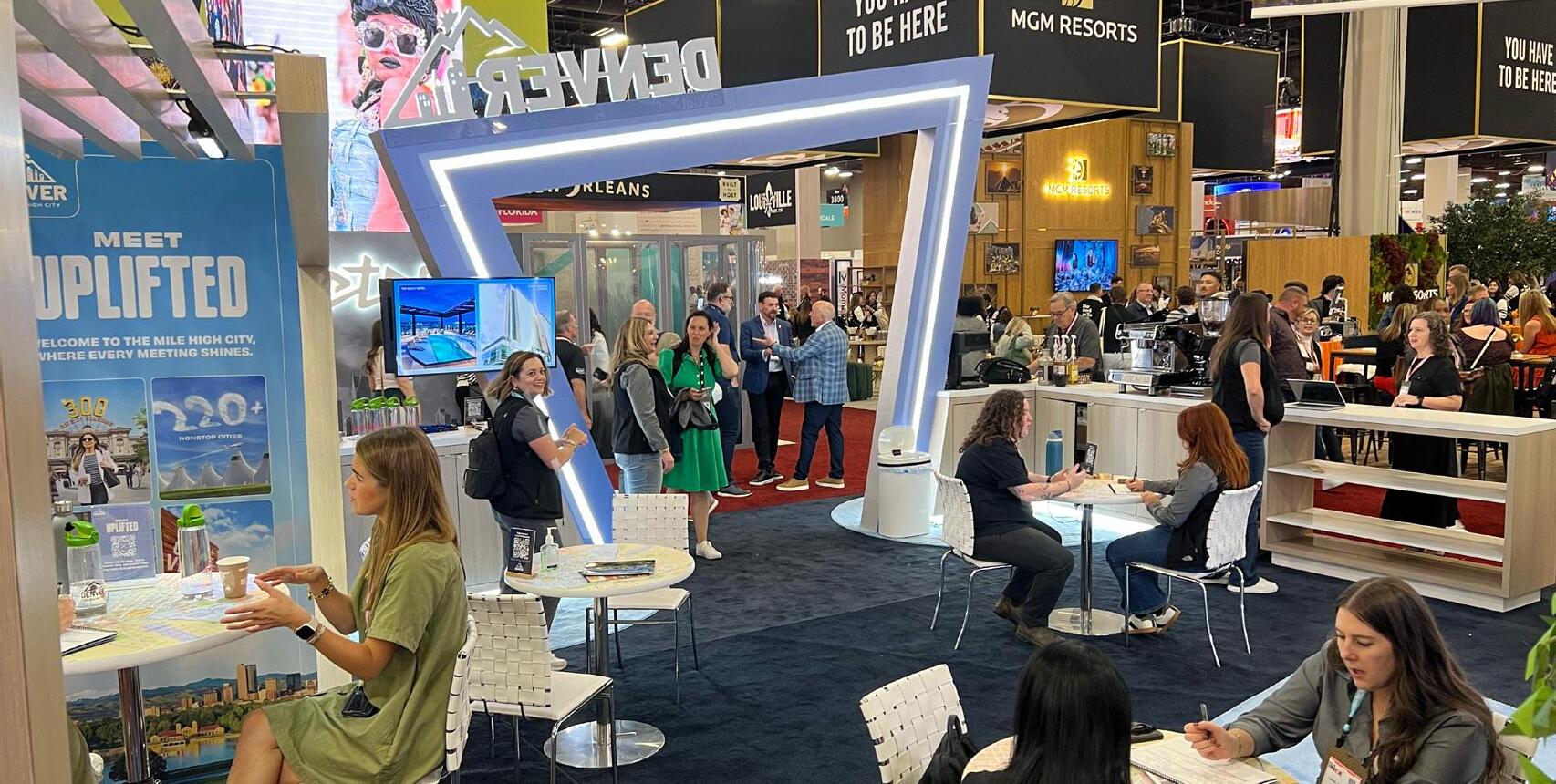
The projected shows for 2026 are:
RELIGIOUS CONFERENCE MANAGEMENT ASSOCIATION (RCMA)
○ Emerge Conference
The RCMA is a professional, nonprofit, multifaith organization consisting of individuals who are responsible for planning and/ or managing meetings, tutorials, conferences, conventions and assemblies for their religious organizations.
PROFESSIONAL CONVENTION MANAGEMENT ASSOCIATION (PCMA)
○ PCMA Convening Leaders
○ PCMA Visionary Awards
○ PCMA EduCon
PCMA represents 7,000 meeting industry leaders throughout the world, including planners, tradeshow professionals, suppliers and more. Convening Leaders is PCMA’s largest annual event, offering hundreds of educational sessions and networking opportunities for more than 3,000 meeting professionals. The Visionary Awards is an annual celebration of leaders in the hospitality industry. PCMA’s EduCon offers more intimate educational sessions, professional development tracks and networking events.
○ Independent Planner Education Conference (IPEC)
○ Destination West
○ TEAMS Conference & Expo
Hosted by Northstar Meetings Group’s prime brands, M&C and Successful Meetings, IPEC delivers targeted education and addresses the business needs of today’s independent meeting professionals. Destination West is a premier, destination-specific, hosted-buyer event for meetings and incentive professional sourcing programs in the West. It enables attendees to experience firsthand the most desirable destinations, hotels and activities for successful meetings, while making invaluable business connections. This unique event is hosted by Successful Meetings magazine and draws around 45 qualified clients. Visit Denver partners with Northstar to sponsor an evening event and city tour when the event is hosted in Denver. TEAMS is one of the largest conferences for the sports-event industry, attracting more than 1,000 industry-related attendees. The Expo features pre-scheduled appointment sessions between sponsors, exhibitors and event organizers.
○ Connect North
○ Connect NYC
○ Connect Spring Marketplace
○ Connect Marketplace
○ Connect Faith
○ Connect West
○ Connect Winter Marketplace
Connect’s regional and specialty, appointment-only, reversestyle trade shows offer business, networking, education and entertainment. These intimate shows target event professionals who plan conferences in either a niche market or region.
○ Meet NY
NYSAE’s mission is to lead in advancing and serving the profession of association and not-for-profit management. NYSAE is the “association of associations” that are headquartered in the Tri-State region of New York, New Jersey and Connecticut. NYSAE’s members are full-time, paid chief executives and middle managers of trade associations, professional societies, voluntary organizations, other not-forprofit organizations and supplier firms.
○ Educational Conference and Trade Show
MIC is made up of local chapters of national industry membership organizations that come together annually for a joint educational conference and tradeshow. Visit Denver is a founding member of this organization. The meeting has grown over the years and is now attended by local, regional and national planners.
○ Sports ETA Symposium
The Sports ETA Symposium is the annual meeting of the Sports ETA. Throughout the week, sports destinations meet with hundreds of decision-makers responsible for organizing sports events.
○ Destinations Showcase
○ Sales and Services Summit
○ Annual Convention
Destinations Showcase is a one-day tradeshow that offers exclusive access to hundreds of pre-qualified meeting planners. DI’s Sales and Services Summit will bring together Destination Management Operators and Sales and Services professionals to share and discuss best practices. DI’s Annual Convention is exclusive to convention bureaus and related allied sponsors, providing valuable educational opportunities.
○ National Education Conference & Expo
○ Rocky Mountain Fall Education Conference
SGMP’s National Education Conference & Expo brings together government meeting planners to assist with planning and execution of government meetings through education, training and industry relationships. The Rocky Mountain Fall Education Conference convenes government planners from within Colorado for networking and educational opportunities.
○ Annual Partner Meeting
○ Diversity
○ CD+ Forum
The Annual Partner Meeting allows suppliers to meet one-onone with some of Conference Direct’s 200+ sales associates in attendance. Conference Direct represents more than 10,000 meetings per year, generating more than $700 million in room revenue per year. Diversity brings together likeminded meeting industry professionals, CD Associates and partners for an educational conference focused on Diversity, Equality and Inclusion, and other ESG pillars. CD+ Forum is an exclusive event for their top Corporate Meeting Planners, associates and partners to participate in networking and educational sessions.
○ Elevate
○ Activate
Maritz Global Events is the rebranding of Maritz and Experient. Both entities once held their independent associate, client and partner events, but moving forward they will streamline their events. Activate is specially designed to provide education, advance the events industry and create connections between the supplier partner audience and key Maritz Global Events decision-makers. Elevate is an annual conference for clients, partners, speakers, vendors highlighting event design tools & techniques and networking opportunities.
○ International World Education Conference
MPI membership is predominantly composed of corporate meeting planners. MPI’s World Education Conference consists of educational sessions, networking opportunities and oneon-one marketplace opportunities.
○ ACCESSE
ACCESSE, CESSE’s Annual Meeting, provides attendees the opportunity to interact with meeting executives and leadership from engineering and scientific societies through educational sessions and networking events.
○ Annual Business Conference
HelmsBriscoe is a third-party planning company that provides site-selection services and full-service meeting planning to more than 8,000 clients worldwide. The Annual Business Conference offers educational sessions, networking and relationship building with HelmsBriscoe Associate attendees. Visit Denver will host HelmsBriscoe’s Annual Business Conference, with over 700 associates attending.
○ Summit
The CEMA Summit is a two and a half-day conference focused on driving event marketing success. Attendees gain knowledge, insight and tools to thrive in a rapidly evolving event marketing industry.
○ Annual Meeting & Exposition
The Annual Meeting & Exposition is the largest association industry tradeshow attended by more than 5,000 association executives and meeting planners.
○ IMEX America
IMEX America is a worldwide exhibition for meetings, events and incentive travel professionals. This exhibition attracts more than 13,000 participants representing more than 150 countries, including many major cities in the U.S.
○ Annual Conference
The National Coalition of Black Meeting Professionals is a non-profit organization dedicated primarily to the training needs of African American meeting planners. The organization is committed to the improvement of the meetings, conferences, exhibitions and conventions they manage. Members of NCBMP include meeting planners from numerous businesses, civil rights, churches and fraternal organizations. Since its founding, NCBMP has made a significant impact in the hospitality community by identifying the sizable purchasing power and impact of the African American convention market.
○ Colorado Meetings Showcase
Formerly known as the Front Range Tradeshow, the Colorado Meetings Showcase draws hundreds of meeting planners from Colorado and the surrounding areas for educational sessions and networking events.
ASSOCIATION FORUM
○ Holiday Showcase Showcase brings together leaders and meeting professionals throughout the Chicago area for invaluable networking opportunities, educational sessions and an exhibit hall component.
ASSOCIATION OF EXHIBITIONS AND EVENTS (IAEE)
○ Expo! Expo!
The IAEE is the leading association for the global exhibition industry and represents over 10,000 individuals who conduct and support exhibitions around the world. This event provides an interactive networking and experiential education opportunity and includes a trade show for face-to-face opportunities to meet with the industry professionals from trade show managers and meeting/event planners alike.
AMERICAN EXPRESS GLOBAL BUSINESS TRAVEL INTER[action]
○ INTER[action]
INTER[action] focuses on short-term, in-house corporate business and is a great opportunity for suppliers to connect with more than 550 of American Express’ meeting planners.
OF ASSOCIATION
(CSAE)
○ Annual Conference
CSAE is an association for people involved in the management of trade and professional organizations based in Colorado. The annual conference includes educational sessions and networking opportunities with association leaders from across the state.
○ Cvent CONNECT
Cvent’s CONNECT brings more than 4,500 hospitality professionals and meeting planners together for educational sessions, networking opportunities and an exchange expo.
GLOBAL ASSOCIATION OF INTERNATIONAL SPORTS FEDERATIONS (GAISF)
○ SportAccord
Sport Accord World Sport & Business Summit brings together more than 100 international sports federations and other organizations involved in the business of sport. The event is hosted over a week, combining an exhibition area, a themed conference program and many networking events.
HOSPITALITY PERFORMANCE NETWORK GLOBAL (HPN GLOBAL)
○ Partner Conference
HPN Global is a third-party planning firm, and the Annual Partners Conference brings together associates and suppliers for a three-day program of networking, education and relationship building.
○ SOCCEREX
○ Soccerex USA
Soccerex USA delivers the latest in soccer industry insight through a conference program, featuring senior decision makers from clubs, leagues and federations alongside experts from the world of commerce, performance, technology and management. The organizers gather an advisory board of leading industry thinkers and influencers across a variety of sectors to ensure that the event delivers the innovative content and expert speakers the market deserves. Participants include the Confederation of North, Central American and Caribbean Association Football (CONCACAF), Major League Soccer (MLS), the Mexican Football Federation (FMF) and the United States Soccer Federation (USSF).
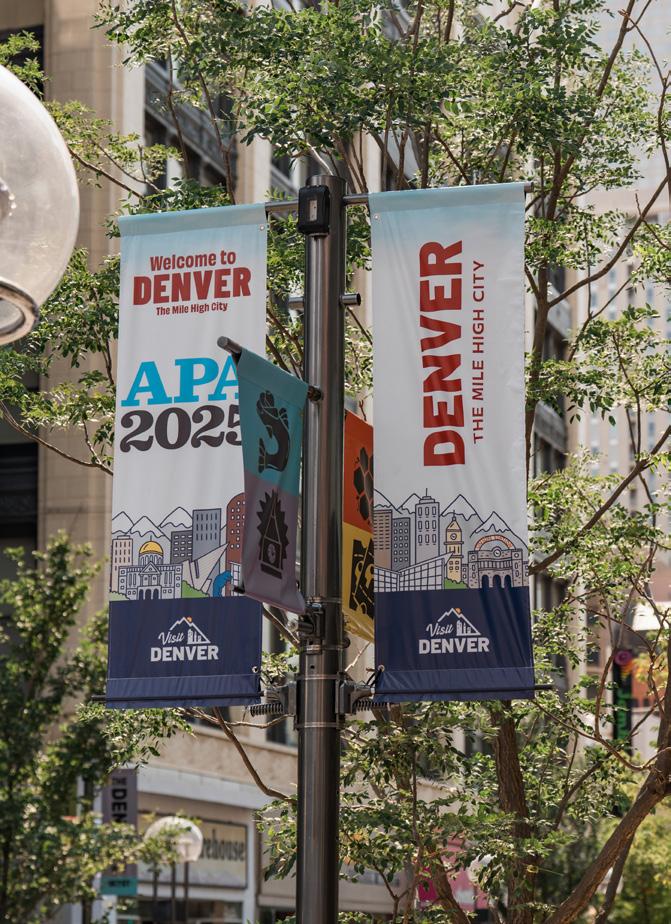
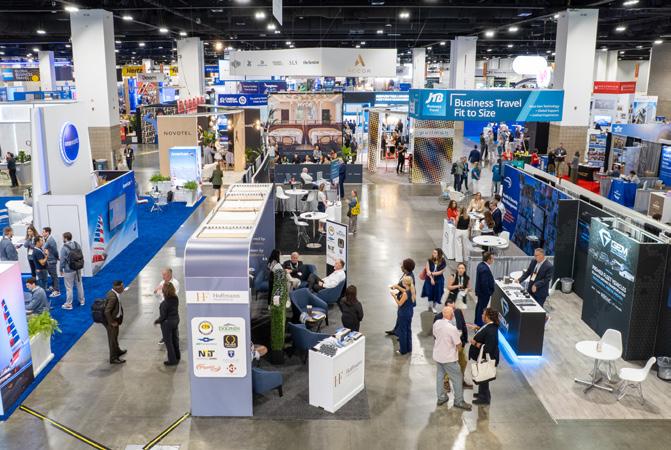
Start Date Show
January 11-14
January 26-28
February 4-6
February 10-12
February 24
Winter 2026
March 12-13
April 14-16
April 14
April 16
April 27-30
April 2026
April 2026
April 2026
Spring 2026
PCMA Convening Leaders Philadelphia, PA
Connect North (Midwest + Northeast Combined) Pittsburgh, PA
Northstar Meetings IPEC (Independent Planner Education Conference) Chandler, AZ
RCMA Emerge Lexington, KY
NYSAE Meet New York
Connect New York/Financial
New York City, NY
New York City, NY
MIC Educational Conference and Trade Show Denver, CO
Connect Spring Marketplace (Association, Citywide, Corporate, Diversity, Financial, Incentive, and Sports tracks) Louisville, KY
MJMeetings Destination Celebration - Minneapolis
MJMeetings Destination Celebration - Kansas City
HelmsBriscoe Annual Business Conference Los Angeles, CA
PCMA Visionary Awards Washington, D.C.
DI Destinations Showcase (DI, PCMA) Washington, D.C.
DI Sales and Services Summit (DI, PCMA) Washington, D.C.
ACE (Corp. v. Assoc.)
Spring 2026 Northstar Meetings Destination West
Spring 2026
May 1
May 11-14
May 17-21
May 27
Convene
Simpleview Summit 2026 Atlanta, GA
Maritz Elevate Scottsdale, AZ
ConferenceDirect Annual Partner Meeting Houston, TX
ECEF 2026
May 2026 MEET Denver
June 1-4
June 9-11
June 21-24
D.C.
MPI World Education Conference San Antonio, TX
SGMP National Education Conference & Expo Colonial Williamsburg, VA
PCMA EduCon 2026 Fajardo, Puerto Rico
June 23-25 Esports Travel Summit Cincinnati, OH
July 13-16
July 14-16
July 21-23
August 9-11
August 15-18
Cvent CONNECT Nashville, TN
ACCESSE Leadership Conference Raleigh, NC
DI Annual Convention Portland, OR
CEMA Summit, PCMA Toronto, Canada
ASAE Annual Meeting & Exposition Indianapolis, IN
August 24-26 Connect Marketplace (Association, Corporate, Specialty & Sports) Tampa Bay, FL
August 24-26 Maritz Activate 2026 Kissimmee, FL
Summer 2026 ConferenceDirect - Diversity (D26)
Summer 2026 ConferenceDirect CDX 2026 (Association)
Summer 2026
Summer 2026
Summer 2026
Summer 2026
October 13-15
November 17-19
Fall 2026
Fall 2026
Fall 2026
Fall 2026
Fall 2026
Fall 2026
Fall 2026
Fall 2026
Fall 2026
December 9-12
Winter 2026
Annual Conference
Colorado Meetings 2026 Road Show
Association Xchange Summit
Expo! Expo! Annual Meeting & Exhibition
Texas Texas
Faith + South
CD+ Forum (Corporate)
INTER[action]
Colorado Customer Appreciation Event
Connect 2026
Annual Celebration
Made Easy, 2026 MME Experience
Annual Conference (National Coalition of Black Meeting Planners) Louisville, KY
Winter Marketplace (D.C. + Medical)
December 2026 Destination Colorado Meetings Showcase Denver, CO
December 2026 Holiday Showcase (hosted by Association Forum) Chicago, IL
TBA
TBA
TBA
TBA
TBA
ETA Chief Executive Summit
Experience (National 3-Day)
Sportaccord World Sport and Business
ETA Symposium
As the resurgence of in-person interactions gains momentum, it is notable that client events are officially back. In 2025, the Bureau continued to foster partnerships through receptions, sporting events, concerts and other events. Visit Denver anticipates being able to execute on a minimum of three, and a maximum of five, high-profile sales missions and client events designed as “Denver Road Shows.” The goal is to present a unified destination sales effort with hotels and members. Chicago, Dallas, San Francisco, Minneapolis, New York, Philadelphia and Washington, D.C. are tentatively targeted for 2026.
Convention business is often a complex sales process with many decision makers and influencers involved. Bringing association executives and meeting professionals to Denver allows them to experience the city on a personal level. Site inspections, hosted board meetings and special event sponsorships enable the sales team to educate key prospective buyers about the destination and the numerous benefits of holding their meetings and conventions in Denver. In fall 2023, the sales team implemented a site tour training program through a third-party partner. This program includes training for internal staff as well as Denver hotels and venues to collectively enhance the buyers’ experience. These efforts are focused on positively impacting conversion and will continue in 2026.
MEET Denver is a buyer education program that Visit Denver hosts to expose customers to the destination. MEET stands for Meet, Experience, Enjoy and Tell. This is a multi-day event that highlights venues and areas in Denver. MEET Denver is made possible largely because of TID funding.
In 2026, Visit Denver will host one buyer education trip (MEET Denver), with funding assistance from the TID.
This event will focus on clients who specialize in booking single-hotel meetings (not center users and/or citywide business). The format shows the TID hotel community and partners of Visit Denver. Many of the clients who attend these events represent between 20-30 meetings, which gives Visit Denver an extremely broad reach, as many have never been to Denver or have not visited in several years. Visit Denver is estimating 50 clients will attend MEET Denver in 2026.
In 2018, the TID launched an incentive program to help with booking convention business. Funds from the TID are used to help further incentivize groups to choose Denver. To date in 2025, Visit Denver has booked or received verbal confirmations for 19 bookings. The TID approved 28 other bookings that remain tentative for future years. Collectively, these groups represent more than $695 million in future economic impact resulting in more than $55.6 million in tax dollars for the city.
The Denver Customer Advisory Board (CAB) has played an integral role in the success of Denver’s convention sales and marketing efforts. The CAB is comprised of 30 meeting professionals and industry leaders who voluntarily assist the Bureau in assessing industry trends and Denver’s image, as well as developing competitive positioning, services, S.W.O.T. analysis, marketing approach and sales strategies. The CAB meets twice a year (June and November), and each member is asked to serve for a three-year term. To date, the CAB has provided feedback and guidance on a wide variety of issues, adding immeasurable value to the Bureau’s sales and marketing efforts.
New business can often be found in Denver’s own backyard. Most national and international professional associations have members in the metro Denver area. In many cases, these members serve on boards or are committee members representing their state or region. Through diligent research, third-party assistance and public relations efforts, Visit Denver will re-invent the Mile High Ambassador Program to identify these important association members. University faculty and government department heads are specifically targeted as resources for soliciting convention business for Denver. Along with third party assistance, Visit Denver leadership will make presentations to encourage these partners to share their Denver experience with their state, regional, national and international affiliations, in hopes of bringing group business to Denver. This same program will be used to entice local corporations to host their national meetings in their hometown of Denver. The Ambassador program will work closely with the Metro Denver Economic Development Corporation and identify local leadership within the priority clusters that are the strongest and largest sectors for Denver and Colorado. Destination Services is seeing a trend with meeting professionals utilizing DMOs to partner with them on attracting attendance and relying on local intellectual capital to make connections with top industry segments for data mining and attracting local/regional attendance, exhibitors, students, speakers and session content. These efforts will continue in 2026 with a turnkey program to streamline connecting clients with local experts.
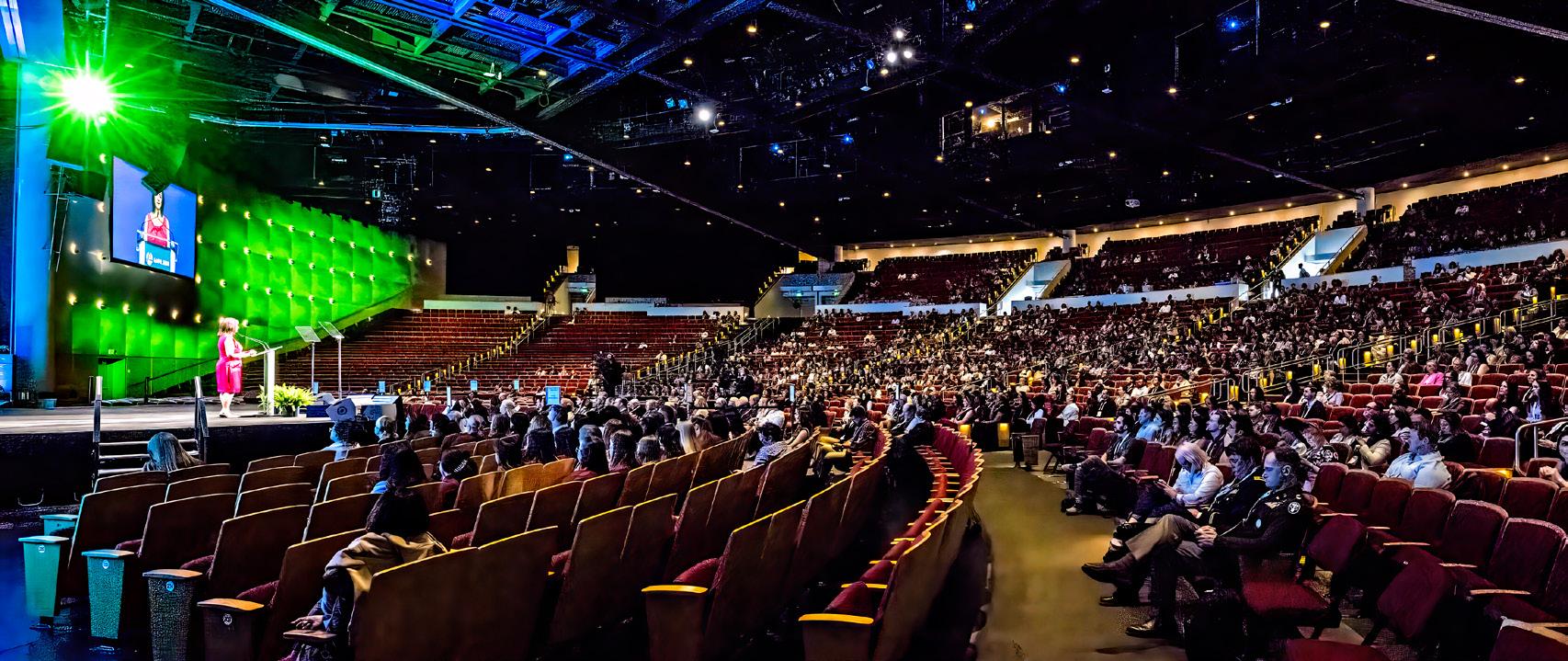
The art of selling starts with solid customer relationships. It is proven that successful sales professionals are those who have earned the trust, respect and in many cases, the friendship of their clients. The CES program provides “surprise and delight” touch points with customers on a regular cadence throughout the year. Post-COVID, the program exists through virtual offerings given the ubiquitous remote work culture. The team will continue this program in 2026.
Each sales team member will continue to keep an up-todate list of their clients’ personal “hot buttons” (i.e., birthday, favorite author, etc.). The resulting client contacts from the ongoing CES program provide many opportunities to ask for and confirm new business. The Destination Services Department will also continue the CES process with citywide meeting planners that have definite bookings for Denver, starting 12 months before the meeting date, through the postconvention period.
Bids and presentations are provided by convention sales managers for groups interested in Denver as a future convention site. Bid packages and presentations typically address accessibility, facilities, accommodations, affordability, safety, services and destination appeal. Technology and innovative integrated marketing techniques will be utilized to improve and expedite the presentation and complement the “high touch” sales efforts. In 2026, the Bureau will evaluate online bid book options that integrate with the Simpleview CRM system, thereby creating increased efficiencies within the sales process.
As Denver continues to host more high-profile major events, it is critical that post-convention research be done to evaluate the visitor experience, identify opportunities to make improvements for future groups and calculate entire room night production inside and outside the room block.
Post-convention surveys are sent to all Visit Denver bookings. The Destination Services Department monitors responses and follows up with all citywide planners to ensure that critical input and feedback are received from all major meetings. Citywide conventions also receive an in-depth PostConvention Report that provides valuable information. The department will also continue to analyze room nights inside and outside the blocks to get a more accurate accounting of economic impact using zip code analysis and cell phone technologies like Datafy and Placer.
The Denver Alliance brings key community entities together to collaborate on the promotion and use of the CCC to generate and maximize economic benefit to all parties of the Alliance and the entire hospitality community. Key community entities operating in a unified manner reduces duplication of effort around “pre-sales” activities (e.g., trade shows, site visits, marketing and data entry for tentative bookings) and creates one-stop shopping for the customer, as well as enhances the customer service experience.
The Executive Director of the Denver Sports Commission will work collaboratively with the Conventions Department to create short-, mid- and long-term plans for bringing more sporting groups to Denver. The focus will be on need periods as well as traditional off-season periods.
Following a successful launch in 2025, Visit Denver’s new “Meet Uplifted” campaign will return in January. The national campaign targets meeting planners across the country and is designed to keep Denver top-of-mind by focusing on the city’s overall destination appeal, supported by the hard facts and figures in the areas that meeting planners care most about.
The city’s overall appeal is best described in terms of the consumer brand positioning, “Uplifting by Nature,” which showcases Denver’s appeal as a best-of-both-worlds destination that includes urban amenities and the lure of Colorado’s Rocky Mountains. For the meeting planner audience, the campaign tagline has evolved into “Meet Uplifted.”
Additional messaging will focus on Denver’s:
▷ Accessibility, particularly the strength of Denver International Airport’s global connections, direct rail service to Union Station and Denver’s compact, walkable downtown.
▷ Downtown convention campus, the Colorado Convention Center and the new expansion. The CCC will be a particular area of focus, making sure that citywide planners are familiar with the entire building’s package and not just the new space.
▷ Hotel package, which includes more than 50 downtown hotels, nearly 13,000 downtown rooms and more than 55,000 metro-wide, with all brands and price points represented.
▷ Unique, offsite venues, which includes museums, historic theaters, renown restaurants and one-of-a-kind, only-inDenver venues like Red Rocks.
▷ Overall destination appeal with a focus on the dining scene, which is rapidly gaining national and international acclaim due to the addition of the Michelin program, multiple James Beard Foundation award winners and a slew of positive press.
▷ Sustainability, a factor increasingly important to meeting planners, and represented by large facilities like the airport, CCC and hotels, as well as by small individual service providers.
As in previous years, the campaign is largely designed to generate awareness and education and not designed to be transactional (i.e., it is not intended to generate immediate bookings). Rather, it is designed to support the existing sales relationships with busy meeting planners by offering easily digestible information on the overall meeting product, as well as timely updates and major CCC improvements.
▷ Advertising will be placed in leading industry trade channels that target the lucrative citywide clients, as well as meeting planners of all sizes. In 2026, it is expected that most advertising vehicles will continue to be digital and take advantage of evolving digital advertising and video technologies that help push messages to the most important prospects, while making targeted use of print advertising to cover all bases.
▷ To extend the reach of the campaign, additional ad placements are typically made in trade publications that reach niche, minority, and third-party planner audiences. In 2025, the following tactics were relied on heavily, and will make up a sizable portion of 2026 tactics:
○ Digital display, including specialty B2B advertising networks.
○ Video advertising, including video retargeting from trade market websites.
○ Dedicated electronic newsletters directly from trade publishers and through independent third parties like eTarget Media.
Investments will continue to be made in vehicles targeting “executive decision makers,” those business leaders who influence destination decisions, but who are not otherwise involved in the planning process.
Substantial investment will continue to be made in various online marketing vehicles that enhance messaging and extend reach: meeting planning websites, video, social media, search engine strategies and nontraditional marketing.
▷ Meeting planning websites include those that cover the entire U.S. and allow planners to find destinations and venues across the country such as Cvent.
▷ The use of video in convention marketing is expected to continue in 2026, especially ones that highlight key components of Denver’s destination appeal (off-site venues, new and renovated hotels, chef-driven dining, outdoor activities, craft cocktails, beer, etc.).
▷ Social media advertising to the convention market will continue in 2026 via the use of LinkedIn advertising products, which have seen substantial growth in usage over the last couple of years and were instrumental in the success of campaigns over the last three years. LinkedIn’s targeting capabilities means that some 300,000 national meeting and event planners can be reached.
▷ Search marketing strategies, usually referred to as SEO/ SEM, will also be used to accomplish two main goals: (1) to make the Bureau’s website as attractive as possible to search engines, ensuring the site comes up as high as possible for planning-related search terms, and (2) to buy pay-per-click ads for various keyword combinations. This ensures that messages and offers are shown to planners who use major search engines, especially to encourage planners to use the Request for Proposal form on the website. Both tactics will grow in 2026, including a proposed redesign of the conventions section of the VisitDenver.com website. In addition, Visit Denver will employ new Generative Engine Optimization (GEO) tactics to take advantage of the growing use of Artificial Intelligence by meeting planners to source destination information.
Collateral and promotional materials effectively market Denver as a meeting destination and will be implemented in 2026, including:
▷ Website: The convention section of the website will continue to be enhanced with additional features, content and functionality.
▷ Bid Books: In 2026, Visit Denver will work with Simpleview on a new online bid book that integrates with the CRM. This will allow for increased efficiencies and tracking opportunities.
▷ Digital Marketing Toolkit: Destination Services works closely with the Marketing Department to ensure the Bureau’s online toolkit for planners has useful and current information that helps planners build attendance and create helpful attendee resources. This toolkit allows clients to customize promotional materials to market their meeting and the destination. It includes promotional verbiage/materials, Denver copy, photos, videos and b-roll and usage guidelines for the Blue Bear.
▷ Meeting Attendee Microsites: Visit Denver will continue to develop and customize attendee microsites for citywide conventions and other high-profile events held in Denver. This portal for attendees will promote pre- and post-meeting vacation opportunities, discounts to area attractions and restaurants and events taking place during the meeting (arts, cultural, festivals). The microsite is also a vehicle to promote “Denver’s Know Before You Go” that includes safety, packing and cleanliness tips. This tool relates to destination appeal and helps meeting planners boost attendance for Denver meetings.
▷ Brochures: “Lure” brochures are produced and distributed to convention delegates to help increase attendance at Denver conventions; they are also provided on-site at the previous year’s meeting to encourage delegates to prepare for traveling to Denver.
▷ CCC Sales Brochure: This brochure, which describes the features and benefits of the CCC, including information on the expansion, was updated in 2025. The CCC brochure is distributed to all future city-wide groups and will be used as a handout and resource at the trade shows the Bureau plans to attend in 2026.
▷ Meet Denver Guide: New in 2025, Visit Denver created a new publication called “Meet Denver” that uses beautiful photography and impactful copy to describe Denver’s meeting appeal. In 2025, the guide was distributed to planners in the September/ October issue of Meeting Planners International’s magazine and will aslo be dropped this fall in PCMA’s Convene magazine. In January, the piece will be mailed alongside ASAE’s January issue. Additionally, the guide is available for order on the VisitDenver. com website, downloadable in digital form and is distributed by the sales team at all tradeshows.
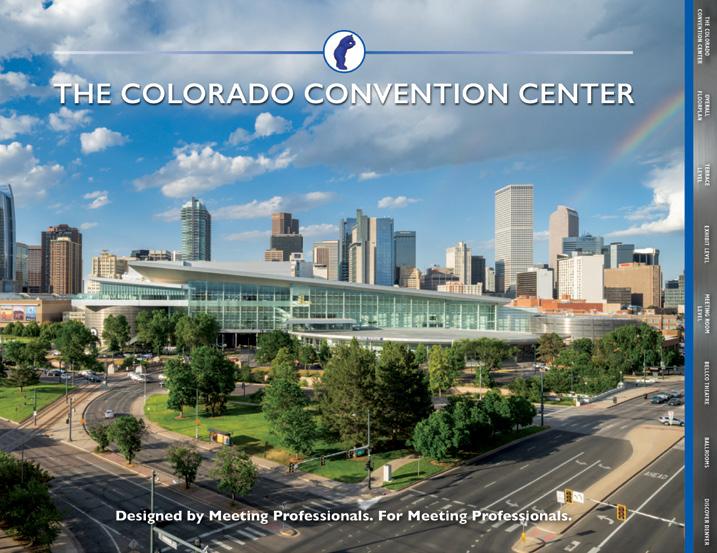
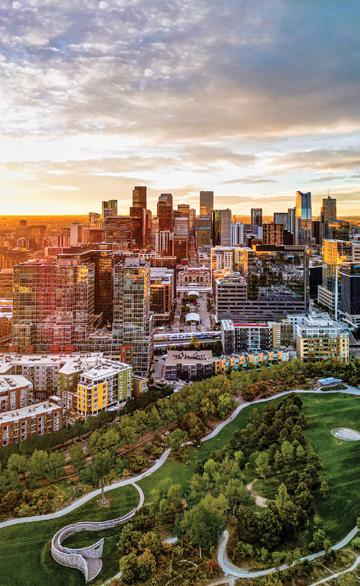
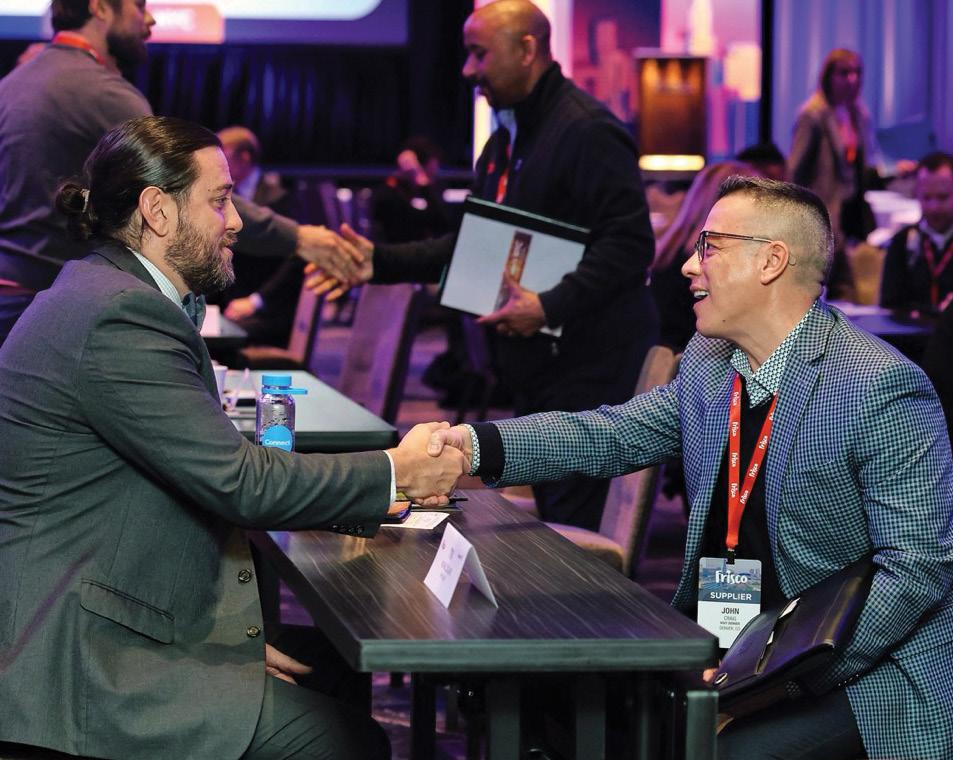
The highly effective DMO/planner marketing collaboration will continue in 2026. The program includes meeting with major definite groups to develop custom marketing programs that help grow attendance, while improving the attendee experience by providing extensive destination information, as well as social media content provided by the Bureau’s social media manager. In addition to many of the items listed above in “Promotional Collateral,” these meetings help introduce planners to the full scope of resources and assistance Visit Denver can provide, including collaboration on social media promotions and use of mobile technologies.
Media placements allow the Bureau to reach large numbers of meeting planners with information about new developments in Denver at a low cost, while also carrying the weight of an editorial recommendation.
Publicity efforts in 2026 will include:
Several significant stories will be highlighted in 2026: the larger groups Colorado Convention Center and downtown convention campus are able to accommodate. Convention stories may include significant groups in the Colorado Convention Center; new public art programs; Denver’s continued emergence as a must-meet destination; on-going improvements to Denver International Airport (DEN) including connectivity of DEN domestically and internationally; Denver’s expanded MICHELIN Guide and other key examples of the city’s dining and nightlife scene; first full year of the complete 16th Street including return of the free shuttle. Secondary story topics will include new hotel openings, unique venue offerings, wellness, transportation and sustainability, among others.
Specific tactics will include:
▷ Distributing press releases about Denver as a convention destination for the national meeting and convention trade press, as well as for traditional national and regional business media.
▷ Conducting deskside tours with trade journalists and freelancers in markets such as New York and Washington, D.C., where most of the meeting and convention trade publications are headquartered and working with individual trade reporters on their Denver assignments.
▷ Pitching convention and meeting destination stories as appropriate to visiting media.
▷ Initiating communications, pitching stories and developing one-on-one relationships with business and trade writers from key industry publications.
▷ Creating a stable of satisfied meeting planners who we can call on as resources for media looking for firsthand experiences.
▷ Pitching stories and sending releases about Denver as a business meeting and convention destination to business media.
▷ Positioning key Bureau executives as experts on various meeting industry issues, encouraging publications to interview them, thus enhancing the exposure of the Bureau and the City.
In today’s meeting marketplace, clients expect creative and innovative service solutions from convention and visitor bureaus. Due to a reputation for providing excellent customer service, Visit Denver’s Destination Services Department is considered one of the finest in the industry and is the recipient of an ever-growing list of awards and recognitions. In 2026, the department will continue to evaluate current programs and initiate innovative programs and tools to assist planners with destination information, marketing materials and assets for convention planners to plan for their Denver meeting. Visit Denver will continue to be a “one-stop-shop” and key resource for all definite meetings with the goal of always exceeding expectations.
In 2026 the Destination Services Department will:
▷ Work with the DDP, Consolidated Services Group, City officials and departments, partners and others, by taking a lead role in providing delegate services and implementing a welcome program that includes banners, digital billboards, community convention alerts and more. Visit Denver will also collaborate with DEN as construction and new developments are finalized to determine assets and opportunities to welcome convention attendees.
▷ Proactively work with and educate key stakeholders, to include DDP, Denver Police Department, City and County of Denver and the hospitality community, regarding all upcoming citywide convention demographics and expectations to provide a safe and welcoming environment for convention attendees.
▷ Collaborates and meets with the DDP and DPD regarding the City’s Security Action Plan and downtown environment issues, as well as updates all stakeholders on upcoming convention activities.
▷ In partnership with Government Affairs, Destination Services monitors and updates Visit Denver’s “Know Before You Go” that lives on the website that provides a Commitment to Safety and travel tips to visitors.
▷ Work closely with Denver’s Office of Special Events regarding convention events, fun runs, street closures and private street events and assists in streamlining processes and communication.
▷ Continually monitor 16th St. to ensure all convention attendees experience a clean and safe environment.
▷ The department partners with the Denver Alliance Services teams (Visit Denver, ASM Global event management, Sodexo Live! catering and the Hyatt Regency) by coordinating and leading monthly meetings between service teams to share information, keep abreast of customer profiles, needs and expectations and construction updates while fostering seamless communication and processes between all parties.
▷ Work with the CCC team and Denver Arts and Venues on a coordinated emergency communication plan that is regularly updated.
▷ Provide citywide clients Visit Denver’s Citywide PostConvention Report, which provides valuable information to the customer after their event. This report will also include the “ORDA” analysis, when appropriate. The goal is to provide the customer with the best data possible at the conclusion of their convention.
▷ Take a leadership role in monitoring the post-convention survey process and utilize this feedback to improve the meeting planner and visitor experiences.
▷ In collaboration with the Partnership Department, the Destination Services Department will continue to develop educational workshops for partners that promote new tools and ways to engage with meeting planners.
▷ Work in partnership with the Denver Sports Commission to service and support all efforts regarding tentative and definite events. The uniqueness and short-term nature of these bookings require the services team to assist with the bid process, pre-planning, site inspections and onsite logistics.
▷ Work in partnership with the convention sales team to plan and execute customer events such as Denver Daycation, MEET Denver and hosted industry events/ conferences.
▷ Continue professional development through ESPA to learn and implement best practices. Opportunities include Annual Conference, virtual meetings, webinars and leadership sessions.
▷ Continue to look for creative and non-traditional ways to provide pre-promotion information to clients at their meeting one year prior to coming to Denver. In-person pre-promotion trips will be evaluated on a case-by-case basis.
▷ By utilizing local intellectual capital, destination services will work with leadership to develop a turn-key attendee acquisition program to assist with local and regional outreach to attract attendance, speakers and exhibitors by industry segment.
▷ In collaboration with the Partnership Department, continue to find ways to promote minority- and women-owned businesses to meeting professionals.
▷ Provide online resources for meeting planners to help them minimize their carbon footprint, produce elements of a green meeting and/or find ways to give back locally. Continue to enhance and improve the Voluntourism page and the Green Vendor Directory, which provide options for local individual or group volunteer and corporate social responsibility (CSR).
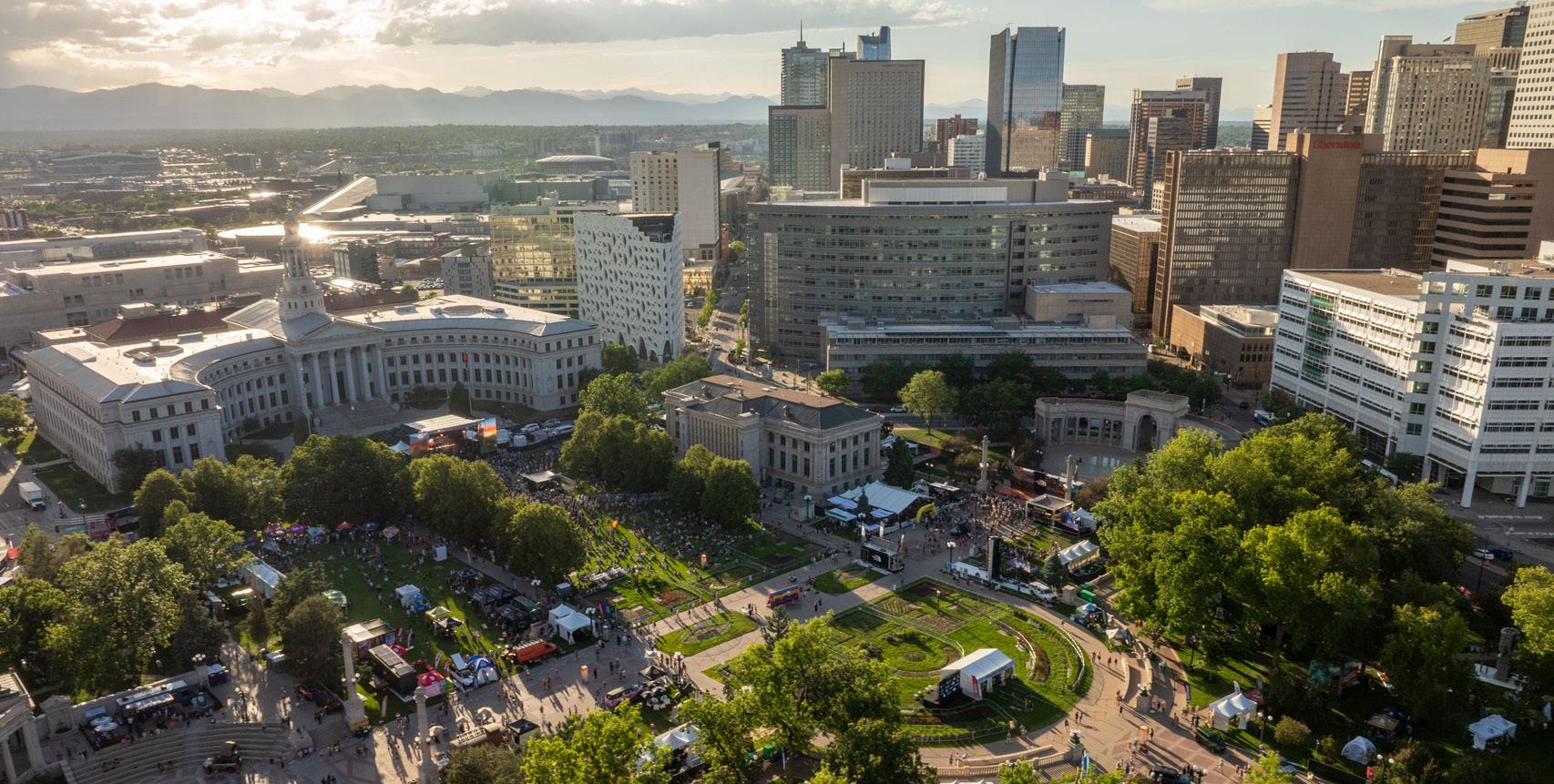
Three major leisure tourism markets are reviewed in detail: Domestic Consumer Leisure, Domestic Group Leisure and International.
Success in the leisure market is driven largely via a combination of Visit Denver’s paid, earned and owned channels. Paid promotions, e.g., advertising campaigns, as well as earned media in the form of public relations and owned channels such as the VisitDenver.com website and social media all combine to deliver to consumers the inspiration they need to select Denver, as well as the planning tools to ensure a successful trip.
By reviewing trends and understanding consumer preferences, Visit Denver is better able to direct its domestic and international marketing efforts to maximize results and generate the highest possible return on investment.
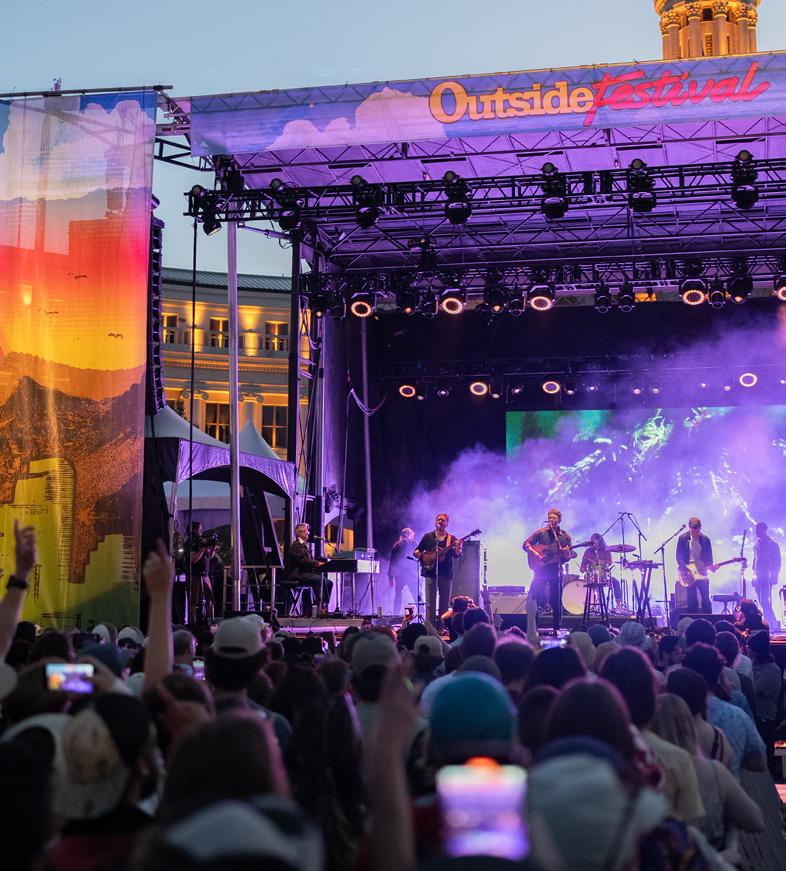
The period immediately following the pandemic (2022-2024) was dominated by domestic leisure travel as consumers flocked back to destinations across the country, eventually hitting volumes that had not been seen prior to COVID. These results were also aided by the fact that international travel was still more difficult, at least through the end of 2023.
According to U.S. Travel Association, domestic travel spending had recovered to pre-pandemic spending by the end of 2021, and trip volume recovered by the end of 2022. Domestic travel continued its strong, double-digit growth through 2023. 2024 still saw growth nationally, though with growth levels returning to more historical single-digit levels.
Domestic Spending
Business and Leisure Expenditures (as a percentage of 2019 levels)
Domestic Trips
Business and Leisure Trips (as a percentage of 2019 levels)
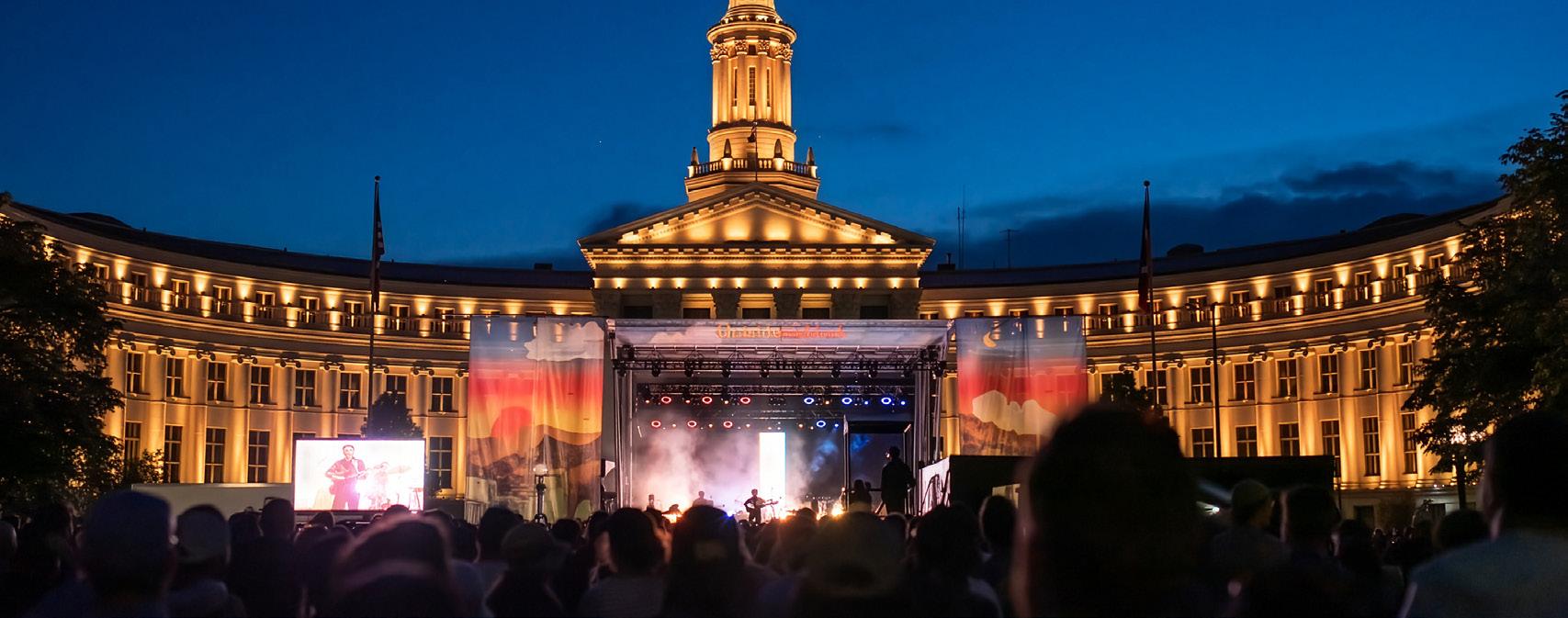
The domestic travel industry grew in 2024 even as it returned to pre-pandemic, single-digit growth rates. The “revenge travel” over-correction that occurred in 2022 has burned itself out as patterns return to historical norms.
Nationally in 2023, according to Longwoods International, domestic overnight visitation exceeded 2022, a record year for most destinations, but only by single digits.
Total Size of U.S. Overnight Travel Market (Billions)
Source: Longwoods International
Even as travel volume and spending return to historical norms, there have been fundamental changes in the way people plan and book travel, in the way they experience destinations and how destinations approach the visitor experience. This section will attempt to encapsulate those to position how Visit Denver prepares to address them moving forward to ensure continued success.
The following section relies on the research produced by key partners including Destination Analysts, Longwoods International, MMGY and others. These on-going studies track the travel industry, as well as the travel sentiment of consumers, and provide constant monitoring of trends in a very unpredictable and rapidly changing travel environment. These insights have become indispensable resources in adjusting and effectively implementing convention and leisure sales and marketing programs.
Midway through 2025 and with an eye towards 2026, the U.S. travel market is relatively stable, but with several aspects of uncertainty that are having a meaningful impact on the market as a whole. This uncertainty is largely financial in nature, and takes on a variety of forms, all of which are having a consistent impact on travel intent and behavior. Collectively, these issues do not appear to be sending the market off the cliff but are causing a modest tightening of the domestic market.
The trend of stability and uncertainty is borne out by data from national research providers.
According to Longwoods International and Miles Partnership from Wave 100 of their American Travel Sentiment Study, the vast majority of Americans have travel plans in the next six months, a figure that has remained remarkably stable over the last 12 months, though it has dropped three points since the previous wave from 94% to 91%.
Travel Plans Within the Next 6 Months
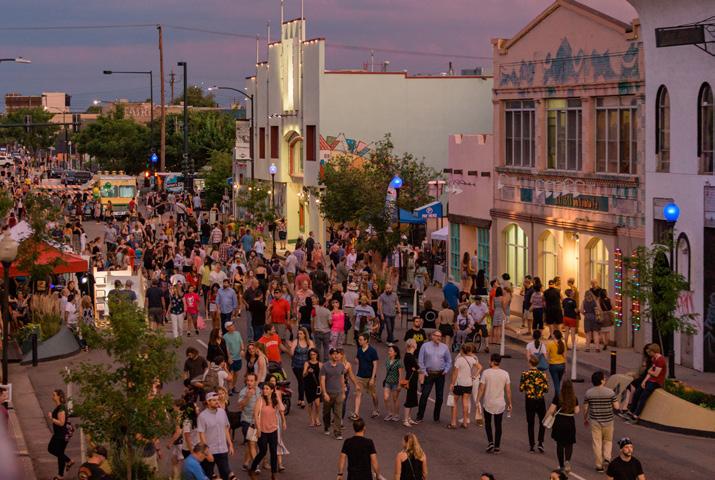

(Source: Longwoods International/Miles Partnership Travel Sentiment Study, Wave 100)
91% of American Travelers have travel plans within the next six months.
Longwoods Wave 100 also suggests that consumers have slightly elevated concerns about the impact of various financial measures on their travel decisions. These concerns are more pronounced in other studies cited below, but the Longwoods data is presented here to underscore the relative stability of the market, and that consumers are by-and-large not experiencing financial panic.
According to Longwoods, compared to August 2025, there has been a drop in American travelers who said gas prices would “greatly impact” their travel decisions. However, concerns about inflation saw a 4-point increase and concerns for airfare prices saw a 3-point increase since the previous wave.
The chart shows the percentage of respondents who rated each factor as “Greatly impact” their travel plans (a 5 on a 1–5 scale) over the period from September 2024 to 2025
Future Partners explores these factors in greater detail in their July 2025 “State of the American Traveler” study, and with similar conclusions, namely that consumers are feeling fairly excited about their own personal, short-term economic prospects, which translates into an overall sense of optimism regarding future travel plans. This optimism is tempered somewhat by fears of a recession that are rising slightly, causing travelers to consider certain steps such as choosing a more affordable destination and maximizing travel rewards to save money.
The number of travelers who are excited to travel remains near the study’s all-time high, approaching levels that peaked in 2023 and 2024 at the height of the “revenge travel” boom.
(Source: Future Partners, The State of the American Traveler, July Edition)
Mean Score on 11-point Scale
The number of travelers who feel better or much better about their current financial situation experienced a sharp uptick in the most recent study.
January2022February2022 March 2022
April2022May2022June2022July2022August2022September2022 October 2022 November 2022 December 2022
January2023February2023 March 2023
(Source: Future Partners, The State of the American Traveler, July Edition) % Better Off or Much Better Off
April2023May2023June2023July2023August2023September2023 October 2023
November 2023
December 2023
January2024February2024 March 2024
April2024May2024June2024July2024August2024September2024
October 2024
November 2024 December 2024
January2025February2025 March 2025
April2025May2025June2025
A rising number of travelers feel that now is a good or very good time to travel, also experiencing a sharp rise over the previous month.
January2022February2022 March 2022
April2022May2022June2022July2022August2022September2022 October 2022 November 2022 December 2022
January2023February2023 March 2023
April2023May2023June2023July2023August2023September2023 October 2023 November 2023 December 2023
January2024February2024 March 2024
April2024May2024June2024July2024August2024September2024
October 2024 November 2024 December 2024
January2025February2025 March 2025 April2025May2025June2025
In probably the most encouraging news for an organization like Visit Denver, projected travel spending hit a record high in June, signaling consumers’ optimism about near-term expenditures, though possibly also reflecting the reality that persistent inflation has continued to drive high travel prices.
$8,000
$7,000
$6,000
$5,000
$4,000 $3,000 $2,000
January2022February2022 March 2022 April2022May2022June2022July2022August2022September2022 October 2022 November 2022 December 2022 January2023February2023 March 2023 April2023May2023June2023July2023August2023September2023 October 2023 November 2023 December 2023 January2024February2024 March 2024 April2024May2024June2024July2024August2024September2024 October 2024 November 2024 December 2024 January2025February2025 March 2025 April2025May2025June2025
Information from the Summer 2025 edition of MMGY’s Portrait of the American Traveler, a quarterly leisure travel study, is a bit more measured in its outlook, with slight declines reported in both trip volume and spending.
Through summer, travel intentions remain high, though the continued impact of inflation and tariff concerns are beginning to raise cautionary flags, causing consumers to consider trimming their trip volume and spending.
Travel intentions over the next 12 months have dropped from the previous quarter but remain strong relative to the past two years. Intent to travel over the next 12 months exceeds 80% for all generational cohorts with the exception of Gen Z at just 64%.
Plan to Travel for Leisure in the Next 12 Months
(Source: MMGY, Portrait of American Travelers, Summer 2025 Edition)
Similarly, travel intent by income segment has declined slightly, with more pronounced drops seen in lower income groups.
Plan to Travel for Leisure in the Next 12 Months
(Source: MMGY, Portrait of American Travelers, Summer 2025 Edition)
Taken together, this research supports the conclusion that the overall domestic travel market remains strong, but with some unsurprising headwinds that indicate the need for caution but not panic.
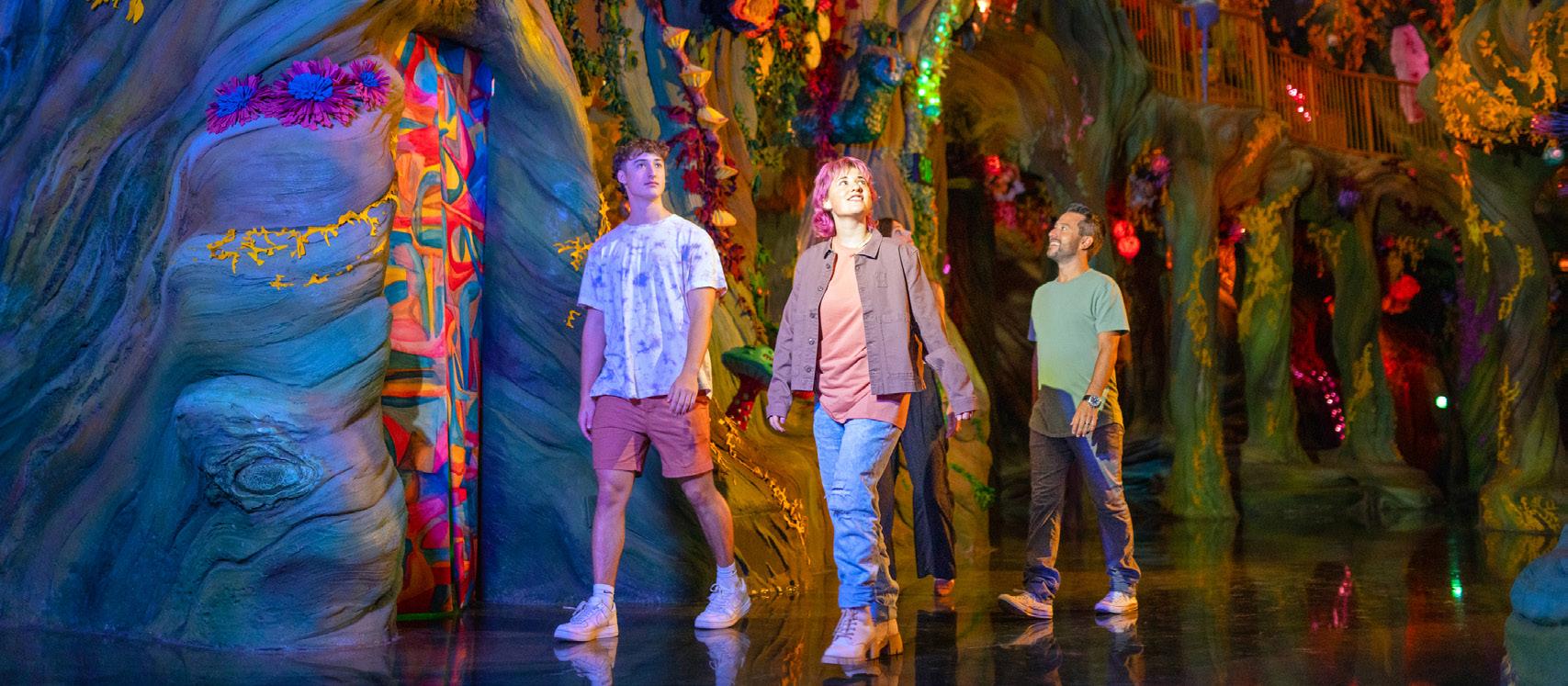
For years, MMGY’s quarterly Portrait of the American Traveler has documented key travel insights related to intent to travel, planned spending and other considerations. They also report on a variety of new and emerging traveler habits and behaviors, many of which were compiled in their Summer 2025 edition, and all of which are helpful to Visit Denver in planning for future visitor needs. Here is a roundup of some of the trends they are tracking.
▷ The impacts of economic tariff announcements and the resulting cautious financial outlook of many American travelers have led to a decrease in overall travel intent from the previous two quarters.
▷ Tariffs and the impact of 2024’s presidential election were cited by 3 in 10 leisure travelers as the biggest impediment to leisure travel over the next six months. The financial aspect of these factors is the most concerning to U.S. travelers – indicated by tightening budgets, from an average of $5,138 to $4,699 since Q1 2025, and a reduction in the number of expected leisure trips, from 4.19 to 3.85 since Q1 2025.
▷ This survey was conducted when tariffs were at their highest rate, and it is likely that travel intent will begin to return to the levels seen in the previous quarter if fears about the impact of tariffs subside.
▷ Reasons for not traveling during the next six months continue to be dominated by financial motivations, with job stability concerns also increasing in significance for U.S. leisure travelers.
▷ Aligned with broader trends, including the tight financial situation of many American travelers, rising airfares and concerns with international travel, it is no surprise that more travelers took a road trip in the past 12 months compared to any time in the past 10 years.
▷ Eighty percent of travelers will use their personal vehicle and average 3.2 destinations per road trip in the next 12 months. This highlights road trips’ appeal, especially the ability to explore multiple places and be spontaneous while on vacation.
▷ Embracing long, beautiful drives is a key part of a road trip’s appeal, and many travelers will seek out iconic routes for the journey rather than any specific destination.
▷ For Millennials (35%) and Gen Xers (36%), the financial benefits of a road trip are a significant draw, influencing them more than Gen Zers (28%) and Boomers (28%). As the generations most likely to have children under 18, they face the high cost of purchasing multiple airfares for family vacations. Road trips therefore present a dual appeal: they are a more cost-effective alternative and offer a chance to recreate the classic, nostalgic journeys these parents may have experienced with their own families.
▷ The appeal of a road trip often lies in its spontaneity. A majority (65%) are planned less than three months in advance, offering a stark contrast to international vacations that typically require over six months of preparation. This minimal lead time and the inherent flexibility of car travel present a refreshingly simple alternative for vacation planning.
▷ Diversity plays a significant role in travel, with travelers from diverse backgrounds traveling to different destinations and states and looking for different destination attributes when planning their vacation.
▷ More travelers have felt unwelcome in destinations in 2025 compared to the previous year, and more travelers feel that there are significant inequalities present in the travel industry. However, travelers from all backgrounds have a positive view toward the travel industry’s actions to address these inequalities.
▷ Children’s influence on vacation choices has grown significantly over the previous years, with children more involved in planning daily vacation activities compared to any point in the past four years.
▷ Children’s preferences are being accommodated into more stages of the travel planning process than before and it is essential for destinations to prove attractive to both children and adults to secure bookings.
▷ Moving past accommodating children’s vacation choices, two in three (67%) U.S. leisure travelers will travel overnight specifically to accommodate their children’s activities, ranging from sporting events to talent shows.
▷ Highlighting family activities that can be added on to sporting or academic trips would be an excellent way to tap into this market, allowing families to extend trips and create memories.
▷ The appetite for luxury travel is expanding, with over a third (34%) of travelers now identifying as luxury consumers in Q2 2025. This marks a 5% increase from the previous year, signaling a clear willingness to invest in premium vacation experiences.
▷ While luxury hotels and upscale dining remain the most popular categories for splurging, a significant shift in spending allocation is underway. The proportion of travelers willing to spend more on highend accommodations and restaurants has dropped significantly since 2024, suggesting that even luxury consumers are reevaluating their budgets amid tighter economic conditions.
▷ Spending on first- and business-class airline seats has held steady. This resilience indicates that for a dedicated segment of this market, premium air travel is considered a nonnegotiable component of the journey, unlike other luxuries that are more discretionary.

Tourism and hospitality sectors are critical drivers to the economic growth and employment in Denver, and Visit Denver is committed to developing a plan for 2026 and beyond to ensure these sectors come out stronger and more resilient.
Below are some key and national statistics that help illustrate the current situation and mindset:
The U.S. Travel Association’s Travel Price Index (TPI) tracks the cost of travel in the United States using U.S. Department of Labor data from the monthly Consumer Price Index (CPI). Released monthly, the Travel Price Index (TPI) is comparable to the CPI while focusing on travel-related expenses.
While overall U.S. inflation rose in June, travel prices continued their downward trend for the fifth straight month.
▷ CPI increased 0.3% in June (up from 0.1% in May), reflecting a 2.7% year-over-year increase.
▷ In contrast, U.S. Travel’s TPI fell 0.7% in June and is now 0.4% below its level one year ago.
▷ The monthly TPI decline was driven by lower prices in key travel categories:
▷ Lodging: Hotel prices fell 3.6% in June and are down a similar amount compared to last year.
▷ Airfare: Airline fares dipped 0.1% in June and are 3.5% lower than June 2024.
▷ Gasoline: Prices rose 1.0% in June-the first monthly increase since January-but remain 8.2% lower year-over-year.
In 2024, according to the latest Longwoods International Travel USA Visitor Profile study, Denver welcomed 37.1 million visitors, 0.9% less than 2023.
Total overnight visitation remained high in 2024, hitting 19.8 million, a 3% decrease over 2023. Overnight leisure visitation saw a slight decrease increase of 1% to 17.4 million. (Longwoods International)
Travel spending by all visitors to Denver in 2024 was $10.3 billion, a slight decrease of 0.1% from 2023. (Longwoods International)
Spending by overnight visitors in 2024 was $8.7 billion, a slight decrease of 1% from 2023. Among all traveler types, marketable travelers spent the most at $241 per day, followed by business travelers at $160 per day. (Longwoods International)
Marketable overnight trips reached a record high of 8.7 million trips, an increase of 14% over 2023.
Hotel occupancy in Denver reached 80.20% in June 2025, which was slightly below June 2024 (81.2%), and behind June 2019 by 6.3 points, however room supply was up 6.2% in 2025 vs. 2019. ADR was $204.77 in June 2025, growing 15.2% compared to 2019. (CoStar)
Based on May 2025 worldwide passenger traffic (the latest figures available), DEN ranks as the fourth busiest airport in the U.S. and the eleventh busiest airport in the world.
More than 7.6 million passengers transited DEN in June 2025, a year-over-year increase of 0.7% vs. June 2024, ranking as the busiest June in DEN history. Year-to-date (YTD) passenger traffic totaled nearly 39.5 million, a 1.2% decline vs. 2024.
Tier I cultural organizations provided a strong lineup of exhibits and events in 2025. The Denver Art Museum, Denver Botanic Gardens, Denver Museum of Nature & Science and the Denver Zoo continue to be top attractions for Denver. The Denver Center for Performing Arts continued its robust calendar with The Book of Mormon, Moulin Rouge! The Musical and Disney’s Lion King.
Denver’s blockbuster exhibitions also had a full schedule in 2025. Denver Art Museum hosted shows such as Wild Things: The Art of Maurice Sendak and Kent Monkman: History is Painted by the Victors. Denver Museum of Nature & Science exhibitions included Angkor: The Lost Empire of Cambodia and Jurassic Oceans: Monsters of the Deep.
While Denver’s dining scene has received tremendous accolades over the last several years, including the Michelin program and a national James Beard Foundation award, the pandemic had an outsized impact on this sector due to the convergence of multiple factors that continue to plague it today, including staffing shortages, increases in labor costs, food and material costs, etc.
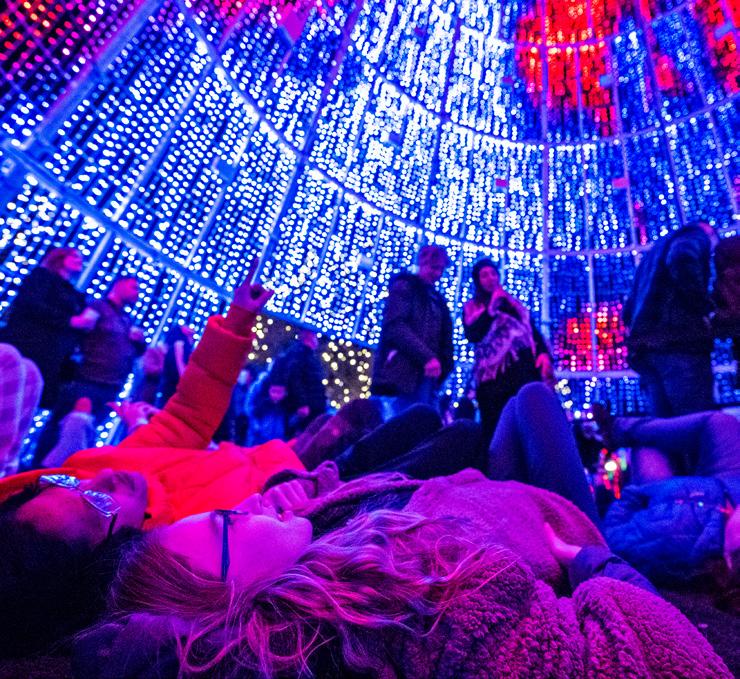
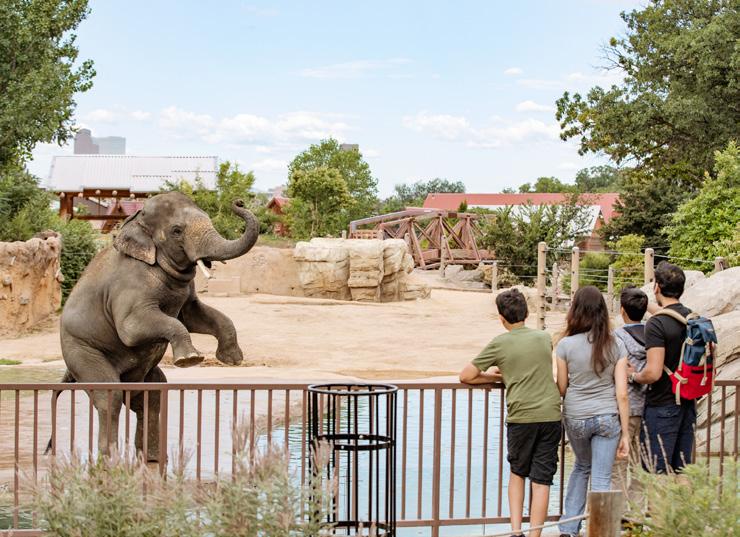
Denver’s Department of Excise and Licenses (EXL) records show a drop of about 24% in overall food licenses associated with restaurants since 2023. Inflation continues to stress the local restaurant industry. Prices continue to rise in ways that are unsustainable, including taxes and regulatory fees, credit card fees, insurance and the cost of goods. Operators can’t increase prices fast enough to cover costs and some legacy businesses are in peril. According to the Colorado Restaurant Association, minimum wage and tip wage is higher than New York City increasing operating expense and financial strain for Denver restaurants.
Michelin recognized 32 Denver restaurants in the third year, including the state’s first two-star restaurant, Wolf’s Tailor, and three one-star restaurants, Alma Fonda Fina, Beckon and Brutø.
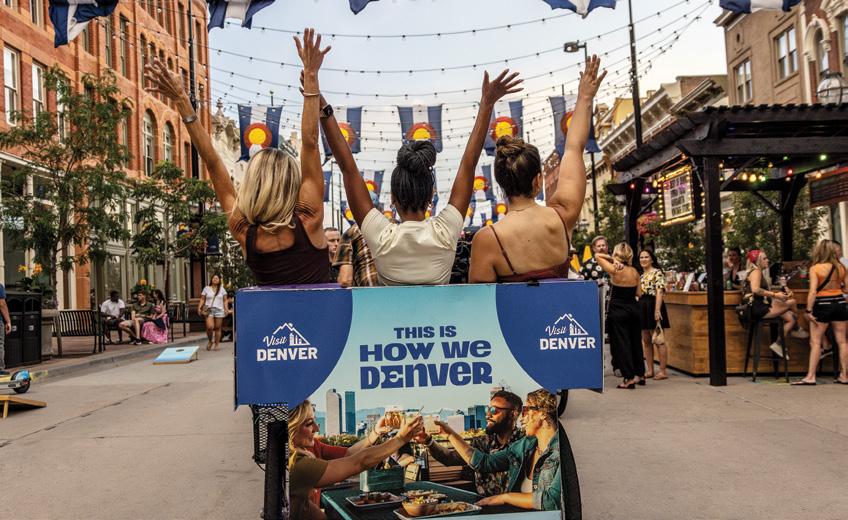
In 2025, Visit Denver executed a robust regional and national campaign and promotional schedule. Several key factors contributed to this:
▷ Advertising budgets continue to grow. This includes the impact of TID funds for key leisure marketing programs.
▷ Demand for travel overall and for Denver continues to increase, albeit at more historical, single-digit levels. Denver continues to enjoy an outsized advantage here due to the proximity of Rocky Mountain adventure throughout Colorado.
▷ The Denver travel product is compelling. This importantly includes the rebuilt 16th Street and a robust events calendar.
Following a successful campaign in 2024, the national winter campaign returned in January. Driving the success of the 2025 effort is the innovative use of advertising technology to target people searching for Colorado winter trips and serving them Denver ads before they book. The campaign ran from October to December 2024, continuing through March 2025. Starting in October 2025, the campaign will feature new creative using the tagline “This is How We Denver.”
In 2025, the campaign generated more than 51,000 room nights and more than $9.6 million in hotel revenue from those exposed to the ads.
The regional, “always on” campaign re-launched in February, promoting Denver Restaurant Week and then continued in March with a broader mix of content. The campaign, which is partially funded by the Tourism Improvement District (TID) tax, targets regional travelers based on their interests: outdoor adventure, music, arts and culture, sports, wellness, dining and events. Retargeting ads include event and hotel deal messaging, encouraging visitors to come “right now.” The campaign uses the tagline “This is How We Denver.”
Through July, the campaign generated more than 137,000 room nights and nearly $24 million in revenue.
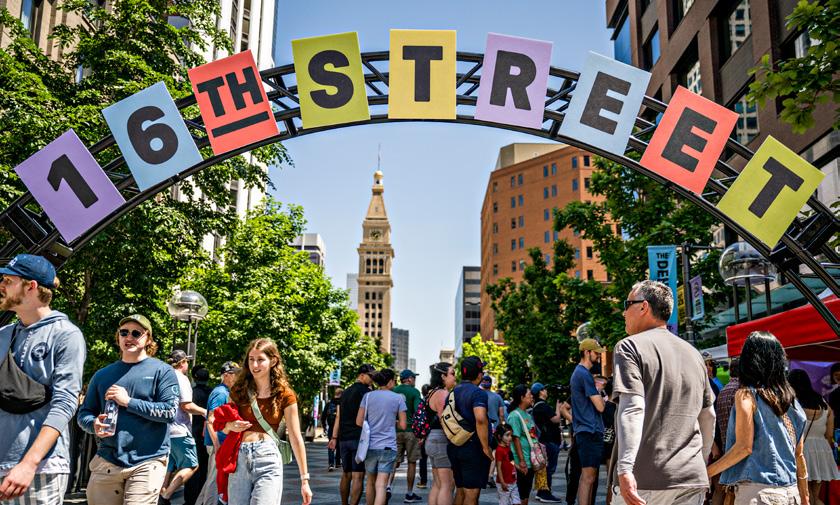
The spring/summer campaign, which is always the largest of the year, hit new levels in 2025 with a continuation of aggressive geographic targeting efforts. Using a threetier system, the campaign focused dollars into large target markets: New York, Los Angeles, Chicago, Dallas and Houston and also deployed funds to several “test” markets, including Orlando, Detroit, Austin, Minneapolis, Boston and others. The campaign also ran nationally using specific audience targeting. The campaign began in mid-April and concluded in late August. This campaign also used the “This is How We Denver” tagline.
The spring/summer campaign this year also included an expanded campaign effort targeting affluent Hispanic/ Latino families for travel to Denver. The campaign, featuring dedicated Spanglish messaging, also runs under the new tagline, “This is How We Denver.”
Through July, the national campaign has generated more than 176,000 room nights and nearly $36 million in hotel revenue.
Mile High Holidays, Denver’s holiday marketing campaign, will also return in 2025. The campaign promotes holiday events and festivities, including the return of Visit Denver’s Mile High Tree and drone show, to local and regional customers in November and December. Mile High Holidays is partially funded by the TID.
In 2024, the Mile High Holidays campaign generated more than 114,000 room nights and nearly $18 million in hotel revenue from those who saw the ads.
In 2025, Visit Denver also ran several smaller campaigns to support local programs like Denver Restaurant Week and Denver Arts Week that are discussed in more detail in those respective sections.
This fall, Visit Denver will again partner with Denver Art Museum on a joint campaign to promote its blockbuster fall/winter exhibition, The Honest Eye: Camille Pissarro’s Impressionism. Visit Denver will promote this exhibition regionally while the museum promotes it locally.
Across all consumer campaigns through July, Visit Denver generated nearly 706 million advertising impressions and nearly 1.8 million conversions on the VisitDenver.com website, the best indicator of demand.
Denver is the biggest city in a 600-mile radius. This huge, central/western part of the U.S. represents the largest source for potential leisure visitors who come to the Mile High City for its unique combination of urban adventure and access to outdoor recreation.
Target markets for the annual spring/summer campaign are Chicago, New York, Los Angeles, Dallas and Houston*. Test markets include St. Louis, Milwaukee, Phoenix, Orlando, Detroit, Austin, Minneapolis*, Washington D.C.* and Boston* (* = new to campaigns in 2025).
Regional markets include Colorado (outside of metro Denver), as well as neighboring states and cities such as Albuquerque, Cheyenne, Kansas City, Lincoln, Omaha, Salt Lake City, Wichita and Oklahoma City. Markets are evaluated based on a number of factors, including historic performance, website traffic, proximity, prevalence of air lift and multiple other determinants.
The Bureau continues to market to several key niche markets, and offers two multi-ticket cultural attraction programs.
National research done by U.S. Travel Association shows that cultural/heritage travelers spend more money, stay longer and are more likely than the average traveler to rent a car and stay in a hotel.
This vital and critical sector of Denver’s tourism product has roared back to life. The latest Colorado Business Committee for the Arts Economic Activity Study reported $2.6 billion in total economic activity in 2022, a 14% increase over 2019.
Denver CityPASS, which launched in May 2018, offers discounted tickets to visit three, four or five of the eight participating Denver attractions with pricing available for both children and adults. Denver CityPASS is sold on VisitDenver. com, as well as other CityPASS platforms and retail locations. Denver CityPASS did not include the Denver Zoo from 2022 to 2024, but they came back in 2025. As of June 2025, CityPASS is performing 7% below 2024 in sales with total sales of 1392 tickets.
○ 2025 sales through August: 2,273
○ 2024 sales through September: 2,394
○ 2023 sales through September: 2,428
○ 2022 sales through September: 2,303
○ 2021 sales through September: 1,221
○ 2020 sales through September: 605
○ 2019 sales through September: 1,386
The Mile High Culture Pass, which was launched in 2013 and paused in 2020 due to COVID. The Mile High Culture Pass offers admission to some of the city’s most fascinating attractions, all for the bargain price of $41 for a three-day pass for both children and adults. The Mile High Culture Pass resumed operations in April 2022, and in 2025 it sold 313 passes, which is 38% lower than in 2024 at 502 passes sold through June.
○ 2025 sales throughAugust: 1,430
○ 2024 sales through September: 825
○ 2023 sales through September: 1,210
○ 2022 sales through September: 472 (relaunched in April)
○ 2021: inactive
○ 2020 sales through March (inactive after March): 143
○ 2019 sales through September: 1,506
The Bureau employs a full-time Cultural Tourism Programs Manager to manage all cultural tourism initiatives, including the Denver365 events calendar, programs such as Denver Arts Week, outreach to the cultural community and management of Visit Denver’s neighborhood content program.
Destinations around the globe have recognized the value of LGBTQ+ markets because of their propensity to travel. Visit Denver works with the LGBTQ+ community to promote the city to these markets, especially around the annual PrideFest, which, according to The Center at Colfax, received 500,000 people in 2025, slightly lower than the 550,000 attendees in 2024. Visit Denver was again a sponsor of the event.
Denver’s ongoing potential in this market is based on a combination of the city’s strong LGBTQ+ community and its growing reputation for cuisine, shopping, arts, culture and entertainment and proximity to the Rocky Mountains. Visit Denver is dedicated to showcasing inclusivity in consumer marketing programs using photos and video featuring members of the LGBTQ+ community as well as a committed component of the spring/summer campaign dedicated to this market.
In 2023, Visit Denver contracted a writer from the community, who continues to release new content for this community.
In addition, in 2024, Visit Denver became a member of IGLTA, an LGBTQ+ association that provides information and resources for LGBTQ+ travelers and expand LGBTQ+ tourism globally. Through IGLTA, Visit Denver is amongst Marriott, Disney and American Express — to name a few — to support LGBTQ+ travel while continuing to be the welcoming city that it is.
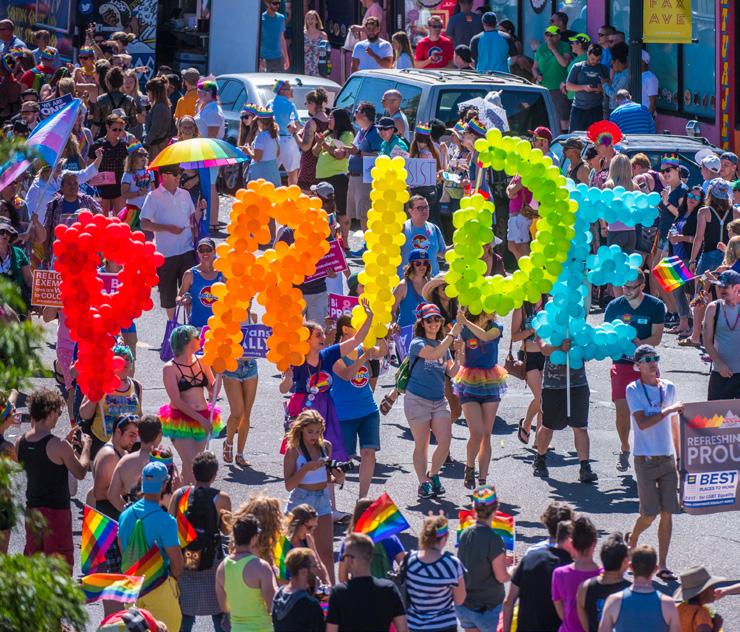
Visit Denver continues to expand its promotional reach to a variety of multicultural markets. As has been the case historically, both the Hispanic/Latin and Black segments of these multicultural markets are a priority for the Bureau. The Hispanic/Latin market offers potential for growth in leisure travelers to Denver, partially because of the large regional Latin population. For the Black market, the focus is on meetings, conventions and fraternal events, as well as driving leisure travelers to the city. Recently, the multicultural list has expanded to include those with disabilities (physical, cognitive, blind/visually impaired and deaf/hearing impaired), as well as the Asian American/Pacific Islander (AAPI) market. In late 2024, Visit Denver released an Accessible Guide to provide resources for the different types of disabilities and needs of travelers.
Denver attracts these segments by showcasing the city’s diverse population, as well as its diversity in dining, shopping, outdoor recreation, cultural events, attractions and unique neighborhoods. As noted above, Visit Denver ran a new dedicated campaign to the Hispanic/Latino audience in 2023 and will continue to target this audience at other times of the year. Additionally, photography and video that represent members of these communities are incorporated into brand messaging and marketing to highlight the city’s rich cultural heritage. In 2025, Visit Denver was a sponsor of, and advertised Juneteenth, Black Pride Colorado, Cinco de Mayo and The Colorado Dragon Boat Festival and the Chicano Music Festival in an effort to support these communities. This effort is critically important to Visit Denver’s operations because of the business opportunities these markets represent. Visit Denver will continue to serve as a welcoming city to these historically marginalized populations.
According to the recently released 2020 Census data, the U.S. is becoming increasingly diverse and multiracial:
▷ The Multiracial population has changed considerably since the last census in 2010. It was measured at 9 million people in 2010 and is now 33.8 million people in 2020, a 276% increase. (2020 U.S. Census)
▷ The Hispanic or Latino population, estimated at 18.7% of the population, grew 23% since 2010. (2020 U.S. Census)
▷ More than 12% of the population identifies as Black/African American. (2020 U.S. Census)
▷ There are estimates that there are 80 million U.S. consumers who qualify as disabled due to one or more conditions, including those with ambulatory, cognitive, hearing or vision impairments. (Exploryst)
▷ Hispanics have $1.5 trillion in buying power with $73 billion spent on travel. (Nielsen)
▷ The Hispanic population is projected to grow by 82%, compared to only 9% for the nonHispanic population. Latin consumers are also the youngest minority group, with a median age of 28 years old. (Nielsen, Diverse Intelligence Series)
▷ Colorado is one of the top 10 states where Latin consumers are spending their money, totaling $31 billion. (Nielsen, Diverse Intelligence Series)
▷ The buying power of the Black population continues to grow, reaching $1.3 trillion in 2018, up significantly from 1990 when it reached $320 billion. (Nielsen, Diverse Intelligence Series)
▷ The disabled market is estimated to represent $1.2 trillion in buying power. (Exploryst)
▷ Visit Denver maintains a collection of resources devoted to these markets, with much more planned for 2023 and beyond. This includes:
○ An ongoing contract with Essencialize, a local Hispanic/Latin marketing firm, to assist in reaching Hispanic media outlets and Spanish-speaking consumers in target markets.
○ National and regional Spanish-language consumer advertising designed to reach Hispanic/Latin audiences as part of spring/summer, fall and Mile High Holidays campaigns.
○ Expanding diverse content on the VisitDenver.com website as well as across the Bureau’s social media channels in what is referred to as an “always on” fashion.
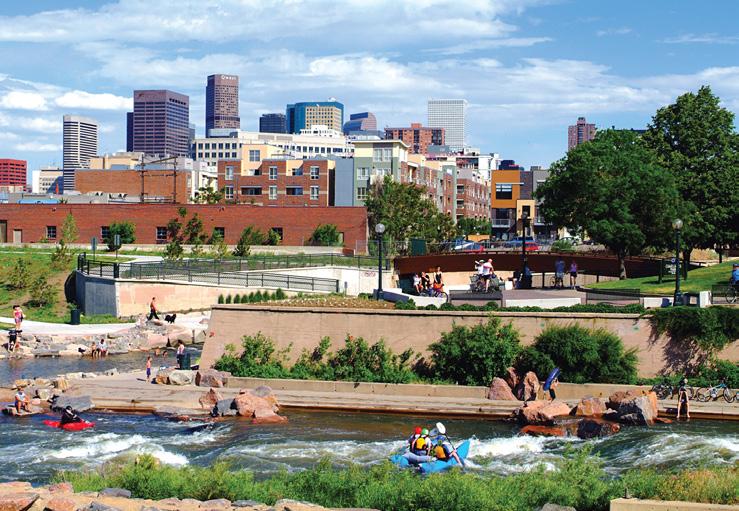
Many destinations worldwide are investing in marketing efforts and technology, which make it easier for destinations of all sizes to compete for a piece of the travel and tourism pie. Denver has remained competitive in these efforts by positioning the city as an urban destination combined with outdoor activities, but still has a myriad of competitors, from national and international cities to cruises, theme parks, outdoor adventure tour operators and beach vacations.
Denver must showcase its safe, exciting, unique and compelling offerings to reserve a spot on the “short list” with potential visitors. While high-profile events and conventions have broadened awareness of the Mile High City, consistent marketing and delivering on the promise of a “mustexperience” combination of urban destination with outdoor activities is crucial to continued success. Photography, videos and other creative messaging help tell the story of how the spirit of the Rocky Mountains inspires both visitors and locals to explore the city.
In 2025 and beyond, the competitive edge will go to the destination that not only maintains its brand, but can also deliver on the promise of safety, cleanliness and confidence. Furthermore, the impact of climate change, including extreme heat events and wildfires, became much more important as many U.S. destinations experienced one or both events in 2023. Denver’s generally mild climate, and the lack of significant fire events in 2024 and 2025 (so far), continues to help the city’s reputation.
Factors contributing to a positive visitor perception in Denver and Colorado, especially compared to several traditionally competitive cities, include:
▷ Strong brand as an outdoor recreation destination, paired with “best of both worlds” messaging
▷ Reputation for exciting dining, nightlife and cultural scenes in a city with diverse, vibrant neighborhoods
▷ Reputation for being easy to get to, paired with reinforcement of the strength of Denver International Airport and with the appeal of western road trips
City destinations viewed as competitors for Denver within the Rocky Mountain region and the Western U.S. include:
▷ Seattle and Portland: Seattle’s location on the West Coast is attractive; it boasts a vibrant downtown complete with renowned attractions, as well as a reputation for technology and innovation; and the city also offers easy access to many scenic outdoor attractions. Portland (in many ways similar to Denver) has a hip, young atmosphere; a walkable downtown; a bike-friendly reputation; and a strong culinary and craft beer scene. Denver’s proximity to the Rocky Mountains is a plus, but Portland also promotes easy access to Oregon’s wine country and the scenic Oregon Coast. Both cities’ reputation suffered as they became early hotspots for COVID cases. Portland remains in the news as its downtown area continues to be plagued with crime and safety issues and a very visible population of people experiencing homelessness.
▷ Phoenix/Scottsdale: The Phoenix/Scottsdale area has many five-star resorts and the cities are significantly closer to the major attraction of the Grand Canyon. The two cities have established themselves as sunny destinations for golf and luxury resorts/spas. This is definitely a seasonal competitor during colder months, but extreme heat essentially takes this city off the table for summer travel.
▷ Salt Lake City: Salt Lake City has a positive image as a ski destination and is somewhat closer to the mountain resorts than Denver. While it may not have as strong a reputation for urban experiences, it is well known for outdoor activities in the summer as well as winter; and it has made infrastructure investments, from shopping complexes to highways and a new airport that opened in September 2020 to support tourism.
▷ San Diego: San Diego is a well-branded West Coast city with must-see urban and outdoor attractions that appeal to all ages. The city has maintained a very positive destination image that includes an “always sunny” weather perception among business and leisure travelers. In addition, San Diego also has a walkable, vibrant downtown; plenty of great restaurants; art and culture; and access to outdoor recreation and beautiful scenery.
▷ Nashville: This Midwest destination has a strong urban brand and is similar in size to Denver. Its crossroads, mercantile roots mirror Denver’s, and it also left behind a historic downtown that has been revitalized in recent years. Nashville’s superior entertainment and music brand makes this city a draw for younger visitors, especially those on special occasion trips like bachelorette parties and guys getaways.
▷ Austin: The Texas capital continues to provide a worldclass visitor experience, attracting people to the state who are drawn by its combination of live music, outdoor experiences (especially on its central river features) and food, particularly barbecue.
In its 21st year of promoting the Mile High City’s dining scene, Denver Restaurant Week 2025 continued the established 10-day long format, spanning two full weekends from March 7–16. 315 local restaurants participated, up 20% from the prior year. According to post-event research:
▷ Meals served: 451,227

▷ Revenue generated: $19 million in spending at participating restaurants, delivering a much-needed economic boost to struggling restaurants
In 2025, Visit Denver had a four-tiered pricing structure offering diners a full, multi-course dinner for either $25, $35, $45 or $55. This structure provided an opportunity for more restaurants to participate, considering food cost increases.
In 2025, Visit Denver launched a new Diner Portal, allowing diners to create accounts and favorite restaurants and keep track of where they visited. There were 4,631 diner accounts created, and 1,951 diners opted into Visit Denver’s newsletter.
Denver Restaurant Week is supported by a multimedia advertising campaign that includes television, digital ads and billboards, as well as a full complement of public relations, social media and search engine marketing support. The website received more than 2.7 million pageviews, up 6% from the prior year; while the PR team garnered more than $23 million in AVE (Advertising Value Equivalency).
Denver Restaurant Week 2026 will take place from March 6–15. Program timing is based on data from other key events and large conventions happening in the city.
Initiated by the Bureau in 2007, Denver Arts Week is a celebration of all arts and culture genres in Denver. The primary goals of this local and regional marketing initiative are to generate awareness of Denver’s thriving and diverse arts and cultural activities with residents and visitors, and to help build new audiences for Denver’s arts and cultural organizations.
Denver Arts Week 2024 took place Nov. 1–10 and saw a record 620+ events from more than 350 cultural organizations. Denver Arts Week again included signature programs like expanded First Friday Art Walks and Free Night at the Museums. All events were promoted on DenverArtsWeek.com and through a dedicated local marketing campaign, as well as through Visit Denver’s social media and public relations channels.
Denver Arts Week 2025 will take place Nov. 7–16.
Denver Beer Week was created to position Denver as America’s craft beer capital. It is usually staged around the Great American Beer Festival (GABF), the largest beer competition in the world, and includes a metro-wide campaign promoting all the beer-related events that happen around GABF. In 2024, Visit Denver discontinued the Denver Beer Week program, though the Great American Beer Festival and adjacent events will continue to be promoted. The Denver Beer Trail will also continue to exist and will be updated annually.

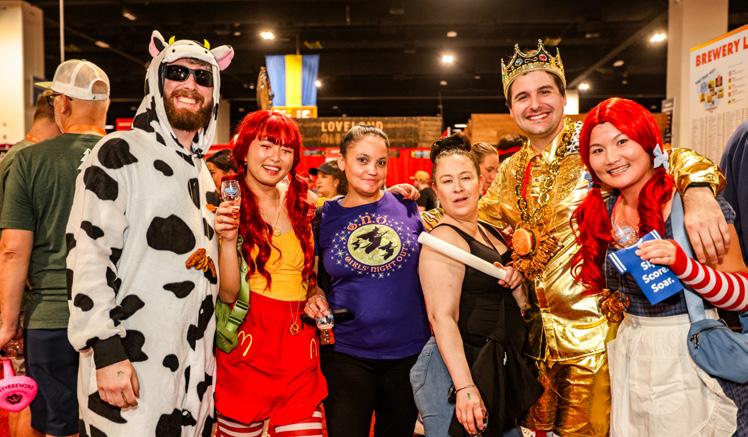
Because travelers are seeking authentic experiences, marketing the “hidden gems” found in Denver’s neighborhoods is a great way to showcase the city’s uniqueness. Many of Denver’s cultural treasures — including galleries, theaters, museums, independent shops and chef-owned restaurants — are located throughout the city’s diverse neighborhoods.
Neighborhood content remains an important component on VisitDenver.com. Updates to existing videos and dedicated landing pages that overview Denver neighborhoods continue annually to help enhance content.
Visit Denver worked on making the Neighborhood Guide on the website more user friendly as well as mobile friendly. The written content has been updated to make it easier for visitors to understand the makeup of the neighborhoods and an interactive map was completed in Q4 of 2023, where visitors are able to click on each neighborhood and see the key aspects of each neighborhood. Videos continue to be updated as needed.
In 2024, Visit Denver created social content to highlight each neighborhood and continues to be updated in 2025.
The American Bus Association (ABA) includes approximately 1,959 motorcoach and tour companies in the United States and Canada, managing 48,667 coaches. According to the ABA Foundation Research, the motorcoach industry was flat in 2024 compared to 2020.
National Tour Association (NTA) consists of nearly 700 tour companies from the United States, Canada and Mexico and over 1,100 supplier companies such as hotels, restaurants, attractions, bus companies, sight-seeing services, publications and other travel-related businesses.
NTA’s survey published in November 2024 showed that 44% of suppliers would end 2024 better than 2023, and 66% of suppliers said they expected and increase in 2025. However, in a new survey published in April 2025, suppliers say their business or destination lost business, bookings or visitation from Canadian and other international groups.
Expanding on the success of the Hotelbeds Travel Trade Domestic marketing campaign in 2024, which generated 11,523 room nights, in 2025 the Hotelbeds marketing campaign generated 15,569 room nights YTD through June. campaign runs through November and additional room nights are expected.
The Tourism Department tracks all domestic group leads and service referrals generated from specific travel trade clients, small groups, weddings and reunions. The department tracked 446 leads and referrals for the domestic wedding market as of August 2025 compared to 330 for the same period in 2024.
The state of Colorado is seen as a favorable destination for the group tour market with open spaces, national parks and high vaccination rates. Denver is also the gateway to national parks in the Western U.S., which are a desired destination for tour groups post-COVID.
This market is comprised of tour operators, travel companies, motorcoach companies and non-professional group leaders. These markets have not really recovered since COVID and are much smaller in size compared to 2019.
Although largely impacted, the Tourism Department continues to service group travel planners in the following segments:
▷ Motorcoach tours – Primarily mature adults and specialinterest groups such as entertainment and social clubs.
▷ Student tours – Primarily music and band performing groups and educational tours seeking performance venues and clinics, educational activities, hotels and restaurants.
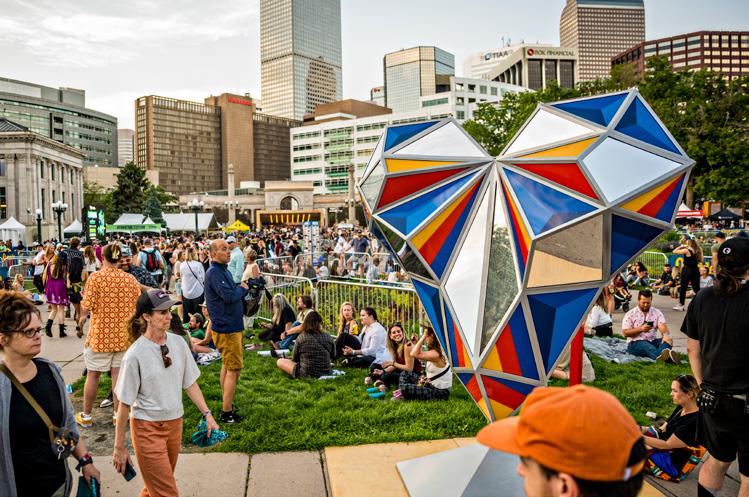
▷ Family and class reunions – Individual planners seeking information on hotels, restaurants and attractions suitable for groups.
▷ Weddings – Individual planners seeking assistance with services, venues and hotels. VisitDenver.com has automated wedding planning services.
Tracking of travel companies indicates that 18 new travel packages of Denver in 2025 were added as of June, compared to 21 in 2024.
Rocky Mountaineer continues to be important in bringing travel groups into Denver, with the First Passage to the West service from Denver to Moab, and with the addition of the new extension reaching Salt Lake City Rocky Mountaineer has been rebranded to Canyon Spirit starting in 2026.
The 2025 TourTrackerPro© Report was purchased to estimate the number of room nights in Denver. Combined with the total numbers tracked, the total number of room nights in Denver for 2025 is 10,400, which is 10% below 2024. The number of companies selling groups to Denver decreased from 66 in 2024 to 52 in 2025, and the number of group overnights decreased from 621 to 520 in 2025.
Colorado and the Western U.S. are favorable travel destinations with open spaces and national parks, putting Denver in position to be a great destination as well as a gateway city for motorcoach trips through the West. Because of Denver’s remote location in the U.S., a tour from any distance often combines air travel with a motor coach, making air access and air travel sentiment important factors in running a tour that starts or ends in Denver.
Phoenix and Salt Lake City – Both cities offer proximity and easy access to famous national parks, despite Colorado being home to four national parks of its own.
Colorado Springs, Grand Junction, Fort Collins and Loveland – These destinations offer a “small town” feel, convenient (often free) motor coach parking, easy access to attractions and the perception of being safer with lower populations. The perception (or reality) of lower hotel prices than Denver also makes them attractive options for an overnight in Colorado instead of in Denver. The Colorado Springs and Pikes Peak area attractions have always been popular for motorcoach groups, and Grand Junction Wine Country has gained recognition in recent years. Fort Collins and Loveland have invested more in tourism marketing in recent years as well.
According to the U.S. Travel Association, international visitations to the U.S. are projected to be at 99% of 2019 in 2025. This projection is from Tourism Economics data provided in Winter of 2025. However, this projection has been updated by Tourism Economics but not yet provided to U.S. Travel Association.
Key risks and challenges remain, and they have influenced the longer time frame for a full recovery (2029 or later). These include:
▷ Additional $250 visa integrity fee for tourist visas added by the Big Beautiful Bill
▷ Excessive visa wait times
▷ Unfavorable (i.e., strong dollar) exchange rate
▷ Slowdown in the global economy and recession in many key inbound markets
▷ Increasing global competitiveness
▷ Lack of federal prioritization for inbound travel
Domestic and International Trips (as a percent of 2019 levels)
Domestic and International Expenditures (as a percent of 2019 levels)
U.S. destination marketers look to the Brand USA marketing organization to help bolster the image of America as a premier travel destination globally. Currently, Brand USA has active representation in 15 international markets covering over 40 countries. Denver has exposure on their global consumer website VisitTheUSA.com and other digital platforms. Brand USA increased their paid media activities in 2024. However, their budget decreased from $100 million to $20 million in 2025.
Brand USA’s marketing initiatives have helped welcome 10.3 million incremental visitors to the U.S. in FY24, benefiting the U.S. economy with $75.6 billion in total economic impact. The U.S. Travel Association advocates for policies and initiatives that will foster international travel to the U.S., including the maintenance of Brand USA funding.
Canada and Mexico are critical international markets and in 2024 represented 51% market share of international markets, which is at par with 2023. A full recovery to 2019 levels for all international inbound travel was likely in 2025 (U.S. Travel Association), however, the current political climate estimate this may not happen until 2026.
International travelers are an important travel demographic to bolster the economies of state and local communities as international guests spend more money (an average of $4,200 per visit) and stay longer (an average of 18 nights) in the United States, according to Brand USA.
Brand USA officially unveiled its new destination marketing campaign, “America the Beautiful,” at IPW in Chicago on June 16, 2025. The dedicated digital platform, AmericaTheBeautiful.com, also went live on the same day as a cornerstone of the campaign’s launch.
The objectives of this campaign are:
▷ Reposition the USA as a welcoming and inclusive destination
▷ Drive international visitation and economic recovery
▷ Showcase Undiscovered and rural destinations
▷ Modernize the digital visitor journey
▷ Inspire through cinematic storytelling
Online travel agencies (OTAs) like Expedia are a global marketing asset. Expedia and other OTAs are also striving to package more activities and attractions in destinations by increasing their international marketing efforts. Brand USA has established an international partnership with Expedia to launch consumer marketing programs in which U.S. destinations can invest. Visit Denver has partnered with Expedia in the past and will rely on their data to make plans for future marketing investments when and where appropriate.
International travel to the U.S. still heavily depends on relationships with international travel companies. The strongest segment for international travel to the U.S. is individual travelers (FITs), rather than traditional group travelers. Most companies that have traditionally worked with travel agents to reach consumers have now added consumer-facing websites.
Despite the increases in direct online booking options in many countries, traditional travel agents continue to be important because of their expertise, ability to obtain the best prices and because of the benefits provided by consumer protection laws around travel purchases made with traditional travel companies. Travel agent webinar training has helped update the travel trade on changes to Visit Denver’s offerings and continues to be an important part of the international strategy.
In 2023, Visit Denver was awarded a $500,000 grant ($250,000 to be used in 2023 and $250,000 to be used in 2024) from the Colorado Tourism Office, which was used to contract direct Representative PR agencies in Mexico, Canada, U.K., Germany and France. The grant period ended in February 2025. Visit Denver continued its efforts of contracting PR agencies in Mexico, U.K., Germany and France, but did not renew agency in Canada due to current political tensions. Trade efforts also continue with all key markets, including Canada.
Denver has a great combination of urban and outdoor experiences that are attractive to international travelers and can take different shapes, attracting different types of travelers at different stages in life or with different preferences. Experienced international travelers looking for a new destination with a dining and cultural scene find Denver satisfies these requirements with the added outdoor and walkable downtown. The Denver Michelin Guide has added attention to the city in major European markets, such as U.K., France and Germany. International travelers look for a Colorado vacation that includes skiing or national parks visits.
Those who want the Western or “cowboy” experience think Denver is the best city to fly into when arriving in the U.S. Not only does it offer a great experience within the city, but Denver is a great place to start and finish a vacation. It is also a market considered next on the list for savvy travelers looking for a unique experience.
Visit Denver is also a gateway city for the Great American West collective, which markets to the following international markets:
▷ United Kingdom
▷ Germany (including Austria and Switzerland)
▷ Benelux (Belgium, Netherlands, Luxembourg)
▷ France
▷ Italy
▷ Australia and New Zealand
▷ Nordic countries (Denmark, Norway, Sweden, Finland, Iceland)
Tourism Economics provides estimated numbers of international visitors and nights spent in paid accommodations by international visitors to Denver and Colorado. The research does not break down leisure versus business travelers; however, it is estimated the majority is leisure travel. Its numbers are based on the analysis of several data sources: the U.S. Department of Commerce/ NTTO arrival numbers, airline passenger data (OAG – Official Airline Guide), credit card spending and Smith Travel Research hotel statistics.
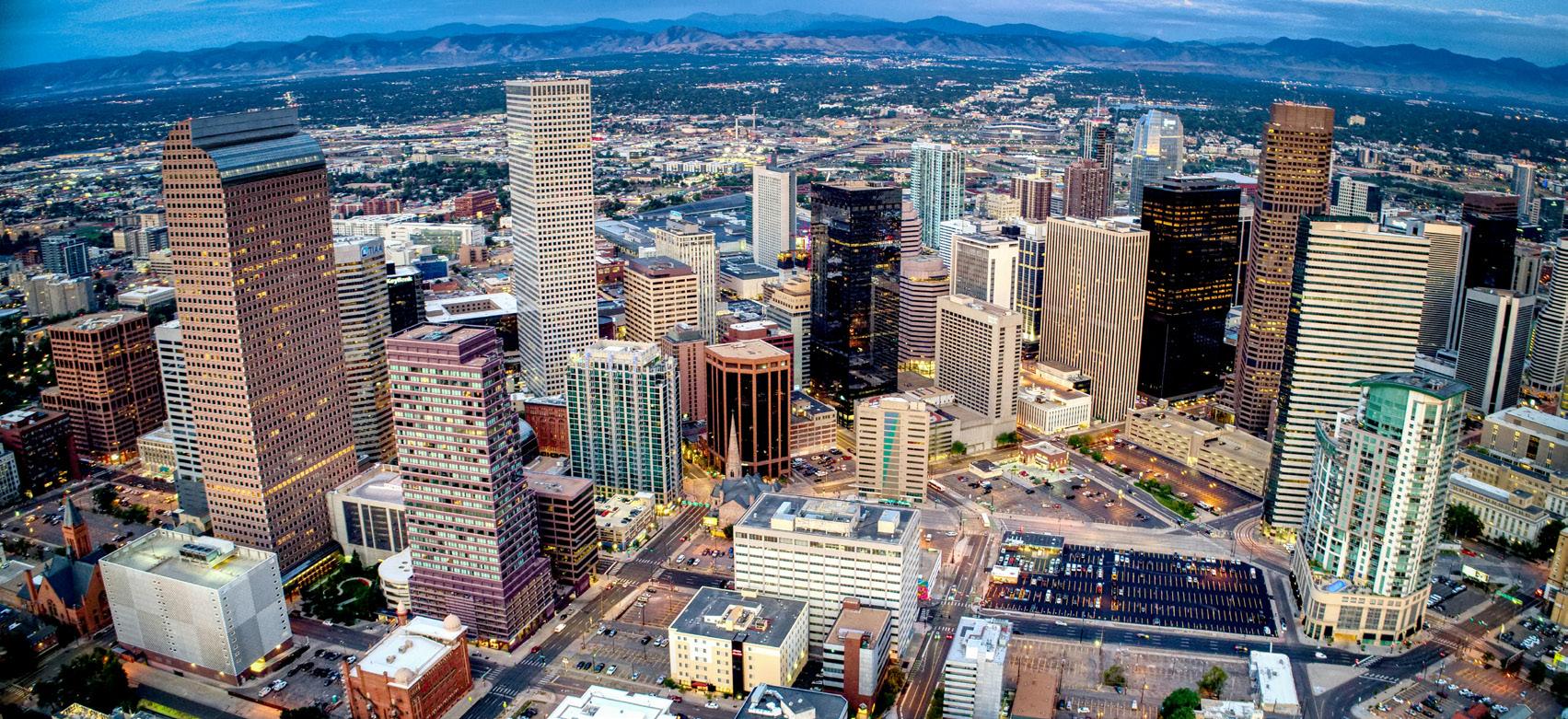
International visits to Denver are expected to decline by 11% (to 493,200) in 2025, as forecasted and adjusted by Tourism Economics. International travel spending in Denver is forecasted to decline by 8% in 2025, to $442.7 million in 2025. These declines are part of Tourism Economics adjustment due to the current administration actions and impact.
Tourism Economics is forecasting Denver to recover its international visitors to 2019 levels by 2029 and projecting growth of 8% from 2024 to 2029 in international visits.
In addition, Tourism Economics is forecasting international nights in paid accommodations in Denver will grow 36% from 2022 to 2026 to over 1.5 million room nights.
Denver’s largest source markets for 2025 are Canada (with 143,000 arrivals or 30% of total international arrivals), followed by the U.K., Mexico and Germany.
According to Oxford Economics, Denver is outpacing comparable North American cities from 2025 to 2027 with the exception of Baltimore.
Trips to Denver tend to be shorter than those to the United States as a whole, with three nights the average length of a trip in 2025, compared to 6.6 nights for the United States.
2025 has seen the addition of several international nonstop flights, totaling 35 international nonstop flights, the most Denver International Airport has seen.
Average Length of Stay and Spend, International, City vs. Country, 2025
New nonstop international flights in 2025:
United DEN → Rome (FCO)
United DEN → Mexico City (MEX)
United DEN → Punta Cana (PUJ)
Volaris DEN – Monterrey (MTY)
Aeroméxico DEN – Guadalajara (GDL)
Aeroméxico DEN – Monterrey (MTY)
Partnerships are crucial to international marketing successes:
▷ Colorado Tourism Office (CTO) – On July 1, 2021 the CTO reinstated its international representation contracts with several countries that were paused in 2020. The office now employs in-market representatives in the U.K., Germany/Switzerland/Austria, France, Australia/ New Zealand, Mexico and Canada, which continued in 2024. Visit Denver is now contracting the same in-market representatives in the U.K., Mexico, Germany and France, while partnering with CTO in efforts to bring visitors from Australia/New Zealand and Canada.
▷ Rocky Mountain International (RMI) – RMI collaborates between Wyoming, South Dakota, North Dakota, Idaho and Montana to market the Great American West and pursue the U.K., Germany/Switzerland/Austria, Italy, France and Benelux markets. In July 2021, RMI resumed full representation in the Nordic countries and Australia/New Zealand. Denver is a gateway city partner represented in all markets, now competing with Minneapolis/St. Paul/ Bloomington.
▷ Colorado Ski Country USA and Colorado Ski Industry Partners – Collaborative marketing in Europe, Asia, Australia, Mexico and South America aims to increase the length of stay in Colorado and include pre- or post-ski visits to Denver.
▷ Brand USA – Cooperative marketing opportunities are available through the national tourism marketing effort that has fully integrated marketing campaigns and inmarket representation in 15 international markets covering over 40 countries. Travel from these markets makes up 93% of inbound visitation to the United States.
▷ Denver International Airport (DEN) – Increased collaboration with DEN helps to maintain and pursue new nonstop service to Denver and increase the number of visitors to Denver and Colorado.
May 1, 2025 Denver’s first nonstop to Rome
Oct 26, 2025 Daily service with 737 MAX 8
Oct 26, 2025 Daily service—only nonstop option
Apr 1, 2025 Regular nonstop service
Jan–Apr 2025 Weekly (seasonal)
Jan–Apr 2025 Twice-weekly (seasonal)
▷ Travel packages for Denver were also marketed internationally by over 350 international travel companies.
▷ Many travel companies have new staff and Visit Denver continued to compile new contacts in 2025. In 2025, a total of 16,851 international room nights were tracked through June, through international marketing efforts.
The Tourism Department markets to international travel companies to encourage Denver visitation in the following ways:
▷ Dedicated Denver hotel + flight packages to promote Denver as a destination.
▷ Denver as a gateway to a Colorado vacation, in a flydrive travel program (e.g., touring itineraries in a car, motorcycle or RV that include Denver and RV rentals by international visitors that require an overnight stay before picking up the vehicle.)
▷ Denver as a gateway to the West, in a fly-drive travel program (e.g., touring itineraries in a car, motorcycle or RV that include Denver and RV rentals by international visitors that require an overnight stay before picking up the vehicle).
▷ Group tours (motor coach, mini-bus or van tours) that include Denver.
▷ Denver hotel listings (hotel options only, without full city package or itinerary).
Target countries for Denver are determined by air access and traveler preferences in addition to border openings, international nonstop flights and traveler sentiment. Canada and Mexico rebounded first, due to proximity and flight availability. 2024 saw the most international nonstop flights in Denver’s history, with additional flights being added in 2025.
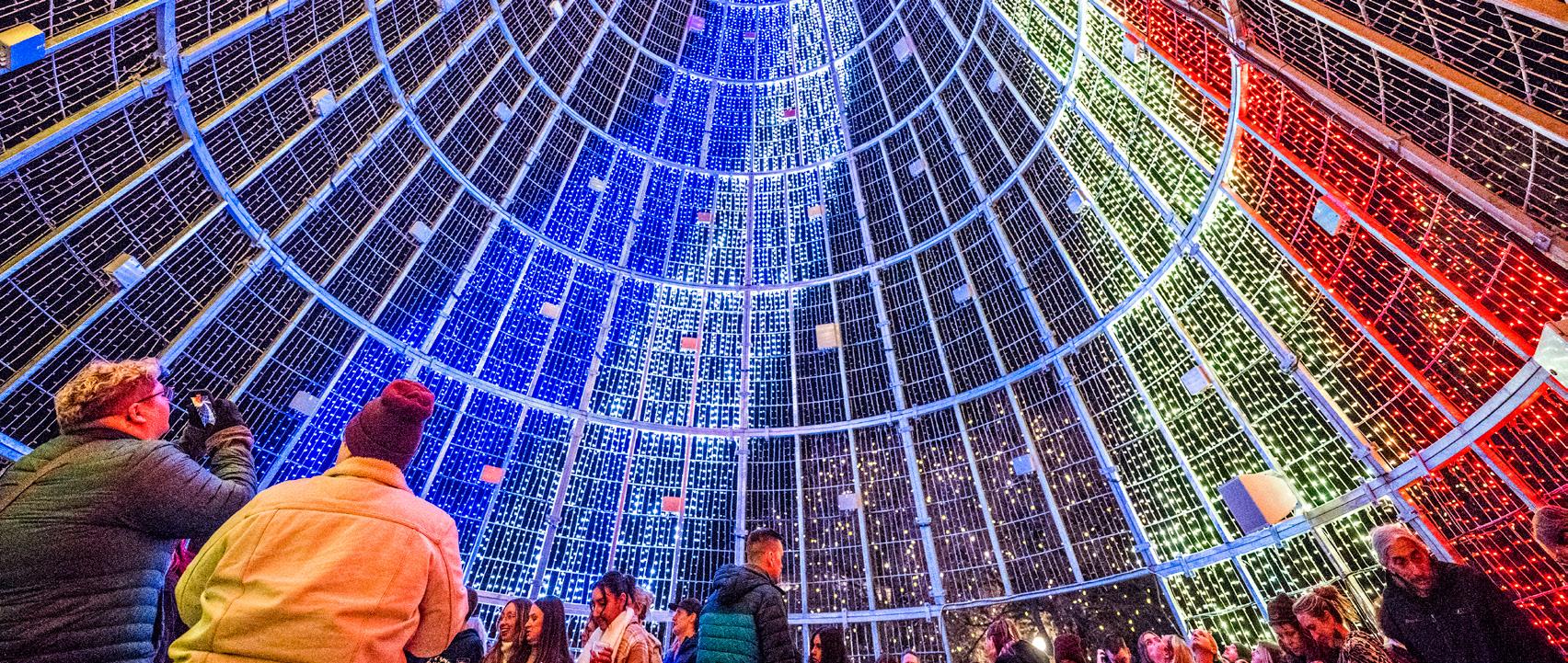
Visit Denver collaborates with Brand USA, CTO, DEN and The Great American West through marketing campaigns, to leverage the Bureau’s investment to its greatest potential.
Primary target markets have been picked by the following factors:
▷ Performance in 2024
▷ Forecasted performance in 2025 and beyond
▷ Nonstop flights
▷ Visa waiver status
▷ Geopolitical environment
▷ Brand USA, CTO and The Great American West support and priorities to maximize budget and reach
Target Markets:
Canada
United Kingdom
Mexico
4. Germany/Switzerland/Austria
5. France/Benelux
6. Australia/New Zealand
Secondary Markets:
1. Japan
2. Italy
3. South America
4. Nordic Countries (Iceland, Norway, Sweden, Denmark and Finland)
5. Asia Pacific
With the new nonstop flight from Turkish Airlines, additional markets such as Turkey and India are being explored.
Denver’s most obvious competitors have strong non-stop international air service, well-established brands and access to famous attractions including national parks. Denver acts as the premier gateway to this region. Potential competitors in the West and Midwest, include Minneapolis, Phoenix, Salt Lake City, Chicago, Las Vegas, Los Angeles, Portland, San Francisco and Seattle.
Phoenix and Las Vegas – Phoenix is known for its upscale golf resorts and is a gateway to the Grand Canyon, while Las Vegas is a “must-see” destination for entertainment, gambling and shopping. Both of these cities have strong non-stop international air service and can be used to access many of the national parks in the West without including Denver.
Salt Lake City – Salt Lake City has good international air access, including nonstop to and from London, Paris and Amsterdam and is a strong Delta Airlines hub. Utah retained consistent tourism funding, even in the midst of the COVID crisis while other states cut budgets, which allows them to more aggressively pursue international markets.
Los Angeles and San Francisco – Both cities have California’s positive destination appeal and many international nonstop flight options. International travelers have traditionally used the large cities on the West or East Coast as gateways to the U.S. These cities offer access to beautiful coastal scenery, golf, national parks and famous attractions, including Universal and Disney theme parks.
Seattle and Portland – Increased international air service, expanded marketing budgets and nonstop flights to and from Asia, Nordic countries and Europe make Seattle and Portland strong competitors for those travelers wanting to see the Western U.S. In addition, both are strong U.S. gateways for Icelandair.
Chicago – Chicago remains a very strong international gateway for the U.S. and hosted IPW again in 2025. Choose Chicago (the Chicago Convention and Visitors Bureau) has experienced ups and downs in funding.
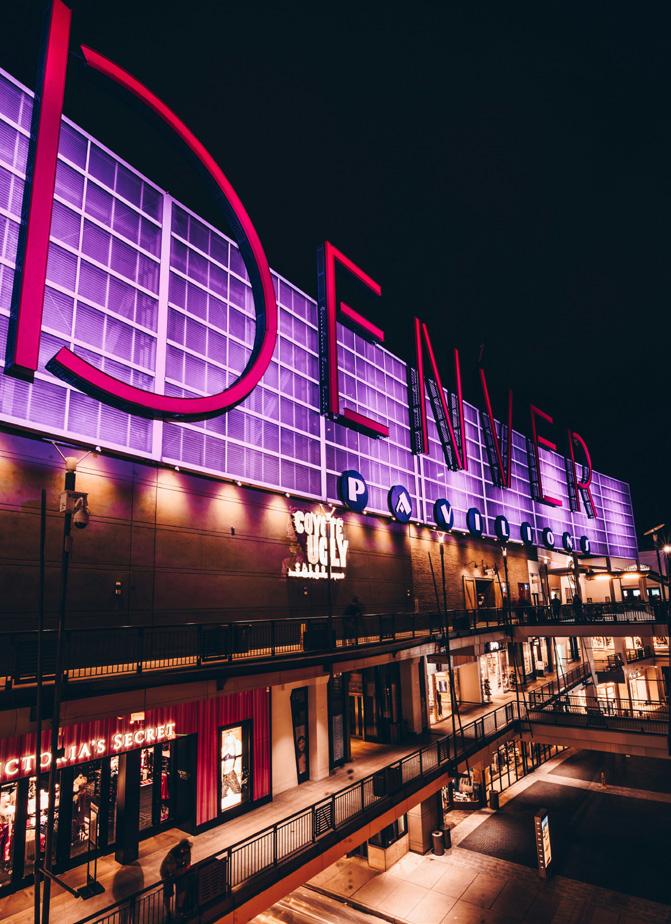
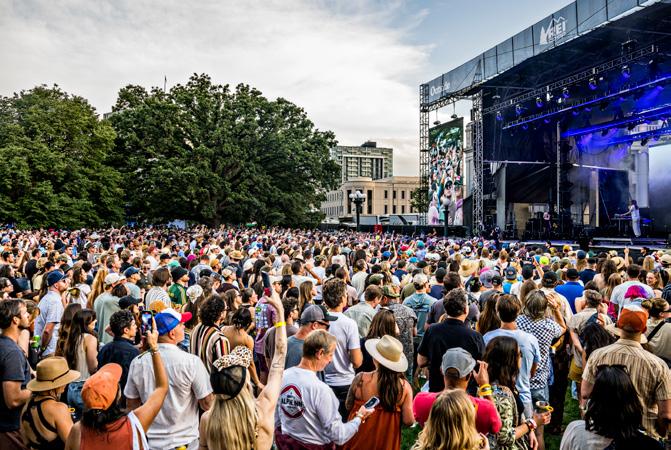
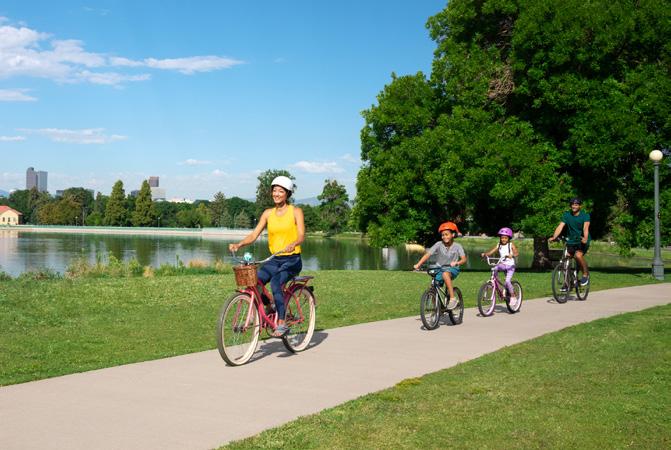
As travelers become more discerning in their planning, they continue to look to trusted media sources to be inspired, find travel experiences and discover destinations where they can get good value for their travel budgets. Denver remains a popular destination in a continually more competitive travel space and the media coverage reflects that. As leisure travel continues at a steady rate, journalists are on the move, and they are producing global stories to inspire travel and support the industry. Year-to-date in 2025, the Communications Department has generated more than $56 million of global, positive print, broadcast and online earned media coverage featuring Denver as a top travel destination. As priorities, news cycles, the media landscape, international sentiment, the economy and traveler habits change, travel journalism continues to evolve to fit demands, and the Visit Denver Communications Department’s success depends on being attuned to these trends.
Traditional media outlets continue to evolve and major longstanding travel publications and travel sections across the globe continue to see changes. The ongoing shift toward digital news and social media outlets, and now generative AI chatbots, continues, further suffocating advertising revenue for traditional operations. Some travel sections that previously focused on international bucket list trips have shifted their focus to be more regional or even profiling neighborhoods within their city; others run more syndicated columns creating even less space for tailored placements. Online publications are dipping a toe into affiliate placements, a work-around for paid placements and previously seen primarily in the consumer packaged goods space.
In-person media marketplaces continue to produce record attendance numbers; however, individual media deskside meetings have transitioned to meetings at a journalists’ closest coffee shop as work from home or the nomadic lifestyle continues to be popular for travel media. Individual meetings have become increasingly harder to secure as freelance opportunities dry up, journalists’ time is at a premium and the journalist pool is shrinking. In 2025 the U.S. has 75% fewer reporters working compared to 2002 (MuckRack and Rebuild Local News 2025 study). The ratio means that PR pros need to be more persistent and creative with pitches to grab the attention of journalists, even those with strong relationships. It continues to be essential for public relations professionals to have individual time with media and to show the media they are a priority by simply showing up in person be it for a FAM, international marketplace or pitch meeting.
Despite this evolution, the public relations trends below remain relevant and offer a snapshot of a rapidly evolving industry. As budgets shrink and journalists are expected to produce more stories on a widening scope of beats, relationships and trust between public relations professionals and journalists are increasingly important. The Communications Department develops these relationships and closely monitors these trends to provide timely, tailored and imaginative pitches to heighten Denver’s profile as a destination.

▷ Although artificial intelligence (AI) has become a hot (and controversial) topic throughout the media and journalism industry, its use in public relations and travel journalism remains highly ambiguous and suffers from too many credibility and ethics implications to truly forecast how it might be used within the industry.
▷ What is known is that AI-powered search continues to grow and become more sophisticated. Travelers are increasingly using AI resources to research and plan travel. These AI tools most often use third-party sources, especially niche publications that are seen as more authoritative by algorithms. As a result, earned media will be more relevant in 2026 as destinations seek visibility.
▷ As major search engines change the way they employ AI, serving up pull quotes instead of complete articles, website viewership is declining; thereby, impacting advertising revenue, budget and ultimately, the journalists employed to tell a story.
▷ With shrinking advertising revenue, media outlets are looking for new ways to produce revenue including increased advertorials, native advertising and whole departments focused solely on affiliate editorial.
▷ With the ongoing proliferation of digital news, most consumers prefer to get their news, including travel stories online, changing the way journalists report. Listicles and Best-Of stories are taking the place of long form stories and features. Some journalists even earn revenue through their audience reach (similar to a pay per click model).
▷ Today, there are less dedicated travel editors in major daily news publications, making destination features even more difficult to place. Many turn to freelance writers, furthering the clutter among journalists competing to place stories, while also offering opportunities to organizations like Visit Denver to pitch more outlets with a single visit.
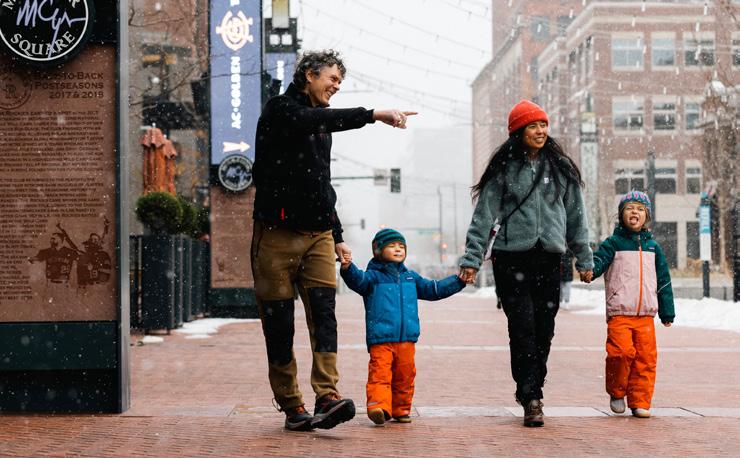
▷ Nearly 57% of journalists in the industry today are freelancers. Freelancers face more competition to place travel stories in publications offering less real estate for travel topics and shrinking pay. Strong relationships between a PR professional and a journalist continue to be essential as many freelancers do not attend a familiarization trip (FAM) with an assignment letter, like was expected previously, but start to sell their story during and after the FAM experience. Optimistically, this means a single FAM can result in several secured placements across both outlets and angles.
▷ Journalists (and their travel-seeking audiences) are looking for unique, and sometimes niche, experiences and are opting for individual FAMs versus group FAMs to fit their editorial needs. The Communications Department has focused on meeting journalists where they are in creating FAMs that will result in stories highlighting Denver’s pillars. Time and again it is proven that the best stories come from those who experience the place firsthand.
▷ Freelancers have the added burden of selling a story to an editor, meaning the Communications Department must pitch the journalist and at times be a resource for the freelancer to pitch editors. This process means it also often takes longer after a FAM for a story to run.
▷ Due to diminishing resources in the print news industry, editors often expect journalists to play the role of photographer for their stories as well. The Communications Department works to support this process by providing photography from the Marketing Department when needed.
▷ Bloggers and influencers continue to gain traction, although reputable ones are scarce. As with most online coverage, blogger and influencer placements are difficult to monetize and still do not warrant priority over traditional media placements that can achieve a tangible value. This may evolve since in 2025 social platforms became searchable by AI and have become increasingly popular for trip planning. Social media has started to blur the lines with many journalists supplementing their income as influencers and vice versa with influencers trying their hand in journalism. Journalists have also started to go to social media for story ideas before entertaining pitches from communications teams.
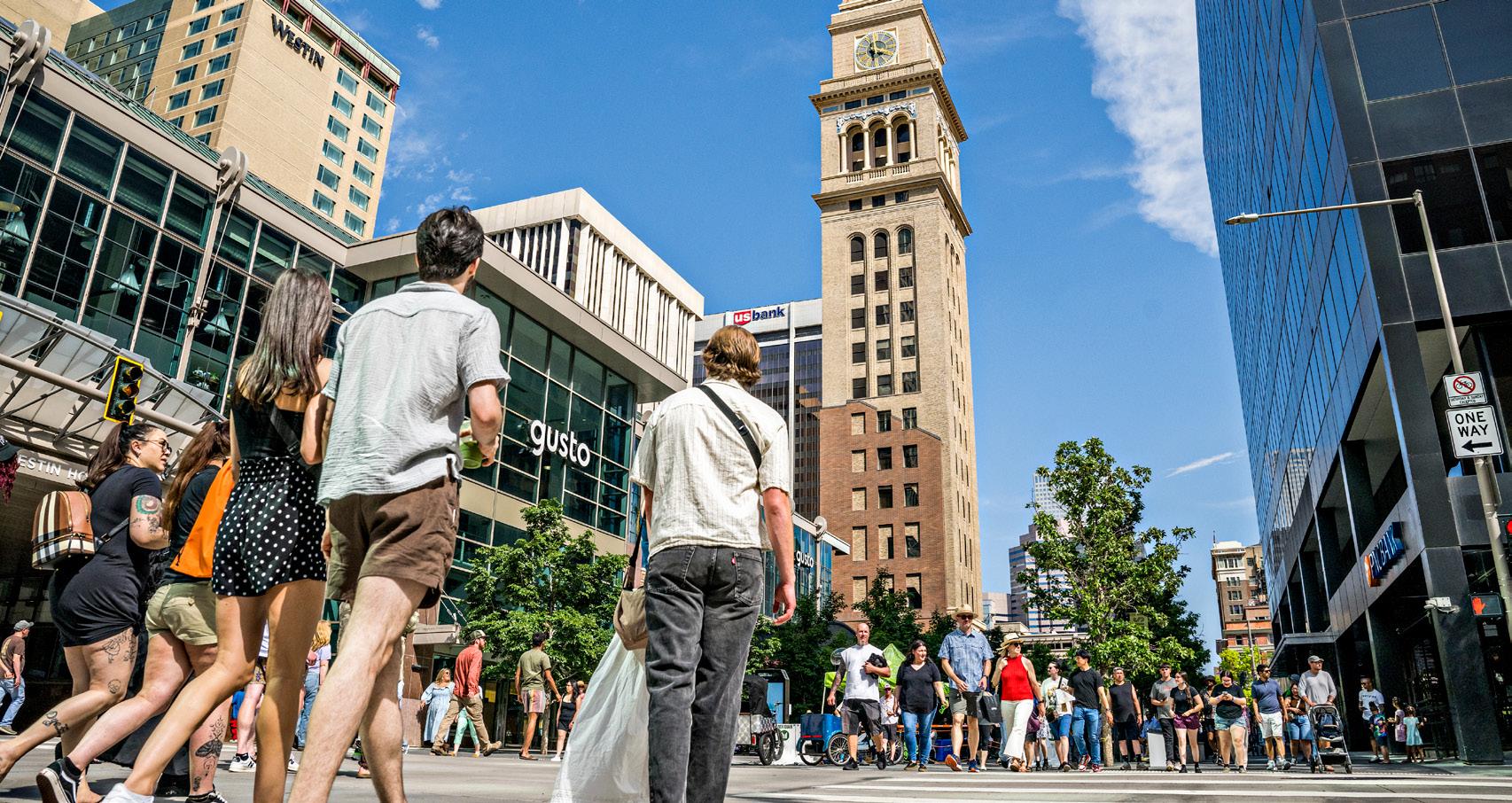
▷ Online photo galleries and listicles remain popular and are especially beneficial in driving traffic, increasing website page views and helping destinations to collect superlatives. As mentioned, many times these placements are at the expense of more in-depth pieces.
▷ Images are vitally important to all mediums; high quality, easily accessible photography and videography have become as important as the story itself. Press releases accompanied by photos have a higher probability of earning placement and stories with photos get more reader clicks.
▷ The prevalence of video in travel media across all mediums continues to grow and stretch traditional standards of reporting. Even many longstanding print publications have embraced the use of video on their websites to complement or replace standard text news placements.
▷ Editorial coverage continues to shrink in proportion with the decreasing attention span of readers who are now accustomed to short, concise stories on the web and through social media channels.
▷ A growing number of online resources are now available at the fingertips of today’s prospective traveler, decreasing the reliance on media outlets for travel inspiration. From travel apps to Reddit and Instagram to user-generated review sites like TripAdvisor and Yelp, few segments of travel have been changed by the internet more than travel public relations.
▷ The monetary value of online travel editorial generated by PR is still difficult to gauge; however, advertising value equivalency (AVE) and impressions remain the industry standard for measuring results. The number of vendors is shrinking, with Burrells closing shop in 2024 after 136 years of tracking print media, creating more standardization in reported numbers.
▷ Online travel writers still garner information from media sections within official destination websites. They expect easily navigable, responsive websites that offer access to photos and provide itinerary planning/mapping tools.
The most significant changes in 2025 have been in the international space. Visit Denver continues to focus internationally on Mexico, the U.K., Germany/Switzerland/ Austria and France with contracted PR firms in these destinations. Visit Denver also works closely with the CTO to support media from countries outside of these four markets.
In early 2025, Visit Denver made the decision to pause its direct work with Canada until geopolitical issues cool. Unfortunately, the sentiment of international travel journalists mirrors that of international travelers in response to political conflict with the U.S. While some journalists separate their work from politics, many are hesitant to cover the U.S. and some editors simply refuse to run stories about U.S. travel.
Although international media trends remain subject to long-term, unforeseen changes based on the geopolitical climate and global economics, the trends below remain relevant and offer a valid snapshot of international media.
▷ International media face the same challenges from the internet as American print and broadcast media, and they are reacting in the same manner – shorter stories, less space and fewer articles.
▷ The best methods for developing international media coverage include hosting educational press trips for journalists; efficiently responding to media requests; collaborating with Brand USA media FAM efforts; and participating in international media promotions or travel trade shows such as IPW, TravMedia IMM marketplaces in New York, London, Berlin and Paris and Brand USA’s Pan-European Media Forum, where connections with a large number of journalists occur in one location.
▷ Over the past year, Denver has welcomed multiple new nonstop international flights. DEN now has nonstop service to 33 international destinations across 18 countries. The Communications Department continues to support these essential connections by hosting international travel journalists on these flights and curating thoughtful itineraries in Denver.
▷ International consumers remain interested in the American West and the entire Rocky Mountain region.
▷ Denver generally offers the primary “big city” feel on press trips that feature food, culture, sports, shopping and nightlife.
▷ The Colorado Tourism Office (CTO) also maintains contracts with trade and public relations representation firms in major markets including the U.K., Germany/ Switzerland/Austria, Canada, Mexico, France and Australia/New Zealand. CTO staff regularly pursues press tours to Colorado from these countries with a stop in Denver.
▷ As mentioned, there is a growing prevalence of online and social content and it is difficult to monetize its value. Many companies are attempting to create and market new qualitative methods to measure media placements, but currently none are widely accepted in the PR industry.
▷ With less real estate to work with and the dilution of eyeballs thanks to changing search habits and AI evolution, articles on average generate a lower AVE. As a result, it takes many more placements to generate the same ad equivalency as in the past. Nonetheless, monetizing results through AVE remains a standard “best practice” in most major convention bureaus and across the global PR industry.
▷ The Department will continue to monitor with benchmarks in mind.
As the digital landscape continues to shift rapidly, Visit Denver’s marketing strategy will evolve to meet new challenges and leverage emerging opportunities. From changes in how people discover destinations to the tools and platforms that support engagement, these trends highlight where focus is needed in the year ahead. Together, they form the foundation for a more agile, discoverable and audience-centered approach to digital marketing in 2026, serving travelers, meeting planners, locals and other key stakeholders.
As AI-driven search engines like ChatGPT, Perplexity and Google AI Overviews rapidly grow in popularity, they are reshaping how Visit Denver’s diverse target audiences discover brands and destinations. Traditional Search Engine Optimization (SEO), which emphasizes keyword rankings, backlinks and search algorithms, is increasingly inadequate as a single-source discovery tool due to evolving user behaviors and AI-driven search methods that prioritize conversational context, structured information and authoritative citations. Instead, understanding Generative Engine Optimization (GEO), alongside other optimization strategies that emphasize structured, conversational and authoritative content tailored for AI-driven platforms, is quickly becoming essential for Visit Denver to ensure visibility, accurate representation and sustained engagement in an increasingly AI-centric search landscape.
GEO represents a shift from optimizing websites purely for traditional search engines to structuring content additionally for AI platforms, ensuring that brand information is accurately represented, easily understood and frequently cited in generative AI responses.
Recent insights demonstrate that AI-driven search is experiencing rapid growth, delivering significantly better engagement than traditional channels. AI visitors exhibit notably higher value, and AI-driven search results are expected to surpass traditional search by 2028. Additionally, the rise of AI-generated summaries and overviews has led to substantial increases in brand impressions but a corresponding decrease in direct clicks to VisitDenver. com, underscoring the importance of optimizing content specifically for AI-driven platforms.
Key actions Visit Denver should prioritize to leverage GEO effectively:
▷ Structured Content: Focus on creating self-contained, passage-level optimized content segments that generative AI can easily interpret, summarize and cite.
▷ Conversational Formats: Employ question-and-answer structures, conversational tones and natural language queries aligned with user behaviors on AI platforms.
▷ Third-party Authority Building: Enhance presence on authoritative third-party platforms like Wikipedia, YouTube, LinkedIn, Reddit and community forums, which heavily influence AI citations.
▷ Brand Visibility Metrics: Transition measurement priorities from clicks and traffic to visibility and citations within generative AI results, including brand mentions, impressions and referral traffic from AI tools.
▷ Multimodal Optimization: Prepare for multimodal search capabilities—images, video and voice—by optimizing visual assets and multimedia content, ensuring Visit Denver is discoverable across all AI-driven channels.
Adopting GEO and AI-native discoverability as core strategic priorities will enable Visit Denver to stay ahead of the curve, maintain a robust digital presence, relevance and competitive advantage through 2026 and beyond.
Artificial Intelligence (AI) is increasingly becoming a foundational element across all stages of Visit Denver’s marketing processes, spanning channel optimization, platform engagement, operational workflows and performance reporting. While AI tools significantly enhance efficiency, accuracy and scalability, human oversight remains indispensable, ensuring strategic alignment, creative authenticity and contextual accuracy.
▷ AI in Channel Optimization and Platform Engagement: AI-driven analytics are empowering more precise audience targeting, real-time campaign adjustments and personalization across digital marketing channels. Platforms employing AI enable more meaningful interactions by anticipating user preferences and behaviors, thus improving visitor engagement and conversion rates. Visit Denver will be working with its agencies to ensure their understanding and adoption of this emerging technology.
▷ AI-Enhanced Operational Workflows: Incorporating AI into marketing operations streamlines essential tasks such as campaign planning, content development, social media management, email campaign execution and content scheduling. However, AI’s role remains complementary, supporting human-driven decisionmaking rather than replacing it. AI tools assist marketers in managing complex datasets, uncovering actionable insights and automating routine tasks, thereby freeing time for strategic and creative endeavors.
▷ AI-Driven Reporting and Performance Analysis: The use of AI in reporting enables Visit Denver to extract deeper insights from performance data, identifying trends and predictive patterns faster and more accurately. Automated AI-powered reporting systems enhance transparency, facilitate real-time campaign optimization and provide clearer attribution modeling.
▷ Human-Centric AI Integration: While AI tools provide substantial support, human expertise and intuition remain central. Marketers at Visit Denver will continue to steer strategic planning, oversee creative execution and validate AI-generated insights to ensure that marketing campaigns remain authentic, engaging and culturally relevant to diverse target audiences.
Adopting AI thoughtfully and strategically into Visit Denver’s marketing processes positions the organization to remain agile, innovative and highly responsive, effectively meeting and exceeding the expectations of visitors, travelers, meeting planners and local communities through 2026 and beyond.
Video continues to be a powerful driver of engagement and inspiration and Visit Denver’s success with short-form content on social platforms such as Instagram has demonstrated its value in reaching and resonating with key audiences. Building on this success, the next evolution in video strategy includes expanding both short-form and long-form formats across additional platforms and use cases to drive visibility, education and action.
The growing influence of video in social media, AI-powered discovery, traditional search behavior and consumer decision-making makes it essential to build a unified, intentional video presence that aligns with Visit Denver’s marketing goals.
▷ Platform Diversification and Reach Expansion: Extend existing short-form strategies beyond Meta to include YouTube Shorts, long-form YouTube content and embedded videos on VisitDenver.com. This ensures that video content is discoverable across multiple points of entry, including AI search engines and traditional search results.
▷ Support for Paid and Organic Campaigns: Building on existing efforts in programmatic campaigns, social media and on the website, expand the use of video across Google Ads, email marketing and other paid placements. Video should be aligned with seasonal themes, events and partner initiatives to drive higher engagement and conversions.
▷ Video Content Aligned with Search Trends: Create video content that answers common questions, supports itinerary planning and visually highlights Denver’s key experiences. Optimizing titles, transcripts and descriptions helps increase visibility in AI summaries and search engine results.
▷ Measurement and Iteration: Track video performance across platforms with metrics that include watch time, engagement rate and contribution to broader campaign objectives. Use these insights to refine creative direction, adjust length and format and prioritize content types that perform best.
By treating video as a central component of its content ecosystem, Visit Denver can more effectively support both brand building and performance marketing goals, delivering a consistent and engaging message to visitors, meeting planners, locals and influencers wherever they search or scroll.
Influencer and content creator partnerships have become an established and essential component of digital marketing, shaping how audiences discover destinations, engage with content and make travel decisions. For Visit Denver, leveraging these partnerships is not just about promotion but about integrating authentic voices and trusted messengers into core marketing strategies.
Influencers and creators help bridge the gap between promotional messaging and genuine experience-sharing, especially across social media and video-driven platforms.
▷ Integrated Storytelling Across Platforms: Strengthen collaboration with influencers to co-create content for both short-form and long-form video, as well as static and interactive social media formats. These assets can support organic and paid efforts across Meta, YouTube, VisitDenver.com and partner platforms.
▷ Niche and Local Creator Engagement: Expand efforts to identify and partner with micro and mid-tier influencers who speak authentically to niche communities and local audiences. These voices can enhance Visit Denver’s reach and credibility across key visitor segments.
▷ Influencer Campaigns Aligned with Key Initiatives: Use influencer content to support tentpole events, seasonal campaigns, neighborhood storytelling and partner promotions. Strategic timing and alignment ensure content has greater impact across multiple channels.
▷ Performance-Driven Collaboration: Apply a metricsfirst approach to influencer partnerships, evaluating success based on engagement, reach, video views and downstream performance indicators like website traffic, event attendance or guide downloads.
By embedding creators and influencers into Visit Denver’s broader content ecosystem, the organization can amplify its reach, diversify its storytelling and create lasting connections with target audiences across a variety of platforms and formats.
In an environment where digital behavior, discovery channels and AI-powered platforms are evolving rapidly, so too will Visit Denver’s approach to measurement. Traditional performance metrics like clicks, sessions, conversions, video views, social shares and saves remain valuable, but they no longer tell the full story. In the current landscape, visibility, share of voice and multi-touch influence are increasingly critical to understanding impact.
▷ Shifting Metrics for a New Landscape: Brand impressions, mentions in AI-generated content and presence across search and social platforms are emerging as key indicators of relevance and reach. These visibility-based metrics reflect the growing importance of influence over intent and recognition over referral alone.
▷ Diverse Tools for Holistic Measurement: To effectively measure performance across this broader spectrum, Visit Denver will continue evolving its analytics capabilities by identifying, implementing and utilizing a diverse set of tools. These include AI citation trackers, share-of-voice platforms, video performance dashboards, influencer analytics and search visibility reporting.
▷ Cross-Channel Synergy: All digital channels now operate in a multi-touch environment. Website traffic, social engagement, paid impressions, influencer content and AI search mentions are interconnected. Each channel supports and amplifies the others, contributing to overall brand visibility and campaign success.
▷ Real-Time, Actionable Insights: Moving forward, marketing success will rely on timely insights that support more agile, data-driven decision-making. An integrated analytics strategy will enable Visit Denver to understand full-funnel performance, adapt quickly and optimize efforts across all aspects of digital marketing.
As measurement continues to evolve, so must the mindset around what success looks like. Visit Denver’s ability to evaluate performance through a mix of traditional, social, video and AI-era metrics will be essential. Embracing this expanded view will allow the organization to stay informed, make confident decisions and maximize the collective impact of all marketing efforts.
As social media platforms evolve, so do the strategies needed to maintain visibility, engagement and value. Heading into 2026, organic social media is emerging as a renewed area of opportunity. Platforms are increasingly doubling as search engines, with user behavior shifting toward discovery through search bars, hashtags and algorithm-driven recommendations.
▷ Organic Growth Through Collaboration: Building authentic content in collaboration with creators, partners and community voices can strengthen Visit Denver’s reach and resonance across audiences. Organic posts that spark conversation and provide useful, relevant information will be favored in-platform and beyond.
▷ Platform-Specific Best Practices and Social SEO: Social SEO is becoming an essential complement to strong in-platform performance. Strategic use of keywords, alt text, geo-tagging, link structures, hashtags and formatting can boost discoverability within social platforms and across broader search environments, including AI-driven results.
▷ Content Designed for Discovery and Engagement: Content should be crafted with both the algorithm and the audience in mind. Visual storytelling, timely relevance, optimized metadata and clear topic signals improve chances of discovery while also encouraging likes, shares, comments and saves.
▷ Unified Search and Social Strategy: Social content and website content are no longer separate spheres. Integration between social SEO and traditional SEO will enhance consistency and discoverability across channels, reinforcing Visit Denver’s brand presence in both user-led searches and AI-driven recommendations.
By maintaining a balance between social-first best practices and search-conscious strategy, Visit Denver can elevate its content across platforms, driving both visibility and engagement among travelers, locals and meeting planners alike.
With content driving nearly every digital touchpoint from search to social to video, Visit Denver’s ability to create, organize and deploy content strategically is more important than ever. As marketing becomes increasingly multi-platform and AI-influenced, visibility and engagement now hinge on how well content performs across formats and discovery environments.
To keep pace, content marketing and management practices will evolve beyond traditional editorial calendars and channelbased workflows. A unified, audience-centric content ecosystem will ensure Visit Denver remains nimble, relevant and impactful.
▷ Centralized Strategy, Distributed Execution: Content should be planned holistically but customized by format and channel. Core themes and messages can be adapted for video, social posts, email campaigns and AI-friendly text to maximize reach and consistency.
▷ Flexible, Modular Content Systems: Rather than producing one-off assets, content should be developed in flexible blocks that can be reassembled or repurposed for various uses. This enables more efficient workflows and greater adaptability across teams and initiatives.
▷ Audience-Led Planning: Use insights from performance metrics, search behavior, social engagement and partner feedback to shape content priorities. This data-driven approach ensures Visit Denver is creating content that reflects what audiences are actually searching for, asking about and sharing.
▷ Content Governance and Quality Control: As content expands across platforms and contributors, governance becomes essential. Consistent voice, structure, tagging and accessibility standards help ensure content is discoverable, inclusive and aligned with Visit Denver’s brand.
By evolving its content marketing and management practices, Visit Denver can meet the demands of today’s fragmented, fast-moving media environment and build a system that supports scalability, relevance and long-term impact across every digital initiative.
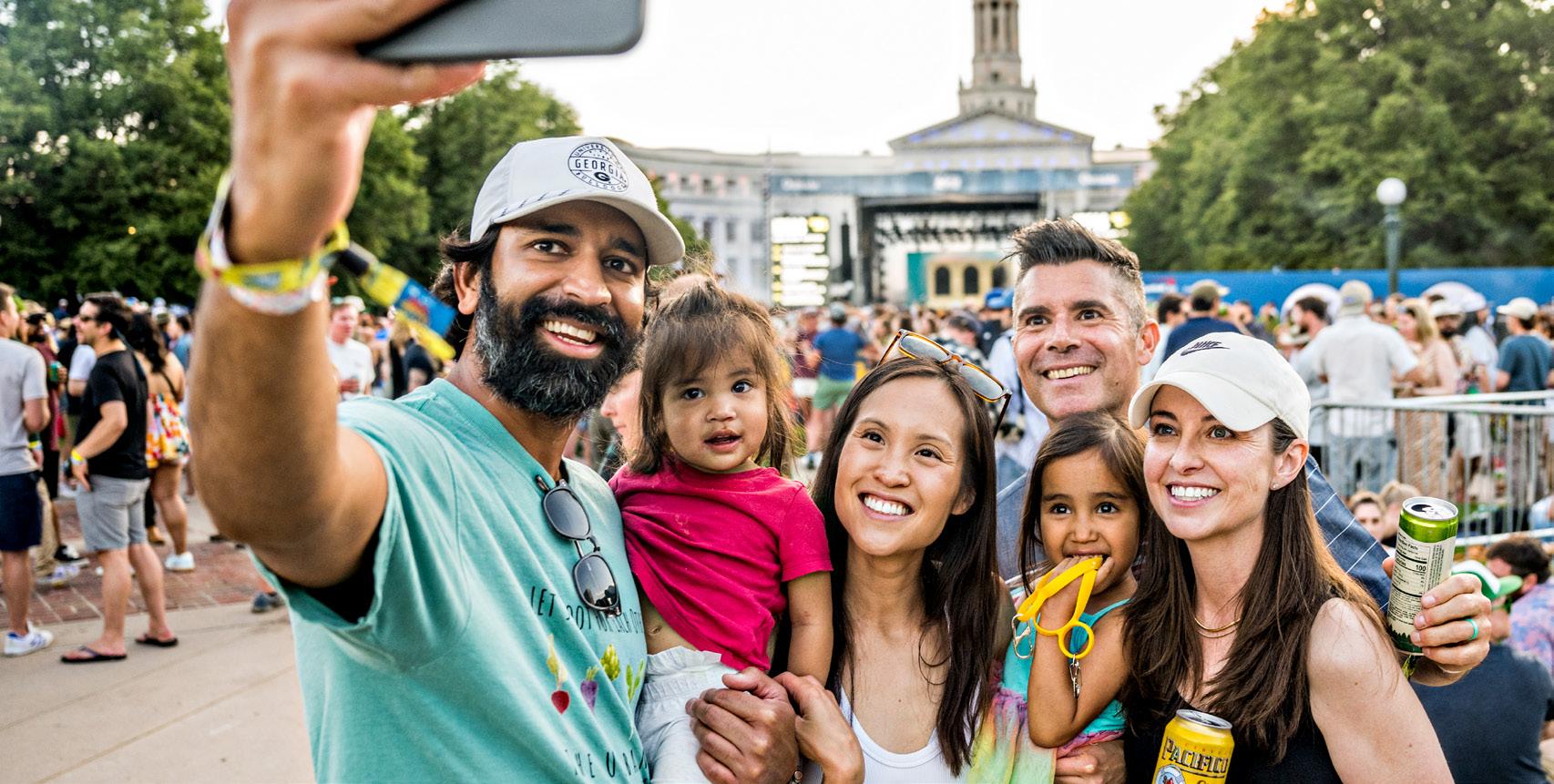
The Tourism and Marketing Departments track specific leisure tourism and marketing efforts to determine the results achieved. For 2026, both departments have conducted extensive analyses of their respective goals to ensure targets are appropriately set.
The Marketing Department is responsible for the execution of strategies and tactics for the domestic leisure visitor market and conducts and monitors advertising, promotional activities and consumer touchpoints for all markets. The Tourism Department is charged with the sales, service and tracking efforts for the international leisure and domestic group and travel agent leisure markets internationally and domestically.
For marketing, the metrics include tourism advertising impressions and engagements, visitor touchpoints, both traditional and interactive, as well as advertising value equivalency (AVE) generated by the public relations team.
For tourism, the main metric has historically been voluntary room night reporting from travel companies, travel planners or Denver hotels. Starting in 2024 and again in 2025, tourism complemented reported room nights with impressions and room nights from cooperative marketing plans with Online Travel Agencies (OTAs), key tour operatorsand airlines. Maintaining the number of travel companies selling Denver is also crucial to growing tourism, as is the generation of leads and referrals to Visit Denver partners for all leisure markets.
The 2026 goals outlined below have been developed with the best available data as of August 2025. Goals may be different in the final report as new information becomes available over the next few months and as the current international, national and local industry environment changes.
Based on a cost-benefit analysis of the number of room nights produced in the domestic leisure group markets, which includes weddings, reunions and motor coach tour groups, the Bureau allocates limited staff resources toward these efforts and has automated wedding leads and service requests on VisitDenver.com. The number of room nights are currently tracked through TourTrackerPro® research, by contacting tour operators and sometimes requesting from hotels. A total of 1,474 room nights were requested in wedding leads (YTD July of 2025) and, using a conservative estimate of 50% conversion, 737 room nights were consumed in 2025.
In the travel trade market, the TourTrackerPro® research was purchased in Q2 of 2025 to also allow Visit Denver to track the number of room nights from domestic operators. For 2025, 54 companies with groups planned to visit Denver resulting in 10,400 through July room nights which contributes to the goal of 32,000 room nights. Additionally, at least 15.569 room nights have come from marketing campaigns with Hotelbeds for the domestic leisure travel agent market YTD through July. The goal for domestic room nights for 2026 will be 32,000, flat to 2025.
Obtaining room night data from international travel companies is difficult due to data privacy policies and the lack of streamlined ways to provide specific city booking numbers. In addition, hotels are usually not able to assist in this reporting, because the bookings are primarily for individual travelers and are typically made via U.S.-based receptive travel companies; thus, the country of origin is not easily tracked. In addition, major hotel chains continue to resist the implementation of traditional contracts with receptive travel companies, which was exacerbated by COVID; instead, they are only offering dynamic rates or “on-request” rates for international travel companies. In addition, in 2025, the international travel industry continues to experience a labor shortage that impacts reporting of room nights. The goal for international room nights consumed in 2026 is 33,000 room nights, with similar budgets YOY.
Visit Denver conducts international marketing campaigns with travel companies and consumer marketing platforms such as airlines, international OTAs, Expedia and Brand USA. These campaigns often result in room nights being booked directly from the influence of the campaigns. Visit Denver will track the room nights as a measurement in 2026 based on the marketing investment.
To better evaluate international visitation to Denver, Visit Denver also obtains data from Oxford Economics’ Tourism Economics division, which conducts global research on visitation to the U.S., combining airline passenger data, U.S. Department of Commerce annual international visitation results, credit card spending metrics and other sources. This research for 2025 indicates that international room nights forecasted for Denver totaled 493,000, a 10.5% decrease compared to 551,000 in 2024. This is due to projected downgrades from Tourism Economics related to negative sentiment,political climate and strong US dollar.
Denver maintained 0.8% market share of U.S. arrivals in 2025. This share is projected to remain at 0.8% in 2026. The Tourism Department strives to maintain 0.80-0.83% Denver market share of inbound arrivals to the U.S. post-COVID.
If additional budget is available for Visit Denver to explore marketing campaigns in newer nonstop markets, such as Italy (United Airlines), Dublin (Aer Lingus), Japan (United Airlines), Turkey and India (Turkish Airlines), more impressions and room nights can be expected.
To capture international visitors traveling to the U.S. for the 2026 FIFA World Cup, even though Denver is not a host city, Visit Denver’s marketing strategy positions Denver as a “Soccer Adventure Hub”—a vibrant starting point, stopover or extended-stay destination between matches. Campaigns will build awareness in key markets (UK/Ireland, Germany, France, Italy, Canada, Mexico, Japan and Brazil) through geo-targeted digital campaigns, SEO-driven content and partnerships with international travel media. On the conversion side, there will be collaboration with major OTAs, and key international tour operators to integrate Denver into multi-city travel packages and stopover itineraries, supported by targeted booking promotions. This two-phased approach—awareness followed by conversion—ensures Denver stands out as an accessible, affordable and exciting choice for World Cup travelers.
Business leads and referrals to Visit Denver partners are also generated and tracked in both international and domestic markets by one sales manager in the Tourism Department. DMOs are generally recognized as a trustworthy resource for travel companies seeking destination information, but online travel planning resources are also competition for DMOs. There is a growing trend among travel trade clients to request referrals, rather than allowing a lead to be sent to the hotels or other suppliers of services on their behalf. For a referral, the DMO provides a list of contacts for specific partner hotels or service providers and the clients can contact the suppliers as they deem appropriate. Clients prefer to contact and negotiate directly with hotels and other service providers, rather than getting responses to a lead sent by Visit Denver.
The number of leisure event planners and travel companies needing assistance from Visit Denver for short-term tours, travel and events increased in 2025 to 446 compared to 330 in 2024, as of August of 2025. This is expected to grow by 7% in 2025.
The Tourism Department lead and referral goal for 2026 is 400.
Travel trade contacts and proactive contact outreach are measured on an annual basis, as are the number of companies that offer Denver travel product. Travel trade contacts and impressions have historically been generated via proactive client outreach, trade shows, sales missions and training seminars.
Contact goals for 2026 will be increased 3% year-over-year to 3,600. The department will leverage opportunities for incountry trainings through the in-country representatives in key markets of Mexico, Canada, U.K., Germany, France and Italy as well as virtual trainings with marketing partners like CTO, RMI, Brand USA and Visit USA.
Historically, impression numbers were counted from a total number of travel trade clients that attended travel trade shows, but that number does not reflect direct impact. International marketing campaigns, which resumed in 2022 and continued in 2025, resulted in 38,154,365 impressions YTD through August and are expected to reach the goal of 100,000,000 million for the year. The department will continue to use international marketing impression numbers to measure impact. The marketing impression goal will be flat at 100 million in 2029. This number will come from cooperative marketing campaigns in key international markets, with a flat budget from 2025 due to changes in Brand USA Marketing campaigns resulting in fewer impressions. The campaigns are more targeted with higher conversion potential.
In 2025, as of August 24 new travel packages have been tracked, over the 20 travel packages forecasted. Visit Denver strives to maintain exposure to the same key travel companies and is expecting 22 new travel packages in 2025.
Additional research is utilized to evaluate results for consumer marketing campaigns annually. Longwoods International implements a comprehensive study to quantify domestic visitor numbers and spending. This research provides a credible analysis of Denver’s domestic leisure visitors. While Longwoods conducted their research for the 2024 travel year, such information needs to be handled cautiously and balanced with additional sources of information. In this case, it is Visit Denver’s intent to combine this information with data about travel spending and taxes generated as reported by the annual Dean Runyan Associates report, received in late summer.
While competition for leisure travelers is increasingly intense, given the myriads of global choices they have, Visit Denver strives to maintain a growth rate for leisure visitors to Denver that equals or exceeds the national growth rate for leisure visitor travel, as reported by Longwoods. The 2024 Longwoods research reported a 1% decrease in overnight visitors for Denver. Overall, U.S. overnight travel grew at that same 1.9%.
Visit Denver and its agencies devote a substantial amount of time and money developing promotional campaigns designed to attract future visitors. These campaigns form the core of the marketing department’s strategies to continue the impact of tourism for the city and for its partners.
Tourism is an extremely competitive global industry, and Denver competes with destinations across the country and around the world. With so many destinations to choose from, Denver’s success rests on being able to differentiate the city’s appeal from other similar destinations, and then to “close the deal” by offering relevant, credible and appealing information once a potential visitor becomes interested.
Two of Visit Denver’s primary tactics for attracting potential visitors are the Bureau’s domestic advertising campaigns and social media efforts. A third core tactic, public relations efforts, is covered below.
Visit Denver’s advertising campaigns run year-round to regional and national target markets, positioning the city using the “Uplifting by Nature” brand, and messaging pillars related to dining, culture, outdoor activities, events and more. One of the main measurements of success is the number of impressions these campaigns can generate. This new City goal, advertising impressions, will be calculated in partnership with the Bureau’s advertising agency of record based on the expected campaign mix, media tactics and budget. For 2026, the goal recommendation is 750,000,000, a 7% increase over 2024.
The second component, digital engagements, is a combination of visits to Visit Denver websites and engagements on Visit Denver social media posts on the Bureau’s primary platforms, including Facebook, Instagram and LinkedIn. Though Visit Denver does use other social platforms, the three above represent the vast majority of the
social media team’s time and budget, as where most of the audience looks for travel information.
The website metric reflects ongoing improvements to the Visit Denver website while acknowledging the challenges of an increasingly competitive digital landscape where people also seek information through social media and generative AI platforms. The recommendation for the website portion of the digital engagements goal is 12 million, a 4% increase over 2025.
The social media metric includes a combination of post engagements (likes, reactions, comments, shares, saves, link clicks) and videos views (all video view exceeding three seconds, per industry standards) for both organic and paid posts. The recommendation for the social media engagement portion of this goal is 55,000,000, a 38% increase over 2025.
The combined goal for 2025 for digital engagements is to be set at 67,000,000, a 30% increase over 2025.
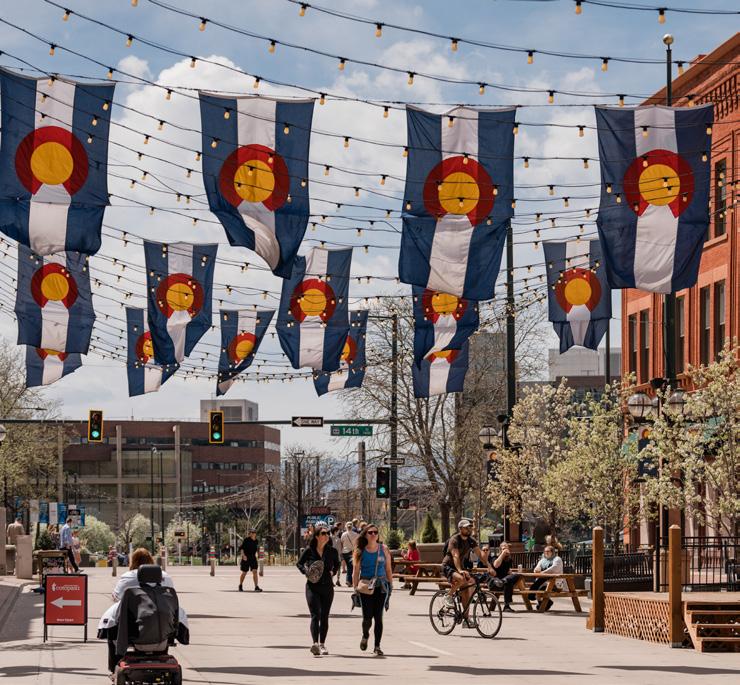
Advertising Impressions
Digital Engagements: Web Visits
Strong Denver brand, competitive budgets, experienced and tenured staff & agency and shift to digital media channels.
Advertising drives steady traffic to the site. Fresh content keeps the site active and trusted.
Continue to focus on high-impact, low-cost programmatic media while also leaning into higher cost, high engagement tactics that generate conversions.
Content can be created that answers more visitor questions directly and builds stronger connections with returning visitors. Advertising can help bring in new audiences.
Media overall is expected to come with higher costs in 2026 and any cuts to advertising budgets would impact impressions.
Search engines and AI tools often answer questions without sending people to our site. Social platforms also keep more attention inside their apps, making it harder to bring visitors to us.
Digital Engagements: Social Engagements & Video Views
Visit Denver’s social media presence remains strong, with impressive engagement across platforms The short-form video program has been a success, allowing Visit Denver to repurpose content across platforms. Looking ahead to 2026, this tactic is set to broaden reach by including YouTube and Pinterest in paid social advertising strategy, aspiring to connect with new audiences and elevate engagement.
Utilize short-form video storytelling to captivate our audience and showcase Denver. Expanding to YouTube and Pinterest will reach new audiences and diversify content. Collaborating with influencers will add authenticity and boost engagement across all channels.
May face increased competition, algorithm changes impacting reach, and the rise of ad blockers affecting paid campaigns. Additionally, if storytelling doesn’t evolve to match emerging trends, there is risk in falling behind in audience engagement as preferences shift towards more dynamic and authentic content.
Visit Denver has established a number of measurements that indicate consumers’ interest in visiting Denver, and in interacting with Visit Denver platforms during all phases of their visit. Collectively, these measurements are called Visitor Inquiries and Touchpoints and are a combination of the following: requests for the Official Visitors Guide to Denver and Colorado (OVG); visits to one of the official Tourist Information Centers (TICs); engaging with geofenced targeted ads to visitors to metro Denver; engaging with one of the Bureau’s online newsletters and promotions; and, finally, engaging with other information sources. These last two are new goals in the City contract and will be further defined below.
Visits to the TICs are up this year compared to 2024 with the re-opening of the Denver Union Station (DUS) location after renovation of the Great Hall (it was closed for four months in 2024), though far below pre-pandemic peaks. The TIC at DUS received 142% more visitors through July at 16,981. With record convention attendees this year through June, the number of visitors at the CCC TIC increased to 2,695, an 11% increase to last year.
Despite these factors, Visit Denver is expecting traffic to the TICs at CCC and DUS to be flat next year. The expected attendance at CCC meetings in 2026 will be flat to 2025, so TIC visitation is projected at 4,666. The TIC at DUS is expected to welcome a similar number of visitors next year, 26,000.
In 2026, Visit Denver will also track impressions and conversion of the geofencing advertising program, which serves digital ads to visitors to the market, leading to an overall goal of 45,000 combined TIC visits and geofencing conversions.
In 2024, Visit Denver tested geofencing targeted ads in metro Denver, to reach visitors from out of town, whether they came for a convention or for leisure, to discover things to do.
After testing and optimizing, Visit Denver fully launched the program in 2025, which has generated over 11,000 conversions YTD August. This program is expected to have similar results in 2026.
Demand for the flagship official visitors guide has been flat in the years since the pandemic and is starting to show signs of decline, particularly in the back half of the year. The team has worked to increase the visibility of online ordering options for the guide, leading to a steady rate of online requests, and the number of places the guide can be picked up in the state has increased, but overall, demand is not increasing. This leads to a goal recommendation for 2026 of 235,000, flat to 2025.
Subscribers to Online Newsletters and Promotions will be defined as new sign-ups to the Discover Denver consumer e-newsletter and opt-ins from the Meeting Planners Guide. Based on performance, the goal for 2026 is 20,400, a 5% increase from 2025.
Finally, Other Digital Information Sources will be defined in 2026 as visits to the digital Official Visitors Guide (OVG) and the digital Meeting Planners Guide. The goal for 2026
Tourist Info Centers & Geofencing Conversions
Official Visitor Guide Requests
Denver Union Station and Colorado Convention Center locations are open, with DUS open 7 days a week during summer. New geofencing tactic adds a new way to reach in-town visitors.
Demand for Denver travel info returning slowly. Certain segments (e.g. older travelers) like using printed guides. Distribution program significantly improved in 2024.
Subscribers to online newsletters & promotions Email communications continue to be an effective channel for visitor and meeting planner interest and engagement.
Other digital information sources
Providing users a digital alternative of key resources to learn about Denver creates additional touchpoints and options to digest information.
Continued use of these two locations and use of geotargeted ads to direct visitors when they arrive, as well as possible new mobile TIC or a location at 16th Street.
Continue to update information including top attractions, neighborhood info and key events. Continue to expand distribution and fulfillment program.
Increase visibility for sign-ups on website and advertising channels such as paid social and paid search.
DEN location permanently closed. Downtown location closed indefinitely due to inability to staff.
Younger travelers not as interested in physical materials. Avoidance of physical materials. Hotel distribution locations impacted by pandemic. Some TICs are closed.
5%
More people now get answers from AI tools and social platforms instead of coming to our website.
Consistent demand for digital guides reveals opportunity to expand digital resource offerings. Increase 5%
is 34,650, a 5% increase from 2025. This definition will continue to be reviewed annually to reflect new technologies.
Public relations efforts are measured by a longstanding industry standard known as advertising value equivalency (AVE), which determines the monetary value of public relations media placements based on the equivalent costs to place advertising in the same space. Though there are difficulties in this method (e.g., lack of consistent reporting, especially from online sources), AVE remains the most widely used and consistent industry metric to track media relations successes.
In 2026, the Public Relations Department will continue its practice of tracking AVE in three main areas: national, international and local “business of tourism” stories.
The uncertain economic future of U.S. travel coupled with a rapidly changing media landscape has the potential to stagnate growth. Still, with international markets becoming increasingly volatile, domestic earned media is becoming more important. While the traditional media FAM trip continues to serve as the most effective means of providing inspiration for national travel stories it is taking longer to secure fewer media. They are finding it harder to place stories with editors and their pay per article is decreasing, meaning they need a variety of potential stories before committing to a trip. Domestic media marketplaces have experienced record attendance levels including IMM in New York City and IPW, the two largest annual media marketplaces offered in the country.
Well-known travel outlets continue to work through industrywide downsizing and diminishing advertising revenue. Travelers are increasingly using artificial intelligence to research travel impacting digital viewership; as crawling methods evolve so will outlets’ approach to handling and the PR team’s strategies. Domestic meeting and travel trade outlets continue to lose clients who indicate they are more influenced by general press outlets than trade outlets when it comes to destination information. Additionally, travel sections are shrinking, and audiences are demanding coverage of less popular destinations, increasing Denver’s competition in the limited spaces available. As a result, AVE continues to become more difficult to achieve and predict.
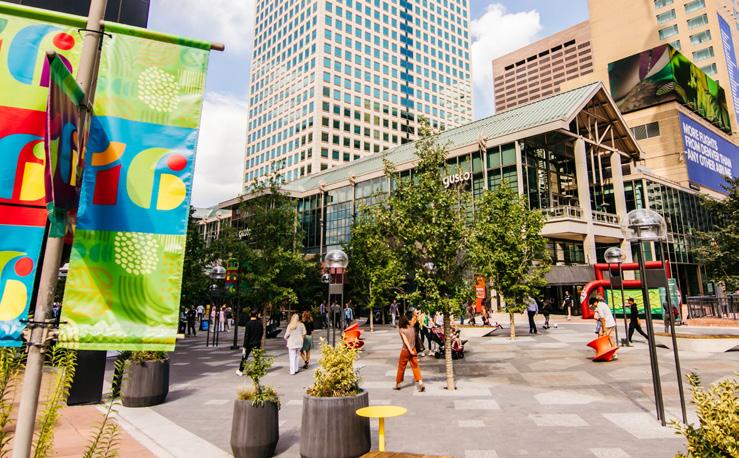
Key indicators in the communications space point toward modest to steady growth; Visit Denver anticipates a continued, albeit slowing, upward trajectory within the domestic travel market in 2026. With this in mind, a national goal of $44,000,000, an increase of 10%, is recommended.
Local AVE numbers track the positive press about the impact of tourism on the local and statewide economy in local media outlets, along with Visit Denver activities and programs. Visit Denver tourism and partner advocacy stories continue to capture local news interest as the city sets new visitation records. In summer 2025 Visit Denver launched a locals’ campaign encouraging locals to explore the city that so many tourist love. This, coupled with earned media surrounding Visit Denver-owned events including Mile High Holidays, Denver Restaurant Week and Denver Arts Week made for an incredibly productive year, which we anticipate continuing into 2026. The completion of 16th Street and record-breaking Colorado Convention Center year will be positive stories to highlight in 2026. Due to the relatively low cost of local media, AVE numbers are traditionally low, so large year-overyear increases are difficult to achieve. A shrinking pool of reporters and outlets further reduces the potential for AVE. A goal of $3,000,000, an increase of 20%, is recommended for 2026.
With additional international flights to Denver in 2025, and with the momentum generated by previous years’ efforts, Visit Denver was expecting 2025 to be a growth year. However, with the deterioration of international sentiment and high dollar, this was not the case. The federal recovery grant funding administered by the CTO ended in February, but all professional service agreements with international public relations representative agencies continued for Mexico, U.K., Germany and France. We did not continue representation in Canada due to increased political tensions and reduction of Canadians traveling to the U.S. and will be evaluating our contracts with other markets and their success through the year.
The economic uncertainty coupled with the negative sentiment directed at the U.S. have created an unsteady situation with travelers and the media who represent them. Travelers are requesting that their editorial outlets cover non-U.S. destinations making it increasingly more difficult to place earned pieces or secure FAM trips. While this isn’t the case across the board, the trend isn’t favorable. The team relies on expert guidance in these countries to pursue key communications platforms, pivot strategy and inform the utility of channels including international media marketplaces (IMMs) and Brand USA’s pan-European International Media Forum. With many U.S. DMOs vying for market share in these countries, Visit Denver continues to create new opportunities to complement and amplify the existing work of the CTO with media efforts such as FAMs, travel trade show appearances and general proactive media outreach to generate destination coverage. With DEN now offering more nonstop international flights than any time in its history, this approach also may help to fill airline seats and ensure the continued success of these nonstop flights.
With this approach, Visit Denver will continue to collaborate with the CTO to generate international market AVE. In 2025 Visit Denver increased the international AVE goal by 50%; due to the factors above, the recommendation is to keep the international goal at $15,000,000, remaining steady.

In summer 2025 Visit Denver launched a locals campaign encouraging locals to explore the city that so many tourists love. This, coupled with earned media surrounding Visit Denver-owned events including Mile High Holidays, Denver Restaurant Week and Denver Arts Week made for an incredibly productive year, which we anticipate continuing into 2026. The completion of 16th Street and record-breaking Colorado Convention Center year will be positive stories to highlight in 2026.
The uncertain economic future of U.S. travelers coupled with a rapidly changing media landscape has the potential to stagnate AVE growth. While the traditional media FAM trip continues to serve as the most effective means of providing inspiration for national travel stories it is taking longer to secure fewer media. They are finding it harder to place stories with editors and their pay per article is decreasing, meaning they need a variety of potential stories before committing to a trip. Travelers are increasingly using artificial intelligence to research travel impacting digital viewership; as crawling methods evolve so will outlets’ approach to handling and the PR team’s strategies.
Pacing flat
The federal recovery grant funding administered by the CTO ended in February, but all professional service agreements with international public relations representative agencies continued for Mexico, U.K., Germany and France. We did not continue representation in Canada due to increased political tensions and reduction of Canadians traveling to the U.S. and will be evaluating our contracts with other markets and their success through the year. The economic uncertainty coupled with the negative sentiment directed at the U.S. have created an unsteady situation with travelers and the media who represent them. Travelers are requesting that their editorial outlets cover non-U.S. destinations making it increasingly more difficult to place earned pieces or secure FAM trips. While this isn’t the case across the board, the trend isn’t favorable.
Increase 10% to $44,000,000
Remain steady at $15,000,000
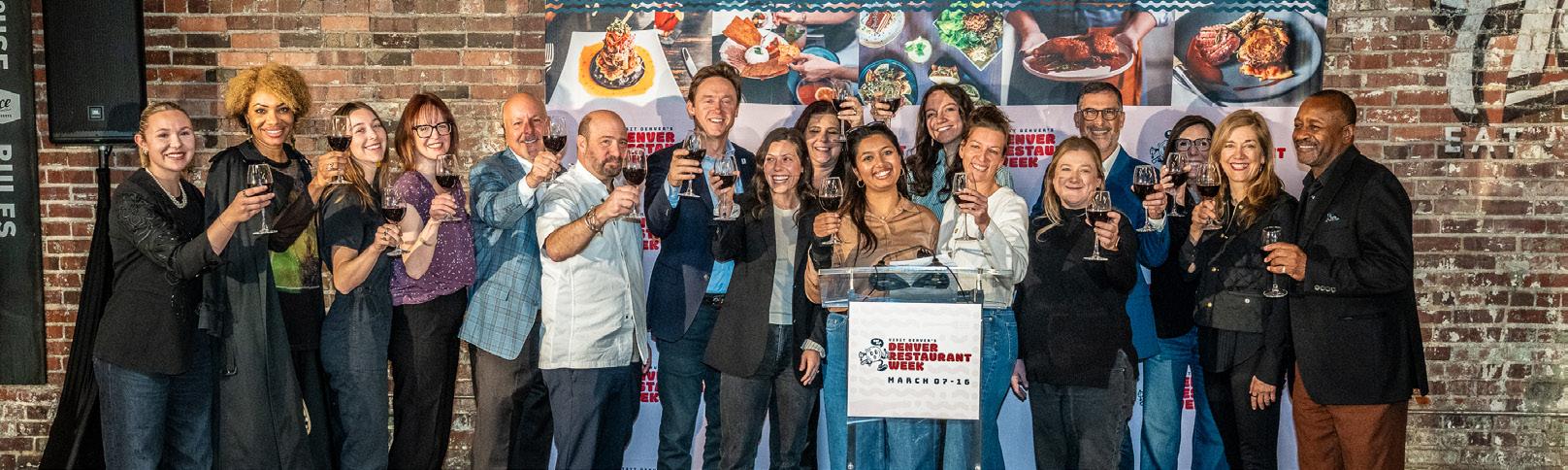
1. Increase the number of leisure travelers to Denver metro area by creating awareness of Denver as a desirable leisure travel destination and by expanding Denver’s exposure in domestic and international travel programs.
2. Identify and pursue domestic and international leisure travel markets most likely to visit Denver throughout the year.
3. Generate community awareness among city and hospitality industry constituents encouraging them to support the Bureau sales and marketing efforts.
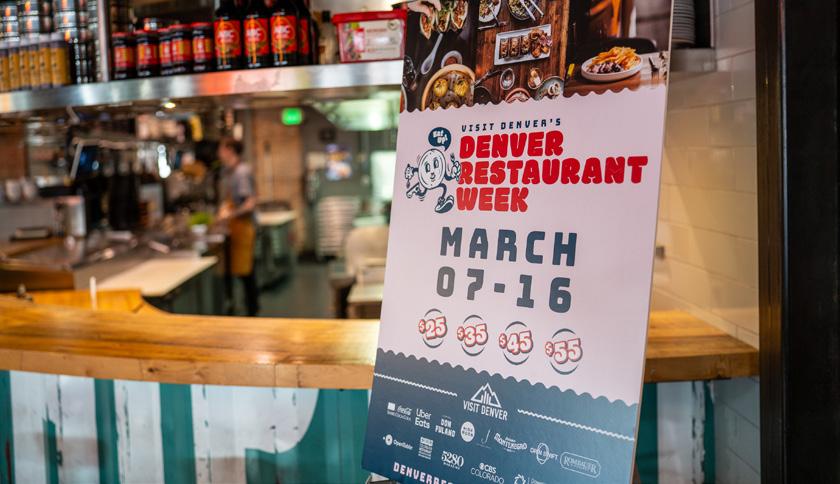
The Tourism and Marketing Departments’ primary goal is to increase leisure travelers in three markets: domestic consumer, international and domestic group, in order of priority. The following objectives provide quantitative measurements toward that goal.
1. Generate and track 65,000 leisure room nights that includes 23,000 through International third party and OTAs, 10,000 through International Trade and 32,000 through Domestic Groups.
2. Generate 400 leads and referrals for Denver in the domestic and international markets via trade shows, sales missions, website RFPs and telemarketing.
3. Generate 3,600 contacts with domestic and international travel trade representatives via proactive client outreach, in-person and virtual trade shows and trainings.
4. Generate 100 million international marketing impressions for Denver from campaigns with travel trade and international consumer marketing partners.
5. Develop 22 new or enhanced travel products that include Denver in domestic and international markets.
6. Generate 750,000,000 domestic advertising impressions and 67,000,000 digital engagements (social post interactions and video views).
7. Generate 335,050 visitor inquiries and touchpoints. This new combined goal includes visits to Tourist Information Centers, geofencing conversions, requests for the Official Visitors Guide, requests for online newsletters and other digital information sources.
8. Generate $44,000,000 in ad equivalency from Denver stories in national consumer media publicizing Denver as a leisure and meeting travel destination.
9. Generate $3,000,000 in ad equivalency in local media stories on the Bureau’s impact and the importance of tourism and conventions to Denver’s economy as well as encouraging locals to enjoy what visitors do through general outreach as well as surrounding local favorites like Denver Arts Week, Denver Restaurant Week and Mile High Holidays.
10. Generate $15,000,000 in ad equivalency from Denver stories in international media publicizing Denver as a leisure travel destination.
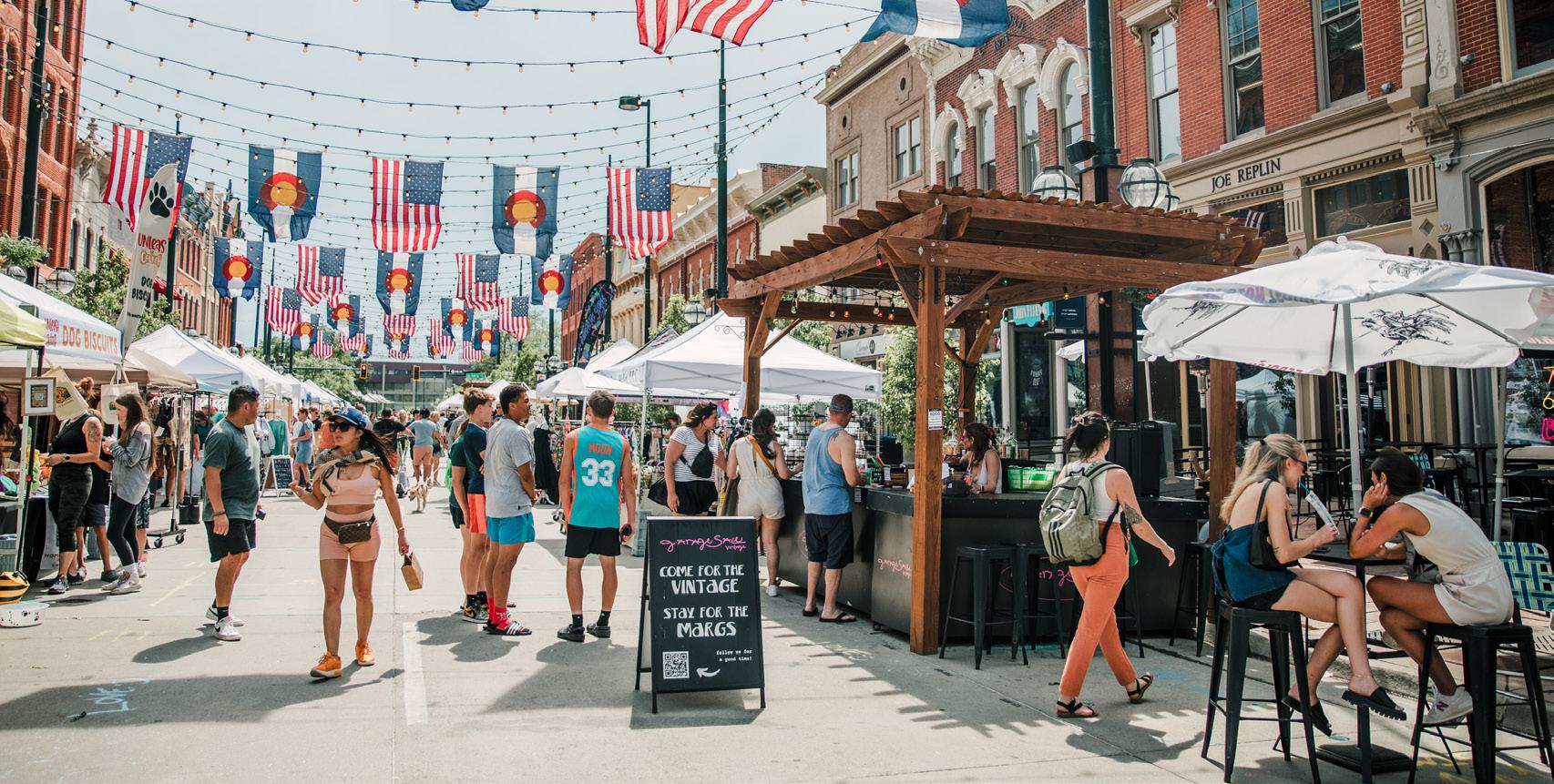
▷ Domestic leisure travel demand is showing mild softness, with both strong and weak indicators and economic factors weighing on the minds of travelers, particularly in the mid- to low-end of the leisure market. According to U.S. Travel Association, overall travel spending is up 0.9% vs. 2024 and hotel demand is up 0.1% vs. last year and short-term rental demand is up a more robust 4.4% vs. 2024, but air travel is down 0.4%. (U.S. Travel Association)
▷ In Colorado, the softness is more pronounced with air travel down 1.4% YOY and hotel demand down 0.4%, while the Denver market has experienced steeper drops, with performance through August down 3.2% in occupancy. (STR)
▷ The international market is still lagging 2024 due largely to domestic political issues and overseas rhetoric. For the fourth month in a row, inbound visits to the United States remained below last year’s levels, though initial signs of stabilization are emerging. Estimates for total international visits in August fell 8.8% year-over-year, driven largely by far fewer Canadian travelers. (U.S. Travel Association)
▷ Canada remains the weakest spot: August visits from Canada were down 32.3%, though that figure was a slight improvement (+3.0%) from July. Encouragingly, new survey data shows a rebound in Canadian travel intentions—the first in nearly a year. Overseas visits were more stable: Declines from overseas markets were much smaller (-2.9% in August, -1.8% YTD). (U.S. Travel Association)
▷ In 2024, Longwoods International tracked a near-record 37.1 million domestic visitors to Denver, on par with the previous record of 37.4 million visitors in 2023. Total spending in 2024 matched the previous record, set in 2023, of $10.3 billion. 84% of the spending came from overnight stays, which represented 53% of total visitors.
▷ Denver is expected to reach 439,000 international visits in 2025, according to Tourism Economics, down 11% from 2024. International visitors spending is expected to reach $400,400,000 in 2025, 8% below 2024. The current administration’s policies have impacted consumer sentiment, and factors such as exchange rates against the dollar, inflation, the new visa integrity fee and safety impact international visitors’ desire to travel to the U.S.
▷ Domestic leisure group markets, which include motorcoach tours, weddings and other small leisure groups continue to be slower in recovering and may not be at the levels pre-COVID for a long time. Although impacted, it continues to generate business leads for Visit Denver partners. Online resources have been enhanced to help service these groups.
▷ Visitors still favor Denver, Colorado and the Rocky Mountain West for domestic and international travel. Denver’s urban amenities, coupled with the wide-open spaces and four-season outdoor recreation in the Rocky Mountains, makes the area consistently appealing.
▷ In-person events were in full swing in 2025 and will continue to be an area of focus for Visit Denver in 2026 since they are drivers of visitation and good ways to create urgency, particularly among regional and in-state visitors.
▷ Consumers want travel destinations to exceed their expectations in terms of the visitor experience, customer service and value versus cost. Therefore, destination marketers are increasingly involved in destination development and management around infrastructure, air service, mobility, attractions, neighborhood development and social issues. As such, the marketing team stays abreast of the latest developments in the city and tracks internal projects such as the Denver Tourism Roadmap.
▷ Denver’s nonstop international flights to/from DEN have been restored and expanded. New flights in 2025 such as the United Airlines’ flight to Rome; a new direct United flight to Regina, Saskatchewan; increased daily flights from Istanbul on Turkish Airlines and Lufthansa’s introduction of the Airbus A380 (with 509 seats, the world’s largest passenger aircraft) for its Munich to Denver flight all contributed to visitation despite sociopolitical factors. Denver now has 35 international flights from 19 countries, which is the most in Denver International Airport’s history.
▷ International markets still offer great potential for Denver. Visit Denver has made long-term investments in these markets, including hosting IPW in 2018, and hosting again in 2029. Visit Denver continues to work directly with both international media and travel companies to keep Denver “top of mind.” Visit Denver was also awarded a CTO grant to promote Denver internationally in 2023 and 2024 to help recover the momentum that was lost in 2019. Visit Denver is working on an advertising campaign to attract international visitors that are coming for the FIFA World Cup in 2026.
▷ In 2025 Visit Denver continued to invest in international marketing, focusing on efforts with high visibility as well as trackable room night sales. Some of these efforts include advertising with Air France, Aer Lingus, Expedia, Brand USA and United Airlines. Additional efforts were made through a Roadshow and Media and Tour Operator Fam with AerLingus to Dublin and Belfast to support the Aer Lingus flight that launched in 2024. Additionally, Visit Denver, together with Colorado Tourism Office are working on a media and tour operator event around the Denver Broncos game in London in October. Visit Denver also participated in a city delegation to Rome in support of the new United Airlines flight.
▷ Partnerships with the Colorado Tourism Office (CTO), Brand USA and other tourism entities are crucial to extending the reach and leveraging Denver’s domestic and international marketing investments. Despite the reduction of Brand USA budget, we are able to continue to get value added advertising through this partnership in 2026.
▷ Destination marketers must develop specific strategies and tactics to attract niche audiences with strong growth potential, including Black, LGBTQ+, Accessibility and Hispanic/Latino travelers, among others. Inclusion is and will continue to be an important consideration for travelers, and a topic that Denver can greatly leverage in advertising its commitment to diversity.
▷ In early 2025, Visit Denver launched an Accessibility Guide with the tag line You Belong in Denver! These efforts were made in collaboration with Councilman Chris
Hinds, who has been a long supporter of accessibility for our city. Denver worked with an accessibility contractor that also visited Denver and its major attractions to provide content and exposure to Denver’s accessibility. In 2025, together with Colorado Tourism Office and Wheel The World, Visit Denver brought 12 accessible influencers to Denver.
▷ Content remains “king,” but not all content is equal, as consumers demand authenticity and relevance. In addition, there is a wide array of online resources for travel planning as well as destination websites. The new generative AI portals join existing sources like Google, Expedia, TripAdvisor and Airbnb as both potential partners and competitors for destination marketing organizations. Furthermore, if content is “king,” then content distribution is “queen.” A strong distribution plan, including a fuller understanding of how the generative AI portals prioritize content, is essential to new content efforts, particularly video with so much increased consumption.
▷ Targeted marketing campaigns remain crucial to drive incremental leisure visitors at a time when meetings and conventions remain limited. Traditional need periods during the first quarter, fourth quarter and weekends continue to be a focus of campaigns, with a broader goal of driving visitation at all times of the year.
▷ Destinations around the country and the world have been successful in leveraging special events to generate incremental overnight visitors. 2025 had successful visitation to in-person events, including annual events such as Cinco de Mayo, Juneteenth Music Festival, Cherry Creek Arts Festival, PrideFest and the Outside Festival. Denver Art Museum hosted shows such as Wild Things: The Art of Maurice Sendak and Kent Monkman: History is Painted by the Victors. Denver Museum of Nature & Science exhibitions included Angkor: The Lost Empire of Cambodia and Jurassic Oceans: Monsters of the Deep. Late 2025 is also promising with the Great American Beer Festival, Denver Arts Week, Denver Film Festival and Denver Fashion Week.
▷ The Denver365 online events calendar also provides valuable information for both visitors and residents of events.
▷ Tracking of leisure marketing efforts remains a challenge for all destination marketers. Visit Denver follows best practices and industry standards set by the national organization Destinations International (DI). Domestic consumer visitor research done by Longwoods International provides statistically accurate data. New sources include several mobile data providers that serve the tourism market, including Datafy and Placer.ai, both of which Visit Denver subscribes to. Furthermore, domestic leisure group data will be reported by TourTrackerPro® Report to supplement manual tracking of travel trade companies and hotels. Tourism Economics provides a comprehensive annual look at international travelers to 50 U.S. cities, including Denver, and the Tourism Department has started tracking room nights booked during international marketing campaigns.
1. Promote and brand Denver as an open, diverse, outdoor city that safely offers urban adventures and easy access to Rocky Mountain recreation.
2. Continue the momentum created in 2024 and 2025 of international visitation and room nights to Denver by marketing the city as a vibrant urban and outdoor, walkable city and attractive destination and gateway city to international visitors, through on-going sales and marketing tactics and direct consumer, PR and trade media representation in the top international markets of Canada, Mexico, U.K., Germany and France.
3. Develop and implement integrated marketing campaigns using largely digital and online executions, as well as websites, public relations, social media and content distribution tactics, to enhance Denver’s image as a regional, national and international leisure destination. This includes a renewed focus on content marketing, particularly as it relates to the needs of the new AI engines that have emerged as key planning resources for travelers, and that are hungry for content.
4. Use Tourism Improvement District funds to enhance need-period leisure marketing efforts all year long, particularly (but not exclusively) with short-haul regional audiences.
5. Continually review and adjust marketing tactics in an effort to be nimble, more budget-conscious and provide messaging that is appropriate and timely. Target markets are continually monitored to ensure that potential visitors from those markets have a strong track record of visiting the city.
6. Identify and pursue regional, target market, national and international markets with the greatest potential for Denver, including niche leisure domestic markets such as LGBTQ+ and Hispanic/Latino, to generate the greatest economic impact.
7. Support, leverage and market annual events, touring Broadway shows, major music concerts and blockbuster exhibitions and festivals that have the potential to attract overnight visitors and reinforce Denver’s brand.
8. Implement local and regional tourism promotions including Denver Restaurant Week and Denver Arts Week to strengthen Denver’s brand, including local ambassadors.
9. Market Denver to domestic leisure groups to generate room nights and provide business leads for Visit Denver partners.
10. Measure results of annual marketing efforts and the effectiveness of specific campaigns to prove value for marketing spend, even as budgets have grown smaller.
11. Support DEN in new air service development efforts and in communicating details of Great Hall improvements.
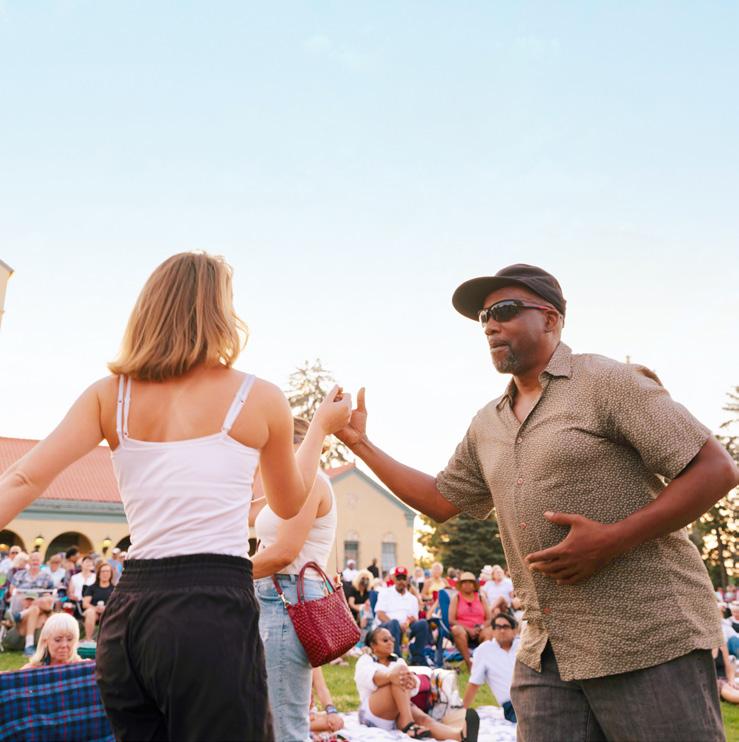
12. Develop and implement proactive public relations efforts around Denver’s assets and 2026 events to gain more exposure for Denver as a leisure destination, both nationally and internationally.
13. Develop and implement proactive social media efforts around Denver’s assets and 2026 events, utilizing the most popular channels and features, and with a heavy emphasis on using the social media platforms’ paid opportunities to maximize reach to targeted audiences.
14. Promote and support Denver’s arts and culture community and its diverse neighborhoods via the Denver365 calendar, DENVER Deals and Discounts, Denver Arts Week, the Mile High Culture Pass, Denver CityPASS, website content and the Cultural Marketing Workshop series, as well as working with Denver Arts & Venues on other citywide cultural initiatives.
15. Build partnerships locally, regionally and nationally to leverage marketing dollars, extend the reach of campaigns and develop new tourism markets for Denver.
16. Provide destination information through visitor guides, a comprehensive, mobile-friendly website, as well as leveraging the Tourist Information Centers located at Denver Union Station and the Colorado Convention Center to best represent Denver’s brand. Continue to leverage geo-fencing to serve ads to in-market visitors with information on what to see and do in Denver.
17. Maintain strong relationships and effective communication with the Mayor’s Office, City departments and elected officials.
18. Engage with partners to participate in the “Go The EXTRA Mile” hospitality training program as an online program, aiming to establish an ongoing culture of excellence in customer service and hospitality in Denver and provide information about Denver to incoming front-line staff.
19. Implement tracking mechanisms for all programs, including the primary annual Longwoods research to learn domestic visitor numbers and spending.
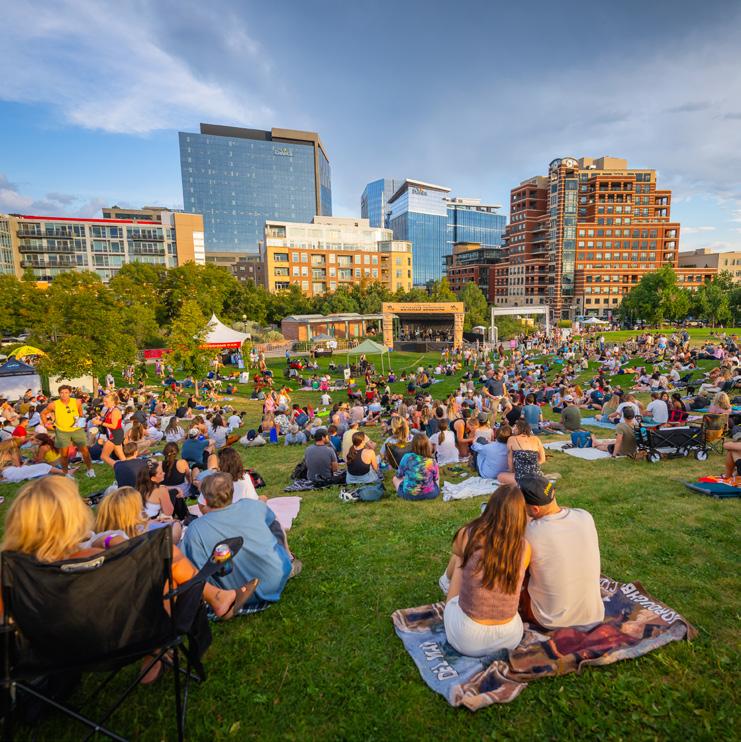
Tourism marketing tactics for 2026 are outlined below, starting with those that are utilized across all three market segments (domestic consumers, domestic groups and international), followed by tactics specific to each segment. In addition, the Tourism and Marketing Departments continually measure and evaluate advertising and marketing programs for each market segment following best practices within the tourism industry.
▷ Develop, maintain and update content on VisitDenver. com, including articles, videos, photography and other resources for visitors, locals, international travelers and targeted niche markets.
▷ Continue contributions to the Visit Denver blog with content that is both timely (e.g. weekend roundups) and specific (niche topic posts, including those that showcase diversity).
▷ Expand editorial content in the Diverse Denver section of VisitDenver.com, adding information for the following communities: Black/African American, Hispanic/Latino, LGBTQ+, Asian American, Indigenous/Native American and Accessibility.
▷ Expand editorial content on VisitDenver.com for topics related to sustainability, highlighting the city’s ability to provide eco-friendly, low-impact visits.
▷ Maintain a robust public relations effort that is built to work with members of the media locally, regionally, nationally and internationally to ensure that the city is viewed in the most favorable light in all published stories.
▷ Facilitate consumption of online Denver content by international visitors to the website by enabling powerful translation tools and encourage downloading of the new lure brochure being produced in 10 languages.
▷ Maintain a year-round program of electronic newsletters designed for each individual market that communicates helpful and enticing information and imagery.
▷ Collaborate with other organizations throughout the community to increase links to VisitDenver.com websites and to the online events calendar, Denver365.com.
▷ Design and implement microsites and landing pages to align with annual marketing programs campaigns to provide customized resources for visitors.
▷ Maintain and enhance the Denver365 online events calendar as a comprehensive resource for both locals and visitors, with continued emphasis on supporting the city’s cultural initiatives and ongoing outreach to all partners and Scientific and Cultural Facilities District (SCFD) organizations to utilize this free marketing opportunity.
▷ Enhance social media and content strategies, including the expansion of video programs and paid social media tactics and use of ever-evolving social distribution channels, to augment consumer marketing campaigns.
▷ Continue paid search engine marketing and organic search engine optimization strategies to support consumer marketing campaigns and drive consumers to VisitDenver.com. Develop new Generative Engine Optimization (GEO) strategies to take advantage of the new opportunities to feed content to this emerging channel.
▷ Maintain and continually update the online Denver photo and video library for use by the Bureau in promoting Denver as a travel destination. Stay abreast of the rapid changes taking place in video so that Visit Denver is always offering top-quality footage in the best and most practical manner.
▷ Create and promote imagery that focuses on Denver’s mild climate and outdoor amenities, while also finding ways to communicate the safety of the destination.
▷ Produce the Official Visitors Guide to Denver & Colorado (OVG) and distribute the publication at locations in the Denver metro area, statewide and throughout the regional, as well as through a virtual edition on the website. In addition, fulfill any OVG requests generated from advertising, the toll-free number or the internet. In 2025, Visit Denver will produce 330,000 copies of the OVG in two editions: Spring/ Summer (175,000) and Fall/ Winter (155,000).
▷ Produce and distribute the new international lure brochure translated to 10 languages to support international promotion. The English version of this brochure will be used in place of the previous version of the domestic lure brochure, which is being retired.
▷ Produce digital version of the Denver Beer Trail to direct visitors to Visit Denver’s brewery partners. The Denver Beer Trail is typically produced around the time of the Great American Beer Festival.

▷ Maintain a database of key local, regional, national and international travel media and distribute frequent news releases and targeted pitches about Denver, including information regarding new events, attractions and trends.
▷ Maintain an up-to-date, online Denver press kit for journalists around the world.
▷ Assist all domestic and international travel writers on their Denver travel article assignments, providing press kits, photos, b-roll video, customized information, site tours and personal assistance.
▷ Integrate social media influencers into local press events, following the strategy, benchmarks and vision of the social media team.
▷ Attend regional, national and international industry meetings, marketplaces and trade shows in order to build relationships with writers and pitch Denver stories. Meetings to be attended include Public Relations Society of America (PRSA), U.S. Travel Association’s IPW, Brand USA Travel Week and the TravMedia International Media Marketplaces in New York City, Germany, France and the UK.
▷ In areas of particular focus hold engaging, Denverspecific media events for top in market media in addition or in place of desk-side visits as well as before or after media marketplaces.
▷ Work with Denver international reps in Mexico, U.K., German-speaking Europe and France to generate favorable media coverage that inspires travel to the Mile High City. Continue to evaluate international sentiment for decisions on engagement level in various countries, specifically Canada.
▷ Work with the CTO and their international in-market representatives to ensure Denver coverage is included in Colorado media exposure above and beyond what contracts reps produce in Australia/New Zealand, Canada, France, German-speaking Europe, Mexico and the U.K. Continue to evaluate strategies and tactics for additional international markets with nonstop flights to Denver as needed.
▷ Work with Brand USA, RMI and other partner marketing organizations to target international markets where Denver has and growing interest including India and Italy.
▷ Work with CTO on domestic publicity efforts, participating in press FAMs and special events in key U.S. media markets as appropriate.
▷ When appropriate, host regular receptions for local travel writers at new and newsworthy attractions to build relationships and provide new story opportunities.
▷ Work with community partners to promote cultural and holiday weekend events, including the Outside Festival, Cinco de Mayo, PrideFest, Cherry Creek Arts Festival, Independence Eve and other events as needed.
▷ Promote in-market special programs including the Colorado Michelin Guide, Denver Restaurant Week, Denver Arts Week and Mile High Holidays to improve the city’s national image and drive incremental visitors.
▷ Promote unique city attractions including exhibits at Denver Art Museum, Denver Museum of Nature & Science, the History Colorado Center, Meow Wolf and more; music and sporting events, new hotels and resort offerings; and Denver Union Station, in tandem with messaging about Denver’s iconic attractions such as Red Rocks Park & Amphitheatre.
▷ Measure and track all Denver articles via Muckrack, PR Newswire and TVEyes clipping services, covering consumer press, travel and convention trade press and local media. Quantify print, online and broadcast media advertising value equivalencies (AVE) and impressions and continue to benchmark additional forms of evaluation.
▷ Consider conducting deskside tours in major media markets, including New York, Los Angeles and Washington, D.C. and key domestic feeder markets such as Chicago and Texas (Austin, Dallas and Houston).
▷ Measure and track international press coverage from AVE reports provided by Denver international reps and the CTO.
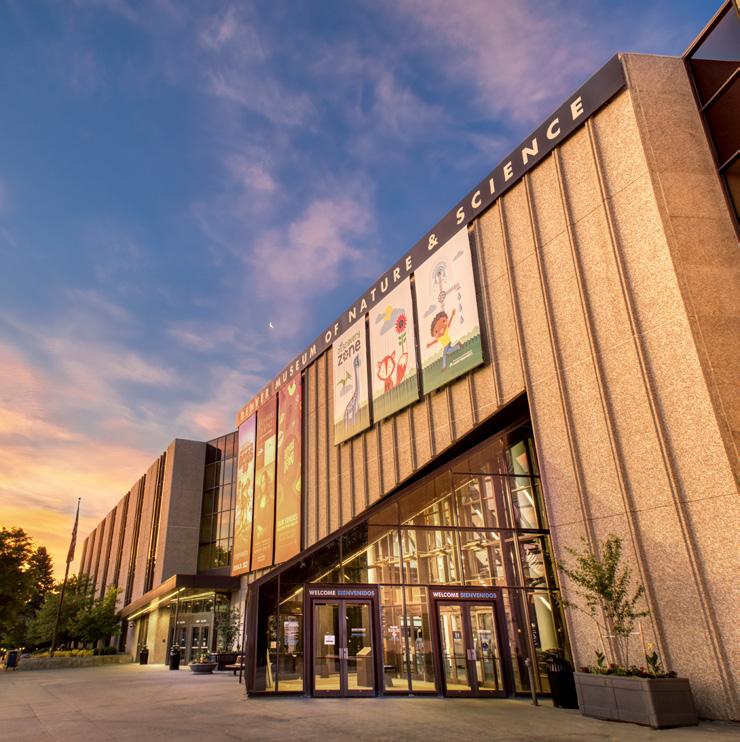
▷ Continue to provide and distribute online hospitality training program, “Go The EXTRA Mile,” which includes training sessions for managers and front-line hospitality industry representatives annually.
▷ Collaborate with the CTO to support Tourism Day at the Capitol and other educational initiatives aimed at increasing local awareness of tourism’s economic and cultural value to the community.
▷ Continue to work with the City and community organizations on initiatives that improve the visitor experience in Denver, including supporting Denver’s efforts to end people experiencing homelessness and efforts to provide education and job placement within the hospitality industry, including Visit Denver’s own Workforce Development initiative; collaborating and supporting the Downtown Denver Partnership’s Security Action Plan; and working with the City to address safety issues that may impact visitor perceptions of Denver.
▷ Identify technologies to support visitors and promote all there is to see and do in Denver and Colorado and effectively represent Visit Denver partners.
▷ Continue to research the need for a possible location on 16th Street where a visitor center kiosk would benefit visitors.
▷ Use “geo-fencing” location-based digital technology to deliver destination information to in-market visitors in proximity to visitor attractions and services.
▷ Collaborate with Denver Union Station (DUS) to continue to operate the Tourist Information Desk at this important transportation hub for rail service connecting downtown and DEN. In 2025, Visit Denver’s Tourist Information Desk is now in a new location built by DUS that is visible and attractive to visitors.
▷ Work with DEN to identify visitor services opportunities through the Great Hall construction project.
▷ Continue to operate the CCC TIC during conventions and public shows.
▷ Develop additional strategic partnerships to enhance visitor services and provide comprehensive visitor information.
▷ Continue to provide brochures in 10 different languages to support international visitors.
▷ Maintain existing relationships with media partners including CBS Colorado, Westword and 5280; marketing partners like CTO, DEN, RMI and airlines; and other cultural and corporate partners, to leverage dollars and effectively reach potential Denver visitors.
▷ Maintain and enhance existing network of affiliations including: City and County of Denver, DEN, Colorado Ski Country USA, CTO, Tour Colorado, DDP, Denver Hispanic Chamber, the Colorado Office of Film/Television/Media, SCFD, Japan America Society of Colorado, RMI, Grand Circle Association, Destinations International (DI), U.S. Travel Industry Association (USTA), Brand USA, National Tour Association (NTA), American Bus Association (ABA), Denver Sister Cities International, Biennial of the Americas and Colorado ski resorts and Visit USA committees in target international markets and the new Rocky Mountaineer.
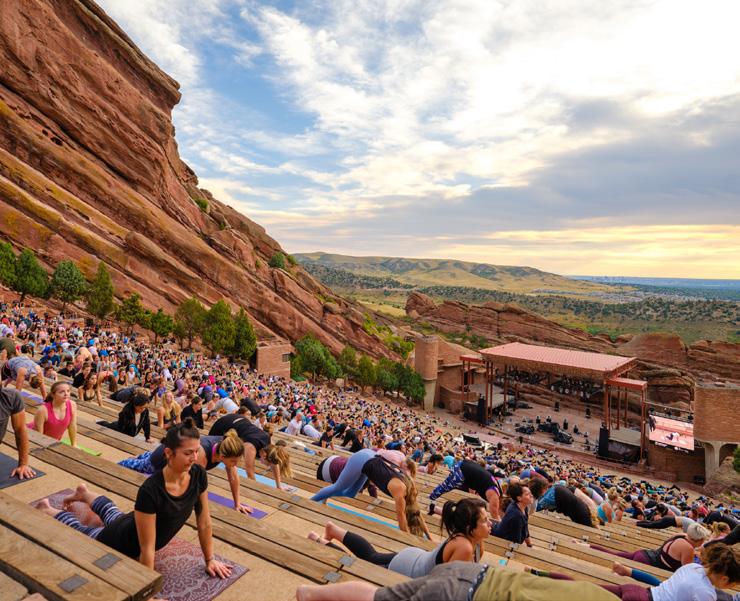
Visit Denver implements annual integrated advertising and marketing campaigns. The goal is to encourage leisure visitors, both regionally and nationally, to select Denver as their destination of choice.
Research by Denver-based BrandJuice developed the current brand positioning: Uplifting by Nature. Denver is a vibrant outdoor city at the base of the Rocky Mountains with a natural energy that heightens every moment. The research also concluded that the Rocky Mountains and Denver are inextricably linked in the minds of consumers, a trend that is even more pronounced during the pandemic.
The development of the 2026 consumer advertising campaigns will be based upon this brand positioning research and the consumer insights provided from various sources on the sentiment of travel.
The 2026 campaigns will:
▷ Continue to position Denver as a welcoming, outdoor city with desirable urban experiences and access to the Rocky Mountains.
▷ Incorporate a more authentic, less-packaged look and feel to the advertising creative that better represents Denver’s casual vibe and open-minded attitude.
▷ Showcase urban adventures in a realistic, experiential style, whether featuring arts, culture and dining, or biking, hiking and sports.
▷ Utilize the city’s robust events calendar as a year-round asset to highlight specific, time-sensitive reasons to visit and to encourage longer trips.
▷ Utilize the city’s best photography and videos to help showcase Denver as an outdoor city that offers urban adventures.
▷ Continue to evolve the “basecamp Denver” strategy to encourage city and mountain visits throughout the year.
For all paid consumer marketing efforts, strategies are decided, goals are established and a media and creative plan is created in cooperation with the Bureau’s three agencies of record: Karsh Hagan (general advertising), Booyah (paid search) and MMGY (paid social).
Customized messaging, creative and website content are developed for each campaign window detailed below.
All consumer marketing campaigns will:
▷ Utilize digital and video-based advertising vehicles, varied by campaign. Digital vehicles have been Visit Denver’s preferred vehicles, due to their trackability, but also their financial efficiency and flexibility in terms of changes and cancellations. Improvements in video-based advertising includes a move away from traditional broadcast due to its cost and onerous cancellation policies and in favor of emerging platforms like pre-roll video, “over-the-top” TV (OTT) and connected TV (CTV), usually delivered via set-top boxes like Apple TV and Roku, that allow brands to advertise through ad-supported streaming services like Hulu and Amazon Prime.
▷ Customize marketing messages to better target families, couples, travelers by generation, cultural travelers, foodies and other niche audiences with household incomes that indicate an ability to travel and interests that align with Denver’s brand and product.
▷ Utilize search engine optimization and keyword buys to capture consumers searching for destination information on Google and other search engines.
▷ Utilize new generative engine optimization tactics to highlight the city through this emerging channel.
▷ Include social media advertising components, primarily Facebook and Instagram, but also Pinterest and other emerging platforms. Note: Visit Denver will also consider developing programs for TikTok when that channel has resolved its federal status.
▷ Include long-form and short-form video content for distribution via digital advertising, paid and organic social media, YouTube as well as the new AI engines that are returning videos as part of their results.
▷ Leverage the draw of outdoor activities and cultural offerings, as well as the attractions and experiences Denver has to offer year-round.
▷ Target niche markets that represent opportunities for growth, including Hispanic/Latino and LGBTQ+.
▷ Feature special hotel rates and/or hotel packages for year-round and seasonal marketing campaigns.
▷ Promote the Mile High Culture Pass and the Denver CityPASS created specifically for visitors, both offering tickets for several attractions at a bargain price.
▷ Leverage PR efforts, media outlets and other partners to extend the reach of the campaign.

▷ Track each campaign separately via a variety of survey methods and digital tracking technologies. Longwoods return-on-investment research will be used to determine the effectiveness of individual campaigns. Datafy reports will be used to determine the visitation lift attributable to advertising on a campaign-by-campaign basis. Adara Impact will be used to determine post-exposure hotel sales. Google Analytics will be used to determine the performance of campaigns on the VisitDenver.com website. Facebook Insights will be used to determine the performance of paid social media campaigns.
▷ Geotarget ads being sent to convention and leisure travelers downtown showcasing Things to Do, Food & Drink and Attraction passes.
The Bureau invests a large portion of the consumer advertising budget into digital tactics, knowing these vehicles represent the most cost-effective, trackable way to achieve a broad national reach, geo-target specific areas and communicate with specific consumer segments and niche audiences.
Digital advertising and marketing vehicles for 2026 will include:
▷ Display banner ads via programmatic digital advertising networks (currently The Trade Desk) that effectively and efficiently deliver advertising on desktops, laptops, tablets and mobile phones.
▷ Multiple promotions, content and advertising on Colorado.com and via Colorado e-newsletter distribution.
▷ “Pre-roll” video use of campaign commercials on digital networks, as well as expanded digital video distribution channels like CTV and OTT.
▷ Rich media advertising that incorporates video and interactive engagement (currently Undertone and GumGum).
▷ Electronic newsletters via trusted opt-in subscription services (currently eTarget Media).
▷ Collaborations with native content distribution platforms (currently Outside and Atlas Obscura/Gastro Obscura).
▷ Paid social media campaigns via Visit Denver’s social media platforms.
▷ Search engine optimization and campaign-driven keyword buys on Google.
▷ Visit Denver’s monthly e-newsletter communications to more than 100,000 consumer subscribers.
▷ Distribution of Denver content via social media platforms, mobile applications, sponsored content and other new outlets.
▷ Ongoing review of analytics to determine campaign effectiveness and return on investment in order to allocate dollars most effectively to drive engagement and convert visitors. This includes the Datafy platform that can provide data about how advertising influences rates of arrival, as well as new providers like Adara.
Visit Denver’s Marketing and Tourism Departments are committed to actively marketing Denver in 2025 via a proven mix of paid, earned and owned marketing tactics. The team will be closely monitoring all available data to determine the optimal campaign mix for 2024, as well as the right tactics for the right situation.
Budget for campaigns, particularly regional efforts, will include a mix of funds that includes Tourism Improvement District dollars.
What follows below is a projected list of campaigns and tactics based on the staff’s current evaluation of the tourism landscape and marketing opportunities.
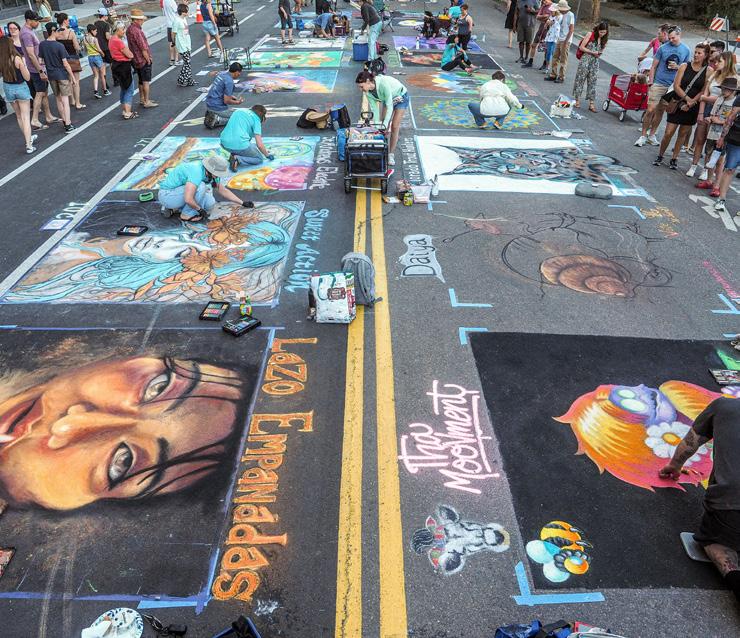
Upon evaluation of Longwoods 2025 ROI research and additional analysis from staff and ad agency Karsh Hagan, the media plan for the 2025 spring/summer campaign will be designed to concentrate advertising dollars where there is the best potential to convert overnight visitors and will be developed to reach specific regional markets, long-haul target markets and national audiences.
▷ Target markets: These markets are expected to continue to expand from previous spring/summer campaigns. The ability to expand into new target markets is a result of new tools in media buying that allow ad spending to be more efficient and targeted. New market options will be evaluated based on multiple factors, including historical performance, availability of airlift, website traffic and others. Target markets typically see a higher number of advertising vehicles and greater media weights. The 2025 target market list was Chicago, New York City, Los Angeles, Dallas and Houston*. (*indicates new market)
▷ Test markets: Several other large cities were given increased media weight due to a similar list of factors as the target markets, though these cities were generally smaller. Test markets in 2025 included St. Louis, Milwaukee, Phoenix, Orlando, Detroit, Austin, Minneapolis*, Washington DC* and Boston*. (* indicates new market)
▷ National markets: Improvements in digital advertising technologies have allowed Visit Denver to have robust national coverage of the spring/summer campaign, a tactic that is well-supported by data. Denver receives significant visitation from a multitude of large metro areas that cannot receive the full target market treatment due to budget constraints, and so the national plan relies on precision behavioral targeting in order to maximize impact
to those long-haul visitors with an interest in Denver, while minimizing wasteful ad spending.
▷ Regional markets: In a change with previous years, regional audiences will now be included in the Spring/ Summer campaign since their interests align with those of the national audiences. Regional markets in 2025 included:
○ In-State: Colorado Statewide, Excl. Denver Metro
○ Out-of-State: Albuquerque, Cheyenne, Lincoln, Omaha, Salt Lake City, Wichita, Kansas City, MO and Oklahoma City
Overall, the spring/summer campaign will:
▷ Utilize marketing and advertising vehicles with the best value for the investment with a heavy emphasis on digital vehicles and video-based advertising.
▷ Feature brand messaging and creative under the new “This is How We Denver” campaign umbrella developed in 2025.
▷ Include messaging and creative to promote PrideFest and expand the LGBTQ+ marketing timeframe to generate overnight visitors throughout the campaign.
▷ Implement PR and advertising efforts to reach Hispanic/ Latino audiences.
▷ Drive to corresponding content on the VisitDenver.com website.
▷ Include public relations efforts, organic and paid search engine tactics and organic and paid social media tactics.
▷ Implement content distribution tactics across a wide variety of platforms.
▷ Include hotel deals and packages.
▷ Leverage blockbuster exhibitions, concerts and touring shows in partnership with arts and cultural organizations and Denver music venues.
▷ Provide cooperative advertising opportunities for Visit Denver partners.
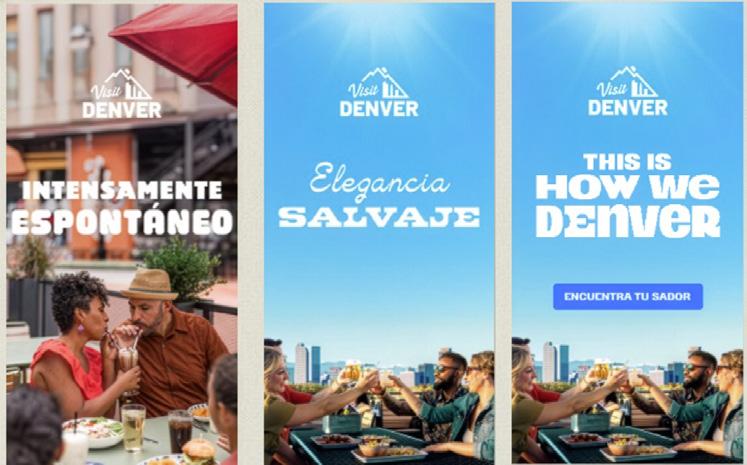
In 2023 Visit Denver launched a groundbreaking campaign targeted to affluent customers in the Hispanic/Latino market. The campaign is a modified version of the Spring/Summer effort, but tailored to be more appealing to a market that wants to be communicated to in ways authentic to their cultural heritage.
The effort was developed in collaboration with Karsh Hagan and a national Hispanic marketing consultant that helped shape the positioning and messaging of the campaign. The campaign was implemented attract family and girls getaway trips. The effort continued in 2025 and is expected to run again in 2025.
A new effort launched in 2023, the strategy of this campaign is designed to promote Denver to those seeking winter resort experiences in Colorado, but who are not currently intending to visit Denver.
While Visit Denver has always encouraged mountain adventures as part of selling Denver, the winter campaign takes this further by taking advantage of the increased interest in Colorado as an outdoor destination. The campaign highlights a wide variety of urban experiences that visitors can do before heading up to the mountains.
The campaign uses sophisticated behavioral and interest targeting via digital media, paid social media channels and a unique partnership with Outside Magazine, rather than geographic/demographic targeting, to identify those with an interest in outdoor activities.
This campaign will exclude Colorado residents and several western states with similar amenities and focus on affluent, long-haul national markets, including NYC, Los Angeles, Chicago, Dallas, Houston, Washington DC, Boston, Phoenix, Seattle, Atlanta, Philadelphia, San Francisco, Minneapolis, Kansas City, MO, St. Louis, Milwaukee, Austin, Detroit and Orlando.
In 2026, Visit Denver will debut a new campaign created to address a unique opportunity the team has uncovered in the market, namely to merge campaigns with similar partners and audience targeting to maintain momentum between campaigns, carry over learnings and streamline campaign execution.
As the name suggests, this campaign will run all year long and take advantage of seasonal market demand that occurs outside of our campaign windows. For example, if a potential traveler indicates interest in November for a summer vacation in Denver, this campaign will help make the sale. Similarly, if someone begins searching for ski trips in June, this campaign will serve them ads highlighting our winter appeal.
This campaign will primarily rely on two types of media partners: conditional and endemic.
• Conditional media partners include platforms such as Sojern, Adara and Epsilon that can create dynamic audiences based on searches for flights and hotels. Visit Denver will have visibility into these searches (e.g. travel dates) and serve the appropriate ads to the appropriate audiences.
• Endemic media partners include outlets such as Outside, Atlas Obscura/Gastro Obscura and Colorado Tourism Office that directly and exclusively target the travel audience, allowing Visit Denver to deliver its message to audiences whose interests align well with the city’s appeal (e.g. outdoor activities, food and Colorado travel).
The campaign will:
▷ Allow Visit Denver to create budget splits by market group. National and regional markets will get similar share in spend YoY while allowing full control to optimize by performance.
▷ Allow for custom targeting by season. Within prospecting audiences and partners, Visit Denver is able to adjust targeting parameters at the time of seasonal refreshes.
▷ Create additional cost efficiency. By committing to annual spend levels with media partners, this allows Visit Denver to negotiate more added value and receive lower Cost Per Thousand (CPM) rates.
▷ Improve machine learning. Maintaining momentum between seasons ensures campaign breaks do not reset platform algorithms, driving optimal performance.
▷ Drive shoulder season growth. An always-on presence in demand-based channels (e.g., Sojern) ensures Visit Denver does not miss the opportunity to reach active planners in March or September.
▷ Drive to corresponding pages on VisitDenver.com.
For the 24th consecutive year in 2026, Visit Denver will implement the Mile High Holidays advertising campaign that communicates all there is to do in Denver during the holidays from Thanksgiving to New Year’s Eve and provide a valuebased call-to-action for great hotel rates. The campaign also aims to drive visitors to Denver in January, especially to experience the National Western Stock Show & Rodeo. The goal is to entice consumers to make plans for a quick holiday vacation or January getaway.
The November-January timeframe is typically a need period for Denver because there are fewer meetings and conventions. Hotels are also able to offer more attractive rates during this timeframe, a trend that is expected to continue next year.
In 2019, Visit Denver implemented a new, highly visible attraction to drive more awareness for Denver as a must-visit holiday destination. The 110-foot-tall “Mile High Tree” was constructed in Sculpture Park in the Denver Performing Arts Complex, launching Thanksgiving weekend and continued through January 2020. For the last three years, the attraction has been paired with Christkindlmarket in Civic Center Park and moved to the Tivoli Quad at Auraria Campus for 2025. The Mile High Tree is likely to return in 2026, most likely returning to Auraria but will be based on Civic Center construction.
In 2024, Visit Denver debuted the Mile High Drone Shows, 40 straight nights of animated drone shows over the skies of Denver. The wildly successful displays, produced by Denverbased Brightflight Drone Shows, included 400 drones that fly in an array 400 feet high and up to 500 feet wide. The shows featured more than two dozen animations featuring holiday favorites like Santa Claus, Denver and Colorado icons and other compelling designs. In 2025, the shows will be expanded to 41 nights, include 50% more drones (600 v. 400) and fly 100 feet higher thanks to an Federal Aviation Administration variance. The drones will be highly visible from the new location of the Mile High Tree on the Auraria Campus, creating a can’t-miss holiday hub that will be heavily promoted throughout the city and across the region.
The long-term goal of promoting the Mile High Tree, the new Mile High Drone Shows and similar holiday attractions and activities is to establish Denver as a city that offers an unforgettable holiday experience, including the City & County Building, Denver Union Station, Zoo Lights and Blossoms of Light, Luminova at Elitch Gardens, Night Lights at the D&F Tower, as well as holiday performing arts, unique holiday shopping and more.

Target markets: In-state markets (including metro) and metro areas in neighboring states (see regional markets list above).
The campaign will:
▷ Provide time-specific and seasonally appropriate reasons to visit Denver during the holidays, including light displays, seasonal shopping and holiday markets, holiday performing arts and the like. The campaign will specifically promote Thanksgiving weekend, Christmas weekend, New Year’s Eve and the National Western Stock Show.
▷ Utilize advertising and marketing tactics including digital display banners, electronic newsletters, streaming radio, billboard/out-of-home and other tactics.
▷ Incorporate public relations, as well as paid and organic social media.
▷ Collaborate with hotel and industry partners, as well as CBS Colorado, Comcast, Westword, 5280 and Spanishlanguage outlets.
▷ Feature hotel rates that provide a value proposition for potential overnight visitors, including special New Year’s Eve packages.
▷ Focus on the strong retail and shopping offerings within the metro area.
▷ Develop specific messaging and creative to reach Hispanic/Latino audiences.
▷ Incorporate enhanced marketing opportunities for partners.
▷ Drive potential visitors to MileHighHolidays.com, a customized website featuring events, hotel rates/ packages and shopping information.
Note: Regional campaigns are fully or partially funded by the Tourism Improvement District.
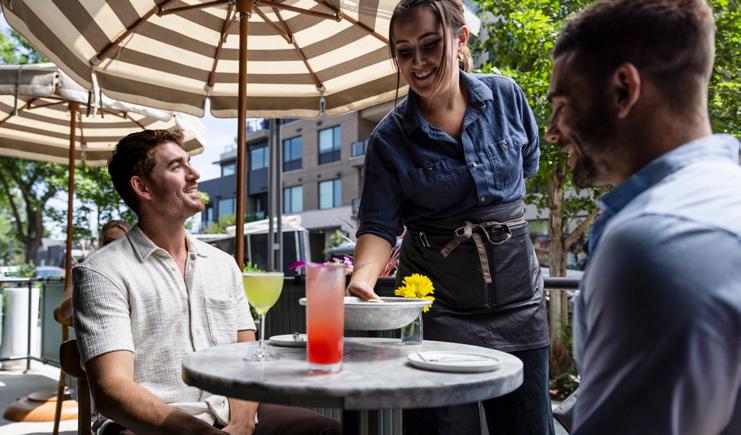
To enhance Denver’s brand, foster local awareness and collaboration, Visit Denver implements two annual promotions that allow partners to participate at minimal or no cost to them. A customized website is created for each campaign, allowing Visit Denver partners to gain visibility for each of their organizations and businesses.
Advertising tactics generally follow similar patterns and will rely heavily on digital and video-based tactics, as well as social media and PR efforts.
Denver’s largest culinary celebration, Denver Restaurant Week (DRW) aims to grow Denver’s culinary reputation both within and outside of the city.
In 2025, Denver Restaurant Week took place from March 7-16, leveraging the new website created in 2024 making it easier for restaurants to engage with and enter their menus, as well as create efficiencies for the team. In 2025, the website included registration for consumers, where they can save and share their preferences. The 2026 effort will take place from March 6-15 and will be promoted locally and regionally.
Target markets: This campaign will run in Metro Denver and through the Regional Campaign.
The marketing efforts:
▷ Will featured hundreds participating restaurants offering fixed-price meals, as well as the new diner portal, which received 4,631 diner accounts created and 1,915 diners opting into Visit Denver’s newsletter.
▷ Have a dedicated website with a comprehensive list of restaurants and special menus that is sortable by neighborhood, cuisine and price point.
▷ Kick off with the launch of the menus in late January or early February.
▷ Utilize advertising and marketing tactics including digital display banners, electronic newsletters, streaming radio, billboard/out-of-home and other tactics.
▷ Include a variety of PR, social media and content tactics.
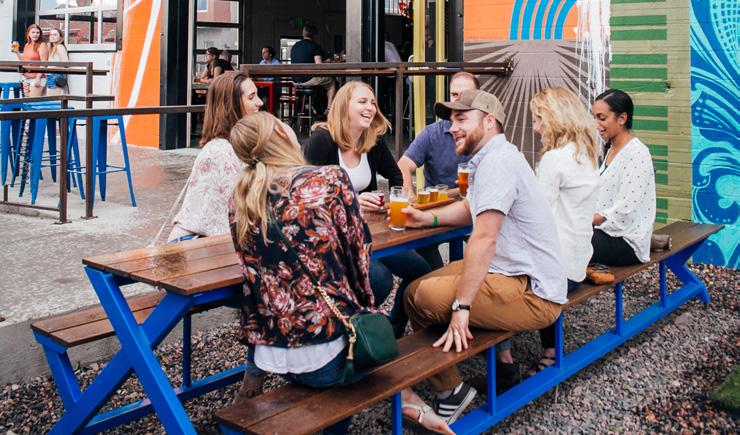
Denver Beer Week was discontinued in 2024 to support the efforts of the Great American Beer Festival (GABF). This was also based on current trends of consumers choosing lowercalorie, low- or no-alcohol alternatives.
Visit Denver will continue to:
▷ Promote Great American Beer Festival.
▷ Include a variety of PR, social media and content tactics, including a very popular bus tour where Visit Denver hosts dozens of credentialed media on a tour of the city’s newest breweries.
▷ Publish the latest edition (digital) of the Denver Beer Trail for 2025/2026.
This annual fall marketing promotion, which is focused on getting the word out about Denver’s rich arts and cultural assets, celebrated its 19th year in 2025. Its goals are to increase awareness of the vibrant arts and cultural scene in the Mile High City and to generate new customers for arts organizations, from performing arts and film to art districts and art galleries. The campaign will feature blockbuster exhibitions and more than 700 DAW events other events like Denver Film Festival, gallery openings, performing arts and more. In 2025, we are including an Arts & Well-Being and Locals know sections. These will highlight less known programs and organizations.
In 2026, Denver Arts Week is expected to continue as a full ten-day promotion, including signature events.
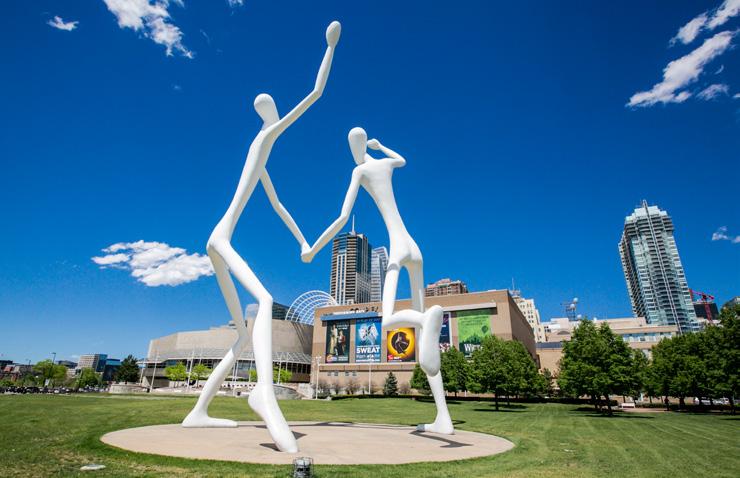
Target markets: This campaign will run in Metro Denver. The event receives regional promotion through the Regional Campaign.
The marketing efforts will:
▷ Feature more than 250 arts organizations and more than 700 events.
▷ Have a dedicated website with a comprehensive events calendar linked to Denver365 and cultural discounts.
▷ Utilize advertising and marketing tactics including digital display banners, electronic newsletters, streaming radio, billboard/out-of-home and other tactics.
▷ Promote three signature events: First Friday Art Walks, Free Night at the Museums and Denver Film Festival. Through partnerships, the event also promotes Denver Film Fest and Denver Fashion Week.
▷ Be very inclusive with no charge to participating organizations to gain exposure in the advertising campaign.
▷ Highlight Denver’s diverse and creative neighborhoods.
▷ Leverage partnerships with organizations including Denver Arts & Venues, Denver Film Festival, Denver Art Museum, Denver Museum of Nature & Science, Denver Fashion Week and other cultural institutions.
▷ Increase the reach of the campaign via sponsorships and partnerships with CBS Colorado, Comcast, The Denver Post, 5280 Magazine, Westword, RTD, etc.
Visit Denver strives to reach niche markets via specific tactics integrated into annual consumer campaigns as appropriate. Tactics include:
▷ Implement multicultural marketing vehicles within the domestic consumer marketing programs, with a focus on the Black, Hispanic/Latino and LGBTQ+ consumers.
▷ Engage diverse arts and cultural organizations and events in Visit Denver’s marketing efforts with a full-time cultural tourism programs manager.
▷ Feature arts and cultural events prominently on VisitDenver.com on Denver365, the online events calendar, as well as encouraging Tier III arts organizations to take advantage of these free marketing opportunities, the annual Denver Arts Week promotion and the four marketing workshops.
▷ Continue to work toward additional partnerships around Denver365 and enhance opportunities with the City and County of Denver websites and citywide cultural plans.
▷ Continue to promote the Mile High Culture Pass, which is a three-day pass for eight attractions. In addition, the pass offers value-added discounts at other cultural attractions.
▷ Promote the Denver CityPASS, which offers discounted tickets for three, four or five of eight of the city’s top attractions with savings of up to 48% on combined ticket prices.
▷ Implement the annual Denver Arts Week celebration of Denver’s rich cultural community to increase awareness and generate new audiences for arts and cultural organizations, galleries and Denver’s creative neighborhoods.
▷ Continue to host bi-annual Marketing Workshops for diverse arts and cultural organizations, to encourage collaboration, discuss Visit Denver’s cultural programs, provide marketing insight for cultural organizations and advocate for cultural vitality within the community.
▷ Partner with arts and cultural organizations to promote exhibitions and further establish Denver’s brand as a strong arts and cultural urban destination.
▷ Engage a local Hispanic/Latino marketing company to provide expertise on PR efforts to reach these audiences.
▷ Engage the LGBTQ+ Task Force to determine best practices, PR opportunities and website tactics to reach leisure travelers, as well as engaging this group to help attract LGBTQ+ meetings and sporting events.
▷ Partner with LGBTQ+ events such as PrideFest to attract overnight visitors to Denver.
▷ Renew membership with IGLTA, a LGBTQ+ organization that provides free travel resources and information while continuously working to promote equality and safety within LGBTQ+ tourism worldwide.
Visit Denver continues to use the city’s vibrant, diverse neighborhoods in tourism marketing efforts, knowing visitors are seeking authentic, local experiences.
In 2023, Visit Denver revamped these efforts to include a more user-friendly experience on the online Neighborhood Guide by including an interactive map by neighborhood and updated the videos to reflect their current vibrancy.
In 2025, Visit Denver continued to make updates to the guide that features 16 neighborhoods. Other ways neighborhoods are featured in marketing are:
▷ In Denver brochures, editorial and other marketing vehicles.
▷ Highlighting neighborhood locations within Denver Restaurant Week and Denver Arts Week promotions.
▷ In social media videos.
▷ Encouraging neighborhoods to leverage free marketing opportunities offered by Visit Denver, including the VisitDenver.com website, DENVER Deals and Denver365. com events calendar.
In 2026, Visit Denver will once again develop a comprehensive approach to the attraction, development and promotion of events and festivals that have the potential to draw overnight visitors and increase tourism in the future, especially during need periods. This approach will use some or all the following tactics:
▷ Event Attendee Intercept Research: Each year, realtime intercept research is implemented at certain events to determine the percentage of out-of-town visitors, as well as to learn how many stay overnight and use paid accommodations. Events planned for surveying in 2026 may include: PrideFest, Fan Expo (formerly Denver Comic Con), Cherry Creek Arts Festival and Denver Food & Wine Festival, as well as high-profile sports events.
▷ Mobile Data Research: In addition to the on-site surveys, multiple mobile data platforms will be tracking these events to supplement the existing research. These platforms use aggregated, anonymized data created by mobile devices to create broad visitor profiles that will allow Visit Denver to understand visitor volume, percentage of out-of-town visitors, home location of visitors, length of stay and other points of interest they visit.
▷ Event Producer Partnerships: In many cases, Visit Denver has a direct relationship with the event producer and can partner with them to receive more detailed attendance information, particularly for paid, ticketed events. This serves as further reinforcement of data derived from the above two sources.
Visit Denver follows best practices for all marketing program tracking, reporting and return on investment (ROI) evaluation.
▷ Implement annual visitor profile research via Longwoods International to provide domestic visitor numbers, spending data, feeder market information, trends, demographics and visitor perceptions.
▷ Obtain data on how Denver’s tourism growth compares to the national tourism growth.
▷ Conduct advertising effectiveness and return on investment research to determine how certain ad campaigns are influencing potential visitors’ intent to travel to Denver, as well as their actual travel behavior (e.g., visitation rates, spending) that is attributable to campaign activity.

▷ Use technology tools like Google Analytics to analyze website visitation patterns and mobile data providers to tie exposure to ad campaigns to in-market visitation, as well as length of stay and origin markets of visitors.
▷ Use mobile tracking technology like Datafy and Placer. ai to generate additional insights on advertising effectiveness, event attendance, home location of attendees, distance traveled, time in market and other metrics.
▷ Use a variety of syndicated research studies to evaluate Denver’s performance against national benchmarks and trends.
▷ Track results associated with specific campaigns:
○ Website activity (including visits, pageviews, on-site engagement, time on site, bounce rate, click-through data for partners, etc.)
○ Smith Travel Research hotel reports
○ Newsletter subscriber database growth
○ Digital advertising metrics including click-through rates
○ Social media engagement
The goals for all marketing efforts in the domestic group market are to generate leads and referrals for Bureau partners, expand Denver product in the marketplace and increase overnight leisure group visitors to Denver.
These market segments will continue to be evaluated annually. The tracking of room nights from these groups is based on self-reporting and gathering that information continues to be challenging. Wedding room nights are the most difficult to track and the lead room nights will be used for specific tracking of those room nights in 2025. However, group tour room nights will be tracked using the new TourTrackerPro® Report and manual reports from domestic travel companies and hotel partners.
The Tourism Department maintains a database of travel companies and builds relationships with travel trade clients to maintain and enhance Denver product offerings. The department works with travel planners (including small groups, weddings and reunions) to distribute leads and to recommend our partner hotels, attractions, venues, transportation and other activities. The sales staff provides planning assistance for group itineraries, unique activities, restaurants, tour or sightseeing companies and performance/ event venue options.
The online RFP process for wedding planners is automated to minimize the human resources needed to generate leads and referrals for Visit Denver partners. Online RFPs already generate the majority of weddings leads. The two premier group travel trade shows in the U.S. are American Bus Association (ABA) Marketplace and National Tour Association (NTA) Travel Exchange. The department is not planning on attending these in 2025 but will evaluate for potential in 2026.
Visit Denver implements ongoing evaluation of existing markets to determine where best to deploy resources. Annual tracking, which follows DI best practices, focuses on information obtained from clients, hotels and the TourTrackerPro® Report:
▷ Number of room nights generated.
▷ Number of leads and referrals generated.
▷ Number of new or enhanced travel products created by travel companies.
▷ Number of companies featuring Denver in their travel products and itineraries.
▷ Number of weddings and other small groups serviced.
With 35 international nonstop flights, the Tourism Department will focus on the top markets of Mexico, Canada, U.K., Germany and France. It will also support Colorado Tourism initiatives with Australia/New Zealand. In addition, the Tourism Department will work with airlines to promote their non-stops from Japan and Italy with United Airlines, Aer Lingus from Dublin and Turkish Airlines from Istanbul (and the markets it impacts such as India and countries in Southeast Asia).
To increase the number of international visitors to Denver, the department implements tactics to educate travel companies and consumers about what Denver has to offer, maintain existing Denver travel product in the marketplace and encourage development of new travel product featuring Denver. The department plans to work closely with key airlines in 2026, as it did in 2025, such as British Airways, Air France, Aer Lingus and United, to implement digital marketing campaigns to attract visitors.
Visit Denver partners with CTO, DEN, Colorado ski resorts, Rocky Mountaineer and other alliances such as RMI and Brand USA to implement the majority of the international marketing tactics.
RMI and CTO alliances currently provide in-market representation and assistance for Denver marketing efforts in the following countries: the U.K., Germany/Switzerland/ Austria, France, Belgium, Italy, Netherlands, Nordic countries, Mexico, Canada and Australia/New Zealand. Visit Denver also works with DEN, the airlines and Brand USA to reach other important markets.
In 2026, Visit Denver will continue to work with PR Representatives in Mexico, UK, Germany and France as budget allows, as the CTO grant awarded in 2023 and 2024 ended in February of 2025. We will continue to monitor international sentiment to evaluate investment opportunities, especially as it related to Canada.
The Tourism Department communicates regularly with the database of travel company clients to maintain current products and encourage expansion of Denver travel product. Leads and referrals are generated for Visit Denver partners. The department is working with state and regional partners to participate in in-person trade shows, sales missions and educational trainings for travel companies and travel agents. Brand USA programs like the USA Discovery Program online agent training and market-specific, virtual agent trainings give Denver exposure to travel company clients. Brand USA engages in in-person tradeshows and sales missions, which will be evaluated for 2026 participation. Visit Denver works with marketing partners in target markets to maintain free exposure and will evaluate opportunities for paid co-ops with travel company clients in target markets as appropriate.
Site inspections for travel company representatives are normally implemented to showcase the city and increase Denver’s exposure in travel company packages. The Tourism Department also assists the Communications Department with international media visits.
Visit USA committees in each country are made up of international travel trade companies and U.S.-based destinations with the goal of promoting travel to the U.S. Membership in Visit USA committees provides virtual trainings, web listings, brochure distribution at travel shows and newsletter exposure to consumers, media and travel companies. Visit Denver maintains Visit USA memberships in the U.K., Ireland, Germany/ Switzerland/Austria, France, Italy, Netherlands and Australia. Visit USA participation in Belgium, Japan and Nordic countries requires in country rep participation to take advantage of opportunities. For Japan we utilize CTO membership and for Nordic and Belgium we utilize RMI membership.
The Tourism Department implements online and print marketing vehicles to reach consumers, in cooperation with travel companies, state or regional partners and Brand USA. Visit Denver will evaluate cooperative consumer marketing opportunities with Brand USA, CTO and RMI in target markets. The department will also evaluate opportunities for targeted digital marketing campaigns with partners like Expedia, Hotelbeds, Airlines and key OTAs and Tour Operators in specific target markets in 2025.
Brand USA offers international cooperative consumer marketing opportunities via in-language content packages, custom in-country multi-channel campaigns, a national inspiration guide and the VisitTheUSA.com website. Visit Denver will evaluate the cooperative marketing opportunities and participate with Brand USA as appropriate to further extend the advertising reach.
Visit Denver will participate in trade shows and will participate in CTO sales missions in target markets in 2025, depending on budgets and market conditions. The following 2025 sales mission and trade show dates have been set and are subject to change.
○ March 30-April 3rd, 2026; Las Vegas, NV
This trade show features one-on-one appointments with the world’s top tour operators, travel companies, media representatives and airlines in Western U.S. destinations. The Bureau targets companies who are currently promoting winter and summer group and individual travel programs to Denver, as well as new companies with the greatest potential for Denver. Denver averages 80 appointments.
○ April 28-May 1, 2026; Medora, ND
This tradeshow, hosted by one of the RMI state partners, includes one-on-one meetings with an estimated 40-50 international tour operators, receptive operators and inmarket representatives from the targeted countries of the U.K., Belgium, France, Italy, Netherlands and Germany, as well as Nordic countries and Australia/New Zealand.
○ May 18-22, 2026; Fort Lauderdale, FL
IPW is North America’s premier international marketplace with international travel trade and media representatives from 70+ nations conducting business negotiations to generate inbound travel to the United States. Visit Denver hosts an average of 80 individual travel company appointments each year and participates in appointments in the CTO booth. In addition, the PR team has 40 appointments with journalists in the media marketplace.
○ September 28-Oct 1; Amsterdam, NL
Trade show for travel company representatives from across Europe and U.S. destination marketers. Past location was England and the location for 2024 is to be determined. Approximately 100 travel company representatives attended to participate in three days of appointments and educational sessions. Each U.S. destination has the potential for 36 appointments over three days.
Visit Denver will participate in international sales missions in collaboration with CTO, with the goal of maintaining and growing Denver travel products and generating additional exposure within the international target markets which include Mexico, Canada, France, U.K./Ireland, Germany, France and Australia. The missions are typically a combination of meetings with travel company decision makers and airlines, travel agent trainings and media events.
Visit Denver maintains a database of international and receptive travel companies that are focused on bringing international visitors to the United States. Annual market evaluation is based on the following reports and measurements:
▷ Tourism Economics Global City research of per country visitors, spending and room nights to metro Denver.
▷ Number of consumer room nights booked during marketing campaigns and room nights reported by travel companies.
▷ Number of leads and referrals generated and number of site inspections hosted.
▷ Number of new or enhanced travel products created by travel companies.
▷ Number of companies featuring Denver travel products.
▷ Impressions from marketing programs.
▷ Brand USA research.
▷ Individual target market analysis and product inventory as available.
Tourism Industry Trade Shows & Sales Mission 2026 Calendar
Mar 30-Apr 3 Go West Summit Las Vegas, NV
Apr 28-May 1 RMI Roundup Medora, ND
May 18-22 U.S. Travel Association’s IPW Fort Lauderdale, FL
Sep 28-Oct 1 BRAND USA Travel Week Amsterdam, NL
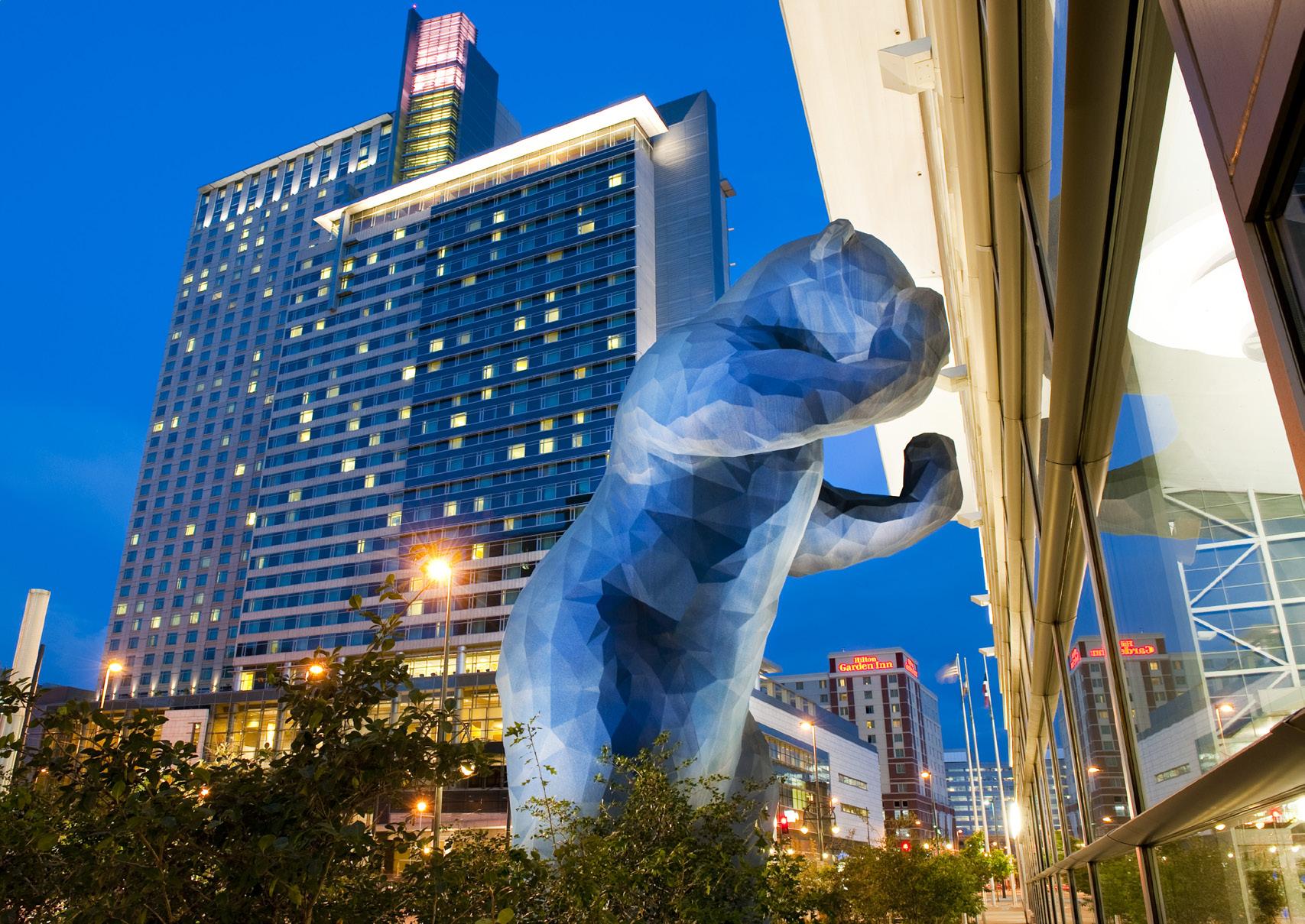
In 1908, Denver hosted the Democratic National Convention in a brand-new building – the Denver Auditorium Theatre. The event was so successful in generating press and economic development for Denver that city leaders decided to create an agency to attract more conventions. In 1909, the Denver Convention Bureau was organized as a private trade association with the mission of bringing conventions and meetings to the Mile High City. It was only the sixth convention bureau in the United States. Today, there are more than 800 destination marketing organizations.
In 2008, the bureau rebranded using the trade name Visit Denver, once again hosted the Democratic National Convention and in 2009, celebrated its 100th anniversary. In 2026, Visit Denver will celebrate 117 years of promoting Denver and Colorado.
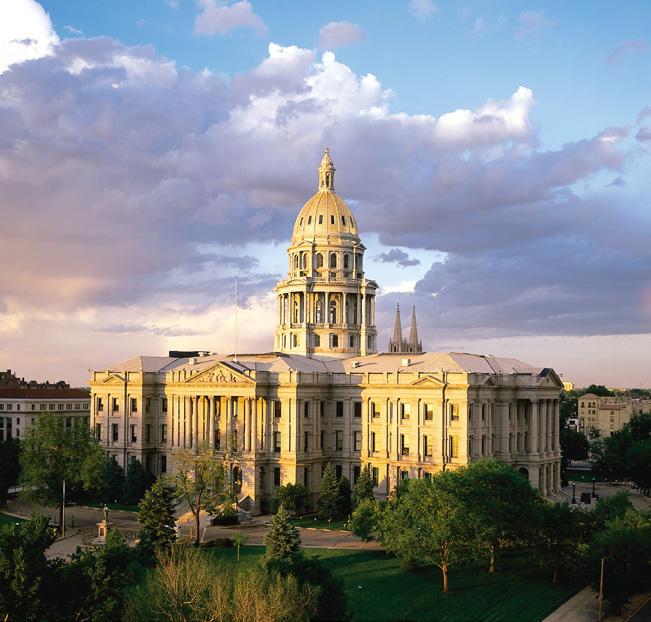
Visit Denver, The Convention & Visitors Bureau is a not-forprofit trade association with over 1,200 business partners (members) that contracts with the City of Denver to market Denver as a convention and leisure destination.
With an annual forecasted budget of $47.0 million in private and public funding and 65 full-time employees, Visit Denver’s goal is to bring conventions and tourists to Denver for the economic benefit of the city, the community and Bureau partners. As Visit Denver continues to rebound from the pandemic, the 2025 estimated actual revenue is projected to be $46.40 million which surpasses the 2019 budget of $41.3 million. Staffing has increased back to 2019 levels. The Bureau’s budget is derived from partnership fees of approximately $1 million, private fundraising and advertising sales and from 3.75% of the Lodger’s and Tourism Improvement District (TID) Taxes in the City and County of Denver. The Bureau is governed by a 39-member Board of Directors who are elected by the Bureau partnership and includes two Denver City Council members. In addition, there are five Lifetime members, up to 16 Community members that include two members appointed by the Mayor of Denver and two honorary members.
The Bureau is an accredited Destination Marketing Organization, a designation awarded and maintained by Destinations International (DI), the industry association for bureaus and related organizations.
The Mile High City welcomes people of all races, ethnicities, abilities, gender identities and sexual orientation. Visit Denver is committed to making the core values of diversity, equity and inclusion a way of life for the organization, its partners in the hospitality industry and its visitors.
Visit Denver believes that travel makes the world a smaller and more connected place. It brings people together and fosters interaction among diverse cultures. It builds understanding, appreciation, empathy and respect for one another. This philosophy is essential to who the organization is as a community and why Denver is one of the top destinations in the country to live and to visit.
Denver celebrates its rich cultural heritage across its vibrant neighborhoods with attractions, restaurants, festivals and events throughout the year. Go to Diverse Denver, where you will find the Accessibility Guide, the Land Acknowledgment to support Indigenous people and more.
With this in mind, Visit Denver renews its pledge of awareness and action to create change, both within the organization and in the city. The organization is committed to making these core values a way of life for the organization, partners in the hospitality industry and visitors.
In addition to a newly formed board advisory committee to assist Visit Denver with its community DEI initiatives, a staff consultant was contracted and has developed a three-year program of education and training.
The Bureau’s staffing levels are back to pre-pandemic levels. Current staffing levels support the Bureau’s ongoing ability to generate demand and continue to grow the economy.
The following is an overview of the staffing and departments within the Bureau:
The department is responsible for all print, broadcast and online messages and media relations. The current department staff consists of one director, one manager and a coordinator.
The department is responsible for marketing Denver as a meeting and convention destination. The department goals are to increase the number of meetings and conventions held in Denver, generate awareness of Denver as a preferred meeting destination and build community awareness among city and hospitality constituents, encouraging them to support Bureau sales and marketing programs.
Located in Denver, Washington, D.C. and Chicago, there are 16 individuals dedicated solely to sales efforts, covering different markets, but working together to achieve a common annual room night goal. The department also includes a senior vice president/chief sales & services officer, an associate vice president, a director, an executive assistant, three coordinators and an information analyst who provides support to the sales team.
The Bureau contracts with two independent sales professionals to develop convention sales leads through telemarketing and email sales efforts. This initiative, known as the B.E.S.T. (Bureau Extra Sales Team) program, started in 2004.
The Denver Sports Commission was founded in 2001 to help bring high-profile sporting events to Denver. In December 2012, the Board of Directors of the Metro Denver Sports Commission (Denver Sports) voted to align themselves with Visit Denver’s sports marketing efforts, effective January 2013. Under the direction of Visit Denver, the Denver Sports Commission has continued to serve as a clearinghouse and resource for all sporting event organizers interested in Denver as a future location. The executive director of Denver Sports is responsible for attracting premier amateur and professional sporting events to Denver.
The department is responsible for assisting conventions and meetings coming to Denver by acting as a liaison between Bureau members, city facilities and planners. They also facilitate any needs the client may have to ensure that the group returns to the city for future meetings. The department currently consists of one director, one associate director, three citywide destination managers, a manager, two coordinators and an assistant.
The department is responsible for overseeing the daily business operations of the Bureau. The president/CEO delegates departmental management authority to a vice president in each of the respective areas: Conventions, Marketing, Tourism and Finance & Administration. The director of government & community affairs serves as the Bureau’s liaison between city and state governments, the Board of Directors and the business and residential communities on all issues pertinent to the Bureau’s mission, especially those public policy and infrastructure issues that have potential to impact the tourism or meetings climate, positively or negatively. The department consists of the president/CEO, a director and an executive assistant.
The department is responsible for internal/external customer service and support, which includes the areas of finance, administration, human resources/payroll and information technology. The department consists of an executive vice president/CFO, an accounting director, a human resources director, two accounting managers, a human resources manager, two information technology managers and an office administrator.
The department develops integrated marketing programs to promote Denver as a premier travel destination for conventions, meetings and leisure travel. The department consists of a vice president/chief marketing officer, a director of web & content, a digital design manager, a marketing manager, a social media manager, a web marketing manager and a coordinator. The Bureau contracts one content manager in support of the Visit Denver website.
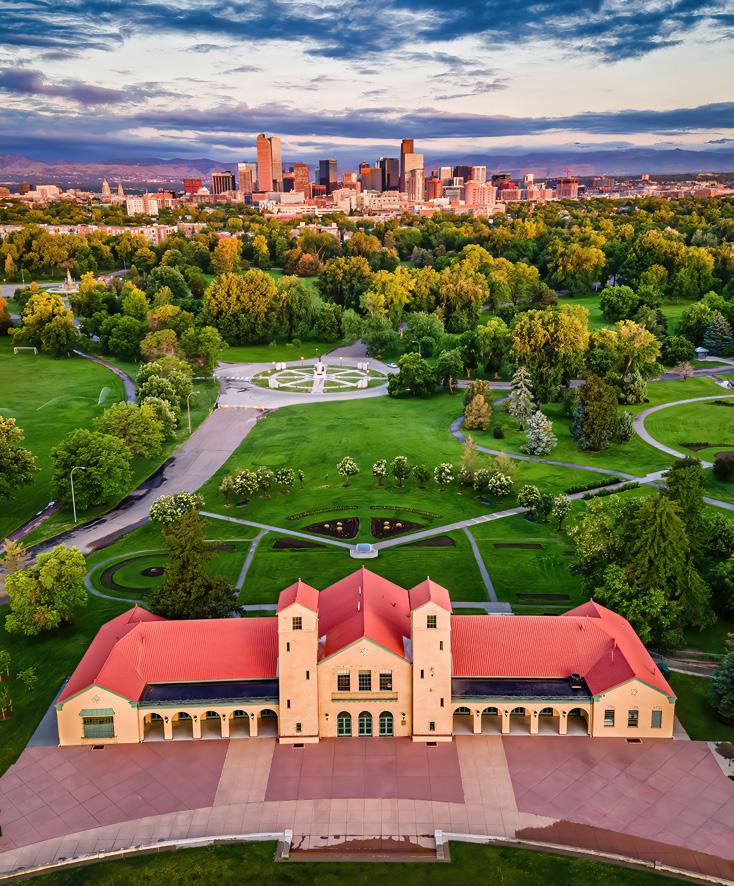
The department is responsible for the sales, servicing and retention of the Bureau’s 1,200+ partners (members) and oversees advertising sales for the Bureau. The department generates approximately $1.9 million in private revenue annually, from partner dues, advertising sales and partnership cooperatives. The department plans partnerships events that encourage community networking and engagement. In addition, the department plans events for the Visit Denver Foundation, which awards scholarships to college students pursuing degrees in the tourism industry. The department also oversees the Bureau’s efforts with workforce development in the hospitality industry. The department consists of an associate vice president, a services & events manager, a data and systems manager and two coordinators. The Bureau also contracts with an independent sales professional to generate new partners and sell advertising.
The department is responsible for promoting Denver as a year-round leisure destination to domestic and international travelers with the goal of increasing leisure visitors for Denver. The department also manages the “Go the EXTRA Mile” program and branded programs such as Denver 365 (Events), Denver Arts Week and Denver Restaurant Week. The department consists of a vice president/chief tourism officer, a tourism senior sales manager, a cultural tourism program manager and a coordinator. Additionally, the department manages two tourist information centers located in the Denver Union Station (DUS) and in the Colorado Convention Center (CCC), respectively. Due to the pandemic, the California Street location has been closed permanently. In addition, due to the current renovation of the airport terminal, that location is closed as well.
$43,150,000
Leon Barnes
Chair
Senior VP of Customer Experience & Human Resources, Comcast Cable Corporation
Hollie Velasquez Horvath 2026 Chair-Elect
Regional VP, Xcel EnergyColorado
Brent Fedrizzi
Past Chair
President, North American Regional Offices, AEG Presents
Greg Feasel
Secretary President & COO, Colorado Rockies Baseball Club
Walter L. Isenberg
Treasurer & Chair, Audit/ Finance Committee
Co-Founder & CEO Sage Hospitality Group
Albus Brooks
Co-Chair, Roadmap & Destination Management Committee
VP of Business Development & Public Affairs, Milender White
Matt Bell
Denver Sports Commission Liaison
Senior VP of Venue Operations, Kroenke Sports & Entertainment
Jack Finlaw
Workforce Development Liaison
President & CEO, University of Colorado Foundation
Beth Gruitch
Co-Chair, Convention & Tourism Advisory Committee
Owner/Partner, Crafted Concepts
Eric Hiraga
Co-Chair, Government & Community Affairs Committee
Chief Strategy Officer, Matrix Design Group, Inc.
A. Barry Hirschfeld (Lifetime Board Member)
Executive Committee
President & CEO, A.B. Hirschfeld & Sons
Bruce A. James
Co-Chair, Roadmap & Destination Management Committee
Shareholder, Brownstein, Hyatt, Farber & Schreck, LLP
Nick LeMasters
Co-Chair, Government & Community Affairs Committee
President & CEO, Cherry Creek North Business Improvement District
Manny Rodriguez
Co-Chair, Convention & Tourism Advisory Committee
Chief Marketing, Experience & Customer Officer, UCHealth
Janice Sinden
Chair, Nominating Committee
President & CEO, Denver Center for the Performing Arts
Richard W. Scharf
President & CEO, Visit Denver (non-voting)
Wes Allison
President & CEO, National Western Stock Show
Andy Aye
CO/AZ/NV/NM Market Leader, Global Industrials and Services, U.S. Bank
Jennifer Chang
Federal Civilian Sales Leader, Google
Rob Cohen
Chairman & CEO, IMA Financial Group, Inc.
David Coors
Chairman & Head of Business Relations, Molson Coors Beverage Company
Kim Corrigan
General Manager, Limelight Hotel Denver
David L. Corsun
Director & Professor, Fritz Knoebel School of Hospitality Management, University of Denver
Navin C. Dimond
CEO/Founder, Stonebridge Companies
Chris Hinds
Councilmember, District 10, Denver City Council
Damani Leech
President, Denver Broncos Football Club
Greg Leonard
General Manager, Hyatt Regency Denver at the Colorado Convention Center
Alison Mitchell General Manager, Apiary Hotel
Mary Nguyen Founder, President, Olive & Finch Collective
Cindy Parsons
Executive Director, Sustainability & ESG, CSG International
Jenn Ridder Chief of Staff, Office of Mayor Mike Johnston
Murphy Robinson CEO, Robinson Corp. Security Group
Katie Ross
Chief Marketing Officer, Denver Art Museum
Brian Roth
Regional Sales Director, United Airlines
Jorge Sanchez President + CEO, Hermes Worldwide, Inc.
Amanda Sandoval Council President, District 1, Denver City Council
Daniel Scherer SVP of General Management & Market Development, OUTFRONT Media
Frank Schultz Owner & CEO, Tavern Hospitality Group
Rob Venus Vice President General Manager, Freeman
Sid Wilson President, A Private Guide, Inc.
(non-voting)
J.J. Ament
President & CEO, Denver Metro Chamber of Commerce
Dr. Angelic Cole
President/CEO, Colorado Black Chamber of Commerce
Mike Ferrufino
President & CEO, Colorado Hispanic Chamber of Commerce
Kourtny Garrett
President & CEO, Downtown Denver Partnership
Gretchen Hollrah
Executive Director, Denver Arts & Venues
Debra Johnson
CEO & General Manager, Regional Transportation District
Adeeb Khan
Executive Director, Denver Economic Development & Opportunity
Amie Mayhew
President & CEO, Colorado Hotel & Lodging Association
Melanie Mills
President & CEO, Colorado Ski Country USA
Sonia Riggs
President & CEO, Colorado Restaurant Association
Kate Rizzo
General Manager, Sodexo Live!
Phil Washington CEO, Denver International Airport
Tim Wolfe
Director of Colorado Tourism Office, State of Colorado
Lance Zanett
General Manager, Colorado Convention Center
Edward A. Robinson Co-Chief Executive Officer (Retired), Robinson Management, LLC
Al Timothy VP of Public Affairs (Retired), MillerCoors
HONORARY BOARD MEMBERS
Colorado Governor Jared Polis
Denver Mayor Michael Johnston
Richard W. Scharf, Jr. President & CEO
303.571.9415 rscharf@visitdenver.com
Vicki Aycrigg Executive Assistant 303.571.9462 vaycrigg@visitdenver.com
Patrick Walton Director, Government & Community Affairs 303.571.9466 pwalton@visitdenver.com
Lee Ann Benavidez
Senior Vice President, Chief Sales & Services Officer 303.571.9417 lbenavidez@visitdenver.com
Stephanie Murnan
Executive Assistant, Sales & Services 303.571.9401 smurnan@visitdenver.com
Sean McNamara
Associate Vice President, Convention Sales 303.571.9443 smcnamara@visitdenver. com
Matt Ojinaga Director, Convention Sales 303.571.9423 mojinaga@visitdenver.com
Sheila Provenzano Sales Director, Midwest Region 773.495.5049 sprovenzano@visitdenver. com
Christine Thompson Sales Director, Washington, D.C. Region 612.803.9343 cthompson@visitdenver. com
Tyler Adams Citywide Sales Manager 303.571.9419 tadams@visitdenver.com
Leah Gutstein
Citywide Sales Manager, East Region 303.571.9430 lgutstein@visitdenver.com
Gysela Fillingham, CMP Citywide Sales Manager, West Region 303.571.9461 gfillingham@visitdenver.com
Angie Jasper, CMP Citywide Sales Manager 303.571.9400 ajasper@visitdenver.com
Tim Litherland, CMP
Citywide Sales Manager, Sports & Specialty Markets 303.571.9429 tlitherland@visitdenver.com
Sammy Bianchi Association Sales Manager, West Region 303.571.9403 sbianchi@visitdenver.com
John Craig Corporate Sales Manager, East Region 303.571.9489 jcraig@visitdenver.com
Samantha Jacobs Corporate Sales Manager, West Region 303.571.9482 sjacobs@visitdenver.com
Viveca McDonald Sales Manager, Washington, D.C. Region 303.571.9444 vmcdonald@visitdenver. com
Daniel Wakefield Association Sales Manager, Midwest Region 303.571.9484 dwakefield@visitdenver.com
Daniel Gibbins Association Executive Meetings Manager, East Region 303.571.9453 dgibbins@visitdenver.com
Kelsey Santistevan Association Executive Meetings Manager, West Region 303.571.9439 ksantistevan@visitdenver. com
Kristen Satkowiak Corporate Executive Meetings Manager, East Region 303.571.9455 ksatkowiak@visitdenver.com
Emily Westphal Corporate Executive Meetings Manager, West Region 303.571.9457 ewestphal@visitdenver.com
Harry Emerson Convention Information Analyst 303.571.9425 hemerson@visitdenver.com
Bridget Bartlett Coordinator, Convention Sales 303.571.9427 babartlett@visitdenver.com
Madison Lambert Coordinator, Convention Sales 303.571.9441 mlambert@visitdenver.com
Hannah Jennings Coordinator, Convention Sales & Denver Sports 303.571.9459 hjennings@visitdenver.com
Matthew Payne Executive Director, Denver Sports 303.571.9460 mpayne@denversports.org
Vikki Kelly, CMP Director, Destination Services & Events 303.571.9414 vkelly@visitdenver.com
Tiffany Eck, CMP Associate Director, Destination Services 303.571.9449 teck@visitdenver.com
Theresa Blankenau, CMP Citywide Manager, Destination Services 303.571.9428 tblankenau@visitdenver.com
Gina Gaytan, CMP Citywide Manager, Destination Services 303.571.9404 ggaytan@visitdenver.com
Jeremy Schwartz Citywide Manager, Destination Services 303.571.9421 jschwartz@visitdenver.com
Liz Perrott Manager, Destination Services 303.571.9464 lperrott@visitdenver.com
Sophie Duyos Coordinator, Destination Services 303.571.9407 sduyos@visitdenver.com
Casey Hrdlicka Coordinator, Destination Services 303.571.9468 chrdlicka@visitdenver.com
Janielle Holloway Assistant, Destination Services 303.571.9447 jholloway@visitdenver.com
Justin Bresler Vice President, Chief Marketing Officer 303.571.9408 jbresler@visitdenver.com
Carly Baldwin Manager, Graphic Design 303.571.9469 cbaldwin@visitdenver.com
Emily Hall Manager, Marketing 303.571.9448 ehall@visitdenver.com
Emma Webb Manager, Social Media 303.571.9488 ewebb@visitdenver.com
Brooke Bartlett Coordinator, Marketing 303.571.9486 bbartlett@visitdenver.com
COMMUNICATINS & PUBLIC RELATIONS
Taylor Shields Director, Communications & PR 303.571.9450 tshields@visitdenver.com
Caroline Campbell Manager, Communications & PR 303.571.9451 ccampbell@visitdenver.com
Natalie St.Hilaire Coordinator, Communications & PR 303.571.9416 nsthilaire@visitdenver.com
WEB & CONTENT MARKETING
Salim Bourget Director, Web & Content 303.571.9478 sbourget@visitdenver.com
Kendall Akin Manager, Web Marketing 303.571.9446 kakin@visitdenver.com
PARTNERSHIP & FOUNDATION
MC Genova Associate Vice President, Partnership & Foundation 303.571.9440 mcgenova@visitdenver.com
Lauren Alexander Manager, Partnership Services & Events 303.571.9405 lalexander@visitdenver.com
Melissa Ramirez Manager, Partnership Data & Systems 303.571.9481 mramirez@visitdenver.com
Bridget Johnson Coordinator, Partnership & Workforce 303.571.9487 hjennings@visitdenver.com
Valarie Lopez Coordinator, Partnership Advertising 303.571.9477 vlopez@visitdenver.com
Flavia Light Vice President, Chief Tourism Development Officer
303.571.9442 flight@visitdenver.com
Lisa Bruening Senior Sales Manager 303.571.9445 lbruening@visitdenver.com
Abby Schirmacher Manager, Cultural Tourism Programs 303.571.9423 aschirmacher@visitdenver. com
Kelly Nowlen Coordinator, Tourism 303.571.9422 knowlen@visitdenver.com
Jeff Ruffe Executive Vice President, Chief Finance & Administration Officer 303.571.9413 jruffe@visitdenver.com
Kelly Beren Director, Accounting 303.571.9409 kberen@visitdenver.com
Chase Lancaster Manager, Accounting 303.571.9431 clancaster@visitdenver.com
Leigh Meek Manager, Accounting 303.571.9437 lmeek@visitdenver.com
HUMAN RESOURCES
Brenda Garcia Director, Human Resources 303.571.9412 bgarcia@visitdenver.com
Emily Narwold Manager, Human Resources 303.571.9452 enarwold@visitdenver.com
Denny Bayford Administrator, Visit Denver Office 303.571.9410 dbayford@visitdenver.com
John Ianni Manager, Information Technology 303.571.9424 jianni@visitdenver.com
Mark Merritt Manager, Information Technology 303.571.9456 mmerritt@visitdenver.com