The magazine of the Virginia Education Association
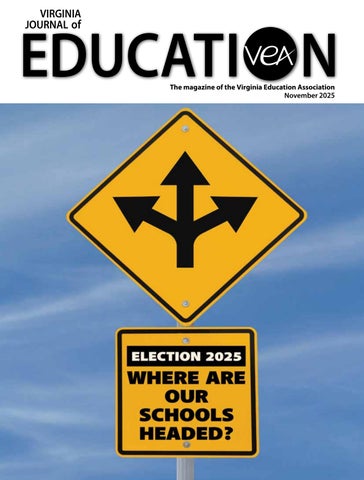
Where, Exactly, are Virginia Public Schools Headed?
Editors
Tom Allen, Kate O’Grady
VEA President
Carol Bauer
VEA Vice President
Dr. Jessica Jones
VEA Executive Director
Dr. Earl Wiman
Communications Director
Kevin J. Rogers
Graphic Designer
Lisa Sale
Editorial Assistant/Advertising Representative
Kate O’Grady
Contributors
Reilly Goldsmith Nancy Deutsch
FEATURES
13 ‘Calm is Strength’
4-7 This month: Where would we be without public schools?; school nurses talk sense on vaccines, Touching Base with Reilly Goldsmith of Virginia Beach, and paid family leave supports teacher retention.
Stay calm and chances are good that your students will, too.
14 Growing Lifelong Readers
A retired school librarian talks about the importance of teaching children to love reading.
16 Out of Pocket
A Richmond teacher discusses spending her own money for her students.
18 UVA Initiative Helps Youth Thrive Online
A new effort aims to turn the TYDE
19 Immigration Info You and your school system can help protect immigrant students.
DEPARTMENTS
20 Membership Matters VEA restructures to meet the challenges of a changing educational environment.
24 Insight on Instruction What makes an excellent teacher?
30 First Person Scaffolding our way to success. UPFRONT
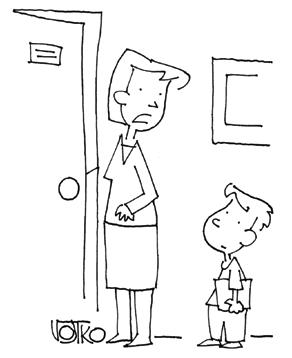
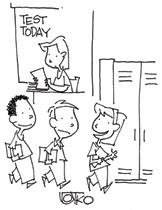
“That’s our Teacher’s Lounge. We don’t call it a ‘lair’.”
The Virginia Journal of Education (ISSN 0270-837X) is published six times a year (October, November, December, February, April and June) by the Virginia Education Association, 8001 Franklin Farms Drive, Suite 200, Richmond, VA 23229.
Non-member annual subscription rate: $10 ($15 outside the U.S. and Canada). Rights to reproduce any article or portion thereof may be granted upon request to the editor. Periodicals postage paid in Richmond, VA.
Postmaster: Send address changes to Virginia Journal of Education, 8001 Franklin Farms Drive, Suite 200, Richmond, VA 23229.
Article proposals, comments or questions may be sent to the editor at kogrady@veanea.org or Kate O’Grady 8001 Franklin Farms Drive, Suite 200 Richmond VA 23229 800-552-9554.
Member: State Education Association Communicators
VEA Vision: A great public school for every child in the Commonwealth of Virginia.
VEA Mission: The mission of the Virginia Education Association is to unite our members and local communities across the Commonwealth in fulfilling the promise of a high quality public education that successfully prepares every single student to realize his or her full potential. We believe this can be accomplished by advocating for students, education professionals, and support professionals.
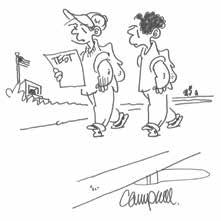
“I see by your resumé you were an honor student featured on your parents’ bumper sticker.”
A Value Beyond Measure
Where Would We Be Without Public Schools?
The work we do—in classrooms and libraries and nurses’ offices and school buses—is extraordinary. It’s complicated and demanding and ever-changing, but it is also joyful, unexpected, deeply human—and incredibly collaborative.
We are the cultivators of learning and belonging. We are the ones who unlock potential, who nurture talent, who stay after the bell and show up before the sun. At every level and in every facet of American education, we challenge, we question, we adapt, we create—and we do so together.
These Books Gotta Go!
USA Today columnist Rex Huppke took book-banners to task with a humorous list of books he believes “should” be banned, including these:
• The Black Stallion, by Walter Farley. Clearly the liberals have found a way to sneak critical race theory into an otherwise decent story about a horse.
• The Sun Also Rises by Ernest Hemingway. Sounds like some kind of climate change propaganda.
• The Brothers Karamazov, by Fyodor Dostoyevsky. Nice try, commies.
“This is the value of the teacher, who looks at a face and says there’s something behind that and I want to reach that person, I want to influence that person, I want to encourage that person, I want to enrich, I want to call out that person who is behind that face, behind that color, behind that language, behind that tradition, behind that culture. I believe you can do it. I know what was done for me.”l
—
Maya Angelou
“Leave it to Ms. Spney to have fact checkers.”
I am a first-generation college graduate; my education is my most valuable possession. But I didn’t earn it alone. I owe my success to my teachers who demanded my very best, to my counselors who guided my path, to my grandmother who was a school secretary, my grandfather who was a custodian, my great grandmother who was a cafeteria worker. I stand here as living proof of our collective influence and our fundamental belief: public education is a public good.l
Ashlie Crosson, a high school English teacher in Pennsylvania and the 2025 National Teacher of the Year, speaking at the NEA convention last summer.
School Nurses Talk Sense on Vaccines
You know who has a lot of experience with how germs and diseases spread? School nurses! That’s why both the National Association of Nurses (NASN) and the Florida Association of School Nurses (FASN) issued a joint statement pushing back on the Florida Surgeon General, who has proposed eliminating vaccine requirements for school-aged children.
“When children are vaccinated, the risk of outbreaks in schools and the broader community is significantly reduced,” they said. “This keeps students healthy and in school, allows parents to remain at work, and helps protect teachers and community members from infectious diseases.”
Unfortunately, vaccine skepticism and misinformation is increasing: Just over half of U.S. adults support their state requiring vaccines for students, down from 71% in 2019, according to research done at the University of Pennsylvania.l
Source: https://vea.link/FloridaNurses
• Invisible Man, by Ralph Ellison. Presumably another feminist attempt to silence American men. We will not tolerate such wokeness.
• Fahrenheit 451, by Ray Bradbury. A dystopian tale of a future America in which books have been outlawed and are rounded up and burned by “firemen” who enforce the laws and…on second thought, let’s keep this one.l
What do you like about your job? We like to distill language down to “reading” and “writing”; however, it’s much more than that. I love getting an opportunity to show my students its true power and depth. How much of our language is spoken and unspoken? Why do we speak one way with our friends, but differently with others? How does our language reflect our personal journeys? How does our language shape the way we think? While yes, I do enjoy teaching “reading” and “writing,” I truly love teaching my students about language.
How has being a VEA/VBEA member helped you?
It’s helped me in plenty of practical ways: financial services, peace of mind, and professional development. However, I think the way it has helped me the most is by giving me a sense of purpose. Recently, I’ve become more involved in my local union and became VBEA’s PAC director. I’ve been granted an amazing opportunity to get involved with not only my union but also my community. I really feel like we are making impact on our schools and city, and I’m just glad I got a chance to be a small part of that! l
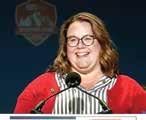
REILLY GOLDSMITH
VIRGINIA BEACH EDUCATION ASSOCIATION
SCHOOL ENGLISH TEACHER
Why
Support
Professionals
Need Bullying Training, Too
Education support professionals play a key role in bullying prevention, according to the National Education Association, for these and other reasons:
Percent of Americans who oppose eliminating the U.S. Department of Education.l
Source: PDK Poll on Public Attitudes Toward Public Education
“I tried to cover myself on some of the answers by adding ‘LOL’.”
• They’re often among the first staff members to arrive at school in the morning and the last to leave in the evening, work throughout the building, and are familiar figures to many students.
• They often live in the communities they serve, making them likely to interact with students outside school, too. (For example, NEA surveys show that 81 percent of bus drivers and 69 percent of school clerical workers live in the school district where they work, compared with 39 percent of teachers.)
• Their duties frequently take them to areas prone to be bullying sites, such as school buses, cafeterias and playgrounds.l
Paid Family Leave Supports Teacher Retention (obviously)
More Virginia school districts are starting to offer paid parental leave, but 57% of the large school divisions across the country don’t offer the benefit, according to an analysis from the National Council on Teacher Quality.
Further, of those who do have access to paid parental leave benefits, fewer than half perceived them to be adequate. It’s been about 100 years since women were legally fired for being pregnant, but receiving zero support can often feel like you’re being shown the door.
Divisions such as Fairfax County have recently implemented paid paternal leave for teachers. That’s a shift from 2022, when just 18% of larger districts offered any form of paid parental leave. In Loudoun County, the cost the school district incurs to pay for a substitute teacher during the entirety of their 30 days of parental leave policy at $6,000, is still less than half of what it costs to recruit, hire, and train a new teacher.
“Paid family leave helps school districts keep good teachers in the classroom,” NCTQ President Heather Peske said. That the U.S is the only high-income country without any federally mandated paid parental leave should not be an excuse for school districts and policymakers, rather they need to set the example and expand parental leave policies now. It’s an affordable way for school districts to acknowledge the humanity of their employees and invest in educators, for the betterment of everyone.l
You Gotta be Versatile…
“Don’t you ever get away with anything, Kevin?”
“In the high school classroom, you’re a drill sergeant, a rabbi, a shoulder to cry on, a disciplinarian, a singer, a low level scholar, a clerk, a referee, a clown, a counselor, a dress code enforcer, a conductor, an apologist, a philosopher, a collaborator, a tap dancer, a politician, a therapist, a fool, a traffic cop, a priest, a mother/father/ brother/sister/uncle/aunt, a bookkeeper, a critic, a psychologist, the last straw.”l
— Frank McCourt, Pulitzer Prize-winning author, in his book Teacher Man
A carpenter doesn’t bring just a hammer to a worksite, and a high school teacher who wants to calm a noisy classroom doesn’t use only one approach to refocus their class. When quieting high school students in particular, who are practicing independence and young adulthood, different tactics are needed. Keeping a consistent routine so that students know how to respond, as well as setting the expectation early and reviewing it as you go along, will maximize your effectiveness. To read 30 more real tips on how to quite a rowdy classroom of high schoolers go to: https:// tinyurl.com/classroomcalm.l
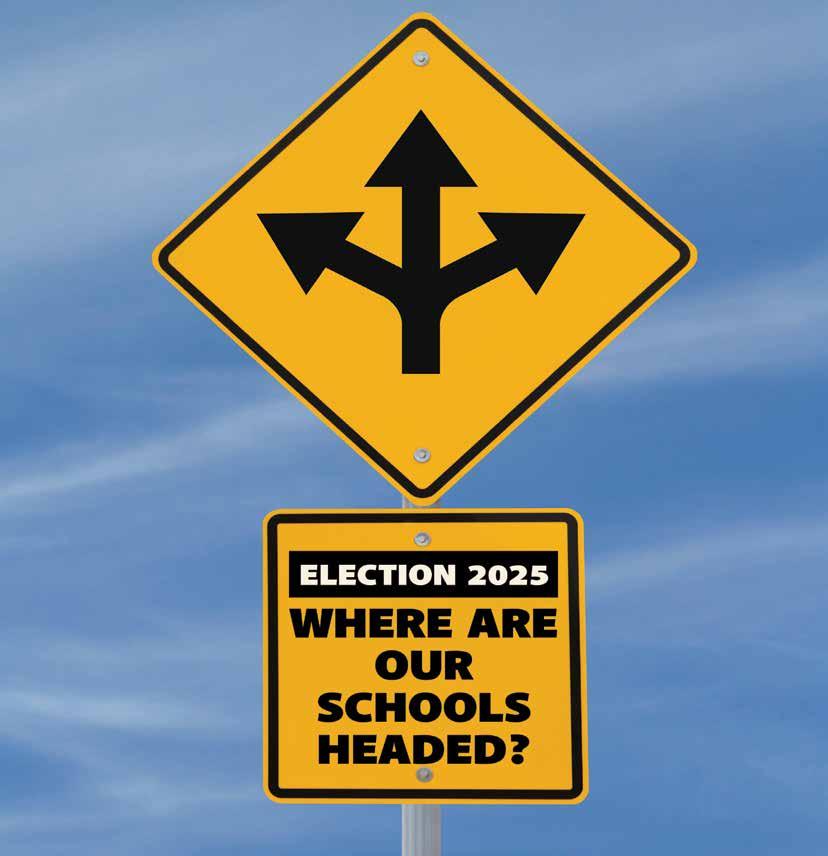
WHERE, EXACTLY, ARE VIRGINIA PUBLIC SCHOOLS HEADED?
Your votes in November will help provide the answer.
Virginia’s official election ballot for this November will show that Republican Winsome Earle-Sears and Democrat Abigail Spanberger are running for governor. Those ballots will also list the names of candidates for lieutenant governor, attorney general, every seat in the House of Delegates, and numerous local offices. But when educators cast their votes, they’ll do so knowing that they’re voting for much more than candidates—they’re choosing the direction they want our public schools to take in the years ahead. The stakes are high for their students, themselves, their colleagues, and their communities.
For one, what will become of educators’ hard-fought regaining of their right to negotiate their contracts? Political parties and politicians have very different ideas about whether collective bargaining rights should be supported and expanded—or, taken away.
“As we’ve said since the moment Virginia’s school employees re-won the right to bargain, contract negotiations are a win for everyone,” says VEA President Carol Bauer, an elementary school teacher. “If school employees are at the table, they’re in the position they deserve to be in and have earned. They’re the experts and have the experience and insight to negotiate what’s best for students and schools. We know that quality educators are critical to the academic success of young people and we also know that educator working conditions are student learning conditions. If one improves, so does the other, and that’s what happens in the collective bargaining process. Top-down
PRESIDENT’S
MESSAGE
Members Research, Recommend Candidates
— Carol Bauer
I consider it a privilege to have spent my career teaching in public school classrooms, and equally so to serve today as your VEA president. I’m committed to public education for all the good that it does for our young people and our communities, and I love how it serves as the sustainer of equal opportunity in our country.
My love for this work is also why I believe that this year’s elections are absolutely critical to the future of our public schools. We absolutely must elect leaders, both statewide and locally, who will fight hard for the kind of equitable funding our students and school divisions deserve; who understand the importance of attracting and retaining the highest-quality educators; who have faith in those educators to teach and guide our children, free from political interference; and will work to see that our schools have the mental health supports, counselors, and nurses they so desperately need.
Our members understand the importance of all those things. And our members are smart. Because of those two facts, I completely trust you to make the best choices for students and public schools in this and every election. Members have done that through the recommendation process of the VEA Fund for Children and Public Education, which includes
inviting candidates to complete questionnaires and take part in personal interviews.
You’ve found that the choice in the race for the governor’s mansion couldn’t be more clear. Abigail Spanberger has a well-thought-out plan for the way forward in our schools. It includes strategies for boosting the funding our schools so desperately need, expanding workplace and career training opportunities for our students, and addressing our shortage of teachers. She’s also focused on school safety and modernizing our school buildings. Winsome Earle-Sears hasn’t put out a plan and the first thing she mentions on her campaign website is the importance of school choice for those who are “stuck in an underperforming school.”
VEA members have researched candidates from around the state, including those for the House of Delegates. We’ve asked them the important questions, put our heads together, and determined who we believe will best offer real support for public schools, not just lip service.
You can see VEA Fund recommendations at veafund.org, along with the candidates we’re backing in statewide and House races on page10. Elections matter—see you at the polls!l
decision-making doesn’t ensure that.”
Bauer sees a big opportunity in this November’s voting. “Virginia’s school employees may be on the verge of having contract negotiation rights in every school division, ” she says. “It’s hard to overstate the positive impact that would have.”
What will happen to salaries for teachers and education support professionals, the people who make our schools work every day? We’re still lagging behind the national average salary for teachers, despite a commitment from our legislature to fix that. What about the status of continuing contracts, which give teachers a measure of academic freedom?
“Not only does more competitive pay make for a more qualified and exceptional workforce,” says VEA Vice President Dr. Jessica Jones, a high school agriculture teacher in Pittsylvania County, “it also shows the community that school leaders respect and stand behind their employees. Better pay also cuts down on teacher turnover, increasing both student outcomes and the stability of the school’s culture and community. Higher paydays pay off in lots of ways.”
After November’s votes have been tallied, will expanding book-banning efforts continue to infringe on students’ freedom to read? Virginia has seen a significant uptick in book-banning activities in the last several years, and many of the targeted books have something in common: they deal with characters and stories of diverse people groups. “Students who are immigrants, who are part of minority groups, have disabilities, or are seeking to understand their developing sexuality all need to see and read stories that relate to them,” says Darrell Turner, a Richmond
VEA FUND RECOMMENDED CANDIDATES
Governor: Abigail Spanberger
HD017 Mark Sickles
HD018 Kathy Tran
HD019 Rozia Henson
HD020 Michelle Maldonado
HD021 Josh Thomas
HD022 Elizabeth Guzman
HD023 Candi King
HD024 Luke Torian
House of Delegates
HD00 1 Patrick Hope
HD00 2 Adele McClure
HD00 3 Alfonso Lopez
HD00 4 Charniele Herring
HD00 5 Elizabeth Bennett-Parker
HD00 6 Rip Sullivan, Jr.
HD00 7 Karen Keys-Gamarra
HD00 8 Irene Shin
HD00 9 Karrie Delaney
HD010 Dan Helmer
HD011 David Bulova
HD012 Holly Seibold
HD013 Marcus Simon
HD014 Vivian Watts
HD015 Laura Jane Cohen
HD016 Paul Krizek
HD025 Briana Sewell
HD026 JJ Singh
HD027 Atoosa Reaser
HD028 David Reid
HD029 Marty Martinez
HD030 John Chilton McAuliff
HD038 Sam Rasoul
HD040 Donna M. Littlepage
HD041 Lily Franklin
HD049 Gary Miller
HD054 Katrina Callsen
HD055 Amy Laufer
HD057 May Nivar
HD058 Rodney Willett
HD064 Stacey Annie Carroll
HD065 Nicole Cole
HD066 Rob Banse
HD069 Mark Downey
HD070 Shelly Simonds
HD071 Jessica Anderson
HD076 Debra Gardner
HD077 Michael Jones
HD078 Betsy Carr
HD079 Rae Cousins
HD080 Destiny LeVere Bolling
HD081 Deloris McQuinn
HD082 Kimberly Pope Adams
HD083 Mary Person
HD084 Nadarius Clark
HD085 Cia Price
HD086 Virgil Gene Thornton, Sr.
HD087 Jeion Ward
HD088 Don Scott
HD089 Karen Robins Carnegie
HD090 Rodney Nickens
HD091 Cliff Hayes
HD092 Bonita Anthony
HD093 Jackie Glass
HD094 Phil Hernandez
HD095 Alex Askew
HD096 Kelly Convirs-Fowler
HD097 Michael Feggans
HD098 Cheryl Smith
HD099 Cat Porterfield
Education Association member who serves as VEA’s Legislative Committee vice-chair. “It’s an important part of becoming themselves, and politics shouldn’t be the decisive factor in making decisions about what school libraries can have on hand. We have trained, professional library specialists, teachers, and the input of parents to do that.”
Will our students and educators get the funding necessary to supply the resources they both need to succeed? Will taxpayer money be spent for private school educations? “Money isn’t the magic elixir for schools, but no one can deny that adequate funding makes an enormous difference,” says Bauer. “Investing in public schools means well-resourced classrooms that feature up-to-date technology and high-quality textbooks and other instructional materials.”
The benefits of proper funding don’t end there, she says: “The right amount of money means a top-quality and well-supported teacher in every classroom. It also means that those classrooms can be in safe, modern school buildings where indoor air quality and learning environments are carefully considered, and where students can be part of engaging extracurricular and enrichment programs.”
As for voucher and other programs, VEA members have always opposed taking money from public schools for private education. In the Resolutions, which spell out VEA’s positions on a wide range of issues and serve as our Union’s belief statements, VEA convention delegates have repeatedly approved the following wording: “Public funds should not be used in any form to support non-public elementary and secondary education. Programs and practices such as tuition tax credits, voucher systems, and performance contracting are detrimental to public education and must not be employed.”
2025’s election results will echo through the halls of Virginia’s public schools for years, and the gubernatorial candidates have starkly different plans for our students and educators. Compare the Earle-Sears and Spanberger education agendas at “What the Gubernatorial Candidates Have in Mind for Virginia’s Public Schools” on page 12.
VEA members, through the Union’s Fund for Children and Public Education, have put their support behind Abigail Spanberger, believing that she’s got the far better strategy for our schools. Before you pull your levers or mail in your ballot, see page 10 for which candidates the VEA Fund has recommended in House of Delegate races. And if your local has a political action committee, see who your colleagues are recommending in local contests, too. Our schools are in your hands.l
Want to know whose names are going to be on the ballot in your community? Need to check your voter registration status? Curious about exactly what’s expected from officeholders? To provide all that information and more, VEA has created The Virginia Voter Guide. Before you vote, check it out at thevirginiavoterguide. com l Check Out the
District Delegate
District Delegate District Delegate
Attorney General: Jay Jones
Lt. Governor: Ghazala Hashmi
What the Gubernatorial Candidates Have in Mind for Virginia’s Public Schools
Listing school funding, workplace training opportunities, and the teacher shortage among the top priorities in her Strengthening Virginia Schools Plan, Spanberger intends to:
• Adequately fund public schools. Spanberger says she’ll collaborate with legislators to address gaps in state support for schools and work to ensure that students who need the most help—those in underserved areas, with disabilities, and learning English—have what they need to succeed. She opposes spending public money for private education in voucher or other programs.
• Help students find the career that suits them best. Because there are so many options for our students, including community and four-year colleges, directly entering the workforce, and joining the military, she’ll push for more opportunities for young people to have workplace experiences through internships and apprenticeship programs; expand access to dual enrollment, Advanced Placement, and International Baccalaureate classes; and grow CTE offerings.
• Fight the teacher shortage. Spanberger supports keeping top-notch educators in the classroom by: increasing teacher pay and making sure they have the planning time they need; adding money for teacher and school leader residency and apprenticeship programs; growing access to mentorship and professional development opportunities; and having the state collaborate with school divisions to increase the teacher recruitment pool.
The Strengthening Virginia Schools plans also focuses on school safety; overcoming academic setbacks in the aftermath of the pandemic; repairing and modernizing public school buildings; supporting the Office of Public School Innovation within the Virginia Department of Education; and supporting wraparound services in our schools.
At press time, Earle-Sears had not released a strategy for Virginia’s K-12 public schools, with only this on her website: No child should be stuck in an underperforming school because of their zip code or their parent’s income level. As governor, Winsome will empower parents to choose the best school for their children so every child gets a quality education. She will prioritize parents’ rights and basic reading and math skills over ideological grandstanding. With Winsome in charge, Virginia’s education system will once again be the envy of the country.
Many of her public statements on schools have centered on transgender bathroom policies, which she’s called “dangerous” and “insane.”
She also has a track record of supporting school funding proposals that would divert public money for use in private schools, such as vouchers and “education savings accounts.”l
‘CALM IS STRENGTH’
Stay calm and chances are good that your students will, too.
If you’re chill, the chances that your students will be chill, too, are way better. If you’re uptight, harried, and stressed, well, let’s just say the odds may be against you. Students take their cues from you.
“The biggest thing I emphasize when I’m meeting with other educators is the importance of a calm presence,” says Rosa DiPiazza, in an interview with the National Education Association. She’s a Delaware behavioral specialist who spends her workdays helping both teachers and students do better in the classroom. “As soon as you lose your cool, your kids do, too.”
Classroom misbehavior, running the gamut from incessant chatter to more threatening, aggressive acting out, can be anywhere from annoying to downright scary.
“Whether you are used to [bad behavior] or not, in every case, calm is strength and upset is weakness. Being calm is the key to letting students know you mean business,” says Fredric H. Jones, child psychologist and author of Tools for Teaching, in a separate NEA interview.
“If you get upset, you can’t think
straight, and you may react with something like a snap of the finger, and that’s a lot of power—allowing yourself to get mad—to give a student.”
The good news, experts say, is that you have the ability to learn to have a sense of classroom Zen, even if it hasn’t been your M.O. in the past. Here are some ways to do so, from Smart Classroom Management (smartclassroommanagement.com):
Decide. Maintaining a calm attitude is a choice you make before your students arrive. So, every day, sometime prior to the beginning of the day, give yourself a moment of peace to sit quietly at your desk. Now decide that no matter what happens that day, no matter how crazy or how alarming, you will not lose your composure. And guess what? You won’t.
Slow down. By slowing your movements to an easier-going, more graceful pace, your mind will slow down as well—becoming less distracted, more observant, and better able to respond to your students.
Speak calmly. When giving directions, providing information, and responding to your students, it pays to speak calmly. It soothes nervous energy, helps students focus on you and your message, and gives them confidence that what you say is important and worth listening to. During lessons, however, all bets are off. You might find yourself whispering with wide-eyed fascination one moment and giving an oration like James Earl Jones the next. Calmness on inside doesn’t mean passionless on the outside.
Breathe. It’s remarkable what a few long, slow breaths can do. Almost immediately, blood pressure drops, your expression softens, and tension drains from your body. By taking a couple of deep breaths every hour, you’ll exhale the tension and excitability right out of your classroom.
Prepare. A simple, real-world way to relax your mind is to be mentally prepared. Take a couple minutes to review your lesson plans. Visualize how the day will proceed. See yourself responding to your students with poise, dignity, and calm assuredness.l
Photo by Tom Allen
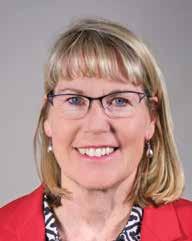
Abigail Spanberger
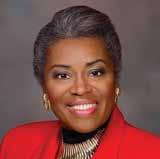
Winsome Earle-Sears
Growing Lifelong Readers
A
retired school librarian talks about the importance of teaching children to love reading.
by David Winship
Public schools are for public benefit, something we should all keep firmly in mind, and that’s one of the main reasons followed my family’s tradition and spent my career in them. My great-grandfather was one of the early encouragers of the National Education Association, my grandfather was a librarian at Harvard, and my father was a college English professor.
I started at Patrick Henry High School in Washington County in 1982, hoping to share my knowledge and interests. I’d developed an appreciation for technology, both computers and video, and was beginning to see what a difference word processing could make to writing. But I still thought of myself as a librarian, working with books and reading, researching and writing, guiding youth in the wonders of words, and sharing what knew and what I loved with others. Eventually, I spent about 40 years working in libraries in both high and elementary schools, and
and fueling competition to do so. But reading is more than a score to meet an arbitrary goal.
I delighted in sharing books and my enjoyment of reading with students. Literacy is the source of exploration that nurtures people in their younger years and into the decades beyond. To help develop well-rounded citizens, we must encourage both the joy of reading and the joy in reading. We live based on what we have personally experienced and vicariously encountered through literature. Joyful reading embraces both what we know and what we don’t know and can expand our emotions. The joy of reading can help us explore realms in which we have less knowledge, but more curiosity. Joyful reading explores avenues, helping to establish empathy, our greatest strength.
In my years in schools, libraries and media centers have changed immensely, including being influenced by business management approaches such as Accelerated Reader. Let me say at the outset that I’m not an AR fan. believe it changed both what and how students read. It also monetized the process by emphasizing reaching reading goals
AR built its brand by emphasizing a “science” of reading, with testing on book content providing the measurement of a child’s reading level. What we lost in the quest to gauge students’ reading levels, as opposed to their interest levels, was what is most important: learning an appreciation of the “art” of reading. This involves a child’s intrinsic interest in subjects, both non-fiction and fiction. What gets left behind is enjoyment, appreciation, and a love of reading. Too often the long-range benefits of education are sacrificed for immediate results, much like our culture in general. Not long ago, I was invited to speak at the Virginia Association of School Librarians – Clinch Region conference, and, as prepared, decided to share three authors and readers that have been influential in my life.
The first is Dr. Seuss, and I started with The Cat in the Hat Theodor Geisel, writing as Dr. Seuss, created this classic book partly in response to a 1954 Life magazine article about literacy in early childhood. Written by John Hersey, it was titled “Why Do Students Bog Down on First R?” and included this question: “Why should [school primers] not have pictures that widen rather than narrow the associative richness the children give to the words they illustrate?”
An editor at the publisher Houghton Mifflin asked Geisel to write a book using a limited vocabulary list suitable for early readers and to make reading fun for young children.
The Cat in the Hat has all the necessary elements of a good story –characters (narrator and Sally, Cat and Thing 1 and Thing 2, Mother), setting, plot (Mother’s away on a rainy day,
what’s to do inside), action, crisis and resolution. I always ask students, just as Dr. Seuss did, “What would you do?” Their responses are the engagement we want students to have with what they read.
The second is Dolly Parton and her Imagination Library. She’s probably done more for early-childhood reading than any author we have. Growing up without books in her home and recognizing their importance, she started the Imagination Library in her home county, Sevier County, Tennessee. In its 30 years, it’s made 287 million books available to youngsters from birth to age five in five countries. Imagination Library doesn’t pay for the books; it requires local support. Instead, it provides the infrastructure to choose and send the books to children signed up by their parents and guardians. Community support in many forms pays the cost of the books.
An additional element of children having a shared reading experience is that they arrive at school with a common literary background and a common diverse experience. Communities that have Imagination Libraries are truly investing in their children.
youngsters learn to read, and I would like to mention one book in particular, The Smallest Cow in the World. A Vermont resident, she wrote it particularly for the migrant children who worked in nearby orchards and fields and didn’t have regular schooling or stories that were theirs. It became part of the Vermont Migrant Education Program and was later published.
The Smallest Cow in the World is the story of young Marvin, who grew up as a child of migrant workers, and his relationship with Rosie, who was
self, “I hope she doesn’t have any bad memories of the school library, because I’m in her hands now.”
So, how do we help make sure more people become avid readers, and how can we best help our children learn to love reading as we move forward? First, I think we continue to advocate for our students, and the children of our communities, to have access to a wide range of books.
“ We have to teach our public that education takes time, a lifetime. It follows neither a factory model nor a business model; and it is not a short-term, bottom line justifiable quantity.”
A third author who has influenced me is Katherine Paterson, a family friend who is internationally recognized for her insightful and enjoyable books, including award-winners Bridge to Terabithia and Gilly Hopkins Some of her work is rooted in her Chinese upbringing, which showcases an international flavor. Her broad range of influences, and how she shares her wisdom, have made her a hero to many in our profession.
Paterson is committed to helping
the meanest (and also smallest ) cow in the world at the time. It’s a simple story that relates and illuminates young childhood but also resonates with the difficulties we all face when going through changes in our lives.
Paterson has told some good tales, and she continues to do so at 92.
I want the person who treats me in the emergency room or the car repair shop to have a well-rounded and balanced understanding of people, places, and history when I interact with them. I remember going into the hospital, recognizing the nurse as a former student, and thinking to my-
We have to teach our public that education takes time, a lifetime. It follows neither a factory model nor a business model; it is not a “one size fits all” and it is not a short-term, bottom line justifiable quantity. The more appropriate model for education comes from our natural system of growth. Folks who grow things, farmers and gardeners, know that nothing grows immediately. Seeds planted need to be nurtured. They go through growing and dormant seasons to bloom, flourish and produce. Learning is a similar cycle. We learn to read books, along with viewing a multitude of other media, to educate our minds and our imaginations. We need to nurture, interact and discuss what we read and encounter to understand it.l
David Winship, of Washington County, is a VEA-Retired member who’s now returned to his homeplace in Bristol, Tennessee to age on and age out. He directs the Sign of the George Letterpress at King University and continues to be involved with Washington County Schools, as well as with the Birthplace of Country Music Museum. He writes poetry and prose, fiction and non-fiction, and reads mostly non-fiction.
PENS SCISSORS
NOTEBOOKS
POSTERBOAR D
educators spend somewhere between $500-$750 of their own money on supplies needed for their students. Educators also often take on second jobs in order to fund the needs of their students. Richardson, a member of the Richmond Education Association, is no different, as she has almost always worked a second job; not to support a stagnating teacher’s salary, but in order to provide for her classroom. For about 12 years, she taught summer school, until she said she needed something longer term, and so has now worked for over a decade as a facilitator, teaching other educators across Virginia. While this is a more flexible second job, it’s not only extra work, but time away from her family and life, a price that she and most of her colleagues find themselves forced to pay.
OUT OF POCKET
A Richmond teacher discusses spending her own money for her students.
by Kate O’Grady
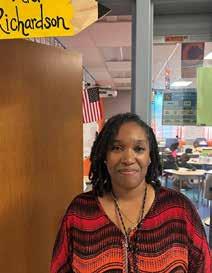
Demetria Richardson has a lot in common with her fellow teachers. After 26 years in the classroom and as a union member, she still stays after school every afternoon and arrives early the next day. She’s honed her natural gifts of flexibility, dedication, and care to expert levels—as she recently showed when a nonverbal kindergarten student wandered into the teachers’ lounge in tears, snack in hand. Richardson didn’t miss a beat as she comforted and encouraged the child before seeing that she got
where she needed to be. Like her colleagues, she goes above and beyond.
There’s another area where she also exceeds expectations, and it’s not quite as positive. She spends a significant chunk of her own money to provide classroom supplies and activities for her students every year. Unfortunately, it’s become normalized that teachers pair their hardearned expertise with a significant financial commitment, as well.
Like many of her fellow educators, Richardson has a personal credit card set aside just for her classroom
purchases. Unlike many, though, she’s given herself a $1,500 budget for unexpected items her students need but that can’t wait for Title I funding approval or crowdsourcing. They can be anything from marshmallows for science experiments to posterboard needed at the last minute. Almost every teacher spends personal money to purchase resources for their students—a full 94 percent, according to multiple surveys, including one from the U.S. Department of Education. The NEA reports that every year, on average,
there is not a PTA at Richardson’s school to organize fundraisers and supplies drives, or even to aid in advocating for students and educators. Additionally, when back-to-school supplies drives happen, the scissors, pens, notebooks, etc. often stay in the home with the adults, never actually reaching the classroom. These resources are then not available to support children learning during school hours; Richardson also knows that students are in dire need of home libraries to support her classroom instruction.
do to support?”
Although Virginia does offer educators a small tax write-off for purchasing supplies, it’s not nearly enough to cover their costs. The problem has been made worse by the economic realities faced by many of her students’ families: Richardson has had to cut down on the back-to-school lists she creates for students to reflect what’s really attainable. “In the past we used to ask for four or five packs of notebook paper, six or seven composition books, a multitude to get us through the entire year,” she says. “It’s now at the point that we’re lucky if we get one or two composition books.”
This impact is especially strong in Title schools where community supports are fewer and more greatly needed. Currently,
Individualized crowdsourcing, such as Donors Choose projects, can provide critical supplies but also takes tact, energy, and time to set up and manage. In most cases the recipient must wait until the project is funded to receive the funds, which only works for certain needs and on particular timelines. The needs are great and teachers are often left to try to fill the gaps that seem to stretch endlessly before them, draining valuable time and energy that could be spent doing what they chose their careers so they could do: teach.
Richardson sums up her giving this way: “In our society now, sometimes you look at a situation and say I know this can be handled one way, but if it’s not being handled that way, it’s what can I do to help, what can I
Policymakers, instead of relying on the expectation that teachers will “step up” and provide from their own pockets, should enact budgets that actually cover the costs of educating the whole child. It’s not cheap, but we’ve been trying to do it on the cheap. It won’t change without significant pressure from both within and without the school community. Parents, community members, and taxpayers are all key stakeholders in schools and can help push for changes that provide a better learning environment.
Unions can play an important role, too, by organizing around the issue of personal spending, something not required in other professions. Richardson says that the REA has helped her feel part of a community that supports her: “It’s like that cape, that covers you to protect you.” Speak to your union colleagues in your building and make a plan to address funding shortages. Teachers are already stretched thin, and little is currently being done by school division leaders to help. Public school funding should be sufficient for our classroom pro-fessionals to do the magical work they do, free from having to buy their own materials.l
Kate O’Grady is editor of the Virginia Journal of Education.
Demetria Richardson outside her classroom.
UVA Initiative Helps Youth Thrive Online
by Bethany Teachman and Nancy Deutsch
From dinner tables to lawmakers’ chambers, concerns about how social media impacts youth’s mental health and academic engagement are a frequent topic of conversation, and restrictions on mobile phones in schools and social media for children under 16 are growing.
These conversations are critical for all of us who care about healthy youth development. High rates of anxiety, depression, and other mental health issues among youth are truly alarming, but policy must also follow good data. Despite countless headlines, the data linking time using social media to mental health problems is weak. Across studies, effects tend to be small, with few reliable associations. Moreover, some evidence suggests that youth experiencing anxiety and depression withdraw and then spend more time online. Thus, when online activity leads to anxiety and depression versus the other way around is unclear.
This doesn’t mean there aren’t harmful effects from social media use. Online environments can be risky. Youth may be exposed to cyberbul-
Fears about the effects of technology on young people aren’t new. So, we need to approach this differently if we want to make real progress. We believe that a big part of doing so means partnering with others who care about this issue, including educators, parents, community organizations, industry, and policymakers. But most of all, it means partnering with youth. We won’t find effective solutions youth will use if they’re not partners in developing them. They’re too often left out of the conversation.
lying, engage in negative social comparison, or have their privacy compromised. Yet, online environments can also offer unique opportunities to connect with others, explore interests, and find supportive communities.
We’re psychology researchers, educators, and parents of teens, and all this leads us to say we need to better understand whether—and under what conditions—online environments are harmful or healthy, so we can enhance their benefits and reduce their potential harms. We co-direct University of Virginia’s Thriving Youth in a Digital Environment initiative (TYDE; tyde.virginia.edu), which addresses two key questions. First, what are the positive and negative impacts of digital contexts on different groups of youth, and what ways of engaging online lead to better or worse effects? Second, how can we leverage youth’s tendencies to seek health information online to increase access to mental health support? There is now evidence that certain apps and digital interventions can help reduce anxiety, depression, and other mental health challenges.
Guidelines are needed; most youth we talk to acknowledge that. But they want those guidelines to reflect the variety of ways and reasons that they use technology. At TYDE, we’re excited to hear youth’s ideas on making technologies support rather than harm them. We had high school and university students co-design digital interventions to make social media use healthier. Based on their guidance and ideas, we’re now building a new tool. We invited high school interns to partner with Lighthouse Studios to make films highlighting what they see as the impacts of mobile phones on their lives and ways they want to use technology differently.
We’d also love to partner with you! We are eager to advance understanding of the impact of technologies on youth in ways that center both youth and educators’ voices, and to use technology to support youth mental health. Interested in research, outreach, youth events, or other collaborations? Contact us at tyde@virginia. edu l
Bethany Teachman, PhD and Nancy Deutsch, PhD, are co-directors of TYDE.
IMMIGRATION INFO
What You and Your School System Can Do to Help Protect Immigrant Students
All our students have the right to feel safe in their schools, regardless of race, creed, ethnicity—or citizenship status. You have the power to safeguard your immigrant students’ learning environments. You can ask for a meeting with administrators, raise concerns at staff or school board meetings, talk with your colleagues, and reach out to your local UniServ Director. Here are other actions individuals and local unions can take and/or request from school leadership:
Establish a clear protocol for responding to visitors, including law enforcement, at your school. School leaders should train all school staff to ensure they understand and follow the policy. Require all visitors, including law enforcement, to check in at the front desk or your school’s administrative office and present identification and documentation. Officers must present a valid judicial warrant or judicial subpoena for review by the school principal and legal counsel and be
instructed to wait in the administrative office while the principal, in consultation with legal counsel, reviews the documents and requests. Regardless of the warrant or subpoena status, law enforcement officers should not be given access to the entire learning environment, so we recommend instructing them to stay in the administrative office or outside the school to comply with valid warrant requests.
Define and mark private areas in your school to protect students’ Fourth Amendment rights against unreasonable search and seizures. Spaces that are marked private (e.g. through signage and gates) are protected from immigration enforcement activities without a valid judicial warrant or subpoena.
Limit the information that your school collects from students and their families. Avoid collecting any information that you are not legally required to, especially any personal information such as social security numbers and
birthplace. Do not collect immigration status information.
Provide “Know Your Rights” materials, including posters, videos, and live trainings to educate immigrant students and families on their rights. Most often, you can access these resources from related local organizations. These external partnerships with local immigrant-serving community-based organizations and legal aid groups help to ensure those resources are linguistically appropriate and culturally responsive. Remember, however, that Know Your Rights materials only provide general information and do not constitute legal advice.l
Source: The National Newcomer Network (tcf.org/nnn/), a coalition of educators, community leaders, advocates, researchers, and policymakers committed to protecting the educational rights of K-12 newcomer students.
VIRGINIA
VEA Report Spells Out Funding Situation
There is no doubt that the cost-of-living varies across the state, and money is not the cure-all for every educational challenge.
However, it is clear that school spending makes a significant difference to Virginia’s students, as schools in affluent areas tend to have newer texts, more electives, newer technology, and smaller class sizes. Much of the variation in expenditures occurs because localities’ ability to raise revenue varies a great deal. This leads to differing educational experiences across the state, with students from areas with high concentrations of poverty receiving less support and having fewer opportunities than those in wealthier areas.
Learn all about it in the latest edition of VEA’s “Virginia’s School Funding Indicators” report, which provides information on how public schools are funded in each local division in our state. The report includes how equipped each locality is to fund schools and the fiscal effort they’re making, per-pupil spending, average teacher salaries, staffing levels, graduation and dropout rates, and more. It also details the resources available to students depending on where they live, the lingering effects of the “support cap,” and recent progress in restoring funding for essential school staff. Read it to see exactly how your division compares and why continued investment and fair funding remain critical for Virginia’s students and educators.
You can access the report at https://vea.link/VA-School-FundingIndicators.ll
VEA Restructures to Meet the Challenges of a Changing Educational Environment
VEA leadership is always on the lookout for ways to be proactive about what’s to come in our schools and how we might need to change to continue to serve our students and members most effectively. To that end, we’ve undergone a major restructuring in our headquarters, creating a new department we’re calling Equity, Justice, and Learning. The new department combines VEA’s existing Department of Human and Civil Rights and Department of Teaching and Learning into a single, integrated unit, and serves to unify our Union’s work in advancing fairness, inclusivity, and educational excellence across the Commonwealth.
Taisha Steele
This development is not a trendy name change, according to VEA President Carol Bauer, it’s a recognition of our need to change the way we work in a changing public school environment: “Restructuring in this way represents our commitment to ensuring that equity, justice, and learning are not separate initiatives, but interconnected pillars of everything we do,” she says. “By bringing these critical functions together under unified leadership, we’re creating a more powerful voice for educators and students across Virginia. This integrated approach will help us better serve our members while advancing educational equity in every classroom and community.”
Taisha Steele, who served as our Director of Human and Civil Rights, has been named to lead the new department and has been promoted to Associate Executive Director. Her expanded role will include some lobbying duties during General Assembly sessions and providing leadership support in the implementation of VEA’s Racial Equity Learning Plan.
The Department of Equity, Justice, and Learning’s focus is on weaving justice and learning together to transform classrooms, schools, and communities by centering racial and social justice in all aspects of education professions. It will continue VEA’s work in educational access, fair working conditions, professional development, and advocacy for historically marginalized communities.l
Get Your Organizing Tips from the Experts
NEA has created an Organizing Resource Hub on NEA.org, which features publicly accessible resources that offers organizers a range of materials to aid in building your local union’s strength. We encourage you to bookmark these sites as these pages are continually updated.
Some highlights of this Hub include:
• Conversation guides on student debt, pensions, health care, and unions
• Downloadable videos, posters
• Year Round Organizing Cards, Text to Connect and Text to Join explainers
Year-round organizing resources can also be found in the members only section of the VEA’s website. Log in and find out more at veanea.org/ organizing and at nea.org/resource-library/organizing-toolsrecruitment l
New Staff Members Join VEA’s Team
Kenyatta McLeod-Poole is VEA’s new General Counsel/Director of Legal Services, and brings more than 15 years of legal and executive leadership experience in the federal government, including service as Chief Counsel of the Information & Privacy Law Group at the Department of Veterans Affairs. Her experience also includes over a decade of advising on collective bargaining agreements.
Vanesha Johnson is our new organizer for Southwest Virginia, coming aboard with lots of VEA leadership experience. Most recently, she was a special education teacher in Roanoke City Public Schools, where she was her school’s Teacher of the Year for 202324. As a member organizer, she’s been elected REA and District C president.l
Longtime VEA member Martha Wood, who was one of the founders and organizers of VEA-Retired after a 34-year classroom career in Stafford, Fairfax, and Albemarle counties, and who served on the VEA Board of Directors as both an active and retired member, passed away in August in Charlottesville. She was 89 and rarely missed a VEA convention, including this year’s in Abingdon. Her contributions to the Virginia Education Association and its members are legendary: A mentor to many; a leader at the local, state, and national levels; a tireless advocate for public education; an outspoken proponent of social justice and equity; a dedicated lobbyist; and a caretaker of our history. VEA-Retired’s Distinguished Service Award is presented annually, named in her honor. We will miss her, for as her obituary said, “Her legacy of love, service, and compassion will continue to inspire all who were fortunate enough to know her.”ll
The Montgomery County Education Association has become the first VEA local to have ratified contracts across the board: licensed, support and administration staff! It’s an amazing step, and it comes after MCEA members worked long and hard, maintained strong solidarity and power, and supported each other through the negotiations process. Congratulations to them, and thanks to MCEA setting the pace for all of us!l
Five Steps to Growing Your Savings
Like the school year, saving gets easier once you find your rhythm. Using these practical tips and VRS resources, you can build a habit of saving and make progress toward your short- and long-term goals.
1. Challenge yourself.
Set achievable goals and aim to do better each month. Start by saving an extra $25 this month, $50 next month and maybe $100 the month after. As you make progress, celebrate with small rewards such as a coffee from your favorite shop or a movie night.
2. Save automatically.
Pay yourself first by setting automatic transfers to personal savings and retirement savings accounts, like the Commonwealth of Virginia 457 Deferred Compensation Plan or your employer’s 403(b) plan. This way, you can save money without needing a reminder. Contributing on a pretax basis, if available, further simplifies savings by letting you pay taxes on these contributions later
Take advantage of compounding interest, where you earn interest not just on the money you put in, but also on the interest that builds up over time. It’s like a snowball effect where your savings grow progressively larger. Saving small, consistent amounts now can lead to bigger gains later. Calculate the effect of supplemental savings on your future benefit at dcp.varetire.org/plan-tools/calculators.
3. Get the match. Don’t leave money on the table. If you’re in the Hybrid Retirement Plan and contribute 4% of your salary to the plan’s defined contribution component, your employer will provide a 2.5% match. Increase voluntary contributions in your DCP Account at dcp.varetire.org/login, if applicable, and consider using SmartStep to automatically ramp up savings until you reach 4% on a schedule you choose.
4. Try the 50-3020 rule. Some industry experts recommend this method, which can be adjusted to your needs and may help you manage your funds more easily. Save a recurring portion of your paycheck, such as 20%, as soon as you get it. Start with a comfortable percentage and investigate ways to let your money grow over time, such as a supplemental plan offered by your employer or a high-yield savings account. Designate 30% for spending on your wants and reserve the remaining 50% for necessities.
Notice of Spring District Elections
Participating in elections matters whether you’re voting for President, Mayor, or VEA Board Member!
Elections for the following District positions on VEA State Board of Directors will be held in the spring 2026. Individuals elected to the VEA Board of Directors will also be elected as delegates to the VEA Convention and the NEA Representative Assembly for the duration of their term. Petitions will be available in January to district members. These districts are:
B Bland, Carroll, Floyd, Galax, Giles, Grayson, Mongomery, Pulaski, Radford, Smyth, Wythe, Graduate Labor Union of Virginia Tech
C Alleghany Highlands, Botetourt, Craig, Franklin County, Roanoke Co, Roanoke, Salem
E Fairfax
5. Budget. Look at your discretionary expenses for opportunities to trim. That might mean reviewing subscriptions and memberships you rarely use, planning travel or entertainment around discounts, or setting a cap on impulse purchases like clothes or online orders. It can also help to separate fixed costs, like housing and transportation, from flexible costs, like dining out or entertainment. Identifying which parts of your budget are more flexible gives you options to redirect money into savings.
For helpful resources, including a custom budget tool that helps you plan for expenses, set goals and keep your finances on track, visit myVRS Financial Wellness at varetire.org/financial-wellness. Start by taking the Your Money Personality quiz (enrich.varetire.org/personality) for a better understanding of your saving and spending habits.
Reminder: Log into or register your myVRS account at myVRS.varetire.org for full access to financial wellness resources. As an online security best practice, take time to verify your phone, email and mailing address.ll
VEA-Retired to Elect Leadership
VEA-Retired members will hold elections in January for all Council positions, as well as delegates to the VEA and NEA conventions for the next two years. Petitions and nomination forms are available now; paperwork must be returned by December 15th, as voting will be held January 24-26, 2026. All the forms and details can be found at vea.link/ retired-elections Questions? Email vearetired@veanea.org l
President 2026-2028
President 2025-2027
President 2026-2028
F Prince William President & Director 2026-2028
G Loudoun President & Director 2026-2028
H Arlington, Falls Church City, Manassas City, Manassas Park City, Alexandria
K Brunswick, Dinwiddie, Franklin City, Greensville, Isle of Wight, Lunenburg, Mecklenburg, Nottoway, Petersburg, Prince George, Southampton, Surry, Sussex
President & Director 2026-2028
President 2026-2028
O Accomack, Norfolk, Virginia Beach, Northampton President 2026-2028
P Caroline, Colonial beach, Essex, Gloucester, Hampton, Hanover, Henrico, King & Queen, King George, King William, Lancaster, Mathews, Middlesex, New Kent, Newport News, Northumberland, Poquoson, Richmond Co, West Point, Westmoreland, Williamsburg-James City, York, Charles City
President 2026-2028
Q Culpeper, Fauquier, Fredericksburg, Rappahannock, Spotsylvania, Stafford Director 2026-2028
Election notifications will also be posted on the VEA website on January 5, 2026, and by January 10th, all members in these districts will be emailed a Notice of Elections announcing the election of board members.
Elections for VEA President and VEA Vice President will be held in the spring for a two-year term (2026–2028). Petitions are available upon request.
Elections will be held for delegates to the following events:
• VEA Convention – April 16–18, 2027 in Norfolk, Virginia
• NEA Representative Assembly – July 3–6, 2027 in Denver, Colorado
Delegate elections will be conducted by local association leadership.
If you have any questions or concerns, please email: vea.elections@veanea.org
Be sure to take part in the democratic processes of your union!l
KUD S
Longenecker Named Virginia’s History Teacher of the Year
Cumberland Education Association
member Lewis Longenecker, a teacher at Cumberland Middle School, has been named the 2025 Virginia History Teacher of the Year by the Gilder Lehrman Institute of American History. At CMS, he teaches world geography, Virginia/United States history, civics, economics, and United States history II, and his work has also been honored in the past by Virginia Humanities. He will now be Virginia’s nominee for the National History Teacher of the Year Award, also presented by the Gilder Lehrman Institute, a national nonprofit supporting K-12 history education.
Victor Spadoro, of the Arlington Education Association and Abingdon Elementary School, has been selected as the SHAPE America Southern District’s Elementary Physical Education Teacher of the Year. His education degree had a concentration in adapted physical education, and he uses activities including drumming and dance to encourage all students to enjoy movement.
Six members of the Richmond Education Association have been named 2025 Yale National Fellows after participating in two weeks of a summer intensive on campus designing original curriculum units. It was all part of the Yale National Initiative, a program created to strengthen teacher expertise through teacher institutes. The new fellows include Alexandra Amirato of Barack Obama Elementary, LJ Delao of Huguenot High, Katherine Franzel of Southampton Elementary, Vivian Lee-Taylor of Thomas Jefferson High, Amanda McMahon of Huguenot High, and Valerie Schwarz of Mary Munford Elementary.l
Photo page 23 by Olivia Geho
Making Your Way to the Summit
What makes a teacher excellent?
What defines excellence in teaching? The National Board for Professional Teaching Standards, the organization that bestows National Certification, has done a lot of research in an attempt to define classroom excellence and come up with “Five Core Propositions” to spell out its findings. Want something to aim for? Check yourself against those statements here, used with the permission of NBPTS (www.nbpts.org):
Teachers are committed to students and their learning and:
• are dedicated to making knowledge accessible to all students;
• recognize students’ individual differences and take these differences into account in their teaching;
• understand how students develop and learn;
• incorporate the prevailing theories of cognition and intelligence in their practice;
• are aware of the influence of context and culture on behavior;
• foster students’ self-esteem, motivation, character, civic responsibility and their respect for individual, cultural, religious and racial differences.
Teachers know the subjects they teach, how to teach those subjects to students and:
• have a rich understanding of the subject(s) they teach;
• develop the critical and analytical capacities of their students;
• command specialized knowledge of how to convey and reveal subject matter to students;incorporate the prevailing theories of cognition and intelligence in their practice;
• understand where difficulties are likely to arise and modify their practice accordingly.
Teachers are responsible for managing and monitoring student learning and:
• create, enrich, maintain and alter instructional settings to capture and sustain the interest of their students; develop the critical and analytical capacities of their students;
• encourage interacting among students and between students and teachers;
• understand how to motivate students and maintain their interest in learning even in the face to temporary failure;
• employ multiple methods for measuring student growth and can clearly explain student performance to parents.
Teachers think systematically about their practice, learn from experience and:
• exemplify the virtues they seek to inspire in students: curiosity, tolerance, honesty, fairness, respect for diversity and appreciation of cultural differences;
• make principled judgments about sound practice;
• examine their practice, seek to expand their repertoire, deepen their knowledge and adapt their teaching to new research and theories.
Teachers are members of learning communities and:
• work collaboratively with other professionals on instructional policy, curriculum development and staff development;make principled judgments about sound practice;
• evaluate school progress and the allocation of school resources;
• know about school and community resources and can employ them for students’ benefit;
• find ways to work collaboratively and creatively with parents, productively engaging them in the work of the school.l
New to the Classroom? Let VEA Help!
Are you a new teacher looking to navigate your first year with confidence and joy? We can help! VEA has a new course on our Learning Portal, From Surviving to Thriving: A Compassionate Guide to Your First 90 Days. It’s a practical, holistic guide for building a sustainable and heartfelt career from the start. You’ll:
• equip yourself with strategies that help you feel grounded, effective, and excited about teaching.
• discover essential tools to protect your well-being and prevent burnout.
Get started here! veaportal.learnupon.coml
Civics Topics Scaring Teachers
If you’re a civics teacher who has ever felt unsupported and unprepared to tackle the subject you’ve been hired to teach, you are not alone! A whopping 80% of civics teachers say they have self-censored “due to fear of controversy or pushback.” Additionally fewer than 1 in 5 veteran civics educators surveyed nationally by the Sandra Day O’Connor Institute report receiving clear guidance from their school or district on what they are allowed to teach. There is a difference between having the freedom to teach the subject you know best, and lacking guidance and training on an often-politicized topic! An O’Connor Institute brief recommends a few ways for policymakers to address this issue: invest in stronger teacher preparation, provide clear and content-rich standards and, most of all, support educators. If this topic is widely felt in your local, getting the support civics teachers need could be a good issue for your local to organize around.
To read the full brief, visit: oconnorinstitute.org/research2025l
‘If You Don’t Mind My Saying So...’
When a nosy fourthgrade student wanted the scoop on what another teacher and I were discussing in private, I decided it was time for an impromptu lesson in manners.
“Do you know what ‘minding your own business’ means?” I asked pointedly. He didn’t, but a student clear across the room shouted, “I do!”l
Slow and Steady Wins the Race
Steady, incremental growth is often the path to long-term change and success, especially when it’s happening despite serious obstacles. In the face of growing challenges, such as the enormous increase in English language learners and perennial school underfunding, the Commonwealth’s public schools have kept high school graduation rates on the uptick for the last decade. In 2024, 91,568 Virginian high-schoolers successfully completed their high school education, which translated to an on-time graduation rate of 92.85 percent. The dropout rate was 4.50 percent. Those are all better numbers than in 2015, when our state had an on-time rate of 90.57 percent for 84,307 graduates, and a dropout rate of 5.22 percent.l
Source: Virginia Department of Education
Where to Find Some AI Answers and Ideas Gathering ‘Round
Building a sense of community in your classroom is vital for everyone.
Community is a virtual space in a classroom where students know they’re valued and respected, where care and trust are at the forefront, and students have a voice in the meaningful decisions about their learning and their relationships. The greater the sense of community in your classroom, the greater the chances of everyone learning, growing, and progressing—and enjoying it, too. Both advancement and memories are made best in close-knit classes.
Here are a few questions you may want to think through to check on your classroom’s sense of community, from VEA’s Teaching & Learning Department:
Do you “love” your students? Work hard at getting to know their names, their needs, their interests, their backgrounds, their family situations, etc. What were their SOL test scores last year? What, specifically, do their IEPs say? Did they have behavioral or attendance issues last year? Be sure each student knows you care about him or her. Part of that is letting them know you have high expectations for them and truly believe in them. Forming relationships will go a long way.
Do you require everyone to truly respect each other? You must guide students when they do not interact with each other appropriately. This can even include things such as a student whispering an answer to another student (which basically says, “You don’t know the answer without me”) or allowing students to keep their hands raised and moving in excitement while one student is trying to process the question posed.
Do you encourage students to support each other? Students will risk answering a tough question when they feel safe from the belittlement of classmates. Students can rejoice in each other’s successes (pat on the back, “good job, man,” applause/cheering, etc.).
Is your class safe and do you have overall with-it-ness? You should be aware of the subtle things that are taking place in your class.
Do you hold yourself to the same standards that you hold your students to? Sometimes students can be a mirror, reflecting what you are putting out. Do you chew gum but tell them not to? Do you use your cell phone but take theirs away if they do? Do you ever roll your eyes, sigh, or walk away from a student instead of showing them respect?l
Support Students and Yourself: Support Pro-Education Candidates
Artificial intelligence is here and if it’s not already affecting your work, it will soon— and probably in very significant ways. That’s why NEA has created its AI in Education hub, offering researched and trusted guidance, tools, and professional learning opportunities to help you navigate as AI use grows in our schools. Pulled together with equity, ethics, and educator voice, this website will point you toward policy resources, classroom strategies, and practical support, all in an effort to best serve both your students and you. Access the hub at www.nea.org/AI.l
“How can we continue to support these developing minds and personalities so that they can be the artists, creators, scientists and entrepreneurs that our future needs? The answer is to support pro-education political candidates. Support the candidates that get high marks from the Virginia Education Association ratings. Get the candidates, wherever you live, on the record to make sure that they support improving public education. Now, a lot of lip service will be paid with anodyne statements. Push back. Call, email, talk with the candidates and with your neighbors, attend public sessions with the candidates or elected officials. Keep after them. Get into the weeds…. Our kids and educators deserve it.”l
— Mike Siraguse, Winchester Education Association President, writing in The Winchester Star
“The government class annexed the history department.”
Scaffolding Our Way to Success
Lastsummer, our principal at Lord Botetourt High School asked the faculty to peruse Tackling Tough Texts: A Research-Based Guide to Scaffolding Learning in Grades 6–12 Its primary focus is on using the scaffolding technique to help students overcome the frustration and challenges of reading difficult passages, textbooks, and, in the case of English teachers like myself, grade level and above novels, plays, and short stories.
Reading the book caused me to reflect on how I teach the most difficult work of literature my English 10 Advanced Studies students annually undertake – Shakespeare’s Hamlet, arguably the most brilliant expression of writing in the English language. Nevertheless, the bard’s Early Modern English presents plenty of challenges to high school students everywhere.
When I first started teaching, I would plunge immediately into Shakespeare’s plays, whether it was Romeo and Juliet in ninth grade, Julius Caesar for sophomores or Macbeth for seniors. The frustration I experienced while teaching these plays was probably equal to the frustration my students endured. I simply could not understand why they could not comprehend a language that I looked upon as supremely lyrical, but that they regarded as incomprehensible and “Old English.”
Finally, after too many years of misery for both my young charges and myself, I experienced an epiphany. As Shakespeare had Cassius proclaim in Julius Caesar: “The fault, dear Brutus, lies not in the stars but in ourselves.” Indeed, it was my fault that my students were struggling. I was doing a poor job introducing the plays.
Pondering how to do better and examining some inter-
net resources, I came up with several lesson plans that today we associate with the scaffolding principle; I labeled them “easing into Shakespeare.” Indeed, I still use the basic plan today.
My Shakespeare Unit begins with me reading to students, in literally Old English, a poem or riddle from circa 800. After I finish, I ask my class to pick out how many words they recognize, which is typically just two or three. Then I say: “Nobody in this room, including me, knows what the heck is going on, right?” The students typically laugh and agree with me, and for the first time, they know what Old English really is and it’s not Shakespeare’s language.
Next, I have students move into their Bonus Points groups which is where they compete to earn extra credit for quizzes. I then project the first 10 lines of Chaucer’s Prologue to the Canterbury Tales (written in Middle English, circa 1400) on the Smartboard and read those lines orally. For some bizarre reason and without really trying, became fluent in Middle English while in college, and this is the one day annually that that skill has a practical application.
Once again, the students laugh at my reading, and I follow up by telling them that they know quite a few of these words, and they nod in agreement. I then announce that the top three groups who translate the most lines accurately into Modern English will earn extra credit. Of course, they cannot go online for translations, and they only have 10 minutes to work. This results in furious activity and collaboration within the groups as Americans relish competing against each other.
The next part of the scaffolding introduction to Hamlet is to pull up The Shakespeare Insult Kit online. I inform the students that 17th century English folks were far superior to us in at least three ways: insulting, cursing, and poisoning each other. I then read from the insult kit and follow up with websites about Elizabethan makeup, dating customs, and concepts of male and female appearance. Women cherished men with shapely legs, and males were attracted to women with wide foreheads.
For extra credit, I then have the room’s females compete for the widest forehead and the boys contend for the individual having the shapeliest legs. Of course, the girls are the judges and they cheer, hoot, or boo as the boys present their respective limbs. Last, in their Bonus Points groups, the students write and present a 300-word play, totally in Shakespearean English, using the insult kit and other websites I’ve provided. We also have a vocabulary quiz on Hamlet words still in use today.
After a week of these activities, the students are so used to the language that we glide through Hamlet. Scaffolding definitely works.l
Bruce Ingram (bruceingramoutdoors@gmail.com), a member of the Botetourt Education Association and a veteran educator, teaches English and Creative Writing at Lord Botetourt High School. He’s also the author of more than 2,700 magazine/web articles and 11 books.