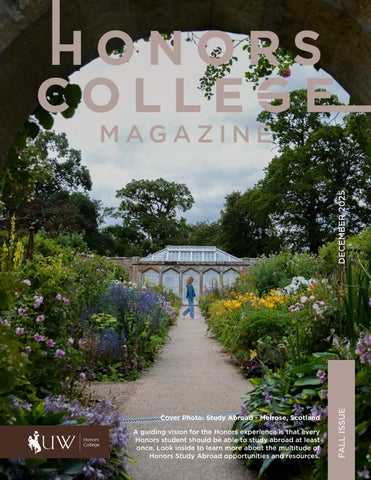
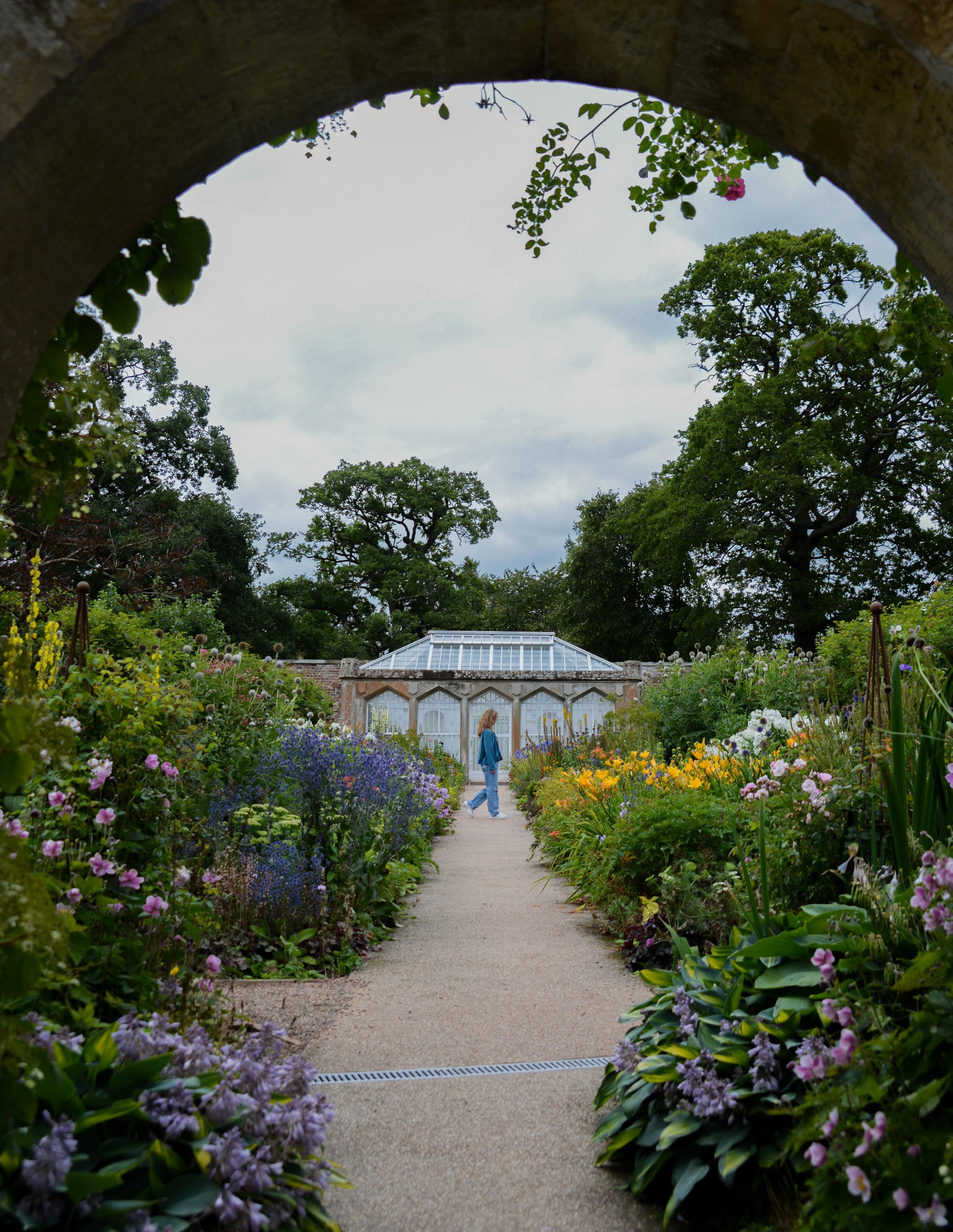
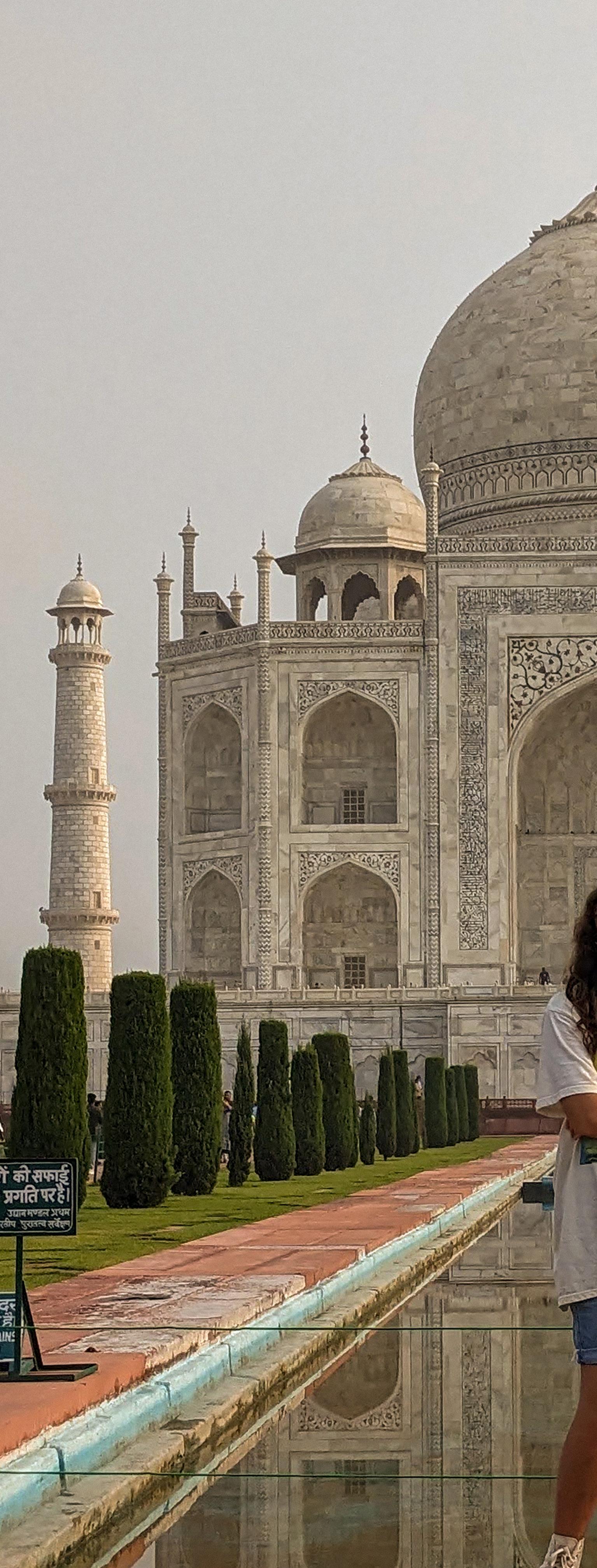
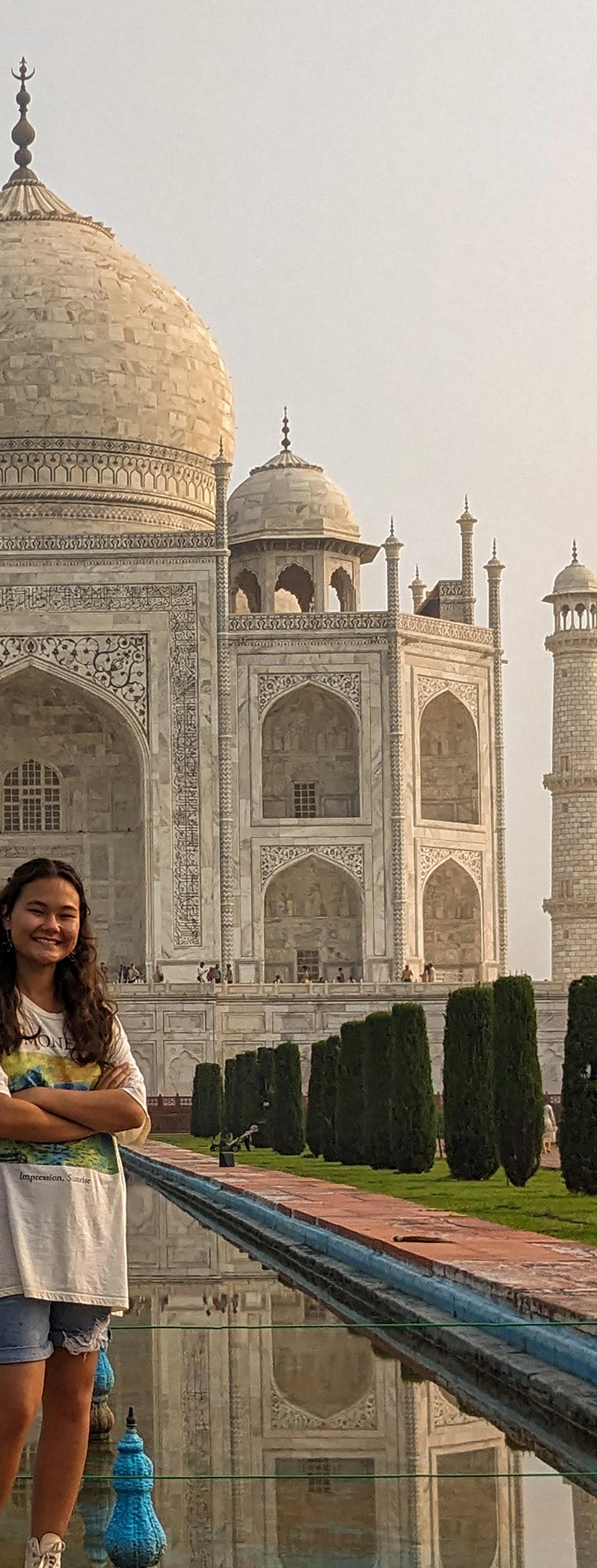
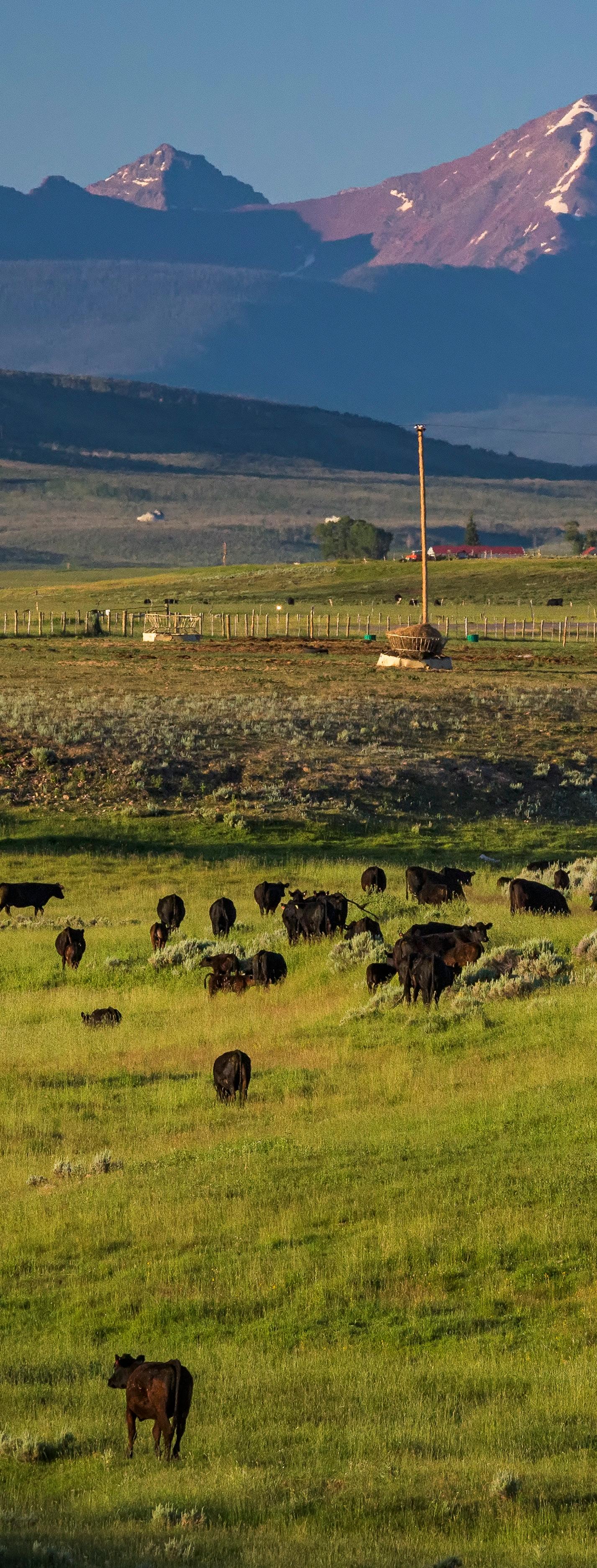
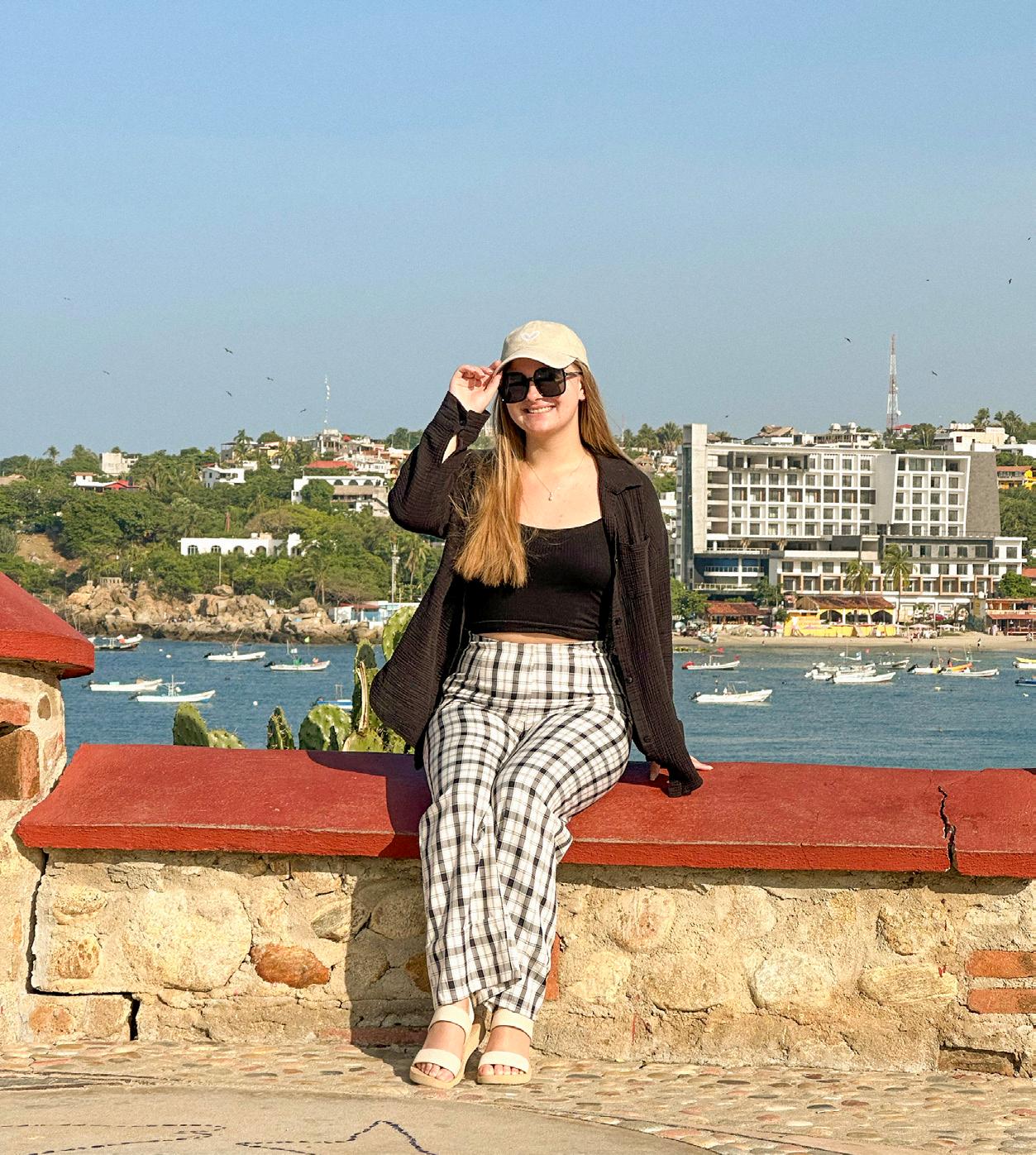
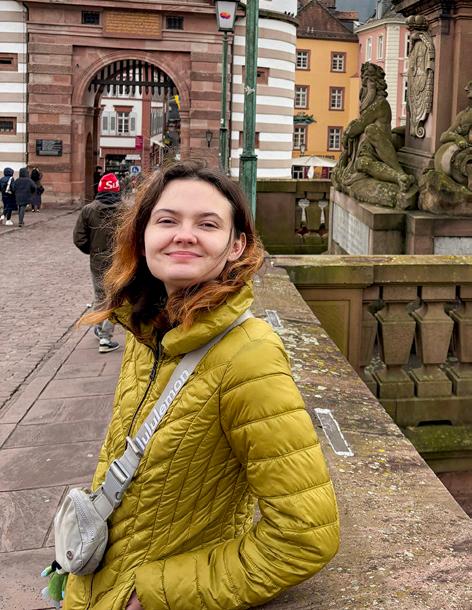
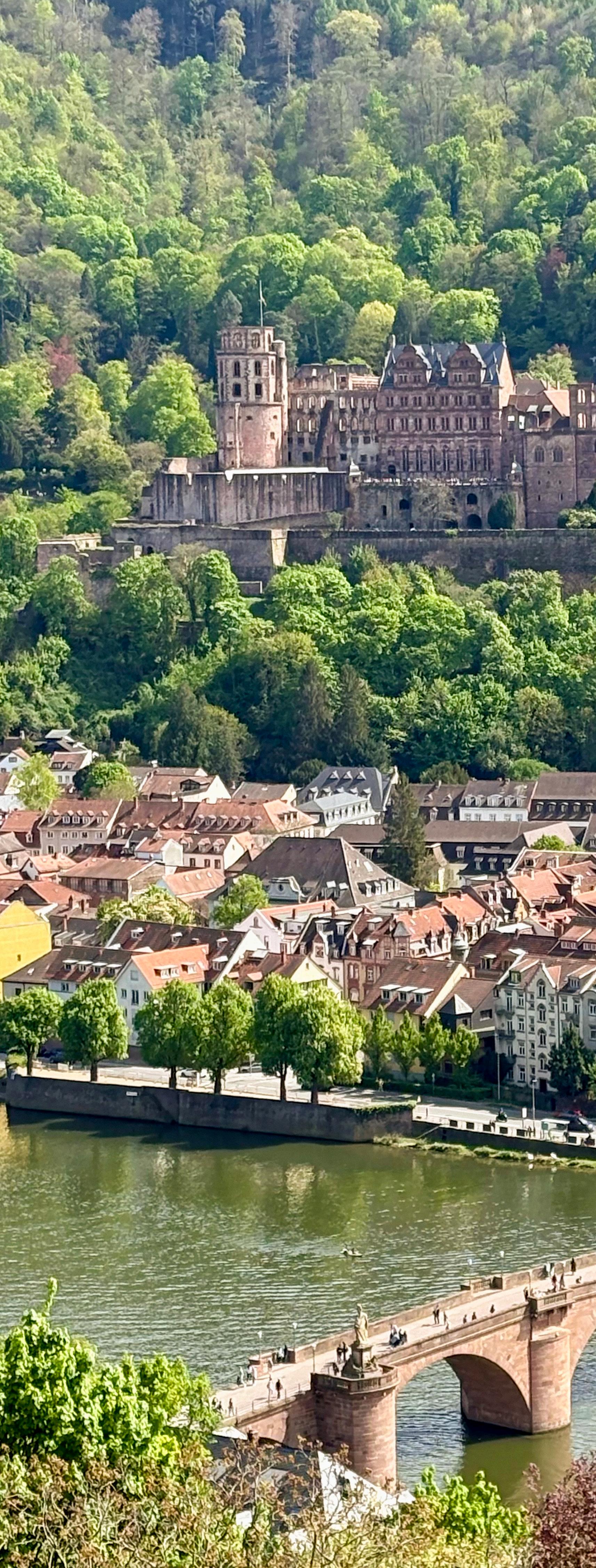
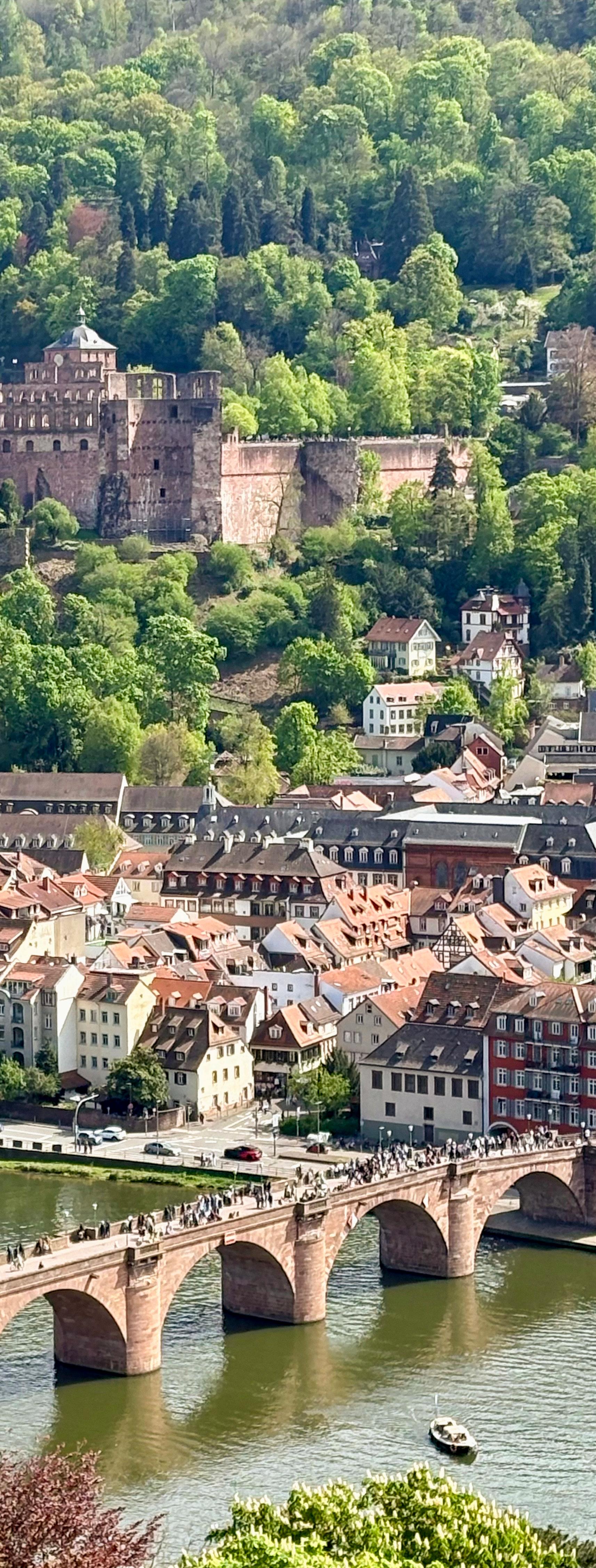
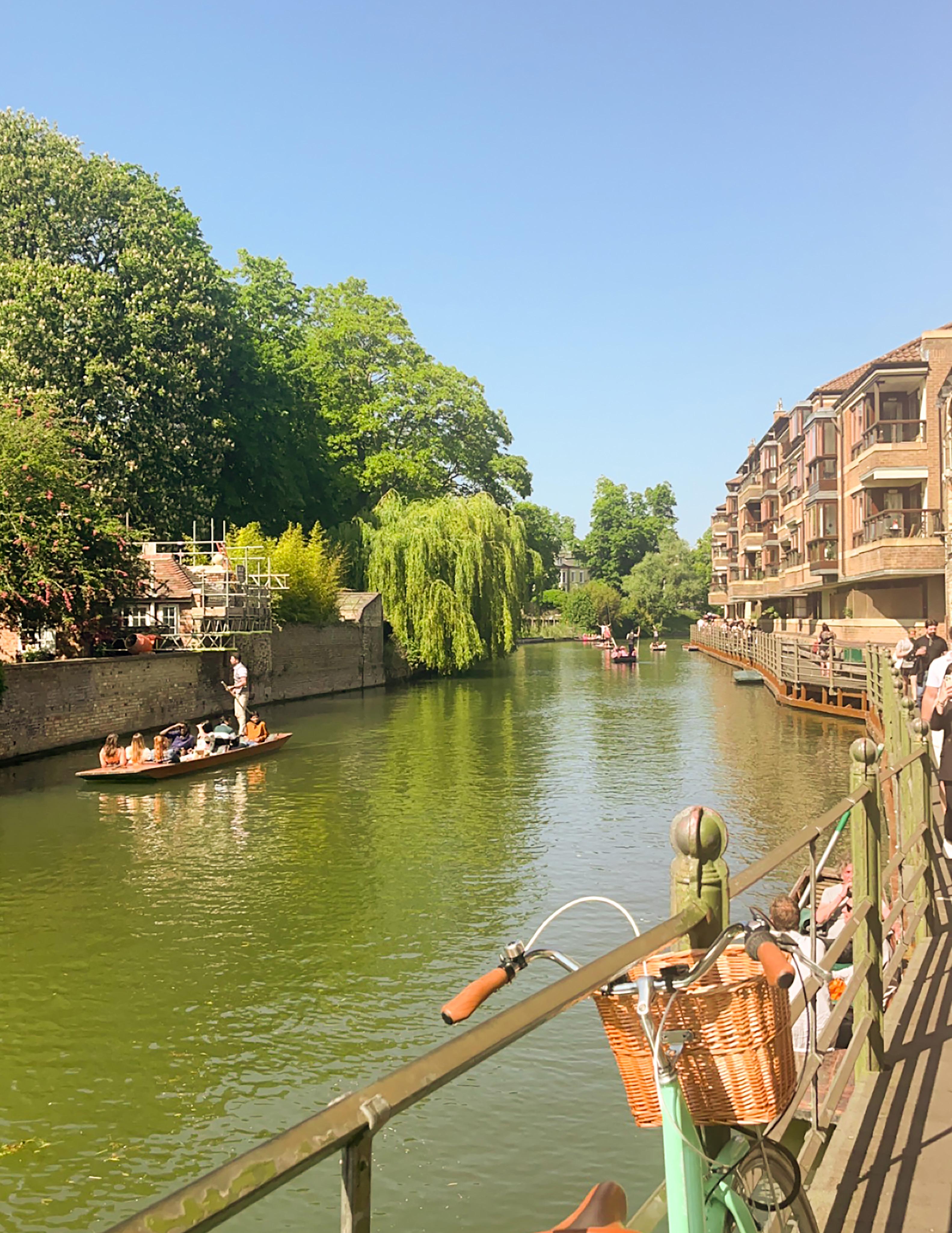
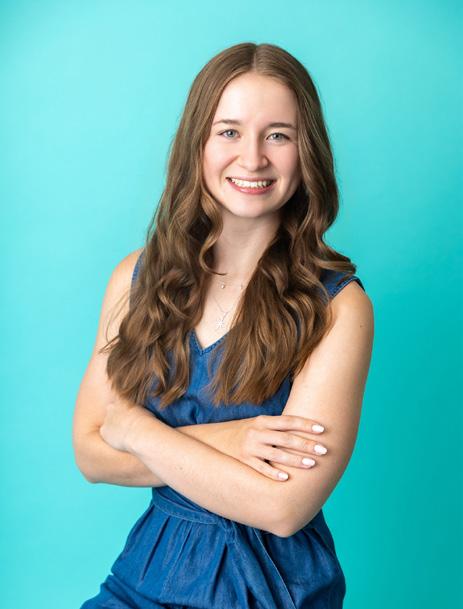
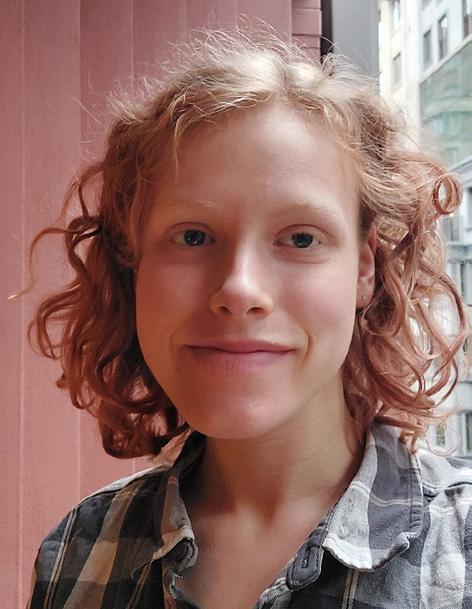
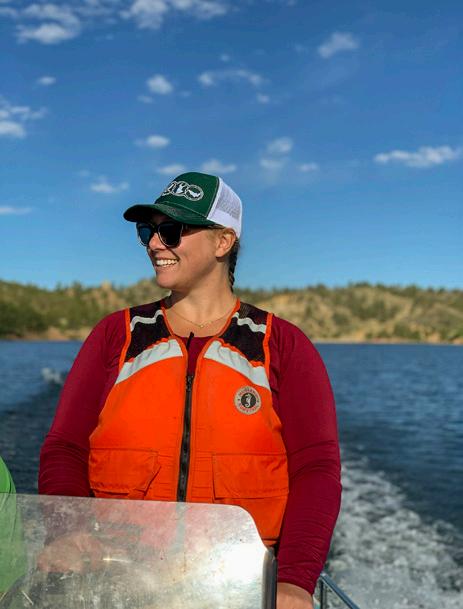
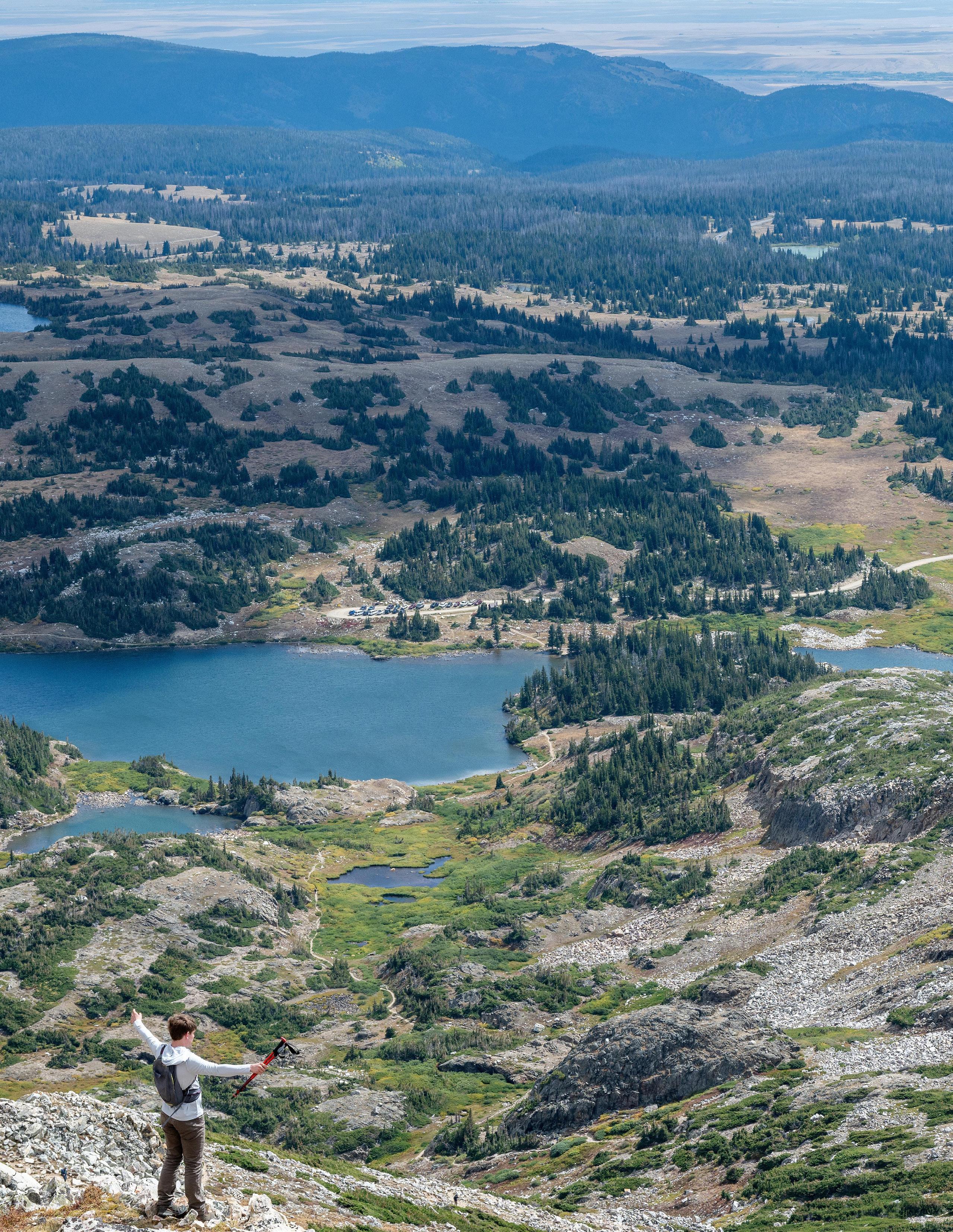
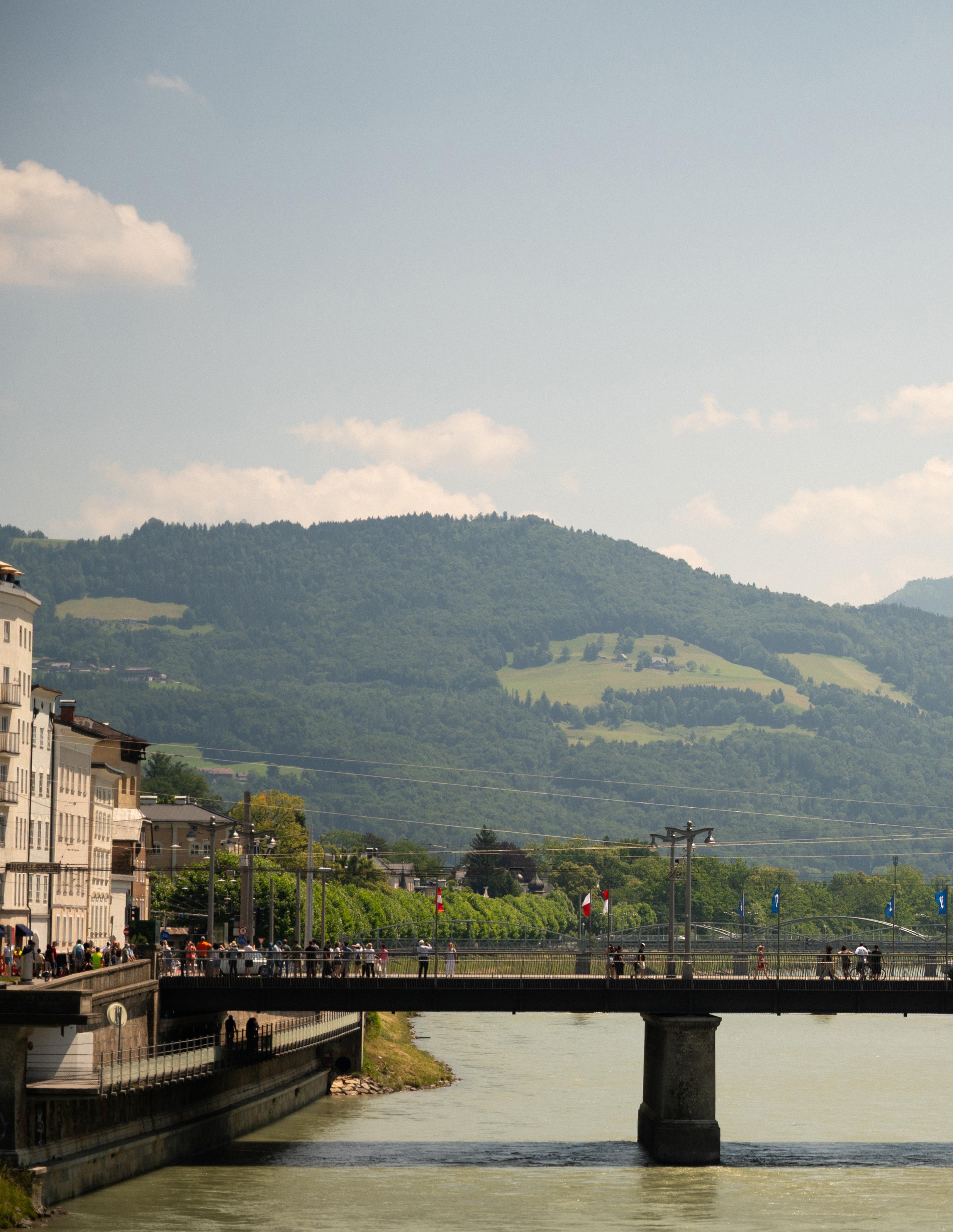
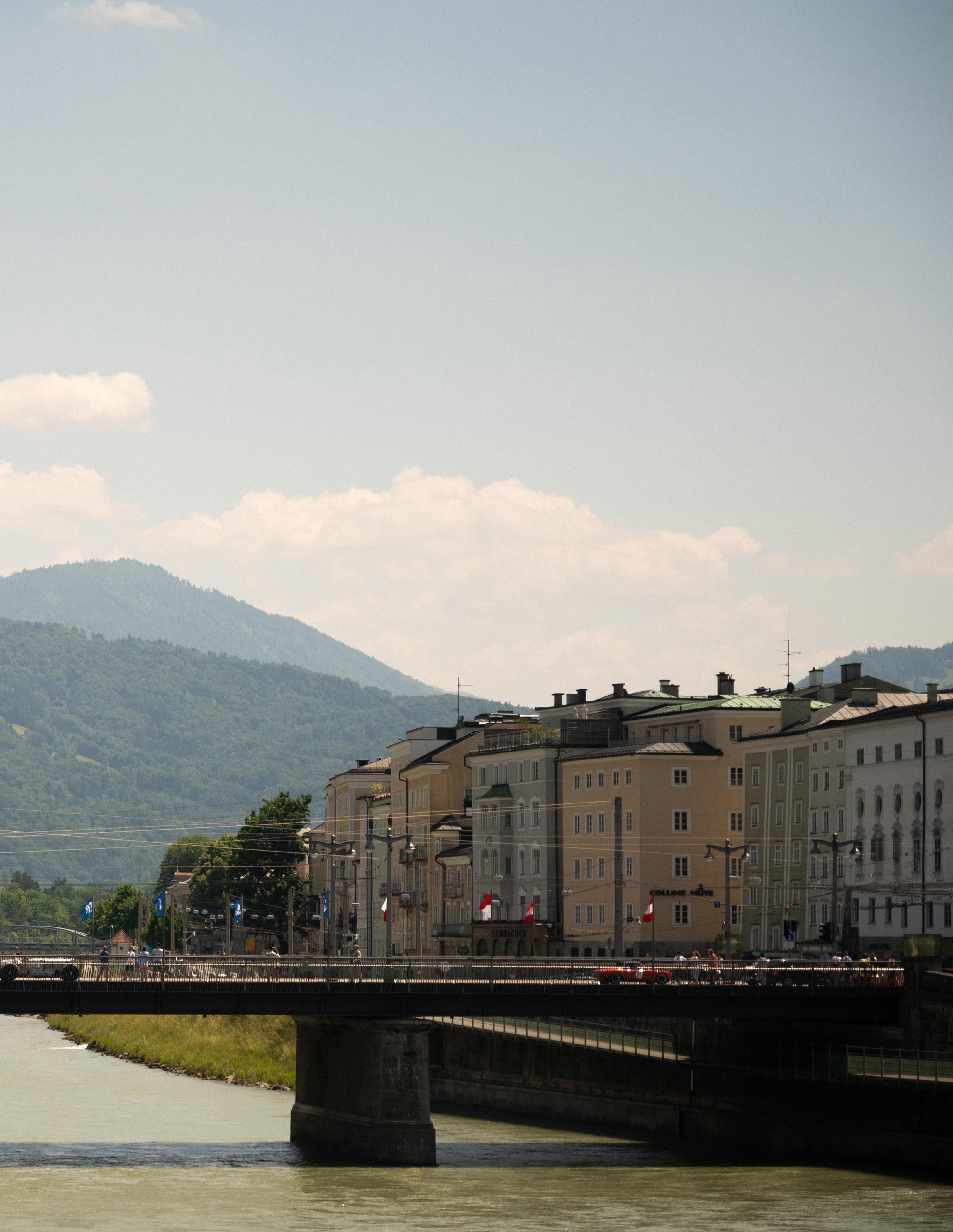
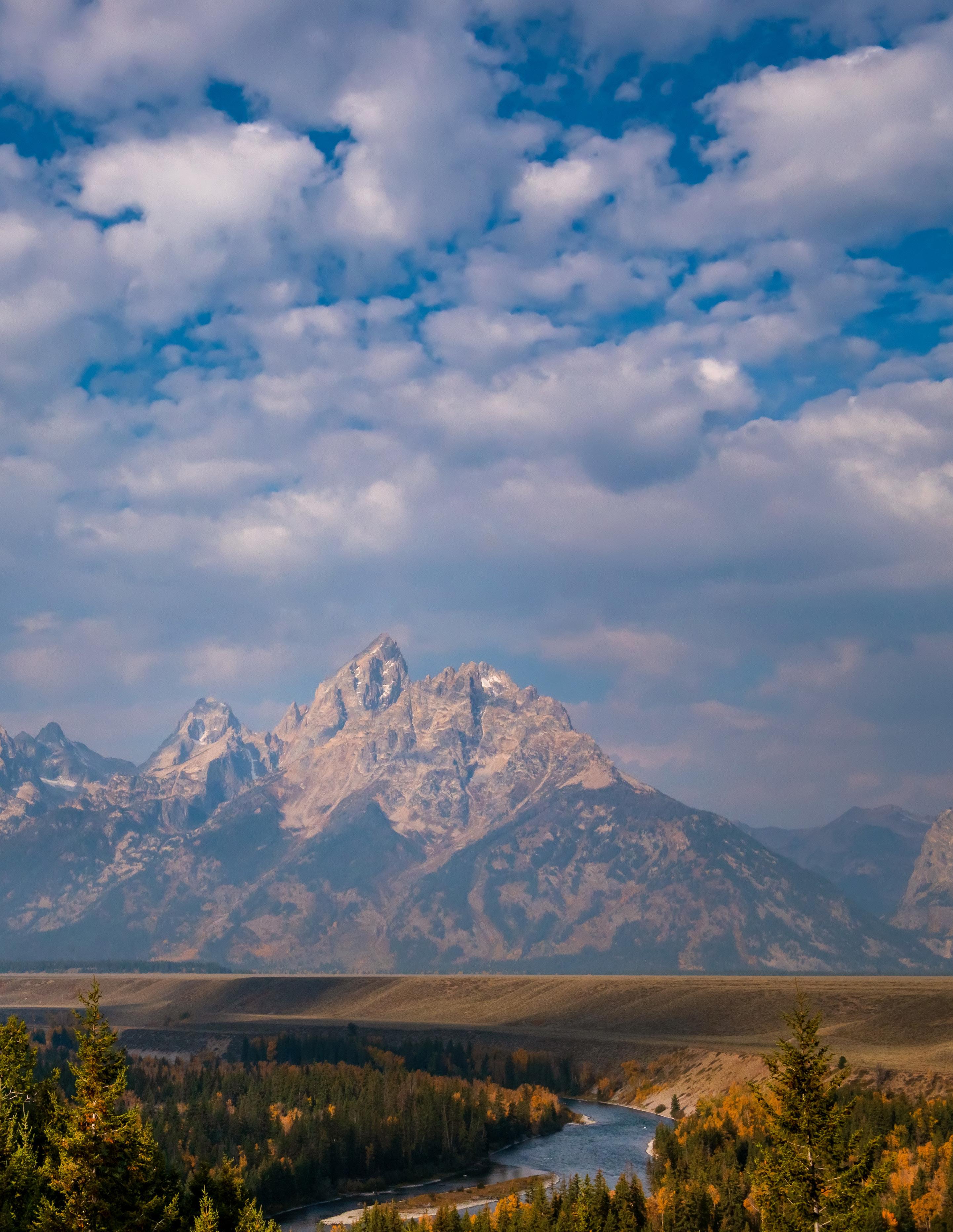
A guiding vision for the Honors experience is that every Honors student should be able to study abroad at least once. Look inside to learn more about the multitude of Honors Study Abroad opportunities and resources.
This Edition of the Honors College Magazine includes many contributions from Honors College staff, faculty, students, and alumni. Please see bylines for specific author information and enjoy learning about the Honors College community.
PAGE 1 | HONORS COLLEGE
INDEPENDENT RESEARCH AND CREATIVITY CONNECT
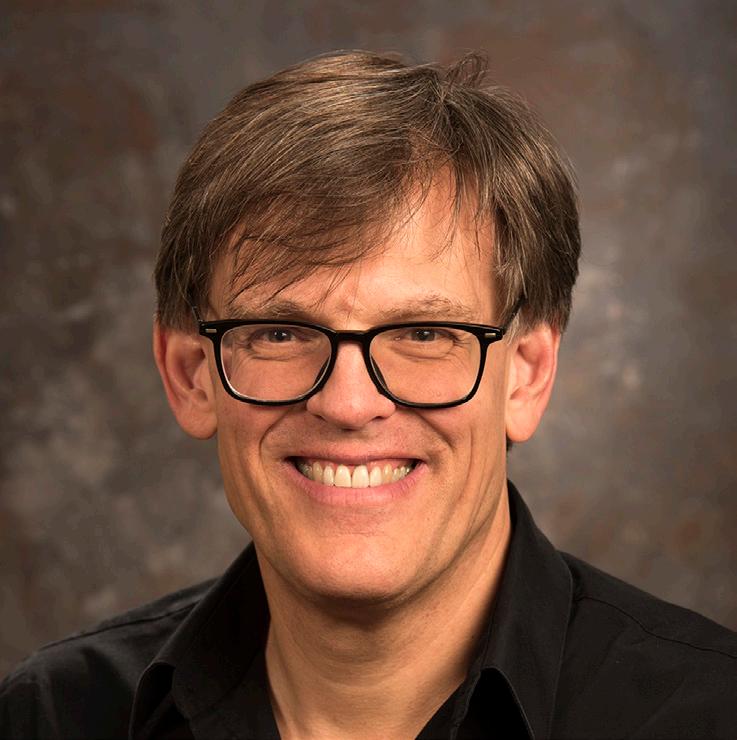
By Peter Parolin, PHD Dean of Honors
UW Honors leans into the opportunity for students to pursue independent research and creative projects. Many of our students do this independent work in their capstone projects, where they set big questions, define their plan of action, research their central interests, and publicly present their final project. Students work under the guidance of a mentor, but their projects are their own — they explore issues they care about and they produce artifacts, performances, and more, that no one else has produced before.
Honors knows that independent research helps students thrive. It helps them nurture their capacity for creative solutions, build resourcefulness, develop story-telling skills, and gain self-confidence. Students also learn the importance of following their own passions and setting their own questions. Often in education, students complete tasks that teachers set for them, but in honors, students also learn to ask their own questions, set their own agendas, blaze their own trails.
Dean’s column cont’d on p. 3
Being interdisciplinary, Honors supports student projects from all different fields. A small sampling of honors projects showcases our intellectual diversity: one student studied the impact of drought on plant physiology; another ran a theatre program in Wyoming prisons; a third studied Wyoming’s Paleoindian stone circles; another surveyed lichens on the Cache LaPoudre River and put her findings into an informational book for the Nature Conservancy; a dance major choreographed an outdoor performance in the Wyoming sand dunes, paying special attention to how humans interact with ancient geological formations; another student worked with a range of university and civic partners to remediate an old landfill in Lander, WY.
These projects are important for the transformations they create in students. For example, they teach students how to handle unexpected setbacks — one alum recalls learning to see scientific research as “a series of failures sprinkled with instances of success”; he credits learning to handle the temporary failures as a key part of his later success in medical school.
The student studying stone circles identified “play tepees” as a topic to investigate in his PhD program. The student promoting theatre in Wyoming prisons advised “arts in the prisons” programs elsewhere and organized professional readings of plays written by inmates.
In so many ways, research and creative work elevate honors students. The student who catalogued lichens reflected that through her project, “I learned how smart, creative, and capable I already was. I learned to take risks and make mistakes. My faculty members always pushed me to go further, seeing more in me than I saw in myself.” This student had the kind of transformational experience Honors wants for all our students.
Honors is a wonderful place for students to do big independent projects because in addition to providing mentorship, we provide funds for students to buy supplies, travel to research sites, and present findings at conferences. Our special scholarships honor students whose research has an ethical component (the J.O. Willits Award) or focuses on strengthening community through civic engagement (the Louisa Swain Award).
As Honors evolves, so do our structures for supporting student research. In Spring 2026, we will inaugurate a class entitled “Producing Knowledge: Capstone Seminar” that will challenge students to see their peers in the class as members of a collaborative think tank.
The world always needs new knowledge. By emphasizing student research and creative activity, Honors trains students to ask the questions, do the research, tell the stories, and produce the breakthroughs that will sustain us in the future.
HONORS MAGAZINE FEATURED
p. 5
Nature & Culture Intertwine in Study Abroad
Learn more about how nature and culture interact in this interview with Dr. Allison Caine and Dr. Nikolas Sweet.
p. 21
Pivotal Experiences through Study Abroad
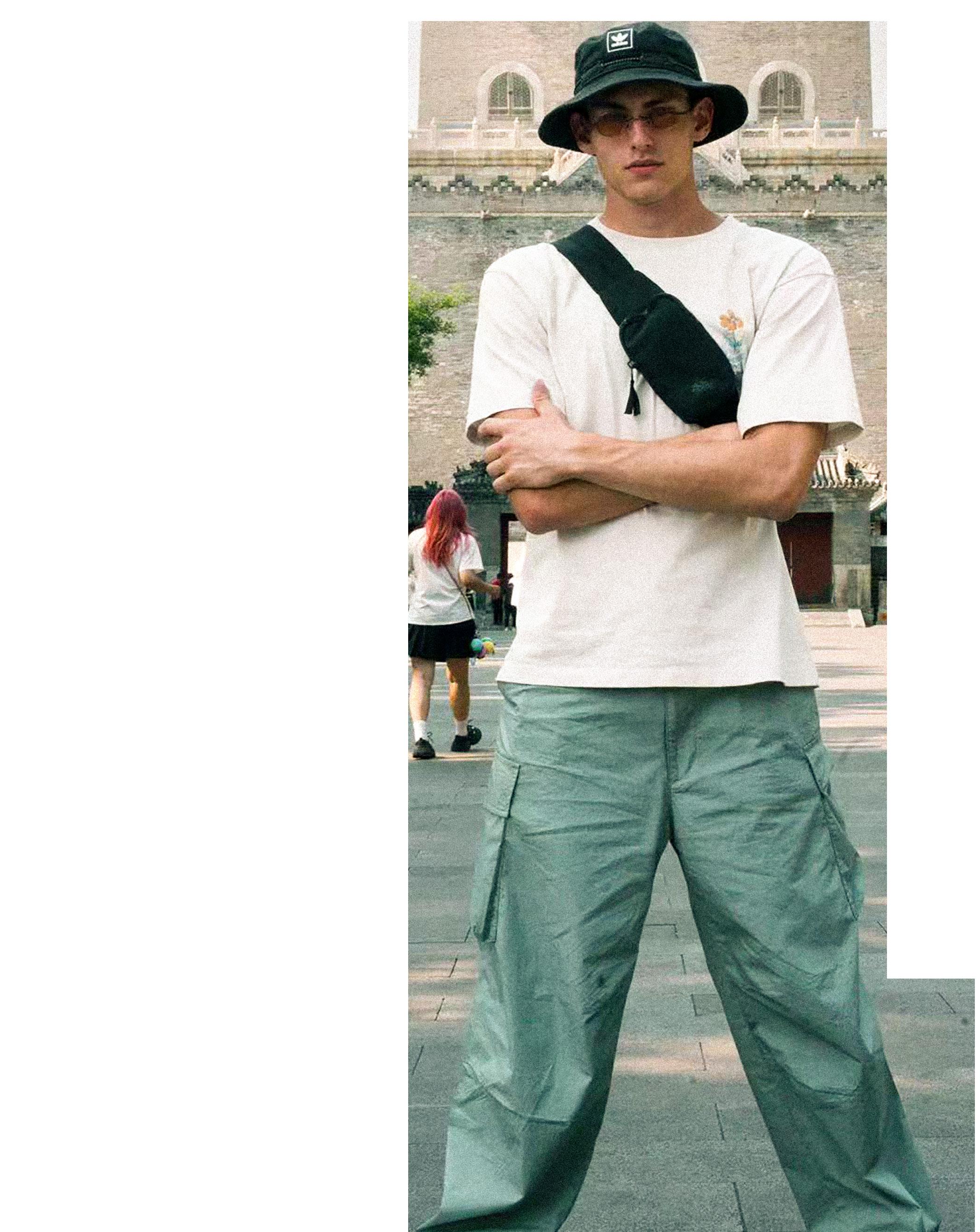
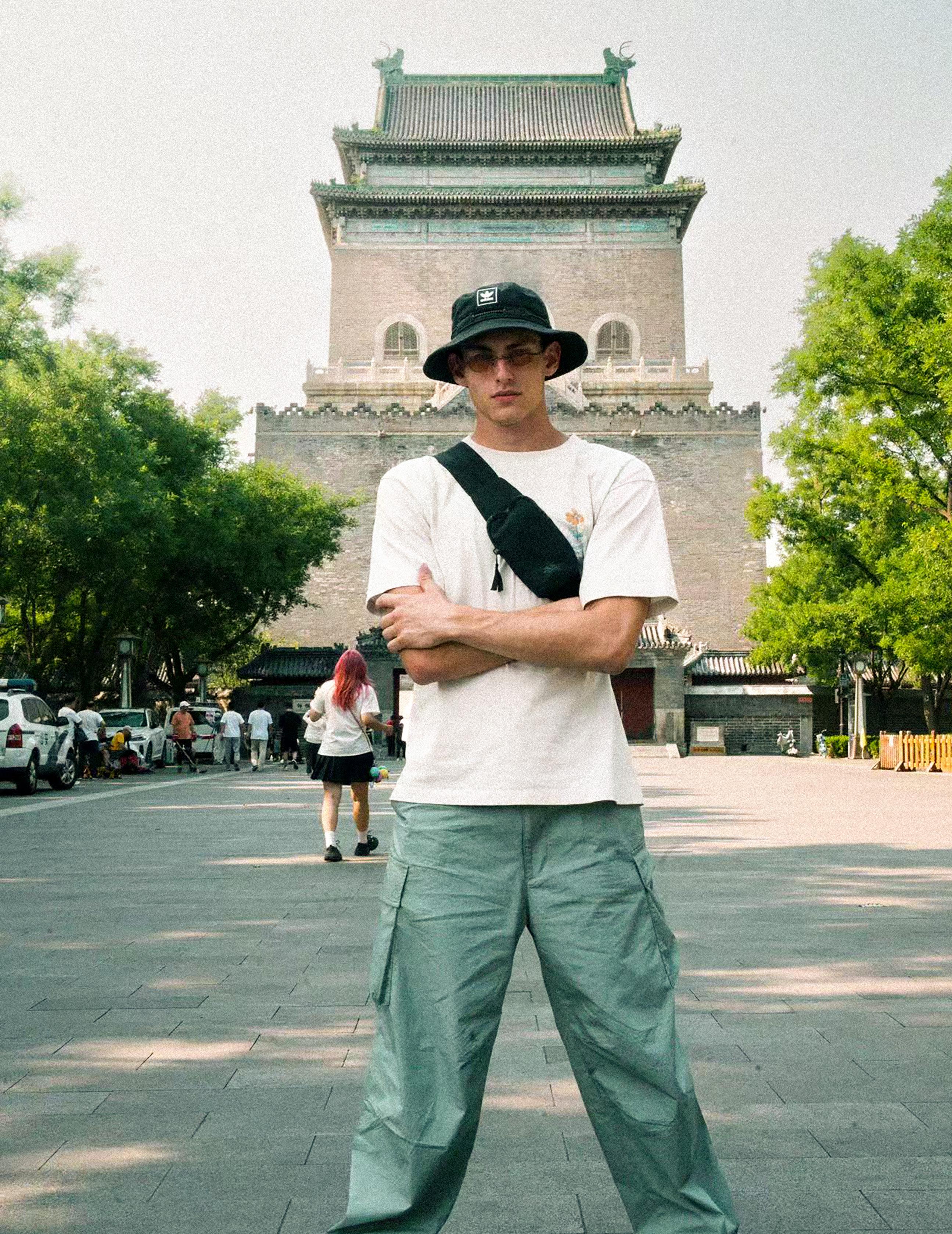
Discover how Honors student William John Rose II shifted his perspective after his study abroad to China.
p. 9
Cultivating Care with Honors Capstone
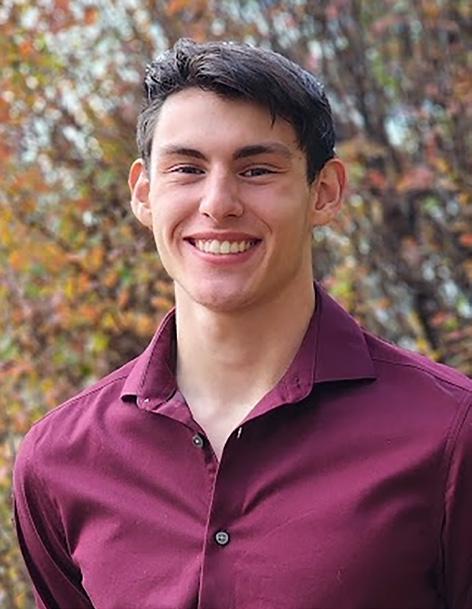
Read about current Honors student Harvest Kinn’s capstone research on deaths of despair.
p. 23
Traversing a Complicated World
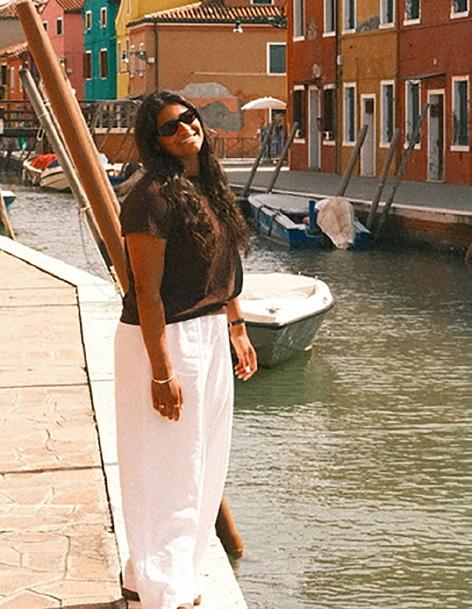
Reflect on the unexpected lessons and opportunities Honors student Daljit Kaur gained after her study abroad.
p. 11
Citizen Diplomat Navigates Multifaceted Cultures
Discover how Honors alum Alea Denney uses her Honors education to navigate her experiences in the Peace Corps.
p. 31
Dreams, Reality, & Everything In-Between
Explore Honors Colloquium and the focus on exploring everyday occurrences with fresh eyes and new perspective.
p. 17
Intersection of Artisan Markets & Happiness
Explore Honors student Hannah Small’s fieldwork in Oaxaca, Mexico where artisan markets serve as a livelihood and place of cultural expression.
p. 35
The Perfect Storm - A Place for Everyone
Read about how Honors student Maddy Huffman gained real-life experience in politics through an Honors internship.
HONORS ABROAD
Intertwined through Honors Study Abroad: An Interview with Professors Allison Caine and Nikolas Sweet
INTERVIEW BY
DR. BREEZY TAGGART Assistant Dean of Honors
Breezy: Your study abroad program titled “Nature and Culture in Peru” is set to depart in the summer of 2026. Can you describe what students might expect if they were participants? What might they see, do, experience, and learn? Where will they go?
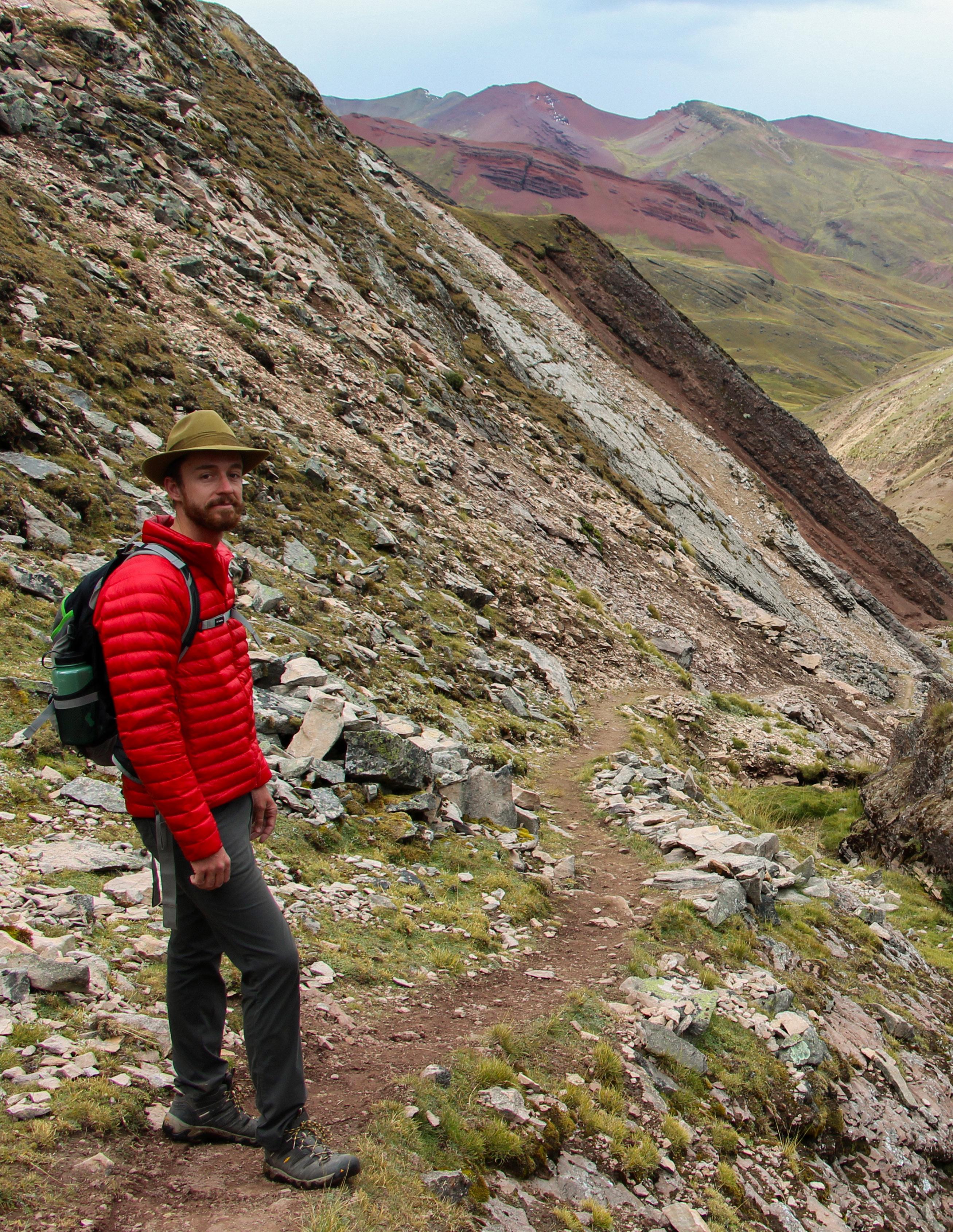
Alli & Nik: This class offers an experience of Peru “beyond the postcard.” Peru is a popular destination, for good reason, but tourists typically visit major sites like Machu Picchu without gaining a sense of the actual day-to-day life of people in this part of the world. While students in this class will visit some of the major attractions in Peru, we’ll spend more time visiting the places few tourists ever get to see. Students will get to watch the sun set over Ausangate mountain, take in panoramic views of iridescent glacial lakes, and explore hidden ancient fortresses in the Sacred Valley of the Incas. We’ll also be learning through hands-on, immersive experiences with local communities, we’ll be herding alpacas, stomping on freeze-dried potatoes (an Andean staple), and participating in the Inti Raymi festival of the sun. The class starts out in the Sacred Valley, which was once the agricultural and spiritual center of the Inca Empire, whose terraces, irrigation systems,
and ceremonial centers still anchor this landscape. We’ll get to see local foodways from seed to market by visiting with smallscale farmers and pastoralists, and then exploring bustling market towns full of local produce and crafts. The class ends in Cusco during the yearly festival season, so we’ll get to experience this incredible city at its busiest and most exciting time of year. All the while we’ll be learning from local and international experts to ground our experience in a broader understanding of how nature and culture are intertwined in this part of the world. While this all might sound like a lot, we’re also creating plenty of time to pause, reflect, and just be present in the moment.
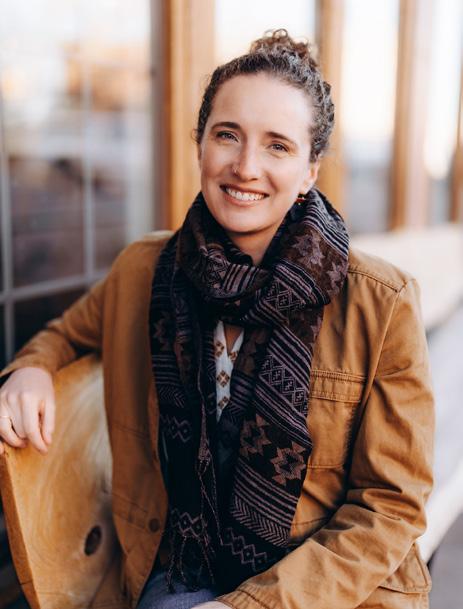
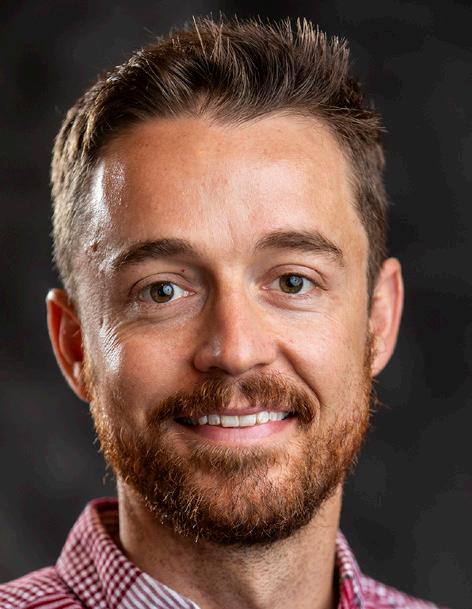
DR. ALLISON CAINE Assistant Professor of Cultural Anthropology
Breezy: What are your goals for students participating in this course, and in general, for students studying abroad?
Alli & Nik: In this course, we hope to inspire students, above all else, to be curious. Our whole team, Dr. Caine and Dr. Sweet, as well as the staff with the Center for Regenerative Communities, will be there to provide a supportive and intentional atmosphere in which students can really delve into their interests, or perhaps discover something new about the world or themselves. We really want to nurture that type of curiosity that prompts students to make unexpected connections between the things they are seeing and experiencing in Peru, and their
own education and personal journey, for example. As anthropologists, we see a real benefit in just being present in the moment, taking time to truly observe the world around you, and immerse yourself in a new experience. And, of course, it’s a great opportunity to learn from others.
Breezy: What drew you personally to this area of study? Why is this area of the world so important to you and so important for students to learn about/ from?
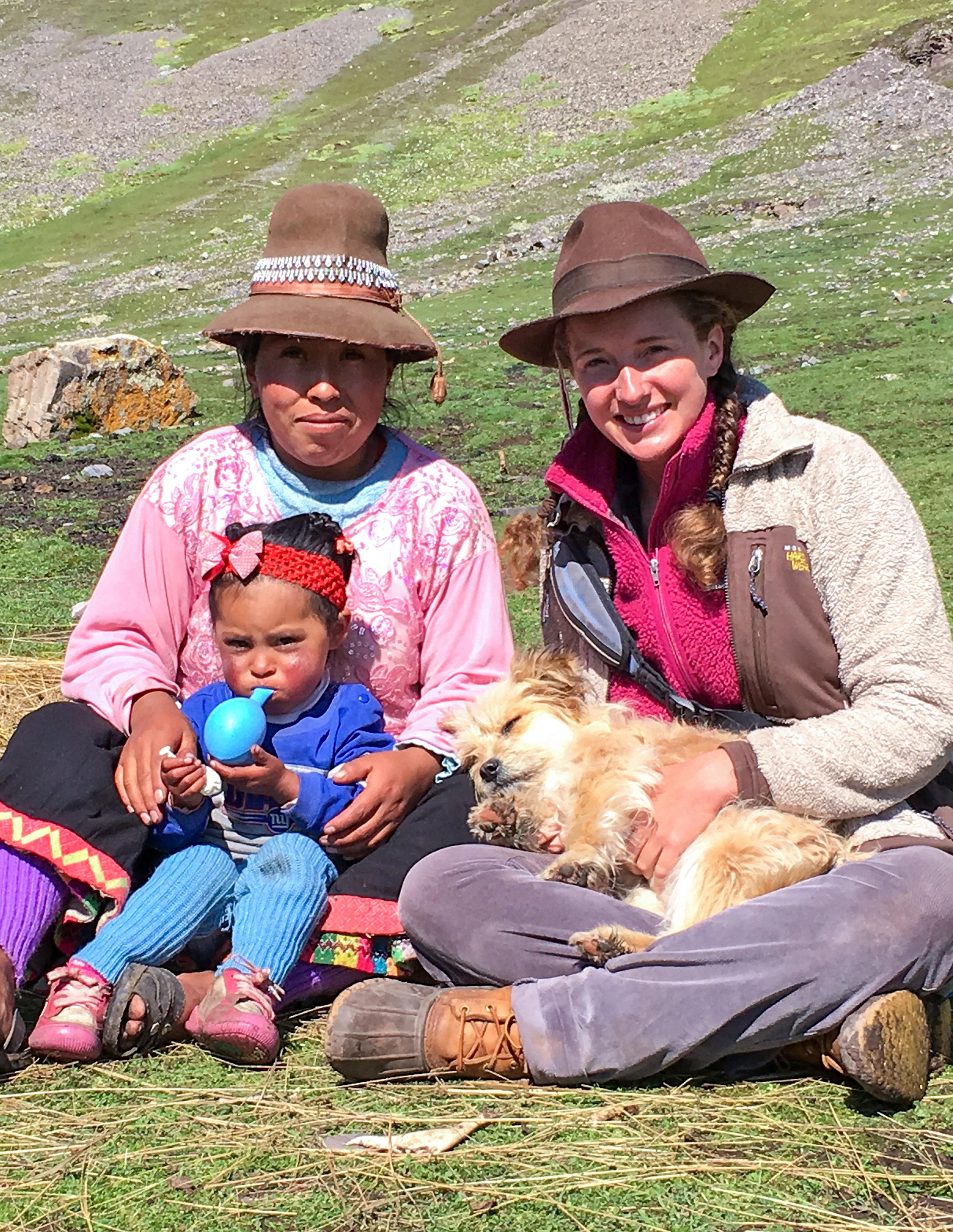
Alli: I first visited Peru as an undergraduate, and after just a few days I was already planning my next trip. There is something about Peru that captures you. The breathtaking scenery (literally — we’ll be as high as 14,000 feet!); the incredible food; the diverse music, arts, and culture; and of course, the generosity and kindness of the people there. I went back on a student Fulbright after college, and Cusco quickly became my second home. Cusco is a marvel of a city! It was the capital of the Inca Empire, and as you walk the cobblestone streets you witness the blend of Inca and Spanish colonial architecture, religion, ritual, and culture. When I returned to do my PhD research, I was fortunate to be able to spend more time up in the mountains learning directly from Quechua communities. I studied Quechua for three years during my PhD coursework, and I became fluent in the language when I lived with a local family in the small community of Chillca. We’ll get to visit this community for a few days, and meet my host family (including my spunky goddaughter), as well as community leaders who will tell us about their history and daily life. I was able to learn so much from these people, and they are just as excited as I am to share their knowledge with Wyoming students.
Story cont’d on p. 8
I’ve also learned so much from the landscape itself: the Quechua people believe that landscape features like mountains are powerful social beings who look after us, and they can teach us how to live in closer relationship with the world. When you’re up in the Andes mountains, you can’t help but feel that you are called sharply into the present: perhaps it’s the crisp air, or the quiet solitude, or maybe even the lack of oxygen…but I’ve never felt as anchored in the moment as I have in the Peruvian highlands. It is an amazing place for deep contemplation, whether reading a book from class, or scribbling in your personal journal, or chatting with your new study abroad besties. I’m delighted to share some of that experience with University of Wyoming students.
Breezy: Lastly, from all of your experience leading students in study abroad programs or just traveling abroad, what do you find has been most valuable about the study abroad experience? What has been most memorable?
Study abroad experiences help us to soften these defenses and empower us to learn from others, to learn their languages, their values, and see the world from their perspective. Simple moments of shared food, conversation, and hospitality have had formative impacts on who I have become as a person.
One of the most fulfilling things you can do in life is to develop relationships and dialogues with people that might appear to be very different from yourself. These intercultural exchanges reveal important insights about yourself that are hiding in plain sight. Through study abroad experiences, I practiced forms of listening, observing, and being curious that have led me on a path to anthropology. In this course, you will learn about Peruvian lifeways with and through some of our closest friends and collaborators.
Nik: Most of my experience has been in Senegal and West Africa, where I was a Peace Corps volunteer and later an experiential educator. For me, traveling has broadened the universe of what I thought was possible. In life, we often develop highly sophisticated barriers and shells to insulate ourselves from others’ expectations to perform certain identities or fit in.
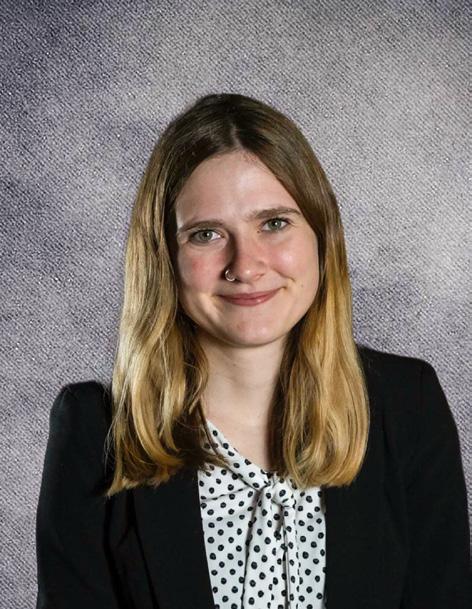
DR. NIKOLAS SWEET Assistant Professor of Linguistic Anthropology
Pursuing Research That Makes a Difference
BY HARVEST KINN
Major: Psychology Minor: Honors
For my capstone project, I have been working with Dr. Jarrod Bock, an assistant professor in the Psychology Department. My project builds on some of Dr. Bock’s work that found that individuals in U.S. honor cultures exhibited higher rates of deaths of despair, that is, deaths due to suicide, drug overdoses, and alcohol. Cultures of honor strongly emphasize the defense and maintenance of reputation and, consequently, individuals in these cultures avoid behaviors that might risk damaging their reputation, such as seeking mental healthcare. We examined whether individuals who endorse these cultural values engage in despair-related behaviors, such as binge drinking and illicit drug use, in lieu of seeking help. We tested this possibility using a representative sample of 799 U.S. adults, using the J.O. Willits Award money to compensate participants. We found that honor endorsement predicted excessive binge drinking and misuse of
prescription drugs and opioids. We hope our findings can inform which populations to target for prevention and intervention measures, especially when it comes to substance use.
I got involved in this project because I wanted to know why the suicide rate of Wyoming was so high and what could be done about it. Through research, I realized that the answer to my question was far more complex than I had imagined. There will always be more to learn, and the honors capstone gives students an opportunity to explore the questions they are passionate about and contribute to the ever-growing field of learning.
Navigates Multifaceted Cultures
BY ALEA DENNEY
Honors Alum | Peace Corps Volunteer
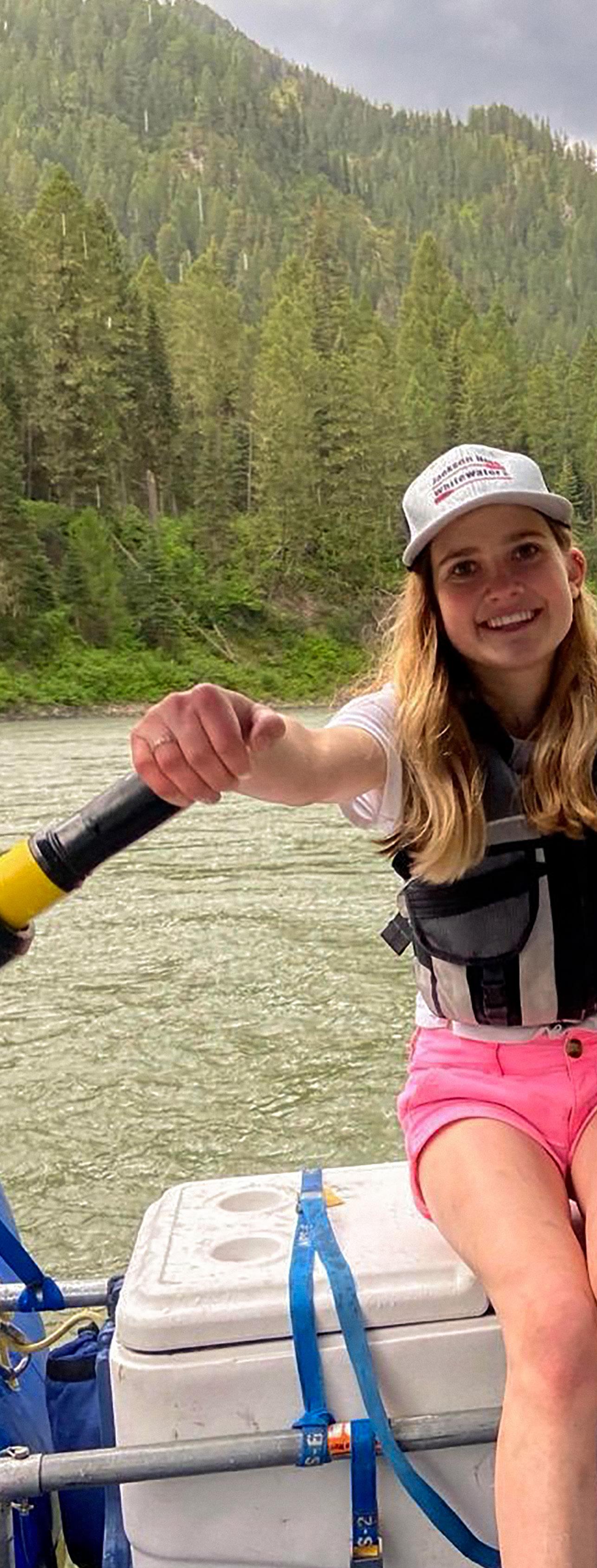
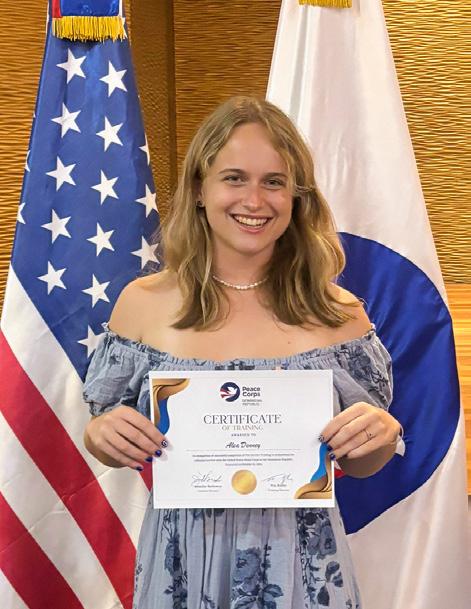
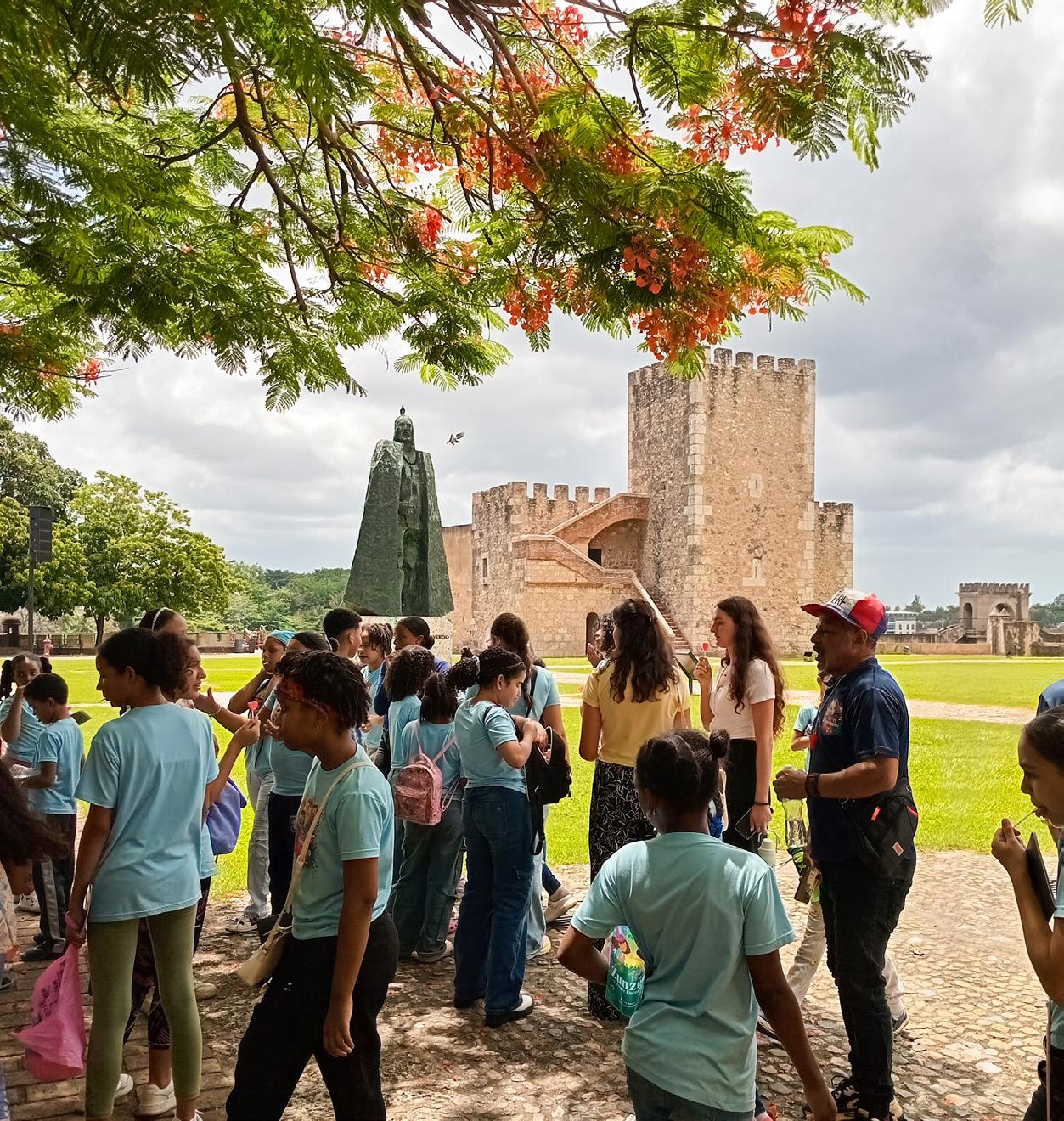
I am a 2024 graduate of UW’s Honors College and the School of Politics, Public Affairs, and International Studies. I am currently serving as a Peace Corps education volunteer in the Dominican Republic where I tutor 1st through 3rd graders how to read entirely in Spanish! I also co-teach local English classes, do virtual lessons for schools in the United States, help run youth summer camps, and get the opportunity to work as a translator for various medical missions throughout the Dominican Republic. I recently reached the halfway point of my service — one year down! I will be working on some of my final projects, such as running advanced reader groups and collaborative environmental conservation efforts.
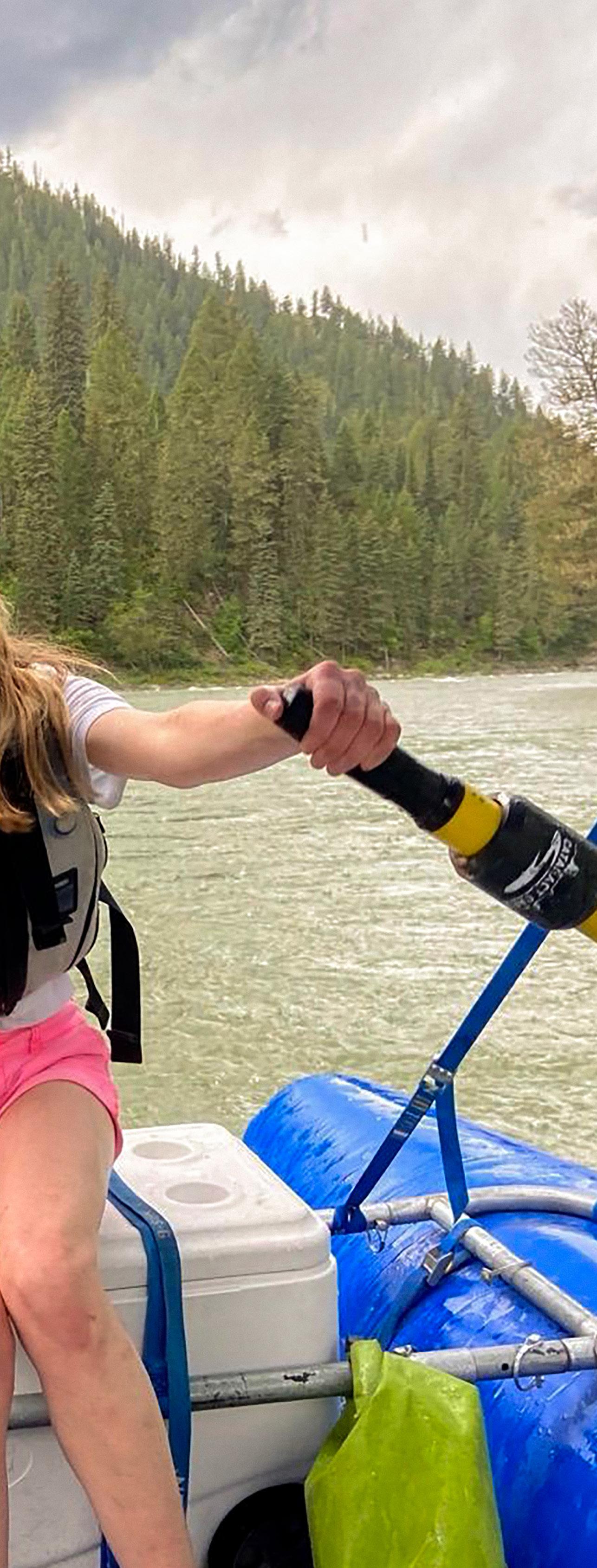
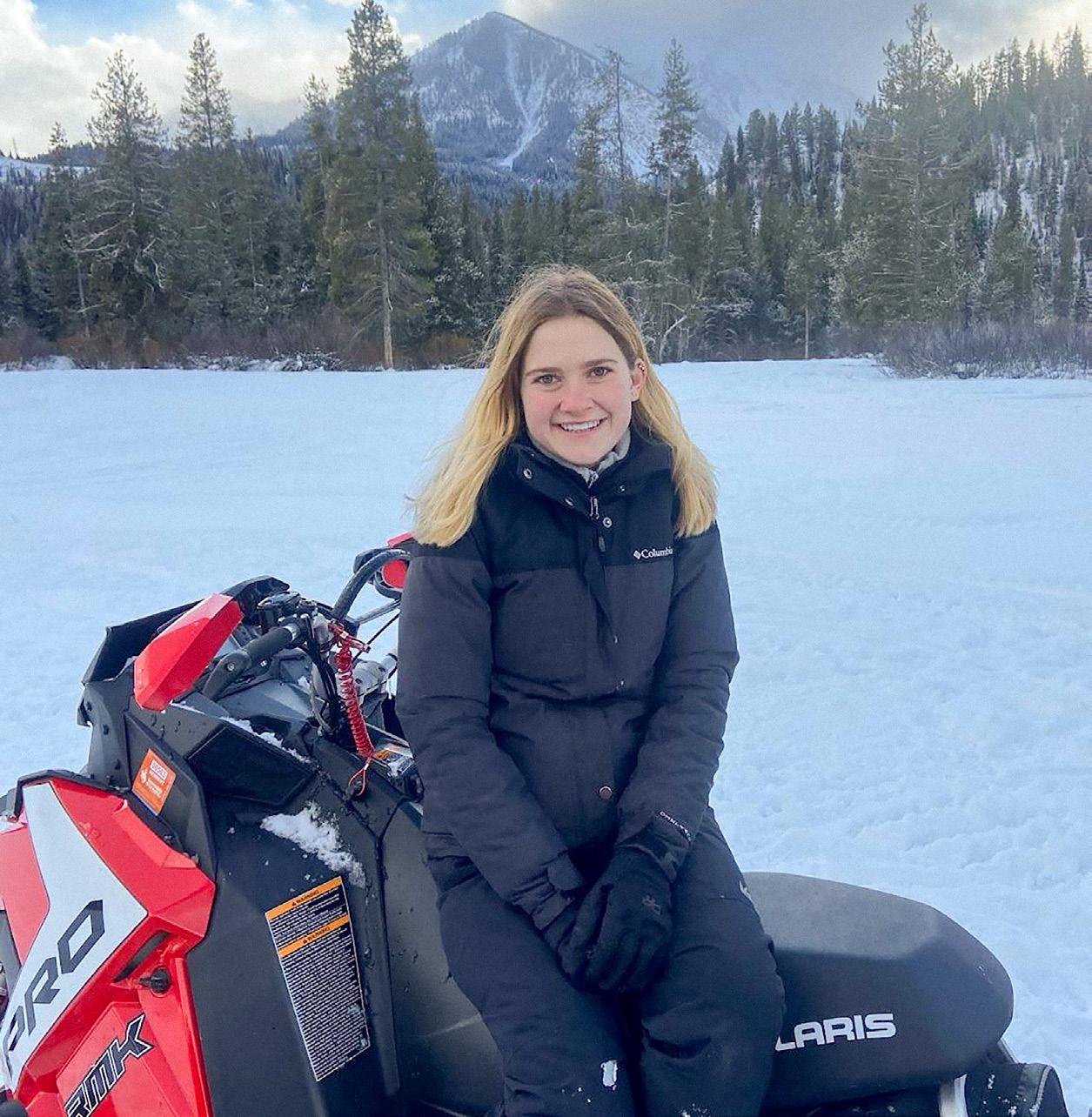
PHOTO CREDITS: ALEA DENNEY
My time in the Honors College was hugely influential in helping me reach this aspiration just out of college, especially the invaluable exposure to multicultural perspectives and unique career disciplines. I got to take genuinely engaging classes in Honors such as Wyoming Walkabout, which explored the histories and connections of and between local Wyoming Indigenous cultures and Australian Aboriginal cultures. I also took Diplomacy & Negotiation where as a class we got to participate in mock historical negotiations and learned about success stories in diplomacy. These, and the many other classes and experiences I had with the Honors College, helped me to become a prepared citizen diplomat, better at navigating multifaceted conflicts, and more flexible with understanding and adjusting to foreign cultures. All of that is pretty important if you one day, like me, find yourself living and working in a foreign nation and language where a big part of your job is teaching young kids! Further, ensuring that I am a respectful, responsible foreign resident of the Dominican Republic and a positive representative of the United States is a very big part of my job, and I will be forever grateful that Honors has helped me become such.
HONORS RESEARCH
J.O. Willits Award Enables
Undergraduate Research
BY JASMIN MAHONEY
Majors: Chemistry, Secondary Education
Minors: Painting, Honors
Currently, my research project is focused on investigating how psychedelics, specifically psilocybin and LSD, affect sensory processing in the brain and whether they induce synesthesia-like responses in mice. The ultimate goal is to better understand the molecular and neuronal pathways involved in these altered perceptual experiences and see if they affect mice in a similar way to humans, which may help guide the development of nonhallucinogenic psychedelic analogs for safe therapeutic use.
Thanks to the J.O. Willits Award, I was able to work in the lab over the summer and complete most of the training and experimentation required to get familiar with the techniques needed to get accurate and quality data. When the semester began, I started the first part of the protocol, which involves establishing a baseline for how sensory stimuli (light, sound, and smell) activate specific sensory cortical regions in TRAP2;Ai14 mice. Using fluorescence
imaging, we’ve begun quantifying neuron activation patterns and confirming that, under normal conditions, each sensory input primarily activates its corresponding brain region. This step is crucial for comparison once psychedelic compounds are introduced.
Next, I will administer psilocybin and LSD to determine whether these drugs promote cross-activation between sensory areas, potentially mirroring the synesthetic effects observed in humans. This phase will take place over the spring semester.
Throughout this process, one of the biggest challenges has been collecting baseline data from the current model that is being used to quantify the psychedelic effects on mice (head twitch response). This has been a tedious yet crucial part of the process that will allow me to compare this novel approach with the tried-andtrue method. I am looking forward to what this lab research will bring in the coming semesters!
HONORS FUNDING
Offers New Perspectives for Honors Student
BY CHERYL WALLER
Major: General Studies
Minor: Honors
I attended the Greater Rockies Immersive Training on Exploitation and Trafficking (GRIT) in Bozeman, Montana. It is a yearly conference about human trafficking and exploitation, put on by UPRISING. This was a life-changing experience that I could not have possibly gone to without the help of a grant given to me by the Honors College.
I learned so much and met so many wonderful people in varying employment fields. There were members of law enforcement, counselors, victim advocates, child welfare workers, lawyers, and two other college students from UW. Most of the people in attendance were from either Wyoming or Montana, but some came from as far away as Tennessee and Hawaii.
There was a panel of five victims that spoke often on different aspects of trafficking, and many volunteers who held lectures on varying ways that their jobs intersect with trafficking, and they played different roles for a few skills labs. One of the presenters in law enforcement even worked on the
15 | HONORS COLLEGE
Elizabeth Smart abduction case from 2002. There were a lot of sessions. Sadly, some were “pick one,” and some were rotations where everyone went but at different times. I wish that I had been able to attend a few more. The most powerful segment that I attended was called “Crossroads,” where the participants were given the scenario of being a 17 year old girl who found herself in a trafficking situation and each of us had to make decisions based on options gained from previous decisions. As I moved from table to table, making decisions, I realized that the people who end up in trafficking situations don’t always have any good choices. One of my choices was to either go back to my aunt and uncle’s house who abused me and then called me a liar, or to go back to the man who trafficked me. These are impossible decisions.
These people need to feel like they have better options. Whether those options are there or not, they need to feel like they have better choices available to them. This experience has given my life a new direction.
This was an incredible educational opportunity. I will not waste what I learned.
HONORS FUNDING
At the Intersection of Artisan Markets and Happiness
BY HANNAH SMALL
Majors: Marketing, Honors
Minors: Arabic & Middle East North Africa Studies (MENA), Museum Studies
Hannah Small is currently in the second year of her undergraduate program. Hannah works at the UW Art Museum, the Ivinson Home for Ladies, and the MENA Program here on campus as an intern focused on marketing and fundraising. Some of Hannah’s hobbies include reading fantasy, listening to EDM music, and drawing.
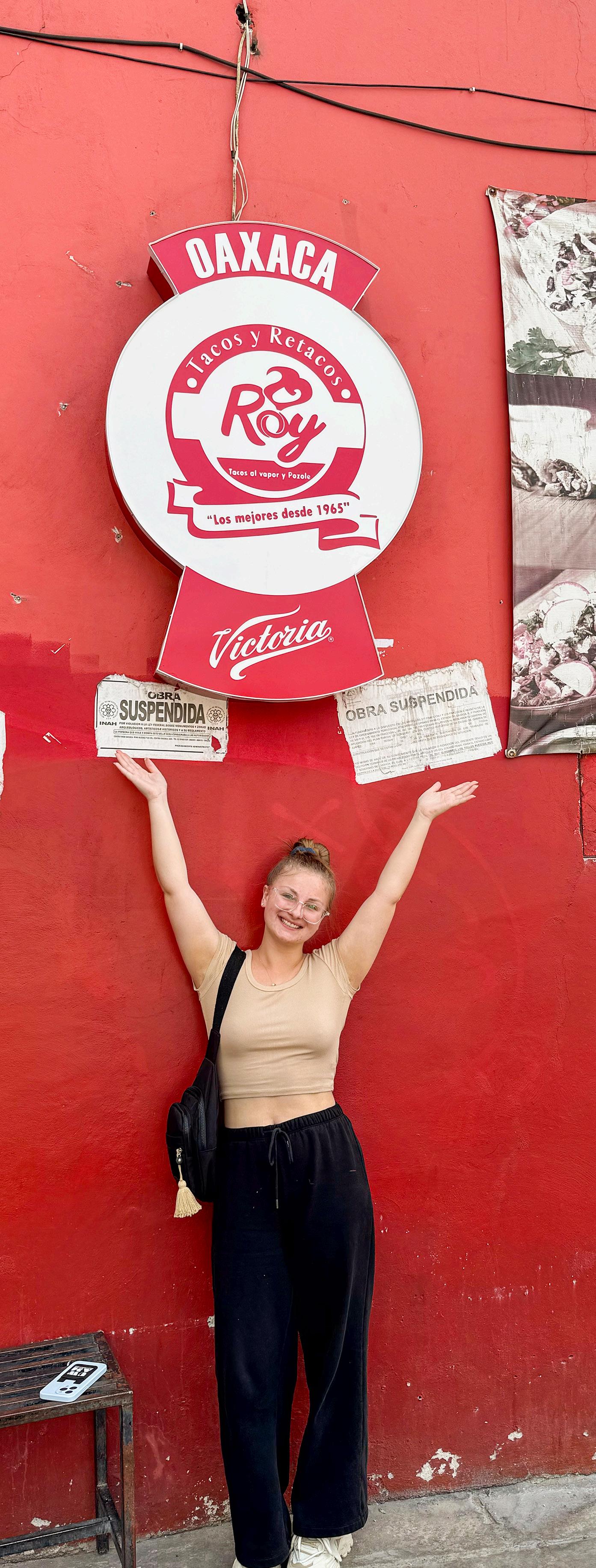
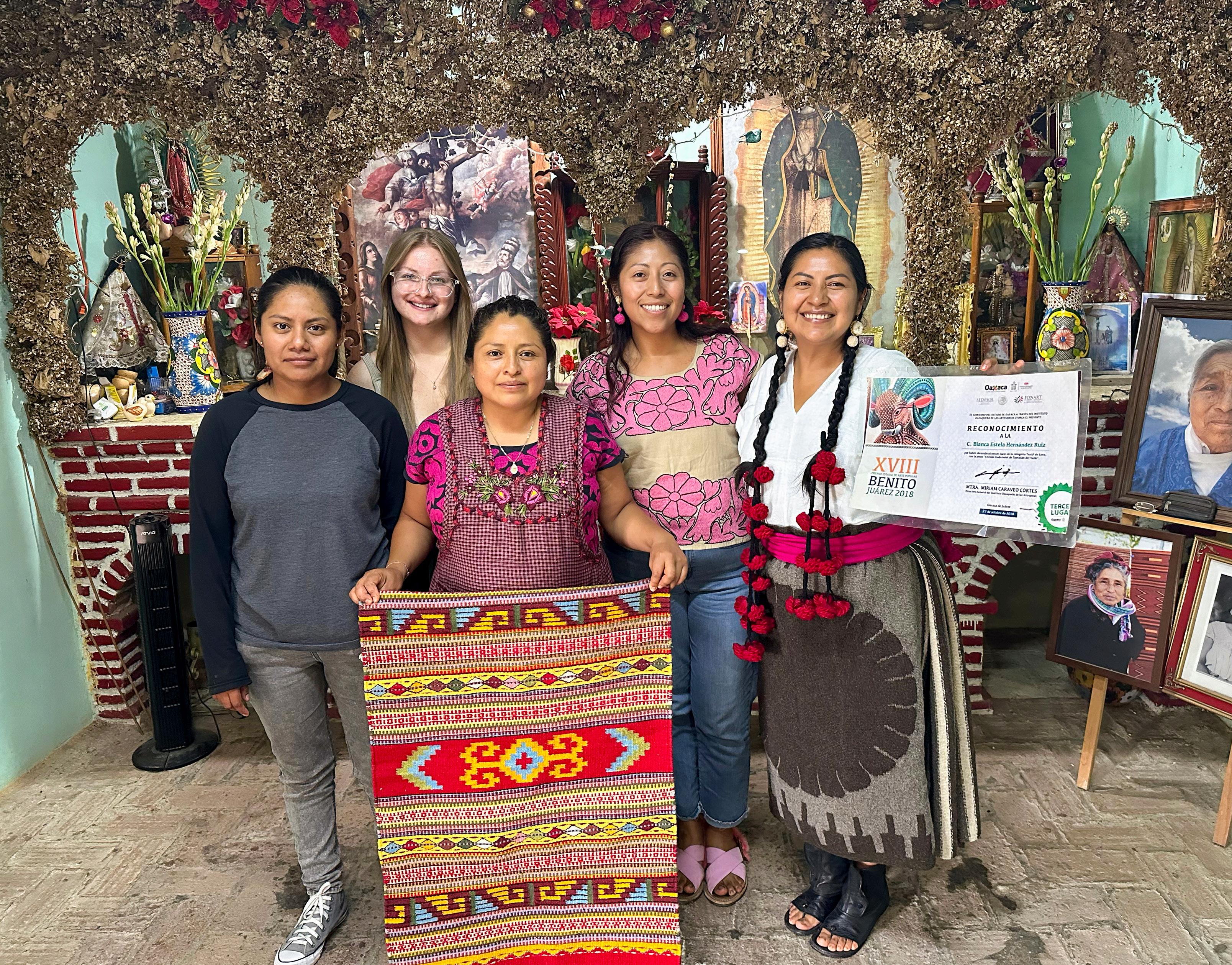
Thanks to the generous support of the Louisa Swain Foundation, I had the opportunity to conduct fieldwork in Oaxaca, Mexico, exploring the intersection of artisan markets and happiness this past summer. My research focused on how traditional crafts not only sustain livelihoods but also serve as vessels of cultural identity and emotional fulfillment. I interviewed mainly weavers and potters, many of whom described their work as a source of pride, joy, and connection to heritage. Their stories challenged common assumptions about economic value and revealed how markets can be spaces of meaning, not just transaction.
17 | HONORS COLLEGE
This project was the foundation of my Honors capstone, which will examine how markets reflect and shape cultural identity across regions. I’m currently preparing for a winter trip to Scotland, where I’ll study local holiday fairs and community markets. I also hope to spend a semester in the Middle East, possibly Morocco, to deepen my understanding of how cultural expression and commerce intertwine in different contexts.
One surprise has been how much emotional nuance exists in market spaces. I expected to find economic data, however, I found stories of resilience, joy, and generational memory. The biggest challenge has been translating those intangible elements into academic language without losing their soul.
PHOTO CREDITS: HANNAH SMALL
HONORS SUPPORT
Seeking Opportunities for International Immersion
INTERVIEW BY ELLA GRAY Honors Academic and External Fellowships/Scholarships Advisor
The Honors College provides support to all UW students to identify, prepare for, and apply to nationally and internationally prestigious scholarships. Honors alum Lauren Sauley shares her experience with the application process for the CongressBundestag Youth Exchange for Young Professionals (CBYX), which is a fellowship opportunity engaging recent graduates with cultural and educational immersion in Germany. Lauren shares her story below with advisor Ella Gray.
Ella: What are you up to now and what are your future plans?
Lauren: Right now I am working as a geospatial analyst using Geographic Information Systems (GIS). GIS was something I was introduced to in Germany during my time interning at the Research Group for Earth Observation, and I’ve found that it is a perfect blend of interesting technology and geology. While I am currently working in the telecommunications industry, I plan to move to more environmental and
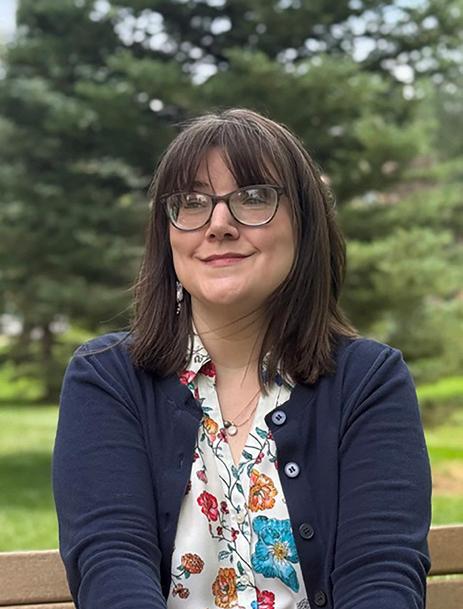
LAUREN SAULEY Honors Alum
PHOTO
conservation-focused GIS work in the future.
Ella: What inspired you to apply for CBYX in the first place?
Lauren: I initially applied to CBYX because I had no set plan for what I wanted to do post-graduation, as traditional options like immediate employment or graduate school didn’t speak to me. I also knew that Germany was a very beautiful country that I had family ties to, and I thought that I could learn a lot about myself and the world by moving abroad for an extended period of time.
Ella: A challenging part of the CBYX application essays is the question that asks about being an ambassador for the United States while abroad. How would you answer that question now?
Lauren: In hindsight the answer is easy! Being an intercultural ambassador is all about being authentic, friendly, and open to new experiences. For many Germans, I was the first American that they had an established relationship with, and they were always very happy to talk about what life in the United States was like and what I thought of Germany. Being willing to talk about social and political issues in the United States and how they compare to those in Germany also helps to build understanding and insightful intercultural relationships.
Ella: If you could go back and talk to your first-year self, what would you tell them?
Lauren: I would tell my first-year self to take advantage of every opportunity that is available, even if it sounds difficult or out of your comfort zone. There will always be people willing to help you along the way, and you will be a much more well-rounded person because of it.
HONORS ABROAD
Offer Honors Students the Chance to Develop Skills and
Uncover New Insights
BY WILLIAM JOHN ROSE II
Major: Economics
Minors: Chinese, Honors
What inspires growth? How do we as people mature and develop skills, knowledge, experience, and perspectives? What things must we encounter, undergo, or forgo to gain world view or even a small shift of opinion? Most importantly, how do we use newfound insights to shape our own environment? Traveling to China this summer encouraged me to challenge myself to see what lies beyond the media and explore new ideas.
Voyaging halfway around the world, I aimed to situate myself with a central ambition to experience the many facets of culture that cannot be expressed in a photo or an article. I wanted to see the rush of traffic in Beijing, the smells of the many foods sold on the street, and the interactions between myself as a westerner and the people of China. Big or small, these shifts in surroundings and sense of self shape how we perceive the world.
I wanted to place myself in unfamiliar circumstances to see how I could adapt and change my own outlook. The activities that Beijing Foreign Studies University facilitated granted deeper insights into the inner workings of the culture. Furthering our exposure to Chinese culture, we took classes with the professors and went on many group trips to historical sites, including most notably the Forbidden City, the Temple of Heaven, and the Great Wall of China. Being up close to these works of art and culture was eye opening, revealing the ever-present loyalty to tradition in the streets, architecture, hearts, and minds of the people of Beijing and China.
While traveling in Xi’an on a small excursion to see the terracotta warriors, the whole group was invited to don traditional Chinese Hanfu and walk around the busy streets of downtown Xi’an. This would prove to be a very interesting mix of cultures. As we walked, many people wanted pictures with our group, and the reactions of the people were lighthearted and fun. These exchanges in culture are monumental in aiding deeper understanding of Chinese culture and practices which are difficult to find in western media. When we discuss these exchanges, it is also of immense value to try to see the human interaction that is present but often easily missed. Beyond the group activities and experiences, I was also able to notice cultural connection in smaller, everyday moments.
Growth, as I would come to find it, comes from encountering the unfamiliar, forgoing assumptions and letting the experience shape my character. This study abroad allowed me to learn in ways that a class, media, or person could not; it was the opportunity to see and learn for myself that granted newfound vision and appreciation for culture. Most importantly, these perspectives have given me the opportunity and responsibility to bring those insights back to help shape my own environment with a wide and compassionate view of the world.
HONORS ABROAD
Honors Course Shakespeare in England and Italy Provides Opportunities to Become a Well-Rounded Individual
As a business major, I never expected to be traveling to Europe to study Shakespeare. In many ways, this trip helped shape my college experience. I came back having a better understanding of literature and how the world can shape an individual into something they never imagined. Shakespeare started in a small town just like I did and went on to become a playwright that transcended centuries. On this trip, we went on a journey through his life and experienced everything from the grandeur of world-famous theatres, to the energy of the Globe’s pit, to the simplicity of a handful of actors performing under open skies. Seeing Shakespeare’s work in so many different forms was an eye-opening experience.
Storytelling is something we all do on a daily basis, and seeing just how much meaning a story can hold allowed me to think more about the story I’m telling. Shakespeare’s work spread across a multitude of genres from the bloody tragedy of Macbeth to the whimsical chaotic comedy of A Midsummer Night’s Dream. He explored emotions that most people weren’t comfortable with addressing. That is something I strive to do everyday: learn more about myself by diving into those untapped emotions and find a passion in what I do like Shakespeare did.
Getting out into the world and immersing yourself in a new culture with people that are all willing to break free and learn was a life-changing experience. I brought back lessons that helped me grow personally and allowed me to tap into a different part of my academic journey. Becoming a well-rounded individual that can traverse the complicated world and tell a story as you do it was by far the biggest lesson I learned. Beyond the laughs and memories I created, there will be a lasting impact on me from Shakespeare and the many places we explored. I couldn’t be more thankful for the community that I built while abroad, because it really is about the people you meet along the way.
HONORS ABROAD
PAGE 25 | HONORS COLLEGE
Leave a Big Impact on Education During Rock and Roll Tourism: The Beatles and Beyond
BY MEGAN LADENBURGER
Major: Human Nutrition and Food
Minor: Honors
Ever since I was little and read the Harry Potter series for the first time, I have always wanted to visit London. When I got the opportunity to take this study abroad course in Liverpool and London, I couldn’t pass it up. Being immersed in British pop culture for two weeks taught me so much about both England and myself. I was able to notice the little details, like the architecture in both Liverpool and London being so different than American buildings. I was able to enjoy how the blossoming flowers and green trees make England such a beautiful country in May. I was able to see how The Beatles made such an impact on British music and pop culture. But most of all, I was able to learn more things about myself in England than any classroom could teach me. I learned how to take risks and try new things because you never know what new experiences you might gain from it.
While it was fun to see all the stereotypical tourist sites, the true beauty of England lies in its hidden gems. Whether that be a park near my hotel in London or a rooftop bar in Liverpool, finding these hidden gems is what made my experience unique. The most memorable part of my experience wouldn’t have been possible without me stepping out of my comfort zone and doing something spontaneous. I would encourage everyone to find those experiences that push you out of your comfort zone, because whether you end up at the Cavern Club or a Harry Styles concert, the journey is always worth it.
HONORS ABROAD
27 | HONORS COLLEGE
East Meets West: Art
Religion, and Multiculturalism
in
Türkiye Offers Honors Student Insight Into Complexity In Different Worldviews
BY CALLA SHOSH
Majors: Journalism, Studio Art
Minor: Honors
A cold breeze whips up sea spray as our ferry travels down the Bosphorus, crossing into Asia. My two-week study abroad to Türkiye over J-Term 2025 was one of the most meaningful experiences I had with the Honors College. It was an opportunity to learn about new cultures, travel to two continents, and witness the remains of ancient civilizations. We went to Istanbul for about a week and a half and spent the remainder of our time in Konya and the surrounding villages in Anatolia.
One of my favorite experiences was exploring the scenic university neighborhood of Beşiktaş. My classmate and I found a delicious local coffee shop a few blocks from the docks. In the same neighborhood I interviewed a produce market worker about her family’s shop.
Another experience I enjoyed was the day trips to the towns around Konya, specifically my visit to Eşrefoğlu Mosque and the
villages surrounding Beyşehir Lake, as well as the historically Greek village of Sille. This showed a more rural, mountainous side of Türkiye as we entered Anatolia.
The most valuable thing I learned is there is no single narrative of Türkiye. We had the opportunity to talk to Turkish professors and locals about history, and in class we studied Turkish politics. In the west, Türkiye is often seen as a country that isn’t always safe for Americans, without much democracy in its government. People in the U.S. generalize about the Islamic beliefs present in some parts of Türkiye. However, there are many different beliefs and many different sects of Islam. This trip showed me the nuance between different beliefs and just how flawed our view in America of another country can be.
I am thrilled to be joining the Honors College as a Visiting Assistant Faculty. I feel gratitude each and every day for the incredible students I interact with and colleagues who are deeply committed to providing a rich, meaningful education across diverse areas of expertise.
Honors has a very special place in my heart as it embodies the interdisciplinary and experiential learning spirit of inquiry I appreciated while pursuing dual B.S. degrees in Bioinformatics and Biology from Pacific University, Oregon. During college, I played trumpet, including a particularly memorable joint performance between the Pacific Philharmonic Orchestra and the iconic band Kansas!
While my passion for aquatic ecosystems stems from childhood adventures exploring Oregon coast tide pools, it was deepened through an undergraduate study abroad program in the Galápagos Islands. I later
discovered my enthusiasm for water quality research at the Padilla Bay National Estuarine Research Reserve, and fell in love with education through roles that integrated experiential learning for all ages. Outside the classroom, I find immense joy backpacking in temperate rainforests, snorkeling in marine ecosystems, and sailing the Puget Sound. While on the water, I find myself collecting samples of the many aquatic critters floating or swimming by and wondering about the unique adaptations allowing them to thrive in dynamic environments!
I completed my PhD in Ecology at the University of Wyoming through the Wyoming Cooperative Fish and Wildlife Research Unit. My research explores the ecological effects and management implications of water quality disturbances such as sediment releases and harmful cyanobacteria blooms, and the role of mentorship and experiential learning in student engagement and persistence.
In the Honors College, I teach a variety of experiential learning courses including Water and Imaginarium: The Change Lab with Dr. Lori Howe, a marine-ecology study abroad course in the Pacific Northwest, as well as core courses including Colloquium and Producing Knowledge: Capstone Seminar. I am so excited to join Honors and to support our students in interdisciplinary inquiry, integrating science with real-world issues and fostering exploration of new ideas and perspectives.
An Exploration of Dreams, Reality,
and Everything In Between
BY DR. HOSANNA KRIENKE
Honors Assistant Instructional Professor | Director of Colloquium
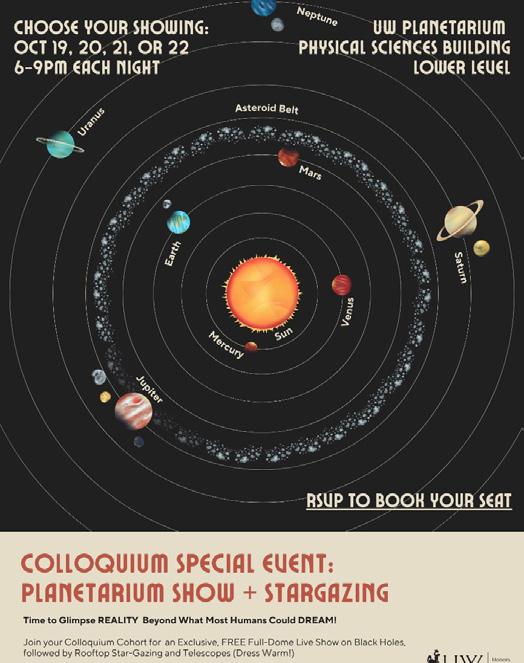
Over a series of nights in October clustered around the new moon, Colloquium students got the chance to attend UW’s planetarium and stargaze on the roof of the Sciences Building. October is the month when discussions in our “Dreams and Reality” class always turn towards the topics of physics and astronomy. For many students, the turn to the so-called “hard” sciences can feel like a relief after the philosophical musings of Plato and Baudrillard. However, just like when we read those thinkers, these scientific fields invite students to grapple with ideas that can unsettle the assumptions drawn from our everyday experience. As physicist Carlo Rovelli teaches us, at the smallest scale of the universe, space is granular. At their horizon, black holes make time stand still. The present moment is really only a local phenomenon, not a truth that spans galaxies.
These are difficult concepts to wrap our heads around, so visualizing them through the planetarium and telescopes helps. The planetarium show focused on black holes specifically. Using vivid images from astrophotography, the presenters showed how black holes are formed and demonstrated the math that tells us precisely how stars collapse. We even learned about “spaghettification”— the vivid term for what would happen to a human body if it entered a black hole. While these ideas can feel as abstract and theoretical as any philosophical concept, stargazing on the rooftop let it all sink in. We peered at the rings of Saturn through the telescope just like Galileo did, glimpsed the Ring Nebula to see the aftermath of a collapsed star, even gazed at the Pleiades star cluster, some of the oldest light visible to human vision. Like all the texts and experiences of our “Dreams and Reality” Colloquium course, this event invited us to set aside our routine experiences of the world and encounter the strangeness of reality with fresh eyes.
HOUSING
BY JESSE MORRIS
Tobin House RA
Majors: Geohydrology, Environmental Geology
Minors: Journalism, Honors
Honors Living Learning Community Creates a Sense of Belonging
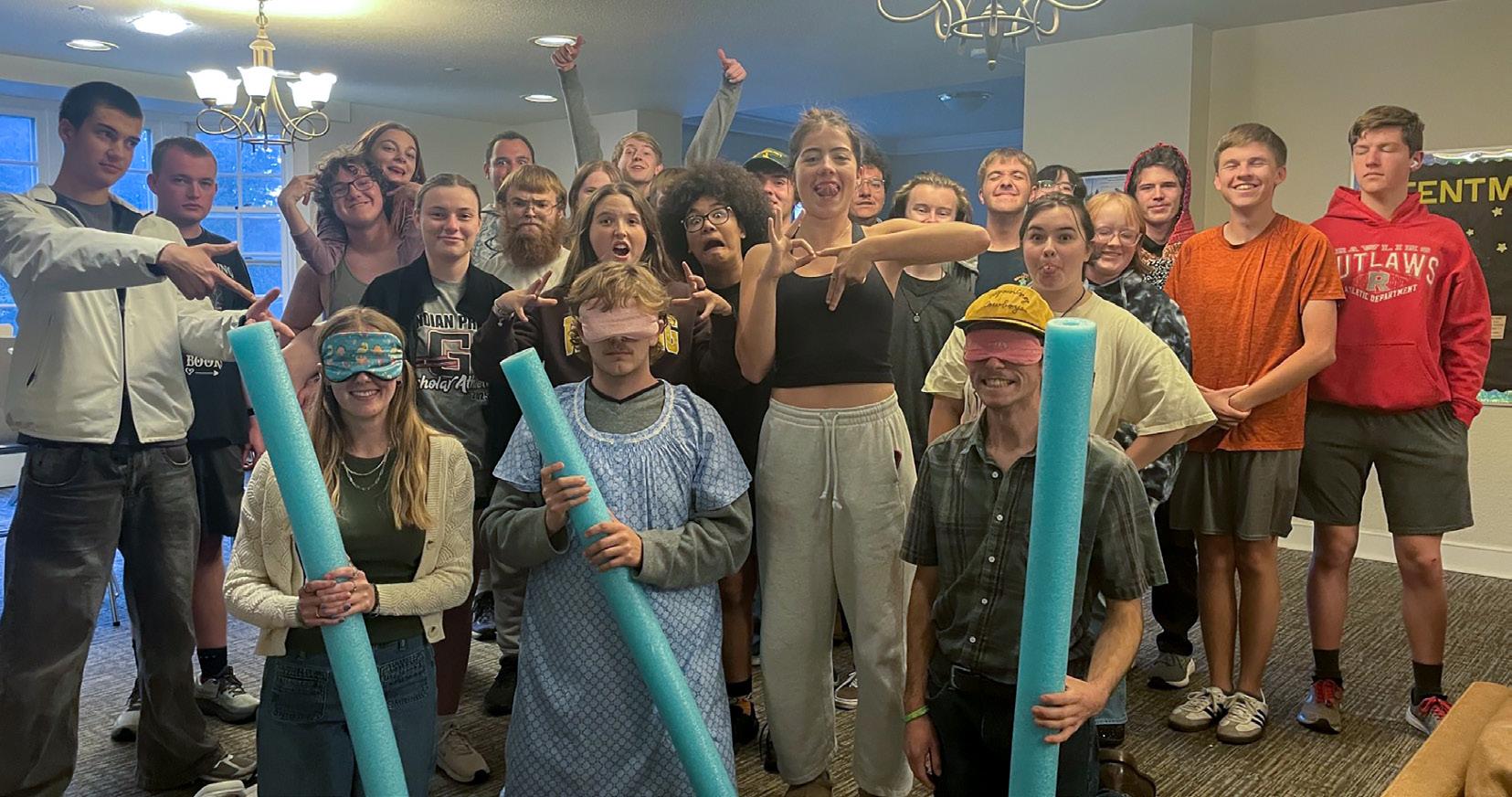
When I asked self-recognized “Tobinites” what they really like about the Tobin House, I often hear the “community.” The livinglearning community for Honors College students is located in the Tobin House, and it is a place where community is cultivated, not synthesized. Tobin House is a safe space to nerd out and challenge yourself academically and personally, while surrounded by people who care about you. Some residents are returners; first-year students can go to the returning residents for help on classes, which helps both groups of residents! The returners get peermentoring experience and the first-year students get their assignments done in a supportive environment.
Through regular Deep Diving Dialogues events hosted by the Honors College at Tobin, residents get direct access to fascinating thinkers who are tackling issues challenging our world. There are also internship, research, and study abroad fairs
hosted at Tobin, giving residents many opportunities to succeed.
Then, after all the homework is done, that is when Tobin comes alive, with games of pool, belting karaoke, and building worlds within the six campaigns of D&D currently in progress. For Halloween, Tobin house was completely decorated by residents, making it spooky and festive.
As a returning resident of Tobin, I recognize the benefits of living here. I have many memories of how others supported me, and I see how the current residents are keeping this torch burning for each other. In just the first few months of the semester, I have seen residents grow a lot, learning who they want to be, and finding what kind of people they want to be with. Everyone is here to get the most out of their education and become a well-rounded person, and there is no better place than Tobin to do just that. I am grateful for there to be a place like Tobin at the University of Wyoming.
PHOTO CREDIT: JESSE MORRIS
HONORS PROGRAM
WANT TO MAKE THE MOST OUT OF YOUR EXPERIENTIAL LEARNING? CONSIDER THESE REFLECTION TIPS!
Start a reflection journal or notebook. This can be a physical notebook that you carry with you or a notes app on your phone. A journal or notebook will help you be ready to record any thoughts you might have about an experience. Spend time analyzing your thoughts about an experience. Consider how you felt during and after the experience. No matter whether you had a good or bad experience, there is always something positive to gain by thinking about your personal reactions. More importantly, think about why you felt the way you did.
Don’t try too hard! This might seem counterintuitive, but if you focus too hard, you might unintentionally restrict yourself. Allow your thoughts to flow naturally. You never know what interesting and new insights and connections you might make!
Tips and Tricks to Make the Most of Experiential Learning through Honors SOAR
BY ASHLEY LAUGHLIN Honors College Graduate Assistant
Experiential learning is at the heart of the University of Wyoming Honors College, but this name can sometimes be misleading. It isn’t only about the actual experience but is also about what you get out of it. No matter what kind of experience you have, what comes after is the most important part: reflecting on what you learned. Reflecting on an experience allows you to develop new perspectives, deepen your understanding, and cultivate your critical thinking skills. Moreover, you’ll build upon what you learn in the classroom in more complex ways and make unique connections between your academic and non-academic experiences. You might even discover new insights about your personal interests!
Reflection is an opportunity to make greater meaning out of an experience, but it is also an opportunity for transformation. By reflecting, you will transform your existing knowledge into new insights and ideas. The more time you spend reflecting on your experiences, the more you will find that how you interact with your friends, family, and community will change for the better. You will start to see the world differently.
INTERNS
Opportunity Opens Doors for Honors Student
BY MADDY HUFFMAN
Majors: Communications, Business Marketing
Minors: Public Relations, Spanish, Honors
Some things are just a perfect storm. With the right classes, the right teachers, and the right support, the next thing I knew, I went from the classroom to the capital of the United States. In the fall of 2024, I was able to take Diplomacy and Negotiation with Professor Chris Rothfuss. As a communications student, I didn’t see a spot for myself in politics, but Professor Rothfuss said otherwise. He encouraged all of those in the class that no matter what you were studying, you had a place in politics.
By spring semester, I was in a political communications class. My desire for more experience in politics outside of my classes led me to apply for a summer internship under Senator Cynthia Lummis.
Over the summer, I was able to be a communications intern for Senator Lummis in her D.C. office. I was able to attend media hits, photograph events, sit in on meetings, and attend various Senate hearings. I not only was able to work closely with the communications team for the Senator, but also with staffers throughout the office and the Senator herself. As I went about my tasks, I learned that the office was filled with people from different backgrounds. Staffers consisted of people with degrees of many kinds, from communications, political science, and biology to doctorates in education policy.
Throughout the summer, I gained a deeper knowledge of what it was like to work in communications for a U.S. Senator. Despite being the communications intern, I assisted other staffers in the office on tasks that allowed me to gain deeper knowledge in topics like AI, healthcare, and crypto currency — topics that I never had an interest in before.
I realized over time that what I was told was right: no matter what you study, there is a place in politics for you. My internship under Senator Lummis taught me many things, but overall it reinforced that there is a place in the room for you as long as you have the confidence to open that door and step in.
LOOKING BACK
Explore Honors Events from Fall 2025
At the heart of the Honors College is a commitment to intellectual curiosity, creative thinking, and cross-disciplinary collaboration. Through a dynamic array of events, the Honors College brings together students, faculty, staff, community members, and experts from diverse fields to explore the cutting edge of research and creativity. From thoughtprovoking lectures and panel discussions to interactive workshops and stimulating book groups, these events showcase the breadth and depth of knowledge housed within the college while offering students the rare opportunity to engage directly with groundbreaking work in a variety of disciplines.
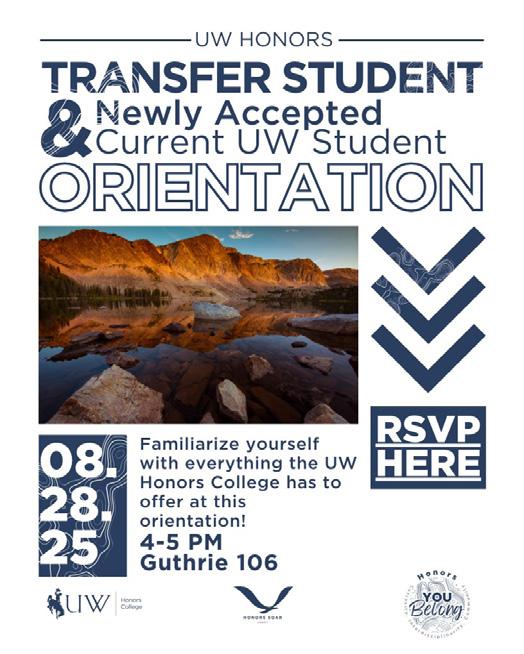
08/27: Welcome Back Social 08/28: Transfer Student & Newly Accepted Current UW Students Orientation
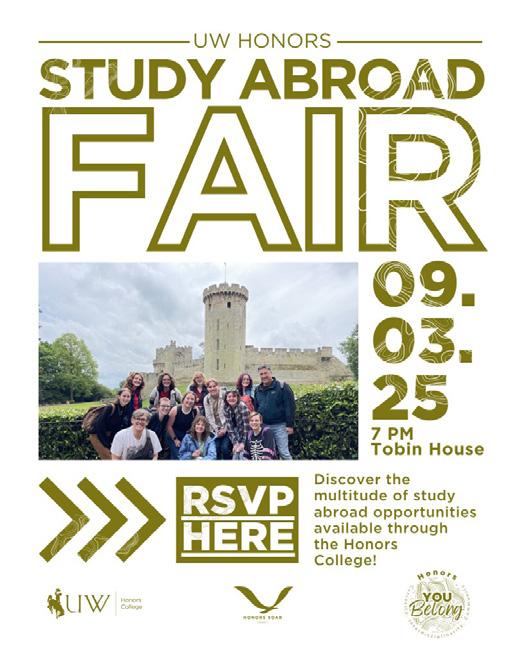
09/03: Study Abroad Fair
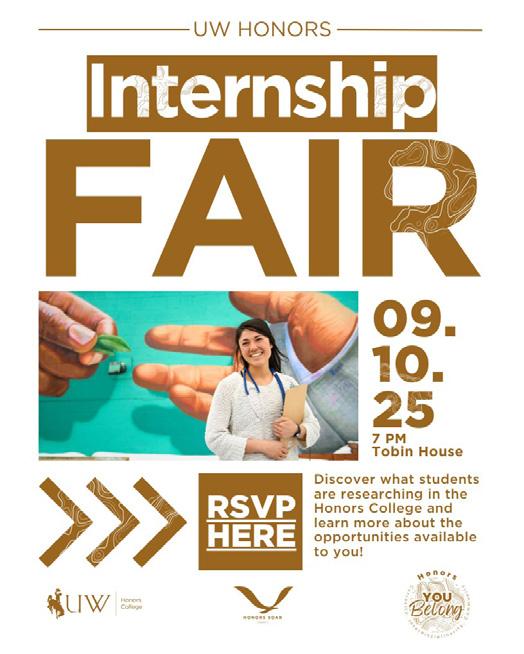
09/09: First Gen Student Social 09/10: Percolate with a Prof - Dr. Drummond Edition 09/10: Internship Fair
Each event in the Honors College is designed not just to inform but to spark conversation, inspire innovation, and foster connections across traditional academic boundaries, as well as nurturing the sense of belonging that we value. This feature highlights some of the exciting, interdisciplinary events hosted by the Honors College this past Fall Semester — each one a window into the vibrant intellectual community that drives our collective pursuit of knowledge and discovery.
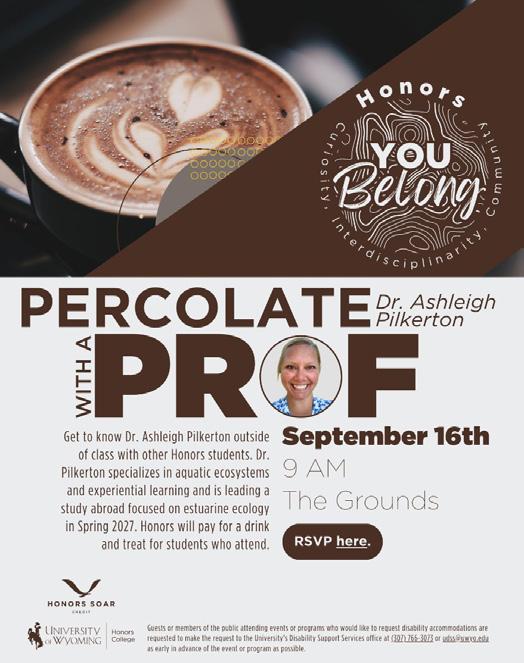
09/16: Percolate with a Prof - Dr. Pinkerton Edition
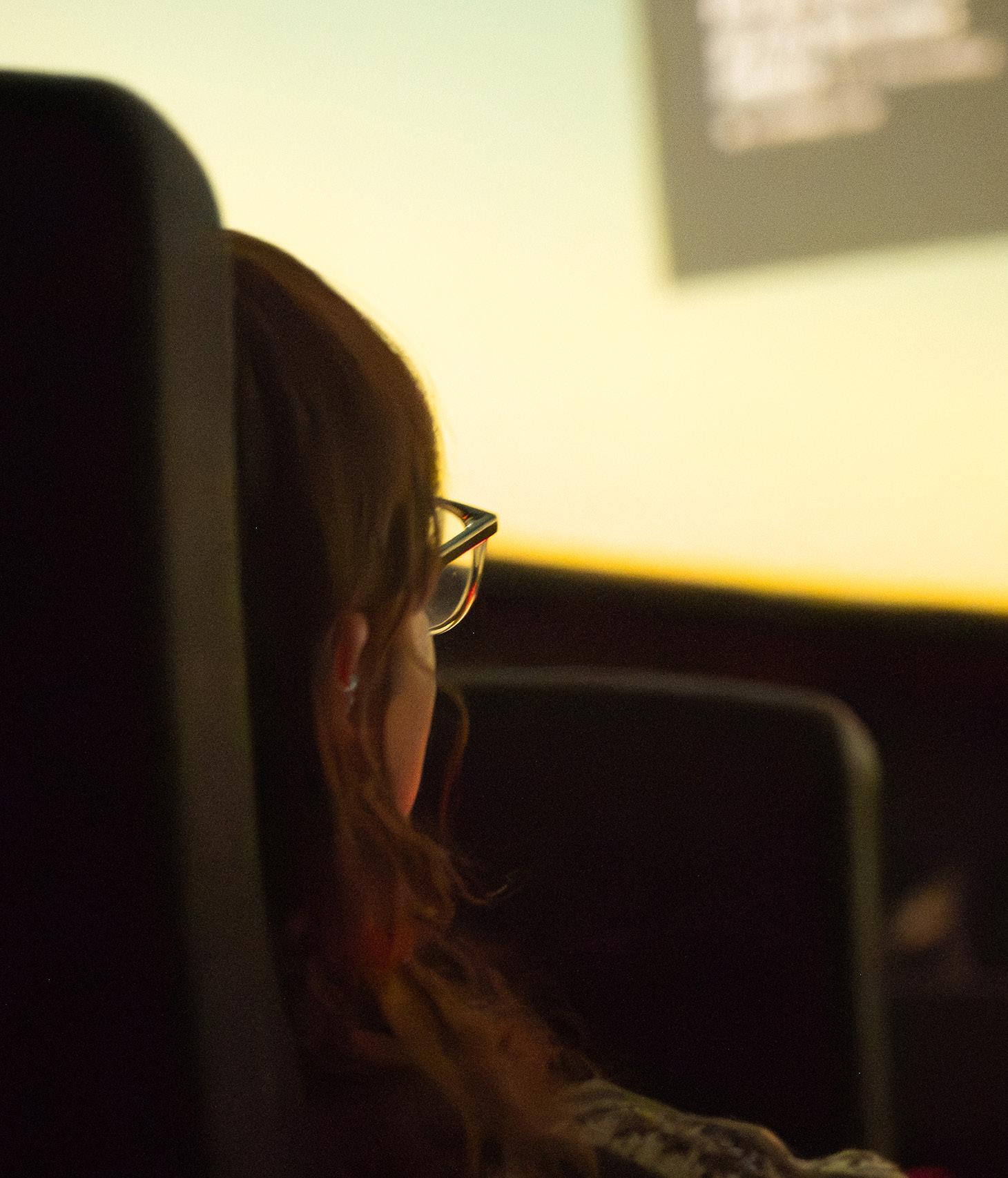
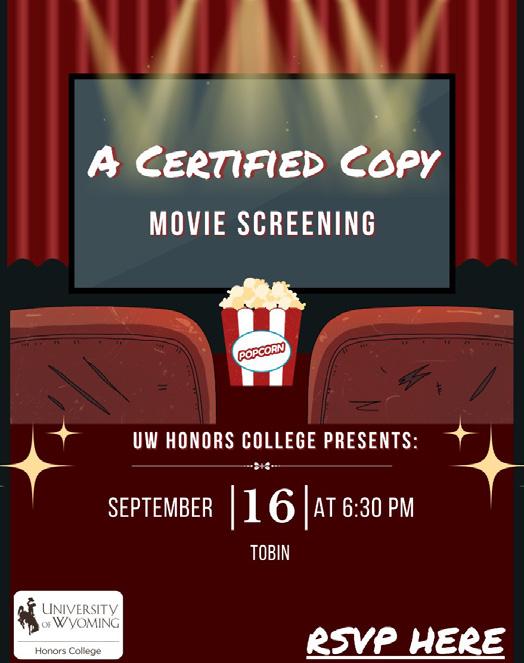
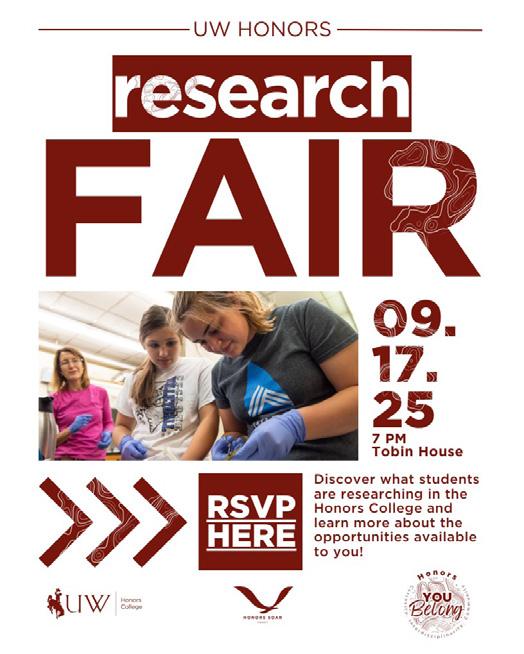
09/16: Colloquium Hub - A Certified Copy Movie Screening 09/17: Research Fair
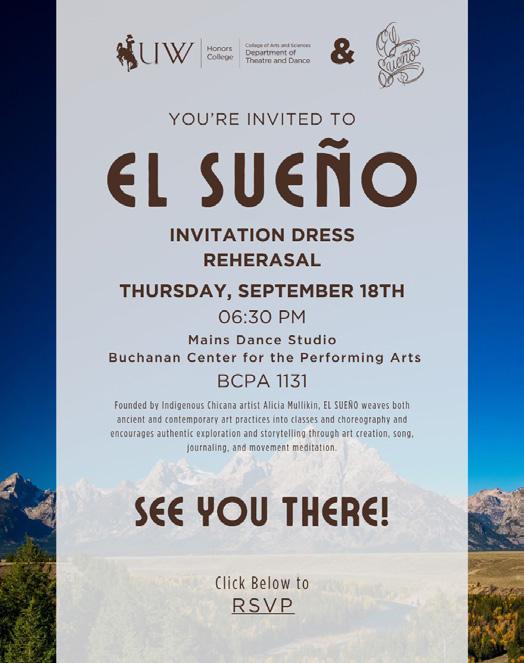
09/18: El Sueno Invitational Dress Rehearsal
09/19: Honors Capstone Workshop
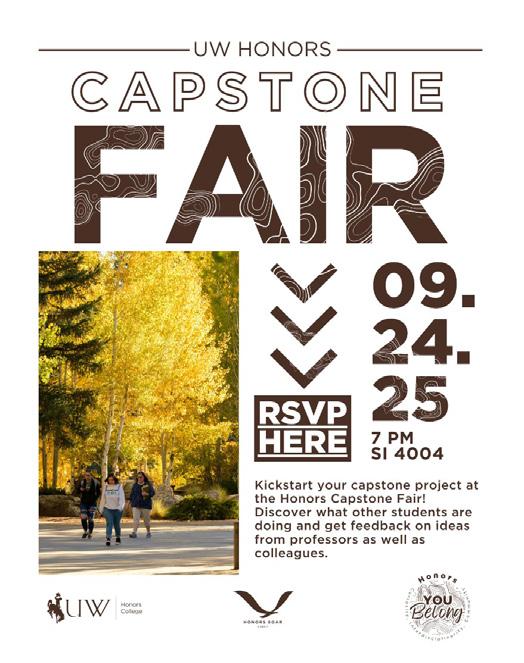
09/24: Capstone Fair
09/26: Percolate with an Advisor - Dr. Li Teng Edition
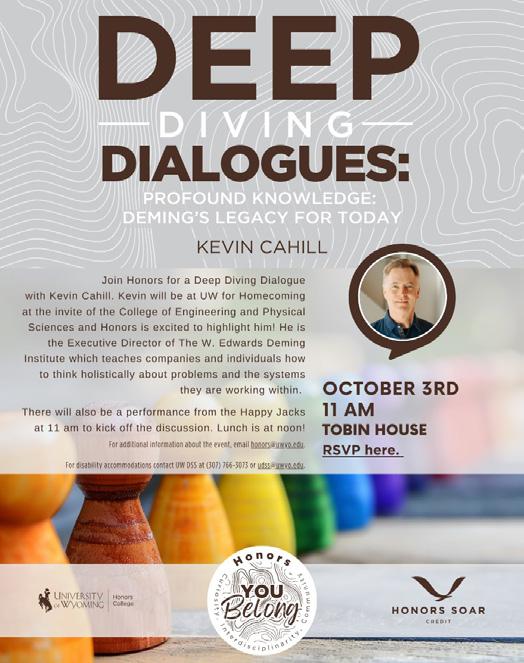
10/01: Deep Diving Dialogue - Kevin Cahill, Executive Director of the W. Edward Deming Institute
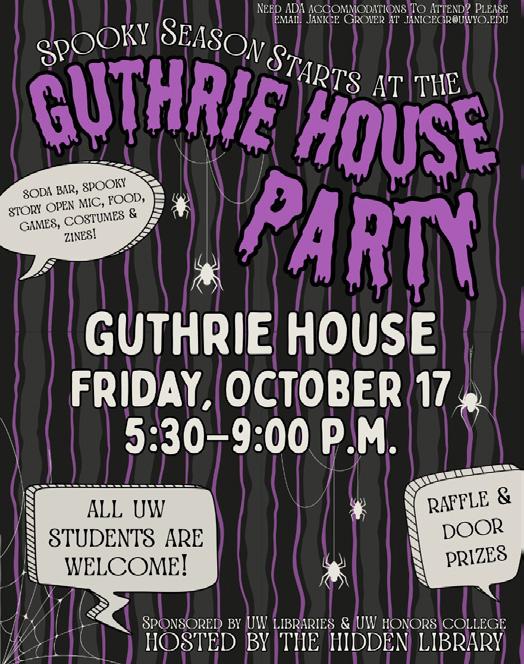
10/17: Guthrie House Party 10/19: Colloquium Planetarium Show
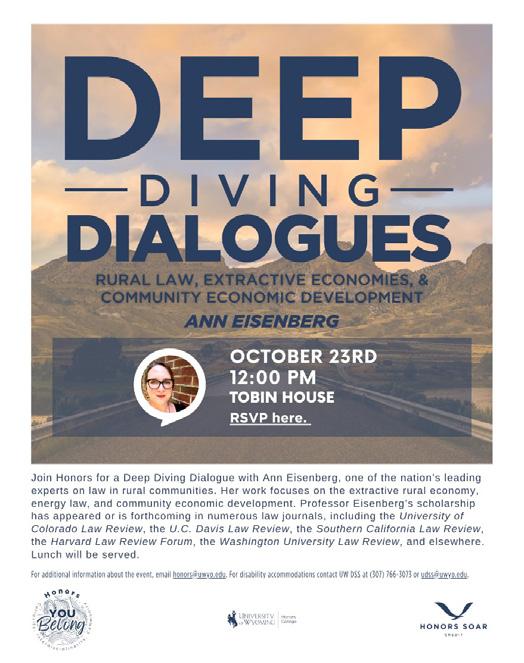
10/23: Deep Diving Dialogue - Dr. Ann Eisenberg
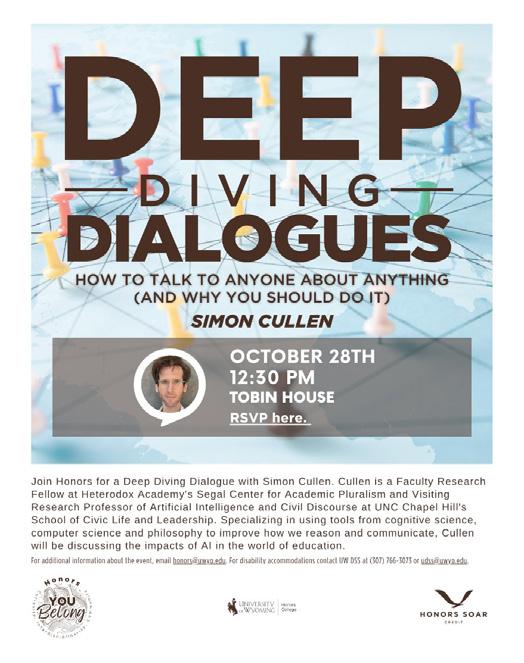
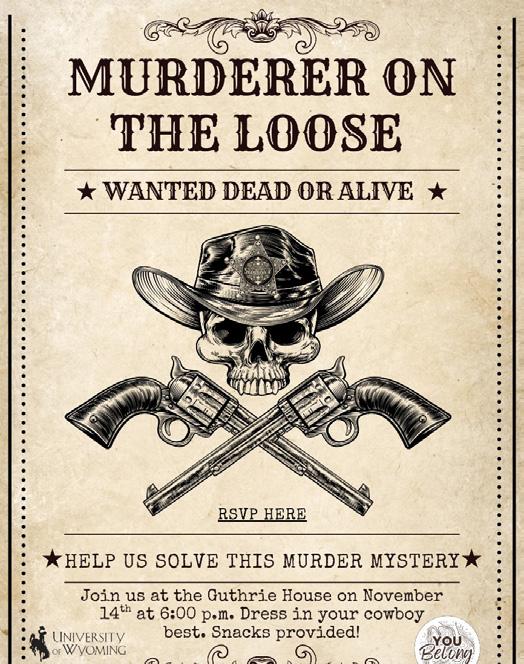
10/28: Deep Diving Dialogue - Dr. Simon Cullen 11/05: Percolate with a Prof - Dr. Vandermeade Edition 11/14: Murderer on the Loose Mystery Night
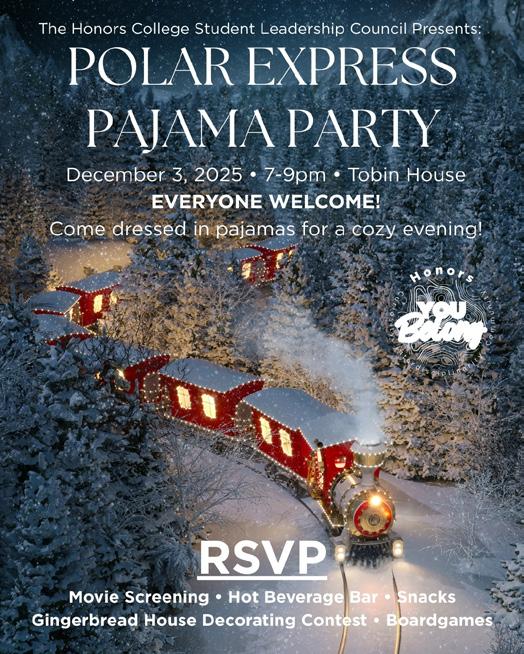
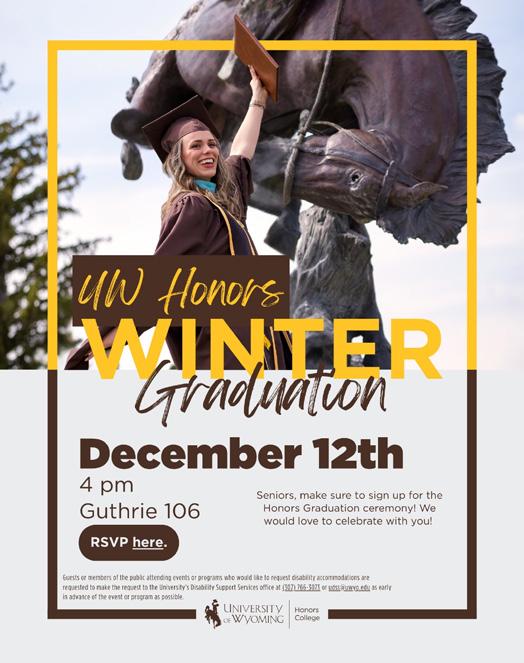
12/03: Polar Express Pajama Party 12/12: Honors Graduation
THE HONORS EXPERIENCE
The Honors College is 100% about the students — a truly exceptional group of people who make a difference at UW and in the world. Honors students are intellectually curious learners from all majors who are creative, inspired by diverse ideas, and seek a greater understanding of their place in society.
Combine excellent students with superb faculty in small classes and the result is an invigorating and highly effective learning environment. Honors faculty talk with students, not at them. Honors students thrive in this stimulating environment, develop lasting friendships, and succeed in their academic and professional pursuits.
Honors averages about 185 students in the first-year class, and 600 students overall. Each student enjoys interdisciplinary courses uniquely created and taught within the college, while earning an undergraduate minor or concurrent major in honors.
For more information on the exciting endeavors going on in the Honors College, visit http://www.uwyo.edu/ honors/.
Additionally, if you are participating in an honors project that you think should be highlighted in the Honors College Magazine, please contact honors@uwyo. edu.
PHOTO CREDIT: CATCHER RUSSELL
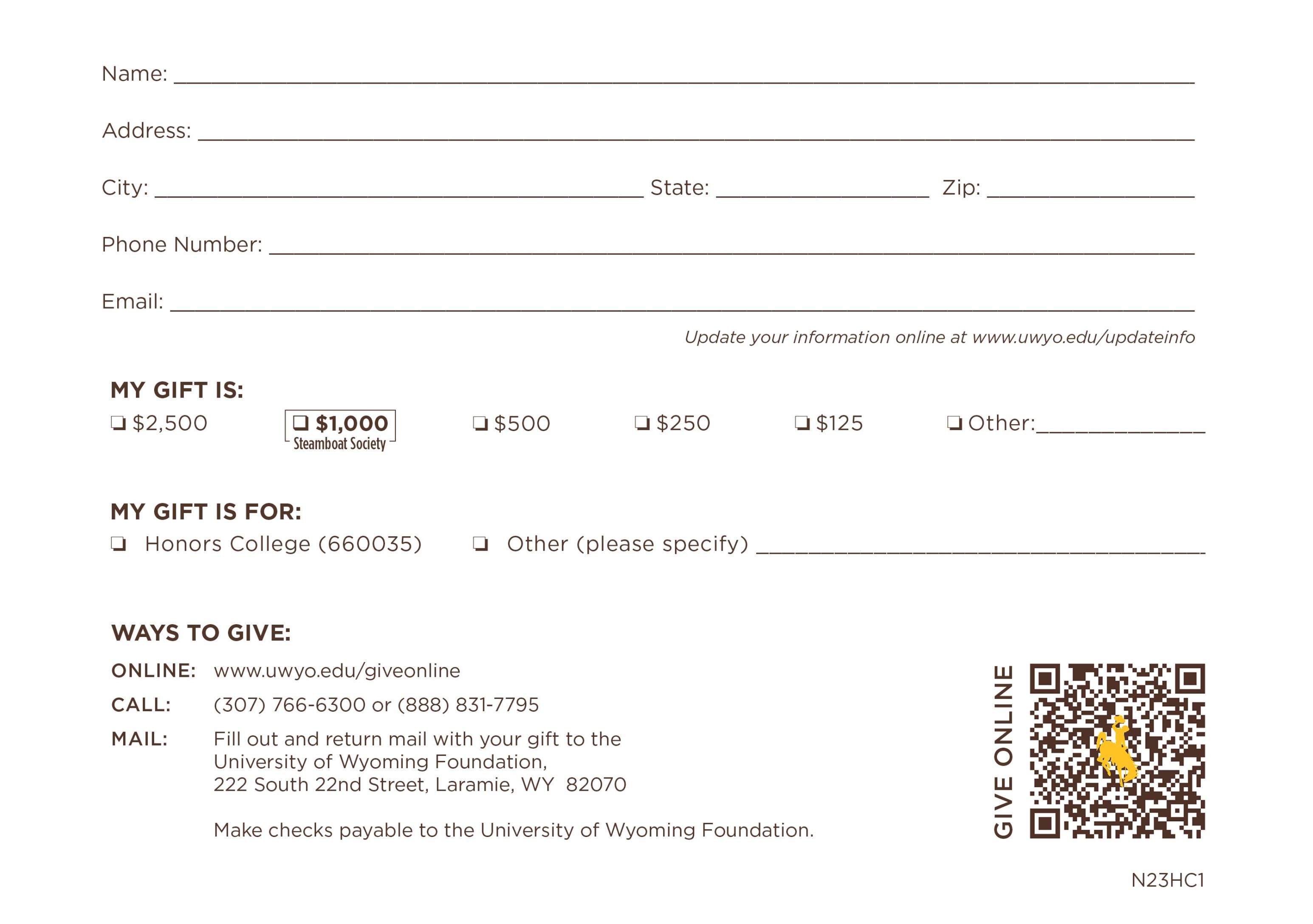
Your gift to Honors strengthens our ability to deliver the highest-quality educational, research, and outreach opportunities so that students can experience everything that Wyoming and the world have to offer. There are many ways to give, including giving to the Honors College General Fund and the Duncan and Janice Harris Excellence Fund. Private giving is fundamental to UW and to the Honors College. It provides the margin of excellence that helps our students shine, giving them access to scholarship support, cuttingedge technology and equipment, and exceptional learning opportunities. Your investment has a positive impact on every student. UW Honors appreciates each and every gift you give. If you would like to give to the Honors College, just fill out the form and follow the guidelines on p. 42. If you would like to talk with the Honors College about opportunities to give, please email Dean Peter Parolin at parolin@uwyo.edu.