Thriving Hives
December 2025
The Apiary – Beekeeping Essentials
Joseph J. Okoh and Andreé Walker Bravo
Introduction
This fact sheet is designed to help honey bee producers optimize their beekeeping practices and improve management systems. It offers essential guidance on selecting an ideal location for an apiary, choosing the right beehive, and ensuring efficient colony management. Additionally, this document serves as a valuable training resource for aspiring beekeepers.
Choosing an Apiary Location
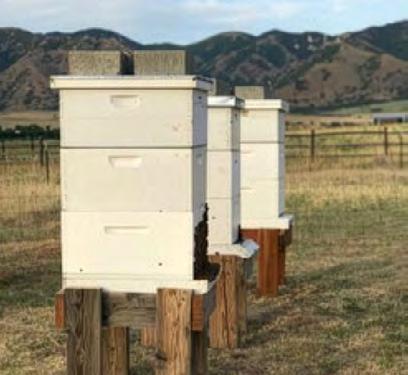
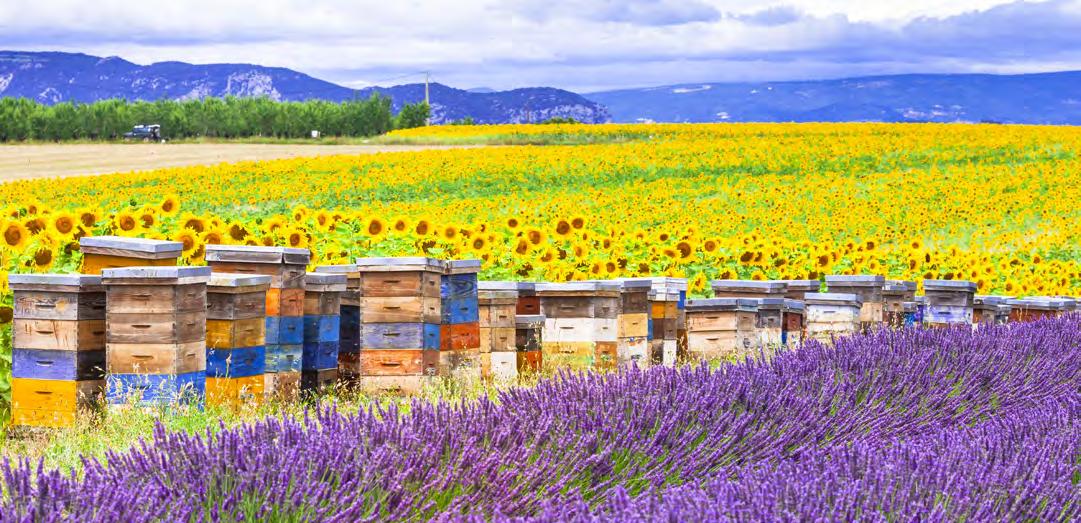
An apiary refers to a place where beehives are kept. Proper location selection is crucial for effective beekeeping. Consider the following factors when choosing an apiary site.
1. Avoid Noise and Human Activity
Select a location far from noisy areas, commercial zones, industrial sites, and playgrounds. The reasons are as follows:
a. Stress on bees: Bees are highly sensitive to vibrations and sounds. Loud noises, especially sudden or continuous noises, can cause stress and disrupt their natural behaviors, such as foraging and hive management.
b. Disruption of hive activity: Bees communicate through pheromones and vibrations, and any disturbances can interfere with these signals. Excessive noise or human activity can disorient bees and affect their ability to work together efficiently, potentially reducing hive productivity.
c. Impact on pollination: Bees are vital for pollination, and excessive human interference or noise can drive them away from the flowers they need to pollinate. If bees are disturbed too frequently, it can limit their ability to gather nectar and pollen, impacting honey production.
d. Reduced honey yield: If the bees are stressed or their activity is disrupted by excessive noise or human presence, they may spend more energy on managing stress rather than producing honey. This can reduce honey yield and affect honey quality.
e. Safety and well-being: Avoiding unnecessary human activity around hives also helps prevent accidental harm to the bees. For example, people moving too close or aggressively handling the hives can agitate the bees and cause them to become defensive.
2. Guarantee a Water Source
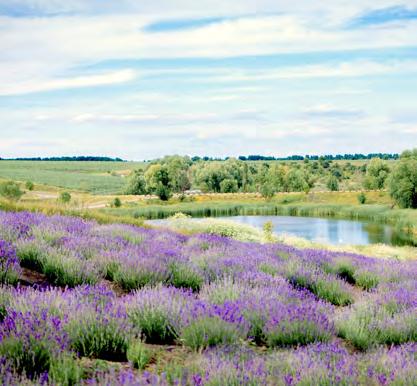
Choose a site near a freshwater source, such as a river, lake, pond, or a consistent water supply by the beekeeper. The reasons for having a good water source are as follows:
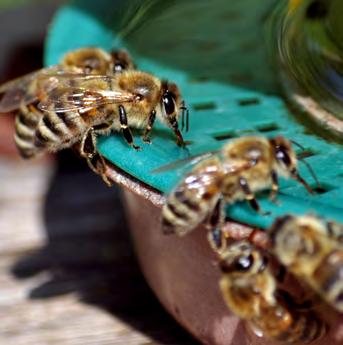
a. Water access: Bees need water for various purposes, such as cooling the hive, honey production, and feeding larvae. A nearby water source ensures the bees can easily access water without traveling long distances, which would be inefficient and time-consuming.
b. Optimal foraging: Water sources often support a healthy environment with abundant vegetation, which is critical for bees to forage. Having flowers and plants nearby increases the availability of nectar and pollen, boosting honey production.
c. Hive health: Water helps maintain the proper humidity levels inside the hive, which is important for preventing dehydration and promoting healthy colony growth. It also aids in temperature regulation.
d. Bee productivity: When bees do not have to expend extra energy looking for water, they can focus more on gathering nectar and pollen, leading to higher honey yields.
e. Survival in dry periods: In case of drought or dry spells, having a nearby water source can ensure that your bees do not struggle to find enough water to survive.
f. Beekeepers as good neighbors: Bees will look for water at the nearest source, which may be a neighbor’s pool or dog dish. Providing a consistent water source in proximity to the hive is crucial to prevent bees from becoming a nuisance.
Having access to consistent water is like giving your bees a steady supply of essential resources to keep them healthy and productive. If you are planning on honey bee production, consistent water supply is a practical move to support long-term success.
3. Ensure Food Sources
Ensure the area is rich in flowering plants and trees to provide diverse resources and season-long blooms, necessary nectar and pollen for bees. Refer to the Utah State (USU) University fact sheet “Gardening for Native Bees in Utah and Beyond” (Cane & Kervin, 2013 ). Good food sources will aid in the following:
a. Better crop: Proximity to food crops ensures bees have easy access to nectar, improving pollination and crop yields.
b. Higher honey quality: Bees collecting nectar from diverse food plants can produce higher-quality and varied honey.
c. Sustainability: Bees can thrive in areas with abundant food, supporting their health and productivity.
d. Efficiency: Bees do not need to travel long distances, thereby reducing their energy use and increasing honey production.
e. Support ecosystems: Bees help pollinate plants in surrounding ecosystems, benefiting biodiversity and local agriculture.
4. Consider Land Conditions/Topography
Avoid swampy or flooded areas. Opt for dry land to prevent humidity-related issues, such as fungal growth and disease. Consider the following features:
a. Forage availability: The land’s vegetation and topography influence the availability of nectar and pollen sources. Rich, diverse landscapes provide bees with more food options, enhancing honey production.
b. Accessibility: Smooth, gently sloping land makes it easier to access hives for maintenance, while steep, rugged terrain could make hive management difficult.
c. Wind protection: Topography can shield bees from strong winds, which could disturb the hives or even harm the bees. Hills, trees, and natural or human-manufactured barriers can offer this protection.
d. Drainage: Well-drained land is crucial to avoid waterlogging, which can damage hives and create unhealthy conditions for bees.
e. Temperature regulation: Land conditions like elevation can affect local microclimates, helping maintain a stable temperature for the bees, which is vital for their productivity.
Selecting the right land with favorable conditions and topography helps ensure healthy bees and a productive apiary.
5. Avoid Natural Hazards and Human Challenges
Steer clear of areas vulnerable to fires, floods, or other natural disasters. Consider the risks posed by predators, vandalism, or hostile surroundings. Considering natural hazards and human challenges when choosing a honey bee apiary location is crucial for the hive’s survival and productivity. Natural hazards like extreme weather (storms, floods, drought) can damage hives, while pests and diseases can spread more easily in certain areas. Human challenges, such as nearby pesticide use or urbanization, can also impact bee health and pollination efficiency. A good location minimizes these risks, ensuring the bees thrive and produce honey effectively.
6. Ensure Accessibility
Ensure the site has easily accessible roads or access to facilitate managing and transporting equipment.
Selecting a Beehive
A beehive is a structure where honey bee colonies live, reproduce, and produce honey. Several hive types are used by beekeepers, each with distinct features. The most common types include:
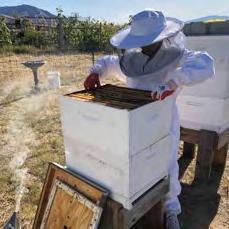
Langstroth Hive
Overview: This is the most widely used hive, invented by Lorenzo Langstroth in the mid-1800s. Its removable vertical hanging frames simplify hive inspection without damaging the comb.
Advantages:
• Interchangeable parts from various manufacturers.
• Commonly used with readily available support.
• Ideal for honey production.
Challenges:
• Requires large storage space for unused components.
• Heavy lifting involved.
• Langstroth eight-frame hives can be hard to find.
Top Bar Hive
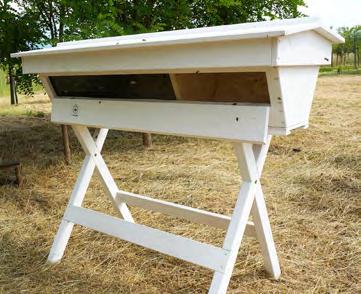
Overview: A simpler design, the top bar hive (TBH) is a long box with wooden top bars where bees build their honeycomb. This hive lacks frames and foundation, allowing bees to build natural comb.
Advantages:
• Bees build their own comb, mimicking natural conditions.
• More comfortable for the beekeeper due to its design.
• Less disturbance during inspections.
Challenges:
• Comb can break during inspections.
• Feeding colonies can be challenging, particularly in winter.
• Limited support available for new beekeepers.
• Bees may leave (abscond) more frequently.
• Honey harvest methods are limited (i.e., centrifugal honey extractors are not an option).
Warré Hive
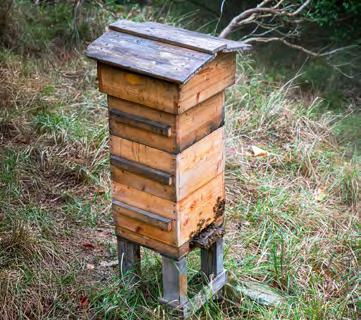
Overview: Designed by Abbé Émile Warré to simulate the conditions inside a hollow tree, this hive consists of smaller boxes added at the bottom, mimicking the downward building behavior of bees in the wild.
Advantages:
• Requires less frequent inspections, as frames are not removed.
• Bees build their own comb without foundation.
• More natural design for bees.
Challenges:
• Illegal in some states. (Warré hives may be allowed in Utah, but beekeepers must follow state rules which includes a requirement for movable frames. They need a certificate from an approved inspector showing the bees and equipment were checked during the current season. If hives are placed on land the beekeeper does not own, they must be clearly marked with the beekeeper’s state registration number.)
• Limited inspection capabilities due to non-removable bars.
• Less common, with limited local support.
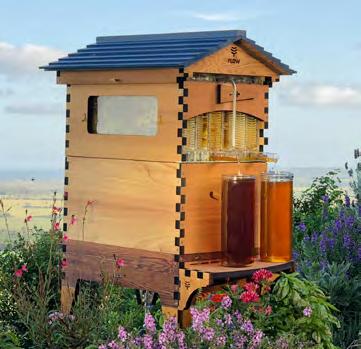
Flow Hive
Overview: This innovative hive features special frames that allow honey to be extracted with a simple crank, making honey harvesting much easier.
Advantages:
• Simplifies honey harvesting.
• Innovative and modern design.
Challenges:
• Expensive compared to other hives.
• Long delivery times.
• May not always function as expected.
By understanding the essentials of apiary location and selecting the appropriate hive, beekeepers can ensure productive and sustainable honey bee management.
Managing a Colony: Beekeeping Essentials
Preparing the Hive and Sourcing Bees
Clean the hive thoroughly to ensure its effectiveness. Refer to USU Extension’s fact sheet “Cleaning and Sterilizing Beekeeping Equipment” (Meredith et al., 2024). Remove dirt, cobwebs, spiders, and insects to prevent deterring scout bees.
Once the hive equipment is clean and set up, you are ready to procure bees. You can purchase bees from a local vendor in packages or nucleus colonies. Refer to USU Extension’s (n.d.) fact sheet “Setting Up and Placing a Hive.”
Attracting Bee Swarms
Beeswax
The most effective attractant for bees is the wax, as it retains its properties long-term. Rub beeswax on the inner walls of the hive foundation or the tips of V-shaped or ridged areas (in top bar hives) to guide bees in comb construction.
Sweet Baits
Syrups and granulated sugar can also be used to attract bees. Provide twigs or sticks as landing boards for safe access to syrup, preventing drowning and ensuring other insects or predators cannot access the syrup. However, open feeding is not encouraged due to disease transfer.
Other sweet baits that effectively attract bees are essential oils. Common essential oils used in beekeeping include:
• Lemongrass oil – mimics pheromones (chemical scents released into the air), a strong attractant.
• Spearmint oil – sometimes mixed in feeding syrups.
• Thyme oil – a component of some varroa mite control methods.
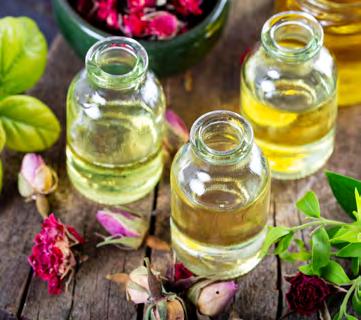
• Anise oil and citronella – less common but also used as attractants or calming agents.
The benefits of using essential oils as sweet baits follow.
Attracting Bee Swarms Using Lemongrass and Essential Oils
• Lemongrass oil mimics the pheromones produced by worker bees, especially the Nasonov pheromone, which bees release to attract other bees to a location, such as a new nesting site.
• When placed in a swarm trap or bait hive, a few drops of lemongrass oil can lure swarming bees looking for a new home.
Stimulating Colony Establishment
• Essential oils with a sweet or floral scent help encourage bees to stay in a newly installed hive.
• These oils can be part of feeding syrups or hive treatments, promoting exploratory behavior and calming the bees.
Improving Foraging Behavior
• Though not their primary role, some studies suggest that volatile compounds in certain essential oils may stimulate foraging or bee movement toward specific areas.
Improving Safety With Nontoxic and Natural Alternatives
• Using essential oils like lemongrass is a natural method
• Avoid synthetic chemicals and keep bee products like honey and wax free from contaminants.
Anticipating Colonization
Waiting for the Swarm:
• If your bait hive is successful, patience is required, as the swarm may take anywhere from 20 minutes to 24 hours to settle in.
• Hives near blooming plants attract bees faster than those in residential areas.
• Beekeepers should set up apiaries near agricultural areas or diverse gardens to take advantage of abundant natural forage for bees.
Water for Bees:
• Ensure a fresh water source is available to facilitate honey production, especially during the dry season when honey flow is highest.
Building Blocks for Honeycomb
Beeswax:
• Bees secrete wax for constructing honeycomb cells where honey and pollen are stored.
• The ideal temperature for wax secretion is between 91 °F and 97 °F.
• Bees process wax scales through chewing and salivation, which softens them for construction.
Propolis:
• Propolis is a plant-derived resin collected by bees.
• It is used to enhance hygiene and promote social immunity within the colony.
Handling Bees
Table 1 displays the best practices for handling bees.
Best practices
Avoid certain substances.
Wear protective clothing.
Choose the right clothing color.
Use smokers.
Handle bees gently.
Explanation
• If possible, avoid excessive perspiration, alcohol, soaps, and perfumes when visiting your hive or inspecting colonies.
• Bees react strongly to these materials.
• Always wear protective clothing to avoid bee stings.
• Avoid dark clothing.
• Aggressive bees are attracted to dark colors.
• Opt for white clothing instead.
• It is recommended to use a smoker when opening colonies.
• Smokers calm the bees.
• Carry out bee handling efforts slowly and quietly.
• Minimize disturbances.
Managing Honey Bee Pests and Disease
Management for honey bee pests and diseases are essential actions for beekeepers. Varroa mite management in particular is critical to the health and success of beehives. Please visit resources provided by the Utah Department of Agriculture and Food Apiary Program or the National Honey Bee Health Coalition for more information.
Harvesting Honey
Honey harvesting is an exciting activity, but it is important to have all the necessary materials ready before you start. Once harvesting begins, many materials may become sticky and difficult to access. Below is a list of the materials recommended for honey harvesting:
• Extractor (manual or electric)
• Plastic gloves
• Honey buckets
• Heated electric knife or capping scratcher
• 400- to 600-micron filter
• Table
• Extra tub for wax capping
• Jars (properly washed and disinfected)
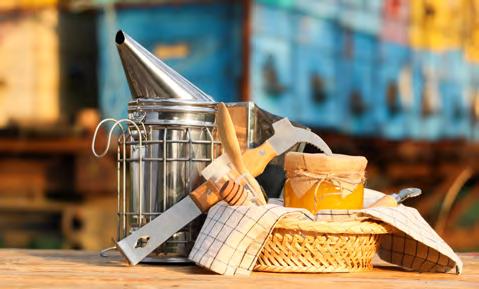
Table 1. Best Practices for Handling Bees
Smoking the Hive
When smoking the hive, it is recommended to wear a bee veil and protective gloves at a minimum. Inject a puff of smoke into the hive. The bees, sensing the presence of fire, will gorge themselves on honey in an attempt to take as much as they can before fleeing. This engorgement calms the bees, making them less likely to sting, although a few may remain active. Bees also communicate via pheromones, which are masked by the smoke.
Extracting Honey From the Hive
Step 1. Removing the Honeycomb
Gently remove the honeycomb frames from the hive. Ensure that most of the cells in the comb are capped and brood is not present. Remove and shake each super frame. If honey spills out, reinsert the frame into the honey chamber for several more days. If the honey is capped, brush off any bees on the comb using a soft brush or feather. In Utah, the rule of thumb is to leave 80–100 pounds of honey for the beehive’s overwinter use. Remove your honeycomb frames accordingly to ensure winter survival.
Step 2. Transporting and Uncapping the Honeycomb
Honeycomb frames should be placed in a transport box and taken to a bee-free room. Use a long-handled uncapping fork or a hot knife to scrape/remove the caps from both sides of the honeycomb onto a capping tray.
Step 3. Harvesting Honey
A. Harvest by Machine
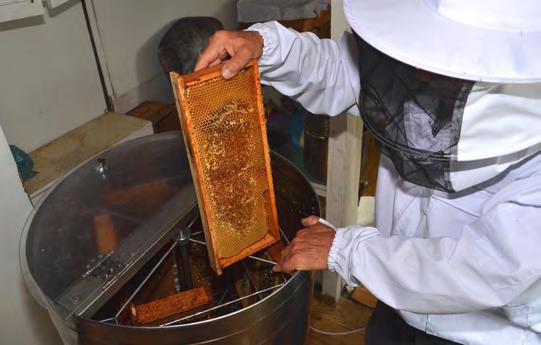
Insert the honeycomb into an extractor, a large drum that uses centrifugal force to draw out the honey. A full deep frame can weigh as much as 10 lbs. Start the extractor at a low speed to prevent the combs from breaking. The spinning motion draws the honey from the comb, and it drips down to the cone-shaped bottom of the extractor. The honey is then collected through a spigot at the bottom into a honey bucket. The bucket is fitted with two sleeves—one coarse and one fine—to filter out wax particles and other debris. The honey collects into drums for further commercial processing.
A Note About Frames
There are two types of frames: foundation and foundationless. Table 2 summarizes frame differences.
• Foundation frames come with a pre-made sheet of wax (or plastic) embossed with hexagonal cell patterns. This sheet serves as a guide for comb-building, as bees use the pre-formed pattern as a blueprint, building straight comb aligned with the frame. It helps create stronger comb, reinforcing it and making it more durable, especially important during mechanical extraction (centrifuge). It also supports faster comb production since bees do not have to build comb from scratch and can instead fill it with honey or brood more quickly. Beekeepers can choose a foundation with specific cell sizes to influence worker or drone production, or to implement varroa control strategies.
During extraction, foundation frames are easier and cleaner to use in an extractor. Because the comb is supported, it’s less likely to break during centrifugal extraction. The foundation is often reusable if the comb remains intact.
•
Foundationless frames have no pre-installed foundation, just an empty frame or one with a simple guide (like a wooden strip or starter strip of wax). Its functions include natural comb-building, as bees build comb from scratch according to their needs as more natural behavior. Bees can choose cell size freely, which often means more drone comb unless managed.
Foundationless frames have no chemicals or contaminants, so these frames are useful for organic/natural beekeepers who want to avoid contaminants sometimes found in commercial foundation. Since these frames lack a foundation core, the comb is more likely to collapse in a centrifugal extractor. They are best used in nonmechanical extraction methods (e.g., crush-and-strain, explained in the Harvest Manually section below). Extra caution is needed if using an extractor; the comb must be fully drawn and capped to be strong enough, and even then, slow spinning is recommended.
Comb strength Stronger, good for extractors
Bee control Controlled cell size and alignment
Extraction Ideal for centrifugal methods
Bee behavior Less natural, but efficient
Management Easier for large-scale hives
B. Harvest Manually (for
Backyard Producers)
Weaker, fragile without full capping
Natural cell sizes, less control
Best for crush-and-strain or gentle spin
More natural, slower production
Better for small-scale/natural methods
For small-scale honey producers who may not have access to an extractor, honey harvesting can also be done manually via the crush-and-strain process. Perform the process in a clean environment using rubber gloves. Scrape all honey and comb from the honey frames into a strainer. If the honey is viscous, apply a little heat to make it more fluid and easier to extract.
Afterwards, filter the honey to remove debris and separate the clean honey into a bucket, which is then transferred into jars or containers. It’s important to note that the leftover comb may still contain a considerable amount of honey. Traditionally, the crushed honeycombs are tied together in a clean net or stirred and left in the strainer and hung for 1 to 3 hours, allowing the remaining honey to drip into a collection tray by gravity. Store the collected honey in a cool place.
Conclusion
Sustainable honey bee production can be rewarding; however, it requires careful planning and knowledge of best practices. When setting up an apiary, choose a quiet, safe, and accessible location with nearby flowers and a clean water source. Avoid wet, noisy, or pesticide-heavy areas. Pick a hive type that suits your needs and keep the hive clean to attract bees. Provide water regularly, especially in dry seasons, and handle bees calmly, using protective gear and a smoker. When harvesting honey, ensure the bees have enough left to survive winter, and either use an extractor or a simple crush-and-strain method.
Table 2. Foundation Frames VS Foundationless Frames
Feature Foundation frames
Foundationless frames
References
Adjare, S. O. (1990). Beekeeping in Africa. Food and Agriculture Organization of the United Nations (FAO), Agricultural Services Bulletin, 68(6). https://openknowledge.fao.org/handle/20.500.14283/t0104e
Cane, J. H., & Kervin, L. (2013). Gardening for native bees in Utah and beyond [Fact sheet ENT-133-09]. Utah Plant Pest Diagnostic Laboratory and Utah State University Extension. https://digitalcommons.usu.edu/cgi/editor. cgi?window=abstract&article=1907&context=extension_curall
Heard, R. J. (2008). A brief survey of ancient near eastern beekeeping. The Farms Review, 2, 3.
Kinati, C., Tolemariam, T., & Debele, K. (2011). Quality evaluation of honey produced in Gomma Woreda of SouthWestern Ethiopia. Livestock Research for Rural Development, 23(9), 1–9.
Meredith, B., Parkinson, B., & Walker Bravo, A. (2024). Cleaning and sterilizing beekeeping equipment [Fact sheet]. Utah State University Extension. https://extension.usu.edu/beekeeping/research/cleaning-and-sterilizingbeekeeping-equipment
Utah State University Extension. (n.d.). Setting up and placing a hive [Fact sheet]. https://extension.usu.edu/ beekeeping/learn/beginning-beekeeping/ Wongsiri, S. (1997). Comparative biology of Apis andreniformis and Apis florea in Thailand. Bee World, 78(1), 23–35.
Photo Credits
Photos were licensed from Deposit Photos except the flow hive and the top bar hive image, which were provided by Wikimedia Commons, licensed by Creative Commons
In its programs and activities, including in admissions and employment, Utah State University does not discriminate or tolerate discrimination, including harassment, based on race, color, religion, sex, national origin, age, genetic information, sexual orientation, gender identity or expression, disability, status as a protected veteran, or any other status protected by University policy, Title IX, or any other federal, state, or local law. Utah State University is an equal opportunity employer and does not discriminate or tolerate discrimination including harassment in employment including in hiring, promotion, transfer, or termination based on race, color, religion, sex, national origin, age, genetic information, sexual orientation, gender identity or expression, disability, status as a protected veteran, or any other status protected by University policy or any other federal, state, or local law. Utah State University does not discriminate in its housing offerings and will treat all persons fairly and equally without regard to race, color, religion, sex, familial status, disability, national origin, source of income, sexual orientation, or gender identity. Additionally, the University endeavors to provide reasonable accommodations when necessary and to ensure equal access to qualified persons with disabilities. The following office has been designated to handle inquiries regarding the application of Title IX and its implementing regulations and/or USU’s non-discrimination policies: The Office of Equity in Distance Education, Room 400, Logan, Utah, titleix@usu.edu, 435-797-1266. For further information regarding non-discrimination, please visit equity.usu.edu, or contact: U.S. Department of Education, Office of Assistant Secretary for Civil Rights, 800-421-3481, ocr@ed.gov or U.S. Department of Education, Denver Regional Office, 303-844-5695 ocr.denver@ed.gov. Issued in furtherance of Cooperative Extension work, acts of May 8 and June 30, 1914, in cooperation with the U.S. Department of Agriculture, Kenneth L. White, Vice President for Extension and Agriculture, Utah State University. April 2025, Utah State University Extension.