Optimal Drought Management Actions for Cattle Operations on the Duck Valley and Pyramid Lake Indian Reservations
Kynda Curtis, Professor and USU Extension Specialist, USU Department of Applied Economics
Tatiana Drugova, Research Associate, USU Department of Applied Economics
Man-Keun
Kim, Professor, USU Department of Applied Economics
Introduction
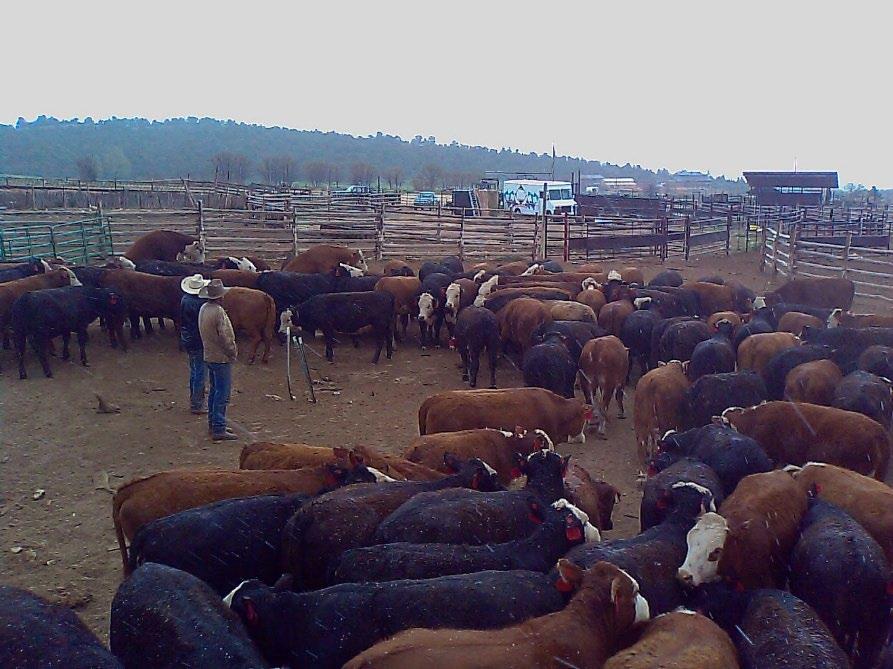
Agriculture remains a central economic activity on U.S. Native American reservations, particularly in the arid Southwest, where livestock grazing is both a vital subsistence strategy and a deeply rooted cultural tradition (Redsteer et al., 2013). Yet frequent, prolonged droughts increasingly threaten the financial viability of cattle operations in this region. Drought conditions degrade rangeland quality and reduce water availability, leading to lower cattle productivity and diminished economic returns (Hamilton et al., 2016; Wold et al., 2023). Recent research indicates that ranch income can decline by up to 11% when an additional share of pastureland falls under abnormally dry conditions and by as much as 15% under severe drought conditions (Rodziewicz et al., 2023).
Highlights
• Drought presents significant operational and financial challenges for cattle ranching on the Duck Valley and Pyramid Lake Indian reservations.
• The two key drought strategies herd reduction and hay purchases have varying economic outcomes based on hay prices and rancher risk tolerance.
• For risk-averse ranchers, selling unsupported cattle is generally more financially sound when hay prices are average or high, while purchasing hay carries greater risk due to price volatility.
• Ranchers should proactively monitor drought and hay prices, establish a clear drought plan, and work with tribal and government programs to build resilience.


On the Duck Valley and Pyramid Lake Indian reservations in Nevada, 10.9% and 4.5% of the population is employed in the agriculture, forestry, fishing/hunting, and mining sectors, which is significantly more than the U.S. national average of 1.8% (U.S. Census Bureau, 2022). The area of the Duck Valley Indian Reservation is split evenly between Nevada and Idaho. The primary industries on the Duck Valley Indian Reservation are ranching, farming, and recreational activities such as fishing and hunting, which are enjoyed by both tribal members and visitors (McNeel, 2018). Major economic activities on the Pyramid Lake Indian Reservation include fishing, boating, etc., and a reservation open range for operating and managing cattle herds (Pyramid Lake Paiute Tribe, 2023).

Additionally, Nevada is the driest state in the U.S., with an average yearly precipitation of 9.96 inches between 2000 and 2019 (National Centers for Environmental Information, 2023). Between April 2022 and May 2023, on average, 86% of the alfalfa hay acreage and 87% of the cattle inventory in Nevada were affected by moderate to severe drought (U.S.
Drought Monitor, 2023). According to the U.S. Drought Monitor (2025a), moderate drought leads to some damage to crops and pastures and results in low stream, reservoir, and well levels. Reduced grazing quality, feed, and water supply have negative implications for animal health, reproduction, and overall cattle production systems (Nardone et al., 2010), which may have large economic impacts. For example, livestock producers in the Hualapai Tribe lost $1.6 million between 2001 and 2007 due to a 50% loss in grazing efficiency and a resulting 30% herd reduction (Knutson et al., 2007). On these reservations in Nevada, a reduction of cattle inventory by 3.72% due to a two-year moderate drought led to $264,000 in losses to cattle operations (Drugova et al., 2022).
In this fact sheet, we examine the drought management options available to cattle operations on two Native American reservations in Nevada, the Duck Valley and Pyramid Lake Indian reservations. Specifically, we discuss the results of a study which evaluated the economic outcomes of two common drought response strategies: herd reduction and supplemental hay purchases. We also provide recommendations for ranchers regarding optimal strategies, i.e., those which would maximize profits for two rancher types, differentiated by their willingness to accept risk (risk-neutral) or avoid it (risk-averse). A third potential drought response strategy, leasing additional grazing land, was not included in the analysis, as this option isn’t normally possible. The vast majority of Native American reservation lands are held in trust by the U.S. government and, thus, land-leasing agreements must go through a lengthy approval process at the U.S. Department of the Interior. The one exception is reservations with approved HEARTH Act regulations, which allow tribal governments to approve land-leasing agreements directly (see HEARTH Act Leasing).
Study Approach and Data
In the study, net returns were calculated over 10 years for the selected drought management scenarios listed in Table 1. For example, in Scenario 2, eight head of cattle could not be supported on available forage due to drought, so the rancher sells six head and purchases additional hay for the remaining two head. The scenario that yields the highest net returns over the 10 years is the most optimal one from a financial perspective.
Table 1. Examined Drought Management Scenarios
5
Note *Calculated for all cattle not supported on available forage
To calculate net returns, we used data from available cost-of-production studies in Nevada (Utah State University [USU] Extension, 2024a, 2024b). We simulated cattle prices and forage production using historical data to use variable cattle prices and forage production in the analysis. The remaining variables were held constant, including starting herd size, cattle production ratios, cull rate, cattle forage and feed needs, and fixed costs. We simulated forage production in the first year only, and we defined drought as simulated forage production below the historical average. In the following years, we assumed normal forage production and allowed ranchers to repurchase cattle. We also assumed that the drought occurred in one year only. Additional analysis would be needed to determine the most profitable actions in
periods of persistent (multi-year) drought. Research shows that herd rebuilding may take from 3–6 years after a multiyear drought, while rangeland recovery takes 1–3 years for moderate drought and 3–5 years for severe drought (Countryman et al., 2016; Peel, 2023; U.S. Drought Monitor, 2025b).
We did not simulate hay prices; rather, we calculated net returns for each hay price between $100 and $275/ton at $25 increments to examine the impact of variable hay prices on the optimal management scenario. Note that the average hay price in Nevada in 2024 was $175/ton, which is a reduction from the 2020–2024 average of $218/ton (National Agricultural Statistics Service, 2025). We collected available weekly steer prices for Nevada between 2019 and 2023 (Cattle Range, 2023). We then calculated heifer prices and slaughter cattle prices based on the estimated historical relationships between steer, heifer, and slaughter cattle prices. We obtained yearly forage production data for each reservation from 1986–2021 (Agricultural Research Service [ARS], 2023). Table 2 reports the summary statistics for the cattle prices and forage data used for simulation.
Table 2. Summary Statistics for Cattle Prices ($/cwt) and Forage Production (lb/acre)
a Source: ARS, 1986–2021
Study Results
Figure 1 shows estimated average returns over 10 years for risk-neutral ranchers and certainty equivalents (CE) for riskaverse ranchers. Certainty equivalent is the return that a risk-averse rancher would accept to avoid the risk, and thus, it is lower than the average return. Examined drought management scenarios are differentiated by circle color, which plots the average return or certainty equivalent in $1,000 (y-axis) for the drought option at a given hay price (x-axis). The highest plotted circle per hay price represents the most profitable option at that hay price.
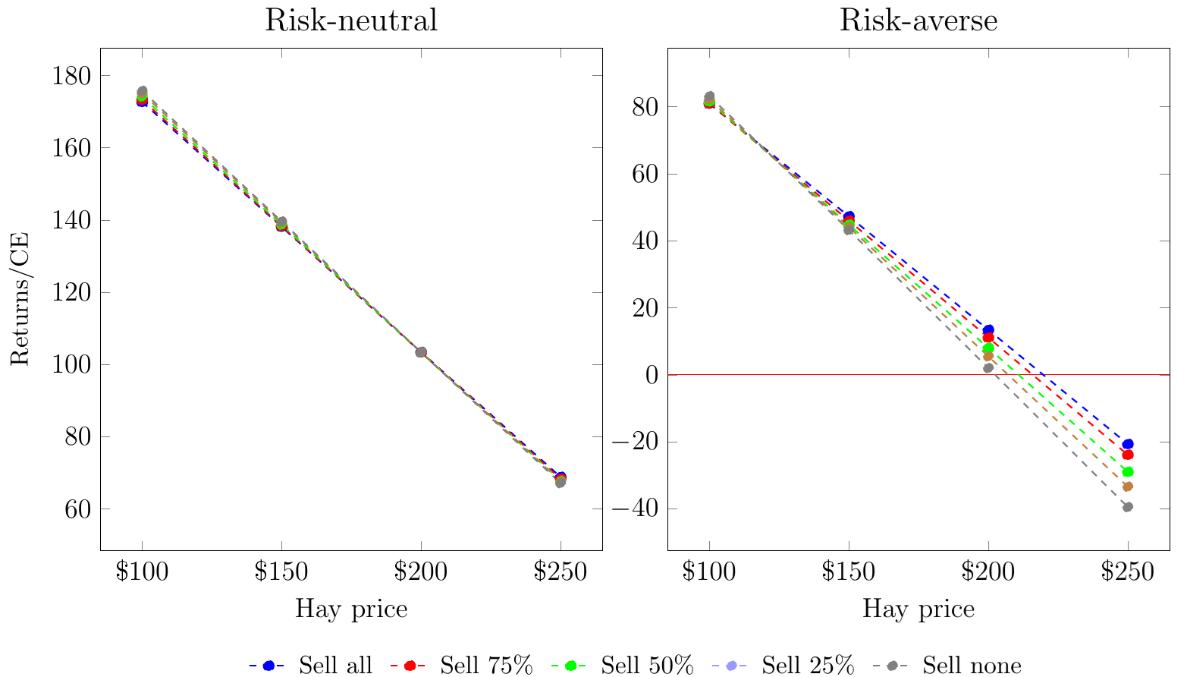
Figure 1. Average Returns and Certainty Equivalents by Rancher Type ($1,000) at Ducky Valley (A) and Pyramid Lake (B) (A) Duck Valley
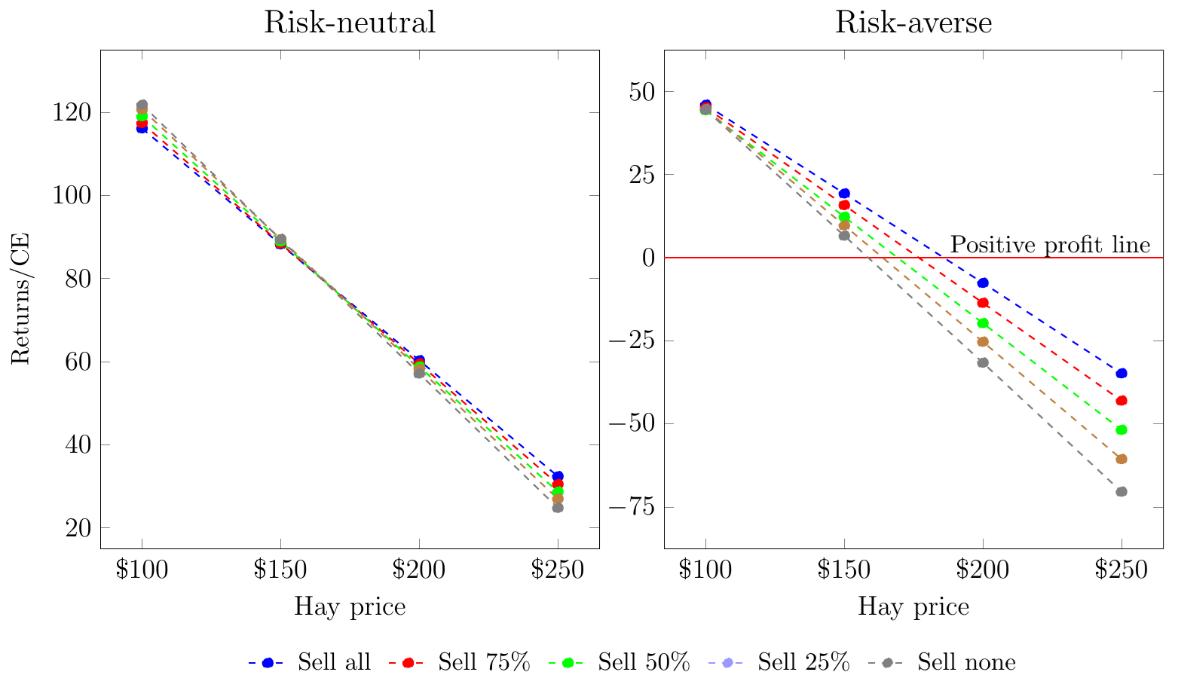
Notes Hay prices are $/ton. CE is certainty equivalent. Per Table 1, “Sell all” is Scenario 1, “Sell 75%” is Scenario 2, “Sell 50%” is Scenario 3, “Sell 25%” is Scenario 4, and “Sell none” is Scenario 5
Duck Valley Indian Reservation
Risk-Neutral Ranchers
For risk-neutral ranchers, the difference in the average returns across the drought management scenarios is relatively small. The variability of returns (i.e., uncertainty, measured using standard deviation) increases as the rancher moves from selling all unsupported cattle (Scenario 1) to purchasing additional hay only (Scenario 5) at any hay price. At the lowest examined hay price of $100/ton, which is much lower than recent hay prices in Nevada, purchasing additional hay to retain cattle is most profitable ($176,000). The returns are 1.8% higher than returns when selling all cattle that cannot be supported during drought ($173,000). Note that these are average 10-year returns of 1,000 simulations per year, and the actual return observed in any 10-year period may be lower or higher.
When the hay price is $200/ton, the difference in average returns across the five drought management scenarios is virtually $0. There are likely differences in returns in the short term, but they disappear in the long term (10 years), assuming the drought lasts only one year. But purchasing hay only (Scenario 5) is the riskiest, with the possibility of observing the lowest return. Also, as hay prices increase above $200/ton, the option to sell some or all unsupported cattle becomes economically attractive. At the highest examined hay price of $275/ton, selling all unsupported cattle yields the highest return ($51,000). It is 5.1% higher than purchasing additional hay for all cattle ($49,000), and 2.7% higher than selling 50% of the unsupported cattle and purchasing additional hay for the remaining cattle ($50,000).
Risk-Averse Ranchers
Risk-averse ranchers avoid risk, and incorporating risk aversion into calculations leads to significantly lower average certainty equivalents when compared to the average returns for risk-neutral ranchers, as shown in Figure 1. Similarly, as in the case of risk-neutral ranchers, the differences in returns are relatively small at lower hay prices, but they increase rapidly at hay prices above $150/ton. At or above this hay price level, selling all cattle that cannot be supported due to
drought is the most profitable option. Given the 2024 average hay price of $175/ton in Nevada, these findings suggest that risk-averse ranchers sell all unsupported cattle during drought to maximize profits.
Pyramid Lake Indian Reservation
Results for ranchers on the Duck Valley Indian Reservation are generally applicable to ranchers on the Pyramid Lake Indian Reservation, but the overall returns are much smaller and more sensitive to hay prices.
Risk-Neutral Ranchers
Risk-neutral ranchers are better off moving away from maintaining the entire herd toward herd reduction when hay prices approach $175/ton, as observed in Nevada in 2024. Risk-neutral ranchers can make a profit at the highest hay price of $275/ton, but the estimated average return for the best-performing strategy of selling all unsupported cattle is only $18,000.
Risk-Averse Ranchers
For the risk-averse ranchers on the Pyramid Lake Indian Reservation, selling all cattle that cannot be supported during drought is the best option at any of the examined hay price levels. Profits cease under any of the scenarios examined when hay prices approach $200/ton.
Conclusions
We examined average returns and their variability for five drought management scenarios for cattle operations on the Duck Valley and Pyramid Lake Indian reservations. We find that purchasing additional hay to retain cattle during drought is a riskier option, since it can yield the lowest returns. However, on average, it is the most profitable option if hay prices are low. As hay prices increase, selling some cattle and purchasing less (additional) hay becomes more profitable. Considering hay prices in Nevada in 2024 on the Duck Valley Indian Reservation, the differences between average returns across the examined options are minimally in favor of purchasing hay and keeping all cattle, but not large enough to outweigh the uncertainty associated with that option. Ranchers on the Pyramid Lake Indian Reservation are certainly better off selling all unsupported cattle at 2024 hay prices. At hay prices at or above $150/ton, study results show that selling all unsupported cattle is the best option for risk-averse ranchers on the Duck Valley Indian Reservation, and the same applies at $175/ton on the Pyramid Lake Indian Reservation.
These results are consistent with expectations that as hay prices increase, it’s more expensive to maintain all cattle and, thus, better from a financial perspective to reduce the herd. But the differences in average returns across drought actions are small for a risk-neutral rancher, suggesting that there is no clear right or wrong approach. On the other hand, risk-averse ranchers benefit greatly from herd reductions at higher hay prices. We assumed that cattle ranchers have a drought management plan in place and monitor the weather conditions so that they can act promptly.
Recommendations
• Monitor current and forecasted reginal drought conditions (U.S. Drought Monitor).
• Monitor forage and hay prices closely. When hay prices increase, selling unsupported cattle is usually the better option.
• Have a drought plan in place. Set clear triggers for herd reduction or supplemental feeding based on forage and water availability
• Risk-neutral ranchers can maintain more cattle through hay purchases when prices are low.
• Risk-averse ranchers should reduce herds early during drought to avoid financial losses.
• Rebuild herds cautiously after drought once forage recovers and market prices are favorable.
• Build resilience by storing hay in good years, exploring insurance programs, and maintaining accurate cost-ofproduction returns records to improve future drought-response decision-making.
• Collaborate with tribal and government programs to improve range management and drought response capacity.
Acknowledgments
Funding for this publication was made possible by a grant/cooperative agreement from the National Institute of Food and Agriculture, U.S. Department of Agriculture (USDA), under award number 2020-68006-31262.
The authors used ChatGPT to generate the “Recommendations” and “Highlights” sections from the fact sheet text, which the authors edited to ensure accuracy. The authors take full responsibility for the content.
References
Agricultural Research Service (ARS). (2023). Rangeland analysis platform: Herbaceous biomass, 1986–2021 [Data set] U.S. Department of Agriculture. https://rangelands.app/rap/?biomass_t=herbaceous&ll=39.0000,-98.0000&z=5 Cattle Range. (2023). Weekly market summary [Data set]. https://www.cattlerange.com/pages/market-reports/weeklysummary/
Countryman, A. M., Paarlberg, P. L., & Lee, J. G. (2016). Dynamic effects of drought on the U.S. beef supply chain. Agricultural and Resource Economics Review, 45(3), 459–484.
Drugova, T., Curtis, K. R., & Kim, M. K. (2022). The impacts of drought on Southwest tribal economies. Journal of the American Water Resources Association, 58(5), 639–653.
Hamilton, T. W., Ritten, J. P., Bastian, C. T., Derner, J. D., & Tanaka, J. A. (2016). Economic impacts of increasing seasonal precipitation variation on southeast Wyoming cow-calf enterprises. Rangeland Ecology & Management, 69(6), 465–473.
Knutson, C. L., Hayes, M. J., & Svoboda, M. D. (2007). Case study of tribal drought planning: The Hualapai Tribe. Natural Hazards Review, 8(4), 125–131.
McNeel, J. (2018, February 1). Idaho tribes making a comeback – Duck Valley Reservation. Idaho Senior Independent. https://www.idahoseniorindependent.com/duck-valley-reservation/ Nardone, A., Ronchi, B., Lacetera, N., Ranieri, M. S., & Bernabucci, U. (2010). Effects of climate changes on animal production and sustainability of livestock systems. Livestock Science, 130(1–3), 57–69.
National Agricultural Statistics Service (NASS). (2025). Quick stats [Data set] U.S. Department of Agriculture https://quickstats.nass.usda.gov
National Centers for Environmental Information. (2023). Climate at a glance: Statewide time series [Data set] National Oceanic and Atmospheric Administration. https://www.ncei.noaa.gov/access/monitoring/climate-at-aglance/statewide/time-series
Peel, D. S. (2023, June 12). Starting the herd rebuilding clock. Cow-Calf Corner, Oklahoma State University Extension. https://extension.okstate.edu/programs/beef-extension/cow-calf-corner-the-newsletter-archives/2023/june12-2023.html
Pyramid Lake Paiute Tribe. (2023). About us. https://plpt.nsn.us/about-us/ Redsteer, M. H., Bemis, K., Chief, K., Gautam, M., Middleton, B. R., Tsosie, R., & Ferguson, D. B. (2013). Unique challenges facing southwestern tribes. In G. Garfin, A. Jardine, R. Merideth, M. Black, & S. LeRoy (Eds.), Assessment of climate change in the Southwest United States (pp. 385–404). Island Press. Rodziewicz, D., Dice, J., & Cowley, C. (2023). Drought and cattle: Implications for ranchers [RWP No. 23-06]. Federal Reserve Bank of Kansas City. https://www.kansascityfed.org/documents/9582/rwp2306rodziewiczdicecowley.pdf
U.S. Census Bureau. (2022). 2017–2021 American community survey 5-year estimates [Data set]. U.S. Department of Commerce. https://www.census.gov/tribal/
U.S. Drought Monitor. (2025a). Current conditions map. National Drought Mitigation Center. https://droughtmonitor.unl.edu/CurrentMap.aspx
U.S. Drought Monitor. (2025b). Drought and ranch management. National Drought Mitigation Center. https://ranchdrought.unl.edu/Learn/Management.aspx
U.S. Drought Monitor. (2023). U.S. Agricultural commodities in drought: Livestock & forage [Data set] National Drought Mitigation Center. https://agindrought.unl.edu/Table.aspx?2
Utah State University Extension. (2024a). Duck Valley Indian Reservation, cow-calf production costs and returns, 100 head. https://extension.usu.edu/apec/duckvalley.pdf
Utah State University Extension. (2024b). Pyramid Lake Paiute Tribe, cow-calf production costs and returns, 80 head. https://extension.usu.edu/apec/pyramidlake.pdf
Wold, A. N., Meddens, A. J., Lee, K. D., & Jansen, V. S. (2023). Quantifying the effects of vegetation productivity and drought scenarios on livestock production decisions and income. Rangelands, 45(2), 21–32.
In its programs and activities, including in admissions and employment, Utah State University does not discriminate or tolerate discrimination, including harassment, based on race, color, religion, sex, national origin, age, genetic information, sexual orientation, gender identity or expression, disability, status as a protected veteran, or any other status protected by University policy, Title IX, or any other federal, state, or local law. Utah State University is an equal opportunity employer and does not discriminate or tolerate discrimination including harassment in employment including in hiring, promotion, transfer, or termination based on race, color, religion, sex, national origin, age, genetic information, sexual orientation, gender identity or expression, disability, status as a protected veteran, or any other status protected by University policy or any other federal, state, or local law. Utah State University does not discriminate in its housing offerings and will treat all persons fairly and equally without regard to race, color, religion, sex, familial status, disability, national origin, source of income, sexual orientation, or gender identity. Additionally, the University endeavors to provide reasonable accommodations when necessary and to ensure equal access to qualified persons with disabilities. The following office has been designated to handle inquiries regarding the application of Title IX and its implementing regulations and/or USU’s non-discrimination policies: The Office of Equity in Distance Education, Room 400, Logan, Utah, titleix@usu.edu, 435-797-1266. For further information regarding non-discrimination, please visit equity.usu.edu, or contact: U.S. Department of Education, Office of Assistant Secretary for Civil Rights, 800-421-3481, ocr@ed.gov or U.S. Department of Education, Denver Regional Office, 303-844-5695 ocr.denver@ed.gov. Issued in furtherance of Cooperative Extension work, acts of May 8 and June 30, 1914, in cooperation with the U.S. Department of Agriculture, Kenneth L. White, Vice President for Extension and Agriculture, Utah State University.
January 2026
Utah State University Extension Peer-reviewed fact sheet