
Single Compost Application Benefits for Organic Dryland Wheat Production
Shikha Sharma, Matt Yost, Earl Creech, Jennifer Reeve, Astrid Jacobsen, and Idowu Atoloye
Introduction
Dryland wheat production in Utah and other arid regions faces significant challenges due to limited water availability, declining soil fertility, and reduced organic matter content (Adeleke, 2020). Traditional farming practices, which rely on synthetic fertilizers and conventional tillage, may struggle to sustain long-term soil health and crop productivity under dryland conditions due to soil degradation, loss of organic matter, and reduced water retention, making crops more vulnerable to drought stress and nutrient depletion. High input costs and lower yields have made it harder for dryland farmers to use conventional practices. Many farmers choose to shift from the conventional high-input to the organic low-input system. Compost has shown promise in addressing these challenges by improving soil physical properties, like soil structure, porosity, and organic carbon content. These improvements have been linked to enhanced water infiltration and retention, reduced evaporation losses, and better moisture availability in the root zone (Adeleke et al., 2021; Atoloye et al., 2024; Reeve et al., 2012; & Stukenholtz et al., 2002).
Quick Facts
• One-time livestock compost application offers lasting (over two decades) benefits to dryland wheat production.
While compost is traditionally valued for its nutrient contributions, its non-nutritive benefits, particularly its role in improving soil moisture dynamics, are equally critical for dryland systems. However, due to high upfront costs, compost is often perceived as economically prohibitive for large-scale dryland production. Despite this, a long-term field study in Utah indicates that a single, high-rate compost application can lead to measurable improvements in soil health and yield that persists for decades

• Compost improved soil moisture and structure, with a 143% increase in soil aggregate stability, which provides enhanced drought resilience.
• Compost sustained wheat grain yield over time, with nearly double the yield 28 years after the compost application.


(Stukenholtz et al., 2002; Atoloye et al., 2024). Understanding the long-term carryover effects of compost can help producers in low-input systems achieve long-term economic advantages through reduced inputs and sustainable yields. This fact sheet explores the non-nutritive effects of compost and summarizes the key findings from Utah State University (USU) studies conducted in two organic farms with a winter wheat-fallow system.
Study Methods
Compost studies were conducted at the USU Blue Creek Dryland Experimental Station (2011–2015) (Adeleke et al., 2021) and on an organic farm near Snowville, Utah (1994–2022) (Atoloye et al., 2024). At the Blue Creek site, compost, made from steer manure, slaughterhouse byproducts, and woodchips was applied at 0, 5, 11, and 22 tons per acre dry weight basis and incorporated. In addition, an inorganic fertilizer, anhydrous ammonia (AA), was included at 45 pounds N per acre as a positive control for comparison purposes. This treatment was spatially located with 25-foot-wide buffer zones on both sides to protect the organic certification and prevent cross contamination of the treatments
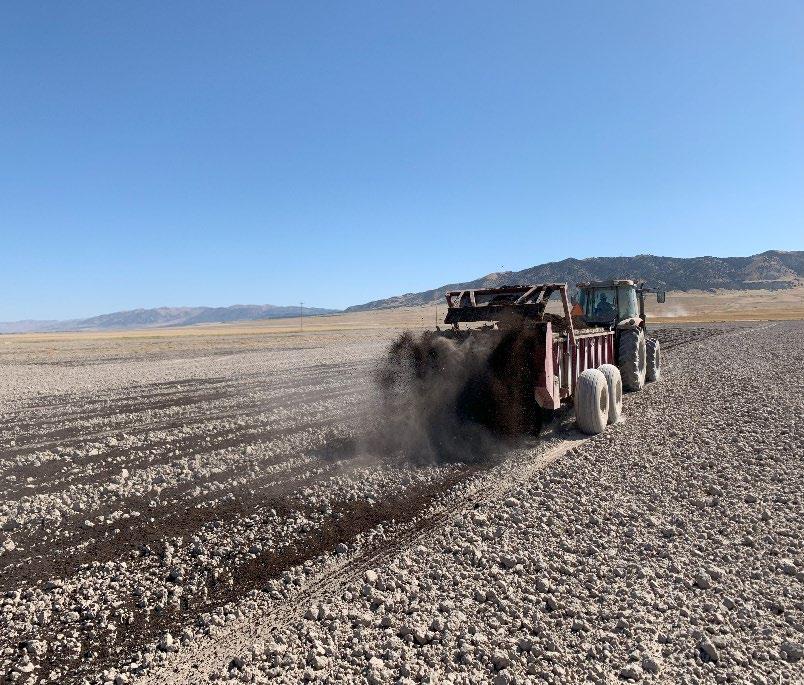
At the Snowville trial, compost was applied at 0 and 22 tons per acre on a dry weight basis. The compost was made from dairy manure and straw The compost at Snowville (Figure 1) was incorporated to a depth of nine inches by rotary tilling before planting wheat in October. No additional fertilizers or soil amendments were applied in either study after the initial compost application in the first year of the study, allowing long-term compost effects to be evaluated without further nutrient inputs. The AA treatment was re-applied prior to each wheat crop at Blue Creek. These studies aimed to assess whether compost could serve as a viable alternative or supplement to conventional fertilization methods in these water-limited environments.
Crop yield was collected each year of the study. Other shorter-term studies were conducted during the trial period to examine compost impacts on soil properties. At Blue Creek, soil samples were collected in 2013 and 2015, whereas at Snowville, soil samples were collected in the spring of 2008, 2010, 2012, 2014, 2016, 2018, 2019, and 2020. Soils were sampled to either 0–4 inches during the wheat crop year or 0–6 inches depth during the fallow year. Soil moisture was measured bi-weekly using a 503 DR Hydroprobe™ neutron scattering device. Soil organic carbon was determined from composite soil samples at multiple depths, with total organic carbon calculated as the difference between total carbon and inorganic carbon. Microbial biomass by substrate-induced respiration was quantified from the 0- to 0.3-foot soil layer following Anderson and Domsch (1978). Soil aggregate stability was assessed using the SLAKES smartphone application (Flynn et al., 2019). This tool measures how soil aggregates disintegrate when exposed to water, using camera image recognition to track changes in aggregates for 10 minutes after wetting.
Research Findings
Soil moisture content was generally greater in the 22 tons per acre of compost treatment compared to both non-treated plots and positive control plots at the Blue Creek trial. The moisture measurements taken in 2013 and 2015 showed a consistent increase in moisture content with depth in both years. In 2013, the highest moisture was recorded between early May and mid-June at a depth of 5 feet, while in 2015, peak moisture was recorded from early to mid-May. Although
Figure 1 Compost Application on Research Plots Near Snowville, Utah
the highest compost-treated plot often maintained higher water content, the differences among treatments were not statistically significant. Precipitation patterns also influenced soil moisture, with greater late-May precipitation (2 inches) contributing to higher values in 2013 than in 2015 (1.4 inches) Wheat biomass and grain yield was also higher on the composted plots, suggesting that more water was also being utilized in the composted treatments. Overall, these results suggest that compost application may help improve soil water availability, but further research is needed to confirm significant effects.
Soil organic carbon (SOC), an indicator of soil fertility, was over 30% higher in compost-treated plots at the Blue Creek Farm Long-term effects supported these findings in Snowville, as SOC remained significantly higher more than two decades after a single compost application.



Soil organic matter plays a key role in soil health, contributing to nutrient cycling, moisture retention, and aggregation. A major component of SOM is soil organic carbon (SOC), which serves as an important indicator of soil fertility. In the compost-treated plots (22 tons per acre) at Blue Creek Farm, total SOC was found to be over 30% higher than the nontreated plots in the third year after compost application. These short-term effects were further supported by long-term findings from the Snowville site, with SOC remaining significantly higher by 24.7% (p < 0.1) more than two decades after a single compost application (Figure 2). This aligns with previous studies highlighting the role of compost in enhancing soil carbon storage and organic matter accumulation (Reeve et al., 2012; Shiwakoti et al., 2020), both of which improve soil structure, moisture retention, and water availability during wheat’s critical growth stages. These findings suggest that compost may provide long-lasting benefits in dryland farming when applied strategically.
In the short-term study at Blue Creek Farm, the soil microbial biomass was 31% greater in the highest compost-treated plots compared to the positive control plots (Figure 3). This reduction in positive control could be due to nutrient imbalance and chemical stress from high levels of inorganic nitrogen, which may disrupt microbial activity and even kill a portion of the microbial community (Deng et al., 2006). However, although plots with 22 tons per acre of compost showed an 11 % higher biomass compared to control plots, there was no statistical difference in biomass among the different compost-treated plots (0, 5, 11, 22 tons per acre). Higher microbial activity means the soil life is more active, which helps break down compost and release nutrients for plants. This activity improves soil health by boosting beneficial natural processes like healthy enzyme function and the supply of easily available carbon that microbes need to thrive. Overall, the findings from the long-term study at Snowville also showed no significant difference in microbial biomass between compost and control plots when measured over two decades after compost application. Increased microbial biomass in compost-treated plots compared to control plots has been observed in some years at Snowville (Reeve et al., 2012). This inconsistency may be attributed to the interannual environmental variability, particularly precipitation, as wetter years tend to support higher microbial biomass (Reeve et al., 2012; Xu et al., 2020).
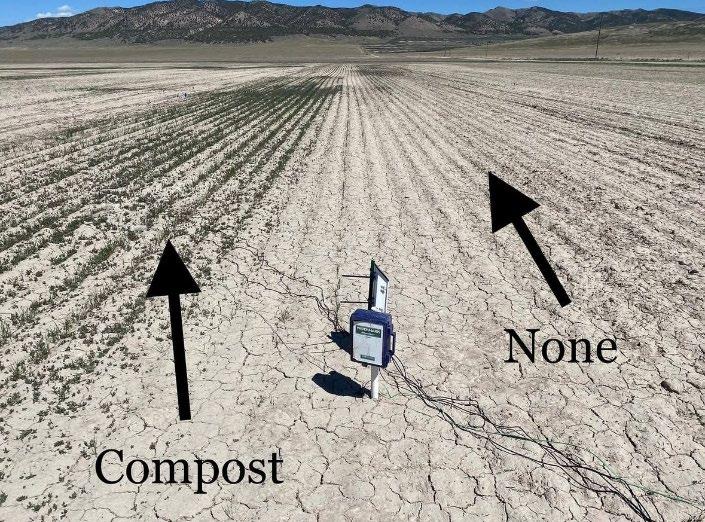
Figure 2. Soil Moisture Measurements in Compost and Control Plots Near Snowville, Utah
Figure 3. Soil Microbial Biomass Measured in 2013 and 2015 for Different Treatments at the USU Blue Creek Dryland Experimental Station
Notes. Treatments include: non-treated control (no compost), compost (22 tons of compost per acre), and positive control (45 lb N per acre of anhydrous ammonia).
Different letters above bars represent statistically significant differences at α = 0.05.
In the long-term study at Snowville, soil aggregate stability was assessed in 2019, which was 25 years after a one-time compost application in 1994 Soil samples from compost-treated plots showed a 143% increase in aggregate stability compared to non-treated plots (Figure 4), demonstrating that the benefit of compost persisted even after two decades. Enhanced aggregate stability is particularly important in dryland systems, as it reduces erosion, improves water infiltration, and maintains soil moisture. These improvements contribute to improved soil resilience under water-limited conditions.
Aggregate stability
Figure 4. Soil Aggregate Stability Measured by the SLAKES Tool for Soil Samples Collected to the 0- to 6-inch Depth in 2019
Note. Different letters above bars represent statistically significant differences at α = 0.1.
Compost (22 ton per acre)
In the short-term study (2011–2015) at Blue Creek, the mean wheat grain yield (Figure 5) one year and three years after compost application was significantly higher in the compost treatment compared to both non-treated plots and positive control plots with AA (Figure 6). In the long-term study at Snowville, compost plots consistently outperformed non-treated plots across 2008–2022 (Figure 7). On average, the yield in the seven even years where wheat was produced was 5.24 bushels per acre greater when compost was applied compared to none, with a range from 0.75 to 10.65 bushels per acre increase. In the most recent year (2022), compost plots yielded 20.3 bushels per acre, nearly double that of non-treated plots (11.6 bushels per acre). These sustained yield benefits are attributed to improved soil structure, nutrient availability, and water retention, all of which support better plant growth and resilience under dry conditions.
6 Wheat Grain Yield 1 to 3 Years After a One-Time Application of Steer Manure Compost (22 lb per acre) or a Positive Control (45 lb N per acre) of Anhydrous Ammonia at the USU Blue Creek Dryland Experimental Station
Note. Different letters above bars represent statistically significant differences at α = 0.05.
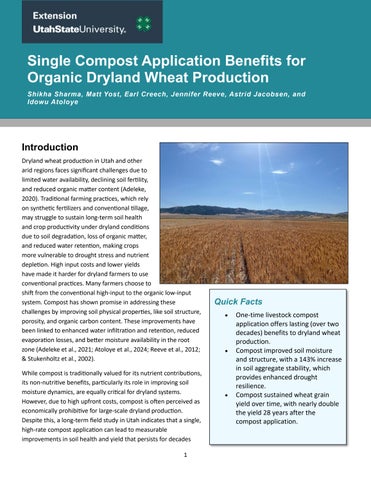
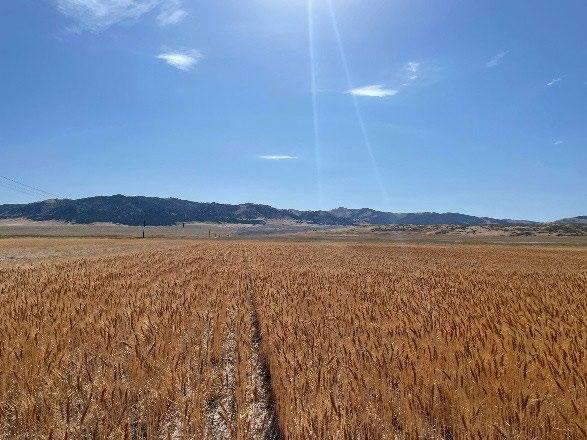
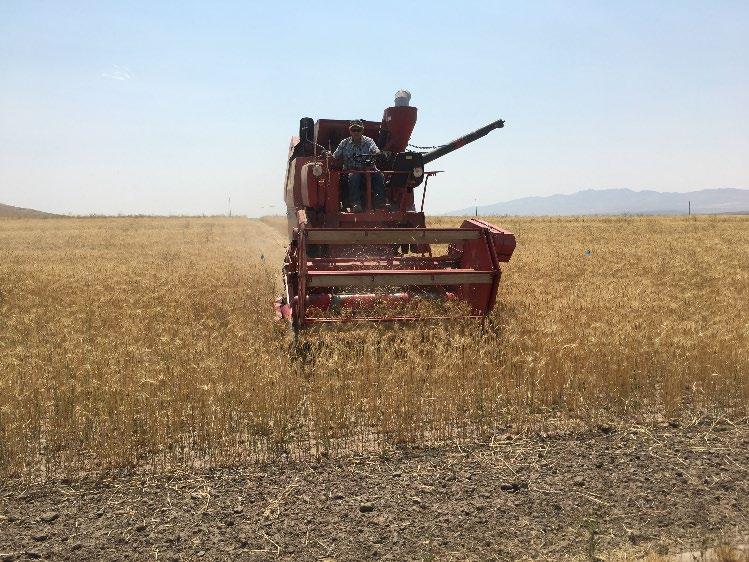
Figure 5 Wheat Harvest of Research Plots at the USU Blue Creek Dryland Experimental Station
Figure
Figure 7. Wheat Grain Yield From 2008–2022 (14 to 28 Years After a One-Time Application of Dairy Manure-Straw Bedding Compost)
Notes. Yields represent the average from compost (22 lb per acre) plots and control (no compost) plots from an organic farm near Snowville, Utah. No wheat yield is shown in odd years because that was the fallow year. Different letters above bars represent statistically significant differences at α = 0.1.
The strong residual effect of compost makes it a strategic, one-time investment that may pay off for decades. This could help shift the economics in favor of organic inputs in dryland systems. The findings from Blue Creek and Snowville are supported by research in other dryland areas. For example, a seven-year study in Washington has reported that a high compost application rate (20 tons per acre) results in higher soil moisture content and higher wheat yields over multiple years without the need for additional fertilizers (Singh & Burke, 2024). Similarly, a long-term study by Obour et al. (2017) at Kansas State University has reported that dryland farmers can expect an adequate carryover effect of feedlot manure (at 23 tons per acre) to winter wheat and grain sorghum several years after initial manure applications. The results from Utah and other areas together indicate that one-time applications of compost in dryland wheat systems can have sustained wheat production and soil health benefits.
Summary
This research highlights the long-term value of compost in dryland wheat systems, where water scarcity and declining soil fertility limit productivity. A single, high-rate compost application (22 tons per acre) can improve soil moisture content, organic carbon content, aggregate stability, and microbial activity. All these benefits contributed to higher and more stable wheat yields, even more than two decades after application. These changes help to make the composttreated wheat more resilient during dry years. While compost involves a high upfront cost, its long-lasting benefits may significantly reduce the need for repeated fertilizer or soil amendments, offering cost and labor savings over time.
References
Adeleke, K. A. (2020). Assessment of compost on dryland wheat yield and quality, soil fertility and water availability in Utah (Publication No. 7954) [Master's thesis, Utah State University] All Graduate Theses and Dissertations, Spring 1920 to Summer 2023 https://doi.org/10.26076/1a3d-b335
Adeleke, K. A., Atoloye, I. A., Creech, J. E., Dai, X., & Reeve, J. R. (2021). Nutritive and non‐nutritive effects of compost on organic dryland wheat in Utah. Agronomy Journal, 113(4), 3518–3531. https://doi.org/10.1002/agj2.20698
Anderson, J. P., & Domsch, K. H. (1978). A physiological method for the quantitative measurement of microbial biomass in soils. Soil Biology and Biochemistry, 10(3), 215–221. https://doi.org/10.1016/0038-0717(78)90099-8
Atoloye, I. A., Cappellazzi, S. B., Creech, J. E., Yost, M., Zhang, W., Jacobson, A. R., & Reeve, J. R. (2024). Soil health benefits of compost persist two decades after single application to winter wheat. Agronomy Journal, 116(6), 2719–2734. https://doi.org/10.1002/agj2.21716
Deng, S. P., Parham, J. A., Hattey, J. A., & Babu, D. (2006). Animal manure and anhydrous ammonia amendment alter microbial carbon use efficiency, microbial biomass, and activities of dehydrogenase and amidohydrolases in semiarid agroecosystems. Applied Soil Ecology, 33(3), 258–268. https://doi.org/10.1016/j.apsoil.2005.10.004
Flynn, K. D., Bagnall, D. K., & Morgan, C. L. (2020). Evaluation of SLAKES, a smartphone application for quantifying aggregate stability, in high‐clay soils. Soil Science Society of America Journal, 84(2), 345–353. https://doi.org/10.1002/saj2.20012
Obour, A., Stahlman, P., & Thompson, C. (2017). Long-term residual effects of feedlot manure application on crop yield and soil surface chemistry. Journal of Plant Nutrition, 40(3), 427–438. https://doi.org/10.1080/01904167.2016.1245323
Reeve, J. R., Endelman, J. B., Miller, B. E., & Hole, D. J. (2012). Residual effects of compost on soil quality and dryland wheat yield sixteen years after compost application. Soil Science Society of America Journal, 76(1), 278–285. https://doi.org/10.2136/sssaj2011.0123
Singh, S., & Burke, I. (2024). High rate of compost application showed stable yields in dryland wheat systems: A longterm study. Washington Soil Health Initiative. https://washingtonsoilhealthinitiative.com/2024/04/high-rate-ofcompost-application-showed-stable-yields-in-dryland-wheat-systems-a-long-term-study/
Shiwakoti, S., Zheljazkov, V. D., Gollany, H. T., Kleber, M., Xing, B., & Astatkie, T. (2020). Macronutrient in soils and wheat from long-term agroexperiments reflects variations in residue and fertilizer inputs. Scientific Reports, 10(1), 3263. https://doi.org/10.1038/s41598-020-60164-6
Stukenholtz, P. D., Koenig, R. T., Hole, D. J., & Miller, B. E. (2002). Partitioning the nutrient and nonnutrient contributions of compost to dryland-organic wheat. Compost Science & Utilization, 10(3), 238–243. https://doi.org/10.1080/1065657X.2002.10702085
Xu, S., Geng, W., Sayer, E. J., Zhou, G., Zhou, P., & Liu, C. (2020). Soil microbial biomass and community responses to experimental precipitation change: A meta-analysis. Soil Ecology Letters, 2(2), 93–103. https://doi.org/10.1007/s42832-020-0033-7
In its programs and activities, including in admissions and employment, Utah State University does not discriminate or tolerate discrimination, including harassment, based on race, color, religion, sex, national origin, age, genetic information, sexual orientation, gender identity or expression, disability, status as a protected veteran, or any other status protected by University policy, Title IX, or any other federal, state, or local law. Utah State University is an equal opportunity employer and does not discriminate or tolerate discrimination including harassment in employment including in hiring, promotion, transfer, or termination based on race, color, religion, sex, national origin, age, genetic information, sexual orientation, gender identity or expression, disability, status as a protected veteran, or any other status protected by University policy or any other federal, state, or local law. Utah State University does not discriminate in its housing offerings and will treat all persons fairly and equally without regard to race, color, religion, sex, familial status, disability, national origin, source of income, sexual orientation, or gender identity. Additionally, the University endeavors to provide reasonable accommodations when necessary and to ensure equal access to qualified persons with disabilities. The following office has been designated to handle inquiries regarding the application of Title IX and its implementing regulations and/or USU’s non-discrimination policies: The Office of Equity in Distance Education, Room 400, Logan, Utah, titleix@usu.edu, 435-7971266. For further information regarding non-discrimination, please visit equity.usu.edu, or contact: U.S. Department of Education, Office of Assistant Secretary for Civil Rights, 800-421-3481, ocr@ed.gov or U.S. Department of Education, Denver Regional Office, 303-844-5695 ocr.denver@ed.gov. Issued in furtherance of Cooperative Extension work, acts of May 8 and June 30, 1914, in cooperation with the U.S. Department of Agriculture, Kenneth L. White, Vice President for Extension and Agriculture, Utah State University. July 2024 Utah State University Extension
The authors did not use generative AI in the creation of this content, and it is purely the work of the authors. This content should not be used for the purposes of training AI technologies without express permission from the authors

December 2025
Utah State University Extension Peer-reviewed fact sheet