
Healthy Living as a Critical Part of Emergency Preparedness
Callie Adams , USU Extension Associate Professor, and April Litchford , RDN
Introduction
When preparing for an emergency, the focus is often on stockpiling supplies, creating family emergency plans, and identifying evacuation routes or shelter locations. Local communities establish alert systems and transparent communication networks to support these efforts. However, while logistics are essential, personal and family health challenges, such as managing chronic conditions, accessing medications, or maintaining mobility, are frequently overlooked. These factors can significantly affect an individual’s ability to evacuate, access care, and recover from disasters. Guidance for at-risk populations is a critical component of emergency planning (Federal Emergency Management Agency [FEMA], 2018).

Highlights
This resource presents practical, health-focused actions that individuals and caregivers can take to strengthen resilience before, during, and after emergencies. By integrating both long-term wellness habits and short-term readiness strategies, it supports a more comprehensive and inclusive approach to disaster preparedness, one that enhances not only personal outcomes but also community-wide response capacity.
Chronic Disease and Emergency Preparedness
• Personal and family health challenges, such as managing chronic conditions, accessing medications, or maintaining mobility, are frequently overlooked aspects of emergency preparedness.
• Individuals in good physical health change the trajectory of disaster response in their communities.
• Healthy individuals are more capable of evacuating, meeting their own needs, and withstanding the physical and emotional stress of emergencies.
• A proactive investment in health today is not only a personal safeguard but also a contribution to a stronger, more resilient community when emergencies occur.
Approximately 6 in 10 U.S. adults live with at least one chronic disease, and 4 in 10 have multiple chronic conditions (Centers for Disease Control and Prevention [CDC], 2023a) This equates to more than 194 million Americans who may require specialized treatment during emergencies. During disasters, symptoms often worsen due to stress, disrupted access to services, lack of medications or therapies, and higher risk of infection (Gichomo, 2019; Shin & Ji, 2021).
Past events show that people with chronic illnesses frequently require more emergency services. Reduced mobility, low aerobic fitness, and reliance on caregivers make it harder for many to meet their own needs. Obesity is of particular concern. Nationally, about 42% of adults are obese, while Utah’s rate is 32% (CDC, 2020; University of Utah Health, 2024). Obesity can limit physically strenuous activity (walking, running, lifting), and co-occurring conditions may necessitate specialized equipment (e.g., oxygen, dialysis, inhalers), complicating evacuation and care (Gray & MacDonald, 2016). Stress can also exacerbate a range of chronic conditions, including diabetes, dementia-related diseases, arthritis, and other mobility-related disorders, by triggering inflammatory responses, disrupting medication routines, and worsening symptoms (Alexander et al., 2025; National Institute of Mental Health [NIMH], 2022; National Center for Complementary and Integrative Health [NCCIH], 2025; Iyer et al., 2025).
Disasters strain not only individuals but also public health systems. People with chronic diseases often require specialized caregivers, yet shortages during emergencies can lead to increased suffering or even death (Gray & MacDonald, 2016). Individuals with diabetes should adhere to recommended care standards and ensure access to necessary supplies (American Diabetes Association [ADA], 2022).
Healthy Living as a Preparedness Strategy
Individuals in good physical health change the trajectory of disaster response in their communities. Healthy individuals are more capable of evacuating, meeting their own needs, and withstanding the physical and emotional stress of emergencies. By reducing their reliance on emergency responders, they allow critical resources to be directed to those who are seriously injured or disabled. Healthy individuals can also become assets, assisting others rather than needing assistance themselves (Gichomo, 2019).
Good nutrition builds stronger immune systems to resist infection in shelters. Regular exercise improves stamina, endurance, and agility. Vaccinations reduce the risk of illness and help prevent severe disease. Maintaining health also reduces the need for scarce medications and services during emergencies.
Action Items to Improve Health and Disaster Readiness
Long-Term Preparedness
• Exercise regularly. Aim for at least 150 minutes of moderate-intensity aerobic activity per week to improve cardiovascular health, strength, and endurance. Exercising regularly is important for emergencies requiring physical exertion (CDC, 2022).
• Eat a balanced diet A nutritious diet supports immune function and helps the body manage stress during emergencies (CDC, 2022).
• Stay current on vaccinations Immunizations reduce the risk of preventable diseases and are especially critical during disasters when access to healthcare may be limited and exposure risks increase (CDC, 2025b).
• Maintain a medication supply. Keep at least a 30-day supply of essential medications; a 90-day supply is preferable. Maintain an up-to-date list of all prescriptions, including dosage, prescribing provider, and pharmacy contact information. This facilitates quick communication with healthcare providers or emergency responders if refills are needed during a disaster (Federal Emergency Management Agency [FEMA], 2020; U.S. Food and Drug Administration [FDA], 2025).

• Plan for continuation of care. Identify backup options for treatments such as dialysis, oxygen therapy, or infusions. Discuss emergency care plans with your healthcare provider, especially if your treatment requires electricity or specialized equipment (CDC, 2025; Healthcare Ready, 2025).
• Stay informed. Use official sources for disaster alerts and health guidance. Access reliable disaster information through official channels such as FEMA and local emergency management agencies (FEMA, 2018). Trusted channels include:
o FEMA
o Ready.gov
o CDC Emergency Preparedness
o Local emergency management websites and social media accounts
Short-Term Readiness
• Check prescriptions now. Review your medications and ask your provider to call in refills. In emergencies, many pharmacies can provide a short-term supply of noncontrolled medications without a new prescription (Healthcare Ready, 2025).
• Register for specialized shelters. If your state offers medical or special-needs shelters, register in advance through local emergency services or a Functional Needs Registry. This ensures access to appropriate care and accommodations during evacuations (Hope Force International, 2025).
• Stock special foods and beverages. If you have dietary restrictions, use “buy one, get one” (BOGO) deals to build a small emergency stash, consume one now, save one for your “go kit.”
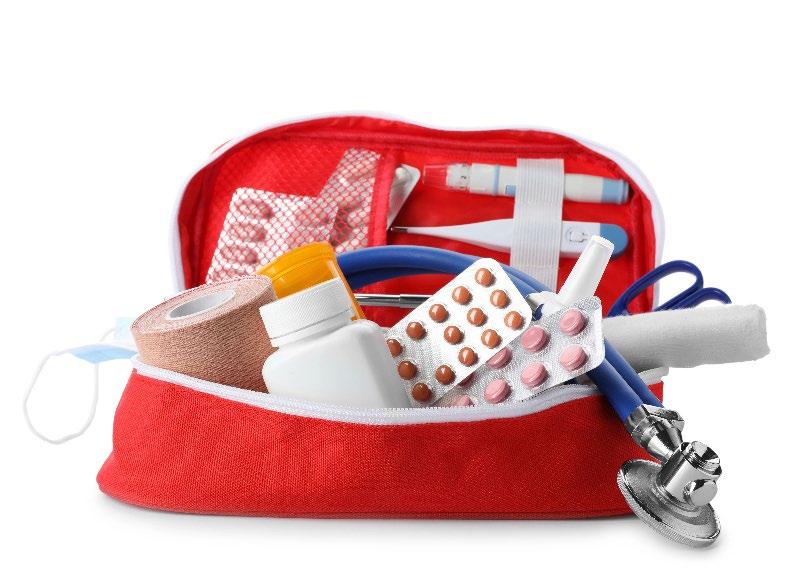
• Create a basic health go kit. Include the following:
o Medication list and extra prescriptions.
o Contact information for providers
o Hand sanitizer and masks
o Medical devices or supplies
o Flash drive with digital health records (FEMA, 2020)
Conclusion
Maintaining a healthy lifestyle is a critical component of emergency preparedness. Individuals who prioritize their health through preventive care, physical activity, and readiness planning are better equipped to respond effectively during disasters, reduce reliance on scarce medical resources, and support community resilience. By adopting both long-term wellness habits and short-term preparedness measures, individuals can significantly improve outcomes for themselves and others. A proactive investment in health today is not only a personal safeguard but also a contribution to a stronger, more resilient community when emergencies occur. A small investment in personal health today can make a significant difference when disaster strikes.
References
Alexander, D. S., Saelee, R., Rodriguez, B., Koyama, A. K., Cheng, Y. J., Tang, S., Rutkowski, R. E., & McKeever Bullard, K. (2025). Diabetes distress among US adults with diagnosed diabetes, 2021. Preventing Chronic Disease, 22, E07. Centers for Disease Control and Prevention. https://www.cdc.gov/pcd/issues/2025/24_0287.htm American Diabetes Association (ADA). (2022). Standards of medical care in diabetes 2022. Diabetes Care, 45(Supplement_1), S1–S264. https://doi.org/10.2337/dc22-SINT
Centers for Disease Control and Prevention (CDC). (2020). Adult obesity facts. U.S. Department of Health and Human Services. https://www.cdc.gov/obesity/adult-obesity-facts/index.html Centers for Disease Control and Prevention (CDC). (2022). National diabetes statistics report, 2022. U.S. Department of Health and Human Services. https://www.cdc.gov/diabetes/php/data-research/index.html
Centers for Disease Control and Prevention (CDC). (2023a). Chronic conditions in America: A public health crisis. U.S. Department of Health and Human Services. https://www.cdc.gov/pcd/issues/2025/24_0539.htm
Centers for Disease Control and Prevention (CDC). (2023b). Adult activity: An overview. U.S. Department of Health and Human Services. https://www.cdc.gov/physical-activity-basics/guidelines/adults.html
Centers for Disease Control and Prevention (CDC). (2025a). Emergency preparedness and response. U.S. Department of Health and Human Services. https://www.cdc.gov/emergency/index.html
Centers for Disease Control and Prevention (CDC). (2025b). Immunization schedules. U.S. Department of Health and Human Services. https://www.cdc.gov/vaccines/hcp/imz-schedules/index.html
Federal Emergency Management Agency (FEMA). (2018). At-risk populations and emergency preparedness. U.S. Department of Homeland Security. https://www.fema.gov/emergency-managers/individuals-communities
Federal Emergency Management Agency (FEMA). (2020). Medications in an emergency kit? U.S. Department of Homeland Security. https://www.fema.gov/faq/medications-emergency-kit
Gray, L., & MacDonald, C. (2016). Morbid obesity in disasters: Bringing the "conspicuously invisible" into focus. International Journal of Environmental Research and Public Health, 13(10), 1029. https://doi.org/10.3390/ijerph13101029
Gichomo, G. N. (2019). Improving disaster preparedness and planning for chronic disease populations [Doctoral dissertation, Walden University]. Walden Dissertations and Doctoral Studies. https://scholarworks.waldenu.edu/dissertations/7648
Gunns, D., & Leach, M. (2020). An increased focus on stress for the management of blood glucose levels in type 1 diabetes: A case report. Australian Journal of Herbal and Naturopathic Medicine, 32(1), 10–14. https://doi.org/10.33235/32.1.10-14
Healthcare Ready. (2025, May 29). Rx Open and Rx on the Run. https://healthcareready.org/resource-center/ Hope Force International. (2025). How to connect with local emergency services for special needs support. https://hopeforce.org/disaster-preparedness-for-special-needs-families/local-emergency-services-for-specialneeds-support/
Iyer, A., Bookstein, A., Kim, G., & Po, J. (2025, August 1). Community-based solutions for chronic disease management during natural disasters: A systematic review. PLOS Global Public Health. https://journals.plos.org/globalpublichealth/article?id=10.1371/journal.pgph.0004997
National Center for Complementary and Integrative Health (NCCIH). (2025). Stress. U.S. Department of Health and Human Services. https://www.nccih.nih.gov/health/stress
National Institute of Mental Health (NIMH). (2022). Chronic illness and mental health: Recognizing and treating depression. U.S. Department of Health and Human Services. https://infocenter.nimh.nih.gov/sites/default/files/2022-02/chronic-illness-mental-health-recognizing-treatingdepression.pdf
Ready.gov. (2025, November 13). Plan ahead for disasters. https://www.ready.gov/ Shin, S. H., & Ji, H. (2021). Health risks of natural hazards and resilience resources: Evidence from a U.S. nationwide longitudinal study. Social Science & Medicine, 281, 114110. https://doi.org/10.1016/j.socscimed.2021.114110 University of Utah Health. (2024). Our health priorities: Community health needs assessment. https://uofuhealth.utah.edu/community/our-health-priorities
U.S. Food and Drug Administration (FDA). (n.d.). Safe drug use after a natural disaster. U.S. Department of Health and Human Services. https://www.fda.gov/drugs/emergency-preparedness-drugs/safe-drug-use-after-natural-disaster
In its programs and activities, including in admissions and employment, Utah State University does not discriminate or tolerate discrimination, including harassment, based on race, color, religion, sex, national origin, age, genetic information, sexual orientation, gender identity or expression, disability, status as a protected veteran, or any other status protected by University policy, Title IX, or any other federal, state, or local law. Utah State University is an equal opportunity employer and does not discriminate or tolerate discrimination including harassment in employment including in hiring, promotion, transfer, or termination based on race, color, religion, sex, national origin, age, genetic information, sexual orientation, gender identity or expression, disability, status as a protected veteran, or any other status protected by University policy or any other federal, state, or local law. Utah State University does not discriminate in its housing offerings and will treat all persons fairly and equally without regard to race, color, religion, sex, familial status, disability, national origin, source of income, sexual orientation, or gender identity. Additionally, the University endeavors to provide reasonable accommodations when necessary and to ensure equal access to qualified persons with disabilities. The following office has been designated to handle inquiries regarding the application of Title IX and its implementing regulations and/or USU’s non-discrimination policies: The Office of Equity in Distance Education, Room 400, Logan, Utah, titleix@usu.edu, 435-797-1266. For further information regarding nondiscrimination, please visit equity.usu.edu, or contact: U.S. Department of Education, Office of Assistant Secretary for Civil Rights, 800-421-3481, ocr@ed.gov or U.S. Department of Education, Denver Regional Office, 303-844-5695 ocr.denver@ed.gov. Issued in furtherance of Cooperative Extension work, acts of May 8 and June 30, 1914, in cooperation with the U.S. Department of Agriculture, Kenneth L. White, Vice President for Extension and Agriculture, Utah State University. July 2024 Utah State University Extension
This peer-reviewed fact sheet was published in December 2025 by Utah State University Extension The authors did not use generative AI in the creation of this content, and it is solely the work of the authors. This content should not be used for the purposes of training AI technologies without express permission from the authors.