Net
Insight for the Retirement Plan Advisor



New study from Allianz Center for the Future of Retirement tm uncovers attitudes, preferences, and growing demand for annuities in employer-sponsored plans
ARTICLE BY: Meghan Farrell Senior Manager, Defined Contribution Insights
Allianz
Center
for the Future of Retirement™
When it comes to bolstering wider acceptance of annuities as part of employer-sponsored plans, a key area to address is the nuanced needs of plan participants.
Our latest State of Lifetime Income Report delves into what plan participants desire and what motivates them regarding guaranteed lifetime income.
In retirement planning, the perception of risks plays an important emotional role. Although annuity discussions often focus on longevity risk, our survey indicates that concerns such as inflation, market downturns, unexpected expenses (health-related and non-health-related), and changes to Social Security/Medicare ranked higher as threats to future retirement income.1
Annuities that address these key anxieties through a holistic risk management lens may be wellpositioned to support participants’ needs.
Participants who would consider adding an annuity to their employer-sponsored plan valued full protection from market downturns and growth potential to help address inflation, with 50% and 47% respectively ranking it in their top two features.1 At the same time, at least 9 out of 10 respondents desired features such as flexibility in income payments, the ability to make full or partial withdrawals after income starts, and IRA portability.1 In short, plan participants are interested in products that offer a balance of protection and adaptability to evolving life circumstances.
73% of participants surveyed expressed interest in annuities as part of their employer-sponsored plan, but said they would need help deciding how much to contribute.1 54% said they would pay a fee for an advice service to manage annuity contributions based on their personal financial situation and goals.1
→ Scan the QR code or visit us at www.allianzlife.com/dcplanresearch
1 The State of Lifetime Income Participant Survey, conducted by the Allianz Center for the Future of Retirement in November 2024 with a nationally representative sample of 2,488 respondents aged 18+ who are currently contributing to an employer-sponsored retirement plan. The Allianz Center for the Future of Retirement produces insights and research as part of Allianz Life Insurance Company of North America (Allianz). This content is for general informational purposes only. It is not intended to provide fiduciary, tax, or legal advice. Allianz, its affiliates, and their employees and representatives do not give


AI in Retirement Plans: Promise, Pressure, and Prudence
The time to start helping retirement plan sponsors with due diligence on their service providers’ AI tools has arrived. By Judy Ward
42
Game Changer! DOL’s Lifetime Income Advisory Opinion
The advisory opinion is a major development in the field of defined contribution plan design and retirement income planning. Here are the six key reasons why it matters.
By Fred Reish and Tamiko Toland
Wit and Wisdom: The 2025 NAPA Top Social Media Influencers
Whether it’s a bit of wisdom, a dash of inspiration, or retirement-plan fundamentals, their content is noticed by peers and plan participants alike.
By John Sullivan
By John Sullivan

Trends Setting Another 401(k)-Balance Record, Five FutureShaping Retirement Trends, and a (Possible) Problematic Pullback
Nevin Adams and Bonnie Treichel: Forfeiture Forays Fall Short, DOL Drops Fiduciary Fight, and PRT Pushbacks Prevail
Radar Everyone ALWAYS Wants to Know What Regulators Have Planned

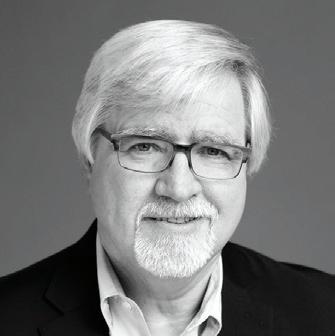
Nevin E. Adams,
Former Chief Content Officer American Retirement Association
Former Chief Content Officer of the American Retirement Association, Nevin now claims to be “retired.” One of the industry’s most prolific writers, during his more than four decades in the retirement industry, he’s served as the Employee Benefits Research Institute’s (EBRI) Director of Education and External Relations, spent a dozen years as Global Editor-in-Chief of PLANSPONSOR/PLANADVISER, and after two decades working with retirement plans, entered journalism as the originator, creator, writer and publisher of PLANSPONSOR.com’s NewsDash.

Rebecca Hourihan
Founder and Chief Marketing Officer 401(k) Marketing, Inc.
Rebecca founded 401(k) Marketing in 2014 to assist qualified experts operate a professional business with professional marketing materials and ongoing awareness campaigns. Previously she held a variety of positions at LPL Financial, Guardian Life, Northwestern Mutual and Fidelity Investments. Rebecca writes the magazine’s “Inside Marketing” column.


David
N. Levine
Principal Groom Law Group, Chartered
David is an attorney who advises plan sponsors, advisors and service providers on retirement and other benefit plans, and is a popular speaker on plan design, fiduciary governance, regulatory and legislative issues. He writes the magazine’s “Inside the Law” column.

Partner
Faegre Drinker Law Firm
Fred Reish is a partner in the Faegre Drinker law firm. His practice focuses on fiduciary standards of care, prohibited transactions, conflicts of interest, and retirement plans. He has been recognized as one of the “Legends” of the retirement industry by PLANADVISER and PLANSPONSOR magazines. Fred also serves as a Research Fellow for the Retirement Income Institute. He has received the following awards: Institutional Investor Lifetime Achievement Awards, ASPPA/Morningstar 401(k) Leadership Award, and IRS District Director’s Award for contributions to the retirement community.
Chief Solutions Officer

Spencer X. Smith
Founder AmpliPhi Social Media Strategies
Spencer is the founder of AmpliPhi Social Media Strategies. A former 401(k) wholesaler, he now teaches financial services professionals how to use social media for business development, and is a popular speaker on social media and the author of ROTOMA: The ROI of Social Media Top of Mind He writes the magazine’s “Inside Social Media” column.

Founder and CEO 401(k) Annuity Hub
Tamiko Toland is the Founder and CEO of the 401(k) Annuity Hub, an independent service for retirement plan fiduciaries to select and compare options for plan sponsors to offer participants. An award-winning industry expert on annuities and retirement income who is known as the “annuity Yoda,” she has focused on simplifying the complex topic of lifetime income for 25 years. Tamiko has held leadership roles at TIAA, Strategic Insight, and Cannex Financial Exchanges, the annuity data and analytics firm. She is also CoFounder of IncomePath and an Education Fellow for the Alliance for Lifetime Income by LIMRA.
Bonnie Treichel, the Founder of Endeavor Retirement and Endeavor Law, is an ERISA attorney that works with advisors, plan sponsors and others in the retirement plan ecosystem. She is a regular contributor to NAPA’s publications and enjoys working with advisors as a subject matter expert to NAPA and ARA training programs such as the ESG(k) program, 401(k) Rollover Specialist (k)RS™ program, and others to come.
Editor-in-Chief
John Sullivan jsullivan@usaretirement.org
Senior Writers Ted Godbout tgodbout@usaretirement.org
John Iekel jiekel@usaretirement.org
Paul Mulholland pmulholland@usaretirement.org
Ad Sales
Tashawna Rodwell trodwell@usaretirement.org
Senior Director of Digital Marketing Joey Santos-Jones jsantos-jones@usaretirement.org
Production Assistant Derin Oduye DOduye@usaretirement.org
NAPA OFFICERS
President
Lisa M. Drake (Garcia)
President-Elect Alicia Malcolm
Vice President Doug Bermudez
Secretary Lee Bethel
Immediate Past President Keith Gredys
Executive Director
Brian H. Graff, Esq., APM
NAPA Net the Magazine is published quarterly by the National Association of Plan Advisors, 4401 N. Fairfax Dr., Suite 600, Arlington, VA 22203. For subscription information, advertising and customer service, please contact NAPA at the above address or call 800-308-6714, or customercare@napa-net.org. Copyright 2024, National Association of Plan Advisors. All rights reserved. This magazine may not be reproduced in whole or in part without written permission of the publisher. Opinions expressed in bylined articles are those of the authors and do not necessarily reflect the official policy of NAPA
Postmaster: Please send change-of-address notices for NAPA Net the Magazine to NAPA, 4401 N. Fairfax Dr., Suite 600, Arlington, VA 22203.




Joseph Abate
Jodi Abercrombie
Bryce Adams
Harrison Adams
Kit Adderley
Tyler Allen
John Almaguer
David Altman
Kelli Altvater
Kevin Amoruso
John Anderson
Ray Ansardi
James Anselmo
Santiago Apodaca
Joe Appolito
Andrea Arechandieta
Joseph Auteri
Maria Ann Avento
Lydia Balistreri
Kimber Barton
Juan Bastida
Mary Bauman
Christian Bautista
Beau Beaullieu
Mohammed Ben
Youness
Rick Benitez
Solana Berrio
Matthew Birnbaum
Brad Blaisdell
Wayne Boenig
Alisa Bolinger
Jonathon Bonnoront
Robert Book
Brandi Boudreaux
Kyle Bourke
James Bradford
Charles Branch
Jenna Bredvik
Dallas Brewer
Kathryn Brower
Phillip Brown
Tom Brown
Brian Bush
Nathan Cabuco
Jeremy Callegan
Ryan Campbell
Michael Capobianco
Jonathan Carlysle
Morgan Carr
Christopher Carver
Seong Cho
Jessi Christian
Zach Church
Robert Cockrell
Tommy Cockrell
William Coleman
Patrick Conger
Lisa Conte
Mona Corbett
Ethan Courtad
Melisa Crnolic
Travis Crowell
Albert Danish
Robert Davis
Gage Demers
Lisa Derig
William Dierberger
Jay Ding
Paul Downey
Christian Dunn
Chad Edel
Russell Eilers
Stockton Enger
Daniel Espinoza
Adam Eyerman
Straton Facer
James Faranda
Mustapha Fawal
Daniel Feiden
Emily Ferrazzo
Servaas Fick
Chris Finden
Jeffrey Fjeldheim
Katherin Flores
Adam Follmer
Lynette Foor
Michael Foreman
Brian Forneris
Anthony Franchimone
Christy Frank
Michael Fraser
Bonham Freeman
Ryan Furstenau
Richard Gagliano
Mark Garza
Jeremy Gerardy
Stephen Giauque
Mark Giebner
Matthew Giese
Meggan Glass
Thomas Gorman
William Gramigna
Canyon Gray
Larry Gregg
Abigail Grover
Kevin Gruetter
Christopher Hall
Gabriel Harrington
Shawn Harrison
Alexandra Hatfield
Jessica Hatley
David Hawkins
Jessica Hodges
Todd Homer
Zachary Hueter
Cole Hunt
Scott Hunter
Ken Hutkin
Eric Hutz
Morgan Hyslop
Patrick Iannetta
Andrew Jabro
Pouya Jalili
Joseph Jeffers
John Jennings
Felicia Jones
Rosemary Kinman
Corbin Knollman
Matthew Kotula
James Krakowski
Alexander Krisak
Adam Kurchner
Randy Lakes
Jacob Lambert
Dominic Lanzillotta
Daniel Le
Gregory Legate
Joaquin Leija
Andrew Licon
Tyler Lindsay
Andrew Linsenmann
Rachel Longwell
Patricia Lopez
Timothy Luby
Richard Luckow
Zachary Ludemann
Levan Lunsford
Caroline Macomber
Laura Maher
David Mandel
Delon Mansour
Crysta Manthei
Darren Marcantuone
Robert McCracken
Stephanie McEver
Jason McKernan
Priscilla Meadow
Shobha Menon
Robert Min
Michael Mishler
Andrea Moran
Michael Moretti
Kenneth Morris
Patrick Mossman
Michael Mundo
Nathan Munro
Kelly Murphy
Emily Nelson
Vianney Nguyen
Douglas Niosi
James O’Brien
Bowen Ogata
Karen Olsen
Joshua Oppenheimer
Andrea Orlando-Skewis
Andrew Outcalt
David Pabin
Tucker Payne
Rigoberto Pena-Rankin
Jordan Peterson
Reno Petrini
Cade Phillips
Kaden Pickering
Dante Pierantozzi
Meghan Porter
Kim Potvin
Adam Prewett
Jeffery Prince
Gregg Reich
Andrew Rice
Gordon Richardson
Warren Rivetz
Cesar Rodriguez
Grant Ross
Michael Rossetti
Alicia Ruberti
Philip Sabio
Francisco Santiago
Hernandez
Spencer Schoch
Andrew Schreiber
Jennifer Schuessler
Robert Schultz
Maribeth Scott
Hunter Seaberg
Sarah Settle
Haig Shahinian
Theodore Shane
Lisa Shaw
Svitlana Sheppard
Austin Sigrist
Ryan Sink
Natalie Sivilotti
Cole Skvara
Ian Smith
Michael Sobilo
Edward Sommer
Geoffrey Soper
James Souslin
Theodore Spickler
Stephen Stanley
Stephanie Stegmuller
Matthew Stokes
Melanie Strojny
Thomas Sutton
Scott Swartz
Douglas Sweeney
Matt Tabler
Jitian Tan
John Tauer
Brian Tawney
Nathan Taylor
Frode Teigen
John Thompson
Codie Tiffin
Emily Tilbury
Kevin Toledano
Jesse Troike
Tony Urso
Micah Valentine
Brandon Van Goethen
Brock Van Selow
Alison Vento
Kyle Wagner
Ryan Wahlund
Dominique Ware
James Wehrle
Adam Weiner
Deneen Wells
Seamus Whalen
Blake Whitten
Brian Williams
Joshua Wilson
Tyreek Wilson
Jeffry Wolfe
Charles Wray
Louis Wray
Mary Yerdon
Alexandra Yonkers
George Zaki
Lori Zern
Riley Zimmerman
Christina Zoppi
Garrett Allen
Richard Artura
Brandon Ashley
Zach Church
Mason Cude
Filipe De Barros
Gusmao
Joseph Del Guidice
Jada Edwards
Elliott Ellis
David Farrell
Michael Foreman
Joshua Fritzke
Jon Hafemann
Braden Lewis
Delon Mansour
Andrew Mardar
Tim Matthew
Colin Murray
John O’Bannon
Justin O’Bannon
Anastasios Politis
Hayley Porter
Brent Pryor
Renata Schindler
David Smith
Lexi Stangel
Lee Tarbet
Margaret Taylor
Michael Wehner
N(k)S™
Kit Adderley
Melissa Beagle
Winfred Boyce
Sean Bradley
Jenna Bredvik
Charles Davenport
Presley Goldman
Lindsay Lockery
Alec Mierzejewski
Claudia Peppard
Cade Phillips
Michael Schweller
Christopher Sneed
Jackie Udoji
Amanda Whelchel
Ronan Winkels
Mildred Arroyo
Wendy Astorino
Timothy Baker
Megan Barrasso
Dean Becker
Randa Bergeron
Ryan Bly
Michael Bott
Belinda Bowen
Matthew Brown
Tina Brown
Riley Charlet
Kevin Collins
Samuel Debono
Sean D’Gornaz
Ben Farrell
Brian Francis
Douglas Gibson
Jon Grose
Melinda Hankins
Zachary Jones
Sara Knies
Vincent Ko
Andrew Kremer
Aravindh Krishnan
Derek Lemon
Justin Levonyak
Briann Lewis
Rob Little
David Martin
Ioannis Mitsis
Anthony Morrone
Lelia Mulhare
Marlon Muralles
Kyle Navera
Thanh Nguyen
Elicia Nicoll
Jonathan Nieves
David Olivier
Erica Pavliska
Kevin Peak
Robert Peck
Kathryn Pelsor-Johnson
Cade Phillips
Jessica Raze-Gartin
Jessica Rilling
Daniel Roalson
Justin Rohe
Jennifer See
Victor Sesate
Jill Shea
Julie Shoemaker
Evangeline Siacunco
Sandra Skalski
Joshua Terepka
Doughty Varnedoe
Bert Ward
Another fiduciary rule pendulum swing leaves supporters frustrated, pundits perplexed, and everyone wondering what’s next.
We once compared attempts to implement the Department of Labor’s (DOL) fiduciary rule to Friday the 13th’s Jason Voorhees, noting it won’t (and seemingly can’t) die, with introductions, repeals, reintroductions, and lawsuits taking place for almost two decades.
In keeping with the horror genre metaphor, an announcement at the beginning of December may have put the proverbial nail in the coffin, but with 12 movies in the Friday franchise, we won’t hold our collective breath.
Recognizing the Trump Administration’s fiduciary rule animus, it wasn’t entirely unexpected when the U.S. Court of Appeals for the Fifth Circuit (yes, THAT Fifth Circuit) granted the DOL’s motion to withdraw its appeal of a court challenge to the rule issued during the Biden administration.
The always excellent reporting from NAPA’s Ted Godbout noted that the one sentence order from the clerk’s office of the Fifth Circuit simply stated that, “Under Fed. R. App. P.42(B), the appeal is dismissed as of November 28, 2025, pursuant to appellant’s motion.”
DOL’s Employee Benefits Security Administration (EBSA) filed a motion withdrawing its appeal on Nov. 24. The motion to dismiss the appeal was unopposed by the other parties.
Fiduciary rule supporters were (once again) understandably frustrated, with former DOL

Assistant Secretary for Labor Lisa Gomez writing, “This saga has gone on for far too long without resolution, and the continued uncertainty doesn’t help anyone. The amount of work that went into each of the exercises in the rulemaking process is extraordinary. The Department says it is going to take another swing at it. I am interested to see what they will do, but rule or no rule; we need to work together to find a solution that everyone can accept and move on with. Retirement investors and the people who serve them deserve no less.”
As background, the Biden administration finalized the Retirement Security Rule, a new investment advice fiduciary rule, in April 2024. The focus of the rule was to extend ERISA fiduciary duties to one-time professional retirement investment recommendations, such as rollovers, annuity purchases, or plan menu design.
Godbout noted that it was set to go into effect in September 2024, but its implementation was put on hold as a result of a lawsuit filed by the Federation of Americans for Consumer Choice (FACC), as well as James Holloway, James Johnson, TX Titan Group, ProVision Brokerage, and V. Eric Couch.
A second suit was also filed in a Texas federal court (Am. Council of Life Insurers v. DOL, N.D. Tex., No. 24-00482, 5/24/24), but by different plaintiffs, albeit arguing similar issues against the Labor Department’s Retirement Security Rule — led by the
American Council of Life Insurers (ACLI).
After the district courts stayed the rule, the DOL, under the Biden administration, appealed the decision to the Fifth Circuit in September 2024.
The suits, which were consolidated, sought to vacate the 2024 fiduciary rule and amendment to PTE-84-24 under the Administrative Procedures Act (APA) on the grounds that they are “contrary to law and arbitrary and capricious.” They also sought “preliminary and permanent injunctive relief to prevent the DOL from attempting to enforce these unlawful rules and regulations.”
Meanwhile, Godbout added, the DOL’s Spring 2025 regulatory agenda indicated that the Trump administration plans to issue a new final rule on the issue by May 2026, but what it will look like is anyone’s guess, since the agenda did not provide substantive details on what the new rule might change.
However, it did say that it “will ensure that the regulation is based on the best reading of the statute,” and is responsive to an executive order calling on departments to deregulate.
As always, we’ll keep you posted. NNTM

John Sullivan Editor-in-Chief
Raise Your Standard.
Reinforce Your Value.

The retirement industry is experiencing a transformation—one defined less by gaps and shortfalls and more by opportunity and momentum.
By Lisa M. Drake (Garcia)
It has been encouraging to see the progress made in this industry. For the last several years, the retirement savings system in the U.S. has faced a significant challenge: too many workers have simply lacked access to a workplace retirement plan, and this has been an area of focus for many, including NAPA.
That gap—often hitting employees at small businesses, part-time workers, those in lowerwage industries, and many in communities of color—has long been a barrier to financial security.
The good news is that the tide is turning. Thanks to new laws, state initiatives, and smarter plan designs, more Americans than ever are gaining the tools they need to build a secure retirement.
Much of this progress has been driven not just by policymakers, but by the advocacy of industry leaders, such as the American Retirement Association (ARA). ARA has played a pivotal role in shaping retirement policy, educating lawmakers, and ensuring that legislation meaningfully addresses the retirement coverage gap.
From championing provisions in SECURE and SECURE 2.0 to advancing measures that expand access for small businesses and part-time employees, ARA has helped ensure that reforms are both practical and impactful. Their continued leadership has been instrumental in aligning public policy with the needs of employers, advisors, and, most importantly, workers. At the NAPA Fly-In this summer, we had over 200 delegates representing 40 states! More Employers, More Plans
A big reason for this progress has been the series of retirement reforms, SECURE Act and SECURE
2.0. These laws make it easier—and more affordable—for employers, especially small businesses, to start retirement plans for their employees.
For example, small employers now receive larger tax credits for starting a plan, and new rules encourage businesses to join together in pooled employer plans, lowering costs and simplifying administration.
To top that, starting in 2025, new plans will even be required to automatically enroll employees, which shows they recognize the impact it has in encouraging more people to save.
States Step Up
Another contribution aiding in this effort has been the more than a dozen states that have launched their own retirement savings programs for workers whose employers don’t offer a plan. California, Oregon, and Illinois already have hundreds of thousands of employees saving through auto-IRA programs, with assets growing into the billions of dollars.
These efforts are proving that when the option to save is put on the table, most workers say “yes.” On a personal level, I hope that states such as Florida (my home state) join the efforts, as it would have a meaningful impact on the millions of minorities. Almost half of the small businesses in Florida are minority owned firms.
Financial Wellness
There has also been a significant emphasis, not only from service providers and advisors, on providing financial education and guidance to employees, thereby increasing engagement.
This area is one of the most rewarding aspects of what I do — taking the time to listen, guiding

individuals through complex financial decisions, and helping them begin saving or establish a stronger financial path. Helping people feel more confident about their money, make smarter choices, and build better habits that lead to stronger retirement outcomes.
Knowing that these efforts can have a lasting impact on them and their families is incredibly fulfilling.
The retirement industry is in the midst of a transformation— one defined less by gaps and shortfalls and more by opportunity and momentum. With bipartisan support and legislation, state action, innovative plan features, and technology all working together, millions of additional workers are now on the path to greater financial security.
The outlook for retirement readiness is more promising than it has been in decades, and the trend line continues to point upward. We have made significant progress and recognize that the work must continue. That said, Secure 3.0 is already in discussions, so stay tuned and get involved to continue building on this momentum.
So, has the 401(k) been successful? Yes. It has built the largest pool of retirement savings in U.S. history, encouraged millions to save, and evolved through innovation and legislation. We’re also seeing the younger workforce more engaged than prior generations, which sounds promising.
But the industry’s true success will be measured by how well it addresses the remaining challenges: expanding universal access, ensuring adequate savings levels, and helping workers turn those savings into sustainable retirement income. NNTM
The designation for the leading 401(k) advisor
Don’t just claim to be a retirement plan expert: prove it!
Special rules apply to 401(k) fiduciaries and NAPA’s Certified Plan Fiduciary Advisor credential program gives you the tools to be a 401(k) specialist. Developed by some of the nation’s leading advisors and retirement plan experts, the CPFA® demonstrates your knowledge, expertise and commitment to working with retirement plans.
Thoughtful reform can preserve participants’ rights while reducing abusive litigation practices that impose unnecessary burdens on compliant fiduciaries.
By Brian H. Graff
The American Retirement Association (ARA) supports ERISA litigation reform, believing a flood of “cookie-cutter” lawsuits brought by the plaintiffs’ bar in recent years is detrimental to plan participants, sponsors, and the country’s private retirement plan system overall.
I want to inform ARA members of recent developments and the association’s involvement in the efforts.
In mid-November, Rep. Randy Fine (R-Fla.) introduced the ERISA Litigation Reform Act (H.R. 6084), legislation that would strengthen the pleading standards for lawsuits brought under the Employee Retirement Income Security Act (ERISA).
The bill seeks to ensure that retirement plan fiduciaries, employers, and participants “operate under a more predictable, fair, and efficient legal framework,” according to the Congressman.
If enacted, H.R. 6084 would clarify the burden of proof in certain fiduciary-related claims and establish a targeted stay of discovery during the early stages of litigation. The targeted stay would bring ERISA more in line with established federal court practices designed to deter frivolous lawsuits.
Coincidentally, strengthening the pleading standards for lawsuits brought under ERISA was one of two recommendations (limiting premature discovery being the other) included in ARA’s statement for the record submitted to a House Education
and the Workforce Subcommittee before a hearing in early December.
Titled “Pension Predators: Stopping Class Action Abuse Against Workers’ Retirement,” the hearing examined the surge in formulaic ERISA class action litigation and its chilling effect on innovation across the retirement plan landscape.
In addition to our legislative advocacy, we’ve actively engaged in regulatory initiatives aimed at addressing ERISA litigation challenges. Our regulatory efforts focus on supporting the Department of Labor (DOL) in providing clear, practical guidance to fiduciaries, particularly as case law continues to evolve.
For example, the DOL’s tip sheet on target date funds has proven to be a durable, widely used resource for both fiduciaries and courts. Recent case law has emphasized the importance of comparing plan funds against reasonably available, comparable alternatives or meaningful benchmarks.
We believe the DOL could further assist fiduciaries by providing guidance like the TDF tip sheet that clarifies what constitutes a comparable alternative or a meaningful benchmark. Such guidance would offer greater certainty, reduce ambiguity in decision-making, and support courts in evaluating plaintiffs’ comparisons, thereby helping to limit repetitive, “cookiecutter” lawsuits that do not serve participants’ best interests.
Additionally, the DOL’s ability to submit position statements or

amicus briefs in significant ERISA litigation reinforces consistent legal standards. We commend the DOL’s recent submission of an amicus brief in Hutchins v. HewlettPackard, a notable ERISA forfeiture case. Expanding this type of engagement would further deter frivolous lawsuits by promoting judicial clarity and reinforcing the principles that protect both plan sponsors and participants.
It goes without saying that litigation remains essential for addressing genuine fiduciary failures. Yet, the volume, copyand-paste nature, and inconsistent standards in recent cases have led plan sponsors to avoid beneficial optional features simply to reduce litigation exposure.
Simply put, without reform, the current trajectory threatens to impose increasing costs on retirement plan sponsors, discourage employers from offering or maintaining plans, and ultimately diminish retirement security for American workers.
The chilling effect on innovation will only intensify as sponsors become more riskaverse in the face of unpredictable litigation exposure.
Thoughtful reform can preserve participants’ rights while reducing abusive litigation practices that impose unnecessary burdens on compliant fiduciaries and divert resources that could otherwise enhance retirement outcomes.
ARA’s Government Affairs Committee will continue to monitor the issue, engage with legislators and regulators on your behalf, and provide updates as events unfold. NNTM

Another 401(k)-balance record (much to Nevin Adams’ frustration), five trends that will shape the future of retirement, according to Franklin Templton’s Yaqub Ahmed, and a (possible) problematic market pullback … All this and more in this issue of Trends Setting.
The AVERAGE 401(k) balance increased by how much?
We can’t help but rib our colleague and former Chief Content Officer Nevin Adams and his disdain for using averages in research.
However, according to Fidelity Investments’ latest Q3 2025 retirement analysis, average 401(k), IRA and 403(b) account balances reached new record highs, driven by consistent savings and positive stock market performance.
The average 401(k) balance increased 5% from its previous record high in Q2 and marked the sixth quarter-over-quarter average balance increase in the last eight quarters (since Q3 2023). Despite ongoing concerns about the strength of the economy, both 401(k) and 403(b) participants were able to maintain steady savings rates through the third quarter, Fidelity noted.
Looking back from a year ago, the average 401(k) balance increased 9.1% to $144,400, while the average 403(b) balance increased 10% from Q3 2024, rising to $131,200.
What’s more, the average balance for women who have been within their 401(k) for 15 years continuously crossed the halfmillion-dollar mark for the first time in Q3, rising to $501,100.
The Q3 analysis also found that more than 2 out of 3 individuals are leveraging a target date fund or managed account to help manage their retirement savings.
Of note, Roth savings vehicles are increasing in interest among retirement savers, particularly among younger generations,
likely in large part due to their tax-efficiency over the long term. Fidelity’s third quarter’s data shows that 20% of Gen Z 401(k) participants are choosing to contribute to a Roth 401(k).
Similarly, Roth IRAs continue to be the IRA of choice among younger savers, with Gen Z investing 95% of their contributions in Roth accounts (rather than a traditional IRA).
“Americans are continuing to exhibit impactful savings behaviors such as staying the course and focusing on long-term goals, which clearly is having a positive effect on retirement savings,” said Sharon Brovelli, president of Workplace Investing at Fidelity Investments. “To see balances and saving behaviors increase across all savings vehicles is encouraging, especially as savers continue to

navigate an uncertain economic environment.”
Additional findings show that employee savings rate among Gen X workers increased to 10.4%. However, more than 1 in 4 (25.9%) Gen X workers also has an outstanding 401(k) loan, which is greater than the overall percentage of workers with a loan outstanding (19.5%) in Q3 2025, the analysis shows.
Fidelity’s Q3 2025 401(k) data is based on 26,000 corporate DC plans and 24.8 million participants as of Sept. 30, 2025. These figures include the advisor-sold market but exclude the tax-exempt market. The 403(b) data is based on 10,670 taxexempt plans and 9.25 million plan participants as of Sept. 30, 2025.
Meanwhile, this quarter’s retirement analysis also spotlights the increasing adoption of auto portability. Fidelity notes that it is as a founding member of the Portability Services Network (PSN) — a consortium of service providers accelerating the adoption of auto portability. Since going live in October 2022, more than 9,200 Fidelity 401(k) plans have adopted auto portability, resulting in $24 million in retirement savings preserved in Fidelity 401(k) plans, according to the analysis.
“Retirement is about taking a long-term view, and the growing interest in Roth products shows that investors recognize their potential for tax advantages and long-term growth,” says Robert Mascialino, president of Wealth at Fidelity Investments. “By creating a plan and saving consistently, investors of all ages are positioning themselves for a financially secure retirement.”
- Ted Godbout
Five trends that will shape the future of retirement.
Recent research, based on insights from open-ended interviews with over 50 industry leaders, identified five critical trends shaping the future of retirement planning.
Calling it “the coming pivot,” Franklin Templeton’s Industry Advisory Services team said “demographic shifts and new technologies are combining with growing needs and expectations to expose the system’s vulnerabilities, while the limitations of its infrastructure and misaligned incentives are stymying innovation.”
It’s an fancy way of saying old technology is crippling future growth and leading to needed (and inevitable) change.
So, what effect will it have on the industry — and importantly — participants?
According to Yaqub Ahmed, Global Head of Retirement, Workplace & Wealth with the FIRST Organization (Franklin Innovation Research Strategies Technology), it will encourage more of the following:
1. Personalization: Tailoring retirement solutions to individual needs and preferences
2. Investment Innovation: Emerging investment strategies and products that are redefining retirement savings
3. Benefits Optimization: Maximizing the value of retirement benefits for both employers and employees
4. Integrated Advice: Holistic financial guidance that considers all aspects of a person’s financial life
5. Enhanced Delivery: Leveraging technology to improve the efficiency and effectiveness of retirement services
“We focused on workplace and retirement because, frankly, there just hasn’t been a lot of innovation and change there,” Ahmed said when asked about the reason for the research. “This is about the future of the industry and where it’s going. We’ve done it in other segments of the marketplace, like wealth management, but we felt the industry was at an inflection point. We’ve got a lot of new solutions and capabilities in our toolkit, so to speak.”
Totaling $18 trillion of AUM/ AUA across the broader market with the firms FIRST interviewed, he was surprised by the candor and openness the interview subjects displayed when discussing challenges and barriers within the industry that he said must be solved.
“The big things we heard were the recognition that it’s a very product-centric market filled with point solutions and not really focused on that customer experience and personalization, and that there’s still a onesize-fits-all mentality in the marketplace,” Ahmed explained. “Longer term, that’s not going to work.”
He claimed the industry also created somewhat of a monster with target-date funds, with its “set it and forget it” mindset, thereby limiting participant engagement.
“Some may argue that it’s better that way, but we have a view that participants aren’t dumb,” Ahmed countered. “They want to be engaged. They just don’t know how to get engaged. We’re not doing a good job of pulling those engagement levers.”
Consensus also centered on legacy industry technology, with one interviewee calling it “stone age tools to solve modern day issues.”
“There was definitely a recognition that certain providers within the retirement ecosystem are working on technology that’s upwards of three decades old,” Ahmed said. “There will be a disruption there, maybe from the outside, if we don’t address it at some point. Those are the things that popped out.”
So, what’s next now that the research has been released?
We’ll go back to all these firms and have conversations that will inform strategic partnership opportunities, which we’re in the middle of doing now,” he concluded. “It’ll lead to product development, strategic investments, and opportunities to partner with our biggest clients.”
- John Sullivan
Majority of institutional investors predict a market pullback in 2026.
After three consecutive years of double-digit returns on most indexes, nearly 8 in 10 (79%) U.S. institutional investors say that markets are due for a correction in 2026.
This is according to findings published by Natixis Investment Managers, which surveyed 515 global institutional investors in September and October 2025 who collectively manage $29.9 trillion in assets for public and private pensions, insurers, foundations, endowments, and sovereign wealth funds worldwide. Survey participants included 80 U.S. institutional investors responsible for managing over $5 trillion in assets.
On average, Natixis found that U.S. institutional investors assign a 49% probability of a 10–20% market correction in 2026, and a 20% probability of a market correction deeper than 20%.
The top portfolio risks for 2026 include valuations (63%), inflation (55%), and concentration (44%), with the latter two risks rising from 40% and 24% in 2025, respectively. Further, 59% of respondents see volatility rising across equities, while 36% see volatility rising across bonds.
To hedge these risks and sustain another year of positive returns, U.S. institutional investors say they are prioritizing diversification and active management, with nearly two-thirds (63%) saying active strategies will be favored in 2026. Additionally, over 7 in 10 (71%) investors believe the 60:20:20 portfolio (equities: fixed income: alternatives) will outperform the traditional 60:40 mix.
“Institutional investors recognize that 2026 will demand more nuance,” noted Liana Magner, executive vice president and head of Institutional and Retirement Strategy. “With almost two-thirds saying their active strategies outperformed in 2025 — and a similar share expecting active approaches to be favored in 2026

— there’s a clear acknowledgment that today’s markets require more than passive exposure.”
Economic Risks?
Central to these correction concerns lie key economic risks that U.S. institutional investors are weighing against the potential for continued market opportunity.
Nearly half (45%) of U.S. institutional investors cite geopolitical disruption as their top 2026 fear, led by concerns around China. Most (58%) worry about conflict in the South China Sea, and 65% see China’s rare earth dominance as a new energy security risk. Roughly 7 in 10 (69%) say a global security realignment will force them to rethink investments in certain countries, though 61% believe markets will remain indifferent to geopolitical instability.
Concern over an AI-driven tech bubble is rising, cited by 41% of investors (up from 28% in 2025). Yet optimism apparently endures, as 63% remain bullish on tech, and 71% expect AI to drive further growth. And while 44% see AI as already in bubble territory, only 29% anticipate it bursting in 2026.
Inflation fears have also resurfaced amid tariff uncertainty, as 4 in 10 investors (40%) currently view re-inflation as a key risk for 2026, up from 30% in 2025.
Institutional investors are split 50/50 on whether the trade war will ease or continue; while 56% expect rates to decline smoothly, 44% anticipate disruption. What’s more, a majority (59%) believe tariffs are driving renewed concerns about inflation.
“The outlook for 2026 is clouded for institutional investors,” noted Dave Goodsell, Executive Director of the Natixis Center for Investor Insight. “After years of strong returns, risks that once felt distant are more tangible. With uncertainty surrounding geopolitics, growth, and inflation, investors are positioning portfolios to weather whatever conditions 2026 may bring.”
Diving deeper into the findings, Natixis reported that institutional investors remain optimistic on equities for 2026, with 74% expecting rate cuts to help push the S&P 500 higher. Confidence is strongest in defense stocks (81%) and large caps (63%). Most (68%) see equity gains broadening beyond 2025’s leaders, though 64% of respondents warn that rapid AI growth could add to concentration risk.
Top sectors include IT (63%), energy (45%), and financials

(44%), with 58% still backing the “Magnificent Seven.” At the same time, investors are far less optimistic about consumer-driven sectors, with only 24% saying that consumer staples and 13% saying that consumer discretionary will outperform.
Regarding fixed income, nearly half (48%) of U.S. institutional investors expect ongoing tension between inflation and unemployment to force difficult policy decisions from the Fed. With 60% expecting one to two rate cuts in 2025, sentiment on bonds is cautiously positive, with 58% bullish on fixed income, the survey noted. While 51% foresee higher corporate defaults, many are selectively adding exposure to investment-grade, high-yield, and emerging-market debt to secure resilient income amid lingering inflation uncertainty. In this landscape, 70% see active management as essential to fixed income investing, Natixis further observed.
Institutional investors are also sharpening their focus on private markets in 2026, with 45% increasing allocations to private debt and 34% to private equity, the survey found. Confidence runs high — 66% are bullish on private equity and 65% on private debt — though 78% are applying
greater deal scrutiny because of overcrowding concerns.
Notably, the survey also found that crypto is increasingly seen as legitimate investment opportunity. According to the findings, 44% now consider crypto a legitimate investment opportunity, up from 38% in 2025, but only 20% currently hold exposure. Meanwhile, half expect to be invested by 2026, and 38% plan to increase allocations. A slight majority (51%) believe more accommodating U.S. regulation would mark a watershed moment for global adoption.
Natixis added that one key shift for 2026 is the growing trend among institutional investors to look outside the U.S., driven by concerns about rising politicization. Globally, 63% say the politicization of U.S. institutions will weaken the country’s investment case, a view shared by more than half (51%) of U.S. investors. That said, most U.S. investors (63%) still expect domestic markets to outperform, although nearly half plan to diversify abroad.
- Ted Godbout
Vanguard’s inaugural ‘How America Retires’ stresses the need for personalization.
As a companion to its annual How America Saves report, Vanguard introduced the inaugural How America Retires report, which analyzes plan data and industry trends to gain insights into the challenges faced by Americans in retirement.
With defined contribution (DC) plans continuing to dominate the retirement landscape, the report explores, among other things, income-generation strategies in retirement and the role 401(k) plan design plays in shaping retiree outcomes.
Perhaps one of the biggest challenges facing retirees is shifting from accumulation to decumulation, which the report explains many retirees struggle with, as it is not a natural shift, and requires careful planning and personalized strategies.
Automatic saving solutions exist, but there are no similar automatic
solutions for decumulation, the report observes. Moreover, because individual factors such as household savings, spending goals, and health risks influence retirement income needs, Vanguard suggests that a personalized approach is essential for aligning retirement income planning with individual circumstances.
As such, retirees must decide whether to keep assets in their retirement plan or roll them over to an IRA, considering factors like fees and investment choices. Health care planning is also crucial, as nearly half of individuals will need some form of paid long-term care, the report emphasizes.
“Turning savings into income is one of the most important and complex steps in retirement planning,” notes Lauren Valente, Managing Director of Vanguard Workplace Solutions. “That’s why we’re proud to launch How America Retires and provide a roadmap for building resilient, income generating strategies that support retirees throughout the next phase of their lives.”
Meanwhile, a key issue for plan sponsors is whether they want to keep participants in their plans after they retire, and much of this comes down to plan design, the report further explains.
While some sponsors may prefer to focus primarily on the accumulation phase of retirement planning and encourage former participants to roll their assets out of the plan, others are now including retirement income options designed to help participants through retirement.
According to Vanguard’s data, 53% of retirees who retired in 2021 remained in their plan initially, with 27% rolling over assets and 14% cashing out. By 2024, 50% of 2021 retirees had rolled over their assets, while 24% had cashed out.
Retirees in retirement plans offering flexible distribution options were 30% more likely to remain in-plan and significantly less likely to cash out their balances in the first year.
- Ted Godbout
From ‘It’s Hard to
People’ to ‘We have a Plan’
Succession planning is not just a defensive strategy; it’s a growth strategy.
By Rebecca Hourihan AIF, PPC
“It’s hard to find good people. I need a succession plan, I can only keep young people two or three years, then they leave.”
If you’ve spent time in the retirement plan industry, you’ve probably said or heard those words. Many firms are at a crossroads. Baby Boomer founders are preparing to retire, while younger professionals, ambitious, curious, and digitally fluent, cycle through roles faster than ever. The result is a widening talent gap, an urgency for
succession planning, and a real need to rethink how we build and sustain advisory teams for the next decade.
But here’s the opportunity. This period of change can also be your greatest growth window if you approach it strategically.
The Reality: The Workforce Is Turning Over, Ready or Not Baby Boomers are leaving the workforce quickly, and our profession is no exception. Many top advisors who built thriving 401(k) practices in the 1990s and early 2000s are now approaching
retirement age. Younger advisors see career growth differently.
Key succession challenges:
1. Talent Retention: You invest in a young advisor, train them for years, and just as they start producing, they move on.
2. Business Continuity: Your clients, the very companies you have guided for decades, will eventually experience leadership changes too. When they do, you risk losing those relationships if you don’t have a clear succession plan in place.
The solution is simple in theory but takes effort in practice. It is about development. Developing your team, developing your firm’s next generation of leaders, and developing a proactive approach to client transitions.
If you want your team to stay, they need to belong to something bigger than your office walls. This is where industry exposure comes in.
When your younger team members see that financial services isn’t just investment reports, and they connect with people, they begin to invest emotionally. Encourage attendance at NAPA, ASPPA and/or regional conferences. Let them connect with peers, hear from leaders, and experience the broader community that makes this profession so rewarding. Events like these spark passion and commitment.
Make professional development part of their career path. Designations like CPFA, AIF, QKA or CFP® deepen competence and confidence, and that combination leads to engagement.
Marketing Tip: Don’t just attend NAPA events. Market your attendance. Share photos of your team at conferences. Post about designations earned. Include a “Team Spotlight” in your newsletters. These efforts show clients that your firm is built on a foundation of expertise, energy, and growth.
Create a Clear Career Path
Retention is rarely about money alone. It is about meaning. One of the top reasons younger professionals leave is because they don’t see where they are headed.
Map out growth within your firm with clear roles, responsibilities, and skill-building milestones.
• Associate Advisor: Assists with plan operations, learns systems and compliance.
• Education Consultant: Leads participant meetings, begins managing small clients.
• Relationship Manager: Oversees client relationships, handles renewals, leads meetings.
• Partner or Practice Leader: Manages teams, drives growth, shapes firm strategy. When people see their future, they are more likely to stay and help you build yours.
When company ownership changes, especially after a Baby Boomer retires, it often triggers a plan review or RFP within a year. Strengthen client relationships by introducing next-generation advisors who can connect with emerging leaders. When new decision-makers take over, they will already view your firm as a stable, forward-thinking partner. Succession planning is not only about continuity. It is also about growth. The next wave of executives is data-driven, techcomfortable, and future thinking. They expect advisors to provide digital engagement, financial wellness programs, and proactive benchmarking insights.
Marketing Tip: Turn this into a story. Communicate that your multi-generational team ensures consistent, long-term service. Track leadership changes in your CRM and reach out with timely insights or plan reviews to stay relevant.
Make Your Practice a Place People Want to Stay
Attracting and keeping talent starts with culture. People want to be part of something they believe in, something that feels alive. Create an environment where curiosity is encouraged, learning is celebrated, and success is shared.
A few ideas:
• Give bonuses and appreciation early through small projects.
• Celebrate milestones like designations and client wins.
• Encourage networking in industry and local groups.
• Foster mentorship between senior and new advisors.
Marketing Tip: Your culture is part of your brand. Share behind-
the-scenes content that shows your firm’s personality. Photos of your team collaborating or attending an event can build connection and authenticity online.
Tie It All Together with a Marketing Mindset
Your ability to attract, develop, and retain top talent is part of your marketing strategy. It tells clients you have continuity. It tells recruits you have purpose. It tells prospects you have staying power.
Marketing Takeaways:
1. Promote Your People. Feature team growth publicly. It builds credibility and engagement.
2. Own the Transition Narrative. Tell clients and prospects that your firm is built to last.
3. Target Leadership Changes. Create outreach campaigns timed to executive transitions.
4. Show Generational Depth. Use visuals and messaging that reflect experience and youth.
5. Celebrate Industry Engagement. Every conference, award, or designation is a marketing opportunity.
The Takeaway: Build a Firm That Grows Through Transitions
Succession planning is not just a defensive strategy. It is a growth strategy. It protects your clients, empowers your team, and supports your business continues to thrive long after you step away. Finding good people will always be hard, unless you create an environment where they become great. Invest in your team’s education. Bring them into the industry fold. Give them a roadmap for growth. When you do, you’ll build a practice that doesn’t just endure change but benefits from it.
In the end, the firms that win aren’t the ones with the most years of experience. They are the ones that plan for what’s next.
Thanks for reading & Happy Marketing! NNTM
The same infrastructure that trains large models and powers recommender systems is already shaping who sees your work and the advisor a plan sponsor hears from first.
By Spencer X Smith
In a recent clip from the U.S.–Saudi Investment Forum, NVIDIA CEO Jensen Huang was asked a simple question: is the AI boom a bubble? He didn’t answer with a simple, “yes” or “no.”
Instead, he explained that we’re living through a onceper-generation shift in how computation works. In his view, the world is moving from general purpose CPU computing to accelerated computing powered by GPUs, because traditional Moore’s Law improvements are slowing. Demand for compute keeps rising faster than conventional chips can keep up, so the gap is being filled by specialized AI data centers that function as what he calls “AI factories.”
To make his point, he laid out a three-part framework for AI workloads. Each layer uses more computing and drives more investment.
1. Data processing. Massive datasets, such as billions of financial transactions, customer records, or behavioral events, are processed into structured “data frames.” Huang notes that this alone represents hundreds of billions of dollars in annual compute spend.
2. Recommender systems. On top of that data, platforms run models that predict what each person is likely to want next. This powers feeds,
product suggestions, and ad targeting…the engine upon which all our modern social media platforms run. Huang points out that this is where GPUs overtook CPUs, because the scale and speed requirements became too great for general purpose machines.
3. Agentic AI. At the frontier, systems don’t just respond when prompted. They act on your behalf. They plan, take steps, and complete tasks, such as booking travel or drafting code. These models are trained and run in “AI factories,” which require enormous, specialized data center infrastructure.
Huang’s conclusion is clear: This isn’t a speculative bubble. It’s a structural retooling of the world’s computing backbone, with long term, compounding demand for AI data centers.
Now, here’s the part qualified plan advisors need to know:
The same three-part pattern is already unfolding inside social platforms where your future clients spend hours every week.
You already know that your clients’ financial lives are increasingly digital. What often gets missed is that social media is becoming the public facing layer of the AI factory Huang described.
The feeds your clients scroll are built on the same three layers: data processing, recommender systems,
and agentic AI. That has direct implications for how qualified plan advisors and wealth advisors attract, educate, and retain the households and plan sponsors you want most.
Let us walk through Huang’s framework again, this time through the lens of your practice.
1. Data Processing
Every digital action is becoming structured signal. Every like, comment, follow, replay, and pause is being captured and converted into structured data, in real time.
• A 61-year-old plan committee member pauses on a post about investment policy statements.
• A business owner rewatches a short video on safe harbor designs.
• A pre-retiree saves a carousel that explains Roth conversions inside a 401(k).
• An HR director likes three posts in a row about financial wellness meetings.
To the platforms, these aren’t casual actions. They’re data points in a massive behavioral dataset. The platforms process them into “who is interested in what, and how strongly” in the same way that banks and card networks process financial data.
The social media platforms already sell this insight to advertisers across many industries. What’s coming next is more precise access for plan professionals who can use it responsibly.

The cost of getting in front of very specific households and very specific decision makers is likely to drop over the next several years for advisors who know how to participate in this data layer.
But there’s a catch.
If you produce nothing, the platforms have almost no behavioral or content signal that tells them who you are, whom you serve, or why your expertise matters. You become invisible to the emerging AI-driven targeting capabilities.
Content isn’t just marketing. It’s how you register yourself in the data processing layer.
The algorithm is becoming your new gatekeeper. Recommender systems sit on top of that processed data. They decide which pieces of content to show to which person at which moment. They already control whether your post is seen by 80 people or 8,000 people.
Very soon, they’ll also influence which advisor’s content appears
when someone signals a need for guidance. Not just which ad appears, but which explanation and which advisor profile.
Picture a near-term scenario.
• A 55-year-old business owner searches within a platform for “compare SIMPLE IRA to safe harbor 401k.”
• A 48-year-old plan sponsor watches a short clip titled “How often should we review our 401(k)-committee charter?” all the way to the end.
• A 60-year-old executive taps a post about “sequence of
returns risk in retirement” and then checks your profile.
In each case, the recommender system can decide that your 45-second explainer, or your carousel, or your long-form post is the best available match for that intent in your region or niche.
It can also decide that other advisors’ content is a better match, because they’ve consistently produced clearer, more engaging explanations on those topics.
What this means for you
Your most important distribution partner isn’t just referral sources. It’s the algorithm that ranks which advisor’s work gets surfaced when a specific financial question is asked.
If you:
• Post infrequently
• Outsource your voice to generic templates
• Avoid short, human, face-tocamera explanations
Then the algorithm has no reason to favor you when it decides which advisor should earn a prospect’s attention.
On the other hand, if you build a library of content around the questions your ideal clients genuinely ask, you give the recommender system a reason to select you, over and over.
Your future junior paraplanner will live inside the platforms. Huang’s third layer, agentic AI, is where this becomes transformative for advice businesses like yours.
We’re moving from “ask a question, get an answer” to “state an objective and get an action plan to carry out.”
In the context of social platforms, that could look like the following within a few years:
A 59-year-old plan sponsor types or usesvoice notes inside a social app:
“I’m 59, we sponsor a 401(k) with 120 participants, I’m worried about fiduciary risk and fees, and I want to retire to Arizona in six years. What should I be thinking about?”
A platform-embedded AI agent could:
• Synthesize a response based on high quality educational content from advisors who specialize in that profile.
• Present a short, personalized explanation in plain language.
• Offer a short list of advisors who match the prospect’s situation.
• Schedule a discovery call with one of those advisors, including you, right inside the app.
If your content has consistently demonstrated clarity, compliance awareness, and a well-defined niche, that agent can be trained to sound like you and to reflect your planning philosophy.
If not, the agent will default to other advisors’ content and perspectives.
What this means for you
Every video, article, transcript, and post you publish today is potential training data for a future digital representative that works on your behalf around the clock.
The more high quality, client focused explanations you provide now, the more likely it is that:
• A platform agent will be able to answer in a way that reflects your approach.
• Prospects will experience your expertise before they ever speak with you.
• Booked meetings will come with higher baseline trust, because the agent has already done part of the education.
You’re effectively building your future junior paraplanner inside the network where your ideal clients already spend their attention.
(Practically)
This isn’t about becoming an influencer or chasing viral trends.
It’s about owning the raw material that tomorrow’s AI systems will use to match human questions to human advisors.
Over the next decade, the advisors who benefit most from Huang’s AI factory revolution will be the ones who:
1. Treat content as an asset, not a chore. Every post, story, reel, and video is a small deposit into a growing library from which algorithms and agents can draw.
2. Focus on clarity over cleverness. Short, simple
explanations of topics like safe harbor designs, automatic enrollment, investment committee responsibilities, Roth versus pre-tax, and fiduciary process will travel further than jargonheavy thought pieces.
3. Align content tightly with a defined niche. Whether you focus on manufacturing companies with 50 to 500 participants, professional service firms, or multi location franchises, create content that speaks directly to their decisions and fears.
4. Show your face and voice. Human, on-camera content will train future systems to understand your tone and style. That makes it easier to build trustworthy agentic representations of you later.
5. Integrate this into your process, not just your marketing.Use client questions from review meetings, committee meetings, and enrollment sessions as prompts for what to record next. Build content creation into your calendar the way you schedule plan reviews.
Your Phone Is Now the On Ramp to the AI Factory Jensen Huang is talking about trillion-dollar investments in data centers and accelerated computing. That can feel distant from an annual plan review.
It’s not.
The same infrastructure that trains large models and powers recommender systems is already shaping who sees your work, which advisor a plan sponsor hears from first, and how future digital agents will interpret and amplify your expertise.
You don’t control NVIDIA’s roadmap. You do control whether there’s enough of your thinking in the system for AI to work in your favor rather than around you.
Your phone, your webcam, and your willingness to explain complex topics simply are now critical inputs to the next stage of your practice.
Start treating them that way. NNTM


www.napa-net.org/education/credentials/krs

Let’s be straight with people about the tradeoffs, acknowledge the financial realities, and respect that there actually might be legitimate reasons for claiming those hard-earned benefits at different points in time.
By Nevin Adams
Irecently stumbled into a LinkedIn debate over the “right” age to start claiming Social Security. The most recent “debate” was inspired by a recent Wall Street Journal article by Derek Tharp — an associate professor of finance at the University of Southern Maine — titled “Why Delaying Your Social Security Benefits May Not Make Sense.”
Shortly thereafter, “Schroders 2025 U.S. Retirement Survey” stated that 44% of non-retirees plan to file for Social Security benefits before reaching age 67 (the full retirement age for
everyone born in 1960 or later) — and “just” 10% plan to wait until age 70 (when an individual reaches their maximum monthly benefit). And, sure enough, the retirement industry commentary that followed was largely in the vein of “can you believe people are ignoring all this free money?”
But it was the Wall Street Journal article that appeared to draw the most critical fire — largely from academics, and mostly (it seemed to me) quibbling about some of Tharp’s math assumptions (when you’re guessing, even rationally, at things that can’t be precisely
quantified, there’s always going to be room for “quibbling”), and his apparent presumptions about relative levels of risk. But the critiques that I saw were more focused on his temerity in suggesting that there might actually be legitimate rationales for not waiting till age 70. Even though the subtitle of the article was a fairly innocuous “Most people don’t actually wait until age 70. For at least some[i] of them, it makes a lot of sense.”
Indeed, it’s hard to read an article about Social Security these days that doesn’t proclaim the financial benefits of waiting till

70. Oh, there are caveats such as “if you can afford to wait…,” but the clear message is the “right” answer is to wait. And, at least to my ears, anyone who suggests otherwise is just being…dumb at worst, or selfish[ii] at best.
There’s little question that waiting till age 70 gets you a higher monthly benefit. However, waiting till age 70 does NOT guarantee that you’ll collect more in benefits, in that some people don’t live as long as the actuaries predict they will — and likely some choose to claim earlier than they might because they fear (or know) that will be the case. Meaning some simply want to maximize the total dollar value of the benefits (or its “utility”), rather than take a chance on their longevity.
Moreover, some folks can’t afford to wait — some are concerned that Social Security benefits will be reduced and/ or means-tested (more) if they wait[iii] — some would rather take the money now and invest it — and some just don’t see any reason to wait to collect their “full” retirement benefit.
I’d like to suggest that there is actually a “right” answer that is not 70 — it’s what the folks that structured the program
envisioned
— your full retirement age, or FRA.[iv] If you take it earlier than that, you get penalized by getting a smaller monthly benefit. If you wait past that date, you get a proportionately higher benefit, but only until age 70.
I understand and appreciate that for those who haven’t managed to save enough, it’s been suggested that a good strategy is to use the savings you do have until you’re 70 — bridging that savings gap till you can maximize your monthly Social Security benefits for the remainder or your retirement. There’s also the consideration of a spouse, who might well outlive you, and who would presumably appreciate and/ or need the higher benefit you get from waiting.
But it occurs to me that many in the financial services industry — and certainly in the media that quotes them — are increasingly prone to labeling those who take those well-earned benefits “on time” as being foolhardy at best — or stupid.
To that point, I’d like to suggest that there is actually a “right” answer that is not 70 — it’s what the folks that structured the program envisioned — your full retirement age, or FRA.[iv] If you take it earlier than that, you get penalized by getting a smaller monthly benefit. If you
wait past that date, you get a proportionately higher benefit, but only until age 70. In theory, the actuaries say those decisions all add up to the same benefit — but for “regular” people, the answer is a reality, not a theory.
That’s not because of the logic or assumptions that Professor Tharp laid out — there’s plenty of “wiggle” room in the math to argue either way. But there’s more to these types of decisions than “the math” — and I think some people get so caught up in a slide rule[v] exercise they forget that there are real, rational, personal reasons for the timing of the claiming decision.
Let’s be straight with people about the tradeoffs — acknowledge the financial realities, and respect — individually, if not collectively — that there actually might be legitimate reasons for claiming those hard-earned benefits at different points in time.
But please, let’s quit “shaming the claiming” until/unless we know the particulars of their individual situation(s). NNTM
Financial wellness is the ability to manage money and meet basic financial needs throughout life. But only about half of U.S. adults have a general understanding of what financial wellness is, which means that attaining it remains elusive for many. Besides requiring some degree of financial literacy, financial wellness is dependent on individuals’ adopting behaviors and practices that help them manage their finances and improve their lives. While people can develop certain habits that might help them attain financial wellness, there are also ways that employers can help.
Financial wellness is the ability to manage money and meet basic financial needs throughout life. But only about half of U.S. adults have a general understanding of what financial wellness is, which means that attaining it remains elusive for many. Besides requiring some degree of financial literacy, financial wellness is dependent on individuals’ adopting behaviors and practices that help them manage their finances and improve their lives. While people can develop certain habits that might help them attain financial wellness, there are also ways that employers can help.
An employer-sponsored financial wellness program can encourage employees to save more for retirement, decrease their reliance on retirement plan loans, and increase their use of other offerings aimed at spending and saving money wisely. Moreover, when employers assist employees in achieving financial wellness, job satisfaction and productivity improve. But some employers may need guidance on where to begin and what steps to take to launch a financial wellness program. By recommending the following measures, plan advisors can empower their employer-clients to help employees save for the future:
An employer-sponsored financial wellness program can encourage employees to save more for retirement, decrease their reliance on retirement plan loans, and increase their use of other offerings aimed at spending and saving money wisely. Moreover, when employers assist employees in achieving financial wellness, job satisfaction and productivity improve. But some employers may need guidance on where to begin and what steps to take to launch a financial wellness program. By recommending the following measures, plan advisors can empower their employer-clients to help employees save for the future:
Preparing for changes to catch-up contributions to certain employer-sponsored retirement plans
Preparing for changes to catch-up contributions to certain employer-sponsored retirement plans
Providing financial assistance options
Providing financial assistance options
Many people live beyond their means, cannot afford an emergency expense of $400 or more, and either aren’t saving for retirement or aren’t saving enough for retirement. To help address these challenges, plan advisors can encourage employers to offer financial literacy programs that educate individuals on how to create budgets, avoid debt, save money, and prepare for retirement. Educational resources such as seminars, webinars, blogs, and brochures can effectively equip employees with the knowledge they need to make better financial choices. Advisors can also recommend that employers contract with financial planners/advisors who can counsel employees on making plans for a better financial future.
Many people live beyond their means, cannot afford an emergency expense of $400 or more, and either aren’t saving for retirement or aren’t saving enough for retirement. To help address these challenges, plan advisors can encourage employers to offer financial literacy programs that educate individuals on how to create budgets, avoid debt, save money, and prepare for retirement. Educational resources such as seminars, webinars, blogs, and brochures can effectively equip employees with the knowledge they need to make better financial choices. Advisors can also recommend that employers contract with financial planners/advisors who can counsel employees on making plans for a better financial future.
Catch-up contributions allow individuals ages 50 and up to contribute more than the limit the IRS sets for each calendar year. The SECURE 2.0 Act, which stands for Setting Every Community Up for Retirement Enhancement 2.0, introduced significant changes to catch-up contributions — increasing contribution limits for some while decreasing it for others. Beginning in 2026, one of the act’s provisions will eliminate the pre-tax advantage of catch-up contributions for employees ages 50 and up who earn more than $145,000 a year.
Catch-up contributions allow individuals ages 50 and up to contribute more than the limit the IRS sets for each calendar year. The SECURE 2.0 Act, which stands for Setting Every Community Up for Retirement Enhancement 2.0, introduced significant changes to catch-up contributions — increasing contribution limits for some while decreasing it for others. Beginning in 2026, one of the act’s provisions will eliminate the pre-tax advantage of catch-up contributions for employees ages 50 and up who earn more than $145,000 a year.
While it is not mandatory for employers to allow catch-up contributions to a qualifying retirement plan, those that do may not be aware of this upcoming 2026 change. And more than likely, their employees are also unaware. Advisors should inform employer-clients of the new requirement and recommend that they communicate this change to all highly compensated employees who make catch-up contributions so that they can adjust their financial plans accordingly.
While it is not mandatory for employers to allow catch-up contributions to a qualifying retirement plan, those that do may not be aware of this upcoming 2026 change. And more than likely, their employees are also unaware. Advisors should inform employer-clients of the new requirement and recommend that they communicate this change to all highly compensated employees who make catch-up contributions so that they can adjust their financial plans accordingly.
Two of the main reasons Congress enacted SECURE 2.0 were to address concerns about Americans’ not saving money for retirement and not having money for emergency expenses. And although the act’s provision for automatic enrollment in retirement plans helps American workers save money for retirement, many are still unable to afford an emergency expense. Advisors should remind employer-clients that there are two ways to help employees who incur unexpected expenses: hardship withdrawals and emergency savings accounts.
Two of the main reasons Congress enacted SECURE 2.0 were to address concerns about Americans’ not saving money for retirement and not having money for emergency expenses. And although the act’s provision for automatic enrollment in retirement plans helps American workers save money for retirement, many are still unable to afford an emergency expense. Advisors should remind employer-clients that there are two ways to help employees who incur unexpected expenses: hardship withdrawals and emergency savings accounts.
Certain retirement plans — 401(k)s, 403(b)s, and 457(b)s — may permit participants to take a hardship withdrawal of up to $1,000 in response to an immediate and heavy financial need. In addition, in-plan and out-of-plan emergency savings accounts can help employees set aside money for unexpected expenses. Employers may need guidance in determining whether to offer hardship withdrawals, emergency savings accounts, or both, and advisors can play a key role in facilitating their decision. Advisors should consider encouraging employers to view financial assistance programs — whether hardship withdrawals or an emergency savings plan — as meaningful workplace benefits that can go a long way toward strengthening employees’ ability to shoulder emergency expenses.
Certain retirement plans — 401(k)s, 403(b)s, and 457(b)s — may permit participants to take a hardship withdrawal of up to $1,000 in response to an immediate and heavy financial need. In addition, in-plan and out-of-plan emergency savings accounts can help employees set aside money for unexpected expenses. Employers may need guidance in determining whether to offer hardship withdrawals, emergency savings accounts, or both, and advisors can play a key role in facilitating their decision. Advisors should consider encouraging employers to view financial assistance programs — whether hardship withdrawals or an emergency savings plan — as meaningful workplace benefits that can go a long way toward strengthening employees’ ability to shoulder emergency expenses.
American workers are interested in achieving financial wellness, and many employers recognize that supporting this goal promotes greater employee loyalty. With assistance from plan advisors, employers can help their employees save money for retirement and prepare for unexpected expenses, improve their financial literacy, and become more confident in their financial decisions.
American workers are interested in achieving financial wellness, and many employers recognize that supporting this goal promotes greater employee loyalty. With assistance from plan advisors, employers can help their employees save money for retirement and prepare for unexpected expenses, improve their financial literacy, and become more confident in their financial decisions.
do not
Inspira Financial Trust, LLC and its affiliates perform the duties of a directed custodian and/or an administrator of consumer-directed benefits and, as such, do not provide due diligence to third parties on prospective investments, platforms, sponsors, or service providers and do not offer or sell investments or provide investment, tax, or legal advice.
and do not offer or sell
or



BY JOHN SULLIVAN

ere we are again, recognizing top leaders in our industry, the best of the best who continue to push the industry forward and set the bar higher for the retirement plan industry as a whole!
Experienced vets, impressive newcomers, and those that engage with clients daily — a recent title and methodology change (from Top Women Advisors to Top Women of Excellence) meant more inclusion, more nominees, and broader industry coverage.
This year, as in years past, the nominees were asked to respond to a series of quantitative and qualitative questions about their experience and practice, accomplishments, contributions to the industry, the state of workplace retirement plans, and how they give back.
A panel of judges reviewed and scored the questionnaires over several weeks and selected the women we honor this year in three separate categories:
• Captains—Focused on the growth of the organization and business. They are principals, leaders, owners, and producing advisors.
• MVPs—Non-producing (possibly) licensed relationship managers primarily focused on managing relationships and the retention of clients.
• Rising Stars—They have less than five years in the business and are either emerging team leaders or new producers.
We created the NAPA Top Women Advisors — now the NAPA Top Women of Excellence — accolade in 2015 to acknowledge the contributions of women making significant contributions to the retirement industry and bringing excellence to the profession.
It’s by far the most deliberative of the industry accolades we showcase, beginning in May with the nomination process, continuing through September with the voting process, and finally announcing the winners in October.
As we’ve previously noted, the accolade was met with initial resistance, with many women advisors rightly fearful that a separate category would diminish their achievement and give the impression they couldn’t directly compete.
It was (and is) a valid concern, yet as the years progressed, a new generation of women advisors emerged and routinely remarked on the list’s inspiring nature. It’s one reason the “Rising Stars” category is so popular, and why the accolade is our most popular overall (By far!).
There’s still a long way to go in achieving proportional representation in all facets (management included) of the field, but the progress is undeniable, as this list illustrates.
As always, we extend a big thank you to the judges’ panel for generously volunteering their time and expertise, the NAPA Firm Partners who nominated these outstanding individuals, and our appreciation for the hundreds who were nominated and submitted applications.
So, CONGRATULATIONS (!) to those recognized on this year’s list for raising the bar for the industry, the excellence they bring, and — most importantly — the difference they make in the retirement security of millions of Americans!
KARIN ALVARADO
Osaic Wealth, Inc. (BD/RIA)
CINDY AUTRY
OneDigital Investment Advisors, Inc.
KRISTI BAKER
HUB Retirement and Wealth Management - Indianapolis, IN
BERYL BALL
CAPTRUST
LESLIE BALLANTINE
Shepherd Financial
JESSICA BALLIN
401k Plan Professionals
PAM BASSE
Kestra
MOLLY BEER
Gallagher Fiduciary Advisors, LLC
LORICE BIANCHI
CAPTRUST
ERICA BLOMGREN
CAPTRUST
GINA BUCHHOLZ
401k Plan Professionals
LISA BUFFINGTON
MMA Securities LLC
LAUREN BUMP
Gallagher Fiduciary Advisors, LLC
JULIENNE BUXTON
LPL Financial
DEANA CALVELLI
NFP Retirement
PATRICIA CAMPBELL
Towne Wealth Management, Raymond James
MICHELLE CANNAN
Modern Wealth Management, LLC
MEGAN CARROLL
Marsh McLennan Agency – Midwest
RACHEL CARTER mFORCE Capital
SARA CARVALHO MMA Securities LLC
KAREN CASILLAS CAPTRUST
SARAH CATHEY CAPTRUST
MICHELLE COBLE Osaic Wealth, Inc. (BD/RIA)
KIM COCHRANE
HUB Retirement and Wealth Management - Rockville, MD
HEATHER DARCY CAPTRUST
KELLI DAVIS
HUB Retirement and Wealth Management - Indianapolis, IN
KRISTEN DEEVY
World Investment Advisors, LLC
BARBARA DELANEY
Global Retirement Partners
VALERIE DIGENNARO
World Investment Advisors, LLC
LISA DRAKE
SageView Advisory Group
DORI DRAYTON CAPTRUST
DEVYN DUEX CAPTRUST
JEAN DUFFY CAPTRUST
CATHERINE ELLI CAPTRUST
JESSICA FITZGERALD
Morgan Stanley – Graystone Consulting
KIRKI FULLER
OneDigital Investment Advisors LLC
JANET L. GANONG LPL Financial
BRANDY GOODNOW LPL Financial
KENNA GRAHAM
OneDigital - Michigan
MOIRA HAGY MMA Securities LLC
ERIN HALL
Strategic Retirement Partners ,LLC
CRISTINA HANSEN Freedom Fiduciaries
JAMIE HAYES NFP Retirement
PAULA HENDRICKSON NFP, an Aon company
KASSANDRA HENDRIX LeafHouse
HEATHER HERON
Strategic Retirement Partners
EMILY HOPKINS NFP Retirement
SHELLY HORWITZ
World Investment Advisors, LLC
SALLY JOHNSON
Creative Planning Retirement Services
ALLISON KAYLOR-FLINK NFP Retirement
KRISTINA KECK
Gallagher Fiduciary Advisors, LLC
KATHLEEN KELLY
Compass Financial Partners, a Marsh McLennan Agency LLC Company
MOLLY KNAPP
World Investment Advisors, LLC
MICHELE KOCAK
Gallagher Fiduciary Advisors, LLC
NICHOLE LABOTT
SageView Advisory Group
ALLISON LAW-TATKO
Gallagher Fiduciary Advisors, LLC
STACY LEAGUE
Strategic Retirement Partners
HEATHER LEMON
Morgan Stanley
LAUREN LOEHNING
Global Retirement Partners
SHANNON MAIN
World Investment Advisors, LLC
ALICIA MALCOLM
UBS Financial Services
DEANE MAYERHOFER
Strategic Retirement Partners
REBECCA MCCORMICK
Graystone Consulting/Morgan Stanley
NICOLE MCWILLIAMS
Cambridge Investment Research
MAUREEN MENDOZA
UBS Financial Services
SARAH MONTOYA
Morgan Stanley – Graystone Consulting
JANINE MOORE
HUB Retirement and Wealth Management - Houston, TX
VANESSA MOORE
Osaic Wealth, Inc.
SUSANNE NELSON
Castle Hill Retirement Partners / LPL Financial
KATHLEEN (KARIE)
O’CONNOR
RMR Wealth Builders
TERESA O’CONNOR
Osaic Wealth, Inc.
SARAH PARKER
SageView Advisory Group
KATHY PETERSON
Aldrich Wealth LP
APRYL POPE
LPL Financial
KIMBERLY PRUITT
Raymond James & Associates
ABIGAIL RUSSELL
CAPTRUST
STEFANIE RZEPECKI
Global Retirement Partners
RENEE SCHERZER
OneDigital Investment Advisors, Inc.
MICHAELA F. SCOTT
Osaic Wealth, Inc.
HELEN SEESTADT
Gallagher Fiduciary Advisors, LLC
KATHY SEIMET
Gallagher Fiduciary Advisors, LLC
AMBLER SELWAY
Global Retirement Partners
ANN-MARIE SEPUKA
Strategic Retirement Partners
JILL BARRY SHEA NFP Retirement
COURTENAY SHIPLEY
Retirement Planology, Inc.
HEIDI SIDLEY
OneDigital Investment Advisors, Inc.
KACI SKIDGEL
Cetera Advisor Networks
JACQUI SKIFFINGTON
Strategic Retirement Partners
ASHLI SMITH
Creative Planning Retirement Services
MOLLY SPOWAL
MMA Securities LLC
STEPHANIE STANO LPL Financial
MORGAN STEVES
Gallagher Fiduciary Advisors, LLC
JANIA STOUT Prime Capital Financial
COURTNEY STROOPE
Creative Planning Retirement Services
VIRGINIA SUTTON Johnson & Dugan Insurance Services
JEANNE SUTTON Strategic Retirement Partners
LEAH SYLVESTER
Shepherd Financial
HEIDI WADE
Prime Capital
VANESSA WATKINS NFP Retirement
PEGGY WHITMORE CAPTRUST
TINA WISIALOWSKI
Morgan Stanley – Graystone Consulting
EMILY WRIGHTSON CAPTRUST
LIMEI YU UBS Financial Services
SARAH ANTHOFER
Global Retirement Partners
ALISON AYD
MMA Securities LLC
DEANNA BAMFORD CAPTRUST
KAREN BARTA
CBIZ Investment Advisory Services
ANNETTE BECKER
Gallagher Fiduciary Advisors, LLC
MELISSA BLACK
CBIZ Investment Advisory Services
PAMELA A. BROOKS
Global Retirement Partners
SUSAN BROWN
OneDigital Investment Advisors
MELANIE BROWN World Investment Advisors, LLC
KERRIE CASEY
SageView Advisory Group
TINA ALEXANDER
CHAMBERS
SageView Advisory Group
NICOLE CHOU
Benefit Financial Services Group
ASHLEY CLULEY
Compass Financial Partners, a Marsh & McLennan Agency LLC Company
KRISTEN COCKROFT
SageView Advisory Group
SARAH COLOTTO
Global Retirement Partners
SADIE CORDOVA
MMA Securities, LLC
JESSICA CURRY
Marsh McLennan Agency – Compass Financial Partners
ELLEN (MAGGIE) DARLING
Marsh McLennan Agency
MORGAN DESALVO
CBIZ Investment Advisory Services
NATASHA DOCKSTADER
CBIZ Investment Advisory Services
KRISTEN ECHOLS
NFP Retirement
KERRY ELY
CBIZ Investment Advisory Services
MARESSA ETZIG-MARIN
SageView Advisory Group
KAYLA FOLTMER intellicents
SHERRI FRYATT
HUB Retirement and Wealth
Management - San Clemente, CA
ALLISON FUKUYAMA
BQS Financial Advisors
ROXANA (ROXIE) GOMEZ
Marsh McLennan Agency
GITA GHAFURI
OneDigital Investment Advisors
SYDNEY HAAS
OneDigital Investment Advisors
MARIVIC HAMMOND
OneDigital Investment Advisors
AMY HANOPHY
First Western Trust
STEPHANIE HARALSON
OneDigital Investment AdvisorsMichigan
JESSICA HATLEY
MMA Securities LLC
KELLY HAUSOUL
Osaic Wealth, Inc.
DANA HENSEL
Morgan Stanley – Fiduciary Consulting Group
REBECCA HIPP
Gallagher Fiduciary Advisors, LLC
CAT HOANG
MMA Securities LLC
MARY JO INNIS
M Holdings Securities, Inc.
KRISTIN JACOBSON NFP Retirement
CARA JUSTUS
Compass Financial Partners, a Marsh & McLennan Agency LLC Company
KATIE KIRCHNER
OneDigital Investment Advisors
LINDSEY PETERS KISSEL NFP Retirement
ALISSA KOEBLER-PURKO NFP Retirement
ANNA KRAEMER
Marsh McLennan Agency
MELISSA LACEY
Marsh McLennan Agency
MECHIEL LAKE
Marsh McLennan Agency
CAITLIN LAM
Marsh McLennan Agency
MICHELLE MARIE LAMACCHIO
Gallagher Fiduciary Advisors, LLC
PAIGE LEWIS
Gallagher Fiduciary Advisors, LLC
MOLLY LINDERT
MMA Securities LLC
ANTONIA LIPOVAC
Benefit Financial Services Group
LINDSAY LOCKERY
MMA Securities LLC
CHRISTINA LORANGER
MMA Securities LLC
CALLIE LUCAS
Gallagher Fiduciary Advisors, LLC
LINDSAY LUKETIC
Osaic Wealth, Inc. (BD/RIA)
MOLLY MAGNUSON intellicents
JESSICA MCKIERNAN
OneDigital
COLLEEN MCNULTY
Kestra
ERINN METZGER
HUB Retirement and Wealth Management – Indianapolis, IN
MEREDITH MOORE
Creative Planning Retirement Services
TAMARA MULLALLY
OneDigital – Ohio
ASKANA MUÑOZ
Benefit Financial Services Group
SHARON NUDO
Gallagher Fiduciary Advisors, LLC
JILL PENMAN
Strategic Retirement Partners, LLC
WENDY PERRIN
Prime Capital Financial
LISA PETTIS
Osaic Wealth, Inc. (BD/RIA)
HEATHER POVLICK
Prime Capital Financial
STEPHANY PRIMITIVO
M Holdings Securities, Inc.
LISA QUINN
SageView Advisory Group
LORI REAY
NFP Retirement
STEPHANIE REESE
World Investment Advisors, LLC
BETH REHBEHN
HUB Retirement and Wealth Management – Bethesda, MD
JESSICA RHODEN
MMA Retirement Services
KATHRYN RISCH
Focus Partners Wealth
KAREN ROBERTS
CBIZ Investment Advisory Services, LLC
AMY ROMERO
OneDigital
JADELYNN ROMITO
MMA Securities LLC
MARGARET (PEGGY) ROSS
Gallagher Fiduciary Advisors, LLC
ALAINA RUIZ
Gallagher Fiduciary Advisors, LLC
JENNIFER SAHADY
MMA Securities LLC
AMANDA SAVINI
MMA Securities LLC
JESSICA SAWYER
OneDigital
MARIAM SHAMLOW
Fermata 401k
SOPHIE SLOMKOWSKI
Prime Capital Financial
MARTHA SPANO
Gallagher Fiduciary Advisors, LLC
LORI STEVENSON
Compass Financial Partners, a Marsh & McLennan Agency LLC Company
DEBORA STRANMAN
Prime Capital Financial
SARA STRASSER
Strategic Retirement Partners
KATRINA TAYLOR
OneDigital Investment Advisors
VERONICA TAYLOR
World Investment Advisors
JENNIFER TRIPP
CBIZ Investment Advisory Services
KELLY TYRIVER
M3 Financial
KATRINA VANDERDRAY
OneDigital Investment Advisors
BRITTANY VOLLMAR
Shepherd Financial
LARKIN WALSH
SageView Advisory Group
STACY WALTERS
SageView Advisory Group
SUZANNE WEEDEN
Spectrum Investment Advisors
JULIE WENZLICK
Gallagher Fiduciary Advisors, LLC
AMANDA WHELCHEL
MMA Securities, LLC
LAUREN WILHELM
Wilmington Trust Retirement Advisory
KAREN KIRCHNER
WILHELMS
MMA Securities LLC
STEFANIE WILLIAMS Creative Planning Retirement Services
JULIE WILSON
OneDigital Investment Advisors
MELISSA WISS
Creative Planning Retirement Services
JENNA WITHERBEE
401k Plan Professionals
JENNIFER WITT
OneDigital – Ohio
RACHELE WOLF
HORAN Securities, Inc.
NICOLE WOLFE
OneDigital – Ohio
SHERYLL YEE
MMA Securities LLC
KAYLA YOUNGS
Gallagher Fiduciary Advisors, LLC
KATY ALBERS
MMA Securities LLC
UTKARSHA BANERJEE
Strategic Retirement Partners
KASI BOYLES
SageView Advisory Group
KIMBERLY BRADLEYHUPPERTZ CAPTRUST
KACIE BURGER World Investment Advisors
EVA CAMACHO World Investment Advisors
KATIE COLON CAPTRUST
KRISTEN CRASS Osaic Wealth, Inc.
LINH DIPIPPA MMA Securities LLC
ANN MARGARET DONNELLY MMA Securities LLC
KIMBERLY ENDERS Cetera Advisor Networks
CLAUDIA FERGUSON
Raymond James
AMY FLACH
OneDigital Investment Advisors LLC
JAMIE FRANKEL
World Investment Advisors
LISA GALLEGOS
World Investment Advisors
MELANIE GRAFF
Morgan Stanley – Graystone Consulting
ALEXANDRA HOFF
SAX Wealth Advisors LLC
MEGAN HOLLAND intellicents
EMILY HOPKINS Prime Capital Financial
SARAH HORN Global Retirement Partners
SHELLANE HOWARD Raymond James
AMBER JONES
OneDigital Investment Advisors
JILL KAMMERER
OneDigital Investment Advisors
MADISON KONERMANN Osaic Wealth, Inc.
CAITLIN LAM MMA Securities LLC
AMIRA MARTIN MMA Securities LLC
DANIELLE MAXWELL
OneDigital Investment Advisors
VALERIE MCCLENDON
Financial Strategies Retirement Partners
KELLY MCKAY Cetera Advisor Networks
VICTORIA MERCADO MMA Securities LLC
ALEXANDRIA MILLER
KerberRose Retirement Plan Services
KIANA MOLITOR
Morgan Stanley – Graystone Consulting
MADISON PARR (ALEXANDER)
Fiduciary Consulting Group at Morgan Stanley
HAYLEY PORTER
BPG Wealth Management
VIRGINIA RYAN 401k Plan Professionals
MIKI SAKATA
Newfront Retirement Services, Inc.
ERIN SCHNEIDER Benefit Financial Services Group
SARAH SCHWARTZ
Newfront Retirement Services, Inc.
MARIE SERCHEN Strategic Retirement Partners
NAOMI SOTO CAPTRUST
ANGELA TALBOT
HUB Retirement and Wealth Management – Scottsdale, AZ
TAMMY TETZLAFF Infinitas
AMY TODD
OneDigital Investment Advisors
TERRI UPDEGRAFF
Fermata 401K
CHANDLER UWAZIE CAPTRUST
EMILY ZIMMERMAN
Spectrum Investment Advisors

THE TIME TO START HELPING RETIREMENT PLAN SPONSORS WITH DUE DILIGENCE ON THEIR SERVICE PROVIDERS’ AI TOOLS HAS ARRIVED.
BY JUDY WARD
When SageView Advisory Group’s Jon Chambers thinks about the potential benefits of artificial intelligence (AI) tools for defined contribution plan participants, he looks to how AI could help facilitate an experience more like that of defined benefit plans, including offering participants an individualized, guided path to achieving lifetime income. Chambers — the Seattlebased managing director of retirement plan consulting at SageView — is also intrigued by using AI’s predictive analytics capabilities to help plan sponsors make design decisions, such as optimizing the match formula or considering adding a profit-sharing contribution.
“To me, that’s the eventual promise of AI: rather than trying to train employees to make decisions like they are a retirement plan specialist, that these tools will help defined contribution plans look more like pension plans,” Chambers said. “But I also think that there are lots of risks with the use of AI tools.” Plan advisors will need to help their sponsor clients understand the risk/reward trade-off of using different AI tools, he said. “And we will need to measure the risks and rewards with AI in a totally different way than we do with the capital markets,” he added.
As recordkeepers and advisory firms begin implementing AI tools, AI has become the number one priority for compliance officers at investment advisory firms.
That’s according to the 2025 Investment Management Compliance Testing (IMCT) Survey, released in July by the Investment Adviser Association, ACA Group, and Yuter Compliance Consulting. The retirement plan industry is inevitably going in the direction of widespread use of AI tools, said Leslie Ballantine, a Louisville, Kentucky-based retirement plan advisor at Shepherd Financial.
“As an advisor, and as a plan fiduciary, it is not a choice of if you want to monitor that and learn about these things: It’s a question of when you are going to do that,” Ballantine said. There’s a risk for plan fiduciaries who don’t keep on top of their plan providers’ use of AI tools, she said. “That’s true especially
when you consider the amount of personal participant data that is stored with these providers, as well as the significant portion of most people’s wealth that is tied up in their retirement plan account,” she added. “So, now is the time to develop a governance process for this, and to make sure it is being followed.”
Vendors will drive a lot of the implementation of AI tools in retirement plans, so plan fiduciaries’ governance responsibilities primarily should focus on making sure vendors use the AI tools responsibly, said Alan Hahn, a New Yorkbased partner at law firm Davis & Gilbert. It’s similar to the oversight responsibility that kicks in with cybersecurity, he explained: Fiduciaries need to look out for the best interests of their plan’s participants, and ensure that their plan operations run properly.
“Everyone’s a little excited, and everyone is also a little nervous, about AI,” Hahn said. “As a plan fiduciary, you always have to be prudent, but what does prudence mean in a world that is constantly changing?”
The newness of this generation of AI capabilities poses a challenge for fiduciaries in carrying out oversight tasks, said Joseph Lazzarotti, a principal at law firm Jackson Lewis P.C. in Tampa, Florida. With fiduciaries’ service provider selection and oversight responsibilities, for example, there’s a somewhat established set of cybersecurity practices that help gauge whether a vendor is operating appropriately. Whereas,
with vendors offering AI-driven tools to retirement plans amid very rapid AI developments, the structures for acceptable practices aren’t yet established.
“I suspect there are a lot of tech companies developing AI tools that don’t want perfect to be the enemy of good—and that comes with risks,” Lazzarotti said. “But if, as a plan fiduciary, you are prudent about assessing AI tools, perhaps work with an outside expert to guide the due diligence, and exercise discretion in selecting the service provider, then I think you will be well-positioned to defend your functions as a fiduciary if the use of those AI tools later gets called into question.”
For advisors who want to help plan sponsor clients begin proactively looking at plan providers’ utilization of AI, here are six ideas:
• Start doing due diligence: “I like to say that we’re in the ‘garage band’ era of AI tools,” said Robert Gibson, Raleigh, North Carolina-based vice president, Platform, Retirement & Private Wealth at HUB International. “Everybody has some kind of AI tool that they’ve spun up, and that they can sell.”
Yes, it’s early in the trajectory of retirement plan providers’ use of AI tools, and it’s a complex subject. But Gibson doesn’t think there’s anything wrong with asking recordkeepers questions now, and seeking visibility on their plans for AI deployment.
“It is always better to ask, and to know the answer, than to stick your head in

the sand and hope for the best,” Gibson said.
Some larger advisory firms with more resources are likely to develop the internal expertise to consult with clients directly on providers’ use of AI tools, he said, while other advisory firms will partner with a third-party specialist consultancy with AI expertise.
A lot of the current talk about AI focuses on the promise of AI rather than its actual deployment, Hahn said. Nobody really knows what’s coming yet. But it’s probably getting to the point where it makes sense for a plan committee to meet annually with an AI expert from the recordkeeper to discuss the recordkeeper’s plans for AI utilization, he said. The key thing to get a feel for soon is this: How does the recordkeeper plan to use the technology to benefit the employer’s people and its business?
Asked if it makes sense for plan fiduciaries to develop written policies now on how they’ll monitor their plan providers’ use of AI tools, Hahn responded, “I think we’re in the due
diligence phase currently, not in the ‘put pen to paper’ phase. But because things are moving so quickly, it is not enough to say, ‘I’m going to sit back and see what our vendor implements.’ As a plan fiduciary, you want to make sure that you are a partner in the recordkeeper’s strategic thinking about how to do that.”
Don’t hesitate because AI developments seem too rapid to get a definitive understanding now, Ballantine thinks. The reality is that AI will continue to evolve, she added.
“We will have to be honest with ourselves that AI is evolving very rapidly, and while we need to help our clients make the best decisions based on the situation that we have today, we also need to understand that the situation is going to be different, not just in five years, but next year,” Ballantine said.
• Understand a recordkeeper’s AI priorities: Broadly speaking, Hahn said that plan fiduciaries need to start to understand what AI-driven tools a recordkeeper aims to add that will help improve operational efficiency for a plan (such as catching administrative errors
quickly), and what tools it wants to add that could help participants achieve the best retirement-savings outcome they could get.
“I’d be listening for what’s really motivating the vendor to implement AI tools?” Hahn said. For now, he suggests focusing on macro questions, not nittygritty questions. “I’d do a lot of listening and then reacting with questions,” he added, “as opposed to having a list of AI tools that the fiduciaries want now for their plan.”
Steven Gibson and his colleagues at Rehmann Financial are starting to ask recordkeepers to keep them updated about plans for their use of AI tools, and then Rehmann staff ask follow-up questions as needed. For the most part, what’s been implemented already is not too complex, said Gibson, an Ann Arbor, Michigan-based Rehmann principal: Recordkeepers have started using AI for things like custom communication campaigns for participants.
“But there is a ton of really great stuff coming down the pipeline, I think, and for us it’s really going to be about
understanding, what is the end result of these AI tools going to be?” Gibson said. For example, if a recordkeeper is developing an AI tool aimed at helping participants with decumulation planning, will the output that participants see be unbiased, understandable to the average person, and actionable in ways that are in participants’ best interests?
“It’s important to understand why recordkeepers are developing their particular AI tools,” Gibson said. “Are they doing it to help plans and plan sponsors to become more efficient? Or are they doing it to increase the recordkeeper’s cross-selling opportunities to participants? For us as advisors, it’s going to be important to make our plan sponsor clients aware of the pros and cons of each specific tool.”
• Get knowledgeable about datasecurity risks: “I think that for AI tools, the first job we have as advisors will be to be ‘agents of rationality,’” Chambers said. “We have to tell our clients what we can reasonably expect from AI tools, and what the potential roadblocks are.”
Data will fuel the use of AI tools in retirement plans, both at the plan level and, in some cases, at the individualparticipant level. There’s a benefit in customized output derived from that data, but also security risks in its use.
For example, the rise of AI coincides with an increase in fraudulent withdrawals from 401(k) plans by criminals, as Chambers noted.
Recordkeepers will have to figure out how to make AI-driven tools accessible to participants without making them vulnerable to unauthorized account access. If they don’t, the fraud risk will go up, he said.
Plan fiduciaries and their advisors need to learn about numerous aspects of AI tools’ data-security issues, Lazzarotti said. For instance, what specific information will the recordkeeper feed into an AI tool? How much individual-participant data will the recordkeeper access for an AI tool, versus plan-level data? Who at the recordkeeper will have access to that data? And for how long will the AI tool retain that information? It’s also essential to understand the preventative steps a provider intends to take so that its AI chatbot for participants can’t be accessed by a “bad actor” to initiate a fraudulent distribution request.
“That distribution request to a plan’s AI chatbot could be coming from a bad actor,” Lazzarotti said. “Remember, bad actors have AI tools at their disposal, too. I think that if you’re not using AI in a defensive position, you’re going to be overtaken by someone who is using AI for ‘offensive’ purposes. So recordkeepers will have to be constantly vigilant.”
• Learn about hallucination risks: Data accuracy will be another crucial issue as AI tools get implemented. The topic of “hallucination” risk—meaning the risk that
an AI tool produces false or misleading output but presents it as factual—came up frequently when doing interviews for this story. Several factors can lead to hallucinations, including incomplete or biased data used by an AI tool and faulty assumptions made by its model.
“Once you have data security, the question then becomes, how do you ensure that you get data accuracy? In the world of AI, good data inputs lead to better outcomes,” HUB’s Gibson said. “Is the output generated by an AI tool being ‘directionally accurate’ going to be close enough? Probably not.”
Lazzarotti sees hallucinations as a legitimate risk when retirement plans use AI tools. Just because an AI tool might have an impressive-looking user interface, that doesn’t mean the engine behind it will work in ways that produce an output with only accurate and helpful information. With these tools, so much of the output depends on the inputs, he said.
“But many people aren’t thinking about AI that way: They think it’s a magic tool, and that if you use it, you’ll get the perfect answer every time,” Lazzarotti said. “That’s not true.”
An employer’s IT department may be able to help the plan’s fiduciaries look into the appropriateness of a provider’s AI-tool inputs, he said. However, he added that, for risk mitigation, it’s important for the plan fiduciaries to understand the basics themselves and ultimately use their discretion to decide
It is incumbent on us as advisors to work with our industry partners to ensure that the AI tools we’re using are in the best interest of participants
on an AI tool’s use, rather than passing responsibility for decisions to IT staff.
• Look into protections if problems occur: “What is going to happen if a recordkeeper’s AI tool gives a participant improper information?” Rehmann’s Gibson asked. “I am wondering, are the recordkeepers going to have AI-related guarantees?” As AI tools for participants get implemented, it will be important to understand the answer to that question.
When a plan sponsor begins a recordkeeper search, Lazzarotti recommended asking recordkeeper candidates to see an example of the provider’s standard service agreement. That way, the plan fiduciaries will have ample time during their decision-making process to consider which provisions, if any, a contract will include for liability in the event of problems with an AI tool.
For instance, what if a criminal utilizes a recordkeeper’s AI tool for participants to make a fraudulent withdrawal? Or what if an AI tool gives imprudent investment recommendations that a participant then follows?
“Many developers of AI tools really want to limit any liability that they
could have for the use of these tools,” Lazzarotti said.
But sometimes plan fiduciaries and their counsel can negotiate successfully to modify a service agreement and stipulate different levels of recordkeeper responsibility to make participants whole depending on circumstances, he said.
• Talk proactively about advisory firm’s AI use: Ballantine sees potential for advisory firms themselves to utilize AI tools to provide a powerful benefit to participants, by customizing communications and education more efficiently and effectively. As advisors implement participant-facing AI tools, they should take the initiative to communicate with plan sponsors about this, she said.
“It is incumbent on us as advisors to work with our industry partners to ensure that the AI tools we’re using are in the best interest of participants, that plan sponsors understand the due diligence we’ve done on our side before adding an AI tool, and that sponsors understand how this tool will help their participants,” Ballantine said.
If a plan works with the type of advisory firm that interacts one-onone with participants, Hahn said, the plan’s committee should understand how that advisory firm uses AI to talk to participants, both about the retirement plan specifically and, more broadly, about their financial life.
“The question is, does that one-onone contact from advisors get enhanced by AI, or does it get replaced by AI?” Hahn said. An enhancement approach likely will work best, he thinks. “As AI becomes better at helping with more routine stuff, participants are going to potentially rely even more on the human touch,” he added. “They’re still going to need that reality check from an advisor that the AI tool is not hallucinating, that it’s not making mistakes.”
An advisor should be transparent with plan sponsors about how the advisor is beginning to use AI in its work with their plan, HUB’s Gibson believes.
“Advisory firms should explain, ‘Here’s how we are using AI to interact with your employees, and here’s how we’re using it to enhance our services,’” Gibson said. “It’s about visibility.” NNTM

Even with its foundational role in retirement planning, one critical concept often baffles participants and employers alike: the income replacement rate. This term, crucial for establishing realistic savings goals, refers to the percentage of pre-retirement income retirees need to maintain their standard of living in retirement.
While the concept may seem straightforward, the 12th annual American Century Retirement Study revealed a concerning gap in understanding among employers and employees about the ideal income replacement rate exposing the risk that participants’ retirement savings could fall short of their needs.
Despite the importance of knowing how much income one needs to replace in retirement, employees, employers and industry professionals do not agree on an appropriate income replacement goal.
• 75% Financial industry standard
• 51%-80% Employers’ responses
• 40%-100% Employees’ responses
The wide-ranging answers, particularly among participants, underscore that many retirement investors are not making informed decisions about their retirement savings. It also reveals a need for the retirement planning industry to educate and guide employers and employees in setting realistic and sufficient income replacement goals. Our 2025 survey revealed that plan sponsors believe their education is effective, but participants still feel unprepared and want more support to turn savings into income.
Granted, the need for defined contribution (DC) plans to account for income replacement has evolved. Historically, DC plans began as supplemental savings vehicles to defined benefit (DB) plans. Over the past two decades, however, employers increasingly froze or even eliminated their traditional pension plans. The result is that DC plans now serve as the cornerstone of retirement planning for most American workers. This shift necessitates a reevaluation of how these plans are structured and utilized.
Recognizing this evolution, many employers are now working toward establishing income replacement rate goals for their 401(k) plans. Additionally, a few plans are defaulting employees into investment options that allow them to convert all or part of their savings into guaranteed lifetime income.
Why would employers consider a default retirement income option when they already have a target-date fund (TDF)? One of the most revealing aspects of the 2025 participant survey is the disconnect between what plan sponsors believe they are offering and the expectations of plan participants.
62% of participants believe TDFs guarantee them income at retirement.
34% of participants think they are guaranteed not to lose money.
45% of participants prefer a TDF that helps protect their savings from significant losses even if it means waiting out periods of underperformance.
46% of participants find a loss of more than 10% unacceptable when they are within five years of retirement.
Participants’ perceptions of TDFs highlight the need for clearer communication and education regarding the nature of TDFs and the risks involved. It also may explain why participants have a strong preference to have all their account balances protected in the form of a default investment and then choose the amount of guaranteed income to take at retirement.
Even with workers' overwhelming interest in guaranteed lifetime income options, only about 5% of 401(k) plans in the U.S. currently offer such products. This gap points to the opportunity for advisors to step in to help employers align plan offerings with the needs and preferences of the workforce.
Employers’ responses to our survey showed their readiness to have these conversations:
A staggering 94% of employers feel a responsibility to aid their employees in saving for retirement and managing their funds in their post-work years.
Moreover, 81% prefer that employees keep their retirement assets within the company plan, underscoring the importance of providing options that allow for the conversion of savings into reliable income streams upon retirement.
The findings from the American Century Retirement Study once again serve as a crucial wake-up call for the retirement planning industry. As we navigate an ever-evolving financial landscape marked by concerns over inflation, interest rates and market volatility, the need for robust, adaptable retirement planning strategies has never been greater.
By fostering a deeper understanding of the income replacement rate, clarifying the role and risks of investment options like TDFs and evolving the structure and offerings of DC plans, we can work toward a future where all participants can adequately meet their income needs in retirement.
Methodology: The participant survey was conducted between June 3, 2025, and June 23, 2025. The survey included 1,500 full-time workers between the ages of 25 and 70 saving through their employer’s retirement plan. The data were weighted to reflect key demographics (gender, income, and education) among all American private sector participants between 25 and 70.
The sponsor survey was conducted between May 20, 2025, and June 16, 2025. Survey included 500 plan sponsor representatives holding a job title of Director or higher and having considerable influence when it comes to making decisions about their company’s retirement plan (either 401(k), 403(b), or 457 plans). The data were weighted to reflect the makeup of the total defined contribution population by plan asset size.
Percentages in the tables and charts may not total 100 due to rounding and/or missing categories.
Greenwald Research of Washington, D.C. completed data collection and analysis.
The opinions expressed are those of American Century Investments (or the portfolio manager) and are no guarantee of the future performance of any American Century Investments' portfolio. This material has been prepared for educational purposes only. It is not intended to provide, and should not be relied upon for, investment, accounting, legal or tax advice.
Investment return and principal value of security investments will fluctuate. The value at the time of redemption may be more or less than the original cost. Past performance is no guarantee of future results.
You could lose money by investing in a mutual fund, even if through your employer's plan or an IRA. An investment in a mutual fund is not insured or guaranteed by the Federal Deposit Insurance Corporation or any other government agency.


THE ADVISORY OPINION IS A MAJOR DEVELOPMENT IN THE FIELD OF DEFINED CONTRIBUTION PLAN DESIGN AND RETIREMENT INCOME PLANNING. HERE ARE THE SIX KEY REASONS WHY IT MATTERS.
BY FRED REISH AND TAMIKO TOLAND
As Baby Boomers retire in a 401(k) world, they are confronted with converting “wealth” — their 401(k) accounts — into lifelong retirement income. In effect, their 401(k)-retirement income and Social Security payments will replace their paychecks.
not.
Wealthier clients are likely to seek prsonalized advice outside the plan, but many participants will lack the resources to do so.
However, 401(k) plans can provide a solution through a combination of investments and insurance products. In that case, retirement plan advisers will need to help plan sponsors and fiduciaries make informed and prudent decisions.
Fortunately, both Congress and the Department of Labor (DOL) are aware of these issues and are taking steps to address them.
At first blush, the burden of managing investments and withdrawals in retirement is manageable for the average participant. However, this objective is complicated by the need for participants to manage risks arising from two unknown factors: investment performance and longevity.
The ongoing risks of market fluctuations and the unknown duration of retirement can make managing withdrawal strategies tricky for even the most sophisticated participants. As a result, many retirees face two choices: risk running out of money at an advanced age or, out of fear of that outcome, spend less early in retirement with a lower standard of living than they could reasonably afford.
The primary levers that an individual can use to manage longevity risk are underspending and risk pooling through insurance (in other words, an annuity). Lifetime income (including that from Social Security) also reduces the risk
from market volatility.
Fortunately, government policy makers and retirement industry thought leaders are deeply concerned about this issue, so retirement income security is a policy priority that enjoys widespread support.
As a result, there are now more solutions available to plan sponsors than ever, with an increased focus on offering solutions as defaults — where participants will be placed in lifetime income products that give them the option to use the guarantee if they want.
For example, fiduciary relief for automatic enrollment and for investing the accounts of participants who do not elect investments has empowered plan sponsors to enroll participants in target date funds, even for those with little knowledge or foresight about investing and saving for retirement.
Reliance on default actions means that similar relief for default investments with lifetime income guarantees would likely increase their use in retirement.
Over the past two decades, we’ve seen the qualified default investment alternative (QDIA) safe harbor drive the use of target date funds. In more recent years, we have witnessed insured lifetime income products included with QDIAs.
Advances in the regulation and legislation of annuities in retirement plans reflect the importance of this issue as a policy matter (for example, the fiduciary safe harbor for selecting insurance companies in the SECURE Act). However, there are still concerns
that fiduciary reluctance is stifling innovation.
Because of these concerns, existing guidance often errs on the side of broadness. For example, language in existing guidance that permits the use of annuities may reasonably be viewed as including the guaranteed lifetime withdrawal benefits (GLWB). (A GLWB is an annuity provision that assures that a retiree can take (contractually defined) withdrawals from the participant’s account and the insurer will continue to make payments even if the assets in the retiree’s account are depleted.)
However, the absence of explicit wording to that effect leaves room for doubt, creating an air of uncertainty that makes some plan sponsors hesitant to make a move. To this end, the industry has been asking the Department of Labor (DOL) for additional guidance to ease concerns about litigation risk.
On September 23, 2025, the DOL delivered just that in the form of an advisory opinion about AllianceBernstein’s Lifetime Income Strategy (LIS), which includes an allocation to the Secure Income Portfolio, which uses a bidding process to spread the guarantee among multiple insurers.
On its face, it may look like good news primarily for AllianceBernstein and its clients. However, the opinion should ease fiduciary concerns for a broad range of insured products.
There are two issues at hand:
(1) the use of a GLWB, and (2) the role of the investment manager, as a 3(38) fiduciary , to rely on one of two available safe harbors to select and monitor
insurers and to use a bidding system to allocate among those insurers.
We focus on these two issues and conclude with the six takeaways that mark this opinion as a significant advancement for the industry as a whole and a positive step toward the adoption of lifetime income in retirement plans.
The GLWB as a QDIA Component LIS isn’t unique in its use of the GLWB, and it’s a common format for guaranteed lifetime income among 401(k) solutions. Nevertheless, this is the first opinion that explicitly states that a GLWB can be used within a QDIA.
Even though the AllianceBernstein approach uses a variable annuity, the provision of guaranteed lifetime income through a contractual guarantee (not annuitization) is the point. Many of the products on the market today use a GLWB on a fixed annuity chassis or through a contingent deferred annuity, which guarantees the lifetime payment after the associated assets are depleted. The DOL has issued several pieces of guidance, including a recent advisory opinion (discussed later in this article), which are broad enough in their reasoning to cover the various forms of GLWB and annuity protections.
Fiduciary oversight
In 2014, before the existence of the safe harbor for selecting insurance companies provided through the SECURE Act (2019), the DOL held that an investment manager could rely on the safe harbor in discharging its responsibilities as a 3(38) fiduciary for the selection of a provider and annuity contracts.
That concept provides relief to plan sponsors who may be concerned that they lack the expertise to select and monitor insurers and their contracts (although plan sponsors will be fiduciaries for selecting and monitoring the investment manager).
The new opinion augments that earlier guidance by holding that the investment manager can rely on both fiduciary safe harbors and receive their protections.
While the primary plan fiduciaries will be relieved of fiduciary responsibility for selecting the insurer and the particular insured contract, they will still be responsible for prudently selecting and monitoring the 3(38) investment manager. Retirement plan advisers can help plan fiduciaries fulfill that responsibility by reviewing and reporting on the experience and qualifications of the 3(38) manager responsible for performing that task.
This advisory opinion is a major development in the field of defined contribution (DC) plan design and retirement income planning. Here are the key reasons it matters:
1. Green light by DOL for use of a GLWB feature within a QDIA. Prior to this, there was uncertainty whether a default investment could include or be paired with the use of GLWBs as lifetime income guarantees. The QDIA regulation mentions that investment guarantees, or annuity features, may be ancillary, but the DOL had not explicitly confirmed that an in-plan strategy with a GLWB could itself qualify as a QDIA. This opinion provides that clarity.
2. Encouragement for plan sponsors to adopt lifetime income solutions. Many sponsors have hesitated to add in-plan lifetime income options because of regulatory and fiduciary uncertainty. This opinion signals regulatory openness to guaranteed lifetime income solutions in participant-directed plans and for QDIAs. Significantly, the opinion acknowledges that investment managers can serve as fiduciaries for the selection and monitoring of insurers and the particular contracts, relieving plan sponsors and fiduciaries of that fiduciary responsibility and concerns about liability.
3. Affirmation of fiduciary flexibility and continuity with safe harbors. The opinion doesn’t impose new, rigid obligations; instead, it bridges
existing safe harbor frameworks to this new use-case. Most importantly, the opinion affirms that investment managers can rely on the regulatory and statutory safe harbors when selecting and monitoring insurance companies and the contracts.
4. Support for innovation and product development. The opinion reduces “regulatory drag” and encourages innovation and the design of products tailored for defined contribution defaults by signaling that a product is not explicitly described in the existing language.
5. Momentum for policy change and regulatory reform. The opinion comes on the heels of Executive Order on alternative assets in 401(k) plans) . One of the categories of “alternative assets” in the Executive Order was “lifetime income strategies” in 401(k) plans. The DOL’s press release and the advisory opinion underline that this is part of a broader push to modernize retirement plan regulation. The opinion may also presage future rulemaking to further clarify fiduciary responsibilities in the alternative-asset / lifetime-income context.
6. Implications for litigation and fiduciary risk. This opinion will likely be a benchmark in disputes over the prudence of default investments or annuity selections in retirement plans. In other words, plan sponsors and 3(38) investment managers can point to the guidance as support for the prudent inclusion of retirement income products in 401(k) plans. This letter signals favorable policy implications on two fronts:
• First, there is public policy favoring the availability of guaranteed retirement income in plans.
• Second, because of the explicit approval of a process for selecting the insurers and products, including the use of third-party investment managers to relieve the burden on plan sponsors. NNTM
WHETHER IT’S A BIT OF WISDOM, A DASH OF INSPIRATION, OR RETIREMENT PLAN FUNDAMENTALS, THEIR CONTENT IS NOTICED BY PEERS AND PLAN PARTICIPANTS ALIKE.
BY JOHN SULLIVAN
The National Association of Plan Advisors (NAPA) is pleased to announce its list of top social media influencers — the newest NAPA accolade celebrating retirement professionals who are doing it right and raising the bar for the industry. Their creative, informative — and yes, entertaining — posts stand out, and they’re “all in” with spreading the word on social media.
Whether it’s a bit of wisdom, a dash of inspiration, or retirement plan fundamentals, their content is noticed by peers and plan participants alike.
More specifically, the accolade is designed to do the following:
• Recognize those who post actively on social media
• Those who receive consistent engagement on those posts
• Those who innovate in how the retirement plan industry sends and receives information
• Those who are advancing the cause, driving the agenda, and are mission-focused
NAPA members nominated influencers for their use of video, infographics, text, or live platforms in the following categories: plan advisors; DCIOs; recordkeepers/TPAs; and other retirement plan industry professionals.
SO, HERE'S THE LIST OF THIS YEAR’S TOP SOCIAL MEDIA INFLUENCERS!
Category: Plan Advisor
• Grant Ellis (Ellis Retirement Services)
• Betsy Kelly (Hemingway Wealth)
• Phillip Senderowitz (SRP)
• Jeanne Sutton (SRP)
Category: Other Retirement Plan Industry Professionals
• Eric Dyson (90 North Consulting)
• Wendy Eldridge (Carnegie Investment Counsel)
• Rebecca Hourihan (401k Marketing)
• Bonnie Treichel (Endeavor Retirement)
• Matthew Wolniewicz (Income America)
Category: DCIO
• Mike Dullaghan (Franklin Templeton)
• Brendan McCarthy (Nuveen)
Category: Recordkeepers/TPAs
• Katie Boyer-Maloy (Principal Financial Group)
• Shannon Edwards (TriStar Pension Consulting)
• Jason Wroblewski (Ascensus)

It’s easy to get ‘compliance fatigue,’ but for advisors, this shifting landscape presents a clear opportunity to continue providing key insight and guidance for clients.
By David Levine, Groom Law Group, Chartered
If you feel like you have seen this movie before, you are not alone. As I have written in NAPA Net many times – from comparing the industry’s regulatory journey to Back to the Future to asking, “Guess Who’s Back?” in 2023 – the fiduciary rule saga has become the retirement industry’s neverending franchise. Just when we thought the fiduciary franchise
might be winding down, it is time for another reboot.
Following the recent litigation that pressed the “pause” button on the Biden administration’s version of the fiduciary rule and then walked away from it, we are now looking at yet another sequel. With a new proposal likely to emerge in 2026, advisors are once again left asking: Where do we go from here?
While the new script is being written, the current landscape offers both familiar discussion topics and new plotlines involving ESG and alternative assets. So, what is essential to be aware of?
• The “Old” Rules Are New Again. Despite the regulatory rollercoaster, the ground beneath us has temporarily settled back to a familiar foundation. We
For advisors, this legal tug-of-war highlights that while the precise limits of the fiduciary rule may continue to fluctuate, compliance remains important. The risk of being sued has not vanished, and the plaintiffs’ bar continues to look for compliance gaps, regardless of which version of the rule is proposed or in force.
have effectively returned to the 1975 five-part test to determine who is a fiduciary. However, do not mistake this “return to the past” for a lack of regulation. The Department of Labor’s Prohibited Transaction Exemption 2020-02 from the first Trump administration generally remains in place. Whether it has a role in an advisor’s practice is a discussion between her or him and their compliance department. The exemption provides a potential roadmap for compliance, covering advisor activities ranging from “robo-advice” to pooled employer plans.
• Whiplash From Recent Litigation. The court battles over prior generations of the fiduciary rule, and a recent Supreme Court decision on deference to rules created by administrative agencies, have reinforced a “higher bar” for the Department of Labor when its rules are challenged. Courts have been repeatedly skeptical of attempts to broadly expand the fiduciary definition without clear Congressional authorization or direction. The litigation involving the Biden administration’s rule mirrored past fights, with industry groups successfully arguing that the expansion overreached. For
advisors, this legal tug-ofwar highlights that while the precise limits of the fiduciary rule may continue to fluctuate, compliance remains important. The risk of being sued has not vanished, and the plaintiffs’ bar continues to look for compliance gaps, regardless of which version of the rule is proposed or in force.
• The Pendulum Swings Back on ESG. If the fiduciary definition is the main plot of this pending reboot, environmental, social, and governance investing remains a heated subplot. Under the Biden administration, as in prior Democratic administrations, fiduciaries were given greater latitude to consider non-pecuniary factors (such as climate impact) as tiebreakers. However, with the changing political winds, the Trump administration is expected to pivot sharply. It would not be surprising to see a return to the “pecuniary-only” focus (although not necessarily with those exact words) that characterized the first Trump administration’s 2020 guidance. For this reason, advisors who use ESG in their practices might consider a continuing focus on economic factors as they support their clients.
• A New Opening for Alternative Assets. Perhaps the biggest twist in this reboot is the recently signed Executive Order regarding alternative assets. While previous guidance treated private equity and cryptocurrency in 401(k) plans with “extreme caution”, this new EO, titled “Democratizing Access to Alternative Assets for 401(k) Investors,” directs the DOL to review and potentially clear the path for these asset classes in defined contribution plans. How plan fiduciaries implement these solutions will involve key role input and advice from advisors.
If there is one lesson from the last decade of fiduciary rulemaking, it is that a lot can change from proposal to final rule. We have seen rules finalized, vacated, resurrected, and stayed. It’s easy to get “compliance fatigue,” but for advisors, this shifting landscape presents a clear opportunity to continue providing key insight and guidance for their clients. As we move into 2026, the role of advisors as fiduciaries and the advice given to their clients will continue to evolve. The threat of litigation will remain. But clients will need guidance, and advisors should be ready to help fill this need. NNTM
Here’s what you really need to know about emerging trends in litigation.
By Nevin E. Adams, JD & Bonnie Treichel, JD
As 2025 winds to a close, we’ve seen emerging clarity — and support — for plan fiduciaries in ERISA litigation involving pension risk transfers (PRT) and forfeiture reallocation challenges.
The vast majority of these cases have not moved past the motion to dismiss stage; the PRT cases mostly finding that in the absence of a clear and immediate injury, the defendants lack standing to sue, while the forfeiture reallocation decisions have relied mainly on grounds that the forfeiture reallocation decision was in accordance with the law and – in these cases – the language in the plan document.
That said, while those have been the majority trend, plaintiffs have been successful in moving past the motion to dismiss in several cases in both those genres.
Here’s What You Really Need to Know:
• Forfeiture reallocation suits continue to be filed, but the fiduciaries in most of those suits have, to date, been successful in dismissing those suits.
• Separate suits involving stable value and target-date fund (TDF) selection have questioned the prudent application of the terms in
the plans’ investment policy statement (IPSs).
• An ESG-focused lawsuit has been judged to have no financial damages, but the plan fiduciaries have been saddled with a series of new participant disclosures and changes to the plan committee.
• Shifts in the interest rate environment and strong equity markets have spurred record volumes of PRT activity — corporations looking to move their pension obligations to a third-party insurer. Suits challenging PRTs have, to date, struggled to get past the motion-to-dismiss phase, mainly because the potential risk to pensions has not yet been realized or viewed as immediate.
The Labor Department’s Employee Benefits Security Administration (EBSA) has filed a motion withdrawing its appeal of court challenges to the so-called fiduciary rule issued during the Biden administration. The motion to dismiss the appeal filed in the U.S. Court of Appeals for the Fifth Circuit stated that the other parties do not oppose it.
The DOL first asked for an “abeyance” due to the change
in administration on Jan. 20, 2025, as it was now “under new leadership” — something the court granted on Apr. 15. That filing explained that, “at the end of the day on Sept. 30, 2025, the appropriations act that had been funding the Department of Justice expired and appropriations to the Department lapsed. The same is true for several other Executive agencies, including the federal appellants.” Several other requests for extensions followed, most recently tied to the government shutdown.
The appeal arose in the wake of two separate cases (subsequently combined) filed by the American Council of Life Insurers and the Federation of Americans for Consumer Choice, who challenged the rule on Administrative Procedure Act grounds, contending it exceeded its regulatory authority under the Employee Retirement Income Security Act.
The Trump Administration had previously indicated in its regulatory agenda that it planned to rewrite the regulation.
Forfeiture ‘Forays’
Several suits asserting a fiduciary breach in the use of plan forfeitures to offset employer contributions rather than offsetting plan expenses were dismissed during the quarter, but new ones continued to emerge, and a second one was settled.

During the quarter, new suits were filed against Duke University and Humana, with similar allegations made in both cases. In the former case and admitting that the plan document permitted the choice between offsetting employer contributions or administrative expenses, the suit asserted a conflict of interest on the part of plan fiduciaries. The suit further asserted that “absent any risk that Duke would be unable to satisfy its contribution obligations, using forfeitures to pay administrative expenses would be in the participants’ best interest because that option would reduce or eliminate amounts otherwise charged to their accounts to cover such expenses.”
The Humana suit made similar allegations — but further asserted that the defendants did not “investigate whether there was a risk that Humana would be unable to satisfy its contribution obligations if forfeitures were used to pay administrative expenses, or evaluate whether there were sufficient forfeitures to eliminate the Plan’s expenses charged to participants and still offset a portion or all of Humana’s own contribution obligations, as
a prudent person would have done”. Nor, according to the suit, did they consult with “an independent, non-conflicted decisionmaker to advise them in deciding upon the best course of action for allocating the forfeitures in the Plan, as a prudent person would have done.”
Those new suits notwithstanding, most of the activity during the quarter consisted of plan fiduciaries successfully having their motions to dismiss the suits granted. That included suits against AT&T, Peco Foods, and WPP Group USA. While these were all at the motion-to-dismiss stage, the latter acknowledged the already numerous precedents in that regard, as well as the recent amicus brief by the DOL in support of HP plan fiduciaries in a similar suit currently under appeal.
Plaintiffs in the Peco Foods case had argued that the plan fiduciaries’ decision conflicted with the plan document – but the judge there noted that while the document said that forfeitures may first be used to pay administrative expenses, that language didn’t prohibit their discretion in choosing a different order. “It follows that Peco’s use of
the forfeitures to offset employer contributions did not violate the terms of the Plan and thus, that plaintiff has failed to state a claim.”
Perhaps less significant during the quarter, we saw a second of these suits be settled (Capital One), while the plaintiff dropped a short-lived one against CommonSpirit, less than a month after it was filed, with no explanation provided.
All told, and while these suits continue to emerge (and in some cases are appended to more traditional excessive fee suits), the federal courts seem inclined to acknowledge the legality of the practice of offsetting employer contributions, so long as the plan document doesn’t forestall that option. Meanwhile, the HP case — the only one at this point to proceed past an initial judgment — bears watching, particularly in view of the DOL’s support through its amicus brief (or friend of the court), which was filed in July 2025.
Bizarre ESG Suit Ends on an Odd Note
A federal judge has ruled on a long-running case that first challenged ESG investments (which didn’t seem to exist) and then ESG-oriented voting practices
by investment managers in the American Airlines 401(k) plan. Noting that in January the court “…found that Plaintiff proved by a preponderance of the evidence that Defendants breached their duty of loyalty by failing to act solely in the Plan’s best financial interests — namely, by allowing BlackRock and its focus on [ESG] investing to influence the Plan.”
That said, and “despite evidence of disloyalty, the Court did not find a breach of the duty of prudence because Defendants acted in accordance with prevailing industry practices, which was fatal to Plaintiff’s breach of prudence claim,” Judge Reed O’Connor deferred ruling on the appropriate remedy pending supplemental briefing from the parties.
That same Judge O’Connor — who, back in January had said the plan fiduciaries were “blinded” by their employer’s focus on ESG factors — ruled that while there were no monetary damages to be awarded to participant-plaintiff (and pilot) Bryan P. Spence in the case, “equitable or remedial

relief” was warranted under ERISA 409(a) “to prevent recurrence of disloyal conduct and to protect participants prospectively.” That “equitable relief” came in the form of a series of additional participant disclosures and certifications, as well as the addition of two independent members of the plan committee for five years that “shall not have any connection or relationship, financial or otherwise, with BlackRock, Aon, or any other administrator, advisor, and/or investment manager of Plan assets, including any of their subsidiaries and/or affiliated entities”.
Subsequently, American Airlines has gone back to the court to request some “clarifications” on some of the orders, as well as offering a couple of alternative approaches to produce a similar result. Oh, and the law firm representing the plaintiff, who, in pursuing a class action suit, likely expected to get 25-40% of any financial judgment or settlement, and with a monetary judgment of $0.00 stood to collect nothing, has filed a request for nearly $8 million in compensation. This request for fees remains outstanding as we went to press.
Among the unusual aspects of this case, the January ruling found a violation of disloyalty distinct from one of prudence that, while plausible, still seems a unique finding in that it suggests that a fiduciary could do what fiduciaries broadly are expected to do in terms of process, and still ignore their obligations to participants. Thus, fiduciaries are reminded of their duties of both prudence and loyalty, which must be carried out together. And, while the ruling winds up in a different place than the initial suit, it does remind plan fiduciaries that they do have an obligation to monitor proxy voting as part of their responsibility regarding plan assets; practically speaking, this means that plan sponsors are not voting proxies, but rather, are monitoring the proxy voting practices of their investment managers.
A recent suit claims the plan fiduciaries and their advisor
breached fiduciary duties in retaining an underperforming TDF too long – and that the committee “uncritically relied” on the recommendation of their advisor in doing so.
“Defendants’ failure to monitor or remove the American Century TDFs as investment options for the Plans despite the long-term underperformance, high turnover, and loss of market share suggests that Defendants’ fiduciary process was imprudent,” according to the suit. “These same factors establish that investment advisor to the Elanco Plan, unreasonably favored retention of the American Century TDFs, even when prudent fiduciaries in similar circumstances would have advised their removal from the Plan” — and that “no reasonably prudent fiduciary would have allowed so much of the Plan participants’ retirement savings, as much as 73%, to be diverted into manifestly imprudent investment options as the American Century TDFs.”
Ultimately, the suit focuses on alleged inferior returns, though in this case, they also assert that the review/replace provisions in their IPS were not adhered to, explaining that this was due to excessive reliance on the plan advisor’s recommendations. This case is a reminder to investment advisors that although typically the plan sponsor is the target of lawsuits, there are cases that also name the investment advisory firm in the suit.
Suit Says 401(k) Plan Stable Value Selection Imprudent
Shifts in the interest rate environment and a robust equity market have triggered yet another 401(k) suit involving a stable value fund holding.
This suit — there has been a growing number of late — was filed by Capozzi Adler PC and DLJ Law Firm PC representing plaintiffs Jessica Lagafuaina, Kailyn Robertson, Khanh Nguyen, Machella Graham, and Rabia Razaq on behalf of the Mitchell International, Inc. Savings Plan against Mitchell International, Inc., the Mitchell International, Inc. 401(k) Savings Plan Committee and its members during the Class
Period for breaches of their fiduciary duties.
More specifically, the suit (Lagafuaina v. Mitchell Int’l, Inc., S.D. Cal., No. 3:25-cv-03018, complaint 11/6/25) alleged that the plan fiduciaries breached the duties it owed to the plan, to plaintiffs, and to the other participants of the plan by failing to “objectively and adequately review the Plan’s investment portfolio, initially and on an ongoing basis, with due care to ensure that each investment option was prudent, in terms of performance.”
The suit further claimed that the defendants breached their fiduciary duty of prudence by selecting and/or maintaining a certain guaranteed investment fund with lower crediting rates when compared to available similar or identical investments with higher crediting rates. Specifically, that the defendants “allowed substantial assets in the Plan to be invested in a Guaranteed Income Fund” that the suit asserts “carried significantly more risk and provided a significantly lower rate of return than other comparable stable value funds that Defendants could have made available to Plan participants.”
The arguments presented here are typical of several others alleging a fiduciary breach in the selection and retention of stable value options with what are presented as inferior crediting rates and, sometimes — as is the case here — an allegation that the stable value provider’s financial status posed a heightened risk to participant interests.
Pension Risk Transfer Progress
Activity continued regarding PRT litigation, with suits involving AT&T, GE, and Allegheny Technologies Inc. (plaintiffs in all those cases represented by Schlichter Bogard LLC) being dismissed, though a similar case filed against Bristol-Myers was allowed to continue.
The grounds in all these suits basically argue that the shifting of pension obligations to an entity deemed (by the plaintiffs) to be less than the safest possible
annuity provider constitutes a fiduciary breach. To date, most of the suits have targeted subsidiaries of Athene Holding Ltd and criticized its private equity ownership structure as putting those pension obligations at a higher risk of default.
That said, in the former two cases, federal judges ruled that the alleged injuries were, as yet, unrealized – as no benefit payments had been missed, nor had the firms to which the pension obligations were transferred experienced any financial distress- in the process concurring with the judgements of courts in cases involving Alcoa and GE, which both concluded that the failure to allege a “concrete, impending injury” or to credibly assert that Athene is at a high risk of failure was insufficient. Of note in the AT&T case, a magistrate judge who recommended that the suit be dismissed – as it subsequently was – noted a distinct factor in their consideration. Specifically, he said that the PRT arrangement provided for the establishment of a separate account for these obligations. This was a factor outlined as a consideration by the Department of Labor (DOL) in Interpretive Bulletin 95-1.
However, the judge in the Bristol-Myers case determined that the plaintiffs “have shown an injury necessary to confer Article III standing at [the motion to dismiss stage] of the case because they have sufficiently alleged that the Athene transaction created a substantial risk that Plaintiffs will not receive their benefits and that the Athene transaction diminished the value of Plaintiffs’ benefits”. This was despite acknowledging the same kind of separate account configuration noted in the AT&T case.
The judge in that case noted that the plaintiffs had specifically addressed that, noting that it was not truly “ring-fenced or insulated from Athene’s general liabilities because the assets in that account ‘may also be used to support Athene’s payment obligations under other, separate group annuity contracts,’ and that Athene has the right to, periodically
withdraw assets from the separate account and transfer them to its general account.” As a result, she concluded that the “extrinsic evidence” provided by the defendants failed to “controvert the material allegations of the complaint.”
To date, the fiduciary defendants have prevailed mainly in their motions to dismiss these suits. However, as the contrary decision in the Bristol-Myers suit illustrates, different judges can still draw different conclusions even from largely identical fact patterns.
Even if you are the fiduciary of a plan that might not be at substantial risk of a significant class-action lawsuit, these backto-the-basics best practices apply to plans of all sizes. For plan sponsors, consider the following:
1. If forfeitures are used to offset employer contributions, make sure that specific language is in the plan document. Consider changing any language that provides discretion in applying forfeitures to language that directs how they will be used. Also consider which decisions are fiduciary versus settlor in nature and document accordingly.
2. Take steps to ensure that your process for reviewing funds, fees, and services is documented (preferably in an investment policy statement), that your committee members are informed on the issues and alternatives, and that your process is deliberative and documented.
3. If you have, or are contemplating a PRT, remember that while the decision to do so is a corporate/settlor decision, the process of reviewing and selecting the provider is a fiduciary one.
4. Remember that your fiduciary duties require monitoring the proxy voting activity of investment managers hired by the plan. NNTM

Everyone ALWAYS wants to know what regulators have planned, and retirement plan advisors are no exception. The fiduciary defense drops its case, Treasury moves to exclude a certain population from the Saver’s Match, and litigation reform bill is unveiled.
By Nevin E. Adams, JD
Trump Administration moves to drop defense of fiduciary rule.
The Labor Department’s Employee Benefits Security Administration (EBSA) has filed a motion withdrawing its appeal of court challenges to the so-called fiduciary rule issued during the Biden administration.
The motion to dismiss the appeal filed in the U.S. Court of Appeals for the Fifth Circuit indicated that the other parties do not oppose the motion.
Coincidentally enough, Rep. Ann Wagner (R-Mo.), chair of the House Financial Services Subcommittee on Capital Markets, along with 15 cosigners[i] submitted an amicus brief supporting the American
Council of Life Insurers, the Financial Services Institute, and the Federation of Americans for Consumer Choice in their case before the Fifth Circuit Court challenging the Biden Department of Labor’s 2024 fiduciary rule:
“As Chair of the Capital Markets Subcommittee, I have made it a priority to ensure families and workers have greater access to quality investment advice so they can responsibly save for their retirement and secure their future. As part of these efforts, I have fought the Biden Labor Department’s misguided Fiduciary Rule that severely limits access to financial advice for millions of Americans.” Wagner noted that the rule “lacks the clear congressional authorization it needs for a regulatory change
of this magnitude, and the Fifth Circuit should recognize that fact in their ruling.”
The Biden administration finalized a new fiduciary rule, called the Retirement Security Rule, in April 2024. The focus of that rule was to extend ERISA fiduciary duties to one-time professional retirement investing recommendations, such as rollovers, the purchase of an annuity, or plan menu design.
According to the DOL’s Spring 2025 regulatory agenda, the Trump administration then said it plans to issue a new final rule on this issue by May 2026. The agenda did not provide substantive details on what the new rule might change, but it says that it “will ensure that the regulation is based on the best
reading of the statute,” and is responsive to an executive order calling on departments to deregulate.
The DOL first asked for an “abeyance” due to the change in administration on Jan. 20, 2025, as it was now “under new leadership” — something the court granted on April 15. That filing explained that, “at the end of the day on September 30, 2025, the appropriations act that had been funding the Department of Justice expired and appropriations to the Department lapsed. The same is true for several other Executive agencies, including the federal appellants.”
It goes on to note that “absent an appropriation, Department of Justice attorneys and employees of the federal appellants are prohibited from working, even on a voluntary basis, excepted in very limited circumstances, including ‘emergencies involving the safety of human life or the protection of property.’”
In turn, they requested that that abeyance — which was set to expire on Oct. 14, 2025 — be extended until Congress restored appropriations to the Department, and that the deadline for the plaintiff/intervenor groups to file their response briefs be set for two weeks after the expiration of the abeyance. While the court denied the government’s motion, it did extend the abeyance by a further 14 days — which would then expire on Oct. 28, 2025.
Most recently, “as of the filing date, with appropriations to the Department of Justice not yet restored, and since “the Department does not know when funding will be restored by Congress. The government respectfully requests that the abeyance be extended by a further 30 days, to and including November 28 (November 27 is a legal holiday).” They also request adjustments in the date for response briefs.
Which brings us to the current motion, which seeks to drop the appeal altogether.
— Nevin E. Adams, JD

A Mismatch
Treasury to issue rules barring undocumented immigrants from saver’s match.
With the Saver’s Match set to go into effect in 2027, the Treasury Department announced that it plans to issue guidance stipulating that undocumented immigrants are ineligible to receive the match, as well as certain other tax credits, even if they pay federal taxes.
The Treasury Department made the announcement, stating that it “will issue a forthcoming notice of proposed rulemaking to clarify that the refunded portions of certain individual income tax credits, including the Earned Income Tax Credit, the Additional Child Tax Credit, the American Opportunity Tax Credit, and the Saver’s Match Credit, are ‘federal public benefits’ within the meaning of PRWORA. Accordingly, illegal aliens and other non-qualified aliens would no longer be able to receive these benefits funded by the American taxpayer.”
As part of the announcement, Treasury Secretary Scott Bessent said in a statement: “Under President Trump’s leadership we are enforcing the law and preventing illegal aliens from claiming tax benefits intended for American citizens. Treasury’s Office of Tax Policy and the Internal Revenue Service have
worked tirelessly to advance this initiative and ensure its successful implementation ... We will continue to ensure that taxpayer resources are directed only to those who are entitled under the law.”
PRWORA stands for the “Personal Responsibility and Work Opportunity Reconciliation Act of 1996,” which is the welfare reform law that was signed by President Clinton that converted the program from being Aid to Families with Dependent Children (AFDC) to Temporary Assistance for Needy Families (TANF).
The Treasury Department explained that it is basing its decision on a legal opinion issued by the Department of Justice’s Office of Legal Counsel, which took the position that the PRWORA confirms this interpretation.
The analysis contends that the “refundable portions of the Earned Income Tax Credit, the Additional Child Tax Credit, the American Opportunity Tax Credit, the Premium Tax Credit, and the Saver’s Match Credit are ‘Federal public benefits’ under 8 U.S.C. Section 1611.”
Section 401(c)(B) of PRWORA defines “Federal public benefit” as “any retirement, welfare, health, disability, public or assisted housing, postsecondary education, food assistance, unemployment benefit, or any other similar benefit for which payments or assistance are provided to an
It appears the Administration is heading towards trying to wrongly deny various tax credits to many people lawfully present in the U.S. — including those with DACA status, people with Temporary Protected Status and valid Social Security numbers, and H-1B, H-2A, and student visa holders — as well as some families with U.S. citizen children.
individual, household, or family eligibility unit by an agency of the United States or by appropriated funds of the United States.”
The 20-page Justice Department analysis, citing an opinion it issued in 2020, further notes that, “Like the benefits specifically included in the definition, the refunded portion of a refundable tax credit is a “‘payment’ because it gives the taxpayer money that the taxpayer did not earn and would not have received, but for the existence of the government program’ providing the benefit.”
Moreover, it contends that the IRS is an “agency of the United States” and makes those payments from appropriated funds of the United States. “Hence, if the refundable tax credit is a ‘retirement, welfare, health, disability, public or assisted housing, postsecondary education, food assistance, unemployment benefit’ — or ‘any other similar benefit’ — then the refunded portion is a ‘Federal public benefit’ that cannot be paid to nonqualified aliens, including illegal aliens, consistent with PRWORA,” the DOJ stated.
Consequently, Treasury advised that it plans to “promptly issue a notice of proposed rulemaking that accounts for the Department of Justice’s legal analysis,” and that the final regulations are expected to apply beginning in tax year 2026.
The Saver’s Match is of particular interest to the retirement community as a way to help lower-income taxpayers save for retirement. It is scheduled to go into effect for tax years beginning after Dec. 31, 2026.
Under the SECURE 2.0 Act, the match was converted from a tax credit paid in cash as part
of a tax refund into a federal matching contribution that must be deposited into a taxpayer’s IRA or retirement plan. The match is 50% of IRA or retirement plan contributions up to $2,000 per individual. It phases out between $41,000 and $71,000 in the case of taxpayers filing a joint return ($20,500 to $35,500 for single taxpayers and married filing separate; and $30,750 to $53,250 for head of household filers).
Apart from the Treasury Department announcement and the DOJ’s analysis, the legislative text of the SECURE 2.0 Act already specifies that non-resident aliens are not eligible for the Saver’s Match.
Specifically, the law states that, “The term ‘eligible individual’ shall not include any individual who is a nonresident alien individual for any portion of the taxable year unless such individual is treated for such taxable year as a resident of the United States for purposes of chapter 1 by reason of an election under subsection (g) or (h) of section 6013.”
In general, Section 6013(g) under the Internal Revenue Code provides a nonresident alien married to a U.S. citizen or resident alien the ability to be treated as a U.S. resident for purposes of Chapter 1 and Chapter 24 and sections 6012, 6013, 6072 and 6091 of the Code for the entire taxable year. By making this election, the nonresident alien and his spouse may file a joint U.S. income tax return. According to an analysis by Attorney Phil Hodgen, this section is typically used by married couples living outside the U.S.
Similarly, an election under IRC Section 6013(h) affords a nonresident alien who is married to a U.S. citizen or resident alien, and
who becomes a U.S. resident by the end of the tax year, the ability to be treated as a U.S. resident for the entire taxable year. By making the election, the individual and his spouse may file a joint U.S. income tax return.
In response to the Treasury Department announcement, NYU Tax Law Center Policy Director Brandon DeBot issued a statement saying that, “It appears the Administration is heading towards trying to wrongly deny various tax credits to many people lawfully present in the U.S. — including those with DACA status, people with Temporary Protected Status and valid Social Security numbers, and H-1B, H-2A, and student visa holders — as well as some families with U.S. citizen children.”
Added DeBot, “The Administration’s novel reinterpretation of the law argues that a provision of a 1996 law overrides such clear provisions of the tax code. The Administration’s new interpretation directly contradicts decades of congressional understanding and administrative practice reflecting the statute’s best meaning. Denying tax credits to immigrant families requires Congress to act explicitly.”
As an article in Politico noted, “A lot of questions remain about how exactly the administration will write these new regulations.” Presumably, the Treasury Department will need to reconcile the specific legislative text within the Saver’s Match provision of the SECURE 2.0 Act with that of the DOJ’s 2020 opinion and the purported applicability of PRWORA to denying the match for undocumented immigrants.
— Ted Godbout
House to examine ‘pension predators,’ as new ERISA bill unveiled.
There’s been a lot of talk about the need for ERISA litigation reform, but new legislation that would address a key aspect of it has been introduced in the House of Representatives.
Rep. Randy Fine (R-Fla.) recently introduced the ERISA Litigation Reform Act (H.R. 6084), legislation that would strengthen the pleading standards for lawsuits brought under the Employee Retirement Income Security Act (ERISA).
The bill seeks to ensure that retirement plan fiduciaries, employers, and participants “operate under a more predictable, fair, and efficient legal framework,” according to a release by Rep. Fine’s office.
If enacted, H.R. 6084 would clarify the burden of proof in certain fiduciary-related claims and establish a targeted stay of discovery during the early stages of litigation. The targeted stay would bring ERISA more in line with established federal court practices designed to deter frivolous lawsuits, the lawmaker further explained.
“American workers deserve retirement plans that are well-run and well-protected, not drained by abusive litigation tactics,” Rep.
Fine stated. “This bill strengthens fiduciary accountability while preventing meritless lawsuits from driving up plan costs and reducing workers’ retirement security.”
More specifically, H.R. 6084 would amend Section 502 of ERISA by clarifying that if someone sues a retirement plan fiduciary claiming the fiduciary caused the plan to enter into a prohibited transaction, then the plaintiff must plausibly claim in the complaint and prove that the transaction does not qualify for an exemption under Section 408(b)(2).
Similarly, if someone sues a fiduciary for causing the plan to buy or sell qualified employer securities in a way that allegedly violates ERISA Section 406, the plaintiff again must both plausibly allege and prove that the transaction is not exempt under Section 408(e).
The legislation also creates an automatic stay on all discovery and proceedings whenever a defendant files a motion to dismiss under the Federal Rules of Civil Procedure, unless the court finds limited discovery is necessary to preserve evidence or prevent unfair prejudice. During a pause, all parties would be required to preserve any potentially relevant documents, and courts may impose sanctions for willful failures to do so. Additionally, the legislation stipulates that federal courts may extend these discovery pauses to state-court actions when needed to protect a federal case covered by the stay.
While he’s not listed as a cosponsor, House Education and Workforce Committee Chairman Tim Walberg (R-Mich.) offered his support for the legislation.
“Frivolous class action lawsuits against ERISA plan sponsors and fiduciaries prey on a voluntary system that exists to provide retirement savings,” Rep. Walberg stated, adding that, “A growing number of plaintiffs and lawyers are looking to exploit ERISA plan sponsors and fiduciaries for a quick payout, yet these lawsuits aren’t just an easy paycheck — every lawsuit strips dollars from an employer who is voluntarily maintaining a retirement plan for the benefit of employees.”
“Solutions like Rep. Fine’s ERISA
Litigation Reform Act protect the employers who provide for retirees and clarify standards to better understand when lawsuits have actual merit so fiduciaries can do their jobs: help retirees thrive,” Chairman Walberg further stated.
The bill has been referred to the House Committee on Education and Workforce, which has jurisdiction over ERISA, as well as the Committee on the Judiciary.
And as it turns out, the House Education and Workforce’s Subcommittee on Health, Education, Labor and Pensions has scheduled a hearing for Dec. 2, titled “Pension Predators: Stopping Class Action Abuse Against Workers’ Retirement.” Presumably, Rep. Fine’s ERISA Litigation Reform Act will be a major discussion point at the hearing. Rep. Fine is a member of the full committee and subcommittee.
The issue of ERISA litigation reform has been getting increasing attention in recent months (and years) as lawsuits against plan sponsor fiduciaries proliferate.
Daniel Aronowitz, who is the newly installed Assistant Secretary of Labor for the Employee Benefits Security Administration, has vowed to make litigation reform one of his top priorities and vowed to work with Congress to end what he described as “litigation abuse.”
It is also something the American Retirement Association (ARA) supports. In fact, ARA CEO Brian Graff noted in ASPPA’s Spring 2025 Plan Consultant magazine that lawsuit filings against 401(k) plan sponsors have increased exponentially, with 200 class action lawsuits filed between 2019 and mid-2022. Moreover, in 2023 alone, 42 settlements were reached, totaling $353 million.
“These ‘cookie-cutter’ lawsuits claim that retirement plan fees are too high, investment performance is too low, and the standards for judging these plans are often arbitrary or shifting,” Graff noted. “Said more plainly, the current system incentivizes frivolous litigation, something the Trump Administration has signaled it intends to reform and that the American Retirement Association believes will happen.”
— Ted Godbout
(k)New Era
1834, A Division of Old National Bank
401(k) Marketing
401GO, Inc.
Abbey Street
Accelerate Retirement
ADP
Advus Financial Partners
Aldrich Wealth
Alera Group, Inc.
Alerus Financial
ALEXIncome
Allen Capital Group
Alliance Benefit Group National
AllianceBernstein Investments (AB)
Alliant Retirement Consulting
Allianz Life
Allmerits Asset, LLC
Allspring Funds Distributor, LLC
Alta Trust Company
American Century Investment Services, Inc.
AmericanTCS
Ameriprise Financial Services, LLC
Ameritas Life Insurance Corp
Apollo Global Management, Inc.
ARES Management
Arista Wealth Management, LLC
ARS
Artisan Partners
Ascendium
Ascensus, LLC
Ashford Investment Advisors
Asiacruit
AssetMark, Inc.
Assurance Dimensions
AssuredPartners Investment
Advisors, LLC
BAIRD
Banc Consulting Partners
Basic Capital
BCG Securities, Inc
Benefit Financial Services Group
Benefit Trust Company
benefitRFP, Inc.
Betterment LLC
BidMoni, Inc.
BlackRock
Blackstone
BPAS
BQS Financial Advisors
Brandywine Asset Management, Inc.
Broadstone Advisors, LLC
Cambridge Investment Research, Inc.
Candidly
CapAcuity
Capital Group | American Funds
Capital Wealth Managment, LLC
CAPTRUST
Carnegie Investment Counsel
CBIZ
CEP Consultants, Inc.
Cerity Partners
Cetera Financial Group, Inc
CFO4Life Group, LLC.
Charles Schwab & Co. Inc
Christian Brothers Investment Services, Inc.
Clear Investment Research, LLC
ClearingGateway
ClearSage Advisory Group
Clearstead
Clearwater Capital Partners
Cohen & Steers Capital Management, Inc.
Colonial Surety Company
Columbia Threadneedle Investments
Commonwealth Financial Network
Concurrent Investment Advisors, LLC
Congruent Solutions, Inc.
Conning, Inc.
Corebridge Financial
Correll Co.
CoSource Financial Group, LLC
CPR Financial & Insurance Services
Creative Benefit Strategies, Inc.
Creative Planning, LLC
CuraFin Advisors
D.B. Root & Company, LLC
Dahring | Cusmano and Associates
dailyVest, Inc.
DAKOTA
Definiti LLC
Delaware Avenue Wealth Planners
Deschutes Investment Consulting, LLC
Dietrich
Dimensional Fund Advisors LP
Direct 401k
DoubleLine
DWC - The 401(k) Experts
Dynamique Capital Advisors, LLC
EACH Enterprise
Elevatus Wealth Management, LLC
Employee Fiduciary, LLC
Empower Retirement
Envestnet Retirement Solutions, LLC
Equitable
ERISApedia
Exponent Prosperity Accelerator Advisors, LLC
F.N.B. Corporation (First National Bank)
Federated Hermes
Fermata 401k
Fidelity Investments
Fiduciary Advisors, LLC
Fiduciary Benefits Group, Inc.
Fiduciary Consulting Group, Inc.
Fiduciary Decisions
FiduciaryWorks
Financial Finesse
Finch Inc.
FinDec Wealth Services, Inc.
First Eagle Investment Management, LLC
First Heartland Capital, Inc.
First Interstate Bank
First Security Bank
First State Trust
FIS Reliance Trust
Fisher Investments
Fisher Retirement Solutions, LLC
Fluent Technologies, Inc.
Focus Partners
Fort Washington Financial
ForUsAll Advisors, LLC
Freedom Fiduciaries LLC
Gallagher
German American Wealth Advisory Group
GIFTOGRAM
Goldman Sachs Asset Management
Gordon Asset Management, LLC
GQG Partners
Great Gray Trust Company
Green Retirement, Inc.
Greenline Wealth Management
Greenspring Advisors
Grey Ledge Advisors
GROUPIRA
GSM Marketing
Guardian Wealth Advisors, LLC
Guideline, Inc.
Hahn Financial Group, Inc
Harbor Capital Advisors, Inc.
Harbor Investment Advisory, LLC
Harbor View Advisors
Harrison Fiduciary Group, LLC
Hartford Funds
Hauser Retirement Solutions, LLC
Heffernan Financial Services
High Probability Advisors
Hightower Advisors, LLC
HUB International
Human Interest, Inc.
Hurlow Wealth Management Group, Inc.
iCapital
iCapital, LLC
iJoin
IMA Retirement
Income America, LLC
Income Lab
Independent Financial Partners (IFP)
Insight Financial Partners, LLC
Inspira Financial
Institutional Investment Consulting
Intellicents Investment Solutions Inc
Invesco
Invest Titan
Invst, LLC
IRALOGIX
ISS Market Intelligence
Janus Henderson Investors
John Hancock Retirement
JP Morgan Chase & Co
Judy Diamond Associates, Inc.
July Business Services
Karr Barth Administrators, Inc.
KerberRose Wealth Management, LLC
Kestra Financial
Kingsview Partners
KKR-Kohlberg Kravis Roberts & CO
KWP Growth Partners
Latus Group Ltd.
Lazard Asset Management LLC
LeafHouse Financial Advisors
Leatherback Investments
Lebel & Harriman Retirement
Advisors
Lee CPA Audit Group
Legacy 401k Partners, LLC
Legacy Retirement Solutions, LLC
Lincoln Financial Group
Lord Abbett & Company, LLC
LPL Financial
More than 300 firms have stepped up with their checkbooks, business intelligence, and “can do” attitude to support NAPA, the only organization that educates and advocates specifically for plan advisors like you. NAPA is grateful for its Firm Partners. We hope you appreciate them too. Shouldn’t your firm be on this list and enjoy the benefits of NAPA Firm Partnership?
To learn more contact SAMT@usaretirement.org
M Financial Group
Macquarie Investment Management
Mariner Institutional, LLC
Markov Processes International Inc.
Marsh & McLennan Agency
Matrix Financial Solutions
Mayflower Advisors
MCF Advisors, LLC
McHenry Advisers, Inc.
Meketa Capital, LLC
Mercer Advisors
MERRILL A Bank of America Company
Mesirow Financial, Inc.
MethodPlan
Metz CPA. PLLC
MFS Investment Management
Micruity, Inc
Midwestern Securities Trading Company, LLC
Milliman
MissionSquare Retirement
MML Investor Services
Modern Wealth Management, LLC
Momenta Benefits
Morgan Stanley Wealth Management
Morningstar Investment Mngt LLC
Multnomah Group, Inc.
Mutual of America Financial Group
My Corporate Ally, LLC
myAccownt
Nashional Tax Planning PLLC
National Association of Real Estate Investment Trusts
Nationwide Financial Services, Inc.
Natixis Investment Managers
Nestimate
Neuberger Berman Inc.
New York Life Insurance Company
Newcleus
Newfront Retirement Services, Inc.
NFP, An Aon Company
Nicklas Financial
Nicolet National Bank
Nolan Financial
North American KTRADE Alliance, LLC
North Pier Fiduciary Management, LLC
Northwestern Mutual Investment Services, LLC
Note Advisors, LLC
Nottingham Advisors Inc.
NPPG Fiduciary Services, LLC
Oakbourne Advisors
October Three Consulting
OneDigital Investment Advisors, LLC.
Oriental Bank
Osaic
OurSphere
Pacific Life Insurance Company
Partners Group (USA) Inc
Paychex, Inc.
Payroll Integrations
PCS Retirement
PenChecks Trust
Penelope
Pension Assurance LLP
Pension Resource Institute
Pentegra Retirement Services
PGIM
PIMCO Plan Notice
Plexus Financial Services, LLC
PNC Institutional Asset Management
Pontera
Precept Advisory Group LLC
PriceKubecka
Prime Capital Financial
Princeton Financial Consultants, LLC
Principal Financial Group
PRM Consulting
ProCourse Fiduciary Advisors, LLC
Procyon Partners, LLC
Professional Benefit Services, Inc.
PT Asset Management, LLC
Questis, Inc.
Radish
Raymond James Financial Services, Inc.
RBC Wealth Management
RBF Capital Management, Inc.
RCM&D
Regions Financial Corporation
Renasant Bank
Resolute Investment Managers, Inc.
Retirement Clearinghouse, LLC.
Retirement Fund Management
Retirement Plan Advisory Group
Retirement Planology, Inc.
Retirement Solutions Advisors LLC
Retirement Wellness Group
RetireReady Solutions
Rixtrema Inc.
RMR Wealth Builders, Inc.
Rockefeller Capital Management
Roehl & Yi Investment Advisors, LLC
Rogers Wealth Group, Inc.
RPS Retirement Plan Advisors
Sageview Advisory Group, LLC
Sallus Retirement
Sanctuary Securities, Inc.
Sax Wealth Advisors, LLC
Schlosser, Fleming & Associates, Ltd.
Schneider Downs Wealth Management Advisors, LP
Securian Financial Group
SEI Investments Company
Shepherd Financial, LLC
Slavic401k
SmartPath, Inc.
Smith & Howard
Smith Bruer
Soltis Investment Advisors
Southbridge Advisors
Spectrum Investment Advisors, Inc.
Squire & Company
SS&C Technologies, Inc.
State Street Global Advisors
Stifel
Stiles Financial Services, Inc.
Stokes Family Office
Stonebridge Financial Group, LLC
Stonemark Wealth Management
Strategic Retirement Partners, LLC
Strive Asset Management
Strive Retirement Group
Sway Research, LLC
SWBC
T. Rowe Price
TAO Investments Hawaii
The Baldwin Group
The Fiduciary Group
The Finway Group, LLC
The Foundry Financial Group, Inc
The Hebets Company
The Pangburn Group
The Partners Group
The Retirement Advantage Inc.
The Retirement Advisor University (TRAU)
The Standard
The Vanguard Group
The Wealth Pool
Three Bell Capital LLC
Thrive, LLC
TIAA
TIFIN @Work
Titan Wealth Advisors
Transamerica Corporation
Trinity Advisors Group
Triton Financial Group
Truist Financial Corporation
Trustage
Turning Point Financial
Twelve Points Retirement Advisors
Two West Capital Advisors, LLC
Ubiquity Retirement + Savings
UBS Financial Services Inc.
UMB Healthcare Services
Valorous Advisors
Veery Capital
Venrollment
Venture Visionary Partners
Vest Financial LLC
Vestwell
Victory Capital Management, Inc.
Viking Cove Institute
Virtus Investment Partners
Vision401k
Vita Planning Group LLC
Voya Financial Inc.
vWise, Inc.
Wambolt & Associates, LLC
Wealth Enhancement Advisory Services
WealthPlus
WealthPRIME Technology, Inc.
Wealthspire Retirement, LLC
Weaver
Wells Fargo Advisors
WEX Health Inc.
WhaleRock Point Partners, LLC
Wilmington Trust Retirement Advisory
Wilshire Advisors
Wise Rhino Group
World Investment Advisors, LLC
WPWealth
WR Wealth Planners
Your Money Line