






Some visions are so large that you know immediately they could not have come from human ambition alone. Unity Ministries International is one of those visions.
From the beginning, I understood that what UMI seeks to accomplish restoring human beings from bondage, addiction, poverty, incarceration, and despair would be impossible without God. The scope is too broad, the coordination too complex, and the outcomes too precise to be achieved by human effort alone.
Over the years, I have sat with people society no longer sees on riverbanks, in shelters, in jails, in hospitals, and in courtrooms. I learned something quickly: the problem was not a lack of compassion or funding. The problem was fragmentation. Services overlap. Systems do not communicate. Aid intended to heal often enables harm. People are kept alive but not restored.
In prayer, God revealed something different: not another program, but a restoration ecosystem, guided by order, accountability, and purpose.
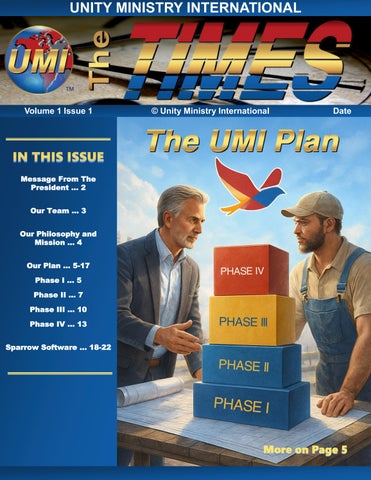
UMI is built on four integrated phases, each strengthening the next.
Phase I establishes a unified organizational structure so governments, nonprofits, faith communities, foundations, and private partners can work together but separately. Fragmentation, duplication, and fraud are replaced with coordination and transparency.
Phase II introduces a restricted-use assistance currency, backed by U.S. dollars, fully trackable, and spendable only for wholesome goods and services. This protects those recovering from addiction and ensures that aid supports healing not destruction.
Phase III launches the Human Restoration & Training Center, an intensive eight-week residential program restoring the whole person history, mind, body, spirit, finances, family, and future. Freedom requires more than survival; it requires transformation.
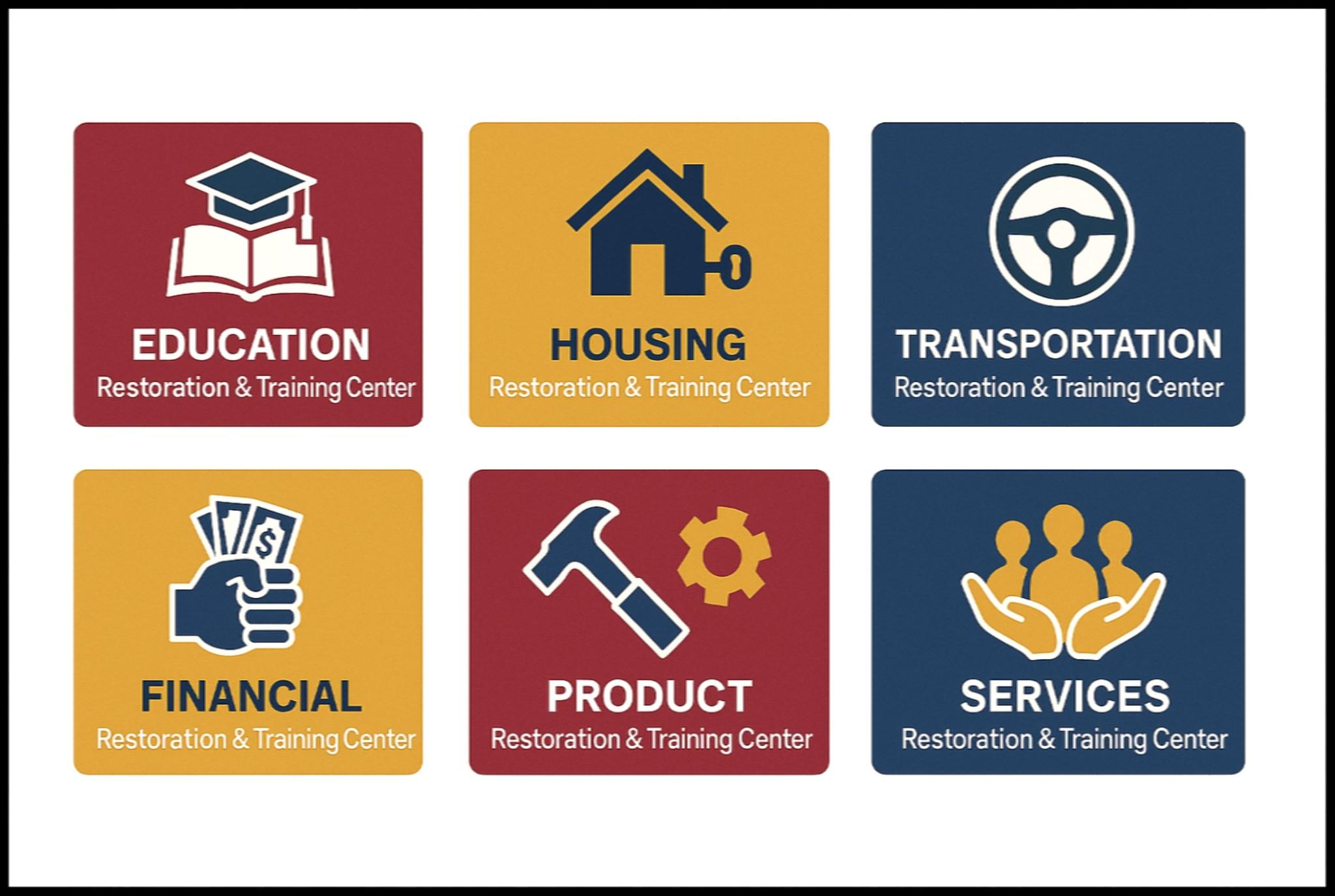
Phase IV completes the journey through industry-specific Restoration & Training Centers in health, education, housing, transportation, finance, products, and services creating real jobs, incubating new businesses, and turning restored individuals into contributors and builders.
Holding all of this together is Sparrow™.
Sparrow was not born as a technology idea. It was born from necessity and prayer. Sparrow is the central intelligence system of UMI, the structure that makes restoration possible. It coordinates services, protects funding, tracks progress, prevents fraud, manages the restricted-use currency, operates the Human Restoration Center, and connects graduates directly to employment. In simple terms, Sparrow ensures that compassion is matched with accountability and vision with execution.
Looking back, I understand this clearly: without God, this vision could not exist and without structure, it could not survive.
Doors opened that should not have opened. Provision came that could not have been planned. Insight arrived beyond my own understanding. Every time I questioned whether this vision was too large, I was reminded of a simple truth: with God, what is impossible for man becomes possible.
UMI is not my work. It is God’s work entrusted to human hands. It is an invitation to move beyond charity into restoration, beyond survival into purpose, and beyond fragmentation into unity.
The work ahead will require faith, obedience, partnership, and courage. But if this vision is from God and I am convinced it is then what stands before us is not an obstacle.
It is a calling.
Al Barber
President, Unity Ministries International
Al Barber CEO, President, Board Member
Al is the founder of (UMI) Unity Ministry International, Inc., and owner of Barber’s Driving School, Inc... Al is also the Chairman of The Georgia Driving School Association and in 2017 Al was appointed by Georgia Governor Nathan Deal to serve on the Georgia Driver Education Commission Board (GOHS).
He also serves on The Georgia Governor’s Task Force for Older Drivers (GOHS) (GDPH).
Key Accomplishments:
Founder of Unity Ministry International
Graduated Summa Cum Laude Columbus State University-BA/Business Management

Memberships in The National Society of Collegiate Scholars, Phi Beta Delta-Honor Society for International Scholars, The National Scholars Honor Society, The Honor Society of Phi Kappa Phi, Beta Gamma Sigma
Key Values:
Faith in GOD
Hard Work
Perseverance
Key Charitable Interests:
Human Restoration
Prison Reform
Serving Older Persons and Orphans
Stephen W. Aycock II
Board Member, Director of Legal Affairs Intellectual Properties, Partnership Contracts, Patents
Steve began his professional career as an engineer in 1993 and worked as a software engineer for over ten years with companies such as Harris, Lockheed Martin and Northrop Grumman. As an engineer, Steve was fortunate enough to work on projects such as the Space Shuttle launch processor, the Javelin missile and many other fascinating defense, telecommunications and aerospace projects.

Steve transitioned to patent law in 2003 and attended The George Washington University Law School and worked in the DC area for large law firms. In 2011, Steve, his wife, and kids moved back to his hometown of Lakeland, Florida. Steve established his own IP law practice that serves clients nationwide and focuses on patents (especially software patents), trademarks, and copyrights. www.cygnetiplaw.com
“When
we walk in unity under God’s purpose, nothing He calls us to accomplish will be withheld from us.”

“To bring people together under God’s guidance to restore lives and solve shared human challenges despite our differences.”

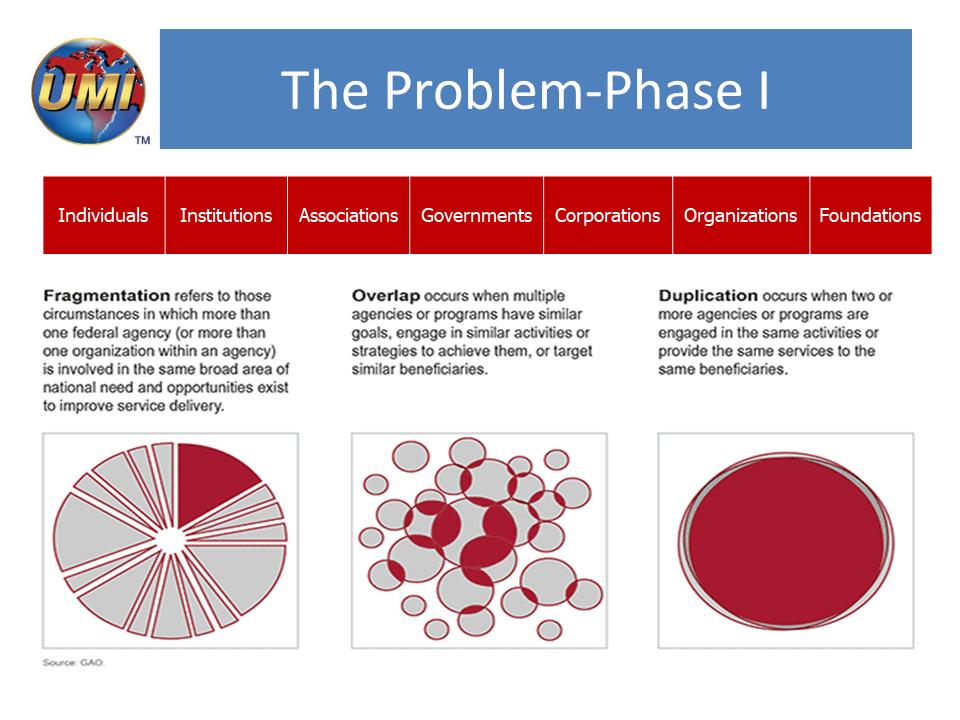
In Phase I, UMI will address problems associated with the administrative management and coordination of interrelated programs and services provided by individuals, institutions, associations, governments, corporations, organizations, and foundations working to combat human bondage, suffering, and poverty. A primary objective of this phase is to eliminate fragmented, overlapping, and duplicated services.
UMI has developed an organizational structure that enables individuals, institutions, associations,
governments, corporations (both for-profit and nonprofit), organizations (religious and nonreligious), and foundations to work collaboratively yet independently to achieve the goals and missions established in Phases I through III. Through this structure, UMI will also work to eliminate recipient, vendor, and service-provider fraud, as well as overlapping, fragmented, or duplicated services.
UMI will categorize individuals seeking assistance into three distinct groups:
1. One-Time Assistance – Individuals affected by unexpected events such as job loss, divorce, medical emergencies, or similar circumstances.
2. Short-Term Assistance – Individuals facing challenges such as addiction, release from incarceration, homelessness, unemployment, or other comparable conditions requiring temporary support.
3. Long-Term Assistance – Individuals who are elderly, blind, or disabled and are unable to provide for themselves presently and are unlikely to be able to do so in the future.
To support this structure, UMI has developed proprietary software called Sparrow. Sparrow enables stakeholders to work together—but separately—within the human restoration process, as well as to coordinate sustaining services for individuals requiring long-term assistance.
Sparrow generates both comprehensive and summary reports for individuals requesting assistance across all three categories: One-Time Assistance, Short-Term Assistance, and LongTerm Assistance. These reports are securely made available online to UMI’s Associate and Resource Partners, allowing them to effectively collaborate in the restoration and support process.
UMI’s recipients include senior citizens, children, individuals with mental and physical disabilities, the homeless, individuals struggling with alcohol and drug addiction, the unemployed, former prisoners, and all others who have been marginalized and live in conditions of human bondage, suffering, and poverty.
In Phase II, UMI will address a critical systemic failure in existing assistance programs: the misuse, diversion, and fraudulent exchange of traditional currencies and benefits such as U.S. dollars and EBT cards. While these instruments were created to alleviate hunger and poverty, they are frequently bartered, sold, stolen, or misused, often fueling addiction rather than supporting restoration.
Current assistance mechanisms allow funds intended for food and basic needs to be converted— legally or illegally into alcohol, tobacco, drugs, gambling, and other harmful substances. This misuse undermines recovery efforts, perpetuates cycles of addiction, and defeats the very purpose of assistance programs.
UMI proposes the creation of a restricted-use assistance currency designed exclusively to support wholesome living, recovery, health, and restoration. This currency will not be tradable, barterable, or spendable for any goods or services that are harmful to individuals recovering from addiction or those living in vulnerable conditions.
The currency will be purpose-built to:
Prohibit the purchase of alcohol, tobacco, drugs, gambling, or other harmful products
Be accepted only at approved locations that provide verified care, housing, food, medical treatment, counseling, job training, and related services
Prevent resale, theft, or third-party misuse
Recognizing the public health realities faced by vulnerable populations, this assistance currency will be:
Washable and disinfectable, reducing the transmission of disease and illness
Durable for repeated handling in shelter, clinic, and transitional environments
Each unit of currency will be issued with unique serial numbers, allowing:
Individual-level tracking
Transparency and accountability
Fraud prevention and audit capacity
Recipients will be able to track their own currency use, fostering accountability, dignity, and empowerment rather than dependence.
This assistance currency will be fully backed by U.S. dollars, ensuring financial integrity, stability, and trust. It will mirror standard U.S. currency denominations including $1, $5, $10, $20, $50, and $100 equivalents to maintain familiarity and ease of use within approved systems.
Unlike U.S. dollars or EBT cards, however, this currency:
Cannot be exchanged for cash
Cannot be sold on secondary markets
Cannot be used outside authorized programs
Cannot be exploited by traffickers or illicit brokers
Currency Note Examples
























Traditional currencies and electronic benefit systems while well-intended are inherently vulnerable. Cash and EBT cards can be bartered, sold, stolen, or manipulated by individuals and networks seeking to exploit those living in poverty or addiction.
Without secure controls, assistance funds too often finance self-destructive behavior rather than recovery, forcing nonprofits and aid agencies to treat the consequences repeatedly rather than addressing the root problem.
I once experienced this failure firsthand.
I was sitting on a riverbank under a pavilion, speaking with a homeless man I was actively trying to help secure employment. It was the first of the month the day EBT benefits had just been reloaded. As we talked, I noticed something unsettling.
Suddenly, thirty or forty people who had been scattered around the riverbank stood up and began walking uphill toward the parking area. A car had pulled in. People gathered around it hurriedly, forming a tight circle.
I asked the man I was interviewing, “Who is that?”
He replied, “That’s our local EBT exchange agent.”
Confused, I asked what he meant.
He explained that this individual routinely exchanged food-stamp benefits for cash offering pennies on the dollar. The benefits were then bartered and redeemed fraudulently through complicit merchants. The cash was used for alcohol, tobacco, gambling, and drugs.
When I asked how people ate afterward, he said something that stopped me cold.
They simply went to local rescue missions and nonprofit feeding programs. Their food was covered—while their government assistance financed addiction.
At that moment, the problem became painfully clear: the system allowed survival needs to be separated from recovery efforts, enabling destructive behavior while others funded the consequences.
Phase II exists to break this cycle.
The proposed UMI assistance currency restores alignment between aid and healing, ensuring that resources intended for restoration cannot be diverted into harm. By combining restricted use, physical health safeguards, serial tracking, dollar backing, and approved-provider acceptance, Phase II establishes a model of assistance that promotes dignity, accountability, and genuine transformation.
This currency is not about control, it is about protection, stewardship, and restoration.
Many individuals who fall within the Short-Term Assistance category suffer from addictions or life disruptions that cannot be resolved through one-time intervention. In addition, UMI recognizes the persistently high rates of recidivism among individuals released from jails, prisons, hospitals, shelters, and treatment facilities, often due to the absence of comprehensive restoration, training, and long-term support.
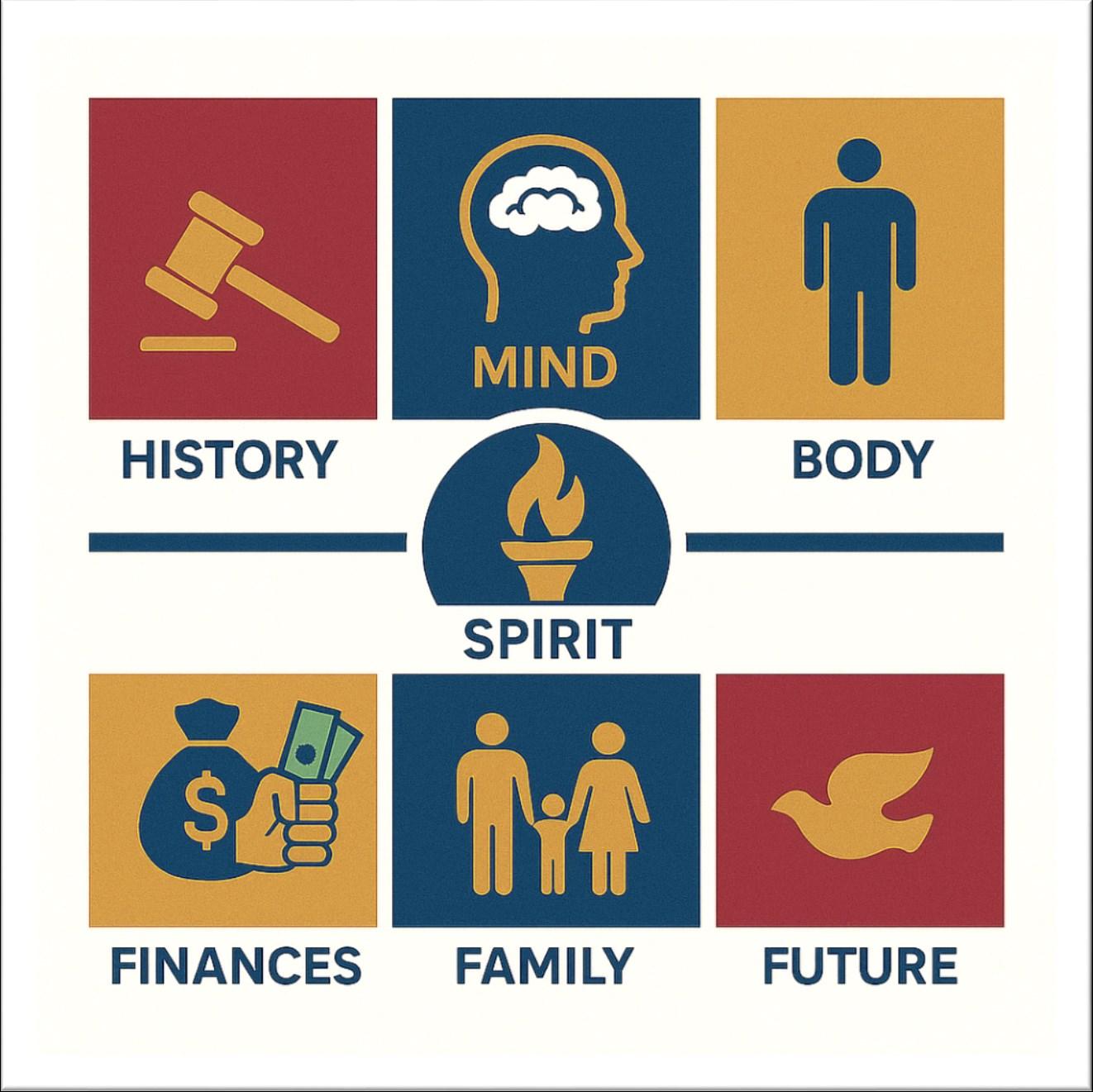

Phase III is designed to address these systemic failures through the establishment of the UMI Human Restoration & Training Center, a comprehensive, structured program focused on restoring the whole person, not merely managing symptoms.
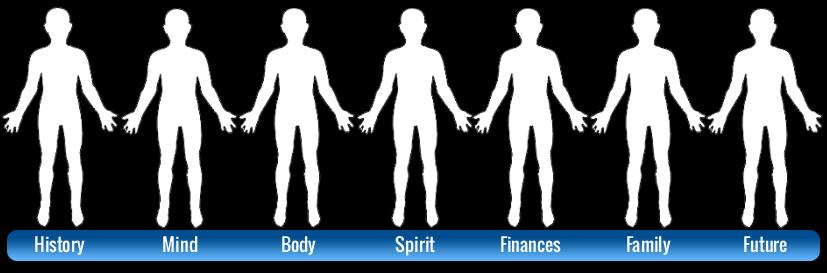
The UMI Human Restoration & Training Center will deliver an intensive, eight-week residential restoration and training program designed to restore individuals across all seven dimensions of the human soul:
History
Mind
Body
Spirit
Finances
Family
Future
This integrated approach recognizes that sustainable recovery requires transformation across every area of life—not isolated intervention.
While the primary model is residential, selected program components may be made available on a
non-residential basis when clinically or logistically appropriate.
Each day within the program will follow a highly structured schedule, consisting of:
16 hours per day dedicated to restoration and training activities
8 hours per day dedicated to rest and sleep
Program operation 7 days per week
Participants will be allowed:
One hour per day for family visitation
One hour per day for outside professional visitation (legal counsel, spiritual advisors, clinicians, etc.)
The first week of the program will prioritize comprehensive evaluation and stabilization through:
49 hours of clinical examinations covering all health domains
28 additional hours dedicated to the distribution of medical supplies, health services, and treatment plans
This foundational week ensures that each participant’s individualized restoration pathway is informed, accurate, and responsive to their needs.
The instructional design balances both horizontal and vertical training models:
294 hours of classroom instruction in horizontal training (life skills, functional knowledge, vocational readiness)
196 hours of classroom instruction in vertical training (personal development, purpose, accountability, leadership, and future planning)
Each instructional hour consists of:
50 minutes of instruction
10-minute break
Additionally, each day includes:
Three one-hour meal periods (breakfast, lunch, and dinner)
Eight-Week Program Overview
Eight-Week Program Overview (Revised Order)
Week 1: Comprehensive examinations across all health domains
Week 2: Legal knowledge, rights, and assistance
Week 3: Mental health assessment and counseling
Week 4: Physical health, wellness, and exercise
Week 5: Spiritual health and emotional regulation
Week 6: Financial health, budgeting, and income opportunities
Week 7: Family health and social interaction skills
Week 8: Future planning, goal setting, and transition readiness
The UMI Human Restoration & Training Center will operate as a tuition-based program supported through a diversified funding structure, including:
Federal, state, and private grants
Student loans and educational financing
Scholarships
Third-party payers with a direct stake in the participant’s success (government agencies, courts, healthcare systems, employers, insurers, foundations, and nonprofits)
When third-party funding is unavailable, UMI will provide scholarships and internal student loans to as many participants as possible, in amounts sufficient to both support the individual and sustain the Center’s long-term operational viability.
Phase III represents the culmination of the UMI model moving beyond crisis intervention to deliver comprehensive, measurable, and sustainable human restoration. By addressing addiction, homelessness, and recidivism through holistic rehabilitation and structured training, the UMI Human Restoration & Training Center offers a path toward lasting stability, dignity, and selfsufficiency.

One of the greatest barriers facing individuals returning to society after cycles of bondage whether through addiction, incarceration, homelessness, or generational poverty is the absence of legitimate, sustainable, and dignified employment opportunities. Many workforce systems assume a level of stability, education, or credentialing that restored individuals do not yet possess, leaving them vulnerable to relapse, recidivism, or economic exploitation.
Phase IV addresses this gap by moving beyond preparation alone and into direct job creation, workforce incubation, and industry-based restoration ecosystems
Solution: Integrated Restoration & Training Centers Across Seven Core Industries
UMI will establish a network of industry-specific Restoration & Training Centers designed to
employ graduates of the UMI Human Restoration & Training Center while simultaneously addressing critical unmet needs within society.
These centers will operate in industries where no comprehensive restoration-based training models currently exist, combining:
Hands-on vocational training
Industry certification preparation
Paid transitional employment
Long-term career pathways
Each center corresponds to one of the seven dimensions of the human soul, ensuring alignment between personal restoration and societal contribution.
This center will prepare participants for employment in:
Community health support roles
Recovery support services
Medical logistics and sanitation
Patient advocacy and navigation
Mental health and wellness assistance
Participants will gain certifications and experience in healthcare-adjacent roles that do not require
advanced degrees but provide meaningful entry into the healthcare workforce.
(Mind & History)
This center will train individuals to serve in:
Tutor and literacy-support roles
Classroom assistance
Adult education facilitation
Digital learning support
Historical and records preservation services
Graduates may support schools, nonprofits, libraries, and workforce education programs often serving populations similar to those from which they came.
(Body & Stability)
Participants will receive hands-on training in:
Transitional and supportive housing operations
Facilities maintenance and repair
Construction trades and rehabilitation
Property management and inspection
Energy efficiency and sustainability
This center directly addresses homelessness while teaching marketable housing-related skills.
(Access & Mobility)
This center will prepare trainees for roles including:
Fleet maintenance and logistics
Public and nonprofit transportation services
Driver training and safety operations
Supply-chain movement
Accessibility transportation for seniors and disabled individuals
Transportation is a primary barrier to employment; this center both removes and remedies that barrier.
(Provision & Stewardship)
This center will focus on:
Financial literacy education
Budget counseling and coaching
Payroll and bookkeeping support
Microenterprise administration
Ethical finance and stewardship models
Participants will learn not only to manage money but to restore financial systems within communities.
(Creation & Sustainability)
This center will focus on:
Product repair, refurbishing, and reuse
Manufacturing support roles
Sustainable production methods
Inventory control and supply operations
Circular economy initiatives
Participants will gain skills in restoring value rather than discarding resources mirroring their own restoration journey.
(Service & Future)
This center will prepare individuals for careers in:
Facility services and operations
Technology and communications support
Customer service and call centers
Cleaning, sanitation, and environmental services
Community-based enterprise roles
These services form the backbone of functional communities and offer scalable employment opportunities.
UMI will actively incubate new businesses and social enterprises within each Restoration & Training Center. Graduates will have opportunities to:
Start cooperatives and small businesses
Transition into staff or leadership roles
Participate in profit-sharing or ownership models
Remain employed within UMI-affiliated enterprises
This approach transforms recipients into contributors, builders, and employers rather than perpetual service dependents.
Graduates of the UMI Human Restoration & Training Center will move seamlessly into:
Paid transitional employment
Apprenticeships and certifications
Long-term career placement within UMI enterprises or partner organizations
Each industry center reinforces economic independence, social stability, and community restoration.
Phase IV completes the restoration continuum by ensuring that human restoration leads directly to meaningful, dignified, and sustainable employment. By creating industry-specific Restoration & Training Centers where none currently exist, UMI transitions individuals from survival to contribution restoring not only lives, but the systems they reenter. This phase embodies the principle of restoration multiplied: restored people restoring communities.

Throughout every phase of the UMI model, Sparrow™ functions as the core technological infrastructure that binds all programs together. It is the administrative engine, the communication hub, the compliance safeguard, and the restoration tracker for every individual, provider, partner, and agency involved in the human restoration process.
Rather than functioning as a single-purpose database, Sparrow integrates case management, program coordination, financial oversight, employment tracking, and real-time reporting into one seamless system.

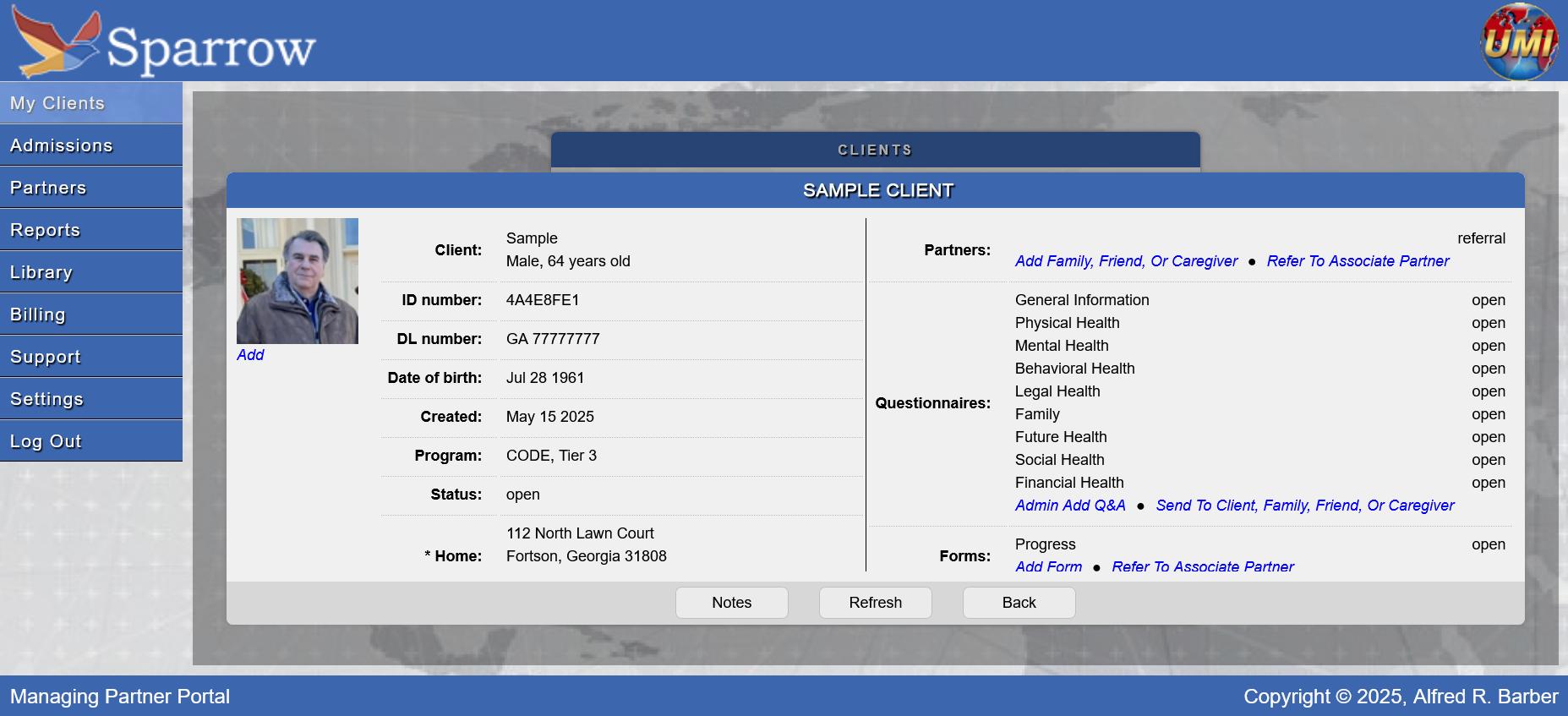
In Phase I, Sparrow™ provides:
Unified intake for individuals seeking One-Time, Short-Term, or Long-Term Assistance
Cross-agency communication, allowing government, nonprofits, and institutions to “work together but separately”
Fraud prevention, identifying duplicate services, overlapping benefits, and broken communication
Digital case files accessible only by authorized Associate and Resource Partners
Real-time dashboards for health, housing, legal, financial, and behavioral needs
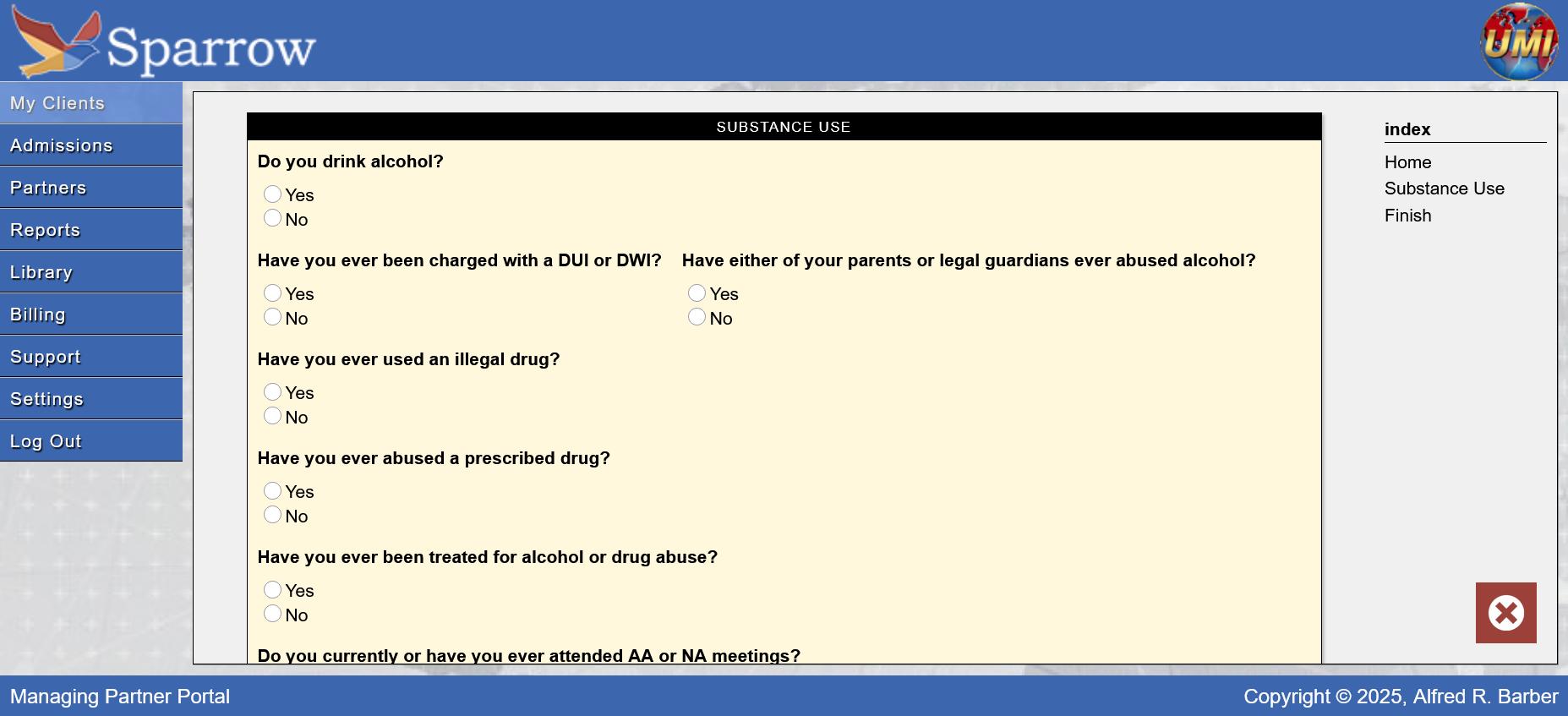
With Sparrow™, every stakeholder finally sees the same accurate, standardized, real-time information reducing waste and increasing efficiency.
Sparrow™ becomes the financial guardian of Phase II.
Through Sparrow™, UMI can:
Issue unique, serialized units of the UMI assistance currency
Track every transaction in real-time
Restrict purchases to approved providers only
Prevent barter, theft, resale, fraud, and misuse
Produce spending reports for courts, agencies, donors, or family
Flag suspicious activity automatically
If a recipient attempts to misuse their currency:
The transaction is instantly declined
A compliance alert is logged
A caseworker is notified through Sparrow’s internal messaging
Patterns of behavior can be monitored over time
No EBT card, debit system, or cash-based program can offer this level of control, protection, and accountability.
Only Sparrow™ ensures that funds intended for restoration are used exclusively for restoration.
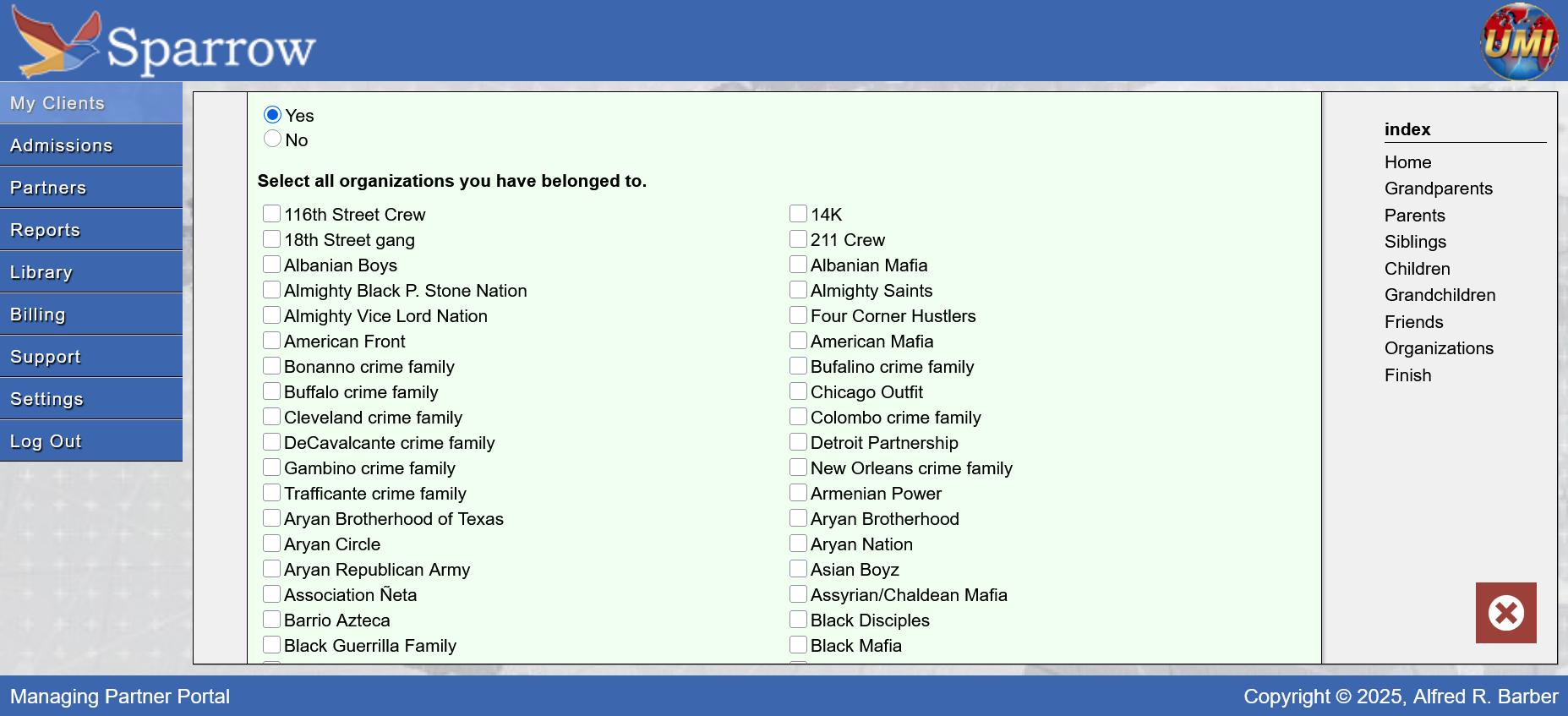
In Phase III, Sparrow™ becomes the operating system of the eight-week program.
Sparrow™ manages:
All clinical evaluations in Week 1 (49 clinical hours + 28 service hours)
Daily schedules and attendance
Tracking of 294 horizontal and 196 vertical instructional hours
Meal schedules, visitation logs, medication schedules
Behavioral, emotional, spiritual, and academic progress
Incident reporting and wellness alerts
Individual Restoration Profiles (IRPs) for each participant
Every hour of education, recovery, counseling, and training inside the Center is recorded and timestamped.
At graduation, Sparrow™ automatically generates a Restoration Transcript, documenting:
Completed training hours
Certifications
Clinical improvements
Behavioral progress
Employment readiness
Ongoing needs (if any)
This transcript becomes the passportto Phase IV employment.
Sparrow™ is the workforce pipeline connecting restored individuals to restored industries.
Through Sparrow™, the system:
Matches graduates to jobs based on aptitude, certifications, personality, and need
Assigns them to one of the seven Industry Restoration & Training Centers:
Health Services
Education
Housing
Transportation
Finance
Product Restoration
Service Restoration
Tracks job attendance, payroll, performance, and progress
Generates employer reports for grants and third-party payers
Provides ongoing support for graduates to prevent relapse or regression
Automatically schedules continuous education or additional training
When UMI incubates new businesses, Sparrow™ becomes the HR system:
Hiring
Payroll
Time tracking
Compliance
Advancement pathways
Promotion and retention metrics
Through Sparrow™, the employment system becomes transparent, accountable, and sustainable
Most human-service programs fail because:
Systems don’t talk to each other
Funding is misused
Data is scattered
Employment is an afterthought
There is no long-term tracking
Agencies operate blind
Sparrow™ solves every one of these failures.
It is the first software platform designed not for paperwork—but for people. It is the digital nervous system of the entire UMI model.
With Sparrow™, UMI can:
Restore individuals
Restore industries
Restore communities
Restore accountability
Restore dignity
Sparrow™ is more than software it is a nationwide restoration engine.
It is the one system powerful enough to connect the full UMI model:
The organizational foundation (Phase I)
The protected currency (Phase II)
The human restoration center (Phase III)
The national employment network (Phase IV)
Sparrow™ is what makes the entire UMI vision operational, accountable, measurable, and unstoppable.
