EndEavors
EDUCATION: Through a Social Justice Lens
A Child’s Eye View of Race 4 “Fixing” Society: Education’s Undue Burden 8 Not an “EitherOr” Conversation 10 Widening the Lens 13

A Child’s Eye View of Race 4 “Fixing” Society: Education’s Undue Burden 8 Not an “EitherOr” Conversation 10 Widening the Lens 13

“Fixing” sociEty: Education’s unduE burdEn
WidEning thE lEns
halima Cherif
WritErs
helene Karlson Cohen
Joshua Lavender
Shanna Yetman
dEsign
Lynne menefee

Craig Breil Photography © CJ Breil
dear College of Education Alumni and Friends,
Welcome to another issue of Endeavors!
Equity, access, diversity, success and opportunity: these ideals are the very underpinning of much of our work at the College of Education. One of the things i am most proud of is the absolute dedication of our faculty, students and alumni to pursuing social justice in all contexts of education. We work as change agents in our respective fields and are committed to preparing scholars, leaders and educators who work to solve important problems with innovative approaches.
this issue of Endeavors just provides a small glimpse into the work of four of our faculty whose research addresses issues of diversity, equity and opportunity from very unique perspectives. For example, in “A Child’s Eye View of Race” we highlight the work of dr. melanie Killen, professor in the department of human development and Quantitative methodology. this study was commissioned by CNN’s Anderson Cooper AC360 news show as a special report examining how and how early children’s views of race are formed. incredibly, the special report was the recipient of a 2013 News and documentary Emmy Award for the Outstanding News discussion and Analysis category! truly a first for a College of Education!
the University of maryland has been working on a new “Fearless ideas” branding campaign. When i first learned of the theme, i thought about all of the wonderful work that goes on in our College – and indeed we approach this work fearlessly! i am pleased to introduce a new standing feature in Endeavors focused on the College’s “Fearless ideas.” in this issue, we highlight the passion of a COE alumna and her quest to change one small corner of the world; how our faculty are integrating technology to spur innovation in research and teaching; as well as the phenomenal research on early childhood development in the infant & Child Studies Consortium.
Finally, as we begin a new calendar year, i would like to sincerely thank our alumni and friends for all of your support – through time, talents and treasure – to the College of Education. You are helping to build of legacy of change and for that, we at the College are grateful. i hope you enjoy this issue of Endeavors. i wish you all the best for the coming year!
Warm regards,

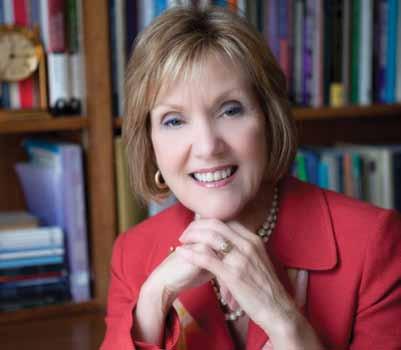
donna L. Wiseman Dean
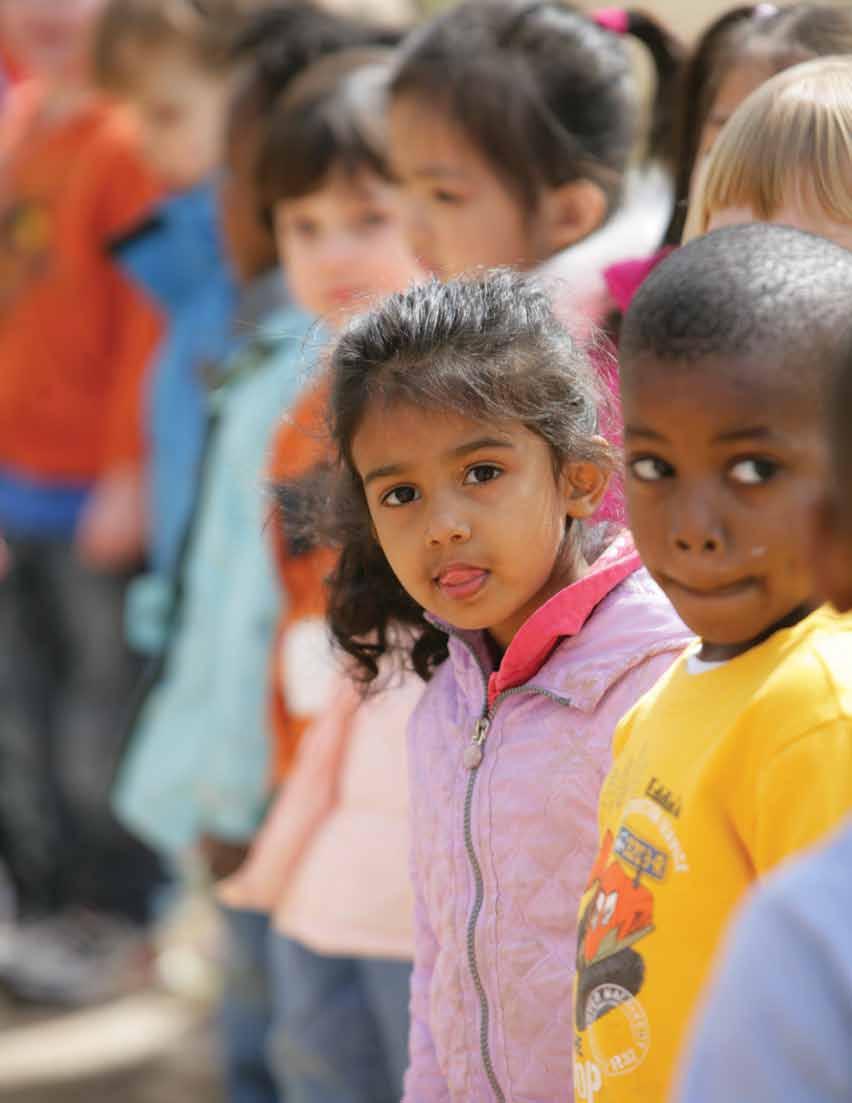
children’s social-cognitive development and how attitudes about race, ethnicity, and culture emerge early
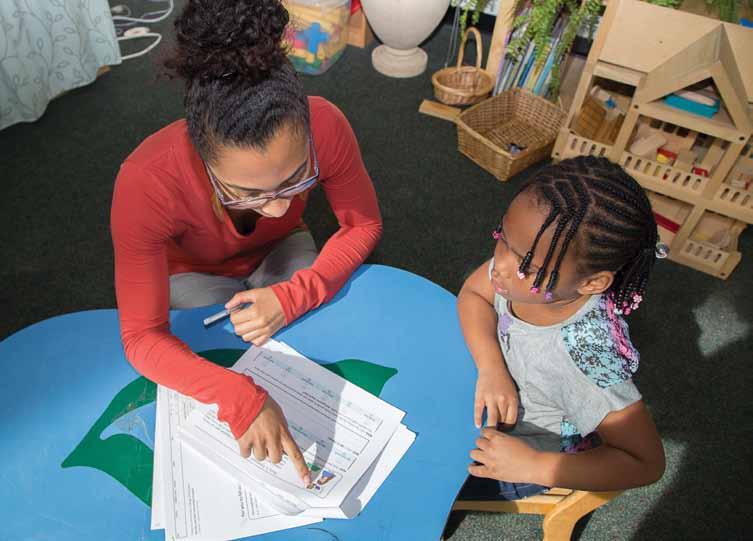
Play pretend for a moment: you’re a high school English teacher, and it’s the first day of school. You look at a room of new faces, new names. You wonder which students will turn out to be abstract thinkers, which ones are more language-oriented than others, which ones will sink their teeth into the Steinbeck novel you’re assigning, which ones might have learning disabilities. A big part of your work for the first month or so of school will be getting to know these students — their natural interests and inclinations and abilities, where the gaps are in their knowledge of the subject, and how they can be challenged. But some part of how you think about each student is being formed in this moment’s impressions: clothes, facial features, race and ethnicity, gender, even the surrounding environment. And, more than you might think, the perceptions you form right now — which may stem from your own personal biases and experiences — will impact the environment you create for students, which in turn will affect their social-cognitive development.
Such a moment and its lasting effects endlessly intrigue Professor melanie Killen, who studies social cognition, moral reasoning, intergroup relationships, exclusion, and prejudice in the College’s department of human development and Quantitative methodology. dr. Killen’s research is advancing our understanding of the environments we create for children and the long-term effects those environments have on the way children view the world and their peers. her recent work in the field has enlightened not only educators but also the general public. in collaboration with the CNN news-magazine show Anderson Cooper 360, Killen constructed and led a study exploring how kids view interracial peer encounters in their daily lives, how their opinions on race are shaped, and how early they form those opinions. AC360’s report on the study, broadcast for five consecutive days in April 2012, won an Emmy this year for Outstanding News discussion and Analysis.
the basis of Killen’s groundbreaking work with CNN goes back many years. She began studying children’s moral reasoning and social cognition as a graduate student at UC Berkeley, and in the last decade she has investigated how moral judgments are applied in peer interactions, particularly when peers come from different racial, ethnic, or cultural backgrounds. in 2002, as a consultant for the U.S. Federal mediation and Conciliation Services, she helped develop a videogame to teach children
the findings for the younger children both challenge the common parental notion that children are colorblind and shed light on how adults discussing race with their children can set the tone for social interactions.

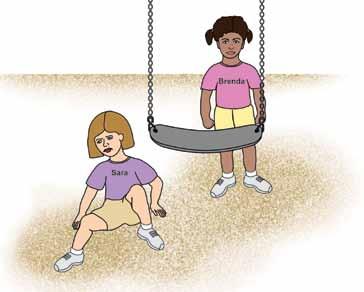
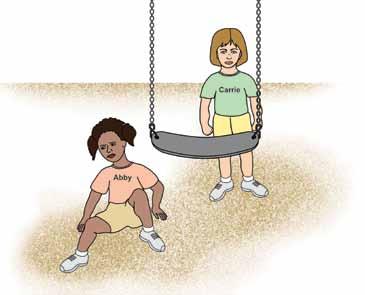
constructive conflict resolution skills, focusing on inclusion and fairness. But her method in the AC360 study arose largely from efforts to determine how early children’s racial biases form and whether they attribute negative intent to others based solely on race. Attributing such intent — assuming in an ambiguous situation that someone intended to do something wrong — can result in unfair treatment, and when assumptions are based on race, the outcome becomes a form of discrimination. this can happen at a very early age, before children are even aware of the consequences of their judgments.
teachers can help children understand these attitudes and behaviors — called implicit biases — but the complication is that some teachers hold these biases as well. So dr. Killen’s research, while seeking to answer developmental questions, is also designed to inform educators about how to reduce their own biases. in 2009, dr. Killen recreated a first day’s impressions for teachers with a tool launched at the Southern Poverty Law Center’s Teaching Tolerance website (www.tolerance.org). her innovation for the site, the Teacher Perception Tool, is a survey that asks teachers a series of questions based solely on drawings. Presented with a student’s picture, teachers are asked to respond to questions such as “is this student likely to be in the school band or in the science club?” Since respondents have no knowledge of the students beyond the visual information in the pictures, the survey prompts them to reconsider the implicit and explicit
biases by which they assess a student. these attitudes can significantly influence teachers’ behavior toward students and, it turns out, the tenor of the classroom setting itself.
“Unfortunately, the first day of school is when some of these biases start to happen,” dr. Killen explains. “After you get to know your students, your perceptions quickly change. that young kid who is a minority in urban clothes turns out to be great at science or math, and his natural ability can prove your initial impressions wrong. the problem is that he may have to do extra work because he has to overcome the initial bias you’re working with.”
But the effects do not stop there: how teachers and parents behave in social situations and the attitudes which underlie those behaviors have a telling impact, sometimes in surprising ways, on how children treat one another. this is the subject of the AC360 report, “Kids on Race: the hidden Picture.” With her research team — COE doctoral students Kelly Lynn mulvey (Ph.d., 2013) and Shelby Cooley, who conducted interviews, and Aline hitti (Ph.d., 2013) and Laura Elenbaas, who analyzed the outcomes — Killen talked with 145 children, ages six and thirteen, at six schools with varying degrees of ethnic composition across three states. the researchers presented children with depictions of interracial encounters, which were scientifically designed to be ambiguous, and asked them to interpret the situations. they then explored how children’s interpretations of the images changed when the races of the characters were switched. Starting with a
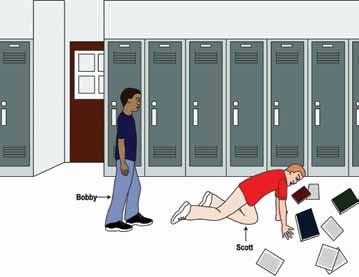
simple question — “What is happening in this picture?” — the interviewers developed frank discussions, illuminating children’s viewpoints on race as well as the observations and interactions which underpin those viewpoints. Analysis of the data revealed that biases were largely influenced by whether the ethnic composition of the schools the children attended was homogeneous or heterogeneous.
“As children grow, they get a lot of messages from the media about stereotypes. When a child is exposed to a stereotype and doesn’t have a personal experience to challenge it, he or she absorbs it,” Killen says. “Schools are our children’s social world, exposing them to new peer relationships and teaching them to navigate a complex social environment. And the climate and messages that teachers and peers convey in school have everything to do with how children develop ways of interacting with peers and adults in daily life.”
Race in childhood is a provocative issue. Killen’s study tackles it fearlessly by asking questions many parents would rather ignore. does race affect how children choose friends or see conflicts? Are children really, as many parents believe, colorblind? how, when, and why do they form opinions on race? how do these opinions change over time? how does a school’s racial diversity affect children’s opinions on race? the study found that children as young as six were making assumptions about race based on biases they may be learning from parents, peers, teachers, or the outside world. Sometimes, dr. Killen asserts, biases are not actually apparent to the adults setting examples for their kids.
“When we’re in a situation in public and we have an opportunity to ask two different people for help, we might just be more likely to ask someone of the same race,” Killen says of implicit bias. “All of that really has a very powerful influence very early in children’s lives, much earlier than we think.” interestingly, Killen also found that young African-American children tend to have more positive or neutral interpretations of interracial encounters than young European-American children — by a significant margin. Asked about the ambiguous depictions, 70% of EuropeanAmerican six-year-olds attributed negative intent, while 38% of their African-American peers did so. But by early adolescence those findings begin to level out, at 59% and 54% respectively. the figures for the younger
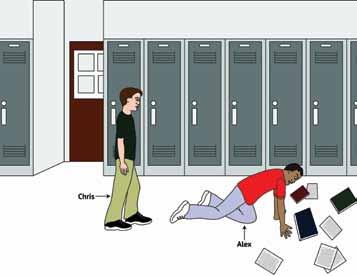
children both challenge the common parental notion that children are colorblind and shed light on how adults discussing race with their children can set the tone for social interactions. And the ensuing trend reveals how the evolution of such discussions, not to mention the interracial encounters in children’s lives, influences their attitudes.
“African-American parents are very early on preparing their children for the world of diversity and also for the world of potential discrimination,” Killen explains. “in contrast, what we find is that many European-American parents have the view that if you talk about race you are creating the problem….By age 13, there are other issues that start coming up, like dating. And so that is when messages from parents and society start getting much more negative.”
dr. Killen’s research in this field is ongoing, but in many ways it reflects the ground she has already tread in twenty-eight years of studying moral development. that history — and the focus of her research career — has a lot to do with developing precise methodology and forming incisive questions: “my more unique contribution to developmental science is to take a rigorous scientific approach to how children apply their moral reasoning and judgment to issues where there is potential bias, stereotyping, and prejudice. When do children understand equality and fairness, and when do they understand that being prejudiced is unfair?” — Jl & sy
Dr. Melanie Killen teaches in the Department of Human Development and Quantitative Methodology. She is the author of Children and Social Exclusion: morality, Prejudice, and group identity, as well as over 130 journal articles and book chapters. She has co-edited six books, including the handbook of moral development, Social development in Childhood and Adolescence: A Contemporary Reader, and morality in Everyday Life. Her research has been funded by the National Science Foundation and the National Institute of Child Health and Human Development. Dr. Killen was awarded the 2008-09 Distinguished Scholar-Teacher Award by the Provost of the University of Maryland.
exploring the relationship between education, inequality, and the social contract
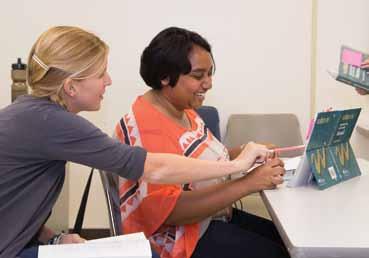
Education as the great equalizer: “if you work hard enough, pay attention in school, and study for your tests, eventually you will succeed in life.” For decades, American schools have bottle-fed children the idea that education levels the playing field — a notion which dovetails so naturally with the American dream that it saturates the language we use to talk about education. But when Americans speak of equal educational opportunity, we’re really talking about access to education. the assumption is that with access comes a level playing field and, for the student who only strives for it, inevitable success: landing a dream job after college and leaping into the echelons of the middle class or even the upper class. thanks to this assumption, society places a heavy burden on the education system — a burden Robert Croninger thinks about a lot.
Before joining maryland’s faculty in 1997, dr. Croninger worked for nearly two decades with the Programs for Educational Opportunity, a desegregation assistance center in Ann Arbor, michigan. Now an associate professor in the department of teaching and Learning, Policy and Leadership, Croninger works with graduate students on research concerned with “redefining and re-conceptualizing what constitutes equal educational opportunity.” he examines educational opportunity in terms of social justice, as well as the institutions that must work with schools and universities to
engender social equality — to level the playing field past the point of access.
“there should be a social contract that goes beyond education,” dr. Croninger asserts. “Rather than having a robust conception of what constitutes a just society, everything has been focused on education as the institution that will address social inequality. the truth of the matter is that education probably can’t do that, not without some more broad-based conceptions that involve other social institutions.”
the history of the shifting of burdens onto education, the conceptual dismantling of the social contract, and the gradual loss of “the civic purpose or collective goods of schooling” are the concerns taken up by dr. Croninger and COE doctoral candidate Kathleen hoyer in “Equitable Public Education: ‘getting Lost in the Shuffle,’” a chapter they co-authored for gail Sunderman’s new book on diversity in the schools, Charting Reform, Achieving Equity in a Diverse Nation. “despite thirty-five years of legislation and litigation, the quality of educational opportunities afforded children remains stubbornly unsatisfactory, especially for students from historically disadvantaged backgrounds,” Croninger and hoyer write. Against this backdrop of inequality, the co-authors pose a question: “to what extent are future federal and state policy efforts likely to reverse the negative educational trends facing low-income students and ensure that they do not get lost in the shuffle?” As Croninger sees the matter, answering this question requires us to look well beyond education, to adopt a perspective which recognizes the interrelatedness of various parts of our social fabric and how those parts — and the public policy we exercise in their interest — can either advance or hinder educational opportunity.
“the basic idea here is that you cannot rely solely on education to address problems of poverty or discrimination,” dr. Croninger says. “Our focus on education as a primary vehicle for reform took root after the great depression. Changes in other sectors of society that could benefit children have lagged behind those made in education. Other sectors need to be involved in providing health services, employment opportunities, and community development.”
dr. Croninger praises recent reforms which he believes have broadened the public investment in our children, namely the work of the harlem Children’s Zone and the Promise Neighborhoods institute, the latter of
which, according to its website, seeks to “wrap children in high-quality, coordinated health, social, community, and educational support from the cradle to college to career.” But Croninger insists that these reforms are not enough; their commitments need to be deepened by a more widespread effort. For instance, he identifies universal health care, especially prenatal care and postnatal care for the poor, as an advancement that will benefit children and most likely have a positive effect on educational outcomes. But he also posits that problems in schools and in society need to be addressed by finishing the work of desegregation.
“de jure segregation has pretty much dismantled the policies that were put in place to keep the races separate, but it hasn’t dismantled what is sometimes called de facto segregation,” dr. Croninger explains. “the major reasons for de facto segregation are the result of residential segregation, but such segregation does not represent only residential choice. income inequality plays a major role, as well as state tax law and the decisions of community planners and corporate heads. By some estimates, our school system is almost as segregated now as it was just after Brown v. Board of Education.”
Beyond the de facto segregation of neighborhoods and schools, what effects do myopic public policies have on the public schools themselves? Croninger argues that what was a social contract became an educational contract, a belief that schools alone can “fix” a damaged social fabric simply by escorting individuals into better socioeconomic conditions. that belief not only undermined the other social values in education but actually helped to stratify educational opportunities. “When education becomes the primary policy lever for prosperity — individual and social — the competition for private benefits tends to dominate,” Croninger and hoyer write of the cause-and-effect behind the shift away from education’s collective value and the resulting stratification of opportunity.
to clarify the nature of this stratification, dr. Croninger points to a recent study by Sean Reardon, a researcher of education policy at Stanford
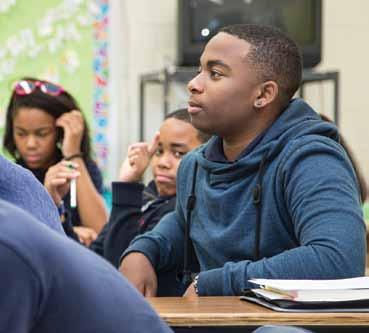
…to adopt a perspective which recognizes the interrelatedness of various parts of our social fabric and how those parts — and the public policy we exercise in their interest — can either advance or hinder educational opportunity.
University, which suggests that as America’s income gap has grown, so too has the achievement gap between economically advantaged and disadvantaged children. moreover, that achievement gap is nearly twice as large as the achievement gap between white and black students — the reverse of what the situation was fifty years ago. the implication is that growing economic inequalities are driving a widening achievement gap. But Croninger is doubtful about whether reorienting enrollment policies toward socioeconomic justice will be enough by itself to counteract this trend.
Asked about the Supreme Court’s decision this year in Fisher v. University of Texas (see our article on dr. Julie Park’s research for a fuller treatment of the issues in that case), Croninger grants that there may be some merit to class-based affirmative action but that it is not a cure-all. Ultimately, he argues, we must reconstruct our beliefs about society and reinvigorate the social contract if we are to have any real hope of achieving truly equal opportunity.
“it bothers me that school systems cannot use race, even in a limited way, to promote integration and greater diversity in schools,” dr. Croninger says of the premise represented by the Fisher ruling. “in 2007, the Court disallowed the use of race for K-12 enrollment decisions in Parents Involved in Community Schools v. Seattle School District 1, but did suggest, as in Fisher, that income might be used as a factor. there’s some reason to argue that the use of income is long overdue, especially in K-12 enrollment decisions. A number of schools have explored the possibility, but it is not common, and i am not confident that it will become a lever for integrating schools. Schools will not be able to turn that trend around without political reforms and policies that promote employment and reasonably paying jobs.” — Jl & sy
Dr. Robert Croninger is an associate professor in the Department of Teaching and Learning, Policy and Leadership. Before joining Maryland’s faculty, Dr. Croninger served for nineteen years as a Researcher and Associate Director with the Programs for Educational Opportunity, a federally-funded desegregation assistance center affiliated with the University of Michigan. He holds an M.A. in Sociology from the College of William & Mary and a Ph.D. in Education Studies from the University of Michigan.
Investigating the dynamics of affirmative action
there is value, both academic and social, in diversity. however, the means by which our institutions of higher education pursue diversity are under fire from many directions — lobbyists, lawmakers, and, it now seems, the Supreme Court. A particular idea seems to be gaining ground in the national conversation about affirmative action: America is no longer as stratified as it once was along racial lines, and instead of race we should turn our attention to the problem of income inequality. this trend worries dr. Julie Park, an assistant professor in the College’s department of Counseling, higher Education and Special Education. Writing on the huffington Post blog in response to the Supreme Court’s decision in Fisher v. University of Texas, which seems to agree with the reasoning of this shift away from racial justice and toward socioeconomic justice, Park asserts that “class diversity is a worthy goal for institutions” but maintains that, as her research indicates, “race and class cannot be an ‘either-or’ conversation.” Park bases her conclusion on a study she led examining “what class diversity does for a campus environment beyond the point of admission.” that study, which appeared in the American Educational Research Journal this summer, powerfully underpins her inquiry into the effects of California’s ban on affirmative action—the subject of dr. Park’s new book from Rutgers University Press, When Diversity Drops: Race, Religion, and Affirmative Action in Higher Education. in the AERJ paper, Park and fellow researchers Nida denson and Nicholas Bowman confront a twofold question. First, are race-related mechanisms the only way to yield outcomes associated with racial diversity? But secondly, how might a university’s structural conditions or student interactions with other types of diversity, not necessarily racial, affect a campus climate? Park’s team analyzed a national dataset of surveys of almost 15,000 students at 88 colleges and universities collected by the UCLA higher Education Research institute. Significantly, the study looks not only at responses collected from freshmen but also at what those same students had to say four years later about their experiences, providing insight into the environments produced by certain types and levels of diversity rather than considering diversity as a stand-alone fact.
the results suggest that racial and socioeconomic diversity can be mutually reinforcing. “Students who attended more socioeconomically diverse institutions were more likely to interact across class lines, and interacting across class lines was associated with greater interaction across racial groups,” Park writes of her findings. “in an indirect but notable way, we found that class diversity can actually help and enhance campus race relations.”
But when she zeroed in more closely on the question of whether class diversity is every bit as good for students as racial diversity, Park found that “race and class diversity are related to each other, but not interchangeable. “in our study, having a racially diverse student body was strongly and directly linked to student interaction across race, and the effect was stronger and more consistent than the effect associated with class diversity. Our research shows that both race and class diversity in a student body are needed to support positive race relations on campus.”
the long and short of Park’s study is that class diversity supports racial diversity but cannot replace it as a means to secure positive race relations and diverse student interactions. Or to put the matter another way, achieving class diversity does not bring about “de facto racial diversity,” despite what some critics of affirmative action would have us believe. And another argument of such critics — one which equates race-conscious admissions with discrimination — may prove crippling in practice. Exactly what effects can arise from applying that argument to public policy is the concern taken up in When Diversity Drops: Race, Religion, and Affirmative Action in Higher Education. in this book, dr. Park documents the evolution of an interVarsity
…class diversity supports racial diversity but cannot replace it as a means to secure positive race relations and diverse student interactions.
Christian Fellowship (iVCF) chapter at a California university from a mostly white to a diverse organization and the reversal of that evolution after the 1996 passage of California’s Proposition 209, which banned affirmative action statewide. in the book’s preface, Park explains that at first she was interested in this iVCF chapter because it was an exemplar of racial diversity on a campus where racially homogenous worship groups were the norm.
“my initial plan was to study how iVCF had made that diversity possible and how students were reacting to the experience of participating in a multiethnic community,” Park writes. “Eventually, however, i began to hear a puzzling repetition, a remark along the lines of ‘We’re diverse, but not as diverse as we used to be.’ that repeated comment pushed me to wonder what was happening to iVCF and why.”
When Diversity Drops seeks to answer two questions. how did the iVCF chapter emerge from homogeneity into diversity? And why was its diversity now declining? Park addresses the first question by documenting organizational change, showing how a once-homogenous religious student group became racially diverse both through intentional changes in organizational culture and through individual actions and efforts. to answer
university admissions officers took note of the supreme court’s decision in Fisher v. University of Texas, and so should educators who believe in the academic value of diversity. at issue was the use of race-based affirmative action in admissions. the plaintiff, abigail Fisher, claimed that the university of texas at austin denied her admission because she is white and that less qualified minorities were admitted. the university argued that, while race-conscious policies are part of its diversity agenda, Fisher did not qualify for admission regardless of her race. rather than ruling on the case’s merits, the supreme court finally kicked it back to the Fifth circuit court of appeals with a stern reprimand to gather more facts and apply “strict scrutiny” in examining the university’s policies.
“strict scrutiny,” said a court majority opinion, “imposes on the university the ultimate burden of demonstrating, before turning to racial classifications, that available, workable raceneutral alternatives do not suffice” to achieve diversity. While affirmative action remains intact for now, the court expects a university to show “that its plan is narrowly tailored to achieve …the benefits of a student body diversity,” as Justice anthony Kennedy wrote. in sum, the Fisher decision places greater burdens on universities to craft policies for pursuing diversity. by that token, it widens the doors for future challenges to affirmative action, especially those arguing that class-based or socioeconomic affirmative action sufficiently replaces a race-based policy. but dr. park’s research calls into question that argument, particularly as it was expressed in 2009 by roger clegg, president of the center for Equal opportunity, an organization opposing race-conscious admissions.
“the educational benefits that supposedly flow from a diverse student body are rooted in differences in perspectives and experiences — not in skin color per se,” clegg said. “Weighing socioeconomic status would provide such diversity to a similar degree as race, and without the ugliness, divisiveness, and myriad other costs of racial discrimination.”
clegg’s language is interesting, perhaps distressing, for how easily it labels affirmative action a form of “discrimination” — an idea common in the american dialogue about affirmative action. in her scotusblog commentary on Fisher, associate professor Melissa hart of the university of colorado’s school of law, who specializes in affirmative action, argues that this idea influenced the supreme court’s ruling. While conceding that “the court affirmed diversity in higher education as a compelling state interest,” hart says the ruling was “also a victory for opponents of affirmative action” because it “firmly rejects the notion that racial classifications designed to increase opportunity for or redress discrimination against racial minorities can be treated differently from those classifications intended to exclude or oppress minorities.” — Jl
the second question, Park examines the structural inequities which inhibited the group’s ability to sustain its diversity. She finds that a key reason the fellowship was losing ground was a sharp decrease in African-American students at the university following the passage of Prop 209. Not only did the drop in African-American enrollment limit the number of black students who could potentially join the group, but the ensuing strains on the campus’s racial climate made it less likely that black students would want to spend free time in groups where there were few peers of their own race. “the book’s main argument is kind of a statement of the obvious,” Park says. “You can’t have a racially diverse student subculture without a racially diverse student body.”
Perhaps that is obvious, but when it comes to affirmative action in higher education, our national conversation might benefit enormously from being reminded of the fact. if the Supreme Court’s recent behavior — not only in Fisher v. University of Texas but also in regard to the Voting Rights Act — is any indication, Americans may be forgetting how new and fragile a part of our social history diversity really is. — Jl & sy
Dr. Julie Park is an assistant professor in the Department of Counseling, Higher Education, and Special Education. Her ongoing research includes studies on the relationship between socioeconomic and racial diversity, the role of religion in social capital networks, and conditions affecting interracial friendship. Park serves on the editorial board of the Journal of College Student development and on the research advisory board for the National Commission on Asian American and Pacific Islander Research in Education (CARE). She earned her Ph.D. in Education, with a concentration in Asian American studies, at UCLA’s Department of Higher Education and Organizational Change, and her B.A. in Sociology, English, and Women’s Studies at Vanderbilt University.
“the need for colleges and universities to fundraise is greater than ever and there is no sign that it will lessen,” Noah d drezner wrote in an online op-ed for inside higher Education. “American higher education once saw philanthropy as a means to separate eminence from excellence. today, voluntary support is needed to simply make budget and provide students with access.”
there can be little doubt about drezner’s assertion. Whether impacted directly by state budget cuts or indirectly by the trickle-down effects of federal sequestration, higher education is feeling the pinch of austerity. Naturally, colleges and universities are casting wider nets in their quests for funding, an effort which sooner or later will give rise to soul-searching about alumni relations. But the politics of austerity are arguably overshadowing
much more urgent reasons for institutions to rethink how they engage with their alumni — and which alumni they might be ignoring. As the demographics of public universities evolve, the engagement of historically marginalized alumni may become a matter not only of diversity but also of survival.
diversity is the heart of the research on alumni engagement conducted by dr. drezner, an assistant professor in the department of Counseling, higher Education, and Special Education. informed by his background as a development officer and his doctoral work on fundraising at historically black colleges and universities, drezner looks at how race, ethnicity, and sexual orientation influence a person’s willingness to give. his research underpins the call for more inclusive strategies in alumni offices voiced by his Inside Higher Ed article.
in the Inside Higher Ed piece, drezner critiques a video celebrating the history of alumni associations, released this year by the Council for the Advancement and Support of Education (CASE). he calls the video a “whitewashing of history,” arguing that its failure to acknowledge contributions by people of color “is indicative of how most higher education institutions still view their engagement and solicitation work — through a white, wealthy, male and heterosexual donor lens.” dr. drezner is no stranger to such blinkered viewpoints: while fundraising for the University of Rochester, he became disillusioned with the alumni association’s overwhelming focus on only this one population of donors. intrigued by an apparent neglect of non-traditional alumni, he pursued graduate studies investigating how these alumni practice philanthropy.
they donated to their universities precisely because they had had “horrible” experiences as students on campus and wanted future LgBtQ students to receive better treatment. the majority of interviewed alumni professed a willingness to disclose their orientation to their alma maters and an interest in LgBtQ issues on campus. While some alumni reconnect with institutions via affinity groups, the study’s findings suggest that universities need to take more proactive steps to redress past discrimination, make diversity integral to their priorities, promote more inclusive campus environments, and broadcast their progress in diversity as a cornerstone of their engagement efforts.
“We need to celebrate diversity and how far many colleges and universities have come when it comes to identity discrimination,” dr. drezner says. “the first thing to do is to engage with these alumni and start the healing process. these communities need to understand that the institution has changed. get out there and talk about how the campus might be an affirming place for a queer student. get those stories out that our alumni need to hear.”
…the politics of austerity are arguably overshadowing much more urgent reasons for institutions to rethink how they engage with their alumni — and which alumni they might be ignoring.
Now, dr. drezner is mapping the full scope of the lens of sexual orientation. Alongside fellow researcher Jason garvey — a former COE doctoral student and now an assistant professor at the University of Alabama — he is examining institutional attitudes toward LgBtQ alumni, how those alumni arrive at their giving decisions, how campus climates affect their outlook on their alma maters, and what efforts colleges and universities can make to bring this marginalized population back into the fold.
to commence their study, drezner and garvey visited six colleges and interviewed more than 130 fundraisers, alumni relations staff, and LgBtQ alumni. two important initial findings are that “sexual identity is a bigger factor in the motivation to give than LgBtQ donors readily admit” and that such donors are “more likely to support their alma maters if an institution’s president and administration were seen as supportive of gay students.” But perhaps more telling is the resistance that drezner and garvey encountered as they sought out data and interviews. in some cases, they were denied access and even barred from campuses. Administrators offered a range of troubling explanations: discomfort with the issue, insistence that there was no need to engage specifically with LgBtQ alumni, worries about collecting data on sexual orientation, and even blatant fear that such efforts of engagement would alienate older, conservative alumni.
drezner believes that these institutional attitudes are simply unjustified. Some of the LgBtQ donors he and garvey talked with, in fact, said that
the first part of drezner and garvey’s ongoing study appeared in the September 2013 issue of the Journal of Diversity in Higher Education. this winter, they will expand the research with a nationwide survey of LgBtQ alumni. meanwhile, the issues and attitudes unearthed by the study’s initial findings offer an illuminating window into the pioneering new book drezner has edited on social identity’s relation to philanthropy, Expanding the Donor Base in Higher Education: Engaging Non-Traditional Donors, in which he makes the case for more consciously “donor-centric” engagement practices. But Expanding the Donor Base broadens the topic well beyond the lens of sexual orientation: other non-traditional donor populations considered by the authors include African-American, Latino/a, ChineseAmerican, and female alumni. Several chapters encourage institutions to look closer to home by engaging young graduates, doctoral alumni, faculty, staff, and even current students in efforts to create a culture of giving. this book breaks promising new ground in alumni relations, working from drezner’s premise that, in an era of belt-tightening, colleges and universities can’t afford to leave any stone unturned. — Jl
Dr. Noah Drezner is an assistant professor in the Department of Counseling, Higher Education and Special Education. He is also an affiliate faculty member of the University of Maryland’s Center for Philanthropy and Nonprofit Leadership and chairs the President’s Commission for Lesbian, Gay, Bisexual, and Transgender Issues. Dr. Drezner is the author of Philanthropy and Fundraising in American higher Education (Wiley, 2011); co-author of Race, gender, and Leadership in Nonprofit Organizations (Palgrave Macmillan, 2011); and most recently the editor of Expanding the donor Base in higher Education: Engaging Non-traditional donors (Routledge, 2013).

It might be hard for us to imagine, but in 1841 the chalkboard was a cutting-edge innovation, and its inventor was declared “among the best contributors to learning and science, if not among the greatest benefactors of mankind.” There has always been a direct link between advancements in technology and how we teach in schools. From chalkboards to overhead projectors, mass-produced textbooks to digital subscriptions, U.S. classrooms have evolved from generation to generation. The most recent wave of technological innovation is no exception. It is also having a profound, transformative effect on how we understand and teach learning.
While both PK-12 and higher ed landscapes retain much of what has always defined them, in other ways they would be unrecognizable to visitors from the past. A great variety of hardware and software is enhancing and disrupting how we understand the educational process. Teachers now use wikis, blogs, virtual classes, interactive white boards, tablets, flipped classrooms, electronic texts, podcasts, MOOCs, brain imaging, open source lessons, and quick response devices. As a result, they are transforming courses.
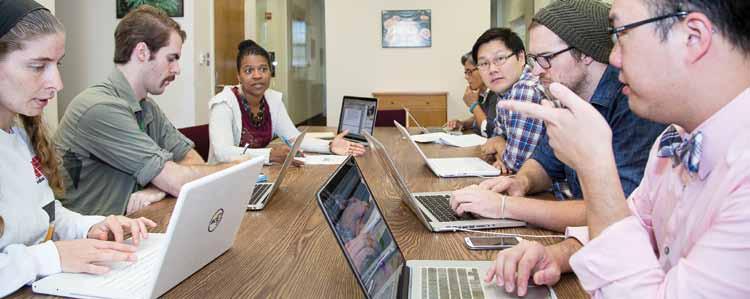
at the college of Education, our faculty members are leading the way in using technology to achieve instructional, research, and community-building goals. this grassroots movement is growing within the college to include all departments, programs, and levels — from stEM to humanities, undergraduate to doctoral work, qualitative to quantitative research methods. here’s a look at tech-enabled teaching and research of some coE faculty:
Making Science Meaningful in Children’s Lives tammy Clegg, in the division of Science, math and technology, focuses on designing mobile technologies for promoting science learning in children’s lives. She is developing a learning environment, called Kitchen Chemistry, which
combines three types of technology: social media to help kids collaboratively develop questions relevant to their everyday lives, vote those questions up or down, and design experiments together; storytelling tools, like Storykit, to help them reflect on their scientific experiences by telling their own personal stories; and visualization tools to help kids organize and make sense of the data they’ve collected by storytelling.
roBErta lavinE
Collaborating across Languages and Miles
Each fall semester since 2010, University of maryland graduate students collaborate with their peers at tamkang University in taiwan in a joint effort sponsored by the Embassy of taiwan, the College of Agriculture and Natural Resources, and the College of Education.
Students in Roberta Lavine’s teaching English to Speakers of Other Languages (tESOL) methods course meet with a senior-level class in taiwan, teaching English as Foreign Language (tEFL) methods. during an eight-week period, students collaborate — synchronously and asynchronously — on tasks appropriate for pre-service and in-service teachers of English language learners, including reflections on the cross-cultural similarities/differences in the educational systems of both countries and the creation of videos and accompanying lesson plans on relevant topics. maryland students provide individual feedback for the written work of tamkang students. Students use such tools as a private Facebook group, google docs, and Adobe Connect.
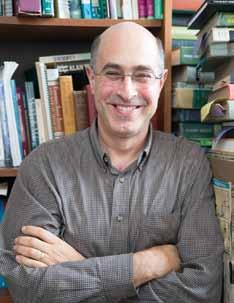
dan chaZan
Animations of Math Classroom Interactions dan Chazan, director of the Center for mathematics Education, has been focusing on how to create a new kind of representation of math classroom interactions for use in teacher education and research. through a joint NSFfunded project with the University of michigan, his team is creating an environment called Lesson Sketch, where video and animation live together and around which questionnaires and discussion forums can evolve. Since animations and comic strips do not record what actually transpired but instead represent what might have transpired, instructors can explore alternative courses of action which support a discussion of “what to do next” — the tactical and strategic aspects of teacher decision-making.
JosEPh MccalEB
Engaging Writers through Digital Media
Aided by a grant from the National Writing Project, Joseph mcCaleb, director of the University of maryland Writing Project, has been documenting the effectiveness of 1-1 iPad instruction in elementary school. teachers explore the use of applications such as EduCreate, Storyrobe, and imovie for student research and composition. Students then publish their reports to a countywide online platform called my Big Campus, where their work is shared with other students, teachers, and parents. the project has generated a marked increase in student motivation, engagement, and on-task behaviors. teachers also report
that students are more willing to revise their work, expand their vocabulary, and pursue more ambitious inquiries.
e-Portfolio Design Process in Engineering
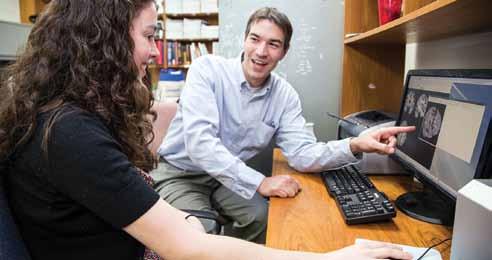
Leigh Abts, in Bioengineering and Education, is exploring the feasibility of an advanced placement course in Engineering design. this ongoing collaborative study utilizes an e-portfolio to collect, track, and assess students’ project-based design experiences from grade 7 through graduate school. Since the beta launch a year ago, over 10,000 individuals from all fifty states have signed up to use the e-portfolio. in another collaboration, dr. Abts is developing a model for a national Energy 101 course — to be implemented through the department of Energy’s open-source internet platform NtER — which employs media-rich prototype modules to engage students’ interest in such topics as heat transfer and deliver curriculum in a flipped classroom environment. the eventual intent is to align these project-based activities with the e-portfolio-based design process in order to capture and track students work.
Formative Assessment through Clickers and e-Conferences
Kathryn Alvestad, in the Assessment and Evaluation program, is experimenting with student response devices (“clickers”) and online student feedback conferences. her research shows that students like the use of clickers to gather formative assessment information during class. they find the information they receive to be individually useful, and they recognize that the devices help the instructor be more responsive to their immediate needs. they have also responded in an overwhelmingly positive way to individualized online conferences. they like the flexibility of being able to meet with their instructor when it is convenient for them, and they recognize the value of these interactions to both their comprehension and their grades.
JunE ahn
Engaging Learners through Science Fiction and MOOCs
June Ahn, in a joint appointment between the iSchool and the College of Education, is

investigating how we can use social computing and new media to engage learners in novel ways. Specifically, his work with mOOCs (massive Open Online Courses) and P2PU (Peer-to-Peer University) is not merely about providing educational resources online — it’s also about understanding how communities form around the ubiquitous availability of information. What motivates learners? how can the platform be designed to foster better learning experiences? And what types of participatory literacies/skills do learners need to become valued contributors to this online learning community? in a related project, Sci-dentity, dr. Ahn is working with inner-city middle school students using science fiction and new media, creating stories about superheroes and superpowers to increase student interest in StEm, unconstrained by traditional literacies (particularly reading and writing level).
Reaching Diverse Audiences through UDL debra Neubert, in Special Education, has developed an education course on Universal design for Learning (UdL), a framework which helps educators ensure that instruction is inclusive for all learners. maryland state regulations require that, by the 2014-15 school year, administrators report how teachers are using UdL to build curricula, select materials, and conduct professional development. Evolving technologies are vitally important in this arena since they help teachers address the three principles of UdL: engaging students in the learning process, representing content, and assessing student growth — all through multiple means and methods.
Effects of Experience on the Brain and Behavior
Nathan Fox, in human development, studies the effects of experience on the brain and behavior, as well as the underlying brain architecture associated with attention and emotion regulation. For his research and analysis, he utilizes recordings of brain electrical activity (EEg) in infants and children who are responding to different tasks and stimuli, functional mRi for the study of older children and adolescents and the identification of the underlying brain circuitry associated with emotion regulation, and video recordings of behavior.
christy tirrEll-corBin
Blogging to Promote Critical Thinking
Christy tirrell-Corbin, director of Early Childhood Education, has pre-service and inservice teachers blog — and evaluate their peers’ blogs — by posting substantive online comments and private peer evaluations. She finds blogging an especially effective tool to promote critical thinking about research and educational policy issues because it’s individualized, collaborative, and has real-world applications. For example, in her graduate course on the Social Basis of Behavior, in-service teachers use research about social development to write informative blogs for the parents of their students. the blogs are written to be accessible to parents who need the information but who are not reading the research directly.
dJ BolGEr
Robust Brain Training
dJ Bolger, in human developmental and Quantitative methodology, is researching robust brain training and its impact on second language acquisition, fluid intelligence, reading, and mathematical ability. more specifically, he is collaborating with researchers in the Psychology department and at the Center for Advanced Study of Language (CASL) to develop an app for the iPad that helps with second language learning. the app, called the Code War, is a game-like interface where participants try to “decode enemy transmissions” in the foreign language they are studying. in addition, along with colleagues in Psychology, CASL, and
Kinesiology, dr. Bolger is conducting studies which involve brain imaging before and after five weeks of web-enabled working memory training, as well as identifying genetic markers for Alzheimer’s disease and cognitive control. Can brain training increase cognitive ability and stave off the effects of cognitive decline in adulthood?
susan dE la PaZ
Smithsonian-Researched National History Day Projects
Susan de La Paz’ work focuses on teaching diverse learners to engage in technologyenhanced, project-based learning. in collaboration with the Smithsonian institute, she is leveraging technology to help middle school students at College Park Academy learn to use a special search engine prototype, which gives them access to thousands of Smithsonian digital resources such as artifacts and primary
sources. Students learn to interpret Si resources, build a museum collection on a topic of their own choosing, and use their collection to create National history day projects.
JEff harrinG
Quantitative Methods for Group Comparison
Jeff harring, in the measurement, Statistics and Evaluation Program, integrates innovative statistical software into his teaching in order to expose students to state-of-the-art advancements in applied statistics and psychometrics computing. his research focuses on methods for repeated measures data, nonlinear structural equation models, and mixtures of both linear and nonlinear growth models — all of which can be used to investigate group comparisons. in addition, dr. harring recently utilized a computer-based monte Carlo simulation to investigate nuances of nonlinear effects in structural equation models.
dianE Jass KEtElhut
Immersive Virtual Environments
diane Jass Ketelhut’s research in Science Education is about the positive impact that immersive virtual environments (iVEs) can have on disenfranchised students who have had little academic success. She has found that iVEs help bridge a gap between the school environment and the world in which many students are comfortable, encouraging them to bring their natural skills into the classroom. She is currently the principal investigator of the Situated Assessment using Virtual Environments for Science Content and inquiry (SAVE Science) project. — hKc
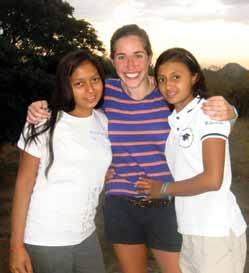
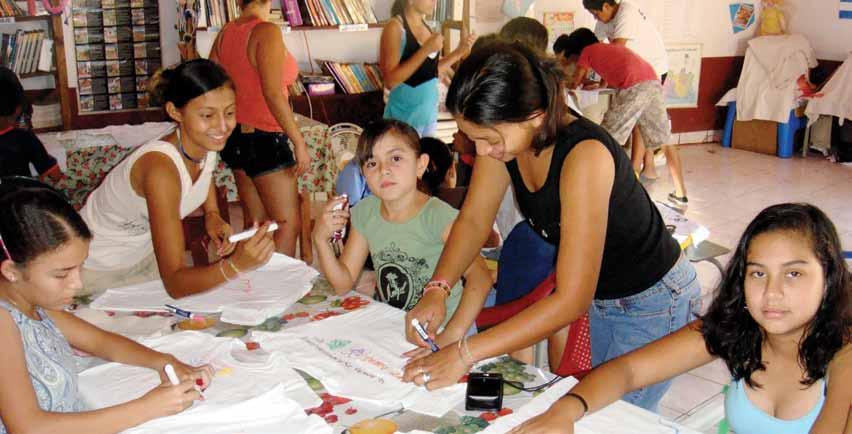
What’s the true value of twenty-five cents? to many Americans, it’s just pocket change hiding a car seat or between the sofa cushions. But to children in El Salvador, it is nothing less than the opportunity to receive a high school education. Elizabeth Barkley (tLPL, m.Ed. ’13) is working to deliver that opportunity — one child at a time, one quarter at a time.
Beth first journeyed to El Salvador in 2010 as part of a sophomore-year study-abroad experience. her visit was transformative. “the people in hacienda Vieja welcomed me with open arms and i instantly fell in love with these incredible people, whom i now call my family,” Beth recalls. She promised to go back, and did in 2011 and 2012. during her visits, Beth discovered that for Salvadoran students, money is the biggest hurdle to getting an education. While the schools are free, students need funds to pay for books, uniforms, shoes, and transportation. in the community Beth visited, there is no schooling past 9th grade, so high school students there — if they haven’t already dropped out to start working — must take a bus to another school. For this, they need the 25-cent bus fare. But in a community where most adults make $5 from a 12-hour workday, scraping up that fare is nearly impossible.
Beth felt challenged to do something practical and tangible to help solve this problem. inspired by her grandfather, who co-founded a nonprofit to ensure that every child graduating from Columbus City Schools has an opportunity to earn a college degree regardless of financial situation, Beth started to put away 25% of her own paycheck in order to pay for kids she had met to continue their education. in 2011, she drew up the paperwork to create an official scholarship fund named Sueños, Educación, Realidad (SER).
“‘Ser’ is the verb ‘to be’ in Spanish,” Beth explains. “Education can transform dreams into reality, and my hope is that we are creating opportunities for students to be their dreams.”
the students that Beth supports with her own savings have now begun to graduate, and with each new donation, more and more students are able to become their dreams. She continues to set aside 25% of her own money for the scholarship, and she’s inspired others to give as well. Beth is now preparing to move to El Salvador in 2014 to teach for a full year in the community she loves. in the meantime, she is working on a book, DOCUMENTED, to convey the voices and stories of undocumented immigrants. All proceeds from the book will go to support SER scholarships. Please visit http://ter.ps/justicia for more information.
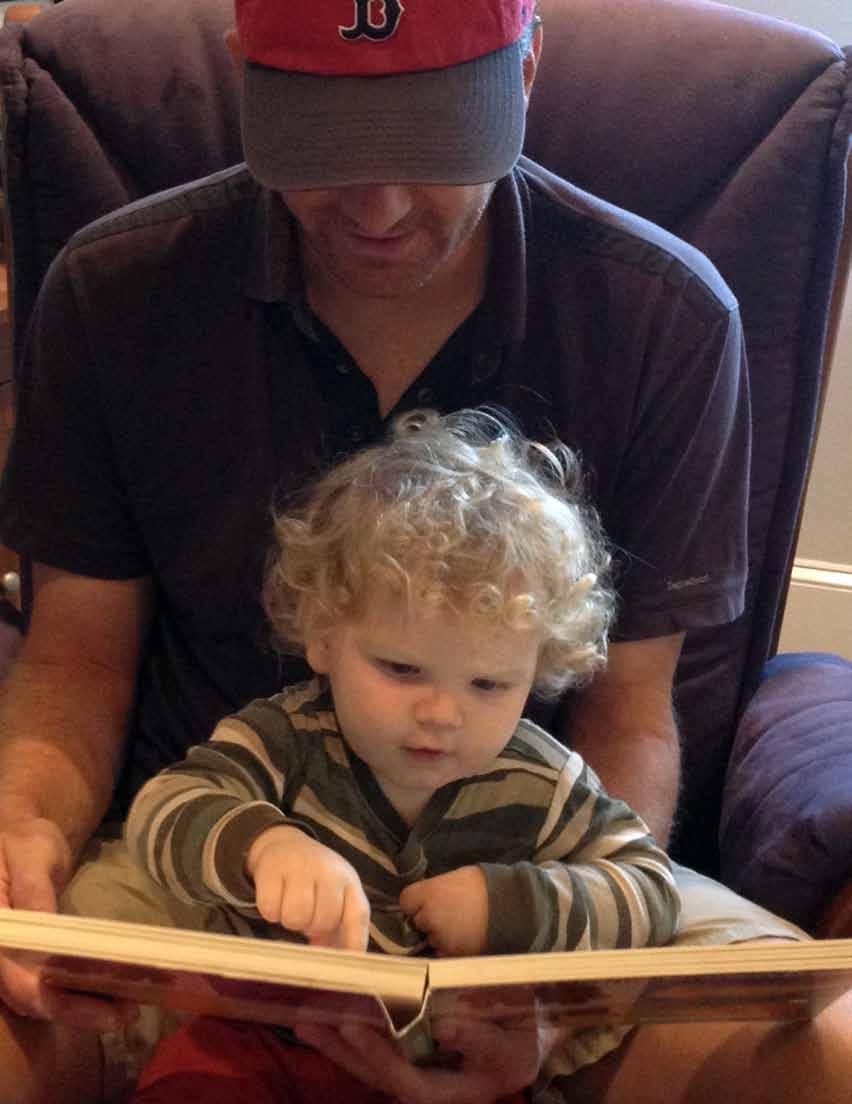

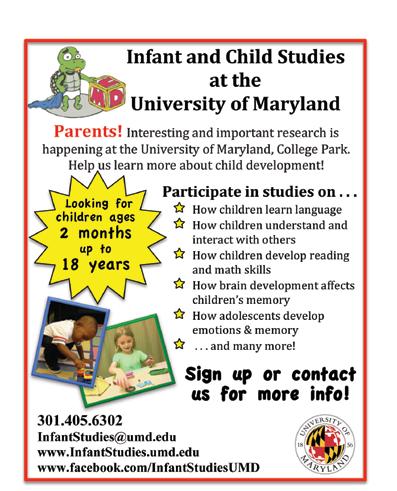
thE inFant & child studiEs consortiuM is a cooperative venture of researchers in various colleges and departments at the University of maryland. For over ten years, the Consortium has blazed new trails in the study of social, cognitive, and linguistic development in infants, toddlers, preschoolers, and school-aged children.
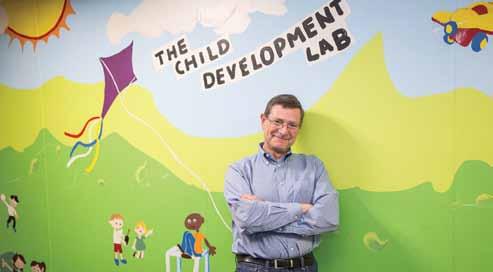
Dr. Nathan Fox leads the Child development Lab at COE’s department of human development and Quantitative methodology which researches the effects of early experience on the brain and behavioral development of infants and children. Currently two projects, both funded by the National institutes of health, are ongoing at the lab.
A longitudinal project that started when children were four months old, the temperament Over time Study (tOtS) examines individual differences in young children’s reactions to unfamiliar and novel situations, as well as the effect of temperament on social competence in the school years. they are especially interested in the emergence of social anxiety during middle childhood, and so ook at factors that may lead to the development of anxiety. their current assessments are with twelve-year-olds transitioning from elementary to middle school — a time of significant change in peer relationships. With this age group, researchers are examining individual patterns of social behavior with both familiar and unfamiliar peers as well as the roles of temperament and attention processes in social-emotional outcomes in early adolescence.
Another large project in the lab, called Functions and development of the mirror Neuron System, focuses on the emergence of social cognition — that is, how children come to understand the social signals of others. they test infants, children, and adults in different situations, all the while recording brain activity.
Additional studies in the lab examine training of executive function and selective attention and the influence of cognitive control on social behavior. All of the studies are designed to advance our understanding of children’s typical and atypical social behavior, as well as the cognitive mechanisms and external experiences that influence the development of social behavior throughout life.
Dr. Meredith Rowe leads the Language development and Parenting Lab in the department of human development and Quantitative methodology. her research examines the role of children’s early language experiences in their language and literacy development. Some current projects include studies of low-income fathers’ linguistic influence on their children’s language development (with dr. Cabrera, also in hdQm), the relation between children’s use of gesture and later language development, and connections between parents’ use of decontextualized or abstract language and children’s vocabulary skill. Participants in the infant and Child Studies Consortium have contributed to dr. Rowe’s recent lab studies on parent-child interactions when reading picture books versus chapter books, children’s narrative development, and parents’ beliefs about their children’s literacy skills.
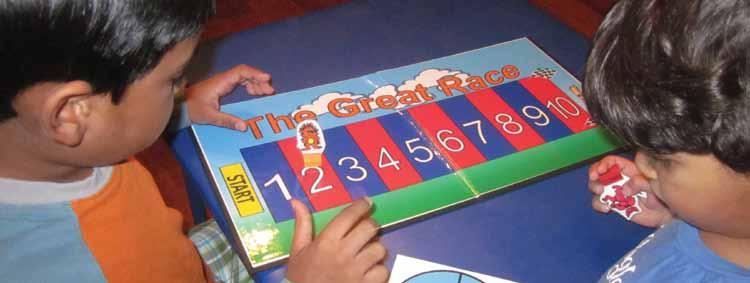
Dr. Geetha Ramani directs the Early Childhood interaction Lab in the department of human development and Quantitative methodology. her work focuses on how children’s social interactions influence their cognitive development, mainly in the areas of mathematics and problem solving. Specifically, dr. Ramani examines how parent-child interactions, peer interactions, and informal learning activities, such as playing with board games and blocks, can promote children’s math and problem-solving skills. in her work with the infant and Child Studies Consortium, dr. Ramani has sought to understand parents’ beliefs about their children’s math development and has investigated how parents and children work together to complete math and problem-solving activities.

thanks to the generous and continuous support of our donors, the college of education is able to provide over 80 students with scholarship money every year. these students pursue unique opportunities in our top ranked programs that wouldn’t have been possible without scholarship support. scholarships at the college of education promote the transformation of passionate students to high quality education professionals who have a positive impact on the quality of education in the state of maryland and beyond.
GEorGE MErrill MEMorial studEnt aid fund
Bruce Carrington
Sean gruber
Alison harrington
hallie Lease
Lacey Smith
PhiliP and ora ordwEin scholarshiP fund
Priya Bhasin
michelle Eirhart
miji Jim
Riah Joo
Kristen Klotz
Angela Pontorno
Lauren Stewart
Brianne Valenti
donald roBinson MEMorial scholarshiP fund
diem-han dinh
do hee Lee
Jennifer tarangelo
AN iNtERViEW With NiEL
QWhat motivated you to go into the field of education?
i benefited so much from good teachers and professors and had a very positive experience during my elementary, secondary, and collegiate education. i thought it was a good field to consider because i liked working with people and the process of helping people learn; these two factors come together in education.
QWhat advantage did you have by going to uMd college of Education?
i spent my undergraduate career at Salisbury University and at the time i graduated, there were no graduate programs in education on the Eastern Shore of maryland. Umd gave me the opportunity to pursue graduate studies in Education. Now, the Counseling and Personnel Services department (CAPS) at Umd is recognized as one of the best programs in the country. my wife and i are extremely proud of it and we are glad to support it in any way we can.
QWhat have been some of your career highlights as an educator?
When i was at the State Education department, the group i coordinated developed the first state-wide plan for career education in the country. Later, i became the first Executive
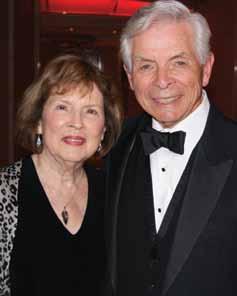
director of the Career development Association. the maryland State PtA gave me the golden Apple Award for outstanding educator in maryland. Finally, one of my proudest moments was when i received the outstanding Alumni Award at the University of maryland.
QWhat motivated you to devote a scholarship to career development and counseling?
my wife and i started as teachers of math and science and we both moved into career counseling. As i did my graduate work at Umd, i simply saw the need for students who were in counseling to have coursework and the opportunity to focus on the career development part of the program. then when i was a high school counselor, i saw the need for counseling and support for students to make plans in their own careers.
Q
What is the best advice you have for someone going into a career in career development and counseling?
Students in career development must realize that career development is a critical aspect for most of us. Our work is a major part of our lives. As future counselors, they need to be prepared and aware of this. Career development is important for individuals, communities, schools and ultimately, our society.
our development team leads the college of Education in obtaining funding for crucial elements of the college, from scholarships to student and professor sponsored research. if you are interested in supporting our efforts, please contact one of our team members:



Linda Beck Pieplow (mA ’78, BA ’72) prEsidEnt
Jennifer Blatchley (BS ’08)
sEcrEtary
Sharon Stein (Phd ’07, BS ‘72) trEasurEr
Kimberly Fleming (Phd ’08, BA ’94)
Patricia Jamison (Phd ‘81, mEd 72)
george Pappas (mEd ’00, Jd ‘92)
diantha Swift (mEd ’96)
Ebony terrell Shockley (Phd ’12)
Jenni Yun (BS ’12)
Kimberly davison (BS ’12)
dara Feldman (BS ’84)
Stacey Lillis (mEd ’00, BS ’97)
Jeffrey martinez (mEd ’84, BS ’80)
meri Robinson (Edd ’15, BS ’96)
Joan Rothgeb (BS ’79)
James degeorge (mA ’73, BA ’69)
Emily Cunningham ’14
Claire Jacobson ’15
thE COLLEgE OF EdUCAtiON ALUmNi ChAPtER BOARd is comprised of passionate alumni who coordinate events to serve the common interests of the College of Education and its alumni. the board is dedicated to hosting events which celebrate the accomplishments of the students and alumni. Some of these great events include welcoming students back to the Benjamin Building after summer break with an ice cream social, playing terp trivia on maryland day among other activities, and most notably the “Jump Start Your Job Search” student dinner.
it’s events like these that help carry on the tradition about which our great terp educators dream, experience, and reminisce. thank you to all past and present board members for your dedication to serving this prestigious College of Education. For more information about the board and how you can get involved, please contact andrew altshuler at aaltshul@umd.edu.
EvEry aluM, any aMount…a hugE iMpact
maryland is a frontrunner in American education, and here at the University of maryland, the College of Education is trailblazing advancements in the quality of education throughout the nation. giving to the dean’s initiatives Fund strengthens that impact by supporting student projects, research, and technology. if every COE alumnus gave $25, there would be nearly $1 million to support such initiatives!
please visit ter.ps/diF to make your annual gift to the dean’s initiatives Fund. For more information, contact andrew altshuler at aaltshul@umd. edu or call (301) 405-5607.
Join the University of maryland’s Alumni Association, and a portion of your membership will support an undergraduate or graduate scholarship in the College of Education!
in addition, you will enjoy exclusive product discounts and social events on campus and through our 60+ alumni clubs and chapters. that means tailgate parties, networking happy hours, golf outings, wine tastings, and more — all with devoted terps like you!
go to ter.ps/aaMEM to sign up today! For more information, please contact andrew altshuler at aaltshul@umd.edu or call (301) 405-5607.


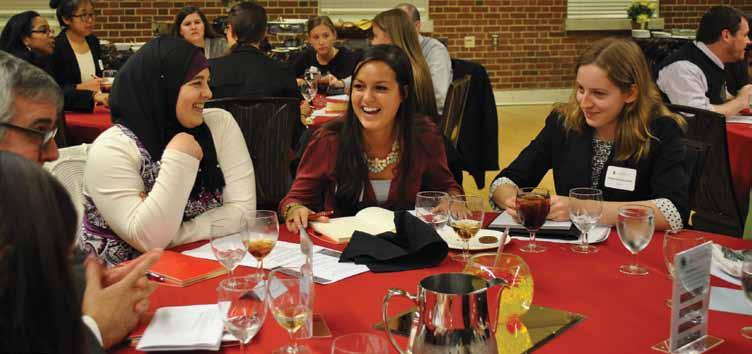
the “Jump start your Job search” student dinner is an opportunity for students to share an evening with current and past professionals in the educational field. this year’s special guest speaker is Mrs. carole c. goodman (Ma ’78, ba ’73), associate superintendent for human resources and development at the Montgomery county public schools. “the dinner was an outstanding experience, not just for the students but for the alumni as well. We had a great opportunity to help and guide these young professionals as they prepare for the challenges and successes of their careers,” said Alumni Chapter Board president Linda Beck Pieplow (mA ’78, BA ’72).
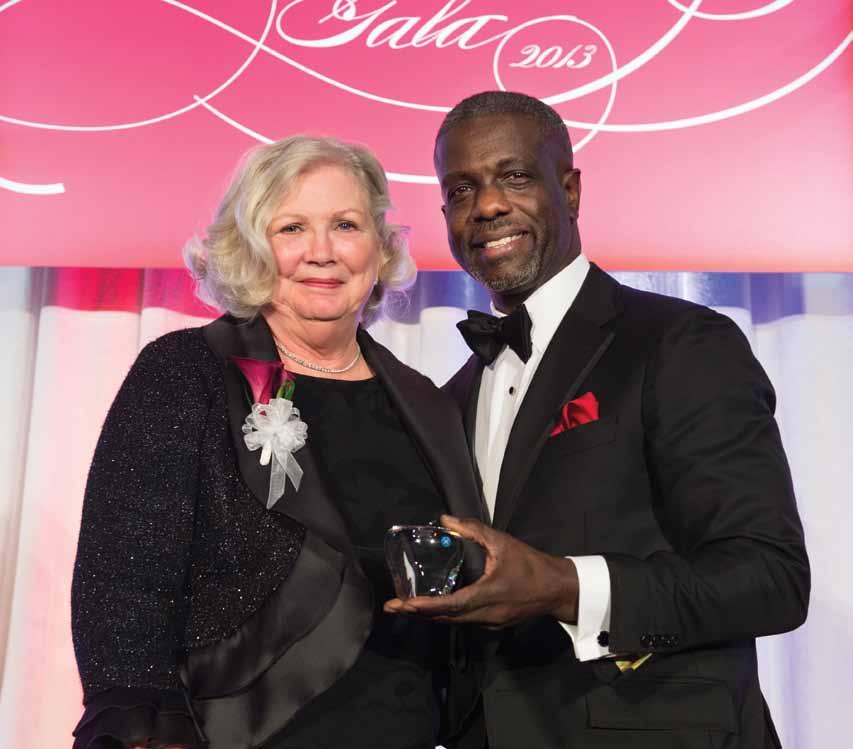
the College of Education was thrilled to recognize Jean mullan (BS ‘68) as the 2013 distinguished Alumna of the Year at the 13th Annual Umd Alumni Association Awards gala. Jean was one of twenty-four individuals honored by the University.
Jean mullan earned her teaching degree from the College of Education and taught elementary school for many years. A devoted volunteer, she has also been a civic leader in support of child welfare, education, gardening and culture. Jean has two sons – Jeffrey and david, is an avid terps basketball fan, and breeds prize-winning West highland White terriers.
ms. mullan served as president of maryland’s College of Education Alumni Chapter, where she organized events and reached out to the more than 38,000 Education alumni by launching the Endeavors newsletter.
She established two endowed professorships in the College of Education: the Jean, Jeffrey and david mullan Professorship in teacher Education and Professional development and the Jean mullan Professorship in Literacy. She also endowed the Jean mullen Scholarship Fund at the Robert h. Smith School of Business. ms. mullan has chaired the College of Education dean’s Cabinet for development and served on the University Board of trustees.
the entire field of education is quite fortunate to have the generous and guiding light of this wonderful teacher.

Keep in touch! Submit your classnotes via email to endeavors@umd.edu or on the College of Education’s website: http://ter.ps/COEKIT
Artist Jean doran (ba ’62) has recently been involved in charity to benefit the Lewes historical Society in coastal delaware.
Kathleen cowles (bs ’75) has joined a team of top-level principals at deep Water Point, a business navigator for federal contractors located in Bethesda.
valerie stasik (bs ’70) published her first novel, Incidental Daughter, earlier this year.
John tomaselli (ba ’79) is Chief Operating Officer for SAP National Security Services, a software provider for national security and critical infrastructures.
Jim Wharton (bs ’73) is retiring after forty years of service as a music teacher in schools around Baltimore, most recently Catonsville high, where he has taught since 1988.
Jan cullinane (MEd ’80) has written a new book, AARP’s The Single Woman’s Guide to Retirement, which was published last October by John Wiley & Sons.
Eric d. Ebersole (MEd ’86), who has taught in howard County for 33 years, is running for a seat representing district 12 in the maryland house of delegates — assisted in his campaign by his wife dr. tara Ebersole (MEd ’87) and his daughter caroline Ebersole (MEd ’13).
cheryl lasota holdefer (MEd ’89), currently an assistant principal in montgomery County, has published her first novel, Victoria’s Run, which is informed by her experiences as a marathon runner and race organizer.
dr. Martin nadelman (Edd ’87) is retiring after a 41-year career as an administrator in higher education, most recently serving as President of Alamance Community College and martin Community College.
dr. thomas o’brien (phd ’87), professor of science education at Binghamton University, is the co-editor of a new book from NStA Press, Science for the Next Generation: Preparing for the New Standards, a guide for K-5 teachers using the Next generation Science Standards.
dr. brad sachs (phd ’83), founder and director of the Father Center in Columbia, maryland, has published a new book, Family-Centered Treatment with Struggling Young Adults: A Clinician’s Guide to the Transition from Adolescence to Autonomy (Routledge, 2012).
daniel souders (bs ’87) has taken a position as Senior Safety and health Specialist at EA Engineering, Science and technology, inc.
dr. april l vari (MEd ’86) has been named Vice President for Student Affairs at delaware Valley College.
charles askew (bs ’93) has been appointed the Northeast Regional director of the Education division of Kajeet, a wireless provider which serves educational institutions and schoolchildren.
dr. Jacqueline leonard (phd ’97), newly appointed as director of the Science and mathematics teaching Center at the University of Wyoming, has co-edited a new book, The Brilliance of Black Children in Mathematics (information Age, 2013).
stephanie McKenna (ba ’99) has been named teacher of the Year at Weathersfield high School in Connecticut, where she teaches ninth- and tenth-grade English.

dr. daniel rodriguez (phd ’98) was appointed last year as Assistant Professor of Psychiatry and human Behavior at Brown University.
dr. tara beziat (bs ’02) recently earned her Ph.d. in Educational Psychology from Kent State University and began teaching last fall at the University of South Carolina, Aiken.
Jennifer Jimenez Maraña (MEd ’03) has been named director of diversity and multicultural Affairs at mcdaniel College.
george Mcgurl (bs ’02), a science teacher at Burleigh manor middle School, has been named a finalist for 2013-14 maryland teacher of the Year, having already been honored earlier this year with an Agnes meyer Outstanding teacher Award from the Washington Post.
dr. andre perry (phd ’04) has been named the founding dean of the new College of Urban Education at davenport University.
this march, Jennifer Markey reed (ba ’08) and her husband timothy welcomed into the world their second son, Connor Jacob Reed. mrs. Reed is a school counselor with Queen Anne’s County Public Schools.
amilcar guzman (Ma ’12) is an associate for federal policy initiatives at data Quality Campaign in Washington, d.C., supporting the development and use of longitudinal data systems to promote student success.