January 2026
The Southeast Corner Project is more than a building. It’s a destination for curious, diverse, driven and deserving thinkers, journalists and storytellers from across the countr y. It’s a place to cultivate a sense of belonging through shared stories that, when woven together, strengthen the fabric of our nation.
For over two centuries, the University of King’s College has been the leading destination for the next generation of critical and creative thinkers. Established in 1789 as one of the first English-language universities in Canada, King’s necessarily evolved and innovated over two centuries to remain relevant and be a meaningful, net contributor to society.
Throughout its existence, King’s has focused on developing critical thinkers through studying the past to understand the present and shape the future. Shaping the future means gathering our knowledge, learnings and experiences, layering on a healthy amount of courage tempered with humility, and forging new approaches with belief, faith and trust that we can make change for the better.
In recent years, King’s has honestly assessed its contribution to, and accountability for, persistent racist societal issues that have deep, complex roots at King’s and indeed in Canada.
This assessment was most notably summarized in a 2020 report delivered to the King’s Board of Governors by President William Lahey. The report, as relevant today as it was then, is frank and thorough and represents a pivotal moment of reckoning for the King’s community.
“…This is work that takes time, energy, resources and lasting commitment. It can only be successful if it is an end in itself and for the opportunities it may create for King’s to contribute to both (Mi’kmaq and African Nova Scotian) communities and to the priorities of those communities, particularly in relation to their own educational priorities, organizations, and systems. It has to be about them and not us. Contributing to these communities by expanding opportunities for their young people has to be a primary objective in seeking a deeper relationship with them, whether or not it leads to some of these young people coming to King’s. Our attitude has to be one of giving back some of what has been taken or denied, not one of making gifts.” President William Lahey
These findings, of course, are not unique to King’s. Canada’s Truth and Reconciliation Commission’s (TRC) Call to Action 86 shines a light on the responsibility King’s has in shaping the future of our collective national stories. It calls upon Canadian journalism programs and media schools to require education for all students on “the history of Aboriginal peoples.”
For over four decades, King’s has been a leader in and a critical resource for the media and creative sectors. While King’s is keenly aware of and respects the power, responsibility and accountability associated with journalism and storytelling, the 2015 TRC Calls to Action makes certain that Canada understands the role media (and indeed storytelling) plays in creating and maintaining barriers for equitydeserving peoples.
King’s is answering the call, starting with reshaping the story of us.
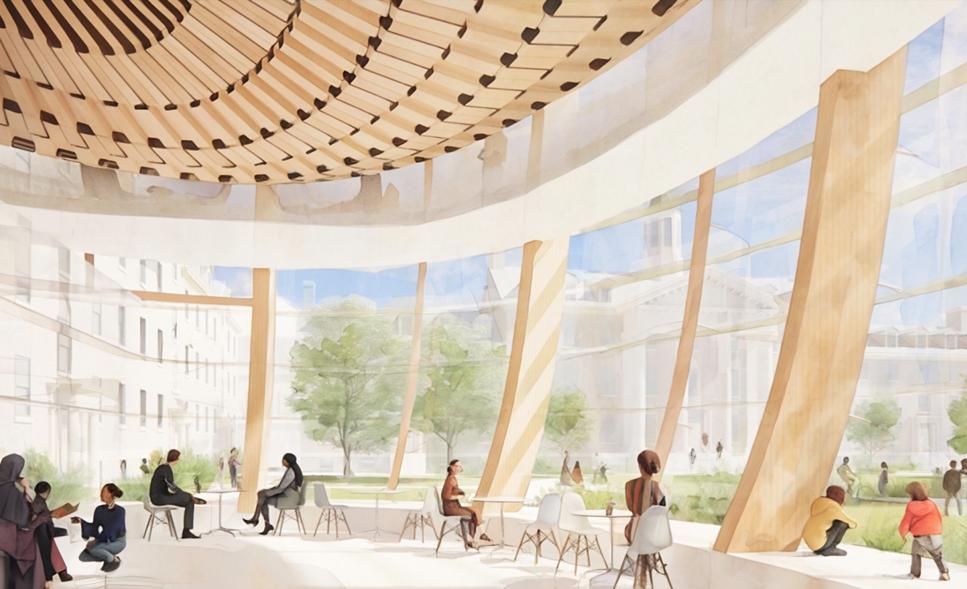
The Southeast Corner Project (SEC) will be where rich, inclusive and historically accurate national narratives are explored, crafted and shared across mediums, in ways that foster a collective identity for a diverse population. This project is about teaching Canadians how to be partners in the shaping and sharing of complex yet clear and essential human stories that speak to the themes of the whole country in ways that unite and inspire.
For millennia, people have gathered around campfires to tell stories that engage, entertain, and teach. For the past few decades, those authentic flames have faltered, flickered and faded behind the artificial glow of online screens and unknown sources. Now more than ever, we need a place to come together and make real connections, build back trust, and communicate in ways that foster a sense of belonging and promote well-being.
The SEC will be that place. A stunning space designed with Mi’kmaq and African Nova Scotian partners to shape the future of truth sharing and storytelling in Canada. It is a project worthy of investment: a community-friendly venue for critical thinking and creative doing where the changing needs of students and society are addressed head-on through transformative curricula in journalism and writing that leverage the power of stories in ways that reflect our diverse backgrounds and propel us toward a common, prosperous future.
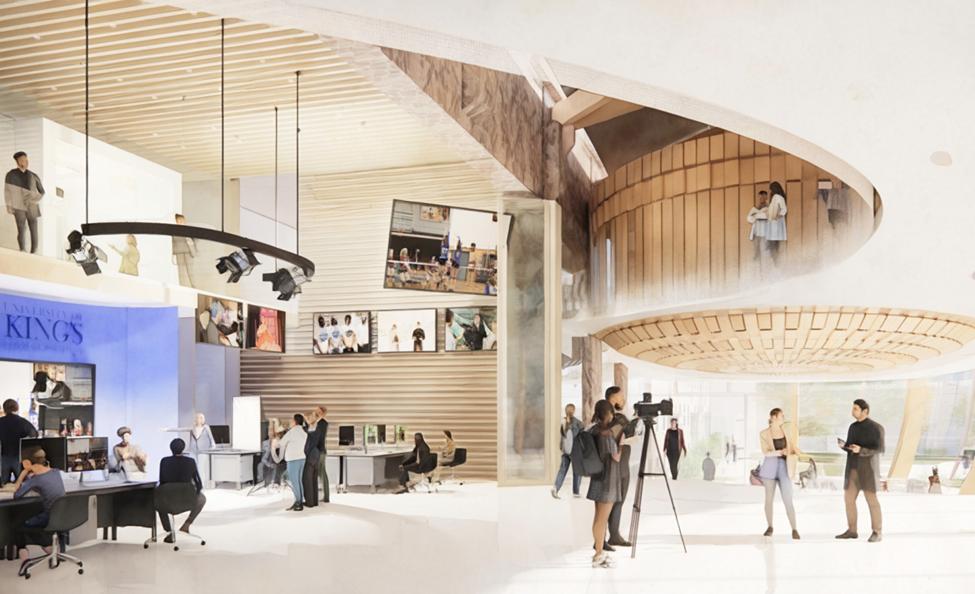
The Southeast Corner Project (SEC) is a bold, first-of-its-kind initiative; the physical manifestation of King’s commitment to the next generation of media, the creative economy, and a new way to understand Canada.
With intentional collaboration with Mi’kmaq and African Nova Scotian partners, King’s is creating a warm and welcoming place to develop the diversity of truth-sharing and storytelling in Canada. This, along with transformative curricula in both journalism and creative writing, will ensure that all voices are welcomed and authentically woven into the narratives that shape our nation.
The SEC Project is an investment in excellence: in journalism and writing practiced by professional communicators whose work informs and educates, provides accountability and transparency, and fuels public discourse while fostering unity.
While it fulfils a renewal mandate to consolidate academic spaces for the School of Journalism, Writing & Publishing, the SEC will also provide a space for a new Athletic Centre and increase residential opportunities and ancillary support, including student services and associated cultural spaces.
More broadly, the project represents the university’s commitment to expand the inclusion of Mi’kmaq and African Nova Scotian people within the King’s community. This will include dedicated program
allocations within the building, and it anticipates that this building, while respecting the historic buildings and Quad, will be a more open and welcoming place for all communities.
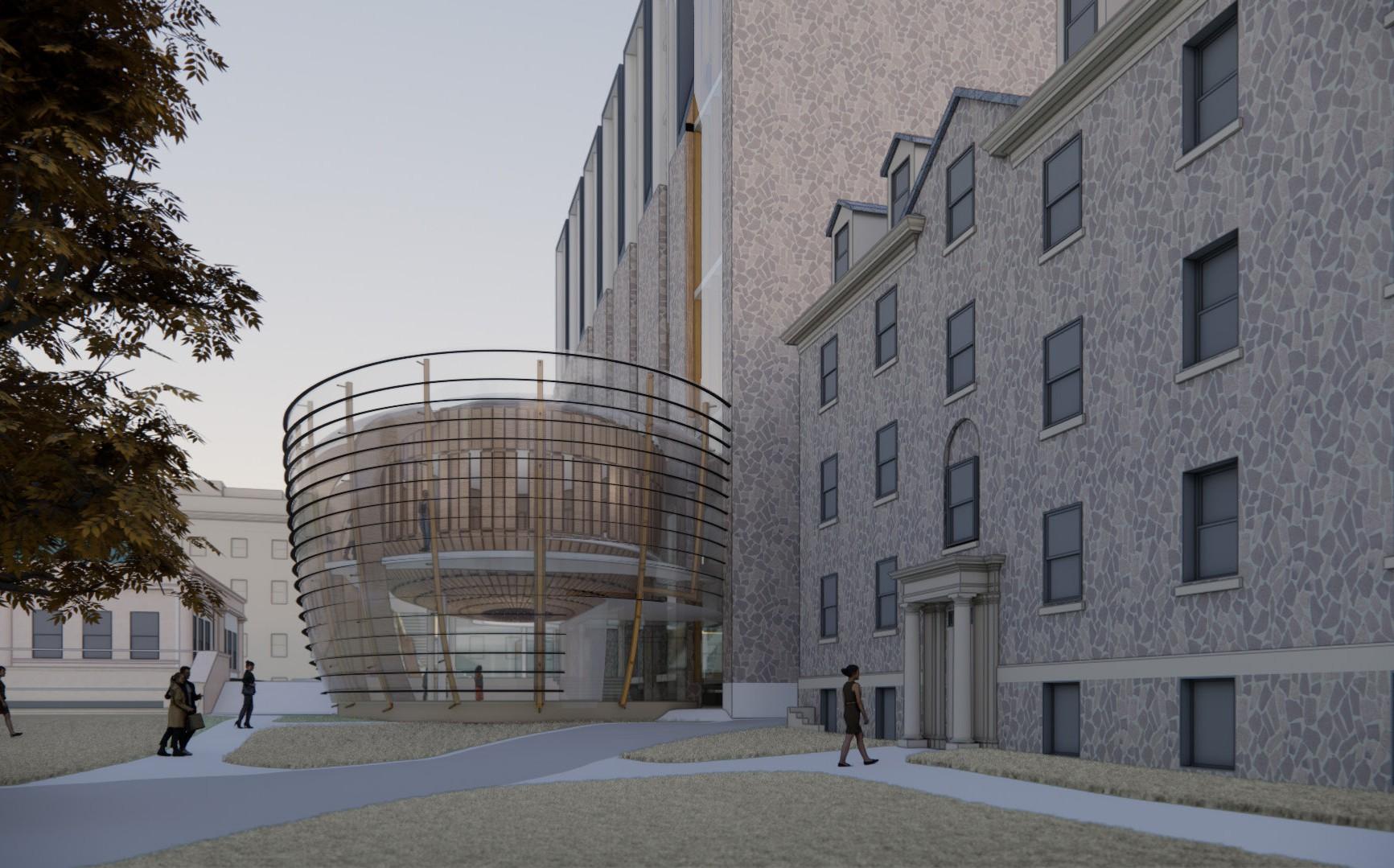
The building’s open Galleria will feature doors to both the King’s and Dalhousie campuses, acting as a portal between two universities that share an integrated academic mission, and providing students with easier access to shared classes, resources, friends and mentors.
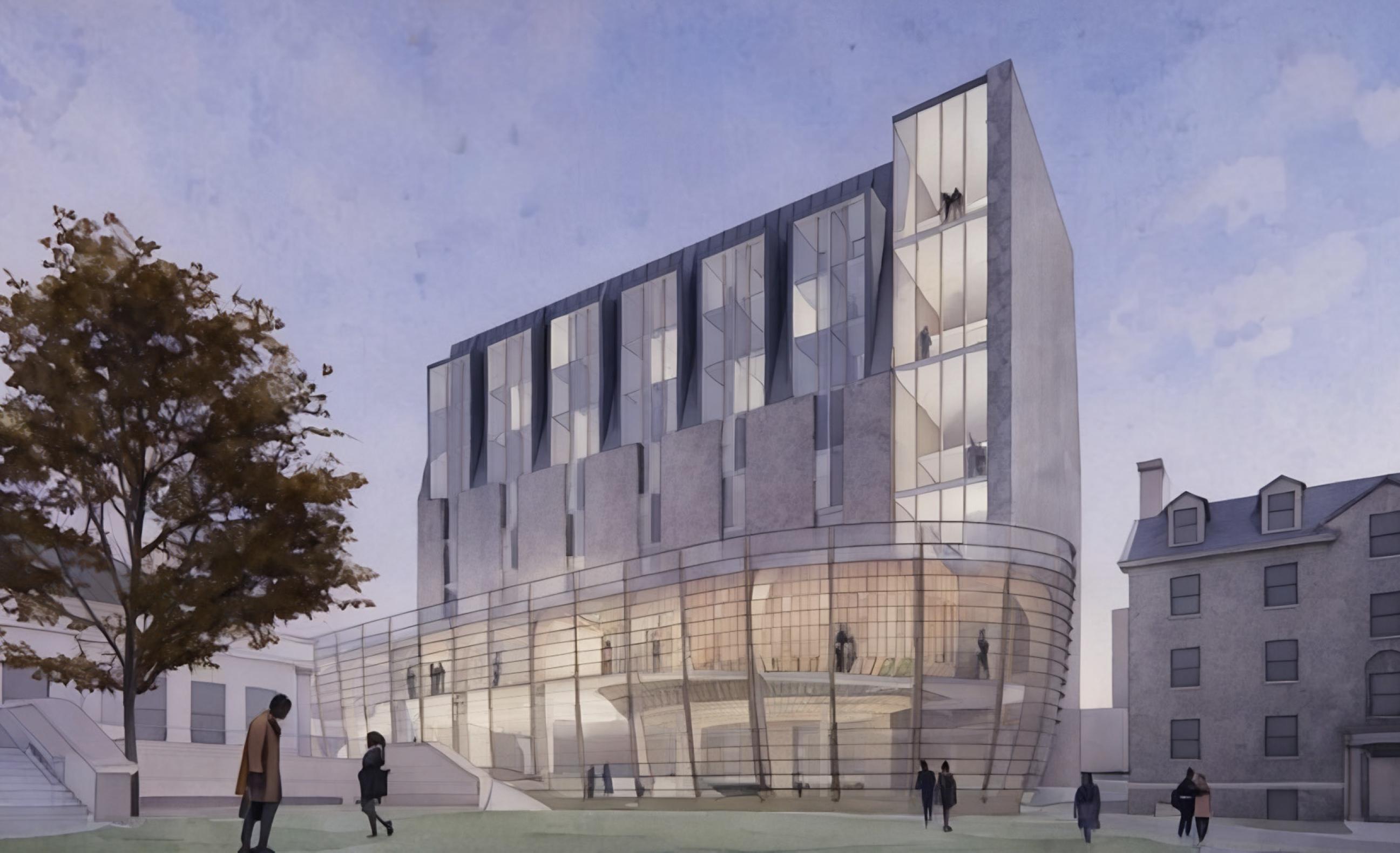
The SEC Project is designed by leading Canadian architectural firm Diamond Schmitt in association with the notable Halifax firm of Abbott Brown Their concepts deliver flexible spaces that will serve the King’s and Dalhousie communities and academic mission. The design will also provide communities and cultures beyond the Quad with accessible gathering spaces to nurture health and well-being, share ideas, and create stories that move our society forward.
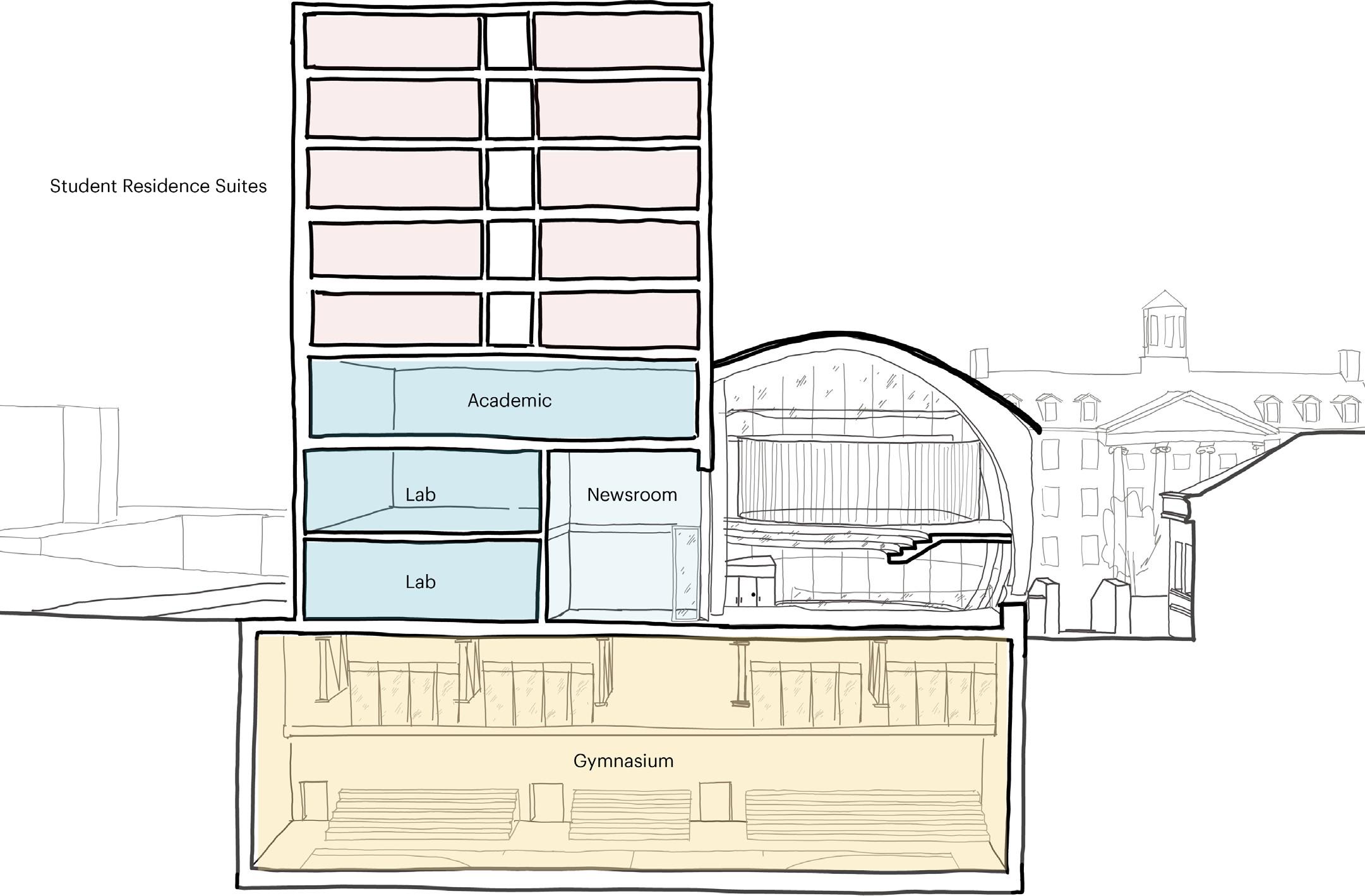
The SEC will replace the current outdated gymnasium with updated facilities at the southeast corner of the King’s Quad. The multi-purpose building will house:
The School of Journalism, Writing & Publishing on the first three floors, which includes:
o a generous galleria, a year-round gathering space
o open newsroom, audio, video and media labs, computer labs, offices and auditorium
o student support spaces and dedicated spaces for community and cultural events
o dedicated spaces for Mi’kmaq and Indigenous students and for African Nova Scotian and Black students
A New Gymnasium (below grade) which includes:
o full-size, varsity-compliant gymnasium, including a 2-metre run off and bleacher seating
o multiple change rooms for varsity teams and general population use (community programs)
o weight room and a cardio workout room overlooking the gym, and a physiotherapy room
o reception, administrative offices, a community meeting room and an adjacent broadcast booth for journalism students taking sports reporting.
Housing (on the upper floors)
o a new residence provides affordable on-campus housing for up to 100 students
o accessible and flexible configurations to accommodate older students, students with children, and senior undergraduates who want more independence while living on campus.
The SEC intends to make King’s a leader in addressing climate change. It will do this by:
• achieving at least LEED certification
• using sustainable construction materials and methods to create an energy-efficient and durable building envelope
• incorporating a geothermal project to heat and cool the new building and also the entirety of the King’s campus
King’s intends to reach net-zero GHGs for Scope 1 and Scope 2 emissions before 2030. King’s strategy is to completely convert all energy sources to zero-carbon electricity. A secondary intention of this strategy is to prepare King’s for the increased cooling needs associated with climate change.
The execution strategy for the Net-Zero Energy Campus is structured around three distinct projects. The initial project aims to transition all steam heating systems to low-temperature hot water systems. The university is pursuing additional funding from both federal and provincial sources to finalize phase one, in addition to securing support for the subsequent two projects. The second project is focused on enhancing the energy efficiency across all campus buildings. The third project involves the installation of a geothermal heat pump system.
Concurrently, the university is entering into a power purchase agreement with Nova Scotia Power, committing to the development and long-term procurement of electricity generated by a net-zero carbon wind farm
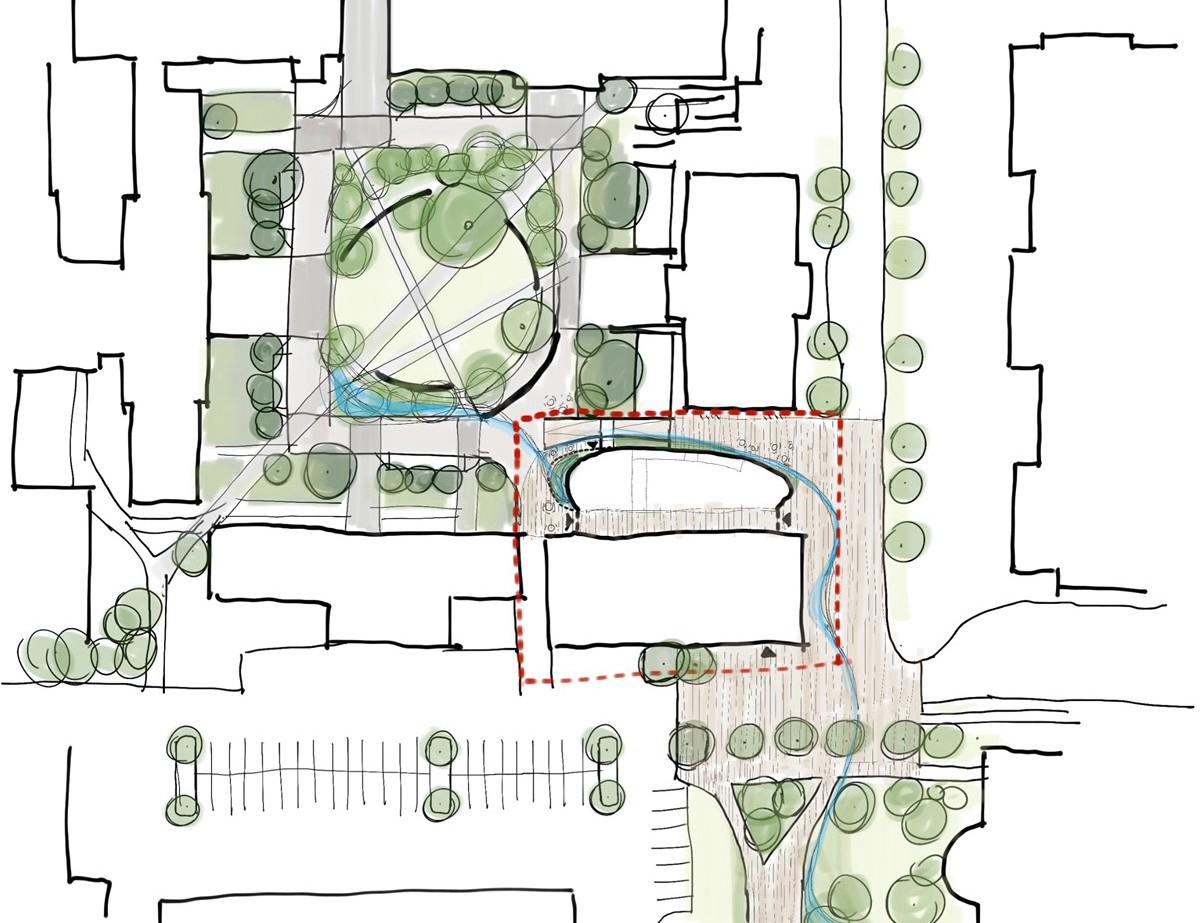
The SEC Project and the execution of the Net Zero Energy Campus provide a valuable opportunity to relandscape the Quad to include more green space, which will not only be more inviting to all, but will benefit air quality, offer natural insulation and temperature regulation and support urban biodiversity.
By moving net-zero design from isolated applications to established best practice, this project supports the local sustainable construction industry and creates a model for other institutions and communities across the region.





From the outset, the SEC Project was designed to incorporate locally sourced materials and sustainable and advanced construction methods to help build the Canadian construction economy. To ensure Canadian-made elements are practical and financially viable, the SEC Project engages local manufacturers and sub-trades early in the design process, translating design intent into meaningful economic impact. Procurement and contracts will be built to prioritize Canadian vendors, including the African Nova Scotian and Mi’kmaw communities, with proven expertise in key project areas.
Commodity-based threshold triggers (likely $5M+) will apply to major elements such as structural steel, local stone, and wood, including advanced heavy-timber construction, as well as to the assembly of curved glazing systems, factory-built modular components, and low-carbon construction elements.
Steel
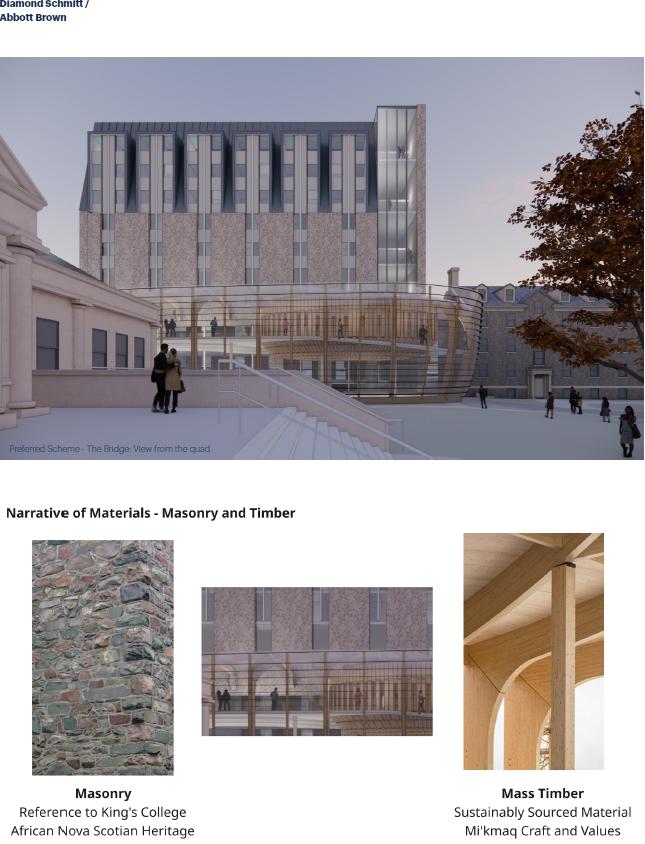
All structural steel will be specified Canadian, including mandating the use of standardized structural wigwams, basketry and the ribbed timber construction
The project aims to be among the first major Atlantic Canadian public buildings to showcase timber manufacturing and construction industry, while also prioritizing the involvement of Mi’kmaw craftspeople and artists in the
structure supported by heavy timber. This design will be developed in close collaboration with manufacturers and skilled craftspeople to ensure it can
King’s. In addition to reinforcing a shared architectural heritage between the two institutions, the stone acknowledges a deep African Nova Scotian connection to the province’s stone masonry tradition. project will source local stone and seek to engage African Nova Scotian tradespeople in constructi
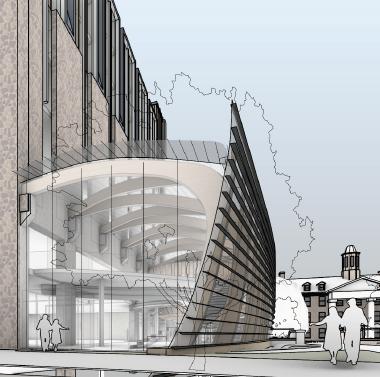
The SEC building will be the single largest infrastructure project over the last century at King’s. At its foundation is the university’s deep and intentional commitment to reconciliation through inclusive curricula, focused partnerships with equity-deserving cultures, and an unwavering resolve to shape a better, more diverse King’s and ultimately, how to create more authentic, representative narratives for our nation.
The building’s beautiful design was inspired by consultation with Mi’kmaq and African Nova Scotian community representatives. It will be purpose-built for applied craft learning and a bold addition to King’s storied Quad. The design concept is the result of focused progress in diversity, years in the making, at King’s.
This project is synergistic, not opportunistic. It recognizes government policies and commitments that aim to acknowledge past mistakes, attract and retain new talent, and bolster the Canadian creative economy.
To these ends, King’s School of Journalism, Writing & Publishing has developed transformative curricula to ensure that all voices are welcomed and authentically woven into the narratives that shape our nation. One example: Indigenous Peoples and Media is a new, required course created in direct response to the TRC Call to Action 86, and is drawing straight lines between both its Journalism and Writing & Publishing programs and the markets for the expertly educated, critical thinkers outfitted with practical skills who graduate from these programs.
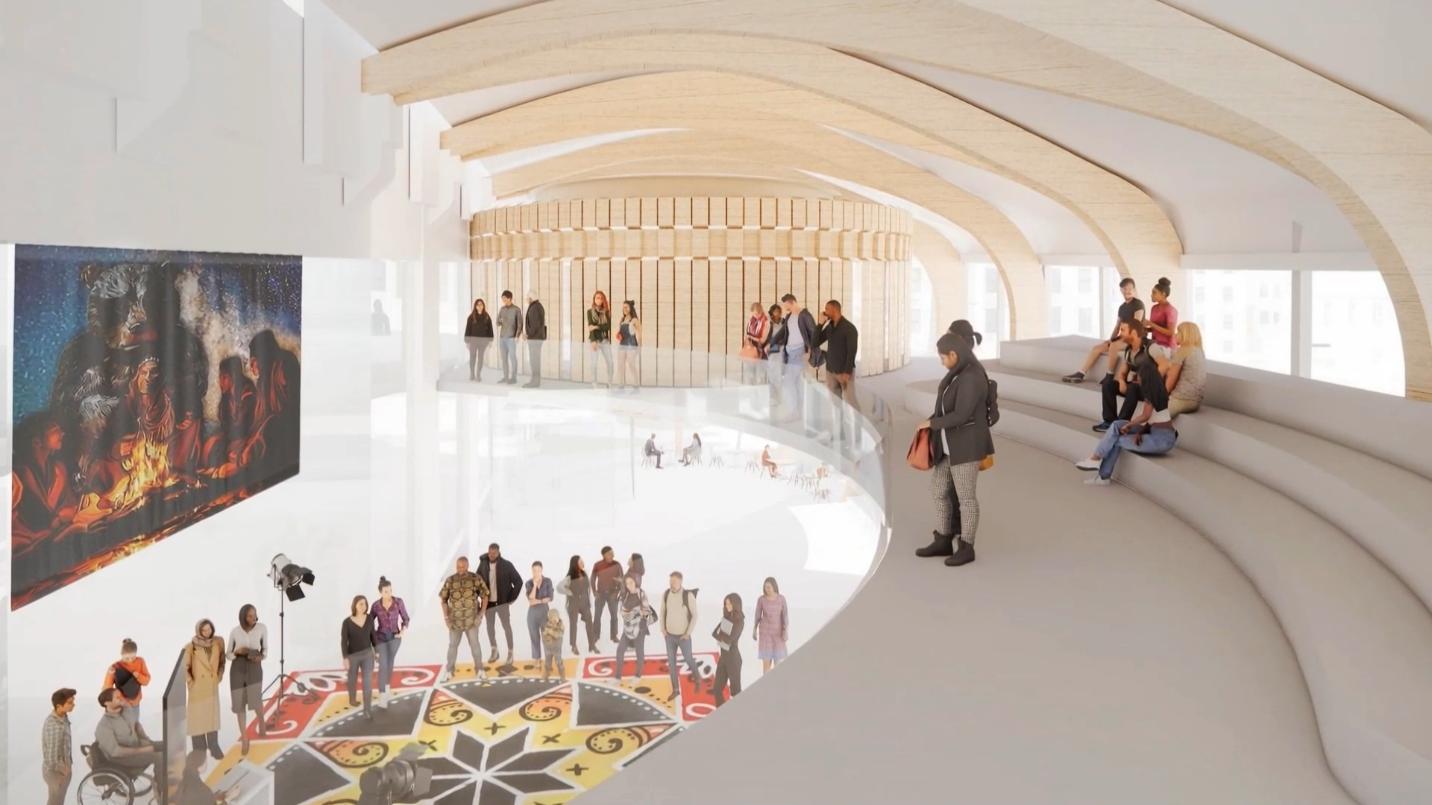
We, at King’s, are all Treaty People and our campus is situated on unceded land, so the only way forward for the SEC Project is by working with the blessing, guidance and collaboration of the Mi’kmaw nation to create a building that incorporates their history, beliefs and ways of knowing.
For the SEC Project, the Mawaknutma’tnej, King’s Indigenous advisory circle, has played a key role in informing institutional decisions around relationships with the Mi’kmaq as well as key ideas for incorporating Indigeneity including teachings, wisdom and cultural richness and how they can be represented within the physical spaces in the new building.
The SEC Project team attended regular Circle meetings to provide updates on predesign work on the project and to receive guidance. These ongoing meetings form the basis of communication and engagement. The Circle will continue to critically aid in the project’s overall development into the future.
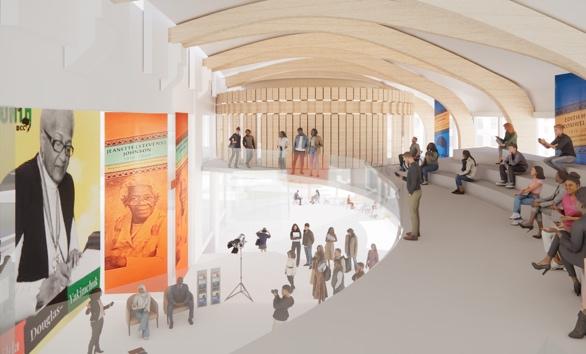
African Nova Scotian community involvement and expertise are key contributors in the King’s predesign consultation process. The African Nova Scotian community makes important historical and cultural impacts on King’s as an institution, though it remains largely underrepresented on campus. This building provides key opportunities to create dedicated spaces to celebrate African Nova Scotian history and culture.
The design team met early in the process with the Black Cultural Centre of Nova Scotia and engaged in focus groups at the Delmore Buddy Daye Learning Institute. Discussions included a recurring theme related to ensuring people can see themselves reflected in the building and that their story is being told.
Placemaking: A worthy home of truth sharing and storytelling at King’s, for all
The SEC building, including all it represents, will be a bright and welcoming beacon of renewal and progress in the storied Quad, a destination and resource for diverse communities within and beyond King’s borders. Thoughtfully and deliberately designed with culturally aware gathering/meeting spaces, purpose-built applied learning resources, recreational facilities and residence amenities, the SEC Project is not just about campus renewal or the sum of its parts. The SEC Project is so much more than a building, it's a meaningful investment in the future of King’s and what happens beyond its walls.
King’s is creating a destination for curious, diverse, driven and deserving thinkers, journalists and storytellers in our community, from our broader community, and from across our country to come and contribute to more accurate, authentic narratives including many that might not otherwise be shared.
At a time when we need journalism and the humanities more than ever, the SEC Project brings together those with the courage to rise to meet the moment, including:
• philosophers who ask essential questions about what it means to be human in the age of AI
• historians who understand what has led us to this critical point in democratic society and can help inform what comes next
• storytellers who recognize the importance of examining our lives, motivations and the outcomes of our actions to help foster compassion and find meaning
• reporters who possess the skills and integrity necessary to uphold the ethics of journalism, cut through misinformation and help preserve democracy
It’s a place to bring together different perspectives, to create and cultivate a sense of belonging through shared stories that, when woven together, strengthen the fabric of our nation.