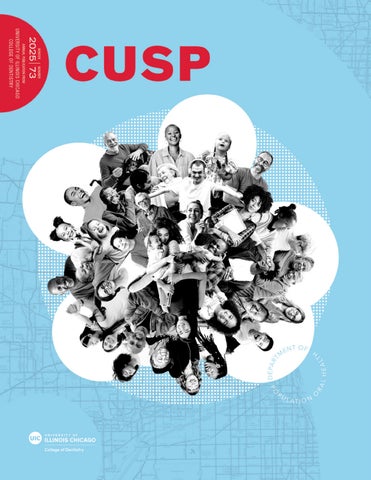
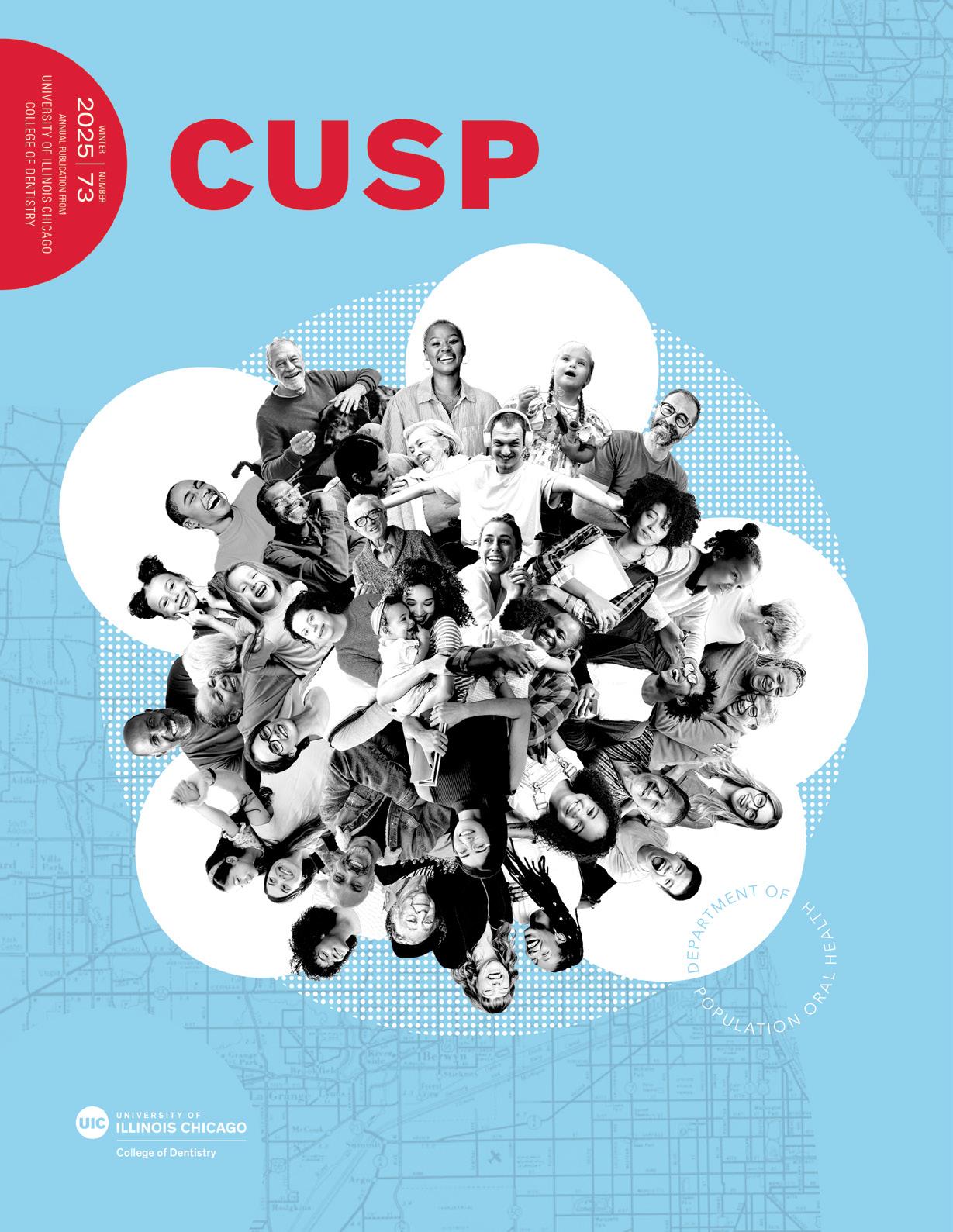
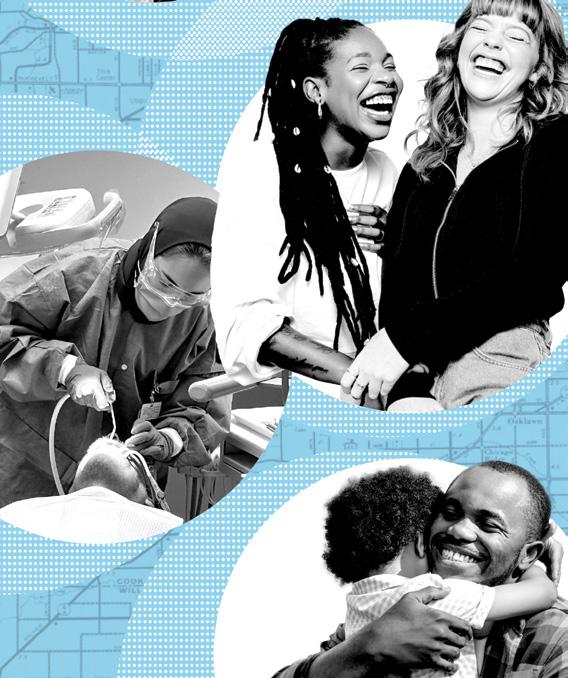
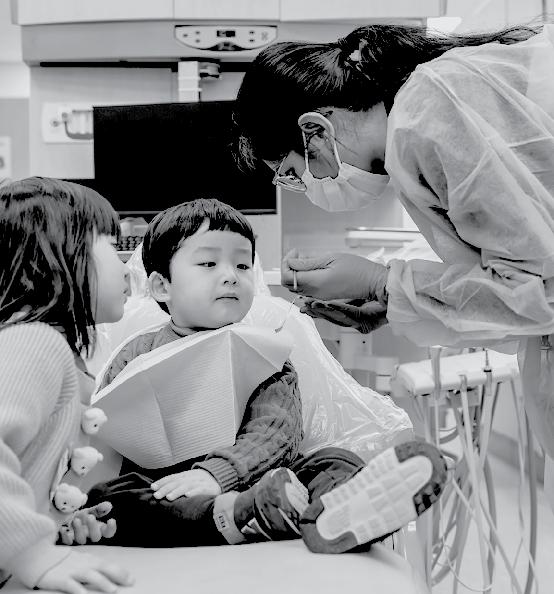
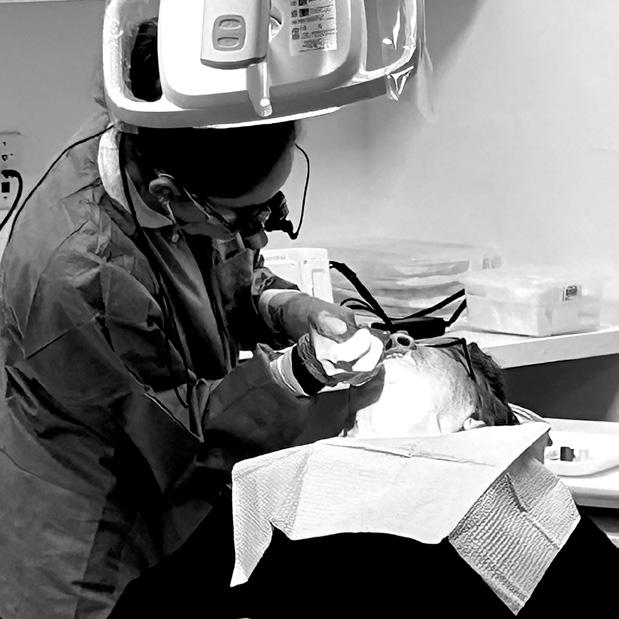
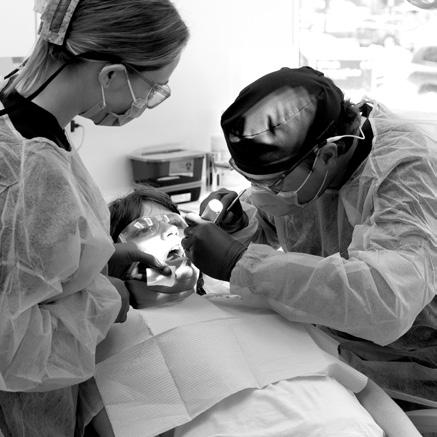
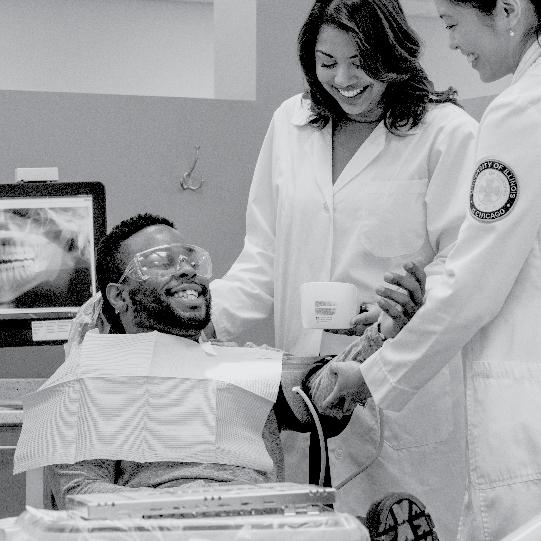
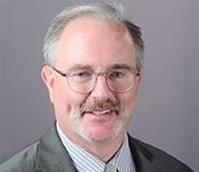
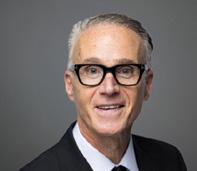
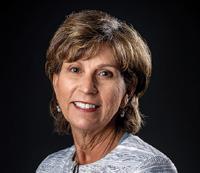
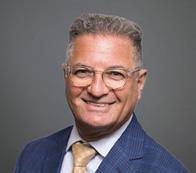
Department of Population Oral Health illustration by Multiple, Inc.
CUSP STAFF
Editor-in-Chief
AnaLisa Hendricks
Contributing Writers
Daniel P. Smith
AnaLisa Hendricks
Jen Roosevelt
William S. Bike
UIC Strategic Marketing and Communications
Design Multiple, Inc.
Photographers
Diane Smutny DMS Photography
Jenny Fontaine
UIC Creative and Digital Services
UIC Strategic Marketing and Communications
Courtesy of Dr. David Maclin, Janet Martineau and Dr. Brad Johnson
QUESTIONS OR COMMENTS
Editor – Cusp Magazine
UIC College of Dentistry 801 S. Paulina St. (MC 621) Chicago, IL 60612 DentNews@uic.edu
COLLEGE ADMINISTRATION
Dean
Susan Rowan, DDS, MS
Associate Dean for Academic Affairs
Philip Patston, DPhil
Associate Dean for Clinical Affairs
Judy Yuan, DDS, MS
Associate Dean for Finance
Michael Harner, MBA, EdD
Associate Dean for Prevention and Public Health Sciences
Scott Tomar, DMD, MPH, DrPH
Associate Dean for Research
Ana Bedran-Russo, DDS, MS, PhD
Associate Dean for Student and Diversity Affairs
Darryl Pendleton, DMD
SOCIAL MEDIA
UICDentistry
UIC College of Dentistry
UICCOD
University of Illinois Chicago College of Dentistry
uicdentistry
Grounded in our long history of excellence and energized by the progress before us, I am filled with deep gratitude and renewed inspiration. The work we perform each day, through education, research and patient care, touches countless lives and strengthens the oral health of communities across our state and beyond.
This year marks a notable advancement with the creation of the Department of Population Oral Health, our first new department in more than three decades. This transformative initiative reaffirms our commitment to preparing the next generation of oral health leaders while advancing innovative, compassionate care. The department’s focus on prevention, public health and community impact will elevate the wellbeing of entire populations for years to come.
The exceptional achievements of our faculty continue to enhance the reputation of our world-class educators, clinicians and researchers. Their leadership within their respective specialties sets new standards for our profession and their dedication inspires the next generation of change agents. We take immense pride in celebrating their accomplishments and the examples they set for our students.
Our students and patients benefit profoundly from this environment of excellence. That commitment is reflected in the significant number of scholarships, awards and recognitions earned by our students and residents. With the ongoing support of our alumni and friends, we are able to uplift and empower these emerging leaders who are working diligently to advance oral health and serve their communities.
As we look ahead, let us continue to honor our collective accomplishments, strengthen our partnerships, and champion the educational journey that unites us. Together, we celebrate a community of faculty, students, staff, alumni and supporters who are shaping the future of dentistry and setting new distinctions for our field.
Sincerely,
SUSAN A. ROWAN, DDS, MS Professor and Dean
OPENING DOORS: THE DENTAL ASSISTANT PATHWAY PROGRAM
At the University of Illinois Chicago College of Dentistry, opportunity took on a new meaning through the Dental Assistant Pathway Program—an initiative designed to open doors for people who might never have imagined a career in dentistry.
The goal was ambitious yet deeply practical: to ease the national shortage of dental assistants while creating a free, paid pathway into the profession for those without college experience or prior training.
For years, the college had required dental assistants to come with credentials or experience, often gained through community college programs or private offices. That expectation made hiring difficult. Recognizing the challenge, Dean Susan Rowan and Letty Sanchez, director of human resources operations, reimagined the process. Together, they worked with university partners to allow anyone with a high school diploma or GED to be hired as a Dental Assistant I— no experience required.
To make it work, they turned to Dr. Robert Bara, clinical assistant professor, who designed a comprehensive training curriculum. Rowan later named him Director of Dental Auxiliary Programs, entrusting him to lead the effort.
Support soon followed. The college secured a three-year grant from the Otho S.A. Sprague Memorial Institute, which funded training for 12 new dental assistants each year. Founded in 1911, the Sprague Institute is dedicated to improving health and reducing human suffering in Chicago and Cook County.
“It was a pathway for progress, potential and people,” said Bara. “It gave individuals who had never imagined a role in healthcare the chance to build a career.”
The 14-week work-study program combined classroom lessons, hands-on experience, and paid employment at the college. Participants received their materials and exam fees at no cost, and were eligible to take the National Entry Level Dental Assisting (NELDA) exam fully funded by the grant.
“We offered people the opportunity to be employed day one, earning money without paying tuition,” said Rowan.
Beyond technical training, the program opened new horizons. “Some participants discovered a passion for patient care; others became interested in administration, education or billing,” Sanchez said. “It exposed them to higher education and showed that more was possible for themselves and their families.”
Through partnerships with Chicago Public Schools, local organizations, and the Department of Family and Support Services, the college reached individuals who were unemployed or uncertain about their next steps. “The Sprague Institute recognized what a valuable contribution this could make to employment and community growth,” Rowan added.
The Dental Assistant Pathway Program embodied the college’s mission of better oral health through transformative innovation—not just improving access to care, but transforming lives along the way.
“We developed this program for nothing less than the transformation of lives,” Bara said.
“It was a pathway for progress, potential and people. It gave individuals who had never imagined a role in healthcare the chance to build a career.”
DR. ROBERT BARA
THE ROOT OF EXCELLENCE
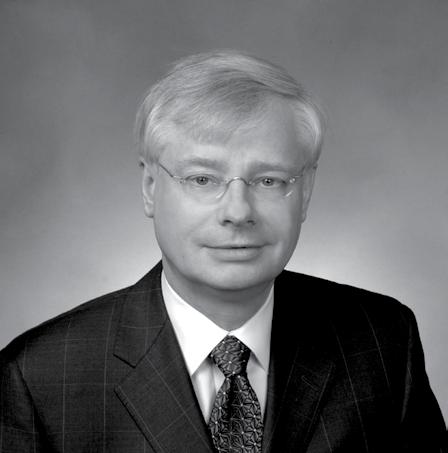
ESTEEMED EDUCATOR AND CLINICIAN DR. BRADFORD
JOHNSON RETIRES FROM THE DEPARTMENT OF ENDODONTICS AFTER A DECORATED 34-YEAR RUN.
BY DANIEL P. SMITH
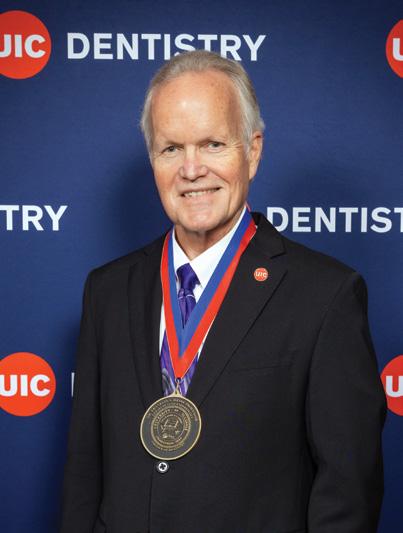
Veteran UIC College of Dentistry faculty member Dr. Bradford Johnson jokingly calls himself an “accidental endodontist.”
After earning his DDS degree from Virginia Commonwealth University, Johnson moved to Chicago for a general practice residency before embarking on a seven-year career in general practice dentistry. When former classmates and colleagues first suggested he consider pursuing a specialty like endodontics, Johnson initially declined interest. As he progressed in his career as a general dentist, however, the difficulty of mastering the full scope of dental practice materialized and the idea of specializing appeared increasingly attractive. With the encouragement of colleagues and close friends, Johnson applied late in the cycle to UIC’s endodontics program.
“The next thing I knew someone dropped out of the current postgrad endodontics class and I was in the program at UIC,” said Johnson, who earned his advanced certificate in endodontics from the College of Dentistry in 1991.
Johnson’s spur-of-the-moment decision sparked a distinguished career in the profession as a clinician and educator. Over a 34-year faculty run at UIC, Johnson contributed to the liveliness and strength of the College of Dentistry and, specifically, its Department of Endodontics. He retires at the close of 2025 having left an incredible mark on scores of students, colleagues and professionals.
A LEADER AND MENTOR
Across four different decades, Johnson tended to patients in UIC’s clinics and prepared students to provide high-level endodontic care, relishing the opportunity to build one-on-one relationships with students and shepherd their development into confident, capable professionals in a demanding field. He enjoyed watching his former pupils thrive as clinicians and celebrated the many who became board-certified endodontists, a significant accomplishment in a specialty where only one in three practitioners earn board certification. He delighted in seeing others lead successful careers as researchers and academics as well.
“I’m proud of the students I’ve trained,” he said. “If I look good, it’s because of their intelligence and their drive.”
Serving as the department’s head since 2014 and director of the endodontic postgraduate program since 1997, Johnson advanced clinical care, expanded the faculty roster, championed faculty development and elevated the department’s educational offerings to feature the latest technologies and evidence-based treatment protocols. Today, the department of endodontics provides all endodontic training to the more than 400 pre-doctoral students enrolled at the College of Dentistry in addition to 10 residents in its two-year postgraduate program.
Photos: Courtesy of Dr. Brad Johnson
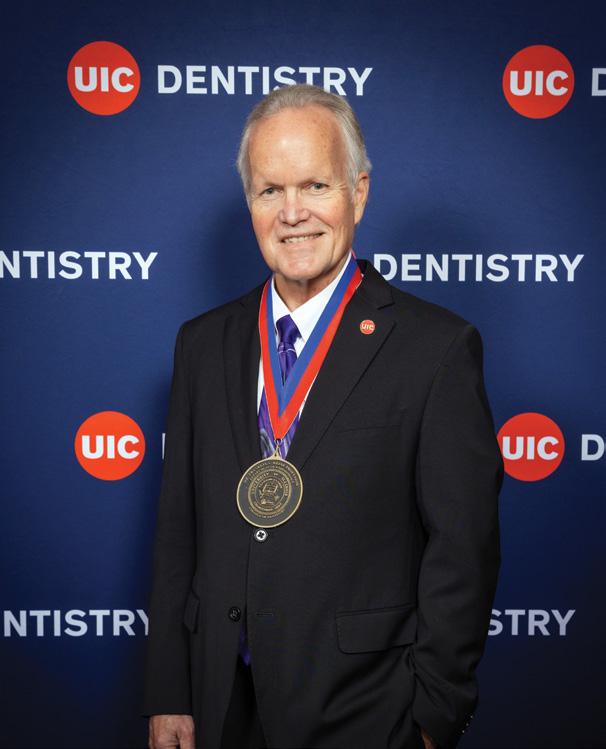
In 2024, the college named Johnson the inaugural Dr. Franklin S. Weine Endowed Professor of Endodontics. The first endowed position in the department of endodontics, the prestigious honor celebrated Johnson’s significant contributions to the college as well as his enduring influence on the field of endodontics.
And last April, the American Association of Endodontists awarded Johnson its I.B. Bender Lifetime Educator Award. This distinguished honor recognized Johnson’s selfless commitment to full-time education and his profound impact on many students, including alumni like Dr. Qian Xie, Endodontics ’11, and Dr. Ali Alsuhail, DMD ’16, Endodontics ’21.
“Dr. Johnson gave me freedom, support and resources as a resident. He never forced me down any specific path but rather empowered me to follow my curiosity,” said Xie, now a tenured associate professor and associate postgrad program director in the department of endodontics whose research investigates caries, oral biofilm and endodontic irrigation. Xie recently followed Johnson’s path of professional service when she was elected an American Board of Endodontics (ABE) director.
Alsuhail, meanwhile, calls Johnson one of his foremost professional mentors. He credits Johnson for shaping him as a person, clinician and educator.
“Dr. Johnson is a highly respected clinician and educator with a distinguished career and remarkable humility,” said Alsuhail, who joined the Department of Endodontics’ clinical faculty at Johnson’s encouragement. “When he asked me to join, I didn’t hesitate, not just for the department, but because it was Dr. Johnson asking. Whenever he’s set an expectation for me, I’ve always wanted to meet it to honor his trust in me.”
A SLOWER PACE
Johnson’s impact extended far beyond UIC, too, influencing both clinical practice and educational standards. He authored or co-authored more than 70 articles and abstracts in peerreviewed dental journals and contributed 18 chapters to major endodontic textbooks. He also held several key leadership roles in organized dentistry, including tenures as ABE president, commissioner for the Commission on Dental Accreditation and board member of the American Association of Endodontists.
“He was a man with great dedication to his work,” Xie said of Johnson, who was elected to fellowship in both the American College of Dentists and the International College of Dentists while also earning a master’s degree in health professions education from UIC in 2005. “To be honest, I’ll never understand how he maintained the pace he did.”
Adds Dr. John Tran, DDS ’18, Endodontics ’21: “Dr. Johnson’s breadth of knowledge about endodontics from both the academic side as well as the advocacy end is so impressive, but it’s his approachability and willingness to share that knowledge with students, residents and colleagues that makes him so special.”
Of course, Johnson’s pace will slow in retirement, where he aims to devote more time to his family, including two young grandchildren, travel and hobbies, such as woodworking and fly fishing. In time, though, he hopes to return to UIC in a part-time teaching capacity.
“So much of my identity has been tied up in what I’ve been doing over the last 40 years, so it’d be a shock to my system to go from 100 miles an hour to zero,” he said.
A part-time role would enable Johnson to continue steering young professionals while also ensuring participation in treasured annual traditions like “Super Tuesday,” the final Tuesday in June in which specialty residents complete their concluding series of oral and written exams before enjoying a celebratory dinner.
But Johnson acknowledges – with some relief, mind you –his days of juggling administrative tasks are almost done, from annual evaluations of faculty and staff to sifting through 200-plus applicants for five residency positions.
“Over the course of recent months, I had these moments of saying to myself, ‘This is the last time I’ll be the one primarily responsible for this or that,’ and it was a touch bittersweet,” Johnson admitted. “But it’s important I step aside, and new leaders have their chance to guide the department and lead it into a new era.”
“I’m proud of the students I’ve trained, if I look good, it’s because of their intelligence and their drive.”
DR. BRADFORD JOHNSON
A LEGACY OF SERVICE: JANET AND PAUL MARTINEAU’S ENDURING GIFT TO RURAL HEALTH AND EDUCATION.
BY JEN ROOSEVELT, UNIVERSITY OF ILLINOIS FOUNDATION
For Janet F. Martineau (UIUC ‘72 & ‘75), giving back is more than a gesture - it’s a reflection of a life shaped by education, faith, and service. Over the past 22 years, Janet, along with her late husband Paul (UIC DDS ’74), has demonstrated a remarkable commitment to philanthropy, and her recent focus on planned giving ensures that her and Paul’s legacy will continue to make a difference for generations of University of Illinois Chicago dental students to come.
Paul, originally from the Chicago area, entered undergrad with a clear goal: to become a dentist. Janet initially pursued journalism but later found her calling in secondary education. Janet spent her first two years at community colleges, but then they both completed their undergraduate degrees a couple hours south of UIC at the University of Illinois Urbana-Champaign. Their time at the Urbana campus was transformative - Paul thrived in the academic environment, and Janet formed friendships that have lasted more than 50 years. Paul’s passion for education continued when he enrolled at UIC College of Dentistry.
Rooted in their Catholic faith, Janet and Paul believed deeply in service to others. That belief became a guiding principle in their lives, as served their community through Paul’s dental practice – and now in their legacy. In 2023, following Paul’s passing, Janet established the Janet F. & Paul R. Martineau Scholarship Fund at UIC College of Dentistry through an IRA Qualified Charitable Distribution (QCD). The scholarship supports dental students, especially those committed to serving rural communities.
To ensure the scholarship’s future, Janet has also included a planned gift in her estate to increase the size of the scholarship endowment. Her thoughtful financial planning, including consolidating accounts and maximizing QCDs, reflects her dedication to sustaining the causes she and Paul valued most.
“We valued the educational benefits that gave us careers of service to others,” Janet shares. “Gifting impacts the future.”
To learn more about creating your legacy, contact Dina Kutinsky at DentAdvancmencet@uic.edu.
2024 - 2025 SCHOLARSHIP FACTS
$233,000 in scholarships
93 student and resident recipients
Janet and Paul Martineau
Courtesy of Janet Martineau
PROPELLING PUBLIC HEALTH
THE NEW DEPARTMENT OF POPULATION ORAL HEALTH – THE UIC COLLEGE OF DENTISTRY’S FIRST NEW ACADEMIC DEPARTMENT IN THREE DECADES –GIVES A HOME TO THE COLLEGE’S VARIED EFFORTS ADVANCING DENTAL PUBLIC HEALTH.
BY DANIEL P. SMITH
Dr. Bruce Graham hoped this day would come.
As dean of the UIC College of Dentistry from 2000-2013, Graham spearheaded efforts to elevate the college’s focus on public health and prevention sciences, effectively filling a massive gap in the college’s curriculum and expertise. And yet, even as the college’s public health work and reputation in the field surged, forming an academic department devoted solely to dental public health proved elusive at the college.
Until now, that is.
In 2026, the college will debut the Department of Population Oral Health. The college’s ninth academic department, and its first departmental addition in three decades, Population Oral Health develops a central hub for education and research in clinical and community-based oral disease prevention and control while also opening the door to a post-graduate program in dental public health.
“We hadn’t yet embraced the notion that we had a responsibility to help the community, which was an area of weakness we needed to address if we were going to provide the best dental education possible.”
DR. BRUCE GRAHAM
“Creating an academic department doesn’t happen every day. That we’ve arrived here shows our clear, committed focus to public health and prevention over the last 25 years and moving forward,” UIC College of Dentistry Dean Dr. Susan Rowan said.
Indeed, the new department represents the culmination of a determined, quarter century-long effort initiated by Graham and embraced by other college leaders across multiple decades to champion oral public health and strengthen the University of Illinois Chicago’s longstanding mission to community engagement.
“I always had the dream for this,” said Graham, who applauded current college leadership for completing the intense work necessary to form the new academic department. “To see the Department of Population Oral Health come to fruition now gives final emphasis to public health at the college and unlocks even more opportunities for UIC to lead in this critical area.”
PRIORITIZING PUBLIC HEALTH
When Graham arrived at UIC in 2000, making population science and public health a more central component of the college’s work quickly emerged as a top priority. At the time, the college had a low profile in the public health domain, leading instead with greater attention to individual patients and treatment procedures than the population at large. Graham viewed it as a missed opportunity for students, in particular.
“We hadn’t yet embraced the notion that we had a responsibility to help the community, which was an area of weakness we needed to address if we were going to provide the best dental education possible,” Graham said.
Dentistry was a healing profession, Graham reasoned, and students needed a population-focused orientation to oral health. Feeling an obligation to both students and the state’s residents, Graham crafted ambitious plans.
“There were strong dental public health programs in American dental education, but we certainly weren’t among them,” Graham said. “Starting from ground zero, we really had nowhere to go but up.”
In 2001, Graham completed his first strategic move with the hiring of Dr. Darryl Pendleton as the college’s inaugural assistant dean of diversity and student affairs. Pendleton’s primary charge was to broaden the lens on the college’s applicants, particularly adopting a stronger emphasis on recruiting students from underrepresented communities as well as candidates with an expressed affinity for tending to underserved populations. Thereafter, Graham named Dr. Frank Licari the college’s new associate dean of academic affairs. In addition to his dental degree, Licari also held master’s degrees in public health and public administration and championed the synergy between dentistry and public health.
The appointments of Pendleton and Licari positioned the college to better care for underserved populations and promised to propel UIC’s focus on oral health beyond the private dental office, Graham said.
Soon after, the Robert Wood Johnson Foundation (RWJF) awarded UIC a five-year, $1.5 million grant as part of its Pipeline Profession & Practice: Community-Based Dental Education initiative. UIC was one of 10 dental schools in the U.S. to receive the award, which aimed to increase the number of students from underrepresented backgrounds in dental schools and also placed DMD students in community-based clinics to foster an understanding of population oral health needs.
EMERGING A LEADER
With momentum accelerating, Graham then targeted the biggest coup of all: Dr. Caswell Evans, the preeminent public health dentist in the U.S. The former director of public health programs and services for the Los Angeles County Department of Health Services, Evans had recently completed his stint as executive director of Oral Health in America: A Report of the U.S. Surgeon General. With that timing, Graham thought Evans might be open to considering a new position. It was an audacious move from Graham and a college with a growing, albeit still-fledgling population health focus.
“Caswell Evans didn’t know the college, and he certainly didn’t know me,” Graham said.
Undeterred, Graham recruited Susan Scrimshaw, then dean of UIC School of Public Health (SPH), to broker a meeting with Evans. Scrimshaw’s introduction triggered Graham’s four-year courtship of Evans, a lengthy pursuit littered with emails, phone calls, on-site meetings and increasingly specific conversations.
“Fortunately, I fish with a long line,” Graham said. “But if you want the best people around you, you have to be flexible on the timeline.”
When UIC announced Evans’ hire in 2004 as the College of Dentistry’s first-ever associate dean for prevention and public health sciences, Graham’s phone rang with calls from numerous dental school deans. They all posed a similar version of the same question: How’d you get him?
“When Dr. Evans agreed to come to UIC, it put us on the map in dental public health overnight,” Graham said.
Evans’ arrival accelerated the college’s public health initiatives, stimulating an even more intense focus on public health in the curriculum and expanding community-based learning opportunities for students. Service-learning rotations, once week-long volunteer experiences, grew to two weeks, then to four distinct efforts each covering two weeks. Students worked in federally qualified health centers, hospital sites, a union-run clinic, a mobile clinic and other community-based operations. They tended to the homeless as well as individuals with special needs and barriers to care. Post-rotation debriefing sessions at the college compelled students to reflect on what they had learned about public health needs and prevention and to recognize the significant gaps in population oral health services.
“These experiences gave our students an unvarnished look at what was happening at the community-health level, giving them exposure to populations they might not have otherwise had such intimate contact with,” Evans said, adding that UIC students became a part of the fabric of care in these systems and increased partners’ service capacity. “It was an unquestionably beneficial situation for all involved.”
By 2006, UIC surfaced as the poster child for success in the far-reaching RWJF initiative. Quickly and emphatically, UIC established itself as one of the nation’s up-and-coming forces in oral public health.
“Much of the dental school clinical experience is gained by service to those from underserved communities, yet too few dentists were serving these communities,” Evans said. “We were changing that and shining a light on the important public commitment of dentists and the community need.”
BUILDING MOMENTUM
College leadership continued charging ahead, fully invested in amplifying its commitment to oral public health and arming students with valuable experiences.
Evans introduced competitive, month-long community-based rotations in Tanzania, Guatemala and China, pushing UIC’s population health focus far beyond Illinois’ borders and providing in-depth cultural experiences to students. He also spearheaded a partnership with SPH to create the DMD/ MPH joint degree program, a novel academic effort vaulting alumni into vital public health roles across the U.S. Meanwhile, courses in public health and population sciences became embedded across all four years of the DMD curriculum and introduced dental school students into community outreach clinics as early as their second year.
“We completely changed the orientation of the school toward populations, helping our students see they have an obligation to care for people who don’t make it to the private dental office,” Graham said.
In the process, UIC College of Dentistry became a magnet for faculty and students who wanted a robust public health focus in their curriculum.
“There were people genuinely excited about the prevention and public health aspect of our work, and they wanted to be a part of it,” Evans said. “It became a point of distinction for us.”
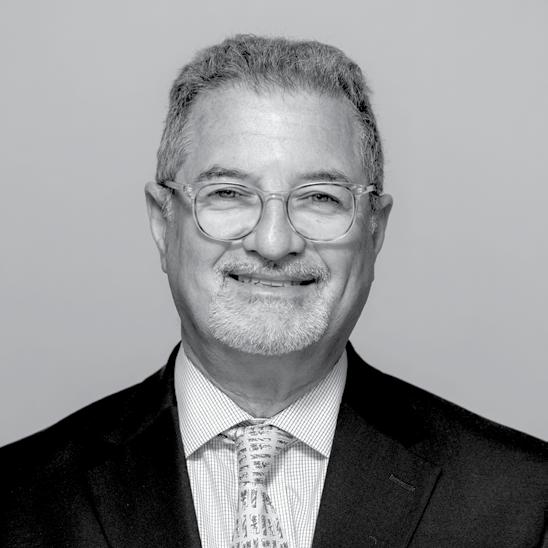
In fact, as Evans prepared to retire in 2019, UIC’s respected role in population oral health coupled with Evans’ personal recruitment efforts helped the college land Dr. Scott Tomar, a prominent expert in dental public health who had spent the previous 20 years at the University of Florida.
Over recent years, Tomar has continued to steward the college’s efforts in population health sciences, advancing its national and global profile in developing oral public health and prevention initiatives, which today includes service-learning rotations at 32 community-based sites, collaboration with health sciences colleagues, advocacy and more – all of it culminating in the establishment of the UIC Department of Population Oral Health.
“The new department is something we’re celebrating now, but we don’t get here without the foresight of visionary leadership and 25 years of strong, committed efforts to dental public health,” Rowan noted.
“Much of the dental school clinical experience is gained by service to those from underserved communities, yet too few dentists were serving these communities. We were changing that and shining a light on the important public commitment of dentists and the community need.”
DR. CASWELL EVANS
“We can drill all day, but we can’t treat our way out of a public health problem. We need a diversified public health solution and that’s what we will bring.”
DR. SCOTT TOMAR
LAUNCHING A NEW DEPARTMENT
For years, the college’s work in oral public health was housed as a division inside the Department of Pediatric Dentistry. While the Division of Prevention and Public Health Sciences – the lone division in the entire college – provided some order and continuity to the college’s collective efforts in the public health arena, the arrangement led to a wonky administrative structure.
Beginning two years ago, Tomar, associate dean for prevention and public health sciences, directed the intense work of establishing a stand-alone academic department, a move to amplify the college’s existing efforts in public health and fuel additional momentum.
“Public health, including oral public health, has been under attack in the U.S., so there’s a tremendous need for more visibility of what public health is and what it does in society,” Tomar said. “There was no better time to highlight the college’s commitment to public health.”
Last August, the Illinois Board of Higher Education approved the college’s move to launch the Department of Population Oral Health.
“This is an exciting new chapter for us,” said Rowan, who praised Tomar’s diligent efforts to establish the new academic department. “It provides added credibility and gravitas to the college’s intentional work in public health and prevention.”
Population Oral Health promises to introduce students to public health in more robust ways and unlock compelling learning opportunities. It will embolden research and invite new ways to incorporate oral health into overall public health. And it will serve as the primary provider of advocacy for population oral health, building upon current work in areas like community water fluoridation and nutrition.
“Our primary mission is to improve the oral health of the public as well as access to services for the public through research, clinical services and, especially, education,” Rowan said.
To that end, Tomar looks to evolve the joint DMD/MPH program offered in collaboration with SPH and to create a four-year, rather than five-year, program. He is also exploring the idea of a certification program or series of short courses for current clinicians and health professionals eager to understand the intersection of dentistry and public health.
“There are specific niches in which we see the potential to do valuable, important work,” Tomar said.
A quarter century ago, the College of Dentistry began building its competency in dental public health with strategic hires and programming to advance learning, research and service. With the new Department of Population Oral Health, Tomar and others stand ready to continue that ambitious work and advance oral health at the community level.
“We can drill all day, but we can’t treat our way out of a public health problem,” Tomar said. “We need a diversified public health solution and that’s what we will bring.”
“This is an exciting new chapter for us. It provides added credibility and gravitas to the college’s intentional work in public health and prevention.”
DR. SUSAN ROWAN
THE PUBLIC HEALTH PUSH
DETAILING THE KEY COMPONENTS OF THE NEW DEPARTMENT OF POPULATION ORAL HEALTH AT THE UIC COLLEGE OF DENTISTRY.
BY DANIEL P. SMITH
COMMUNITY ENGAGEMENT
Placing students in community-based sites and settings outside of the UIC College of Dentistry has been a core component of the college’s oral public health efforts for the last two decades and such service-learning experiences will continue in the new Department of Population Oral Health.
Under the supervision of clinical adjunct faculty at the college, students strengthen their clinical skills while also learning about social determinants of health, serving vulnerable populations and alternative ways to provide dental care beyond private practice.
“These rotations open students’ eyes to how a dentist can be a part of a bigger health ecosystem,” said Khatija Noorullah, a clinical assistant professor who oversees dental students’ extramural rotations.
Currently, for example, all fourth-year dental school students complete an eight-week rotation at one of 32 partner sites. While student learning is a definite priority, students’ presence in these community-based settings increases each site’s service capacity and enables care for more patients.
Building on the success of the fourth-year rotations, the college has expanded its service learning to all four years of the predoctoral dental curriculum, focusing on oral disease prevention and the integral relationship between oral health and overall health. First-year dental students provide oral health education to children in local public schools while second-year students provide clinical dental prevention services in community-based settings and third-year students provide basic dental care for patients with intellectual or developmental disabilities at a local children’s hospital and private practice. Students also provide advanced oral health education services for patients with sickle cell disease, staff in assisted living facilities and parents of young children.
COMMUNITY-BASED CLINIC
The Pilsen Center for Oral Health Promotion is the first and only community-based clinic the college has operated across its 112-year existence.
Opened in September 2023 inside the UI Health Pilsen Family Health Center at 1713 S. Ashland Ave., the Pilsen Center’s dental clinic uses a prevention-focused approach to improve oral health and a minimally invasive approach to managing oral disease. The center improves the community’s oral health status by providing low-cost services and advanced care coordination to people struggling to access routine dental care.
“The vision for the clinic has always been that we’d build a model of care available to triage needs and provide a customized approach to managing dental discomfort and preventive care for individuals with nowhere else to go for dental care,” said Dr. Patrick Smith, associate professor and director of the Pilsen Center for Oral Health Promotion.
The Pilsen Center also serves as a teaching and practice research lab. It helps students learn various clinical approaches to minimal yet effective prevention and management of oral diseases while also demonstrating how value-based care can reduce the incidence of oral disease, reduce health care costs and improve quality of life and well-being.
“In dental education, we provide a lot of didactic education around the prevention of disease, yet the profession revolves around treatment,” Tomar said. “We started the Pilsen Center on the premise that we now have effective tools in our toolbox to prevent and manage oral disease. We’re changing the paradigm by testing a prevention-focused, value-based model to improve the oral health of communities.”
INCLUSIVE CARE CLINIC
The College of Dentistry Inclusive Care Clinic (ICC) serves a highly diverse patient population, including children and adults with special health care needs, medically complex conditions and patients who often experience barriers to accessing care in traditional dental settings. Under faculty supervision, dental students provide comprehensive oral health care integrating prevention, treatment and care coordination. Along the way, students gain critical training in patient-centered, culturally responsive care.
“Patients and their families often struggle to find dental practices that are willing and able to address their oral health needs, so the Inclusive Care Clinic is a much-needed solution for them,” Tomar said. “While providing care in the present, we’re also creating a generation of dentists who feel comfortable and confident serving this demographic.”
Dr. Leda Mugayar, clinical professor and director of the ICC, said moving the ICC from Clinical Affairs/Undergraduate Clinics to the new Department of Population Oral Health strengthens the ICC’s ability to grow and expand its mission. It creates opportunities for improved strategic alignment with institutional priorities around community engagement, equity and innovation and empowers access to resources supporting program development, research and interprofessional collaboration. It also increases visibility and recognition for the unique population ICC serves and generates expanded services and partnerships beyond the traditional student-clinic framework.
“Overall, this transition is a positive step forward, unlocking growth opportunities and reinforcing ICC’s dual mission: to provide exceptional care to patients with unique needs and to prepare future dentists to serve diverse populations with skill and compassion, loyal to a patient-centered care approach,” Mugayar said.
CHAIRSIDE ORAL WELLBEING PRACTICE
The Department of Population Health will lead the college’s Chairside Prevention Oral Wellbeing module, which is designed to strengthen student learning and reinforce the importance of delivering health promotion and disease prevention directly at the chairside.
“Our aim is to prepare students not only to treat disease, but also to play a proactive role in improving patients’ overall health and well-being,” Bilal said.
The chairside initiative includes enhanced training in tobacco cessation counseling and nutritional counseling alongside oral hygiene instructions. It uses case-based learning, patient simulations and interprofessional education activities to ensure students gain valuable knowledge while also practicing communication, teamwork and counseling skills in authentic, patient-centered contexts.
“By equipping students with practical skills in these areas, we are advancing both patient outcomes and students’ development as lifelong learners,” Bilal said.
INTERPROFESSIONAL EDUCATION
The College of Dentistry embeds interprofessional learning experiences throughout the DMD curriculum, providing dental school students opportunities to learn and practice alongside UIC learners from other health professions to be prepared to deliver more coordinated, patient-centered care.
For instance, DMD students partner with registered dietitian students from UIC College of Applied Health Sciences to participate in clinical rounds, case-based discussions and simulations to understand how they can integrate diet, oral and systemic health into coordinated care.
Alongside students from UIC Retzky College of Pharmacy, DMD students collaborate on tobacco cessation counseling combining pharmacotherapy expertise with oral health risk counseling. Using role play and patient simulations, students practice comprehensive, team-based approaches to help patients quit smoking.
And to better serve patients with special and complex needs, UIC students from dentistry, nursing and pharmacy engage in simulated patient encounters at the College of Nursing’s Schwartz Experiential Learning & Simulation Lab. The innovative lab trains individuals with disabilities and chronic conditions as actors to prepare collaborative-ready health care professionals to work in high-risk communities and gain knowledge around the care of underserved populations with complex needs. DMD students also partner with students from occupational therapy to develop strategies for physical and sensory accommodations in dental settings.
“These programs prepare our students for the collaborative nature of modern health care while also addressing critical patient needs,” said Dr. Sobia Bilal, director of interprofessional education (IPE) and collaborative practice at the College of Dentistry. “By learning together, students strengthen teamwork, communication and patient-centered problem-solving skills.”
Bilal calls IPE’s shift into the new Department of Population Oral Health “an exciting and strategic evolution” offering stronger alignment with IPE’s mission to prepare a collaborative workforce.
“Population Oral Health is inherently interdisciplinary and it focuses on prevention, health promotion and addressing the social determinants of health, making it the ideal umbrella for interprofessional education,” Bilal said. “It places IPE exactly where it belongs at the intersection of oral health, public health and team-based care, allowing us to scale our efforts and maximize impact on both student learning and patient outcomes.”
RESEARCH A
LEGACY OF HEALING: DR. LUISA A. DIPIETRO REFLECTS ON MENTORSHIP, DISCOVERY AND THE SCIENCE OF REGENERATION.
BY ANALISA HENDRICKS
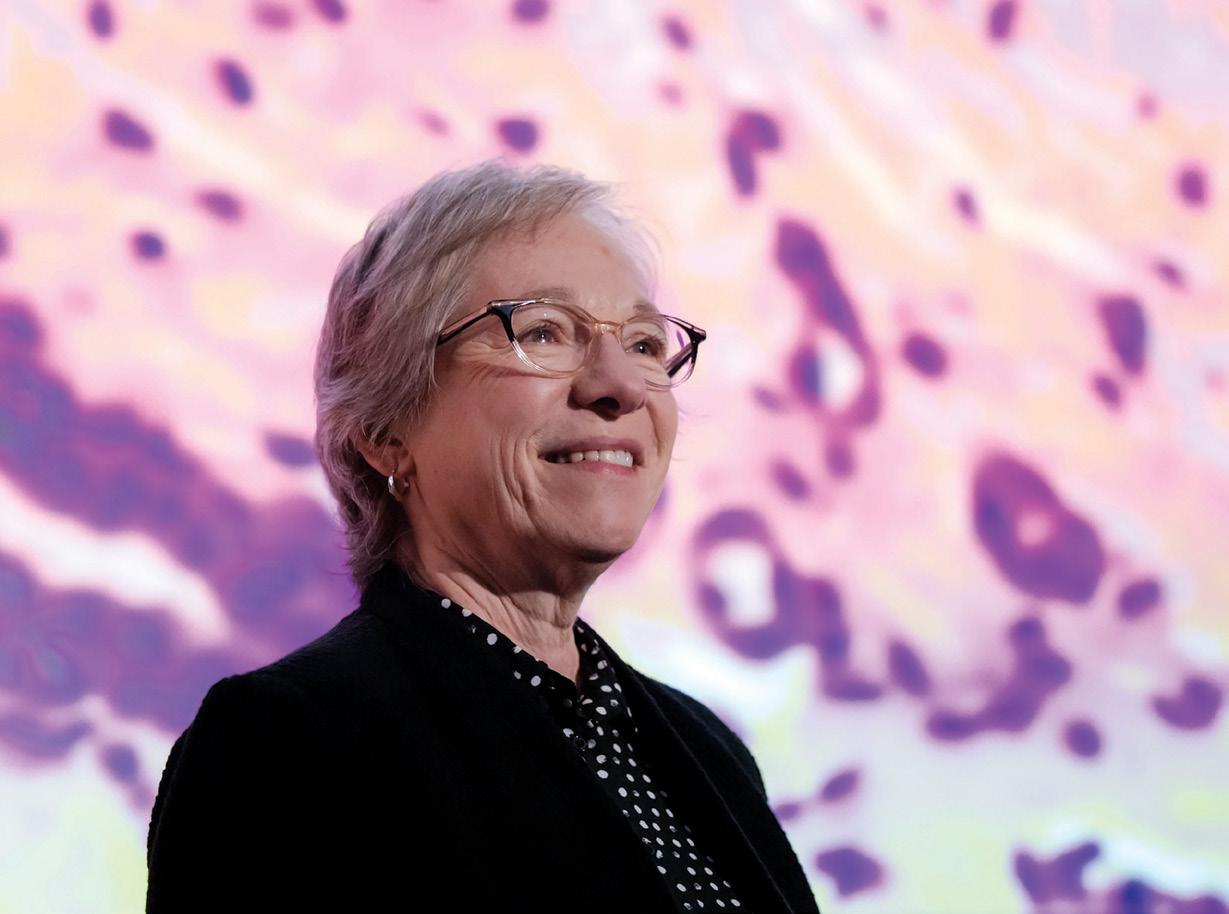
After more than four decades advancing research, mentoring emerging scientists, and shaping regenerative medicine, Dr. Luisa A. DiPietro has become synonymous with discovery, collaboration and compassion at the University of Illinois Chicago.
As a UIC Distinguished Professor and founding director of the Center for Wound Healing and Tissue Regeneration, DiPietro has dedicated her career to understanding how the body repairs itself. Her pioneering work redefined the field’s understanding of wound healing, revealing how inflammation influences tissue repair and how oral tissues regenerate with minimal scarring.
“Research has always felt like fun,” she said. “It becomes meaningful when findings are replicated around the world. That’s when you realize your work has contributed to something larger than yourself.”
A defining moment came in 2005, when Nature published an article on scarless healing. “They interviewed four of us— scientists in different countries—who had reached the same conclusions independently. That’s when I truly felt the impact of collective discovery.”
“The most significant accomplishment we have as scientists is mentoring the next generation.”
DR. LUISA A. DIPIETRO
BUILDING A CENTER, A COMMUNITY AND A CULTURE OF MENTORSHIP
When DiPietro joined the faculty at UIC in 2006, she founded the Center for Wound Healing and Tissue Regeneration, one of the first of its kind in a dental school. Under her leadership, it became a hub of interdisciplinary collaboration, uniting experts in microbiology, biomedical engineering and clinical sciences.
Yet, her proudest legacy lies in the students she has trained. “The most significant accomplishment we have as scientists is mentoring the next generation,” she said. “I’ve been fortunate to guide undergraduates, DMD/PhD and MD/PhD students, surgical residents, and postdocs and watch them go on to do more than I ever could.”
Throughout her career, DiPietro has directed or co-directed three NIH-supported training and career development programs, including the UIC CTSA KL2 Scholars Program and the Multidisciplinary Oral Sciences Training Program.
She fondly recalls her leadership role in co-facilitating faculty mentor training workshops at UIC as a particularly meaningful initiative. “Mentoring extends our work beyond ourselves,” she reflected. “When I see my former trainees thriving, publishing, and leading programs, that’s the real legacy.”
“Dr. DiPietro transformed our lab, bringing in new technologies that propelled our science forward,” said Dr. Peter Polverini, Jonathan Taft Distinguished University Professor of Dentistry and Dean Emeritus, University of Michigan School of Dentistry. “She is one of the most gifted scientists I’ve worked with. Mentoring her was a privilege, and she, in turn, made me a better scientist.”
“She cared about her fellow students and was relentless in wanting to help them succeed.
These traits associated with her calm presence portended her academic success.”
DR. KATHERINE KNIGHT
A RESEARCHER’S PATH: FROM INFLAMMATION TO REGENERATION
DiPietro’s passion for research began with an immunology course in dental school taught by Dr. Katherine Knight, whose approach transformed her perspective. “That course changed my life,” DiPietro recalled. Instead of relying on textbooks, Knight led students through primary research papers, analyzing experimental design and data interpretation. “I fell in love with the process,” she said. “Designing an experiment, asking a question, finding an answer, or sometimes not, was exhilarating.” Within a year, she knew research had to be part of her career. What began as curiosity became a lifelong joy. “It never felt like a job,” she said. “Even now, the best moments are in lab meetings, when students challenge ideas, and we push each other to think differently.”
“As a PhD student, it was very clear that Dr. DiPietro was extraordinarily smart, articulate, well organized and intensely interested in doing high-quality research. She was already a scholar of the highest caliber, always asking critical questions, and designing thoughtful experiments to answer the questions,” said Dr. Katherine Knight, professor and chair of the department of microbiology and immunology at Loyola University Chicago. “In addition, she cared about her fellow students and was relentless in wanting to help them succeed. These traits associated with her calm presence portended her academic success.”
DiPietro’s research career began at Loyola University Medical Center, where she directed research at the Burn and Shock Trauma Institute. There, she challenged long-standing assumptions that inflammation always aided healing, demonstrating instead that excessive inflammatory activity can hinder tissue repair.
Her later studies linked angiogenesis, the growth of new blood vessels, to scar formation and identified key signaling molecules regulating that process. More recently, her lab has explored the genetic mechanisms that allow oral tissues to heal with minimal scarring.
Funded continuously by the National Institutes of Health since the early 1990s, DiPietro credits teamwork for her success. “It’s never been about me,” she said. “It’s always been the students, postdocs and collaborators who make the science happen.”
LEADERSHIP IN SERVICE AND SCIENCE
Beyond her lab, DiPietro has been a national advocate for advancing biomedical research. She has served on three NIH advisory councils, including the National Advisory Dental and Craniofacial Research Council, helping to shape national research priorities.
At UIC, her leadership has included roles as associate dean for faculty affairs, associate vice chancellor for research, and scientific director of the Chicago Biomedical Consortium, a partnership among UIC, Northwestern, and the University of Chicago.
“I’ve been so fortunate to feel supported at every stage,” she said. “UIC has always valued collaboration and diversity. That sense of inclusion has made this an extraordinary place to work.”
Even as she transitions into retirement, DiPietro remains committed to supporting early-career researchers.
“My role now is to help junior faculty stay encouraged through challenging funding periods. Things will get better, but they need our support to get there.”
CONTINUING THE WORK OF HEALING
This fall, DiPietro will deliver the Paul Goldhaber Lecture at Harvard, one of dental academia’s highest honors. “It’s an incredible honor and a bit humbling,” she said. “Moments like this remind me how fortunate I’ve been to work with so many talented and generous colleagues.”
Her humility reflects the same spirit that has guided her career: curiosity paired with generosity, ambition tempered by gratitude. For Dr. DiPietro, the science of healing has always been about connection: between tissues, between disciplines, and between generations of scientists continuing the work she began.
“I couldn’t have imagined a better career,” she said. “It’s been a privilege to do what I love—and to help others find that same joy.”
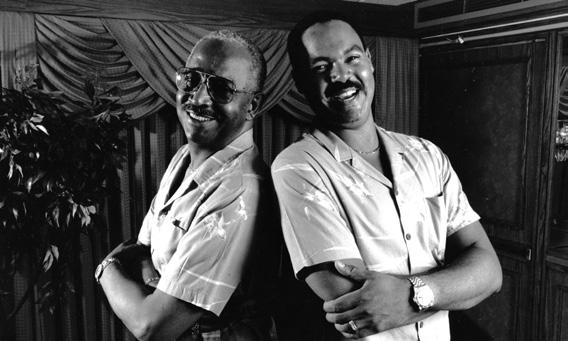
MACLIN THE MENTOR
WITH THE DR. MELVIN M. MACLIN ’58 SCHOLARSHIP, FACULTY MEMBER DR. DAVID MACLIN MEMORIALIZES HIS LATE FATHER AND CELEBRATES HIS PASSION
FOR MENTORSHIP.
BY DANIEL P. SMITH
Ask Dr. Kyra Barnes ’84 about Dr. Melvin M. Maclin ’58 and the praise arrives with speed and enthusiasm. A sincere joy consumes Barnes’s voice as she recounts one story after another about a man she affectionately called “Uncle Mac” even though the two had no familial ties.
“Dr. Melvin Maclin modeled pride, passion and class while caring for our community,” Barnes said of Maclin, a prominent dentist on Chicago’s South Side until his untimely passing in 1990 at the age of 62. “He was smart, kind and very generous with knowledge.”
When Barnes hit a rough patch during dental school in the early 1980s, she remembers Maclin pulling her aside at a social function and offering encouragement she desperately needed.
“He urged me to push through and rise above all the noise while also assuring me I wasn’t alone,” Barnes recalls. “He was so encouraging and embraced me as an up-and-coming dentist. He made me excited to be part of the profession.”
Maclin, of course, understood the struggles of navigating dental school, building a successful clinical practice and leading an engaged life of purpose. Even more, he willingly shared his experiences and insights with scores of young dentists, particularly African American dentists like Barnes.
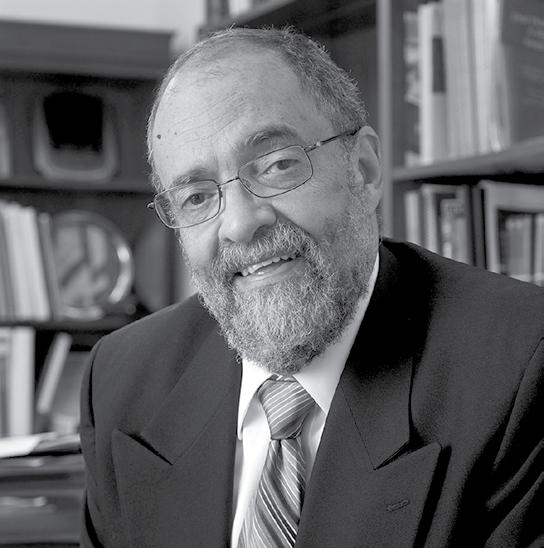
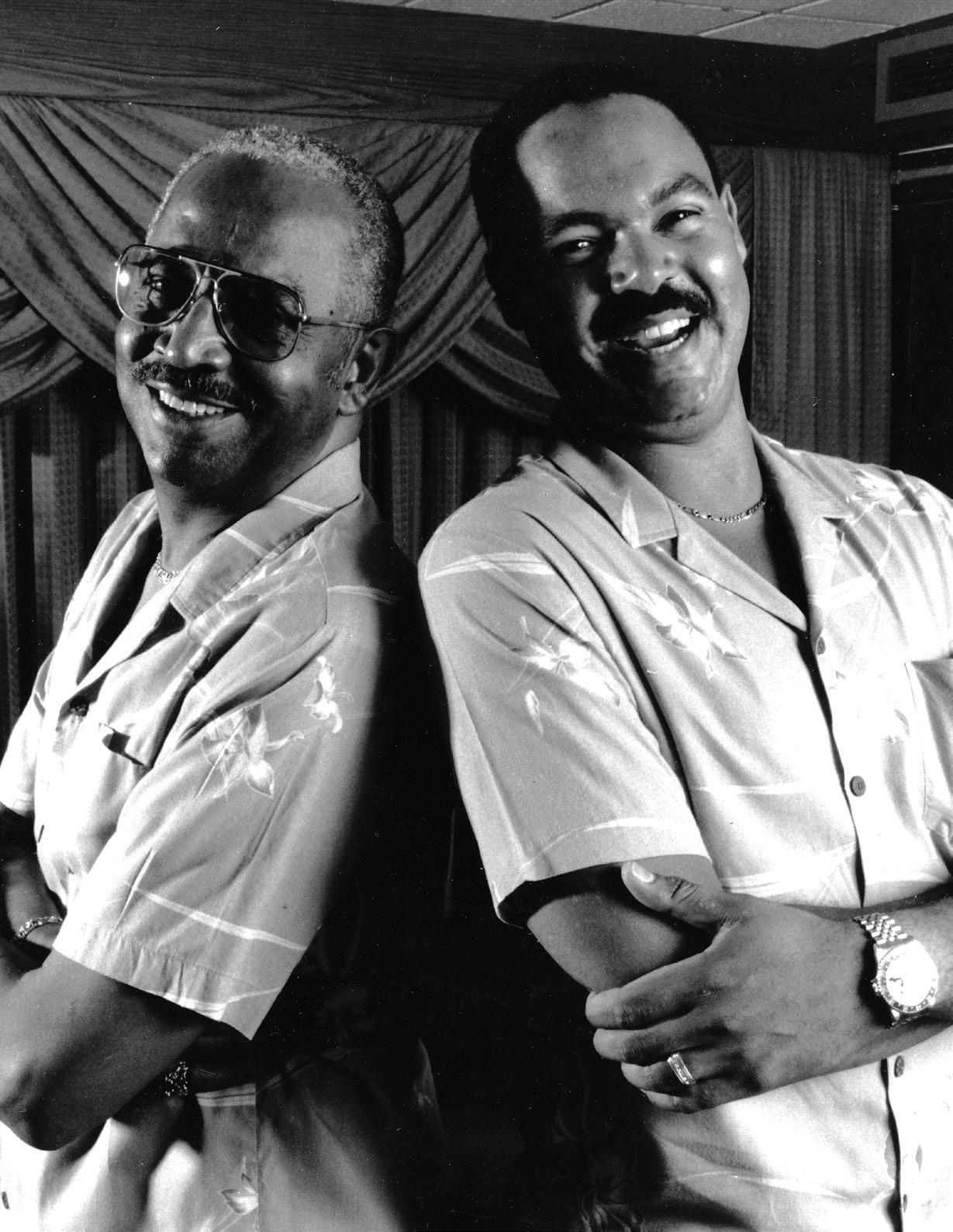
“My father was the kind of guy who loved all young folks who came out of dental school,” said Dr. David Maclin ’84, one of Melvin Maclin’s five children and a second-generation dentist himself. “He was inviting and made people feel good.”
Photo: Courtesy of Dr. David Maclin
AN INSPIRED LIFE
Born in 1928 to a farming family in west Tennessee, Maclin decided early on he would commit himself to the classroom, a motivation ignited by exhausting work in the fields as a youth.
“He wanted to escape farming and Somerville, Tennessee,” David Maclin said of his father.
Maclin earned his bachelor’s degree from Tennessee A&I State University (now Tennessee State) in Nashville before serving a stint in the U.S. Army and working for the Ford Motor Company. Noting Maclin’s scientific mind, a family friend suggested he explore dentistry as a career. The idea intrigued Maclin, spurring him to move to Chicago in 1954, enroll in the University of Illinois School of Dentistry and begin driving a taxicab to fund his education.
Upon completing his studies in 1958, Maclin established his private practice above a drug store at 63rd and Ellis in Chicago’s Woodlawn neighborhood. He also became active in professional organizations like the National Dental Society and the Lincoln Dental Society, two groups accepting of African American dentists in the pre-Civil Rights era.
Two decades later, Maclin purchased a building in the Princeton Park neighborhood on Chicago’s South Side and relocated his office. He continued to see patients there until his death on December 28, 1990.
A MENTOR TO MANY
Though Maclin practiced in a community with a high incidence of dental disease and an ever-hovering fear of the dentist, he nevertheless excelled. Barnes noted Maclin’s accomplishments amid stacked odds and took his lessons to heart when she opened her own dental office in the city’s South Shore neighborhood.
“He embraced the good times as well as the challenging times and never showed stress – only the ability to overcome,” Barnes said. “In a community that really needed a good dentist, he thrived with his skill and personality and seeing his success was very inspiring.”
Indeed, Maclin served as a model for many young dentists, including Dr. Zeb F. Poindexter, III. A second-generation dentist in Houston, Poindexter came to know Maclin by attending National Dental Association conventions alongside his father. Poindexter recalls Maclin sharing consistent guidance about the profession, being a gentleman and representing the family name well.
“He gave me the ABCs of life and wanted to see me come up the ranks,” Poindexter said. “He was part of a movement of men in the Black community at the time who wanted to ensure people like myself were guided appropriately, and I always appreciated that he took a genuine interest in me.”
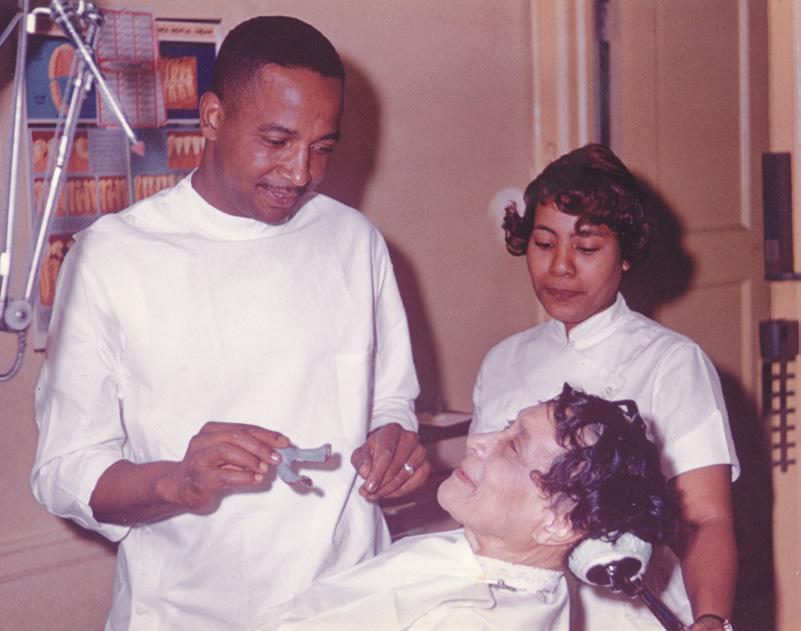
Dr. Melvin Maclin and dental assistant treating a patient.
Photo: Courtesy of Dr. David Maclin
“In a community that really needed a good dentist, he thrived with his skill and personality and seeing his success was very inspiring.”
DR. KYRA BARNES
Maclin’s mentorship extended to his children as well. Working alongside his father as a “child assistant” beginning at age 13, David Maclin marveled at his father’s technical skill and rapport with patients.
“I loved watching people being frightened to death upon entering the office but then walking out happy,” David Maclin said. “Seeing his technique, his dental skill, his chairside manner up close, I was all in. I wanted to be just like him.”
HONORING THE FATHER
Predictably, David Maclin followed his father into dentistry, including training at UIC and spending 39 years in private practice on the South Side. In 2023, the younger Maclin joined the UIC College of Dentistry’s faculty ranks while also assuming the dental director role at the Howard Brown Health clinic in the Englewood neighborhood.
“I’m right down the street from my father’s old practice site on 63rd St. and Ellis, so I’ve come full circle,” David Maclin said.
While offering instruction and perspective to the next generation of dentists as a clinical instructor in UIC’s Department of Restorative Dentistry, David Maclin fully realized the gifts of wisdom and insight his father had given him – and it sparked an idea.
“I needed to establish something to put him in great memory,” David Maclin said.
Earlier this year, David Maclin established an endowed scholarship at UIC in memory of his late father. The Dr. Melvin M. Maclin ’58 Scholarship is a need-based award intended for students in strong academic standing with a demonstrated commitment to the dental profession.
“He was a strong, generous and mentoring man who wanted to be supportive, so this scholarship fits how he lived his life,” David Maclin said. “Knowing how much he wanted to help young dentists, my father has to be smiling about this scholarship and what it will do for the recipients.”
FACULTY ACHIEVEMENTS
Our faculty members are distinguished leaders in their fields, offering unparalleled expertise, experience, and innovative approaches to education and clinical practice. Dedicated to excellence, they remain at the cutting edge of dental education and practice through ongoing research, professional growth, and global collaboration with fellow experts.
HERE ARE A FEW ACHIEVEMENTS FROM 2024-2025
SAHAR ALRAYYES
Clinical Professor
Pediatric Dentistry
Award: Ann Page Griffin Humanitarian Award
Awarding Organization: American Academy of Pediatric Dentistry
BABKA
Clinical Associate Professor
Restorative Dentistry
Award: 2024 Outstanding Part-Time Faculty Award
Organization: Department of Restorative Dentistry
THERESE GALANG BOQUIREN
Professor and Director of Predoctoral Orthodontics
Award: Installed as President Organization: Illinois Society of Orthodontists
STEPHEN D. CAMPBELL
Professor
Restorative Dentistry
Award: 2024 James W Buckman
Faculty Award
Organization: Department of Restorative Dentistry
B. RODRIGUEZ
BETANCOURT Chief Resident Periodontics
Award: 2025 Dr. D. Walter Cohen Teaching Award
Organization: American Academy of Periodontology Foundation
BHAKTI DESAI
Clinical Assistant Professor Pediatric Dentistry
Award: 2025 Harris Fellow
Organization: American Academy of Pediatric Dentistry
MARSHA
AMANDA
LUISA DIPIETRO
Professor and Director of the Center for Wound Healing and Tissue Regeneration Periodontics
Award: 2025 Paul Goldhaben Distinguished Award Organization: Harvard School of Dental Medicine
Award: 2025-26 UIC Distinguished Professor Organization: Office of the Vice Provost of Faculty Affairs
MICHAEL HAN
Associate Professor and Residency Program Director Oral and Maxillofacial Surgery
Award: Best Case Submission Award Organization: 2025 Oral Certifying Examination for the American Board of Oral and Maxillofacial Surgery
BITA FAYZ
Clinical Assistant Professor Periodontics
Award: Fellowship in the American College of Dentists Organization: American College of Dentists
COLIN HALEY
Clinical Associate Professor & Director, Group Facilitation Oral Medicine and Diagnostic Sciences
Award: Award for Excellence in Teaching Organization: UIC
BRADFORD JOHNSON
Franklin S. Weine Professor and Head & Director of Postdoctoral Endodontics Endodontics
Award: AAE Lifetime Achievement Award Organization: American Association of Endodontists
NADIA KAWAR
Clinical Professor Periodontics
Award: Distinguished Honoree Organization: Sweis(s) Professional Network
KEVIN KING
Clinical Assistant Professor
Restorative Dentistry
Award: Jon Daniel Teaching Award
Organization: UIC College of Dentistry
MICHAEL MILORO
Daniel M. Laskin Professor and Head Oral and Maxillofacial Surgery
Award: 2025 Daniel M. Laskin Award For Most Outstanding Paper Published in the Journal of Oral and Maxillofacial Surgery Organization: Oral and Maxillofacial Surgery Foundation
SUSAN ROWAN
Professor and Dean
Award: Fellowship in the Pierre Fauchard Academy Award
Organization: Pierre Fauchard Academy
SCOTT TOMAR
Professor and Associate Dean Prevention and Public Health Sciences
Award: Scott L. Tomar Mid-Career Public Health Professional Award
Organization: American Public Health Association, Oral Health Section
ANNA ORLAND
Clinical Instructor
Dental Clinics
Award: Fellowship in the Pierre Fauchard Academy Award
Organization: Pierre Fauchard Academy
MATEUSZ WIETECHA
Assistant Professor Oral Biology
Award: H. Paul Ehrlich Rising Star in Wound Healing Research Award
Organization: The Wound Healing Foundation
ALUMNI EVENTS
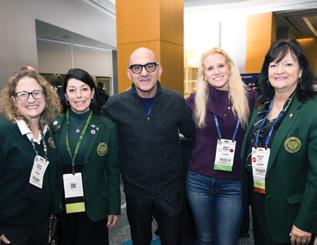
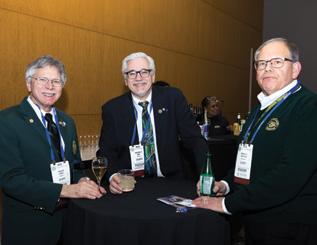
CDS MIDWINTER
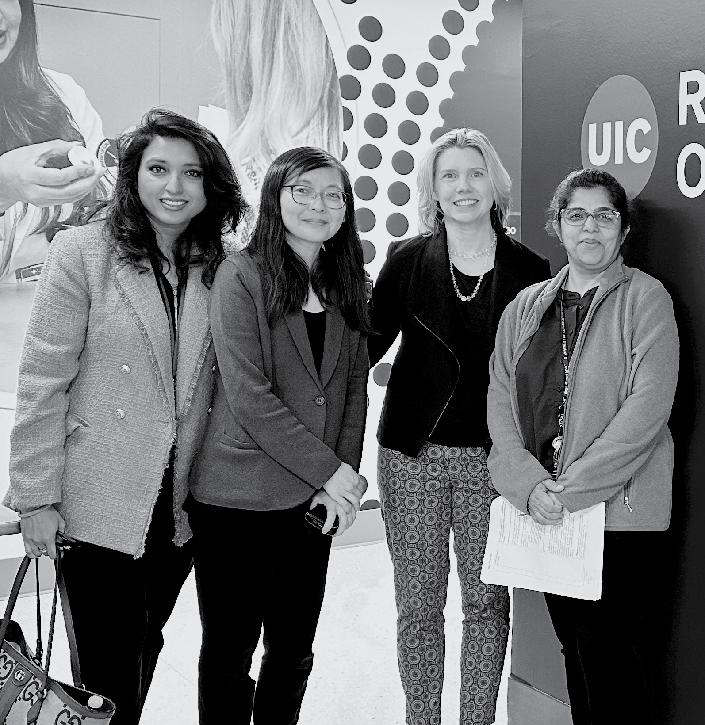
The CDS Midwinter Reception brought classmates together to celebrate their anniversary years. The event took place Friday, Feb. 21, at the Hyatt Regency McCormick Place.
STUDENT ACTIVITIES
COMMENCEMENT
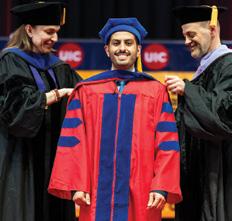
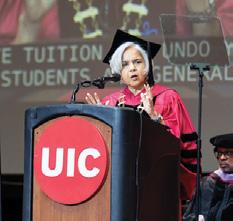
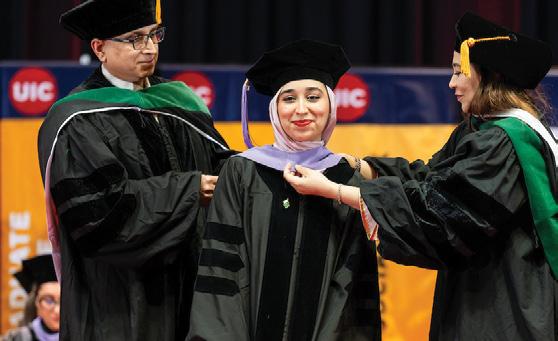
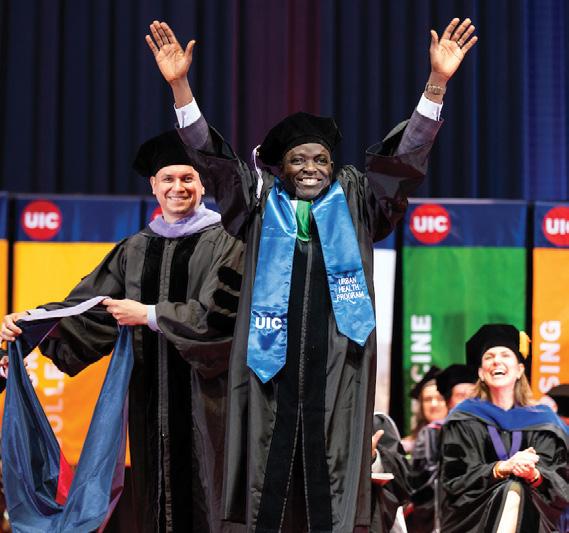
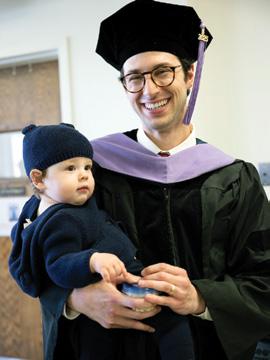
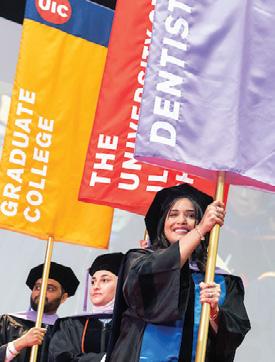
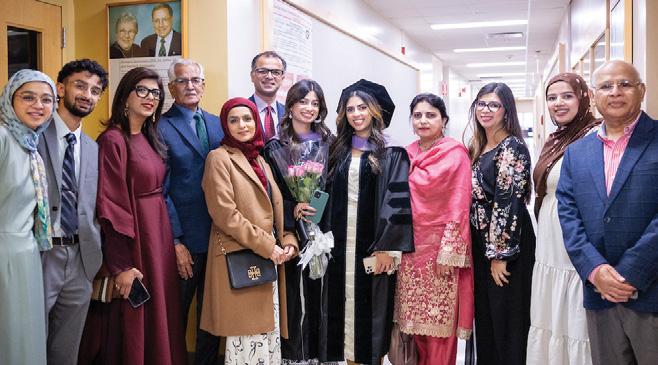
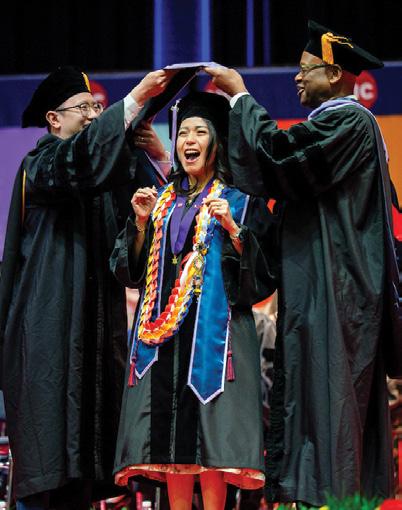
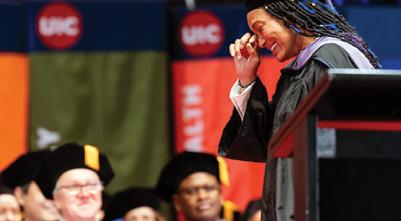
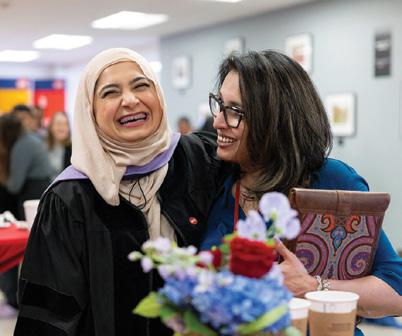
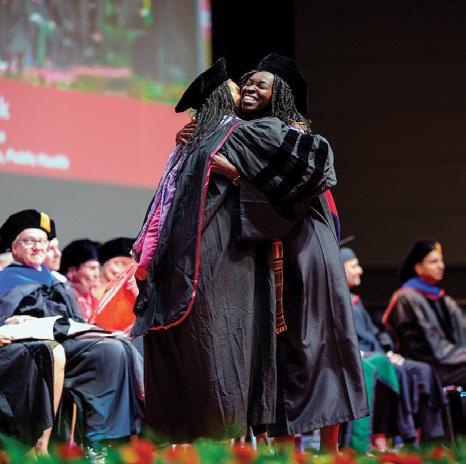
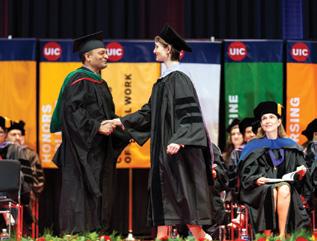
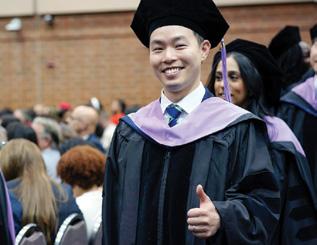
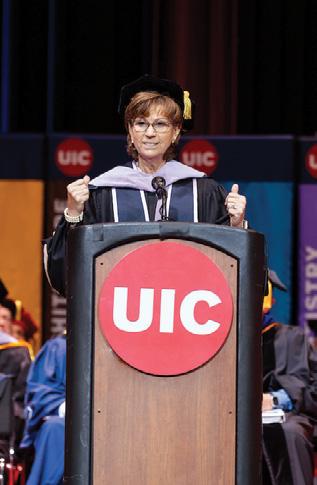
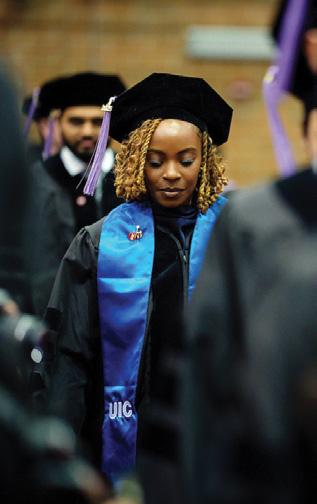
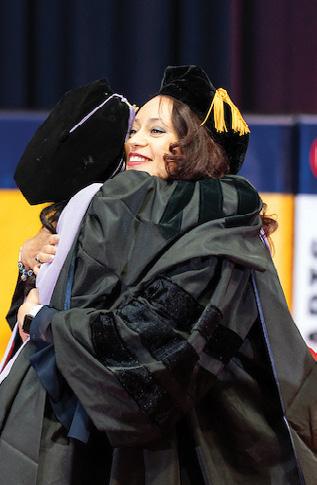
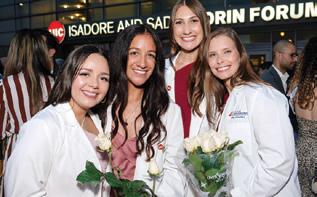
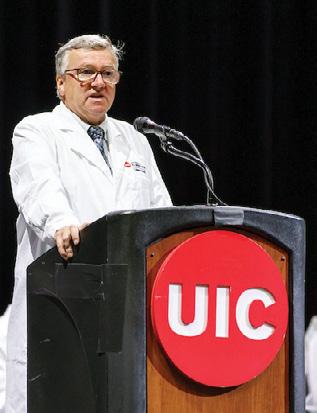
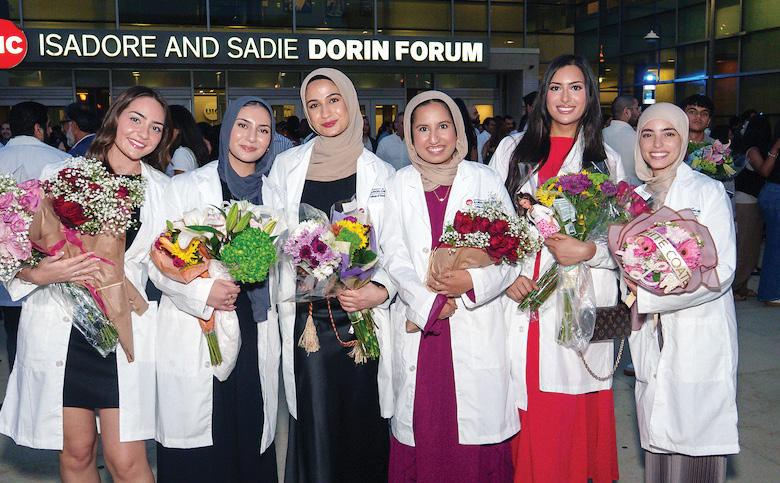
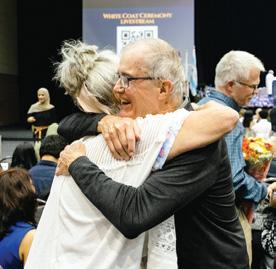
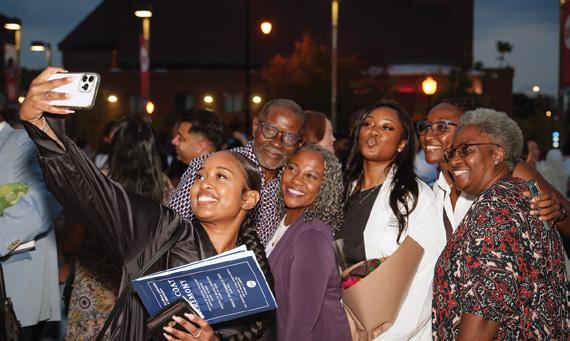
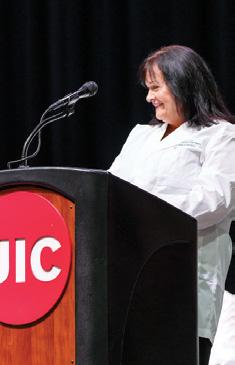
The Class of 2025 Commencement was held May 8 at the UIC Isadore and Sadie Dorin Forum. A total of 160 degrees were conferred, including DMD, advanced specialty certificates, Master of Oral Sciences, Master of Public Health, and PhD in Oral Sciences. Following the ceremony, the College of Dentistry hosted a cake and coffee reception on the 4th and 5th floors for the graduates and their families.
Photos: UIC Creative &
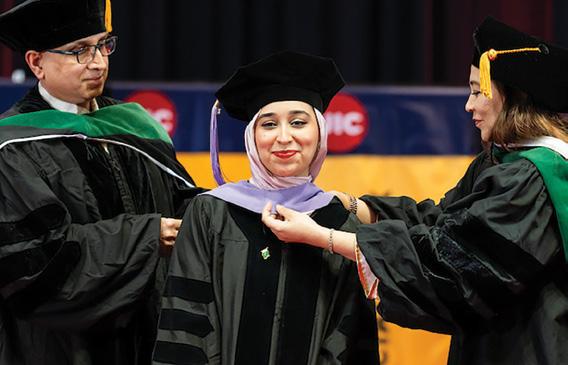
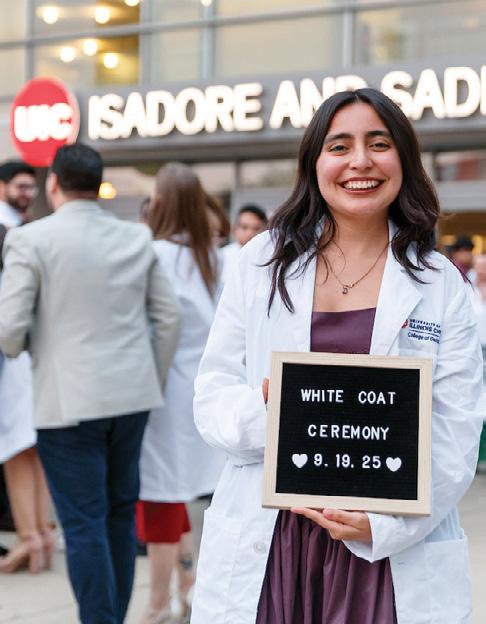
WHITE COAT CEREMONY
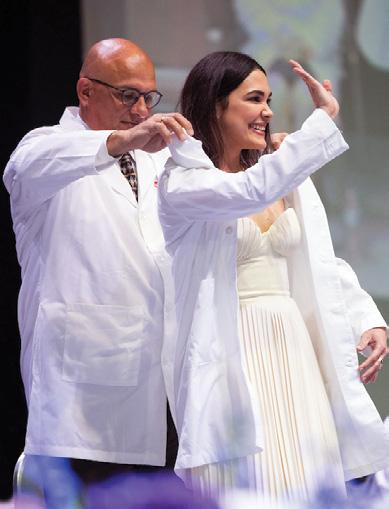
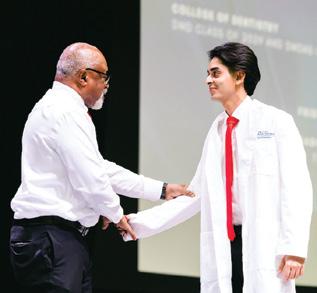
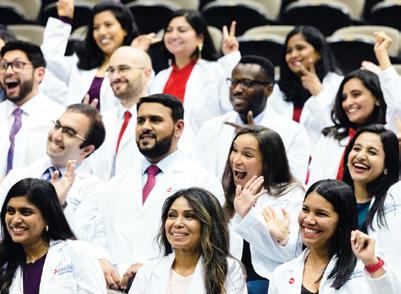
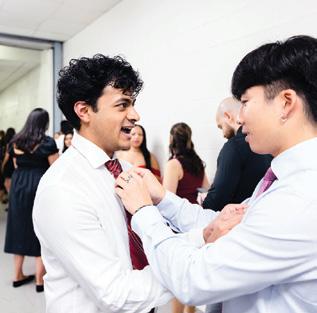
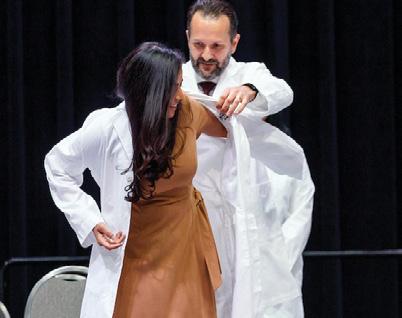
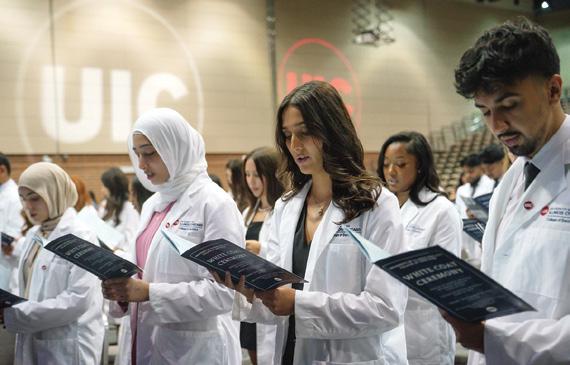
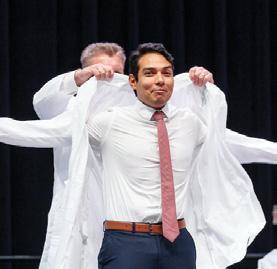
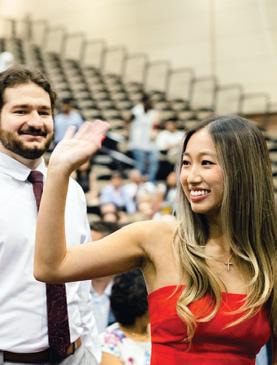
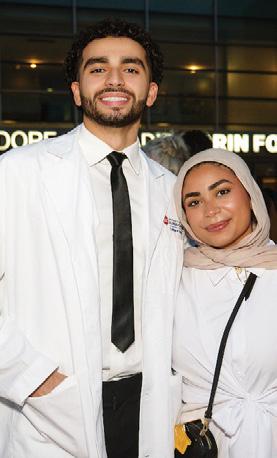
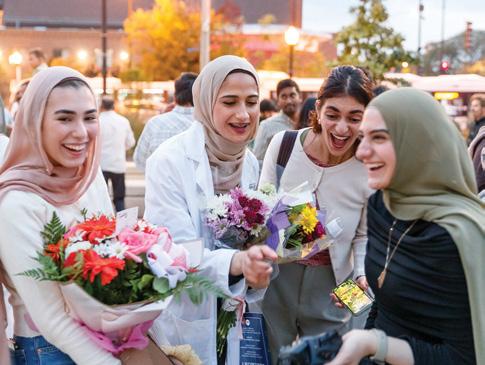
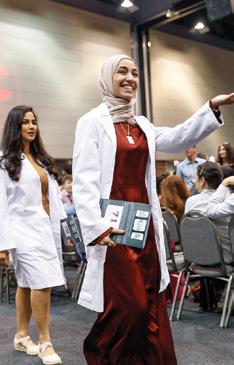
On Sept. 19, the UIC College of Dentistry celebrated one of its most cherished traditions, the White Coat Ceremony, welcoming the DMD Class of 2029 and the DMD Advanced Standing Class of 2027 into the dental profession. The event was held at the UIC Isadore and Sadie Dorin Forum.
Photos:
IN MEMORIAM
SEPTEMBER 2024
DAVID B. BAPTIST, ‘76
DECEMBER 2024
PETER T. HARNOIS, ‘82
JANUARY 2025
MARTIN B. SANDERS, ‘71
FEBRUARY 2025
JEREMY S. GOLDBERG, ‘62
MARCH 2025
WESLEY T.S. KAIHARA, ‘81
DONALD P. JELINEK, ‘57
APRIL 2025
JOSEPH C. MORGANELLI, ‘66
JAMES E. FOX, ‘79
JULY 2025
JOHN R. MARINUCCI, ‘66
EDWARD HENRY OBROCK ‘55
AUGUST 2025
PAUL M. ERICKSON ‘61
CHARLES PALIN, ‘16
ROBERT HURDLE ‘61
SEPTEMBER 2025
JOSEPH A. ARNOLD, ‘74
OCTOBER 2025
EVERETT B. HANCOCK, ‘67
ROBERT E. SPRAGUE, ‘52
CALENDAR
FEBRUARY 20, 2026
CDS Midwinter Meeting Reception
Hyatt Regency McCormick Place, Chicago
MARCH 5, 2026
Clinic & Research Day
UIC Student Center West, Chicago
GOLDEN AND SILVER GRADS
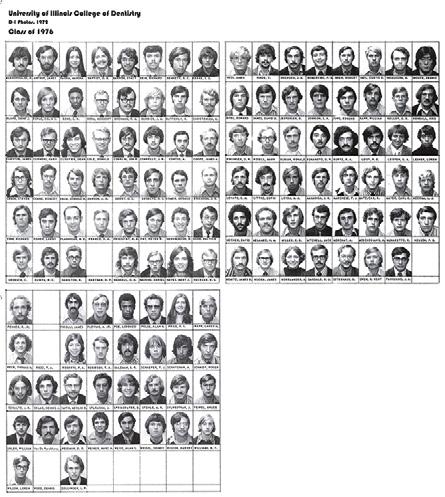
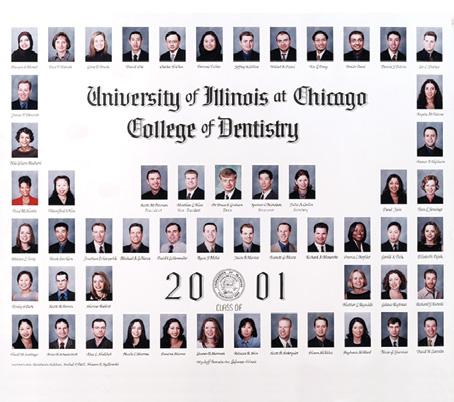
This spring, the UIC College of Dentistry is proud to launch a new tradition celebrating milestone reunions during our annual commencement ceremony.
We invite our Golden Graduates (Class of 1976) and Silver Graduates (Class of 2001) to join us as honored guests at Commencement on May 7, 2026 where we’ll recognize your lasting impact, achievements and connection to the College.
MAY 7, 2026
Commencement
UIC Isadore and Sadie Dorin Forum, Chicago
This special celebration will be a moment to reconnect, reflect, and inspire our newest graduates as they embark on their own professional journeys.
For more information, or to learn how you can serve as your class representative, please email DentAdvancement@uic.edu.
801 South Paulina Street (MC 621) Chicago, Illinois 60612-7211
“As president of the Student National Dental Association at UIC, I’m advocating for a future where technology and community care work together. When teledentistry is embedded in school-based programs, every child will benefit, even when their family can’t immediately visit a clinic. My journey as a student, mother, mentor, and future dentist has shown me that innovation matters when paired with compassion and equity. When done right, teledentistry can be the equalizer we need, and I’m ready to help lead that change, one virtual smile at a time.”