february 2026
february 2026

At Uniting we strive to make a difference for individuals, families, and communities. Our history is long, and we want our legacy to endure.
Leaving a legacy to Uniting goes beyond helping one person, your action will benefit many. If you would like to know more about including Uniting in your Will or would like a free copy of our guide to gift in Wills, please contact:
Sharon Wangman
Program Lead, Gift in Wills
T 0435 035 442
E bequests@unitingvictas.org.au

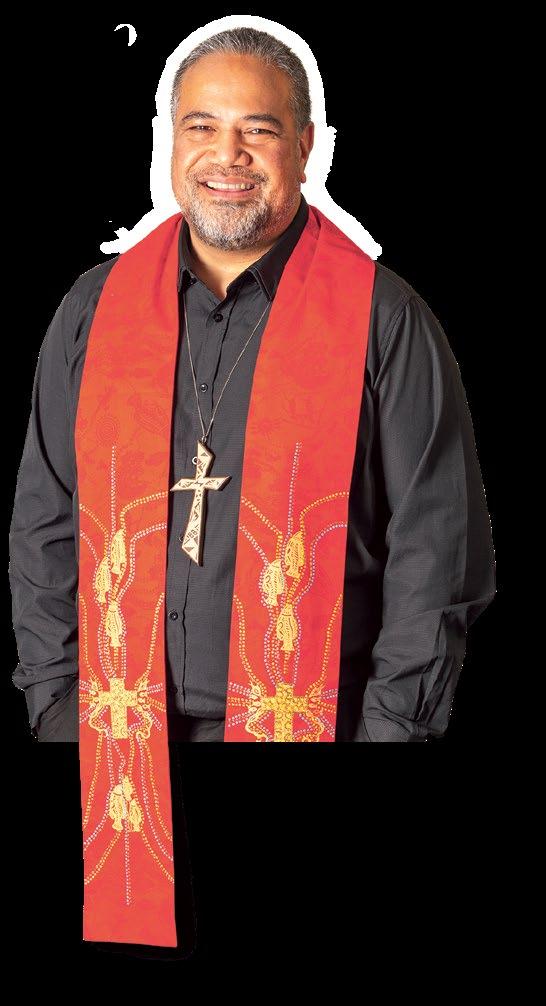
“The Gospel does not draw us away from the world; it sharpens our attention to where love is most needed.”
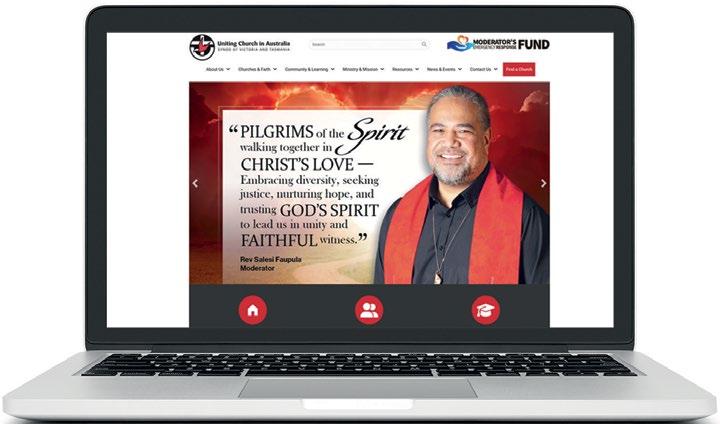
From time to time, a familiar concern resurfaces within our life as a Uniting Church, not from outside critics, but from people deeply shaped by this church. It is often spoken with care and concern: Have we become too focused on social justice? Too concerned with inclusivity, diversity, and unity? We need to sharpen our focus on the Gospel. I do not hear this as negative or argumentative, but as an opportunity for discernment. Beneath it, I hear a longing for faithfulness, for reassurance that Jesus Christ truly remains at the centre of all we do. That longing matters. It invites listening rather than defensiveness.
Still, I find myself lingering with the language of sharpening. What do we hope will come into clearer focus? And what do we fear might be slipping out of view?
These questions for me are shaped not only by my formation in the Uniting Church, but also by my Tongan heritage. In the Pacific, boats are not symbols of leisure; they are vessels of trust and survival. To step into a boat is to accept vulnerability, to rely on one another and to read the winds and currents carefully. Journeying is communal, and faith is lived on the move.
The Uniting Church often describes itself as a Pilgrim people. That image resonates deeply with me. A pilgrim church does not remain safely anchored. It sets out, trusting that the Spirit leads, even when the weather shifts and the horizon feels uncertain. Pilgrims travel not because everything is resolved, but because God is faithful enough to meet them on the way.
I remember wrestling with this during my training for ministry, particularly when reading ‘Where Did the Joy Come From?’ by one of our former presidents,
Andrew Dutney. What stayed with me then, and still does, is his insistence that joy in the life of the Church does not come from ease or agreement. It comes from costly faithfulness: from staying in the boat together and continuing the journey, even when discipleship stretches us.
The Gospel itself is not distant or abstract. In Jesus, God chooses nearness. The Word becomes flesh and enters fully into the unpredictability of human life, its beauty, pain and division. The Gospel does not draw us away from the world; it sharpens our attention to where love is most needed.
If the Gospel is truly the Word made flesh, then justice, inclusion, and unity are not distractions from faithfulness, but places where faithfulness is learned, tested and embodied.
From this place, commitments to inclusivity, diversity, and unity feel less like distractions and more like practices of learning how to travel together. Justice unsettles us not because it is foreign to the Gospel, but because love is costly.
Sharpening our focus on the Gospel does not make the journey easier. It makes it truer.
We do not always navigate well. We disagree, misread the conditions, and fall out of rhythm with one another. Yet we keep returning to Jesus Christ, crucified and risen. The cross assures us that God enters suffering fully; the resurrection promises that love has the final word.
Perhaps the deeper question is not whether we need to sharpen our focus on the Gospel, but whether we are willing to let the Gospel keep sharpening us. As Pilgrims of the Spirit, the Uniting Church is not called to cling to the shore, but to trust the One who still calls us forward.
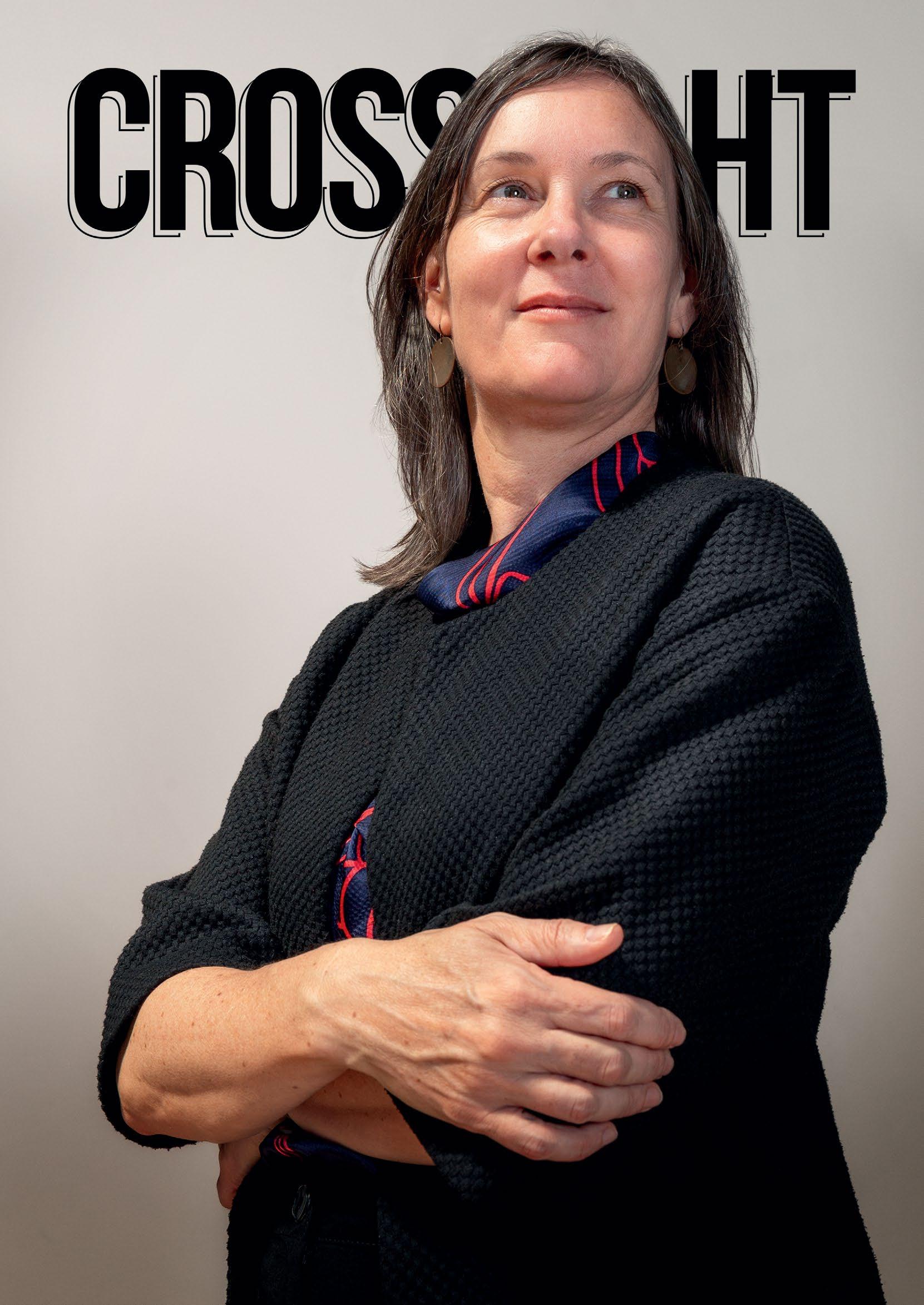
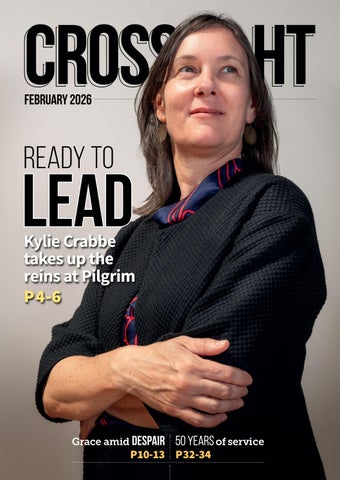
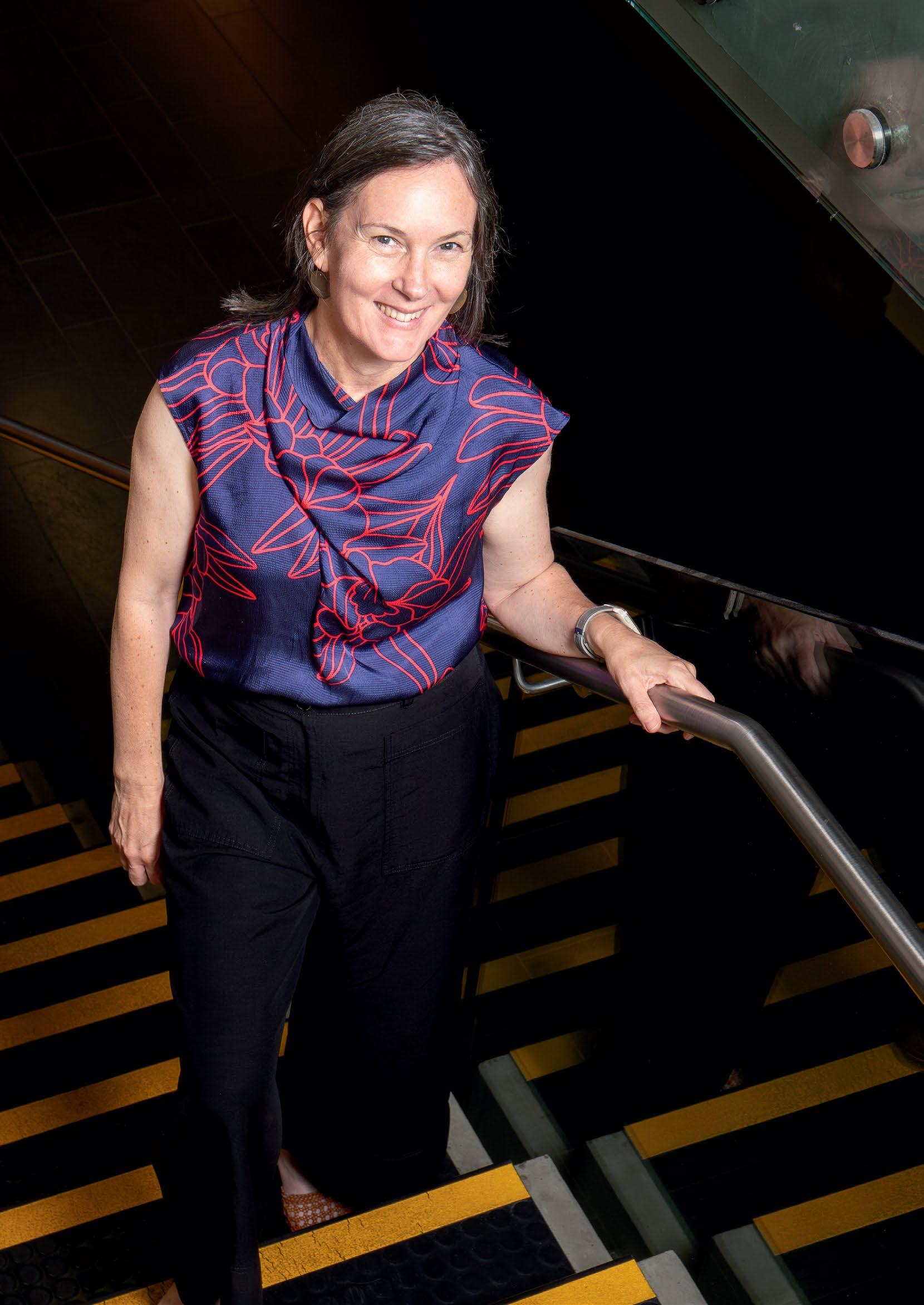
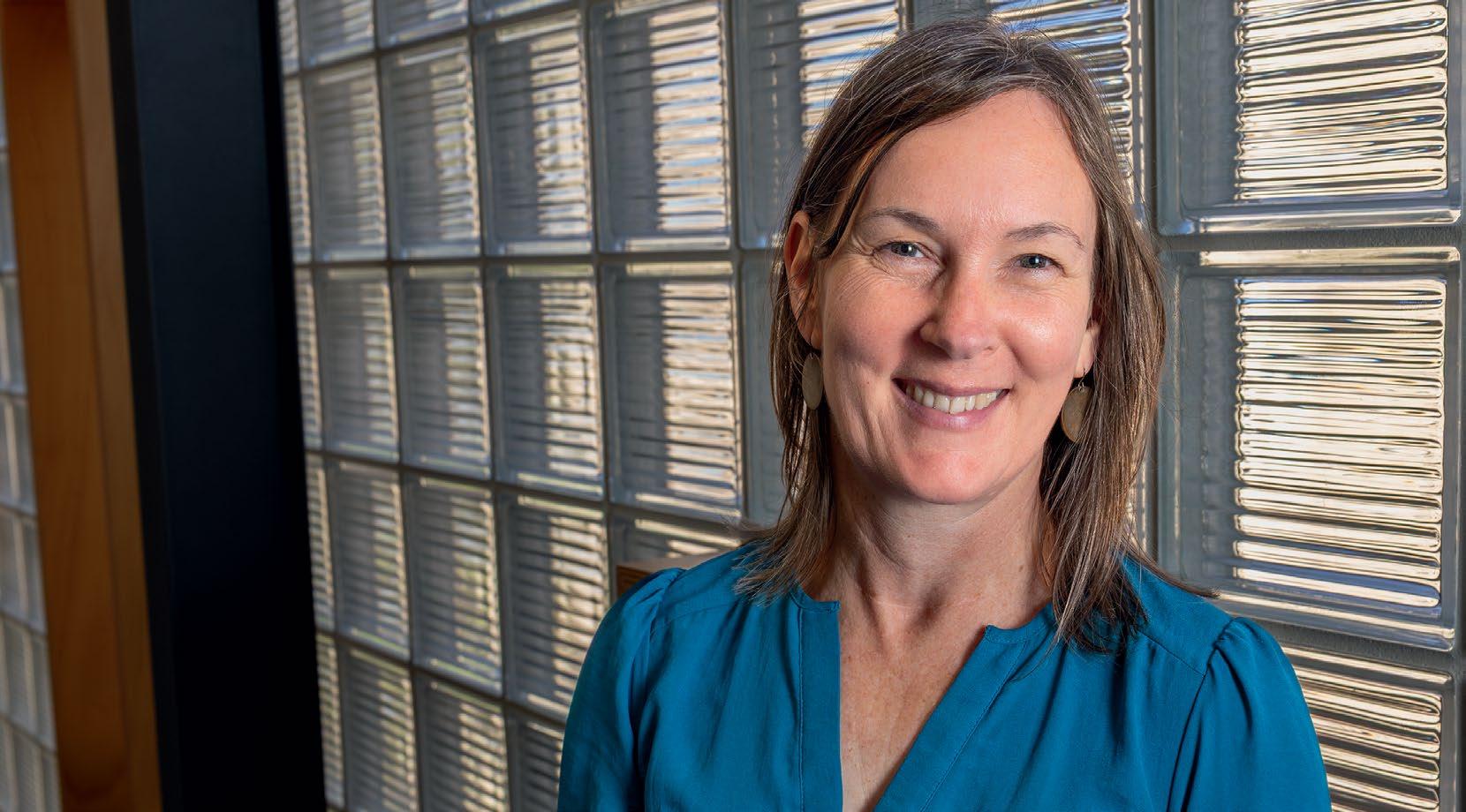
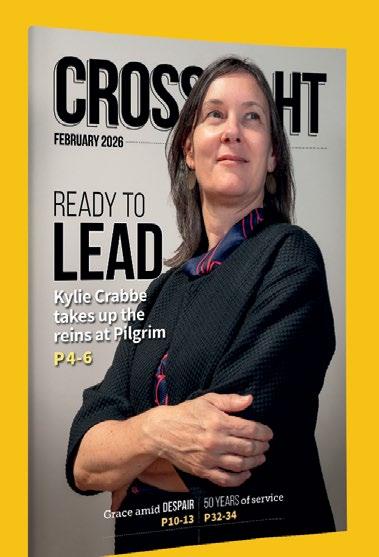
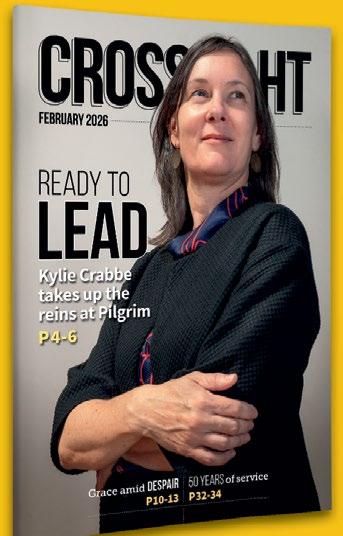
A wealth of experience has Rev Prof Kylie Crabbe well placed to drive Pilgrim Theological College towards a bright future.
By Andrew Humphries
In one sense, it felt like a homecoming for Rev Prof Kylie Crabbe when she took up the position of Pilgrim Theological College’s Head of College last month.
The appointment feels, she says, like a good fit for where she is in her vocational life.
It’s certainly a good fit for the college, which is getting a leader with a seriously good track record.
The cliché, these days, is to suggest that someone ticks a few boxes when it comes to sport, employment or whatever their role might be.
With Kylie, it’s more a case of running out of boxes to tick.
From studying and teaching at Oxford University and then the Australian Catholic University, to a stint in ministry in Melbourne’s inner suburb of Armadale, Kylie has a wealth of experience to draw on as she takes up the reins at Pilgrim.
In announcing her appointment last year, equipping Leadership for Mission (eLM) Executive Officer, Duncan Macleod, said Pilgrim was appointing someone with “considerable experience in teaching, research, academic leadership, management and administration in higher education”.
“Kylie has demonstrated skills in building a team of colleagues, nurturing capacity in teaching, research and formation for ministry,” Duncan said.
As a child of the Uniting Church, Kylie is delighted to be returning to its theological college in Melbourne in a fulltime capacity, and excited about what lies ahead.
“It genuinely does feel like a good fit, and it's wonderful to be returning fulltime to a role within the Uniting Church,” she says.
“I've worked in lots of ecumenical settings before, but there is something particularly special about working within your own tradition.”
While a double degree in Arts and Theology after leaving school gave Kylie a solid grounding for what was to follow, it was a placement with the Order of St Stephen that really shaped a longstanding interest in the lived experience of faith and questions of discipleship.
Introduced in the 1950s by the Methodist Church, and continued through the Uniting Church from 1977, the Order of St Stephen provided opportunities for those taking part to undertake 12 months of intentional service to the Church and the world.
During her placement, Kylie explored the lives of people living in intentional Christian communities, some on the fringes of institutional church organisations.
“Sometimes these communities would be made up of people from a range of different Christian traditions and our

task was to support these people in their communities and also to help the Church learn from them,” Kylie says.
“It was wonderful meeting people who really took their faith very seriously, and who were doing great work in terms of shared worship, prayer, spirituality and social justice.”
In 2004, Kylie became a candidate for Minister of the Word but then tragedy struck in 2005, with the death of her husband in a car accident in the Northern Territory, just a day after she had been approved to take up ministry in a congregation.
Understandably, Kylie took some time away to grieve, before returning to finish her candidacy and take up a role as congregational minister at Armadale Uniting Church.
She was able to combine ministry with teaching at both the United Faculty of Theology and Australian Catholic University, before discerning a call to broaden her education through doctoral work at Oxford University.
Kylie studied and lectured at Oxford before returning to Australia, and the Australian Catholic University in 2017.
She says she is taking on the role as Head of College at what is an exciting time for Pilgrim, which celebrated its 10th anniversary last year.
“I'm excited about a lot of the things that are happening at Pilgrim, and really excited about the way that the faculty there engages in thinking contextually about theology,” Kylie says.
“There are wonderful people among
the faculty at Pilgrim and I’m really looking forward to being able to support them to flourish in a variety of ways.
“I’m also excited about engaging with the student population, including candidates for ministry, people who are engaging in private study, those who are just dipping their toe in the water around theology and people who are engaging first and foremost from the perspective of their own discipleship.
“I'm interested in the ways in which Pilgrim is able to support all of that.”
As she steps into the role, Kylie hopes to continue a strong tradition of learning at Pilgrim that focuses on encouraging all students to flourish in their theological education.
“When I reflect on what Pilgrim can offer, I recall speaking at a valedictory service there a few years ago on the raising of Lazarus in John's Gospel,” she says. “Jesus raises Lazarus, calls him out of the tomb and tells the people there to unbind him and let him go.
“Jesus does the work of raising him, but the community is instructed to play their part too, releasing him so he can go on his way.
“The story resonates with me because I see theological education at its best as liberation; the instruction Jesus gives to the crowd to unbind Lazarus leads me to the hope that our deeper learning in theology will free us and others to be more fully God’s people in the world.”
Kylie says part of her philosophy around formation is to discern the best environment for God to continue to do
the creative work that God is already doing within that person.
“God is already at work in the lives of everyone who comes to Pilgrim and our job is to provide the environment and resources to allow them to flourish within that,” she says.
“I think it’s also important to point out that theological education shouldn’t be seen as some sort of rarefied undertaking that is only available to certain people.
“It’s something that can support the discipleship of all of us, including people in their daily life, those working in secular contexts and people working in church agencies and schools.
“In my experience, including in times of terrible grief like the death of my husband, right through to other experiences with people in congregational life as their minister, there is something deeply important about engaging with, and having opportunities to reflect upon, the life of faith and the sustaining grace of God.
“Theological education is an invitation into deeper engagement and reflection, learning from faithful people across the globe and across time, from the biblical writers to First Nations theologians, from those who have engaged in radical reform of church and world to those who honed their faith in domestic settings, and much more.
“I'm honoured to lead Pilgrim as we continue to invite people into theological education and formation for ministry and discipleship.”


Share your views by completing the Synod’s Communications survey by February 28, 2026.
Please visit the survey website using this QR code or at www.victas.uca.org.au/survey2026



For
Launceston South
Uniting Church member Craig Osborne, service is found in small, steady acts of music, mentoring and showing up for others.
At his Launceston home, Craig Osborne pauses as kookaburras call through the trees.
“There’s four of them hanging around lately,” he says. “It’s pretty cool.”
That same ease shapes how Craig approaches life and faith.
Each Sunday he plays piano at Launceston South Uniting Church, where he has worshipped for more than three decades.
“I get a bit adventurous with the melody lines,” he laughs.
“People tell me they like what I do with the tunes.
“One said, ‘sometimes I wonder where the melody’s gone and then there it is again’. It just comes from the heart. I’m just being me.”
That steady authenticity has guided his faith and work.
As congregation chairperson and pianist, and as TasRail’s longest-serving trainer after 45 years on the railway, he has earned quiet respect for the way he helps others learn and belong.
Craig grew up in the Church and
By Marina Williams
returned to regular worship in the early 1990s after remarrying.
It was his late wife, Bronwyn, who “dobbed him in” to play piano.
“They must have been short of musicians,” he says, smiling at the memory.
Music, though, was already part of him.
“My grandmother was gifted, Dad plays too, and a local teacher got me started,” Craig says.
“I stopped lessons in Year 10 but never stopped playing. It’s good for the soul.”
The church’s inclusive spirit, he says, has kept him connected.
Through the years, Launceston South has welcomed people from Nepal, Bosnia and other communities seeking a place of belonging.
“People have told us we’re a friendly church and I feel that vibe too. It matters,” Craig says.
Faith, for Craig, is as much about curiosity as conviction.
He reflects on how meaning in scripture can turn on a single word.
“Take ‘forgive us our sins as we forgive those’,” he says.
“The word ‘as’ can mean ‘because’ or ‘in the same way as’.
“If I forgive but haven’t really let go, can I expect the same forgiveness?
“I prefer to read it as ‘in the same way as’. It keeps me honest.”
When Bronwyn died in 2006, that habit of reflection took on new depth.
“When my wife died, she was well,” he says. “She was just appallingly sick.”
He pauses.
“There’s a difference between being healed and being well,” Craig says.
Faith helps him sit with that complexity.
Craig became sole parent to their then 11-year-old daughter, Hannah; his two older children, Michael and Emma, were already close to adulthood.
“It wasn’t part of our life plan,” he says plainly.
“Looking back, I’m happy to have raised Hannah.
“What makes her isn’t just me. It’s her mum, too.
“The kids are decent human beings and, for me, that’s what matters.”
Family is central to Craig’s life.
His parents and Michael live not far away, while his daughters are based in Melbourne.
Grandchildren also keep him busy.
“It’s wonderful to enjoy time with them all and I am very grateful for my life,” he says.
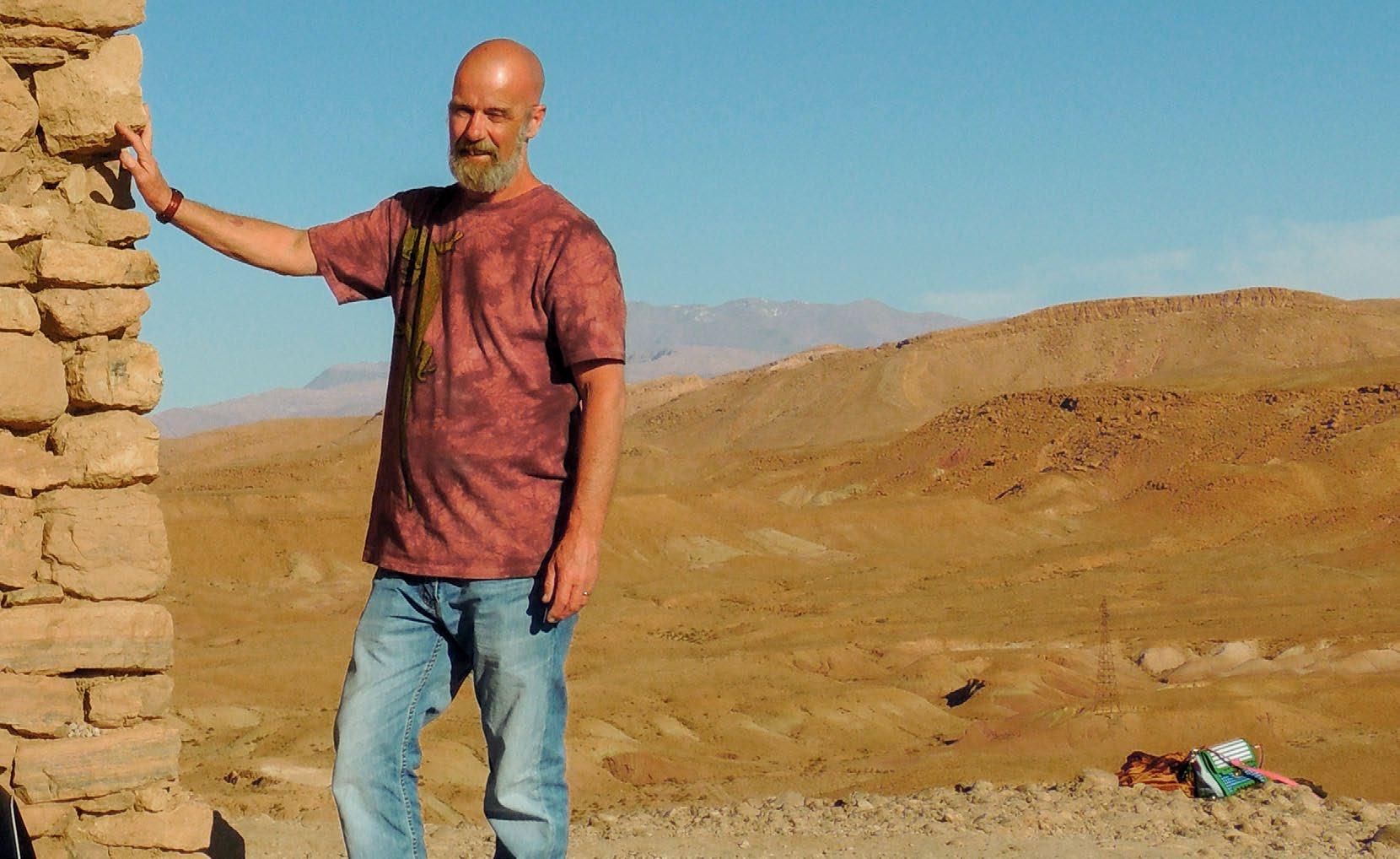
Craig also enjoys travelling, including recently to Morocco which was, he says, a reminder “of how big and fascinating the world is”.
At TasRail, Craig is described as a “living legend”.
Starting as a trainee driver in 1980, he later moved into training, working with everyone from track labourers to managers.
“I like seeing people learn and seeing that moment they realise they can do something they didn’t think they could –the ‘ahh’ moment”, he says.
In 2025 Craig received the Tasmanian Transport Association’s ‘Everyday Hero Award’.
“The feedback’s been overwhelming, with people saying well done, well deserved,” he says.
“Reading the testimonials was touching. I do my best and I don’t try to be anyone else.”
At church, the same steady approach guides his leadership.
In 2017 the congregation made the
Launceston South Uniting Church member Craig Osborne enjoys time in Morocco.
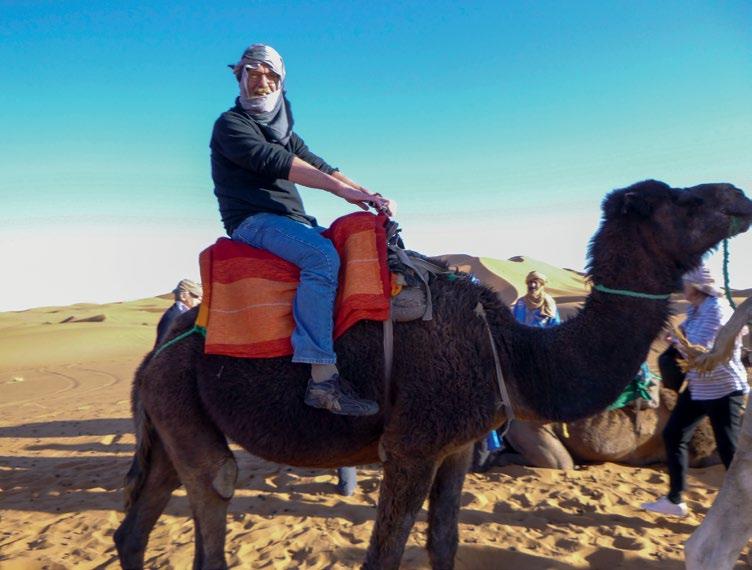
difficult decision to leave its Balfour Street building, where Craig had baptised Hannah, farewelled Bronwyn and saw Emma marry, and move to more sustainable premises.
“I had an emotional attachment there, as did others, who had been going there longer than me,” he says.
“Once I realised we’d eventually go broke if we stayed, it became about the future.
“It’s not about me, it’s about my grandchildren’s grandchildren and what’s the best path for the congregation to endure?”
He helped the congregation navigate that transition with care.
“Let’s make a decision,” he says simply.
“Let’s do what gives us the best chance of serving people far into the future.”
Now in his 60s, Craig is one of “the youngest” in his congregation.
He still arrives early to set up for worship and stays to help pack away.
He supports local missions, mentors younger members, and offers practical help when needed, but never sees it as exceptional.
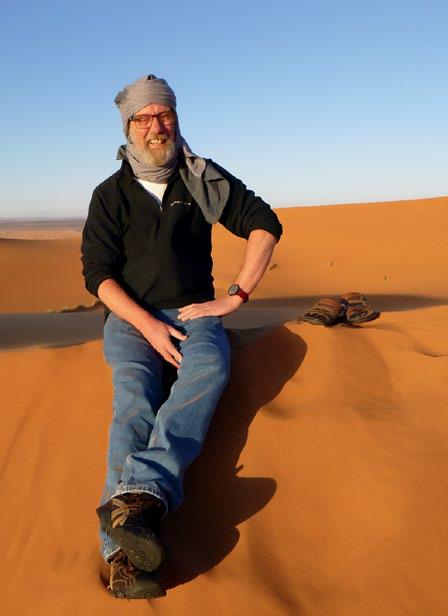
“I don’t imagine I’m anybody special,” he says.
“I just do what I do the way I’m wired. “I’m happy that I’m able to do it.”
His contribution to church, community and workplace is not defined by awards or titles, he says.
It rests in presence: a steady hand, a thoughtful word, a piece of music that lifts the room.
“I just try to be me.”
After the tragic deaths of two young people, Grace Community Uniting Church became a gathering place for grief, prayer and guidance. South Sudanese leaders and minister Rev Trang Vo reflect on trauma, belonging and the everyday work of healing.
A group of boys had spent the afternoon playing basketball.
Within hours, two of the South Sudanese boys, aged 15 and 12, were dead, killed in a violent attack – a tragedy that stunned families across Melton and sent shockwaves through Grace Community Uniting Church.
Word travelled quickly among South Sudanese congregations in Australia and overseas, reflecting the strong ties that stretch between Melton and faith communities abroad.
For long-time elder Father James Aboj, that September day last year marked the most painful moment in what had already been a devastating period for local families.
“In two or three months, we lost a lot of kids, like seven,” James says. “But that day, it was a black day.”
The deaths struck a congregation already burdened by earlier youth deaths, resettlement pressures and the ongoing trauma carried by many South Sudanese families.
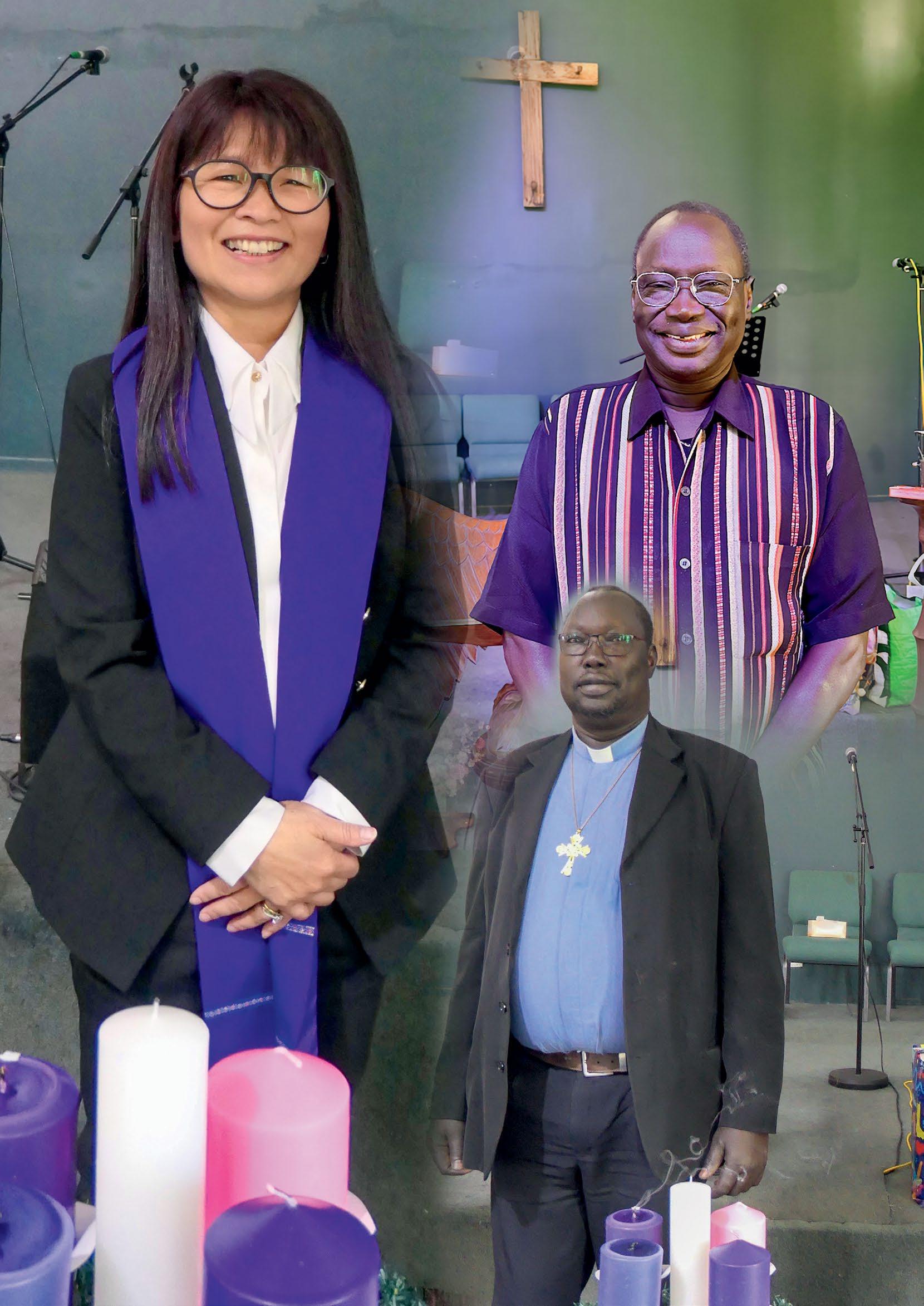
“It was such a shock,” says minister Rev Trang Vo.
“The young people were scared, traumatised.
They were afraid they might be the next victim because there is a lot of mistaken identity.
“They felt the community around Melton saw them negatively.”
For James, the violence came painfully
By Marina Williams
close. His son had been with some of the boys earlier that day.
“They go together, play together,” he says.
When the group dispersed, his son stayed behind to wait for his sister.
Later that night, realising how near he had been to danger, James’ son cried.
“He said, ‘why?’ We were very close to that thing,” James says.
As families grappled with the losses, Grace Community became a place of gathering and prayer.
The South Sudanese community has deep roots in the Uniting Church, shaped by nearly two decades of partnership, welcome and mutual support.
James first came to the Church in 2007, joining with families seeking a place where they could worship together.
“Uniting Church do a lot for us,” he says.
“They support us. They open the arms to welcome us.”
When James moved to Melton in 2008, the community followed.
Both he and Gahak Thuoc had already been leading together for many years, first in the Anglican tradition and then through their transition into the Uniting Church.
“We work together, we are one family,” James says.
Their partnership continues at Melton, where Gahak now serves as the South
Sudanese congregation representative and community leader, supporting families, assisting the minister and guiding cultural and pastoral matters.
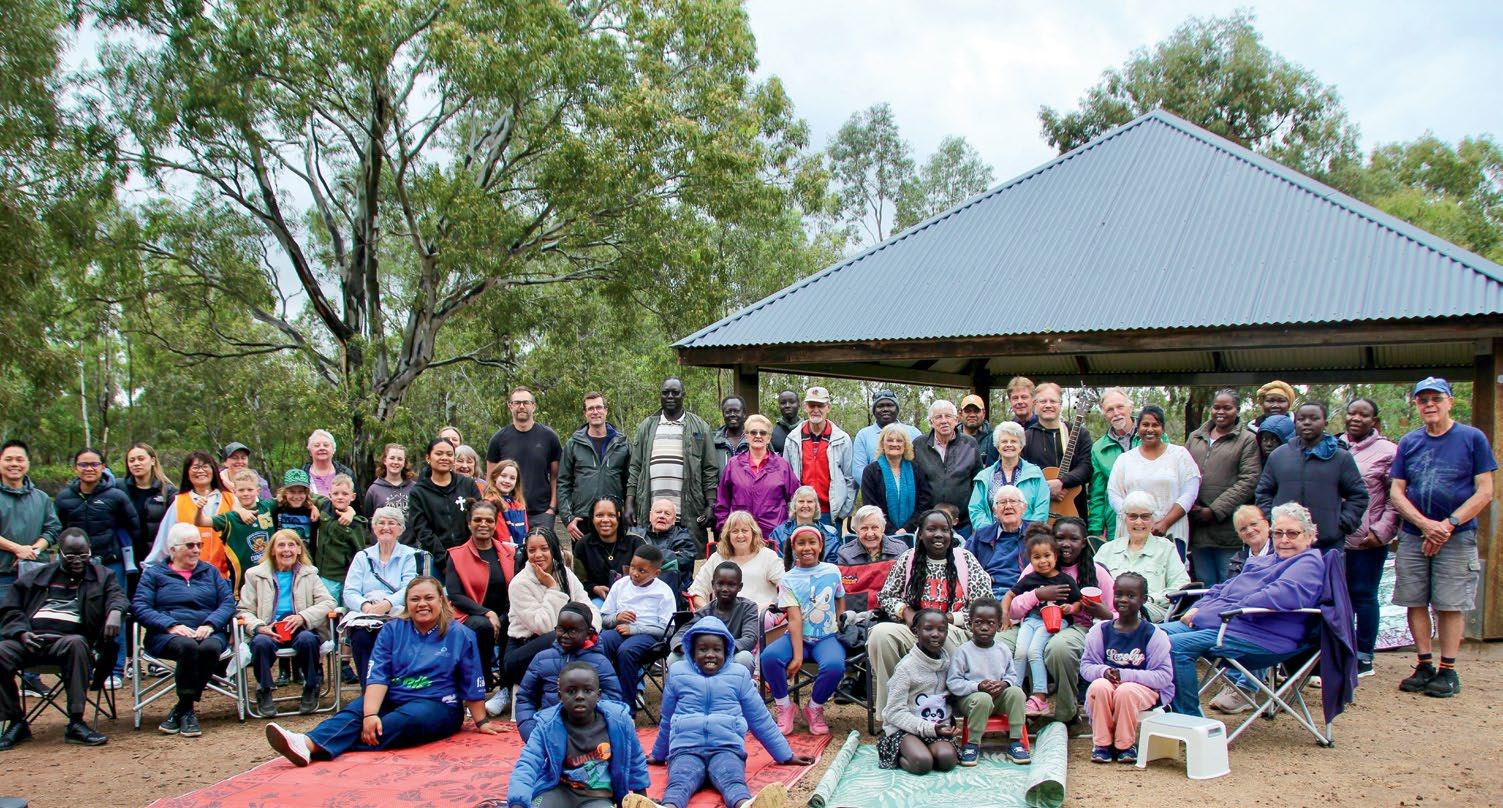
Together, their leadership helped shape what is now one of the most culturally diverse congregations in the Presbytery, with South Sudanese, Tongan, Anglo and other families worshipping side by side.
Grace Community is a spiritual anchor for many, including Gahak.
“When I do not come in the morning, I feel like I miss something,” he says.
“Uniting Church is my home. All my children baptised here.”
For James, the support he and Gahak have received from the Church has strengthened their community in Australia.
“That is the best thing the Uniting Church do for our community,” he says. “It makes us strong.”
The relationship extends far beyond Melton. Over the years, the congregation has contributed funds for ministry in South Sudan, including a motorbike for a bishop’s travel, windows and doors for churches, and the construction of a bishop’s house.
They also supported the installation of a water well in Yirol, easing the burden for families who once walked hours for water.
These generous acts, James says, are expressions of unity between
Minister
communities separated by distance but joined by faith.
This history of solidarity shaped the Church’s response when tragedy struck.
At the next Sunday service, Trang acknowledged the deaths and invited the congregation into small groups to pray for the families and wider community.
“I wanted to see how Grace Community could support the people,” she says.
“I do not respond until I hear it from the people what exactly they need.
“Sometimes we sleep at 11pm because we make sure, we do our best to support.
“We try to comfort the family, the relatives.”
Beyond grief, deeper cultural tensions rose to the surface.
South Sudanese family life is shaped by interdependence; these expectations
16 or 18, they say they are independent. That is not our culture”.
Gahak emphasises that this does not diminish their belonging.
“I am coming from South Sudan.
South Sudan is my country, but this is our country,” he says.
“The children go to school, to study, to work. This is our country.”
“Uniting Church do a lot for us. They support us. They open the arms to welcome us.”
“But holding a prayer, I do not think anybody would say a prayer being held is a negative thing.”
The Church offered its building for the funerals, and the offer itself signalled the congregation’s grief and solidarity.
Meanwhile, James and Gahak spent long nights visiting families, providing comfort and presence.
“We go there, even when I come from work,” James says.
Father James Aboj, Grace Community elder
can clash with Australian norms.
“In our culture, the child must live with the parent from day one until they get married,” Gahak explains.
Even when children move into adult life, parents retain close involvement.
“You still monitor, you want to see them, what they are doing before they go there,” Gahak says.
By contrast, he says, “when the child is
Trang sees the same push-and-pull.
“The parents struggle with both, but the kids also struggle with both,” she says.
“They say, ‘I have my rights’. Discipline becomes harder as they age.”
Trang also notes how young people witness their peers’ freedoms without fully understanding boundaries.
“They go outside the family discipline boundaries, and things become messy. There is the violence, there are the gangs,” she says.
Alcohol and other influences compound this tension.
“In our culture, when you drink, you drink in your own house,” Gahak explains. “You sit quiet, but here it is open. Our kids do not know the level. That is what affects them.”
In response, Grace Community has strengthened its youth programs.
Previously held fortnightly, youth gatherings now run weekly.
“Sometimes when youth do not have things to do, they get bored,” Trang says.
“This provides them a safe space to share, be accepted and a place for spiritual growth.”
Sessions include games, Bible study, and conversations about identity, expectations and choices.
“I share around the tables with them, invite them to share their thoughts, and have the opportunity to explain some of the challenges the parents face,” Trang says.
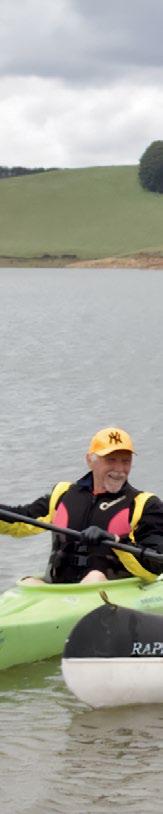
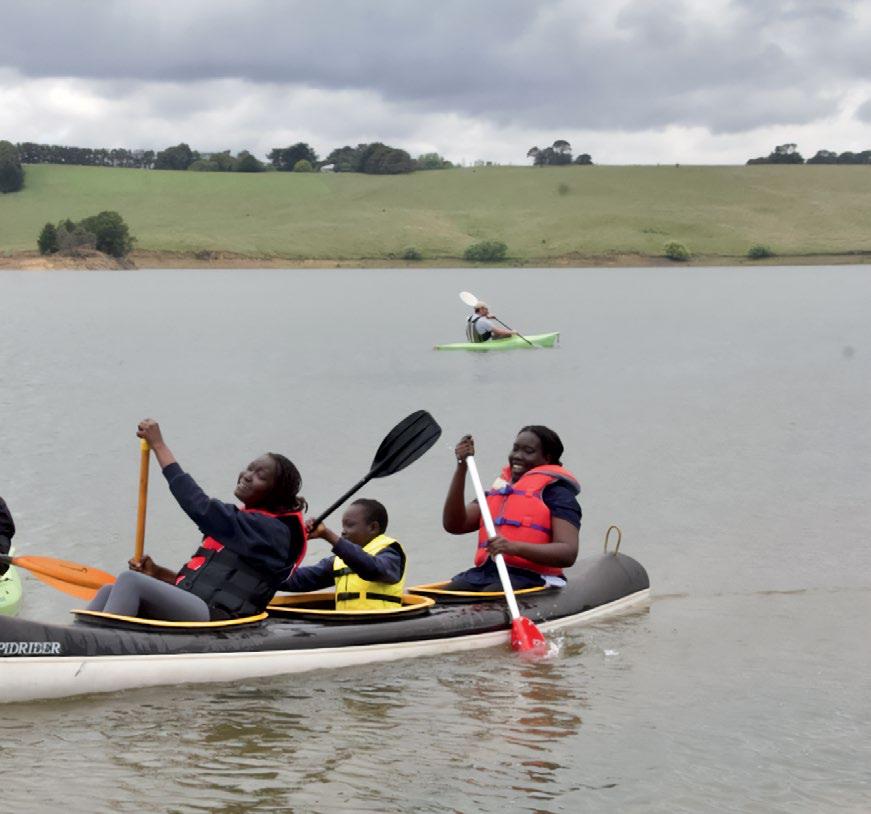
During the summer holidays, the congregation also organised a youth camp, recognising the need for safe, structured activities and community connection.
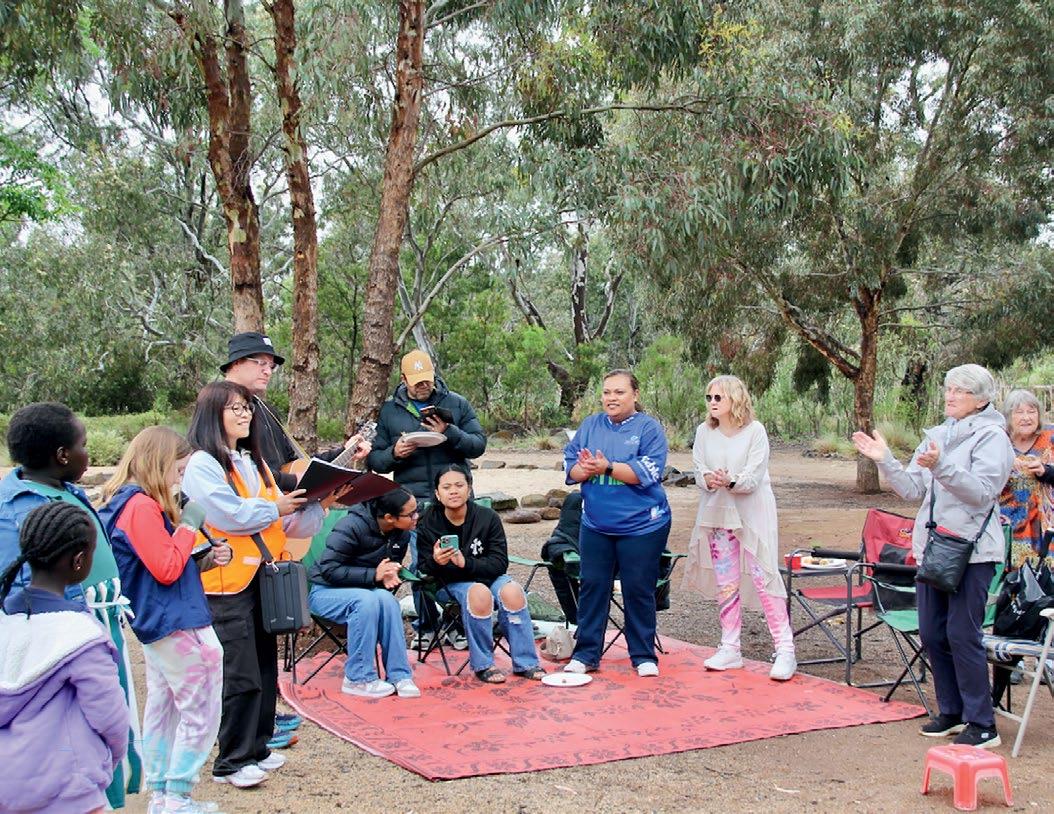
“It is good for them to be among their peers, build strong relationships, and strengthen a sense of belonging and faith,” Trang says.
Leadership from within the community is equally important.
James describes how his son, Malou, began hosting Bible studies before the pandemic.
“He brings a lot of young people,” James says.
One later told him the group changed the direction of his life: “Before, I steal the car. But when Malou call me now, I am changed. I have my children, I have my house.”
Identity and belonging also meet in worship.
South Sudanese members attend the English-language service in the morning, then gather again after 12.30pm for worship in Dinka.
For Gahak, maintaining Dinka is not about looking back but about holding identity with dignity.
“This is our country,” he repeats. “The children study here and work here.”
Trang ensures all services reflect this multicultural identity.
“I do not want it to be tokenistic,” she says.
“I want it to be, ‘you are part of this’. The congregation is very supportive of this.”
Outside the church, community organisations are helping young people find training and employment.
“Young people need a job,” James says. “It gives purpose.”
Within Grace Community, plans are under way to transform a former kindergarten into the Grace Community Hub, offering programs for families new to Melton. Renovation and funding are still needed, but the vision is firm.
For now, the work of healing and rebuilding continues.
“We are continuing to pray,” James says. “We pray God brings peace and unity.”
Trang adds, “When I serve, it makes no difference to me who the people are. I am here to serve anyone present for the benefit of the kingdom (of God).”
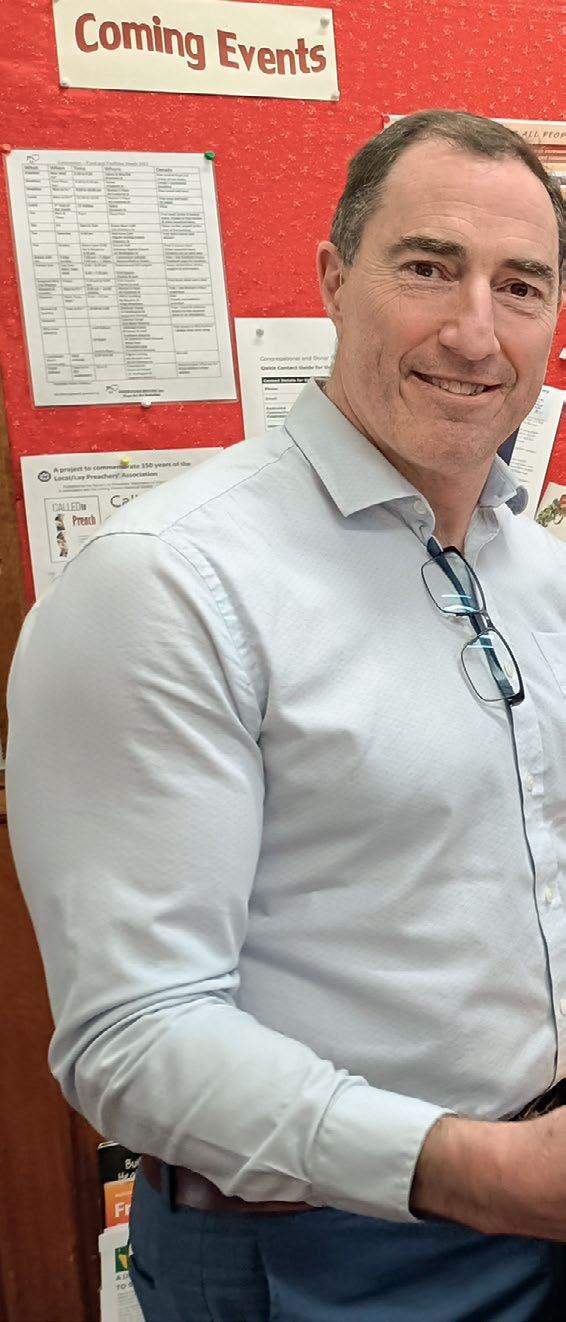








The week begins with a quick check of email at home before heading into the UCA Tasmanian office in Launceston, then a regular Zoom check-in with colleagues on the Synod’s Senior Leadership Team, followed by a short conversation with Sophie Marcard, Synod Director of Marketing and Communications, about a potential story enquiry by an ABC journalist. Next comes authorisation of some account payments, then an update for the consultant who will facilitate the Presbytery’s strategy project (following the Presbytery Standing Committee meeting the previous week), aligning with both Faithful Futures and Act2



SATURDAY


MONDAY Y FRIDAY

within Tasmania’s context. Some quick phone calls to two retired ministers, then on the road to Hobart and phone calls with a heritage consultant with the Tasmanian Heritage Council, a church member checking Working With Vulnerable People registration, and a new minister about a pastoral situation. Today now includes a lastminute opportunity to meet the new owners of the former Lindisfarne Uniting Church, a Muslim faith community that is forming the House of Guidance Hobart, along with an ABC journalist. The day ends with a walk-through of the new University of Tasmania building The Forest, followed by dinner with a friend and our son Jack, where I bunk down for the night in his share house.




FRIDAY SATURDAY
An early call to a contractor about the Meadowbanks cemetery in Campbell Town is followed by travel to Glenorchy Uniting Church for the Presbytery’s Pastoral Relations Committee (PRC) meeting, which is held in Hobart several times each year. Meeting preparation includes setting up portable Zoom equipment so Rev Marian Bisset can connect from Melbourne. PRC considers pastoral matters, mentors for some people new to leadership roles, a supply ministry application, a review report after the first year of West Coast ministries including the New Beginnings Community Centre in Queenstown, early preparations for two upcoming inductions and planning for PRC
SUNDAY MONDAY TUESDAY WEDNES
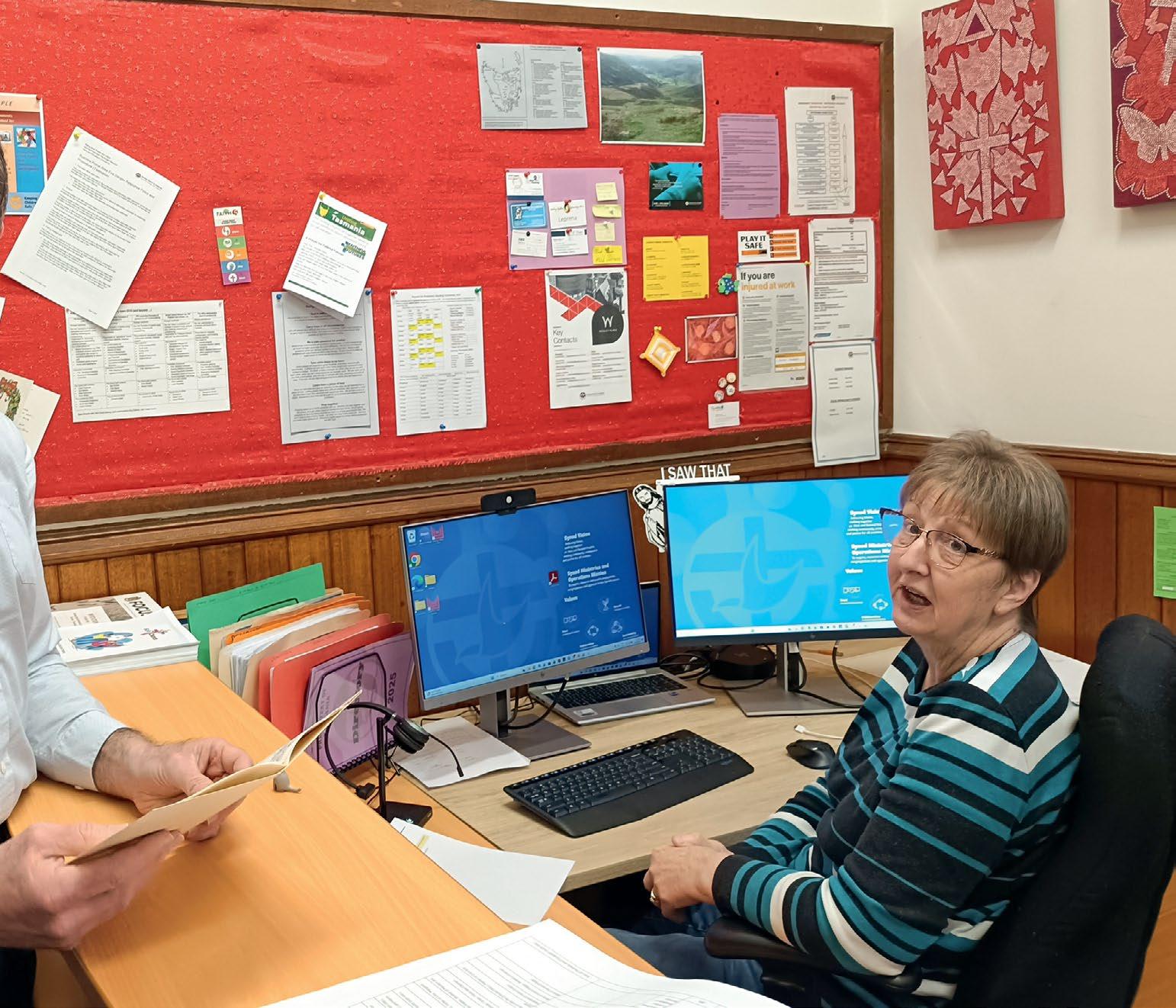
meetings in 2026. PRC finishes just in time to head north again, with a phone call to Uniting Vic.Tas staff about the Wesley Church property on the way. I arrive back in Launceston in time for a meeting of the Board of Directors for Scotch Oakburn College, the one Uniting Church-associated school in Tasmania.
MONDAY TUESDAY
FRIDAY SATURDAY

WEDNESDAY THURSDAY
Catching the first flight out of Launceston still doesn’t avoid the peak hour traffic in Melbourne, but the Skybus makes travel simpler. A temporary office in Wesley Place is a useful base to catch up with some Synod staff, and to have a Zoom meeting with Presbytery leaders about a request for a special service in the Wesley Church, Hobart, shortly before its sale. The Presbyteries Synod Forum meeting is on Zoom today and includes a first meeting with the Faithful Futures Project Lead, Dr Karen Roberts. The annual public meeting of Uniting Vic.Tas is a great opportunity to hear the positive impact of various programs and celebrate staff achievements and service, including 30 years for Janine

Heath, manager of Uniting’s Pilgrim Early Learning service based alongside the UCA Tasmanian office in Launceston. The event includes a live link between Melbourne and Hobart (and ironically the drive to Hobart would have taken longer than the flight from Launceston and the bus travel to Melbourne city).
A night staying opposite the Wesley Place offices gives a glimpse of the many glossy high-rise buildings now towering over the Wesley Church in Melbourne.
WEDNESDAY THURSDAY
The Senior Leadership Team meets one morning each month, and this meeting receives a report on the Church’s insurance coverage for cybersecurity incidents, an update on the Faithful Futures project, review of a draft policy and guidelines on the use of Artificial Intelligence by Synod staff, an update on the material risk register across the Synod and planning for a retreat. The reflection and appraisal process for Presbytery eLM Ministers (PeMs) includes both myself as the Presbytery Minister Team Leader and Rev Nigel Hanscamp as the liaison person for PeMs. The Synod holds an annual service to recognise long-term staff service and to welcome new staff and, as the UCA Tasmanian office team are staff of both Presbytery and Synod, some staff attend the service, before catching the last flight home.

DAY FRIDAY SATURDAY

An early start for a meeting in Hobart with a supply minister and church council member about a pastoral situation provides travel time with colleague Rev Marian Bisset. Since Marian is driving I can enjoy the great Tasmanian landscape and skyscape as we travel and talk, as well as make some notes. This is one of the enjoyable parts of this role: the
changing seasons, changing weather and changing locations for working with local and regional church leaders around Tasmania.
A visit to the former Wesley Heritage Museum at Wesley Church to collect a few items also provides an opportunity to talk with Jeremy Pettet, Executive Officer for Uniting Vic.Tas, about some forthcoming changes.
Jeremy offers an invitation to the weekday meals service at No Bucks Café that began as an outreach of the former Wesley congregation and has expanded
under Uniting Vic.Tas to include emergency relief services, but we need to keep moving.
Further communication on the drive back north includes supply ministry arrangements for a local congregation, planning for a Presbytery committee meeting the following week, followup on the ABC news story and a quick review of the final Uniting Vic.Tas newsletter for the year.
This particular weekend includes no church responsibilities, which is some relief after a very busy week.
“Workers reported earning several times more than they could in their home country.”
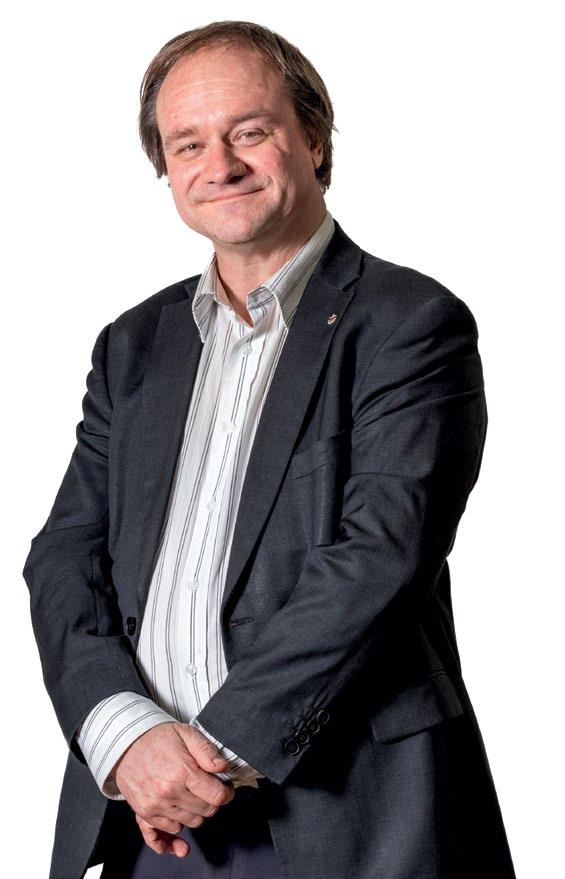
Uniting Church congregations and members across our Synod continue to provide pastoral and material support to people working on the Pacific Australia Labour Mobility (PALM) scheme. People on the PALM scheme are from the Pacific Islands and Timor Leste and work in Australia for up to four years, sending money home to their families and communities. Key industries they work in include horticulture, meat processing and aged care.
A reasonable question that church members raise is whether the scheme really benefits the workers and their communities.
In December 2025, the World Bank and the Australian National University Development Policy Centre released the findings of face-to-face interviews with 200 workers and 15 employers on the PALM scheme and the New Zealand Recognised Seasonal Employer scheme. The workers were from Vanuatu, Tonga, Samoa, Fiji, Papua New Guinea and Timor Leste.
Workers reported earning several times more than they could in their home country. The remittances they have sent home have paid for houses, school fees, solar panels, water tanks, satellite internet connections, vehicles and household goods. The remittances have provided investments in land and small businesses such as taxi and car rental services, shops, commercial agriculture and catering ventures.
A Ni-Vanuatu community member put it simply: “Earning in Vanuatu is only for meals; if we want to build a house, labour mobility is the only way.”
A small minority of workers reported poor workplace and living conditions, with changes to the PALM scheme regulation having improved workers’ conditions.
The researchers reported that the employers interviewed showed a genuine concern for their Pacific Island workforce and a willingness to invest in workers’ wellbeing. Many of the employers had undertaken in-country recruitment themselves, building
long-term relationships with workers’ households and communities. Some have offered services and support beyond the schemes’ requirements, including investments in dedicated health clinics, gyms, sporting facilities and places of worship to support workers’ health and welfare while in Australia and New Zealand.
However, it was not all good news. The researchers heard that the PALM scheme results in a loss of productive working-age men and women for agricultural production, communal activities, and recovery efforts following natural disasters in the countries they come from. Recent estimates suggest that temporary labour mobility accounts for 15 per cent of the working-age population in Tonga being overseas, 11 per cent in Vanuatu and 2 per cent in Fiji.
The research contrasts with media reporting about the PALM scheme. Stories about workers from the Pacific Islands doing well are not usually seen as news in mainstream media.
That is not to say there are not cases of exploitation on the PALM scheme, but they tend to be rare, as the Commonwealth Government has significantly increased safeguards for workers on the scheme. As an example of such safeguards working, somewhat slowly, the Justice and International Mission (JIM) Cluster had made several reports to the Commonwealth Department of Employment and Workplace Relations against Bulmer Farms located in Lindenow, East Gippsland.
On December 17 last year, the Fair Work Ombudsman announced it had commenced legal action against the farm for allegedly underpaying 28 PALM scheme workers more than $645,000. It is alleged that 40 per cent of the underpayment is related to unpaid overtime hours. The range of alleged underpayment for individual workers ranged from $1500 to more than $39,000. The alleged underpayments occurred between December 2019 and December 2023.
As part of its ‘Compounding good’ series, U Ethical takes a look at how Murrumbeena Uniting Church is fostering a wonderful sense of connection among community members.
By Rachel Alembakis
In the light-filled hall of Murrumbeena Uniting Church, the soft click of knitting needles mingles with cheerful conversation.
Talk of family, holidays, and upcoming events creates a warm, welcoming hum.
This is the Meeting Place: a hub of inclusion, activity, and thoughtful community building.
It is both a physical space and a symbol of the church’s commitment to nurturing a vibrant, connected neighbourhood.
However, the Meeting Place is more than just a renovated church hall.
It represents years of collaboration between parishioners, community members, and pastoral leaders.
Architecturally, it bridges eras: a contemporary addition to the historic church structure, featuring stainedglass windows salvaged from a former congregation during a four-church amalgamation.
“This is a magical space,” says Rev Andreana Reale.
“We do so much community stuff in here now because anything that happens here, it’s like magic.
“We had a maker’s market recently, which was an idea from a local woman Rose.
“Her dream was to run a maker’s market as she had always been part of markets because she makes jewellery.
“So she got all her maker friends and they all rocked up, and it was just this gorgeous, very early spring day in August (last year).
“The hall was all lit up and I reckon there were a thousand people who came through.”
On this warm Wednesday afternoon, there was a hum of activity from the knitting group clustered around the padded pews in the Meeting Place, as members knitted jumpers and beanies for family charity Our Village, Oznam House and the Asylum Seeker Resource Centre.
Longtime parishioner Glynis Ramsay, who facilitates the group, reflects on the church’s evolution.
“Church is different now,” Glynis says.
“When I grew up, the church was the focus.
“There was a youth group, and I was married in the church.
“My husband was president of the Presbyterian Fellowship Association back when ballroom dancing was the thing.
“I had one dress I wore to all the events, and it was marvellous.
“Times have changed, but fresh ideas keep coming here. We even had a creative writing group that really took off for a while.”
The Meeting Place concept was shaped through professional guidance and community insight.
Even before Andreana’s arrival in 2024, the church engaged a community development consultant.
By the 2024 AGM, the Meeting Place had been formally adopted as the concept to make community engagement a priority.
“The idea was to see our space users not just as hirers, but as partners,” Andreana says.
“Interestingly, what really took off wasn’t just from hirers, it came from the wider community.
“People had ideas, and we helped bring them to life.”
Today, Murrumbeena Uniting Church hosts everything from Friday Drop-in (a bilingual Auslan-English social group) and creative writing, to community singing and art therapy for women.
The Meeting Place had its first community art exhibition in one of the halls, and a monthly meal is also held, all part of fostering connection and banishing loneliness.
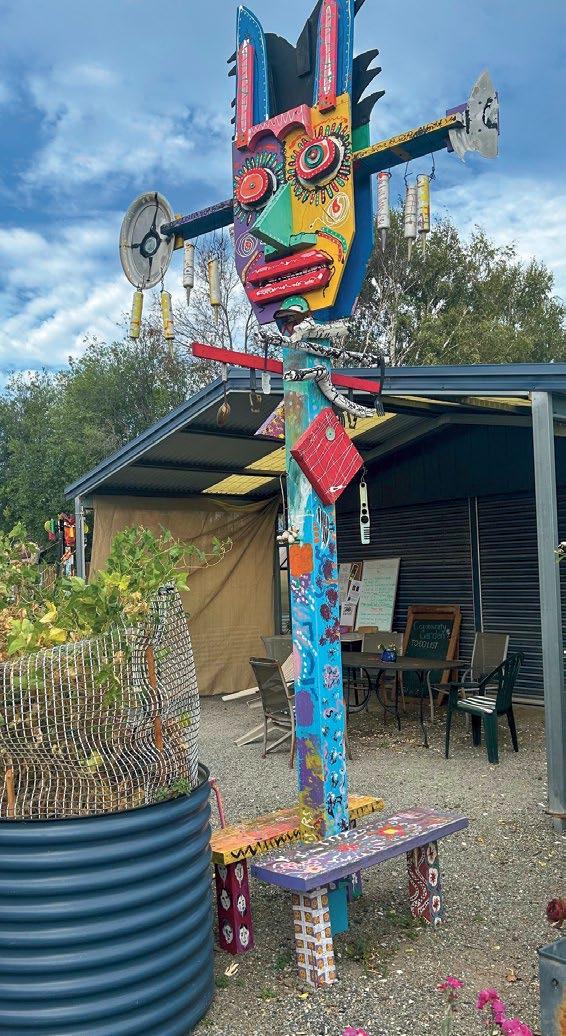
Murrumbeena Uniting Church’s Meeting Place has become a vital hub for the community.
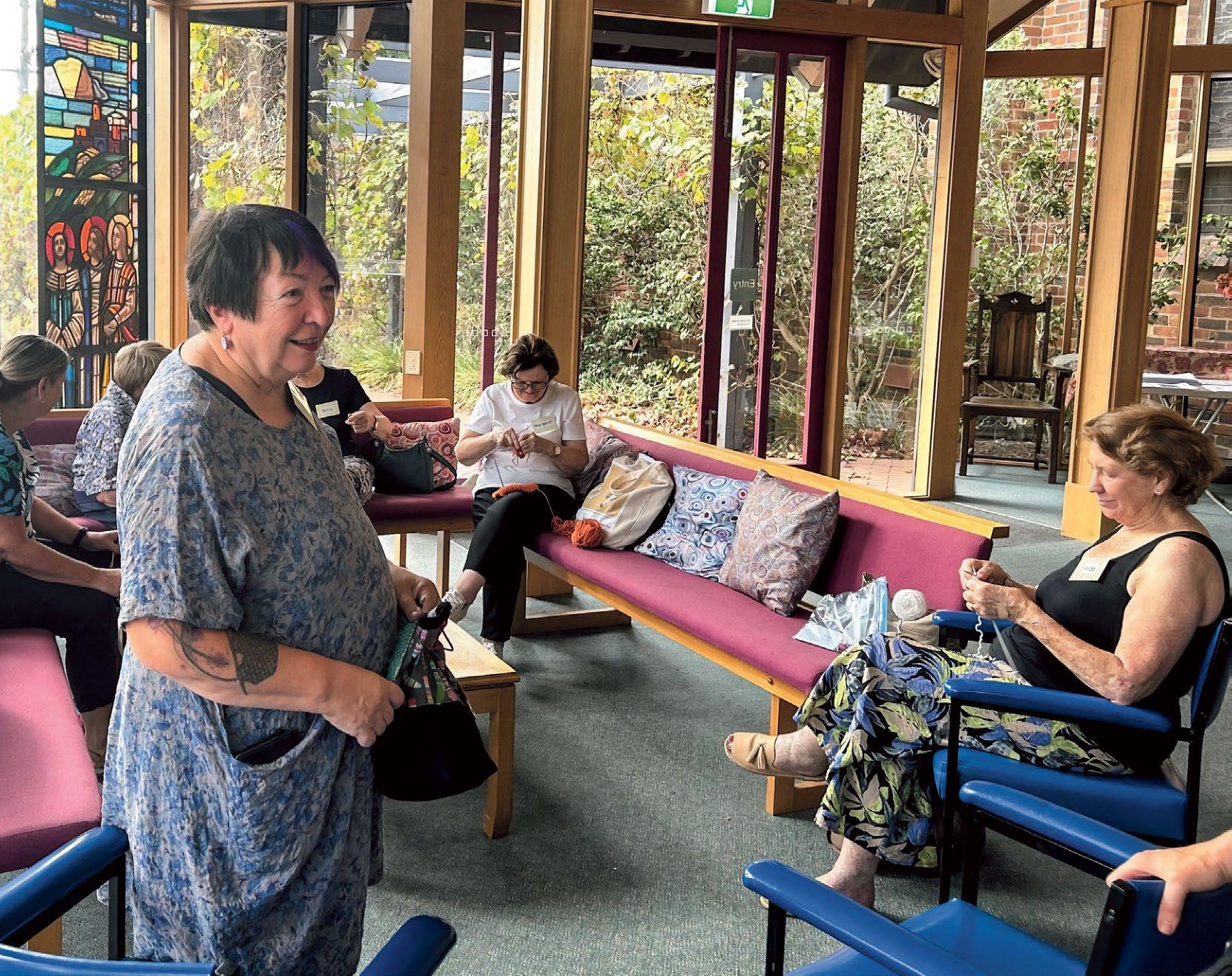
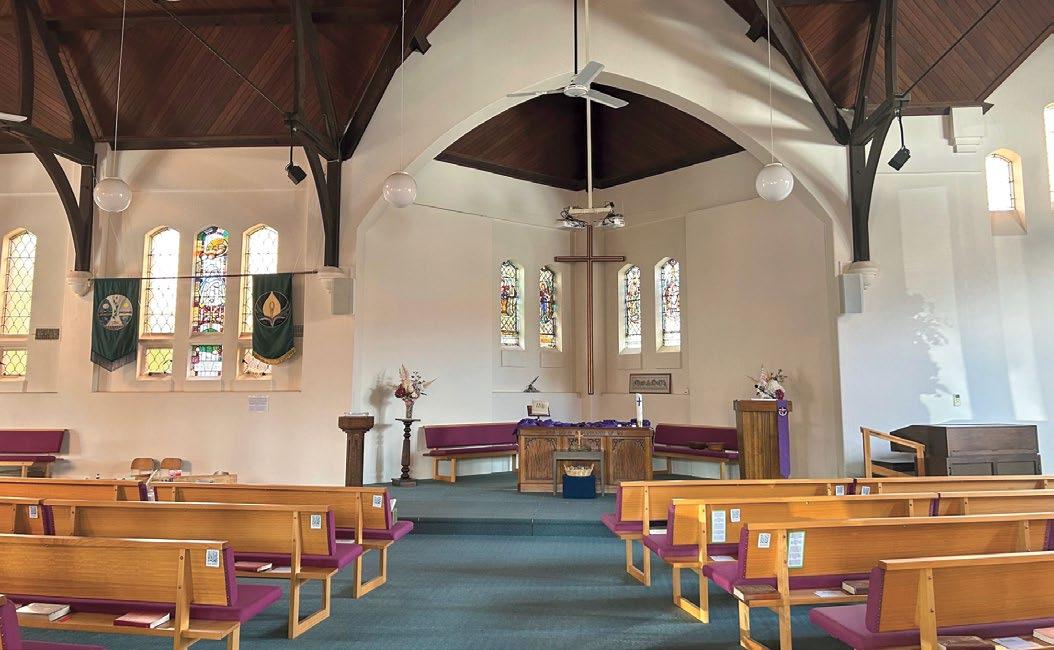
“It’s more of a bringing together,” Andreana says, “and I actually think it’s the missing link, the missing ingredient that is a place of belonging where people can come and eat together.”
A monthly movie club is also held, with films screened for the local community,
and in October, Murrumbeena partnered with two photography clubs to hold an exhibition.
By working together as a congregation and using specific planning professionals, Murrumbeena Uniting Church is creating a Meeting Place that
will hopefully thrive well into the future.
“My vision for the church is to be a thriving place where people come and experience the kingdom of God,” Andreana says.
“It’s for people to find a place of belonging, to find places to contribute their skills and their leadership, their passion, their creativity.
“I see what we do as deeply Christian, and so I want to have pathways into that faith as well.
“But for those who are not seeking that, for others it’s enough to just experience that community together.”
The Meeting Place in Murrumbeena is seeking community members to participate in their thriving community.
For more information contact Rev Andreana Reale at minister@ murrumbeenauniting.org.au


In
a selected extract
from her recently released
book
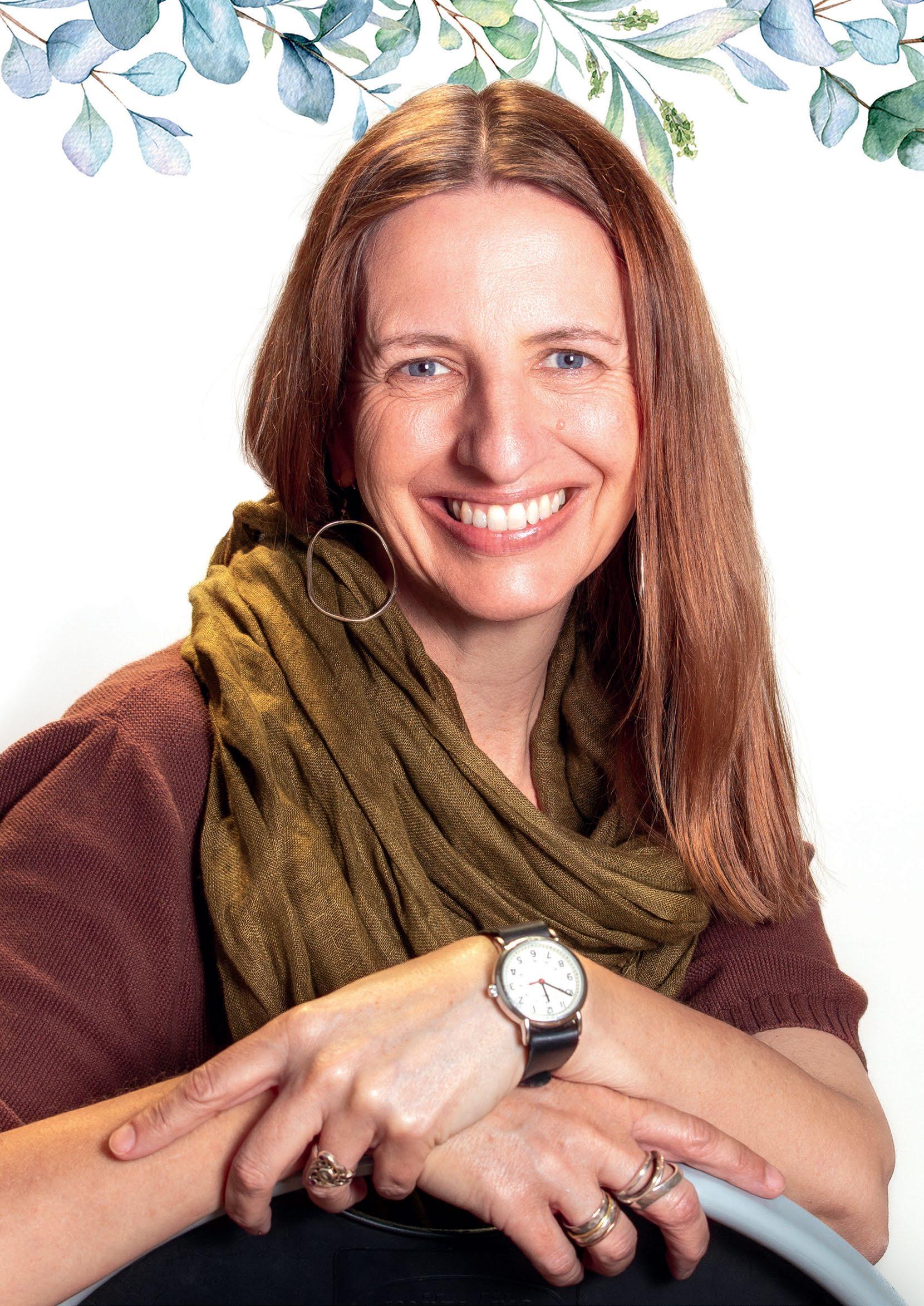
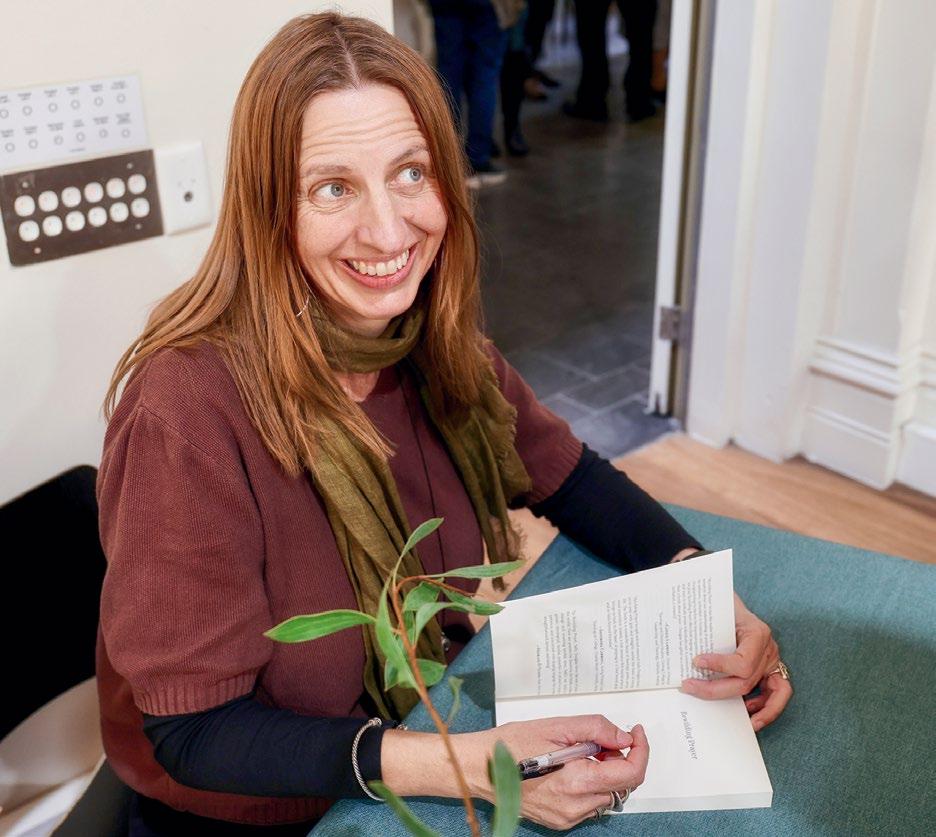
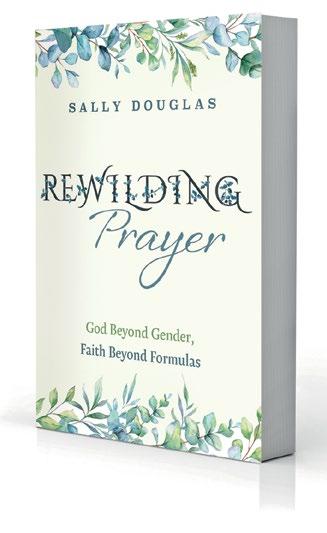
‘Rewilding Prayer: God Beyond Gender, Faith Beyond Formulas’, Pilgrim Theological College lecturer Rev Dr Sally Douglas invites us to think anew about the purpose of praying.
Prayer is not like ascending on a heavenly escalator. We do not move from one great enlightenment moment to another.
Instead, we muddle through, understanding and failing to understand, experiencing consolation and falling into despair, feeling empty, tasting joy, doubting, believing and doubting, over and over again.
This is part of the life of following Jesus. What is curious, is that while these realities diverge from church rhetoric and the expectations we might foist upon ourselves, or one another, this is just how the first disciples are depicted across the Gospels.
Across denominations in the church we regularly fail to resource people in their spiritual journeys. Within the context of prayer this falling short takes diverse forms. In many congregations, both high and low, charismatic and mainstream, prayers appear to be recited or performed rather than prayed.
In some churches the possibility of openness to the Most High is suffocated by language that pretends that God is a man. Indeed, this habit has become a form of idolatry in many places.
As a consequence of this false devotion, vast swathes of the population cannot imagine that there is anything good in the news of Jesus, and women continue to be excluded and misused. Words matter.
In some churches, the desire to be accessible leads to worship being flattened out so much that the presence of the Divine is barely acknowledged. In such settings the scandalous distinctiveness of Christian faith dissolves into generic prayers that could, without too much difficulty, be readily used as gratitude prompts in a wellness retreat.
In many worship services, across denominations, prayers of intercession appear to be driven by the assumption that the Source of all is not informed about the tragedies that have unfolded during the week and it is the responsibility of the Christian to list these for the Divine in a shopping list of doom. In most worship contexts, silence appears to be squeezed to the edges. Is it any wonder that prayer begins to feel empty?
It is true that there are worship leaders, both lay and ordained, who continue to deepen their relationship with the Divine as they explore, wrestle, and grow in their own prayer lives. It is also true that there are dynamic faith communities, large and small, seeking to pray together week by week with honesty, seriousness and openness to the Most High. Thanks be to God. However, too often this is the exception to the rule. When people leave the church, saying that they are “spiritual not religious” I have empathy with them.
If we are unable to create space for the real, for wild, wrestling, transforming abiding with the Living One, it is only natural that people will walk away. Some will leave to seek soul nourishment in other contexts that promise a different expression of spirituality. Others will come to the conclusion that such sustenance does not exist and shut down this part of themselves. We have much to confess and to turn away from across our churches.
The reasons why prayer has been made pietistic, boring and empty in so many churches are complex. Habits shape expectations for how we should be. The unspoken view that “this is how we do worship” can smother the opportunity to raise concerns or dare to dream about how things could be done differently. Fashions can overtake (think PowerPoint or organs). Hierarchies can make it impossible to ask questions.
For at least some within the worldwide household of Christian faith, I suspect there is a deep fear that there may be no God, or at least not a God who listens

From P20 and acts. This problematises prayer considerably.
Alongside these issues, I think there is another factor that contributes enormously to our current (non) practices of praying. It is commonly assumed by Christians that people know how to pray because prayer is understood to be natural. Children and young people might be taught a smattering of simple prayers. However, in many church contexts once people are adults the practice of prayer does not appear to be discussed. Instead, it is taken for granted that people have a shared understanding, not only of how to pray, but also of what prayer might be for, and what it might achieve.
As a consequence, opportunities to explore these crucial and complex questions are often few and far between. Instead, we say prayers in church and encourage people to pray for others at home, leaving them to get on with this alone, even when their inner life feels like a heap of dry bones.
While prayer may be natural, this does not make it easy. Walking is also natural for most people. This does not mean that it is simple to learn to walk. When toddlers learn this skill, they need time and an array of supports. As a toddler grows in their confidence to walk independently, they lose the need for these first supports. This does not mean that they are walking less faithfully. Instead, they are walking differently
because they have grown. So it is with the process of learning to pray.
The things that support us to pray as a child, young person, or a person new to faith are invaluable. Like littles ones learning to walk, as we learn to pray we will likely need clear and accessible resources and kind people to support us, encourage us and pick us up when we fall.
However, as we grow and develop, many of the first prayer styles we were introduced to may no longer offer nourishment. This is not because of a lack of faith on our part, or a consequence of growing away from the Divine. Rather this is because we are growing in maturity, even though it may not feel like it at the time. Prayer styles that once gave our lives meaning may become empty because we are in a new stage of our life and faith journey, and we need different resources for the road before us.
When we travel through various experiences, we are called into different ways of being with the Divine that make sense in this new context. This is particularly the case when we are confronted with unexpected tragedy. In deep suffering, our crisp edges and naïve certainties are hacked away, and any rose-coloured ideas of God and happyever-after constructions of faith are obliterated.
In this desolate land, which may also be a gateway to liberation, we will need
new words and ways of embodying prayer if we are to maintain our integrity and be open to the Divine. Thankfully we do not have to invent these ways of being on our own. Across the tradition there are resources and stories and wisdom from the diverse communion of saints to draw from and engage with.
Instead of churches holding people back by continuing to offer simplistic patterns of prayer that help us to take our first steps, imagine if we engaged seriously together with these treasures. We may learn how to tell the truth and listen for the truth. We may learn how to walk. We may also learn how to run fast and even soar, and create space for others to do so as well.
‘Rewilding Prayer: God Beyond Gender, Faith Beyond Formulas’ can be purchased at www.amazon.com.au, www.dymocks.com.au and www.booktopia.com.au


Every year thousands of people are impacted by emergencies in Victoria and Tasmania.
The Moderator’s Emergency Response Fund is a way for those of us wanting to help when current or future emergencies occur, and to contribute to communities in need of immediate assistance.
Funds may be used within the Synod of Victoria and Tasmania to provide:
Pastoral, ministry, and mission activities assisting the Church’s response to disasters, emergencies or other crises.
Support relevant councils of the Church to undertake disaster preparation/response programs/processes and partner with organisations in disaster preparation/response programs.
Scan the QR code with your smart phone to find out how you can donate today or visit the Synod’s website: www.victas.uca.org.au
With applications to the National Redress Scheme closing in June 2027, UCA Redress National Director Sarah Lim outlines the Uniting Church’s commitment to justice and recognition for those who suffered sexual abuse as children while in its care.
If the article raises concerns for you, please contact Lifeline on 13 11 14 or Beyond Blue on 1300 22 4636.
In her role as UCA Redress National Director, Sarah Lim hears first-hand the accounts of people whose lives have been impacted by sexual abuse suffered as a child.
Those accounts are a constant reminder for Sarah of the importance of UCA Redress in offering a pathway towards justice and recognition for those who suffered while in the care of Uniting Church congregations, agencies, organisations or programs.
UCA Redress was established in 2018 when the Uniting Church committed to joining the National Redress Scheme, born after recommendations from the Royal Commission into Institutional Responses to Child Sexual Abuse in 2017.
By Andrew Humphries
quickly around that was how we could participate in the Government-run redress scheme.
“Because of all of the different legal structures and governance arrangements across the Church, UCA Redress was formed through agreement from Synod standing committee, the Assembly, as a separate company to be the interface between the Church and the National Redress Scheme.”
organisation concerned, asking it for any relevant information relating to the application. If the application involves the Uniting Church, or one of its predecessor Churches, it is then sent to Sarah and her team at UCA Redress, who make contact with the relevant Synod or Assembly for additional information.
“The sorts of questions the scheme asks are whether it has records that show the applicant attended the service or site, whether the alleged perpetrator was in and around the site at that time, and whether he or she had been the subject of other allegations,” Sarah says.
" Applicants consistently say ‘I want to make sure what happened to me doesn't happen to another child’."
UCA Redress National Director Sarah Lim
Sarah says that following the Royal Commission, the UCA recognised quickly the role it needed to play in both acknowledging its part, and those of its predecessor Churches, in the abuse that had taken place, and the steps needed to ensure victims were heard with compassion.
“One of the commitments given by the Church at the conclusion of the Royal Commission was that it would not let the way the Church organises itself get in the way of doing things consistently and well around this issue of addressing child sexual abuse,” Sarah says.
“One area that crystallised quite
Administered by the Commonwealth Department of Social Services, the scheme holds institutions accountable for the sexual abuse that took place under their care, and helps people who experienced abuse gain access to counselling, a redress payment and a direct personal response, if wanted.
Sarah says the National Redress Scheme is the first port of call for those seeking redress, with the applicant detailing what had occurred, when it occurred and within which organisation.
From there, the Government sends a request for information (RFI) to the
“It’s quite a factual process.
Sometimes the institution has really good records, but sometimes there will be no records at all.
“Neither of those things necessarily mean an application will or won't get an outcome. The scheme looks at it all quite holistically.
“Once sent back to the National Redress Scheme, it’s considered by an Independent Decision Maker, contracted by the Commonwealth to apply the relevant legislation, determine eligibility, determine the amount of the redress to be offered, and also determine the apportionment between institutions.”
Sarah says since its inception UCA Redress had received 1420 RFIs from applicants up until June 30 last year.
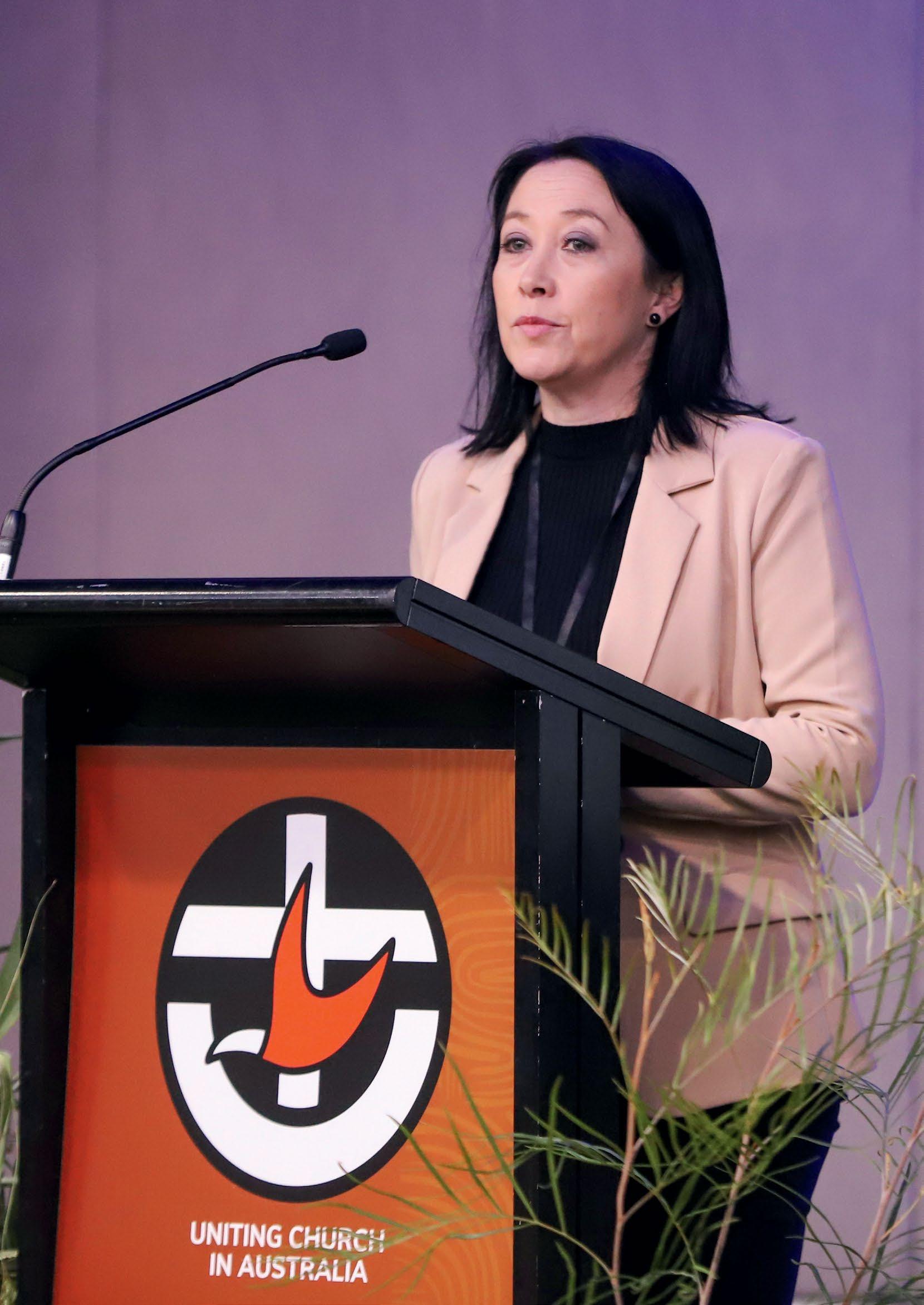
UCA Redress National Director Sarah Lim gives an update on the scheme at last year’s Assembly meeting in Sydney.
Of those, 1021 requests had been resolved, with 666 offers of redress accepted. Sarah says the team at UCA Redress, and the redress contacts in Synods, are always conscious of the deep emotional impact of the process on redress applicants.
“We are always very conscious of working in a trauma-informed way, and across the Church we try not to contribute to any delay in the process,” she says.
“We really prioritise the processing of the applications, being mindful that our response is a respectful one.
“All of those things align with Uniting
Church values anyway, but we really take into account the fact that these are deeply traumatised people and we don't ever want to add to that trauma.”
If a person accepts an offer of redress, they also have the choice of receiving an apology from the Church.
“Once someone contacts us and indicates they are ready to go through the apology process, it becomes very much a survivor-led process,” Sarah says.
In her role as National Director, Sarah emphasises the fact that the Church should never be complacent around safeguarding the rights of children and other vulnerable people.
“Every redress application is a reminder that we need to be ever vigilant in the space of safeguarding across the life of the Church,” she says.
“Applicants consistently say ‘I want to make sure what happened to me doesn't happen to another child’.”
With applications to the National Redress Scheme scheduled to close on June 30, 2027, Sarah says it’s important the wider community is aware of the closing date and the process involved in lodging an application.
Further details are available on the National Redress Scheme website at www.nationalredress.gov.au
On October 22, 2018, Prime Minister Scott Morrison delivered an historic National Apology to Victims and Survivors of Institutional Child Sexual Abuse.
Each year, the Uniting Church in Australia marks the anniversary of that apology, acknowledging and lamenting the role it, and its predecessor Churches, played in causing harm to children.
It is fully committed to growing a culture of safety across the whole Church and creating communities where all people can flourish in safety and security.
In a statement on October 22 last year marking the seventh anniversary of the national apology, President Rev Charissa Suli pledged the Church’s ongoing commitment to addressing historical child sexual abuse.
“My heart turns to the voices of survivors and their courage continues to shape us,” Charissa said.
“Their pain and truth remind us that while important steps have been taken, there is still such a long way to go.
“As a Church we remain committed to righting the wrongs of the past and to learning from every survivor who comes forward.
“Ten years have passed since the Royal Commission into Institutional Responses
to Child Sexual Abuse reported on redress and civil litigation.
“Its call still resounds.
“We continue to participate proactively in the National Redress Scheme.
“Each application is a sacred moment of truth-telling and learning, and we thank every person who chooses to come forward and share their story.”
Charissa said safeguarding children was not a task that was ever ‘finished’
but was a “lifelong journey of vigilance, learning and improvement as we embed a culture of safeguarding”.
“Across the Church, in our schools, agencies and congregations, we are working to strengthen training for staff and volunteers, to ensure safe recruitment, to make clear and accessible pathways for children and community members to raise their voices when something is wrong, and to respond with care and justice when harm occurs,” she said.
“Those who raise concerns in good faith will always be supported, and we will always act to protect children.
“While we may never be able to remove every risk, we can commit ourselves each day to doing all that we can to make our communities places of safety, care and trust for children and young people.
“This is our sacred responsibility, our unshakeable commitment, and part of the ‘Threads of Love’ we are called to weave across our Church.”
In Victoria and Tasmania, Safe Church provides resources for congregations, faith communities and other agencies to make them as safe as possible for children.
These resources are available at safechurch.ucavictas.org.au

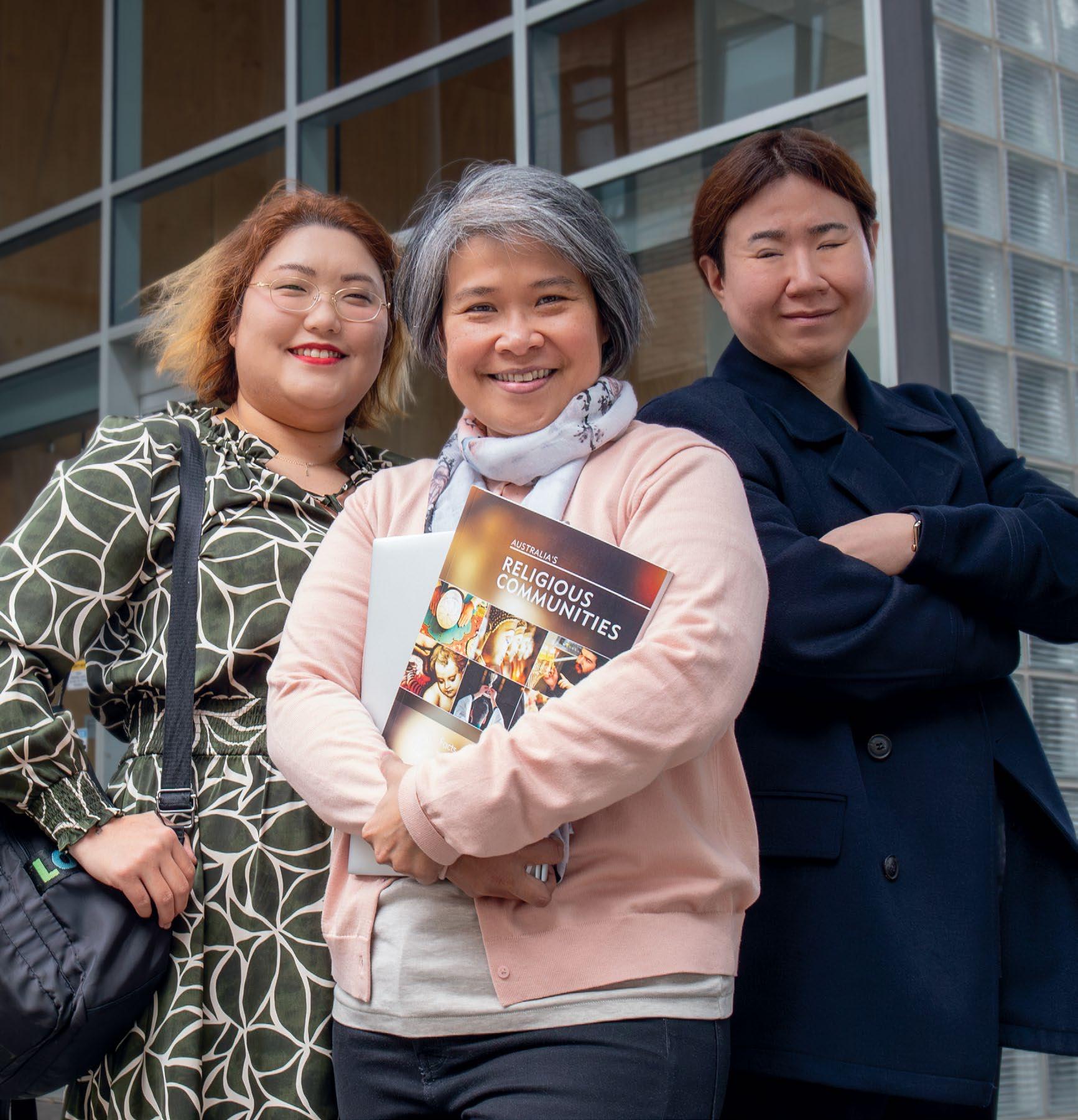
Pilgrim o ers classes for those who are: exploring big ideas; equipping for ministries; or seeking continuing education.
Applications to study semester 1 classes close on Friday February 13, 2026 with classes starting on Monday February 23, 2026.
To learn more about studying at Pilgrim, please email study@pilgrim.edu.au or phone 03 9340 8892 or visit www.pilgrim.edu.au
TEQSA Provider: PRV12135 | CRICOS Provider: 01037A


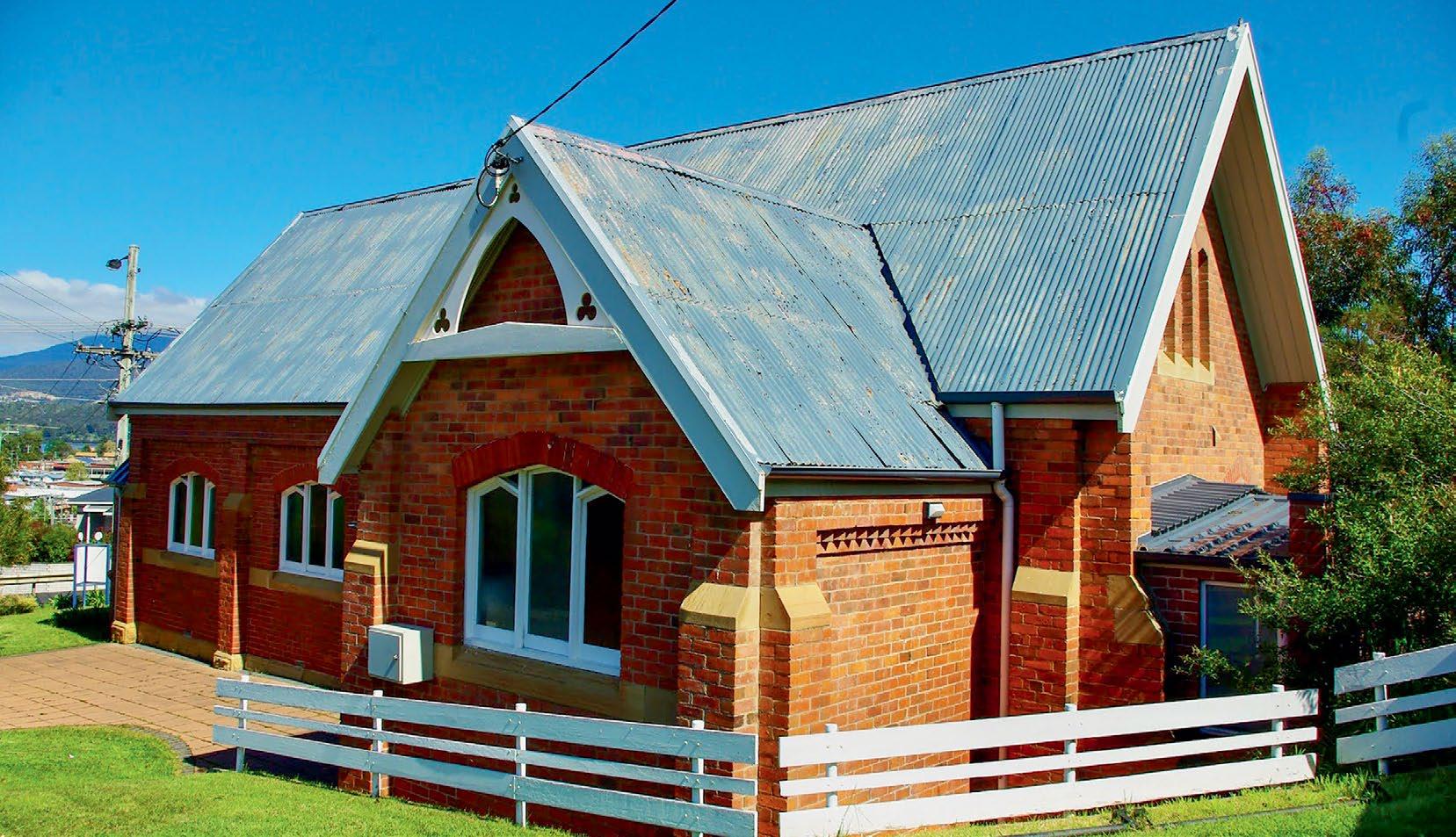
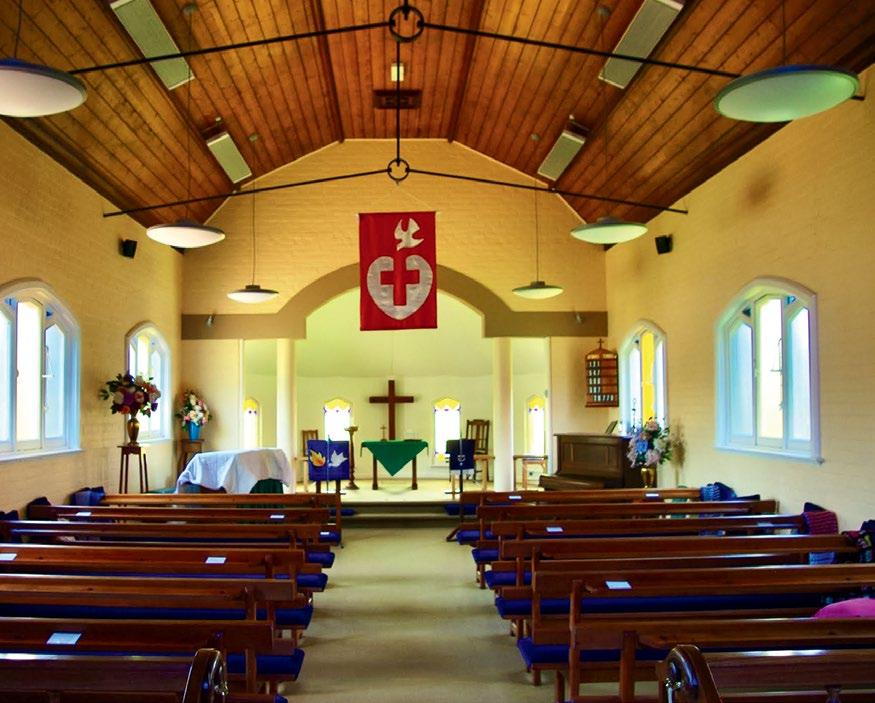
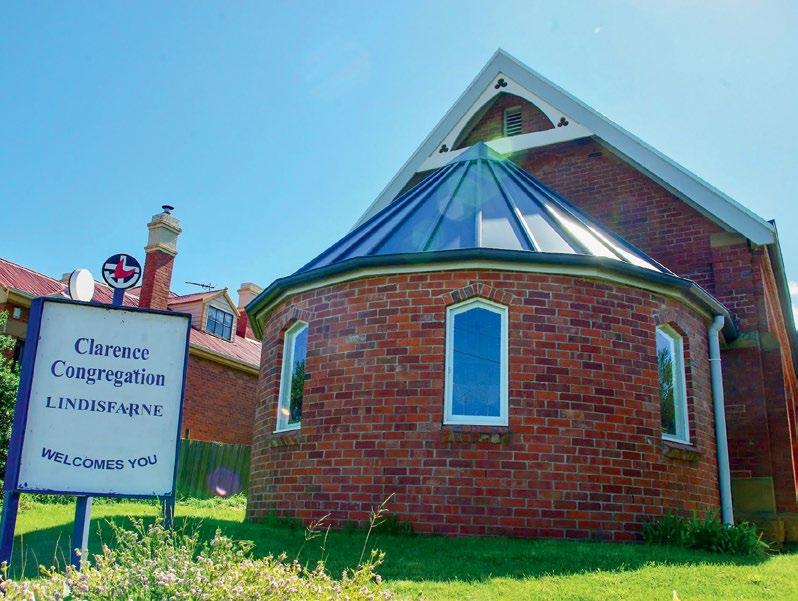
For more than 120 years, a site in Lindisfarne, Tasmania, has been a place of worship for congregations of the Uniting Church and its predecessor churches.
From around 2000, the Uniting Church congregations in Lindisfarne and Bellerive joined together as the Clarence Uniting Church, ‘one congregation meeting in two locations’. Two years ago, the Clarence congregation chose to meet only in one venue (Bellerive) and the Lindisfarne church buildings were sold
Kaljeh, along with the Hobart Muslim community, are now repurposing the buildings into a community hub named the House of Guidance Hobart, which will provide a place of worship alongside educational, cultural and social services.
Chairperson of the Church Council, Clarence Uniting Church Jan McGrath said: “The Lindisfarne members of the Clarence congregation have expressed genuine pleasure that the Lindisfarne site will continue to be a location for worship and services for the community.

Uniting Church Tasmania synod liaison minister Rohan Pryor added: “What we really appreciate is that this will continue to be a place of community gathering, of reflection and worship, and for wellbeing and care.”
The new owners are respectful of the site’s history.
“I would like to acknowledge the beautiful heritage of this former church, built in 1903, as a place of worship,” Mr Al Dawahdeh said. “It has been serving the community for more than a century, and the House of Guidance Hobart will continue this legacy.”
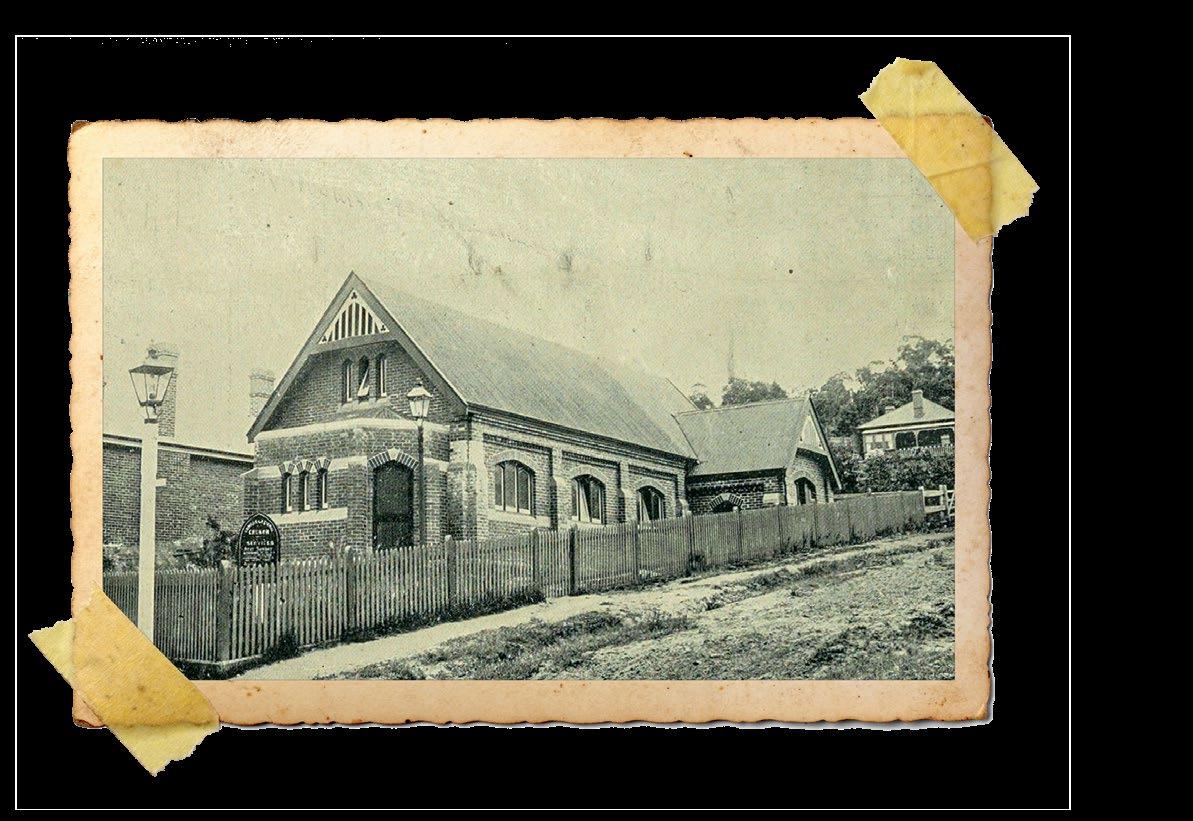
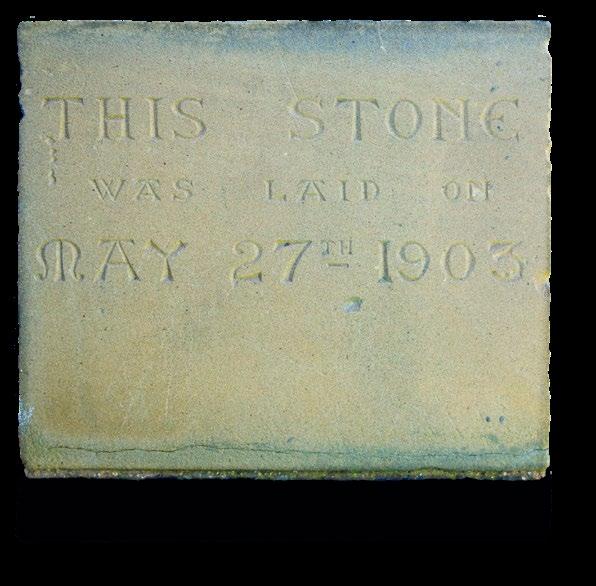
Left: The church in 1912 (source: The Tasmanian Mail). Below: Foundation stone laid by Rev W Percy in 1903.
Pre-1860
The first place of Congregational worship on the eastern shore of the Derwent River was probably at Kangaroo Point in a building that started life as an inn called ‘The Waterman Arms’.
1896-1903
Congregational worship and fellowship began in Beltana – the old name for Lindisfarne – during the ministry of Rev Robert Ricards.
1908
Front porch added and a small hall built at the back.
1956
The Lindisfarne church became part of the Lindisfarne-Cambridge-Richmond United Congregations, an initiative of the Methodist and Presbyterian and Congregationalist churches.
1903
May 27: foundation stone laid by Rev W Percy, Chairman of the Congregational Union.
November 4: official opening of the church building as the Lindisfarne Congregational Church, on land donated by Mr Matthew Wilkes Simmons.
1904
The Sunday School opened.
1968
The building of the manse commenced.
1972
The Unicorn Opportunity Shop was opened in Lindisfarne village.
1975
The Tasman Bridge over the Derwent River was knocked down by the Lake Illawarra ship. Many eastern shore people began to worship at Lindisfarne as it was so difficult to get to their usual city churches.
1961
The Unicorn Club was founded, holding monthly meetings including “fun and fellowship, debates and devotional activities”. The name Unicorn was a play on the words UNIted CO(R)Ngregation.
1962
Foundation stone laid for the hall.
1965
Extensions and alterations made to the church building during the ministry of Rev Arthur Warren.
2003
Celebration of the centenary of the church, including the publishing of a history booklet.
2022
50th anniversary of the Unicorn Op Shop.
2025
Sale of the church buildings and manse.
Photo credits: Duncan Grant www.churchesoftasmania.com
Crosslight magazine sat down with Dr Karen Roberts as she commences her role as Faithful Futures Project Lead.
What will your role involve?
The Project Lead is a new role and is focused on supporting Synod and Presbyteries to implement the strategic plan known as “Faithful Futures”. It will involve collaboration with key people and committees across Victoria and Tasmania to determine how we are going to achieve the five goals contained within Faithful Futures. As part of this role, I expect to be having lots of conversations, working with others to develop achievable plans, and learning more about the great work that is underway across our Synod.
What is your professional background? How will your experience support your new role?
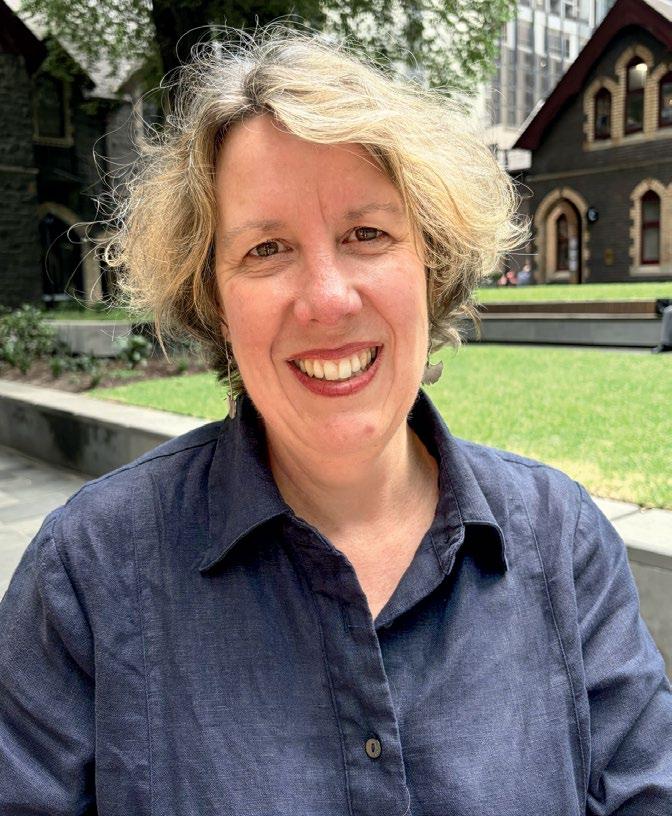
I am an Occupational Therapist by profession and have over three decades of experience working in healthcare and higher education. Most recently I have been the Occupational Therapy Manager at Alfred Health in Melbourne.
I have completed post-graduate studies, including a Doctorate of Clinical Science (Occupational Therapy) and studies in leadership and management, and have led major projects within healthcare settings.
I hope that my experience in supporting individuals to adjust to a new way of being (following injury, illness or disability), leading teams through change and uncertainty, designing and delivering education, and approaching new opportunities with a curious and collaborative mindset will enable me to serve the Uniting Church through this role.
Do you have a connection to the Uniting Church?
As the child of a Uniting Church minister, I grew up in the Church and, as an adult, I have chosen to actively continue my connection with the Church. My family and I currently worship at Ormond Uniting Church (Port Phillip East Presbytery), where I am involved in supporting mission and pastoral care, as well as playing the piano for worship. I have lived in rural presbyteries (North-West Victoria & Gippsland) as well as the Tasmanian presbytery (King Island and Kingston congregations) and am looking forward to reconnecting and learning more about what is happening around our Synod. In my 20s and 30s I was an active member of the Wild Duck Christian community (a new and emerging worshipping community within the Uniting Church) and, more recently, my family have been involved in the Uniting Faith & Families program.
Why is the Faithful Futures strategy so important for the Church?
I truly do believe that the Uniting Church is called to be “a pilgrim people, always on the way”, as noted in the Basis of Union (1971, 1992). This requires us to look forward towards the future while simultaneously stepping with compassion, justice and connection. Whilst I am only just starting this role and appreciate that I have much to learn, I am excited about this strategy. It is crucial in helping us to continue shaping the future of the Uniting Church in the Synod of Victoria and Tasmania, so that we can continue to be relevant, inclusive, and grounded in the good news of the gospel.
How can Uniting Church members get involved in the Faithful Futures project?
This work is just starting, but the strategy is a shared collaboration between the Synod and Presbyteries and, therefore, congregations. I would encourage you to talk with your congregational presbytery representatives and your ministers about how Faithful Futures is unfolding in your own local regions. Keep your eye on Crosslight and our internet sites/social media, and feel free to reach out to the Faithful Futures team as another point of connection.
More information: www.victas.uca. org.au/faithful-futures
Email the team at: FaithfulFutures@ victas.uca.org.au

1300 783 435 unitingagewell.org
Support at Home
Services to keep you safe, well and independent
Health and Wellbeing
Stay active through allied health and social connections programs
Retirement Living
All the comforts of home in a supportive community
Residential Care
Specialist 24/7 care and support, with respite stays welcome
We can support you to live well with choice and peace of mind. Contact us today.

Youth ministry projects
Children & Families ministry projects
Scholarships for children of soldiers
Students undertaking tertiary and secondary studies
Ministers with children attending primary or secondary school
Children from Uniting Churches in the Bright and Beechworth areas associated with Uniting Churches in the Bright and Beechworth areas
Education for lay people, including lay preacher candidates and pastors
Continuing education for ordained and lay people in placement with the UCA
Women undertaking study who are currently working within the UCA or with the intention of service within the UCA. APPLICATIONS ARE NOW OPEN
Educational Grants, Scholarships and Bursaries For details, guidelines, closing dates and application forms visit: victas.uca.org.au/resources/grants/educational-grants-scholarships For assistance, email grants@victas.uca.org.au or telephone 03 9340 8800
equipping Leadership for Mission
For Tasmania’s Rev Colleen
five decades of ministry tell a story of faith, family and community woven together in service and grace.
In five decades of ministry, Rev Colleen Grieve has journeyed from the Atherton Tablelands and Mount Isa to Tasmania’s rugged west coast and northern midlands, guided by a faith grounded in Scripture and shaped through community.
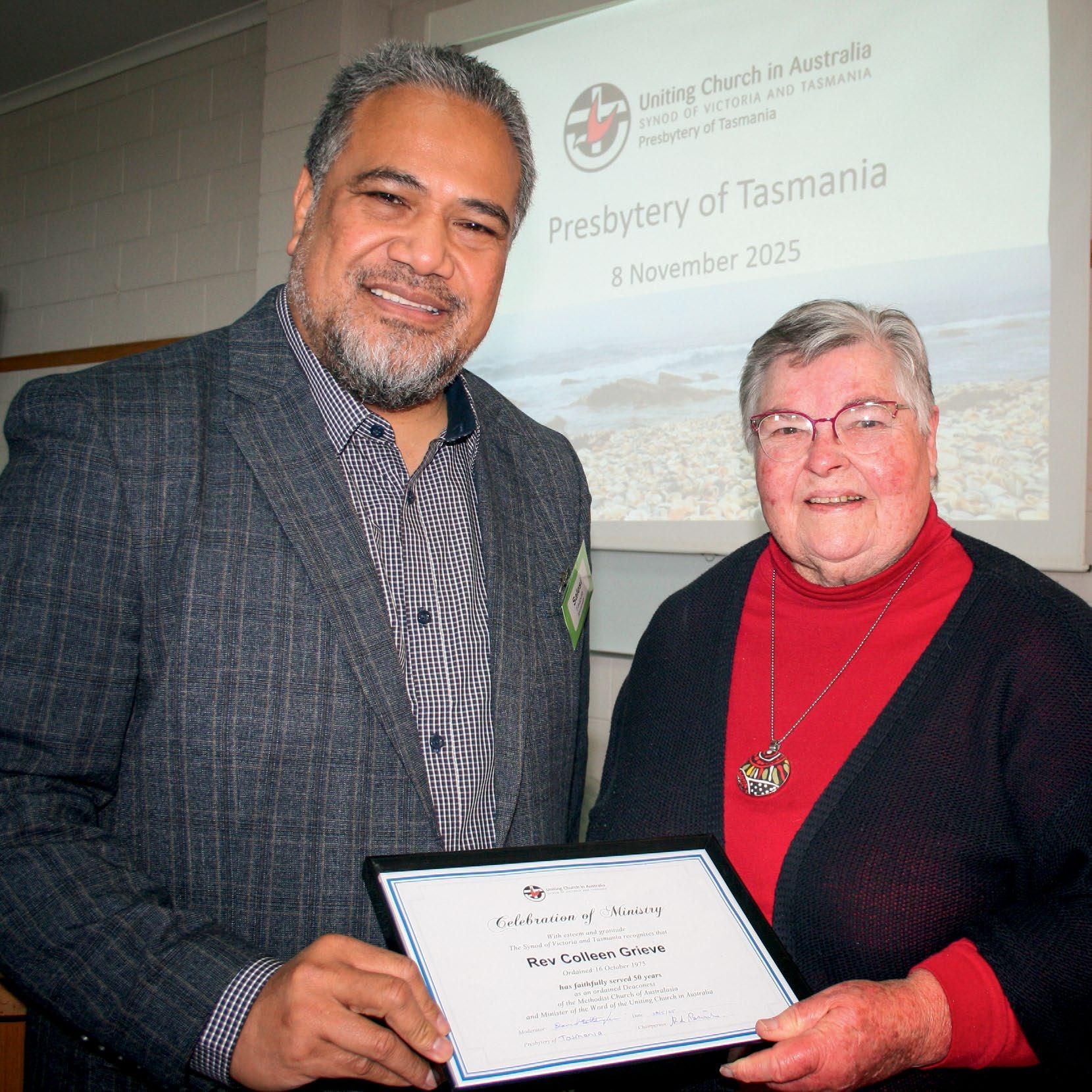
On October 14 last year, former Synod of Tasmania Moderator Colleen celebrated 50 years of ordained ministry. Family, friends and former parishioners from across Queensland and Tasmania helped her mark the occasion with a thanksgiving service at Longford Uniting Church on October 19, and then on November 8 when she received a recognition award from the Tasmania Presbytery.
Born in Brisbane, Colleen was the second of five children and the first daughter in a working-class, tight-knit family.
“Mum was the one who nurtured our faith development,” she recalls.
“Rain, hail or shine, the Grieve kids were always at Sunday school and church.”
Those weekends made the church both a spiritual home and a social hub, filled with tennis, concerts and youth dances.
Her early role models were women of quiet strength.
“My grandmother … showed me how
By Marina Williams
to be content with the home you make for yourself,” Colleen says, while an aunt who worked as a hospital matron revealed “the possibility of following a lifetime vocation”.
Their examples showed Colleen that a woman could lead a purposeful life beyond the conventions of the 1950s and 60s.
Even then, Colleen sensed the constraints of gender expectations.
“When both my brothers married, people would say, ‘you’ll be next’, and it annoyed me,” Colleen says.
“Why should that be the only path?”
At 14, she left school to work as an office assistant delivering precious metals around Brisbane.
Ten years later, after completing adult matriculation, she entered theological college.
“It took me a while to get there, but the call kept tugging,” Colleen says.
At ordination, ministers are presented with a Bible. For Colleen, that symbol had deep roots.
As a child, she eagerly read a Bible, a gift from her parents, long before theological study gave it new depth.
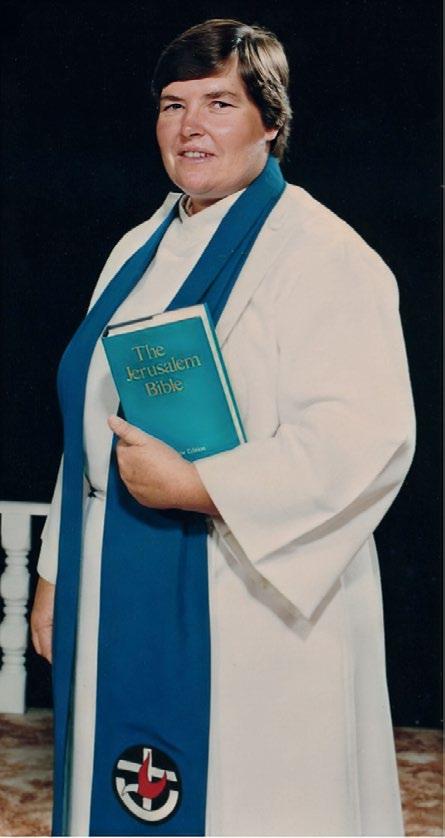
“It’s been my textbook for faith and for life, my prayer book, my spiritual roadmap,” she says.
One verse has been a constant presence in her life: ‘You yourself must
keep calm and sane at all times; face hardship, work to spread the Gospel, and do all the duties of your calling’.
“It reminds me to stay faithful and steady, even when life is difficult,” Colleen says.
In 1974, her first fulltime appointment was as a probationary deaconess in the Methodist Church to Woodleigh Residential College in Herberton.
“Training for a Deaconess was a fiveyear training program,” she explains.
“You go to theological college for three years, which I started in 1971, then have a placement for the next two.
“Woodleigh was my placement, my probationary years, and at the end of my probation in October 1975 I was ordained.”
Colleen served as senior housemistress at Woodleigh to highschool students from remote Gulf and Cape York communities, the Torres Strait, Papua New Guinea and rural Queensland.
“For someone who’d never met indigenous people before, it was an eyeopening experience,” she says.
“At first, I held the same patronising attitudes many of us grew up with, but that soon changed.”
As she learned from the students about their families, languages and cultural stories, her world view shifted.
Moderator Rev Salesi Faupula and Rev Colleen Grieve in November last year with Colleen’s recognition award.
“Bit by bit I was challenged to reconsider everything I’d assumed,” Colleen says.
“It became one of the most profound learning experiences of my life.”
After four years, she was sent to Mount Isa, first as a Deaconess and later, following the formation of the Uniting Church, she was ordained as a Minister of the Word in February 1980.
“Effectively, I was ordained twice, which doesn’t happen often,” Colleen says.
“Minister of the Word is a congregational-based ministry, as opposed to the Order of Deacons, which
is more of a community-based ministry.”
Friendships in the Mornington Island parish continued her education in Aboriginal life and spirituality.
“The women there adopted me as a sister,” she recalls.
“I felt deeply honoured.”
Those connections inspired later initiatives when she returned to Woodleigh as principal, including staff visits to students’ home communities to build trust with parents and elders.
By her final year, “every Year 12 student had plans for tertiary study”.
Later in Tasmania, Colleen studied Aboriginal history at the University of
Tasmania and served as a presbytery representative with the Uniting Aboriginal and Islander Christian Congress.
“It was important to understand the story of the first Tasmanians, too,” she says.
“Reconciliation is a journey we walk together.”
After a decade in Queensland, and as the first woman appointed as a Frontier Services Patrol minister, Colleen moved south to the West Coast Patrol in Tasmania in 1990.
“It was wild, wet and dismal and yet beautiful,” she laughs.
“I wondered if I’d ever see the sun again.”
Then came hardship. Mines closed, hydro workers departed and communities emptied almost overnight.
“The population dropped from about 8500 to 3000,” Colleen says. “People lived with a rhythm of doom and hope.”
Through it all, she supported her community.
“When our little church building at Savage River was sold and removed, we packed our chalices and hymn books into a box, our ‘holy box’, and became pilgrims again,” she says.
“It reminded me of the Ark of the Covenant travelling with God’s people.”
Beyond pastoral work, Colleen served on the inaugural Tasmanian Women’s Consultative Council and the Tasmanian Domestic Violence Advisory Committee, bringing a minister’s compassion to state policy discussions.
“It was outside the bounds of parish work, but part of caring for people’s wellbeing,” she says.
In 1996 Colleen accepted the call to serve Longford, Perth, Cressy, Campbell
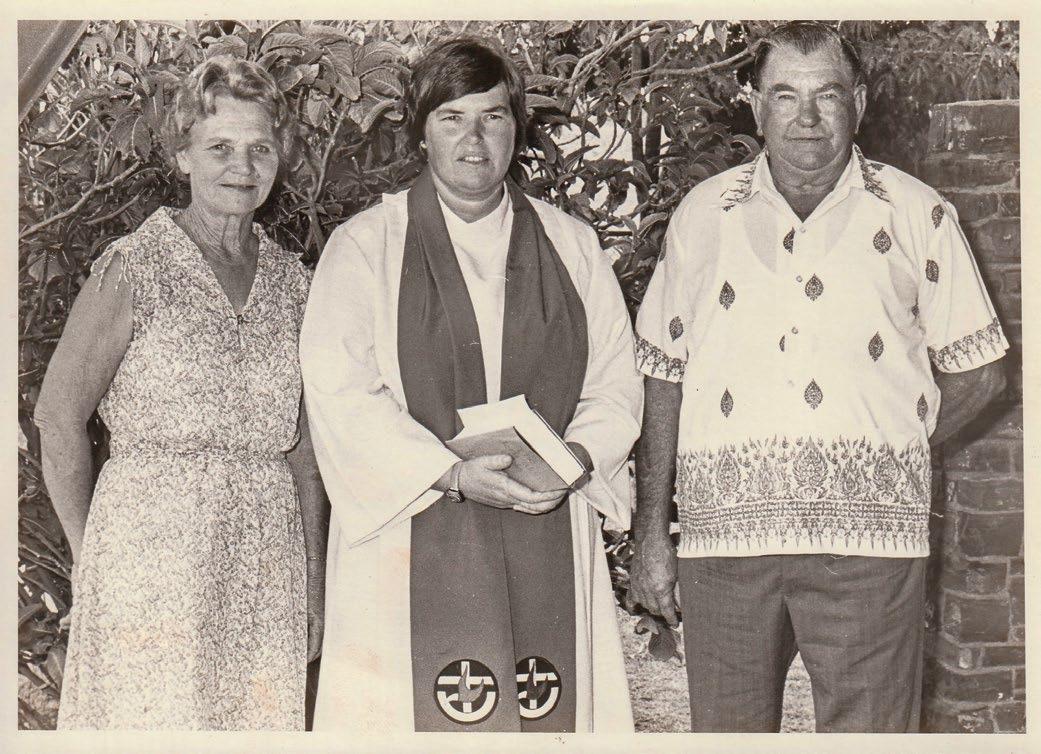
Above: Colleen with her parents Colin and Thelma at her ordination as a Minister of the Word in 1980. Left: The Bible has been Colleen’s spiritual roadmap throughout her faith journey.
Town, Ross and, later on, Georgetown.
“After the transience of the West Coast it was a treat to be among people who’d lived in one place all their lives,” she says.
“I’ve spent nearly 30 years here and it’s been a joy.”
When Colleen entered ministry, the Methodist Church maintained two separate orders: Minister of the Word for men and the “lesser status” Deaconess Order for women.
The formation of the Uniting Church in 1977 brought an equality between the orders, yet prejudice lingered.
“There were ministers who didn’t believe women should be ordained,” Colleen recalls.
Over time, attitudes shifted.
“There are now so many women in ministry that gender isn’t the issue it once was,” she says.
“Those early struggles, I hope, helped soften the path for others to follow.”
In 2001, Colleen was installed as Moderator of the Synod of Tasmania, a defining moment she describes with quiet humility.
“When colleagues laid hands on me
and prayed, I realised how every step of my life had brought me to that point,” she says. That same year she received the Centenary Medal for ‘community service above and beyond a professional role’.
Throughout her ministry she has encouraged others, particularly women, discerning a call to leadership.
“All we’re asked to do is to contribute one faithful life,” she says.
“It sounds simple, but it takes commitment.”
Now in retirement, Colleen continues to be involved locally in Longford, marking her 80th birthday in February last year by “handing over a few responsibilities”.
Looking back, she sees her life shaped by faith, service and grace.
“I never felt I needed marriage or motherhood to complete me,” she says.
“My life has been full and blessed with people who’ve loved, cared for and respected me.
“The Church has been my extended family. Having lived a long and faithful life, I hope, is a goal I’ve achieved.”
Rev Ajub Jahja
St Andrew’s Gardiner Uniting Church
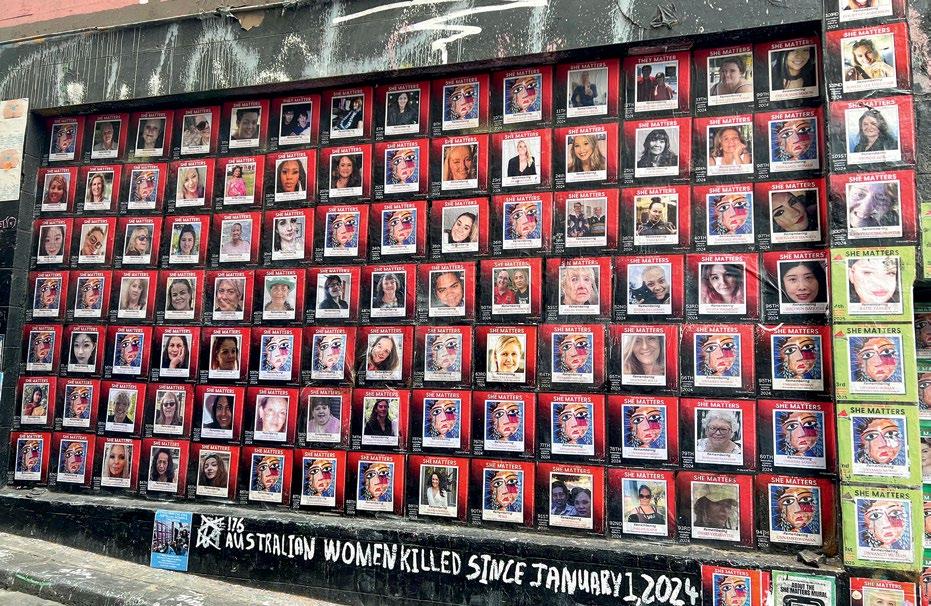
This is not an artistic creation. It's also not a city decoration. It is situated in Hosier Lane, a tiny alleyway in a Melbourne corner that is typically teeming with cameras, colour and laughter.
This is a visual protest against Australia's ‘epidemic’ of violence against women, including femicide and domestic abuse. The posters are arranged in quiet rows. Every picture depicts a life that was actually lived; it is neither a symbol nor an illustration.
“176 Australian women killed since January 1, 2024” is written there. As new cases arise, activists update this figure on a regular basis. Converting cold statistics into actual faces is the objective, to make sure society doesn't forget that every number represents a life: perhaps a friend who is now only present in a state of grief, a mother who never returned home or a child who lost their pillar of support.
Australia has designated violence against women as a ‘national crisis’. Furthermore, the real crisis is not only the quantity of victims but also the point at which such violence starts to seem commonplace. Consciences become numb. Empathy wanes. While the news of a woman's murder is displayed in front of them, people can still enjoy their coffee in peace. The distinction between
comedy and tragedy has really become hazy.
She matters. It's a straightforward, almost cliched phrase. However, it must be said because of its simplicity. Confirmed. It serves as a reminder of another harsh reality: we still have to fight for the recognition of something that ought to be the most fundamental: the worth of a woman's life.
The posters don't yell. They are just there. Quiet. As though asking us to take a moment to acknowledge that there is a problem with our current society. The systems, the culture, and the indifference that have been tolerated for far too long are all to blame in addition to the perpetrators of the violence.
Hosier Lane is still vibrant. However, there is now a wound among those colours that cannot and should never be erased. Because remembering is an act of defiance. And the first step towards a collective repentance is to sincerely repeat ‘she matters’.
Crosslight is a bi-monthly magazine produced by the Marketing and Communications team of the Uniting Church in Australia Synod of Victoria and Tasmania.
Opinions expressed in Crosslight do not necessarily reflect those of the editor or the policies of the Uniting Church.
We acknowledge the Traditional Owners and custodians of the land on which we live, work, gather and worship, and we pay our respects to their elders past and present. We acknowledge that the Church throughout this Synod meets on land for which First Peoples have ongoing spiritual sovereignty and custodianship, and we commit ourselves to respecting Country and to working for a more just future together.
While Crosslight endeavours to publish all articles in a timely manner, they may be held over for a variety of reasons.
Advertising
Crosslight accepts advertising in good faith. Acceptance of advertising does not imply endorsement. Advertising material is published at the discretion of the publisher.
Advertising deadlines for April, Easter 2026 Issue: Bookings February 5, 2026
Copy and images for production February 10, 2026
Print ready supplied PDF March 10, 2026
See crosslight.org.au for full details.
Distribution
Crosslight is usually distributed the first Sunday of alternate months.
Circulation: 13,000
Editor
Andrew Humphries Ph: 0439 110 251 andrew.humphries@victas.uca.org.au
Graphic design, photography and print services
Carl Rainer Ph: 03 9340 8826 carl.rainer@victas.uca.org.au
UCA Synod Office (Wurundjeri Country) Level 2, Wesley Place 130 Lonsdale Street Melbourne Victoria 3000
We want to hear from you. Email your thoughts to Crosslight@victas.uca.org.au
Please do not exceed 200 words and include your full name, address and contact phone number.
Feedback and correspondence crosslight@victas.uca.org.au
ISSN 1037 826X
Next issue: April 2026
ucavictas
By Andrew Humphries
Content warning: This article deals with the issues of suicide and suicide ideation. If it raises concerns for you, please contact Lifeline on 13 11 14 or Beyond Blue on 1300 22 4636.
When a Royal Commission report into misconduct within the banking industry was tabled in Federal Parliament in 2019, it told an all-too familiar tale of corporate greed.
While the report focused on the impact of misconduct on customers, retired Uniting Church minister Rev John Bottomley says the Royal Commission missed a golden opportunity to also explore in detail the negative impacts on bank employees.
As a member of the University of Divinity’s Religion and Social Policy (RASP) network, John had been involved in preparing a submission to the 2019 Royal Commission.
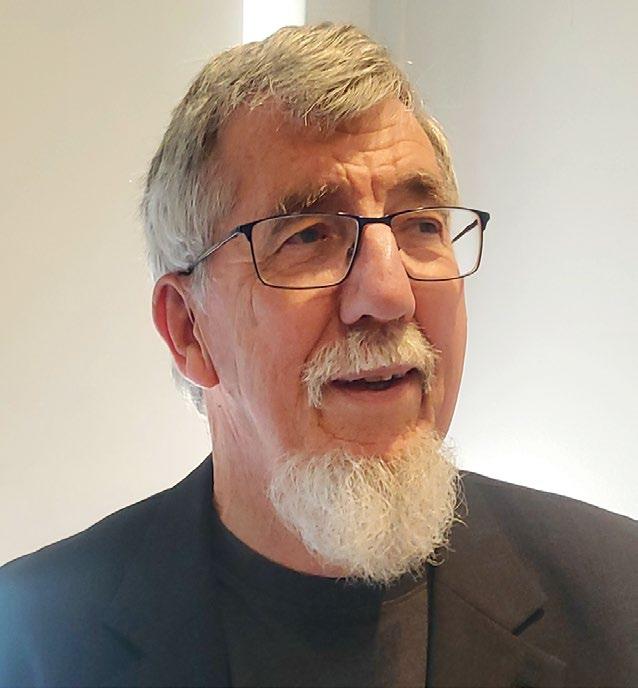
At the same time, RASP had established a pilot project with the Finance Sector Union (FSU) around workers’ experiences of ethical conflict in the finance industry.
As part of that, John and RASP colleagues Brendan Byrne and John Flett were asked if they would be interested in looking at the data the union had collected from members as part of a submission it intended to put to the Royal Commission.
The result was a research paper, published in the Journal of Industrial Relations in August last year, featuring
a case study of 10 banking industry employees which outlined how the constant pressure to meet ever-growing and unrealistic targets had made the workplace a toxic environment for them.
It was, says John, a harrowing undertaking as the team learnt how the employees had been brought to the brink of despair, a situation made worse by the sense of betrayal they felt at the hands of their employers.
Some employees had been so impacted by their work that they saw suicide as the only way out of their distress.
“Some of what we heard still sends a
shiver down my spine, because you’ve got these cases where bank employees have said ‘I have thought about taking my life’,” John says.
“Their pain was hidden to such a degree that it became toxic and it affected their wellbeing.
“Their mental health suffered further because managers ignored their pain, often threatening the employees with dismissal for reporting their grievances or for failing to meet unworkable performance targets.”
Had the Royal Commission been able to hear accounts from bank employees, John says it would have found that the experience of the employees mirrored those of the customers who had suffered at the hands of the banks’ greed.
“From both a theological and a research point of view, that mirroring is really quite powerful and interesting,” John says.
“The word ‘greed’ is a theological word as well as a popular word, and in popular discourse it basically means taking more than your fair share and more than you need, and in a theological sense greed equates to taking what's not yours.
“It’s stealing from your brother or sister and, if you translate greed as breaking solidarity with your community, you come up with a whole different understanding of what’s happening.
“I think the Church has to be stronger
on understanding our theological point of view that if we're going to use the language of greed, we're not saying greed is only an individualistic problem, we need to be talking about the fact that it’s actually the breaking down of solidarity between people, and that's what the Royal Commission found in analysing the banks’ relationships with their customers.
“So they didn’t actually use the word ‘greed’ in their final report, but they really focused on what we had also picked up, which is the systematic abuse of the relationship of trust.
“That’s why this work by us as three Uniting Church ministers was so important, because while it doesn’t sound like a theological type of discussion, we found a way to speak about the human nature of justice and the devastating impact of injustice when
certain ideologies become so taken for granted that people don’t question them.
“The very simple act of inviting people to tell their stories is at the heart of good preaching, clearing the way for what might follow.”
John says a process geared towards restorative justice for workers who have been wronged is vital if the problems raised by the Royal Commission are to be properly addressed.
“What neo-liberalism does is make it difficult to see exactly who is responsible for misconduct, and one of the grievances about the Royal Commission’s findings was that no one lost their job and no one even had to go to court over all of this misconduct,” he says.
“What we know, though, is that if you don't get a sincere and meaningful
apology that actually shows how those responsible for the misconduct are going to be different in the future, it doesn't fix anything.
“If you've been involved and you hurt somebody and you then acknowledge it and say you will try and be different, that's what restorative justice is, and why it’s such an important process.”
John hopes that he, Brendan and John have played a small part in giving a voice to those banking employees brought to their knees by the unrelenting demands placed on them as they went about their daily work.
“I would like to think the report that's been published is of a quality that restores their dignity and their humanity,” John says.
“If our calling as a Church is about justice and human dignity, then this is a story that goes to the heart of that.”





When accommodation was needed to house a refugee family, the Diamond Valley Uniting Church came to the rescue with an offer of its manse. Refugee settlement volunteer group member Vicki Fitzgerald outlines how that offer was part of a wave of community support for the family.
‘Welcome to Nillumbik’, a group of six volunteers, signed a deed with the Community Refugee Integration and Settlement Program (CRISP) to partner with the Federal Government to support a refugee family for 12 months.
To ensure the family we were paired with was supported and able to survive in their brave new move, we had to have arrival forms and Centrelink forms ready on the day they arrived, as well as food, warm clothing and furnished accommodation for six weeks, with the understanding that we would assist them to find long-term rental accommodation by the end of that six weeks.
As a group, we had many training sessions to ensure that we understood CRISP rules, boundaries, ideals and the level of support required.
We soon realised that we needed to reach out beyond our small group to meet the needs of the family.
The sense of community and kindness we experienced through this was truly
astounding. We asked for donations of food, clothing, toys, books, bikes, furniture, whitegoods, crockery, cutlery, kitchenware, kitchen implements, bedding, towels and phones.
We were overwhelmed by the extent to which people felt a deep need to participate and help the refugees.
It was a way for all of us to feel we were helping to stabilise and enrich our own community and personal lives by showing that we can be generous and fill our lives with purpose by giving to others.
The most overwhelming kindness was shown by the Diamond Valley Uniting Church, which consists of two churches in Hurstbridge and Diamond Creek.
We spoke to the Church Council, the two congregations and many individuals at both churches and were offered the use of their vacant manse to help our refugee family, which had waited 12 years in a refugee camp in Jordan to be selected for resettlement in our safe country.
At the Church Council meeting, people spoke of their commitment to justice, and of their wish to help refugees.
The manse was offered to the family rent-free for six weeks, with no strings attached, as part of the initial accommodation stipulated by CRISP.
We were overwhelmed and I wish the Church Council members could have seen the way the family’s eyes lit up when they saw the house.
The children ran from room to room, excited that they were to have their own bedrooms with proper beds, and a place to play.
After the treasurer Graham Ford first offered the manse, I realised that I had forgotten to tell him that the family were Muslim.
I wondered if it would make a difference, but I need not have worried.
Graham stunned me by simply replying, “they are human, Vicki”.
We hear so much negativity in some quarters about refugees, particularly those from very different social contexts,
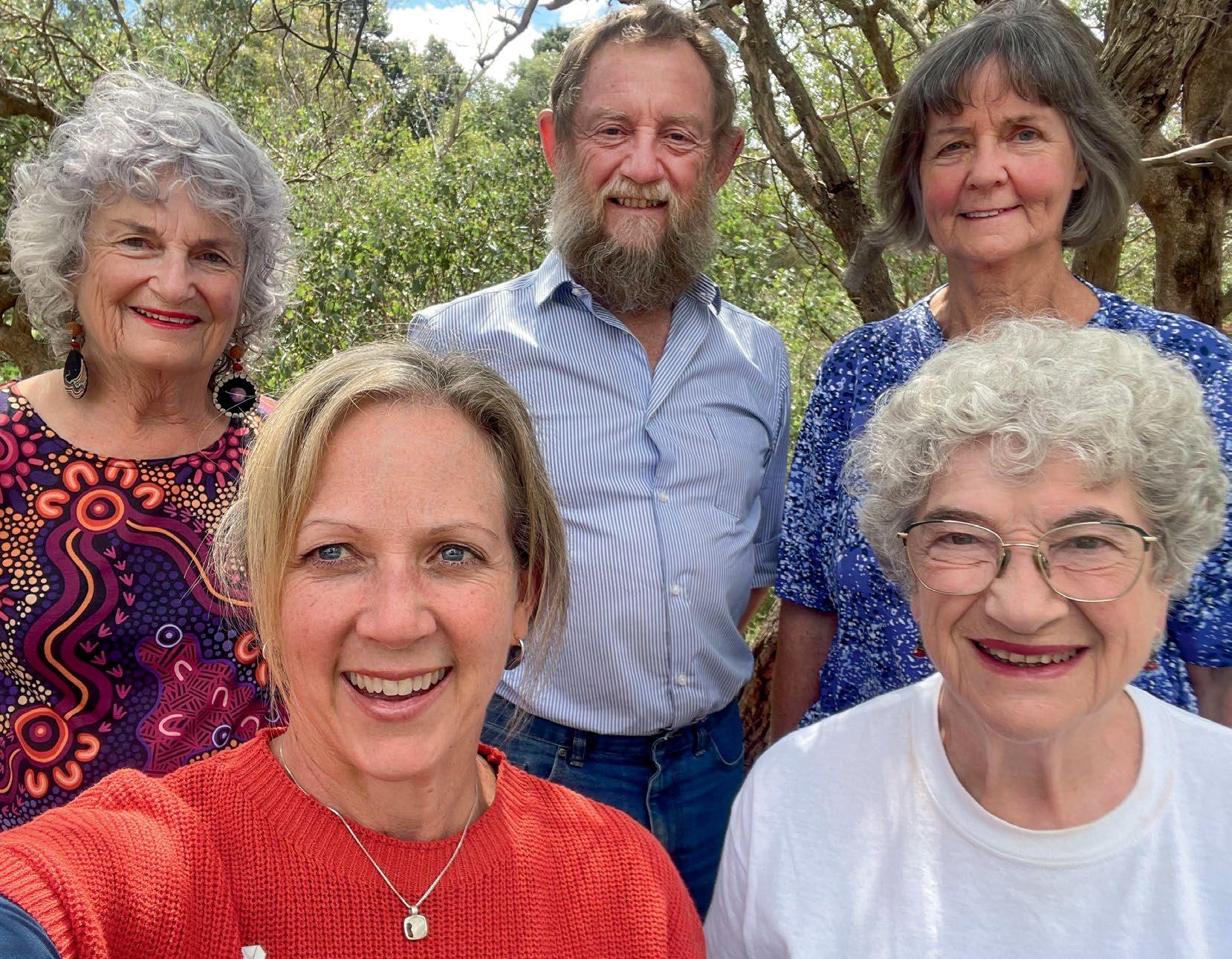
that it is very easy to expect judgment, even within churches.
I feel proud to repeat Graham’s response, in the knowledge that these church members did not blink from what they saw as their responsibility for those less fortunate, who knocked on their door lightly.
I know, as well, that the family has been moved by the kindness shown to them by a Christian church, having come from a country where, sadly, Christians and Muslims are fighting each other.
We hope that if there are other Uniting Churches in Melbourne which have vacant manses, they too will fill them with those who are very much in need of short-time stays.
We again thank the Uniting Church for its vision and action.
Our group of six and our refugee family of eight will not forget this great gift.