

"May the stillness of Advent hold us in grace, a stillness that listens, laments, and loves until the world is filled once more with the song of peace."
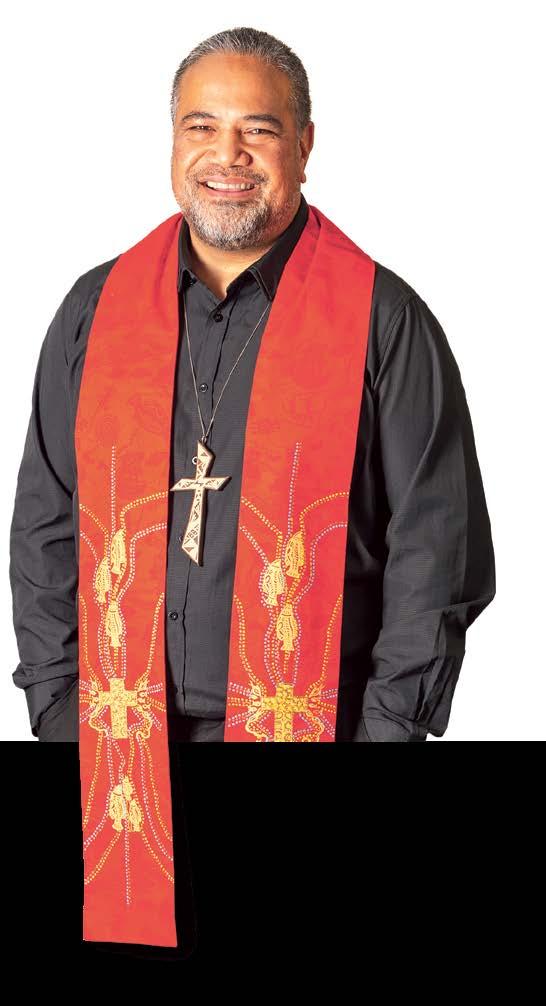
Each year, Advent begins not with noise but with a small light.
A single candle flickers in the dimness, while the world outside hums with traffic, headlines, conflict, and exhaustion. Yet this fragile light insists on hope. It says, “There is still room for peace. There is still room for faith”.
As we move toward the end of another year, Advent invites us again to pause, to breathe, and to remember who we are: Pilgrims of the Spirit.
We are people on a journey, not always certain where the path will lead, but trusting that God travels with us, in our joy, in our weariness, and even in our waiting.
As I write, I am preparing to travel to Tasmania to meet with the Presbytery and to join in celebrating the 40th anniversary of the Leprena Uniting Aboriginal and Islander Christian Congress, a gathering that honours faith, resilience, and First Peoples’ leadership within the Uniting Church. I look forward to listening, learning, and deepening our shared covenant in the gospel.
Another recent encounter that has stayed with me was my visit to Melton Uniting Church (Grace Community). Within the broader suburb, there had been deep grief following the tragic deaths of two Sudanese boys, a loss that particularly affected the Sudanese community in Melton. Some of that community are part of the Grace congregation and, while not everyone was directly touched, the church stood with those who mourned.
They offered prayer, presence, and embrace, small acts that spoke of a Christian ethic of empathy.
Recently, the Parliament of Victoria passed the Statewide Treaty Bill 2025, making Victoria the first jurisdiction in Australia to enshrine a Treaty with First Peoples in law.
This marks a significant step forward, but not the whole journey. The Treaty process will continue to evolve, demanding truth-telling, humility,
and commitment. For the Church, this moment invites us to deepen our covenant with the UAICC, walking alongside First Peoples, not as guests, but as companions in God’s story of justice and renewal.
On October 9 a ceasefire was announced between Israel and Gaza, a moment received with cautious relief. Yet even as the headlines spoke of truce, reports of renewed strikes and continuing hostilities remind us that true peace remains fragile and unfinished.
Advent speaks into this reality: it is the season of already and not yet, of promises glimpsed but not fully seen. We hold hope not as denial of suffering, but as defiance against despair, trusting that God’s light still burns even where peace feels uncertain.
Advent carries that same paradox: the ache for peace in a violent world, and the belief that peace is still possible. To weep is not to lose faith. It is to love deeply. Lament, when shared, becomes solidarity, the resolve to say, “We are still here. We will not turn away”.
There is a Tongan proverb: “Piki piki hama, kae vaevae manava”, meaning bind your canoes together, and share your very breath.
It comes from the image of Pacific voyagers caught in a storm, who tie their canoes together and share what little they have to survive.
We are those canoes, different in shape, size, and story yet bound together by faith and love. And in binding ourselves to one another, we find strength to endure and grace to continue. So may we be pilgrims who pause long enough to notice the light that has never gone out. May we bind ourselves together, share our breath, and walk humbly toward the One who comes to meet us again.
And as we wait, may the stillness of Advent hold us in grace, a stillness that listens, laments, and loves until the world is filled once more with the song of peace.
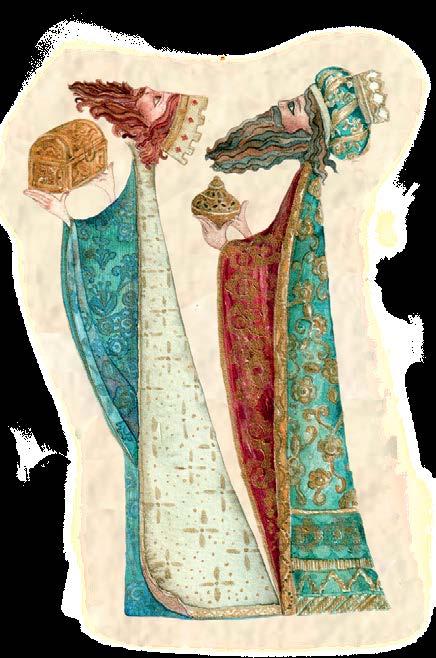
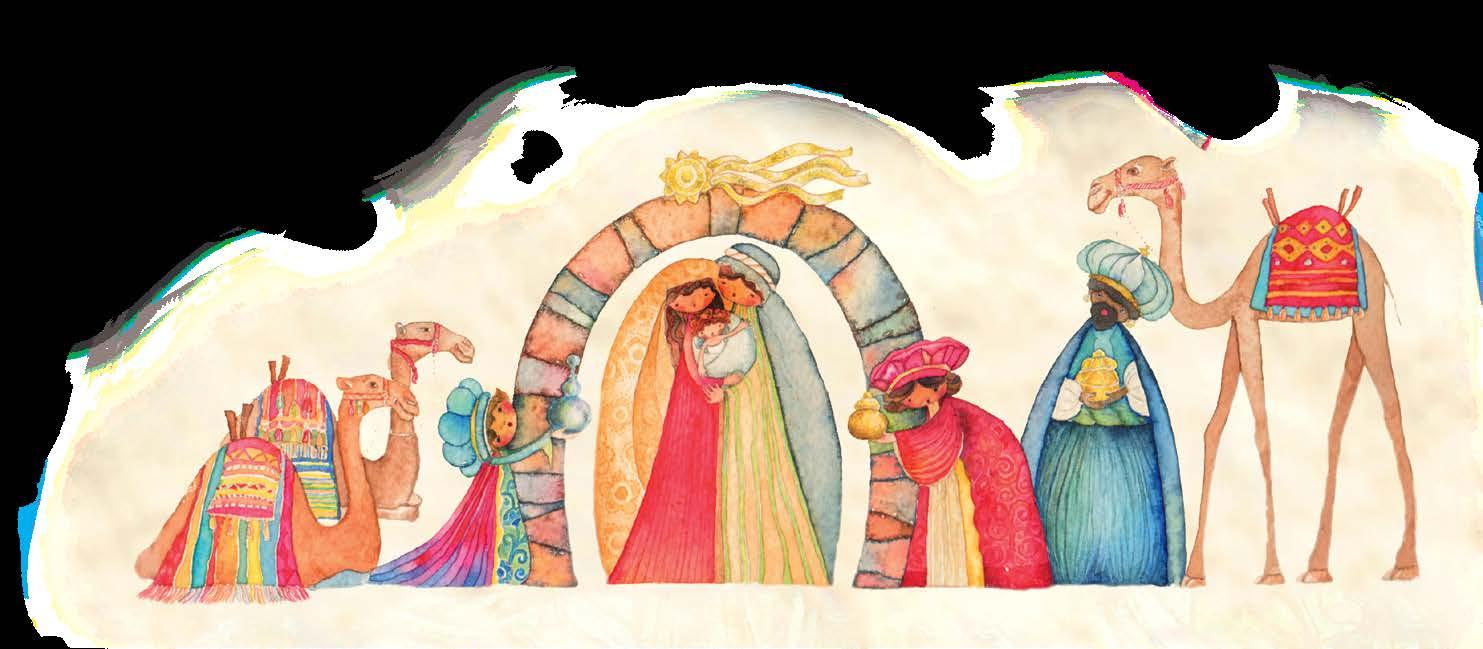
As we prepare to mark the miracle of the birth of Jesus Christ on Christmas Day, Crosslight asked a number of Uniting Church leaders from culturally and linguistically diverse backgrounds what the day means to them and how they mark it.
Rev Esteban Liévano
Minister of the Word, Parkdale Uniting Church
Navidad is one of the most important holidays for Latinos, and in many Latin American nations the Christmas holidays begin in late November (coinciding with the start of Advent) and continue until the middle of January.
We start the celebration on December 24, with a lavish dinner and some families would go to a midnight mass or worship service, then return to open their gifts at home.
There was a shift in culture in the Latin American world around 50 years ago that introduced many customs from the US.
For example, I don't really remember Santa or decorated pine trees being particularly significant, rather, we celebrated los Reyes Magos who brought gifts to children on January 6, and an elaborate Nativity Scene or Pesebre took the place of honour around the holidays.
Latino households today have a blend of these traditions, with Papa Noël and Christmas trees alongside the Pesebre, Reyes Magos, piñatas and obligatory elements of Latino celebrations.
Rev Jae Eun (Jane) Yun Coatesville Uniting Church
I come from South Korea, where Christmas is often cold and snowy, a true white Christmas.
For me, Christmas is a day that reminds me of God’s great love, who came to live among us in Jesus.
It is also a time when I remember my family with joy and gratitude.
When I was a child, our family was not wealthy, and cakes were a rare treat we could enjoy only once a year.
But every Christmas, my parents brought home a small cake.
We lit candles and sang a birthday song for baby Jesus.
Then my parents called the names of all four of us, pretending it was our birthdays too.
With one candle, we took turns blowing it out, laughing and singing together.
Those moments of laughter and song still warm my heart today.
It was the sweetest cake I have ever had because it was filled with love.
This Christmas, I hope to celebrate the birth of baby Jesus by sharing a cake with my church family.
I pray that every child in the world may enjoy the sweetest cake with their family in a safe place.


"Look, the virgin shall conceive and bear a son, and they shall name him Emmanuel," which means, "God is with us."
In the time of King Herod, after Jesus was born in Bethlehem of Judea, wise men from the East came to Jerusalem, asking, ‘Where is the child who has been born king of the Jews? For we observed his star at its rising, and have come to pay him homage.’ When King Herod heard this, he was frightened, and all Jerusalem with him; and calling together all the chief priests and scribes of the people, he inquired of them where the Messiah was to be born. They told him, ‘In Bethlehem of Judea; for so it has been written by the prophet:
“And you, Bethlehem, in the land of Judah, are by no means least among the rulers of Judah; for from you shall come a ruler who is to shepherd my people Israel.” ’
Then Herod secretly called for the wise men and learned from them the exact time when the star had appeared. Then he sent them to Bethlehem, saying, ‘Go and search diligently for the child; and when you have found him, bring me word so that I may also go and pay him homage.’ When they had heard the king, they set out; and there, ahead of them, went the star that they had seen at its rising, until it stopped over the place where the child was. When they saw that the star had stopped, they were overwhelmed with joy. On entering the house, they saw the child with Mary his mother; and they knelt down and paid him homage. Then, opening their treasure-chests, they offered him gifts of gold, frankincense, and myrrh.
Matthew 1:23; 2:1-11
New Revised Standard Version

Rev David Kim
Healesville & Yarra Glen
Uniting Church
Christmas Day is both deeply spiritual and joyfully communal.
It marks the moment heaven touched earth — when “the Word became flesh and lived among us” (John 1:14, nrsvue). God came near, taking on our humanity — our beauty, fragility, and struggles — to walk with us in love and hope.
John’s Gospel tells of a God who “pitched his tent” among us, echoing the ancient tent of meeting.
In Jesus, God dwells with us more intimately than ever before.
In today’s digital age, some messages
still need to be shared in person — like the news of new life or love. Christmas is one of those moments.
In Korea, we celebrate in early worship and share meals across generations.
Here in Healesville and Yarra Glen, we joyfully continue this spirit through our ‘Christmas Community Luncheon’, open to all, celebrating the birth of Christ and the hope He brings.

Boama Amoafo St Andrews Uniting Church, Mildura
Christmas holds a deeply spiritual and cultural significance for my family and me.
It is a time when we reflect on the birth of Jesus Christ, the hope He brings, and the salvation that comes through Him.
The Bible stories leading up to His birth remind us of the profound truth that without Christ, there is no salvation.
In Ghana, where I come from, Christmas is also a time of giving, an essential part of our culture.
Giving is not just about exchanging gifts, it is about strengthening bonds within the family and the community.
On Christmas morning, my immediate family gathers to exchange presents.
What makes this tradition special is the modesty of the gifts. We intentionally keep them simple and inexpensive to honour the humble beginnings of Jesus Christ and His life of modesty and service.
After the gift exchange, we share breakfast together and tell



In those days a decree went out from Emperor Augustus that all the world should be registered. This was the first registration and was taken while Quirinius was governor of Syria. All went to their own towns to be registered. Joseph also went from the town of Nazareth in Galilee to Judea, to the city of David called Bethlehem, because he was descended from the house and family of David. He went to be registered with Mary, to whom he was engaged and who was expecting a child. While they were there, the time came for her to deliver her child. And she gave birth to her firstborn son and wrapped him in bands of cloth, and laid him in a manger, because there was no place for them in the inn.
In that region there were shepherds living in the fields, keeping watch over their flock by night. Then an angel of the Lord stood before them, and the glory of the Lord shone around them, and they were terrified. But the angel said to them, ‘Do not be afraid; for see — I am bringing you good news of great joy for all the people: to you is born this day in the city of David a Saviour, who is the Messiah, the Lord. This will be a sign for you: you will find a child wrapped in bands of cloth and lying in a manger.’ And suddenly there was with the angel a multitude of the heavenly host, praising God and saying, ‘Glory to God in the highest heaven, and on earth peace among those whom he favours!’
When the angels had left them and gone into heaven, the shepherds said to one another, ‘Let us go now to Bethlehem and see this thing that has taken place, which the Lord has made known to us.’ So they went with haste and found Mary and Joseph, and the child lying in the manger. When they saw this, they made known what had been told them about this child; and all who heard it were amazed at what the shepherds told them. But Mary treasured all these words and pondered them in her heart. The shepherds returned, glorifying and praising God for all they had heard and seen, as it had been told them.
Luke 2:1-20
NRSV

family stories, moments that bring laughter, reflection, and connection.
In the afternoon, we extend the celebration to family friends, sharing a meal and fellowship.
It is a rare opportunity to reconnect with loved ones we don’t see often during the year.
For us, Christmas is not just a holiday, it is a reminder of Christ’s humble birth, His rise to prominence through service, and His ultimate sacrifice for our salvation.
It is a celebration of faith, family, and the enduring power of modesty and love.
Maiava F Alesana Lay Preacher, Yarra Yarra Presbytery
Christmas to me as a Samoan is a familycommunity celebration.
In Samoa, Christmas eve starts from the manse in the village.
Afternoon is Sunday School prize giving, followed by light refreshments and dancing, before the whole village returns home for normal evening worship and dinner.
An angelic part of Christmas celebration is the carols parade, when different church groups from neighbouring villages, all wearing white, will walk and sing Christmas carols right through the villages.
When two groups from opposite ends meet up in front of the manse, both turn towards the manse, with people gathered there, then they sing carols together.
Christmas Day, again, is the continuation of a church worship,
whole family gatherings for the big toonai, and exchange of gifts.
Now here in Melbourne, families gather to celebrate Christmas, after church worship of course.
We do our best to keep the Samoan Christmas spirit alive starting from the church, which is regarded as the village
Pastor
Nyok Gai
Springvale Uniting Church
Back home in South Sudan, we start celebrating on December 24, with church members marching on the streets and attending a night service from 10pm until midnight to mark the birth of Jesus Christ.
This is followed on Christmas morning by a celebration service.
Here in Melbourne, our Springvale Dinka congregation and St Michael and St Luke Anglican congregations jointly celebrate a service from 10pm until midnight on Christmas eve, followed by a Christmas Day morning service held at St Michael and Luke which may be attended by 200 people or more.
At Springvale Uniting Church, our English-speaking congregation holds a


morning service on Christmas Day.
After the service we start visiting our families, relatives and friends across Victoria.
Christmas Day is one of the happiest days, spreading a message about hope, joy, peace, love and unity. It is the time we all come together as churches and communities to celebrate.


Translating ‘Understanding the UCA’ into Samoan is breaking down barriers, reviving congregations and building a framework for future leaders.
When Junior Manase gathers Samoan Uniting Church members in Victoria for a weekend workshop, the atmosphere is alive with conversation, storytelling and reflection.
For Junior, a non-placement Samoan Ministry Pastor at St Stephens in Keilor, these gatherings are far more than training sessions.
They represent a long-held vision coming to life – one where Samoan leaders can learn about the Uniting Church in Australia in their own language, through methods that honour their culture.
At the heart of this initiative is the course ‘Understanding the UCA’, originally written in English by Mel Perkins, Lay Leadership Development Co-ordinator with equipping Leadership for Mission.
The study unit was designed to meet one of the UCA Assembly’s Core Competencies: “Work within the doctrine, ethos and polity of the Uniting Church”.
The unit tells the story of the Church through history, documents and theology, while weaving in its commitment to First Peoples, intercultural ministry and the Act 2
By Marina Williams
process. For Mel, creating the unit was about more than meeting formal requirements.
“I knew it was important not just to have a linguistic word-for-word translation, but a culturally appropriate translation,” she explains.
“Something that would meet Assembly standards and provide training in ways that spoke to the hearts of participants, challenging them and giving them support and encouragement.”
Being involved in the Samoan translation project, she adds, has “filled my heart with joy”.
The project has created an opportunity for Samoan members to engage with UCA history, theology and polity in ways that resonate with their culture and language.
A vision long in the making
The idea of Samoan-language training had surfaced many times before, as Junior recalls.
“From what I know, conversations about this project of translating the lay preacher units into the Samoan language began at least a decade ago during a Samoan national conference,” says Junior, who has been in ministry
for six years. “I like to think of it as God’s timing how the project eventually kicked in to gear – a matter of having the right people invested at the right time.”
Among those people was the late Tuuu Kenape Faletoese, then secretary of the Samoan UC Fellowship in Victoria, who helped orchestrate the project.
Together with Rev Tupe Ioelu, minister in placement at Wesley Geelong and chair of the Presbytery of Port Phillip West Ministry Formation Committee, and Rev Linley Liersch, Presbytery of PPW Mission Development Strategist and eLM minister, funding was secured and a framework established that opened a position specifically for translating ‘Understanding the UCA’ and providing ministry at St Stephens.
The Samoan UCA Fellowship has also been central to the process.
Junior describes the Samoan ministry agents as the project’s backbone, noting that workshops and discussions would not be as fruitful without their guidance, leadership and input.
Having only joined the fellowship by association in 2023, he says their generosity in offering time, resources and experience in UCA ministry has been instrumental.
“The Uniting Church acknowledges that Christ has commanded his Church to proclaim the Gospel both in words and in the two visible acts of Baptism and the Lord's Supper. Christ himself acts in and through everything that the Church does in obedience to his commandment: it is Christ who by the gift of the Spirit confers the forgiveness, the fellowship, the new life and the freedom which the proclamation and actions promise; and it is Christ who awakens, purifies and advances in people the faith and hope in which alone such benefits can be accepted.”
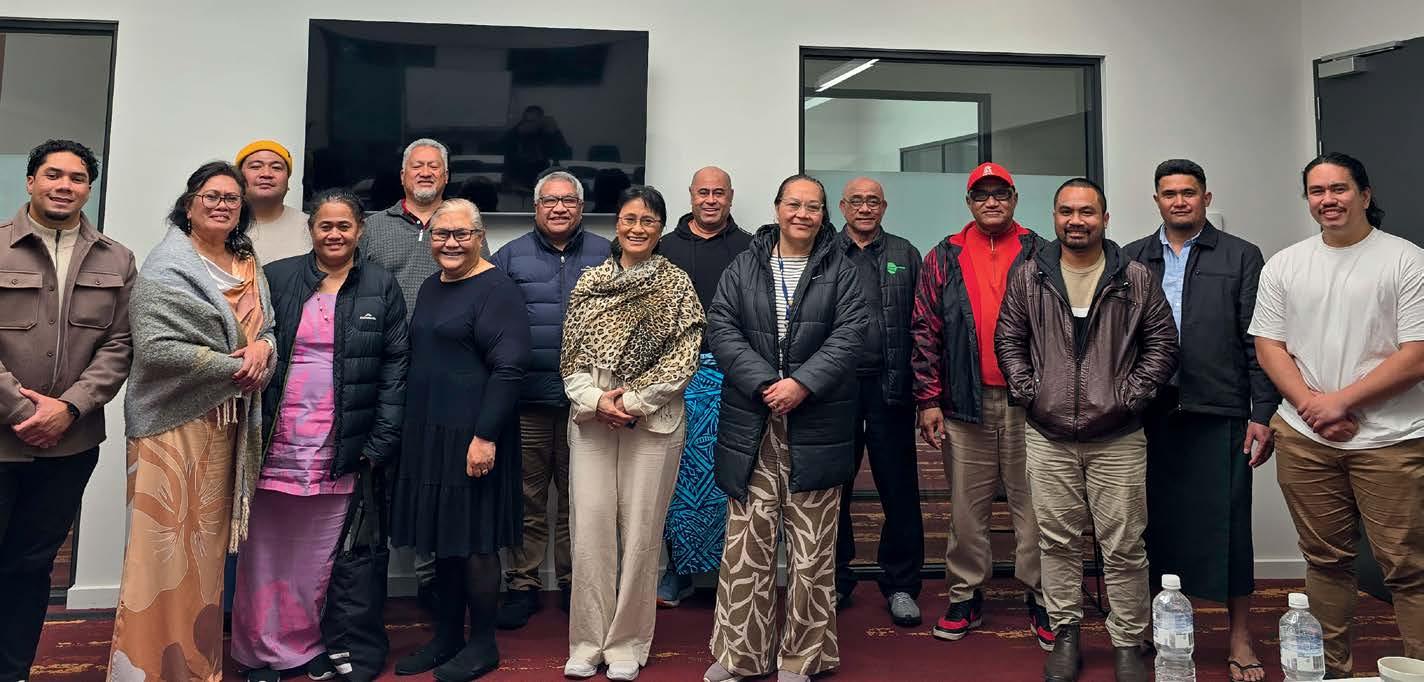
Samoan Uniting Church leaders at a recent workshop involving translating 'Understanding the UCA' into the Samoan language.
‘The Basis of Union: Sacraments’ (English with the translation in Samoan on the right).
Yet, Junior was well equipped. A graduate of Malua Theological College in Samoa, he had lived in both New Zealand and Samoa and was fluent in English and Samoan.
“I am a NZ-born Samoan – so English is my first language. Having spent four years in Samoa for ministry training, I am privileged to be somewhat fluent in the Samoan language,” he says.
“This has been to the credit of the project because understanding the subtle cultural nuances of the Samoan language has really helped with the translations and training.”
Translation as partnership Junior initially tried translating all the material himself but soon realised this was unsustainable – and less culturally meaningful.
“Rather than me having to translate everything beforehand, I now translate only key talking points and present them to the class,” he explains.
“We discuss the content in depth, from
“Ua matuā ioe lava le Ekalesia Soofaatasi e faapea, ua faatonuina le Ekalesia a Keriso ia talai le Tala Lelei i upu atoa ma faiga faaaliali i le Papatisoga ma le Talisuaga a le Alii, i le ua talitonu le Ekalesia o Iesu lava e galue pea o Ia e ala i soo se mea ua faia e le Ekalesia i le usiusitai i lana poloaiga. E moni, o Ia lava, i le foai mai o lona lava Agaga, ua faamagalo ai tagata, ua foai le mafutaga, o le ola fou lea ma le saolotoga e pei ona folafolaina i talaiga eseese atoa ma mea ua faia i le Sakalameta Paia. O Ia foi na te fagufagu ma faamama mafaufauga o tagata atoa ma le faatupuina a’e o lo latou faatuatua ma lo latou faamoemoe; o le ala tasi lea e talia ai ana meaalofa faapena.”
our cultural perspectives, and come up with appropriate translations together.
“The result is a translation that is more nuanced and based on the collective wisdom of the group.”
This spirit of adaptation extended to assessment. While eLM’s criteria relied on written tasks, the group recognised that Samoan culture is primarily oral, so verbal submissions were introduced for those who preferred to speak rather than write.
“For some of the candidates, they are much more comfortable sharing their thoughts through the art of oratory and storytelling rather than essay writing,” Junior explains.
“The way Samoans connect biblical stories to cultural identity and Samoan way of life is extraordinary.”
For Mel, these innovations highlight the heart of the work.
“One of the gifts of the project is the collaborative nature of it – the Presbytery and its funding, Synod involvement, Junior and his gifts, the Samoan ministers, the Samoan community … none of it would have been possible without everyone working together.”
The impact has been immediate. Some candidates are encountering UCA structures for the first time; others have been members for decades but are only now grasping the intricacies of interconciliar governance.
For others, the course has sparked a renewal of passion, Junior says.
“As a culture that is founded on community values and collaboration,
From P9
this training has reawakened the fire within to seek more intentional fellowship and gatherings,” he says.
Rev Tupe Ioelu has witnessed the same transformation.
“One of the greatest joys in this journey has been seeing the look on people’s faces when something new clicks for them,” he reflects.
“It’s not only about learning the history of the church, but also about discovering the reality and the facts of the written scriptures.
“What has stood out most is the way people are growing in their understanding.”
For Tupe, leadership training in first languages is vital to the Church’s future.
“Providing leadership formation in the languages of these communities is not simply a practical matter – it is a way of honouring their gifts and investing in
their future,” he says. “When leaders are trained in culturally and linguistically relevant ways, they gain the confidence to guide their congregations with hope, knowing they have the tools to sustain and nurture their people.”
For participants, the value of training in Samoan lies in more than comprehension. It is about belonging.
“Allowing formation and leadership training to be delivered in the Samoan language instils a sense of belonging and acknowledgement of our cultures and values,” Junior explains.
“We all feel so blessed to be able to journey through the course in a way that is culturally meaningful and sensitive knowing that we have the support of Mel and the team at eLM and also the Presbytery of Port Phillip West.”
This recognition is what makes the
project so significant for Mel. Alongside Junior, she has provided foundational material, technical guidance for uploading content to the online platform, and encouragement to the community.
Together, the two are recording lessons and challenges, developing a framework that can be adopted by other communities across the Synod and Assembly.
The first Samoan-language cohort is close to finishing its course, with 11 candidates preparing to step into lay leadership roles. In congregations where ministers are scarce, their presence will make a real difference.
Tupe notes that “success can already be seen” in this spread of leadership. In the long term, some may move towards ordination while others sustain local congregations as lay preachers.
“Either way,” he says, “the project plants seeds of hope for the future, ensuring that Samoan communities within the Uniting Church will not only survive but continue to grow and flourish.”
Mel sees further possibilities. Interest is already emerging from Indonesian communities in Port Phillip East, and she hopes the framework can show that culturally relevant training is achievable in other contexts.
“What started as a small step, has turned out to be a huge one for this community in a wonderful direction,” she says.
Junior echoes that vision.
“I hope that it reminds us that being multicultural/intercultural does not necessarily mean just translating documents into another language,” he says.
“For an oral culture such as Samoa, reading and writing does not do justice in capturing the essence of Samoan perspective, so tailoring learning and training in a uniquely Samoan way brings out the best of the gifts these individuals have been blessed with.
“I also hope it inspires other cultural groups to reach out to their communities and presbyteries to explore whether this is something for them.”
“Having a roof over your head is essential to wellbeing and flourishing.”
The Uniting Church in Australia has understood that the Gospel calls us to seek the wellbeing and flourishing of all people and the natural environment.
Having a roof over your head is essential to wellbeing and flourishing. Housing impacts the ability of people to participate in their community. Access to jobs, education, and health care services is affected by whether a person has affordable, appropriate, safe and secure housing.
For the last two years, concerns about homelessness and housing have been the top priority for members of congregations in the Synod who connect with the Justice and International Mission Cluster. There are certainly reasons to be concerned about the situation with housing in Australia. Federal and State governments have failed to adequately invest in housing, with an ongoing decline across Australia. Government-run public housing provides the greatest level of security for vulnerable and marginalised people.
Today, home ownership rates in Australia are falling sharply, and housing stress is increasing. Secure housing in Australia is increasingly out of reach for a growing proportion of the population. The proportion of households living in a home they own outright or within a mortgage in Australia is 13 per cent below the OECD average and falling. Over a million lower-income households are paying housing costs that exceed the affordability benchmark of 30 per cent of household income.
Current Federal Government tax policy settings favour protecting the property values of existing homeowners and investors at the expense of those experiencing homelessness and housing insecurity. The Everybody’s Home campaign has stated that Australia’s current tax treatment of housing subsidies favours property investors at the expense of people trying to buy a home. Tax giveaways to property investors fuel speculative investment and high house price inflation, causing house prices to rise much faster than incomes. The growth in housing prices
that outstrips increases in income for most people has enormous implications for the wellbeing of Australians and future social cohesion.
The Synod and Uniting Vic.Tas are members of the Everybody’s Home campaign.
Social housing is the combination of public housing and housing run by not-for-profit community organisations like Uniting Vic.Tas. Social housing is essential for putting a roof over the heads of the most vulnerable people. Australia lags well behind European countries in providing social housing, with only 4 per cent of Australian housing being social housing compared to 8 per cent across the European Union countries. Australia also lags behind New Zealand, Canada and the US.
Further, family and domestic violence is the leading cause of homelessness for women. Of women and girls seeking a roof over their heads, 45 per cent are survivors of family and domestic violence. In Victoria, in the 2022-23 financial year, 54 per cent of all women, young people and children who visited a specialist homelessness service reported they had experienced family violence. A lack of housing for those fleeing family and domestic violence can force them to return to abusive partners. Women fleeing abusive partners have reported being forced to sleep in their cars.
In Victoria, the lack of social housing means that children, women, and young people who have been identified as needing urgent housing as a result of family and domestic violence are waiting an average of 19.5 months to get into social housing.
Addressing these severe housing problems requires the Federal Government to reform the tax system to make it easier for people on lower incomes to purchase homes.
If you are concerned about the housing problems in Australia and want to advocate for reforms, please get in touch with the JIM Cluster, if you are not already on our supporter list, at JusticeandInternationalMission@ victas.uca.org.au
Seasonal workers from the Pacific Islands bring more than labour to Tasmania’s harvests – they bring culture, faith and connection. With Taua Ritiata at the centre, congregations are rediscovering the power of welcome.
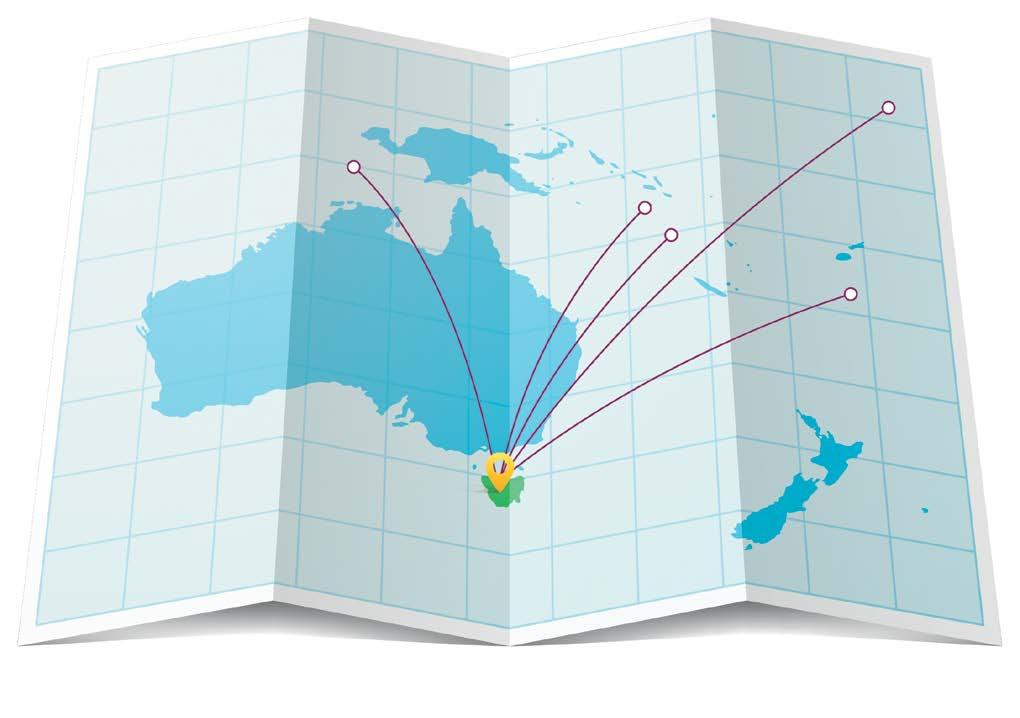
When groups of men and women arrive from Samoa, Tonga, Vanuatu, TimorLeste and Kiribati to work in Tasmania’s fields, orchards and processing plants, they bring with them far more than labour.
Their presence, songs and stories leave a lasting imprint on local communities, and at the heart of this exchange is Taua Ritiata.
As the Community Connections Coordinator in Tasmania for the Pacific Australia Labour Mobility (PALM) scheme, Taua has spent the past four years helping seasonal workers find belonging and support in unfamiliar places.
His position is part of the federally funded Community Connections Program, overseen by the Department of Employment and Workplace Relations.
The Salvation Army delivers the program in partnership with subcontractors, including the Synod of Victoria and Tasmania, which employs Taua under this arrangement.
Taua works under the oversight of Dr Mark Zirnsak, the Synod’s Senior Social Justice Advocate.
Through this partnership, the program has supported thousands of Pacific workers across the state.
“It’s about making sure these workers
By Marina Williams
feel connected, feel welcome, feel part of the community,” Taua explains.
“They’re far from home for months or years, and it can be very isolating.
“Our job is to link them with churches, councils, sports clubs and community groups so they know they’re not alone.”
The PALM scheme has been running for more than a decade, with Tasmanian employers relying heavily on seasonal workers to keep industries going.
Short-term placements, usually in
agriculture, last six to nine months, while long-term workers can spend up to four years in meat processing, aged care or hospitality.
For many, the motivation is clear: wages earned in Australia allow them to build homes, buy fishing boats, pay school fees and support families back home.
But the distance from loved ones, the challenges of a new culture and long hours in physically demanding jobs can

Taua Ritiata is a welcoming presence for Pacific Island workers new to Tasmania.
take a toll. That is where Taua steps in. Before workers even arrive, he liaises with approved employers to learn who is coming and where they will be placed.
“If a group is from Tonga or Samoa, for example, we can already look at what churches are nearby, what councils are running activities, and what sporting or cultural events might be open to them,” he says.
Churches are often the first point of contact.
“These workers are very spiritual,” Taua notes.
“When they see a local church, it feels like a place of refuge and connection. It matters to them.”
Rohan Pryor, Synod Liaison Minister in Tasmania, says Taua’s approach is vital in breaking down barriers.
“Taua brings a friendly approach and a wide smile to people who are often unsure and sometimes uncomfortable,” he says.
“This role helps congregations and community groups see the many possibilities and benefits that stronger connections with seasonal workers might bring.”
The economic importance of seasonal workers is hard to overstate.
Tasmania’s berry harvest, for instance, depends on their presence.
“If they weren’t here, people say we simply wouldn’t have the fruit on supermarket shelves,” Taua says.
Yet their contribution extends well beyond agriculture. Taua has coordinated groups to sing and dance in aged-care homes, bringing joy to residents.
He has helped organise workshops where Pacific workers and local community members build traditional drums and pipes together.
He has worked with councils to host cultural festivals, such as Ulverstone's Pacific Rhythm, which drew thousands of locals to enjoy dance, food and fellowship.
For Taua, these occasions are about reciprocity.
“It’s not just that workers are here to earn and send money home,” he says.
“They also bring gifts – culture, energy, care – and they give back to the communities that host them.”
Rohan agrees.
“From a faith perspective, welcoming ‘the stranger’ is a clear principle in Christian practice,” he says.
“Creating connections between seasonal workers and local communities is a great way to create friendships, deeper understanding and compassion.
“Life is better when we create community rather than conflict and division.”
One simple act left a strong impression. When a group of Pacific workers arrived in Longford, Taua organised for the local Uniting Church to open its op shop out of hours so they could get warm clothes for Tasmania’s spring chill.
“Come shopping, take what you need, no charge, feel welcome,” says Rohan, explaining the congregation’s approach.
“What a great opportunity for mutually affirming community connections.”
Stories of hospitality abound across Tasmania.
With Taua’s coordination, Ni-Vanuatu workers in Ulverstone joined worship and were greeted with open arms.
In Penguin, a group of 50 workers joined Sunday services, while in Legana, 70 Samoan workers quickly found connection.
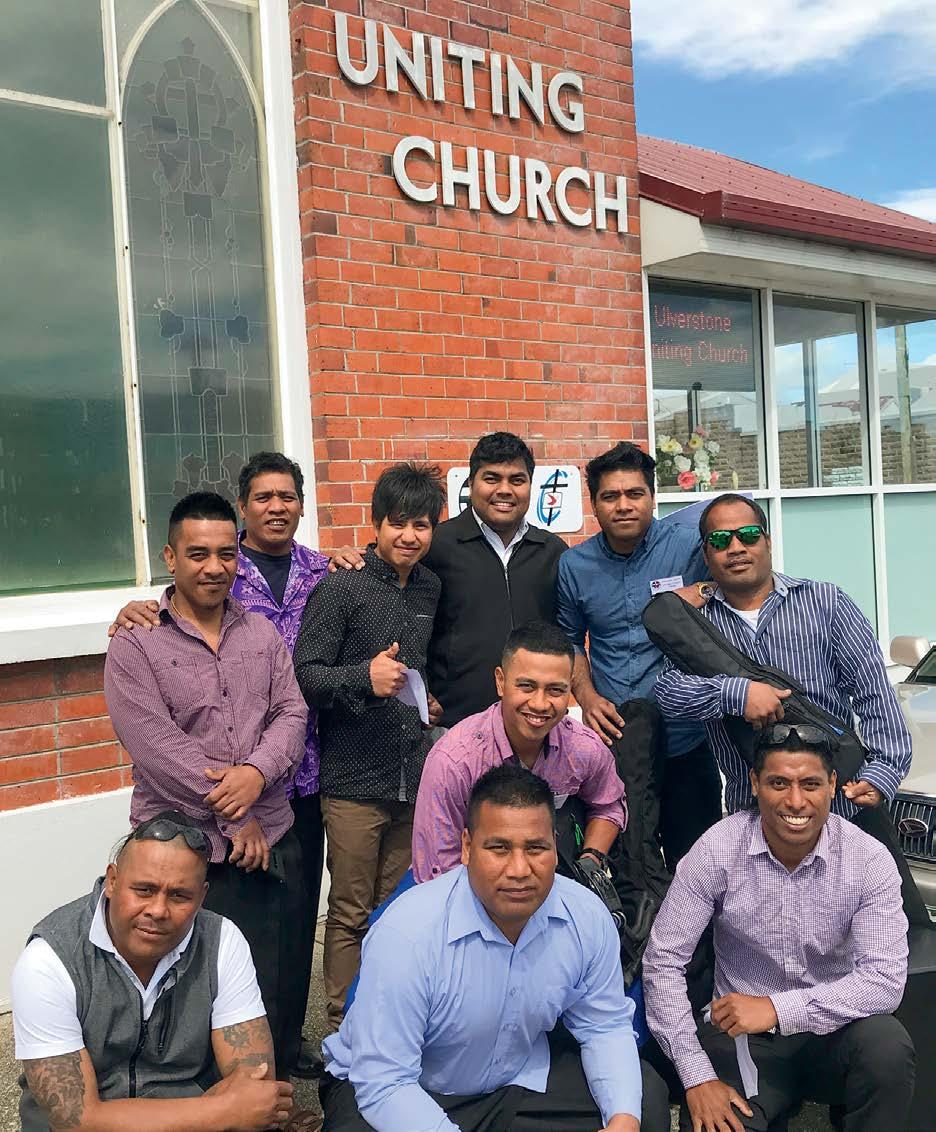
“It’s always moving to see the gratitude on both sides,” Taua reflects.
“Workers are thankful for the welcome, and local people are thankful for the workers who harvest the food and enrich community life.”
Returnees, those who come back season after season, often rejoin congregations and sports teams they already know.
The role of the church is not only spiritual but practical.
“The church can be a spiritual home, but also a practical one,” Taua explains.
“Offering space for worship, sharing meals, being there when people are tired or lonely – that makes a huge difference.”
This ministry also extends to moments of crisis. When a Pacific worker died in a farm vehicle accident, Taua worked through church networks to help arrange a memorial service with pastoral support and liaison with embassy staff.
“These temporary but significant partnerships can be created quickly when there already exist community connections that Taua creates and maintains,” Rohan says.
Workers arrive in October and November as the new season begins and crops ripen, with numbers swelling into the thousands.
Taua helps coordinate welcoming events, involving congregations, councils and community groups.
Earlier this year, the Pacific Rhythm festival drew more than 4000 people.
“The council only posted the event online and people just came,” Taua recalls. “Next year they plan to promote it more, so even more will come.”
For both Taua and Rohan, the measure of success is the same: that workers and communities alike experience lasting connection.
“When they go back home, I want them to say, ‘Tasmania was a place where I was welcomed, where I made friends, where I was part of something’,” Taua says.
Rohan puts it simply: “With a wide smile and a friendly greeting, people are made to feel welcome and connected.
“That is what success looks like –relationships that move from host and guest to friends in Christ.”
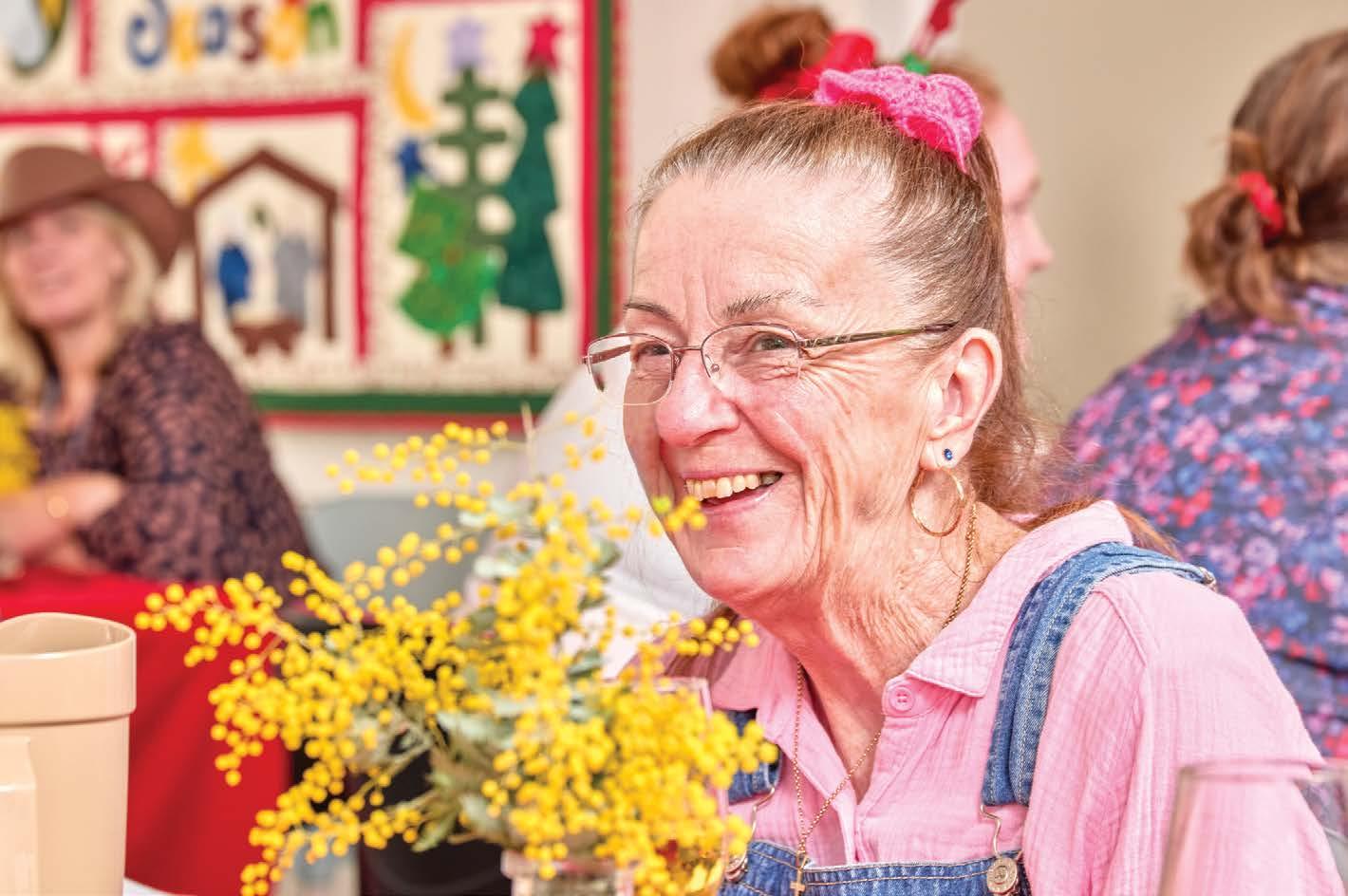
Uniting AgeWell extends heartfelt wishes to all Crosslight readers and their families for a season filled with peace, happiness and joy this Christmas and New Year.
Thank you for your support as we continue a rich heritage of caring for older people, delivering high quality care with respect and kindness.
Persistence and strong support from Pilgrim Theological College staff drove
to a Bachelor of Theology degree.
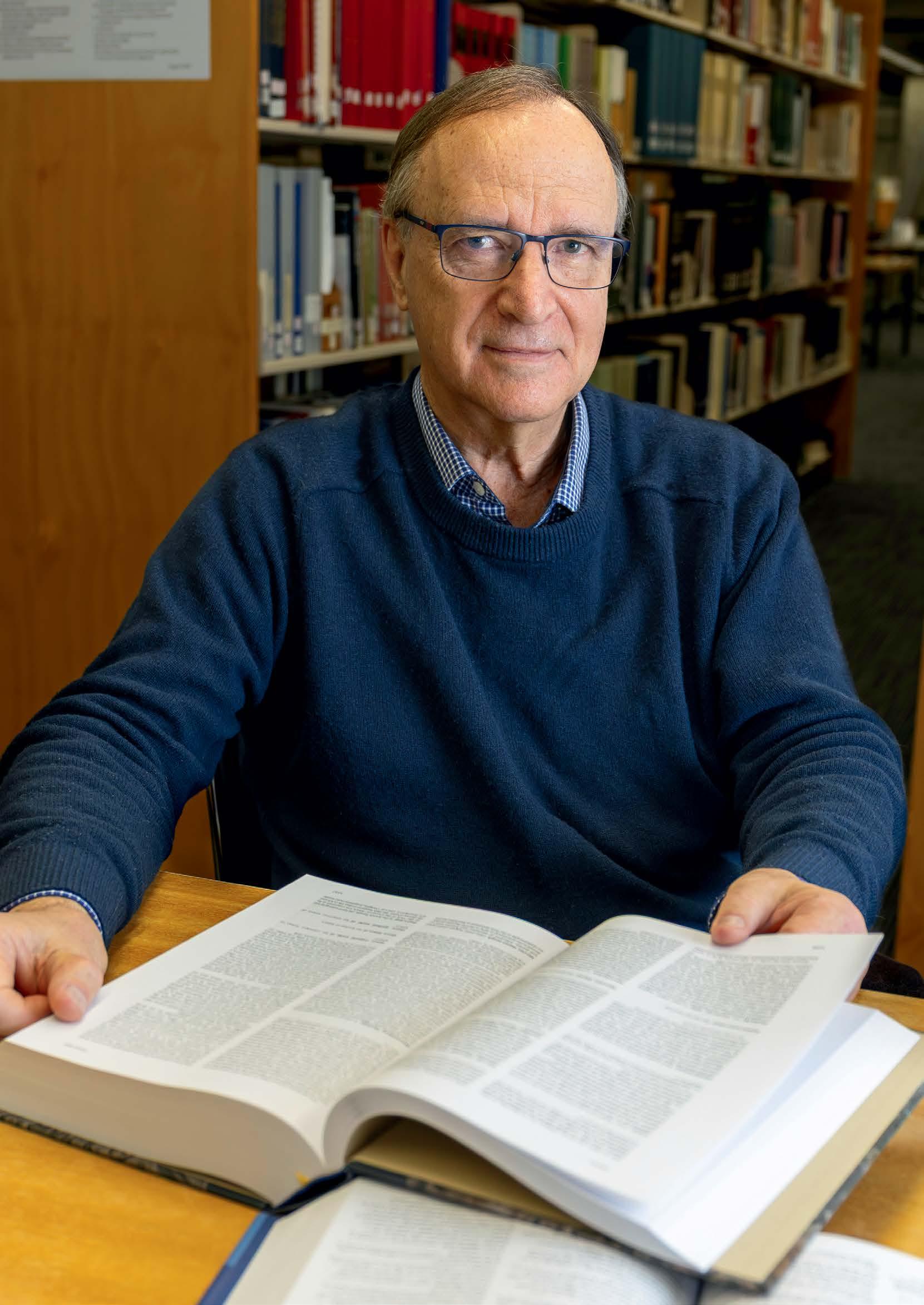
After a long career in the legal profession, and then a stint driving buses, Peter Byrne could have been forgiven for winding down a bit when he hit his late 50s.
Instead, his thoughts turned towards an opportunity to pursue something he had been thinking about for a long time, a pursuit which led him to Pilgrim Theological College and the commencement of a degree in theology.
Along the way, though, one or two challenges were thrown his way.
Thankfully, though, through his own commitment, and the support of Pilgrim faculty and staff, his story had a successful outcome.
It’s a journey which really begins in 2010, when Peter, in his mid 50s, decides to call time on a successful legal career and drive buses.
Even he admits it was a strange decision to make, but behind it was an ongoing search for a sense of meaning.
“I had been a lawyer for a long time and had worked in that field until 2010, and I made a rather odd decision, in some people’s minds, to give that away and drive buses,” Peter explains.
“While I was driving buses, though, I was also going through a process of thinking about something I felt I needed to be doing, based around an interest in theology I had stretching back to the mid-1990s.”
Peter’s father had been a Presbyterian elder. It was the Uniting Church which appealed to Peter and his wife and they began attending worship with their young children on a regular basis.
“At Leighmoor Uniting Church
By Andrew Humphries
in Moorabbin I had many helpful conversations with the Minister Peter Whitaker around 2013/14 and he was a really good sounding board for me, helping me to discern where my developing interest in theology could lead,” Peter recalls.
“I had had a real interest in theology for many years, so in 2015 I began a period of discernment and study at Pilgrim Theological College, and I think I may even have been the first person to enrol there.”
Unfortunately, though, Peter’s first year of study coincided with a cancer diagnosis for his wife Suzanne, meaning he decided to put his studies on hold.
“We went through all of the chemotherapy sessions together and, thankfully, we were able to come out the other side,” he says.
In 2016 Peter returned to driving buses, admitting he needed a “sense of regularity” in his life, but that “itch” around theology remained.
“That process of discernment was ongoing for me,” Peter says.
Having previously done four fulltime units in 2015, he returned to Pilgrim and his degree in 2018, completing it in 2022.
During his studies at Pilgrim, Peter was lucky enough to be taught by influential lecturers, including Robyn Whitaker, Sally Douglas, and John Flett.
“I became aware that Sally was the Minister at Richmond Uniting Church and during Covid-19 I started attending online services there. After Covid-19, I began attending in person, and decided to do something which I had been putting off for some time, which was my
confirmation,” he says. “Shortly after, I became an elder at Richmond, a position I only stepped down from recently.”
While his long legal career was useful in his theological degree studies, Peter admits it took him some time to feel confident enough to offer an opinion around what he was learning.
“I knew how to get my thoughts together and put them down on paper, but it probably took me a while to work out how to free myself up a bit to actually express my opinion,” he says.
“Something I needed was that skill set around how to think about theology, which had probably previously been lacking in me.
“Pilgrim’s academic staff certainly equipped me really well, in that sense, to pursue my studies.
“More than anything else, my time at Pilgrim gave me the equipment to really grapple with my faith and the divine mystery, and to put some real meat on the bones around those concepts.
“Two of the really big influences on me in that regard were John Martis, with whom I studied many Pilgrim philosophy subjects, and John Flett, including through his introductory subject on mission.
“All the teachers at Pilgrim helped me to not only understand ideas, but to put them into my own words.”
As Pilgrim celebrates its 10th anniversary this year, Peter and his Bachelor of Theology demonstrate how persistence, and the right encouragement, can build a pathway to success.
By Andrew Humphries
As co-ordinator at Boroondara Community Outreach (BCO) in Kew, Rev Natalie Dixon-Monu assists many people for whom life is a daily battle.
Some of them are dealing with complex mental health issues, which makes navigating everyday life an even bigger challenge.
These people are often forgotten by society, Natalie says, and in regarding them as almost invisible we are missing out on the many ways they enrich our own lives.
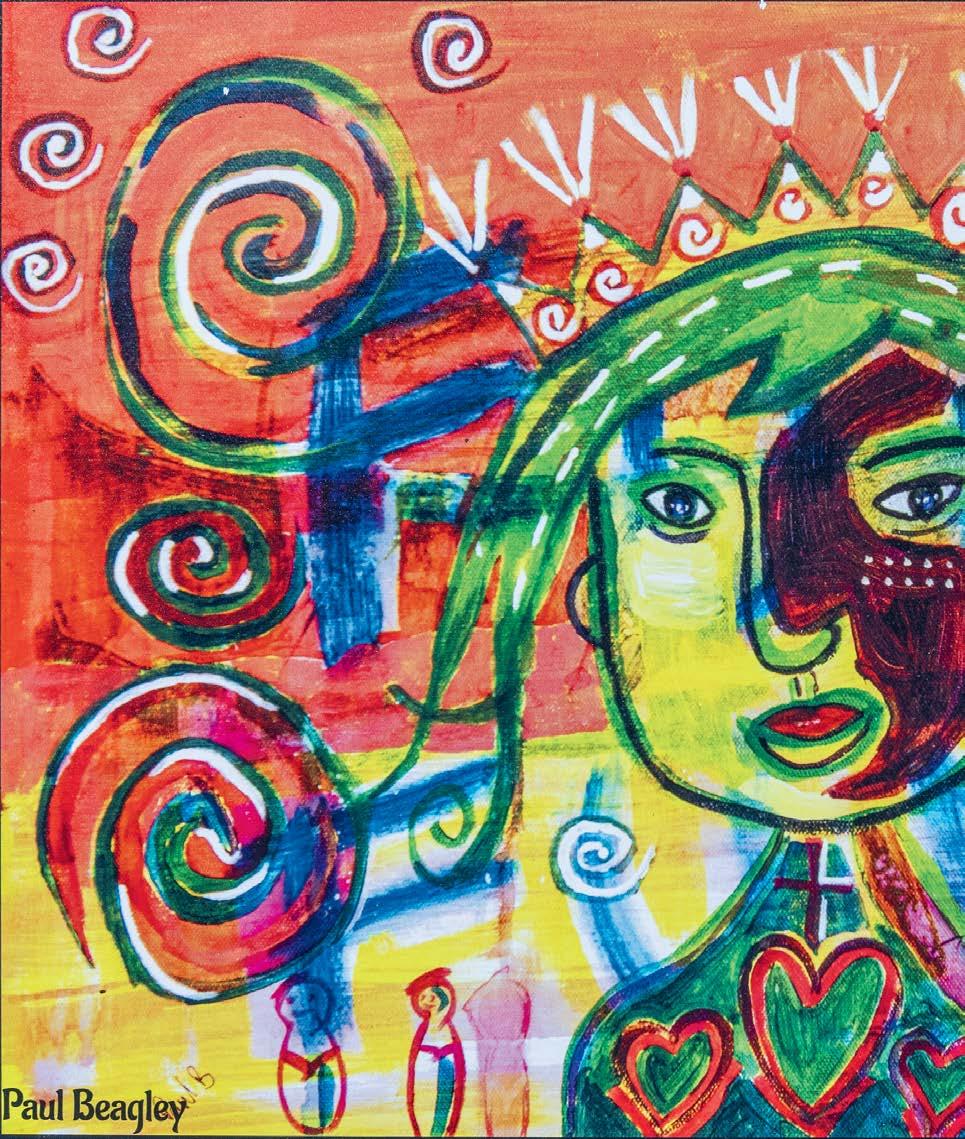
Natalie was once again reminded of this in early October when an art exhibition she organised put the talents of 10 BCO participants, facing mental health challenges, on show.
Coinciding with World Mental Health Day on October 10, the exhibition titled ‘Your Mind MattersAre you looking after it?’ proved to be a huge hit with both participants and members of the public.

“There were two reasons for the exhibition,” Natalie says.
“Firstly, it was about educating the broader community around mental health and the importance of looking after your own mental health and, secondly, trying to reduce the stigma around those facing mental health challenges.
“The exhibition celebrated the amazing talent of these people we have, who also happen to live with a mental illness.
“These people are often looked at in a negative light, so this was all about celebrating them and what they can achieve through art.”
The exhibition, which featured artwork at 11 locations in Kew and Hawthorn, was a major success, with the community embracing the opportunity to view outstanding works of art.
It was also a big hit with those BCO

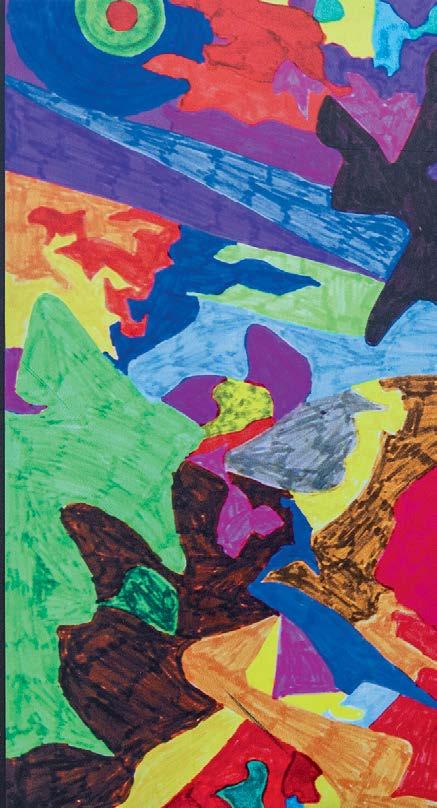
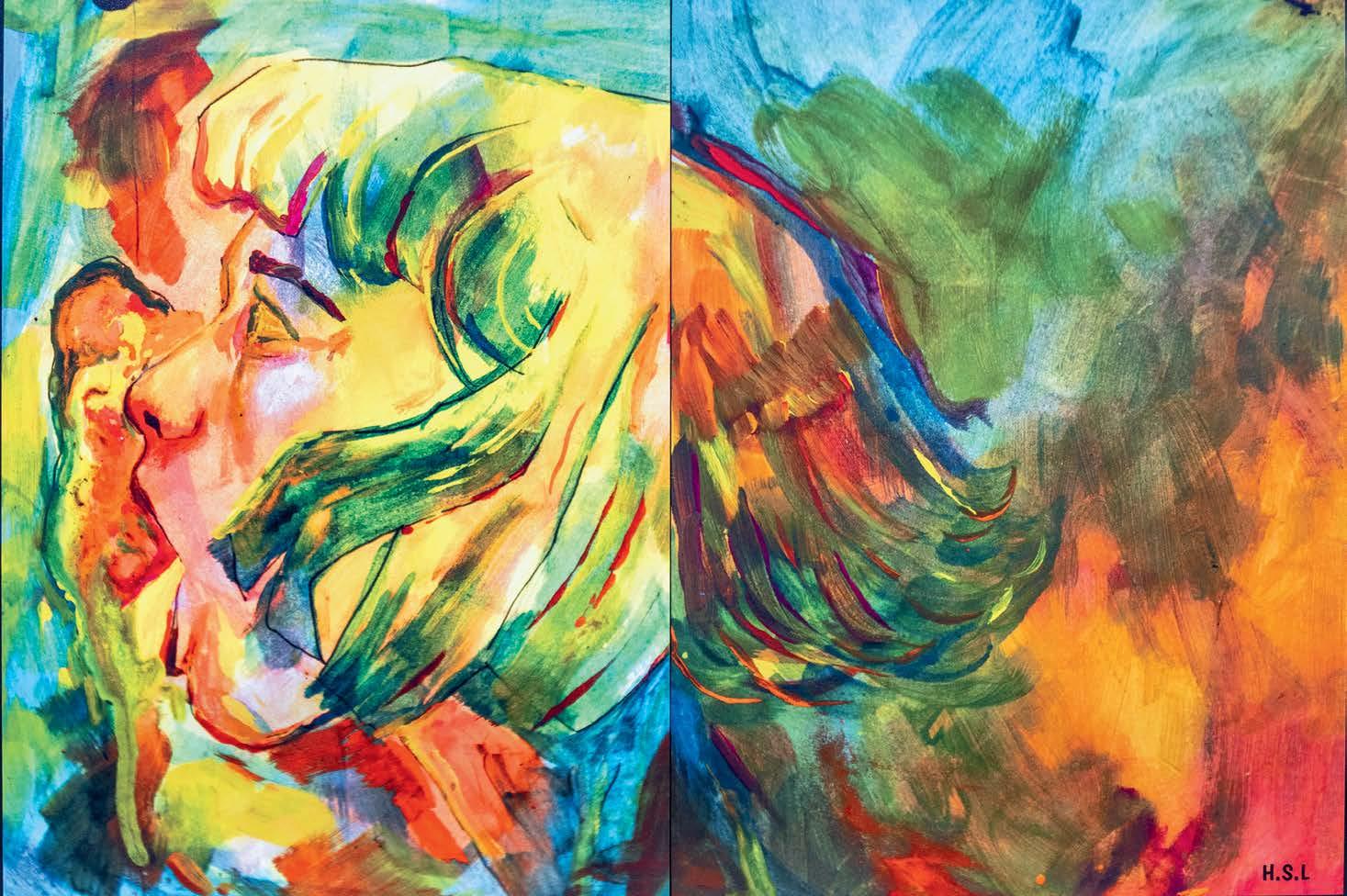
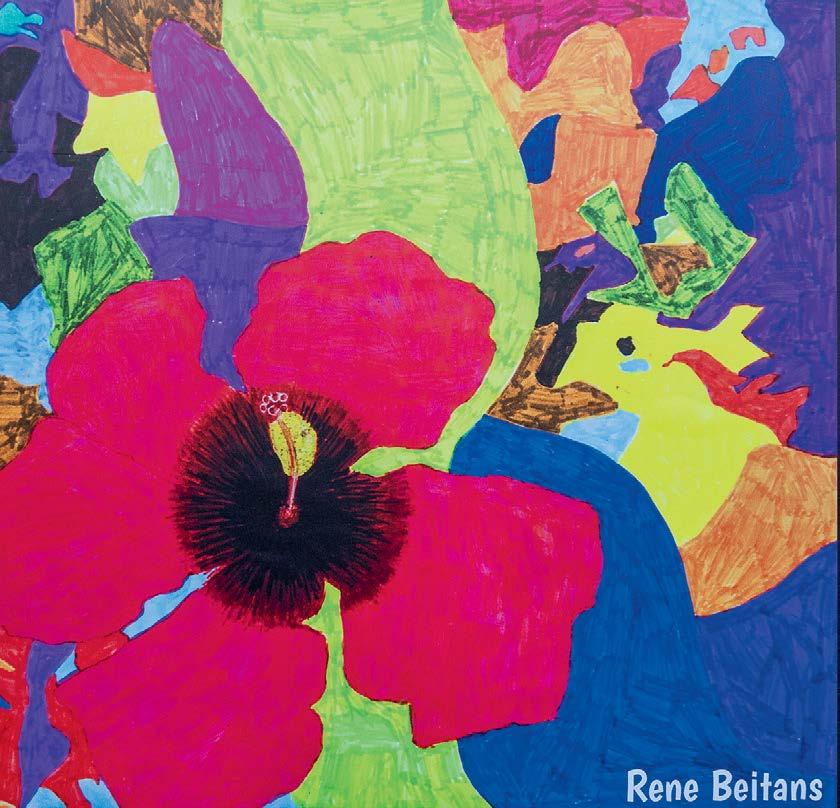


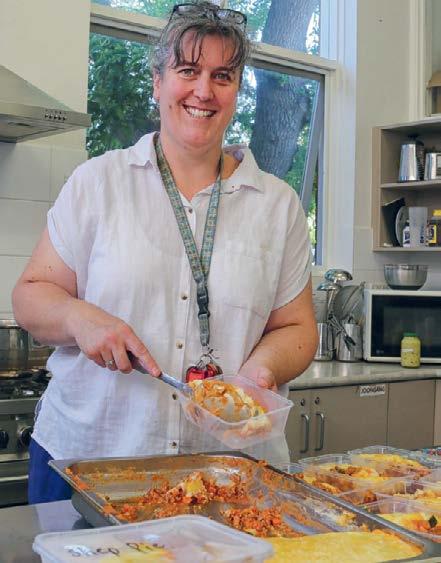
participants who contributed their work.
“One of the artists said to me, ‘thank you for letting me be seen’, and that was such a wonderful thing to hear,” Natalie says.
“She didn’t say ‘my artwork’, she said ‘letting me be seen’, and that really was what it was all about, letting these people be seen in a positive way.
“Often they aren’t seen at all and, if they are seen, it’s generally in a negative way, so it was so good to see this positive reaction.
“They felt really proud about what they had achieved.”
Natalie’s focus has now turned towards Christmas, as she and the team at BCO get ready to help those less fortunate enjoy the festive season.
The sad fact is, she says, that more and more people and families are requiring what BCO offers on a year-round basis.
“In terms of the food relief we offer, the pressure is huge, because in the last 12 months we have had a 59 per cent increase in the number of families coming to us for support,” Natalie says.
Such is the demand for services, Natalie expects to pack significantly more than the 614 Christmas hampers that went out to families last year.
Donated food, gifts for children and volunteer help is always welcome at BCO, and Natalie can be contacted on 0409 019 269.







You will have seen in the October edition of Crosslight an article sharing the news of a SYNOD EMISSIONS REDUCTION FUND allocation.
These funds of $100,000 come as a dollar-matching process if presbyteries, churches or individuals contribute to the fund, over the next two years.
So, you may like to consider paying what you can afford to this fund, to help churches in our Synod reduce their emissions.
Payments can be made through:
1. Direct bank transfer to: Westpac Bank
Account Name: The Uniting Church in Australia Synod of Victoria & Tas BSB: 033 157
Account Number: 344 136
Mark the transfer as: “SERF donation”
2. Make a donation by credit card through victas.uca.org.au/product/moderatorsemergency-response-fund and note the payment as “SERF donation”.




Every year thousands of people are impacted by emergencies in Victoria and Tasmania.
The Moderator’s Emergency Response Fund is a way for those of us wanting to help when current or future emergencies occur, and to contribute to communities in need of immediate assistance.
Funds may be used within the Synod of Victoria and Tasmania to provide:
Pastoral, ministry, and mission activities assisting the Church’s response to disasters, emergencies or other crises
Support relevant councils of the Church, and partner organisations, to undertake disaster preparation/response programs/processes
Donations can be made at any time, not just in response to a specific emergency. For details and donations visit the Synod’s website: www.victas.uca.org.au





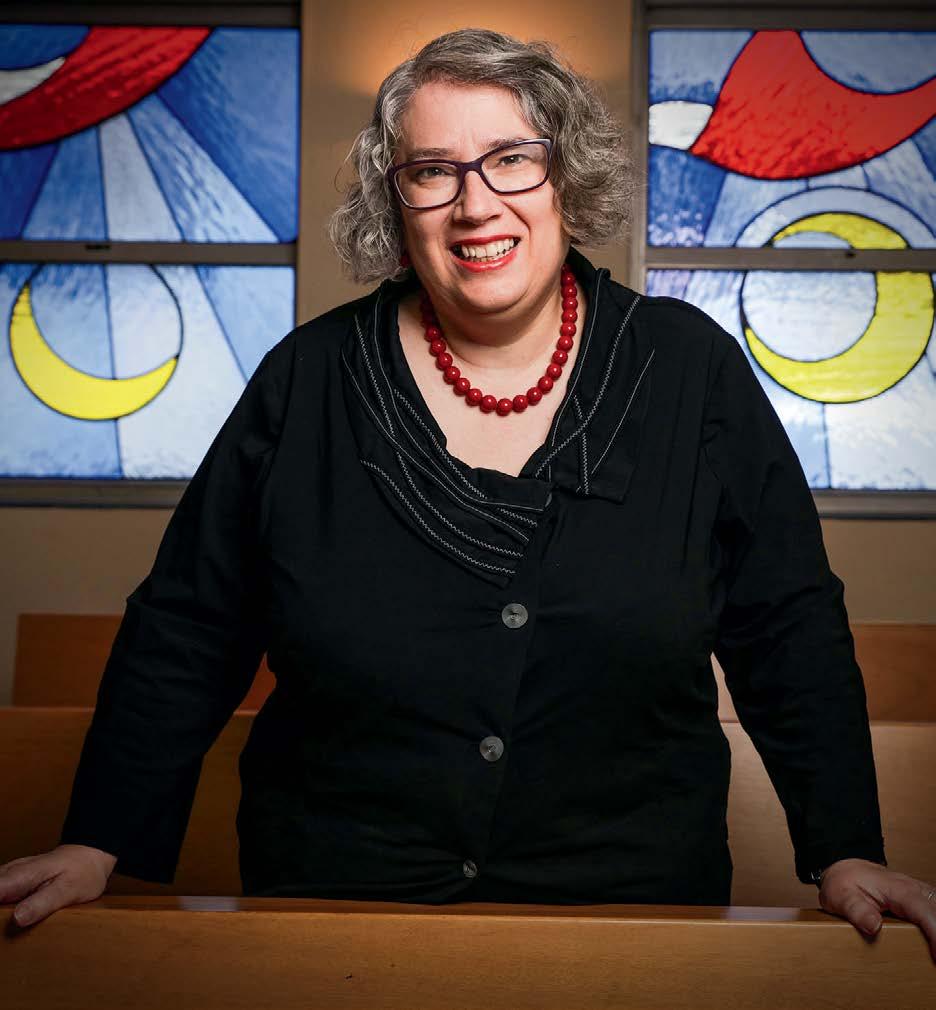
The Faithful Futures Project was adopted recently at Synod 2025 and will drive collaboration between congregations, presbyteries and the Synod. Associate General Secretary Rev Sharon Hollis gives an update on the project.
Faithful Futures is the shared strategic direction for the Uniting Church across Victoria and Tasmania.
It will guide our ministry and mission for the next decade.
Faithful Futures was developed collaboratively through consultation, research, prayer and discernment.
It was adopted at the 2025 Synod Meeting and is being adopted by all presbyteries.
Faithful Futures is grounded in the dreams, hopes and vision of where we believe the Spirit is calling the Church across Victoria and Tasmania.
It reflects both ministry already under way and our dreams for the future, still to be realised.
At the heart of Faithful Futures is the vision of ‘Following Christ, walking together as First and Second Peoples, seeking community, compassion and justice for all creation’.
There are then five shared goals that will guide and shape the work of the Church to live out this vision.
The Faithful Futures Project is more than a strategy; it is a growth toward a shared, vibrant future - one where
congregations, presbyteries and the Synod can truly say they are seeing new ways of working together that enhance worship, witness and service.
The five goals will support this shared future when they are understood less as separate goals and more as an ecosystem, working together to encourage growth in faith, the making of disciples and ministry that responds to the local context.
The hope for the future is of ministry and mission coordinated across geographic areas in ways that support the development of vibrant and healthy intergenerational communities, that make space for new forms of Christian community to emerge and be supported and the strengthening of intercultural leaders and communities of faith.
Woven through all of this will be a deep respect for Country that arises from listening to and acting on the stories of Country.
By working together across the Church on shared goals we also hope to see deeper collaboration across the councils of the Church, an increased capacity to learn from each other, more willingness to experiment and share that experimentation and a more coordinated use of the resources of the whole Church.
The implementation phase is now under way.
A next steps day was held in late September bringing presbyteries and the Synod together.
The day helped presbyteries and the Synod reflect on how to work together to support the implementation of Faithful Futures across the Church.
The day also continued to develop the next steps that need to be taken to help make Faithful Futures a reality.
Presbyteries and the Synod are now focusing on ways they can start incorporating the five goals into their ministry and mission, ensuring the vision remains at the centre of all our work.
The Faithful Futures Steering Committee is being established with membership from every presbytery and the Synod.
Dr Karen Roberts has been appointed Faithful Futures Project Lead and commences in the role on January 5.
Rev Isabel Greenall has been appointed as the chair of the steering committee.
Isabel is currently in ministry as a hospital chaplain with Barwon Health
Honouring the Church’s Covenant with the Uniting Aboriginal and Islander Christian Congress, all communities of faith will listen to and be able to tell about some of the histories of the Country on which they are located by the end of 2028, and be invited to develop local and appropriate ways to respond.

Establish at least five new Christian communities by 2030.
To have at least one all-age community of faith that is interactive, diverse, inclusive and transformative in 80% of Coordinated Ministries by 2030.

and has experience of congregational and presbytery ministry in rural and regional settings.
Working groups for each goal will be established over the next few months.
These groups will support the implementation of the goals through resource development and sharing, and bringing together those who are working on one or more of the goals in their context.
The steering committee and the goalfocused groups will help ensure there is coordination across the Church, as together we begin to implement Faithful Futures.
Faithful Futures is an invitation to the whole Church to consider how we best organise our life together so that we might listen deeply to Country and be better able to see and participate in the new things God is doing.


By 2028, to:
be providing appropriate intercultural leadership formation and equipping for all ministry agents and congregations; and
develop intercultural networks for worship, witness and service.

Coordinated ministry and mission in geographic areas such as Local Government Areas by 2030: attentive to renewing discipleship, and to the life and needs of the local context

The Uniting Church National History Society’s conference was held in early October, with former Assembly President and Synod Moderator Rev Alistair Macrae and history society board member Clive Jackson among the speakers. Below are extracts from their presentations.
The Church as a prophetic voice in Australian society: Past, present, future.
By Rev Alistair Macrae
The language of “public theology” is a tautology. Theology, at least in the Uniting Church’s account of it, is inherently public. According to the Uniting Church’s Basis of Union, God’s big project is the renewal of the whole creation, not only individual souls. To regard Christian faith as something merely therapeutic or personal diminishes its purpose. The church is called to speak and act for the common good, contesting injustice and embodying hope.
The prophetic vocation of the church has deep biblical foundations. The Hebrew prophets insisted that the health of a society is measured by its treatment of the poor, and that worship which neglects justice is false religion. Jesus drew directly on this tradition, announcing his mission in the words of the prophet Isaiah: “to proclaim good
news to the poor, release to captives, sight to the blind and freedom for the oppressed”.
The three traditions that formed the Uniting Church carried strong commitments to justice, community care and prophetic ministry.
The Statement to the Nation (1977) set out the UCA’s early vision: to oppose poverty, racism, and discrimination, and to work for justice, peace and care for creation. Yet the statement failed to acknowledge First Peoples — a silence belatedly addressed through the Covenant with the Uniting Aboriginal and Islander Christian Congress, the Apology and the Revised Preamble to the Constitution.
The 2009 Assembly’s adoption of the Revised Preamble was a landmark. It named the truth of colonisation and confessed the church’s complicity in the process of dispossession and oppression. At the end of that Assembly debate, when Congress members blessed the Assembly with gum leaves
in a Spirit-filled act of grace, the church experienced prophetic truth-telling at its best. Yet it must be acknowledged that incorporation of these commitments into church life remains uneven.
Present challenges
Over recent decades, the church’s social justice capacity in Assembly and Synods has diminished, with research and advocacy roles reduced or, in some Synods, devolved to agencies. While UnitingCare agencies continue to provide research, advocacy, and policy engagement, church leaders themselves are less visible in public debate. Risk aversion and declining confidence in the Gospel’s transformative power have muted our prophetic voice. Revelations of abuse within church institutions and acknowledgement of complicity in colonialism have eroded public trust. The church must reckon honestly with these failures while continuing to resist injustice.
Social justice today and tomorrow
The UCA’s numerical decline should not silence us. Instead, we are called to

speak with confident humility — neither triumphalist nor timid, but faithfully pointing to the reign of God and its distinctive values. The early church was socially marginal, yet celebrated hope and proclaimed the risen Lord with joy. The church’s witness must be grounded in living in the way and the company of Jesus Christ: living justly, forgiving, resisting evil, while also nurturing spiritual life through prayer and worship. Without the spiritual dimension, activism becomes ideologically driven; without justice, spirituality risks irrelevance. In my late teens I lived for a year in the Taize Monastery in France and its twin emphases on “struggle” and “contemplation” remain a compelling model for my Christian life. Life choices and commitments, grounded in prayer and worship.
At its heart, the foundation for a Christian life is simple, Jesus himself taught it clearly: love God and love your neighbour as yourself. Justice is the social expression of love. Congregations are called to embody this alternative vision through Beatitudinal living — humility, peace-making, mercy, and
truth-telling. Or in Cornel West’s words, “justice is what love looks like in public”.
Embracing weakness and hope
There is grief in the church about declining numbers and influence. Yet perhaps the church is truest to its calling when it shares the weakness of its crucified and risen Lord. Bonhoeffer urged Christians to give offense by siding with the weak rather than the strong, echoing Paul’s insight that God’s power is made perfect in weakness.
The prophetic life must be marked by hope. In the face of so many political and environmental challenges it is hard to believe the oft-quoted dictum: ‘the arc of history bends towards justice’. Maybe the call today is to live ‘as if’ goodness is stronger than evil and life stronger than death.
As a corrective to facile optimism, US theologian Miguel De La Torre warned against an optimism that collapses into despair. His approach is to “embrace hopelessness”, accepting that we cannot save the world; the Christian task is simply to be faithful. Justice is pursued not for reward but because, simply, it is
the right way to live and fundamental to Christian identity.
Issues ahead
Among the issues that continue to test the church’s prophetic vocation, three stand out. First is justice for First Peoples — confronting the nation’s original sin of dispossession. Second is the response to climate change, which threatens the poor most severely and challenges us to extend neighbour-love to other creatures and future generations. A third issue is poverty and the extreme and growing gap between rich and poor.
Liberal and liberationist voices
Within the church, two approaches to social engagement can be discerned. The liberal approach seeks to humanise existing systems, working within them for incremental reform. The liberationist approach views the dominant neoliberal order as fundamentally exploitative and calls for resistance at its roots. Both approaches need a place in the church’s ministry, responding to critical immediate needs while witnessing to Gospel values which fundamentally



We must “work to prioritise voices and perspectives from the social margins”, writes Rev Alistair Macrae.
challenge the tenets of neoliberal capitalism. The challenge for those of privilege like me (white, heterosexual, educated, male, financially secure) and for churches like ours, is to acknowledge this honestly, use our privilege for good and work to prioritise voices and perspectives from the social margins.
Conclusion
The prophetic voice of the church will not be measured by numbers or influence but by faithfulness to the God revealed in Christ. The tradition of “radical discipleship” has been formative for me, calling Christians to live in ways that may appear foolish in the world’s eyes but true to the Gospel vision. To live with confident humility, grounded in truth-telling, prayer, justice, and hope, is to take our place in the company of prophets.
Rev Alistair Macrae is a former Assembly President and Synod Moderator, and current Chair of the Board of Uniting Vic.Tas.
Did the voices of the churches influence the forming of Australia’s 1901 Federation?
By Clive Jackson
The federating of colonies into a Commonwealth of Australia occurred on January 1, 1901. In the two decades before, federation became a political issue that saw public debate, two organised Conventions, a Premiers’ Conference and many local and community meetings.
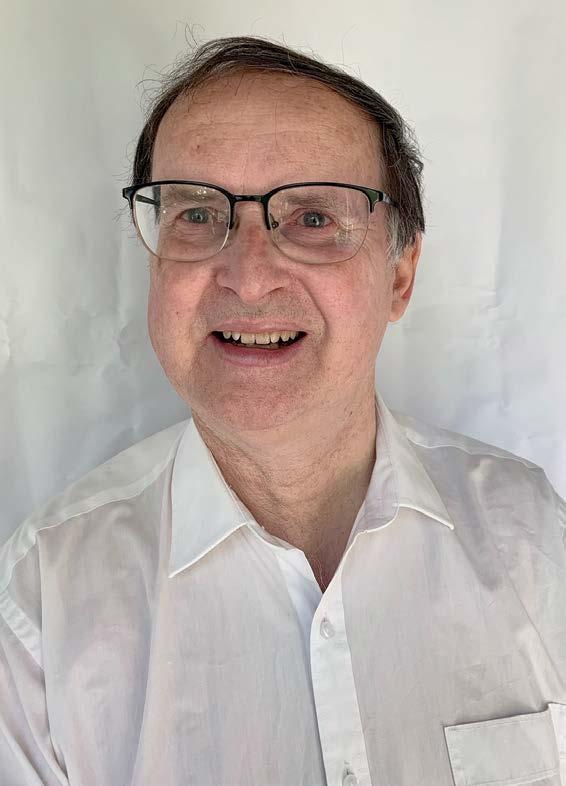
Most of the literature about federation misses the fact that many of our ‘founding fathers’ were strongly committed Christians who identified with churches. Some leading church people and clergy were involved in the public discussions that took place prior to federation. Some churches covered the topic among Sunday evening meetings that they held in that era, newspaper articles were written, events were attended, and a few church leaders attended the formal conventions.
The man acknowledged as the ‘Father of Federation’, Sir Henry Parkes, was a key parliamentarian from NSW. He was Premier five times between 1880 and 1894. He lobbied and organised to bring about several of the federal conventions and meetings. He died in 1896, never seeing the result. Born in England, in his youth he belonged to the Carrs Street Congregational Church in Birmingham.
Alfred Deakin, Victoria’s most famous campaigner for federation, later became Australia’s second Prime Minister. He was an active member of the Spiritualist movement and, in his later years, he joined the Australian Church, an independent denomination.
Sir George Dibbs, NSW Premier (three times between 1885 and 1894) and Anglican Church member, attended the 1891 Federation Convention. Both he and NSW MP Albert Piddington, Anglican Archdeacon of Tamworth, continued to promote the federation cause and debated the drafts of the Constitution from a protectionist viewpoint.
Rev James Jefferis, dubbed the ‘prophet of federation’, came to Australia in 1859. He served as minister at North Adelaide from 1859 to 1867 and
the senior minister of the Pitt Street Sydney Congregational Church 18771889. He was re-appointed as minister to Brougham Place Church, North Adelaide, in 1894. According to writings, he could be regarded more as a strong influencer for the federation cause than a participator in the official conventions. That he had access to political leaders, including Parkes, is without doubt.
Clergy were much more prominent in society in that era, and they could shape public opinion. If Jefferis was a leading voice for federation among churches, his advocacy was influential in several ways: he engaged influential friends; he held public lectures; he networked in organisations; and he spoke up at the coincidence of public events very effectively.
As Chair of the Congregational Union of NSW from 1878, in 1880 Jefferis delivered a lecture ‘Australia federated’, opposing abolition of the colony governments. He used the Intercolonial Congregational Conference in 1883 to speak on ‘Australasia federating’. At a meeting in 1889, he shared a podium with Premier Henry Parkes, speaking on ‘Australia cautiously federating’. Back in Australia in Adelaide in 1895, he delivered ‘The coming Commonwealth’ following a Premiers’ Conference. A Council of Churches, which formed in 1896 in South Australia, added an ecumenical forum on social issues. Jefferis gave another lecture on the Sunday before the Federal Convention in 1897 in Adelaide. That Council recommended a ‘Yes’ vote for the Commonwealth Bill of 1898 and told member churches to ‘pray for guidance’.
On a visit to Sydney, Jefferis used a Pitt Street church anniversary to talk both about federation and about church federation where the Congregational churches were all run semi-independently and the Methodist Church was divided into four similar denominations. Could political unity also serve to bring some denominations together?
Looking at reasons why clergy and church members were interested in the subject, Jefferis was one who thought of federation as including the South Pacific
or a ‘commonwealth’ of British nations. Church mission connections were strong. He and others saw federation as a new Australia taking a place with other nations of the world, providing a guarantee of religious freedom but with an acknowledgement of peoples’ reliance on God.
Another vocal church leader was Rev Dr Llewelyn Bevan. As the Minister at Collins Street Independent (Congregational) Church Melbourne, from 1886-1909, he was a strong advocate for federation within Australia and overseas.
The example of Canada having federated was looked upon as a safe and good model for a stronger nation with a division of powers between federal and province parliaments. The example of the USA was known to be flawed by their own experiences. More local politicians were advocating for home-grown models.
No church came out against federation, however most of the church
“Many of our ‘founding fathers’ were strongly committed Christians,” writes Clive Jackson.
leaders who spoke in favour were careful to speak only as individuals. Church leaders were interested in federation for the secular issues as well as the religious. When it came to whether there would be a place for God in national life or in the proposed Constitution, the Christian representatives and leaders were speaking up.
In our Australian Constitution today there are two religious mentions, one in the Preamble and the other at Section 116. The Preamble to the Australian Constitution Act 1900 includes words, “…humblyrelyingontheblessing ofAlmightyGod,haveagreedto unite in one indissoluble Federal Commonwealth …”.
Section 116 reads: “The Commonwealth shall not make any lawforestablishinganyreligion,orfor imposinganyreligiousobservance, orforprohibitingthefreeexercise ofanyreligion,andnoreligioustest shall be required as a qualification for any office or public trust under the Commonwealth.”
The path to the final wording of both clauses was not a straight line. It began with words by Andrew Clark, (Unitarian) being included in the first draft Constitution in 1891 termed a ‘recognition (of God) clause’. The recognition clause survived the Corowa Conference in 1893 led, in part, by Dr John Quick. Quick, a famous contributor of democratic processes, was also noted as a prominent member of the Bendigo Forest Street Methodist Church. That draft clause was nearly deleted in the Bathurst Peoples’ Convention in 1896, in spite of the cooperation of Rev Gosman (Congregational), Rev Webb (Wesleyan), Bishop Camidge (Anglican) and Cardinal Moran and Rev O’Dowd (Catholic). A summary version was moved by Rev Fielding. The clause was rebuffed at the Adelaide Federal Convention in 1897, being referred back to the colony governments. At this 1897 Adelaide Federal Convention, other ‘recognition’ wording was proposed by Mr Glynn (Catholic). Colonial parliaments, except Tasmania, supported a recognition
clause. The reconvened Convention 1898 in Sydney passed a simplified text re-introduced by Glynn.
The passage of the ‘no power over religion’ clause was bumpy too. Henry Higgins (secularist) with a state-rights viewpoint, opposed mentions of religion and opposed a proposed Federation Bill. From 1897, he negotiated with Barton, Quick, Glynn and others, eventually drafting the s116 wording in 1898.
The important matter here is the thinking behind the wordings. The issues in these years included, whether there be any power to set public holidays of a religious nature; the difference between belief and actions where harmful religious practices could endanger the community; possible grants to schools or hospitals owned by churches; the inviting of which churches’ representatives to government functions or not; the meanings of ‘separation’ of church and state; and the fact that the colonies had some laws of their own about religion.
Two Referenda were conducted. One in 1898 and a second in 1899. The second included Queensland and Western Australia. Both achieved a majority of votes. Church leaders were again active, at least telling their members to vote. The Wesleyan ‘Spectator’ a weekly church newspaper in Victoria published items by editor Rev Lorimer Fison supporting the Commonwealth Bill in the referendum. He quoted the Council of Churches declaring ‘Federation Sunday’ on May 22, 1898 in advance of the public vote.
A little-known fact is that certificates were issued to those who voted at the 1899 Federation Referendum.
In conclusion, it is clear there was involvement and enthusiasm for federation by many active church leaders including clergy. Bringing this information together shows a public contribution made through churches and the value of being active in the community, as well as being involved in outcomes.
Clive Jackson is a board member of the Uniting Church National History Society and current Membership Officer.
Content warning: This article contains themes of family violence. If it raises concerns for you, please contact Lifeline on 13 11 14 or 1800 RESPECT.
We call it the ‘Silly Season’. That stretch of time which is a blur of barbecues, beach days and big family gatherings.
But while most are celebrating, others are just trying to survive.
Because for many Australians, Christmas marks the most dangerous time of the year.
In Victoria alone, reports of family and domestic violence surge by almost a third during the period between Christmas and new year.
That’s one family experiencing violence every five minutes.
Disturbingly family violence is all too common in Australia. One in five people over the age of 15 have experienced family, domestic and sexual violence, and almost every week a woman is killed by her intimate partner.
It’s easy to believe you’d never find yourself in that situation. That you’d see the warning signs or walk away before things got worse. But abuse doesn’t always start with violence.
It creeps in quietly, with gestures that feel loving: a worried look, a helpful suggestion, or a “protective” rule.
But these same actions can be tools of control, masking manipulation in the language of care and making it impossible to recognise the danger until it has taken hold.
In most cases, women are abused by the men who are supposed to love them.
It can happen to anyone ... even bright, confident women like Emma*.
For Emma, the abuse began with small signs.
The man she once found charming and fun, Matt*, became angry when they were trying to start a family.
“He couldn’t control his temper. I thought I was being the bigger person trying to help him through his anger,” Emma says.
“After I fell pregnant ... he did get physical, pushing me around ... I ended up internally bleeding for over two weeks before I lost the baby.”
Things got worse when baby Tamara* was born.
Pushing turned into grabbing and shaking. Then came the first time Matt hit her in the face, leaving bruising and a cut lip.
The neighbours heard the arguing and pleaded with her to get police involved because “we’re scared for you, Emma”.
Breaking point came one day when the violence touched Tamara.
“He threw the frying pan ... he turned around and backhanded me, and I just stood there in shock. And then he grabbed me by the throat,” Emma says.
“I’m holding my baby at the time ... he let go and then backhanded me again ... this time (he made contact with) my daughter ... I sat on the couch thinking, ‘I don’t know what to do’.”
The distraught young mum messaged her neighbours. They had heard her screaming and had already called the police.
Emma never thought she would be in this situation. She was bubbly and confident. She ran her own business. She managed to buy a house at 23. Yet even someone as strong and independent as Emma can find themselves in an abusive relationship.
She believes that without Uniting Vic.Tas’


Donations from the public assist
Uniting Vic.Tas in helping victims of family and domestic violence.
help, she “possibly would’ve ended my life”.
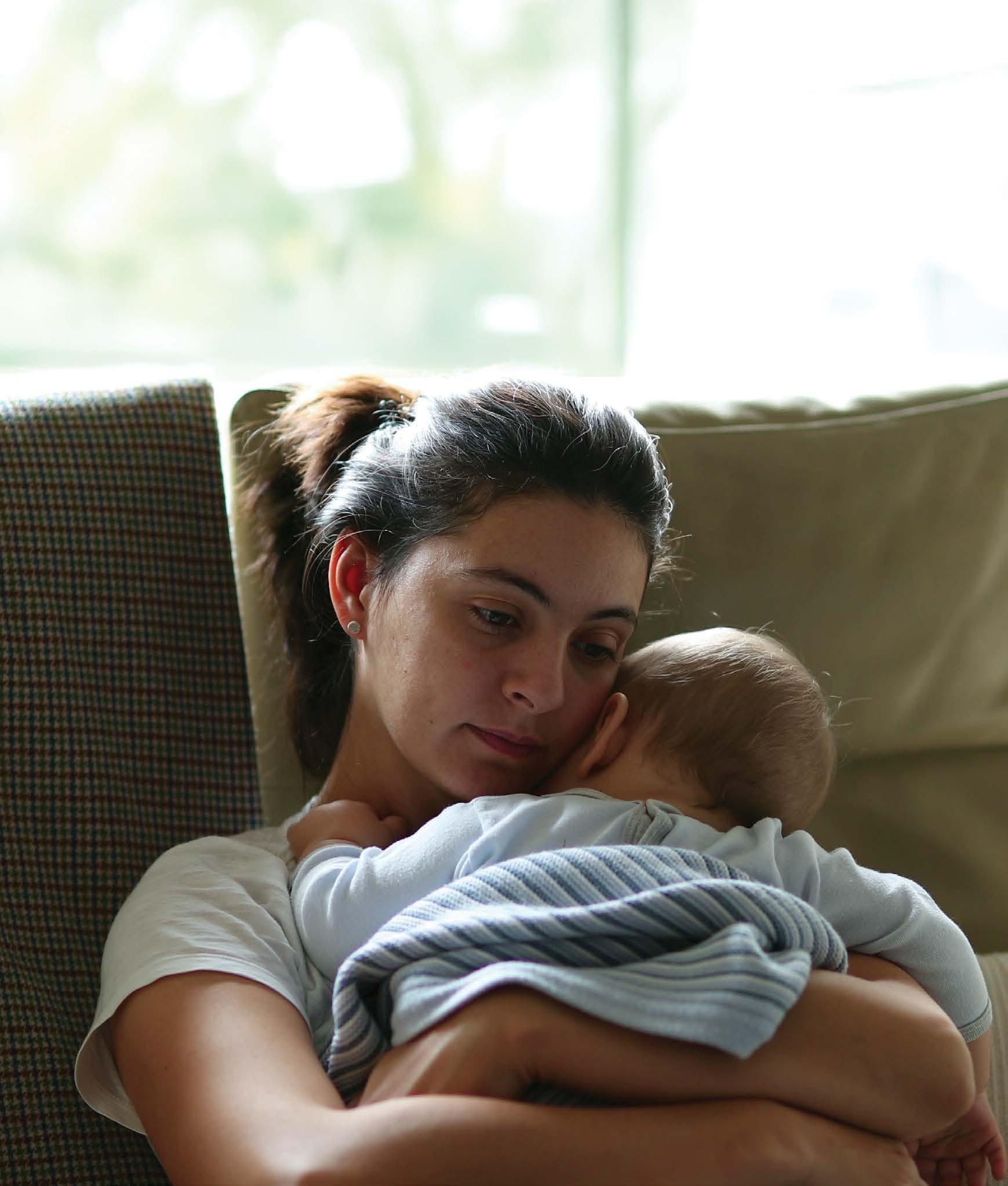
Many women in Emma’s situation leave home with young children, often without an income, job or stable housing. They may have little more than the clothes on their backs. With no place to go and no support, homelessness looms.
This Christmas, you can help people like Emma to escape violence and rebuild their life. Because whatever comes next, thanks to your compassion, they know they’re not alone.
Your caring donation will go towards providing a safe home, essential items like groceries, and trauma therapy so families can begin to heal from violence.
Uniting Vic.Tas staff helped Emma with all these things, making it possible for her to end her abusive relationship.
Today the bright, assertive woman is back and baby Tamara is thriving in a safe, loving home.
This Christmas, your donation can give people like Emma the support and safety they need to rebuild their lives and begin to heal.
Donate today by visiting www.unitingvictas.org.au/christmas
*Some details such as names have been changed to respect the wishes of the people featured. The photo accompanying this story is for illustrative purposes only. It is not a photo of the people featured in this story.

Members from Sonderverse, an online community exploring different expressions of faith, were out in force at PAX Australia 2025 in October, a celebration of gaming and gaming culture. Rev Will Nicholas from Newtown Uniting (St David’s) outlines the role of events like PAX, in continuing the journey of faith, while New and Renewing Communities Catalyst Rev Mat Harry, who also attended, says PAX is a wonderful example of church meeting community in a new way of worship.
“Where two or more gather, in cosplay or community, there is church.”
The Sonderverse arrived at PAX Australia 2025 not as tourists, but as pilgrims.
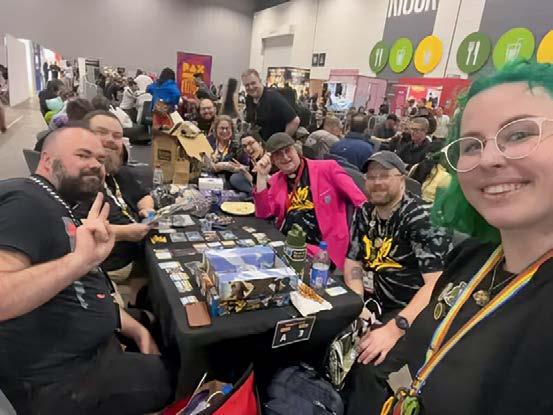
More than a dozen members of our ever-growing digital congregationstreamers, gamers, clergy, and chaotic good disciples of play - came together to create what we call intentional community inside the convention floor.
In a world of noise, lights, and loot boxes, we found a third space, a kind of digital cathedral stitched together from laughter, shared story, and spontaneous moments of grace.
From the duo of Wolverine and Deadpool in clerical collar photo ops to impromptu theological debates over tabletop dice, the Sonderverse lived up to its name: a constellation of unique souls orbiting one another in joyful weirdness.
We crossed paths with the Fantastic Four, shared space with the Cult of the Lamb’s flock at Woolhaven, and
discovered that holiness can indeed wear spandex.
Midway through the weekend, PAX was interrupted by an evacuation, with alarms blaring, crowds streaming, and gamers of every genre converging under the Melbourne sky.
Yet even here, something sacred unfolded.
The PAXAUS community moved together, calm and connected, turning confusion into care.
Strangers offered water, friends cracked jokes, and the moment became an unplanned liturgy of patience and presence.
In the pause between the chaos, we saw it again: that the Gospel is not a doctrine or a building, but the way people look after one another when the script falls apart.

At the board-game tables, we didn’t just roll dice, we rolled out belonging.
Whether it was co-op campaigns or competitive card play, each session became communion: strategy, story,
and sacrament all in one. The PAX floor turned into a chapel of cardboard and imagination where conversation flowed as easily as dice across velvet mats.
For the Sonderverse, PAX wasn’t an escape from faith, it was an extension of it.
We practised what we preach: that sacred connection can happen anywhere hearts and stories meet.
We found worship not in pews, but in panels; not in sermons, but in shared laughter echoing off the convention walls.
Across the weekend, PAX’s panels became pulpits of possibility.
Creators, critics, and community builders shared stories about inclusion, identity, and imagination, each one a spark for spiritual reflection.
Whether it was a deep dive into the ethics of AI, a retrospective on storytelling in role-playing games, gamifying government, or a conversation about mental health in gaming, these sessions became sacred classrooms.



The Sonderverse listened, learned, and lent our voices.
In those moments, dialogue replaced dogma, and we were reminded that wisdom is not confined to seminaries, it’s alive in the curious, the compassionate, and the creative.
We were inspired by indie creators, met old friends, and made new ones.
We shared meals, ideas, memes, and meaning.
Each elbow rub, photo, and conversation reminded us that church is not bound by geography or walls, it’s found wherever compassion, curiosity, and creativity collide.
We didn’t go to colonise or control but to be present with and to the gathering of passionate enthusiasts in nerddome.
Walking through the exhibition halls felt a little like Paul standing in the Areopagus in Acts 17, surrounded by altars, each devoted to something people hold sacred.
Paul didn’t condemn what he saw; he listened, he looked, and he found a bridge.
In the same way, as we wandered through the booths of artists, designers, and dreamers, we found glimpses of the divine in unexpected pixels and polyhedral dice.
Every creative display was a testimony to human imagination, echoes of the Creator’s own artistry.
Like Paul, we weren’t there to argue for
God’s presence, but to name it where it was already shining.
In the hum of the expo hall, the gospel sounded less like a sermon and more like a conversation: faith meeting fandom in a space where everyone belonged.
This year, we were joined by a few curious travellers from the Uniting Church Synod of Victoria and Tasmania, who stepped into PAX to experience something far beyond their usual Sunday rhythms.
For them, this was a glimpse into a living experiment of what Faithful Futures might look like when the Spirit leads into uncharted territory: where the sacred is not confined to sanctuaries, but discovered amid the hum of pop culture, digital storytelling, and playful theology.
They came to observe and left inspired, witnessing firsthand how mission and meaning can thrive in unexpected places.
The Sonderverse became a living parable: the church not waiting for the world to come in, but courageously stepping out to meet it.
As the lights dimmed on another PAX, the Sonderverse left a mark, small but luminous.
We came not to consume, but to contribute; not just to attend, but to attune. What began as a gathering of geeks became a glimpse of the Kingdom, one cosplay, one card draw, one sacred laugh at a time.
I joined over 50,000 people at the Melbourne Convention Centre to see colour, costume, digital, in-person and imagination collide into a community of disperse people of a relatively younger age profile.
Board-gamers, artists, fantasy costumes, participation, play, and fun were all happening.
Over the weekend thousands of people walked through the doors and in this mix was a Uniting Church presence.
The Sonderverse crew was there, including Reverends Will and Amanda Nicholas and Chris Booth, as well as equipping Leadership for Mission’s Kelly Woods.
The Sonderverse crew set up a table and provided a ‘base camp’ and point of connection for UCA people who were part of the crowd.
This was a wonderful expression of the Church being present where the people were at.
The potential to build Christian community within such a context exists, but it will take people who are contextual natives in this space with the ability to theologically reflect to understand where the story of Jesus connects with the stories that are told within the narratives of this group.
The Synod of Victoria and Tasmania is blessed to have such people, immersed, engaged and loving the community and the people who were present.
Rev Mat Harry New and Renewing Communities Catalyst
When drought, floods and fires wreak havoc, outback communities are often hit hardest

This Christmas, you can offer families in the outback the real, practical support they need by sending Bush Chaplains and Outback Links volunteers to lend a hand in communities doing it tough across Australia.

Scan this QR code or visit the website below to donate.
frontierservices.org/bush-relief
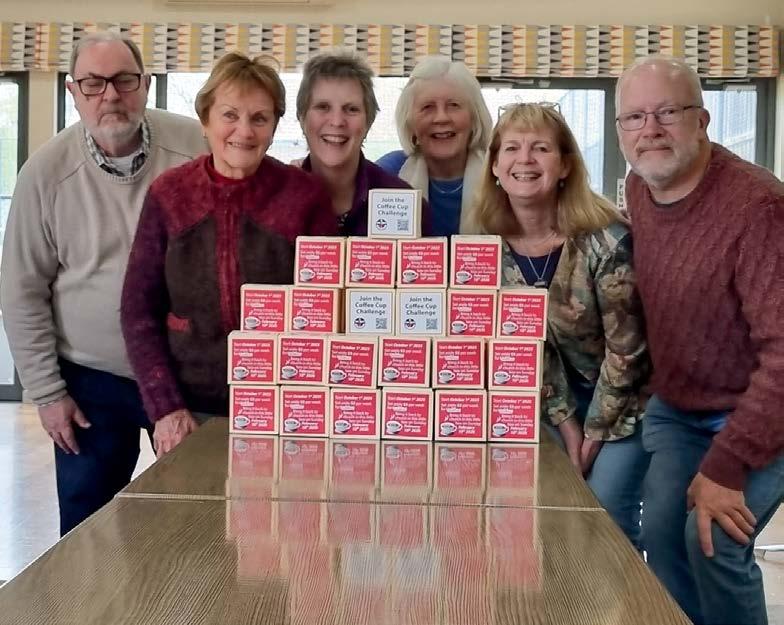

On the back page of the August edition of Crosslight, churches and individuals were encouraged to take up the Coffee Cup Challenge.
Highfield Road Uniting in Canterbury took on this project with energy and enthusiasm.
The suggested plan was to put aside the cost of a cup of coffee each week, say $5, from October 1 until Shrove Tuesday on February 12, 2026.
That is 20 weeks. Could we do it? How will we do it?
Our ‘Creative Capers’, the weekly craft group, planned to make small boxes for the suggested money to go in each week.
One member donated some recycled manila folders while another crafted the template of the box and designed the beautiful labels that adorned the finished product.
The box prototype involving a single manila folder, was deemed a little flimsy so two folders were stuck together to provide the necessary structure and strength.
Once everyone was happy, the craft group got cracking and cut out the
challenge and were rewarded with boxes that come together perfectly.
As you will see in the photos, the labels became the finishing touch.
Over 50 boxes were made and almost all have been given out at church to congregational members, with a plan to return them on Sunday, February 10.
It was calculated that with approximately 45 boxes taken, and 20 weeks of $5 a week, we might raise close to $4500 for Uniting Vic.Tas.
Hopefully our church treasurer won’t have to count too many small coins before he sends the money to them.
Crosslight is a bi-monthly magazine produced by the Marketing and Communications team of the Uniting Church in Australia Synod of Victoria and Tasmania.
Opinions expressed in Crosslight do not necessarily reflect those of the editor or the policies of the Uniting Church.
We acknowledge the Traditional Owners and custodians of the land on which we live, work, gather and worship, and we pay our respects to their elders past and present. We acknowledge that the Church throughout this Synod meets on land for which First Peoples have ongoing spiritual sovereignty and custodianship, and we commit ourselves to respecting Country and to working for a more just future together.
While Crosslight endeavours to publish all articles in a timely manner, they may be held over for a variety of reasons.
Advertising
Crosslight accepts advertising in good faith. Acceptance of advertising does not imply endorsement. Advertising material is published at the discretion of the publisher.
Advertising deadlines for February 2026 Issue:
Bookings
December 19, 2025
Copy and images for production
January 6, 2026
Print ready supplied PDF January 14, 2026
See crosslight.org.au for full details.
Distribution
Crosslight is usually distributed the first Sunday of the month.
Circulation: 13,000
Editor
Andrew Humphries
Ph: 0439 110 251 andrew.humphries@victas.uca.org.au
Graphic design, photography and print services
Carl Rainer
Ph: 03 9340 8826 carl.rainer@victas.uca.org.au
Advertising and distribution
Dominic Kouts
Ph: 03 9340 8846 dominic.kouts@victas.uca.org.au
UCA Synod Office (Wurundjeri Country) Level 2, Wesley Place 130 Lonsdale Street Melbourne Victoria 3000
Feedback and correspondence crosslight@victas.uca.org.au
ISSN 1037 826X
We want to hear from you. Email your thoughts to Crosslight@victas.uca.org.au
Please do not exceed 200 words and include your full name, address and contact phone number.
Next issue: February 2026
ucavictas
As the days lengthen, the sun shifts overhead and colorful baubles appear in streets, late December begins to bubble or settle, depending on your perspective. Or perhaps it feels like both at the same time.
For some, the excitement and anticipation of holidays and Christmas is palpable. Perhaps they are seemingly unencumbered by loss or complexity? Or maybe being surrounded by family, friends or loved ones enforces a positive association with the traditions enjoyed from a young age.
For others, Christmas can be a confronting time. The world becoming a flurry of family traditions, happiness and goodwill can heighten the feelings of loss and isolation. The very real anticipation of being reminded that life is no longer what it was can niggle – or even roar – in our hearts.
As we age, life’s journey naturally brings years of navigating relationships from childhood through to adulthood. Friendships and for many, having children, are part of this journey. The stories we tell ourselves about what the norm is to create a good life can become narratives that shift to beliefs. Deviating from what we see as a script
for happiness can bring an unsettling notion that perhaps life is less than it should be, and that we are missing out. For those of us whose life journey has taken us through complexity, heartbreak, challenge, loss, loneliness or isolation, it can be difficult to navigate an image of what is a ‘normal’ response to Christmas for our very individual circumstances.
In the 1980s and 1990s, the evolution of a Blue Christmas Service acknowledged grief and sadness during the holiday season. Also called the Longest Night, it recognises the struggle of those who have lost loved ones and are experiencing grief or loneliness – and honours them. This recognition of what can be a normal reaction to events like Christmas, is a powerful step in creating alternative and very real narratives –that it is okay not to enjoy Christmas. Or that it can present both peace and complexity, and that they can be held in each hand at the same time.
Supporting older people to live well with choice and peace of mind, while acknowledging that Christmas can be
an emotionally confronting time, is key to finding a pathway to offer support to those who are challenged as we approach the end of the year.
Vicky Jacques, Uniting AgeWell’s General Manager Victoria Residential Services, is very aware of the impact of traditional celebrations on people for a range of reasons.
Vicky recently presented at the Chaplains’ Conference 2025 on traumainformed practice, highlighting the need to recognise and respond to people who have been institutionalised and naturally have a range of responses to what is happening around them.
“From my perspective, not everybody has the same enjoyment of Christmas or will want to experience it in the same way,” Vicky says.
She says people can be triggered by different events such as birthdays, holidays or rituals that have meaning to them.
This can be particularly so for people who have experienced homelessness, loss or a family breakup.
Vicky also believes it’s important there is no judgment on those who have varied belief systems.
“We have a duty to be kind to others
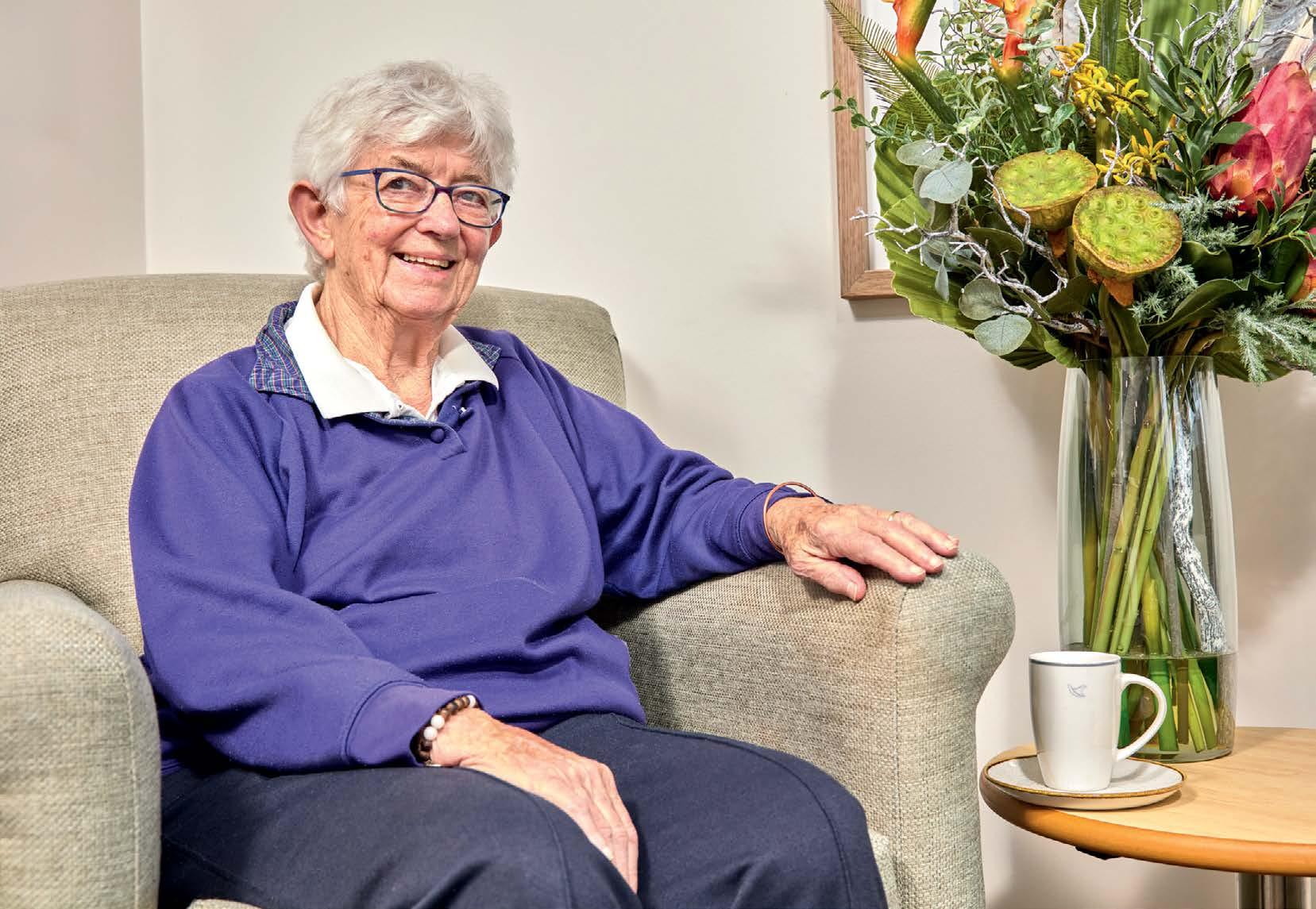
and don’t judge if they don’t have the same expectations that the world expects of them,” Vicky explains.
For some, discovering a new place to call home offers a solution when loneliness and aloneness begin to surface.
Noticing that she was feeling increasingly isolated and her health deteriorating, Jenny Haslam chose to move from her own home into Uniting AgeWell Kings Meadows Community, Aldersgate.
Now, she’s eating well, is feeling healthier and stronger, and has made a whole new circle of friends. She’s also enjoying something she hasn’t experienced for a while – fun and a sense of belonging.
“My needs had grown and I realised deep down that I was going through the motions without really coping,” explains Jenny, 89.
“I was also lonely. I couldn’t drive anymore and I had become isolated. I didn’t really talk about how I was feeling, I didn’t want anyone to worry.”
Jenny is getting used to the unfamiliar feeling of being worry-free.
“It’s a funny thing, I sleep so soundly at night. I have absolutely nothing to worry
about anymore. I feel totally at peace, if that makes sense.”
The meaning of Christmas remains a profound story.
One of anticipation, of birth, of divine love made human. It comes every year, whether we’re ready or not, inviting us to reflect on what it means to be part of the human story.
It is a reminder of hope, connection, and the enduring possibility of renewal.
It’s important to acknowledge that for older people living alone or those who feel separated from community, the festive period can feel especially heavy.
“Being supported to acknowledge that Christmas can be hard is important because of community and family expectations and traditions,” says Uniting AgeWell’s Director of Mission, Rev Clare Brockett.
“It is good to ask what being kind to ourselves during this season looks and feels like, while still staying connected to the people we love and will meet with.
“It may mean telling someone else how you feel, asking them to look out for
you at a gathering. For people hosting events, keep in mind that not everyone in the room will be feeling joy all the time.”
Clare says, “It is not always easy to speak of grief and loss and other hard things at this time of year.
“However, we remember love came down at Christmas, the call to embrace life and care for each other.
“We know that in reaching out to each other, we often receive in ways we could not imagine.
“May peace and grace be with you all this Christmas season, and especially if struggle and loss is in your heart.”
To find out about the work of chaplains in aged care, visit www. unitingagewell.org/news/chaplaincyin-action
Listen to The Ageing Ideal Podcast Episode 2, Series 2, “Table for One” at www.unitingagewell.org/podcast
When Dennis Johnston retired in 2014 and was looking for something to keep him occupied, he stumbled across Biala Ringwood.
“I was listening to the radio one day and an advertisement came on about Biala needing volunteers,” Dennis says.
“I thought ‘wow, this seems something worth getting involved with’.”
Eleven years later, Dennis is Biala Ringwood’s chairperson, and proudly outlines the valuable role it plays in the childcare sector.
An outreach program of Ringwood Uniting Church, Biala Ringwood offers respite care for families of children with additional needs.
Every Thursday from 9am, Biala Ringwood becomes a hive of activity as a team of up to 15 dedicated volunteers provide a safe space for children and their families.
The Thursday program is focused on the individual child, offering activities designed to stimulate their development, and encourage socialisation with other children and carers, while also supporting parents and guardians.
Biala Ringwood began in 1980 and, 45 years later, is still very much in demand.
One of the keys to its success, says Dennis, is the commitment of its volunteers, one who has been with Biala since its inception, and some who have been there for up to 30 years.
A number of volunteers are members of the Ringwood Uniting Church.
“These are selfless volunteers with a real passion for people and
By Andrew Humphries
an understanding of what their role requires,” says Dennis, who is also a volunteer.
“There is a great satisfaction as a volunteer in seeing these children grow over the years, and the transformation that takes place from when they come in to Biala and, a few years later, head off to school is remarkable.
“Some of these kids come here with serious disadvantages, but they are very determined and they learn to cope, and just seeing that happen is wonderful.
“I have heard Biala Ringwood described as being like ‘one big cuddle’ and, to me, that sums up what we’re about.
“It gives you an idea of the atmosphere in the room here and dedication of our volunteers.”
As the face of Biala, it is co-ordinator Cheryl Emerson who best represents that “one big cuddle”.
“We simply couldn’t get by without her,” Dennis says.
“I had a meeting with her recently and I reinforced the fact that we wouldn’t be able to offer what we do now without her.
“When Covid-19 emerged Cheryl would travel out to people’s homes with toys for the children and to check on how families were coping.
“Many of these families felt isolated during that period trying to look after their children, so we thought Cheryl’s work was particularly important.
“That work didn’t stop once we emerged from Covid-19, though, and Cheryl continues to perform this pastoral
care role on Mondays, when she calls or visits families.”
Dennis says the program wouldn’t be possible without the support of the Ringwood Uniting Church congregation.
“Biala Ringwood grew from a decision by congregation members in 1980 that there were enough families from within the congregation that could use some assistance and respite as they coped with children with disadvantages,” he says.
“It was really a grassroots movement, and I know that the current congregation values the work of Biala immensely.
“Biala, in turn, is very appreciative of that support from the congregation.”
As it approaches its 50th anniversary, Dennis hopes Biala Ringwood can continue providing a vital service to children and their families for many years to come.
“Forty-five years after we began, there is still a real need for what Biala Ringwood offers,” he says.
Volunteers are welcome, anyone interested should contact Dennis by email at denjohnst@gmail.com