
From Classes to the Unknowns of Research
BY THE TIME OUR UNDERGRADUATE STUDENTS reach the end of their junior year, they have become proficient in the art of taking classes. They have learned how to crack the code of their professors—how to figure out what their instructors deem important, roughly what they expect on tests and papers, and how to pace themselves for the crunch at the end of each semester. Most students simply carry on with those acquired skills into their senior year, balancing the competing pressures of meeting their major and degree requirements and thinking seriously about what will happen after their Tulane

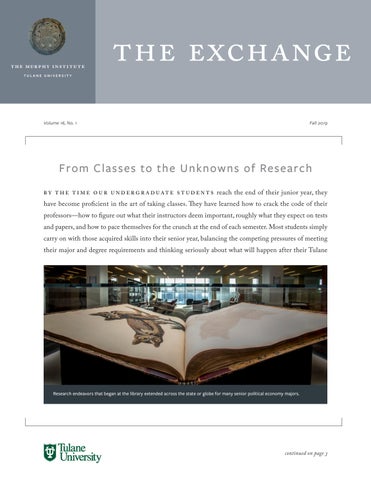
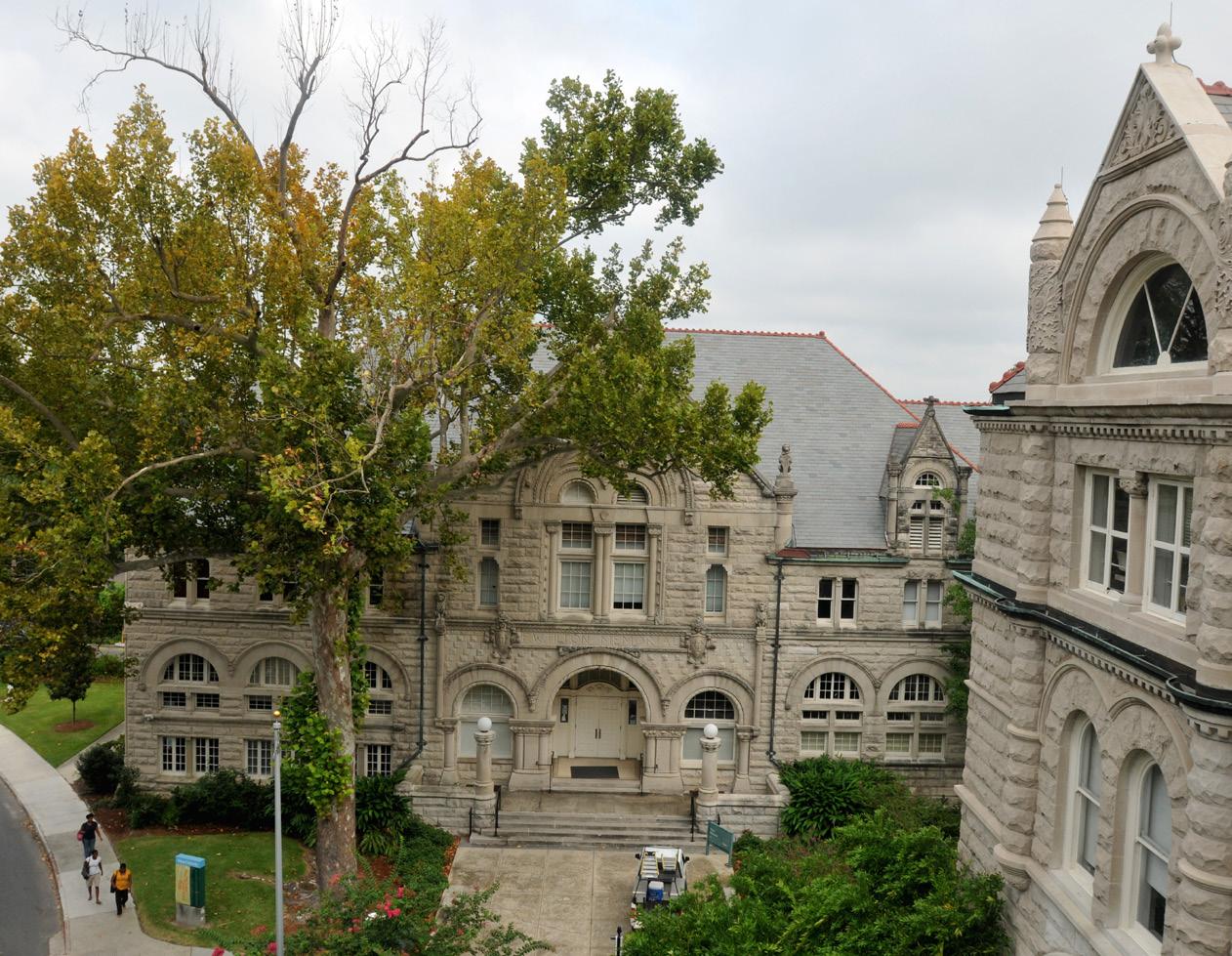
Research endeavors that began at the library extended across the state or globe for many senior political economy majors.
THE MURPHY INSTITUTE
Core Faculty
Steven M. Sheffrin, Executive Director, Department of Economics
James Alm, Department of Economics
Bruce Brower, Department of Philosophy
Kevin Callison, School of Public Health
Alison Denham, Department of Philosophy
Adam Feibelman, Tulane Law School
Douglas N. Harris, Department of Economics
Ann M. Lipton, Tulane Law School
Douglas R. Nelson, Department of Economics
Mary K. Olson, Department of Economics
Jonathan M. Riley, Department of Philosophy
David Shoemaker, Department of Philosophy
Richard F. Teichgraeber III, Department of History
Martyn P. Thompson, Department of Political Science
Mark Vail, Department of Political Science Staff
Paul Watson, Program Manager
John Louis Howard, Associate Director
Margaret M. Keenan, Assistant Director, Center for Ethics and Public Affairs
Kathleen C. Weaver, Assistant Director, Center for Public Policy Research
THE CENTER FOR ETHICS AND PUBLIC AFFAIRS

Faculty Committee
Bruce Brower, Department of Philosophy
Olivia Bailey, Department of Philosophy
Alison Denham, Department of Philosophy
Jonathan Riley, Department of Philosophy
Oliver Sensen, Department of Philosophy
David Shoemaker, Department of Philosophy
Martyn P. Thompson, Department of Political Science
Chad M. Van Schoelandt, Department of Philosophy

UNKNOWNS continued from page 1
careers abruptly end in May.
Some of our students take a different route, striking out on their own to pursue independent research. As we describe in more detail in the pages following in The Exchange , several of our Political Economy students took different research paths—two joined an interdisciplinary project to research “Cancer Alley” and prepared an in-depth report, one completed an honors thesis on populism, and a third combined a prestigious summer internship with an extensive research report.
What these students had in common is that they took a plunge into the unknown and were forced to create their own structures to organize their thinking. From my own experience and conversations with many others—both former students and colleagues—this transition from classwork to research is one of the most daunting challenges in academia. It is not for everyone. Leaving the confines of the classroom in pursuit of an initially vague idea often feels like the floor has been pulled out from under oneself. Yes, there is typically some guidance in the form of deadlines, progress reports, and meetings with one’s mentor. But there is no longer the comfort of a familiar syllabus, preassigned dates for midterms and finals, and the routine of weekly papers.
But while the risks and fears are real, the rewards are great. From the professor’s point of view, it is remarkable to see the transformation from a relatively vague idea at the beginning of the fall to a polished draft in the spring. Professors distinctly remember students who completed independent work with them. For conventional honors theses, there is an obligatory oral exam where the student outlines his or her work and answers questions from faculty members who gently push the student to address additional issues that emerged in the project.
What do the students feel? Typical reactions include relief that the project is finished, a deep sense of accomplishment from a job well done, and a realization that charting a new course for oneself is always going to be a challenge. As far as I know, no general studies directly link completing an undergraduate research project with metrics of future success. But most of our students, whether they become entrepreneurs or serve, like most of us, as members of various types of organizations, know that at some time they will be called on to develop a new plan or formulate a new idea or direction. Having completed an undergraduate research project is the first dry run for these future endeavors. And with early research under their belt, new alumni can approach those projects with a much higher degree of confidence.

THE CENTER FOR PUBLIC POLICY RESEARCH
Program
Directors
James Alm, Department of Economics, Public Finance
Douglas Harris, Department of Economics, Education Research Alliance
Mary K. Olson, Department of Economics, Health Policy
Adam Feibelman, Tulane Law School, Center for Law and the Economy
THE EXCHANGE
Tana Coman, Graphic Designer
Zack Smith, Photographer
Paula Burch-Celentano, Contributing Photographer
Kathleen C. Weaver, Editor
Margaret M. Keenan, Contributing Writer
John Louis Howard, Contributing Writer
Jenny Meadows, Copy Editor
Send editorial correspondence to The Murphy Institute, 108 Tilton Hall, Tulane University, New Orleans, La., 70118 Telephone: (504) 865-5317 Facsimile: (504) 862-9755
Send questions and comments pertaining to The Murphy Institute’s Political Economy to jhoward2@tulane.edu; for those pertaining to the Center for Ethics and Public Affairs, contact mkeenan@tulane.edu; for those pertaining to the Center for Public Policy Research, contact kweaver1@tulane.edu.
Steven M. Sheffrin, Executive Director August 2019
INDEPENDENT RESEARCH:
THE TRENDING CONCERN OF undergraduate students of late is “research.” Our majors are distinguished by their wide range of interests and their pursuit of research projects, not only in the context of their undergraduate honors theses but also on their own initiative.
Two of our fall 2018 graduates, LAUREN ELLIS ’18 and COLLEEN DYCHDALA ’18, joined forces with two other senior students from other majors to create a completely student-driven independent research project, “The Political Economy of Cancer Alley.” The four students collectively conducted their own research, gathered and analyzed data, and crafted their results into a 145-page report, which is deeply sourced and full of valuable quantitative and qualitative results.
The abstract of their research paper states their approach clearly: “This paper is the culmination of a six-month, multidisciplinary evaluation of Louisiana’s Industrial Corridor, also known regionally as ‘Cancer Alley.’ The term refers to one of the most polluted regions in the country, with over 150 petrochemical facilities within a 100-mile-long strip of land along the Mississippi River. The Industrial Corridor runs from New Orleans to Baton Rouge and has been associated with abnormally high cancer rates in southeast Louisiana. This paper compares the economic benefits of industry in southeast Louisiana to the social costs of industry, including negative externalities such as environmental degradation and poor human health outcomes. To capture the complexity of industrial and environmental policy in the region, this paper also considers the impact of racial bias, political corruption and relaxed regulation on achieving effective reform.” The project calls anticipatory attention to the practices of one industrial site in particular that only recently became visible in mainstream media coverage of the area. That our students were covering this aspect of the issue prior to its discovery by professional investigative journalists speaks volumes to the quality of their work.
In a more traditional way, the undergraduate honors thesis still serves as the main opportunity for our majors to participate in active research of their own design. LIPAZ AVIGAL ’19 wrote her thesis, “Reconstructing the Demos: A Populist Effort,” under the direction of Prof. Mark Vail of the Political Economy program and the Political Science
“What these students had in common is that they took a plunge into the unknown and were forced to create their own structures to organize their thinking.”
Steven M. Sheffrin, Executive Director
Department. Lipaz engaged in a comparative approach to political economy concerning the interactions of populism and democracy in Bolivia and Germany. She has discovered striking similarities between two nations with seemingly very little in common.
Lipaz’s thesis work represents only a small fraction of her interests and experiences. Lipaz worked as a research fellow at The Hebrew University in Jerusalem under the auspices of the Harry Truman Research Institute: Mandel-Palagye Program for Middle East Peace. She has also worked in Washington, D.C., as a Goldman Fellow at the American Jewish Committee’s Belfer Institute for Latino and Latin American Affairs, where she performed a wide variety of functions, including compiling important economic and
STUDENTS CREATING KNOWLEDGE

political data on South American countries for reports to the United Nations. This experience indirectly inspired her undergraduate honors thesis work in comparative and international political economy.
SAMANTHA SHAFIA ’19 combined an internship with her research interests and worked for the AFRICOM section of the United States Department of Defense. There she was tasked with researching the monitoring and assessment methods of various non-governmental organizations. She discovered that the original NGOs she had been given to research did not disclose the entirety of their monitoring and evaluation programs in a way that was helpful for the purposes of AFRICOM in tracking the effects of their activities. She then searched for Africa-specific NGOs and
discovered even less available information on assessments and outcomes. Due to her alarming findings, the DOD then assigned her specifically to work on programs in Sierra Leone. She set about researching NGO programs with the purpose of devising tactics that AFRICOM can implement to improve its intelligence capabilities with regard to accountability and measurement of the programs currently running in that country. It is remarkable that a student internship could evolve into a position with such formidable effects on the primary data-gathering activities of the DOD, but that speaks to the dedication and professionalism of our students.
25 NEWCOMB-TULANE COLLEGE SENIORS were awarded B.A. degrees in Political Economy at the May 2019 University Commencement. Several received high academic honors, with four students graduating summa cum laude and four graduating magna cum laude. The summa cum laude graduates are SETH ARMENTROUT, LIPAZ AVIGAL, MALCOLM GRBA, and ALLISON WOOLVERTON . The magna cum laude graduates are ELLEN BRINK, REBECCA EVANS, EMMA HAAS, and EMILY-KATHRYN HOEY . In addition, three fall 2018 graduates also earned high academic honors. LAUREN ELLIS graduated summa cum laude, and ALYSSA HUANG and RENATA MASSION graduated magna cum laude.
Other members of the class of 2019 include SARA BROWN, JOSH CIOLKOWSKI-WINTERS, SILAS FORTUIN, PETER GARLAND, JOSHUA GRANAADA, EMILY HENS, LANDON HOPKINS, JOHN KEVANE, MAXWELL KHADDURI, TREY MENVILLE, MACARTHUR MORRISON, SAMANTHA SHAFIA, EVAN SOLOMON, SARA THIESSEN, MADELINE THOMAS, DAVID WOODSIDE, and JULIE ZALAR. COLLEEN DYCHDALA, FIONA M c MURTRY, and PIPER SERRA graduated in fall 2018.
The Charles H. Murphy Prize in Political Economy was awarded to LIPAZ AVIGAL, LAUREN ELLIS, MALCOLM GRBA, and ALLISON WOOLVERTON . The Murphy Institute Public Service Award was presented to SETH ARMENTROUT and LIPAZ AVIGAL . The Senior Honors Scholars in Political Economy were LIPAZ AVIGAL and ALLISON WOOLVERTON .

LIPAZ AVIGAL pursued the International Perspectives track in Political Economy, was a double major in Spanish. She was a co-winner of the Charles H. Murphy Prize, a co-winner of The Murphy Institute’s Public Service Award, and shared the title of Senior Honors Scholar in Political Economy for her honors thesis, “Reconstructing the Demos: A Populist Effort.” She received thesis research support from an honors thesis grant provided by both The Dale E. Miller ’89 and Hillary Bachmann Miller ’89 Fund and The Frankel Family
Undergraduate Research Fellowship Fund (Lisa Frankel Lee ’07). She was also chosen to attend the National Undergraduate Conference on Political Economy held at Duke University. Lipaz was inducted into Phi Beta Kappa and was a member of the William Wallace Peery Society, the highest academic honor society for Tulane undergraduates. She also won the Oak Wreath Award, a Leaders in Service Award, the Women in Leadership: Innovation Award, an Outstanding Student Leader Award, and the Latin American Studies Prize. She will be pursuing a Dorot Fellowship in Israel, which is designed to assemble and empower young Jewish leaders to enliven the American Jewish landscape through research, travel, and dialogue.

ALLISON WOOLVERTON graduated in the Law, Economics, and Policy track in Political Economy and completed two minors, in Spanish and Social Innovation and Social Entrepreneurship. She was a co-winner of the Charles H. Murphy Prize in Political Economy and also shared the
[ UNDERGRADUATE
title of Senior Honors Scholar in Political Economy for her thesis, “The United Fruit Company and Economic Development: Banana Cultivation, Railroad Lines, and Monopoly Power.” She also received thesis research support from an honors thesis grant provided by both The Dale E. Miller ’89 and Hillary Bachmann Miller ’89 Fund and The Frankel Family Undergraduate Research Fellowship Fund (Lisa Frankel Lee ’07), and was chosen to attend the National Undergraduate Conference on Political Economy held at Duke University. Allison was inducted into Phi Beta Kappa.

MALCOLM GRBA was an Altman Scholar and graduated as a dual-degree double major in Business and Political Economy. He was a co-winner of the Charles H. Murphy Prize and was a member of the William Wallace Peery Society. He won a prestigious Tulane 34 Award and received the Corasaniti Study Abroad Award. Next year he will be a
Fulbright Fellow through the State Department’s Binational Internship Program in Mexico City. The program’s primary goal is to foster mutual understanding between the private sectors of the United States and Mexico. Malcolm will be placed at a participating firm or NGO throughout the grant’s ten-month duration while taking classes at the Instituto Tecnológico Autónomo de México, one of Mexico’s premier universities. Of his time in the Political Economy program, Malcolm writes, “The Murphy Institute has fundamentally shaped my critical thinking and ability to understand the importance of institutions and political forces on domestic economic performance and international economic developments. I could not have asked for a more robust and holistic undergraduate experience.”
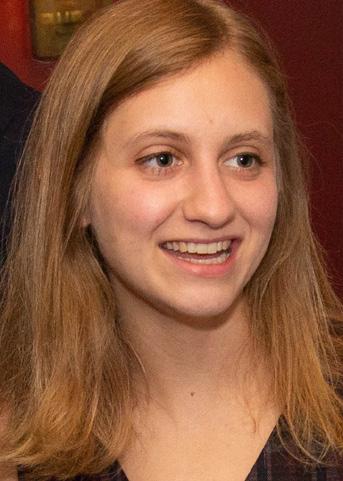
LAUREN ELLIS graduated early in fall 2018 with a major in the Law, Economics, and Policy track in Political Economy and a minor in Public Health. Lauren writes, “Overall, I could not be happier with the undergraduate education I received through The Murphy Institute. I feel prepared and confident to move to D.C. and begin working in the public policy arena. I am grateful to the program, as I truly believe that the multi-disciplinary major gives me
Protection Agency, and worked in an international context as a conservation consulting intern with Engage Globally, collaborating with communities in Ghana and Costa Rica to expand opportunities in education and conservation.
COLLEEN DYCHDALA graduated in fall 2018 and works as a data research analyst at Regulatory DataCorp, focused on preventing criminal infiltration of global financial institutions. She will soon receive her ACFCS (Association of Certified Financial Crime Specialists) certification.
FIONA M c MURTRY graduated in fall 2018 with a double major in Political Economy and Philosophy. She was the general manager of radio station WTUL . She won the Anne Butler Hess Award from the Tulane Department of Philosophy. She is currently completing a master’s degree in Philosophy at Tulane.
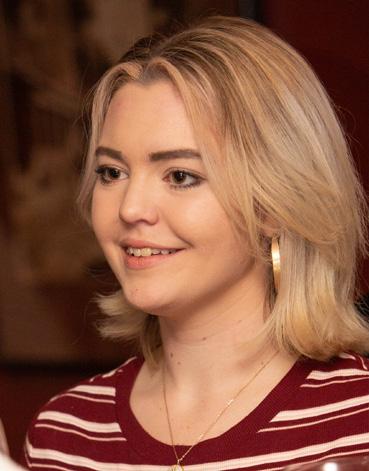
SARA BROWN will attend the Elliott School at George Washington University to pursue a master’s degree in International Economic Policy, focusing primarily on women in business in developing countries and effects of micro-finance in developing countries.
POLITICAL ECONOMY PROGRAM ’ 19 ]
an academic and professional advantage to students who may have studied solely economics or political science.” She has been accepted to the Master of Public Health in Health Policy program at George Washington University in Washington, D.C. In addition to graduate school, she plans to work part-time in the healthcare policy space, either as a legislative assistant in Congress or for a health policy research organization.
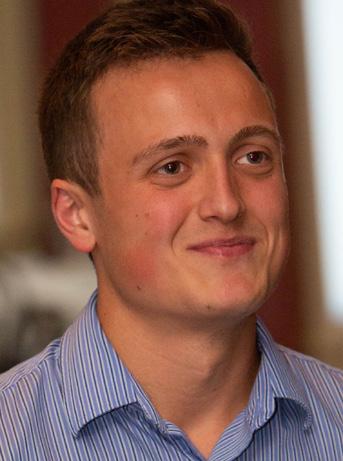
SETH ARMENTROUT graduated with a double major in Political Economy and Environmental Studies. He was a co-winner of The Murphy Institute’s Public Service Award and was inducted into Phi Beta Kappa. He won the Excellence in Environmental Studies Award. He pursued a wide variety of public service positions and activities during his time at Tulane. He served as an intern in the office of Governor John Hickenlooper for the State of Colorado, as a project management intern in the Region 8 Brownfields Office for the United States Environmental
REBECCA EVANS was an Altman Scholar and graduated with a dual-degree double major in Business and Political Economy. She won the Tulane Association of Business Alumni Community Service Award. She will work as a Global Market Analyst with Credit Suisse.
EMMA HAAS graduated as a dual-degree double major, with a B.A. in Political Economy and a BSPH Public Health. She was a member of Mortar Board. She has accepted a position as a financial analyst at the Consumer Financial Protection Bureau in Washington, D.C.
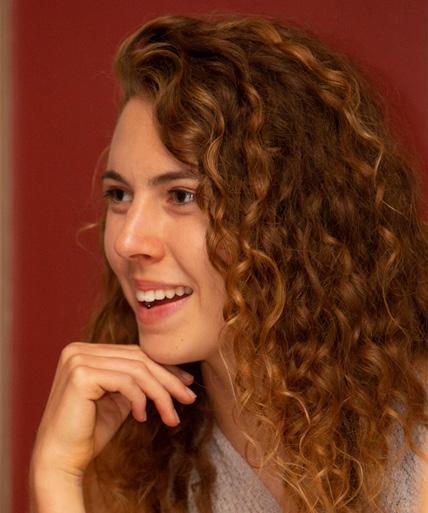
EMILY-KATHRYN HOEY graduated with a Master of Accounting degree from the Freeman School of Business at Tulane, awarded simultaneously with her undergraduate degree in Political Economy. She will work as a staff auditor for Ernst & Young in Boston, Massachusetts.
continued on next page

LANDON HOPKINS will be teaching English in Chile for the Chilean Ministry of Education through the English Opens Doors Program. She won a Leaders in Service Award from the Tulane Center for Public Service.
ALYSSA HUANG graduated in fall 2018 and is preparing for entry into a top-ten law school. She won the Oak Wreath Award from the Newcomb College Institute.
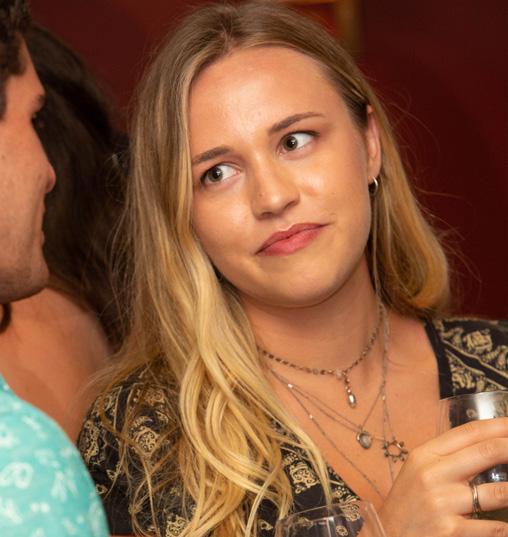
SAMANTHA SHAFIA interned with the New Orleans Office of Homeland Security and Emergency Preparedness. She is preparing to apply to law school.
MAXWELL KHADDURI interned as an investigator with the Orleans Parish Public Defenders Office, and was a member of both the Young Democrats and Young Republicans clubs at Tulane. He will work at Rich May, a private law firm in Boston, as a paralegal.
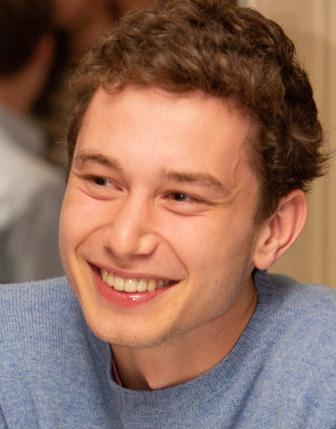
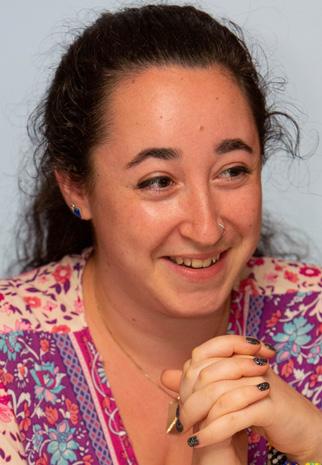
HOPE SLON graduated in fall 2018 with a double major in Economics and Political Economy and is currently completing an MS-DRL degree in Disaster Resilience Leadership Studies. During her undergraduate career, she was a Tulane Presidential Scholar, Cowen Scholar, recipient of the Dean Jean Danielson Memorial Grant, and was awarded the Corasaniti Scholarship. She attended the 2018 National Undergraduate Conference on Political Economy at Duke University.
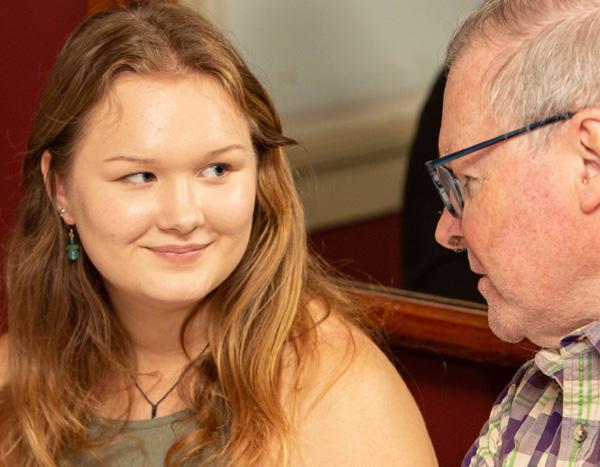
SARA THIESSEN interned with the World Wildlife Fund Greece in Athens, Greece. She won a Leaders in Service Award from the Tulane Center for Public Service.
DAVID WOODSIDE was an Altman Scholar and a dualdegree double major in Business and Political Economy. He has joined the Peace Corps and will be stationed in Ukraine.
THE JUDITH KELLEHER SCHAFER SUMMER INTERNSHIP GRANT PROGRAM
Funds from the Judith Kelleher Schafer Summer Internship Grant Program were used to endow eight awards in the amount of $3,000 each for summer 2019. The funded students, along with their graduating class and internship placements, are as follows:
NKETIAH BERKO ’20 interned for the Oxford-Tulane Developmental Justice Network (Caribbean Youth Development Program) in Jamaica.
ALYSSA CLUNE ’20 interned for the OECD in Paris, France.
EVA DILS ’20 interned as a research assistant for Dr. Patrick Button in the Tulane Department of Economics in New Orleans, Louisiana.
ANNA GIMILARO ’20 interned for the Greater New Orleans Fair Housing Action Center in New Orleans, Louisiana.
JULIA GUY ’20 interned for the Public Interest Network in Washington, D.C.
CHRISTINA KRISBERG ’20 interned for No Labels in Washington, D.C.
STEFAN SUAZO ’21 interned for the Bureau of Governmental Research in New Orleans, Louisiana.
SHAHAMAT UDDIN ’20 interned for Human Rights Watch in Washington, D.C.
ALUMNI NEWS
1980s
HEATHER M c ARN ’86 is Special Counsel to the Superintendent for the New York State Office of Financial Services in New York City.
1990s
RONALD J. SCALISE, JR. ’97 has been appointed as the new editor of the 2019 Louisiana Civil Code, Volumes I and II, which is used by the state’s legal community as the definitive book on civil law, including family law, property rights, successions, contracts, torts, and other areas of private law. He is the John Minor Wisdom Professor of Civil Law at Tulane Law School.
2000s
MILES WIDSTROM ’03 is Senior Corporate Attorney at Entrust Datacard in Minnetonka, Minnesota.
2010s
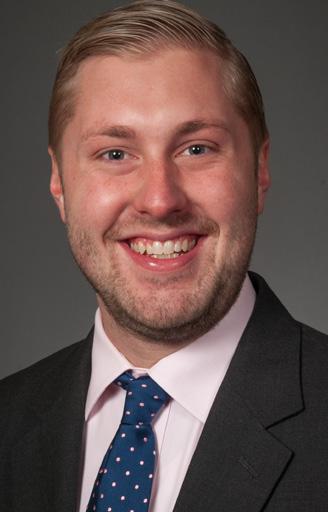
ERIC PETERSON ’12 moved back to New Orleans and is currently the Director of Policy for the Pelican Institute, the free-market think tank in Louisiana. As a part of his work for Pelican he is also starting a technology and innovation center to focus on technology policy in Louisiana.
After working in government affairs for Microsoft in Washington, D.C., PAUL ST. CLAIR ’12 attended the Catholic University of America Columbus School of Law and graduated this spring with his J.D. and a Certificate in Law and Technology. He will begin as an Associate in the Technology, Media, and Telecommunications practice group of the Washington, D.C. office of the law firm Morgan, Lewis, & Bockius this fall.
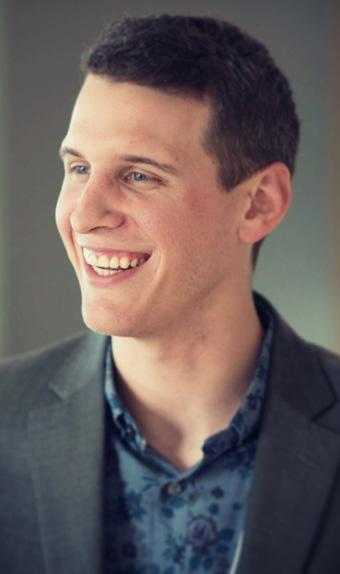
ELLY SCHOEN ’15 graduated in 2018 with a Master of Public Policy degree from the Sol Price School of Public Policy at the University of Southern California. She is now the Data and Project Manager for the Sol Price Center for Social Innovation in Los Angeles, California.
ASHLEY FOX ’13 earned the MPhil degree in Climate Change and Sustainable Development from the University of Cape Town in 2018. She has been promoted to Associate at The Cadmus Group in Waltham, Massachusetts, where she has worked since 2013.
CHLOE FRANK ’13 has started a new position as Associate Product Manager at American Express, Digital Labs, in New York City.
KAYLA MURPHY ’14 has started a new position as Junior Construction Project Manager at the Housing Development Center in Portland, Oregon.
B. GRAVES LEE ’15 graduated from the University of Michigan Law School. He has accepted an offer to join Covington & Burling LLP as an associate in the firm’s Washington, D.C. office.

SAMUEL FISHMAN ’16 returned from his Fulbright grant in Paraguay and started a new position as Project Assistant for Latin America and the Caribbean at the National Democratic Institute in Washington D.C. In the fall he will begin his J.D. at Columbia University.
NATE FOWLER ’17 has been working for United States Representative Angie Craig as an outreach staffer since she took office in early January of 2019. He previously worked in multiple positions on her successful campaign to unseat an incumbent in Minnesota’s continued on next page
continued from previous page
2nd congressional district during the 2018 midterm elections.
LAUREN SOBEL ’17 is a municipal research strategist at Bank of America Merrill Lynch in New York City. She contributes to the firm’s Municipals Weekly report and the monthly fixed income strategy report, The Fixed Income Digest. She is a member of the Municipal Analysts Group of New York (MAGNY) and Fixed Income Analysts Society, Inc. (FIASI). She was a featured speaker at the 36th annual
meeting of the National Federation of Municipal Analysts (NFMA).
ROWAN BIENES ’18 was accepted to Arizona State University’s Master of Science program for Forensic Psychology.
SABRINA LEEDS ’18 completed Tulane’s 4+1 Philosophy Masters Degree program and graduated in May. She plans to continue her education and is currently in the process of applying to joint J.D./Ph.D. programs for the 2020-2021 school year, with the hopes of eventually becoming a Technology
LIPTON CITED EXTENSIVELY IN DELAWARE CHANCERY COURT RULING
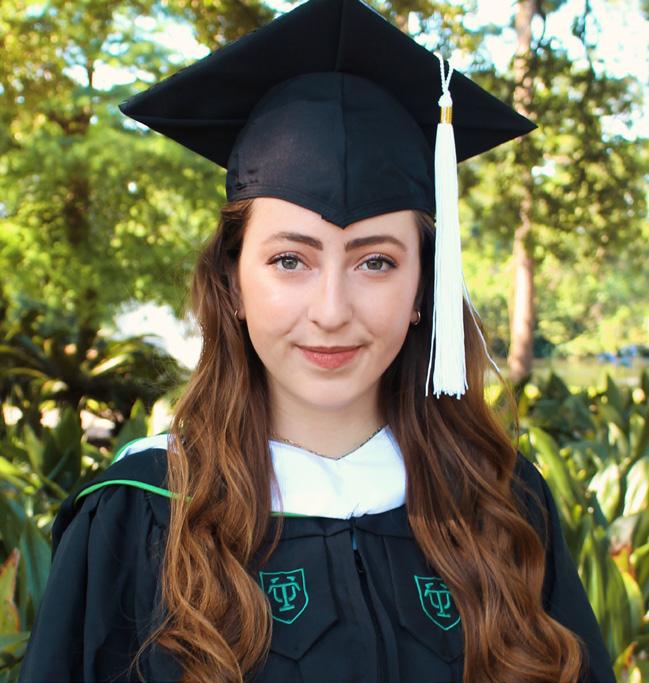
The Delaware Chancery Court relied in part on Ann Lipton’s 2016 article in the Georgetown Law Journal , “‘Manufactured Consent’: The Problem of Arbitration Clauses in Corporate Charters and Bylaws,” in holding that Delaware corporations may not use provisions in their charters to curb the rights of shareholders to sue for fraud and other misconduct. A Reuters piece called the decision, which cited Lipton’s article extensively, a possible “death blow” for mandatory shareholder arbitration. It remains to be seen whether or not the decision will significantly stem the growing national trend of corporations using arbitration to infringe upon shareholders’ litigation rights, but The Murphy Institute is pleased to see affiliated researchers’ work contributing to policymaking. Congratulations to Ann for the many citations in the Delaware ruling and attention in the national press!
Ethics Consultant in both the public and private sectors.
ANN M. LIPTON
HONORS, AWARDS, AND
PUBLICATIONS
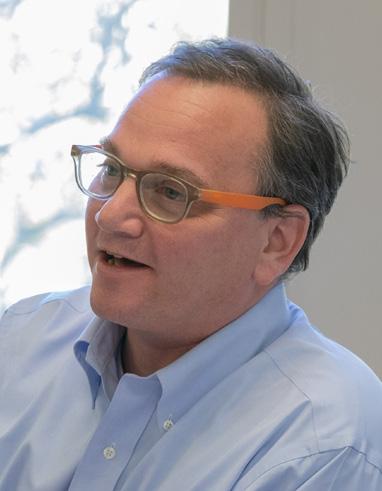
ADAM FEIBELMAN , Sumter Davis Marks Professor of Law, is the author of “Legal Shock or False Start: The Future of India’s New Consumer Insolvency and Bankruptcy Regime,” forthcoming from the American Bankruptcy Law Journal. He is also the author of the chapter “A Maximalist Approach to Data from India’s New Insolvency and Bankruptcy System” in Susan Thomas, ed. India Insolvency and Bankruptcy Law Reforms, forthcoming from Springer.
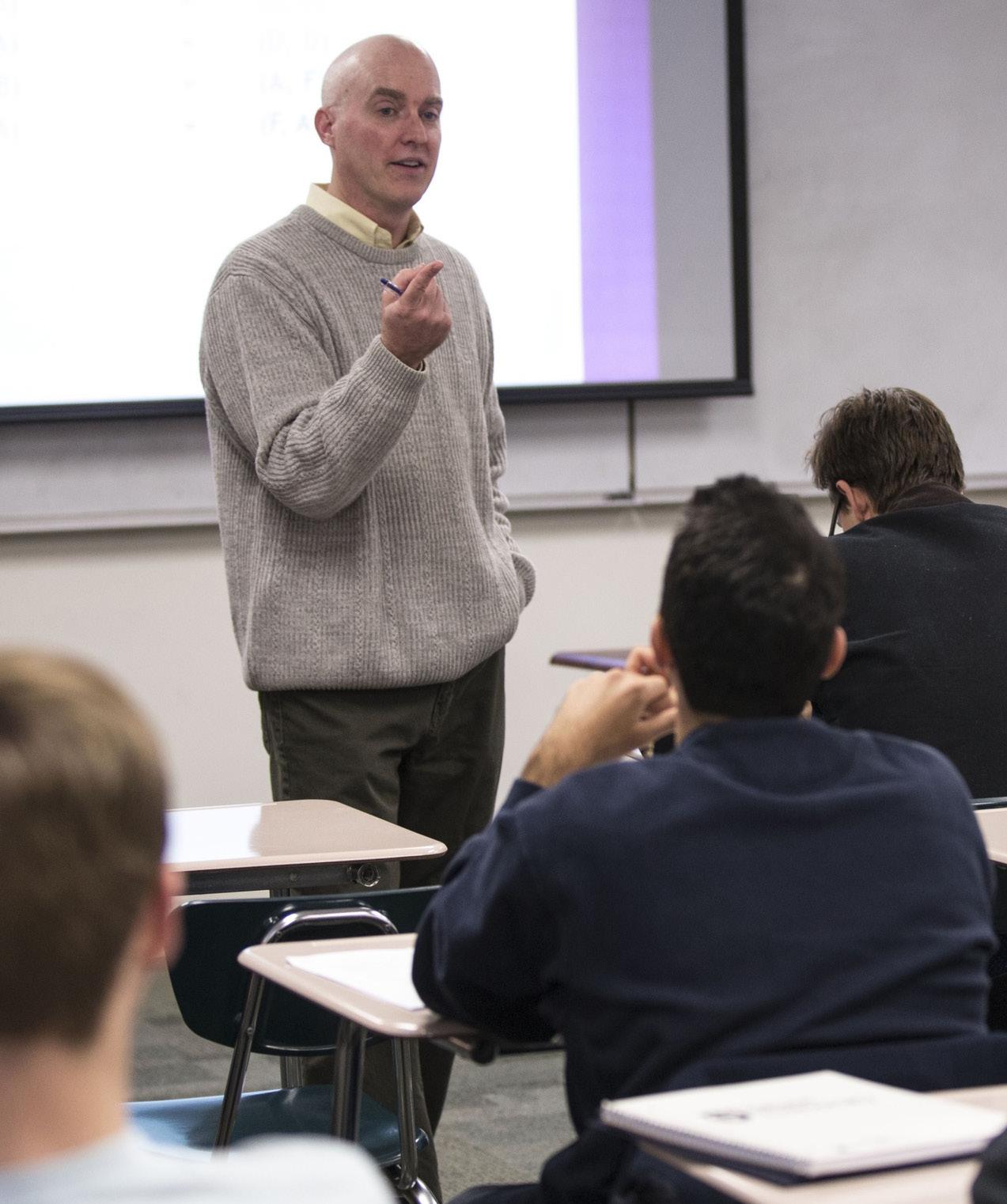
DAVID SHOEMAKER , Professor of Philosophy, is the author of “Hurt Feelings,” published in The Journal of Philosophy 116 (2019), and “Cruel Jokes and Normative Competence,” in Social Philosophy & Policy 35 (2018). He is also editor of Oxford Studies in Agency and Responsibility, Vol.6, forthcoming fall 2019 from Oxford University Press.
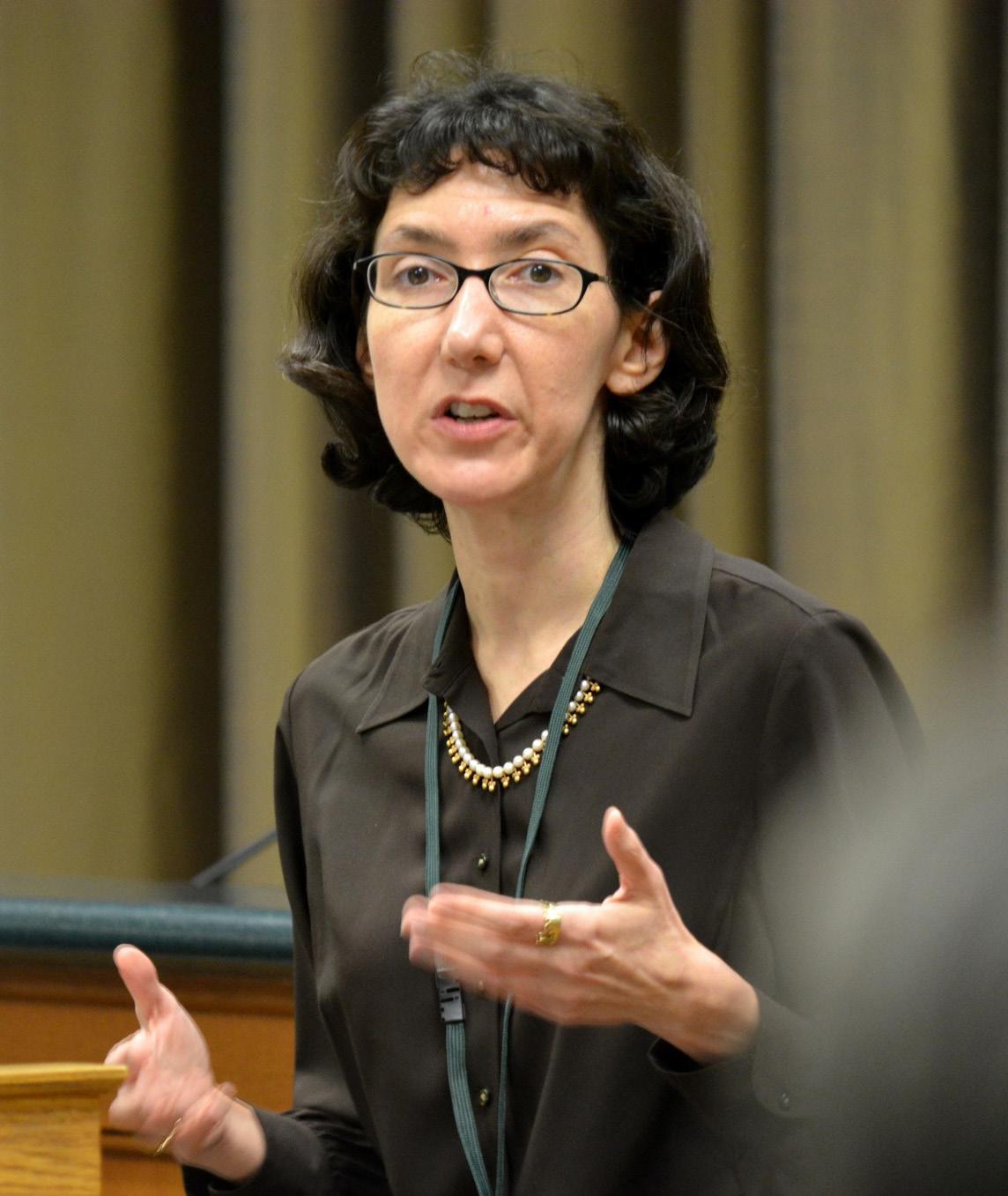
ANN M. LIPTON , Michael M. Fleishman Associate Professor in Business Law and Entrepreneurship, is the author of “What We Talk about When We Talk about Shareholder Primacy,” published in Case Western Reserve Law Review 69(4) (2019) and “Shareholder Divorce Court,” published in Journal of Corporation Law 44(2) (2018).
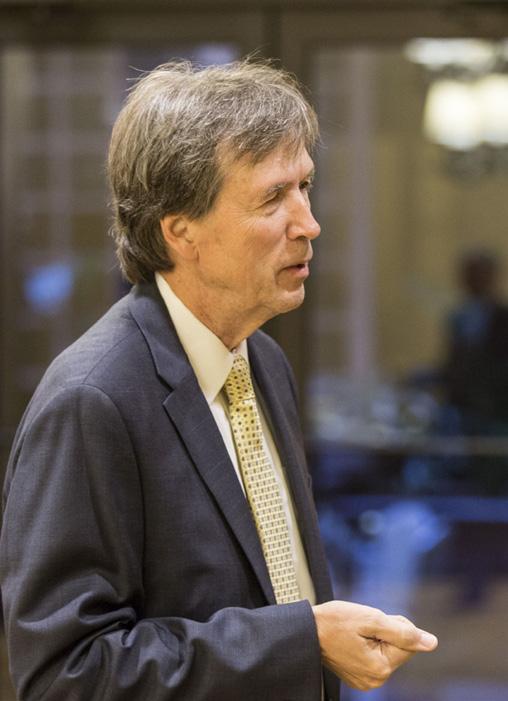
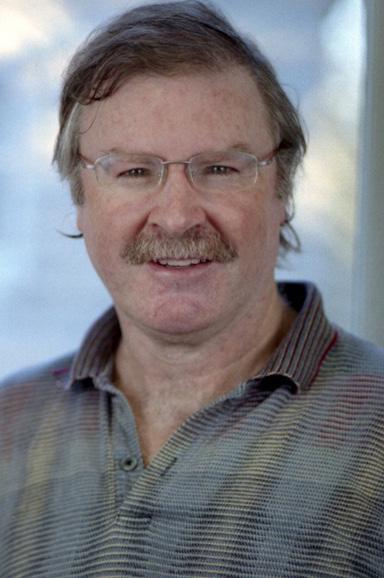
JAMES ALM , Professor of Economics, authored “Is the Haig-Simons Standard Dead? The Uneasy Case for a Comprehensive Income Tax,” which was published in the National Tax Journal, Vol. 71, No. 2 (2018). In addition, he is co-author of “Financial Constraints and Firm Tax Evasion,” published in International Tax and Public Finance, Vol. 26, No. 1 (2019), and author of “What Motivates Tax Compliance?” published in Journal of Economic Surveys, Vol. 33, No. 2 (2019). He delivered the keynote address, “Technology and Tax Compliance,” at COFFERS (Combating Fiscal Fraud and Empowering Regulators) Conference, Utrecht University, March 2019. Alm was also elected Second Vice President of the National Tax Association in November 2018.
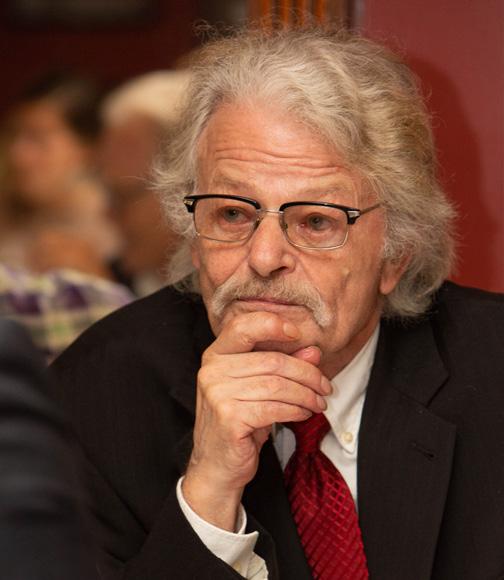
JONATHAN RILEY , Professor of Philosophy, is the author of “John Stuart Mill,” in D. Pritchard, editor-in-chief, Oxford Bibliographies , online, Oxford University Press, 2019. He also contributed the essay, “Bentham, Mill, Stoicism and Higher Pleasures,” to G.Varouxakis and M. Philp, eds., Happiness and Utility, University College London Press, 2019.
continued from previous page
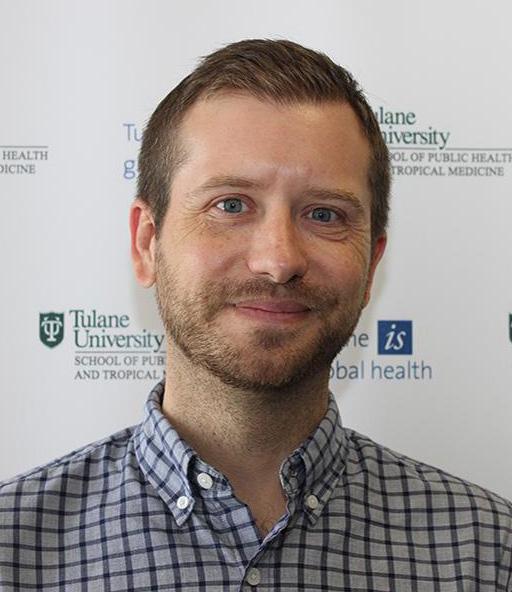
KEVIN CALLISON , Assistant Professor of Global Health Management and Policy, is co-author of “Social Health Insurance and the Use of Modern and Traditional Care in Developing Countries: Evidence from Ghana’s National Health Insurance Scheme,” published in The Journal of Development Studies , 55(7) (2019).
MARTYN THOMPSON , Associate Professor of Political Science, is the author of Michael Oakeshott and the Cambridge School on the History of Political Thought (Routledge, 2019) and Ideas of Contract in English Political Thought, Routledge Library Editions: 17th Century Philosophy (Routledge, 2019). He is also the co-editor of Politisches Denken Jahrbuch 2017 (Duncker & Humblot, 2019).
MARY K. OLSON , Associate Professor of Economics, is the co-author of “Examining Firm Responses to R&D Policy: An Analysis of Pediatric Exclusivity,” American Journal of Health Economics 4(3) (2018). She also helped organize the first LSUTulane applied microeconomics conference in March 2019 and served on the search committee that hired a new political economist for the Department of Economics and The Murphy Institute.

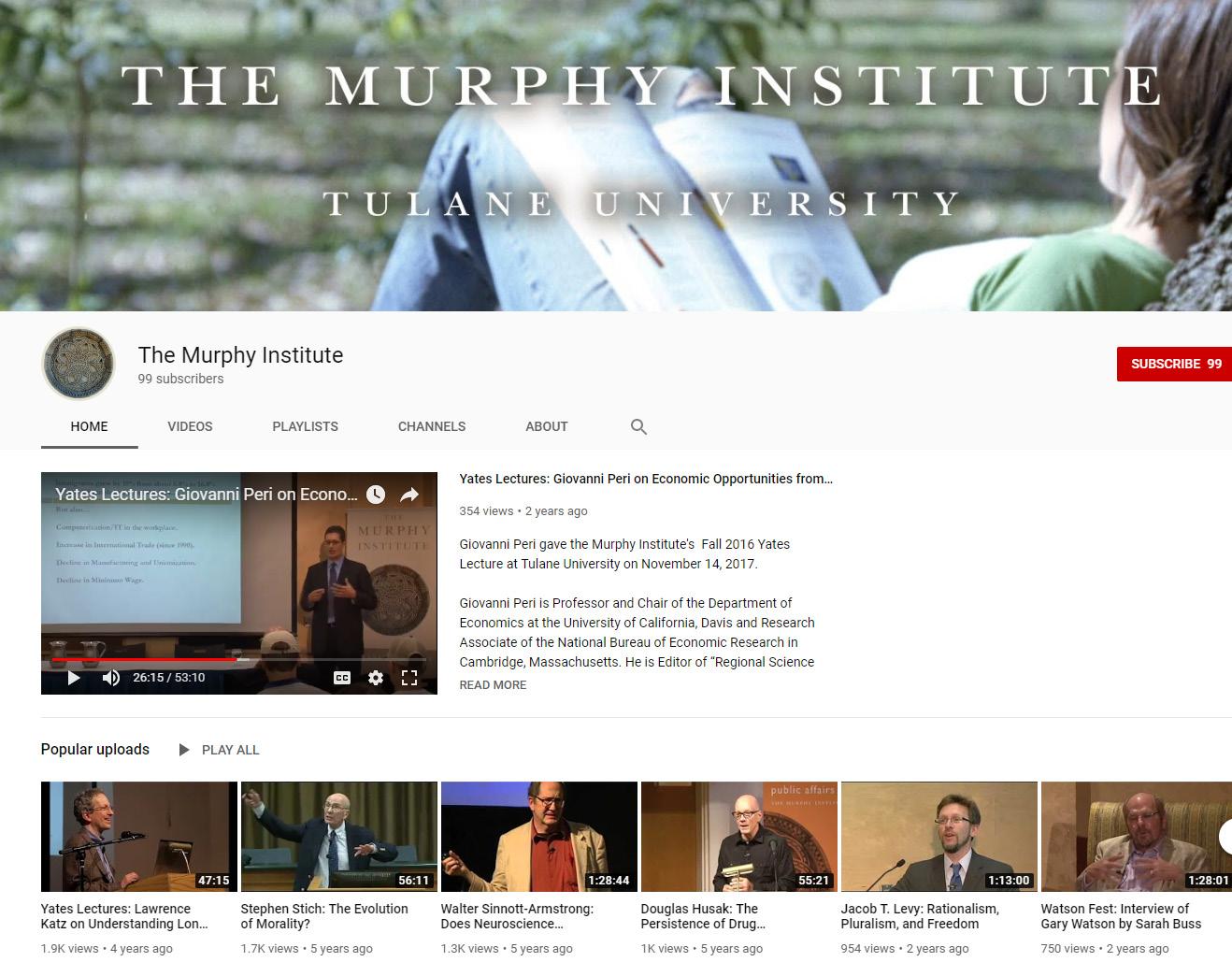
CHECK US OUT ON YOUTUBE!
At Tulane and throughout New Orleans, The Murphy Institute is known for hosting fascinating lectures on current issues by leading academics. In order to share these lectures more widely, we also feature our public lectures on our website and our YouTube channel.
To see our latest lectures, check us out on YouTube at YouTube.com/MurphyTulane.
MIHIR A. DESAI
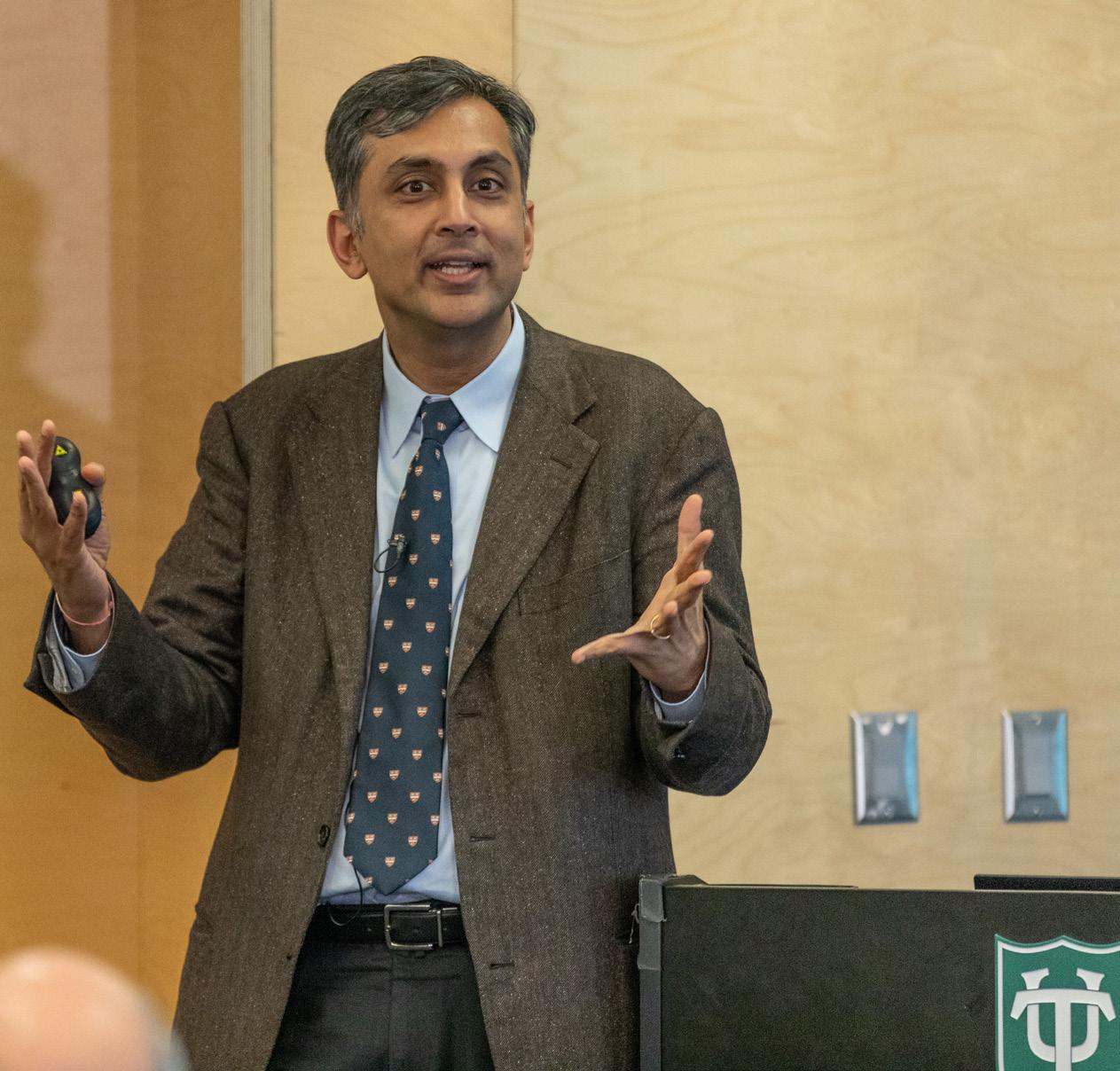
MIHIR A. DESAI , Mizuho Financial Group Professor of Finance at Harvard Business School and Professor of Law at Harvard Law School, presented a lecture titled “The Wisdom of Finance: Discovering Humanity in the World of Risk and Return.”
Desai’s lecture drew from his book of the same title, which was itself inspired by a “Last Lecture” that he delivered at Harvard. The lecture’s themes, which so inspired one of his Harvard students that he wrote to Desai, encouraging him to turn it into a book, similarly resonated with Yates Lecture attendees. Desai received rave reviews from undergraduates of various majors, Murphy Institute staff, postdoctoral fellows in economics, and the lecture’s videographer.
Desai sold literature enthusiasts on the domain of finance, highlighting in particular the philosophy and history behind the insurance industry. He came armed with convincing anecdotes: for example, famed American poet Wallace Stevens was so devoted to the insurance business that he turned down a professorship at Harvard to spend his whole life at The Hartford.
After making the case that finance is not at odds with the arts but replete with theoretical complements, Desai discussed his next project: reclaiming prosocial values from finance, a realm that many people love to hate, despite its being humanized in his book The Wisdom of Finance. Desai emphasized the pitfalls of the industry—it can be nearly impossible to discern between skill and luck, so investors often attribute unearned confidence to their abilities—but noted that some core principles of finance can and should be applied to broader life. He encouraged the audience to carefully consider whether they want to live high-leverage or low-leverage lives, and to invest not only in “high Beta relationships”—influential LinkedIn connections—but, even more importantly, in “negative Beta relationships”—people who console you in hard times while also checking your ego when necessary.
Desai’s areas of expertise include tax policy, international finance, and corporate finance, and his academic publications have appeared in leading economics, finance, and law journals. His work has focused on the appropriate design of tax
2019 YATES LECTURE
policy in a globalized setting, the links between corporate governance and taxation, and the internal capital markets of multinational firms. He is a Research Associate in the National Bureau of Economic Research’s Public Economics and Corporate Finance programs and served as the co-director of the NBER’s India program. Desai’s research has been cited in The Economist, The New York Times, and several other publications, and his general interest pieces have appeared in The Washington Post, The Wall Street Journal, and elsewhere.
The Mary C. Parker Yates Lecture, endowed in 1996 by Murphy Institute alumna Rebecca Yates (’89) Velander in memory of her mother, is The Murphy Institute’s major public academic event. Designed to promote university-wide discussion of issues of current concern, the annual Yates Lecture brings leading thinkers and public figures to the Tulane campus.

conferences the center for public policy research
TULANE CORPORATE AND SECURITIES LAW ROUNDTABLE
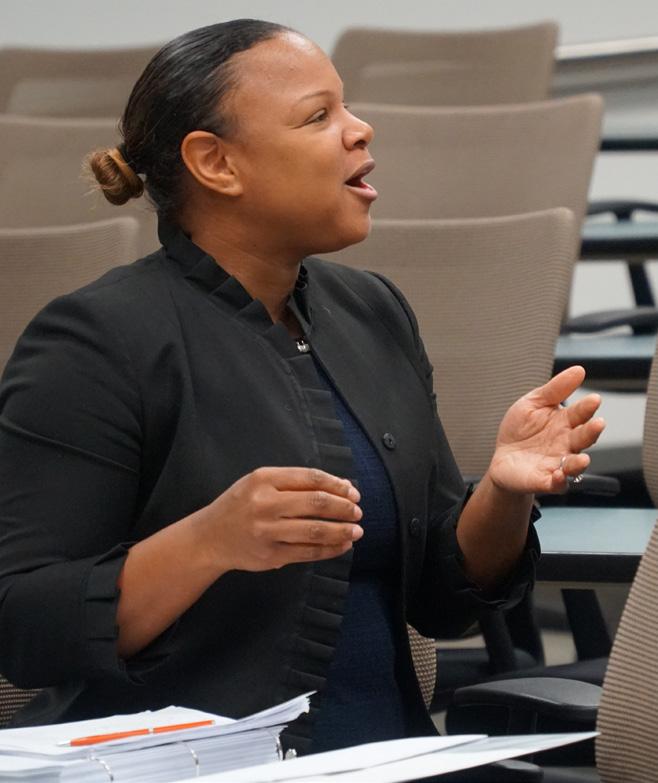
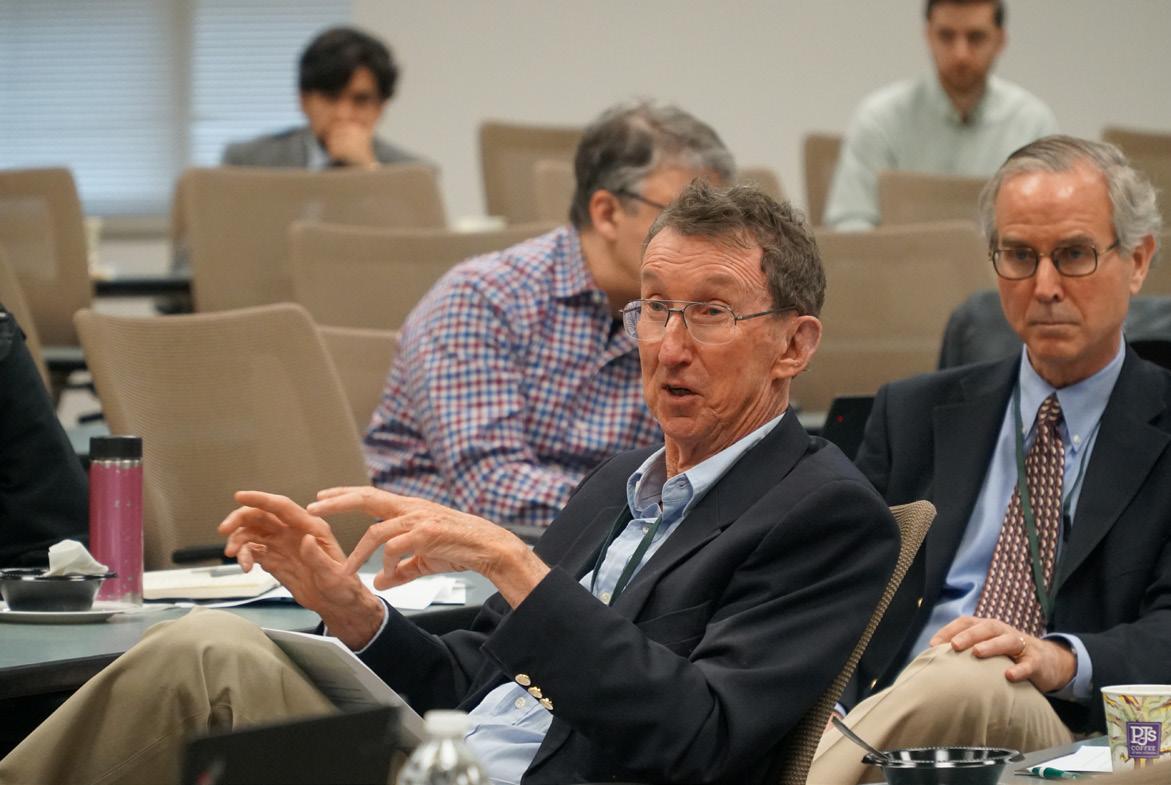
The annual Corporate and Securities Law Roundtable, organized by Murphy affiliate Ann Lipton, took place at Tulane Law School on Saturday, March 16th. The panels featured lively discussion among many of the country’s leading corporate law scholars.
DISPARATE IMPACT AND THE IMPACT OF DISPARATENESS
Discussant: Ann M. Lipton, Michael Fleishman Associate Professor in Business Law & Entrepreneurship, Tulane University
Women and M&A
Afra Afsharipour, Professor of Law and Martin Luther King, Jr. Hall Research Scholar, University of California, Davis
Regulating Algorithmic Bias
Kristin Johnson, McGlinchey Stafford Professor of Law and Associate Dean for Faculty Research, Tulane University
FINDING THE FRAUD, MOSTLY
Discussant: Randall Thomas, John S. Beasley II Chair in Law and Business, Vanderbilt University
Opt-In Stewardship: Toward an Optimal Default Rule for Mutual Fund Voting
Sean J. Griffith, T.J. Maloney Chair in Business Law, Fordham University
Short and Distort
Joshua Mitts, Associate Professor of Law, Columbia University
Securities Enforcement after Kokesh
Urska Velikonja, Professor of Law, Georgetown University School of Law
50 SHADES OF PUBLICNESS
Discussant: Robert B. Thompson, Peter P. Weidenbruch, Jr. Professor of Business Law, Georgetown University
The Consumer Primacy Alternative
Sung Eun (Summer) Kim, Assistant Professor of Law, University of California, Irvine School of Law
Not Everything Is about Investors:
The Case for Mandatory Stakeholder Disclosure
Ann Lipton, Tulane
James Cox, Professor of Law, Duke University
VOTING MATTERS
Discussant: Afra Afsharipour, University of California, Davis
Shareholder Voting on Golden Parachutes
Albert Choi, Professor of Law, University of Virginia
Understanding the (Ir)Relevance of Shareholder Votes on M&A Deals
James Cox, Brainerd Currie Professor of Law, Duke University, and Randall Thomas, Vanderbilt University
Index Funds and Corporate Governance: Let Shareholders Be Shareholders
Edward Rock, Martin Lipton Professor of Law, New York University
MANAGING WHAT YOU MEASURE
Discussant: Sean Griffith, Fordham
The Role of Agency Costs in Labor Cost Minimization: A Research Agenda
Claire A. Hill, James L. Krusemark Chair in Law, University of Minnesota Law School
Do the Securities Laws Promote Short-Termism?
James Park, Professor of Law, University of California, Los Angeles
Kristin Johnson, McGlinchey Stafford Professor of Law, Tulane University

THE FUTURE OF TRADE GOVERNANCE
This two-day conference was organized by Professor of Economics Douglas Nelson and Bernard Hoekman of the European University Institute. Scholars representing the fields of economics, political science, and law came from three continents to contribute to the panels. The conference began with unanticipated excitement due to a fire at the scheduled conference hotel, but once relocated, the attendees enjoyed a collegial and productive two days exchanging ideas.
The conference’s first day coincided with China’s announcement of increased tariffs on US goods, in response to the previous week’s increase on Chinese goods from the US side. The news fueled animated discussion during breaks in the panels, which covered trade conflict and the World Trade Organization, and China’s relationship with and role in the WTO. The second day’s panels discussed knowledge and data flows, the future of the WTO, and broad changes to political economy.
STEVE CHARNOVITZ
Associate Professor of Law, George Washington University Law School
The Darkness before Dawn: An Optimistic Perspective on the WTO
KIM ELLIOTT
Visiting Fellow, Center for Global Development
Confidence Building for a Post-Trump WTO
JENNIFER HILLMAN
Professor of Practice, Georgetown Law Center
Could the Use of a Non-Violation Case Help Solve the China Trade Problem and Save the WTO?
BERNARD HOEKMAN
Robert Schuman Chair of Global Economics, European University Institute
Trade Conflict, Governance, and WTO Working Practices
MARY LOVELY
Professor of Economics, Maxwell School, Syracuse University
Techno-Industrial FDI Policy and China’s Export Surge (with Yang Liang and Hongsheng Zhang)
KEITH MASKUS
Professor of Economics, University of Colorado Boulder
Knowledge and Data Flows: Challenges for the WTO Framework
PETROS MAVROIDIS
Edwin B. Parker Professor of Foreign and Comparative Law, Columbia Law School
China and the WTO: Towards a Better Fit (with André Sapir)
DOUGLAS NELSON
Professor of Economics, Tulane University
Rational Trade Wars and Stupid Trade Disputes (with Eddy Bekkers, Joe Francois, and Hugo Rojas-Romagosa)
SUSAN SELL
Professor of Regulation and Global Governance, Australian National University
Structural Changes in 21st-Century Capitalism: What Does This Mean for Trade?
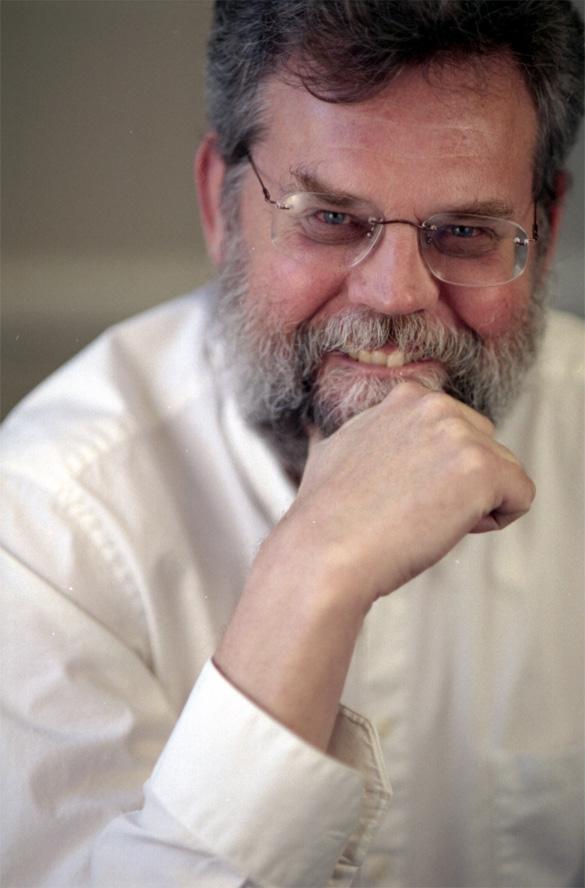
organized by DOUGLAS R. NELSON
ROBERT WOLFE
Professor Emeritus of Policy Studies, Queen’s University
An Unbalanced Double Movement: Embedded Liberalism Revisited
MARK WU
Assistant Professor of Law and Director of the Berkman Klein Center, Harvard Law School
Hard Questions Posed by the “China, Inc.” Challenge
the center for public policy research

workshops
The Murphy Institute Working Groups on Health Policy and on Public Policy bring together faculty from numerous disciplines across Tulane’s campuses to establish a network of professionals and produce interdisciplinary research that addresses critical policy issues.
HEALTH POLICY WORKING GROUP
BRIGHAM WALKER
Ph.D. student, Economics
The Spillover Effects of a Medicare Payment Reform
ABRAHAM ASFAW
Postdoctoral Fellow, Murphy Institute
The Trade-Offs between Moral Hazard and Cost-Saving in a Highly Non-Linear Drug Benefit Design
ENGY ZIEDAN
Assistant Professor of Economics
Is It More Costly to Reduce Readmission for More Frequent Inpatient Admissions? A Test of a Model of Hospital Behavior to Reduce Readmissions
workshop in regulation working groups
RUI WANG
Ph.D. student, Economics
Price Transparency and Healthcare Costs: The Case of the New Hampshire Healthcare Market
KORAY CAGLAYAN
Ph.D. student, Economics
Early Elective Deliveries and Birth Outcomes: Evidence from Oregon’s Hard-Stop Policy
BRIGHAM WALKER
Ph.D. student, Economics
Patient Nudges: Can Predictive Analytics Alter Patient Decisions?
KEVIN CALLISON
Assistant Professor, Global Health Management and Policy Is Medicaid Good for Your Financial Health? Evidence from Louisiana’s Medicaid Expansion
PUBLIC POLICY WORKING GROUP
MASHFIQUR KHAN
Postdoctoral Fellow, Murphy Institute
Do Stronger Employment Discrimination Protections Decrease Reliance on Social Security Disability Insurance? Evidence from the Social Security Reforms
In this joint workshop between Tulane Law School and The Murphy Institute, visiting scholars present works in progress on regulation of economic activity. The faculty conveners for the 2018–2019 academic year were Adam Feibelman and Nadav Orian Peer in Law and Steven Sheffrin in Economics and The Murphy Institute.
CARLA REYES
Assistant Professor of Law, Michigan State University
Corporate Crypto-Governance
SALLY RICHARDSON
A.D. Freeman Associate Professor of Civil Law, Tulane University
An Exploration into Louisiana Enclosed Estate Doctrine
ANUP MALANI
Lee and Brena Freeman Professor of Law, University of Chicago Tolerating Slums
SCOTT BAKER
Vice Dean for Research and Faculty Development and William F. & Jessica L. Kirsch Professor of Law, Washington University in St. Louis Compromising Accuracy to Encourage Regulatory Participation
(co-written with Anup Malani)
SADIE BLANCHARD
Associate Professor of Law, University of Notre Dame
Sustaining Informal Contracting: A Case Study of Reinsurance (co-written with Matthew Jennejohn)
tulane-boston college tax roundtable
This ninth annual meeting of the Tax Roundtable that The Murphy Institute and Tulane Law now organize with Boston College Law School was held here at Tulane on March 22, 2019. Organized by Diane Ring and Shu-Yi Oei of Boston College and James Alm, Khrista McCarden, and Steven Sheffrin from Tulane, the roundtable brings together tax scholars from around the country, Tulane and Boston College faculty, and students from both institutions for discussion and debate about important tax policy issues. Panels addressed topics from the SALT deduction to the application of the medical expense deduction to egg freezing to political norms of tax fairness.
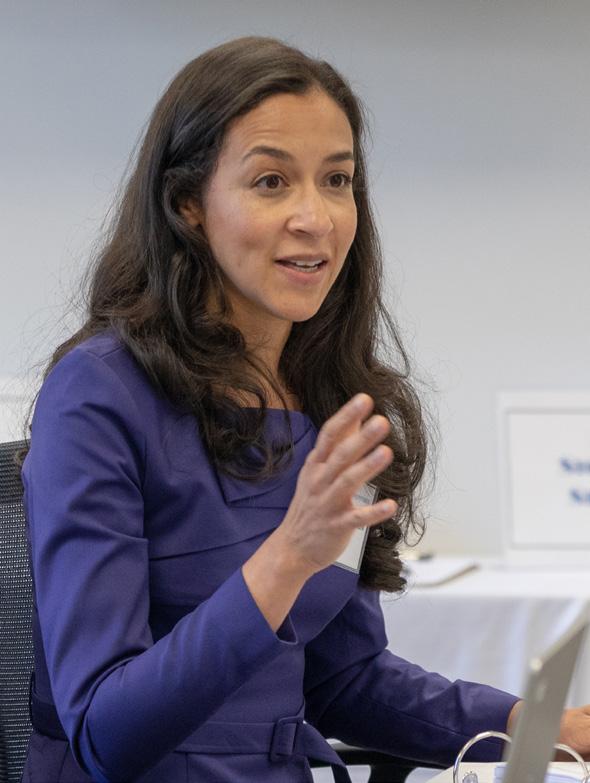
co-organized by KHRISTA MCCARDEN
TESSA DAVIS
Assistant Professor of Law, University of South Carolina
Freezing the Future: Elective Egg
Freezing and the Limits of the Medical Expense Deduction
MIRANDA PERRY FLEISCHER
Professor of Law and Co-Director of Tax Programs, University of San Diego
A New Look at Old Money: Taxing Second-Generation Wealth
DAVID GAMAGE
Professor of Law, Indiana University
Maurer School of Law
Political Norms of Tax Fairness
MATTHIAS KASPER
Postdoctoral Fellow in Economics, Murphy Institute, Tulane University Do Audits Deter or Provoke Future Tax Noncompliance? Evidence on Self-Employed Taxpayers (with Erich Kirchler)
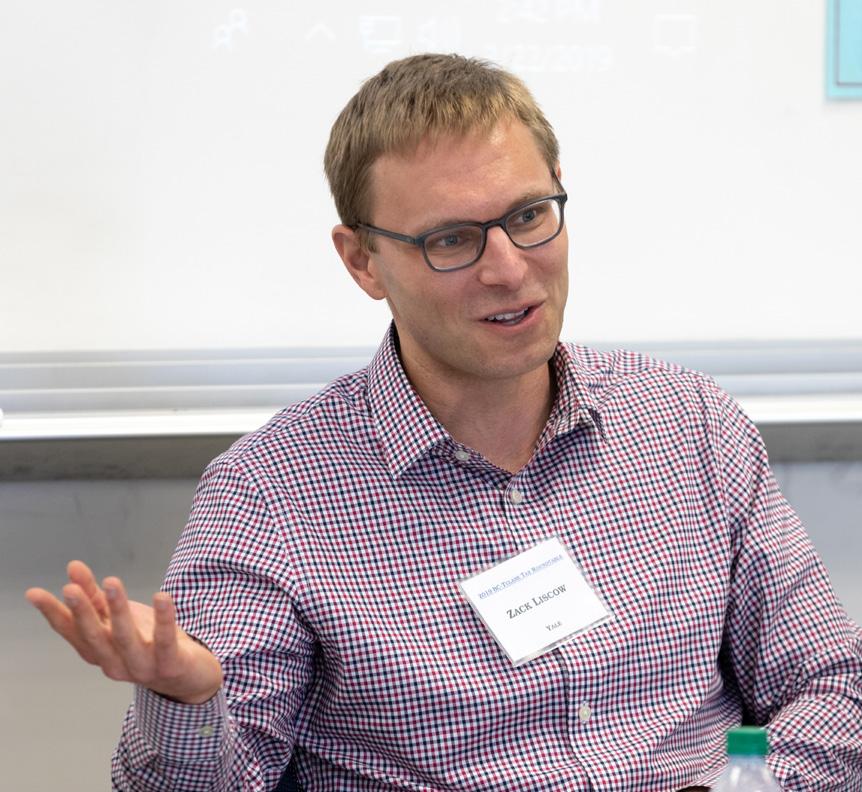
ZACHARY LISCOW F
Associate Professor of Law, Yale Law School
Moral Commitments and Inequality: A Dilemma
SHU-YI OEI
Professor of Law and Dean’s Distinguished Scholar, Boston College Law School
Legislation and Comment: The Making of the §199a Regulations (with Leigh Osofsky)
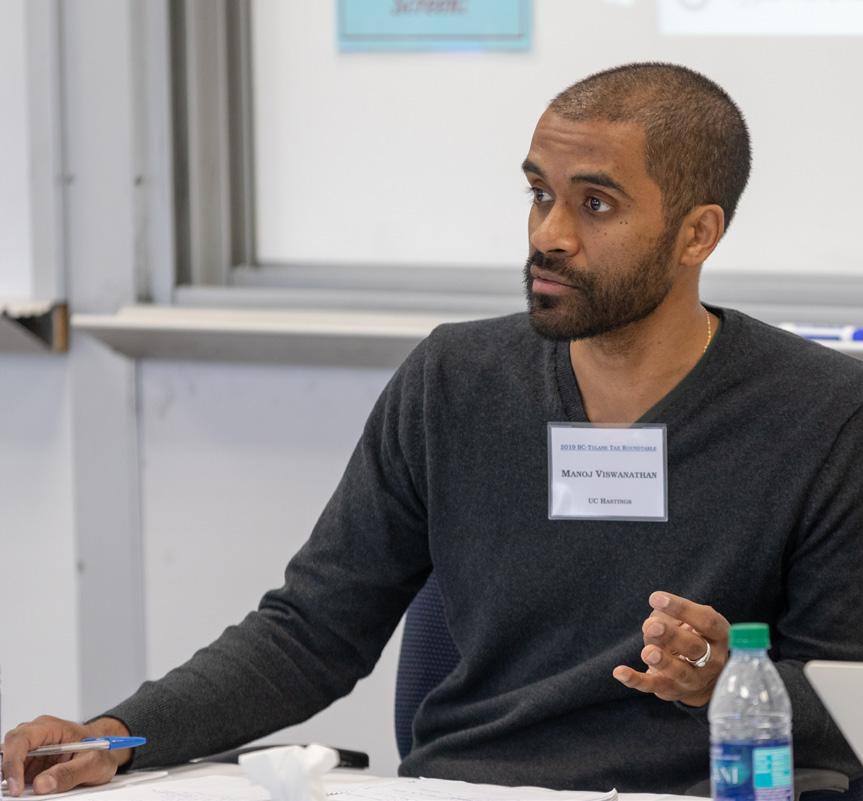
MANOJ VISWANATHAN F
Associate Professor of Law, University of California Hastings Hyperlocal Responses to the SALT Deduction Limitation
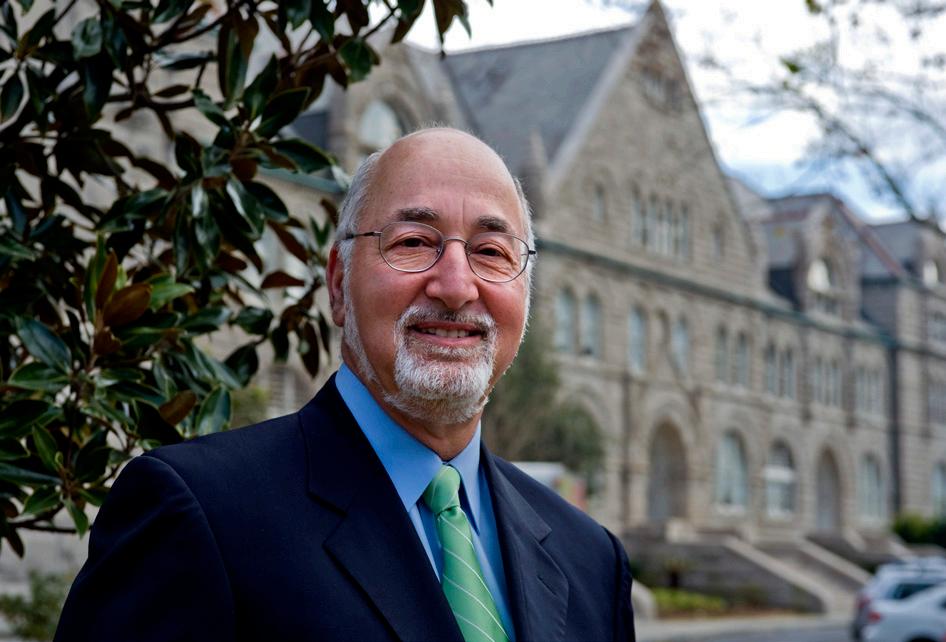
STEVEN M. SHEFFRIN
TAX POLICY INSTITUTE
On January 29th, The Murphy Institute co-sponsored the conference “How Are States Responding to the Tax Cuts and Jobs Act?” alongside the Urban-Brookings Tax Policy Center, American Tax Policy Institute (ATPI), and the University of Tennessee’s Boyd Center for Business and Economic Research. The day-long event was held in Washington D.C., but tax policy aficionados unable to attend in person could join virtually via a live webcast.
Executive Director Steven M. Sheffrin moderated the third panel, “Blue State Resistance to the TCJA,” which also featured Kim Rueben of the Urban-Brookings Tax Policy Center, Leslie Samuels of Cleary Gottlieb Steen & Hamilton, Kirk Stark of the UCLA School of Law, and Mark Yopp of McDermott Will & Emery. The TCJA’s cap on state and local tax (SALT) deductions was at the core of the panel’s discussion. Among the issues therein that the panelists discussed was the push to reclassify some state taxes as charitable contributions via a credit toward state taxes, which New York, New Jersey, and Oregon have implemented and three other states considered.
The panelists also debated the merits of two sides of the SALT deduction debate. On the one hand, the legal challenge that four blue states have brought against the new federal tax bill finds support among those who see it as unconstitutional, or at least a breach of precedent; some claim that the Sixteenth Amendment to the US Constitution was passed on the understanding that the amendment, which gives Congress the ability to levy income taxes untethered to population, would have no bearing on state finances. Others see pointing to that promise, which is not enforceable, as grasping at straws and view the SALT deduction cap as a rare progressive element of a largely non-progressive tax bill. The group also discussed South Dakota v. Wayfair, a popular topic across the day’s panels, and the decreasing share of filers who itemize their tax returns. Other panels addressed the differential challenges for states based on how they conform with federal tax guidelines, how states should handle repatriated income in light of new requirements, and the budgetary risks of expiring tax provisions. The audience’s policy professionals and journalists asked thoughtful questions, and the panels’ fruitful discussions were enlightening, but many agreed that the ultimate effects of the TCJA are hard to predict. As Sheffrin noted in closing his panel, “We’ll have to wait for either a lawsuit or 2025 to see what happens.”
The Murphy Institute also co-sponsored ATPI’s previous conference, “Tax Incentives for State, Local, and International Economic Development,” which was held in the fall of 2017 at the D.C. office of Skadden, Arps, Slate, Meagher & Flom.
Congratulations to Abraham Asfaw and Mashfiqur Khan, who have completed their two-year appointments as Postdoctoral Fellows in the Center for Public Policy Research.
Abraham, who worked in the Health Policy program, is now a Visiting Assistant Professor of Economics at Bates College.
Mashfiqur, who was aligned with the Regulation and Coordination program, is now an Economist at Bates White Economic Consulting in Washington, D.C.
the center for ethics and public affairs

seminars & lectures
Each year, the Center for Ethics and Public Affairs sponsors a Faculty Seminar series where scholars present works in progress to Tulane faculty and graduate students, as well as a popular public lecture series attended by faculty, students, and community members. The 2018–2019 speakers featured 15 noted scholars from five interrelated fields: political philology, normative ethics, moral psychology, political theory, and the history of ideas.
BERISLAV MARUŠIĆ
Associate Professor of Philosophy, Brandeis University Accommodation to Injustice
ISKRA FILEVA
Assistant Professor of Philosophy, University of Colorado Boulder Reflection without Empathy: The Case of Psychopathy
JONATHAN WAY
Associate Professor of Philosophy, University of Southampton
Might All Reasons Be Reasons for Attitudes?
TOM DOUGHERTY
University Lecturer and Fellow, Trinity Hall, University of Cambridge Consent under Duress
ROY BAUMEISTER
Francis Eppes Eminent Scholar and Professor of Psychology, Florida
State University
Self-Regulation, Choice, and Ego Depletion
MARK ALZNAUER
Associate Professor of Philosophy, Northwestern University
The Redemptive Theory of Art in Wordsworth and Hegel
THOMAS CHRISTIANO
Professor of Philosophy, University of Arizona
Worker Participation and the Democratic Conception of Fair Market Exchange
HÉLÈNE LANDEMORE F
Associate Professor of Political Science, Yale University
Democratic Representation beyond Elections
RALPH WEDGWOOD
Professor of Philosophy, University of Southern California Values First
HOLLY M. SMITH
Distinguished Professor of Philosophy, Rutgers University
The Nature of Moral Decision Guides
ELIZABETH BARNES
Professor of Philosophy, University of Virginia
The Problem of Women’s Pain: Testimony, Bias, and Stigma Double-Bind
RICHARD VELKLEY
Celia Scott Weatherhead Professor of Philosophy, Tulane University
The Fate of Human Action:
The Agency of “Reason” in Modern Philosophy
HANNA PICKARD
Professor in Philosophy of Psychology, University of Birmingham
The Puzzle of Addiction
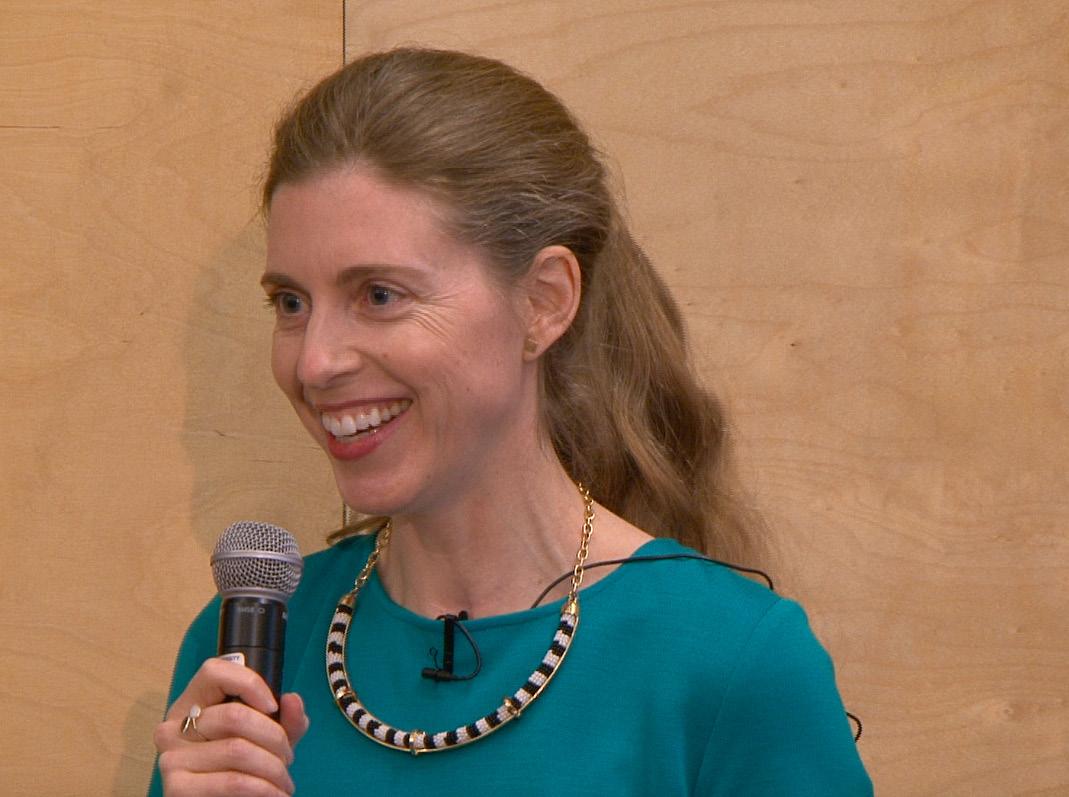
MIRANDA FRICKER
Presidential Professor of Philosophy, CUNY Graduate Center
Forgiveness: An Ordered Pluralism
MICHAEL HUEMER
Professor of Philosophy, University of Colorado Boulder
Practical Deference in Private and Political Contexts
organized by BRUCE BROWER
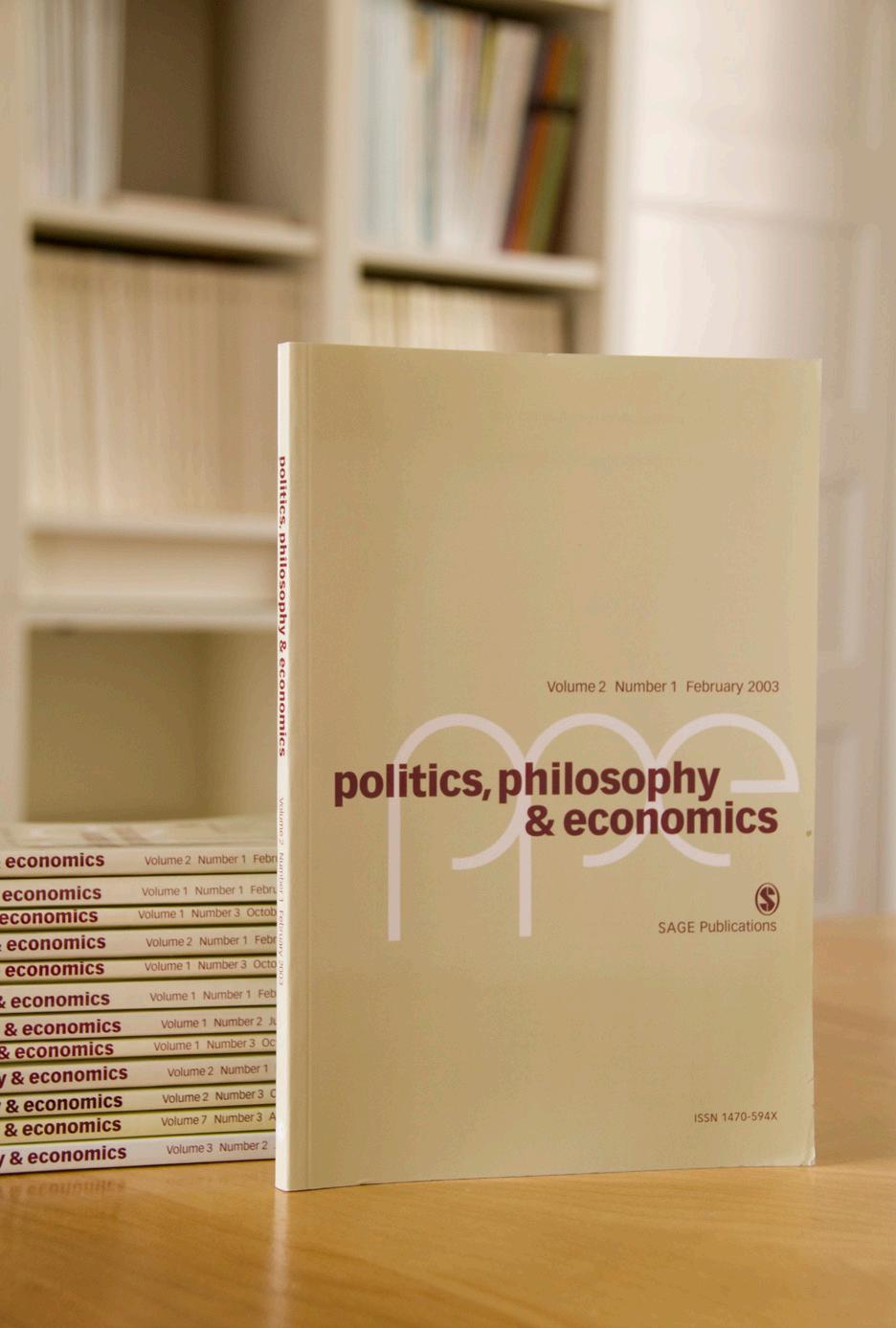
PPE 2019: POPULATION, PUBLIC POLICY, AND CLIMATE CHANGE
The PPE Conference is an annual event organized by the editors of the journal Politics, Philosophy & Economics . The 2019 conference brought international experts from four fields—philosophy, economics, political science, and law—to discuss some of the most pressing issues of our time.

SIMON CANEY
Professor of Political Theory, University of Warwick
People, Planet and Public Policy: The Role of “Population” in Addressing Climate Change
Comments: JACK KNIGHT
Frederic Cleaveland Professor of Law and Political Science, Duke University
conferences the center for ethics and public affairs
MELINDA ROBERTS
Professor of Philosophy, The College of New Jersey
Does Climate Change Put Ethics on a Collision Course with Itself?
Comments: THOMAS CHRISTIANO
Professor of Philosophy, University of Arizona
DEAN SPEARS
Assistant Professor of Economics, University of Texas, Austin
MARK BUDOLFSON
Assistant Professor of Philosophy, University of Vermont
Radical Agreement in Population Ethics—and Implications for Social Policy Analysis
Comments: CHAD VAN SCHOELANDT
Assistant Professor of Philosophy, Tulane University
MARK BUDOLFSON and DEAN SPEARS
Methods for Quantifying Animal Wellbeing and Estimating Optimal Tradeoffs against Human Wellbeing—and Lessons for Axiology, Including New Arguments for Separability
Comments: ANDREW WILLIAMS
ICREA Professor, Universitat Pompeu Fabra

center highlights
The Center for Ethics and Public Affairs continues to support scholarly advancement by hosting guest speakers and visiting Faculty Fellows, the latter pursuing their research while spending a year in residence at The Murphy Institute. At the Center’s faculty seminar series, speakers present works in progress to receive valuable feedback that they can incorporate into their work prior to publication. The Center’s public lectures are tailored to a wider audience, with lecture footage featured on The Murphy Institute’s YouTube channel.
The Center for Ethics also supports a number of academic conferences, including two annual conferences focused on PPE (politics, philosophy, and economics) and a biennial conference devoted to agency and responsibility.
PPE SOCIETY CONFERENCES
For the past three years, the Center for Ethics has co-sponsored the PPE Society Conference. Organized by Geoff Sayre-McCord (UNC-Chapel Hill), this three-day conference encourages interaction among and cross-fertilization of three deeply intertwined intellectual disciplines: politics, philosophy, and economics.
The 2019 conference brought more than 100 political scientists, philosophers, and economists to New Orleans. Participants with ties to the Center for Ethics included Tulane Professor Emeritus of Philosophy and former Murphy Institute faculty member Eric Mack, 2013–2014 Faculty Fellow Bas van der Vossen (Chapman), 2018–2019 Faculty Fellows Tom Dougherty (Cambridge) and Michael Huemer (Boulder), and 2014–2015 Graduate Fellow Thomas Mulligan (Georgetown).
PPE JOURNAL AND CONFERENCES
This year marked the publication of the eighteenth volume of the journal PPE: Politics, Philosophy, & Economics . Murphy Institute faculty member Jonathan Riley serves as the founding editor of the journal, which brings moral, economic, and political theory to bear on the analysis, justification, and criticism of political and economic institutions and public policies. The Center for Ethics supports the journal by sponsoring a themed conference each year for scholars to present works in progress that will subsequently be published in the journal, subject to peer review. The 2019 conference took place on March 15–16 and focused on environmental ethics and population change.
OXFORD STUDIES IN AGENCY AND RESPONSIBILITY AND NOWAR
Since 2011, The Murphy Institute has hosted the New Orleans Workshop on Agency and Responsibility (NOWAR). Organized by Murphy Institute faculty member David Shoemaker, this biennial conference features original research on issues that fall broadly under the label “agency and responsibility.” Papers presented at the conference appear in Oxford Studies in Agency and Responsibility (Oxford University Press), subject to peer review. The fifth volume in the series, which focuses on “Themes from the Philosophy of Gary Watson,” was published in April of 2019 and includes seven papers that were presented at a Center for Ethics-sponsored conference in the fall of 2016.
The upcoming NOWAR Conference will take place in November 2019 and features keynote speakers Pamela Hieronymi (UCLA), Richard Moran (Harvard University), and Candace Vogler (University of Chicago). The keynote speakers will be joined by eight additional speakers for the read ahead-style workshop. NOWAR 2019 will also include a pre-conference roundtable titled “Angles on Agency: Social, Psychological, Neuroscientific.”
the center for ethics and public affairs 2018–2019 faculty fellow profiles
THE FACULTY FELLOWS PROGRAM lies at the heart of the Center for Ethics and Public Affairs. Each year, the Center for Ethics invites faculty from around the world who work in the fields of ethics and public affairs to enter the Center’s annual faculty fellowship competition. Selected scholars spend an academic year at the Center, working on their own research projects, participating in the Center’s events, and fostering academic connections with Tulane faculty and graduate students.
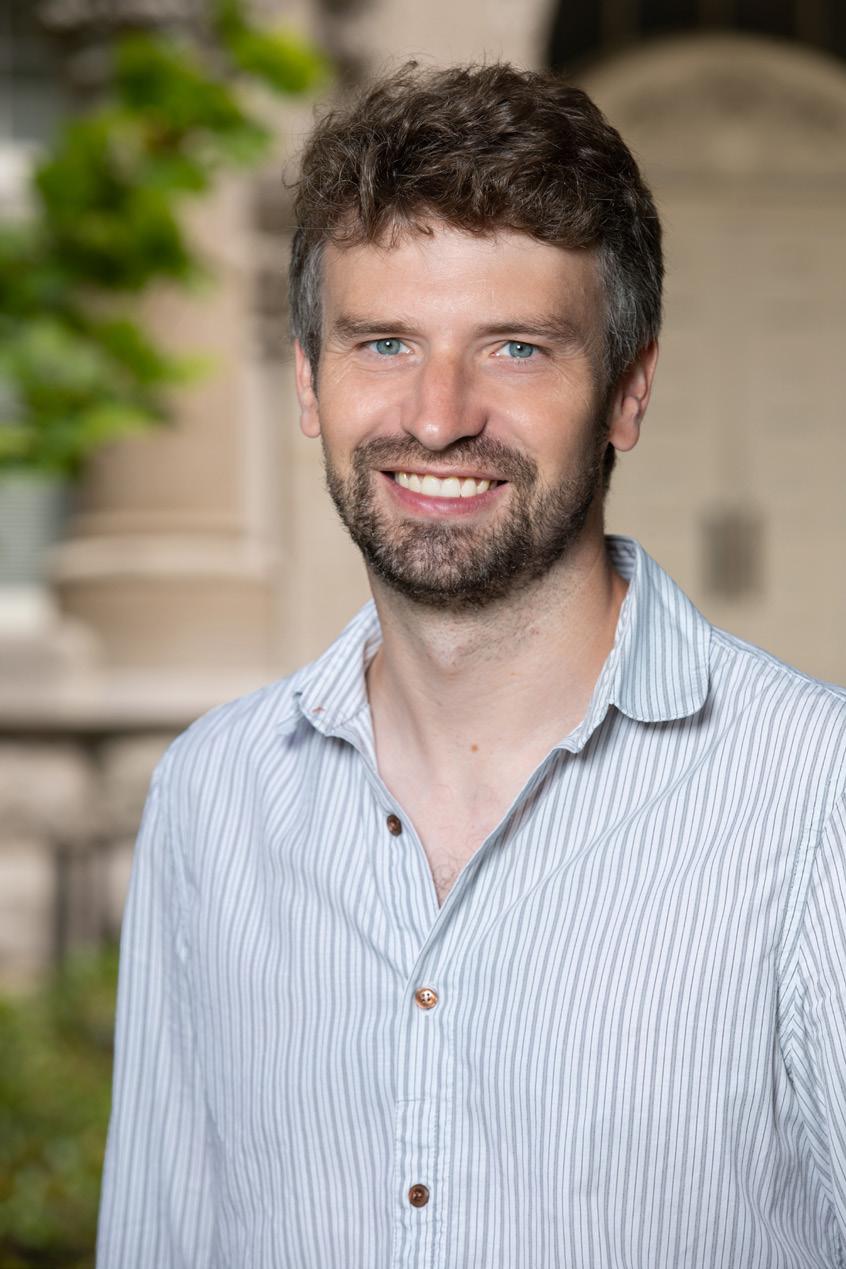
JONATHAN WAY , Associate Professor in Philosophy at the University of Southampton, spent a large portion of his research leave at the Center for Ethics and Public Affairs exploring “normative reasons,” which, he explains, we would usually call “good reasons” or “pros and cons” in everyday language. Way offers the following example: “The fact that a [football] match is starting might be a reason to stop working, whereas the fact that you have a deadline might be a reason to continue. I’m interested in giving a unified and informative account of what it is to have such a reason, one that applies to reasons for action, belief, and emotions. I argue that we can do so in terms of the idea that reasons are potential premises of good reasoning.”
Way evidently struck the right balance in reasoning during his year at The Murphy Institute, making significant progress on his book project while also enjoying New Orleans’ cultural offerings. He writes, “I particularly enjoyed the music scene; the local musicians are just fantastic, and it’s a richer and more diverse scene than perhaps I expected. There’s so much else to enjoy in the city, too—the architecture, trees, parks, great restaurants, coffee shops, bars, and the apparently endless run of festivals.” Tulane itself proved a fertile environment for intellectual work, Way says. “The fellowship program was extremely conducive to research. I got a lot out of the seminar and lecture series and speaking with Tulane faculty and graduates. The Murphy Institute was a great place to work—nice, quiet offices, and the grad assistants and Meg Keenan made everything easy and straightforward. Having Audubon Park across the street is a nice perk, too—a beautiful place for a quick walk to clear your head or get your thoughts in order!”
JONATHAN WAY

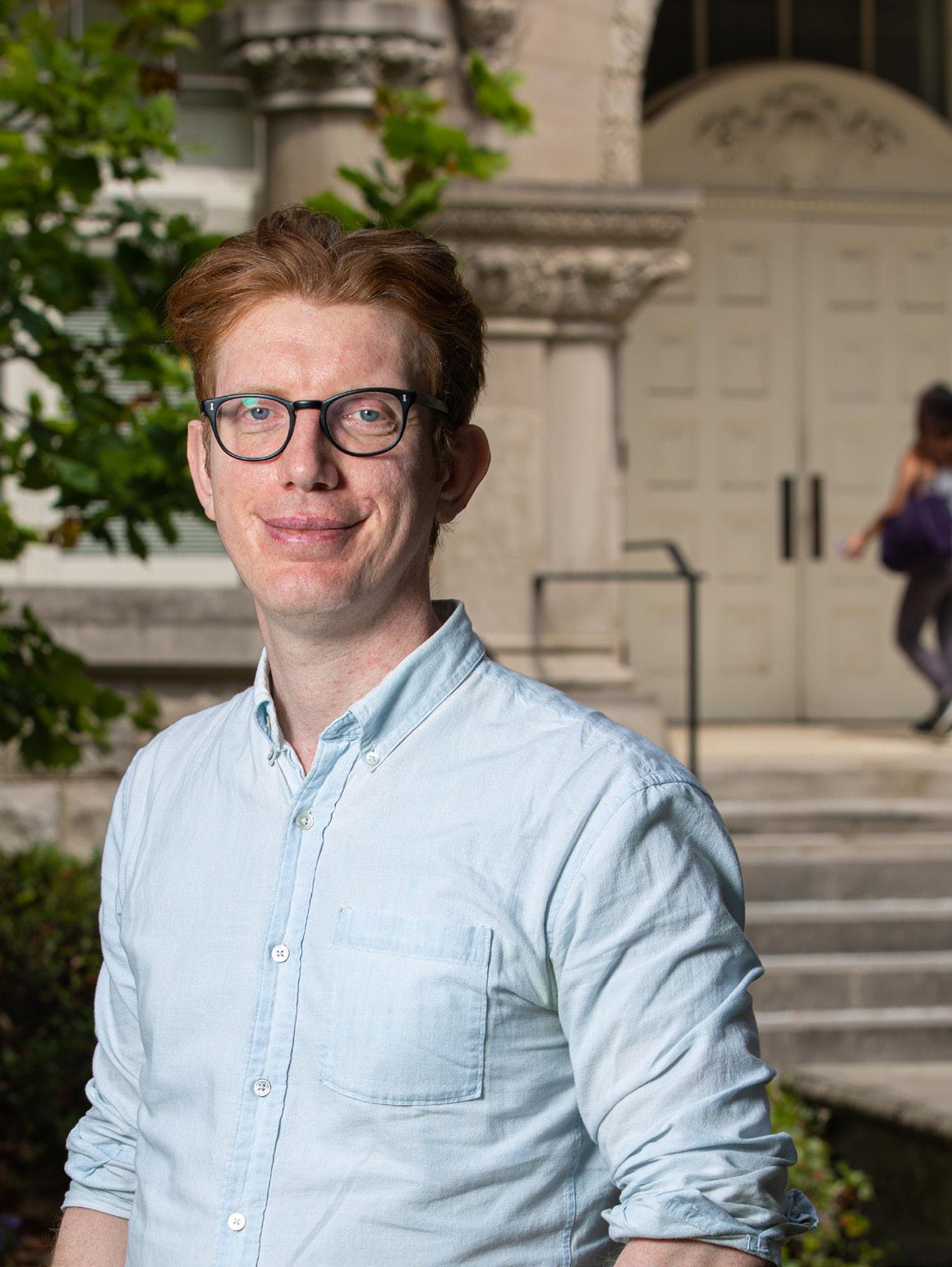
TOM DOUGHERTY , similarly, found the fellowship program environment conducive to quality work. Focusing much of his year on research into the ethics of consent, Dougherty presented the paper “Why Does Duress Undermine Consent?” in The Murphy Institute’s faculty seminar; it was subsequently accepted for publication in Nous . He also presented a paper at the 2019 PPE conference, “Consent, Abandonment, and Communication,” that has been accepted by Law and Philosophy Dougherty completed three additional articles and a book manuscript during his time as a fellow, finding the Center’s programming a useful complement to his research routine. He says, “The regular faculty seminars were a great way both to learn of cutting-edge work in ethics, and to be able to talk at length with leading ethicists about their research. I also learned a great deal from regular interactions with the ethicists at Tulane, as well as other fellows.” Having come to The Murphy Institute as University Lecturer in the Philosophy Faculty and Fellow of Trinity Hall, University of Cambridge, Dougherty accepted a new position at the University of North Carolina, Chapel Hill, effective fall 2019: he is now Associate Professor and Mary Noel and William M. Lamont Scholar in the core faculty of the Philosophy, Politics, and Economics Program.
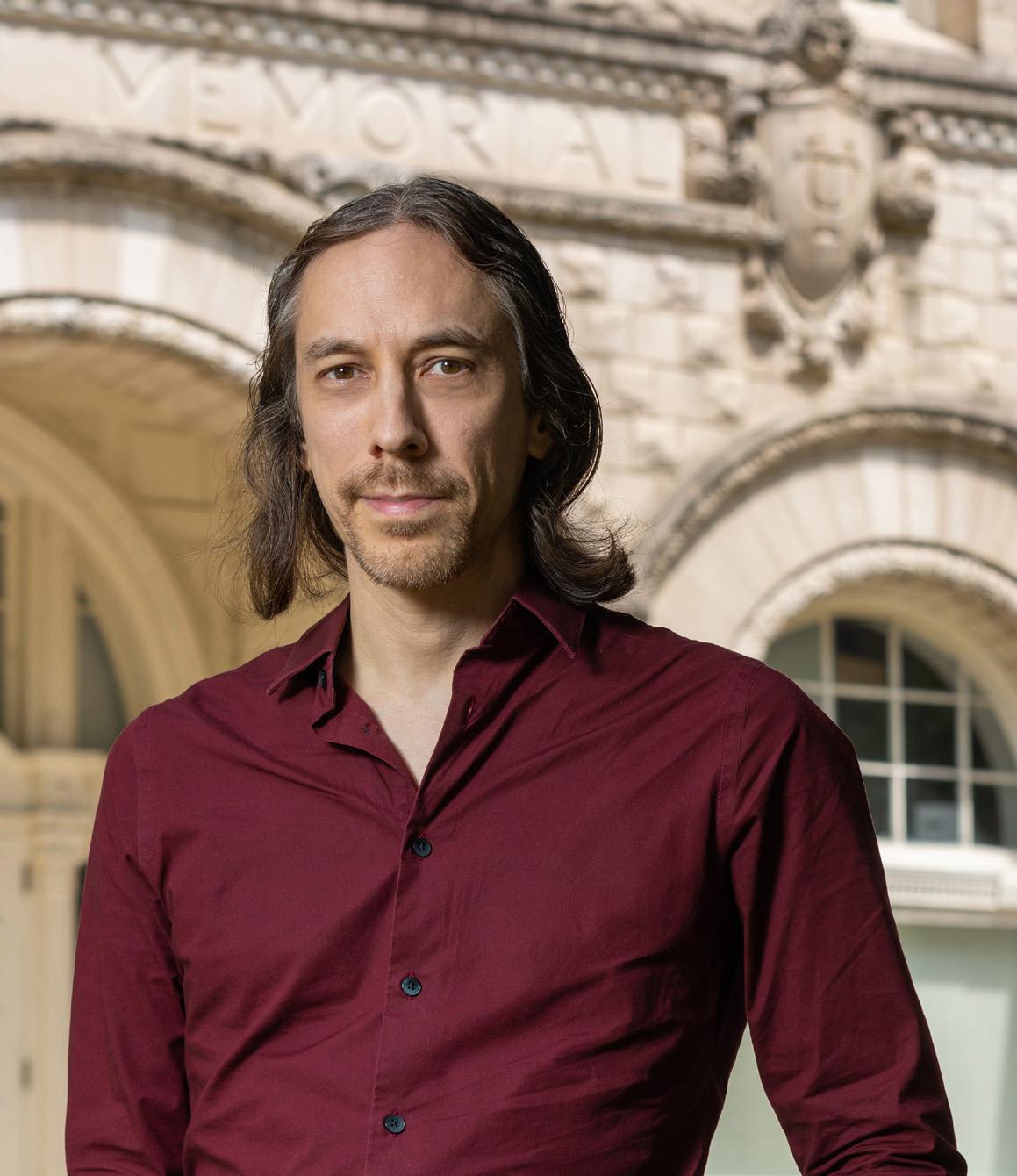
MICHAEL HUEMER , Professor of Philosophy at the University of Colorado, Boulder, spent an extremely productive year at The Murphy Institute, presenting twelve invited lectures, drafting five papers, and working on two books during his time as a faculty fellow. His main research project concerned the U.S. justice system. He writes, “I argue that agents in the justice system are not sufficiently focused on justice, which results in a number of serious and pervasive injustices in the system,” including “laws that prohibit behavior that does not violate rights,” policies that make professional legal services both critically necessary and prohibitively expensive, the forced choices inherent to plea bargaining, disproportionate sentences that fuel mass incarceration, and a failure to punish corruption among government officials. In addition to this work, Huemer finished revisions on his book Dialogues on Ethical Vegetarianism , now out from Routledge, and found New Orleans to be a welcoming environment for those who land on the vegetarian side of the debate. Huemer says, “I recommend the following restaurants: Seed, Carmo, Green Goddess, the Daily Beet, and Breads on Oak. All were pleasant places, with delicious food.” Otherwise, Huemer appreciated the “nice, quiet office” that The Murphy Institute provided, and noted that “the year was enhanced by talking to faculty like Chad [Van Schoelandt], Bruce [Brower], Alison [Denham], and Olivia [Bailey].” He plans to complete the manuscript on the justice system, for which he wrote the first five chapters at Tulane, in the coming academic year.
TOM DOUGHERTY
MICHAEL HUEMER

THE MURPHY INSTITUTE, 108 TILTON HALL, TULANE UNIVERSITY, NEW ORLEANS LA 70118