
Globalization at the Murphy Institute
a conversat I on w I th dou G nelson
q : You organized and hosted a conference on “The New Political Economy of Globalization” (April 20-21, 2007 in New Orleans) that was co-sponsored by the Murphy Institute and the Leverhulme Centre for Research on Globalisation and Economic Policy (GEP) at the University of Nottingham. Some of the world’s foremost scholarly experts on globalization participated. How did the conference come about?
dn: It was the product of a relationship between the Murphy Institute and GEP that dates back to 2002. David Greenaway is Director of GEP and Pro-ViceChancellor of the University of Nottingham. Together, with funding David secured from GEP and financial and administrative support I received from the Murphy Institute, we started a series of globalization conferences that alternate annually between Nottingham and New Orleans.
David and I met at Rutgers when he was a visiting professor back in the early 1980s. Fifteen years later, we met again at the Western Economic Association conference in Vancouver. We kept in touch, and for the next ten years I traveled to Nottingham nearly every year for a week or more. For the last five years, I’ve had a parttime visiting appointment on the Faculty of the School of Economics at Nottingham. This has been great for my own work on globalization. The concentration of excellent scholars, working in an environment that encourages collaborative work, is pretty extraordinary in my experience.
q : What exactly is GEP?
dn: GEP is a research institution within the School of Economics at the University of Nottingham with four distinct programs: Labor Markets, Productivity, Theory & Methods, and China & the World Economy. They aren’t courses of study for students, but post-graduate students can receive research funding from GEP.
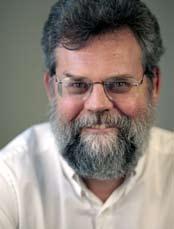
doug nelson is Professor of economics at tulane, and one of the core teaching faculty at the Murphy Institute. his teaching and scholarship focus on international political economy and international trade.
q : Who participates in the conferences?
dn: Faculty from GEP and Tulane are the only constants. Scholars from other institutions are invited personally by David or me, based upon the relevance of their research.
continued on page 12
THE MURPHY INSTITUTE
Core Faculty and Staff
Richard F. Teichgraeber III, Director, Department of History
Eric Mack, Department of Philosophy
Douglas R. Nelson, Department of Economics
Mary K. Olson, Department of Economics
Jonathan M. Riley, Department of Philosophy
Jeffrey Stacey, Department of Political Science
Martyn P. Thompson, Department of Political Science
John Howard, Associate Director
Ruth A. Carter, Program Manager
T HE CEN TER FO R ETHICS AND PUBLIC A FFAIRS
Faculty Committee
Bruce Brower, Department of Philosophy
Ronna Burger, Department of Philosophy
Richard Culbertson, School of Public Health and Tropical Medicine
Steve Griffin, Associate Dean, Law School
Graham Owen, School of Architecture
Eric Mack
Mary K. Olson
Jonathan M. Riley
Oliver Sensen, Department of Philosophy
Martyn P. Thompson
Center Administration
Margaret M. Keenan, Program Coordinator
Ex TERNAL
A DVISORY B OARD
Michael McPherson (Chair), President, Spencer Foundation
John Ferejohn, Carolyn S.G. Munro Professor of Political Science, Stanford University
Geoffrey Galt Harpham, Director, National Humanities Center
Bonnie Honig, Professor of Political Science and Director, Center for Law, Culture, and Social Thought, Northwestern University
Stephen Macedo, Director, University Center for Human Values, Princeton University
THE Ex CHANGE
Adam Newman, Zande+Newman Design, Communications Consultant and Art Director
Zack Smith, Photographer
Eric Vrooman, Contributing Writer
Send editorial correspondence to The Murphy Institute, 108 Tilton Hall, Tulane University, New Orleans, La. 70118
Telephone: (504) 865-5317
Facsimile: (504) 862-8755
For questions and comments pertaining to The Murphy Institute, contact jhoward2 @ tulane. edu; for those pertaining to The Center for Ethics and Public Affairs, contact cepa @ tulane.edu Web site: www.murphy.tulane.edu
LETTER FROM THE DIRECTOR
i want to begin by saying that life returned to normal at the Murphy Institute during 2006-2007, because in many respects it did. Fall, 2006 marked the start of the third decade of our acclaimed undergraduate program in political economy. Enrollment in political economy courses has returned to pre-Hurricane Katrina levels. So too has the number of undergraduate political economy majors. Senior majors in the Class of 2007, like those in the now twenty classes before them, were a highly accomplished group and now will move on to bigger and better things. I’m also pleased to report that, to date, the Murphy Institute has lost only one of its long-time core faculty members. Many other departments and programs at Tulane have not been so fortunate. A new volume of “Murphy Institute Studies in Political Economy” is in production at Cambridge University Press. In March, 2007, Politics, Economics, and Philosophy , the Murphy Institute’s in-house academic journal, hosted its sixth annual conference. Papers presented at the conference will be revised for publication in a future number of the journal. The list could go on.
But the crisis caused by Hurricane Katrina has by no means run its course. So it should be no surprise to hear that the Murphy Institute now is also pursuing some new goals at Tulane. Among the most significant may be our close involvement in the creation and definition of the University’s new public service requirement and of its new Center for Public Service. In Spring, 2006, John Howard, our Associate Director, was appointed a member of the Executive Committee of the Center for Public Service. In this role, he has helped to develop the structure and definition of a public service program that aims to be rigorously academic in its focus, especially with regard to internships, capstone courses, and community-based research.
Looking to the future, I believe that the Murphy Institute is in a position to play a significant role in promoting Tulane’s new and highly publicized public service goals. In particular, our long-standing association with the Institute of Economic and Political Studies (INSTEP) should allow us to create international public service internship opportunities for political economy majors. We also plan to work closely with the Center for Public Service to encourage recipients of Murphy Institute Summer Internship grants to pursue local public service opportunities. A detailed report on the results of these initiatives will appear in next year’s issue of The Exchange
I’m also pleased to report that the Murphy Institute’s Center for Ethics is playing a welcome, if unexpected, role in helping to re-build Tulane’s depleted faculty. 2005-2006 Faculty Fellow Alison Denham (St. Anne’s College, Oxford) has accepted a two-year appointment as Visiting Associate Professor in the Department of Philosophy. 20062007 Faculty Fellow Jill Locke (Gustavus Adolphus) will stay on for another year as Visiting Assistant Professor in the Department of Political Science. I see these appointments as new testimony to the value of the Murphy Institute’s Center for Ethics. The Center’s annual newsletter— Focus on the Center —provides a more detailed account of
its activities. Focus is available in hard copy by request, and on line at www.murphy.tulane.edu/publications/focus
It is against this background, then, that what I once considered the Murphy Institute’s “normal” activities took place this year. Also worthy of note in this category are:
b The 11th annual Mary C. Parker Yates Lecture—“What’s A Life Worth?”—given on March 15, 2007, by W. Kip Viscusi, University Distinguished Professor of Law and Economics at Vanderbilt. Professor Viscusi is an internationally recognized authority on health and safety risk management, and individual, social, and governmental decisionmaking under conditions of risk and uncertainty. Endowed in 1996 by Murphy Institute alumna Rebecca Yates (‘96) in memory of her mother, the Yates Lecture is the Murphy Institute’s major annual public academic event.
b In April, 2007, it was the Murphy Institute’s turn to host the annual scholarly conference it co-sponsors with the Leverhulme Centre on Globalisation and Economic Policy at the University of Nottingham. This was the sixth conference in the series, its theme was “The New Political Economy of Globalization.” The lead story of this issue of The Exchange , which traces the history of ties between the Murphy Institute and the Leverhulme Centre, should not be missed.
b Following in a tradition established by his predecessor Judith K. Schafer, our new Associate Director John Howard has begun to make his mark at Tulane. In addition to his appointment to the Executive Committee of the Center for Public Service, he was also recipient of the 2007 Mortar Board Award for Excellence in NonTenured Teaching.
b 18 Newcomb-Tulane College seniors were awarded B.A.’s in political economy at the May 2007 Commencement. Several graduated with high academic honors: Paul Kellogg, summa cum laude ; Lisa Frankel, Katie Jones, Chea Matherne, and Emily Rose McRae, magna cum laude Mr. Kellogg was also elected to the Phi Beta Kappa Society.
b Finally, I am happy to report that the final individual response to the Murphy Institute’s Alumni Assessment Survey 1986-2006 has been recorded. We expected to publish the results of the survey in May, 2006. But Hurricane Katrina forced us to start over. So the survey was re-mailed to some 485 alumni last spring. The total final response is 218, for a remarkable overall response rate of 45 per cent. This will be more than sufficient to build a representative cross-sectional portrait of our alumni. Look for the results of the survey to appear by September 2007.
Other program activities (and more details on those mentioned above) are described in the pages that follow. While much work remains to be done in re-building the city of New Orleans, there’s no question that all programs at the Murphy Institute are again operating at full speed.
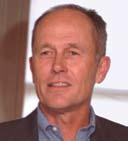
Richard F. Teichgraeber III, Director June 2007
FACULTY PROFESSIONAL ACTIVITY
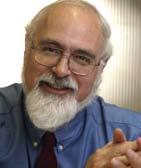
b ERIC MACK, Professor of Philosophy, published three new papers during the past year: “Non-Absolute Rights and Libertarian Taxation,” in Social Philosophy and Policy , Vol. 23, no. 2 (Summer 2006); “Hayek on Justice and the Order of Actions” in The Cambridge Companion to Hayek (Cambridge, 2007); and “ Scanlon as a Natural Rights Theorist,” in Politics, Philosophy, and Economics , Vol. 6, no. 1 (February, 2006). During the 2008 Winter-Spring semester, Professor Mack will be a Resident Fellow at the Liberty Fund, writing a book on Locke’s political philosophy for Continuum Press.
b DOUG NELSON, published several new papers: (with David Greenaway) “The Distinct Political Economies of Trade and Migration Policy,” in Labor Mobility and World Economy, eds. Federico Fodors and Rolf Langhammer (Spring, 2006); (with Carl Davidson and Steven Matusz) “Fairness and the Political Economy of International Trade,” in World Economy , Vol. 12, no. 8 (2006); (with Rod Falvey) “Introduction: 100 Years of Antidumping” & “ The Political Economy of Antidumping ” in European Journal of Political Economy , Vol. 22, no. 3 (2006); (with Udo Kreickemeier) “Fair Wages, Unemployment and Technological Change in a Global Economy,” in Journal of International Economics , Vol. 70, no. 2 (2006); and (with Carl Davidson and Steven Matusz) “Can Compensation Save Free Trade,” in Journal of International Economics , Vol. 71, no. 1 (2007). Professor Nelson was co-editor (with Rod Falvey) of 100 Years of Antidumping, a special issue of European Journal of Political Economy , Vol. 22, no. 3 (2006). He also organized the Murphy Institute’s joint conference on “The New Political Economy of Globalization” with the Leverhulme Centre for Research on Globalisation, held in New Orleans, April 20-21, 2007.
b MARY K. OLSON, Associate Professor of Economics, was co-author of The Future of Drug Safety: Promoting the Health of the Public (National Academy Press, Washington D.C., 2007). This volume is the final report of the Institute of Medicine’s Committee to Assess the U.S. Drug Safety System, of which she was a member during 2005-2006. In March, 2007, Professor Olson also presented a paper on “The Risk We Bear: The Effects of Review Speed and User Fee Funding on New Drug Safety” at the Emory School of Public Health.
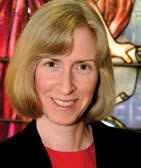
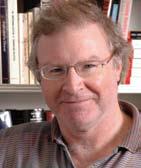
b JONATHAN RILEY, Professor of Philosophy, was author of two new articles: “Genes, Memes, and Justice,” in Analyse & Kritik , 28 (July, 2006); “Utilitarian Liberalism: Between Gray and Mill,” in Critical Review of International Social & Political Philosophy (June 2006). He also contributed an essay on “Mill’s Neo-Athenian Model of Liberal Democracy” to Mill, Liberalism, and Exceptions to Free Speech, ed. G. Newey (Cambridge University Press, 2006). Professor Riley’s “Mill’s NeoAthenian Model of Liberal Democracy” was first delivered as a keynote lecture at the Mill Bicentennial Conference, Japanese Society of Utilitarian Studies, Yokohama University, in September, 2006.
b JEFFREY STACEY, Assistant Professor of Political Science, published a paper “Promoting Democracy: The Case of Burma,” in Strategies for Democratic Change , eds. Ted Piccone and Richard Young (Open Society Institute, 2006). He also presented a paper on “Determinants of Exchange Rate Regimes” at the 2006 Annual Meeting of the American Political Science Association in Washington, D.C.
b RICHARD F. TEICHGRAEBER III, Director of the Murphy Institute and Professor of History, contributed an article on the “Literary Marketplace” to American History Through Literature, 1820-70, eds. Janet GablerHover and Robert Sattelmeyer (Charles Scribner’s Sons, 2006), and published a review essay on “The ‘Rehistoricisation’ of Adam Smith?” in The Adam Smith Review, vol. 2 (2006). He was an invited participant in the fifth biennial Mellon Foundation Forum on Higher Education. The topic of the June, 2007 forum was “Succeeding in College: What It Means and How to Make It Happen.”
b MARTYN THOMPSON, Associate Professor of Political Science, is co-editor of Politisches Denken Jahrbuch 2006 (Duncker & Humbolt, Berlin, 2006) and President of the Michael Oakeshott Association. He also has provided the Foreword for the revised edition of Kenneth R. Minogue, Alien Powers: The Pure Theory of Ideology (Transaction, 2006).
Faculty Fellowships
2008–09
t he c enter for e thics and Public a ffairs at the Murphy Institute at tulane u niversity announces residential Faculty Fellowships for the 2008-2009 academic year. t hese fellowships, made possible by funds from the tulane Murphy Foundation, are available to support outstanding faculty whose teaching and research focus on ethics, political theory, political philosophy, or questions of moral choice in architecture, business, government, economics, law, or medicine. w hile fellows will participate in conferences and seminars organized by the c enter, they will be expected to devote most of their time to conducting their own research. s tipends will vary in accordance with individual circumstance. c enter Faculty Fellowships are open to all, regardless of citizenship.
Further information about the Fellowships and applications may be obtained from the c enter for e thics and Public a ffairs web site at www.murphy.tulane.edu/center or may be requested by contacting:
t he c enter for e thics and Public a ffairs
t he Murphy Institute tulane u niversity
n ew o rleans, la 70118
504.862.3236 tel 504.862.8360 fax mkeenan@tulane.edu
a pplications must be received by n ovember 16, 2007.
what they are reading
we asked rick teichgraeber, Director of the Murphy Institute & Professor of History, what he’s been reading lately. He has been teaching and writing about the history of the American university in recent years, with a particular concern for an ongoing and widespread revival of interest in“ethics.”
Recent important developments in American higher education include a widespread call for universities to focus more energy on teaching ethics. That call has raised a number of challenging questions. In its day-to-day operations, the modern American university can be viewed as an ethical environment, in the sense it provides students with a surrounding climate of ideas about how to live, as well as what to find admirable or contemptible. But the daily ethical workings of the university also tend to be invisible. “Academic ethics” are more a matter of what is exemplified and practiced, than what is preached.
Is “ethical education” an ideal that students and faculty somehow should more consciously pursue? If so, what kind of ethical education should they pursue beyond practicing traditional academic virtues such as honesty, openmindedness, imagination, faithfulness to evidence, and respect for logical coherence? Should the main object be character-building, engaged citizenship, civility, leadership, respect for diversity?
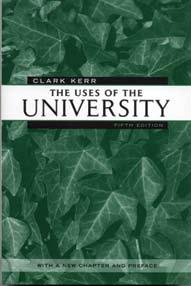
These questions can be approached differently by way of two very influential books. Clark Kerr’s classic THE USES OF THE UNI v ERSITY (Harvard University Press, 5th ed., 2001) is prob -
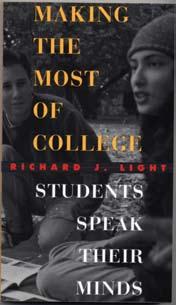
ably the most important book on the American university ever written. This volume, based on the Godkin lectures that Kerr delivered at Harvard in 1963, is now in its fifth edition, which Kerr completed three years before his death at the age of 92. Richard Light’s widely acclaimed MAKING THE MOST OF COLLEGE (Harvard University Press, 2004 ) is based on his in-depth interviews with more than sixteen hundred Harvard undergraduates who were asked what students and colleges could do to improve the chances that on graduation day a student might say, “ I really got what I came here for.” Strictly speaking, neither book is about moral education or its current revival. Taken together, however, what they tell us about the broader landscape of American higher education provides some helpful ways of thinking about what has been going on and what may lie ahead.
In 1963, one of the main conclusions of USES OF THE UNI v ERSITY was that American universities were no longer animated by a single idea—that is, by an inherent moral purpose that serves both as a reminder of the university’s primary mission and historical destiny, and as a means of sorting out and deciding between rival claims and competing missions. In
place of the “idea of a university,” Kerr famously posited the “idea of a multiversity.” In his view, the modern American university was an altogether “new type of institution in the world,” because it no longer contained one community but several—the community of the undergraduate, and the community of the graduate; the community of the humanist, the community of the scientist; the communities of the professional schools; the community of all nonacademic personnel; the community of administrators.”
Delivered while Kerr was president of the University of California, the 1963 Godkin Lectures were mostly celebratory – more about the “uses” of the university, than its “misuses.” For the new American “multiversity” was central to the further industrialization of the nation, to dramatic increases in economic productivity, to spectacular affluence, and to America’s worldwide military and scientific advances.
Yet Kerr also voiced what appeared to be moral qualms about “the multiversity.” And his list of its “inherent diseases “ included developments that have troubled critics of higher education ever since: increasing federal influence over the intellectual direction of the university, elevation of the sciences above the humanities and social sciences, the valuing of research over teaching (with particular neglect of undergraduates), and the creation of a new class of faculty entrepreneurs, who chased federal and philanthropic dollars and replaced the secluded scholars of yore.
too obvious to critics on both the right and the left. He had lent the prestige of his office to a movement that led farther away from the idea of a university as having a guiding moral purpose.
But the damage that Kerr did to the idea of the university as a moral educator in fact has not proved to be as severe as his critics first assumed. Books and articles devoted to restating the position that the university must stand for what is highest and best have become something of a growth industry in recent years. Kerr’s unhappy experience with the reception of his Godkin Lectures certainly has not stopped other presidents from openly identifying the weaknesses of the modern university and actively pursuing morally charged remedies. During the 1980s and 1990s, presidents of several leading elite multiversities, like Derek Bok at Harvard, Harold T. Shapiro at Princeton, and Nannerl Keohane at Duke, have in fact helped to launch and given highly visible support to programs dedicated to ensuring that ethics and political theory become a more vital part of campus discourse. Indeed, the Sanford Lectures that Bok delivered at Duke in 1988—later published in book form as UNI v ERSITIES AND THE FUTURE OF AMERICA ( Duke University Press, 1990)—represent something of a neglected historical landmark here.
Approached by way of the current revival in ethics, the most interesting theme connecting the five editions of USES OF THE UNI v ERSITY is Kerr’s continuing effort to come to terms with what he sees as the huge professional mistake of having given the Godkin Lectures in the first place. Giving lectures designed for a “very sophisticated audience,” Kerr explains, he had not intended to give the usual presidential oration about the glories of higher education. He had aimed instead to be honest and realistic. But the actual result was widely viewed as the least discreet lecture ever delivered by an American university president. For what Kerr did in mounting the 1963 Godkin Lectures seemed all
Bok outlined an ambitious program of moral education that included offering courses in applied ethics at both the undergraduate and professional school levels; discussing rules of conduct with students and administering them fairly; building strong programs of community service; demonstrating high ethical standards in dealing with moral issues facing the university; and, finally, being more alert to the countless signals that the university sends to students. Bok clearly ignored Kerr’s dictum that a modern university president should only speak in laudatory platitudes. He also stressed that his answer should reassure those who feared that any effort to strengthen ethical standards inevitably will turn out to be a form of indoctrination. In looking back,
continued on page 11
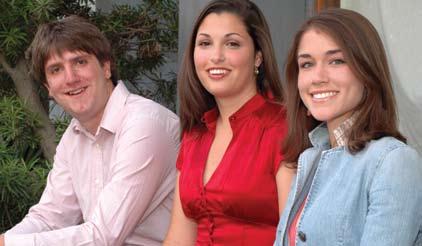
eighteen newcomb–tulane college seniors were awarded B.A. degrees in political economy at the May 2007 University Commencement. Several received high academic honors: PAUL KELLOGG graduated summa cum laude ; LISA FRANKEL , KATIE
JONES , CHEA MATHERNE , and EMILY ROSE M c RAE graduated magna cum laude
Other members of the Class of 2007 include JONATHAN AZOFF , NYKOEL DINARDO , JOSHUA FULWILER , JOSEPH GALARDI , JEFFREY
GREENBERG , RACHAEL HUSSER STEGMAN , AARON
MARTIN , JAMES MARUNA , ALEXANDRA SCRICCO , CURRY SMITH , ANDREW STRELZIK , RYAN TRAPANI , and SARAH WATT . Seniors who will graduate in August or December 2007 include ALEJANDRO ABREU , RICHARD COUNTS , NICHOLAS DE v EREUX , and ANDREW FISCHER
LISA FRANKEL , PAUL KELLOGG , and CHEA MATHERNE shared the Charles H. Murphy Prize in Political Economy.
LISA FRANKEL was recognized as a Senior Honors Scholar and a Newcomb Scholar, and was the treasurer for Mortar Board National Senior Honor Society. She is also a member of Alpha Lambda Delta National Honors Society and the National Society of Collegiate
Scholars. She also engaged in public service activity as a member of the Newcomb Leadership Conference for Middle School Girls. Lisa made Dean’s List every semester of her Tulane career. Her honor’s thesis, “Small Business Financing Alternatives to the SBA Following a Catastrophic Event: A Post-Katrina New Orleans Case Study” was presented at the Roosevelt Institution National Disaster Studies Symposium and drew the attention of federal officials at the Small Business Administration, who sent two analysts to respond to Lisa’s findings. She has been nominated for the 2007 Ruth H. Bufton National Scholarship, presented by the American Business Women’s Association. She will pursue an MBA degree from the McCombs School of Business at the University of Texas, with a focus on disaster recovery, business continuity planning, and microfinance. She is one of only a handful of undergraduates to be admitted to the McCombs School without previous professional managerial experience.
[ UNDERGRADUATE
PAUL KELLOGG graduated with a triple major in Political Economy, Philosophy, and Political Science. He was inducted into Phi Beta Kappa and achieved Dean’s List recognition in all semesters of his undergraduate career. Paul’s honor’s thesis “The Rights of Citizens and Non-Citizens in the War Against Terror” earned department honors in both Philosophy and Political Science. Paul will attend law school at the University of Chicago.
CHEA MATHERNE graduated as a double major in Political Economy and Accounting. She was a member of Mortar Board National Senior Honor Society, and made Dean’s List every semester of her Tulane career. She served as an Admissions Counseling Intern and was active in the Newcomb Leadership Conference for Middle School Girls, administering the “Discover Your Silent Voice” program. She was recognized as a Community Service Scholar by the Freeman School of Business. She was also a member of the Tulane Homecoming Court. Chea has accepted a position with the United Nations as a budget planner for the Immigration and Migration Affairs Department and will be stationed in Geneva and Brussels. In the fall she will pursue a Master of Accountancy degree from DePaul University.
Charles H. Murphy Prize in Political Economy winners. From left to right: Paul Kellogg, Lisa Frankel, and Chea Matherne.

EMILY ROSE M c RAE graduated as a double major in Political Economy and Latin American Studies. She was a Senior Honors Scholar and a Newcomb Scholar. Emily was also a member of Mortar Board National Senior Honor Society. She was the winner of the Oak Wreath, bestowed by the Newcomb Institute upon seniors who have distinguished themselves through an engaged pursuit of learning, leadership in student activities, and contribution to the Newcomb/Tulane community. She served as chair and director of the Newcomb Leadership Conference for Middle School Girls. After transferring from Davidson College, Emily achieved Dean’s List recognition in all semesters of her Tulane career. She presented her honor’s thesis, “Modeling Migration: Motivations for Hispanic Migration to New Orleans and the United States” at the University of Texas at Austin’s Institute of Latin American Studies Student Association 2007 Student Conference. She also presented her paper, “Has the Mexican Media Truly Opened? A Study of the Press Coverage of the Murders of Ciudad Juarez between 1996 and 1999”, at the 2007 Latin American Studies Symposium at Birmingham Southern College. Emily has accepted a position with the Olinger Group as a market research analyst.
and comprehensive research effort on health care policy under the tutelage of Prof. Mary Olson. Katie has accepted a position as southeast regional consultant with Triage Consulting Firm, a healthcare consulting firm in Atlanta.
RICHARD COUNTS has accepted a leadership position with the Republican Youth Majority in Washington, DC. NYKOEL DINARDO will attend law school at Syracuse University. JOSEPH GALARDI will enter the management training program at Ochsner Hospital while pursuing a graduate degree in health management from the Tulane School of Public Health.
JEFFREY GREENBERG will be a congressional aide for Rep. Steve Kagen (D-Wisconsin). Next year he will enter the MA/JD dual degree program at American University, where he will pursue a Master of International Politics degree from the School of International Service and a law degree from the Washington College of Law.
POLITICAL ECONOMY PROGRAM ’07 ]
AARON MARTIN will pursue a Master of International Affairs degree from the School of International Service at American University.
ALEXANDRA SCRICCO is currently employed by the House of Blues, but will start a new position with Brick Wall Management in the fall.
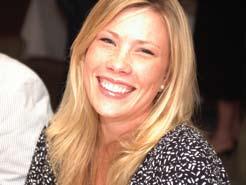
RACHAEL HUSSER STEGMAN received the Juanita Gonzales Prize in Ceramics from the Newcomb Department of Art. She was recognized as “an extraordinarily gifted ceramic artist” with “remarkable facility” and “an outstanding work ethic.” Rachael will pursue a career as a professional artist, working primarily in ceramics.
KATIE JONES graduated with departmental honors and was a Distinguished Honors Scholar. She was on Dean’s List and was Philanthropy Chair for Kappa Kappa Gamma. Among her many service activities were New Orleans Outreach and German Shepherd Rescue of Louisiana. Her honor’s thesis “Evaluation of Proposed Policy Changes for DTC Prescription Drug Advertisements” was the culmination of an intense
CURRY SMITH was inducted into the Janus Society, which annually honors only five seniors who have shown exemplary scholarship, leadership, honor, service, and commitment to Newcomb/Tulane College. He is also a member of Kappa Delta Phi Honors Fraternity. Curry has accepted a position as faculty advisor with the National Young Leaders Conference.
RYAN TRAPANI received his commission as an Ensign in the United States Navy and will be attending flight school. SARAH WATT will be working as an Assistant Account Executive in the Environmental Claims Unit of The Travelers, Inc.
continued on next page
At the Murphy Institute Senior Dinner. left: Emily Rose McRae above: Rachael Husser Stegman
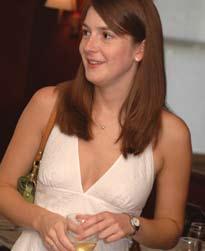
The undergraduate program continues to thrive and many of our students are involved in the continued efforts at recovery and rebuilding at Tulane and in New Orleans.
ANGELA SEALY ’08 has been selected to be among the inaugural class of Senior Public Service Fellows for the 2007-08 academic year. She will serve as a peer mentor and undergraduate teaching fellow for the Center for Public Service. Angela was an intern for the Mayor’s office of Economic Development and this summer she will work in Dharamsala, India, at a Tibetan refugee camp.
MARTA DEHMLOW ’08 is production manager of the Tulane Hullabaloo. She is a member of Sigma Tau Delta Honors Society.
SAMANTHA DEMARTINO ’08 is a member of Mortar Board Honor Society and Omicron Delta Kappa Honor Society. She worked on gathering old or broken laptops for Laptops for Tibet, a student-run organization that seeks to help Tibetan refugees connect via internet to their families and potential jobs. She interned at the Louisiana Himalayan Association.
AUSTIN MARKS ’08 was selected for the Milestone 500,000th President’s Volunteer Service Award given by the Presidential Committee on Service and Civic Engagement. He interned at the City Park Development Office.
JONATHAN CONSAL v O ’09 is President of the Tulane Club Hockey team.
MOLLY GREEN ’09 was elected cactus Vice Chair of Administration for the 2007-08 academic year. She served as the project coordinator for cactus Juvenile Assistance and organized Project Malta Park for Outreach Tulane. Molly is a member of Phi Eta Sigma Honor Society, Alpha Lambda Delta Honor Society, and the National Society of Collegiate Scholars.
ELIZABETH LONIELLO ’10 worked for the Louisiana Bucket Brigade, researching unauthorized air pollution discharges from oil refineries between Baton Rouge and New Orleans.
JOHN RAESE ’10 is a member of Phi Eta Sigma Honor Society. JINGJIA ZANG ’10 served as USG Senator at Large and was the treasurer for Newcomb Senate.
The undergraduate program in political economy continues to flourish. In May 2007, forty-six students finished the year with grade point averages above 3.0; twelve with 3.5 or higher. Eleven political economy majors were members of the Tulane Honors Program. Two were Dean’s Honor Scholars. b
Sarah Watt at the Murphy Institute Senior Dinner.
however, what now seems most interesting about Bok’s Sanford Lectures is that he made no mention of a concern that, during the 1990s, would come to define moral education on most campuses: the affirmation of “diversity.”
Over the course of the last twenty years, colleges and universities have become among the most diverse institutions in America. Both inside and outside the classroom, university students now mix and mingle with a far more heterogeneous group of fellow students than even Clark Kerr might have imagined in 1963 when he championed “universal access” to higher education.
But the question of why so many have come to embrace “the new student diversity” has produced two different answers. One is to assure “universal access,” the other is to promote learning from people with various backgrounds. These reasons have not sat well together, however, because while one sees educating people from all walks of life as an end in itself, the other sees it as a means to other apparently more important ends, including constructive learning.
How has mixing with a heterogeneous group of students served to enhance learning? While this is not the only question Light raises in MAKING THE MOST OF COLLEGE , among his most interesting findings is that diversity promotes learning only when the students involved happen to share a fundamental set of skills and values—intelligence, open-mindedness, self-discipline, a desire to do right by what talent one has. The presence of these common traits is what makes it possible for diverse students to learn from one another. Indeed, several Harvard students, looking back unhappily on years in high schools where racial and ethnic diversity was promoted for its own sake, tell Light this approach tends only to create conflict rather than offer opportunities for learning.
MAKING THE MOST OF COLLEGE concludes with a student anecdote Light presents as a rich and concrete example of how students have benefited from the new complexity of campus life.
Asked “whether diversity had any impact on my learning,” a Harvard senior carefully recounted his experience in a sophomore tutorial that enrolled seven diverse students: “two white guys, two women, a man from India, a black woman, and a Chinese-American man.” Readings for the course included substantial amounts of Weber, Durkheim, Burke, Adam Smith, John Stuart Mill, Marx, Freud and several other unnamed political philosophers. Aware that the reading list consisted entirely of dead white males, but determined not to argue about it, the course instructor agreed with a student’s suggestion that, after the group members discussed each author’s works, they would apply the authors’ ideas to the current controversy surrounding affirmative action.
The students quickly discovered that their differences were shaped by ethnic diversity in the room, as well as by the different backgrounds they had growing up. The “most electric moment” in the year-long tutorial came on the day when “conversations were leading people around the table to change their minds.” The day was also a “test of civility to one another, and our capacity to disagree with respect. We passed that test with flying colors.” Students in the tutorial suddenly realized they had been given a special opportunity to discuss a topic that is sometimes awkward, and to use that topic as a wedge to understand the writings of the
continued on page 13
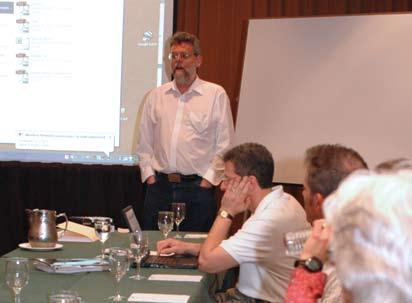
q : How are these sorts of conferences significant?
dn: From the Murphy Institute point of view, they serve to build good relations between Tulane and a major European research institute. Naturally, high-quality research relationships are a perk for Murphy faculty and majors as well. There’s also the cachet and visibility for the Murphy Institute, Tulane, and New Orleans.
q : What sort of impact do these conferences have on scholars’ work?
dn: Tulane isn’t large enough to sustain several scholars in the same field or a critical mass of them in complementary fields. So it’s easy to feel out of the loop. At these conferences, faculty here can learn painlessly and instantly from the top experts. It’s instant literacy. Professionally, I also feel more inspired to work so I can continue to contribute to these academic conversations. European research institute.
q : What have been the topics of past conferences?
dn: 2002 “ Adjusting to Globalization ” (GEP/ Nottingham). The virtue of globalization is that it allows countries to specialize in what they do best and refrain from doing every form of skilled and unskilled labor. The U.S., for example, should not be producing T-shirts—due to the cost of labor and materials. These workers should ideally be in better jobs, like high-tech services. And that’s where U.S. workers have been going recently—into the skilled-labor market. Our highschool dropout rates have shrunk, in part because the market is so bad for dropouts.
Most people look at long-term effects of income distribution due to globalization. The focus of the 2002 conference was on real people, losing real jobs to cheaper labor in the short term. The drop in U.S. manufacturing and textile jobs, for instance, resulted in short-term unemployment, for young people anyway. Older workers found it more difficult to return to school and learn new skills, so they often experienced considerably longer stretches of unemployment.
2003 “ Political Economy of Policy Transfer, Learning, and Convergence” (Murphy Institute/Tulane). With globalization comes not only the exchange of products, but the exchange of policy ideas and governmental programs. The papers presented considered how ideas about trade policy, education, welfare, and income support flow from one country to others.
2004 “Anti-Dumping ” ( GEP/Nottingham). 2004 marked the 100th anniversary of the first anti-dumping law, which originated in Canada, and this conference drew many of the top researchers in the field. “Antidumping” refers to legal protection, through organizations like GATT and WTO, against unfairly low export prices. Since, under the terms of accession to the GATT and now the WTO, contingent protection is the main form of new protection, this is obviously a matter of concern to trade policy makers and scholars.
2005 “ Political Economy of Fairness & Globalization” (Murphy Institute/Tulane). Economists as a whole are skeptical of the language of fairness. Personally,
G
I think it’s powerful language, and for that reason alone it should be studied. This conference brought together economists, political scientists, philosophers, and historians interested in the way the language of fairness is used in domestic and international politics and economics.
2006 “ China and the World Economy” (GEP/ Nottingham). This helped kick off GEP’s program of the same name. Intellectual property rights, foreign direct investment, regional income inequalities, and social discontents were among the issues explored.
q : Have the conference proceedings been published anywhere?
dn: Some yes, some no. All papers from the 2004 “Anti-Dumping” conference, for example, came out in a special issue of the European Journal of Political Economy. In some other cases, too many papers were already committed to publication elsewhere, so there was no cause to publish the entire proceedings.
q : Did Katrina have any effect on this year’s conference?
dn: Yes, and in a positive way. Some very influential scholars agreed to come. There clearly is interest in seeing New Orleans post-Katrina. b
what are the Y read I n G?
(continued from page 11)
“great” white male thinkers, whom the student—a self-described ‘white guy’—admits he admires. Looking back from his senior year, the Harvard student concluded that in mixing students of different personal backgrounds with sometimes fairly dense readings, his sophomore tutorial “made me re-think what meritocracy really means. I hadn’t thought of it before as so complicated. Now I do. I actually changed my mind about how meritocracy might work because of these discussions.” And finally, to answer Light’s original question about the educational impact of diversity, the student asked rhetorically, “Can you ever imagine seven white guys, all just like me, sitting around a table and accomplishing the same thing?”
It apparently did not occur to the student that the answer to his question might be ‘yes.’ There is, after all, widespread and sometimes angry disagreement about the meaning of meritocracy among many ‘white guys’ with similar careers and backgrounds. More troubling, he manages to tell us nothing about the substance of other students’ views on affirmative action, apart from noting whether they are ‘for’ or ‘against’ it. Nor does he give any details on who changed their minds and why. Beliefs about how people of different races and ethnic groups should interact with one another in fact range across a broad spectrum. The student’s lengthy account of his experience, however, gives no evidence that he or any of the other students in the tutorial knows what these beliefs are, let alone why one might choose one over another.
There also are problems with what the author of MAKING THE MOST OF COLLEGE suggests faculty can do in exploiting the purported educational opportunities of the new student diversity. Richard Light tells us that his most surprising finding is that Harvard undergraduates do not subscribe to the notion that administrators and faculty should simply treat them as grown-ups and get out of their way. In fact, over 70 percent
continued on page 14
(continued from page 11)
of them say they need advice about matters ranging from what courses to take to how much time to spend on homework and extracurricular activities. Equally surprising, however, is a closely related discovery: namely, that when asked to identify a specific incident that had changed them profoundly, 80 percent of Harvard undergraduates chose a situation or event outside the classroom. Indeed, the key idea that shines through the many student anecdotes gathered in MAKING THE MOST OF COLLEGE is that, when it comes to making a difference between a happy student and a frustrated one, learning outside of classes, libraries, and labs, especially in residential settings and extracurricular activities, should be the main focus of attention.
Doubtless this finding will be well-received by non-academic staff whose responsibilities include advising, counseling, psychological testing and health services. What it suggests about the faculty’s role in educating a diverse student body is less clear and encouraging. It is worth noting that, when it comes to specifying who should “get in the way” of students, Light refers broadly to “campus leaders” and “adults,” not specifically to the faculty. There’s no denying that all the findings reported in MAKING THE MOST OF COLLEGE square with the appealing notion that a successful undergraduate education somehow morally transforms students. But it should be said that neither the disciplinary loyalties that drive most faculty, nor the particular subjects of their teaching and research, loom large in Light’s account of this process. b
Politics, Philosophy & Economics
Published in Association with The Murphy Institute, Tulane University
Politics, Philosophy & Economics is a unique new forum for the interchange of methods and concepts among political scientists, philosophers and economists interested in the analysis and evaluation of political and economic institutions and practices. The journal brings moral, economic and political theory to bear on the analysis, justification and criticism of social institutions and public policies, addressing matters such as constitutional design, property rights, distributive justice, the welfare state, egalitarianism, morals of the market, democratic socialism, and the evolution of norms.
“In just a few years Politics, Philosophy and Economics has come to be the first place I look for papers at the intersection of these three fields and the first place I think about when considering where I'd l like my work at this intersection to appear” Alex Rosenberg, R Taylor Cole Professor of Philosophy, Duke University
“Politics, Philosophy and Economics exemplifies the best features of a new journal in an established field. It reflects recent developments better than established journals; it connects more effectively across disciplinary divides; and it has a greater freshness and sense of purpose. I’m very impressed.”
Philip Pettit, L.S. Rockefeller University Professor of Politics and Human Values, Princeton University
Free online sample copy available! http://ppe.sagepub.com
Editors: Gerald F. Gaus, University of Arizona, US A Jonathan Riley, Tulane University, New Orleans, US A Murphy Institute, Three Times a Year: Feburary, June, October
Class of 1987
NAOMI GARDBERG is Professor of Management at the Zicklin School of Business at Baruch College in New York City. She has recently published articles in Academy of Management Review, Journal of International Business Studies, and Corporate Reputation Review. ERIC TOWELL teaches economics to juniors and seniors at the Prem Tinsulanonda International School in Chiang Mai, Thailand.
Class of 1988
MARC D ’ ANTONIO continues as supervising attorney for Georgia Legal Services Program in Columbus, Georgia and was recognized as a Rising Star in Atlanta Magazine’s 2005 list of Georgia Super Lawyers. KEITH DOUGHERTY is Associate Professor of Political Science at the University of Georgia. JAMIE LOEB is president of Loeb and Company, an international cotton merchandising firm in Montgomery, Alabama. HANS LUETKEMEIER is the Commercial Director for Kinder Morgan Inc., one of the largest energy transpor-
ALUMNI NEWS
tation, storage and distribution companies in North America. He is also the General Manager of International Marine Terminals, a coal and bulk handling facility located in Myrtle Grove, Louisiana. ALEXANDER STILLPASS just completed several applications to the Community Development Financial Institutions Fund (CDFI Fund) at the United States Treasury for New Markets Tax Credits (NMTC). These are tax credits allocated to Community Development Entities and utilized by private sector investors. The projects that qualify for the credits must be in Low Income Communities and meet certain indicia. Alex’s group just closed on a large allocation that will be utilized by rural communities throughout Kentucky for technology improvements in K-12 schools. The equipment was financed at less than cost due to the leverage provided by the application of the tax credit. In addition to this, Alex has been coaching his ten year old twin girls’ softball team and trying to keep up with their homework.
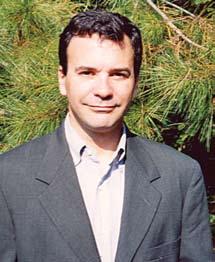
Keith Dougherty ’88 is Associate Professor of Political Science at the UNiversity of Georgia.
96% of murphy institute
alumni would choose political economy as their major, if given another chance to choose an undergraduate major.
– from the murphy institute
alumni assesment survey 1986-2006
Class of 1989
SEAN BERKOWITZ has returned to private practice after being the Director of the Enron Task Force for the United States Department of Justice and lead counsel on the prosecution of former Enron chairman Kenneth Lay and former Enron chief executive officer Jeffrey Skilling. The trial concluded on May 26, 2006, as the successful prosecution led to guilty verdicts for Lay and Skilling. Sean was profiled in the Spring 2007 edition of the Tulanian . STACIA DELANEY is an attorney with Laff Campbell Tucker Delaney & Gordon, LLP in Greenwood Village, Colorado. JONATHAN GROSSER is a real estate attorney and a partner with the Philadelphia law firm of Stradley Ronon Steven & Young, LLP. He and his wife Dana Stein Grosser have two daughters, Gabrielle (age 4) and Josephine (age 18 months). They live in Blue Bell, Pennsylvania. JOHN HALLAM is Vice President
and General Manager of Ben E. Keith Beers in Dallas, Texas.
RHETT KLOK is an attorney at Motley Rice in Charleston, South Carolina. He currently serves as president of the Tulane Alumni Association’s Charleston chapter. Rhett is licensed to practice in Louisiana, New Mexico, South Carolina, Texas, and Washington, DC. His wife Suzanne Lafleur Klok (Newcomb ’89) is also an attorney with Motley Rice. They have two children Gabrielle Barbara Klok, 6, and Theodore Rhett Klok, 4.
LISA NEWMAN is a partner at Wolfish & Newman, PC, in Dallas, Texas, where she specializes in estate planning and probate law.
ROBERT SALTER is a partner at Salter Michaelson in Providence, Rhode Island, specializing in patent, trademark, and copyright law.
JAMES WICKETT advises and represents corporations, nonprofits, coalitions, and trade associations on legislative and regulatory matters focusing on federal tax and a broad variety of other issue areas, including energy, environmental, financial services, pension, and technology issues, at Hogan & Hartson in Washington, D.C.
Class of 1990
DARREN MIRE continues as the assessor for the 1 st Municipal District in Orleans Parish. GEORGE RENAUDIN is Regional President, Senior Products, for Humana, Inc. and resides in Metairie, Louisiana.
GEORGE RIZZO is employed by ExxonMobil as the lead on-site environmental attorney for the
Class of 1991
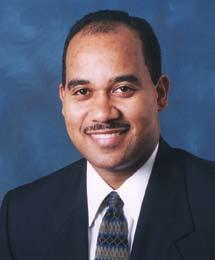
company’s five Houston area petrochemical facilities. This includes the Baytown Refinery, the largest refinery in the U.S. GORDON ROSE lives in Atlanta, Georgia and works as an attorney/contract administrator for ALPA, the union which represents pilots for Delta Air Lines as well as approximately 49 other carriers. BRENDA WILLIAMS THROWER continues in the Urban Development Department of the Ybor City Development Corporation in Tampa, Florida. RICHARD WEST joined RST Network, LLC in New York City as General Counsel and CCO in April 2007. He and his wife Courtney have two children, Oliver, age 2, and Charlotte, age 3 weeks, and they reside in Darien, Connecticut.
JUSTIN PERRYMAN just returned from serving as the Command Judge Advocate for the 1-124 Cavalry Squadron, Texas Army National Guard in the Sinai, Egypt after a year long tour with the Multinational Force & Observers on the Israeli-Egyptian Border. Justin resides in Houston, Texas with his wife and two sons where he is an attorney in private practice. CLARK REYNOLDS left retailing after 15 years as a merchandising executive with May Department Stores. He started working last summer as an independent fundraising consultant for nonprofit organizations and recently accepted a full-time position as Director of Development and Marketing with The Institute for Sustainable Peace. His new organization is dedicated to the following mission: “To equip, resource and inspire a network of leaders to engage in collaborative discourse, prevent and repair destructive conflict, and build sustainable peace.” The organization launched its first major effort, The Peace Leadership Development Workshop, held in Estes Park, Colorado, in June 2007.
JODI HELLER WIGGINTON is a senior attorney for Canon U.S.A., Inc, where she concentrates on intellectual property, technology and advertising. Jodi lives in Glen Cove, New York with her husband, Steve, and their 2 year old son Alexander.
Class of 1992
NEIL BLUMOFE is Hazzan at the Congregation Agudas Achim in Austin, Texas. He has recently released, “Piety and Desire,” (2006: Horeb Records) a project of original compositions that bring together the sounds of jazz and hazzanut (Jewish liturgical music), in the recreation of a traditional Jewish wedding. EDUARDO FEBLES is Assistant Professor of French at Simmons College in Boston.
NICHOLAS HATHAWAY is Vice President for Administrative and Executive Affairs at the University of Oklahoma. MICHAEL SANDS is an attorney with Fenwick & West LLP in Mountain View, California.
PAUL WEBB lives in Marlborough, Massachusetts and is Director of Investment Consulting for MassMutual Financial Group.
Darren Mire ’90 is the Assessor for the 1st Municipal District in Orleans Parish.
Class of 1993
JASON COOK is Senior Vice President for Gramercy Advisors in Stamford, Connecticut. He is moving to Sofia, Bulgaria, later this year to direct his firm’s European operations. JENNIFER DRAKE ASKEY is Assistant Professor of German in the Department of Modern Languages at Kansas State University. Her areas of interest include 19 th -century children’s and adolescent literature, literature by women, and post-WWII German-Jewish literature. ROBIN FEINBERG is a freelance television producer living in Los Angeles, California. FRED D. MASON III was elected 11th District Representative to the City Council in Baltimore, Maryland. In May 2006, he received a Master of Architecture degree from Morgan State University in Baltimore. In August 2006, Fred and his partner of eight years, Phillip Lovett, were married in Toronto and had a covenant ceremony at their church in Baltimore.
C lass of 1994
BRIAN KILGALLON is a Private Wealth Advisor and Guided Portfolio Manager with Smith Barney in Washington, DC. Brian and his wife Anne Marie have two daughters, Ellie and Abby, and live in Arlington, Virginia.
Class of 1995
WILL JEFFORDS and his wife Tanya Ward Jeffords (N ’95) live and work in Columbia, South Carolina. Will is a Product Manager for Avaya Inc., working in planning and strategy for Messaging and Unified Communications Solutions. Will is trying to leverage his amateur woodturning into more of a full-time venture. JIM KOKOSZYNSKI manages zSeries Firmware Development with International Business Machines in Poughkeepsie, New York and earned an M.Eng. degree in Finance and Technology from Rensselaer Polytechnic Institute. Jim is currently leading a team of embedded software engineers in the United States, India, and Russia, developing mainframe systems. ANDREA MARSH directs the Texas Fair Defense Project. The Austin-based organization works to improve the fairness and accuracy of the criminal justice system in Texas, with a primary focus on improving access to counsel and the quality of representation provided to poor people accused of crime. BRAD METTLER is Director of Sales and Marketing at the Hyatt Regency Lake Tahoe Resort, Spa and Casino in Incline Village, Nevada. BRAD METTLER recently moved with his wife and daughter from the Washington, DC area to Greenville, South Carolina. DAv ID SAS and his wife, Samantha, celebrated the birth of their son, Elijah Solomon Sas, on December 3, 2006. David is a pediatrician and will complete his Fellowship in Pediatric Nephrology at Dallas Children’s Hospital in June 2008.
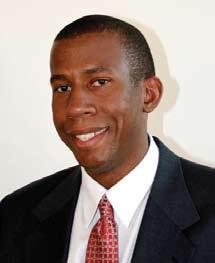
Fred D. Mason III ’93 was elected 11th District Representative to the City Council in Baltimore, MD.
Class of 1996
MELISSA ZIGLER BARIS has been named a Member (partner) of her law firm, Husch & Eppenberger, LLC, in St. Louis, Missouri. She has been practicing law with Husch & Eppenberger, in the litigation department, since she graduated from Washington University School of Law in 1999. Melissa and her husband Jon just welcomed their second child, Jacob Reed Baris, on June 4, 2007. They also have a 3 year old son, Daniel. JAMES ESPOSITO is Senior Technology Operations Manager at Independent Purchasing Cooperative. He leads the technology deployment of a Gift and Loyalty Card Program to over 20,000 Point of Sales Systems in Subway quick service restaurants. He was married to Susana Caba on May 15, 2005. CHANTALLE v ERNA is Assistant Professor of History at Florida International University, where she specializes in United States history, inter-American relations, the African diaspora, and immigration history.
Class of 1997
DE v IN FADAOL graduated from Tulane Law School in 2000. He works at the Metairie-based law firm of McCranie, Sistrunk, Anzelmo, Hardy, Maxwell & McDaniel. He is a trial attorney specializing in general civil litigation including fraud defense, premises liability, personal injury, and contractual litigation. Devin married Tammy Zornes Fadaol on May 14, 2005, and they live in Harvey, Louisiana.
SARAH DINKINS FORBES-JONES is the Deputy Chief Legal Counsel for South Carolina Governor Mark Sanford. She has been married to Ian Mackay Forbes-Jones for 4 years, and they live in Columbia, South Carolina. CHRIS SUELLENTROP is a staff editor for the op-ed page of The New York Times. He is the cowriter of The Opinionator, The New York Times online opinion blog. He lives in the Jamaica Plain neighborhood of Boston, Massachusetts.
JEN RAYMER SUELLENTROP is an associate in the asset management group of the law firm Willkie Farr & Gallagher LLP in Washington, D.C.
SUZANNE BRADLEY TAYLOR is the Director of Research and Policy Analysis at the Arizona Chamber of Commerce and Industry in Phoenix, Arizona.

Class of 1999
ERIKA COLE is in the graduate program in art history at the University of Texas. She was a curator for the Making It Together summer exhibition presented by the Creative Research laboratory in Austin, Texas. TIERNAN ERICKSON teaches mathematics in a public high school in Tucson, Arizona. MATTHEW LUDWIG is a Lieutenant in the United States Navy and recently finished Surface Warfare Department Head School in Newport, Rhode Island. He is returning to San Diego to be the Combat Systems Officer on the USS Thach (FFG-43). He will be deploying to the Persian Gulf next year.
JARETT NIXON is an attorney for Donahue Gallagher Woods, LLP practicing in the areas of intellectual property law, mediation, and dispute resolution. He lives in San Francisco, California.
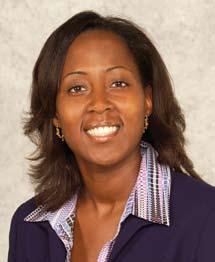
Chantalle Verna ’96 is Assistant Professor of History at Florida International University.
Class of 2000
REUBEN HALPER lives in San Francisco and is the Motorsports Coordinating Producer for Sportvision, where he works on Formula 1, NASCAR, & Indycar broadcasts. AMY BENOLD HEUTEL teaches third grade at McBee Elementary School in Austin, Texas. She and her husband welcomed their first child, a boy, Elliott Burkey Heutel on April 19, 2007. TOREN MUSHO v IC graduated from law school at UCLA and will be re-commissioned by the United States Navy as a Lieutenant in the Navy Judge Advocates General.
Class of 2001
BARBARA HALLENBECK has returned to New Orleans from New York and is a real estate agent for Coldwell Banker. SUSANA
MARTINEZ NADAL worked for over three years as an analyst in pension fund supervision in the Dominican Republic. In 2005, she was awarded the Chevening Scholarship of the British Council and attended Cass Business School, City University, in London, where
she earned a master’s degree in Finance. In 2007 she returned to the Dominican Republic, where she is currently working as a Director of Risk Rating. Susana is married and expecting a baby in early 2008.
RAGAN NARESH graduated from Georgetown University Law Center in May, 2007. He is getting married to Jessica Lawrence (Newcomb College ’03) in August, 2007, and in September he will begin work as an associate with the Washington, DC office of Kirkland & Ellis.
CHRISTOPHER JOHN PIETERSEN joined the investment bank UBS as a director in their private equity (PE) group, based in New York City. He visited the Murphy Institute in the spring to talk to a group of current Murphy Institute students and to lead a Q & A seminar on careers in venture capital and private equity.
SIENNA RAKESTRAW is an attorney at King & Spalding in Houston, Texas, where she practices in the areas of Commercial Disputes Litigation and Energy Litigation.
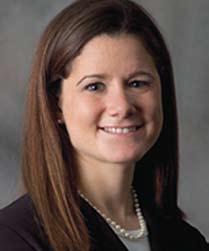
Jillian Gutman Mann ’02 is an attorney at Sonnenschein Nath & Rosenthal, LLP in Chicago, Illinois.
Class of 2002
STE v EN CAHALL completed a master’s degree in International Affairs at George Washington University and spent three years in the international business department of a major military systems manufacturer. He now works in Washington, DC, for a management consulting firm, The Avascent Group, focusing on corporate strategy for technology companies who do business with government. Steven visited the Murphy Institute in the spring to discuss career opportunities in management consulting with a group of current Murphy Institute students. JILLIAN GUTMAN MANN is an attorney at Sonnenschein Nath & Rosenthal, LLP in Chicago, practicing in the areas of Bankruptcy and Restructuring. She has received numerous awards for legal research and writing, including a CALI award and the Sonnenschein Nath & Rosenthal LLP Award for Excellence in Legal Research and Writing. LIZ MAY was an analyst at the United States Treasury Department in the Financial Crimes Enforcement Network. She now works for Advanced Resources Technologies, Inc. under contract to the Office of Investigations and Counterintelligence in the State Department. She is also pursuing a Master’s Degree in Applied Economics at Johns Hopkins University. Liz lives in Arlington, Virginia.
Class of 2003
BROCK BOSSON graduated from law school at the University of Tennessee College of Law, where he was selected to the Tennessee Law Review. His note, titled “Search and Seizure—The Expansion of Police Powers Under the Fourth Amendment” was published in the Tennessee Law Review. He also worked with the Sen. Howard Baker Center for Public Policy at the University of Tennessee as the Editor in Chief of the Baker Journal of Applied Public Policy. JANET DALY BAUMAN is still working at Fight Crime: Invest in Kids, a non-profit child advo-
cacy and crime prevention group in Washington, D.C. She is the Senior Associate for Strategic Planning and Development. CHRISTIAN DALLMAN graduated from Tulane Law School in 2006. He lives in Chicago, IL and is an Associate at Fragomen, Del Rey, Bernsen & Loewy LLP. ADAM FLISS is completing his third year of law school at Suffolk University in Boston, where he is a member of the Suffolk Law Review. He was a summer associate at the law firm of Ropes & Gray LLP in Boston, MA.
Steven Cahall ’02 works for The Avascent Group in Washington, DC. Last spring, he visited the Murphy Institute to discuss career opportunities in management consulting with current students.
Class of 2004
REBECCA EASBY-SMITH will be married in New Orleans on June 23, 2007 to Kyle Wilson, a graduate of Tulane College. She works at Grant Thornton in Alexandria, Virginia, as consultant for the federal government. DANIEL ERSPAMER was promoted to Manager of Donor Relations for Americans for Prosperity, a national free-market grassroots organization that advocates for public policies on the state and federal levels that champion the principles of entrepreneurship, market-based fiscal policies and regulatory restraint. He and his wife, Emily (L ‘04 ) live in Annandale, Virginia.
LEILA FARRAHI graduated from law school at Northwestern University in Evanston, Illinois. v IKRAM v IJ is completing his second year at the South Texas College of Law in Houston, Texas. PAUL WALSH is a Futures Trader at Goldenberg Hehmeyer & Co. in New York City.
Class of 2005
PATRICK BABIN is currently attending Loyola College of Law and working for Barkan, Neff, Handelman, and Meizlish, in New Orleans, Louisiana. ADAM KWASMAN is completing a Master’s degree in Economics at George Mason University. JENNIFER WEBB is currently working in Education planning for the Catholic University of America in Washington, DC, while attending law school at the university.
Class of 2006
q UIN CARTHANE has completed his internship with UNESCO and was accepted to the International Relations and Diplomacy program at the College of Europe, in Bruges and Natolin (Warsaw) where he will pursue graduate studies in diplomacy. b

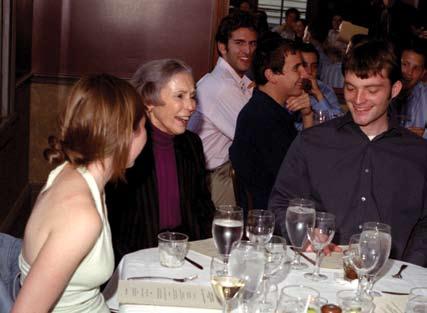
the judith k. schafer summer internship grant program
when judith k. schafer announced her resignation as Associate Director of the Murphy Institute in the Spring of 2005, we decided to recognize her twenty years of outstanding service here by renaming the Murphy Institute’s summer internship grant program in her honor and creating an endowed fund to support it. Our goal is to create an endowment of $300,000. As of June, 2007, we have raised almost two-thirds of that amount, and plan to achieve our goal within the next two years.
Established in 1985, the Summer Internship Program is one of the Murphy Institute programs our undergraduates have come to value most. In the summer between junior and senior years, this program provides 12 six-week grants, with the main criterion for selection being a well-conceived plan of employment in a field related to political economy or public policy. 175 summer grants have been given since the program’s inception. Creating a $300,000 endowment will allow the Murphy Institute to double the number of internship grants awarded annually.
In addition to honoring Dr. Schafer, our fund-raising effort here is designed to provide a flexible giving opportunity that will allow Murphy Institute supporters and alumni to benefit future generations of Murphy Institute students by giving gifts of any size. I ask you to support this worthy venture either by returning the gift card attached to this newsletter or contacting me directly at the Murphy Institute.
Richard F. Teichgraeber III, Director July, 2007
2007 yates lecture : “What’s a Life Worth?” W. Kip Viscusi, University Distinguished Professor of Law and Economics, Vanderbilt University