The Exchange, Fall 2012 - Exceptional Students in a Challenging Environment
Exceptional Students in a Challenging Environment
The excep T ional s T uden T s in the political economy program are part of what makes The Murphy Institute such a unique intellectual environment. This year’s graduating class of 2012 was one of the finest we have ever witnessed. Six of our students were awarded the prestigious Senior Honors Scholars Award, two from our political economy program and four from other departments across campus. What is unique about our students is their ability to thrive on campus as well as after graduation. Many of them already made significant contributions to campus and academic life during their time here, which we are delighted to document in this issue of The Exchange . Their accomplishments are simply stunning. In combining the skills they have developed in our program and at Tulane
with their passion for service, our students have worked tirelessly to transform the world around them. We attract these students to The Murphy Institute for several reasons. First and foremost is the depth and experience of our faculty, who include some of the most highly regarded professors on the Tulane campus.
continued on page 2
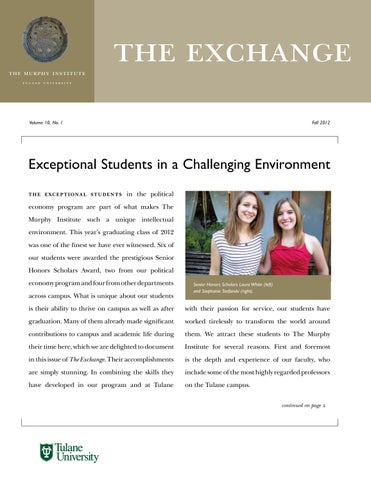
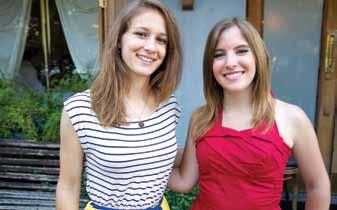
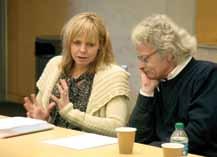
Senior Honors Scholars Laura White (left) and Stephanie Stefanski (right).
Core Faculty and Staff
Steven M. Sheffrin, Executive Director, Department of Economics
Bruce Brower, Department of Philosophy
Alison Denham, Department of Philosophy
Eric Mack, Department of Philosophy
Douglas R. Nelson, Department of Economics
Mary K. Olson, Department of Economics
Jonathan M. Riley, Department of Philosophy
David Shoemaker, Department of Philosophy
Richard F. Teichgraeber III, Department of History
Martyn P. Thompson, Department of Political Science
Mark Vail, Department of Political Science
John Louis Howard, Associate Director
Ruth A. Carter, Program Manager
Margaret M. Keenan, Assistant Director, Center for Ethics and Public Affairs
Maureen Long, Public Policy Program Manager
T HE CEN TER FO R ETHICS AND PUBLIC A FFAIRS
Faculty Committee
Bruce Brower, Department of Philosophy
Ronna Burger, Department of Philosophy
Richard Culbertson, School of Public Health and Tropical Medicine
Alison Denham, Department of Philosophy
Stephen Griffin, School of Law
Mary K. Olson, Department of Economics
Graham Owen, School of Architecture
The professors know that the students in political economy are strong and highly motivated; this challenges them to deliver the first-rate curriculum that we have all come to expect. The mutually high expectations of faculty and students create a virtuous circle for accomplishments and excellence.
A second important reason that we attract such top students is the depth of The Murphy Institute’s programming, which consistently addresses contemporary policy issues around the globe. The exposure to The Murphy Institute’s lectures is an integral component of their academic and intellectual growth while at Tulane. This year The Murphy Institute invited a captivating and diverse set of speakers to campus that engaged the faculty and student body alike in debate and discussion about the world’s events and challenges. Several of our talks focused on questions of moral duty and political participation. For example, University of Virginia Political Philosophy faculty member Loren Lomasky posed the difficult question, “What do we owe the world’s poor?” Harvard scholar and technologist Archon Fung questioned why we have not yet seen the Internet harnessed in a way that would truly empower participation in the political sphere.
Our lectures also focused directly on public policy. This year’s Yates lecturer, William Gale, afforded the audience the opportunity to learn about the national debt, an issue which continues to divide our Congress and country. Gale outlined a rehabilitation program for the country that was both intelligent and realistic. As a scholar and fellow at the Brookings Institution, he appealed to our better angels and outlined a plan around which reasonable parties could begin to coalesce. Another one of our speakers, the well-known behavioral economist Dan Ariely, cautioned that rational principles alone are not always what drive us in our economic and political realms.
Eric Mack, Department of Philosophy
Jonathan M. Riley, Department of Philosophy
Oliver Sensen, Department of Philosophy
David Shoemaker, Department of Philosophy
Richard F. Teichgraeber III, Department of History
Martyn P. Thompson, Department of Political Science
Richard Velkley, Department of Philosophy
We concluded the year with a comprehensive health policy conference that showcased the state of healthcare in Louisiana and the challenges we face in trying to improve it. While Louisiana’s low standing among national healthcare rankings exposed our weaknesses, the conference participants brimmed with ideas that could possibly be transformative for the citizens of the state.
Next year we are confident that our students will benefit from another year of stimulating Murphy programming, including conferences on tax policy and regulation, as well as provocative public lectures from the Center for Ethics and Public Affairs.
Steven M. Sheffrin, Executive Director
August 2012
2012 Undergrad U ate
P r O gra M OV er VI e W
M u R ph Y ins T i T u T e s T uden T s and alu M ni lead T he W a Y in inno V a T ion and en TR ep R eneu R ship
The undergraduate program continues its tradition of serving as a platform for innovation and entrepreneurship. The activities of our current students and the achievements of our recent alumni bear witness to the contributions of our program to inspire innovation and to help our alumni pursue entrepreneurial careers.
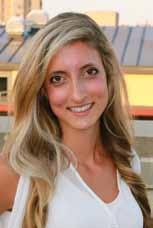
sa M an T ha d eM a RT ino ’08 has been working for the World Bank for two years now, first in the Development Economics Research department and now in the Europe and Central Asia region in the Sustainable Development Unit. She travels often for the Bank to Azerbaijan, Ukraine, Georgia, Bosnia, Serbia, Albania, and Kosovo for projects and research. Samantha is also on the Steering Committee for Youth2Youth, the network of young World Bank employees aiming to channel innovation and entrepreneurial perspectives into World Bank operations and to engage, inspire, and empower youth in developing countries.
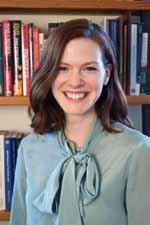
K a T el Y n s M alle Y ’12 is one of the founding members of TUchangemakers, a student group partnering with Ashoka U and dedicated to acting as a platform for social innovation and social entrepreneurship at Tulane, in the New Orleans community, and globally. Katelyn’s senior honors thesis, “Birth and Life in Unequal Societies: The Correlation between Social Capital and Low Birth Weight in OECD Countries,” sought to construct innovative solutions to problems in reproductive health. She will be a Research Assistant at the Medicare Payment Advisory Commission in Washington DC, charged with reforming Medicare. She will pursue graduate work in public health and public policy, then attend medical school where she will focus on neonatal intensive care and reproductive health issues. Katelyn says, “I appreciate that my Political Economy major has, by giving me the tools to understand both individual incentives and institutional constraints, prepared me to be an effective, realistic policymaker in my job at Medpac.”
lau R a W hi T e ’12 is also a founding member of TUchangemakers and the leading example of a social innovator in the Tulane community. Her contributions to peer education through public-service projects supporting local schools, organizing a TEDx event on social innovation, and her own venture creations, including Citizen Circles, have been icons of social entrepreneurship in action. Laura is profiled by Harvard’s Tony Wagner in his book Creating Innovators: The Making of Young People Who Will Change the World (Scribner, 2012). Laura will continue her work with Ashoka, helping to nurture the present generation of innovators and preparing the way for a brighter future.
CENTER FOR PUBLIC POLICY RESEARCH
Program Directors
James Alm, Department of Economics, Public Finance
Mary Olson, Department of Economics, Health Policy
Jay Shimshack, Department of Economics, Responsible Regulation
Ex TERNAL A DVISORY B OARD
Michael McPherson (Chair), President, Spencer Foundation
John Ferejohn, Samuel Tilden Professor of Law, New York University
Geoffrey Galt Harpham, Director, National Humanities Center
Bonnie Honig, Sarah Rebecca Roland Professor of Political Science, Northwestern University
Stephen Macedo, Laurance S. Rockefeller Professor of Politics and the University Center for Human Values, Princeton University
THE Ex CHANGE
Zande+Newman Design, Communications Consultant
Zack Smith, Photographer
Send editorial correspondence to The Murphy Institute, 108 Tilton Hall, Tulane University, New Orleans LA 70118
Telephone: (504) 865-5317
Facsimile: (504) 862-8755
For questions and comments pertaining to The Murphy Institute, contact jhoward2 @ tulane.edu; for those pertaining to The Center for Ethics and Public Affairs, contact mkeenan @ tulane.edu; for those pertaining to the Center for Public Policy Research, contact mlong2@tulane.edu Web site: www.murphy.tulane.edu
Thi RTY - T h R
ee ne W co MB-T ulane colle G e senio R s were awarded B.A. degrees in political economy at the May 2012 University Commencement. Several received high academic honors, with 6 students graduating summa cum laude and 3 students graduating magna cum laude . Those graduating summa cum laude are
J aco B B o Y d , W an R u J in G , K a T el Y n s M alle Y ,
M a TT he W T u R ne R , Y in GJ ia W an , and lau R a
W hi T e . The magna cum laude graduates are R o B e RT dean , J ac K M ela M ed , and s T ephanie s T e F ans K i .
Other members of the class of 2012 are ann daV is , and R e W dennis , sean dou G lass , W illia M du FFY, RY an F lo R e K, hen RY F l Y nn , lu K e G al F o R d ,
M ichael GR een B e RG, M ichael i V e Y, daniel
K iesels T ein , and R e W M ac K innon , and R e W
M andel B au M, R e B ecca M a RG olis , B a RB a R a
M ousse T, aus T in pa RK e R, e R ic pe T e R son , J a K e sandle R, alexande R sapin , paul s T. clai R, M a RK s TR ella , eli Z a B e T h T hullen , e R i K T u G al , cha R les V e RG os , and T on G xu .
The Charles H. Murphy Prize in Political Economy was awarded to K a T el Y n s M alle Y , M a TT he W T u R ne R , and lau R a W hi T e . The Murphy Institute Award for Public Service was presented to lau R a W hi T e .
The Senior Honors Scholars in Political Economy were s T ephanie s T e F ans K i and lau R a W hi T e . In addition, political economy majors were also selected as Senior Honors Scholars in four other departments or programs. The honorees are R o B e RT dean , Latin American Studies; s T ephanie s T e F ans K i , Economics; M a TT he W T u R ne R , History; and Y in GJ ia W an , Psychology.
s T ephanie s T e F ans K i graduated with dual degrees, a B.A. in Political Economy and a B.S. in Economics. She was a Senior Honors Scholar for both Political Economy and Economics. Stephanie participated in the undergraduate PPE Colloquium hosted by Duke University and the University of North Carolina. Her honors thesis was “Economic Valuation of Marine Biodiversity in the Gulf of Mexico.” She will attend the Yale School of Forestry for a master’s degree in Environmental Science, focusing her research on environmental economics and coastal/ marine resource management.
K a T el Y n s M alle Y graduated with a major in Political Economy and a minor in Latin American Studies. Katelyn won the Charles H. Murphy Prize in Political Economy, the Tulane 34 Award, and the Oak Wreath Award. She won the Shelley Coverman Memorial Award from Newcomb College Institute and the Anthony F. and Mary Anne Corasaniti Award. She was a Rhodes Scholar nominee, a Marshall Scholar nominee, and a Phi Beta Kappa inductee. She was also a member of Mortar Board, Alpha Lambda Delta, Phi Eta Sigma, and TUchangemakers. Katelyn’s thesis was “Birth and Life in Unequal Societies: The Correlation between Social Capital and Low Birth Weight in OECD Countries.” She will work as a Research Assistant at the Medicare Payment Advisory Commission in Washington, DC, charged with reforming Medicare.
[ UNDERGRADUATE
M a TT he W T u R ne R graduated with a double major in Political Economy and History. He was a Senior Honors Scholar for History and won the Charles H. Murphy Prize in Political Economy. He was a Phi Beta Kappa inductee. He won the Montgomery History Award and the Sidney Beyer Prize for Excellence in American History. Matthew participated in the undergraduate PPE Colloquium hosted by Duke University and the University of North Carolina. His honors thesis was “Divergent State Tax Structures: Historical Development in Louisiana and Texas, 1920-1950.” He will attend law school at the University of Virginia.
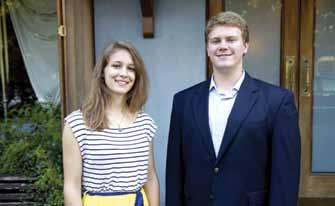
Murphy Prize winners Laura White (left) and Matthew Turner (right).
lau R a W hi T e was a Senior Honors Scholar and won the Charles H. Murphy Prize in Political Economy. Laura also received the Tulane 34 Award and the Oak Wreath Award. She was a Rhodes Scholar finalist, a Marshall Scholar finalist, a Phi Beta Kappa inductee, and a William Wallace Peery Society inductee. She won the Jim Runsdorf Public Service Award from the Tulane Center for Public Service, The Murphy Institute Award for Public Service, Leaders in Service Award, and a Newcomb-Tulane College Service Award. Laura served as a Public Service Fellow, a Social Innovation Fellow, SISE Founding Committee Member, a member of TUchangemakers, and she is the Co-founder of Citizen Circles. Laura’s honors thesis was “Human Development and the Importance of Nonacademic Skills in Early Childhood Education.” Laura was accepted to the Bank Street College of Education in Manhattan, but has deferred enrollment in order to work for the Empathy Initiative with Ashoka, a non-profit based in Arlington, Virginia, supporting individuals and non-profits in the field of social entrepreneurship.
A number of graduating seniors accepted positions with Teach for America. They include J aco B B o Y d , who will teach in Denver, Colorado; ann daV is , who will teach in New Orleans, Louisiana; R o B e RT dean , who will teach in Dallas, Texas; W illia M du FFY , who will teach in New Orleans, Louisiana; and eli Z a B e T h T hullen , who will teach in San Antonio, Texas.
and R e W dennis will attend law school at the University of Miami.
sean dou G lass will be a Technology Acquisitions Consultant at Axiom Global Properties in New Orleans, Louisiana.
M ichael GR een B e RG will attend law school at the University of Florida.
daniel K iesels T ein will join the Peace Corps in Rwanda.
and R e W M andel B au M will be a paralegal for Simpson Thacher & Bartlett in New York, New York.
J ac K M ela M ed will attend law school at the University of Illinois.
alexande R sapin will pursue a master’s degree in Anthropology at Tulane.
T on G xu will pursue a master’s degree in Philosophy at Tulane.
POLITICAL ECONOMY PROGRAM ’12 ]
The Judi T h Kellehe R
s cha F e R s u MM e R i n T e R nship G R an T pR o GR a M
Funds from the Judith Kelleher Schafer Summer Internship Grant Program were used to endow five fellowships in the amount of $2,000 each for Summer 2012. The students receiving the funds, along with their graduating class, hometown and internship placements, are as follows:
BR ennan F ox M an ’13 from Linwood, New Jersey, will intern at the U.S.–Japan Institute in Philadelphia, Pennsylvania.
chloe FR an K ’13 from Solon, Ohio, will intern at Rebirth Financial in New Orleans, Louisiana.
M o RG an FR an K lin ’13 from Shreveport, Louisiana, will intern at the Melissa Harris-Perry Show on MSNBC in New York, New York.
M a T he W FR ei M u T h ’13 from Manchester, Tennessee, will intern at Voice of the Ex-Offender in New Orleans, Louisiana.
M ichael F. le W is ’13 from Carmichael, California, will intern at Public Citizen in Washington, DC. b
Class of 1988
M a R c d ’ an T onio is running unopposed and will be elected Muscogee County Probate Judge on November 6, 2012. He lives in Columbus, Georgia, with his wife, Kathy, and his children, Kate and Jack.
Class of 1989
R ic K lech TM an is Managing Director at Ackman-Ziff Real Estate Group in New York City.
Class of 1991
luc l a F on T an is the Global Group Chief Information Officer for Goodman, an international commercial property firm in Sydney, Australia. He lives in Collaroy, Australia, with his wife and three children.
a LUM n I ne WS
Class of 1992
edua R do F e B les is Associate Professor of French and Chair of the Department of Modern Languages and Literatures at Simmons College in Boston, Massachusetts. His research focuses on the intersections between politics and literature, especially in 19th-century France. He is the author of Explosive Narratives: Anarchy and Terrorism in the Works of Emile Zola , published by Rodopi Press in 2010.
Class of 1993
da V id s TR ai T e is the Head of the Investor Protection Litigation Department at London-based Stewarts Law, the largest litigation-only firm in the United Kingdom. He was appointed co-lead class counsel in In re: Facebook, Inc. Internet Tracking Litigation , a class action pending in the United States District Court for the Northern District of California.
Class of 1997
de V in F adaol lives in Mandeville, Louisiana, and is an attorney at the law firm McCranie, Sistrunk, Anzelmo, Hardy, McDaniel & Welch. Devin and his wife, Tammy, have two children, Leighton (4) and Landon (2).
Class of 2000
au BR e Y cha R pen T ie R is Trial Counsel in the Judge Advocate General’s Corps of the United States Navy in Jacksonville, Florida. philip M ancini is Chief of Staff for the Procurement Department of the City of Philadelphia in Philadelphia, Pennsylvania.
Molly ElginCossart ’04 works for the Center on International Cooperation. >
Class of 2004
M oll Y el G in - cossa RT and her husband moved to New York City last year so she could take a job as Chief of Staff for the Center on International Cooperation, a global policy think tank. This past year she co-authored a paper, “Development in the Shadow of Violence,” which was published by three bilateral aid agencies.
Luc LaFontan ’91 lives in Collaroy, Australia. <
BR ian K ell Y is Corporate Counsel for Securities Compliance and Governance at Tesco Corporation in Houston, Texas. V i KR a M V i J is Assistant Criminal District Attorney for Galveston County, Texas. R achel W alsh is an Attorney specializing in Surety and Fidelity Law, Construction Litigation, and Commercial Litigation at Krebs, Farley & Pelleteri in New Orleans, Louisiana.
Class of 2005
BRY an spada R o is the Director of Membership and the PokerPAC Director for the Poker Players Alliance and lives in Washington, DC. J enni F e R W e BB is an attorney in Washington, DC, where she works as the Regulatory & Legislative Manager for the U.S.-facing operations of U.K.-based Gambling Compliance. In her role, Jennifer works on regulatory, legal, and legislative issues regarding online gaming developments, tribal gaming, lotteries, and commercial casino gambling.
Class of 2006
cina R K ipe R is a Correspondent in the Istanbul, Turkey bureau of x inhua News Agency, the national news agency of China. J us T in T e RM ine is Associate for Strategic Analysis at Constellation Energy in Baltimore, Maryland.
Class of 2007
R ich coun T s is an Associate at the EOP Group, an analytical consulting firm specializing in issue resolution services within the Executive Branch, in legislative advocacy and support services for issues before Congress and strategic business development services in Washington, DC. cu RRY s M i T h is Senior Business Development Associate at Greater New Orleans, Inc.
Samantha DeMartino ’08 works for the World Bank.
Class of 2009
GR e G dex T e R graduated cum laude from Temple University School of Law in Spring 2012 and was awarded the Terrence H. Klasky Memorial Award for outstanding achievement in banking, negotiable instruments, and consumer protection. ch R is T ophe R R h YM es recently graduated from Louisiana State University Law School, where he was managing editor of the Louisiana Law Review. He will be joining Liskow & Lewis in Lafayette, Louisiana as a litigation associate in the fall of 2012. He will also be publishing a law journal article on environmental tort law next year.
Lucas Lockhart ’08 is traveling to Kenya in August to volunteer. >
Class of 2008
sa M an T ha d e M a RT ino has been working for the World Bank for two years now, first in the Development Economics Research department and now in the Europe and Central Asia region in the Sustainable Development Unit. lucas loc K ha RT is entering his third year of a PhD Program at the University of Minnesota-Twin Cities Department of Political Science. He is specializing in comparative political economy, business-government relations, and corporate governance. He was awarded a fellowship at the Center for German and European Studies’ TransAtlantic Summer Institute. In August, he will be traveling to Kenya where he will volunteer at the Ngong Road Youth Leadership Camp near Samburu.
Class of 2011
clai R e d R a K e is Chief of Staff and Director of Offices for political consultant James Carville in New Orleans, Louisiana. b
honors, awards & select publications
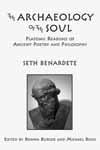
b R onna B u RG e R, Professor and Chair of Philosophy, is co-editor of The Archaeology of the Soul: Platonic Readings of Ancient Poetry and Philosophy, by Seth Benardete (St. Augustine’s Press, 2012). A Chinese translation was published this year of her book Aristotle’s Dialogue with Socrates: On the Nicomachean Ethics (Chicago 2008, Huaxia Press 2011).
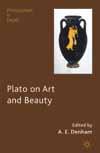
b Associate Professor of Philosophy alison denha M published a new edited volume, Plato on Art & Beauty (Palgrave MacMillan, 2012). In June 2012, she was invited by the Faculty of Philosophy at Oxford University to deliver a lecture to the Moral Philosophy Seminar titled “Debunking Nietzsche: Why the Transfiguration Thesis Is Neither Original Nor True.”
b e R ic M ac K , Professor of Philosophy, will be a Visiting Scholar at Liberty Fund, Inc., in Indianapolis for the 2012-2013 academic year. Professor Mack published “Lysander Spooner: Nineteenth-Century America’s Last Natural Rights Theorist” in Social Philosophy and Policy 29 (2012).
b In addition to serving as the Director of The Murphy Institute’s Health Policy Working Group, M a RY olson , Associate Professor of Economics, organized a one-day health policy conference on April 16th at Tulane titled “Improving State Health Outcomes: What Is Most Effective?” As Director of Graduate Studies for the Department of Economics, Professor Olson coordinated the first year and first entering class of the new PhD program in Economic Analysis and Policy.
b GR aha M o W en , Associate Professor of Architecture, published two articles on the ethics of rebuilding after disaster: “After the Flood: Disaster Capitalism and the Symbolic Restructuring of Intellectual Space” in Culture and Organization 17 (2011) and “Move Your City: Ethics, Place and Risk in the Reconstruction of New Orleans” in The International Journal of the Constructed Environment 2 (2012).
b Professor of Philosophy J ona T han R ile Y will serve as J.S. Mill Visiting Chair in Social Philosophy at the University of Hamburg, Germany, in the spring of 2013. Professor Riley is the author of “Isaiah Berlin’s ‘Minimum of Common Moral Ground’” (forthcoming 2012) in Political Theory 40 and “Rawls, Mill, and Utilitarianism” in A Companion to Rawls (forthcoming from Wiley-Blackwell, 2012).
b M a RK V ail , Associate Professor of Political Science, is recipient of the Frederick Burkhardt Residential Fellowship for Recently Tenured Scholars from the American Council of Learned Societies for 2012-2013. Professor Vail will use his fellowship to spend an academic year at the Center for Advanced Study in the Behavioral Sciences at Stanford University. He is the co-author of “Beyond Pluralism? Corporatism, Globalization, and the Dilemmas of Democratic Governance” in Mark Bevir (ed.) Modern Pluralism: Anglo-American Debates since 1880 (Cambridge University Press, 2012) and “Poverty and Partisanship: Social and Economic Sources of Support for the Far Left in Contemporary Germany” forthcoming in Comparative European Politics .
b da V id shoe M a K e R , Associate Professor of Philosophy, is the recipient of an ATLAS Grant from the State of Louisiana, which will provide financial support during his upcoming sabbatical year. Professor Shoemaker will use his sabbatical to work on his book manuscript, Responsibility from the Margins .
b s T e V en M. she FFR in , Professor of Economics and Executive Director of The Murphy Institute, is the coauthor of “How Does Voice Matter? Evidence from the Ultimatum Game,” Experimental Economics 15 (2012) and the author of “Tax Reform Commissions, Successful and Unsuccessful,” State Tax Notes 63 (2012).
b R icha R d T eich GR ae B e R iii , Professor of History, published John Moore’s ‘Pastoral Letters’: Part of the Story of How and Why Some of the ‘Great Books’ Were Taught at Amherst College during the Era of the New Curriculum (Friends of The Amherst College Library, 2012).
b dou G las nelson , Professor of Economics, coauthored “A Behavioral Model of Unemployment, Sociotropic Concerns, and the Political Economy of Trade Policy” in Economics & Politics 24 (2012). He also co-published “Does Aid Cause Trade?: Evidence from an Asymmetric Gravity Model” in World Economy 35 (2012).
b M a RTY n T ho M pson , Associate Professor and Chair of the Department of Political Science, published “Michael Oakeshott on the History of Political Thought,” in Paul Franco and Leslie Marsh (eds.) A Companion to Michael Oakeshott (Penn State University Press, 2012).
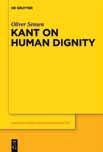
b oli V e R sensen , Associate Professor of Philosophy, published Kant on Human Dignity (De Gruyter, 2011). He contributed “Kant’s Constructivism” to Carla Bagnoli’s edited volume, Moral Constructivism: For and Against (Cambridge University Press, forthcoming), as well as “Friendship in Kant’s Moral Thought” to Damian Caluori’s edited volume, The Philosophy of Friendship (Palgrave MacMillan).
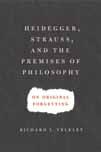
b R icha R d V el K le Y , Celia Scott Weatherhead Professor of Philosophy, published a book Heidegger, Strauss, and the Premises of Philosophy: On Original Forgetting (University of Chicago Press, 2011). In addition, he co-edited Kant’s Observations and Remarks: A Critical Guide (Cambridge University Press, 2012).
For complete information on research published by Murphy Institute faculty in 2011-2012, please visit our website at http://murphy.tulane.edu/people/.
Y ATES L ECTURE 2011 W ILLIAM G ALE
addic
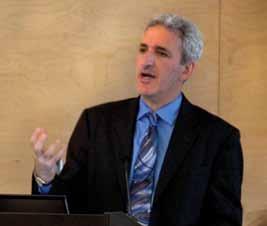
ion Are we doomed by the national deficit? That was the question posed by William Gale, the Arjay and Frances Miller Chair in Federal Economic Policy in the Economic Studies Program at the Brookings Institution and co-director of the Tax Policy Center, as he presented this year’s prestigious Yates lecture. Contrary to what many audience members had feared, Gale offered a somewhat optimistic perspective on the nation’s debt status. He contended that it is possible for the U.S. to bypass a crisis if we proactively address three separate deficits–the current deficit (2-5yrs.), the mid-term deficit (5-10yrs.), and the long-term deficit (10+ yrs.). He advocated immediate action on all fronts, coupling additional stimulus spending with medium- and long-term budget packages that will effectively close the fiscal gap. To facilitate budget reduction, Gale recommended raising the retirement age, flattening the benefit structure, and increasing income and consumption taxes. Gale recognized that many of these ideas are unpopular, but he argued that we can no longer bury our heads in the sand. He conceded that the political will to get these changes done may not exist…yet. What will it take to make it happen? According to Gale we need to improve public education, demand leadership from the White House, and establish a broad-based coalition in Congress. If those solutions fail, we may have to wait for a dramatic external event to change the way we think about deficit spending.
The Mary C. Parker Yates Lecture, endowed in 1996 by Murphy Institute alumna Rebecca Yates (’89) Velander in memory of her mother, is The Murphy Institute’s major public academic event. Designed to promote university-wide discussion of issues of current concern, the annual Yates Lecture brings leading thinkers and public figures to the Tulane campus.
2011 YatES lECturE: "Fiscal Therapy: A Rehab Program for America's Debt Addiction"
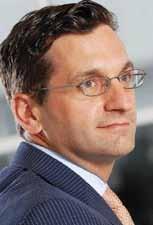
William Gale, Arjay and Frances Miller Chair in Federal Economic Policy in the Economic Studies Program at the Brookings Institution.
POLI t IC a L e CO n OMY e V ent S
dan a R iel Y Behavioral Economics in Plain
Language: Money, Cheating, and More
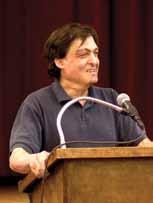
Why are dentists more likely to recommend procedures for existing patients than for new patients? Why are people willing to steal a can of soda from the office kitchen, but will not take unattended cash? According to behavioral economist Dan Ariely, the answer lies in the perspectives people take in morallycharged situations. The dentist doesn’t intentionally mislead existing patients; he simply can’t completely separate his ability to diagnose dental problems from his desire to profit from selling his services. Since existing patients trust their dentists, it gives dentists more leeway to engage in profit-seeking activities. In this lecture, Ariely outlined the ways in which individuals act very much in their own interest, basing their decisions on a scale of morality—cheat a little, steal a little, but just enough so we can still rationalize it. That way, we aren’t cheaters; rather, we are merely looking out for our own best interests, like the dentists. Ariely’s fascinating and creative lecture shed light on aspects of human nature and exposed that uncomfortable fact that we might not be exactly who we think we are. This event was co-sponsored by the D. W. Mitchell Lecture Series and the Provost and Office of Academic Affairs, The Murphy Institute, and the A. B. Freeman School of Business.
Dan Ariely is the James B. Duke Professor of Behavioral Economics at Duke University and the author of the best-selling books Predictably Irrational: The Hidden Forces That Shape Our Decisions and The Upside of Irrationality: The Unexpected Benefits of Defying Logic at Work and at Home
s Y l V ia nasa R presenting her newest book, Grand Pursuit: The Story of Economic Genius
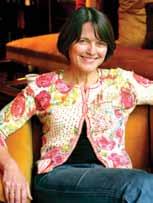
Few people think of economic theorists as heroes, but that is the theme of Sylvia Nasar’s lecture on her latest work, which tells the stories behind the economic theorists who helped shape modern-day industry and improve the quality of life of the masses. In Grand Pursuit: The Story of Economic Genius , Nasar outlined the intellectual progress of economic thought in an attempt to identify how certain ideas, such as those about productivity, proved transformative for the world. Nasar, most well-known for the biography on John Nash, A Beautiful Mind , set up her argument by describing the bleak condition of the masses even 100 years into the Industrial Revolution. She argued that the ideas of intellectuals such as Alfred Marshall, John Maynard Keynes, Irving Fisher, Joseph Schumpeter, and Friedrich Hayek helped change the way billions of people lived and produced. Nasar is a journalist and she co-directs the M.A. program in business journalism and teaches a graduate seminar in economics reporting which focuses on globalization, growth, living standards, and business cycles at Columbia University.
This event was sponsored by the Center for Inter-American Policy & Research and co-sponsored by The Murphy Institute, The Newcomb College Institute, The Payson Center for International Development, and the Economics Department.
Sylvia Nasar, Journalist and author of a Beautiful mind, presented her newest book.
Dan Ariely is the James B. Duke Professor of Behavioral Economics at Duke University.
urban innovations
Turning Slums into Assets
Where most of the world sees slums, d avid Smith sees opportunities and assets. he views informal settlements as the first step to achieving a regularized real estate investment for the poor. people who invest in their homes are investing in their communities, and in developing countries that may mean adding a tin roof where a thatched roof had been. in his lecture Smith argued that the regularization process of informal settlements is the key to improving communities, cities, and countries at large. however, such regularization, he maintained, cannot occur without the active participation of the community’s inhabitants, an active entrepreneurial entity ( ngo ), and the municipal government. a lthough Smith’s analysis is less useful when thinking about the issues of affordable housing in the u nited States due to the lack of informal settlements, he did note that re-imagining public housing is essential to reviving poorer areas in u.S. cities as well. d avid a . Smith is the founder of the affordable h ousing institute, which develops sustainable housing financial ecosystems worldwide.
Jane Jacobs in NOLA: Problems of Authenticity and Reconstruction looking at the urban fabric of new orleans Sharon Zukin asked, “how do we preserve the local character, the low scale, and the high density of the places we enjoy?” Zukin argued that in order to protect the “authentic” city, we must expand on the theories put forth by renowned city theorist Jane Jacobs. She contended that what we know from Jacobs is useful, but only as a starting point, as Jacobs did not address issues of job creation, racism, or social diversity. Zukin stressed that urban theorists must take into account the roles of capital investment, state power, media discourses, and consumer tastes in order to understand how and why cities transform into what they do. She underscored the complexity of certain urban issues, including the privatization of public space and social up-scaling or gentrification, noting that urban reinvention is often a double-edged sword. Zukin cited places like highline park in new York City, where, without private support, the project would not exist, yet she questioned what the long-term impacts will be when public space is captured for private needs. Sharon Zukin is professor of Sociology, Brooklyn College and at the CunY graduate Center, and author of Naked City
Planning and Developing Strategies from Neighborhood to City Scale
“the demand for participation is universal,” argued Shiffman, a civil rights-era planner who embraces the grassroots participatory planning model for improving neighborhoods and cities. in his lecture, Shiffman explored the role that planners play in facilitating neighborhood and city planning. he argued that planners should educate and work with communities to inform them of their options and help build their capacity to make educated choices about the future. Shiffman contends that planners should act as technical assistants to the communities and neighborhoods they serve, promoting advocacy and pluralism in planning, instead of as top-down bureaucrats instructing neighborhoods on what their needs should be. he argued that genuine interaction between the citizens, the policymakers, and the planners is the only way to ensure authentic levels of participation instead of mere tokenism. ronald Shiffman is professor at the graduate Center for planning and co-founder of the pratt institute Center for Community and Environmental development [ piCCEd], the nation’s largest public-interest architectural, planning, and community development office.
daVI d SMI t H SH ar O n ZUKI n
r O na L d SHI ff M an
I MP r OVI ng State Hea Lt H O U t COM e S : W H at IS M OS t e ffe C t IV e?
this conference marked the first public forum sponsored by the murphy institute’s Center for public policy research. organized by mary olson, program director of the Center’s health policy Working group, this conference brought together a group of scholars from economics, public health, and medicine to present research that generated discussion about the best ways to improve state health outcomes and move a state from the bottom to the top of the health rankings. Sessions focused on behavioral health (e.g., tobacco, obesity) and interventions and health systems reforms (medical homes and coordinated care, electronic medical records, and insurance expansions) to improve state health outcomes.
m ar Y o l S on associate professor of Economics, tulane university
Welcome and Introduction
m i C ha E l d ard E n assistant professor of Economics, tulane university
Tobacco: The Dynamics of the Problem
n antaporn
p lurphan SW at postdoctoral fellow at the murphy institute, tulane university
Genetic Influences and Public Policy: Sex, Drugs, & Alcohol
John r i ZZ o
professor of Economics and preventive medicine, Stony Brook university Obesity and Health Outcomes in Adolescents: Implications for Improving State Health Outcomes
hE idi a ll E n research Scientist, providence health Systems, Center for outcomes research and Education Insurance Expansions and Health Outcomes: Evidence from a Randomized Experiment in Oregon
kE n W E ll S professor in residence, psychiatry and Biobehavioral Sciences, uCla / rand
Improving Mental Health in Los Angeles and New Orleans: Applications of Community-Partnered Participatory Research
k ar E n d E Salvo
new orleans health Commissioner and professor of medicine, tulane School of medicine
New Orleans Health Reforms
Over the Last Six Years: Improving Access and Quality
m ark d iana & a n J um
k hur S hid assistant professor at tulane School of public health & director of health Systems development, louisiana public health institute Health Information Technology and Health Outcomes in Louisiana
Cind Y m unn
Executive director of the louisiana health Care Quality forum
Louisiana Health Information Exchange
John
working groups
the Working groups of the Center for public policy research bring together disparate faculty across tulane’s campuses to establish a network of professionals and produce interdisciplinary research that will address critical policy issues.
Hea Lt H P OLICY
W O r KI ng g r OUP
m ar Y o l S on associate professor of Economics Eliminating the U.S. Drug Lag: Implications for Drug Safety
n antaporn p lurphan SW at post-doctoral fellow, murphy institute
Gene-Environment Interaction and Adolescent Substance Use
m i C ha E l d ard E n
assistant professor of Economics
Smoking, Morbidity, and Mortality: Evidence from a Long Panel
h ari S h Su J an professor, freeman School of Business Promoting Better Eating and Exercising and How Doctors Should Talk
Jan E t S C h W art Z
assistant professor, freeman School of Business
Experts Know Best, But for Whom?
Patients’ Understanding of Conflicts of Interest in Medicine
P U b LIC P OLICY
W O r KI ng g r OUP
f ran C i S Sh E n
visiting assistant professor, tulane law School
The Criminal Law and the Crime Victim’s Brain: How Neuroscientific Evidence Affects Lay Understandings of “Bodily” Injury
S EB a S tian lE gui Z amon
post-doctoral fellow, murphy institute
Merit-Based College Tuition Assistance and the Probability of In-state Work
Su S an E lE gui Z amon
visiting professor of Economics
The Influence of Gay and Lesbian Coupled Households on House Prices in Conservative and Liberal Neighborhoods
Seba S t I an Leg UIZ a MO n
n anta PO rn P LU r PH an SWat
tulane tax roundtable
the 2nd annual tulane tax roundtable brought together tax scholars from around the country, resident tulane faculty, and tulane students for discussion and debate about important tax policy issues. the roundtable showcased the drafts and works-in-progress of its participants and subjected these works to rigorous analysis in a discussant-driven workshop format. this roundtable was co-sponsored by tulane’s murphy institute and tulane l aw School.
Jam ES a lm
Socio-Economic Diversity, Social Capital, and Tax Filing Compliance in the United States professor and Chair, department of Economics, tulane university
lE igh oS of S k Y
Getting Realistic about Responsive Tax Administration associate professor, university of miami School of l aw
rEBECC a kYS ar & Jam ES S. Carp E nti E r On the Constitutionality of Tax Treaties
associate professor, Brooklyn l aw School & visiting professor, Columbia l aw School
Sarah l a WS k Y
How Models Work a ssistant professor, u niversity of California, irvine, School of l aw
B E n J amin lE ff
What Can Experimental Behavioral Economics Tell Us About Vertical Equity?
assistant professor, american university Washington College of l aw
St E v E n Sh E ffrin
Restitution for Ponzi Schemes: Are Securities Laws Consistent With Tax Law? professor of Economics and director of the murphy institute, tulane university
k ri S tin h i C kman
Unpacking the Force of Law professor, u niversity of m innesota l aw School
Shu-Yi oE i
Who Wins When Uncle Sam Loses? Social Insurance and the Forgiveness of Tax Debts
associate professor, tulane law School
67t H a nn U a L C O ngre SS O f t H e
Internat IO na L In S t I t U te O f
P U b LIC fI nan C e the murphy institute sponsored the keynote address by murphy advisor, James poterba, whose lecture “ population a ging and the Evolution of the State” kicked off the meeting. Economics professors and public finance experts Steven Sheffrin and James alm also presented at this conference.
n at IO na L tax aSSOCI at IO n’ S 104t H a nn U a L C O nferen C e O n taxat IO n this year’s nta conference was held in new orleans, where tulane’s president, Scott S. Cowen, served as a luncheon speaker. he discussed the renaissance of new orleans, the resurgence of tulane, and new developments in public policy. the murphy institute was represented by Steven Sheffrin, who presented “tax reforms Commissions as a precursor to major Structural reforms: California Examples,” and James alm, who presented “Cross-Border Shopping, use tax Compliance, and State tax Collections: Evidence from eBay transactions.”
n e W Or L ean S Sate LLI te gOV ern M ent Web SI te La U n CH ed transparency is good. that was the underlying premise of the new orleans Satellite government project, an ongoing and interactive website project of research and transparency in city government that was started by tulane professors aaron Schneider ( political Science) and david marcello ( public law Center at tulane law School). the website – nolasatellitegovernment.tulane.edu/ – seeks to provide a database with accurate and comprehensive information on the system of “satellite government” that operates in new orleans. more than 140 boards, commissions, public benefit corporations, security and development districts, and other entities undertake public functions on behalf of the people of new orleans. the goal of this project is to keep track of these boards and allow the public access to the details about how these groups came about, who manages them, and how they operate. this project began with support from the murphy institute and the provost at tulane.
h ano C h Sh E inman
Center faculty fellow and assistant professor of philosophy, rice university
The Conventional Meaning of Institutional Discrimination
t aml E r Somm E r S
Center f aculty fellow and a ssistant professor of philosophy, university of houston
The Ethical Significance of Victim Impact Statements
PP e 2012:
On e x PLOI tat IO n
h ill E l St E in E r professor of political philosophy, university of m anchester Liberalism, Neutrality, and Exploitation
J E rr Y g au S
James E. rogers professor of philosophy, university of arizona
On the Appropriate Mode of Justifying a Public Moral Constitution
d ani E l fESS l E r
a ssociate professor of a nthropology, university of California, los a ngeles
The Strategy of Affect: Emotions in Human Cooperation
John dE igh
professor of philosophy and l aw, university of texas at austin Reactive Attitudes Revisited
Sharon k rau SE professor of political Science, Brown university
Freedom beyond Sovereignty
d ana v illa
Center f aculty fellow and p ackey dee professor of political theory, university of n otre d ame Hegel, Tocqueville, and “Individualism”
m i C ha E l m C kE nna professor and keith lehrer Chair of philosophy, university of arizona
Directed Blame and Conversation
Wa Y n E Sumn E r
university professor Emeritus in philosophy, university of toronto The Ethics of Assisted Death
The Center’s Faculty Seminar is designed to bring Tulane faculty and graduate students together for scholarly discussion of ethics and public affairs. The seminar is led by Bruce Brower, Associate Professor of Philosophy and Chair of the Center for Ethics and Public Affairs Event Advisory Committee.
m athia S d o E pk E
a ssociate professor of Economics, n orthwestern u niversity
Exploitation, Altruism, and Social Welfare: An Economic Exploration
a . J. Juliu S
a ssistant professor of philosophy, university of California, los a ngeles The Possibility of Exchange
J E r E m Y Sn Y d E r
a ssistant professor of health Sciences, Simon fraser u niversity
Exploitation and Demeaning Choices
r i C hard a rn ES on professor of philosophy, university of California, San diego Exploitation and Outcome
l or E n l oma S k Y
Cory p rofessor of p olitical p hilosophy, p olicy and l aw, and d irector of the p olitical p hilosophy, p olicy and l aw p rogram, u niversity of v irginia What Do We Owe the World’s Poor?
m i C ha E l m oor E
Charles r . Walgreen, Jr. university Chair, professor of law, and professor of philosophy, university of illinois Ethics in Extremis: Targeted Killings and the Morality of Hard Choices
a r C hon f ung ford foundation professor of democracy and Citizenship, kennedy School, harvard university
Why the Internet Hasn’t Saved Democracy, and How It Can Help
m i C ha E l Smith
mcCosh professor of philosophy, princeton university The Rational Foundations of Morality
n OIS e 2012: n e W
Or L ean S In VI tat IO na L
Se MI nar I n e t HICS
d al E d or SEY
a ssistant professor of philosophy, university of k ansas
Against the Supremacy of Morality
S E an f oran
a ssistant professor of philosophy, Bowling green State u niversity
The Wrongness of Killing One to Save Five?
d an Ja C o BS on professor of philosophy, university of michigan
Empirical Ethics and Singer’s Dilemma
in fall 2011, the murphy institute sponsored its first noWar workshop. noWar , or the new orleans Workshop on a gency and responsibility, is a biennial workshop featuring the presentation of sophisticated original research on issues roughly captured under the label “agency and responsibility.” the new o xford university press book series, Oxford Studies in Agency and Responsibility (to be edited by d avid Shoemaker), will draw on papers presented at this workshop.
t he fi rst no W ar workshop featured keynote speakers Sarah Buss, University of Michigan and g ary Watson, University of Southern California
additional papers were given by: luca ferrero, University of Wisconsin Milwaukee ; david Brink & d ana nelkin, University of California San Diego ; michael m ckenna, University of Arizona ; michael Bratman, Stanford University; d aniel Jacobson, University of Michigan ; tamler Sommers, Center Faculty Fellow and University of Houston ; Zac Cogley, Northern Michigan University ; heidi m aibom, Carleton University ; p aul russell, University of British Columbia ; and m att talbert, West Virginia University.
d avid lE fko W it Z
a ssociate professor of philosophy, university of richmond
Climate Change and Corrective Justice: A Partial Defense
d avid So BE l robert r . Chambers distinguished professor of philosophy and the moral Sciences, university of nebraska- lincoln Self-Ownership and the Con fl ation Problem
profiles of faculty fellows
a s his fellowship year drew to a close, hano C h S h E inman was upbeat about the year he spent in n ew orleans. he had high praise for the Center’s dynamic f aculty Seminar, as well as much appreciation for the charm of n ew orleans and its worldrenowned food. perhaps most importantly, Sheinman was grateful for the time his fellowship had allowed him to write.
during his fellowship year, Sheinman nearly fi nished his book titled Truth Be Told: Promise from Assertion , which is forthcoming from o xford u niversity p ress. in his book he argues that “promises and declarations… represent the world as being a certain way. they can be true or false, sincere or insincere, mistaken or unmistaken and, perhaps most surprising (from the viewpoint of the dominant philosophical view), can be made with (fore) knowledge.”
Sheinman found the intellectual atmosphere to be particularly conducive to scholarship. h e explained, “ t he seminar is fantastic. p apers are distributed in advance and so there is no need for formal presentations and we can get straight to the discussion.” h e also enjoyed the Center’s public lectures which bring leading academics to campus.
d ana v illa spent his fellowship year working on a new book that examines the idea of popular political education in the works of rousseau, hegel, tocqueville, mill, and m arx. villa’s research reveals fascinating contradictions in the development of political education, and it was a pleasure to listen to him expound on his work.
villa explained that his subjects shared an anxiety about the spread of democracy—all five were concerned that people who were not formally educated, could not read, and knew little about politics were about to become political actors as they acquired the right to vote. Because of this, these five thinkers advocated political education for the underclasses, all in very different ways. there is also an interesting tension inherent in the idea that these writers advocated greater popular political participation, and yet at the same time, they were pressing for a system which divided people into teaching roles and pupil roles—a system which was inherently undemocratic.
“at the same time,” he elaborated, “there aren’t too many events, and this leaves the fellows more time and energy to focus on their own work. i will remember living in n ew o rleans as a very positive experience,” Sheinman reported. h e was especially taken by the beauty of the city, the walkability of n ew o rleans, and audubon p ark. t hen of course, there was the food. “ t he dinners and lunches were both extremely pleasant and useful for getting to know our guests and each other,” he remarked. “ i do not remember a year in which i ate better food.”
While he was not working on his book, villa found himself charmed by the city of n ew o rleans. h e found n ew o rleans small enough to easily navigate and explore, and yet large enough to be full of fine restaurants and cultural opportunities. Quick to praise the high-pro fi le acts that played at venues such as Snug h arbor, v illa soon discovered that the n ew o rleans musical scene encompasses far more than frenchmen Street and Jazz f est. f ascinated by the cultural resurgence in the bohemian Bywater neighborhood where many young musicians and artists have recently made their homes, v illa frequently visited the area to hear the eclectic musical acts that play there. a s is often the case with our f aculty f ellows, v illa came to n ew o rleans eager to learn more about the city from the tulane faculty and staff, and he left recommending cultural opportunities in our own backyard that many of us had yet to experience.
during his fellowship year at the m urphy institute, taml E r S omm E r S published one book, Relative Justice: Cultural Diversity, Free Will, and Moral Responsibility ( princeton u niversity press, 2011), and worked on a new book, tentatively titled Justice without Blindfolds the latter “defends an approach to criminal punishment that can be justified in light of the facts about how and why humans behave the way we do.”
a s he discussed his new book, Sommers warmed to his subject as he addressed a specific flaw he sees in our present legal system. “ it is not supposed to matter to us how the punishment is carried out. i think it does matter. for example, i am against capital punishment when the state does it. But if the parents of a murdered child carried it out, i am a lot more tempted to say they would be entitled to kill their child’s murderer."
k nown for his ability to explain abstract philosophical points to non-philosophers, Sommers used the recently remade fi lm True Grit to make his point: “When m attie tracks down her father’s killer and shoots him, it is hard to walk away from that movie thinking that the killer did not get what he deserved. i t even mattered to m attie where her father's killer was executed. t he texas r anger wants to bring the killer back to texas, and m attie says ‘no.’ She wants her father’s killer brought back to her town and brought to justice, and the audience gets that,” Sommers explained. “So what i am saying is that the people most closely affected by crime should have a say in the punishment and even have the right to carry it out. But that’s not how we do things in our justice system.”
fe LLOWS 2011–2012
f a CUL t Y f e LLOWS
hano C h S h E inman Professor Law and Philosophy, Bar-Ilan University
taml E r S omm E r S Assistant Professor of Philosophy, University of Houston
dana villa
Packey J. Dee Professor of Political Science, University of Notre Dame
g rad U ate f e LLOWS
S han E ga SS aW aY Department of Philosophy
todd m E r E dith Department of Philosophy
C ri S tina pop Department of Anthropology
mark prYor Department of Philosophy
like many of the Center’s fellows, Sommers relished the time his fellowship allowed him to devote to research and writing. “i had never had a leave before. and the book i am writing is a completely new project—it is very hard to develop a new, comprehensive idea if you are also teaching.”
Sommers also found time to enjoy the pleasures of new orleans. “i knew about food and music because i have been
here before,” he said. “But what i did not realize was just how physically beautiful new orleans is. i lived uptown on a street lined with oaks and magnolias. and of course there was the music. i loved the jazz, the funk. getting to see trombone Shorty play was fantastic. and the rebirth Jazz Band played every tuesday two blocks from my house. those are things i will always remember.”
For information about the 2013-2014 faculty fellowship opportunities, please visit our website at http://murphy.tulane.edu/center/ .
fe LLOWS 2012–2013
f a CUL t Y f e LLOWS
monika BE t Z l E r Professor of Philosophy, University of Bern
marY C laY ton C ol E man Associate Professor of Philosophy, Illinois Wesleyan University
dal E dor SEY
Associate Professor of Philosophy, University of Kansas