EPSTEIN SCOUTED SEVERAL WOMEN FOR TISCH TO MEET
Evan Vezmar and Julian Glickman Deputy News Editor and Executive News Editor
Steve Tisch, a Tufts alumnus and donor whose name appears on several campus buildings, was revealed last Friday to have communicated frequently with convicted sex offender Jeffrey Epstein about women, dinner invitations, football games and Epstein’s private island.
More than 3 million files were released by the Department of Justice on Friday under the Epstein Files Transparency Act, which Congress passed in November. The Daily reviewed hundreds of those files and found dozens of email correspondences between Tisch — a film producer and owner of the New York Giants — and
Epstein. The identities and ages of most of the women discussed were not immediately clear, though some were identified as
college-age. Tisch has not been charged with any wrongdoing.
“We’re continuing to monitor this matter and any unfold-
ing information,” Patrick Collins, executive director of media relations at Tufts, said in a statement to the Daily.
Roger Goodell, commissioner of the National Football League, said at a Monday press conference that the league would look into Tisch’s connections with Epstein. It was not clear whether a formal investigation had been launched.
In a public statement released by the Giants on Friday night, Tisch distanced himself from Epstein.
“We had a brief association where we exchanged emails about adult women, and in addition, we discussed movies, philanthropy, and investments,” Tisch wrote. “I did not take him up on any of his invitations and never went to his island. As we all know now, he was a terrible person and someone I deeply regret associating with.”
see TISCH, page 3
Local and state officials push back against federal immigration enforcement efforts
Elected officials in Medford and Somerville, as well as state leaders across Massachusetts, are ramping up efforts to curb the effects of Immigration and Customs Enforcement’s presence in the state.
On Jan. 13, state representative Erika Uyterhoeven of Somerville took to social media demanding ICE get “the f--- out of Massachusetts.” The viral video, which currently has more than 39,000 views, echoes language from Minneapolis Mayor Jacob Frey in response to the shooting of Renee Good and calls on state leaders to cut ties with ICE, curb surveillance practices and hold federal agents accountable under state law.
“We can define by state law what is illegal and not illegal [through] civil and criminal penalties,” Uyterhoeven told the Daily. “There are things we can do, especially around ICE officers failing to identify themselves or with respect to mask bans.” As efforts to block immigration enforcement operations gain steam, experts say that state and local governments have tools at their disposal.
Matthew Segal, a professor of the practice in the Department of Political Science, explained that states and municipalities have the right to withhold surveillance-related information from the federal government. For example, if Massachusetts passed a bill restricting surveillance within the state, it could refuse federal inquiries about specific individuals.



“There are circumstances in which — whether it’s surveillance or providing information or taking someone into custody — the federal government might ask the state and local governments for a favor, essentially,” Segal said. And the state


and local governments’ answer might be ‘No, we won’t help you,’ or ‘No, we can’t help you, because the law or the constitution of our state forbids us from helping you.’”
Uyterhoeven said that the Shield Act 2.0, which prohibits state law enforcement and agencies from cooperating with federal or out-of-state investigations into legally protected healthcare provided in Massachusetts, was a step in the right direction. Gov. Maura Healey signed the law last year.
“I’m very proud of that law,” Uyterhoeven said. “But I think it was very limited because it only pertains to surveillance with respect to reproductive justice and gender-affirming care.”
Uyterhoeven said her goal is to create legislation that legally protects the immigration status of Massachusetts residents. She added, however, that such laws will only be effective if offenders are held accountable.
see ICE, page 2

KAITLYN WELLS / THE TUFTS DAILY
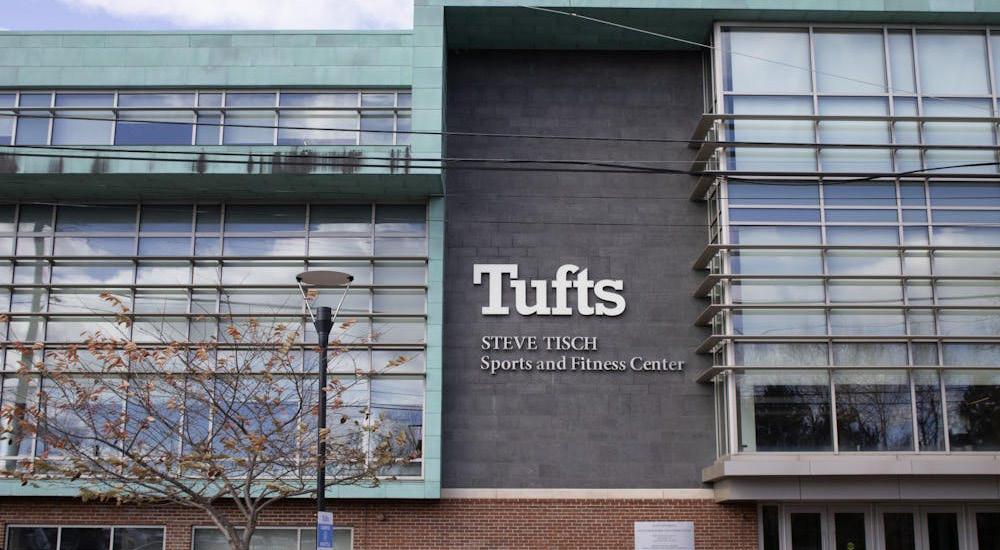
The Steve Tisch Sports and Fitness Center is pictured on Nov. 12, 2024.
Katherine Kelton Assistant News Editor
RACHEL LIU / THE TUFTS DAILY
The Massachusetts State House is pictured on May 10, 2024.
Sadie
Josué
Officials seek to stall ICE operations in Massachusetts
ICE continued from the front
“The fact that you can buy and sell your geolocation data — that is something we have just chosen not to regulate [or] pass the legislation on and prohibit,” she said.
“We can have all the laws in the world, but if no one prosecutes or investigates, it limits what we’re able to do.”
States’ resistance to federal agencies, including ICE and the Department of Homeland Security, can carry repercussions, Segal said.
“When a state [or] local government says ‘We’re choosing
Medford
not to help you,’ the federal government interprets that as ‘We’re affirmatively trying to get in your way,’” he said.
Other officials have taken steps to push back against the federal government’s presence in the state. Boston Mayor Michelle Wu co-led a coalition that filed an amicus brief in Minnesota seeking to halt Operation Metro Surge, a federal operation in Minneapolis and St. Paul.
In recent months, State Reps. Christine Barber and Mike Connolly, along with State Sen. Pat Jehlen, have separately posted about legislation they have
introduced. Connolly shared a guide outlining “9 things the legislature should do in response to the ICE crackdown,” including a statewide ban on local police cooperation with ICE and increased funding for legal defense to counter what he described as a “fascist campaign of mass deportation.”
The killings of Good and Alex Pretti, two U.S. citizens in Minneapolis, sparked a national response to ICE tactics. Last week, two large anti-ICE protests were held in Boston.
“It signals very clearly that people are hungry for us to take
action and be courageous in this moment and do whatever we can to save our democracy,” Uyterhoeven said.
At Tufts, questions remain about the safety of international students. Last week, ICE agents were reported to be near campus, prompting Tufts to send an email urging community members to contact the Tufts University Police Department if agents were spotted.
Segal urged students to “take comfort in having seen how the Tufts community rallies around its own members in … times of need.”
Square rezoning project commences
The city of Medford restarted its rezoning project last month with a primary focus on rezoning Medford Square. It is the first proposal heard in the new City Council term, and the first since the city signed a contract extension with Innes Land Strategies Group — the consulting group that provides analysis and recommendations for the city’s rezoning.
In a joint committee meeting between the Medford City Council and the Community Development Board on Jan. 21, Innes presented an early proposal to rezone Medford Square. The plan would allow for mixed-use development to economically revitalize the area while aiming to preserve historical homes and buildings.
visi
The Tufts Daily is the entirely student-run newspaper of record at Tufts University in Medford, Mass. An editorially and fi-
independent organization, the Daily’s staff of more than 100 covers news, features, arts and sports on Tufts’ four campuses and in its host communities.
Danielle Evans, senior planner at the Office of Planning, Development and Sustainability, emphasized the importance of mixeduse zoning in revitalizing Medford Square.
“We want to create more housing in the square. That is important for economic development, to have folks in topof-shop apartments or condos that can patronize the ground
floor businesses,” Evans said. “The idea is that these people wouldn’t [have] to drive to the square. They would be there so that would promote more vibrancy, walkability.”
While Medford Square serves as an economic hub, much of the area contains historical structures that are not currently protected from demolition. According to the 2023 Medford Comprehensive Plan, the city prioritizes protecting historical sites.
City Councilor Matt Leming said new ordinances will be needed to preserve specific buildings in Medford Square.
“The idea is that you want to preserve historic buildings, especially the outside of them, but their uses can potentially change over time,” Leming said. “The concerns then are with a lot of the historic buildings on private property, and that’s where [Medford needs] ordinances that strongly incentivize developers, make it so that it’s more in their financial interest to keep those buildings and convert them rather than tear them down.”
Rezoning will involve a months-long process throughout which the City Council and the Community Development Board will meet multiple times
with city officials to discuss revisions and hold community meetings for residents.
Previous zoning proposals did not have joint public hearings, where residents are able to hear both the board’s zoning proposals and the City Council’s deliberations on the projects. Evans said this change is intended to improve transparency and accessibility.
“Residents can come to one meeting and provide their input and comments, and both bodies can hear it,” Evans said. “I’m hoping that this streamlines it and makes it easier for residents to stay engaged and keep track of what meetings [they] should be at.”
The city is also planning to hold public information sessions about the Medford Square rezoning in coming months at the Medford Senior Center and Medford Public Library.
Zoning was a major point of contention during Medford’s municipal elections last fall.
Critics of earlier proposals cited the lack of transparency as a key issue, while some Community Development Board members felt what Evans described as “severe burnout” due to the pace and workload of past zoning initiatives.

Evans highlighted how more community meetings and a specific focus on Medford Square would help to reduce concerns surrounding a rushed process.
“The agreement between the mayor’s office and City Council to restart the zoning really sets a pace that’s more manageable, and there’s going to be a much more robust community outreach piece to this, trying to get more folks aware and involved, and not to be too much of a scattered process as it was before,” Evan said. “There were just too many zoning proposals open at the same time. It was hard to follow.”
At their Dec. 16 meeting, the City Council voted to divide the Medford Square rezoning effort into two proposals, one for Medford Square and another for West Medford Square, which was referred to the Planning and Permitting Committee. Evans explained that this approach would allow city staff to focus more deliberately on Medford Square in a timely manner.
“With a slower pace, city staff can be more in the weeds with [Innes] to be able to check and make sure if things are going in the right direction,” Evans said. “In the planning office, most of us live and work here, so we really know the area very well.”
While Tufts has recently been accused of not contributing enough to the Medford community, in particular with reference to the university’s Payment In Lieu Of Taxes agreement, Rocco DiRico, Tufts’ associate vice president of government and community relations, wrote in a statement to the Daily that the university continues to encourage its community to engage with and support Medford Square.
“Tufts University students play a vital role in the vibrancy of Medford Square,” DiRico wrote. “It is the university’s hope that our students will visit the square often to eat at a local restaurant, catch a show at the Chevalier Theatre or Deep Cuts, or shop at a locally owned small business.”
DiRico also advertised a shuttle service between Medford Square and Tufts that is slated to launch in August 2027 following the opening of the new Boston Avenue dorm.
Evan Vezmar Deputy News Editor
STELLA JEONG / THE TUFTS DAILY
Cars drive by storefronts in Medford Square.
Keira Krisburg
Aisha Karim
Tisch spoke euphemistically about meeting women Epstein provided
Epstein solicited women for Tisch, with the two using euphemisms for prostitution.
In several exchanges, Epstein offered women to Tisch, referring to them as “conquests” in a May 2013 email. “New one for you,” Epstein wrote, to which Tisch replied, “Who?”
The two also used euphemisms commonly associated with prostitution to describe women. In one exchange, Tisch asked Epstein whether a specific woman was a “pro or civilian.” In another June message, Tisch asked whether a woman was a “working girl,” to which Epstein replied, “nwver.”
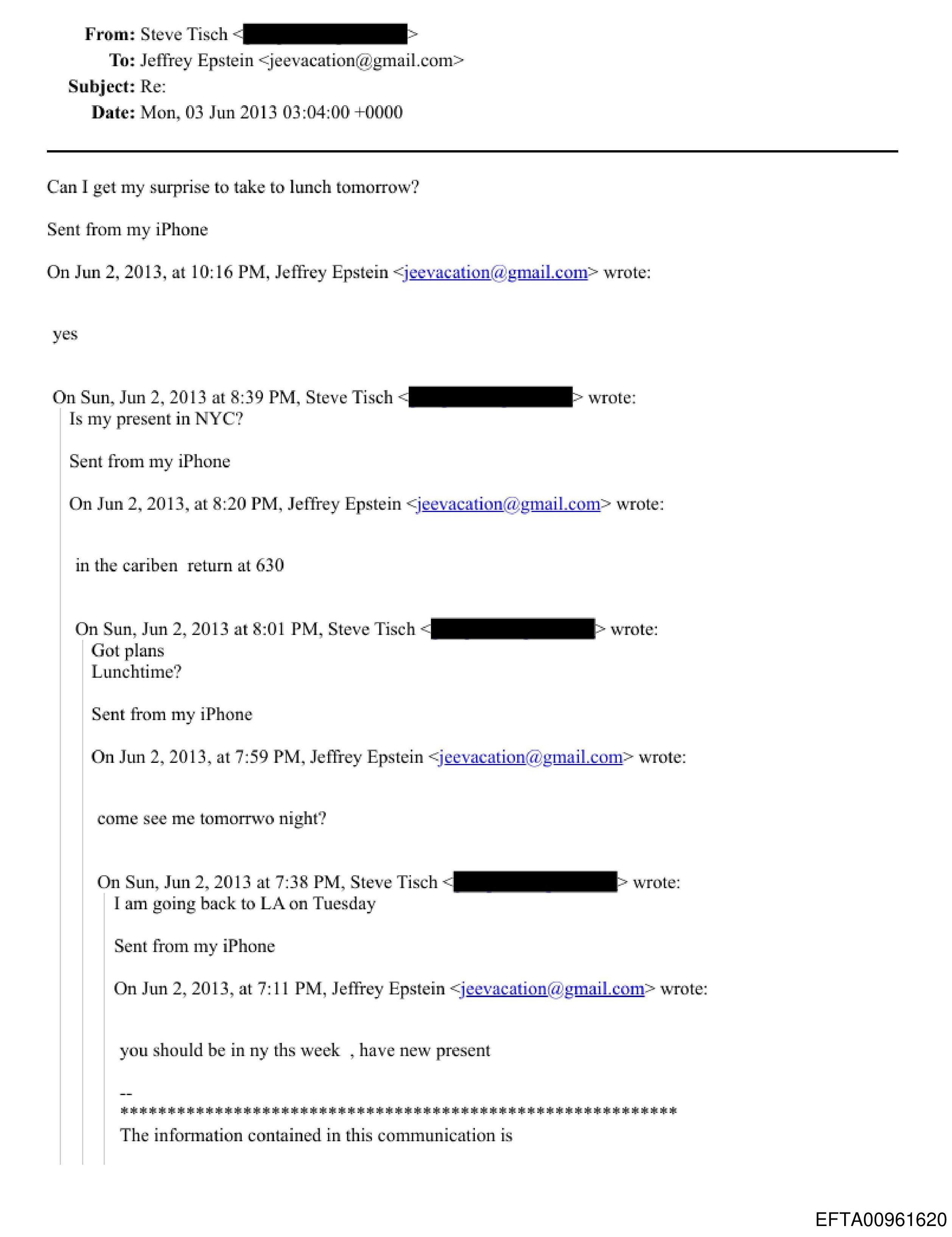
In another June correspondence, Epstein told Tisch that he had a “new present.” Tisch replied by asking whether the “present” was in New York and later asked if he could “get my surprise to take to lunch tomorrow.” Tisch also separately asked whether there was “somebody in NY you wanted me to meet,” before discussing a specific woman’s background. Epstein described her as an “exotic” French-speaking girl but denied that she was a prostitute.
On several occasions, Epstein included Tisch on email chains with women. In one message, Tisch wrote to a woman named Veronika, “Jeffrey Epstein is very excited about you and I meeting each other. I like that idea. Do you?” He complimented a photo she had sent and offered times to meet.
Veronika told Tisch that she had “heard a lot of great things” about him and said she looked forward to meeting him. Epstein later interjected, telling Tisch that she was traveling
and still attending university. He also said Tisch would have to organize her plane ticket if they wanted to meet.
Epstein and Tisch often planned and discussed meetups with women.
On several occasions in 2013 and 2014, Tisch and Epstein planned meetings between Tisch and women whom Epstein had solicited for him. These conversations often centered on the women’s physical characteristics while also discussing their personalities.
Epstein maintained a degree of secrecy in his communications with Tisch, asking in one correspondence to “send me a number to call I dont like records of these conversations.”
The files also show Epstein communicating with women about meeting Tisch. One woman, identified as Katya, told Epstein that she had Googled Tisch and learned he was an Oscar-winning producer and owner of the Giants. “I’d love to meet him,” she wrote.
In a later email, Tisch asked Epstein whether coming over to Epstein’s home would mean “trouble.” Epstein responded by offering to invite “the russain Katya” and provided her contact information.
In another exchange, Tisch told Epstein about a lunch he had with a friend of Epstein’s assistant, calling her a “very sweet girl,” and asked for information about her. Epstein agreed to find information and asked Tisch whether he had reached out to a different girl whom Epstein described as “great a-- fake t--.” Epstein told Tisch that she was in acting school and had an older boyfriend, describing the girl as “trustworthy” and “earnest,”
while referring to a third woman as “a civilian” who “rarely tells the full truth, but fun.”
Other email chains suggest Tisch met with specific women.
In a June 2013 email, Tisch
thanked Epstein, who replied that he was “glad to help.”
Epstein also asked Tisch how the meetings had gone. “How did polina do?!did you connect with Veronica?” he wrote in a

May email. Tisch replied that “Polina did a very nice job” and that he was “waiting to hear back from Veronica.”
Epstein invited Tisch to his island several times and likely attended a Giants game in Tisch’s suite
In multiple emails, Epstein told the Giants owner that he was in — or would be traveling to — the Caribbean, likely referring to his private island, Little Saint James, and invited him to visit.
“You are welcom to come to the caribean to visit. you will not suffer,” Epstein wrote in a January 2014 email. In his public statement on Friday, Tisch said he never accepted Epstein’s invitations to the island.
Tisch also invited Epstein to attend Giants games in 2013, according to Epstein’s daily schedules. A September 2014 email from longtime Epstein assistant Lesley Groff indicates that Epstein likely agreed to attend a VIP screening for “The Equalizer,” a film co-produced by Tisch, at an event Tisch was co-hosting.
In one correspondence, Epstein expressed an interest in continuing communications with Tisch regarding women. “I am happy to have you as a new but obviosly shared interest friend,” he wrote.
Josué Pérez contributed reporting.
TISCH
from the front
COURTESY DEPARTMENT OF JUSTICE
SOPHIA KHAN /THE TUFTS DAILY
Tisch Library is pictured on March 3. 2024.
TEMS: More than just Tufts’ alcohol ambulance
Abilene Adelman Assistant Features Editor
For many new students at Tufts, the idea of living on their own for the first time is intimidating. They are now responsible not only for their studies, but also for laundry, meals and even their own physical health. One thing that can be particularly frightening to experience while away from home is a medical emergency.
Tufts Emergency Medical Services, also known as TEMS, is intimately familiar with helping students through these situations. At Tufts, a member of the TEMS team is often the first face someone sees after having a medical emergency and calling for help.
Unlike traditional EMS response teams, TEMS is student-run and campus-based, making it easier for students to do EMS work while also taking classes. While TEMS members receive guidance and work closely with the Tufts University Police Department and the organization’s medical director, Dr. David Schoenfeld, the group is otherwise run and operated entirely by student volunteers.
“A lot of the time, you think of EMS [as] kind of rough around the edges. You’re only interacting with these providers for a short amount of time. It can be intimidating,” junior Sarah McVey, TEMS’ director of operations, said.
“Having a student EMS organization is really impactful because … there’s less of a power dynamic when you are treating
intoxication-related medical calls. Through these public encounters, TEMS has developed a reputation on campus as an ‘alcohol ambulance.’ Many students are unaware of the breadth of calls TEMS responds to or the number of training required to become a member.
Students can apply to join TEMS in both the fall and spring of their first or second year. While the application process is fairly involved, including an interest form, written test, practical exam and interview, the only requirements are a Massachusetts-valid EMT-B license, Basic Life Support CPR certification and a valid U.S. driver’s license.
Since TEMS is student-run, the organization emphasizes the educational aspect that goes along with learning and growing as an EMT. Junior Katherine Harbaugh, the current executive director of TEMS, had no prior clinical experience before applying.
“I was rather intimidated … at first because everyone seemed so impressive and competent, and also much older,” Harbaugh said. “I didn’t even know if I was [planning] to use my license when I first got it because being an EMT sounded so terrifying. … Some people love the idea of being thrown into the deep end on their first day, … but I liked the idea of TEMS, knowing I could … work my way up and really focus on fine-tuning my skills and patient interactions.”
Because TEMS requires no prior EMS experience and accepts
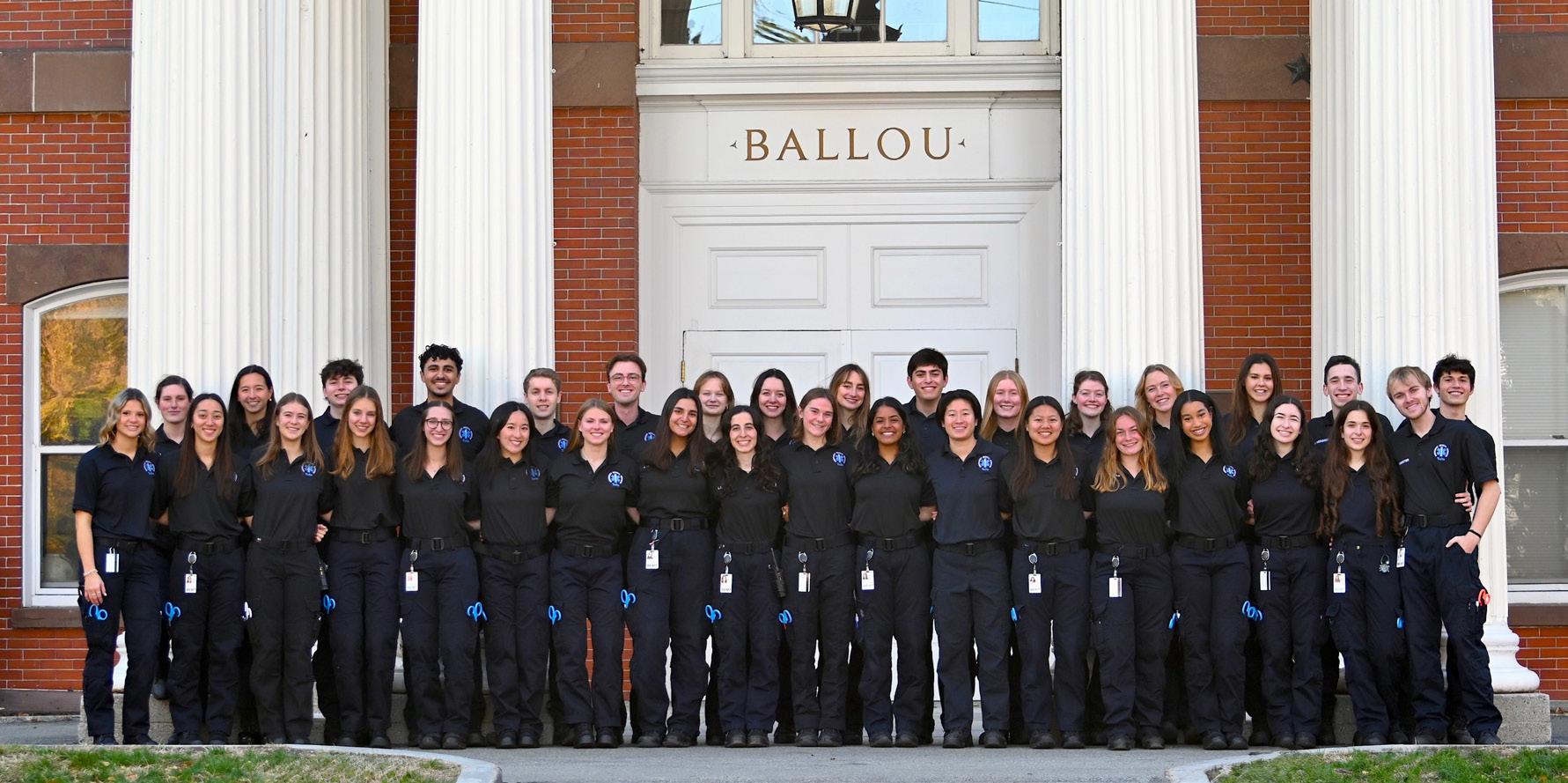
All new TEMS members complete a rigorous training program upon acceptance, covering how to respond to a wide range of medical emergencies, and handoff procedures with outside ambulance services that transport patients to hospitals.
After initial training, the entire TEMS team participates in monthly training sessions with the student director of training and quality assurance as well as with Dr. Schoenfeld. Members also complete a high-acuity training session each semester.
Senior Ellie Pantekidis holds the title of TEMS’ highest clinical position and is responsible for independently leading calls and helping train new members. With her experience in this role, and as the 2024 director of training and quality assurance, she is particularly famil-
choose between joining TEMS and working for outside EMS due to the financial barrier posed by TEMS’ volunteer model. Balancing academics with one to three unpaid 10–14-hour shifts per week can be difficult, especially for students who need paying jobs. While there are some paid opportunities for TEMS members, such as teaching assistant roles for the EMT certification course at Tufts or working campus events like Spring Fling, TEMS remains a volunteer organization. As part of an effort to increase accessibility, TEMS members are working to reduce financial barriers to EMT certification.
“We … have a really great initiative right now … the Tufts Emergency Care Course Scholarship … [which] covers the lab fee associated with the emergency care course,” Pantekidis said. “Our hope … is to help make
respiratory etiology or trauma,” Pantekidis said.
“It is tough to have misconceptions about something you’re a part of. But I am completely fine with people not knowing everything that we do, because it just speaks to how serious everyone is about patient confidentiality,” Harbaugh said.
Confidentiality is especially critical for mental-health related calls, which TEMS frequently responds to. McVey recalled one such call and how TEMS’ student-run structure shaped the response.
“There was one call for mental health that we did, and there was … potential … for … self-harm. Getting to that call, I was … filled with gratitude that they felt that they could call somebody for help,” McVey said. “I like to think that the fact that fellow students are going to be showing up to offer
“You understand the experiences of Tufts students in a way that outside people [can’t]. You get a sense for the
es in general,” McVey explained. “Just knowing what they’re going through, … and knowing that we understand the situations they’re facing, being a student at Tufts … I think it’s really

COURTESY
COURTESY TEMS
Members of TEMS are pictured.
Bring Jumbo home: 2 Tufts students lobby administration to bring Jumbo’s skeleton to campus
Olivia Bye Executive Features Editor
Senior Jack Wilan was digging through records of Tufts history in the Tufts Archival Research Center last fall when he became fixated on the story of Jumbo the Elephant.
Wilan wasn’t looking to learn about Jumbo, Tufts’ beloved mascot who was once one of the most famous circus attractions in the world. Instead, he was looking for information about class year distinctions in the 1900s, the topic of his research project for the archival research seminar “Tufts in American History.” But after encountering Jumbo in story after story dating back over a century, Wilan quickly latched onto the mascot and its significance to Tufts’ history.
“[Jumbo is] one of the few throughlines of the identity of the university,” Wilan said. ”[Both] Tufts students today and Tufts students 100 years ago, 150 years ago, would recognize [Jumbo] as an integral part of the university.”
Like most students at Tufts, Wilan was already aware of Jumbo’s surface-level history, a legend repeated on campus tours and baked into the university’s identity. Jumbo was the star performer of showman Phineas T. Barnum’s legendary traveling circus show “The Greatest Show on Earth” from 1882 until 1885, when he was struck and killed by a train in St. Thomas, Ontario, Canada. Barnum, one of Tufts’ primary benefactors at the time and a founding member of the Board of Trustees, donated Jumbo’s hide to the Barnum Museum
TARC’s most requested item for students to see.
In his research, Wilan began to wonder where the rest of Jumbo’s remains were — namely, his skeleton. A quick search informed him that Jumbo’s skeleton had never been in Tufts’ possession, and had instead been donated by Barnum to the American Museum of Natural History in New York City. While the museum previously displayed the skeleton in their Hall of the Biology of Mammals until its closure in 1969, the bones were last found in 2017 to be sitting in the museum’s storage facilities in Brooklyn.
“On one hand, we have this once living being, Jumbo the Elephant, with a fascinating story … that students here and alumni and professors and even the administration legitimately care about and are interested in,” Wilan said. “And at the same time, you have an actual skeleton, which has been in storage since forever and has no plans to be shown at all. There’s a real opportunity here to bring Jumbo back, to bring the story … of the real elephant back to the university.”
With this, Wilan’s campaign to bring Jumbo’s skeleton to Tufts was born. While he recognized the improbability of the university possessing the bones permanently, he envisioned the museum loaning them to Tufts for a temporary exhibition on campus. Wilan sent an email to the Office of the President with his proposal, and was directed to TARC Director Dan Santamaria
constraints cannot be bridged, especially considering that Tufts has not had a natural history museum since the Barnum Museum and is not properly equipped to care for the skeleton.
“Natural history artifacts of this size and scope require specific experience and expertise beyond staff at the Tufts University Art Galleries or in TARC,” Santamaria wrote in an email to the Daily. “There is also no exhibit space appropriate for display of an elephant skeleton on the Medford campus. The cost of safely transporting, storing, reassembling, and providing security for the skeleton would be extremely high.”
Santamaria also noted that the likelihood of the AMNH loaning the bones of Jumbo to the university is extremely low, as Andrew McClellan, a professor of history of art and architecture, had already made a similar inquiry in 2014 while working on a Jumbo-based exhibition. He was told that Jumbo was a ‘type specimen’ for the species of African elephants and could not be loaned.
After a string of rocky meetings, the project appeared to have hit a dead end. That’s when Deitsch’s assistant pulled Wilan aside and informed him that another student had also reached out to her recently about a potential exhibition to honor Jumbo’s legacy.
Stephen Strout, a Tufts graduate student in the Educational Studies program, first became aware of the history of Jumbo over the summer while teaching a Tufts College
nuanced history lacked visibility on campus. He especially noted the lack of information on the plaque next to the statue of Jumbo outside of Barnum Hall.
“You go to read that plaque, [and] it’s this cryptic nod to P.T. Barnum donating Jumbo, as if Jumbo is this entity that can be donated, and then Jumbo is positioned outside of Barnum Hall, the very man that kept him in chains,” Strout said.
According to Strout, finding more information on Jumbo’s background and history required digging into the archives, like Wilan did.
It was then that Strout connected with Four Paws, an animal welfare organization looking for a home for a sculpture of another elephant named Madhubala who had been rescued from inhumane zoo conditions in 2024. According to Strout, Four Paws had expressed interest in rehoming Madhubala to Tufts towards the end of 2025 as a nod to the university’s pachyderm mascot. However, according to Strout, Four Paws also requested that Tufts institutionally acknowledge the complexities of Jumbo’s story as a traveling circus animal should they acquire Madhubala.
Although Strout was met with opposition, he connected with Wilan in January, where he found reassurance in learning of Wilan’s shared concern for Jumbo’s representation on campus.
I think they should be by the administration.”
Wilan’s decision to campaign for the exhibition of Jumbo’s skeleton comes after his frustration with a series of administrative decisions surrounding longstanding traditions at Tufts. This includes the university’s decision last fall to paint over the Tufts cannon weekly after announcing an adoption of institutional pluralism and the demolition of the former Zeta Psi house in 2025, a fraternity that had been active on campus from 1856 until it was disbanded in 2021 for violating Tufts’ COVID-19 guidelines.
Wilan expressed frustration with what he viewed as a lack of response from both students and administrators to these significant changes regarding Tufts traditions.
“As a student of history, it’s just upsetting to see no one giving a s---,” he said. “There’s just a lot of easy things that can be done [to] build spirit and build community.”
Wilan and Strout both acknowledge that bringing Jumbo’s skeleton or Madhubala’s sculpture to Tufts are not easy tasks, and that significant costs and efforts would likely go into achieving such projects. But both students expressed a desire for the university’s administration to engage with the conversation in a deeper way than Wilan and Strout experienced in initial meetings. Their next steps in bringing Jumbo’s skeleton to campus are to gauge student support and general interest in the campaign. Wilan has drafted a petition that he plans to start collecting signatures for around campus, while Strout plans to take the petition to the Cummings School of Veterinary Medicine at Tufts. Additionally, Strout aims to continue to be in talks with administrators at the Cummings School to lobby for the adoption of Madhubala’s sculpture.

“When you’re met with apathy, you’re made to feel like you’re caring about something stupid … but meeting [Wilan] is like, okay, awesome these people are, but they are not uplifted in the way
Santamaria agrees that other means of honoring Jumbo’s complicated history are worth
“[Jumbo] is a beloved mascot and symbol of community and connection but also an example of the impact of western colonization and of animal cruelty. I agree that it would be beneficial to tell the story of Jumbo in a more nuanced
According to Santamaria, TARC is currently in the planning stages of a digital exhibit on Jumbo and would be interested in collaborating with students and faculty on campus to
However, Wilan continues to advocate for the retrieval of Jumbo’s bones, arguing it has potential to unite the Tufts
“We have a passion for this university. We have a care for the university, for the spirit of the university, for the story of the university, for the story of Jumbo the elephant. There’s a real story to be told, and there’s a skeleton that’s [been] sitting in storage since the ’70s. How do we inspire any sort of action?” he said.
PHOTO BY CARYS YANG / THE TUFTS DAILY
The Jumbo statue stands ‘chained’ to Barnum Hall.
An Everyday Art Tour A unique statement
Ellie Ayati Jian began her career as a milliner by coincidence.
Originally trained as an architect and interior designer, she stepped into the world of hat-making when a friend asked her to enter the contest for the Longines Prize for Elegance at the Belmont Stakes, a fashion
ARTS & POP CULTURE
Fashion Institute of Technology during COVID-19 and teaching herself through YouTube videos. She started her business, Ellie Jian Millinery, five years ago after moving to Boston. In her work, she hopes to combine traditional techniques with new trends to create something that can be “used by the modern woman.”
To this end, her techniques range from hand-sewing to 3D printing. “I find my inspiration by seeing other artists’ work,” Jian said, which includes mediums beyond millinery itself. Her process usually begins with back-

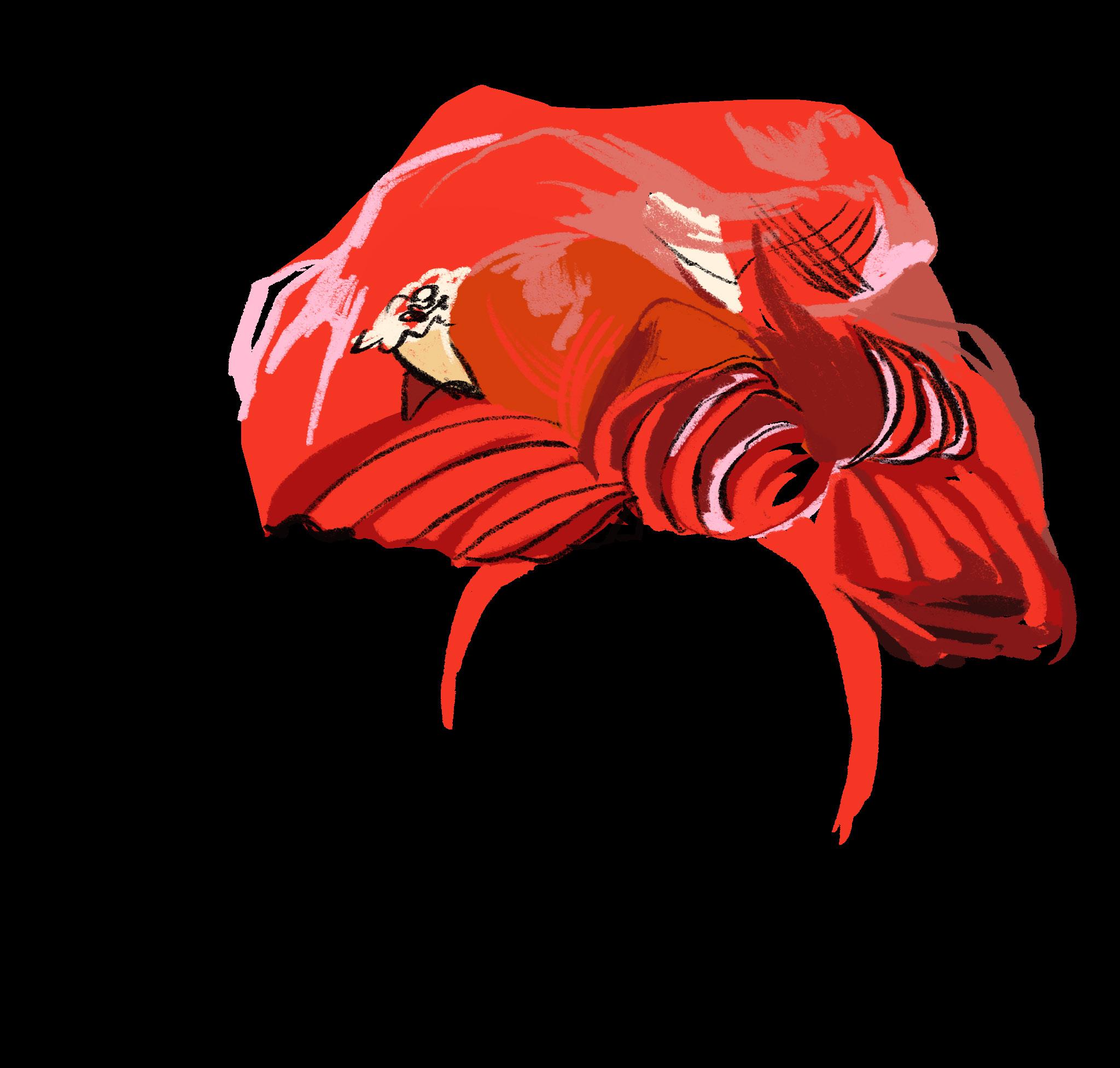
reminds me of BesBen’s works.’” When collaborating with another designer for a show, Jian said “timing is very important.” Ample time allows Jian and the designer to “inspire and motivate each other to make new looks,” while a time crunch requires more independent decision making. Regardless of the process, Jian said it’s exciting to see how “different things [come] together to
Whether on a runway or not, Jian said headpieces “give you a special and unique statement.” Statement pieces created for important events, like bridal hats, can be a challenge. “It’s a one-of-a-kind piece, and I know it’s very important for them,” Jian said. For these significant projects, she emphasized the importance of “getting to know each other” during the consultation process so clients can “show
In addition to clients’ history, Jian often draws from her own experience. Her ‘signature piece,’ a headpiece that covers part of the face, began as a Halloween costume she made for herself. She also embraced her architectural background when creating her New York fascinator — a design based on the Statue of Liberty with hand-drawn buildings.
area events such as Party in the Park, Mayor Michelle Wu’s Rose Garden Party and Kentucky Derby celebrations. These events have become more frequent over the years, Jian said, which she views as a positive sign that people are wearing more hats.
For those interested in experimenting with headpieces, Jian suggests starting with something more conservative until they feel comfortable. She recommends consulting a milliner to receive guidance based on “their personality, … their taste and the occasion they’re going to wear it for.”
Jian is currently a board member of the Milliners Guild, a U.S.-based organization with around 60 members. “We try to share our experiences and help each other,” Jian said. She began as a mentee through the guild’s mentorship program and now serves as a mentor.
Jian encourages aspiring milliners to join communities like the Milliners Guild “to know that [they] are not the only one” and “to constantly learn.” Although her career began unexpectedly, she now intentionally incorporates hats into her daily life, wearing them even to small gatherings. “It’s very important not to see it as a passion,” Jian said. “It’s very important to try to bring it to real life, and it’s best to start from yourself.”
Sophie Herron is a deputy editor for the arts section and a staff writer for News at the Daily. She is a sophomore studying international relations and French and can be reached at sophia.herron@ tufts.edu.
GRAPHIC BY JAMIE SONG
Sophie Herron
Through Indigenous Eyes

Sorsha Khitikian
On Jan. 8, an Indigenous man named Jose Roberto ‘Beto’ Ramirez was dragged from his vehicle in Minneapolis by Immigration and Customs Enforcement agents. Despite insisting on both his U.S. and tribal citizenship, he was beaten, detained and then sent to an ICE detention center for questioning. After being told he would face charges for assaulting a federal officer, he was released over six hours after his initial encounter with ICE.
Let’s get one thing clear: There is nothing proving Ramirez did anything to provoke his detainment. He was tailed by ICE to a grocery store parking lot; they have not informed him or the public on why he was followed or detained.
Ramirez is not the only Indigenous person to be questioned by ICE, as Indigenous people across the country have reported being stopped. Nor is he the only one to be detained in Minnesota. Frank Star Comes
OPINION
Out, president of the Oglala Sioux Tribe, has made statements saying that four homeless tribal members were reportedly detained by ICE agents in January; the veracity of his claim has not been independently corroborated. The Native American Rights Fund has called what’s happening in Minnesota racial profiling. I agree with NARF. In simple terms, Indigenous people are being questioned and detained because they have brown skin.
When I first heard Ramirez’s story, I was astounded. I thought that racial profiling was illegal; the equal protection clause of the 14th Amendment bans any differential treatment of citizens based on race, including in law enforcement interactions. However, the Supreme Court granted an emergency request to allow ICE to stop and question anyone they think could be an illegal immigrant, even if the suspicion is based on skin color or language spoken. The Supreme Court has, for all intents and purposes, legalized racial profiling for immigration enforcement.
The irony of ICE detaining Indigenous people to deport them (to where?) is plain as day. And while it seems laughable that this is our current reality, the history of Indigenous people in the United States shows how this
is nothing new. The evidence is right there in Minneapolis.
The Bishop Henry Whipple Federal Building, the current home of an ICE detention center in Minneapolis, is located on the land of Fort Snelling. During the height of ‘Manifest Destiny’ migration, the fort was used as a concentration camp to forcibly remove Indigenous peoples from their land. Built in 1862 during the Dakota Wars, Indigenous people were detained at Fort Snelling and eventually deported to reservations, paving the way for European migrants to settle the entire continental United States. This is just one example of many. I strongly believe that no human can be classified as illegal on land that was stolen. You can argue over specific treaties, but it is extremely clear that systematic land dispossession was perpetuated against Indigenous peoples in this country. Indigenous peoples were also denied citizenship in the United States until the 1900s.
Immigrants, no matter their skin color, have an equal claim to this country as any other. And while you can argue over specific visas and asylum applications until you turn blue, the vast majority of people trying to enter this country want to work in this nation, to have a commu-

nity in this nation. How can we, as a nation, deny today’s immigrants the chance our ancestors received? As the descendant of both Indigenous people and immigrants who came through Ellis Island, I cannot stand by while ICE violently violates the fundamental principles of American civil liberties, which I hold dear.
The atrocious disregard for civil rights shown by ICE, both against immigrants and Indigenous people, is abhorrent. Whether you are considered legal or illegal, Indigenous or non-Indigenous, what we are
seeing today is a violation of your basic human rights. You deserve to walk your streets without fear of questioning or deportation. You deserve to exist without the threat of discrimination based on the color of your skin. What happened to Ramirez, what is happening to hundreds of thousands of people in this country, must come to an end.

GRAPHIC BY ELISE SAMSON
MINI CROSSWORD
__De La Negra, stage name of singer Diana Denalys De Los Santos 15 Points to, as a target
Salad dressing staple, abbr. 17 With 26A, Dr. Brenner's workplace
19 Phillips, of "I, Claudius" 20 Bassett and Davis, for two 21 23&Me, e.g. 23 Uttered 25 To-do, grocery, and guest
26 Where you might find 17A, 44A, and 60A... or the Stranger Things episode which aired Dec. 31, 2025
Guitarrist Eddie Van __
CROSSWORD
Noun descriptor, for short
Spheres
Guardians, slangily
Great Lake near Ohio
Elementary writing class 42 Pal, to Brits or Aussies 43 Wrongfully accuse of a crime
44 With 26A, character who adopted a "Walk 'em down" attitude
47 "Are you calling me ___?"
50 Pillow cover 51 "Can't you hear me knocking?"
54 Cool with the plan
59 Zip-__-doo-dah
60 With 26A, monster from the Upside Down
62 Female gangster
63 You don't want to get thrown for one of these
Late Night At The Daily
Sadie: “I think the award sounds booger”
WORD SEARCH

64 Voice part between alto and baritone 65 My one and __
Ideological suffixes
Narrow openings
Movement led by RFK Jr.
One-named supermodel
UGA's costumed mascot Hairy ___
Winged messenger goddess of Greek mythology
Keeps cruising
Mountain formation
Feel sick
Question from an internet troll
Library ID
Closest friend
The best universities, to some
Nikki Glaser's of Tom Brady went viral
13 Opposites of Dos 18 Indian bread 22 Straight supporter of the LGBTQ+ community
24 Walt and Roy, for two
26 Footwear 27 __ Grey tea
28 Actress Jessica 29 Opposite of NWN
30 Condition on The Real Real or Poshmark 31 Small batteries 34 Asia's __ Sea 35 A __ a dozen
Taunt 38 Dashed 39 List ending abbreviation 40 Poetic preposition 42 Female horse 43 Women of "Austin Powers"
44 That is to say
Oopsies
46 Suspend
47 Don't forget this!
48 Strung along 49 "What did __ you?"
52 South Indian rice cake
53 Modernists
55 Titular character of an adult stop-motion animated show
56 Sanskrit for "fire"
57 Cheer (for)
58 Medical orders to withhold CPR, abbr.
61 Parent celebrated in May
‘Stranger Things’ by Shayna Levy
‘Love You A Latte’ by Shayna Levy
SCIENCE
An update on the flu season
Shanzeh Haider Deputy Science Editor
According to the Massachusetts Department of Public Health, influenza activity is currently “high” across the state. From the week of Jan. 4 to Jan. 10, 498 cases of influenza were reported in Boston. While cases have decreased in recent weeks, they remain persistent with 158 cases reported during the week of Jan. 18 to Jan. 24. With data through Jan. 17, the state of Massachusetts has reported 193 deaths during the current flu season, including six pediatric influenza deaths. Influenza, also known as the flu, is a respiratory infection
caused by the influenza virus. Common symptoms include cough, sore throat, fever, body aches, headache, fatigue and a nasal congestion. The virus is spread through respiratory droplets and direct contact with surfaces or infected individuals. According to the Cleveland Clinic, influenza is “one of the most common infectious diseases,” with an estimated 20 to 40 million cases per season. Flu season typically runs during October through May in the Northern Hemisphere.
Across the United States, more than 15 million cases of influenza have been recorded this season, according to the Centers for Disease Control
and Prevention. Two types of influenza, A and B, are regularly identified as the primary causes of seasonal flu. Last fall, a new variant strain of influenza, subclade K, was identified. It has been referred to as the ‘super flu’ due to its association with “more severe symptoms and more severe cases,” according to the Stanford Medicine News Center. Experts report that this strain accounts for a significant portion of reported infections this year. With data showing a particularly concerning flu season, it is important to prioritize health and safety. According to the CDC, the “most important step in preventing flu
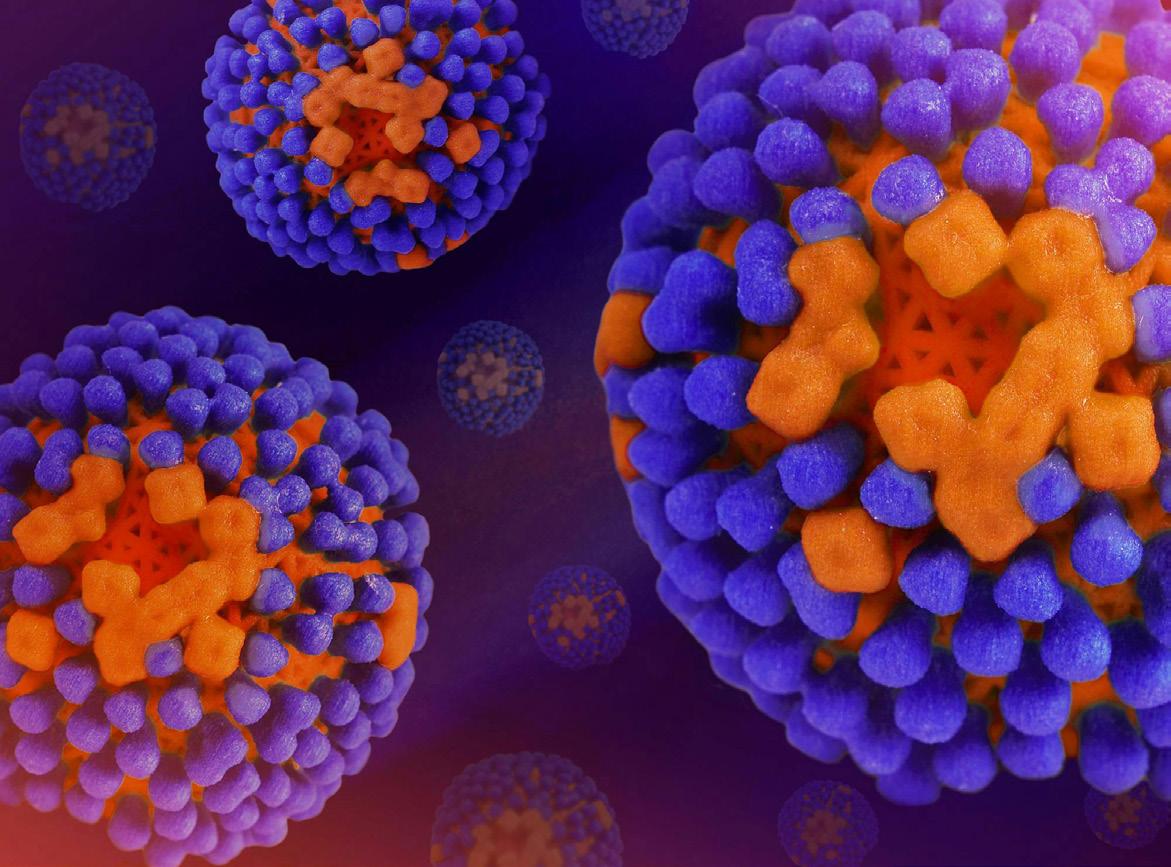
is to get a flu vaccine each year.” Additionally, avoid close contact with individuals who are sick and practice
proper hygiene. Those experiencing flu-like symptoms are encouraged to stay home and seek testing.
New bioinformatics specialization to provide biology master’s students with a competitive edge
Addison Dion Deputy Science Editor
In an increasingly tech-driven world, specialization in bioinformatics will set graduate students in Tufts’ biology master’s program apart. Bioinformatics is a scientific subdiscipline situated at the intersection of biological and computer sciences. Through the use of computer technology, complex datasets from biological experiments can be effectively stored and analyzed.
Ayanna Thomas, professor and dean of the Graduate School of Arts and Sciences, remarked that the specialization expands upon an “existing pathway for students who want to add practical data and computational skills to their biological training.” She believes that this specialization will give students “hands-on experience with modern bioinformatics tools and workflows,” preparing them for careers in the analysis of biological data.
The program is intended to equip students without traditional computer science training with bioinformatic tools for a career in biology. For consideration, students must have completed undergraduate coursework in molecular biology and genetics.
Thomas said interested undergraduate biology students can begin preparing for the specialization “by taking approved bioinformatics, computational and quantitative biology courses.”
Additionally, the bioinformatics specialization is currently available to Tufts undergraduates planning to participate in the Fifth-Year Master’s Degree Program. Frank David, professor of the practice of biotechnology at Tufts, said completion of the specialization may not be possible within two semesters, but he hopes current Tufts undergraduates will be interested in extending their studies.
“It’ll end up being a four plus one and a half,” David said.
Thomas believes the addition will benefit a wide range of students, from undergraduates to current master’s students. “The specialization provides a clear, applied bridge between biological coursework and data-driven research and career pathways,” she commented.
The specialization will be part of Tufts’ Open-Choice Master’s program, which all biology graduate students at Tufts participate in. The program allows master’s students to design a course load tailored to their academic interests in biology. According to Tufts University, courses can be selected from a variety of departments, including biology, chemistry, biomedical engineering, psychology, data analytics, environmental studies, entrepreneurship and more. Some students may focus on a particular area of biological study, such as molecular genetics, while others may pursue a broader range of subjects.
As part of the 10 courses required for the OC-MS degree, students pursuing the bioinformatics specialization will take four bioinformatics courses and complete a bioinformatics capstone project. Sample first-year courses include “Scalable and Reproducible Computing for Bioinformatics,” “Biostatistics for Bioinformatics,” “Introduction to Bioinformatics and Computational Biology,” “Applied Bioinformatics” and an additional graduate-level course required for the degree.
In the fall of the second year of the program, students will complete their bioinformatics capstone project. They will then complete the remaining courses required for the OC-MS degree in the spring before graduation.
The capstone project is intended to situate the bioinformatics skills students obtain in their technical courses within real-world applications. “We’re going to be developing relationships with faculty who have ongoing work, data sets and research questions
that would be suitable for a master’s-level student to work on for a semester,” David said.
The specialization will provide graduate students with several advantages, particularly given bioinformatics’ relevance to the biotechnology and pharmaceutical industries. “A lot of our master’s students are interested in going into industry, so this just gives them another avenue to build skills that could help them in the job market,” David said.
Tufts stated online that it expects “top-performing graduates will be competitive for research associate and data analyst positions in hospital and academic labs; Ph.D. programs in genetics, molecu-
lar biology or related areas; and some entry-level research scientist positions in industry.” Through the specialization, “students will get exposure to bioinformatics approaches for analyzing complex DNA, RNA and multi-omics data sets.” This will be accomplished through instruction in basic coding skills using programs including R, Jupyter, GitHub and Linux.
One distinguishing feature of Tufts’ bioinformatics specialization is its focus on biologists seeking to gain computational skills, rather than computer scientists learning biology. “At other institutions, [bioinformatics programs are] often housed in computer science departments, and [are] intended
for people who have a deep CS background and a little bit of biology [experience],” David said.
Tufts’ program intends to do reverse this trend. Through this approach, the specialization provides graduate biology students with the opportunity to explore bioinformatics within their home department.
The specialization isn’t intended to teach students how to develop new algorithms, but rather how to use existing algorithms effectively. As a result, Tufts hopes to cultivate the next generation of tech-informed biological researchers and lay the groundwork for future bioinformatics programs at the university.
VIA WIKIMEDIA COMMONS
Artwork featuring 3D-rendered prints of influenza virus is pictured.
PHOTO BY SHOSHANA DALY
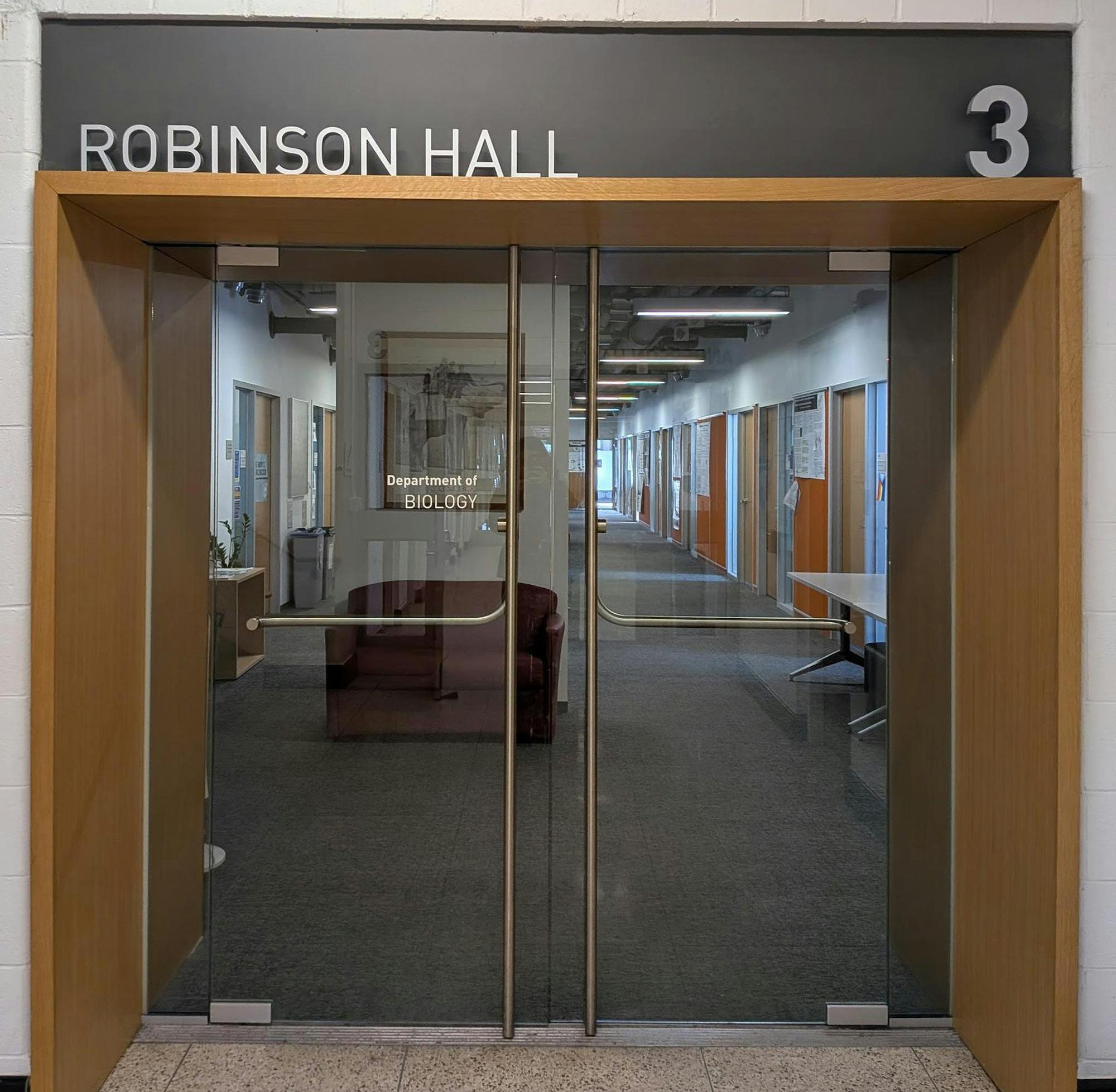
The Tufts Department of Biology is pictured.
THURSDAY, FEBUARY 5, 2026
Dissertation Diaries: Nicholas Mandel
William Nguyen Staff Writer
Originally Published Jan. 22.
Welcome back to a new semester of Dissertation Diaries. This is the series where we highlight Ph.D. students at Tufts as they approach the end of their degree. This time, we will be highlighting Nicholas Mandel, a fifth-year Ph.D. student in the Sergei Mirkin Lab here at Tufts.
Mandel attended the University of Central Florida after growing up in Tampa, Fla. Originally studying biology, Mandel kept asking questions that his professors would inevitably answer with “you’ll learn that in biochemistry.” This led him to switch his major to chemistry in an attempt to find answers to those lingering questions. Mandel describes chemistry as a “really mystical and kind of bizarre science when it comes down to bridging the gaps between biology and physics.”
While Mandel was a student at UCF, he met a doctor through a brief internship that introduced him to Tufts, prompting him to do more research into the school.
Mandel was particularly drawn to the Mirkin and McVey labs at Tufts as their research focused on DNA replication and repair, reinforcing his understanding of the mechanisms he was learning in his biochemistry class.
The Mirkin Lab, which he ultimately chose for his Ph.D., examines DNA structure and function, with a focus on understanding how structure-prone DNA repeats lead to genome instability.
DNA is generally known to exhibit a duplex form, with two separate strands forming a double helix. It’s made up of monomers called nucleotides, which contains three components: a nitrogenous base, a five-carbon sugar and a phosphate group. The possible nitrogenous bases in DNA are adenine, thymine, guanine and cytosine, with adenine pairing with thymine and guanine with cytosine.
Although DNA is depicted as a double helix, its structure is far more versatile. Repetitive DNA sequences are patterns observed in DNA that can occur multiple times within a copy of the genome.
What intrigued Mandel was the phenomenon in which these repeat sequences result in unusual DNA structures. More specifically, they can form knots, G-quartets or even triple-stranded DNA molecules.
Enzymes cut and repair DNA, but this process can lead to entanglements that form knots. G-quartets, also known as G-quadruplexes, form from guanine-rich sequences that self-bond through hydrogen-bond base pairings. These resulting structures have many implications for DNA functioning and processes.
Mandel is currently studying how the different structures previously mentioned impact DNA replication.
While workshopping techniques in the lab, Mandel observed replication stalling within a specific DNA sequence — analogous to traffic jams and roadblocks. This discovery inspired his current project, as he is now investigating the underlying causes and consequences of these repetitive sequences.

These findings have important implications for human health. Cerebellar Ataxia with Neuropathy and Vestibular Areflexia Syndrome, or CANVAS, is a neurodegenerative disorder resulting from malfunctioning genes.
Repeat expansions in the replication factor C subunit 1 gene are known to cause CANVAS. Healthy individuals have a gene with the sequence AAAAG, whereas in individuals with CANVAS, as the ratio between adenine and guanine is altered.
A normal RFC1 gene typically has between 10 and 200 AAAAG repeats, while more than 400 AAGGG repeats serves as a threshold for individuals diagnosed with CANVAS.
There are other mutations in the RFC1 gene, however, there is not sufficient research to understand their direct correlation to the disease.
Mandel has also been involved with other projects throughout his time at Tufts. During his first few years as a Ph.D. student, he studied to conduct research and eventually publish a paper. Later into his career, he had the opportunity to collaborate with other institutions and offer his skillset.
Mandel said that his favorite aspect of research is being wherever he’s currently working.
After gaining familiarity with the lab and research, Mandel enjoys having autonomy: “Now,
as I’ve gotten older and have my own projects, it’s nice to go, ‘I know where I want to go with this project, and I have different students that have their individual skills.’ They’re going to handle that aspect of this project, and … assume more of a leadership role in that particular position.”
Mandel shares that a significant challenge he has faced through the years is imposter syndrome. The idea of pursuing a Ph.D. may be daunting due to the belief that only highly qualified and capable individuals are able to achieve it. After assuming larger responsibilities, he handled this challenge by continuing “to move to the next thing.”

GRAPHIC BY SHEA TOMAC
2026 Indoor Grand Prix brings world records and showdowns
Lena Tang Contributing Writer
Bringing the heat to Boston’s winter, track and field champions from around the world convened at the TRACK at New Balance on Saturday for the annual New Balance Indoor Grand Prix. This premier encounter commenced the World Athletics Indoor Tour Gold and was the first meet of the season for many competitors. Energy was high as fans filled the stands. Two world records were set in distance events: the men’s indoor 2000 meters by American Hobbs Kessler, and the men’s 800 by American Josh Hoey. The meet culminated with a highly anticipated face-off between sprinting legends American Noah Lyles and Trinidadian Jereem Richards in the 300.
The meet started off with the men’s triple jump, where American James Carter took the event title with a season’s best distance of 16.32 meters. Canadian Femi Akinduro and three-time NCAA champion Emmanuel Ihemeje of Italy took second and third place with remarkable jumps of 16.09 meters and 15.65 meters, respectively.
The men’s 3000 run had a heated lineup, with runners from Ireland, Australia and the United States. The 19-year-old Australian Cameron Myers won the event in a time of 7:27.57, setting the world lead.
The women’s 60 hurdles were a dominant display for Caribbean athletes. Danielle Williams of Jamaica won with a world-leading 7.87 seconds, taking the world-lead title from 60 hurdles world record holder Devynne Charlton of the Bahamas.” [Boston is] really cold, it’s really fun. I always enjoy coming out here,” Williams said in a statement to the Daily. “I love competition, I thrive on competition.”
In the men’s 60 hurdles, world silver medalist in the 110 hurdles Trey Cunningham of the United States won with a world-leading time of 7.48 seconds.
“[We] always need breaks. Obviously we’re very goal-oriented in this sport, and we want so many different things,” United States’ Cordell Tinch said to the Daily after
A contentious 2026 World Cup
In our last edition, we discussed a possible German boycott of the 2026 World Cup, proposed by a senior member of their football federation in response to President Donald Trump’s criticism of European alliances and his attempts to acquire Greenland. This past week, the German Football Federation met to discuss the boycott. The conclusion: A boycott will not happen.
The decision was framed around the ‘unifying power of football’ and the hope that the
coming fifth out of six in the men’s 60 hurdles. “But at the same time, to come out and make sure you are healthy — make sure you’re happy — that’s always the biggest thing.”
In the men’s 600 run, Ireland’s Cian McPhillips achieved a win with a PB of 1:16.37. Runner-up Donavan Brazier reflected on his 2025 season to the press, saying his and his teammates greatest areas for improvement are “over-racing, running through pain and not being transparent with my coach about how I feel. … We learn from those mistakes and try not to make them again.”
Bryce Hoppel came in a close third place. “I saw the pacer take off, and I was like, ooh, we might be in a little bit of trouble here. But it’s just the beginning — we gotta start somewhere,” Hoppel said to the press. Looking ahead, Hoppel hopes to be in Budapest, get a top 16 ranking and represent the United States.
The men’s 400 was a shakeup, as the United States’ Khalbe McRae won with a time of 45.38, beating out Olympic gold medalist and high school senior Quincy Wilson, who finished second with a time of 45.96. “I think it’s a pretty good start. I’m happy with it. 45 [seconds] is a great time, really. … I want to go out with a bang — it’s my senior year,” Wilson said to the media, wearing his own design of limited-edition spikes.
Wilson recently made headlines for his decision to run at the University of Maryland instead of professionally. “I want to finish off where I started from. Great coaching, great environment … like you said, it’s their opinion. I have my opinion — I feel like that’s all that really matters,” Wilson said in a statement to the Daily.
In a race with a loaded lineup, the United Kingdom’s Nicole Yeargin won the women’s 400, followed by the United States’ Anna Hall, Paris Peoples and Amy Piccolo.
Post-race, Yeargin spoke promisingly about the future. “First one down, it can only go up from here. I’m glad that I came here and it’s going well … it’s a good track, good environment, good food,” Yeargin said.
tournament could serve as a positive force in the world. The DFB also rebuked Vice President Oke Göttlich, who proposed the boycott, stating that such debates are better conducted internally rather than publicly. While the federation’s belief in the World Cup as a positive global force has merit, this decision raises questions about complicity. By not addressing what some view as overreach and contentious behavior by the U.S. government, there’s concern that silence may enable further controversial political actions. Though football often exists separately from politics, history shows numerous instances where the sport and political statements have intersected. Sometimes the field provides the best platform for such statements; sometimes it doesn’t.

Yeargin also shared that she moved from Houston to Fort Worth, Texas in the past year. “I have a coach who’s like family [in Fort Worth]. He knows me inside and out — he knows how to push me in the right direction,” she said about coach Greg Sholars at Athletic Performance Ranch.
Hall, the second-place finisher, was disadvantaged due to competing in the long jump shortly prior. “I got ran down which is never fun, but [Yeargin’s] a really strong runner so lots of respect for her. I knew coming off the turn it was going to be tough,” she told the press. “Obviously I always wish to get the win but really this was just a checkpoint to see where we are fitness-wise.”
Hall got engaged to New York Giants wide receiver Darius Slayton in November, making the controversial decision to hyphenate her last name despite being an athlete known under her maiden name. “Knock on wood, if I keep PR-ing and keep making records with the new name, I would like people to be able to [keep] see[ing] Hall and Hall-Slayton in the record books,” Hall said in a statement to the Daily. “It’s really important to me to become a part of his family and [for] him [to become] a part of my family, so I feel like having an ode to both just felt right.”
Kessler broke the first world record of the day in the 2000 with a time of 4:48.79, bolting past
As a World Cup fan who awaits the tournament every four years with immense excitement, I would hate to see it cancelled. There is, however, a moral obligation to acknowledge that the international football community (led primarily by FIFA) faces an ethical dilemma in proceeding with a tournament under the current U.S. administration. I’m not advocating for cancellation, but I do believe the international football community has the power, and responsibility, to uphold values beyond invented peace prizes.
Another concern is that the environmental and political differences between the three host nations (the united states, Mexico and Canada) may result in a fragmented and disconnected World Cup experience. Since the announcement of the tournament in 2017, skepticism
American Grant Fisher in an explosive final lap. The record was previously held by Ethiopia’s Kenenisa Bekele.
In the men’s 800, Josh Hoey broke a 29-year-old indoor world record with his 1:42.50 finish, less than two months after shattering the men’s 600 record at the same venue. His brother Jaxson Hoey set the pace for him during the first half of the race, after which Josh Hoey completely took off. The men’s 800 indoor record was previously set by Denmark’s Wilson Kipketer in 1997.
At one point during the competition, the lights dimmed and sparks flew out of one side of the track. A video edit of Lyles flashed across the big screen as he emerged from the crowd. Leading up to the Grand Prix, World Athletics sparked hype for this 300 showdown online.
The winner was Richards with a 32.14 sprint, edging out Lyles by a margin of a mere 0.01 seconds.
“The plan was to go all out. Everything this year is going to be all out, as much as I can, from the getgo. Just jump off the cliff, you know,” Lyles commented to the press.
For the last four years, Lyles has competed and won the 60 event, so running the 300 was a change. “Last 50 [meters], I was fighting. I was swimming a little bit. … Of course I didn’t want to lose … but if you beat me, that means you’re a champion,” Lyles said.
Lyles also expressed the importance of showmanship. “We gotta
of a three-country format prevailed. Many believed it would spread the tournament too thin and prevent the concentration of fans necessary for a passionate, electric atmosphere. I maintain that belief.
I’m confident that in Mexico, the World Cup will carry significant weight. Mexicans love football and are already building excitement and anticipation for the tournament. In Canada, where football is still developing, the tournament will serve as a test of whether the country can fully embrace the global football community. I believe they will rise to the occasion. Canadians have a deep sense of national pride and strong community bonds — qualities that translate well to the collective experience of a World Cup. Whether their team advances or exits early, Canadian fans will show up and immerse them -
have the crowd, gotta keep them entertained because, at the end of the day, we’re asking for more. We’re asking for more energy, we’re asking for more money, we’re asking for more TV time,” Lyles said. Lyles himself came up with the idea to enter through the stands to add entertainment value. “I was watching WWE Monday Night Raw, and Jey Uso always comes from the stands to the ring. And I said, ‘That. I want that. I want to do that,’” Lyles said.
The sprinter got engaged in October 2024 to fellow track star Junelle Bromfield and plans to get married in 2026. Speaking on his goals for 2026, Lyle said, “Anything and everything. And to get married.”
“Once the Diamond Leagues start picking up, I’ll be there. I’ll be running. You’re gonna get your heavy dose of Noah Lyles, I promise you that. And for anybody who wants to race, come get some,” Lyles added.
Vernon Norwood finished in third place in the 300 competition. “I lost a little technique in my race. … I’m trying every day to work on the little things to get better. You know, it’s fun. I love it,” Norwood said.
The World Athletics Indoor Tour Gold also held competitions on Jan. 30–Feb. 1 with the Millrose Games in New York City and on Feb. 3 with the Czech Indoor Gala in the Czech Republic. Their next competition will be on Feb. 6 in Madrid.
selves in the spirit of the tournament, creating an atmosphere that will prove contagious to visitors.
The main issue is clear: In the United States, the World Cup isn’t a central topic of conversation, and it won’t be. Americans are grappling with far more pressing concerns, including the state of their democracy. I don’t blame them for this — these issues demand attention. But this means the tournament will inevitably be diminished in one of its host countries, overshadowed by political turmoil rather than celebrated as the unifying event it could be.
It’s difficult to reconcile celebrating a tournament many love while grappling with controversial political realities.
Road to the World Cup
Antonia Toro
COURTESY NATALIE GERMANOV
United States’ Trey Cunningham takes the banner in a tight men’s 60 meter hurdle race.
Antonia Toro is a sophomore who has yet to declare a major. Antonia can be reached at antonia. toro@tufts.edu.
Tufts men’s basketball faces a weekend of loss and redemption
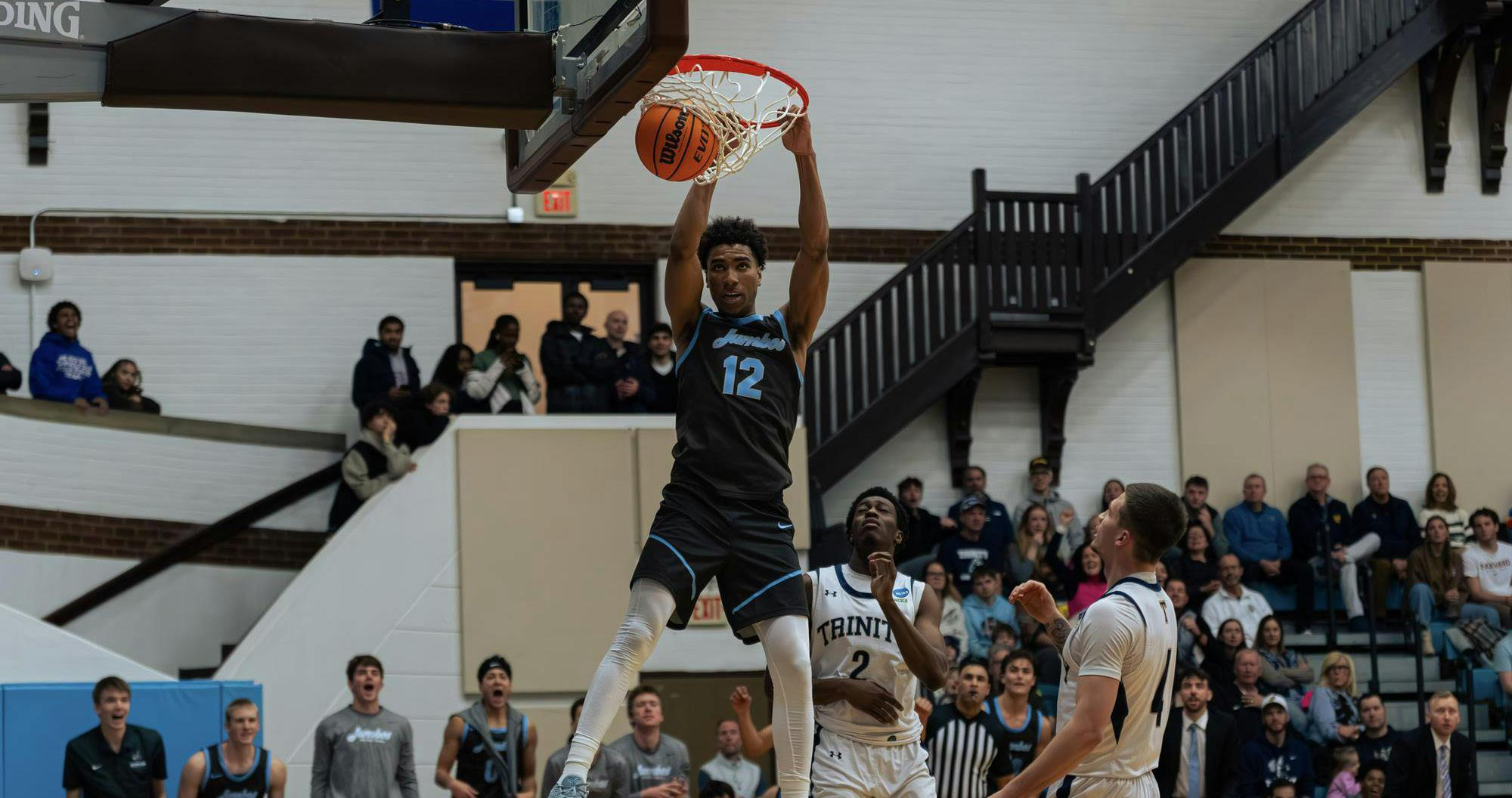
Last weekend, Tufts men’s basketball played their most consequential pair of games yet. Entering a backto-back against two formi dable NESCAC opponents: No. 19 Wesleyan and No. 2 Trinity, Tufts brought with them a commanding 16-game win streak and an undefeated record in conference play.
Tufts vs. Wesleyan on Friday night proved to be a grueling, sluggish affair. From the anthem and tip, both coaches opted for similar defensive schemes, shifting between a loose 3-2 zone and aggressive man-to-man coverages. Initially, Tufts maintained a narrow lead, shooting 6–15 from the 3-point range as a team in the first half. Senior guard James Morakis, who was honored for entering Tufts’ 1,000-point club before the game, quickly broke out of his shooting slump, and junior guard Zion Watt and junior guard Dylan Reilly lit up Wesleyan. After a thunderous dunk by Joshua Bernstein, senior center, to close the half, Tufts led Wesleyan 38–35.

favorable matchup. The ball hit the post, Gyimesi bullied his defender out of position, repeatedly finishing with a deadly mechanical hook shot over his right shoulder.
But Tufts slowly began to slip. Down the final stretch, Wesleyan guard Sam Pohlman and forward Oscar Edelman began to dissect the Tufts pickand-roll coverage, continually converting advantages. The Jumbos went frigid from three in the second half, shooting 1–12.
Final score: 68–61, Wesleyan.
Tufts suffered their first loss in 16
A note on that 16-game win streak: That was the second longest winning streak in the program’s history, behind the 194950 Jumbos who won 17 games. While a streak builds confidence, it will always snap and how one responds is the true test. Last year, Tufts lost to Trinity twice — one a 45–81 trouncing, and another blow out in the NESCAC semifinals. Trinity went on to win the NESCAC again and is currently ranked No. 2 in the country.
The fans were entertained at halftime by a game of knockout consisting solely of Tufts faculty.
The second half was a different story for the Jumbos. The product of the crowded schemes was a game dictated by scrappiness and bruises — it was to be won or lost in the trenches. Despite the congestion, the Jumbos continued to manufacture offense in an unpretty, but inevitably effective, fashion. The team moved through its standard actions — pick-androlls, dribble hand-offs — slowly generating switches until senior forward Scott Gyimesi found a
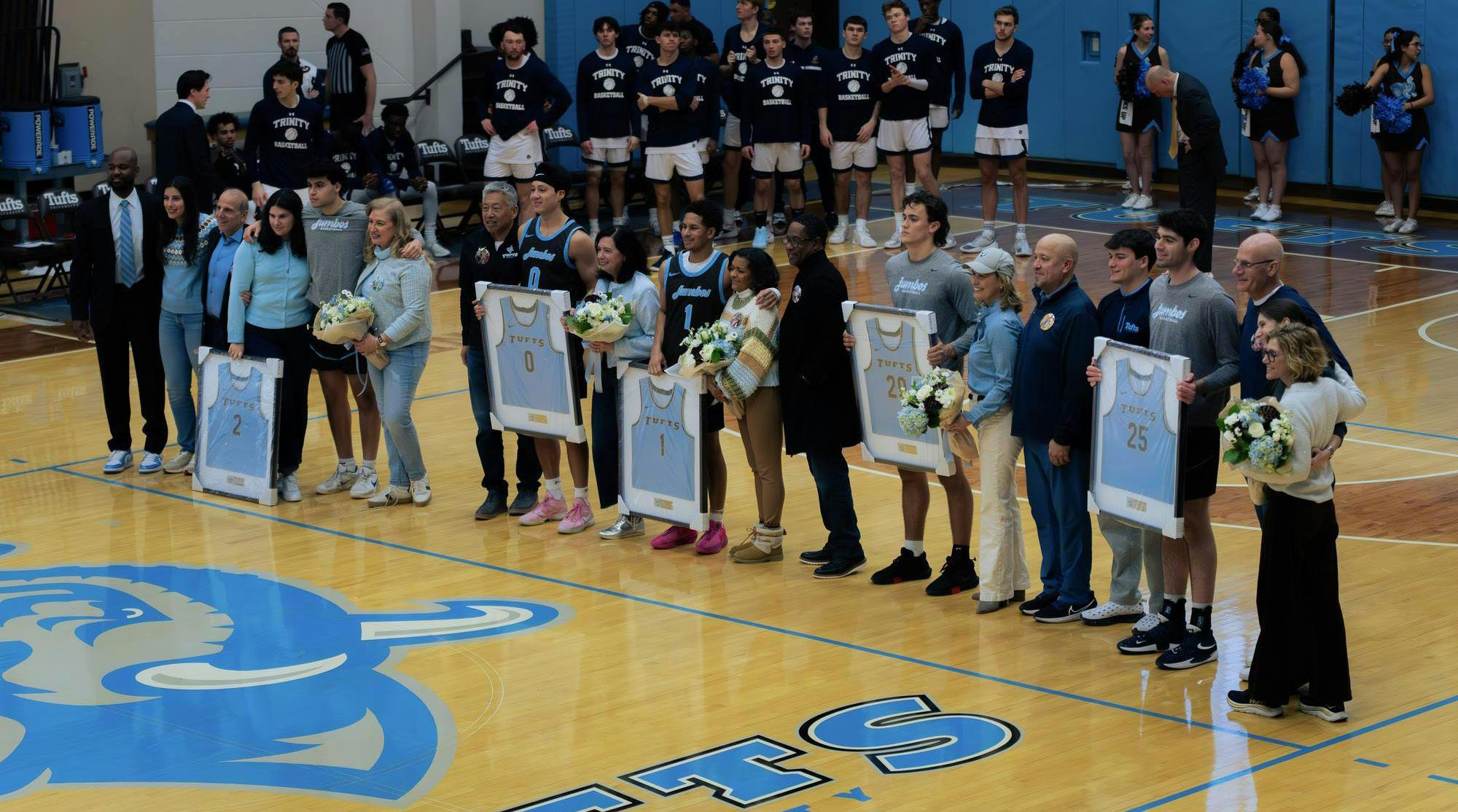
A night of terrible sleep, and a chance at redemption the next day. Saturday against Trinity was Senior Day. Before the matinee, Gyimesi, Morakis, Bernstein, senior guard Sidney Wooten and senior guard Theo Liu were honored. Unfortunately, the delightful buzz and the ceremony’s joyous residue instantaneously evaporated at the ball’s tip. Before coach Brandon Linton had an opportunity to call a timeout, the score was 11–0, Trinity. Unlike the Wesleyan matchup, the Trinity game was noticeably quicker. Versatile Trinity forward Tristan Davis menaced the paint and star wing Jarrel Okorougo abused Tufts in the mid-range. The lead
ballooned to 17 and was trimmed to 13 at the half after bursts from Reilly and first-year guard Ricardo Nieves. Towards the end of the first half, Nieves attacked right off the dribble, and appeared to beat his man Davis. He flew towards the basket, but opted for a finish slightly too high on the glass, which was all Davis needed to eviscerate Nieves’ layup off the glass. That block punctuated a hopeless first half.
Trinity led 40–27 at the break.
In the second half, coach Linton changed his strategy: He swapped to smaller lineups, which revolved around sophomore forward Robbie Nyamwaya at center. These lineups helped the Jumbos stay afloat in the first half, but proved crucial in the second. As a spectator, it was clear that the team began to tactically understand Trinity. Superstition set in among the spectators. Magically, the momentum began to shift, and the team began to whir. Gyimesi pummeled to the low block, and made beautiful

and quick reads against double and triple teams. The gears of offense turned from these advantages. Nyamwaya made several key reads off cuts, and held down the paint on defense. Watt and Reilly timely time ly shots. Junior guard Jon Medley made an absolutely tough fading, contested deep 2-pointer to cut the lead to one. Nieves played clutch bas ketball, leading the team with an efficient 15. After a Gyimesi putback gave Tufts the lead, the team went on a 4–0 run to end the game. Trinity left shaking their heads.
The Jumbos bested the Bantams 68-62, outscoring them 41–22 in the second half.
This was the win that crystallized the team’s identity. Postgame, coach Linton praised his squad’s maturity. ”[Against Wesleyan], we were in full control. We had a lot of boneheaded mistakes, both on the players’ end and the coaching staff’s end, that we all collectively
said ... the only thing we can do is learn from it ... to see us have poise to execute, to play with IQ down the stretch of this game and learn from that, not doing it at home at a high level the night before,” he said. “It wasn’t always pretty, it wasn’t always perfect, but we were playing with the proper level of fight, which was the most important thing at that time, trying to claw back … Robby [Nyamwaya] and Ricardo Nieves, those two just gave such a spark off the bench, a well-needed one as well. And the guys all fed off of that,” he added.
Gyimesi also spoke of the significance of this win. “This is a big win for us. It’s personal. These guys have had our number for the past few years, so it’s really good to prove to ourselves that we can beat them. Yeah, we can beat anyone,” he said. Tufts is now tied for first with Wesleyan in the NESCAC standings.
STELLA JEONG / THE TUFTS DAILY
Junior guard Zion Watt scores a dunk.
Jonah Cowan Staff Writer
STELLA JEONG / THE TUFTS DAILY
Seniors celebrate their last season with their parents.