Welcome to Issue 15 of The Trinity Inquirer, a collection of student writing that highlights the ideas, voices, and talents of students across the Senior School.
In this issue, you will find a wide range of thoughtful and carefully crafted pieces. Our contributors explore the promises and challenges of artificial intelligence, analyse Shakespeare’s enduring influence, question the fairness of grading systems, and take you on a scientific journey through the history of benzene You will also encounter a compelling pair of papers debating whether string theory can be considered a scientific theory, as well as a detailed look at Japan’s visionary high-speed rail system in The Dream Express.
Creative reflections, club insights, and academic investigations make this an engaging and intellectually rich edition
The views expressed in the opinion pieces are those of the authors and do not necessarily reflect the views of the School or the Editorial Team.
You will also find “Challenge Yourself” pages featuring competitions and enrichment opportunities, along with puzzles designed to stretch your reasoning and curiosity We hope these pages offer something enjoyable, challenging, and thought-provoking.
We are grateful to every student who contributed their work to this edition. Thank you for your effort, commitment, and willingness to share your ideas
We hope you enjoy reading this edition as much as we enjoyed shaping it. May it inspire new ideas, spark curiosity, and encourage you to contribute to future issues of The Trinity Inquirer.
The Editorial Team
OPINION
Notes on Progression
A compelling analysis of both the sublime and harrowing hallmarks of human progression. By Jayan Atukorala (Year 10)
The Phenomenological Shakespeare - Thought and Perception
Diving into Shakespeare's great works, catalysing the invention of modern selfhood and consciousness. By Matthew Fallscheer (Year 12)
Our Perfectly Imperfect Grading System
Sharp and calculated critiques of the school's grading system, discussing the interplay of competitiveness and academic aspirations. By Evan Deng (Year 9)
The Impact of AI in Academics
Interrogating the notion that the use of AI within schools always bring about benefits. By Oscar Lowe and Dean Gallace (Year 8)
SCIENCE
The History of Benzene
Unpacking the enigmatic journey of benzene, from elusive aromatic to the cornerstone of modern chemical theory. By Jerry Hao (Year 11)
The Gravity of the Universe
An imaginative exploration of what might happen if gravity disappeared for five seconds, blending vivid storytelling with scientific ideas By Ryan Lui (Year 9)
Is String Theory a Scientific Theory?
Examines whether string theory qualifies as a scientific theory within modern philosophy of science. By Eason Yang (Year 12)
The Dream Express
How Japan’s Shinkansen reshaped high-speed rail. By James Tsui (Year 12)
COMPETITIONS & CHALLENGES
Challenge Yourself
Information on various academic and extracurricular competitions available for students
INTERVIEW
Club Interview: Classics Club
A snapshot of the Classics Club and its passion for ancient history, language, and culture. By Evan Deng (Year 9)
PUZZLES
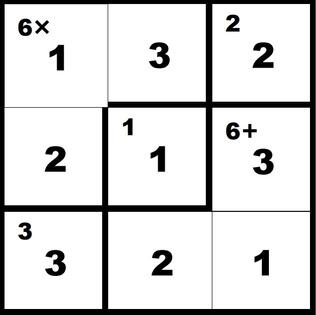
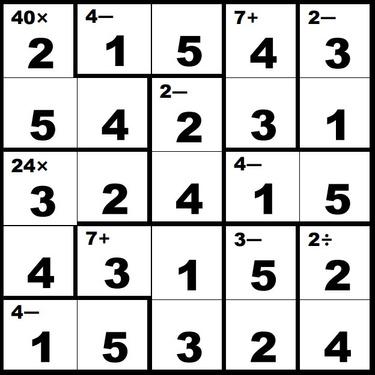
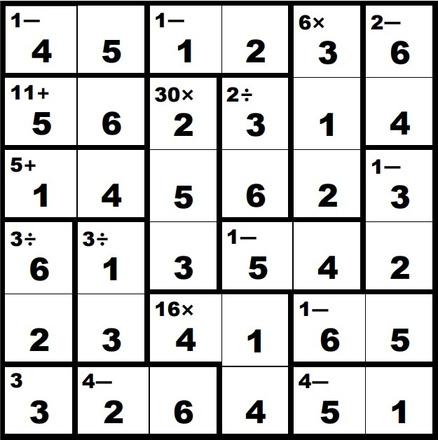
KenKen
A selection of KenKen puzzles for students to solve PUZZLE SOLUTIONS
REFERENCES AND IMAGE SOURCES
Pages 3-4
Pages 5-7
Pages 8-9
Page 10
Pages 11-15
Pages 16-17
Pages 18-21
Pages 22-25
Pages 26-27
Page 28
Page 29
Page 30
Pages 31-33
Notes on Progression
Opinion
A compelling analysis of both the sublime and harrowing hallmarks of human progression.
By Jayan Atukorala (Year 10)
NASA has announced that it will begin to send astronauts to Mars as early as the 2030s Through innovation and ingenuity, humanity has indeed progressed to the point where space exploration and planetary conquest are not mere dreams by some opioid-addicted 17thcentury astronomer, but reality.
The development and refinement of space travel is just one example of the progress we humans have made to solidify our standing as masters of Earth. The medicines and extensive healthcare systems we have created have allowed us to live longer and longer The scientific knowledge we have at our fingertips has allowed us to achieve anything from creating new drugs to genetically modifying crops. We are one step closer to creating a perfect world We have certainly come a long way from our ancestors 10,000 years ago; but we must ask ourselves whether our rise has actually been good.
Since 1500, almost a thousand species have been driven to extinction through human activity. Due to leaps in technology, almost 90 percent of global fish stocks are now fully exploited or overfished, according to the World Bank. Our advanced scientific knowledge has indeed created lifesaving drugs, but at the same time created drugs such as heroin, which have destroyed the very fabric of society. The development of nuclear weapons and advanced military apparatus has created a culture of fear and hysteria which threatens to destroy the very foundations of humanity We have now become the most destructive species on this planet, capable of destroying life on Earth For all the scientific progress we have achieved, our technology has also unleashed more problems on the human race. Yet our desire to strive for perfection means we cannot stop.
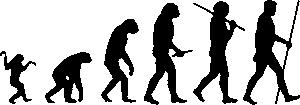
Image 1 - Humanity has evolved dramatically, and with implications
Humans tend to scorn their ancestors, to treat those who came before them with contempt and revulsion, presuming them to be mere beasts But in order to learn the true impact of our progression, it is vitally necessary to examine those who came before us, those nomads who lived in what was an icy wasteland 10,000 years ago Our huntergatherer ancestors took sustenance from the land they lived on and in return protected the land by not changing it. They knew not of farming, chemical engineering, astronomy, trigonometry, or analytical essay writing The world in which they lived was not filled with towering skyscrapers There was no Minecraft The environment was kept the same way, with minimal destruction, for thousands of years. Of course, they died at about age 25. Currently, the average Earthling can expect to live for about 70 years
In contrast, in the modern age, humanity has progressed to the point where we are started for the very vaguest of reasons, fuelled by greed and self-interest. There is significant inequality in every society, leaving some to suffer the most impoverished lives while their brethren enjoy the fruits of opulence There is an obsessive desire to own as much as possible – capital, property, wealth – leading to conflict when even the slightest of demands are not met. Simply put, humanity has indeed progressed; we have increased our life expectancy, for instance
Continued over the page
Notes on Progression
However, we are struggling more than our neolithic ancestors Our progress and desire to attain perfection has, unfortunately, unleashed more problems on the human race. Yet somehow, we cannot stop.
Perhaps no book captures the impact of humanity’s obsessive desire to improve itself more than Brave New World Aldous Huxley envisages a world in which humanity has developed and progressed to the point where everything and everyone is perfect. But it is an artificial society, the happiness of everyone dependent on a miracle drug named “soma”. The people, with the exceptions of John the Savage and Bernard Marx, are too perfect, lacking creativity and independence, enslaved by drugs and out of touch with the natural world. Brave New World provides a stark warning to humanity; by constantly trying to improve ourselves and our lives, we will simply lose what it means to be human It is pointless if we are perfect, yet incapable of expressing authentic emotions and exploring the vitality of life. Brave New World was an envisagement of the future – a future which is gradually becoming a reality
To elaborate on this point, we must imagine a plant We want this plant to quickly grow stronger so we add fertilisers We also prune the plant because we want it to look attractive. In other words, we want this plant to appear perfect. However, when we fertilise and prune too much, the plant starts to wilt This is contrasted strongly to a plant without any human interference. Although it may not grow as quickly, at least it functions well on its own. In a sentence, excessive progress will actually hinder the development of humanity Thus, the obvious questions that surfaces from the depths of thought is: “What can we do to prevent a Brave New World?”
To abandon our lives is simply absurd The world of humanity has become too “developed” to be abandoned.
Firstly, we must redefine our notion of a “perfect world”. Wikipedia claims that it is the state of “having all of the required desirable elements, qualities, or characteristics”. However, as Vladimir Horowitz, the acclaimed Russian pianist, once stated, “Perfection itself is imperfection”
The answer lies in not trying to be perfect; we can never achieve it. Bearing that in mind, it is integral that we stop mindlessly seeking improvement; we must ensure that the welfare of every human on this planet is the best it can be. But at the same time, instead of vanquishing our occupations and hurrying to the woods to live lives of isolation and simplicity, we must reflect on the technological innovations that are being unleashed upon this world and understand whether they will really benefit our lives or just deprive us of what it means to be human. Will biohacking make us look like robots? Will gene editing make us perfect, but, at the same time, artificial? Progress can, and has ensured humans are the most dominant species on Earth. But it is an addictive urge, whose destructive impact cannot be ignored by the human race Humanity’s desire to progress and be perfect can be a road to destruction For perfection is not as great as it is said to be.
Image 2: The consequences of our progress
The Phenomenological Shakespeare - Thought and Perception
Opinion
Diving into Shakespeare’s great works, catalysing the invention of modern selfhood and consciousness By Matthew Fallscheer (Year 12)
“So long as men breathe, or eyes can see So long lives this, and this gives life to thee”
Sonnet 18
Albeit an ever-debatable topic, the ‘largest’ change in history is, in a sense, definite; insofar as anything is – definite by context It is, after all, the plague of historicism that “men may construe things after their fashion, clean from the purpose of the things themselves” (Julius Caesar, William Shakespeare) Therefore, accepting this as an inevitability, within this writer’s context of the English language and its written expression, it is self-evident that the greatest change is none other than the work of William Shakespeare
Notwithstanding his own merit in dramatic and non-dramatic writings alike, Shakespeare’s credits stretch across centuries far beyond his death in 1616, something predicted by Ben Jonson, a contemporary, when he labelled the Bard “not for an age, but for all time”. In an equally aggrandising phrase, Samuel Johnson of the 18th century noted that his “excellence is not the fiction of a tale but the representation of life”, a view shared by Coleridge in the proceeding century“Shakespeare knew the human mind” - and Harold Bloom in the one preceding our own, contending, quite dramatically, that “the plays remain the outward limit of human achievement”.
It must be said, however, that in referring to Shakespeare as a ‘change’, the Bard’s nature is more phenomenological than materially cataclysmic – his plays are not the fall of Rome, in simple terms,
Image1: Shakespeare, a legend of English
but have had such drastic impact that they redefine how we perceive the fall itself, and ‘events’ more broadly
I use ‘event’ in the same way as philosopher Slavoj Zizek and his antecedents, a theory most expediently explained by example: Christianity is evental because to be Christian is to believe in the ‘event’ of Jesus’ resurrection Likewise, this essay shall contend, to be Western and human is to believe in the evental Shakespeare, who, in the words of Harold Bloom “we need to… read… as strenuously as we can, while knowing that his plays will read us more energetically still”. To continue as before, the issue is not in determining Shakespeare’s significance across time: his mark is said, rightly, to be indelible, to such an extent that “in the end you possibly can’t get rid of Shakespeare without abolishing the very notion of literature” (Frank Kermode)
In the modern day, Shakespeare’s most eminent ‘collection’ is commonly understood to be the tragedies, and within this category the pre-eminent work is Hamlet.
Perhaps the only relevant dissention comes from T. S. Eliot, who labelled Hamlet “certainly an artistic failure” and “the ‘Mona Lisa’ of literature”, referring in his criticism to the play’s failures as a ‘whole’ – meaning,
Continued over the page
The Phenomenological Shakespeare - Thought and Perception
The Phenomenological Shakespeare - Thought and Perception
essentially, that Hamlet failed to be a proper vessel for Hamlet Bloom acknowledges this, as “a revenge tragedy”, which Hamlet is wholly by Eliot’s notion, “does not afford the scope for the leading Western representation of an intellectual”. The refutation of this view is that “[Hamlet] is the theatre of the world”, in a similar sense to The Divine Comedy, Paradise Lost, and Faust The issue is, thusly, either in the minutiae of interpretation in the critical matters, as has just been explored briefly; or, temporally and historically, in Shakespeare’s definite linguistic and social impact, if not in the innovation of consciousness itself through Shakespeare as ‘event’. In aiming primarily at the latter category, the present essay will confine its inquiry to a single historical anchor and play – Hamlet, as is already underway – to ascertain its significance as a point of cultural and psychic revolution, and by extrapolation the monumental mark of its author, which extends over a multitude of masterpieces Through this, one can begin to understand the ‘evental’ Shakespeare, whose writings are of such significance that we can never go back.
Bloom audaciously associates Hamlet with the invention of self-reflection Whilst shrouded in the mystical uncertainty of forgotten history and various contentions regarding its emergence, Bloom contends that this play of 425 years was the “invention of the human”, as his 1998 work on the subject is titled By this he means the invention of narrative self-consciousness, as, according to Bloom, “literary character before Shakespeare is relatively unchanging” “In Shakespeare”, however, “characters develop rather than unfold because they reconceive themselves” The monologues of the titular character are perhaps the best example of this extant:
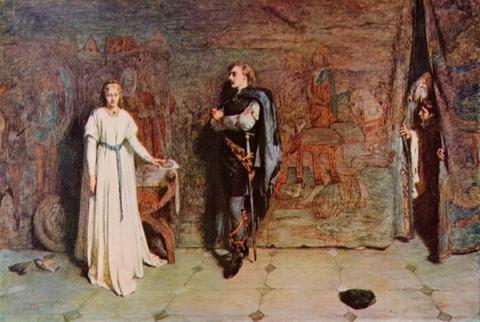
Image 2: Hamlet and Ophelia, Hamlet Act III, Scene 1
“To be, or not to be, that is the question: Whether ’tis nobler in the mind to suffer The slings and arrows of outrageous fortune, Or to take arms against a sea of troubles And by opposing end them To die – to sleep, No more; and by a sleep to say we end The heart-ache and the thousand natural shocks That flesh is heir to: ’tis a consummation Devoutly to be wished To die, to sleep ”
In this opening section of the famous Act Three monologue, Hamlet is in the midst of this ‘reconception’ The prince, in his contemplation of whether “to be, or not to be”, is considering existence in its greatest sense, and in doing so becoming the archetype of the intellectual – not merely the Prince of Denmark, not merely affected by what many critics call his peculiar ‘madness’, but reconceiving himself as an existential agent He is considering “the heart-ache and the thousand natural shocks that the flesh is heir to”, and later “the whips and scorns of time”, as an entity in himself, not defaulting to God or Gods to determine his course As the final proof of this he resolves his thought himself:
The Phenomenological Shakespeare - Thought and Perception
“Thus conscience doth make cowards of us all, And thus the native hue of resolution Is sicklied o'er with the pale cast of thought, And enterprises of great pith and moment With this regard their currents turn awry And lose the name of action ”
It is in this manner of expression, its aesthetic brilliance which there isn’t the space to unpack, and the ‘reconception’ intrinsic to it, that one necessarily arrives at a conception of Hamlet as so singular that his lines “might as well have been written by him”, as “Hamlet takes up all the mental space that any play can hope to occupy” (Bloom)
What has been fashioned, therefore, is an archetypal self-reflection, of perfect intellect limited only by the bounds of life itself Nietzsche explains Hamlet’s condition in The Birth of Tragedy as being that “he loads too many alien grave words and values on himself, and then life seems a desert to him” – simply, that he thinks too perfectly Hamlet is, therefore, “the invention of the human” as a self-reflective entity The play, as “an anomaly in [Shakespeare’s] canon”, functions sociohistorically as the Bard’s superlative work, and the ultimate example of his “infinite reverberations”
Through this character, humanity has in itself a new facet and expression of itself hitherto unseen in narrative in such complexity In this sense, Hamlet “[transcends] us utterly”, such that humanity’s conscience is “flooded” by “plays [that] read me better than I read them”, all of which leads to the ultimate degree of literary achievement, in which “new modes of consciousness come into being” This is the essential contention of Harold Bloom’s Invention of the Human.
To relate this historically and to return to the notion of the evental Shakespeare, profound innovations such as Hamlet inexorably alter the way in which we consume narratives by virtue of their pervasiveness and truth to perception A more palatable expression of this, perhaps, is how when one believes in God, He is seen everywhere and in everything. The Christian belief is in the resurrection of Christ that invariably leads to this revelation in perception, and in Shakespeare it is the use of his language, his stories, his words and constructions. Therefore, one can practically claim that roughly from 1589 to 1612, the largest change in human history occurred, and our retroactive conception of his significance is evidence enough of the evental ‘belief’ in Shakespeare and all he created.
Thus, because of Shakespeare, humanity has undergone its own ‘reconception’ phenomenologically – perceiving because of him in a profoundly different manner; in the case of Hamlet, having self-reflection and reconception as integral facets of modern perception in narratives and, resultantly, in each individual ‘self’
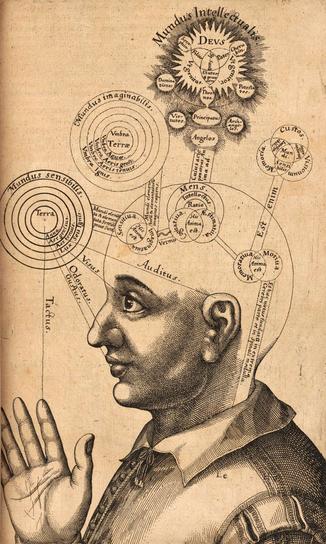
Image 3: The works of Shakespeare open up phenomenological psychology
Our Perfectly Imperfect Grading System
Opinion
A thoughtful and considered discussion of the school’s grading system, examining the interplay of competitiveness and academic aspirations
By Evan Deng (Year 9)
Teams, Com-Portal, OneNote, and even Outlook are all used in different ways for teachers to record and share assessments. Although none of these platforms shows Distinction or Merit points directly, the results entered into them eventually feed into the central system that determines academic awards each semester. No matter where the assessments appear, they tend to draw our attention, whether they reflect strong achievement or areas for improvement
Our grading system is a detailed and comprehensive framework, with several categories used to recognise a student’s academic growth The process begins with the grading phase, where a teacher awards marks such as A plus, A, B plus, or B. This usually results in a letter grade and a numerical grade.
Next is the ranking phase According to MyTGS, this phase aims to ensure that students are assessed in reference to their peers at the same year level and that the system aligns with the comparative measures used at VCE level This contributes to the distinctions and merits program, where distinctions are awarded to the top ten per cent of each class and the top five per cent of the remaining students in the year level, with an A as the minimum grade required. Students who accumulate Prizes for Distinction and Merit points through distinctions, merits, and competition success are recognised at Presentation Night.
Although the system is comprehensive, it can feel complex when first encountered, especially with its multiple layers of assessment and recognition There are a few areas that can be challenging for students to navigate. For example, unlike the formal scaling process used in VCE subjects, the current system does not use subject scaling at this stage This means that subjects with very different skill requirements are ranked together. A student’s ability to draw, for instance, may be compared directly to their ability to write an analytical essay
There is already a successful adjustment in some areas. For example, the selection of distinctions within Enrichment Mathematics classes has been modified so that, rather than awarding distinctions to the top five per cent of remaining students, the top fifteen per cent are recognised. This helps reflect the greater challenge of the course.
Image 1: Renowned for its academic prowess, Trinity possesses its own system of academic grading
Our Perfectly Imperfect Grading System
The selection of distinctions can also feel as though it places strong emphasis on particular types of achievement. Because the system encourages the accumulation of PDM points, some students may prefer subjects where they feel more confident This may unintentionally reduce students’ willingness to take academic risks, as the goal for some becomes point maximisation rather than exploration.
Despite these challenges, the grading system has many strengths One of its most significant features is its ranking method. Awarding distinctions by rank rather than raw grade helps account for differences between tasks, teachers, and class groups This supports a balanced blend of healthy competitiveness and personal growth
The school’s approach to acknowledging academic success also acts as a strong motivator Certificates and prizes presented at assemblies and Presentation Night serve as milestones for students to strive for or maintain. This public recognition strengthens self-esteem and reinforces the values of hard work and dedication It also establishes clear role models within the student community, as students can see the achievements of their peers and set personal goals accordingly.
The system’s flexibility across all subjects supports a wide range of talents Although the differences between subjects can create challenges, the awarding of distinctions across both core subjects and electives encourages students to explore creative, technical, and practical fields
This reflects the school’s commitment to valuing all areas of learning and sends a clear message that every subject is important.
No system is perfect, just as no student or person is perfect However, striving for improvement is a valuable aim Through continuous reflection and a balanced approach, our grading system becomes not only functional but inspiring, creating what may be described as a perfectly imperfect grading system
Image 2: The face of the final VCE Exams
The Impact of AI in Education
Opinion
This opinion piece explores the benefits and challenges of AI in modern education, reflecting on how students and teachers are adapting to its rapid growth and increasing influence in academic settings By Oscar Lowe and Dean Gallace (Year 8)
AI. It has shifted, changed, and even moulded the world as we know it But its integration into the academic sphere has been unique. Is it a ground breaker, or a rule breaker?
Its efficiency has shaped a new learning environment while also contributing to breaches of academic integrity across the world. First, let us consider its advantages. AI has streamlined tasks, generated and marked assessments in record time, and served as a valuable teaching tool. On the surface, it has benefited education significantly, helping to close gaps that come from cognitive, geographical, or socioeconomic differences.
It has also supported teachers who once needed to set aside hours to create repetitive PowerPoints or worksheets-work that can now be completed in seconds with a well-worded prompt and an OpenAI account. For students who struggled with traditional learning methods, AI has been a game changer, acting as a teacher or tutor at home.
This has helped some students who may previously have fallen behind catch up to their peers and excel in their studies
In everyday life, AI has changed the landscape massively, and often so subtly that you barely notice it Tools like Siri, Google search, and spell check are all forms of AI.
However, beneath these benefits lies a significant issue: the misuse of AI in academic settings. Many students have begun relying on AI to complete challenging homework tasks, and some even use it during tests where laptops are permitted While AI can be helpful, overreliance is becoming a problem Some students have grown dependent on the simplicity of typing a prompt and receiving an instant “A+” response.
This raises concerns about the quality and fairness of work, as students may no longer be assessed on their own efforts but rather on the output of a machine placing their hardworking peers at a disadvantage There are also problems with AI itself, including the potential for bias and the spread of misinformation.
Ultimately, the question many students, teachers, and even frequent AI users may be asking is this: Will ChatGPT be there when you sit your upcoming English test and need to write a 1000-word TEEL essay?
Image 2: Ultimately, AI carries ethical dilemmas of its own
I mage 1: AI within schools is an undeniably evolving feature
The History of Benzene
Science
Unpacking the enigmatic journey of benzene, from elusive aromatic to the cornerstone of modern chemical theory
By Jerry Hao (Year 11)
Benzene is a molecule that is central to much of organic chemistry, with entire industries based on its derivatives. Its history is equally fascinating, spanning more than a century from the early days of nineteenth century chemistry through to the development of quantum theory
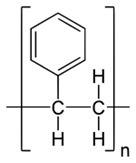
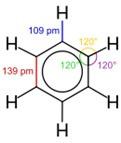
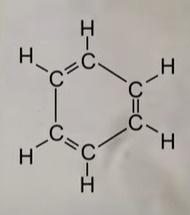
Benzene is an organic chemical compound with the molecular formula C₆H₆. The molecule is made of six carbon atoms arranged in a planar hexagonal ring, with one hydrogen atom attached to each carbon Benzene rings appear everywhere in chemical and industrial applications, including pharmaceuticals, plastics and polymers, petrol, explosives, dyes, and detergents Its distinctive ring structure can be found in compounds familiar to many people, from serotonin to TNT
Where it all begins
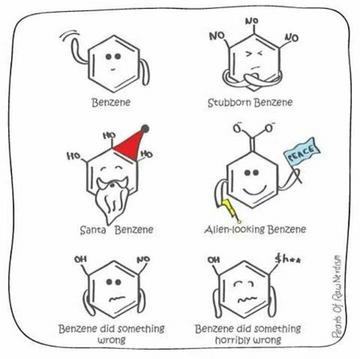
2.2: Further evidence that benzene is loved by chemists
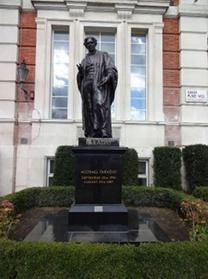
Benzene was first isolated in 1825 at the Royal Institution in London by Michael Faraday (hopefully that name rings a bell). Faraday’s laboratory has been preserved by the Royal Institution, and his original sample of benzene remains on display He published his findings in the Philosophical Transactions of the Royal Society, the world’s longest running scientific journal. In the 1825 issue, nestled among some rather unusual studies such as the freezing and dissection of frog brains (yes, this was genuinely published), we find Faraday’s landmark paper titled “On new compounds of carbon and hydrogen, and on certain other products obtained during the decomposition of oil by heat”
Continued over the page.
Image 3: Serotonin
Image 4: Aspirin
Image 6: Trinitrotoluene (TNT)
Image 5: Polystyrene
Image
Image 2.1: Evidently, Benzene is loved by many chemists
Image 1: Structure of Benzene
The History of Benzene The History of Benzene
Through painstaking fractional distillation (a very annoying process), Faraday was able to isolate a clear liquid which he named “bicarburet of hydrogen”. He chose this name because his analysis suggested a 2:1 ratio between carbon and hydrogen atoms. At this point, dear reader, you may notice that the modern molecular formula for benzene, C₆H₆, clearly shows a 1:1 ratio, and you would be correct. Even the greatest scientists sometimes misinterpret the data available to them
Faraday’s mistake was understandable. At the time, the relative atomic mass of carbon was believed to be 6 instead of the modern value of 12 His experiments produced a mass ratio between carbon and hydrogen of 11.44, which led to his incorrect empirical formula and misleading name.
As a bonus curiosity, Faraday’s original paper contains a further small miscalculation, meaning the mass ratio he reported is slightly off the true value Despite his brilliance in physics and chemistry, mathematics was reportedly not his favourite discipline. If you can spot the numerical slip, you would be in excellent company.
Faraday’s empirical formula was later corrected once more accurate atomic masses became available His isolation of benzene, however, marked the beginning of one of chemistry’s most influential stories.
Where did the modern name come from?
Despite being the first to isolate the compound, Faraday’s original name fell out of favour, partly because it was based on an incorrect empirical formula. The modern name “benzene” comes from the 1833 work of German chemist Eilhard Mitscherlich, who isolated the compound from the distillation of benzoic acid, extracted from a resin used in perfume known as gum benzoin. Mitscherlich called the substance “benzin”, which gradually evolved into “benzene”
In 1836, French chemist Auguste Laurent, who synthesised many derivatives of benzene, used the name “phène”. This contributed to modern terminology such as “phenyl” for the benzene functional group and “phenol” for its hydroxyl derivative
The mystery of the structure
Since the discovery of benzene, its structure was a fascination that eluded many chemists
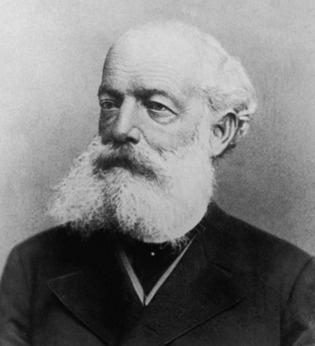
One such chemist was August Kekulé – a German chemist (despite his French sounding name, he was in fact German. His name was a result of Napoleonic occupation of his home region of Hessen) – who was best known for his work on valencies and the discovery that certain atoms always formed a specific number of bonds (for example, hydrogen always forms 1 bond, while carbon forms 4).
Based on his work, many chemists attempted to devise potential structures for benzene They were intrigued by the unusually low hydrogen to carbon ratio, with only one hydrogen per carbon atom even though hydrogen forms one bond and carbon forms four
Image 7: Statue of Michael Faraday at the Royal Institution, London
Image 8: Faraday’s preserved sample of benzene
The History of Benzene
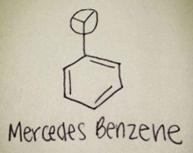
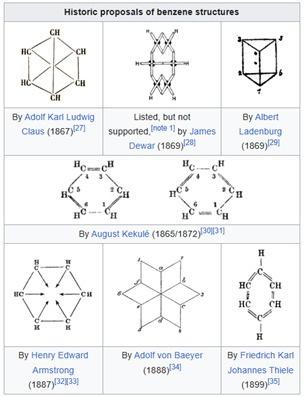
The following image shows a collection of proposed structures, including the one eventually shown to be correct, proposed by Kekulé himself (what a champ).
Apart from Kekulé’s structure, two other structures, Dewar’s and Ladenburg’s, were later synthesised experimentally, receiving the names “Dewar benzene” and “prismane” respectively.
Kekulé the Dreamer
Through experimentation, it was discovered that monosubstituted benzene derivatives (compounds where benzene has had one hydrogen replaced by another atom or group of atoms) had only one isomer (compounds that have the same molecular formula but different structures) This phenomenon can be explained by many proposed structures of benzene; with most being cyclic and symmetrical, it is clear that replacing any one hydrogen atom would yield the same compound, no matter which hydrogen was removed, as the structures can be rotated to match each other
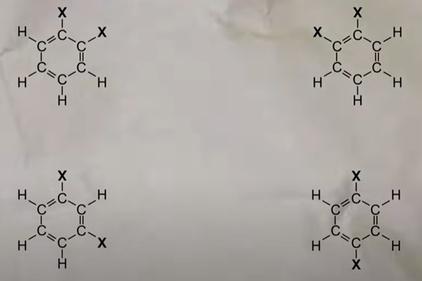
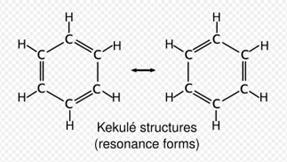
What troubled Kekulé was the issue of disubstituted benzenes, where two hydrogens are replaced by other atoms or groups Based on his original alternating-bond structure, there should have been four isomers for a disubstituted benzene, as depicted below:
Theoretical isomers of disubstituted benzene Continued over the page
Image 10: August Kekulé
Image 9: Proposed structures of benzene
Image 11:
The History of Benzene
These structures all have the same molecular formula, yet they are distinct from one another and cannot be rotated to appear identical. Because they differ in structure, each isomer would display different chemical properties, allowing them to be differentiated experimentally
However, Kekulé’s experimentation showed that only three disubstituted benzene isomers exist, with two of the predicted structures behaving as if they were the same compound This contradiction suggested that benzene did not fit a fixed pattern of alternating single and double bonds.
Kekulé therefore concluded in 1872 that benzene must be oscillating rapidly and continuously between his two proposed structures, such that the positions of the single and double bonds switch too quickly to be measured. As a result, benzene behaves as a hybrid of both forms. This idea became the basis of what is now known as resonance theory
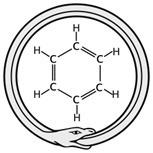
Kekulé later stated that the idea for the ring structure came to him in the form of two dreams – one involving a chain of atoms forming molecules, and the other showing a snake swallowing its own tail (the classical ouroboros symbol).
X-ray crystallography to the rescue! Although Kekulé’s model was quite brilliant, there was yet another layer to the benzene story – its resistance to addition reactions. Normally, a compound with many double bonds, like benzene, would react readily to remove its double bonds in favour of more stable single bonds. However, benzene appeared to hold on to its double bonds and instead preferred substitution reactions, which preserved its alternating ring structure. This affinity for retaining its double bonds is further supported by the enthalpy of hydrogenation, which is the amount of energy required to add hydrogens to the ring to remove the double bonds. It was discovered that the enthalpy of hydrogenation of benzene was significantly higher than predicted, by more than 100 kJ/mol.
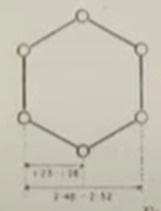
In 1929, a young and largely unrecognised scientist at the time, Kathleen Lonsdale, used her expertise in X-ray crystallography to definitively determine the molecular geometry of benzene, showing that it was indeed a hexagonal ring. She also demonstrated that the bond lengths between the carbon atoms were constant, and that instead of alternating double and single bonds, the ring more closely resembled a system of intermediate bonds (approximately 1.42 Å, between 1 54 Å for single bonds and 1 34 Å for double bonds) Lonsdale’s work is especially impressive considering that all calculations had to be done by hand.
!
Image 12.2: An illustration of Kekulé's dream
Image 12.1: Kekulé's final theory of resonance in benzene
Image 13: Kathleen Lonsdale
The History of Benzene
The new kid on the block: quantum theory
By the time that Lonsdale had published her work, the frontier of scientific development was in the new field of quantum theory, with many of the world’s greatest minds working in the field, including Erwin Schrödinger and Albert Einstein. Einstein and Schrodinger were able to calculate that the electron occupied “clouds” around the nucleus of atoms and were able to determine a formula for where the electrons are likely to be found
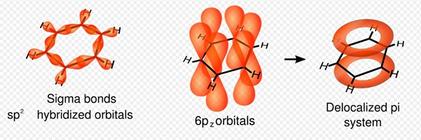
With the works of German chemist Erich Hückel in 1931 and American chemist Linus Pauling in 1933, benzene’s true structure was finally uncovered. Since covalent bonds are formed by the sharing electrons between atoms, these bonds can be thought of as regions in which the electrons occupy It was discovered that the main benzene ring was composed by single bonds that were formed by sp2 hybridised atomic orbitals (don’t worry too much about the name), which where areas that the electrons would occupy which lie parallel to the ring Each carbon atom would have an additional electron to share, since with only double bonds, each carbon would only be bonded to 3 atoms.
The remaining atom occupies a p orbital (again, don’t worry about the name), which stick out above and below the plane of the ring.
Normally, two of these orbitals would overlap side-on to form a so-called π bond, which is the “second” bond in a double bond. However, in benzene, instead of 3 separate π bonds, these p orbitals were shown to combine into halo-like rings above and below, forming a continuous “conjugated π system” This finally explains why the bonds in the benzene ring all behave identically and explains benzene’s surprising stability because of reduced strain from a more even spread of electron density
Image 16: Explanation of benzene structure using quantum theory
Faraday would have probably never imagined that his discovery would eventually lead to such a detailed investigation, or that the compound he had isolated would be the basis of so much of modern life.
Image 17: Benzene as we know it today
“Let us learn to dream then perhaps we shall find the truth” – August Kekulé (someone who apparently did a lot of dreaming), 1890
Image 14: Lonsdale's determined geometry of benzene
Image 15: Geometry of Kekulé's structure of benzene
The Gravity of the Universe
This creative and scientifically informed piece explores what might happen if gravity suddenly disappeared for five seconds. It blends vivid storytelling with accurate scientific ideas to create an engaging and imaginative exploration of a fascinating hypothetical scenario.
Ryan Lui (Year 9)
It was an ordinary Tuesday – until it wasn’t One moment, I had been gazing absentmindedly out my bedroom window, and the next, I was slowly drifting away from my chair – floating! – suspended in mid-air, completely untethered Pens hovered like hummingbirds above my desk, books turned slowly in place, and my phone spun like a lazy satellite. Gravity, the ever-reliable force that holds our world together, had suddenly ceased to exist until my daydream ended
Image 1: A loss of gravity
What would happen to the universe if gravity stopped for five seconds?
First, sheer chaos Forget being a couple of centimetres off the ground. Imagine everything not attached to the Earth – books, chairs, phones, even people – all just… adrift. What would happen to all that stuff?
According to NASA’s website, Isaac Newton’s first law of motion states: “An object at rest remains at rest, and an object in motion remains in motion at constant speed and in a straight line unless acted on by an unbalanced force ”
So, an individual in a car during such a scientific anomaly would float up while still travelling at the same speed.
Picture that: it is rush hour on the freeway, cars whizzing along at 100 km per hour Then gradually, all the vehicles lose grip, lifting off the road like a slow-motion take-off. If a car hit a bump, it would shoot into the air like a ballistic missile. No one would have any control And a footy, kicked at the wrong moment? It would be lost to the sky
The atmosphere, no longer bound to Earth, would begin to expand outward into space Breathing would become instantly difficult as the very air we depend on would start slipping away. Meanwhile, anyone mid-flight would face a terrifying reality. Aircraft rely on gravity to balance lift and maintain direction. Without it, planes would drift erratically, possibly even flipping, and their engines would malfunction due to the loss of combustion, turning them into chaotic metallic projectiles.
Beyond our skies, the consequences would ripple further For five seconds, the Moon would be untethered It might break its orbit and leave a world with no moonlit strolls. Furthermore, Earth would stop orbiting the Sun and continue in a straight line through space, as too would the rest of the solar system Everything would be a bit off-kilter
Image 2: A car losing contact with the road
The Gravity of the Universe
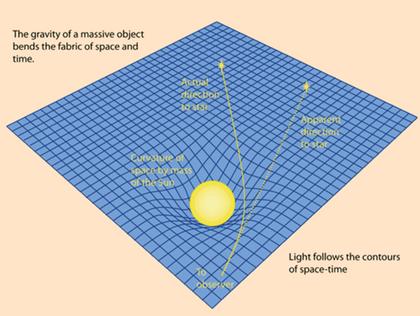
Stars and planets in other distant galaxies would be set to wander as the universe’s bonds are temporarily severed Even black holes momentarily pause in their devouring According to Einstein's theory of general relativity, gravity also bends space and time (space-time). The stronger the gravitational field, the slower time flows near it, a phenomenon known as gravitational time dilation. Without gravity, that warping of space-time would vanish entirely. So, without gravity, that warping of space-time would vanish too Time would accelerate ever so slightly, offering a brief glimpse of a universe no longer constrained by its own temporal fabric.
Image 3: Space-time curvature
As physicist John Archibald Wheeler eloquently summarised Einstein’s theory: “Matter tells space how to curve, and space tells matter how to move.” If we contemplate this on a more philosophical level, those five seconds of gravitational absence would cause both space and matter to lose their “dialogue”, plunging the cosmos into a moment of silence Would our universe “die”?
And then… snap. Gravity returns. Everything crashes back to the ground – not necessarily where it started Back on Earth, the aftermath would extend far beyond a momentary spectacle.
Infrastructure would suffer major damage as buildings, vehicles, and machinery collide with the ground Entire industries would face disruptions, costing billions as transportation, manufacturing, and supply chains grind to a halt. The world’s economies would lose equipoise.
The planets and moons would all (hopefully) reclaim their orbits. Planes would plummet (hopefully not catastrophically) And we would all be reminded of how delicately balanced the universe truly is For a few breathless seconds, we were all accidental astronauts.
So, while floating around your room might sound like a whimsical sci-fi fantasy, the reality is far more precarious. Gravity, often taken for granted, is a constant that gives meaning to structure, motion, and connection Without it, everything we know – from planets to people – would unravel into silence and separation. We may long to drift, but it is gravity that reminds us where we belong.
So, what was this article really written about? Maybe it was about floating pens and flying cars, or maybe it was about acknowledging the invisible forces that hold the universe together
As Stephen Hawking once said, “Because there is a law such as gravity, the universe can and will create itself from nothing ” Gravity is not just a force – it is a reminder that even from emptiness, something extraordinary can arise.
And, as Albert Einstein suggested, “Look deep into nature, and then you will understand everything better.” Even imagining a world without gravity teaches us how much we rely on what we cannot see In moments of wonder or confusion, it is worth remembering how much we have to be grateful for in this remarkable, fragile existence. Perhaps gravity is the soul of the universe…
Is String Theory a Scientific Theory?
Introduction
This article is a combination of two short papers I wrote. The format is an Argument Paper and a Rebuttal Paper. In the former, I raise an argument about a point. In the latter, I rebut the first paper as well as possible The topic at hand: “Is string theory a scientific theory?”.
A quick introduction on the topics:
String theory is a theoretical physics framework which has drawn debate both praise and criticism. It has been called “nonscience”, “science”, “beautiful”, “ugly”, a candidate for a “final theory”, and “catastrophic failure” causing the “fall of a science”. There are several reasons for this debate.
Firstly, string theory has not made any predictions that are testable. Its ideas all reside in a world of maths and equations. In fact, there are actually a near infinite number of possible ‘string theories’, each painting a different picture of reality People often say that testing a theory qualifies it as science –so should string theory count?
Second, string theory has made very little progress over the past fifty years of its existence. Many physicists claim that it is using up too much funding given to theoretical physics without making genuine improvement
Some definitions: A demarcation criterion is a criterion to decide (or demarcate) whether a discipline is science or non-science Karl Popper’s criterion for demarcation says that if a theory can be falsified (i.e. proven incorrect) with observation, it is a scientific theory. Imre Lakatos, on the other hand, argues that a scientific theory can be conceived of as a research program The program is progressive if it makes scientific progress, and degenerative if does not make progress, or worse, is being overtaken by other theories.
I would also like to recommend the subject History and Philosophy of Science, which is a part of the University of Melbourne Extension Program in Year 12. If you enjoy or are curious about these ideas, I highly recommend considering this course over others like University Extension Maths
Enjoy the papers!
Why string theory is a scientific theory (Argument Paper)
String theory, rendered here to include its successor M-theory, is a theoretical physics framework in which the one-dimensional particles of the Standard Model are replaced by oscillating strings (Polchinski 2007).
Image 1: A visual representation of a vibrating superstring.
The theory shows potential for unifying all forces and particles but currently contains unresolved mathematical and physical anomalies (Smolin 2008, 177-99) Its scientific status has generated intense debate within the scientific community.
This paper argues that string theory is a valid scientific theory, assessing it against the demarcation criteria of Popper and Lakatos
Is String Theory a Scientific Theory?
and proposing that many typical demarcation criteria require revision in the context of modern theoretical physics String theory is currently unfalsifiable due to the vast number of distinct formulations in the “string landscape” (Chalmers 2007, 42).
According to Popper’s criterion, this would render the theory pseudoscientific (Popper 1982) However, this argument alone is insufficient to disqualify string theory’s scientific status.
Firstly, falsification is an imperfect demarcation criterion; many theories were in principle before they became falsifiable with modern technology Mike Duff, quoted in (Ritson and Camilleri 2015), highlights gravitational waves, the cosmological constant, and the Higgs boson: theories initially untestable but later falsifiable and confirmed Secondly, string theory has implications that might be observable with current technology. Examples of these include supersymmetry, a “genuine prediction” (Witten, 1998); gravitational lensing from cosmic strings (Schild et al 2004); and departures from Newtonian gravity at submillimeter length scales (Kaku 2005). While none of these are sufficient to confirm the theory, nor would their absence be able to falsify the theory (Kragh 2011, 311), they do suggest future testability
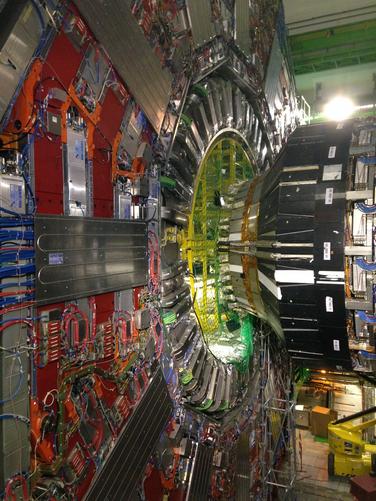
Therefore, falsification is likely too restrictive for evaluating string theory’s scientific status. String theory would be more aptly viewed as a Lakatosian research program The “hard core” (Lakatos 2013, 25) of string theory would be the existence of strings. Its protective belt (Lakatos 2013, 24) includes divergence from Newtonian gravity, the existence of cosmic strings, and supersymmetry being observable at the Large Hadron Collider (LHC) (Chalmers 2007). The theory’s hard core is testable in principle. The claim that the Planck length limit prevents strings from being directly probed has been challenged, as the Planck
length’s initial estimate was pessimistically large (Ritson and Camilleri 2015).
Still, particle accelerators currently lack the energy to test this (Chalmers 2007)
Critics claim the adjustment of string theory to account for null results, such as the absence of supersymmetric partners in the LHC, is unscientific However, this is consistent with Lakatos’ notion of a negative heuristic: a change made to protect the program’s hard core (Lakatos 2013, 23).
To evaluate whether string theory is progressive in the Lakatosian sense, we first examine its theoretical progress String theory has resolved long-standing problems such as the black hole entropy paradox (Ritson and Camilleri 2015). As (Laudan 1978) argued, solving theoretical anomalies is as significant as empirical confirmation Moreover, string theory has improved gauge theory calculations via the Maldacena conjecture (Smolin 2008, 177–99), illustrating its value as a scientific theory.
According to (Lakatos 2013, 24), string theory must also predict novel facts differing from rival programs. Here, string theory is successful, predicting supersymmetric partners to various particles in disagreement
Continued over the page
Image 2: Inside the CMS detector at the Large Hadron Collider.
Is String Theory a Scientific Theory?
with the Standard Model (Ritson and Camilleri 2015) Hence, string theory’s progressiveness suggests it is a valid scientific theory in the Lakatosian sense Some critics argue that string theory’s lack of predictions makes it a degenerating research program (Cartwright and Frigg 2007). However, I contend that this traditional demarcation criterion is outdated Theoretical physics is now in a special position: the Standard Model is so successful it is difficult to find empirical anomalies (Polchinski 2007). Many quantum gravity theories, like string theory, remain empirically untestable (Polchinski 2007) For these theories, Schelekken (quoted in (Kragh 2011, 311)) argues internal mathematical consistency becomes a key heuristic.
Hence, more traditional principles of theory confirmation are inadequate in rendering the theory unscientific; instead, principles of demarcation should evolve based on the scientific process (Dawid 2014). As Susskind has proposed, science should inform philosophy, not the other way around (Ritson and Callimeri 2015) This reflects Gieryn’s principle of “cartographic squabble” over who has the “epistemic authority to map science,” as quoted in (Ritson and Callimeri 2015). Hence, traditional ideas in philosophy of science may be insufficient for rendering string theory unscientific. Indeed, as (Woit 2006, 215) concedes, the fact that a large part of the scientific community works on science means the theory must be scientific
Ultimately, despite its many critics, string theory is a valid scientific theory. String theory is rejected by a Popperian analysis and is not a perfect scientific theory by Lakatosian standards, but it meets many contextually relevant criteria As the nature of science evolves, so must our demarcation criteria. In this modern framework, string theory stands as a legitimate scientific theory.
Why string theory is not a scientific theory (Rebuttal
Paper)
In the Argument Paper above, I argued that string theory is a mostly progressive Lakatosian research program that benefits science more broadly, and that it should be evaluated by contextually relevant factors rather than traditional philosophy of science In this paper, both these arguments will be discussed
The Argument Paper first cites examples of gravitational waves, the cosmological constant, and the Higgs boson to argue against falsification as a demarcation criterion
However, to compare these phenomena with string theory, it was implicitly assumed that they had no contact with experiments prior to their direct confirmation, which is untrue. Prior to their direct observation, they were all phenomena of theories that were empically tested For example, the Higgs mechanism explained key parts of the Standard Model more successfully than rival theories; since the Standard Model was already empirically tested, the Higgs boson was supported indirectly (Woit 2014) In contrast, string theory has received no empirical support, direct or indirect Moreover, these theories were always testable in principle.
For instance, Einstein showed in 1918 that gravitational waves could transfer energy to matter (Einstein 2002, 23–25), a phenomenon that could be detected with sufficiently sensitive instruments. Thus, the theory always had phenomena that were testable in principle. The Argument Paper assumes that string theory, given enough time, will develop into a testable theory. This has seemed increasingly unlikely. As Ritson and Callimeri (2015, 211) explain, the enormous landscape of possible string vacua means there may be no unique model that describes our universe Hence, string theory may never be able to generate falsifiable predictions and may always fail Popper’s falsification criterion. The Argument Paper suggests that traditional ideas from philosophy of science are inadequate in proving string
Is String Theory a Scientific Theory?
theory unscientific and that scientists should be the ones who can demarcate science. Specifically, because it is very difficult to empirically contradict the Standard Model, theoretical consistency, not empirical verification, is what should test the theory It is true that string theory presently lacks empirical testability, and so traditional demarcation criteria are currently insufficient (Dawid 2014) However, drawing on the similar field of mathematics, Woit (2006, 258–267) argues that the progress of a “speculative” theory needs continual evaluation for the theory to progress. Hence, string theory should not be excused from criticism even though it is not fully developed; rather, it should be assessed for theoretical progress and should not be immune to rejection if it is inadequate.
The Argument Paper asserts that because many physicists actively work on string theory, a more contextually relevant factor, it must be a scientific theory. However, scientists can act irrationally and hence are not always able to objectively demarcate science. For example, there are accusations that string theory is affected by “groupthink” (Smolin 2008, 261–288), where physicists look to the leading figures in their field to form their own opinion, instead of rationally judging a theory by its merits. Howard Georgi is quoted in Chalmers (2007, 41) saying that 40% of the excitement of string theory was inherent to the theory, and the other 60% was caused by Witten’s own optimism. Hence, we cannot simply rely on scientists to judge the theory.
The Argument Paper also argues that string theory has made theoretical progress by resolving long-standing problems. It characterises the black hole entropy paradox as an outstanding problem solved by string theory However, Juan Maldacena solved this problem with a model that functions in the case of an ideal black hole (Smolin 2008, 189–190). For this to constitute genuine theoretical
progress, general black holes are assumed tohave the same behaviour as this model. This is uncertain, and the result may be a coincidence for special cases (Smolin 2008, 190–191). Another aspect of progress raised in the Argument Paper is the simplification of gauge theory calculations under the Maldacena conjecture. Yet, as Smolin (2008, 194–195) notes, an alternative method seems superior to the Maldacena conjecture in two dimensions, suggesting the latter may not be the best option
The Argument Paper claims that the reinterpretation of string theory to suit data, like in the case of supersymmetry, is a rational negative heuristic (Lakatos, Worrall, Currie 1980, 48). However, instead of offering a precise explanation for the data like in the case of Newtonian gravity (Cartwright and Frigg 2007), string theorists claim that supersymmetry is simply beyond the reach of the LHC; Hedrich (2007) notes that this almost seems more of an attempt at self-immunisation from empirical control than a negative heuristic This resembles the way Marxists reinterpreted their theory in light of the social revolution, undermining its scientific status in the perspective of Popper (1982, 108). Indeed, there have been accusations that string theorists falsely believe nature to be the way they want it to be, ignoring the facts (Philip Anderson, quoted in Kragh 2011, 309). In string theory, given the time, prestige, and resources invested by many, we should be cautious when demarcating a negative heuristic from wishful thinking
Overall, string theory cannot be considered a scientific theory only because of its approval by many scientists, nor should it evade philosophical judgement before it is fully developed Its progressiveness as a Lakatosian program is questionable. The assumptions its practitioners make as negative heuristics need to be further interrogated to distinguish them from wishful thinking
The Dream Express
From postwar uncertainty to world-leading innovation, this article examines how Japan transformed the humble train into the iconic Shinkansen and reshaped modern transport
The world had said it was impossible. As the world of the 1950s began to turn to transcontinental highways and jet-propelled aircraft, the notion of the train was slowly phased out of social life as the main method of transport. In postwar America, the interstate highway project was well underway, connecting the East coast to the West and guaranteeing travel times of just up to a week
The emergence of turbojet aircraft through aircraft giants Boeing and Airbus soon turned month-long ship voyages into a single day through the skies It was in this context then, that war-ravaged Japan began to tunnel through mountains, sinking billions of scarce Yen through an already-inflated budget and facing heavy scrutiny from the rest of the developed world, all to build a new railway
Trains at the time were considered to have been obsolete, alternative methods of transport in comparison to sky and road; slow, cumbersome and restricted to their tracks, it was seemingly incomparable to the freedom of the automobile. Hence, it was an outlandish project by the Japanese in the eyes of the West, that they were focusing on an anachronistic symbol of the 19th century, labelling their high-speed rail project as a marvel, but nonetheless a futile one.
But on the 1st of October, 1964, with the Olympic Games on the horizon, two train sets departed from Tokyo and Osaka, precisely on time by the second. The criticism lay silent, with what is now a legacy that captivated the world, reinspired awe within rail engineering, and portrayed Japan as at the forefront of technological innovation with a system that transported as much as 353 million passengers annually at record times
The Shinkansen, literally translating to the “New Trunk Line,” was first proposed in the 1930s, as Imperial Japan sought to bolster its internal infrastructure, even going so far as to draft tunnels to Beijing and Korea. However, formal plans were abandoned in the face of Japan’s worsening situation in World War II, and their subsequent defeat left gaping losses for both the economy and the country
It was only until the mid 1950s that, with the steady return of popularity for regular train services that Japan National Railways (JNR) began to seriously reconsider high-speed rail as a way of demonstrating both Japan’s resilience and recovery from the war, but also to set a new standard for rail transport.
Despite public support for the American model of a car-centric society, JNR President Shinji Sogō and Chief Engineer Hideo Shima nonetheless insisted on the project despite costs spiralling out of control
Although both members resigned before the inaugural launch of the Shinkansen to take responsibility, the first run of the Shinkansen was met with widespread awe and appraisal
So began a 60 year journey of constant invention, testing and perfection through some of the most notable Shinkansen sets
Image 1: Various Shinkansen have been engineered over decades
The Dream Express
0 Series – 1964-2008
At the time in 1964, the fasted method of travel between the two major cities Tokyo and Osaka took at least 6 hours and 40 minutes via the limited express Tōkaidō Main Line. However, with the introduction of the 0 Series Shinkansen, that travel time was sliced to just 3 hours and 10 minutes by 1965. Day trips between these the metropolis cities became possible, allowing a typical businessman to host a meeting in Osaka, then make it back to their home in Tokyo for dinner The result of the Shinkansen opened up a myriad of both economic and social possibilities, as travel within Japan became possible with the blink of an eye. The 0 Series Shinkansen was unique from other existing trains in that they operated on Standard Gauge (1435mm) as opposed to the commonly used Narrow Gauge (1067mm). This allowed for Shinkansen trains to run on separate tracks, with these being deliberately designed to allow for the fastest travel time possible At no point on the Shinkansen line in Japan will a level crossing or a complex junction be found, as engineers either sought to build above existing roads, and through mountains rather than around them
Services were separated into Hikari (“Light,” Express Services) and Kodama (“Echo,” Local Services) to allow for variation. Almost 201 0 Series sets were constructed, each carrying up to 1340 passengers, and its defining characteristic was naturally, its speed. No train in the world had reached the 220km/h which the Shinkansen did on its inaugural service, and news helicopters struggled to match the pace of the train as it delivered live footage to the public. As the first Shinkansen in history, it has accumulated a significant heritage following, and many sets are preserved in museums as a symbol of Japan’s engineering excellence. They were withdrawn in 2008 after 44 years of service, christened as “
- The Dream Express”.
100 Series – 1985-2012
Before long, engineers sought to already build upon their existing 0 Series, fixating on each and every detail to optimise performance and safety. Their work created the 100 Series – A sleeker, sharper nose and double-decker carriages with dining and unparalleled luxury Introduced in 1985, the 100 Series became the face of Japanese High-Speed rail during the Bubble Economy, and was featured prominently in domestic advertisements,
Continued over the page
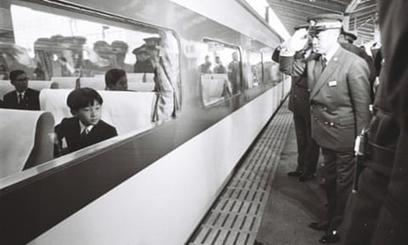
Image 2: Crown Prince Naruhito on board a Shinkansen in 1968
Image 3: 0 Series Shinkansen
The Dream Express
many of which still carry nostalgic value of a “retro” Japan amongst older residents It held a top speed of 230 km/h and served between 1985 and 2012
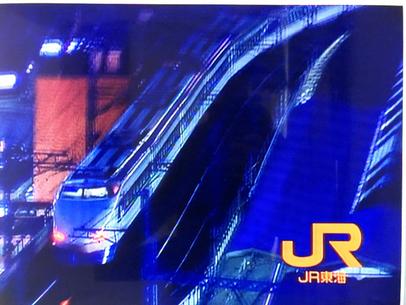
Image 5: A frame from a prominent advertisement in 80s Japan
300 Series – 1992-2012
As attention turned to the constituent materials of trains, and with other nations developing their own high-speed rail networks such as France’s TGV, the new 300 Series Shinkansen adopted a full-aluminium body, rather than its steel counterparts As a result, its top speed escalated dramatically to 270km/h, further reducing travel times between Tokyo and Osaka to just 2 hours and 30 minutes
At this time, the even faster Nozomi (“Wish”, Super Express) service was serviced exclusively by the 300 Series, guaranteeing a future-oriented and sleek mode of transport.
N700 Series – 2007-Present Easily one of the most recognisable trains in the world, the N700 embodied the future of Japanese rail transport Now the primary set employed by Japan Railways (JR), The N700 Shinkansen services the Tōkaidō, Sanyō and Kyūshū lines, connecting 383 train services daily Miniscule details such as tilting capability allowed the N700 to break the 300 km/h barrier, finally closing the gap in travel time between Tokyo and Osaka to 2 hours and 22 minutes. Found everywhere from promotional posters to postcards, the N700 Shinkansen is a staple when asked of Japanese culture Many drivers describe the Shinkansen to be something being worth proud about, a testament to punctuality, unparalleled service and an unshakeable safety record. What sets the Shinkansen apart from the world lies in its staggering fatality toll – 0 Since the inception of the Shinkansen, no passenger has died as a result of the Shinkansen’s service.
Image 4: 100 Series Shinkansen
Image 6: The aluminium era – The 300 Series Shinkansen
The Dream Express
Amidst an earthquake-prone nation that has experienced countless devastations, the original design stretching back to 1964 ensured that Shinkansen tracks were fitted with seismometers which, in the event of tremors, would immediately induce all Shinkansen trains on the line to apply their emergency brakes. Additionally, the high speed nature of these trains would make it difficult for drivers to be able to read and interpret trackside signals and lights The solution to this was ATC – Automatic Train Control. Unique to other nations, Japan installed the first centralised anti-train collision system, which communicated realtime between trains and Tokyo and broadcasting live positioning to automatically adjust train speeds.
The Future of High-Speed Rail
In a densely populated nation where business culture and a strive for constant perfection and improvement reign, Japan, China and Europe all set their eyes on the next generation of highspeed rail – The Maglev train
Harnessing the power of magnetic fields and electromagnetic induction, the new maglevs reach speeds of just over 500km/h, making the 67 minute trip between Tokyo and Osaka truly, complete in the blink of an eye The proposed Chūō Shinkansen is under construction and testing, with a proposed commencement of operations possibly by 2034. Meanwhile, China is already underway with its own maglev system, the Shanghai Maglev Train As the world’s first commercial high-speed magnetic levitation railway, the train can reach top speeds of up to 450 km/h and regular operational speeds of 300 km/h. Amidst continued aspirations for the fastest, safest and economic methods of transport, the future is likely to hold many exciting new prospects for not only bringing communities together, but also testing the limits of human innovation, if any exist at all.
Image 7: N700 Series Shinkansen
Image 8: One of the highlight points of the Shinkansen line, Mt. Fuji stands close to the railway wonder
Image 9: The future of transport – The Maglev
Challenge Yourself
Competitions and Challenges
Young
Archie Competition
Are you a budding artist? Do you have a creative spark waiting to be unleashed?
The Young Archie Competition is your opportunity to showcase your artistic talent.
The Challenge: Create a portrait of a person who is special and known to you and who plays a significant role in your life Your artwork can be created in any artistic medium
Original artwork must be sent to the Gallery between late January and early March 2026, together with the completed form.
Competition details will be available early January 2026 at https://www artgallery nsw gov au/prizes/you ng-archie/enter/
Image 2
Explore, Learn, and Grow
Our school proudly offers The Duke of Edinburgh Award, an internationally recognised program that encourages students to set and achieve personal goals, develop new skills, and undertake service and adventure.
Harvard University CS50's Introduction to Computer Science – Free on EdX This course provides an introduction to the fundamentals of computer science Students learn foundational programming skills and explore key ideas in computer science through practical and engaging activities. Course Highlights: Understand the basics of computer science
Learn the essentials of programming
Explore the intellectual foundations of computing
Enrol for Free: https://www edx org/learn/computerscience/harvard-university-cs50-sintroduction-to-computer-science
Challenge Yourself
Image 4
Learning How to Learn: Powerful mental tools to help you master tough subjectsFree Online Course on Coursera
This course introduces practical strategies to help you understand challenging subjects and study more effectively You will learn how the brain processes information and how to use focused and diffuse thinking to strengthen your learning across all subjects.
Course Features:
• Techniques to build stronger study habits
• Approaches for understanding difficult ideas
• Strategies to manage procrastination
• Insights into how the brain learns
Enrol for Free: https://www.coursera.org/learn/learninghow-to-learn
TED Talk
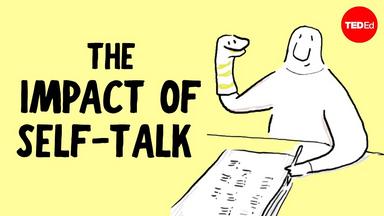
Is it normal to talk to yourself?
Being caught talking to yourself can feel embarrassing, and some people even stigmatize this behavior as a sign of mental instability. But decades of research show that talking to yourself is completely normal; most if not all of us engage in some form of self-talk every day. So why do we talk to ourselves? And does what we say matter? Dig into the psychological benefits of positive self-talk.
Present a T-Talk
T-Talks are our student led, TED style presentations where you can share a big idea, explore a topic you care about, or present learnings from a research project you have completed. You’ll also have the opportunity to write an article for The Trinity Inquirer based on your talk
Have a think over the break about whether you’re interested in giving a T-Talk next year,
5
GET INVOLVED!
If you would like to take part in any upcoming competitions, please keep an eye on your emails for registration invitations. These messages will include links to register and information about available resources and mentors
For any questions or support, please contact Mrs Kotsiras at KotsirasA@trinity.vic.edu.au.
Source: https://www youtube com/watch? v=iNyUmbmQQZg&ab channel=TED-Ed (5:19 in length)
Image
Club Interview: Classics Club
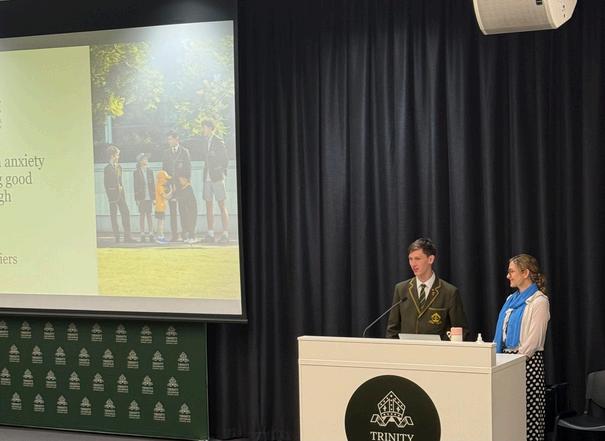
The Classics Club is a recently introduced and highly anticipated club. Evan Deng (The Trinity Inquirer Club Reporter and Academic Ambassador) interviewed Leo Min (Classics Club Student Leader) to discuss what the Classics Club is and how it operates.
Evan: For those who might not know, what exactly is “Classics,” and why is it interesting?
Leo: “Classics” is a confusing term for many, but it generally refers to the study of the ancient, Greco-Roman world Studying the classics is fascinating because it offers insight into the foundations of modern language, philosophy, politics, and literature, connecting us with ancient civilisations and revealing how their ideas and struggles still shape our world today
Evan: What kinds of topics or themes do you explore in the club, and how are they chosen?
Leo: The topics and themes explored are typically related to Roman history, Greek mythology, Latin literature, or linguistics in general More specific topics of discussion are voted on by club members to ensure everyone is learning about something they are interested in.
Evan: How can students join in?
Leo: There is absolutely no procedure for students to participate, and Classics Club is open to everyone as a learning opportunity, even for those who are not students of Latin or Ancient History
Check out the Classics Club page on our school’s MyTGS for more info!
Evan: Can you walk us through what a typical meeting looks like from start to finish?
Leo: We would usually start with a short presentation about the topic of discussion, introducing sometimes well-known and
other times obscure topics to club members; then we will have a short period of discussion, often followed by a pop quiz or kahoot.
Evan: In what ways can members participate or contribute to club discussions and activities?
Leo: Members can pitch in and open the discussion for various topics, adding their own insights and prior knowledge. Students may even volunteer to give their own lectures about a topic of interest during club meetings. The purpose of the club is helping more people learn about the ancient world, and the best way to do this is to allow different students to contribute and share knowledge about their passions.
Image 2: The Colosseum reflects the club’s focus on Roman civilisation and its lasting.
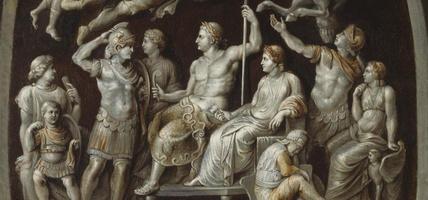
Image 1: Roman myth and history, themes explored in the Classics Club.
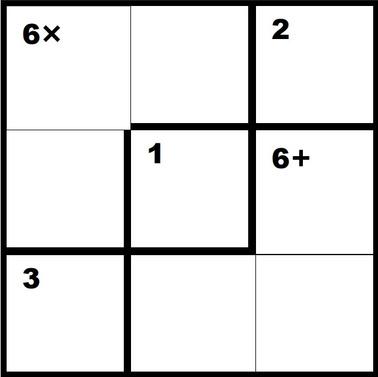
INSTRUCTIONS
Tricky:
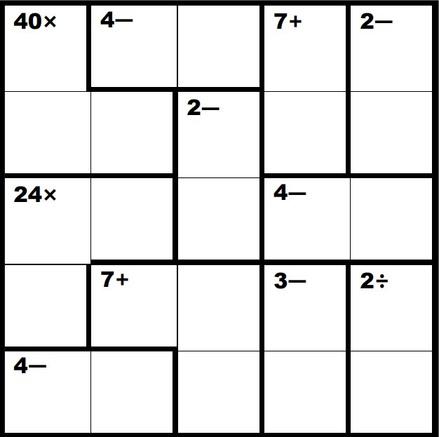
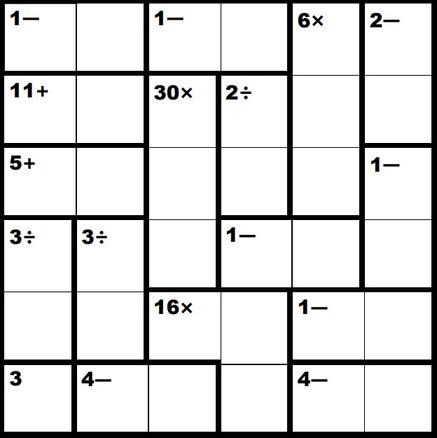
KenKen is a grid-based logic and math puzzle where players fill an N×N grid with numbers 1 to N Each number must appear exactly once in every row and column, similar to Sudoku. The grid is divided into “cages” outlined in bold, each labeled with a target number and a mathematical operation (+, , ×, ÷)
The numbers within a cage must combine using the given operation to equal the target Digits cannot repeat within a cage Success requires logical deduction and arithmetic, ensuring all rows, columns, and cage constraints are satisfied simultaneously to complete the puzzle.
Extreme:
https://www.kenkenpuzzle.com/game Solutions on the next page.
Puzzle Solutions
Easy:
Tricky:
Extreme:
Want to write for the Inquirer?
We hope this academic journal reflects the thinking, curiosity, and diverse perspectives of students across the school, as well as the rich intellectual and cultural life at Trinity With this aim in mind, we welcome Op-Eds, letters, freelance pitches, articles, and feature story ideas from any student.
If you are interested in contributing, please contact the 2026 Co-Captains of Academics, Jerry (Chenxin) Hao and Timothy Ma.
References and Image Sources
References
The Phenomenological Shakespeare –Thought and Perception
Shakespeare, W. Shakespeare’s Sonnets (1609).
Shakespeare, W. Julius Caesar (1599).
Jonson, B Preface to the First Folio Edition (1623)
Johnson, S. Preface to The Plays of William Shakespeare (1765).
Coleridge, S. T. Seven Lectures on Shakespeare and Milton (1856)
Bloom, H Shakespeare: The Invention of the Human (1998)