After a long, languid summer, everything feels like it has kicked up a gear – or indeed, several gears – over the past few weeks. Kids are now back at school; rush hour traffic is back to its frustrating worst and the number of ‘out of office’ notifications has dropped sharply (that is until half the UK toy community headed off to LA last month…). Basically, the annual white-knuckle ride of the so-called ‘Golden Quarter’ is about to begin.
The big question right now is inevitably “how are retailers feeling ahead of the autumn winter period?” Did they manage to clear most of their summer stock? Has that left them with a decent amount of budget to spend to keep on top of what’s selling? Can they secure the levels of stock they need on the lines they want to get behind? For the major accounts, is the trading controller bullish on toys and is the FD comfortable with the balance between current levels of stock and Q4 replenishment plans? Are buyers open to the prospect of opening new accounts or taking in brand new lines at this stage of the year? Do they want to freshen up their product selection, or spend available money on products that are already selling well? Are they willing to take a few risks and make a few cheeky punts – or are they going to play it safe and stick with tried and trusted brands and suppliers? All will become clear very soon.
On the Friday before kids went back to school at the start of September, I popped into our local high street at lunchtime as I often do, and it was absolutely packedcomfortably the busiest day since last Christmas/ New Year. I go into town several times each week just for a screen break and some exercise, so I am highly susceptible to noticing major fluctuations in footfall – and this day represented a massive increase in consumers hitting the stores. Notably, it was only three or four days before term started. There was a time when back-to-school purchase were made gradually across the six-week summer holidays, but this was very much a ‘last-minute buying frenzy.’ I suspect it won’t have been entirely coincidental that many people will have been paid the day before this happened. Based on this, can we expect the festive season to go down to the wire?
In my view, that is a distinct possibility - and with Christmas falling on a Wednesday, plus the likelihood of most people breaking up from work and being paid on the Thursday or Friday of the week before, that’s going to leave quite a few days for consumers to hit the shops and complete their festive purchases – a timeline which also points towards a late burst of activity. Hopefully that surge will be people topping up their present buying activity,
rather than leaving everything to the last minute - that is the stuff of nightmares for both retailers and suppliers. We’re already seeing the opening salvos fired by retailers as they jostle for position (and sales). Whether that’s early toy sales (three grocers were running sales simultaneously last month), catalogue launches, social media spats or Christmas ads, despite bright sunshine outside my window as I write this, everyone is gearing up to make consumers feel that Christmas is very much on the horizon. Suppliers’ festive marketing campaigns will also kick in soon, although as this month’s feature suggests, many toy companies are holding fire until as late as possible this year. Turn to page 52 to find out what our panel of media experts is predicting will happen this year, followed by indepth details of the campaigns being run by many of the leading toy companies.
Our other major feature this month focuses on character licensed merchandise. I’m writing this column before heading down to ExCeL for BLE, where the great and the good from the licensing community will be gathering to showcase their key properties for ’25 to licensees and retailers. Our feature will give you a good understanding of which brands are hot right now and heading into next year – and it really is a diverse and fascinating mix of licences, covering all bases from infants through to kidults. The feature starts on page 82.
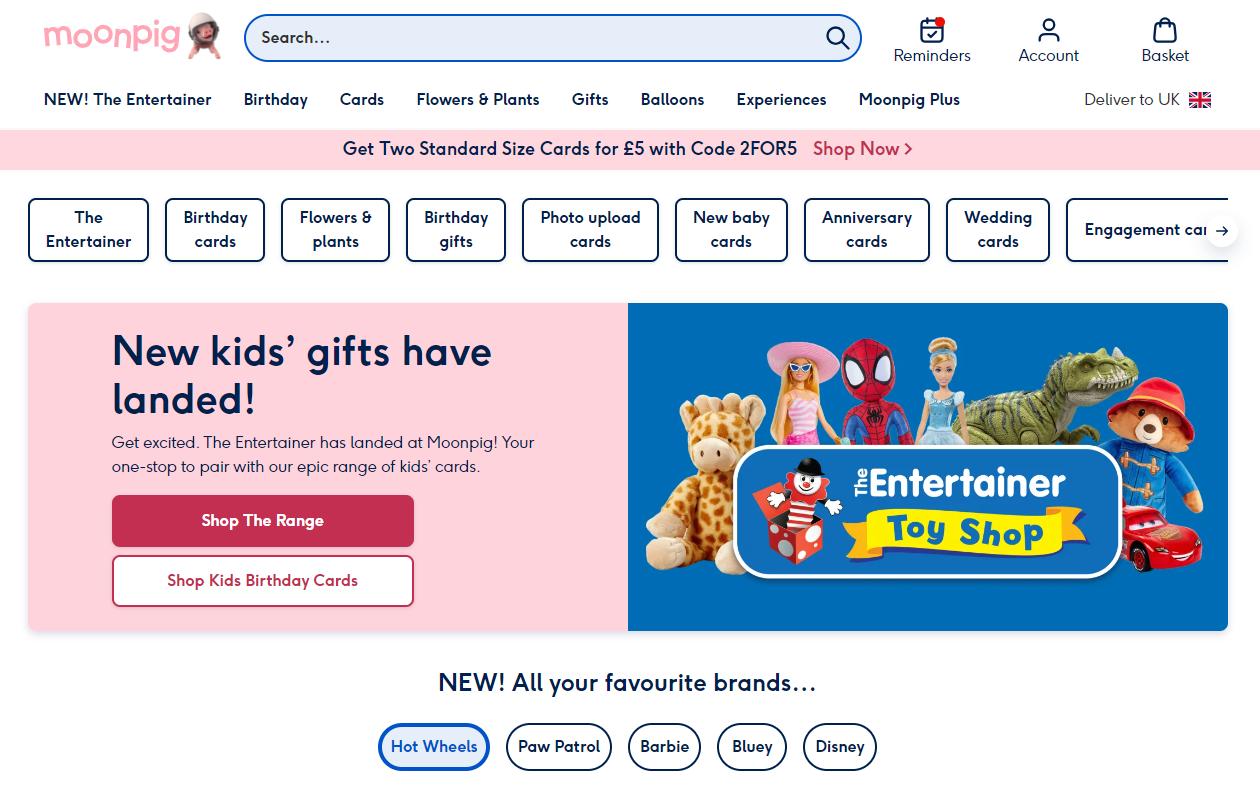
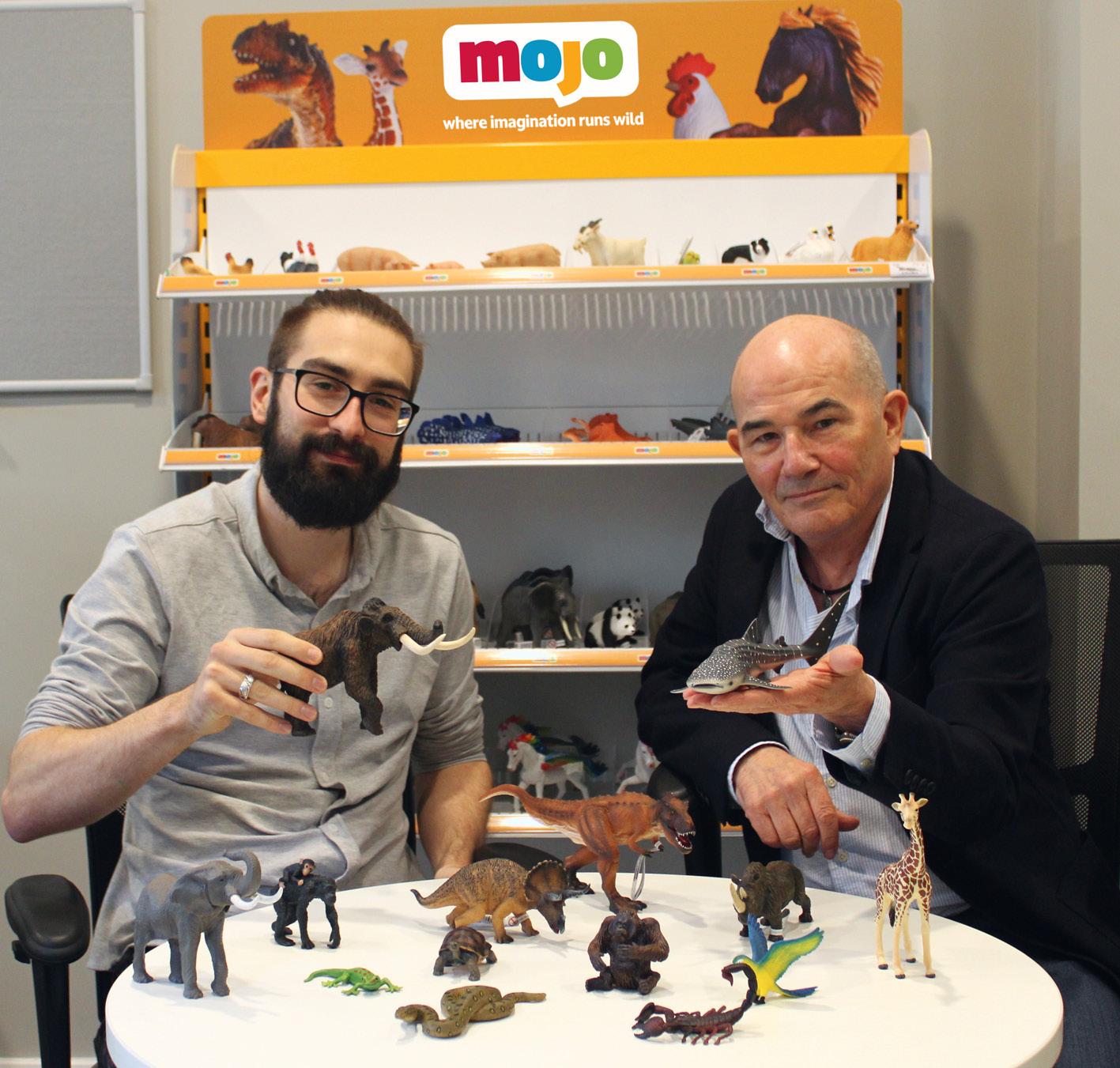
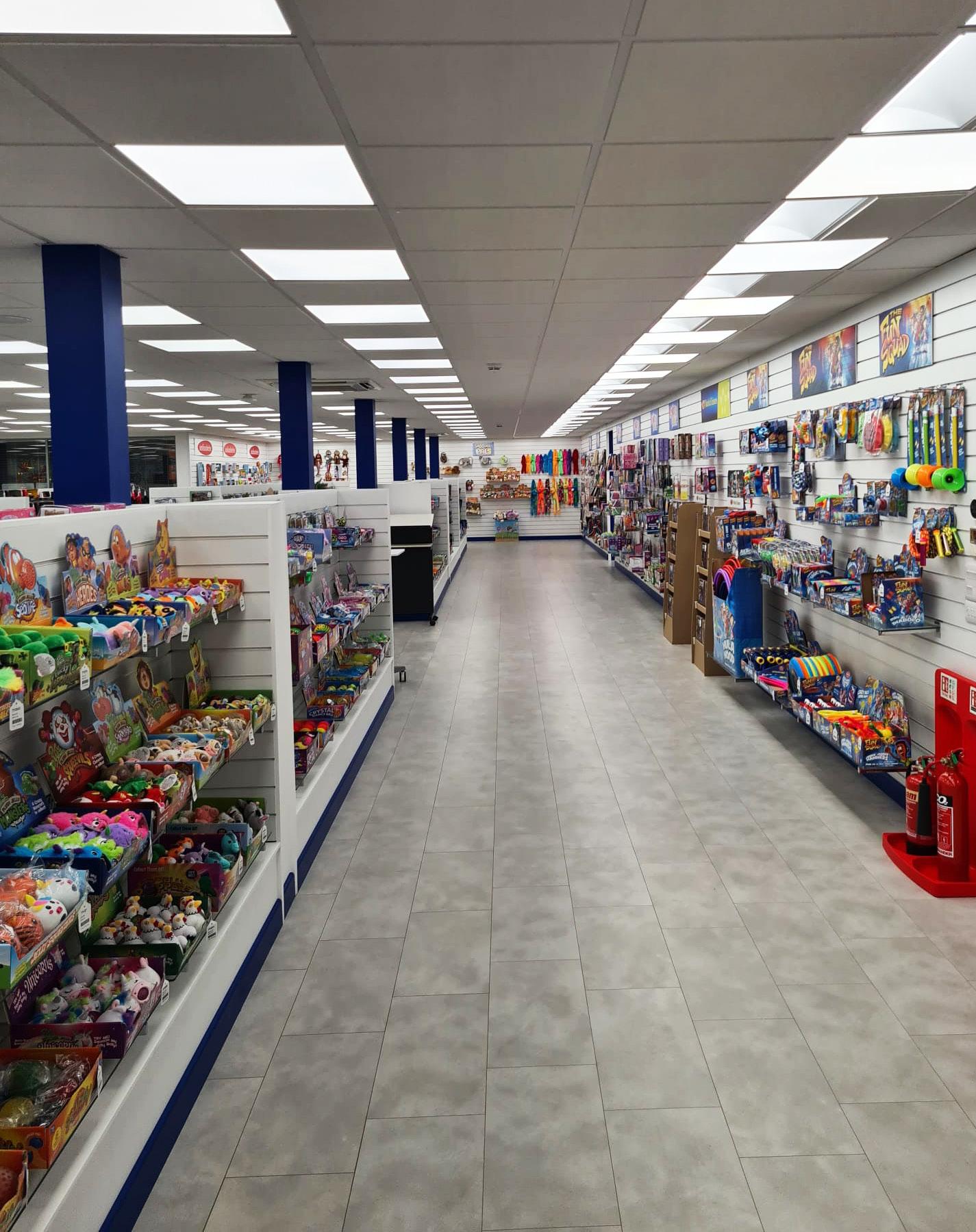
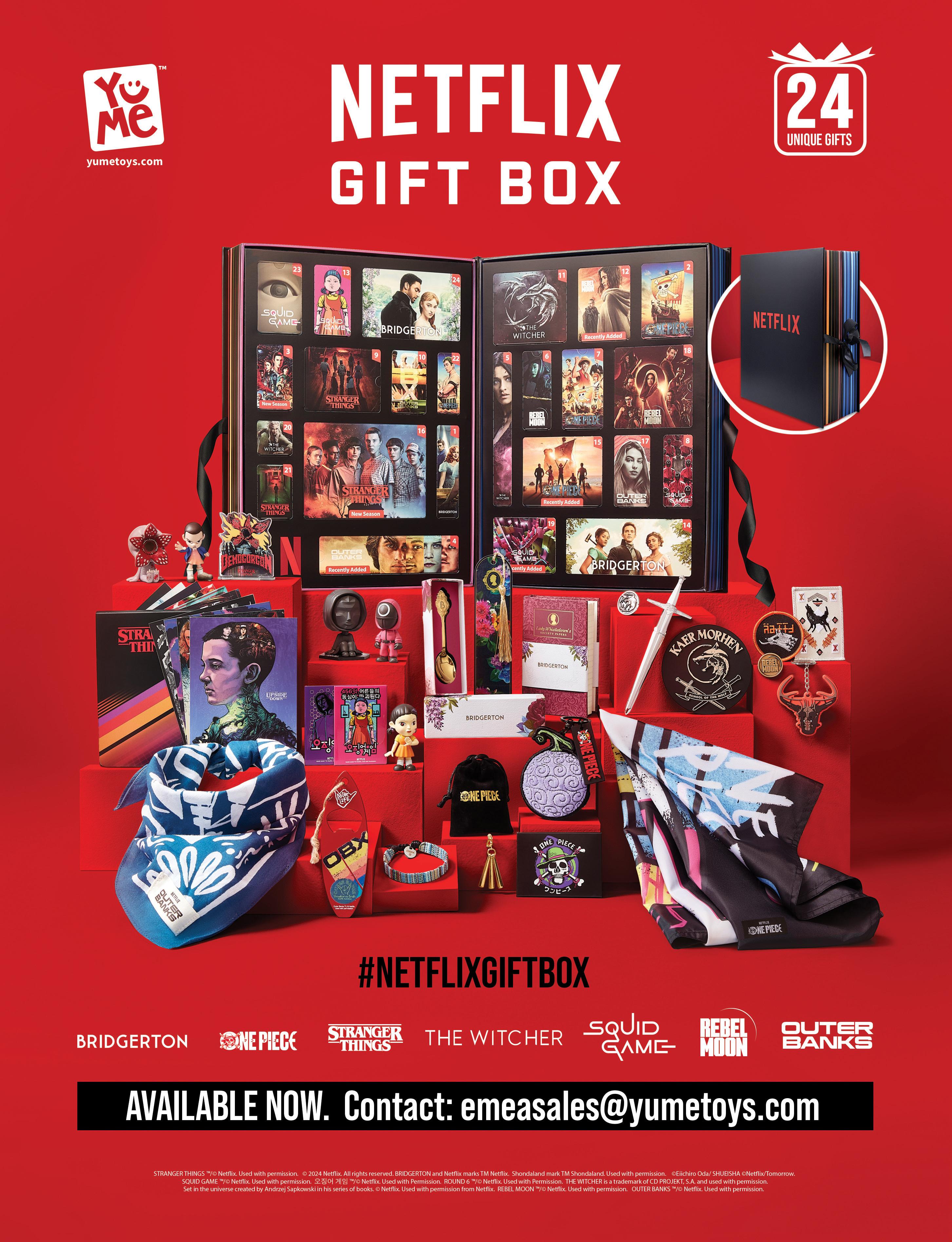
Away from the features, we have a selection of exclusive interviews and profiles focusing on a number of leading toy retailers, companies and service providers. On the retail front, we spoke to Moonpig about its new partnership with The Entertainer and Early Learning Centre, while NCS explains what makes the business an excellent logistics partner of choice for the toy community. Toy companies in the spotlight this month include MGA Entertainment, Mojo Fun, KandyToys and YuMe Toys – a wonderfully diverse selection of toy companies which are all at the top of their game in their respective fields.
That’s what we aim to bring you at Toy World – all the information you need about the best products, the best toy companies, the best retailers, the best licences and the best support businesses. We know our market inside out, and we have partnerships with the companies that really matter. That’s what makes Toy World the voice of the UK toy industry – and a voice that is increasingly influential across the global toy market too. The things you need to know about, and the things that really matter to the toy community – that’s what Toy World is committed to bringing you. Every day, every month, in print and online. Other magazines are available, but let’s be honest – they don’t come close. And that’s a fact.
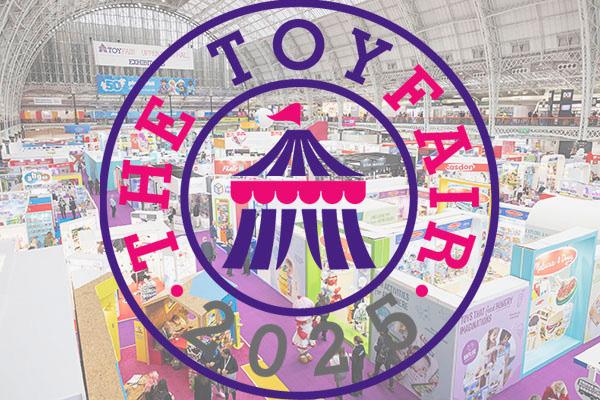
Exhibition space for Toy Fair 2025 is now sold out
The British Toy & Hobby Association (BTHA) has announced that all exhibition space for Toy Fair 2025 is now sold out, several months before the show takes place. Any companies still looking for space are encouraged to apply online and join the waiting list.
Toy Fair is set to welcome more than 250 exhibiting companies, both returning and new, to Olympia Events in London, from the 21st to 23rd January 2025. The show will take place across both lower and upper levels of the Grand and National Halls, as well as part of the Upper West Hall.
Toy Fair offers the first opportunity of the year in the UK for toy companies to promote their brandnew product launches and trends for the year ahead, as well as valuable networking opportunities with buyers, licensors, media and the wider industry, all under one roof. Companies wanting to join the waiting list can do so here.
This year's Toy Fair will see the return of companies including Spin Master Toys, Big Potato Games, The Lego Group, Gibsons, Golden Bear, Alley Cat Games, Curious Universe, Iron Studios, Character Options and Marvin’s Magic, along with some new exhibitors such as Little Dutch, Small World Toys, Target Darts, Puzzle Post UK and many more.
Additionally, Toy Fair TV will be back to highlight the wide range of innovative products on display, including plush toys, games, puzzles, tech toys, construction sets and more, via stand visits and the live stream which will be broadcast on various screens around the show and on the Toy Fair website.
Majen Immink, head of Toy Fair, said: “It’s incredible to be sold out once again with so many months still to go. We look forward to assisting our exhibitors with their preparations over the coming months and to putting on the best platform we can for the industry.”
For more information about joining the waiting list, please contact Rebecca Deeming-Mitchell at rebecca@btha.co.uk.
Visitor registration for Toy Fair 2025 will open in late September on the Toy Fair website, www.toyfair.co.uk, when the floorplan and exhibitor list will also be live for planning.
The Lego Group delivers double-digit growth in H1 2024
The Lego Group has released its earnings for the first half of 2024. The company delivered double-digit growth on the top- and bottom-line and significantly outpaced the toy industry, gaining market share.
Niels B Christiansen, CEO at the Lego Group, said: “We are very pleased with our strong performance in the first half. Our portfolio continues to be relevant for all ages and interests, and this is driving significant demand across markets. We used our solid financial foundation to further increase spending on strategic initiatives which will support growth, now and in the future, to enable us to bring learning through play to even more children.”
In the first six months, the Lego Group’s revenue increased by 13% to DKK 31b compared with DKK 27.4 b in H1 2023, and consumer sales grew 14%.
Operating profit grew 26% versus H1 2023 to a record DKK 8.1b, while the company significantly increased spending on strategic initiatives such as sustainability, retail and digitalisation. The Lego Group plans to further accelerate spending on these initiatives in the second half of the year. Net profit grew 16% to DKK 6b compared with DKK 5.1b in the first half of 2023.
In the first six months, the Lego Group launched around 300 new sets, which ensures the portfolio remains diverse and offers build experiences for fans of all ages and interests. Some of the top performing themes were Lego Icons, Lego City and Lego Technic, as well as Lego Star Wars and Lego Harry Potter.
In the first half of the year, the company celebrated the 25th anniversary of Lego Star Wars and 15 years of the fan-designed theme Lego Ideas and gaming icon Lego Minecraft. It continued to expand Lego play offerings on Fortnite with the launch of Lego Islands and will bridge digital and physical play with the release of the first Lego Fortnite sets in October.
When the festive season is in full swing, there’s no room for old-fashioned logistics to slow down your business.
Traditional supply chains are like Santa's sleigh – once reliable, but now outpaced by the need for innovation.
NCS combines decades of toy industry expertise with cutting-edge logistics solutions, giving you the agility to handle global demand effortlessly.
Our streamlined, end-to-end logistics move faster than Santa down
London Gateway location lets you serve UK & EU customers from one duty-suspended inventory.
Dispatch, transfer, or divert stock on demand, avoiding upfront duty and meeting EU orders with low MOQs.
WHSmith to open 37 more Toys R Us concessions
Prior to entering its close period, ahead of reporting its preliminary results on 14th November 2024, travel and high-street retailer WHSmith has announced the delivery of strong Q4 results through the peak trading period, the launch of a £50m share buyback and the scheduled opening of 37 more Toys R Us concessions before Christmas.
Group revenue was up +7% for the year versus 2023, driven by Travel, which was up +10%. Travel performed well over its peak trading period in the second half, driven by WHSmith's key initiatives and strong passenger numbers.
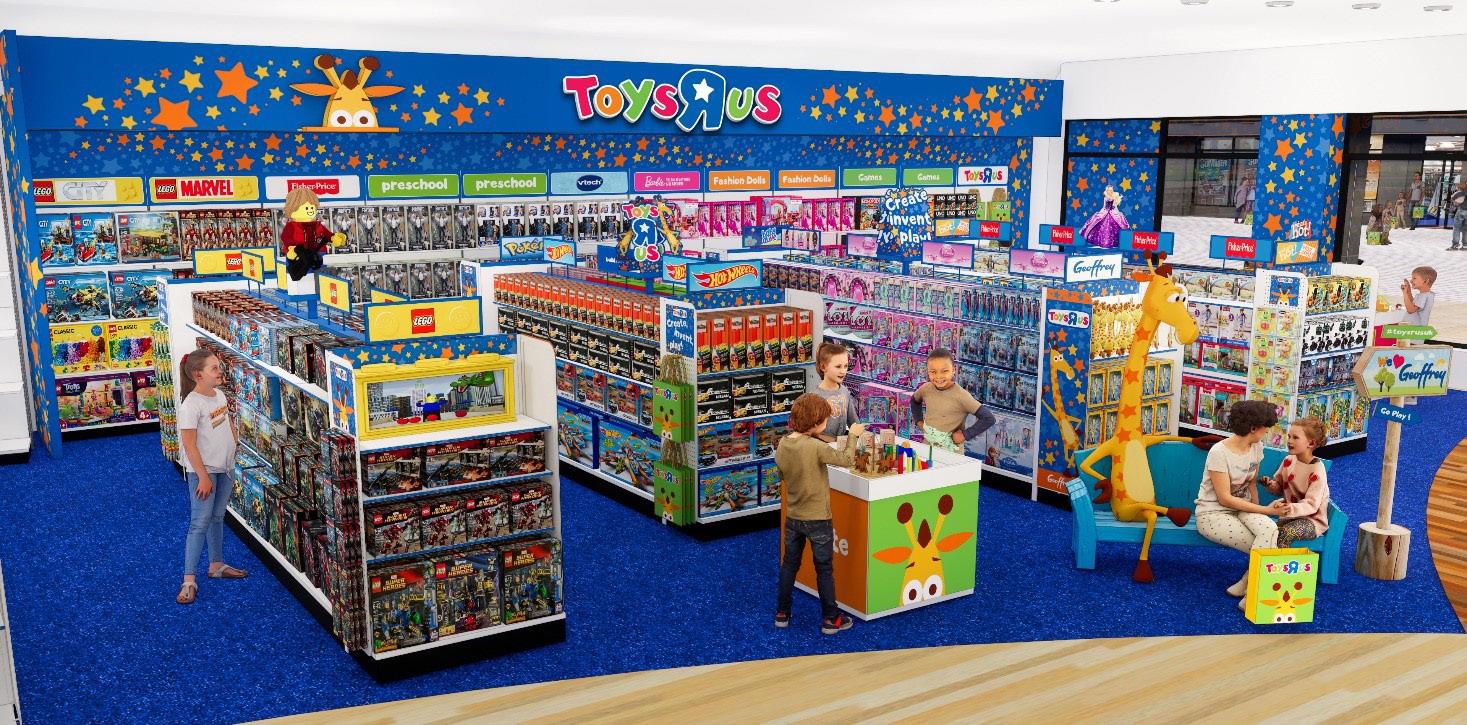
The retailer's high street business has performed in line with expectations, according to the report. During the second half, WHSmith successfully opened 30 Toys R Us shop-in-shops within its stores and has announced intentions to open a further 37 Toys Us shop-in-shops ahead of Christmas 2024, taking the total to 76.
Toys R Us branded shop-in-shops welcome customers with life-size Geoffrey the Giraffe 3D sculptures, ideal for selfies. Shoppers can enjoy browsing a specially curated range of toys displayed according to age, interest and category and take part in interactive experiences, bolstered by demonstration tables and iconic visual Toys R Us elements.
Remaining committed to its capital allocation policy, which focuses on four main areas - to invest organically in the business, a commitment to a progressive dividend policy, where appropriate to deliver value accretive acquisitions, and to return any surplus cash to shareholders - WHSmith has also announced a £50m Share Buyback. Additionally, the buy out of the retailer's defined benefit pension scheme has been completed. As a result, there will be no further cash contributions required from the group. In addition, the buyout has resulted in a cash refund to the group of ~£75m and the transfer to the group of an investment fund of ~£10m which will convert to cash over the next two years.
Carl Cowling, group CEO, commented: "We have ended the financial year in a strong position, delivering a performance in line with our expectations with good growth across our Travel businesses. Our UK division performed particularly well over the peak summer trading period. We have also announced the launch of a £50m share buyback, which reflects strong ongoing cash flow, the receipt of the pension fund buyout cash return, as well as the strength of our balance sheet, with leverage now within our target range. Our colleagues have worked extremely hard to deliver these results over what has been a very busy summer, and I would like to thank them for their contribution to the group's success."
Marvin’s Magic launches new trading division
Marvin’s Magic has announced the launch of its brand-new trading division, Marvin’s Distribution. This expansion will see Marvin’s Magic broaden its scope, becoming the exclusive distributor of several high-quality, globally recognised brands throughout the UK and Ireland.
Marvin’s Distribution will hold exclusive contracts with iconic brands including FAO Schwarz, Sharper Image, Discovery and ZipString. These partnerships reinforce the company’s passion for bringing the most innovative, fun and premium products to homes everywhere, cementing its status as a leader in the world of entertainment and educational products. The brands will be showcased at London Toy Fair where Marvin’s Distribution will have its own, dedicated booth, adjacent to the ever-popular Marvin’s Magic location.
CEO, Tom Hudson, expressed his enthusiasm for the launch: “We are thrilled to introduce Marvin’s Distribution, a natural extension of our business that aligns perfectly with our mission to deliver magic and joy to families across the UK and Ireland. By partnering with these exceptional brands, we are not only diversifying our product range, but also reinforcing our commitment to quality and innovation. We look forward to bringing these fantastic products to our customers and expanding the reach of these beloved brands.”
Marvin’s Distribution will leverage the company’s extensive retail network and industry expertise to ensure that these premium brands are available to consumers throughout the UK and Ireland. The division is poised to meet the growing demand for quality educational toys, cutting-edge gadgets and innovative play experiences. With this launch, Marvin’s Magic is set to continue its legacy of delighting customers and partners alike, offering a combination of entertainment, education and innovation. For more information and to get in contact, email magic@marvinsmagic.co.uk.
Xplore Brands announces collaboration with Hong Kong Umedia
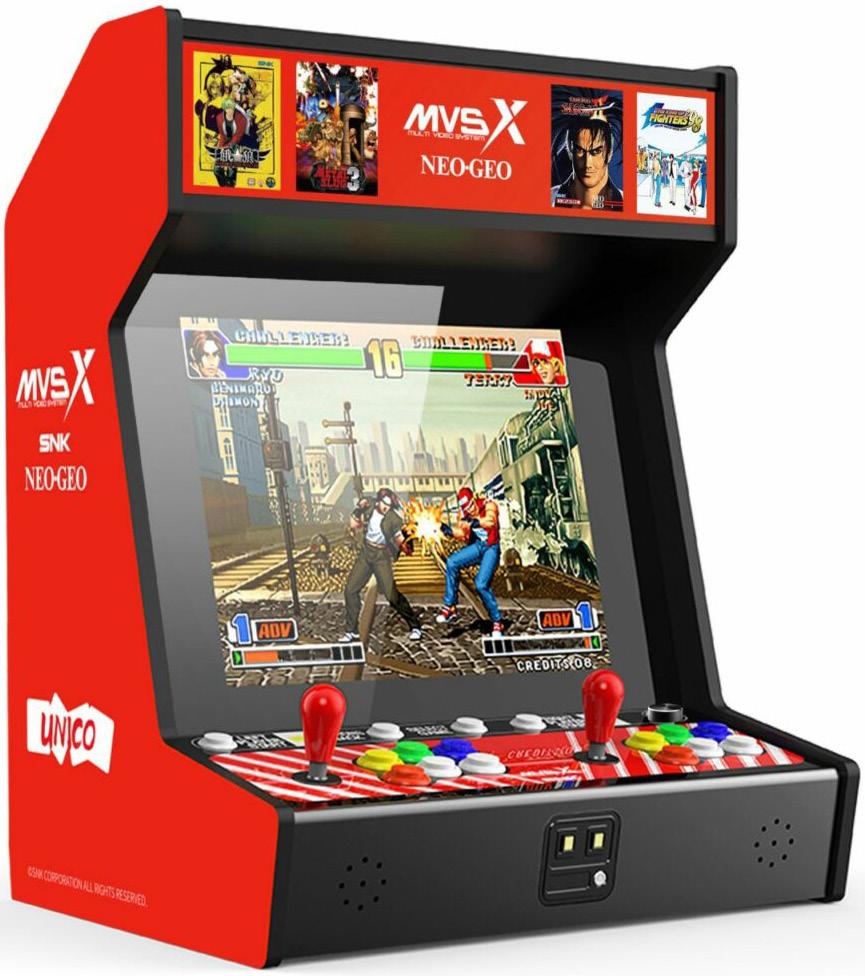
Xplore Brands has announced an exclusive collaboration with Hong Kong Umedia for its Unico gaming brand which will be represented in the UK & Ireland and EMEA. A manufacturer behind the design and production of some of the biggest names in the retro gaming stations arena, Unico brings hot licences such as Neo Geo, SNK and Capcom to market. The company produces items ranging from handled consoles through to full-size cabinets with full LCD HD screens starting at 3.5” through to 26”.
Xplore Brands brings a wealth of experience in the retro gaming category, working with retailers and partners in the UK, Ireland and further afield. Xplore's CEO, Ravi Mashru, said: “We are thrilled to announce this collaboration and to be representing Unico for the UK & Ireland and EMEA to service the retail market in the UK, either directly via Unico on an FOB basis or carrying inventory in the UK & Europe to service domestic accounts. We will be launching some of the products in Q4 2024.”
Sales director, Pritesh Davé, added: “This really emphasises and drives home our cause and commitment to growing our gaming portfolio and further cements our aim to offer a 360-solution to our retail partners, not just across multiple retail categories but also in various geographical territories.”
Norman Tsen, Marketing director of Umedia, stated: “We could not be happier to have appointed Xplore Brands to be our master representation partner for Unico as we aim to expand our business in new territories. We will be exhibiting at the Nuremberg toy fair to showcase our full range, and we look forward to bringing our products to more and more territories."
Sales enquiries should be directed to Pritesh Davé at pritesh@xploredistribution.com.
250 exhibiting companies all under one roof
Form new business partnerships and develop existing relationships
Exclusive access to brand new product launches and new trends for 2025
Exclusive on-site retail offers
Pre-register
FEATURING
The LEGO Group, Funko, Keel Toys Limited, Vivid Goliath, Jazwares, Puzzle Post, Hippychick, plus many more!
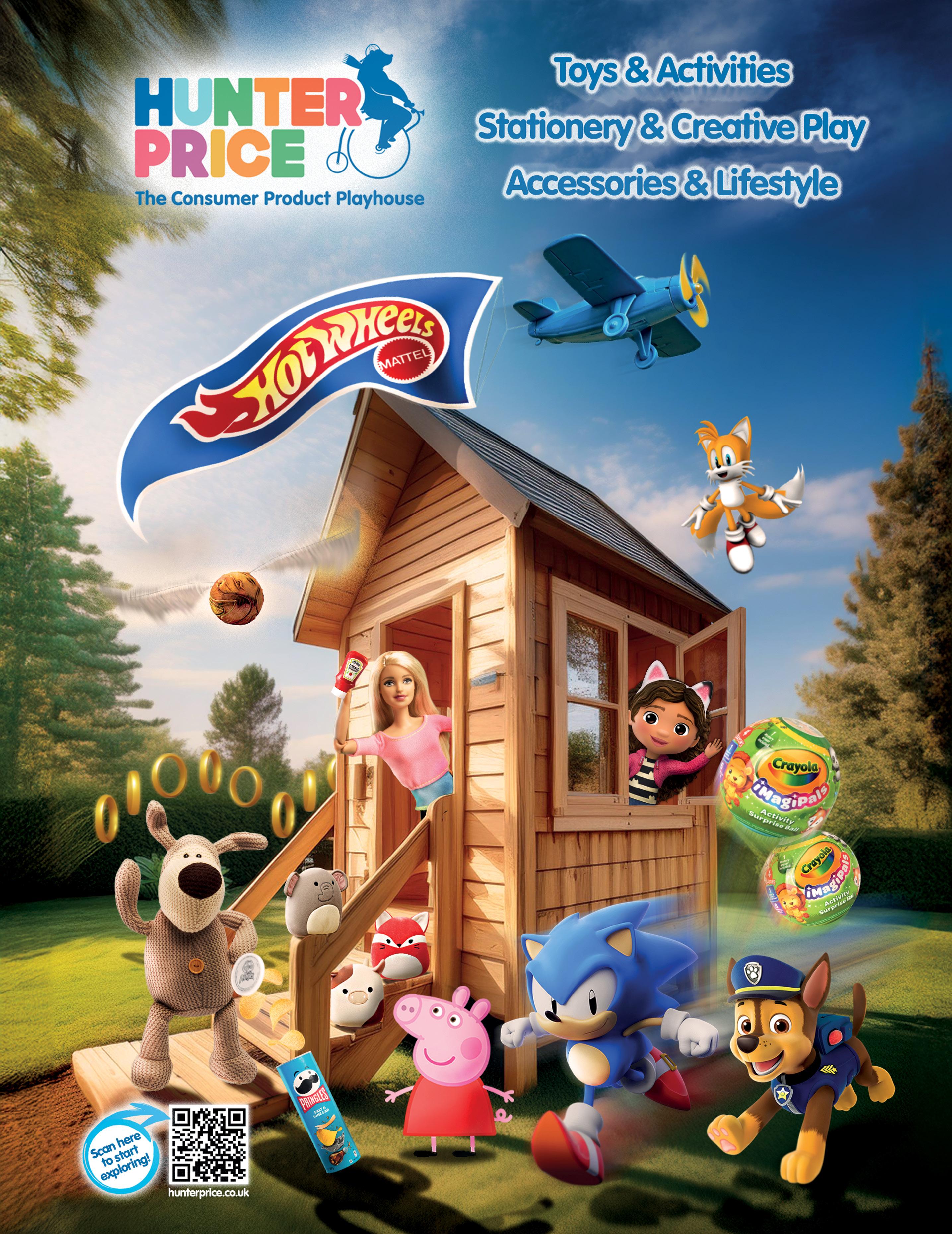
Hunter Price International opens Far East office
Hunter Price International is continuing its expansion strategy by opening its first Far East HQ, in Ningbo, Zhejiang, China.
The opening of the base in China marks a significant investment by the business and cements Hunter Price’s commitment to the customer-first approach it prides itself on. Elevating its customer experience proposition has been a key pillar in Hunter Price’s commercial strategy in 2024.
Communication, consistency and compliance are the key areas of the business which are set to benefit from the new base and team based in Ningbo. Stakeholder relationships with suppliers and business partners are also set to benefit from the opening, will which improve efficiencies across the company's supply chain.
An exclusive showroom will feature Hunter Price’s latest new product developments, including from its global brand partners and own-brand portfolio. The new space will open a wealth of opportunities for Hunter Price to host its customers and other stakeholders during their Far East visits.
Allana Holmes, commercial director at Hunter Price International, said: “Strengthening our presence in Ningbo is already enhancing our customer and stakeholder experiences across our global operations. We’ve grown exponentially over the past few years and continue to do so. For the trajectory to continue as planned, it was essential for us to make this investment now, to further bolster our fundamentals and foundations."
She added: “We’re investing in our people, our processes and our relationships, creating a central point in our supply chain to facilitate faster and more efficient routes to market, and further enhancing our quality and compliance processes and procedures. This latest news fully aligns with Hunter Price’s core values, which act as the driving force for the business, our behaviours and decisions.
"Impact, creativity and notably, ambition and trust: we all embody this relentless drive to do better in everything we do, while doing the right thing for our customers, brands and partners. Seeing our new office for the first time last week was a hugely proud moment. We can’t wait to host our customers at our new showroom in the coming months and to further improve our customer experience when collaborating with Hunter Price."
Klein Toys repositions in the UK market
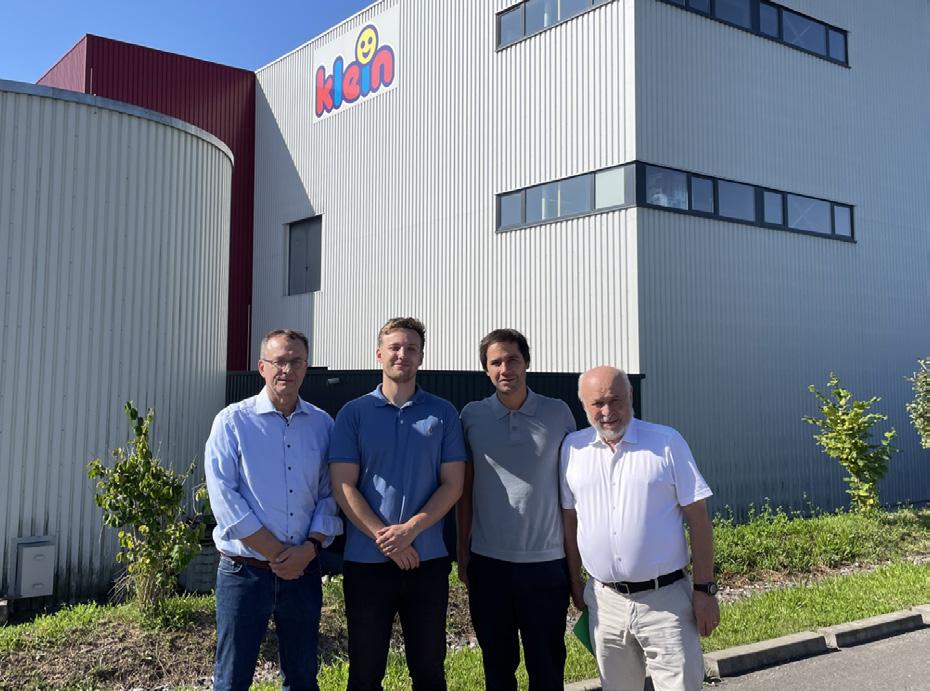
Klein Toys has celebrated its 75th anniversary in 2024. The German toy manufacturer, which was founded in 1949 as a brooms and brush factory, is one of the few manufacturers that still has its own production facilities in Europe.
The family-run company is one of the market leaders within the role-play category with a broad portfolio of best-selling brands and licences, such as Bosch, Barbie, Caterpillar, Hot Wheels, John Deere, Vileda and more. The company also offers toys across categories including Outdoor, Dolls & Beauty and Parking Garages.
Klein will be marking this time of change and reposition in the UK market with a generational transition in management. This transition will see a power shift from the second to the third generation of the Klein family.
Klein Toys has appointed toy industry consultant, Lisa Cox, to support the UK business with its transformation. Lisa has over 10 years of experience within the toy industry with UK and Irish retailers. She also brings with her a strong knowledge of licensing and an entrepreneurial spark and drive for success. She is already reviewing new licences, product development and a new Klein brand and packaging refresh.
Lisa can be contacted on 07826 799 737 or lisa@cox-consultancy.com.
Moose Toys unveils brand-new Tile Town range
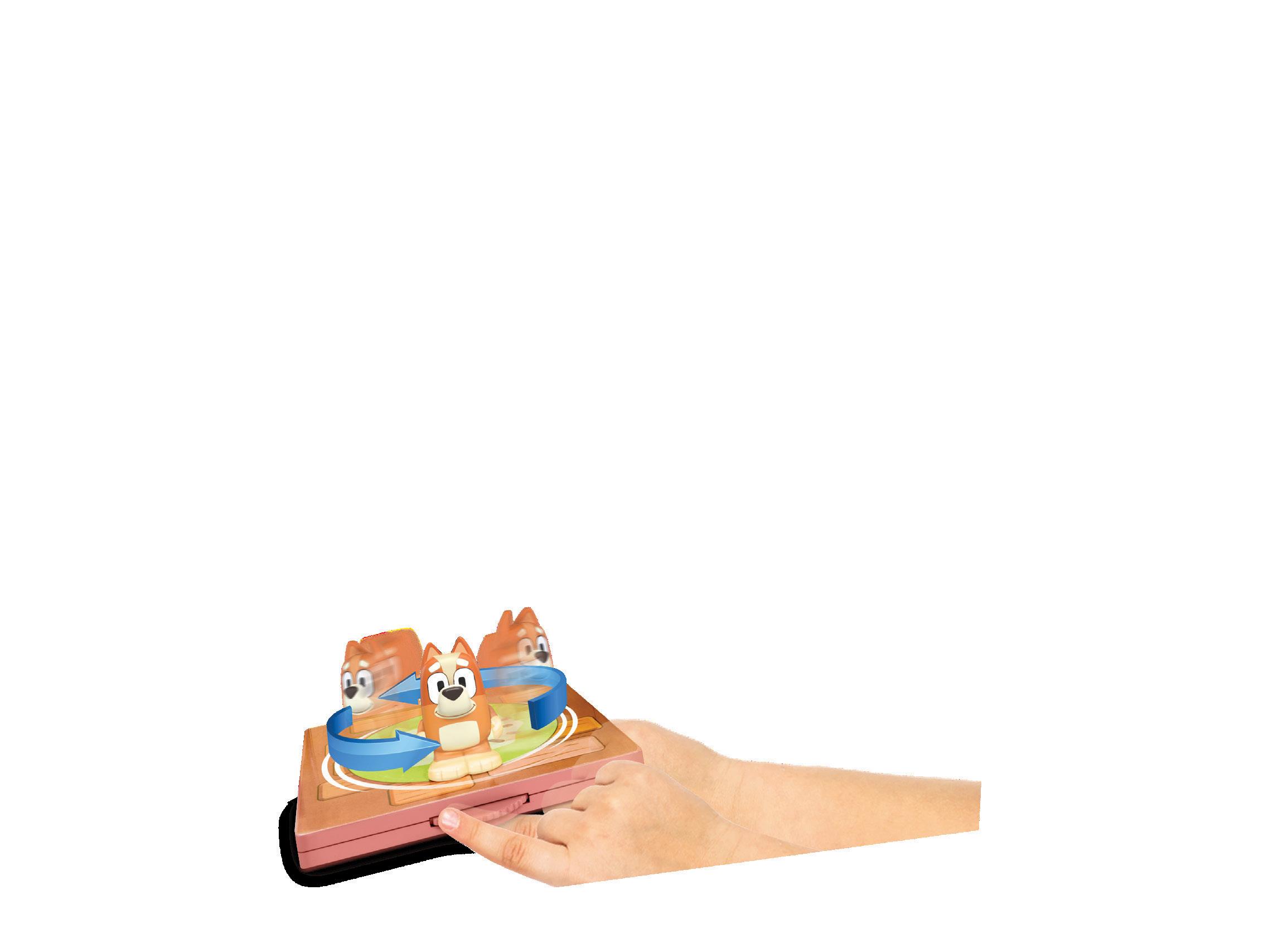
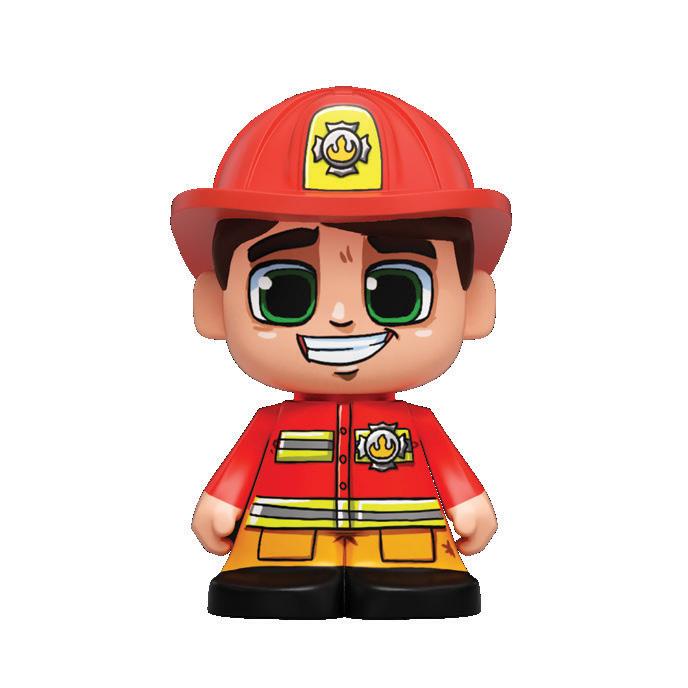
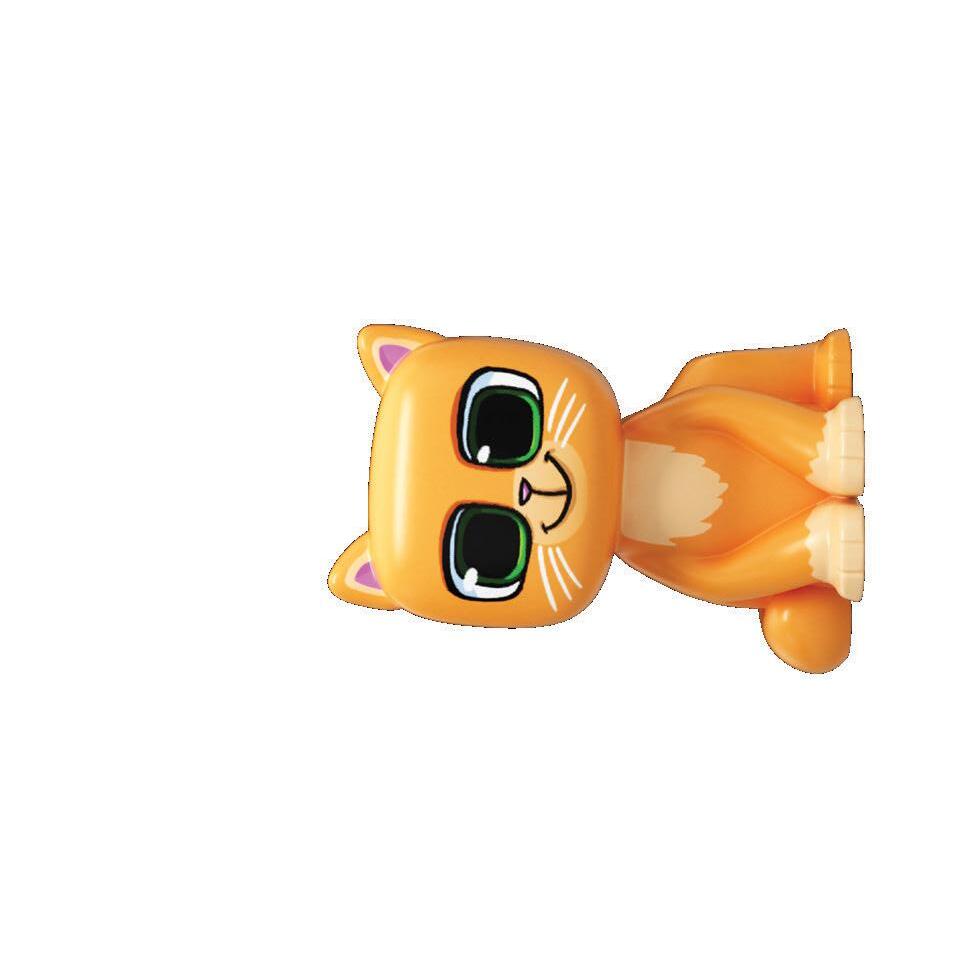
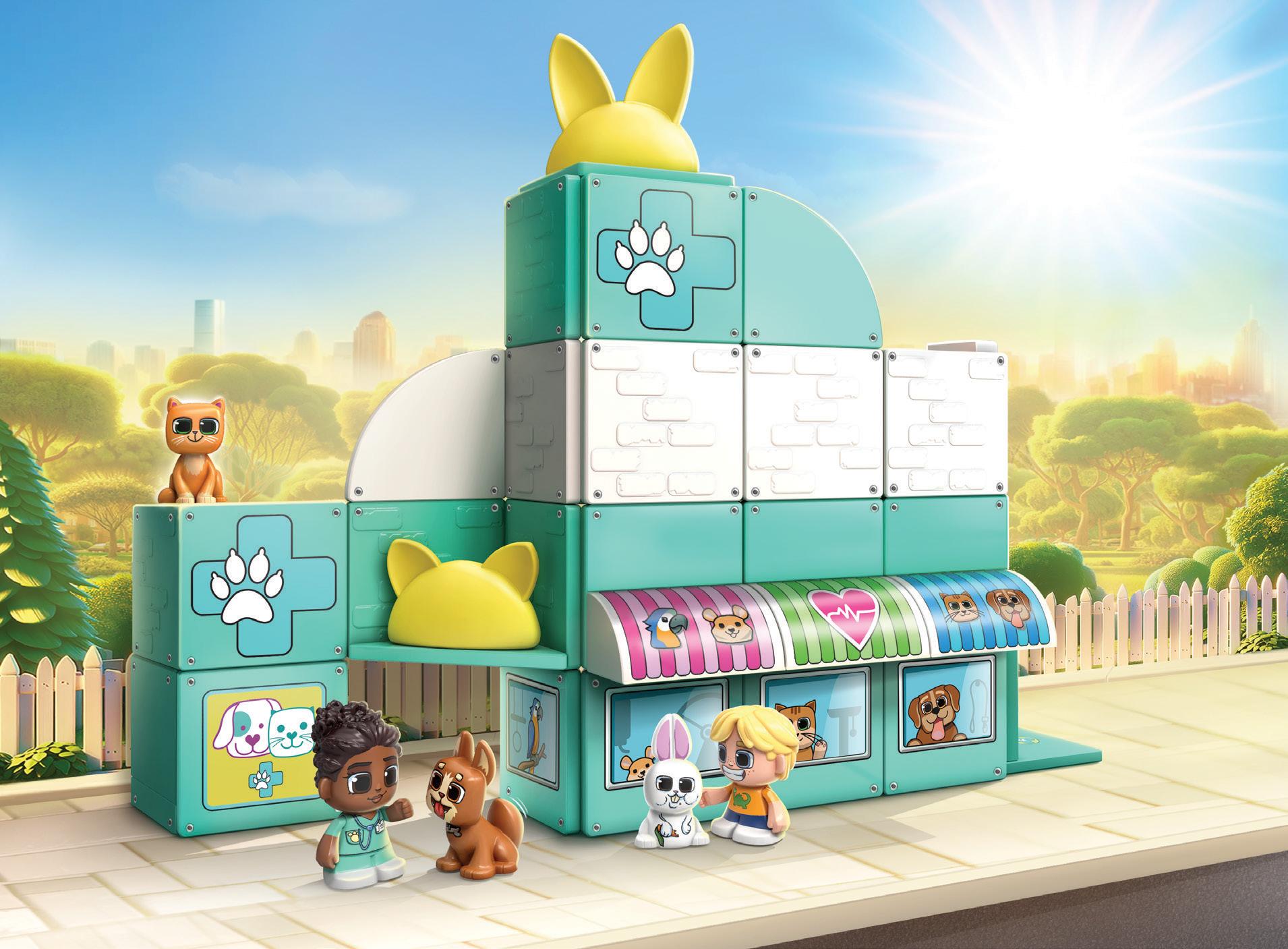
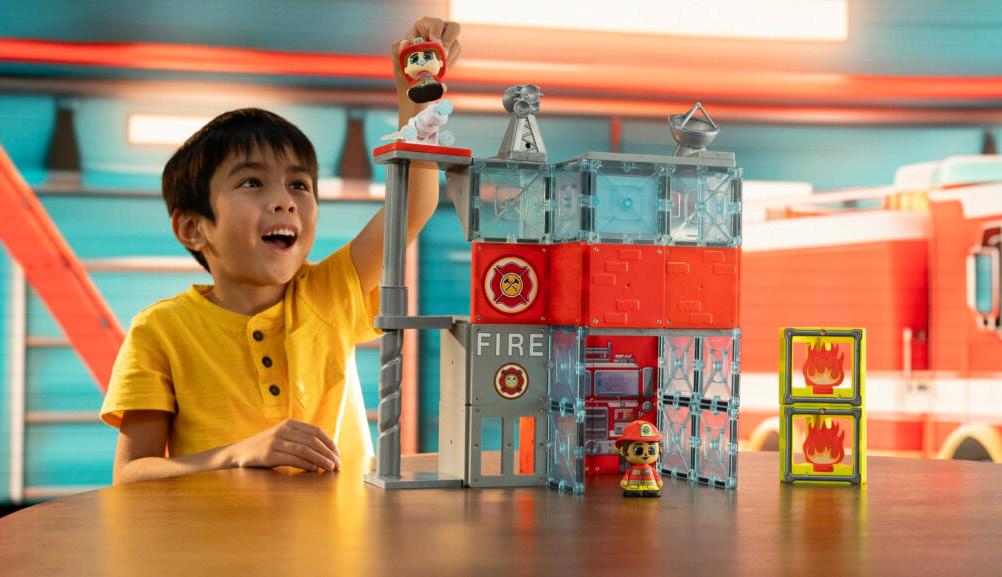
Moose Toys is building a name for itself in the Building Playset category with the introduction of Tile Town, an expansive magnetic build-a-play set system. Billed as the next evolution in kids’ building toys, Tile Town features never-before-seen magnetic action tiles and figures to add movement and interaction that sparks kids’ imaginations and encourages story building. Favourite licensed properties, like Bluey and Jurassic World, alongside kids’ favourite classic themes, Pet Clinic and Fire Station, debuted in September with more offerings following.
John Coyne, chief brand officer, Moose Toys, said: “We took a new approach to the category, with magnetic tiles that can be used to build recognisable play sets that have incredibly unique play features and characters for kids to interact with. It’s all about the simplicity of click, build and play.’”
With easy-to-follow instructions and magnetic tiles, kids can create their own play sets. Placing the special magnetic figures included in each play set on an action tile activates movements such as blasting a water cannon, opening doors, dancing and more, depending on the play set theme.
Moose took a from-the-ground-up approach to the development of Tile Town, viewing the magnetic play set system as a long-term initiative, full of the toymaker’s signature innovation. The brand’s launch will be supported by a marketing campaign cantered on "click, build, play", engaging parents and kids with the easy and quick story-building only Tile Town delivers. With the initial product lineup laying the groundwork, Moose has built out a multi-year pipeline of new play sets, new action tiles and new top licences.
The initial launch of Tile Town play sets includes licensed sets: Bluey Heeler Family Home, Jurassic World Dino Rescue and Jurassic World Gate Escape and core sets: Pet Clinic and Rescue, Fire Station and Fire Truck.
Tile Town has been available in the UK since September. The Moose sales team can be contacted on 01637 882 200.
The Sidemen's game shows become party games
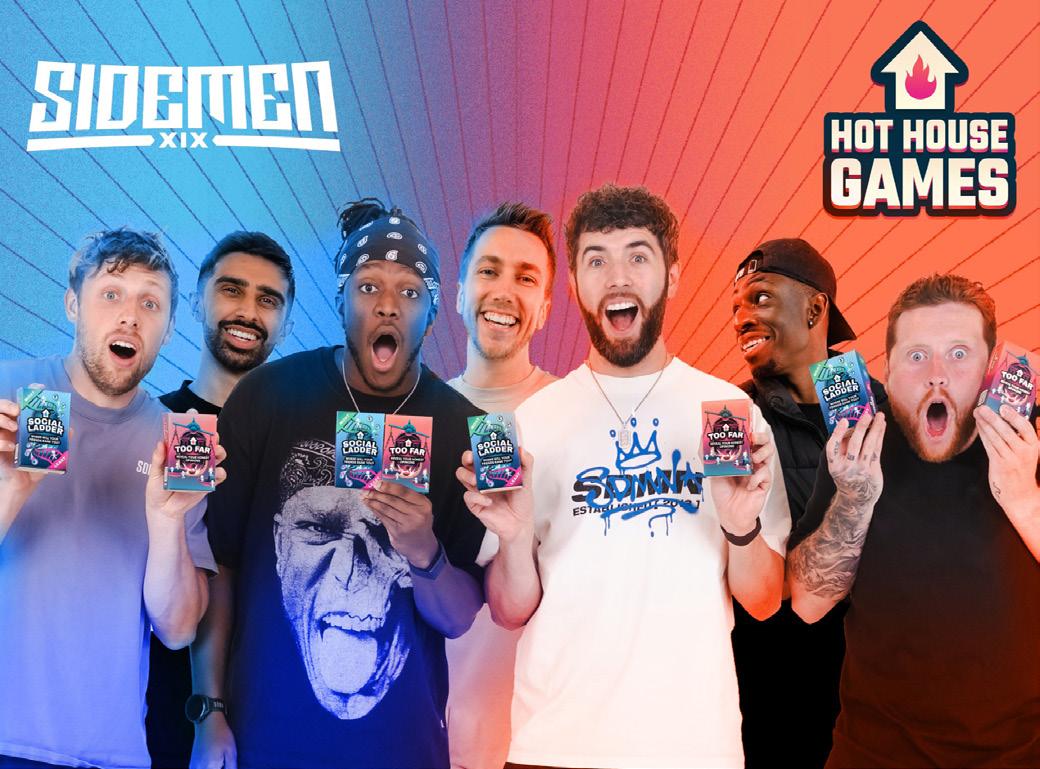
Hot House Games, backed by the world’s No.1 YouTube creator collective, the Sidemen, is set to launch two brand-new party card games targeted squarely at a Gen-Z audience.
Having played hundreds of game shows on their Side+ and MoreSidemen channels, the Sidemen are finally bringing the fan favourites to life, turning them into card games that fans can play at home. Starting with Social Ladder and Too Far, the Sidemen look to create a family of outrageously social games, each with their own unique personality. Too Far and Social Ladder will hit shelves in October.
The influencer-backed party games company, Hot House Games, is the brainchild of siblings and games creators, Harry and Josie North, son and daughter of well-known toy industry entrepreneur, Richard North. Richard will take the role as chairman, while Jordan Schwarzenberger and Aaron O’Neill, co-founders of Arcade Media, along with Sam Uwins, the management team of the Sidemen, are directors of Hot House. To complete the team, games experts David Snow and Steve Evans of The Fantastic Factory are on board to support the manufacturing, logistics and scale-ability of the business.
Taking learnings from an initial foray in 2023, the team chose to base the new games on the Sidemen’s game shows that had already proven successful with their multi-million weekly video viewing audience.
Aaron O’Neill commented: “The new card games, based on The Sidemen game shows, prove that authenticity and doing what you love creates unparalleled fan engagement. The boys are very excited for the games’ launch.”
Too Far and Social Ladder game shows have been played exclusively on the Sidemen’s Side+ subscription channel until now, with launches set to expand across the MoreSidemen and main Sidemen channels which regularly achieve video viewings in the tens of millions, providing unprecedented exposure for the game brands.
Social Ladder is the opportunity for players to find out what their friends and family really think of them and is a chance to say what they’ve always been thinking. Players rank their friends from Most to Least or Best to Worst and find out where they themselves stand. Too Far is an invitation to reveal players' most outrageous, cancellable opinions. It’s the morally bankrupt game where players judge twisted confessions. Are they justified, or way too far?
Josie and Harry North said: “We’re a little nervous, but equally excited to unleash Too Far and Social Ladder into the world. Our aim was simple: to capture that Sidemen experience at home.”
Supported by University Sampling, a PR plan developed by Playtime PR, and the Sidemen and Hot House socials, Too Far and Social Ladder retail at a wallet-friendly RRP of £11.99, offering great gifting opportunities.
For trade enquiries, contact VR Distribution on sales@vrdist.co.uk or 01752 349 766.
Toy industry takes to the courts for charity
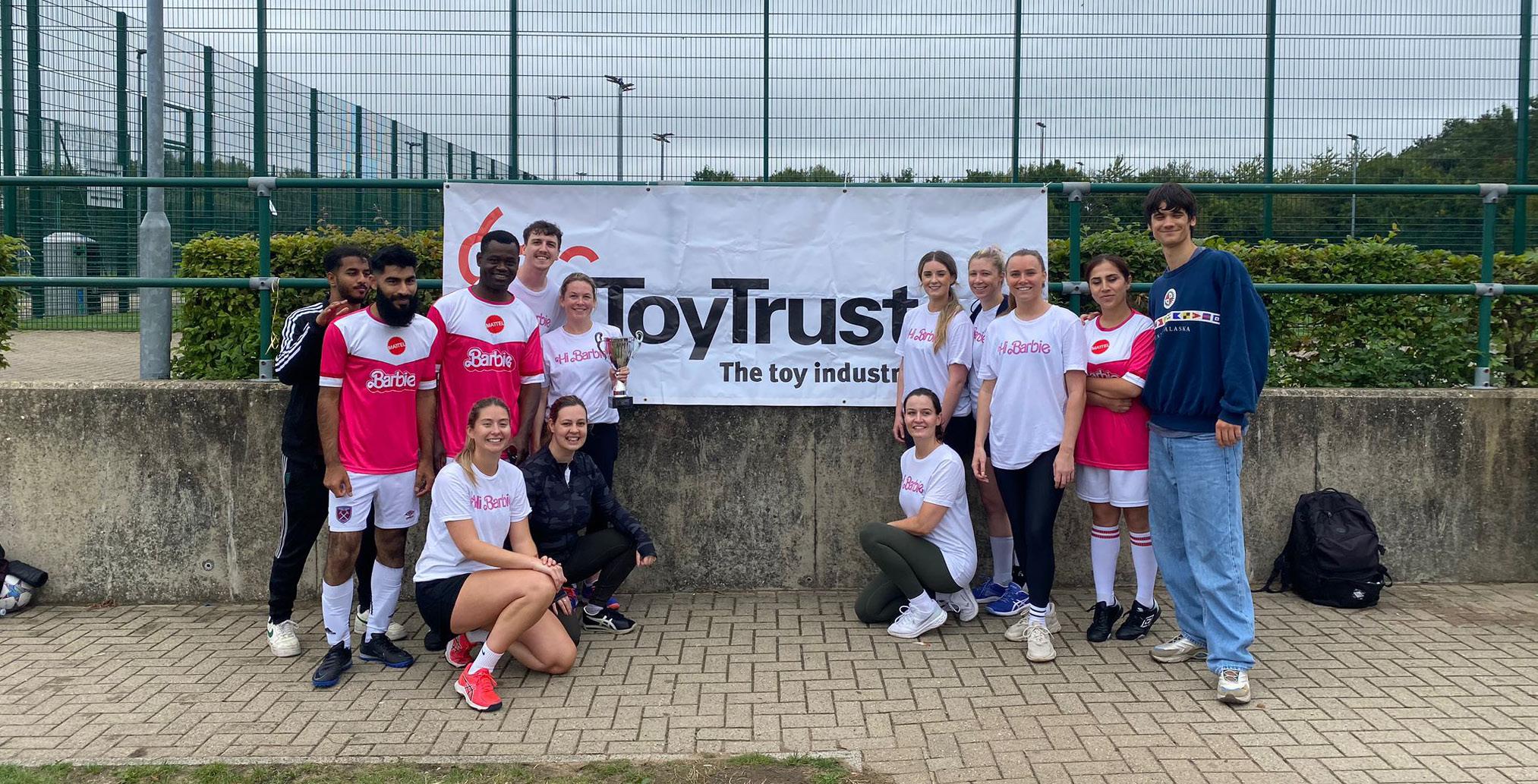
Organised by Hasbro in the Community and supported by Generation Media, the charity tournament played host to the great and the good of the toy and kids’ media industries, raising a total of £9,500 for the Toy Trust, so far. Not only that, the tournament offered a chance to deliver a day full of fun, community spirit and perhaps most important of all, industry bragging rights for the next 12 months.
In the netball tournament, overall winners Mattel reigned supreme before overcoming a strong Goliath team in the final. Special mention also goes to SuperAwesome's team, which picked up first place in the netball Plate competition.
On the football side of things, Hasbro managed an unbeaten tournament to take home the trophy, beating Jazwares in the final. The winner of the football Plate competition was Generation Media.
Hasbro in the Community, Generation Media and the Toy Trust would also like to thank SuperAwesome, Venatus and Hoopla Digital for their sponsorship of the tournament, which helped to maximise the proceeds going to charity.
Those who did not get a chance to participate, but would still like to donate to this cause, can do so by visiting The Toy Trust Football and Netball Tournament 2024 page on www.justgiving.com.
Plans are already afoot for next year’s tournament. Scheduled for 5th September 2025, the goal is to achieve record attendance. If you would like to register your interest for this, please contact donna. crook@partners.hasbro.com and jonathan.chambers@generationmedia.co.uk.
Golden Teddy Award presented to Jane Smith
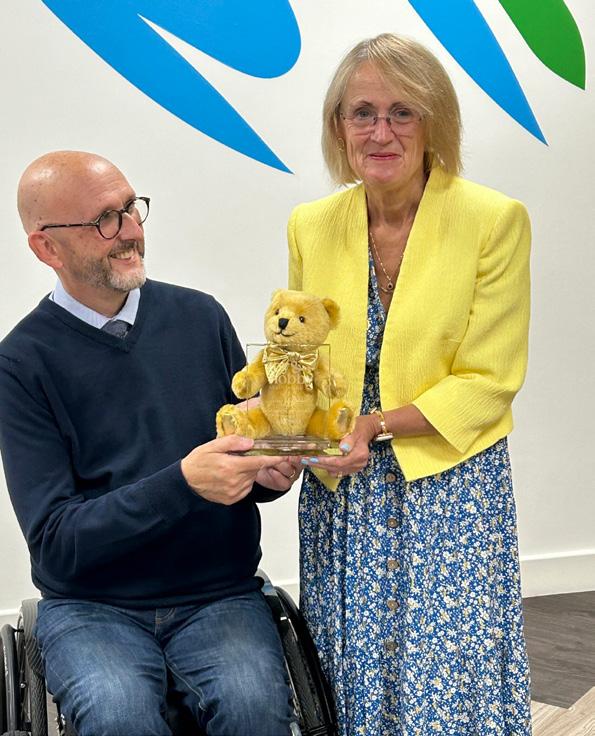
On Wednesday 4th September, BTHA Council member and head of the BTHA Toy Safety Advisory Service, Jerry Burnie OBE, presented a Golden Teddy Award to Jane Smith in Milton Keynes.
Jane has retired as a trading standards officer at Milton Keynes Trading Standards, but was presented with this special award in the company of her former colleagues at the Milton Keynes Council offices.
This award marks the first time that someone who hasn't primarily worked in Toys has received a Golden Teddy and is extra special in that regard. During Jane’s rather unique and long career, in various roles with retailers and with trading standards, she has, amongst many other things, taken the time to deal considerately with suppliers, always given a listening ear to innovative approaches and been instrumental in forging a great Primary Authority partnership with the BTHA itself.
BTHA Golden Teddy Awards are presented to people who have served the industry for more than 15 years and recognises people with extraordinary talents, and who have gone over and above expectations. Importantly, recipients are the industry’s genuinely nice people who possess a high degree of niceness, honesty and integrity.
In his award speech, Jerry relayed the view of the proposers that Jane was a perfect person to be honoured with this award and, though she did not only deal with toys, she has done a huge amount with toys. Not only is she “a genuinely lovely person to deal with”, she was “always honest, open to new ideas and very knowledgeable in her field … a true unsung hero and a very worthy winner of a BTHA Golden Teddy award".
Industry Moves
The Entertainer introduces new leadership structure
The Entertainer (the retail arm of Teal Group Holdings which is also the parent company of Early Learning Centre and Addo Play) has announced a renewed strategic focus on international expansion and a corresponding change of responsibilities amongst its top team.
The Group, as a whole, is in a period of significant growth as all three brands benefit from the enlarged reach across the UK and Europe, enabled by their long-term partnership with Tesco and the continued success of collaborations with M&S and Matalan. While further UK growth remains a focus, the senior team at The Entertainer is turning its attention to growing the company’s international presence beyond the current 200 franchise stores across 21 countries.
Alongside the continuation of franchise-based growth across both existing and new international territories, the company has significant plans to scale by replicating the concession model successfully deployed in the UK through Tesco, Matalan and M&S. A partnership with Moonpig has also recently been announced and you can read more about that on p.39-40. This focus on growth of the retail business will further enable and enhance the continued expansion of wholesale distribution for Early Learning Centre and Addo, already selling through 24,000 outlets worldwide.
To lead this phase in Teal Group Holdings growth, a Group Executive Committee is being established to lead and manage the group as a single, integrated entity. As part of these changes, Geoff Sheffield is becoming Commercial director, International to lead all commercial aspects of the international retail strategy and its execution. Geoff’s knowledge of both The Entertainer business and the toy trade, as well as his many years of international commercial experience, will be invaluable in this critical role, helping drive rapid growth in the scale of the international franchise and concession business.
The new Group Executive role of Chief Product officer has been introduced, bringing together the functions of Buying, Merchandising and Marketing to enable these teams to maximise the speed and effectiveness with which product ranges are deployed across formats and markets. This role has been taken up by Brian Proctor, who brings a wealth of retail buying and trading experience, most notably through various directorships of TJX Europe (TK Maxx).
Andrew Murphy OBE, Group CEO, Teal Group Holdings, said: “I’m delighted to welcome Brian to the team and looking forward to working closely with him and with Geoff to drive our strategy forward. This is an exciting new era for our business and our loved and trusted brands.
“While we will always proudly be ‘the local toy shop’ at heart, the Teal Group is now a multi-faceted, international toy business, offering a wide range of business-to-business services as well as direct-to-consumer propositions; as a designer, sourcer, developer, wholesaler, concessionaire and retailer of toys across multiple international markets.”
Stephanie Bailey joins Moonbug as head of Global Toys
It has been announced that senior toy and licensing industry executive Stephanie Bailey has joined Moonbug Entertainment as the head of Global Toys.
Stephanie joins from Paramount, where she served as the head of Global Toys and was responsible for building a global team that maximised commercialisation and fan engagement across Paramount properties including Paw Patrol, Teenage Mutant Ninja Turtles and SpongeBob SquarePants.
She started her career at FAO Schwarz, where she played an integral role in the Toys R Us acquisition of FAO Schwarz, and went on to grow her career in Toys R Us merchandising across several categories, ultimately as a divisional business manager for Babies R Us. Stephanie has helped dozens of toy companies successfully launch their products and brands. She also serves on the boards of the Toy Foundation and Women in Toys, Licensing and Entertainment (WiT).
“I am inspired by Moonbug’s mission to create entertaining and educational content for kids,” said Stephanie. “The team at Moonbug is redefining what a collaborative relationship can look like through consumer products and experiences, content production and innovative brand partnerships. I look forward to forming these strategic partnerships with toy companies around the world.”
Kerry Tarrant wows Wow! Stuff
With over 18 years of marketing experience within the consumer goods industry, the very well-respected Kerry Tarrant has become the first head of Marketing and Brands in Wow! Stuff’s history.
“We’ve actually never had a marketing department or a marketing lead,” explained Wow! Stuff’s managing director, Dawn Lavalette. “We’ve always wanted one and with our products gaining really good traction organically, it was time to professionalise that part of our business.”
Kerry’s previous roles include positions held at top UK and global toy companies including Vivid, Flair and more recently IMC Toys. At these companies, she helped bring to market some of the world’s most popular brands and products including Cry Babies, AniMagic and Thunderbirds.
Kerry said she is ‘super excited’ to become a Wow! Stuff-er, not least because her son Aidan is a huge Marvel and Sonic Nano Pods fan.
“Wow – I’ve become a Wow! Stuff-er!” she commented. “During my 15 years in the Toy industry, working with some of the most inspiring leaders and exciting brands, I’ve kept an admiring eye on Wow! Stuff and watched as it has grown to become one of the most innovative and visionary toy companies out there. And now I’m a part of this amazing team! I do feel a bit like it’s my first day at school and the nerves are starting to creep in, but I’m ready for this next adventure.”
“I can’t wait to get my teeth into marketing some of the most awesome products and seeing the reactions of kids – and big kids. I’ve already seen some of what’s to come for 2025 and it’s staggering – I’ve never seen anything like it.”
Brian Proctor Geoff Sheffield
We understand the power of toys.
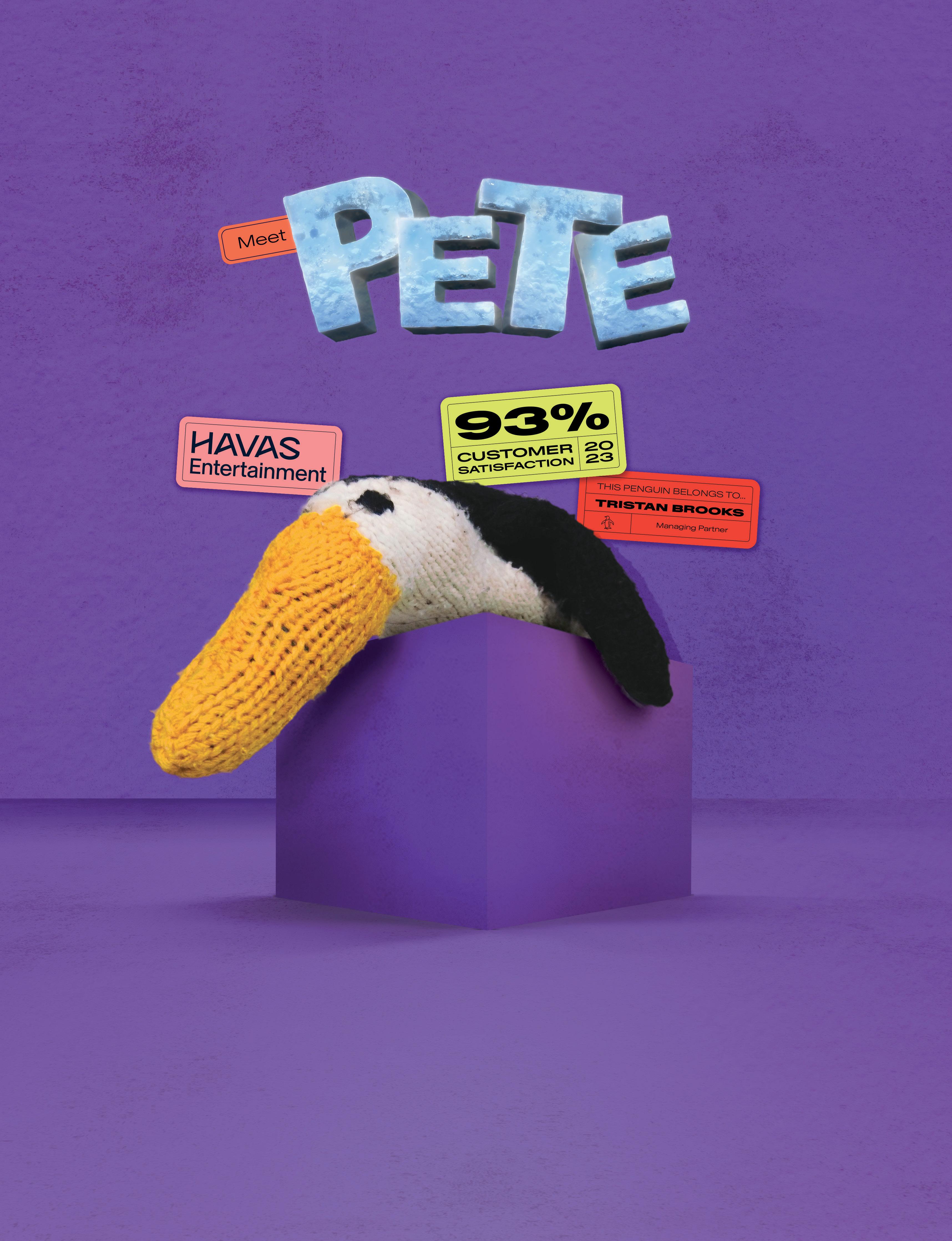
Pete the adorable penguin was hand-knitted by a family friend when Tristan was just a baby. He’s been kept ever since as a symbol of their friendship.
Havas Entertainment understands the power of toys. They can be our first friends, early teachers, and stay with us through thick and thin.
Despite often being nothing more than plastics, fabrics, or slime, toys have the power to supercharge a young
imagination - and to us, that’s pure magic. That’s why we’re proud to say we’re an awarded and category-leading toy specialist.
As a one-stop-shop media and creative agency backed by the Havas Group, we have the capabilities to assist you wherever you need on the path to purchase.
Our primary concern is your business – with TRR scores of 93% - and we’re
passionate about staying innovative, keeping a keen eye on how technology is shaping commerce, as well as on your competition.
Just like your favourite toy, we are at your side and at your service, ready to help you achieve whatever you can imagine.
Because we know the power of toys.
Marketing World
DreamToys to reveal hottest toy list at annual event
DreamToys will once more mark the countdown to Christmas 2024 with an event that showcases the 20 hottest toys of the year. Selected by the UK’s leading retailers, the Toy Retailers Association will launch the list with the media and influencers under embargo on 12th November, with the list going live on 13th November.
“The list is decided by a panel of leading UK retailers made up of toy and games chains, large and small independent toy retailers, grocers, department stores and ethical online stores,” said Paul Reader, DreamToys chairman. “This makes it the most authoritative and independent media list for children and adults this Christmas.”
This year, Dream Toys has partnered with Alex Jones and Giovanna Fletcher, to promote the list. Alex Jones, BBC One’s The One Show presenter, will attend the launch event and speak to media. Alex has three children of her own and will be promoting the DreamToys list from the event to her followers. Giovanna Fletcher, mother, podcaster, presenter and author, will also be revealing the toys to her 2m social media audience following the event, to extend the campaign in the run-up to Christmas.
Each year, DreamToys has a fantastic media turnout, as national publications and news outlets get a first look into what’s on the ultimate Christmas toy list. The addition of Alex Jones and Giovanna Fletcher marks a new audience this year, as DreamToys boosts its social media presence.
Paul Reader explained: “DreamToys is sure to draw in a massive audience and highlight just how covetable the Christmas 2024 list is to families across the nation. We believe we have chosen an incredible list this year, and we are excited to promote it to the media and via our social media mums. We will once again encourage shoppers to visit their local toy retailers to shop for the list, and to get expert advice on toy purchases this Christmas”.
Media can register to attend the launch event on 12th November via dreamtoys@bastion.co.uk.
Xootz celebrates 10th anniversary with landmark ‘Fun Unleashed’ TV campaign
Since its inception in 2014, Xootz has been dedicated to encouraging children aged 2-13 to get outdoors and embrace adventure, moving away from screen time towards more active, thrilling outdoor play.
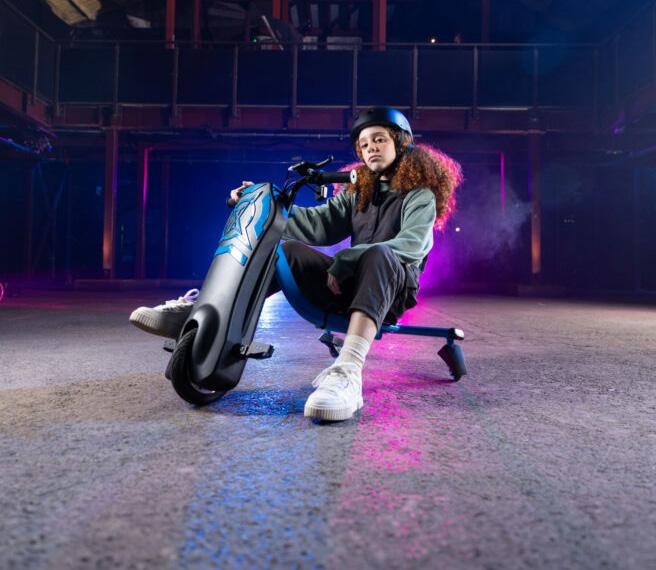
Launching in Q4 2024, the brand’s new milestone TV campaign will feature five of Xootz’s newest and/or hero products, all of which have been designed to deliver unmatched performance, style and fun. The spotlighted products include the Enigma Electric Scooter, Cyclone Electric Drift Trike, Comet Electric Go Kart, Venom Go Kart, and Viper Go Kart. Each product is engineered to provide an exhilarating experience, without compromising on safety or durability.
“Our 10th anniversary is a perfect time to celebrate how far Xootz has come in transforming the world of kids’ wheeled toys,” said Tom Ellyatt, director of Marketing & eCommerce at Xootz. “This TV campaign is our largest marketing investment yet, reflecting our commitment to inspire the next generation of adventurers. We can’t wait to see the impact as more kids discover the fun and freedom that Xootz products offer.”
As part of the campaign launch, Xootz exhibited at the Big Christmas Press Show on 11th September 2024, hosted by CIJ Group at The Business Design Centre, London. Attendees visiting Xootz on Stand A27 were given the opportunity to preview and test all five products, connect with the brand and explore potential collaborations.
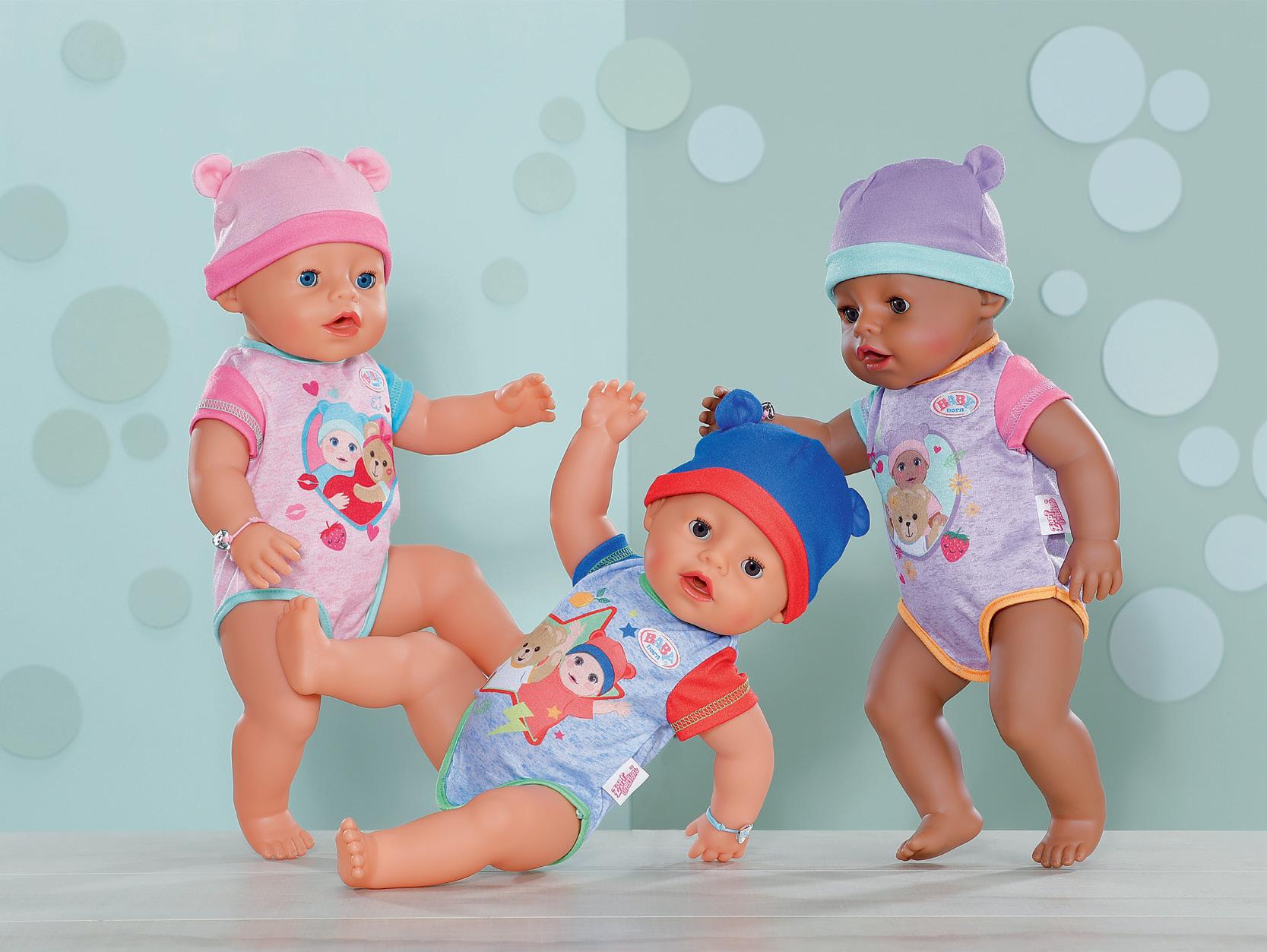
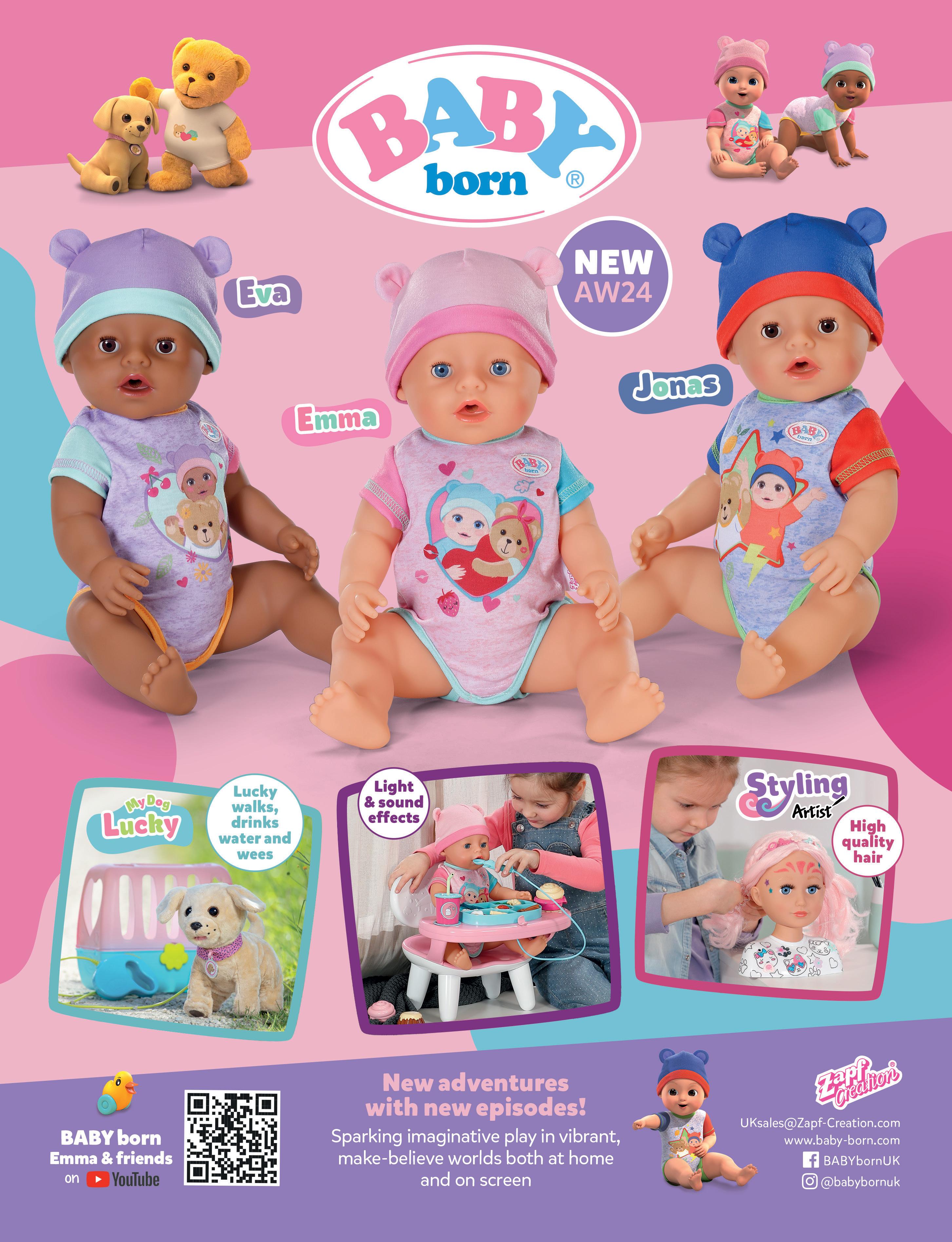
Baby born announces launch of second animated series
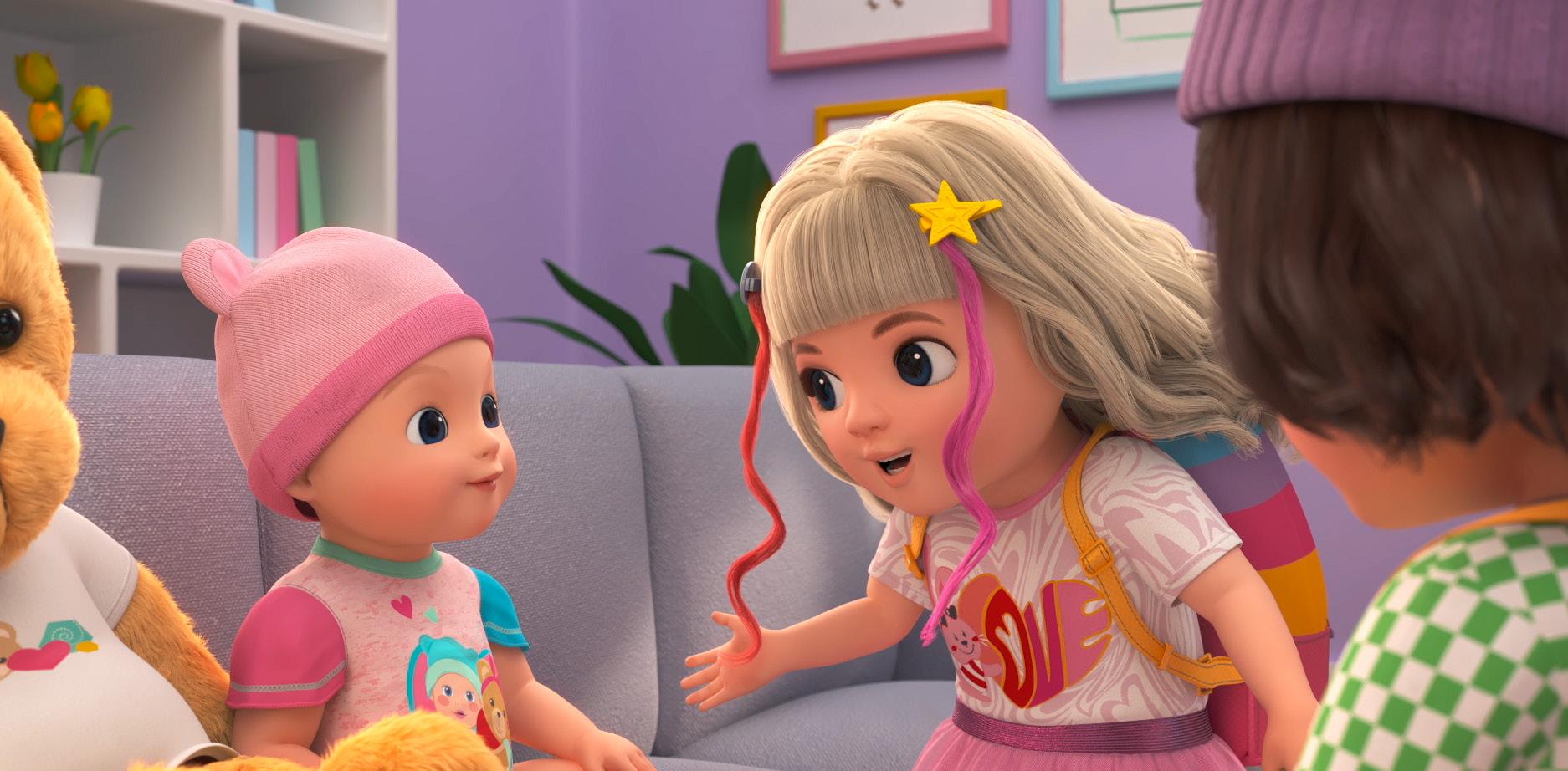
After millions of children watched the first season of the Baby born animation series, MGA Zapf Creation is now launching a second season with 18 new episodes. Week after week, inspiring video material for pre-school children will be released.
In the new series, fans will meet Baby born Emma, her stuffed bear Teddy and the funny duck Berta. The popular characters master new everyday challenges, immerse themselves in a make-believe world and learn about everyday life. Emma brings Teddy the bear to life in her imagination and experiences exciting adventures with him and her friends. As the new baby in the neighbourhood, Annabell first has to get used to the lively Emma, but quickly realises how much fun they can have together.
There are a total of 18 episodes, each five minutes long so as not to overwhelm young children. Each episode contains a catchy song that is designed to captivate pre-school children and their families. As well as providing entertainment, the episodes encourage empathy, creativity and social skills. In addition to the YouTube channels available in over 10 languages, the episodes of season two will also be released on other relevant platforms such as Super RTL's Toggolino.de in Germany, ITVX in the UK and KidoodleTV globally. The trailer and the first episode can be found on the English YouTube channel.
Starlana
Florazina
Opinion
Cracking the Code: How to master authentic influencer marketing
Influencer marketing is a powerful way to place brands in front of consumers, but with kids becoming more discerning of the messages influencers are sharing, it’s becoming trickier to get right. Here, Becky shares her golden rules for Toy companies wanting to make the most of their partnerships.
Influencer marketing: a powerful tool, or a tough strategy to master? Trends shift faster than an Asos return, and with new platforms popping up constantly, it’s hard to keep up. Whether it's 'brat summer,' 'demure,' 'cutesy,' or the latest Gen Z lingo, we're always in our ‘insert vague noun here’ era. But beneath the buzzwords, one truth remains: the power of influencer marketing is undeniable. As a brand, you either keep pace or get left behind.
With marketing budgets under tough scrutiny, it’s essential to maximise every pound spent on influencer marketing while avoiding common pitfalls. One growing challenge (and often the hardest to get right) is the effect of growing scepticism among younger audiences. Young audiences are highly attuned to authenticity and when asked, can spot when a brand or influencer is simply hopping on a trend. Recent data highlights this shift, with reports finding that 68% of 2,000 respondents were unhappy with the surge in sponsored content, while 65% report following influencers less frequently than a few years ago. This rising mistrust underscores the authenticity gap, with younger generations gravitating toward influencers who are quirky, humorous and vulnerable rather than overly commercial. They’re also quick to tune out traditional ads, making it clear that brands must tread carefully in this space.
So how can Toy brands make the most of influencer marketing and overcome these challenges this holiday season? Here are her golden rules:
• Keep it simple
Over edited, complicated and scripted user generated content (UGC) is going to lose your audience. If it seems like a crazy idea, it probably is, but the usual rules of content don’t apply to platforms like TikTok – so lean into it.
Take prolific food reviewer Keith Lee, for example. He currently stands at a staggering 16.5m followers on TikTok. Keith shot to fame from ordering food, sitting in his car, eating it and then reviewing it. Hardly a Steven Spielberg epic feature, but the formula works. 10 years, or even five years ago, it would have been unfathomable for a brand to work with this type of content, but now, a lot of creators have the power to choose which brands they want to work with, as opposed to the other way round.
• Consider the mix of influencers and develop a strict vetting process
Look at the types of influencers that you would want to use. Nano, micro, macro and mega influencers all have their different strengths. For example, nano influencers usually have an extremely loyal fan base who will follow whatever they suggest, while mega influencers have enormous audiences and will be everywhere you look. Here at Generation Media, we have a detailed vetting process to make sure each influencer is right for the campaign, from using multiple talent pools to analysing their audience and performance.
• Look after your community
If you engage with a successful and established creator, then trust that they know how to make their own content (especially if you’re sure of your product).
According to Childwise: The Monitor Report 2024, 66% of 13–16-year-olds use TikTok every day and on average spend 2.7 hours a day on the app. Whilst obsessing over the consumer funnel, it’s also key to keep reflecting on the Toy industry’s audience: the content shown to young people’ can really make an impact on their minds, which we have a duty to protect.
Becky Evans Senior content manager, Generation Media
• Create economies of scale
Consider using influencers for long term deals or ambassadorships if they work hard for your brand. Regularly showing a face with real opinions is extremely important. Authenticity in a creator comes with the good, the bad and the ugly. Looking outside the category, Brandiece Heal, otherwise known as @ foodguidelondon, has grown a fiercely loyal fan base through her (sometimes painfully) honest reviews of restaurants in London. And yet, with every bad review, she receives more business; if a restaurant can put its money where its mouth is, she will review it, and the outcome is hopefully a happy one. Failing that, the restaurant comes away with some constructive pointers for improvement. It’s a win, win.
Plus, consider how your influencer content can be amplified beyond the social channels it’s created within. Maybe, with some clever editing, this content can play an important feature within your broader media mix.
• Remember, influencer activity needn’t cost the earth
TikTok creative exchange (TTCX) allows brands to submit a brief to the platform and collaborate directly with creators.
For more support or guidance on what would work best for your brand, get in touch with Generation Media.
Licensing World
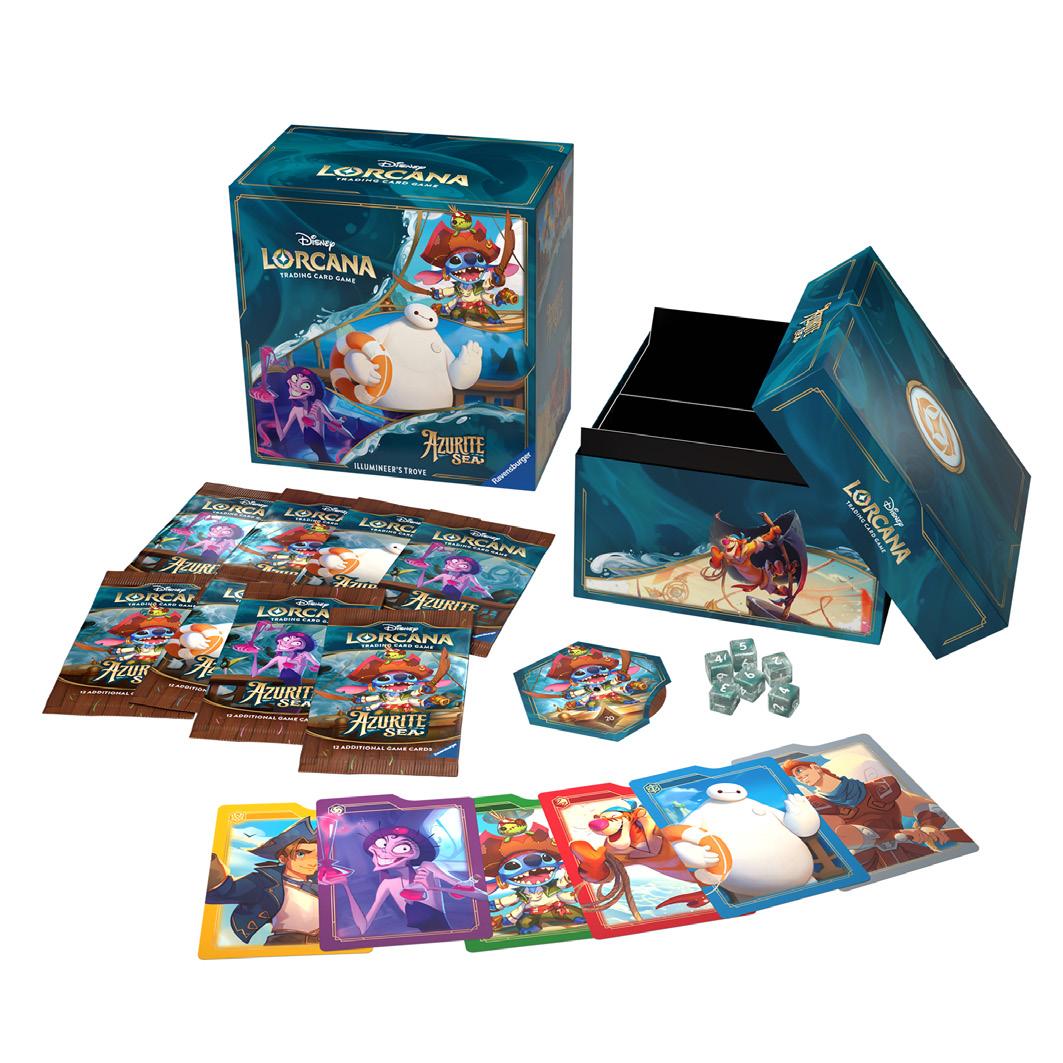
Ravensburger unveils Disney Lorcana: Azurite Sea
Azurite Sea, the sixth set of the popular Disney Lorcana TCG, will be released at local game stores and select retail locations at Walt Disney World Resort, Disneyland Resort and Disneyland Paris on 15th November 2024, followed by mass market retailers on 27th November 2024.
Glimmers of pirates and inventors from across the worlds of Disney take centre stage in Azurite Sea, when Illumineers set sail as part of their quest to repair The Great Illuminary. All cards in Azurite Sea can be used to update existing Disney Lorcana TCG decks and can be played alongside all previously released sets.
The Disney Lorcana TCG set Azurite Sea will include two starter decks featuring combinations of Ruby/Amber or Sapphire/Emerald, booster packs of additional cards and a new Illumineer’s Trove. New accessories include two playmats featuring Elsa – The Fifth Spirit from Disney’s Frozen, and Donald Duck – Buccaneer. New card sleeves and deck boxes will feature Scar – Vengeful Lion from Disney’s The Lion King and Winnie the Pooh – Hunny Wizard from Disney’s Winnie the Pooh.
Also hitting shelves in time for the holidays is the Stitch Collector’s Gift Set. The set includes a Stitch-themed portfolio, four Azurite Sea booster packs and a unique Stitch-Alien Buccaneer water foil promo card, the first time this type of foil treatment has been used in Disney Lorcana TCG.
This past D23, the Disney Lorcana team shared information on the upcoming North American and European Challenge Championship events, taking place in December and January. Fans are advised to keep an eye on www.disneylorcana.com for more information.
Saga Invest announces acquisition of Heathside Trading
Heathside is a distributor and manufacturer of toys and collectibles with operations in the UK and the Netherlands. The company has experienced rapid growth over the last few years and is well known for its pop culture and licence-based brands, Khadou and Master Replicas. These brands work with properties such as Minecraft, Deddy Bears, Five Nights at Freddy’s, Star Trek, Sonic, Molang, Doctor Who, Teenage Mutant Ninja Turtles, Sesame Street, Harry Potter and many others. With this acquisition, Saga Invest will expand Heathside’s operations across Europe, focusing first on France and Germany.
Darren Epstein from Heathside said: “We were approached by a number of companies at the back end of 2023 and the shareholders decided to move to exclusive discussions with Saga during the Nuremberg Toy Fair. Given the team’s background and their focus on growth, it made sense to move forward with Saga. We believe that over the next 12 months, our retail partners will see even more reason to work with us on our portfolio of product ranges.”
“We are building a Pan-European distribution and manufacturing solution at the intersection of toys, collectibles and other licensed goods,” said Gregory Benassar, principal at Saga Invest. “As such, we are delighted to complete our purchase of Heathside, a very successful company within all these segments. We are entrepreneurs at heart, and we see that as core to the Heathside business. We wish to continue and enhance that philosophy.”
Following the sale, Robert Myers will retire. Robert commented: “After so many years, I am delighted to hand over the reins to the next generation. Under the management of Saga and the rest of the leadership team, I know the business is being left in the most capable of hands, and I look forward to following the company’s success moving forward.”
John Nelson will serve as interim CEO until the beginning of 2025. Gregory Benassar will become co-CEO, with Darren Epstein (EVP Global Business Development) and Max Nelson (head of Sales) remaining to ensure continuing growth within the business.
Saga Invest is comprised of four members: Gregory Benassar and Alexis Desplats, who played instrumental roles in the historic growth of Asmodee; Alexander Dubynski, founder and former owner of Blackfire Distribution prior to its sale to Asmodee; and Jürgen Helmhold, who brings extensive business expertise from his time as a senior partner in SHWP.
“The experience of these veterans of pop culture formats proves to be a very exciting prospect for the future growth of Heathside, Khadou and Master Replicas,’’ added Darren Epstein.
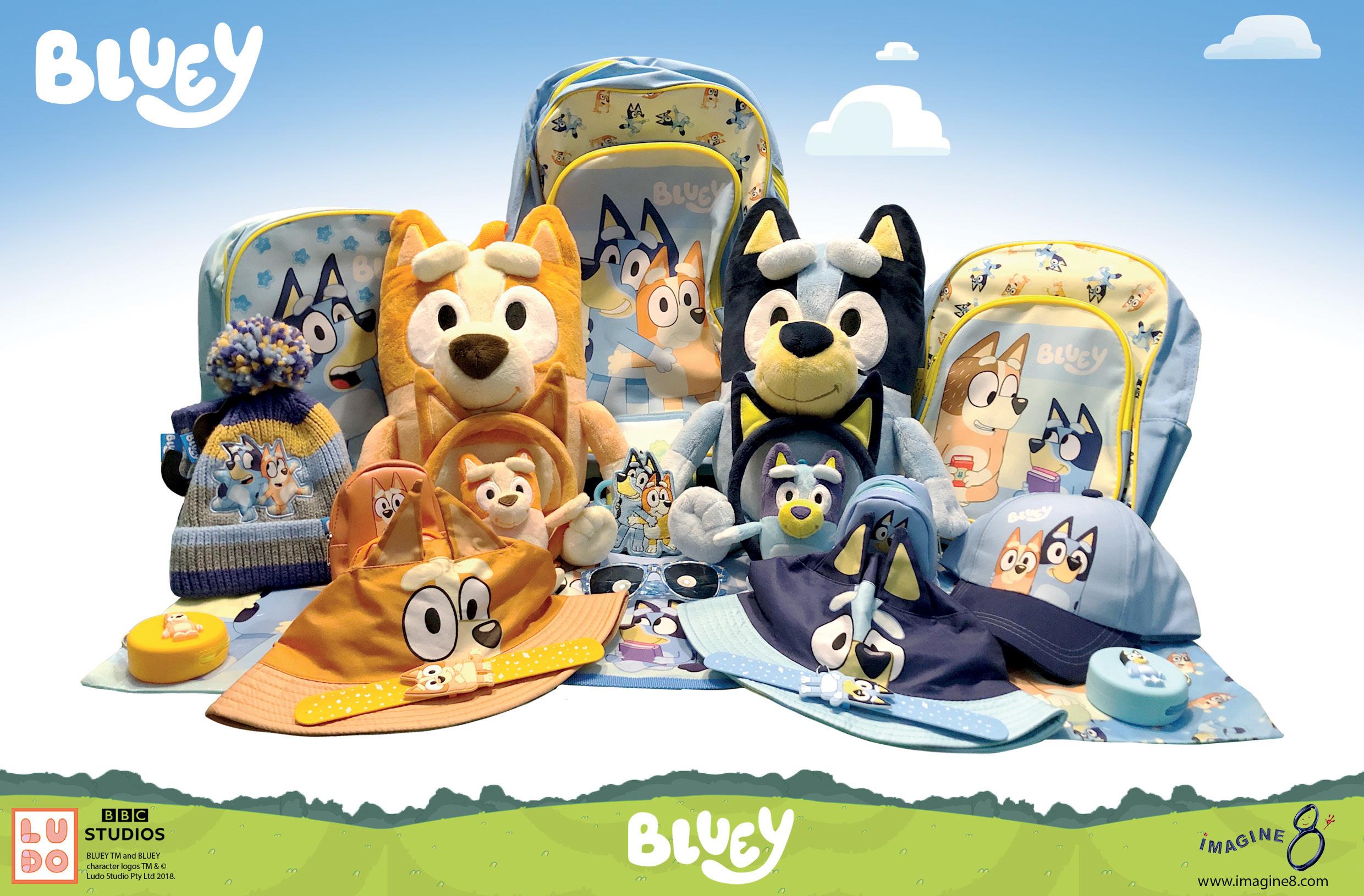
BBC Studios inks global licensing deal with Ty for Bluey
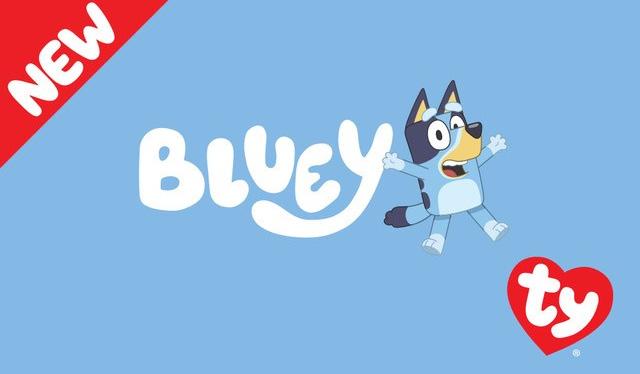
BBC Studios has announced that it has signed a global licensing deal with Ty to produce a line of Beanie Babies for the Emmy Award-winning animated TV sensation, Bluey.
The landmark deal is BBC Studios’ biggest with Ty to date and will see sisters Bluey and Bingo, plus their dad Bandit and mum Chilli, transformed into cuddly and collectible Beanie Baby plush toys. The new line will launch at retail stores across the US, Canada, LATAM, UK and Iberia in December 2024. The range will launch in Australia and New Zealand in January 2025.
Julie Kekwick, head of Licensing for BBC Studios UK & EMEA, said: “We are thrilled that Bluey will now feature the iconic Ty red tags. This is our largest deal with Ty to date, underscoring the immense appeal of Bluey and its heartwarming characters.”
“Bluey brings joy to millions of fans around the world, exploring themes of family and growing up while celebrating imaginative play and having a lot of high-energy fun,” said Ty founder, Ty Warner. “At Ty, we share the same purpose – encouraging kids and all our fans to imagine and to dream.”
Since its first year, Bluey toys have consistently won accolades from trade and consumer publications, toy and licensing industry associations and top retailers around the world, amassing more than 50 awards and nominations in five years. Bluey’s phenomenal popularity across the globe enables its licensing programme to grow at pace with 350 licensees globally.
Jointly commissioned by ABC Children’s and BBC Studios Kids & Family, Bluey is produced by multi-Emmy award-winning Ludo Studio in association with Screen Queensland and Screen Australia. BBC Studios Kids & Family also holds global distribution and merchandise rights for Bluey.
Licensing World
Warner Bros Discovery announces new global division
Bruce Campbell, chief revenue and strategy officer of Warner Bros Discovery (WBD), has announced a new global structure for the company’s worldwide studio tours, retail destinations, touring exhibitions and all location-based experiences, bringing together the existing licensed entertainment and owned and operated teams into a single worldwide division. Warner Bros Discovery Global Experiences will be charged with strategically expanding the company’s fan-facing experiences and pursuing new businesses that capitalise on the company’s intellectual property, like those with Universal Destinations & Experiences and Miral, and its awardwinning operated businesses including Warner Bros Studio Tours in London, Hollywood and Tokyo.
“WBD has an incredible mix of location-based experiences for fans around the world, from theme parks and tours to exhibits, retail and more,” said Bruce. “Bringing these two teams together under one roof gives us an opportunity to leverage and coordinate the talent and resources across all of our experiential businesses to better delight our consumers through offering even more truly authentic and engaging in-person experiences and events in every market.”
WBD Global Experiences combines the company’s existing Global Themed Entertainment licensing group and the Studio Tours & Retail owned and operated division into a new cohesive and unified division. The new team will develop and execute global strategies that offer partners the right mix of both models, putting WBD in a position to drive growth and become a worldwide leader in the creation, development, licensing and operating of location-based entertainment inspired by Harry Potter, DC, Looney Tunes, Scooby-Doo, Game of Thrones, Friends, Discovery and more.
Simon Robinson, chief operating officer of WBD Studios, will add leadership of WBD Global Experiences to his responsibilities. He will report to Bruce Campbell for Experiences and will continue reporting to WBD’s chief financial officer, Gunnar Wiendenfels, for his studio and content operations and financial roles.
Peter van Roden, executive vice president, Global Themed Entertainment, will continue in his role leading the licensed location-based entertainment and theme parks businesses, as well as the division’s global business development. His team will continue to manage the partnership with Universal Destinations & Experiences for The Wizarding World of Harry Potter locations, Miral for Warner Bros World Abu Dhabi and The WB Abu Dhabi, and the company’s other licensed exhibitions.
Sarah Roots, executive vice president, Worldwide Studio Tours & Retail, will continue in her role leading WBD’s owned and operated experiences, including the award-winning Warner Bros Studio Tour – The Making of Harry Potter, the Warner Bros Studio Tour Hollywood and the Harry Potter flagship and other retail stores. Sarah and her teams in London, Tokyo and Burbank have made the company’s studio tours must-experience destinations with industry-leading visitor reviews.
newsanalysis
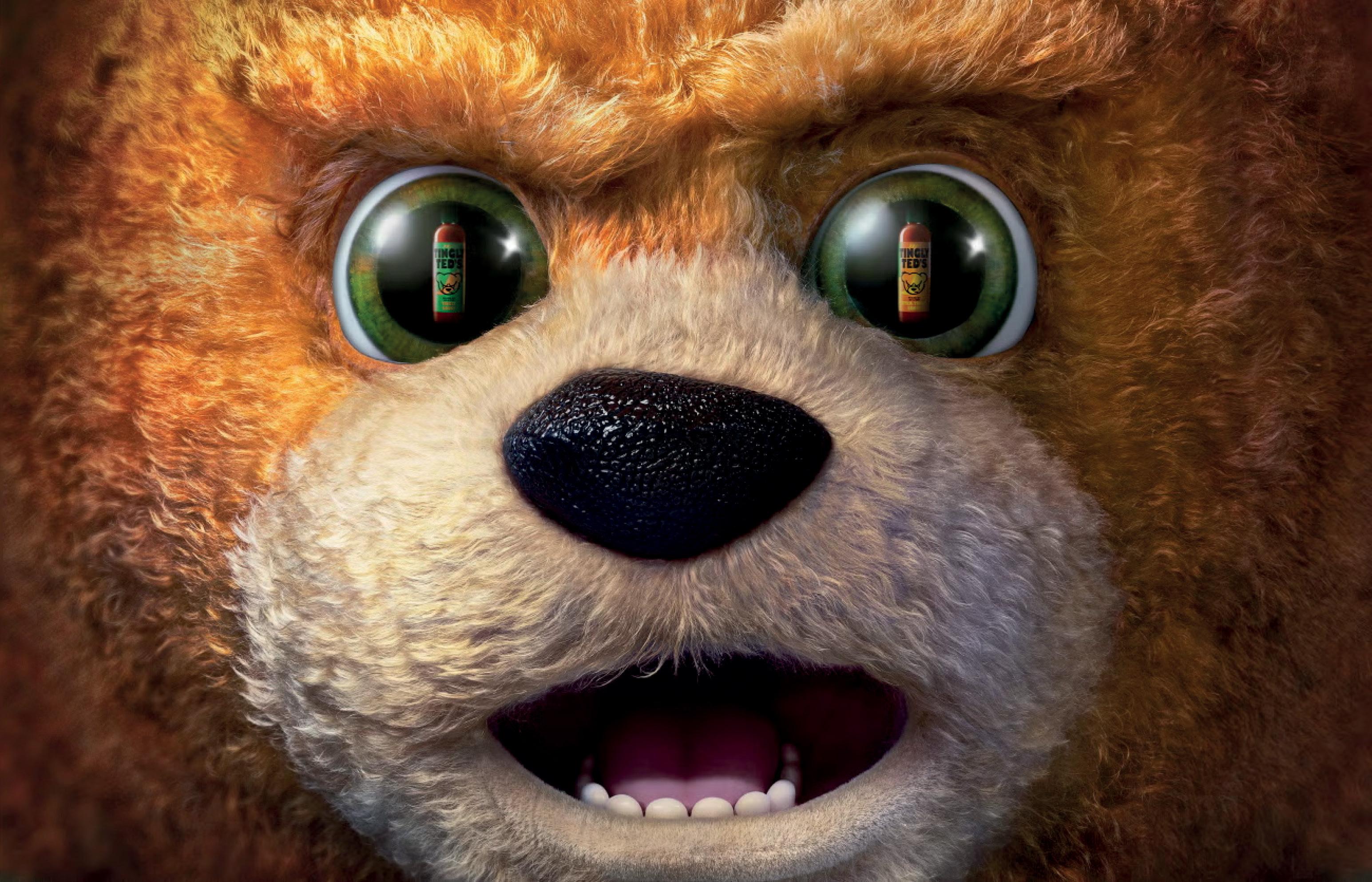
Toikido gets saucy with Tingly Ted’s
At the end of August, Toikido announced a strategic licensing partnership with Tingly Ted’s, the innovative hot sauce brand created by music megastar Ed Sheeran. Promising to introduce a wide range of Tingly Ted’s-branded consumer products to fans around the world, the collaboration has set tongues wagging. Here, Toikido CEO Darran Garnham tells Toy World readers why he’s relishing this new opportunity.
What do you see in the Tingly Ted’s brand that made you want to work with it?
Tingly Ted’s is a brand that perfectly marries creativity with authenticity, two elements that are at the heart of what we do at Toikido. The brand’s unique positioning, with its roots in Ed Sheeran’s personal love for sauces and its playful, slightly edgy character, resonates deeply with our approach to developing product-led IPs. We see tremendous potential in bringing Ted’s personality to life through merchandise that fans can connect with on a personal level, whether it's through collectible toys, fashion, or other lifestyle products.
What does Tingly Ted’s bring to the Toikido portfolio, and how does it fit into your wider business strategy?
Tingly Ted’s adds a fresh dimension to our portfolio by bridging the gap between food culture and consumer products. It fits seamlessly into our strategy of building worlds around strong, character-driven brands. With Tingly Ted’s, we have the opportunity to create an ecosystem where fans can engage with the brand in multiple ways, from playing with Ted-themed toys to wearing apparel that captures the brand’s cheeky, adventurous spirit. This aligns with our goal of creating value at every touchpoint and expanding our reach into new and exciting categories.
Why do you think Ed Sheeran and WMX chose to collaborate with Toikido on this?
Toikido’s reputation for innovation, and our ability to gamify and story-tell through products, made us a natural partner for Tingly Ted’s. Ed Sheeran and WMX have recognised our track record in swiftly bringing high-quality products to market, as well as our commitment to capturing the essence of a brand. We share a common vision of pushing boundaries and engaging consumers in new, imaginative ways, which is why this collaboration makes so much sense.
What can you tell us at this stage about Tingly Ted’s licensing programme, particularly when it comes to toys and collectibles? How might the toy range end up looking and when can we expect to see the first products on-shelf?
Our approach to the Tingly Ted’s toy and collectible range is rooted in the brand’s personality - bold, unique and a bit cheeky. Fans can expect high-quality products that reflect Ted’s character, from plush toys that bring out his softer side to collectibles as cool and edgy as the brand itself. We’re also exploring innovative concepts such as reversible plush toys and premium collectibles that resonate with adult fans. We anticipate the first products will hit shelves by mid-next year, aligning with our strategy to deliver a complete, multi-platform experience for fans.
Do you think the demand for licensed Tingly Ted’s consumer products reflects any wider industry themes or evolving consumer behaviors?
Absolutely. The demand for Tingly Ted’s products is a reflection of broader trends where consumers are increasingly seeking out brands that offer both authenticity and uniqueness. Fans are looking for products that resonate with their personal identity and lifestyle, which Tingly Ted’s - with its mix of relatability and adventureoffers in spades. This trend of blending food culture with lifestyle and entertainment is something we’re seeing across the industry, and Tingly Ted’s is at the forefront of this movement.
Brand Profile
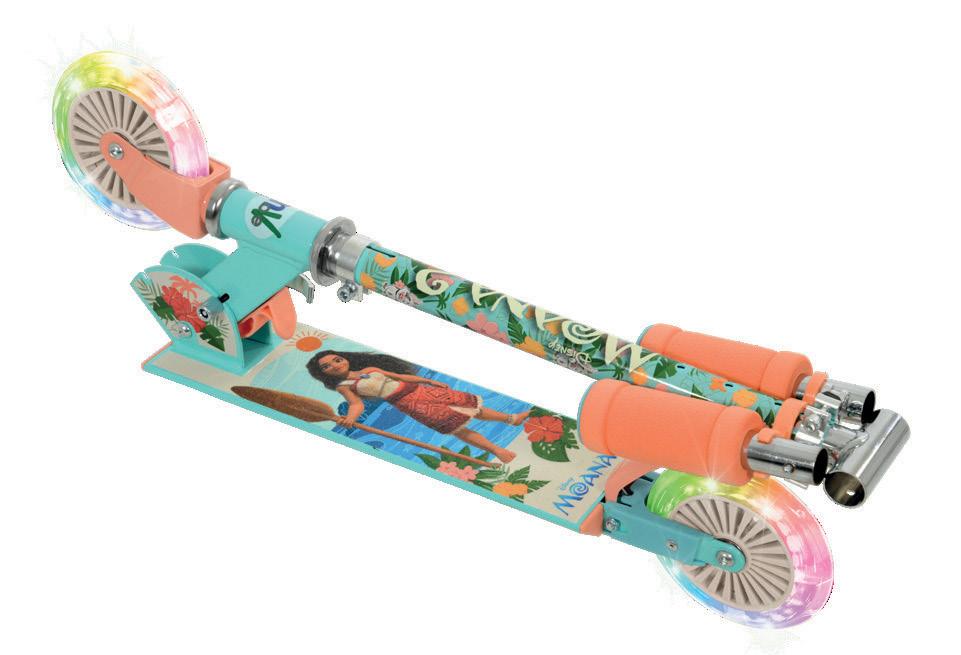
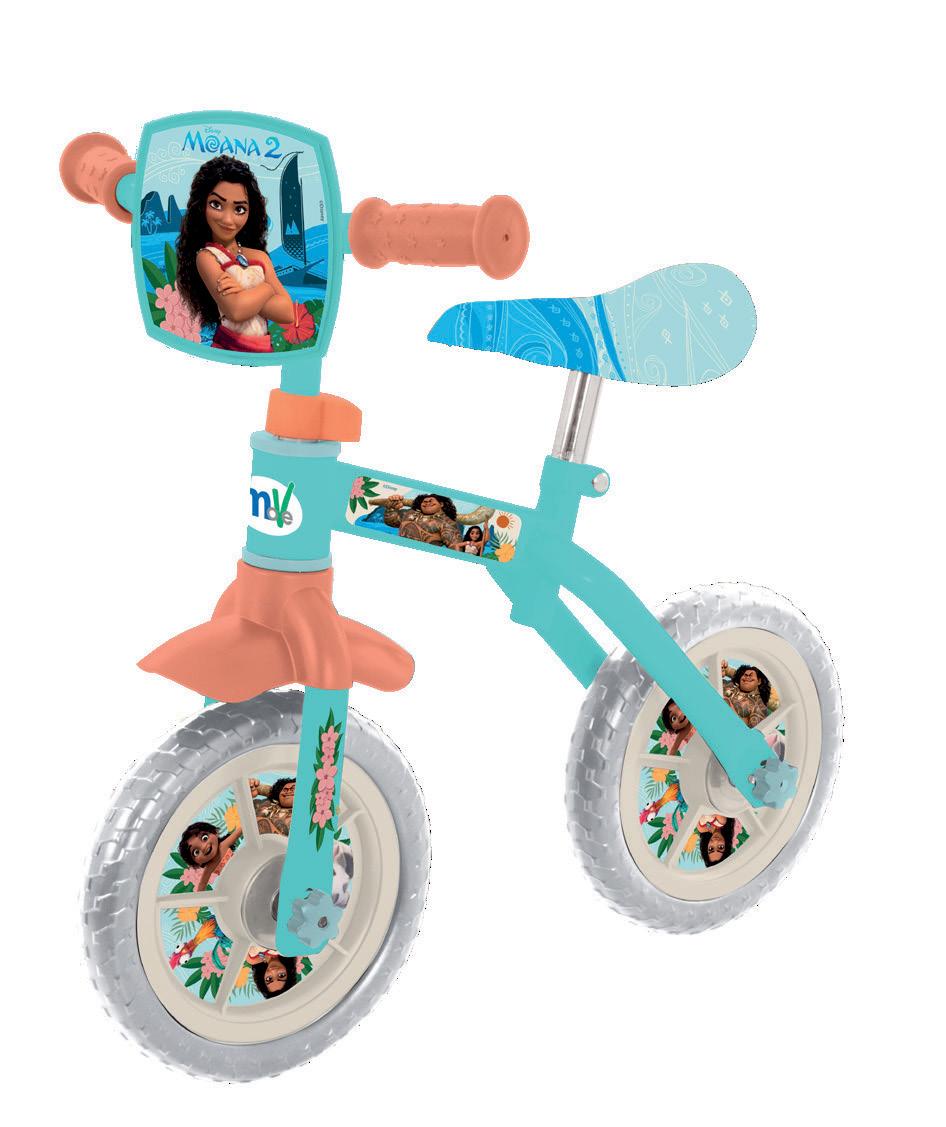
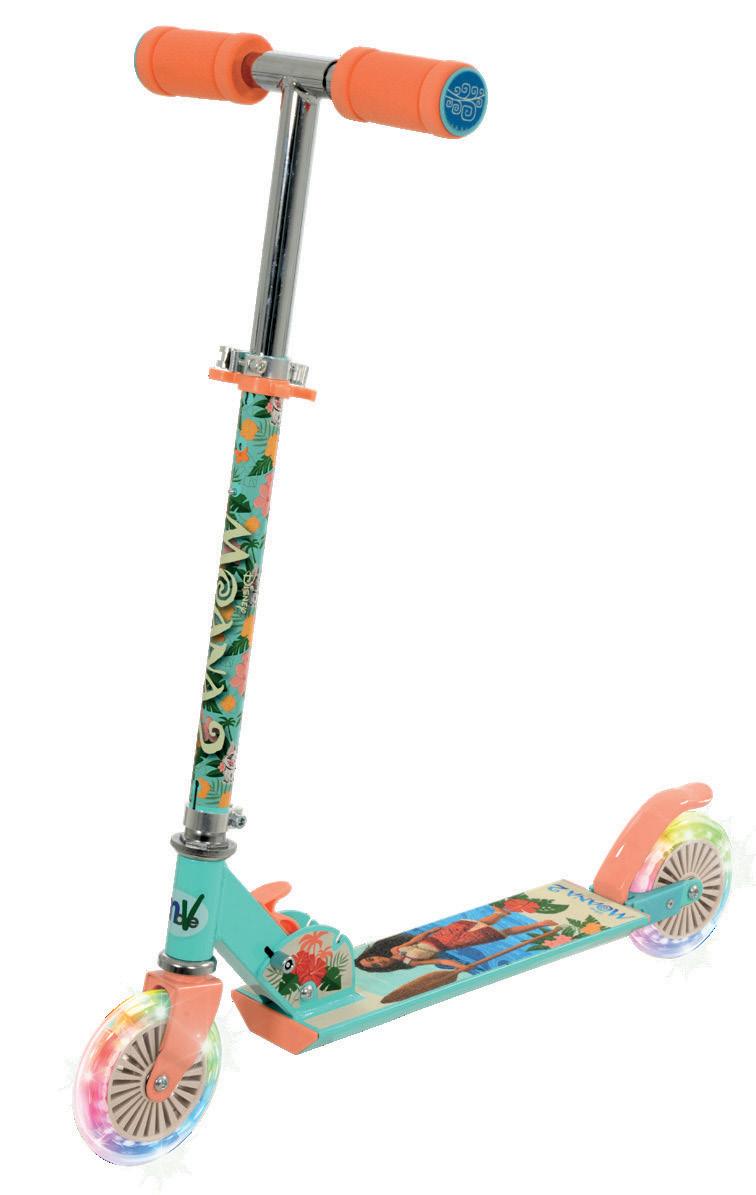
Moana 2 oceans of product potential
In early February, Disney stunned fans by announcing a surprise sequel to its hit animated movie Moana, which first arrived in cinemas in 2016. Picking up several years after the events of the first film, the sequel sees our titular heroine, again voiced by Auli'i Cravalho, embark on another ocean voyage beyond the boundaries of Oceania to protect her ancestral legacy. Reunited with demi-god Maui (Dwayne Johnson), Moana comes face to face with a challenge unlike anything she’s faced before. Ahead of the film’s release on 29th November, Nigel Cook, vice president Brand Commercialisation & Retail, Disney Consumer Products EMEA, tells Toy World what the sequel will mean for the toy industry.
The announcement of Moana 2 came as something of a surprise to Disney fans. Why did Disney keep this one under its proverbial hat, so to speak?
The Moana franchise continues to captivate a vast audience, with the original film clocking up an impressive 1b hours of streaming on Disney+ in the last year alone.
Given this strong demand for Moana, the upcoming sequel feels like a natural progression. We’re excited to welcome back fan favourites Moana and Maui, not to mention Pua and Hei Hei, and expand their world with an ensemble of brand-new characters and music. The overwhelmingly positive fan response to the sequel announcement and teaser trailer – which reached 178m
views in 24 hours - has reinforced our belief that Moana 2 will be just as well received as the first film, and that there’s lots of opportunity there in the toy space.
The most recent trailer reveals that Moana is now an older sister as well as Wayfinder of her people. Will these new plot elements introduce new or enhanced themes to the content?
These new plot elements and characters reveal even more parts of Moana’s world that fans will want to explore, whilst still supporting its signature humour, fan-favourite sidekicks and musical score.
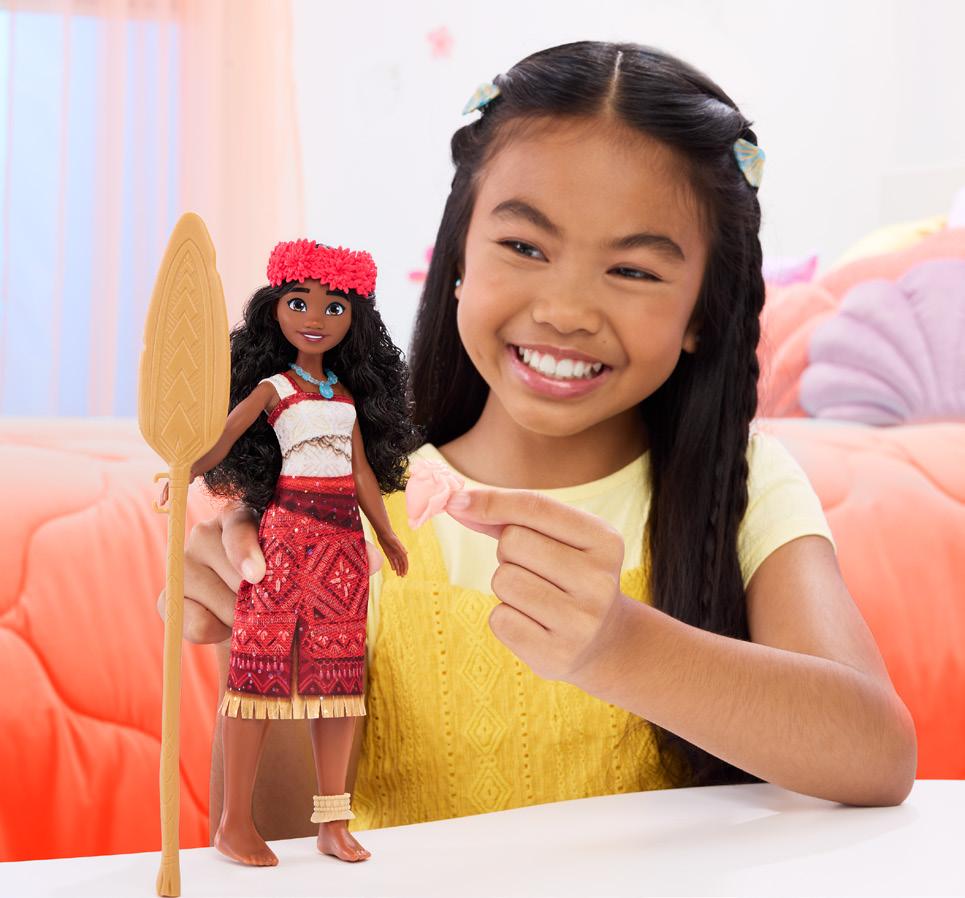
Our licensing plans reflect these developments, with products like Mattel's new Moana 2 Transforming Boat Playset and Fashion Doll Character Pack enabling fans to immerse themselves fully in Moana's expanded universe. It’s been eight years since the release of the first movie. Is Moana 2 aimed at that same, older audience, or do you hope to capture an entirely new set of fans with it?
Moana 2 will reconnect with the audience that fell in love with the original film and characters, while also captivating a new generation of young fans who may not have the same nostalgic connection.
Our evergreen Moana product ranges cater to all age groups, from timeless Playmobil sets for the younger fans all the way up to collectibles from Funko for older enthusiasts. There is plenty of opportunity to expand upon this cross-generational popularity with Moana 2, embracing both loyal fans and newcomers alike.
How is the Moana 2 licensing programme shaping up?
What CP categories are you focusing on, and is there still scope for licensees to get on board?
The incredible line up of Moana 2 inspired toys announced in recent days gives a sense of the potential the film holds in the product space. Many of the newly revealed items produced by our industry-leading partners reflect the enduring popularity of the Princess play pattern, including new and enhanced dolls, play sets and costumes.
With the theatrical release set to unveil more surprises, there is considerable scope for further development and the creation of new products that celebrate the film's themes and characters.
What does the release of the sequel and its associated licensing programme offer toy stores from a retail perspective?
The wealth of new characters, storylines, themes and even music that Moana 2 has teased so far opens up a world of possibilities from a licensing perspective. We always work closely with our retail partners on connecting consumers with product in creative ways while staying true to the IP.
For Moana 2, the freshness of new product and potential to enhance existing play patterns gives us ample ways of engaging consumers and bringing Moana and her world to life in the retail space. We’re very excited to share this with consumers over the next few months.
BRAND
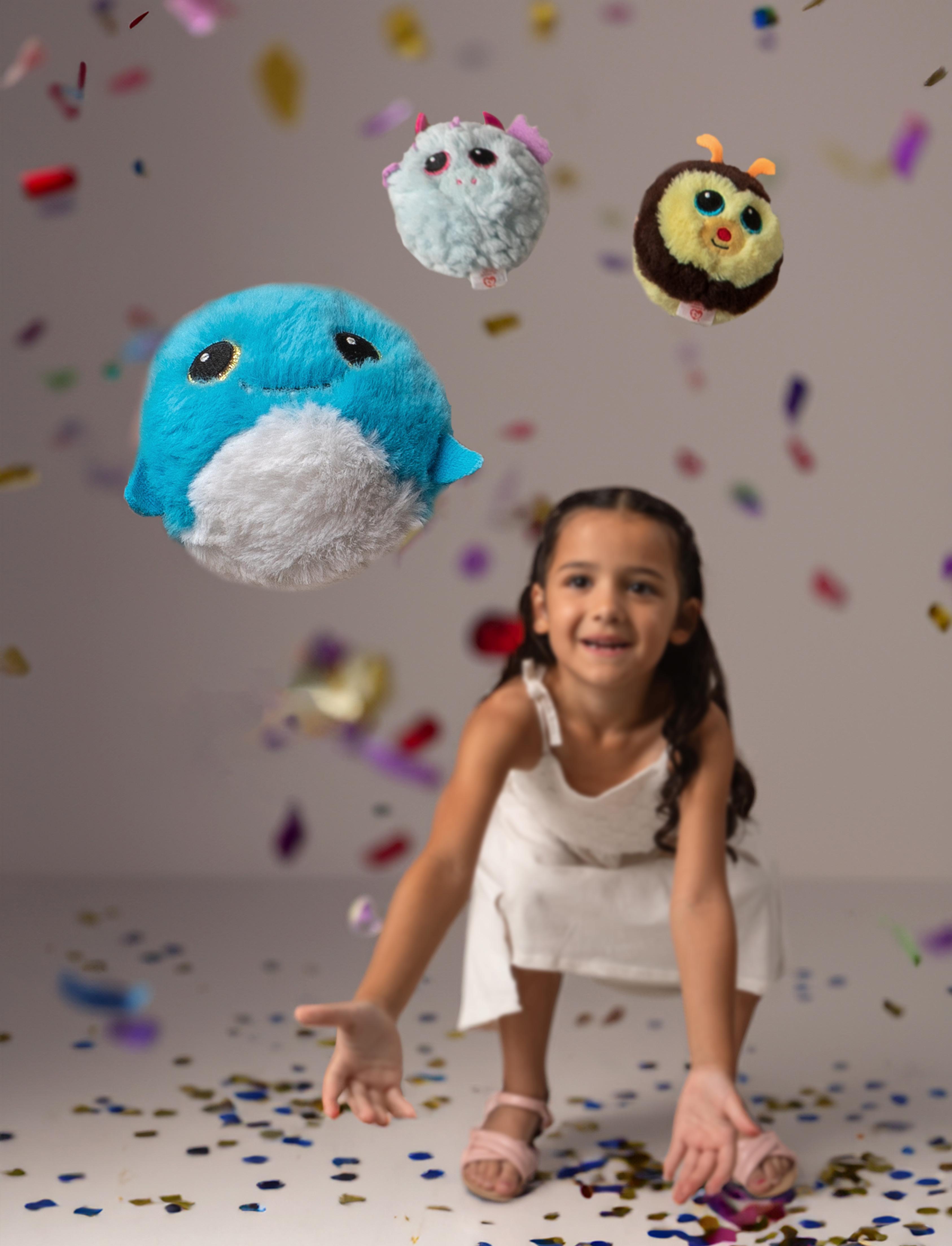
Ty, the UK’s No 1 plush brand reinvents the ball - Ty Beanie Bouncers bring a revolutionary twist to the traditional plush! Maintaining a soft, colourful fabric but bouncing sky high – you have never seen plush like this.
Collect your favourite characters now, available while stocks last!
Insight
To monitor what’s happening in the ever-changing toy market, Circana collects point-of-sale information from all major toy retailers. This information, combined with our analysts’ industry perspectives, delivers a comprehensive view of what’s selling and where. We also field over 12m consumer surveys annually to help industry leaders understand why consumers shop where they shop and why they buy what they buy. For more information visit www.circana.com.
Beyond your wildest themes
This month, Melissa examines the key themes that have been influencing toy sales in the UK, noting that these themes can gain just as much traction as individual licences.
For the last four years, licensed toys have been out-performing non-licensed toys in the UK and across Europe, currently up +1% in value this year while non-licensed toys have declined -5%. YTD August 2024, licensed toys account for 33% of all toys sold, up from 27% in the same period in 2021. While historically many licences in toys come from key theatrical releases and streaming or TV shows, there has been a blurring of the lines between these sources over the last few years as many character driven properties are chasing a “360-always on” presence in consumers’ lives, with video games, shows, online shorts and other media all expanding character awareness.
While licensed product continues to be a key metric for the toy market, there are different ways of splitting the data which can provide new insights into what types of items or themes consumers are attracted to and purchasing within the market. The biggest theme is Transportation, with 11.6% of all toy sales going to a transport item; the strongest products within this category are Hot Wheels, Lego Technic, Monster Jam and Lego Speed Champions. This is a classic theme which has had a steady 11-12% share of the market over the last five years.
grown over £4m this year with Lilo & Stitch performing particularly strongly, as well as Sonic the Hedgehog showing growth over 71% YTD. Both licences have films coming out that should continue to drive performance for the remainder of the year and into 2025. Elsewhere, other strong performing Animal Characters include Paddington Bear and Beatrix Potter/Peter Rabbit, as well as Lion King. After Other Animals, the third fastest growing theme is Pro Sports Leagues where the Euro Champions Football Tournament over the summer has helped increase sales, especially through collectible cards and stickers. National Football League has also performed well this year, in addition to motor sports with growth from Formula 1 and NASCAR. Another of the fastest growing themes in the UK is Fantasy Creatures & Characters, which has a wide range of items and properties and added £5m additional sales this year. The top properties are Magic Mixies, Monster High and Furby, which are all in growth this year. This theme
Top Themes & top gaining themes
Melissa Symonds Executive Director – UK Toys, Euro Toys
Top Themes & top gaining themes
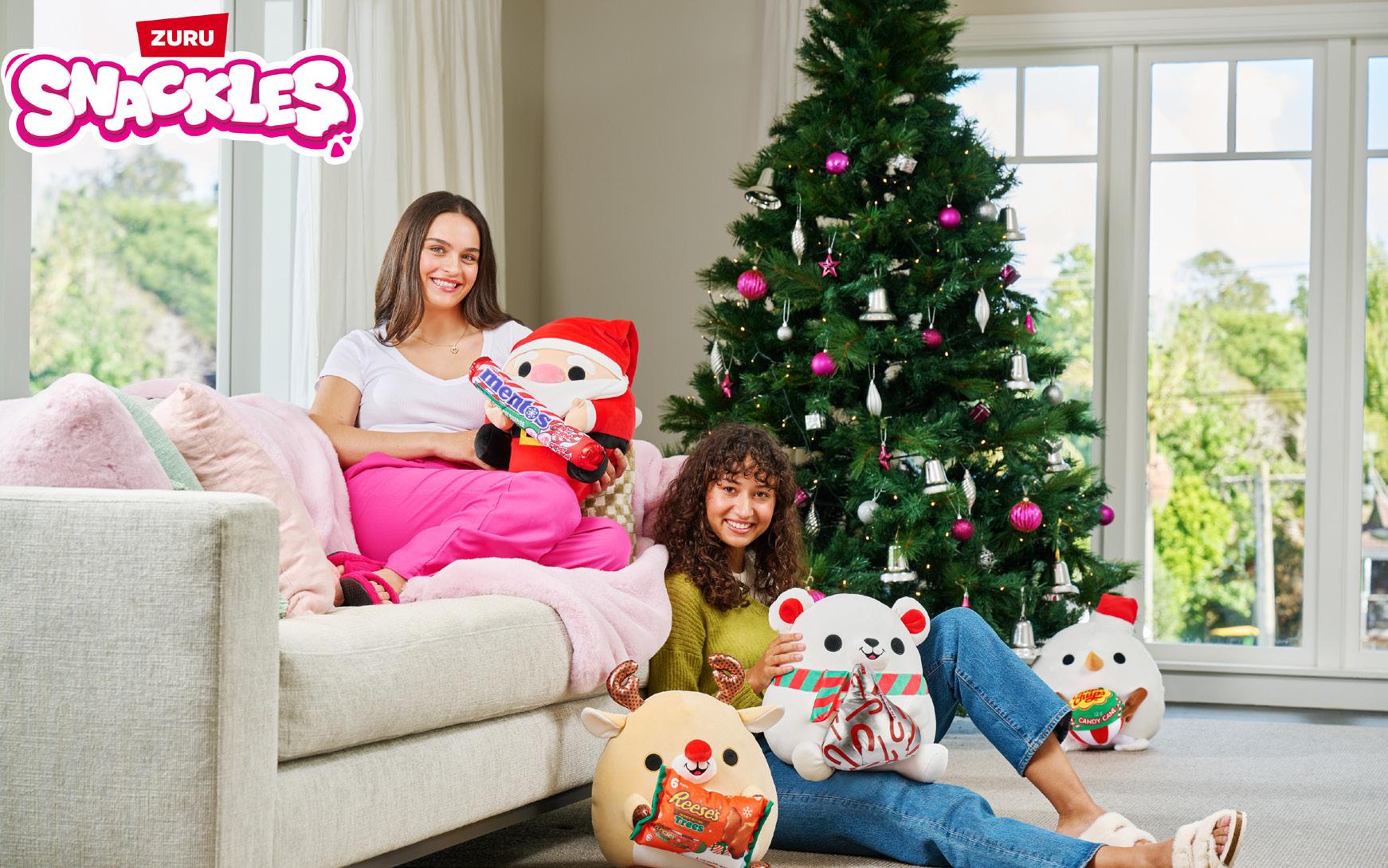
Demonstrating the UK consumer fondness for their pets and animals generally, the second largest theme in the market is Other Animals, which is also the fastest growing theme so far this year, adding over £16m in sales up to August. While generic animal products account for 30% of Other Animals, there has been growth with animal items within VTech Baby and Fisher-Price as well as with plush, where lines such as Snackles and Adopt Me! have shown growth this year. Interactive pets have also helped this theme with the original Bitzee and some Robo Alive lines adding to sales in the first eight months. Other Animal Characters has also
also includes the Trolls, Ghostbusters and Stranger Things licences, as these content-driven properties expand toy offerings. In particular, the Monster High Wednesday Doll and Nightmare Before Xmas ranges have been picking up sales in the last couple of months as we head towards Halloween – potentially a growing occasion opportunity for the UK toy market.
Manga/Anime has overtaken both Space and Superheroes themes in size and now accounts for 4.8% of all UK toy sales. Manga has seen strong performance this year from One Piece, Dragon Ball Z, Dragon Slayer and Jujutsu Kaisen. The relaunch of Beyblades is also starting to add sales to the theme. The Space theme tends to be dominated by Star Wars, which has grown this year, but it has also seen growth from Lego City with its space theme for 2024, as well as Dune following the movie release at the end of 2023. Superhero themed toys have declined this year with a significant reduction in film releases, but Deadpool related items started picking up in August with the release of the Deadpool & Wolverine movie.
By looking at themes within the toy market rather than just individual licences or categories, it’s interesting to see which areas are gaining in popularity, whether through content or new product. This year animal nurturing, sports and fantasy creatures are appealing to consumers of all ages. What impact these themes will make over the important Q4 period remains to be seen, but new launches within these themes makes it extremely likely their popularity will continue to the end of the year.
Item Progression:
With the start of the new football season, its no surprise that the Adrenalyn XL Premier League 20242025 Kick off Multipack is the top gaining item for August. Every year at the start of the season, the new football collectible ranges launch strongly and feed into the back to school and collectible trends within the market. Adrenalyn Premier League items account for two of the top ten best-selling items for the month across total toys and nine of the top ten in Non-Strategic Trading Cards and Collectible Stickers. Outside of football lines, both Lilo & Stitch and Hello Kitty stickers have also performed well.
Fastest Growing Subclasses
The fastest growing subclass remains Standard Building Sets with the Lego Icons the second fastest growing property across the total toy market as the Botanical range continues to expand and flourish. Lego Creator 3-in-1, Lego Disney Classic, Star Wars and Sonic the Hedgehog have also grown this year.
Collectibles growth across the UK toy market is a big driver behind a number of subclasses growth this year. Traditional Plush is the next fastest gaining subclass where Squishmallows remains the largest property, but there has been strong growth from Snackles and Rainbocorns as collectible plush lines continue to grow. Micro collectibles has been a driver for Miscellaneous Toys as well, with Zuru’s Mini Brands the largest property in the category and MGA’s Miniverse the fastest growing property. For nonstrategic Trading Cards & Collectible Stickers, football remains key with both World Soccer and UEFA the biggest licences. However, there has also been new licensed products from Lilo & Stitch, Bluey, Sonic the Hedgehog and Squishmallows contributing to growth this year.
Top 10 fastest growing subclasses - total toys
Top 10 fastest growing subclasses - total toys
Vehicle Playsets & Accessories has enjoyed a strong performance this year, with both Hot Wheels and Monster Jam properties growing double-digits. The Hot Wheels City Monstrous Creatures Assortment is the top selling item. Within Mini Vehicles, Monster Jam has grown +38% this year, while Cars The Movie has also had double-digit growth.
Despite a relatively cool summer temperature-wise, two Outdoor categories have seen strong growth: Skates/Skateboards/Scooters with Evo and Zinc growing by double-digits and Playground Equipment, where Trampolines have driven sales gain.
Finally two technological categories have gained sales this year with PS Talking & Sound driven by Tonies and Robotic/Interactive Playmates with Bitzee, Fingerlings and Robo Alive all growing. Interactive toys look to be strong
Talking Shop Stock tactics
Gabriela Jiménez García speaks to a selection of indies as they brace themselves for the run up to Christmas, finding out what has been selling, what they expect to perform well this year and how they are managing their inventory for peak season.
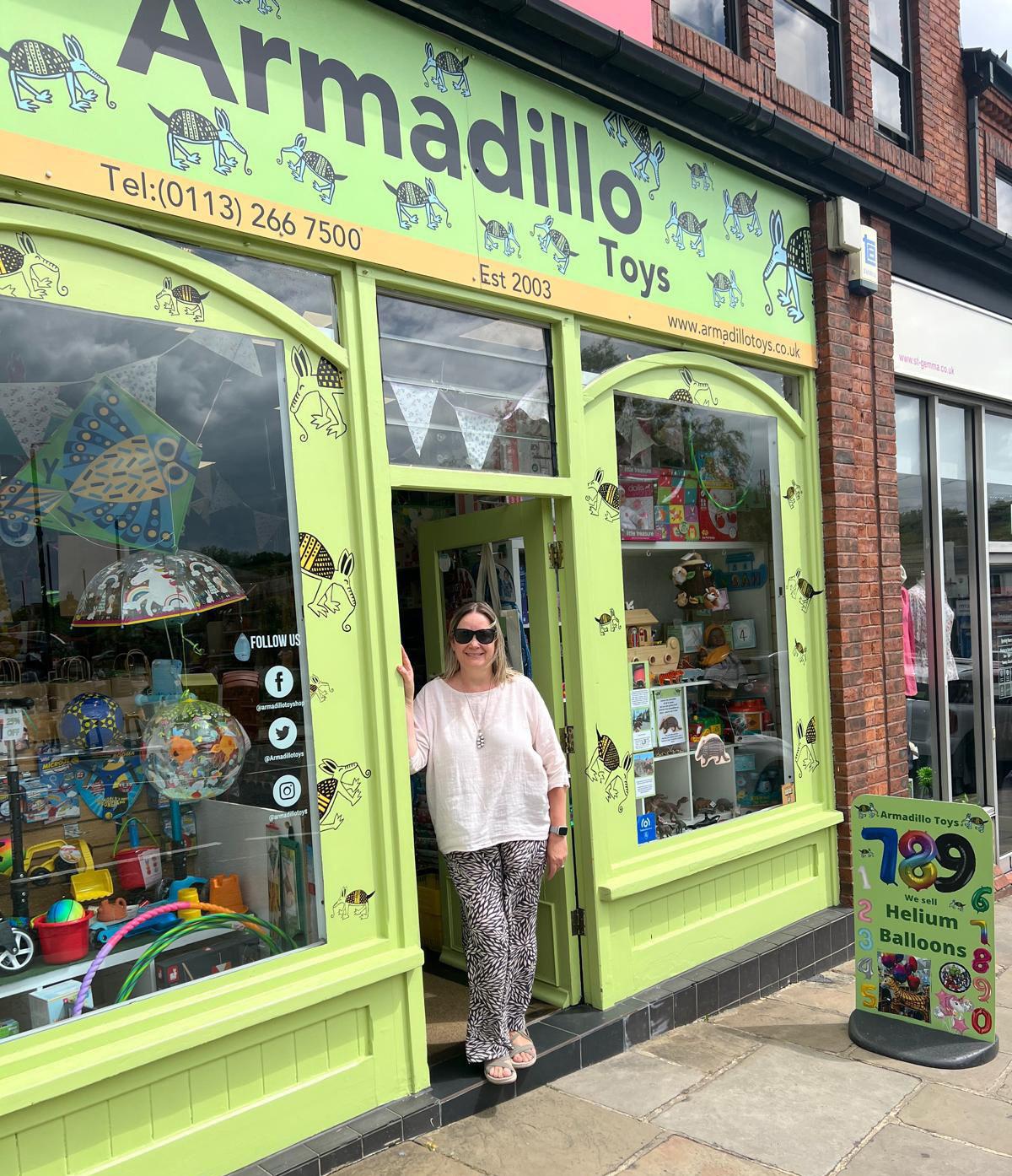
Lisa Clay Armadillo Toys – Leeds
Armadillo Toys is a traditional toy shop located in the heart of Chapel Allerton. We’ve been trading for over 20 years and are well established, with a loyal customer base of local families who trust us as the place to come to for toys. Being based in such a busy area close to other independent shops, cafés and restaurants means we’re fortunate to have high footfall.
As a traditional shop, we mainly focus on classic toys that will appeal to children ranging from the ages of 0-13. We stock products from around 98 different British and international suppliers, including Orchard Toys, SmartMax, Janod and Melissa & Doug.
We have ordered plenty of stock in preparation for the busy festive season and are due to receive even more in the run up to the big day. Although we’ve been increasing stock of lines we offer all year round, we will also bring in new lines that we think will appeal to our customers. Educational toys is one of our main categories, and we will be emphasising our wooden toys that align very well with this section. We aim to push our Orchard Toys range, as it offers such a wide selection of educational products, including puzzles and board games, that cater to children aged from 1 to 8+, which is fantastic. We will also be promoting smaller items that make great stocking fillers, things like finger puppets and fidget toys, and we’ll make sure we keep topped up on these before Christmas officially arrives.
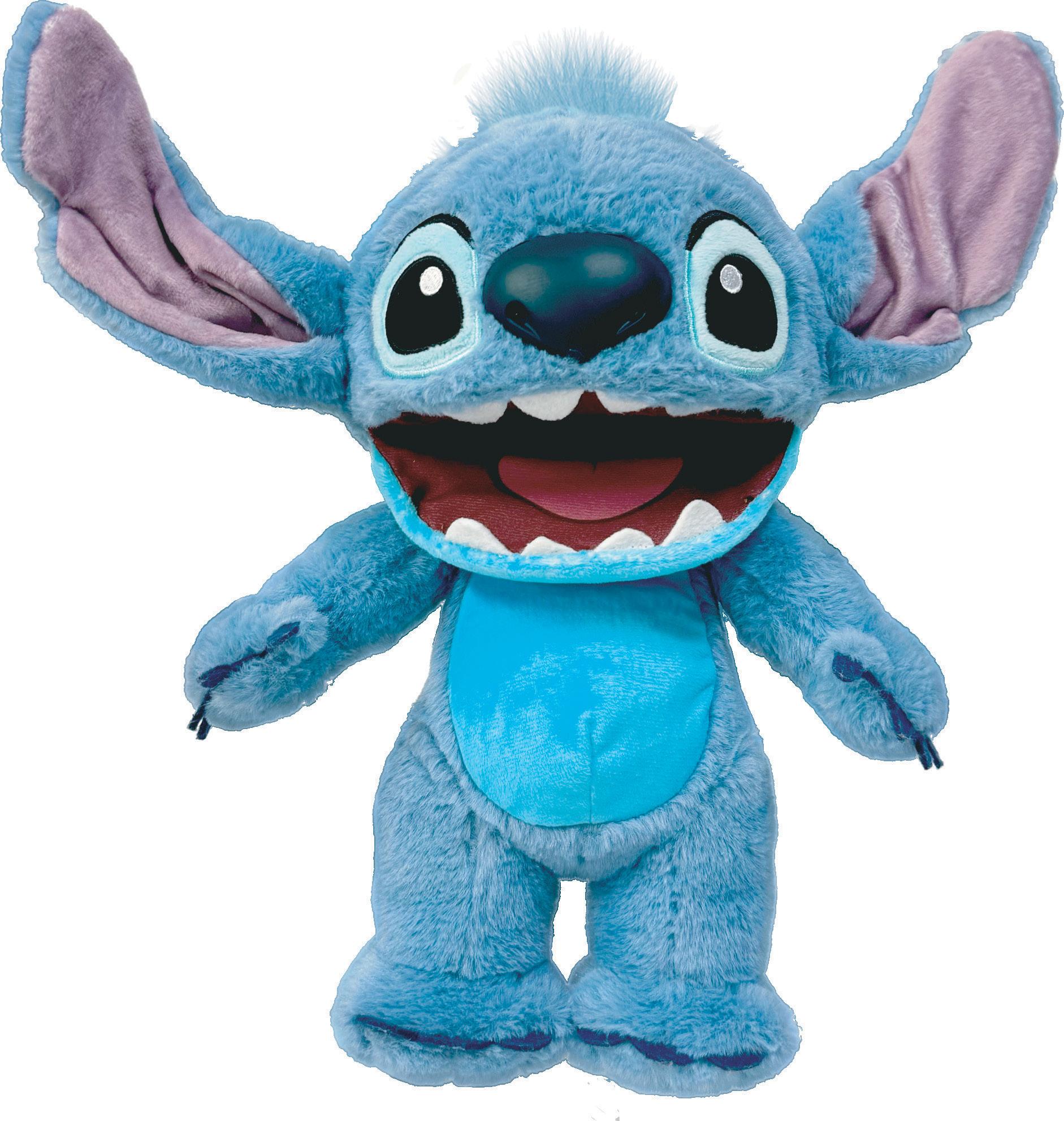
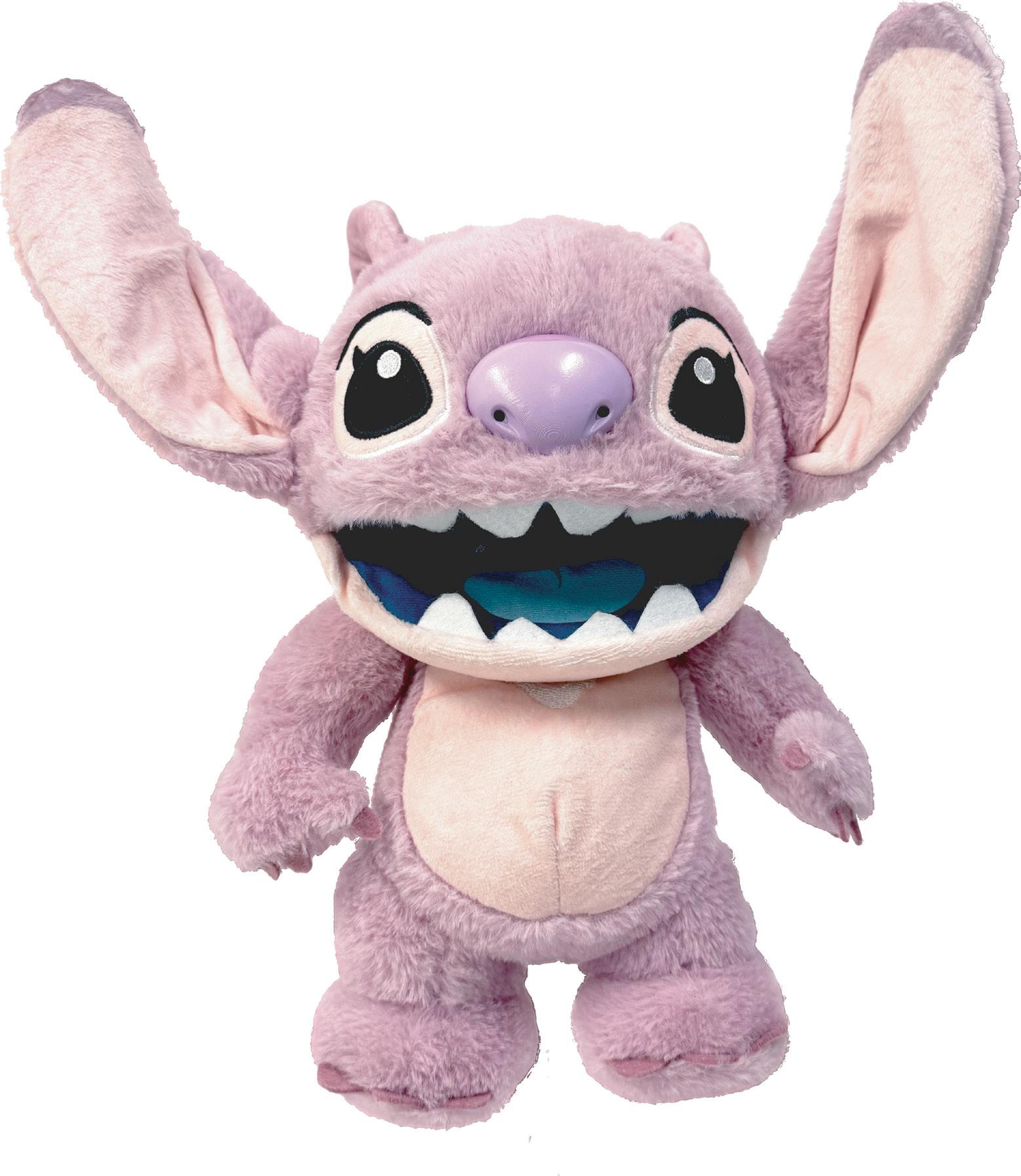
Stitch is an incredibly popular character; currently every Stitch-licensed toy that arrives at our store ends up selling out quite quickly. With the Lilo & Stitch live-action movie set to come out next summer, I can already predict that anything Stitch-related will sell well during the Christmas period.
Halloween is a big event for us, and it won’t be until after the Halloween season before we fully transition to Christmas. Once it’s out of the way, it will be full steam ahead to bring the Christmas spirit into the store. We have a section of ready-to-go gift bags at the entrance which cater to special occasions including birthdays; once the Christmas season gets closer, we’ll be updating this section with Christmas-themed gift bags. We’ll also be making use of our social media platforms to promote our Christmas lines and highlight to customers whenever stock becomes limited, so they can ensure they don’t miss out on the things on their children’s Christmas lists.
Talking Shop
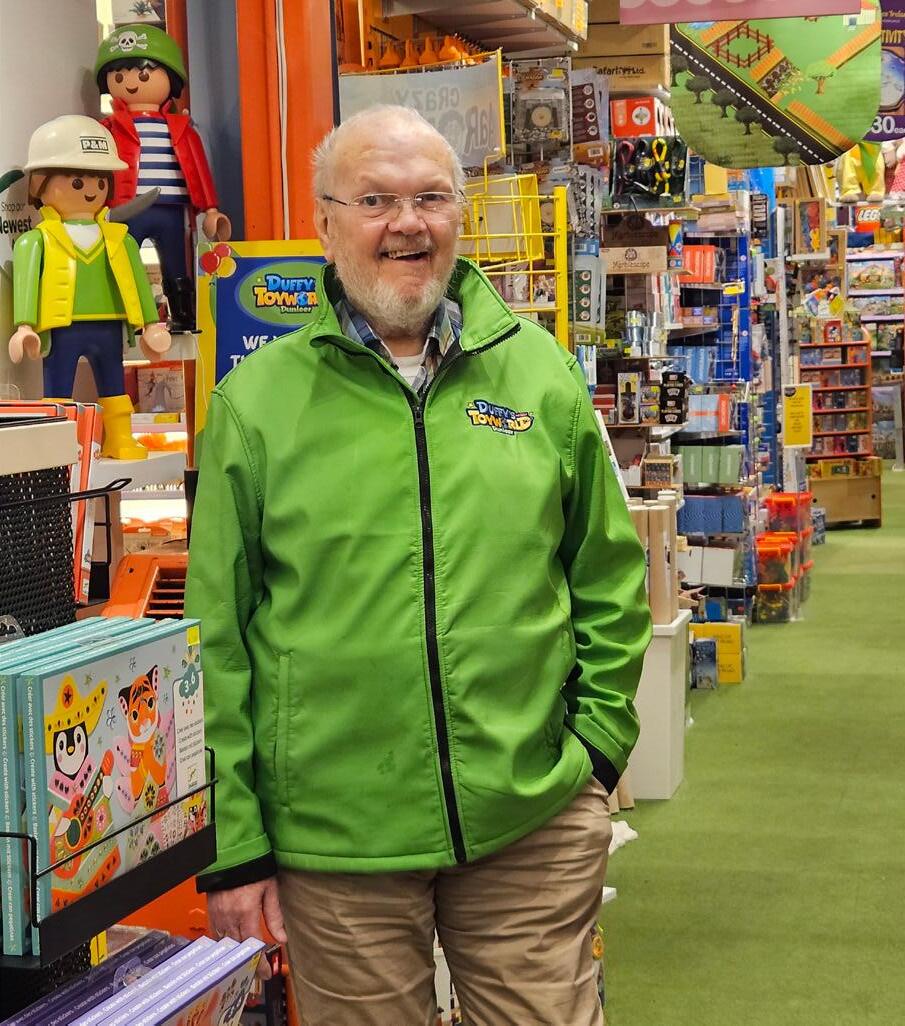
Tony Duffy Duffy’s Toyworld – Dunleer, Ireland
Nestled in the rural area between Dublin and the Northern Ireland border, Duffy's Toyworld is a toy shop offering customers a range of products across different categories and catering to both in-store and online shoppers. The store spans an impressive 10,000 square feet and boasts over 19,000 SKUs. We focus on stocking toys that will inspire imaginative play, creativity and role-playing.
Our store is divided into various zones, each designed to captivate and inspire. Our dedicated aisles are organised to group similar toys together, helping parents and gift-givers make informed choices and encouraging then not to just buy the latest ‘hot toy,’ but the toys with the best play value. We have found that this method of grouping like-minded items has significantly boosted our sales over the years.
We’ve recently launched the Future Careers aisle, which features costumes for Nurses, Doctors, Healthcare Workers, Fire Service, Police Officers, Zoo Keepers, Postmen, Road Maintenance, Chefs and other professions. We’ve introduced this aisle to help encourage children to explore different career paths through play. Our Muddy Play aisle is another growing area dedicated to toys that allow children to engage with nature and get their hands dirty, and we have a dedicated aisle for autistic children, filled with sensory toys that cater to their unique needs. We have also expanded our range to include a new area dedicated to pre-schoolers, and our latest addition, ‘Messy Play’, is expected to yield excellent results.
Additionally, we offer aisles dedicated to wildlife, zoological and aquatic themes, as well as domestic and farming models. Our role-play aisle, complete with play kitchens and shops, provides everything children need to enjoy hours of imaginative play, and it makes for a large area in our store.
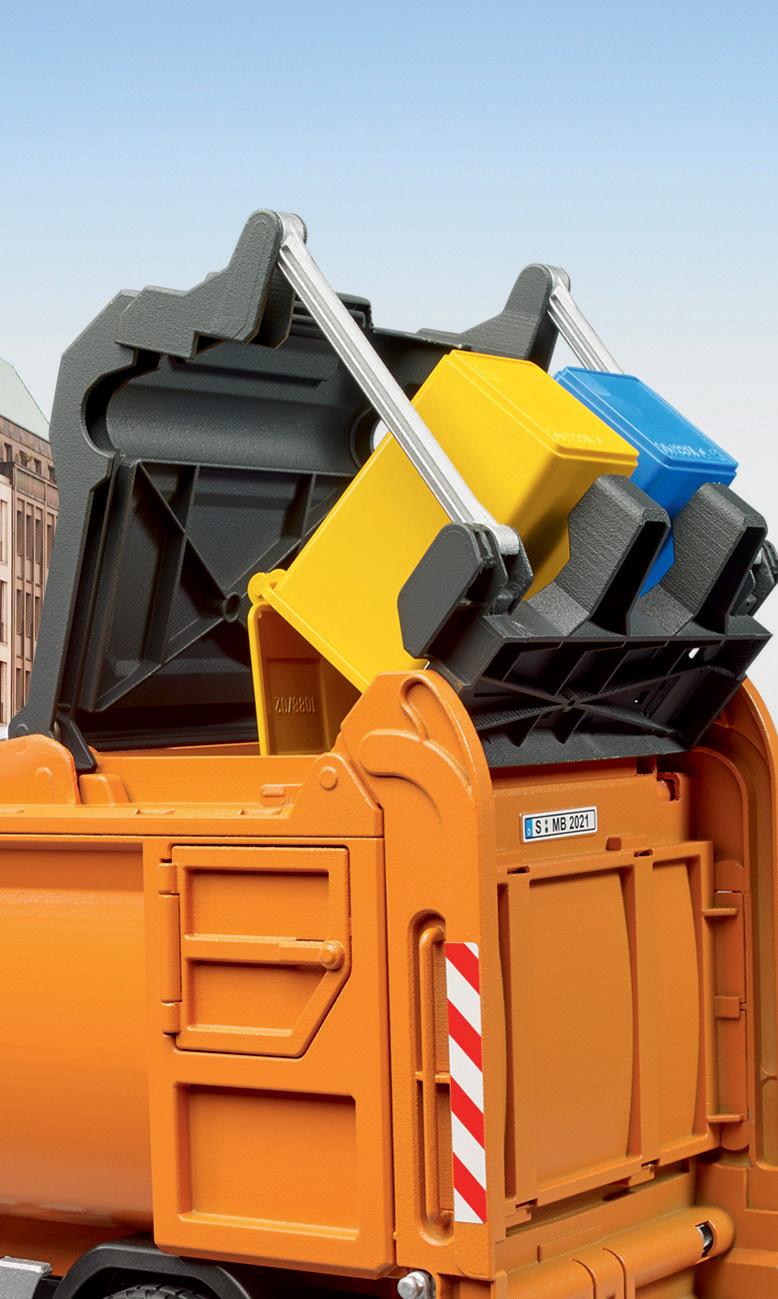
We find it’s not necessarily brands that drive footfall, but the extensive range we offer and the fact that our long-serving staff are always ready to help. As well as that personal touch, we offer gift wrapping as a gesture of goodwill. Brands we do carry include household names like Lego, Playmobil and many other great European suppliers. Our Playmobil range is especially popular and remains a best-seller, and we also stock 350 SKUs of Bruder products; being based in an agricultural area, we try to stock all the different tractor models, as that is what many of our customers are interested in.
We don’t change our approach or bring in too many specific new items for the Christmas season. Instead, we continually develop the shop throughout the year. We don’t wait for Christmas to bring in new stock; as soon as we find a product that fits well within our range, we buy it straight away. For instance, we are constantly updating our collection of Jigsaw Puzzles with new ranges, as we stock the biggest range of Jigsaws in the country and ship them across the UK through our website. However, we have recently sourced new jigsaws for the Christmas season, as these are a popular purchase, and now have shelving with a selection of over 30 different jigsaw puzzles.
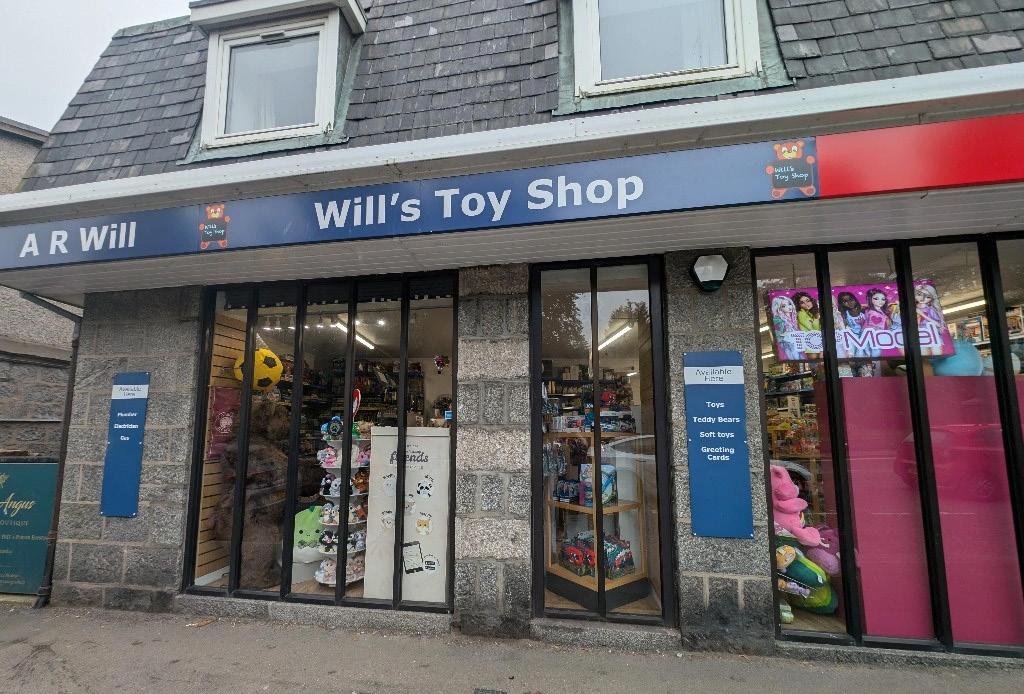
Brendan and Ellen Will Will’s Toy Shop, Aberdeen
Husband and wife team Brendan and Ellen Will used to run a post office within their Aberdeen toy shop but have recently closed it as it wasn’t generating enough revenue. However, when one door closes, another one opens, and the couple now hope to make good use of the extra floorspace.
Brendan: Exciting things are happening at Will’s Toy Shop. Following the closure of the post office section, we've turned the space into something new and are currently working on launching our brand-new gaming room, The War Room. The idea came from the popularity of our gaming events, especially our monthly Pokémon Day where we teach kids how to play the TCG. We’re delighted to have just been granted status as an official Pokémon League. About a year ago, I removed the middle gondola from the shop and replaced it with removable FSDUs to create a more open space where we can fit in a few tables for our gaming events. Now that the post office is gone, we'll be able to host more events and accommodate more guests in the shop.
We have also been collaborating with brewery company, BrewDog, which hosts an event called BrewHammer, (a combination of Warhammer and Brewdog), at its brewery in Ellon. We provide the stock needed for these events, and seeing their popularity and the number of people they attract further fuelled our desire to open a gaming room that would bring engaging events to our community members on a smaller scale.
In The War Room, we’ll be looking at different gaming systems and popular games that we could bring in. We will also gather customer feedback through surveys and social media interaction to see what the community is interested in and what they would like to see from us. Although we’ll mostly be focusing on tabletop miniature games and TCG at first, there are a lot of avenues we would like to explore and diverse games that we’d like to bring in; technical games could also be an interesting category to incorporate. We aim to target both adults and children and plan events based on the schedules of different audiences. For instance, during the afterschool 15:30-17:30 slot, we’d do an introduction to card games including Pokémon, Magic: the Gathering and Yu-Gi-Oh!, and during the evenings, we’d focus on hosting events for adults.
As we approach the Christmas season, Will’s Toy Shop will be implementing several changes to its product offering. We will be narrowing our focus to products that have performed well in previous years, which means reducing the amount of pre-school products and increasing our stock of things like Lego; collections such as Harry Potter and Lego Botanical have been very popular amongst teens and adults.
Christmas is the peak season for the games category, so we will be expanding our range of games, with everything from tabletop games to party/family games, including the popular Smart Games’ Genius Square game and other fun games from suppliers like Big Potato. We believe that showing how a game is played is the best way to sell it, so we will prioritise games that are easy to demonstrate. Our staff members will be trained to play and demonstrate games to our customers. One example of a perfect game to showcase in this way is Big Potato’s Kluster, which has gone viral on TikTok for being fun and entertaining.
Ellen: Cheatwell’s range of pocket games and puzzles performed very well last year, and the games make great stocking fillers so we will be well stocked with these for Christmas. The additional space that has become available with the closing of the post office will come in handy for our parents-only evening shopping events, where we’ll be opening the shop a bit later to enable parents to browse for Christmas gifts without their children. We’re also looking at organising character visits and perhaps having Santa make an appearance to encourage more children to visit our store.
With so many great toys currently available, it’s hard to predict what this year’s Christmas best-sellers will be, but one of my personal favourites that I think will be popular – especially amongst kidults - is the Lego Icons Plum Blossom; I like that it features a captivating and unique oriental design. We’ve also seen growth in the STEM category, with Brainstorm's Moon In My Room and Rainbow In My Room being very strong performers, especially during the Christmas season, when parents and grandparents are looking for something both fun and educational.
I’m confident that many shoppers will visit the store in the run up to the festive period, and whether they’re looking for fun and educational toys to gift children, something for the kidults or games to play with the family, our team is here to help them find just the right thing.
Talking Shop
Joseph Yap QT Toys and Games, London
QT Toys and Games is located in a busy shopping street in Battersea and offers a wide variety of classic and traditional toys. Being based in a residential area means that our customer base is largely made up of young families and parents who come to find engaging toys that will keep their children entertained.
The holiday season is fast approaching, but this year we have postponed placing any large Christmas orders too early. We will aim to keep stock tight and hope to order more at the end of this month or in early November. We are taking this cautious approach to avoid carrying excess stock of high-priced products that may not sell well after the holiday rush. While we do stock some high-priced items, we find that customers tend to purchase the bigger and pricier lines from online retailers like Amazon or elsewhere, due to the discounts these retailers can provide. We can’t compete directly with such pricing activity, so are being selective in the larger items we will place on our shelves for the Christmas period.
However, lower priced and pocket money items sell well for us throughout the year and are consistently popular with customers. In the current climate, parents are more willing to spend £10 or £20 on a toy, and many people will be looking for smaller, cheaper presents or stocking fillers during the festive season. There’s a lot of interest in our selection of sensory toys, such as squish balls and fidget items; One for Fun is one of our top suppliers of sensory ranges and our customers love these products. Things like Squishmallows and Lego remain popular all year round and will see a spike during the Christmas season too as customers look for items they know will be well received.
By November, once we have transitioned to all our Christmas stock, we will also bring in Christmas-themed products such as Christmas cards and wrapping paper. These are essential items for the season and, as well as making for plenty of add on purchases, help to entice customers who will hopefully be inspired to do their gift shopping with us.
indie viewpoint
Mark Buschhaus and Stephen Barnes Toy Barnhaus
Golden opportunities
By the time you read this we will be well into the golden quarter. Trade throughout August and into September has been good, with the first half of September being very strong. The new Lego Dungeons & Dragons collectible Minifigures have been in very high demand - one of the best series we have ever had and a big contributor to the strong start to the month. Collectible items have made up a lot of our bestsellers over the last month, with MGA’s Miniverse still proving extremely popular, especially the Appliance series. Alongside this, Mini Brands from Zuru continues to perform well, with the new Garden series being the most successful collection. Continuing on the garden theme, the Lego Botanical Collection remains a bestseller; the new lower priced lines have sold very well, and we think this will be another winner in the run up to Christmas. We have also just had the Sylvanian Baking Baby Party series in, for which there is real pent-up demand - they are flying out.
We are keeping a very close eye on anything new to see how it performs, and we are quickly on the ball, reacting and re-ordering any lines that are selling. We are waiting a bit longer than we have in the past before we commit to any big orders – waiting to see actual sales. One line we are confident in is the Real FX Disney Stitch Puppet from Wow! Stuff. We had early stock that sold very well in July, so we know it’s going to be a big hit for Christmas. Otherwise, as the pre-Christmas marketing ramps up, we will see what we start to get asked for. If there is anything we haven’t got, we will look to order it.
Stitch has been one of our strongest licences over the last few years, even before the new movie was in the pipeline, and we stock a broad range of Stitch licensed items including plush, collectibles and craft lines, to name but a few. Character licensed merchandise does make up a huge part of our product offering in store – being in malls, people expect to see the major brands and characters. From Disney’s massive portfolio of licences, Disney Princesses is one of our most enduring successes, while we are also looking forward to Moana 2, which we think will generate lots of sales. Harry Potter is another successful licence for us. It is especially strong in Lego, and also in arts & craft lines, although sales of the dolls have been mildly disappointing. Barbie was an excellent brand for us last year with the movie and continues to sell well this year. Another up and coming brand for us is Numberblocks – this has translated into great sales in the pre-school department for us.
After a cold start to the month, September turned quite warm, but now the kids have gone back to school, Christmas is on many of our customers’ minds. They are shopping early to help spread the cost. We have tried to be a bit more cautious this year with orders, not necessarily committing to too many forward orders for later until we see how things sell through. After last Christmas, where trading was tough and we came out with quite a bit of stock, we would rather keep things a bit tighter this year.
When pretty much everything that we had booked in for September arrived in the space of a week, our warehouses filled up very quickly. In our stockrooms at least, it is definitely starting to feel a lot like Christmas!
Quarter Century Secret Rares (Celebrating the 25th Anniversary!)
Platinum Secret Rares (Last seen in 25th Anniversary Rarity Collection II)
New “Prismatic” style Ultimate Rares (With a raised 3D varnish effect, this is the same as the Japanese “Ultimate Rare” technology previously available only in Asia!)
New “Prismatic” style Collector’s Rares (Made with extra sparkle, this is the same as the Japanese “Collector’s Rare” technology previously available only in Asia!)
Plus a luxury Secret Rare in each pack from a special and separate 200-card nostalgia pool!
Moonpig
Retail Profile
Making it personal with Moonpig
In mid-September, Moonpig and The Entertainer revealed details of a new partnership that will introduce The Entertainer’s Toy Box – Total Retail Solution to the personalised greetings card specialist’s business as it seeks to become the ‘ultimate gifting companion’. Rachael Simpson-Jones sat down with Moonpig’s general manager, David Rimmer, to find out how the partnership will benefit both parties - and what it means for consumers seeking the perfect gift for a loved one.
According to David, Moonpig has aspired to become the go-to platform for every occasion for quite a while now - the online retailer people turn to whenever they have a gifting need, whether the occasion is a birthday, anniversary, graduation or the arrival of a new baby. The retailer already has a superb reputation as a trusted seller of personalised cards that provide memorable moments - I’m sure many readers will have either sent or received a Moonpig card over the years - and has bolstered this with its (incredibly helpful) reminders system. This means it’s a natural next step for Moonpig to focus on enhancing its gift offering by giving shoppers the option to add the perfect toy or game to their order, quickly and easily.
Enter The Entertainer. Hot off the heels of its successful roll-out at Tesco stores nationwide, The Entertainer and Moonpig have unveiled a new partnership which will see a curated selection of
The Entertainer and Early Learning Centre products available to buy alongside Moonpig’s vast range of personalised cards.
“We can deliver personalised cards like no one else can, thanks to our range, our data and our design system, and over the years it’s become clear that our customers want to send gifts to loved ones, safe in the knowledge that what they send will be just as well received,” explains David. “We needed to partner with the best toy purveyor in its field, a business which is known and trusted in households all across the country. That’s why The Entertainer and ELC were the obvious choice, top of the list. We’re not experts in toys – not yet, anyway - but we want to be able to bring our customer an unrivalled gift assortment, so partnering with a retailer that is an expert makes huge sense.”
The curated range of highly giftable toys for kids from 0-8-years-old has been selected to fit in perfectly
Retail Profile
with what Moonpig calls its ‘mission-based shopping experience’. Visitors to the site will be able to choose from a selection of toys with a particular focus on licensed options. Indeed, Moonpig has been building out its licensed card portfolio for several years; it includes Bluey, Paw Patrol, Peppa Pig, Star Wars, Minions, Frozen, Marvel, Winnie the Pooh and much more. To this end, shoppers can now browse carefully selected licensed toys that complement the licensed card they have chosen, which David says is one of the standout benefits of the partnership.
The offering will also include plenty from ELC for those looking to celebrate the birth of a new baby, something David says Moonpig customers love to do, as well as non-licensed toys and products from The Entertainer’s Addo Play brand.
“We are a 365-day business, so we obviously understand the importance of Christmas (especially when it comes to toys), but primarily we’re in the birthday business, and birthdays happen every single day of the year,” David adds. “As we move forward with the partnership, both Moonpig and The Entertainer will be focused on how we can celebrate those milestones all year round.”
Moonpig is a hugely data-driven business, which collects and analyses insights into the types of cards shoppers buy, the occasions they celebrate most and the characters they send their loved ones. While news of the partnership was officially broken on 16th September, seeding of select products had been taking place for several weeks beforehand, allowing the website’s algorithms to do their work. This means consumers will now be presented with toys and gifts from The Entertainer and ELC based on their individual shopping mission. It’s interesting to note that, according to David, a grandparent shopping for their seven-year-old grandson will be presented with a completely different selection of toys from The Entertainer versus someone looking on behalf of their new baby cousin, say, precisely because of those algorithms and all that data. It’s all part of a personalised shopping experience that’s helped Moonpig cement its place among the most trusted gifting retailers in the UK.
“We just want to make this simple for our customers,”
David says. “If you know your loved one is a fan of Peppa Pig, then here’s a range of Peppa Pig cards, here’s a selection of great Peppa Pig toys, and your job is done. You can tick that task off your list and feel 100% sure your gift is a great one.”
The partnership will be advertised to consumers in all relevant channels and feature prominently in branding across the website, which receives an enormous amount of traffic each day. The homepage has a large banner across it, proudly proclaiming “New kids’ gifts have landed!” and inviting visitors to shop the range. Click on it, and you’re taken to a landing page featuring predominantly licensed plush, dolls and play sets, as well as a healthy range of arts & crafts sets from Addo Play, Make It Real and Spin Master, games from Hasbro and Mattel, and educational early learning products from the likes of VTech. The interface is simple, the pricing clear and the photography shows off the products. For a time-pressured relative unsure of what to buy their Bluey-mad niece, Frozen-loving nephew or creative, artistic grandchild, it’s a dream to navigate.
When asked what it’s been like to work with The Entertainer, David lights up. “It’s been fantastic, and I’m not just saying that,” he enthuses, adding that while Moonpig has enjoyed many partnerships over the years, this latest one has really been something special, with The Entertainer being both flexible and patient with Moonpig as it has got to grips with the ins and outs of the partnership. “We’ve spent some time helping each other understand our differences and similarities, and how we each work as retailers, because at heart we are quite different – yet we have a complementary approach and we’re both here to make people happy. We respect each other’s authority and expertise, and we’re committed to working toward the end goal of providing that total gifting solution.”
A large part of that goal hinges upon Moonpig’s ‘trusted brand strategy’. Some retail brands are instantly recalled and recognised by consumers. Others, not so much. Moonpig and The Entertainer firmly occupy the former camp. Consumers who turn to such brands have, and want to retain, ultimate confidence in their decision to spend with that retailer. When it comes to shopping with Moonpig, that means they want to be completely
sure that both the card and gift they send their loved one will be well-received. Maybe they won’t see them on their special day, owing to distance, work commitments or time constraints. If that’s the case, it’s even more important to the gifter that what they’ve chosen to send lives up to their expectations.
The Entertainer’s Moonpig tie-up has been preceded by a very successful concession-model partnership with Tesco, which began on a trial basis before rolling out permanently this year. This time though, both parties have entered into the agreement in the knowledge that this will be a long-term partnership. Indeed, the word partnership is used again and again during my conversation with David. This is because that’s the way Moonpig approaches collaborations with others – it doesn’t view them simply as relationships, but something much more. It’s also not in the business of competing with other toy retailers, instead viewing itself as a complementary platform within the marketplace. David tells me The Entertainer’s Phil Savage got this from the very first meeting. Immediately, he was equally as passionate as David is about making this nothing short of a resounding success on a permanent basis.
Of course, Moonpig already works with a number of toy suppliers, such as Lego. I was keen to know, therefore, what impact the tie-up with The Entertainer and ELC would mean for them – is the partnership a bad sign for their relationships moving forward?
David says no. In fact, to the contrary, he views the partnership as a good thing for the rest of Moonpig’s supplier base. “We’re now able to talk about and look at toys in a way that’s reinforced by the knowledge of The Entertainer. This is a massive growth opportunity for us and I’m not just saying this because it’s what people want to hear: I think our other toy partners genuinely stand to win as a result of this. Where it makes sense, we’ve already agreed with existing partners to keep the direct supply in place, but we are positioning The Entertainer as the go-to toy specialist within the world of Moonpig.”
And while The Entertainer and ELC’s selection of toys and gifts is first and foremost aimed at kids aged 0-8, there’s also scope for Kidults to get in on the action too. After all, a large portion of Moonpig cards are destined for a teenager or adult. David points out that teenage boys can be some of the hardest to shop for when it comes to gifts but that with a toy expert partner on board, there’s now scope for Moonpig to boost its offering for this demographic and, hopefully, offer that bit more choice for customers.
“We can trial and test, and our data systems mean we can upload something in the morning, and see how it’s selling that afternoon,” David adds, highlighting Moonpig’s ability to pivot rapidly according to customer needs. “We’re open to exploring any areas in which our total gifting solution could help shoppers out.”
“We’re very serious about our partnership with The Entertainer, which will be evident from the way we are positioning our messaging and marketing it to consumers,” he finishes. “Moonpig’s partnership with The Entertainer is a good thing for both our customers and the wider toy industry. This should be viewed as another route to market - an additional opportunity for growth and expansion into new channels. Moonpig is business with a growth mindset, and we feel strongly that that growth should encompass all our suppliers and partners.”
Unboxing MGA
Toy World’s Rachael Simpson-Jones sat down with Pamela Justice, head of Marketing UK & Ireland at MGA Entertainment, to get an overview of 2024 and delve into some of this year’s most significant launches, including the latest Yummiland, Pixel Petz and GrossMos brands.
First up, how has 2024 been for MGA –what kind of position is the company (and its brands) in as we head into the golden quarter?
We know it’s been a challenging year for the industry as a whole but at MGA Entertainment, we’ve worked hard to ensure we are delivering on newness, value for money and competitive pricing – and that focus has certainly put us in a good position for a strong Q4. We ended the SS24 season with our strongest monthly results in June, and we’re already tracking incredibly well for Q3.
We know that parents, gift givers and consumers generally are doing their research and want added value with everything they purchase. With a range of new and innovative products across all of our current and new brands, we have delivered on that throughout the season. For example, earlier this year, we launched our lowest-
priced fashion doll, the Rainbow High Swim & Style doll at £14.99 and the results were fantastic. Our L.O.L. Surprise! brand has maintained its very competitively priced £9.99 offering and our product launches for the festive season are filled with added play value and innovation. What can you tell us about your big Q4 launches? How do these fit into the MGA portfolio and what sets them apart from existing lines?
We are incredibly excited about the new products we are launching this season, both from our key brands and some new ones. The launches are testament to our investment and focus on innovation.
L.O.L. Surprise! continues to go from strength to strength, selling more than 53.8m toys to date. We’re currently gearing up for the launch of our first-ever Tween movie on YouTube Kids this month, the L.O.L Surprise!
Special Feature MGA
Movie. Reflecting the movie storyline, we’re launching the new L.O.L. Surprise! Tweens Costume Surprise fashion doll – which offers, perhaps, the most innovative unboxing experience we’ve ever developed. As the original unboxing children’s brand, L.O.L. Surprise! is all about developing new ways to unbox – and we can’t wait to see fans' reactions to this new offering.
MGA’s Miniverse continues to grow as a hot new collectible brand. We’ve partnered with Warner Bros to bring a range of lines themed around iconic films such as Lord of the Rings and Harry Potter. We know these partnerships will tap into new levels of fandom and bring the MGA Miniverse brand to a whole new kidult audience. Perhaps most excitingly, with our Harry Potter line, we’ve extended the play pattern to outside of our famous balls. With the MGA’s Miniverse Make It Mini Class set, fans will get over 100 pieces to build a mini replica version of the Potions Class from the film series. In addition, we’re partnering with Sanrio to launch a licensed Hello Kitty line; a partnership that had huge success for L.O.L.
Surprise! last year and we’re sure will be just as popular for MGA’s Miniverse.
We also have three new brands launching this season, which are set to be hugely successful. Yummiland combines children’s love of collectibles, fashion dolls and cosmetics by matching make-your-own lip gloss with scented dolls. Pixel Petz provides a unique twist on the traditional pet toy by offering a digital pet experience that children can design, customise and play with. Perfect for any child that loves dinosaurs, slime and surprises, GrossMos is the ultimate dino brand, with products including collectible parts hidden in slime and a flying hand-controlled dinosaur.
How will MGA be supporting these launches in terms of retail activations?
We know that our products are best experienced in real life, because of the level of play, creativity and customisation. As such, we have invested heavily in in-store demonstrations, experiential shop-in-shop areas and live events. We’re also focused on creating points of sale that capture consumers’ attention and ensure our products are brought to life on the shelf. In addition, we’re ensuring we support all our key retailers with online content, with strategic YouTube and Meta campaigns that focus on driving retailer sales.
Tell us about this year’s marketing efforts? Does your approach to 2024’s festive campaigns differ at all from previous years’, or have you just gone bigger and better?
Instead of going bigger and better, this year our emphasis has been on being more focused and strategic, making our budgets work harder and supporting the innovation that we are launching.
We know we’ve got some big hitters for Christmas that will be top of the wish lists and create impact. In our Rainbow High brand, there’s a new tentpole theme of Rainbow High Winter Wonderland Fashion Dolls. Fans of the brand will love the combination of innovation, creativity and fashion offered by this line. Since launching in 2022, Rainbow High has established itself as one of the UK’s must-have fashion dolls, becoming both a top Fashion Doll and leading Fashion Doll Property.
We’ve also got a line of products from new brands including Yummiland, Pixel Petz and GrossMos, including digital Corgis and Dalmatians to care for, a truck in which to make lip gloss and a flying dinosaur that escapes from the jaws of another. One product that we are particularly excited
about – and is already making the festive top toys lists – is the Little Tikes Story Dream Machine. Bringing storytime to life, the Little Tikes Story Dream Machine is an innovative, portable projector that is both an early reading support and sleep solution.
At 55 years old, Little Tikes is one of our most iconic brands, with a range of famous and beloved products such as the Cozy Coupe (of which a staggering 23m have been sold globally) and Turtle Sandbox. We know the Little Tikes Story Dream Machine will become an instant classic to add to the list. It’s already had huge success in the US and we’re expecting the same here.
In addition, we’ll be launching a range of specific seasonal products in time for Christmas. On MGA’s Miniverse, we have partnered with an iconic Christmas movie that is guaranteed to delight fans of all ages. With such strong product lines, we’ve been able to focus all of our marketing plans and spend to ensure we are tapping into the right platforms and messaging to get strong results.
As we’re all aware, the marketing landscape continues to fragment and arguably become more complex. How do you go about deciding in which channels to place your brands?
As the social media landscape grows year-on-year, we know it’s increasingly important as a channel to reach both adult and family audiences. The media landscape has changed dramatically over the last few years, and we’ve found it’s essential to get the balance of traditional versus digital right, depending on the audience we want to reach.
We know that more and more children are on digital platforms and our focus on creating engaging and unique content is paying off across many of our brands. For L.O.L. Surprise!, we are focused on both child-specific platforms such as YouTube Kids and also targeting parents through social channels and podcast partners. For those brands aimed at kidults or older audiences, such as MGA’s Miniverse, it’s very much about creating viral content and working with TikTok influencers, as well as developing hardworking campaigns across YouTube and Meta. Our strategy is very much about knowing our audience and creating the right content on the right platforms to meet them where they are.
How do you feel Christmas will be this year, both for MGA and for the toy industry as a whole?
We can’t wait for Christmas – the countdown is on. We know it’s been a challenging year for the whole industry and that consumers are more focused on how much they spend and looking for value for money. We’ve worked hard on our product lines to ensure we are delivering on innovation, added value and pricing and this has put us in a great position. We’re also investing in our support for retailers, and we know that on-shelf promotions are also paying off. All-in-all, we’re very optimistic for this year’s festive season.
Looking forward to 2025/Q1, are you optimistic for the year ahead?
We’re optimistic for next year as many of our brands, old and new, go from strength to strength. The product pipeline for next year is very exciting, bringing newness and strong themes across all our key brands. On brands such as L.O.L. Surprise!, MGA’s Miniverse and Little Tikes, we’ve got some huge householdname licensees coming that are guaranteed to be big news. And as ever, we’ll have some top-secret new launches. Watch this space…
Special Feature
at affordable prices Koala-ty products
After 15 years in the figurine business, global brand Mojo Fun has found a way to balance high-quality products with cost-effective pricing, whilst providing first-rate customer service from both its Hong Kong and UK office and warehouse. Toy World’s Caroline Tonks sat down with the company’s managing director, James Connolly, to talk about the history of the brand, the unique processes that go into making Mojo’s products and much more.
15 years ago, when James Connolly started Mojo Fun, there was really only one significant company at play in the collectible animal figurine space. “I could see the category was dominated by a single player,” says James. “I thought, ‘There’s an opportunity here. If you don’t develop your own product range now, then you never will’.”
He was visiting the Hamleys flagship store in London when he found the inspiration for Mojo Fun: “I saw this range of animals that I’d never seen before. I fell in love with them, but when I looked at the price, they seemed
extremely expensive.” James later got in touch with a friend who was a buyer at Hamleys; he wanted to look into making a range of his own, seeing what was possible – and what he could improve – and Mojo Fun was born.
The brand can now be found in over 40 countries around the world, including both independent and national chains and education suppliers in the UK & Ireland, Europe, US and Asia.
James and his UK team are based in West Yorkshire, and include his son, Christian Connolly, who heads up sales and marketing, and Jack Griffiths, who is the sales
and customer service manager. They are a close-knit team, who are passionate about the Mojo brand and pride themselves on their customer service and their ability to deliver great products to their customers.
Since the beginning, it’s never been solely about how many pieces of product Mojo Fun sells. According to James, the market is driven by one key factor: quality. Compared to its main competitors, several of whom actually make their products in the same factory in China, Mojo Fun benefits from having its own dedicated factory, with an experienced workforce that was trained from
scratch. “Hand crafted models are very difficult products to manufacture. We knew very little when we started up – we didn’t know exactly how to sculpt, paint or finish a model. We experimented as we went along. We got to the stage where we had it figured out and from there we’ve continued to learn and grow.”
The whole team has become a family. “In 15 years, we’ve only had two people leave for other opportunities, which is relatively unheard of in any business environment these days,” says James. “If times are tough, we knuckle down, work together and keep everybody on board.” Because of these long-standing relationships, the team that creates Mojo Fun’s figures truly cares about the quality of what they are producing. “I think it’s a unique situation,” James adds. “If we do something successful, we go back and share it with the team and they’re over the moon. We’ve been able to learn from our own processes over the years. We’ve made some mistakes, but we’ve also matured as a team and, because we have had that same team for 15 years, the knowledge has grown exponentially.”
When picking a product off the shelf, it’s easy for the consumer to overlook just how much work goes into making one of these small animal figures, and just how complicated the process actually is. “It takes a lot of time to make each figure; it is not just mass manufacturing,” emphasises James.
For example, there are 17 different processes that go into making a giraffe alone. The body is painted in a base colour, then hand painted to bring out the details. The pattern is then applied with a process called tampo printing, using little stamping pads. “The patterns all have to match and join together in certain areas,” says James. “You only need to look at the pattern on a tiger, giraffe or zebra. You’ve got to do that 10,000 times and not make a mistake; nothing can be off.”
What makes Mojo Fun’s factory stand out amongst its competitors is consistency. “Any factory can copy one of our figures; it’s how you finish it that matters. You need to be able to achieve the same quality every time and not be able to tell the difference. That’s the key.” This is why Mojo Fun has such a strong bond with its factory - the quality and consistency it delivers is paramount.
While the head office that produces the animal figurines is based in Hong Kong, all of Mojo Fun’s products are designed in the UK, with the company’s master sculptor residing in Bristol. In fact, everything on the technical, sculpting and design side is done in the UK. “To all intents and purposes, it is a UK product,” explains James. “The sculptors are fabulous. We do create some models now with 3D rendering, but 95% of our products are hand sculpted with clay.”
At Mojo Fun, no product is ever stagnant, with the team continuously trying to improve and grow. Each
year, James sits down with the team, and they work their way through the catalogue, picking out animals that they think they can improve. It is the subtle changes that make the biggest difference.
“The appetite in the industry is for a conveyor belt of new products, but sometimes you need to go back and look at what you’ve already done to see if you can do it better,” says James. To explain this better, he brings out a selection of animal figures that are currently for sale from Mojo Fun, from dogs and bears to horses, camels and birds.
“This is our current golden retriever,” he says as he places the first dog onto the table. “I sat there and looked at it and thought, that’s not right. So, we modified it.” A similar, but more detailed looking golden retriever is placed next to it. “Different base colour, less paint so you can see more of the texture. These are all techniques to make the details pop. They’re tiny changes, but when you see the two of them side by side, it’s a massive difference.” The figure has gone from a one dimensional yellow-brown to a lighter, more realistic golden retriever coat, with clear shading that brings out the texture of the ‘fur’.
Eye contact is also a key detail when making these figures. If an animal is looking down, meaning there’s no eye contact, it impacts sales; eye contact connects the product with the consumer. Even when the figures are up on the shelves, they have to be facing a certain way to be able to have that direct eye contact with the customer.
James and the UK team at Mojo Fun have learned to listen to customers, changing Mojo’s shipment model to accommodate retailer demands. In the UK, some competitors were taking two to three weeks to replenish stock at key times. The team knew they had to do better. “Places like zoos have a peak period over the summer, so if those racks aren’t full, then they
We make sure that at any one time we have an 85% fill rate during the summertime for zoos. We opened an account with Dudley Zoo a few months ago. It placed an order on a Monday, and it was delivered in full on the Thursday morning, ready for the weekend.
“We want to be that kind of business, so we put stock on the floor and are confident in it. We give the retailers the margin they need and supply what we say we’re going to supply, direct from a UK warehouse.” James declares that one of Mojo’s biggest strengths, alongside the quality of its products, is its ability to get product to customers in just two to three days. That strength is provided by Jack and Chris, who offer support and advice as well as making sure the orders are turned around with minimum delay.
From the UK side of the business, Mojo Fun has never lost an account. “If we’ve taken an account from a competitor, they’ve never gone back,” explains James. “The team makes sure that it’s not just one range or two or three models that are good – the whole range is good. We make sure quality runs throughout our entire portfolio, so when the consumer gets their hands on one of our models, they like it. It’s a slow build, but when we get the accounts, we keep them.”
“Ultimately, you live or die by your product,” he notes. “It’s no good if the product doesn’t resonate with the consumers or doesn’t look as it should, especially when you’re dealing with the adult collectors; it needs to be so authentic.
“If you customise the product for the local market, children will buy what they see every day,” emphasises James. “If you look at all our top sellers in the UK –Peregrine Falcon, Golden Eagle, Hedgehog, Red Fox, Rabbit – you’ll see they’re all local wildlife.”
While Mojo Fun has established its integrity and ethics as a brand, it is still looking to expand and cement its place on the wider industry supplier ‘map’.
“Mojo Fun has over 300 figurines in all the major categories. For most retailers, that’s more than enough to cover what they can dedicate to the space, providing plenty of choice for their own customer bases.”
With this expansion comes reflection on Mojo Fun’s environmental impact, something that is as important to James as it is to today’s consumers. The team is currently working on developing some non-PVC products, but the quality of the product produced is paramount and, like other companies, James has found some materials lead to compromised quality and with it, longevity.
“The ideal manufacturing material is still a little way off, but there are things we can do in the meantime to improve our impact on the environment, such as reducing the number of polybags we use or, ideally, completely eliminating them from the production process. This is a work in progress, but we hope to see some results in this area over the coming months”
Looking forward, 2025 will see an expansion into the Kidult market for Mojo Fun. The team wants to discover how it can bridge the age gap with some of its new ranges so that different age groups with varying interests will be drawn to the display stands. “I want to double or triple our engagement,” says James. “We’re doing some projects for next year that are really exciting; the aim is to attract a wider audience. It’s a new approach and I don’t think it’s been done before. Ideally the hard work the whole team has put in will be rewarded.”
New Centric Solutions
breaking the mould
Earlier this year, New Centric Solutions (NCS) unveiled itself to the toy industry, promising to revolutionise how toy suppliers connect with consumers and to streamline the world of toy logistics by bringing the whole process under one roof. Here, Rachael Simpson-Jones speaks with Rob Fort, Commercial director, and Adrian Levett, Operations director, to find out what their approach offers – and why it’s needed.
To fully appreciate New Centric Solutions, you need to understand the people behind it first. Rob Fort, the company’s commercial director, has spent decades in the toy industry and is known to have an eye for innovation. He was also the mastermind behind Asmodee’s mid-
lockdown virtual Asmofair show, which at the time was a truly unique proposition, and throughout the years has held roles at Professor
Rob’s early understanding of the impact logistics can
have on the toy sector was gained when working with a leading German solutions provider in 2004. It was there that he met Adrian Levett and the pair hit it off (ironically, while working on a project for a toy company). Now NCS’ operations director, Adrian has been involved in the freight forwarding and logistics industry since his late teens, and while his and Rob’s paths have diverged over the years, they’ve remained close friends. The idea of going into business together has been bandied about for several years: they just needed to wait for the stars to align.
“We started forming the New Centric Solutions concept in earnest about two years ago,” explains Rob. “Adrian and I have worked with big toy accounts over the years, and we’ve long felt that the pathway from factory to shop shelf is quite fragmented, with multiple points at which things are handed over – and therefore multiple points at which things can go wrong.”
This is why New Centric Solutions has been launched: to address the gap between the dynamic toy sector and the often more traditional logistics industry by offering a streamlined, end-to-end service. NCS’ logo is circular and contains the words ‘The rounded proposition’, and in line
Puzzle, Tactic Games UK and PlayMonster.
Rob Fort
Adrian Levett
with this, absolutely everything has been designed to offer a seamless, no-stress one-call solution. Aiming to offer a global reach yet local service, NCS’ supply chain solutions take care of global freight, customs representation and clearance, UK & EU deliveries to stores or distribution centres, UK stock holding and warehouse storage, and DTC courier and postal services – all under one roof.
What makes this proposition particularly interesting is that because of Rob’s retail, product and packaging expertise, the entire process is actually reverse engineered from the moment at which product arrives onshelf. NCS starts with the retailer's needs and visualises success from their perspective. It then works backwards, ensuring every logistical step is aligned with the end goal as well as timely and correct delivery.
An umbrella company, NCS is part of a group of large, successful and well-established companies. Customers deal with NCS, who then manage the internal group relationships, firstly with Scanwell Logistics, a leading global logistics entity with a presence in 49 countries, and secondly with Magnum Logistics. The latter recently moved into London Gateway, a Freeport just 28 miles from central London and adjacent to one of Europe’s fastest growing ports with strong connections from Asia. Magnum’s cutting-edge, 100,000 sq. ft. warehouse is perfectly located for a responsive final-mile delivery solution across the UK and Europe and just 10 miles from Amazon’s largest UK warehouse.
Adrian has been with Scanwell, meanwhile, since it first launched in the UK 17 years ago, while Scanwell Global was first formed in 1981 and has thousands of employees across the globe. Despite its size, Adrian says there’s still a family feel to the organisation. Its close-knit team is able to react quickly to changing conditions as well as offer packages that are tailored to the individual. By bringing Scanwell and Magnum together, the NCS team has, it believes, created the first and only supplychain solution for toy companies that is fully integrated yet flexible and adaptive – and one that breaks the typical logistics mould.
Rob says: “We understand marketing. We understand retail. We understand the pathway to retail and the very earliest stages of concept and production too. We know that buyers are busy, so we’re trying to take away the most common headaches so they can focus on what they do best, which is buying or creating great toys. I used to work on just-in-time critical pathways for automotive brands, and I’m not kidding when I say just in time: these people work to deliveries almost to the hour, because otherwise their factories shut down and that is incredibly expensive. Our understanding of these time-critical pathways will benefit toy sellers as modern retail increasingly works on the basis of less stock holding and having the right product in the right place, at the right time. Just-in-time pathways can be very important to a customer’s success, and we know from years of experience how crucial it is these deliveries arrive on time. The knock-on effect can be catastrophic if they don’t. Retailers know this, but often logistics providers don’t. We do, and our strategic stock management capabilities and the ability to pivot between various transportation options - be that air, sea, rail and more - ensure that deadlines are met and disruptions are minimised.”
Adrian observes that the logistics industry tends to be quite traditional in its approach, with established routes and methods of working, while the Toy & Game industry, by comparison, is arguably one of the most dynamic and exciting industries out there. That said, Adrian says recent global issues such as the Red Sea crisis and Brexit implications have forced the need for adaptability onto logistics firms - and highlighted that many are often not able to react particularly well.
However, Adrian has always enjoyed the challenge of finding new ways to do things within logistics, so
becoming operations director at a company that is poised to shake things up in a major way is a fantastic opportunity for him to demonstrate that is, in fact, possible for logistics and freight providers to be just as fast-moving, innovative and forward-thinking as the toy industry.
Of course, NCS’ service doesn’t end with delivering stock to stores. Indeed, NCS goes far beyond logistics, offering retail strategies and insights on packaging, trends and product placement to maximise visibility and sales once a toy range is on-shelf. Rob says he’s had numerous conversations over the years with designers who’ve created superb, can’t resist products and packaging – if you’re a toy buyer, that is. Often, what consumers want is very different to what a toy or packaging designer thinks they want, and moreover, Rob says a toy’s final presentation is often at odds with what’s required for a safe journey from factory to shelf.
“Rob’s understanding of the toy industry comes from within, and my own logistics experience includes years of collaboration with the board game sector in particular,” says Adrian. “So, unlike many logistics companies, we’re not from the outside trying to get in. We’ve been here for a long time. In the world of logistics, there’s no-one else out there who’s taken on someone with Rob’s toy and game knowledge and expertise and used them to improve their offering within this industry.”
While NCS is already collaborating with a number of significant industry players, names must remain confidential to protect client relationships (NCS takes its client’s privacy very seriously, and so, therefore, will we). Some are multicategory, with a presence in Games, Sports and Arts & Crafts and NCS is also in conversation with various other leading toy companies seeking seamless logistics solutions. Rob says several leads were generated at Autumn Fair and the INDX Toy & Gift show, both of which took place in early September.
“From our recent conversations, it’s become quite apparent that we are offering something that is of real interest to people,” Rob says. “Toy retailers are quite risk averse at the moment, and are wary of changing logistics flows, even though their current ones may not be working for them that well. Our version of logistics is an end-to-
end solution that covers supply chain, marketing and retail. The whole lot.”
As NCS now takes its business forward, Rob and Adrian say they are committed to staying at the forefront of logistics solutions. NCS will continue to expand its range of delivery methods and strategies, ensuring that it can adapt to any market changes or challenges that crop up.
“At the end of the day, a happy retailer means everyone else is happy,” notes Rob. “That’s why we start at the retail end and proactively work backwards. We’re taking a holistic approach with the end game in mind and I do think this is something that’s been overlooked in logistics throughout the years. Between Adrian’s decades of logistics and freight forwarding experience, and my time in the toy and retail industries, we understand what success looks like at all levels. Our goal now is to take that understanding and help toy and game companies be successful. It’s as simple as that.”
Company Profile
KandyToys
Sweet like KandyToys
KandyToys is heading into 2025 with a raft of new products within its best-selling ranges and a rebranding strategy that will both better serve its customers and help them to understand the company’s unique strengths within the toy industry. Rachael Simpson-Jones embarked on a road trip down to sunny Devon to meet with Freddie Martin, managing director, and James Carnell, commercial director, to find out more.
Shortly after arriving at KandyToys’s head office in Clyst St Mary, Exeter, strong black coffee in hand, I find myself in its cavernous showroom. Built during the pandemic with the money the company saved on exhibitions, the 10,000 square foot space plays host to all 25 of the company’s ranges, can easily accommodate multiple meetings at the same time - on opposite sides of the space, naturally - and being windowless, is illuminated with a healthy amount of overhead spotlights. (It is, as Freddie puts it, ‘so bright you could use it as an operating theatre’.) It contains row after row and aisle after aisle of toys, games, beach toys and more, laid out neatly to show them off to maximum effect. It works – I’m impressed.
Founded in 1978 by entrepreneurs David Kirkby and Andrew West, who started out distributing Pez Dispensers from a garage, KandyToys bills itself as the UK's leading importer of toys, beach goods, pools and gifts. Its ranges cover everything from dolls, pocket money and construction toys to body boards, footballs and beach towels, making it something of a one-stop shop for seaside retailers and a top supplier of affordably priced toys with very strong margins. One of Toymaster’s Top 5 suppliers, the company was given the independent buying group’s Supplier of the Year Award just two years into its relationship, in 2022. This is something Freddie is understandably very proud of, and the trophy is on display in the lobby.
Yet despite all this, he says there remains a misconception that KandyToys is just a wholesaler, not an importer. The company has a large number of wholesale customers, but is finding that more and more retailers are approaching it directly to capitalise on the opportunities it offers.
“I recently enjoyed a tour around Starlings Toys with Jon [Starling, owner], who showed me where KandyToys fits into his product mix,” explains Freddie. “What I saw was pretty typical: if branded products usually fill around 80% of a toy store, then ours can fill the remaining 20% - yet be just as
profitable. KandyToys products are the perfect complement to ranges from some of the big household names. And if you’re a coastal or gift shop retailer, then we can also meet your needs with our beach, outdoor and sports toys.”
Despite the fact 2024 has been a challenging year for the toy industry, Freddie says: “We really believe that in the current tough marketplace there is no room to gamble on excessive mark-ups - there will be one chance to pitch for business and we have to take that chance at the first time of asking.” In practice, what this means is that while the price of some ranges has had to increase a percentage point or two as a result of sea freight costs, most costs have been absorbed by the company and prices have remained the same this year across much of the portfolio. Margins on products are very strong indeed, in some cases as much as 75%, which is a huge help to retailers looking to achieve a healthy margin mix across its entire portfolio. RRPs, meanwhile, are kept accessible to all, whether the shopper is a cash-strapped parent trying to treat their child or a six-year-old with pocket money burning a hole in their shorts. In part, this philosophy of making sure everyone can enjoy its toys stems from Freddie’s own background: his upbringing was humble and remembers what it was like to have limited funds for toys.
Within KandyToys’ 25 ranges, there are some standout best-sellers. The first is M.Y, which Freddie’s predecessor, former MD Gary Beswick, brought with him from his previous business. The M.Y brand is well known and recognised, enjoys particular success in Ireland and is represented in a good number of majors as well as at indies, where its outdoor toys and games appeal to shoppers with limited budgets. SupeRetro, meanwhile, is a range of classics such as yo-yos, playing cards, paddle ball boards, marbles and magic tricks that continues to grow year-onyear. SupeRetro is a top performer for Toymaster members and has also opened the door for KandyToys when it comes to majors and nationals.
Alongside pocket money toys, which continues to be a huge growth area for KandyToys, confectionery - especially
the company’s Kandelicious range - is also a best-seller, and something toy retailers are increasingly branching out into in an effort to drive incremental sales. The company is also set up to design and manufacture bespoke toys and gifts, such as teddies, fridge magnets, hats and more, according to the needs of retailers. This has been very popular with theme and farm parks. KandyToys is a mere stone’s throw away from Crealy Theme Park & Resort, which stocks a wide range of these bespoke items. In Freddie’s view, this is something more retailers should be exploring.
New for this year, World of Science’s Exploration Express is an educational, STEM-leaning UK-exclusive range into which KandyToys is pouring significant effort and investment. It was launched at 2024’s Toymaster show to a hugely positive reception – Freddie says pretty much everyone who viewed it ordered it – and stock was on the water during our meeting, ready for delivery into KandyToys’ 246,000 square foot distribution centre.
KandyToys designs all its artwork, from its logos to its characters, in-house, under the watchful eye of its incredibly talented lead designer, John. Some of this artwork was on display in the meeting room. It’s undeniably impressive. Of course, John the designer is just one of a team of dedicated KandyToys employees. Year-round, a team of 85 works out of the Exeter HQ across its finance, design, warehouse, quality control and sales teams (this might swell to over 100 during peak season), while there are further full-time employees at its Hong Kong office and in Mainland China. It’s worth noting that the company has a remarkable record for employee retention: Freddie has been with KandyToys for 20 years, working his way from up from his role on the front desk, while James has been there 18 years and has worked in many different sectors of the business, from IT to QC. Despite this, they still wouldn’t rank among the Top 10 longest serving team members; KandyToys’ second ever employee still works out of the office. The first retired five years ago.
All this points to a company that cares. That care extends to KandyToys’ impact on the environment. The company is actively looking at ways to reduce the amount of virgin plastics it uses by turning to wheat-based bioplastics for products where its use won’t negatively impact product quality (every single product that comes through KandyToys is tested either in-house or externally) or price. It’s also transitioning to hybrid company vehicles and exploring the practicalities of installing solar panels on the roof of its buildings as well as rapid EV chargers in the car park.
What Freddie tells me next further reinforces KandyToys’ people-first ethos. “We’re always looking at opportunities for growth, but we’ve never done so at the expense of our customers,” he explains, telling me that for years, KandyToys actively avoided showcasing at major trade shows in case the influx of orders impacted its ability to serve those with whom it has existing relationships. This year though, the company took a very large stand at the Toymaster show in Harrogate, across the back wall of one of the marquees. Freddie’s love for the show (and the Toymaster team) is evident. He waxes lyrical about the buzz of the event, the friendliness of its visitors and the enthusiasm of the group’s members. Indeed, anyone who reads Toy Barnhaus’ Indie Viewpoint column each month will know that Stephen Barnes and Mark Buschhaus regularly mention KandyToys when listing their favourite products and suppliers (not least for margin).
Over the next 12 months, the company will be rolling out a subtle rebrand. Already, the company’s new ‘KTL’ logo appears on the company’s import marks, but customers will now see it on its non-branded ranges too (anything that doesn’t fall under an own brand name such as Nalu or Lullaby Baby) as well as its websites, POS solutions and more, bringing the whole range together under one banner.
“I’m far more optimistic about 2025 than I was at the start of this year,” adds Freddie. “The summer of 2023 was a washout and that led to a really tough 12 weeks, with lots of stock lingering in the marketplace coming into 2024 and a fair bit of buying caution. A lot of that has gone now and things are looking up. Stockrooms are emptier and there are far more opportunities out there to go after. We upsell our products, and retailers stand to make excellent margins from them. We’re here to help people make money. We’re launching 600 new products for 2025, and with 2024 behind us, we’re more than ready for the year ahead - reinvigorated and rebranded. Let’s go.”
2025 Youth marketing strategies: we can do better
As the digital landscape continues to evolve, brands face persistent challenges in connecting meaningfully and responsibly with youth audiences. Despite advancements in data privacy, a deeper understanding of youth behaviours and a wealth of opportunities brought on by platform diversity, effective youth marketing remains fraught with complexity. Three key challenges stand in the way of breakthrough progress: data scarcity, the inability to plan effectively across fragmented channels - especially within the creator ecosystem - and ensuring safe, scalable advertising in an open marketplace.
The importance of Gen Alpha and Gen Z, who represent half of the world’s population and trillions in spending power, makes their influence on global consumption impossible to ignore. To truly unlock the potential of youth marketing in 2025, we must tackle these challenges, embracing innovation and new approaches. We can do better, and now is the time to do it.
Data scarcity in a hyper-fragmented digital ecosystem
Youth audiences, especially those under 18, are notoriously difficult to understand. They move fluidly across multiple platforms, from YouTube to Roblox to emerging social spaces, making it difficult for brands to capture consistent, actionable data, while broad demographics fall short of an audience as nuanced as Gen Alpha and Gen Z. Without clear insights into what motivates younger audiences, brands risk missing the mark. The scarcity of reliable, privacy-compliant data on youth audiences makes planning and targeting harder
Ben Zagorski is the chief Revenue officer and general manager of Ad Products at SuperAwesome, where he oversees global revenue strategy and the growth of the company’s award-winning ad solutions. Here, he looks at how important – and how scarce - reliable data on youth audiences is to marketers.
than ever. Brands need more than simple metrics; they need a comprehensive understanding of how these young people interact with their digital worlds. This is especially true in the age of the creator economy, where large swathes of young audiences are spending their time in environments built by influencers and game developers.
However, current approaches to data gathering often come up short, especially when working within the constraints of global privacy laws like COPPA and GDPR-K. To move forward, the industry must focus on developing data solutions that respect privacy, while also providing brands with the insights they need to engage responsibly and effectively.
Planning across fragmented channels—especially gaming
The rise of hyper-fragmentation in digital behavior is arguably the defining characteristic of Gen Z and Gen Alpha’s media consumption. These audiences are no longer tied to a single content destination like TV. Instead, they are distributed across a patchwork of platforms: gaming ecosystems, social media, OTT channels and more. In particular, gaming has emerged as a primary social and entertainment hub for young people, with platforms like Roblox, Fortnite, and Minecraft enabling deep brand engagement opportunities. Yet, despite the proliferation of platforms, brands struggle to plan and execute campaigns that seamlessly span multiple touchpoints. How do you activate a campaign that reaches a child watching their favourite YouTube creator, playing an immersive game, or streaming content with their family — sometimes all at once — while ensuring consistency and effectiveness?
Planning suffers when it operates in siloes. What's needed is a cross-channel strategy that views youth audiences holistically. Understanding the content and platform preference of a kid across gaming and social platforms, viewing influencers and watching streaming, is one critical piece of knowledge. The other is about the ability to activate upon that knowledge to be most effective in your reach and frequency, and ultimately, in your outcomes.
is far from simple. Trying to solve safety issues through exclusive relationships, or AI-reliant technology leaves big gaps. The push toward open supply -a system that allows brands to access inventory across a wide array of digital platforms - offers greater scale, flexibility and efficiency. But it also comes with inherent risks, especially when it comes to youth audiences. Ensuring that ads are contextually appropriate, comply with privacy regulations and are safe for kids requires a delicate balance of technology and human oversight.
New technologies like AI are often touted as a solution for verification on platforms like YouTube, but AI alone isn’t enough. While it can help flag inappropriate content, relying too heavily on automation opens the door to errors; mistargeted ads, unsuitable content placements, or worse, data leakage. What’s needed is a layered approach to safety, where AI works in conjunction with human moderation to ensure that content is continuously re-evaluated for safety and relevance. This human oversight is critical in making sure that platforms deliver on their promises of safety, especially in environments that are constantly evolving, such as YouTube or gaming platforms.
Brands must also demand greater transparency from their partners, whether they are video marketplaces, tech vendors, or platforms. Understanding how content is vetted, classified and moderated is essential to ensuring compliance with global privacy regulations and delivering safe, responsible advertising to young audiences.
Moving forward: a call for innovation and responsibility
The future of youth marketing depends on addressing these critical challenges. Data insights must be more comprehensive and privacy compliant. Cross-channel planning needs to embrace the fragmented behaviors of youth audiences, particularly in gaming and creator ecosystems. And safety at scale requires a combination of AI, human oversight and transparent partnerships to ensure that brands can reach young people responsibly. At SuperAwesome, we take this responsibility seriously, as we strongly believe it is essential in shaping the future of youth marketing. That’s why we’ve developed solutions that go beyond the industry standard to address these challenges.
Making open supply safe at scale
As brands increasingly look to scale their reach across multiple platforms, ensuring safety in the supply chain has never been more crucial. But this
‘Awesome Intelligence’ offers brands unparalleled insights into the fragmented digital behaviors of young audiences, effectively mapping the digital universe of their audiences. Our cross-platform solutions - from ‘AwesomeAds’ to ‘SuperAwesome Gaming’ - are designed to activate campaigns across multiple channels seamlessly, enabling brands to meet kids across video, social video, CTV, In-Game and ceator content alike.
As we look to 2025, it’s clear that we can do better. By facing these challenges head-on and embracing innovative solutions, brands have the opportunity to not only connect with Alpha/Z but to shape the digital experiences that will define their generation.
Making the most of the Golden Quarter
With the festive period looming, companies are now deciding how to approach their pre-Christmas marketing campaigns, deliberating on where to invest in order to gain the biggest reach to both children and parents. Toy World spoke with a range of experts from Generation Media, Havas Entertainment, KidsKnowBest and SuperAwesome to get to the bottom of toy companies’ Q4 marketing campaigns.
For the average consumer, the upcoming months that lead to the end of 2024 are filled with holiday fun. For toy companies, it is a crucial time of the year, due to the huge increase in consumer spending.
To maximise being at the forefront of people’s minds during the busy holiday season, many toy companies look to have a prolonged period for their pre-Christmas marketing campaigns. The timing of these campaigns has become a big conundrum for toy companies, according to Tristan Brooks, managing partner at Havas, as many have have seen their marketing budgets decline. This means that when to invest becomes a bigger decision than before, trying to make their investment work as hard as possible, but at the same
time not spreading advertising too thinly to be effective.
“There’s a strong argument to begin campaigns earlier, when there’s less advertising ‘noise’, if you’re bringing a new product to market or for those hero higher-priced items to create excitement before the competition,” explains Tristan. “The likelihood this year is we’ll see toy purchasing later as consumers hold off spending until after Halloween, and many will be looking for deals.” Because of this, many toy advertisers are likely to be focusing their campaigns a little later this year.
Joel Silverman, CEO and co-founder of KidsKnowBest, echoes this, stating that toy companies are generally aligning their Christmas marketing campaigns to start later this year, influenced by several
factors. “There's a growing need for agility as consumer attention becomes increasingly fragmented across various social platforms and channels,” says Joel. This necessitates campaigns that can be quickly adapted to changing trends and consumer behaviours.
With a heightened uncertainty around Q4 this year, retailers are taking longer to make commitments, due to concerns over sell-through rates and the ongoing challenges with supply chains, including the rising costs of containers. “This caution from retailers is pushing toy companies to hold off on committing to their advertising until they have more clarity on what products will be available and in demand,” adds Joel. As a result, there are trends that skew towards later campaign start dates, as brands seek to ensure their marketing efforts are both
Tristan Brooks
Joel Silverman
Jonathan Chambers Lee Veitch
Feature Pre-Christmas Marketing
timely and effective in driving sales during the critical shopping period.
Marketing strategies are unique to a brand’s individual challenges and will be impacted by the decision to focus on either sell-in or sell-through. Newer brands will be engaging with audiences earlier in the season to build lower cost brand awareness, as well as demonstrate to retailers that Q4 orders can be fulfilled. “More established brands, however, will potentially have the luxury of being able to reserve budgets until the peak sales period leading up to and beyond Black Friday,” states Generation Media’s director of Investment, Jonathan Chambers.
Another aspect to focus on when considering campaign phasing is media channel selection. “For example, with the inflation in Linear TV pricing over the past three to five years, it is no longer the first choice on many plans, particularly when it comes to October/ November,” Jonathan says. “Instead, we are seeing a pattern of advertisers spending a higher percentage of their budget on TV in September, before up-weighting YouTube and Gaming in Q4.”
Although sales might not be as immediate in September/October compared to November/December, there is still much value in advertising. TGI, a consumer trends study which surveys over 24,000 UK respondents, reported that 26% of UK parents and grandparents start planning Christmas purchases in September/October, compared to 33% for November/December. “Amazingly, over 40% are planning even earlier,” adds Jonathan.
When looking at the scale of media budgets versus the cost of advertising, Lee Veitch, co-founder and managing director of SuperAwesome, has seen the average deal size grow within the toy space. “We’ve seen brands demand campaigns that span digital platforms to ensure that they can reach the right volumes of kids to help them sell through their brands,” he tells us.
“For example, we’re seeing toy brands really embrace multi-platform campaigns. They understand it’s not enough to just reach kids across one platform in this hyper-fragmented era of kids, so they want to run across VOD, YouTube, apps, Roblox etc, all in one buy.”
Jonathan has seen the opposite. According to his research, reported ad spend in H1 2024 was down a reported -18% year-on-year (Nielsen AdIntel), and although H2 accounts for over 70% of the total, it is unlikely that it will recover to full year growth by the end of 2024. The latest data from Circana has also indicated that whilst there are some positive signs, toy sales have not recovered to the extent that many advertisers will be
keen to increase spend year-on-year.
“Lack of budget increases will create some opportunity in the market, however,” explains Jonathan. Most media in the UK is traded on a supply versus demand basis. “Whilst Linear TV continues to struggle to meet demand, given the continued falling audiences (children’s commercial TV finished H1 -37% down yearon-year according to BARB data), areas in growth such as YouTube and Gaming could provide opportunities to hold or even lower costs year-on-year and provide great value for advertisers. However, this all needs to be caveated against the long-term trends.”
When one considers that consumers are having to contend with the ongoing cost-of-living crisis, companies are expecting potentially smaller budgets to deliver similar results with audiences that are less ready to spend. This all means that budgets have to worker smarter and harder than ever.
Joel agrees that media budgets are generally not seeing significant increases this year. Instead, he is seeing a more strategic allocation of these budgets across a broader range of channels to reach both core and affinity audiences effectively. “Every pound or dollar invested is now expected to deliver more substantial returns,” he says, “making ROI a critical focus for brands.”
This shift is driven by a growing emphasis on performance marketing over traditional brand-building efforts. As above-the-line TV advertising continues to decline, brands are increasingly prioritising metricsdriven strategies that offer clear, measurable results. “This trend is evident not just in the toy industry, but across various sectors. For instance, Nike notably shifted more of its budget towards performance marketing, focusing on direct consumer engagement through digital channels, rather than traditional brand advertising.”
As a result, media strategies are becoming more data-driven, with a stronger focus on metrics that demonstrate tangible ROI. Joel states: “Creativity and brand messaging remain important, but there’s pressure to deliver quantifiable results, leading brands to carefully consider how and where they allocate their media spend.”
There are a variety of avenues that this media spend can go to, but one common ground for many companies is the importance of YouTube.
“In broad terms, the majority of media investment is now in digital media (c.70%),” says Tristan. “Linear TV and Kids TV is declining in spend share as audiences
migrate away, however the power of TV as a medium remains undiminished. It’s just the delivery routes through the TV screen that has changed overtime. YouTube has picked up much of the migrating spend from Linear and Kids TV.”
SuperAwesome has seen more companies adopting a multi-platform approach, which ensures that toy companies are reaching a large enough number of their target audience to really connect with this generation of kids and ultimately sell their products.
“This multi-platform approach has seen brands really push to ensure they have a good share of their voice across several platforms,” points out Lee. “The big one we’ve seen investment placed on in a much bigger way this year is YouTube Kids. Our YouTube Kids marketplace was new for 2024, and through this, we’re able to reach huge numbers of three to seven-year-olds across several YouTube Kids partners.”
Generation Media has predicted that YouTube will be dominant in Q4 2024, as it has been for the past few years. “According to the latest data from Giraffe Insight’s Kids and the Screen Study, over 50% of four to nine-yearolds’ commercial viewing time in the UK is to online video platforms, of which YouTube and YouTube Kids accounts for over 90%,” says Jonathan. “The pricing and reach advantages it offers advertisers in Q4 are hard to ignore.”
The company estimates that Digital media accounted for 58% of total Toys & Games media spend in H1, with Linear TV accounting for 36%. By the end of 2024, Generation Media expects that Digital will account for c.68%, Linear TV 26% and everything else 6%.
Outside of YouTube and Linear TV, Gaming formats will also be hugely popular. “Advertisers have spent the past few years testing the format to good effect, and the scale of the opportunity continues to increase – as does the innovation,” says Jonathan.
While many toy companies are placing their investment into media like YouTube, at KidsKnowBest, Joel is concerned that a primary focus on performance marketing may be coming at the expense of brandbuilding efforts, particularly in areas like packaging design, which plays a crucial role in the consumer decision-making process. “Toy companies are increasingly channelling their investments into performance media, driven by the demand for measurable results and a more data-driven approach to marketing,” says Joel. “In an environment where getting eyeballs onto shelves is more challenging than ever, outstanding packaging is essential to capture attention and convey the brand's value proposition effectively.”
He continues: “Packaging isn't just a functional aspect of the product – it's a key component of the overall marketing strategy. When done well, it serves as a powerful extension of a brand's advertising efforts, ensuring that the impact of digital and performancedriven campaigns carries through to the point of sale. As the market becomes increasingly competitive, it’s vital that toy companies balance their investment in performance media with their overall brand-building strategy.”
With this increase in media spending, is Linear TV still an attractive spending option, despite its year-onyear declines in viewing? The consensus appears to be that there is now a lack of audience and not enough return compared to the amount invested.
“We’ve seen a decade of Linear Kids TV prices inflating as demand remained strong and audiences declined,” says Tristan. “We’re now at a point where the cost of the media is on parity with other higher reaching media like YouTube. I think we have to move
Feature Pre-Christmas Marketing
away from focusing on Linear TV too much; it focuses on a decreasing audience rather than seeing TV media encompassing a broad selection of potential routes to consumers.”
Kids TV is often considered a cheaper option in comparison to other TV media. However, the kids’ audience reach is small and decreasing, so instead of being the lead media, Kids Linear TV should supplement other media strategies, otherwise there is a risk of overinvesting by reaching the same small TV audience many times, oversaturating that audience at high cost, especially over October and November.
Jonathan agrees with this. “From September onwards, the cost advantage that Linear TV previously enjoyed for years is no longer evident. YouTube and Gaming formats for example can be traded at a lower equivalent cost per thousand during October/November, dependent on the children’s demographic.”
Beyond the cost factor, the biggest limiting factor for Linear TV is the reach it can offer advertisers. Whilst over 80% of four to nine-year-olds access YouTube regularly and over 70% play games, according to the Childwise Monitor Report 2024, a Linear TV campaign will struggle to achieve more than 30% coverage for a given children’s audience (based on the latest BARB figures). “For example, the largest Toys & Games campaign of H1 2024 achieved c.495 CH4-9 TVRs, but only 30.6% 1+ coverage,” says Jonathan. “Therefore, even if the cost of TV was lowered significantly, brands would need to continue to invest elsewhere in order to reach critical mass for their given target audiences.”
From Lee’s point of view, despite the continued decline in Linear TV, the pricing in Q4 makes it
untenable to invest during that period. “We’re seeing brand partners say they are doing very little Linear TV advertising as a result, or none in some cases, as they just cannot reach enough kids to justify their investment.”
There are numerous routes to consumers, from ingame advertising and YouTube pre-roll to targeted social media and more. With so many options to choose from, it leads to some companies underutilising certain key players.
“In the current challenging climate, the default is to focus on what you think or know works, rather than testing something new or spreading yourself too thinly beyond your ‘core’ media,” says Tristan. In his opinion, this means there will be a growing number of advertisers showing up in the same media places, creating clutter. This is where messaging and creative tailoring for each platform becomes even more relevant as growing numbers of advertisers vie for the same consumers attention.
The other way to gain attention is go where the competition isn’t. “I think Out of Home Media is particularly underused in the category as investment, and focus has shifted from Kids TV to YouTube and social media,” adds Tristan. “As digital Out of Home inventory grows, it is making it more accessible for toy companies with declining production costs.”
Gaining attention is becoming harder as budgets migrate to media on which ads are often more skippable and avoidable. Having a captive audience to market is so important. “If you chase eyeballs, you risk oversimplifying or missing the opportunity by focusing on volume over engagement,” says Tristan. “Sometimes less is more, focusing on your core audience in a really
engaging and motivating way rather than trying to max your reach.”
Joel believes that there’s a need for greater investment in building brand longevity. “Many companies focus too much on immediate success,” he says. “They’re neglecting the long-term benefits of establishing a brand across multiple touchpoints.”
Despite seeing a high investment placed on YouTube Kids, Lee does think that at scale, it is still underutilised. “We see brands working in low-scale ways, with one partner here or one partner there and small investments, but brands should be more adventurous and invest larger budgets at scale.”
Based upon the toy marketing landscape as it currently stands, Jonathan has offered some words of wisdom on the Q4 marketing campaigns for this year. “Modern marketing plans are best laid on the foundations of insight, value and agility,” he says. “Decisions made up to this point in the year will have been made based upon the known variables. However, as the peak season progresses, there will be a change.
“Some media channels might be challenged, be that Linear TV suffering audience declines or dynamic pricing platforms such as Meta seeing peaks and troughs based on demand. Opportunities will also present themselves which might offer greater value to brands. Therefore, be open to new opportunities which could increment your existing plans, as these might make the difference between a good and great year end.”
Over the coming pages, Toy World catches up with a number of major players within the toy industry and finds out how they are choosing to market their lines this festive season.
Spearheading Tomy’s Christmas marketing initiatives this year will be advertising campaigns for Articulate!, The Logo Board Game and Medical Mysteries: NYC Emergency Room, in addition to kids’ campaigns across the toys and games categories. Tomy has invested in new advertising for hero games Articulate! and The Logo Board Game to refresh the brand messaging, along with media campaigns to reach new audiences.
The media campaign for Articulate! will run from November until the end of December, with focus on high-reach AV campaigns across Sky Media, ITVX, C4 Streaming, Prime TV and Disney+. The AV campaigns will be further amplified with digital video and social campaigns across YouTube and influencer campaigns across TikTok and Instagram, in addition to out of home activations and PR activity.
The Logo Board Game has a fresh, new advertising creative which will air the first week of November across AV channels aligned with Articulate! and will be supported with digital video and social campaigns.
A new launch in the co-operative gaming space, Medical Mysteries also has continued media support. Spotify, TikTok, Disney+ and influencer campaigns form the backbone of the campaign designed to reach audiences who love medical dramas and are looking for a game for couples’ nights and social gatherings.
The media campaigns for Articulate! for Kids, Logo Best of Kids and Fill Your Pants this Christmas are squarely focused on the gifter audience and run from October through to December, reaching families and gifters across Sky Media, ITVX, C4, Prime TV and Disney+, and underpinned by cinema campaigns.
Tomy will be supporting new game releases Hide & Squeak Robots and Sandcastle Splat alongside best-sellers Greedy Granny and Screwball Scramble from mid-September through until December across kids’ linear TV channels, YouTube and social campaigns, delivering strong weight up front to drive early purchase intent amongst families.
New arts & crafts launch, Lights Alive, has a three-month cinema campaign, along with an AV campaign across linear and YouTube to reach children and parents and inspire creativity with this nostalgic toy.
In addition, Tomy will continue to support key pre-school brand, Toomies, by advertising best-selling lines Bath Barista, Foam Cone Factory Deluxe and Bubble & Bake Bathtime Kitchen with AV media all the way through from September to December.
Supporting these media campaigns is a dedicated Christmas gifting campaign and earned influencer activity.
Pre-Christmas Marketing
Zapf Creation
0845 0533 333 | www.mgae.com
Baby born continues to evolve, capturing the growing imaginations of children from birth onward. The brand consistently introduces fresh products that resonate with modern play patterns, while maintaining the timeless appeal that has made Baby born a beloved companion for generations.
Baby born's reach has extended beyond traditional toys, with the brand experiencing significant growth across its social media platforms since launching its animated series last year. The series, available on ITVX, YouTube and YouTube Kids, has been a hit with audiences, with over 32m video views to date. Following the success of the first series, Baby born launched its second series on 23rd August 2023. The new season, which is available in 10 languages worldwide, will feature 18 episodes rolling out through April 2025.
In tandem with the second series, Baby born is introducing a new range of dolls and accessories. Fans will discover that the stars of the show — Emma, Eva and Jonas — are now the names of Baby born’s brand-new 43cm dolls. Each episode introduces new elements of fun, from seasonal activities to special moments that toddlers can relate to. Additionally, the series will highlight new product launches, including the Baby born LunchTime Table and Baby born My Dog Lucky.
These product introductions are supported by a targeted influencer campaign, where Baby born has partnered with both new and existing fans to raise awareness of the series and showcase the new toys featured in the show.
As the brand gears up for the busy Christmas season, Baby born is rolling out a comprehensive multi-touchpoint strategy across its advertising, PR and social media channels. In the leadup to the festive period, Baby born’s newest and most popular products will receive an extra boost through strategic advertising on TV and digital platforms. The goal is to capture the attention of both children and parents, ensuring that Baby born toys make it onto Christmas wish lists around the world.
Mattel
01628 500 000 | www.mattel.com
Mattel continues to invest in heavyweight media campaigns to support key items in the lead up to Christmas.
This autumn, Barbie launches its brand-new, exclusive Netflix series, Barbie Mysteries: The Great Horse Chase. Product shown in the series include Dance and Show Horse, Riding Dolls and the Ultimate Stable, which will be supported with a kid-focused media campaign. Barbie will also continue to support its dream range in Q4 with media featuring the Barbie Dream Closet and the iconic Barbie Dreamhouse.
Hot Wheels races to Christmas with the Monster Trucks 1:15 scale Mega-Wrex Alive RC, Monster Trucks Charge & Chase Challenge and T-Rex Transporter, supported with a Christmas media campaign. The new Ultra Shark Car Wash playset, Ultimate Garage and Skate Flush & Go Skate Bowl will also be supported with extensive TV & digital campaigns.
The collectible Fisher-Price Link Squad range will be supported with a campaign targeting parents and gift givers on a range of focused digital platforms. Thomas & Friends Talking Bulstrode & Which-Way Bridge and the launch of My First Thomas range, including My First Train Table, will also be supported with extensive digital media campaigns.
Imaginext will support its new spine-chilling Jurassic World Attack Mode Dilophosaurus, and two new Star Wars launches, including the kid-controlled Darth Vader Bot and R2-D2 toy, with an extensive digital campaign. Imaginext will also showcase its DC Super Friends Lights & Sounds Batmobile and range through TV sponsorship.
Mega Pokémon is expanding its range with a new Pokémon Training Stadium and a Kanto Region Pokédex, supported with digital campaigns. For the little ones, Mega will also be launching the new Mega Bloks Build Them Up campaign, focused on Mega Bloks 60 Piece Building Bag and the ABC Learning Train.
Monster High will have media and content supporting the Skulltimate Secrets Dolls and the new Haunted High School. Polly Pocket will continue to support brand-new Kitty Airways and the Roll Away playset will also benefit from a Christmas media campaign. The Disney range will be media supported featuring two new showstoppers, including the magical Disney Princess Carriage to Castle Playset and Disney Frozen Spin & Reveal Elsa Doll.
WWE will be introducing a new Lucha Low Rider Vehicle supported through digital media, and Matchbox will feature kidfocused TV sponsorship on a race through the World of Matchbox. Disney and Pixar Cars will be supported with kid-focused TV sponsorship and a digital campaign to elevate the new Drift & Race Lightning McQueen and GRC Jumping Raceway Playset.
Mattel Games will continue to support Scrabble through an adult targeted plan, showcased through digital platforms. There will also be a family games sponsorship, supported by a wider media campaign, highlighting Scrabble, Pictionary, Uno and Blokus.
Pre-Christmas Marketing
01483 449 944
www.vividtoysandgames.co.uk
Campaign planning across Q4 is well underway at Vivid Goliath, with a layered media approach at the heart of all the brand’s plans.
Crayola activity across Q4 will support the launch of the Color Wonder Magic Light Brush and Washimals Spray Boutique, reaching parents and gifters through a multilayered campaign across TV, VOD and digital. A PR campaign will also kick off in Q4 to support the Color Wonder licensed portfolio, helping to reinforce the mess free message to gifters.
New to the Infant and Pre-School category, the soft, squishy and sensory construction Jelly Blox launched in September in partnership with Netmums. With a plan to reach over 2m HK/CH0-3, the campaign sits across product testing, testimonials, pre-roll content and socials, and its TV ad will also stream across BBC Studios’ YouTube.
A mix of TV, VOD, YouTube and Meta is planned to support Sky Dancers, Animagic’s Axolotl, Waggles and the new Quokka. In addition, there is an eight-week TV, VOD and YouTube campaign planned for the launch of Secret Findees. The global launch of Tasty Tinies includes a UK celebrity event alongside content boosted across YouTube, TikTok and in-gaming.
A campaign will support the latest roleplay toy, Power Saber, with VOD, YouTube, in-gaming and Meta sitting alongside an interactive event hosted at Comicon in October. Across kids’ games, Vivid Goliath’s mix of TV, VOD, YouTube and socials are planned across six weeks for Shark Bite, Don’t Wake Dad, Pop the Pig, Gator Golf, Rattle Snake Jake and new launches Go Go UFO, Moo Moo Achoo and BBQ Party. Reaching slightly older kids, YouTube is the cornerstone for the new This Game Farts with its campaign having kicked off in September through to December. Compelling content featuring family and adult games will be served across Meta in the lead up to Christmas, supporting Traitors, Sequence, Funko’s Bitty Pop, Five Nights at Freddy’s and Scream. Murdle plans include an engaging influencer campaign and digital marketing.
Character Options’ high-level marketing support will be seen across the breadth of its Q4 portfolio, with digital advertising at the forefront of the strategy.
Terror Fried has already made its presence felt with support across TV, YouTube and social media and to ensure demand is at a high ahead of Christmas, there will be a heavyweight pre-roll, Meta campaign and TikTok advertising, as well as full page ads, covermount sampling, activity pages and competitions across magazines.
A top year-round priority for Character Options has always been the Heroes of Goo Jit Zu brand. Success for the collection in the UK and Ireland is assured with an all-encompassing campaign, highlighting the big line for the final quarter: the Hero Creator Set. Content creators are primed to take the Hero Creator to Instagram and TikTok, where the trend first emerged, whilst Meta and TikTok ads will increase eyes on its content. Headlining the activity will be significant digital pre-roll, as well as placements secured in kids’ press.
Character’s portfolio will soon become home to Teksta Purro, the interactive kitten with impressive functionality. TV, VOD and digital will kick off the launch, while a first appearance on socials is a Pet Hamper-themed parental channel influencer campaign. Character will be keeping the momentum going with more activity in the run up to December. A large number of views is guaranteed across YouTube, Meta and TikTok, with additional collabs for Purro on Instagram and TikTok in the works.
The Fingerlings range continues to expand, with two new lines for autumn/ winter. Fingerlings Care ‘N’ Cuddles Monkey as well as the Fingerlings Auggie the Baby Axolotl will be the focus of their own parental social campaigns to mirror the successful Fingerlings campaigns of 2023. TVCs for both will be showcased through TV, VOD and YouTube pre-roll, plus significant investment into Meta.
Pre-Christmas Marketing
Bandai UK
020 8324 6160 | www.bandai.co.uk
sales@bandai.co.uk
Bandai UK has unveiled pre-Christmas marketing plans for the key ranges across its portfolio of licensed and IP properties.
Major autumn/winter 2024 launches will benefit from a strong digital and social media presence with some brands further benefitting from advertising via in-app gaming content, TV spots, streaming networks and Video-OnDemand. In addition, key influencer partnerships and robust PR campaigns, including event exposure and experiential activities, will support some of the company’s wider brand campaigns.
The newly introduced Littlest Pet Shop series two range receives TV and VOD advertising, YouTube and Gaming pre-roll, TikTok and Meta presence and an extensive Roblox marketing schedule. Pre-Christmas TV advertising is also planned for Bandai’s popular Miraculous crosscategory lines and best-selling evergreen STEM brand, The Original Sea Monkeys. Supporting the launch of its new Pip and Posy collection, a digital-led campaign is in place to reach parents via Meta advertising and younger audiences through YouTube pre-roll content. The marketing campaign is further complemented by social media UGC campaigns and branded activity sheet placement across family-friendly restaurants nationwide for a fully immersive brand experience.
The company continues to invest in its evolving Tamagotchi range with digital support to cover both the Original and new Connection variants, including YouTube pre-rolls, In-App Gaming and TikTok advertising, and parent targeting through Meta ads. Brand partnerships and events are also key components for the brand’s pre-Christmas marketing campaign. A collaboration with The Japan Centre’s Ichiba restaurant is currently in place, and there are plans for exposure at October’s Comic Con and branded promotional activity at Camden’s Bandai Namco Cross Store in November.
Digital advertising campaigns will support Bandai’s iconic anime range of Dragon Ball toys and collectibles. A dual-targeting approach will span TikTok, Crunchyroll and YouTube to reach both kidults and a younger generation of fans. Marketing support for all ranges within the Bandai Toy, Collector and Hobby divisions comprises a selection of influencer and direct-to-audience outreach campaigns, media partnerships and promotional in-store programmes.
Zuru
www.zurutoys.com | sales@zuru.com
Zuru has unveiled pre-Christmas marketing campaigns for some of its most popular and bestperforming brands, alongside new IP and product launches.
As part of its successful digital strategy, the company’s primary autumn/winter 2024 launches will benefit from a strong presence across social media and YouTube, combined with key influencer partnerships with some of the world’s top influential talent. TikTok plays a crucial role for the company, with accounts established for its priority brands, including Mini Brands, XShot, Hug-A-Lumps and Snackles. This facilitates organic sharing of new product information to a large following of toy collectors, kidults and Gen Z audiences, which works in tandem with the paid campaign of activity planned on this growing platform.
Mini Brands will continue to be a priority for Zuru, which is reflected in its robust digital and social advertising plans. The Mini Brands’ social media presence continues to grow, with over 2m followers on TikTok, and over 50m likes. Newly launched lines will benefit from a strong campaign of activity. XShot is set to receive regular blasts of digital activity in the lead-up to Christmas 2024. The new innovation line, Insanity HorrorFire, along with popular existing ranges such as Hyper Gel, Insanity, Pro and Skins, will be supported with an extensive content plan across TikTok and YouTube.
Snackles is now in its second series, with the licensed plush brand benefiting from ongoing digital and social bursts during the coming months. This includes new wave drops to content creators across all social platforms to reach a cross-section of kidult collectors, parents, gift-givers and children.
Zuru has recently introduced a new range to the dolls category in the form of Babycorns and digital advertising plans are live to support the launch with a continued presence on YouTube. This pre-empts the long-term brand strategy which will see the production of Babycorns animated content from Zuru Studios, connecting the toys with on-screen viewing and learning.
The latest introductions to the evergreen Rainbocorns and Smashers ranges will receive support via staggered advertising bursts and influencer partnerships across YouTube. New webisodes have been released on the official Rainbocorns and Smashers YouTube channels, with Smashers episodes streaming to over 220m households worldwide with Amazon Prime. Following the launch of the Rainbocorns Roblox game, in-game advertising has also been adopted as part of the overall marketing plans.
The My First Batwheels marketing campaign will highlight the fun of the Batwheels Bam vs. Redbird Scalextric set. Utilising the launch of Batwheels season two on Netflix as a starting point and engagement driver, this campaign will target multiple platforms and demographics to maximise reach and engagement.
Starting with a robust campaign across Kids VOD, Hornby Scalextric will target specific shows and movies on popular channels like Milkshake, CITV and CBeebies, ensuring visibility among young viewers. As it progresses through Q4, the campaign will expand with YouTube skippable ads and gaming pre-rolls, investing into a vast range of interactive formats to engage with the consumer and to enhance viewer awareness, projected to achieve over 1.8m views.
Hornby Scalextric’s primary focus will be on parents of children aged four to six, a key demographic that values reducing screen time in
favour of more interactive, hands-on play. The campaign will emphasise the analogue nature of the My First Batwheels set, highlighting its benefits as a screen-free activity that encourages healthy competition and fun family interaction through its multiplayer functionality.
In addition to its in-house influencer outreach, Hornby Scalextric will collaborate with Warner Brothers and DC Comics to execute influencer partnerships on Meta, focusing on family and kid influencers. This partnership will amplify the campaign's reach across social media platforms, targeting engaged audiences who trust these influencers' recommendations.
Product endorsements will be leveraged to highlight the educational and developmental benefits of Scalextric play. By showcasing trusted reviews, the company aims to reinforce the value of the product to parents seeking quality play experiences for their children.
Overall, this comprehensive campaign, along with continued PR and social media coverage, will position My First Batwheels as one of the must-have toys of the festive season, driving both brand awareness and sales through a multi-channel, multi-demographic approach.
Moose Toys has rolled out its pre-Christmas marketing plans, combining a 360-degree strategy comprising digital-led campaigns, influencer partnerships, creative PR, hands-on product sampling, retailer showcases and media placements across TV, VOD and social platforms.
Bluey remains in demand this season, with Moose Toys’ newest play sets and plush toys already topping the most-wanted lists. The Bluey 3-in-1 Transforming Plane Playset, with its holiday-themed accessories and character phrases from the beloved show, has already captured imaginations following its success at Moose Toys' Camp Bestival debut. Awareness will continue to build with strategic placements across Meta, YouTube, TV media and collaborations with content creators. Alongside this, the Bluey Heeler Celebration Home, a birthday-themed play set, and the Bluey Sleepytime Plush will take centre stage, supported by targeted digital and TV campaigns.
Our Little Live Pets will welcome new releases such as Needees collectibles, My Really Real Puppy and My Walking Penguin. Marketing support will include a blend of TV media, interactive digital ads, influencer partnerships, organic content amplification and engaging retail displays, bringing this lifelike range to even more families this festive season.
Viral sensation Cookeez Makery, a top performer in the special-feature plush category, remains a key focus for Moose. With a range of price points and unique offerings, the brand has already generated over 2m organic views from a single social post in the UK. The latest Freezy Cakez and Pancake Treatz items wowed audiences at Camp Bestival, and Moose Toys’ upcoming multi-layered marketing approach will continue to excite both kids and parents.
Tile Town, the latest launch hitting UK retail in September, will be at the forefront of Moose Toys’ Q4 campaign period with its ‘Click, Build, Play’ messaging. Featuring interactive ‘action tiles’ and bright, engaging magnets, this innovative building world will inspire storytelling among kids. Digital ads across YouTube Kids, TV media and family cinema will drive awareness, supported by a robust influencer push on Meta and TikTok, as well as a consumer-facing PR initiative. Thready Bear will also make waves with a PR and influencer campaign showcasing its depth of play, supported by paid media, TV and interactive digital ads. There will be even more new brand surprises in December for Christmas from Moose Toys.
Pre-Christmas Marketing
Simba Smoby
01620 674 778 | sales@simbasmoby.com
Simba Smoby’s role-play lines, plush collection and Jada Toys’ Nano Figures and Metal Figs all feature prominently in its 2024 Q4 campaigns, with paid media key elements and strategies alongside creative influencer campaigns and in-real-life activations.
Having taken Smoby to Gloworm Festival again this summer for families to experience the brand first-hand, Smoby moves into Q4 with a huge campaign, highlighting its lead role-play lines. This activity will be headlined by a media campaign for Smoby including TV, VOD and cinema, with pre-roll activity throughout the season, showcasing the renowned Black + Decker replica workbenches and the creative My Beauty Centre and Flower Market playsets. With parents and gift-buyers as Smoby’s primary audience, it will be investing in its always-on paid social media drive, as well as influencer and celebrity collabs to further build on its significant presence in the digital space.
Screamerz has had a successful influencer launch campaign with kids surprising friends and family with these shrieking soft toys across YouTube, Instagram and TikTok. Paid media will also be behind the brand, ensuring guaranteed eyes on the trio as the launch content will be boosted across all key platforms throughout Q4. Screamerz will also have a VOD campaign across TV sets.
With Jada Toys’ signature Nano Metal Figures and Metal Figs collection spanning a larger-than-ever range of licences, Smoby is ramping up demand with back-to-back waves of influencer activity, as well as presence at collector events such as London Comic Con this month. Having had great success with the stands at Mega-Con in March and July, Comic Con is a key event, especially with the fast-approaching gift buying season. Digital support will also continue online with a wide-reaching media plan that includes paid social media activity to target collectors, parents and gift buyers, driving clicks, as well as YouTube pre-roll of user generated content that shows the brand at its best.
Jada’s big-ticket items will also be supported in Q4 with Godzilla VS Kong Walking RC, spotlighted by influencer and YouTube coverage, as well as a focus across its Wednesday lines, including Wednesday RC Thing, Wednesday 2.5” Coffin Deluxe Blind Box collectibles and Wednesday 2.5” Diecast Metal Figs. Earned media, celebrity collaborations and influencers will all be part of the mix for the other brands in Simba Smobys’ all-encompassing portfolio.
Just Play is putting its full weight behind its Q4 portfolio, with Disney Doorables Adoorbs and Disney Junior Ariel to receive significant support. The firm is also increasing its reach on FurReal with 360 marketing activations, while maintaining its always-on approach for Doorables.
The Disney superfan-inspired dolls range, Disney Doorables Adoorbs, is a key global launch for autumn. Adoorbs are obsessed with Doorables; they’re mega fans who collect the toys and have Doorables inspired outfits and accessories. Collectors can expect collaborations with celebrities, family channels and the UK’s Disney superfans, a star-studded event at The Disney Store in Oxford Street, as well as an outing at MCM Comic Con London. Paid YouTube and Meta ads will ensure the brand’presence in the market will be complete.
Disney Doorables remains a No.1 priority, with the brand supported by Just Play’s always-on marketing support. In the final quarter, all eyes will be on the latest themes and play experiences, including Squish’Alots Whatcha Gotcha Machines and Micro Motion Capsules, as well as the hit Disney Stitch and Star Wars Disney Doorables packs. Fans can experience the brand first-hand, with real-life activations like the branded doors in The Disney Store and the Doorables stand at MCM Comic Con this month. There will be waves of paid digital media across YouTube, Gaming Hoopla, TikTok and Meta, and fun fan drops for each series.
FurReal Peanut the Monkey is a hero toy for Just Play in the run-up to Christmas and will be the focus of a huge awareness drive. This month’s TV launch will be followed with VOD and heavyweight targeted pre-roll, and retailers will also be supported through tailormade campaigns such as an in-store demonstration tour, influencer collaborations and activations including a kidfluencer video following a day in the life of Peanut.
A second FurReal line in the core marketing mix is FurReal Daisy the Yoga Goat, which will benefit from a creative influencer campaign, collabs with family yoga groups and significant paid digital support including dedicated TikTok ads.
Meanwhile, Just Play’s all-new Disney Junior Ariel collection, which launched alongside the animated series, will be arriving in the festive gifting period with regular parental activity across core social channels and a familyfocused cinema campaign, as well as YouTube, Meta and influencer collaborations.
Pre-Christmas Marketing
Casdon
01253 766 411 | www.casdon.com | toys@casdon.com
As one of the leading manufacturers of infant pre-school role-play toys in the UK, Casdon’s Q4 is set to be a busy one. Working alongside a portfolio of influencers and brand ambassadors, Ooni is expected to be a firm favourite on the lists of many children across the globe, as well as the updated Casdon Pick n Mix Candy Store which the brand launched in summer 2024. Casdon has maintained activity throughout the year, taking into account that some may be buying or planning their Christmas gifts way in advance.
While traditional advertising remains an important element of Casdon’s marketing mix, collaborating with celebrities, influencers and encouraging organic social sharing remains a big focus as it offers consumers authentic content where they can experience real-life reactions from children and parents alike, as well as see the extensive play value which Casdon toys possess.
The last quarter of the year brings the spotlight onto the Casdon Pick n Mix Store, positioning it as the ultimate fun family treat in a home setting. Partnering with a mix of influencers, Casdon plans to challenge content creators to create the ultimate night at home. The activity will see the Pick n Mix Store used as a unique sweet stand for families and a toy to be enjoyed by the whole family, as little ones play shopkeepers.
The new Ooni licensed range will continue to be a huge focus for the brand as it
All three Magicbox brands will be highlighted through VOD, YouTube and more in the run-up to Christmas, ensuring retailers are supported at the busy end of the season.
After a strong summer start for SuperThings Legends, Magicbox will continue its marketing drive into the final quarter. A large number of views will be delivered on YouTube and Gaming Channels. TVCs will support the brand, highlighting the many figures to collect and the value packs: SuperMachines, PowerJets and the new Turbo Warrior robots. On socials, Meta and TikTok ads will further amplify the brand to parents and gift buyers. Having taken the brand direct to the consumer with a sampling brand activation area at Gloworm Festival, the childfocused awareness push continues with magazine cover mounting in partnership with Redan – first for Legends and then Starter Pack Comics. Meanwhile, influencer collabs will add to the noise; parental and toyetic channels will all be posting about SuperThings from launch.
With T-Racers, influencers have been talking about the 36 new Mix ‘N Race vehicles now available to collect, while paid media has also started. As Christmas approaches, the focus for influencer activity will shift to the Mix N’ Race Thunder Truck, and the brand will be supported by Meta and TikTok ads, with significant views delivered via pre-roll.
After the initial launch activity this August, the attention on KookyLoos in the final quarter will be on the new Deluxe Handbag Sets, as well as the new Golden Gala series. Mass influencer mailouts will highlight the eight new dolls to collect, whist later on in the season, other influential channels will be recruited to show off the Heart Handbags. The strongest investment is on paid media however, and the earlier August/September media campaigns will be followed by heavyweight support through October and November. Meta and TikTok are also part of the mix.
Pat Avenue is putting its full weight behind its new launches in the second half of 2024 to ensure awareness and demand.
All-new game, Drench, is ideal for all the family. Due to be catapulted into market with a creative influencer campaign across TikTok, YouTube and Instagram, this fun, suspense-filled game is one to watch out for. Pat Avenue will also be investing into YouTube pre-roll, as well as Meta and TikTok ads to highlight the game to a targeted demographic.
This season also sees Pat Avenue take on the exclusive distribution of Cutie Stix, with the addition of a new licensed segment of Monster High Kits that will be available alongside the unlicensed sets. Cutie Stix is a proven seller, offering a fun way to make accessories from rubber shapes, so Pat Avenue will be using its marketing activities to ensure the brand retains its status as a craft range of choice, whilst also raising awareness of the new super-giftable Monster High sets. This will be done through family and craft channel collaborations and Meta campaigns, as well as competition placements in kids’ press.
University Games will be supporting retailers on the lead up to Christmas with heavyweight marketing campaigns for some of its key lines this quarter. 2024 will be the first year of a dedicated three-year strategy to build brand and product awareness for The Learning Journey in the UK, following the acquisition of the business. The 40-prodct Learning Journey range focuses on games, puzzles and toys for the key learning ages and stages, from baby and pre-school through to 12 years old, and includes a selection of high-quality electronic, sensory and construction toys, as well as a complete series of educational games and puzzles.
The first year of The Learning Journey Mass Marketing Campaign for the UK is already underway and includes a wide range of activity. Key elements include a four-month partnership with Netmums with a campaign reach of over 3.5m with influencers, newsletters, editorials and support across social media. As well as the key Netmums activity, University Games will be running traditional display, social media advertising, VOD and large podcast campaigns to target the new Learning Journey consumers.
Pre-Christmas Marketing
Basic Fun! UK
01189 253 270 | www.basicfun.com
bfuk@basicfun.com
The weight of Basic Fun! UK’s full support will be felt across all key social platforms in the final quarter, with strong support for its micro and stocking filler lines, as well as Care Bears across the brand.
Basic Fun! UK will be going heavy on its social campaigns for Care Bears and its items with a sub-£15 price point. Central to the activity will be the £2.99 a piece Tonka Micro Metal Blind Surprise Capsules, and the licensed Lite-Brite Mini lines will also be seen across the Metaverse in Q4, whilst Micro Teenies will not only be pushed on socials, but will also be seen in the hands of celebrities and influencers, thanks to sampling activity throughout the final quarter.
Cotton CandyKins will be the focus of a heavyweight digital pre-roll campaign right up until Christmas. Having got off to a strong start with a three-day-long launch event, this line will be supported by multiple waves of influencer activity in the run-up to the festive period.
There will also be significant support for Misfittens, with the latest kitty characters and sweet themes to be seen through pre-roll campaigns ahead of Christmas.
Click Europe’s Boppi brand, already well known for its award winning Boppi Round 150pc Jigsaw Puzzles, was featured last year on ITV This Morning’s ‘Must-have Children’s Christmas Gift List’. This year, Click Europe will be focusing its PR and marketing efforts on the Boppi 10 in 1 Toddler Jigsaw Puzzles. Boppi 10 in 1 Toddler Jigsaw Puzzles are available in four popular themes - Vehicles, Dinosaurs, Farmyard and Jungle Safari, with 10 progressive jigsaw puzzles ranging from two through to six pieces and an illustrated, foldout cardboard environment can be used to extend play and learning.
Jumbo Galt UK has been designing imaginative toys that support a child’s development since 1836, and it is a key destination for buyers and retailers looking to source quality toys, delivering trust and play value. Hitster continues to be a favourite in 2024 thanks to its ability to liven up any party. With over 300 of the greatest hits from the past century, players can relive nostalgic moments and enjoy an immersive music experience. 9e To celebrate Hitster's ongoing success, Jumbo Galt UK has launched a selection of new marketing initiatives. These include experiential activations, high-profile PR shows and collaborations with influencers and celebrities. Additionally, a robust digital marketing campaign will run across Spotify, Instagram and TikTok, complemented by an always-on approach to ensure maximum visibility and engagement with Jumbo Galt’s target audience.
The jigsaw puzzles and extended play features are best demonstrated through video and visual presentation. The marketing and PR support for Christmas 2024 will consist of PR power-pitching to journalists from early October, promotion through Click Europe’s brand ambassadors and influencers, live takeovers and affiliate activity on its TikTok channel and paid social boosts and advertising throughout November and December.
Canal Toys continues to invest in robust marketing support across its portfolio, with digital campaigns playing a crucial role in its Q4 strategy. As it approaches the key festive season, Canal Toys is intensifying efforts to elevate brand visibility with comprehensive marketing plans designed to boost product awareness and drive engagement.
The Airbrush Plush range, which saw the addition of the new Airbrush Plush Cosmic Unicorn in Q3, will benefit from an expansive PR and digital campaign. This will include social media activations launching in October and running through the holiday season, ensuring sustained visibility and support for what is expected to be a Q4 hit.
So Slime Go Gooey Snails, a playful twist on slime, has already made a strong impression following its Q3 launch through an extensive influencer campaign. This latest addition to the So Slime range combines sensory play with interactive racing, capturing children's imaginations. Early campaign results indicate strong traction across social platforms, with user-generated content amplifying its reach. Canal Toys will continue to back the brand with integrated PR, digital and influencer strategies to maximise its festive potential.
Studio Creator remains a standout brand in the digital creator space, supported by ongoing YouTube, TikTok and influencer campaigns. Studio Creator kits empower young creators with tools for professional-looking digital content, including the Studio Creator 360 Video Maker Kit and Podcast and Vlogging Kit. These products are essential for the growing influencer generation, providing adjustable tripods, LED ring lights, green screens and microphones to fuel creative expression across multiple content formats.
Playmobil UK is gearing up for a dynamic Christmas marketing campaign, with a strong focus on digital activations across YouTube, VOD platforms and interactive in-app and game advertising. Recognising the increasing influence of digital channels on both children and parents, Playmobil aims to ensure its Christmas toy range stays top of mind during the festive season.
Playmobil is leveraging the popularity of YouTube among kids and parents alike, tapping into family-friendly channels and influencers to showcase its latest products. Playmobil’s strategy will include partnerships with top kids' YouTube channels, where unboxings, playtime reviews and holiday-themed content will introduce its toy sets to young audiences. Engaging content, such as stop-motion animations featuring popular Playmobil sets, will create immersive storytelling moments, allowing children to visualise exciting play scenarios.
For parents, Playmobil UK will target channels where popular family programmes are streamed. These platforms offer pre-roll and mid-roll ad opportunities, ensuring that parents are aware of the newest toys and creating a sense of urgency around holiday gifting. These ads will showcase the educational and imaginative benefits of Playmobil toys, appealing to parents who seek both fun and developmental products for their children.
In addition to YouTube and VOD content, Playmobil is embracing interactive advertising formats to capture the attention of children in mobile games and apps. These digital touchpoints, popular among younger audiences, provide an ideal space for playful engagement. Playmobil’s ads will be designed to be interactive, allowing children to explore and interact with virtual versions of its toys and play sets. For parents, in-app ads will highlight the Playmobil brand’s longstanding reputation for high-quality toys.
This Christmas, Playmobil UK’s digital-first approach aims to combine fun, engagement and convenience, ensuring that both children and parents are excited about the toy range in time for the run up to the golden quarter.
•Everything needed in one box: the kit, paint, glue and brush
•Designed with the beginner in mind from the outset
•Wide array of choice, modern supercars, classic cars, military vehicles and aircraft
•Tough enough to be a toy, or smart enough to display!
•Complete with stands, stickers and rolling wheels
Ethical Supply Chain Program
Twenty years of global improvement
The Ethical Supply Chain Program was founded with an ethos of continuous improvement by the toy industry in 2004, to safeguard and improve ethical and sustainability standards in the global supply chain. Following a series of tragic incidents in factories in the 1990s, toy companies began to create their own codes of conducts to prevent future incidents and set clear standards suppliers needed to comply with in order to do business with them. This raft of standards did make progress to improve working conditions, but an estimated 70 varying standards made it difficult for factories to achieve compliance and increased costs due to audit duplication. Inconsistency of buyer requirements became a threat to progress continuing.
The International Council of Toy Industries (ICTI) created their unified Code of Business Practices in 1995, and in 2002 they unanimously agreed to support the creation of an organisation that would operate independently of ICTI to implement the code. The ICTI CARE Process, now known as the Ethical Supply Chain Program, was launched in 2004.
What the Ethical Supply Chain Program has developed since its beginning in 2004, is a holistic approach to improving the lives of supply chain workers globally whilst meeting the needs of employers and buyers. From robust supplier certification to trusted grievance mechanisms and employer-funded childcare facilities for workers; each service and solution has been developed in direct response to identified needs.
The dawn of a new approach
In 2007, the organisation launched its first factory management training program called the Continuous Improvement Program, the nine-month programme covered topics including changes in labour contract law, productivity and management. This approach of speaking with factories and stakeholders, understanding their
issues and working together to find a solution remains core to ESCP’s approach and is the key to the success of the organisation today.
Supply chains are agile and fast changing, which means that companies are always onboarding new suppliers that need support in achieving the standards required. ESCP works with them to ensure they can be approved, with their products on retailers’ shelves quickly. Educating manufacturing suppliers on their customers’ requirements is an important part of ESCP’s work and an example of its beyond-audit approach. This commitment to education has seen a decline in noncompliances in key areas including Health & Safety and Wages & Benefits, where measurable declines in recent years are reported. Issues of child or forced labour are now very rare indeed.
This same year, ESCP launched a new database system making it possible for any stakeholder, including consumers, to access information about individual factories in the programme, enhancing transparency in the global supply chain. This commitment to transparency was further strengthened this year when ESCP published its Certified Supplier list on Open Supply Hub (OSH). Open Supply Hub’s mission is to make supply chain data open, accessible and trusted through its worldwide open data platform.
Data from ESCP certified factories was added to the Open Supply Hub platform in July 2024 and will be refreshed on a bi-annual basis. The collaboration will strengthen relationships across the supply chain; buyers benefit from a wider choice of ethical suppliers while factories which are doing business ethically can be found more easily.
Natalie Grillon, CEO and executive director at Open Supply Hub, says: “We’re thrilled to be hosting data from the Ethical Supply Chain Program. Leveraging
October 12th 2024 marks the Ethical Supply Chain Program’s 20th year in operation. This incredible achievement for the non-profit presents an opportunity for Carmel Giblin, president & CEO to reflect on what has been accomplished over the past twenty years.
a collaborative, open dataset, our aim is to help more suppliers see the value and business case for transparency and give them a free, public avenue to show that they are serious about making their supply chains safe and sustainable.”
Horizon scanning, ahead of legislative requirements
The Worker Helpline arrived in 2010, introducing a free and confidential grievance mechanism as a requirement of Certification. ESCP was the first labour standards programme to require workers be given access to such a mechanism and its continued achievements and value are recognized globally.
“Worker helplines and grievance mechanisms are essential tools for improving the lives of supply chain workers. By providing a safe and confidential way for workers to report issues and concerns, these mechanisms can help to identify and address systemic issues within supply chains. We are very impressed with the impact of ESCP’s Helpline and the impressive outcome of this work in addressing worker issues”, comments Matt Friedman, CEO, Mekong Club.
Fast forward to July 2024, the Worker Helpline has supported over 23,000 workers and resolved more 27,000 cases. We are pleased to see governments all over the world today requiring businesses have grievance mechanisms in place for the workers in their complete supply chain. As ESCP plans for the future, it will continue to invest in the Worker Helpline increasing access to it for workers and companies globally.
Although ESCP now operates in many categories, it does not forget its history and will always be committed to meeting the needs of the global toy industry. The commitment and collaboration of the toy industry is something to be proud of and in 2016, when the organization needed to better balance its income, Buyer Membership was launched, which has enabled the organisation to expand its services and grow geographically.
Organisations such as Walmart, Mattel, Hasbro,
and Crayola were early adopters of the membership programme which provides manufacturers, vendors, retailers and licensors with a range of value-added services and support. These include unlimited access to Connect, dedicated account support, capability building services, insights and much more. Becoming a Buyer Member is a demonstration of a company’s commitment to ethical trade and responsible sourcing, and through this funding ESCP will continue to develop new products and services. If you are not yet a Buyer Member, get in touch with todd.merton@ethicalsupplychain.org to find out more.
More than an auditing standard ESCP has always focused on the positive impact that can be achieved through audit but simply requiring an audit is not sufficient. ESCP goes beyond audit and certifies factories, which means any issues found are remediated, and believes there is an even bigger opportunity to create supplier ownership and commitment to responsible business, free of exploitation and where workers can thrive.
To improve supplier capability in managing labour standards Progress Visits were launched in 2018. Progress Visits are announced factory visits to review and discuss progress in maintaining ESCP certification. They promote communication, enhance capability and build trust and transparency by providing opportunities for factories to openly share and discuss social compliance challenges. Data shows that Progress Visits have a positive effect and have reduced the number of critical non-compliances found on audit.
By working closely with suppliers, ESCP has unrivalled insights into the challenges and opportunities they face.
This insight led to the creation of the Family-Friendly Spaces Program (FFS). Since launch the FFS program has grown year-on-year, starting as a small-scale pilot at two factories in 2016 to supporting more than 2,000 children in 51 factories and four community spaces in China this year.
Worker Well-Being programmes at ESCP have gone from strength to strength with ESCP announcing an ambition at the end of 2023: to support 30,000 children through 100 Family-Friendly Spaces (FFS) and publicly recognising 50 factories as Family-Friendly. The programme has now expanded from China to Vietnam and Mexico and will continue to expand geographically. This October, ESCP will host its first Worker WellBeing Conference where plans to expand access to the programme will be on the agenda.
Responsive, agile and trusted
By being alert to the changing needs of its members ESCP has developed a raft of new services including the Social Impact Assessment programme, specifically designed for the licensing community, and the Environmental Assessment tool, enabling organisations of all sizes to kickstart their environmental reporting journey. In the coming months, the team at ESCP will introduce new solutions to help companies meet their regulatory obligations including for the Digital Product Passport and Chemical Safety Assessment requirements for Recycled Materials, alongside on-going support for companies to meet investor and consumers growing ESG expectations.
Collaboration is important to ESCP, it supports innovation and responsiveness. Earlier this year Licensing International announced that ESCP was its preferred social compliance partner. Through the
newly formed partnership, more than 1,200 members of Licensing International will now have access to resources and programmes to support their ESG compliance journey and ensure they are adhering to the highest ethical standards.
Maura Regan, president of Licensing International, says: “Consumer demand for ethical and sustainable practices continues to grow and, with new regulations launching around the world, we are working to provide our members with the resources they need to continue to grow while meeting these demands. We look forward to working with ESCP to launch new content and programming in support of the global brand licensing industry.”
The Ethical Supply Chain Program was established with continuous improvement at its heart, this is exactly what the organisation has done over the past twenty years and what it will continue to do for the next twenty. We should take pride that labour standards have significantly improved, but we cannot be complacent. We all have a responsibility to play our part in making global supply chains better and to leave a legacy to be proud of.
My biggest hope is that companies change their mindset from thinking of how to cut compliance costs to grasping the opportunities presented by being a responsible employer and business partner. Improvements to the bottom line are achieved with this approach. The leadership shown by many in the global toy industry over the last two decades has been inspiring and delivered real improvements for millions of workers and their families. On behalf of the workers who have benefitted, the team at ESCP, and myself, I thank these leaders for their support, together we make a difference.
For more information visit: www.ethicalsupplychain.org
YuMe at six
YuMe Toys
YuMe Toys, part of the Maxx Marketing group, has quickly made a name for itself within the toy industry for providing high quality licensed collectibles based upon some of the world's biggest and most beloved properties. This year, the company has made significant changes to the way it operates which will see it expand into new markets and grow its business even further. Rachael Simpson-Jones caught up with Felipe Noriega, vice president & regional directorEurope, Middle East & Africa, Maxx Marketing, to find out more.
YuMe Toys has much to celebrate this year. It’s product portfolio, for starters, has grown fourfold since Toy World publisher John Baulch and I paid a visit to the company’s London office back in December 2023 (and the range was impressive enough back then). This is but a small change, though, compared to what else has been going on behind the scenes since we last caught up with the team.
Firstly, and most importantly, YuMe has pivoted from a distribution model to a direct-to-retail (DTR) model in the G7 European market. This, explains Felipe, has given the company the opportunity to strengthen its retail relationships while simultaneously improving its margins
and expanding the amount of shelf-space it’s afforded in-store.
“The switch to DTR is a logical evolution for any toy company in our position,” says Felipe, when asked about the thinking behind the move. “YuMe Toys turned five years old in 2023, and at that time we felt we had enough experience under our belt, and enough brand recognition and retail relationships, to make that leap. To be honest, it was a little cavalier - we went DTR in seven markets at the same time, which was a bold move. But the success we’ve enjoyed since is testament to how desirable our products are to retail buyers.”
Secondly, YuMe has opened two new domestic distribution warehouses – one in the UK, in Nottinghamshire, and one right in the heart of Europe, in Luxembourg – giving it the ability to restock retailers far more quickly than depending on the arrival of FOB shipments from the Far East. Streamlining and greatly improving the speed of deliveries, which previously had a 3-4 month lead time, means most customers now receive their orders in around 10 days. I asked Felipe whether the company would be opening more EU domestic distribution warehouses. He told me that within the next year or two, the company will probably explore whether opening one located slightly more towards the Eastern bloc (Poland, Slovakia, the Czech Republic and so on) would make sense.
And because good things come in threes, YuMe has also begun distributing complementary third-party product ranges for the first time. These ranges are carefully selected from partners in China and Japan, ensuring the quality and collectability of the toys matches that of YuMe’s own. Felipe explains that the challenges the market experienced in 2023 encouraged the team to look at what else the company could do to improve and enhance its position.
“These strategic partnerships go beyond traditional, simple distribution arrangements,” Felipe explains.
“YuMe Toys’ role includes support with supply chain management, packaging design, marketing and quality assurance. We are helping grant a ‘second life’, of sorts, to these products through this eco-system we’ve created.”
The three big changes outlined above have paid off for YuMe, with Felipe and his team left pleasantly surprised at the level of success they’ve witnessed since actioning them. In the G7 market, YuMe has opened direct accounts with approximately 70% of the company’s largest, most important retailers within just one year, while many more are in the pipeline. Ultimately, the goal is to secure accounts with 100% of the key retailers in France, Germany, Italy, Spain, Benelux, the Nordics and the United Kingdom, replicating the setup the company already has in the United States
YuMe prides itself on its retail relationships and is, according to Felipe, “obsessed with quality”. This means retailers are usually more than happy to open accounts with YuMe. Partners know their new business deal will allow them to bring truly standout toy ranges to customers. Appearances at major global trade shows such as London Toy Fair, Spielwarenmesse and New York Toy Fair have helped YuMe put its products in front of buyers so they can see the high-levels of detailing and innovative packaging, while the company has also been keen to highlight the range of in-store retail activations it can offer.
YuMe currently has three key offices across the globe - one in London, one in Hong Kong and one in LA –reflecting its positioning as very much a global player. The HK office is the biggest and is home to a team of around 60 employees, while in the US there are between 20-25 employees, including freelancers. The UK office is similar, bringing the total global headcount to a little over 100. All three locations benefit from showrooms that are open year-round, so meetings and previews can take place any time they’re required, not just during peak periods. YuMe has also recently opened an office in Bentonville,
Arkansas, which it hopes will help further its relationship with Walmart and other mass retailers in that region of the United States.
As we’re chatting, I cast my eye over the wall of product just behind Felipe, which proudly displays one of YuMe’s best-selling brands, Hero Box. These 4.5” nonarticulated collectible figurines are available in a wide range of licences from across the world of Kids and Family Entertainment, including Spider-Man, Harry Potter and Deadpool (OK, maybe that last one isn’t quite a ‘family’ property, but there’s no denying it’s a still a hit). Because YuMe understands the needs of different channels and consumers, Hero Box also comes in both blind and window boxes. And opposite Felipe, there’s Zoom Hero, a highly toyetic, child-oriented range of miniature pullback toy cars.
“The properties we have in our portfolio are the reason these two ranges have become our flagship brands; that and their quality,” Felipe says, gesturing behind him towards a large concentration of Stich Hero Box toys. “Our licensed ranges are based on some of the biggest and most exciting properties of 2024, including Stitch, of course, Hello Kitty, which has been huge in its anniversary year, Minions, thanks to the new Despicable Me 4 movie, Disney Princess and much more. Despite the fact they’re reasonably new to YuMe, Hero Box and Zoom Hero have been very well-received and extremely successful across all channels. Hero Box in particular is part of our strategy to ‘massify’ what historically would have been considered a purely collectible product; one that lives only within specialised channels. Through our positioning, marketing and packaging, we’re driving Hero Box into all toy specialists as well as mass-market retailers such as grocers.”
This is no mean feat, in a market that is both crowded and competitive. We all know there’s no shortage of collectible toys out there, that licences sell and that anything tiny remains big business. So how is YuMe, at the tender age of just six, managing to carve out such success? Unsurprisingly, it’s down to a combination of factors, including packaging (colourful, adorned with character artwork and call-outs that highlight the collectability of the line) and product design (tremendously detailed given their small size, stylised yet hugely reflective of the character in question).
While Felipe believes a good product will always sell, relationships with key customers are of course crucial too, especially when it comes to securing shelf-space in a range of markets – and quickly – as YuMe has
Felipe also highlights how successful YuMe has been with anime properties this year, Jujitsu Kaisen in particular thanks to fans’ reaction to season two, which ended in
December 2023. The avalanche of anime industry awards the content won set the influencer sphere abuzz earlier this year. Following this, the company’s sales reportedly went through the roof, which a modest Felipe puts down to luck: “We simply weren’t expecting the sheer level of excitement from fans for the latest Jujitsu Kaisen developments. That excitement led to a huge surge in demand for licensed product.”
This year, YuMe welcomed Netflix as a licensing partner. The agreement will see the launch of a new Squid Game Hero Box range in Q1 2025, perfectly timed to coincide with the highly anticipated release of season two. Those of you who peruse LinkedIn will doubtless have come across a post, video or picture about YuMe’s biggest launch of the year, both literally and metaphorically: the Netflix Gift Box. A veritable treasure trove of excitement for fans of all things Netflix, from Bridgerton and The Witcher to One Piece, Stranger Things and Squid Game, the advent-calendar-style box contains 24 surprise gifts hidden behind artworked doors and plays the now-iconic Netflix intro sound every time it’s opened. It’s been nothing short of a smash hit for YuMe Toys; demand has been sky-high, and influencergenerated content created off the back of a comprehensive gifting and sampling campaign has only heightened the pre-launch excitement. The Netflix Gift Box also enjoyed a presence at this year’s Big Christmas Press Show, where it was showcased on the Menkind stand and drew visitors by the dozen.
For the first time ever, YuMe is also investing in a consumer PR campaign for the Netflix Gift Box which will run until Christmas. “Given the price of the item compared to most of what else we do (RRP £99 vs. £1015), as well as its uniqueness and its specs, this product definitely merits strong consumer PR,” enthuses Felipe. “It’s definitely worthy of a pre-Christmas presence within consumer media.”
Looking further into 2025, which will welcome the second Netflix Gift Box (a third will follow in 2026), YuMe is committed to massively increasing its SKU count with
both brand-new introductions and additions to existing ranges. Following the success of its Jujitsu Kaisen range, the company is introducing Spy x Family for 2025 and launching a completely new range of Japanese anime collectibles with one of its new third-party partners. While we can’t yet reveal all about this anime range, it’s clear Felipe feels it’s one to watch. Attractively priced, superb quality and highly collectible, it’s a competitive line with which to kick off YuMe’s distribution servicesand the orders are apparently already rolling in ahead of its spring/summer introduction.
The company will also be increasing its presence at the Q1 trade shows, with a slightly bigger booth at London Toy Fair followed by one at Spielwarenmesse that’s two and a half times the size of last year’s.
“We need the additional space to fit in all
YuMe’s new ranges,” Felipe says simply, with a small shrug and a smile at my reaction. “We really do have that much coming through for 2025 and our growth will only pick up pace in the years to come.”
As licensed consumer products continued to make up a significant proportion of the wider kids and family market, the category is being driven by a combination of popular new properties and evergreen classics. Over the following pages, we look at the latest products featuring top licences to hit the shelves.
On the brand wagon
Hasbro
0208 569 1234 | www.hasbro.co.uk
Peppa’s Muddy Puddles Party is an interactive electronic toy that will talk, play, sing and dance with pre-schoolers to spark imagination and get them moving and grooving. The 12” tall Peppa comes with more than 55 sounds, phrases and reactions to offer many ways for kids to play with the character. Kids can easily switch between two play modes by placing Peppa’s iconic yellow boots on to activate her Muddy Puddles game mode or removing them to activate Party-themed sounds and phrases.
Young children can also jump into a celebration with Peppa’s 2-in-1 Party Bus. The iconic London double decker bus transforms into a multilevel party-themed play set with which kids can travel to new destinations and explore unique locations. The interactive 3-story bus features 13 party accessories and three figures: Peppa Pig, Danny Dog and Candy Cat can dance on the twirling platforms, spin on the roundabout toy and ride down the bus’s slide.
The Peppa Pig Dress-Up Celebration figure allows kids to dress up a 6” (15 cm) Peppa Pig party fashion doll using six easy-on accessories for imaginary parties and celebrations. Children can mix and match the pieces to make different combos, and add even more mix-and-match options with more dress-up dolls based on favourite Peppa Pig friends (each sold separately, subject to availability).
Fans can also experience the epic origins of legendary Transformers robots with the Power Flip Optimus Prime (Orion Pax) action figure. Inspired by the heroic journey of Optimus Prime depicted in the Transformers One movie, this toy converts between four different modes: Orion Pax, Cybertronian Truck toy, Optimus Prime figure and Ultimate Optimus Prime. During the process of conversion, Power Flip Optimus Prime grows in height from 8” to 10”. Users can hold the toy’s arms and flip the figure for an epic finale to finish the conversion to Ultimate Optimus Prime. Lights, sounds and phrases activate at the push of a button or by converting between modes.
Bruder
(353) 67 63800 | www.bruder.de
Bruder is bringing the MB Sprinter municipal garbage vehicle into children's rooms based on the all-around model of Mercedes Benz.
The modern yet realistic 1:16 scale model features a highly functional design. Thanks to a newly developed mechanism, the garbage bins are emptied through the large top-mounted rear hatch. Two bins are included in the set and can be replaced by an additional garbage container. For trash bags and forgotten rubbish, there are two side flaps. The vehicle is emptied by unlocking and opening the tailgate and tilting the vehicle's body. As is typical with Bruder, the cabin doors can be opened, allowing space for the municipal worker figure, available separately.
The MB Sprinter municipal garbage vehicle is recommended for children aged 4+. The Bruder commercial vehicle range also includes a large collection of garbage trucks with rear or side loaders that are true to origin. The numerous functions allow children to learn about the world of recycling and sustainability through play.
Bruder toys are made from high-quality recyclable plastics. In addition, a large range of spare parts ensures that the toys have a long service life and therefore a high level of sustainability.
Character Licensed Merchandise
Spin Master
01628 535 000
www.spinmastertoys.co.uk
Spin Master is home to an abundance of properties, including Batman, Unicorn Academy, Paw Patrol, Rubble & Crew and Gabby’s Dollhouse. Perfect for children of any age, these toys will provide endless fun with beloved characters from their favourite shows and movies.
The Giant Series Batman action figures enable fans to step into Gotham like never before. Whether it’s the Dark Knight himself or the formidable Killer Croc, these figures are perfect for young fans with big imaginations. Boasting a larger build than the standard 30cm figures, the Giant series is great for creative play and storytelling fun.
Unicorn Academy’s Fashion Dolls include Sophia, Ava and Isabel. Beautifully detailed from head to toe, each girl’s personality shines through in their brushable highlighted hair (styling accessory included) and their signature unicorn rider outfits from the show. The magical bonds between Unicorn Academy students and their unicorns will spark endless imaginative storytelling.
Children can embark on rescue missions with the action-packed Paw Patroller team vehicle. This set includes Ryder and his ATV, featuring transforming doors, dual vehicle launchers and sound effects for an immersive experience. With space for six Paw Patrol figures and vehicles, the Paw Patroller is ready for any mission. Rubble’s Bark Yard Crane Tower features a rotatable crane toy with an additional claw attachment that kids can use to hoist objects up and down. The tower also includes a Kinetic Build-It compound moulding system that lets users load two of the double-sided moulds. Once the blocks are ready, users can place Rubble in the lift and raise him to the top of the tower and into the crane control pod. Kids can also push the giant red button at the front of the tower to activate the lights and hear popular sounds and phrases from the show.
The Gabby’s Celebration Doll’s House is a 60-centimetre-tall rainbow-themed toy. Kids can unleash their creativity with the 8.8cm Gabby Girl figure, dollhouse furniture and 10 accessories, including a kitty-themed toilet, a piano/DJ table and much more. The Celebration Doll’s House also features a DJ table and a Cat-A-Vator providing access to six rooms and the rooftop play area.
Bladez Toyz is bringing to market the My First RC BAM as part of its extended DC range. My First RC BAM introduces children to the thrill of the new pre-school programme Batwheel. This friendly RC car helps with development and fine motor skills; created with large buttons for small hands and a robust durable design, the RC BAM can withstand any bumps and scrapes.
New to the range this year is the 1:18 Batman Monster Truck. Displaying the iconic black and yellow design, this rugged RC Monster Truck comes with jumbo rubber tyres and an easy-to-use controller to tackle the toughest of terrains. Also bringing Gotham City to life is the Batman 1:20 Armoured Racer. With a dark and sleek design, this RC racer is perfect for fans of the caped crusader and features speeds up to 12km/h. Early next year, Bladez Toyz will introduce the quick and easy-tomake Minecraft Make Your Own Chibi Character Kitz. This activity set includes everything needed to bring popular Minecraft characters to life. Made with simple fold and lock parts, these kits do not require the use of scissors and glue, making them perfect for independent play. Once built, the character kits can be displayed or traded with friends. There are 16 to collect and more to follow.
Following the successful launch of Harry Potter Maker Kitz Make Your Own Characters, Bladez Toyz is bringing all new characters in 2025, including Hogwarts Groundskeeper Rubeus Hagrid and Harry Potter. Standing over 20cm tall and made from sustainable slide-together parts, these kits can be built without scissors and glue and are fully recyclable. They are a perfect accompaniment to the Magical Creatures set and MYO Dobby, which launches later this year.
Character Licensed Merchandise
over 30 years of experience in the family entertainment industry, ensuring that Booksy is as educational as it is entertaining.
PMI Kids’ World
www.pmi.co.il | omer@pmi.co.il
PMI Kids' World, a global leader in bringing licensed characters to life, is once again expanding its lineup with new offerings.
In a world dominated by screens, PMI Kids' World introduces a refreshing and innovative way to engage children through its patented and trademarked Booksy collectible toy line. This new line is in-house developed and combines toys with the imaginative power of books, offering a unique experience that fosters both play and reading. Each Booksy figure houses a tiny book, inviting children into a tactile and imaginative journey.
The Booksy line will debut with PMI’s original Monster Tales, followed by an expansion featuring licensed characters from beloved franchises like Paw Patrol and Teenage Mutant Ninja Turtles. Designed to nurture literacy, these collectible figures offer a perfect blend of storytelling and play, encouraging young readers to build and display their growing mini-book collections.
Both the Booksy toy line and the Monster Tales brand are original creations of PMI. This innovative line features the creative input of Christian Tremblay, a branding specialist with
The characters from the hit game Stumble Guys are making their way back into the real world with a new toy line from PMI Kids' World. After the huge success of the first series, which sold millions of units, this new collection introduces even more beloved characters from Scopely's award-winning game.
With over 50m monthly players and nearly 700m downloads, Stumble Guys has recently expanded to all major consoles, including Xbox, PlayStation and Nintendo Switch, further boosting its popularity. PMI Kids' World is introducing a range of new collectibles, mini action figures, action figures, keychains, clip-on plush, plushies, plush buddies, huggables and feature plush toys.
The collection also includes Stumbling Block play sets that replicate the game’s iconic obstacles, letting fans bring the action of Stumble Guys into their own playtime adventures. Additionally, the Epic Collection is inspired by the game’s reward box and packed with all the characters from the game; fan-favourites such as Robot Guy, Dusk Dragon, Golden Sensei and many more provide diverse ways for fans to immerse themselves in the Stumble Guys universe.
Brainstorm Toys
01200 445 113 | www.brainstormltd.co.uk
Brainstorm Toys has expanded its successful Paw Patrol licensed range for 2024 with the addition of the Paw Patrol Room Projector & Nightlight, which projects 24 exciting, colourful images of the Paw Patrol pups up to one metre wide onto walls and ceilings. At the touch of a button, it also becomes a comforting Paw Patrol nightlight.
Kids can decorate their rooms and accessorise their most precious belongings with glow-in-dark Paw Patrol stickers. The Paw Patrol Glow Shapes & Chase set is ideal for any fan’s bedroom. Expose the stickers to a light source for a few minutes, and they will glow when the lights are off. The set includes 30 plastic Paw Patrol shapes as well as eight colourful Chase and friends glow cards.
The Paw Patrol Chase Head Torch has recently been joined by the Paw Patrol Skye Head Torch. Skye’s head lights the way; kids simply press once for a light and again to hear a fun helicopter sound. Both head torches feature an adjustable head strap and have two angles - straight for outdoor adventures such as walking or camping, and tilted for catching up on the latest Paw Patrol books and comics.
The Paw Patrol Torch & Projector includes three discs that are used to project 24 fun character-themed images up to one metre wide onto walls and ceilings. It also doubles as a handy torch designed for little hands. The exciting Paw Patrol Drawing Projector continues for 2025. The cute projector allows preschoolers to trace and then project drawings of their favourite characters.
Zuru
www.zurutoys.com | sales@zuru.com
Zuru’s portfolio of licensed ranges includes partnerships with some of the world’s most popular properties. A pioneer in making brands mini, the company’s Mini Brands series includes globally renowned household brands having evolved to make everything Mini, with ranges including the awardwinning Mini Brands Disney Store and sellout Mini Brands Books, Mini Brands Home and Mini Brands Netflix.
As a top property in Miscellaneous Toys in value sales, Mini Brands is also the most-liked collectible brand on TikTok. The Mini Brands TikTok channel has over 2.2m followers and 50m likes, with the latest ranges tapping into current trends such as #booktok and #hometok. Zuru’s Global Licensing team will continue to drive innovative extensions and licence collaborations, injecting fresh energy into the brand.
Character Licensed Merchandise
Tonies
www.tonies.com | sales@tonies.com
Tonies is launching Hey Duggee and Pip & Posy Tonies for the preschool market this November. Licensed by Penguin Random House, Hey Duggee is based on the hit CBeebies show for 2–5-year-olds and features the big loveable dog Dugee, who runs the Squirrel Club, where children can earn badges for learning new skills and facts. Voiced by Hey Duggee’s original narrator Alexander Armstrong, the Tonie includes 12 tracks with a runtime of 78 minutes. Kids will enjoy familiar stories and favourite songs from the series such as The Toothbrushing Song, which teaches kids how to brush their teeth, and The Stick Song, a catchy dance tune. This Tonie helps young children discover new facts while also teaching them about the benefits of friendship, community and teamwork in a fun and entertaining screen-free format.
The second release expected to be a big hit with the pre-school market is Pip, based on Axel Scheffler’s bestselling Pip & Posy books and TV show. Narrated by actress, author and podcast host Giovanna Fletcher, this Tonie has a runtime of 60 minutes and includes a collection of six stories plus a bonus music quiz packed with warmth and humour. Rabbit and mouse best friends Pip & Posy’s lives revolve around a world of play. This Tonie is a celebration of the fun, laughter, games and emotional ups and downs of childhood friendships, encapsulated in a collection of relatable stories for young listeners.
New Mini Brands Netflix includes over 30+ Minis of top-ranking TV shows from the global streaming network. Including five Mystery Minis and one Collectors Guide in each capsule, collectors can discover Minis from Stranger Things, Bridgerton, Emily in Paris and Squid Game. Collectors are also encouraged to find the epic ultra-rare Gold and scented minis from Squid Game and The Witcher. Mini Brands Disney Store is now in its third series, appealing to all age demographics including children, adult fans, teens and an avid collector fan base. There are over 50+ miniatures of favourite Disney brands to collect in Series 3. From Marvel, Pixar, Star Wars, Mickey Mouse & Friends and Disney Princesses, fans can reveal Minis of the best-loved characters including Woody, Iron Man and Moana, while searching for the rare epic movie moment Minis.
Appealing to children, kidult, and nostalgia collectors, Zuru’s themed, surprise collectible brand, 5 Surprise, comprises key themes as an evergreen staple within the business portfolio. Part of this lineup includes the successful 5 Surprise NBA Ballers which combines one of the world’s most popular sports leagues with miniature versions of its most elite players, including rare figures that are frozen in game-time celebrations. With over 30 players to collect, such as LeBron and Steph Curry, each figure comes complete with a miniature player poster, basketball and two surprises, plus a piece of a basketball court puzzle, encouraging collectability and repeat purchase options to complete the full court.
Zuru’s progressive licensed plush brand, Snackles, is a range of cute, collectible characters combined with some of the world’s hottest licensed snack brands. Tapping into the expanding plush trend, Snackles are available in small blind capsules or larger-sized 8” and 14” versions. The property is now in its second series, with Series 2 including 10 new character and snack combinations such as Heidi the Mentos Hedgehog, Abbie the Krispy Kreme Axolotl and Sandy the Sloth, complete with his very own Dole Tropical Gold Pineapple Chunks.
Character Licensed Merchandise
Posh Paws
01329 227 300 | www.rainbowdesigns.co.uk
Rainbow Design’s playful and engaging soft toys cater to children of all ages and focus on some of the most prestigious and high-profile licensed brands, including Peter Rabbit, Paddington and Disney’s Winnie the Pooh, alongside the new Disney Baby Lion King and Harry Potter Wizarding World collections. With the eagerly awaited new movie, Paddington in Peru arriving in cinemas on 8th November, the popularity of Paddington is set to soar. Rainbow’s best-selling Classic Paddington collection of high-quality plush toys inspired by Peggy Fortnum illustrations, alongside The Adventures of Paddington pre-school range, are continuously in high demand. The Adventures of Paddington range includes the award-winning Adventures of Paddington Tea Set as well as the best-selling Talking Paddington Soft Toy, Dress Me Paddington and Bessie Campervan play set. New Mini Playsets, Paddington’s Kitchen Adventures and Letters to Aunt Lucy will join the range this autumn.
The Wizarding World collection of nursery toys features Harry Potter, Hedwig and Dobby, in plush formats that include My First Soft Toys, Rattles, Comforters and Activity Toys. There are further range additions planned for 2025.
Rainbow’s new Disney Baby Lion King range, launched in celebration of the 30th Anniversary of Disney’s The Lion King, features the super cuddly My First Simba Activity Soft Toy, Comfort Blanket and Ring Rattle, as well as the stimulating Simba Sensory Play Mat, with a peek-a-boo flap and a baby-safe mirror.
Beatrix Potter’s mischievous bunny, Peter Rabbit is exceptionally popular with Rainbow’s customers, and the extensive collection features both infant plush toys and quality wooden toys, including the best-selling My First Peter Rabbit and Flopsy Bunny soft toys and developmental plush toys for the youngest fans, as well as the universal Playtime Peter Rabbit and Flopsy Bunny soft toys that are suitable for all ages. The range also includes the beautifully illustrated Picture Dominoes, and Wooden Shape Sorter, featuring Peter and his friends, as well as Wooden Picture Blocks and the Peter Rabbit and Flopsy Bunny Pull-Along.
There are many more much-loved classic characters and high-profile brand ranges to be found at Rainbow Designs, including Guess How Much I Love You, The Very Hungry Caterpillar, Elmer, Spot the Dog, Maisy, Bagpuss, Giraffes Can’t Dance and The Snowman and The Snowdog.
With the announcement that Jurassic World Rebirth will be released in cinemas in July 2025, Posh Paws has an extensive range of plush toys that are available to order now and will be developing new products for 2025. The company’s Jurassic World plush continues to be a favourite among children following the success of the Netflix Camp Cretaceous and Chaos Theory animated series, including its popular 10” Raptor, T-Rex, Brachiosaurus and Bumpy plush, the XL Chunky 18” T-Rex and Raptor, collectible plush Dino Egg assortments and 7” T-Rex and raptor plush assortment.
Posh Paws Gabby’s Dollhouse range continues to delight fans of the Netflix show with its high-quality and beautifully detailed collection of plush 10” and 7” cats. The best-selling characters in the range are Cakey Cat, Pandy Paws, Baby Box Cat and Mercat, and the company’s 14” Cakey Cat also remains a favourite. For January, Posh Paws will be releasing a plush dollhouse play set which children can open to reveal six different bedroom themes and two mini squishy cat plushies. The plush dollhouse is perfect to be carried everywhere, and children can also integrate other Gabby’s plush toys from Posh Paws.
Batwheels is the newest pre-school-licensed property which Posh Paws launched last month. Demand has been strong for the range of 10” and 7” plush toys that bring to life key characters from the hit animation; Bam the Batmobile, Redbird and Batman are all available in both 10” and 7” sizes. With the release of the new Joker: Folie à Deux movie this month, older fans of the classic DC Batman animations will enjoy the brand-new 10” classic Joker, Harley Quinn and Batman plush toys available now.
Harry Potter fans can now enjoy cuddling up to Harry, Ron, Hermione and Hedwig the Owl in trending anime-inspired plush designs, offering something new to the market.
Posh Paws licensed pop-culture and anime offers retailers the perfect plush for kidult selections, and its Wednesday, One Piece, Chainsaw Man, Fairy Tail and Assassination Classroom licences are highly sought after and very collectible.
Character Licensed Merchandise
University Games 020
7254 0100 | www.university-games.co.uk
University Games offers retailers a large selection of games and puzzles featuring licensed characters and brands from within the classic pre-school book category. From Paddington, Where’s Wally and Harry Potter to The Tiger Who Came to Tea, Mog, and The Very Hungry Caterpillar, these best-selling games and puzzles make perfect line additions for toy retailers, as well as gift and book outlets.
University Games’ Children’s range includes game and puzzle collections for The World of David Walliams, Roald Dahl, Horrible Histories and Tom Gates, as well as Paddington. Set to be a favourite this festive season, with the third movie - Paddington in Peru - scheduled to hit cinemas on 8th November, University Games’ range of children’s games includes the Paddington Find it Fast challenge game and Paddington Sight Seeing Adventures board game.
This winter is also set to be a busy time for Dave Pilkey’s Dog Man, with the thirteenth book arriving in December ahead of the global theatrical release of the animated Dog Man movie in January 2025. University Games’ Dog Man range includes the best-selling Dog Man: Attack of the Fleas board game as well as the new 2024 release Dog Man: Twenty Thousand Fleas Under the Sea game. Additionally, there are the Dog Man Flip-O-Rama, Hot Dog Card Game and 250-piece puzzles to choose from, all of which make fun gifts for any young Dog Man fan.
Recent new additions to University Games’ extensive and ever-popular licensed 3D Model range include Darth Vader, Spiderman and Deadpool, alongside Chibi versions of Wizarding World favourites Harry Potter, Hermione Granger and Ron Weasley.
University Games’ licensed range of games and puzzles for pre-schoolers also features some of the most popular evergreen characters from children’s storybooks. The range includes iconic brands such as We’re Going on a Bear Hunt, The Tiger Who Came to Tea, Dinosaur Roar and The Very Hungry Caterpillar. This best-selling collection includes the popular Let’s Feed the Very Hungry Caterpillar board game as well as the colourful new Rainbow Picnic board game, Double Sided Rainbow Floor Puzzle and ABC Game in a Tin. Mog the Forgetful Cat also joined the pre-school portfolio this year with a double-the-fun, double-sided Mog and the Big Bad Dog Board Game, as well as the Mog the Forgetful Cat matching card game.
Steamforged Games
toby@steamforged.com
In 2024, Steamforged Games has continued to expand its range with new character licensed titles, offering a diverse portfolio of games to retailers and partners which will appeal to both established fanbases and new audiences.
Among the standout titles for this year is Sea of Thieves: Voyage of Legends; the RuneScape Kingdoms: Shadow of Elvarg Board Game; RuneScape Kingdoms: The Roleplaying Game and the Resident Evil board game franchise.
Sea of Thieves: Voyage of Legends captures the adventurous spirit of the beloved videogame, taking its freeform high seas excitement and making it an accessible and richly imagined tabletop experience. The board game allows players to immerse themselves in a world of pirates, treasure hunting and naval battles. It’s ideal for existing fans of the video game and for newcomers looking for competitive gameplay.
Steamforged has also expanded the record-breaking MMORPG universe of RuneScape with two tabletop experiences - the RuneScape Kingdoms: Shadow of Elvarg board game RuneScape Kingdoms: The Roleplaying Game. These titles bring the legendary world of Gielinor to the tabletop, including iconic characters and locations that will appeal to RuneScape’s sizable and dedicated fanbase.
The RuneScape Kingdoms board game delivers an adventure-filled cooperative play experience, while the role-playing game invites players to create their own characters and embark on quests, exploring the immersive world of the classic MMORPG.
Completing the trilogy alongside the best-selling Resident Evil 2 and 3 board games, Resident Evil: The Board Game takes players back to Spencer Mansion in a survival horror nightmare. Together, players must navigate spine-tingling scenarios filled with horrifying surprises and fiendish puzzles, making difficult choices and managing dwindling resources. Players can also play each scenario as a standalone experience.
The 2024 range of licensed titles are strong additions to Steamforged’s portfolio of triple-AAA adaptations, building momentum for even bigger projects in 2025. These four titles round out an already solid lineup of high-quality, immersive tabletop experiences that translate beloved franchises into unforgettable in-person memories with family and friends.
light up folding in-line scooter
folds for easy storage converts easily from pedal to balance mode
John Leisure continues to be a leader in character-licensed merchandise and is a European specialist in balls and outdoor toys. The company's key strength lies in its long-standing partnerships with major licensors in the industry, such as Hello Kitty, Mattel, Hasbro, Universal, Paramount and Disney. Next year, John Leisure will celebrate 50 years as a Disney licensee. The company is constantly seeking new licensing partners and is set to announce its latest agreements very soon.
Leading John Leisure’s collection are the 5" and 9” licensed play balls. These brightly coloured, durable balls are perfect for outdoor play and are available in multiple licences, including (but not limited to) Spidey & Friends, Stitch, Gabby’s Dollhouse, Paw Patrol, Peppa Pig, Hot Wheels and Barbie.
Another integral part of John Leisure’s line-up is the 2.5" licensed high-bounce ball, crafted from high-quality polyurethane (PU). These balls are designed to deliver an exceptional bounce, making them ideal for energetic games and spontaneous fun. The high-bounce balls feature licences such as Paw Patrol, Peppa Pig, Disney and Marvel, and are available in either a PDQ or on a clip strip, offering an incremental high-volume opportunity.
Garnering a lot of attention ahead of their release next year are the cuddly licensed Puffling balls. The brand-new Puffling balls provide the perfect combination of squeeze and squish and are covered with wobbly plush spines that add a tactile sensation to playtime. The Puffling balls also feature top licences of beloved characters such as Spidey and Stitch. Kids are drawn to their unique texture and comforting feel, making them a hit for both playtime and for a cuddle when winding down.
John’s innovative range of character-licensed merchandise offers high-quality and affordable products which provide hours of entertainment for both parents and children, encouraging physical activity and imaginative play.
Scalextric has launched a new range of licensed products, expanding its already impressive portfolio with a mix of modern and classic licences. Among the standout additions is the Warner Brothers Batman collection which spans decades of the Dark Knight’s iconic vehicles, from the legendary 1966 Batmobile to the vibrant and playful cars from the newly released Batwheels cartoon series. This extensive Batman range captures the evolution of the Caped Crusader’s vehicles, appealing to both long-time fans and younger audiences alike.
In addition to Batman, Scalextric has revisited the world of James Bond, celebrating 60 years of 007 with some of the most iconic cars from the franchise. The ever-popular Aston Martin DB5 from Goldfinger is joined by the AMC Hornet from The Man with the Golden Gun, reimagined in a gold finish to mark this special anniversary. These meticulously crafted models bring a touch of cinematic history to the slot car world.
Scalextric also introduces family-friendly favourites such as Shaun the Sheep and Harry Potter to its range. These new licences add a playful, whimsical element to the collection, broadening its appeal beyond traditional motorsport fans. The inclusion of such diverse licences showcases Scalextric’s commitment to offering something for every generation, interest and collector.
With over 10 new cars from these licences alone, Scalextric has demonstrated that non-motorsport licensed products are just as coveted by slot car enthusiasts. Whether it’s the nostalgia of classic movie cars or the fun of modern animation, the 2024 lineup highlights Scalextric’s ability to blend timeless appeal with contemporary pop culture.
Available now via Scalextric’s official site and retailers across the nation, this new range is set to captivate collectors and racing fans by delivering iconic vehicles for all ages.
Character Licensed Merchandise
Craft Buddy
020 3417 6565 | trade@craftbuddyltd.co.uk
Craft Buddy boasts an impressive licensing roster which includes Disney, Marvel, DC, Star Wars, Warner Bros, LOL! Surprise, Paddington Bear, Peter Rabbit and Me To You. The company delivers a wide range of characterlicensed products year-round that have been designed to inspire creativity and delight crafting enthusiasts of all ages.
The Crystal Art Mega Activity Set is a new launch for autumn/winter. Suitable for children aged 6+, these showcase three popular licensed characters including Stitch & Angel, Spider-Man and Harry Potter. These activity sets offer great value and are perfect for crafters or as an ideal Christmas gift. They provide an interactive bundle of multiple projects, such as stickers, bookmarks, phone stands, pictures with easel and mini friends sets.
Launched in September, the Crystal Art Buddies Series 4 introduces a further 21 characters, with fan-favourites from the Wizarding World of Harry Potter, DC Super Heroes, Disney and LOL! Surprise. Series 4 includes characters from this summer’s movie blockbusters Inside Out 2 and Deadpool & Wolverine, as well as upcoming winter releases Mufasa: The Lion King and Moana 2. The Series 4 range was a winner at The Big Christmas Press Show’s Wishlist Awards last month in the Affordable Gift category and makes a great stocking filler for younger Crystal Art crafters.
Movie fans will also enjoy two of this season’s new Crystal Art Bag Charms which feature both Wolverine and Deadpool from this summer’s blockbuster along with other evergreen favourites such as Jack Skellington, Harry Potter Platform 9 3⁄4 and Grogu. Always popular for school bags, backpacks or luggage personalisation, these 11 new licensed characters from Disney, Star Wars, Marvel, DC and Harry Potter bag charms are quick and easy to make.
New in the stationery category is a 200-page A5 Planner and the ultimate all-in-one-planner-diary-notebook-journal-doodle pad. Each planner showcases a Crystal Art front cover which features either the Harry Potter Hogwarts Crest or Batman Forever.
Craft Buddy’s Crystal Art card collection continues to grow across a wide range of licences. This year’s Christmas Card collection offers sparkling designs that feature Harry Potter, Friends and Me To You as individual cards and box sets.
The unique Paint by Numb3rs Buddies continues to inspire, with the opportunity to create cut-out 23cm character standees using the evergreen painting by numbers technique. The collection features six fan-favourite movie characters: Harry Potter, Groot, Spiderman, Winnie the Pooh and Genie from Aladdin.
For more information on Craft Buddy’s new lines for the autumn and festive season, please contact the company directly.
Just Play has something for fans of all character brands, with toys inspired by Disney Junior Ariel, Sesame Street, Minnie Mouse and Mickey Mouse, Star Wars and other popular Disney franchises.
Disney Doorables was one of the fastest-growing licensed collectibles last year, and Just Play continues to build the brand with new experiences. The latest theme, Micro Motions, promises a surprise behind every door, with 15 unique Disney figures to discover – each with movement. Dumbo and Stitch have waving ears, whilst Ariel has a flicking mermaid’s tail. Plus, there’s the Inside Out 2 Collector Peek, as well as the Squishalots Capsule Surprise Machine that offers a new way to unbox Doorables. Users can insert the coin and turn the knob to reveal a surprise. Just Play is also celebrating 25 years of Star Wars with a line of Star Wars Doorables.
New launch Disney Munchlings combines treats with beloved Disney characters. Munchlings characters have already amassed millions of views on TikTok and, as a key collaborator with Disney for Munchlings, Just Play has served up a generous helping of collectible feature plushies and water-activated colour reveal mini-figures to UK-based fans.
Just Play’s Disney Junior Ariel toy range is inspired by the series and captures the underwater world and the show’s Caribbean flare. The Splash and Glow Doll has a mesmerising rainbow water skirt feature that illuminates and dances to Ariel's signature song. The Bubbles Fun Doll creates a cascade of bubbles, whilst the Pop Tails Doll & Case is ideal for imaginative play, with its customisation options.
An evergreen performer for Just Play, the Disney Minnie Mouse portfolio welcomes the new Minnie Mouse Bowdazzling Yacht, with lights and sound effects, which promises hours of fun.
Sesame Street Tickle Me Elmo plush toy has returned, bringing joy and laughter with its features. Users can press Elmo's belly or squeeze either foot to hear Elmo giggle and laugh, while he wiggles with excitement at being tickled.
Character Licensed Merchandise
Character Options
0161 633 9800 | sales@charactergroup.plc.uk
Character Options continues to bring UK & Irish fans the latest additions to Playmates’ Teenage Mutant Ninja Turtles Master Toy line. Split across three branded segments, the range includes an all-new toy line based on the TV series that launched this August, as well as Classic Turtles and Mutant Mayhem movie-inspired toys.
Following the success of Seth Rogen’s Teenage Mutant Ninja Turtles: Mutant Mayhem movie, the Turtles now have their own Paramount Plus sequel show set in the same universe as the movie: Tales of the Teenage Mutant Ninja Turtles. Fans can enjoy a toy offering inspired by the series. At the heart of the line-up is a core range of animation-inspired action figures. The Mix ‘N Match Mutations figures offer kids a whole new way to collect TNMT figures. Designed after the characters from the animated series, the mix-and-match pieces that can be used to create custom mutants, providing endless hours of imaginative play.
The Tales of the TMNT Mutation Station Mutant Maker Playset is tipped to be the hottest play set line of the season, following the success of last year’s TMNT Mutant Mayhem PizzaFire Van, which secured a 2023 Top Toys spot on ITV This Morning. With the Mutant Maker Playset kids can create, customise and mutate their own micro figures – users can simply load the chamber with individual legs, bodies and heads, twist to create their unique combination then press down to combine and release their own unique figure. The set is shaped like a van and can be packed up and wheeled into action once mutants are complete.
Other vehicles include the Twist N Mutate vehicles, which flip from vehicle to Ninja Turtle, and the eye-catching Purple Dragon Cycle, which comes with an exclusive Raphael figure. Plus, fans can still enjoy toys inspired by 2024’s Mutant Mayhem film. The Mutant Mayhem Chopper Cycle with Rocksteady is a low-riding Chopper Cycle that comes with an exclusive, removable, helmet-wearing Rocksteady action figure. As opponents approach, kids can press the fin on the side of Rocksteady’s Chopper Cycle to launch twin missiles.
Hornby (Airfix)
sales@hornby.com
Airfix has announced the addition of the 1:24 scale Supermarine Spitfire Mk.VIII to its 2024 range, marking the first time this iconic variant has been released on this scale. Building on the success of the Spitfire Mk.IXc variant, which debuted in 2022, the new A17002 Supermarine Spitfire Mk.VIII comes with revised parts and enhancements, offering a detailed and authentic model-building experience.
The kit boasts an impressive 452 parts, resulting in a model with a length of 402mm and a wingspan of 469mm once assembled. The product showcases a range of new features, including a retractable tail wheel section, short-span ailerons, an updated instrument panel and newly designed upper and lower wings complete with a downward recognition light. These new elements ensure that the Mk.VIII's unique differences from its predecessor are faithfully represented.
Model builders can choose from three distinct paint schemes, including the famous Grey Nurse of the Royal Australian Air Force (RAAF) No. 457 Squadron. The Grey Nurse scheme is particularly notable for its shark-mouth design, which was emblazoned on the aircraft of Squadron Leader Bruce Watson DFC as it engaged in ground attack missions against Japanese forces during WWII.
What sets the Spitfire Mk.VIII apart is its adaptability and advancement over earlier Spitfire models. Designed from the outset as a next-generation fighter, the Mk.VIII featured significant improvements such as a strengthened fuselage, new broad-chord rudder and Merlin engine variants optimised for high, medium and lowaltitude performance. This variant saw service primarily in the Mediterranean, Middle East and the Southwest Pacific with the RAF and RAAF, where it earned a reputation as one of the finest flying versions of the Spitfire.
There’s plenty to discover across Basic Fun! UK’s portfolio of licensed character brands this season, with new Care Bears BFFs and licensed Lite-Brite lines.
There’s been a thirst for all things nostalgic this year and Care Bears is one of the most iconic heritage brands that came out of the 80s. The second half of this year sees the launch of the hotly anticipated Universal Monsters and Care Bears collaboration with five of the most iconic characters having a Monster Mash-Up. The Care Bear Icons Grumpy as Frankenstein, Cheer as Bride of Frankenstein, Tenderheart as Dracula, Good Luck as The Creature from the Black Lagoon and Bedtime as The Mummy are all out now. Other new BFFs include Good Wishes Bear, whose fur is a vibrant swirl of blues, greens and purples. There’s also True Friend Bear, with multi-coloured accents and script wording around his belly, as well as the eye-catching, fuchsia Be Me Bear. With macro to micro trending alongside the resurgence of nostalgia, new IP Micro Teenies takes big iconic characters – including some of the best-loved Care Bears BFFs – and shrinks them to a micro-size, offering fans a host of cute, novelty collectibles to celebrate their fandom. Each teeny, tiny character is presented in a miniature box.
Continuing with the nostalgic theme, Basic Fun! has extended its Lite-Brite collection this year with the addition of new licensed lines. Some of the highest-grossing media franchises are now part of the mix for this collection, with Barbie fans able to light up creative play with Barbie Lite-Brite Super Brite HD. Plus, there’s a Mini version to collect too.
Learning Resources is in the fourth year of its partnership with Numberblocks creator Blue Zoo Animation Studios. With the new Numberblocks Five’s Magical Superstar Stage, Five puts on a musical show with lights, sounds, 10 interchangeable backdrops and even a spinning dance floor.
This deluxe play set is packed with fun interactive features and details at every turn and is ready for lots of imaginative play. Accessories and a Numberblock Five figure are included and children can also add other Numberblock Friends figure sets, which are sold separately.
Numberblock Five’s Magical Superstar Stage is the latest addition to Learning Resources’ expanding range of Numberblocks toys. Developed in close collaboration with the show’s creators, the range brings the onscreen magic of this popular CBeebies TV series to life in the hands and imaginations of young children.
The play set joins the best-selling Numberblocks Step Squad Mission Headquarters and the Numberblocks Rainbow Counting Bus, which is also one of this year’s London Toy Fair Award winners. Other new Numberblocks toys are coming soon in 2025.
To grow brand awareness, Learning Resources has invested in an ongoing integrated marketing campaign which includes digital advertising, social media content and influencer collaborations, PR and more.
The company’s friendly Numberblock Three costume character has also been visiting stores around the country and is available to trade customers to use when arranging their own in-store activations. Learning Resources invites its stockists to get in touch to learn more.
This year, fans will recognise the Numberblocks toys as they go on a musical-themed adventure in Numberland. This content is available exclusively on the official Numberblocks YouTube channel.
Bandai UK presents some of the most popular character-led licensed ranges across its toy, collector and hobby portfolios.
Series 2 of the Littlest Pet Shop brand comprises over 70 cute characters to collect, including exclusive, never-before-seen pets, each featuring the classic bobbling head. Packs and sets include themed pets, accessories, collector cards, leaflets and a redeem code for use within the Littlest Pet Show Roblox game.
Bandai’s Pip and Posy soft toy range includes Talking Plush, Plush Friends and Clip-On Plush lines. Hero line, the Pip and Posy Talking Plush brings 32cm versions of Pip and Posy, made from soft, high-quality velboa. Twin Figure Packs and a five-figure Gift Pack include 10cm versions of Pip, Posy and their friends, and will be available later in the year
Bandai’s Miraculous collection includes the popular Fashion Doll lines and the number one Miraculous item in the market with the Kwami Surprise collectibles. New fashion dolls, play sets and talking plush have been unveiled for autumn-winter 2024.
The Miraball collectible expanding plush character surprise capsules reveal squishy plushies once opened. The range includes Miraculous, Paw Patrol, Peppa Pig, My Little Pony, SpongeBob, Emoji and Teenage Mutant Ninja Turtles, with plans for other licences to follow.
The Sanrio range includes character keychains and figures, and Moonlights. A Hello Kitty Tamagotchi Nano has been introduced to celebrate the character’s 50th anniversary, featuring exclusive themed games and animated clips.
Celebrating the 85th Anniversary of DC Comic’s Batman, Bandai’s McFarlane range of 5”, 6” and 7” action figures features various iterations of the iconic hero from comics, cartoons and movies. McFarlane’s DC comics range includes Superman, Wonder Woman and The Flash, while other franchises include Marvel Comics and Beetlejuice.
Bandai’s One Piece-themed collectible figures span its Anime Heroes, Banpresto and Minix ranges to offer a collection of action figures, miniatures and flagship quality collector display figures.
Gashapon Blind Bags feature miniature capsule collectibles from iconic IPs such as Demon Slayer, Kirby and Dragon Ball, while the Shokugan ranges bring characters from anime and gaming to life in miniature collectible form, such as the Kirby Friends and Animal Crossing flocked character figures.
Nanoblock and Nanoblock Mininano provide buildable collectible miniatures of licences including Pokémon, Sanrio and Hello Kitty, Kirby, Dragon Ball and Godzilla. Popular with fans of all ages, the Nanoblock constructions offer a superior building experience to create highly detailed 3D models. Bandai’s licensed portfolio also includes collections for Dragon Ball, Sonic Prime, Pudgy Penguins, Spy X Family, National Geographic and Chibi Masters, Minix and DZMR collector ranges.
Paladone's Backpack Buddies are the ultimate collectible for pop culture fans. These clip-on keyrings feature mini figurines, blending iconic brands and accessories so fans can carry their favourite characters with them wherever they go. Each Backpack Buddy comes in a blind bag, adding an element of surprise, with multiple characters to collect across several branded series. First launched in 2018, Paladone’s Backpack Buddies are now available across a range of popular licences, from Harry Potter to Hello Kitty, Minecraft to PlayStation, a horror character collection and more.
New to the European market, Paladone’s Bobbin’ Backpack Buddies add a dynamic twist to the original concept. These keyrings suspend beloved characters, including Harry Potter and Minecraft mobs, in liquid creating a fun floating effect. Whether dangling from a backpack zipper or attached to a set of keys, Bobbin' Backpack Buddies showcase popular characters in a playful, eye-catching way.
Looking ahead to 2025, Paladone is set to continue expanding the Backpack Buddies lineup with new brands, characters and the introduction of scented Backpack Buddies. This upcoming product launch adds another layer to the collectible keychains.
Paladone's commitment to creating licensed products continues to drive its innovation. Readers can look out for Paladone’s latest Backpack Buddies alongside a huge catalogue of innovative licensed home, lifestyle and toy products at all major trade shows including Spring Fair, Spielwarenmesse and New York Toy Fair.
Curious Universe, a leader in the arts & crafts category, has built an impressive portfolio featuring beloved franchises such as Squishmallows, Paw Patrol, My Little Pony, CoComelon and Magic Mixies. With its innovative designs and engaging products, Curious Universe is carving out a prominent space in the world of character-driven arts & crafts, keeping the spirit of play and creativity at the heart of its offerings.
The partnership between Curious Universe and Squishmallows continues to thrive, integrating the brand’s best-selling formats with this ever-popular licence. Standout products include the Kaleidoscope Colouring Kits, comprising colouring pages, stickers and pens in a sustainable portable folder, and Colour and Carry Kits ,which store colouring pens, books and stickers while also allowing kids to colour directly on the case. The company’s Squishmallows designs also include Crystal Creations, offering an adhesive canvas for diamond painting. Alongside traditional sticker books and more, this diverse range provides children with a creative, hands-on experience featuring beloved Squishmallows characters.
Q4 sees the addition of some new licensed products to Curious Universe's portfolio, further enhancing its character-based offerings. New offerings include Puffy Sticker Scented Books, which feature scented stickers, interactive Scratch Art Doodle Pads that allow kids to etch vibrant designs, and Bath Book Colour Magic, where adding water reveals colourful images for bathtime fun. These formats are designed to ignite children's creativity and deepen their connection with beloved characters, making them ideal for holiday gifts and year-round enjoyment.
Curious Universe continues to collaborate with popular franchises and its ongoing success underscores the company’s dedication to remaining at the forefront of the character merchandise market. By continually expanding its portfolio and offering unique creative experiences, Curious Universe remains a driving force in the industry of arts, crafts and character-based play.
Epoch is adding Minions and Jurassic World to its portfolio of games in 2024. Five action-packed Jurassic World games are available for Q4. Bringing the thrill of the iconic films to life, each game comes with either a selection of dinosaur cards or detailed, collectible dinosaur figures. Players must stop the volcano from erupting in Jurassic World Shaky Volcano; free the much-loved Blue in Jurassic World Cage Breaker; escape the jaws of the T-Rex in Jurassic World T-Rex Panic and balance dinosaurs on the wobbly platform in two balancing games, Jurassic World Volcano Quake and Island Quake, both available at entry price points. All games are suitable for ages 5+ and require no batteries.
In Minions U-Turn Bowling, players pull back the lever for the Minion to bowl, navigating the tricky bend and knocking down as many pins as possible. In Minions Hammer POP, players face off against each other, pressing a button to control their Minions' hammer and shield to see who can hit their opponent’s Minion first. Suitable for 1-2 players aged 4+, both games require no batteries. Three additional games that tie in with the box office smash hit, Despicable Me 4, are AVL Maze Mission, AVL Blast Training and Hover Strike Battle.
Epoch continues to see success with its wide range of licensed Aquabeads sets. The original stick-with-water arts and crafts brand offers an array of properties including Disney Princess, Super Mario and Minions and, for Q4, welcomes its first-ever Harry Potter licensed sets.
The Harry Potter Creations Kit includes 1,200 beads to create keychains of Hermione, Ron and Harry along with Hedwig, a hippogriff and the golden snitch. There’s a bonus template sheet to make the emblems for each of the Houses of Hogwarts. The Harry Potter Keychain Craft Kit comes with 855 beads and everything needed to make keychains inspired by favourite characters, along with a bonus template sheet to make Luna Lovegood.
Character Licensed Merchandise
01753 495 000 | www.lego.com
This year, the Lego Group has a new range of licensed sets featuring Elphaba & Glinda from the hit musical Wicked, beloved Disney characters such as The Lion King’s Simba and Stitch from of Lilo & Stitch, as well as Peely Bones from Fortnite, offering something for all ages and interests. These sets celebrate some of the most iconic figures in popular culture, bringing beloved characters to life in brick form.
The Lego Wicked Elphaba & Glinda Figures set allows builders to escape to the Emerald City to meet the Wizard, all from the comfort of their own homes. Aligned with the release of the new motion picture from Universal Pictures coming to theatres in November, this brand-new Lego theme has everything a Wicked fan could dream of, from Elphaba and Glinda’s dorm room to the Emerald City itself. Children can take Elphaba for a makeover at Wizomania, cycle through Shiz University with Glinda, or learn about magical history with Nessarose.
Lego fans can also celebrate their love of The Lion King with the Young Simba set. This 1,445-piece set, designed for adults, celebrates The Lion King's 30th anniversary and features a Simba figure with a movable head, allowing the model to be displayed in different poses. This nostalgic gift employs advanced building techniques and fosters a sense of creative joy.
Lego also introduces a Stitch figure based on the iconic children’s film Lilo & Stitch. Complete with an ice cream cone and a hibiscus flower in his hair, this set transports builders to the shores of Hawaii. This incorrigible extraterrestrial, dressed in a Hawaiian shirt, features a movable head and ears, while online interactives truly bring Stitch to life.
Tile Town action-adventure magnetic tile play sets are designed to spark kids’ imaginations and encourage story building around favourite licensed properties. With Tile Town, kids build out new worlds through the magic of colourful magnets. Bringing the world within each of the play sets to life are special action tiles that add movement and further inspire story-building. Each play set also includes one or more magnetic figures that, when placed on an action tile, engage in activities such as opening doors, dancing, sliding down a fire pole, escaping dinosaurs and more, depending on the play set theme.
Now available in the UK, the Tile Town play sets, for ages 3-6, feature licensed properties such as Bluey and Jurassic World. The Bluey Heeler Family Home play set includes 42 tiles, two action tiles, a Bluey figure and a Bingo figure. This range features a moving swing set and an oversized tile of Bluey’s iconic kiwi rug that gets the Bluey and up to four other figures dancing when they are placed on it.
The Jurassic World Dino Rescue play set includes 18 tiles, two action tiles and two figures: Owen Grady and Blue the Velociraptor. This range features a buildable rescue truck and a dino trap. Meanwhile, the Jurassic World Gate Escape features 64 tiles, two action tiles, and four figures: Dr. Alan Grant and Dr. Ellie Sattler plus two dinosaurs, Dilophosaurus and Tyrannosaurus Rex. This play set also features a working elevator and opening gates.
New for Jumbo Galt UK’s spring/summer 2024 collection was the Natural History Museum Let’s Learn collection. There are three kits to discover: The BTHA Hero Toy, Dinosaurs, as well as Tiny Creatures and Animals.
Every set encourages early STEAM learning with six projects to inspire a love of the natural world and help develop vital skills for future scientists. From building a model Tyrannosaurus Rex to learning about the world’s animals, there’s so much to learn and discover in these beautiful kits.
The eye-catching boxes, created from FSC-certified materials, will stand out on shelves, giving parents confidence in their kit’s ability to deliver on its educational promise.
Pat Avenue has a growing range of licensed character lines across its ranges, including the Hama bead and Cutie Stix collections.
As the exclusive UK&IE distributor of the Hama arts &crafts bead brand, Pat Avenue offers a creative challenge for fans of many character brands, including Peppa Pig, Paw Patrol, Disney’s Frozen and DreamWorks’s Gabby’s Dollhouse. The Gabby's Dollhouse Large Hama Set comes with 4,000 beads to create Gabby and kitty designs. Fans can also string beads to make a kitty headband. For a more affordable activity, there’s the Gabby’s Dollhouse 2,000-bead Hama Giftbox, and for younger children, the Gabby’s Dollhouse Hama Maxi Tub comes with 900 Maxi Beads – bigger beads that are ideal for children who are still refining their fine motor skills.
This season also sees Pat Avenue take on the exclusive distribution of Cutie Stix, with the addition of a new licensed segment of Monster High Kits.
Cutie Stix is a proven seller in the arts & crafts aisle, offering a fun way to make bracelets, necklaces and more from patterned rubber shapes.
MV Sports is introducing a vibrant new collection inspired by the fearless spirit of Moana, as part of its MoVe range.
The Light Up Folding Inline Scooter features Moana graphics set against a backdrop of ocean waves, capturing the essence of Moana's adventurous spirit. Its fully printed anti-slip footplate ensures a safe ride, while the soft-touch grips provide comfort. The motion-activated durable light-up wheels add an engaging element to the product while the folding mechanism makes it easy to store and transport, perfect for on-the-go adventuring.
The 2-in-1 Training Bike offers a way for children to learn to ride, featuring captivating Moana graphics. With its versatile design, it easily transitions from a pedal bike with stabilisers to a balance bike as children gain confidence and coordination. The wide EVA moulded wheels provide extra stability and a comfortable ride, while the adjustable soft saddle and handlebars grow with the rider.
The Moana Play Tent is the perfect hideaway for imaginative play. Designed with beautiful Moana graphics, it provides a cosy space for kids to immerse themselves in the enchanting world of Moana. Easy to assemble and lightweight, it can be set up both indoors and outdoors.
The Light Up Tilt N Turn Scooter is a brand-new addition to MV Sports’ range. This scooter includes light-up features. The light-up stem comes with three different variations, casting a beautiful glow during play. The tilt-and-turn steering system helps develop balance and coordination, while the light-up wheels ensure a stylish and smooth ride.
Wow! Stuff is experiencing unprecedented success for its Real FX Disney Stitch Edition. The trailblazing toy creator has created a new Puppetronics sub-category with the high-tech animatronic interactive puppet, which is captivating fans and collectors alike with its lifelike features and engaging play experience.
Timed perfectly to coincide with this year’s International Stitch Day at the end of June, the launch marked a significant milestone in toy retail with the weekend reported as the best performing of the year to date by some independent retailers and the product going straight in at the No.1 spot.
Offering fans the chance to bring the much-loved character from Disney’s Lilo & Stitch into homes and to life like never before, the Real FX The Disney Stitch Edition’s dual play technology blends animatronics with puppetry, resulting in a soft and cuddly character with hand-controlled actions to capture his playful personality and character traits.
Presented in an alien capsule-inspired display case, the Real FX Disney Stitch Edition stands at 45cm/18” tall and includes over 100 action and sound combinations, creating lifelike interactions. He comes with blinking and squinting eyes, a moving mouth and touch sensors on his head, nose and mouth. Highly detailed and true-to-character, the sell-out toy is voiced by the animated movie’s original artist, Chris Sanders, for a real-life Stitch showpiece.
Red Robin Design is introducing exclusive Minecraft Gaming Deskmats and 10-Inch Storage Boxes.
Fans can elevate their gaming experience with Minecraft-themed deskmats. Measuring a generous size, these deskmats are designed to provide a smooth, comfortable surface for a keyboard and mouse, while showcasing vibrant, high-quality prints of popular Minecraft scenes. Whether fans are building epic castles or exploring dangerous dungeons, Red Robin Design’s deskmats set the perfect stage for the next adventure. With designs featuring iconic elements, users will feel like they’ve stepped right into the game every time they sit at their desks.
Crafted with precision and durability in mind, these deskmats are made from premium materials that offer a non-slip base and smooth, responsive surface – ideal for both casual gamers and competitive players. Easy to clean and built to last, they’re perfect for any Minecraft enthusiast looking to personalise their gaming space.
Users can also keep their gaming area tidy and true to theme with Red Robin Design’s Minecraft 10-Inch Storage Boxes. These sturdy, spacious boxes can neatly store everything from controllers and games to toys and collectibles. With bold, colourful designs featuring familiar blocks and characters, these storage solutions are as practical as they are stylish. The Minecraft 10-Inch Storage Boxes can be stacked, stored, or simply used as a decorative piece. They’re also easy to assemble and feature a durable construction.
Red Robin Design’s gaming deskmats and storage boxes are suitable for fans of all ages.
Character Licensed Merchandise
YuMe Toys
www.yumetoys.com | emeasales@yumetoys.com
The highly anticipated Netflix Gift Box curated by YuMe Toys in partnership with Netflix has officially launched and is delivering a new concept of seasonal calendars set to appeal to all the family.
The Netflix Gift Box includes a range of exclusive items that pay tribute to the entertainment company’s most beloved shows and films. Retailing at £99.99, it is already proving to be a musthave item for the 2024 holiday season, appealing to Netflix fans and offering enjoyment for all. This is a cross-brand product intended to entertain and resonate across generations.
Designed to be a stunning showpiece which can be displayed in the home, the box has a sleek black exterior embossed with the iconic red Netflix logo. On every opening of the box, the signature Netflix ‘Tudum’ melody sets the stage for revealing the contents behind the rows of compartments. The box is protected by a transparent acetate sleeve and secured with a satin ribbon, making it an elegant coffee table centrepiece or storage solution.
Inside, there are 24 numbered compartments, each a gateway to one of seven popular Netflix titles. Carefully curated, these compartments hold exclusive, premium products that reflect the essence of each show or film. Titles featured in the calendar include Bridgerton, Squid Game, The Witcher, Stranger Things, Rebel Moon, Outer Banks and One Piece.
Imagine8
www.imagine8.com |
sales@imagine8.com
Imagine8 creates accessories for world-leading children’s brands. Its partnership with industry giants such as the BBC, Hasbro and Paramount has refined its ability to deliver quality products and exceed retailer expectations. From plush toys that spark imagination to innovative hair and jewellery accessories, Imagine8’s collections are meticulously designed to cater for the evolving tastes of children and parents alike.
Launching in 2025, Imagine8’s new Bluey and Bingo plush backpacks enable children to carry their favourite characters with them wherever they go. The charming designs ensure that Bluey and Bingo, the lovable Australian Heelers, become constant companions for young children whether they're heading to school, on a playdate, or enjoying a family outing. Available in a range of sizes, the backpack boasts adjustable straps to ensure a comfortable fit as children grow, a large storage pocket for essential items and soft-touch, snuggly plush fabric. The plush material is designed to be both cosy and durable, perfect for the rough and tumble of pre-school life.
The 6” plush Bluey and Bingo bag clips are made from soft-touch fabric with charming, embroidered details and are designed to add a touch of personality to any backpack, school bag or book bag. Ideal for young fans eager to showcase their favourite characters, these bag clips bring a comforting and playful element to everyday routines.
Funko has expanded its fan-favourite Bitty Pop! range with Bittyverse. An exciting and refreshing extension of the core Bitty Pop! line, Bittyverse focuses on enhancing the playability of the miniature Funko products by inviting fans to mix and match with new, IP-driven Rides, Towns and Displays. Funko’s Bittyverse takes mini collectibles to a whole new level with licensor partners including DC Comics, Star Wars and Harry Potter. Many more are still to come, from Disney and Marvel all the way through to Teenage Mutant Ninja Turtles, Lord of The Rings and beyond. This depth and breadth of range means all fans can expect to see their favourite Pop! collectible in miniature form in the Bittyverse.
Bitty Pop! Rides let fans take new Bittys on the open road with IP-specific new additions. Fans can also utilise Rides to drive into Bitty Pop! Towns, which offer a variety of iconic IP-inspired buildings and locations. Each Town comes with a related Bitty Pop! and a case that can be placed within the Town.
Funko has also unveiled Bitty Pop! Displays, allowing collectors to showcase their Bitty Pop! characters and accessories. The displays come with two unique Bitty collectibles exclusive to the IP-based display. All forms of the Bittyverse, including Bitty Pop! Rides and Towns, can fit into all the Displays. Fans can keep their eyes on @funko_europe and funkoeurope.com for future Bittyverse updates and to stay up to date on all things Funko as more exciting announcements are made. Funko’s Bittyverse is available in the UK now. For business enquires, contact New Trade Enquiries EMEA on the email above.
Gigantosaurus:
The Adventure Game
Delve into the exciting world of Cretacia and find all of your hidden friends!
Play as your favourite dinosaur and see who is the first to find all the friends and items listed in your Gigantopedia with the help of Gigantosaurus.
Embark
Wednesday: Creatures & Outcasts
A competitive card game for 2–6 players, that captures the magic and absurdity of the hit Netflix show in just 30 mins.
The Carat Shop is launching the new Harry Potter Trunk Box Advent Calendar for 2024. This advent calendar features a vintage trunk box design with functioning metal fixings, catches and detailing. It is made entirely of antique-effect wood and is vinyl-wrapped with the Harry Potter and Hogwarts logo on the top. The exterior design aims to encapsulate a well-loved suitcase, used for many years at Hogwarts. Once inside, users are greeted with a gold foiled Harry Potter logo, a set of keys to lock the case when not in use, and their very own Hogwarts Letter. On day one, an actual flying key awaits the opener, flying out of the letter to provide a magical start to the festive period.
There are two layers of boxes to explore every day during the run-up to Christmas Eve, all featuring products inspired by items fans would expect to find in Harry’s suitcase at Hogwarts; this includes the Golden Snitch as a Christmas decoration, a Christmas ornament of Harry’s Jumper, Harry’s wand pen and a Monster Book of Monsters keyring. In total, this calendar includes 10 new items, never-seen-before in the Carat Shop’s collections.
After every day has been opened and Christmas has arrived, the calendar can be locked to keep anything users decide to put inside safe.
The Carat Shop’s 2024 Trunk Box Advent Calendar is available to order now on The Carat Shop’s website.
The Noble Collection
Hachette
07424 900 264 | www.hachetteboardgames.co.uk
Hachette Boardgames UK has announced the upcoming release of Wednesday: Creatures and Outcasts, a new card game from MKNY Entertainment inspired by the hit Netflix series Wednesday.
Set to launch in the UK in September 2024, the game promises to immerse players in a world of mystery, strategy and supernatural intrigue. Designed by René Groen, a renowned game designer known for his work on licensed board games such as Peaky Blinders, Jurassic World and Candy Crush, Groen’s signature skill is to evoke a hit licence through gameplay – a talent he has applied to Wednesday: Creatures and Outcasts.
In Wednesday: Creatures and Outcasts, 2-6 players engage in a battle of wits, playing cards on a stack where each card must be higher than the previous one. Each player’s goal is to outsmart their opponents and be the first to get rid of all their cards. Any cards left in their hand at the end of a round count as penalty points.
The big twist is that there is a second stack of cards comprised of well-known characters from the Wednesday series. As they are brought into play, they will introduce unexpected changes to the game and radically alter the rules, keeping everyone on their toes. After five rounds, the player with the best score emerges victorious.
With season 2 of Wednesday scheduled for 2025, Wednesday: Creatures and Outcasts is the perfect way for fans to bide their time before its release. The game is available now.
The Noble Collection has announced the expansion of its partnership with Universal Products & Experiences. In addition to new products based on some of NBCUniversal’s iconic characters and stories, The Noble Collection will launch a new range of products from this holiday season’s highly anticipated theatrical release of Wicked on 22nd November.
The Noble Collection’s assortment of children’s role-play toys, toyllectibles and adulttargeted collectibles are all inspired by the upcoming cinematic event. Role-play toys including Glinda’s Bubble Wand, Glinda’s Bubble Crown, Elphaba’s Hat and Elphaba’s Broom offer young Wicked fans the role-play accessories they need to be just like the beloved characters from the movie. Plush toyllectibles including the Cowardly Lion Cub and Chistery the Flying Monkey will allow Wicked fans to discover uniquely styled soft new friends. Wicked role-play Toys and toyllectibles will be available from 1st October at retailers around the world. The first wave of prop replicas and adult-targeted collectibles will be available in time for this holiday season.
The Noble Collection pays homage to the most recognisable films and properties with a collection of intricately detailed products for the ultimate fans. Since 1991, the company has garnered an international reputation, providing an array of products to collectors and everyday consumers of all ages. The company works with the industry’s leading artisans who spend hundreds of hours thoughtfully creating quality products that have earned the respect of collectors, casual consumers and devoted fans of some of the world’s most iconic properties.
Character Licensed Merchandise
Explosm
www.explosm.net | logistics@explosm.net
The team behind Cyanide and Happiness’ game Joking Hazard has signed a deal with Marc Sach, creator of Fuzzballs, to release board and card games branded with the loveable Fuzzballs characters.
Joking Hazard began its foray into tabletop gaming with the launch of a successful crowdfunding campaign to create its flagship game of the same name. This endeavour garnered support from over 63,000 backers, raising an impressive $3.2m in funding.
The brand’s expanding portfolio includes best-selling party games such as Trial By Trolley and Master Dater, and, most recently, it has entered the family-friendly realm with the sausage-themed strategy game, Sosig. The company will continue releasing family-friendly games under a new division, Scrungo Games, the same division that will be running the Lay Waste brand.
Starting as a simple webcomic in 2013, Fuzzballs became a series of merchandise in 2015. Since then, there have been over 300 different Fuzzballs branded products created (ranging from apparel to home goods and more) and 20,000 products shipped to fans worldwide.
A new addition to the Fuzzballs universe is Pizza Thief. This upcoming game, which is in the final stages of development and artworking, is set to be released in early 2025. Pizza Thief invites players to a whimsical pizza party with the Fuzzballs, where the objective is to enjoy the ultimate pizza experience. Players will need to balance perfecting their own slices while cleverly sabotaging their friends’ orders in a playful food fight. With innovative gameplay and Fuzzballs’ charm, Pizza Thief promises endless fun.
Simba Smoby
Simba Smoby UK is the official UK licensee of Disney Plush and offers a selection of beloved characters. Moana 2 is coming to the big screen at the end of the year, and so too is the new Moana plush lineup. There are three new super-soft plush pals to collect: Moana, Heihei the rooster and Pua the pig.
Other new additions to the Disney plush range include the nostalgic 30th-anniversary line for The Lion King. 2024 marks 30 years since the film’s debut, and with a new movie coming this December - Mufasa: The Lion King – the four 25cm Lion King characters will be at the top of kids’ Christmas wish lists. Simba, Mufasa, Timon and Pumba are all available, each with a distinctive anniversary hangtag.
Simba’s plush collection also features many other Disney properties, including Disney Stitch, Star Wars, Dumbo, Classics and more.
With the promise of a second series of Wednesday, this season’s big launch is the 18cm Jada Wednesday RC Thing. Using the controller for speed and direction, this disembodied hand can be brought to life, crawling across surfaces. It’s instantly recognisable with its realistic design and creepy stitched detailing, making it a fun prop to play pranks and film Wednesday content with.
There are also creative collectibles inspired by the series; the Wednesday 2.5-inch Coffin Deluxe Blind Boxes from Jada Toys are already proving a hit. Each comes with a stylised 100% die cast figurine and two surprise accessories.
Each month Fresh sets out to find the latest products that will have toy retailers reaching for the phone. Here are new releases from: Canal Toys, Rubies & Tossit.
fresh
YummyWorld
Rubies • 0845 307 0707 www.rubiesuk.com
Rubies has unveiled a tasty new addition to its plush offering – the Kidrobot Yummy World collection. With demand for foodthemed plush continuing to grow and the trend showing no signs of slowing down, Yummy World provides an imaginative, cute way for kids of all ages to demonstrate their love for their favourite snacks and sweet treats.
The Yummy World collection comprises a variety of charming characters that promise to delight and captivate foodie fans. From the Carnival Small Plush Assortment to the Arnold & The Puffs XL Plush, each product is crafted with meticulous attention to detail and a sprinkle of whimsy that is sure to bring a smile to everyone’s face.
The Cheezy Pie Pizza Plush is a vibrant treat that all pizza lovers will adore, while those with a sweet tooth will enjoy the Samantha S’more Large Plush and the Ben Chocolate Donut Plush.
One of the standout pieces in the collection is the Breezy and the Twists Large Plush, a confectionery creation as whimsical as it is huggable. The Stacks Pancake Plush offers a fluffy twist on breakfast favourites, while the Fernando The Fries Large Plush brings a touch of playfulness to everyone’s favourite side dish.
Tossit
Tossit • www.tossit.game • proUK@tossit.game
Tossit brings people together through its vibrant Tossit darts. With a very strong focus on sustainability and fostering relationships with suppliers and consumers, Tossit is poised to make a significant splash in the UK games industry. Tossit believes there is no bigger thrill than landing a throw right on target, and this game was invented to give players that same satisfaction. The game can be played anywhere, and both children and adults can play together.
Fans asked for more Tossits in a set, and this has been achieved. Now, there are 26 Tossits in the box so that it can be played with the entire family or in the break room at the office. With this package, 4-8 players can join the fun, meaning it also plays well at parties as well as unlocking all of Tossit’s game modes.
The set contains two black Jack darts, 24 Tossit darts and a convenient cloth carrying bag. The Tossit darts come in red, cyan, pink, blue, purple, green and yellow. Soft darts with a powerful suction cup are designed to stick to smooth surfaces including floors, windows and countertops. Tossit can be played indoors or outdoors, and instructions for nine different game types are included that can be played with family or friends.
Designed in France, with darts in several vibrant colours and an attractive matte finish, the game is made of 100% food grade silicone without a single drop of plastic - and is dishwasher safe. Suitable for all ages from three years and up, Tossit has gone viral on TikTok and beyond, raking in millions of views in the past four years.
Canal Toys continues to innovate within the slime category, now expanding its popular So Slime range with the launch of So Slime Go Gooey Snails. Building on the success of its best-selling products, this latest addition combines the tactile, sensory appeal of slime with a racing concept that’s sure to stand out in the market.
The So Slime Go Gooey Snails set offers an interactive and engaging play experience for children. Featuring snail characters that absorb and release slime to create gooey trails, complete with slurping sound effects, this product taps into sensory slime play and includes a slide race, allowing kids to enjoy competitive, imaginative play. This product is expected to drive high engagement through extensive marketing support, including TV advertising, digital campaigns, influencer partnerships and PR activations
Available now, So Slime Go Gooey Snails is positioned to be a key product for Q4 2024.
Discover the Magic of Roleplaying with the Animal Adventures Starter Set!
Embark on epic adventures with this spellbinding 5e starter set! Created for beginners, this set is the perfect gateway into the magical world of Animal Adventures and roleplaying games for kids and families. Make learning RPGs easy and fun with a beginner’s guide and lots of handy tips to help you get to grips with RPG mechanics. You’ll also get 7 adorable, detailed miniatures, full of personality and ready to bring your adventures to life!
The Animal Adventures Starter Set comes with everything you need to play a thrilling RPG campaign for beginners and seasoned players alike. You’ll play as intelligent cats and dogs, discovering exciting locations, fearsome beasts, and charming characters. Animal Adventures is a fantastic way to introduce kids to the basics of roleplaying games, all while encouraging creativity, teamwork, and problem-solving skills.
With the recent surge in RPG popularity, especially among a younger audience, the Animal Adventures Starter Set is the puuurfect answer.
Bring home the Animal Adventures Starter Set and start your magical adventure today!
What’s in the box?
• Simple, easy-to-follow rules
• 4 adorable dog miniatures
• 3 cute cat miniatures
• 7 character sheets
• Double-sided game map
• Game master screen
• Set of illustrated tokens
• Set of dice
Allegedly
There’s some good news on the supply chain front – it seems that container rates are finally coming down again, a development which will be welcomed warmly across the toy industry. Toy companies had budgeted around the $3000 mark for containers at the start of the year, only to find themselves paying well over double that amount as we approached summer. Of course, many suppliers had no option but to bite the bullet and ship stock at that rate, partly because they would have been fined for later deliveries by retailers if stock had not turned up on time, and partly because no-one could say with any degree of certainty when rates would come down – or even if they would come down at all this year. So, although it’s a great shame that this rebalancing didn’t happen a few months earlier, it’s definitely a case of ‘better late than never’. There will still be festive shipments arriving for a good few weeks yet, so at least there is an opportunity to land those at a better rate than looked likely a few months ago…
While freight cost pressure is easing, there are still numerous fiscal challenges for toy suppliers and retailers to navigate. Indeed, those challenges have resulted in the first major casualty of the year here in the UK, after IMC announced last month that it had taken the difficult decision to close its UK operation. The IMC range will continue to be available to retailers in the UK and Ireland, either through the company’s FOB programme (managed by the Hong Kong office) or on DDP from the Spanish head office. Discussions are also taking place to appoint a partner to manage the UK independent & specialist channel for IMC moving forward, and we’ll bring you news of the new arrangement when it is all firmed up…
New Wilko owner Chris Dawson has confirmed his intention to open up to 300 new stores in targeted locations over the next five years. Accepting that it has taken them a few attempts to get the product mix right, the $6m question is whether toys will have any role to play in the Wilko mix moving forward. Wilko had previously moved away from selling toys in any sort of depth, with only a limited seasonal range available in-store before its demise. I am not sure it has got any easier – or any more profitable – to sell toys on the High Street since Wilko went away and subsequently returned, but The Range (also owned by Chris Dawson) has a reasonable toy presence, so it certainly can’t be ruled out…
However, the row over the Wilko pension deficit rolls on, with the previous owner seemingly reluctant to make any form of contribution towards the £70m shortfall. Lest we forget, even super villain Philip Green eventually relented and chipped some funds into the BHS pension pot, but it seems the Wilko family are determined to go down in history as a callous bunch. I sometimes wonder how people like that sleep at night…
John Lewis has announced that its infamous ‘Never Knowingly Undersold’ price promise will be making a return, a mere two years after it was initially scrapped. The reimagined pledge will apparently use AI technology to check prices at online and high street retailers, while the relaunch will be accompanied by what John Lewis has described as its “biggest-ever brand campaign” to celebrate 100 years of ‘Never Knowingly Undersold’. You certainly can’t fault the ambition here, but as someone who felt it was the right move to scrap it, I remain firmly in the ‘colour me sceptical’ camp. Whether John Lewis will be able to consistently deliver on that promise in the current retail climate,
especially with the wild price swings that frequently crop up in eCommerce channels, is going to be fascinating to watch. I get that John Lewis and that phrase are almost inextricably intertwined, and I suspect all attempts to link the retailer to a different mantra / mission statement have fallen flat. But in a world of Aldi, Lidl, Amazon, B&M, Home Bargains and a whole lot more, is screaming about being the cheapest really the message that will resonate with John Lewis’ customers? Anyway, good luck to all involved – one to keep an eye on for sure…
Last month saw two Birmingham-based trade shows with a toy presence running concurrently – Autumn Fair and INDX. We visited both events and caught up with a good number of suppliers and retailers to hear how they’re feeling ahead of the Golden Quarter. I will be completely honest, I expected quite a lot of moaning and negativity about the general state of the trade. Inevitably we got a bit of that, but not as much as we had feared. A lot more people were looking forward rather than back, which is encouraging – and there is undoubtedly still a lot to play for in the coming months. Retailers who attended both shows were there to splash a bit of cash – nobody was going mad, but there was little point in going all that way just to kick a few tyres and do some window shopping. On the whole, toy exhibitors at Autumn Fair were pleased to be mixed in with the general gift exhibitors – many had been asking for that change to be made, so it’s good to see the show organisers listening and reacting. It was INDX’s first show in its new September timeslot, and I spoke to a few exhibitors who felt that it provided a good opportunity to not only secure top-up festive orders, but also to offer visitors a sneak peek at spring summer ‘25 lines.
The recent twitter spat between The Entertainer and John Lewis over the return of the ‘Never Knowingly Undersold’ price promise has been rather amusing. Unsurprisingly, The Entertainer has had something to say about John Lewis’ claims, using a product in one social media post (a doll from Disney movie Wish) which it claimed John Lewis hadn’t price matched, thus completely disproving its claim to always be the cheapest in the market. An extra frisson is, of course, provided by the fact that Andrew Murphy, CEO of The Entertainer, spent many years at John Lewis prior to joining the toy retailer. Fun and games (and no doubt much more to come on this front).
The LA Fall Preview appears to have been a major success. One person told me: “LA has honestly blown me away. More biz done than at any other show.” And you can’t say fairer than that. The time, resources and expense are always worth it if you get the right results, and it seems that retailers and distributors were there in sufficient force and the right frame of mind to make decisions. If you’re looking for a yardstick, several people have spoken about having 50-60 productive meetings across 10 days or so – although some had to stay considerably longer (up to 19 days for some British visitors). That’s something that I hope can be addressed moving forward, albeit not everyone’s interests are necessarily aligned on this point. However, a three-week trip doesn’t feel ideal, especially when most retailers seem to want to be there for around 7 days. It’s just which 7 days, and whether different territories really need to be segmented into different weeks. Hopefully the relevant people can get round a table, egos can be put to one side and a sensible compromise found. Because there seems little doubt that LA is now a very firm fixture on the calendar for an increasing number of people from the global toy community.