Muntadas
Asian Protocols
프로토콜 : 프로토콜 키워드 & 이미지 지도 아시안 프로토콜 리서치 노트 - 크리스티나 사나후야
아시안 프로토콜 리서치 노트 - 첸 예후아
아시안 프로토콜 : 단편들
번역에 관하여 : 알약 한스 D. 크리스트
세 개의 프로젝션 크리스토퍼 필립스
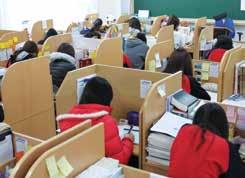
공적 / 사적 공간 (서울, 베이징, 도쿄)
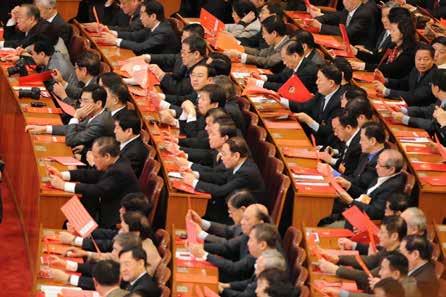
서울 - 공간연구집단
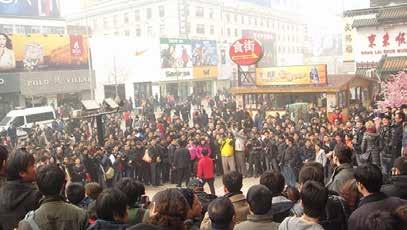
베이징 - 리믹스 스튜디오
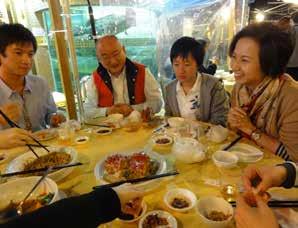
도쿄 - 하루카 호리우치
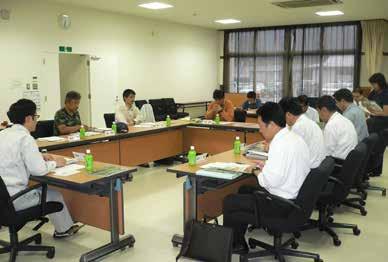
블랙보드 다이알로그 : 아시안 프로토콜에 대한 재정의
강지현
작가 약력
Introduction
‘Protocol’ as a Lens on Korea, China, and Japan: Muntadas’ Asian Protocols - Nathalie Boseul Shin
Project Notes - Antoni Muntadas
Process and Research - Joo Yun Lee
Asian Protocols : Cartographies
Asian Protocols : Research Notes - Christina Sanahuja
Asian Protocols : Research Notes - Chen Yehua
Asian Protocols : Fragments
On Translation : Pille
Hans D. Christ
Three Projections
Christopher Phillips
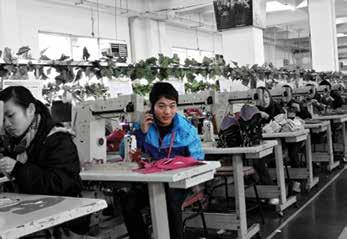
Public / Private Space (Seoul, Beijing, Tokyo)
Seoul - Space Research Group
Beijing - reMIX Studio
Tokyo - Haruka Horiuchi
Blackboard Dialog : Redefining Asian Protocols
Jeehyun Kang
Artist Biography
서문 Introduction
Asian Protocols
1. 가깝고도 먼 나라 한국, 중국 그리고 일본
가깝고도 먼 나라’. 한국, 중국 그리고 일본을 사람들은 곧잘 이렇게 부른다. 이 표현은 유럽이
미국, 혹은 남미에 비교한다면 분명 물리적으로 가까운 나라이지만, 침략과 수탈의 역사를
없는 복잡미묘한 관계에 있음을 단적으 로 말해준다.
한반도의
줄곧 크고 작은 분쟁들이
수 밖에 없었다. 오랜 시
어떤 모습에 그가 흥미를 느끼고, 어떤 부분에 관심을
둘째, 전시 제목에서 이야기하는 ‘아시아’의 정체가
우리에게 이러한 상처와 갈등만 남아 있는 것은 아니라, 문화예술적으로 서로 영향을 주고 받으며 교류하기도 하였다. 중화인민공화국이 들어서기 전 중국의 문화와 예술이 한국과 일본에 미친 영향을 무시할 수 없다. 비록 1998년 김대중 정부에 이르러서야 뒤늦게
일본대중문화가 개방되었지만, 그 전에도 일본 망가, J-pop등 일본문화는 암암리에 소개되고,
많은 인기를 누리고 있었다. 그런가 하면 최근 한류의 열풍은 일본은 물론 중국대륙에도 한국의
대중예술이 큰 인기를 누리면서 영향을 미치고 있다.
이처럼 한국과 중국, 일본은 때론 적으로 또 때론 친구로, 동맹을 맺기도 하면서 지내왔다.
정치적인 입장이 다르더라도, 경제적인 이유에서 손을 잡기도 하고, 문화예술 분야에서는 서로
에게 영향을 주고 받기도 했다. 그래서 한국과 중국, 그리고 일본의 관계에 대해서, 서로를 바라
존재한다. 아시아에는 한국, 중국, 일본으로 대표되는 동북아시아가 있 는가 하면, 태국과 인도네시아, 필리핀 등으로 대변되는 동남아시아가 있다. 인도도 있고, 중앙 아시아도 있다. 정치적, 종교적, 사회적, 문화적으로 너무나 다른 이 나라들을 아시아라는 하나 의 말로 아우르기에는 분명 무리가 있다. 오히려
아시아 이야기의 서장이라고도 할 수 있을 것
그랬듯이) 한국과 중국, 그리고 일본을 ‘프로토콜
많은 확장의 가능성을 가지고 있기 때문이다.
3. 문타다스,
: 아시안 프로토콜>의 하이라이트 <아시안 프로토콜 : 프로토콜 키워드 & 이미지 지도>(2014) 가 있다. 이 작업을 위해
한국, 중국, 일본에서 15명이 넘는 사람들이 리서치에 참여했다. 문타다스는 외교, 정치, 질서,
명령, 스포츠, 계약, 종교 등 정치, 문화, 예술 전반을 아우르는 43개의 키워드들을 영어로 제시
했고, 각 나라에서 키워드를 자국의 언어로 번역하는 작업을 착수했다. 그리고 각 키워드에 적
합한 이미지들을 찾아 공유했다. 각 나라마다 해당 키워드에 대한 이미지를 이해하고 찾아내는
방식이 상이했다. 예를 들어 ‘계약’의 경우 한국과 일본에서는 사무적이고 서류상의 계약과 관
련된 이미지들을 주로 찾았는데, 중국에서는 결혼식 사진을 보내주었다. 처음에는 잘못된 이미
다양했다. 같은 말을 쓰면서 서로 이해하거나 소통한다고 생각하는 것이 어쩌면 착각은 아닐까 하는 생각이 들 정도로 해석과
범위는 다양했다. 그래서였을까. 관객들이 가장 좋아했 던 섹션 역시 <아시안 프로토콜 : 프로토콜 키워드 & 이미지 지도>였다. 43개의 키워드에 맞춰
만들어진 수백 장의 이미지 지도 앞에서 관객들은 꼼꼼하게 읽어가고 해석했다. 이와 관련해서
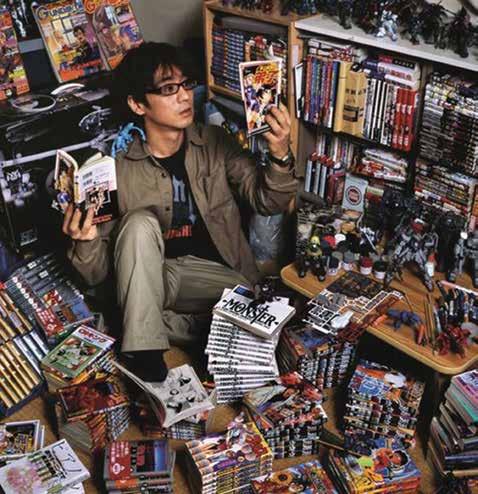
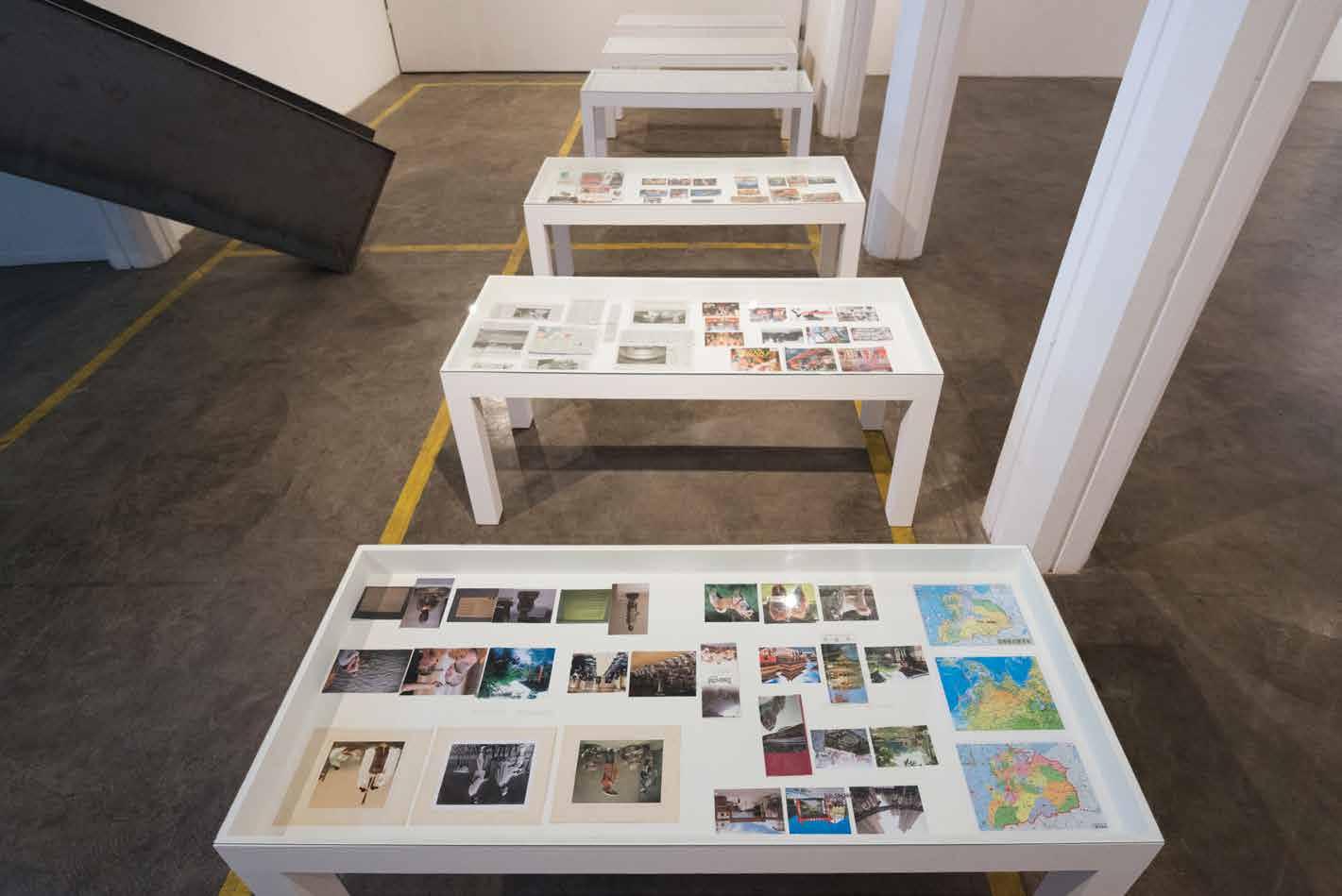
문타다스가 직접 모은 자료들로 구성된 <아시안 프로토콜 : 단편들> 역시 흥미 있게 보았다. 신
문 스크랩에서부터 한국, 중국, 일본의 대표적인 개의 사진 비교라던가, 러시아 말로 된 한국어,
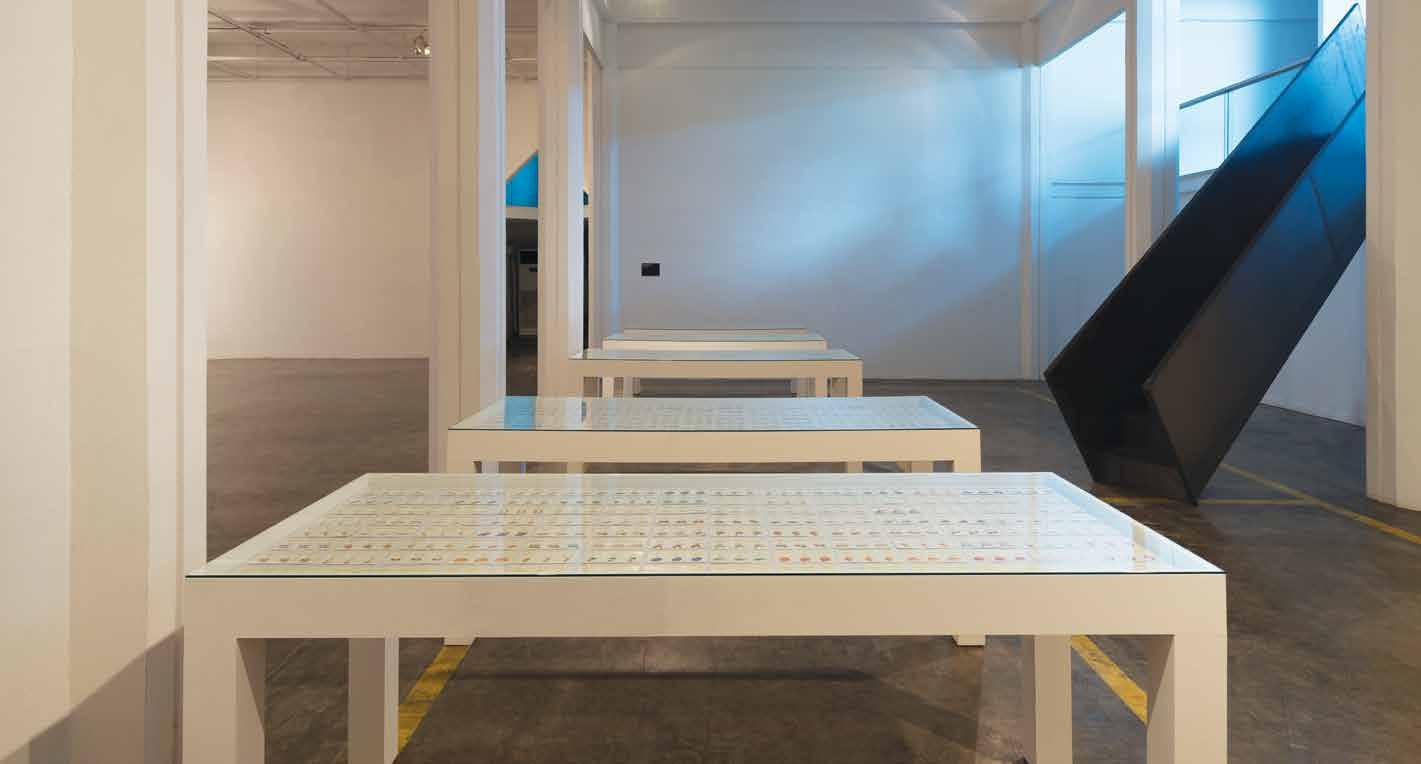
중국어, 일본어를 배울 수 있는 교육용 카드 수 백장으로 구성된 자료들과 이미지 지도들을 함
께 비교하듯 살펴보면서 한국, 중국, 일본에 관한 이야기들이 끊임없이 쏟아져 나왔다.
무수히 많은 정보와 데이터로 구성된 전시는 <번역에 관하여 : 알약>(2006-2014)으로 마무리된
다. 2006년 문타다스는 자신이 선택한 키워드에 적용시킬 수 있는 일련의 알약작업을 이번 전
통해서 구현하였다. 실제
자유로울 수 있었던 것은 사실이다. 달라진 것은
‘Protocol’ as a Lens on Korea, China, and Japan: Muntadas’
Asian Protocols
Nathalie Boseul Shin
1. So Near, Yet So Far : Korea, China, and Japan
“So near, yet so far.” It’s a term that people often use to describe Korea, China, and Japan. It offers a concise way to describe their situation: a complex relationship of countries that are clearly closer geographically than Europe, the U.S., or South America, yet whose history of invasions and predations means they can never simply be called “close friends.” In the case of the Korean Peninsula, the border on China has meant various conflicts large and small in the regions where the two meet. This is why Korea has always had to be sensitive to the arrival of a new dynasty on the mainland. For a long time, theirs was a lopsided relationship, with Korea offering tribute to China, and frequent invasions bringing plunder or death to countless ordinary Koreans. During the Korean War, the Republic of Korea army and UN forces were on the brink of unifying when the Chinese Communist Army intervened – a development that could safely be called the single biggest reason for the the Military Demarcation Line as it exists today. Relations with Japan are even harder to pin down. One needn’t go back as far as the Imjin Invasions of the late 16th century, or the “Treaty of Amity” signed on Ganghwa Island in 1876. The Japanese occupation of the early 20th century left scars on the collective Korean psyche that seem unlikely to heal even today. Even now, as we close in on seven decades since independence from colonial rule, numerous sensitive political issues have yet to be resolved, including recognition of so-called “comfort women” and ownership of the Dokdo.
Of course, not all has been pain and conflict. There have also been interaction and mutual influence in culture and the arts. Before the People’s Republic of China was founded, Chinese culture and art had an undeniable influence on Korea and Japan. And while it took until 1998 and the arrival of the Kim Dae-jung administration for Korea to open itself up belatedly to Japanese popular culture, phenomena like manga and J-Pop were already quite popular as contraband well before that.
Recently, Korean popular culture and art have been both extremely popular and influential in Japan, and even mainland China, in the form of the so-called “Korean Wave.”
So this is the history of Korea, China, and Japan : sometimes friends, other times enemies, a shifting web of alliances. Even when their political perspectives have been at odds, they have worked together for economic reasons; in culture and the arts, they have influenced and been influenced in kind. It is difficult to offer any cut-and-dried assessment of their relationships, or of their perspectives on each other. And so we remain – so near, yet so far.
2. Two Questions for Muntadas : Asian Protocols
There are two questions I have often been asked when I’ve told people I was planning an exhibition on Muntadas and “Asian protocols”. First, they want to know why a Spanish artist should be focusing on what people have to say about Asia. I’m well aware of what lies underneath this question. They’re concerned about how an outsider, one ostensibly unaware of the turbulent histories and complex emotions at play, could possibly do work that addresses all three in a way that does them justice. My thought was that if we shifted perspective a little, we could see that his not being part of any of them – not Korean, not Chinese, not Japanese – might afford him a more neutral, newer perspective with his platform for viewing the three countries. I also considered that the most crucial thing about this project was that it was an art project by an artist, not a research paper attempting to analyze Korean, Chinese, and Japanese history or relationships. In other words, Asian Protocols is not trying to give an objective or empirical answer to a question. Its goals are more about raising questions, about evocation. And its pieces emerge from a reading of images, an interpretation of how we were reflected in one artist’s eye, what aspects he finds intriguing, and where his interests lie.
The second question concerns the identity of the “Asia” mentioned in the title. It’s a word that has been talked about a lot lately, and it’s become quite a sore subject. Part of that has to do with the word itself originating from a European perspective. There are also the lingering shadows of the Western colonization and turbulence that have all too often characterized Asian history. Another factor may simply be that
the word “Asia” has been thrown around in a very commercial sense. It’s a complex question – just what is the geographical, cultural, or historical basis for this “Asia”? – and one I intend not to address here. I also think there are some things I should get in order before I can approach the project more specifically. The “Asia” mentioned in Muntadas: Asian Protocols is by no means intended to encompass all of Asia. Nor could it: the concept of Asia is too vast, with too many finely grained distinctions within. There’s Northeast Asia, represented by Korea, China, and Japan, but there’s also Southeast Asia, consisting of Thailand, Indonesia, the Philippines, and so forth. We also find India and Central Asia. Different as they are politically, religiously, socially, and culturally, it seems foolhardy to lump them all together under one word, “Asia.”
This project, I think, may be more aptly called a prelude to discussing the Asia viewed by Muntadas as a Spanish artist. Nothing is set in stone yet (something that has been true for many of his projects) , but the attempt to unravel and interpret Korea, China, and Japan through the “protocol” concept offers multiple possibilities for expansion.
3. Muntadas, Protocols , and the Problem of Translating “Translation” is one of the big keywords for Muntadas as an artist. It’s an issue he has approached through a variety of media as part of his long-running On Translation series . The “translation” that he refers to is not limited to the literal sense of one language being translated into another. It is something that must be viewed in a larger context: the other meanings and contexts by which an image is understood, the process of how something is “translated,” understood, and interpreted from one culture to another.
The issue of translation emerged as an important concern from the earliest stages of Muntadas : Asian Protocols . One obvious question had to do with how to even translate the word “protocol” in that title. “Protocol” is not a word that gets used very often in Korea – or in China or Japan, for that matter. Its dictionary definition refers to an agreement between countries, some diplomatic convention, a common practice, or a communications framework for transmitting data between computers. In practice, it is used simply as a substitute for other, similar ones in various areas. Since the Korean alphabet allows nearly every foreign loanword to be written exactly as pronounced, Koreans often
find it easiest to use the untranslated peurotokol ( 프로토콜) . But outside of the computer communications context, it’s a loanword, which tends to be used more as a suitable synonym than anything else. It’s much more natural and familiar, for example, to use the word gwallye (관례) in place of peurotokol when talking about diplomatic procedures. In Japanese, the katakana writing system is used for foreign loanwords. “Protocol” is thus rendered as purotokoru (プロトコル), though again it’s supposedly more common for people to use a suitable Japanese word for that context. In Chinese, similar-sounding characters can be put together to approximate the English word; here, too, it’s more common to simply use the indigenous word for that situation. So before talking about the three nations of Northeast Asia, I first ought to address the odd and thorny issue of how we are to translate and interpret the word “protocol”. It goes without saying that no translation is perfect. There’s always slippage, always room for a different translation (or interpretation) . The possibility of one “right answer” is foreclosed from the start. But this can also explain why the exhibition uses its six-chapter format to paint different portraits of Asia. The different aspects of the Korea, China, and Japan images are both an interpretation of images that are precisely untranslated – or, better yet, wholly untranslatable – as well as the question posed through the perspective of Muntadas the artist. Consisting as it does of six small chapters, the exhibition is, in some sense, an attempt to use images and works of art to gain a complex perspective on the many things that get omitted in the translation process.
4. From Blackboard Dialog : Redefining Asian Protocols to On Translation : Pille
As I touched on before, Muntadas : Asian Protocols asked questions of the Korean viewer that exist in multiple layers – everything from the scope of the “Asia” category to the relationship among Korea, China, and Japan, and the meaning of this unfamiliar keyword “protocol”. The key thing, then, was to unravel these six (slightly) different stories into a systematic yet natural flow of movement.
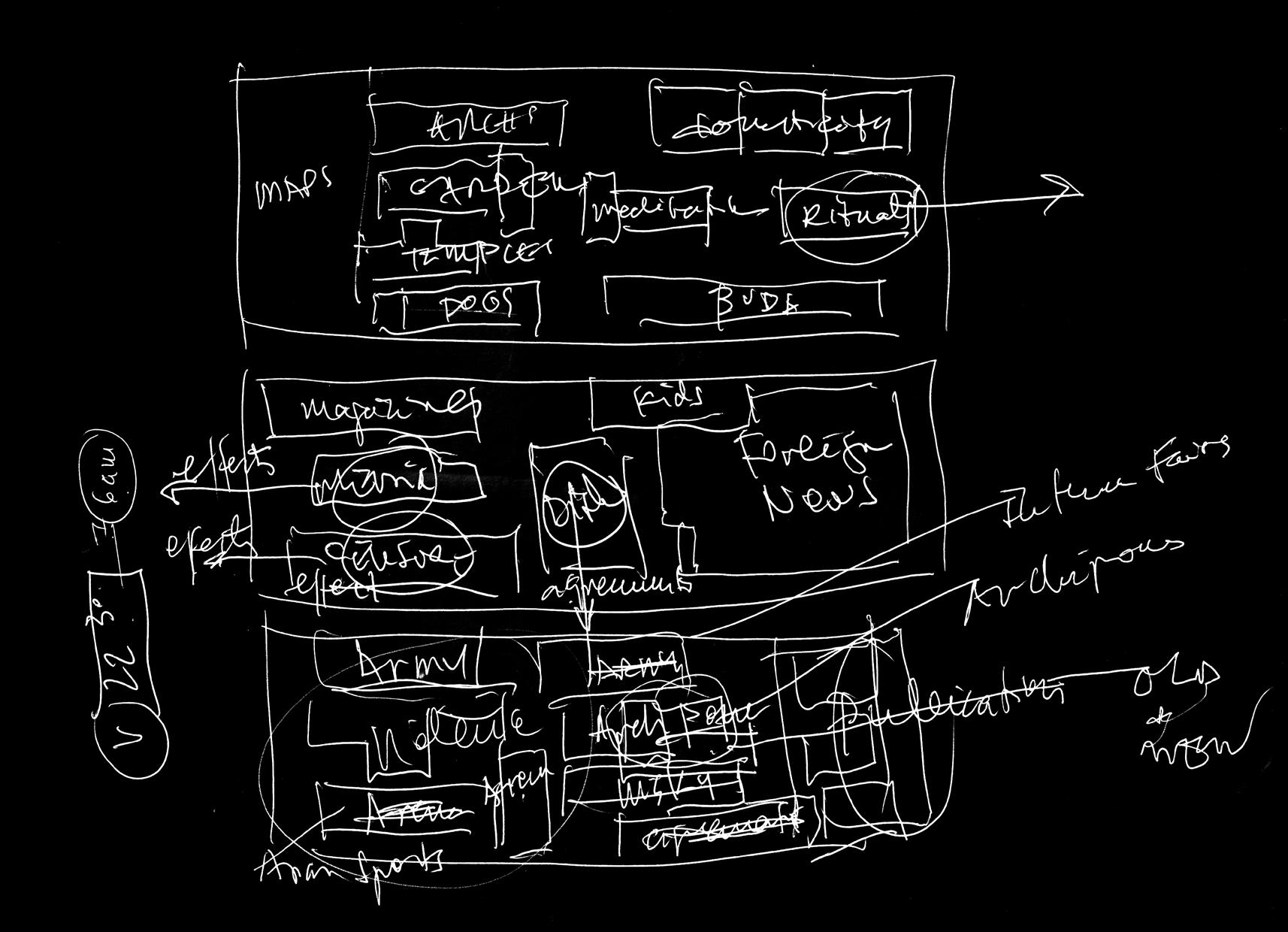
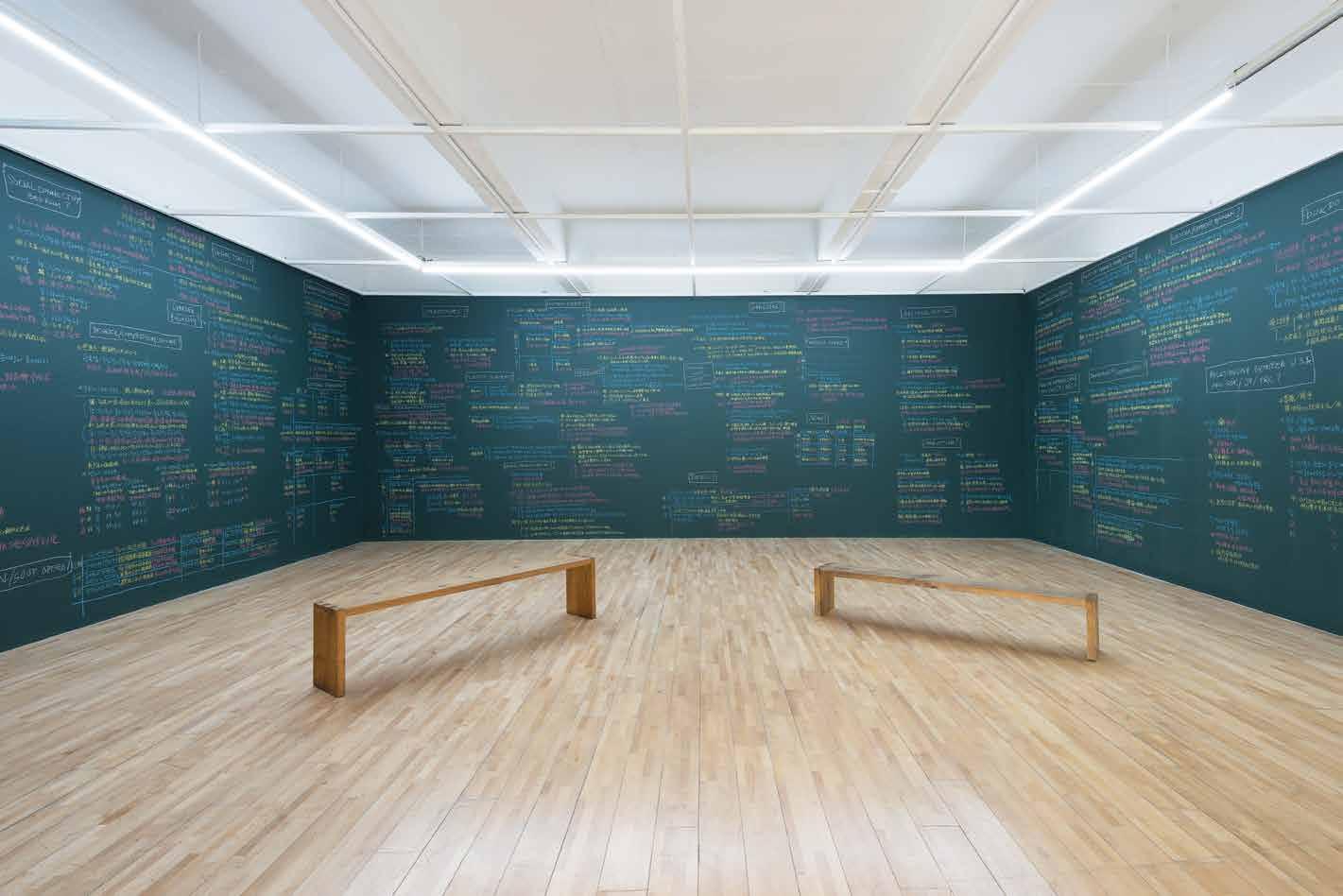
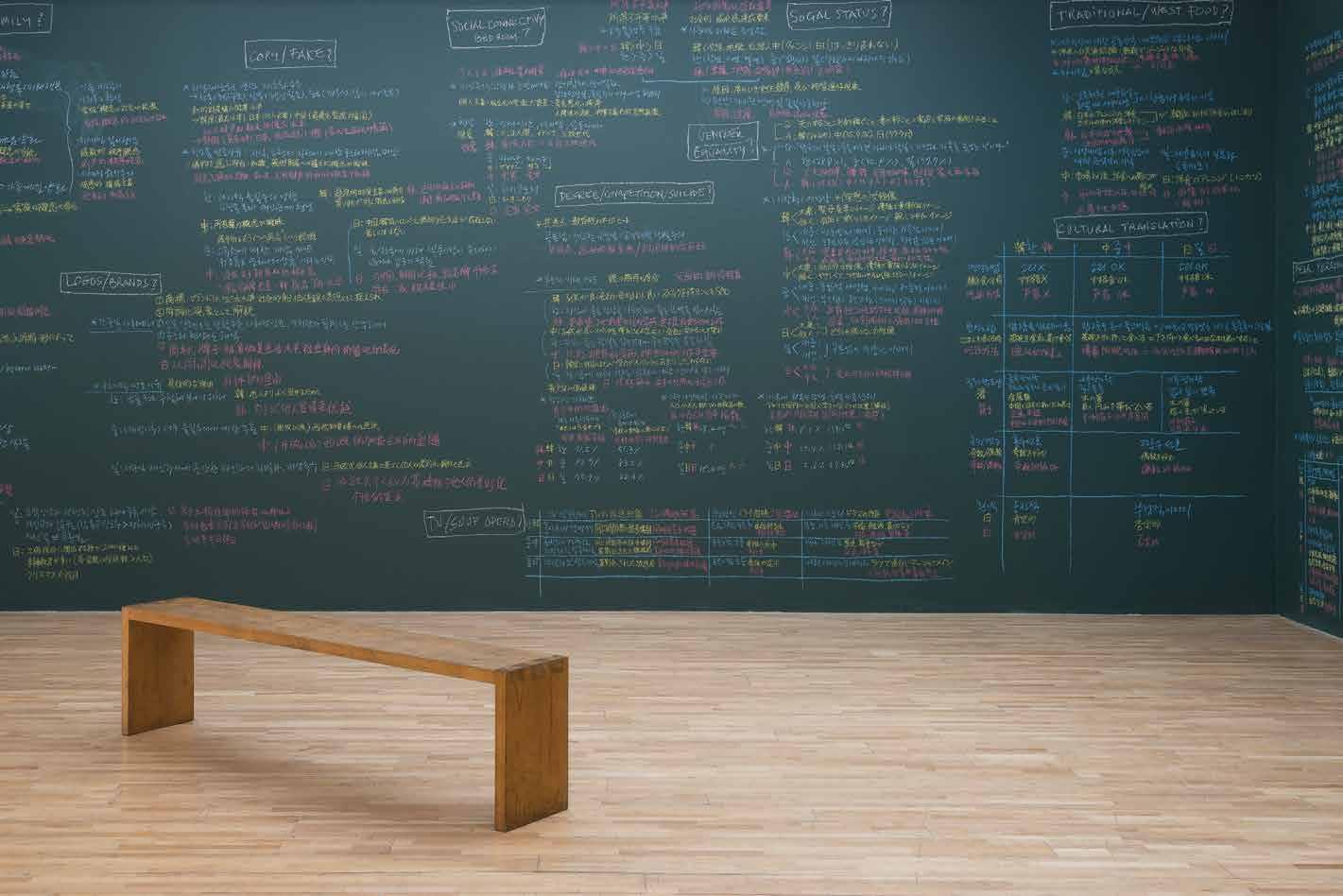
The exhibition starts with Blackboard Dialog : Redefining Asian Protocols (2014), which is made up of blackboard letters filling the gallery wall. This section, baffling as it may be to viewers who enter the gallery expecting to see images, is the introduction to the overall Muntadas : Asian Protocols
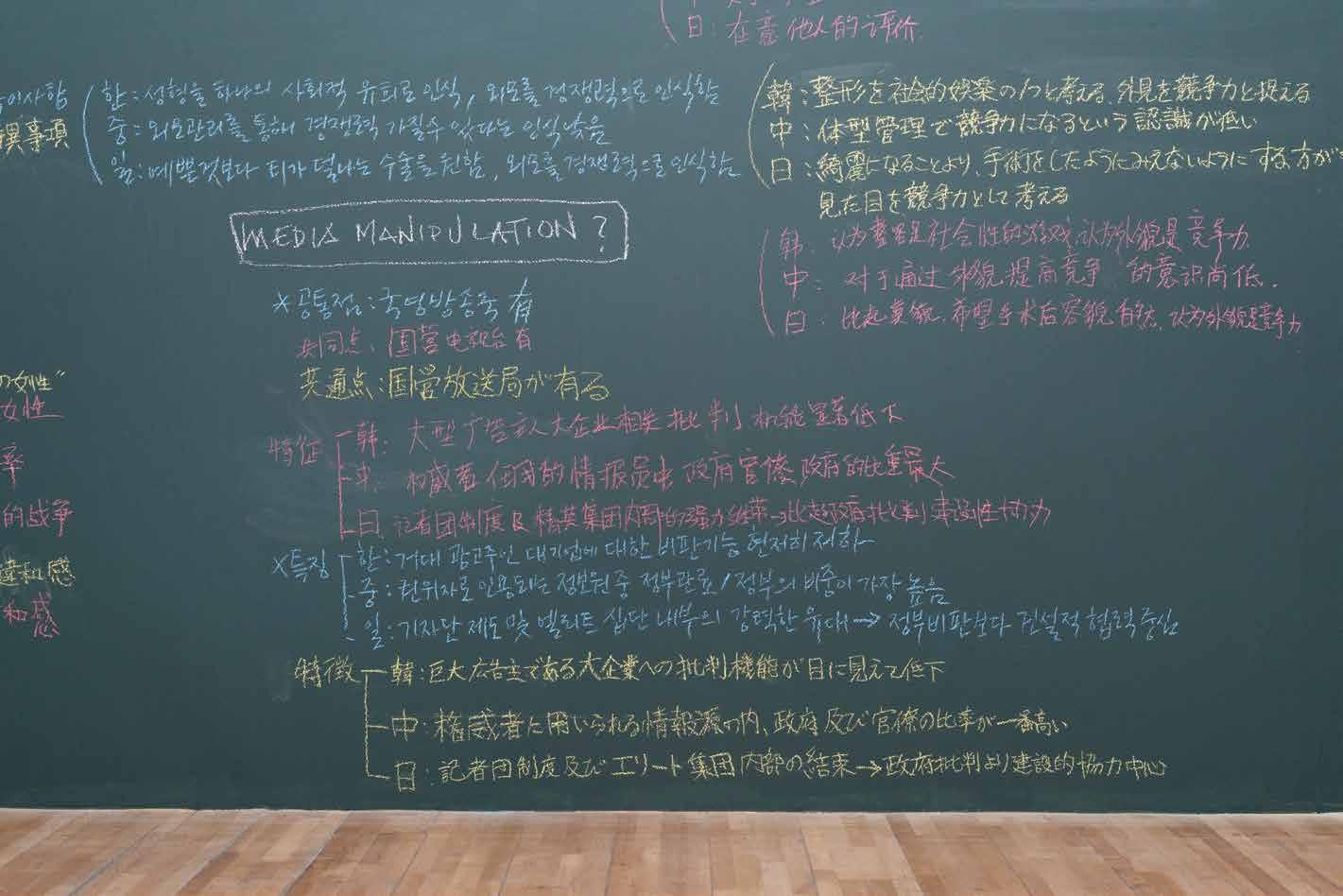
exhibition. It is crammed with 30 questions posed by Muntadas on the three countries – Korea, China, and Japan – along with the answers arrived at through research by Jeehyun Kang, a specialist in international political economy. Muntadas’ questions are both trenchant and diverse. They range from such specific and seemingly trivial matters as how eating cultures are alike and different in Korea, China, and Japan, to comparisons of military spending and sensitive topics like the Dokdo islets and the “comfort women.” Kang relates how Muntadas used questions in the form of words as a way of “zooming in” and “zooming out” on certain topics as he examined the three countries. The three-dimensional matrices the artist has created are an opportunity to see their differences as well as their similarities. One especially interesting part was the process by which Chinese and Japanese participants translated Kang’s research and wrote it in Chinese and Japanese on the blackboard. The experience, in this case, was as important as the result: a Spanish artist coming together in the gallery with a Korean researcher, Chinese and Japanese translators, and a Korean curator to hear the artist’s questions, share opinions, and exchange and record opinions on the researcher’s answers. Perhaps it was because of the sympathies thus shaped, but contrary to our worries, visitors to the gallery didn’t simply read through each of the 30 questions and their answers. They had discussions, raised new questions – in short, they reacted actively and assertively.
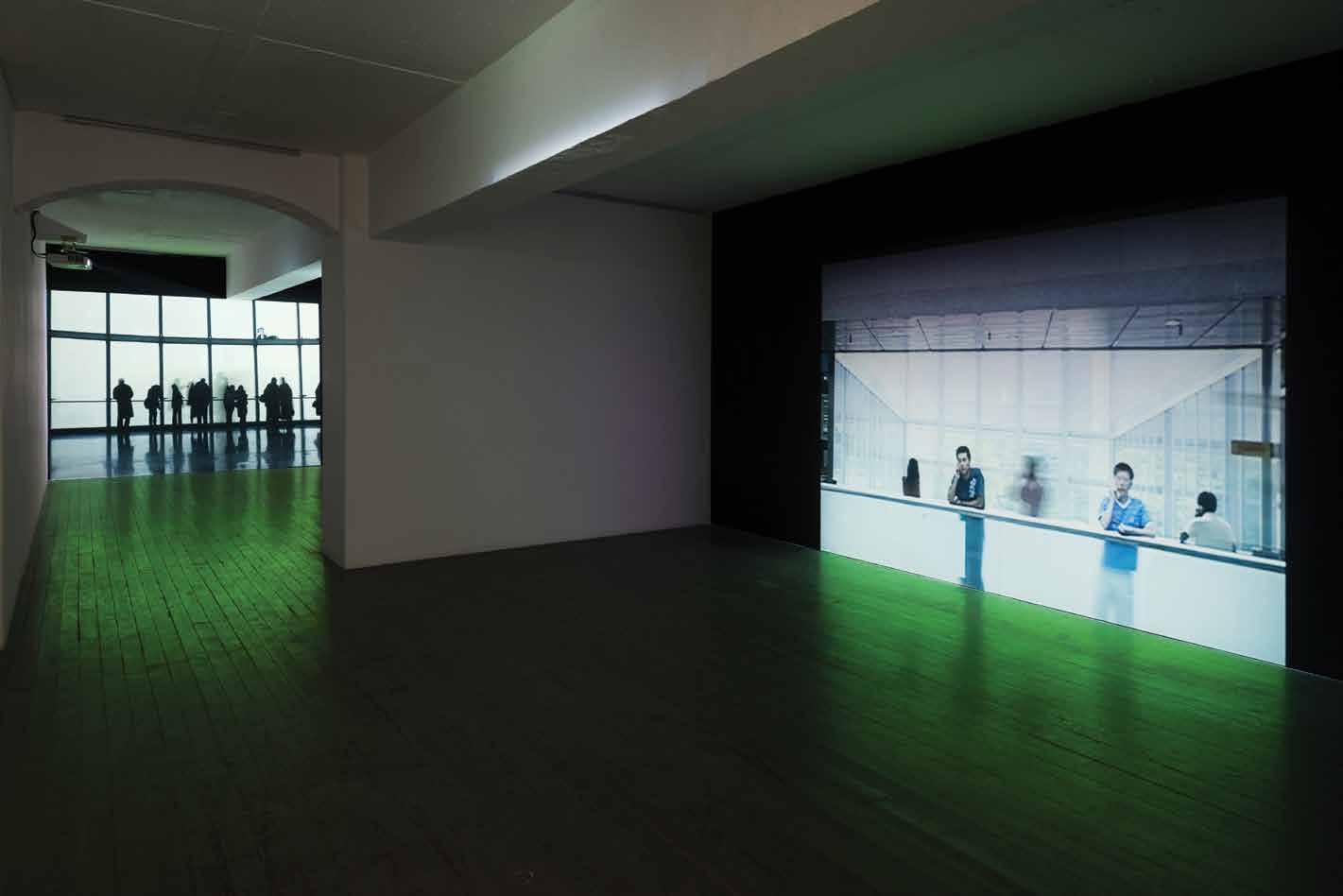
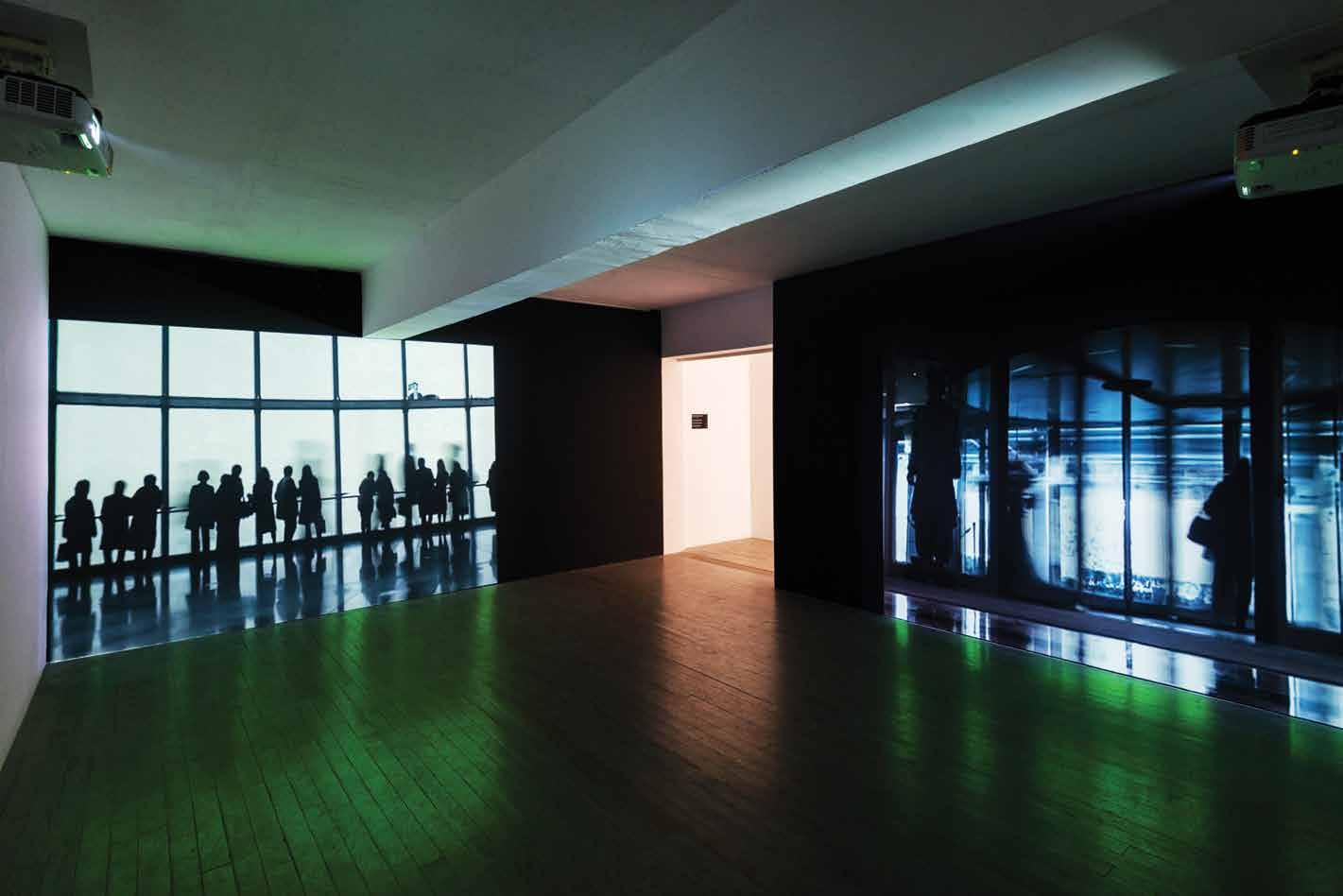
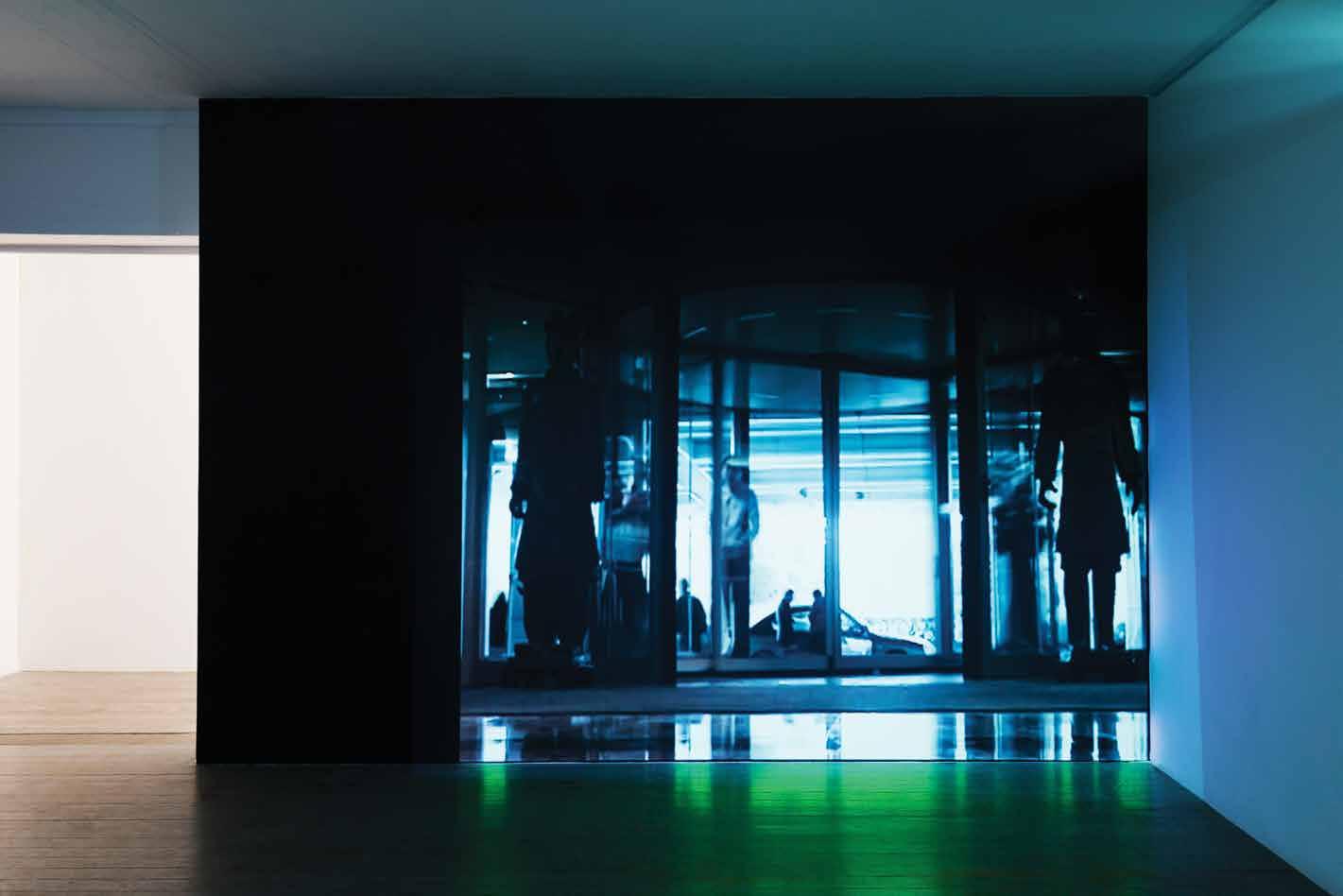
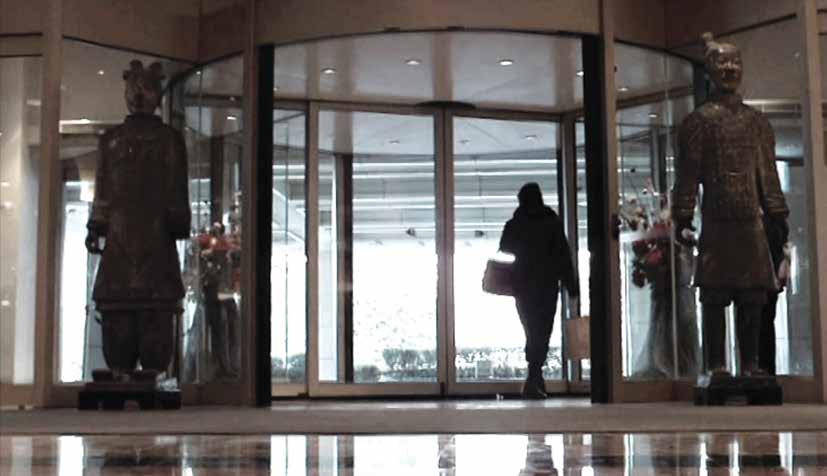
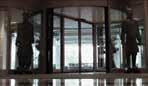
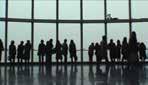
The next section, titled Three Projections , introduces three video projects launched in Helsinki in 1995 as part of the On Translation series : On Translation : On View (2004) , On Translation : Listening (2005) , and On Translation : Go Round (2013) . Viewers witnessed people endlessly chatting on cell phones over the balcony connecting one building to another (Listening) , or saw repeated images of people going into and coming out of a glass-walled revolving door (Go Round) . In some cases, they saw mere silhouettes looking outside or passing casually in front of a huge glass window in some undefined space – perhaps an airport or shopping small (On View) . The spaces that appear in these three video works are spaces not for lingering, but for moving. They are also public spaces –but there are aspects that make one hesitate to define them as such. In the case of Listening , we see a mixture of public and private spaces. The people on screen are moving somewhere, but they do not talk to
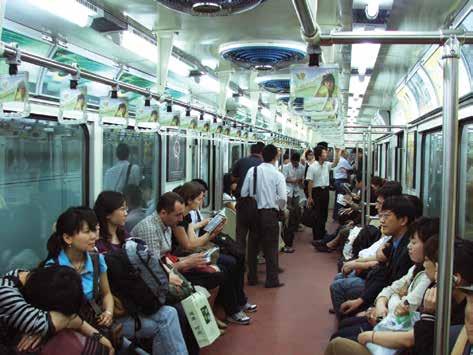
one another. Instead, they are having private conversations on their phones. It’s one of the defining images of the modern, media-based society: people existing in a public space, yet simultaneously creating their own private space. And it’s something perhaps even more noticeable in Korea. Ride a subway there, and seemingly everyone you see will be looking at his or her cell phone. Seldom does anyone exchange a glance or words with the person sitting beside. Some riders watch movies or miniseries, play games or read books. All of them sit, head lowered before the tiny device in their hand, immersed in their own private space. It’s a global trend, but (from my own experience, anyway) it also seems to be one of the most salient social phenomena in Asia generally, and Korea (or Northeast Asia) specifically.
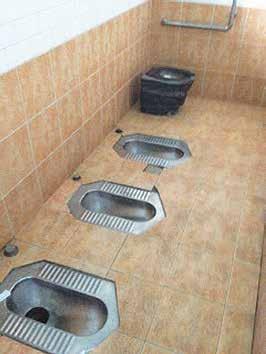
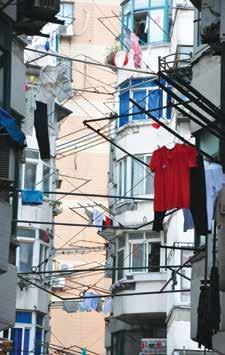
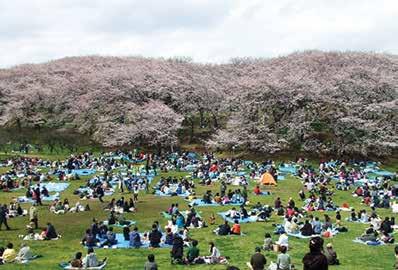
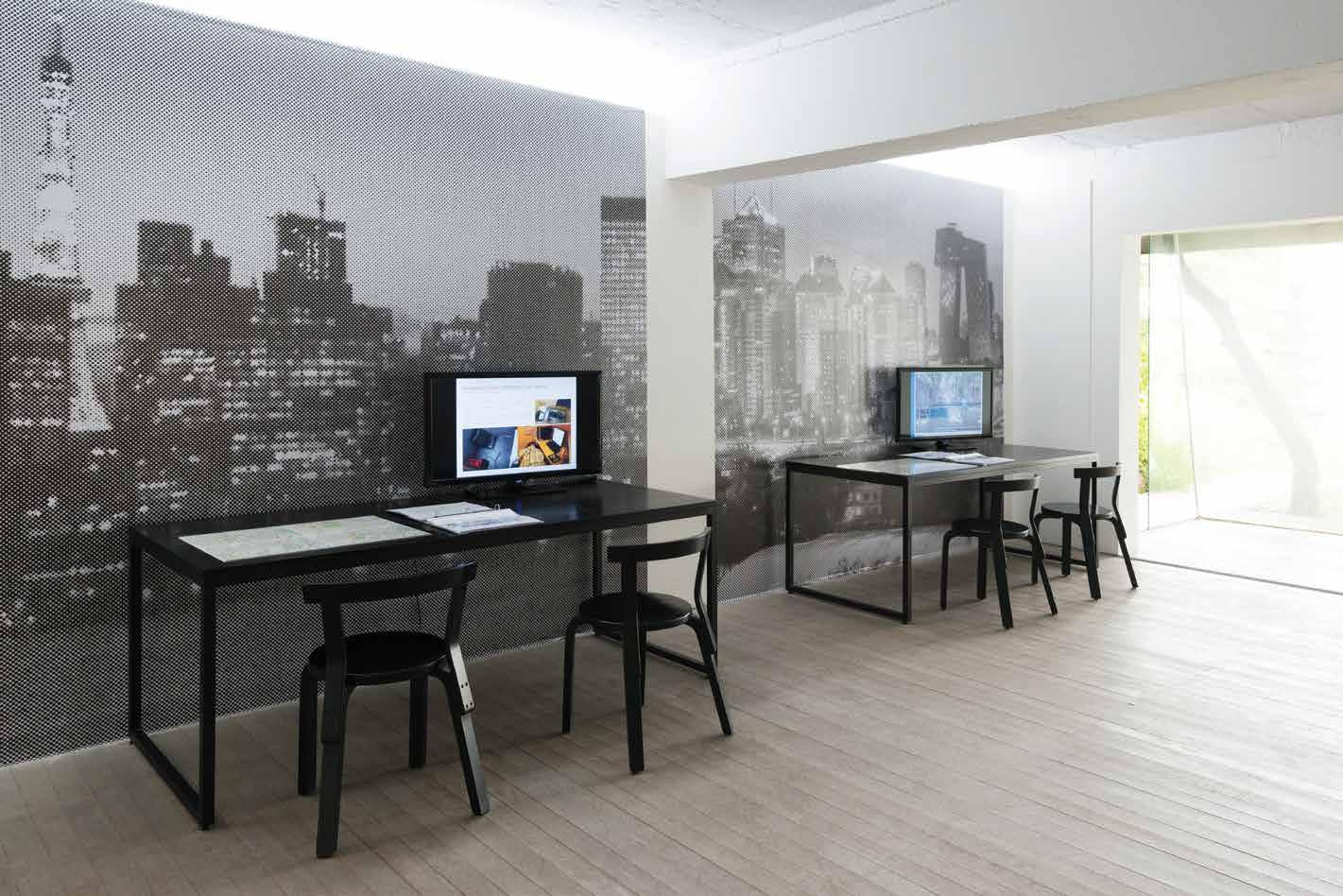
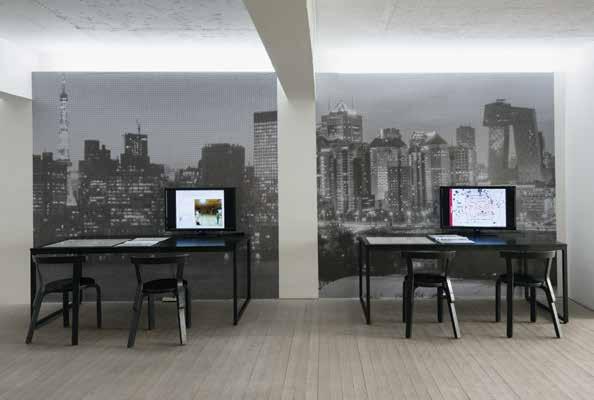
The ideas that the three video works present about public and private space become more specialized in Public / Private Space [Seoul, Beijing, Tokyo] (2011-2014) . Here, the concrete examples afford them even greater clarity. The Space Research Group, reMIX Studio, and Haruka Horiuchi – experts specializing in urban research and architecture – offer their findings on public and private spaces as witnessed through examples from Seoul, Beijing, and Tokyo. It was quite interesting to see the stories of the three cities, and the ways in which the private / public distinction is less clear-cut than in the West.
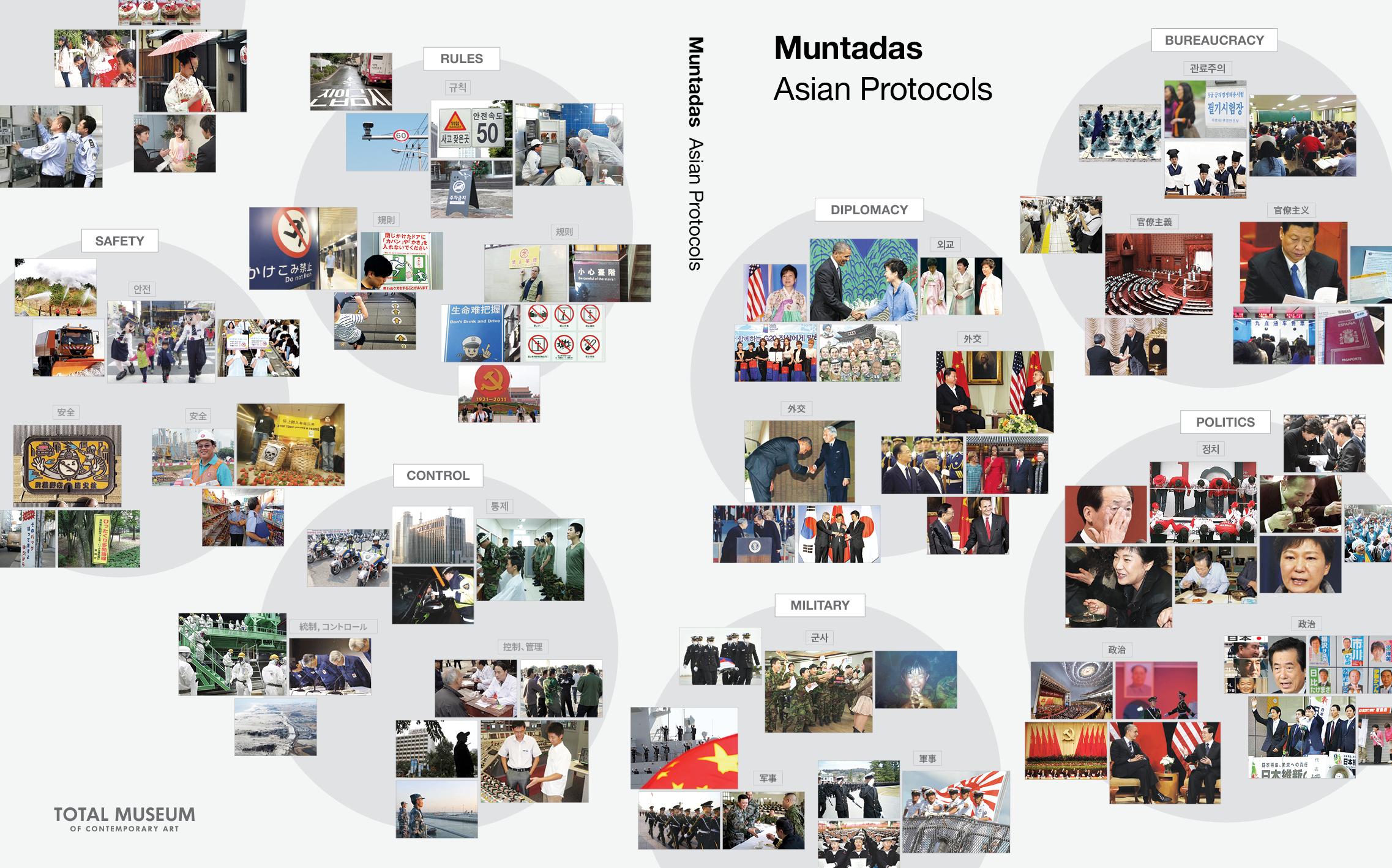
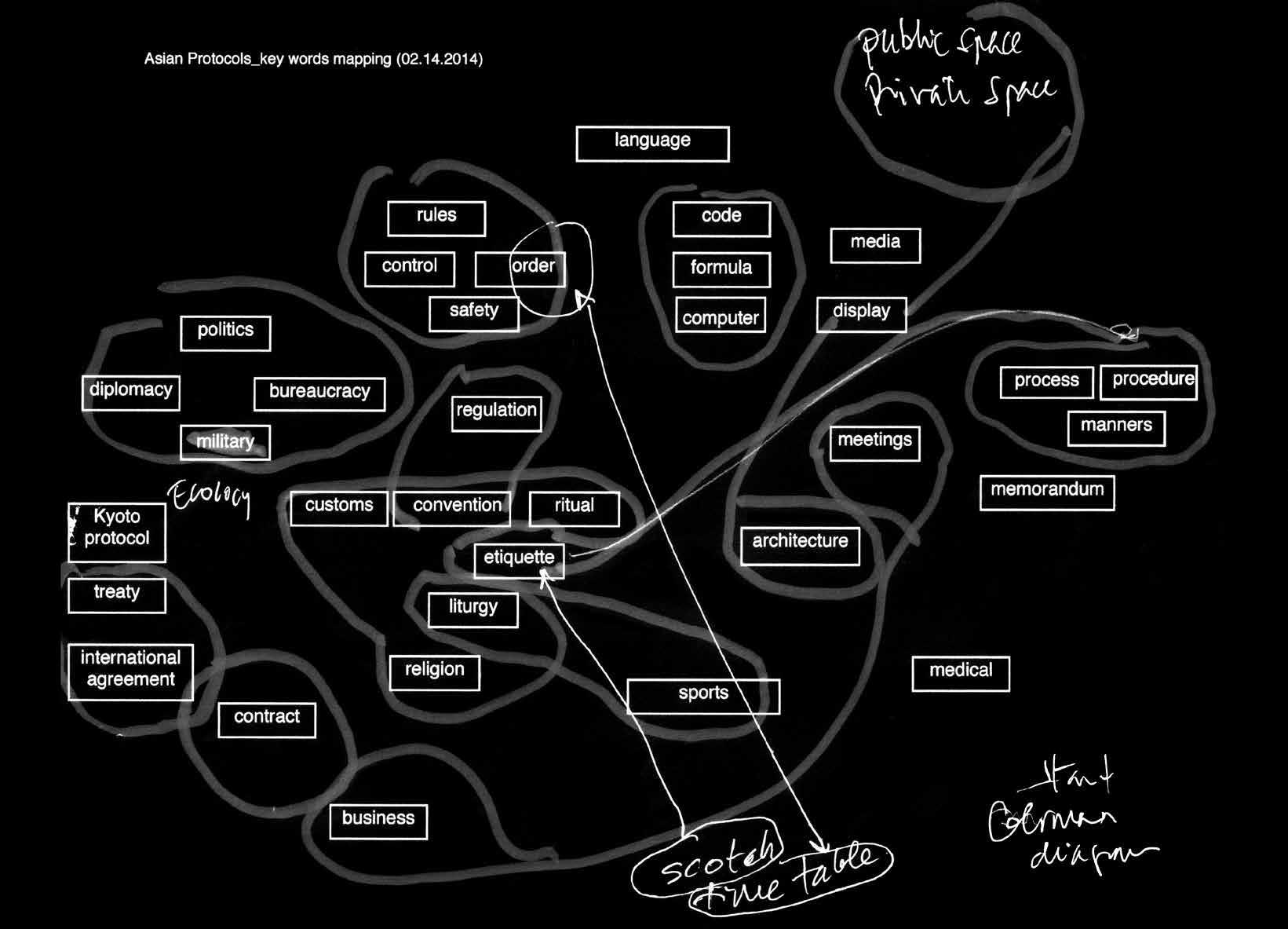
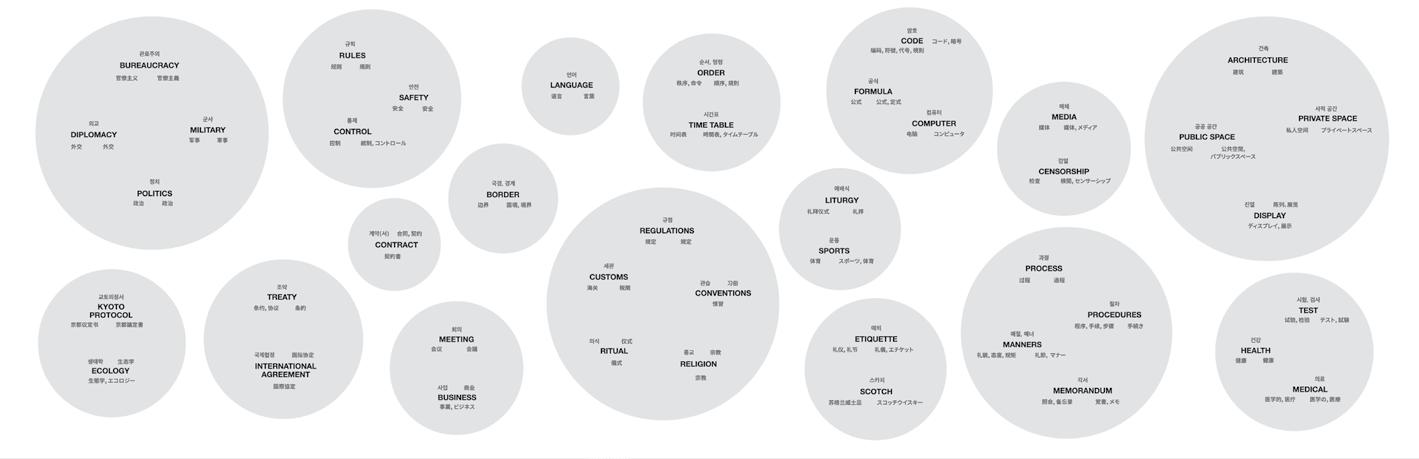
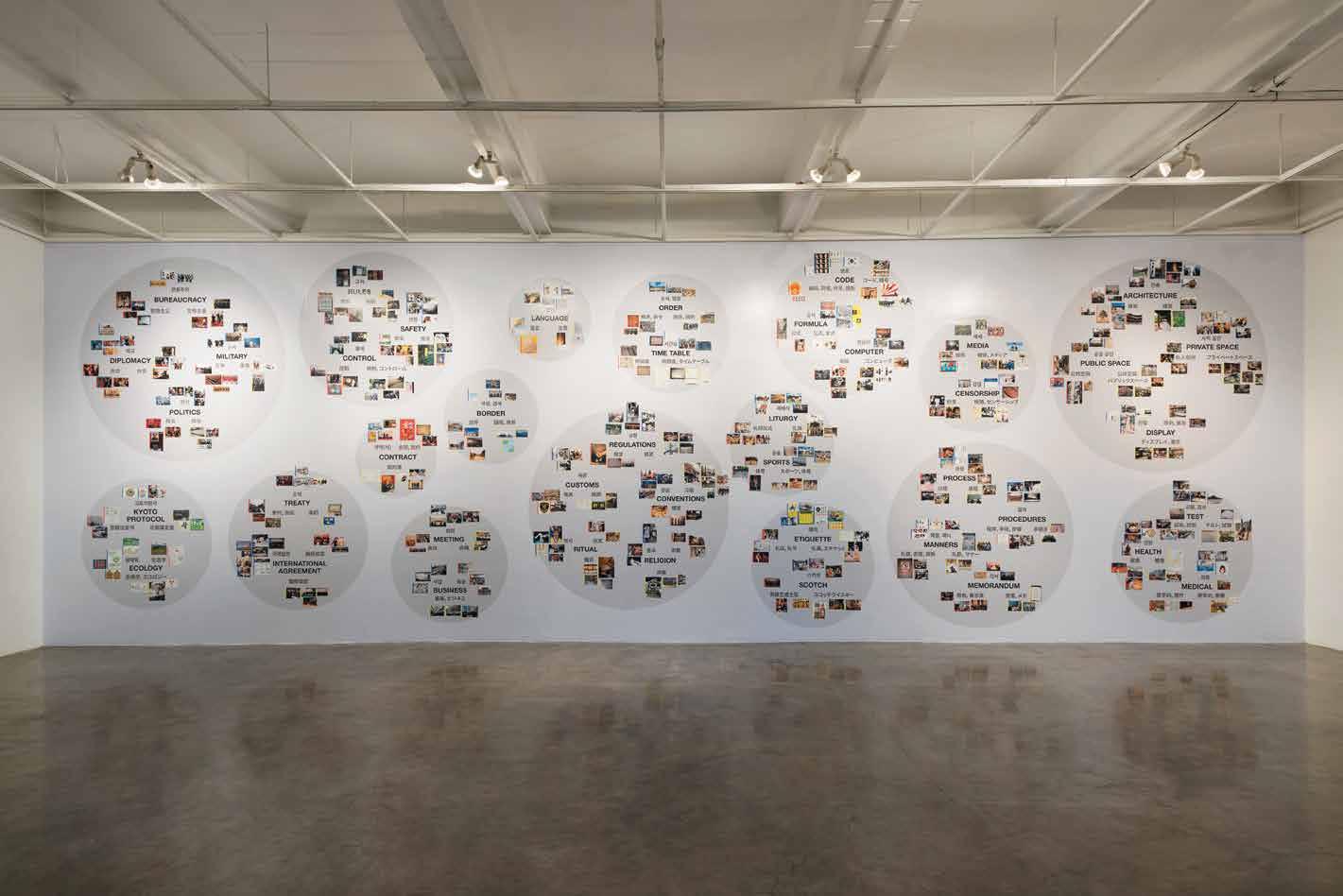
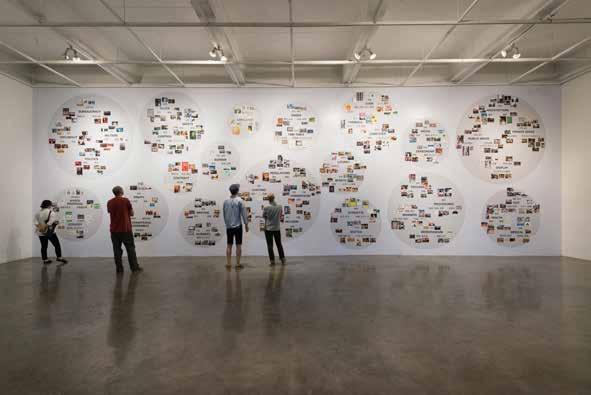
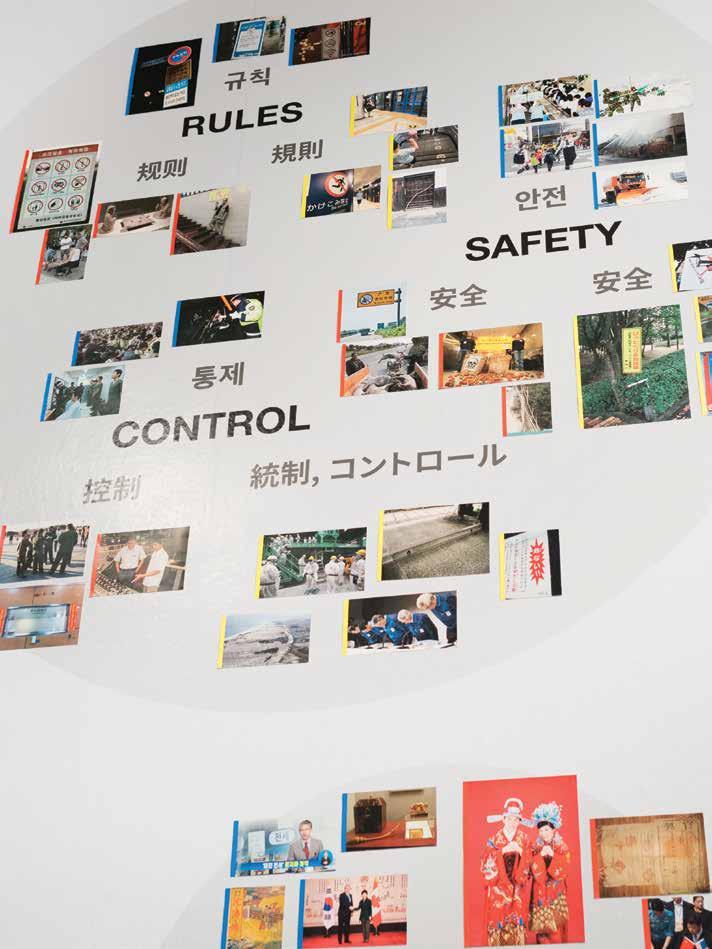
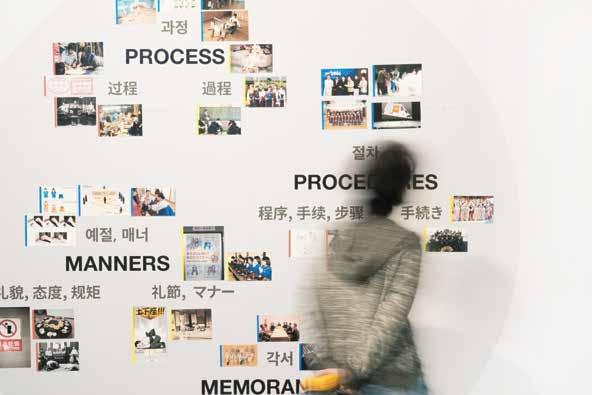
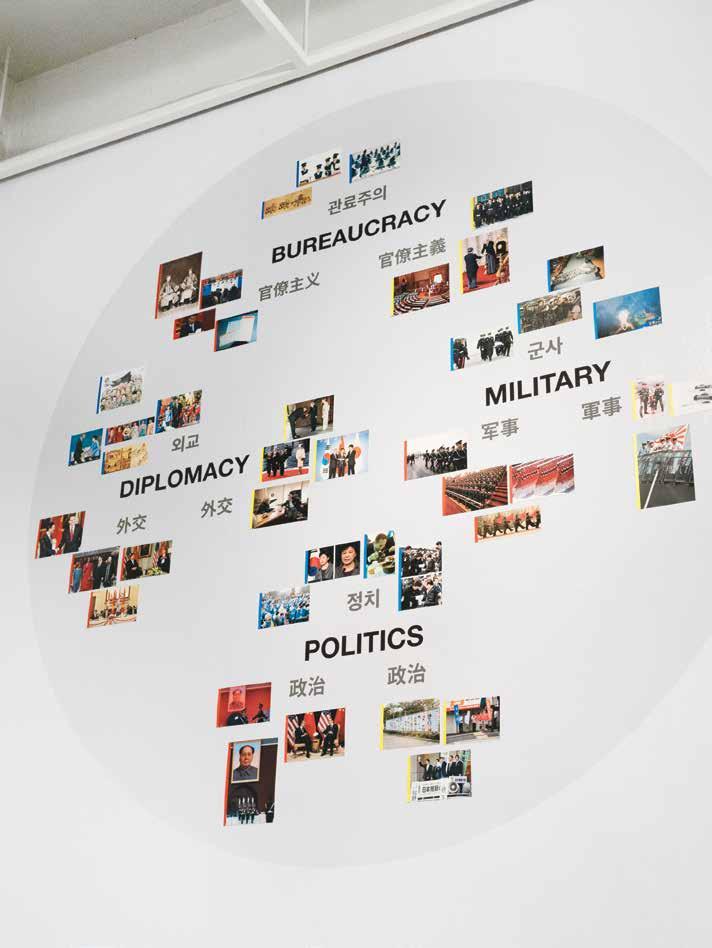
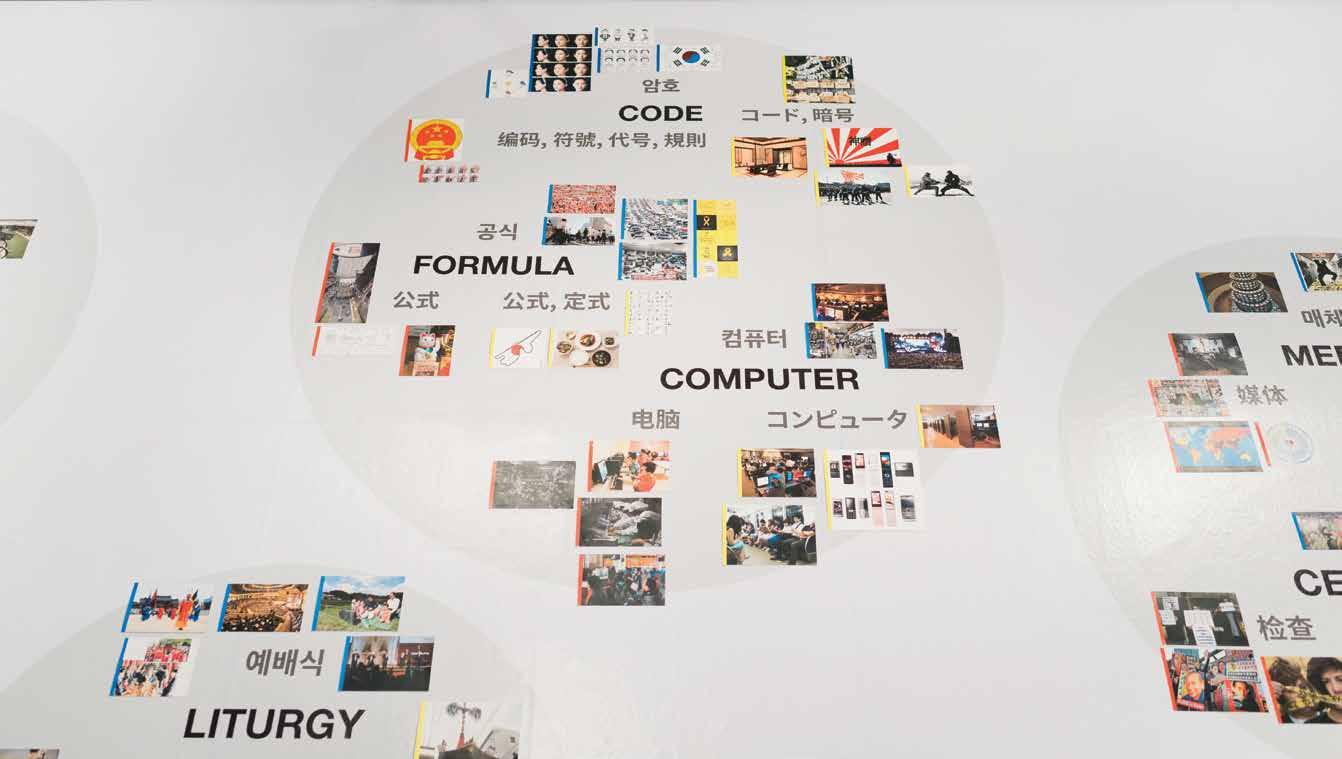
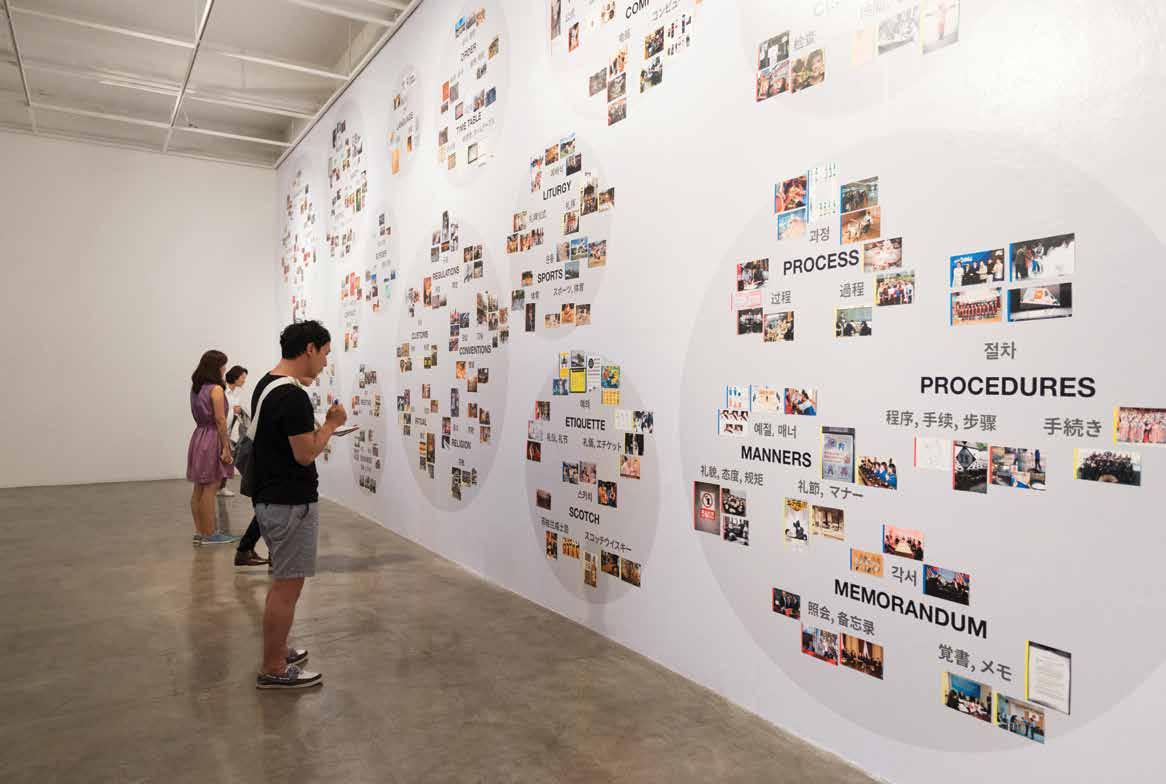
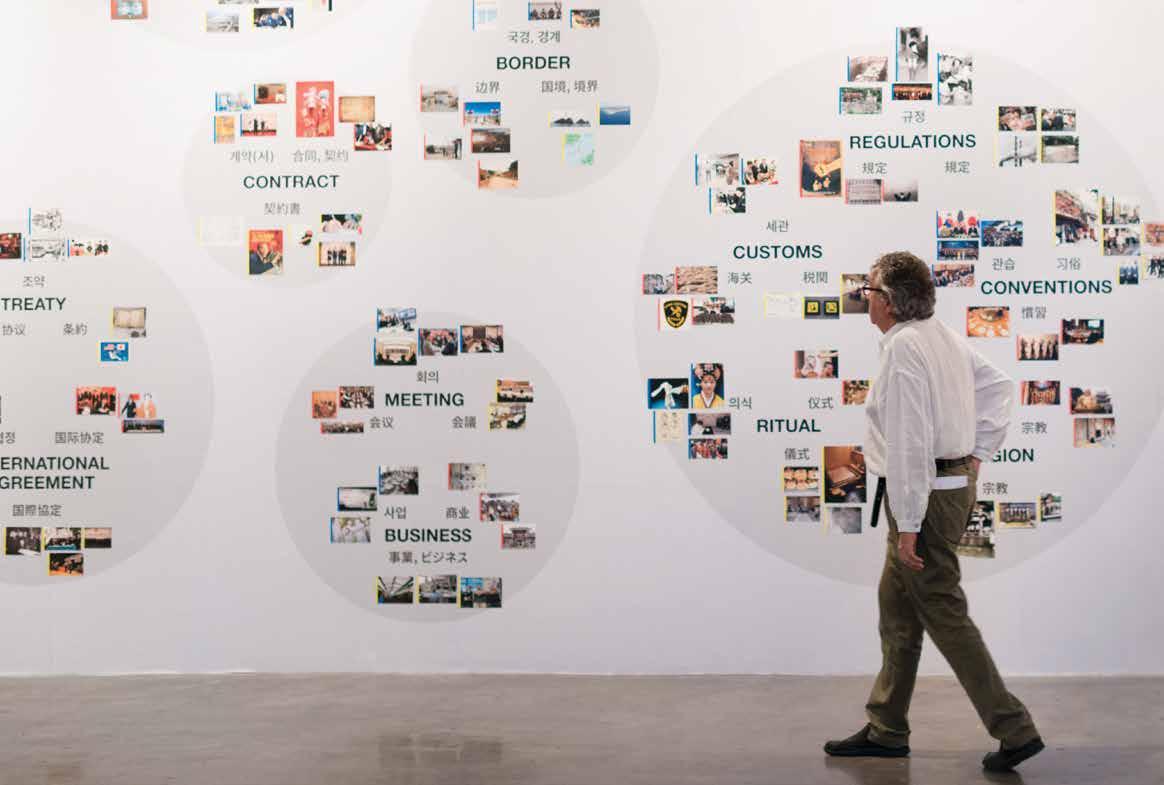
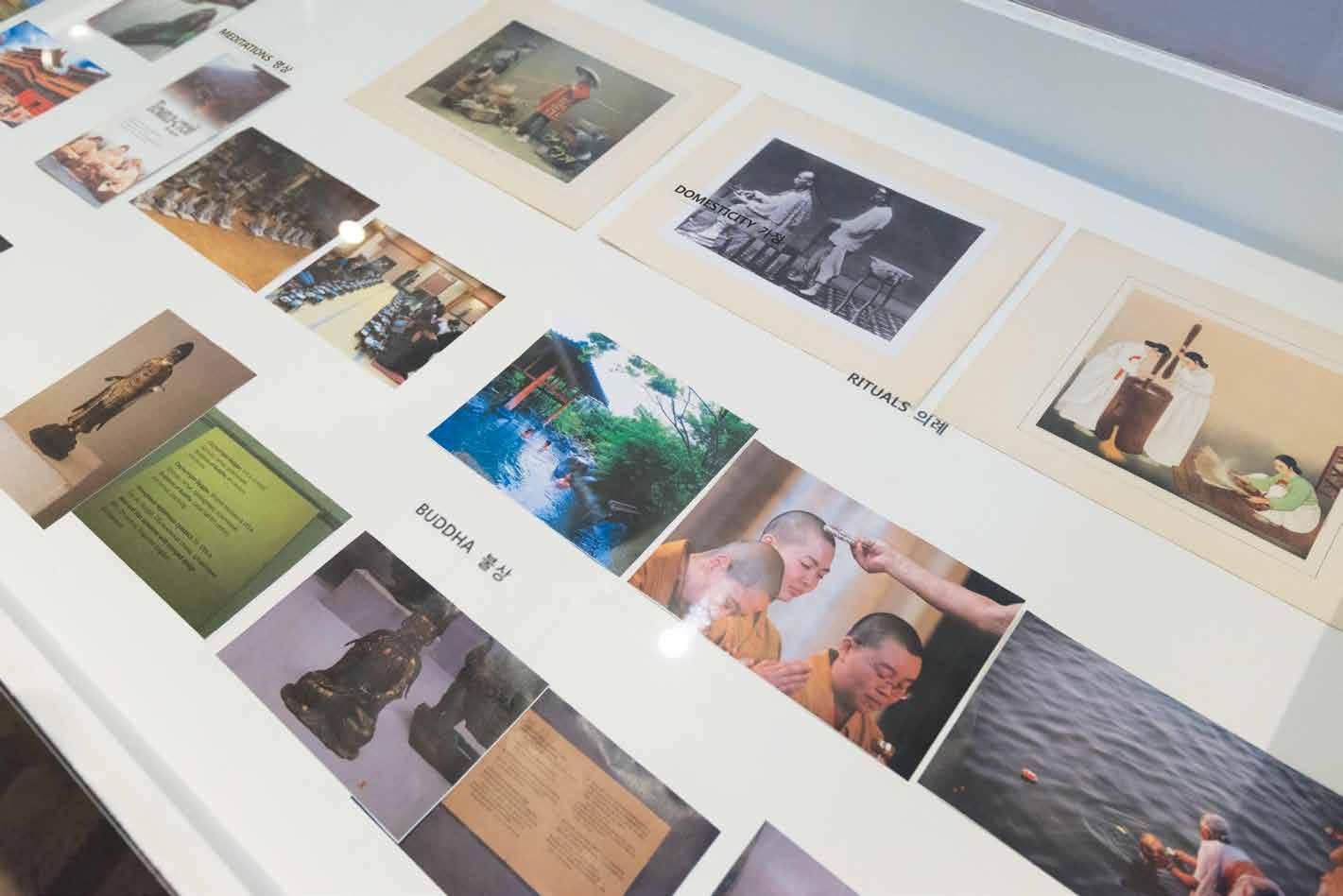
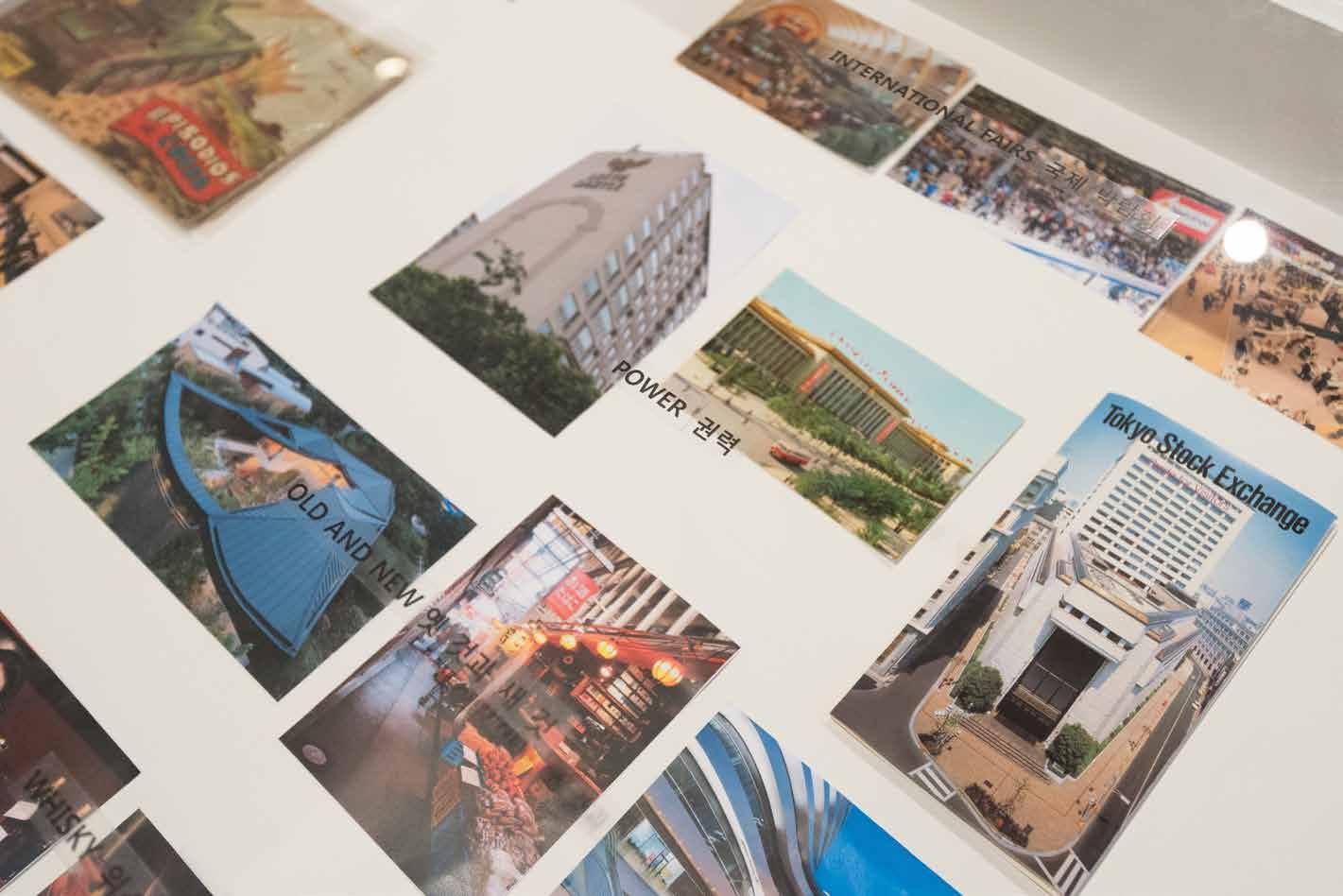
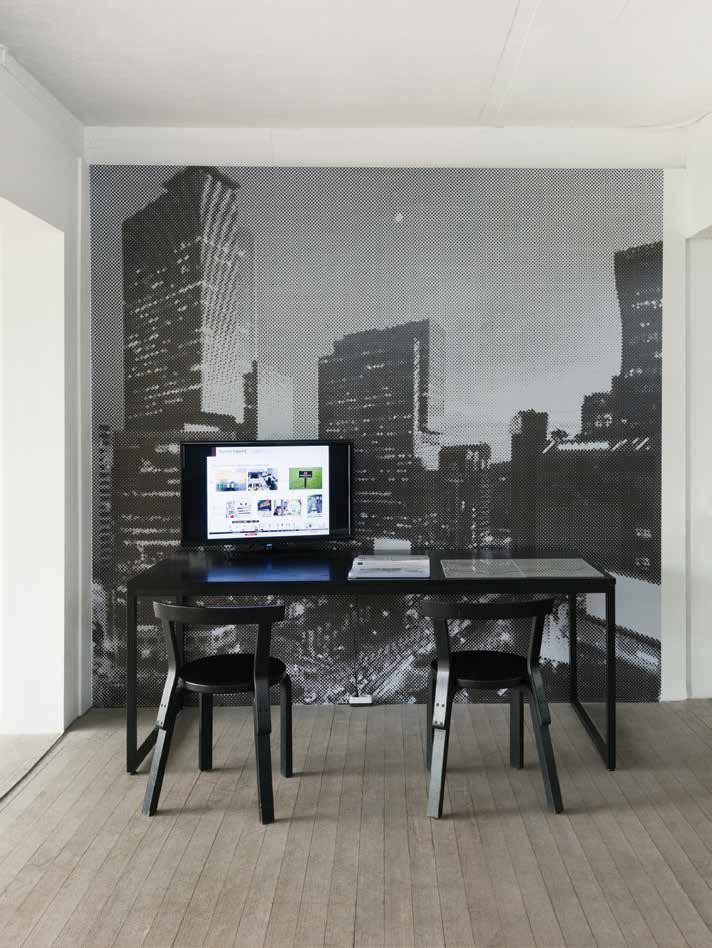
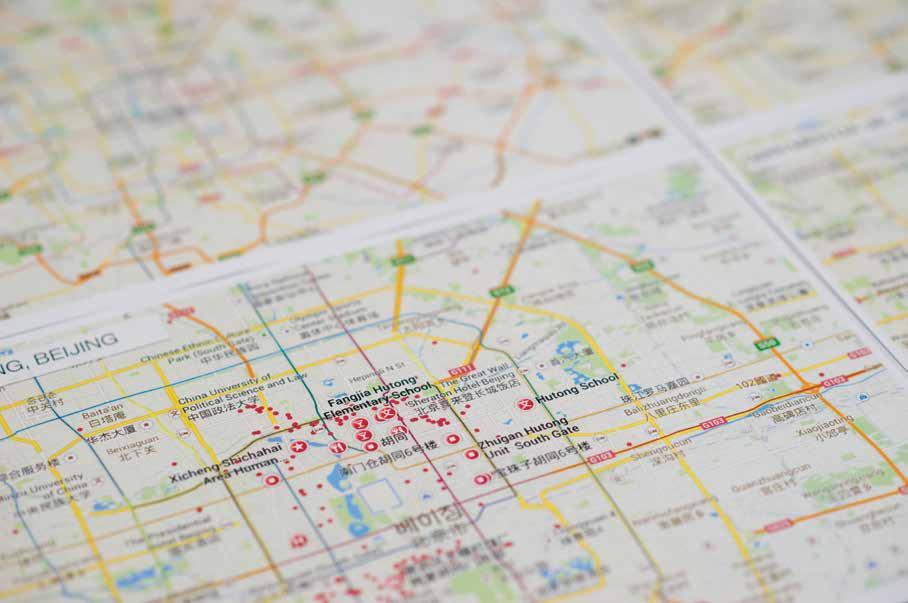
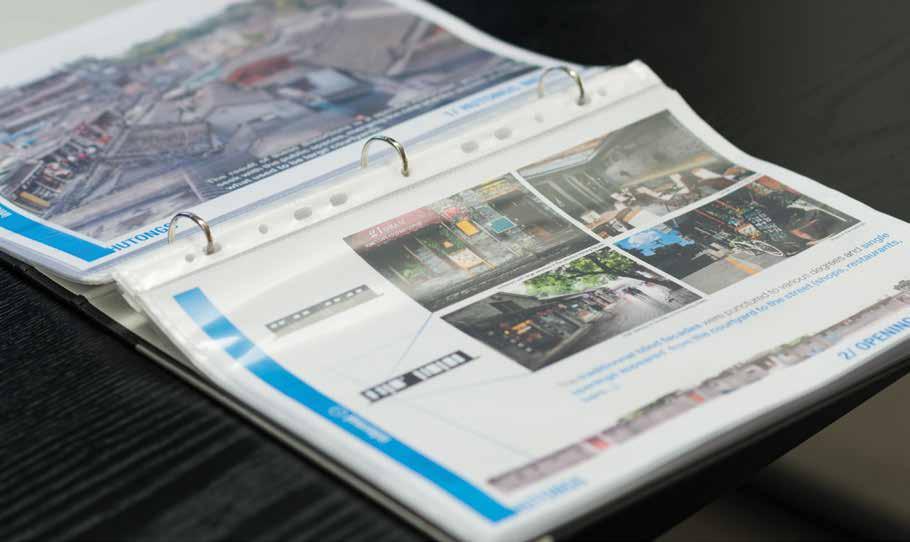
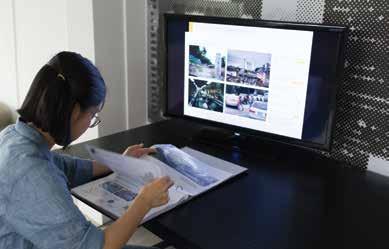
Where Public / Private Space recalls an office space against the backdrop of the three cities’ skylines, rendered in half-tone dots, the next work fills the gallery wall. Asian Protocols : Cartographies (2014) is perhaps the highlight of the Muntadas : Asian Protocols exhibition. Over fifteen people in Korea, China, and Japan contributed research for this work, for which Muntadas presented 43 keywords in English, running the full gamut of government, culture, and arts – diplomacy, politics, order, decrees, sports, contracts, religion. After that came the process of translating them into the native languages of the different countries. Suitable images were then found and shared for each word. Each country brought a different method of understanding and locating keyword images. For “contract,” both Korea and Japan came up with images related to clerical or document-based agreements, whereas the photograph sent from China showed a wedding. This seemed at first like a mistake in image classification, but the more I thought about it, the more it seemed like marriage could indeed be the single biggest contract situ -
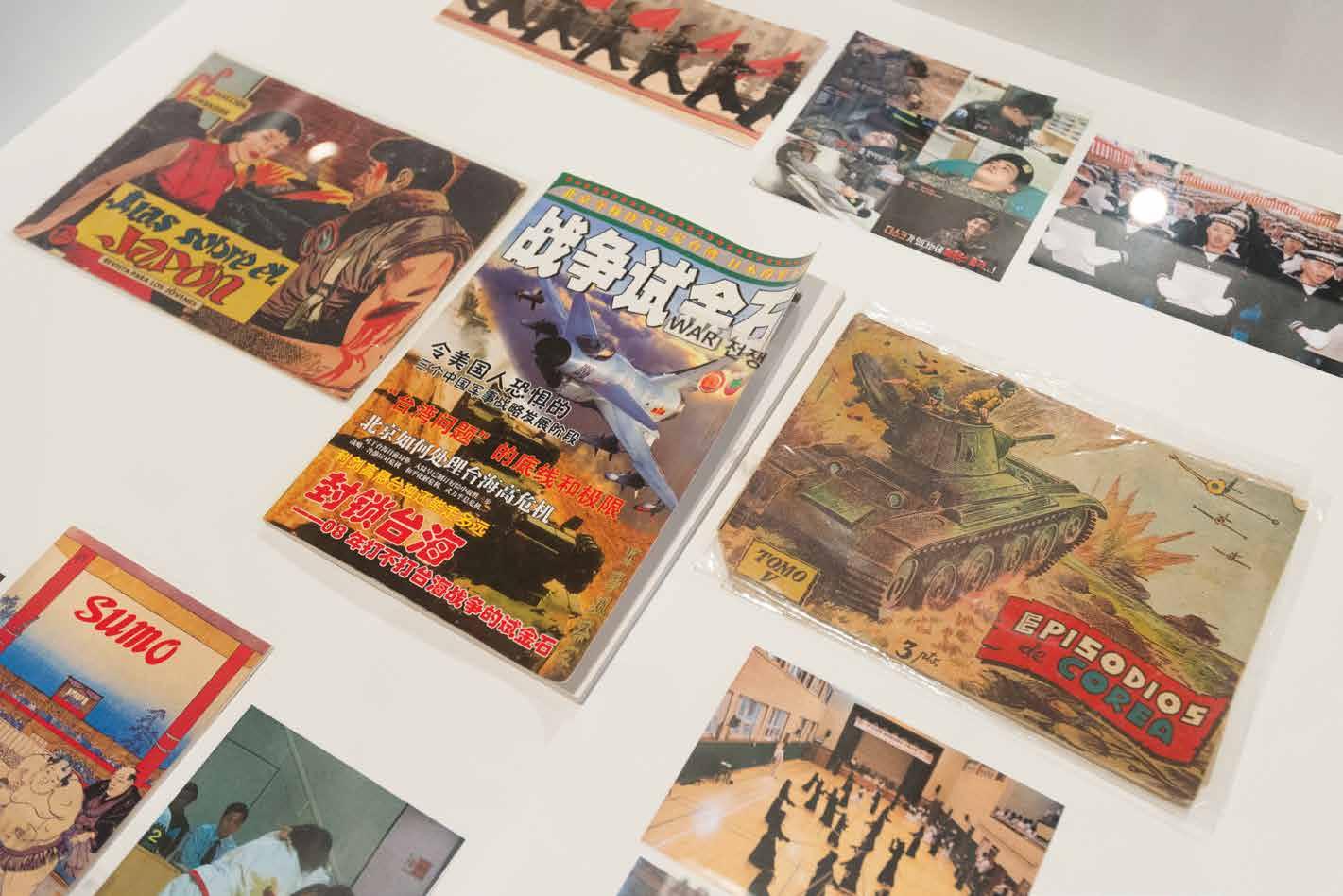
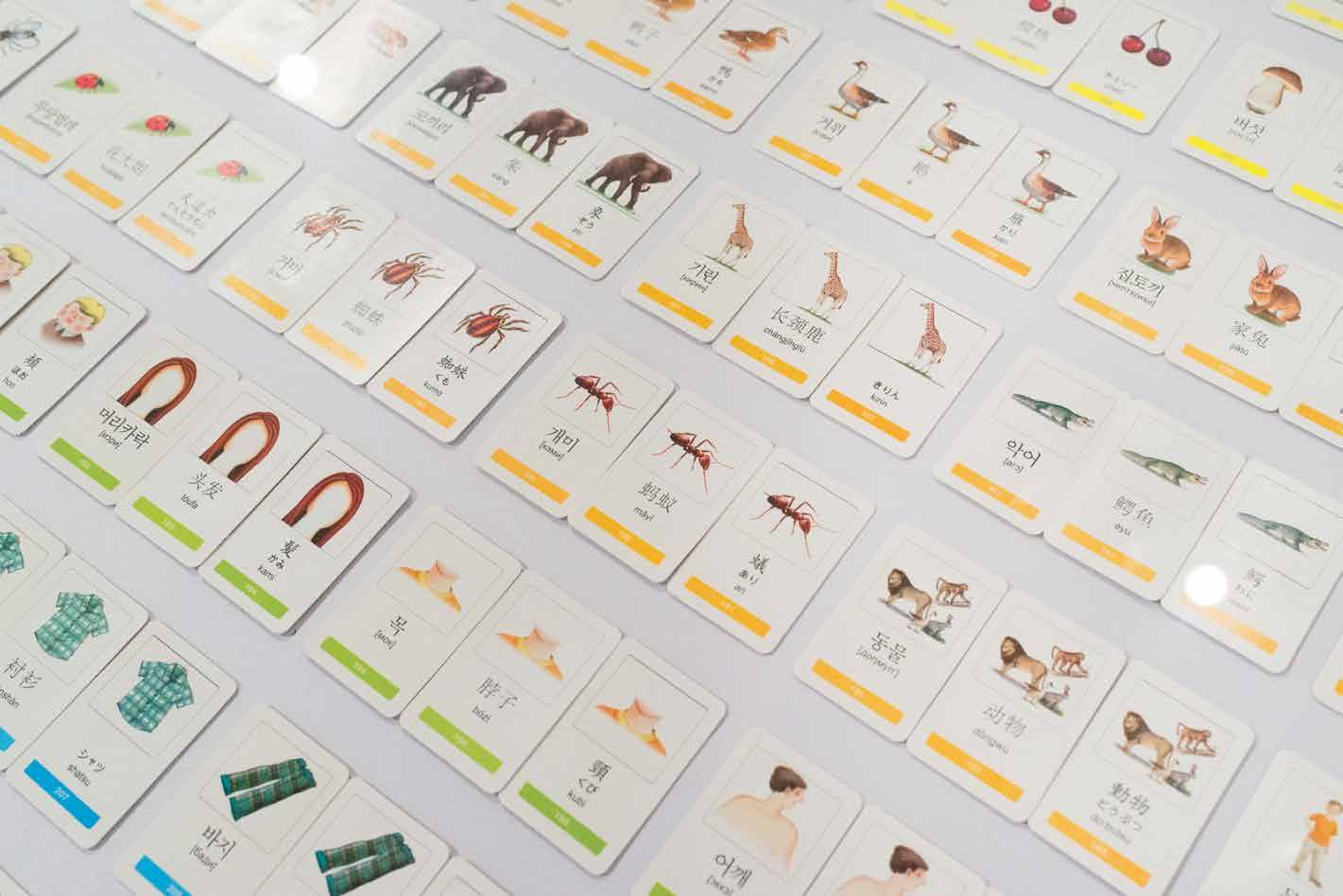
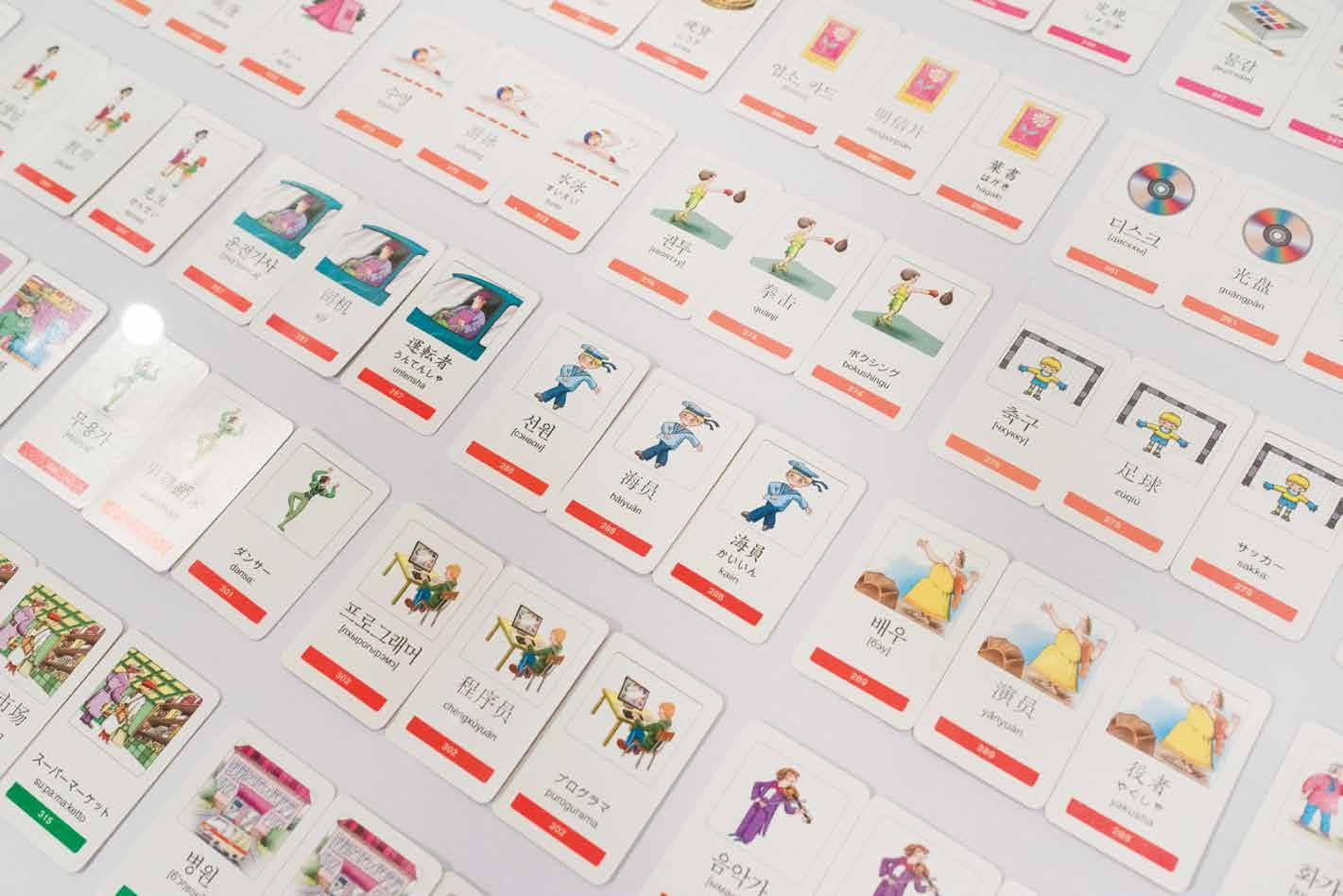
ation in a person’s life. Something similar happened with “test.” Most of the Korean images showed students taking a test, or images related to the big college entrance exam. But many of the Chinese images showed testing in a science laboratory, while some of the Japanese images showed a banana being given to a monkey. The word was the same, yet different images were chosen, a process determined by the native language translation of the given English word, or the proclivities and background of the individual researcher. So broad were the interpretations and understanding that one might think it a mistake to believe that anyone is truly understanding or communicating, even when the words they use are the same. And maybe that explains it. For Cartographies was also the section that viewers liked best. Standing before this map showing the hundreds of images made for 43 keywords, they read closely and offered their own interpretations. They also seemed to take a great interest in Asian Protocols : Fragments , Muntadas’ own assemblage from all the materials collected. It was an endless torrent of messages about Korea, China, and Japan that emerged from examining, as thought to compare, the materials and image maps created from everything to newspaper scraps and comparisons of representative Korean, Chinese, and Japanese dogs to hundreds of Russian-language flash cards for studying Korean, Chinese, and Japanese.
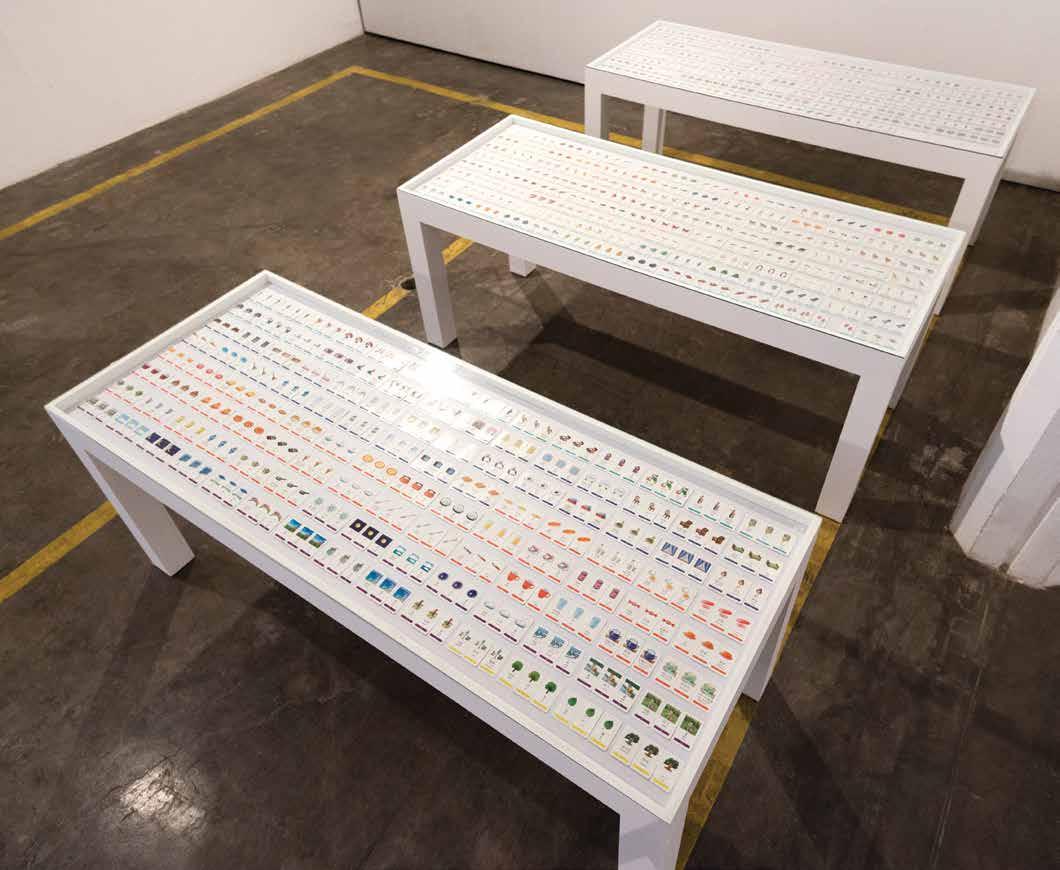
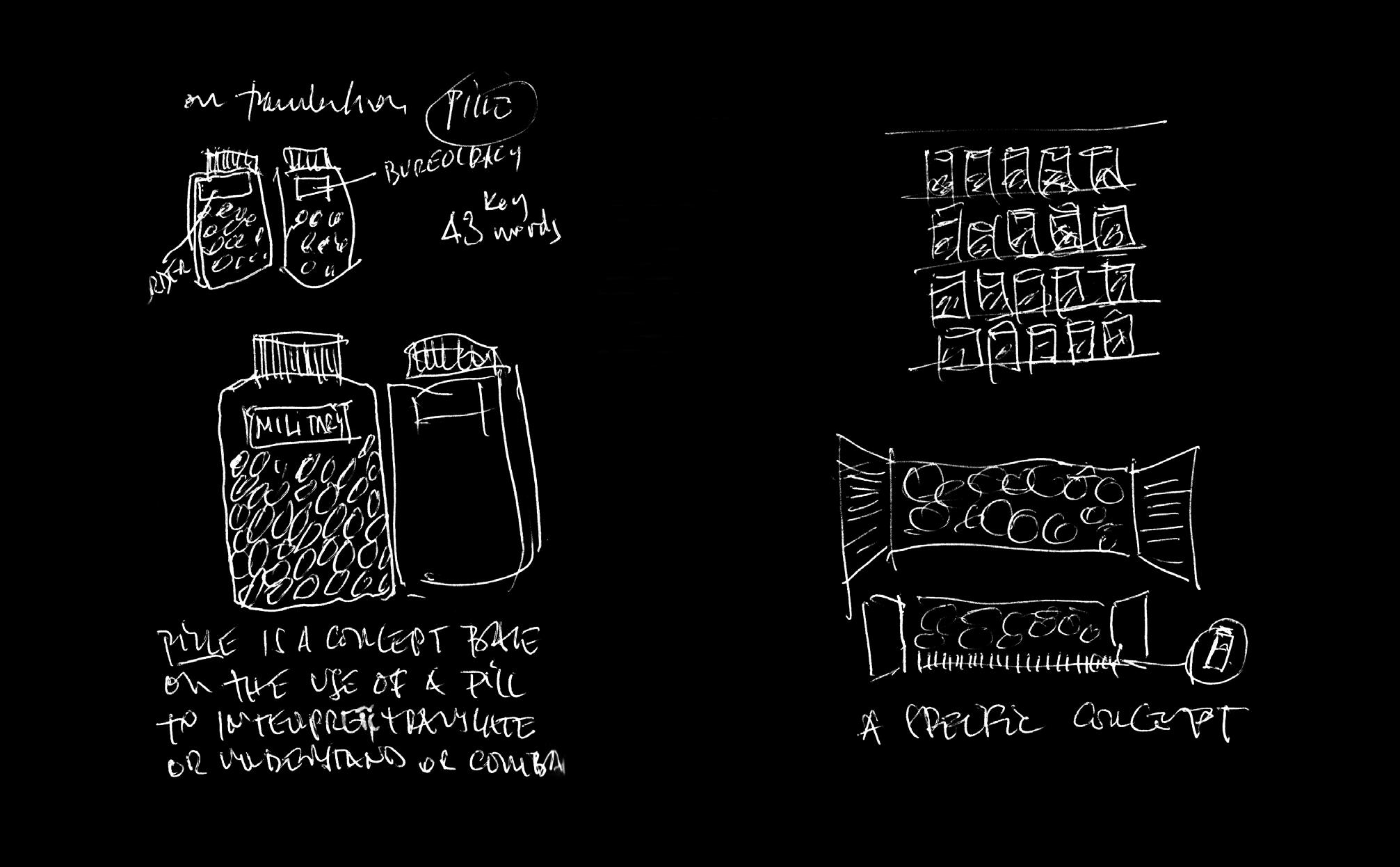
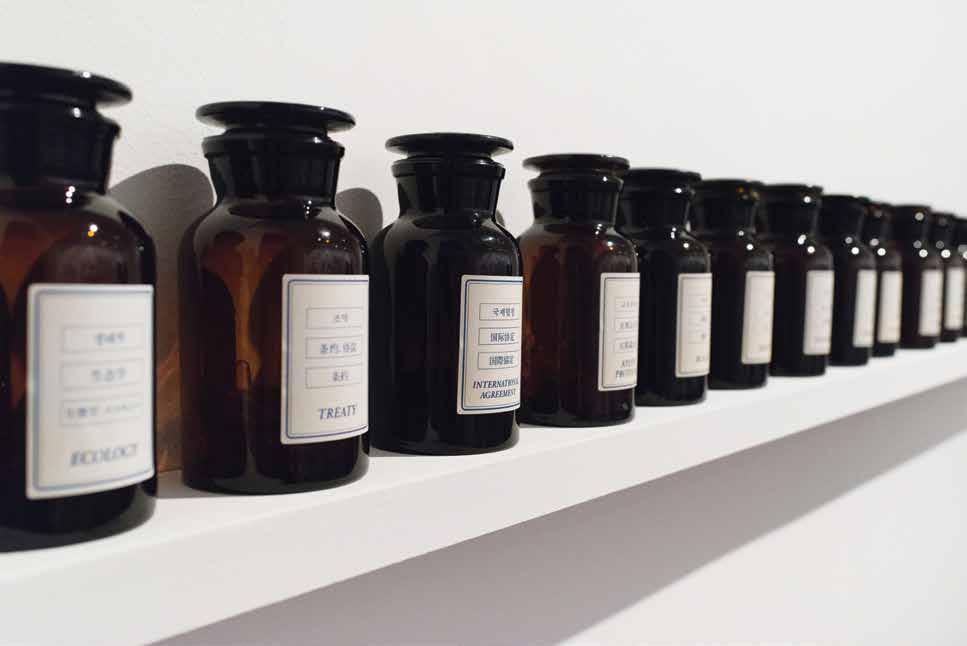
On Translation : Pille (2006–14) is the last section of this exhibition consisting of a truly innumerable array of information and data. In 2006, Muntadas had an idea to use pills for easily understanding of the complicated structure in his works, but it was not happen. After years, he can realize his idea in this exhibition. The 43 English words from the image map are printed, individually, on the labels of 43 bottles containing actual medicine; here, too, they are translated into Korean, Chinese, and Japanese. How nice it would be if there was a pill you could take to solve diplomatic problems or language questions, the way you take an aspirin when you have a headache. With its jokey approach, Pills brings a light touch to something that could easily have come across as ponderous or didactic.
The overall structure of the exhibition highlighted Muntadas’ images of Asia, sometimes up close, sometimes from afar, in a way that connects the six seemingly disparate sections into a single whole. In the process, all those questions that cluttered the blackboard, and the messages
contained in the answers we gave, seemed not merely to remain as text, but to enter and elude our grasp in the connecting sections. At the same time, an element of change was introduced so that none of the media overlapped: handwriting gave way to images gave way to research presentations, which gave way to object collections, and then images once again. There was also a density of content, an adjustment of emphasis so that one was never overwhelmed by the information; viewing the works was made to feel, as much as possible, like a voyage through the three countries. All of these journeys finally converged on Asian Protocol : Cartographies , guiding the viewer back to those questions they started with.
5. Once Again, from the Top : Asian Protocol — Korea, China and Japan
Muntadas : Asian Protocols was a chance to see Korea, China, and Japan, all in one place. There were elements of sharing history and culture, and it was a time to consider how these three geographically close countries appear today, what commonalities and differences they share. Of course, nothing has changed; we have gained no answer to speak of. But then, when have we ever gotten answers through art? Art has always been less about giving the right answers than about asking more complicated questions.
So it was for Muntadas : Asian Protocols . We are still the same countries – so near, yet so far – but now we have more questions to ask. More than any exhibition more it, it gave questions about how far the scope of the word “Asia” reaches; what it is about Korea, China, and Japan that creates difference; how they are similar, and how they are different. It made us call back, question, and ponder the things that slipped so casually through that carefully woven network of images from the 43 keywords, the suggestions that Muntadas presented on a big sign marked “protocol”. To be sure, seeing things “through” his eyes was a chance to be free, in some part, from the prejudices and biases that bind us. Nothing has changed. But something obviously has, when we think about it. There is the work together on the project, there is the period before and after seeing the work. I glimpsed what was missed before, and what new perspectives are possible. Maybe art can’t change the world, but here, perhaps, is a reason it is still valid.
조직하고 규정짓는다.
이 프로토콜들은 사적, 공적 행위에 지속적 영향을 미치는 일련의 규정을 만들어 낸다. 각종 의례, 관습, 규칙 등 프로토콜의 범위 안에는 다양한 행동과 절차에 대한 규정이 있다. 따라서 프로토콜은 어떤 식으로든 권력을 사용하고, 규정하고, 통제하고, 실시하고자 하는 속성을 지닌다. - 문타다스, 2006 -
아시아는 강력한 상상체(想像體 imaginaire)이다. 아시아의 문명은 그 대부분이 고대 중국에 기원
을 두고 있는 여러 문명이 융합된 결과이고, 중국은 서방 세계에서 잘 알려진 것처럼 보이지만
다른 한편 서양 사람들이 잘 이해하지 못하고 있는 나라이다. 이 아시아라는 상상체 속에는
음악, 춤, 건축, 음식, 일러스트레이션, 서예 등을 포함한 문화전통, 정치, 종교와 같은 각종 요
소들이 다양하게 녹아있다. 18세기 이후부터 오늘날까지 이 아시아는 호기심에 가득 찬 여행
Project Notes
Antoni Muntadas
Private and public protocols organize and define society and our lives. They generate a set of regulations that exercise a sustained influence over our private as well as over our public behavior. Rituals, conventions, rules — protocols cover a variety of procedures and, in one way or another, they attempt to use, define, control or exercise power. - Muntadas, 2006 -
자들에 의해 서술되고 “번역”되어왔다. 이 여행자들은, 그들의 낭만에 가득 찬 해석과 한계에 도
서구와는
1인이다. 이 프로젝트에서 나의 관심 사는 아시아 주요 3국인 중국, 한국, 일본 사이의 유사성과 차이를 살펴보는 것이다. 나는 지
역 전문가도 아니고, 3국의 언어 중 어느 한 언어도 구사하지 못한다. 내가 관심을 두고 있는
것은, 어쩌면 아시아에 대한 고정관념을 형성하는 일부로 이해 될 수도 있고 그렇지 않을 수도
있는 일정한 코드에 이 세 국가에서 발견되는 여러 이미지들을 연결시키고, 외부인으로서의
나의 시각을 반영하는 것이다.
고정관념은 진실, 반복, 현실을 일정 정도 반영하는가?
<아시안 프로토콜>이 시도하는 것은 이미지와 코드를 시각 경험의 일부로 취급하는 것이고,
이때 ‘더 많은 / 더 적은’ , ‘가까운 / 먼’ 등과 같은 상반된 접근 방식을 취해보는 것이다. 3국에
대한 스토리를 함께 공유하고, 각각의 스토리가 전개되는 궤도를 추적함으로써 우리는 일치
와 불일치의 순간들을 엿보게 된다. 각국의 역사는 이 이해와 갈등의 순간들을 보여준다. 회화
에서
Asia is a powerful imaginaire . The result of different civilizations, most of which are founded on that of ancient China, that are known yet not always understood by Western cultures. This imaginaire embraces all kinds of elements and cultural traditions (music, dance, architecture, food, illustrations, and calligraphy) , politics and religions. From the eighteenth century to date, this imaginaire has been narrated and ‘translated’ by fascinated travelers who have helped us shape an idea of remote civilizations through Orientalism and Exoticism, despite their romantic interpretations and limitations.
I am an outsider aware of these circumstances. I am curious about the similarities and differences between three of Asia’s main countries: China, South Korea and Japan. I am no specialist and I don’t speak any of the three languages, but I am interested in relating images to codes that may or may not be understood as forming part of the stereotypes, and in reflecting the point of view of the outsider.
Do stereotypes contain certain truths, repetitions and realities?
Asian Protocols is an attempt to deal with images and codes as part of visual experiences, with contrasting approaches: more versus less, near versus far, etc. By sharing stories about the three countries and tracing their different paths of development we get a glimpse of moments of agreement and of disagreement. The history of these countries shows these moments of understanding and conflict. How the cultural producers of the Western world (from painters to architects, from kitchens to gardens) have incorporated this imaginaire is revealed in the cultural products of the last two centuries. I myself am probably a product of these very circumstances, and I would like to learn and share these constructs through Asian Protocols
안토니 문타다스의 <아시안 프로토콜>에 대한 구상을 처음 접한 것은 그가 서울을 방문했던
2010년 봄의 일이다. 당시 문타다스는 미국 매사추세츠 공과 대학에서 가르쳐온 ‘퍼블릭 스
페이스에 관한 대화 (dialogues on public space)‘ 라는 수업의 일환으로 그의 학생들과 함께 서울
을 찾았다. 그는 학생들로 하여금 보스톤과 서울이라는 도시를 단순히 비교하기 보다는 두 도
시 사이의 관계에 초점을 둔 프로젝트를 발전시킴으로써 미국적인 맥락 혹은 서구의 제한적
도시를 이해하도록 했다. 그의 수업에서 무엇보다 강조한 것
것은
않다는 점이었다. 이러한 생각은
규정하고 통제해 온 ‘프로토콜 (protocol)’ 에 관한 연구로
경험하기 위해서는 ‘프로토콜’이라는 다소 생소한 단어의 의미
프로토콜이라는 개념을 통해 문타다스가 강조하고자 한 지점을 이해하는 것이 필요할 것이 다. 외래어를 한국어로 번역할 때, 외래어 단어의 개념에 상응하는 한글 단어가 없거나 그 뜻이
제한적인 경우 외래어를 음차하여 쓰는 경우가 있다. ‘버스’나 ‘컴퓨터’가 그러한 예로, ‘프로토
콜’ 또한 외래어를 음차하여 번역한 경우이다. 단, 버스나 컴퓨터와 같이 기술적으로 복잡한 사
물을 칭하는 고유명사를 음차하여 번역하는 경우 그 의미의 손실은 크지 않다. 이에 반해 프로
번역을 요청한다. 여기서 문타다스는 아시아인으로서
통해 발견된 서
울, 베이징, 도쿄의 퍼블릭 스페이스 속에서 사람들의 행동양식을 보여주는 문타다스의 비디오
작품 <번역에 관하여 : 바라보기> (2004), <번역에 관하여 : 듣기> (2005), <번역에 관하여 : 돌아나
가기> (2013) 가 포함되어 있다. 병치된 세 편의 비디오는 관객들로 하여금 사회적 문화적 규범
들이 형성한 우리의 행동양식에 내재된 프로토콜을 새롭게 발견하도록 한다. 또한, <공적 / 사
적 공간 [서울, 베이징, 도쿄]> (2011-2014) 는 도시계획과 건축적인 측면에서 세 도시의 퍼블릭 스페
이스에 접근한 연구 프로젝트로 우리의 생활 공간인 도시의 공적 / 사적 공간 속에 깊숙히 자라
잡고
것은 생각보다 쉽지 않은 일이다. 우리는 너무나 깊고 긴 역사와 전통, 그리고
가지고 있기 때문에 뭔가 너무 큰 덩치의 개념을 설명해야 하는 버거움을 느끼지 않을 수 없
기 때문이다. 중국과 일본 중에 어느 나라를 더 가깝게 느끼냐는 외부인들의 흔히 할 수 있는 질
문에 현명하게 대답하는 것도 쉽지 않다. 문타다스의 제안은 귀납적이다. 그는 ‘사회적 기억의
저장소(repository of social memories)’ 인 프로토콜이 텍스트, 이미지, 행동양식 안에 내재된 다양
한 양상들을 관찰함으로써 우리의 현실에 새롭게 접근해 볼 수 있을 것이라 말한다.2 문타다스
는 “예술이 세상을 그렇게 크게 바꿀 것이라고는 생각하지 않는다” 고도 이야기 한다. 다만 예
사람들을 이끌어 오는 일이라는 것이
1 Hans Dieter Huber, “Fixing the Facts, Protocols and Their Social Usage,” in Muntadas Protokolle (eds.) Hans Christ, Iris Dressler and Antoni Muntadas, (Artist)(Köln: Walther König, 2007), 250. 2 Huber, 260.
Process and Research
Joo Yun Lee
Antoni Muntadas’ Asian Protocols has evolved since his visit to Seoul in spring of 2010. That was when Muntadas brought his students to Seoul for on-site research as part of a class titled “Dialogues on Public Space,” which he was teaching at the Massachusetts Institute of Technology (MIT) . Muntadas encouraged his students to understand Seoul beyond the American context and limited Western perspective by developing their projects to focus on the relationship between Boston and Seoul rather than simply comparing the two cities. Muntadas’ belief underlying his pedagogy was that it is never appropriate to generalize any particular city or society. This belief motivated him to develop his own project by understanding Seoul ― in its complex social, political and diplomatic contexts from an outsider’s perspective and he embarked on collecting and sharing materials to reify a project. In this project, Muntadas wanted to approach Asia in a new way, away from the limited perspectives and fixed images shaped by the West. In Particular, he focused on the close but conflicting relationships among the three East Asian nations of Korea, China and Japan. Four years later, his plan was developed into a research project on the “protocols” in East Asia that have defined and controlled the three countries, and especially their capital cities of Seoul, Beijing, and Tokyo.
To fully experience the Muntadas : Asian Protocols exhibition in Seoul, viewers are asked to un-derstand the meaning of the somewhat unfamiliar word protocol and what Muntadas aims to address through his investigation of protocols in East Asia. When a foreign word is borrowed and introduced into Korean, it is often simply transliterated into Korean, especially when there is no corresponding Korean word or when an analogous Korean word does not convey the full meaning of the borrowed foreign word. Examples include beoseu (bus) and keompyuteo (computer) ; peurotokol for protocol is another case of such transliteration. However, little is lost in translation of foreign words that name technically complex objects, such as bus or computer, the term peurotokol in Korean is often used only with a limited meaning. That is, the word’s
diversity of meanings was eliminated in translation into Korean; thus, protocol in Korea is mainly used as a technical term indicating a set of rules and regulations governing the message exchange in telecommunications and computer networking. As Hans Dieter Huber illustrated in Muntadas-Protokolle , however, protocol has origins in Medieval Latin and Greek and has evolved to convey a complex array of meanings over long span of time. Protocol originally carried a neutral sense of recording by means of description and documentation and the recordings, as history accumulated, endowed the term with the meaning of truth , credibility , and authority . Accordingly, protocol has evolved to incorporate the meaning of authorized rules and hierarchies that govern the private and public communication within particular societies. Here, Muntadas emphasizes that protocol is generated and accumulated within a particular society by means of its “living activity and orientation.” Therefore, its “truth and authenticity is relative and in need of interpretation” in the context in which it was constituted and produced.1 Muntadas’ Asian Protocols , in this sense, has conceptually and methodologically specified through “translation” what is construed as one of the most significant themes and keywords penetrating his works.
Asian Protocols requires a more complex process of translation, going beyond translation from one language into another. Specifically, translation begins with the process of finding the protocols inscribed in languages, images, human behaviors, and public spaces in the cities of Seoul, Beijing, and Tokyo that operate as visible and invisible structures and controls. Thereupon, the protocols that are identified through extensive research go through another level of translation in consideration of the relationships among Korea, China, and Japan. Here, Muntadas underscores that Asian Protocols does not intend to deliver a single authoritative translation about the complex relationships among Korea, China and Japan either by the artist himself or any project researchers. In other words, Asian Protocols attempts to bring forth a new understanding of Asia one that is distant from the distorted Orientalism or the fixed superficial image of Asia ― by inviting a variety of people to take part in an open process of translation. Thus, visitors to the exhibition are asked to become participants rather than viewers and join the process of translation of the the complex political, cultural, and social
contexts and discourses in the region of East Asia. In this sense, the exhibition becomes the space in which multiple layers of translation take place : translation of the different studies of protocols that consist of the exhibition, translation of protocols in view of the complex relations among the three cities, and translations of Asian protocols by individual viewers.
Asian Protocols further pursues the translation of protocols in East Asia not by glimpsing its images but by approaching its realities. In this respect, Muntadas attempts to encompass a point of juncture, where the perspectives of Asians who live in this region and have primary experience with its history, culture, and traditions intersect with those of outsiders like the artist himself who must observe the realities in Asia from outside. To achieve this, the exhibition organically incorporates the selected materials and archives of the long-term research and collaboration that are Muntadas’ overarching methodology in all of entire works. First, viewers are confronted with the enormous wallpaper, titled Asian Protocols : Cartographies (2014) that contains the cartography of keywords and the associated images from which the cultural, political and diplomatic relations among Korea, China and Japan are observed. This keywords mapping serves as the conceptual frame from which Muntadas further developed this Asian Protocols project and the sets of image materials related to each key word were found and selected in collaboration with researchers from Korea, China and Japan. Blackboard Dialogue : Redefining Asian Protocols (2014) spreads out the extracts of the dialogues between Muntadas and the experts in sociopoli-tics about both different and analogous perception of their history, culture, and politics by Koreans, Chinese and Japanese. The exhibition also includes Muntadas’ video works, On Translation : Go Round (2013) , On Translation: Listening (2005) , and On Translation : On View (2004) , which offer illustrations of behavioral patterns in the public spaces of Seoul, Beijing, and Tokyo that are hardly discernible without an outsider’s observation. The juxtaposed video works attempt to make people discover the protocols internalized in their daily lives shaped by social and cultural norms. Furthermore, the inclusion of Public / Private Space [Seoul, Beijing, Tokyo], (20112014) , a research project on public spaces developed by experts in urban planning and architecture, demonstrates the deeply rooted protocols in
public / private spaces in our urban environment and the ways in which they organize and control our way of living. Here, Muntadas asserts that including subjective perspectives of Muntadas himself and the individual experts never allow the aforementioned projects to instill the limited expert viewpoints on the protocols in the East Asia. Rather, the presented materials resulting from extensive research are left wide open for viewers who have different perspectives, different knowledge and different experiences to offer innumerable new translations and networks of dialogues.
Muntadas has affirmed that the Seoul exhibition is not the end of the Asian Protocols Project but rather its point of departure. Whenever asked to say something about Korea or Asia, we, as Koreans or Asians, are often at a loss for words since our histories, traditions, and philosophies are too longstanding and profound to provide a simple answer to such questions. It is also not easy for us to give sensible answers to an outsider’s question, often driven by mere curiosity, asking whether we feel closer to China or Japan. What Muntadas suggests is an inductive way of thinking : By observing protocols as a “repository of social memory” inscribed in texts, images, and the behaviors inherent in our daily lives, we could gain a new perspective on our realities. 2 Muntadas has also said that art may not change the world in any great way, but it will contribute to drawing people into discussions of changes. In this sense, the Asian Protocols project is an opportunity for many people whether insiders or outsiders of Asia to join the process of developing an open translation and a new understanding of Asia.
Joo Yun Lee
Ph.D. candidate, State University of New York at Stony Brook; Independent Curator
Asian Protocols : Cartographies
Asian Protocols
Asian Protocols_key words mapping (02. 14. 2014)
안토니 문타다스와의 첫 인연은 2년 전 작가의 아카이브 작업을 맡게 되면서부터였다. 최근
나는 작가에게 그의 새로운 프로젝트 <아시안 프로토콜 Asian Protocols>에 참여해 달라는
제안을 받았다. 마침 이번 여름 중국으로의 여행을 계획하고 있었기에 해당 프로젝트에 대해
관심을 가지게 되었고 곧 문타다스로부터 관련 내용을 공유 받을 수 있었다. 주제에 대해 문타
다스와 다양한 논의를 나눴으며, 관료제, 관습, 국경, 군대, 건강 등과 같은 개념을 통해 서구에
서 생산해 낸 스테레오타입(Stereotype)이라는 연구 목표를 잡았다.
이 연구를 위해 작가가 제시한 용어들과 연관된 시각 이미지를 수집함에
교류 플랫폼인
(La Sagrada Familia)도서관의 중국어과에 대한 정보를 접했고,
학생인 예후아(Yehua)를 만날 수 있었다. 지난 3년간 바르셀로나에서 통역을 공부해온 그녀는 문타다스의 프로젝트에 큰 관심을 보였고, 그동안 겪은 언어적 난관, 특히 관용적인 표
대한 어려움을 해소하는데 큰 도움을 주었다. 그녀와의 공동작업은 순조롭게 진행되었
다. 일단 내가 해당키워드에 대한 중국의 이미지를 찾으면 그녀는 그 이미지와 용어가 중국의
보편적인 문화적 인식과 일치하는지 검토해 주었다. 이 과정에서 또 다른 의문점이 발생했다.
하나의 키워드에 대해 어떤 용어로 번역을 해야 하는가, 번역한 의미 중 어떠한 의미가 정확한 것인가에 대한 것이었다. 우리는 이를 향한 의문을 하나씩 풀어가며 하나의 키워드에 대한 중
국어에
Asian Protocols : Research Notes
Cristina Sanahuja I started to work with Muntadas two years ago when I was asked to carry out his files. Recently, he asked me to participate in his new project : Asian Protocols . I was very much drawn to his proposal since I had plans to travel to China this summer. Our goal was to work on stereotypes created by westerners through concepts such as: bureaucracy, custom, border, military, health, etc. For that purpose, I had to find images that had a connection with the word list he gave me. The first challenge that I found was the idiomatic barrier since it was difficult to find images in Chinese. Which Chinese should I use? Should I use the simple version, the mandarin or another specific one? Where could I find other images that were not only from European sources? The access to Chinese websites was not easy.
Muntadas recommended me to contact someone in China who could help me in the search. Through Casa Asia, I signed up to the Sagrada Familia Library classroom in China looking for a way to find some possible collaboration. It was there where I met Yehua, from Fujian, a region located in the Southeast Coast of China. She had been studying Translation in Barcelona for three years. Quickly, she became very interested in the project and helped me solve the language problems.
At the beginning, I looked for images about China and she checked the image and the word matched to its cultural perception. However, new doubts came up : Which translation should we use? Which meaning is the correct one? In some instances, we looked for the closest meaning possible for the same word in order to show its linguistic richness. On the other ones, other words such as “military” or “politic” did not allow as many variations.
As time went by, our meetings became very productive. Yehua explained me about her customs and the differences and similarities between her culture and mine. She suggested me to look on some Chinese websites with good images and she helped me to translate
what these images were representing. To complete the project work, I finished an intensive course on Chinese film studies. I thought that looking to some moving images would help me answer some questions I had about Chinese culture. Yehua was also happy to send me personal images of her. I thought these were more specific and interesting compared to the ones we found in books and websites.
At the end of the research, my personal knowledge about the Chinese community had changed a great deal. During the months that this study took place, I built a new stereotype structure different from the one I had initially. This new structure was much more open and straightforward which helped me observe how each culture has different levels of interpretation. I discovered that the Chinese people have a great sense of humour, are very polite and attentive, have endless traditions, care for their families and enjoy interacting with others tremendously. It turned out to be very enriching to find meeting points between the two cultures seemingly so diverse and geographically different. I remember saying to Yeahua: “Chinese people are a little bit Mediterranean”, and she did not quite understand me but replied: “it is possible, except at work”.
내가 크리스티나를 처음 만난 것은 바르셀로나의 까사 아시아(Casa Asia)에서 진행한 언어 교
환 프로그램을 통해서였다. 그녀는 어떤 아트 프로젝트에 참가 중인 연구자라고 자신을 소개
했다. 그와 관련하여 나에게 중국의 사찰 사진들을 보여주며 이 이미지가 중국의 ‘의례’ 개념에
부합하는지에 대한 확인을 부탁했다. 이 작업을 마친 뒤 그녀는 지금 진행 중인 이 연구에
모른 채 일단 합류하게 되었다. 이때의 내 생각
상황이 빈번하게 일어났다. 진행 중에 크리스티나는 내가
휴가철에 중국에서 촬영한 사진도 참고해 보자는 제안을 했다. 나는 그 사진 중에서 선정된 사
진들에 대한 역사를 포함한 여러 가지 내용을 설명하는 것으로 그녀의 이해를 도왔다. 또한 그
녀가 중국 공동체와 문화에 대해 더 많은 경험을 할 수 있도록 바르셀로나에서 내 중국친구들
이 주최한 여러 활동들에 초대하였다. 하지만 이러한 노력에도 불구하고 영어를 해석하는 문
쉽사리 해결되지 않았다. 결국 하나의 용어에 대한 해석은 매우 주관적일 수 있다는 것을
수 있었다.
Asian Protocols : Research Notes
Chen Yehua
I met Cristina in a language exchange activity I took during my internship program at Casa Asia, in Barcelona. She introduced herself to me as a researcher of an art project and showed me some pictures of temples in China to find out if these images matched the concepts of those we had in mind . At the end, she suggested me to work together in the research. I accepted the offer without having a thorough understanding of the subject thinking I should just see the pictures and give an answer, though at that time I did not know who Antoni Muntadas was.
We began to meet each other every two or three weeks in order to comment on the images selected by Cristina. The research was not as easy as I had imagined and it rather became a “mental torture” that constantly made us doubt about general concept of different words with wich we deal in our daily life. Shortly afterwards, after starting our research we discovered that there was the issue of our different interpretations of words. These words were synonyms in English. It was almost inevitable for me to interpret these words with a Chinese mind while Cristina and I were discussing about them in Spanish language. That meant we were working in a maze of three languages with no way out. Most of the time, it took us a long time to reach to a common view between different interpretations of one word. Cristina suggested me to look for pictures and even share some of my own photos from my holidays in China. I could explain the content of the image and the story behind so that Cristina could understand the reason for my choices; I also invited her to some activities organized by my Chinese friends in Barcelona for her to better understand the Chinese community and culture. But the problem was the same still. The interpretation of a word can be very personal.
During the conversations I had with Cristina, some questions came to my mind: do we form concepts through the use of words or vice versa?
If we say that we learn a native language through our everyday life and we learn a foreign language by the definitions in the dictionary, what
happens with multilingual young-speakers who live abroad? Do we have different conceptions about the same thing? Another interesting phenomenon was when I saw the images collected by Cristina who were not from China but from Korea or Japan, or other Asian countries. It reminded me of when people identified me as Japanese or Korean; the same goes for the cultural elements. There are some Chinese people who take advantage of these similarities among Asian cultures for business purposes but others avoid it. Has cultural differences lost its relevance in the age of globalization or just the opposite? Is it true that country stereotypes are increasingly promoted, so we do not know other aspects of a foreign culture? Although we end up not getting conclusive answers to the above questions, the research process had been very interesting and rewarding as it was a journey of discovery and reflection of my own language and culture.








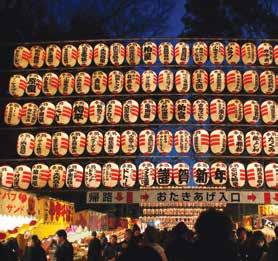
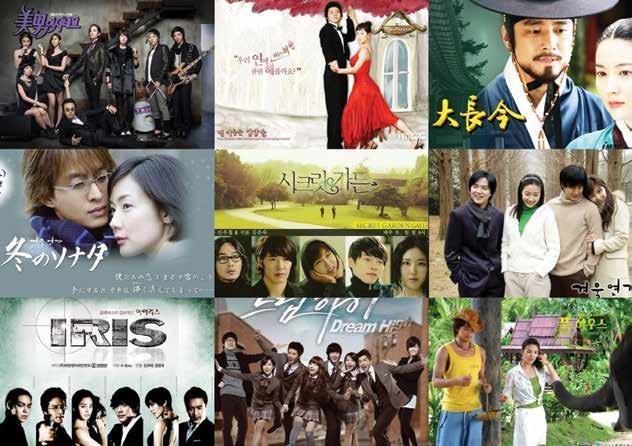
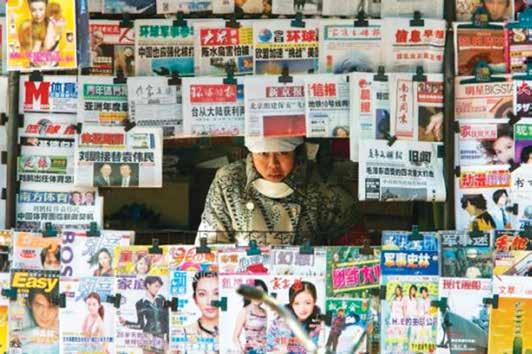
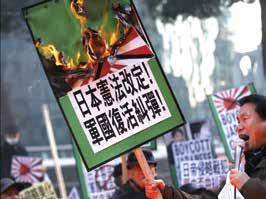
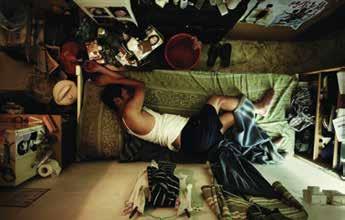
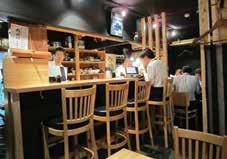
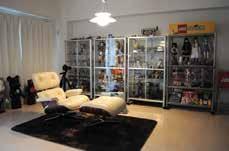
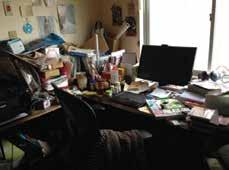
Asian Protocols : Fragments
Asian Protocols
On Translation : Pille
Asian Protocols
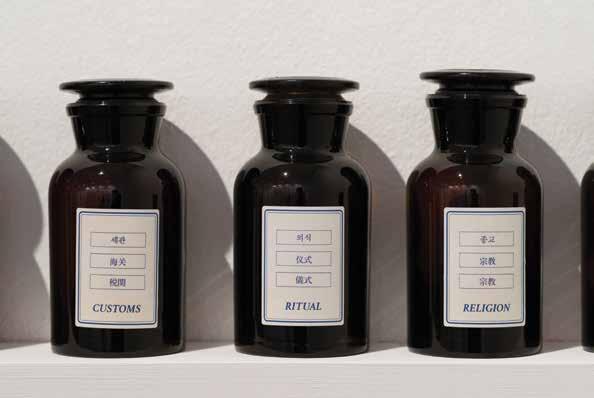
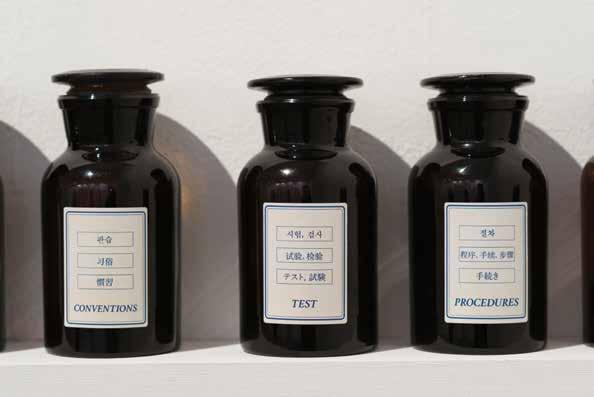

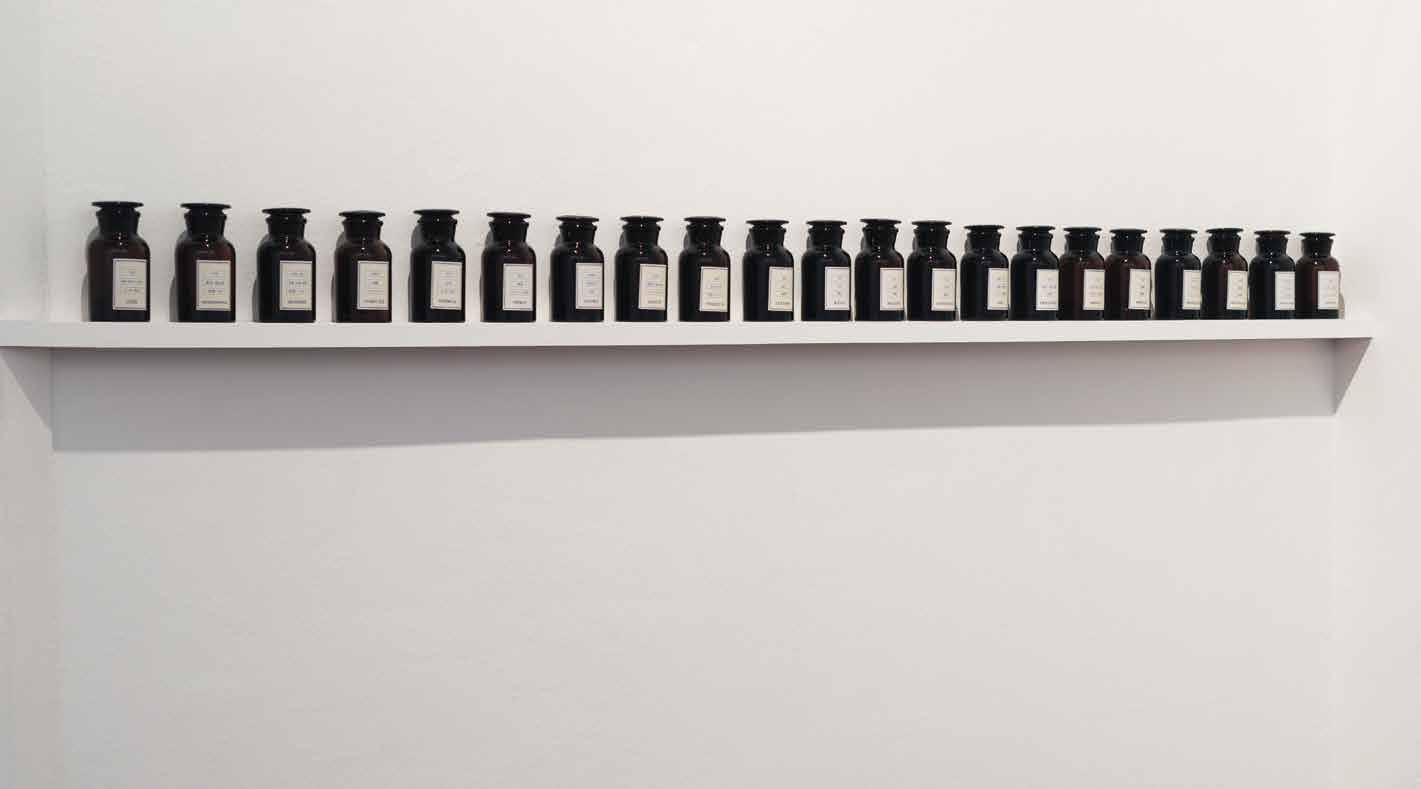
, 희망, 치유, 사변, 순응, 복잡성
끝난다. 침대에서 잠을 깨서, 네가 믿고 싶은 것이 무엇이든 그것을 믿
으면 된다. 빨간 알약을 먹는다면, 너는 원더랜드 Wonderland 에 남게 된다. 그
깊숙히
자신의 침대 위에서 악몽으로부터 깨어
날 수 있게 해준다는 약속이 훨씬 더 실재적인 것 같다. 알다시피 매트릭스에서 실재에 대한
약속은 정확하게 반대인 것으로 드러난다. 허구 소설이긴 하지만, 비슷하게 그로테스크한 현
실이 담긴 < The Futurological Congress> 2 는 제약 산업이 가져올 수 있는 가능성들을 유
희적으로 다룬다. 이 소설에서 알약은 개인적 기호에 따라 복용하는 고체의 물질로만 존재하
지 않는다. 마시는 물에 용해되거나, 특별한 수증기 폭탄에 의해 공기 중으로 분사된다. 처음에
는 향정신성 물질을 최소량 복용하는 것이 전체 사회 질서가 정치, (군사적) 전쟁, 외교, 그리고
종교를 발전킬
4.
5.
3.
2.
Beauty Radiating from Within.
On Translation : The Pill, 2014
Hans D. Christ
A Poetic Joke 1
Keywords by Muntadas related to On Translation : The Pill : accomplice, hope, healing, speculation, adaptation, complexity
This is your last chance. After this, there is no turning back. You take the blue pill—the story ends, you wake up in your bed and believe whatever you want to believe. You take the red pill—you stay in Wonderland and I show you how deep the rabbit-hole goes. Dialogue between Morpheus and Neo in The Matrix, 1999
As this dialogue from the classic science-fiction film The Matrix suggests, the question of reality can only be answered in a downright contradictory way. Indeed, the promise of waking up from a bad dream in one’s own bed amid familiar surroundings seems considerably more realistic than the promise of finding oneself in a fairy-tale-like environment à la Alice in Wonderland. As we know, The Matrix inverts precisely this promise of staying in reality. In a similarly fictitious way, yet invested in reality as the grotesque, The Futurological Congress 2 toys with the opportunities presented by the pharmaceutical industry. Here pills not only appear as solid objects being consumed according to personal tastes; they are also dematerialized in drinking water or are dispersed in the air using special vaporizer bombs. The minimal dosage of psychotropic substances first provides a foundation upon which an entire social order may develop its politics, (military) warfare, diplomacy, and religion. In Stanislaw Lem’s novel, as in “real life” the proliferation of pharmaceutical agents involves forms of biopolitical penetration, extending far beyond the production of illusions to instead offer an essentially consumable promise that works from within when ingested orally. Here it is important to differentiate between the three paths to attaining a sense of healing: being subject to mass dissemination (drink-
ing water, food chain, etc.) , prescribed by the medical system, or voluntarily and urgently pursuing the phantasma of “ psychemical ” 3 self-optimization. Only the latter two reflect the electability of “ psyvilization ” 4 which for instance gives religious reasoning for this, both democratically and through the act of symbolically consuming the body of Christ. As with any good placebo, here we are dealing with consumers’ complicity with effect and, essentially, with the dependence on a deficit which must be abrogated through the act of consumption. The latter case presupposes active participation, conscious decision, even when the phantasmagoria of the psychotropic substances produces an excess of “spirit and fantasies” and when it becomes necessary to ingest “the respective means of purification.” 5 It is this combination of “private decision-making” and “public standardization” that establishes a subject which is imagined beyond ownership and class affiliation as a freely floating part of collective consumption that is allowed everything without any control over what these concessions actually involve. It is a fully disempowered subject reduced to certain paths of action, from whom no revolts are prone to arise.
Yet the title On Translation : The Pill alludes to yet another motif. The act of translation signifies the option of an antidote. It implies that possibility of beating a dominant system at its own game and of using a poetic joke to reverse the approaches to depicting power.
1 Since Iris Dressler and realized the 2003 Muntadas exhibition On Translation : Das Museum at the Museum am Ostwall in Dortmund, hope has been simmering that there could be a pill—a psychotropic pharmazeutical substance—that could help decipher the complexity of Antoni Muntadas’s artistic work. Now, in the scope of the exhibition Muntadas Asian Protocols, an initial prototype has been realized. A good joke poeticizes its subject. It introduces something to the world that we may immediately identify, but whose relations to other things had remained unknown to us.
2 Stanislaw Lem, The Futurological Congress From the Memoirs of Ijon Tichy trans. Michael Kandel (New York Continuum, 1974). Originally published as: Kongres futurogczny (Kraków, 1971). Quotations after Stanislaw Lem, Der Futurologische Kongress, Aus Ijon Tichys Erinnerungen, Suhrkamp, Frankfurt a. M., 2009
3 Ibid., p.66
4 Ibid., p.66
5 Ibid., p.66
Three Projections
번역에 관하여 : 돌아나가기, 2013
On Translation : Go Round, 2013
번역에 관하여 : 듣기, 2005
On Translation : Listening, 2005
번역에 관하여 : 바라보기, 2004
On Translation : On View, 2004
Asian Protocols
크리스토퍼 필립스
공간, 장소, 상황에 관한 많은 작품들은 일상의 공적 장소를 환기시킨다. 그 곳은 동일한 글로벌
기업에 의해 디자인된 것처럼 보이는 교체 가능한 정체 불명의 공간으로 대부분의 현대적 삶의
배경을 만들어준다. 비디오 설치작품 <번역에 관하여 : 바라보기 >(2004) 에서는 큰 열린 공간과
눈에 띄는 커다란 유리 창문이 보여지는데, 검은 프레임으로 나누어져 있어 격자와 같은 효과를
만든다. 우리는 이 창문 앞에 서 있는 사람들을 본다. 그들은 우리에게는 보이지 않는 어떤 풍경 을 응시하고 있다. 다른 행인들은 앞쪽에서 지나다닌다. 창문을 통해 빛이 쏟아지고 있기 때문
에 이 형상 모두는 익명의
서로 닮아있다. 그들의 의상, 헤어스타일 그리고 바디 랭
비디오 설치작업
:
>(2005) 도 동일한 수수께끼 (정체불명 enigmatic)를 보여준다. 여기서 문타다스는 우리가 볼 수 없는 것에서 우리가 들을 수
없는 것으로 주의를 전환시킨다. 영상은 우리에게 또 다른 일반적인 모더니스트의 공간을 보
여주는데, 이번에는 내부 뜰을 내려다보는 밝게 비추어진 발코니이다. 우리는 대학생 나이 정
도의 아시아 남성과 여성이 주위를 서성이는 것을 본다. 아마도 그들은 수업 사이의 잠깐 쉬는
시간에 이야기를 하고 있는 중일 것이다. 대다수는 난간 주변에 서서 휴대전화 통화에 열중하
고 있다. 휴대전화 기술의 발전 덕분에 이 공적 공간에는 먼 거리에 있는 친구와의 사적 대화
를 하고 있는 독립된 개인으로 가득 차있다. 그러나 그들 주변의 사람들의 존재는 완전히 의식
Raymond Bellour, “Looking, Listening,” in Muntadas, On Translation: Giardini, catalogue of the Spanish Pavilion,
Venice Biennale, 2005, pp.359-381.
Transitory Spaces
Christopher Phillips
Many of the works in Spaces, Sites, and Situations evoke the everyday public places--interchangeable, unidentifiable, seemingly designed by the same global firms--that provide the settings for much of contemporary life. The video installation On Translation : On View (2004) presents us with a large, open space, notable for the large glass windows that are divided by black frames so as to create a grid-like effect. We see people standing in front of these windows and gazing out onto a vista that remains hidden from us. Other passersby walk to and fro in the foreground. Because of the light pouring in through the windows, all of these figures resemble anonymous silhouettes. Their clothing, hairstyles, and body language hint that many of them are Asian, and that the scene may be somewhere in the Far East. But the setting is never revealed. It could be any one of a number of familiar locations that are designed to accommodate constantly moving crowds of people: an airport, a train station, a museum, a shopping mall.
Muntadas never discloses the mysterious sight that so captivates the passerby in On Translation : On View . A companion piece, the video installation On Translation : Listening (2005) , proves equally enigmatic. Here Muntadas shifts our attention from what cannot be seen to what cannot be heard. The video shows us another generic modernist space, this time a wide, brightly lit balcony overlooking an interior courtyard. We see, milling about, what appear to be college-age Asian men and women milling about. Perhaps they are taking a short break between classes. Many of them pause near a railing and talk intently into their mobile phones. We cannot hear their voices nor follow their conversations. Thanks to the advent of mobile phone technology, this public space is filled with isolated individuals having private conversations with distant friends, yet completely oblivious to the presence of the people around them. For Muntadas, this is just one of the paradoxes of the new media landscape that we inhabit today. 1
1 Cinema critic Raymond Bellour has described On Translation: On View and On Translation Listening as intertwined works dealing the two key components of the audiovisual media work sight and sound. In each of these works, Muntadas highlights one of these components by making it inaccessible to us, provoking a never-satisfied curiosity. See Raymond Bellour, “Looking, Listening,” in Muntadas, On Translation: Giardini, catalogue of the Spanish Pavilion, 51st Venice Biennale, 2005, pp. 359-381.







On Translation
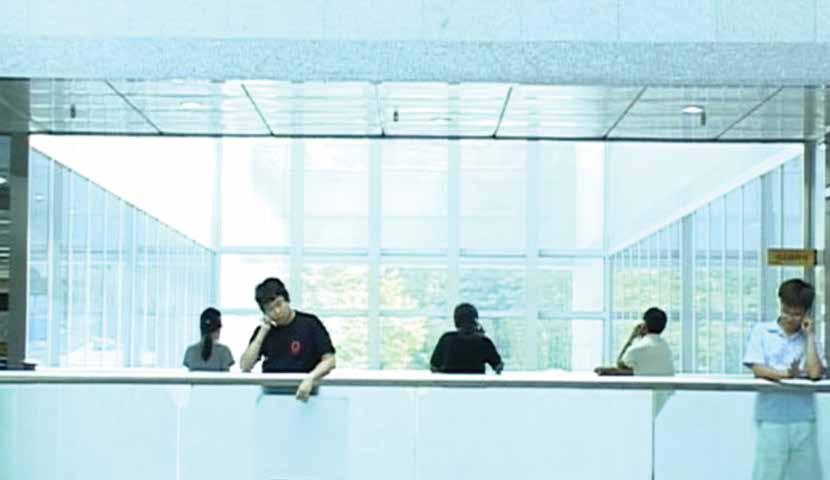








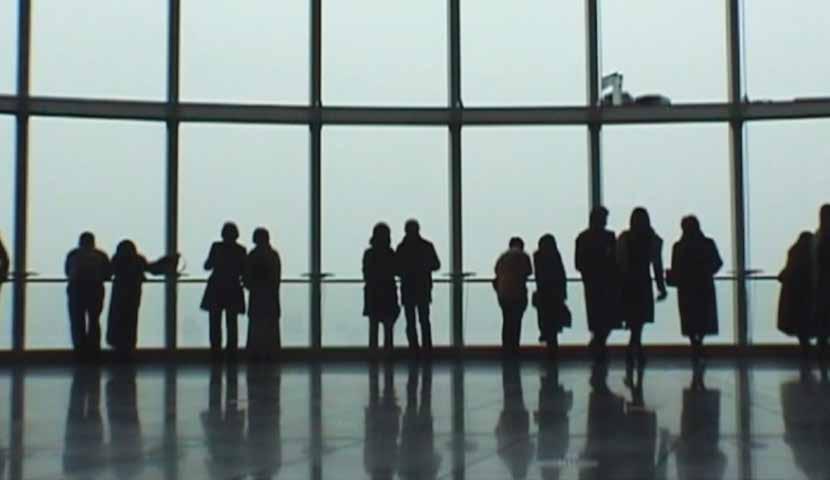







On Translation : On View,
/
Public / Private Space [ Seoul, Beijing, Tokyo ]
Asian Protocols
가볍게 상정했었다. 그것은 우리 주변의 공적 영역에서 발생하는 크고 작은 사건 들을
가능한 흥미로운
공간의 사용을 관찰해온 연구자의 시각에서,
왜 필요한가?
질문은 과연 공적 공간을 ‘공공재’와 같은 것으로 간주할 수 있을까
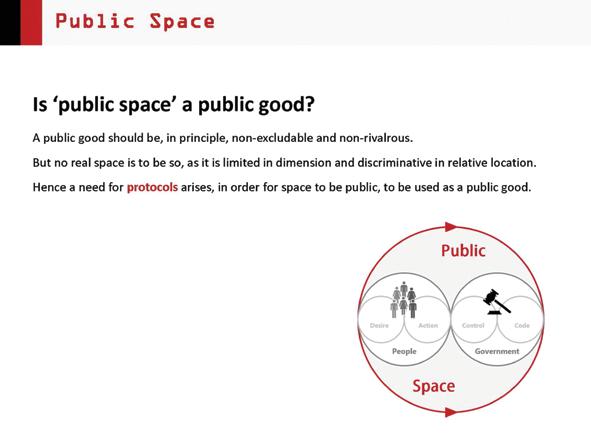
라는 질문과도 관련이 있다. 공공재는 ‘비배제적(non-excludable)’이고 ‘비경합적(non-rivalrous)’인
특성을 갖는 재화로 정의된다. 즉, 누구에게나 그 사용이 허락되며 아무리 많은 사람이 사용해
도 부족함이 없다는 의미이다. 그렇다면 공간, 특히 물리적 공간은 공공재가 될 수가 없다는 점
이 분명해 진다. 물리적 공간은 그 규모에 있어서 제한적일 수 밖에 없으며, 그 위치에 따라 상
대적 가치가 달라질 수 밖에 없는 구체성을 갖기 때문이다. 따라서 공간을 ‘공적(公的)’으로 사용 하기 위해서는 선별과 가치 평가를 위한 규칙과 원리, 즉 ‘프로토콜’이 필요하게 된다. 우리는
데, 아무도 걷지 않는 보행 전용도로, 아이들이
등으로 예시될 수 있는 현상이었다. 개인의 욕망이
개입하여 그 욕망을 억누르고자 한다. 하지만 한국에서
는데, 왜냐하면 그러한 비일관적인 관용의 격차를
Space Research Group
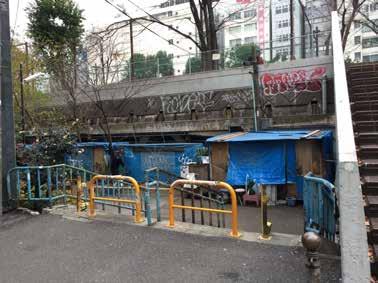
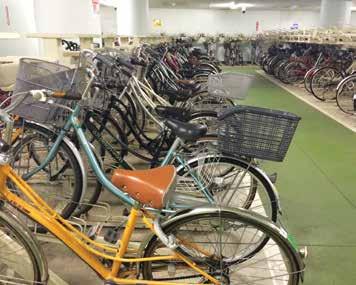
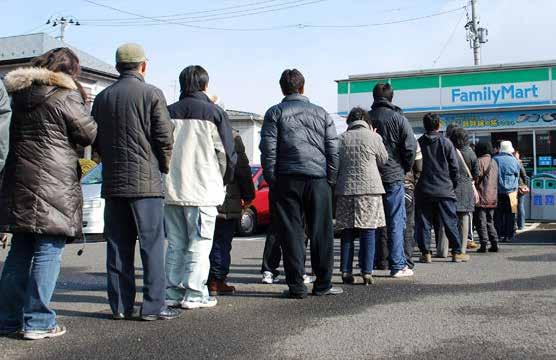
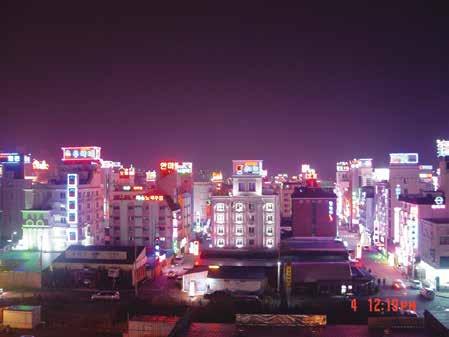
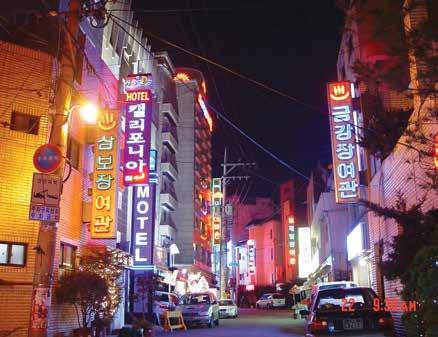
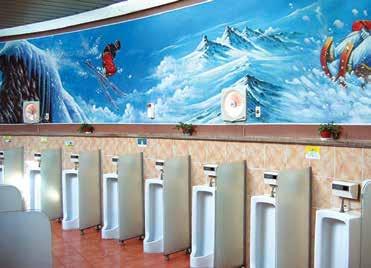
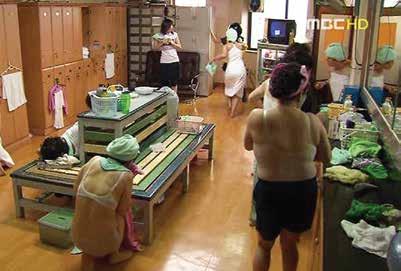
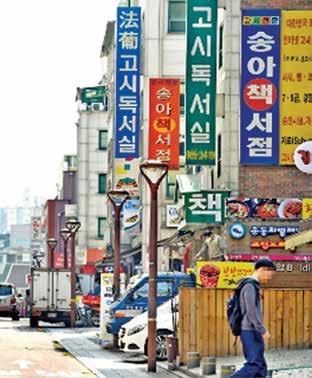
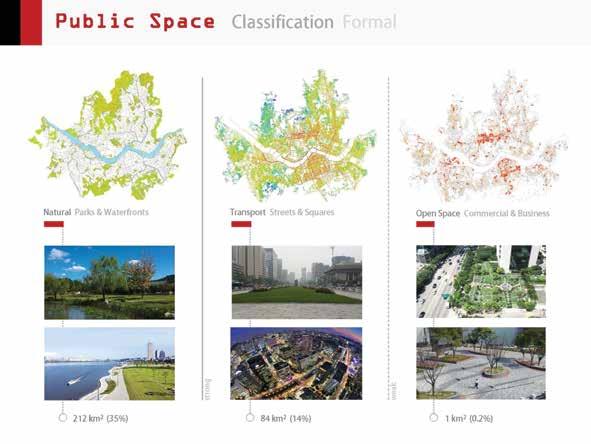
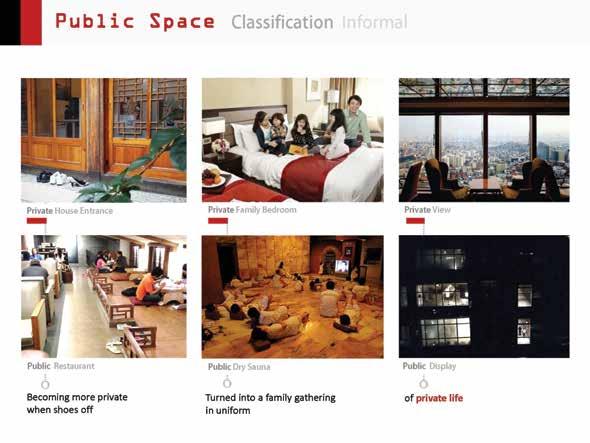
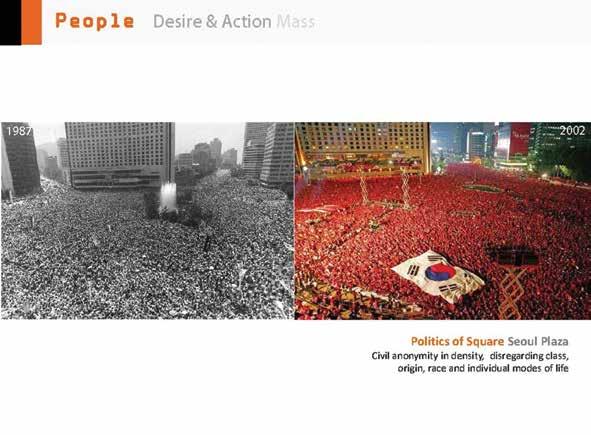
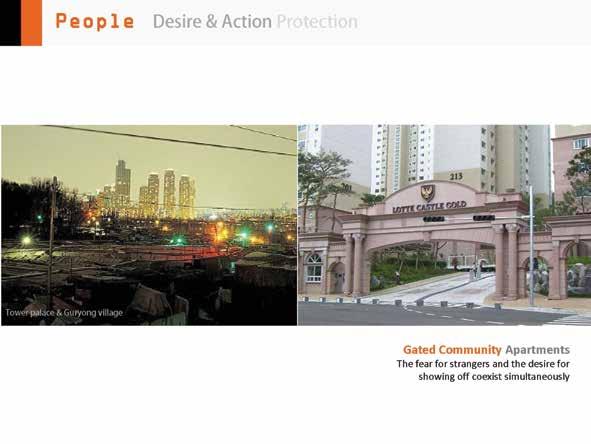
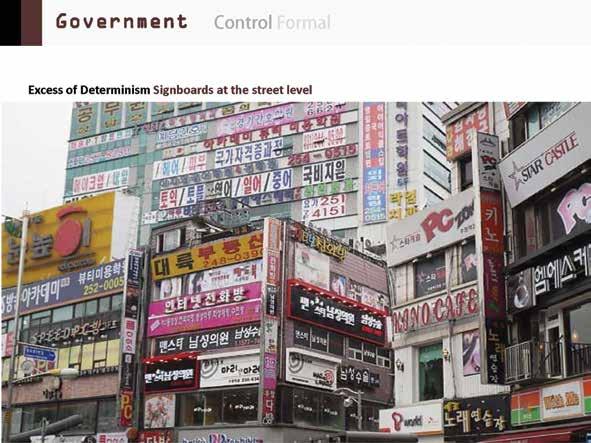
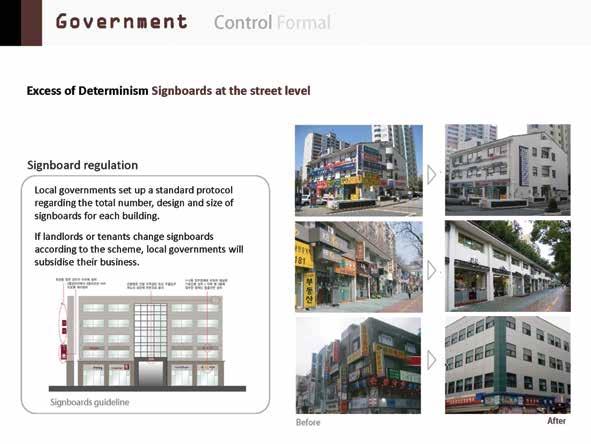
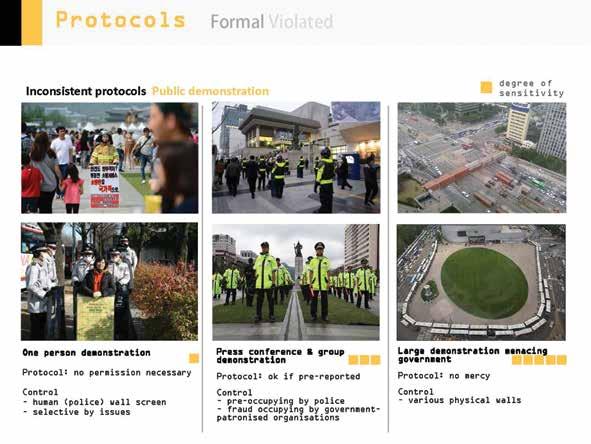
When we were first invited to participate, together with other Chinese and Japanese researchers, in a public space project for the exhibition “Muntadas : Asian Protocols”, we presumed our role to be a tourist guide for Korean public spaces. That would be, as it were, to introduce to our neighbours a variety of examples typifying the Korean public domain in a most interesting way. We were not concerned at all with defining what Korean public space is. Yet, as Koreans who live in Korea and also as researchers who have observed how people use public spaces more consciously than laymen, we expected at least our work on Korean public spaces could bring some unexpected values when they were juxtaposed with those on Chinese and Japanese public spaces. Spectacles and crowd in Gwanghwamoon Square, privately funded public open spaces around building forests, flashy signposts filling the streetscape of commercial areas, spontaneous or institutionalised community building movements, public lounges in Jjimjilbang (Korean dry sauna), public restaurants where shoes are to be taken off, and so on. Having started collecting those cases, however, we soon realised ourselves to be overwhelmed by the sheer quantity, diversity and even heterogeneity of materials by which they could be presented. We needed some kind of ‘protocols’ for evaluation and discrimination.
We saw at the same time that the same necessity operates for ‘public spaces’ themselves. Why are the protocols of public spaces necessary? This question is also related to a different question of whether public space can indeed be regarded as an equivalent of ‘public goods.’ Public goods have the characteristic of being ‘non-excludable’ and ‘non-rivalrous’ in use. That is to say, they are accessible to anybody, but never exhausted no matter how many people use them simultaneously. It becomes then clear that public spaces can never be a public good, for they, being real, are limited in their dimension and discriminative in their relative locations. Hence a need for protocols arises to assure space can indeed be public, and can be used as a public good. We have
of course become interested in particular processes in which those protocols are produced for public space in Korean cities, but also thought that they should be sought for within an universal framework to some degree, if for the purpose of comparing and translating them across other Asian cities. It was at this moment that we began to grasp, though vaguely, the intention and direction which Muntadas had set up for this exhibition.
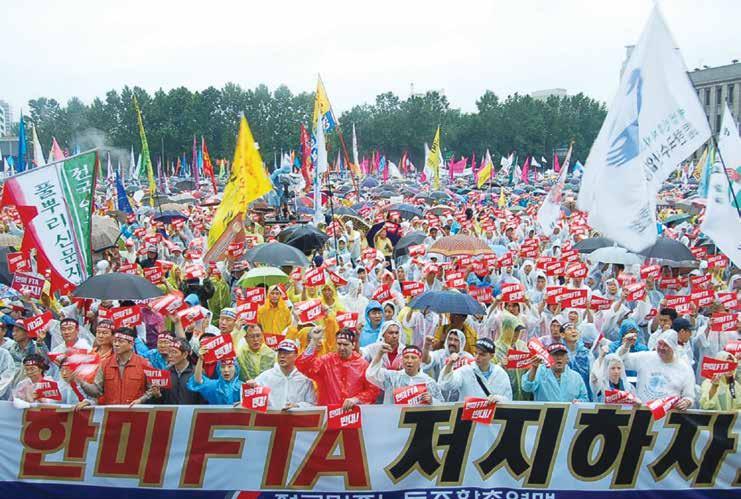
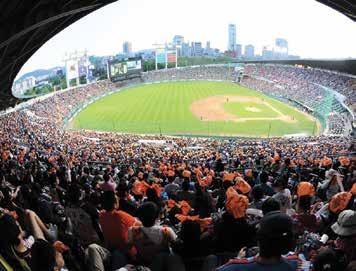
Public space is a place where the collective desire of individuals comprising a society is enacted. It is often realised in the form of crowd based on anonymity, by which individuals express themselves in other ways than they do within their private spaces, and share what is being expressed openly with strangers. Unlike China and Japan, Korea still manages to maintain strong familism value, which makes a need for public space seem relatively weak. Public spaces in Korea functioned until the early 90s mainly as a place for protest against the military ruling power, and for that matter, the expression of public spaces was regarded as rare events that should only be oppressed, if happened at all. It was probably through the experience of co-hosting the 2002 FIFA Worldcup with Japan, when the collective energy burst into a swirling storm of cheers, that such an oppressive mode of public space took a new turn. Since then, public space in Korea has lost its ground to remain as such a homogeneous place and started rather to serve everyday performativity of individual desires. The government’s reaction had to change accordingly. New protocols of public space needed to be set up to be institutionalised, for which the governing power has to observe and categorise the expressions of public space,, and in effect, put them under efficient control and management. As we envisage, the problem that deserves our most attention currently with regard to public space in Korea is the inconsistency of strategies the government takes. While the government strategy still fails to get rid of the past monolithic image of public space completely, people’s extemporaneous reactions seem to succeed in nullifying the government action effectively.
It seems therefore most important for us to have a perspective that public space is a social product of institutionalised power and individu -
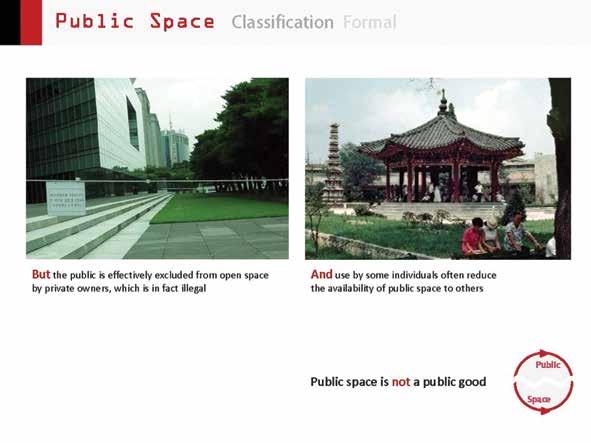
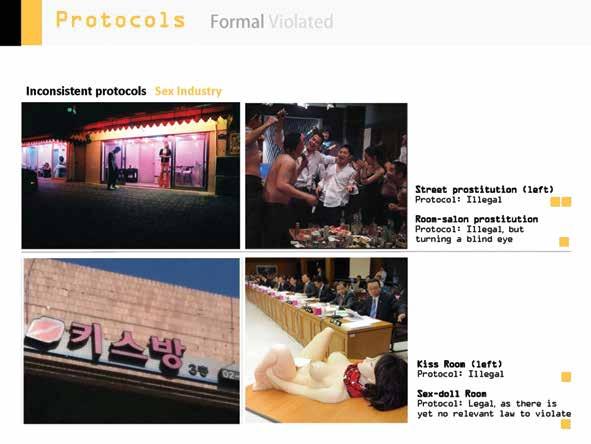
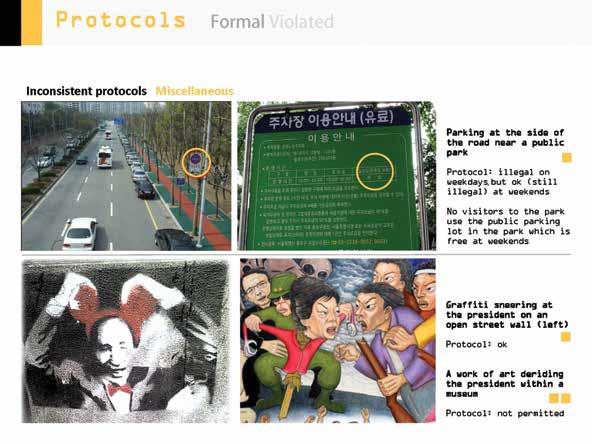
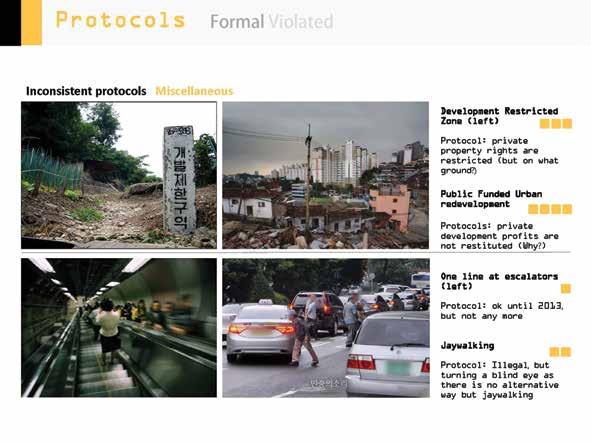
al desires. They may collide in pursuing everyday urban lives or conform to each other seamlessly. If the latter is the case, the government will do nothing. However, should such be the case, public space seems to be working successfully often by standing rather for none than for all. This phenomenon we dub as ‘the paradox of public space’ can be illustrated by pedestrian-only road with no pedestrians, playgrounds with no children and public open space hidden in the corners of buildings. By contrast, when institutionalised power and individual desires collide over the uses of public space, the government will intervene by any means to suppress desires. Yet it is not that American-style ‘zero tolerance’ principle that the Korean government takes for its intervention. The government changes, often unnoticeably or sometimes openly, the degree of tolerance for conflicts with no consistent reasons. It is this tolerance gap that we become most interested in, because it is that which is able to disclose the tension between the ‘formal protocols’ and ‘informal protocols’ that are already there among people, independently of the formal one. From this viewpoint, formal protocols can even be seen as nothing more than a shadow of informal ones.
Public space as a perfect public good can only be dreamt of through a fictitious image, which is in turn a result of artificial design. On the contrary, public space that is real and lived as a limited public good must involve within itself a tension induced by the co-presence of heterogeneous protocols. We believe that such public space, however unstable, should welcome and embrace positive discrimination, spontaneous participation and movements toward an open society. We hope to capture through this project small but not negligible symptoms that may indicate those irreversible movements occurring in Korean public spaces and share them eventually with our so-close-yet-far neighbours.
흥미롭게 여겨왔다. 그러나 동시에 우리는
”이 무엇인지에 대해 매우 특이한 이해를 구축하게 하였으며 자주
이 두 개념을 서로 호환 가능한 것으로 만들었다. 여러 차례 사람들은 “민영화”의 과정을 통해
공간을
Public / Private Space - Beijing
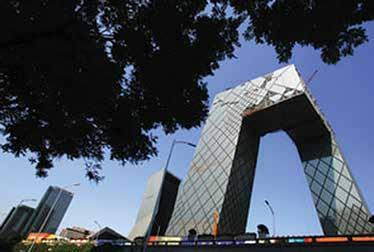
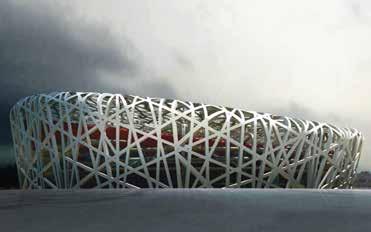
reMIX studio is a young international architectural office based in Beijing, founded by two Italian and a Chinese partners. We have always enjoyed the condition of a “foreign office” in the way a distance between the observer and the object of observation is needed to achieve a critical point of view, but at the same time we try to commit ourselves to the context in which we operate, avoiding the common mistakes of international firms that work with an identical generic tool set everywhere.
When we were asked to develop a research on Beijing public space we were thrilled because as architects we are obviously focused on space, but even more because the definition of “public” in China covers a full range of different and very interesting conditions.
Coming from Europe, the most surprising aspect about China is perhaps the flexibility in which social rules are applied. The monolithic central power that usually defines the western perspective of Chinese society only applies to the political macrostructure, making it unquestionable, but at the smaller scale everything is negotiable.
On an everyday’s basis people constantly move within the grey area that spans from informality to transgression of all the basic norms that regulate urban life.
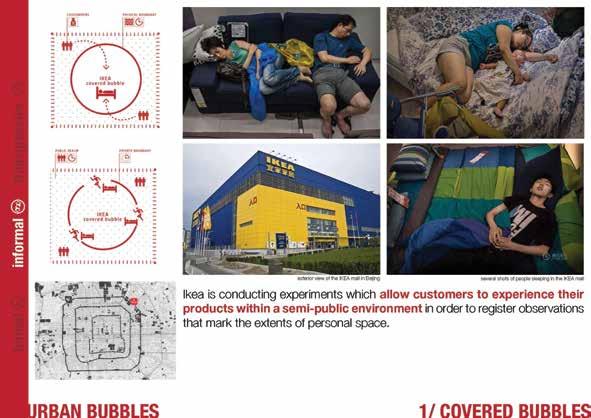
At the same time a millenary tradition of collectivism, strengthened by several decades of communism, has forged a very peculiar understanding of what “public” and “private” are, making them often almost interchangeable. Many times people claim public space through processes of “privatisation” and vice versa force “collectivisation” of large private spaces, infiltrating them with new public activities.
One personal anecdote could perhaps explain this aspect more clearly.
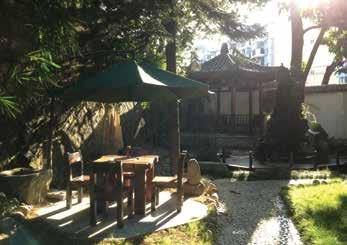
We happened to open our office in a traditional courtyard house in the middle of a hutong. The original building needed a deep renovation process. When the neighbours got to know about our imminent construction, they were immediately curious to see if we would add new volumes, something that would be officially illegal but that constantly happens in the area as the social control is mostly based on personal relationships (i.e. I can build whatever want as long as my neighbor doesn’t complain) .
Once they were assured that no volume would be added, we had to face the protests of a specific neighbor because we were building a new toilet next to his bedroom. According to him that would create a lot of humidity and we could not do it because that was also his wall (no matter if indeed there were two separate walls along the property boundaries and we were willing to add a proper waterproof layer) . After he threatened in numerous occasions our construction workers, we suggested them to lock the door of the courtyard and not let him in anymore but that created a lot of discontent in the whole neighbourhood because “any work on the property should be supervised by the whole community”. In the end, fortunately, the problem was solved and putting the episode in perspective, the whole painful process of negotiation was a very instructive experience for us.
Extrapolating the same type of behaviours of our neighbours to various contexts of daily life in the city, one can easily imagine the potentially explosive mix of contrasting interests that participate together in the definition and use of public space. Nevertheless Beijing is a city with almost no criminality and a very low rate of violent episodes. And this does not seem to have any relationship with a strong reinforcement of police control (which once more focuses only on delicate political issues) , but much more with an incredible cultural capacity to accept disparities, making extremes coexist peacefully in a pseudo-anarchic system.
reMIX Studio (Nicola Saladino)
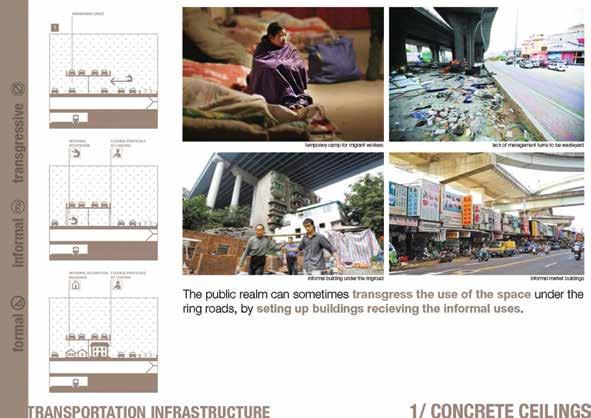
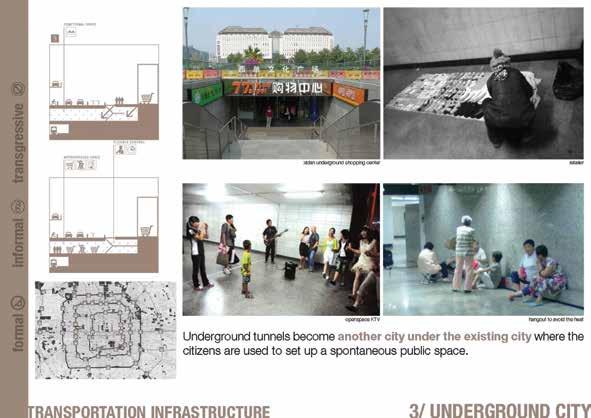
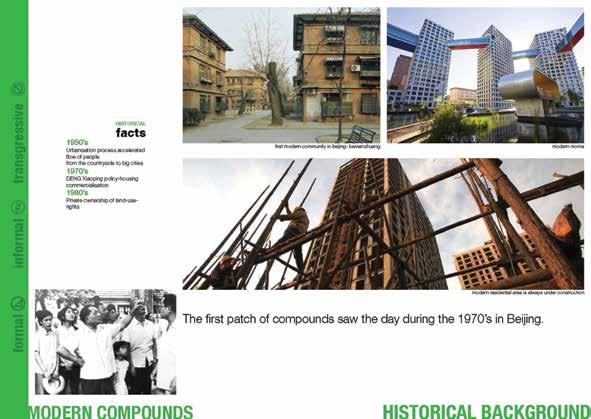
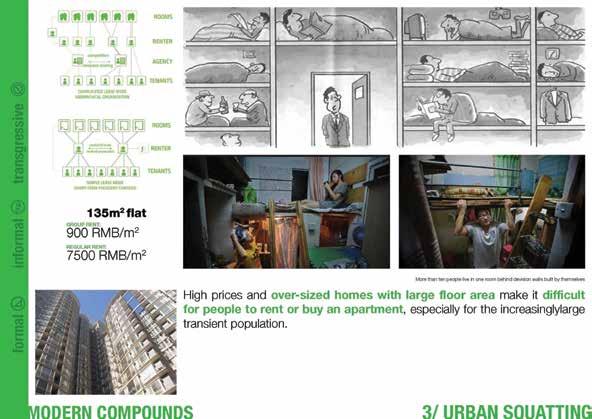
호리우치
일본의 공적 공간은 확실한 경계로 구분되거나 특정한 목적을 가진 지정된 중앙 광장같은 곳이
아니다. 일본에서의 공적 공간은 그런 알아채기 쉬운 장소가 아니라, 시간이 지남에 따라 공간
에 머무는 사람들의 정체성과 활동을 변화시키는 사이 장소이다. 사실, 일본의 공적 공간에 대
한 경험은 주로 임시적으로 이루어지며, 공간의 경계 구분은 일시적이고 유연하다.
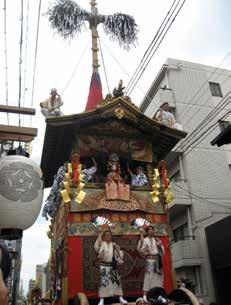
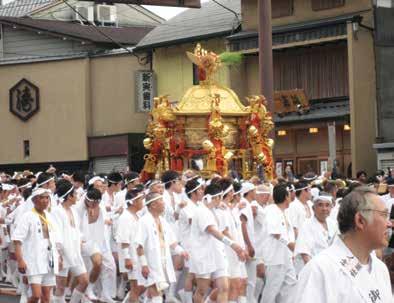
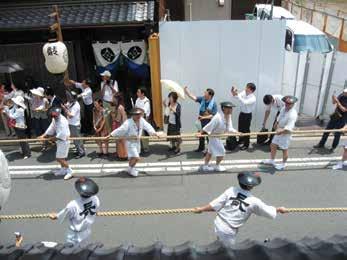
축제행렬이나타나기훨씬전부터북과피리소리가들렸다.저멀리안개낀좁은길을따라, 흔들리는창끝의깃발이시야에들어온다.거리에모인사람들은기대에가득차서술렁거린 다.건물안에있는사람들도굉장한구경거리를놓치지않으려고발코니밖으로목을쑥빼고 기다린다.이곳은교토에있는기온마쯔리이다.조용한거주지역이의식이열리는공공의공 간으로바뀌었다.축제의행렬이도착한다.무거운밧줄을함께힘껏당기며튼튼한나무바퀴가
달린정교한 2층구조의배를끄는남자들이열을지어들어온다.이배에는연주자들과무용수 들이타고있다.관중들은흥을내며즐긴다.소리를지르고,북소리가들리지않을정도로시끄
럽게박수를친다.그성스러운경로를따라행렬이이어지는동안,무용수들이손짓을하고사 람들은그들을쫓아간다.
사회적 공간으로서의 거리는 일본 초기 도시 구조에서 시작되었고, 그 개념은 현재에도 적용
되고 있다. 역사적으로 공식적이든 비공식적이든, 의례적이든 일상적이든, 일본에서의 공공의
경험은 마당이나 주요 공원 보다는, 골목길이나 주요 도로 위에서 이루어졌다. 오늘날, 집과 학
교, 일하는 곳과 노는 곳을 이어 주는 선적인 궤도를 따라 성스러운 곳과 세속적인 곳이 함께 어
우러진다. 낯선 사람들끼리 기차나 역에서 좁은 공간을 공유하기도 하고, 역에 가는 길에 친구
를 만나 술을 마시기도 하며, 지역 주민들은 사원과 마을 사이의 도로에서 전통적인 축제를 즐 긴다. 더욱이, 이 곳에서 일어나는 間(사이)의 시간과 공간은 개개인의 삶을 엮어서 하나의 사
회적 직물을 짜면서, 도시에서의 공공의 삶을 연결해 주는 결합조직으로서 그 역할을 한다. 게 다가, 이러한 問(사이) 시간과
비디오게임기가있는작은방들사이에컴퓨터가있는칸막이공간이모여있다.커튼의뒤쪽 공간에는은밀한일을벌일수도있는사적이고조용한숨은공간이있다.이벌집같은곳을차 지한사람들이이것저것을하면서내는작은클릭소리와부스럭거리는소리가끊임없이이어 진다.인터넷카페는공적인영역과사적인공간사이의중간에떠있는혼성공간이다.도시에 사는사람들이좁은집과스트레스받는생활에서벗어날수있게해주는제3의공간이다.시 간제의저렴한가격으로,사람들은혼자가되기위해,혹은같이있기위해이곳에온다.
익숙하지않은사람들은우중충한엘리베이터에서발길을돌릴지도모르지만,어쨌든인터넷
Haruka Horiuchi
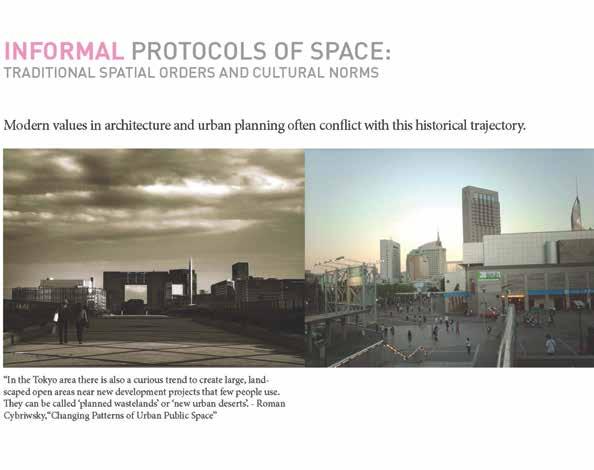
Public space in Japan cannot be found in a fixed central square with clear boundaries and distinct purpose. Often one finds that it is not a recognizable Place at all, but an interstitial space that shifts identity with occupants and their activities over time. In fact, the experience of Japanese public space is frequently a temporal one, and the demarcation of its borders transient and fluid.
The drums and flutes are heard long before the procession appears. In the hazy distance along the narrow street, the swaying mast of the hoko comes into view. The crowd gathered in the street shuffles in anticipation. Heads crane out from balconies, eager to catch the first real glimpse of the spectacle. It is the Gion Matsuri in Kyoto, and the quiet residential street has been transformed into a ceremonial public space. The festival arrives: lines of men strung out along a heavy rope chant in unison, straining to pull an elaborate two-story ark on solid wood wheels containing musicians and dancers. The crowd erupts with excitement - shouts and clapping almost drown out the drums. The dancers beckon and the spectators follow the procession as it continues along its sacred route.
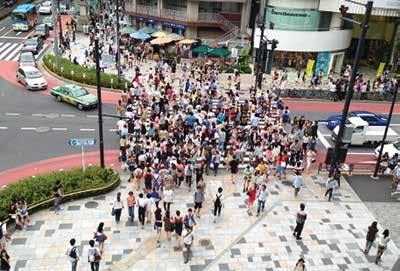
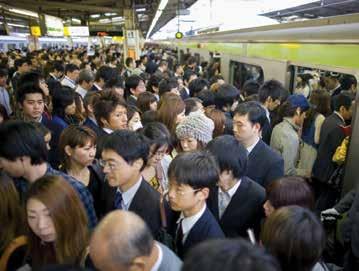
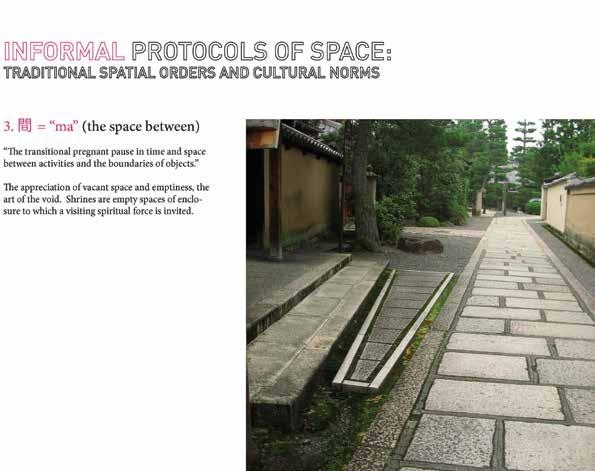
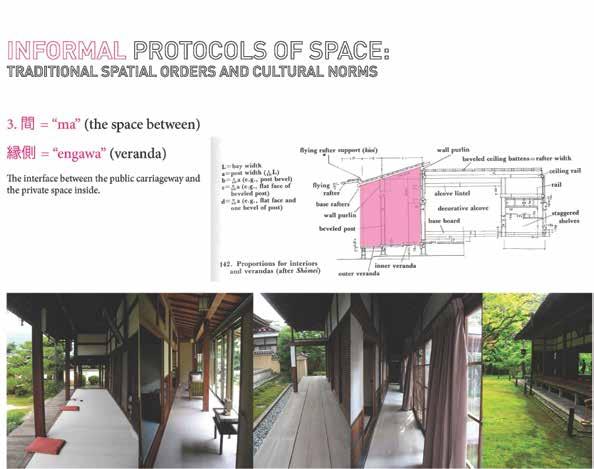
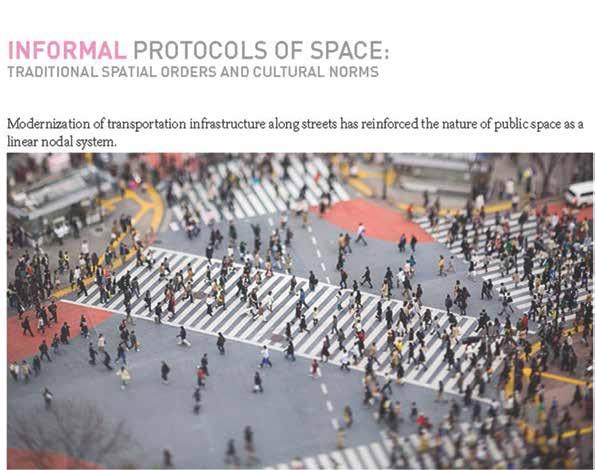
The street as social space originated in the early urban textures of Japanese cities, and the concept lives on into the present. Historically, formal and informal public experiences occurred on alleys and thoroughfares, rather than in courtyards or central parks. Today, along the linear trajectories that connect home and school, work and play, the sacred with the profane - strangers share tight spaces on trains and platforms, friends meet for drinks on the way to the station, and communities celebrate traditional matsuri along the road between the shrine and the village. Moreover, the interstitial hours and places ( 間 , “ma”) occurring along these vectors function as the connective tissue of urban public life, weaving individual lives together into a social fabric. A word that can mean both time and place, “ma” - the space between - is the zone within which a multitude of distinct public experiences and social encounters can occur.
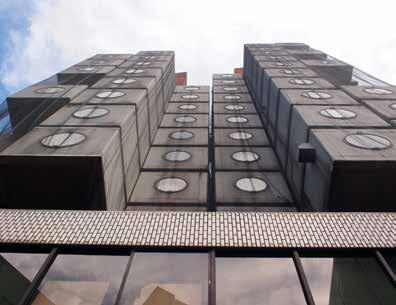
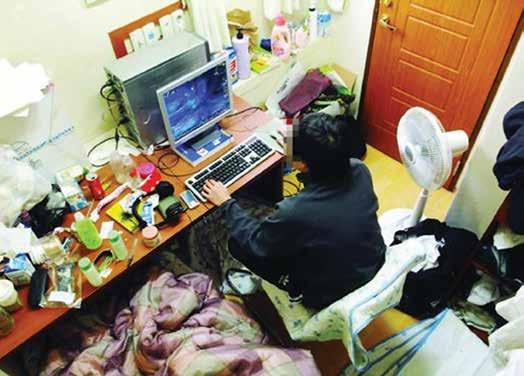
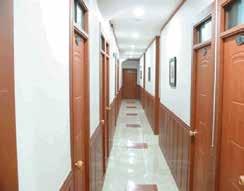
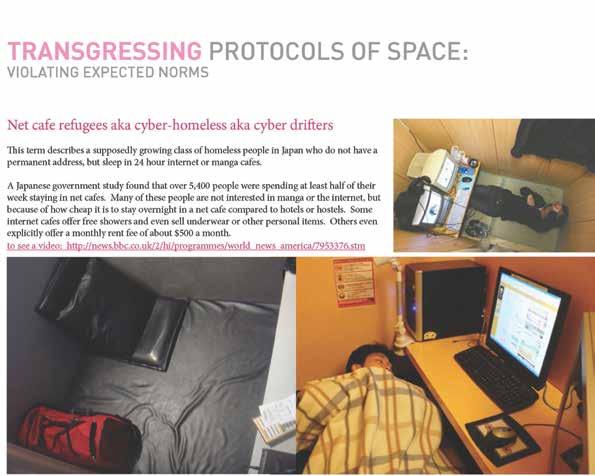
The sign advertising the manga kissa is brightly lit and looks new, though unfamiliar visitors might turn back at the dingy elevator. Stepping out on the 5th floor is like traveling through a wormhole. The walls are lined with comic books and DVDs. Cubicles with computers are organized in clusters between mini living rooms complete with sofas, televisions, and video game consoles. At the back of the space is a row of curtains, hiding private quiet spaces that hint at illicit activity. There is a low but constant buzz of clicks and murmurs as the occupants of this hive go about their activities. This Internet cafe is a hybrid space hovering somewhere between the public and private realms; a third space that allows city dwellers to escape their crowded homes and stressful lives. For a modest hourly rate, people come to be alone, together.
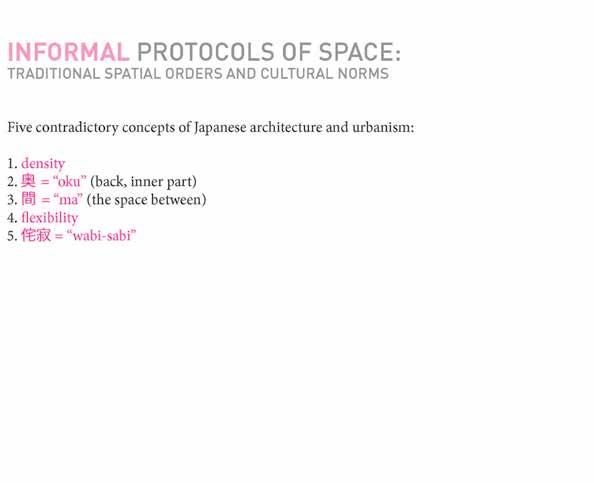
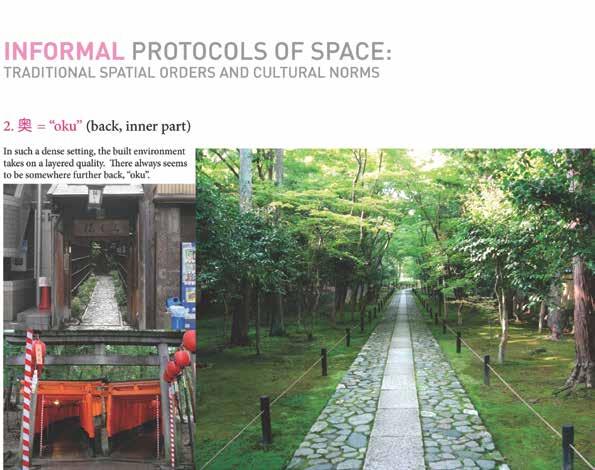
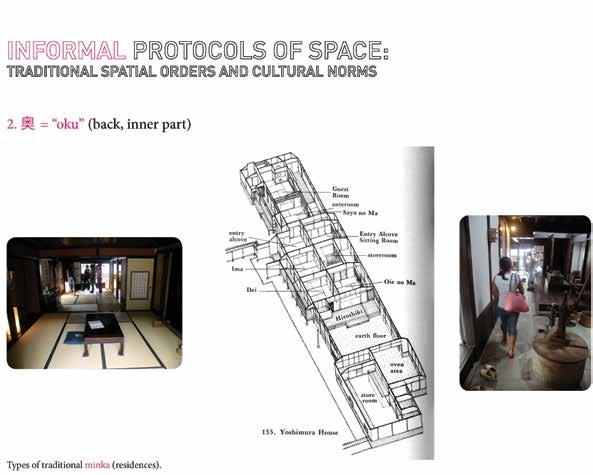
The manga kissa (internet cafe) as public space illustrates another critical concept of Japanese urbanism - 奥 (“oku”, meaning “inner” or “back”). Rooted in historic built form, “oku” manifests itself in the spatial organization of the traditional machiya (townhouse) . From the street entrance to the bathroom at the back, the machiya acts as a filter from public to private. Flexible rooms formed by sliding shoji partitions successively become more intimate. Within the innermost sanctum is a surprising courtyard open to the sky (and the sounds and smells of the surrounding city) - a bit of outside found inside, a semi-public private space. Similarly, the Internet cafe is a public space that is hidden behind the expected typology: a social place that is not in a storefront, but is only discovered beyond a secluded passage.
Embedded with these concepts of “ma” and “oku”, the distinctive experience of Japanese urban space is of a densely layered gradient of public and private experiences along interwoven trajectories. Communal activities occur along journeys, not at destinations. And social gathering spaces are not at the center of a city, but within its interstices.
블랙보드 다이알로그 : 아시안 프로토콜에 대한 재정의 Blackboard Dialog : Redefining Asian Protocols
Asian Protocols
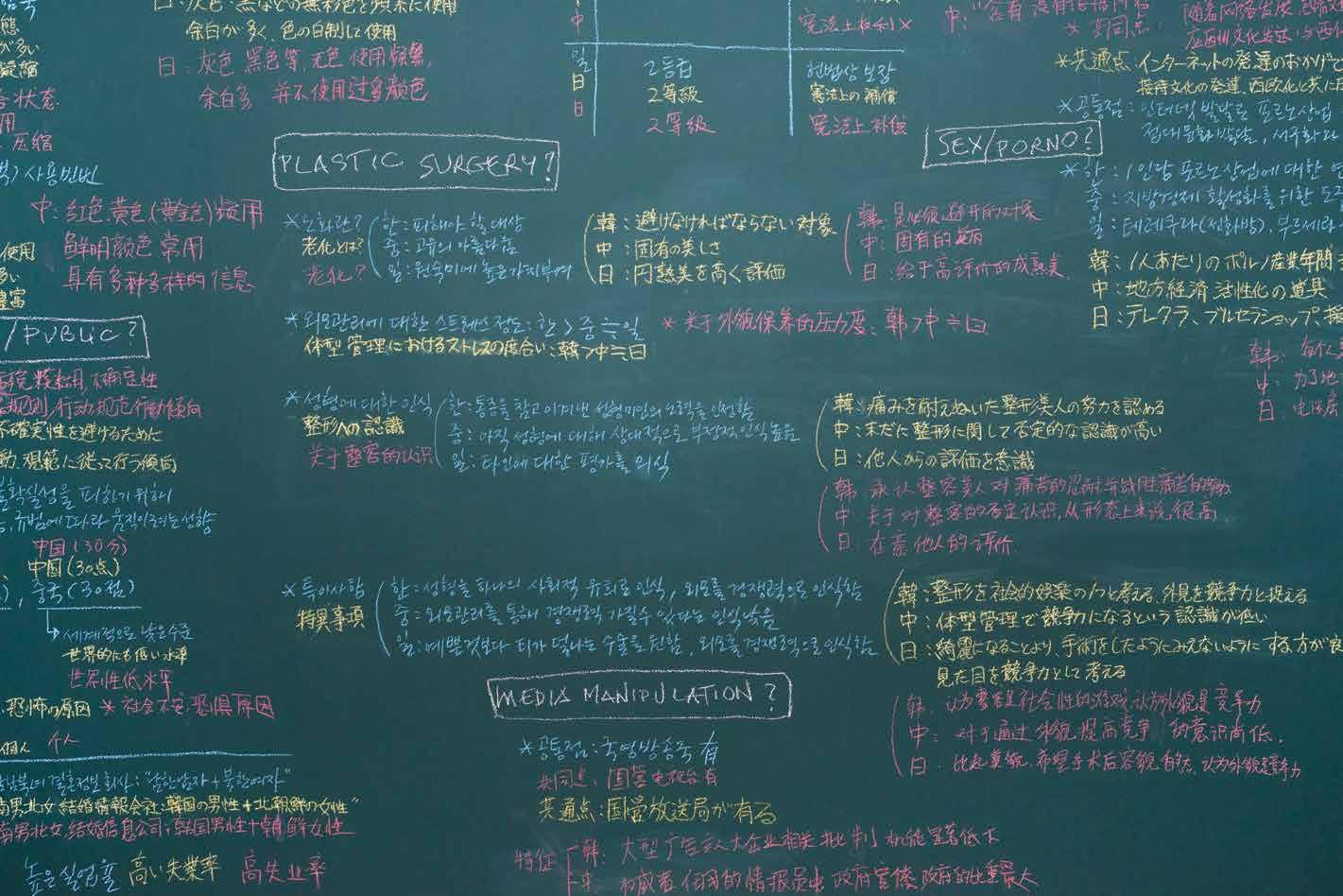
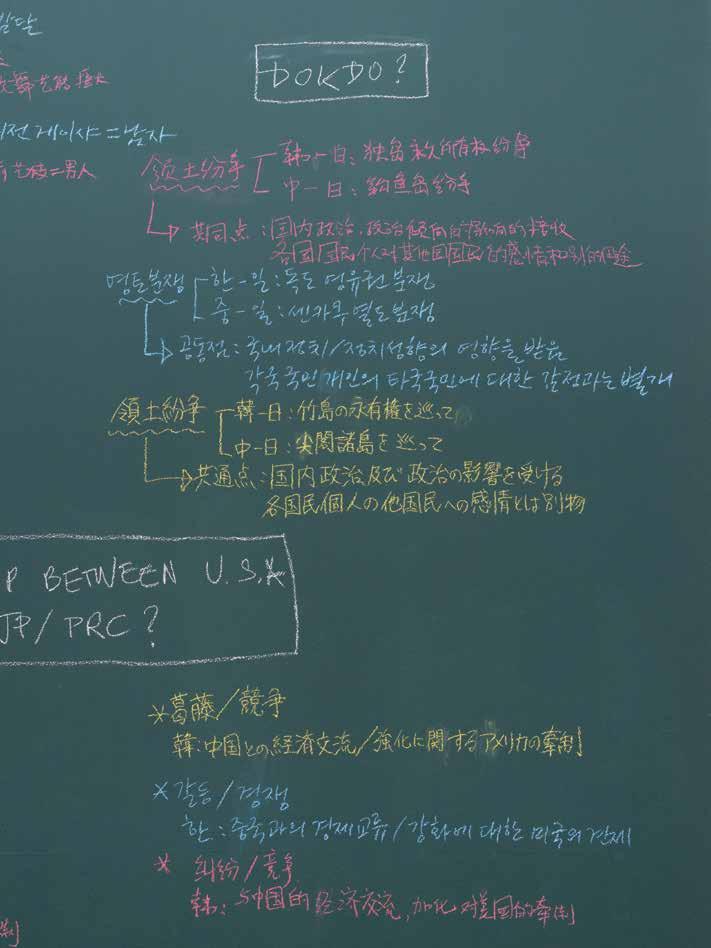
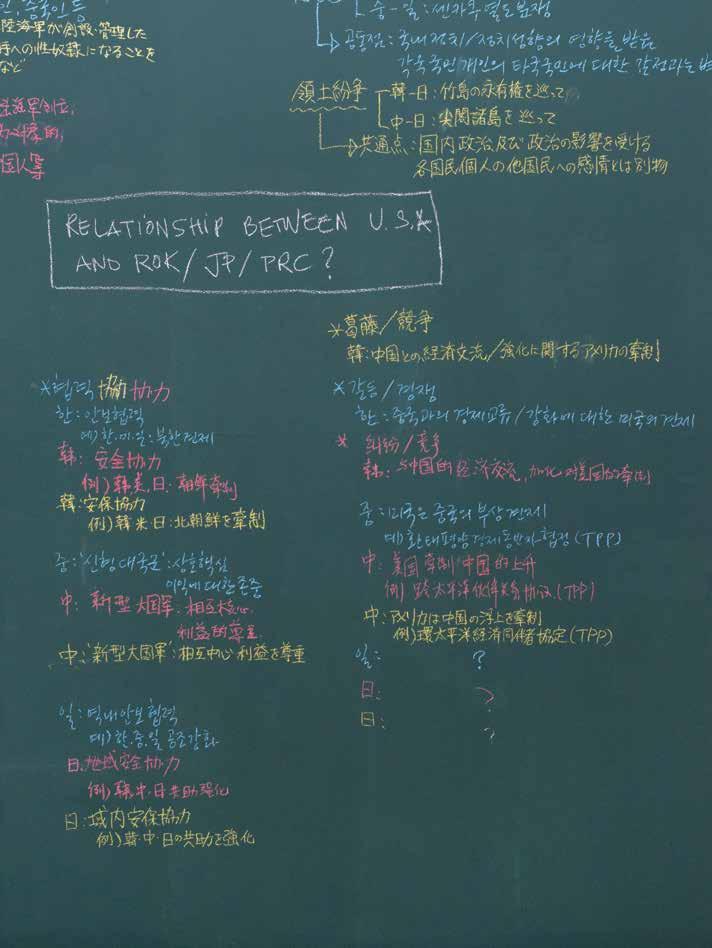
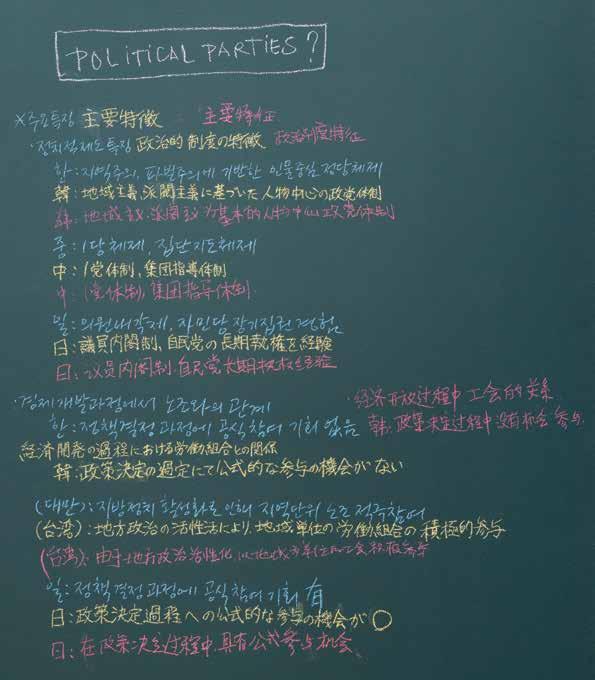
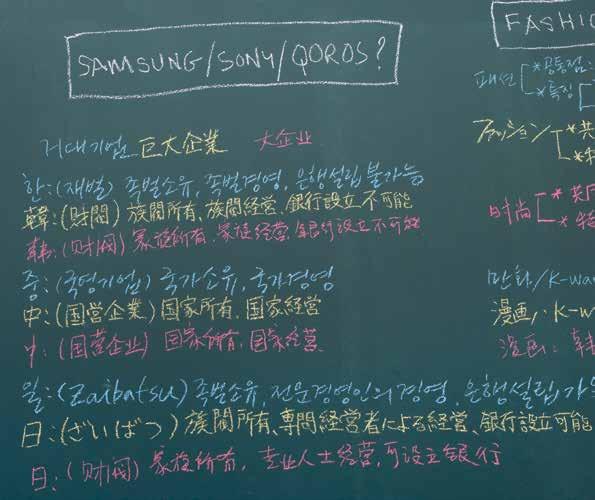
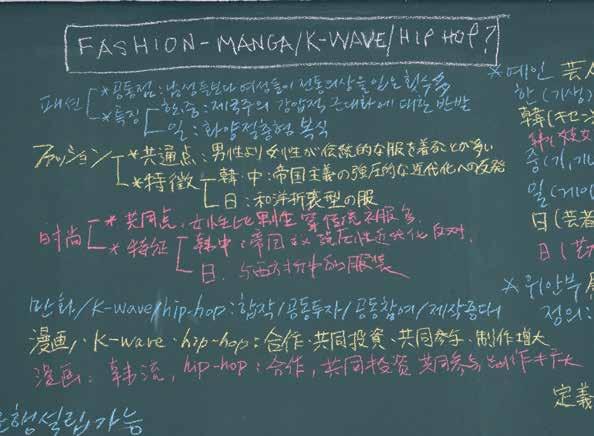
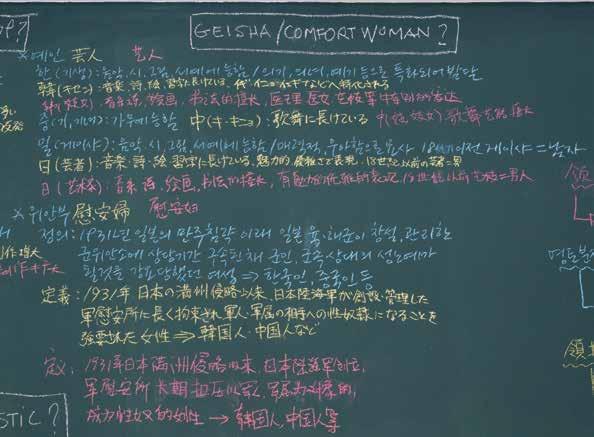
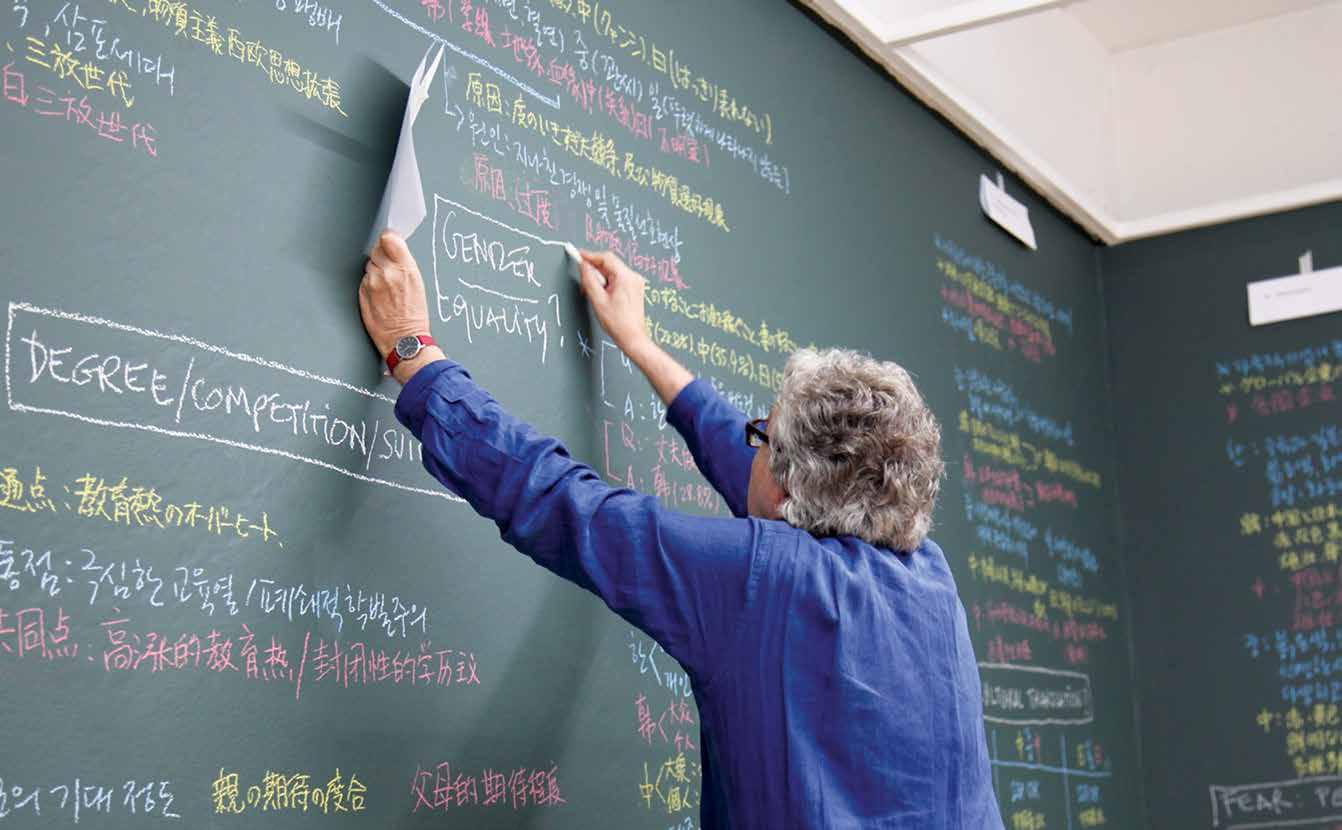
강지현
<문타다스 : 아시안 프로토콜> 전시의 한 섹션인 <블랙보드 다이얼로그 : 아시안 프로토콜에
대한 재정의>(이하 <블랙보드 다이얼로그>라 칭한다) 에 대한 제안을 받고 흥미로웠다. 정치외교학을
전공한 사람으로서 작가와 프로젝트를 함께 한 적이 없었기도 했지만, 그가 제시하는 한국, 중
국, 일본의 프로토콜에 대한 관심이 갔기 때문이었다. 문타다스와 만나기 전 그의 작가노트를
읽어보았다. 한국어, 중국어, 일본어 중 그 어느 언어도 알지 못하는 스페인 작가가 어떻게 한 ∙
만만치 않았다. 솔직히 고백하면 작업을 하는 동안
분석 단위의 위계 및 범위를 흩트리고 있는 것은 아닌지, 출처와 자료조사 시기를 표현하기에
는 공간이 너무 복잡해지고 시각적 효과가 떨어지는 것은 아닐지 몹시 걱정스러웠다. 문타다
스에게 이런 걱정을 털어놓으려 하는데, 그는 내 말이 채 다 끝나기도 전에 한마디로 상황을 정
리했다. “이건 예술이야. 논문 쓰는 게 아니야.” 덕분에 나의 고민과 걱정은 순식간에
그가 가진 입체적 통찰력과 통시적 경험이 한
하여금 인식 범위를 확장-축소시키게 하였다. 이러한 과정을 통해 미시적 (micro)-거시적(macro), 공적(public)-사적(private), 합의(agreement)-갈등(conflict) 등 과 같은 작가 자신의 분석 구조와 미디어, 정치, 검열, 커뮤니케이션, 공포, 번역 등 작가가 오랜 시간 고민해 온 키워드들이 입체적으로 교차하게 된다. 그리고 바로 그 교차점에서 질문과 분 석의 강도와 깊이가 증폭된다. 다시 말해 <블랙보드
범위가 다르게 표현되어 있지만 모두 정치, 경제,
고 생각해볼
각자의 해답을 찾거나 또 다른 질문들을 제기하
키워드들이 가지고 있는 유사성
과 이질성을 찾아가는 과정에서 새로운 호기심과 고민이 생겨나기도 하고 국적이나 성별, 연령
환경에 따라 더욱 다양한 고민과 해석의 여지가 남기도 한다.
재조합을 통해 더해진 작가의 집요한 고민을 함
께 할 수 있다는 것은 큰 기쁨이었다. 분명 그는 이방인으로서 자신의 한계를 겸손하게 인정했
지만, 그의 예리한
Blackboard Dialog : Redefining Asian Protocols
Jeehyun Kang I got really excited when I was invited to collaborate on Blackboard Dialog : Redefining Asian Protocols (herein called Blackboard Dialog ) , which was part of the exhibition Muntadas : Asian Protocols . It was interesting since I had no experience of participating in such project by an artist. Moreover, it was fascinating because the protocols of Korea, China and Japan as suggested by Muntadas caught my attention. It was astonishing as much as intriguing since the artist does not know any of the Korean, Chinese or Japanese language.
A few days later, I could finally meet Antoni Muntadas and hear about his work and the process of the project. Though he could not speak any of the languages, he pointed out keywords derived from his extraordinary ability of interpreting images and drawing the context and essence from the given resource. Then, he asked questions about the common feature and difference among the three countries. My answer to the questions was that it is difficult to articulate similarity and difference merely on a singular level due to the multilateral and multilayered nature of the relation among Korea, China and Japan. Muntadas surely knew that it would be challenging to make a simple conclusion on the matter or analyze and express the similarity and difference in a comprehensive and inclusive manner via a one-dimensional space. What’s more, the pressure to visualize such multi-layered and complex content in the exhibition space was by no means an easy task. To be honest, I was so worried about whether I was disturbing the hierarchy and range of analytical units or the exhibition space would become too complicated and inefficient to present the source and research period. I was about to confess my concerns to Muntadas, but he wrapped up the situation by telling the one sentence: “It’s art. It’s not writing an academic paper.” My concerns and worries were dissolved instantly.
While communicating with Muntadas, I realized that his rich insight and diachronic experience as an artist were well reflected on the map of the relationship among Korea, China, and Japan. Moreover, he was
clearly aware himself as an outside. More interesting thing was that Muntadas had an accurate comprehension of and appraoch to glocalization, a concept constructed in the field of international politics to explain the recent phenomenon of localization of global structures and phenomena. Despite the fact that he is an artist, such knowledge and approach to a certain concept was clearly not something that could be achieved in a short period of time. It was a capability that one could get after working across diverse countries, regions and cultures around the globe for a long period of time. It was not difficult to recognize that Muntadas is able to address the issue of the Asian protocols despite he does not belong to any of the three countries.
Indeed, when I was invited to the project as a researcher on the politics, economy and culture of Korea, Japan, and China, I could not even imagine that the project would entail a process where I would investigate the answers to the questions on sex, pornography, corruption, censorship, distortion of media or press, etc. It was because some of the keywords suggested by the artist were those that had not been integrated in the ordinary vocabulary of the three countries: they had not been dealt frequently in the form of an academic and public discourse as they had been considered as taboo to address; there had been no questions raised about the keywords. Thus, I pressured more and more on the collaboration. Of course, such a pressure worked as one of the prime factors that gave me more interest at the same time.
Muntadas’s questions, which were based via the keywords, were concrete. They were not focusing on minor details. Rather, the questions seemed to open different possibilities of active thinking and participation from the collaborators and viewers as they crossed different categories and layers. I assumed that it was possible since the project had been conceived from Muntadas’s will to learn the protocols in Asia, based on the “narrated and ‘translated’ Imaginaire ” as the artist mentioned in his note.
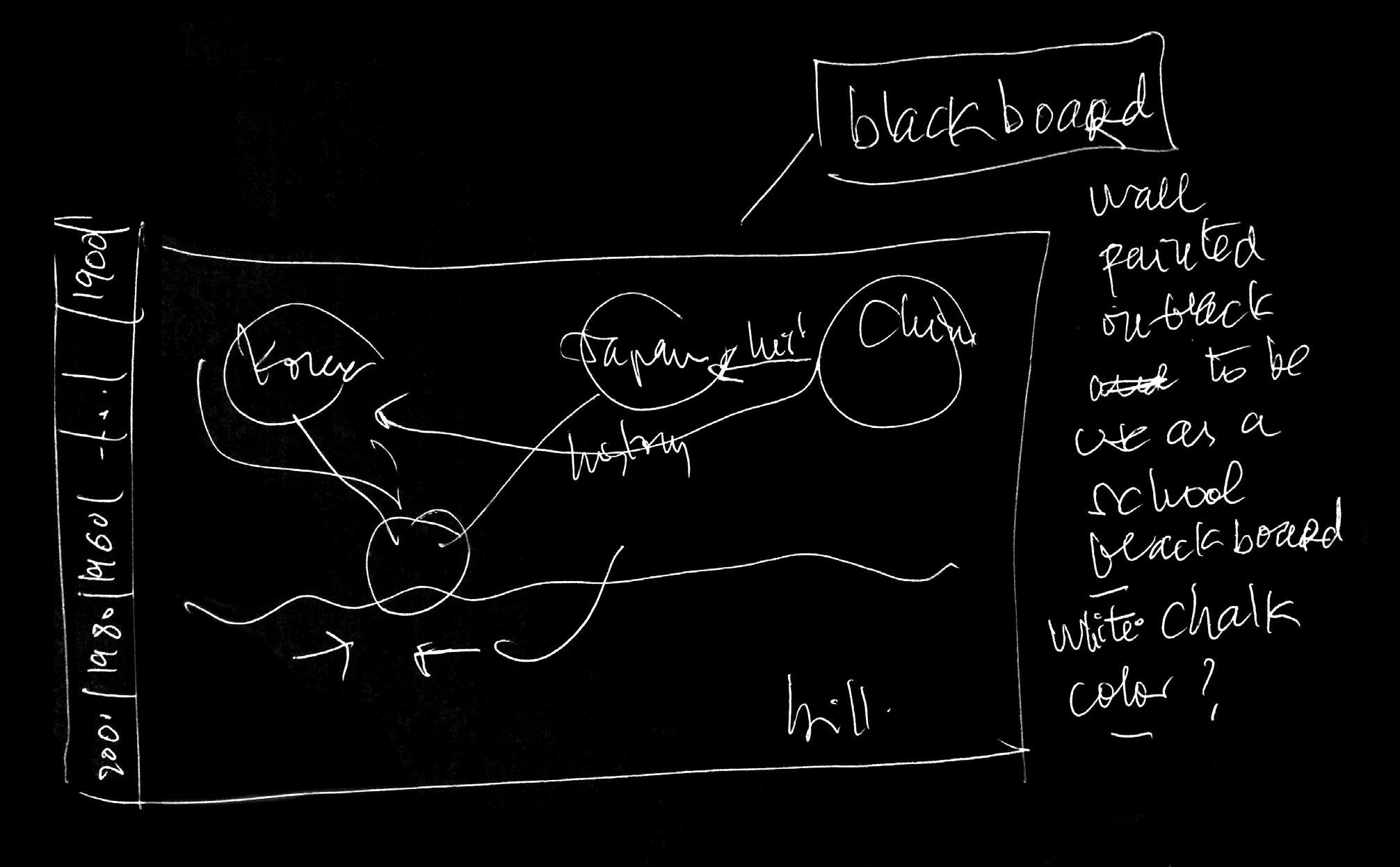
The Blackboard Dialog is a section at the beginning of the exhibition, which the first thing that viewers encounter upon entering the space. Muntadas made a bold decision to omit the temporality from the
organically connected keywords presented in the space, providing a list of fragmentary facts. However, it is not a disorderly and arbitrary arrangement of keywords. Viewers are invited to extend-reduce their scope of recognition by exploring the repetitive zoom-outs and zoomins on phenomena or subjects in relation to the keywords. Through such a process, exchanges were made among the analytical structures that the artist has been investigating for a long time, such as the issue of micro-macro, public-private and agreement-conflict as well as the keywords that include media, politics, censorship, fear, translation, etc. On the very point of exchange and intersection, the intensity and depth of the questions are amplified. In other words, the questions that are based on the keywords are intimately connected with each other on the point where politics, economy and culture intersect, despite the fact that they are intentionally expressed in different levels and ranges under the umbrella of the Blackboard Dialog .
The process of viewing different subjects through zoom-ins/zoom-outs while crossing the private and public realms without any constraint induces the viewers to unconsciously reach the complexity of the relationship among Korea, China and Japan as recognized by Muntadas. This happens (with no regard to the intention of the artist) as the viewers encounter specific keyword or subjects in the Blackboard Dialog . For example, the artist presents keywords on a macro level, such as religion, human rights, corruption, censorship, and relation between Korea and the United States as well as the two Koreas. At the same time, he also provides keywords on a micro level, ranging from Dokdo, comics, the Korean wave (Hallyu) , hip-hop, Samsung and Sony to Qoros. In addition, Muntadas also suggests keywords that can be both private and public, such as family, social connectivity, bedroom, Mob, plastic surgery, sex, pornography, etc. By arranging the questions in one space, the artist leads the viewers to recognize the complexity of the relationship among Korea, China-, and Japan through natural realization and process of thinking. I do not think that there can be an easier and more clever strategy that the one that Muntadas employs.
The Blackboard Dialog section thus does not remain in leaving the viewers to appreciate a work of art in a passive manner. Rather, it pro -
vides opportunities for the viewers to find different answers, raise other questions, and think about them by contemplating on and inquiring about the given keywords. In the process of finding the similarity and difference of the keywords on the blackboard, new interests and concerns are popping up; they leave more diverse possibilities of concerns and interpretations depending upon the background of the viewers that includes their nationality, gender, age group, etc.
Through the Blackboard Dialog , an opening chapter of the exhibition Muntadas : Asian Protocols , issues that have been dealt separately in the realms of politics, diplomacies, and economics are successfully visualized in one space. Then, the issues are connected to the next phase of the narrative. In academia, there have been many cases where no practical outcome was produced despite the emphasis of interdisciplinary approach. In such cases, those from different fields tried to clarify the boundaries and keep their own territories. Such a process has also produced a deep sense of separation in communicating with the public. However, Muntadas’s simple yet lucid way of communication (or working) felt to me as humor towards the academy that is busy to struggle for securing their own territories. It provided the best catharsis to me who has been suffocated experiencing such fields.
Working on the project, it was a great pleasure to observe the work that was as elaborate as the time the artist has spent for collecting the sources and investigating the subjects. Moreover, I greatly appreciated the fact that I could be part of the artist’s persistent exploration that has not merely been accumulated upon the progress of time but expanded through meticulous deconstruction and reconstruction of different keywords throughout time. It is obviously that he is too humble so defined himself as an outsider, but I think the narrative of the Asian protocols as shown through his keen insight and explicit way of communication will cast an important question in observing the complex web of relationship among Korea, China and Japan at this moment.
안토니 문타다스 (1942 ~ )
Antoni Muntadas (1942 ~ )
안토니 문타다스는 1942년 스페인 바르셀로나에서 태어났으며, 1971년부터 뉴욕을 중심으로
활동하고 있다. 1977년부터 1984년까지 MIT에 있는 어드밴스드 비쥬얼 스터디 센터 (Center for Advanced VisualStudies) 에서 리서치 펠로우를 지냈으며, 최근까지 ACT / MIT (MIT program in art, culture and technology) 에서 교수직을 역임했다. 잘 알려진 초기 인터넷프로젝트인 < The File Room>(1994)를 비롯하여 < On Translation>, < Protocols>시리즈에서 볼 수 있듯 그의 작품
들은 주로 정치, 사회, 외교 및 소통 (communication)의 문제는 물론, 사회적 환경에 있어서의 사
적공간 / 공적공간의 관계와 소통, 변화에 대한 이슈들을 사진, 비디오, 방송, 설치 등 특정장르
에 얽매이지 않은 다양한 장르를 통해서
MOMA (뉴욕), 르네 소피아 (마드리드), 쥬드 뽐므 (파리)를 비롯한 세계적인 미술관에서 전시를 했으
며, 베니스 비엔날레 (스페인관), 도큐멘타 VI, 도큐멘타 X 와 같은 국제적인 전시에도 수 차례 소개 되었다. 2009년에는 스페인에서 현대예술가에게
Antoni Muntadas was born in Barcelona, came to art through painting. Since 1971 he has lived and worked in New York. Muntadas was a Research Fellow at the Center for Advanced Visual Art at the MIT program in Art, Culture and Technology and Professor of ACT/ MIT 1977-2014. Through the internationally well-known early internet project The File Room (1994) , long-term project series On Translation (1995- ) and on-going project Protocol, he has addressed social, political, communications such as the relationship between and public and private spaces by video, installation, photography, publication and intervention. His work has been exhibition in numerous museums, including the Museo Nacional Centro de Arte Reina Sofia (Madrid) , MoMA (New York) , Jeu de Paume (Paris) . His works also included international events such as VI and X editions of Documenta Kassel (1977, 1997) , Whitney Biennial (1991) , The 51st Venice Biennial (2005) , Gwangju Biennial (2004) and Taipei Biennial (2002) . He also has received numerous awards and grants. In 2009, He awarded the 2009 Velázquez. Prize granted by the Spanish Ministry of Culture.
Muntadas
2014. 8. 25 – 10. 19
토탈미술관
큐레이터
신보슬 한스 D. 크리스트 & 이리스 드레슬러
어시스턴트, 코디네이터
정효섭 허대찬 양정선, 안드레아 나카치
전시진행
유영의 정다운 김희은, 김윤아, 하일리 그레넷
리서처
한국 조인숙 강지현, 이주연
공간연구집단(오성훈 박훈태, 심한별),
, 김영민 중국
,
그밖에 도움주신 분
임수현 소피아 첸, 디아나 파르마코브스키, 죠세핀 왓손,
카사 아시아-바르셀로나, 라켈 빌라 페레즈, 히로코 세키
자우메 나스펠+쿄코 아사쿠라 에스테반 안두에자,
인마 곤잘레즈 푸이 행크 불, 페르난다 디’아고스티노, 테레사 마틴 에즈마 코랄리 머카더, 마르타 모레노 솔레르
인쇄
으뜸프로세스
초판 인쇄일 : 2014. 12. 10
초판 발행일 : 2014. 12. 10 Printed in Korea
토탈미술관
서울시 종로구 평창32길 8 www.totalmuseum.org
Aug 25 – Oct 19. 2014
Total Museum of Contemporary Art
Curators
Nathalie Boseul Shin, Hans D. Christ & Iris Dressler
Assistant and Coordinator
Hyosup Jung, Daechan Huh, Jeongsun Yang, Andrea Nacach
Exhibition Team
Youngeui Yu, Dawoon Jung, Heeeun Kim, Yunah Kim, Haily Grenet
Researchers
Korea In-souk Cho, Jeehyun Kang, Joo Yun Lee, Space Research Group (Sunghoon Oh, Hoontae Park, Hanbyul Shim), Junghyun Park, Jiyeon Paik, Yeongmin Adriana Kim China Chen Huirong, reMix Studio(Nicola Saladino)
Christina Sanahuja, Song Wei, Chen Yehua
Japan : Haruka Horiuchi
Design
The-Object
Text & Translation
Ilsub Choi, Kong Lu, Konno Yuki, Elisia Kim, Kyunghee Lee
& thanks to
Soohyun Lim, Sofia Chen, Diana Farmakovsky, Josephine Watson, Casa Asia-Barcelona, Raquel Villar Pérez, Hiroko Seki, Jaume Nasple+Kyoko Asakura, Esteban Andueza, Inma Gonzalez Puy, Hank Bull, Fernanda D’Agostino, Teresa Martin Ezama, Corali Mercader, Marta Moreno Soler
Printing
Top Process
First Edition on December, 10, 2014
Printed in Korea on December, 10, 2014
Printed in Korea
Total Museum of Contemporary Art
32gil 8, Pyungchang, Jongno-gu, Seoul, Korea www.totalmuseum.org