Technology
Viking magazine
would like to thank our sponsors...
Alex Comsa
Amy McCarter
Anthony Custodi
Carol Burnett
Cheung Family
Filiz Dogan
Tamlin Connel Kinnan
Kaiyu Li
Stephanie and Ryan Frick
Hsu Family
Kapohilin Family
Joachim Family
Liu Family
McCarter Family
Carol Mueller
Porat Family
Schoebel Family
Segev Family
Tung Family
Julie Wissink
Viking Vision Statement
Our mission is to create and maintain a magazine that can be a preeminent voice for Paly athletics, celebrating our community through powerful storytelling. We strive to foster a positive culture by giving a platform to diverse voices and challenging readers to think critically.
On the cover:
Editors-in-Chief
Arjun Bharat, Tyler Cheung, Scarlett Frick, Sarah Thieman
Creative Directors
Amanda Goody
Photo Editor
Lucas Tung
Business Manager
Dylan Robinson
Online Editors
Copy Editor
Juliet Frick
Head Columnist
Greg Goody, Mabel McCarter
Social Media Manager
Luke Joachim, Max Merkel
Staff Writers
Elena Salvatierra
Carter Burnett, Ian Cierniak, Andy Comsa, Elif Dogan, Dylan Fujita, Natalya Kaposhilin, Andrew Knapp, Jake Liu, Zoe Pashalidis, Shira Porat, Isaac Telyaz, Daniel Segev, Finnegan Schoebel, Michael Wu
Adviser
Brian Wilson

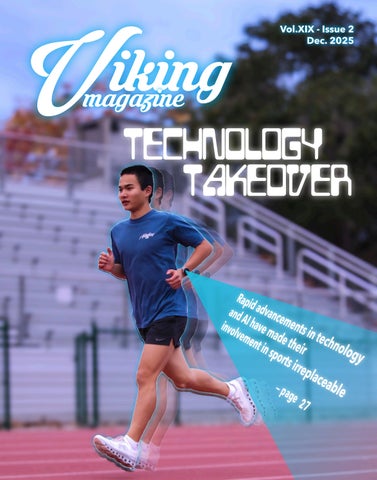
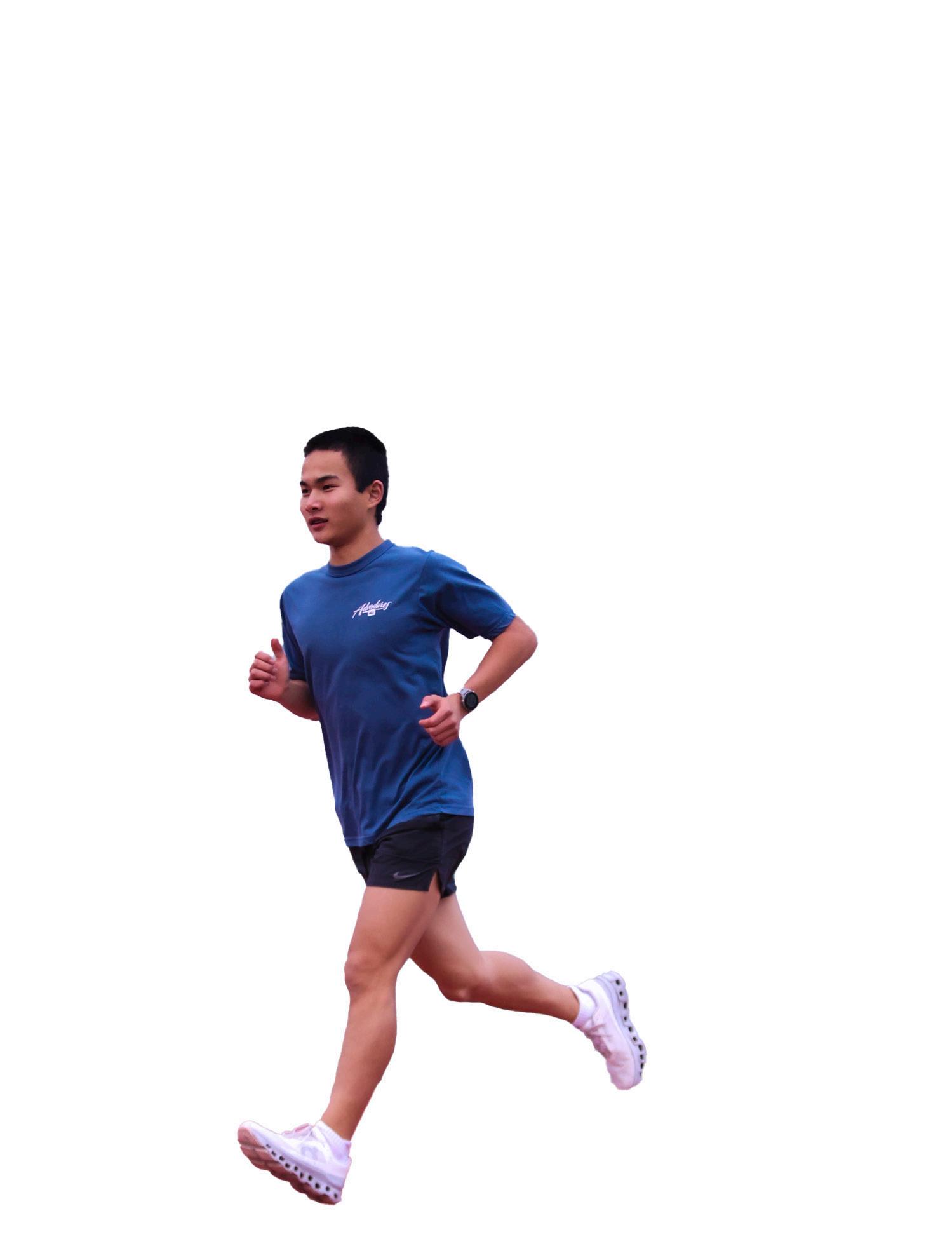
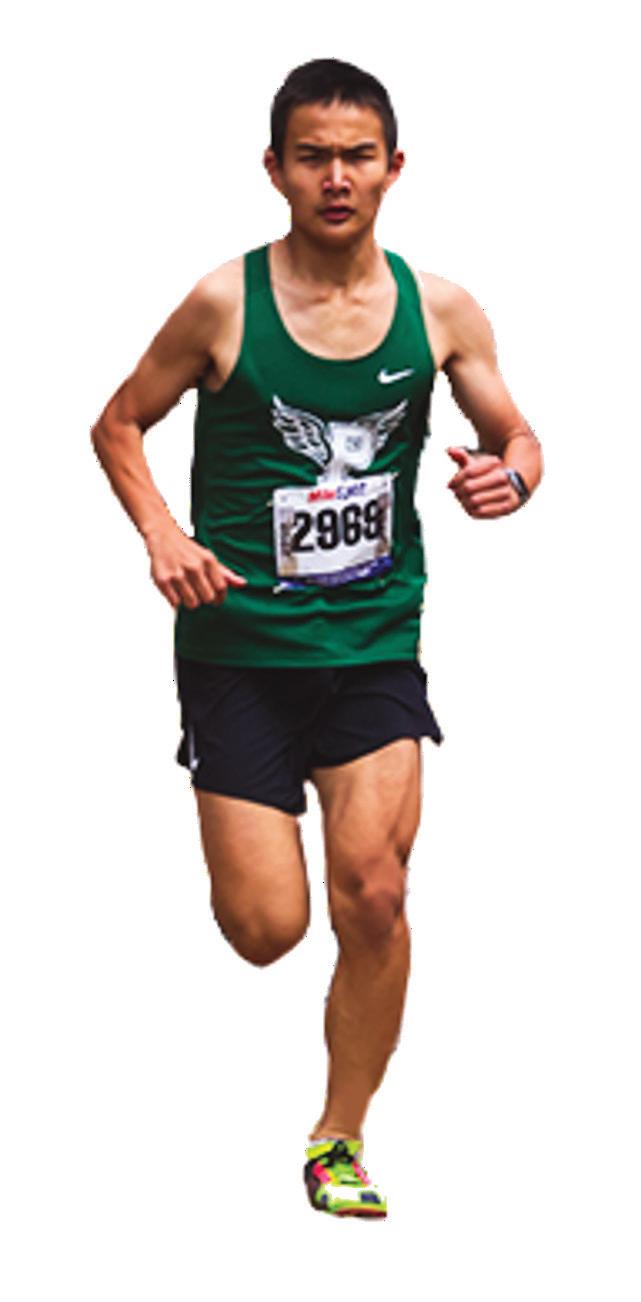
The cover, with photo by Lucas Tung, features runner Paul Wang who uses his Garmain Watch to track fitness and health data. Read about the rise of technology in sports in “Technology Takeover” on Page 27.
Viking Magazine
Palo Alto High School
50 Embarcadero Road
Palo Alto, CA 94301
650-329-3837
Email contact: vikingeds@gmail.com
Follow us @vikingsportsmag or go to vikingsportsmag.com for current game updates/scores.
Viking, a sports magazine published by the students in Palo Alto High School’s Advanced Magazine Journalism class, is an open forum for student expression
and the discussion of issues of concern to its readership. Viking is distributed to its readers and the student body at no cost. The staff welcomes letters to the editor, but reserves the right to edit all submissions for length, grammar, potential libel, invasion of privacy and obscenity.
Printing Services
2,500 copies of The Viking are printed, five times a year by Folger Graphics in Hayward, Calif.
Advertising in Viking
The staff publishes advertisements with signed contracts providing they are not deemed by the staff inappropriate for the magazine’s audience. For more information about advertising with Viking, please contact Viking by email at vikingeds@gmail.com
Logo Font Courtesy of Måns Grebäck
Letter from the EDITORS
Hey Vikes! 2024 has been a great year! Fall sports are coming to an end and winter sports are jumping into gear. As always, we are posting scores and updates on our website, Instagram and X. We hope you enjoy our second issue of Viking for the 25-26 school year!
There are many opportunities in sports outside of being a player or coach “All Access” (page 16) takes a deeper look into the impact of these other careers in the sports industry.
“Mind over Mountain” (page 18) looks into the rise in popularity of rock climbing and bouldering.

Check out “Bending Boundaries” (page 20) to learn about the growth of yoga in the Paly community and how you can get involved.
Our first opinion piece “Raising the Floor” (page 22) argues the solution to solve the competitive discrepancy in the MLB is adding a salary floor.
Our cover story “Technology Takeover” (page 27) dives into how Paly athletes integrate technology to help them perform better in sports.
“How to Train Your Trainer” (page 32) highlights professional athletic trainers and how the Sports Med class at Paly can
help students get into this profession.
“Unfamiliar Turf” (page 36) brings light to the issues Paly soccer players faced when transitioning to playing on the football field.
“The Pro Illusion” (page 40) dives into the roots of coaching and the different roads coaches take.
Finally, our final word, written by our Head Columnists Greg Goody and Mabel McCarter talks about how the negative criticism of poker has created a negative perception of the game.
That’s all for this issue, we can’t wait for you to read it!

STAFF OPINION
Formula 1 is a unique sport, as it goes through major regulation changes every three-to-five years that essentially reset the competitive landscape of the sport. This introduces an additional layer of unpredictability that makes the sport more exciting. However, the major changes coming at the start of the 2026 season are looking like they will negatively impact the sport as a whole.


2026 changes negatively impact F1 performance and appeal
The FIA’s new regulations, set to take effect at the start of the 2026 season, are shaping up to be some of the most significant changes the sport has seen in a long time. In 2026, teams will need to design cars that are 20 cm shorter, 30kg lighter, and 10 cm narrower. While these changes may seem minor, they are expected to reduce down force by roughly 30% and drag by about 55%, making the cars faster on straights but slower through corners.
Another major change involves the hybrid engines. Currently, they run on roughly 80% gasoline and 20% battery power, but under the new regulations, teams will be required to design engines that run 50% on gas and 50% on battery, using fully sustainable fuel. This is the FIA’s effort to make the sport more environmentally friendly.
The most notable change is the remov-
al of the Drag Reduction System (DRS). Since 2011, drivers have been able to flatten their rear wings on straights when they are within one second of the car ahead. This gave drivers a speed boost which made it easier to overtake. In the new season, DRS will be replaced by both an Active Aero System (AAS) and a manual override mode MOM. The AAS will allow drivers to flip both their front and rear wings between a high down force and low down force setting. The main difference is that they will not need to be one second within another car to switch modes. Manual override mode allows drivers who are trailing another car to temporarily activate an extra 350 kw of power in their car which can make it easier to overtake.
These new regulations are doing more bad than good for the sport of F1. The factor that separates F1 cars from other racing cars is their ability to turn corners at an extremely high speed due to their high down force. Reducing down force will make the cars feel slower and less reliable on turns.
Though cars may be faster on straights due to reduced drag, the new 50/50 hybrid engines will make it very difficult for cars to maintain top speeds on straights. When going on a long straight without
recharging through braking, the hybrid engine’s battery often runs out early, forcing the driver to downshift and significantly slow down before reaching the end of the straight. For tracks with mostly straights like Monza in Italy, many cars could be struggling to keep top speeds throughout the whole race.
The FIA is trying to turn F1 into an environmentally friendly sport, but their efforts are taking away from the identity of F1. Formula E, with full electric cars already exists in its own entity. Forcing F1 cars to become cleaner takes away from the sounds and speeds that make the sport so iconic.
It’s clear that the new manual override mode and hybrid engines will force teams to be more strategic and conservative with how they manage their energy throughout the race. But from the fan perspective, this isn’t a positive change. Viewers don’t want to see drivers intentionally back off and slow down to conserve energy. Fans want to see drivers push flat out from start to finish, going as fast as they can the whole race. The FIA needs to make adjustments to their new regulations that allow F1 to keep its identity.
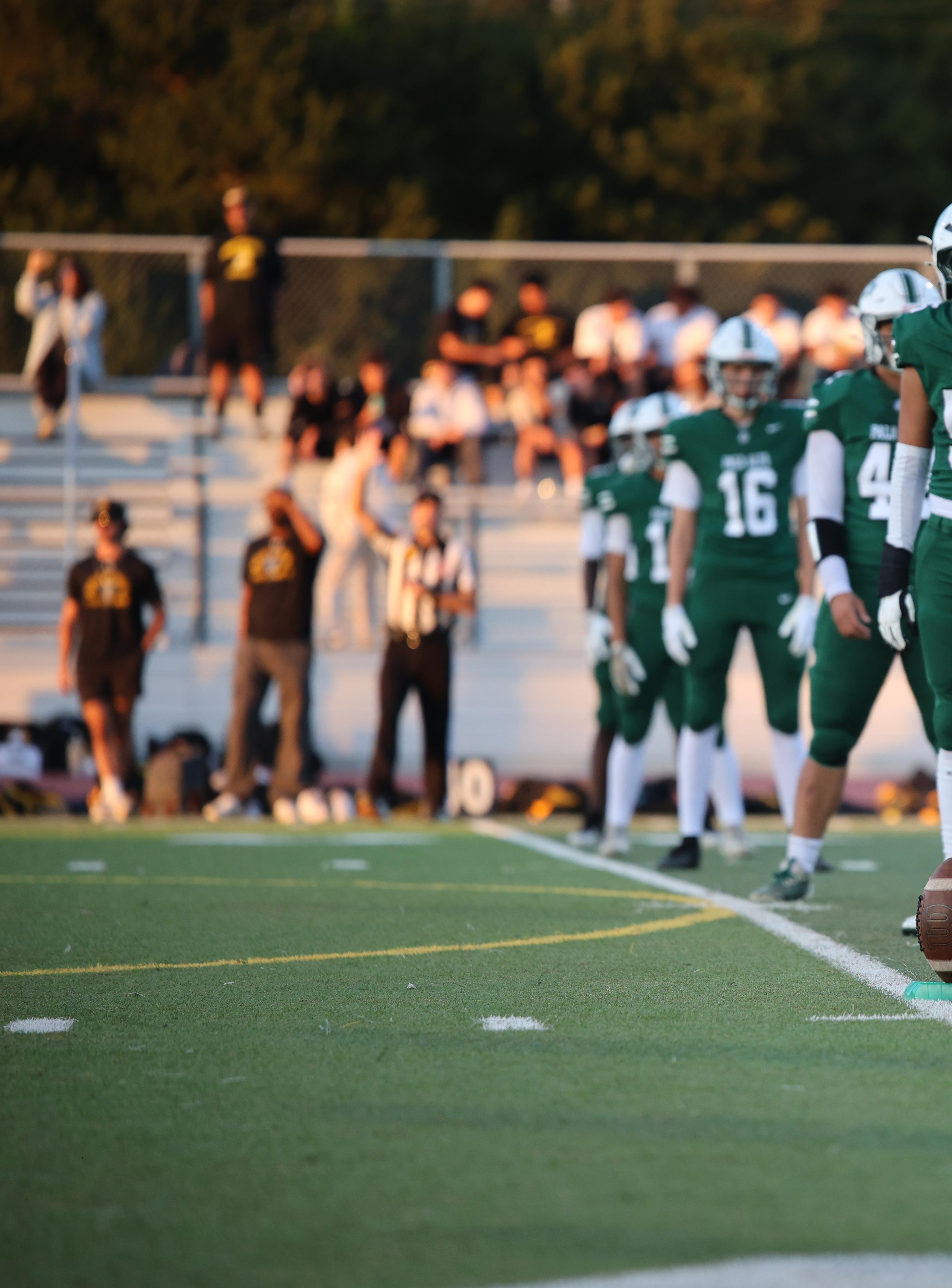
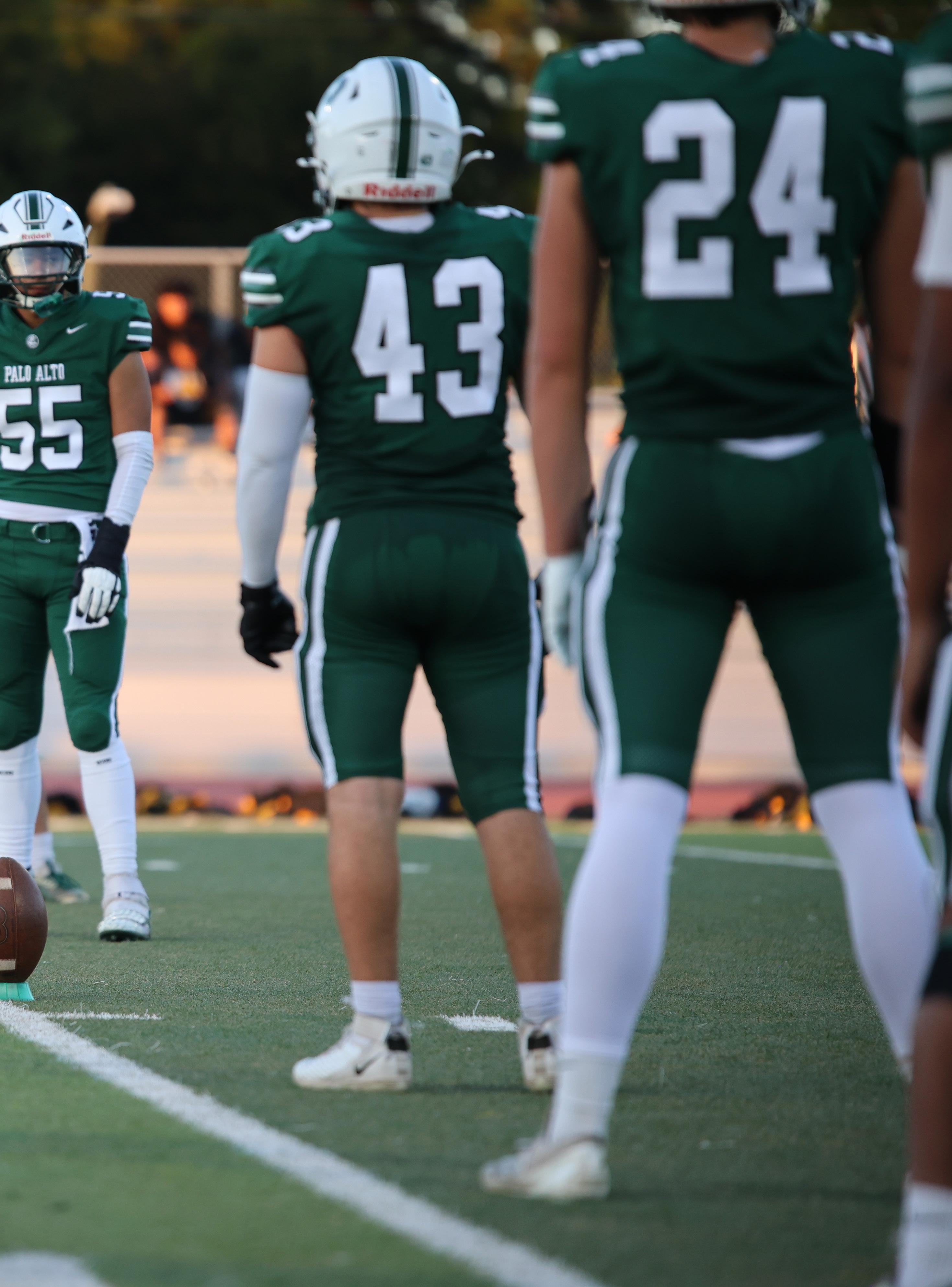
Photo by Lucas Tung
Dive eep
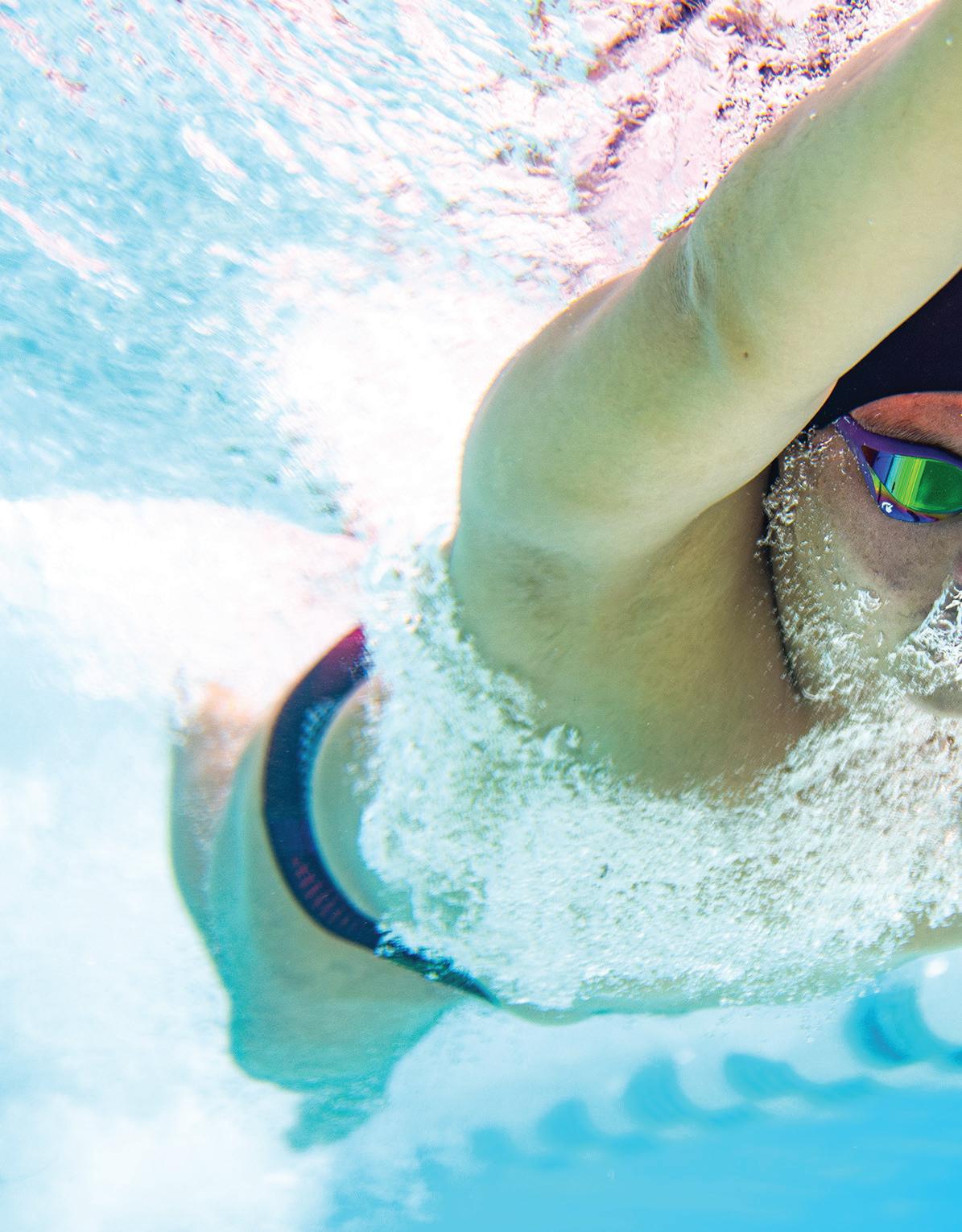
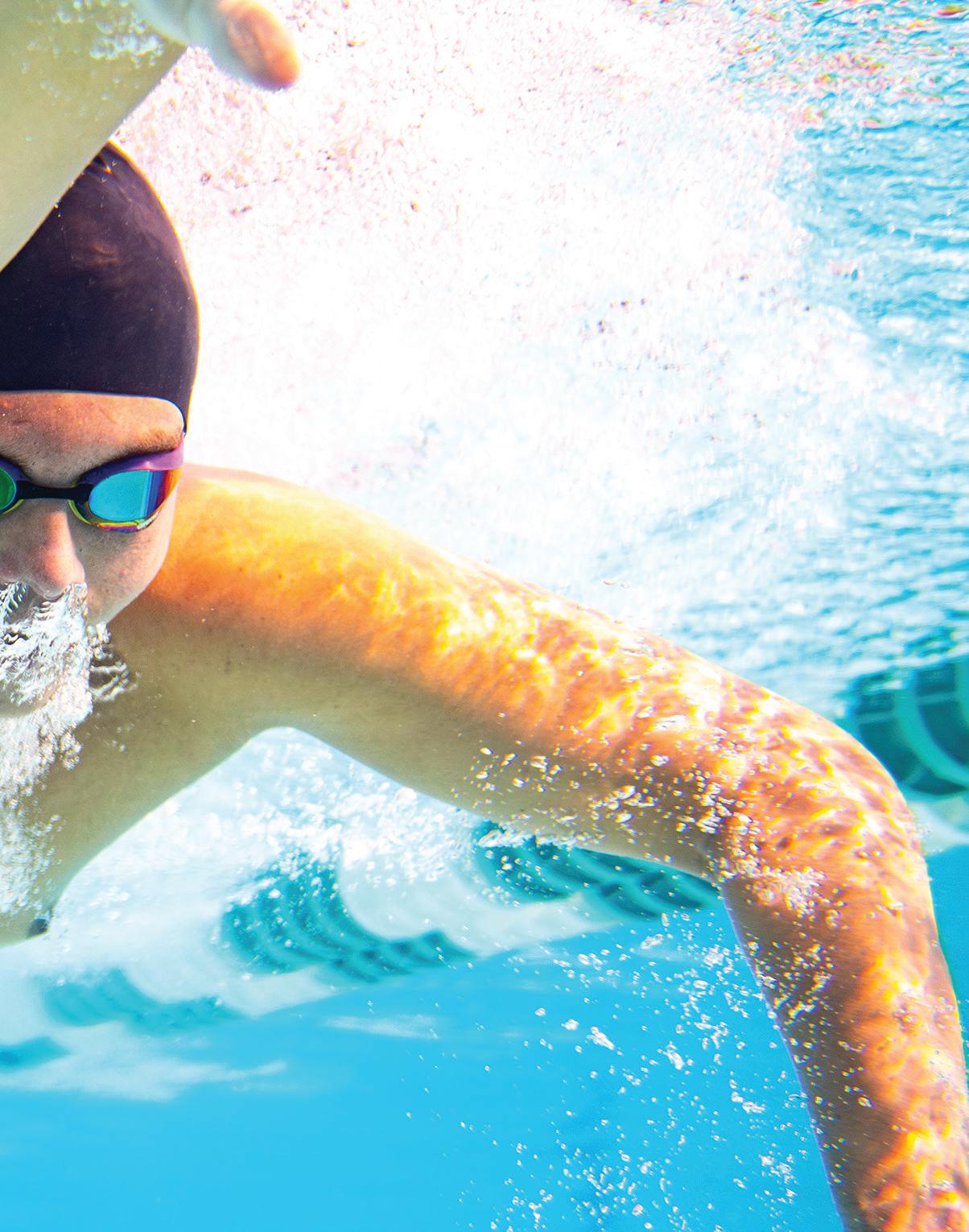
Tomasz Czajkowski (‘26) pushes through the water during an intense practice on Oct 29.
.
Photo by Dylan Fujita
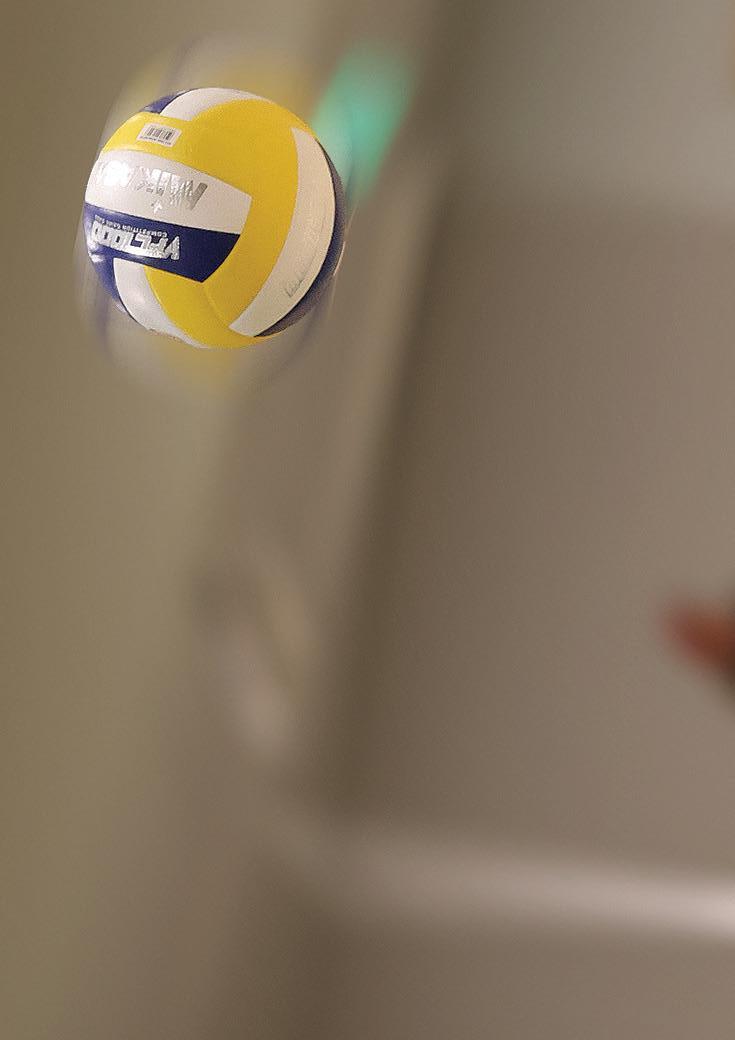
Reese Japic (‘26) begins to rise up to smash a serve during a 3-0 win vs Los Altos on Oct 9.
Time .
by Lucas Tung
Photo
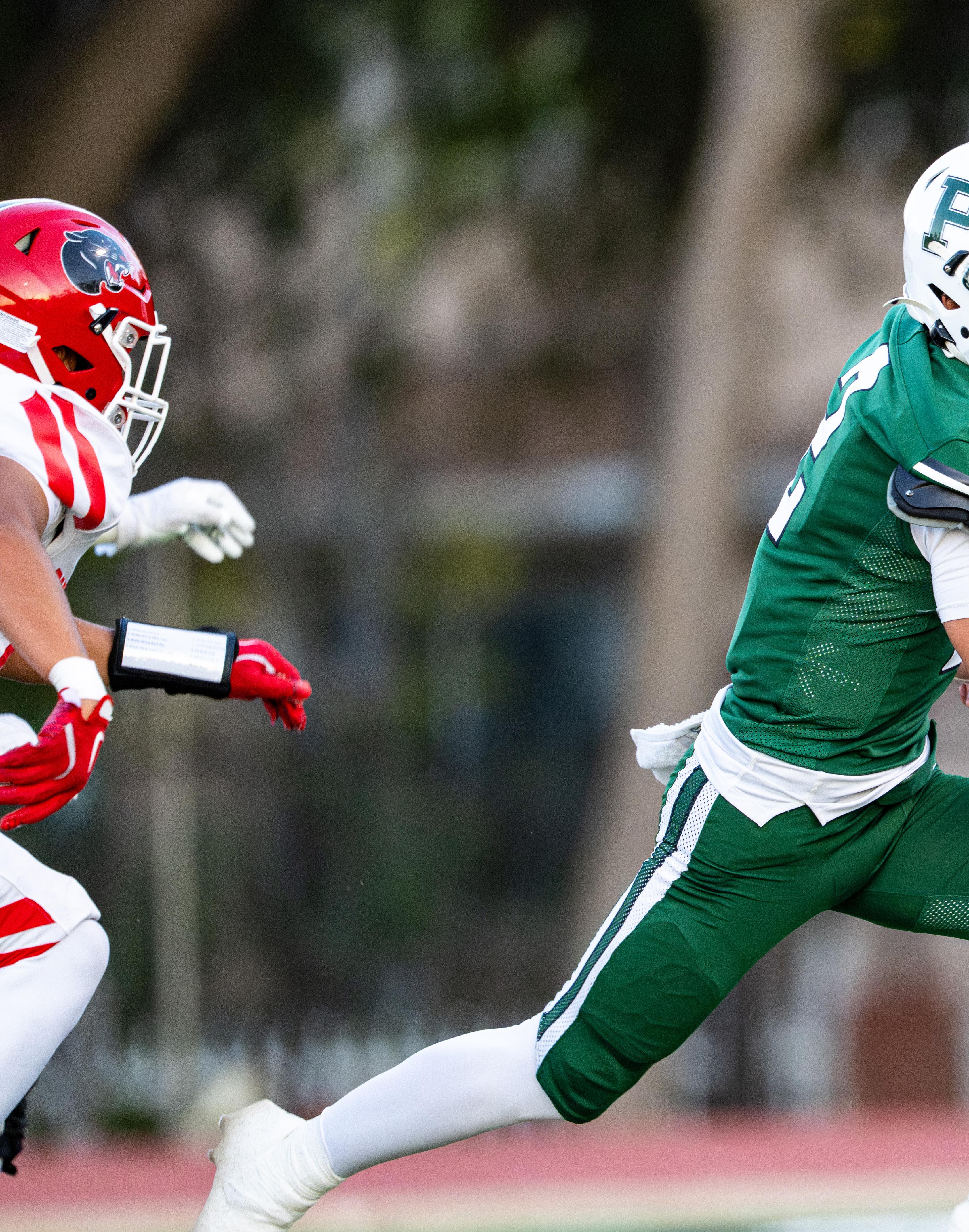

Foot race
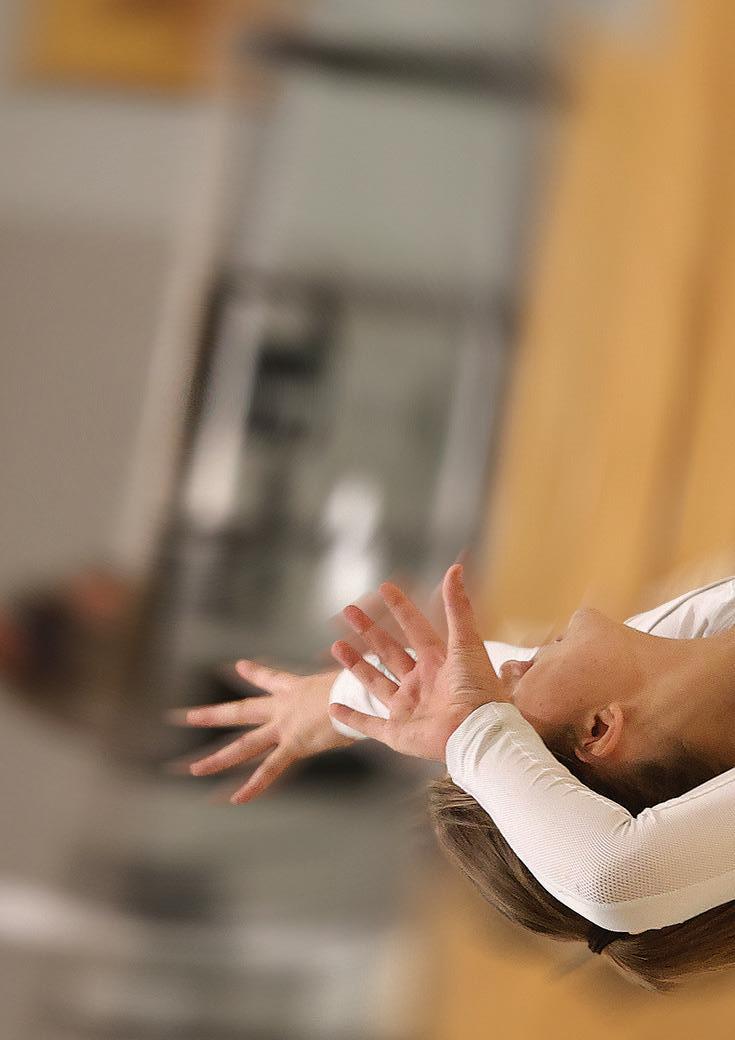
Justin Fung (‘27) sprints to escape a defender in a 3514 loss to Burlingame on Sept 4.
.
Photo by Dylan Fujita

HVIKINGSLIDAY GIFT-GUIDE

The holidays are coming around — the perfect time for gift giving! We asked athletes what their athletic gift of choice would be for the holidays.
By ZOE PASHALIDIS
“Sometimes I don’t have time to go home to eat, or even grab a snack at Town & Country. For days like those, some sort of bar would be good to have to help me not get burnt out at practice.”





“Golf clubs are a nice gift for anyone, as they last for a long time and lots of people can get into golf pretty easily.”


“Having a new pair of slippers to change into from cleats would be great for practice.”
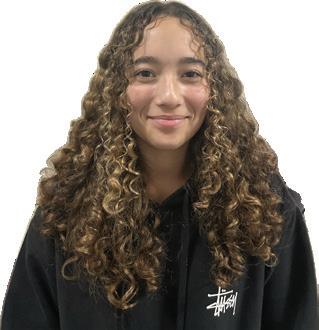
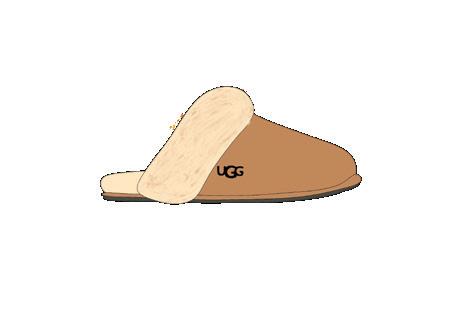

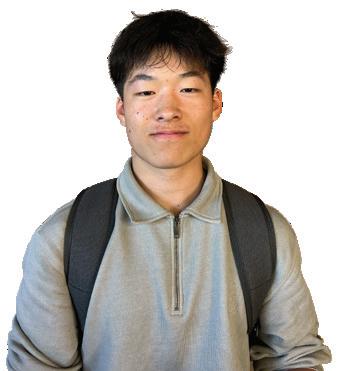

—DELILAH KAPLINSKY [‘26] WATER POLO
GOLF
—ELLA RENZCO-SPERLING [‘27] FIELD HOCKEY
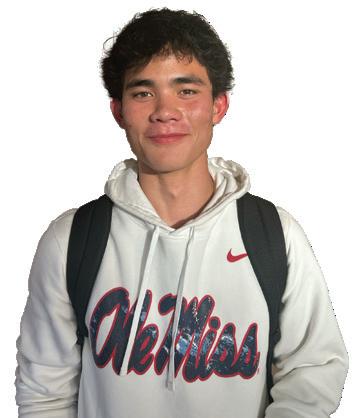
“Beats would be good because music is a big part of my everyday life. On game days, music helps me lock in and clear my mind, especially before a big game.”
—JUSTIN FUNG [‘27] BASEBALL

“A massage gun isn’t just a tool, it is my recovery coach. It is so important to keeping your muscles healthy.”
—MARIAH

[‘27] LACROSSE

“Losing socks is a weirdly common thing; they just seem to disappear. Socks make a great gift. You can never have too many.”

—YABY KETEMA [‘28] FLAG FOOTBALL
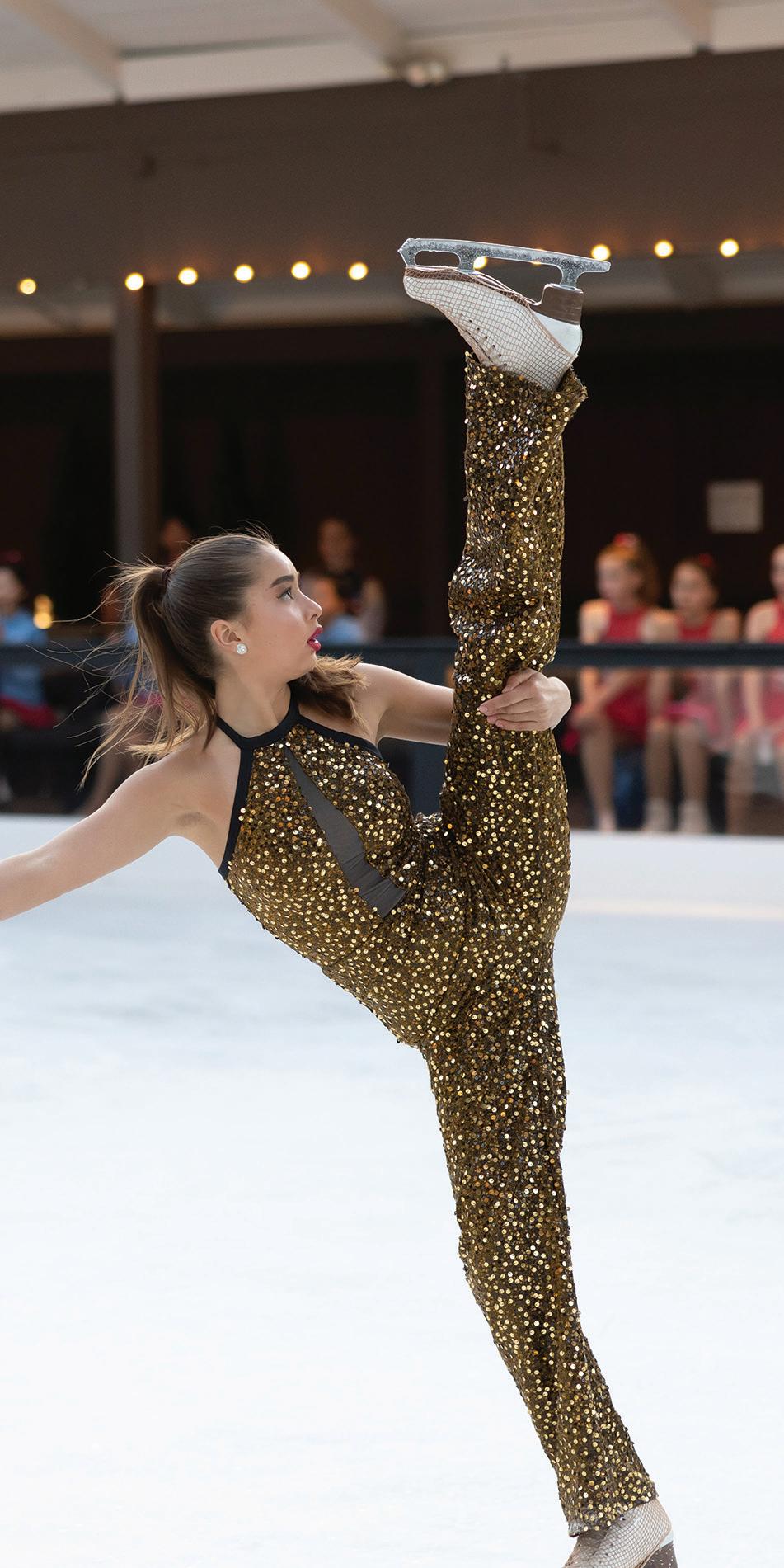
PerfectPair The
For some, the perfect holiday gift comes wrapped in paper. For Paly figure skater, junior Leilani Chen, it came tied in laces.
Chen started skating when she was four, switching between rental skates and pairs that she would outgrow quickly.
“A lot of the time, my sisters, cousins and I would get pre-loved skates from our school’s harvest festival,” Chen said. “There were always kids in the community who were skating and growing out of their shoes.”
Around two years after she started skating, one winter stood out. This was the year her dad gifted her first pair of brand-new, white skates.
“They looked like the ones the older girls wore,” Chen said. “It was exciting for me because I felt like I had something similar to the older girls that I looked up to.”
Now being one of the older girls herself, Chen sees that same spark in the younger girls that she once had.
“With being one of the older girls that’s on the more advanced teams, I can see younger skaters being really excited about having their own skates,” Chen said.
Chen also talks about how gear isn’t only equipment, but a milestone. “It’s a big turning point in a skater’s life,” Chen said. “Having my own skates and my skating gear made me more excited to skate and see what it could be like in my future.”
Now, more than a decade after Chen first started skating, she has her first pair of custom skates—made for her and only her.
“[The gift from my parents was] made to fit my ankles, arches, feet and the blade is specific to the jumps and spins I’m doing,” Chen said.
Overall, each pair of skates marks a different chapter in her journey: from skates picked up from the harvest festival, to her now custom boots that glide her across the ice.
BALL
Photo Courtesy of Leilani Chen
DISHING


telescopeTheStanfordDishisaradio whichisa150-footused(46m)diameterstructure forscientificresearch





Few trails are as iconic to Palo Alto as the Stanford Dish, and for Paly students this skyline trail seems to offer

OUT VIewS

‘it’s a really good source of exercise. It’s super pretty especially at sunset and you’re able to talk with your friends.”
— Mirai Matsuzawa (‘27)

“I visit around two times a month; it’s best around 2-4pm when the sun is out.”
-— Ben Laris (‘27)






All
ll
Access ccess
By DYLAN FUJITA, GREG GOODY and NATALYA KAOPSHILIN

From sportscasting to photography, many overlooked professions in the sports industry contribute just as much as the atheletes we all know and love.
When it comes to careers in professonal sports, most people think of the immediate roles, such as the players and coaches. However, jobs like sportscasting, photography and market ing are vital professions in the industry that are often overlooked.
These professions bring the sports industry together.
The photos that are reposted by your favorite team after a big win would not ex ist without photogra phers and the most in tense moments would be anticlimactic without brilliant announcers.
Many Paly alumni have pursued sports-related professions after high school, for example, Dave Feldman, who commen tates on the 49ers.
and sent tapes all over the country, and I got hired in Sioux City, Iowa, to be the number three sportscaster,” Feldman
“Ifeelappreciated, and I feel lucky to have this (SPORTSCASTING)job.” —DAVEFELDMAN(‘83)
Feldman attended Tufts University after graduating from Paly (‘83) and was an as sistant basketball coach at Stanford Uni versity after playing for two years at Tufts. He started with small programs and slowly climbed the broadcasting ladder.
“I had made a sportscasting demo tape in college, while interning at a TV station,
Since then, Feldman has moved up nouncing play by play college basketball and PGA tour golf for ESPN, but also hosts day for NBC Sports
ed and I feel lucky to have this job,”
ble accolades are cal emmys, five of which were
ery major sports broadcast at the college and

ers; however, the value they bring to the glected. A standard broadcasting booth consists of two people: one play-by-play commentator and a color commentator. The play-by-play commentator is re-
sponsible for describing the action that is currently happening on the court or field, in addition to adding excitement and emotion to the events that unfold. These commentators are often individuals who secure their positions by climbing the traditional professional ladder. Famous play-by-play announcers include Al Michaels, Mike Breen, Joe Buck and Jim Nantz. Color commentators, on the other hand, are often former professionals who already had well-established careers in the sport they are announcing. Their first-hand experience allows them to break down strategies and explain key moments during the broadcast. Famous color commentators include Tom Brady, Tony Romo and Doris Burke.
The amount of preparation that is needed to be an announcer is another factor that is frequently undermined. Sports broadcasters at the professional level often have to go to team practices and meetings in order to familiarize themselves with the players and the play style of the team. Almost every broadcaster writes a broadcast board for every game with lots of important information, including player names, notable injuries, notable story lines, etc.
Skylar Burnett (‘23) is attending Indiana University, majoring in sports marketing and business. She successfully landed an internship with the department of sports

marketing at Indiana and has made the most of her opportunity thus far.
“I partake in weekly office hours and assist in sporting events throughout the school year,” Burnett said.
Internships build credibility and reputation for future job opportunities, in an industry like sports they really help set you apart from the competition for jobs.
“The former head of the department was one of my professors last year and I made sure to introduce myself and show interest in the Athletic Marketing Department,” Burnett said. “It’s also essential to be passionate about your work and strive to do your best in any role you take on. Keeping a positive attitude and being open to constructive criticism are just as important.”
To many, a future in sports adjacent careers can be just as appealing as becoming a professional athlete. Paly junior Elsa Packard has been dancing ballet for 13 years. Even though Elsa loved ballet, she never considered a professional career as a ballerina because she didn’t see it as realistic. Elsa entertained the idea of becoming a doctor for some time; however, the prospect of years of schooling did not sound very appealing.
“I feel like somewhere in the middle, I like to discover or like, I learned about PT and then the more I thought about it, the more I was like, oh, PT could actually be the perfect blend of a career in health and ballet,” Packard said.
PT, or physical therapy, evaluates a patient’s condition and creates a personalized treatment plan that includes exercises, stretches and hands-on techniques like massage and joint manipulation to improve movement, manage pain and increase function. PT is very common among athletes because it helps them recover faster from injuries, reduces the risk of future injuries and enhances overall performance, ensuring that they are physically fit to perform their best at all times. More specifically, PT in regards to ballet looks a little different then standard PT.
“[Physical therapy] for ballet dancers, is really hard,” Packard said. “We have such targeted muscle groups and stuff that no other sport does. Like, we have flexibility and we have strength and legs and back and arms.”
Elsa Packard was intrigued by the idea of a professional career in ballet-focused physical therapy after starting PT to help her with her many injuries from ballet over the years.
“I don’t wanna be stuck with a job that
I don’t relate to or don’t find interesting,” Packard said. “I want to do something that I can benefit from and wake up every morning and enjoy. I want to be able to help people, just like the people who help me.”
Since Packard is only a junior, she is still exploring what this potential career would entail. At Paly with classes like Sports Med, students have the oppor tunity to dip their feet into sports medicine.
“Next year I plan on taking sports med class to hopefully help me get a better sense of what PT in ballet would be like and also just explore this area and see if it opens up any signs of passion for me,” Packard said.
Former Viking Ed itor-in-Chief Tyler Frick (‘24) currently attends the Univer sity of Michigan, ma joring in sports man agement. This past summer, he attended an internship back home at Stanford University.
around the program back to what it once was. This allowed Frick to observe some of the tough choices that have to be made in College Sports, and how recruiting works in the NIL era.
Stanford hired interim Head Coach

Frick learned under Andrew Luck in his first season as a General Manager. Stanford Football is undergoing a major rebuild currently, and Luck has been tasked with turning
started,” Yuen said. “Fortunately, I was able to get a couple of positions that got
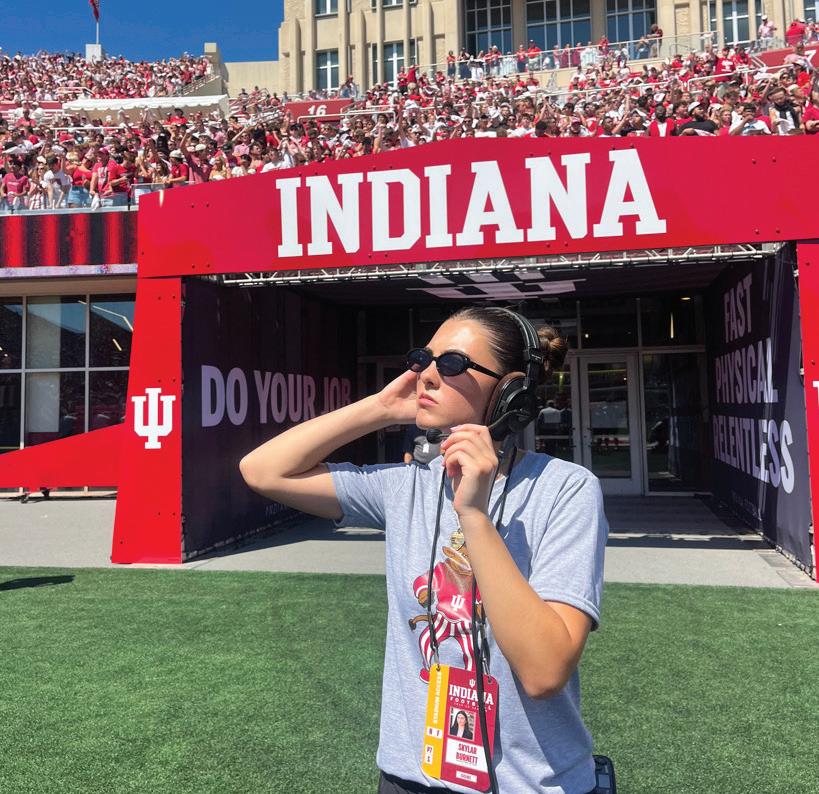
Skylar Burnett attends an Indiana University football game as a part of the sports marketing program.
Photo Courtesy of Skylar Burnett.
my foot in the door, and got to meet some really cool people.”
After initially taking on small roles during the peak of the pandemic like a replay audio system assistant, market ing, ticketing analytics and independent research, Yuen landed his current job as someone working with domestic player evaluations for the Miami Marlins.
One of the main factors discourag ing many people to pursue a career in sports is the misconception that they won’t make a strong impact on a sports organization or simply a lack of aware ness of the wide range of roles available in the industry. The reality is that profes sional sports teams are businesses in the entertainment industry in the same way that Google and Apple are businesses in the tech industry.
“It’s an entertainment industry, it’s a winning driven industry, it’s driven by putting fans in seats,” Yuen said. “This doesn’t happen overnight, you have to sell your tickets at a certain price, you need to have guest services, you need to have vendors, relationships with the league office, media relations, there are just a lot of different avenues in how the operation gets executed.”
industry. Yuen sets the record straight.
“Whether I was on the baseball operations side, or the business side, or the media video tech room, my role wasn’t like front and center; I was just lucky to have it,” Yuen said. “There are a lot of different ways to create value in an organization, even if it isn’t front and center.”
The thing that makes the sports industry unique is that there is no specific degree or specialized skill that you need to enter the field. It is an industry that truly rewards people’s
journalism classes and publications at Paly that I can’t recommend enough. Be less concerned about what you want to study and college and focus more about what kind of question you want to answer,” Yuan said.
Another career in sports that doesn’t always get seen is photography. It’s an essential part of how fans experience sports because it captures the most iconic moments from big wins to quite emotional moments. Photographers are constantly battling for positions and whatever it takes to get the perfect shot. Working right next to elite athletes, they often end up soaked, muddy, or even trampled over in the process. Most people only see the final photo that gets posted, not the chaos that went into taking it.
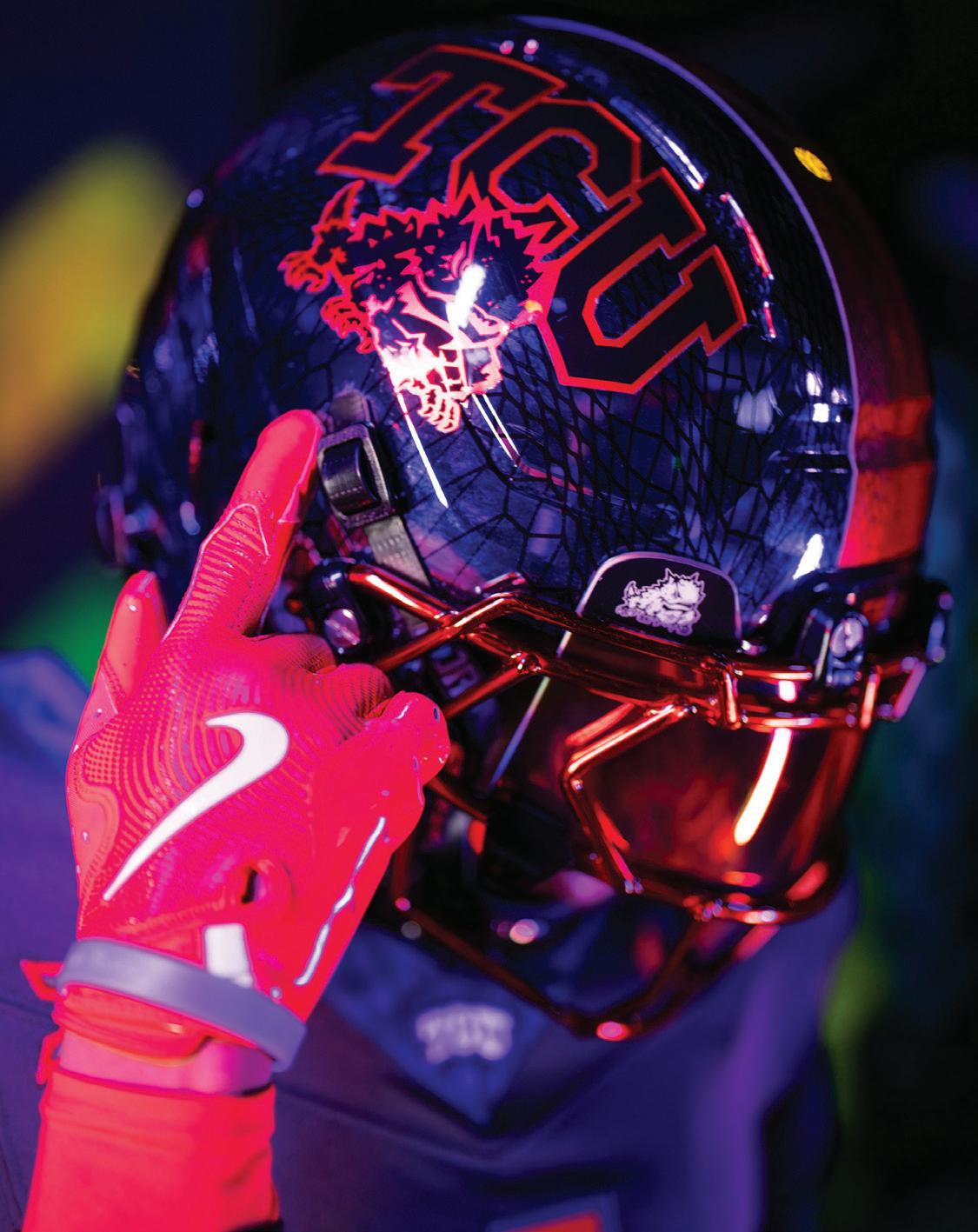
Paly alum Tyler Wong (‘23), now part of the creative media team at Texas Christian University (TCU), knows exactly what that’s like and the full process of what goes into sports photography and he knows the best ways to get involved in these programs.
“I emailed the director of creative con-

A common misconception for sports fans is that high-profile jobs like general manager are the only jobs that can gain someone recognition in the sports
“There are a lot of differentways to create value in an organization,even if it isn’t frontand center.”
—JOshYUEN(‘16)
“When you take classes in econ, or psychology, you start to learn how to solve problems and those skills translate to the sports industry and that is definitely something that is applied in my career,” Yuan said. “The classes teach you how to solve problems, and there are sports
it looks. Photographers have to deal with harsh lighting, fast action and the pressure of capturing moments that happen in an instant. Through his work, Wong has had a variety of memorable moments. One being his first trip on the road photographing at the BIG XII Swim
Photo by Tyler Wong at Texas Christian University football media day.
and Dive Championships.
“I met some of the coolest people I know and some of my closest friends at TCU,” Wong said. “Working 12 hours a day was exhausting but I had a blast and wouldn’t have it any other way.”
It’s a fast-paced and unpredictable work environment, but that’s part of what makes this job so fun and exciting. Even though photographers aren’t the ones scoring or coaching, their work is what fans see firsthand on social media and news headlines. Every photo shared and every highlight posted starts with someone behind the camera.
“The athletes appreciate what we do so much and it means a lot when one of them acknowledges you and thanks you for making them look good on social media with a fire pic or cool edit,” Wong said.
For Wong, the motivation comes from knowing that a single image can tell an
entire story. His work has a major impact on the athletes, coaches, fans, as well as the community as a whole.
“One thing that keeps me mo tivated is the thought of how many other people would want to be in my shoes,” Wong said. “I love what I do and it’s a blessing to enjoy what I will do to support myself and my family in the future.”
Through his ex periences, Wong has learned the best ways to become a sports photographer.
“Keep working, know your val ue and to be honest, most impor tantly build genuine connections and relationships,” Wong said. “Those will get you so much further than having extreme

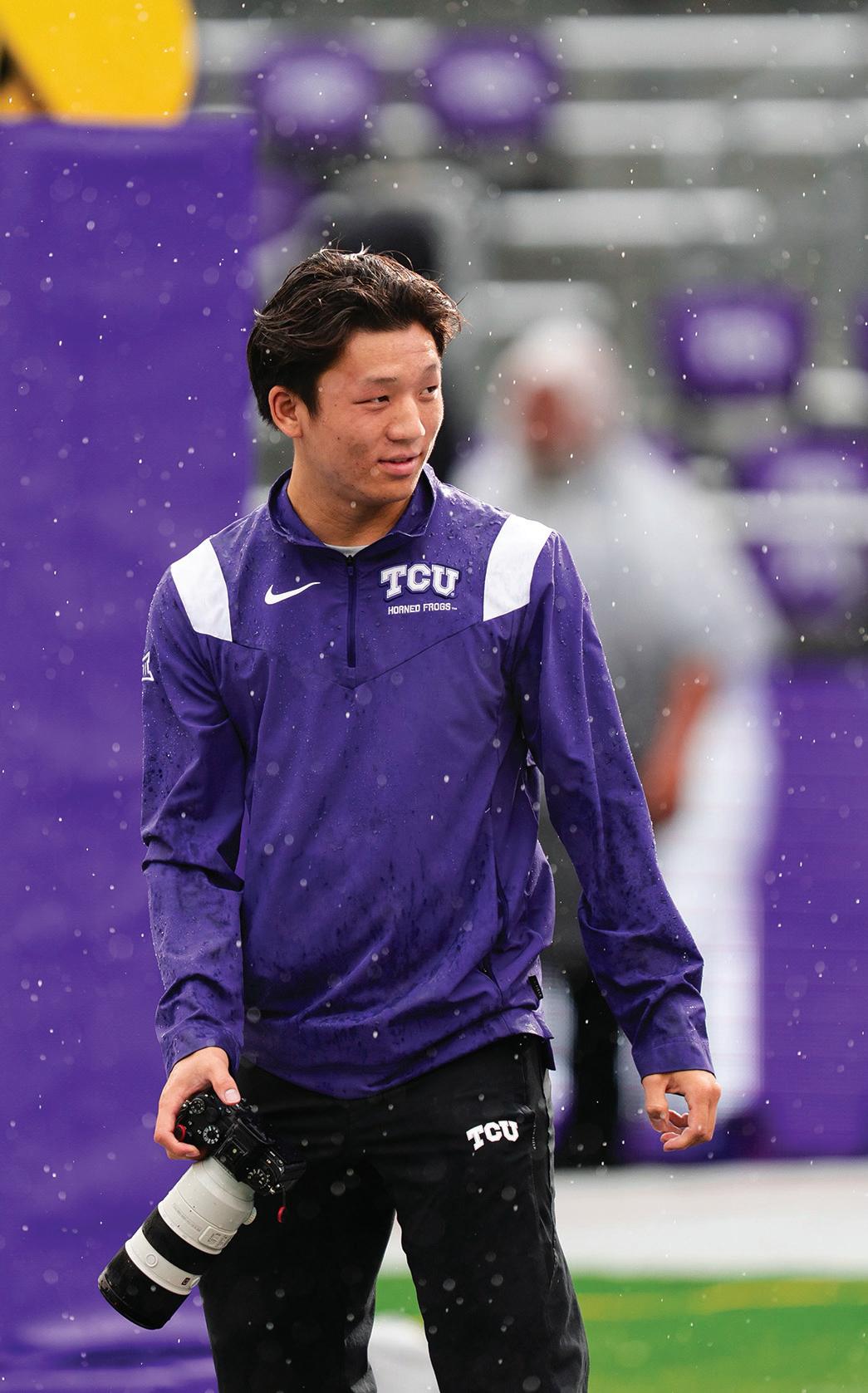
Sports photography is just one of many careers that show there’s a lot more happening in sports than what’s just seen on the playing field. It’s also about the people capturing those moments and turning them into lifelong memories.
Two positions that are often never seen or recognized by the average viewer are dietitians and equipment managers. These two positions at the college and professional level are similar in that they do everything to make sure the players are the most ready for their game days.
Equipment managers are in charge of all the uniforms and equipment. It is a lot of work to prepare 60 uniforms week in and week out — it is even harder when the team is wearing a throwback jersey or an alternate jersey and they have to change up their routines. They are also in charge of getting balls ready for in-game use, as there are specific requirements each
ball has to meet before being used in a game. Dietitians are another position that have to do similar tasks. NFL dietitians have the responsibility of making sure all players have the nutrients and fuel to perform at the best during game day. Every player has different foods and liquids that they need based on their weight and position. Dietitians often have to prepare meals and snacks ahead of time to make sure they have the proper food ready for all players both before and during games and practices. A lot of NFL teams also create their own unique electrolyte drinks and bars that are specifically designed for professional athletes and not commercially made. Dietitians play a huge role in the physical shape of athletes and that translates greatly to in-game performance.
Even if you aren’t athletically gifted, there are still countless opportunities in sports beyond being a player.
For students with interests in pursuing these career paths, it is important to start learning early and gaining as much experience and knowledge as possible.
“Get as much information as you can, like, know everything you can about all kinds of different sports and just be as knowledgeable as you can, and be yourself,” Feldman said.
Whether it’s broadcasting, sports management, or sports photography, there is a place for every kind of passion in the sports industry. The key is to keep an open mindset and to never be afraid to take the first step into a field you are passionate about.
Photographer Tyler Wong captures a Texas Christian University home football game.

MIND OVER MOUNTAIN MOUNTAIN
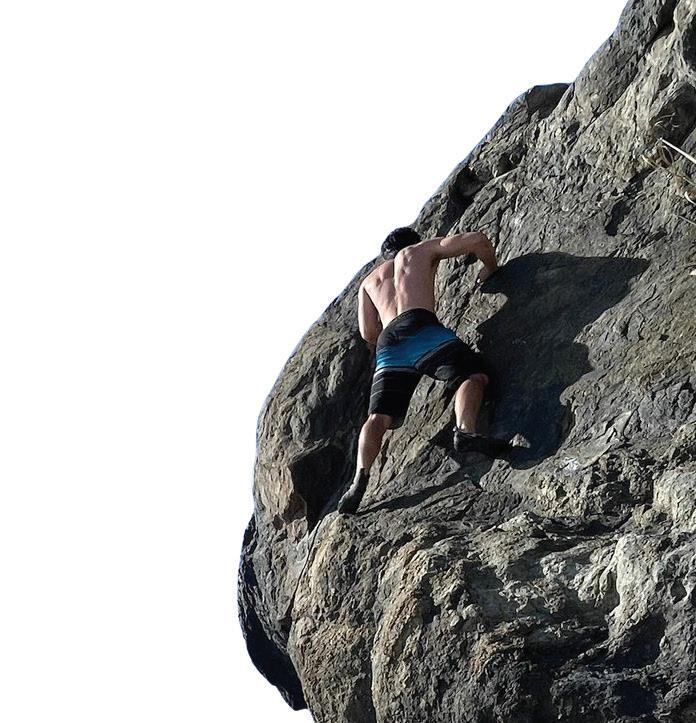
You cling to the rock, arms burning, muscles aching and heart pounding. Every movement is careful, concise and strategic. For many Paly students, that is what makes rock climbing so enticing and enjoyable.



Rock climbing has become one of the fastest growing outdoor sports and has attracted people from many different areas; from serious athletes to people who just love the outdoors. Once considered an extreme outdoor activity, rock climbing has evolved into an enjoyable activity for people to test their physical and men climbs.
rock climbing has become a fun and refreshing alternative to traditional sports. The reason for this appeal is not just for the physical challenge but also for the mental challenge that rock climbing involves. Climbing is a great way for students and athletes to step away from their schoolwork and focus on the outdoors.
Senior Emmett Stewart discovered bouldering in high school and shares how he has found it to be rewarding and one of his favorite activities.
That trip included outdoor rock climbing, which gave Defendi-Cho a real appreciation of how difficult rock climbing is. Outdoor rock climbing presents climbers with unique challenges, which include unpredictable weather and difficult routes.
Although rock climbing might look easy and straight forward, it requires a high level of body control and awareness. One aspect that is tough and difficult for many people are the techniques needed to be a successful climber.
I love rock climbing because of how it pushes my limits and brings many different challenges.”
“I got into bouldering from a friend of about three months now.”

“Bouldering is a test of strength because it requires you to be physically strong and you also have to mentally visualize the moves,” Defendi-Cho said. “It requires a lot of practice to get good technique and climbing too often can also cause injury.”
For many Paly athletes and students,
Bouldering and rock climbing can also prepare you for trips outdoors. Defendi-Cho learned rock climbing for the purpose of his trip to Wyoming.
“I did a rock climbing trip this summer in Wyoming for three weeks,” Defendi-Cho said. “So I started climbing this April in order to prepare for it.”
“I was a solid beginner starting better than most, but there was definitely a learning curve when it came to foot mechanics and other specific mechanics that took a while to get a hang of,” Stewart said.
Among the difficult techniques involved for new athletes in rock climbing, the most specific and difficult type of technique is footwork. Many people new to rock climbing rely too much on their upper body strength, but soon realize that balance and technique are just as important.
“My biggest challenge was accepting that I had to learn correct footwork and learn how to shift my body weight in order to progress,” Chang said. By not learning the correct footwork and how to shift your weight, there can be challenges that prevent the climber from improving. In addition to technique, rock climbing comes with a huge injury risk, as the sport requires you to be suspended in the air and the repetitive gripping motions can cause the fingers and skin to wear down.
“For beginners, it is very common to peel open calluses, causing flappers that take a week to fully heal, though most people just tape over it and keep climbing,” Chang said. “Other injuries in tendons are very common, like Tendonitis, especially in the fingers.”
A common assumption for rock climb-
By

Rock climbing has become one of the fastest-growing sports and a favorite activity for Paly students looking for both physical and mental challenge.
AMANDA GOODY and JAKE LIU
photos courtesy of GIULIO DEFENDI-CHO and NATHAN CHANG


My biggest challenge was accepting that I had to learn correct footwork and how to shift my weight in order to progress.”
—chang ‘26


Aby IAN CIERNIAK and LUCAS TUNG
oundAries end ng
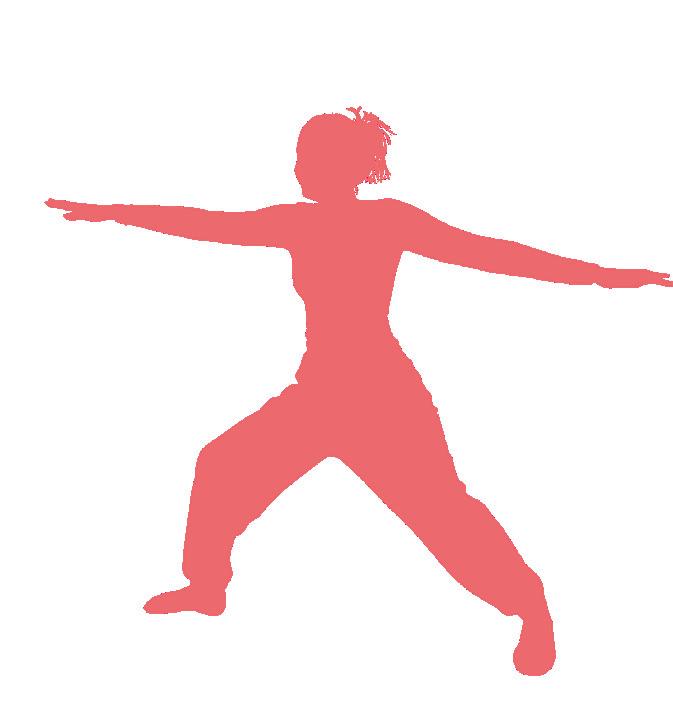
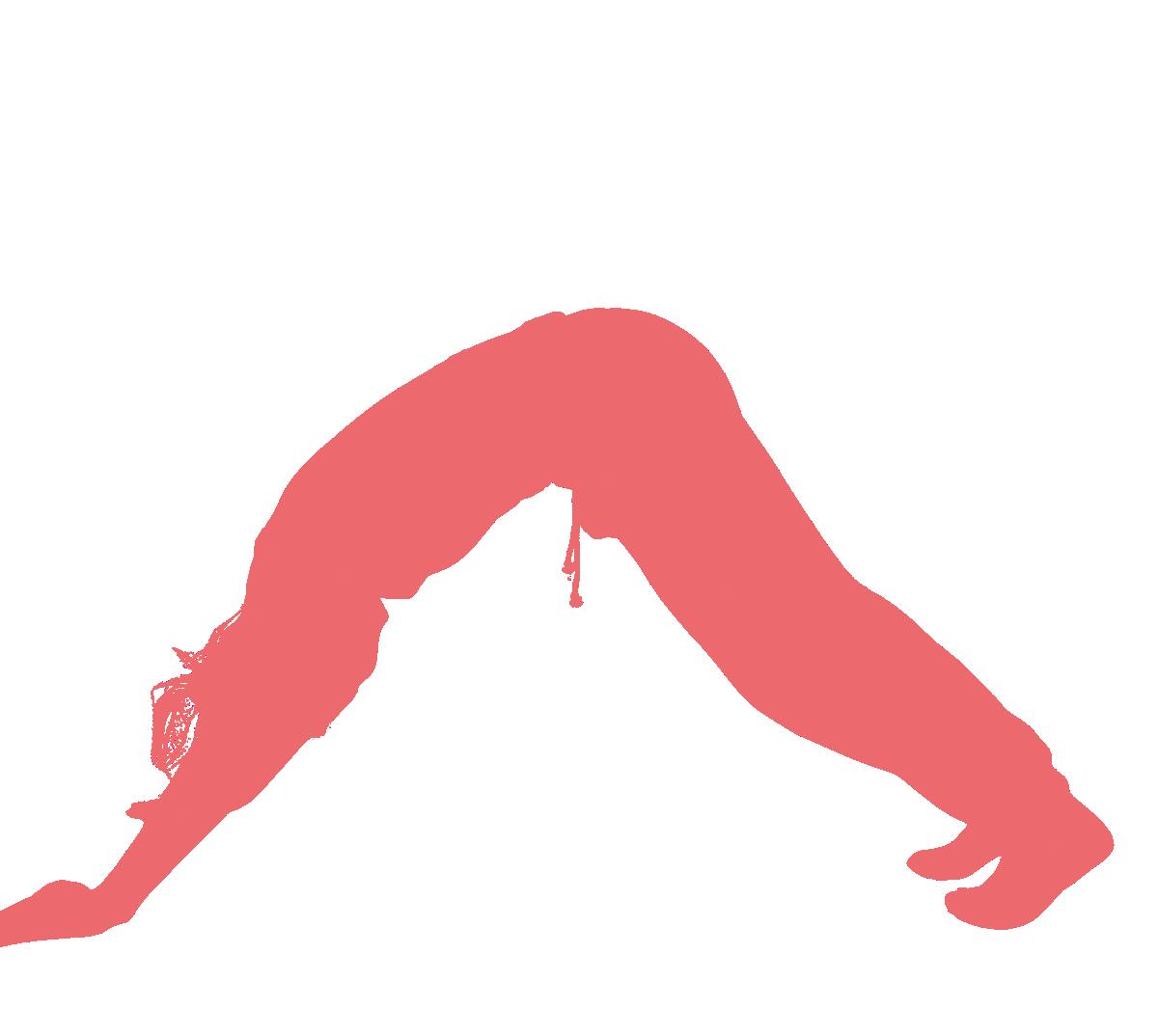
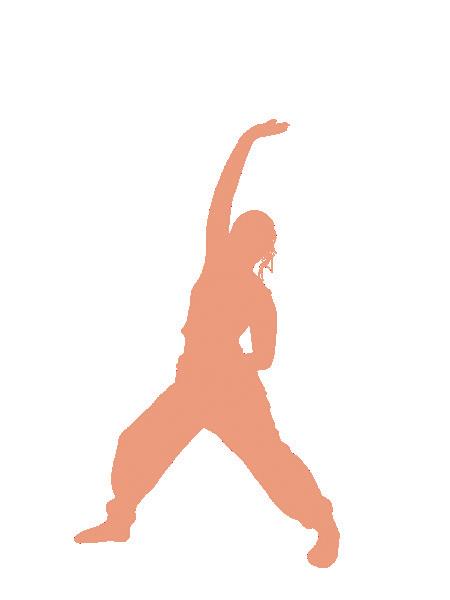
Yoga’s popularity has surged in recent years at Paly, as have stereotypes around it. Students and teachers speak on the truths and falsehoods about them.
the physical benefits.
sometimes assume there’s something
their mats, take deep breaths, and go through stretches in a calming revolution known as yoga. With a history spanning 5,000 years, rooted in India, yoga’s popularity has spiked in recent years. From bustling cities to tranquil towns, people of all ages and backgrounds are incorporating yoga into their daily routines to find strength, calm and connection.
What started as a simple search for relaxation turned into a lasting passion for Paly sophomore Anita Schaunberg, who found both strength and serenity through yoga.
“I started doing yoga about a year ago at CorePower Yoga in Town & Country because I wanted something that would help me relax while staying active,” Schaunberg said.
Yoga isn’t just a series of stretches and poses for her; it combines physical movement, controlled breathing and mindfulness to create a calming connection. The word yoga itself means “to unite”, symbolizing the connection between your body and your mind. In today’s hectic world, yoga provides a way to slow down as screens, tight schedules and stress fill our days. Most yogis are first drawn to the mental and physical benefits that come with the routine. According to Johns Hopkins Medicine, yoga “improves strength, balance, and flexibility” and “helps back pain, eases arthritis, and benefits heart health” for older individuals.
But the mental benefits can be just as powerful and for some — exceed
According to a study by Johns Hopkins Medicine, Yoga helps with sleep, reduces anxiety and leads to better moods overall. The recent rise in popularity of yoga has also impacted the younger generations.
“It used to seem like something only adults did, but now it’s super popular among teens, too,” Schaunberg said. “When I go to CorePower, there are people of all ages there.”
Over the past decade, yoga has surged in popularity among younger generations. According to NIH, in 2012, only 3.1% of children annually practiced yoga, and by 2022, that number shot up to 12.3%. There is also an increase in the adult community for yoga participation. According to NPR, in the last 20 years, the adult population’s yoga participation has increased from 5% to 16%.
Schaunberg is not the only member included in the growing number of teens finding calm and exercise through yoga. Students like junior Azad Muralidhara are

complex exercise positions, and the whole thing feels like a solid routine.”

exercise positions, and the whole thing feels like a solid routine. I feel good afterward, focused and calm.”
Sheri Mulroe, the founder of the yoga program at Paly and teacher of the class for nine years, explains how yoga is for everybody, no matter the gender or age.
To some prospective yogis, the fear of a gender-based stigma around the sport can be misleading. Mulroe notes that in her yoga classes, there is a female majority, but there are exceptions.
“There have been years where I’ve had a very big contingent of boys and not just boys — varsity male athletes,” Mulroe said. “Football players, basketball players, baseball players — so it just depends on the year.”
Yoga has been female-
dominated since its creation, but there has been a surge of male yoga participation in recent years. According to Indiayogashala, 72% of yoga practitioners are female while only 28% are male — but in the last four years the number of male yogis has jumped from four million to 10 million. They also noted that in certain countries, like China and India, it is closer to a 60% to 40% split.
Many male professional athletes have also recently started incorporating yoga into their daily routine such as notable athletes like Tom Brady, Kevin Durant and Blake Griffin.
“It used to seem like something only adults did, but now it’s super popular among teens, too.”

— Anita Schauenberg (‘28)
You can start at any age, with any level of athletic ability, and often from the comfort of your own home.
At Paly, Mulroe works hard to make yoga accessible to all students.
“This is our ninth year of the program,” Ms. Mulroe said. “I started it myself — wrote the curriculum, petitioned the board and all that — because we wanted to address some of the mental health crisis.”
Yoga is a diverse genre of exercise with many different subcategories. For example, studios like CoreYoga offer “Heated Yoga”, which is more intense and directed at burning large amounts of calories.
“It is a workout, no matter what people say — for me, the mental part is just as big as the physical part,” Griffin told Sports Illustrated.


“It kind of lets my mind be at ease and takes my mind off of whatever is going on.”
“If you’ve ever been to CorePower, you know — even if it’s not one of the superhot classes, you walk out drenched,” Mulroe said. “You could literally wring out your clothes, and sweat would just drip out.”
The class Paly offers puts an emphasis on learning the fundamentals while promoting mindfulness. Students practice beginner-friendly poses like catcow, bird dog and warrior sequences. Over the course of the class, these movements become more technical, but build gradually.
“It definitely builds flexibility, and it does build strength as well,” Mulroe said. “Some kids recently told me they definitely feel like they’re getting stronger.”
Mulroe also recognizes how some coaches encourage their players to sign up for the program. Most coaches emphasize the value of athletes getting their bodies ready for the season and Mulroe believes that yoga can help with that preparation.
Through programs like this, yoga becomes more than just a class: it’s a space to unwind, recharge and build lifelong wellness habits. Whether practiced in a studio or a school gym, yoga’s true power comes from its accessibility, offering both physical strength and mental clarity to those willing to give yoga a try.

“Most coaches want their athletes to work on flexibility,” Mulroe said. “And yoga can help with injury prevention.”
Yoga doesn’t solely provide benefits to athletes, though. The exercises’ accessibility is one of its biggest strengths. To many, finding a good starting point can be challenging. From crowded studios to complex poses, the first steps to becoming a yogi may be intimidating. However, yoga is one of the most accessible forms of exercise.
As yoga continues to spread from ancient tradition to modern lifestyle, its impact reaches far beyond the mat. What many deem as a niche practice has become a universal path toward balance through the work of those such as Mulroe.
From professional athletes to high school students, yoga offers a return to tranquility and a break from the stress of everyday life. Whether someone starts to build strength, improve flexibility or simply take a mental break, yoga’s beauty lies in its openness to everyone. For many, that first deep breath on the mat is just the beginning of a lifelong journey toward calm, connection and self-discovery.


Raising Floor

THEWith the Dodgers dominating the past two years, some fans want a MLB salary cap. But instead of limiting big market teams, the league needs a salary floor to ensure small market teams invest in their
You can’t blame the players for choosing a contract that pays them more.
The Dodgers just won back-to-back World Series and have built one of the most stacked rosters in baseball history tracts. The Dodgers avoid major issues with the luxury tax by setting up their big ferred money. For example, with Shohei Ohtani’s record-breaking deal, they will pay him $2 million every year and defer the other $68 million to be paid at the
The Dodgers’ dominance over the past two years has made many fans and teams call for the MLB to implement a salary cap. Fans argue that the Dodgers’ sible for other teams to have a fighting chance. However, the Dodgers’ most recent World Series win was far from dominating. The Dodgers had the worst batting average ever for a team that won the World Series. In addition to that, they ing to the Toronto Blue Jays who defied ter a long history of struggling seasons. The 2025 World Series racked up one of the highest viewership numbers in MLB up made the game more exciting and iconic. The problem with the MLB isn’t the teams at the top, it’s the teams at the
ing not to spend large sums on signing big players because it would limit the
teams would not be incentivised to ad- because the owners aren’t even making
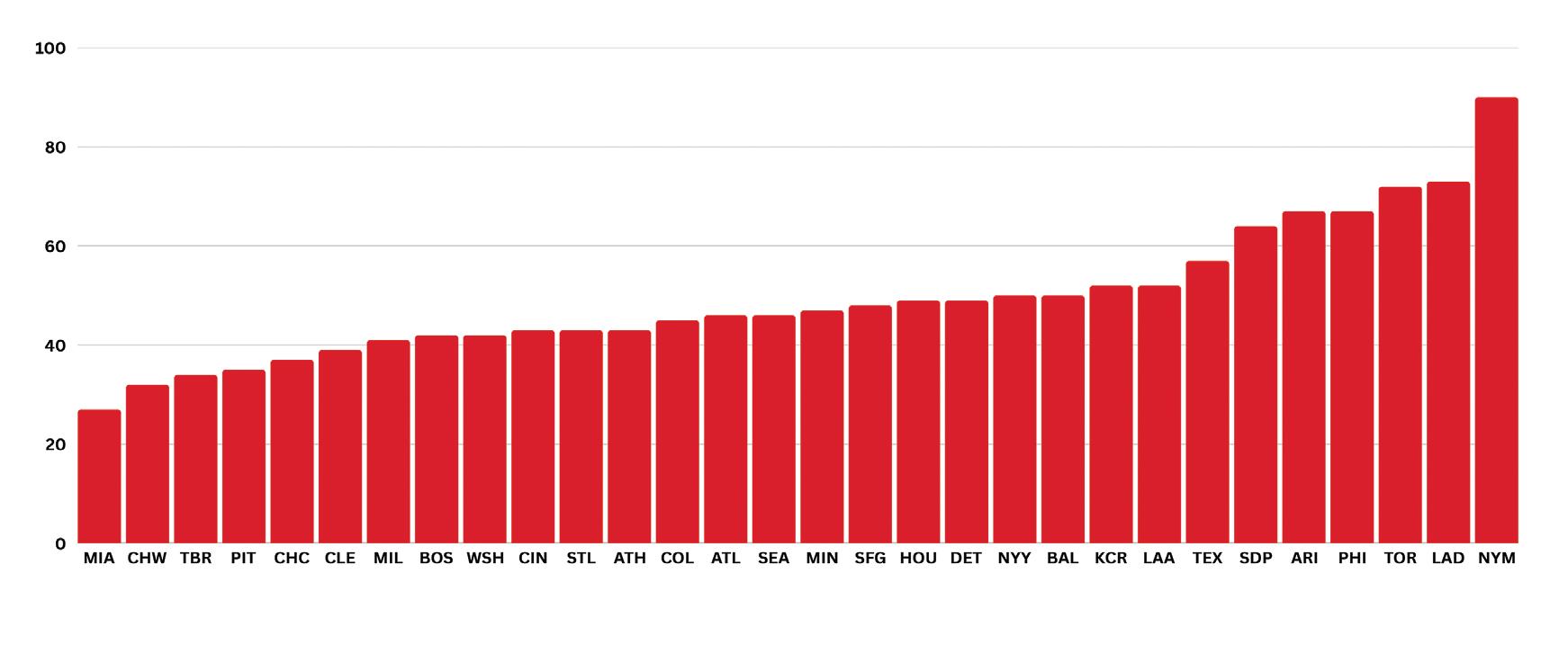
Percent revenue used on payroll by Team (24-25)
A significant amount of MLB teams use 50% or less of their total revenue to pay their players.

ABy CARTER BURNETT, LUKE JOACHIM and MICHAEL WU
echnology
ake ver

Rapid advancements in technology and AI have made their involvement in sports irreplaceable.
fter striking a drive on the middle of the fairway, sophomore Matteo Rosas needs to know how far away the pin is to get the right club for his next stroke. Using his rangefinder allows him to know the exact distance he is from the pin, so he can pick the club that he feels most comfortable hitting from that far out.
In golf, the use of technology is essential for almost every stroke. Whether it is calculating wind speed or getting the distance of the green, without the use of technology, golfers would have to rely on their feel, increasing the chance of error in a game where the smallest mistake can have major consequences.
“By using a rangefinder, I can get an accurate representation of the factors that will affect my shot, which makes a huge difference in a game where every stroke matters,” Rosas said.
Golf is one of the sports that has evolved the most with the improvement of technology over time. The most substantial change over the past few years is the improvement of the professional viewing experience on TV with the addition of ball tracer technology.
Prior to the mid-2010s, a golf broadcast
would generally show the player hitting the ball and cutting to a shot of the ball landing. The audience would be unable to see the shape or trajectory of the shot.
Now, with developments in companies like Trackman, using military grade radar technology, the PGA and other professional golf tours are now able to show the exact launch, height and speed of the ball for almost every shot. Not only professionals use it to help them train as anybody can buy the technology.
For senior Paly golfer Dylan Liao, the Trackman has greatly changed the way he practices.
“My Trackman gives me feedback on my ball speed, distance and spin rate,” Liao said.
Knowing this important information during range sessions allows players to understand their club distances better, which allows them to perform better on the course.
The balls do not have chips in them, the tracer is purely determined by club face contact and speed and initial launch.
For the professional tours, getting pinpoint accuracy requires them to set up behind every tee shot, a camera and a Trackman. Whenever you are watching
the PGA, they always have some tall covered pole behind the tee box, that’s the Trackman tower. They also have various radar towers set up around the course to confirm the landing spot of many shots. These towers are often disguised as trees, so you don’t actually know they are there.
Even with tracer technology, it can still be difficult to cover every shot and everything that is happening on large 7000 yard golf courses during a professional tournament. What is unique about golf is that there are alternative ways to effectively follow what is going on in a tournament without actually watching the TV broadcast. The PGA is unable to show every shot on TV, but they record every single shot. They use radar technology to predict the location of every single shot, and they have a designated employee who follows every group and confirms the location and immediately sends it to the PGA website in real time. This way, when looking at the website, fans can view the location of every single shot that is happening on the course all at once. Apple, with its new Vision Pro, also developed a feature where you can view these shots on the course from a three-dimen

important“Itoffersme insightfacetsintodifferent—Paultraining.”ofmy Wang‘26

able for anybody to purchase.
Getting accurate distances is also essential to being successful at golf. Professionals are actually not allowed to use any technology to assist them with distances during a pro event. Instead, they have to use paper yardage books and discuss with their caddies to determine the distance of the shot they have to hit. On the other hand, the casual golfer has many tech options to find their distance. You can purchase rangefinders for around $200 that use radar to give you the distance to any object in the distance. However, if you can’t afford a rangefinder, there are many free apps on the App Store, like 19 Holes and 18 Birdies, that allow you to use GPS to find distance on any golf course. The apps are less accurate, but they are more accessible.
Sports apps have become very popular amongst athletes and are not only used
competitive runners use the app to analyze and im prove their performance both during races and practice. Junior Paul Wang is a cross-country athlete who consistently uses the app.
“It offers me important insight into different facets of my training,” Wang said.
Like many other fitness apps, it provides different plans, including a free and subscription-based pro gram. For students, the subscription costs $3.33 per month and unlocks many advanced features, including ad vanced data analysis and route creation. While the pro version isn’t for everyone, for many, the advanced version provides many benefits. For less serious runners, the free version serves as enough because they don’t need the extensive data
that comes with the paid version.
“I personally use the paid plan because it unlocks a lot of premium features, including insights, but I think it’s really not that necessary for everyone,” Wang said.
While the pro version has many advantages, the added features can make the user interface more cumbersome and difficult to navigate.
Not every athlete at Paly enjoys the incorporation of technology into their respective sports. For seniorDaniel Rainey, the track and field captain at Paly, the incorporation of Strava into training has started to become problematic instead
“I think Strava is a cool idea, but people care too much about it, and it has gone a little bit too far,” Rainey said. “I think it distracts some people from what they should really be focusing on, which is just actually running. People shouldn’t run just so that other people can see them run.”
Consistent motivation is one of the most important parts of exercise. Many people find taking the first step the hardest part of running. For athletes and non-athletes alike, Strava can serve as a source of motivation that keeps students active and completing their workouts. The app can compare how athletes run similar routes, showing improvements and new records, letting athletes understand the rate of their improvement.
“It can tell me if my fitness is increasing at the rate I want it to be, how much at each heart rate zone I’m training at over different time intervals, and it can automatically compare data from similarly structured runs and workouts. It also helps me identify my weaknesses by giving individualized feedback on my runs,” Wang said. At Paly, athletes wear different watches and health trackers to track fitness and workouts, which they can later upload to apps like Strava. The most popular options include Apple Watches, Garmin’s and Whoop’s. For cross-country and track athletes, the Garmin smartwatches have emerged as a favorite. Garmin has many different models that different athletes use depending on their needs. Cross-country sophomore Jacob Guhr
Photo Courtesy of Paul Wang
uses his Garmin during his workouts and attributes it to his personal success as an athlete.
“By having a Garmin, I can track my training so I know how fast I am running my workouts and how many miles I am running per week, which lets me know how fast to go next week to steadily improve,” Guhr said.
By using smartwatches, athletes are able to track important data that they are unable to track through other alternatives. This data helps athletes adjust their pace, workouts and get real-time feedback.
“Apple watches are very convenient and they give me a lot of data,” Shen said. “My Apple Watch helps me track heart rate, calories burned, how long my workouts are, workout intensity and exercise goal completion.”
For those who don’t enjoy wearing smartwatches, the WHOOP has become a popular alternative. Sophomore Gavin Ng wears his WHOOP nearly every day and has seen many benefits.
“I enjoy wearing a Whoop because it’s light and minimalist while giving me all the data I feel like I need,” Ng said.
The Whoop is a wearable device that tracks sleep, recovery and physical strain. The Whoop is different from traditional smartwatches in the sense that it focuses only on recovery and that it doesn’t have a screen. For many, the Whoop is seen as more futuristic and a vision of what the future may be like. The Whoop focuses more on biometrics that focus on how the body is functioning instead of what the body is doing. The Whoop sits at an intersection of sports science, data analytics and artificial intelligence.
For high school teams, Hudl is one of the most popular apps that gives teams everything they need to improve and collaborate. From game film and playbooks to messaging, stats and recruiting tools, Hudl helps streamline every part of the game.
One of the most difficult parts of playing football at a high level is understanding the playbook and plays that are called in games. Players have to remember multiple formations, snap counts, motions, protections and routes throughout a football game. Mastering a football playbook can be very difficult to do in the limited amount of practice time that teams get. Many football teams use Hudl to post their playbook online to allow players to study it outside of practice. This allows players to focus more on the physical aspect of football and per-
form better in games.
Senior varsity football player Malcolm Phillips uses Hudl to gain valuable insight before games.
“Our defensive coordinator puts up an AER on Thursday, the night before the game, which gives the opponents’ most common formations and our coverages against those formations,” Phillips said.
Hudl also serves as a platform for coaches and players to communicate online. Hudl allows coaches to give real-time announcements to players in case there has been a change in scheduling. Unlike other messaging apps, Hudl provides a team-specific chat that ensures every player receives important announcements, while also allowing coaches to see who has viewed them.
Senior and varsity football player Jake Wang uses Hudl as a platform for progress and sees many benefits in its numerous features.
“When our coach sends out new plays or I’m looking over film and I have ques tions, Hudl makes it easy for me to reach out to my coaches and get a quick re sponse,” Wang said.
The most notable feature to come out of Hudl is film. Watching films is essen tial for all sports that play at a high lev el. The quality of a team’s film-watching sessions can often be the difference be tween winning and losing. Hudl acts as a platform where teams can save a cat egory of game films. In addition to this, it allows teams to share their film with others. In many cases, all teams agree to post their film to the public so that all teams in a league can fairly scout each other. There are two types of film watch ing, review film and scout film.
Review film is when a team looks back at their own game that they have already played. For teams, watching film is a great way to look back at mistakes and see how improvement can be made in future games. During review film sessions, the coach often cele brates good plays and shares how players could have acted differently when bad plays happened. This often mo tivates players to play better in their games because they know their good plays will be replayed and glorified, and their bad plays will be replayed and criti cized.
“Watching film allows you to see how the
person you’re matched up against plays and makes it so you know what play they are about to run if you see the right formation and motion,” Phillips said.
Scout film, on the other hand, is when teams study footage of their upcoming opponents. During these sessions, coaches often point out player tendencies as well as the opposing team’s strengths and weaknesses.
Hudl is a platform where a lot of sports scouting happens. Players can create a portfolio with their highlights that can catch the eye of scouts and eventually lead to a recruitment.
“I created a highlight tape and I posted it on my Twitter and emailed it to coaches, which is why I got offers and am now committed to Bowdoin College,” Wang said.
While a lot of Paly athletes utilize technology, some alumni are creating it. Current NYU senior and Paly basketball alumn Sebastian Chancellor co-founded a startup that utilizes AI as a real-time

“Applewatchestheyconvenientareveryand ofgivemealot data.”
—PhillipShen‘28
Chancellor said. “From film of the workouts, to analytics of their shot making, they can track progress of their performance and ultimately accelerate their improvement over time.”
With the recent advancements made in AI, technologies like Chancellor’s are going to continue to grow.
Professional sports have access to the best technology in the country. In the NFL, the use of technology is constantly increasing. One game-changing piece of technology that has recently been introduced to the NFL is the use of VR headsets, which was popularized after star quarterback Jayden Daniels shared how helpful they were for him. They are used by the quarterback and can simulate a variety of things, from going against a defense’s specific playbook and tendencies to stadium-specific details and crowd noise. The best part about these headsets is not just the extra realistic reps, but when a quarterback is coming back from an injury, they can use this to stay away from any unnecessary
What would you like to work on today?
500 SHOTS
Previous Workout
405 MAKES
95 MISSES
81% FG% 2hrs TIME B OVERALL GRADE
Tech in football doesn’t only have to be beneficial to players. There are countless high-tech features that improve the viewing experience on TV broadcasts. In the late 1990s, ESPN introduced augmented reality graphics that showed both the and magnetometers that are used to record data during practices and games. The vest specializes in tracking metrics such as total distance covered, top speed, sprint frequency, acceleration and deceleration rates, power output, intensity and heart rate.

Coaches and trainers use the data to monitor athletes’ workload, identify areas for improvement, measure performance, track progress and set goals to achieve. The Catapult is great for pre-
“Ourhopeisthatevery athlete,regardlessofresources,isabletogainacompletetrainingecosystem.”—SebastianChancellor,Co-founderofTrainify
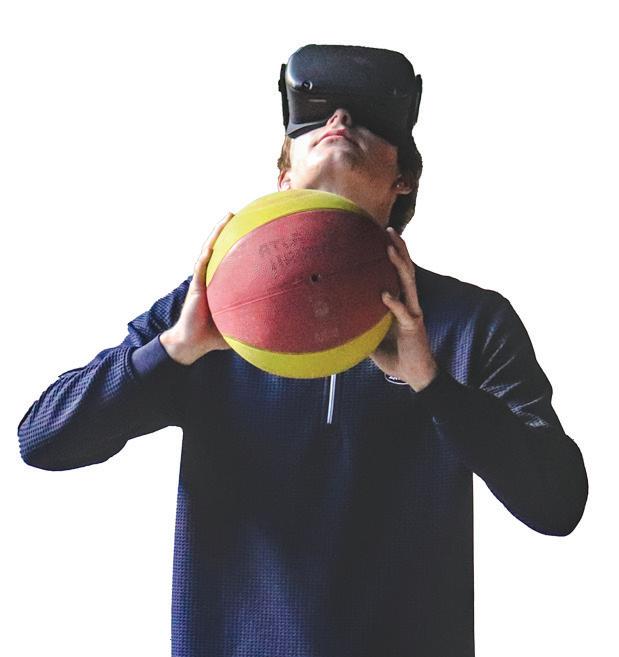
Photo of Jackson Sims by Carter Burnett
towards advanced technology-based metric tracking in sports.
Like high school sports, professional sports are also relying more and more on technology as technology is rapidly advancing and improving.
In the MLB (Major League Baseball), tech has become widely used not only by teams to help players develop but also to officiate games. The MLB has decided to implement a challenge system that uses the ABS (Automated Ball-Strike System) for the 2026 season. The ABS uses “ro bot umpires” or a computer system that uses cameras and sensors to track pitch es, determining whether a pitch crosses the strike zone or not. In the 2026 sea son, teams will get two challenges every game and an extra challenge if a game goes to extra innings. Human umpires will still call balls and strikes, but teams will have an opportunity to challenge calls they believe were incorrect. Many critics argue that the ABS will ruin base ball, as there will be a loss of drama and character that umpires bring. Many also argue that the art of framing a pitch will be lost. Some also worry that the ABS takes away from tradition and how Amer ica’s Pastime is historically played. The implementation of the ABS shows the start of a transition towards a more techbased game.
Similar to the MLB, in professional ten nis, the ATP (Association of Tennis Profes sionals) and WTA (Women’s Tennis Asso ciation) have implemented automated calls. Many major tennis tournaments use Hawk-Eye or electronic line calling. Hawk-Eye was first introduced in 2003 and has recently been implemented in more and more tournaments on the tour.

“Itjustsuckswhenyouhitanamazingshotandaren’trewardedforitbecauseofabad call.” —ThomasLi‘27
The Hawk-Eye system makes line calls and is able to determine if the ball was in or out. The Hawk-Eye system has almost perfect accuracy, far surpassing human line judges who can make errors and mental slip-ups.
In high school and lower-level tennis, players typically make line calls for balls that land on their side, which can typically lead to cheating, resulting in an unfair advantage. Paly junior and varsity tennis player Thomas Li has encountered many instances in tennis where cheaters benefit unfairly.
“Bad line calls in high school tennis are a huge problem,” Li said. “It just sucks when you hit an amazing shot and aren’t rewarded for it because of a bad call.”
The change towards electronic line calling in tennis has molded the sport into a more seamless experience while

Strava
How to train your

Paly’s Sports M edicine class provides a unique opportunity for students; offering hands-on experience, learning the skills of an athletic trainer and providing a pathway to helping keep athletes safe.
By JULIET FRICK, MAX MERKEL and FINNEGAN
SCHOEBEL

The moment the whistle blows, worst-case scenarios of what could be happening every time a football player gets hit or injured. But before reaching the player, Tau has already calmed herself, thinking fast about all of the ways she can help. In that instant, Tau is reminded of everything it means to be a student trainer: acting quickly, staying calm and finding peace of mind in the critical moments where her actions make a difference. Tau has been participating as an unofficial trainer for the Paly football team since her sophomore year. Tau’s interest in medical training began when she was a freshman, as she frequently found herself going into the trainer’s
office for minor injuries and rehab assistance for recurring ankle sprains. As a basketball player, Tau was no stranger to the training room — and like many athletes — she was used to being on the table.
When most people think of sports medicine, they think of a trainer who passes out ice packs and applies tape to the athletes. Although these actions are a part of successful sports medicine, the job involves far more nuance than may originally meet the eye. Sports medicine is a branch of healthcare that focuses on preventing, diagnosing, treating and rehabilitating injuries related to sports and physical activity.
“I found the machines and everything in there interesting and I started to go more often,” Tau said. “I got to know Mrs. E, the athletic trainer, so my sophomore year I started working as a student trainer specifically for the football team.”
As a student trainer for the Paly football team, Tau works alongside Paly’s full-time athletic trainer, Justine Iongi — known to many students as Mrs. E — responding to any injuries or health issues the athletes might come across.
“During games, my main responsibility is to do the more complex tape jobs such as ankle, knee, etc.,” Tau said. “I’m also in charge of giving players LMNT electrolytes to help prevent cramps and dehydration. I follow Mrs. E [Iongi] up
Photo by JULIET FRICK
and down the field and when someone is injured, I run onto the field to assist.”
However, Tau isn’t just essential to the training staff during games; she also helps to build healthy training habits that keep the athletes’ bodies strong.
“Injury prevention mainly happens within the trainer room, I can tape or help athletes with strengthening exercises to prevent injuries,” Tau said.
Many athletes place repetitive strain on their joints because of the demands of their sport. For these athletes, applying supportive tape before practices can provide stability to these areas. This may help to reduce stress and minimize the risk of injury during practices, games and tournaments.
Tau not only helps prevent injuries, but she also helps recovering athletes speed up the process of returning to their sports.
“When an athlete is recovering, I also help with different rehab phases that they would need to go through to return to their sports,” Tau said.
Tau is starting to excel individually as a trainer and has even earned the full confidence of the Paly athletic department.
“Recently I was asked to work one of the away football games by myself without Mrs. E. [Iongi],” Tau said. “They don’t usually ask student trainers to do this but the coaches, athletic directors and admin trusted me to do this.”
Tau relied on her experience, which helped her overcome fears of her first solo assignment.
“I was scared at first but then I was able to trust what I have learned these past few years of me doing this and the game went well,” Tau said. “This was my first time taking the lead but I knew that I had been preparing for this.”
In addition to her work with the Paly football team, Tau spends her time outside of school refining her skills. In the spring, when football season is over, she works for a youth rugby team in the area as their athletic trainer.
“This past season one of the players injured his
hand,” Tau said. “The process of recovery was long due to the extent of the injury but this athlete was determined to play. So we worked together to find a solution for him to play safely while also adhering to his rehab plan.”
Despite the experience and skills Tau has learned over the past few years, being a student trainer doesn’t come without its challenges — and she often finds herself in situations where her abilities are doubted.
“The most challenging part of the job is when working with athletes the same age as me or younger, parents and coaches, they often underestimate my abilities or my judgement,” Tau said. “I am young and still learning so sometimes an athlete may not trust what I say or how I might tape.”
But according to Tau, the experiences that she has gained throughout her time being a student trainer greatly outweigh the negative aspects of the job.
“ ”
I’m happy if we walk away with no serious injuries or incidents. That is considered a win for athletic trainers.
“The friendships and connections I have built are similar to those that I would create if being on a team,” Tau said. “I get to experience things not everyone in high school gets to ex perience because of this opportunity.”
Additionally, Tau be lieves that for the train ers, any day where a player doesn’t get se riously injured under the vise of their care is a win.
“I’m happy if we walk away with no serious injuries or incidents,” Tau said. “That is considered a win for athletic train ers.”
In terms of her longterm goals, Tau is
— June Tau (‘26)
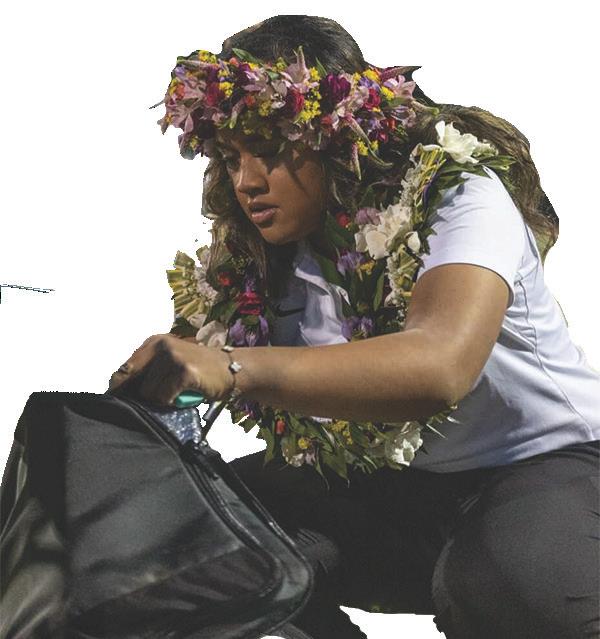
Photo by KENSIE PAO
deeply influenced by her experiences as a Paly student-trainer.
“I plan to major in kinesiology in college,” Tau said. “I either want to become a sports medicine doctor or work as an athletic trainer at a high level.”
Tau’s aspirations reflect the importance of the work she does for Paly athletes. Her help with these athletes is essential to their health while playing sports. According to a six-year-long study done by the National Library of Medicine, athletes endured a 25% reduction in injuries when they had access to athletic trainers.
Additionally, according to the National Athletic Trainers’ Association, 44% of high schools in California do not have access to athletic trainers, making them hard to come by.
This makes the work of student train-
management and maintenance.
[I hope that “
Nearly every professional sports team employs a veritable army of sports medicine professionals. Each NFL game requires, according to EMS news, at least 30 trained sports professionals to be on site, with the main priority of aiding injured athletes. Furthermore, NFL estimates suggest that each team has four athletic trainers,
Students take Away] An understanding of how complex thebody actually
is and how intertwined.
— Dr. Stacey Kofman ”
For students who may want to educate themselves on the subject more before they start practicing it, the Paly sports medicine class is a helpful course for a variety of subjects regarding sports med-
The Paly sports med course is run by Dr. Stacey Kofman. From a very young age, Kofman has had a passion for sports
“I have been working in sports medicine since I was an adolescent,” Kofman said. “I started volunteering at a PT [physical therapy] clinic when I was in high school and was a student athletic trainer at my high school.”
After high school, Kofman went to The University of the Pacific in Stockton, California, where she studied Physical Education and minored in sports medicine. Later on, Kofman went back to school, where she received her Master’s in Exercise Science and her terminal degree.
Kofman began working at Paly as an athletic trainer in 1993, where she began teaching a sports medicine class in 2000 and P.E. in 2004.
In the sports medicine class at Paly, students learn skills such as basic taping and wrapping skills and basic skills on goniometric measurements.
“The way I have structured the class is we cover the upper extremity in the first semester and lower extremity in the second semester and learn taping and wrapping techniques for various issues,”
Kofman said.
Students learn and practice these goals through many projects completed throughout the duration of the course.
“We have a final research project which is a paper and presentation,” Kofman said. “As for labs, they are taping and wrapping labs and measuring labs. So the taping and wrapping labs cover the tape/wrap for the particular joint or injury, while the measurement labs utilize goniometers to measure joint range of motion.”
Kofman’s goal is to inform students on the complexities of the body and give them a clear comprehension of different techniques used in sports medicine.
“[I hope that students take away] an understanding of how complex the body actually is and how intertwined it is,” Kofman said. “And, an appreciation of their injuries and issues and maybe a better understanding of how and why taping and wrapping will or won’t work in certain situations.”
For some, taking Paly’s sports medicine class isn’t about a future in medicine. Instead, the class can offer an incredibly interesting view into the world of injury prevention, educating even the least experienced students in how they can better take care of themselves. For Paly senior Dainel Rainey, the class provides just that.
“Honestly, I’m probably not going to go into sports medicine in the future,” Rainey said. “However, the hands-on experience you get in the class is very interesting and fun.
It’s definitely an excellent class for anyone interested in sports medicine.”
Unlike many other classes, sports medicine lets students practice their skills in a wide variety of practice scenarios. In these mock labs, students further explore the knowledge they’d previously gained in the classroom, connecting fun and learning.
“I haven’t been in [sports medicine] for too long,” Rainey said. “But one thing was doing the hand tapings and then trying to throw a ball or Frisbee.”
For others, the sports medicine class has been a successful venture for students who have taken it. In the case of Paly junior and athlete, Justin Fung, who is currently enrolled in sports med, the class gives helpful insight on previous injuries he’s experienced.
“I get injured pretty frequently while playing football, which makes sports med fun because I get to learn a little bit more about the background of my inju-
ries,” Fung said.
According to Fung, the course is additionally serving as an opportunity to delve deeper into a topic that he may be interested in pursuing in the future.
“Since being in sports med, I’ve discovered that I may want to pursue Kinesiology or sports medicine in college,” Fung said. “The class has taught me a lot of useful information that I may want to expand on as an area of interest for college or as a career.”
The interactive experiences and exposure to different techniques and situations that are associated with sports medicine allow for students to get a good understanding of what the many career opportunities in the field may look like.
“Students can go off and become fitness instructors, physical therapists, occupational therapists, sports medicine physicians, exercise physiologists, coaches, etc.,” Kofman said.
Kofman has also seen several students go on to make significant achievements in said line of work.
“I have a former student who went on to get his PhD in laboratory research and is working in industry,” Kofman said. “And I have another student who went to Alabama undergrad and graduated the athletic training program and is now at Auburn doing her graduate work in athletic training.”
“
The sports medicine class both builds knowledge and provides a sense of clarity for those who might one day want to step into medical or training careers.
“Take a class, shadow at a clinic, intern if it’s still something you like,” Kofman said. “Internships can turn into jobs.”
Injuries can still happen, no matter the sport at Paly. But when they do, Paly’s top notch athletic training team and educated student trainers are there to help, providing both immediate relief and aid on the way to long term recovery.
Whether students are interested in sports or general medicine, were recently injured or are just hoping to implement injury prevention into their regimen, Paly’s sports medicine course and trainer’s office can provide numerous opportunities for learning, healing and growth. At Paly, there are many different paths for education in sports medicine and athletic training categories, so any student can have the opportunity to pursue interests in these specified fields.
And finally, the presence of athletic trainers like Iongi and student trainers like Tau at Paly makes it possible for athletes to recover faster, develop smarter habits for the future and get more edu cated on all of the opportunities sports medicine has to offer.
By ANDY COMSA and DYLAN ROBINSON
UNFAMILIAR

After years of calling the lacrosse field home, the Paly varsity soccer team now finds itself fighting to reclaim it—caught between player passion and referee frustration.
Following the 2022-23 season, the referees complained about officiating on the lacrosse field due to a conflict between the referees and crowd. Paly soccer was then required to use the football field for games. The referees were unhappy with
Referees’ unhappiness officiating on the lacrosse field led Paly soccer to switch to the football stadium, sparking frustration and disrupting fan connection.
the tight sideline space that placed them directly in front of the crowd, where they faced unsportsmanlike behavior from parents, especially during high-stakes matches. The referees’ association was contacted for comment but said it was not familiar with the situation described.
Now, many Paly soccer players are unhappy with this outcome, and believe that the football field provides a huge disadvantage for soccer.
“Practicing very late isn’t ideal for a lot of us on the team, and we would definitely prefer to have practice right after school.”
moves on the lacrosse field.”
Many Paly soccer players also argue that the use of the football field results in many injuries. Because the football field is used for a variety of reasons such as P.E., school rallies and other sports, the turf is more worn down, making playing conditions more difficult.
Senior varsity soccer player Hadrien de Martel is among the players most opposed to the change in venues.
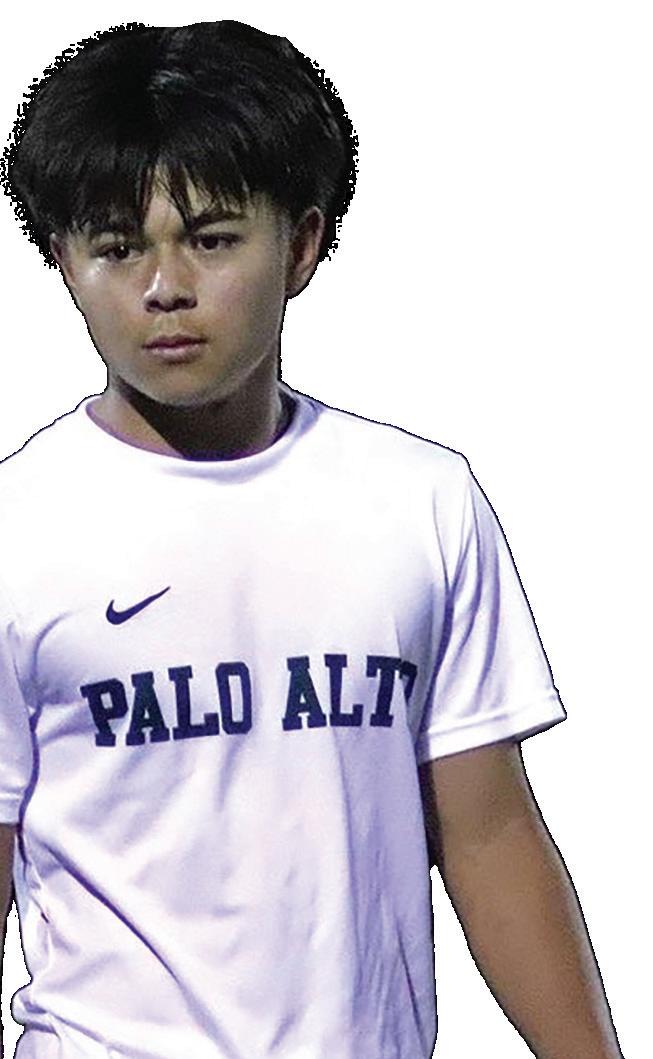
- koji Silverberg ‘27
Varsity men’s soccer coach Luiz Lodino Jr. had trouble adjusting to the use of the football field last season.
“The lacrosse field is definitely better, because it has a soccer field to it, and without all the football lines it would be less confusing,” Lodino said. “We also train [on the lacrosse field] more during the season; the dimensions and the field itself [are] more for soccer.”
Richie Ogawa, a 2024 Paly soccer alum, used the lacrosse field in his first three years at Paly, but was forced to switch to the football field for his senior season.
“The turf makes the ball bounce differently — it’s less predictable and doesn’t roll the same way,” Ogawa said. “It can throw off timing and touches a bit, especially when you’re used to how the ball

“The shorter turf on the football field makes it very easy to slip, especially when the field gets wet in the winter,” de Martel said. “The track around it can also cause injuries, as running on the track with cleats can be a huge safety hazard.”
According to a 2024 study published on ResearchGate, shorter turf fibers are associated with reduced rotational traction, which can increase the likelihood of noncontact injuries. This finding suggests that the lacrosse field’s longer turf may offer conditions that help reduce the risk of such injuries over the course of Paly soccer’s 20-game season.
The varsity girls soccer team also expresses a discomfort with the use of the football field, and prefers the use of the lacrosse field — a sentiment echoed by senior varsity soccer player Reyes Aronson.
“The negatives of the football field are the turf and how long it is, as well as the track when we have to chase loose balls or sometimes we lose them in the bushes,” Aronson said.
Additionally, the football field has a
Bleacher distance on football field: Bleacher distance on lacrosse field:
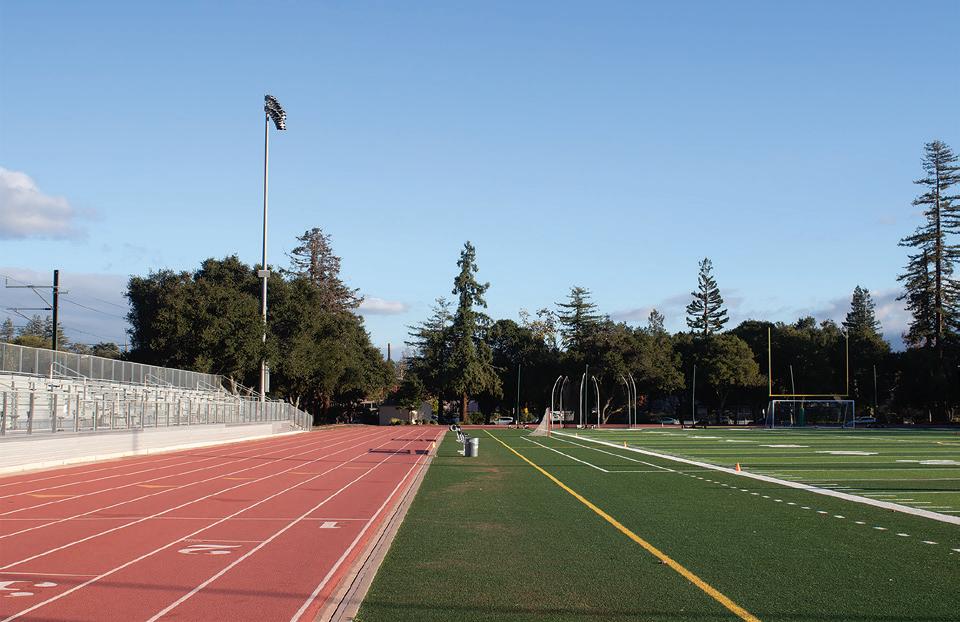
large track around it, providing a big distance between the field and bleachers.
Players say this separation affects the atmosphere during games.
“When the fans sit far away on bleachers, it’s much less personal and fans are less present,” de Martel said.
With the fans having less personality, this may lead to Paly’s home games not having the extra advantage that it could have. The team believes they could benefit from a big fan presence.
“We have the fighting spirit, and people in the stands fight with us, and being so far away from us takes that away,” Lodino said. “You definitely can feel more energy when we play on the lacrosse field.”
Beyond just games, the soccer team also has to practice on the football field at times, which can push their training sessions late into the evening due to scheduling conflicts with the football team, whose season can possibly extend into December.
“Practicing very late isn’t ideal for a lot of us on the team, and we would definitely prefer to have practice right after school,” junior and varsity soccer player Koji Silverberg said.
With the lacrosse field being open in the winter due to a lack of sports that use it, the use of the lacrosse field would also give the soccer team their preferable practice time. This could allow students to excel in both soccer and academics, giving them their ideal time to study. To many players, another frustrating aspect of the football field lies in its proximity to the train.
“The football field is closer to the train

tracks, so it’s louder, which can be very disrupting to hear during a game or practice,” Ogawa said.
As a whole, players and coaches believe that the lacrosse field provides a more natural field. However, this doesn’t include every aspect of the issue. Assistant Principal Jerry Berkson acknowledged the referees’ concerns.
“I would side with the refs, the lacrosse field is really close to the stands, and the linesman’s back is to the crowd, so he is unable to know what’s coming, who is saying what, or have any idea what is going on behind him,” Berkson said.
An article from Human Kinetic Journals written by Christian Unkelbach and Daniel Memmert, professors of experimental psychology at the University of Cologne, states that crowd noise can affect referees’ judgement of the game, leading to incorrect calls.
These findings indicate that the use of the lacrosse field is not without drawbacks. While the field places fans closer to the action — an aspect many players appreciate — it can also increase the likelihood of distractions or pressure on referees, which in turn can hurt players as well.
Overall, Paly soccer players and coaches believe that returning to the lacrosse field would benefit the program, citing factors such as field quality, atmosphere and fan engagement. As discussions continue, the school must consider how to balance athletes’ preferences with the practical needs of game officials.
“You definitely can feel more energy when we


Photo by Shanley Davidson
SA captain’s
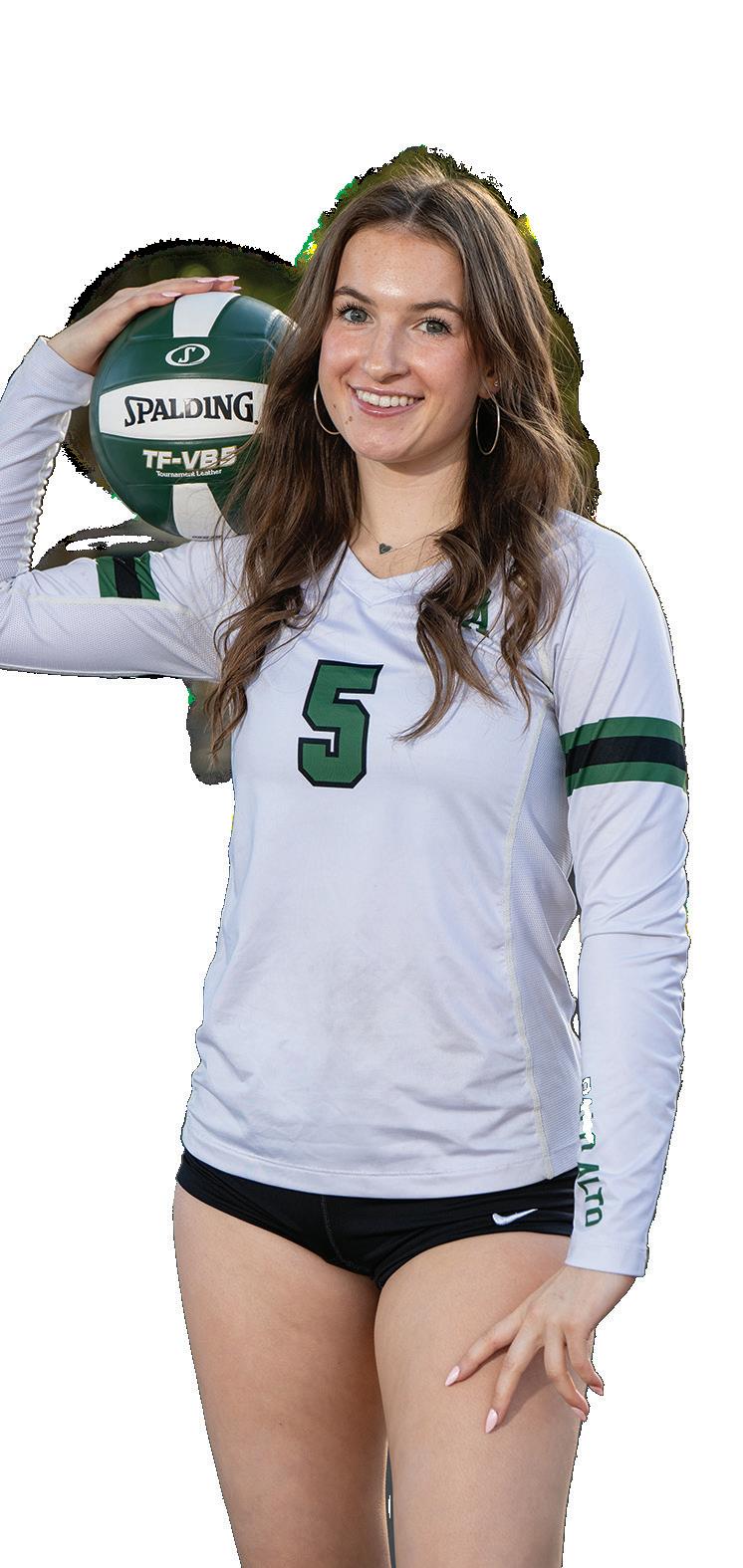
Captains are arguably the most crucial and essential part of a stable, functioning team. Their leadership, man-management and ability to boost team morale often go unnoticed, but are key qualities that unlock their team’s full potential.
Marley Shumaker (‘26)
Varsity Girls Volleyball
enior Marley Shumaker co-captain of the girls volleyball team has made a significant impact on the team’s success. Shumaker’s most difficult responsibility is regulating mental roadblocks and keeping composure during stress.
Shumaker faces moments where the team’s momentum dips and players begin overthinking their performance. As captain, she recognizes how quickly self-doubt can disrupt the rhythm of a match and understands the importance of helping the team regain confidence and clarity.
“There are times when we aren’t playing our best or start getting in our own heads, which makes it difficult to perform at a high level,” Shumaker said.
During high-pressure stretches, Marley sees her leadership role as an anchor for her teammates. She focuses on staying composed, maintaining a positive tone and providing energy her team needs to redirect their mindset to persevere in stressful moments.
JAke Wang (‘26) - Football
Senior Jake Wang is a co-captain of Paly varsity boys football. Wang has played football for Paly since his freshman year and this is his second year as co-captain of varsity.
This year has challenged Wang more than any previous season. The roster changed heavily after multiple seniors graduated, several starters were injured and the team struggled to put together complete games. He described the season as one where leadership required steadiness.
“We’ve had a lot of unlucky breaks,” Wang said. “We haven’t been able to string a bunch of good plays together, but we’re still building every game.”
Wang focused on keeping the team unified during a difficult stretch.
“We’re all one family working toward the same goal,” Wang said. “We just have to come together.”
He sees the challenge as part of the responsibility that
“My job as captain is to stay calm and keep focus. In those moments, my role is to pump up the team, stay positive and do my best to help others out of that distracted, negative mindset,” Shumaker said.
As of October 30th, Shumaker’s influence has shown to have a positive impact with the team’s overall record being 21-8. When the team started to win games and find their groove, Shumaker noticed people around her had higher amounts of excitement and praise, leading teammates to feel her leadership more strongly. Shumaker’s ability to command her team propels them into becoming a more upgraded and balanced team.

“It’s rewarding to see my encouragement help them improve because it reassures me that my support is making an impact,” Shumaker said. “It shows that I’m doing my job as captain and contributing to the success of my team.”
comes with the role. Holding morale together, preventing finger-pointing and keeping standards high became essential parts of his job. Wang said the relationships he has built make the work meaningful.
“We’re all one family working toward the same goal,” Wang said. “We just have to come together.”
In a challenging year, Wang has stayed fo cused on effort, respect and team bonding. He sees relationships within the team as a key part of his leadership.
“The most rewarding part of being a captain is having all those guys choose you as one of their leaders,” Wang said. “Twenty years from now, it won’t be the scores that we remember; it will be the relationships we made.”
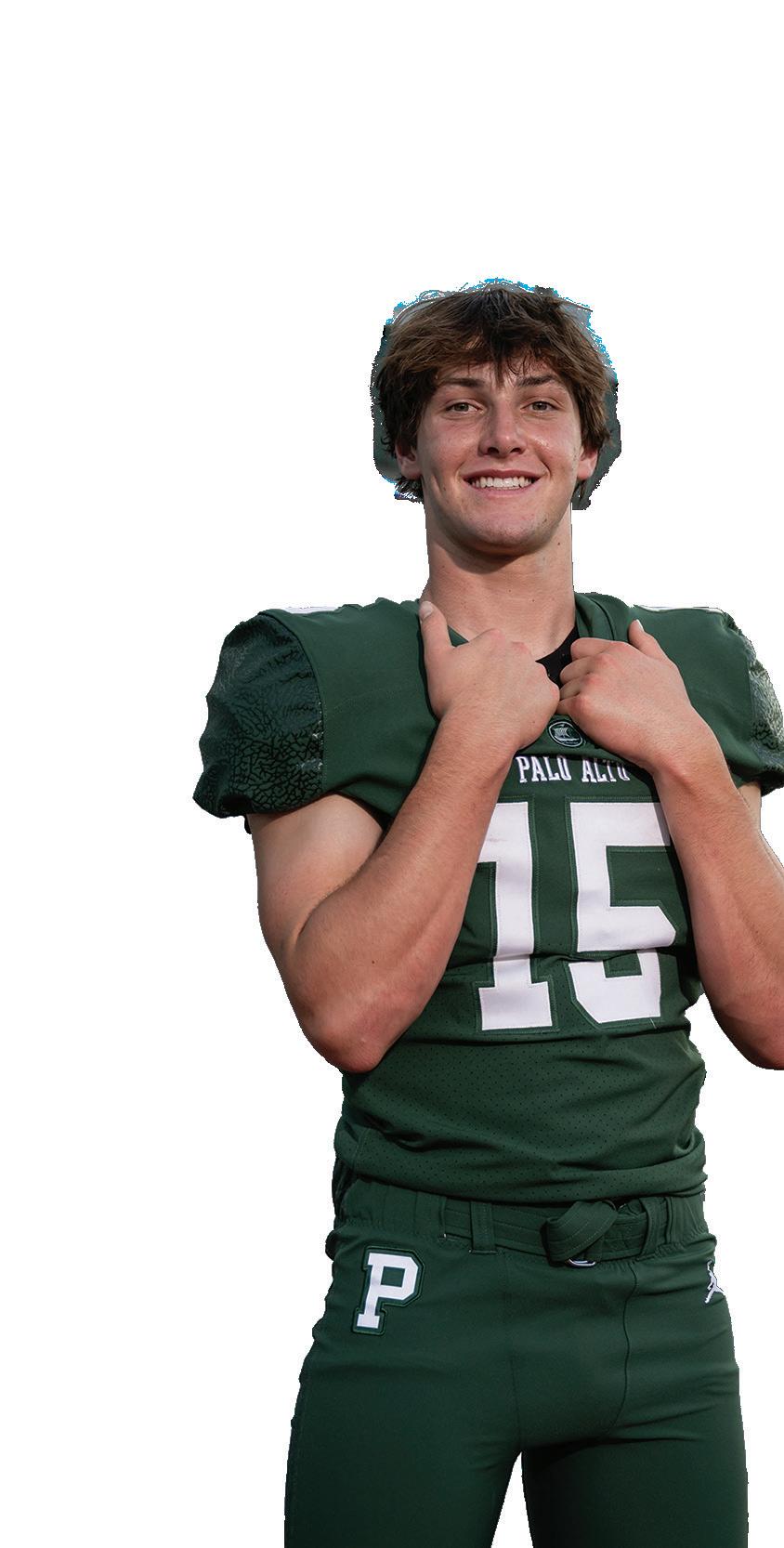
challenge
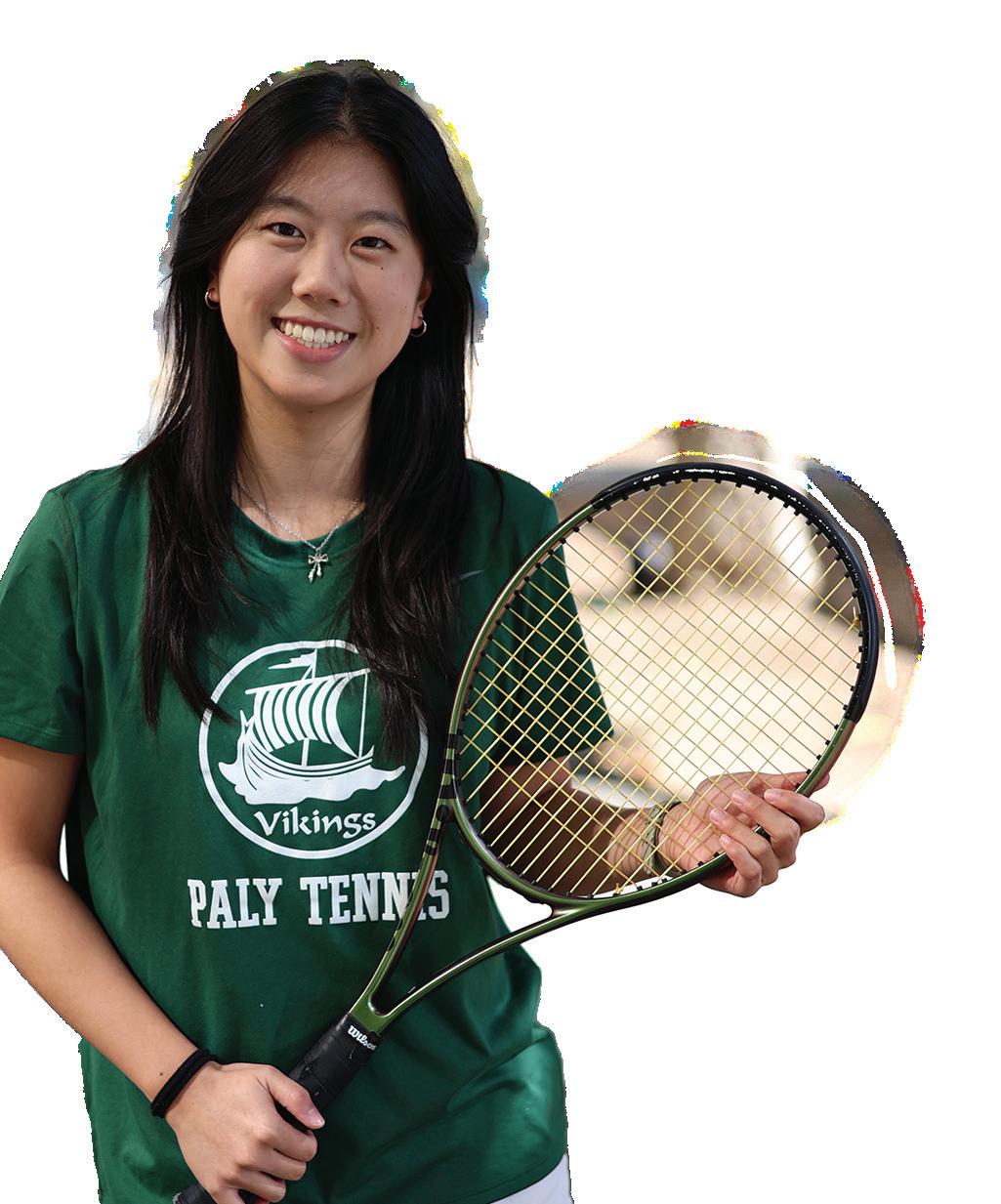
Senior and girls tennis captain Veronica Qiu has found leadership to be about making adjustments. With a new coach this year, her role has been different than previous captains.
“It was a little bit of a rough start, but we got on board,” Qiu said. “I learned a lot from the old captains, but this year I had to figure things out in a new system.”
With different leadership circumstances, Qiu has had to navigate on her own more than previous captains did. Previous captains were able to look at their predecessors for guidance when it came to coach-captain dynamics.
“I can’t draw inspiration from past captains the same way, since their
Veronica Qiu (‘26) - Girls Tennis

Senior Felix Ryans is a co-captain of boys water polo. This is his first year as a team captain. Despite being a seasoned player, the step up to a leadership position was substantial. At the start of the season, Ryans faced issues with selfdoubt, setting a high bar for himself.
“My leadership was challenged most at the beginning of the season when I wasn’t confident in my ability to lead successfully,” Ryans said.
Over time, he learned to earn his teammates’ trust by demonstrating consistency and building confidence within the squad.
“Once I got the hang of it and started seeing results, I began noticing less pushback and more trust from my teammates,” Ryans said.
Ryans’ perspective highlights the pressure that comes with stepping into a leadership role for the first time. As a first-year captain, his confidence and ability to inspire his teammates
By ANDREW KNAPP and ISAAC TELYAZ
Photos courtesy of Dylan Fujita and Karen Ambrose Hickey
leadership experience was shaped by a different coaching style,” Qiu said. “There has been a lot more oneon-one communication with my coach than in previous years.”
Qiu stepped into a large communicator role, acting as a gateway between the coach and her teammates.
“If my coach has questions or needs availability, I communicate and get back to him,” Qiu said.
Her team has been undefeated this season and Qiu credits that to strong team spirit.
“I just try to stay positive and light,” Qiu said. “Joking around helps everyone feel confident and play better.”
For Qiu, the best part of being captain is watching her teammates grow.
“Watching the girls go from their first day at practice to cheering each other on during matches is what I appreciate most,” Qiu said.
have helped him rise to the challenge. Ryans credits his team’s high standards for keeping him motivated and accountable.
“That environment motivated me to stick with it and help make the teams I play for the best they can be,” Ryans said. “I never really envisioned becoming a captain of the Paly team, but after seeing how much I’ve put into the sport through both club and varsity competition, I wouldn’t want it any other way.”
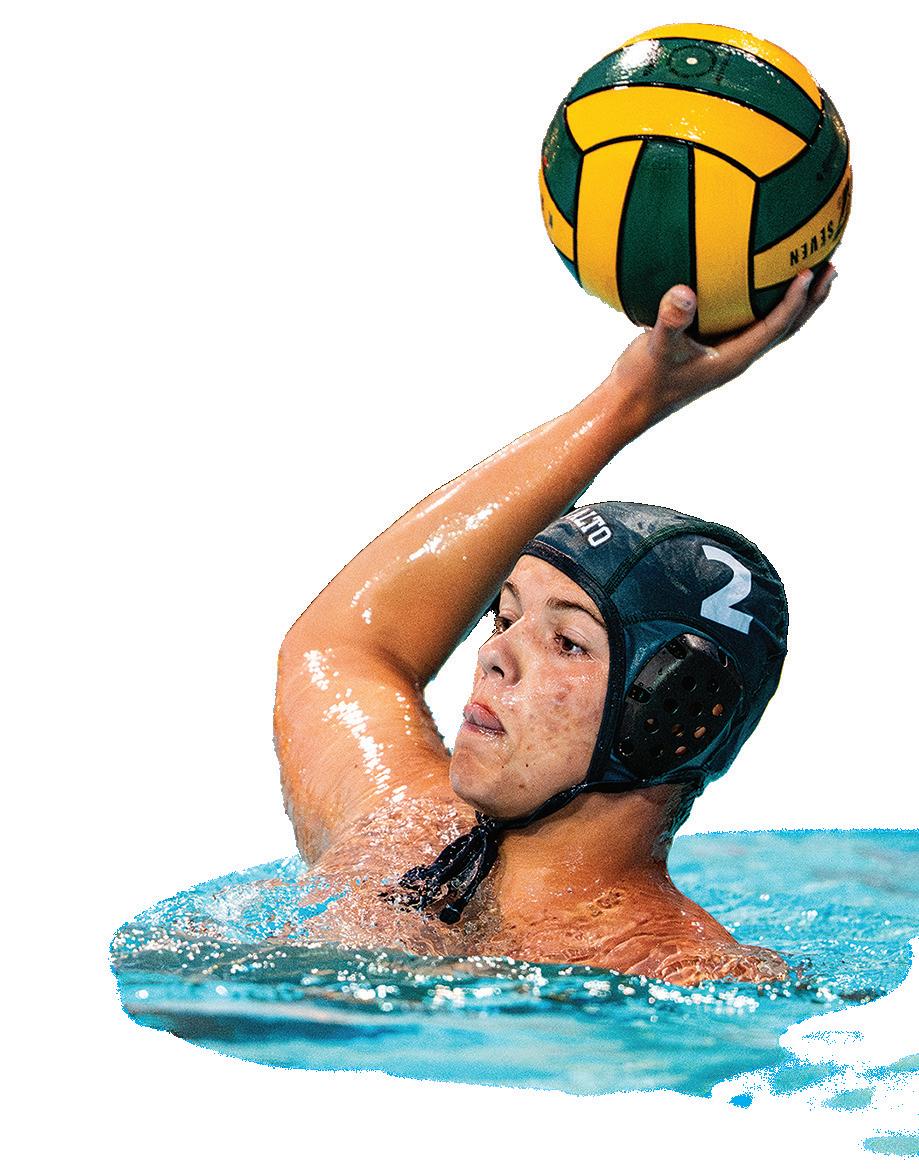
Looking forward: up and coming
In comparison, sophomore Alma Michlin, a captain of the JV girls volleyball team, faces different challenges.
“I would say that JV has a bit more of like a wider range of skill set and you have to know how to balance it,” Michlin said.
Michlin has been playing volleyball since 2019, so her ex-
perience has been warranted with longevity. During the season, Michlin was able to rally the team to an 8-7 record when it was in jeopardy.
“On JV, I saw myself as a teammate, but as a captain, I have to be a little louder and more positive,” Michlin said.
Michlin’s perserverance proves that she can advance
her skills to a higher level. At the same time, her chemistry off the court allows her to further develop her relationships with her coaches and teammates. Looking forward, Michlin hopes to transfer these abilities as she progresses towards varsity volleyball.
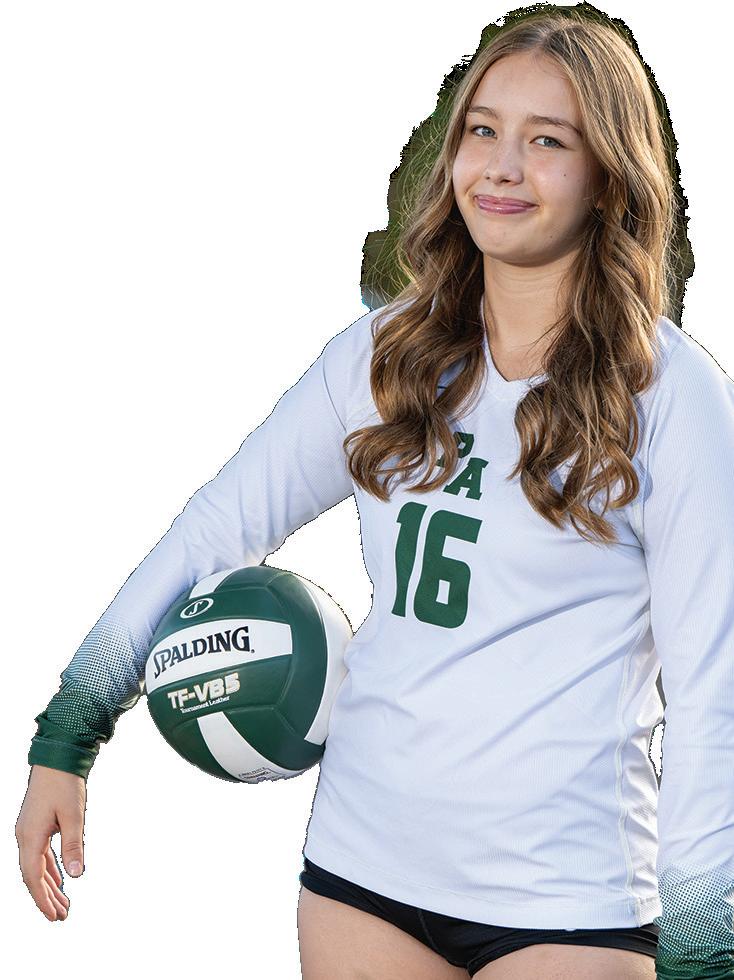
By ELIF DOGAN and DANIEL SEGEV
ILLUSION Pro The
The debate around coaches with and without elite playing experience highlights how both paths can lead to effective leadership, strategy and player development.
In the sports world, some of the most common and successful coaches happen to be former professional players of their respective sports. Steve Kerr won five NBA championships as a sharpshooter before leading the Warriors to multiple championship titles. Deion Sanders, one of the most electric NFL players of all time, is now in command of the Colorado Buffaloes. Aaron Boone went from playing for the Yankees to managing that same franchise.
But do years of experience playing the sport auto matically make some one a better coach?
After all, coaching is not heavily dependent on athletic skill; it’s about commu nicating, lead ing, and build ing trust.
At Palo Alto High School, that question is far from hypothetical. The athletic program is filled with a mix of coaches, some former star athletes and others who never played the sport they lead.
ing to happen, I can see just by looking at the pool which player is, or is going to be in trouble, and I can see a missmatch before it has happened,” Mulcahy said.
In addition to the strengths Mulcahy holds as a coach, he refers to how playing the game as a young student-athlete also comes with its own limitations by having unrealistic expectations for

“I expect that I have an hour and 30 minutes of their full attention and focus on water polo when they walk through the pool deck gate,” Mulcahy said.
“If you don’t have those [fundamentals] as a coach you could draw the most intricate play, and it’s not going to work.
”
— Coach Tim Mulcahy
Among the coaches with strong play ing backgrounds is Tim Mulcahy, the assistant varsity girls’ water polo coach who played the sport at UC Davis and UC Berkeley. Mulcahy, who even continues to play the game to this day, which has shaped his abilities as a coach.
“I see tendencies before they’re go-

“And that isn’t so realistic because they have this academic pressure that I didn’t have when I was a kid playing water
Kevin Hambly, the Stanford women’s volleyball head coach credits his experience in shaping his perspective. Hambly played professional volleyball overseas after playing Division I volleyball at Brigham Young University.
“Playing the game has influenced everything about how I coach,” Hambly said. “I see the game as a series of problems to solve and I have a level of empathy for the players that, unless you
played, you can’t truly grasp.”
Hambly added that his experience as a former pro athlete allows him to see the game at a high level and understand what’s required to play at that level. However, he recognizes that each of his players sees the game of volleyball differently and may or may not share the same perspective he had when he was a player. Instead of guiding his players with strategies and tactics that worked for him as a player, he emphasizes his role in challenging and supporting his players’ individual approaches.
“I want them to have their own personal view of the game and seek their own solutions, which are often different from the ones I would suggest,” Hambly said. “My job is to present the right problems to them, so they are compelled to solve them.”
Another advantage these coaches can hold is a sense of built-in trust among their players. Players respect a person who understands competition pressure firsthand.
“It’s easier to trust a coach who’s actually played,” Varsity soccer player Koji Silverberg Shirota said. “They know what we’re going through.”
Sophomore and varsity diver Lucy Bothe backs up this sentiment.
“Coaches who’ve competed know how stressful it gets, they know when to push us and when to back off,” Bothe said.
Coaches from a playing background will often say that their background gives them an edge in their ability to read the game, make quick strategic decisions and deal with the highs and lows of competition emotionally.
Still, despite the fact that a coach with playing experience might inherently seem like a better fit, that’s not always the case. There are plenty of examples, even at Paly, of successful coaches with relatively little playing experience.
One prominent example is Paly’s JV boys’ basketball coach, Brandon Byer. Byer entered coaching through an open assistant coach position at the University of Missouri. During his four years on the Missouri coaching staff, Byer had learned all the behind-the-scenes and what it takes to build a winning team.
“In my first year as a manager, I re alized how awesome it was to be around a high-level Division I program,” Byer said. “Seeing what coaches go through, planning practices, recruit ing and preparing for opponents, was really the catalyst for me wanting to become a coach, even though I never played at that level.”
The challenge for him is using the knowl edge and transferring it to teaching without having played at a high level himself.
“
like a teacher,” Do said. “He broke the game down step by step instead of assuming we already knew things. Sometimes coaches who’ve played forget how hard it is to learn those details for the first time.”
Do also noticed that Byer’s preparation and openness to feedback set him apart.
“He was always studying film, trying new drills and even asking for our thoughts after games,” Do said. “That made us feel like part of the process. You could tell he really wanted to learn along

Still, Do acknowledged that experience on the court can make a difference in certain mo-
— Coach Kevin Hambly My job is to present the right problems so they are compelled to solve them.
”
tion and team culture. They all deliver a complete coaching experience.
At the end of the day, when the whistle blows, players don’t worry as much about whether or not their coach played pro and are more concerned about how the coach stimulates, motivates and guides them. This argument regarding whether playing experience is vital may never be settled. Technical skill and intuition are vital, but leadership, communication and coaching are equally important.
For Mulcahy, experience equates to the fundamentals of the game; without a strong foundation in these basics, success will not be achieved.
“Because I never played the sport at the level I’m coaching now, I can’t al ways understand exactly how players are feeling in high-pressure moments,” Byer said. “I just have to go based on what I think they need.”
But he maintains that such challenges compel him to pay closer attention to communication, preparation and strategy so that players are able to understand the game in terms that go beyond physical skill. And the record speaks for itself: just two seasons ago, Byer led his team to a league title with an impressive 11-1 record.
“I’ve had to dedicate myself to researching and understanding the game at a deeper level,” Byer said. “Players can tell if you don’t know what you’re talking about, so I’ve got to prove it through preparation.”
Although Byer never played basketball at a high level, his coaching style still resonated deeply with his players. One of his former athletes, Kane Do, said that Byer’s unique perspective gave him an advantage in certain areas that even experienced former players sometimes overlook.
“Coach Byer approached everything
“When the game gets intense, I think a coach who’s been in those situations might have an easier time reading the pressure,”
Do said. “But Byer made up for it with how calm he stayed, he focused on solutions in-
In Do’s eyes, the best coaches combine both qualities, the perspective of experience and the mindset of a student.
“Whether you’ve played or not, the best coaches are the ones who keep learning,” Do said. “That’s what Coach Byer showed us.”
The belief that playing experience necessarily translates into being a su perior coach is prevalent in sport cul ture, but at the high school level, where development and mentorship come first, the reality is different. A non-play ing coach might be missing the natural game sense analytical ability, creativity and excellent com munication. A player-coach can be superb at strategy but struggle to translate their instincts into teaching moments.
In terms of practice, Paly coaching staffs typically divide these up.
Often, former players handle technical training and strategy, with non-player coaches handling leadership, prepara
“Until you learn how to pass and catch the ball, you can’t play or coach water polo,” Mulcahy said. “So you have to have the fundamentals to build on; if you don’t have those as a coach, you could draw the most intricate play, and it’s not going to work.”
Similarly, Byer shows that passion, commitment and inquisitiveness can make up for what many lack in individual playing experience.
“I always loved basketball,” Byer said. “That time at Missouri made me realize I wanted to coach. Even though I never played at a high level, I found my passion through teaching the game.”
Ultimately, a clipboard does not care about a coach’s background. Whether a coach scored winning goals. Paly’s multi-cultural coaching staff affirms that there is no recipe for success; that
Stanford Women’s Volleyball coach Kevin Hambly redirects the players on Oct. 5 against Louisville.

Photo courtesy of Mike Rasay, ISI

From trail riding to dirt biking to endurance cycling,
students are finding freedom and community on two wheels.
By MABEL McCARTER and SHIRA PORAT
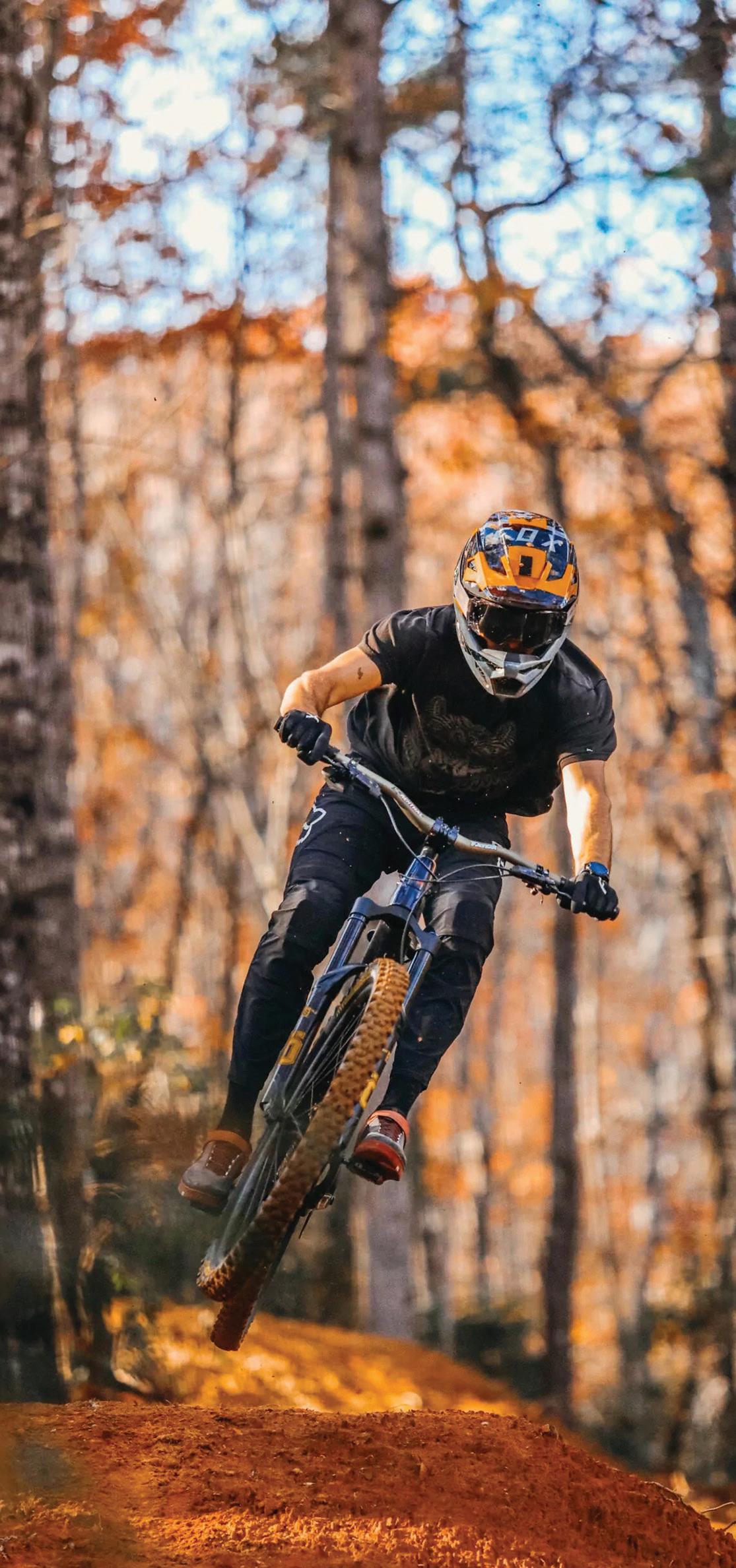
YOTAM RACHMAN
A Paly teen’s discovery of mountain biking within his Palo Alto Community.
Yotam Rachman is a current junior at Paly, who started biking at age four. He loves the thrill he gets from exploring new places on his bike.
“Biking has given me a different perspective on the outdoors than I believe hiking has, I think that biking has shown me more extravagant places,” Rachman said.
On his favorite trail, the “Royal Flush” near Bend, Oregon, Rachman developed his love for the sport.
“This was the most technical trail that I have ever ridden and incorporated big jumps at high speeds with tight turns and large rocks. I was a little bit afraid of riding this trail as it was far from any points of reception and I was alone,” Rachman said.
Trail riding is a tough endeavor, to tap into the right mind space, he often listens to music before he rides,
“I believe that it helps me focus, something that is crucial for safety when going down difficult terrain,” Rachman said.
To keep safe, Rachman prefers to ride in groups.
“I believe that it is a lot more fun to ride with others as you can share the joy of the ride with your friends,” Rachman said.
In Palo Alto, bike culture is increasingly popular, the city has included exceptional safety measures to keep riders secure and comfortable such as bike lanes on most major roads, built in bike racks and separate sidewalks for walkers. Rachman has noticed the difference that the city has made in supporting the biking community.
“I think the larger bike lanes positively impact the community by advocating for more use of bikes,” Rachman said. “I think it is a good use of money because everything in Palo Alto is safe and relatively close so biking is a great option.”
Rachman also identifies with the biking culture spreading throughout the city.
“I think biking is a very important part of Palo Alto’s culture because of California’s big push on eco-sustainability and because we have so much access to bike lanes and sidewalks all around that people use their bikes more than in other places,” Rachman said.
Photo courtesy of Yotam Rachman
SABRINA TERMAN
A newfound confidence and competition is rooted in Terman’s endurance cycling.
Junior Sabrina Terman only recently found her love for competitive biking.
“In the past year I’ve started getting into triathlons and endurance cycling,” Terman said. “I like the competition, but I’m really just motivated because I love road biking. I started going on long rides during the pandemic, and it’s just been
honestly I prefer group rides because it’s fun to share the experience with friends.” Safety is another important factor in the growth of the sport. Terman believes that increasing safety should be a priority and has many ideas to help protect the streets of our city.
“I think adding shoulders to busier streets would make biking a lot safer,” Terman said. “Right now I can think of too many busy streets where cars pass bikers by going into the opposite lane. Especially past 280 on Page Mill and then Skyline Boulevard. While these roads aren’t necessarily in the heart of Palo Alto, there are so many bikers from Palo Alto that bike over there, so I think our city has some responsibility to advocate for it. “
As a key method of transportation, biking is an activity that can be enjoyed at any age or level. Terman believes that Palo Alto should try to retain its reputation as a bike-friendly city.
“I’ve lived here all my life and I don’t think I really realized how geographically amazing this area is until I started biking long distances.”
— Sabrina Terman (‘27)
redwoods, the bay and the Pacif ic ocean all in one place. You technically could just drive around these places, but I think cycling—whether it’s a 20 or 70 mile ride — forces you to enjoy the journey rather than focus on the destination.”
Just like many others, Terman feels safety is immensely important, she finds herself preferring group rides on public trails. Additionally, she feels that Palo Alto is a supportive and safe environment for young bikers.
“I don’t spend that much time on my rides in Palo Alto, but if I do, I feel pretty safe,” Terman said. “I think cars are more mindful here than in other places just because this area has so many cyclists. From a safety standpoint I really try to avoid biking solo, especially on really long rides. You can be in areas without cell service so having someone with you in case something goes wrong is super important. And
“I think it is a super important part of our culture because biking is very much relied upon,” Terman said. “In the morning you have students biking to school and people to the train station for work. I see a lot of families
downtown or just on res idential streets.”
ERIK TAYLOR
A Paly alum continues his career in dirt biking after high school.
Erik Taylor was a Paly student last year, and he has since pursued his dirt biking career in Texas after graduating.
“I first started riding when Covid happened due to everything being shut down, my older brother fixed up this old bike in the shed, and that was the first dirt bike I had ever ridden,” Taylor said. “It was a ‘95 Honda 50cc”.
Throughout high school, Taylor’s dirt biking career was halted as he struggled to find time due to the commitments required for high school sports.
“Some challenges I faced were not riding enough so I could get more comfortable with the bike and getting used to the clutch on the dirt bike for the first time,” Taylor said.
Other challenges Taylor faced were the lack of popularity in the sport.
“Coming from a town like East Palo Alto, not too many people succeed in sports like dirt biking; the majority play football and aim to make it to the NFL.” Taylor said, ”This motivates me to want to be better every day on the bike.”

Taylor gained a lot of support from his
“He [Taylor’s dad] does everything for me in this sport and how expensive it is, he really just keeps me motivated,” Taylor said.
Taylor also valued how this sport didn’t depend on how big one is, but the amount of skill one has.
“Coming from a school like Paly, I was never the biggest kid growing up,” Taylor said.
“What I realized was that dirt biking doesn’t require you to be a big person, it requires grit, perseverance, and consistency.”
Dirt biking was a way for Taylor to express himself and find a sense of belonging within his community. He was able to experience dirt biking in the Palo Alto community and further
Photo courtesy of Erik Taylor

Sports Puzzles Sports Puzzles
Across:
1. Only player on a soccer field that can use their hands
2. In a 100m dash, stay in your own ___
3. Scoring three under par on a golf hole
4. Scoring two points in a football game
5. Sacrifice swing in baseball
6. Start of a play in hockey or lacrosse
Down:
1. Point scoring spike in volleyball
2. Top qualifying position in a race
3. Foul by running into a set defender in basketball
4. Baseball automated umpire acronym
5. Dropping the ball
6. First, second, third, catcher, shortstop



The PracTice of P ker


By GREG GOODY and MABEL McCARTER
Poker has received a lot of negative publicity in the news recently, and is seen as just another form of gambling. However, it should be considered a sport, as it takes just as much strategy and preparation as any other competitive sport, and should be treated as such.
While many consider poker to be just another form of gambling, it is certainly more than that. It may not be a traditional sport, but poker most certainly is a sport, as it takes the same amount of preparation, skill and effort as a sport like basketball.
With all of the negative publicity poker regularly receives in the news, there is generally a poor public perception of the game.
From NBA Head Coach Chauncey Billups and Former NBA All-Star Gilbert Arenas being arrested recently due to illegal rigged poker games, the game really suffers from these big headlines.
Despite this, poker requires skill and focus that aren’t rivaled by many other games and it should widely be recognized as a sport.
So what is a sport? A sport is something that requires skill and strategy, something that requires practice and effort to master. This is why we believe that poker should be considered a sport.
Traditionally, sports have been viewed as physical competitions, but this definition has evolved. Many sports, such as chess and e-sports, have been recognized as sports because they require intense concentration, strategy and skill.
E-sports has amassed a large and loyal following in the past few years
and is extremely similar to poker in the sense that it requires a ton of preparation and focus, but lacks physical exertion. This lack of physical exertion tends to cause these games to be laughed at when being in the conversation of sports.
Poker is constantly rising in popularity among teenagers. In college fraternities everywhere, you will often see a poker table occupied by a group of guys on a typical night. The beauty of poker is the variance, no two sessions are the same, which means you never know what’s going to hit you.
Poker’s rise in popularity isn’t just limited to college kids and teenagers and this is prominently due to the rise of live-stream poker and poker on Youtube in general, which makes it easier than ever to consume poker videos.
types of poker, with the most popular being Texas hold-em. In this game, every player is dealt two cards that no one else can see and the goal is to make the best hand possible with the 5 community cards that everyone can see. To succeed, players have to be able to make tough decisions based on probability, read opponents’ behavior and actions, as well as disguise their own intentions.

“I’ve seen so many thousands of hands that I am just going to be right more often than most people.”
—Daniel Negreanu
Youtube has also given viewers an up close, and more personalized experience with these players. Some of these rising players don’t have as much money as the established professionals, which allows viewers to witness the ups and downs of high stakes poker that they couldn’t have in the early 2000s, when the only televised poker was on TV.
There are many different
A huge reason that poker should widely be considered a sport, is because the professionals turn 50-50 odds into 8020 odds through various strategies accustomed to each specific player.
Professional poker players don’t always win big because of this variance. For example, professional player Daniel Negreanu. Some of Negreanu’s career accolades include being a 7x WSOP Bracelet winner (7 professional tournament wins) and the only Poker player to win Player of the Year twice (2004 and 2013), which makes it almost impossible to believe he lost in a match to an amateur poker youtuber. To make a comparison to basketball, that’s equivalent to Steph Curry losing in a match to a G-Leaguer, which would obviously never happen but demonstrates how much luck there is in poker. The fact that a professional could lose to an amateur is another reason why people don’t view poker as a sport, however, if Negreanu and the intermediate played each other 100 times, Negreanu would certainly win over 80% of the matches, despite how much luck is involved in a given hand.
The longest poker game lasted eight years, five months, and three days in the Bird Cage Theater in Tombstone, Arizona.

For example, every hand, before the cards are dealt, each player would have a 50% chance of winning the hand, but Negreanu’s skill gives him an extra advantage.
“I’ve seen so many thousands of hands that I am just going to be right more often than most people,” Negreanu said on the Lex Fridman Podcast.
Through studying hand histories, analyzing data and hours of practice, professionals are able to spot betting patterns and emotional cues. Just as chess players and quarterbacks study different plays and strategies, poker players dedicate much of their time to perfecting their skills.
Daniel Negreanu believes one of the most common reasons players lose is because they have become “too predictable”.
For many professional players, the prematch process includes scouting their opponents. This helps players develop complex strategies for how they can maximize their chances of winning. An example of this is using your own perceived image (how other players believe you play) to influence them to do what you want them to do. For example, if a player thinks you don’t bluff often, you could start bluffing 5-10% more often when playing against them.
This can be extremely hard for intermediate players to navigate, as it is human nature to tend to follow patterns. By switching up his play style constantly, Negreanu is able to halt or completely throw off his opponents’ progress from solving the puzzle that is how to beat him.
In this way, poker resembles other sports because unpredictability can cause someone to win. If a poker player bets and uses the same strategy every time, they will be easily read and lost. This is extremely similar to a basketball player like Luka Doncic, who has a lethal combination of shooting a 3, driving down
the lane, or throwing an alley oop to a center when coming off a pick and roll.
The biggest live poker tournament win in history is Antonio Esfandiari’s 2012 victory. In a field of 48 players, he won over $18 million in the tournament.
But what about when professionals play against each other? This is where the beauty of poker is demonstrated. All the best players playing against each other often brings the best quality of poker and when everyone is capable of changing their strategy at any given moment, it can leave even the best players confused.
Like other sports, you can’t master it overnight. Poker takes a long time to master and it takes even longer to master if your opponents are constantly changing. This is because the best players change their play style depending on their opponents. For instance, if a player is perceived to be playing too many weak hands, a good player would try to raise the bet and fold them out of the hand.
To improve, players review hands, watch tournaments and hire coaches. This mirrors the preparation of many athletes, with one key difference. Poker players aim to train their minds, focusing on probability, emotional regulation and split-second judgment.
Poker at the highest level requires constant attention and determination.
An argument for poker not being a sport is the lack of physical exertion, it makes up for it mentally. Poker arguably requires more focus than any other sport and it’s played for longer than any other sport. Professional cash games are often played for six hours while tournaments can take multiple days, depending on how many entrants there are.
Critics of poker being a sport claim that sports require physical movement not sitting at a table playing cards. And yes, poker doesn’t require sprinting or running but neither do other classified sports
such as chess, bowling, darts and even golf. They require a different type of exertion.
In poker the mind is constantly being tested. Studies from sport psychology shows that elite poker players experience the same amount of physiological responses such as rising heart rates and adrenaline spikes as athletes in physical competition.
While poker is primarily mental it requires high amounts of physical skill and control. Top players have to train their bodies to handle long hours under pressure. This includes steady hands, calm breathing and consistent posture. Even minor physical cues have to be maintained like eye movements, breathing, even the way someone stacks their chips can reveal information to their opponents. Poker players have to train to control these physical aspects of the game just as athletes have to train their bodies. They both have the same end goal, a high level performance.
While traditional sports tend to push athletes to their physical limits, poker pushes the players to their mental limits. Even if you play a hand perfectly, a session perfectly, you can still lose huge. This tests a players confidence and patience, as players who are able to keep their composure and focus after huge losses, tend to make it in the long run.
The reason poker should be considered a sport is because of the respect these players deserve. Professional poker players are generally considered gamblers, however they are much more remarkable than that.
vikingsportsmag.com
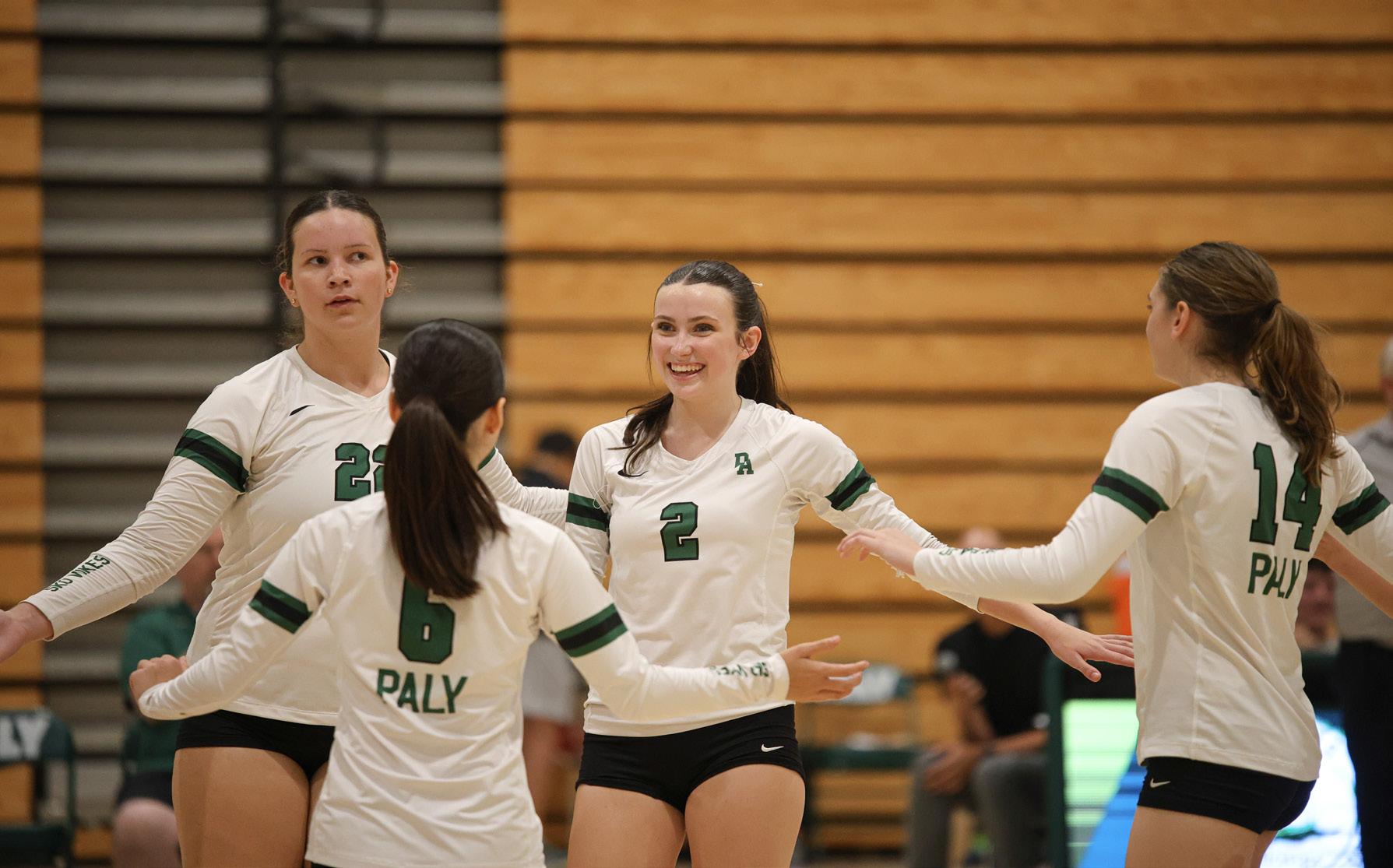

Emily Mulkey (‘26), Sophia Hill (‘26), Maura Hambly (‘27) and Elizabeth Jerian (‘27) celebrate as the Varsity Girls Volleyball team wins a point against Mountain View on September 22. Photo by Daniel Segev