
Cornell University is located on the traditional homelands of the Gayogohó:no’ (the Cayuga Nation).
The Gayogohó:no’ are members of the Haudenosaunee Confederacy, an alliance of six sovereign Nations with a historic and contemporary presence on this land. The Confederacy precedes the establishment of Cornell University, New York State, and the United States of America. We acknowledge the painful history of Gayogohó:no’ dispossession, and the honor of ongoing connection of Gayogohó:no’ people, past and present, to these lands and waters.
As Cornell’s premier student-run fashion, art, and culture magazine, Thread aims to create a collaborative environment where Cornellians can learn to express themselves with different forms of mixed media. Thread cultivates and celebrates individuality among its members and models as well as through our partner campus groups and external organizations. We draw inspiration from students of all interests and disciplines to create a bi-annual publication, each showcasing a unique aspect of the human experience. Embedded within are a diverse array of perspectives and content creation we hope will continue to captivate our readers in years to come.
threadmag.org thethreadmagazine@gmail.com @threadmag

In semiotic theory, language is not a transparent vehicle of meaning, but a system of visual signs through which meaning is constructed. Meaning does not reside in the image itself, but in the relationship between the signifier and the signified. A receiver is passive; they take the message of an image at face value, assuming it represents a reality which is fixed and stable. An interpreter, however, realizes the instability of the image. They view an image contextually, reflexively, aware that meaning is negotiated, shaped by culture, power, and identity.
Meaning is built upon the preservation and repetition of thought and theory. No creative endeavor emerges in isolation—every idea is indebted to what came before it. Under this framework of thinking, authorship becomes a powerful and dangerous force. To assume creators hold exclusive rights to meaningmaking is naïve. Every image enters an ongoing dialogue, one always in conversation with history, ideology, and the viewer.
by Thread Magazine
1. The meaning of an image is dependent on its context. Instead, they are spoken through setting, caption, and who’s looking.
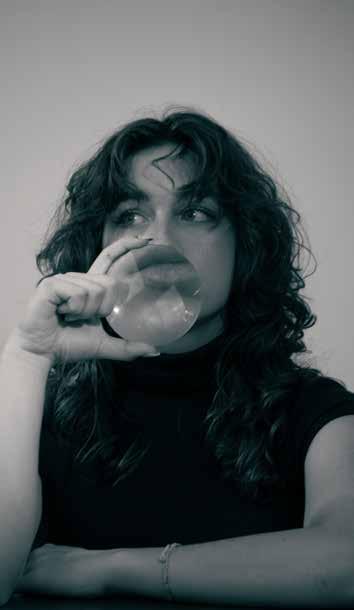
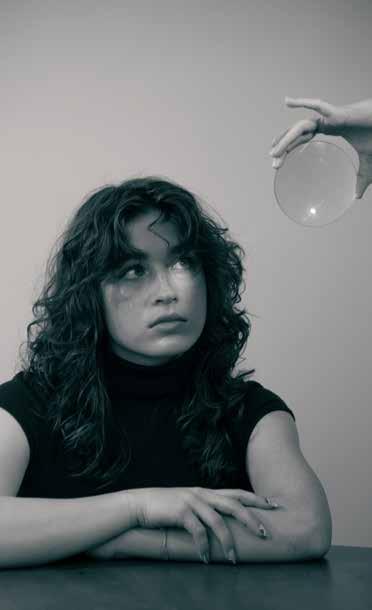
2. Women are always watched, obsessively, historically, and currently. Drawing on feminist visual culture, we examine how women have been positioned not as subjects but as objects of gaze.
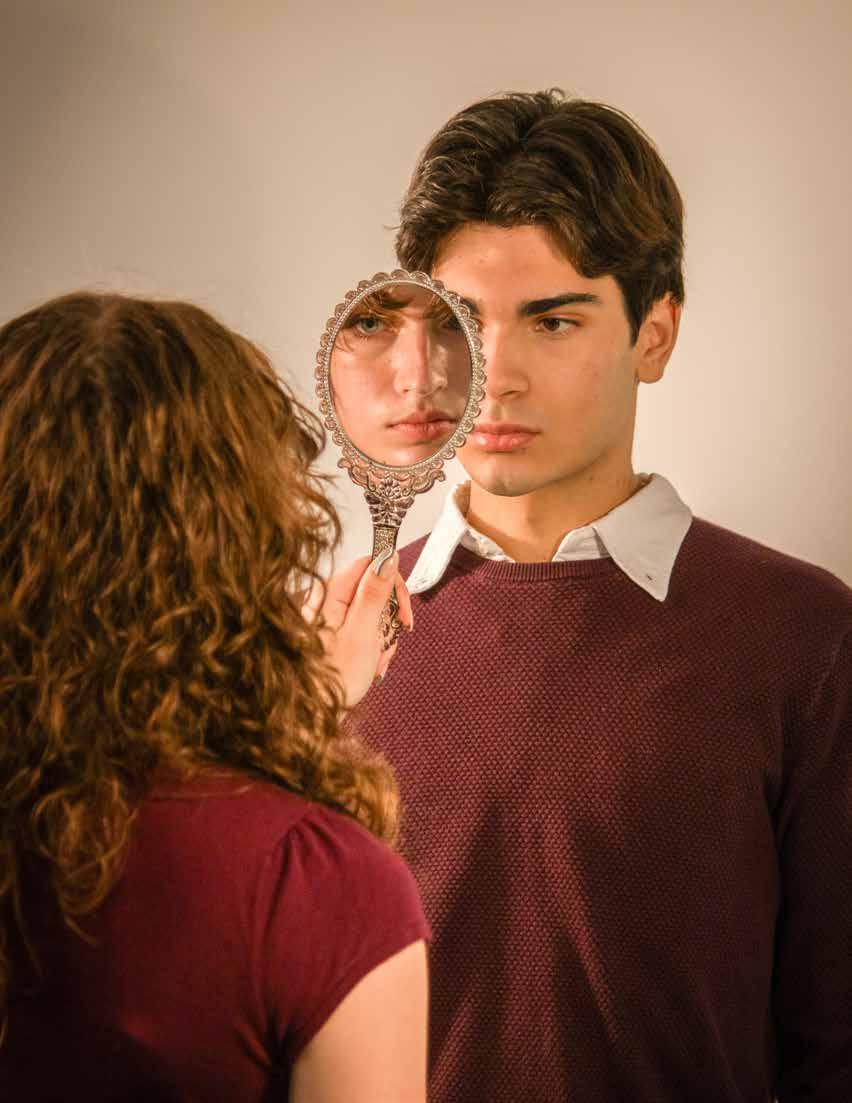
3. In a society saturated with images, the act of seeing oneself becomes inseparable from imagining how oneself is seen. We do not simply appear, but construct ourselves as images for others to consume.
4. What is often seen as a “natural form” is, in fact, a cultural construction shaped by the viewer’s gaze rather than inherent or objective truth.
5. No image confronts us as frequently as advertisements. By mimicking the language and imagery of advertisements, we reveal the absurdity of the capitalist spectacle.
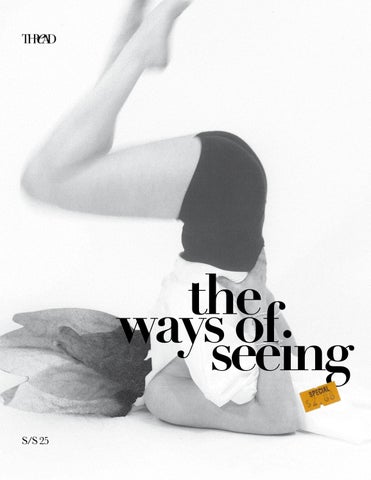
To transform Ways of Seeing into a magazine is to make Berger’s radical lens not just a theory, but a practice. Magazines are historically engines for aesthetic authority, prescribing standards of taste. The magazine is used as a reclamation of media transformed into a space for critical reflection rather than passive consumption. We disrupt the glossy illusion of the magazine as apolitical or senseless and instead assert that every layout, photograph, editorial piece, and curatorial decision is a site of cultural meaning.
Through this edition, we invite our readers to shift their perspectives, turning them from receivers to interpreters of the image.
Lillian Casazza & Jillian Walker

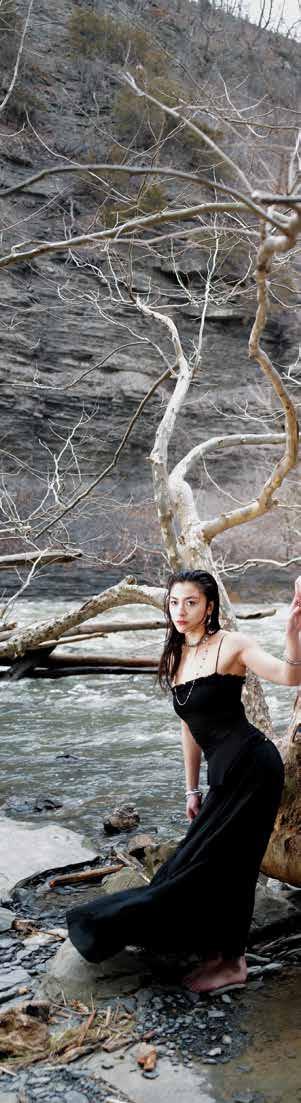
“It is seeing which establishes our place in the surrounding world.”
John Berger


editor in chief
creative director
managing director
print director
communications director
casting director
collaborations director
community director
events director
finance director
web director
social media director
beauty directors
design directors
editorial directors
fashion directors
photography directors
LILLIAN CASAZZA
JILLIAN WALKER
SUSANNA BURR
KAELYN SANDIFER
ERIN YOON
ALANNA STEIN
CHRISTY LAW
LAURA TWIZERE
ELIOT LEE
AYON DUTTA
BRIAN SA
EMMA HOGAN
GRACE SONG
IVY TU
ASUKA KUREBAYASHI
CATHERINE PAK
LILIAN CAO
MEGHANA PRAVEEN
SOPHIE FELDMAN
EVE RISKIND
LIRIANA NEZAJ
ROAN HARVEY
NOOR SATTAR
PAT SEVIKUL
beauty
ATHENA DENG
JADEN WOLF
PAIGE BURCH
BHAGIRATHI MILLS
AYESHA RAHMAN
creative
ADA RAUBER
AIDEN MONTESINOS
AILEEN SUH
ANNE SIMCOE
ANNICA BARTOLOME
AVA MACCARO
CHLOE PADELARA
ELLA HOGAN
INDIA GUTHRIE
ISABELLA FANG
LUCIA TRENARD
LINA KANG
MACARENA HESSE
OLIVIE KIM
RENEE WANG
RICHARD BALLARD
design
ASHLEY CHIANG
ASYA WISE
CHRISTINE TAO
EMMANUEL GADSON
HANAE MATSUMOTO
KATE MINN
MOHAMMAD MOHAMMAD
SAMANTHA DRING
SAMIKA AGARWAL
SARANG KIM
SAVANNAH ABERNETHY
SHEMI BOLESE
VERA KARTAL
editorial
ANGELINA TANG
ASHTON CHEW
GRIFFIN MCINTYRE
HAZEL TJADEN
JUPITER BHANOT
LYDIA OLIVIERI
MIA ROMAN-WILSON
NADIA SCHARFSTEIN
PHALGUNI MIRAJ
fashion
AVA OHANA
BACH YEN BUI
CYNTHIA ZHOU
DAVID SUAREZ
HANNAH LUNA
JUNEAU MCGEE
KATIE XIAO
MEGAN EL’ZAYYAT
RUHI DATAR
SARAH HENDERSON
TAYLA WILLIAMS
TIFFANY KUMAR
YEJIN LEE
RAFAELA GANDOLFO BUSTAMANTE
SADIE MANK
SAMUEL INDERMAUR
SARA GARCIA
SOPHIEANN DEVITO
photography
ADRIENNE LEE
ALDEN RITZ-JACK
AMBER SHAN
CLAUDINE MILLER
DAHYUN RYU
DYLAN ROJAS-PEDERZINI
HALSEY HULSE
JASPER DRAKE
JOY HUANG
KONRAD HARTUNG
LILLY RUBINSTEIN
MADELYN SMITH
MAËLLE THOLOMÉ
MIKKO LIVAK
NICHOLE ZHENG
ROSEY LIMMER
SABINA SCHRYNEMAKERS
SALEM ALSHAMSI
SOFIA BONILLA
VIENNA LI
VIVIAN YE
YUKI LI
external staff
REBECCA HU
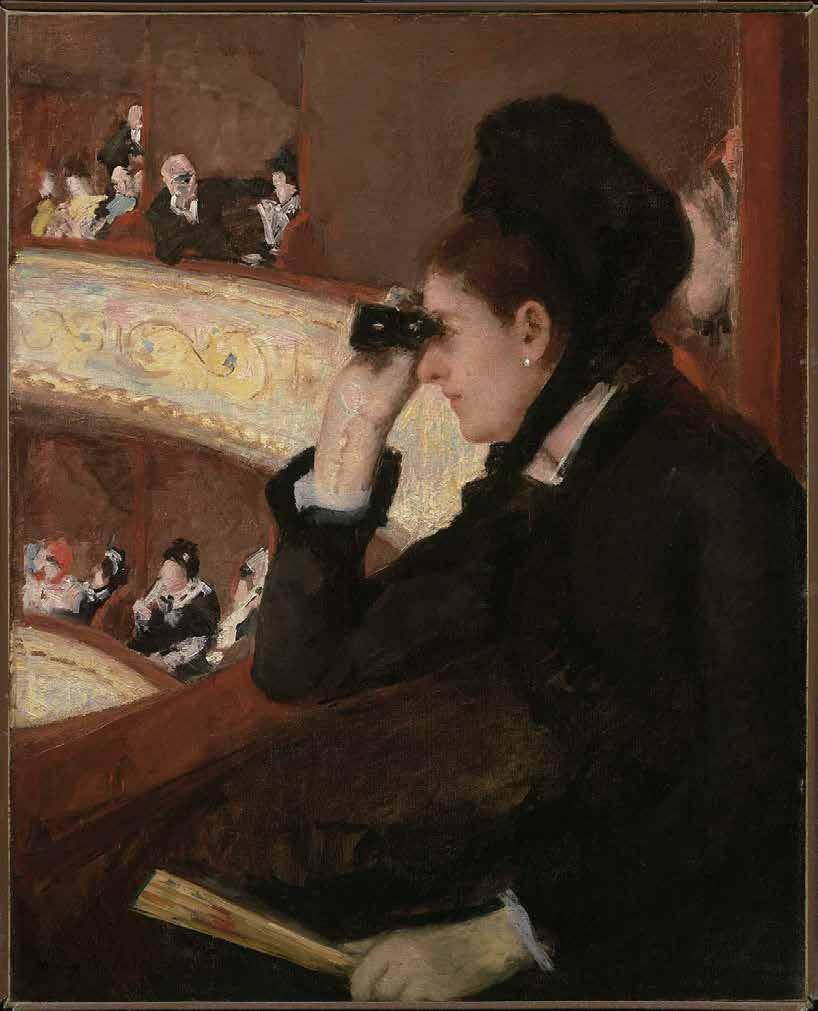
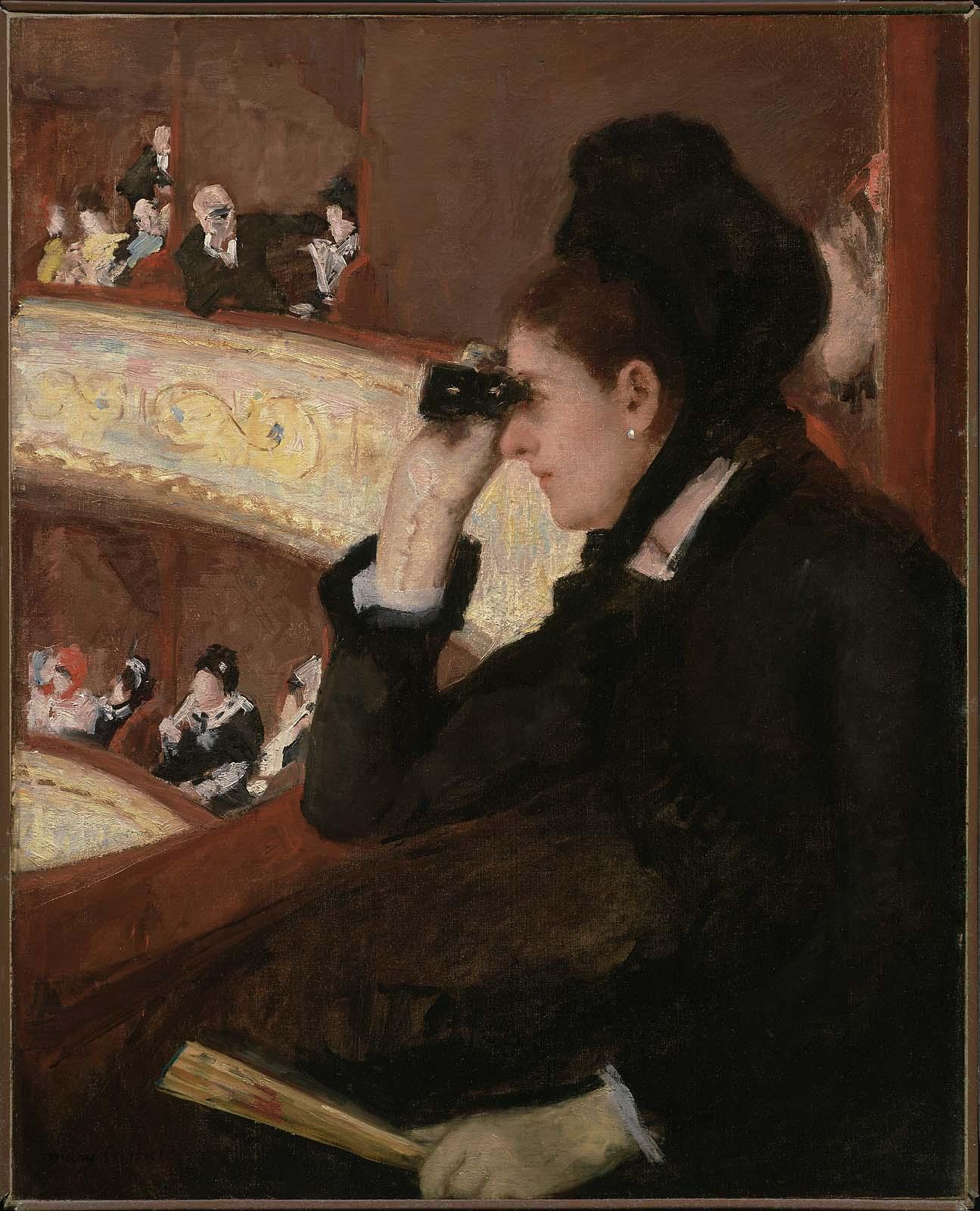


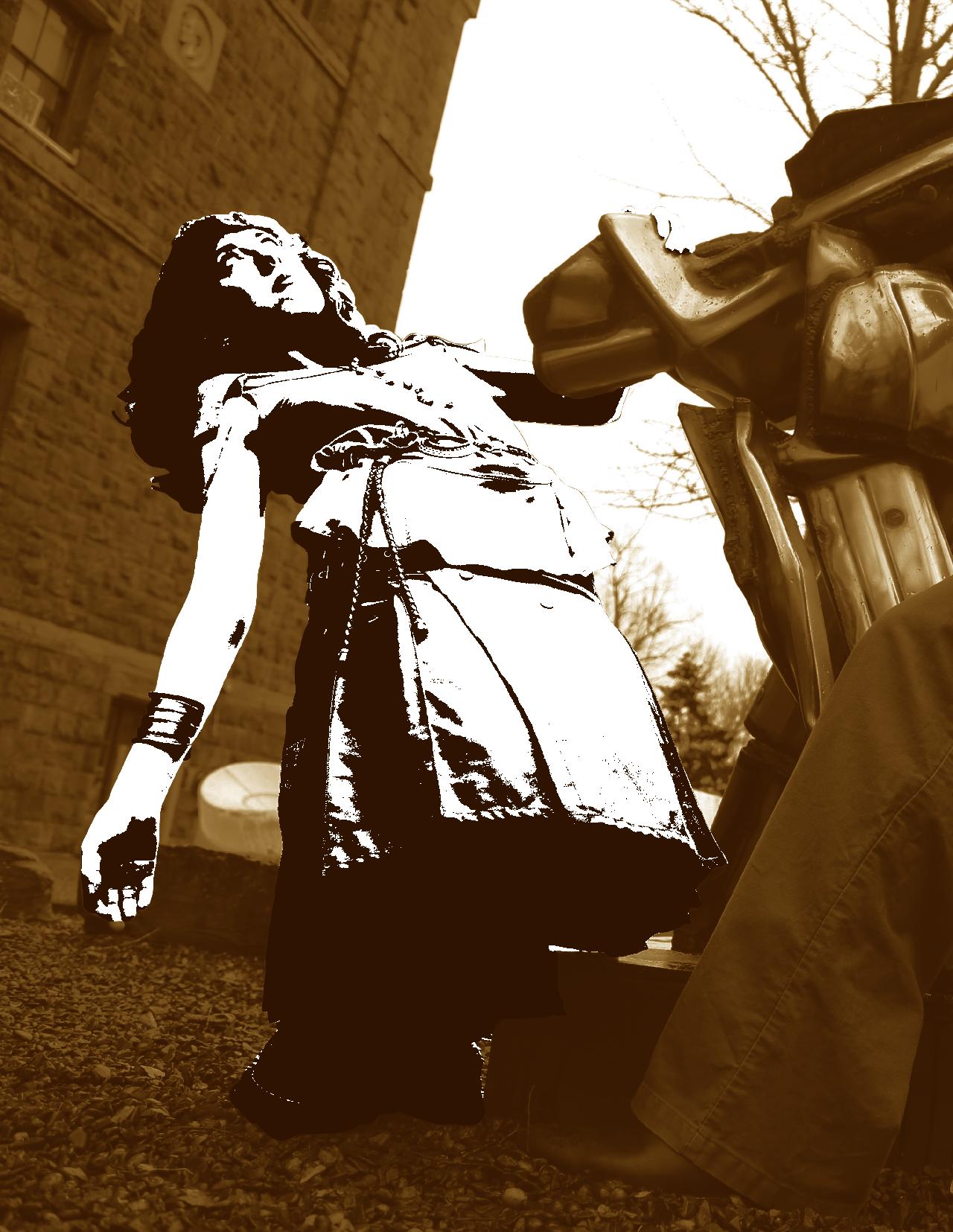

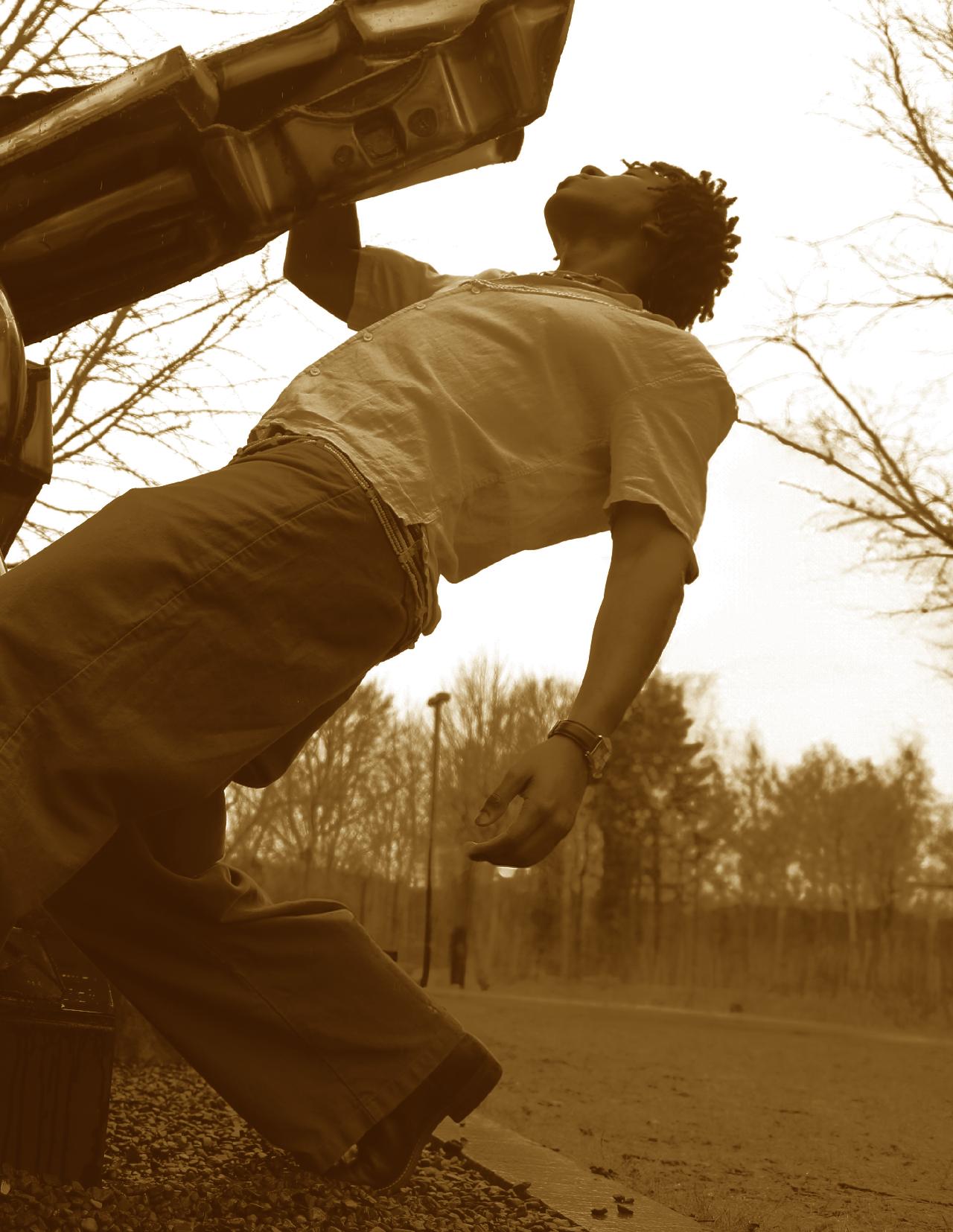
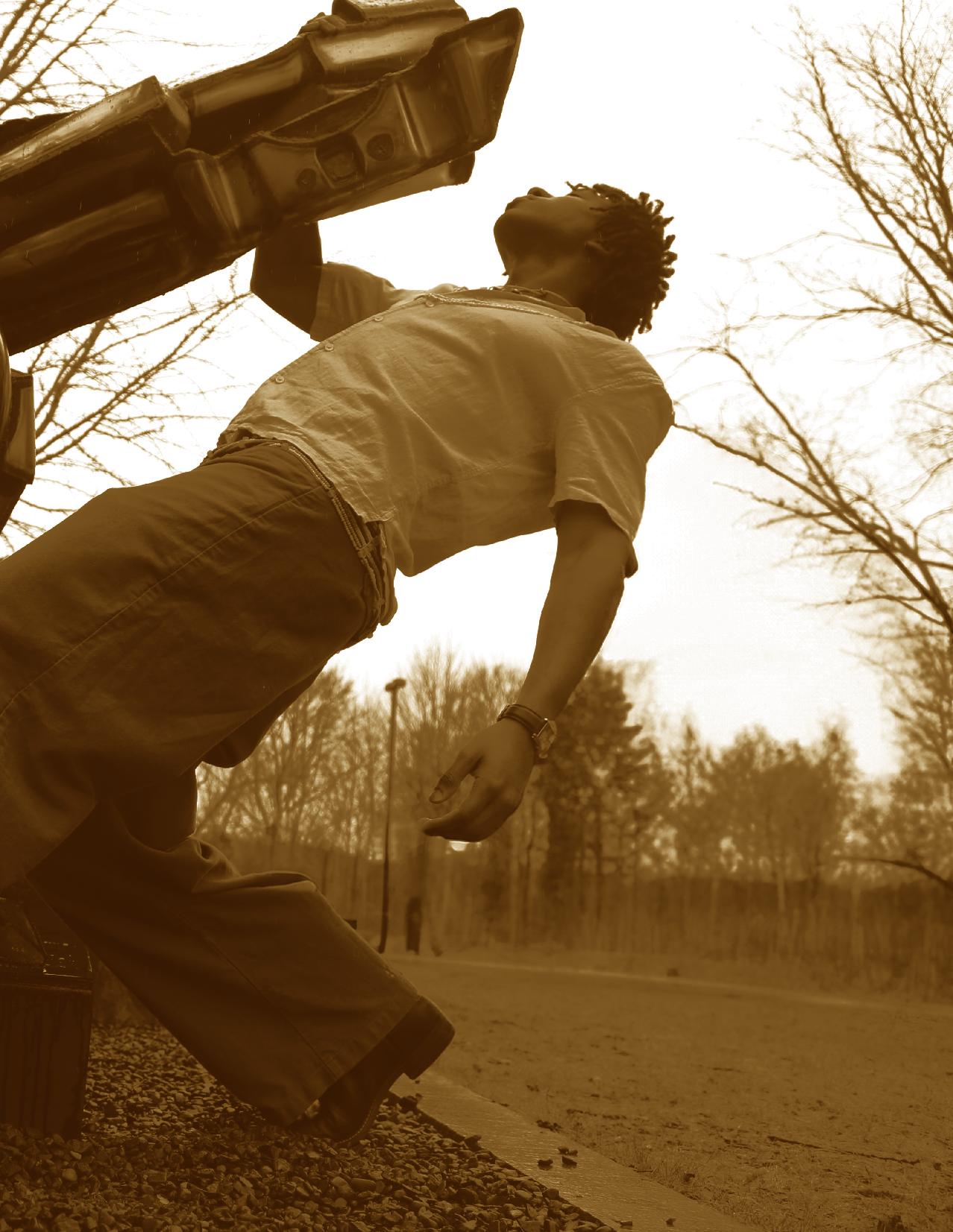
Today when we think of social housing what comes to mind are large blocks of concrete standing menacingly in stark contrast to the city’s landscape, whereas post World War II there was a movement toward intentional architecture for social housing. This shift in interests of architecture was led by Le Corbusier, a recognition of the home as a site of social reproduction worth the effort. What resulted in the shift from the culture-led urban regeneration to developer-led ones of the present? Present initiatives to resurrect humanist conceptions of socialist housing tend to fall victim to “artwashing” and raises the question of who is allowed to enjoy and coexist with art, without being subject to fetishization.
After World War II, the need for housing in many parts of Europe was high. Le Corbusier was commissioned to design a residential housing project for the people displaced after the bombings in Marseille, called Unité d’Habitation. He focused on communal living and maintained his five tenets of modernist architectural design: pilotis, a free ground plan, a free facade, horizontal windows and a roof garden. Five units of these autonomous neighbourhoods were built around the world, using the lost qualities of traditional housing for a large population. These projects were innovative and responded to the needs of societies in those areas, blurring the distinction between architecture and housing.
MEGHANA PRAVEEN
“AD Classics: Unite d’Habitation / Le Corbusier.” ArchDaily. https://www. archdaily.com/85971/ad-classics-unite-d-habitation-le-corbusier. “Architecture and Anthropology.” Anthropology of Architecture. https://www. anthropologyofarchitecture.com/new-page-1.
“Le Corbusier’s Chandigarh: Bold Vision or a Modernist Failure?” Architectural Digest Middle East. https://www.admiddleeast.com/story/le-corbusierschandigarh-bold-vision-or-a-modernist-failure. Vilenica, Ana, ed. Radical Housing: Art, Struggle, Care. 2021. https:// monoskop.org/images/d/d9/Vilenica_Ana_ed_Radical_Housing_Art_Struggle_ Care_2021.pdf.
But as soon as his ideas were imposed in the global south, the utopian dream of communal living held by architects was shattered. The imposition of a decontextualized eurocentric approach in Chandigarh was not only ideologically at odds with the population, but also a practical failure. In a newly free India, the opportunity of rebuilding a city was given to a foreigner, almost like handing the keys right back to the west. As Spivak argues, this modernist experiment was a failure because it did not put decolonization on stage. In an attempt to catch up with the West, modernism spread over the city. The city quickly outgrew its capacity and is inconsistent with the realpolitik, the pluralistic culture of the
community. Perhaps Corbusier was right when he said, “You know life is always right; it is the architect who is wrong.”
In the present moment, even the attempts at reproducing past brutalist structures lack the humanity-forward approach that characterised artistic social housing. New Brutalism, idealising the facades of the past, has breached popular discourse, gaining admiration from the masses. But discussions of class have been expelled from this renaissance. The admiration and the following materialisation of new properties risk being subject to the same failures as the original counterparts. The aestheticization of the style resulted in an “artwashing”, banishing the needs of the marginalised, for whom the properties are made, to second-class concerns.
Even the properties that exemplify the ethical essence of brutalism and provide housing for the struggling workingclass, have in recent years seen demolition or the outpricing of those they were created to serve. Apartments in Le Corbusier’s original Unité d’Habitation are constantly restored and placed on the market at increasing price points, the Robin Hood Gardens in London, a revered social housing structure by the community was demolished and the land sold to developers, with a section of the facade preserved for “neutral viewing” at the Victoria and Albert museum.
Although the need for housing powered the brutalist and new modernist movements, the disconnect between architects and the people their designs served reveal the shortcomings of the revered social housing era. In the present day, brutalism is having its moment in the sun, but to the discontent of the working class. We are often presented with brutalism as an exemplar of modernist architecture and that the aesthetic viewing of it is a neutral activity. To buy into this is to depoliticise and debone the concept to make it palatable, further obscuring the oppression of the marginalised.
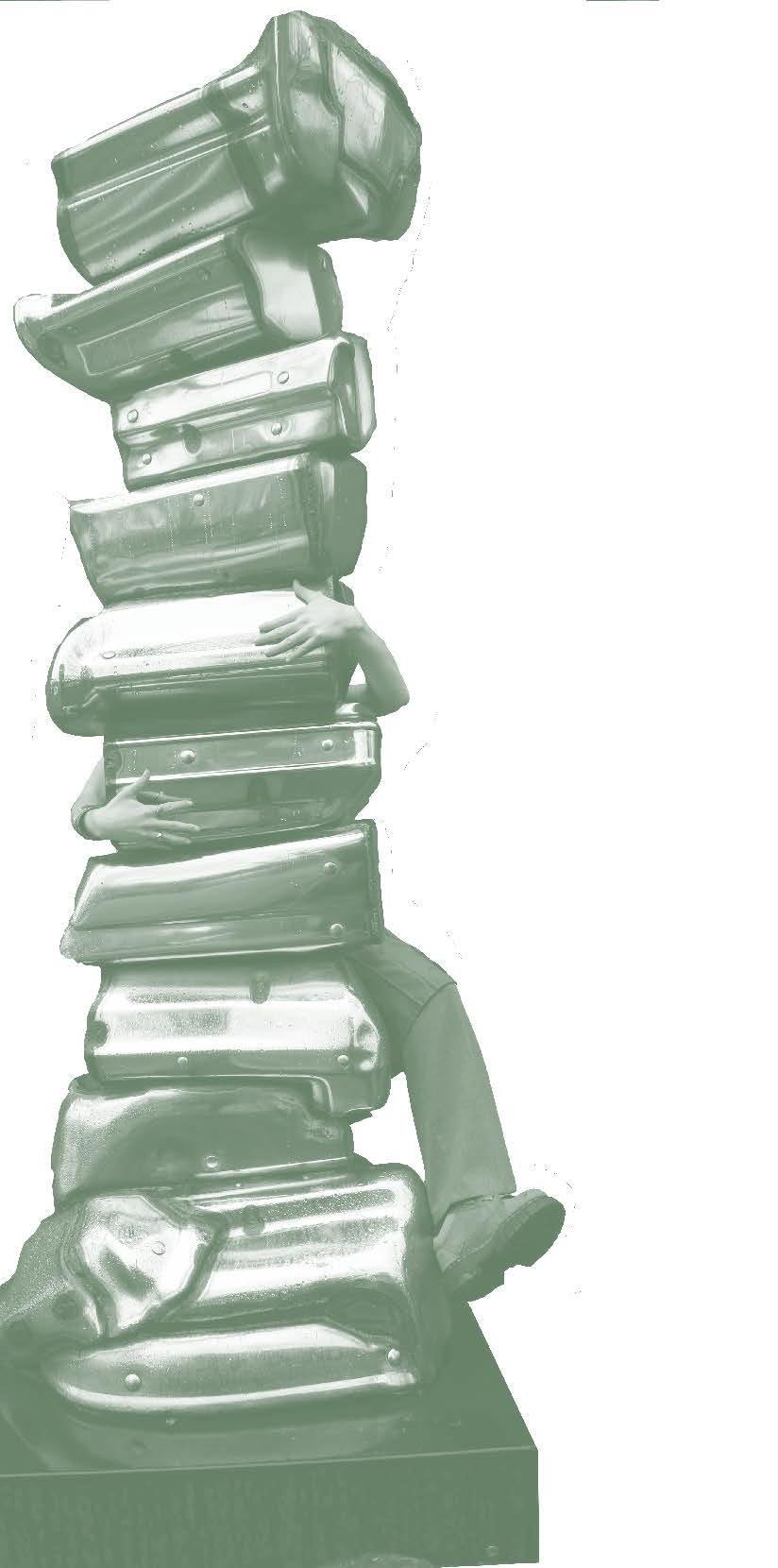
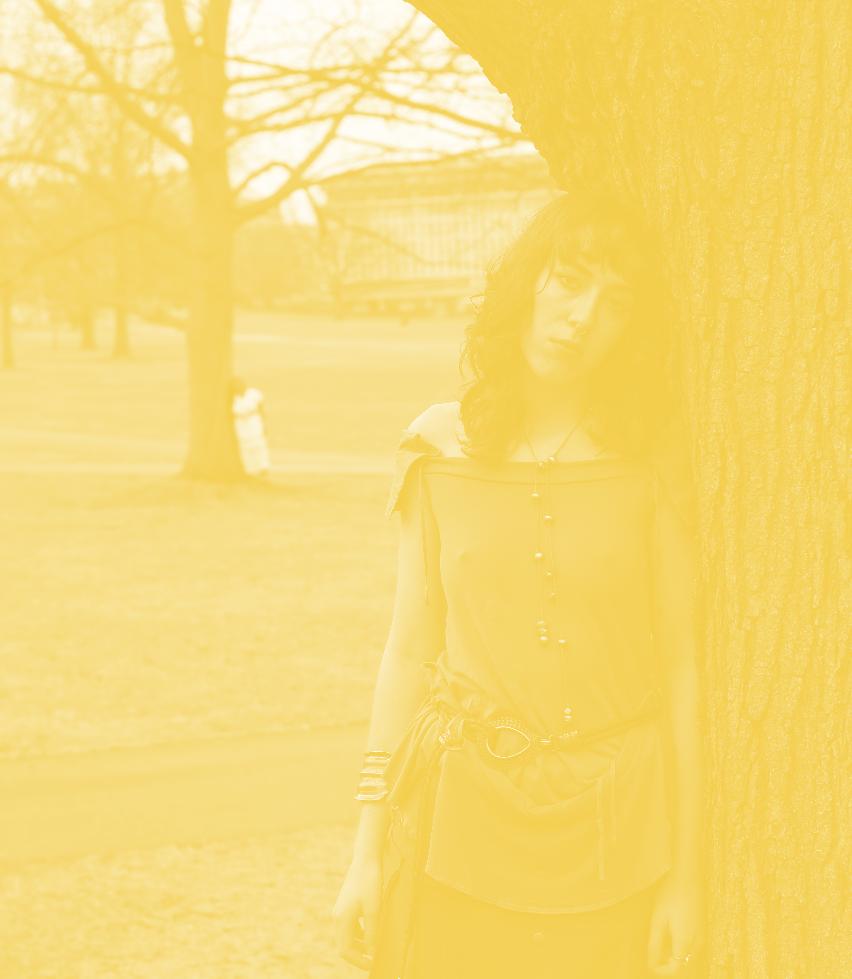

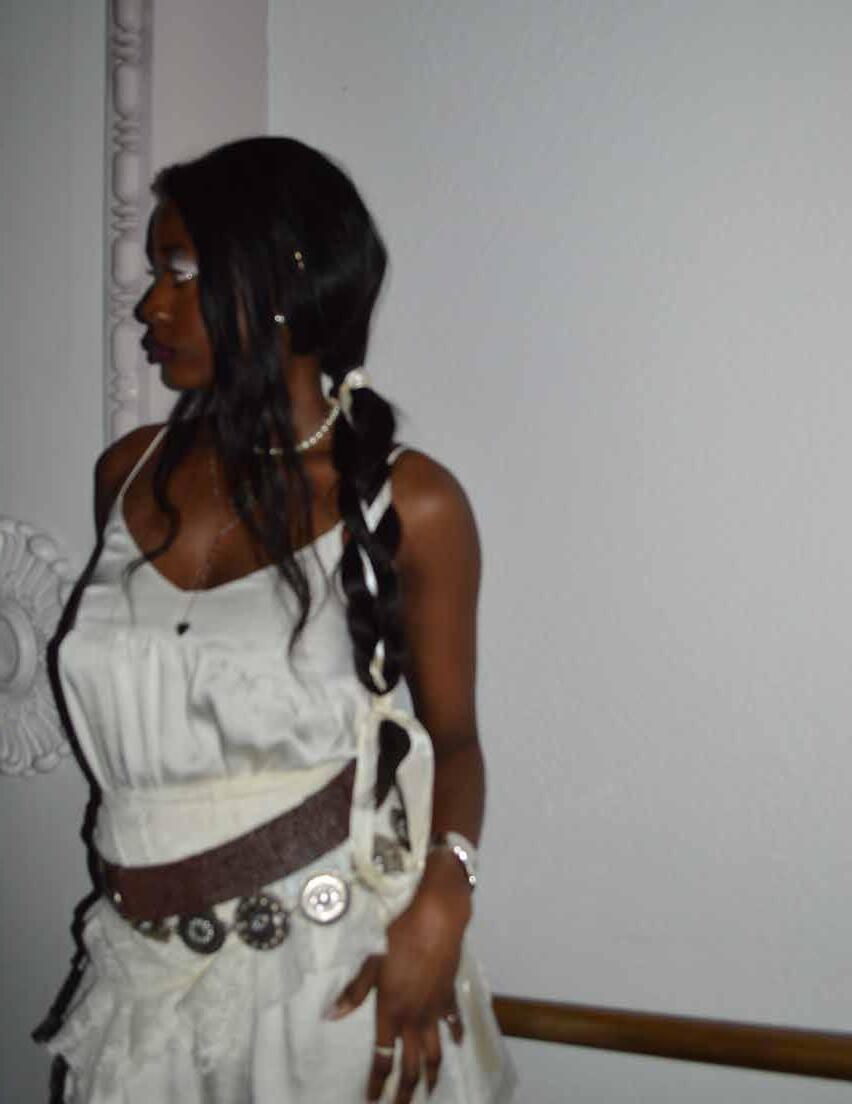
In a world where art is often confined to the pristine walls of galleries and museums, murals present an accessible and refreshing alternative. Painted on public buildings and outdoor spaces, they don’t require a ticket, an art history degree, or even a dedicated visit—they exist in our environment, embedded into the everyday. As you walk to the grocery store, glance up at an alleyway, or wait for the bus, a mural may reveal itself— inviting a moment of engagement, of reflection. Murals are for everyone, encouraging physical interaction as you walk past, look up, or watch them shift with light and weather. Unlike traditional paintings confined to frames and fixed perspectives, murals evolve with their surroundings and challenge the notion of a single, ideal viewer. Murals are more than just art on a wall—they tell stories.
Ithaca, despite its small size, is home to an array of murals that serve as cultural landmarks and reflections of local history, while emphasizing community engagement and social justice. One of the most recognizable is the “Ithaca is Gorges” mural, painted by Yen Ospina and located at the K-House on Catherwood Road. Through bold, imaginative shapes and colors, the piece highlights the stunning beauty of the Finger Lakes region and captures the essence of the natural environment defining Ithaca. It encourages passersby to reflect on the history and significance of the land they occupy, becoming not just
a celebration of place, but a powerful form of public storytelling. Murals like this are accessible to locals and visitors alike, and are seamlessly woven into the visual and cultural fabric of the community, undermining the traditional elitism of galleries and museums that often limit art’s reach to a select few.
Murals also challenge traditional ideas of perspective in ways uniquely suited to their public, open-air setting. Anamorphic murals, for instance, shift depending on where the viewer stands, contrasting with the fixed, singular viewpoint imposed by traditional art. Instead of addressing an isolated spectator, they create a dynamic, physical experience—inviting viewers to move through space and engage with the work on multiple levels.
Although murals embody a break from the exclusive nature of art spaces, they too are not immune to commodification. In many cities, public art has increasingly become a tool for branding and tourism. Murals are commissioned to brighten facades or attract Instagram engagement; neighborhoods use them to project a “creative” identity that draws in outside investment. While this can bring exposure to local artists, it also raises questions about control and intent: who is the mural really for, and what story is it telling?
In Ithaca, however, murals largely resist this trend. The Ithaca Murals project, which supports much of the town’s public art, is rooted in grassroots collaboration and social justice. Their process prioritizes artists from marginalized backgrounds and themes that reflect community needs. One striking example is the mural honoring civil rights activist Dorothy Cotton, located downtown. Bold and full of movement, the mural doesn’t
just commemorate Cotton’s legacy— it invites viewers to reflect on Ithaca’s place within larger movements for racial justice. At Belle Sherman Elementary School, a 2022 mural bursts with color and imaginative forms, created in collaboration with students to promote inclusion, creativity, and joy. It reminds us that public art can start young, planting values of community and expression early on. These works aren’t just decorative; they’re deeply embedded in the communities they represent. While murals like these may draw attention from visitors or show up on social media, their visibility doesn’t dilute their meaning—it amplifies it. Their impact stems not from marketability, but from message, placement, and purpose.
Murals, especially in places like Ithaca, demonstrate how art can function beyond aesthetic pleasure. They connect us to place, to history, and to each other. As murals continue to rise in popularity across the globe, Ithaca offers a model for how public art can remain rooted in context and committed to inclusivity. These murals don’t just reflect their environment— they shape it, serving as reminders that art, when made truly public, belongs to everyone.
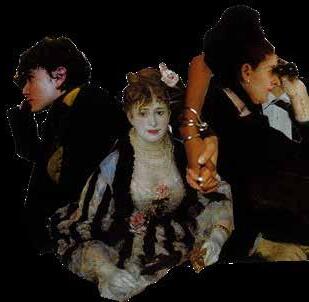
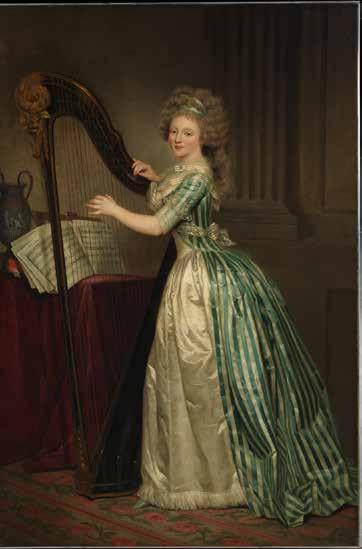
https://www.mWetmuseum.org/art/collection/ search/436222.)
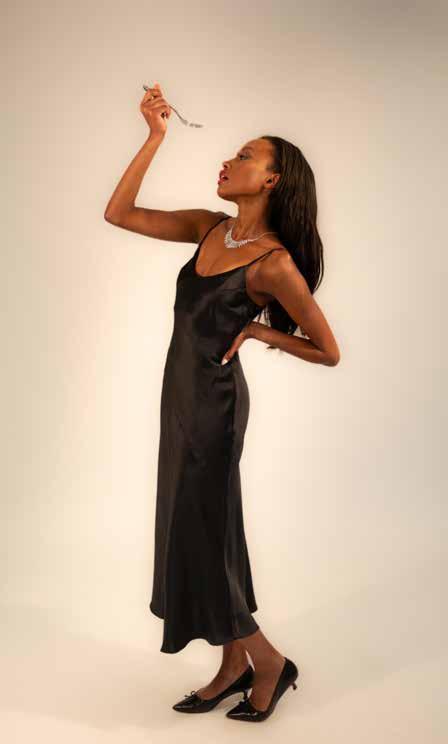
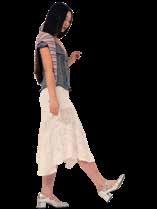
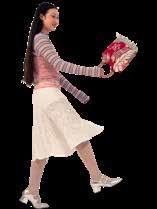
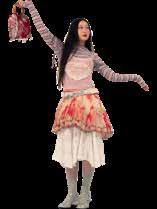
Three summers ago, I sat hunched over my sewing machine every day, painstakingly pouring my heart into every stitch just to make a dress that already exists.
Let me be specific: it once existed. It is depicted in Rose-Adélaïde Ducreux’s 1791 “Self Portrait With A Harp,” a painting which hangs in a French period room at the Metropolitan
Museum of Art. Despite its lush surroundings of gold leaf, oak, and marble, the blue-and-white striped robe à l’anglaise commands the attention of the entire salon.
Oxford defines art as “... works to be appreciated primarily for their beauty or emotional power.” But fashion is not just art: it also provides function. Warmth, modesty, and protection, perhaps belonging, signaling, or “style.” But these words are evasive and contextual. It is extremely difficult to communicate the functions of clothing across space and time— and without the context of the body it becomes nearly impossible.
Take, for example, the art museum. Garments are displayed like statues, without demonstration of functionality or animation. Put simply, their life force is drained. in “Sleeping Beauties: Reawakening Fashion,” the Met attempted to solve this issue by utilizing AI to depict the garments on display as seen “in life.” Ultimately, the disembodied, gray figures served no greater purpose than to virtually jostle these artworks around in a context-less and inhuman void.
This has a real-life consequence: a vacuum that lets agents like Hollywood breed false narratives about
the relationship of fashion and the body. For example, take Hollywood’s portrayal of corset tightlacing, which perpetuates the idea that women were too consumed with their image to care for their health or comfort. This way, they can force modern women to continue living under those very conditions. But if their clothes were seen in proper context, made and worn accurately on the living human form…could new understanding lead to social change?
This was my question in May of 2022, when I set out on a project that would take me a year to finish. Primarily, I was concerned with correcting my own misconceptions, and communicating what I had learned to others. Were I to recreate and wear Ducreaux’s gown, would modern viewers understand it on my body? Needless to say, nothing could have prepared me for wearing the dress for the first time.
In an instant I was transported to a period I never lived in, a place I had never been, all through the gown’s physical presence. It was surprisingly comfortable, two pockets each big enough for my phone, a snack, maybe a small book. I was neither warm nor cold—the natural fibers of the cotton lining regulated my temperature perfectly and felt soothing
on my skin. And most importantly, I was able to breathe, walk, and run in the attire so frequently touted as impractical. It was beautiful and functional, not oppressive nor outrageous, emphasizing that the people who wore these works of art were women just like me.
When barriers of time and material culture are transcended, societal misconceptions are uncovered in the understanding that arises within the viewer. I will never forget the shocked faces I provoked in New Jersey’s historical Allen House when I revealed my phone from my dress pockets with a smile, or commented on how easy the drive was. This was the impact of my work: I had allowed for people to see something so beautiful as artistic because of its functionality, not despite it.
Most importantly, I had righted this misconception with something they could see, hear, and touch, living and breathing in the context of their own lives and the lives before them.
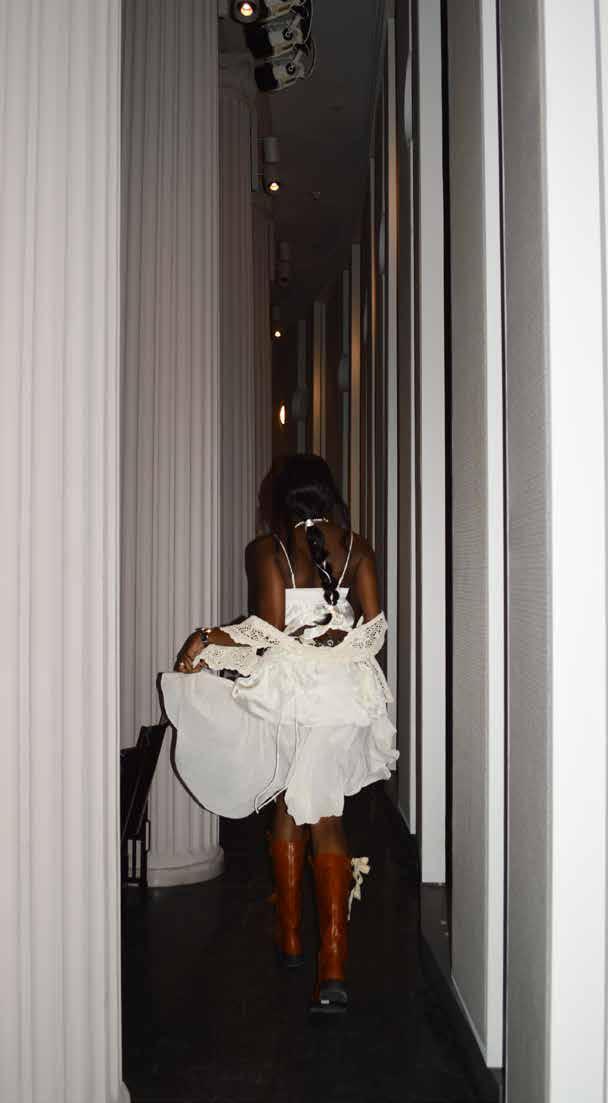
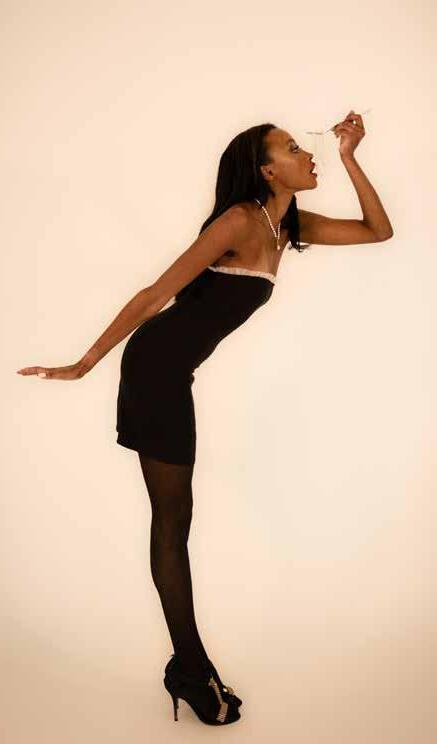


SARA GARCIA
In the nineteenth year of her life, Jackie discovered a special ability. She was not what one would call beautiful or stunning, but the boys she dated would say that she was pretty or cute, usually as they were unzipping their pants. That fact weighed heavily on her and with every step, she dragged that invisible burden in the hopes that one day it would be lifted and she would look in the mirror and she would be like the girls in hair salon magazines: clean, shiny, and most importantly, hot.
On some nights, Jackie had a hobby to pass the time: sculpture. She liked to create miniature sculptures of the girls she wanted to be, and under her dexterous hands, the clean, shiny, hot magazine girls game to life. On the night of her nineteenth birthday, Jackie blew out the candles, wishing to be just like the girls she sculpted.
As the sun rose the next morning, she groggily made her way to the bathroom with the same heavy feeling she had every morning. But this morning was different from all the other mornings. As she stared into the bathroom mirror, something was different. Her nose was smaller, her lips were bigger, and the width of her waist no longer made her sigh. Could it be? Had her desperate wish come to fruition?
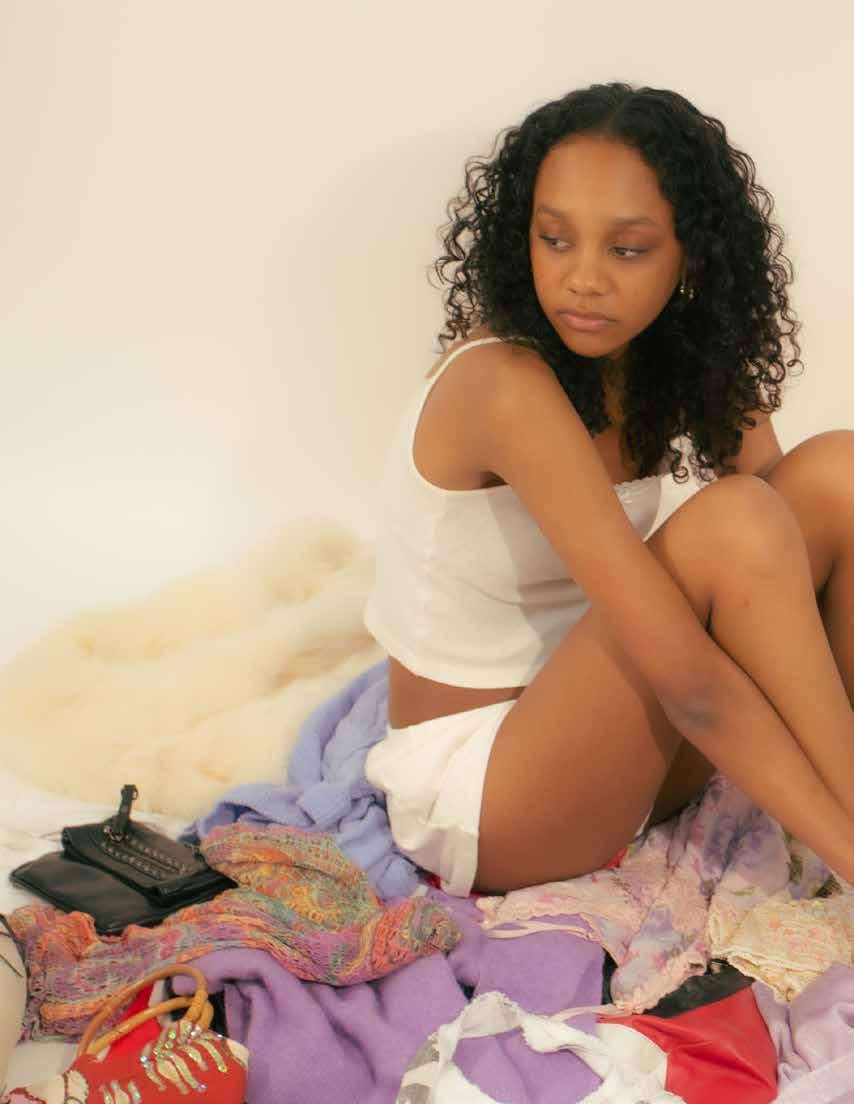
As she went about her day, Jackie noticed that people treated her differently. Men held the door for her, women smiled at her, and babies granted her a gurgling smile rather than their usual innocent indifference. As she sat before her sculptures that night, a seed of ambition was planted in the fertile soil of her heart.
She began a new sculpture. This one had a larger chest, skinnier thighs, and higher cheekbones. As the flakes of stone fell away under her chisel, Jackie felt her heart swell with each clink clink clink. The next day, she
noticed the same effect she had on people, yet it still was not enough. The high was no longer as potent, so she set her mind on trying harder.
Many weeks passed, and soon Jackie was unrecognizable. Almost alien-looking, people treated her as inhumanly as she looked. Commuters on the train avoided eye contact, but she could feel their leering gaze as soon as she looked away. Small children gawked at her, asking, “Mommy, why does that lady look so funny?”
On one particularly bad night, she sat at a bar, waiting
to be approached. She tried speaking to the pudgy, balding man next to her, but he scoffed, sneering, “I like my girls natural, thanks.” Jackie ran home in tears, and as she burst into her room, she grabbed every sculpture in sight and began smashing them to the floor. When she was cute, she wasn’t enough for them, but now that she looked like the girls in magazines, she was too much. With each shattered figurine, she grew weaker and weaker. Her hands grew gnarled, her back hunched, and her once luscious hair grayed and fell out in clumps.
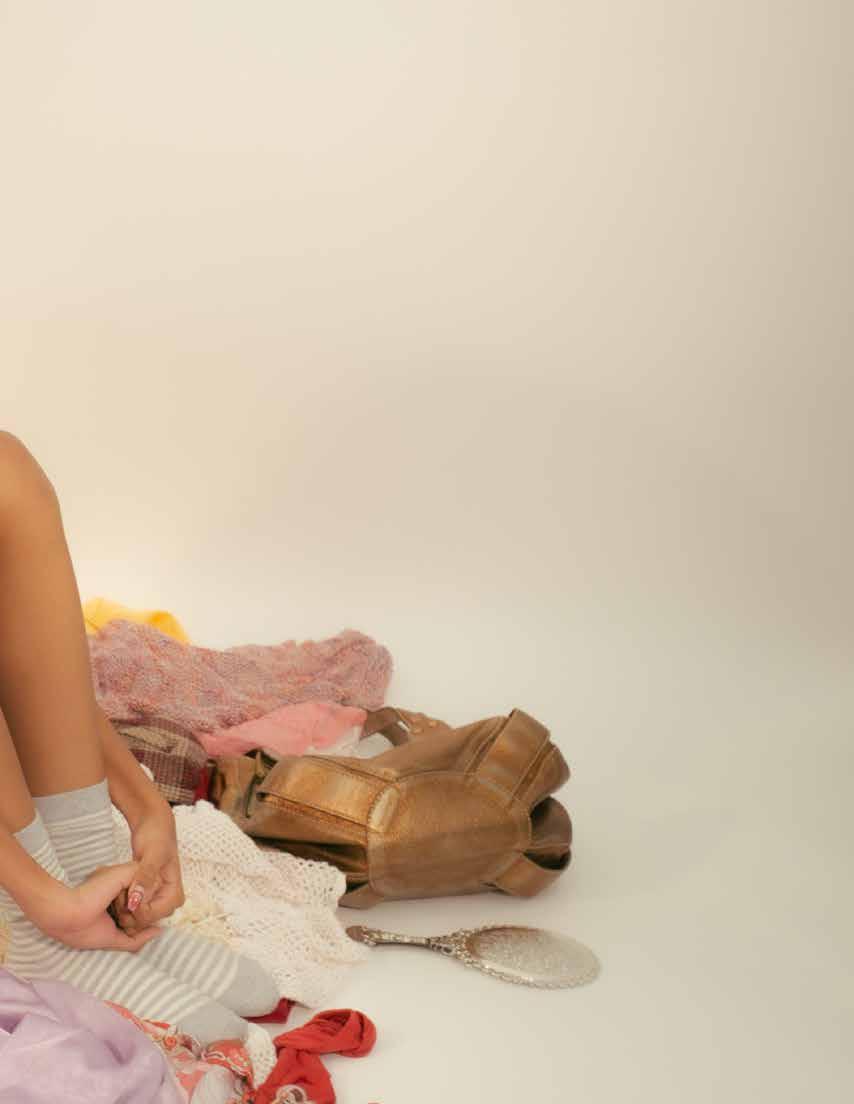
Finally, after the last sculpture crashed to the ground, Jackie laid in the midst of her own wreckage, a skeletal shell of the cute, pretty version of herself that yearned to be beautiful and loved.
Third-wave liberal feminism, with it’s #girlboss merchandise, inspiring blockbuster movie monologues, and style-icon politicians, has given off the impression that awareness of one’s own oppression is the same as liberation. Through the mouthpiece of countless posts, reels, memes, it screams that, “to be a woman is to perform”. All the while, a beautiful girl flawlessly applies her no-makeup makeup look below the floating texts. There is certainly a performance going on, but the spectacle herself is the one hawking the tickets— along with whatever products she has linked on her Amazon storefront.
The concept and definition of woman has always existed in relationship to man. Man, maleness, manhood, these are self-explanatory. A man is a person. Mankind refers to all people. A woman is what a man isn’t. Eve made by and from Adam. The woman’s body is a producer, the marker of ‘F’ is assigned at birth based on perceived ability to later repeat the process. And while infertility doesn’t negate womanhood, the supposed potential to nurture a child—be it a real child or a man who acts like one—is one of the guidelines for the correct way to be a woman. Womanhood is an assignment, and whether or not you pass it is decided by institutions far outside your scope.


“Would you still want to be beautiful if there was no such thing as ugly?”
I certainly have never been very good at being a woman. I have no patience for children, I’m loudmouthed, I make a lot of dirty jokes, and I’ve been secretly hoping to grow a penis since age eight. My performance was mediocre at best, but if there is one part of womanhood that I excelled at, it was (and still is) the clothes. I love clothes. I love shopping for clothes, I love playing dress-up when my roommate’s gone and maybe most of all, I love the way people love my clothes. A part of it is the satisfaction in perfectly matching colors and textures, in striking the balance between harsh contrast and seamless cohesion, and further still, there’s a satisfaction in having that skill recognized. But there’s the part of me that knows my worth as a woman—a woman first, a person second—comes from how I present myself. I don’t feel like a woman, I feel comfortable saying I’m not one. But the third part of me is still nine years old and wondering why none of the other girls like her, and she wants nothing more than to pass off as one of them.
Womanhood is not selfdefined. Being a woman, having that ‘F’ on your license or your passport or your housing portal profile is not for you. It’s for the institutions that need to categorize, control, and use you. The distinction between man and woman serves to support these institutions: it provides a million new ways to regulate, to divide and to subdivide, to sell and sell to, to pretend to empower and to oppress even further. The gendering of products, behaviors, clothes, activities, styles, and so on, is all done with deliberate, predatory intention. Institutions once had to regulate these
themselves: through laws, through marketing campaigns, through religion and through fear.
Now, the work is done for them. There is no need for enforcement if the oppressed are willing to flagellate themselves and one another in order to hold up the status quo. If women are convinced that their oppression has already been overcome, then they can be convinced that any further oppression was their own idea to begin with. We aren’t being taken advantage of as a marketing demographic by cosmetic companies pushing expensive, harmful products, we’re stimulating the economy by investing in self care. We aren’t being pressured into being subservient and helpless and perfectly-manicured, we’re encouraging each other to embrace our “feminine energy”. We aren’t dogpiling individual women for being unfeminine, we’re coming together as a community to shame a “pick-me girl”.

They’ll tell you that you’re doing all this for yourself, that it’s all your choice, and you’ll believe it, because what else would you be if not a woman? What
would you be if you didn’t exist in relation to men? What would you be if you admitted that the label placed upon you based on the length of your clitoris when you came out of your mother was a tool for control rather than liberation?
Would you still want to be beautiful if there was no such thing as ugly?
SADIE MANK
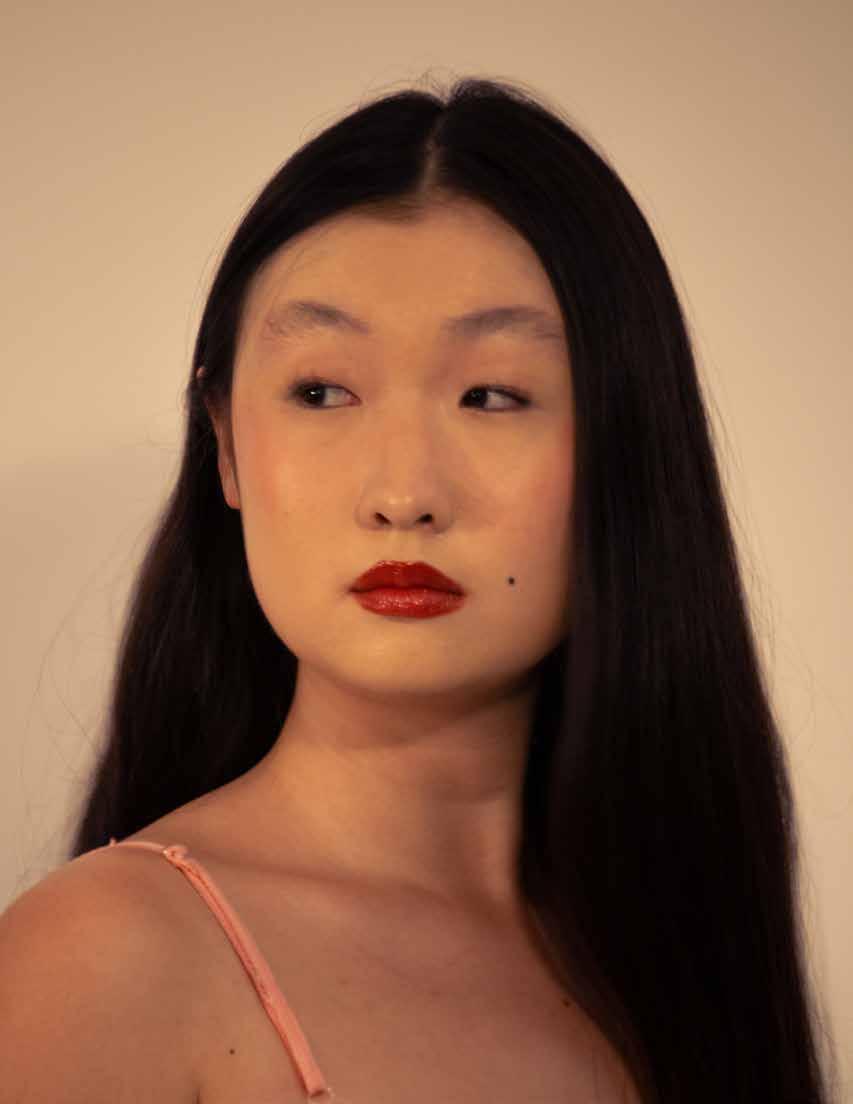
John Berger says women in the West are raised alongside their own imagined image of how they are perceived by men; according to him, this is effectively an adaptive social mechanism that enables them to get through life in a world not built by or for them. Integrated into their own self-concept is an objectified version in their mind’s eye. Let’s set aside the fact that this can be seen as an outdated – or overly generalized – form of cultural commentary. For now, just for a little, let’s take it at face value, as a broadly true principle.
Is it included in the baggage of an objectified-self that we come to locate ourselves as objects, entities condemned to be acted upon, non-agents? To me, this recalls the curse of the ‘people pleaser:’ a mind fixated on its worth as measured by others’ judgments, or worse, by its usefulness to them.
In anthropology, if a studied human subject is ethnographically portrayed as a one-dimensional victim lacking any agency, we are taught to be critical. Some part of the story is missing, some part of the narrative flattened - the part that identifies the channel through which the agency is expressed. So where does our agency go when our self concepts don’t leave space for it?
When our minds operate in this way? If to objectify oneself is to deny one’s own agency, then people-pleasing is contracting or contorting oneself to fit someone else’s needs or projections, sacrificing your own.
But this should not be confused with self-sacrifice, at least in my experience. What I’ve come to realize is that this mode of being, the flattened sense of self expression through people pleasing, can be a seductive opportunity to avoid responsibility. Such is conformity in general - an alluring escape from accountability. If letting people down is inevitable, if inadvertently hurting the ones we love ultimately can’t be avoided, leaning into the objectified self lets us avoid responsibility for when it does happen. They become collateral damage of your condition, the plague of insecurity that results from the constant reliance on others’ validation for a sense of worth. They are collateral damage of your condition, not of you.
Accessing any sense of inner compass can feel utterly impossible to decipher and painful to take accountability for when you do. Thus, self objectification is a seductive trap. At least in my mind, this sort of way of seeing myself in relation to others reflexively excuses
letting someone close to me down. If it was at the cost of satisfying someone else in my life’s needs, or performing their projection of me, then I am consciously absolved. But guilt isn’t avoidable, and constantly engaging a repressive mechanism is exhausting and grading. It just fuels insecurity.
So I delete instagram and seek a healthy amount of solitude - I lean into my interiority - in order to incorporate the agent back into my self-concept. In order to build dimension back into my subjectivity, unflatten that two dimensional blank canvas of the objectified self waiting to be projected upon by all who cross my path. I say yes when I want and no when I don’t, all the while working to quiet that fear that makes wanting feel dangerous.
One particular night at three AM, kept awake by guilt and the compulsion to scroll through Pinterest, I read these words in Joan Didion’s On SelfRespect: “Without it, one eventually discovers the final turn of the screw: one runs away to find oneself, and finds no one at home.” I thought about my next return home. I thought about how I’d love to find my family there and not just my own reflection as imagined through their eyes.
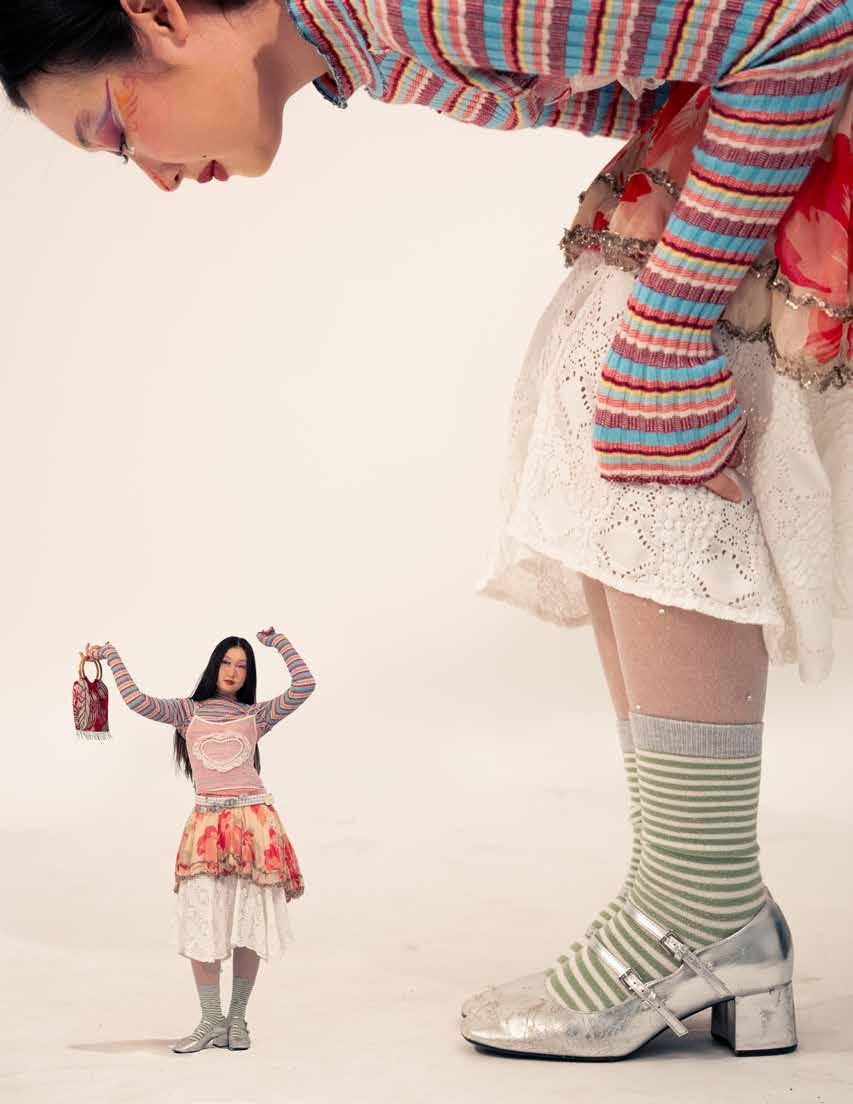
ASHTON CHEW
A young woman takes seventy-three photos of her outfit. She studies each one. “Do my eyes look weird in this?” She texts three to her friend. “Which one looks best?” She reiterates. Her friend replies: “The middle one looks more like you.” She adjusts the contrast. She posts it to her story. Her phone buzzes. She checks who viewed it. She will check again in twenty minutes. She becomes both the image and its critic. She is John Berger’s self-objectification theory in action.
“Men look at women. Women watch themselves being looked at.” Berger identified how women in patriarchal societies split their consciousness into the observed and the observer. They monitor their appearance from an external perspective, experiencing themselves simultaneously as subject and object. From Renaissance paintings to modern advertising, women’s bodies were arranged for male pleasure, rarely existing beyond their role as visual objects.
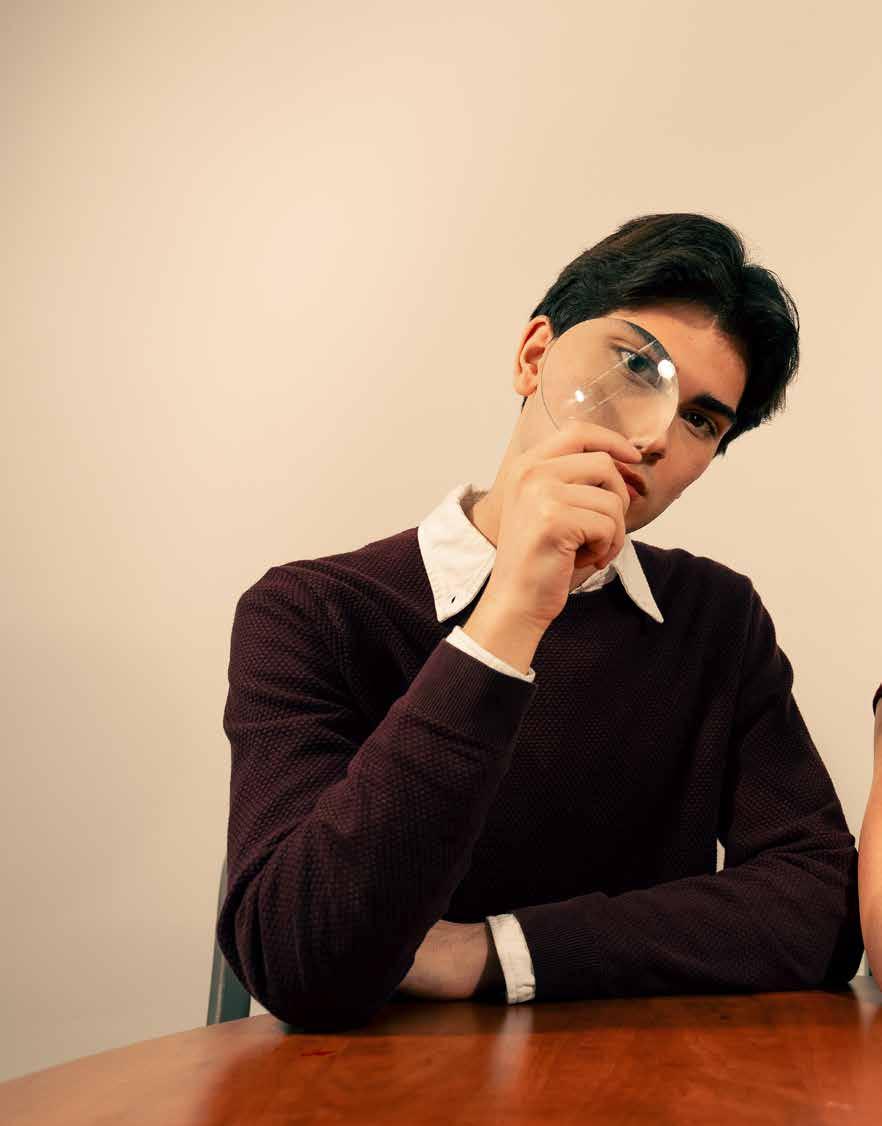
But Berger could not anticipate our digital world. When he wrote in 1972, social media did not exist. His analysis now requires extension into new technological ground.
Social media promised democratization—giving individuals control over their own representation. Yet by creating an environment where we are permanently available for viewing, this control has intensified
self-objectification. We’ve moved from being looked at by others to constantly looking at ourselves. On social media, we become both the viewer and the viewed.
Instagram evolved from casual photo-sharing to a sophisticated architecture of self-surveillance. Consider the “Archive” function—it encourages constant revision of our digital selves. We curate and recurate our presence, deleting posts that no longer fit our desired image. We bring those same deleted posts back to construct versions of ourselves. This embodies Berger’s concept of split identity, widening the gap between who we
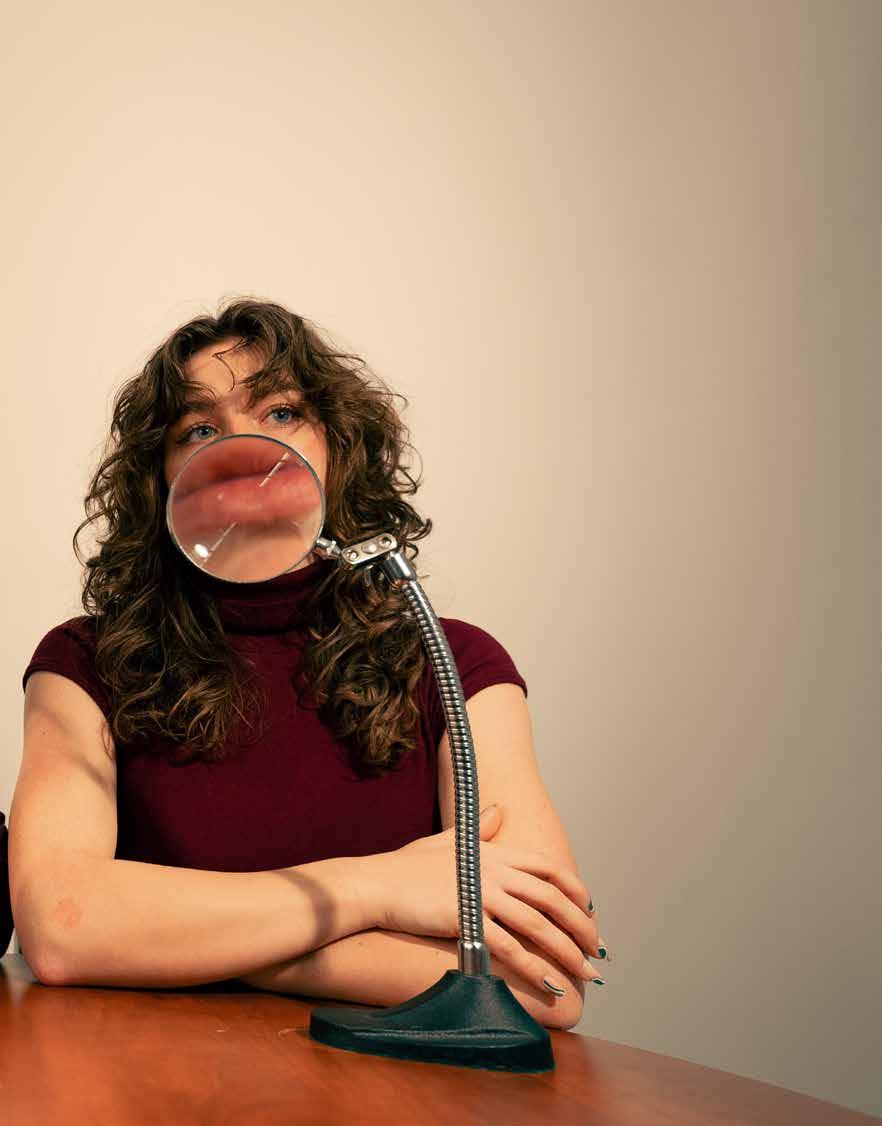
actually are and how we present ourselves.
The “Highlights” feature transforms ephemeral moments into permanent performance. What began as temporary “stories”—24-hour snapshots of your day—became carefully selected showcases preserved indefinitely.
The “Close Friends” feature cuts our digital selves into pieces. We make inner circles of viewership. We decide who sees what. Making more stages to perform on. Different shows for different crowds. To fragment identity itself. Berger would describe this as the purest form of objectification, hidden under layers of false intimacy. The perpetual question isn’t just how we appear, but to whom, and what version of ourselves they should see.
Follower metrics quantify social value. Our worth becomes tied to these numbers. This creates a feedback loop of validation that reinforces the observed/observer split. With this feedback loop, we learn to predict what will generate engagement and shape our content accordingly. We shape ourselves to fit in. We feel the sting when posts don’t perform as expected. These metrics train us to internalize external standards, to quantify self-objectification.
Perhaps the most revealing example is the “photo dump” trend. It began as a rebellion against Instagram’s perpetual curation pressure. Users posted collages of seemingly random, unrelated slice-of-life photos—a rejection of perfectionism.
Yet as the trend grew, photo dumps transformed into a way to curate laid-back attitudes for others to perceive. What started as a tool of rebellion became another perpetuation of performance. What was casual became calculated. Authenticity became the next pose. self-surveillance run deep. But recognition offers possibility. Berger showed us how to see. Now we must learn how to be seen—or not—on our own terms.
Is authentic self-expression possible within platforms designed for visibility and metrics? Social media platforms operate on engagement—likes, comments, shares. They create an environment where authenticity competes with performance. We have become both prisoners and guards in our own digital panopticon.
When our connections, careers, and social validation depend on these platforms, genuine expression is at risk. The growing number of people who have deleted their social media accounts suggests a collective exhaustion with this perpetual performance. Meanwhile, the weakening of physical “third places” has pushed
social connection increasingly online. We find ourselves trapped in a paradox. We seek authentic connection through tools designed to quantify and commodify our expressions.
Understanding the shift from external to internal gaze helps us navigate digital spaces with greater awareness. It reveals the power dynamics behind seemingly neutral platforms.
We may have passed a point of no return. The habits of self-surveillance run deep. But recognition offers possibility. Berger showed us how to see. Now we must learn how to be seen—or not—on our own terms.

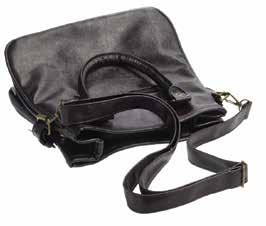
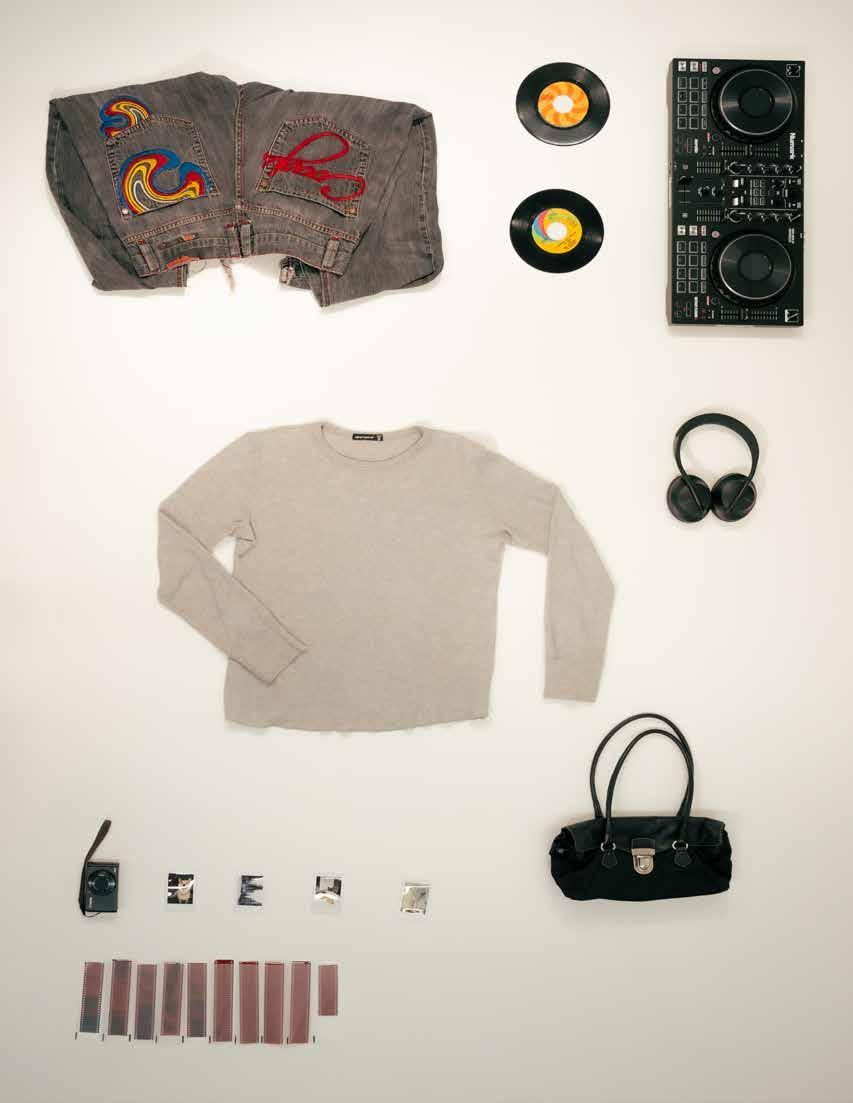
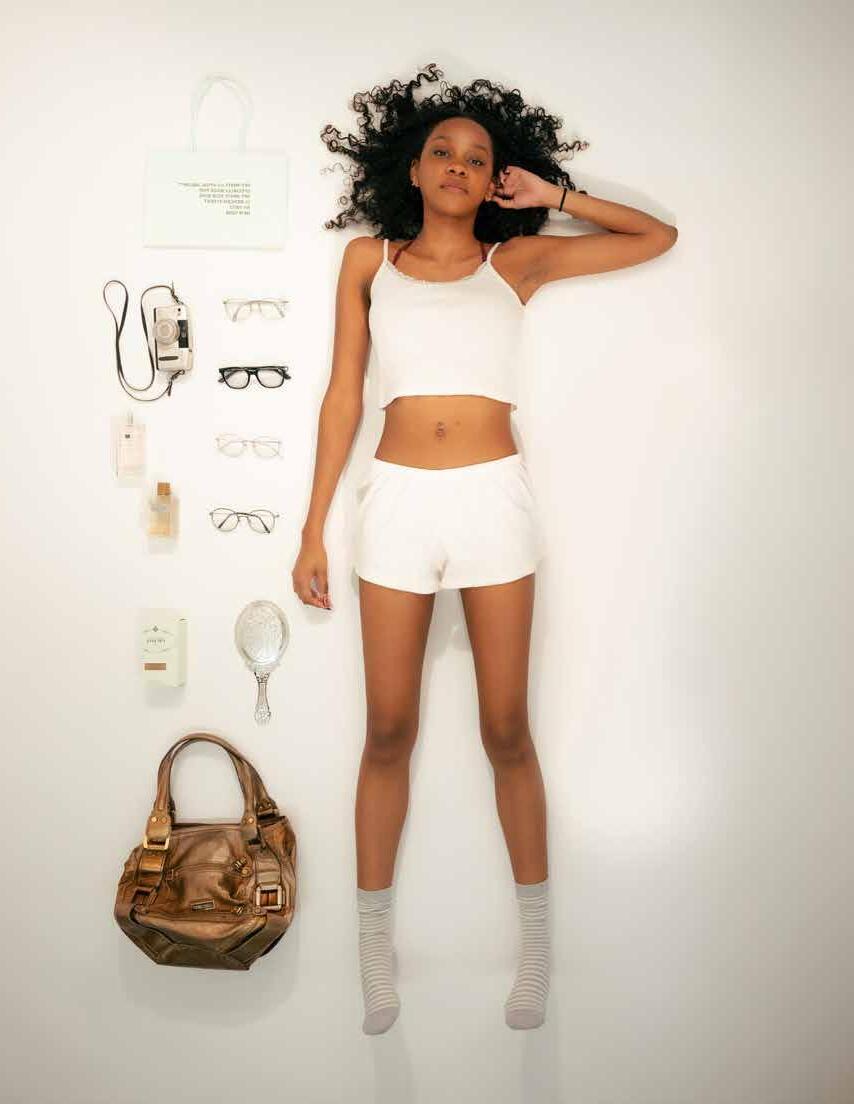
I always keep my sunglasses on me. I don’t need people to see where my attention’s at.
There’s been a half-smoked emotional support joint in my bag for a week now. I know it's there if I need it.

My Adderall is always so noisy. It comes with me everywhere, but I don’t let anyone near it.
Gold is MY color. Money and class look good in every shade.
Has anyone seen my keys recently? I’m always forgetting where I leave them.

You’ll never catch me without my signature silver jewelry.
My bag is always ready for anything, especially a fashion emergency

I have more than 5 Pinterest boards, and they’re all immaculate.
If you ask me to party tonight, I’d already have a fake and a flask on me.

School first, everything else second. My favorite Muji pens are a must in completing the perfect notes.

I refuse to go to class without the entire Apple ecosystem in my cute leather bag.


Everybody knows where my “unassigned-assigned seat” is.
My lighter goes everywhere I go. You never know when you need a light.

I’m always prepared for a chipped nail. Who needs subtle cologne? If you can’t smell me



I’m a matcha girlie 24/7, but I love a chai to mix it up sometimes.
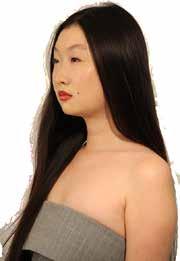
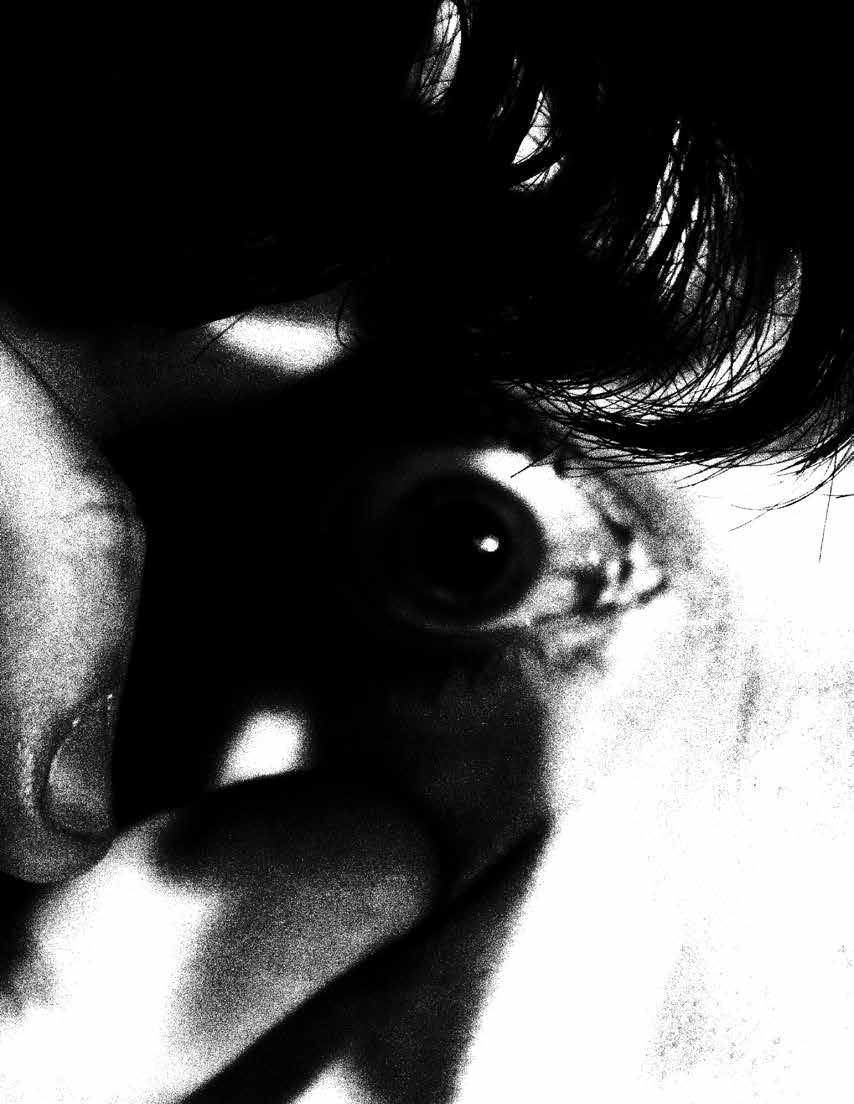
MIA ROMAN WILSON
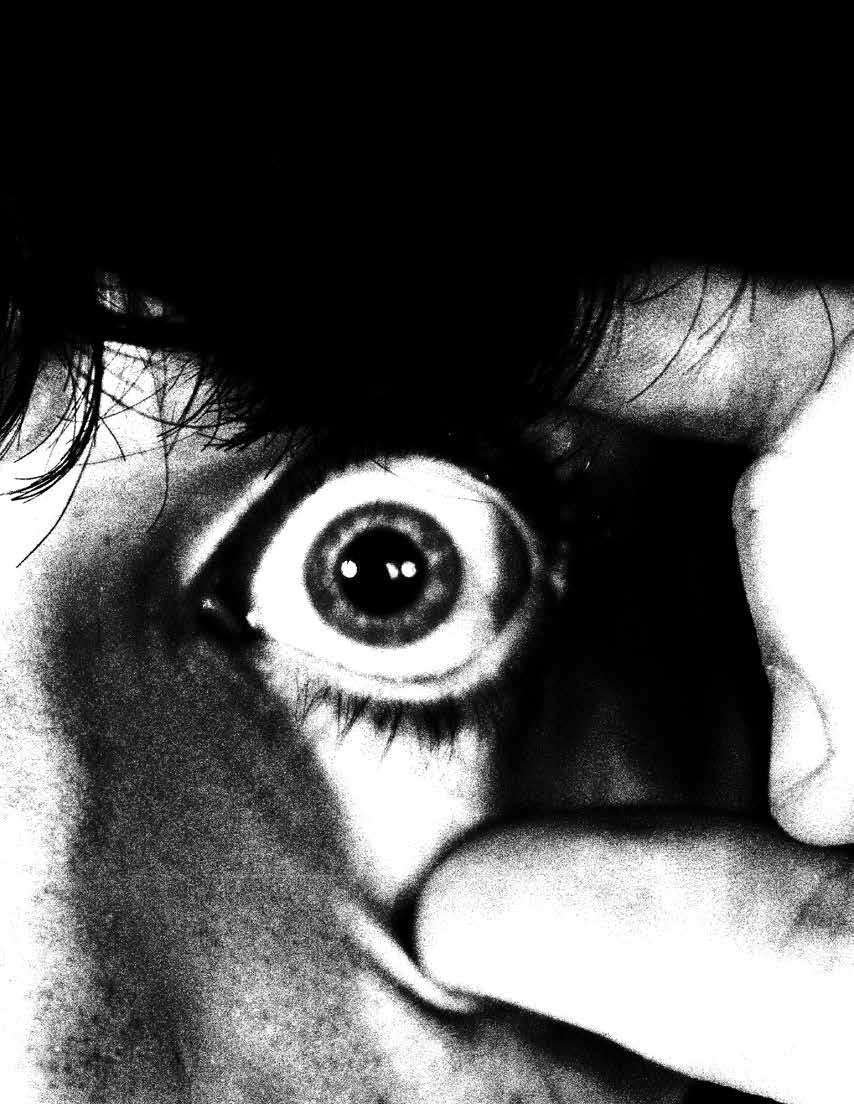
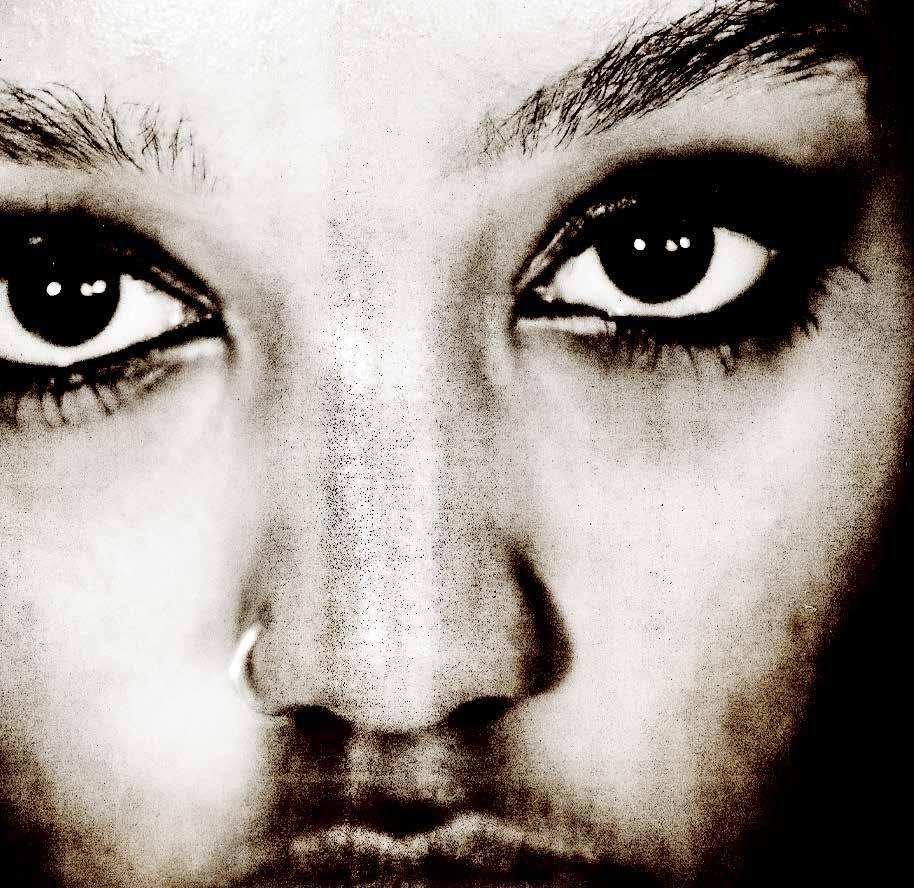
We’ve all felt it: that palpable, unnerving sixth sense that tells us we’re being watched. From public spaces to private moments, it can often feel as though being observed is inherent to daily life. Walking into a crowded room or turning a street corner to dodge the man tailing you are just some of the moments in which we are hyper aware of our perpetual status as an object of someone else’s vision. That doesn’t mean, however, that these are the only times we are being watched.
Although this phenomenon is innate to the human condition, women are more
often on the receiving end of these threatening stares and judgmental gazes. It is not often we question the origins of misogyny; its roots have been ingrained in our societies for longer than we can comprehend. As such, self scrutiny is somewhat of an inherited trait in females, for generations of women have grown up over-analyzing their presentation, actions, and desires. There was no single catalytic event that spurred this movement. Rather, females have inevitably internalized centuries of outside perspectives, damning themselves to an eternity of insecurity and self-criticism. To be a woman is to be constantly

presenting oneself to this looming, ever-watching entity.
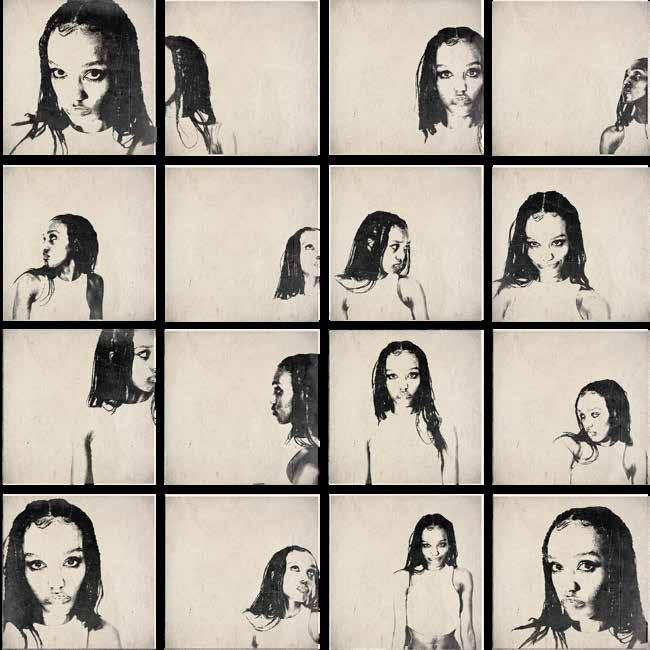
Thus, the cyclical nature of observation is clear. Females have so long been trapped by this external gaze that we have begun to trap ourselves, propagating the very problems that plague us. We spend hours making ourselves look
“presentable”, reinforcing the notion that our natural state is somehow insufficient and inferior. If you want proof, take a moment to pick out the differences between the average female and male social media profiles. It is far more common to see women curating the “perfect” post; from color scheme to photo
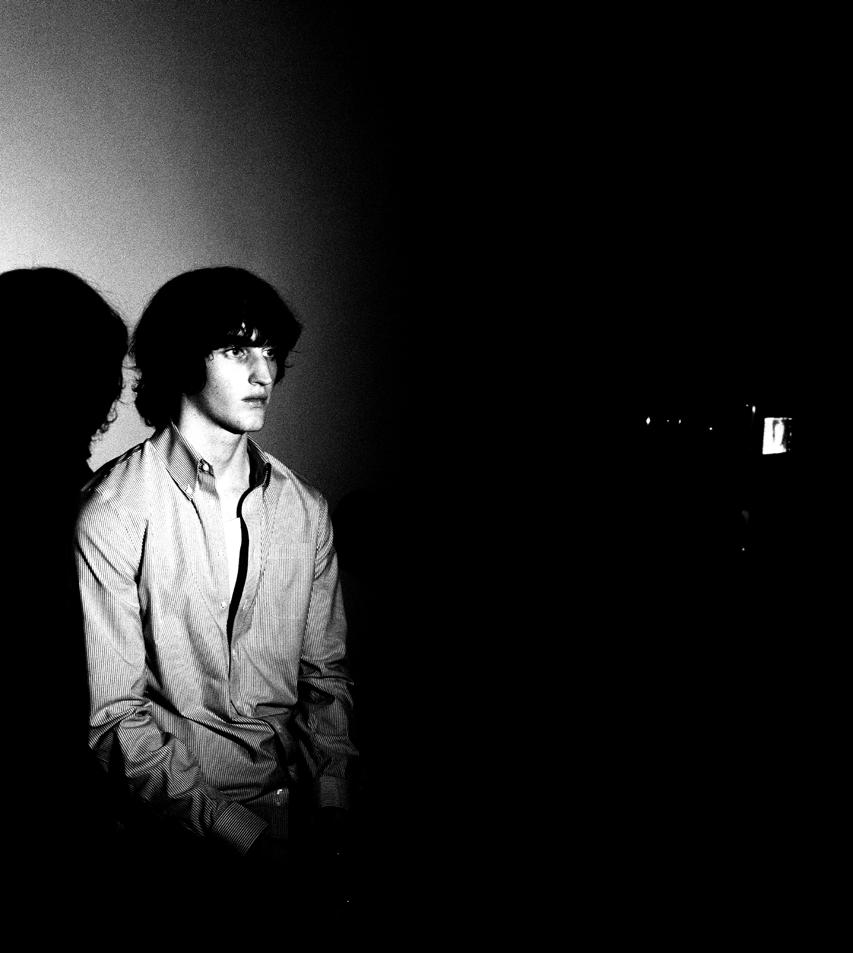
order, everything is considered. Men, however, often post photos they simply enjoy, with far less deliberation on the consequences of publicizing each image, caption, or sentiment. The implications of this reality are undeniable. We morph ourselves into something more palatable for the sake of these nondescript prying eyes, but at what cost? Do we want to dress, act, move, even think the way we do, or is it merely a performance? Have we lost the ability to answer that question at all?
The damning nature of this cycle continues to rear its ugly head. Although not the only one, the male gaze is the paramount perpetrator of this
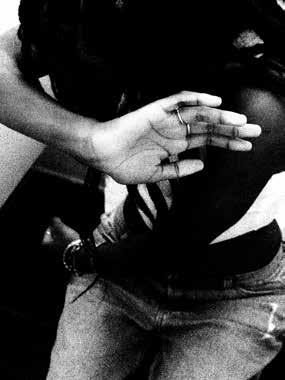
crime. For as long as we’ve been consuming media, it has been infiltrated by these masculine desires. The women we see and come to idolize almost always dress and act, in one way or another, in the best interest of a man. It would be ignorant to hope that this hasn’t had an effect on the way women perceive themselves. In fact, it is more than likely that we are all caught up in catering to this elusive male fantasy –whether that is by conforming to or rejecting it altogether. Furthermore, the systemic integration of patriarchal ideals forces us to be constantly accounting for men, and in many ways they have become the center of our universe. I am compelled to question if it is
possible to dismantle the male gaze without actively being consumed by it. I fear I will not like the answer.
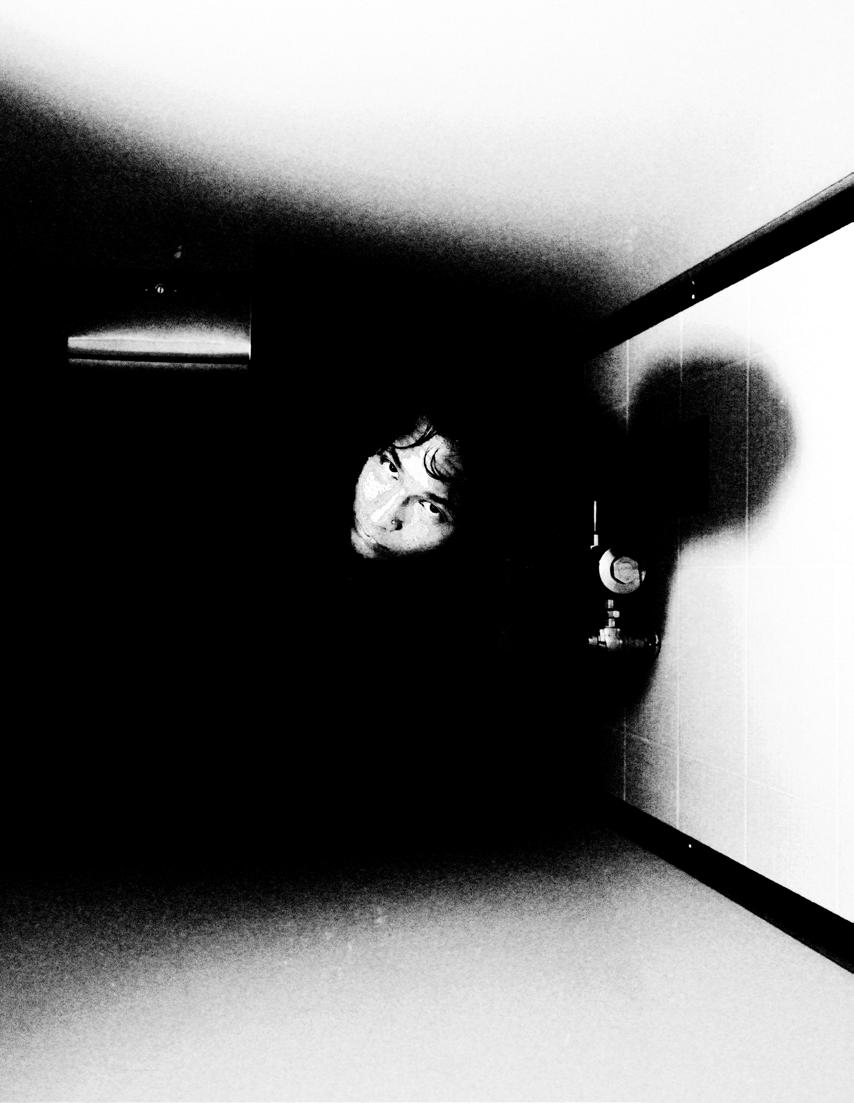
Ultimately, women have become objects of vision, a phenomenon initially spurred by female stereotypes but perpetuated by women themselves. For now, the cycle remains inescapable. Even when every mirror is covered
and every camera turned off, somehow, somewhere, the gaze lingers. It penetrates every thought, whispering harsh criticism in a voice just like our own, shaping our reflections before we step in front of the mirror. Because in a world where being seen is inexorable, the question is no longer if we are being watched – but by whom?
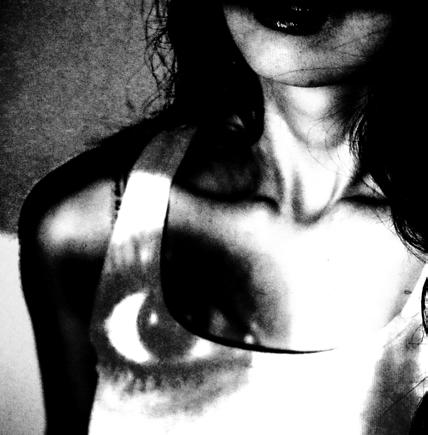



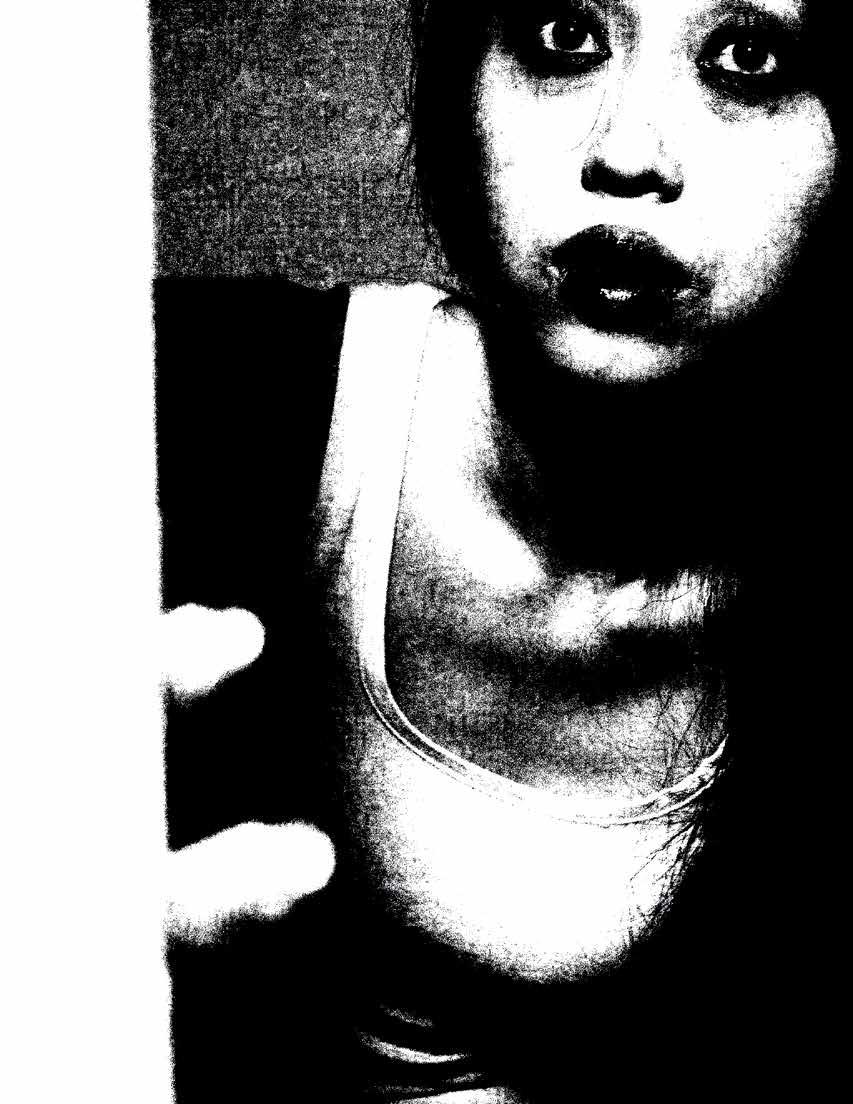
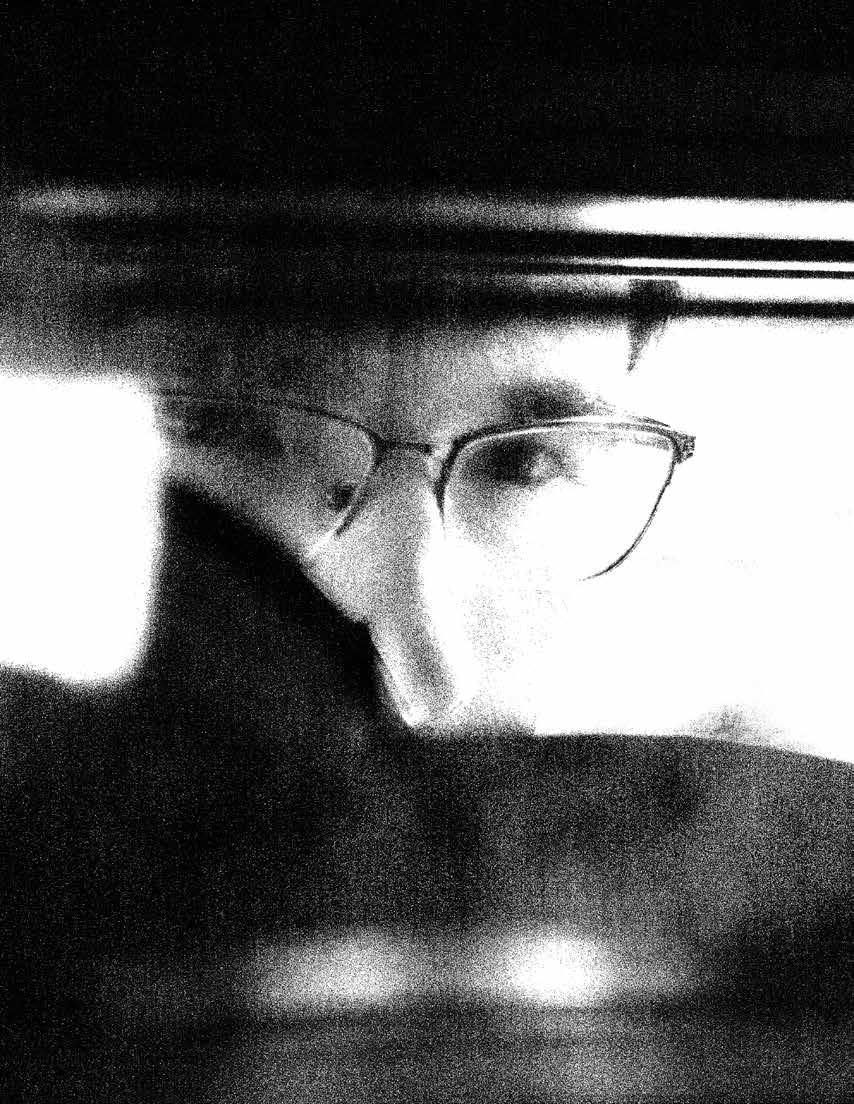
ANGELINA TANG
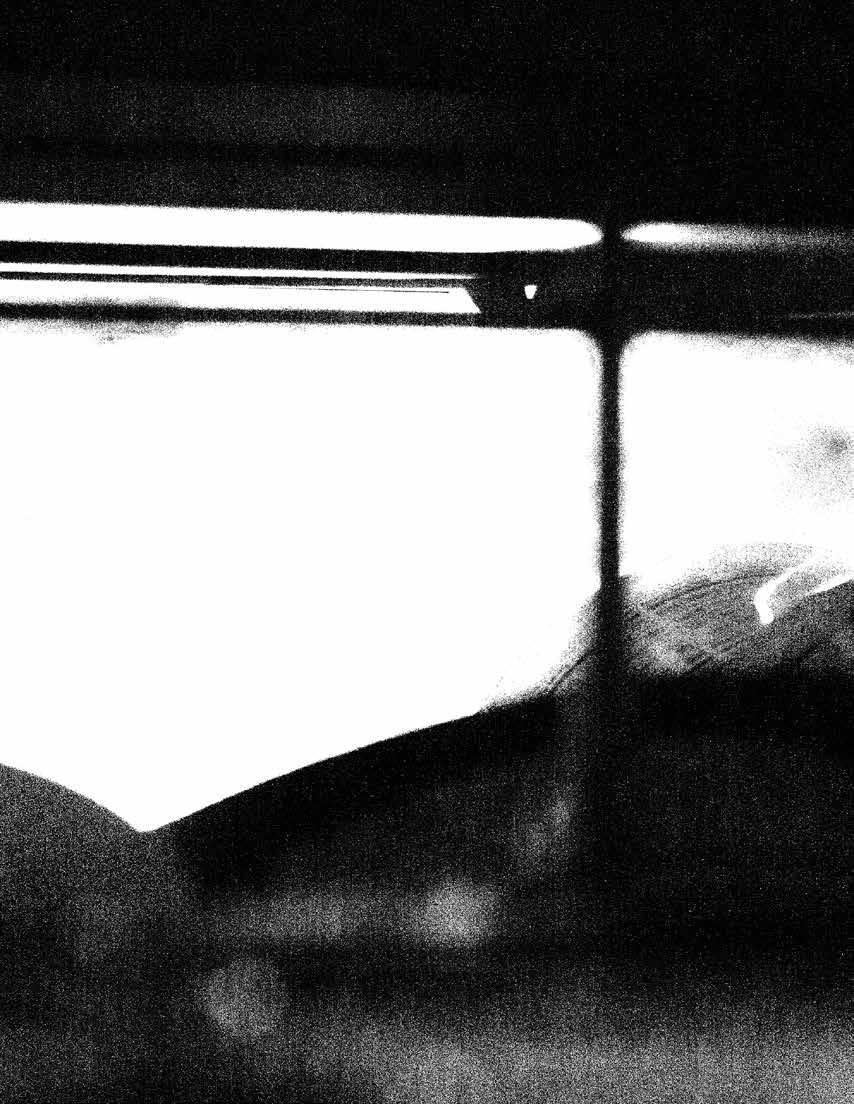
A woman sits alone in the park. You walk by and her spine is the bend of a leaf in the wind. She is reading a book, pages under brittle fingers.
It’s early summer. You think she looks beautiful — the hair on her shoulders, the angle of her waist, the sway of her body. Shadows of leaves dapple her statue-still figure, playing with her joints, her curves.
You look away and keep walking, eyes straight ahead. She fades out of your periphery, but her shape flickers on the inside of your skull, a blossoming static cloud. Her head had a lovely roundness to it, you think.
The next time you see her you are at the grocery store, the white lights overhead faintly cracking. They
make her look ghostly, backlit and blue in the freezer glow. Her shape is as curling and loping as you remember. You almost wish you could pluck it up and play with it in your mind, on your finger, on your tongue, as you so please. You watch her between the gaps of the shelves. She dips in and out of view.
So you follow her home without a second thought. It is a beautiful grey dusk, the sidewalk a shade of gold and dirt and indistinct tan. The plastic bags dangle from her hands like weights. Heat gently blankets the earth, a sheen of cool sweat threatening to break through. The streets are quiet; the children have long gone inside, but you are still playing. In fact, you are having a lot of fun.
You duck into an alley the moment she glances over her shoulder, key
in hand, about to enter her flat. She has not seen you; you peer cautiously around the corner. Her blurry face is shrouded in shadow, but the light catches on her perfectly round eyeball and makes it glisten wet in the dusty haze.
Another day, you glimpse her upon the sidewalk and cannot help but chase after her. The way she moves — it’s like a dancer. You wonder what makes her tick, what makes her body move. You want to see all the ways it can move. You want to move it yourself.
Boy chases girl. It’s a childhood game, only you are crawling along a far distance back and the beige sky is beating down your neck while your eyes fix on her beige back. You
are sweating. You are so close now. You two are alone, and the streets are a hot summer wasteland, reeking of rot and spilt gas from the roads. It makes you dizzy. As you sway, she sways too, only you realize far too late that she has stopped in the middle of the sidewalk. She turns.
You see her face, an image horribly grainy and alive and marred. It is a normal human face, yes, but it is so unlike the smoothness, the fluidity, the blurriness of her head and her back and her body. You are struck, glued down to the dusty sidewalk.
Her eyes cut you in two, dark and unwavering. They are cold. You turn around and walk away as if it didn’t happen.
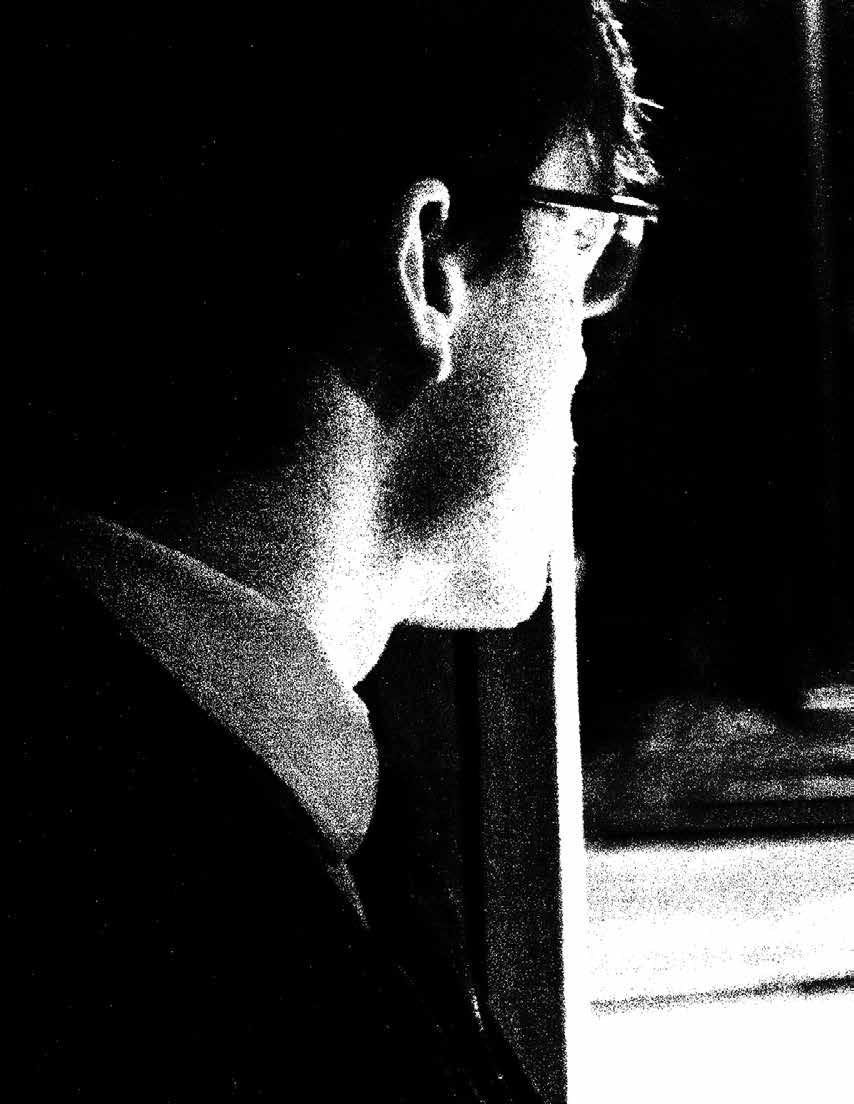
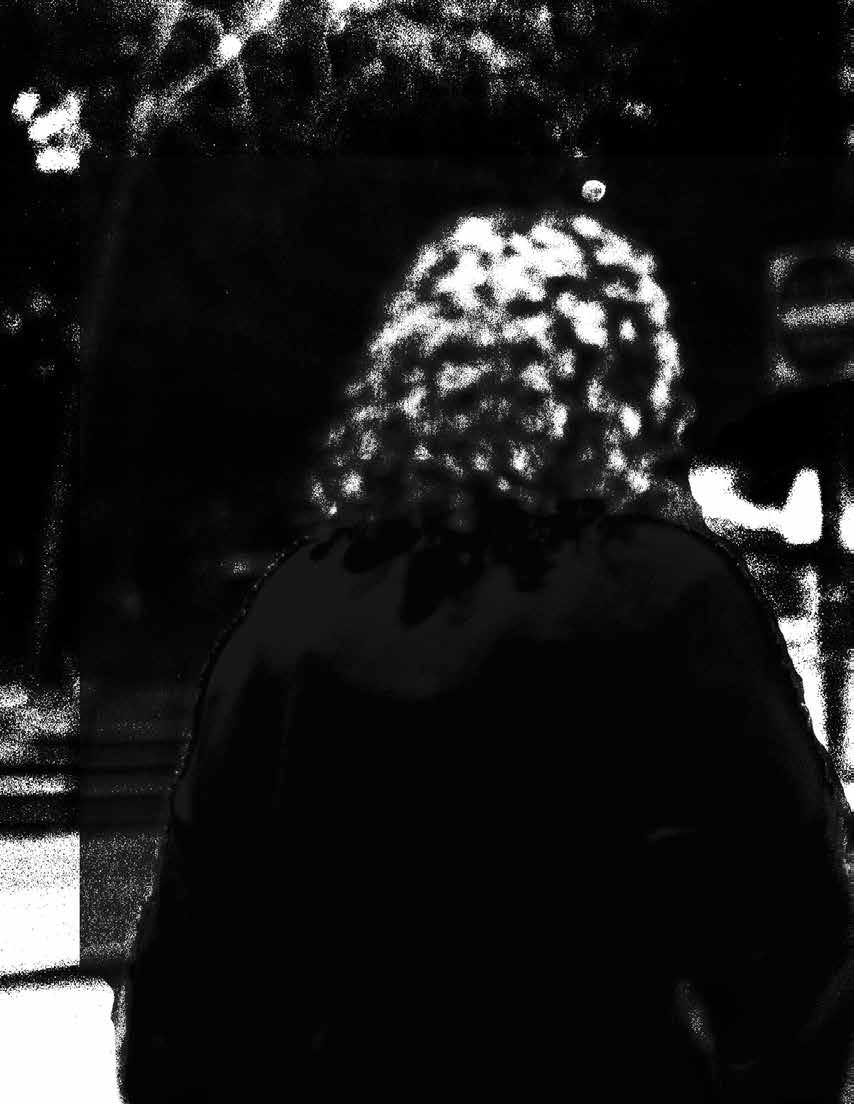

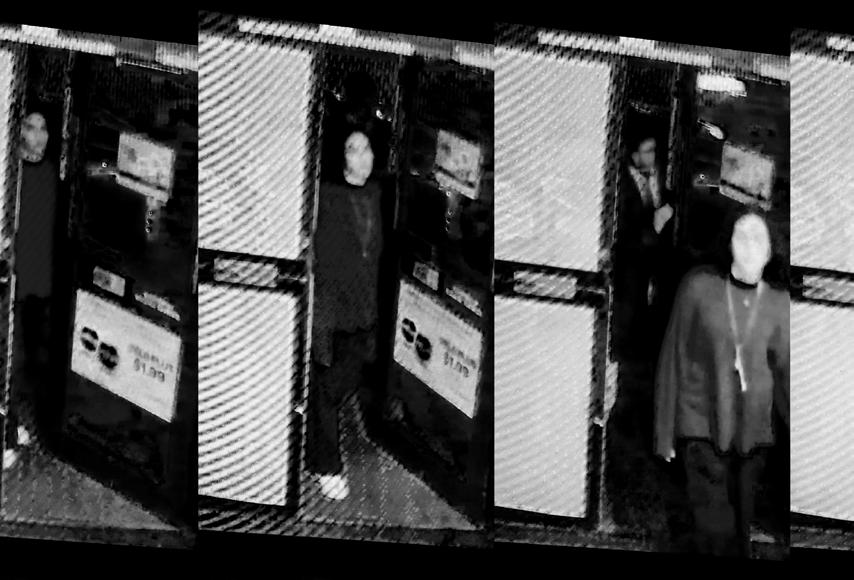
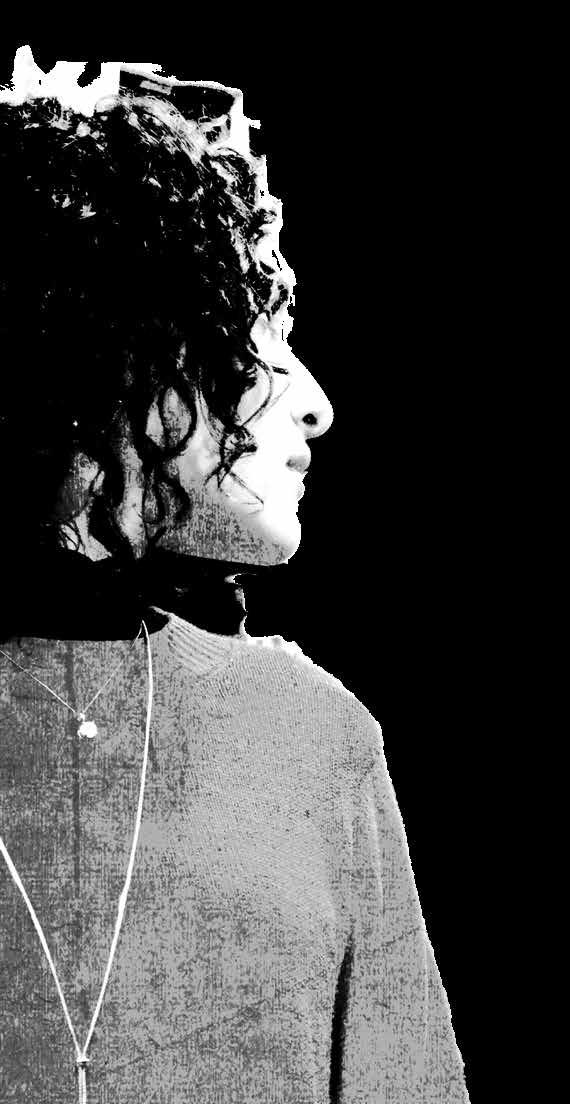

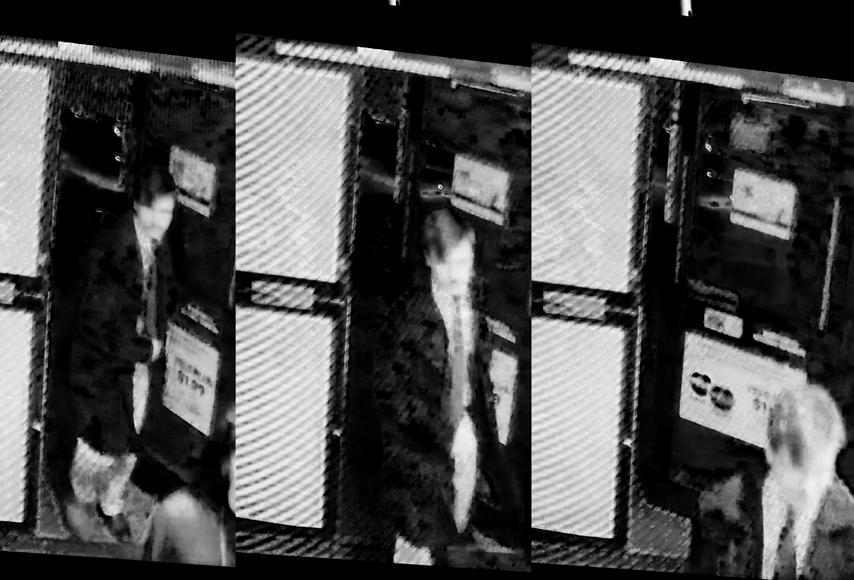
But that face, it sticks in your mind. It sticks and carves itself deep into your bleeding flesh. You see her eyes when you fall asleep. You see the angle of her nose and her cheek in your ceiling.
You pass by the park a week later, trying to forget, coated in sickly sweat. She is sitting at that bench again. She is reading a different book, but her skull is the same shape and the leaves dapple her figure with spotted shadows in the same way. She is all the same but she is also not and it is making you nauseous.

She suddenly looks up, her eyes following you. You look away, her gaze much too hard and angular for you to reconcile with your lovely iteration of her. But she doesn’t look away. Her gaze burns holes in your body. She is sizing you up.
And as you walk away down the sidewalk, she gets up, too, the book snapping shut and her footsteps mirroring yours. An echo. She is echoing you, mimicking you, and you wish she would go away.
She follows you home. She watches you through your window, all throughout the night, unblinkingly. She looks up at you, dear reader, through this page, and she wonders why you have allowed this to happen.

Lab safety? Don’t worry, we’re TOTALLY safe... our sh*t works right! Ignore the FDA cause they have no idea what they’re doing. We’re experimental and we’re exciting. Are our products safe? Are our products tested? No, but that’s ok, because they kinda work... sort of.

You should trust us. Totally.
t h e u r f n a m o a

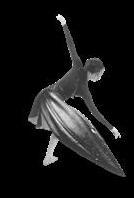
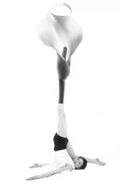
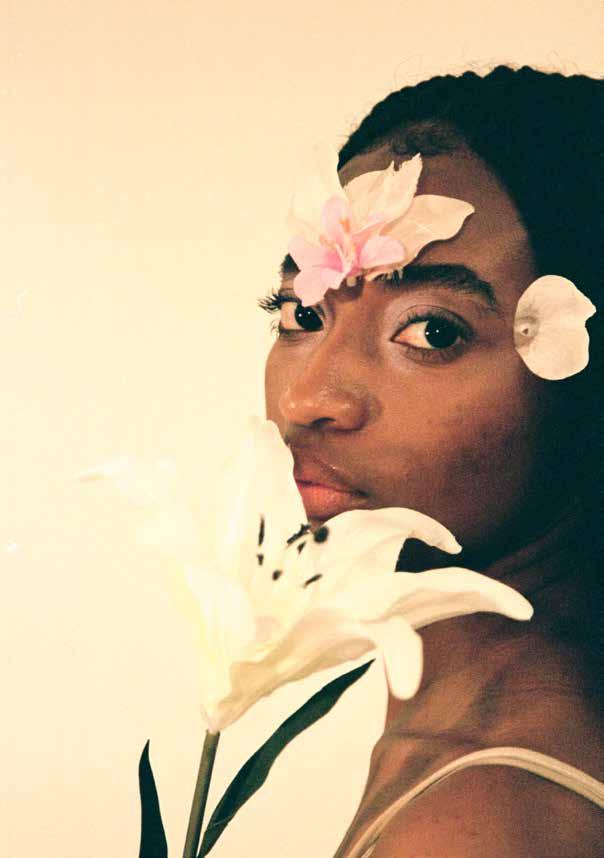
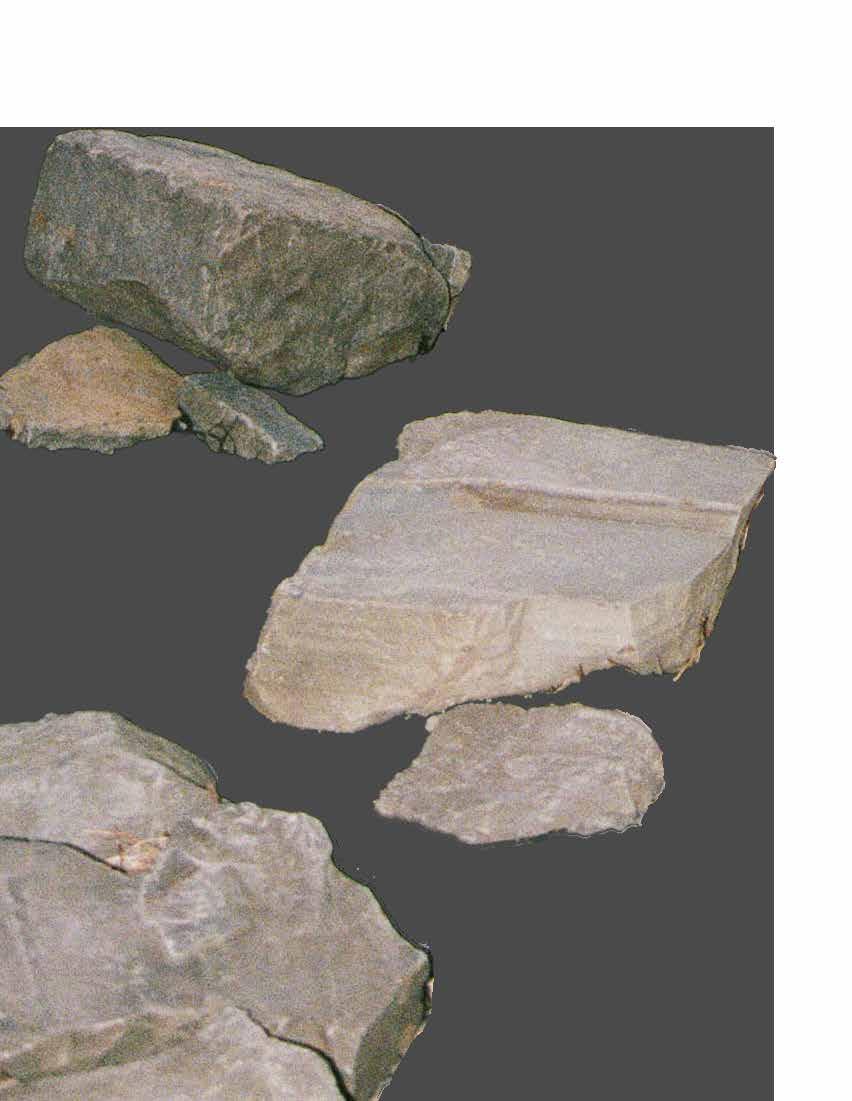
NADIA SCHARFSTEIN
I can only hold a body for so long. They weigh more than I’m worth and my nails aren’t thick enough to clutch them. Their skin is slick, a malleable dough to knead between my thumbs. The clamp of their legs makes friction and I fall on them in fatigue, resting my ear on their neck as if I were hearing their heart’s final voicemail, thumping coded goodbyes.
I never did enjoy the mildewed iron of currentless veins, feel the static blood curdle and clot, take a chance on a dead one.
Bodies are much better asleep, warmer, serene, in their minds instead of mine. I could listen to their dreams this way, hear their jaws churning words they want to say, feelings they want to feel. If only I didn’t lug I could listen, give their dreams my number, say let’s keep in touch, so that when you fall asleep, I’ll call.
At first the cloud was a lustful crimson over a summer sunset, before the smoke embraced the sun and I felt life flee.
The embers vied for my breath, biting their teeth over which tree to take next, calling a mile of still singeing sticks home,
taking mine away. Now I hide from the windows that watched Earth fold and unfold, escaping its inhabitants
and not looking back. We deserve nothing: why not let gas trickle among the heat waves, flames kisses flying from road to peak?
Could that wood ever breathe, hold snow, grow leaves, I might not point to a bare patch of mountain, a brittle grave
coated with ash and snow, and I can’t separate the particles. I stare at the burial each morning and then something less exciting,
the purple moon, a muted sky, and its maternal inversion, protection of the valley: a gift from the offspring of a canyon’s outrage.
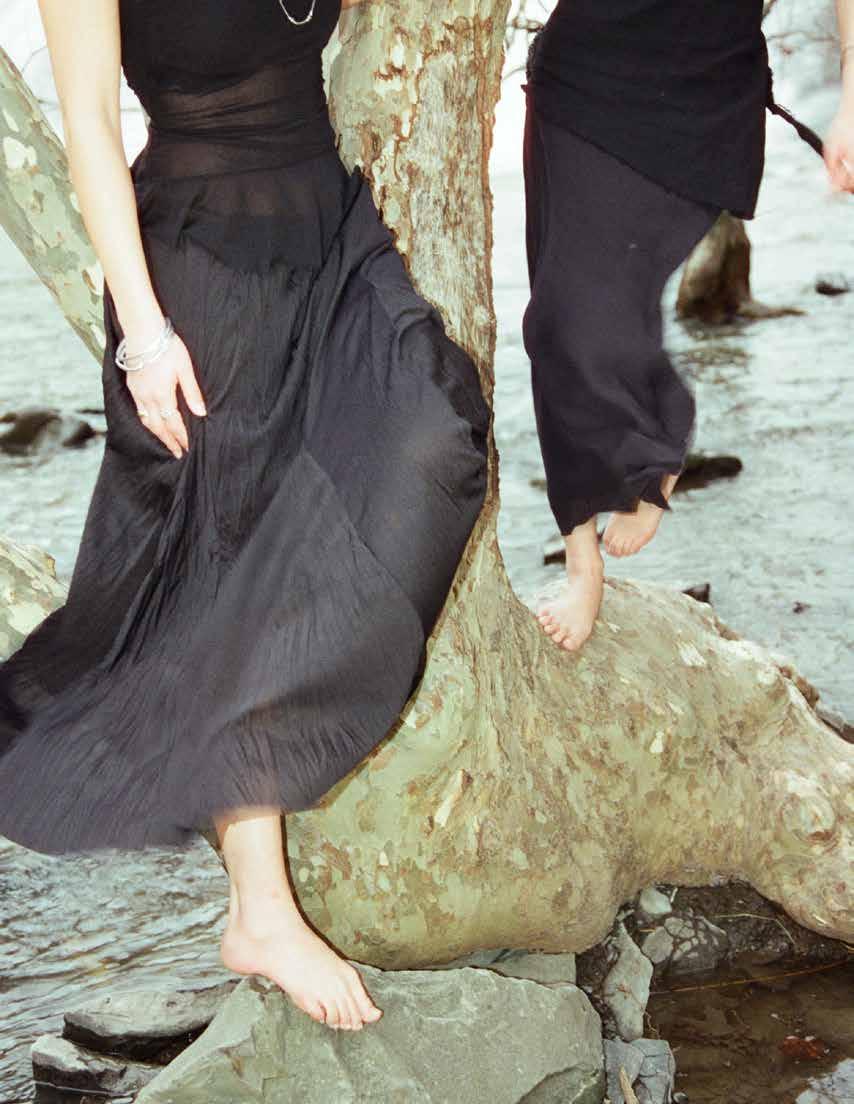
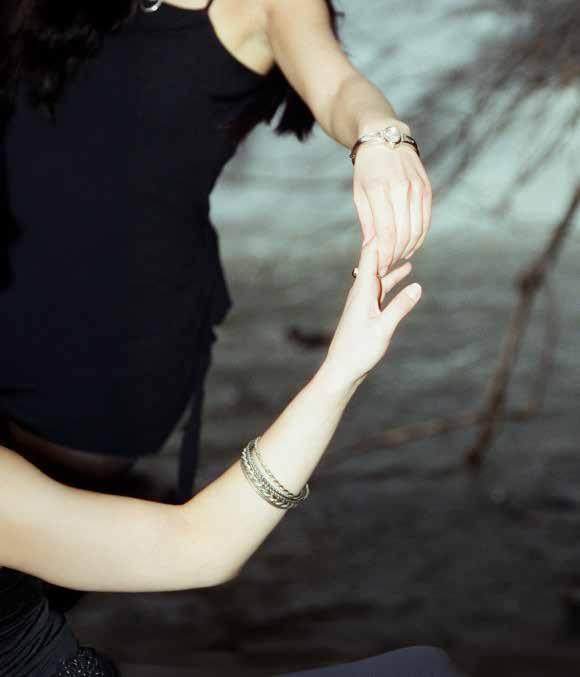
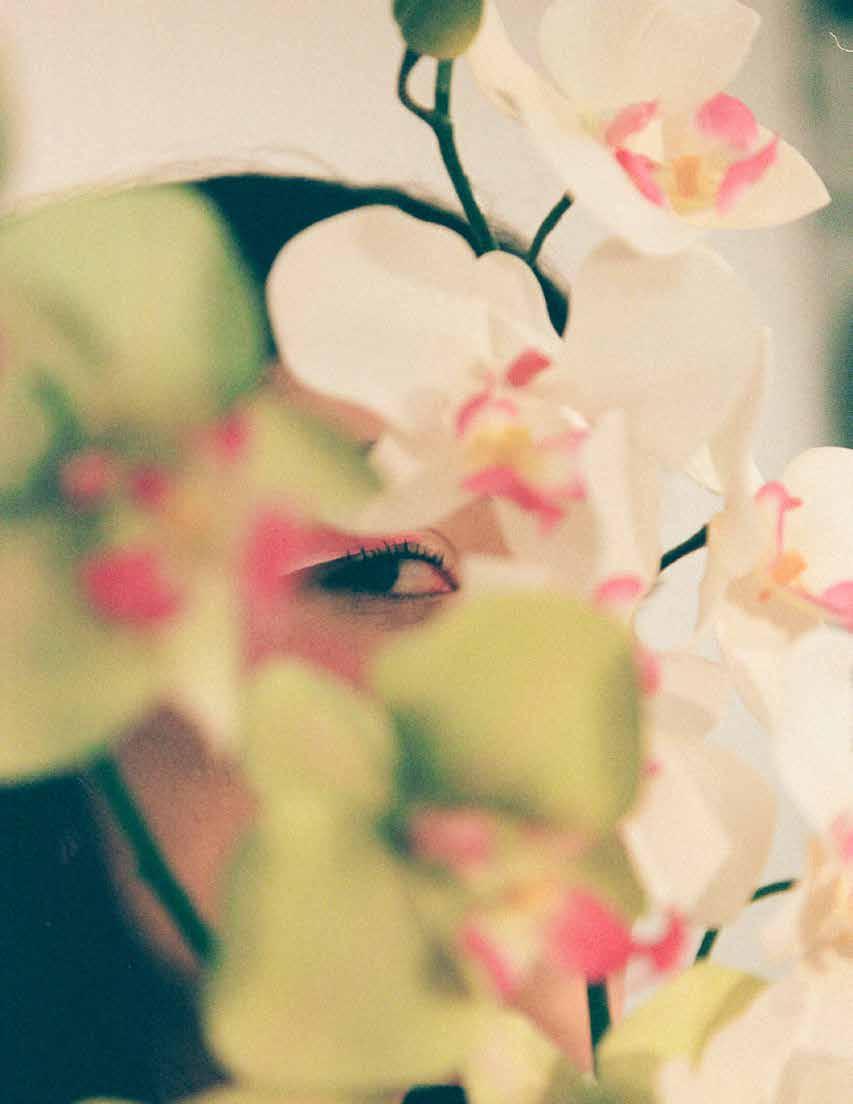
NADIA SCHARFSTEIN
I didn’t cry because I didn’t believe it. I am still sitting on his lap, bouncing to a song from his wife’s childhood, now mine, limply falling through his legs, arms roped under to catch my little body.
I can’t catch the memories even if I sit there and think. Then I am raw: eyes, a fear of forgetting, grandma’s strong face, new stories I can’t ask about, political debates never settled, untouched crosswords on the counter.
Touch me and feel someone else. Flick the suede of my skin, the surface that sags with unused organs, spongy bones, and a thought to lie here for some time. My heart adventures in my ears and wonders if I know to jolt when I’m touched. I’d never thought about it.
The tears sit on my corneas as a nomad dangles off a cliff. They can explore the expanse but I’m done with the future— I want to reminisce, pray time back, curl into a fetus, grow into the ground and keep an eye on him.
Let me be stuck here, please. Soil between my toe nails, worms circling my helix, reaching the wood of the lid with my fingertips because I dove in head first. My body is lengthened: arms in front, toes pointed. I could open the casket if he asked me to.
He’s silent though, asleep, catching up after being alive longer than he should have, braved a battle without armor and a weak heart. I saw his skin-covered bones gasping through a screen and it ripped me alive.
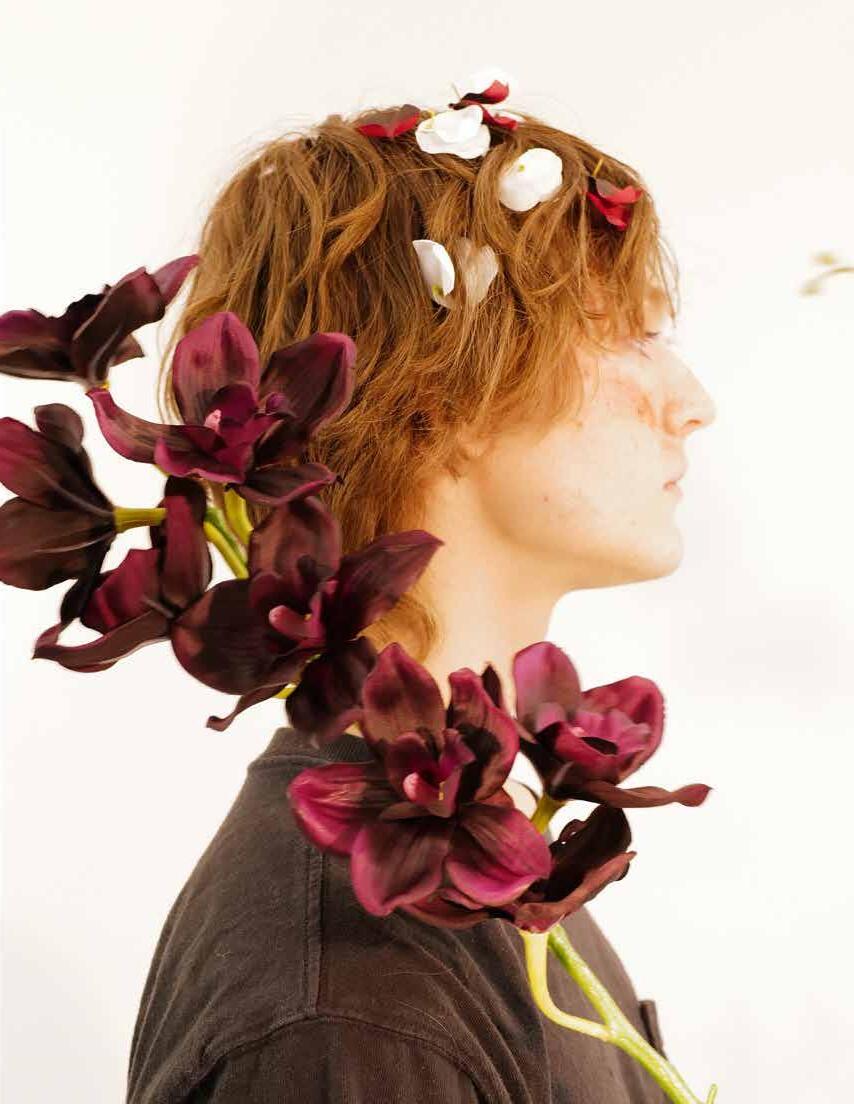
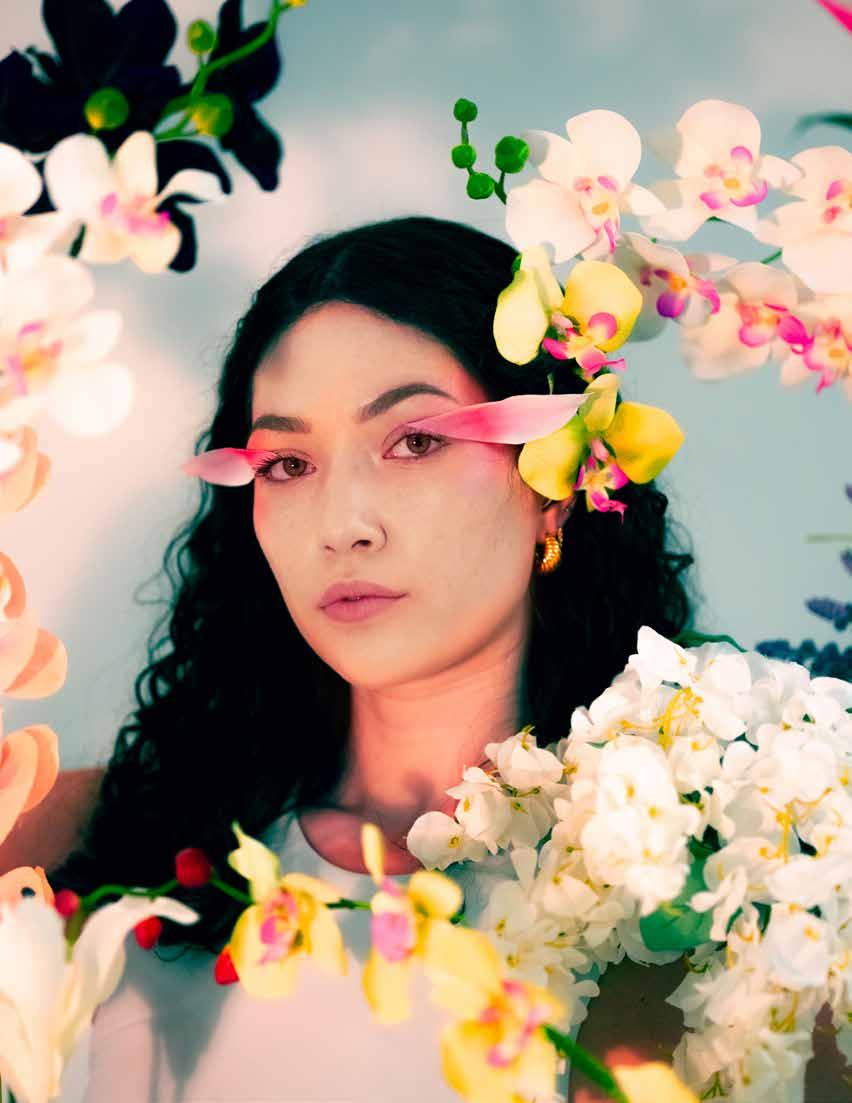
SOPHIEANN DeVITO
From past days sitting on the Alphabet Rug in Kindergarten to more recent nights spiraling about our insecurities, we’ve been told that beauty is on the inside. Beauty is in the eye of the beholder. Beauty is an aisle in Target. Beauty is a crock of sh*t.
After consuming the countless forms of media commercializing and objectifying physical appearance, beauty can easily feel less like a wide-open prairie and more like an exclusive night club whose bouncer cares less about the drinking age and more about Instagram. Ultimately, we give up, step out of line, go back home, re-watch Pride and Prejudice (2005), and feel inferior to Kiera Knightley. We accept that we will never reach the converging notions of superficial beauty.
While I think that as a young adult growing up in a shallow, social media saturated society, the feeling of defeat is inevitable, I do believe that it can be short lived. I believe that we can form our own, productive definition of beauty by grounding ourselves in the very glistening field that the judgmental bouncer steals from us.
Every day when I am walking outside, I see flowers growing. I admire their beauty, but I never really know why. The flowers do not possess one distinguishable
enchanting quality, but I am simply grateful for their presence and help in brightening my day.
I think that’s why flowers are always my favorite gift to give and receive. The only job a flower has is to exist and to grow. When someone gives you flowers, they give you something unquestionably, inexpressibly beautiful as a way of demonstrating their admiration and gratitude for your beauty, existence, and growth.
People say that you must feel beautiful all on your own, and you cannot put your self-confidence into the hands of others. While I understand the sentiment and goal of this advice, it is shortsighted and impossible to achieve in practice. The whole concept of beauty is based on the external; on one person perceiving and admiring something else. We are in a symbiotic relationship with the people around us. As bees have the power to pollinate flowers, the people we encounter have the power to embolden our confidence. As the process of pollination provides bees with nectar, appreciating someone else’s beauty nourishes our own souls.
It is both natural and instinctual to find value in the opinions of others. However, we also should not ignore the self-love influencers when they say that our
self-worth cannot be completely determined by outside validation. Flowers undergo photosynthesis to make food for themselves. Bees transform their collected nectar into honey for themselves. While we should embrace the support of our loved ones, we must also actively work to feel our own beauty.
If you find yourself struggling to feel beautiful, as we are all wont to do, start appreciating the outside world. Begin taking moments out of your day to appreciate all of the beauty you encounter – a tree in bloom, rust colored leaves, that person walking down the street, a gothic building, Kiera Knightley. Do not compare this beauty to your own or convince yourself that you are inferior, but instead let it show you how joyful admiring beauty can be. Then ask yourself if the people around you inspire or diminish this joy. In terms of your confidence, are you in symbiotic or parasitic relationships? We must find the bees to our flowers. If we work together with the people around us, we can find true peace in our perceptions of beauty and add powerful emotional enrichment to our lives, making our own beauty feel like a natural continuation of the undeniable radiance in the world around us.
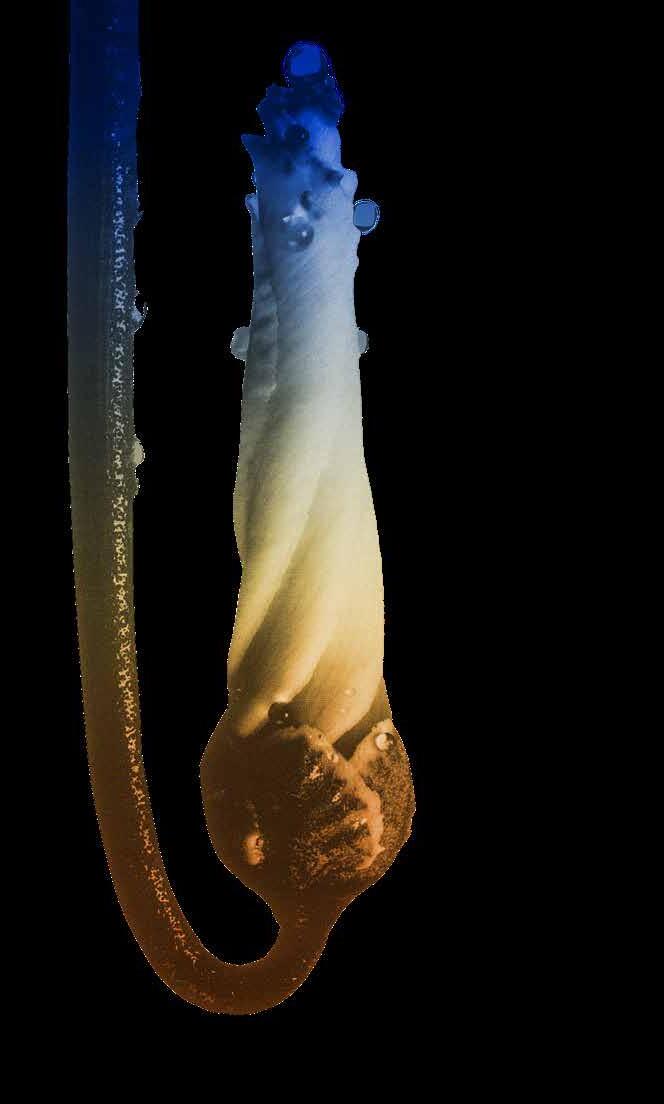
A cigarette, pulverized, its edges curling inward. A bone, bleached, is ridged by time. A cyclamen, its petals softening, darkening, fold into themselves. These objects, drained of function, remain in form. They do not seek attention. They do not demand reconstruction. They simply exist, their presence undiminished by imperfection.
Lingering in these moments of quiet existence, beauty does not embellish or distract. It does not ask what can be added. Remnants are restored by sight; the act of looking valorizes them.
In Still Life, Irving Penn stripped his photographs of excess, evaluating the overlooked and discarded.
His images do not promise to dazzle, but they promise to endure. A photograph does not need embellishment to hold weight. It only needs to be seen clearly. When reduced to its core, the art stands on its own.
There is a tendency to believe that beauty must be constructed, that it must be made sharper, brighter, more vivid. That it must resist time. But beauty is not an invention—it is an observation. It is in the soft erosion of rock, the loosened thread on a sleeve, the quiet inhale before the tear of fabric. It is in what remains when nothing more is asked of it.
A dampened dress folds like paper against skin, the weight of water pressing into its seams. Light skims the surface, tracing the texture of silk, the curve of a shoulder, the collapse of fabric silhouetting the body. The moment exists without enhancement, without need for correction. There is no artifice, no attempt to make it more than it is. And yet, it is enough.
Nothing of beauty needs to be anything more than it is. The fact arises from the feeling; the feeling is fact:
The unadorned is enough.
This product will change your life! Everyone is buying this top from TikTok Shop! Get one… in fact get a couple, post a haul! Did you see that Hailey Bieber was seen drinking this smoothie? It's sooo clean girl aesthetic. You should try one too!
Whether you like it or not, advertisements are everywhere. They seep into our daily lives—are forced down our throats like a first grader’s serving of peas and carrots. You can’t go anywhere—outside, inside, or online—without marketing schemes staring you right in the face. Flooded with billboards and signs, claiming “You can’t live without this!” streets of the world are tainted with advertisements. Your house, too, is a mess of slogans—explicit and implicit, alike—plastered on all of the products you’ve bought and kept, each advertising for you to buy more.
Online it has gotten even worse, as ads have become integral to social media sites like Instagram, Tiktok, and Snapchat. These ads, perpetuated by influencers, sell more than just products; they sell lifestyles. Whether you want to have a clean girl, dark academia, grunge, or coquette aesthetic, there is a company waiting to sell it to you. In fact, if you know about the aesthetic, they probably already have. This commercialization of ways of living has essentially branded consumers, making the general public living and breathing ads. Every piece of clothing you so excitedly put on, every piece of jewelry that adorns your skin, every coffee from the café you are a regular at seeps its way into your life; you become the brands you buy. What once was a marketing trap, which you mercilessly fell into after the micro-
influencers so easily caught your attention, now comprises you. The ads that you once irritably x-ed out of have now consumed you.
And, while you may not realize it, everything you wear, own, use, is not a product of you— no, you are a product of them, working exactly to the goal they wanted you to. You are no longer the buyer, you are the ad. “Cute jacket,” “Where did you get your bag?,” “I’ve seen that beanie everywhere, what is it?”
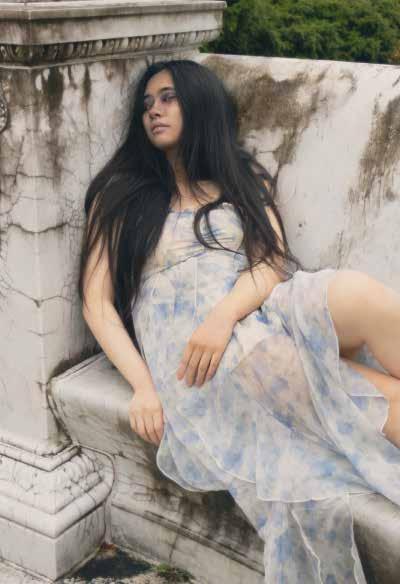
Your personality becomes the brands you own, giving corporations just the marketing they need to become the world-wide sensation they are determined to be. A loss of authenticity is inevitable in a world where your identity is shaped by your consumption. The things that once felt like personal choices—your favorite sweater, the iron used to style your hair, the retail store you frequent—are just reflections of carefully curated marketing. Your existence fuels the cycle, turning you from an individual into a walking, talking advertisement. And the worst part? You don’t even realize it.
It seems there is no escape to these advertising traps. The only thing you can do: be aware of how you buy, of the social pressures you succumb to, the microtrends that effortlessly sway you. Your overconsumption blurs the line between authenticity and reality, making it impossible to separate desire from manipulation.
And don’t forget, you’re not buying the brand, the brand is buying you.
directors
EMMA HOGAN
EVE RISKIND
GRACE SONG
MEGHANA PRAVEEN
models
RAQUEL COREN
MALIQUE ROBINSON
OLUCHI OKORAFOR-NWOSU
JACOB LIAM KAPUSTA
CHIDERE OPUTA
staff
ANNE SIMCOE
EMMANUEL GADSON
SHEMI BOLESE
LYDIA OLIVIERI
AVA OHANA
YEJIN LEE
DAHYUN RYU
LILLY RUBINSTEIN
PHALGUNI MIRAJ
ASHLEY CHIANG
directors
CHRISTY LAW
LIRIANA NEZAJ
ROAN HARVEY
models
FIONA YIN
ESTELLE AZURIN
NIKOLOZ LOBHANIDZE
LUCY BAZEZY
staff
ATHENA DENG
JULES GEMBS
MACARENA HESSE
ANNICA BARTOLOME
SARANG KIM
JUPITER BHANOT
SADIE MANK
JENNY WILLIAMS
SARAH HENDERSON
TAYLA WILLIAMS
VIVIAN YE
ROSEY LIMMER
CLAUDINE MILLER
SARA GARCIA
ASHTON CHEW
BACH YEN BUI
GRIFFIN MCINTYRE
NIKOLOZ LOBZHANIDZE
RUHI DATAR
SAVANNAH ABERNATHY
TIFFANY KUMAR
directors
ALANNA STEIN
ASUKA KUREBAYASHI
LILIAN CAO
models
MICHELLE SONG
ALAN TAMARELLI
LANA WAWERU
LUIS CHAVARIN PEREZ
YASMEEN MASOUD
CAIDAN PILARSKI
staff
AYESHA RAHMAN
ADA RAUBER
OLIVIA PHAM
ISABELLA FANG
SAMANTHA DRING
CHRISTINE TAO
ELLA WANG
ANGELINA TANG
HANNAH LUNA
MIA ROMAN-WILSON
JASPER DRAKE
MAËLLE THOLOMÉ
DYLAN ROJAS-PEDERZINI
MIKKO LIVAK
JOY HUANG
MIA PACELLI
collaged images
Cho, Gi- Seok. Flower Study (series). 2019 – 23. Digital photographs. Doyle, Cliona. Untitled (copper-plate flower etching). n.d. Copper-sulphate etching with silver leaf.
Johnson, Mark. Untitled (macro flower photograph). ca. 2013. Digital photograph.
Koetsier, Albert. Untitled (x-ray tulip). n.d. Digital radiograph print. Mapplethorpe, Robert. Untitled (flower photograph). ca. 1980 – 88. Gelatin-silver print.
Penn, Irving. Flower (from the Flowers series). 1967 – 2006. Dye-transfer print.
Riddervold, Maria. Untitled (botanical painting). n.d. Acrylic on canvas.
directors
IVY TU
NOOR SATTAR
PAT SEVIKUL
models
NANCY LIU
CELESTE KAI-LEE LIM-ROBINSON
KHADIJA KONE
ROBERT WALLACE SIMS
ELISE HANAE NISHII-KIM
KACEY KIM
staff
BHAGIRATHI MILLS
CHLOE PADELARA
RENEE WANG
AIDEN MONTESINOS
SAMIKA AGARWAL
NADIA SCHARFSTEIN
SOPHIEANN DEVITO
MEGAN EL’ZAYYAT
CYNTHIA ZHOU
JUNEAU MCGEE
KONRAD HARTUNG
ALDEN RITZ-JACK
SAMUEL INDERMAUR
AVA MACCARO
Stackedd by Tara (18-19)
Jewelry made by Tara Bathaii
Stackedd by Tara focuses on a lighthearted and genuine sense of “coolness” when it comes to jewelry. The collection invites creativity by encouraging mixing and matching different charms with chains, creating a flirty, young, and playful energy that really captures the essence of the brand. The concept was born from Tara’s love for styling jewelry stacks— something that’s become a bit of a signature for her.
Find her here: www.stackeddbytara.com @stackeddbytara on Instagram
directors
BRIAN SA
CATHERINE PAK
ELIOT LEE
models
JAMES KELLY
KENADEE MORROW
ANDERS ERICKSON
NANDI MUCIRA
SAVANA YEUNG
staff
PAIGE BURCH
JADEN WOLF
ELLA HOGAN
MANNAT SINGH TAKKAR
MIRADYN FEIST
ELENA DUDKINA
SASHA RYDER
ABIA SHAHID
KATE MINN
HAZEL TJADEN
RAFAELA GANDOLFO BUSTAMANTE
JACKIE JACOBSON
KATIE XIAO
NATALIE FARBER
DAVID SUAREZ
AMBER SHAN
VIENNA LI
ADRIENNE LEE
SOFIA BONILLA
SABINA SCHRYNEMAKERS
NICHOLE ZHENG
YUKI LI
LUCIA TRENARD
ASYA WISE
INDIA GUTHRIE
MOHAMMAD MOHAMMAD