The Southern Accent
Update of the Week page 2

The Student Voice Since 1929
Pressing Issue page 3
Pets with Purpose: Service and emotional support animals on Southern's campus
Update of the Week page 2
Pressing Issue page 3
Pets with Purpose: Service and emotional support animals on Southern's campus

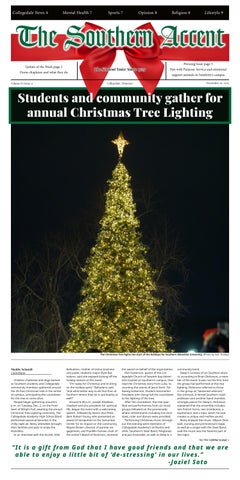
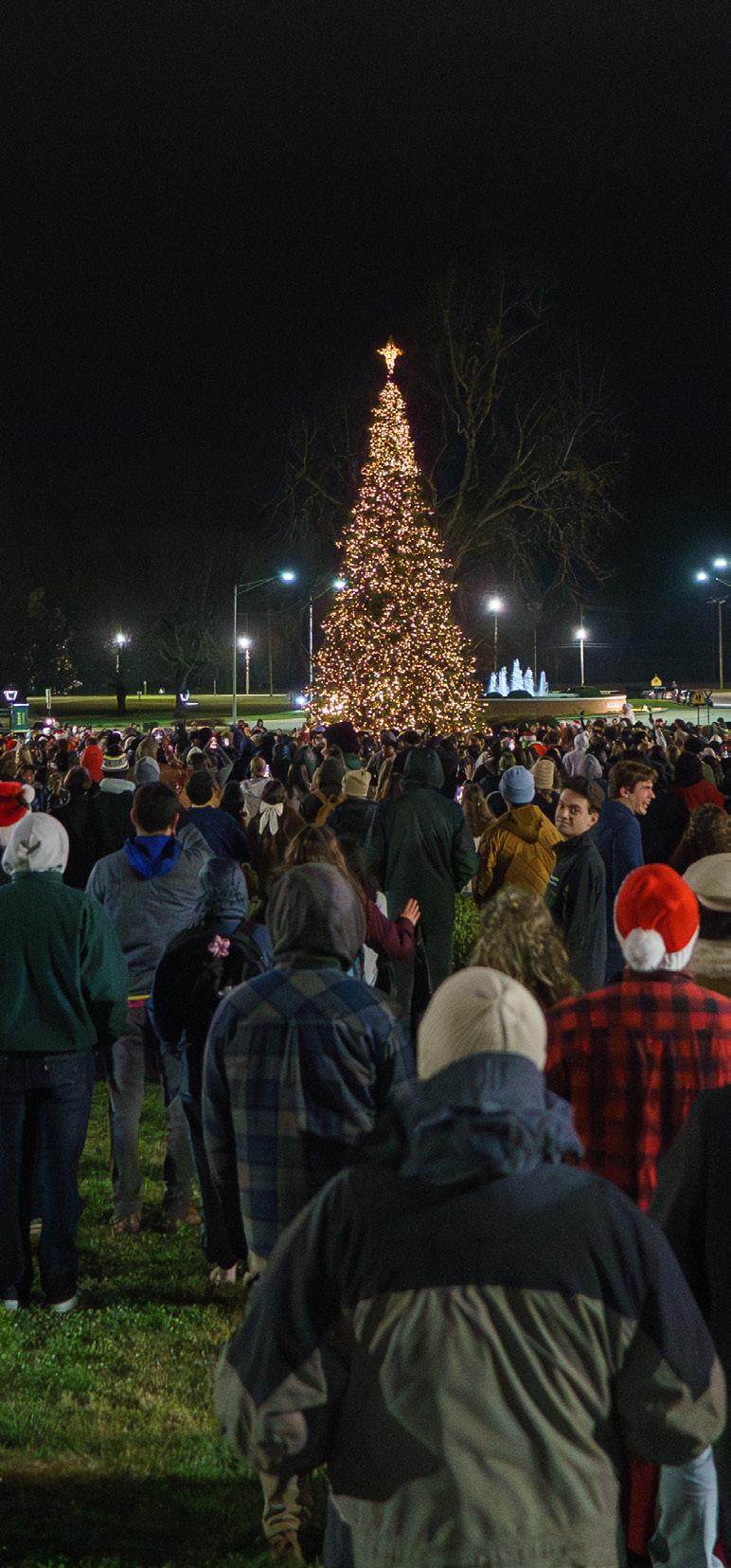
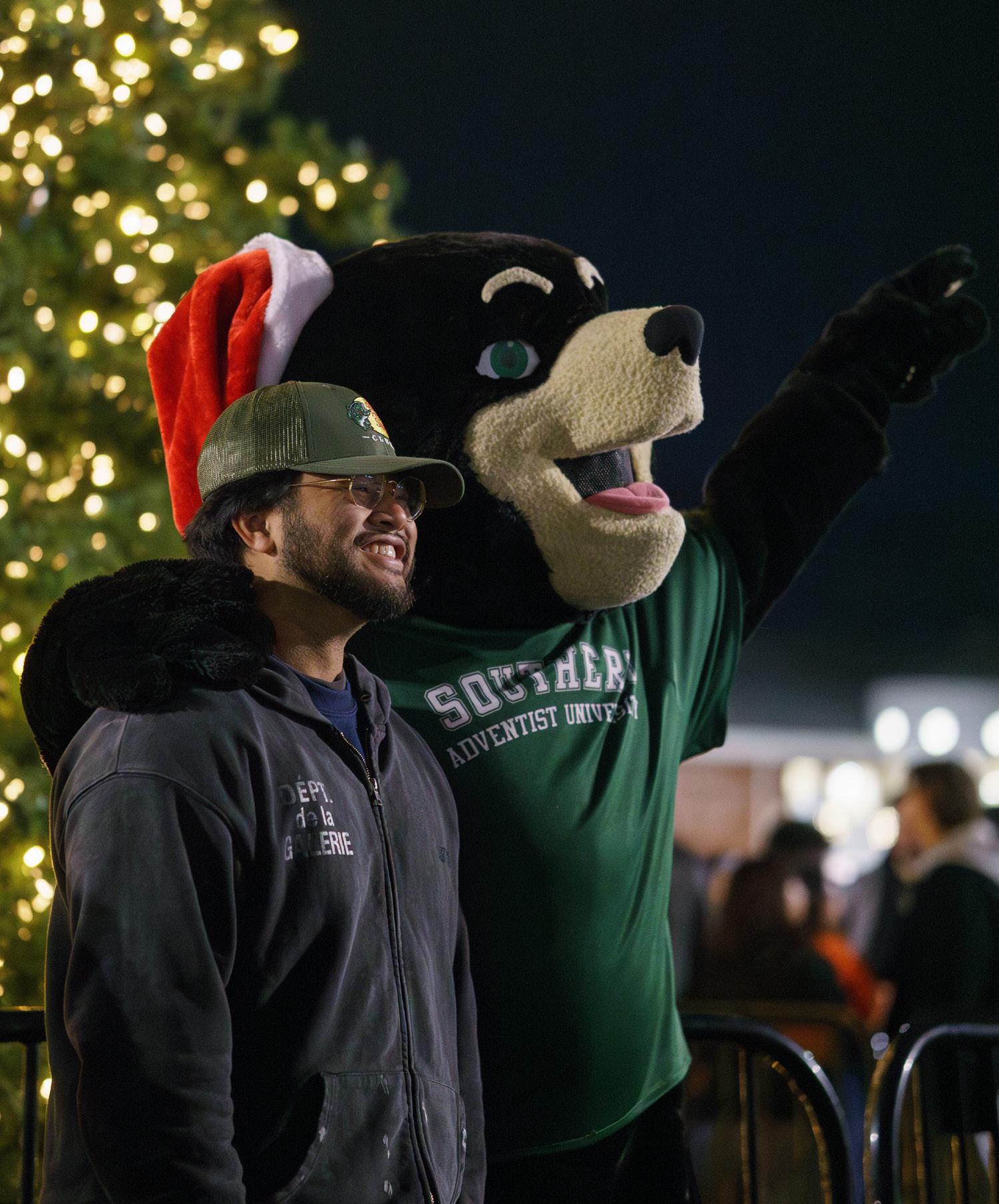
Children chattered and dogs barked as Southern students and Collegedale community members gathered around the 35-foot Christmas tree in the center of campus, anticipating the countdown for the tree to come alive.
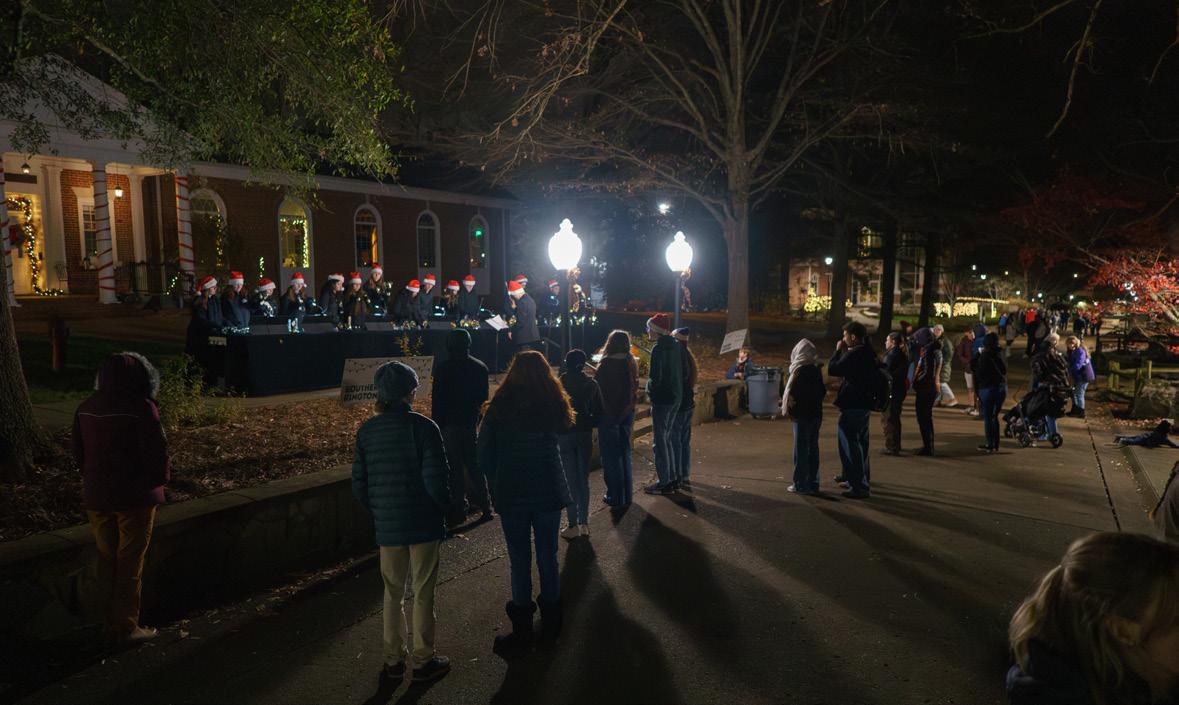
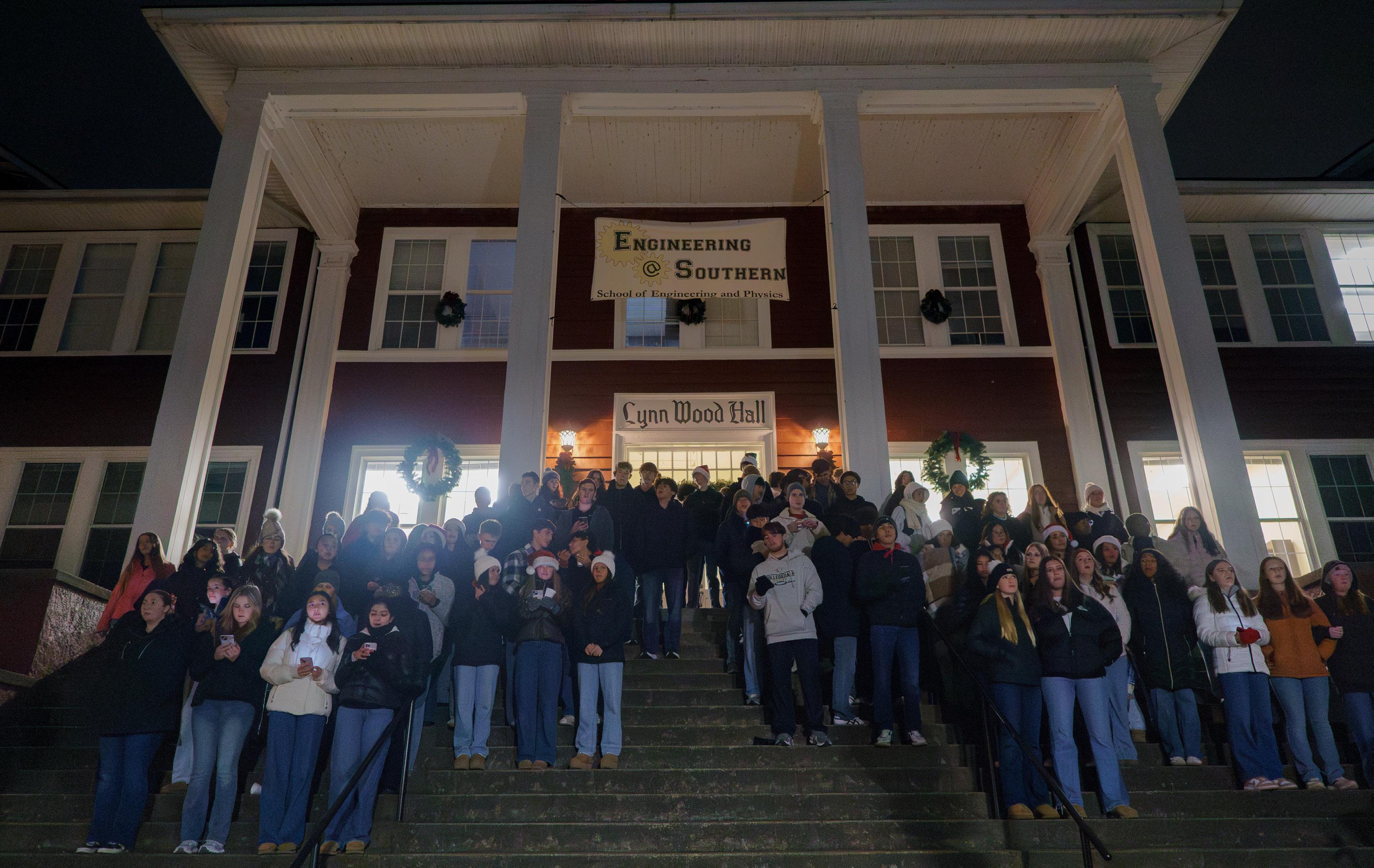
People began gathering around 6 p.m. on Tuesday, Dec. 2, on the front lawn of Wright Hall, awaiting the annual Christmas Tree Lighting ceremony. The Collegedale Academy High School Band performed seasonal favorites in the chilly night air. Many attendees brought their families and pets to enjoy the festivities.
In an interview with the Accent, Ellie
Baltodano, mother of senior business and public relations major Elyse Baltodano, said she enjoyed kicking off the holiday season at this event.
“I’m ready for Christmas and to bring on the holiday spirit,” Baltodano said, “and what better way to do that than at Southern where they tie in spirituality as well?”
Around 6:30 p.m., Joseph Khabbaz, chaplain and vice president for spiritual life, began the event with a welcoming speech, followed by Senior Vice President Robert Young, who presented an award of recognition to the Samaritan Center for its impact on the community.
Wayne Brown, director of partner engagement, and Franklin Farrow, chair of the center’s Board of Directors, received
the award on behalf of the organization.
Ron Halverson, pastor of the Collegedale Church of Seventh-day Adventists located on Southern’s campus, then read the Christmas story from Luke, recounting the events of Jesus’ birth. Following Halverson, Student Association President John Hargy led the countdown to the lighting of the tree.
After the countdown, the tree sparkled and performances from six music groups followed on the promenade, where refreshments including hot chocolate, cider and donuts were provided.
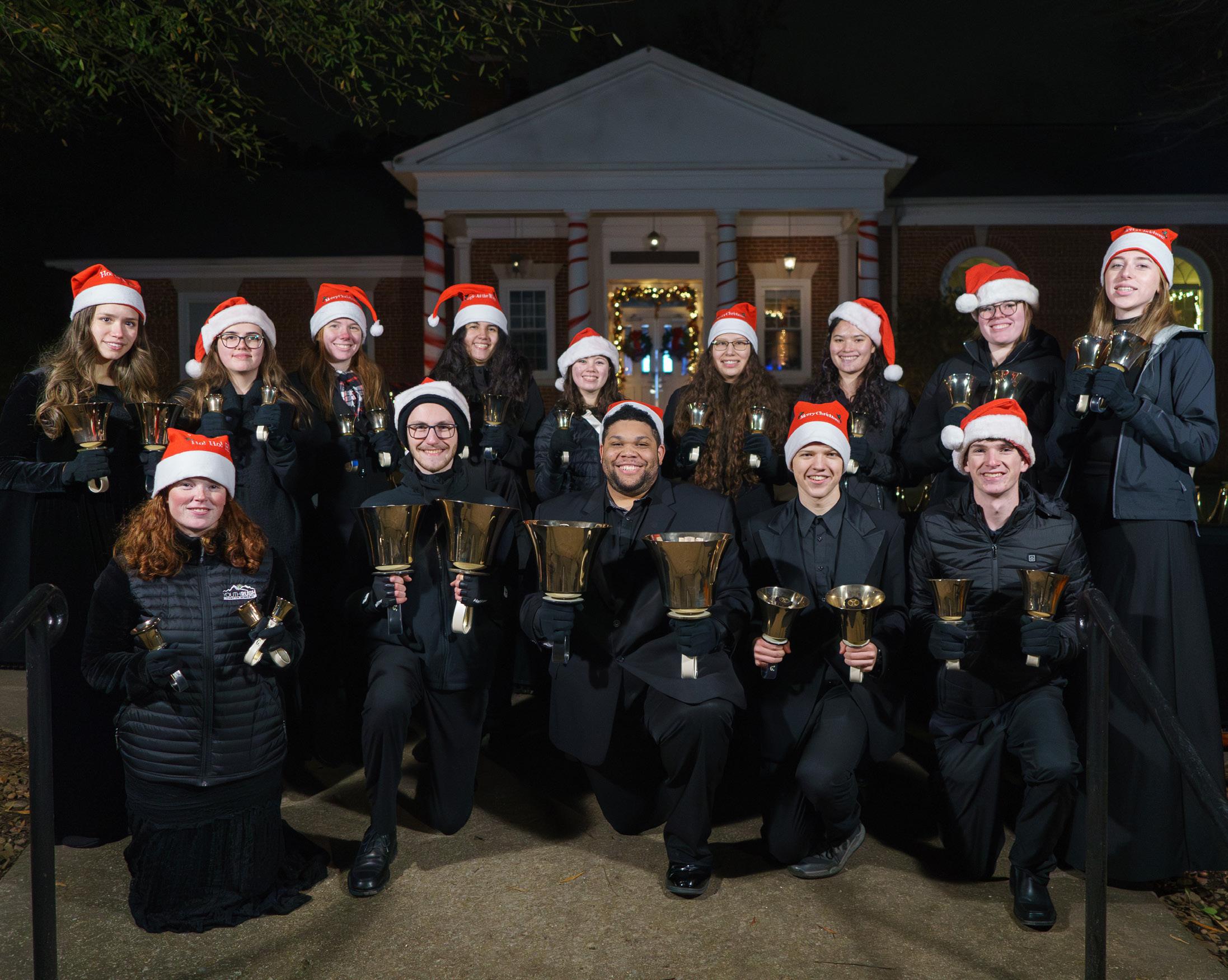
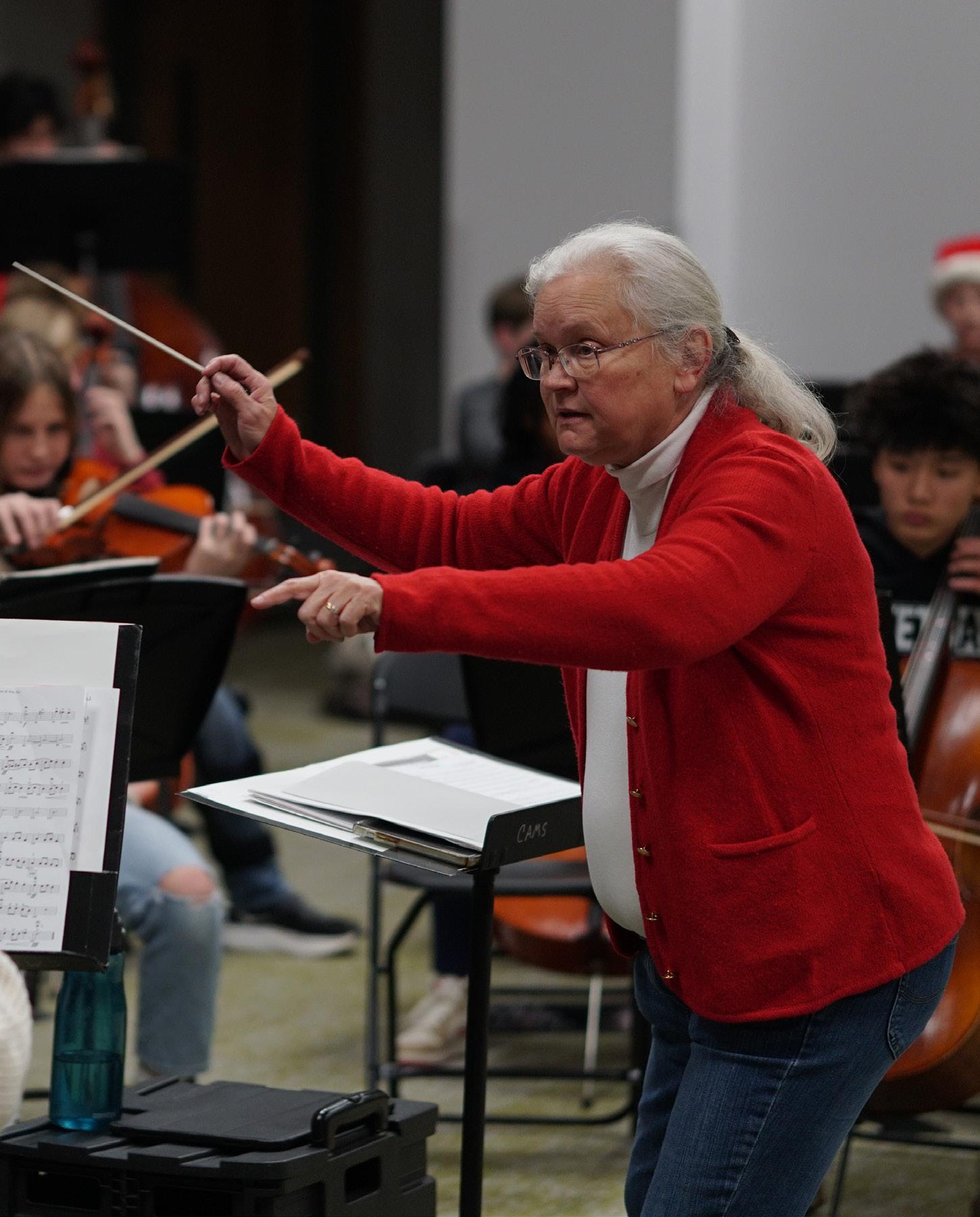
Performing Christmas music throughout the evening were members of Collegedale Academy’s orchestra and choir, Southern’s Steel Band, Ringtones and Jazz Ensemble, as well as Deep 6, a
community band.
Deep 6 consists of six Southern alumni, according to Brian Dickinson, a member of the band. It was not the first time the group had performed at the tree lighting; Dickinson referred to those in the group as “seasoned veterans.” Ron Johnson, a retired Southern math professor and another band member, arranges pieces for Deep 6. Dickinson explained that the ensemble includes two French horns, two trombones, a euphonium and a tuba, which he said creates a unique and mellow sound. Many enjoyed the music. Allyson Stirewalt, nursing and pre-licensure major, as well as a singer with the Steel Band, said the music was her favorite part of the night.
“It is a gift from God that I have good friends and that we are able to enjoy a little bit of ‘de-stressing’ in our lives.”
Madelynn Brower Contributor
Many students on Southern’s campus are not fully aware of the purpose dorm chaplains serve on campus. While there are numerous resources available on campus for students’ spiritual and mental wellbeing, some may not realize that one of those resources is right in their residence hall.
In an interview with the Accent, Omaris Mercado, Thatcher Hall dorm chaplain, said that the primary goal of her position is to develop relationships with students.
She explained that chaplains strive to guide students in their spiritual lives and assist them as needed with their mental and spiritual needs. They work with the deans, residence assistants (RAs) and other ministerial groups on campus to plan spiritual and community-building events for the residence halls. Mercado, sophomore nursing major, has been the dorm chaplain for Thatcher and Thatcher South for the past year and a half.
“The main aspect of my job, the main goal, is to reach at least one person,” Mercado said. “My job is more like a relationship role. It’s not [about] what I can do for you, but how I
can show God’s love.”
While her job entails many conversations about spirituality, it also includes praying with female students, visiting them when they are sick, planning events and working with the RAs to help students in their halls.
Aidan Sammons, sophomore theology major, serves as the dorm chaplain in Talge Hall.
Like Mercado, he oversees spiritual life in his dorm, communicates with RAs, plans events and coordinates Morning Meditations and Tuesday night worships. One of the events he recently organized is a week of worship for Talge residents.
“My favorite part about [my job] is being able to connect with guys and just see them falling in love with Jesus or just see that light bulb click in their mind of them realizing who Jesus is,” said Sammons.
Both Mercado and Sammons said that they wished more people would come to them for help. Mercado speculated that the reasoning behind the lack of interactions could be that students are unaware that the dorm chaplains are available for them, while others are hesitant to approach someone they do not know.
Ainsley McFarland, a freshman nursing major, said she
had never met with the dorm chaplains, but believes it could be beneficial.
“I don’t think it could hurt,” said McFarland. “I think that going and seeing somebody, even just for a social aspect, could definitely be a positive thing.”
Jonathan Wolff, a sophomore theology major, has attended several dorm events led by Sammons, including a weekly life group.
“[The life group led by Sammons] helped me grow closer to God and helped me hear the perspective or the viewpoints from other guys, Christian guys like me, who are dealing with the same problems and [going through] similar walks with God,” Wolff said.
A large part of what dorm chaplains do involves the connections they make with students. Mercado expressed that building individual relationships goes a long way toward working with students to improve their mental and spiritual health.
“I love getting to know people on a personal level,” Mercado said. “Those connections are really important to me, because I feel like the Holy Spirit guides those situations where I can meet those people and connect with them.”
Jaeda Goode Contributor
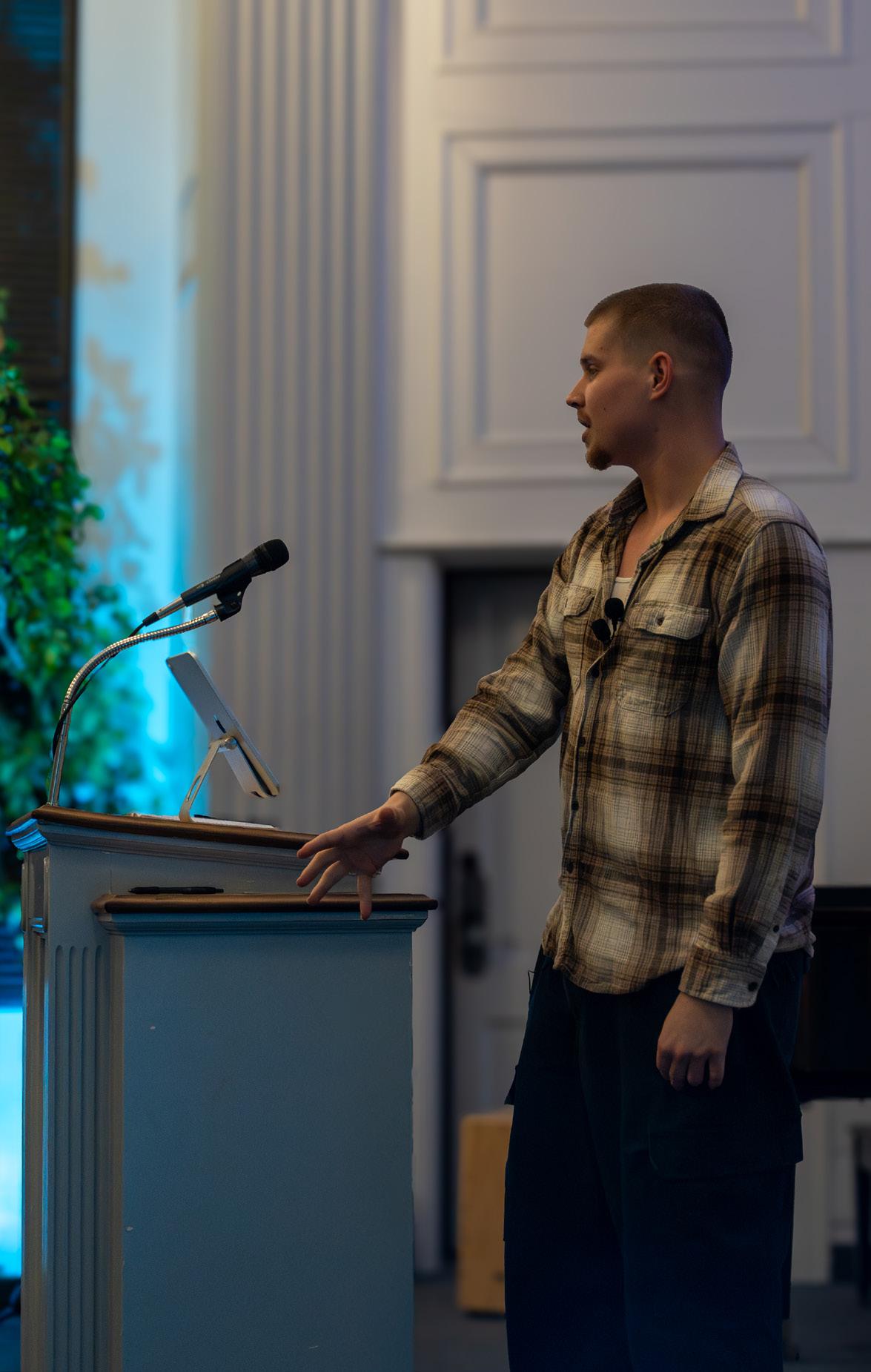
Southern Adventist University’s Student Association (SA) has rolled out a full slate of monthly social events this year, coordinated by Executive Social Vice President Lily Mutai. Mutai spoke about the uniqueness of her position this year compared to prior social vice presidents (VPs). She joined the team in July, rather than running during the election and having ideas set in stone before the school year began.
“Usually, you have a whole semester before to get out there and plan, and then talk to people about their ideas, but it’s always crunch time for this job this semester,” Mutai said. Mutai explained how SA has one major social event each month and went into detail about planning a social event.
She spoke about working closely with Alexis Grentz, head of student development, to determine what is possible within the guidelines of her budget, given by SA Financial Vice President Jaziel Soto.
“First, we look at Student Association budgets from past years to see what typical spending looked like,” Soto said. “Second, we adjust the numbers each year based on how much total funding we have and how much was spent on similar events in previous years.”
After getting her ideas cleared by Grentz, Mutai then contacts personnel regarding the venue, clubs or other parties involved, aiming to have all details finalized two weeks
before the event.
Mutai shared how essential club participation was for SA events this year, specifically regarding International Food Fest and Fall Fest.
“I don’t think the events would be as great if we didn’t have the clubs,” Mutai said.
Mutai spoke about planning for this year’s Fall Fest regarding what she wanted to do differently, sharing that she wanted to fill the space with more booths and create a lively festival environment for students. She also spoke about her excitement for the student body having experienced certain club booths, like the petting zoo provided by the Biology Club.
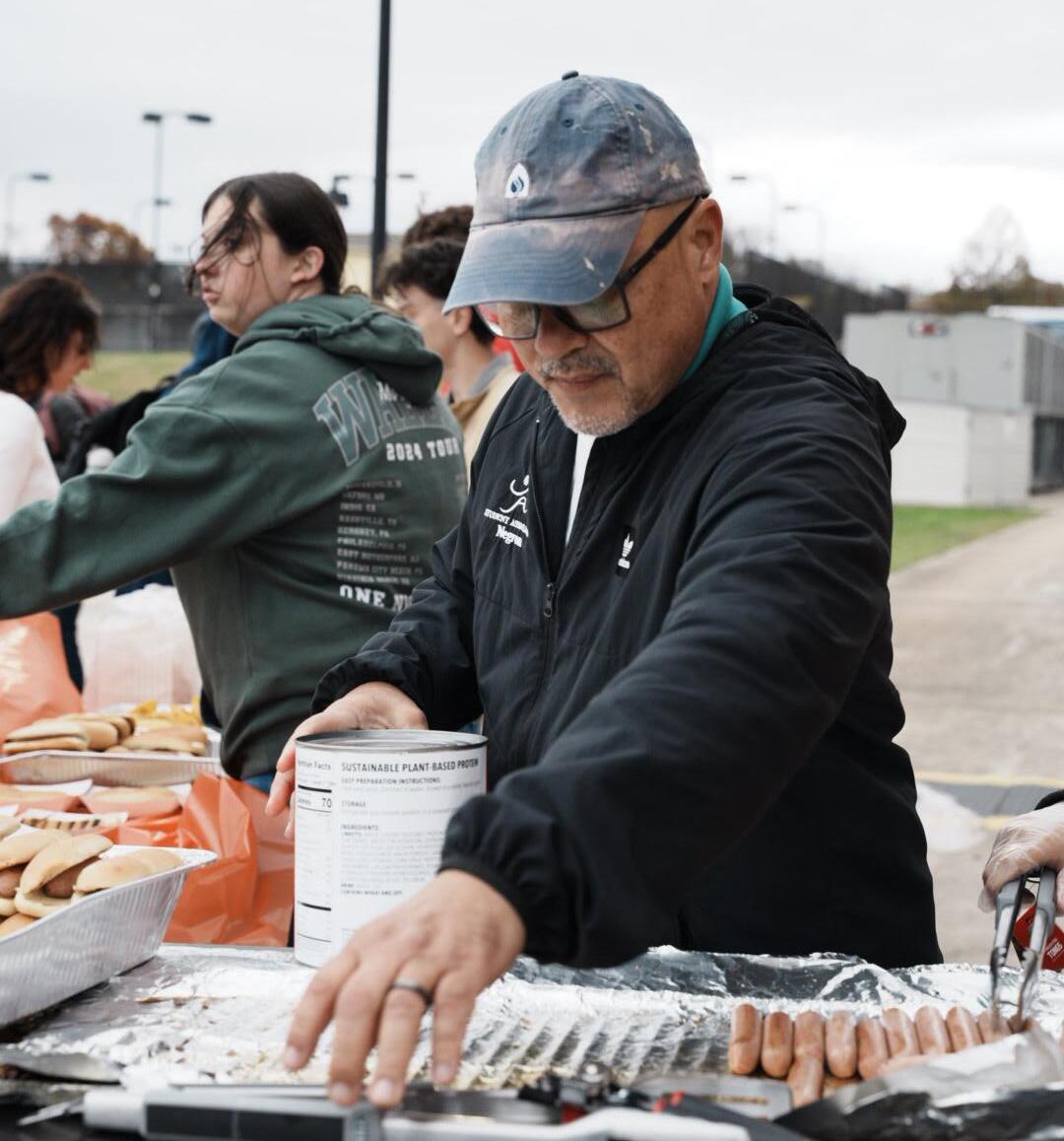
Fall Fest was originally scheduled for Nov. 2, but due to unforeseen weather, the event was moved to Nov. 9 from 4-6 p.m. Robles spoke about how the SA team came together to compensate the clubs involved with $100 each for the preparation they put into the event, despite it being postponed for reasons beyond control.
“In order to make up for it and make sure our clubs still feel supported through that, even though we know they put time and effort into preparing for the event,” Robles said.
To reach students for feedback about events and their enjoyment, Mutai said she talks to students directly, where students can express their thoughts for change to Mutai or other members of SA.
Matthew Chung, junior health science major, said that he enjoyed this year’s social events, believing they have improved compared to events held in the past. Chung also
expressed his enjoyment of the International Food Fest and the variety of foods provided.
Britoya Thomas, sophomore accounting major, also said her favorite event this year was the International Food Fest event, held Sept. 21.
“There was something for everyone, all cultures were represented and being able to bring
that to Southern so you could taste and try different food and things I wouldn’t usually try,” Thomas said.
Thomas expressed her overall enjoyment of the social events planned by SA and said that it’s clear that they have the students in mind when planning.
According to Mutai, student feedback plays a crucial role in event planning. “I do talk to a lot of students about what they want to see at events,” she said. “I know for me last year, I was like ‘I really wish this was there’ but I felt like I couldn’t talk about it. So, we always try to implement an open-door policy.”
The Accent encourages readers to write articles and voice their opinions. However, the views expressed do not necessarily reflect the opinions of the Accent, the Southern Adventist University or the Seventh-day Adventist Church.
For any questions, comments and article submission information, email the editor at haydenjkobza@southern.edu.
For all advertising inquiries, email alvajohnson@southern.edu.
Tree Lighting
continued from page 1
Professor Ken Parsons, who organized the performances, said music helps build connections and strengthen communities.
“There's scientific research showing that listening to music together as a group engenders feelings of camaraderie and goodwill,” Parsons explained.
“Events such as the tree lighting and more formal concerts
can play a significant part in building community.”
Many students enjoyed the event; James Templeton, senior graphic design major and member of Southern’s Bell Choir, said that it served as a break from the pressures of the last weeks of the semester.
“It definitely brings good holiday cheer when we’re stressed for finals,” said Templeton.
Jaziel Soto, junior accounting major, said the event was an opportunity to connect with
friends and escape his worries.
“It was amazing—being with my friends and enjoying this moment in the midst of a few weeks that are really busy and stressful,” Soto said. “It is a gift from God that I have good friends and that we are able to enjoy a little bit of ‘de-stressing’ in our lives.”
Attendees lingered until around 8:30 p.m., gradually making their way back to their dorms, apartments and houses.
Maddie Schmidt Contributor
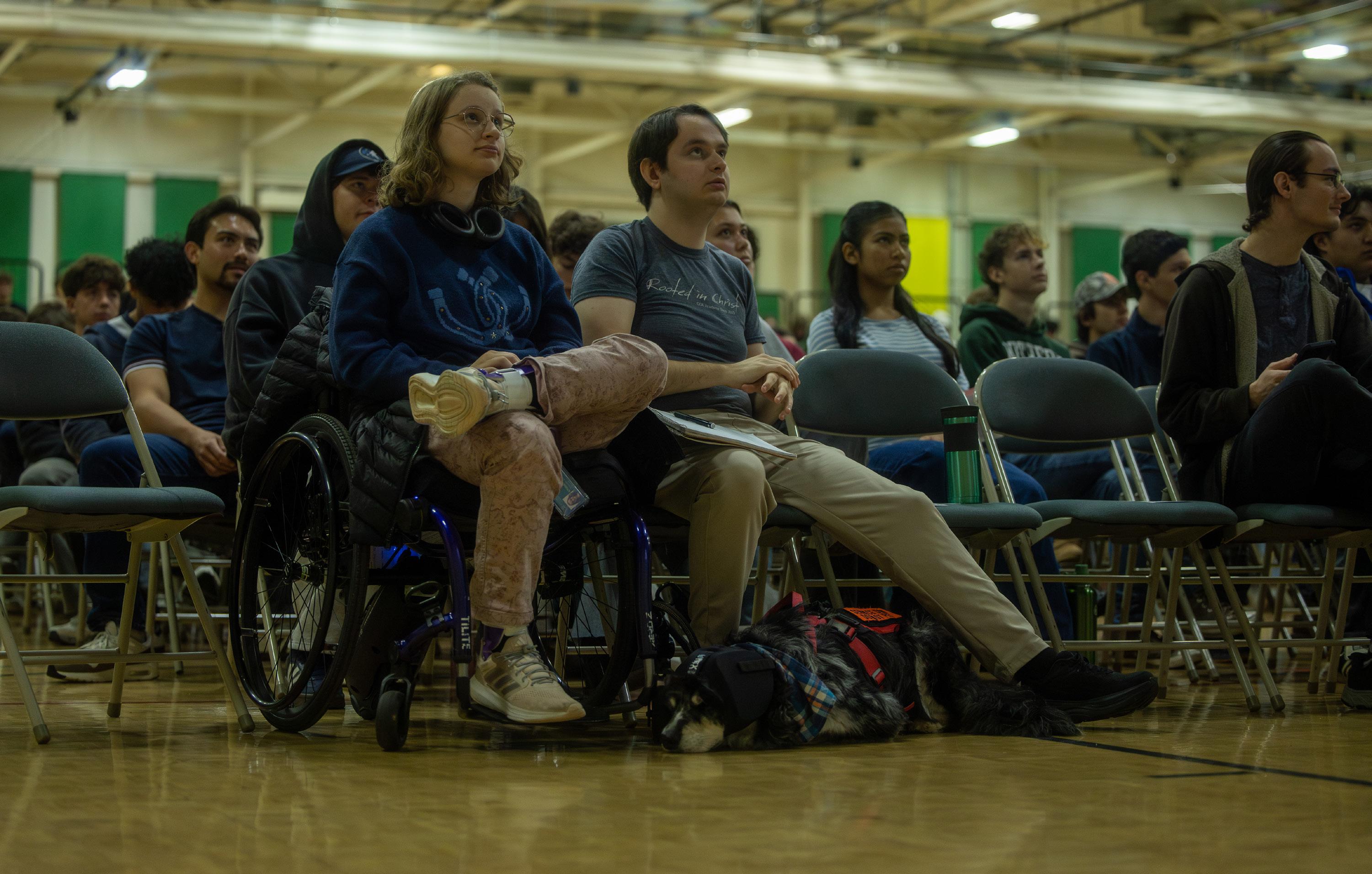
After a tough day, Isabel Williams, a junior double-majoring in archaeology and museum studies, finds comfort in Peri, her emotional support dog. Williams said Peri uplifts her mood and keeps her busy with her playful and energetic spirit.
According to the university’s website, Southern complies with Section 504 of the Rehabilitation Act of 1973, the Americans with Disabilities Act of 1990 (ADA), and state and local laws that allow students to have service animals on campus. Southern also follows the Fair Housing Act, so students can keep their Emotional Support Animals (ESA) in on-campus housing.
These policies apply only to service animals and ESAs documented with Disability Support Services (DSS), according to Southern’s website. These stipulations ensure that animals are allowed on campus only for disability purposes.
According to Jahnil Ancheta, DSS coordinator, Southern currently has 10 approved ESAs and two service animals on campus.
Southern’s website states that an individual must have a disability confirmed by the ADA to qualify for a service animal on campus and must provide proof that the animal is trained for the handler’s disability.
Keeping an ESA on campus is permitted when a medical professional has confirmed that a student qualifies for an ESA, and that the animal is approved by DSS.
Ancheta explained the difficulties that DSS faces regarding service animals and ESAs.
“The biggest challenges are usually helping students understand the difference between an emotional support animal and a service animal,” said Ancheta. “It can also be challenging when students don’t have all of the required documentation for approval. That’s why I make it a point to meet with students one-on-one to walk them through the process and help them get what they need.”
Southern’s website explains the difference between a service animal and an ESA. A service animal is trained to help someone with a physical disability, whereas an ESA does not need to be specifically trained but provides emotional support and companionship.
Because of these differences, service animals and ESAs are not always allowed in the same public spaces. According to the university’s website, service animals are generally allowed anywhere on campus, unless an area has been labeled unsafe. ESAs, however, are allowed only in the handler’s residence and areas of campus where animals are allowed.
Although performing different tasks, both service animals and ESAs can have a significant effect on their handlers.
Crystelle Toledo, a sophomore elementary education major, explained the dog’s impact on her day-to-day life.
“I am more independent because of my service dog,” said Toledo. “I know that if I have a medical episode, she will be there. I know that if I am
alone, she will call someone if I need them—yes, she does have a phone that actually calls people.”
In addition to medical help, her dog has a positive effect on her well-being.
“I share a strong bond with my dog,” said Toledo. “We both need to trust each other; I need to trust her to know certain things I don’t, and she needs to trust me when I ask her to do something she’s not sure about.”
According to Williams, her emotional support dog, Peri, helps her regulate her emotions.
“I find her presence very grounding,” said Williams. “If I’m having a rough day or if I’m just lost in thought, sometimes she’ll come sit next to me and it will remind me to live in the moment.”
Williams explained that because Peri is so energetic and requires intentional care, the dog’s presence encourages her to be more active than she might be without her. Peri helps her not to get stuck in a mundane routine in her day-today life.
According to Williams, various challenges make it difficult to bring service animals and ESAs out in public. Williams explained that some individuals try to pass off untrained pets as service animals to be allowed to bring them into an establishment where they aren’t allowed.
This issue can be difficult for those who rely on these accomodations, because establishments could try to prevent legitimate service animals from entering the building.
“Most of the time these access issues are the result of ignorance, not malice, and I approach them as such,” Toledo said. “It is my personal choice to carry around cards that have the ADA laws regarding service dogs printed on them and hand them out when necessary.”
Toledo's biggest challenge with bringing her dog in public is other people, because many do not respect her dog’s personal space and often crowd her against the wheelchair. This could be dangerous. In fact, it is not appropriate to touch a service dog while they are working and wearing their service dog vest or leash.
According to Toledo, many service dog handlers do not reveal their dog’s real name in public, making it easier for their dogs to avoid being distracted. Service dogs are highly trained and respond very quickly to the sound of their name.
While at Southern, Toledo has experienced multiple incidents when her dog was harassed while working, such as startling her dog for fun or threatening to eat her.
Ancheta shared how to appropriately interact with someone’s service animal or ESA on campus.
“Students should treat service and emotional support animals with respect, recognizing that they are working or therapeutic companions,” Ancheta said. “They should not approach, pet or feed them without the owner’s permission and should avoid distracting them while they perform their duties.”
Ancheta also explained how
to appropriately interact with the handler of a service animal or an ESA.
“Students should speak to the owner rather than the animal, respect personal space and refrain from asking intrusive questions about the person’s disability or the reason for the animal,” Ancheta said. “Under the ADA guidelines, there are only two questions that are legally permissible to ask a person with a service animal: (1) Is this service animal required because of a disability? and (2) What work or tasks has the animal been trained to perform?”
Since there is often confusion on the differences between a service animal and an ESA, Williams expressed that many people could benefit from having an ESA and not even realize it.
“Emotional health in general is often neglected or not treated as seriously as it is,” Williams said. “Because of that, people don’t [always] look for solutions or ways they can get help. ESAs are an often-overlooked way of receiving help.”
Williams added that people are noticeably happier when around animals, such as students’ reaction to puppies on the promenade during exam weeks.
“Having an animal around you makes you happier,” said Williams. “Having something to take care of that you love, and that you know loves you.”

Editor's Note: The Southern Accent has produced a one page Collegedale News section this issue as part of a national initiative to enhance community news coverage. The local effort, led by Southern's School of Journalism and Communication in conjunction with the Center for Community News (CCN) at the University of Vermont, places student journalists at the forefront of addressing the news desert crisis, a phenomenon caused by the decline of newspapers in local communities. The Accent believes local news is vital to a thriving democracy, and we remain committed to reporting about important issues, novel occurrences and interesting people in the greater Collegedale area. We will publish this special section in five issues of the newspaper this semester. To submit tips or press releases, go to https://southern-accent.org.
Leif Bromme Collegedale Reporter
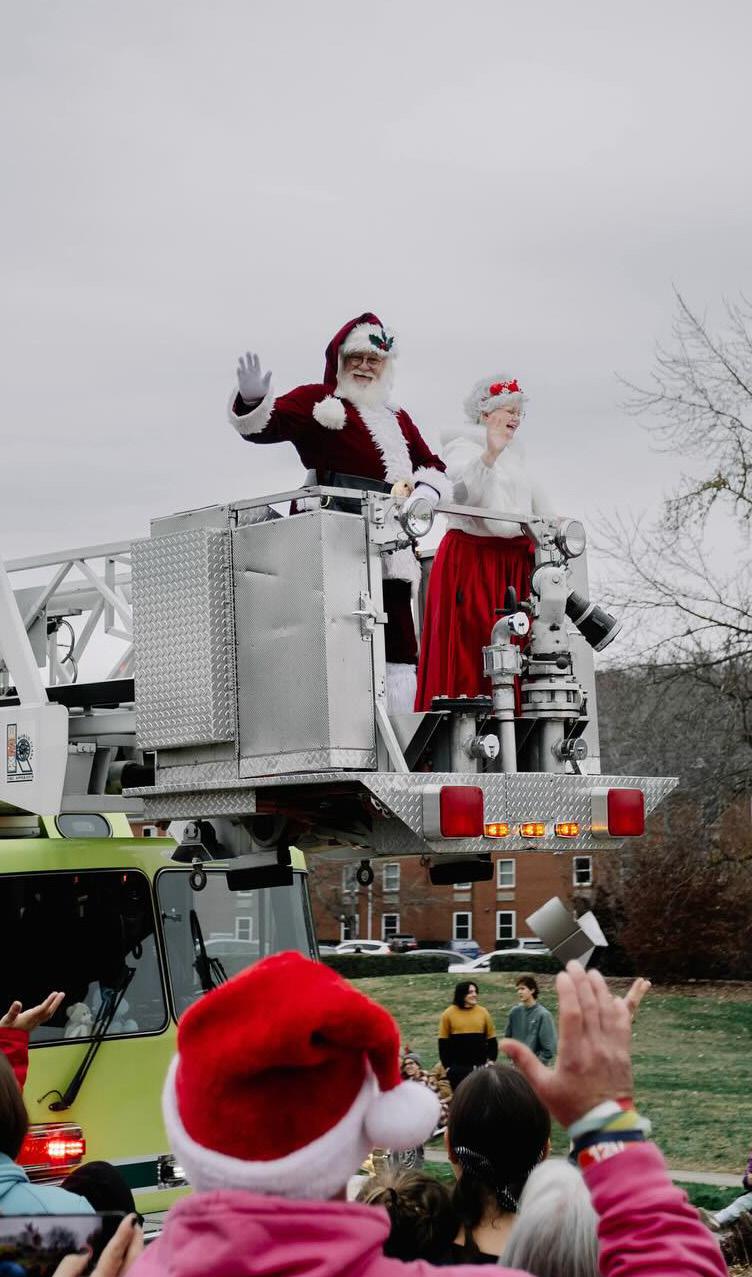
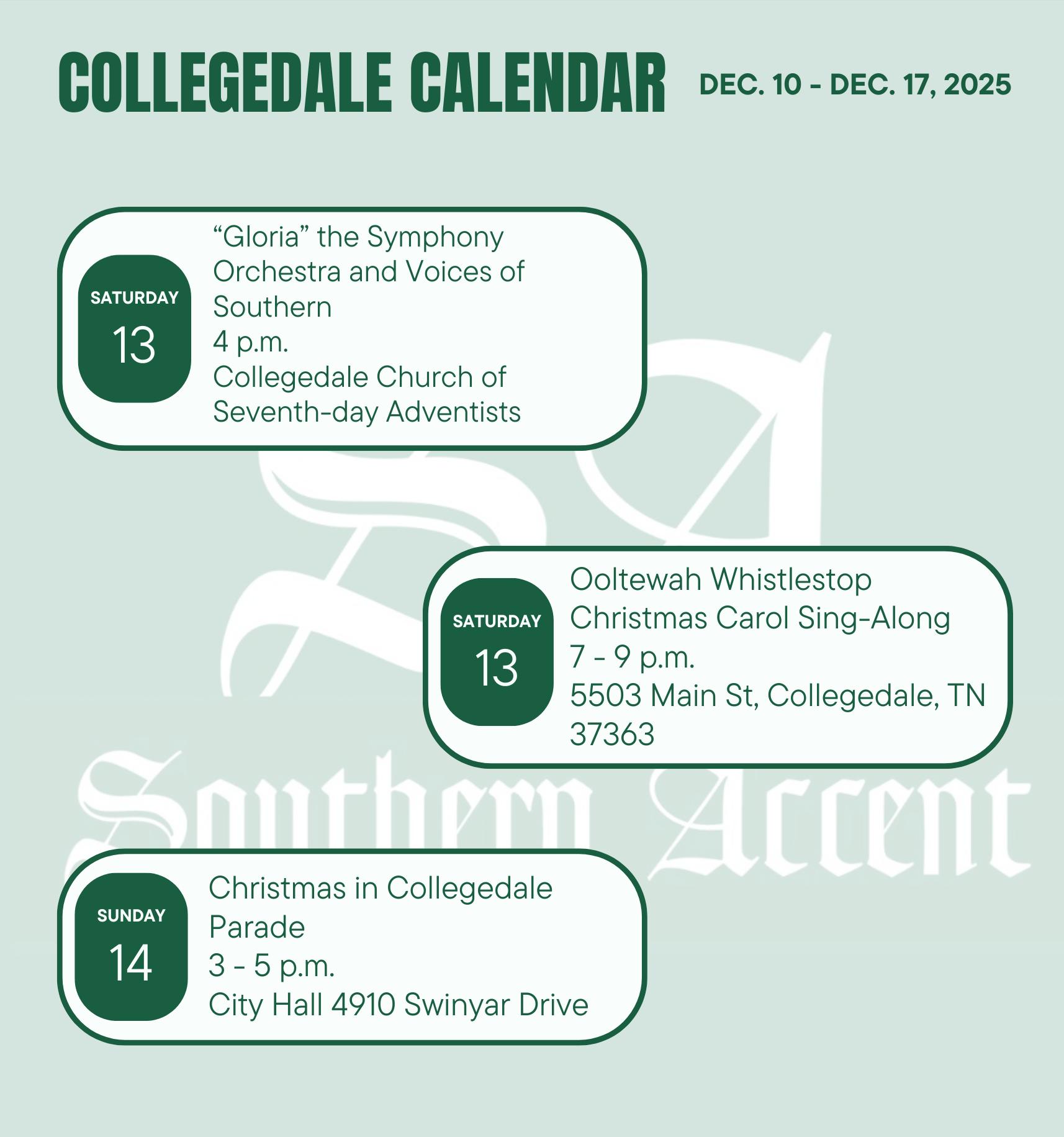
The Collegedale Christmas Parade, planned by the city’s Parks and Recreation department, will run through the heart of Southern’s campus on Sunday, Dec. 14. This year marks the second time the parade has been held since its cancellation in 2020, according to previous Accent reporting.
The event will begin at 3 p.m. and follow University Drive, according to social media posts. Floats will begin their route at the four-way stop at Old Apison Pike, before proceeding through campus and turning left at College Drive East, according to Collegedale Parks and Recreation’s supervisor, Christina Clark. The department planned and advertised the event, encouraging Collegedale residents and businesses to purchase sponsorship packages and enter floats.
Though the tradition found new life in 2024, a 2023 Accent article described the events that led to its initial cancellation.
“The parade was founded in 1999 by Steve Ray, who runs a tire service and repair shop in Ooltewah,” wrote Elise Deschamps. “Although Collegedale community members organized the event for 19 years, the responsibility of hosting the parade passed on to the City of Collegedale in 2019.”
The following year, the city cancelled what was then known as the Spirit of Christmas parade after struggling to adapt the festivity to COVID-19 restrictions and increased development along Little Debbie Parkway, its former route.
In 2023, Southern was considered to host the parade along University Drive, but action was delayed until the following year due to concerns about the new location.
According to the 2023 Accent article, then-Commissioner Tonya Sadler and several other commissioners felt that the parade should remain closer to Collegedale’s heart. The next year, however, city leaders
and Southern administrators agreed to host the parade on University Drive.
City Commissioner Laura Howse said that although some look back fondly on the old route, “several people have said that with the new route, the parade feels more up close and personal.”
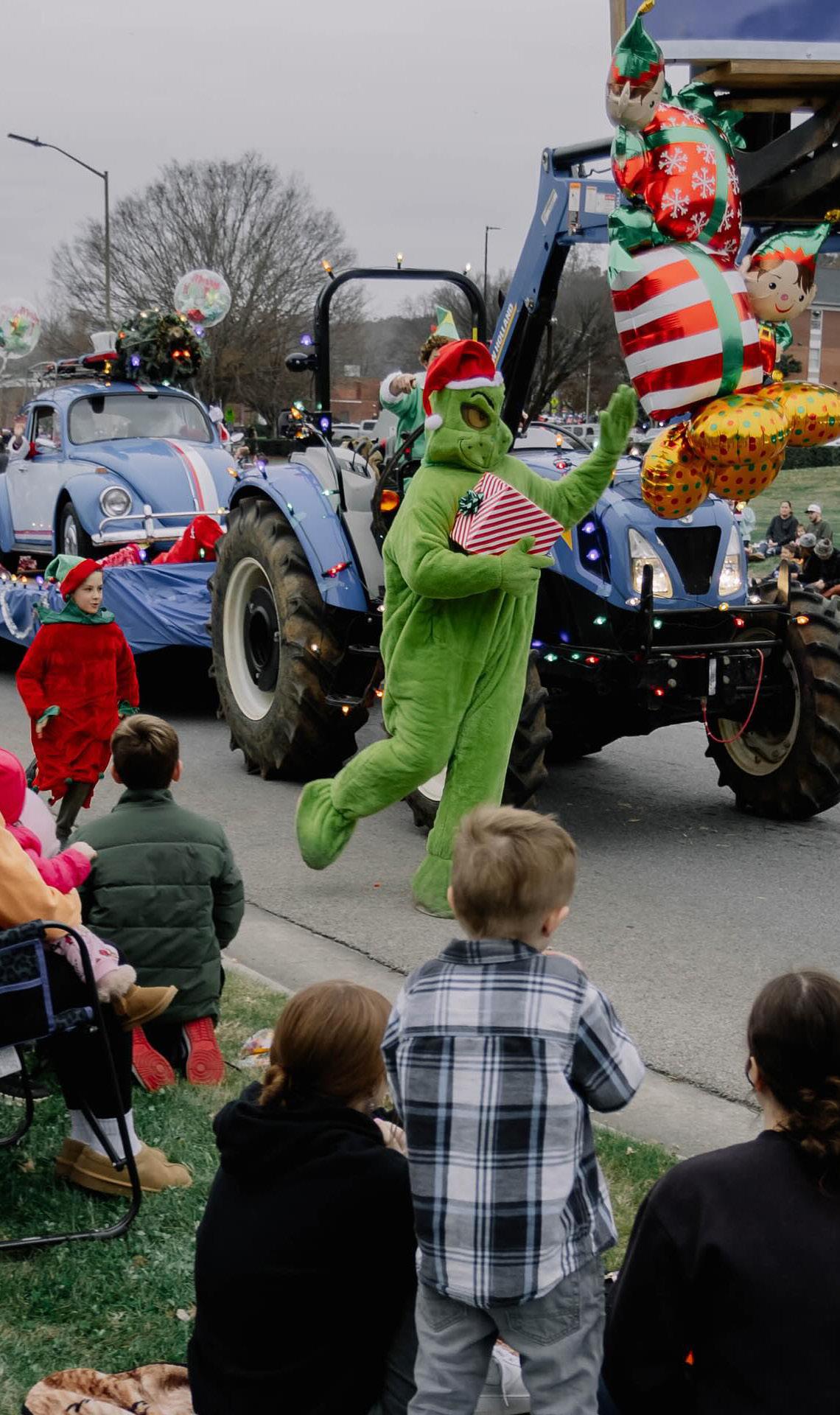
According to Howse, this year’s parade will feature familiar floats as well as new additions.
“We always have Tri-Community fire trucks,” she stated in an email to the Accent, “and new this year, Collegedale’s Katie Lamb library will participate dressed as characters from ‘A Christmas Carol’. I heard a rumor that Miss Chattanoo-
ga wanted to participate... There will be classic cars, Mayor [Morty] Lloyd will ride in a vintage convertible, and our county Commissioner Jeff Eversole and his wife, Denise, will have an inflatable in their pickup truck like last year.”
Clark also outlined food options on the festive day.
“Food Trucks [will be] parked at Flemming Plaza such as the Chubby Vegan, Hooked on Minis, Freaky Funnels and Pixie Princess Cotton Candy,” Clark said.
As usual, the parade will be open to both students and community members, though some students have reservations.
Though senior accounting major Kaitlyn Whalley did not
attend last year, she expressed concern about the road closures.
“I like the idea of the Christmas parade,” she said, “but if it closes down roads on Southern’s campus, it can be inconvenient to get around.”
Collegedale resident Paulette Sandefur missed the parade’s 2024 revival, but hopes to see Southern students involved.
“I look forward to marveling at all the talent of these kids,” Sandefur said. “They’re so creative and talented.”
Though the deadline for participation has closed, Clark confirmed that several Southern staff members are already involved. Commissioner Howse encouraged those who did not sign up this year to attend
as spectators and to consider participating next year.
“People usually give out candy from the floats, so I would suggest taking a blanket or a camping chair to enjoy the show,” she stated. “If a club or group of students wants to participate next year, they will need to register online, usually before December 1st, but everyone is encouraged to participate.”
Freshman biology major Isaiah Davis is already anticipating the event.
“I’m excited to see what type of floats will come through our campus and certainly can’t wait to attend.”

Hayden Kobza Editor-in-Chief
Viera
Yoly
Office Manager
On behalf of the Accent team, I hope the rest of your week wraps up well as Southern’s campus transitions into finals season. A few weeks ago, the Accent Office Manager, Yoly Viera, and I were planning an event and special issue of the paper next semester to celebrate the 100th anniversary of the Accent, as the paper has proudly stated “The student voice since 1926” for as long as I can remember. I had a sneaking suspicion that we needed to fact-check the date to ensure we weren’t inaccurate. So, I asked Yoly to research the Accents’ origin. The question was—when was the Accent first published?
Yoly Viera:
Initially, I believed the answer was simple—The Accent was established in 1926. However, my inquiry became more complex after I reached out to Jessica Spears, a research services librarian at Southern.
Upon receiving her response, I found myself confused. Spears informed me that the earliest publication in The Accent’s archive dates back to 1929. This information came as a shock, as we had already started planning the 100th anniversary celebrations.
After numerous emails and
further searches through the archives, I immediately emailed Hayden to inform him of the information I had just received. At first, he was in disbelief.
Hayden Kobza: I just couldn’t believe that there was no student voice in 1926. I knew that the Southland Scroll, the student newspaper before the name was changed to the Southern Accent in 1945, only had archives up to 1929, but I thought perhaps they were incomplete.
The nail on the head came from Mills McArthur, assistant professor in the school of history.
“It appears that 1929 is in fact the correct date,” McArthur stated after briefly researching.
“The June 5, 1929, issue of the Southland Scroll is listed as Volume 1, Number 1. There's also a 1929 story in the Field Tidings announcing that this was the start of the paper. And Dennis Pettibone's book says that there was a competition in 1929 to choose the title of the paper. Everything points to 1929.”
I was shocked, yet relieved that we had double-checked this detail before moving forward with an event and special issue. I found myself with one remaining question—when did the paper begin using the tagline, ‘The student voice since 1926?’
Searching the archives online, I found out that in the 1997-1998 school year, the
paper added ‘The student voice.’ The next academic year in 1999-2000, the Accent added the infamous date of 1926. CASE CLOSED!
Yoly Viera:
The realization that this year would not mark the 100th anniversary was somewhat disappointing.
On a positive note, in just a couple of years, we will celebrate the Accent’s 100th anniversary while I’m a senior, and I will have the chance to contribute with more knowledge and experience. As a freshman, be-
ing part of The Accent has been an incredible experience. I have learned a great deal during my first semester and am grateful for this opportunity.
Hayden Kobza: It wasn’t all bad finding out that the year was off. When I was perusing the archives, I found an official Accent magazine from 2000 titled Kaleidoscope, which explored various perspectives by posing questions to students. The publication ran only one issue, but we plan to bring it back next semester for our special

investigations, student and community voices on campus.
While it would have been an honor to be the Editor-in-Chief for the Accents’ 100-year anniversary, I know we have some amazing years ahead of us, and I can’t wait to work on bringing a new publication to you sponsored by the Southern Accent, ‘The student voice since 1929.’
See you next year,
Hayden Kobza
Yoly Viera

Abby Dizon Contributor
Next week is finals week, and you may be feeling burnt out and ready for this semester to be over. According to the Albert Einstein College of Medicine, burnout results from “emotional and physical exhaustion caused by excessive and prolonged stress.”
The key aspect of their statement is excessive and prolonged stress, which can often come from studying for many hours without adequate breaks. There are several strategies to help students avoid burnout as they push through to the end of the semester.
Book time for yourself :
It is difficult to stay motivated in college when every day feels like a never-ending quest to comprehend complicated concepts in various subjects while balancing work. When weekends arrive, some students spend all of their free time studying rather than using it as an opportunity to relax.
To get yourself through the academic year, plan a few events to allow a break from studying, enjoy a treat and give yourself a motivator to push through the week. Head downtown or take a weekend trip to Atlanta.
Personally, I think the farther the destination, the more you are able to disconnect from college demands and give yourself a true break. Whether your plans are near or far, taking the time to disconnect and recharge can significantly
enhance your ability to persevere through college without feeling burnt out.
Stick to your assignment schedule: Getting organized is the key to staying on top of your college assignments. Using a planner or other organizational tools allows you to see a clear path for the upcoming week and ensures you don’t miss deadlines.
In addition to staying organized, I find it helpful to divide the workload. For instance, one of my classes recently required a 15-page paper. Instead of waiting until the last day, I broke the project down into
manageable sections based on how many weeks I had left till the paper was due.
By keeping myself accountable for completing each section weekly, I avoided the stress of accomplishing the assignment at the last minute.
Dividing the workload and sticking to the segmented schedule, you make the process less stressful and more manageable.
Take the first step towards action:
During college, I found myself constantly overthinking pending assignments. Every day, I would analyze what assignments were due, yet in-
stead of tackling them immediately, I would procrastinate.
This habit led to mental exhaustion by the time I needed to work on my assignments, so I often could not complete the assignment that day.
The stress of constantly thinking about them throughout the day hindered my ability to focus and be productive when I finally got around to tackling them.
The lesson I learned is that it is more beneficial to either do your homework when you first feel stressed about it or else stick to your organized schedule for completing tasks. This way, you can trust yourself to put it aside and enjoy your free
time without guilt.
Stressing about future assignments will only negatively impact your energy and ability to focus later.
College life can be overwhelming with the pressure to balance work, academics, a social life and a personal life. Planning events for yourself, staying organized and separating feelings of being overwhelmed from proactive action can enhance your productivity and empower you to push through the semester with success and determination.

“Stressing
Matthew Taylor Sports Editor
While the idea of a Little Debbie Christmas Tree Cake may suggest a sedentary activity, on Sunday, Dec. 7, this was far from the case. Nearly 300 people from across Tennessee and Georgia participated in three primary races: a 5K, a seven-mile run and a half marathon.
The event is set to become an annual tradition, as the inaugural event was Dec. 1, 2024, and there are plans for 2026 and beyond. The Christmas spirit was in the air, as runners wore festive costumes to match the theme. Holly Merrymaker, an anthropomorphic Christmas Tree Cake mascot, and the Grinch himself, cheered for the runners. Participants were given a “swag bag” that included a box of the Christmas Tree Cakes as a sweet incentive, as well as the choice of a Little Debbie water bottle or towel. Despite the temperature being in the low 30 degrees Fahrenheit.
The 5K proved to be the most popular race of the day, drawing a total of 126 runners, according to official results provided by Race Roster. The demographics of the race leaned slightly female, with 77 women and 49 men crossing the finish line. The average pace for the group was 12:38 per mile, suggesting a healthy mix of competitive sprinters and families enjoying a holiday jog. The 7-Mile Run offered a unique challenge; the distance, serving a nod to the “Little Debbie 7 Fun Run” tradition, saw 42 participants take the course. The field was nearly evenly split, featuring 22 women and
19 men, with an impressive average pace of 10:02 per mile.
The most grueling event of the morning, the half marathon, attracted 29 dedicated endurance runners. These athletes tackled the 13.1-mile course with serious intent, clocking an average pace of 6:37 per mile. The gender split here was almost perfectly even, with 15 women and 14 men completing the long-distance circuit.
For students at Southern, the race offered an opportunity to step off campus and engage with the wider Collegedale community. The physical proximity of the race, which began just down the road from the university, made it an accessible escape from the stress of upcoming exams.
This race was held simultaneously to the Kirsten Wolcott Memorial 5K Race on Southern’s campus, which was offered as an extra-credit opportunity to students in fitness classes. However, some still participated in the community event.
Joshua Taylor, a freshman engineering major, saw the race as a way to challenge himself before the semester ended.
“I participated because it had been a while since I had pushed myself, and it was an opportunity for extra credit in my fitness class,” Taylor said.
“This race stood out because it seemed like not too many people were going to be there, so I could have a bit of my own space to run.”
Taylor noted an atmosphere of respect paid to the veterans involved in the race operations.
“I appreciated the people in uniform that we raced by,” he added. “If I’m in town [next year], I think I will do it again.”
Mike Gloekler, corporate communications & PR manager for the event, emphasized that the purpose of the event was not only to have fun, but also to celebrate community.
“We’re proud that this event brings neighbors and families together, supports our beautiful Collegedale Veterans Memorial Park and underscores how sports, service and community pride can go hand in hand,” Gloekler said.
The event was not only a race, but a fundraiser with a specific local focus. Following the run, representatives from McKee Foods, along with the event mascot, Holly Merrymaker, presented a check for $7,341.11 to the Collegedale American Legion.
These proceeds will go directly to benefit Collegedale Veterans Memorial Park. Located adjacent to the university, the park is a familiar landmark for
students, often used for Sabbath walks or quiet reflection.
The donation helps ensure the park remains a place of honor for the community.
“I think this also serves as a humbling reminder that the freedoms we enjoy in our country and in our local communities come with a heavy toll paid by the men and women who chose to wear the cloth of the nation to defend our American way of life,” Gloekler added.
In addition to the veterans’ support, the event hosted a collection for Toys for Tots, with participants bringing new, unwrapped toys to support children in the community. Veterans from the American Legion, VFW and National Guard, along with the Ooltewah High School ROTC, were on hand to assist, reinforcing the service-oriented theme of the day.
The course itself showcased Collegedale’s natural beauty,
utilizing the city’s greenway system to keep runners off busy roads. Participants wound their way past Veterans Park, around the duck pond and through the scenic tunnel and bridges that characterize the Wolftever Creek Greenway.
The event concluded before noon, allowing runners to collect their finisher medals, and perhaps a second helping of Christmas Tree Cakes, before the Christmas in Collegedale celebration began later that afternoon.
As the semester wraps up and students head home for the holidays, the 2025 Little Debbie Christmas Tree Cake Run stands as a reminder of the vibrant, supportive community that surrounds the university. It gave them a chance to burn calories, honor veterans and share in the simple joy of a small-town Christmas.

Samuel Guerra Opinion Editor
Picture Santa Claus as you know him: plump, jolly, dressed in crimson trimmed with white fur, his cheeks rosy from the Arctic winds. That image feels as unquestioned as having a tree in the living room—as if it’s been passed down through generations of carolers. But here’s the truth: our current image of Santa was born not in the North Pole, but in a Chicago advertising studio.
In 1931, Coca-Cola commissioned illustrator Haddon Sundblom to reimagine St. Nick for its holiday campaigns. Before Sundblom’s design, Santa wore green, blue and even brown; he was often gaunt or stern.
The Coca-Cola Santa—warm, human and relentlessly cheerful—was engineered to sell soda. And it worked so well that we all forgot he was re-branded this way.
We swallow this representation every December: that traditions are fossils, preserved intact from some mystical past. But if we look closer, we see something else entirely. Take Friendsgiving, for example. Fifteen years ago, the word barely existed. Now it’s woven into our cultural fabric—a Thursday in late November when friends crowd around mismatched tables, swapping life updates and laughter.
It emerged organically in the 2000s as young adults, craving connection, built lives far from childhood homes. Some credit its rise to the TV show Friends. No committee decreed it. No ancestors blessed it. We simply made it because it filled a void.
And this is true of all traditions—even the ones that seem timeless. Every ritual, recipe or holiday custom was once someone’s first attempt at marking time, building belonging or making sense of loss and joy.
Anthropologists remind us that humans are ritual-making creatures: from ancient burial rites to weekly coffee dates, we create repeated acts to anchor ourselves in an unpredictable world. Traditions reduce anxiety, strengthen group identity and give ordinary moments a sense of meaning. They’re not museum pieces under glass; they’re tools we’ve forged to carry each other through time.
When we realize that traditions aren’t set in stone, we
reclaim our agency. We stop going through the motions of rituals that no longer resonate—such as forced gift exchanges with office acquaintances, or other holiday customs that feel hollow—and start creating what actually sustains us.
That’s the gift we’ve been overlooking: the freedom to invent. My girlfriend and I recently started a tradition of our own: Every time we visit a big city together, we have lunch in its Chinatown and compare that meal to the ones before. So far, we’ve done it three times. My academic department, the School of Visual Arts and Design, has also created new traditions.
For example, our professors each bring a pot of their best soup to the annual Christmas party, and we all enjoy at least eight different kinds while playing games. Then, during finals week every May, we gather at Waffle House to to chat about the projects we made over the year and have a last hangout with the graduating seniors. The memories we’ve made during such moments may seem small, but I know I’ll remember them for decades to come.
Remember, traditions don’t need to be old to matter. You can start your own. Monthly board game marathons or a yearly hike to watch the first snow aren’t lesser because
they’re new. They’re more— because they’re alive, shared with the people you love and choose to spend your time with.
This holiday, when nostalgia tries to box you into someone else’s tradition, remember the Friendsgiving table that didn’t exist a decade or two ago. Then, ask yourself: What ritual does my heart need right now? Not the marketing office. Not Hallmark. Your heart.
Let the season become yours. That’s how traditions truly live—not in museums, but at home. Nothing compares to the rituals we shape over time with each other.

Nina Bueno Religion Editor
What’s your favorite Christmas song or hymn? As far as hymns go, I really love “O Holy Night,” especially when a choir is singing it with all of the different harmonies. It’s just so beautiful and fills me with a sense of awe. Some other ones I’ve heard as favorites are “Mary Did You Know?” “Silent Night,” “O Come, O Come, Emmanuel,” “Angels We Have Heard on High,” “Hark! The Herald Angels Sing,” “Now Is Born the Divine Christ Child” and many others! Perhaps your favorite is in that list, as well!
However, one song that appears in the Christmas section of our Seventh-day Adventist Hymnal but doesn’t really ever get listed as a favorite is “Go Tell It on the Mountain.” In fact, I’ve even heard people say that they never saw it as a Christmas song at all, despite its references to Jesus being born, the manger, the shepherds and angels ! So, I want to look into the lyrics of this song and see if it can tell us something more about the true spirit of Christmas.
The song starts out with a rousing refrain, which we all probably know by memory:
Go tell it on the mountain, Over the hills and everywhere: Go, tell it on the mountain
That Jesus Christ is born.
Next are three stanzas, with the refrain repeated after each one:
While shepherds kept their watching O’er silent flocks by night,
Behold thru-out the heavens
There shone a holy light.
The shepherds feared and trembled
When lo! above the earth
Rang out the angel chorus That hailed our Savior’s birth.
Down in a lowly manger
The humble Christ was born, And God sent us salvation That blessed Christmas morn.
When I look at these lyrics, I definitely see references to Christmas! I mean, the last part of the third stanza literally mentions Christmas morning. It’s a very well-known song, and since the references to Christmas aren’t hidden, I’ve been wondering, Why is this song not always seen as a Christmas song?
Well, one idea that comes to my mind is that it’s not necessarily focused on honoring and glorifying Jesus’s birth. Nothing is wrong with hymns like that, of course, because we should honor and glorify our Savior, Jesus! But not many Christmas hymns focus on our response to His coming.
The well-known refrain, which is repeated over and over throughout the hymn, charges us to “Go tell it on the mountain, over the hills, and everywhere that Jesus Christ is born!” It charges us to follow the shepherds’ example of going and spreading the word of Christ’s birth! In Luke chapter 2, the shepherds were quietly spending a lovely evening in the fields, tending their flocks with the starlit sky shining down upon them. And then, suddenly, a light much brighter than any star above them shone around them and angels appeared, announcing the good news and singing glory to God!
Awakened out of their quiet life, the shepherds were en-
trusted with a special message, and they did not hesitate to see if it was true. They went immediately into Bethlehem and found everything exactly as the angels had said it would be. They laid their eyes upon the Savior of Israel—the Savior of the world—and realized that this was not something they could keep to themselves.
“When they had seen him, they spread the word concerning what had been told them about this child, and all who heard it were amazed at what the shepherds said to them. … The shepherds returned, glorifying and praising God for all the things they had heard and seen, which were just as they had been told” (Luke 2:17-20, NIV).
Perhaps you, like me, have been living just like the shepherds did. By this I mean living
quietly, going about your normal routine, marveling at the beauties of life and nature and sometimes even being in awe of the wonders God is working around you. We’re not totally blind to the amazing things God is doing in our lives and in the lives of others. We have seen our Savior and have heard what has been said concerning Him. But what is our response?
According to this Christmas hymn and to the example of the shepherds in Luke 2, our response should be to go and tell others. We have seen the Savior; now we need to share the good news with others!
The shepherds were knocked out of their complacency and entrusted with a mission and a message. And we, too, have been entrusted with a mission and a message.
In Matthew 28:19 NIV, Jesus
told us, “Therefore go and make disciples of all nations.” We are to go and tell it on the mountain, over the hills and everywhere that Jesus Christ is born and that He is coming back again to bring His people to Himself! The birth of Jesus was not the end of the story. He lived and died and was resurrected so that every single person born on Earth could share in eternal life and salvation with Him.
So, this Christmas season, I charge you to take this mission and message to heart. Don’t keep sitting on the hillside living quietly. Go everywhere and proclaim what God has done in your life this semester! Proclaim what Jesus did in coming to this Earth as a little baby: bringing salvation to all. Proclaim the good news of Christmas!

Rhett Seitz Lifestyle Editor
Whether you realized it or not, the holidays are here— and, boy, are they in full swing. It seems like people start celebrating Christmas earlier and earlier every year, as if Thanksgiving isn’t quite enough for us anymore. I’ll admit, I’m one of those people who refuse to flip the switch to Christmas mode until Thanksgiving is officially in the rearview mirror.
“’Tis the season to be jolly / fa la la la la la la la la.” Okay, if you didn’t start singing along, that’s fine. Not everyone is in the holiday mood yet. Honestly, some years it’s brutally hard to get there. And it’s not because people dislike Christmas. Most people want to enjoy the season. Sometimes they’re simply worn down by life and what the year has brought, long before December rolls around. Maybe it’s the stress of the past year, family pressure, financial strain or the sheer weight of everything we’ve been carrying this year. Holiday grief is real, and so is holiday exhaustion.
For many, this time of year brings memories of loved ones who aren’t here anymore. For others, it reminds them of a tough season they’d rather forget. I’ve noticed the same thing in my own life: when things feel chaotic or uncertain, it’s harder to celebrate. When things are going well, the holidays feel lighter and easier to embrace.
But whether this year feels joyful or heavy, there are ways to ease into the season without burning out.
1. Celebrate when you’re ready.
There’s no trophy for being the first person to hang lights on Nov. 1. You’re allowed to start celebrating when it feels right for you. If you’re not emotionally there yet, don’t force it. Give yourself permission to ease into the season at your own pace.
2. Watch a Christmas movie.
Sometimes all it takes is one classic (or cheesy) Christmas movie to spark some warmth again. If you need a laugh, start with Elf. If you want something nostalgic and heartfelt, A Charlie Brown Christmas is hard to beat.
3. Let the music do the work.
If you really need something to jolt you into holiday mode, Christmas music might be your best bet. There are countless genres—classics, Christian, jazz, R&B, pop covers, you name it. Even one good playlist can flip your mood faster than you’d expect. And yes, you’re allowed to skip “All I Want for Christmas Is You” if you’ve hit your yearly limit.
4. Focus on giving, not getting.
The world pushes the idea that the holidays are about receiving. But giving is what actually fills you up. Whether it’s donating, volunteering, buying a friend coffee or simply being present for someone, giving shifts your focus outward and lifts your spirits in the process. What makes the
holidays important is focusing on others. Additionally, reaching out to a friend or loved one will boost your spirit.
5. Remember what Christmas is really about.
Gifts, lights, music and traditions are great. But for Christians, Christmas is ultimately about something much bigger. It’s about Jesus coming into a broken world with hope and purpose. Isaiah 9:6 says, “For unto us a child is born… and he will be called Wonderful Counselor, Mighty God, Everlasting Father, Prince of Peace.” After all, it’s in our name: Adventism. The second advent, which we celebrate and will soon experience, would not take place if it wasn’t for the first advent. This is the core of the season. Not consumerism, not
the chaos and not the perfect Instagram moment. Christmas is a reminder that hope arrived—and still arrives—even in the messiest seasons of our lives. When we remember that, everything else falls into place. So instead of saying “bah humbug” this year, give yourself space to breathe and rediscover joy, even if it takes a little time. Christmas doesn’t need to be perfect to be meaningful. Start where you are, celebrate at your pace and let the season meet you there.
Sometimes the most powerful part of Christmas isn’t the celebration; it’s the reminder that hope shows up exactly when we need it.


1. “Have yourself a merry little _________”
3. “Rudolf the red nose ________”
5. “Feliz _______!”
6. “Deck the halls with boughs of _____”
Across
2. “____! The herald, angels sing!”
4. “Go tell it on the ________!”
7. “Frosty the _______”
8. “______ we have heard on high!”
Created by Ander Aviles

School of Nursing Research Day @ Advent Heath Hall.
5:00 pm Basketball Captain’s Meeting @ Hulsey Wellness Center Amphitheatre.
Friday — 12
• Payday: Hourly/Students.
• 5:30 pm Sunset.
• 7:30 pm Vespers: Choral/Orchestral Christmas Concert @ Collegedale Church of Seventh-day Adventists

• Nothing scheduled.
Sunday — 14 Tuesday — 16
6:00 pm Tornado Siren Test.
Wed
11:00 am Convocation: Departments/ Schools @ Various Locations.
3:30 pm Graduate Curriculum Committee @ Wright Hall Robert Merchant Room.
5:00 - 6:00 pm GRADFEST @ Bietz Center for Student Life The Grid.
6:00 - 7:00 pm History Lecture: Ron Osborn, Biographical Presentation of WWII Rescuer John Weidner @ Lynn Wood Chapel.
• 4:00 pm Concert: “Gloria” by Voices of Southern and Symphony Orchestra @ Collegedale Church of Seventh-day Adventists.
• 8:00 pm Departmental/Club Christmas Parties @ Various times and locations.
— 11 Saturday — 13 Monday — 15
Dec 15 - 18, 2025 Semester Exams/End of Term. 3:30 pm Undergraduate Curriculum Committee @ Wright Hall Robert Merchant Room. Payday: Salary.
Floor Hockey
6:00 pm
- Pucker Up vs Cold Blooded (Men’s)
- Pucker Up vs Stick Chicks (Women’s)
7:00 pm
- Jagerbombs vs Seal team sticks (Men’s)
- The Mountie Patrol vs Dr. Chang (Men’s)
8:00 pm
- Stick Boyz vs Monster Pucks (Men’s)
- Wranglers vs Puckingham Palace (Men’s)
9:00 pm
- puck dynasty vs Puck Patrol (Women’s)
- Goal Getters vs Flockey flockerinas (Women’s)
Intramural Schedule: Thu
Floor Hockey
6:00 pm
- Heavenly Pucks vs Biscuit blasters (Men’s)
- Goal diggers vs LPC (Women’s)
7:00 pm
- Love Muffins vs Seal team sticks (Men’s)
- puck puck goose vs not fast, just furious (Women’s)
8:00 pm
- Cold Blooded vs Frozen Biscuits (Men’s)
- Goal patrol vs Eh Team (Women’s)
9:00 pm
- Biscuit blasters vs Seal team sticks (Men’s)
- Pucker Up vs Stick Attack (Men’s)
Become an advanced practice nurse and earn a doctor of nursing practice at the same time.
The BSN to DNP program mentors bachelor’s degree-level graduates as they gain necessary RN experience through an advanced nursing practice emphasis of their choice.
Options include:
• DNP/MBA
• Lifestyle Medicine
• Nurse Educator
• Nurse Practitioner (emphases include Acute Care–Adult/Gerontology, Primary Care–Adult/Gerontology, Family, and Psychiatric Mental Health)
Call or visit online to find out how to get started.