TheParliamentarian

2 | View from the CPA SecretaryGeneral 68th CPC highlights
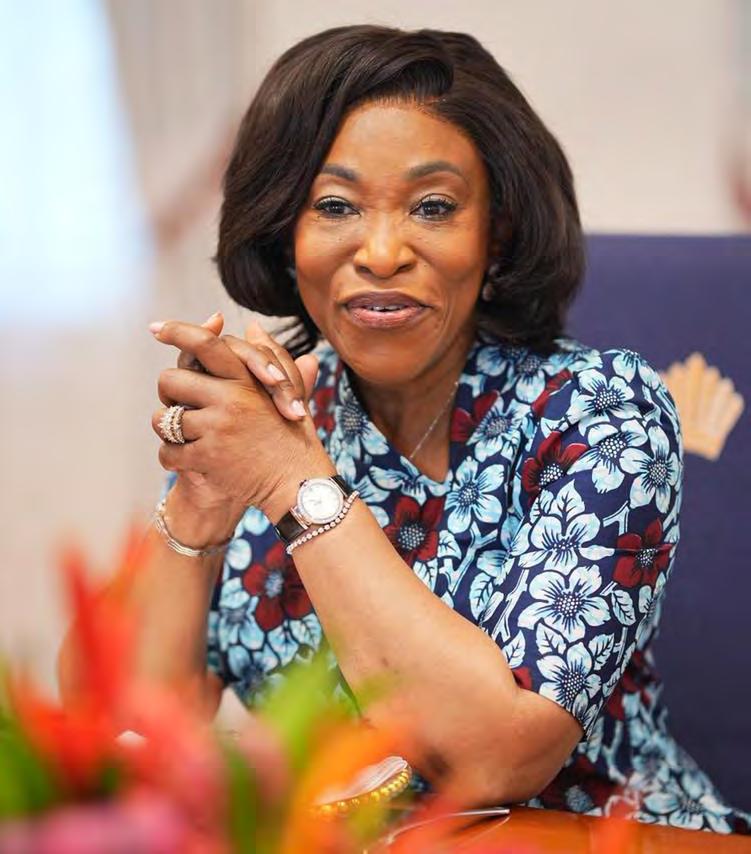
4 | Q&A with the Commonwealth Secretary-General Hon. Shirley Botchwey
7 | View from Commonwealth Women Parliamentarians Hon. Catherine Fife, MPP from Ontario
8 - 13 | Image Gallery Activities in Commonwealth Parliaments
36 - 40 | Legislative news Reports from the CPA's membership
41 | Book Review Indian Parliament and Foreign Policy
42 | Celebrating Commonwealth Lives South Africa and Niue
14 | Leadership rooted in people A Member of the Delhi Legislative Assembly
17 | Committee Reforms Parliament of Ghana
18 | Youth in Action Empowering young people in Malaysia
20 | Combatting Gendered Political Violence Women in Parliaments across the Caribbean
23 | Legal reform for gender equality New UN Women handbook examines equality before the law
26 | GenderSensitive Parliaments
Undertaking a GSP audit in Jersey
28 | An intersectional approach to gender equality
Advancing inclusivity in Pakistan
The Parliamentarian: Journal of the Parliaments of the Commonwealth | Volume 106 | 2025: Issue Four | ISSN 00312282 | Published by the Commonwealth Parliamentary Association, CPA Headquarters Secretariat, Richmond House, Houses of Parliament, London, SW1A 0AA, United Kingdom.
31 | Integrity and Accountability in Politics
Holding politicians to account in Australia
33 | Overcoming barriers to equal participation in elections
The work of Sightsavers in promoting inclusive elections for disabled people
44 | Officers of the Commonwealth Parliamentary Association
CPA Officers, Regional Representatives on the CPA Executive Committee and the three networks - CPA Small Branches, Commonwealth Women Parliamentarians (CWP) and Commonwealth Parliamentarians with Disabilities (CPwD)
Tel: +44 (0) 20 7799 1460
Email: hq.sec@cpahq.org www.cpahq.org
Stephen Twigg, CPA Secretary-General and Jeffrey Hyland, Editor, The Parliamentarian - editor@ cpahq.org
The new Commonwealth Secretary-General, Hon. Shirley Botchwey began her new role in April 2025 and in this issue of The Parliamentarian, she highlights the new direction for the Commonwealth in our Q&A. This issue explores gender equality and the representation of women in Parliaments. A Minister from Belize writes about the prevalence of sexism, harassment and violence against women in Parliaments across the Caribbean; a Deputy from Jersey shares what the Assembly learnt from undertaking a gender-sensitive Parliament (GSP) audit; two experts from UN Women examine legal reforms for gender equality in the light of a new Commonwealth Handbook on achieving equality before the law; and the Director of Research at the Pakistan Institute for Parliamentary Services (PIPS) takes an intersectional approach to advancing inclusivity in Parliaments. The newly elected Chairperson of the Commonwealth Women Parliamentarians (CWP) from Ontario, Canada writes about the challenges of finding a home in politics.
The Head of the Parliamentary Training Institute looks at recent reforms in Parliamentary Committees in Ghana and two parliamentary researchers from Malaysia look at how the ‘Youth in Action’ programme has strengthened regional collaboration and empowerment for young people. A Member of the Delhi Legislative Assembly shares how his leadership is rooted in his community in Tilak Nagar, India. An expert from Sightsavers writes about overcoming barriers for people with disabilities to participate in elections in Africa. Two academics look at the current state of accountability in Australia and how politicians are held to account through the work of The Accountability Round Table. The CPA Secretary-General also reflects on his highlights from the recent 68th Commonwealth Parliamentary Conference in Barbados.
Jeffrey Hyland, Editor, The Parliamentarian Email: editor@cpahq.org
Annual subscription: Four issues per year including supplements: UK: £44 World: £46. Agency discount 15%.
Disclaimer: Opinions expressed in articles published in The Parliamentarian are those of the individual contributors and should not be attributed to the Association.
Contributors: Thank you to all contributors for this issue.
Print: Warners Midlands UK and Times Printers Singapore. Limited print run - contact Editor for details of print copies for CPA Branches.

The CPA Secretary-General reflects on a successful 68th Commonwealth Parliamentary Conference (CPC) in Barbados.
The 68th CPC was hosted by the Parliament of Barbados in early October 2025. It was a truly wonderful conference and I am immensely grateful to the Parliament, Government and people of Barbados for the warm welcome to their beautiful island.
It is always challenging to select highlights from a busy and successful conference but I will take this opportunity to showcase four personal highlights from the 68th CPC.
In 2021, the CPA family mourned the unexpected death of our Chairperson at the time, Hon. Emilia Monjowa Lifaka from Cameroon. In her memory, we decided to create the annual Lifaka Lecture to be delivered by an eminent individual. The inaugural Lifaka Lecture was held at the 66th CPC in Ghana with a focus on education. It was delivered brilliantly by Betty Abeng from the Commonwealth Education Trust. A year later, eminent Australian judge, Hon. Michael Kirby gave the second Lifaka Lecture at the 67th CPC in New South Wales with a superb speech on human rights. This year, we were honoured to welcome the Prime Minister of Barbados, Hon. Mia Mottley, to deliver the third annual Lifaka Lecture who highlighted the Commonwealth’s role in protecting democracy and the impact of climate change on small states. I have no hesitation in saying that it was the highlight of my week.
My second highlight was the Town Hall event on the rights of persons with disabilities. It was inspiring to hear
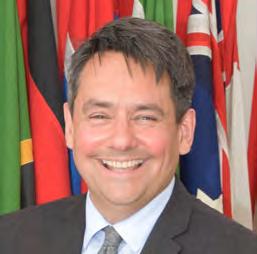
The Secretary-General of the Commonwealth Parliamentary Association, Stephen Twigg E: Stephen.Twigg@cpahq.org
about the progress made in Barbados on disability rights. The ‘Town Hall’ format worked well and brought together delegates from the CPC with Barbadian civil society and political representatives. In 2026, disability rights will be a major theme for the CPA’s work – as we mark the 20th anniversary of the adoption of the Convention on the Rights of Persons with Disabilities (CRPD). Also in Barbados, the Commonwealth Parliamentarians with Disabilities (CPwD) network elected its new Chair – Senator Isaiah Jacob of Malaysia and I look forward to working with him.
My third highlight was the 9th Commonwealth Women Parliamentarians (CWP) Conference. The CWP network goes from strength to strength. It used to be held triennially – now it is an annual conference. Reforms agreed at the 65th CPC in Canada in 2022 have resulted in a significant increase in the numbers of women holding governance positions in the CPA. Over 45% of voting delegates at the Barbados CPC were women and the new CPA Executive Committee has a majority of women. The strength and diversity of the CWP network was highlighted by the election of a new CWP Chair which saw four very impressive candidates putting themselves forward from KwaZulu-Natal, Western Australia, Canada and The Maldives. I congratulate Hon. Catherine Fife, MPP of Ontario on her election and I look forward to working with her.
My final highlight was that we were joined by the new Secretary-General of the Commonwealth (CSG), Hon. Shirley Ayorkor Botchwey. The CSG spoke powerfully at our opening ceremony. Members of her team from the Commonwealth Secretariat contributed actively to the conference – including at the excellent workshop looking at the run-up to the Commonwealth Heads of Government Meeting (CHOGM) to be hosted by the Government of Antigua and Barbuda in November 2026.
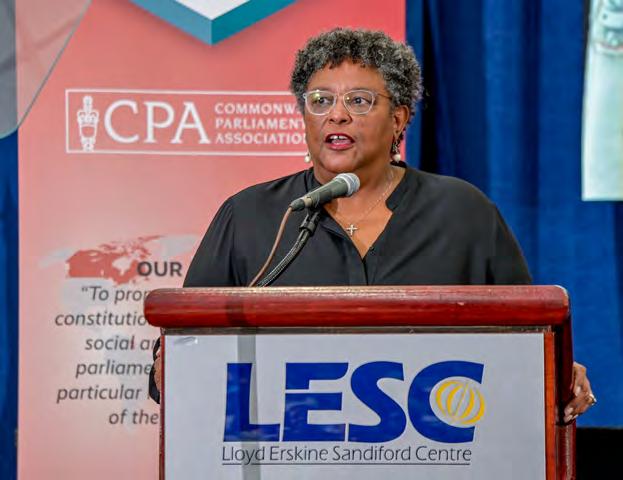
Barbados is a small country. Hosting the CPC is a huge undertaking and the Parliament of Barbados delivered a fantastic conference. Small Branches play a vital role in the CPA and the annual CPA
Left: The Prime Minister of Barbados, Hon. Mia Amor Mottley, SC, MP spoke about Parliaments’ role in protecting democracy as well as the ongoing impact of climate change on small islands states at the third CPA Emilia Monjowa Lifaka Lecture on 8 October 2025 in the margins of the 68th Commonwealth Parliamentary Conference.
Small Branches Conference was again a vibrant, engaged and important element of the CPC’s proceedings.
At the CPA General Assembly, Senator Hon. Sue Lines, President of the Senate of Australia, was confirmed as the new CPA Treasurer and at the first meeting of the new CPA Executive Committee, Hon. Carmel Sepuloni, MP of New Zealand was re-elected as the Vice-Chairperson. They join our brilliant CPA Chair and CPA Small Branches Chair, Hon. Dr Christopher Kalila, MP of Zambia and Hon. Valerie Woods, Speaker of Belize respectively to form the new CPA Coordinating Committee along with the CWP Chair and the CPwD Chair.
The 69th CPC will be held in Cape Town, South Africa. Hon. Refilwe Mtshweni-Tsipane, Chairperson of National Council of Provinces, is the new CPA President and I look forward to working with her in that role.
2026 will be a significant and eventful year for the CPA and the wider Commonwealth. For the CPA, it will be the first year of our new Strategic Plan in which we seek to maximise the positive impact of a new legal status for the CPA. This will include a greater focus on partnership working including in our work preparing for CHOGM in 2026. This is a theme to which I shall return in future editions of The Parliamentarian
As 2025 draws towards a close, let me take this opportunity to thank everyone who has worked so hard throughout the past year – not least, our hardworking Chairperson, Hon. Dr Christopher Kalila, MP. I am grateful to all those who serve voluntarily on the CPA Executive Committee and in other roles – I particularly want to thank all the outgoing Committee members. I also want to thank the CPA Secretariat staff team for their hard work in 2025. Our staff team is quite small in number but they are absolutely vital to the work of our organisation.
Branches, Regions and Networks are the lifeblood of the CPA, and I want to finish by expressing my appreciation to them. These are challenging times for all of us who care about the importance of good governance and strong multilateral institutions, but I am always encouraged when I engage with the CPA membership. Your commitment to our shared mission and goals will provide the foundation for what I hope and expect to be a busy and impactful 2026.
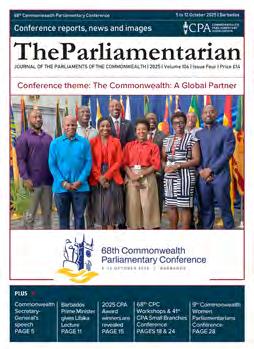
Reports from the 68th Commonwealth Parliamentary Conference can be downloaded in an online supplement to this issue of The Parliamentarian Visit CPA website www.cpahq.org or email editor@cpahq.org to request the link

Updated as at 26 November 2025
• 3 December 2025: International Day of Persons with Disabilities
• 7 to 12 December 2025: CPA Parliamentary Academy Residency Programme for MPs (Practice & Procedure), Trinidad and Tobago
• 10 December 2025: UN Human Rights Day
• TBC 2026: 28th Conference of Speakers and Presiding Officers of the Commonwealth (CSPOC), Delhi, India
• 28 to 31 January 2026: Canadian Presiding Officers Conference, Edmonton, Alberta, Canada
• 3 to 7 February 2026: 2nd Joint CPA Asia and CPA South-East Asia Regional Conference, Karachi, Sindh, Pakistan
• 8 to 10 February 2026: Commonwealth Women Parliamentarians (CWP) British Islands and Mediterranean Regional Conference, Belfast, Northern Ireland
• 9 to 13 February 2026: Commonwealth Law Ministers’ Meeting (CLMM), Denarau, Fiji (Commonwealth Secretariat)
• 20 February 2026: Commonwealth Parliamentarians with Disabilities (CPwD) British Islands and Mediterranean (BIM) Regional Forum, Scotland
• TBC February 2026: CPA Parliamentary Academy Residency Programme for Members (Professional Development and SkillsBuilding), location TBC
• 8 March 2026: International Women's Day
• 9 March 2026: Commonwealth Day
• 9 to 13 March 2026: 74th Westminster Seminar on Effective Parliaments, London, UK (CPA UK event)
Other dates in 2026
• 15 to 19 April 2026: 152nd IPU Assembly, Istanbul, Türkiye
• 27 to 29 April 2026: CPA Small Branches Workshop, The Maldives
• 26 to 28 May 2026: Commonwealth Parliamentarians with Disabilities (CPwD) Workshop, Western Cape, South Africa
• 30 June 2026: International Day of Parliamentarism
• 4 to 10 July 2026: 62nd CPA Canada Regional Conference, Victoria, British Columbia, Canada (plus the CWP) Canada Regional Meeting)
• 23 July to 2 Aug 2026: 23rd Commonwealth Games 2026, Glasgow, Scotland - www.glasgow2026.com
• 27 to 29 July 2026: National Conference of State Legislatures, Chicago, United States
• TBC July 2026: 13th Commonwealth Youth Parliament (13CYP), Sydney, New South Wales, Australia
• 1 to 4 November 2026: 28th Commonwealth Heads of Government Meeting (CHOGM), Antigua and Barbuda
• TBC 2026 - 69th Commonwealth Parliamentary Conference, Cape Town, South Africa
For further information on any events, please email hq.sec@cpahq.org or visit www.cpahq.org
The new Commonwealth Secretary-General reflects on her first six months in office.
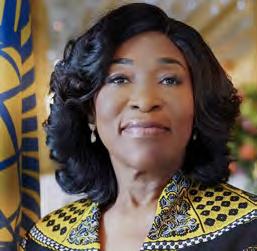
Hon. Shirley Botchwey is the 7th Secretary-General of the Commonwealth and the first woman from Africa to hold this office. She was appointed by Commonwealth Heads of Government at their biennial meeting in Samoa in 2024 and assumed office on 1 April 2025, bringing more than 20 years of leadership experience in diplomacy, international relations, governance and public service to the position.
A lawyer, diplomat and politician, she was previously the Foreign Minister of Ghana (2017 to 2024) and was a member of Ghana’s National Security Council. Her previous roles include Deputy Foreign Minister, Deputy Minister for Trade and Industry (2001–2009) and a Member of Ghana’s Parliament (2005 to 2021) for the Weija and later Anyaa-Sowutuom constituencies, representing the largest population base in the country’s legislature across four consecutive terms.
Prior to entering politics, Shirley Botchwey led a successful marketing and communications firm and served as a consultant in the tourism sector.
Q: You have now completed your first six months as the Secretary-General of the Commonwealth – what have been the biggest challenges in your new role?
A: One of my first tasks as Secretary-General of the Commonwealth was to deliver a new Strategic Plan — not only for the Commonwealth Secretariat but for the whole Commonwealth. We needed a blueprint to have clarity for our mission: to make the Commonwealth a source of solutions in a world that badly needs them.
Change is never easy. The first six months in my tenure required me and the team at the Secretariat to think differently, to collaborate across boundaries and to let go of habits that no longer serve us. We have had to be patient, resilient and open, and we have had to trust each other on this journey. Our Strategic Plan 2025-2030 was approved in September 2025 by our Board and gives us that blueprint for transformation — for our member countries.
It is a reality of our time that the resources from member countries have declined. The world we live in today has never existed before, neither would the world we would live in tomorrow. The rules-based international system is under strong attack and development cooperation no longer serves the interests of any State. And this is challenging. Like our member countries, we too need to seek new and creative partnerships, looking laterally - to non-Commonwealth states, foundations, the private sector,
universities, civil society and regional organisations - beyond the usual sources.
Our effectiveness will come from how well we understand the changing needs of our member countries. And that requires a clear-eyed assessment of the expectations of our people and the different ways in which we can deliver on their current needs, as opposed to holding on to what or how we have done things in the past.
Q: You highlighted the Commonwealth’s recently launched Strategic Plan for 2025 to 2030 - what are the main priorities for you as Secretary-General for the years ahead?
A: In September 2025, on the sidelines of the UN General Assembly in New York, Commonwealth Foreign Affairs Ministers endorsed the new Commonwealth Strategic Plan 2025-2030 - the product of months of consultation with all 56 member countries and partners, including the CPA.
It is organised around four integrated pillars:
1. Democratic resilience - defending and renewing democracy and strengthening institutions of accountability and inclusion, including a robust early warning system and a fragility index to guide support for our Members.
2. Economic resilience - driving trade, investment and innovation, while ensuring that small and other vulnerable states are at the centre of our collective growth.
3. Environmental resilience - leading on climate action and sustainable development, unlocking finance and technology for transformation, including a renewable energy revolution.
4. The resilience of our people - especially women and young people, through inclusion, health, accessibility, education, skills and opportunity.
Finally, the needs of small and vulnerable countries will inform every aspect of our work.
The Strategic Plan recognises that the Commonwealth’s potential lies in its networks - governments, Parliaments, businesses, accredited organisations, universities and citizens - working in concert for shared progress.
And for me, this is where Parliamentarians are indispensable. They shape the debates that sustain public understanding of the Commonwealth. They hold their governments to account for their commitments. They must enhance representation and participation of civil society in a social media age. And they can ensure that our shared
association remains visible in foreign policy, in trade strategy and in development cooperation.
I recently had the opportunity to meet with the Commonwealth Parliamentary Association's UK Branch. And I shared with them that the Strategic Plan has at its core a simple ambition: to make the Commonwealth more relevant, resilient and results oriented. That is also my ambition. We must work closely together with the CPA and its constituents across all pillars of the Strategic Plan.
Q: You spoke recently at the opening of the 68th Commonwealth Parliamentary Conference – in your view, how can we reverse the declining global trust in Parliamentarians and our public institutions?
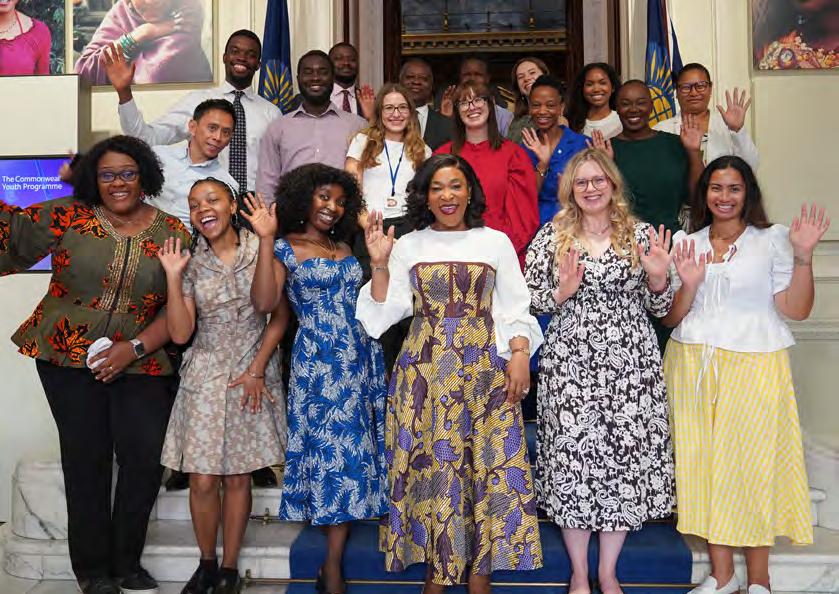
A: I am keenly aware of the importance of our Parliaments in responding to the growing threats to our democracies and restoring confidence, especially among young people.
It took quite a long time for modern society to recognise that progress was not linear and that each generation had to fight to expand rights and social protections. It has taken us even more time to begin to recognise that there are no guarantees for democratic governance, and that there are no established democracies and institutions.
All democracies today face similar challenges - the dominant influence of money in politics, the changing expectations of representation and participation in the era of social media, slower growth, and the active weaponisation of misinformation and disinformation for the purposes of state capture. The diplomatic networks that provided the checks and balances for effective multilateral action are increasingly becoming ineffective. Yet, Parliamentarians are elected representatives of people. Their voices matter because they represent people - the people of the Commonwealth.
Governments propose, but Parliaments debate, amend and decide. Parliamentarians scrutinise budgets, ratify treaties, pass laws that give life to our commitments and hold the Executive to account. Through public hearings, Members of Parliament enable effective participation by the people. In fact, we cannot ensure public support for multilateral solutions without parliamentary earings. MPs hold our feet to the fire.
My position, as Commonwealth Secretary-General, is that at a time when democracy is under strain, Parliamentarians accept that their role is more important than ever. Strong, inclusive, accountable Parliaments are the foundation on which all our ambitions rest. Without them, there can be no trust, no legitimacy and no progress. That is why the CPA’s
work is so vital - building capacity, sharing best practice, empowering women and young Parliamentarians, and defending the integrity of our democratic institutions.
Q: The Commonwealth Parliamentary Association played a key role in the development of the Commonwealth Charter and the Commonwealth Latimer House Principles on the Separation of Powers – how important are these Principles and the Rule of Law in protecting democracy in the Commonwealth?
A: Our Commonwealth Principles on the Three Branches of Government, generally known as the Commonwealth Latimer House Principles, are fundamental to the wider values and principles of the Commonwealth Charter. The Principles help us to navigate the relationship between the Executive, the Legislature - generally our Parliaments - and the Judiciary, and the necessary separation of powers.
This is critical because through good governance we deepen democracy, and this is how we ensure our Commonwealth Charter is lived - through free and democratic societies, and in the promotion of peace and prosperity. It is our North Star, and it guides us to continue striving to do better for all the people of the Commonwealth.
From Guyana to my own Ghana, we’ve supported peaceful transitions, upheld constitutional governance and mediated crises. However, in many countries around the world, we are seeing reversals - military takeovers, constitutional manipulation and democratic backsliding. So, we need to work closely with the CPA, youth and women’s groups, the media and civil society, to ensure the most auspicious conditions for democratic institutions, civic space and electoral integrity.
We will strengthen our election observation missions. And we will strengthen the targeting and evidence base of our interventions through a credible intergovernmental early warning system that tracks key indicators of governance, democratic integrity and fragility. This data will help identify priority entry points in at-risk countries, enable deeper stakeholder engagement and support co-created resiliencefocused interventions.
We will expand our technical assistance on parliamentary and judicial reform to reverse the decline in support for democracy. And we will centre young people and women in our governance support - because they are not just the future of democracy, they are its present.
That means standing firm on our values - peace, democracy, the rule of law and the right to freedom of expression and peaceful assembly - and acting on them, not by taking sides, but by showing that these values are the key to prosperity and the democratic dividend.
In this context, I underline the importance of transparency, especially during times of national reflection and public mobilisation. A free and responsible media plays a vital role in strengthening democracy and ensuring accountability.
Q: You are a highly experienced former Parliamentarian and Minister - what advice would you give to someone who is thinking of standing for election? What skills are required to be an effective Parliamentarian?
A: I served as a Member of Parliament for 16 years. One thing I know for sure is that as an elected representative you must communicate constantly with your constituents. Today, that means social media, and that is a double-edged sword: you need it, but you need to be aware that it can and will be used for spreading misinformation and, worse yet, disinformation. Social media can be used to harm your constituency and undermine the democratic dividend we are building.
We need to make our democracies more representative
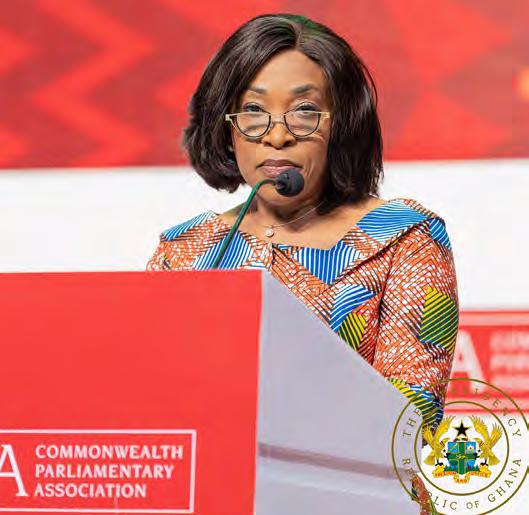
and inclusive. For some MPs that will mean representing people in the remotest parts of their country. The digital divide is your biggest barrier. Your priorities, out of necessity, must include connectivity, distance learning and the tools to ensure that no one is left behind.
On the campaign skills that Parliamentarians need, I should reflect on my most recent experience when I campaigned to become Commonwealth Secretary-General because I employed what I learnt as an MP:
• Potential lies in networks. Build bridges of friendship and influence, cutting across regions and political blocs.
• Engage, listen and lead - not through hard power, but through partnership, and
• Connect the global to the local - ensuring that the Commonwealth’s values of democracy, rule of law and respect for diversity are lived realities in communities.
Q: The challenges facing the Commonwealth’s smallest jurisdictions were highlighted at COP30 in Brazil - how can Parliamentarians in the Commonwealth work together to bring effective responses to these issues?
A: Our network of 56 nations offers a space for global solutions. Our Parliamentarians can deliver those solutions.
The CPA, with its collective experience, knowledge, networks and reach, is invaluable. You can help us make our commitments into lived realities. And environmental resilience is of great importance because it is directly linked to the lifeblood of so many of our member countries.
By collaborating at a technical level, we will improve our support to capacity building, we can increase resource mobilisation and funding, and we can enhance our joint advocacy efforts in international forums, like COP. The transformative Commonwealth agenda that has been outlined in our new Strategic Plan requires us to forge new partnerships and build stronger relationships with likeminded stakeholders. Parliamentarians must pick up the torch at a local level with strategic partners and like-minded stakeholders and ensure responsive climate action is built into the fibre of society. This means:
• Honour the Paris Agreement and push for Nationally Determined Contributions (NDCs) that include gender and youth responsive climate action, to mobilise a renewable energy transition, and
• Ensure fair access to finance for the climate fightback. And our Commonwealth Climate Finance Access Hub, which has already mobilised almost US$500 million in resources for mitigation and adaptation, stands ready to assist.
Q: 60% of the Commonwealth’s 2.7 billion population is aged under 30. How can the Commonwealth and Parliamentarians engage with more young people? How can we involve young people in politics?
A: There are more than 1.6 billion young people in the Commonwealth - this is our superpower. They lead in
innovation and start-ups - from science and technology to finance, from fashion, culture, the arts to cuisine and services.
At COP30, young people advocated for more green skills. And yet, they are not waiting for us, they are forging ahead. Our current Commonwealth Youth Award winner, Stanley Anigbogu - a young Nigerian energy innovator - is lighting up and powering communities. But we need to step up our engagement so that we make the most of this youth superpower. The advances in ICT, automation and AI, and the innovations of social media for distance learning and producing the tech workers and entrepreneurs of this century require historically unprecedented investments - in education, skills, digital access and platforms for voice, leadership and new ways of doing things.
The Commonwealth is modernising its youth development programmes to ensure they are transformative by design and transformative in impact. We will champion youth and work to centre minority voices in every programme we run - because no narrative is complete without including them. For this reason, we have made Youth a crosscutting priority in our Strategic Plan. We need to learn from young people and the politics that speak to their interests. The recent International Court of Justice Advisory Opinion on Obligations of States in respect of climate change came about due to youth-led action. Pacific Island students moved the world’s highest court to affirm that states have binding legal obligations to prevent climate harm and to protect human rights.
We need to listen more. Parliamentarians are in the best position to do so. When you engage with your constituencies, we all need to ensure young people are included and heard. It all begins here.
To find out more about the work of the Commonwealth Secretariat please visit thecommonwealth.org
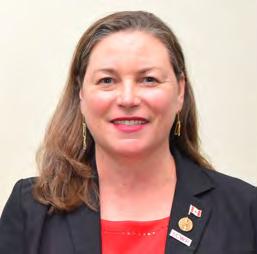
Commonwealth Women Parliamentarians (CWP) Chairperson, Hon. Catherine Fife, MPP (Ontario)
Finding a home in politics can be tough these days. Most of us seek opportunities to serve because we share a desire to improve our communities. Most would agree that the political arena is not often thought of as a kind or welcoming place. This is why the Commonwealth Parliamentary Association is so unusual and so needed.
In November 2024, I was afforded the opportunity to attend the 67th Commonwealth Parliamentary Conference, held in Sydney, New South Wales, Australia and represented the CPA Canada Region at the Commonwealth Women Parliamentarians (CWP) Steering Committee. Around the table, I saw women from nine regions who believed in their ability to create positive change. I was both inspired and intimidated. What I learned from my Commonwealth colleagues is that we are all dealing with similar challenges: political engagement, the prevalence of misinformation and a lack of trust in our democratic institutions. At that table, I was surprised that I felt… comfortable. I found community, and a renewed interest and energy in finding solutions. I felt at home. These moments are rare, but for those of us called to serve in politics, we have all shared this thought at some point: Can I make a difference? Can I help? Why not me?
The Commonwealth Women Parliamentarians (CWP) has always held my interest. I enjoy working with women, especially women who know who they are, who speak out with conviction, even when their voice is shaking, and who understand that when one of us is successful, we all are. And so, I raised my hand and stood for election as the Chair of the CWP. Something had sparked inside me. I thought, “Why not me?”
Standing in this election at the 68th Commonwealth Parliamentary Conference in Barbados alongside distinguished public servants whom I admire – Hon. Nontembeko Boyce from KwaZulu-Natal in South Africa, Hon. Kate Doust from Western Australia, Hon. Fathimath Sauda from The Maldives – left me truly in awe. My younger self would not have believed it.
When I was elected as the first Canadian to Chair the CWP, it may have been me who was delivering a speech and accepting the honour and responsibility. But I was not alone. I know the strong leaders I stand with will not let me falter or walk this journey alone. This gives me hope and energy. The challenges that I see before us are real and substantial. The need for change on gender-based violence, equal access to education and climate change is critical. There is a genuine sense of urgency. Fortunately, women know we are capable of multi-tasking.
The volatility of this time in history is also significant. In a world that is intent on capitalising on division, we need to shine a light on what connects us, by strengthening our capacity as democracies to lift people up, not step on their rights.
At the same time, the CPA is entering a new stage. Our move from charitable status to international organisation indicates that we have matured, and that we want more for our Members. This new status should also make us more agile. I remain grateful to the staff, who share our passion for making positive changes. They understand the mission, and the need for us to act quickly.
I began this piece by speaking of finding a home in politics. Homes are places that enable us to grow, that challenge us, that we give to, and that give to us in return. Homes shape us. Home is an idea that we take with us wherever we go. This is my vision for the CWP: a home for us. For brave, capable, leaders who stand together. Who transform outrage into new ideas and effective reform. Who share what works so that all may benefit. We will carry the spirit of our collective home into a brighter day. Thank you to those who have already offered your support and guidance. As we walk forward with great ambition in our hearts, let us meet this moment together.
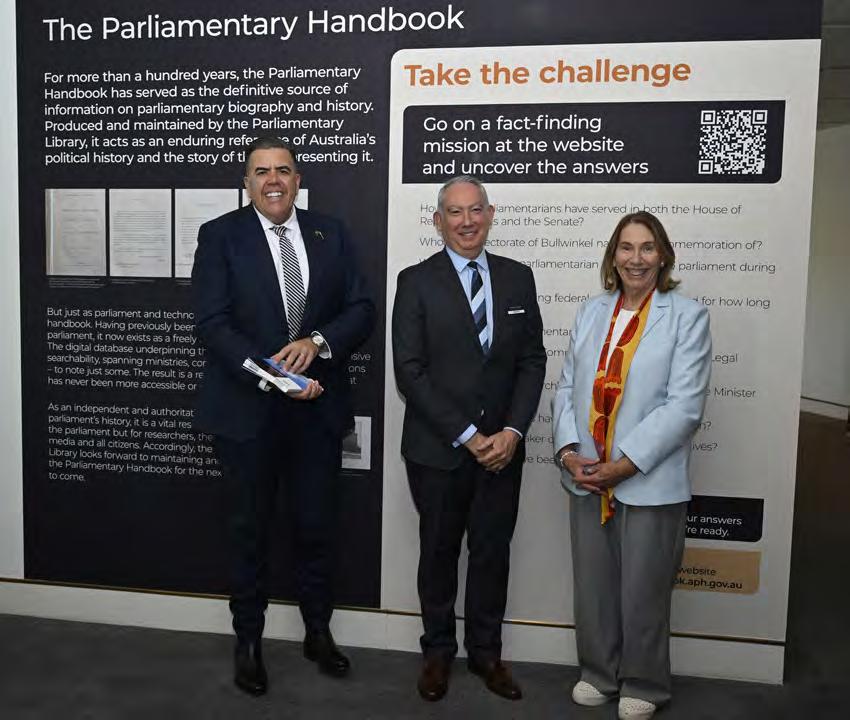
Right: The President of the Australian Senate, Senator Hon. Sue Lines and the Speaker of the House of Representatives, Hon. Milton Dick, MP launched a new Parliamentary Handbook website to connect with citizens and be a resource for researchers. The website covers over a century of parliamentary procedure.
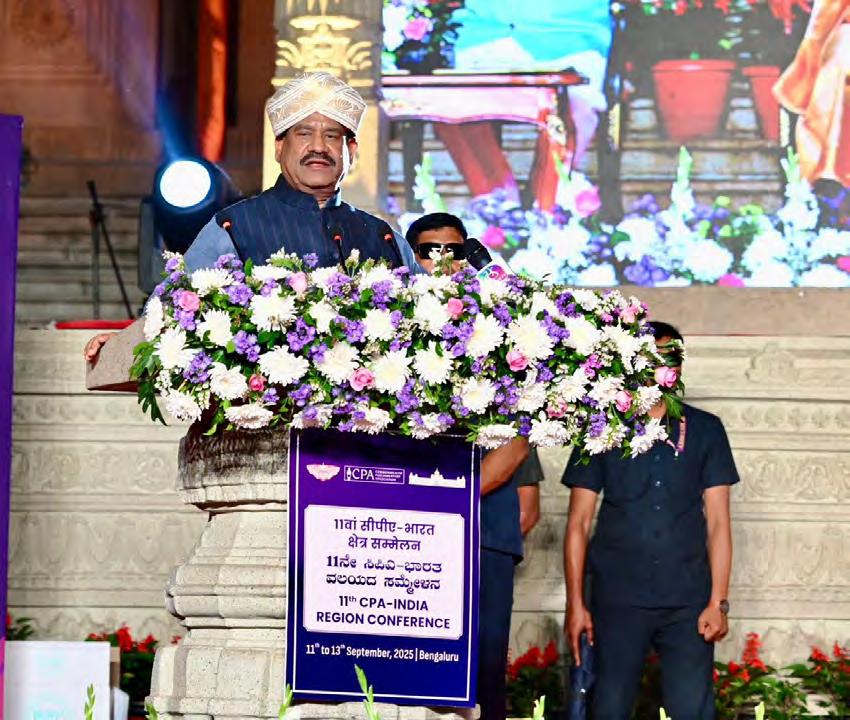
Below right: The Chairperson of the CPA India Region, Hon. Om Birla MP, the Speaker of the Lok Sabha of India opened the 11th CPA India Regional Conference in Bengaluru, India, held from 11 to 15 September 2025 and hosted by the Karnataka State Legislature.
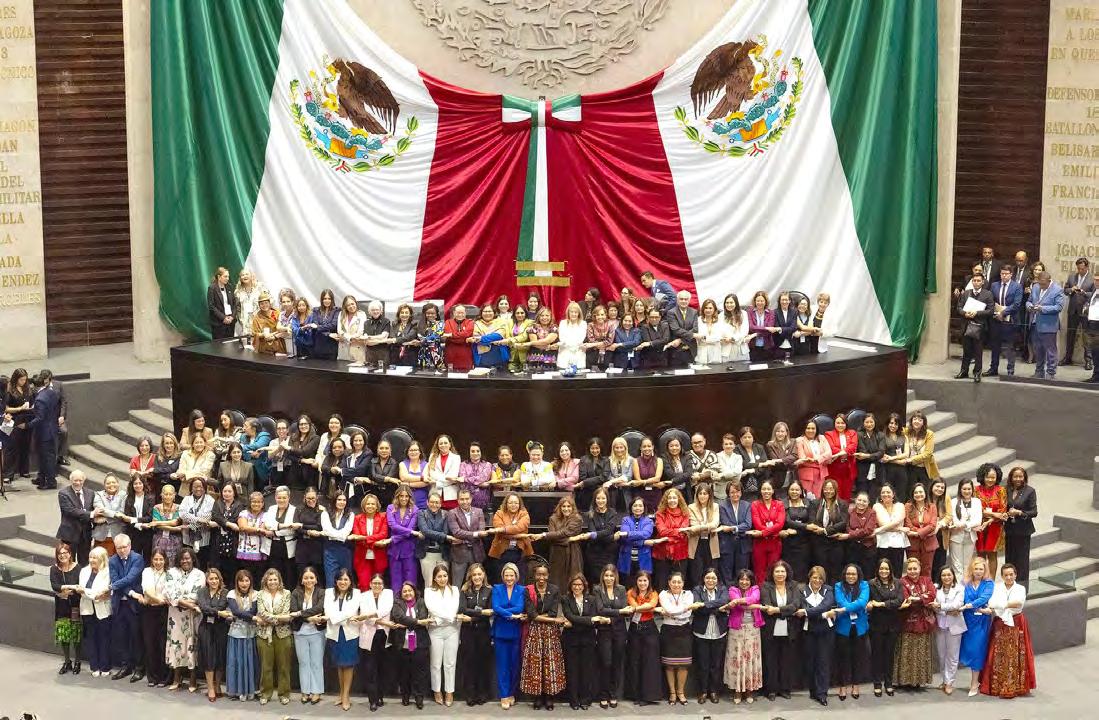
Opposite page - Above: The Presidents of the Senate of St Lucia and Grenada, Senator Hon. Alvina Reynolds and Senator Hon. Dessima Williams, addressed the Parliamentary Forum of Latin America and the Caribbean, hosted by the Parliament of Mexico.
Opposite page - centre: The annual ‘friendly’ cricket match between the Canadian Parliament and members of the Commonwealth diplomatic corps in Ottawa was organised by Vice-Chair of CPA Canada Branch, Hon. Iqra Khalid, MP to draw attention to the growing popularity of cricket among Canadian youth.
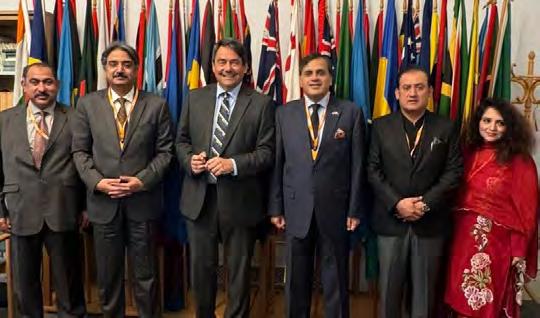
Opposite page - bottom left: The Speaker of the Provincial Assembly of Sindh, Hon. Syed Awais Qadir Shah, met with the CPA Secretary-General Stephen Twigg on 14 October 2025 ahead of the 2nd Joint CPA Asia and CPA South-East Asia Regional Conference in Karachi in February 2026.
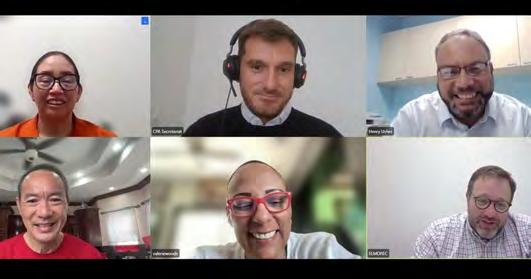
Opposite page - bottom right: The CPA, in partnership with the National Assembly of Belize, organised a virtual Parliamentary Whips Training Session on 20 August 2025 underscoring the Parliament's commitment to capacity building.

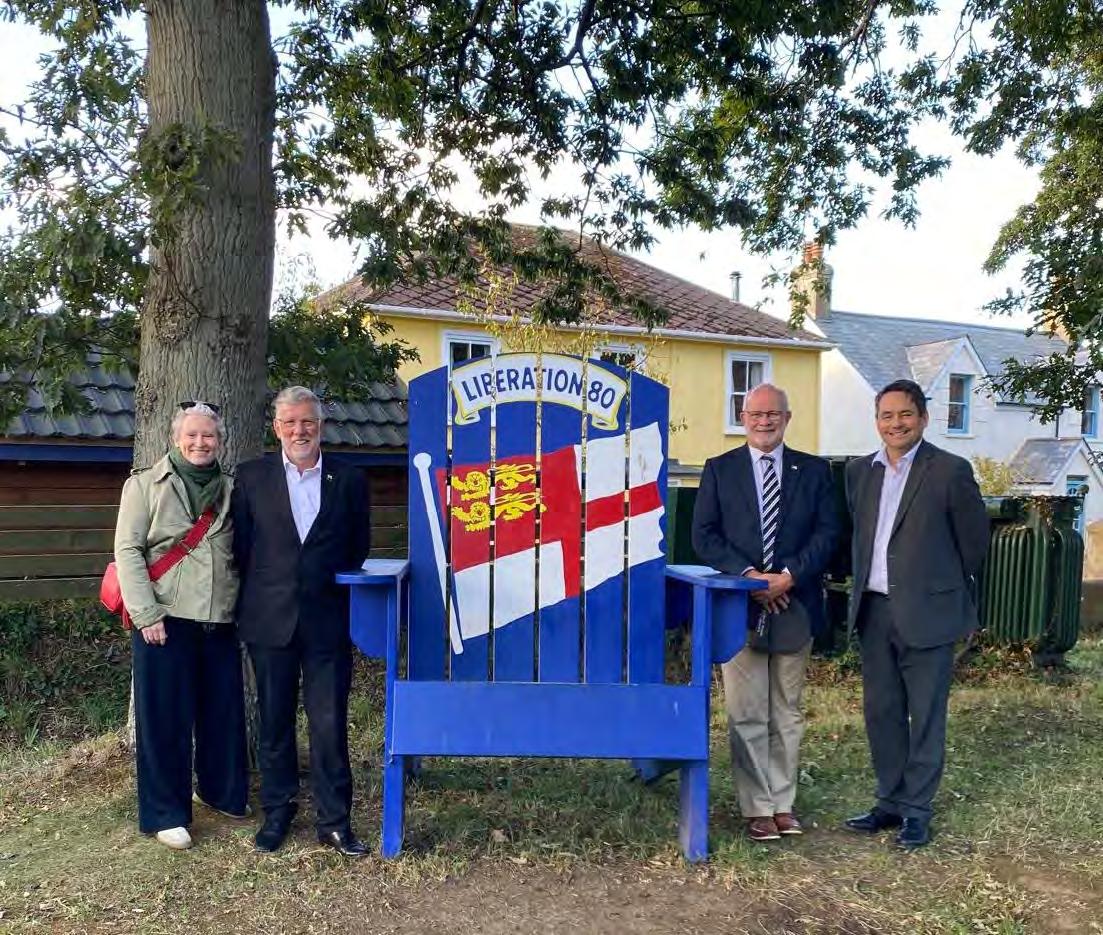
Right: A CPA delegation visited Sark on 23 September 2025 - one of the smallest Legislatures in the world with a population of 600 people - ahead of The Chief Pleas of Sark becoming a CPA Branch.
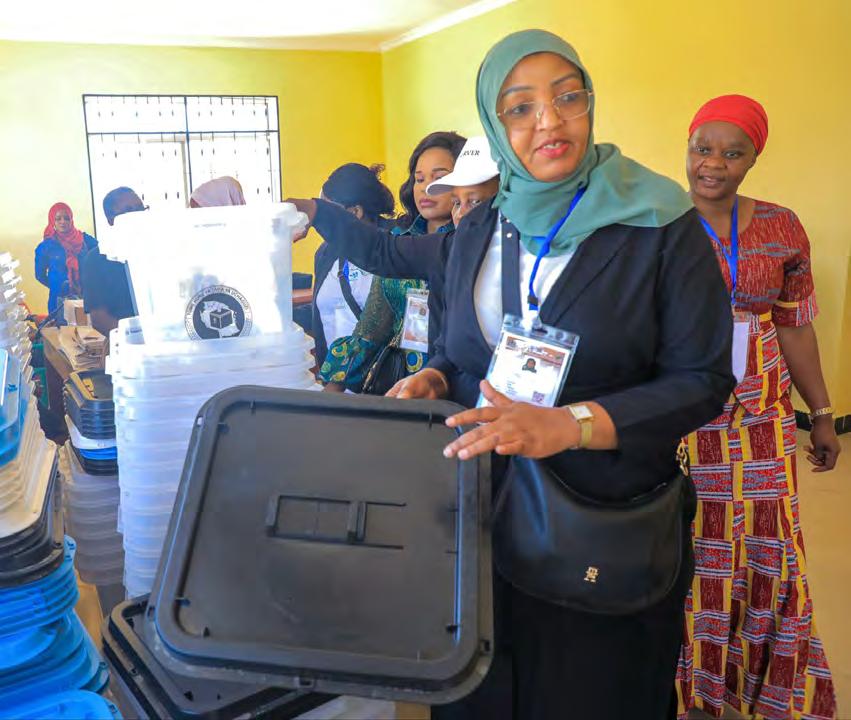
Below right: Hon. Madina Ndangiza, MP (Rwanda), CWP Africa Region Chair led a Commonwealth Women Parliamentarians Election Observation Mission to Tanzania on 29 October 2025.
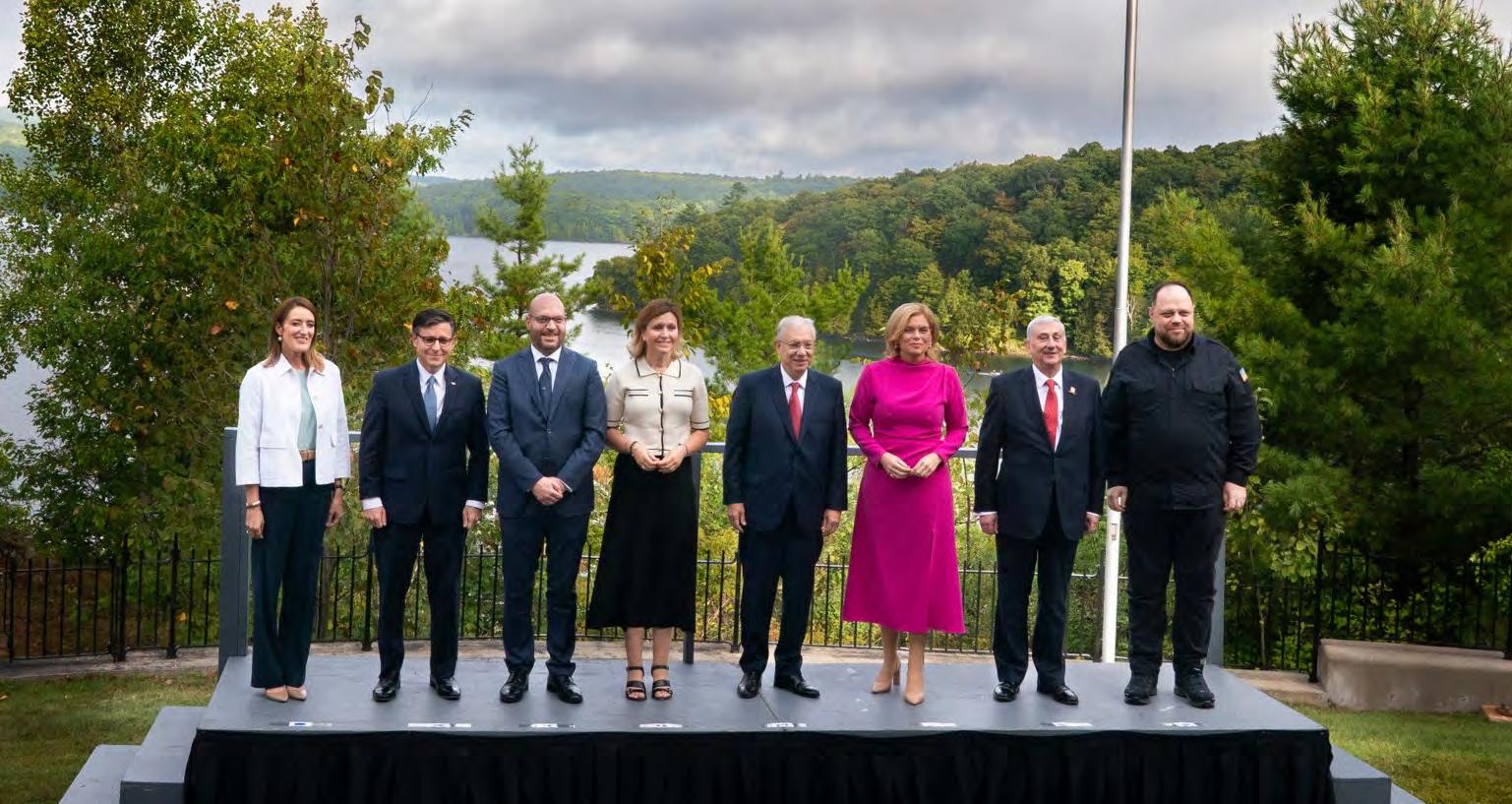
Opposite page - Above: The Speaker of the Canadian House of Commons, Hon. Francis Scarpaleggia, MP hosted the G7 Speakers' Summit with Presiding Officers from Canada, France, Germany, Italy, United States and United Kingdom plus the President of the European Parliament and the Chairman of the Verkhovna Rada of Ukraine also attended.
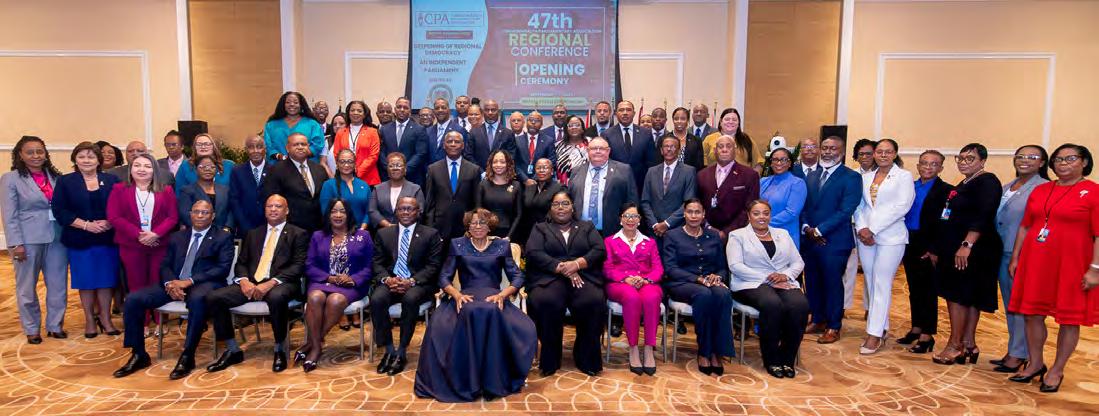
Opposite page - centre: The CPA Bahamas Branch hosted 47th CPA Regional Conference of the Caribbean, Americas and the Atlantic (CAA) Region on the theme of ‘Deepening of Regional Democracy – An Independent Parliament’ from 5 to 13 September 2025 in Nassau.
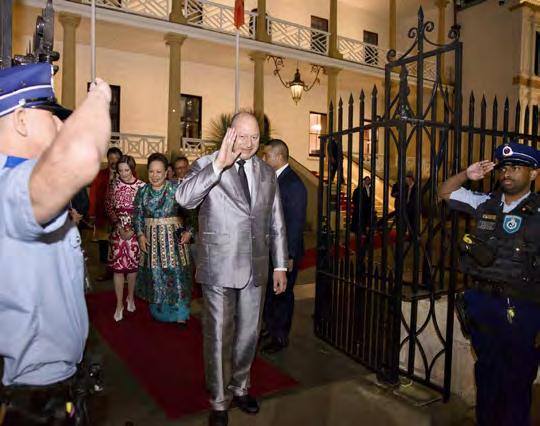
Opposite page - Below left: Their Majesties King Tupou VI and Queen Nanasipau’u of Tonga depart from the Parliament of New South Wales on 23 September 2025. The visit commemorated the 50th anniversary of the Tonga Consulate in Australia and 55th anniversary of diplomatic relations between Tonga and Australia.
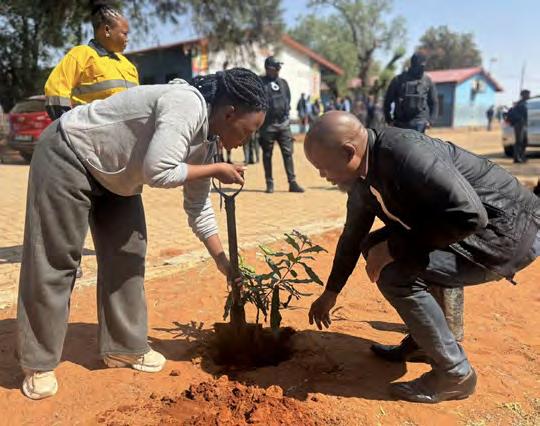
Opposite page - Below right: Members of the North West Provincial Legislature planted trees at Phatsima High School in Atamelang on 26 September 2025. The tree planting programme is part of the CPA Branch’s resolutions relating to climate change and environmental sustainability.
Right: The Prime Minister of Jamaica, Dr Hon. Andrew Holness (fifth right) leads MPselect down Duke Street for the opening of the new Parliament of Jamaica at Gordon House on 18 September 2025. Hon. Juliet Holness (fourth right) was elected as the new Speaker of House of Representatives.
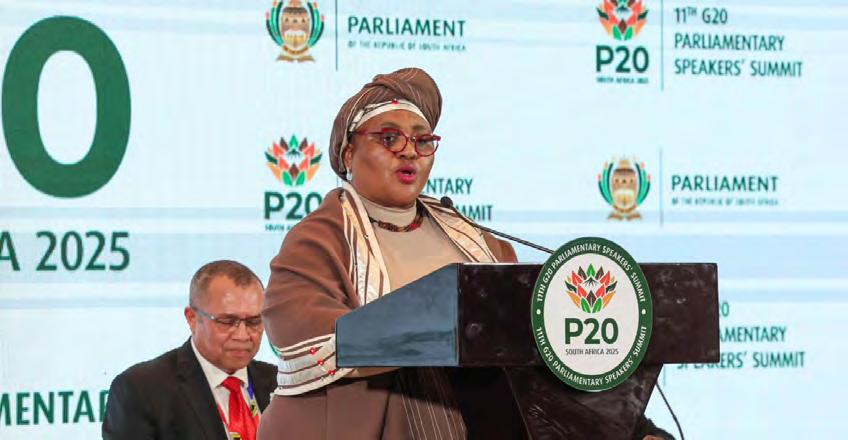
Centre right: The Speaker of the National Assembly of South Africa, Hon. Thokozile Didiza, MP welcomed Presiding Officers for 11th G20 Summit of Parliamentary Speakers (P20) in Cape Town in October 2025.
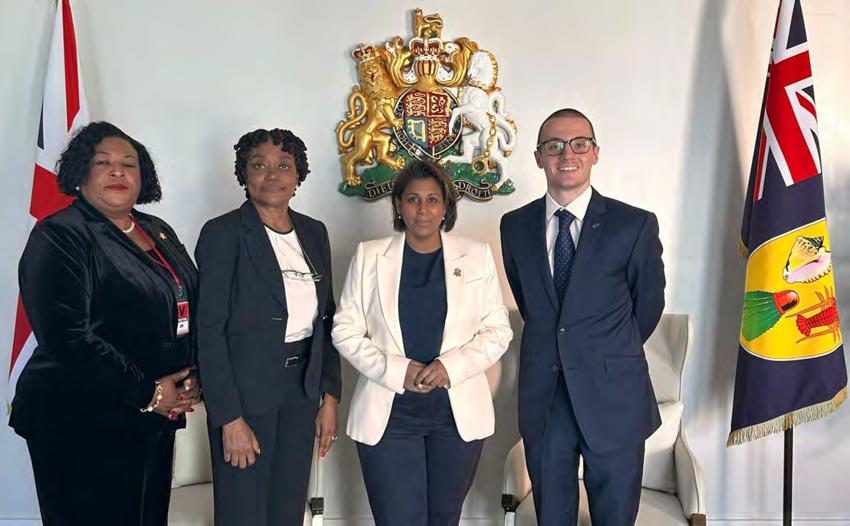
Bottom right: The Parliament of the Turks and Caicos Islands undertook a CPA Democratic Benchmarks selfassessment exercise from 22 to 25 September 2025. The visiting CPA delegation met with the Governor of Turks and Caicos Islands, H.E Dileeni Daniel-Selvaratnam.
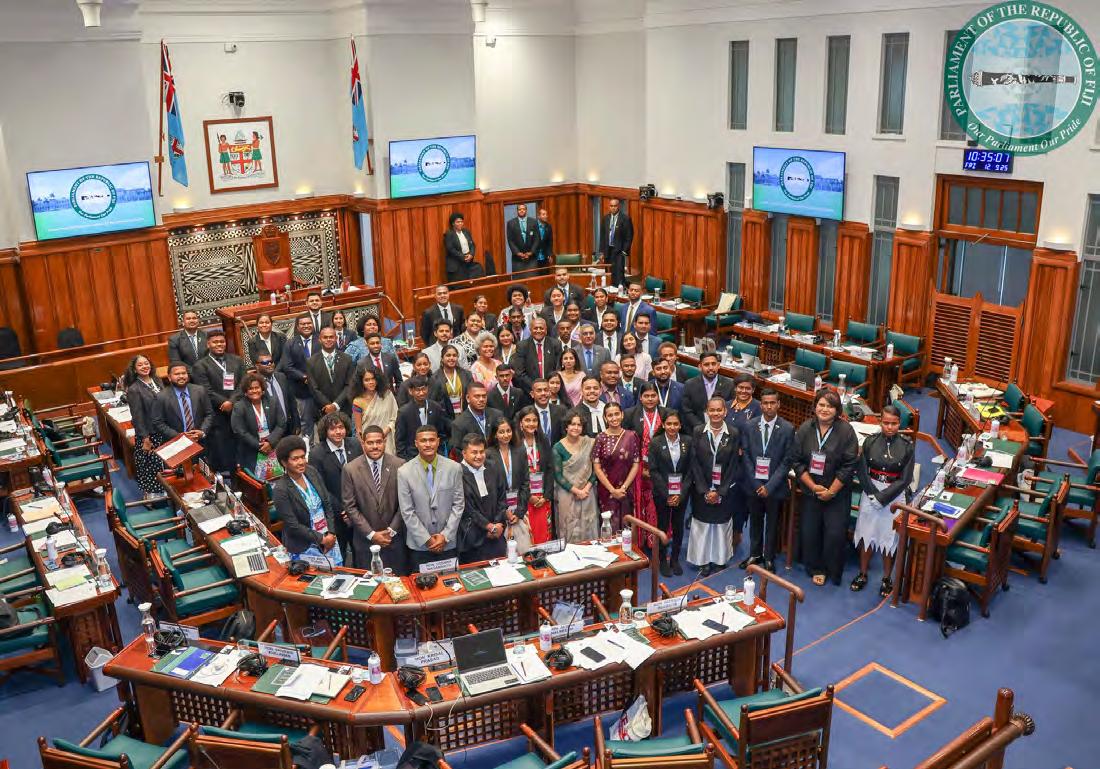
Opposite page - Above: The 2025 Fiji Youth Parliament took place in September 2025 with the four-day programme giving young people the opportunity to take on the roles of MPs and Clerks.
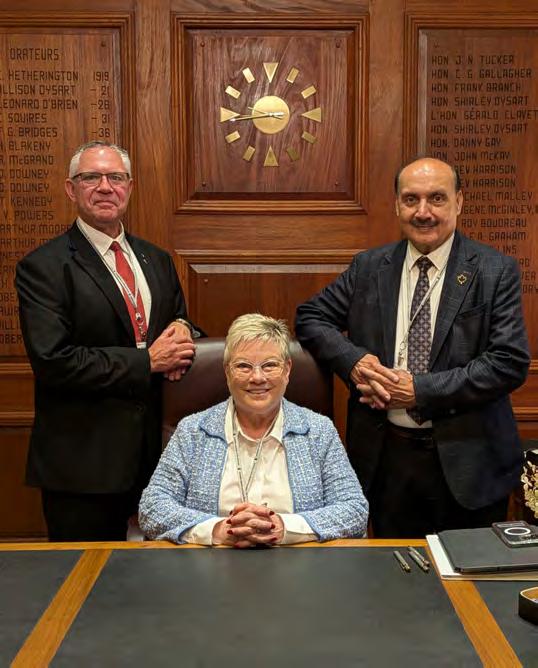
Opposite page - below left: The 45th CPA Canadian Parliamentary Seminar was held in Fredericton, New Brunswick from 25 to 28 September 2025. The seminar was hosted by the Speaker of the Legislative Assembly of New Brunswick and CPA New Brunswick Branch President, Hon. Francine Landry, MLA (centre).
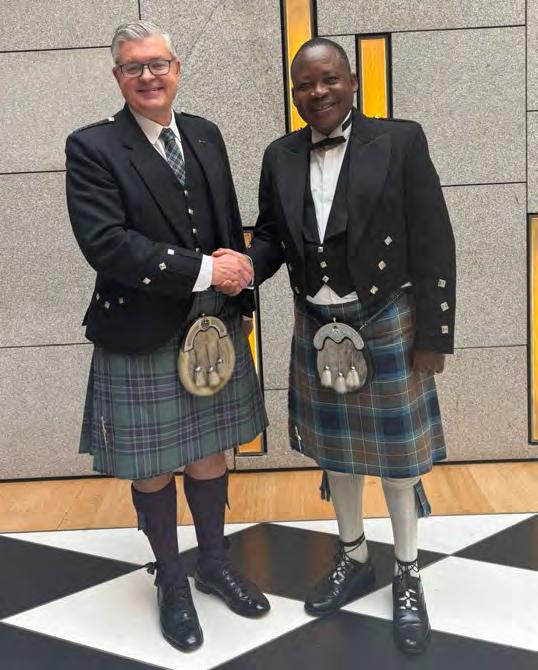
Opposite page - below right: The Chairperson of the CPA Executive Committee, Hon. Dr Christopher Kalila, MP (Zambia) visited The Scottish Parliament in September 2025 to meet with Members of the CPA Scotland Branch Executive Committee and attend their AGM. He was welcomed by Hon. Stuart McMillan, MSP, an outgoing Member of the CPA International Executive Committee.

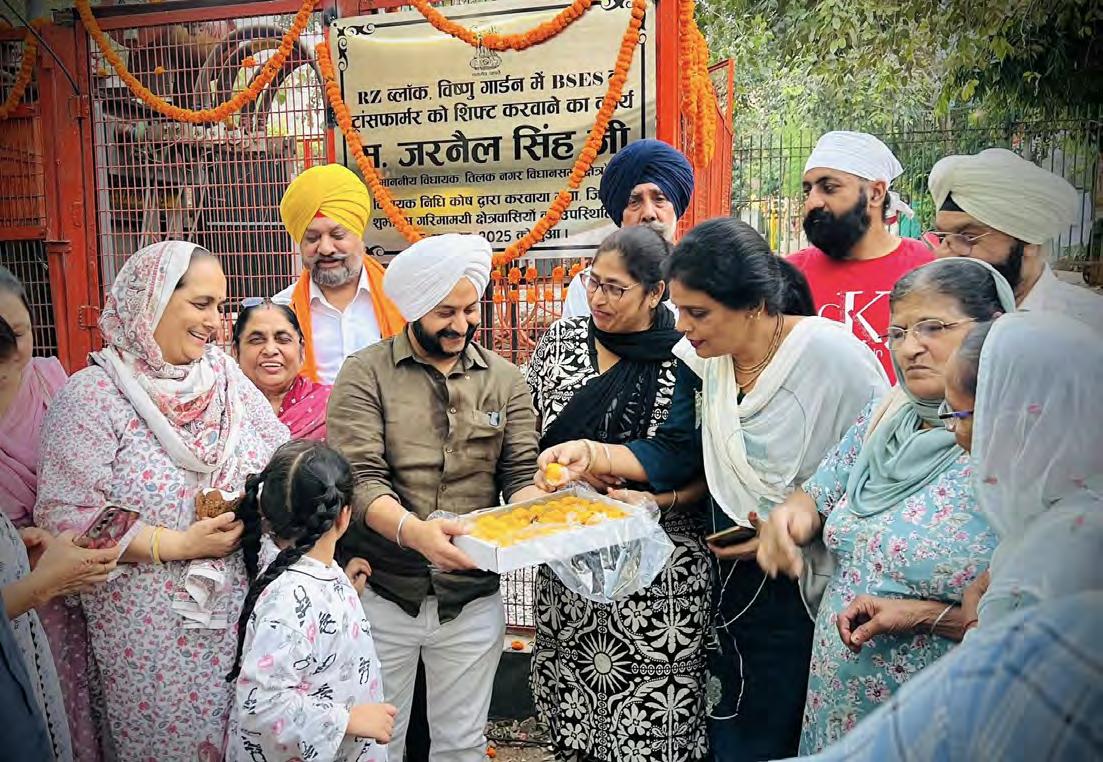
When I first entered public life, I never imagined that over a decade later, I would have the privilege of serving as a four-time consecutively elected Member of the Delhi Legislative Assembly. Representing Tilak Nagar - a constituency that embodies the true spirit of India’s diversity, home to people from different religions and culture, including families who migrated during the Indo-Pak Partition and the largest number of survivors of the 1984 anti-Sikh genocide - has been both a profound responsibility and a lifelong blessing.
People often say that politics is a thankless job, but I believe that when done with sincerity and a true sense of responsibility, it becomes one of the most impactful callings in our everevolving world. For me, politics has always been about ‘seva’ - selfless service - and trying to be accessible to people at every hour of the day. My constituents see me not just as a politician, but as a friend, a brother, a son, or simply a family member they can reach out to at any time.
I was born in Rampur, Uttar Pradesh, and raised in West Delhi. My early life was shaped by modest circumstances. After completing my secondary education, I began working in an airconditioning workshop to support my family. I continued my education through open schooling, often studying late at night after long hours of manual work.
Later, I began my career working in the marketing team as a salesman for a water purification equipment
company. Alongside my job, I started a small manufacturing unit from scratch, which eventually grew into a successful water purification business. As a businessman, I learned how to solve problems with minimal resources while creating employment opportunities for others.
Coming from a family with farming roots, I learned the patience of a farmer - someone who sows seeds with faith in God and confidence in his hard work, trusting that the results will come in time. The simplicity and resilience of farmers have always inspired me to stay grounded, no matter the position or success I achieve.
After building a successful business and a happy family life with my wife and two children, I always felt a constant urge to give back to society and do something meaningful for my people. It was at that time, the Jan Lokpal Movement (Anti-Corruption Movement) of 2011 caught my attention with its call for honesty and transparency in governance. That movement strengthened my belief that ordinary citizens could bring extraordinary change - and that belief became my purpose.
The Jan Lokpal Movement of 2011 gave birth to the Aam Aadmi Party, which was formally founded on 26 November 2012 - the Constitution Day of Indiawith the vision of ensuring transparent, honest and people-centric governance.
The party decided to contest the 2013 Delhi Legislative Assembly elections, and I was humbled to be chosen as the party’s candidate from the Tilak Nagar constituency in
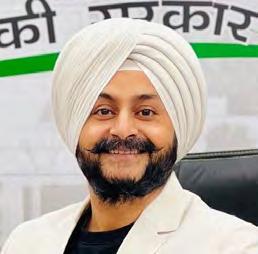
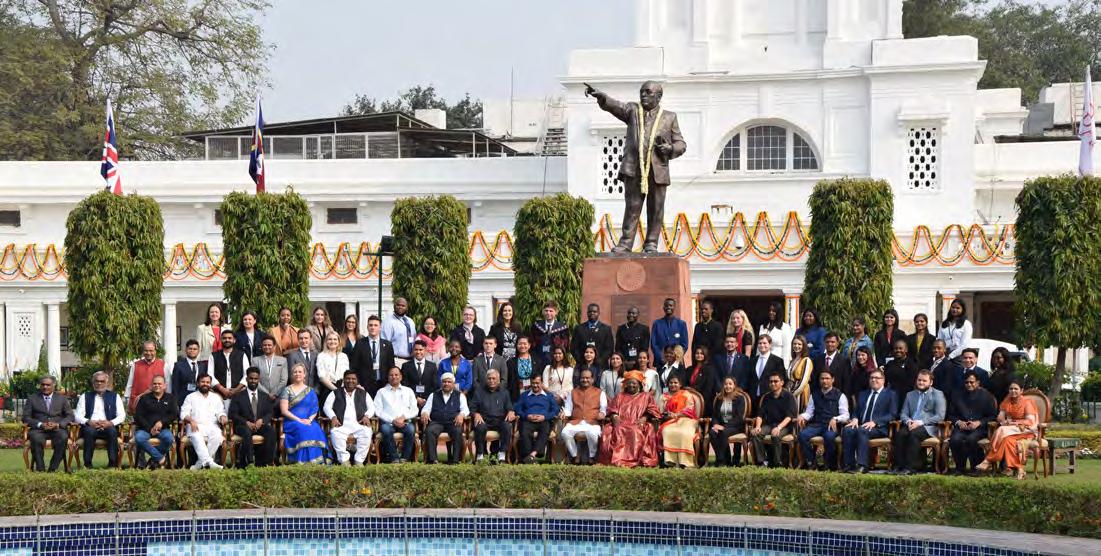
Hon. S. Jarnail Singh, MLA is a Member of the Delhi Legislative Assembly representing the constituency of Tilak Nagar, India.
West Delhi. With faith in God and the support of our people, we reached every doorstep, carrying the promise of forming a government which will actually follow the principle of “government of the people, by the people, and for the people.”
On 8 December 2013, the Aam Aadmi Party made a historic debut by winning 28 seats - and Tilak Nagar was proud to be one of them. That day marked a turning point in my life and in the political journey of our movement.
Since then, the people of Tilak Nagar have continued to place their trust in me, electing me as their MLA consecutively in 2015, 2020 and once again in February 2025. Each victory is not just a personal achievement, but a reflection of the relationship I share with my people - a relationship built on accessibility, trust and love.
From the very beginning, I made a promise to my constituents that my doors would always remain open for them. My MLA office functions like a well-designed public service centre - whether the issue is related to education, infrastructure, sanitation, transport or any civic concern, people can walk in freely and we strive to resolve their problems at the earliest. Even when challenges arise beyond the direct scope of governance, we make every possible effort to address and resolve them.
My role as MLA has been shaped by the principle that development must touch lives at the grassroots. Through my years in public service, I have worked to strengthen every sphere of human life such as education,
healthcare, infrastructure and environment in Tilak Nagar.
Education: I oversaw the transformation of government schools in my constituency - constructing new classrooms, building amphitheatres for arts and cultural activities, installing sports facilities and adding elevators for accessibility.
Infrastructure: I improved road connectivity across key stretches of the city’s network to ease traffic congestion, and installed modern streetlights at every corner to enhance public safety. New water and sewer lines were laid across several colonies to ensure reliable supply and sanitation, often for the first time. I also developed a world-class badminton court to provide residents with access to high-quality sports infrastructure. To strengthen neighbourhood security, CCTV cameras were installed at every corner of the constituency, along with gates and automatic boom barriers at
key entry and exit points, ensuring a safer environment for all residents.
Healthcare: As Chairman of the Rogi Kalyan Samiti (Hospital Management Society) at Guru Gobind Singh Hospital, I worked to expand facilities and improve patient care. Under my tenure, the hospital was upgraded from a 100-bed to a 600-bed plus facility, significantly enhancing its capacity to serve the people of West Delhi. In addition, Aam Aadmi Mohalla Clinics were established across the constituency, bringing free, accessible and quality healthcare to every neighbourhood.
Civic Coordination: As Chairman of the District Development Committee, West Delhi (2014–15 & 2017–25), I ensured timely delivery of public services by closely monitoring departmental operations, maintaining strict surveillance on project execution, and upholding transparency and
accountability at every stage of implementation.
Environment: I initiated widespread plantation drives throughout the constituency, and in 2024 alone we successfully planted 100,000 saplings, significantly boosting our green cover. One of the projects closest to my heart was transforming an old dumping yard into Shaheed Smriti Park, now one of the most vibrant green spaces in West Delhi. At the city level, Delhi’s green cover has increased from 297 sq. km (20.22%) in 2013 to 371.3 sq. km (25%) in 2023, reflecting the city’s growing commitment to a cleaner and greener future.
Serving
Alongside my constituency responsibilities, I have had the privilege of serving in several organisational and government roles that allowed me to extend the same philosophy of public service to larger platforms as well as improving transparency in Delhi’s public sector institutions and promoting Punjabi literature and culture. My organisational roles within the Aam Aadmi Party have enabled me to gain deep understanding of voter behaviour and political structure building.
As Co-Convener of the AAP Overseas Wing (2016), I engaged with volunteers across India and abroad, built structured outreach teams and led initiatives to strengthen the party’s global presence through coordinated mobilisation and diaspora engagement. In 2024, at the Dubai International Business Awards, I was honoured with the Excellence in Social Services Award for my work during the Farmers’ Protest and welfare initiatives for the survivors of the 1984 Sikh genocide.
The 2020–21 Farmers’ Protest was one of the most important moments of my public life. As someone with farming roots, I felt deeply connected to the cause. At Delhi’s borders, I helped organise community kitchens, healthcare camps and accommodation for thousands of farmers. I also raised their issues in the Delhi Assembly, ensuring their voice was heard within the halls of governance.
Similarly, my legislative work has focused on protecting and honouring Sikh identity. In 2018, I successfully advocated the Anand Marriage Act, enabling Sikh marriages to be registered under Sikh law - a historic moment for identity recognition. I also led efforts for the Delhi Assembly to formally recognise the 1984 anti-Sikh violence as genocide, while ensuring tangible relief through electricity subsidies, compensation and housing upgrades for survivors.
My journey is deeply inspired by the Sikh principles of ‘Kirat Karo’ (honest work), ‘Seva’ (selfless service), and ‘Sarbat da Bhala’ (welfare of all). These values remind me every day that
leadership is a responsibility, not just a privilege.
I have always believed that true achievers never need to speak for themselves—their work and their service speak louder than words. As they say “Achievers never expose themselves; their achievements expose them”
From starting as a young worker in a small workshop in Delhi to serving consecutive four terms as an MLA, my journey has been one of faith, gratitude and continuous learning. In public life, humility and accessibility are not optional - they are essential. It is only when people feel they can reach you, speak to you and trust you that democracy truly flourishes.
As I continue my journey, I remain guided by one belief:
Public Representative is not a position of power - it is a platform to serve people with honesty, humility and heart
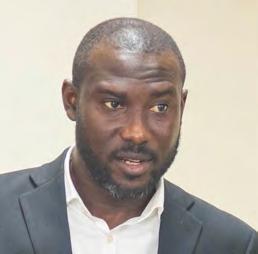
Ernest Darfour (PhD) is the Head of the Parliamentary Training Institute of the Parliament of Ghana
Parliamentary Committees are at the heart of legislative work, serving as the ‘engine room’ where detailed scrutiny of policies, Bills, budgets and public accounts takes place. In Ghana, the Standing Orders provide the framework for constituting and operating these Parliamentary Committees. For nearly 24 years, the Standing Orders of November 2000 guided the House.
However, the dynamic nature of Ghana’s hybrid parliamentary system, coupled with emerging democratic challenges, revealed the limitations of the old rules. In January 2024, new Standing Orders came into effect, introducing wide-ranging reforms, particularly in the operation of Parliamentary Committees.
One of the most significant reforms in Ghana is the expansion of the number of Parliamentary Committees from thirty-one to forty-four. This increase reflects the need for greater specialisation and efficiency.
In the past, large Committees such as the Finance Committee struggled to effectively manage their heavy workload. The new Standing Orders have addressed this by creating smaller, more focused Committees.
For instance, economic and financial oversight has now been distributed among separate Committees, including a dedicated Economy and Development Committee tasked specifically with examining the terms and conditions of loan agreements and their broader implications for the national economy. This reform promises deeper scrutiny of Ghana’s debt management practices and fiscal policies.
New Committees have also been established in areas that were previously underserved. Among these are the Committee on Security and Intelligence, the Committee on Human Rights, the Committee on
Petitions, and the Committee on Private Members’ Bills and Motions. These additions expand Parliament’s oversight reach and enhance its ability to respond to the evolving governance landscape. By institutionalising and streamlining the petition process, for example, the House has strengthened its commitment to ensure that the concerns of the public are incorporated into the policy-making process.
Another significant change introduced by the Standing Orders is the opening up of Committee meetings to the public. Previously, Committee deliberations were often closed, limiting transparency and public participation. The new provision marks a decisive step towards openness, enabling the media, civil society and citizens to follow Committee proceedings more closely. This reform is expected to enhance accountability, demystify the work of Parliament and build greater public trust in the institution.
The Standing Orders have also redefined the leadership structure of Committees. Notably, some Committees are now chaired by Opposition Members for the first time. Alongside the Public Accounts Committee, which has historically been chaired by an Opposition Member, the Assurance Committee, Committee on Public Administration and State Interest, Human Rights Committee, Budget Committee, and Committee on Subsidiary Legislation are now led by Opposition Party Members. This shift promotes inclusivity and strengthens the system of checks and balances within Parliament. By granting the Minority a formal leadership role in Committee oversight, the Standing Orders ensure government actions are subject to thorough bipartisan scrutiny.
Operationally, the reforms have introduced new practices to
empower Members of Parliament, particularly those outside leadership. Backbenchers now have a dedicated period, known as ‘Backbenchers’ Time’, to raise issues, make statements and contribute to parliamentary business. Procedural innovations, such as roll calls at sittings and the recitation of the national pledge at the beginning of the parliamentary week, seek to instil greater discipline and a sense of duty in MPs. Moreover, the Standing Orders now recognise the use of virtual platforms, making it possible for parliamentary business to continue under extraordinary circumstances, such as during public health emergencies.
The cumulative effect of these reforms is a Committee system that is more specialised, transparent and inclusive. They reflect Parliament’s determination to adapt its internal procedures to the evolving demands of Ghana’s democratic governance. However, implementation will require significant institutional support. With more Committees to service, the demand for research, technical expertise and logistical resources is expected to increase considerably. Equally, the success of the reforms will depend on the political will of both Majority and Minority groups to respect the spirit of inclusivity and openness embedded in the new rules.
In summary, the 2024 changes to the Standing Orders represent a new chapter in Ghana’s parliamentary evolution. By reorganising Committees, increasing transparency and boosting minority involvement, the reforms have the potential to strengthen parliamentary oversight, enhance accountability and modernise legislative practices in Ghana’s Fourth Republic.
Introduction
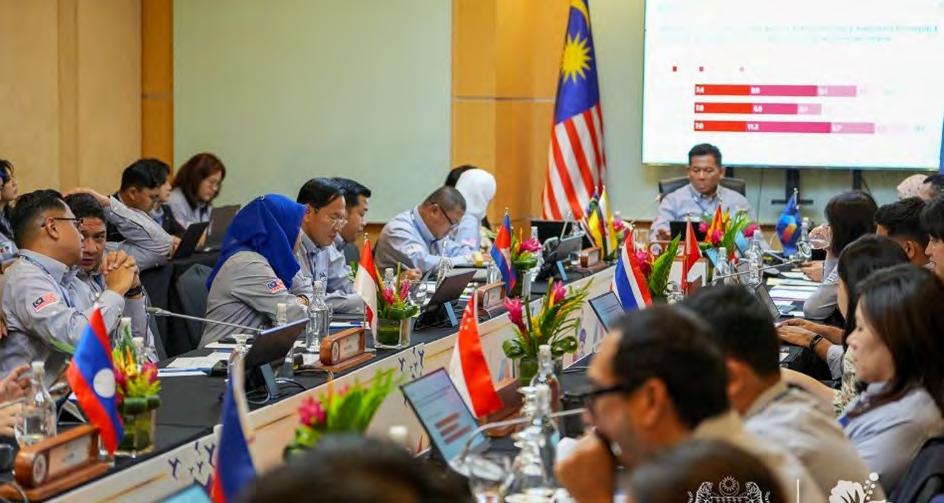
The inaugural Young Parliamentarians of AIPA (YPA) Roundtable Discussion: Youth in Action was held on 17 September 2025 during the 46th AIPA General Assembly in Kuala Lumpur, Malaysia. The session brought together young Parliamentarians from ASEAN Inter-Parliamentary Assembly (AIPA) Member Parliaments and experts from the international organisations such as World Health Organization (WHO), International Labour Organization (ILO) and World Bank to deliberate on youth-related policy priorities: health, employment, inequality, social protection and inclusive growth. More than a policy forum, this initiative demonstrated how interparliamentary collaboration can shape regional youth agendas through evidence-based policymaking. This is an approach that aligns with the Commonwealth Parliamentary Association (CPA) mission to advance inclusive, democratic governance and build capacity among emerging legislators worldwide. Malaysia’s chairmanship of the 46th AIPA General Assembly for the year 2025 has shown its AIPA-led initiative through this YPA Roundtable Discussion.
Empowering Youth through Parliamentary Diplomacy
With youth representing 206 million people, which is one-third of ASEAN’s population, the YPA Roundtable Discussion highlighted the strategic role of young legislators in bridging generational aspirations and policy formulation. The keynote address from the YPA Chairperson, Hon. Dato’ Indera Mohd Shahar bin Abdullah, Member of the Parliament of Malaysia stated the importance of young people acting as “co-creators of solutions” rather than mere policy beneficiaries. The YPA
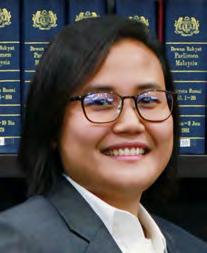
Mas Liza Maslan is a Parliamentary Researcher and she is also Youth Representative for the CPA South-East Asia Region (2024-2026) on the Editorial Advisory Board for The Parliamentarian. Sayani Umar is a Senior Parliamentary Researcher. Both work at the Parliament of Malaysia.
Chairperson called upon young leaders to be better equipped to represent their constituents and shape future-oriented policy on sustainability, innovation and digital transformation. His call reflects the CPA’s principle of democratic renewal; ensuring Parliaments remain responsive, representative and resilient through youth participation.
Malaysia’s chairmanship in convening this Roundtable Discussion exemplifies how regional parliamentary mechanisms like the YPA can be parallel with the CPA’s annual Commonwealth Youth Parliament. Both of these bodies foster youth-led policy innovation, cross-cultural understanding and the exchange of legislative best practices. Such inter-regional synergy strengthens the global network of young Parliamentarians committed to accountable governance.
Health Resilience through Regional Solidarity
Health equity was a central theme discussed by one of the experts at the YPA Roundtable Discussion. Dr Deepa Gamage from the World Health Organization (WHO) presented on ‘Safeguarding ASEAN Youth: CrossBorder Health and Immunisation’. The presentation revolved around harmonising the vaccination systems, cross-border surveillance and digital health passports to ensure that no youth is left behind in public health access. One of the main challenges discussed was the fact that there is an uneven equitable health access across SouthEast Asia, particularly in border and rural areas where infrastructure and literacy gaps persist.
Throughout the discussion, WHO further advocated for youth health ambassador programmes to tackle misinformation and strengthen vaccine
confidence. WHO also recommended establishing mobile health units and telemedicine platforms, which could be extended for outreach and promoting preventive care. The YPA Roundtable Discussion endorsed the idea of a YPAHealth Network to share regional data and practices on youth health policies, a model that could be replicated within the Commonwealth Parliamentary agendas. These recommendations echo the CPA’s focus on strengthening legislative preparedness for public health crises, particularly through oversight, datadriven governance, and collaboration between member Parliaments. The proposal to establish Youth Health Ambassadors mirrors CPA’s advocacy for parliamentary outreach programmes that empower young people as partners in policymaking.
The Future of Work: Decent Employment in the Digital Age
The International Labour Organization (ILO) expert, Mr Ethan Weng Yin Chau addressed the issue on youth employment in the digital era.
Through his presentation on ‘Shaping ASEAN’s Future of Work – Youth Employment and Technological Advancement: Regional Trends and Policy Implications’, it was highlighted that youth unemployment and underemployment range between 1.7% and 10.3% across ASEAN while the average is 4.9% on global rate for 2024.
ILO also emphasised the importance of scaling up the Active Labour Market Programmes (ALMPs), which included targeted skills training, entrepreneurship support and wage incentives in order to help young people adapt to shifting industries. ILO also encouraged
gender-sensitive labour policies and advocated the expansion of the social protection to cover gig workers and the self-employed. These measures are not only economic imperatives but also governance priorities that reinforce social justice, a cornerstone of both ASEAN and the Commonwealth. Such shared challenges may open opportunities for inter-regional dialogue and exchange of policy models on youth entrepreneurship.
Malaysia’s passage of the Gig Workers Bill 2025 exemplifies how member states can lead by example. For the CPA, this presents a case study on legislative adaptation to emerging labour realities which is a result of balancing innovation with protection.
The expert from the World Bank, Ms Shakira Teh Sharifuddin shed further light on this topic through her presentation ‘Breaking Barriers: Inequality and Social Mobility’. The presentation centred on analysis of inequality and intergenerational disadvantage in ASEAN and revealed how early deprivation of poor maternal health, malnutrition and limited preschool access can constrain opportunities throughout life.
Based on a World Bank study, 42% of Malaysian children and 61% of those from the poorest households are not able to read a simple text by age ten. This learning poverty mirrors educational inequalities seen across
several Commonwealth countries, particularly in small states and developing economies. To address these challenges, the World Bank proposed four key actions:
i. Universal preschool enrolment, prioritising rural and low-income communities
ii. Professionalisation of teaching through certification and continuous training
iii. Improved governance and accountability, aligned with international benchmarks
iv. Integrated nutrition and health support for early childhood development.
Recommendations by the World Bank underscore the shared global challenge of nurturing human capital, a theme central to both the ASEAN Community Vision 2045 and the Commonwealth Charter, which recognises education as a fundamental building block for the young people's inclusive growth.
The YPA Roundtable Discussion: Youth in Action recognised how interparliamentary platforms can translate dialogue into collective action. For ASEAN regional cooperation, it demonstrated the value of cooperation among young legislators and international organisations. Meanwhile, for the broader Commonwealth community, it presents a model of
South-South collaboration among the developing Member States.
The YPA Chairperson, through his closing remarks, warned that although Artificial Intelligence has great potential, it should support the people rather than taking the place of human reasoning. He urged young Parliamentarians to push for AI education and to make sure technology is governed ethically, a subject that is also discussed a lot in CPA seminars about digital change and parliamentary progress.
The YPA Roundtable Discussion: Youth in Action initiative offers important lessons for the Commonwealth community:
i. Inter-parliamentary cooperation is effective. When young legislators engage in structured dialogue with global institutions, they can achieve real, evidence-based outcomes.
ii. Learning across regions improves governance. ASEAN’s focus on digital inclusion, skills development and social mobility supports ongoing Commonwealth efforts in democratic renewal and youth leadership.
iii. Youth participation strengthens democracy. Both ASEAN and the Commonwealth institutions can ensure the long-term sustainability of democratic values and policymaking by raising youth voices within Parliaments.
Inter-regional parliamentary collaboration can be a strong tool for collective progress as ASEAN and the Commonwealth confront shared challenges of the 21st century such as climate change, digital disruption and inequality. The YPA Roundtable Discussion: Youth in Action is not just an ASEAN milestone; it is a reminder that youth empowerment and democratic cooperation must be central to every regional and global agenda.
References:
World Health Organization (WHO), ‘Safeguarding ASEAN Youth: Cross-Border Health and Immunisation’, 2025.
• International Labour Organization (ILO), ‘Shaping ASEAN’s Future of Work’, 2025.
• World Bank, ‘Breaking Barriers: Inequality and Social Mobility among ASEAN Youth’, 2025.
Hon. Thea Garcia-Ramirez is the Minister of Human Development, Family Support and Gender Affairs in Belize.
The end goal of gender-based political violence against women is to pressure, hinder, punish or deprive us of our right to participate in politics. This type of violence takes on additional significance as a form of gender role enforcement, where the coercer tries to dominate and control us, limit opportunities and curtail our political rights.
This type of violence can affect the whole exercise of politics and the decision-making of women in political positions. Political violence is not exclusive to female politicians since it can be directed at candidates as well as at voters, campaign workers and others working with us during and after electoral campaigns.
The most systematic data we have from the Inter-Parliamentary Union (IPU) paints a picture of the reality facing women Parliamentarians:
• 82% of women MPs worldwide report experiencing psychological violence during their term.
• 66% have endured humiliating sexist remarks, often inside Parliament.
• 44% received threats of death, rape, beating or abduction.
• 22% experienced sexual violence.
• Nearly 47% said these abuses made them fear for their safety or that of their families.
These patterns are not isolated to any one region — they are consistent across continents and political systems. Across Latin America and the Caribbean, as more women enter political life, hostile reactions intensify. UN Women and regional experts have
documented smear campaigns, cyberharassment, coercion by party actors, and in some cases, lethal violence against women in politics.
Mexico is a stark example. Despite achieving historic parity in Congress and electing its first woman President, research shows that the 2020–2021 electoral cycle was the most violent on record for women in politics. Mexico now maintains a National Registry of Persons Sanctioned for Gender-Based Political Violence, with hundreds of entries, barring repeat offenders from candidacy or party posts.
Our own Caribbean context reflects a dual challenge of structural underrepresentation of women in Parliaments as well as cultural and institutional sexism.
Representation remains uneven. CARICOM countries average only about 14% women MPs compared to 25.2% across Latin America; just Guyana and Trinidad & Tobago meet the 30% critical mass threshold, while Jamaica stands just under it. This numeric underrepresentation leaves women Parliamentarians often isolated, without peer support, in maledominated chambers.
Harassment takes new and old forms. The Caribbean Women in Leadership (CIWiL) network has condemned a rising tide of cyberviolence against women in politics (VAWP) — including doxing, sexualized photo manipulation and coordinated social-media harassment designed to intimidate, shame and silence.
Gendered political violence is documented. In Jamaica, a recent
study found that female politicians faced violence before, during and after elections, and even while in office. Much of this violence was explicitly gendered, intended to deter women from contesting or continuing in political life.
Institutions are adapting slowly. Jamaica’s Parliament has drafted a sexual harassment policy with definitions, reporting channels, sanctions and education measures. Regional initiatives by the Commonwealth Women Parliamentarians (CWP) network are providing gender-sensitisation training and toolkits to reform parliamentary culture.
Legal frameworks exist but enforcement is weak. Several Caribbean nations - Belize, Jamaica, Trinidad & Tobago - have laws addressing sexual harassment and domestic violence. However, these are often framed as workplace or civil issues, not as part of a broader politicalviolence context, leaving gaps in protection and accountability.
Across our Caribbean region, abuse manifests in overlapping ways:
• Inside Parliament - gendered heckling, procedural sidelining and dismissive or demeaning remarks by male colleagues, sometimes within the same party.
• Online - doctored images, sexualized insults, coordinated campaigns targeting women MPs’ credibility and personal safety.
• Threats and intimidation - directed not only at the MPs themselves but also at their children and families.
• Sexual harassment and coercion - including gatekeeping of political advancement through implied or explicit sexual demands.
• Economic obstruction - denial of offices, staff or security, undermining the capacity to perform parliamentary duties.
The intent is often explicit: to silence, deter or punish women who speak upparticularly on women’s rights, equality or other ‘controversial’ matters.
When women politicians live under constant threat or disparagement:
• Policy debates narrow;
• Constituencies lose representation;
• Public trust erodes.
IPU research shows that 39% of affected women MPs said the abuse undermined their ability to fulfil their mandate. Some limit public appearances; others reconsider standing for re-election. This is not just a women’s issue — it is a direct
assault on democratic competition and accountability.
Our Caribbean region has innovated important frameworks:
• The Inter-American Convention of Belém do Pará affirms women’s right to live free from violence in both public and private life.
• The OAS Inter-American Model Law on Violence Against Women in Political Life provides definitions and legislative templates for criminal, electoral and administrative remedies.
• Some countries, including Bolivia and Mexico, have enacted specific laws criminalising political harassment and violence against women, offering models for adaptation in the Caribbean context.
• UN Women and IPU have developed practical guidance for electoral bodies, parties and Parliaments to prevent, document
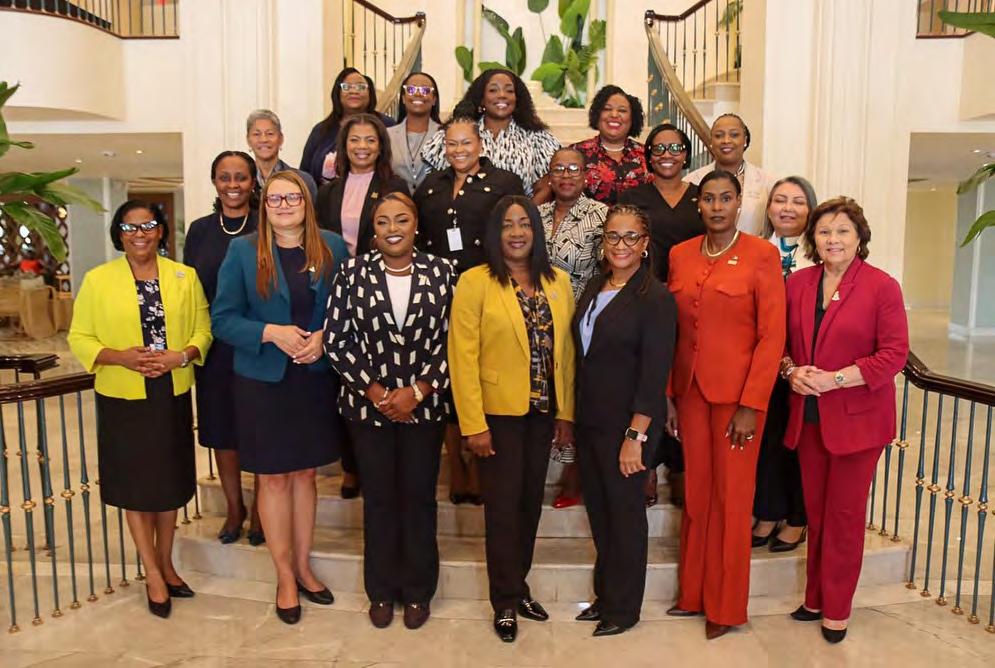
Above: Women MPs at the 15th Caribbean, Americas and the Atlantic (CAA) Regional Conference for Commonwealth Women Parliamentarians (CWP) in The Bahamas in September 2025.
and sanction violence against women in politics.
In our Parliaments, we can consider the following:
1. Adopting and enforcing a parliamentary Code of Conduct prohibiting sexism, harassment and political violence.
2. Establishing an independent complaints mechanism within Parliament with confidentiality, survivor support and public reporting.
3. Guaranteeing security assessments and protection for targeted MPs and their families.
4. Developing social media protocols with platforms and law enforcement
to address cyber-abuse and threats.
5. Providing legal and psychosocial support so survivors can pursue remedies without career risk.
6. Requiring party-level compliance: anti-violence rules, candidate vetting and disciplinary procedures.
7. Clarifying that parliamentary privilege does not shield harassment or threats.
8. Training MPs and parliamentary staff every session on recognising and addressing political violence against women.
9. Collecting and publishing data on incidents, responses and outcomes.
10. Building cross-party solidarity caucuses to respond rapidly and visibly to cases of abuse.
In the Caribbean region, we can also:
• Align Standing Orders with antiharassment standards;
• Create regional cooperation through CARICOM and ParlAmericas for shared tracking and enforcement;
• Ensure resource parity — offices, staff and security — for all women MPs;
• Support cultural change inside parties, parliamentary chambers and the public sphere.
The research is clear: sexism, harassment, and violence are prevalent. However, there are strategies that we can employ to address this issue which hits at the foundation of our democracy. It limits the full expression of our right to equity and equality in the sphere of political leadership.
I would like to share that in my own country of Belize within my own party, the People’s United Party, we have started the work to mentor, support and field greater numbers of women candidates and women in politics from the ‘ground up’ and at the grass roots level. Of the 1,104 elected PUP members for the 2025 Village Council Elections, I am proud to report the following: of the 158 villages won, 37 Chairpersons and 336 members are women. In total we have 373 women elected which is equivalent to 33.79%
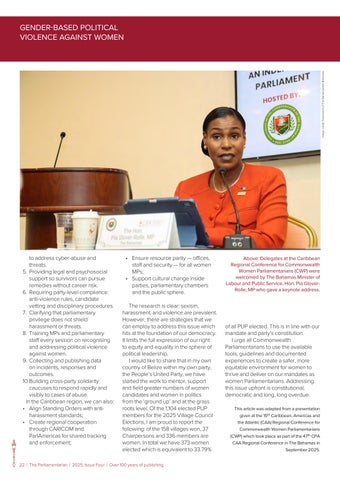
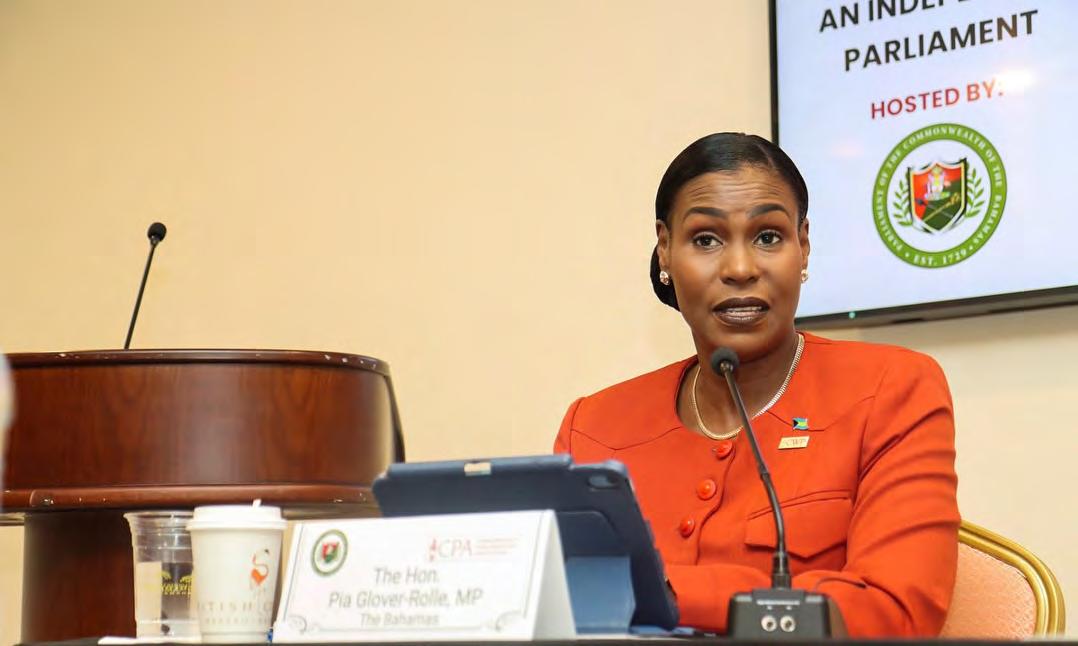
Above: Delegates at the Caribbean Regional Conference for Commonwealth Women Parliamentarians (CWP) were welcomed by The Bahamas Minister of Labour and Public Service, Hon. Pia GloverRolle, MP who gave a keynote address.
of all PUP elected. This is in line with our mandate and party’s constitution. I urge all Commonwealth Parliamentarians to use the available tools, guidelines and documented experiences to create a safer, more equitable environment for women to thrive and deliver on our mandates as women Parliamentarians. Addressing this issue upfront is constitutional, democratic and long, long overdue.
This article was adapted from a presentation given at the 15th Caribbean, Americas and the Atlantic (CAA) Regional Conference for Commonwealth Women Parliamentarians (CWP) which took place as part of the 47th CPA CAA Regional Conference in The Bahamas in September 2025.


Nisha Arekapudi is a Policy Legal Reform Specialist and Tanya Primiani is a Senior Consultant on Gender Equality and the Law from UN Women.
As a new UN Women handbook aimed at legal equality is published, this article examines the importance of achieving equality before the law.
In the years since the Convention on the Elimination of All Forms of Discrimination against Women (CEDAW) laid out a blueprint for the realisation of women’s human rights, governments all over the world have embarked on the important work of building on their commitments to achieve gender equality and the empowerment of women. Transforming laws is central to this mission: they are the foundation of human rights and bring us nearer to the promise of equality by unleashing women’s full potential. In recent decades, women have had more voice and agency, security and autonomy than at any other point in history. Still, the overlapping impacts of the COVID-19 pandemic, climate disasters and geopolitical conflict are threatening gender equality and women's rights across the globe.1
Indeed, an estimated 3.7 billion women and girls still live in countries where discriminatory laws are in place.2 We must continue to take a hard look at the laws, policies and norms that govern our societies and the ways in which they enable or hinder the human rights of women and girls.
This is the subject of the UN Womenled ‘Equality in Law for Women and Girls by 2030: A Multi-stakeholder Strategy for Accelerated Action’, which launched in 2019 and counts the Commonwealth Parliamentary Association and its Commonwealth Women Parliamentarians (CWP) network among its partners. It aims to fast track the repeal of discriminatory laws in six areas: comprehensive reforms, women’s economic empowerment, minimum
age of marriage, nationality rights, discriminatory rape laws, and family and personal status. These areas represent some of the most persistent remaining challenges to gender equality before the law. They also provide a framework for the recently launched ‘Understanding, assessing and achieving equality before the law in the Commonwealth’, a handbook for change agents co-produced by UN Women, the Commonwealth Secretariat, the Commonwealth Parliamentary Association and the World Bank Group.
As the Handbook notes, reforms in all regions and across each area have addressed the legal needs of millions. They have also furthered the aspirations of Sustainable Development Goal (SDG) 5 on achieving gender equality and empowering all women and girls, and importantly of indicator 5.1.1, which measures legal frameworks that promote, enforce and monitor gender equality across four areas of law: (i) overarching legal frameworks and public life; (ii) violence against women; (iii) employment and economic benefits; and (iv) marriage and family.3
The latest data reported on SDG indicator 5.1.1 in 2025 covers 131 countries, and shows that 51% still lack laws in all key areas of gender equality. Still, reform successes recorded under the indicator include many in the Commonwealth and are powerful examples of the elements necessary to achieve gender equality in law.
Comprehensive reforms that address direct and indirect discrimination against women are a unifying priority.
In recent years, UN Women has supported several such reforms at the country level. In Sierra Leone, for example, the Gender Equality and Women’s Empowerment Act of 2022 provides that a minimum of 30% of elective and appointed positions be reserved for women and integrates gender-responsive budgeting into government operations. The law also enshrines women’s access to finance, employment opportunities, equal pay and paid maternity leave. Overarching reforms like these can yield multiple dividends and are essential to the achievement of gender equality.
Specific issue areas also deserve our attention. Laws promoting economic empowerment, for example, are critical for advancing women’s autonomy, agency and sense of self-worth. Under SDG indicator 5.1.1, 73% of countries have continuing legal gaps in employment and economic benefits. Almost half (61) of the 131 countries with available data have at least one restriction preventing women from doing the same jobs as men, and 57 countries do not mandate equal remuneration for work of equal value. However, in countries where policies empower women economically, there are more women working, more women-owned businesses and more women in managerial positions and Parliaments.4
Recognising these benefits, some governments have acted to remove barriers to women’s economic participation in recent years. Senegal has prohibited gender discrimination in employment, removed restrictions
on women’s employment in industrial jobs and prohibited the dismissal of pregnant workers. Indonesia enacted legislation to protect women from sexual harassment in employment. Costa Rica lifted bans on women’s night work and eliminated prohibitions on so-called ‘dangerous’ jobs. These reforms will allow women to enter the labour force as employees and entrepreneurs, increasing global prosperity and countries’ ability to reduce poverty and grow sustainably.
Of course, this may not be possible where discriminatory age of marriage provisions persist, making women less likely to reach their full potential. In over 50 countries, the minimum legal age of marriage is lower for women than men; 93 countries legally allow girls to marry before the age of 18 with parental consent.5 However, many countries have succeeded in increasing the minimum age for marriage for girls to 18 years, without exceptions, over the past decade. Ten countries have raised or equalised the marriage age since 2019, including Finland, Indonesia and Zambia. In Colombia, a landmark 2025 law raised the age of marriage to 18 for all, without exceptions. Strategic litigation in Tanzania in Rebecca Gyumi v. Attorney General led the High Court
to agree that allowing girls to marry as young as age 14 is unconstitutional, spurring efforts to reform national law. Advocacy by youth ambassadors in Norway also mobilised action for a ban on child marriage, with the reform ultimately passing unanimously in 2018.
Many of these tactics have been employed in additional areas. Like other discriminatory laws, when a state allows gender discrimination in its nationality laws, it is implicitly endorsing the notion of women as inferior and possessing second-class citizenship. Worldwide, 24 countries discriminate against women in limiting their ability to confer their nationality to their children on an equal basis with men.6 More than 40 countries deny women the equal right to acquire, change or retain their nationality, including the ability to confer nationality to their non-national spouses.7 Taking note of this, Liberia in 2022 amended its nationality law to grant women and men equal rights to confer nationality to their children. Malaysia additionally voted last year to amend the Constitution to uphold women’s right to confer nationality on children born abroad on an equal basis with men.
Violence against women, including discriminatory rape laws, also remain one of the biggest challenges to
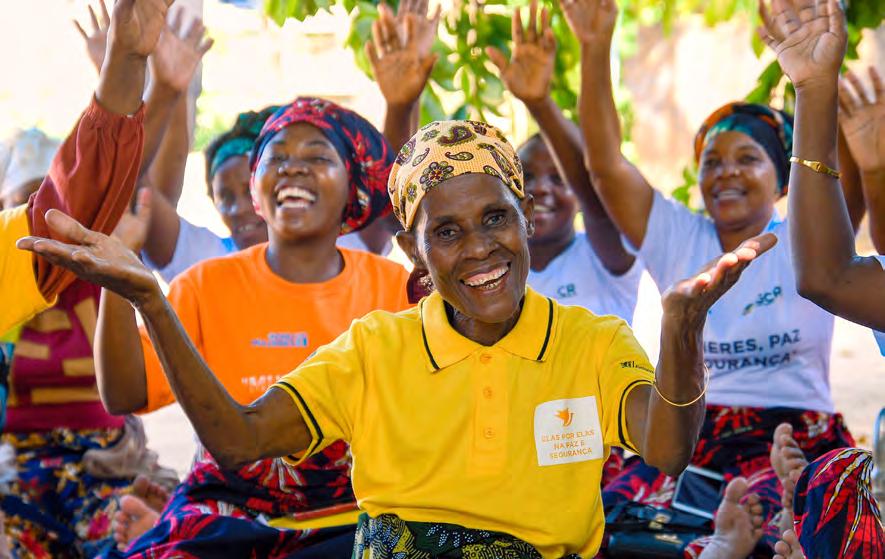
Left: Maria de Lurdes, founder of the Mozambican Association for Community Education, leads grassroots efforts in Cabo Delgado to prevent child labour, resist youth recruitment by extremist organisations, promote social cohesion and empower women to lead in decision-making and peacebuilding. ‘Through Her Lens: Women Rising for Peace’ exhibition.
women’s full enjoyment of their human rights. In ten countries, legal provisions exempt perpetrators from rape charges if they marry the survivor,8 depriving women of appropriate redress and perpetuating cycles of harm. Seventy-two of the 120 countries measured by SDG indicator 5.1.1 lack laws that define rape based on the principle of consent. Seventeen countries still do not criminalise marital rape or entitle a woman to file a complaint for rape against her husband or partner. Such discrimination can be addressed by repealing and replacing existing rape exemption provisions with progressive legislation on ending violence against women and girls. In 2018, Tunisia removed a clause from the Code of Personal Status that erased rape convictions or allowed offenders to leave prison if they married the survivor. Since 2019, Bahrain, Kuwait and Thailand have also repealed exemptions from punishment for rapists who subsequently marry the survivor. Closing gaps such as these can encourage more women to come forward and challenge unequal power dynamics in the home and society at large.
Violations of women’s rights in the family domain also affect women’s ability to exercise agency. Discriminatory family laws impede equality in marriage, divorce, inheritance, and parental authority and responsibilities. In 30
countries covered under indicator 5.1.1, women and men do not have equal rights to enter into marriage and initiate divorce. Additionally, women and men do not have equal guardianship rights over their children in 18 countries. Repealing these laws promotes equality in family relations and often provides women with the opportunity to enjoy other rights outside the home. In 2020, for example, Rwanda gave women and men equal rights to remarriage, eliminating a discriminatory waiting period that applied only to women. In 2022, Uganda adopted its Succession (Amendment) Act to afford equal inheritance rights between sons and daughters, and female and male surviving spouses. All three reforms were passed with support from UN Women country offices in partnership with governments, civil society and others working to tackle entrenched barriers.
Gender equality depends on legislation that guarantees the
advancement of women’s rights. While just a few examples of recent successes, reforms like the ones described here can plant the seeds for legal equality as well as civil, political, social, cultural, and economic empowerment and rights. They also teach us valuable lessons on the ways in which change can be achieved, including through dedicated Parliamentarians, court decisions, civil society and UN advocacy.
UN Women encourages countries to learn from each other, hold their neighbours accountable, and commit to repealing all discriminatory laws and designing reform roadmaps. Where injustice remains, we must continue to dismantle it through the passage of laws that promote gender equality and challenge the status quo. Together with our partners, we stand ready to provide dedicated technical support to pass and implement these reforms, including through ‘bottom-up’ and ‘top-down’ engagement at the country level, policy
dialogue and human rights reporting. It is our hope that these accelerators will spotlight the legal needs of women and girls and ensure that such needs are addressed through transformational and meaningful reforms.
To find out more please visit www.unwomen.org
1 UN Women. 2022. ‘Government responses to COVID19: Lessons on gender equality for a world in turmoil’.
2 UN Women. ‘Shaping the law for women and girls: Experiences and lessons from UN Women’s interventions’ (2015 – 2020).
3 See SDG indicator 5.1.1 metadata for more information.
4 World Bank Group, ‘Women, Business and the Law 2024’.
5 UN Women. ‘Legislating and Enforcing the Minimum Age of Marriage: A Comparative Study of Experiences and Lessons Learned in Ending the Legalization of Child Marriage’.
6 UN Women. ‘Equality in Law for Women and Girls by 2030: A Multi-stakeholder Strategy for Accelerated Action’.
7 Id.
8 Id.
The Commonwealth Women Parliamentarians (CWP) network has contributed case studies to a new handbook aimed at legal equality and combatting discriminatory laws
The Understanding, Assessing and Achieving Equality
Before the Law in the Commonwealth Handbook is a toolbox designed to aid Commonwealth Parliamentarians, Legislatures, judges, policy makers, policy influencers, academics and advocates working in governmental, intergovernmental and non-governmental spaces at advancing de jure equality (equality in the laws) in the Commonwealth. The Handbook offers critical actors engaged in efforts to combat discriminatory laws as well as guidance in assessing and undertaking gender responsive legislative reforms. For Parliamentarians, the Handbook provides resources for preparing for debates on Bills which promote gender equality and offers ten key lessons and recommendations for successful law reform.
Members of the Commonwealth Women Parliamentarians (CWP) network contributed to this piece of research through the provision of case studies and examples of legislation from their Parliaments that promote gender equality and contributes to efforts to eliminate discriminatory law. Case studies included in the Handbook highlight legislation and best practice from CPA Branches such as Malawi, Rwanda, Tanzania, United Kingdom, Sri Lanka, Pakistan, the Solomon Islands and Papua New
Guinea to name a few.
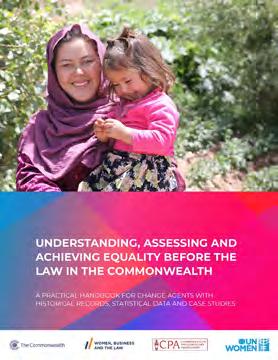
The Handbook was produced by UN Women in collaboration with the Commonwealth Parliamentary Association, the Commonwealth Secretariat and the World Bank Group, and also complements the Inter Parliamentary Union's work in this area. This research is an outcome of the joint partnership (MoU) between the CPA and UN Women signed in 2023 to achieve common objectives in the field of gender equality and the eradication of discrimination in laws and society.
To find out more about the Commonwealth Women Parliamentarians (CWP) network and download a copy of the new handbook please visit www.cpahq.org or email hq.sec@cpahq.org. You can also visit https://tinyurl.com/ mrrac2r9 to download the handbook.
The Jersey States Assembly undertook a Gender-Sensitive Parliament assessment with the Commonwealth Parliamentary Association and they share their experience of the process.
When the percentage of women elected to Jersey’s Parliament jumped to an impressive 47% at the last election in 2022, it would have been tempting to think of it as a tick in the box for gender equality. However, gender equality - and by extension sensitivity - goes beyond simply increasing numbers and, as good practice tells us, involves ensuring the full and meaningful participation of all Members.
With another election due to take place in Jersey in June 2026, who knows what the make-up of the next Jersey States Assembly will be.
Will we continue to see almost equal representation of men and women across the Assembly in the next term? Will new women candidates be putting themselves forward for election? Can we encourage more women to stand for election to those offices still traditionally dominated by men, such as those of Connétable? Will incumbent women Members be keen to stick around and will they have the backing of the electorate? Will those women who go on to be elected want to and be given the opportunity to take on leadership roles in the newly constituted States Assembly?
There are many questions as we edge closer to election time, the answers to a great deal of which will largely be out of the control of today’s Parliamentarians and those working to support them.
What we can do, however, is make efforts to provide and encourage the best possible working environments and cultures for those who are elected - today, next year and in the future - to ensure everyone can participate fully and meaningfully, regardless of their
gender. Crucially, we also need to show and promote that we are doing that as early as possible to give election candidates confidence that they will have that opportunity.
It should also be recognised that steps to improve the gender sensitivity of Parliaments can also often have positive impacts on inclusivity and accessibility more generally and certainly foster an atmosphere in which it becomes easier to advocate for and implement wider improvements. We have seen a shift in greater diversity and gender sensitivity in Jersey’s States Assembly over the past six years, a trend that can be attributed in no small part to the attention drawn to the subject by the internal gender audit undertaken by the Assembly’s Diversity Forum in 2019.
Based on the Inter-Parliamentary Union’s ‘Plan of Action for Gender Sensitive Parliaments’, the aim of that audit was to generate further debate among States Members and the public about how to ensure that the States Assembly becomes gender sensitive. It began an important process which pushed gender sensitivity up the agenda, even if, at times, it needed some extra impetus to keep it there.
More recently, Jersey became the first CPA Branch within the CPA British Islands and Mediterranean Region to undertake a Commonwealth Parliamentary Association facilitated gender audit in July 2024. The self-assessment aimed to evaluate developments since 2019 and identify where further improvements could be made to fully achieve Gender-Sensitive Parliament principles.

Deputy Lucy Stephenson is serving her first term in Jersey’s States Assembly, representing the parishes of St Mary, St Ouen and St Peter. She is Chair of the Island’s Diversity Forum.
Put simply, we wanted to know how we were doing and what more could be done.
The headline findings were clear and backed up what many of us working within the system were experiencing first hand - there have been significant cultural and formal reforms within the States Assembly since 2019, particularly around flexible working, training, and candidate recruitment. Lessons from the experience of the COVID-19 (Coronavirus) pandemic, it found, have been incorporated into ongoing practices, supporting a culture of flexible working which accommodates various needs such as caring responsibilities, illness and bereavement.
As also expected, however, there is indeed more that can and should be done. The recommendations in the report include collecting data on the diversity of Members and election candidates, working harder to engage under represented communities in elections and as candidates, introducing role descriptions for leadership positions within the States Assembly, including equality and diversity commitments on panel membership and introducing a family room accessible to both Members and staff in the Parliament building.
It was also recommended that an accessibility audit be carried out and that the States Assembly investigate the possibility of establishing a Women’s Parliamentary Caucus. Other recommendations focused on parliamentary culture and infrastructure and ensuring equality and diversity in policy and women’s substantive representation.
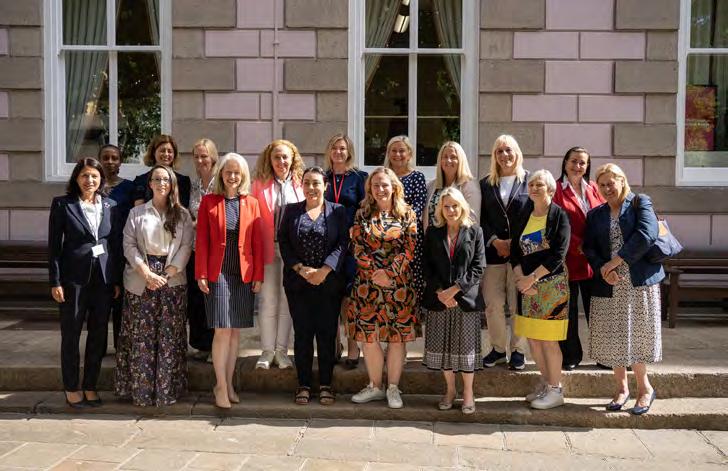
The vast majority of those recommendations have been accepted and steps taken to implement many already. Those that remain outstanding or are ongoing have been assigned to those best placed to move them forward and a process for tracking and monitoring progress on the recommendations is in place. Going forward it will not only be important to continue this process of monitoring the implementation of the recommendations, but also how effective they are on an ongoing basis.
The Jersey States Assembly will also need to be responsive to the changing political and wider societal landscapes. After all, gender sensitivity is not - in today’s world at least - a finite thing, certainly not if it is to be meaningful and effective long into the future. There is no box that can be ticked, no finish line, certainly no room for complacency, even in a jurisdiction like Jersey with our 47% women Members and progress over the past six years. There is always more to do.
A gender-sensitive Parliament is defined by CPA as one that is ‘responsive to the needs and interests of women in its structures, operations, method and work and is a workplace that removes barriers to women’s full participation’.
For anyone interested in how they can assess, monitor and improve the gender sensitivity of their own
Parliament, what does the process entail? The CPA sets out seven steps in the process:
• Step 1: Understanding gender sensitivity. Parliaments explore the definitions of GSP, why GSP are important and various ways in which they can be and have been assessed. For Jersey this involved the 2019 internal gender audit drawing on the Inter-Parliamentary Union’s toolkit.
• Step 2: Embracing gendersensitive Parliament principles. The organisation institutionally and politically commits to embedding the principles of a GSP into the Parliament’s structures, operations, methods and work.
• Step 3: Preparing a team and strategy. Assessors set timelines, objectives and resource levels for a GSP implementation team which can consist of, for example, an internal team of parliamentary Members and researchers or an external team of academic researchers and organisations.
• Step 4: Performing Initial Diagnostics. Assessors explore what gender data are available and what data needs to be generated using a checklist to provide a preliminary snapshot from which to assess the Parliament’s readiness for a full gender sensitive review.
Left: Women Members of the Jersey States Assembly.
• Step 5: Preparing the review - collecting data. Surveys and interviews are developed, tested and then used to collect data. This can include focus groups and observations of proceedings, Committee work and use of facilities. Data is also analysed. For Jersey this part of the process took place over five days in July 2024.
• Step 6: Reporting of findings and recommendations. Findings and recommendations are presented to stakeholders for comment then finalised, before being published alongside details of required resources as well as policy and legislative changes, key performance indicators and dates for future assessments and reports.
• Step 7: Monitoring progress. Data should be collected on a regular basis towards key performance indicators and reported at regular intervals to track progress over time.
Find out more: The Jersey States Assembly undertook a CWP Gender Sensitive Parliament Self-Assessment in July 2024 and they have shared their outcomes report for the benefit of other Commonwealth Parliaments. Download at the CPA website www.cpahq.org or email hq.sec@cpahq.org to request a copy. You can also visit https://tinyurl.com/yc7zx4hr to download the handbook.
Societies thrive when their equal rights, opportunities for growth, fair representation and participation in decision-making processes are ensured. The principle of political equality is enshrined in the UN Charter, UN Declaration of Human Rights, Beijing Declaration and Platform for Action. Achieving gender equality is also affirmed as a precondition in the Sustainable Development Goals, especially in SDG 5 and 16. The Commonwealth Parliamentary Association (CPA) and its Commonwealth Women Parliamentarians (CWP) network also play an integral part towards this global endeavour.
The world has witnessed substantial gains in the representation of women in national Parliaments i.e. from 11.3% in 1995 to 27.2% in 2025.1 However, the pace of progress has slowed in recent years. Women’s participation is hindered by a range of structural and institutional barriers that limit their role in political and public life. Procedures, policies and cultures sometimes act as barriers to participation in decision making process. Women frequently struggle to be nominated, let alone elected as political parties prefer male candidates to contest elections. Structural barriers include outmoded work practices and workplaces that fail to be gender-neutral, and influential groups that benefit people who have been there the longest rather than those who need it the highest.2 The modern era of digitalisation has added to the misery politicians as violence now comes from social media.
Inequalities in Parliaments cannot be attributed to a single factor. Multiple factors such as procedures, structures,
power relations and experiences affect gender equality in many parliamentary setups. Since such inequalities are multifaceted, the intersectionality approach provides a comprehensive framework to analyse and reform the systems by addressing underlying barriers.
The concept of intersectionality was first introduced by Kimberlé Crenshaw in 1989. Organisations often do not have a clear understanding of what intersectionality means. Inclusion strategies often follow traditional patterns without realising that gender diversity policies do not work the same way for everyone.
According to Bowleg “Intersectionality is a theoretical framework for understanding how multiple social identities such as race, gender, sexual orientation, socio-economic status and disability intersect at the micro level of individual experience to reflect interlocking systems of privilege and oppression (i.e., racism, sexism, heterosexism, classism) at the macro social structural level.”3
Gender sensitive policies may have distinct results for individuals from minority and privileged classes. Thus, Parliaments must reconsider embracing intersectionality at the organisational, structural, systemic and policy process levels in order to become more responsive and inclusive for all.
Members of Parliament across the globe can reflect on the global best practices to chalk out a strategy for realising gender sensitivity in Parliaments. In order to be inclusive,
Ms Tehseen Khalid is Director (Research) at the Pakistan Institute for Parliamentary Services (PIPS).
Parliaments must possess forward looking leadership. As there are many interconnected challenges, efforts to break them down should also be comprehensive. Drawing inspiration from the IPU GenderSensitive Parliaments (2011) and CPA Gender Sensitising Guidelines (2020), a conceptual model of adoption of intersectionality in Parliaments is presented at Figure 1, with a focus on four areas where Parliaments can bring reforms.
The introduction of quotas is one of the easiest routes to remedying lower proportion of Parliamentarians. This can be done by either amending the Constitution or the relevant laws. Enshrining gender-sensitive measures in the Constitution offers a comparatively fixed foundation for gender equality as they’re sacrosanct and difficult to amend.
Rwanda is a good example with its Constitution requiring 30% of decision making positions in state organs to be filled by women. In South Africa equality before the law is enshrined in the Constitution. Therefore, Parliaments must also reserve a specific number of seats for women and allocate formal gender quotas in party nominations and local body elections.
While developing party candidates list, a gender balanced approach can be adopted. The same model can be replicated for internal leadership roles. Namibia’s zebra list is seen as an example of best practice due to the fact that Namibia’s National Assembly has reached ~40.6% women in the Parliament.4
Political parties can also promote gender equality by adopting voluntary party quotas. A notable example is Australia, where the Labor Party set a voluntary quota in 1994, initially aiming for 35% representation of women in winnable seats. This target was later revised upward to 40% in 2002, and further to 50% by 2025. This simple initiative led to 30.3% increase in women in the Australian House of Representatives in 2025 as compared
to 8.8% in 1995.1 Parliaments must strategically plan a comprehensive strategy where political parties proactively allocate general seats to women candidates.
2. Procedural Reforms
Parliaments may review their rules of procedures to eliminate implicit biases, ensuring equitable opportunities for
all Members to contribute in debates and decision-making processes. All laws, policies and proposed legislative frameworks must be analysed from a gendered perspective. Parliaments should also prioritise strengthening internal mechanisms and fostering a zero-tolerance culture for genderbased violence, sexual harassment and other forms of sexism in workplaces,
“ Parliaments should ensure equitable distribution of resources by implementing gender responsive budgeting (GRB). In Pakistan, the concept of GRB was first pilot tested in 2005. Recently in 2025, Pakistan has included gender budget statements in the annual budget.”
public spaces and online. Parliaments must enforce rules and policies to prevent sexual harassment and discrimination of women within parliamentary spaces. Parliaments should ensure equitable distribution of resources by implementing gender responsive budgeting (GRB). In Pakistan, the concept of GRB was first pilot tested in 2005. Recently in 2025, Pakistan has included gender budget statements in the annual budget.
3. Institutional reforms
Parliaments must carry out a gender sensitive audit of their structures, rules, and culture to identify barriers to equal representation and participation. The Scottish Parliament has undertaken a comprehensive Gender Sensitive Audit in 2022. The CWP Gender Sensitising Parliaments Guidelines provide a valuable tool for this process which can be utilised by Legislatures to identify priority areas for reform. Parliaments must also institutionalise gender-based analysis of all policies, legislation and budgetary decisions. A leading example is Canada’s Gender-Based Analysis Plus (GBA+), a framework that goes beyond gender to consider multiple intersecting identity factors such as age, ethnicity, disability and socio-economic status.
Parliaments can establish a multi portfolio Committee that has a responsibility for gender equality or a women’s caucus to promote a gender equity agenda. Parliamentary Committees can provide a more formal mechanism for MPs to influence legislative and policy agendas. They can also be tasked with auditing national women's machinery operating within the country.5 Women’s Parliamentary Caucuses (WPC) can be
formed to bring women MPs together to advocate for women's issues ensuring their voices in decisionmaking processes. The caucuses can also collaborate with bodies outside of Parliament who can supply the necessary data and can seek technical advice in reaching the goal of gender equity.
Pakistan has set a good example by establishing WPCs in the National Assembly and all of the Provincial Assemblies for advocating gender related issues. Parliaments can set up an Independent Parliamentary Standards Commission (IPSC) with a mandate to uphold ethical conduct, promote a respectful workplace, and ensure accountability among Parliamentarians and parliamentary staff. In Australia, an IPSC is operating in a similar manner.
Parliaments must create accessible and confidential mechanisms for the reporting of Violence against Women in Politics (VAW-P) cases. The systems must allow the victims to be able to disclose incidents without fear of being bullied or facing retaliation. Independent Complaint Committees or units trained for gender sensitivity and victim support can also be established in Parliaments. Strong reporting mechanisms should be accompanied by monitoring and evaluation of institutional responses ensuring perpetrators are held accountable.
Gender sensitive Parliaments cannot be realised without a strong focus on infrastructural reforms and the promotion of an inclusive parliamentary culture. Parliaments should promote inclusive workplace policies. These might include entitlement to parental
leave, extended maternal leave, mental health support, flexible work arrangements and training programmes that address unconscious bias, antidiscrimination and respectful conduct. Parliaments must also improve laws related to their safety in the workplace. Gender-sensitive infrastructures must comprise of childcare facilities, family rooms and safe reporting mechanism. Women MPs must also be facilitated to participate virtually or via proxies during parental or caring leave. A culture of respect for diversity must be promoted. The policy and legislative change on the gender equality and sensitivity issue has frequently been the result of collaborative efforts from inside and outside the Parliament. Gender equality is often misperceived to be a women’s issue. Since political institutions are often male dominated, especially the leadership roles, it is essential that men are engaged as allies for providing cross-cutting support across all levels. With active support of males, gender sensitive reforms become easier and more sustainable.
References
1 Inter-Parliamentary Union (IPU). 2025. ‘Women in Parliament: 1995–2025’.
2 UN Women. 2017. ‘Youth Leap into Gender Equality’.
3 Bowleg, Lisa. "The problem with the phrase women and minorities: intersectionality - an important theoretical framework for public health." American Journal of Public Health 102, no. 7 (2012): 1267-1273.
4 IPU Parline. 2025. ‘Namibia’. Accessed 22 September 2025. https://data.ipu.org/parliament/NA/ NA-LC01/data-on-women/
5 UNDP. 2016. ‘Guidance Note: Strategies and Good Practices in Promoting Gender Equality Outcomes in Parliaments’.
The integrity of governments to fulfil their objectives is frequently called into question. A group of former MPs, judges, civil servants and journalists in Australia decided to act.
The Accountability Round Table (ART) is an Australian civil society organisation (CSO) with an active role in the manner by which Ministers and other MPs are held accountable by the interactive components of each jurisdiction’s integrity system. Those integrity systems include integrity agencies that support Australian Parliaments and Parliamentarians which also include civil society organisations.
The integrity systems are broadly similar but differ in detail between the national level and the six states and two territories in Australia. Typical components include integrity agencies (anti-corruption commission, ombudsman, auditor general, freedom of information (FOI), administrative appeals, judicial review). Civil Society Organisations (CSOs) complement and support the formal components of the system and Parliament has a crucial role at the heart of the integrity system –especially oversight Committees, a code of conduct, register of pecuniary interests, an official to provide independent, confidential advice on ethical issues to MPs, an independent commissioner to investigate and report on allegations of misconduct.
In many jurisdictions, some of the components are weak or absent leading to concerns that Australian Executive governments are insufficiently accountable to their Parliaments and their people.
Some of those who shared these concerns formed ART. Its members included retired judges and civil servants, former MPs with a spread of political affiliations, journalists, academics and others with a keen interest in integrity of the system of
government. ART’s aim is to enhance accountability of government in systems of responsible government in Australia, reflecting the Public Trust Principle. (Essentially, the Public Trust Principle asserts the confidence the public has in government institutions and their ethical conduct).
One of the first activities for these individuals was an accountability working party which published reform proposals in Be Honest Minister! (2007). They conducted a workshop (2009) that led to the more scholarly book Fiduciary Duty and the Atmospheric Trust (2012). ART was incorporated in 2014 as a not-for-profit company, open to members who share its constitution’s objectives and pay annual subscriptions. Another set of comprehensive mutually supportive reforms was published in 2022 (Integrity Now!).
ART’s work is all voluntary, relying on members’ expert knowledge, research skills and written communication.
The work includes submissions to Government and Parliamentary inquiries, workshops, conferences, books, an annual integrity oration, and integrity awards for exemplary performance as a Minister or nongovernment MP. ART maintains a website with links to current priority themes including: Corruption in Government; Information and Influence; and Parliament and the National Integrity Framework.
ART has made submissions to inquiries conducted by several governments and Parliaments. ART cooperates with other CSOs where their interests coincide or overlap. For example, several CSOs have argued
Hon. Dr Ken Coghill is a former Australian politician first elected in 1979 and serving as a Speaker of the Victorian Legislative Assembly from 1988 to 1992. He has also served as an academic at Monash University and Swinburne University.
Professor Charles Sampford is Director of the Institute for Government Ethics and Law at Griffith Law School in Australia.
over many years for tighter regulation of political campaign fundraising and expenditure. In advance of the 2016 Australian federal election, ART surveyed support by federal political parties for accountability measures –with disappointing responses! Not-withstanding however, several measures listed in the survey have since been enacted in part or in full.
Campaign finance reform is a major example of the virtue of taking the ‘long view’ of integrity reforms! Campaign finance reform has occurred in each of the Australian states, the territories and nationally at the federal level over several decades in stops and starts, and albeit not always to the satisfaction of CSOs in every case. The most recent reforms made by the national Parliament (2025) was a major re-write and restriction, but it was claimed by a number of CSOs to disadvantage independent and minor party candidates. ART shared some of those concerns but in this case, the Parliament and CSO were not given opportunities to comment or deliberate before the legislation was put to the vote - with support from the Government and Opposition parties.
Campaign finance reform has been a theme of ART for much of its life. This reflects concern that parties and candidates can be seriously disadvantaged if unable to match opponents’ spending on political campaigns, communication airtime and technology costs. That detracts from democratic principles. ART has argued for caps on both donations and expenditure, the logic being that fundraising is driven by the desire to maximise campaign spending, whereas
that incentive is reduced or eliminated by caps on spending.
ART was a leader in the campaign for Australia to join the Open Government Partnership (2015) and creation of the (Australian) Open Government Forum. Several ART members have been civil society members of that Forum, including serving as Co-Chair.
Submissions to public inquiries by ART have included: Australia’s Open Government National Action Plans (each two years); investigation of misuse of public resources by a political party; funding of the Office of the Australian Information Commissioner (OAIC); Senate Legal and Constitutional Affairs Committee inquiry into a Bill to strengthen freedom of information; inquiry into the Whistleblower Protection Authority Bill; Australia’s compliance with the United Nations Convention against Corruption; establishment and reform of integrity agencies; Inquiry by (Victorian State) Parliamentary Integrity and Oversight Committee into the Adequacy of the Legislative Framework for Independent Broad-based Anti-corruption Commission (IBAC) – and how Australia goes to war.
The establishment of a national corruption control authority has been a long-standing ART objective.
ART and other CSOs campaigned for a National Anti-Corruption Commission (NACC) over many years but was resisted by the major parties until the 2022 election. It was then supported by each of the major political parties and passed into law. However, NACC has seemed slow to act, which has disappointed many members of ART and other CSOs.
Anti-corruption commissions have now been legislated in all Australian States and Territories - New South Wales was first in 1988. They are not uniform but there has been considerable convergence in the design and operation of these authorities as each has learned from others.
The power to investigate Ministers and other Members of Parliament has been seen by ART as essential, but restricted authority in some jurisdictions to conduct public hearings has been criticised by ART.
Codes of conduct are one of the most effective and important features of integrity systems affecting the behaviour of Parliamentarians and parliamentary institutions. The Victoria Parliament was an early adopter. Its 1978 code was recently re-written following recommendations made
by the Commonwealth Parliamentary Association.
Reforms have been made to many parliamentary codes of conduct in response to evidence of widespread, unacceptable treatment, including bullying, harassment, assault, sexual harassment and sexual assault of staff and even parliamentary colleagues.
Overall, the current state of accountability in Australia and its States and Territories is relatively strong notwith-standing that some significant weaknesses have concerned CSOs.
In summary, ART has developed as a significant, respected influence in advocating integrity reforms, both in the public domain and in advice proffered through submissions and other representations. However, all integrity systems require constant review (especially in advance of general elections!) to assure that they remain contemporary – a role to which ART is well equipped.
To find out more about The Accountability Round Table (ART) visit www.accountabilityrt.org
There has never been a more important time for inclusive elections

A time of change
We are witnesses to a changing time for governance globally. Democratic backsliding and the declining quality of elections are spiralling concerns, but how can the inclusion of people with disabilities help to address these threats?
People with disabilities face particular and multifaceted barriers to equal participation in elections. Stigma, discriminatory legal frameworks, limited awareness of their rights and a lack of accessibility when it comes to electoral infrastructure, technology and information are prevailing barriers faced by people with disabilities. These barriers are then often exacerbated by wider challenges to free and open elections.
Thanks in part to the work of members of the Commonwealth
Parliamentarians with Disabilities (CPwD) network, many governments have been taking positive measures to ensure that people with disabilities can fully and effectively participate in political and public life on an equal basis with others, as enshrined in Article 29 of the United Nations Convention on the Rights of Persons with Disabilities. However, barriers persist and recent evidence shows that 67% of countries retain constitutional or legal exceptions restricting the right to vote for people with disabilities. Furthermore, 91% restrict eligibility to stand for elections, with legal restrictions often specifically targeting people with intellectual disabilities (according to the UN’s Department for Economic and Social Affairs’ Disability and Development Report 2024).
The underrepresentation of people with disabilities among electorates plays out against a backdrop of a shrinking democratic space more generally. The quality of elections has declined in many countries, with growing questions of credibility, declining voter turnout and increasing election-related violence all highlighted in the latest International Institute for Democracy and Electoral Assistance ‘Global State of Democracy’ report. Democracy only works if everyone is fully able to participate. In the current uncertainty, there has never been a more important time to support efforts to enhance the political participation of people with disabilities.
At Sightsavers, as part of our inclusive citizenship area of work, we have been at the forefront of implementing projects to promote the meaningful participation of people with disabilities in electoral processes. We are currently working to address barriers to inclusive electoral participation in Cameroon, Senegal, Tanzania and Bangladesh.
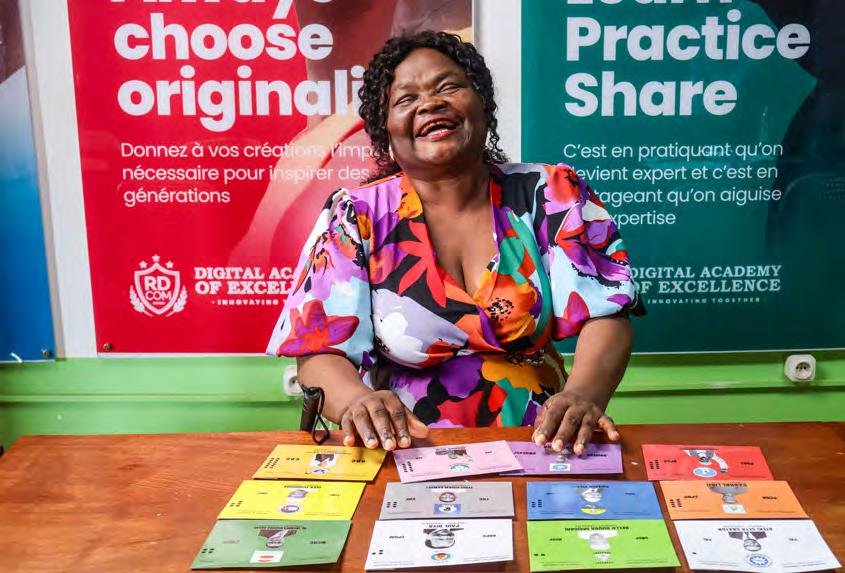
So far, the results and learnings are the fruits of strong partnerships and collaboration between
Eveline, a blind disability rights advocate in Cameroon, has worked with the electoral commission to develop assistive candidate cards for people with visual impairments.
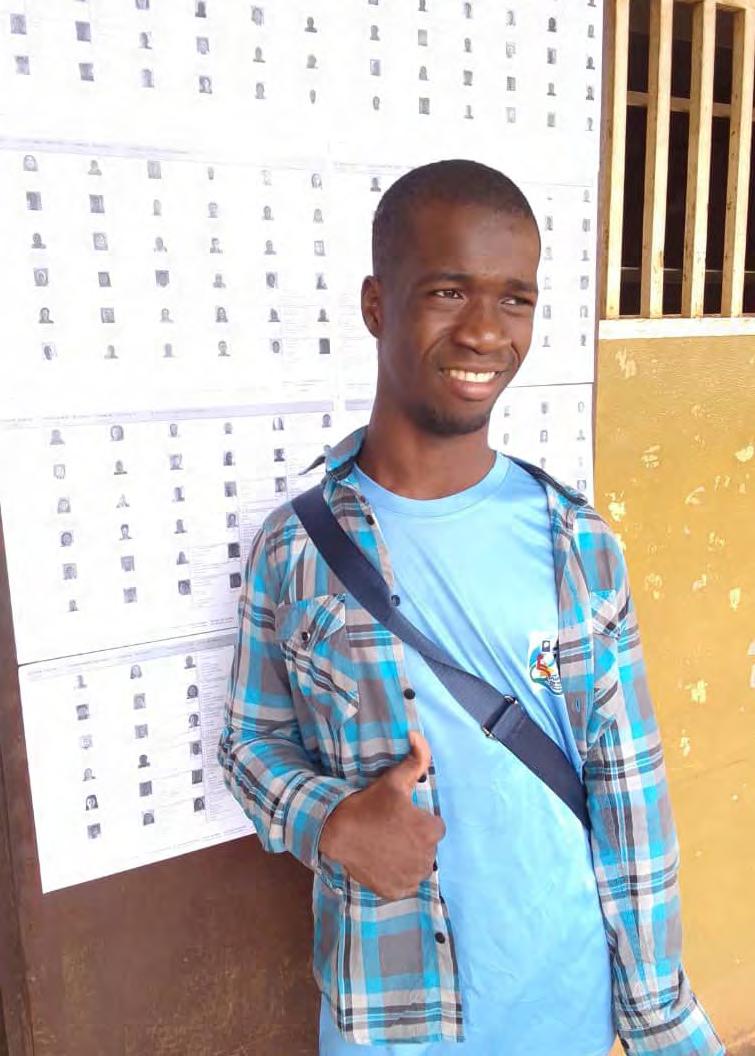
solid good practice foundations. However, one size does not fit all when working with marginalised impairment groups and having dedicated support is critical. In Cameroon, we recently partnered with Inclusion International to conduct consultations, training and develop easy to understand voting awareness materials with people with intellectual disabilities.
we have been supporting candidates with disabilities to stand for local council elections in Senegal, while in Cameroon, we have advocated that people with disabilities should have a more active role in local electoral authorities.
Despite all the progress, efforts to increase the meaningful participation of people with disabilities in electoral processes are at risk of reduced support and resourcing, given the current shift in global development priorities. Disability inclusion and promoting democracy are two sides of the same good governance coin.
organisations of people with disabilities (OPDs) locally, national electoral management bodies, political parties and good governance civil society organisations. In Cameroon, we have worked with the national umbrella OPD to establish an inclusive elections technical working group and enhance their engagement with Elections Cameroon (ELECAM). In Bangladesh, we hosted a consultation between the major political parties and OPDs to identify key participation barriers for people with disabilities and produce recommendations on how to improve. While in Tanzania, we engaged the Independent National Elections Commission to build capacity on the accessible design of voter education materials.
Efforts to address stigma and increase awareness of voting rights and accessible voting aids build upon
Perhaps in a climate of misinformation, and the need for quick, accessible and digestible media for the electorate, we can all learn from the disability movement? Similarly, targeting the accessibility of infrastructures, in particular polling stations and voting equipment, is not only the key to disability inclusion but should be viewed as crucial electoral reform efforts more broadly. Accessibility benefits the wider electorate in terms of creating a more supportive, welcoming and safe environment for casting your vote. For example, in Cameroon, we have supported OPDs as well as local civil society organisations to be accredited election observers and trained them to conduct disability accessibility audits of polling stations to make recommendations to improve accessibility.
People with disabilities are also increasingly playing a leading role in electoral processes to advocate and hold governments accountable for inclusive policy commitments. However, to meaningfully engage in democratic processes, people with disabilities should also be able to participate at the highest level to inform process and policies. To these ends,
We cannot underestimate the value of democratic participation; these efforts require not only political will but resourcing, using a twin-track approach, both for dedicated disability inclusion efforts as well as mainstreaming across wider democracy building efforts.
In spite of the current threats, elections remain the cornerstone of democracy and the participation of the citizens most at risk of being left behind is key to any healthy democracy.
The more that we all ensure that the most marginalised in society are included, the more we can help turn around the worrying trends and ensure democracy not only survives but thrives.
Sightsavers would like to thank Irish Aid, the UK Foreign, Commonwealth & Development Office, and the European Commission for their support for our inclusive citizenship work. For more information about Sightsavers and the inclusive citizenship work, please visit: www.sightsavers. org and www.sightsavers.org/citizenship


Free courses for CPA Members
The CPA has designed a curriculum of online courses specifically for Parliamentarians and parliamentary officials.
Our courses are intended to strengthen your capacity to fulfil constitutional and statutory obligations as well as to enhance your knowledge and understanding of the role of Parliament in the democratic governance process. These accessible courses offer an adaptive and flexible learning approach, with both written and visual content along with access to a variety of useful resources.
To register for the CPA Parliamentary Academy, please email hq.sec@cpahq.org or visit our website: www.cpahq.org/parliamentary-academy
The Speaker of the British Virgin Islands House of Assembly, Hon. Corine George-Massicote has delivered a statement in support of a Bill that will help to modernise the Assembly’s management systems. Legislators from both sides of the aisle strongly supported the HOA Management Bill, 2025 that would bring the House’s operations in line with international standards by allowing it to manage its own staff, budget and procedures.
“For many years, the operational and administrative framework of this House has relied on external mechanisms that were not fully aligned with the principle of legislative autonomy. The introduction of the [proposed law] seeks to correct this. This Bill represents not merely an administrative reform, but a clear statement of constitutional maturity and democratic progress.”
The Speaker added that “The Legislature must be able to act independently, free from interference and guided only by the Constitution, the Standing Orders and the will of the people.”
Health and Social Development Minister, Hon. Vincent Wheatley
highlighted the historic significance of the occasion, which comes as the House of Assembly launches its celebrations of the 75th anniversary of the restoration of the Legislature.
In her statement before the debate, the Speaker also stressed that the reforms were not undertaken “in isolation” but with the support of the Commonwealth Parliamentary Association. “The CPA’s Benchmarks for Democratic Legislatures affirm that parliamentary independence is essential to the separation of powers and to the overall health of democracy. The CPA’s technical guidance and capacity-building support have strengthened our efforts to bring the House of Assembly of the Virgin Islands in line with international standards of legislative governance. This Bill, therefore, responds not only to local needs, but also aligns our institution with global best practices in parliamentary management, integrity and accountability.”
Source: BVI Beacon.
The Punjab Assembly in Pakistan has forwarded to the Federal Government a unanimously approved resolution seeking an amendment to Article
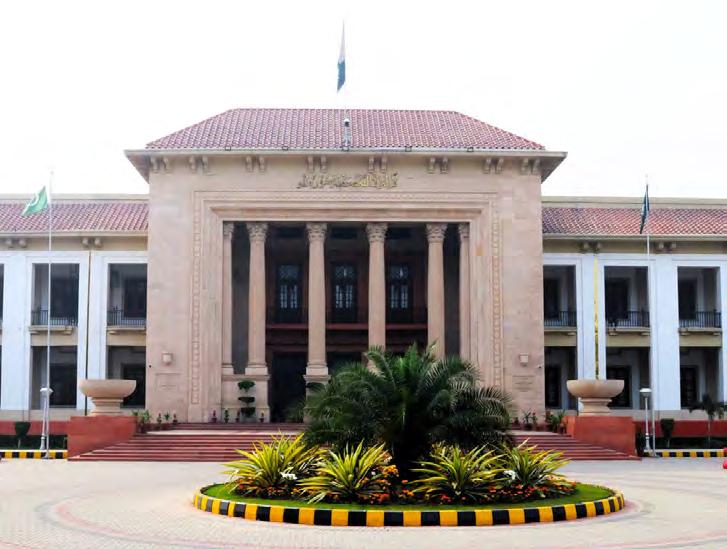
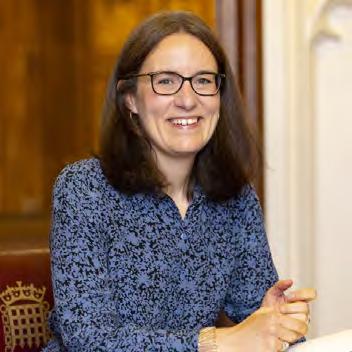
140-A of the Pakistan Constitution for the constitutional protection of local governments.
According to the resolution jointly moved by Hon. Ahmad Iqbal Chaudhry, MPA and Hon. Syed Ali Haider Gillani MPA, the Provincial Legislature has proposed that a new chapter titled ‘Local Governments’ be added to the Constitution.
The proposed amendments recommend a clear constitutional definition of tenure, powers and responsibilities of local governments. The resolution also suggests that local government elections must be held within 90 days of the end of a term, and that elected representatives be required to convene their first session within 21 days of the election.
The Punjab Assembly stressed that local governments are the backbone of democracy and that their continuity and empowerment are vital for effective public service delivery. The Assembly also urged the Federal Government to amend Article 140-A without delay, pointing out that the Supreme Court of Pakistan has already declared local governments a “fundamental component of democracy”
The resolution further stated that repeated changes to local government laws have weakened institutions, adding that several countries around the world provide constitutional guarantees to local governments.
The resolution cites the Lahore Charter which declared that empowering local governments was essential to democracy. The adoption
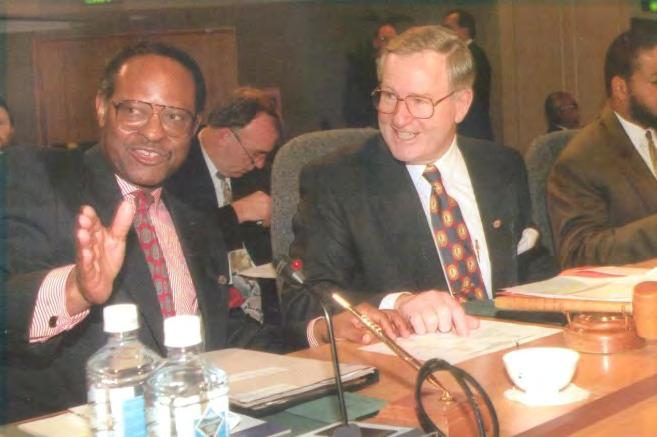
of the Lahore Charter took place at the first joint CPA Asia and South-East Asia Regional Conference in Lahore, Pakistan in February 2025 with delegates committing to democratic accountability and sustainable and inclusive Legislatures.
Source: Pakistan Tribune
Chloe Kilcoyne Mawson has been appointed as the 66th Clerk of the UK Parliaments – the first woman to take up the post. The Clerk of the Parliaments is head of the UK House of Lords Administration and Chief Procedural Adviser to the House. The role-holder is also the Corporate and Accounting Officer and chair of the Lords Management Board.
Chloe is currently the Clerk Assistant in the UK House of Lords, the second most senior role in the Administration. She will formally take on her new role on 2 April 2026, when the current Clerk Simon Burton retires.
Commenting on the appointment, Rt Hon. Baroness Smith, Leader of the House of Lords, said: “I am delighted to be able to confirm His Majesty’s approval of Chloe as our next Clerk of the Parliaments. She is widely respected across the House for her knowledge, experience and skills. I would also like to thank her predecessor Simon Burton for his long
and valued service in Parliament, and wish him well for the future.”
Chloe Mawson said: “It is an absolute honour to have been appointed as the next Clerk of the Parliaments. I feel privileged to have been trusted to take forward this historic and important role that dates back over 700 years. I’d like to pay tribute to Simon Burton for his years of public service and for everything he has achieved during his term of office. I am excited to build on his values-based approach. I look forward to working with the talented teams across the Administration and bicameral services to develop the ways we support the House and its members to fulfill their important constitutional role.”
Source: UK Parliament.
On 16 October 2025, the New Zealand House of Representatives planned business was postponed as Members paid tribute to Rt Hon. Jim Bolger. Bolger, who served as the 35th Prime Minister of New Zealand from 1990 to 1997, died the previous day, aged 90.
The New Zealand Prime Minister, Rt Hon. Christopher Luxon, MP (National) moved a motion calling for the House to “place on record its appreciation and gratitude for the devoted and distinguished service to New Zealand” of the late Prime Minister, “and that this House express our sorrow and
our sympathy to his wife Joan, their children and wider family”.
Luxon outlined Bolger’s farming background, his election to Parliament, his time as a Minister, as leader of the National Party, as Prime Minister, and then as New Zealand’s Ambassador to the United States after leaving Parliament. Luxon added that Bolger “strongly opposed nuclear testing in the Pacific and he helped reshape our foreign policy to be more outwardlooking, more engaged with Asia Pacific, an approach that still guides our Government today.”
Rt Hon. Winston Peters, MP (New Zealand First) noted “It’s often said that Jim Bolger was the last Prime Minister without a university degree… Jim learned his craft on the farm and in the town halls, and he applied it to the highest elected office in this country. In his earliest years in Parliament, he earned the title ’The Woolshed Orator.’ Jim Bolger was a man of good character, strong morals, and family values.”
Members talked about Bolger’s achievements in office. Teanau Tuiono, MP (Greens) noted that “He oversaw some significant reforms, including the introduction of the MMP [mixedmember proportional voting] system… as well as the first major Treaty of Waitangi settlements in Tainui and Ngāi Tahu.” Tuiono added that Bolger “Believed in Te Tiriti, historical justice, and a collective responsibility to honour our founding agreement. When people questioned him on why Treaty settlements, he responded by saying ‘Because it is the right thing to do.’ ” Debbie Ngarewa-Packer, MP (Te Pāti Māori) said “He modernised the whole process of reconciliation in an effort to bring Aotearoa and New Zealand closer together.”
Rt Hon. Chris Hipkins, MP (Labour) noted that “Jim Bolger’s life is full of contradictions. His Government sold the Bank of New Zealand and then he was the inaugural Chair of the
new Government-owned Kiwibank. His Government ushered in the Employment Contracts Act and then subsequently he chaired a working group that led to the establishment of fair pay agreements. His Government did more to weaken unions than just about any other, but then in his later years he lamented how small unions had become and the effect that that had had for working people… His passing marks the end of an era, but his impact on our nation and our politics will endure for many generations to come.”
After speeches, MPs stood to sing the waiata (song) ‘Whakaaria Mai’ and the House adjourned early.
Report by Lizzie Hendy, Parliament of New Zealand
The Conflict of Interest (Members and Ministers) Act came into effect in Manitoba in Canada on 4 October 2023. It establishes the role of a Provincial Ethics Commissioner, who can conduct inquiries into violations
of conflict of interest as set out in this and other Acts. Part 6 of the Act allows sitting Members of the Legislative Assembly to request the Commissioner’s opinion into possible contraventions.
Since the beginning of the 43rd Legislature in 2023, there have been ten such requests and, as of 27 October 2025, the Commissioner had responded to nine of them. The majority of the Commissioner’s findings have been that no contraventions occurred, or that contraventions occurred that were minor, inadvertent or otherwise not worth imposing a monetary fine.
In one recent report, however, the Commissioner found serious contraventions to have occurred and in October 2025 ordered fines to be paid by three Members: one sitting Member and two former Members, including former-Premier Heather Stefanson.
The Members were fined for violating the Province’s conflict of interest law in pushing for a mining project to be approved after their party had lost the 2023 election and before the incoming
government could be sworn in. The Commissioner also ruled that they had violated the ‘caretaker convention’ - a long-standing parliamentary principle that forbids outgoing governments from making major decisions after losing an election.
Nova Scotia MP and former Deputy Speaker of the Canadian House of Commons, Hon. Chris d’Entremont announced on 4 November 2025 that he had left the Conservative Party and crossed the floor to join the Liberals in support of Hon. Mark Carney’s government, citing issues with the leadership of the main Opposition Party. The decision prompted passionate responses from constituents and other Members of Parliament.
A Conservative MP since 2019, d’Entremont won his seat in the riding of Acadie-Annapolis with a narrow 1.1% margin of victory - 533 votes - over the Liberal candidate in the last Federal election.
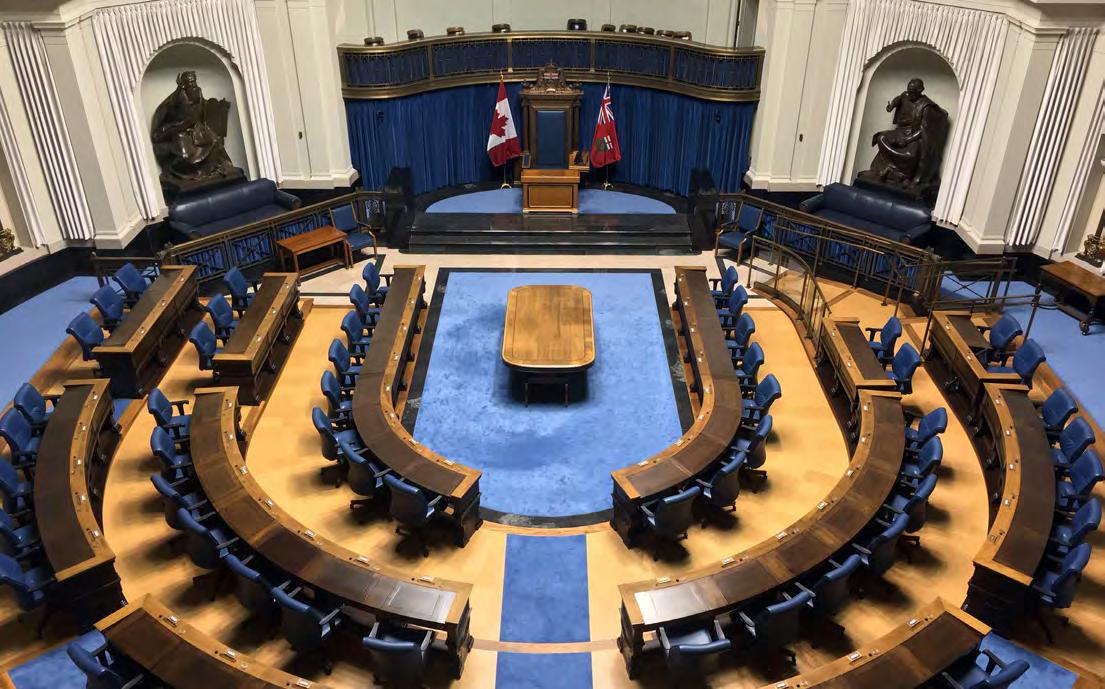
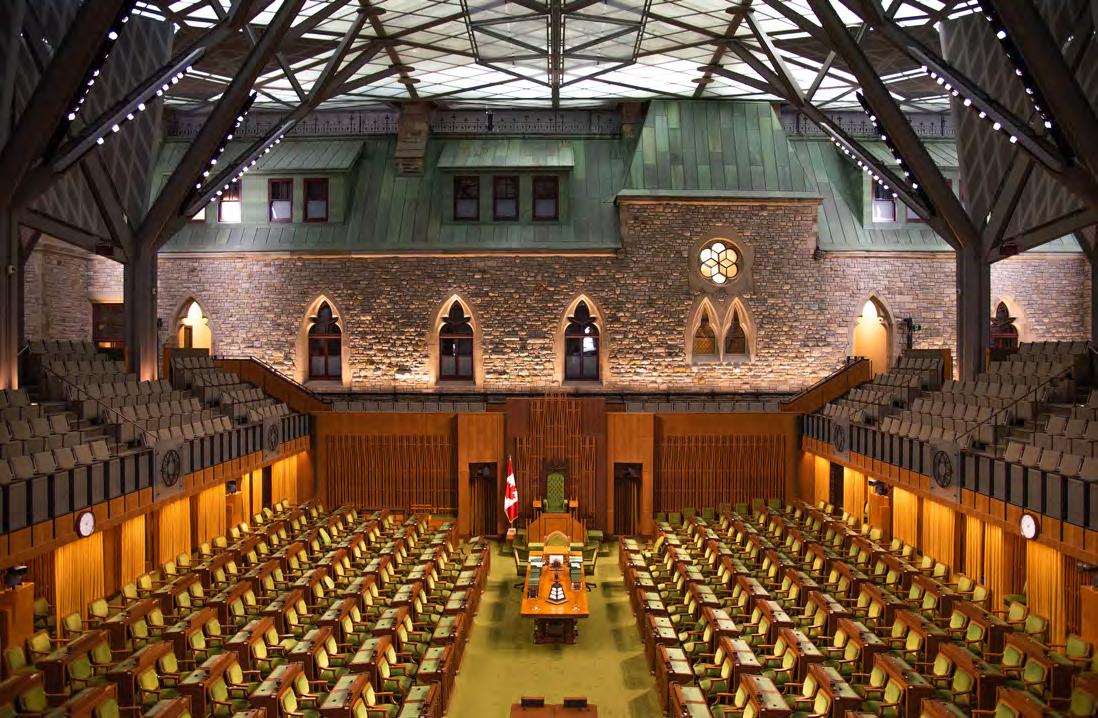
The party crossing came shortly after the tabling of the 2025 Budget 2025 and as a result, the Liberal minority government became two seats away from forming a majority government.
On 18 November 2025, the Canadian House of Commons narrowly approved the Liberal Government’s first federal budget, narrowly avoiding an early election. The fiscal plan, which raises Canada’s deficit to a projected C$78 billon was passed thanks to crucial support from Opposition MPs, including Green Party leader, Hon. Elizabeth May with 170 votes in favour and 168 against it.
The Canadian Prime Minister, Hon. Mark Carney, who previously served as the Chief Banker for both Canada and the UK, defended the budget as a “generational investment” to help Canada strengthen its economy. The plan also allocates direct support for businesses hurt by US tariffs on Canadian goods.
Green Party support for the Budget proved crucial with Party leader, Hon. Elizabeth May telling reporters that she voted ‘yes’ based on commitments made by the Prime Minister that he
would support Canada’s climate targets.
The Conservative Party, led by Hon. Pierre Poilievre, and the Québec nationalist Bloc Québécois both voted against the budget, accusing the government of failing to address affordability concerns.
Following recent elections, the National Assembly of Tanzania has elected a new Speaker for the 13th Parliament.
Ilala Member of Parliament, Hon. Mussa Azzan Zungu, was elected as Speaker on 10 November 2025 receiving 378 votes out of 383 ballots cast, with three spoilt votes. Mr Zungu, a veteran legislator and long-serving public servant who was also a Deputy Speaker, pledged to lead the House with ‘transparency, discipline and a strong sense of accountability’, assuring MPs and citizens alike that he would uphold the integrity of Parliament as one of the country’s key democratic
pillars. He was nominated by his party, Chama Cha Mapinduzi (CCM).
The previous Speaker, Hon. Dr Tulia Ackson withdrew from the election of the Speaker although she remains an elected Member for Uyole constituency.
Other candidates for the Speaker’s election included Veronica Tyeah
Below: New Speaker of the 13th Parliament of Tanzania, Hon. Mussa Azzan Zungu, MP addresses MPs.
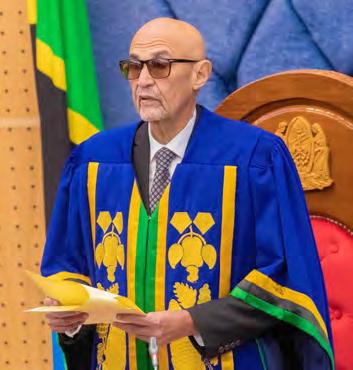
of the National Reconstruction Alliance (NRA), Anitha Mgaya of the National League for Democracy (NLD), Chrisant Nyakitita of the Democratic Party (DP), Ndonge Ndonge of the Alliance for Africa Farmers Party (AAFP), and Amin Yango of the Alliance for Democratic Change (ADC). Of these, Mr Ndonge and Mr Yango each secured one vote, while the remaining contenders failed to attract any.
On 14 November 2025, the re-elected President of Tanzania, Her Excellency Samia Suluhu Hassan addressed legislators at the Parliament Buildings in Dodoma, her first address to Parliament since winning the 29 October election with almost 98% of the vote.
The President promised to investigate violence during the recent elections and offered condolences to bereaved families. She also said that the state would set up a commission and work towards ‘reconciliation and peace’.
The United Nations has said that it believes that hundreds of people were killed during the election protests which were driven by the exclusion of two Opposition candidates. African Union election observers also raised concerns about the election processes. Sources: Reuters; The BizLens; The Tanzania Times.
The Education Legislation Amendment (Integrity and Other Measures) Bill 2025 has passed its Second Reading and Third Reading in October 2025 in the House of Representatives at the Australian Federal Parliament and will now progress without amendments.
The Bill has now been referred to the Senate Education and Employment Legislation Committee on the advice of the Selection of Bills Committee.
Following the Australian Government’s unsuccessful attempt in 2024 to pass reforms through a previous Education Services for Overseas Students Act 2000 (ESOS Act) Amendment Bill, the Minister for Education, Hon. Jason Clare, MP has reintroduced legislation aimed at “strengthening the integrity of the international education sector”.
Assistant Minister for International Education, Hon. Julian Hill, MP addressed some of the key points of debate in the sector regarding the Bill saying, “These changes safeguard our reputation as a world leader in education, both here and overseas.”
The international education sector is Australia’s fourth largest export sector worth AU$51billion, supporting 250,000 jobs and gives Australian students exposure to global education opportunities.
The Bill did face some criticism during proceedings, including from independent MP for Wentworth, Hon. Allegra Spender, who widely supports the Bill but raised concerns about new Ministerial powers to cancel a class of courses or course registrations.
Sources: The Pie Network; The Koala Education News.
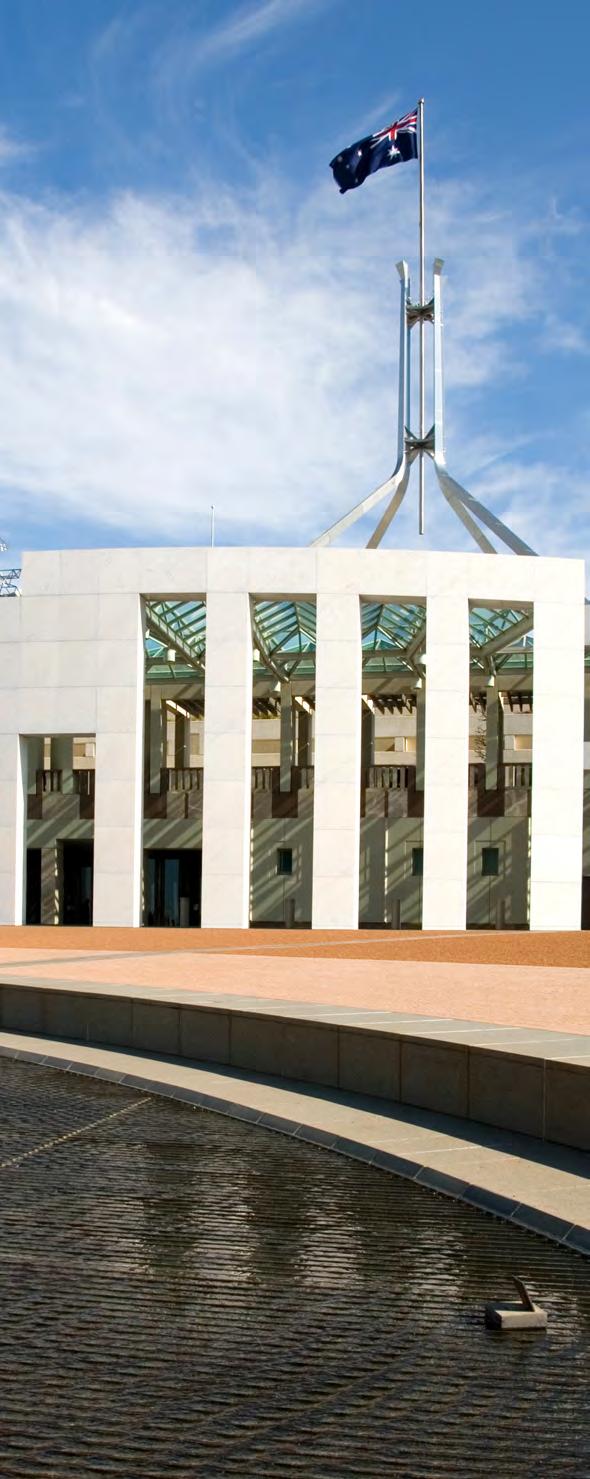
‘Indian Parliament: Shaping Foreign Policy’ by K. V. Prasad, a senior journalist with more than three decades of professional experience covering the Indian Parliament and diplomatic processes. He has also been a Fullbright Congressional Fellow in United States. Book review by Ravindra Garimella, Secretary to the Leader of Opposition, Rajya Sabha in Parliament of India and former Joint Secretary at Lok Sabha and also has been involved in CPA activities for over 20 years.
K. V. Prasad’s ‘Indian Parliament: Shaping Foreign Policy’ is an insightful and empirically grounded study of how the Indian Parliament has interacted with, influenced and occasionally constrained the conduct of foreign policy. The book could not have come at a better time, when much is being deliberated upon the foreign policy of India, in the present global context.
The book comprises ten chapters tracing the institutional evolution of the Indian Parliament’s role in foreign policy from the Constituent Assembly debates to contemporary coalition politics. The author uses a combination of historical reconstruction and casestudy analysis to demonstrate how the Indian Parliament functions as both a legitimising and contestatory space in shaping the country’s external orientation.
By way of illustration, Prasad provides three major case studies namely:
1. The Indian Peace Keeping Force (IPKF) intervention in Sri Lanka (1987-1990).
2. India’s decision to join the World Trade Organization (WTO) in 1995.
3. The India-United States Civil Nuclear Cooperation Agreement (2005-2008).
Each case study emerges as a prism through which to examine the interaction between political power, parliamentary oversight and foreignpolicy decision-making.
As for conceptual foundations, Prasad elaborates on Article 253 and the relevant entries in List I of the Seventh Schedule that empower Parliament to legislate on treaties and international agreements, despite the fact that the day-to-day conduct of foreign affairs rests with the Executive. The author underscores that while Parliament rarely determines outcomes directly, it plays a critical role in shaping narratives, ensuring accountability, and
articulating the moral and political limits within which governments act.
The chapter on, ‘Constituent Assembly: Drawing the Contours of Foreign Policy’, revisits the early years of independence when Jawaharlal Nehru, as Prime Minister and Foreign Minister, laid the foundations of India’s non-aligned and peace-oriented foreign policy. Prasad dwelt deep through the Constituent Assembly debates to reveal how Nehru repeatedly subjected foreign policy to legislative discussion-on issues such as joining the Commonwealth, recognising China, and India’s relations with West Asia and the Indian diaspora. The Assembly’s interventions helped define the norms of transparency and parliamentary involvement that would characterise later decades.
The chapter on the ‘Provisional Parliament (1950-52)’ - a critical era of international politics, describes the transition from colonial to republican governance, highlighting debates on India’s participation in the United Nations. Parliament’s early oversight role, though limited, established the democratic ethos of consultation in foreign affairs.
In the section on Sri Lanka and the IPKF, Prasad examines one of the most controversial episodes in Indian diplomacy. Parliamentary discussions mirrored national anxieties about sovereignty, regional responsibility and the costs of intervention.
The WTO chapter captures the geoeconomic transformation of the 1990s – a watershed era of India’s democratic polity. Prasad details the heated debates surrounding globalisation, trade liberalisation and agricultural policy. Opposition parties accused the Executive of compromising national sovereignty and bypassing Parliament’s treaty-ratifying authority. Despite these objections, the Rao government
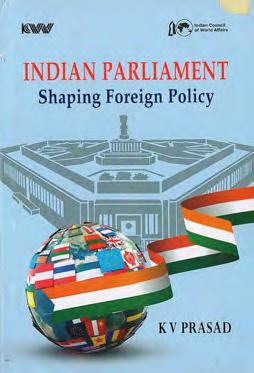
persisted, signaling the ascendancy of economic pragmatism. The episode illustrates Parliament’s role as a site of contestation rather than control, where dissent registers but does not always determine outcomes.
The final set of case studies on the civil nuclear cooperation with the United States provides the book’s most dramatic account of parliamentary politics. The author reconstructs the years-long debate culminating in the 2008 trust vote that saved the Manmohan Singh government. Parliament’s insistence on amendments to the Civil Nuclear Liability legislation demonstrated both its capacity to influence details of policy and the limits of Executive autonomy. Prasad interprets this episode as evidence of the maturing of India’s legislative oversight within the constraints of coalition politics.
Finally, ‘Indian Parliament: Shaping Foreign Policy’ is a significant contribution from an erudite and experienced journalist author which Prasad is, to literature on Indian foreign policy and democratic governance. It dispels the notion that diplomacy in India is an insulated domain of bureaucratic elites by demonstrating how parliamentary debate, political ideology and coalition dynamics continually shape external engagement. For scholars of political science, international relations and constitutional studies, this volume provides a comprehensive and insightful account of the evolving role of Parliament in defining India’s place in the world.
Former Member of Parliament, Mninwa Mahlangu has passed away on 24 August 2025, on his way to a South African hospital after a short illness.
Mninwa Mahlangu’s public and political life started in the late 1960s when he was elected President of the Student Christian Movement, in the then Province of Eastern Transvaal. Between 1991 and 1994, he was a negotiator at the Congress for Democratic South Africa (CODESA) and the Multiparty Negotiation Forum.
After the 1994 elections, he joined the National Assembly of South Africa for the ANC and he became a member of the Constitutional Assembly (CA), the body tasked with the drafting of the new South African Constitution. During
his tenure as a Member of the National Assembly, he also served as Chairperson of Committees. In 2002, he was elected as Deputy Chairperson of the National Council of Provinces (NCOP) before becoming the NCOP Chairperson in 2004 following further elections.
He represented South Africa at many international conferences including the Commonwealth Parliamentary Association’s Annual Conferences; Inter Parliamentary Union’s Assemblies; and the Commonwealth Speakers and Presiding Officers’ Conference.
Following his parliamentary career, Mninwa Mahlangu moved into diplomacy becoming the South African Ambassador to the United States (2015 to 2020) and more recently, he was South African High Commissioner to Kenya, Ambassador Extraordinary and Plenipotentiary to Somalia, and Permanent Representative to the United Nations Office in Nairobi (UNON).
The Western Front Association has remembered the small Pacific island of Niue’s wartime contribution for the first time at their Armistice Day ceremony on 11 November 2025. This year’s Armistice Day ceremony marks the 111th anniversary of the start of The Great War.
Niuean Dr Dean Rex, the grandson of Niue’s first postindependence Premier, was invited to lay a wreath at the Cenotaph in Whitehall, London, to remember the service of his countrymen.
During the First World War when all territories of the British Empire were called upon to support the war effort, citizens from Niue answered the call. In 1915, around 150 volunteers sailed from the Pacific island for training as labourers in the New Zealand Pioneer Battalion before continuing to Egypt then northern France. Several suffered from disease on the journey and in the terrible conditions in the wet trenches of the battlefield.
In May 1916, a decision was made to begin the withdrawal of Niueans from the front. They were sent to Hornchurch, Essex, to join other hospitalised soldiers and await their return to New Zealand. When the Niueans departed for New Zealand
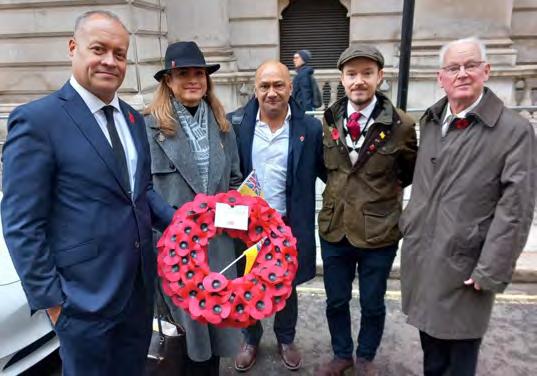
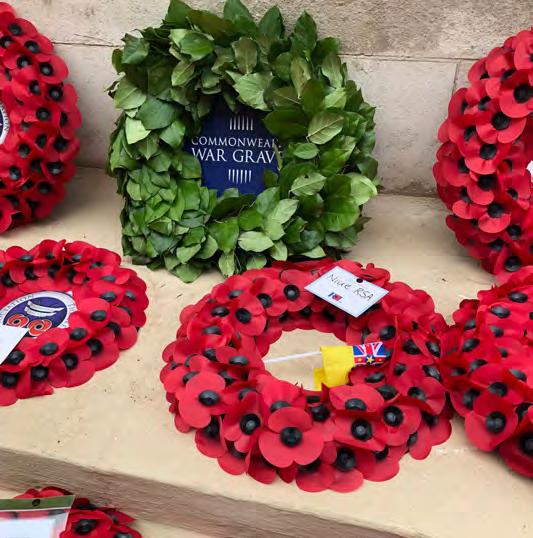
nearly 80% of the 150 were hospitalised at some point during their service. A further four soldiers died on the way home, bringing the total Niuean deaths from disease to fifteen.
The Western Front Association was formed to maintain interest in the period 1914-1918, and to perpetuate the memory, courage and comradeship of those on all sides who served during the Great War. For more information visit www.westernfrontassociation.com
The connection between the Western Front Association and the Niue Assembly was made as the result of a Commonwealth Parliamentary Association (CPA) staff member, Fraser McIntosh connecting the two organisations following a CPA Democratic Benchmarks visit to Niue.
Parliamentary Conversations in the Commonwealth
A podcast by the CPA that gives a voice to Parliamentarians, civil society experts and activists across the Commonwealth to discuss common democratic challenges and share their ideas on what can be done to solve them.
Listen now to new episodes on all major podcast platforms or visit www.cpahq.org/knowledgecentre/cpa-podcast
PATRON:
His Majesty King Charles III Head of the Commonwealth
VICE-PATRON: Vacant
Awaiting South Africa nomination
The CPA Executive Committee comprises the CPA Officers and Regional Representatives. Dates of membership below. Some Members are completing terms started by other Members.
CPA PRESIDENT: (68th CPC to 69th CPC - 2025-2026): Hon. Refilwe Mtshweni-Tsipane, Chairperson of National Council of Provinces, Parliament of South Africa
CPA VICE-PRESIDENT: (68th CPC to 69th CPC - 2025-2026): Vacant
CHAIRPERSON OF THE CPA EXECUTIVE COMMITTEE: (67th CPC to 70th CPC - 2024-2027): Hon. Dr Christopher Kalila, MP, Zambia
CPA VICE-CHAIRPERSON: (68th CPC to 69th CPC - 2025-2026): Hon. Carmel Sepuloni, MP, New Zealand
CPA TREASURER: (68th CPC to 71st CPC - 2025-2028): Senator Hon. Sue Lines, President of the Senate of Australia
COMMONWEALTH WOMEN
PARLIAMENTARIANS (CWP)
CHAIRPERSON: (68th CPC to 71st CPC - 2025-2028): Hon. Catherine Fife, MPP, Ontario
CPA SMALL BRANCHES
CHAIRPERSON: (67th CPC to 70th CPC - 2024-2027): Hon. Valerie Woods, MP, Speaker of the House of Representatives, Belize
COMMONWEALTH
PARLIAMENTARIANS WITH DISABILITIES (CPwD)
CHAIRPERSON: (68th CPC to 71st CPC - 2025-2028): Senator Hon. Isaiah Jacob, Malaysia (Dewan Negara/Senate of Malaysia)
The CPA Coordinating Committee comprises the CPA Chairperson, Vice-Chairperson, Treasurer, CPA Small Branches Chairperson and the Chairpersons of the Commonwealth Women Parliamentarians (CWP) and the Commonwealth Parliamentarians with Disabilities (CPwD) networks.
CPA AFRICA REGION
Hon. Marwick Khumalo, MP, Eswatini (66th CPC to 69th CPC2023-2026)
Hon. Elijah Okupa, MP, Uganda (66th CPC to 69th CPC - 2023-2026) Alternate for Mauritius
Hon. Tolulope Akande-Sadipe, MP, Nigeria (67th CPC to 70th CPC2024-2027)
Hon. Mary Muyali Boya, MP, Deputy Speaker, Cameroon (67th CPC to 70th CPC - 2024-2027)
Hon. Letlhogonolo Barongwang, MP, Botswana (68th CPC to 71st CPC - 2025-2028)
Vacant (68th CPC to 71st CPC - 20252028)
CPA ASIA REGION
Hon. Farah Azeem Shah, MPA Balochistan (66th CPC to 69th CPC2023-2026)
Hon. Ahmed Nazim, MP, Deputy Speaker, The Maldives (67th CPC to 70th CPC - 2024-2027)
Hon. Syed Naveed Qamar, MNA, Pakistan (68th CPC to 71st CPC2025-20285)
CPA AUSTRALIA REGION
Hon. Pat Weir, MP, Speaker of Queensland (66th CPC to 69th CPC - 2023-2026) Completing term started by another Member.
Vacant, Australia Federal (67th CPC to 70th CPC - 2024-2027)
Hon. Alanna Clohesy, MLC, President of the Legislative Council of Western Australia (68th CPC to 71st CPC - 2025-2028)
CPA BRITISH ISLANDS AND MEDITERRANEAN REGION
Deputy Mary Le Hegarat, Jersey (66th CPC to 69th CPC - 2023-2026)
Rt Hon. David Mundell, MP, United Kingdom (67th CPC to 70th CPC2024-2027)
Hon. Natasha Asghar, MS, Wales (68th CPC to 71st CPC - 2025-2028)
CPA CANADA REGION
Hon. Raj Chouhan, MLA Speaker of the Legislative Assembly of British Columbia (66th CPC to 69th CPC - 2023-2026)
Senator Hon. Rosemary Moodie, Canada Federal (67th CPC to 70th CPC - 2024-2027) - completing the term started by another Member
Hon. Sidney MacEwen, MLA, Speaker of the Legislative Assembly of Prince Edward Island (68th CPC to 71st CPC - 2025-2028)
CPA CARIBBEAN, AMERICAS AND THE ATLANTIC REGION
Senator Hon. Dr Dessima D. Williams, President of the Senate, Grenada (66th CPC to 69th CPC2023-2026)
Hon. Dennis P. Lister, JP, MP, Speaker, Bermuda (67th CPC to 70th CPC - 2024-2027)
Hon. Juliet Holness, MP Speaker of the House of Representatives of the Parliament of Jamaica (68th CPC to 71st CPC2025-2028)

CPA INDIA REGION
Shri Biswajit Daimary, MLA Speaker, Assam (66th CPC to 69th CPC - 2023-2026)
Hon. Shri Vishnu Dutt Sharma, MP Lok Sabha, India Union, (67th CPC to 70th CPC - 2024-2027)
Vacant (68th CPC to 71st CPC2025-2028)
CPA PACIFIC REGION
Hon. Dulcie Tei, MP Tonga (66th CPC to 69th CPC2023-2026)
Hon. Tina Pupuke Browne, MP, Cook Islands (67th CPC to 70th CPC - 2024-2027)
Hon. Carmel Sepuloni, MP, New Zealand (68th CPC to 71st CPC - 2025-2028) Also: CPA ViceChairperson (2025-2026)
CPA SOUTH-EAST ASIA REGION
Hon. Christopher De Souza, MP, Deputy Speaker, Singapore (66th CPC to 69th CPC - 2023-2026)completing the term started by another Member
Hon. Dr Datuk’ Noraini Ahmad, MP, Malaysia (67th CPC to 70th CPC - 2024-2027)
Hon. Dato’ Seri Law Choo Kiang, MLA, Speaker, Penang (68th CPC to 71st CPC - 2025-2028)
CPA SMALL BRANCHES CHAIRPERSON
Hon. Valerie Woods, MP, Speaker of the House of Representatives, Belize (2024-2027)
CPA AFRICA REGION
Hon. Churchill Gill, MNA Seychelles (2024-2027)
CPA ASIA REGION
Hon. Ahmed Nazim, MP, Deputy Speaker, The Maldives (2025-2028)
CPA AUSTRALIA REGION
Hon. Robyn Lambley, MLA Speaker, Northern Territory (2024-2027)
CPA BRITISH ISLANDS AND MEDITERRANEAN REGION
Deputy Adrian Gabriel Guernsey (2023-2026) - Also: CPA Small Branches Vice-Chairperson
CPA CANADA REGION
Hon. Derek Bennett, MHA Speaker of the House of Assembly, Newfoundland and Labrador (2025-2028)
CPA CARIBBEAN, AMERICAS AND THE ATLANTIC REGION
Hon. Lanien Blanchette, MP Speaker, St Kitts and Nevis (2024-2027)
CPA INDIA REGION
Shri Mingma Narbu Sherpa, MLA Speaker, Sikkim (2025-2028)
CPA PACIFIC REGION
Hon. Lord Fakafanua Speaker, Tonga (2025-2028)
CPA SOUTH-EAST ASIA REGION
YB Tuan Kerk Chee Yee, MLA Deputy Speaker, Melaka (2024-2027)
CWP CHAIRPERSON
Hon. Catherine Fife, MPP Ontario (2025-2028)
CWP PRESIDENT Vacant South Africa (2025-2026)
CPA AFRICA REGION
Hon. Unity Dow, MP, Botswana (2025-2028)
CPA ASIA REGION
Hon. Dr. Kaushalya Ariyarathne, MP, Sri Lanka (2024-2027)
CPA AUSTRALIA REGION Vacant (2025-2028)
CPA BRITISH ISLANDS AND MEDITERRANEAN REGION
Deputy Sasha Kazantseva-Miller Guernsey (2025-2028)
Also CWP Vice-Chairperson (2025-2026)
CPA CANADA REGION
Hon. Susan Leblanc, MLA Nova Scotia (2023-2026)
CPA CARIBBEAN, AMERICAS AND THE ATLANTIC REGION
Hon. Rochelle Forde, Speaker of the House of Assembly, St Vincent and the Grenadines (2024-2027)
CPA INDIA REGION
Smt. Daggubati Purandeswari, MP Lok Sabha, India (2024-2027)
CPA PACIFIC REGION
Hon. Lenora Qereqeretabua, MP, Deputy Speaker, Fiji (2023-2026)
CPA SOUTH-EAST ASIA REGION
Hon. Rodiyah Binti Sapiee, MP Malaysia (2022-2025)
CPwD CHAIRPERSON
Senator Hon. Isaiah Jacob Malaysia (2025-2028)
CPA AFRICA REGION
Hon. Timothy Wanyonyi, MP Kenya (2024-2027)
CPA ASIA REGION
Hon. Sugath Wasantha de Silva, MP Sri Lanka (2024-2027)
CPA AUSTRALIA REGION
Hon. Liesl Tesch, MP New South Wales (2024-2027) - Also: CPwD ViceChairperson (2025-2026)
CPA BRITISH ISLANDS AND MEDITERRANEAN REGION
Hon. Jeremy Balfour, MSP Scotland (2024-2027)
CPA AFRICA REGION
Mr Baraka Ildephonce Leonard Parliament of Tanzania
CPA ASIA REGION Vacant Parliament of Pakistan
CPA AUSTRALIA REGION
Ms Alex Cullum Parliament of Australia
CPA BRITISH ISLANDS AND MEDITERRANEAN REGION
Ms Sarah Dickson, OBE Parliament of the United Kingdom
CPA CANADA REGION
Hon. Shane Thompson, MLA Northwest Territories (2024-2027)
CPA CARIBBEAN, AMERICAS AND THE ATLANTIC REGION
Hon. Jeremiah Norbert, MP Saint Lucia (2024-2027)
CPA INDIA REGION
Hon. Smt. Supriya Sule, MP India (2024-2027)
CPA PACIFIC REGION
Hon. Priyanca Radhakrishnan, MP New Zealand (2024-2027)
CPA SOUTH-EAST ASIA REGION Vacant Malaysia (2024-2027)
CPA CANADA REGION
Mr Jeremy LeBlanc Parliament of Canada
CPA CARIBBEAN, AMERICAS AND THE ATLANTIC REGION
Mr Sherlock Isaacs Parliament of Guyana
CPA INDIA REGION
Shri Utpal Kumar Singh Parliament of India
CPA PACIFIC REGION
Ms Amber Walters Parliament of New Zealand
CPA SOUTH-EAST ASIA REGION
Mr Nizam Mydin bin Bacha Mydin Parliament of Malaysia
Stephen Twigg CPA Secretary-General Commonwealth Parliamentary Association, CPA Headquarters Secretariat, Richmond House, Houses of Parliament, London SW1A 0AA, United Kingdom
Tel: +44 (0)20 7799 1460
Email: hq.sec@cpahq.org www.cpahq.org
Twitter @CPA_Secretariat
Facebook.com/CPAHQ
Instagram @cpa_secretariat
LinkedIn | YouTube
A full A-to-Z listing of all CPA Branches