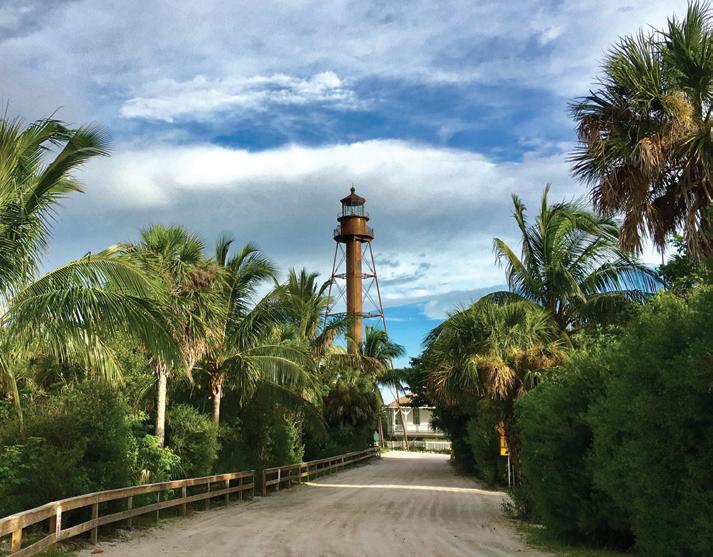
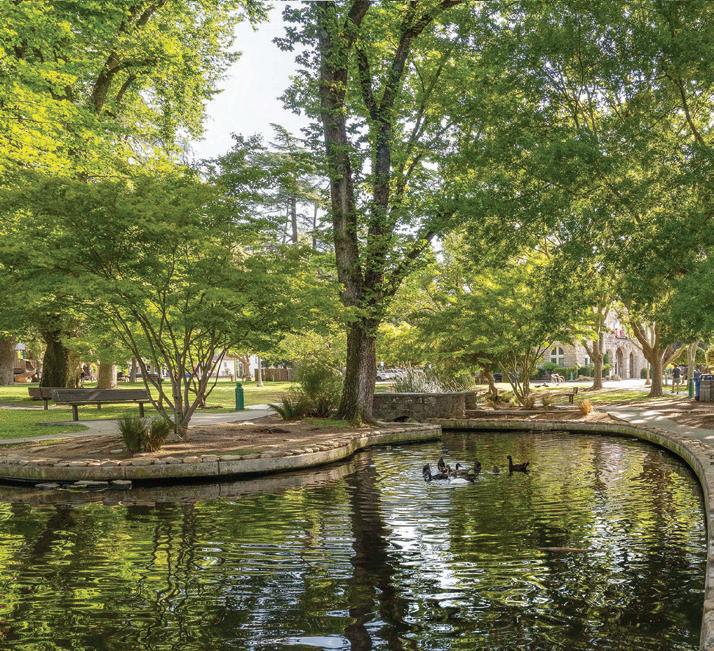
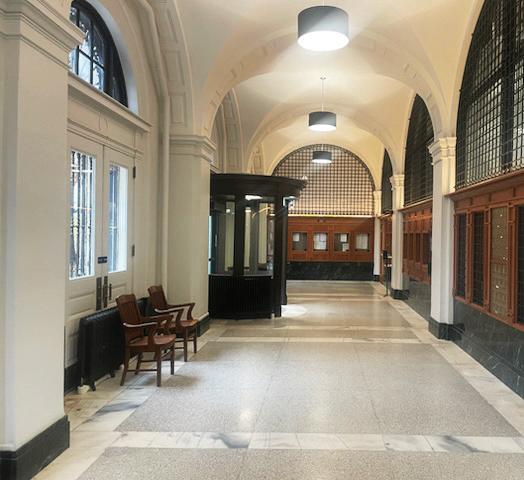
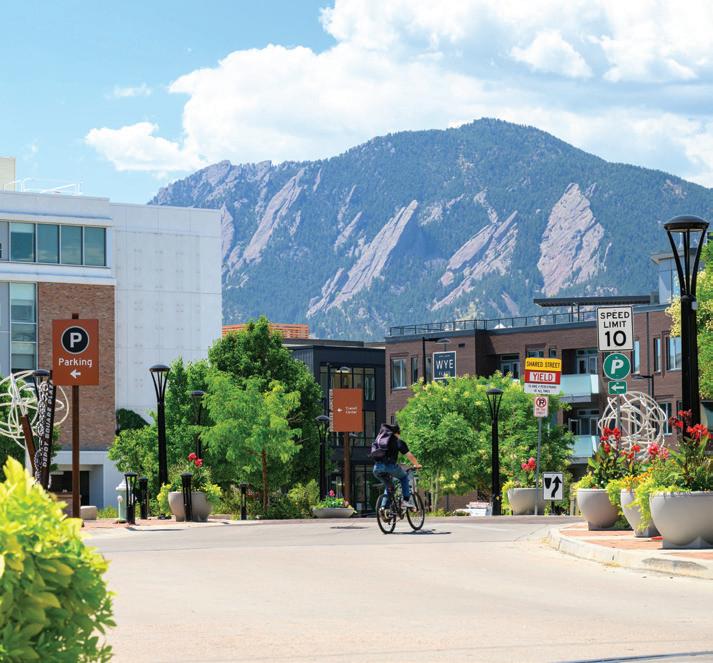
34 Maintenance & Operations: Restoring character and improving comfort 38 Public Safety: Students become live-in staff at Connecticut fire department 40 Parks & Environmental Services: Doty Park: A testament to community and environmental stewardship 42 Municipal Management: Boulder program promotes longterm commercial affordability
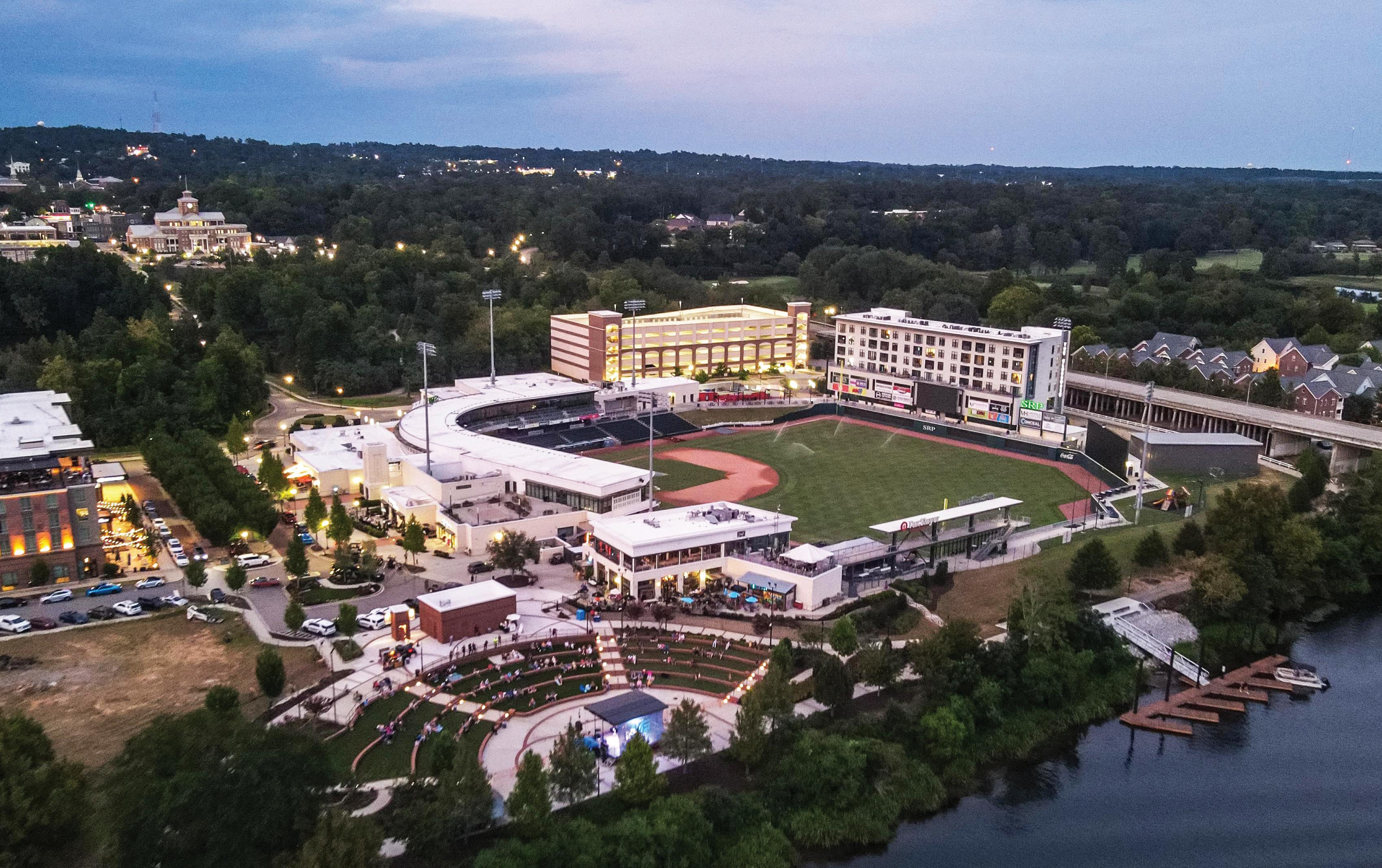
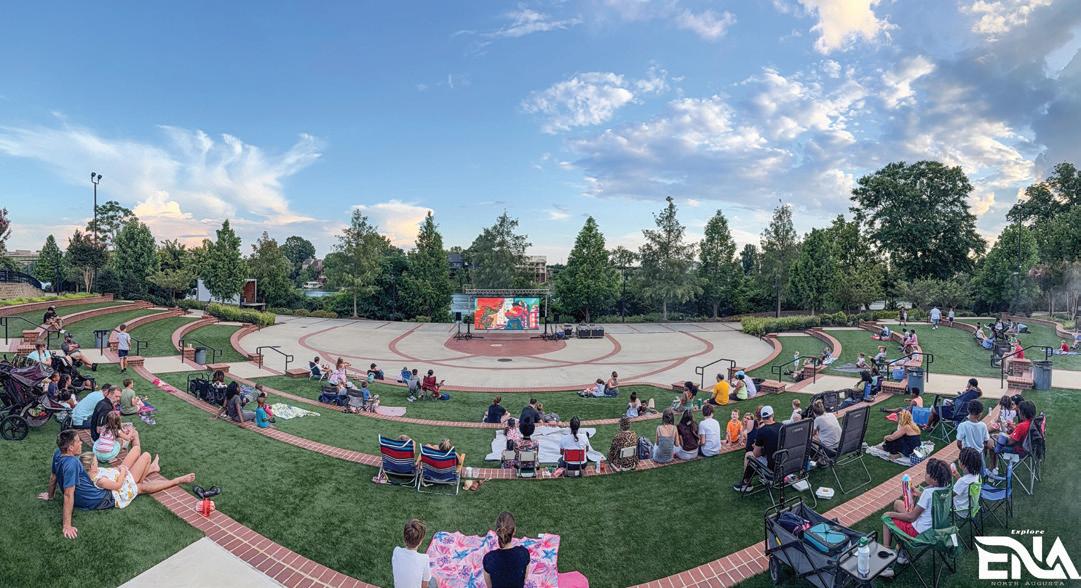
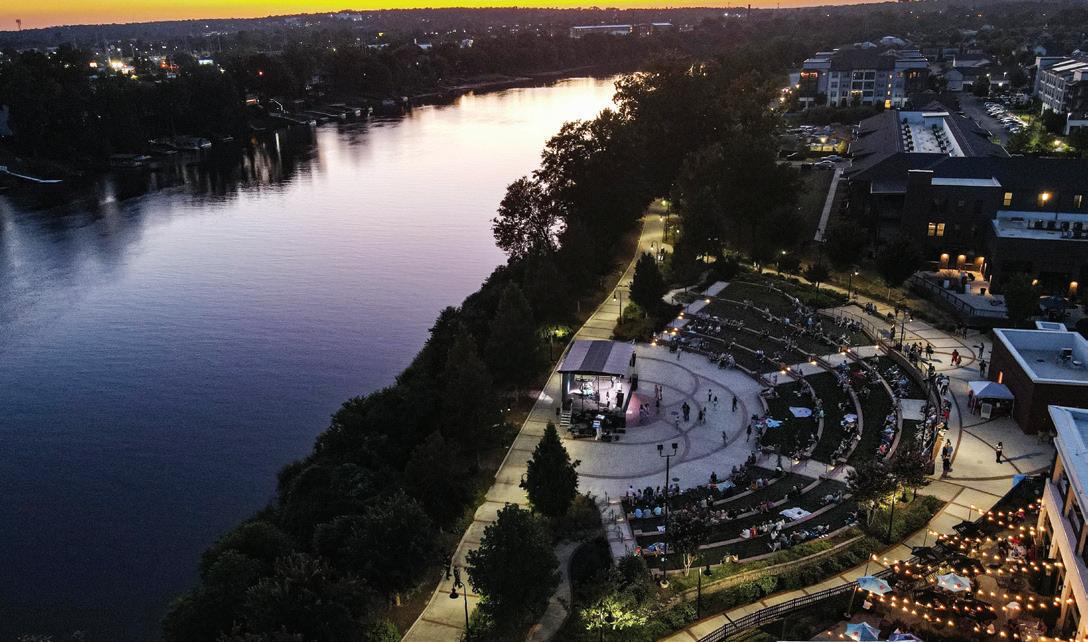
& Construction: Four-in-one project makes North Augusta, S.C., a destination city
publisher RON BAUMGARTNER rbaumgartner@the-papers.com
editor-in-chief DEB PATTERSON dpatterson@the-papers.com
editor SARAH WRIGHT swright@the-papers.com
publication manager CHRIS SMITH chris@themunicipal.com
graphic designer MARY LESTER mlester@the-papers.com
business manager
ANNETTE WEAVER aweaver@the-papers.com
mail manager KHOEUN KHOEUTH kkhoeuth@the-papers.com
director of sales and marketing KRISTIN DEVITTORIO kdevittorio@the-papers.com
Jennifer Barton, Beth Anne Brink-Cox, Lauren Caggiano, Nicholette Carlson, Denise Fedorow, Katie Graham, Danielle Lund, Janet G. Patterson, Julie Young
PO Box 188 • 206 S. Main St., Milford, IN 46542
866-580-1138/Fax 800–886–3796
Editorial Ext. 2307; Advertising Ext. 2505, 2408
Never-ending maintenance backlogs
Many cities continue to face sizable deferred maintenance lists while also still addressing routine maintenance and repairs that crop up. It can feel like a Sisyphean endeavor. On just roads and bridges, the PEW Charitable Trusts found state and local governments face $105 billion in deferred maintenance.
In a May 19, 2025, post, the PEW Charitable Trust noted, “Over the first two decades of the 21st century, real investments in state and local roads and bridges fell, and depreciation the annual decline in the value of infrastructure assets from wear and tear, damage, and age outpaced spending on preservation, rehabilitation, and repair.”
The organization found that in 2023 the “net maintenance” of roadways the annual difference between the share of net
investment used to preserve existing assets and annual depreciation was -$5 billion. It did add, “Though still a shortfall, this was an improvement over the prior year when net maintenance was -$14 billion; the smaller gap was the result of a roughly $10 billion increase in capital maintenance investments in 2023.”
This is just roads and bridges and does not calculate the cost of deferred maintenance in city structures or other infrastructure like water and wastewater systems.
To address this backlog, cities will need to streamline operations and honestly tally maintenance projects that have been kicked down the road. Even with that list in hand, funding can stymie efforts to reduce backlogs.
In this issue of The Municipal, we spoke with cities that are conducting both routine maintenance and addressing their deferred maintenance. We also connected with two cities that are streamlining their operations with artificial intelligence.
Writer Nicholette Carlson spoke with Newport News, Va., and Austin, Texas, which are both integrating AI into their operations. These cities are focused on responsibly inte grating AI while ensuring city employees feel empowered when using the technology.
In Florida, the city of Sanibel is revitalizing its stormwater system, which writer Janet Patterson notes has been pummeled by hurricanes most recently hurricanes Helene and Milton. Federal grant money became available and funded the project, which includes repairing damage to the stormwater components, sediment removal from swales and culverts, repair of the catch basin inlets and repair of pipe end treatments.
Writer Denise Fedorow also shares Roanoke, Va.’s, efforts to tackle its backlog of deferred maintenance. To realize these efforts, the city has taken a two-tier approach for funding: an increase in the food and beverage tax and a $25 million bond to be used as a line of credit.
Finally, we’ll share Sonoma, Calif.’s, tree maintenance project and Ottumwa, Iowa’s city hall renovations that have breathed new life into the historical structure.
Just because we’ve welcomed a new year, the maintenance doesn’t stop. We wish everyone the best of luck on their 2026 projects.
Sarah Wright | Editor
Fabric Buildings: A proven storage solution for municipalities nationwide
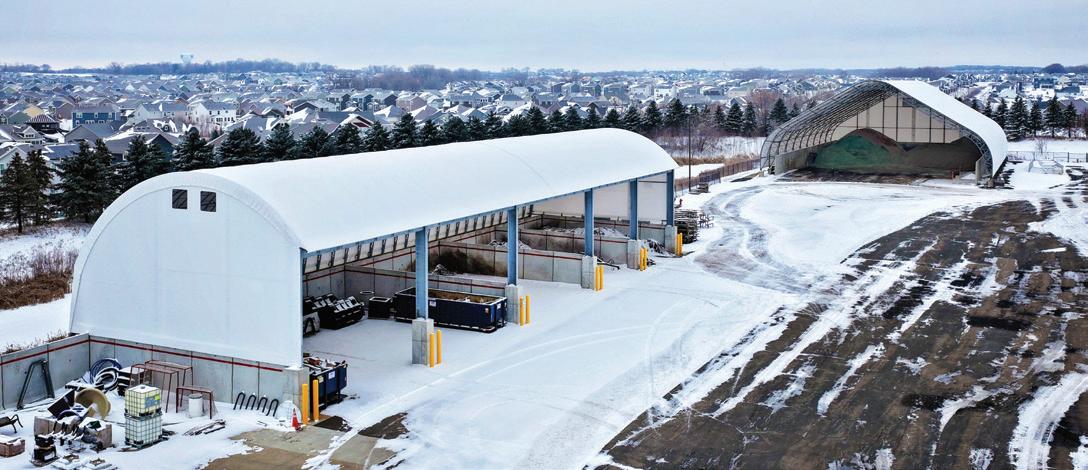
Greystone Construction installs a 46-foot-by170-foot side-access fabric building for the city of Lakeville, Minn. In the background stands a 110-foot-by-171-foot Greystonebuilt structure completed in 2005.
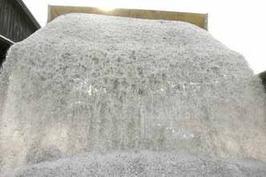
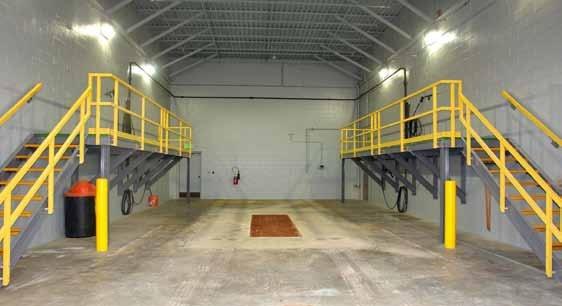
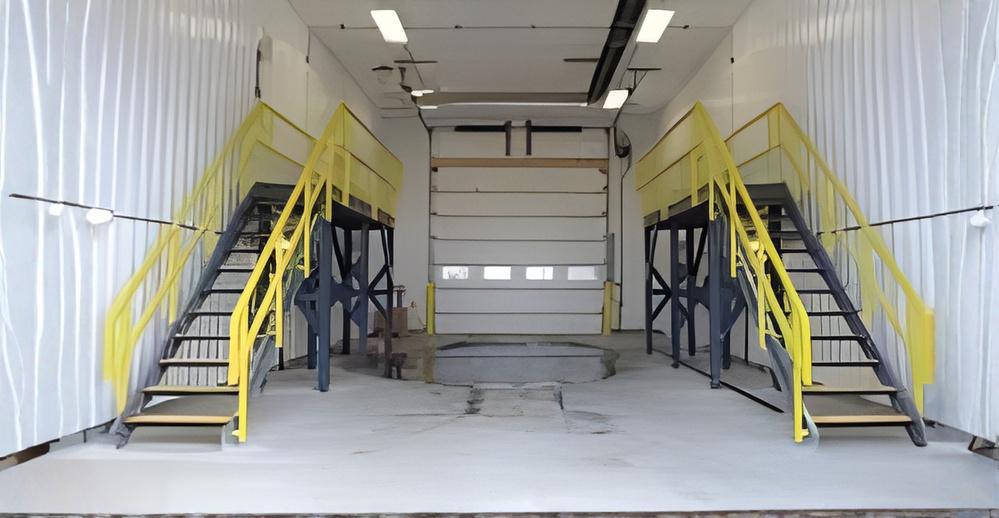
For more than 25 years, the Fabric Building Division at Greystone Construction has partnered with municipalities across the United States to design and build high-quality, cost-effective storage solutions for salt, sand, equipment, wastewater, recycling, materials storage and more. With over 2 million square feet of fabric buildings constructed and thousands of successful installations, Greystone continues to set the standard for safety, efficiency, and long-term durability.
“Across the country, we’re trusted by municipalities for their storage needs,” said Colin O’Brien, Vice President of Business Development and Principal at Greystone Construction. “Our goal isn’t just to sell a building it’s to provide a tailored solution that enhances operations, meets local design requirements, and delivers exceptional value for decades.”
“With every project, we share our best practices to ensure each customer receives an engineered, high-quality product with a layout that best fits their operational needs. Those best practices include engineering to meet local wind, snow, seismic and unbalanced snow loads; designing for capacity requirements and future expansion; using independent foundations and panels; reducing risk of corrosive damage from the salt with post-production hot-dipped galvanized steel and keeping salt away from building components with independent concrete wall panels with corrosion inhibitors; proper ventilation; and sufficient building clearance. These practices are proven to result in a building that is a return on investment for many years to come.”
City of Lakeville, Minn.
“We’ve hired Greystone for multiple projects. In 2005, they installed a 110-foot-by-171-foot fabric building that has held up extremely well,” said Tom Breeggemann, Facilities Supervisor for the city of Lakeville,
New 46-foot-by-170-foot side-access
and
for
Article and photos submitted by Greystone Construction
building
the city of Lakeville, Minn.
the original 110-foot-by-171-foot fabric building Greystone built in 2005.
Minn. “It’s been easy to maintain and very affordable. Whenever we needed maintenance, Greystone responded immediately and handled the repair. When the fabric needed replacement after 23 years, they took care of it. That kind of responsiveness made it an easy decision to partner with them again.”
“When we started planning our newest building, we wanted easier access and versatile functionality. The side-access layout met those needs,” Breeggemann continued. “It makes loading and unloading easy, helps keep the city compliant with environmental permits, and provides great neighborhood screening. It’s improved our operations and storage capacity.”
“Fabric buildings are cost effective, durable, and offer excellent protection from the elements,” he said. “They’re bright, low maintenance, and quick to build. For bulk storage like salt and sand, they’re hard to beat.”
“Greystone has been reliable, easy to work with, and consistently professional,” Breeggemann added. “Their team took our idea and made it a reality. Communication was great, their crews efficient, and the final product solid. Both buildings have exceeded expectations.”
City
of Lawton, Okla.
“I would recommend a fabric building for material and equipment storage because it allows for a much more open footprint at about a third of the cost of traditional construction methods without sacrificing quality or durability,” said Cliff Haggenmiller, Deputy Director of Public Works for the city of Lawton, Okla. “The Greystone team made the entire process easy. They were professional, courteous, and clearly take pride in their work the kind of partner you can trust to deliver.”
38-foot-by-100-foot side-access fabric building
Town of Woodstock, N.H.
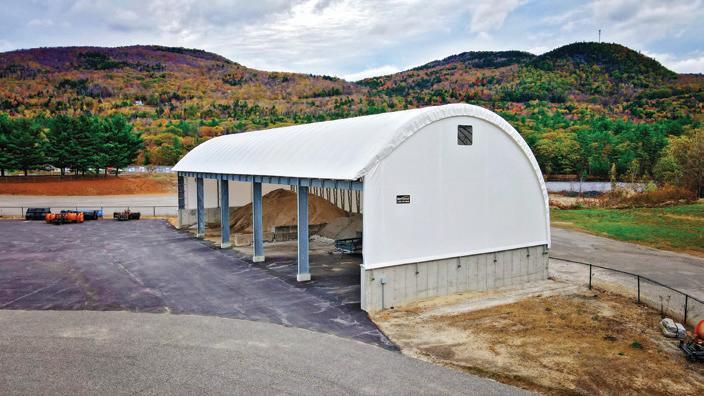
“The shed has been great plenty of room and exactly what we needed,” said Mike Welch, Director of Public Works for the town of Woodstock, N.H. “I recommend this shed highly. The Greystone team was great to work with. Due to scheduling requirements, our fabric building had to be built in the winter and they got it done.”
80-foot-by-100-foot salt storage building with 5,200-ton capacity in Waite Park, Minn..
Waite Park, Minn.
“Greystone was one of the best vendors I have ever worked with!” said Tom Koralewski, Facilities Supervisor for Stearns County. “From start to finish, they were terrific. Design for our 80-foot-by-100-foot salt storage building was simple and the whole construction process was quick and easy. Everyone at Greystone was very responsive with anything I needed.”
City of Willoughby Hills, Ohio
“I would definitely recommend a fabric structure to any municipality,” said Mark Grubiss, Road Superintendent for the City of Willoughby Hills, Ohio. “Compared to wood or concrete, a fabric structure is more cost effective, and the fabric cover warranty is another big advantage.”
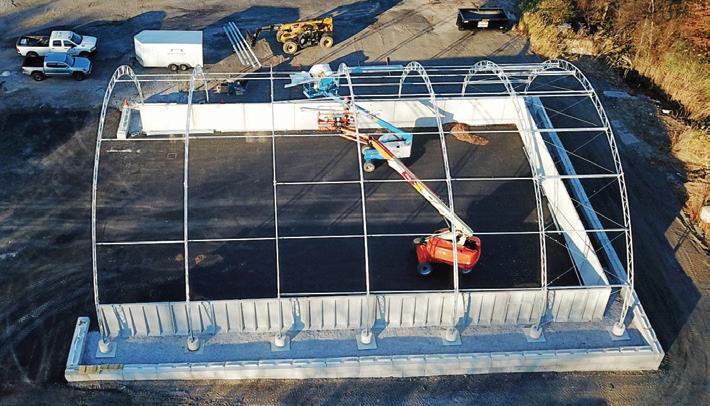
“We told Greystone we needed our building quickly. After our staff and city engineer completed site work, Greystone finished the foundations in two days, then installed the trusses and fabric cover just as fast. Our teams worked well together, and we’re very pleased with the result.”
Greystone installed the city of Box Elder’s 52-foot-by-70-foot fabric building engineered for 105 mph wind loads.
City of Box Elder, S.D.
“We needed an engineered building that could withstand our windy conditions and provide quality at a competitive price,” said Mike Gubka, Superintendent of Streets and Parks for the city of Box Elder, S.D. The city partnered with Greystone’s Fabric Building Division to design a structure meeting local IBC requirements, including 105 mph wind loads.
“The fabric building came in at a lower cost than a traditional salt shed while still meeting our goals. Its design allows easy machinery access on all sides. Greystone delivered a great product and excellent service professional, efficient and the best experience for our team.”
Greystone Construction’s team of fabric building experts is prepared to assist municipalities with their salt, sand and equipment storage needs. Call 888742-6837 for a free consultation and quote. Visit www.GCFabricBuildings.com to learn more.
The city of Lawton’s 72-foot-by-144-foot fabric building.
for the town of Woodstock, N.H.
Greystone crew installs a 72-foot-by96-foot fabric building on concrete pier foundations for the city of Willoughby Hills, Ohio.
Elvis Presley’s Graceland is fit for a king
By JULIE YOUNG | The Municipal
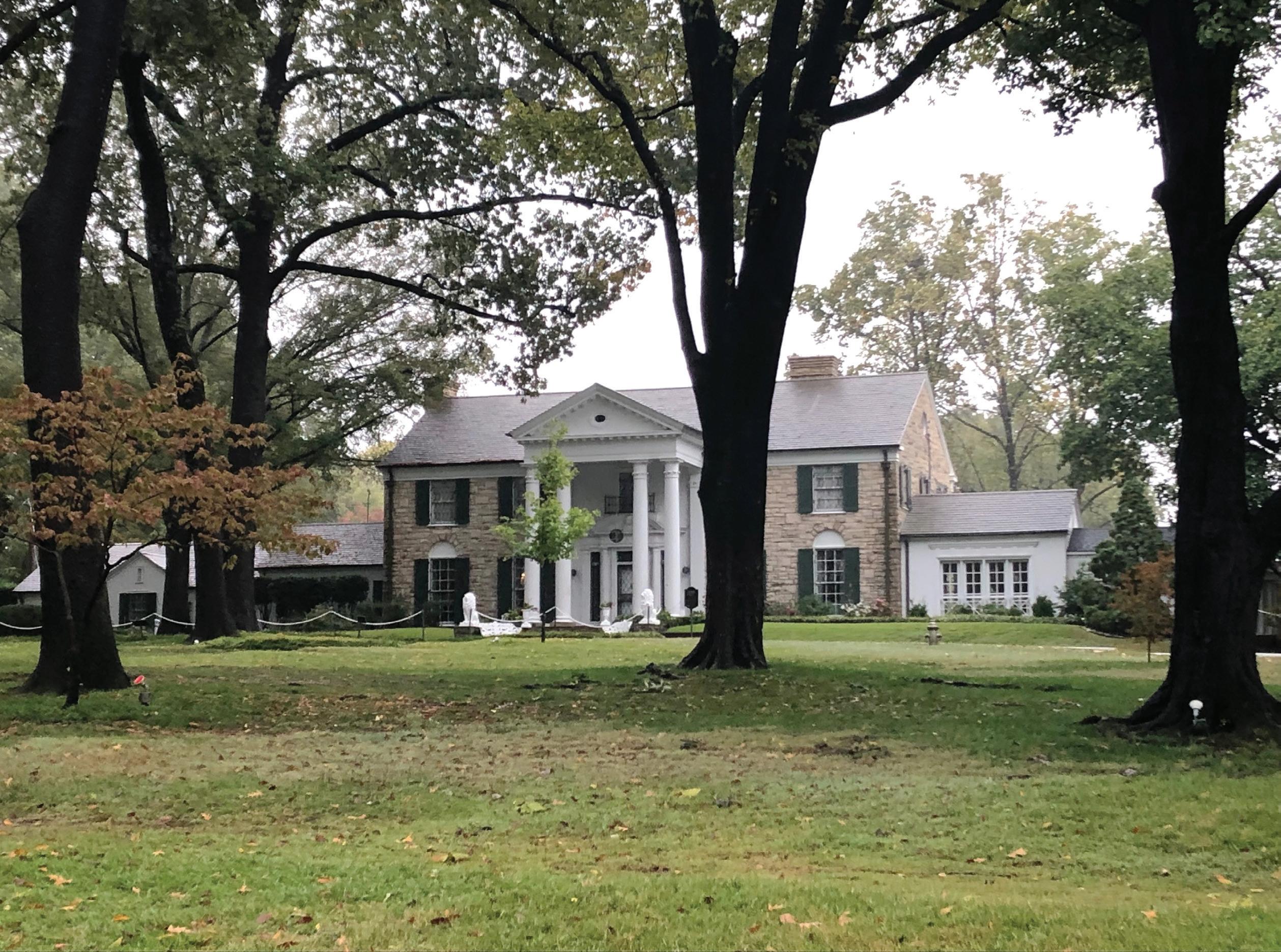
It was a 10,266-square-foot Colonial Revival mansion situated on 14 sprawling acres along Highway 51 South in Memphis, Tenn., just 4 miles north of the Mississippi border. Designed by Furbringer and Ehrman Architects for Dr. Thomas Moore and his wife Ruth in 1939, the Graceland Farms estate was a beautiful hilltop abode, with rolling green pastures and a grove of oak trees, when Elvis Presley purchased it for his parents in 1957.
Though the King left Graceland Farms in 1977, the house and grounds at 3764 Elvis Presley Boulevard remain a family legacy as well as a pilgrimage site for music fans from all over the world. It was added to the National Register of Historic Places in 1991 and designated a National Historic Landmark in 2006. With over 600,000 visitors annually, it is the most visited private home in the United States.
Be it ever so humble
Graceland was not the first house Elvis bought his parents, Vernon and Gladys, when his music career took off. The first was a $40,000, one-story ranch house at 1034 Audubon Road; however, it did not provide much privacy from the eager fans and nosy journalists who congregated on
ABOVE: Graceland Mansion was built in 1939 for Thomas and Ruth Moore. Ruth was the niece of Grace Toof, for whom the acreage was originally named. The property was purchased by Elvis Presley in 1957. (Photo by Sara Bortz)
the lawn. Not wanting to be a nuisance to the neighbors, Elvis asked his parents to find a more suitable home for the family preferably one with plenty of land to serve as a buffer between the King of Rock and Roll and his faithful subjects. Gladys and Vernon discovered Graceland and knew that the home would be perfect for themselves, their son and Vernon’s mother, Minne Mae Presley also known as “Dodger.” On March 25, 1957, Elvis purchased the property for $102,500 the equivalent of $1.8 million today and his parents moved in two months later while Elvis was in Hollywood filming “Jailhouse Rock.”
While Gladys chose the home’s interiors prior to her passing in 1958, Elvis added a number of personal touches to Graceland estate over the years. The famous music gates, featuring metal images of Elvis, were
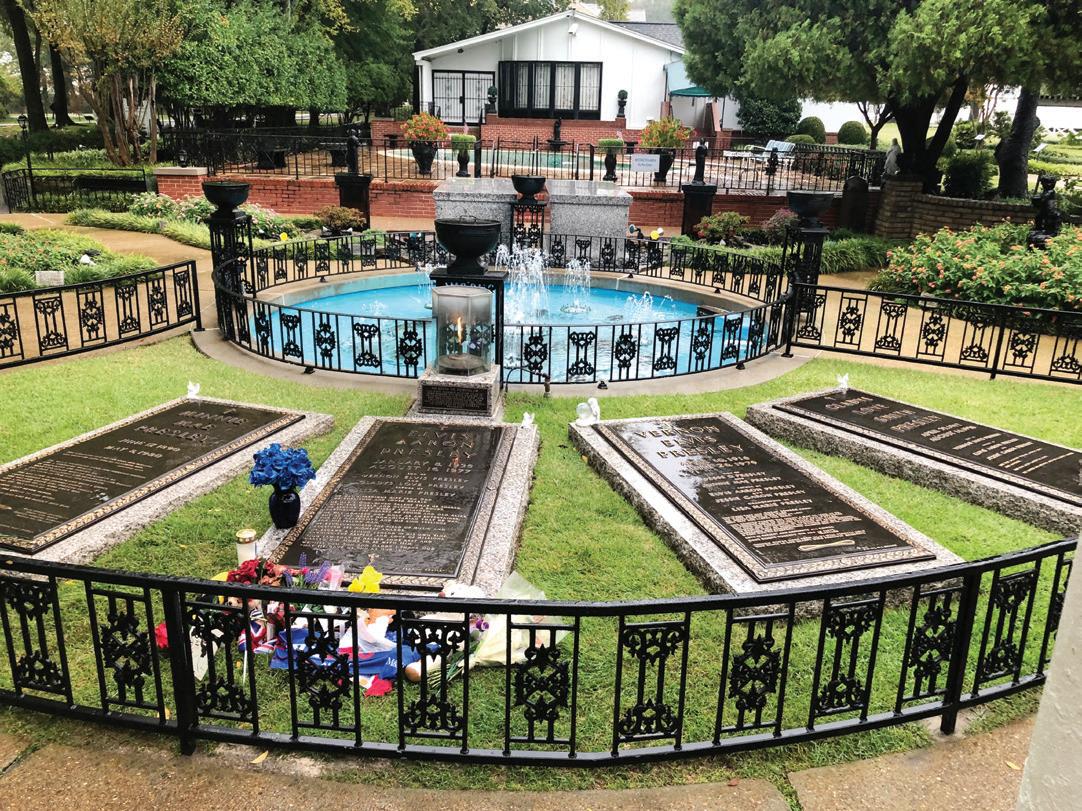
Graceland’s meditation garden is just beyond the kidney-shaped swimming pool and is the final resting place of Elvis and other members of the Presley family, including his parents, grandmother, daughter and grandson. (Photo by Sara Bortz)
installed at the driveway entrance two months before the rock star moved in. He also purchased two marble lions, which stand guard at the portico; oversaw the construction of a barn and, in 1957, a kidneyshaped swimming pool; and built a racquetball building complete with trophy hall.
Although he officially left the building in 1977, Elvis was very proud of Graceland while he was alive. He saw it as his sanctuary from the rigors of the road.
He actively participated in redesigning and redecorating the interior of the mansion to his unique tastes. He chose the decor for the infamous Jungle Room, selected 350 yards of fabric to adorn the walls of the billiard room and created the enormous 28-foot-by-17-foot basement television room that features three recessed televisions so that he could watch all of them at once. The space also features a built-in radio/home jukebox system that would have been on the cutting edge of technology at the time.
While some may view the over-the-top opulence as extravagant or eccentric, for Elvis, Graceland was simply his home.
Touring a time capsule
A visit to Graceland is like taking a step back in time, offering a unique glimpse into the 1950s, ’60s and ’70s as Elvis lived them. The living spaces remain largely unchanged since his death, and the mansion maintains its cozy, home-like feel. Guests enter Graceland through the front door and step into the foyer, where they will see the living room, dining room and his mother’s bedroom before walking through the kitchen to the downstairs areas, which include the pool room and television room.
Visitors also have the opportunity to explore the Jungle Room, which includes elaborately carved furniture, live plants and a Polynesian décor; as well as Vernon’s office; the racquetball building; and the trophy building that features Elvis’ police badge collection.
The final stop on the Mansion Experience tour is the meditation garden, where Elvis and other members of the Presley family have been
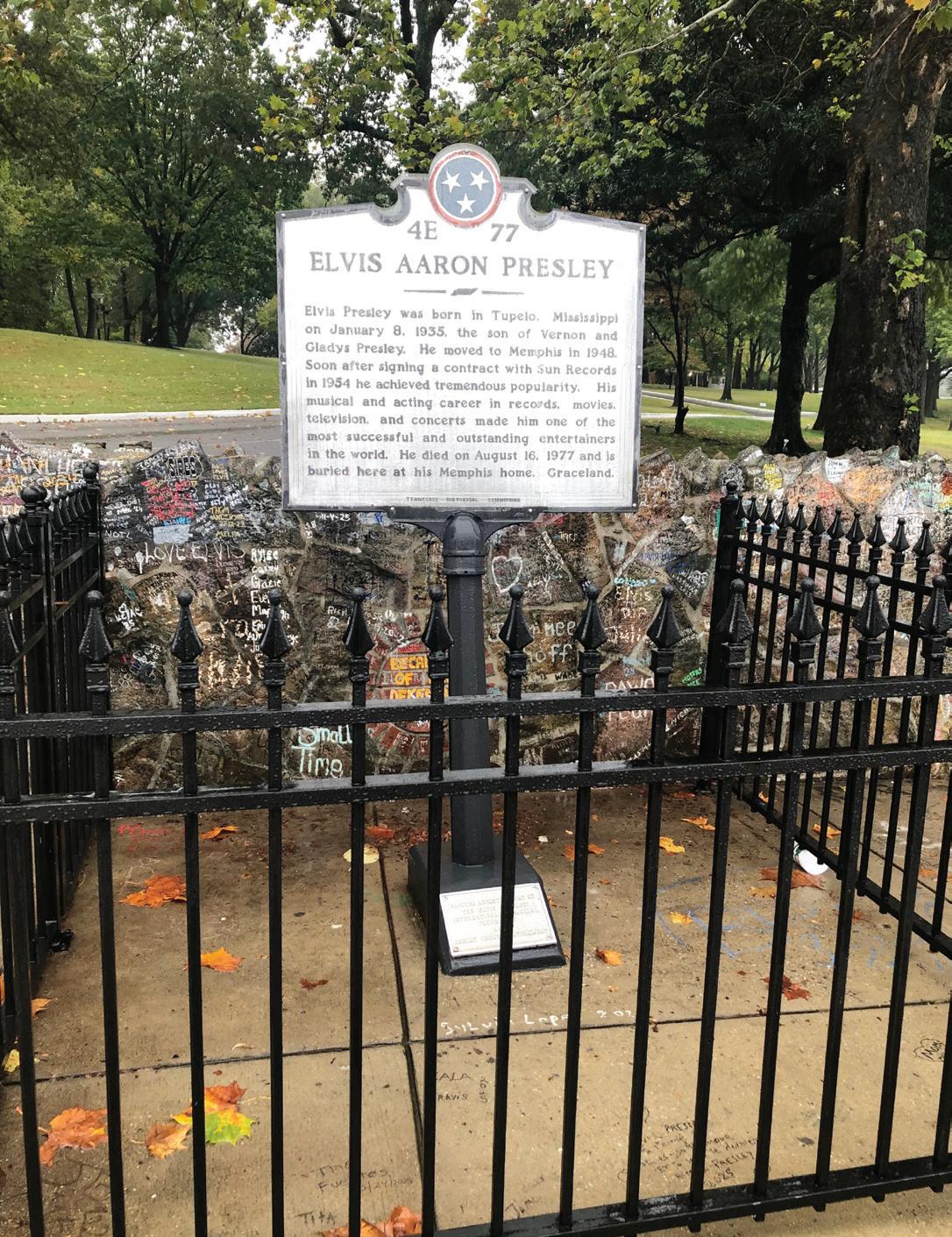
The Elvis Presley historical marker is located outside of Graceland in Memphis, Tenn. There are several other historical markers associated with the rock star, including Elvis’ Tupelo, Miss., birthplace and Sun Records, where Elvis recorded his first song. (Photo by Sara Bortz)
laid to rest. The Elvis experience includes a self-guided tour through Graceland Mansion, access to the EPM entertainment complex and access to Elvis’ jets. Additional tours are also available, including VIP experiences and holiday tours.
Lynsay McPherson visited Graceland on Sept. 8 and said that the memories she made on the tour will remain with her forever.
“I enjoyed every single second, and our tour guide Mandy was passionate, knowledgeable, and you could see how much she loved leading our tour. She told me things I never knew about the king himself, and it was just out of this world. I highly recommend the tour.”
Sara Bortz of Dayton, Ohio, while on a recent vacation, took advantage of the free opportunity, available each morning, to see the meditation garden. As a lifelong Elvis fan, she said it was worth the detour in her itinerary to see the King’s final resting place. She was also able to see the exterior of Graceland mansion, which she said was not as big as she thought it would be.
“I’m sure it seemed bigger back when it was first built than now, but it seemed more like a humble home from the outside,” she said. “The grounds were gorgeous, and the garden was really nice. It’s easy to see why it was one of Elvis’ favorite spots.”
Reasons to
1 Collection system technologies, asset management platforms, and trenchless rehab—centralized for utilities. Everything Under One Roof
2 100+ accredited sessions and 20+ tracks tailored to municipal teams and consulting engineers. CEUs That Count
End-to-End Solutions
3 I&I mitigation, inspection and condition assessment, pumps and valves, SCADA/ monitoring, safety, and resilience planning.
5
Connect with utilities, public works leaders, consultants, and OEMs advancing infrastructure performance. The Network That Matters
Register today for best rates! Mention code MUNICIPAL
Hands-On Demos
4 Crawlers and scanners, cutters and reinstatement tools, liners and curing systems, and data-driven workflows.
No matter the configuration, the Elgin Pelican offers superior cleaning as it scoops up debris and dirt easily. With simple operations and outstanding reliability, the Pelican delivers the sweeping performance you need.
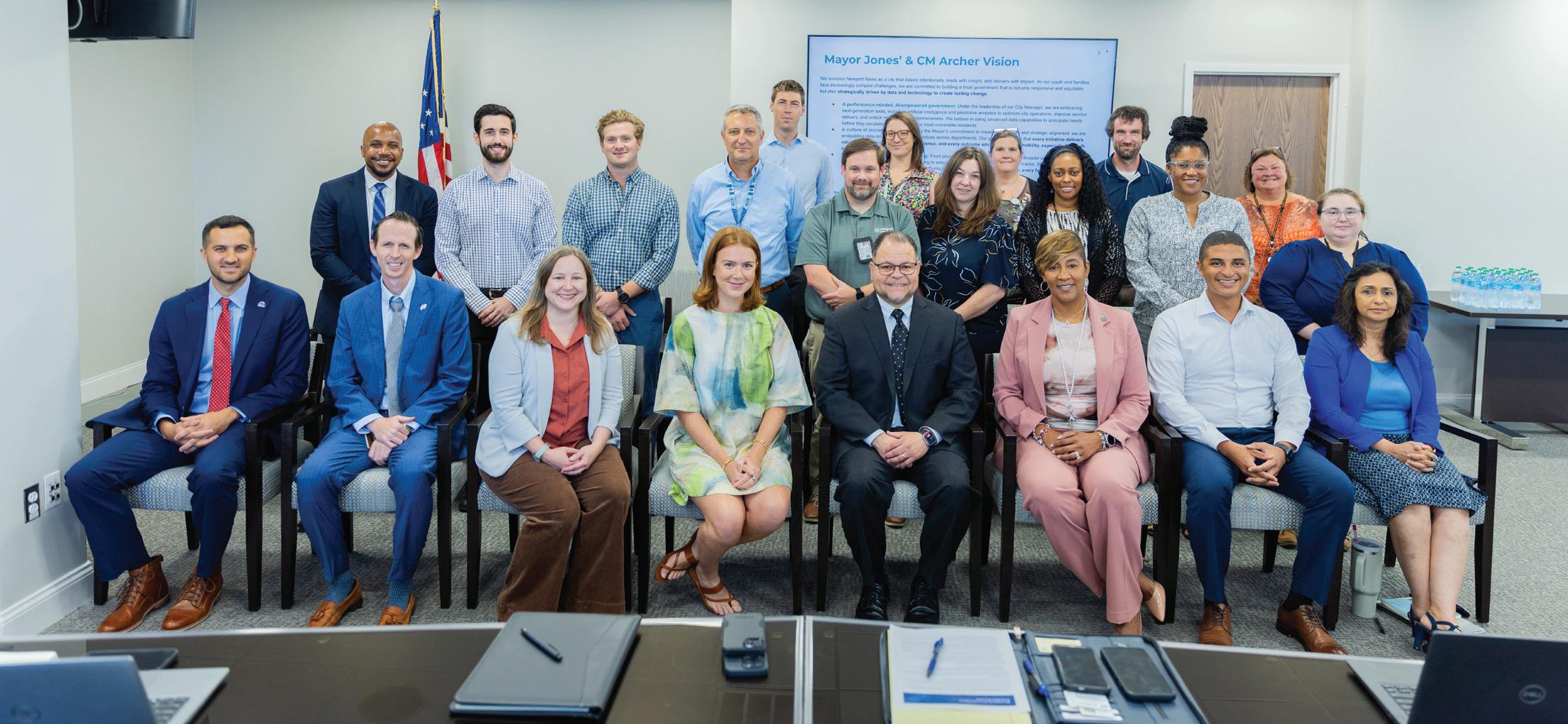
A brainstorming session in Newport News, Va., uncovered approximately 95 ways that staff members thought AI could provide value to the workforce or help serve the community.
8 feet
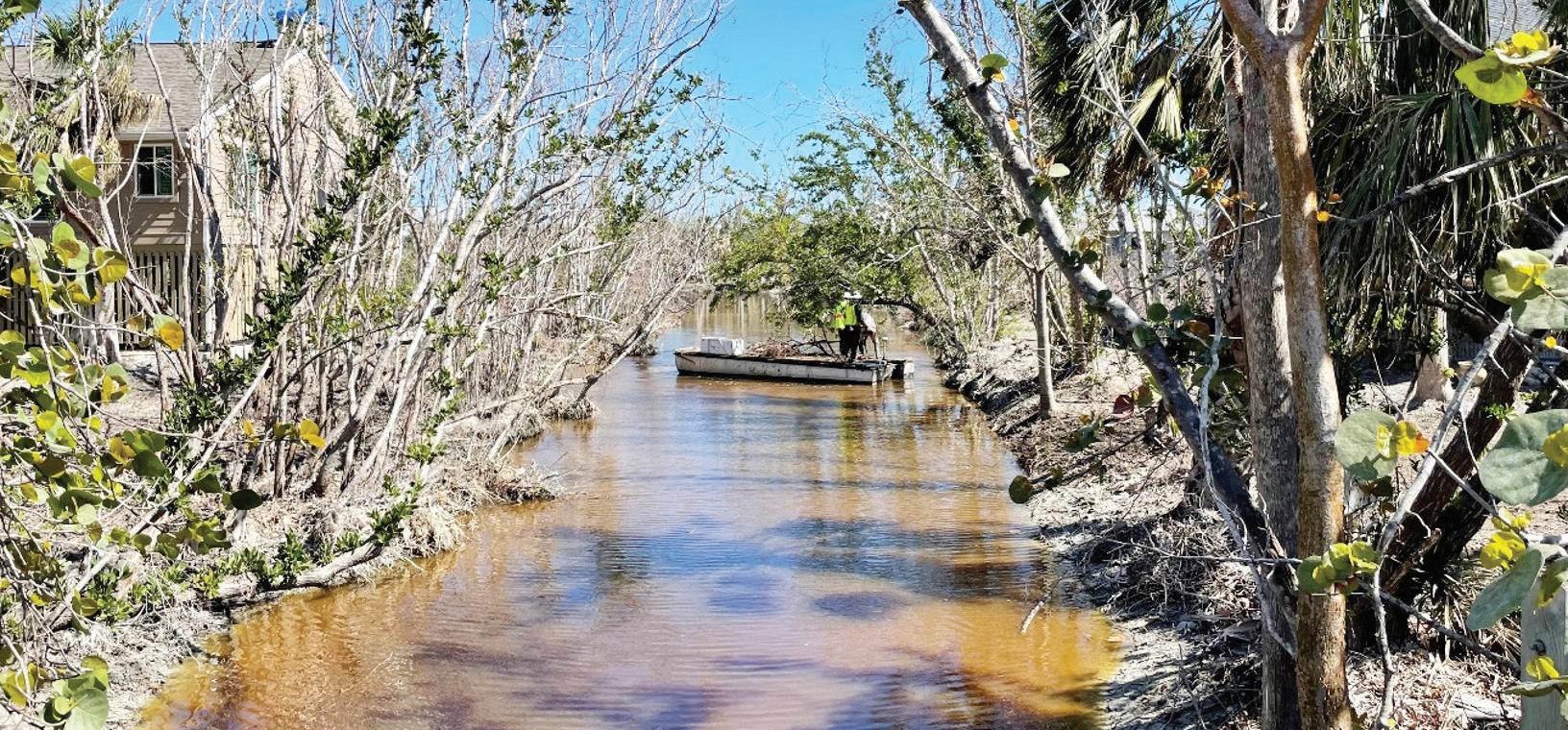
Hurricane Ian resulted in some of Sanibel, Fla.’s, structures sitting under 8 feet of salt water. The city spent the summer of 2025 repairing and restoring its stormwater system.
Read about this undertaking on page 22.
2+ tons
More than 2,700 pounds of household batteries were diverted from Iowa landfills and recycling streams from April to December of last year by the placement of fireproof drop-off kiosks in 17 communities — making disposal much safer for waste employees.
This year’s plan to address emergency weather in Spokane, Wash., allocates $1 million and will support inclement weather life safety measures and reflect new heat index activation requirements set by the city council in July.
Read more at https://my.spokanecity.org/news/releases/2025/07/01/city-of-spokaneannounces-2026-inclement-weather-plan/.
Maintenance & Operations
$25 million
Roanoke, Va., is using a two-tiered approach to address deferred maintenance: an increase in the food and beverage tax and a $25 million bond to be used as a line of credit.
$7 million
The new Police Department and Justice Center in Picayune, Miss., opened in August 2024 and replaced a piecemeal justice complex in a deteriorated part of town. The new facility brought court and police operations under one roof and is centrally and conveniently located.
Learn why the project won an award at https://www.mmlonline.com/Virtuals/MML74-3/index.html#p=13.
$238,375
The Jackson, Mich., city council voted in October to keep meterless parking downtown for visitors and ordered preparation of a $238,375 assessment roll for downtown properties and businesses that will pay for repairs and maintenance to parking lots. Permit fees and fines were increased to maintain the program.
Source: https://www.mlive.com/news/jackson/2025/10/jackson-citycouncil-approves-higher-parking-fines-to-keep-downtown-meterless. html#:~:text=Jackson-,Jackson%20City%20Council%20approves%20higher%20 parking%20fines%20to%20keep%20downtown,Kukulka%20%7C%20Mkukulka@mlive. com
Read more about Roanoke’s approach to deferred maintenance on page 26.
See how New Port News, Va., and Austin, Texas, are using AI to streamline city operations on page 18.
Justice
AI helping to transform city services
By NICHOLETTE CARLSON | The Municipal
Artificial intelligence continues to develop and shape the operations of cities worldwide. The Municipal spoke with two cities that are adding AI into their operations to benefit their residents in different ways.
Newport News, Va.
Around this time last year, the mayor of Newport News, Va., received information regarding the Bloomberg Philanthropies City Data Alliance coalition and its program on artificial intelligence readiness. The city submitted an application and was one of the few chosen, along with some much larger cities. The partnership kicked off in July when there was a site visit with coalition members visiting the city and talking with experts.
“It shows how Newport News is being intentional and strategic about pursuing the highest and best use of artificial intelligence,”
Marlin McDaniel, innovation program manager, stated.
When the city kicked off, it evaluated generative AI and how it could relate to city services while also taking time to understand what the city’s ambitions were in utilizing AI. From this brainstorm came approximately 95 ways that staff members thought it could provide value to the workforce or help serve the community. There were a handful that could reasonably be tackled, which McDaniel called “quick wins.” Some of these included helping manage time with employee productivity. This included utilizing the benefits of AI for
ABOVE: This year the city of Newport News, Va., was chosen to partner with the Bloomberg Philanthropies City Data Alliance coalition on artificial attention readiness. This partnership has helped the city to evaluate generative AI and how it can help the city as well as ensure the city’s data readiness with quality data. (Photo provided by Newport News, Va.)
meeting transcriptions, meeting minutes, translations, document creation and summarization, and email creation.
“This was successfully deployed with the assistance of a strong IT group and the willingness of other departments,” he stated. The city utilized Microsoft Copilot and Placer.ai for creating meeting minutes and data analytics tools. This has also been valuable for tourism in targeting certain markets to increase visitors and the number of room nights. Chatbots were also launched
intelligence
to provide improved access to human resources, the code of ordinances and citywide services.
One of the most important factors in utilizing artificial intelligence is that AI readiness starts with data readiness. In order for AI to help a community, there has to be solid, reliable data behind it. There are a variety of tools available in the marketplace, such as a chatbot answering questions about services or the automation of a service. However, quality, timely and accurate data is necessary to make it work. Better foundations are needed for predictive analytics, permitting and the robust data set surrounding public safety and homelessness. The coalition helps the city implement better processes to ensure the data is quality and the city can provide the right training and skills to deploy the data.
The city has become more mindful of how everyone is deploying, maintaining and managing information so that staff members are given the appropriate information to help the city move forward with AI tools. For example, the first step of closing a work ticket with the general services department is ensuring that all fields are filled out correctly, so the city’s job is to communicate with staff the importance of filling the form out correctly. The city is working on analyzing its quantitative data and collecting new qualitative data in order to create systems that will help create accurate data to move forward with AI initiatives.
The city meets with the coalition at minimum biweekly to build its data strategy and communicate projects to youth as part of a resident impact data project. There are sessions and workshops that bring together all the cities in the coalition to learn new tools virtually and gather feedback from one another to learn new opportunities and the next courses of action.
Austin, Texas
The city of Austin, Texas, has multiple full-scale artificial intelligence implementations in place throughout the city along with a variety of other research, prototype and pilot efforts. Some of the full-scale
Newport News meets with the coalition regularly to both build its data strategy and work toward better communication with resident youth as part of an impact project. Working together with partners and other cities helps to learn new opportunities and courses of action. (Photo provided by Newport News, Va.)
programs include permit pre-review tools with Austin Development Services, wildfire and smoke path prediction with Austin Energy and translation services used by Austin Communications and Engagement. There is also an enterprise AI pilot throughout the organization and Copilot chat available for all city employees.
“We are devoted to creating accessible, appropriate and effective AI training for all of our employees,” Daniel Culotta, Austin budget and organizational excellence assistant director, stated. “We want all city staff to be empowered to use appropriate AI tools effectively and safely in order to improve outcomes for Austin residents and our organization. Our current efforts include the DIVE program, which is a data science training program open to all employees. DIVE has foundational and advanced training tracks on AI, lectures, group projects, mentorship and communities of practice.”
Hundreds of city employees have completed this program. Employees are also invited to “All About AI” meetings led by experts with a focus on education, demonstration and discussion. In an enterprise AI pilot, the city designed and tested training materials, which it hopes to put into practice in 2026, to help staff become more comfortable using AI tools. The city has also partnered with the University of Texas in a research project to design and refine AI training curriculums for various job types.
“AI is great for streamlining repetitive and time-consuming tasks,” Culotta emphasized. “One of the ways the city is working to implement that is mapping common processes and identifying steps where AI could be helpful in increasing speed, efficiency, accuracy, etc. The city has piloted this work and intends to extend it to additional processes in 2026. The city intends for work like this to increase productivity for employees and give them more time to focus on tasks that require their experience, expertise and creativity.”
Safety while using AI is paramount. Currently, the city has multiple security and privacy controls, including the AI policy and user guide, generative AI standards, standard technology privacy and security controls, an AI risk addendum to the technology purchasing
Artificial
can help to manage employee productivity and time. This can include utilizing AI to help with meeting transcription and minutes, document and email creation, and translations. (Photo provided by Newport News, Va.)
review process and internal review paths through the Emerging Technology Board, Technology Review Board and other experts. The city is currently working on ways to establish bias and error reporting, vendor disclosures and oversight processes with its open government partnership commitment.
“We appreciate AI technologies not just from a technical aspect, but from the way they empower people to think,” Culotta described. “Generative AI is one of the strongest examples in recent history where essentially anyone can have an idea for an improvement or innovation and then quickly make it real and requires few technical skills that are extremely costly to access or obtain. I am so excited to see the creativity and outcomes across Austin now that almost anyone can instantly go from ‘What if we could…’ to having a functional prototype of their idea. This is incredibly empowering, and we want to make sure we continue to support and expand the creative catalyst that AI tools can be.”
Culotta continued, “The city sees the potential for AI to drive massive improvements and transformations in the way we provide services to residents. We are also aware of the risks, which is why we continue to focus on training, governance and safeguards and avoid deploying specific AI tools, like public chatbots, prematurely. We know that there are still major developments, changes and accelerations to come in the AI ecosystem, and we want to make sure we have the technological, policy and human infrastructure in place to
One of the most important aspects of qualitative and quantitative data is ensuring information is being managed and maintained so the data is accurate. This accurate data allows cities to move forward with the use of AI. (Photo provided by Newport News, Va.)
thoughtfully take advantage of whatever comes. That’s why you’ll continue to see the city utilize new AI tools but also continue devoting resources to improve our processes, governance, training and support structures in the future.”
By JANET G. PATTERSON | The Municipal
When
your city sits on an island that’s only 3 feet above sea level, managing the water that falls on it as rain and washes up on it as storm surge is at the top of most islanders’ minds.
The city of Sanibel, Fla., covers the length and breadth of Sanibel Island, which sits in the Gulf of Mexico, just off the west coast of south Florida. Its 6,000 residents are perpetually alert to the effects of water and the weather. And despite the sunny skies and moderate temperatures, water has not always been kind to this barrier island with a flat topography and high groundwater table.
“Since Hurricane Ian, we have seen changes in the neighborhoods and how stormwater affects us,” said Oisin Dolley, Sanibel’s city engineer.
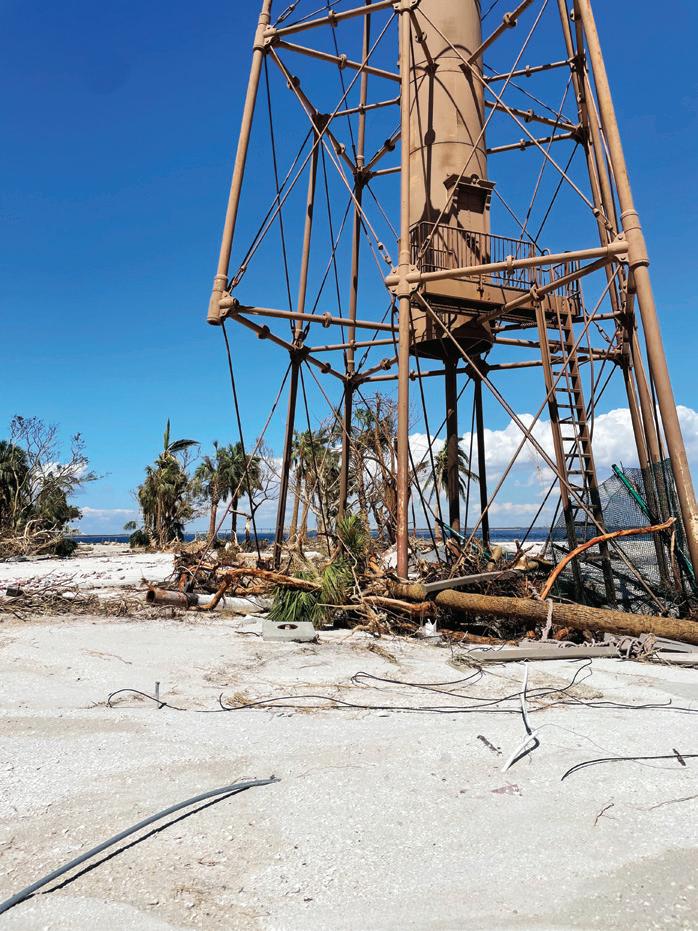
Hurricane Ian came to Sanibel in late September 2022 as a Category 5 storm. It was the deadliest storm since the 1935 Labor Day hurricane, with 130 mile per hour winds and a storm surge that topped 13 feet. The inundation with salt water not only damaged homes and businesses but seriously harmed the island’s ecosystem, wiping out animals and plants that could not tolerate the water’s salinity. Then, as recovery efforts were making tracks in 2024, along came hurricanes Helene and Milton.
These events and their aftermath reinforced the special care that the city and its residents believe will preserve the island and life there. From its earliest days, the local philosophy has stressed that the island “is and shall remain a barrier island sanctuary.”
Not only is Sanibel Island known for the seashells that visitors and residents consider a national treasure, but the island also has a rich history that can be traced to the Calusa Native American tribe, who are believed to have settled there 2,500 years ago. Their engineering know-how resulted in canals and trade routes that helped develop Florida’s west coast.
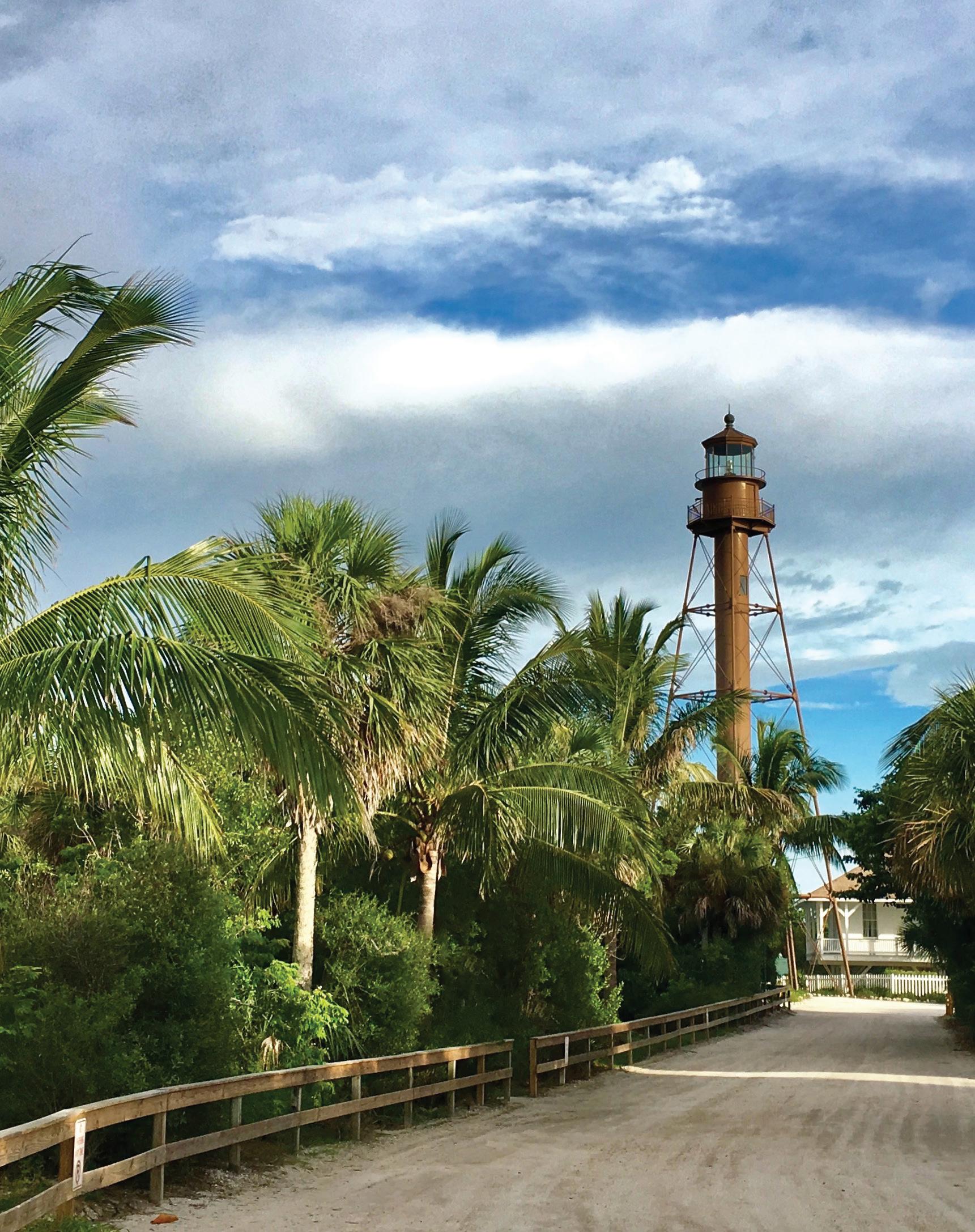
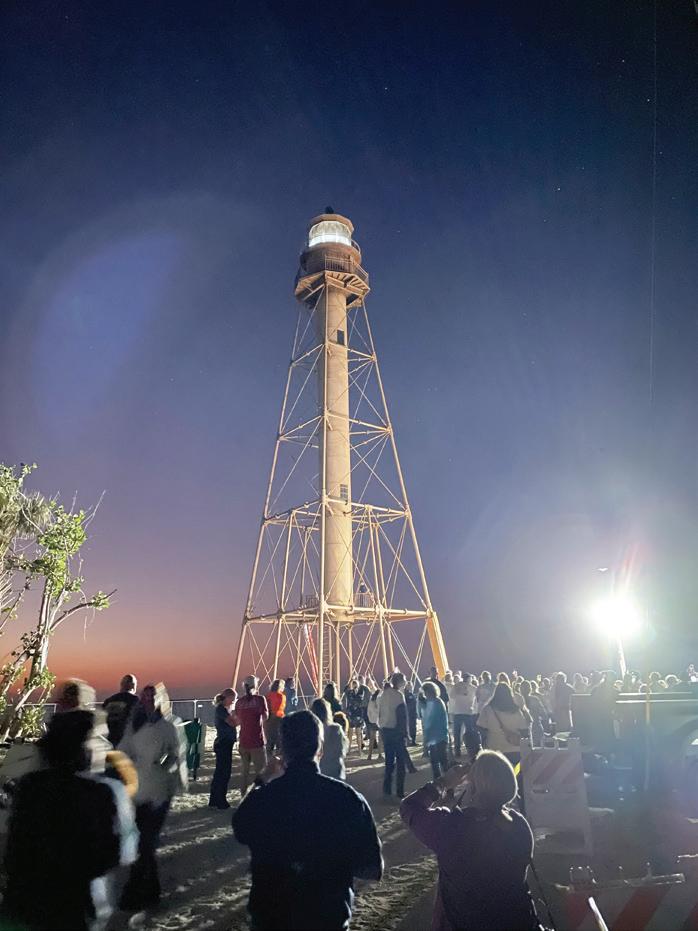
Though it remained standing, the Sanibel Lighthouse suffered damage during Hurricane Ian in September 2022. The historic structure lost one leg, but five months later, the restored Sanibel Light was reopened. (Photo provided by Sanibel, Fla.)
The 33-square-mile island is divided almost equally between land mass and water, with 16.8 square miles of land and 17.2 square miles of water. A large portion of the island is a wildlife refuge and freshwater wetlands.
By the 19th century, settlers arrived, and in 1832, Sanibel was a colony promoted by the Florida Peninsular Land Company as a “planned community.”
The famous Sanibel Lighthouse, which has withstood battering by hurricanes since it was built in 1884, beckoned winter visitors and sport fishers before the turn of the 20th century.
From then until 1963, the only way to reach Sanibel was by boat or ferry. The opening of the 3-mile Sanibel Causeway led to the island’s incorporation as the city of Sanibel in 1974 with a comprehensive land use plan that balances development with ecological preservation.
Dolley said that in the wake of Hurricane Ian, the city had the opportunity to revisit its stormwater management plan and make updates both to the plan and to its infrastructure.
As part of an update to the city’s stormwater comprehensive plan, the public works department began a months-long islandwide stormwater repair project in spring 2025. Working alongside Tampa-based Johnson Engineering, the city, including its workers and residents, did a complete assessment of the stormwater management system.
Dolley said that federal grant money became available and funded the project, which includes repairing damage to the stormwater components, sediment removal from swales and culverts, repair of the catch basin inlets and repair of pipe end treatments.
When all the parts work as they should, the stormwater system collects, directs and manages rainwater runoff in ways that minimize flooding, protect water quality and support the health of the area’s ecosystem.
The stormwater infrastructure includes a network of swales, culverts, outfalls and natural filtration areas designed to work in harmony to slow and filter rainwater before it reaches the surrounding waterways. All of this helps reduce pollutants, such as
sediment, nutrients and debris, from entering the Gulf of Mexico, San Carlos Bay and other local bodies of water.
When the project was announced last winter, the city invited residents to a workshop to outline the work and encourage feedback about the changes islanders have seen in flooding patterns and the effects of stormwater.
“We consider feedback from the community essential,” Dolley added. The workshop was also an opportunity to help people understand how climate change is affecting Sanibel and other barrier islands along the coasts.
For many years, the only flooding that residents saw was from rainfall. The fresh water in rain didn’t do the damage that a storm surge of saltwater can. He said that the existing stormwater management system still handles rainfall well.
“The city’s philosophy is to retain as much fresh water as possible.” Completely drying the island would be as much of an ecological disaster as inundation by the saltwater in a storm surge.
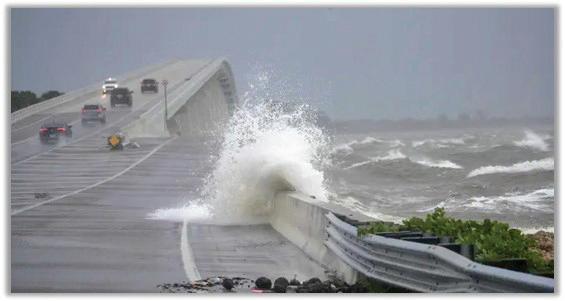
The question of managing storm surge has become more urgent. “We had four storm surge events in the last three years,” Dolley continued. Hurricane Ian resulted in some structures sitting in 8 feet of salty water. And since there was no heavy rainfall to wash away the salinity, some species of animals and vegetation suffered.
While the city does annual maintenance by inspecting 50% of the stormwater management system every year, the $10 million grant from the state of Florida following Hurricane Ian has given Sanibel the chance to move ahead with planning for the future.
This summer’s repairs and restoration amounted to about $2.5 million, and the rest will be used to work on the box culverts that keep water moving under roads and the weir system that controls water flowing through the city’s two river basins.
Working in partnership with SanibelCaptiva Conservation Foundation, Sanibel Fire, U.S. Fish and Wildlife Service and the Lee County Mosquito Control, the Sanibel city staff has taken a hard look at what potential changes would be helpful to preserve and improve the island’s environment.
Dolley said modifications to the weir system are an important consideration.
Among the concerns they are addressing are minimizing wildfire risk, preventing saltwater intrusion, controlling the mosquito population, monitoring water quality impacts and creating a habitat that favors native flora and fauna.
The addition of flap gates and the automation of weir sluice gates are being considered, along with the possibility of installing pumping stations.
The city is also looking at raising some of the low-lying roads on the island. Recent king tides, which occur a few times a year when the Earth and sun and moon are in a direct line, have caused flooding on some roadways without heavy rainfall or storm surge.
Dolley said the updated stormwater management plan was approved at a recent city council meeting, and work will be ongoing to maintain and improve the stormwater management system.
Residents and property owners also play a key role in protecting the island’s stormwater system. Dolley said simple actions like maintaining swales, avoiding the use of harmful chemicals and properly disposing of yard waste can greatly reduce the chances for stormwater pollution. The city also encourages residents to report blocked ditches, swales, roadways and areas of local flooding.
“Education goes a long way in helping keep the island healthy,” Dolley added.
Part of the stormwater management tasks on Sanibel Island was the clearing of debris and sediment that builds up over time from flooding. (Photo provided by Sanibel, Fla.)
Storm surges that dump wave upon wave of saltwater on the island are the scourge of hurricanes. The salinity of the water destroys wildlife and vegetation. (Photo provided by Sanibel, Fla.)
Roanoke, Va., takes two-tiered approach to finance deferred maintenance projects
By DENISE FEDOROW | The Municipal
Municipal maintenance issues can sometimes be swept under the rug as city officials deal with more pressing matters. But the new administration in Roanoke, Va., decided it was time to make a plan to address these issues and received approval for a two-tiered approach: an increase in the food and beverage tax and a $25 million bond to be used as a line of credit.
Mayor Joseph Cobb told The Municipal that both he and the new city manager, Valmarie Turner, started in their positions at the same time about a year ago, but prior to becoming mayor, Cobb was on the city council since 2018.
“It all started with an evaluation of both our capital assets and our capital needs,” he
said. This included an analysis of their asset’s deferred maintenance, with Cobb noting, “And we came up with a pretty hefty list of things that needed to be repaired or replaced.”
Cobb, the city manager and the finance department met with the city’s financial advisors, Davenport, and made a presentation to the council where they looked at different
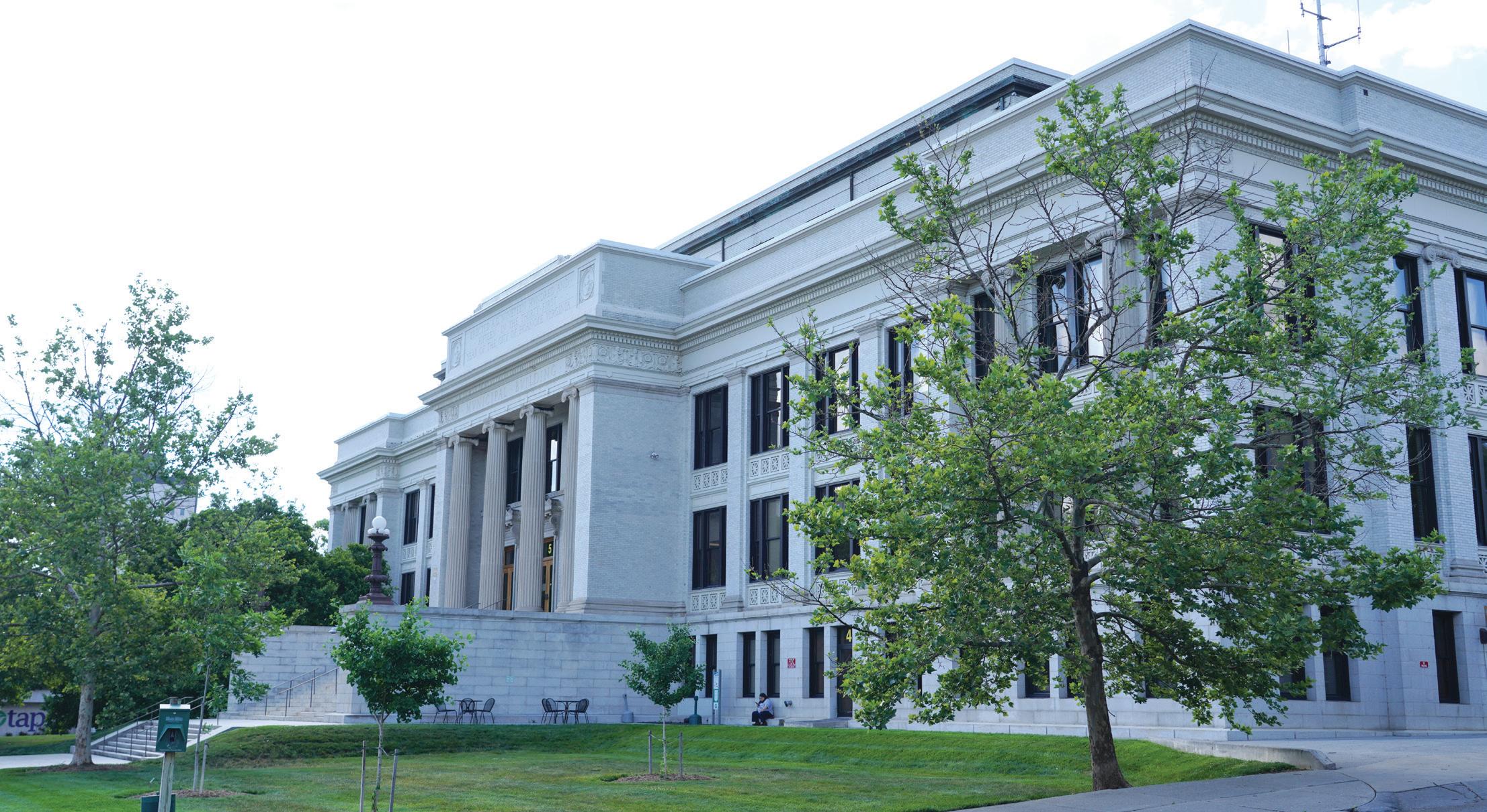
ABOVE: The Noel C. Taylor Municipal Building in Roanoke will have its elevators replaced within the next two years, using funds from an increase in the city’s food and beverage tax. Replacing the elevators is the top priority on the list of deferred maintenance items the city has compiled.
(Photo provided by Roanoke, Va.)
options, including a line of credit over three to five years and an increase on the prepared food and beverage tax, anywhere from onehalf percent to 2% over five to seven years, “which is (how long) we estimated it would take to get through the bulk of the deferred capital items.”
Ultimately, the council approved increasing the food and beverage tax by 1%, which officials estimate will generate about $4 million a year, but they did a two-year sunset, so the increase is expected to expire at the end of fiscal year 2027 June 30, 2027.
Cobb expressed that the two years was a bit short-sighted since they shared it would take three to five years to get through all the items on the list, but added, “In reality, we’ll be able to reevaluate and decide whether to extend it or not.”
Items needing to be repaired or replaced
Among the items on the deferred maintenance list are the two sets of elevators in the main municipal building. Cobb said, “They all need to be replaced we’ve been doing patchwork fixes, and the same with the elevators at the adult correctional facility, the jail.”
Besides replacing the elevators, electrical work, boilers and HVAC systems in municipal buildings need to be fixed or replaced.
“These are systems that if they fail, they will compromise the places where we do city business,” Cobb said. “In addition to balancing catching up on deferred maintenance items, we have to look at our overall capital investment projects and what we can take care of based on cash, grants and debt service, and we’re in that review process now.”
Cobb thinks Roanoke will have to adapt and defer some projects because it has some debts coming due that will need to be paid before it adds more capital projects.
Bond line of credit
At the start of the fiscal year in July, the Roanoke City Council also approved a $25 million bond line of credit over the next three to five years. Cobb said working with Davenport, the city’s financial advisors, was “an interesting process” as officials received bond note proposals after they put it out for open bid.
“They were amazed and we were as well that nine banks provided proposals,” he said, adding that ultimately, officials went with the local Atlantic Union Bank because it had the most favorable interest rate that was locked in and allowed for pre-payment with no penalties.
“We felt good about the whole process,” Cobb said.
He shared that they held a public hearing and an information session with the council
Roanoke, Va., Mayor Joseph Cobb worked with other city administrators to prioritize deferred maintenance items and the financing necessary to repair or replace critical items in the municipal buildings. (Photo provided by Roanoke, Va.)
Roanoke, Va., City Manager Valmarie Turner was instrumental in putting together a plan to itemize and prioritize deferred maintenance items in the city’s operation.
(Photo provided by Roanoke, Va.)
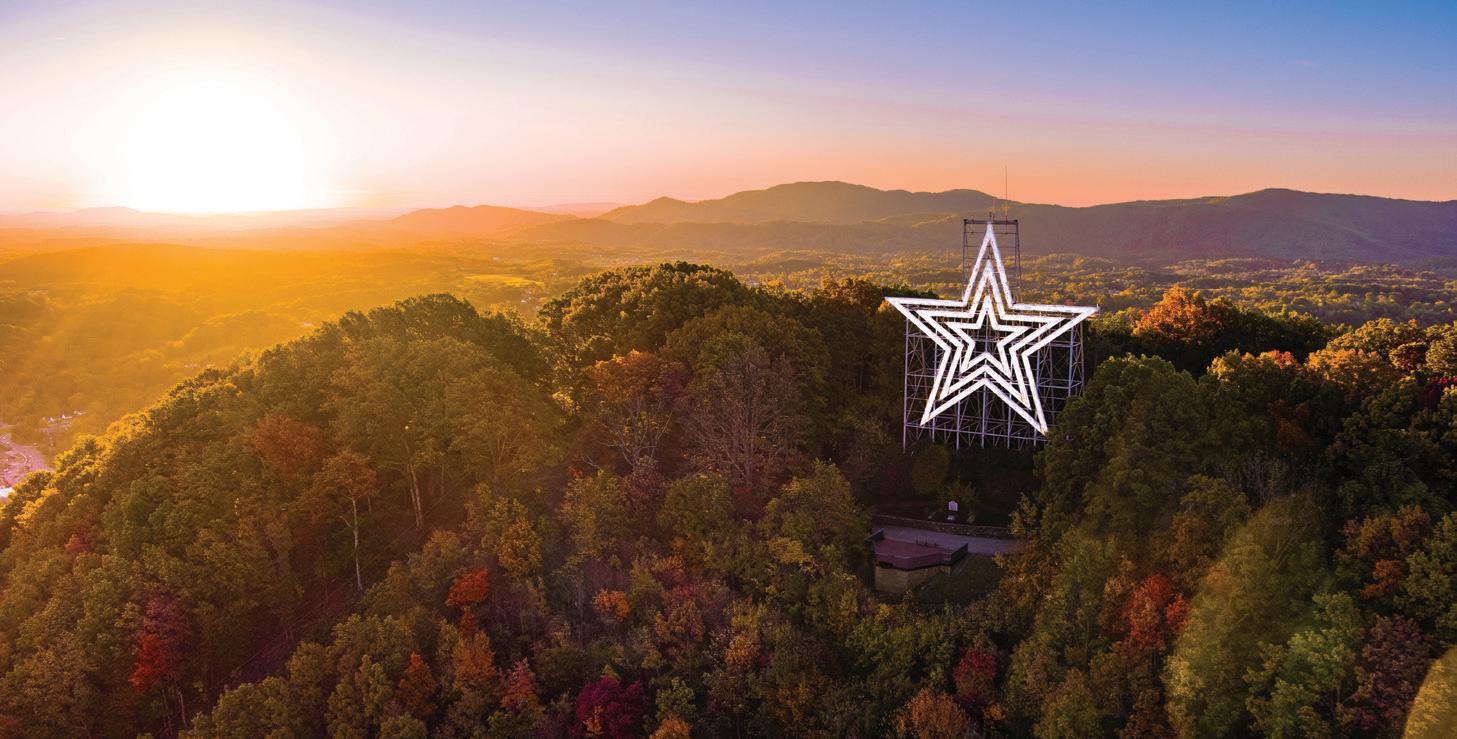
The Roanoke Star in Roanoke, Va., was built in 1949 and has stood as a part of the Mill Mountain landscape ever since. The star is over 88 feet tall and weighs 10,000 pounds, making the Roanoke Star the world’s largest freestanding illuminated man-made star.
(Photo provided by Roanoke, Va.)
and several one-on-one meetings with the city manager and finance department before it was all approved.
“Overall, we felt really good about the process, and I think it helped educate the public about the behind the scenes and how these systems are important to keep our municipal buildings accessible to the public. I think they began to understand that with some of the other investments we made that were more
people-focused assets compensation or fire and EMS, public works, schools that we had to take a step back and review how do we balance the deferred list so it doesn’t continue to grow and knock some of these items out and maybe, like with HVAC and roofing, we could replace them with renewable sources to reduce costs.”
Cobb said the three-to-five-year drawdown line of credit is a back-up plan to cover
what might not be covered under the increase in the food and beverage tax.
“So far, we’ve only got the first two months of the increased amount of tax increase, and it seems to be doing well,” Cobb said. “I think it’s countered some of the concerns that were expressed. It doesn’t seem to have hampered people eating out.”
When the tax was proposed, there were concerns. Cobb noted it came when tariffs were introduced and food costs were already high. He said the restaurant industry as a whole has also been having challenges retaining employees.
“These are all valid concerns,” he admitted. “So far, I think it’s going to work out fine.”
When asked if the line of credit approach was normal, he responded he didn’t know how normal it was for municipalities, but he served on several boards that utilized lines of credit, especially when grant reimbursements came into play and said it’s proven to be effective.
“Banks have been supportive, and we have a real good relationship with Davenport, our financial advisors and their comprehensive, multifaceted approach, and they’re very interested in giving us the best-case scenario,” he said.
Schedule of Work
In the breakdown of the identified deferred issues, the elevators are top priority to be replaced over the next two years, prior to the sunset of the food and beverage tax, along with electrical work and boilers.
“We want to accomplish all of that within the next two years,” Cobb said.
Longer term, there are plans to replace the electrical at the main library, but there are plans to refurbish the main library as a capital improvement project in a few years, so officials want to coordinate the electrical work to be done at the same time. Cobb noted this would “reduce disruptions to the facility, but nearly everything will get done by the end of June 2027.”
At the recent council meeting, a resident thanked officials for being thorough, also voicing an appreciation that they had a long view. Cobb said he’s “really pleased with the approach we’ve taken. I appreciate the city manager, who is new to us, but came in and looked at it comprehensively and evaluated every part of our local government structure and infrastructure and helped us
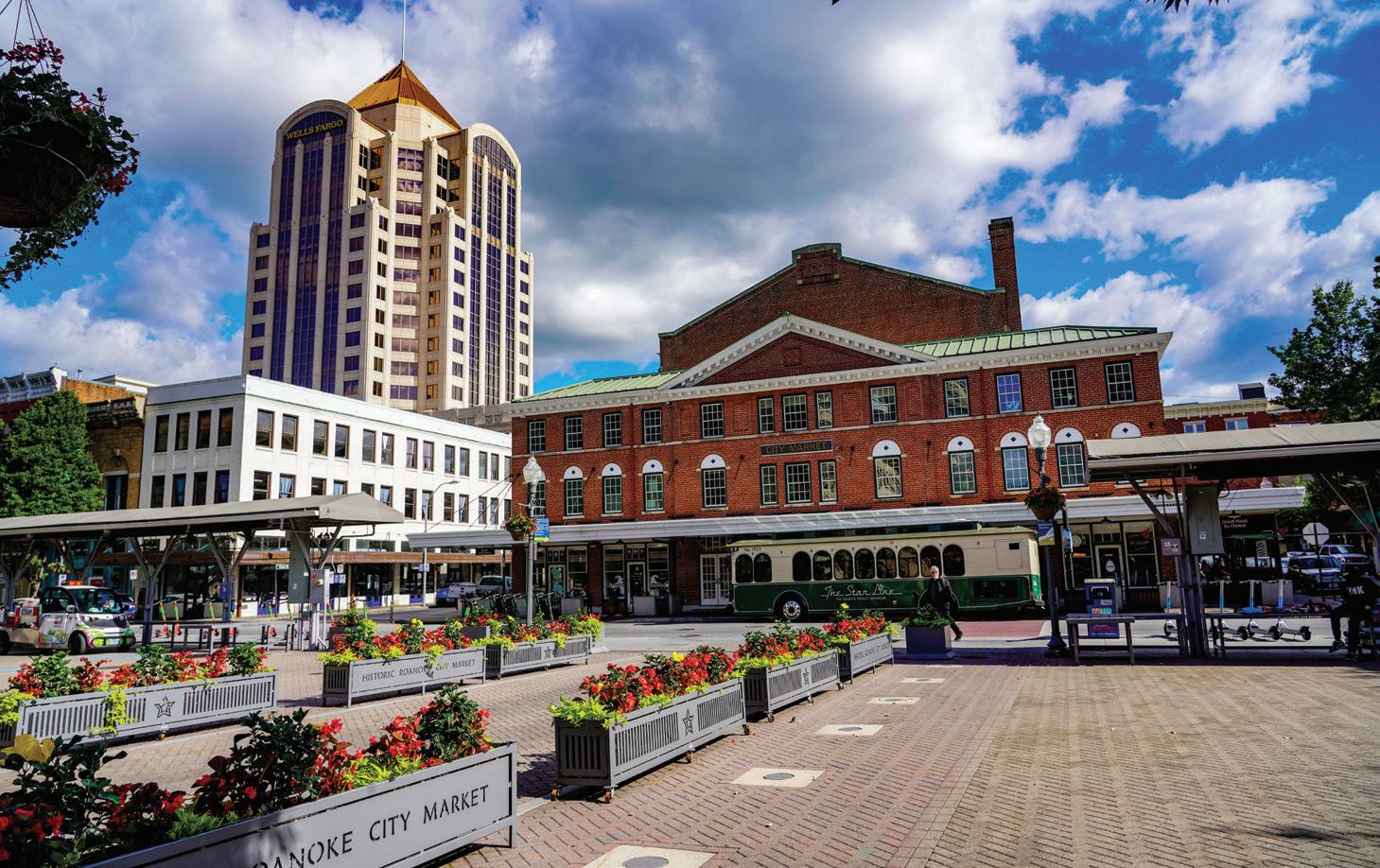
The Roanoke City Market Building in Roanoke, Va., is located in the heart of Roanoke’s historic district. In the early 1920s, it was a food center and communal hub and has evolved from that wholesale produce and meat market to partnering with individual restaurants and retail enterprises to provide a dining and shopping experience for residents and visitors to the city. (Photo provided by Roanoke, Va.)
better identify and prioritize spending and budget and identified the deferred maintenance that have gone untended for so long.”
He concluded, “We know the longer it’s deferred, the more troublesome it is to fix
and more expensive. The cost of everything has gone up, so we’re trying to do it piece by piece. I think we have a really good plan going forward, and I’m excited about it.”
This close-up of the Noel C. Taylor Municipal Building in Roanoke shows its Greek and Roman architecture details. The building was built in 1915 and dedicated in 1916. City officials will attend to some deferred maintenance items in the building, like replacing elevators, electrical work, etc. (Photo provided by Roanoke, Va.)
Out on a limb: Tree maintenance in Sonoma is an ongoing process
By JULIE YOUNG | The Municipal
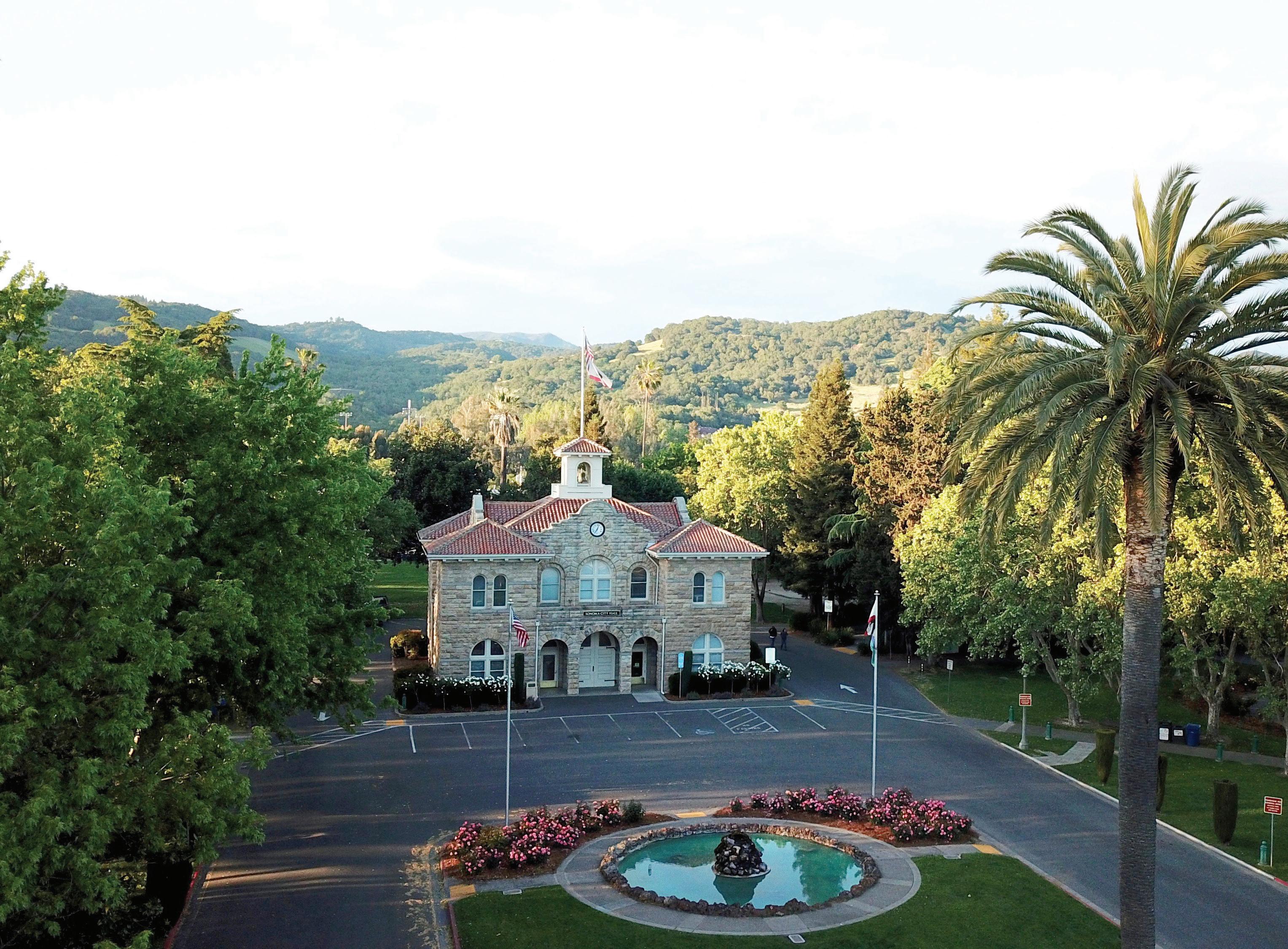
When the city of Sonoma, Calif., began the third phase of its Sonoma Plaza tree maintenance project on June 23, it didn’t “leaf” anything to chance. Not only was it a “branch” of the city’s ongoing efforts to care for its trees, but part of the overall goals that directly relate to Plaza stewardship, which the city council takes very seriously.
The Sonoma Plaza is not just a park. It is a National Historic Landmark and one of the most iconic and beloved public spaces in the region. According to David Jahns, parks and recreation director for the city of Sonoma, the Plaza’s trees represent a remarkably diverse collection of species, many of which are mature and unique for a municipal setting.
“In many ways, the Plaza functions more like an arboretum than a typical city park,
with species that do not grow in close proximity naturally and require thoughtful and individualized care,” he said. “Because of this, maintaining the health and structural stability of these trees is both a public responsibility and a long-term commitment.”
A multiphase project
The summer tree maintenance initiative built on the recommendations that were included
ABOVE: Sonoma Plaza in Sonoma, Calif., is not only a park but also a National Historic Landmark and one of the most beloved public spaces in the region. With a wide variety of trees, it functions more like an arboretum than a typical city park. (Photo provided by Sonoma, Calif.)
in the Plaza tree study that was completed approximately five years ago. That study led to a multiphase approach to Plaza maintenance. Phase 1 completed two-and-a-half years ago consisted of immediate needs and Level 5 trimming. Phase 2 completed oneand-a-half years ago included Level 4 and part of Level 3 trimming. Phase 3A completed in June addressed the remaining Level 3 trimming, some Level 2 trimming and the removal of dead palm fronds. Phase 3B, which is upcoming, will include cabling work.
The phases took one to two weeks, and some small dead trees were also removed.
The June project took place over six days and was completed by A Plus Tree services in coordination with the city’s public works staff and a consulting arborist. Jahns said the city’s contracted, certified arborist provides professional oversight for municipal tree health, conducts evaluations and makes recommendations regarding pruning and structural needs. The arborist also supports the Parks, Recreation and Open Space Commission when tree removal requests are reviewed.
“For the June Plaza project, the arborist performed advanced assessments and monitored the work to ensure it met industry standards and city objectives,” Jahns said.
Because the Plaza is a well-used space, the city provided residents with advance notice about the weeklong project in order to minimize inconvenience. Jahns said there were a few short-term impacts in terms of parking, but those impacts mainly affected staff and were not overly disruptive.
“With this type of work, there were some noise impacts, but we received no complaints and overall, the project proceeded smoothly with limited inconvenience to Plaza visitors,” he said.
A valued asset
The city of Sonoma sees regular tree monitoring and maintenance as an investment in some of the community’s most valuable and cherished assets. It is essential that the planning phase is incorporated into the city’s annual budget cycle, so it is part of an ongoing process of evaluating the needs, allocating the resources and aligning the work with city goals and operational opportunities. Annual tree maintenance is a combination of scheduled and responsive work, including regular arborist evaluations, scheduled pruning and safety-related trimming and removals as needed. Additional oversight and policy direction by the Parks, Recreation and Open Space Commission, Planning Commission and Climate Action Commission is also part of the annual process.
When a tree maintenance project is needed, planning for that project involves several coordinated steps. The arborist must assess tree health, structure and any safety concerns. Next, the city prioritizes work based on those assessments, focusing first on safety, then on long-term health and structural needs.
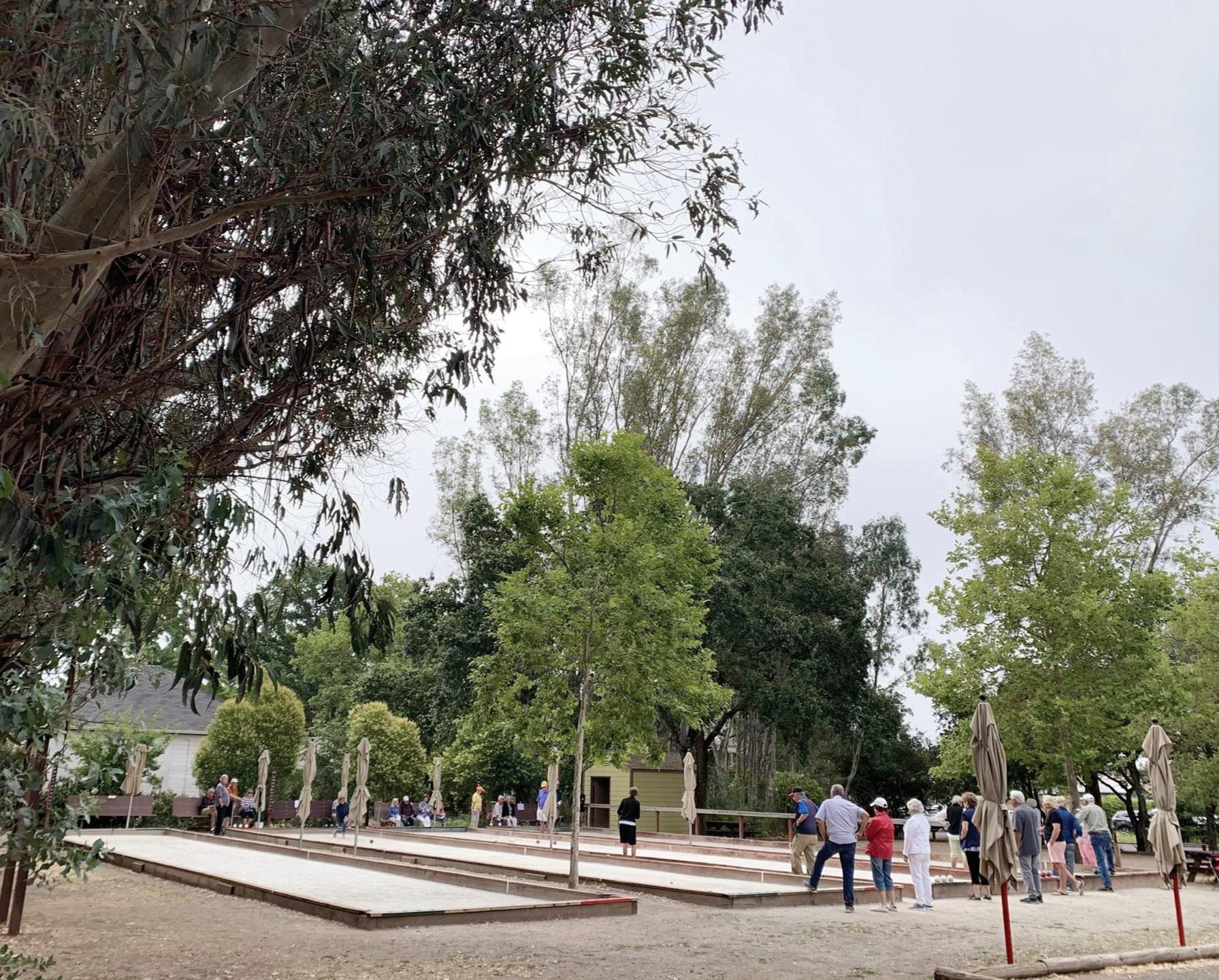
The public enjoys an afternoon of bocce among a shady grove of trees at Depot Park in Sonoma, Calif. (Photo provided by Sonoma, Calif.)
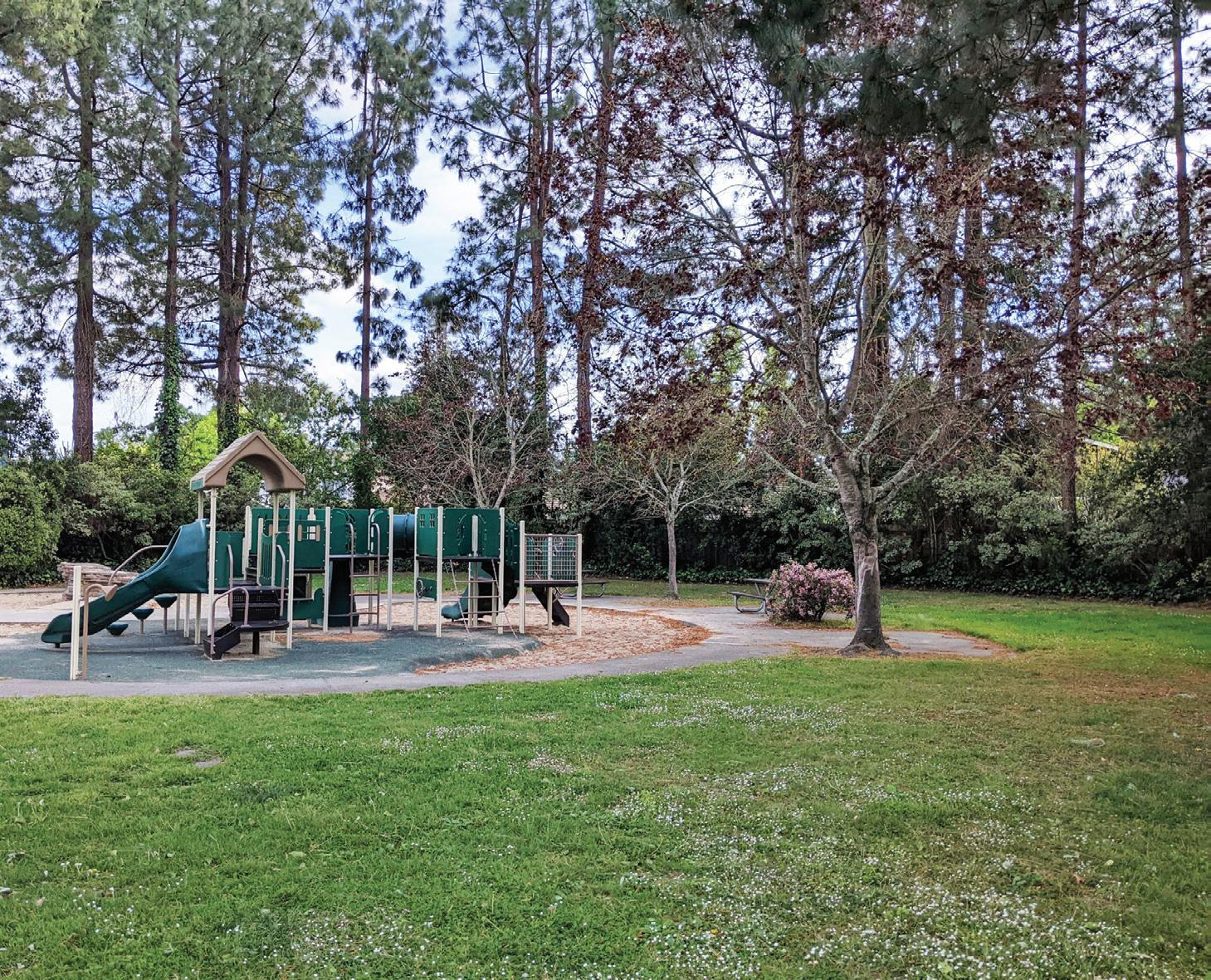
Healthy trees promote healthy spaces, and Sonoma is constantly working to keep its trees well maintained so they can continue to grow and flourish. (Photo provided by Sonoma, Calif.)
The city then contracts with qualified tree service professionals to carry out the work and schedules a time to complete the project with minimal impact to high use, public areas. Sonoma also must notify the public about any temporary closures, equipment or parking impacts that might be expected.
As the Plaza tree project is completed, there are several other city projects that are underway or in the works, such as the update to the tree inventory and canopy study, completing and urban forest management plan and updates to the City Tree List and tree replacement policies. While Jahns is relatively new to his role, his approach to tree maintenance is to continue the careful stewardship of those who came before him.
“My approach is to build on the strong foundation already in place: professional arborist guidance, structured Plaza maintenance phases, long-term planning and ensuring coordination, transparency and long-term stewardship of Sonoma’s urban forest,” he said.
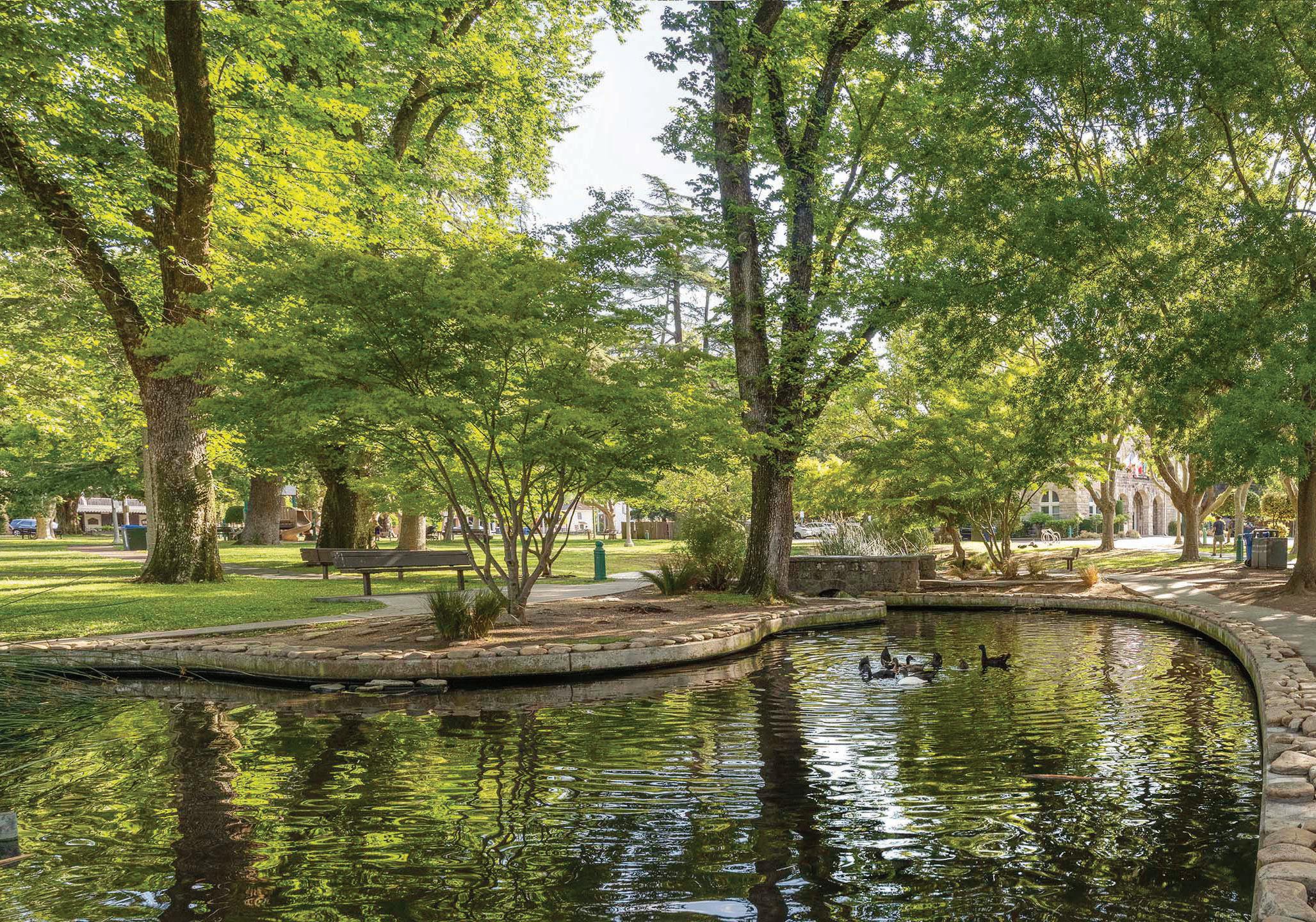
The city of Sonoma takes its stewardship of the Plaza seriously and has a comprehensive plan to maintain the trees in the plaza and throughout the city. (Photo provided by Sonoma, Calif.)
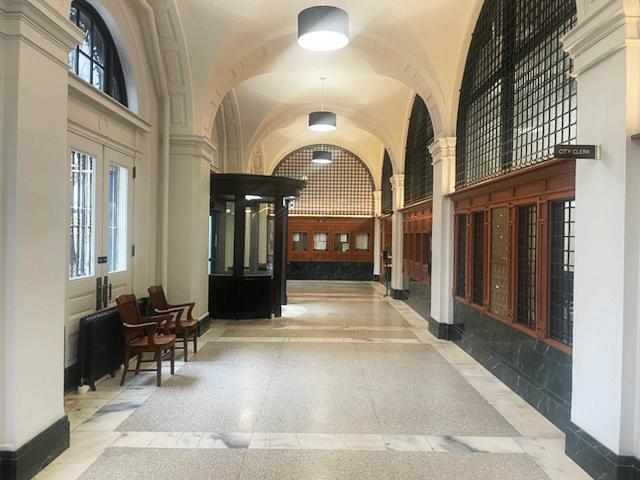
Restoring character and Ottumwa City Hall returns after major renovations
By DANIELLE LUND | The Municipal
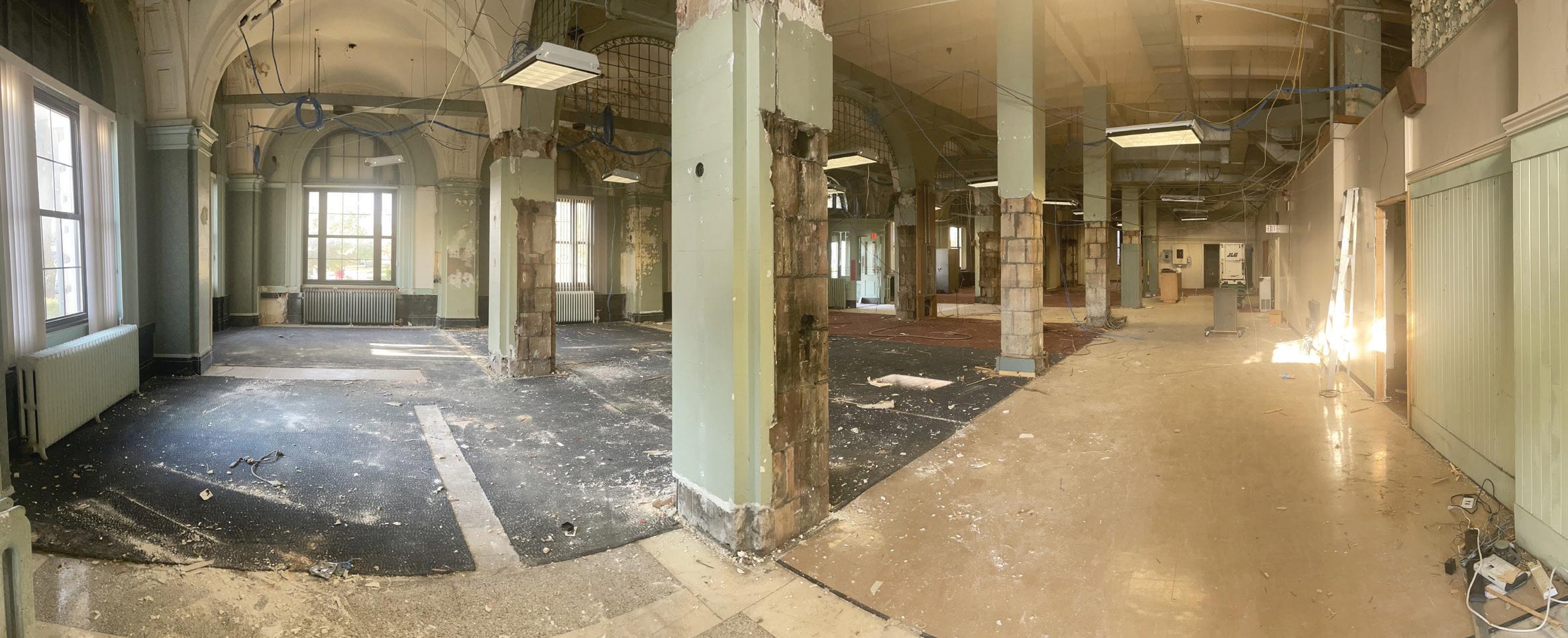
When Ottumwa, Iowa, City Hall reopened its doors earlier this year, staff and residents walked into a space that felt both familiar and entirely new. Sunlight now pours through the exposed 14-foot vaulted ceilings, while long-hidden architectural details have returned to view and the aging boiler once salvaged from a railroad locomotive is finally retired. After months of asbestos abatement, mechanical upgrades and a reimagining of the first-floor workspace, the building has taken on a renewed life that honors its historic character while finally meeting modern needs.
For city engineer and Public Works Director Philip Burgmeier, the project was about balancing preservation with practicality. “The biggest need was to renovate the first floor for a better work environment,” he explained. “It was old, it wasn’t separated well for different functions, and it wasn’t ADA compliant. We wanted a layout that served staff and the public without losing what makes this building special.”
Before construction began, Ottumwa City Hall operated out of a space that reflected its age as much as its history. The first floor, where most customer-facing services were located, lacked proper division between departments. Staff worked in tight quarters, and residents often navigated a layout that was functional
only in the loosest sense. Accessibility needs, which have increased in focus for municipalities nationwide, were not adequately met by the aging floor plan.
Yet even these issues paled in comparison to the building’s mechanical challenges. The boiler, so old it once powered a locomotive, was not only outdated but unreliable. “It broke down all the time,” Burgmeier said. The building had only one thermostat controlling the entire space, offering little flexibility and even less comfort. There was no central cooling system, leading staff to rely on window air conditioners and standalone units each summer.
As the structure aged, deeper concerns emerged. The city determined that asbestos materials, long dormant, required professional
ABOVE: Work is in progress on the city hall’s first floor. While it was underway, staff continued city operations at a temporary site. (Photo provided by Ottumwa, Iowa)
abatement. This added urgency and complexity to the city hall improvement plan.
To take on asbestos removal and large-scale HVAC work, staff needed to fully vacate the building for a short time. While relocating a city hall is a significant disruption under any circumstances, Ottumwa approached it with a focus on continuity and customer experience.
Departments temporarily moved to an alternate location, where city staff worked diligently to maintain seamless operations. The goal, Burgmeier emphasized, was minimizing inconvenience for residents seeking permits, paying utility bills, requesting information or meeting with city officials.
“Even though we were out of the building for months, we wanted people to feel like nothing had changed in terms of service,” he said. “Our staff really stepped up.”
The temporary site provided distinct areas for departments and maintained accessibility features that city hall had long lacked. Public communication especially through the city’s active social media presence helped
improving comfort:
keep residents informed about where to go, how to get help and what progress was being made inside the building they knew so well.
The city’s public information officer regularly posted renovation updates and behind-the-scenes photos, sparking community interest in the project and underscoring how much of a transformation was happening beyond the closed doors.
The renovation combined multiple priorities: eliminating hazardous materials, restoring historic features and installing new mechanical systems capable of serving a 21stcentury workplace.
The asbestos abatement, now fully complete, was one of the most essential components of the project. Once cleared, crews turned to historic restoration, such as peeling back decades of alterations to bring the building’s character back into view. The reopening of the vaulted ceilings is one of the most celebrated outcomes.
“Everyone likes how you can see the vaulted ceilings and character of the building now,” Burgmeier said. “Those 14-foot vaults completely change the feel of the space.”
Simultaneously, the mechanical overhaul addressed long-standing comfort and efficiency issues. The old boiler system was replaced with modern hot-water heating, and the building was divided into multiple heating zones, giving staff much-needed control over temperatures. The addition of a cooling system also means summers will no longer
require an assortment of window units humming throughout the building.
Together, these upgrades reduce long-term maintenance demands and position the structure for better energy efficiency.
Renovating a historic public building is no small financial undertaking. Ottumwa used a combination of funding sources totaling approximately $3.8 million. These funding sources included bonds, franchise fees, general fund dollars and money from the American Rescue Plan Act funds.
This multisource strategy allowed the city to prioritize resident and staff needs without compromising other budget commitments.
For taxpayers, the investment provides longterm value, extending the life of a historic structure while reducing the likelihood of future costly emergency repairs.
Although a few final cosmetic touches, such as vent patching and minor finish work, are expected to continue through December, staff have already been back in the restored city hall for several months now.
The feedback has been overwhelmingly positive.
Departments now function in clearly defined spaces designed for efficiency, privacy and accessibility. The building’s modern HVAC systems ensure a more comfortable work environment year-round. Most importantly, residents returning to conduct business find the same dedicated staff ready to help, but in a space where customer service can truly shine.
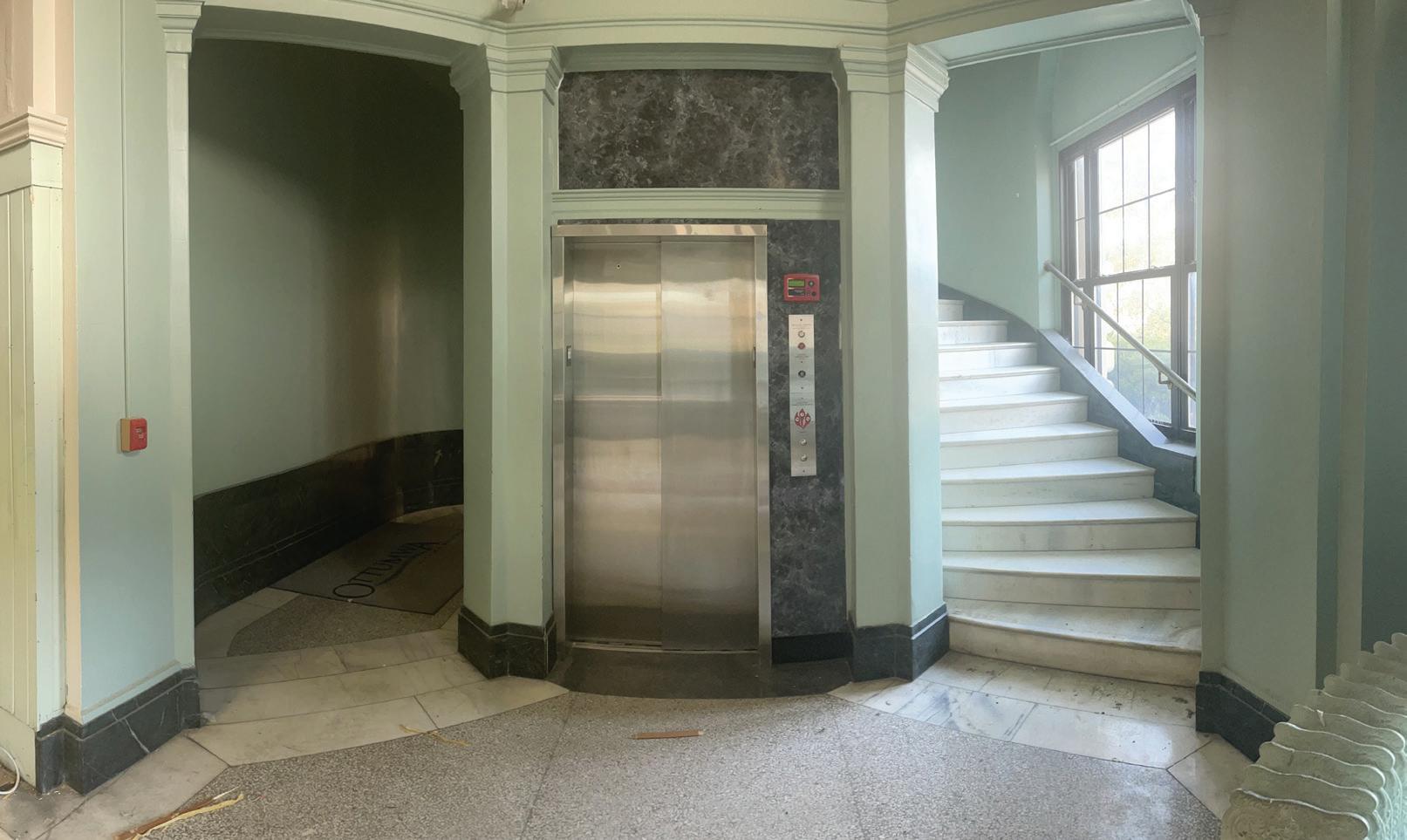
Ottumwa, Iowa, restored its city hall’s vaulted ceilings during a renovation that included asbestos abatement and HVAC and layout updates. (Photo provided by Ottumwa, Iowa)
The reintroduction of the building’s architectural beauty has also strengthened pride in the facility. As Burgmeier notes, “It feels like we have this historic building back again, but one that actually works for the people who use it every day.”
For Ottumwa, the renovation of city hall has accomplished more than a structural upgrade. It represents a commitment to transparency, accessibility, efficient government operations and historical preservation.
In a time when many communities face the difficult choice of restoring aging public buildings or constructing entirely new ones, Ottumwa has shown that thoughtful investment can deliver the best of both worlds a modern workspace rooted in local history.
As residents walk through the bright, revitalized halls, they can see for themselves: Sometimes the most meaningful progress comes from honoring what you already have, and strengthening it for the future.
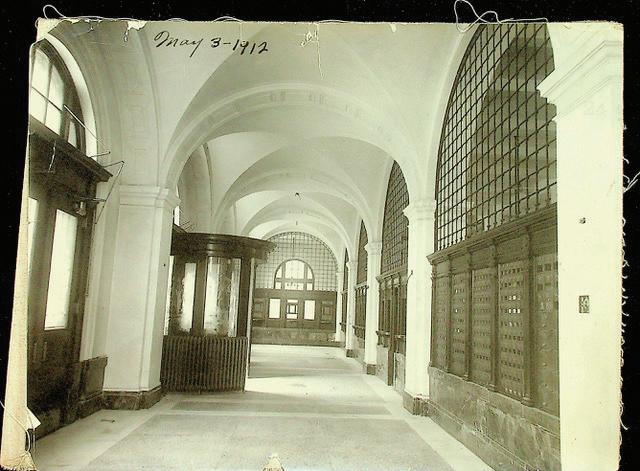
This photo from May 3, 1912, shows city hall’s original interior. (Photo provided by Ottumwa, Iowa)
For a historically good time, it’s Cape May
By BETH ANNE BRINK-COX | The Municipal
New Jersey’s Cape May has a lyrical and peaceful name. CapeMay.com gives the history of the city, which was named by Dutch explorer Cornelius Jacobsen Mey. English settlers later adjusted the name, though it’s not known whether that was because of a mispronunciation or misspelling.
No matter how its name came to be, the city has a long, long history. Mey explored the area between 1611 and 1614, charting the land as he did so.
Cape May’s heyday took place during the Victorian era. In 1878, a five-day fire burned throughout the center of the area, reducing more than 30 acres of the historic homes and hotels to ashes. During the reconstruction period, many of the oversized buildings were replaced with family summer cottages: Calling the new structures “cottages” is deceiving, however, because they were much larger than today’s cottages.
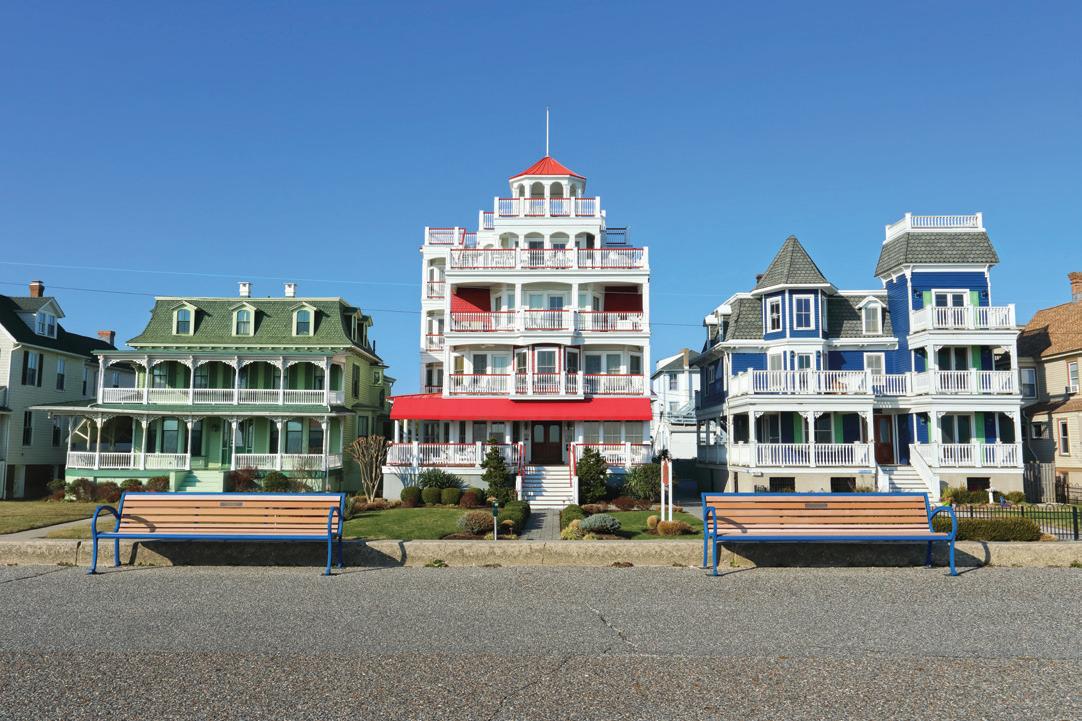
Well-trimmed with architectural gingerbread, the porches of these cottages were lined up to allow easy socializing with the neighbors, in the style of sleepy Sunday afternoons in rocking chairs with glasses of lemonade. There are still so many well-maintained Victorian abodes in the city that it is second only to San Francisco for similarly styled homes, painted ladies and the like. In 1976, Cape May was designated a National Historic Landmark and is the only city in America to be wholly designated so.
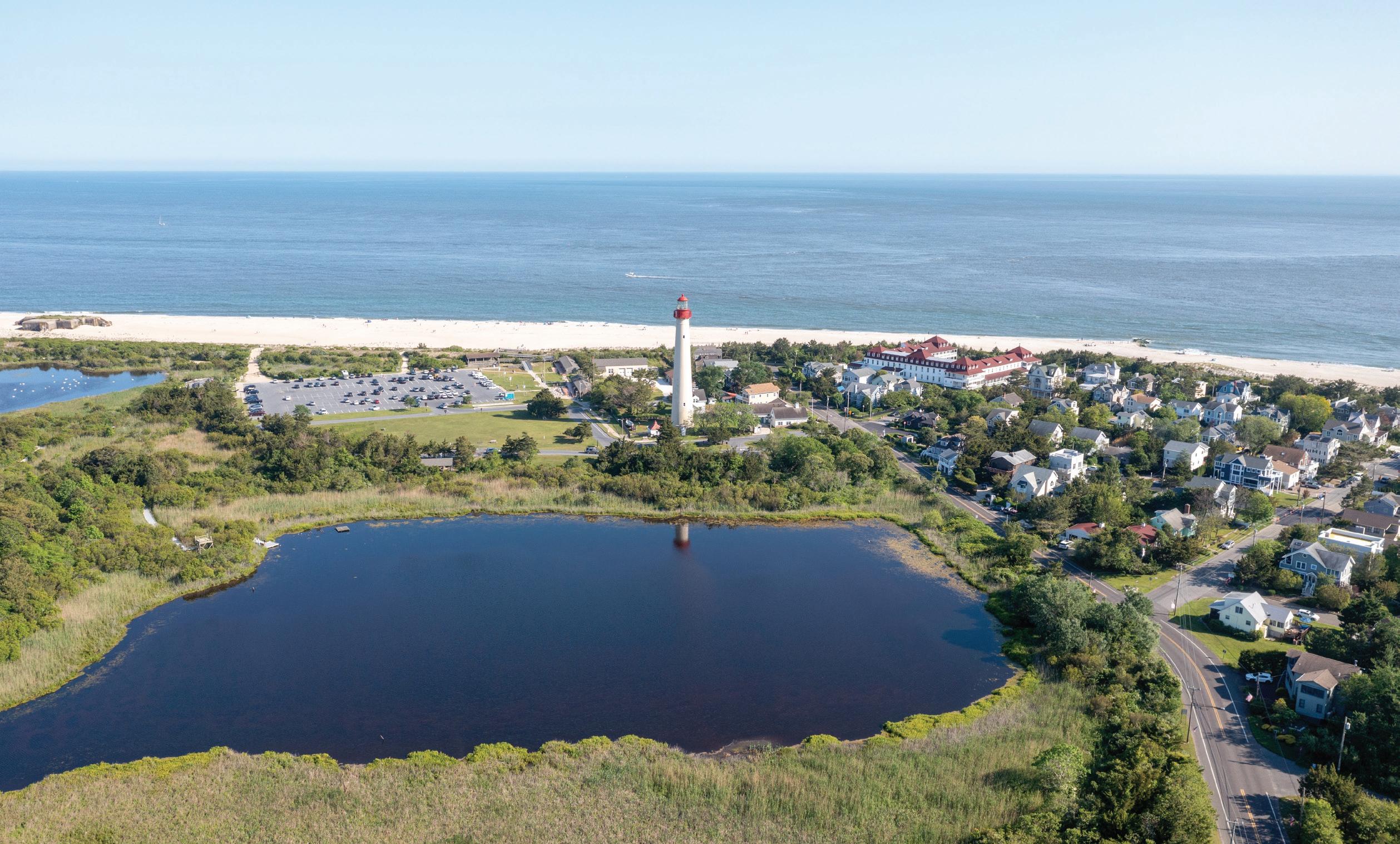
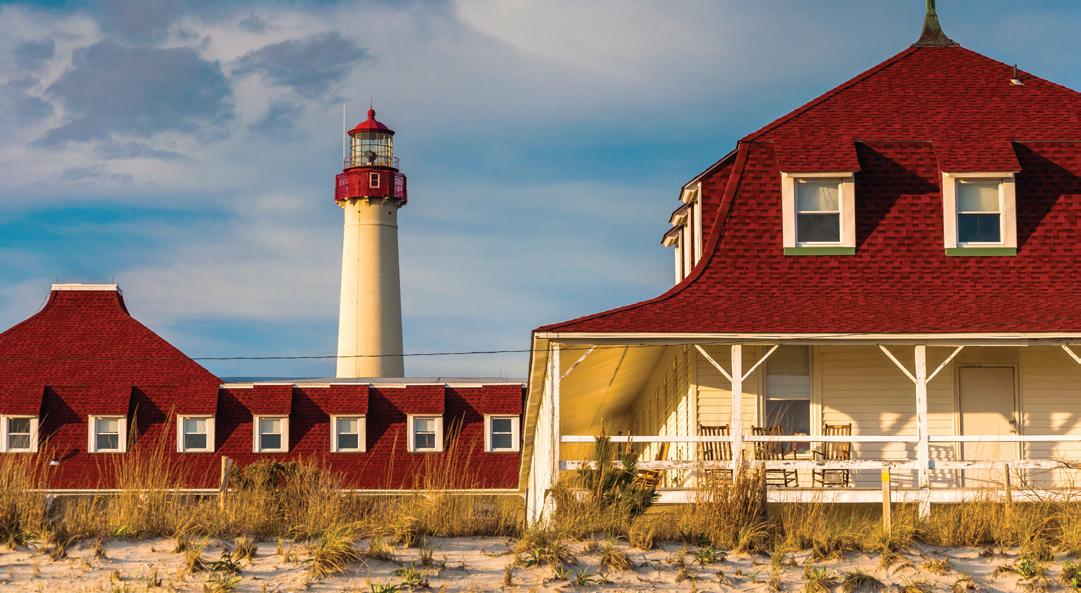
ABOVE: An aerial view of Cape May Point State Park shows the Cape May Lighthouse, where visitors can climb 199 steps up the original, cast-iron spiral stairway to the top. (Felix Lipov/Shutterstock.com)
The city is considered to be quite beautiful by many people, especially those who enjoy its beaches and shoreline, diverse architecture and historic homes. It offers a variety of places to stay that are rich with history.
Cape May is known for being the home of America’s first seaside resort, Congress Hall, established in 1816 and delighting guests ever since. Four former presidents stayed there: Franklin Pierce, James Buchanan, Ulysses S. Grant and Benjamin Harrison, although only Harrison designated it officially as his “summer White House.” This made for busy summer months in Cape May during his 1889-92 presidency, as the city became the center of national affairs.
John Phillip Sousa regularly stayed at Congress Hall as well, perhaps drawing inspiration from its presidential guests. Accompanied by the U.S. Marine Band and known for his military marches, he composed the “Congress Hall March” there, debuting it to an audience on the lawn during the summer of 1882.
Cape May’s beaches are something to talk about as well. While it’s really one long stretch of sand, there are multiple names and locations along the way. There are 16 designated beaches, to be exact, from
Broadway to Reading and Congress Street to Poverty. Swimming, skimboarding, volleyball and surfing are all permitted at certain beaches, and fishing and kayaking on others. And, of course, all of them are good for picnics and sandcastle sculpting.
Food often plays a big part in people’s enjoyment of travel, and twice a year, Cape May hosts a citywide culinary event at which anyone can partake of a fixed-price menu of three courses. At any time, visitors and residents can indulge in Italian food at Andrea Trattoria Italiana or try the Blue Pig Tavern at Congress Hall for fresh seafood and local produce. Other intriguing eateries include the Beach Plum Farm, a 62-acre working farm and restaurant; Grana BYOB; Harpoons on the Bay; Lucky Bones Backwater Grille; Primal; Provence; and The Rusty Nail. And course, there’s much more to do than eat: Wine and other spirit tastings are offered at the Cape May Winery, the Cold Spring Brewery, Hawk Haven Winery, Jessie Creek Winery and the Nauti Spirits Distillery, to name just a few.
There are free activities all yearlong, including parks, zoos, museums and free movies on the beach during the summer months. For history buffs, there’s the Fireman’s Museum, complete with a 1928 fire engine; or the Cape May Lighthouse; Naval Air Station Wildwood Aviation Museum; World War II Lookout Tower; Colonial House; or the Cape May Museum. Something not to be missed is the Harriet Tubman Museum, where a visitor can take in more than they might have previously known about the abolitionist hero.
Another fascinating part of the history of Cape May is its maritime roots. First settled by the Kechemeche Native American tribe, Quakers came in and formed their own government in 1688. The whaling industry took off, and rumors abound to this day about pirates and Captain Kidd’s treasure being buried somewhere in Cape May.
Those who prefer the arts can take a peek into The Colorful Palette or the Madd Potters’ Studio and make something one of a kind as a souvenir. For a different enjoyment of the arts, see what’s playing at the East Lynne Theatre Company, a Certified Equity Professional theatre company known for many new and original productions and shows that are often never seen anywhere else, in addition to classic favorites. Cape May Stage has likewise produced CEP shows since 1988.
When visiting Cape May, tourists seem to most enjoy the months of May through September, which are the warmest. But it’s equally beautiful to see everything blooming in the spring and to participate in the Easter parade and see the fall colors and how the Victorian homes turn breathtaking when they are dressed in lights and decorations. In the winter, don’t miss the Winter Wonderland at Congress Hall and do take the Christmas Candlelight Tour.
There are special festivals that may suit just about anyone’s taste. The Spring Festival falls in May and is tied with the Audubon Society, so it is all about birds and features lectures, movies and workshops. The Music Festival takes place in May and June and features concerts of classical, chamber and other styles of music. Restaurant Week falls twice a year in October and June, and gourmands will not want to miss it. The MidAtlantic Tournament for marlin fishing books for three years out and will happen Aug. 16-21, 2026; Aug. 15-20, 2027; and August 20-25, 2028. There are prizes for the heaviest fish in each category.
Now would be a good time to get out the calendar and plan some special times to visit in the new year. Pack comfortable shoes, bring a good camera, and savor the beauty at every turn.
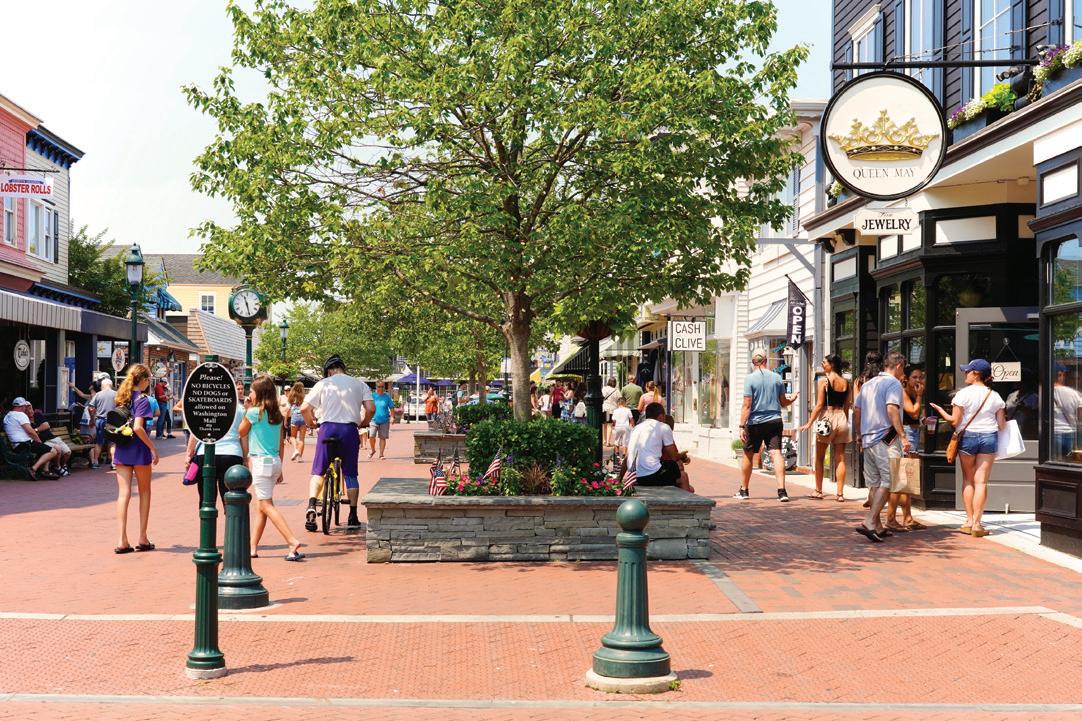
The New Jersey shore resort community of Cape May is home to the colorful Washington Street Mall, lined with shops and restaurants featuring iconic Victorian-era design. (George Wirt/ Shutterstock.com)
St. Mary by-the-Sea served as the summer retreat house of the Sisters of Saint Joseph of Chestnut Hill of Philadelphia, Pa. Currently, the former retreat operates as a science center that studies migratory patterns of butterflies, birds, crabs and other marine life. (Jon Bilous/Shutterstock.com)
Victorian houses line the beach in Cape May, N.J. (Fotogro/Shutterstock.com)
Students become live-in staff at Connecticut fire department
By NICHOLETTE CARLSON | The Municipal
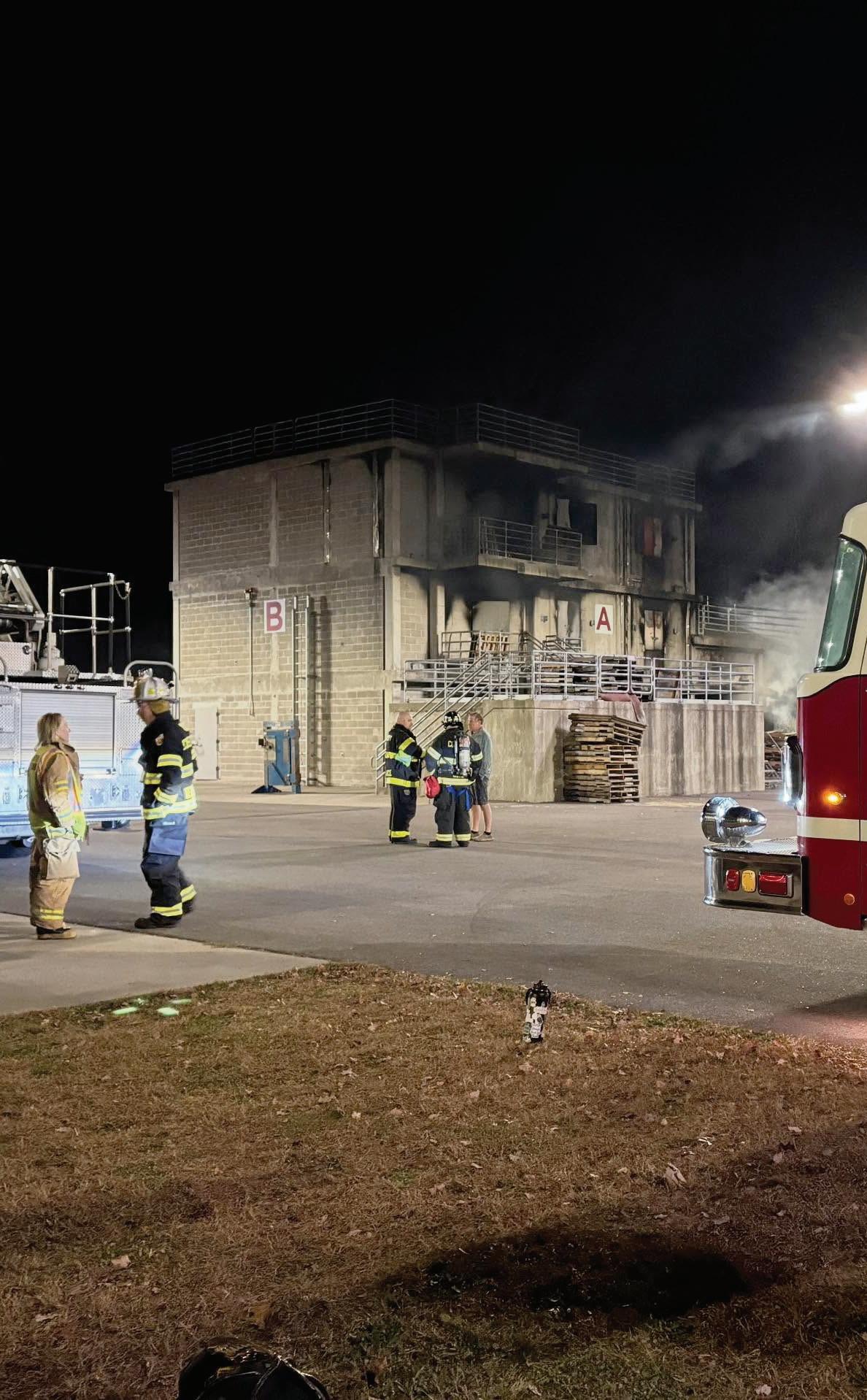
Coventry Fire-EMS traveled to Eastern CT Fire School to participate in live fire training, where crews practiced advancing hose lines to a below-grade fire and combatting garage fires, alongside search and rescue techniques. (Photo provided by Coventry Fire-EMS)
The town of Coventry Fire-EMS Department in Connecticut is trying a fresh approach to get college students to volunteer. In exchange for a room to live in at the department’s main firehouse, students will provide emergency medical technician services. Since the city already maintains ambulance coverage 24/7 with paid staffing, trying a live-in program seemed like a good, new solution.
Live-in programs have been utilized for years in various departments across the country. This led Coventry Fire-EMS to reach out to some of those departments to review their policies and learn from their experience. It took the information and formed its own version of the program.
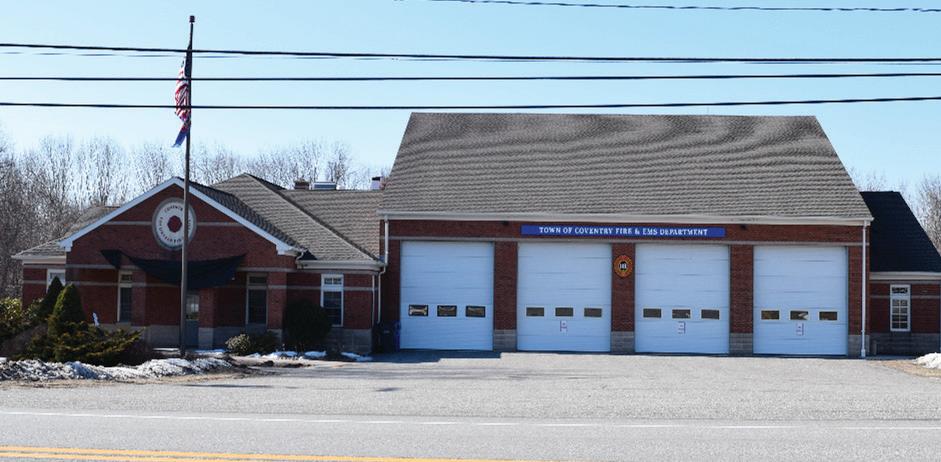
The city has four firehouses, two of which have bunking capabilities.
“When we transitioned to 24/7 ambulance staffing, one of those stations was already being used for on-duty personnel,” Bud Meyers, Coventry fire chief, explained. “This left the other station available and well-suited to accommodate live-in students.”
In order to qualify for the program, students must be enrolled in college, maintain a minimum 3.0 GPA, have a Connecticut or national emergency medical technician certification and be qualified to provide patient care in the department ambulances.
The department had hoped to launch the program last fall semester. However, recruitment efforts began too late, when many students had already committed to other housing arrangements. In order to promote the program this year, the department posted information throughout the University of Connecticut campus; advertised on the FireFighter app, which is a recruitment platform allowing individuals to apply directly to the Coventry department; and advertised on social media.
“The primary goals of the program are to help offset staffing costs and reduce the number of hours our volunteers dedicate to covering ambulance shifts,” Meyers shared. “By doing so, volunteers are better able to staff our second ambulance when simultaneous calls occur.
“Last year alone, we responded to 270 incidents where a second ambulance was needed. The program also provides valuable real-world
Since Coventry, Conn., changed to 24/7 ambulance coverage, the fire and EMS department decided to try something new in order to not wear out volunteers. With two firehouses with bunking capabilities and one being used for on-duty personnel, the second firehouse leant itself to housing live-in emergency medical technician students. In exchange for shifts with the department, the student is able to live at the firehouse throughout the year. (Photo provided by the Coventry, Conn. Fire-EMS Department)
Members of Coventry Fire-EMS visited the Coventry Farmers’ Market to kick off fire prevention week in October. It included a special visit from Life Star. (Photo provided by Coventry Fire-EMS)
experience for the live-in students, allowing them to build their skills in a professional environment while pursuing their education.”
The program is just a few months in. The hope was to recruit four students, and there are currently three residing in the firehouse and two additional students in the early stages of applying.
It will run year to year, with students able to continue to participate in following years as long as they are still enrolled in school and meet the requirements. During winter and summer breaks, if the student is not living in the firehouse, he or she is not required to staff shifts. The live-in students have requested some adjustments in the program, which the department has been able to accommodate.
As the program continues, it should become even more successful.
“Our hope is to make this program sustainable by providing a valuable and rewarding experience for the students,” Meyers said. “While we
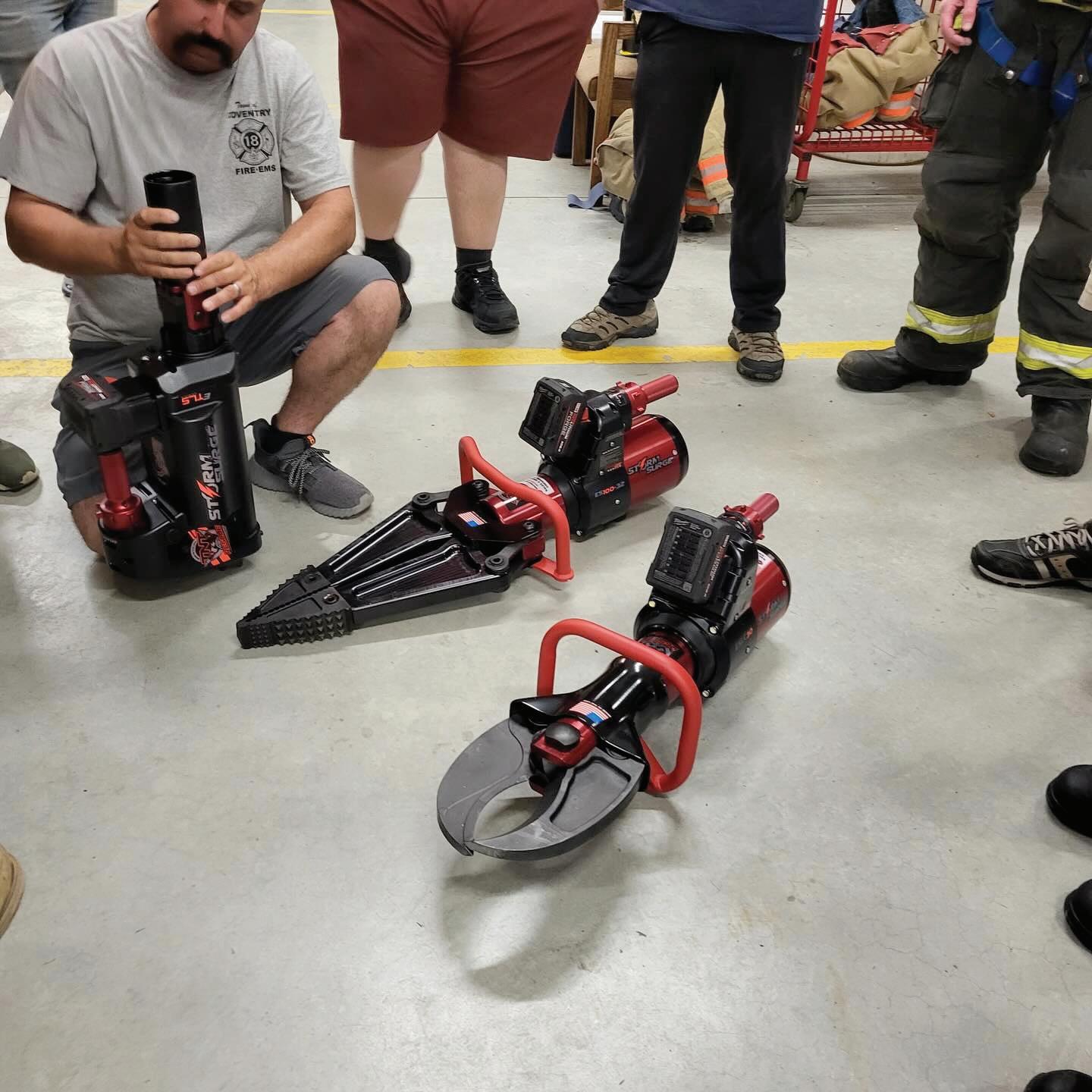
Fire-EMS members trained and familiarized themselves with the department’s new battery-powered hydraulic tools. (Photo provided by Coventry Fire-EMS)
Coventry residents could uncover treats from Coventry Fire-EMS during the Trunk or Treat on Main event. (Photo provided by Coventry Fire-EMS)
have discussed the possibility of increasing the number of participants in the future, we want to ensure the program is fully established and running smoothly before expanding. Over the next year, three years and five years, we aim to continue refining the program, maintain high quality training and support for our live-in students, and ultimately create a model that benefits both the department and the community.”
Young
Coventry
Doty Park: A testament to community and environmental stewardship
By LAUREN CAGGIANO | The Municipal
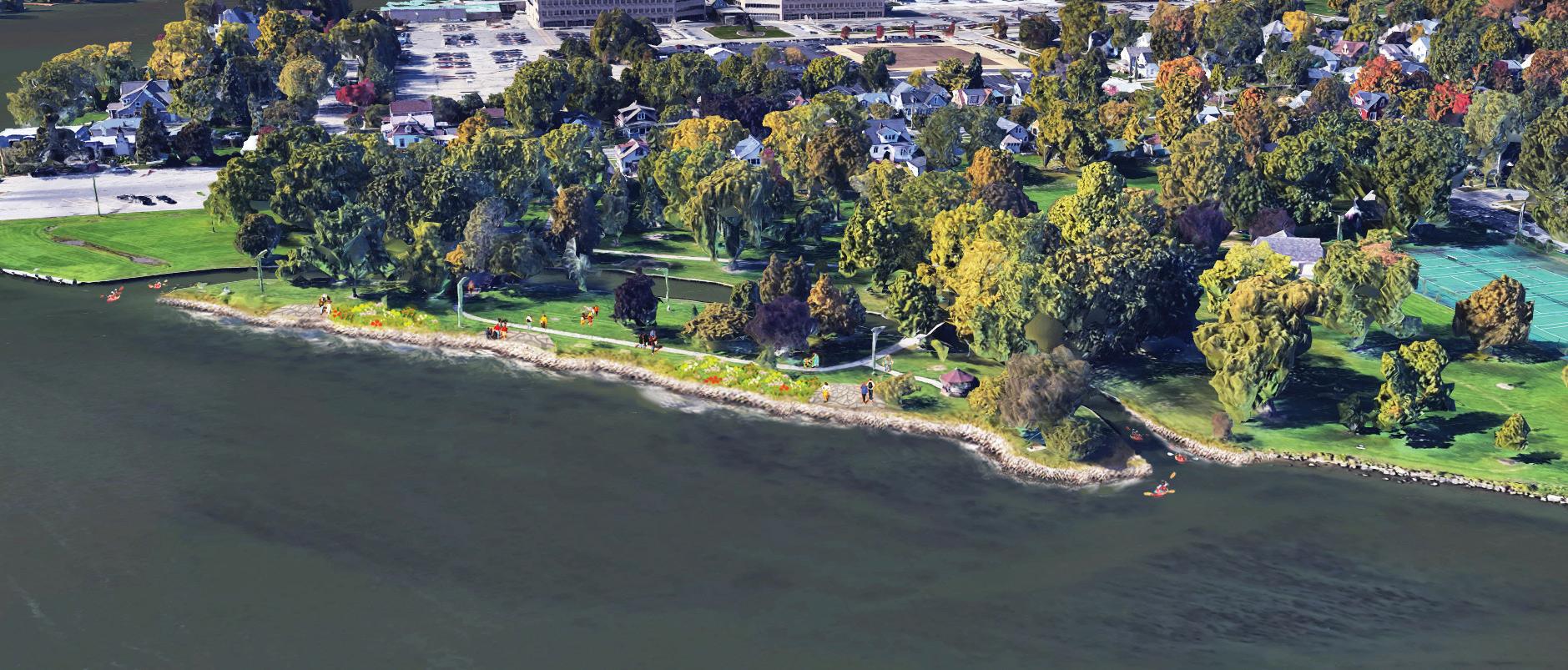
Nestled in the heart of Neenah, Wis., Doty Park has long been a cherished community space. Building on its picturesque shoreline and rich history, the park is entering a new phase that balances environmental preservation with enhanced public access.
The multiyear project, led by the city in collaboration with Edgewater Resources, is a testament to how thoughtful design can create lasting benefits for both people and nature. Michael Kading, director of parks and recreation for the city, framed the significance of the project within a broad context.
“Water has always been part of our ethos and heritage here in Neenah. Ensuring stable and accessible shorelines for future generations is vital so they can enjoy the same benefits as our early settlers.”
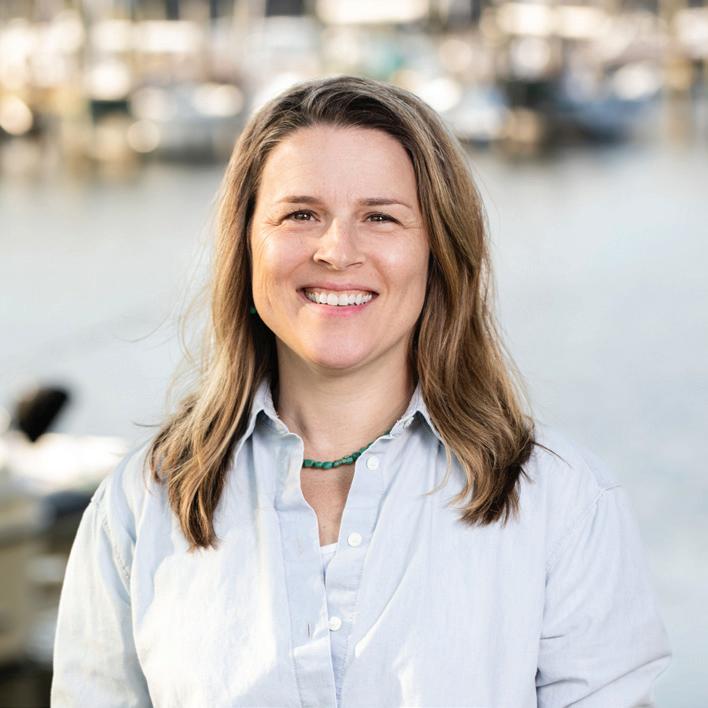
The project began in 2023 with a conceptual design process. But according to Suzie Fromson, landscape architect at Edgewater Resources, the project was met with challenges.
“The shorelines in Doty Park were in bad disrepair, with aging timber seawalls that were unsafe and degrading,” Fromson said. “We had to address erosion, safety and habitat
improvement while maintaining the park’s natural beauty.”
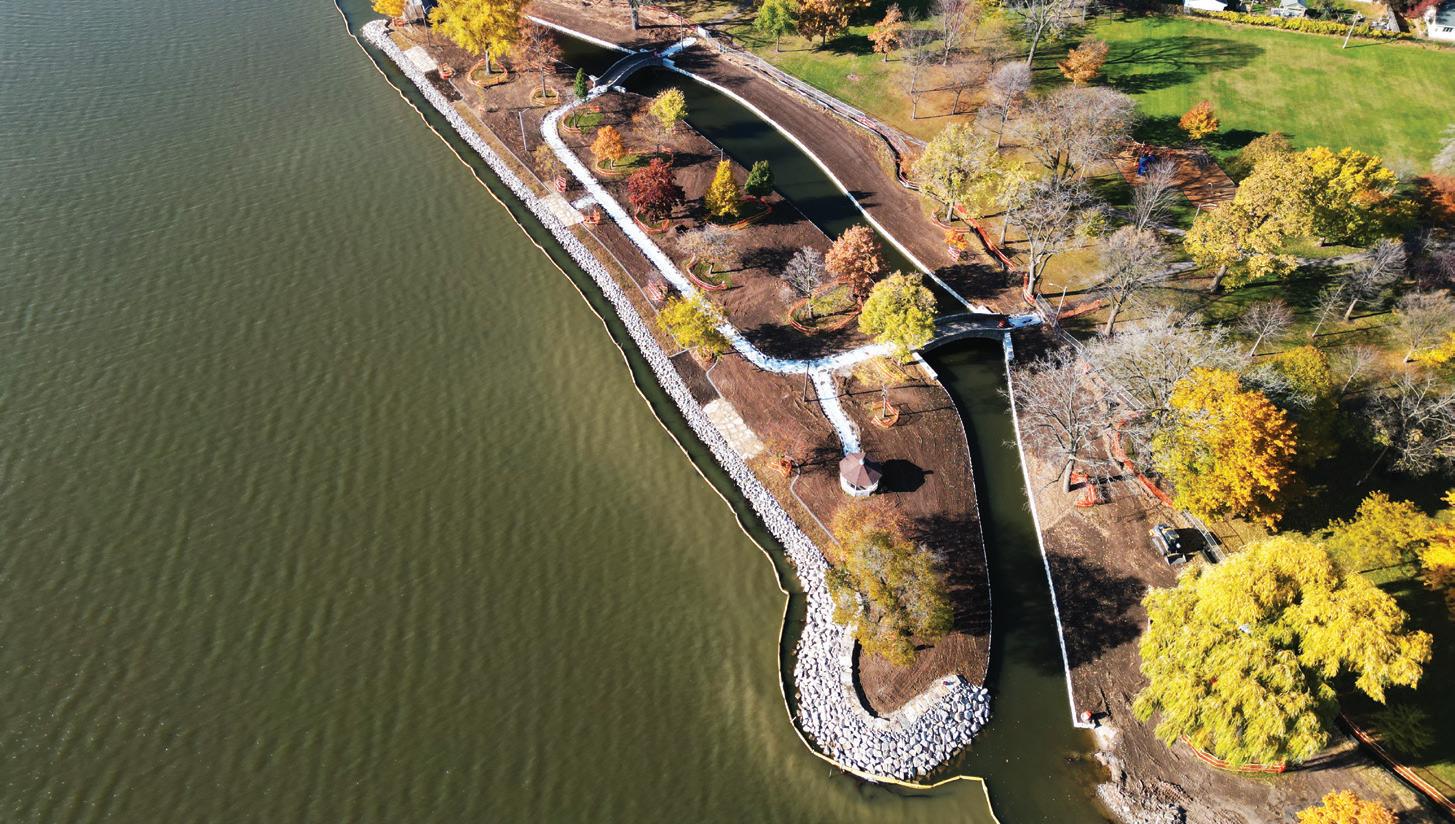
One of the key elements of the project was replacing the failing timber seawalls with a combination of concrete block walls and riprap stone mixed with native plants. This approach not only enhanced the shoreline’s resilience but also created a more inviting habitat for fish and wildlife. Per Fromson, the Wisconsin Department of Natural Resources encouraged the softening of the shoreline wherever possible, replacing vertical seawalls with sloped, natural edges. These measures improved the natural habitat and created conditions for a more sustainable environment.
The design team worked closely with the DNR to strike a balance between ecological goals and practical considerations, such as preserving mature trees and maintaining access for kayakers and anglers.
A rendering of the rehabilitation project’s proposed Phase 2 shows people interacting with park improvements. (Photo provided by Neenah, Wis.)
The project was a financial success, coming in under budget thanks to competitive bidding. The city was prepared to spend more than $3 million on the project, but the lowest bid came in at $1.3 million, which allowed Kading to expand the scope of the project and complete additional shoreline work.
This unexpected windfall enabled the team to address the eastern portion of the shoreline, which had initially been slated for a later phase.
“It’s a great blessing to have been able to tie up that portion of the project and create a continuous shoreline improvement,” he said.
As the first phase of the project nears completion, the community’s response has been overwhelmingly positive. At this juncture, Kading emphasized the importance of staying the course.
“Be open to seeing a basic utilitarian project become something that’s an asset for the community,” he said. “Persistence and collaboration are key.”
The project has already transformed Doty Park into a safer, more accessible and more visually appealing space. It offers new fishing platforms, walking paths and scenic outcroppings that are sure to become popular spots for wedding and engagement photos.
Fromson echoed Kading’s sentiments, noting the collaborative nature of the project.
“Working with the city has been a delight, and it has been a really rewarding process. We’ve learned a lot along the way, especially about balancing the needs of the environment with the needs of the community,” she said.
Fromson pointed out that working on a small island with heavy equipment required careful planning and coordination. Access was limited to two historic bridges, each nearly 100 years old,
so workers had to build a temporary causeway to bring in materials and equipment. The team also had to contend with the unique environmental conditions of the area, including ice shoves from Lake Winnebago that push massive amounts of ice onto the shoreline during the winter.
“Finding the perfect balance between a soft, natural shoreline and one that can withstand tough weather conditions was a challenge, but we’re proud of the result,” Fromson said.
Looking ahead, Phase 2 of the project will focus on the southwestern shoreline and
includes plans for a boardwalk, improved Americans with Disabilities Act accessibility and a kayak launch.
“This is about creating spaces that are not only functional but also beautiful and inviting,” said Fromson. “We’ve already identified potential grants to support these improvements, and we’re excited to continue building on the success of Phase 1.”
Kading added that the next phase will address areas of the park that are currently eroding, ensuring that the entire shoreline is stable and accessible for years to come.
A drone shot of Doty Park in Neenah, Wis., taken in November, shows efforts to prevent shore erosion. (Photo provided by Neenah, Wis.)
Work was also conducted around Doty Park’s historic bridge. (Photo provided by Neenah, Wis.)
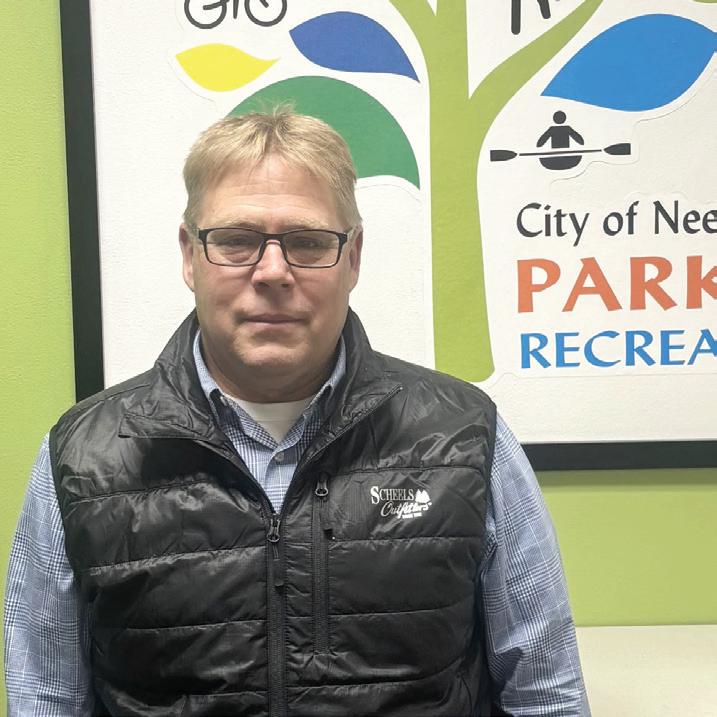
Michael Kading, director of parks and recreation for the city of Neenah, Wis. (Photo provided by Neenah, Wis.)
Boulder program promotes longterm commercial affordability
By KATIE GRAHAM | The Municipal
Boulder, Colo., was named Best Place to Live by U.S. News & World Report in 2020 and was ranked among the 20 Best Small Cities in the U.S. in 2018 by National Geographic Traveler. The city enjoys 300 days of sunshine each year and offers a wide range of shopping, recreation, dining and cultural options.
Boulder city departments work hard to attract visitors and support their residents. The city also works with Boulder County to develop the area for the benefit of all.
Right now, the partnership is updating the Boulder Valley Comprehensive Plan, which, according to the plan website, “guides how our community will look and feel, the transportation networks that connect us, and how we face changes to our natural and built environments for years to come.”
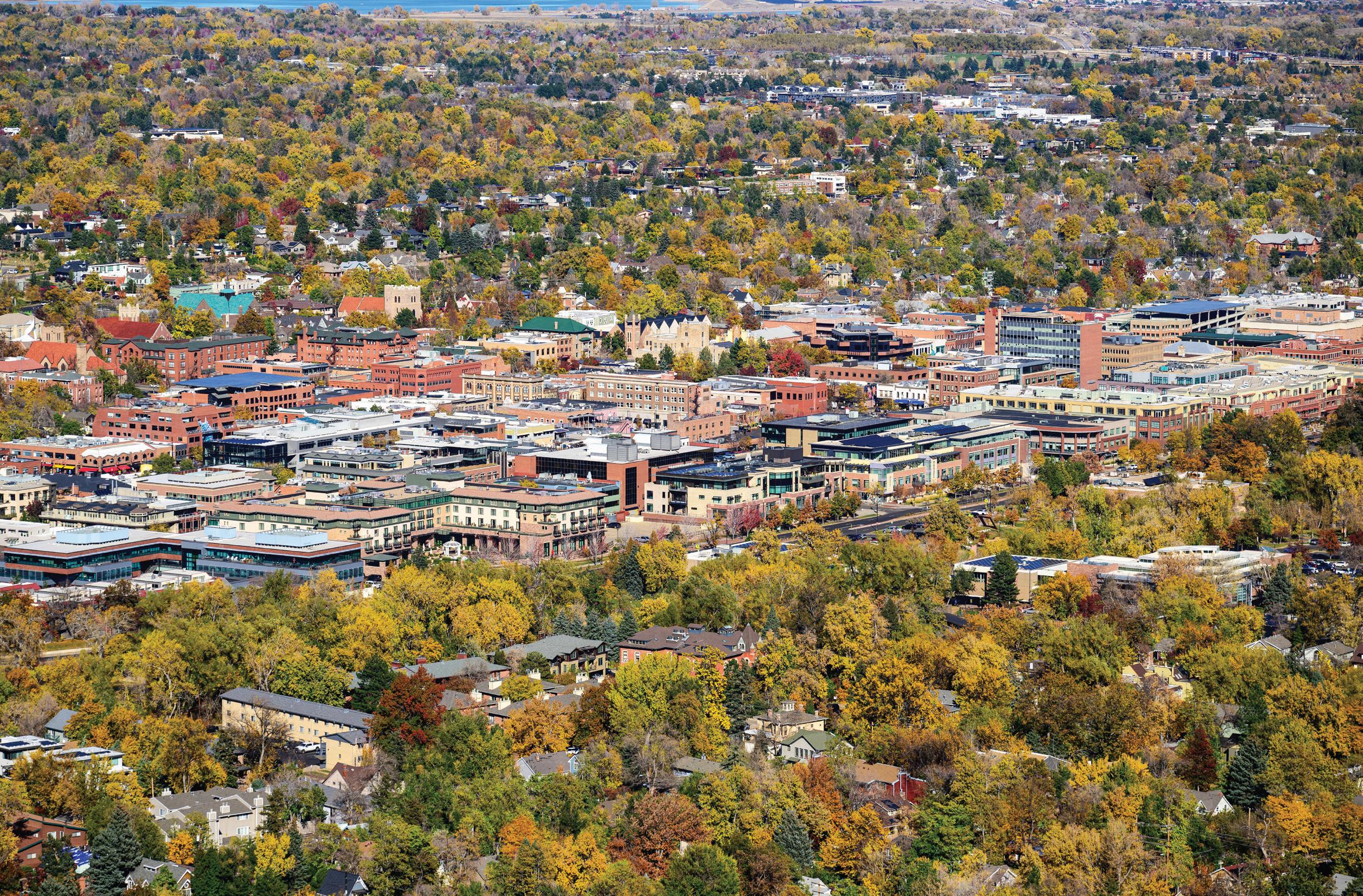
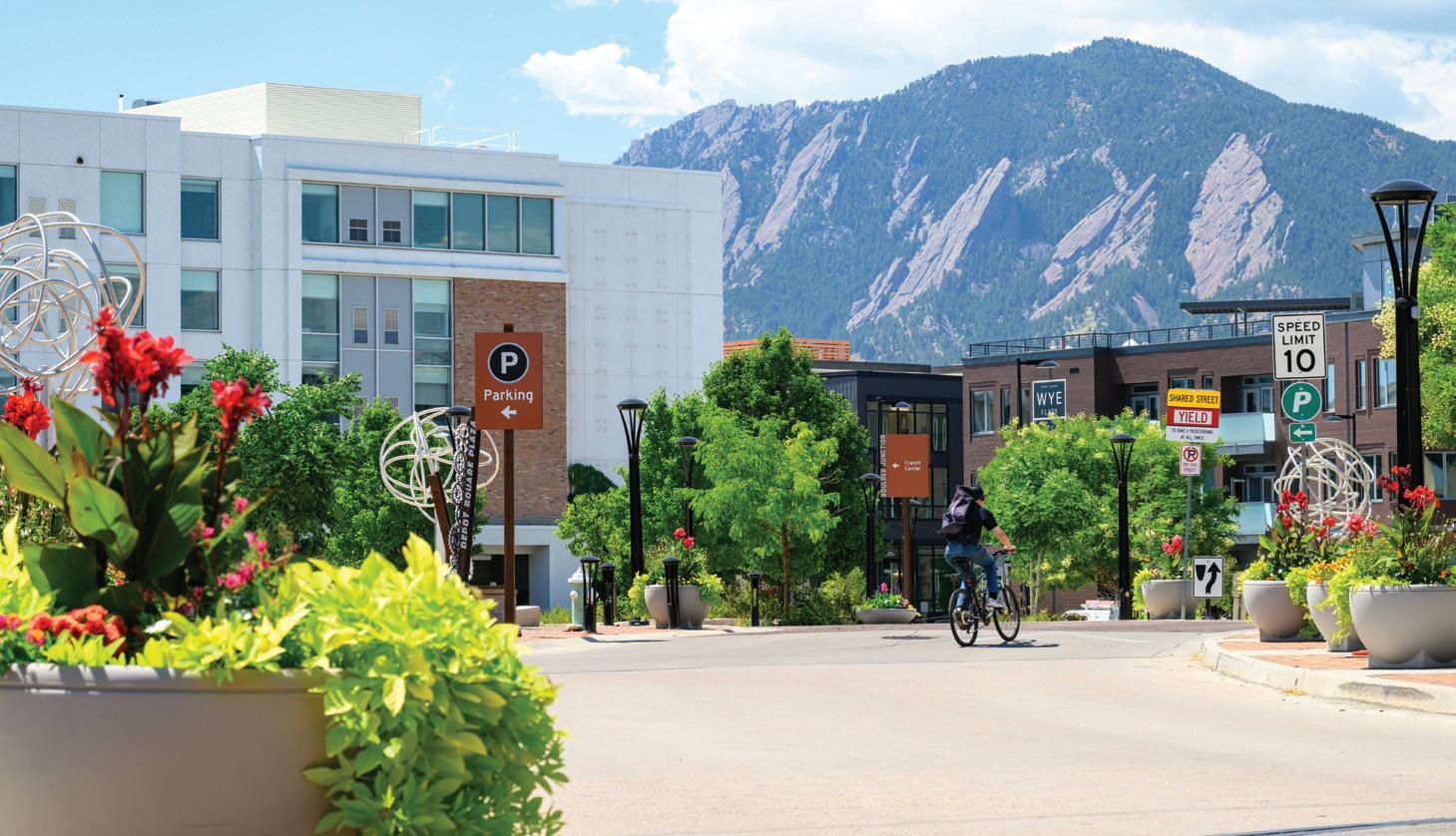
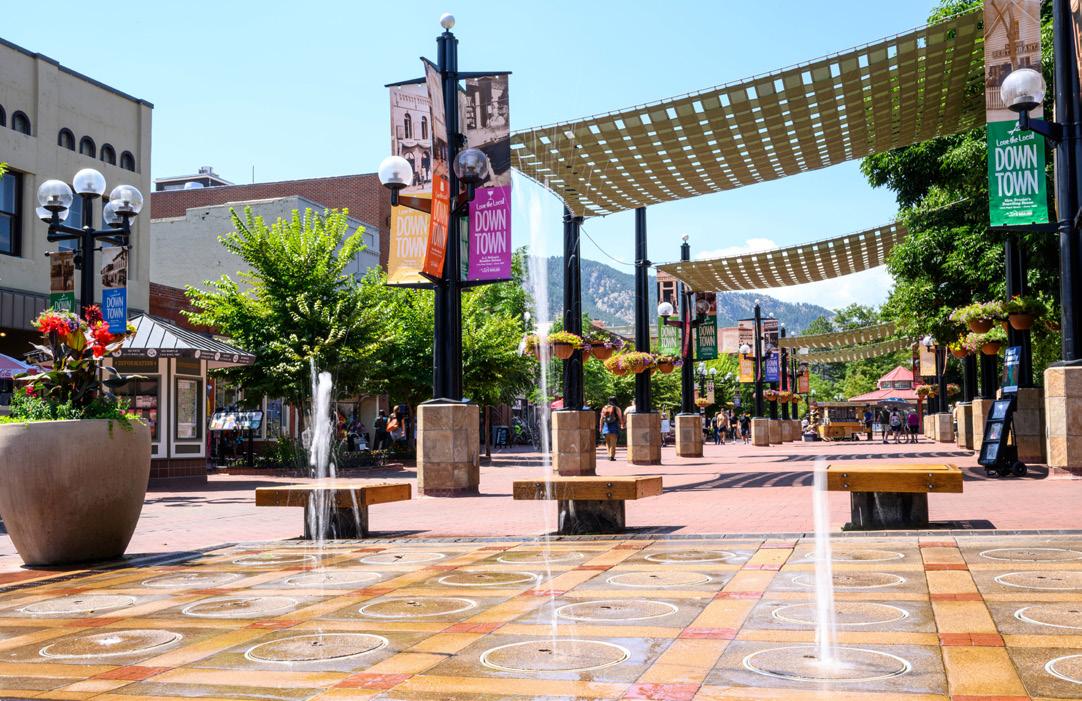
ABOVE: Boulder, Colo., launched the Affordable Commercial Grant Pilot Program to help address a gap in the market for more affordable commercial space and increase opportunities for local small businesses to thrive in the city’s commercial centers. (Photo provided by Boulder, Colo.)
To support small businesses and encourage community investment, Boulder launched the Affordable Commercial Grant Pilot Program in 2024. Emi Smith, communications program manager, said, “The program was designed to help address a gap in the market for more affordable commercial space and increase opportunities for local small businesses to thrive in our commercial centers.”
To promote fairness and nondiscrimination, the city used its Racial Equity Instrument, which evaluates all city programs, policies and
procedures. Leaders wanted to ensure that recipients would be chosen fairly and without bias. The first step involved forming a review panel that included city staff and representative community groups, such as the Small Business Development Center, the city’s Community Connectors and the Downtown Management Commission.
An application process was established for the grants and announced through city channels, including a press release, social media, website, e-newsletter and the city’s video services team, according to Smith.
Applicants had to submit a detailed project plan, including construction and renovation details, space type, square footage and other capital improvements. The grants were awarded to groups who owned commercial space and would be providing rent to small businesses and nonprofit organizations. Financial plans also needed to be included, covering potential lease rates, expected tenants and overall financial sustainability of the business. That involved commitments to offering below-market lease rates to small business tenants, supported by proposed lease terms compared to market rates, length of affordability such as 10, 15, or 20 years and priority for tenancy by local small businesses, women-owned businesses
Boulder Junction is a mixed-use, pedestrian-oriented place where people can live, work, shop and have access to both local and regional transit. (Photo provided by Boulder, Colo.)
or minority-owned businesses. Applications were due that October.
The applications were evaluated based on criteria such as focus on small business,
community impact and long-term project viability. The three grant recipients were KGNU, an independent, noncommercial community radio station; Top Hat Supply for Journeys,
The Flatirons are rock formations near Boulder and are its most iconic landmark. (Photo provided by Boulder, Colo.)
a nonprofit helping artists connect with their creativity; and The New Local, a collective platform for local artists to showcase their work. A total of $840,000 was awarded to the three unique projects that are all aimed at expanding access to affordable commercial space and fostering community connection and vibrancy.
Smith said KGNU received a grant to support the renovation of its new, 10,000-square-foot community media center. It will serve as KGNU’s long-term home and feature affordable space for a cafe tenant and a performance/meeting venue.
Top Hat Supply for Journey’s grant allowed the business to renovate its space, which functions as an incubator for artists starting their businesses. Smith explained, “This space houses a nonprofit dedicated to an incubator space for artists to launch their businesses. It also offers affordable studio and gallery representation, hosts monthly open studio hours for artists and facilitates community-driven cultural events.”
Darcie Schively, co-creator of Top Hat Supply for Journeys, said she’s wanted to apply for other grants, but this one “has been so supportive and everyone involved was so supportive, so we feel really lucky.” Schively is proud of the space and states that its programs “are less about teaching somebody to weave, but more really about helping them reconnect with who they are creatively.”
Finally, according to the company website, The New Local offers an upscale downtown location for artists. The space mainly supports
women-owned businesses, and the grant helped fund heating upgrades and provided a rent subsidy for at least the next five years, enabling The New Local to keep fees low for the businesses and artists using its space.
Smith noted that overall feedback from recipients has been extremely positive.
MAKE YOUR WORK ZONE ACCESSIBLE TO ALL
For a work zone to be safe, all pedestrians of all capabilities must be accounted for. We offer a robust product line of temporary ADA-Compliant devices to ensure that your work zone is accessible and detectable for all. RightPath, our line of ADA devices, meet Chapter 6C requirements of the MUTCD and are designed with accessibility in mind.
Parakeet audible information device (AID) is designed for custom messaging and features a built-in speaker and microphone. The device recording is motion activated, responding to pedestrians as they approach. The built-in microphone automatically adjusts its decibel level based on surrounding noise throughout the day, adapting to the surrounding noise to ensure pedestrians can always hear it.
Boardwalk System and RapidRamp are temporary, portable ramps that offer a slip-resistant, 48” wide traversable area for easy wheelchair access. Both can provide a 1” rise per 12” run and support up to 800 lbs and 1000 lbs, respectfully.
SafetyRail and SafetyWall, our pedestrian channelizers, offer a smooth and continuous top rail for continuous hand-trailing. Both have a common vertical plane, making the walkway safe and continuous for all.
Modular RAMP and Platform System
Parakeet Audible Information Device
BoardWalk Pedestrian Ramp
SafetyRail Pedestrian Barricade
Four-in-one project makes North Augusta, S.C., a destination city
By JULIE YOUNG | The Municipal
Who says that small projects can’t make a big difference to a community? A $2 million expansion around Riverside Village in North Augusta, S.C., has not only transformed a public area, but has been awarded a state-level industry award for the engineering that went into it.
“This award is a testament to what thoughtful planning, community investment and great partnerships can achieve,” city leaders said in a Facebook post.
Additional amenities
When the city of North Augusta opened the Sharon Jones Amphitheater in Riverside Village in 2020, community leaders quickly discovered it was a terrible time to launch a live performance venue. Although only a few concerts took place in socially distanced pods that summer, over the following few years the venue played host to a number of festivals, local acts and even national artists such as Jordan Feliz and Drivin’ and Cryin’.
In 2023, the city council approved a $2 million expansion of the facilities around the amphitheater to benefit the entire Central Savannah River Area, improve the quality of life for those living nearby and help make North Augusta a destination city. The four-in-one project included expanded seating at the Sharon Jones Amphitheater, the
ABOVE: The Riverside Village amphitheater was expanded as part of an award-winning four-in-one project designed to help North Augusta, S.C., become a destination city.
(Photo provided by North Augusta, S.C.)
addition of a restroom and dressing room facility for the venue, a six-slip boat dock on the Savannah River and a public plaza with benches overlooking the boat dock.
“All of these amenities are within 100 yards of each other and truly enhance the public area of Riverside Village,” said Karl Waldhauer, tourism manager for the city.
Waldhauer said the funding for the project was a creative mix of grants from the Land and Water Conservation Fund and Undiscovered South Carolina, with additional contributions from the American Rescue Plan Act, Aiken County Watercraft Tax funds and the Capital Sales Tax fund.
With so many funding sources involved, the city had to make sure that the engineering and construction teams made itemized billing a priority. “By doing this, it ensured that vendors were paid in a timely fashion and made financial reporting for the grants a very clean process,” he said.
Naturally, no project is seamless, and there were challenges along the way. Construction within a confined space and access to the site for mobilization of heavy equipment was a known issue from the start, but the engineers and construction contractors laid out a great plan to minimize impact. Carefully mitigating construction days and hours by limiting allowable construction time and reopening parking areas in a mixed-use district also presented a challenge. However, North Augusta worked with the contractors so they could be sensitive to the peak days and hours of neighboring businesses, GreenJackets home game nights and the Masters Tournament week.
“As with any public project, keeping the public and neighboring properties informed of timelines and what to expect is of utmost importance,” Waldhauer said. “This process started before the first shovel hit the dirt and made coexisting through the project palatable.”
Community response
Since the project’s completion in August 2024, the North Augusta community has been very enthusiastic about the additions and has supported the programs offered at the Sharon Jones Amphitheater. The city offered free concerts for the public throughout 2024 and 2025, and Waldhauer said the response has favorable. He added that it was common to see boaters tie their crafts to the boat dock and grab dinner at a local restaurant before anchoring in the Savannah River to enjoy a concert.
“The facility additions have exposed the public to the different offerings of Riverside Village, and restaurants and hotels within the district have experienced a noticeable increase in patronage on event nights,” he said. “The facility also attracts a number of visitors from the Georgia side of the Savannah River, and they are always welcome to support South Carolina businesses.”
Waldhauer said the city is proud that its project was honored with a 2025 Engineering Excellence State Award from the American Council of Engineering Companies of Georgia. The expansion won in the Small Project category, which evaluated the project’s challenges, partnerships, complexity and future value as well as how the project exceeded expectations.
“Obviously, Cranston Engineering performed the heavy lift by providing a quality design and administering project management throughout the process. The firm did a great job working with city officials in creating a quality product that fit an attainable budget, which they were sensitive to from the start,” he noted.
Ultimately, Waldhauer believed that getting creative with the funding sources was the key to making a big splash with the project. While it could have been compartmentalized into four separate initiatives, securing funds through local, county, state and federal entities was worth the effort. The mobilization cost savings alone made the exercise worth it from a fiscal standpoint, but the time savings experience of having to prepare bid documents, advertise and negotiate contracts for four separate projects proved to be invaluable and something every community can emulate if it is in a similar situation.
“In short, the scope of the project was vastly expanded by creatively merging resources from various funding sources and making a large impact on community investment,” he said.
Riverside Village
is not limited to concerts but showcases family movies, also giving residents and guests the chance to walk to local restaurants, the waterfront and to take in all the sights.
Built in 2020, The Sharon Jones Amphitheater has played host to a number of festivals, family events, local acts and national concerts. Along with the rest of Riverside Village, it has helped North Augusta become a destination city. (Photo provided by North Augusta, S.C.)
Cranston Engineering was awarded a 2025 Engineering Excellence State Award from the American Council of Engineering Companies of Georgia for work on the Riverside Village expansion project for North Augusta. (Photo provided by North Augusta, S.C.)
The
amphitheater
(Photo provided by North Augusta, S.C.)
things you must know BEFORE buying a STREET SWEEPER
JANUARY
Jan. 5-9 Florida Fire & EMS Conference
Orange County Convention Center, Orlando, Fla.
https://www.ffca.org/
Jan. 6-8 Landscape Ontario Congress & Trade Show Conference
Toronto Congress Centre, Toronto, Canada
https://www.locongress.com/
Jan. 10-13 FPCA Mid-Winter Training Conference & Expo Rosen Plaza Hotel, Orlando, Fla. https://fpca.com/2026-midwinter-conference/
New York City Marriott Marquis, New York, N.Y. https://www.nywea.org/
Where personal budgeters excel
Setting up and following a personal budget is a habit that often leads to financial stability. Success, even if it’s measured in pennies at first, eventually becomes the kind of discretionary spending that supports a community through tickets to entertainment events and venues and parks programs. It’s also reflected in low foreclosure rates and low levels of default for public services.
To find out where Americans excel at budgeting, the financial website WalletHub analyzed all 50 states using 12 key metrics that included average credit scores, debt-to-income ratios and foreclosure rates.
Among the resulting top states, Hawaii boasts the highest percentage of residents who set aside money for emergencies, at over 64%. Massachusetts has the lowest median credit card debt and lowest car loan debt per person, and Washington has the thirdlowest share of mortgage debt that is 90-plus days delinquent. A very low delinquency rate demonstrates that most people are leaving plenty of money in their budget to pay their bills.
According to the website, the 10 states with the best budgeters are:
S T O C O R R O S I O N
F I B E R G L A S S
C U S T O M SOLUTIONS
C O R R O S I O N R E S I S T A N T
N O N - C O N D U C T I V E
M A I N T E N A N C E - F R E E
L I G H T W E I G H T
N O N - S L I P
S A F E T Y Y E L L O W F I N I S H
E X C E E D S O S H A / I B C
S T A N D A R D S
C O R R O S I O N - P R O O F S O L U T I O N S T H A T
P R O T E C T Y O U R A S S E T S L O N G - T E R M
S A L T W A S H B A Y C U S T O M I Z A T I O N :
D e s i g n e d a n d f a b r i c a t e d t o y o u r s p e c i f i c a t i o n s
F r e e s t a n d i n g o r w a l l - m o u n t e d c o n f i g u r a t i o n s
P r e - a s s e m b l e d s e c t i o n s u p t o 2 0 ' f o r q u i c k s e t u p
D e t a i l e d d r a w i n g s p r o v i d e d w i t h e v e r y p r o j e c t
F a s t I n s t a l l a t i o n w i t h n o c r a n e s o r w e l d i n g
B U I L T T O I N D U S T R Y S T A N D A R D S
S a l e s @ S m i t G r o u p L L C . c o m w w w . S m i t G r o u p L L C . c o m
• Minimize/Eliminate rod scoring
• Extend the life of cylinder seals
• Protects cylinders from the elements
• Prevent pitting due to chemical washers
• Reduce particle contamination of hydraulic systems
• Minimize dings and dents associated with falling debris