





By James Coleman TSD Contributing Writer
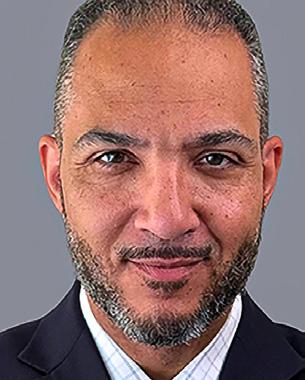
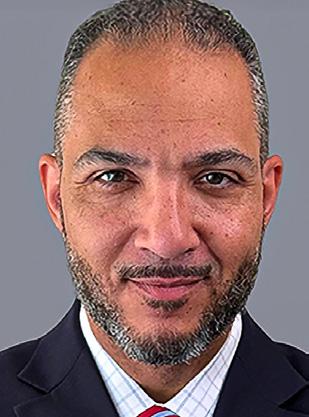
A fourth candidate has thrown his name into the hopper to succeed term limited Shelby County Clerk Wanda Halbert. However, unlike the other contenders, Ed Holt hopes his status as the “insider” candidate gives him the inside track on the job.
How the money is made and how it’s paid. While the other candidates have to come in and learn the job, I’m already equipped with the knowledge and skills to do the job,” said Holt.
Still, the Memphis State grad pointed out that some of the problems with the office go beyond Halbert’s ability to fix. For example, antiquated computers are commonplace.
by County government is on Microsoft 365,” said Holt.
POSTMASTER: Send address changes to The Tri-State Defender, 1509 Madison Ave., Memphis, TN, 38104.
GENERAL INFORMATION: Inquiries may be submitted in writing or by calling (901) 523-1818 or by email. TELEPHONE: (901) 523-1818.
The Tri-State Defender (USPS 780-220) is published weekly.
The Tri-State Defender 1509 Madison Ave. Memphis, TN, 38104. Second-class postage paid in Memphis, TN.
Association.
(901) 523-1818 | 1509 Madison Ave, Memphis, TN 38104
“I worked as one of the accountants in the County Clerk’s office. My experience there is pretty much what motivated and inspired me to run for this office,” said Holt.
The 51-year-old Appling Middle School English teacher’s tenure at the office began in 2023. Seeking a break from his teaching career, the Navy veteran took a flier on an open spot at the clerk’s office. For a year, he learned on the job as the office descended from one controversy to the other.
The problems around the office started with a bottleneck of vehicle tags and license plates that occurred during the pandemic. Thousands of motorists were stuck in neutral as Halbert offered one excuse or the other for the backlog. The miscues continued when Halbert submitted faulty financial reports to the county trustee in 2024. The latter resulted in an audit ordered by State Comptroller Jason Mumpower.
Holt was there for the cleanup. By that time, he was the office’s interim top bean counter. What he found was inaccurate or outdated financial reporting, Holt said. Moreover, Holt alleges the office’s general ledger hadn’t been balanced for the previous two fiscal years. The morass eventually led to a failed attempt to remove Halbert from office by Hamilton County District Attorney Coty Wamp.
“One of the things I did while I had to fill in as the lead accountant, I balanced Clerk Halbert’s ledger for the entire fiscal year. In fact, I got congratulated on it,” said Holt.
“I’m already familiar with the job, with the operations, with the revenues.
Some technology is so old, it has prevented the clerk’s office staff from troubleshooting with tech support. In addition to slowing down productivity, the lack of upgrades also presents a security risk.
“We’re running with this 15- to 20-year-old technology that’s always a security risk to Shelby County government in general. We pop up every month as a security risk because the rest of the Shel-
Employee compensation was another systemic issue. At the time, starting pay for cashiers working a 37.5 hour week was around $29,000. The lack of competitive pay resulted in short term hires. The high rate of turnover left many tasks in inexperienced hands.
Along with Holt, the race to replace Halbert has attracted three other aspirants from the Democratic Party. They include former interim Shelby County deputy chief administrative officer LaSonya Hall, first term Shelby County commissioner Britney Thornton, and Breath of Life Christian Center events coordinator Myra Charles.

By Stacy M. Brown Black Press USA Senior National Correspondent
H. Rap Brown did not wait for permission to define himself. Long before federal agents called him a menace and politicians wrote laws in his name, he was a young man from Baton Rouge, La., who believed the country needed an honest confrontation with its own history. Long before he died at 82 on Sunday, Nov. 23, in a federal prison medical facility, he had already become Imam Jamil Abdullah AlAmin, a name he adopted after turning to Islam inside Attica.
“Violence is necessary. Violence is a part of America’s culture. It is as American as cherry pie,” he said during the height of the Black Power movement.
Brown, who would become one of the most vocal leaders of the movement, grew up fighting his way to and from school. He was sent to a Catholic orphanage for discipline and learned early that resistance required both strength and wit. He earned the nickname “Rap” for his unmatched wordplay on the streets of Baton Rouge. His political direction began with his older brother, Ed Brown, who introduced him to the Nonviolent Action Group at Howard University, where Brown met future movement leaders like Courtland Cox, Muriel Tillinghast and Stokely Carmichael. Carmichael later described him as a serious and strong brother whose calm presence inspired confidence.
By 1967 Brown became chairman of the Student Nonviolent Coordinating Committee at just 23 and immedi-
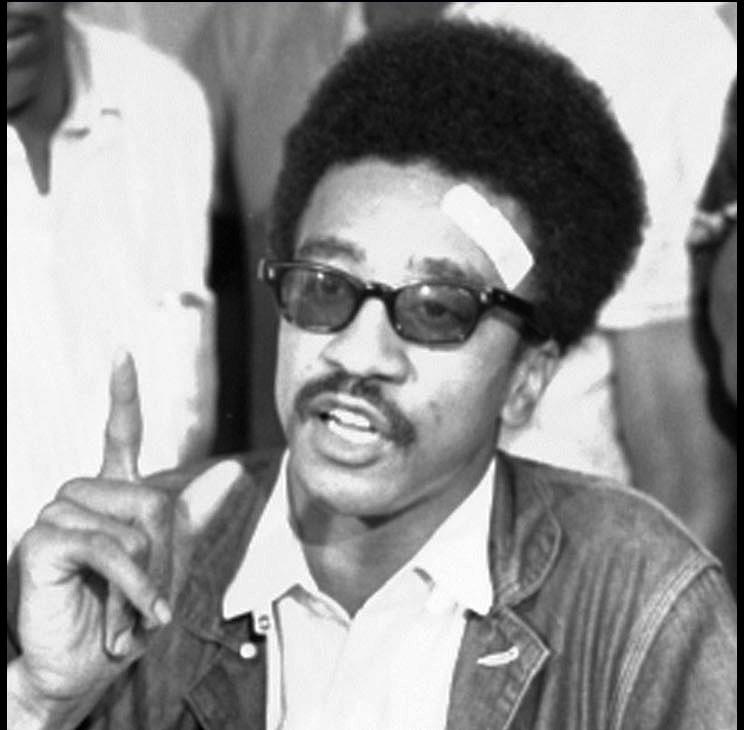
ately pushed the group to remove the word “nonviolent” from its name. His speeches captured the rage of Black communities across America. He reminded audiences that Black people had waited a century after emancipation for promises that never came. “Black folk built America, and if it don’t come around, we’re gonna burn America down,” he told crowds from college campuses to street corners. Federal authorities responded with surveillance and suppression. The FBI’s COINTELPRO counterintelligence program documents placed him on a list of four men considered top targets to disrupt. Congress passed the federal Anti-Riot Law in 1968 and openly called it the “H. Rap Brown Law.” When asked for comment, Brown rejected the idea that a statute could contain widespread fury. “We don’t control anybody,” he said. “The Black people are rebelling. You don’t organize rebellions.”
His arrest record grew as law enforcement pursued him across states. In 1971 he was wounded in a police shootout in New York. He denied the charges but was convicted of robbery and assault. He served five years in Attica. That time behind bars reshaped him. The foreword to his autobiography “Die Nigger Die,” published in 1969, describes his spiritual shift as a change rooted in self-discipline and study, noting that he embraced Islam and emerged committed to building a moral path forward.
After his release, now known as Imam Jamil Abdullah Al-Amin, he settled in Atlanta’s West End. He founded a
mosque, ran a small grocery and health food store, organized youth programs and worked to rid the neighborhood of drugs. He preached self-control and responsibility. He explained that the Muslim’s duty began with teaching oneself and then guiding one’s family, adding that successful struggle required remembrance of the Creator along with the doing of good deeds.
For many in Atlanta, he became a trusted spiritual leader. A local Islamic civic leader called him a pillar of the Muslim community. To law enforcement, he remained the militant figure they had pursued in the 1960s. FBI agents infiltrated his religious circle. The New York Times reported that some investigations began shortly after the first World Trade Center bombing in 1993.
In 2000, two Fulton County, Georgia, deputies were shot while serving an arrest warrant for Al-Amin at his store. One died. The surviving deputy identified Imam Al-Amin. He denied involvement but was found guilty and sentenced to life in prison.
Federal inmate Otis Jackson later confessed repeatedly and under oath to being the shooter. The Fulton County District Attorney’s Conviction Integrity Unit interviewed Jackson but never moved to vacate the conviction.
Al-Amin died at Federal Medical
“Violence is necessary. Violence is a part of America’s culture. It is as American as cherry pie.”
— Imam Jamil Abdullah AlAmin, formerly known as H. Rap Brown
Center in Butner, North Carolina, his widow, Karima Al-Amin, said Monday, Nov. 24.
A cause of death was not immediately available, but Karima Al-Amin told The Associated Press that her husband had been suffering from cancer and had been transferred to the medical facility in 2014 from a federal prison in Colorado.
Following Al-Amin’s death, the Council on American-Islamic Relations its Georgia chapter renewed their call for justice. Nihad Awad, CAIR’s national executive director, issued a statement that read, “To God we belong and to Him we return. Imam Jamil Al-Amin was a hero of the Civil Rights Movement and a victim of injustice who passed away in a prison, jailed for a crime he did not commit.”
Awad said the justice system should reopen the case and clear his name. “We pray that God rewards him with paradise for his good deeds and the injustices he suffered. We call on the justice system to reopen Imam Jamil’s case and clear his name. He deserves to be fully exonerated. We pray that God grants his family solace and justice,” the statement read.
Al-Amin’s life spanned eras of open segregation, mass rebellion, state repression, spiritual transformation, and community leadership. He understood that freedom movements required structure and purpose. In one of his clearest reflections on struggle, he said liberation movements had to rest on political principles that gave meaning and substance to the lives of the masses. “And it is this struggle,” he said, “that advances the creation of a people’s ideology.”
— The Associated Press contributed to this report.
By Meg Kinnard and Joey Cappelletti Associated Press
Republicans held onto a reliably conservative U.S. House district in Tennessee’s special election, but only after a late burst of national spending and high-profile campaigning helped them secure a margin less than half of last year’s race.
Even with that victory, the outcome contributed to a gloomy outlook for the party going into the 2026 midterms that will determine control of Congress. Republicans will need to defend much more vulnerable seats if they have any hope of keeping their House majority, while Democrats are capitalizing on President Donald Trump’s unpopularity and the public’s persistent frustration with the economy.
“The danger signs are there, and we shouldn’t have had to spend that kind of money to hold that kind of seat,” said Jason Roe, a national Republican strategist working on battleground races next year.
He said that “Democratic enthusiasm is dramatically higher than Republican enthusiasm.”
Republican Matt Van Epps, a military veteran and former state general services commissioner, defeated Democratic state Rep. Aftyn Behn by 9 percentage points on Tuesday for the seat vacated by Republican Mark Green, who retired over the summer. Green had won reelection in 2024 by 21 percentage points.
Special elections provide a limited window into the mood of voters and take place under far different conditions than regular campaign cycles. But some Republicans are acknowledging the warning signs, especially after Democrats had convincing victories in New Jersey, Virginia and elsewhere last month.
Tennessee was the fifth House special election this year, and Democratic candidates have outperformed Kamala Harris’ showing in the 2024 presidential race by an average of 16 percentage points in the same districts.


“The danger signs are there, and we shouldn’t have had to spend that kind of money to hold that kind of seat.”
“We could have lost this district,” U.S. Sen. Ted Cruz, R-Texas, told Fox News after The Associated Press called the race for Van Epps. Cruz said his party must “set out the alarm bells” because next year is “going to be a turnout election and the left will show up.”
— Jason Roe, a national Republican strategist
Although inflation has dropped since Democratic President Joe Biden was in office, Behn focused her campaign on the lingering concerns about prices.
Trump has played down the affordability issue, saying during a Cabinet meeting Tuesday that it was “a con job” by his political opponents.
“There’s this fake narrative that the Democrats talk about, affordability,” he said. “They just say the word. It doesn’t mean anything to anybody, they just say it.”
Roe viewed things differently. He said the Tennessee race had “better be a wake-up call that we’ve got to address the affordability problem, and the president denying that affordability is a political issue is not helpful.”
Maintaining House control is crucial for Trump, who fears a repeat of his
first term, when Democrats flipped the House and launched an impeachment inquiry.
The Republican president has been leaning on GOP-led states to redraw congressional maps to improve the party’s chances.
Trump campaigned for Van Epps, boosting him during the primary with an endorsement and participating in two tele-rallies during the general election.
The Republican National Committee also deployed staffers and partnered with state officials to get voters to the polls. MAGA Inc., the super political action committee that had gone dark since supporting Trump in 2024, reemerged to back Van Epps with about $1.7 million.
U.S. House Speaker Mike Johnson, R-La., visited the Nashville-area district on Monday.
“When you’re in a deep red district, sometimes people assume that the Republican, the conservative will win,” he said Tuesday. “And you cannot assume that, because anything can happen.”
Chip Saltsman, a political strategist and former Tennessee Republican Party chair, said his party had brought in its heaviest hitters simply because there were no other competing contests, not because Republicans feared a loss.
“It’s the only election going on. Why wouldn’t the speaker come?” he asked. “There was one race, and you would expect everybody to do everything they could.”
The House Majority PAC put $1 million behind Behn. After she lost, Democratic national party chair said Behn’s performance was “a flashing warning sign for Republicans heading into the midterms” in 2026.
Behn said her campaign had “inspired an entire country.”
“Let’s keep going,” she urged voters after her loss. “We’re not done. Not now, not ever.”
Although Democrats were optimistic, the result contributed to some murmuring within the party about the best path forward as it grasps for a path back to power in Washington.
Among special elections this year, the shift in Behn’s direction was the second smallest, providing an opening for some factions that believe more moderate candidates would fare better.
“Each time we nominate a far-left candidate in a swing district who declares themselves to be radical and alienates the voters in the middle who deliver majorities, we set back that cause,” said a statement from Lanae Erickson, a senior vice president at Third Way, a centrist Democrat think tank.
Republicans tried to turn Behn’s own words against her in television ads, such as when she described herself as a “radical” or claimed to be “bullying” immigration agents and state police officers. Also cited were comments Behn made about Nashville years ago, when she said, “I hate this city,” and complained about bachelorette parties.
Several high-profile progressive leaders, including U.S. Rep. Alexandria Ocasio-Cortez, D-N.Y., had rallied for Behn in the campaign’s final days.
— Associated Press writer Maya Sweedler contributed to this report.
By Elbert Hubbard Jr. Special to The Tri-State Defender
Porter-Leath’s Early Success Coalition recognized graduates of its Parent Leadership Training Institute cohort during a ceremony on November 20.
It was the coalition’s fourth graduating class and the first in partnership with the Juvenile Court of Memphis and Shelby County. The ceremony was held at the Porter Leath and University of Memphis Early Childhood Academy in Orange Mound.
Deaunn Stovall, the Early Success Coalition’s parent engagement manager, said that the cohort teaches parents how to become involved in community, civic and governmental activities. The program is nationally recognized for turning parents into effective leaders and advocates for their children and their community.
“The parents go through a 20-week intensive course. The class time is three hours a week for 20 weeks,” Stovall said. “They learn everything about how the state government works, the judicial system, and how local government works.
Stovall said the program helps participants build advocacy skills and learn to use their voices to benefit their community.
“We help the parents to become more self-aware, and understand, as a parent, what it is like to be a community leader as well.”
Each student completed a community-based project as a requirement to graduate. Some projects were based on helping the community as a whole, while others focused on helping children in need.
Graduate Fatima Killebrew said her project aimed to keep siblings together in the foster care system. She said being left without their sibling can lead to more problems in a child’s life.

“If you are a child that is being removed from your parents with no fault of your own, the expectation is you have nothing left. So your sibling is the only real connection that you had for identity,” said Killebrew.
Keeping them together, she stated, “avoids the possibility of having developmental delays. It prevents a child from growing in life and having depression outside of environmental things, not having an identity itself, or knowing where they are. Unfortunately, sometimes for single children, that is very hard to find.”
Through the cohort, Killebrew said she has learned not to be afraid to speak out on behalf of children, especially to lawmakers.
“My communication and advocacy work has allowed me to open up and (work to) change laws. We need to let our legislators and our mayors know they are appointed by us. So, not being afraid to talk to them for the cause, we have to see change is a big deal. That is what PLTI has allowed me to no longer fear,” she said.
Racheal Hart’s project, The Kindness Closet, was designed to supply children with basic necessities for school. While her project was about helping children, Hart is experiencing hardship of her own.
“I am currently unhoused, and I look at children who are currently unhoused,” she said. “Right now, my family is living in a hotel.”
“Even though we are doing our best everyday, it can be hard to get children to feel clean, confident and ready for school,” Hart added. “If the school had a program like The Kindness Closet, it would help the children feel prepared, supported and proud to walk into their class. This project is not about giving out items — it shows children that people care about them. It reminds them they are important, loved and not alone.”
Hart said the closet has provided a variety of items children need for school. “This includes soap, toothpaste, deodorant, clean clothes and other supplies,” she said. “Students can get these items quickly and without feeling embarrassed. Our goal is simply to remove problems for children to learn.”
Hart is the type of person her classmate Diamond Johnson’s project targeted to help.
Her Resilient Diamonds focuses on helping homeless individuals find housing, jobs, childcare and other resources to enable them to get back on their feet.
“The project is important because a lot of people do not know who to turn to,” Johnson said. “My purpose is for families to have a stable income and housing.”
Wendy Wallace said her project, Fighting for Transparency in Tennessee — We the Records for short — was about helping people gain access to government records as a way to hold people in power accountable.
“I do not know what the issue is with people in power trying to conceal their records. Eventually, that information is going to get out. It’s only a matter of time,” Wallace said. “If you want to be the power that blocks that information from coming out, you can be that person. However, that information will eventually get out, and people will know. My organization helps with that,” she continued.
The graduates presented their projects to the audience during the program. Other projects included establishment of feminine hygiene product supply closet, a male mentoring endeavor, and a support network for new mothers dealing with postpartum depression.
Several public officials lent support and encouragement to the participants. State Sen. London Lamar congratulated the graduates for completing the program in a video message. State Rep. Justin J. Pearson spoke to the graduates and motivated others to also get involved in leadership. Judge Mitzi Pollard, magistrate of the Juvenile Court of Memphis & Shelby County, also attended.
By Candace A. Gray TSD Contributing Writer
The rise of laminated wood beams, sprawling openings that will house glass walls and windows, and concrete spanning the block from Front Street and Union Avenue to Front and Monroe Street is more than a construction site. It is the promise of a cultural shift. Scheduled to open in December 2026, the Memphis Brooks Museum will take on a new name, Memphis Art Museum, and a new home that is poised to transform both the city’s downtown landscape and its creative ecosystem.
During a recent hard-hat tour led by the construction team and museum staff, the project revealed itself as a bold, intentional design meant to integrate art, community and the Memphis riverfront in unprecedented ways.
“Memphis has a long history as a vibrant hub for art and culture. This expansive and innovative new campus will further reinforce the city’s status as a global cultural destination,” said Zoe Kahr, Executive Director of the Memphis Art Museum. “We look forward to welcoming visitors to experience the very best of what Memphis has to offer, in 2026, and for years to come.”
From the outset, the vision is clear: The museum is being designed as part of the “fabric of downtown,” not apart from it. Thirty feet of curbside frontage and wrap-around sidewalks will welcome pedestrians into an environment where the boundaries between interior and exterior space intentionally blur. The entire eastern side will be a continuous glass façade, allowing passersby

Design renderings reveal the Memphis Art Museum’s planned open galleries, riverfront connections and community-focused spaces set to debut when the Brooks Museum relocates in 2026. (Courtesy of Memphis Brooks Museum of Art)
to see directly into active galleries and making “world-class art spill out onto the street,” as one project representative described it.
The building’s footprint supports a dynamic mix of public and private functions. A north-side restaurant, featuring an 1,800-square-foot dining room and an additional 400-squarefoot private space, will anchor one corner, while a museum store connects seamlessly to the main lobby. That lobby, described by the design team as the “connective tissue” of the museum, will serve as an entry point to the galleries, the mezzanine-level theatre and a rooftop designed for both public gathering and low-sensory reflection.
With a collective 122,000-square-feet, the scale of the project is massive. The central courtyard alone spans the size of two NBA courts, about 10,000-squarefeet. Galleries will soar to 18 feet in height and provide 50 percent more exhibition space than the museum’s current building, along with a remarkable 600 percent increase in community congregation areas. Even from behind scaffolding and temporary railings, it’s clear this building is designed for community and world-class art.
The people-centered focus threaded throughout the tour, inside and out. The top third of the museum’s exterior, on the north side at Monroe, will be closed to form a public park that
connects visitors to Cossitt Library. The middle third is where the parking garage entrance is. The lower third connects to the riverfront via an ADA-accessible switchback pathway, similar to that on the bluff entrance to Tom Lee Park. Elevated bleachers and multiple outdoor gathering zones will support everything from casual hangouts to large community events.
Education and community engagement are at the core of the museum’s mission, and the new facility is built to support year-round programming. Formal classrooms and interactive art-making spaces, currently located in the basement in the existing museum, will now sit adjacent to the galleries.

Teaching artists will host workshops for all ages, from children to adults to seniors. The museum expects to host approximately 400 events a year, ranging from informal drop-in programs to structured classes.
Inside the galleries, visitors can expect a dynamic mix of local, national and international art, including a special focus on Black and African art. The museum currently houses a 10,000-piece art collection, which requires specialized protection from light and environmental conditions. New gallery infrastructure will support both permanent collections and traveling exhibitions. Staff
emphasized that “every time you come back, there will be new things to see,” a promise reinforced by the ability to stage up to 15 exhibitions a year, compared to just four to six currently.
Indoor and outdoor performance spaces, including areas suited for jazz concerts, theater and even Shakespeare in the Park, expand the museum’s multidisciplinary approach. Meanwhile, two distinct sculpture gardens will showcase both international works and pieces by Memphis artists, reinforcing the institution’s commitment to representing the full breadth of visual and performing arts.
Accessibility is prioritized throughout. Multiple elevators will connect the underground parking garage, three times larger than the current capacity, to the building’s lobby, mezzanine and rooftop. The rooftop, the pièces de résistance, bordered by nano-walls that can retract to allow airflow, will serve as a public terrace offering views of river sunsets alongside flexible seating and house a sculpture garden. Museum staff imagine wine programs, intimate gatherings and low-sensory evenings hosted above the galleries’ visual footprint. (I hear wedding bells, too!)
Though the museum is city-owned,
its ethos reflects a collaborative civic spirit. With its wrap-around sidewalks, world-facing glass, interconnected public park, river connections and emphasis on community education, the museum is positioning itself as a cultural anchor for Downtown Memphis. As construction continues, the end result is coming into view: a vibrant, accessible and future-focused home for Memphis’ artistic legacy. When the doors open in December 2026, the city will gain not only a new museum, but an expanded vision for what art can mean to a community, and what a community can mean to art.
By Candace A. Gray TSD Contributing Writer
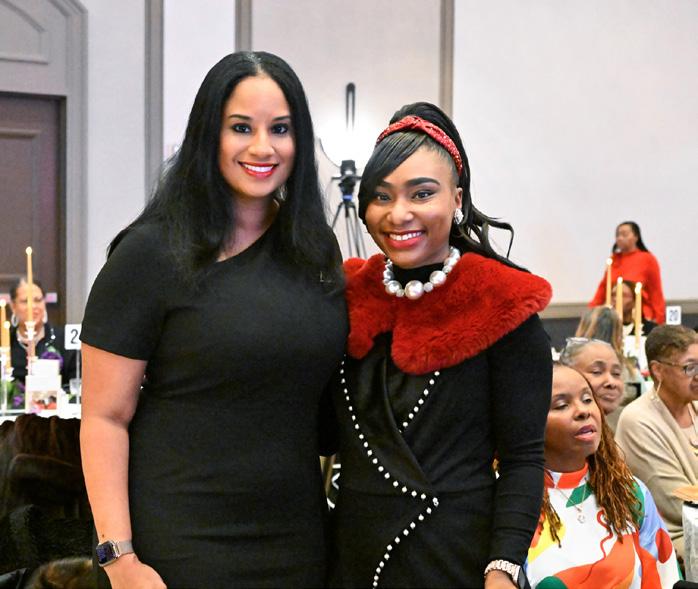
The 90th anniversary weekend for the Memphis Alumnae Chapter (MAC) of Delta Sigma Theta Sorority, Inc., culminated with a spirited gospel brunch. One might have thought they were in church on the last Sunday morning in November. But instead, a crowd of 300 gathered at the Hilton Memphis for a mid-morning praise break, breakfast fare and a celebration of nine decades of service, sisterhood and social action.
“We lead with purpose and with heart,” said Christin Webb, the hostess for the weekend’s festivities. “And we celebrate our rich history as we look forward to the future.”
The immediate future held a breakfast buffet with delectable delights as light gospel music piped overhead, provided by DJ Truck. But attendees could only arrive at the buffet after perusing items offered by a squad of all female vendors, some with MAC historic memorabilia, lining the hallway.
The long-term future and vision, however, came into view during the next couple of hours into the afternoon, as MAC member Sheronda K and her band periodically lifted spirits and urged the crowd to lift their own voices. And that vision is this: MAC aims to leave a legacy grounded in faith, fellowship and sisterhood. The organization of more than 700 financial members, and 1,200 on the roll, is here to leave an indelible mark on the Memphis community through service, scholarship and leadership.
And leaders were definitely in the room. From First Lady of Memphis, Dr. Jamila Smith Young, to Memphis Police Chief Cerelyn “C.J.” Davis, to doctors, lawyers, nurses, ministers, teachers and so many other professional women, it’s clear that these women’s impact is already

of via video (due to technical difficulties), where she asked two past presidents to share what they thought the “secret sauce” was to the longevity and commitment of MAC members.
Past President Annie Lewis said, “MAC has grown and flourished so much through the years because of daring sorors like you who had boots on the ground before there were ‘boots on the ground,’” referring to the popular song and dance. “You did the work, and when there wasn’t a seat at the table, we brought our own.”
great within the Memphis community.
During the “Crimson Conversation” (a nod to the sorority’s colors — crimson and creme) panel discussion, Past President Deborah Green Harris was asked what legacy meant to her. She started naming many of the women in the room.
“It’s the memories of the things we have done, the trails we have blazed. But it’s also Beverly Roberton, Stephanie Scurlock, Marvia Balfour Coleman, Dr. Charlotte Freeman, teachers and administrators,” she said, suggesting that their existence alone is part of the legacy they will leave.
Saxophonist Alexis Cole, who has only been a member of MAC for a few years, shared her perspective during the panel moderated by Alison Delaney.
“I knew about MAC before I even knew about Delta,” said Cole. Her first engagement with MAC was through the Jabberwok Pageant as a youngster, but her favorite memory to date was
being on the 85th anniversary planning committee as a Delta Gem.
“I also remember being part of the ACT prep workshops that helped kids get ready to go to college,” said Cole. “When it comes to Memphis, if there’s not a Delta involved, I’m not sure I want to be involved,” she said to a laughing crowd. “We set the tone behind the scenes and in front of the scenes.”
Harris added a memory to the conversation. “How many remember the Ebony fashion show?” as the entire room cheered. “That’s one of the ways we raised so much money so that our seniors would have a chance to go to college,” said Harris.
Harris also asked Legacy members to stand — mothers, daughters, aunts, women who carried the torch and passed it on to their younger family members. “This is also our legacy,” she said.
Bacarra Mauldin facilitated a truncated version of the past presidents’ reflection, that took place live instead
Past President Dr. Charlotte Freeman added, “Our membership is the secret sauce. We have sisters who are working, leading at the local, regional and national levels. Sisters who might not be able to come to chapter meetings every month because they’re taking care of loved ones, but they show up financially.”
The day ended with an address from MAC President Candace D. Tate, who shared that legacy is intentional influence. “It’s visible fruits of an invisible strength,” she said.
“Hope starts with purposeful leadership,” Tate added. She wrapped up with a tearful sentiment, “I just want them to know that I gave my all… I did my best to bring someone some happiness, made this world a little better just because I was here.”
The atmosphere overall was festive, with hugs, Oo-Oops and “soror” salutes. It’s safe to say MAC has it covered for the next 90 years.
Book review by Terri Schlichenmeyer
At the bottom of every solid building has a strong foundation.
And when you’re hired for a new job, that’s where you start — at the bottom, in the back office, the least position, the lowest rung. You won’t stay there long if you can overcome the obstacles and seize all opportunities. It won’t be easy but you can do it. As in the new memoir, “Bottom of the Pyramid: A Memoir of Persevering, Dancing for Myself, and Starring in My Own Life” by Nia Sioux, when you’re in last place, there’s nowhere to go but up.
Sioux always loved the stage. Born into an upper-middle-class family, Sioux remembers how much she wanted to take dance classes when she was a preschooler, and that her parents were happy to support her interests. Fortunately, there was a dance studio just down the road from their Pittsburgh home where Sioux started classes at Dance Masters of Pennsylvania, later renamed Abby Lee Dance Company (ALDC). There, she worked hard and gradually moved up in the team’s lineup, garnering praise and solo dances.
Quickly, the solos, she says, made her mother very uncomfortable. There seemed to be racial undertones to the costumes Sioux was made to wear, and the music didn’t seem appropriate for a little Black girl.
Mother and daughter discussed it,
and Sioux’s eagerness overcame any doubt.
Later, when Lifetime Channel interviewed ALDC dancers for a TV show that was eventually called Dance Moms, Sioux was overjoyed to be chosen as one of the show’s performers. For a while, she was the only Black dancer on the team — and that became a problem.
Infamously, the show introduced a “pyramid” in which Abby Lee ranked the dancers, and Sioux was almost always at the bottom. Drama was encouraged, criticism was swift, and there seemed to be a lot of favoritism within the dancers’ hierarchy. She endured the pain of it but ultimately she seized other opportunities and quit Dance Moms.
“I’d gotten a glimpse of what my life could look like without the show,” she says, “and it was beautiful.”
No one who’s ever watched a halfhour of reality TV should be surprised that Sioux has written this book, or that what she says happened, happened. The surprise is that “Bottom of the Pyramid” is so entertaining and so satisfying.
Going beyond the usual memoir and past the show’s curtain, Sioux shares her life story and its ups and downs, professionally and otherwise. There’s a lot of gratitude in that, plus strength and determination – but also some swiping, sniping and resentment, all of which are like catnip to reality fans. Still, Sioux reminds readers that there were actual humans — young women — behind the lines and second-takes

for the camera, and that the over-thetop theatrics could negatively impact their tender lives.
For a reality TV watcher or a fan of the show, past or present, that’s a good reminder to watch for authenticity inside the drama. If you have never missed an episode of the show or you want to follow the stars, “Bottom of the Pyramid” is a good place to start.
256 pages
By Adrian Sainz Associated Press
Steve Cropper, the lean, soulful guitarist and songwriter who helped anchor the celebrated Memphis backing band Booker T. and the M.G.’s at Stax Records and co-wrote the classics “Green Onions,” “(Sittin’ on) the Dock of the Bay” and “In the Midnight Hour,” has died. He was 84.
Pat Mitchell Worley, president and CEO of the Soulsville Foundation, said Cropper’s family told her that Cropper died on Wednesday in Nashville. The foundation operates the Stax Museum of American Soul Music in Memphis, located at the site of the former Stax Records, where Cropper worked for years.
A cause of death was not immediately known. Longtime associate Eddie Gore said he was with Cropper on Tuesday at a rehabilitation facility in Nashville, where Cropper had been after a recent fall. Cropper had been working on new music when Gore visited, he said.
The guitarist, songwriter and record producer was not known for flashy playing, but his spare, catchy licks and solid rhythm chops helped define Memphis soul music. At a time when it was common for white musicians to co-opt the work of Black artists and make more money from their songs, Cropper was that rare white artist willing to keep a lower profile and collaborate.
‘Play it, Steve!’
Cropper’s very name was immortalized in the 1967 smash “Soul Man,” recorded by Sam & Dave. Midway, singer Sam Moore calls out “Play it, Steve!” as Cropper pulls off a characteristically tight, ringing riff, a slide sound that Cropper used a Zippo lighter to create.

The exchange was reenacted in the late 1970s when Cropper joined the John Belushi-Dan Aykroyd act “The Blues Brothers” and played on their hit cover of “Soul Man.”
In a 2020 interview with The Associated Press, Cropper discussed his career and how he mastered the art of filling gaps with an essential lick or two.
“I listen to the other musicians and the singer,” Cropper said. “I’m not listening to just me. I make sure I’m sounding OK before we start the session. Once we’ve presented the song, then I listen to the song and the way they interpret it. And I play around all that stuff. That’s what I do. That’s my style.”
Rolling Stones guitarist Keith Richards, asked once about Cropper, said simply, “Perfect, man.” On a YouTube instructional video, guitar virtuoso Joe Bonamassa says Cropper’s moves are often copied.
“If you haven’t heard the name Steve Cropper, you’ve heard him in song,” Bonamassa said.
He got his first guitar at 14 Cropper was born near Dora, Missouri, but moved with his family to
Memphis when he was 9 and got his first mail-order guitar at age 14, according to his website, playitsteve.com. Chuck Berry, Jimmy Reed and Chet Atkins were among his early influences. Cropper was a Stax artist before the label was even called Stax, which Jim Stewart and Estelle Axton had founded as Satellite Records in 1957. In the early 1960s, Satellite signed up Cropper and his instrumental band the Royals Spades. The band soon changed its name to the Mar-Keys and had a hit with the funky “Last Night.” Satellite soon was renamed Stax; a California label with the same name had threatened legal action.
At Stax, some of the Mar-Keys
became the label’s horn section while Cropper and other Mar-Keys eventually formed Booker T. and the M.G.’s. Featuring Cropper, keyboard player Booker T. Jones, bassist Donald “Duck” Dunn and drummer Al Jackson, Booker T. and the M.G.’s were known for their hit instrumentals “Green Onions,” “Hang ‘Em High” and “Time Is Tight,” and backed Otis Redding, Sam & Dave and other artists.
The racially integrated band, a rarity in its day, was so admired that even non-Stax artists recorded with them, notably Wilson Pickett. Jones, who is the only surviving member of the band, and Jackson are Black. Dunn and Cropper are white.

“When you walked in the door at Stax, there was absolutely no color,” Cropper said in the AP interview. “We were all there for the same reason — to get a hit record.”
In the mid-1960s, Atlantic Records executive Jerry Wexler brought Pickett to Memphis to work with the Stax musicians. During a 2015 gathering with the National Music Publishers Association, Cropper acknowledged he had never heard of Pickett before working with him. He found some gospel recordings by Pickett, was taken by the line “I’ll see my Jesus in the midnight hour” and with a slight change helped write a secular standard.
“The man up there has been forgiving me for this ever since!” he said.
Cropper was inducted into the Rock and Roll Hall of Fame in 1992 as a member of Booker T. and the M.G.’s. The same year, Cropper, Dunn and Jones were part of the house band for an all-star tribute at Madison Square Garden to Bob Dylan, with other per-
formers including Neil Young, George Harrison and Stevie Wonder. Al Jackson died in 1975, Dunn in 2012.
Rolling Stone magazine ranked Cropper 39th on its 100 Greatest Guitarists list, calling him “the secret ingredient in some of the greatest rock and soul songs.”
Cropper was in the 1980 movie “The Blues Brothers” and its follow-up, “Blues Brothers 2000,” portraying “The Colonel” in the Blues Brothers band. In real life, he toured with them.
He was inducted into the Songwriters Hall of Fame in 2005 in New York City, and two years later received a Grammy Award for lifetime achievement.
Cropper continued recording into his later years, including 2024’s “Friendlytown.” Earlier this year, Cropper received the Tennessee Governor’s Arts Award, the state’s highest honor in the arts.
— Associated Press National Writer Hillel Italie contributed reporting from New York.
Online: http://playitsteve.com
NOTICE TO BIDDERS
Shelby County Government has issued Sealed Bid number I000928, Whitehaven Clinic Construction for the Shelby County Health Services Department. Information regarding this Bid is located on the County’s website at www.shelbycountytn.gov . At the top of the home page, click on the dropdown box under “Business”, Click on “Purchasing” and “Bids” to locate the name of the above-described Sealed Bid.
BID I000928 DUE DATE THURSDAY, JANUARY 8, 2026 @ 2:00 PM (CST) (SB-I000928) Whitehaven Clinic Construction
Shelby County is an equal opportunity affirmative action employer, drug-free with policies of non-discrimination on the basis of race, sex, religion, color, national or ethnic origin, age, disability or military service.
By order of LEE HARRIS, MAYOR SHELBY COUNTY GOVERNMENT
NOTICE TO BIDDERS
Shelby County Government has issued Sealed Bid number I000960, Disposable Paper & Plastics (Shelby County Purchasing Department). Information regarding this Bid is located on the County’s website at www.shelbycountytn. gov . At the top of the home page, click on the dropdown box under “Business”, Click on “Purchasing” and “Bids” to locate the name of the above-described Sealed Bid.
SEALED BID-I000960 DUE DATE THURSDAY, JANUARY 8, 2026 AT 2:30 PM CDT
(SB-I000960), Disposable Paper & Plastics (Shelby County Purchasing Department)
Shelby County is an equal opportunity affirmative action employer, drug-free with policies of non-discrimination on the basis of race, sex, religion, color, national or ethnic origin, age, disability or military service.
By order of LEE HARRIS, MAYOR SHELBY COUNTY GOVERNMENT
Shelby County Government has issued Sealed Bid number I000933, Jefferson Clinic Renovation for the Shelby County Health Services Department. Information regarding this Bid is located on the County’s website at www.shelbycountytn.gov . At the top of the home page, click on the dropdown box under “Business”, Click on “Purchasing” and “Bids” to locate the name of the above-described Sealed Bid.
SEALED BID I000933 DUE DATE WEDNESDAY, JANUARY 7, 2026 @ 2:00 PM (CST)
(SB-I000933) Jefferson Clinic Renovation
Shelby County is an equal opportunity affirmative action employer, drug-free with policies of non-discrimination on the basis of race, sex, religion, color, national or ethnic origin, age, disability or military service.
By order of LEE HARRIS, MAYOR SHELBY COUNTY GOVERNMENT