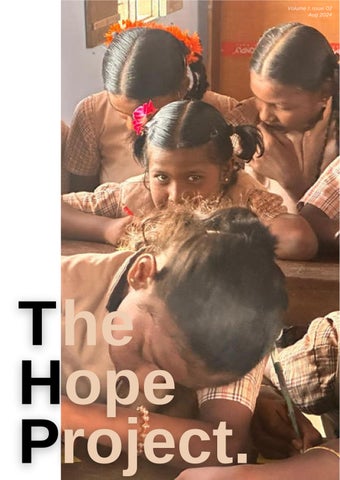
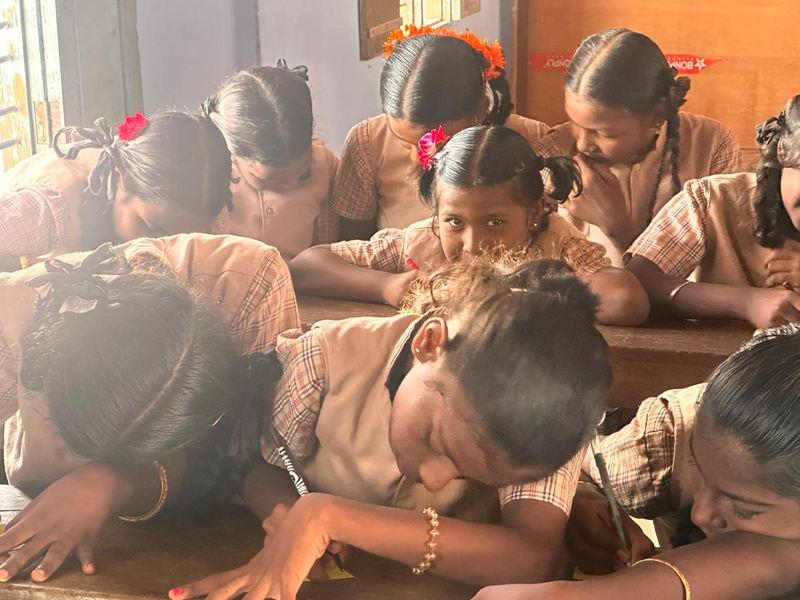
The Hope Project is a youth-led non-profit organization founded in 2023 with the mission to break the stigma surroundingmentalhealthinruralIndia.
The magazine was founded by individuals who believe that print is still alive and recognized a gap in design and mental health magazines. Our vision is to focus the magazine on open discussions, some of which may be anonymized for the comfort of the writers. We aim to amplify the loud voices in our heads, ensuring that they are heard and seen. Through this, we hope to bring comfort and remind everyone that they are not alone in theirjourneyoflife.
We
are
here to share the load.
pressurepoi pressurepoi surepoi pressurepoi ure p pres
p poi poisurepoi
p urepoi pressurepoi sure pres
Dhanvi Gajera
essurepoints essurepoints surepoints essurepoints surees es
We had the pleasure of interviewing Dhanvi Gajera, an undergraduate medical student at a top government medical school in India. We spoke with her about the mental health challenges faced by medical students in the country. Hearing about these issues in the news is one thing, but hearing them from a close friend really put things into perspective and made me realize just how much further India still has to go to support its doctors.
The survey by the National Medical Commission found that over 37,000 medical students in India are facing mental health issues like anxiety and overwhelming stress. As you're moving into your second year, have you noticed these pressures in your own experience, or among your peers?
I have experienced these pressures and more during my journey, and I’ve often observed my friends going through even more intense forms of stress and anxiety. The academic field we are in is like a black hole for uncontrollable stress, and as we move further along, we are well aware that it's only going to grow exponentially. We knew this when we chose this profession, so we focus on improving our stress management skills.
An example that illustrates this is from just this month when our university exams started on August 2nd. Our first paper was Anatomy, the most extensive and challenging subject in the first year. I was on a call with my close friend Shweta—we’ve always studied together and stayed connected throughout the day and night via calls. At that moment, it hit us that in just a few hours, we’d be in the exam hall, and it genuinely terrified us. Shweta started feeling really bad; she couldn’t breathe normally and began panicking more and more. I tried to comfort her, and it worked for a while, but it was like she was completely fine just five minutes ago, and now there was this heavy feeling in her chest, and nothing felt right.
Personally, I wasn’t feeling the same way for some reason, and I was calmer. I guess my body has gotten accustomed to exams and also realizes they don’t matter too much. Later, Shweta spent the rest of the night studying next to her parents. Although she cried for a while, after her parents comforted her, she remained calm for the rest of the exams, which all went very well.
Last December, when our first internal exams started, I was in a similar situation. It was so bad; I was mentally exhausted and terrified, and anxiety was everywhere. I literally had to take breaks from studying just to cry—that’s how much I was longing for comfort and a time with no pressure. But I got through those exams, and they actually went well. Later on, the exams felt much easier since we knew what and how to study and how to perform during the exams.
The survey mentioned that around 70% of doctors feel burned out, experiencing a lack of motivation and communication within the medical community. How do these feelings of burnout and isolation manifest in the daily life of a medical student?
Individually, I've just finished the first year of MBBS, and it wasn't too bad since the subjects were non-clinical. We spent the year attending lectures, practical sessions, and studying theory, with clinical exposure starting in the second year. From what I've seen of my seniors, many get burned out from the excessive workload and unhealthy work environment.
One of the main issues contributing to burnout is the extreme workload. In the Indian medical system, especially in government hospitals, there is a constant shortage of staff. The patient flow is overwhelming, and there's not enough time or manpower to manage it effectively. Many doctors end up working shifts as long as 36 hours, which severely disrupts their sleep schedules and circadian rhythms.
sure es
This not only weakens their immune systems and overall health but also affects their mental well-being due to the lack of rest.
My brother, a 4th-year medical student at the same college, often describes the shocking conditions in the different departments he is posted in. When he was in the gynecology department, he mentioned that deliveries take place in a common surgery room, often with multiple patients in labor at the same time. Doctors sometimes have to eat their meals in the room amidst the smell of blood and tissue, unable to take even a moment's break. It's not uncommon for a doctor to perform up to 18 deliveries in a single day. Under such conditions, it's understandable why a doctor might feel demotivated and unable to communicate effectively.
I really hope the working conditions improve soon because it's unhealthy and unsustainable. If we don't take care of our doctors, how can we expect them to take care of us?
es points pointssurepoints
In conclusion, everyone in the medical field experiences varying degrees of pressure, anxiety, and stress. But it’s all about coping with it, getting through it, and creating methods and techniques that make the whole process easier. This is a long journey, and those coping strategies will come in handy for quite a while.
essurepoints essure
The recent case in Kolkata, where a female resident doctor was sexually assaulted and murdered during her 36-hour shift, is a heartbreaking reminder of the risks doctors face. Many people weren't even aware of the long shifts doctors have to endure until this tragedy highlighted the harsh realities. These long shifts are almost impossible to sustain, yet doctors manage them until they can't anymore.
We often don't realize the extent to which doctors dedicate themselves to caring for their patients. If there were better laws and protections in place, maybe things could be different. Currently, the judiciary and investigatory systems in our country are failing. In a country where basic human rights like safety are not guaranteed, and perpetrators face little consequence, it's clear that change is desperately needed.
one
some has do to
oThe proposed regulation to limit post-grad students' duty hours to 80 per week is one of the measures being considered to improve mental health. Do you think a similar approach to workload management could benefit undergraduate students like you as well?
Yes, the proposed regulation makes a lot of sense, and it would be best if it were implemented and enforced. My answer might receive some opposing opinions, but I believe it shouldn't apply to us undergraduate students. It's important for us to learn as much as we can before we become doctors and treat patients independently. Any reduction in our learning would be too high a price to pay, so we don’t need limitations on duty hours. The time we have is sufficient and isn’t as extreme as the hours for intern and resident doctors. This proposal shouldn’t be for undergraduates because the more exposure we get, the more we learn and the better doctors we become.
me has do to
one
It's alarming that 130 medical students have taken their lives in the last five years. Given your own journey through NEET and now medical college, what do you think are some of the key stressors that could lead to such extreme outcomes?
Yes, it’s truly shocking how the numbers have only been increasing in the last few years. Reflecting on the journey of preparing for and taking the NEET exam, it changes a lot of things. NEET is an exam that focuses purely on competition and achieving the highest rank possible. Frankly, the pressure of NEET was much higher than the pressure of my first-year university exams. This is mainly because NEET is a more serious exam; those three hours determine your entire future.
The stigma around mental health seems to be a significant barrier to seeking help, even among medical students. How do you feel about the support systems currently available in your college? Do you think students would benefit from more accessible mental health resources?
In terms of the current support systems at our college, the only one I can remember is a lecture on "Stress Management in Medical School" presented by the psychology department at the very beginning of our first year. Unfortunately, I can’t recall any other support systems or programs being available, which is disappointing. I do believe that if there were effective and active support systems and programs in place, it would have a significant positive impact on the students, helping them feel more supported and in a better state of mind. However, since my college is a government institution, there’s little that we, as students, can change. We've all just adapted to the system over the past year, and it’s not all bad.
Still, when it comes to personal and deep issues that students might face during this journey, they have to handle them individually with the current system. I really wish people didn’t have to deal with their mental health challenges alone. I wish they didn’t have to fight their demons in the darkness of their own rooms but rather in an open and supportive environment.
Preparing for NEET takes at least two years, sometimes even more. During the NEET exam, the pressure is incredibly high because if something goes wrong, and the exam doesn’t go well, the last two years of your life could feel like they’ve gone to waste. The preparation journey is exhausting and difficult; only those who have gone through it understand how important it is to perform well in the final exam, as it ultimately decides where you will go.
Given that competition has been increasing in recent years, this trend creates significant pressure on students, who are often just 16 years old when they begin preparing for NEET. It’s a lot of pressure, and some people may not be able to handle it. Additionally, the recent trend in ranking and cut-off systems has been unpredictable and disappointing. Last year, for example, the cut-off marks increased by around 10 to 15 points each year. However, in 2024, it jumped by around 50 marks, which is insane and creates a very unfair method for selecting students into colleges.
One reason for this was that the exam paper was too easy. Another factor is the increasing number of students retaking the exam each year, giving them an advantage in attempting the papers. The situation has become so chaotic that many consider the NTA and the entire NEET exam system a joke because of how poorly it has been handled.
For instance, someone could have scored 650 out of 720 this year and still not have been able to get admission into a government college in their city due to the inflation of marks —something that the student is in no way responsible for. It’s absurd at this point. All these factors contribute to the unhealthy and unnecessary pressure that NEET aspirants face.
Additional comments: There’s not much more I can say since most of these issues are already well-known. However, it is clear that our country’s healthcare system has failed in many aspects, causing great shame and guilt. Most people don’t realize the severity of the situation, which only leads to more and more troubling cases. At this point, the youth of our country are our only hope for change. They represent the possibility that things can improve, that the injustices in our society can be addressed, and that innocent people will finally receive justice and a moment of peace. We still have a long way to go.
Content warning: this article discusses suicide, self-harm and depression Vincent van Gogh—the red-headed man with the straw hat, rumoured to have drunk yellow paint (despite no solid evidence), the one who cut off his ear, one of the most influential postimpressionists, and the man who didn’t live to see the day he was celebrated. But to me, he’s also a mental health advocate.
Born on March 30, 1853, in the Netherlands as the son of a minister, van Gogh spent much of his early life searching for his true calling. It wasn’t until the age of 27 that he turned to art. Though his career was short, he managed to create over 900 paintings and 150 watercolor works, among other creations. His work ethic was relentless; in one letter to his brother Theo, he wrote,
"I am hard at it, painting with the enthusiasm of a Marseillais eating bouillabaisse, which won’t surprise you when you know that what I’m at is the painting of some sunflowers. If I carry out this idea, there will be a dozen panels. So the whole thing will be a symphony in blue and yellow. I am working at it every morning from sunrise on, for the flowers fade so quickly."
Despite his productivity, van Gogh struggled to sell his art. His mental health issues eventually led to hospitalizations in Arles and an asylum in Saint-Remy-de-Provence, about a year before his death. Numerous theories have emerged over the years about van Gogh's mental health. The extreme highs (characterized by his intense focus on religion and art) and lows (marked by exhaustion and depression) suggest he may have had bipolar disorder.
dRoWnING inYELLOW
His time spent working outdoors, coupled with stomach problems and occasional outbursts of anger, could hint at sunstroke. Some believe he may have suffered from temporal lobe epilepsy due to a brain lesion he was born with and the seizures he experienced. Additionally, exposure to lead in the paints he used might have contributed to his condition. Van Gogh passed away in 1890, leaving behind more questions than answers about his life.
One commonly believed tale is that van Gogh drank yellow paint to improve his mood, but the Van Gogh Museum suggests that he might have actually tried to poison himself with it—a desperate act rather than a whimsical one. Another well-known event is the time when, after a dispute with his colleague Paul Gauguin, van Gogh, possibly out of fear of being abandoned, used a razor to sever his own ear. The intent behind this act remains unclear. The next day, van Gogh was taken to the hospital, and while he seemed to have no memory of the incident, he did report experiencing auditory hallucinations. Some historians even speculate that Gauguin may have been responsible for the injury, with van Gogh covering for him. Shortly afterward, van Gogh admitted himself to the Saint-Remy asylum.
His death, too, is surrounded by mystery. What is known is that van Gogh was shot in the stomach and died from the resulting infection two days later. While he claimed on his deathbed that it was a suicide, some believe he was shot by a 16-year-old boy who had bullied him, with van Gogh once again protecting someone else even in his final moments.
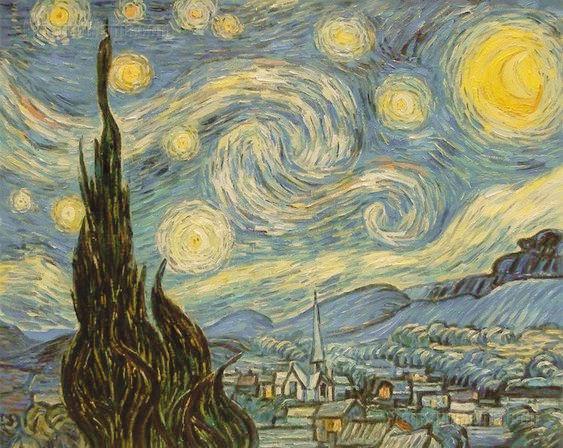
Despite the myths and uncertainties surrounding his life, van Gogh was a man who clung to hope for recovery, as evidenced by his letters to Theo during his time in the asylum. Many people assume that The Starry Night was painted during a deep depression, but it was actually created during his recovery at the asylum—a reflection of his progress and healing. He painted the sunflowers to adorn the studio his friend was soon to visit, a symbol of his optimism and longing for connection.
While van Gogh’s art is often romanticized for its association with pain, it is only when we recognize the resilience of the artist that we can truly understand the art. Much like the swirling skies in The Starry Night, his healing process had layers, intricate and complex, reflecting the patterns of his mind and soul.
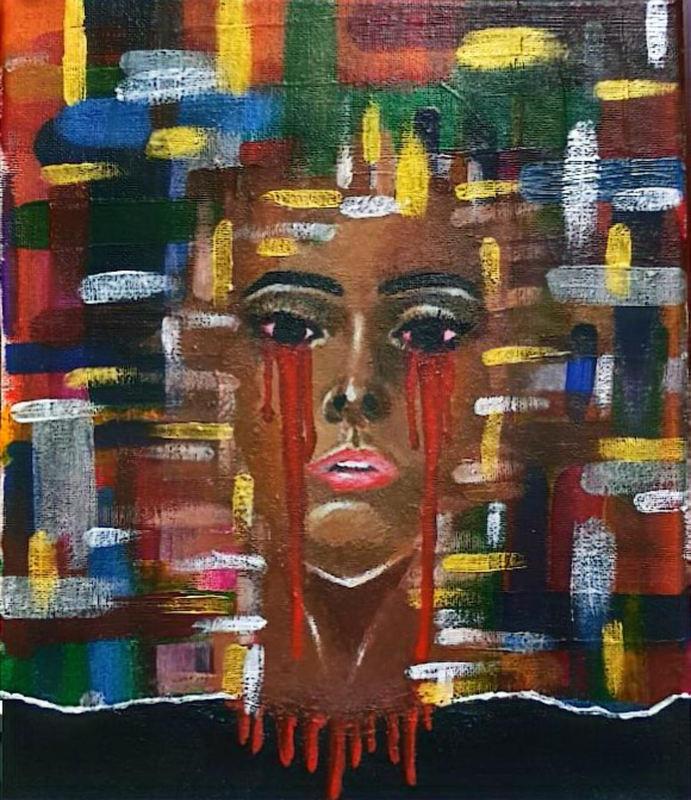
dRoWnING inYELLOW
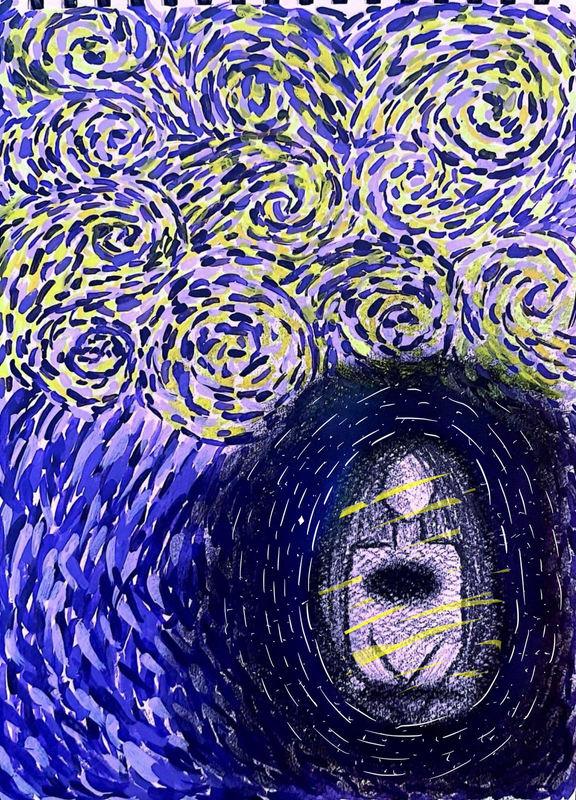
Art By Asmi Hirani
a mind unseen
~Ria Nouri
Vincent had tasted death many times before, but those wellacquainted with death would know that it is one of many flavours. Sometimes it tasted like tacky yellow paint, sometimes it was liquorice, nearly always it was turpentine. All very different, but still fragrant of death.
The silence was agonising.
He had always been a slave to unattainable perfection, teetering between brilliance and madness. Thesethingscomehandinhand,you see. One must go insane to be sane, but he had never remembered it beingthisrationalbefore
It took every fibre of his being to lift the paintbrush, and as he held it between his trembling fingers, he contemplated abandoning the effort altogether. The poor canvas seemed to quiver, perhaps fearful of receiving the same abuse as those prior to her. She was vulnerable but stood defiantly, awaiting her fate. Both understood how easily she couldbetornapartorbroughttolife.
The logic. extension exist. remained With breathless, was pounding
What was once his salvation
Maybe that’s what it was, maybe he was being punished for trying to breathe life into the lifeless.
was now his prison
The brush hovered mid-air, heavy with the weight of unpainted dreams. Vincent closed his eyes and sighed. He needed to paint something. He tried to rouse the inspiration that once made him flourish, the life forever immortalised in the golden warmth of the sunflowers he had painted so long ago, the tranquil hues of a starry night’s sky, the rippling blades of the wheat fields.
But the spark that once ignited his creativity was dim, almost lost to the shadows of his mind. For a moment, he feared it was gone entirely, and that his once abundant imagination had finally run dry, leaving him with nothing but the dull ache that had haunted him for so long.
And then, in a sudden burst, it struck him – an overwhelming surge of emotion, the urgent need to outpour his soul onto the canvas. The brush began to move as though guided by a force beyond his control as his hand brandished it with bold, erratic strokes.
Vincent’s breath quickened as he worked, the brushstrokes twisting and writhing as though alive, as though they were also fighting against the confines of the canvas. It was dark, but he could see every trail of paint pulsing with life, returning in a frenzied, chaotic explosion of all forms and colours. It was his muse, the very essence of his soul, fragmented and incoherent, hurtling out in violent bursts.
The delayed on marred masterpiece.
The colours blended and danced, forming shapes and patterns that defied logic. The brush moved in wide arcs, furious dashes, delicate flicks. It was an extension of his hand, an extension of him. The outside world ceased to exist. There was only the canvas, only the colours, only that which had remained unseen and inexpressible.
With one last, shaky stroke, Vincent’s hand fell still. He staggered back, breathless, his body trembling with exhaustion and elation. His masterpiece was complete. Exhilarated, his vision blurred as he tried to take it in, heart pounding with a mix of triumph and disbelief.
This was it! The piece that would finally suffocate the doubts, the torment the whispers of failure that had plagued him for so long. He had painted with a fervour he thought he would never feel again. The canvas itself was magnificent, thrilled to be decorated in a swirling vortex of light and shadow. It was his greatest work, his magnus opus, the pinnacle of his career.
He could hardly wait to show it to the world.
As the room began to darken around him, Vincent felt a profound peace settle over him. He had nothing left to give. With a contented sigh, he sank to the floor, closing his eyes in surrender as the darkness gently embraced him.
The studio was silent once more as he synced his heartbeat to the soft, delayed ticking of the old clock on the wall. As the night wore on, the paint the canvas slowly dried, leaving behind only a blank, white surface –marred by a smear of blood as a final, unintended brushstroke on his tragic masterpiece.
Art By Vaishnavi Vadla
WHOAM
Identity is always changing. As we grow and explore new interests, attitudes, and behaviours, our sense of self evolves through different phases. We're often encouraged to better ourselves, both personally and socially, and to embrace the uncertainty that comes with change. Yet, even with all the advice to accept and adapt, many of us still struggle when itcomestofullyquestioningwhoweare.
These days, we tend to associate identity crises with major life events that disrupt our sense of self. But when psychologist Erik Erikson first introduced the term, he saw the identity crisis as a crucial part of growing up. He believed that adolescence was a pivotal time when people actively shaped their identity by reflecting on who they were and who theywantedtobecome.
COVID hit just as I was about to start my sophomore year of high school, right when I had all these dreams lined up. I’d questioned myself before, but the early days of the pandemic took away any sense of direction I had. I tried to avoid getting sucked into that downward spiral, but it was inevitable. Still, I kept telling myself things would eventually go back to normal, and maybe I would too.
I lost all my extracurricular activities and was left with nothing but trying to fix my math grades and ace physics. With hopes of getting into a top university, I couldn’t foresee what COVID would bring or how drastically the world would change. It was devastating to realize how little control I had over any ofit.
COVID brought me closer to many of my current friends, but it also led others to question why I had changed so much during that time. I started acting differently with almost every group of people, something I’d done before,butbeingstuckalone in my room, barely getting any sunlight, made it all spiral in my head. Each Zoom call felt like I was replacing a hat, trying to seem authentic but often feelinglikeafraud.“Whoam I?” became a constant question.
AMI?
I felt lost. Some days, I tried to cope by cooking new recipes for my parents, other times, I threw myself into studying, staying up late pretending to study. That was all I did—everything else seemed beyond my control. Looking back, I’m not sure if that time created a new version of me or just exposed the worst parts of myself, but it definitelyleftitsmark.
Oneself-helpbookthatstuckwith me during that time was The Things You Can See Only When You Slow Down by Haemin Sunim. It wasn’texactlyalifeline,butithad its moments. One line that got me was, “There’s only one way to bungeejump—justleap!”So,Idid. I jumped headfirst into the chaos, hoping for the best and not a concussion. I embraced the uncertainty, understanding that identity is fluid, not fixed. My introversion, like my changing preferencesforhats,couldexpand or contract depending on the shiftingthoughtsinmymind.
It was a bag of mixed results. If you’d told the pre-COVID version of me how things would turn out, she’d be in shock—and honestly, I’m still a bit stunned myself. Thingsdidn’tgoasI’danticipated. I used to think the pre-COVID me was the default, but I’ve come to understand myself better. Despite what others might have said, questioning who I was proved to be a worthwhile challenge. Change is always possible without losing our entire selves. It was tough, but the new hats I got to try onthroughthisjourneyhelpedme become who I am today. And I’m quite glad for it. Things I thought were inevitable about me were fluidafterall.
~ tired pen
summer village in the
~ Guzala Jasmin
Today, I’m reminiscing about those childhood summers spent in my dad's village. Growing up in the city, nature was a luxury. Every school summer holiday, I eagerly anticipated our journey to the village, where happiness seemed to embrace me in the most unexpected ways. The village held a magic that the city could never offer. I remember the joy of reuniting with my cousins, the laughter we shared echoing through the fields. The food was simple yet delicious, each bite infused with the essence of our land. There were pigeons that one day decided our cowshed was their home, and the excitement of plucking a coconut straight from our trees stillmakesmesmile. One of my fondest memories is sitting by the cows, pouring out my school life stories to them, as they probably wished for me to be gone (hehe). Swinging on our rickety swing under the grapefruit trees was pure bliss. I loved watching the hens roam freely with their chicks and play with the baby goats, theirinnocencewascontagious.Innature,I find my true self. It's funny how the villagers, accustomed to their unpaved paths, often complain about the inconveniences, unaware of the profound benefits of "earthing." Science tells us that walking barefoot on the soil connects us to the earth's natural energies, groundingusinwaysthatareincrediblyhealing.Reflectingon these memories, I realize that nature's embrace is a sanctuary for my soul. The simplicity and beauty of the village life taught me to cherish the little things, to find joy in the ordinary. These moments, though fleeting, have left an indelible mark on my heart, reminding me that happiness often lies inthesimplestofpleasures.
Content Warning: this article discusses selfharm,eatingdisordersanddepression. A friend once shared with me how depression can feel almost ironic. She could spend hours hanging out with others, genuinely enjoying herself, but as soon as she was alone in her room, the weight of her struggles would come crashing down. I’ve heard others describe similar experiences, but it wasn’t until then thatIreallystartedtothinkaboutit.
Mental health isn’t as straightforward as sortinglaundryinto"light"and"dark"piles.It’s more like trying to untangle a ball of Christmas lights—you think you’ve got it all figured out, only to find another knot. We’re often told to pick a side: are you happy or sad? Confident or insecure? Calm or anxious? But what if you’re experiencingalltheseemotionsatonce?
Mental health and mental illness can sometimes feel like a confusing reality show, where one moment you’re thriving and the next, you’re voted off the island. You might spend time with friends, feeling elated, and then return home only to feel overwhelmed. It’s as though you’re living in two separate worlds—one filled with joy and another overshadowedbysadness.
This complexity came up during a recent Teen Talk session when a student asked, “What is true happiness, and how can I be happy all the time?” If only there were a simple answer. But seriously, there’s this enormous pressure from society to always be “on,” to keep that smile plastered on like it’s superglued to your face (I’malsoguiltyofthis,especiallywhenIusedto tell my mom to cheer up or put on a smile withoutreallyunderstandingherfeelings,even though I wanted others to understand me) . Happiness isn’t about constant euphoria; it’s about having more good days than bad and perhaps treating yourself to an extra scoop of icecreamonthosetoughdays.
PARA D
AsSarahKayputsitinherpoem:
“When I read about love, I think I should be out loving. When I love, I think I need to read more. I am stumbling in pursuit of grace, I hunt patience with a vengeance.”
This perfectly captures the paradox of mental health—it’s like chasing your own tail, thinking you’re missing out on something, no matter what you’re doing. The poem nails that feeling of being pulled in different directions, just trying to keep it alltogetherwithducttapeandaprayer.
It’s no wonder mental illness can fly under the radar, even with the people we’re closest to. How can someone who’s all about self-love be battling an eating disorder? Or how can someone who selfharms be the life of the party, cracking jokes and dancing like they’ve got no cares in the world? Peoplearecomplicated,Wecanfeellikeahotmess of emotions all at once, and our struggles don’t alwaysshowupinwaysthatareeasytospot.
Mentalhealthismoreofaspectrum,acontinuum, a bridge where everyone has their own greatest hits compilation. We don’t need to fit into tiny, neatboxes.Somedays,whenI’mfeelinggood,Isit behindmylaptopandwritearticleslikethis;other times, when I’m down, I might scroll, read Tuesdays with Morrie, and let the tears flow. That’s the reality—accepting this range of emotions is what truly defines us. And if life’s a paradox, it’s probably like a joke where the punchlineis,“I’mbothamessandamasterpiece— guessthatmakesmeaworkinprogress!”
Daily Dose of Sunshine is a Korean drama that touched me deeply, not just as a viewer but as someone who cares about mental health. The story follows Da-eun, a nurse who finds herself working in a psychiatric ward, a place that feels like a world apart from anything she’s known. Her journey is more than just a new job— it’s a deep dive into understanding the human mind and the heavy, often unseen impact that mental health has on everyone involved.
What really stood out to me is how the show breaks down complex mental health issues into something relatable, without making light of them. In today’s world, there’s a dangerous trend of romanticizing mental illness in the media. Daily Dose of Sunshine steers clear of that trap, portraying these issues with the seriousness and respect they deserve. It’s a relief to see mental health treated not as a trend,butasarealandpressingpartoflife.
Watching Da-eun, I couldn’t help but think about how different real-life experience is from anything you could learn in a classroom. She meets patients whose struggles are unique, raw, and sometimes overwhelming, showing that no amount of studying can truly prepare you for the emotional reality of working in mental health. This hits home for anyone who has ever felt unprepared in the face of real human suffering, despite all their training or knowledge. The show also challenges the common belief that wealth and privilege protect people from mental health issues. There’s a scene where Dr. Hwang Yeo Hwan, a senior psychiatrist, says, “Do you think that abundance is enough to prevent a mental disorder? That the development of illness iscausedbydeprivation?” Thislinereallystuck with me because it’s such a stark reminder that mental illness doesn’t discriminate. It doesn’t care if you’re rich or poor, famous or unknown. In fact, those who seem to have it all might be under even more pressure, makingthemjustasvulnerable.
Daily Dose of Sunshine also explores how the smallest, most unnoticed events can lead to serious mental health issues. The brain, in its effort to protect us, sometimes goes to extremes, leading to behaviors that might seem strange or even harmful, but are really just ways of coping. It’s a powerful reminder of how fragile our mental health can be and how importantitistoaddressproblemsbefore theyspiraloutofcontrol.
What I found incredibly moving was how theshowportraysthetollthatworkingin mental health can take on caregivers like Da-eun. It’s not just the patients who are struggling; the nurses, doctors, and therapists are too. They deal with stress, emotional exhaustion, and their own personal battles every day. One of the nurses in the show says, “We see people when their minds have been compromised.” This line highlights the shared humanity between caregivers and patients, and it’s this empathy that makes the show so impactful.
The show also takes care to depict the patients not just as cases to be solved, but as people with full lives outside of their symptoms. After a patient has an outburst, Da-eun tells them, “Please don't shoulder the blame for others' mistakes. I hope you can love yourself a little more.” It’s a reminder that mental health issues are just one part of a person’s life, not the wholestory.
Despiteitsheavythemes,theshowhasits lighter moments, too, including some sweet romance. These moments offer a bit of relief from the intensity, showing thateveninthedarkesttimes,there’sstill room for love and connection. The relationships in the show, whether romantic or just platonic, are portrayed with a warmth that adds depth to the characters’stories.
The visual portrayal of mental health disorders in Daily Dose of Sunshine is both powerful and, at times, intense. While it helps viewers understand what the characters are going through, it can also be hard to watch, especially if you’re sensitive to such topics. But this rawness is also what makes the show so relatable and real. For anyone who thinks that mental health professionals are immune to the issues they treat, this show will change your mind. It makes it clear that those who careforothersarenotinvincible;theycanstruggle with their own mental health, too. This portrayal is so important in breaking down the stigma that often surrounds mental health workers.
Throughout the series, some lines resonate deeply and linger long after the episode ends. “All of us are standing on the border between normal and abnormal,” isoneofthoselinesthatmakesyoustop and think about how close we all are to that line. Another quote that stayed with me is, “The darkest nights make way for sunlight. The light will shine on you,” offering a glimmer of hope even in the toughesttimes.
In the end, Daily Dose of Sunshine is more than just a drama; it’s a heartfelt exploration of mental health for both patients and caregivers. It doesn’t just tell a story—it starts a conversation. A conversation about understanding, empathy, and the courage it takes to face mental health challenges head-on. Whether you’re already familiar with these topics or just beginning to learn, this show is worth watching. Like many others,Ifoundmyselfwishingitwouldn’tend,and I’malreadyhopingforasecondseason.Untilthen, I’ll hold onto this thought from the show: “All illnesses are caused by loss. You may have lost what you cherished the most. Or you may have lost yourself.”Or maybe what you’ve lost is the memory of happy days. At times like these, we have to rely on something that seems quite old-fashioned, really.It’sjustalittlethingcalledhope.”
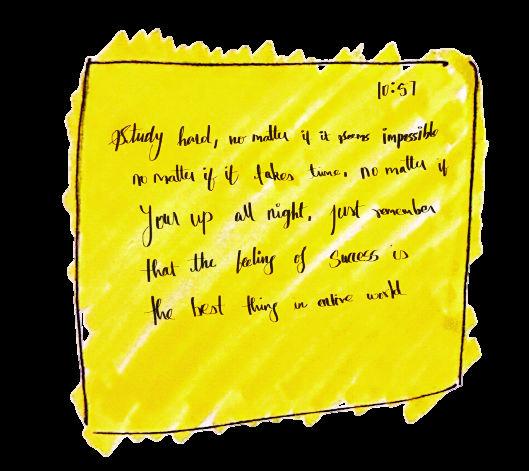
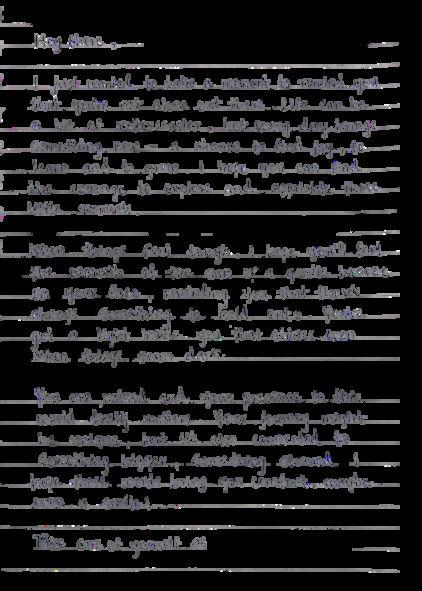
The Handwritten Letter Project: Inspired by Craig Eldham's initiative, our magazine presents a space for anonymous letters from teenagers and youth.
In today’s easy to and pleasures living. school, scroll overlook bring But think last time appreciate moment snack task? remind it’s the make Winnie he said, things heart.”
theart of noticing.
today’s fast-paced world, it’s to get caught up in the hustle forget about the simple pleasures that make life worth living. Between managing work, school, social lives, and the endless scroll of social media, we often overlook the small moments that bringusthemostjoy. think about it: when was the time you actually stopped to appreciate a sunset? Or took a moment to enjoy your favorite snack without rushing to the next As the internet loves to remind us with memes, sometimes the little things in life that make the biggest difference. Winnie the Pooh had it right when said, “Sometimes the smallest things take up the most room in your heart.”
Research shows that focusing on these little moments of happiness can actually boost our overall wellbeing. A study published in the field of positive psychology found that people who took time to notice and appreciatethesmallthingsinlifefelt happier and more satisfied and even improve our immune system. So whynotmakeitadailyhabit?
Finding joy in these tiny moments isn’t about ignoring life’s challenges or pretending everything is perfect. It’s about embracing the little bursts of happiness that pop up when we least expect them. It’s in the smell of fresh popcorn at the movies, the feeling of your favorite hoodie on a chilly day, or that satisfying first sip oficedcoffeeonahotafternoon.
I remember a session on positive psychology during my time at university. We were asked to send messages to three people, telling them why we admire them. I thought that was probably one of the hardest tasks I’d ever been given—to sit and think about the past and the present, being more than just thankfulandtrulyappreciatingtheir existence. It made me realize how often we overlook these meaningful moments, and it encouraged me to strivetobesomeonewhoappreciates life without overthinking. It’s about simply being present and recognizing the beauty in everyday moments.
Think about how awesome it feels when your favorite song randomly plays on Spotify or when you find a crumpled bill in your jacket pocket from last winter. Or how about the joy of laughing uncontrollably with your best friend over something that wouldn’tbehalfasfunnyifyouwere alone? These moments, while small, are what make life feel vibrant and full.
As the beloved Mister Rogers once said, “The connections we make in the course of a life—maybe that’s what heaven is.” It’s not about always chasing big thrills or waiting for lifechanging moments. It’s about being present and noticing the everyday joys that are already there. It’s about finding magic in the mundane and appreciatingthedailygrind.
Here’s a fun challenge for you: try to notice at least three little moments of joy every day. Maybe it’s the smell of rain on a hot pavement, the perfect bite of your favorite dessert, orevenjustthefeelingofslidinginto fresh sheets after a long day. Write them down in your notes app, share them on your Instagram story, or just keep them in your heart. The more you practice this, the more you’ll realize that these tiny moments aren’t so small—they’re actually the building blocks of a joyfullife.
Kurt Vonnegut once said, “Enjoy the little things in life because one day you'll look back and realize they were the big things.” So next time you’re feeling overwhelmed or stuck in the grind, take a moment to pause, breathe, and appreciate the little things. You might just find that the joy you’ve been searching for has been there all along, hidden in those small, everyday moments, just waitingforyoutonotice.