


Welcome and introduction from Alex Gamby
Dear Early Years and Childcare Providers
Where has the year gone? It seems like no time at all since I was writing to you all, welcoming you back from the summer break, and here we are now (mumble mumble) until Christmas! I have no doubt at all that you are all 100% ready...����
As I write this, we are just over a week into Ofsted’s new inspection framework. If anyone, as and when you are inspected, would like to share your experience, we would love to hear about it. Please don’t hesitate to contact your relevant Early Years Quality Adviser, Childminding Quality and Sufficiency Adviser or the Out of School Quality Adviser. Thank you.
If you were able to attend one of the recent Briefing and Networking Sessions, you will be aware that the Department for Education (DfE) has shared its intention to issue a further revised copy of the Early Years and Childcare Statutory Guidance sometime in the Spring of 2026. I am sharing this information here also for anyone who could not be at one of the sessions and might otherwise not be aware of this. The further revised Statutory Guidance is expected as a minimum to reflect any changes contextual to the new Ofsted Inspection Framework, but also the possibility of some changes driven by the challenges of delivering the Free Early Education Entitlement since the current version was issued in February of this year. As ever, we will keep you updated as soon as we have any information that we can share. This will, of course, affect when Kent’s Provider Agreement can be fully reviewed. We anticipate that, dependent on when the new Statutory Guidance is actually issued, Kent’s new Provider Agreement should be shared during late Spring/early Summer, to take actual effect in September 2026. In the meantime, the current Agreement with the Addendum stands.
Breaking news…
We are pleased to be introducing the ‘Early Years and Childcare Marketplace’ to editions of this bulletin going forward. This will allow providers to send us details of anything you wish to sell or donate, ranging from an actual setting/business to resources that you no longer need. For the avoidance of doubt, our only role in this is to share information to allow providers to contact each other. If this is something you would like to take advantage of as a ‘seller’, please send the information to EYCollaborations@theeducationpeople.org, stating what you would like to sell or donate and how you can be contacted. Assuming full
information is received, we will then share this in the next edition of the Early Years and Childcare Bulletin.
So, it is indeed, really, nearly Christmas… I hope that you have a wonderful time in your setting/s with your children, their families and your colleagues. I can’t necessarily promise I would always be able to make it, but I would love an invitation to a nativity or two! And when you get there, I hope that Christmas itself is for you all and your families and friends a happy, peaceful, restful and thoroughly blessed time. Thank you for everything that you have done for your children and their families in 2025, and I will see you in 2026.
With my very best wishes to each one of you.
Yours, as ever Alex

Alex Gamby Head of Early Years and Childcare
Kent Early Years and Childcare Provider Association
The Early Years and Childcare Provider Association last met early in October. The agenda included:
• signing off the association’s revised Terms of Reference
• a New Ofsted Framework update and discussion (not dissimilar to such at the Briefing and Networking Sessions in the weeks that followed
• similarly, a Statutory Guidance and revised Kent Provider Agreement update
• what the focus of discussions should be for the Association slot at the Briefing and Networking Sessions, with this being agreed as follows:
How are things now re the Statutory Guidance?
How are you finding the Eat Safe regime? Any good ideas to share?
Re the new Ofsted framework, what do you think are the positives and the potential challenges?
The association continues to have early years group provider vacancies for Maidstone and Canterbury, although the process is well underway for these to be
filled. We will, of course, advise you once this is completed and who these new representatives are.
The association next meets in December.
National news and updates
Dingley’s Promise - Building inclusion in the early years
Settings can now gain their very own Mark of Achievement to reflect their passion and commitment to inclusive practice in the early years. With the Mark of Achievement, your setting is recognised for embracing the training within your teams and as such, the dedication to transforming the lives of children with SEND
What is the Mark of Achievement?
It is a visible signal that your child’s nursery or school has invested in specialist training and is committed to inclusion.
It is more than a badge - it is a promise of inclusion and a better start to every child’s life. Settings can now achieve their very own Mark of Achievement to reflect their passion and commitment to inclusive practice in the early years.
Our training has been specifically designed to provide practical skills and knowledge to help practitioners support the growing number of children with SEND.
With the Mark of Achievement, your setting is recognised for embracing the training within your teams and as such the dedication to transforming the lives of children with SEND through inclusive practice.
Find out more.
To qualify for the Dingley’s Promise Training Mark of Achievement , you must meet the following criteria
• Settings with four practitioners or more: 75% will have undertaken the inclusive practice course along with two additional courses of their choice.
• Settings with less than four practitioners (e.g. childminders): The lead practitioner will have completed the inclusive practice course and 2 additional courses of their choice
When your setting has achieved the above, please notify our training team via email at: training@dingley.org.uk
Dingley’s Promise – Have you signed up to the early years inclusion programme?
Course topics include:
• Introduction to Inclusive Practice
• Transitions
• Managing Behaviours that Challenge
• Having Difficult Conversations with Families
• The Voice of the Child
• Intersections within Early Years Practice
• Leadership and Management for Inclusion.
Unique features:
• Flexible access: Learn anytime, anywhere
• Peer support via a closed Facebook group
• Opportunity to earn a Mark of Achievement for settings demonstrating strong inclusive practice.
Access the training here, but please note that this funding will be coming to an end soon.
Kent news and updates
Clear Minds Safer Homes
Clear Minds Safer Homes is a campaign designed to raise awareness among professionals working with children and families about the potential risks posed by parental cannabis use. While cannabis may be perceived by some as low risk, its use in caregiving environments can compromise parental capacity and increase vulnerabilities for children.
Key messages:
• Cannabis use is not harmless - especially where children are involved.
• Even casual use can impair parenting, decision making, emotional availability, and safety awareness.
• Early conversations and intervention can reduce harm and support positive change in families
Kent Safeguarding Children Multi-Agency Partnership (KSCMP) has developed a suite of resources available on the website Clear Minds Safer Homes - Kent Safeguarding Children Multi-Agency Partnership that include:
• Responding to concerns about parental cannabis use practice guidance
• Cannabis and parenting factsheets
• When cannabis comes home (poster)
• Clear Minds Safer Homes Conversation Tool
• Cannabis and parenting leaflet for parents

Living in a household where a parent uses cannabis doesn’t mean a child will experience abuse, but it does make it more difficult for parents to provide safe and loving care. This can lead to abuse or neglect.
• Safety and supervision: Cannabis can cause drowsiness, sedation, or slow reflexes which can affect their ability to ensure their child’s safety and wellbeing. Using cannabis may reduce a person’s ability to pay attention, make decisions or react to emergencies. This can affect how parents respond to a child’s needs and keep them safe.
• Parenting capacity: Regular cannabis use can lead to cognitive impairment, including memory loss and difficulty concentrating. This can make it harder to keep up with the demands of parenting, stay organised and parents may also miss cues for hunger, thirst, or the child’s need for comfort, due to the use of cannabis.
• Effects on demeanour and behaviour : Parents may act in a way that’s irrational, unpredictable or withdrawn, which may frighten children and/or lead to emotional, verbal, or physical abuse. Using cannabis may affect parent-child interactions and attachment, and parents may dismiss or ignore the child’s developmental desire to play and learn.
• Pregnancy and babies: Use during pregnancy and breastfeeding poses risks. Studies show that THC (tetrahydrocannabinol, the main psychotic compound in cannabis responsible for the ‘high’ it produces) can pass through the placenta to the developing baby. This exposure may affect brain and physical development. Breastfeeding infants might also ingest THC through breast milk, which could harm their growth and cognitive function.
• Sudden unexplained death in infancy (SUDI) and co-sleeping: Cannabis use may be associated with unsafe sleep practices and increased risk of SUDI. It is never safe to co-sleep if anyone in the shared bed has consumed drugs, including cannabis.
• Physical exposure to second-hand smoke is harmful to children, and exposure to cannabis fumes may lead to children experiencing the effects of cannabis use directly. If cannabis or cannabis products (including legal CBD products) are not stored safely, there is a risk of ingestion by children.
• Normalisation: Children learn by observing their parents. Regular cannabis use can normalise drugs and criminality, potentially leading them to experiment with drugs themselves in the future.
The resources can be found on the KSCMP website.
Are you signed up to receive the KSCMP Newsletter?
The November issue is below.
Kent Safeguarding Children Multi-Agency Partnership (KSCMP) Newsletter
November 2025
Learning and Development Programme Overview
Sign up to KSCMP’s Education Newsletter to get up to date information of training and when they launch new resources.
Subscribe for KSCMP Education Newsletters and Latest Education News
The Kent Children and Families Information Service (CFIS)
The Kent Children and Families Information Service (CFIS) provides free, confidential and impartial information and advice to parents, carers and
members of the public about early years and childcare services in Kent. This includes a childcare directory on the Kent County Council website.
We would like to be able to inform parents and carers about your provision and recommend that you update your information on our directory termly to ensure your record remains accurate
Please log in to update your childcare details. (Please do not create a new service).
If you have not registered for the Kent Childcare Directory, please refer to the welcome letter you will have received from Kent CFIS, which provides instructions on how to do this.
If you have any problems using our system, please email us at kentcfis@theeducationpeople.org to tell us what's happening and we'll be in touch to help you.
Early Years Universal CPD Package – Now live
We’re delighted to share the launch of the Early Years Universal Continuous Professional Development (CPD) Package – a comprehensive suite of funded training opportunities and resources designed to support your professional growth and enhance practice across the sector.
This package includes both ‘Universal’ and ‘Enhanced’ offers:
Universal offer – Free and accessible for all
These core programmes are aligned with the Early Years Foundation Stage (EYFS) and reflect best practice across key areas such as:
• Child development and curriculum
• Inclusion and SEND
• Communication and language
• Behaviour and emotional development
• Physical development
• Safeguarding and child protection
All practitioners, including childminders, are encouraged to complete these modules as part of good practice.
Early Years Universal CPD Package - KELSI
Congratulations to Under 1 Roof – Nursery World Awards winners!
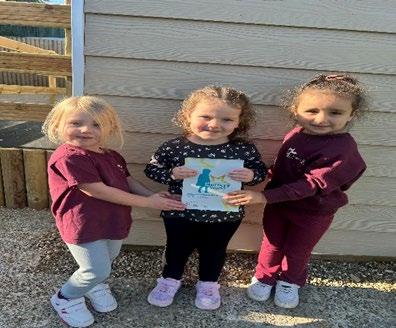
We are delighted to congratulate Under 1 Roof on its outstanding success at the Nursery World Awards 2025, where it received the Business Development Award.
This national recognition is a testament to Under 1 Roof’s ongoing growth, commitment to high-quality early years provision, and the dedication of its entire team. Since opening in 2023, Under 1 Roof has expanded from four rooms to eight , increased its daily capacity, and launched a new forest school - an inspiring journey that puts children and families first.
Here's what they have to say:
“We're proud to be winners of the Nursery World Awards 2025 – Business Development Award! ����
We are absolutely delighted to have received this national recognition for our ongoing growth and commitment to high-quality early years provision. Winning the Business Development Award is a huge honour and reflects the hard work, innovation, and dedication of our entire team. From expanding services to improving environments and strengthening partnerships, this award recognises our journey of sustainable, thoughtful development that always puts children and families first. Since opening in 2023 we opened with 4 rooms and a capacity of 93 children. Now as of September 2025 we have 8 rooms and a capacity of 156 children per day, as well as a new forest school too.
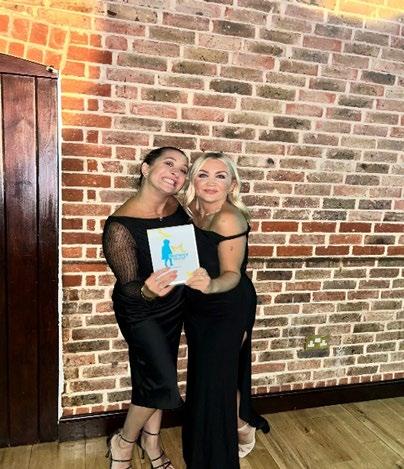
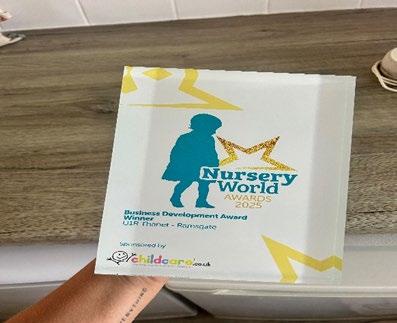
The experience of entering the Nursery World Awards has been incredibly positive from start to finish. The application process was straightforward, although lengthy and took a lot of thought, and gave us a brilliant opportunity to reflect on everything we've achieved.
We would absolutely encourage other settings across the county to put this forward, it's a fantastic way to celebrate your impact, share your story, and gain national recognition for your team's efforts.
Since the win, the buzz among our staff, families, and wider community has been overwhelming. It's boosted team morale and pride, reminding us all why we do what we do. Parents have been so supportive and excited, many have commented on how well deserved the award is and how proud they are to be part of our setting as well as providing lovely gifts such as flowers and chocolates.

We're incredibly grateful for this recognition and inspired to continue growing, innovating, and making a difference. Would we do it again? Without hesitation!”
Why should other providers enter the Nursery World Awards?
Under 1 Roof’s experience shows just how valuable entering the Nursery World Awards can be. Here’s why it matters for your setting:
• National recognition: Winning or even being shortlisted brings your nursery into the spotlight, showcasing your achievements and commitment to excellence
• Staff motivation: The awards process encourages reflection and celebration, boosting morale and pride among your team
• Parent confidence: Recognition reassures parents that they’ve chosen a setting dedicated to quality, strengthening trust and community bonds
• Children’s opportunities: Awards celebrate the positive impact your setting has on children’s lives, motivating you to keep innovating and improving.
• A rewarding process: The application is straightforward and gives you a chance to share your story, celebrate your impact, and gain valuable feedback.
Ready to shine?
Don’t miss your chance to celebrate your setting’s achievements and inspire others.
For more information, guidance on the application process, or support with your entry, please go to www.nurseryworldawards.com
Focus on childminders
Childcare registration
Can you change the number of children you care for, and how do you check that’s the right thing to do?
Childminders can care for up to 6 children under the age of 8. Of these 6 children:
• A maximum of 3 may be young children (a child is a young child until 1st September following their fifth birthday)
• There should only be 1 child under the age of 12 months. You can make exceptions to the usual ratios for children under the age of 5, in cases such as:
• caring for sibling babies
• looking after your own baby ensuring continuity of care
However, you must continue to show that you can maintain the quality of care, safety and security.
Inspectors will talk to you and ask you to demonstrate how you are able to meet all children’s individual learning and care needs when they visit you. If you want to change how many children you care for, please think about whether it’s not only the right thing for you, but the right thing for the children. We know you’ll always put the children first.
If you work with an assistant or co-childminder, each person can care for the number of children specified above. If you have assistants, you must ensure they have received a suitability letter from Ofsted before you can count them in your ratios.
Ofsted’s blog on childcare ratios answers some of the most asked questions they receive about ratios:
How staff-to-child ratios work – Ofsted: early years
The importance of outdoor environments
It is well known that the outdoor environment provides countless learning and play opportunities for young children. Children thrive while they play, and the freedom of an outdoor play environment produces positive hormones in a child’s brain, boosting their selfesteem, resilience and mood.

For early years childminders, the outdoor environment is a vital extension of the indoor learning space. Childminders are skilled at planning outings and visits to places of interest and parks, which provide rich opportunities to engage with their local area and the world around them.
However, many parks still only offer a limited number of opportunities to play and learn, as they can be restrictive for young children. We have all seen the signs to ‘keep off the grass’, ‘please do not let children climb’ or often limit the age range of children that can access certain equipment.
In contrast, a childminder’s planned outdoor environment can provide unique opportunities to support children’s developmental milestones.
Childminders are best placed to understand what children need to learn next and support the unique phases, ages, backgrounds and developmental needs of the children they care for.
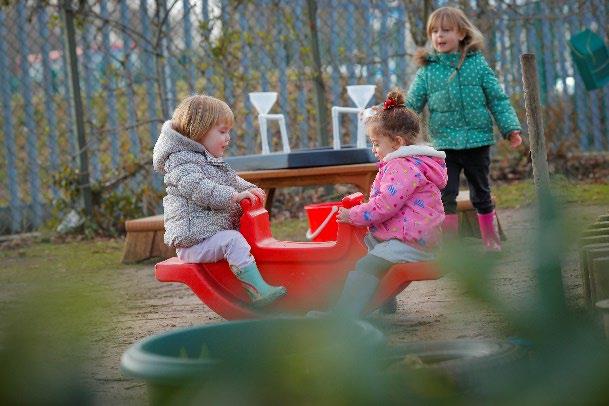
When planning an inclusive and engaging outdoor environment, consideration should be given to all the age groups that will use the space. A childminder will know the areas of the environment that require constant supervision and areas that support independent play. Being a reflective professional will allow the childminder to create spaces that are safe, stimulating and developmentally rich. Combining safety checks with thoughtful evaluation of play opportunities, inclusion, and sustainability will ensure that every child benefits from meaningful outdoor experiences. Collaborating with parents and children about the space provided can also provide inspiration and joy in learning.
An effective outdoor environment audit will highlight opportunities to enhance children’s learning experiences outdoors and ensure that the space is compliant
with the Early Years Foundation Stage (EYFS) requirements. A successful audit can be used as an ongoing reflective tool that serves several key purposes.
• Reflective practice: Encourages childminders to think critically about how the environment supports children’s holistic development.
• Quality improvement: Identifies areas for enhancement in play provision, accessibility, and learning potential.
• Safety assurance: Ensures the outdoor area is free from hazards and meets legal safety standards.
• Regulatory compliance: Demonstrates commitment to safeguarding and the EYFS standards.
The audit will allow a childminder to create an action plan with timescales, responsibilities and review dates. Displaying evidence of your audit and the improvements made can also support future Ofsted Inspections, showing your commitment to continuous quality improvement.
The audit will enable the childminder to monitor and observe how children engage with the improved space and reflect on whether the changes to the environment are supporting learning outcomes.
Childminders are also skilled at assessing how a free flow to outdoor play can be successful in supporting children to regulate their emotions. This process should be carefully riskmanaged and monitored for effectiveness.
• Boundaries and access: Fences and gates should be secure, with child-safe locks and no sharp edges or gaps.
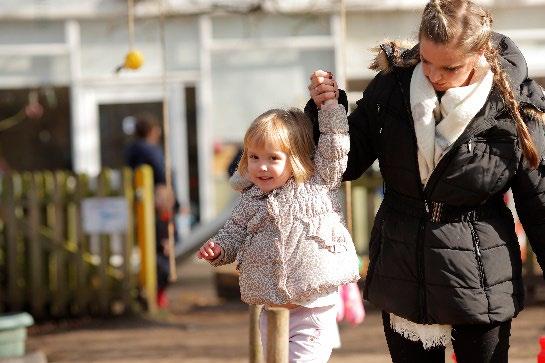
• Surfaces: Check for trip hazards, uneven ground, and appropriate surfacing under climbing equipment.
• Equipment condition: Inspect swings, slides, bikes, and climbing frames for rust, splinters, or wear.
• Plants and wildlife: Remove any poisonous plants and check for harmful insects or animal waste.
• Supervision sightlines: Ensure you can see all areas of the space while supervising children.
• Physical development: Are there opportunities for running, jumping, climbing, balancing and cycling?
• Communication and language: Do you provide spaces for conversation, storytelling or role play?
• Understanding the world: Are there opportunities for gardening, nature study or weather observation?
• Creative expression: Is there access to materials for art, music or imaginative play outdoors?
• Structured activities: Aim for a balance of structured and child-initiated play opportunities.
• Inclusive access: Smooth, accessible paths for wheelchairs and pushchairs.
• Adapted play equipment or alternative sensory experiences.
• Quiet, shaded or calm zones for children who may be overwhelmed by noise or movement.
• Resources that reflect diverse cultures, abilities and family structures.
• Sustainability and natural elements:
o Use of natural materials (logs, stones, water, sand, plants).
o Opportunities for gardening or composting.
o Eco-friendly practices like recycling stations or water-saving features.
o Minimising plastic and using durable, sustainable resources.
If you would like more information on how to audit your outdoor environment or receive an audit for use in your provision, please get in touch with your childminding adviser or email childminding@theeducationpeople.org
Information for families
Best Start in Life

Being a parent is full of joyful firsts, but some stages can feel daunting. Best Start in Life brings together trusted information, advice and guidance on everything from pregnancy, early education and childcare, right through to starting school, making it easier for parents and carers to find the support that suits them.
‘The Story of You’ is a short film that celebrates the journey of early childhood. It highlights the vital role parents play in their child’s lives and the support available. Using playful storytelling and vibrant visuals, the animation turns everyday questions and challenges into relatable moments. Designed to spark conversation and build trust, it uses Peppa Pig’s iconic appeal to raise awareness of the trusted support available. The film is scripted by children’s author Camilla Reid (author of the Pip and Posy books), illustrated by Rob Biddulph (illustrator of Blown Away and Odd Dog Out) and narrated by famous parents, including Oti Mabuse and Billie Shepherd.
Following the success of Mummy Pig starring in The Story of You, you can find on the Muddy Puddle Parenting YouTube channel: Parenting: The Ultimate Rollercoaster Ride! ���� Best Start In Life | Muddy Puddle Parenting ���� For more information please see Best Start in Life: New support for parents and young families newsletter.
BBC CBeebies Parenting

The NEW collection of Tips & Advice films in the Language Development section, feature Speech and Language Therapists offering families easy, practical ways to create opportunities to play and communicate with children, with and without words. There are tips to help with focus and attention, as well as interesting ways to make story time fun.
You’ll also find NEW activity films for 18–24 months, 2–3 years and 3-4 years that inspire play and include techniques that support language-rich interactions.
All latest films have been labelled ‘New’ for ease.
For seasonal fun, parents / caregivers can also explore Autumn and Seasonal Activities which includes sensory pumpkin play and dress-up play.
Other new resources to check out are the CBeebies Parenting Helpline Podcast, the new WhatsApp channel search CBeebies
Parenting and social updates #CBeebies
Parenting
All content is free to use; please share these valuable resources with the families you work with.
Pension Credit toolkit – Latest updates
DWP are keen to keep stakeholders informed about latest updates on Pension Credit and pensioner benefits and are asking for your continued support in sharing key messages directly with pensioners or via their family members. We recommend that you check in regularly with the Pension Credit Toolkit. This is kept updated with new social media assets, posters and flyers to tie in with the latest campaign activity.

They are also keen to use this opportunity to raise awareness about State Pension age, which is increasing in incremental stages from 66 to 67 from April 2026, as set out in the Pensions Act 2014.
Briefing and Networking Sessions
The Early Years and Childcare Briefing and Networking Sessions are an opportunity for early years and childcare providers in the private, voluntary, independent and maintained sectors to receive important national and local information from the Early Years and Childcare Service and other relevant partners and agencies, and to spend time in discussion with each other.
After feedback, we have adjusted the times of the sessions. Please feel free to attend at the time that is most convenient for you, rather than by area.
If you have any feedback you would like to share, or thoughts for future content please get in touch.
Date Time
Tuesday 10 February 2026 4pm to 6pm
Wednesday 11 February 2026 – Childminders and OOS 7.30pm to 9.30pm
Tuesday 24 February 2026 9am to 11am
Wednesday 25 February 2026 11am to 1pm
Thursday 26 February 2026 1pm to 3pm
Contact us and useful links
Alex Gamby Head of Early Years & Childcare
Threads of Success
Threads of Success Recruitment Hub
Sufficiency and Sustainability
Alex.gamby@theeducationpeople.org
https://www.theeducationpeople.org/ourexpertise/early-years-childcare/threads-of-success/
https://www.theeducationpeople.org/ourexpertise/early-years-childcare/recruitment-hub/
sufficiencyandsustainability@theeducationpeople.org
Education for Sustainable Development esd@theeducationpeople.org
Early Years & Childcare Quality Team
Collaborations
eycquality@theeducationpeople.org
eycollaborations@theeducationpeople.org
Childminding childminding@theeducationpeople.org
Workforce Development earlyyearsworkforce.ask@theeducationpeople.org
Kent Children & Families Information Service kentcfis@theeducationpeople.org
KCC Management Information
KELSI
Schools E-bulletin
Local offer
Childcare Works
The Education People Facebook
Help with Childcare Costs Facebook
Eat Safe (KSCMP)
miearlyyears@kent.gov.uk
https://www.kelsi.org.uk/
https://www.kelsi.org.uk/news-and-events/news
https://www.kent.gov.uk/education-andchildren/special-educational-needs-and-disabilities
https://childcareworks.org.uk/hub-resources/
https://www.facebook.com/theeducationpeople/?locale =en_GB
https://www.facebook.com/kccfreechildcare/?locale=en _GB
https://www.kscmp.org.uk/guidance/eatsafe