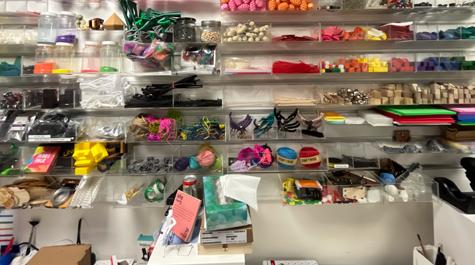
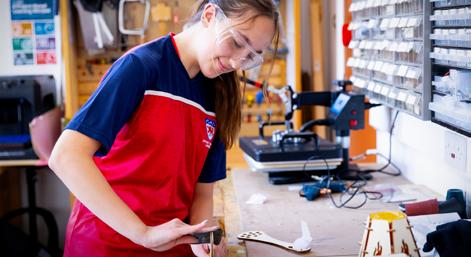
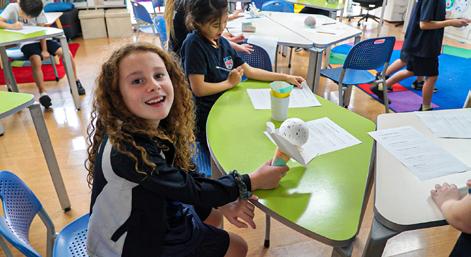
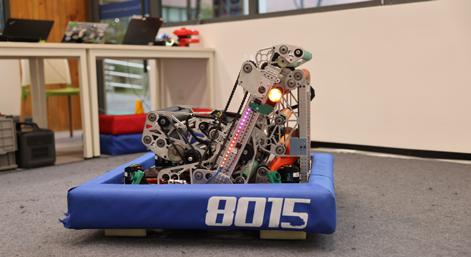
Schools across the Dwight-Franklin Network have put makerspaces and hands-on learning front and center at each campus. In this edition of Global Visions, schools describe how their makerspaces, under the guidance of esteemed design faculty, fuel innovation — and how a deeper understanding of subjects across the curriculum is fueled by projects taken on in makerspaces. In addition, our schools delve into how makerspaces support innovation even after the school day is done through Spark Tank, Sparkathons, student-driven Clubs, and more.
LOOK FOR THIS SYMBOL FOR MOBILE DISPLAY
Makerspaces: Students + Mentors + Tools = Sparks
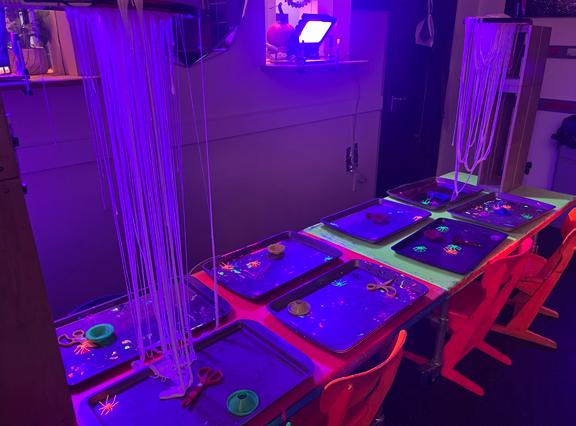
Across every campus and stage of learning, Dwight New York’s Spark Labs and Studio are designed to nurture curiosity, creativity, and confidence. Each space grows with the learner — equipping students with the tools and faculty support to inquire, design, and engage as thinkers, communicators, and collaborators ready to shape the world around them.
The Studio (3-5 year olds)
The Studio is a joyful space for exploration and discovery. Here, children experiment with color, texture, and form, developing fine-motor skills and creative confidence through open-ended play, loose-parts construction, and storytelling through art.
Spark Lab (Grades K–4)
A bright, art-and-design playground where imagination takes form, students in this collaborative space act as thinkers and communicators — sketching, sculpting, coding, and constructing as they transform everyday materials into purposeful creations.
Spark Lab (Grades 5–6)
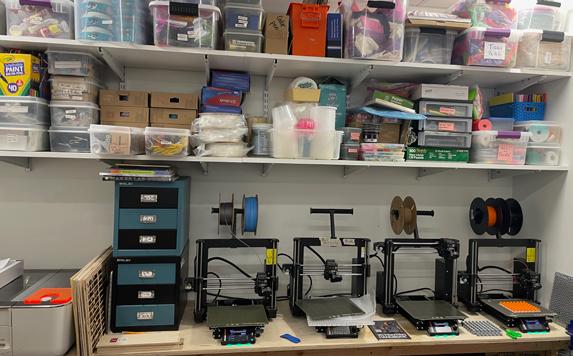
Where creativity meets craftsmanship, this Spark Lab empowers students to move from imagination to intention. Surrounded by the tools of real designers — from 3D printers to laser cutters — students prototype, test, and refine their ideas using the IB design cycle, while reflecting on how design can serve both people and the planet.
Spark Lab (Grades 7–8)
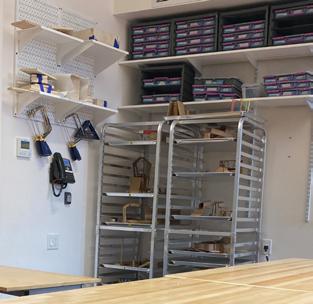
A dynamic workshop for emerging innovators, this Spark Lab blends design, engineering, and technology. Students explore robotics, microcontrollers, and digital fabrication, collaborating to solve authentic challenges as principled risk-takers, reflective learners, and empathetic systems thinkers.
Spark Lab (Grades 9–12)
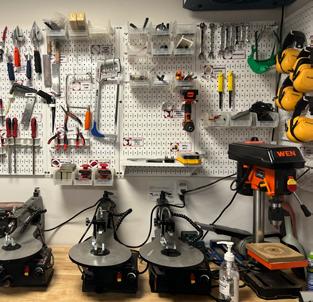
A professional-grade creative hub where Upper School students design, prototype, and fabricate with purpose. Whether developing IB Design solutions, refining Spark Tank concepts, or pursuing independent study projects, students use advanced tools, and entrepreneurial and systems thinking, to transform ideas into impact — embodying the IB learner profile in action.
The Studio
Spark Lab K-G4
Spark Lab G5-6
Spark Lab G7-8
Spark Lab G9-12
Dwight London’s Makerspaces: Developing Skills for Future Success
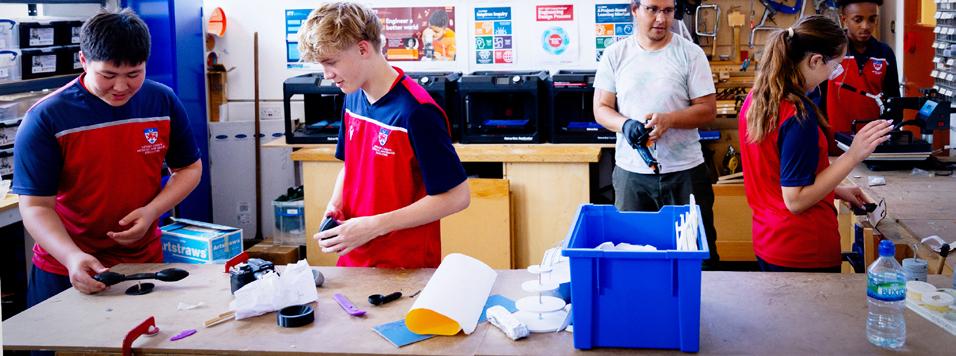
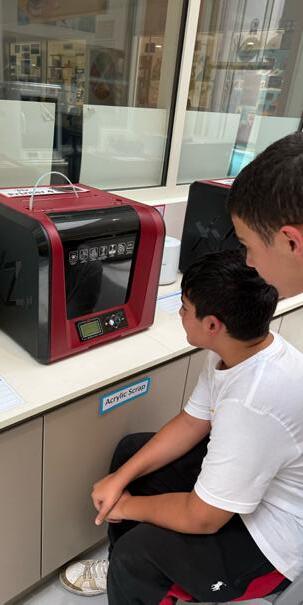
At Dwight London, our two biggest makerspaces – the Design Room in the Senior School and the Innovation Room in the Junior School – are buzzing with creativity and energy. These spaces are filled with physical tools, digital coding devices, and machines like 3D printers that allow students to quickly turn their ideas into reality and develop skills for future success.
“Makerspaces are spaces to prototype ideas and bring projects to life,” says Design Teacher Mr. Tercero. “Students can test their ideas with a diverse set of tools. Experimenting with different materials, tools, and machines gives them a chance to ‘fail’ and then learn from their mistakes.”
One area that demonstrates this is the Year 7 Spark Tank, in which all students work on business concepts and then pitch them to a panel of parent entrepreneurs. They develop a great range of skills through this course and show creativity, flexibility, and a zest for design thinking and business acumen. Products last year included a no-mess sandwich maker for kids called “Snugwich,” a children’s party planning business, a line of skater clothing supporting an animal charity, and free online courses for kids generated through AI called “CourseIT.”
Even our youngest learners in the Junior School make use of the makerspace resources during their weekly Design and Art lessons in the Innovation Room, led by subject specialists. They learn the first building blocks of coding with programmable microcomputers, learn to think like engineers with Lego, and model sculptures with air-dry clay. The curriculum introduces them to concepts such as security, processes, creation opportunities, digital fabrication, basic coding for electronic prototyping, creativity and skills development. They need this strong base to explore more complex and advanced techniques for later MYP classes and DP subjects. Along with the technical abilities they develop, there is also a focus on building their communication skills. “When makerspaces are used as a collaboration centre, the interaction between individuals becomes the spinal cord for their projects. They can practice speeches unconsciously, improve skills, learn from others’ experiences and create projects from scratch with clear outputs,” says Mr. Tercero.
This is one of the ways in which the maker culture brings the IB Learner Profile into the real world. The maker culture nurtures the core IB values of risk-taking, critical thinking, collaboration, and open-mindedness. Through this spirit of exploration, creativity, and guided independence, Dwight’s makerspaces empower students to see themselves not just as learners, but as innovators. Whether they are coding their first robot, designing a prototype, or sculpting a new idea from scratch, each student learns that imagination and persistence can turn a spark of inspiration into something real – and that is what truly makes our maker culture thrive.
ChoirFest Success!
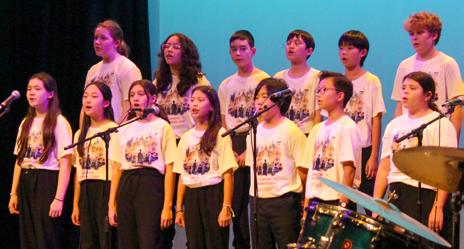
We were delighted to host students from Hanoi, Seoul, Shanghai, and Global Online for ChoirFest 2025, with this year’s theme, Our Stories. The performances highlighted the unique character and story of each campus. We were privileged to welcome two distinguished professors from the Royal Northern College of Music to deliver masterclasses for our performers.
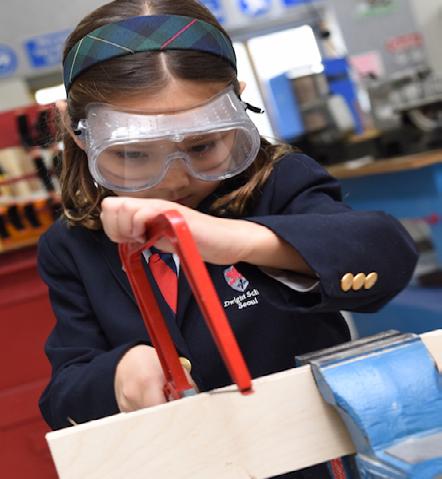
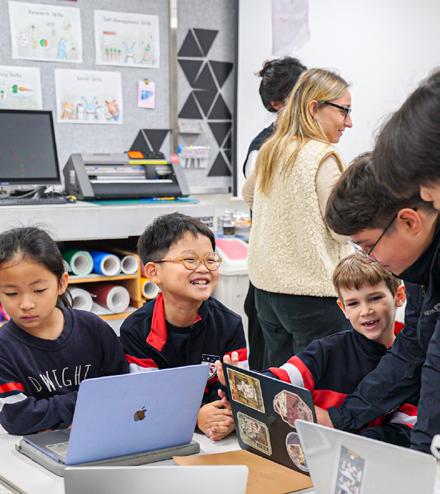
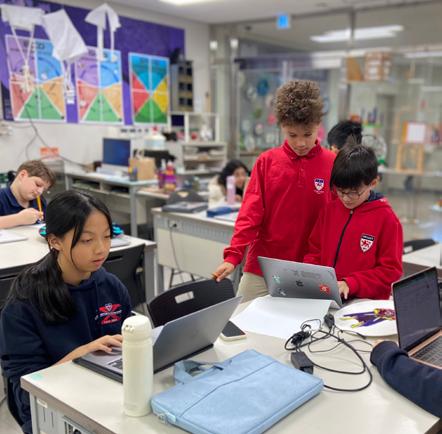
Dwight School Seoul Sparks Genius in Their Makerspaces
Makerspaces at Dwight School Seoul align deeply with our mission to ignite the spark of genius in every child. The IB framework emphasizes inquiry, action, and reflection — all of which come alive in the makerspace. Here, students engage with authentic problems, take action through design and innovation, and reflect meaningfully on their learning process. Making cultivates key attributes of the IB Learner Profile; such as being thinkers, risktakers, and communicators, and exemplifies our commitment to student-centered, experiential learning across all grade levels.
Jeein Jeon, Head of the Design Department, shared, “At Dwight School Seoul, the makerspace is a tangible reflection of our school culture, which values innovation, collaboration, and communitydriven learning. It serves as an open hub where students across all divisions transform ideas into reality, embodying the IB philosophy of inquiry, action, and reflection.”
Even our youngest learners in the ECD and Primary Years Program (PYP) explore the makerspace as a place of curiosity, creativity, and experimentation. They are introduced to a simplified version of the design cycle, helping them develop early problem-solving and innovative thinking skills while building a foundation for their future transition into the MYP.
Using age-appropriate tools and materials, students engage in activities such as constructing simple machines, crafting prototypes simply from paper, or experimenting with basic coding and robotics. These experiences encourage them to identify and solve both everyday and global challenges through hands-on exploration.
“The makerspace supports me to be creative and gives me opportunities to go deeper into problem-solving about things I’m curious about,” said a Grade 5A student.
In the upper grades, MYP and DP students continue to apply and expand these skills through projects such as the Personal Project. For instance, one student is currently engineering an automatic birdhouse feeder for the school rooftop, while another is crafting a wooden Jenga set designed to spark meaningful conversations, demonstrating the student’s creative design skills and their capacity to infuse everyday objects with deeper purpose.
The makerspace also serves as a shared hub for community initiatives. For example, the Eco-Council used it to design and build a clothes drive box, promoting sustainability on campus. The makerspace also serves as an essential engine for the Spark Tank initiative, Dwight’s signature entrepreneurship and innovation program.
As students bring ideas to life, our Design department plays a crucial role as facilitators of inquiry and innovation in the makerspace. Rather than simply instructing, they act as mentors who nurture empathy, creativity, and resourcefulness, guiding students through the design process to identify problems, research, plan, prototype, and reflect. Teachers encourage students to take ownership of their projects and to design for others, not just themselves by identifying real needs, researching for inspiration, and developing original solutions using available resources.
These experiences highlight that “making” at Dwight is not merely about creating objects, it’s about nurturing principled, reflective learners who use design and innovation to make a positive difference within their community and beyond.
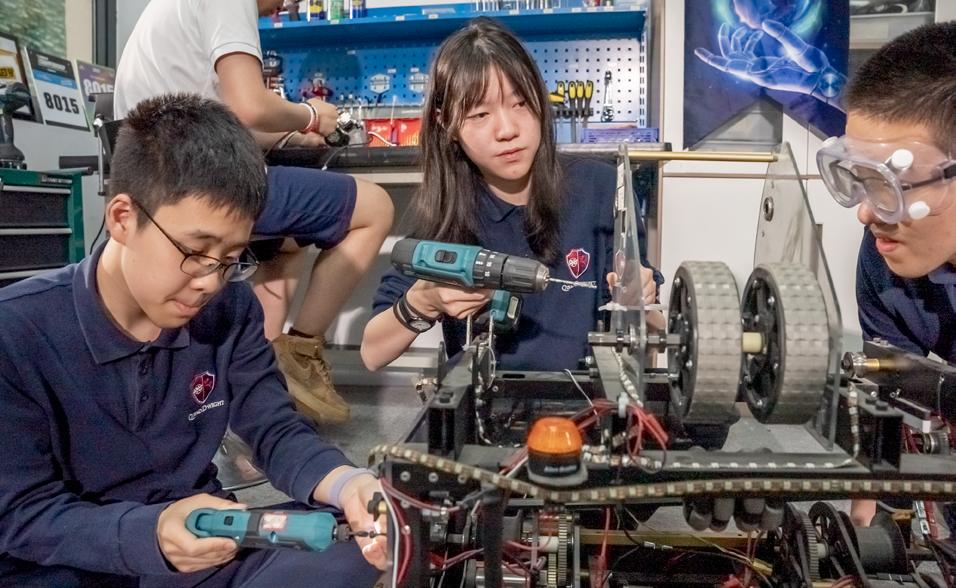
Qibao Dwight’s Robotics Lab: The Frontier of Learning
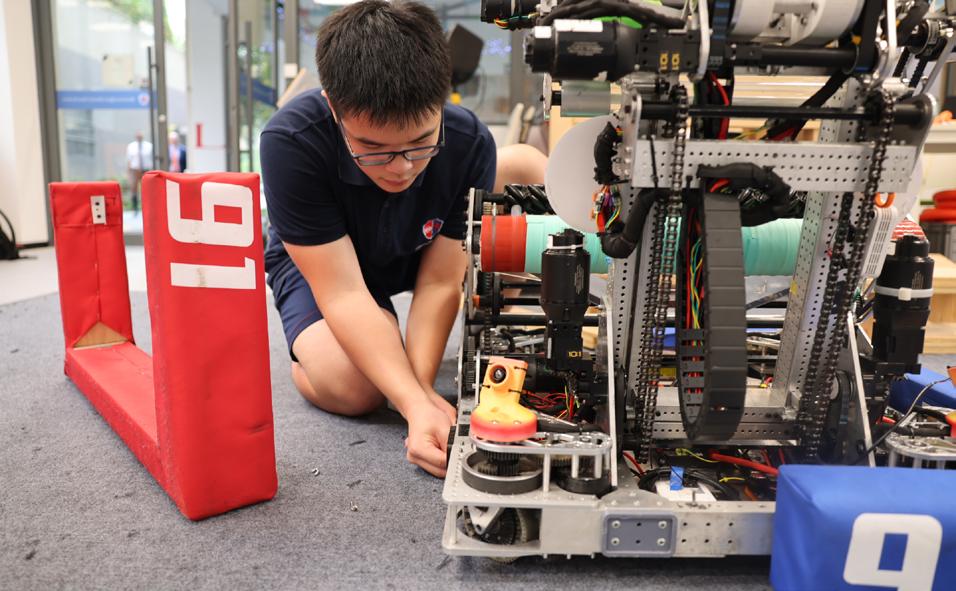
In modern education, the gap between theoretical knowledge and practical application is the final frontier of learning. At Shanghai Qibao Dwight High School, the Robotics Lab serves as a dynamic bridge across that frontier. This dedicated Maker Space, designed for high-level engineering and programming, is more than just a room with tools; it’s an ecosystem where curriculum concepts are tested, broken, and rebuilt into tangible innovations.
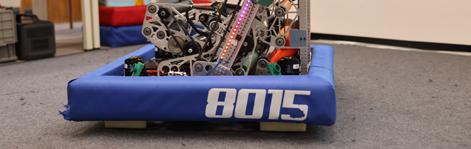
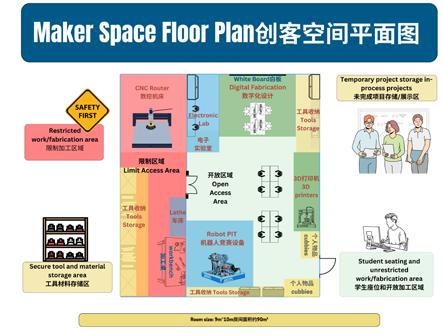
The facility itself is a testament to this mission. It consists of two distinct areas: a 90-square-meter lab thoughtfully divided into a professional manufacturing area, collaborative discussion zones, and organized tool storage.
This is supplemented by an 8-meter-by8-meter practice field, built to handle
the industrial-level robots like those competing in the FRC (FIRST Robotics Competition) games.
But how does this space translate into a deeper understanding of subjects? The impact on student learning is profound.
The Maker Space provides a safe and inclusive environment that is difficult to achieve in a traditional classroom. The digital manufacturing area, for example, allows students to rapidly develop prototypes, helping them visualize complex designs and enabling faster iteration.
By making things on their own instead of outsourcing, students experience the entire design loop. This hands-on participation is crucial, helping them grasp technical details that are easily overlooked in theory. The rewarding process of turning an abstract idea into a physical tangible object encourages students to think more deeply and creatively. Furthermore, the lab acts as a social-emotional hub, where students connect with peers who share their interests, exchanging ideas and building a supportive community.
The culture of the Maker Space is one of organic mentorship. Our youngest students often start as observers, watching their senior peers work through complex projects. Their engineering journey begins by seeing others make mistakes and, more importantly, by watching them troubleshoot and fix them. They gradually evolve from observers to helpers, growing into members who can make mistakes safely while becoming confident, contributing innovators.
Design teachers play a vital role as both mentors and fellow makers. They model safe lab practices and guide students through the entire design cycle — from ideation to prototyping and testing. They lead by example while simultaneously working on their own projects — such as assembling and improving a DIY 3D printer. By being active users of the space, teachers don’t just instruct; they inspire and guide students through shared, authentic experiences.
The Robotics Lab is proof that learning is not a passive activity. Whether building competition robots, refining 3D models, or exploring new manufacturing techniques, students gain not only technical competence but also confidence, creativity, and a sense of purpose. In the Shanghai Qibao Dwight Maker Space, learning takes shape — quite literally — through the power of making.
Makerspaces: Where Ideas Start to Take Shape
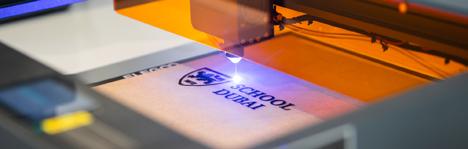
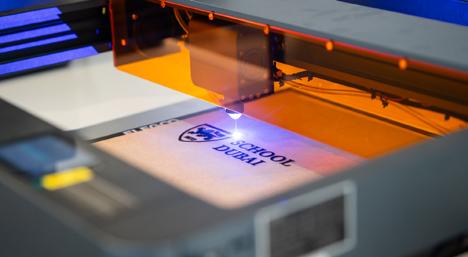
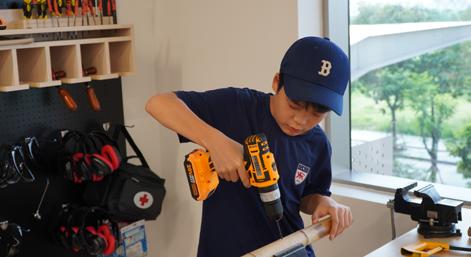
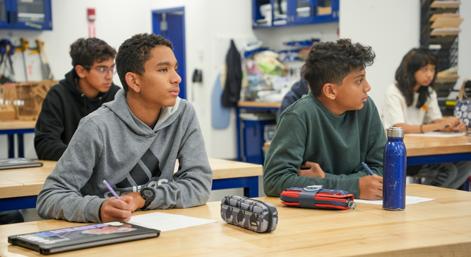
At Dwight School Dubai, our makerspaces are the heartbeat of innovation on campus. Every day, our students bring ideas to life through design, experimentation, and creative problem-solving. Whether they are building simple prototypes, coding robotics, or designing solutions for real-world challenges, our learners discover that making is an essential part of understanding
For our youngest students, the makerspace is a place of joyful exploration. Through handson projects that integrate art, science, and storytelling, children learn how things work and, perhaps more importantly, how to make them better. These early experiences nurture curiosity, resilience, and a growth mindset — cornerstones of the IB Learner Profile.
As students advance through the Middle and Senior Years, the makerspace becomes a hub of collaboration guided by our Design faculty. Teachers act as mentors, helping students translate abstract ideas into tangible outcomes through design thinking. “Our goal isn’t just to teach students to use equipment,” explains Andrew Georgiou, Head of Art & Design, “it’s to help them connect creativity with purpose, to design solutions that matter and that use empathetic functionality as their key driving factor.”
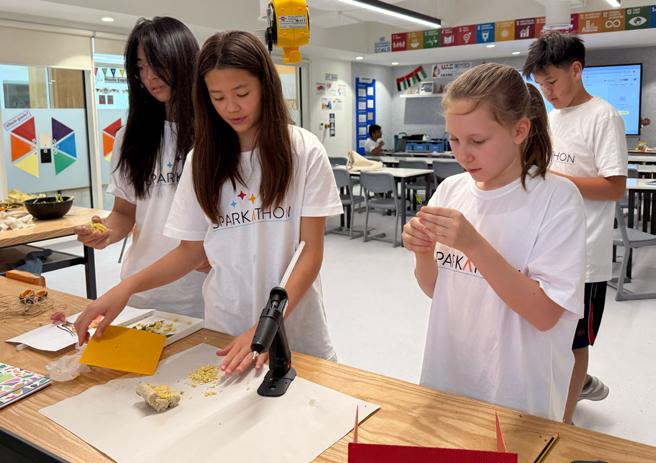
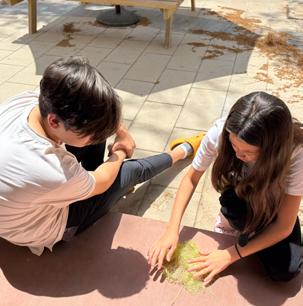
Last year, the makerspace was instrumental in fueling our Sparkathon project, providing the resources, mentorship, and freedom students needed to test, iterate, and ultimately innovate. Our team, We Are Here to Win, took “Best Overall” at the weekend-long design event by developing a creative, eco-conscious solution to food and fashion waste: a sustainable fabric made from discarded corn husks.
More than just a facility, the makerspace embodies our commitment to personalized learning. It invites every student to take intellectual risks, to explore where their imagination can take them, and to see themselves as inventors and changemakers. As Salma Yousif ’27 puts it, “When I step into the makerspace, I feel like anything is possible. It’s where our ideas start to take shape, literally.”
Welcome to the Spark Lab — Where Ideas Take Flight!
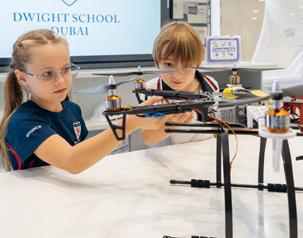
Step inside our newest innovation hub, Spark Lab, where curiosity meets creation. This cutting-edge space ignites hands-on learning in coding, robotics, engineering, automation, and drone technology, giving students the chance to turn imagination into innovation. Every project connects theory to real-world application, helping learners build skills that extend far beyond the classroom.
Seamlessly woven into our curriculum, Spark Lab empowers teachers to integrate digital literacy and
artificial intelligence (AI) across subjects, inspiring creativity, collaboration, and critical thinking. Grounded in the IB philosophy, the space has been designed to celebrate inquiry, ethics, and globalmindedness. Here, students don’t just use AI, they explore it, question it, and create with it. They leave not only ready for the future, but ready to shape the future: confident, curious, and equipped to make their mark on an ever-evolving world.
Igniting Innovation: How Makerspaces Power Learning at Dwight School Hanoi
At Dwight School Hanoi, making is far more than an addon to the curriculum, it is a catalyst for learning, creativity, and innovative learning. With three dedicated makerspaces across our school, we empower students to design and build using craft tools, digital production equipment, and emerging technologies, including automation and AI-assisted design.
Innovation Begins Early
Our youngest learners start in the Wonder Lab, a safe, handson space with age-appropriate tools where they explore design thinking, make early connections to science and language, and learn how ideas become real. Students recently collaborated on a “Seasons Tree,” a tactile installation that links making with observation, art, and storytelling. Students progress into the Wonder Lab to practice with basic hand tools and experiment with CAD/CAM. They then extend their skills in the Invention Studio, where slightly more advanced tools and processes are introduced. Here, students have created shadow puppets, blending theatre, design, light, and shadow, and grade 4 students designed and built market stands for a lunchtime business project, developing creativity and entrepreneurial thinking.
Inquiry and Impact in Middle School
By Middle School, students work primarily in the Invention Studio, where making is more inquiry-driven and deeply connected to the curriculum. Grade 6 students combine history and design by 3D-printing artifacts for their Ancient Civilizations exhibition, while grade 7 students bring science and sustainability together to design and laser-cut birdhouses that support Hanoi’s local ecosystems. In our Chess ASA, students even turn original sketches into customized chess pieces — an authentic application of geometry, iteration, and product design.
Advanced Design in Upper School
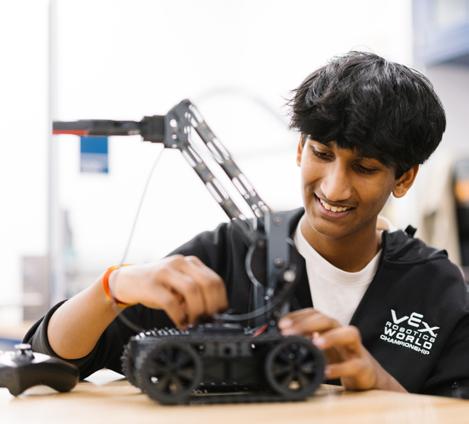
In Upper School, design thinking becomes more sophisticated and purpose-driven as students move into the Spark Lab, a specialist makerspace equipped with industrial-grade fabrication tools requiring focused skill development. Robotics teams engineer and program VEX robots to take on complex challenges, while student musicians build amplified speakers, applying physics and product design principles. Here, making is no longer just a project, it is a mindset rooted in innovative practice and thoughtful reflection.
A Makerspace for Our Community
Through making at Dwight, we welcome families and our wider community into the makerspace to learn essential skills such as measuring, drilling, construction, and finishing while completing a guided design project. This year’s session centered on crafting custom photo frames with display stands, offering participants an engaging introduction to the space. These experiences deepen connections across our community and strengthen our commitment to opening our resources and expertise to the wider Hanoi community.
A Founding Ceremony Powered by Design and Innovation
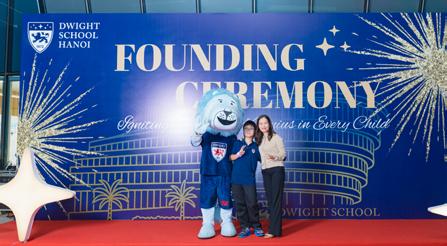
On November 8, Dwight School Hanoi celebrated its official Founding Ceremony with a dynamic showcase of how innovation and culture intersect on our campus. Custom ceremonial pieces, produced using fabrication methods like those taught in our makerspaces, were featured. The program included a 360-degree immersive cinematic experience tracing the development of our state-of-the-art campus, alongside next-generation projection visuals that blend Vietnamese cultural elements with Dwight’s global legacy. It’s a celebration of tradition, innovation, and the creative spirit that defines our School.
Inside the Fab Lab: The Engine of Innovation at Franklin
Franklin School was recently named “Most Innovative School in the World” by T4 Education. We were recognized for our technology-driven, student co-designed learning model that prepares students to thrive in a rapidly shifting professional world. At the heart of this model is the Fab Lab, a space that integrates technology and design across disciplines. Students are empowered to take ownership of their learning, build advanced skills, and drive long-term, workforce-level projects that address pressing societal challenges. The hands-on approach leads to many opportunities of transdisciplinary learning.
One of the many examples of this maker-fueled transdisciplinary learning: “The Iliad Build,” a microcourse that teaches a literary classic through an engineering lens. Students are challenged with synthesizing their knowledge of Homer’s epic poem with their ability to design and build a miniature wooden warship that represents one of the characters of the epic poem. The crosscollaboration between the two subjects makes for a unique lens through which students read and comprehend the poem.
Franklin Student Ventures is a 9th grade class where students go out into the community and find solutions to problems they see there. Sidd ’28 saw construction workers struggling with the lifting required by their job, and the long term effects it has on their health. As a solution, he built a robotic arm, controlled by a gaming console. He says, “With this idea, I hoped to create something that lightened the load while also holding the ethical values of not interfering with people’s jobs. While building, my perspective changed, but the way I thought about the problem was the same: the idea that people will benefit from this, and I get to put my passion into something I love.”
Students can also continue their day innovating in the Fab Lab Club. Anish ’28 designed and built a robotic airplane that is controlled by a gaming controller. He chose to use cardboard to quickly and easily prototype. Of the design process, he reflects, “I acquired an interest in the mechanics of how airplanes fly. So I decided to make my own RC plane prototype in the Fab Lab using parts like a motor and a servo, which led me to testing it, and learning more from the design process.”
Innovation continues outside of the curriculum in other ways as well, including through Franklin’s annual participation in the Make:able Challenge, a global design competition where students design to improve life for a person who is elderly and/ or living with a disability. During the most recent competition, Ellie ’27 and Aisha ‘27 designed a robotic oven mitt that helped their client relieve stress on their wrist. These extracurricular opportunities give students a chance to hone their skills in the Fab Lab and work through an iterative process to better support their client’s needs.
These experiences showcase how Franklin’s technology-rich, iterative learning model empowers students to transform curiosity into real-world impact, preparing them to create and solve the challenges of tomorrow.
Guiding Students to Their Best Learning Through Hands-On, In-Person Creation
As the #1 ranked online school in the U.S., Dwight Global Online School is unique among online schools in important ways.
For example, DGO offers its students — who usually meet virtually — exciting opportunities to meet in person at Dwight Schools around the world. Dwight Global’s STEAM weekend, held annually at Dwight NY, is one such event.
“Our beloved STEAM weekend invites students in grades 6-12 to meet in Dwight NY’s makerspaces, where they learn through hands-on exploration,” said Head of Academics and Student Affairs Elizabeth Hutton. “They are thrilled to be with classmates and faculty face-to-face, and they have time to experience NYC’s restaurants and cultural events, too.”
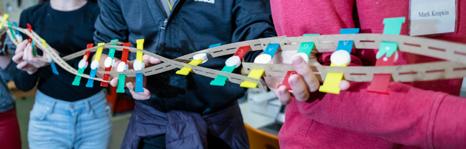
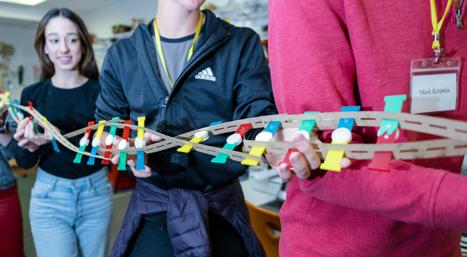
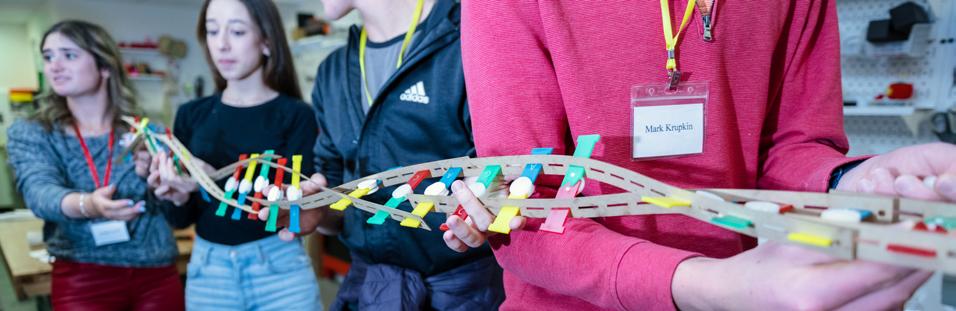
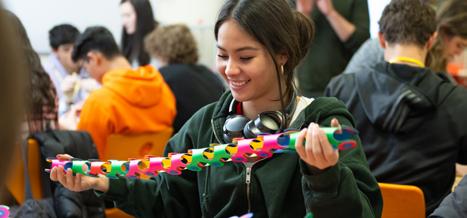
In addition to building community, STEAM Weekend has always incorporated in-person innovation. In 2023, students designed and built a large double helix structure in the Spark Lab. The following year, students joined a Design for America challenge, applying Design Thinking to solve real-world problems as a team. Students were so inspired they formed a club after the event and submitted their idea to the national competition.
and real-world problem-solving, aligning seamlessly with the IB’s focus on thoughtful inquiry.”
By encouraging curiosity and a willingness to try, design teachers make the space feel safe and full of possibility, mentoring students as they connect to the community through service and entrepreneurship. Every project is a chance to grow as a thinker, creator, and member of the global community.
“Dwight Global emphasizes innovation as a core value,” said Hutton. “Using makerspaces nurtures this mindset by encouraging in-person experimentation and personal resilience. Students learn that failure is part of the creative process, reinforcing our culture of lifelong learning and intellectual risk-taking.”
STEAM weekend is the perfect blend of exciting learning, deepening friendships, creating new bonds, and thinking and working together as global citizens. Be on the lookout for details about STEAM weekend 2026!
Dwight Global Ranked Top Online High School
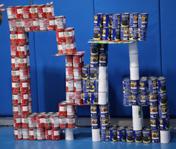
In 2025, STEAM participants took part in a CANstruction event, using design and engineering skills to build large-scale structures from canned goods in support of local food charities. The CANstruction project was creative and meaningful, and students said it was rewarding to build something that combined design, teamwork, and community impact.
Even more, Dwight Global faculty and students were happy to extend their already strong virtual connections to physical spaces, where they nurtured friendships and community in person.
During the CANstruction project, Dwight School Design Teacher Rob Gilson met with students and modeled how to translate 2D plans into 3D structures. Mr. Gilson encouraged students to work together to troubleshoot balance and structure — rather than provide them with rote instructions.
“A design teacher’s role is to prompt curiosity and critical reflection rather than to provide answers,” said Mr. Gilson. “We help students uncover the ‘why’ behind design decisions, and they help build confidence through the making process. Moreover, the hands-on culture fosters resilience, teamwork,
Niche.com has ranked Dwight Global Online School the top private online high school in America as part of its 2026 Best Schools rankings. Dwight Global was awarded the number one spot for its outstanding faculty, comprehensive academics, and experienced college preparation and counseling. The new ranking moved Dwight Global up from last year’s number two spot.
Niche’s trusted ranking methodology collects thousands of data points and uses advanced statistical analyses to provide grades to each school nationwide.
Congratulations to Dwight Global’s alumni, school leaders, faculty, students, and parents!