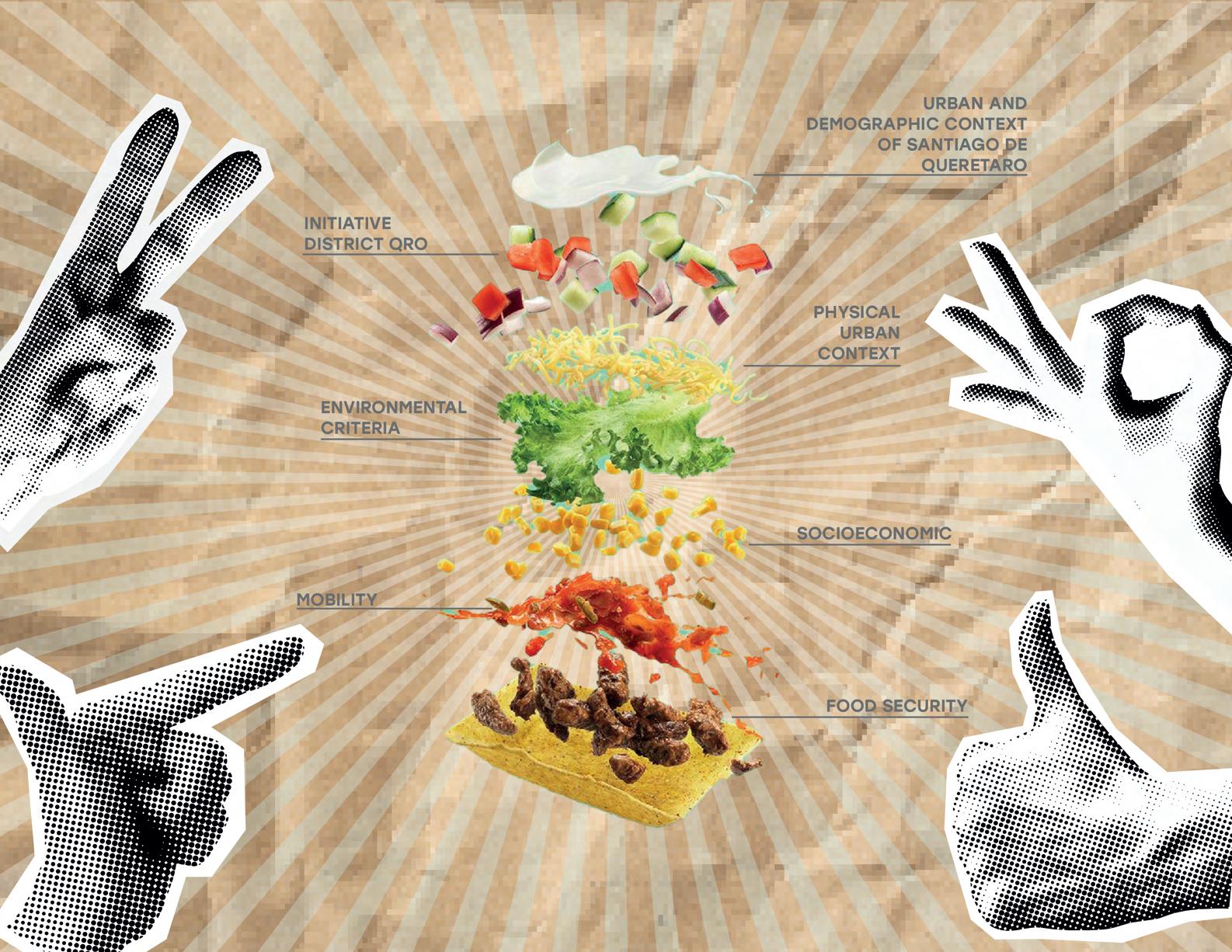
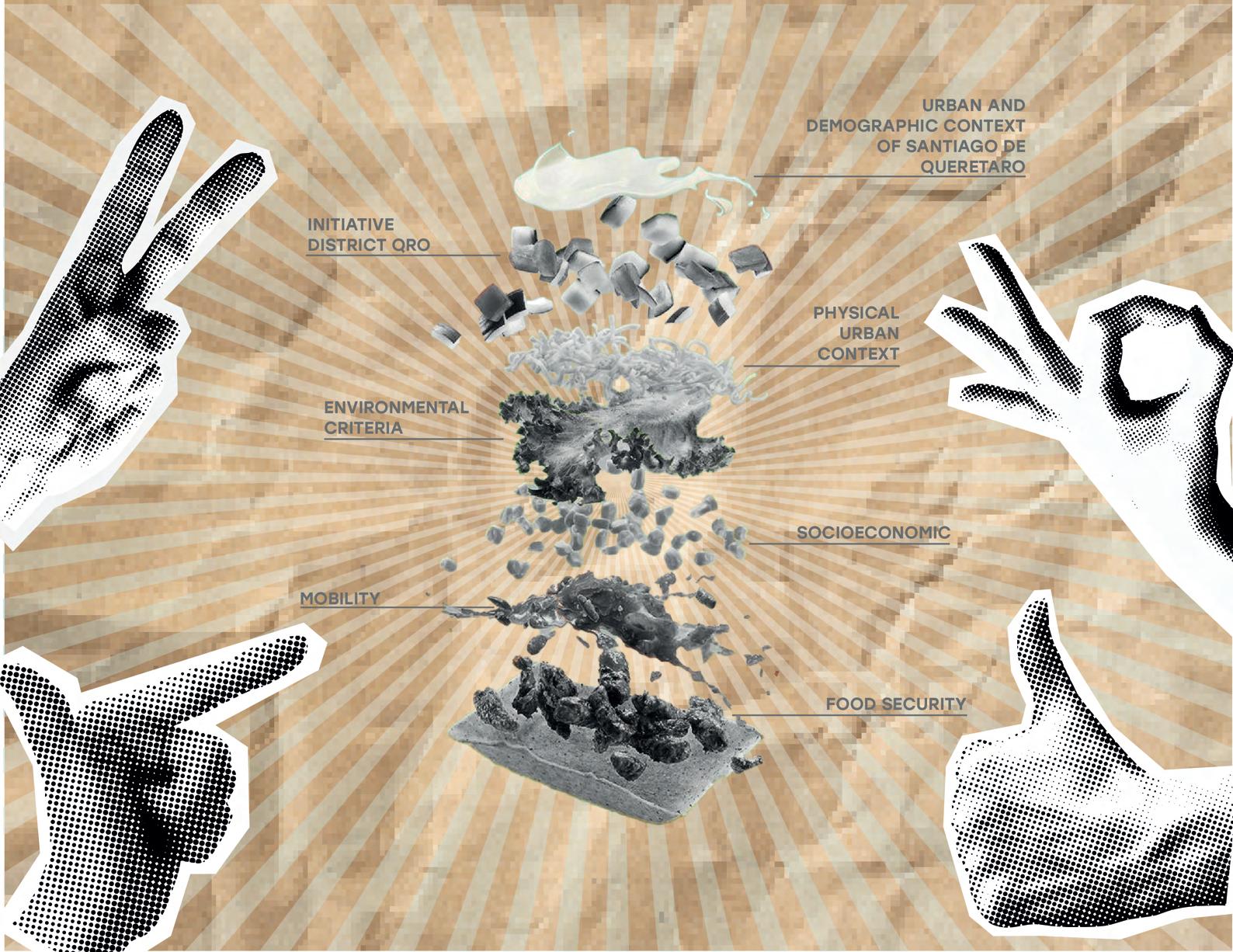
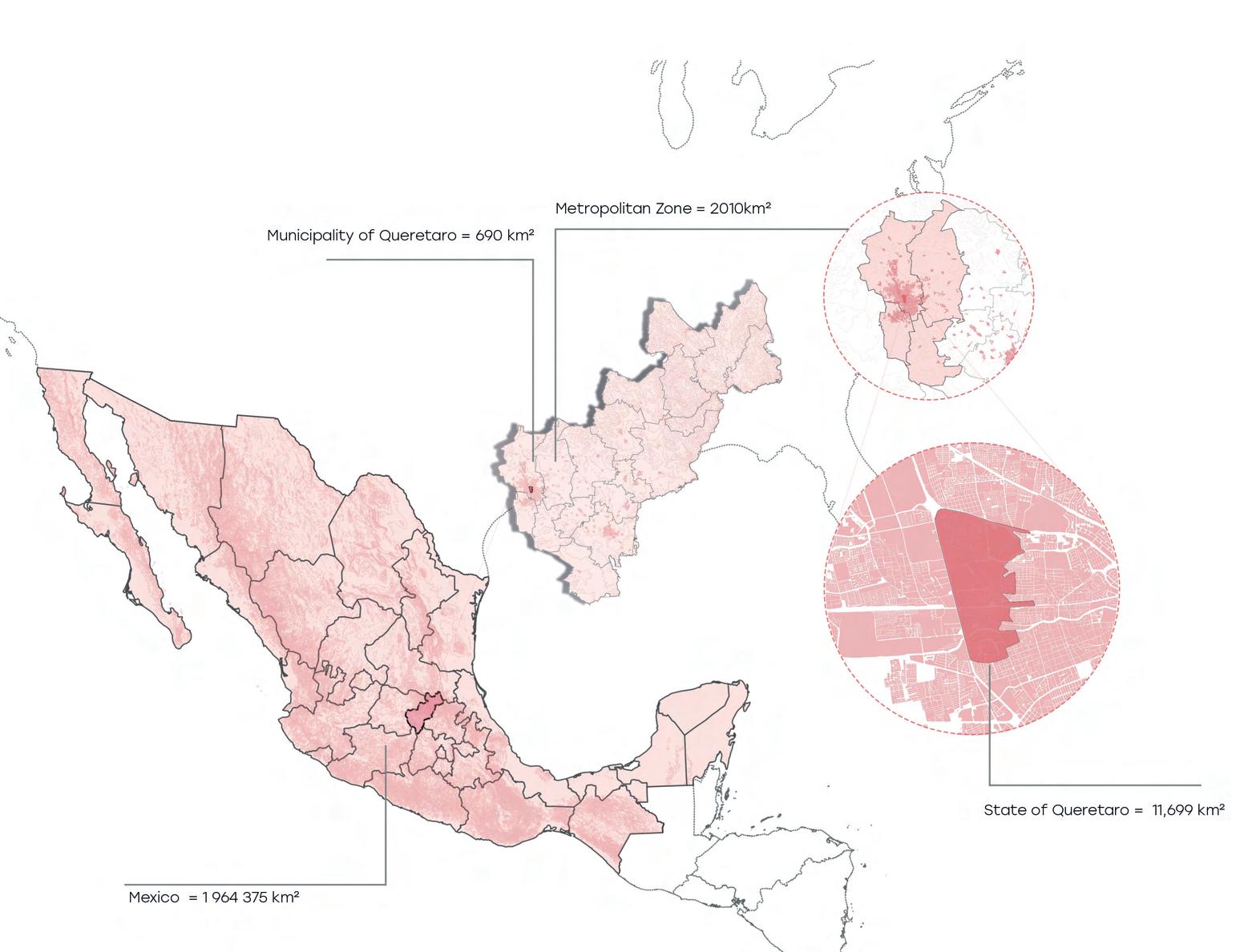
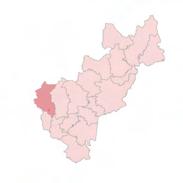
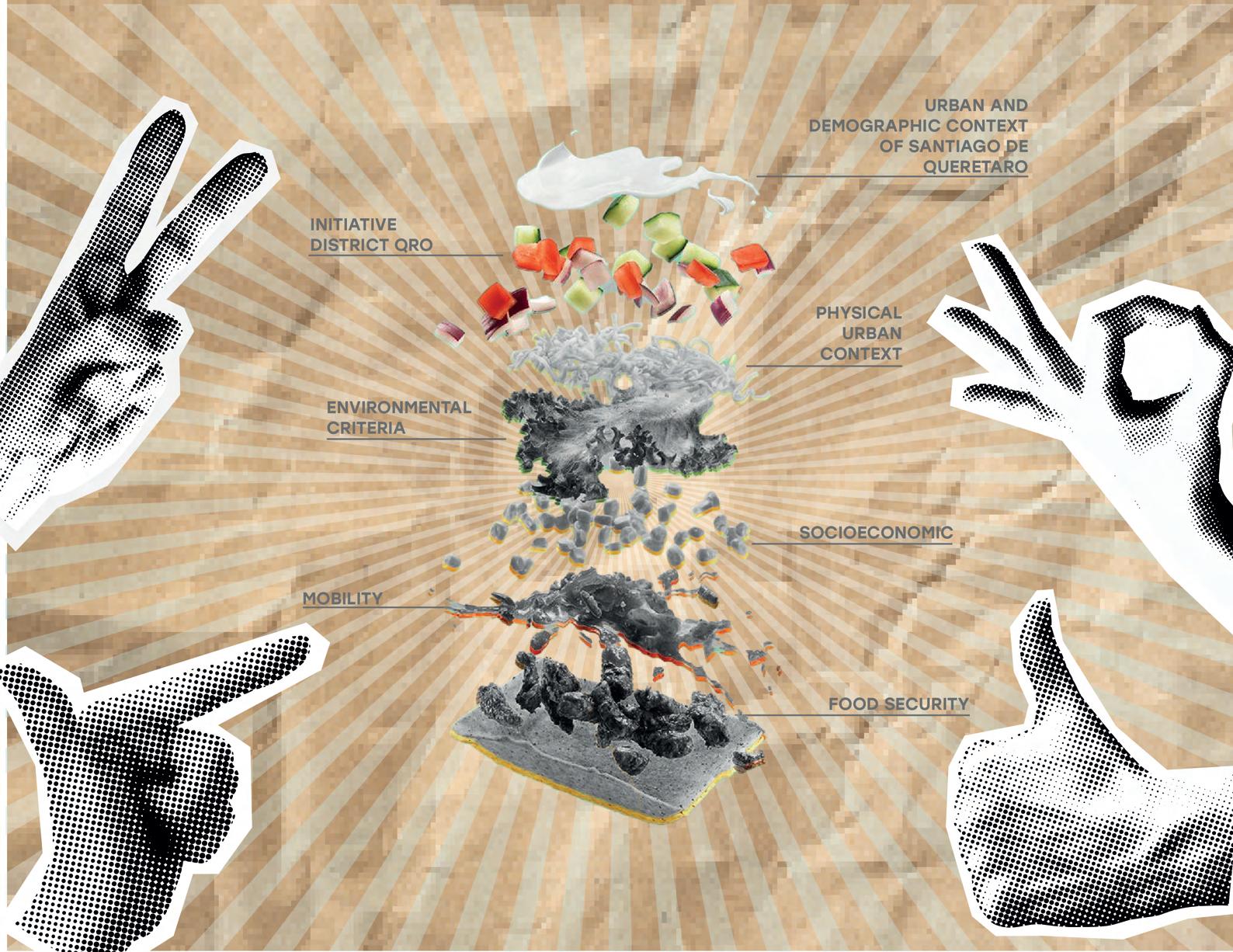
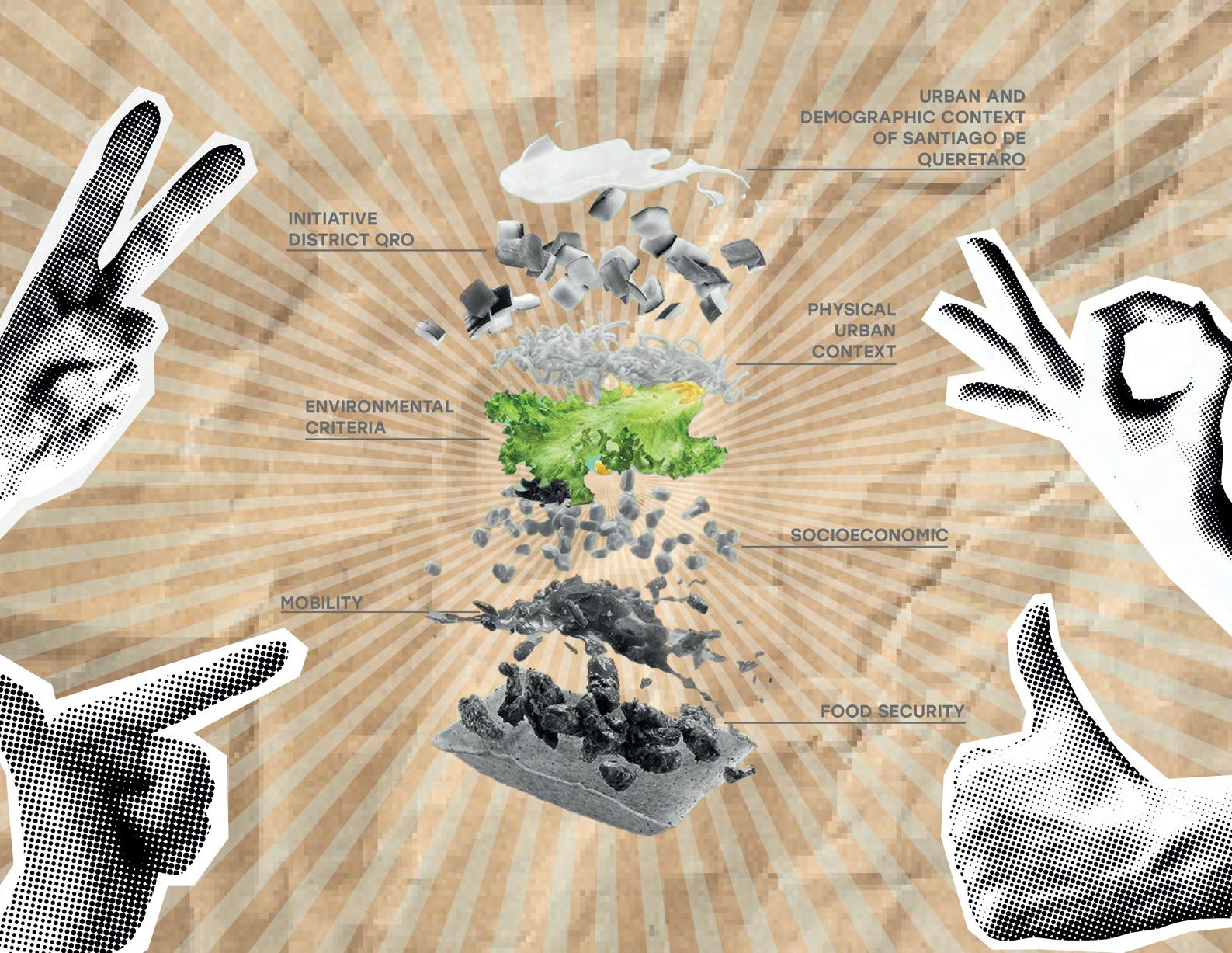
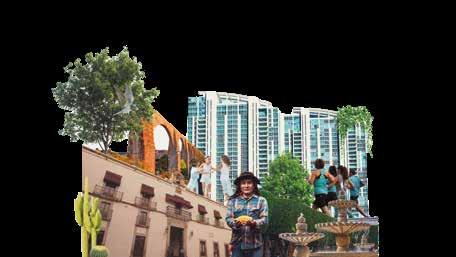
Santiago de Queretaro is one of the fastest-growing cities in Mexico, standing out for its economic, industrial, and educational importance. This chapter analyzes its urban and demographic context, exploring its role in the state and national economy, the relevance of its metropolitan area, and the challenges posed by its rapid growth. It examines the stark contrasts between urban and rural areas, as well as the issues of marginalization and social lag resulting from poor urban planning.
The Metropolitan Area of Queretaro is one of Mexico’s main urban centers. It maintains close ties with other metropolitan areas, such as Guadalajara, Mexico City, León, and San Luis Potosí, due to their geographical proximity and the economic and social integration that define the Bajío region. These cities share similar patterns of urban growth, industrialization, and infrastructure development, further strengthening their interconnection. Urbanization within a state does not occur in isolation; rather, it is shaped by the growth and development of its major cities and their connections with surrounding urban centers.
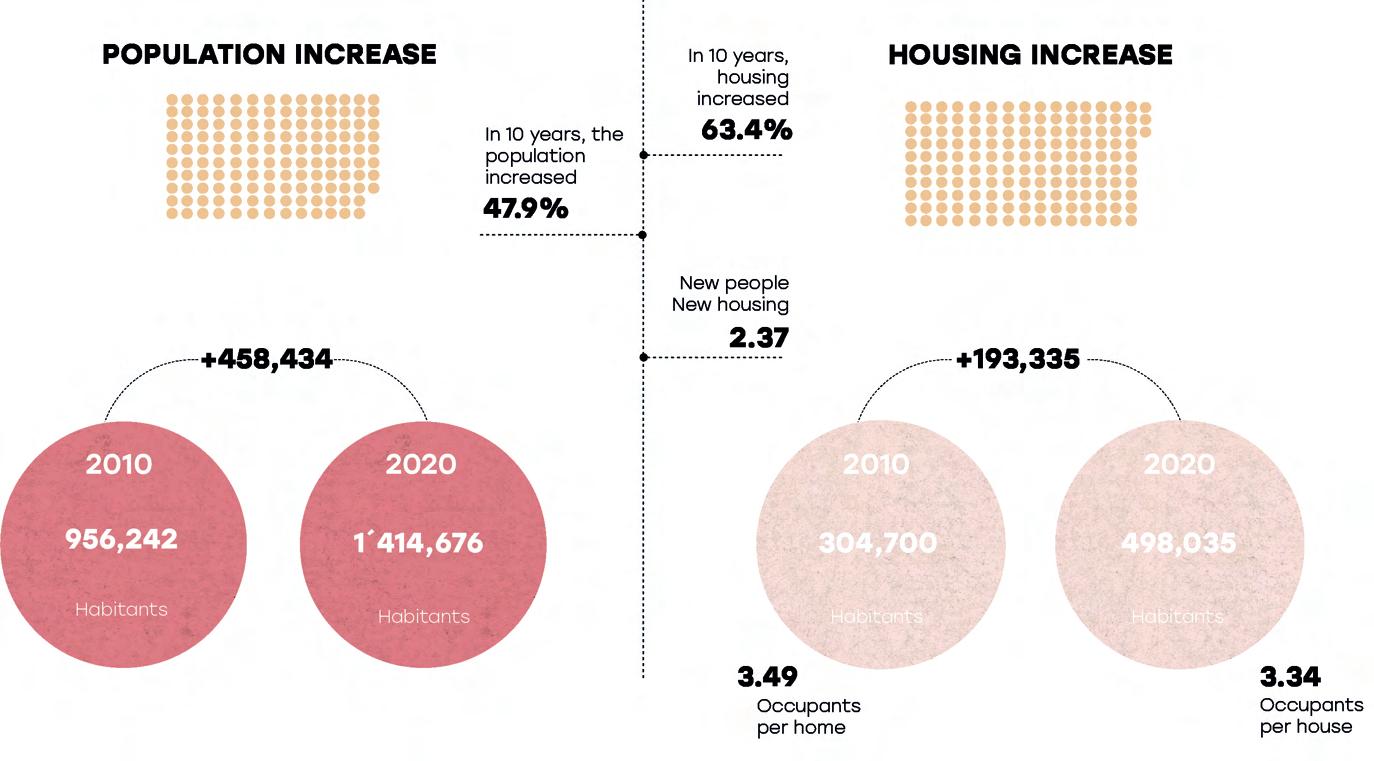
Urban area growth has accelerated in recent decades, particularly since the 1990s and 2000s, due to the industrial boom and the influence of both national and foreign investments. This expansion intensified between 2010 and 2020, driven by the development of the real estate sector, the expansion of industrial parks, and increased migration as people sought better opportunities.
GROWTH IN QUERETARO
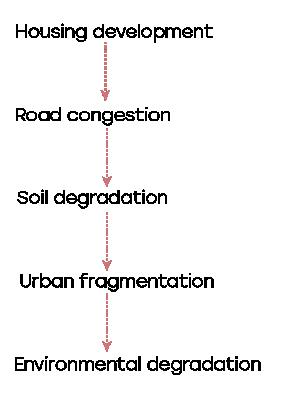
Queretaro’s population has surged due to economic growth and job opportunities, surpassing the city’s urban planning capacity. This rapid expansion has led to unstructured development, causing the loss of green spaces, urban fragmentation, and excessive housing expansion, putting significant pressure on available land.
CONSECUENCES OF URBAN GROWTH
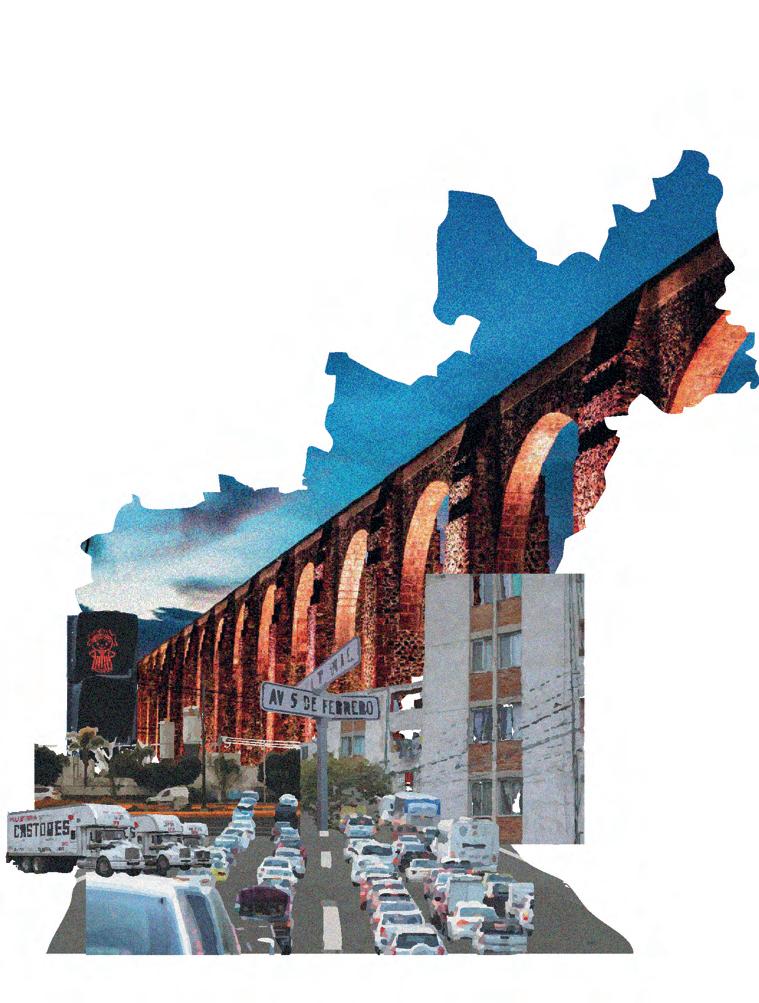
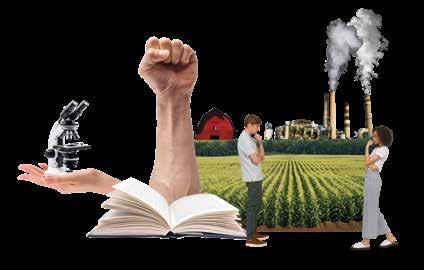
The accelerated urban growth in Querétaro has brought various problems that affect the quality of life and environmental balance. Uncontrolled expansion has led to soil degradation due to the excessive number of industries, resulting in the loss of fertile land and increased pollution. Additionally, the lack of proper urban planning has caused issues in infrastructure, leading to severe traffic congestion, longer travel times, and mobility difficulties. This growth has also prevented many neighborhoods from accessing basic services. Furthermore, pressure on water resources continues to rise due to the arrival of new industries and population growth, which has already put water supply at risk. Likewise, urban fragmentation has made it difficult to integrate communities, resulting in unequal and disorganized development. Given this scenario, we must ask ourselves: Do we really need all this in Querétaro?
Scale | 1:1000000
Symbology
Base Map
Bodies of water
Urban green space
Farming area
Qro limit
Urban blocks
Train tracks
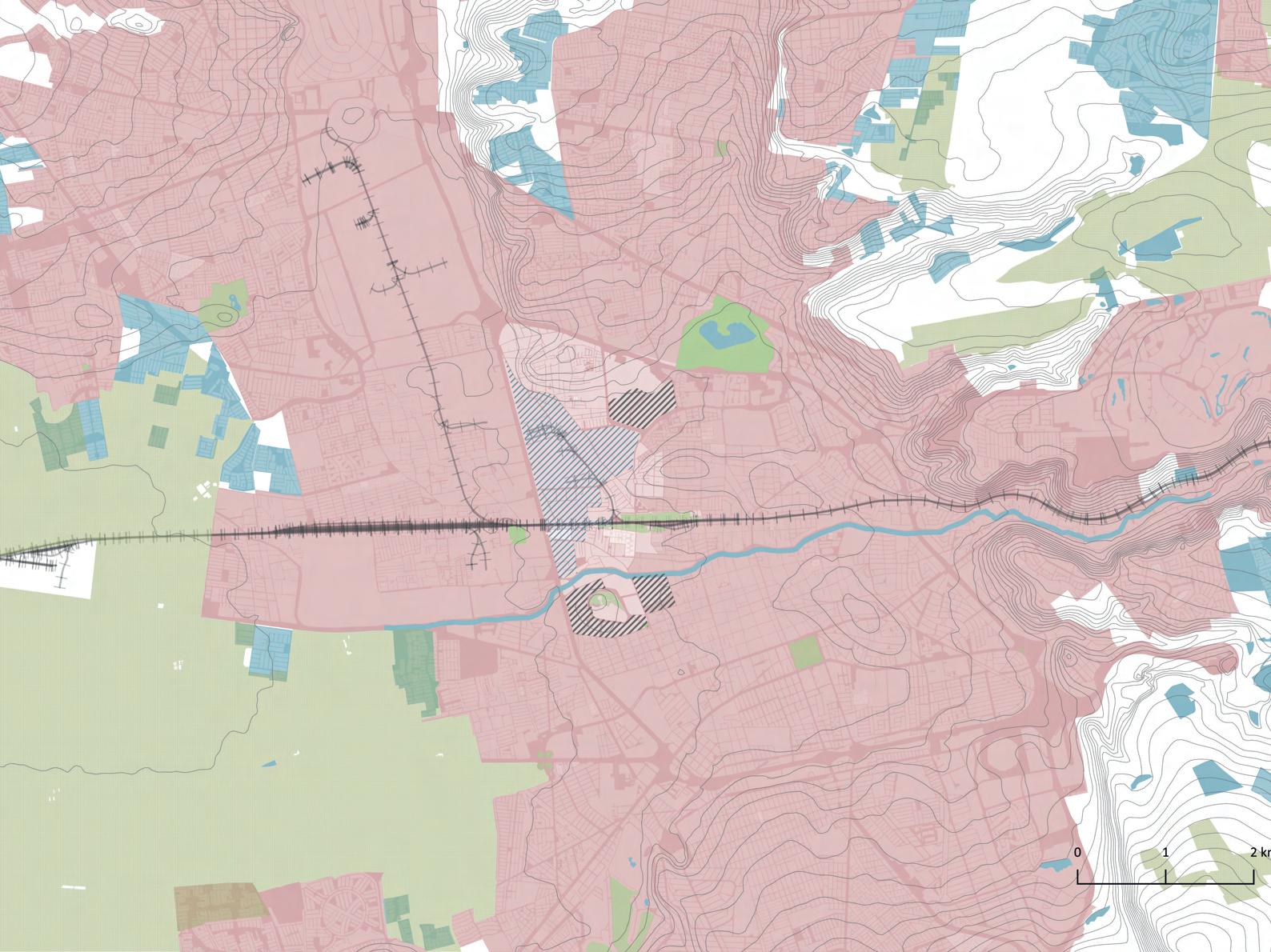
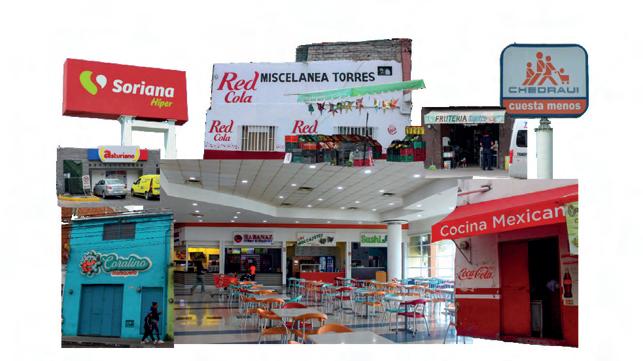
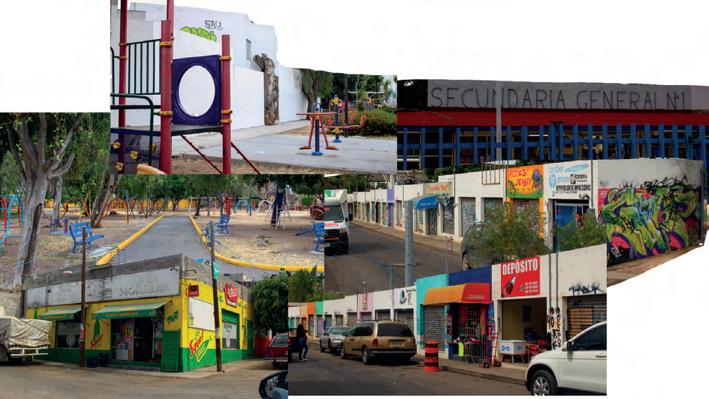
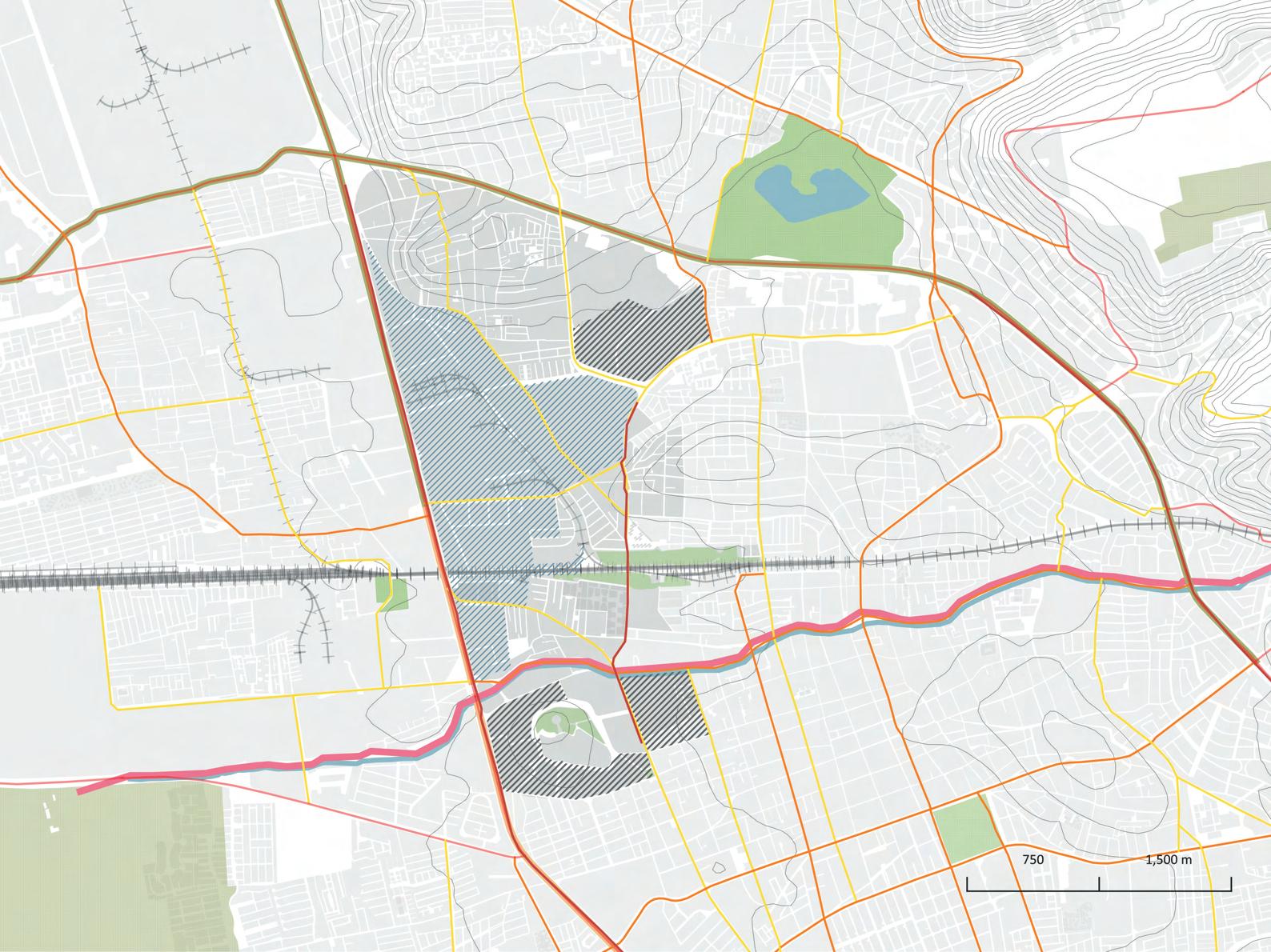
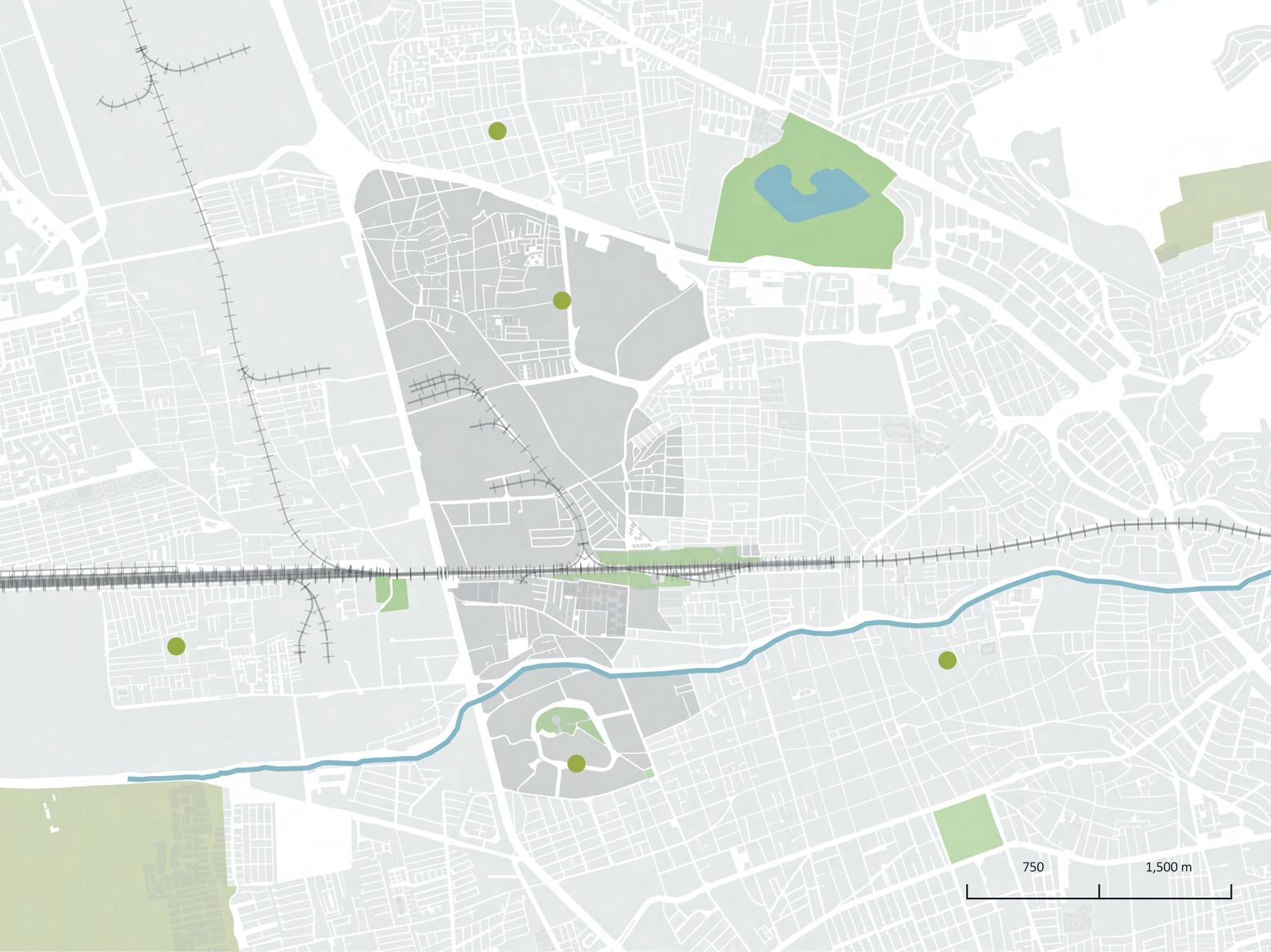
The polygon exhibits a predominantly urban environment, similar to the surrounding areas. As a result, this space hosts a high concentration of services, facilities, industries, and businesses, along with well-developed infrastructure and a diverse food offering. However, at a distance of one kilometer, rural areas can be identified, which may present opportunities for peri-urban agriculture. It is essential to analyze how these rural areas can be integrated into Distrito QRO and what agro-food security strategies can be implemented to benefit both urban and rural areas.
Distrito
Zones
Figure 3.1.1: Regions in Querétaro based on data from INEGI.
Scale | 1:1000000
Symbology
Base Map
Bodies of water
Urban green space
Farming area
Distrito Qro limit
Urban blocks
Train tracks
High social lag
Low social lag Lag per block
Medium social lag
Marginalization
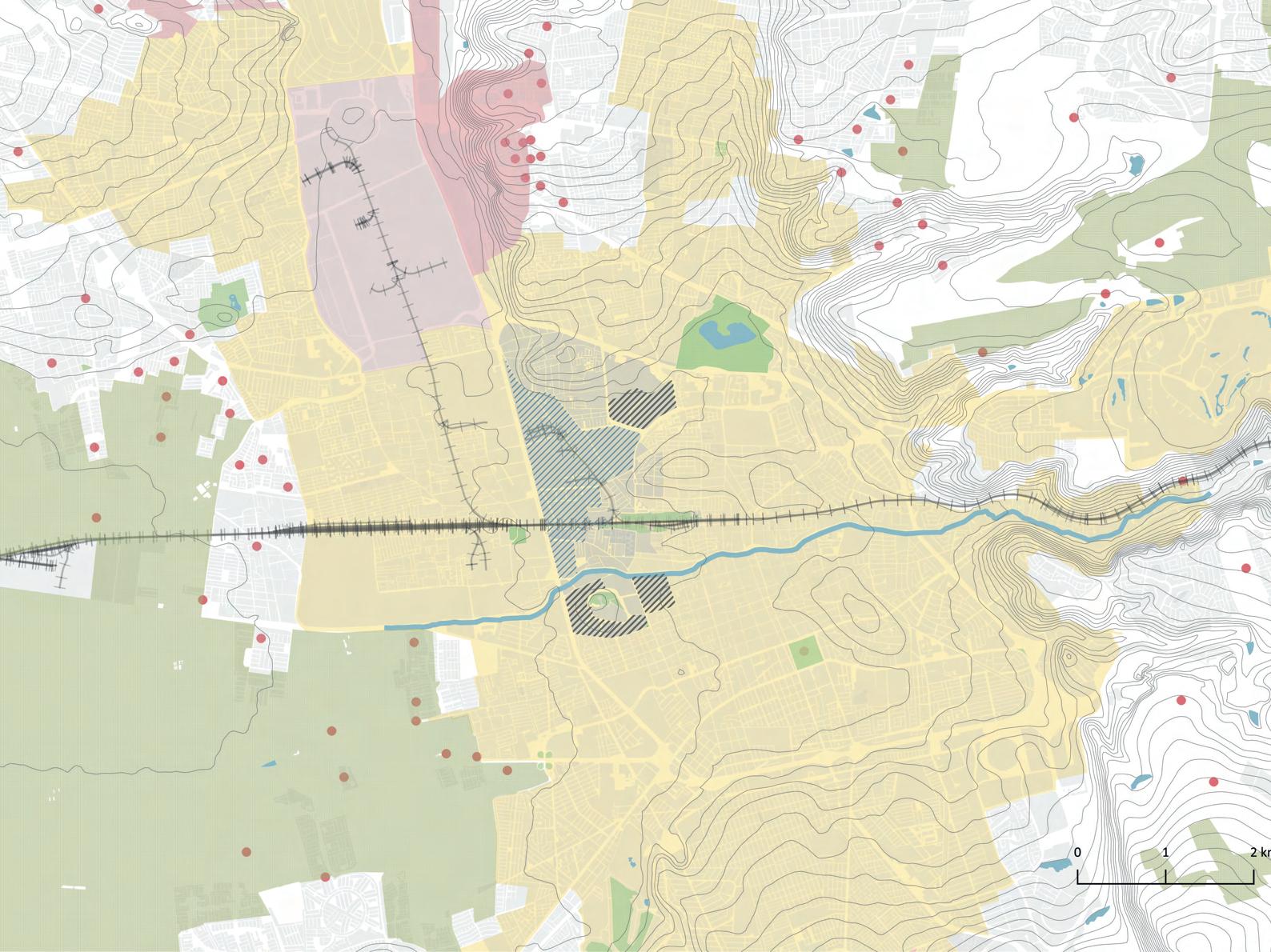
In the rural areas, it can observe a significant social backwardness and marginalization, along with an excessive accumulation of garbage in the space. The polygon seems to end right when this social backwardness begins. What actions could be implemented in Distrito QRO to address these issues and improve the quality of life for the people living in these areas.
Distrito QRO is an innovative project aimed at transforming 470 hectares into a hub for economic, social, and educational development. This chapter presents the district’s vision, objectives, and the key stakeholders involved in its implementation. It analyzes its strategic location within the university corridor and compares it with similar innovation districts to evaluate strengths and areas for improvement. Finally, surveys are included to assess public perception of the project.
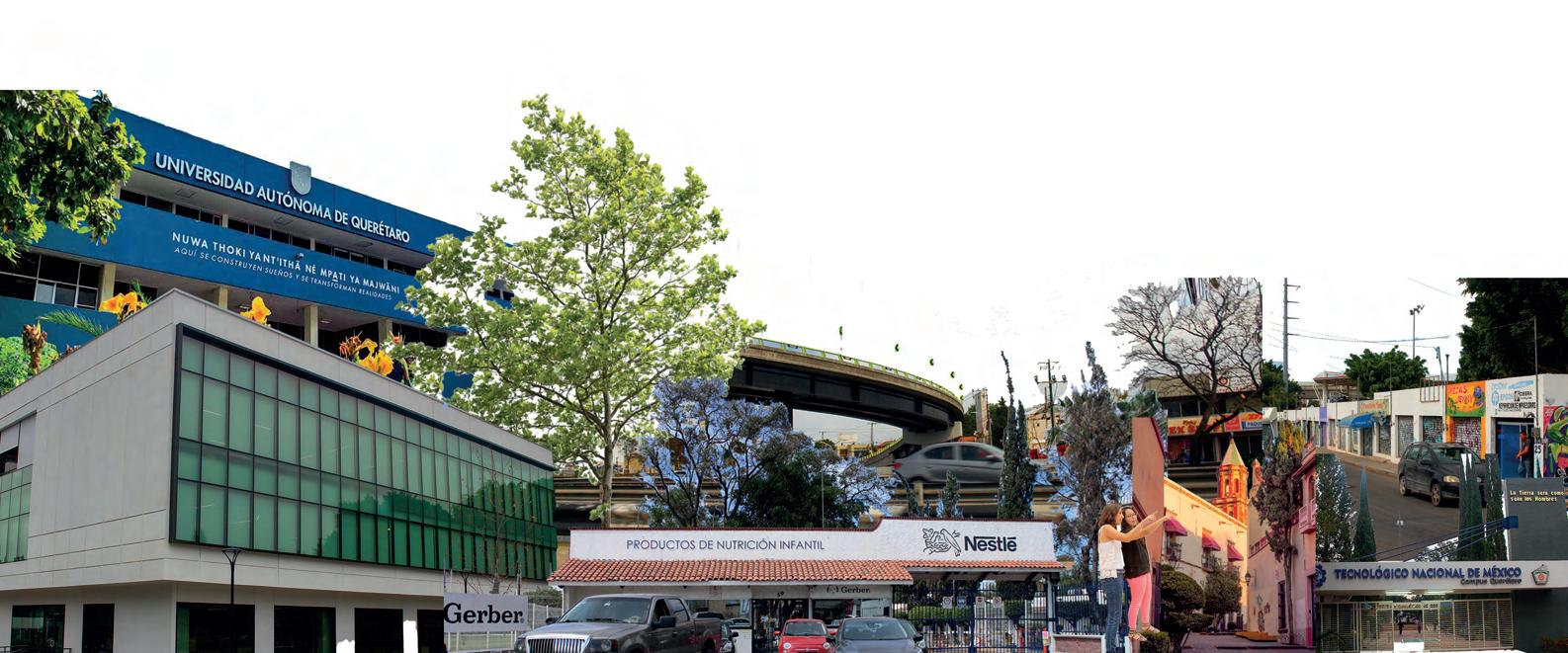
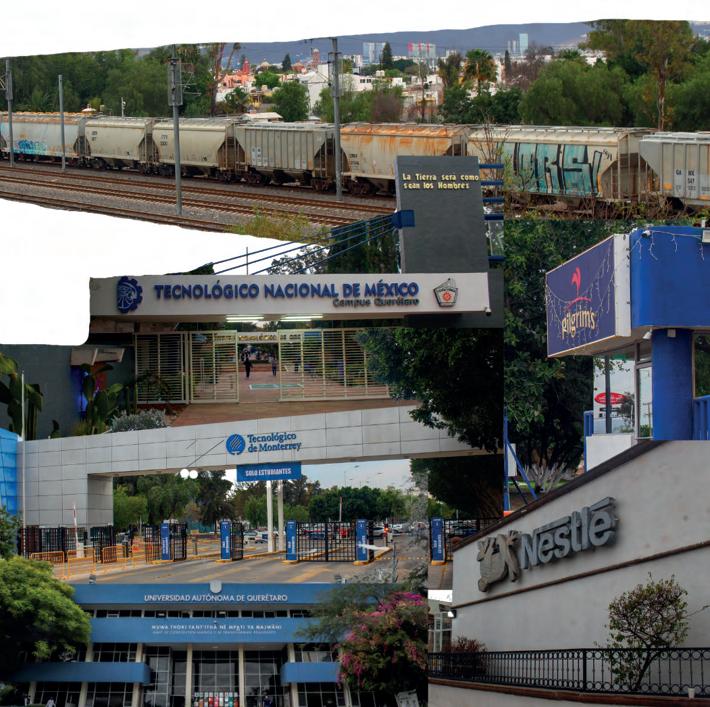
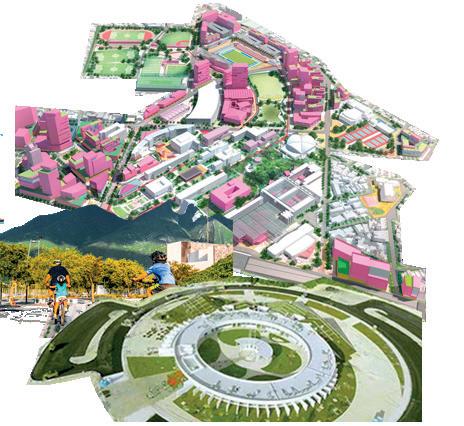
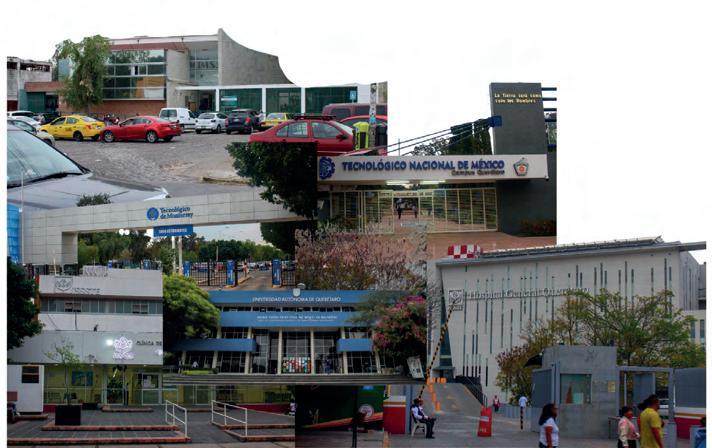
Distrito QRO is an innovation and development hub that includes the Tecnológico de Monterrey (Tec de Monterrey) Queretaro campus, the Autonomous University of Querétaro (UAQ), and the National Institute of Mexico. It is a 470-hectare zone designed to be “the best option for university life.” It is an inclusive model aimed at generating well-being and prosperity for people. It consists of traditional neighborhoods, adequate housing, infrastructure, services, commerce, public spaces, a network of green areas, and spaces for innovation and entrepreneurship.
Figure 3.1.1: Regions in Querétaro based on data from INEGI.
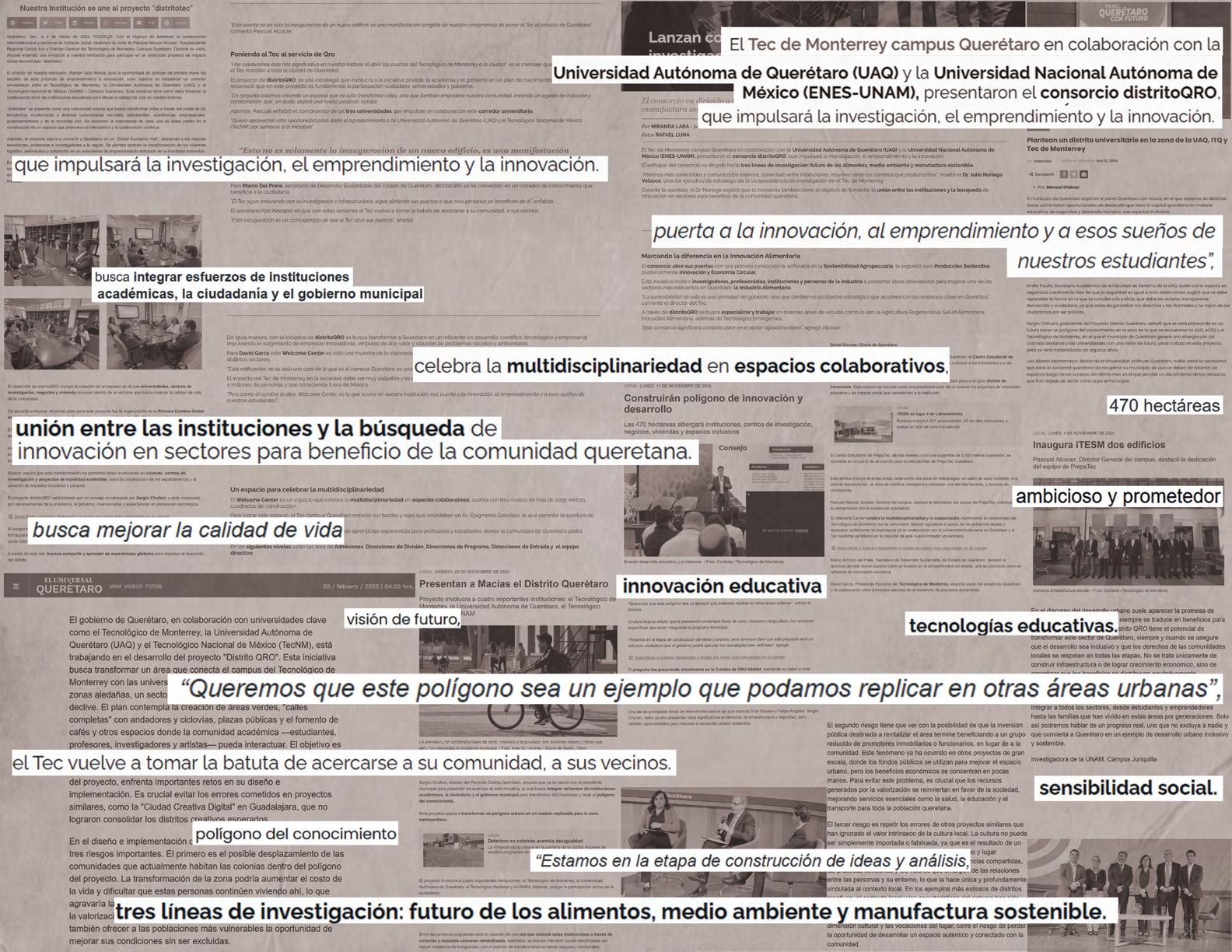
The Distrito QRO project is an initiative aimed at bringing together efforts from the private sector, academic institutions, and the government to promote coordinated development. In this framework, the participation of citizens, universities, and authorities is crucial to achieving a positive impact on the community.
This district aims to: -Promote research, entrepreneurship, and innovation. -Strengthen cooperation between various institutions. -Encourage the creation of innovative companies. -Generate high-value jobs. -Provide solutions to social and environmental issues.
Additionally, the project focuses its efforts on three key areas of research: the evolution of the food industry, environmental sustainability, and the development of responsible manufacturing processes.
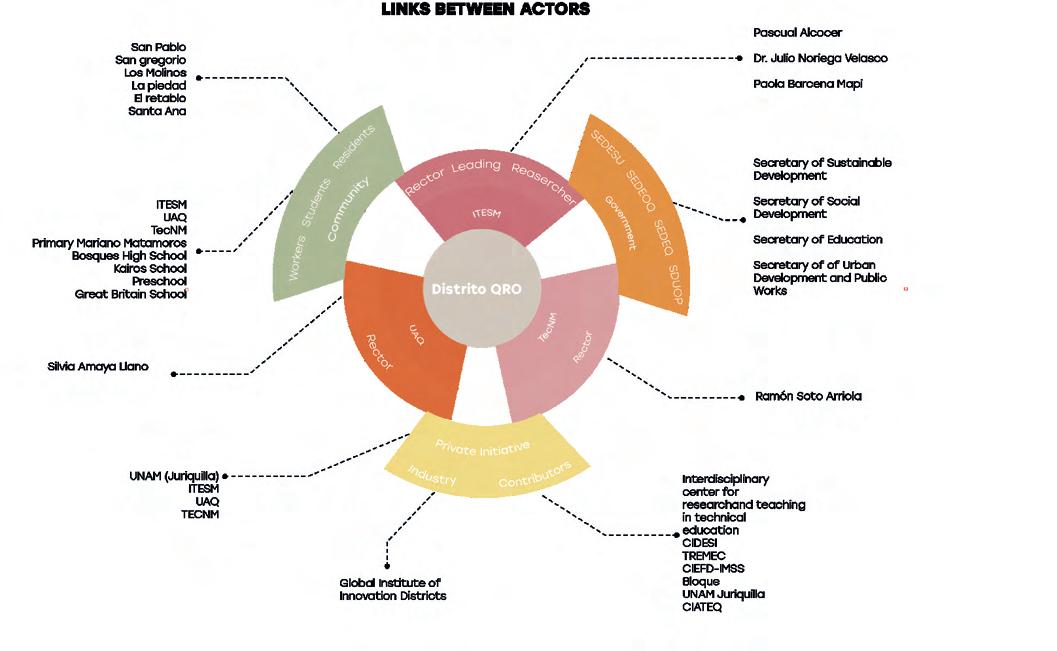
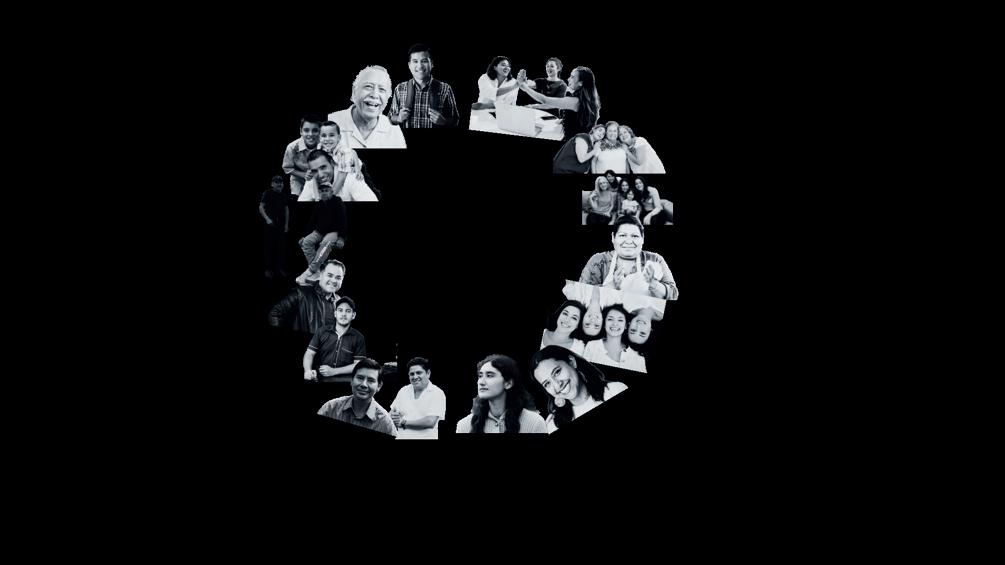
Distrito Querétaro is an urban ecosystem that brings together various key actors for its development and operation. At its core, the main academic institutions—UAQ, Tec de Monterrey, and ITESM—play a fundamental role in talent development and knowledge generation. Surrounding them, students, residents, the private sector, and the government drive the district’s social and economic dynamics. Additionally, the community, industry, the municipality of Querétaro, and the state government contribute to establishing this space as a hub for innovation, education, and sustainable development.
Symbology
Base Map
Bodies of water
Urban green space
Farming area
Distrito Qro limit
Urban blocks
Train tracks
Scale | 1:1000000
Santiago de Queretaro
Zones
Tec de Monterrey
Tecnológico Nacional
UAQ
Universities
The “Distrito QRO” initiative is supported by three universities within the study area. Additionally, “UNAM” is an allied research partner, although it is located outside the area, to the north of the city.
Figure 3.1.1: Regions in Querétaro based on data from INEGI.
AN INNOVATION DISTRICT?
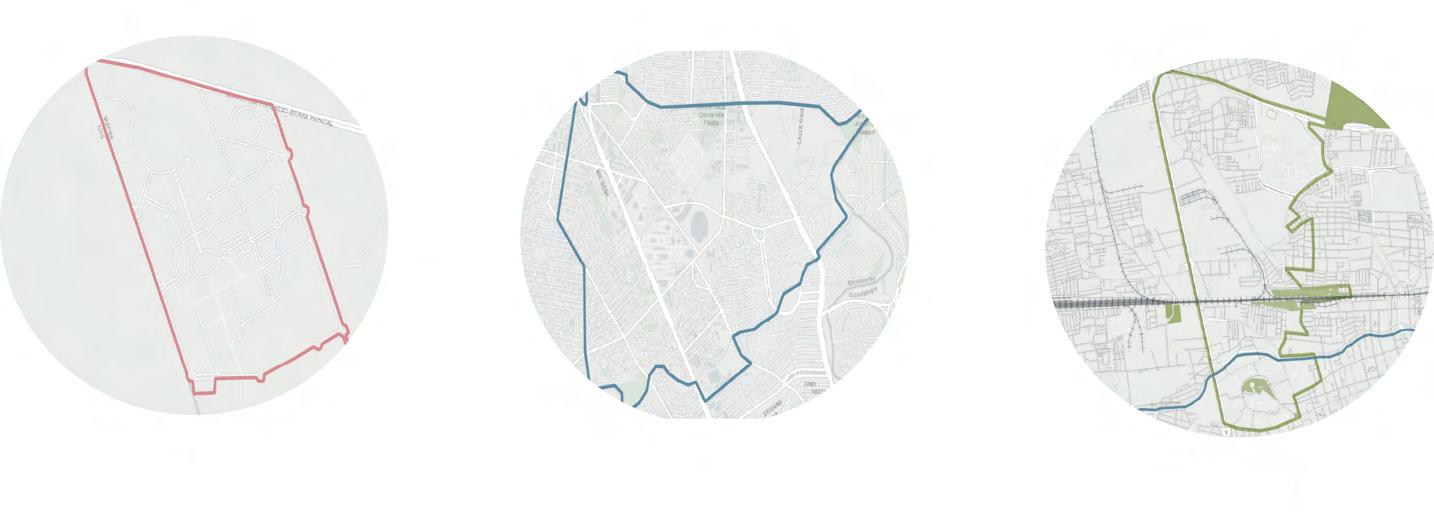
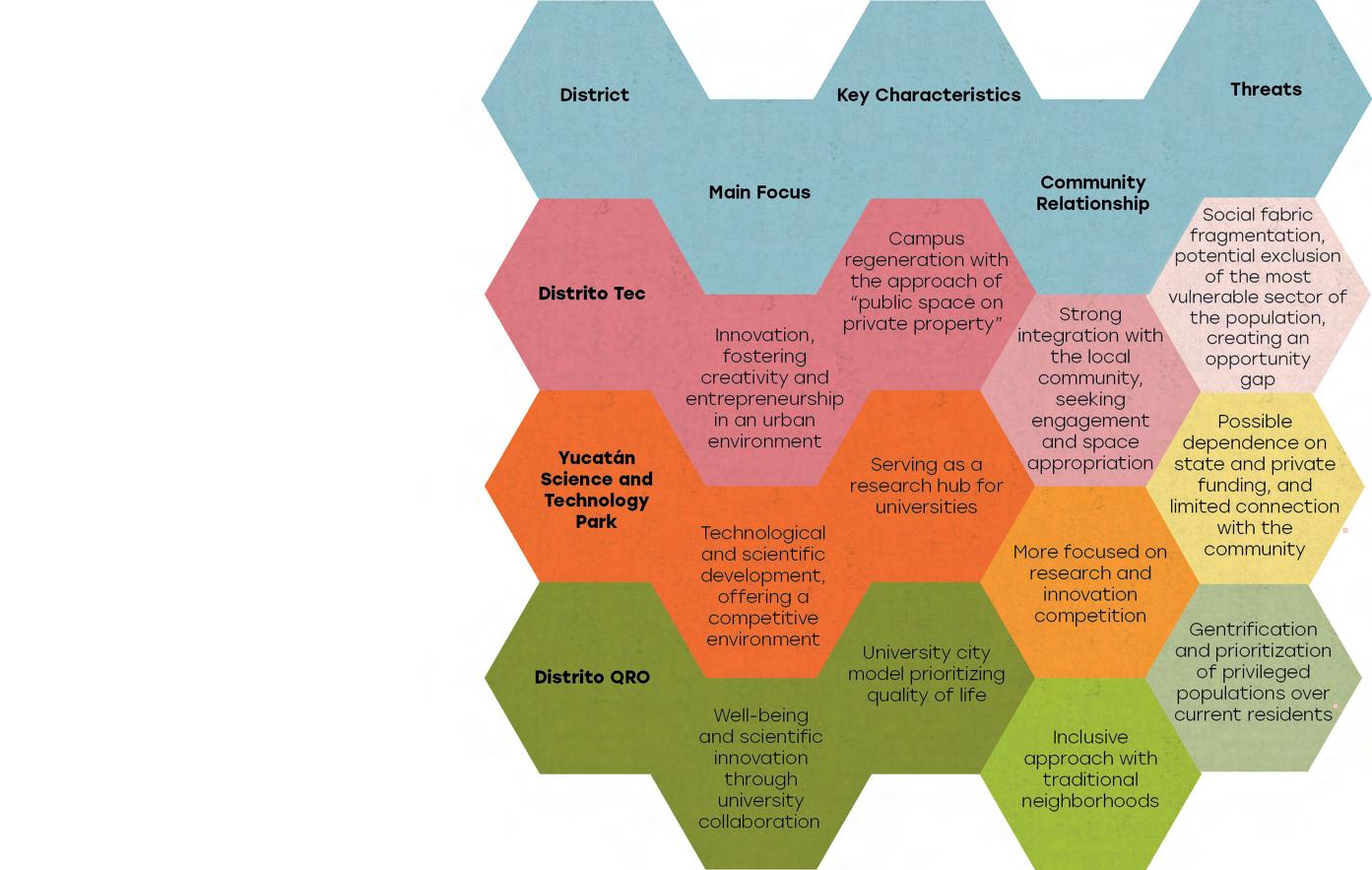
An innovation district is an urban and economic development strategy aimed at transforming a specific area of the city into an ecosystem of knowledge, technology, and entrepreneurship. Unlike traditional technology parks, which are usually located on the outskirts of cities, innovation districts are developed in well-connected urban areas, allowing for greater interaction between companies, universities, and the community. In Mexico, two important examples are Distrito TEC and the Yucatán Science and Technology Park. WHAT IS
Located near Merida, Yucatan; It was created to be the scientific and technological hub for higher education institutions in Yucatán, aiming to drive technological development and enhance the state’s competitiveness.
DistritoTec, located in Monterrey, NL. This proiect aims to revitalize the campus to create and maintain an environment that fosters Innovation, creativity, and entrep.
DistritoQRO is an initiative that fosters innovation and sustainable growth in Queretaro by linking universities, businesses, and the government to drive research, technology, and urban development.
Yucatan Science and Technology Park
Distrito TEC
Distrito QRO
The urban morphology of the district is defined by land use, urban image, and the distribution of infrastructure and neighborhood landmarks. This chapter examines built and unbuilt spaces, highlighting opportunities for growth and consolidation. It also identifies tourist attractions and areas with potential for increasing the district’s appeal. The chapter concludes with an analysis of public spaces, emphasizing the lack of parks and recreational areas.
Symbology
Base Map
Bodies of water
Urban green space
Farming area
Distrito Qro limit
Urban blocks
Train tracks
Land Use
Scale | 1:1000000
Residential
Traditional neighborhoods
Residential outside the polygon
Industrial zone
Industrial zone outside the polygon
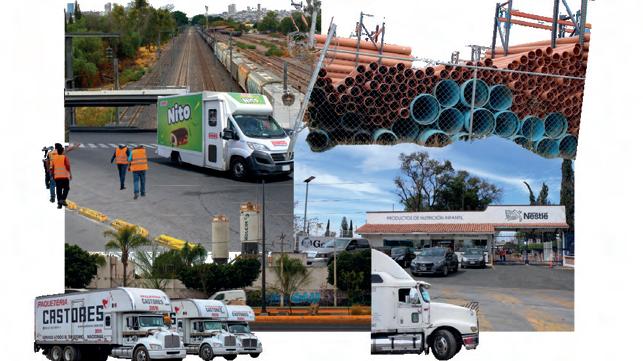
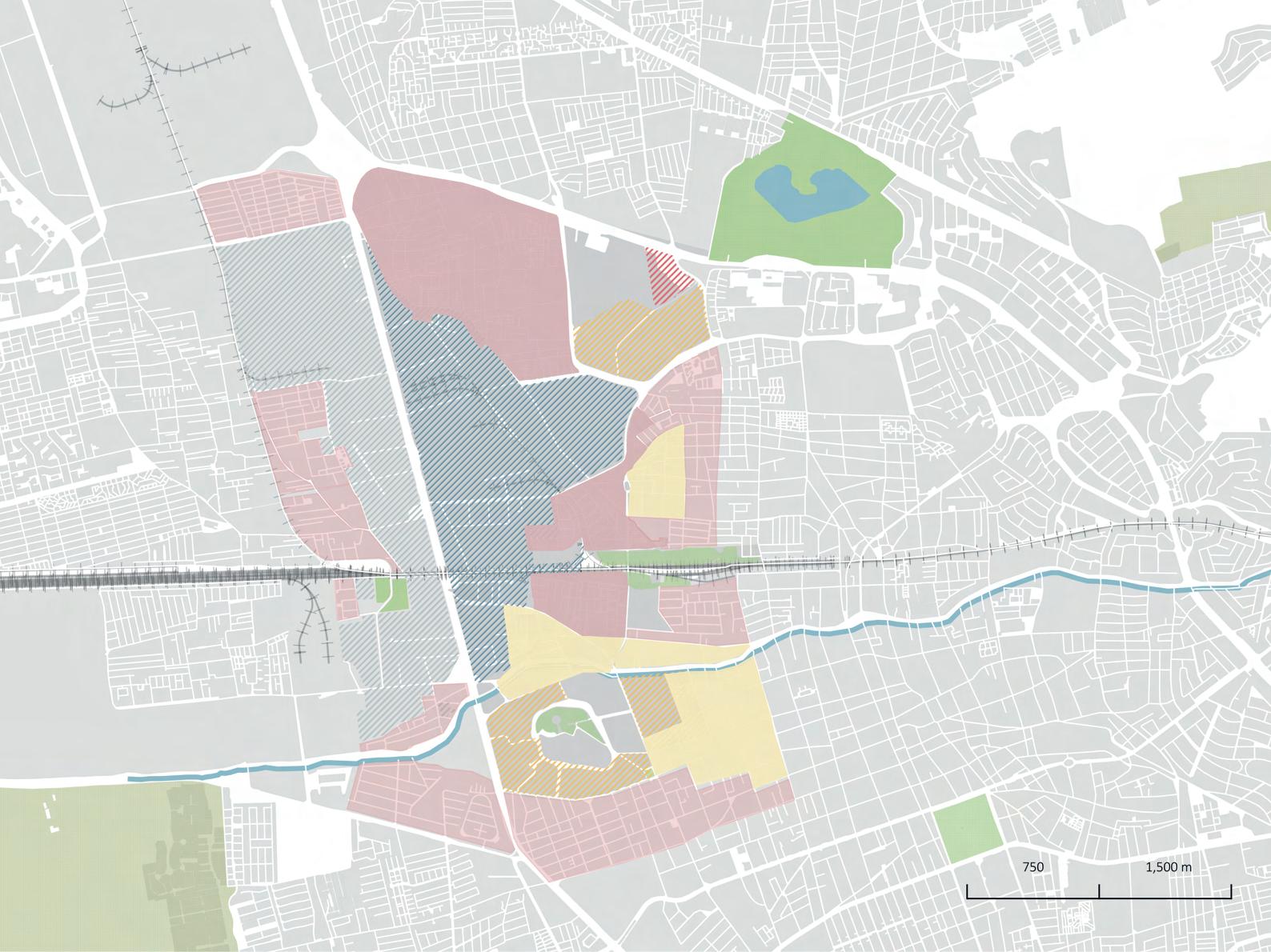
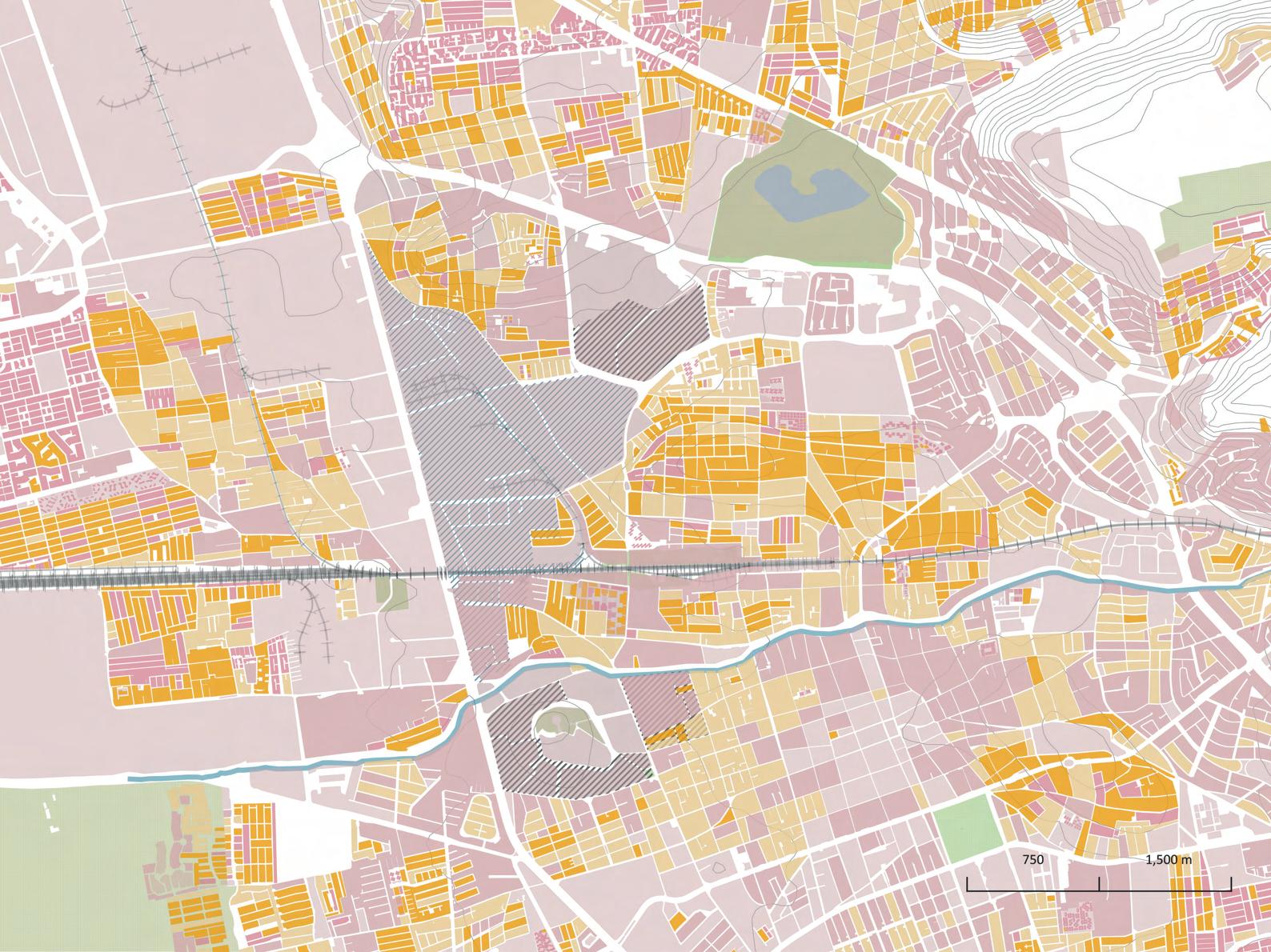
The polygon features diverse land uses, including residential areas, traditional neighborhoods, industrial zones, and commercial establishments. Industry plays a major role, and Distrito QRO seeks to integrate these environments for balanced development.
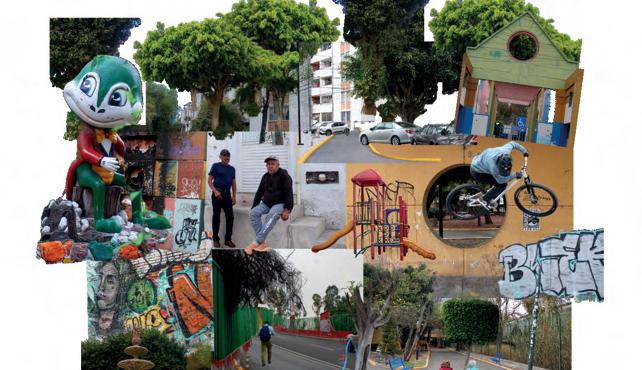
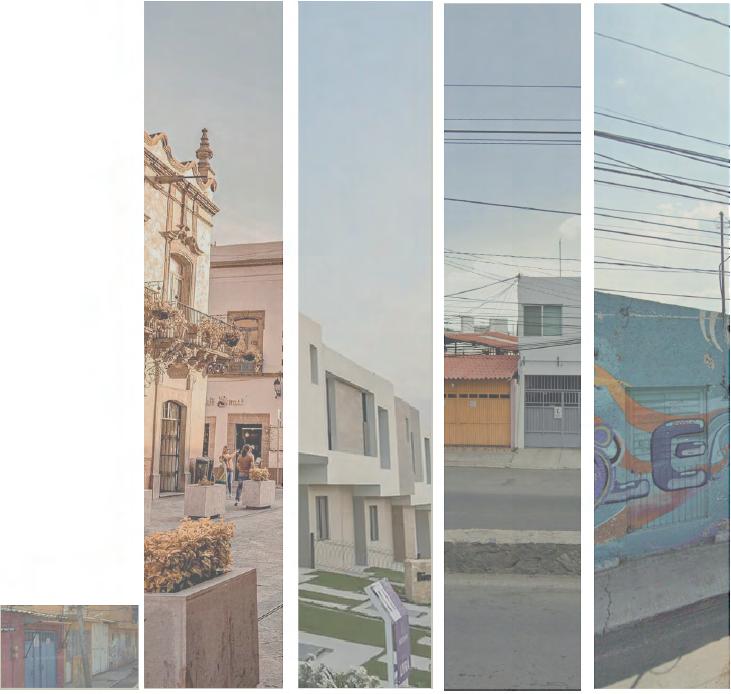
Traditional neighborhoods are vital to Querétaro’s identity, with some preserving their customs while others have been urbanized. Disused industrial areas are being repurposed into mixed-use housing, revitalizing communities and enhancing urban dynamics.
Manufacturing is Querétaro’s leading sector, but the sharp transition between industrial and residential areas raises a crucial question: Should land use be modified to align with Distrito QRO’s objectives?
Figure 3.1.1: Regions in Querétaro based on data from INEGI.
Symbology
Base Map
Bodies of water
Urban green space
Farming area
Distrito Qro limit
Urban blocks
Train tracks
URBAN VOIDS
Scale | 1:1000000
Constructed area
Constructions
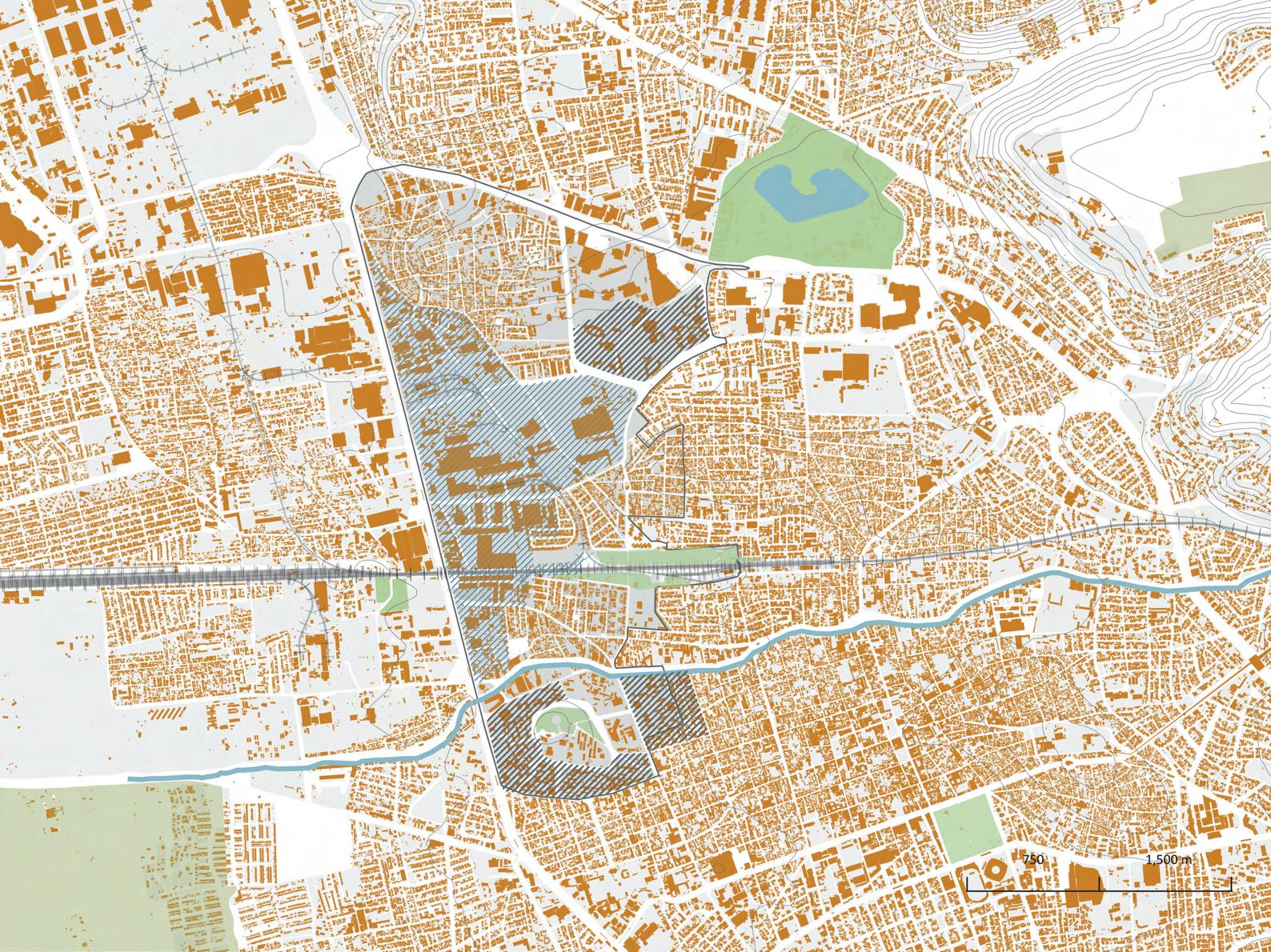
The Nolli map allows to visualize urban voids, offering valuable insight into areas of opportunity both within and outside the defined boundary. By highlighting these voids, the map serves as a tool for urban planning, helping to identify locations where new developments or interventions could be implemented. Additionally, it makes it possible to pinpoint areas where intervention might be challenging due to the high density of existing constructions, guiding planners in understanding where future growth might be restricted or where strategic approaches are needed.
Figure 3.1.1: Regions in Querétaro based on data from INEGI.
Symbology
Base Map
Bodies of water
Urban green space
Farming area
Distrito Qro limit
Urban blocks
Train tracks
Equipment
Scale | 1:1000000
Public healthcare
Public education
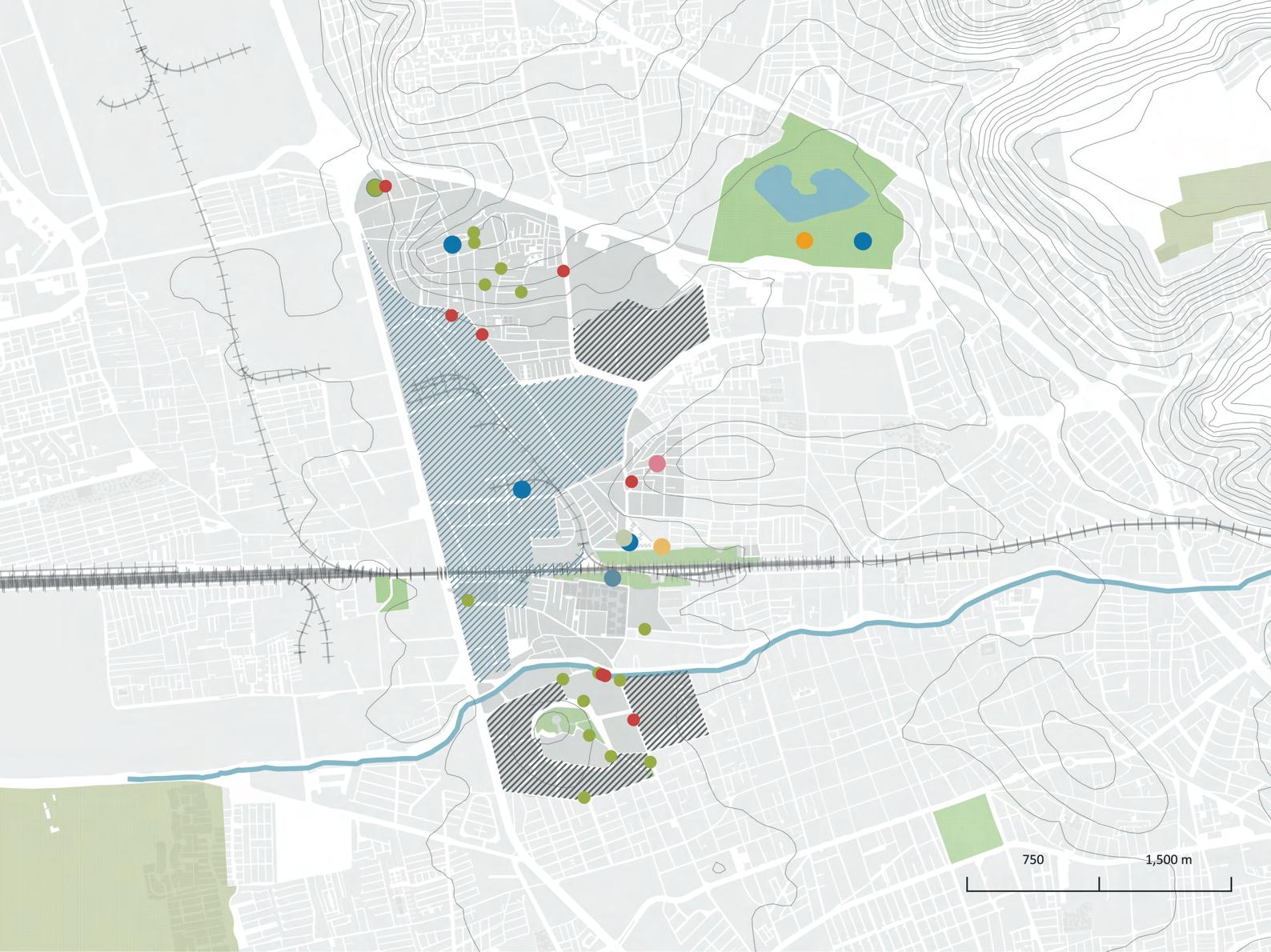
In the QRO District, there are various public schools ranging from elementary to high school. Additionally, the polygon includes several healthcare areas, contributing to the well-being of the community.
Figure 3.1.1: Regions in Querétaro based on data from INEGI.
LANDMARKS AND MEETING POINTS
Symbology
Base Map
Bodies of water
Urban green space
Farming area
Qro limit
Equipment
Scale | 1:1000000
Landmarks
Meeting points
The Nolli map allows to visualize urban voids, offering valuable insight into areas of opportunity both within and outside the defined boundary. By highlighting these voids, the map serves as a tool for urban planning, helping to identify locations where new developments or interventions could be implemented. Additionally, it makes it possible to pinpoint areas where intervention might be challenging due to the high density of existing constructions, guiding planners in understanding where future growth might be restricted or where strategic approaches are needed.
Distrito
Urban blocks Train tracks
Figure 3.1.1: Regions in Querétaro based on data from INEGI.
Symbology
Base Map
Bodies of water
Urban green space
Farming area
Distrito Qro limit
Urban blocks
Train tracks
TOURISTIC AREAS
Equipment
Inside the area
Outside the area
Potential touristic
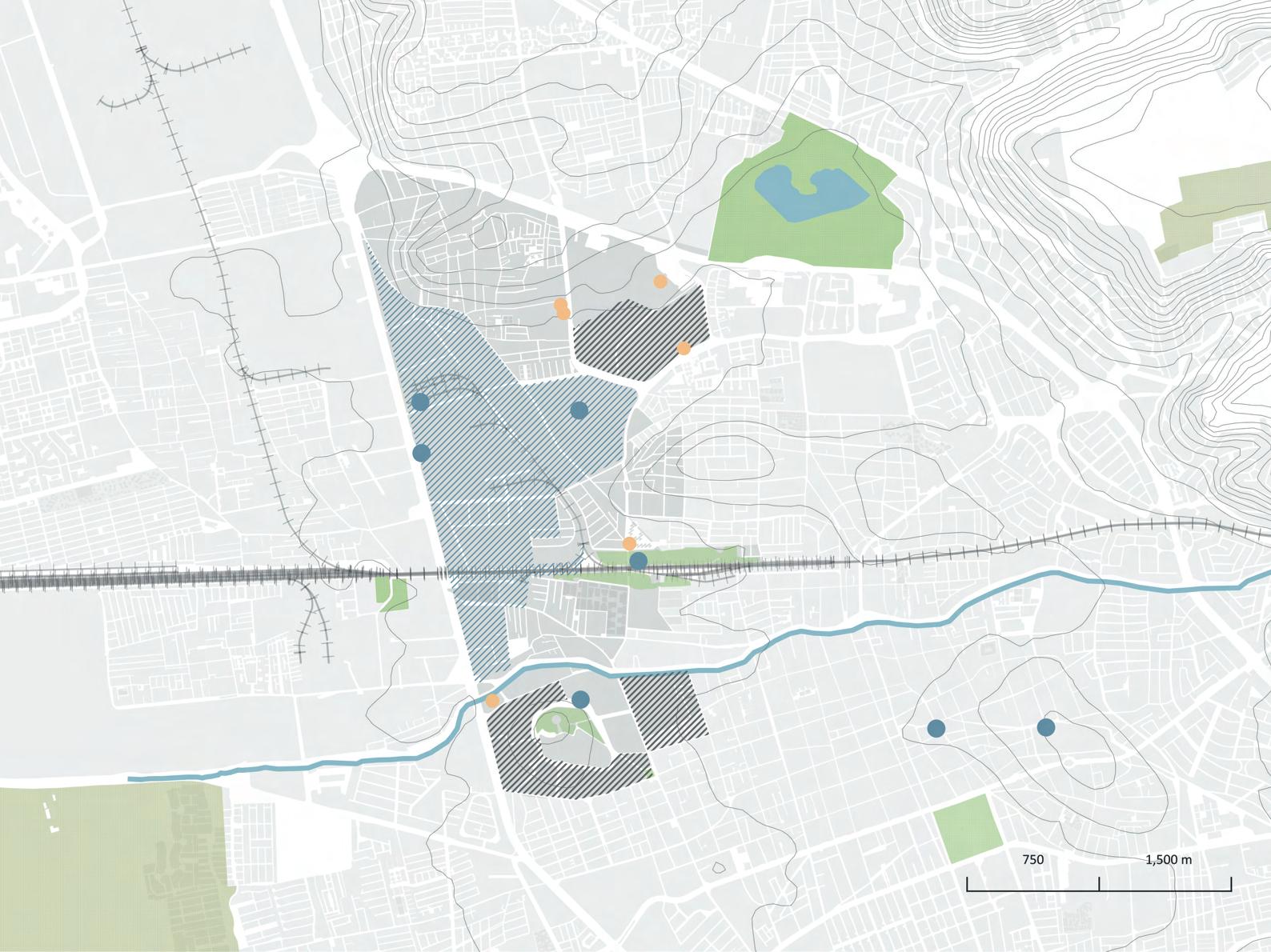
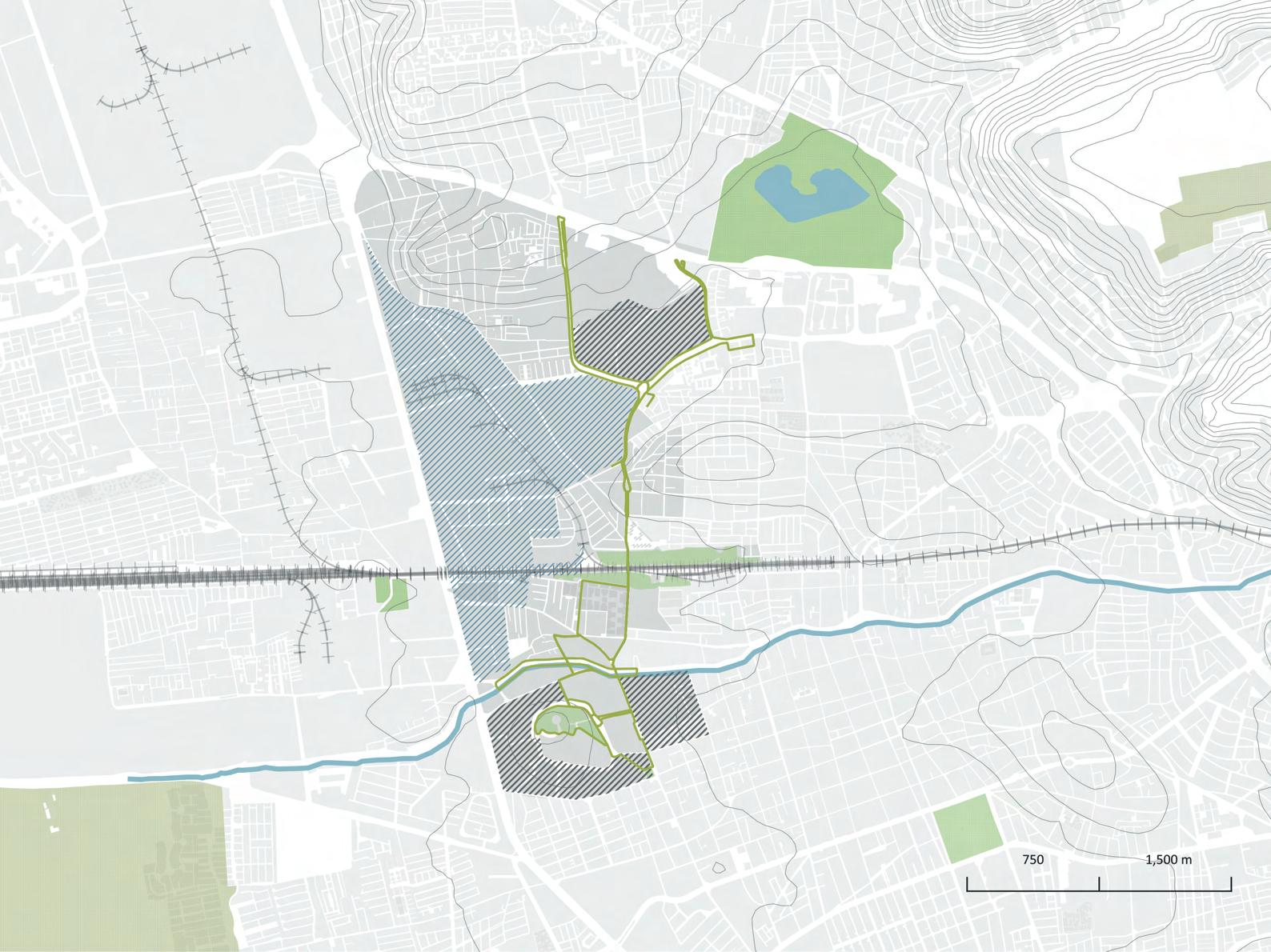
Most of the tourist attractions are located outside the defined polygon. Within the polygon, there are very few established attractions, but several spaces could be utilized. This could be achieved either by proposing the construction of entirely new facilities or by adapting existing infrastructure, such as Alcanfores Park, which could be repurposed for tourism or recreational purposes.
Figure 3.1.1: Regions in Querétaro based on data from INEGI.
Scale | 1:1000000
Symbology
Base Map
Bodies of water
Urban green space
Farming area
Distrito Qro limit
Urban blocks
Train tracks
Equipment
Alcanfores Park-North section
Alcanfores Park-South section
Ejido San Pablo Sports facility
Querétaro 2000 Park
Sport faccilities
Most of the tourist attractions are located outside the defined polygon. Within the polygon, there are very few established attractions, but several spaces could be utilized. This could be achieved either by proposing the construction of entirely new facilities or by adapting existing infrastructure, such as Alcanfores Park, which could be repurposed for tourism or recreational purposes.
Figure 3.1.1: Regions in Querétaro based on data from INEGI.
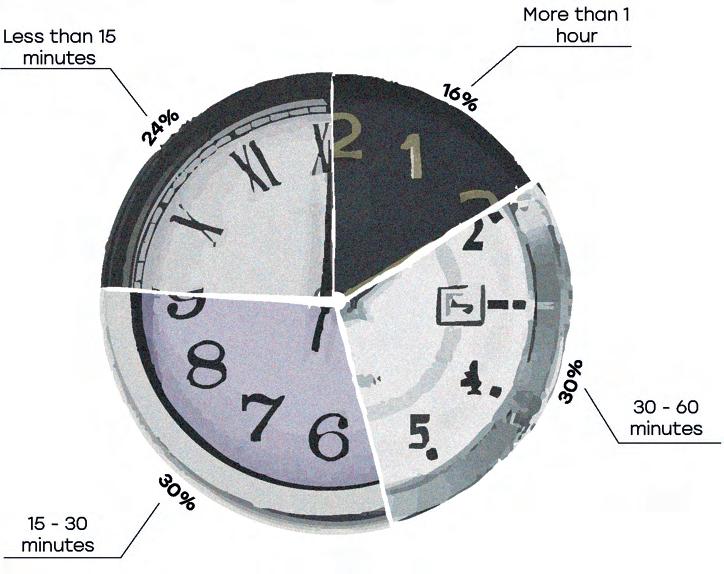
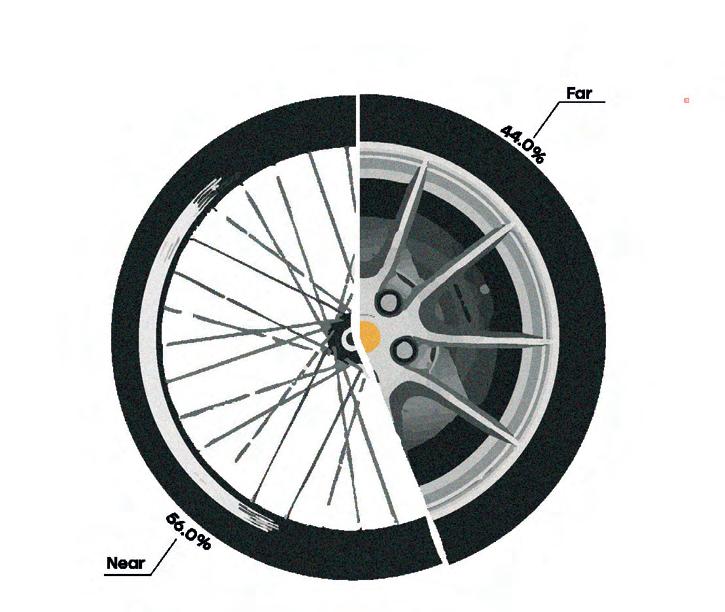
The concept of “15-minute cities” suggests that all essential services should be within a 15-minute walk. A City Observatory study found that only three areas, all near the center, meet this criterion, while most neighborhoods are over 30 minutes away from services, increasing car dependence. Interestingly, although some areas are within a 30-minute walk, the analyzed area is relatively well-connected compared to the city’s outskirts, where services are an hour away. This highlights broader urban development issues. How can we improve walkability in neighborhoods to benefit the entire city?
Figure 3.1.1: Regions in Querétaro based on data from INEGI.
Distrito QRO must address Santiago de Queretaro’s environmental challenges, considering its topography, climate, and natural resources. This chapter explores the impact of the urban heat island effect, floodprone areas, and water supply issues. Using maps and graphics, it proposes a sustainable approach to mitigate these risks and improve the district’s resilience to climate change.
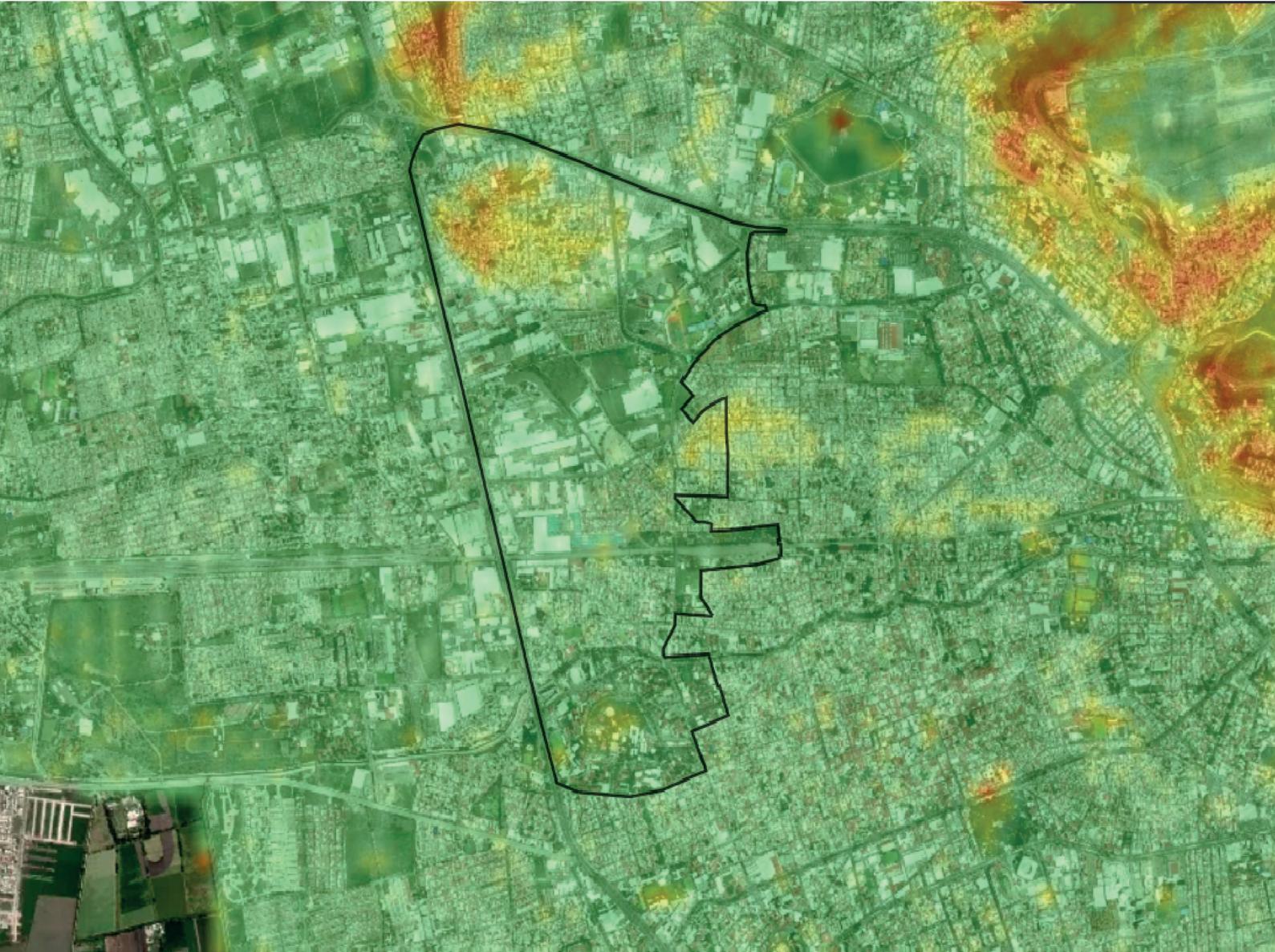
The predominant winds come for a large part of the year from the east and to a lesser extent from the northeast. Queretaro annually receives an average of 2,785 hours of light or 7.6 hours of sunshine daily.
North 8:00 am 3:00 pm
7:00 pm
Figure 3.1.1: Regions in Querétaro based on data from INEGI.
Figure 3.1.1: Regions in Querétaro based on data from INEGI.
FLOODS
Scale | 1:1000000
Symbology
Base Map
Bodies of water
Urban green space
Farming area
Distrito Qro limit
Urban blocks
Train tracks
Equipment
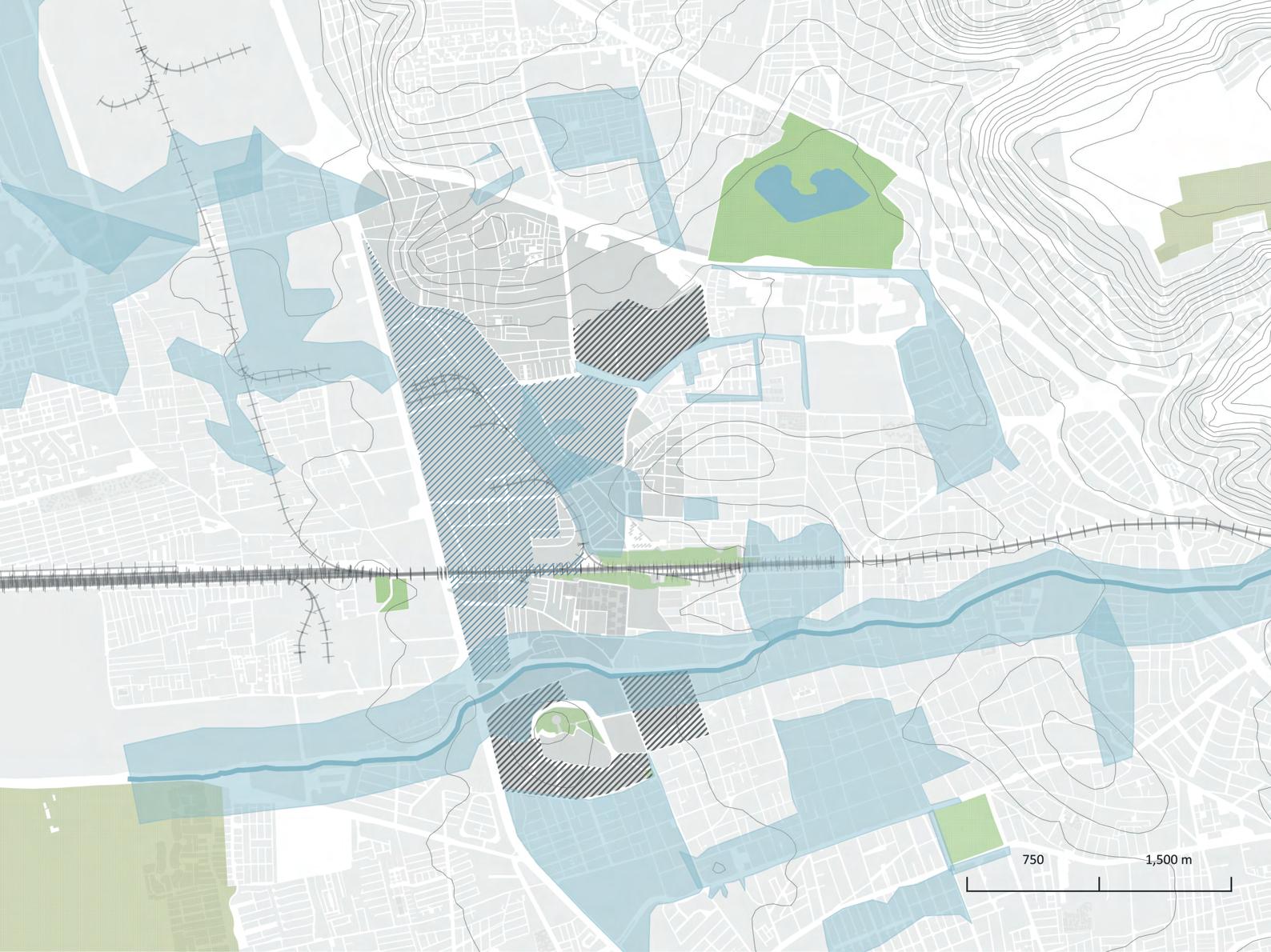
Potentially flooding area
Queretaro is not considered a fully flood-prone state, but there are some areas that are susceptible to flooding, especially during the rainy season. The polygon in question, being close to a river, has a higher risk of flooding. Additionally, other areas are affected by floods due to the lack of adequate drainage infrastructure, which worsens water accumulation problems in these areas.
Figure 3.1.1: Regions in Querétaro based on data from INEGI.
Figure 3.1.1: Regions in Querétaro based on data from INEGI.
The socioeconomic context of the district is crucial for its planning. This chapter presents demographic data, surveys on employment and income levels, and an analysis of population density. Additionally, it reflects on the district’s potential impact on the local community, questioning the risks of displacement and possible effects on the local economy due to the reorganization of industrial and commercial activities.
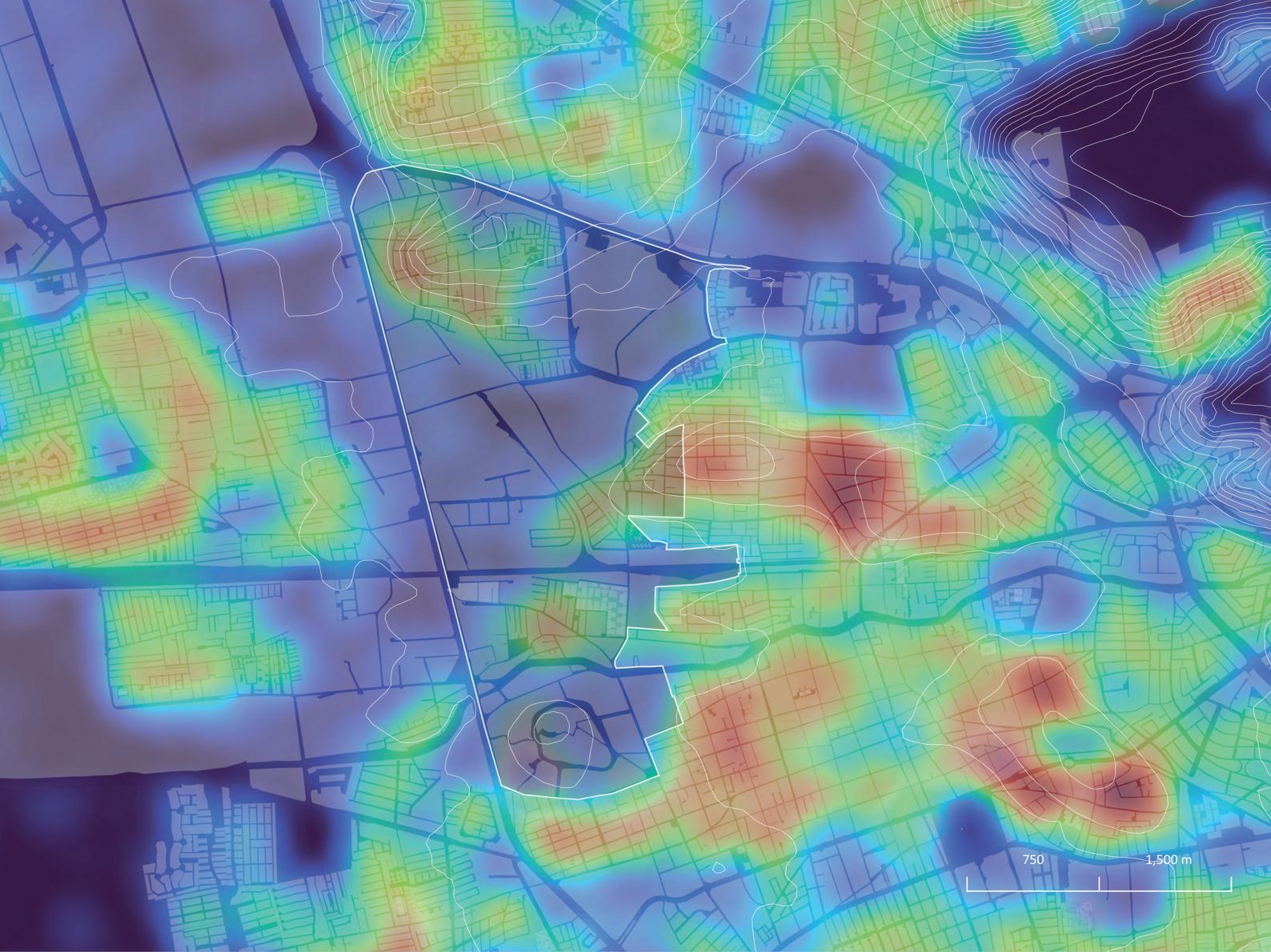
According to INEGI 21,553 people reside in the polygon.Within this population, a classification is carried out taking into account various factors, such as age, gender, and disabilities.
Image: Population data by locality-Own elaboration, information collected from INEGI
Image: Population data by locality-Own elaboration, information collected from INEGI
The population distribution indicates a community mainly in the productive age group (15-59 years), highlighting strong demands for employment, higher education, and affordable housing. A notable child and youth population underscores the need for educational infrastructure and recreational areas. Additionally, a significant elderly population points to the necessity for healthcare services and accessible mobility spaces. Finally, the presence of individuals with disabilities emphasizes the importance of creating inclusive urban infrastructure.
Scale | 1:1000000
Symbology
Base Map
Bodies of water
Urban green space
Farming area
Distrito Qro limit
Urban blocks
Train tracks
Equipment
0-0.0024
0.0024-0.0076
0.0076-0.0143
0.0143-0.0246
0.0246-2.8664
Most of the tourist attractions are located outside the defined polygon. Within the polygon, there are very few established attractions, but several spaces could be utilized. This could be achieved either by proposing the construction of entirely new facilities or by adapting existing infrastructure, such as Alcanfores Park, which could be repurposed for tourism or recreational purposes.
Figure 3.1.1: Regions in Querétaro based on data from INEGI.
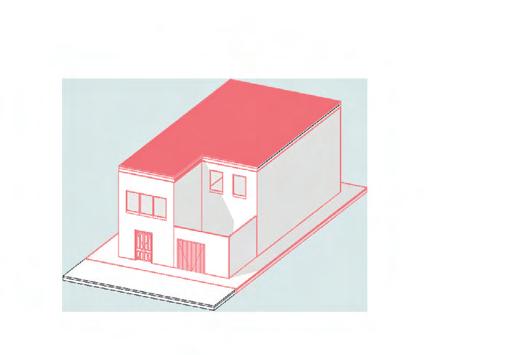
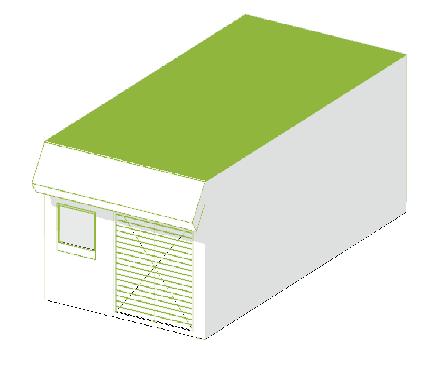
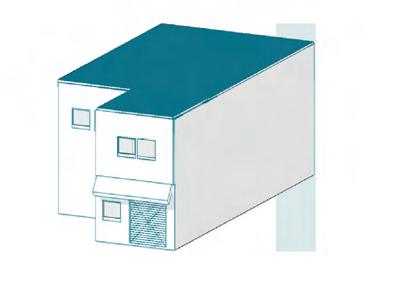
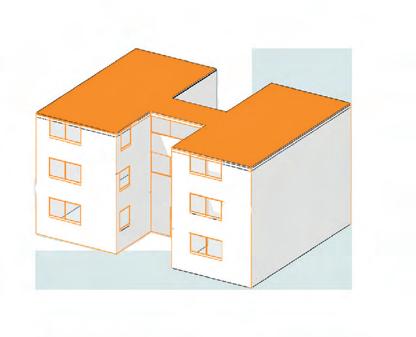
Housing typologies
House Bussines
•1-2 floors
•2+ bedrooms
•250 m²
•1-2 floors
•50-80m²
Mixed-use housing Colective housing
•1-2 floors
•100-250 m²
•1 floor
•2-3 bedrooms
•80-100 m²
According to the data provided by INEGI, the QRO District has a total of 5975 homes, of which 98.09% are private homes. Of these private homes, 85.86% are inhabited, while 10.81% are not inhabited. This indicates that the vast majority of the homes are private, and a significant portion of them are inhabited, although a small percentage remains unoccupied.
The mobility system within Distrito QRO is shaped by major avenues, public transportation, and bicycle routes. This chapter explores traffic patterns, physical barriers, and accessibility within the area. Using maps and surveys, it analyzes the efficiency of the current transportation system and the challenges of ensuring safe, efficient, and sustainable mobility.
MAIN ROADS
Scale | 1:1000000
Symbology
Base Map
Bodies of water
Urban green space
Farming area
Distrito Qro limit
Urban blocks
Train tracks
Roads
Bernardo Quintana Boulevard
5 de Febrero Avenue
Primary roads Roadways
Metropolitan roads
Secondary roads
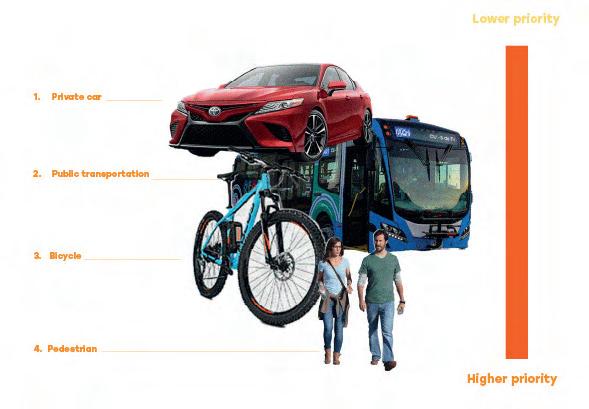
In the district, there are three main avenues that define the boundaries of the polygon: Av. 5 de Febrero, Bernardo Quintana, and Av. Universidad. These avenues limit the opportunity to expand into other neighborhoods due to their poor design and limited walkability. How can we create facades to connect these neighborhoods and ensure that the polygon doesn’t close off access to other areas?
Figure 3.1.1: Regions in Querétaro based on data from INEGI.
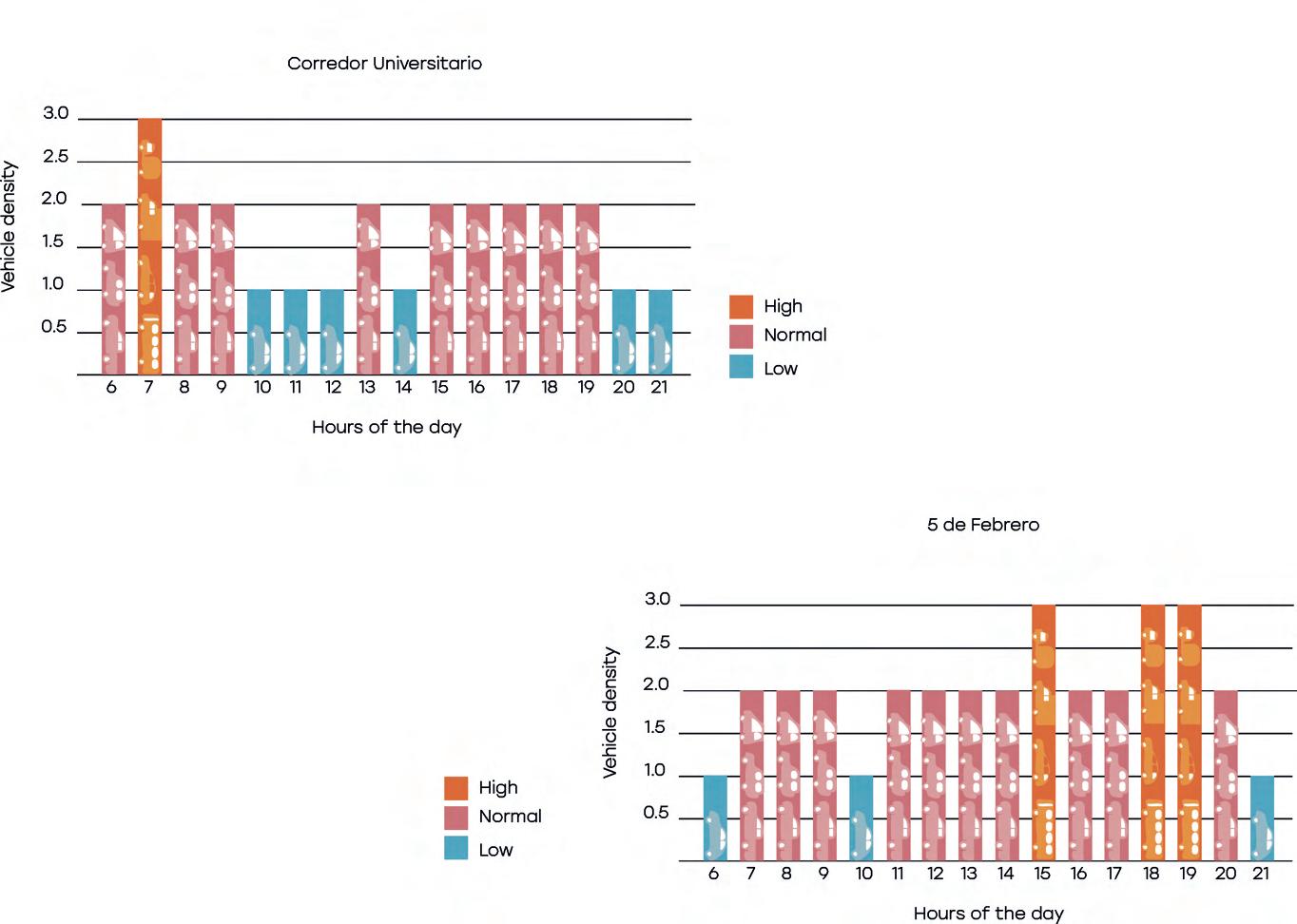
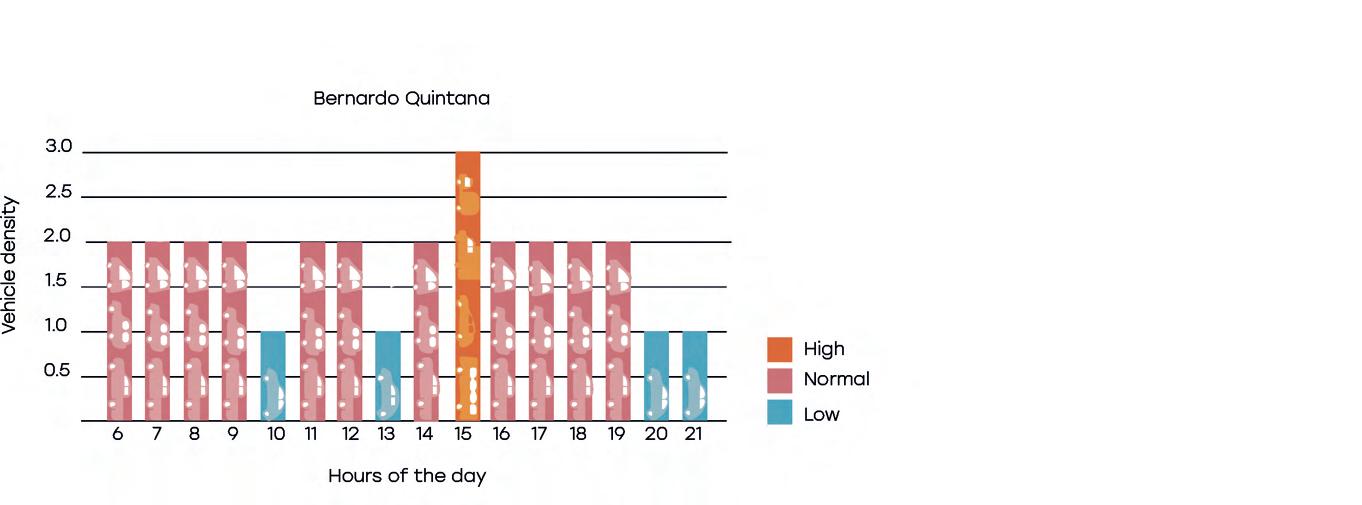
The traffic flow in the Qro District is usually calm, as there are few streets with traffic lights there is no flow problem, the only spaces where there is greater traffic intensity is in the university corridor that covers Ejido, José Amílcar Vidal and Avenida Tecnológico only because of the traffic lights, even so this does not imply a time greater than 15 minutes, everything else is very accessible.
Symbology
Base Map
Bodies of water
Urban green space
Farming area
Distrito Qro limit
Urban blocks
Train tracks Scale
Routes
Route 09
Route 12
Route T-03
Route T-04
Route T-06
Route T-10
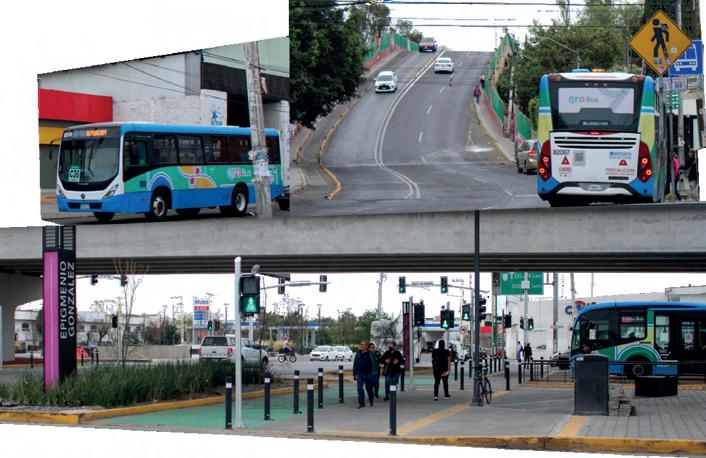
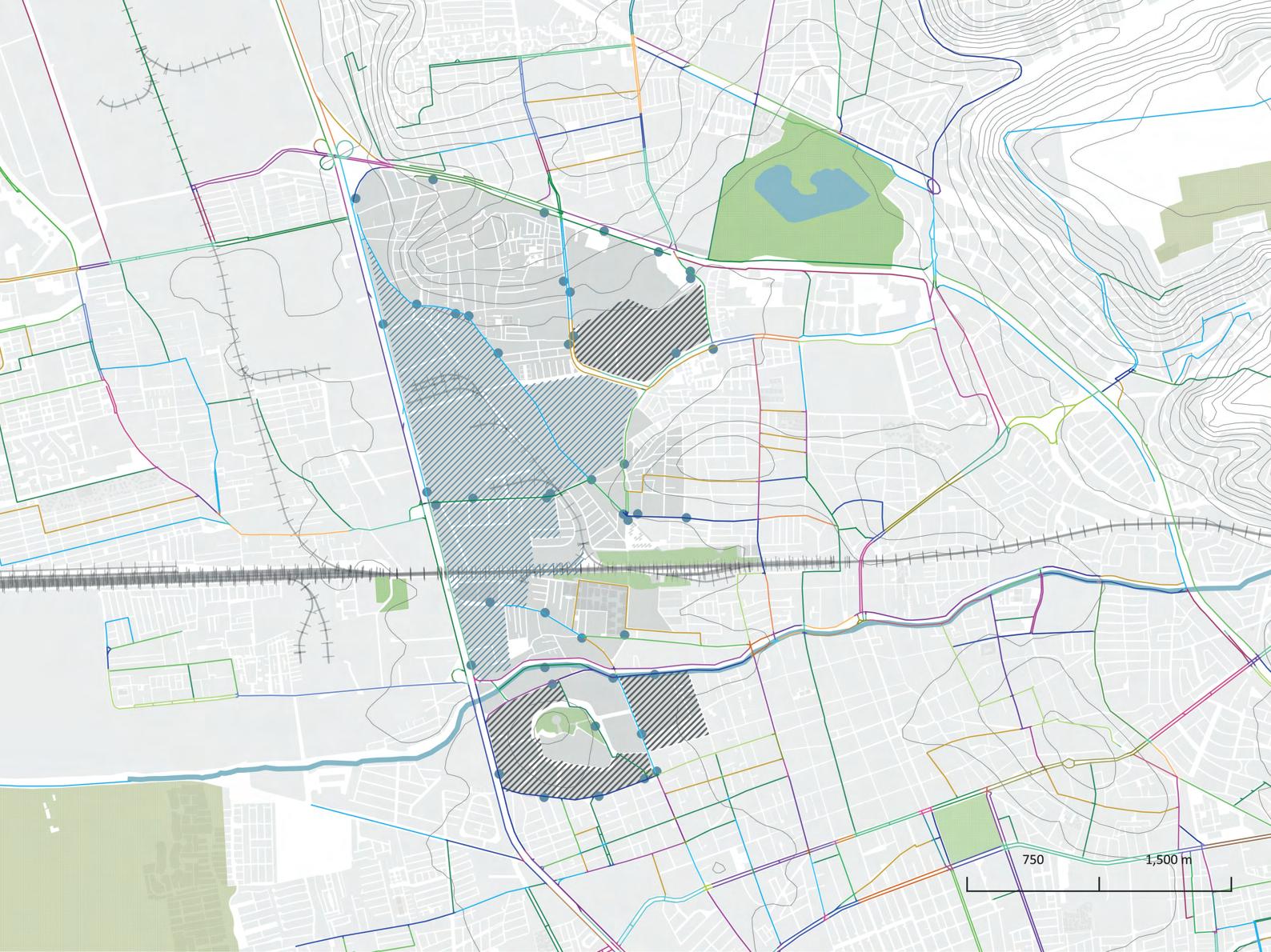
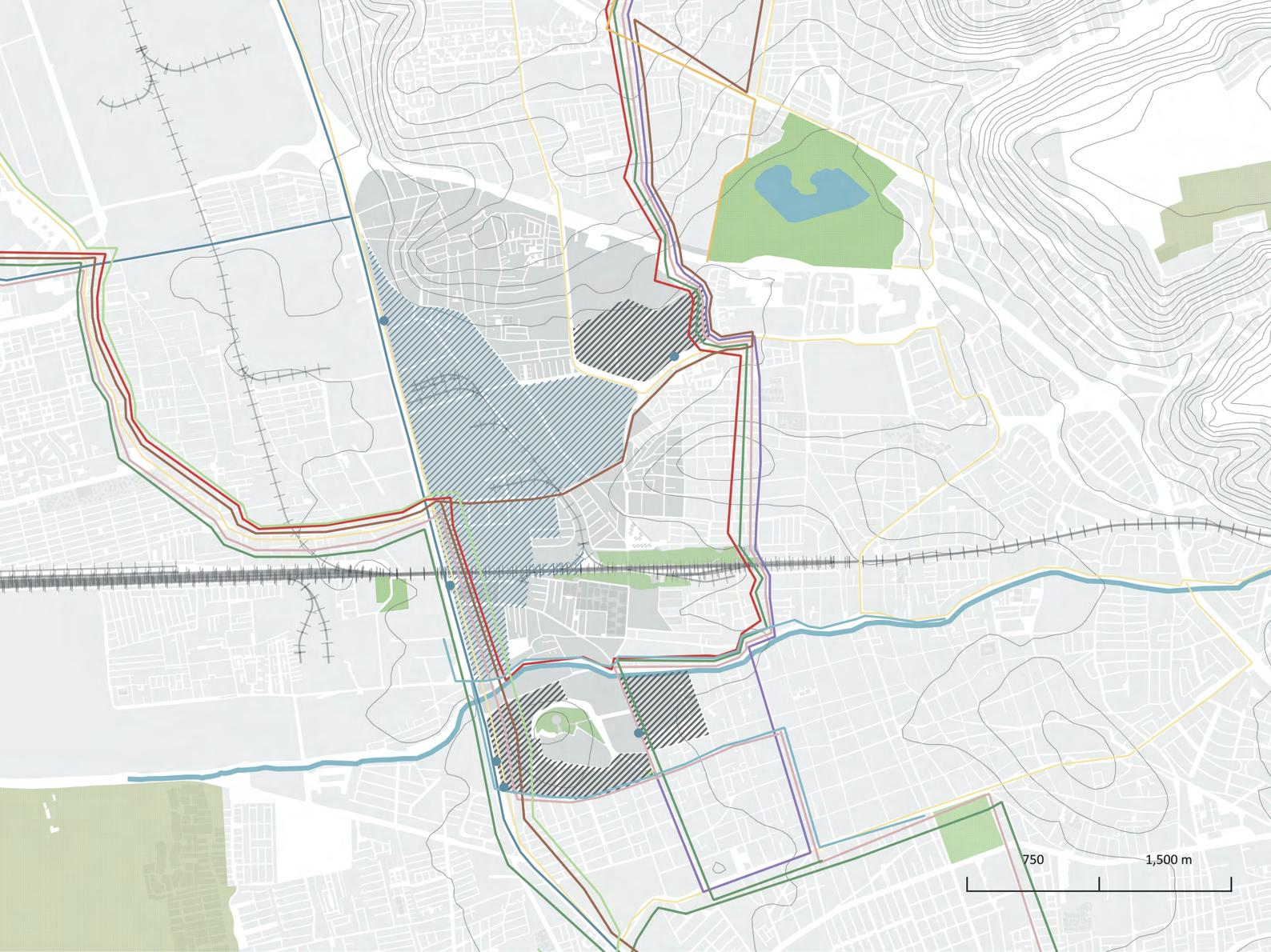
The Qrobus is the main bus route in Queretaro and covers a large part of the city, but its route is concentrated on main streets and roads. This makes it an efficient option for traveling along the busiest corridors, although in some areas, it may be necessary to walk more or make transfers to reach specific destinations.
Figure 3.1.1: Regions in Querétaro based on data from INEGI.
Symbology
Base Map
Bodies of water
Urban green space
Farming area
Distrito Qro limit
Urban blocks
Train tracks
UNIVERSITY TRANSPORT ROUTE
Equipment
Scale | 1:1000000
Most university routes cross Distrito QRO, concentrating around UAQ. Some of the institutions that are part of this project include UVM, UTEQ, UPQ, UAQ, ITQ, among others. These routes aim to pass through areas near residential zones to maximize convenience for university students.
Figure 3.1.1: Regions in Querétaro based on data from INEGI.
Scale | 1:1000000
Symbology
Base Map
Bodies of water
Urban green space
Farming area
Distrito Qro limit
Urban blocks
Train tracks
Equipment
Cicleways
Figure 3.1.1: Regions in Querétaro based on data from INEGI.
How close are you to your work/School?
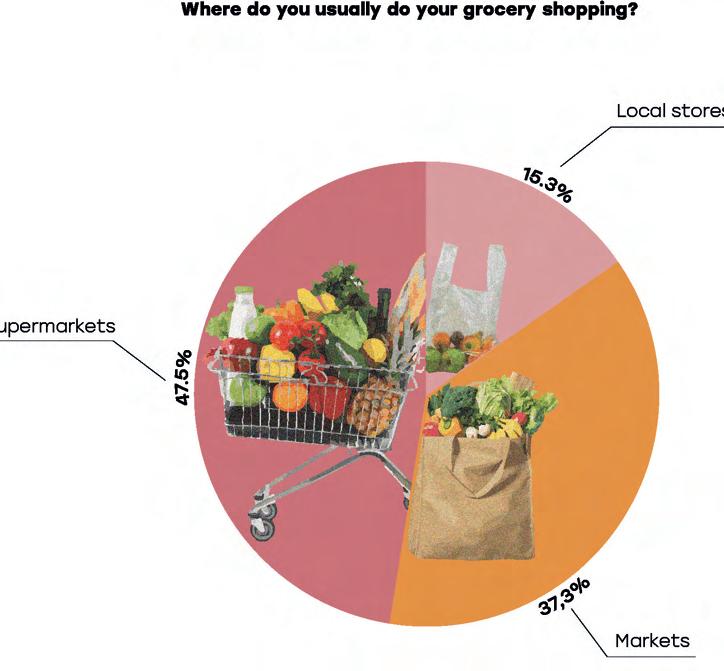
Access to healthy and sustainable food is a key factor in the quality of life for district residents. This chapter addresses food security through the concept of foodscapes, examining consumption patterns, public health impacts, and the availability of supermarkets, markets, and small food businesses. Through maps and graphics, it analyzes where residents purchase their groceries and how this influences their well-being.
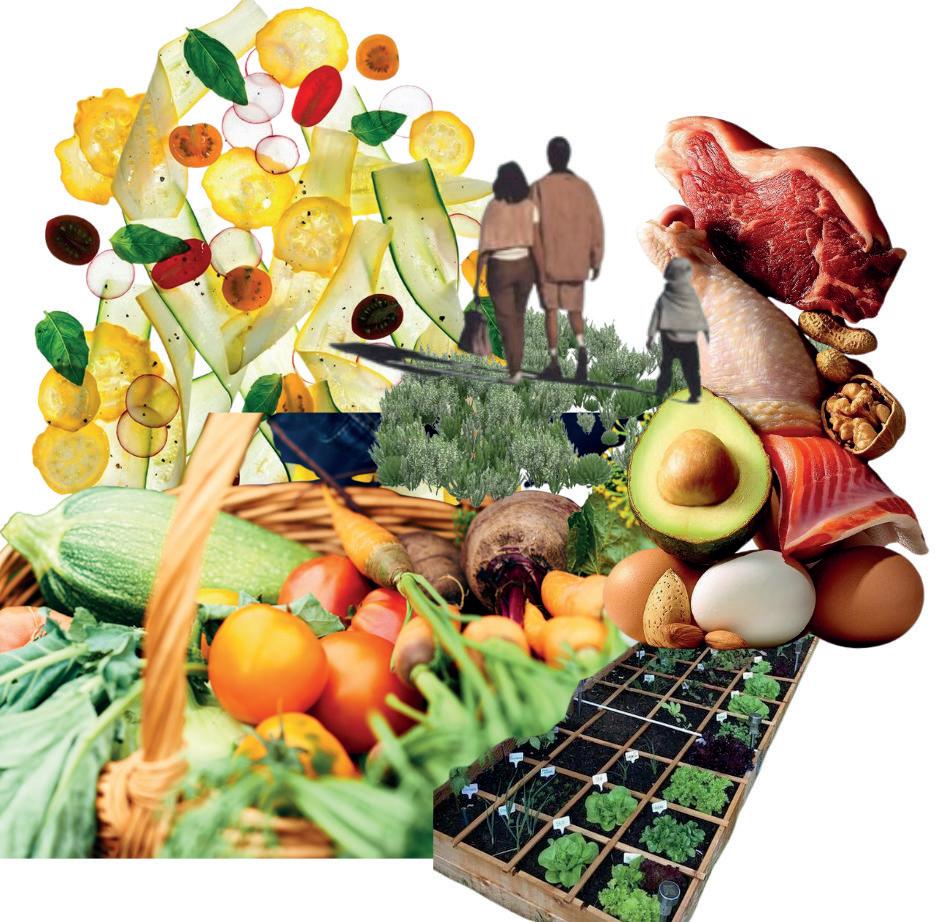
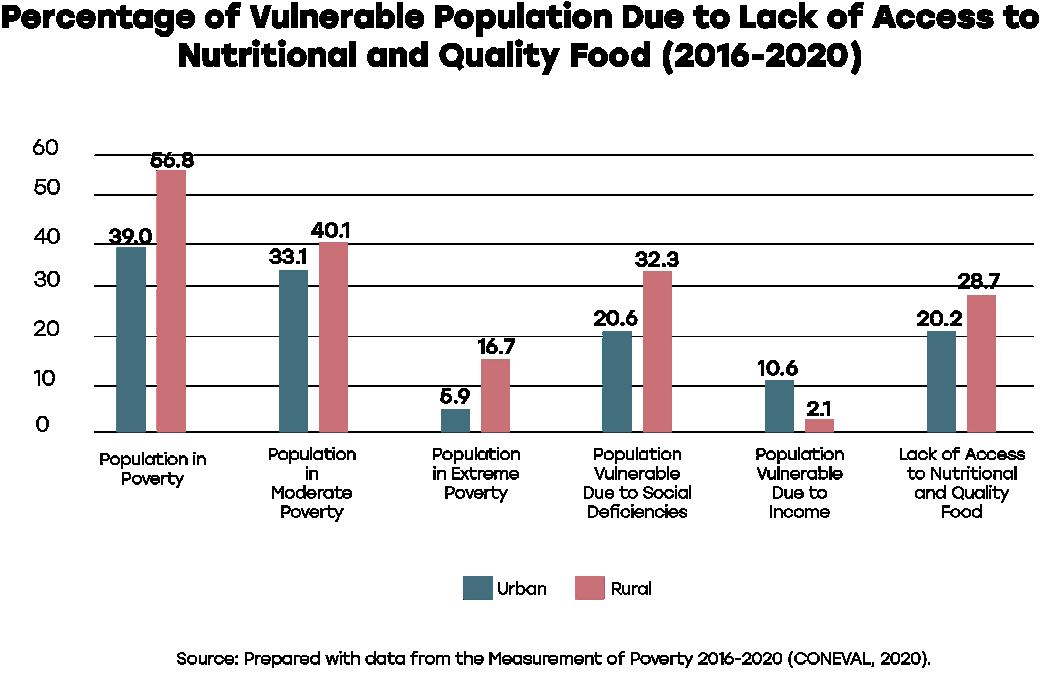
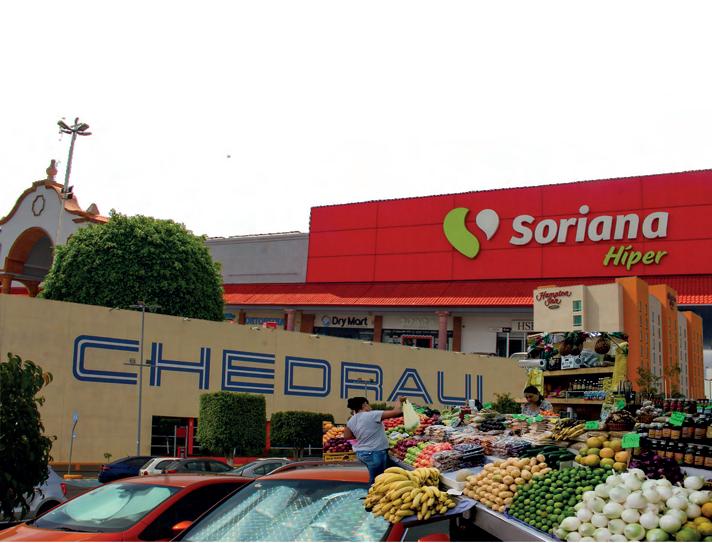
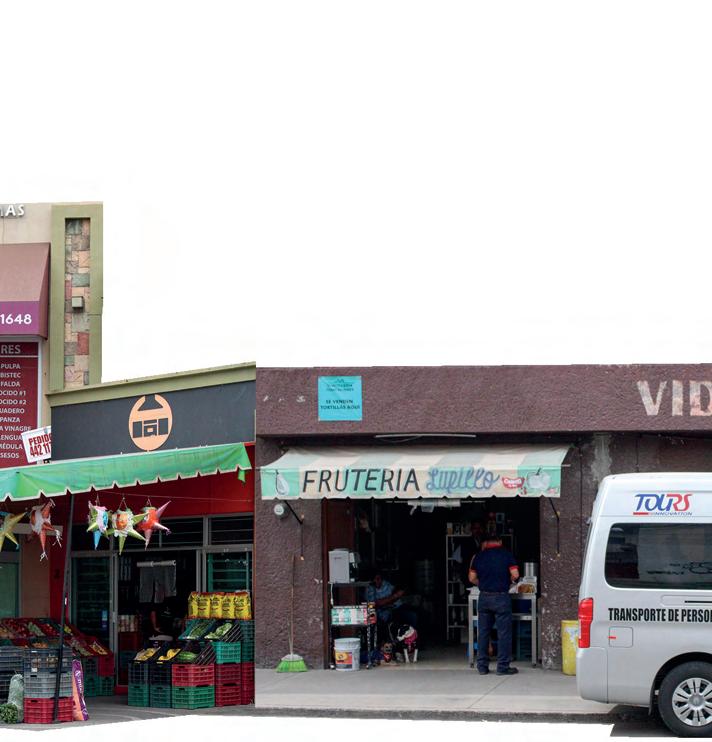
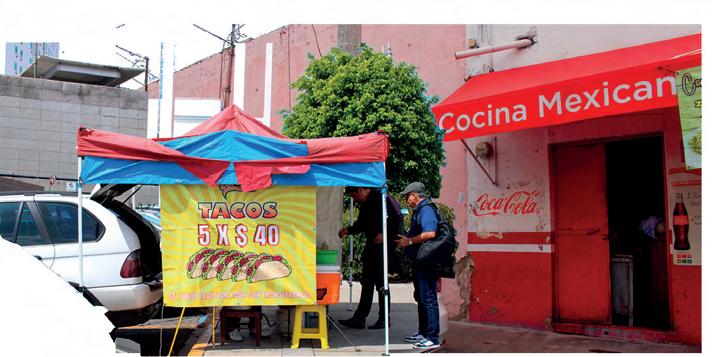
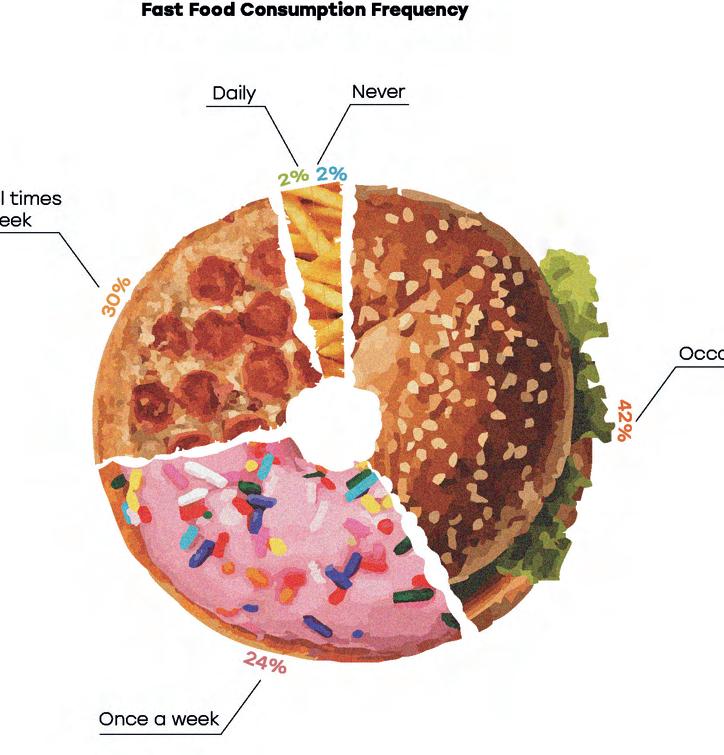
The Querétaro District is a key space to discuss foodscapes due to its urban development and inequalities in food access. Despite having an urban environment, the district lacks nearby supermarkets, markets, and fruit and vegetable stores, which limits access to fresh and healthy foods, especially for low-income families. The food offering in the area is dominated by processed and low-nutritional-value products, contributing to issues such as obesity and other related diseases. It is essential to implement public policies that promote the accessibility of fresh products and the integration of urban gardens to improve the health and wellbeing of the community.
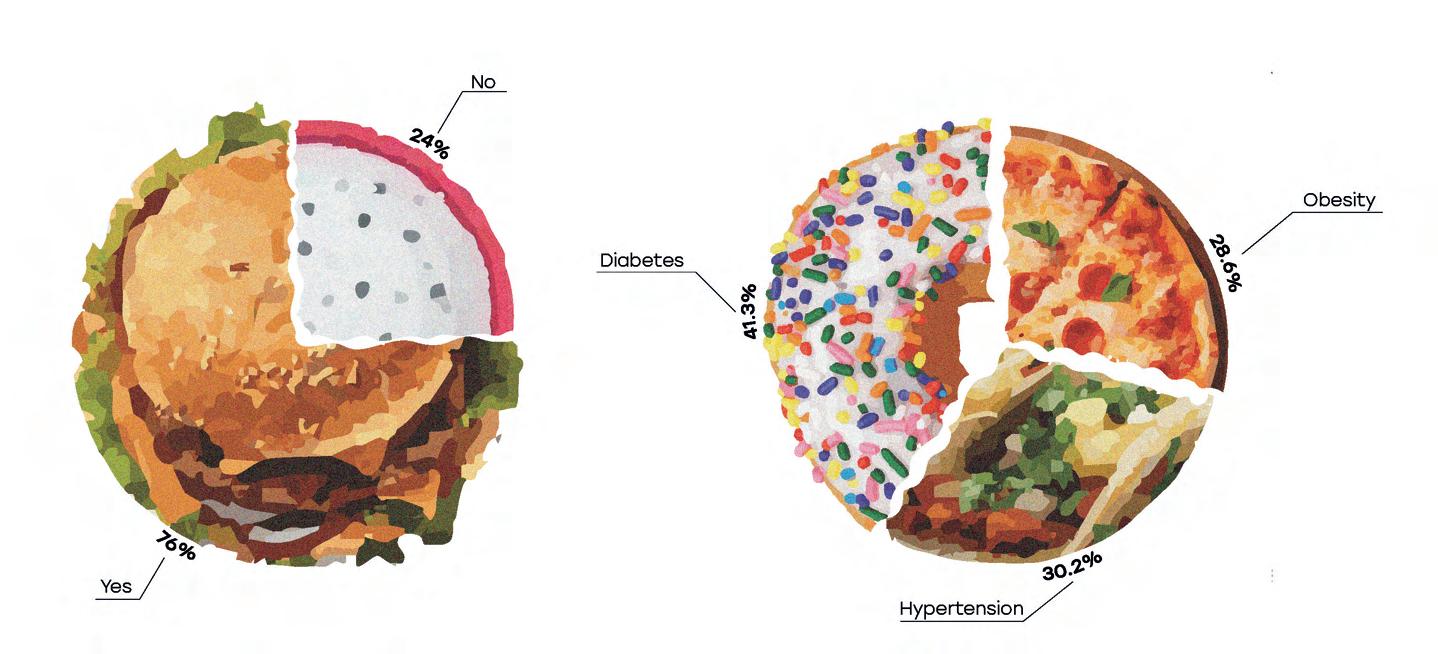
DO YOU HAVE OR KNOW PEOPLE WITH A CONDITION SUCH AS OBESITY, HYPERTENSION, OR DIABETES?
In Querétaro, various initiatives drive the development of the agri-food sector. The Querétaro Agri-Food Cluster provides advisory services, training, and evaluations to improve business models, exports, and sustainability in the industry. The Diploma in Innovation Management, offered by INNOVAGRO, trains professionals in strategic planning and intellectual property within the agri-food sector. CIMMYT offers training in sustainable agricultural practices, promoting technologies to enhance productivity and sustainability. Meanwhile, the Agricultural Markets Consulting Group (GCMA) provides market analysis, consulting, and training to strengthen the sector’s competitiveness. These initiatives aim to modernize and strengthen agri-food production in the region.
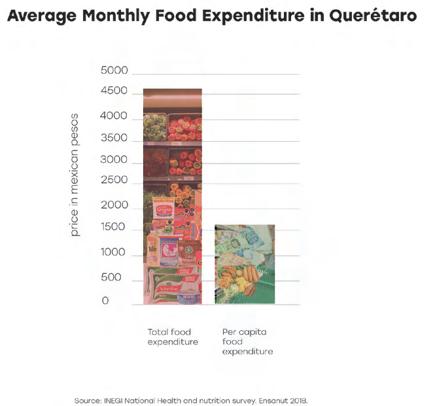
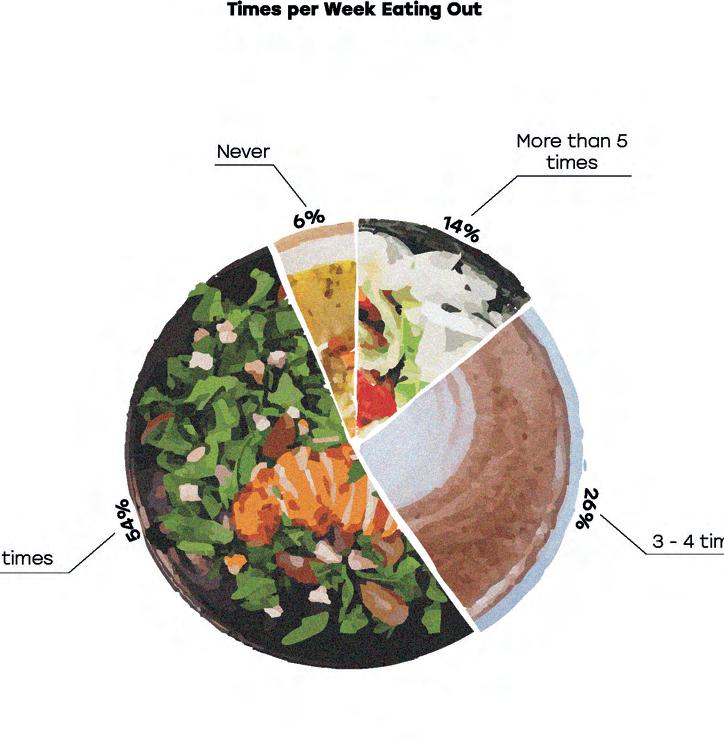
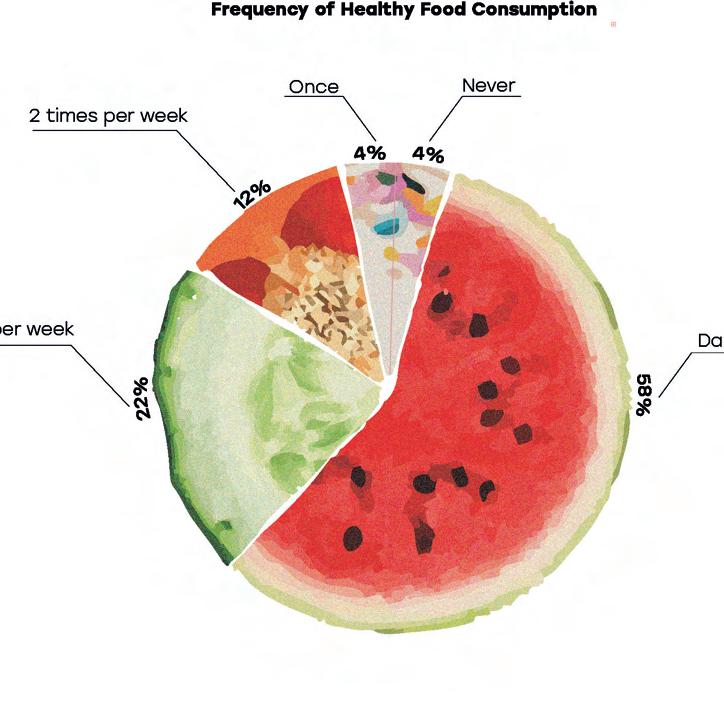
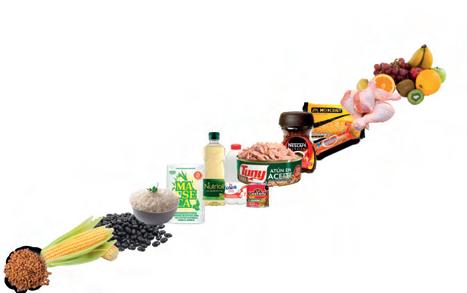
In Querétaro and nationwide, spending on non-alcoholic beverages, prepared foods, and dining out has increased, while the consumption of basic foods has declined due to high prices. A significant percentage of the population, including preschoolers, regularly consumes nonrecommended products such as sweetened beverages and snacks, contributing to the rise in chronic diseases like obesity and diabetes. Despite food availability, malnutrition and anemia persist among vulnerable groups. To address these challenges, the Querétaro government has implemented food assistance and nutritional education programs, along with policies to regulate the sale of unhealthy foods in schools and improve access to nutritious options in local markets and stores.
Symbology
Base Map
Bodies of water
Urban green space
Farming area
Distrito Qro limit
Urban blocks
Equipment
Supermarkets
Markets
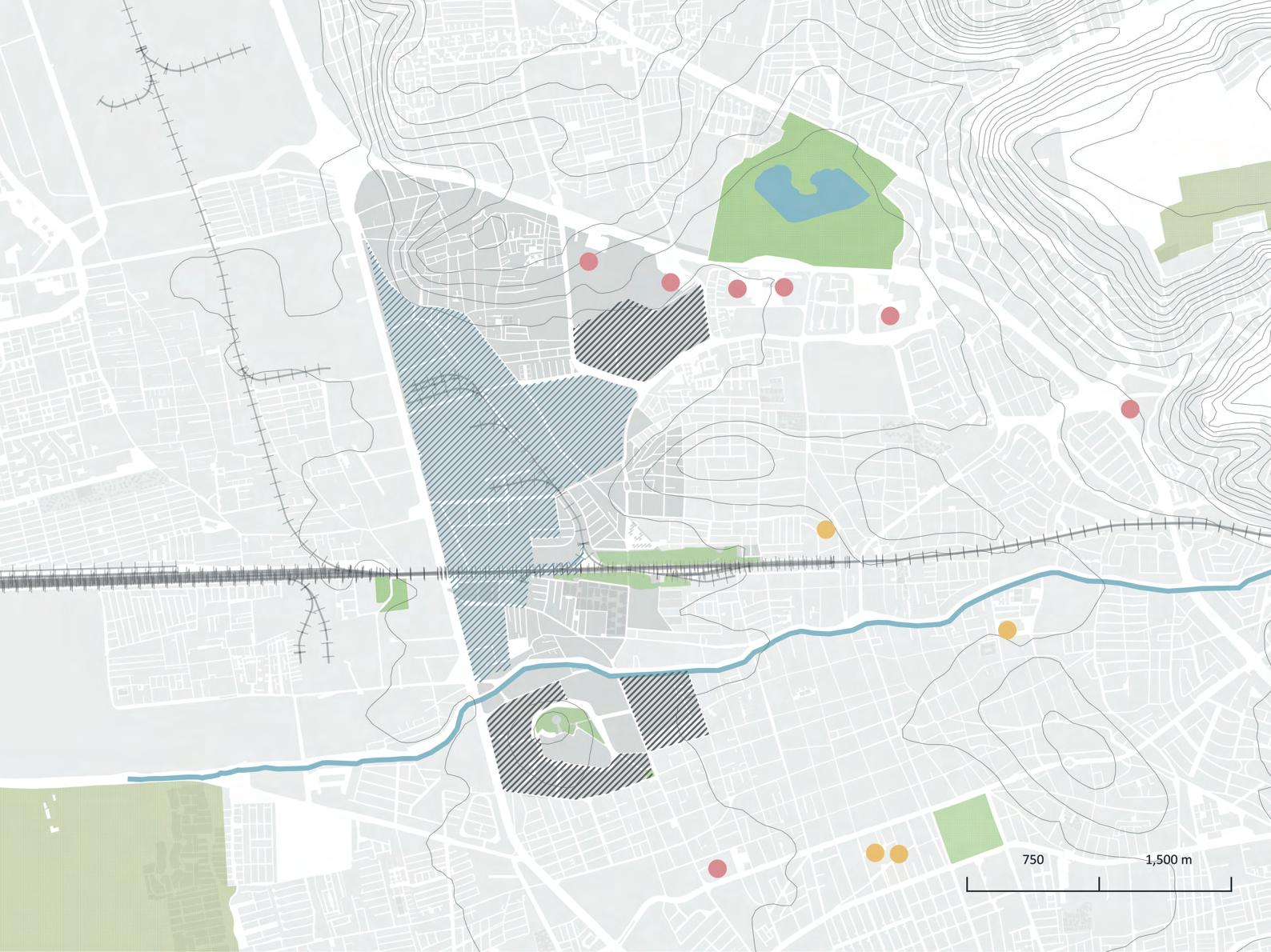
On the map, it can be seen that there are only two supermarkets within the polygon, and they are not in a central area accessible to everyone. Instead, they are located in a corner, making it necessary for people in the southern part of the polygon to travel a long distance. Likewise, there is no market within the polygon, making it more difficult to buy healthier and more affordable products.
Figure 3.1.1: Regions in Querétaro based on data from INEGI.
Symbology
Base Map
Bodies of water
Urban green space
Farming area
Distrito Qro limit
Urban blocks
Train tracks
Equipment
MINIMARKETS
Scale | 1:1000000
Minimarkets
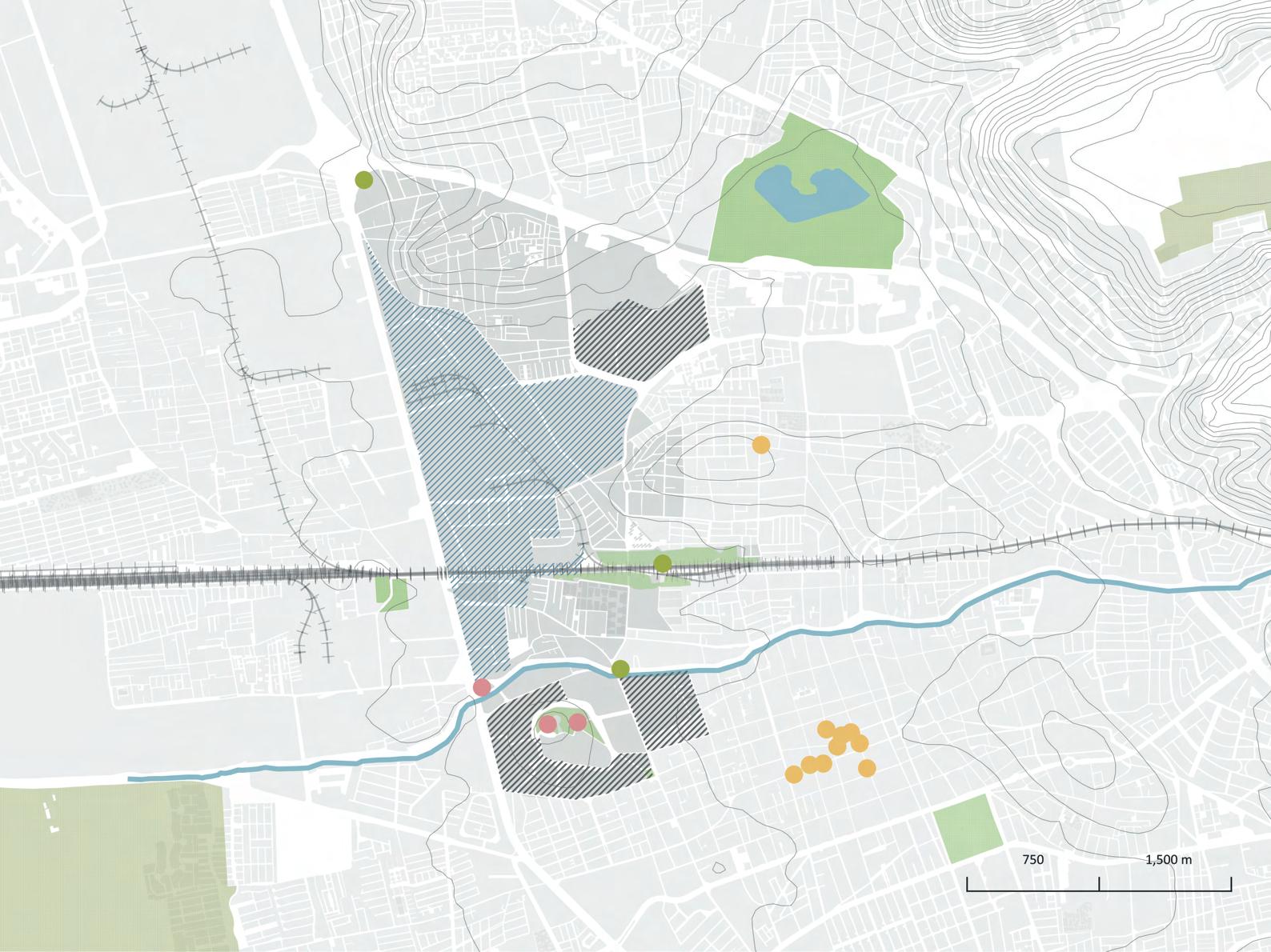
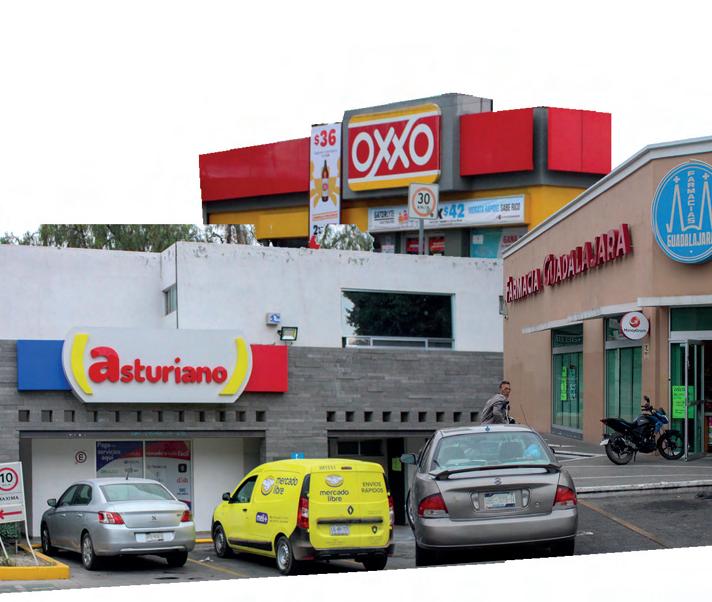
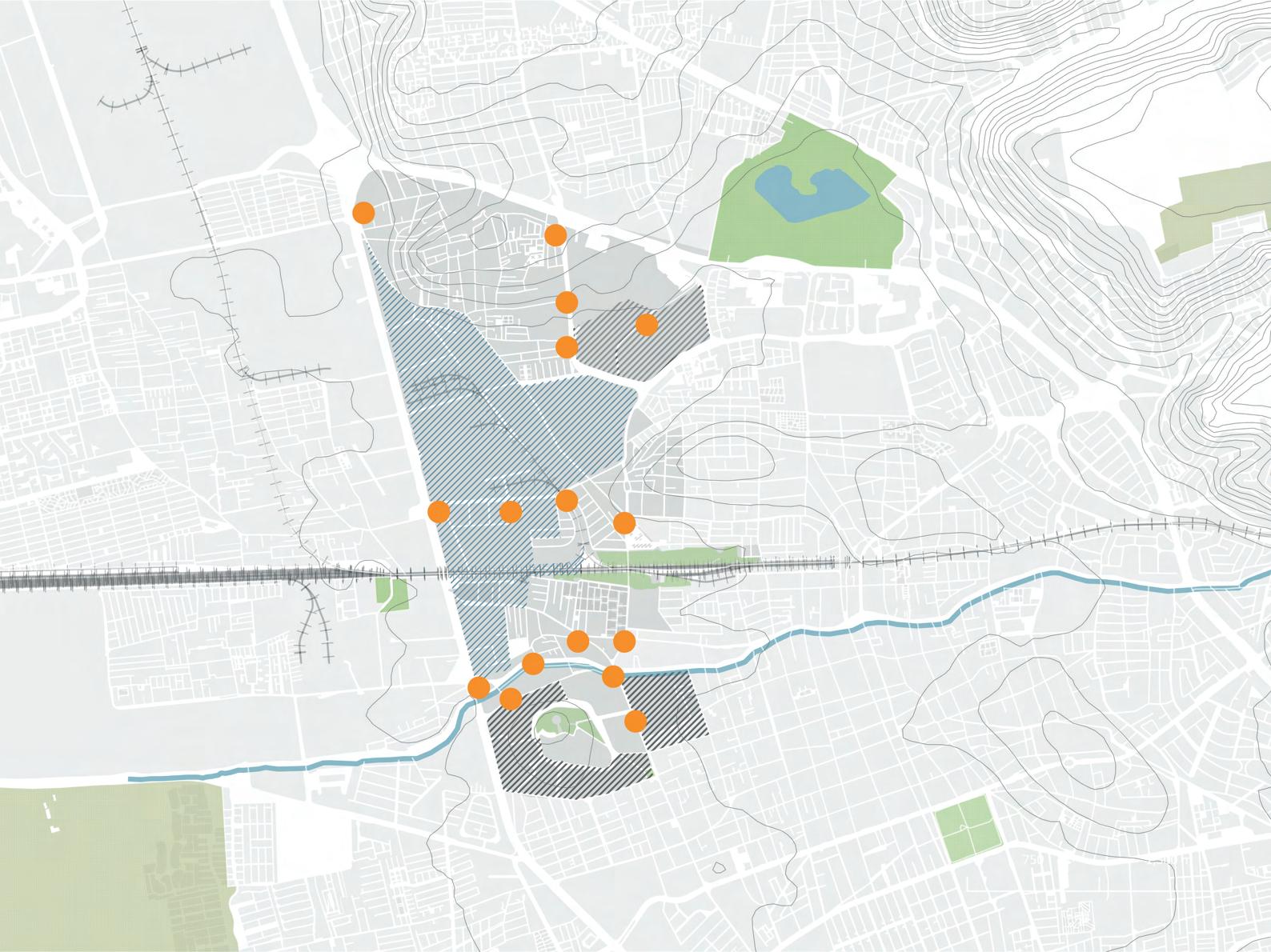
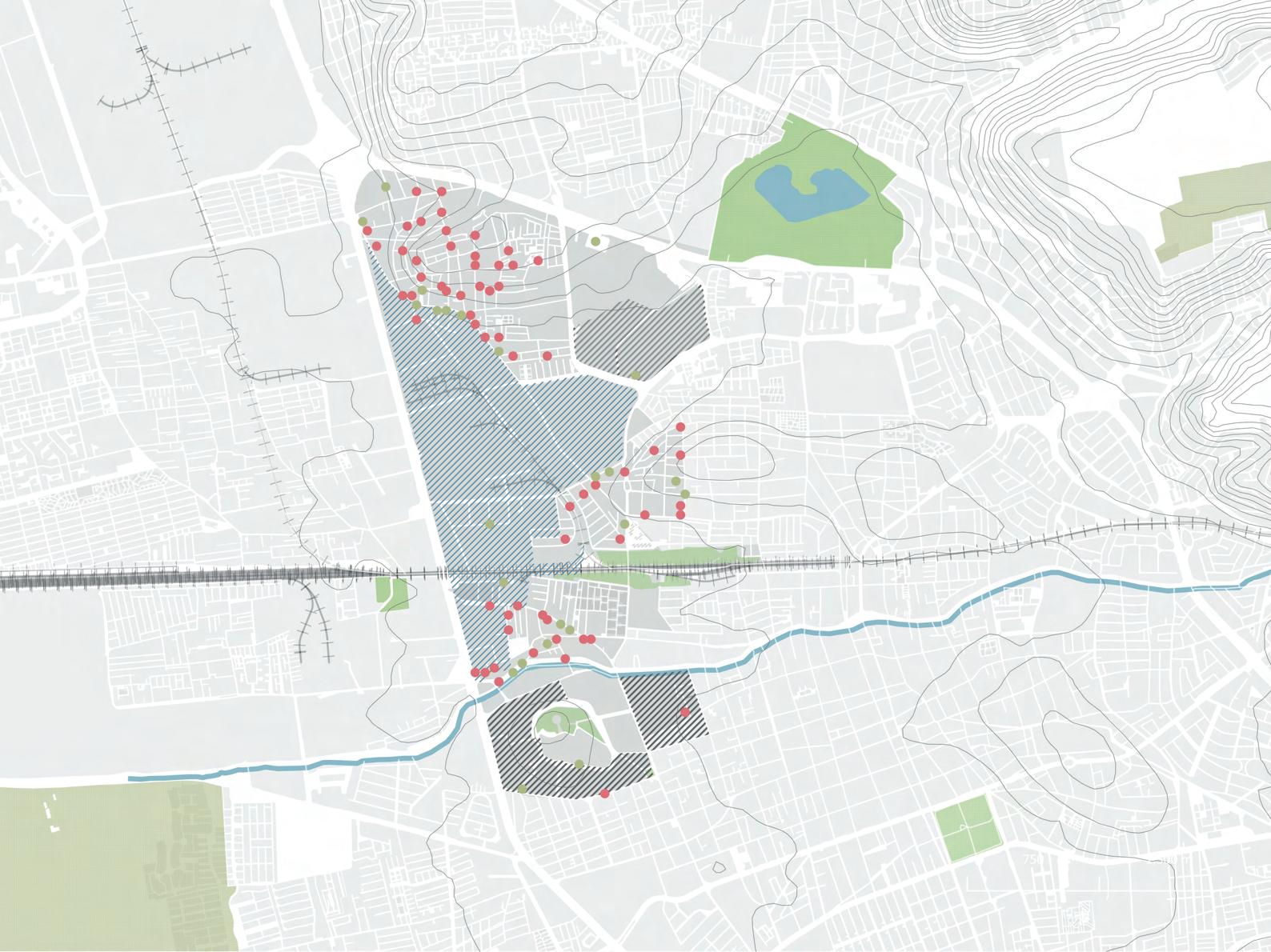
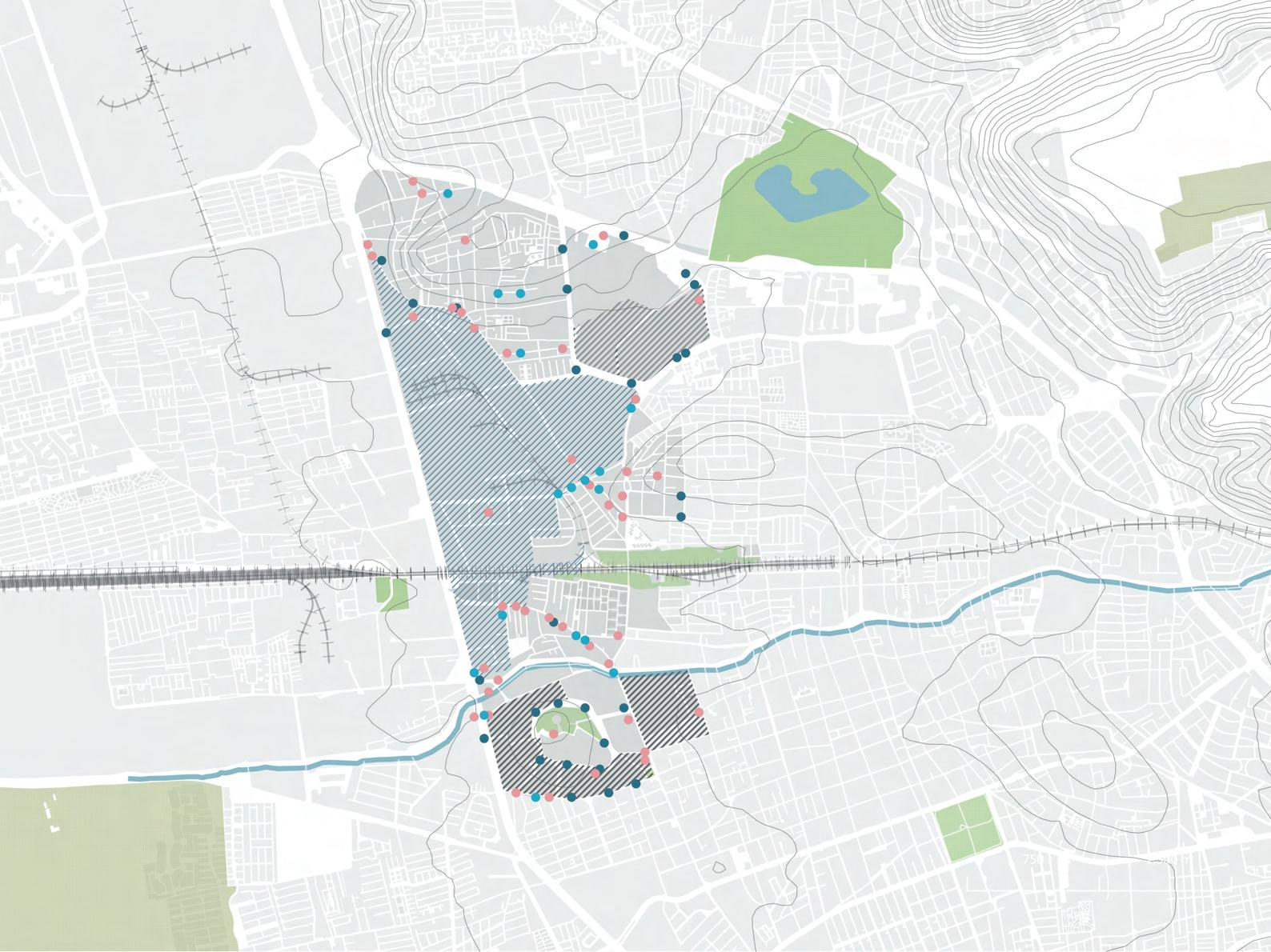
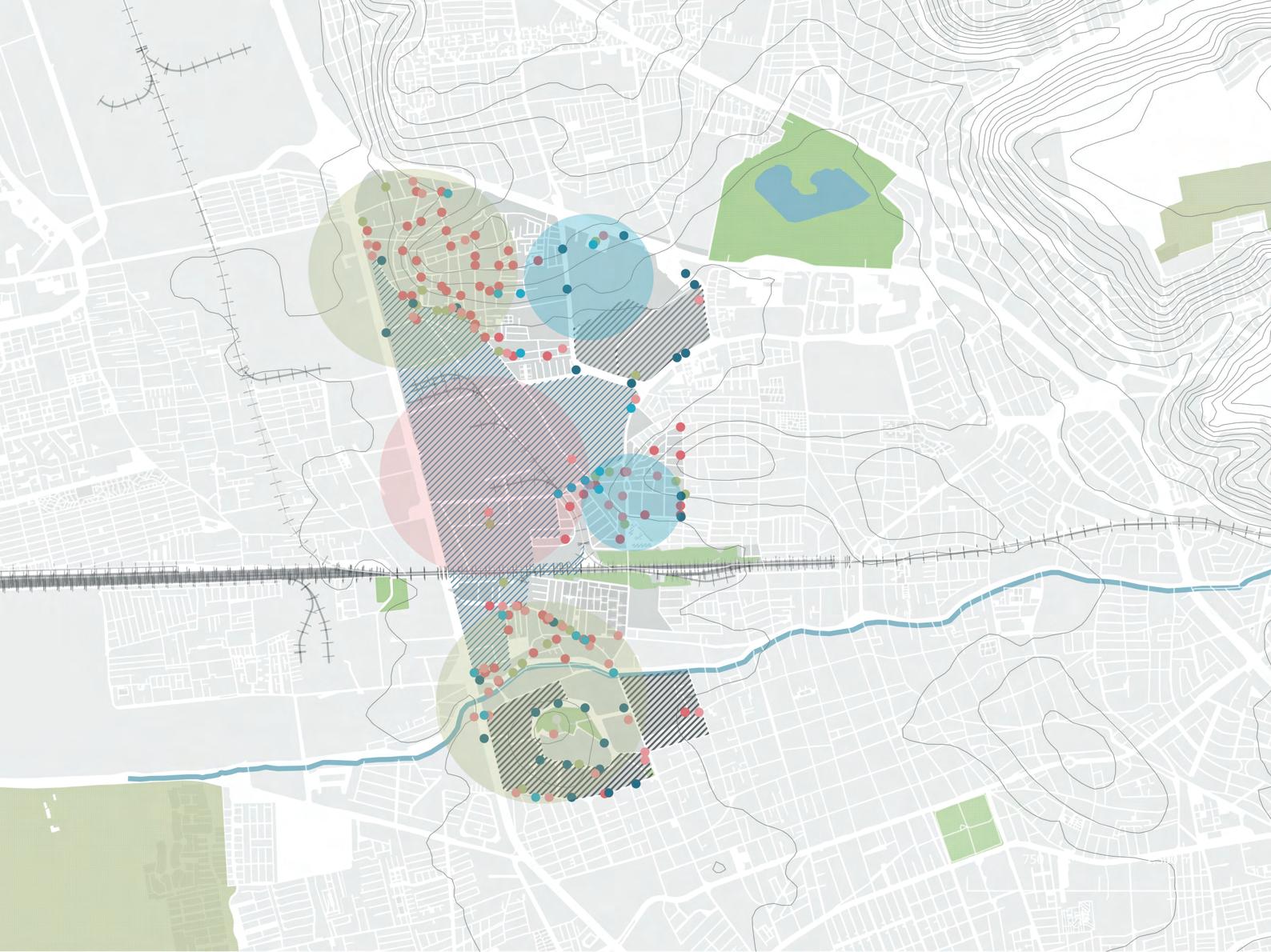
This map shows the location of the various minimarkets within the polygon, allowing us to infer that they are distributed across different points. In the northern area, there are only 7, in the center 6, and in the south 8.
Although their distribution appears to be balanced, their close proximity to each other creates an accessibility issue, as they are located on the outskirts of residential areas rather than in more central locations. This may make access difficult for residents, especially those living in areas farther away from these establishments.
Figure 3.1.1: Regions in Querétaro based on data from INEGI.
Symbology
Base Map
Bodies of water
Urban green space
Farming area
Distrito Qro limit
Urban blocks
Train tracks Scale
Food establishments Equipment
Local cornershops
On the map, it can be seen that there are only two supermarkets within the polygon, and they are not in a central area accessible to everyone. Instead, they are located in a corner, making it necessary for people in the southern part of the polygon to travel a long distance. Likewise, there is no market within the polygon, making it more difficult to buy healthier and more affordable products.
Figure 3.1.1: Regions in Querétaro based on data from INEGI.
Symbology
Base Map
Bodies of water
Urban green space
Farming area
Distrito Qro limit
Urban blocks
Train tracks
Equipment
Scale | 1:1000000
Soda fountains
Fast food stands
Local restaurants
On the map, it can be seen that there are only two supermarkets within the polygon, and they are not in a central area accessible to everyone. Instead, they are located in a corner, making it necessary for people in the southern part of the polygon to travel a long distance. Likewise, there is no market within the polygon, making it more difficult to buy healthier and more affordable products.
Figure 3.1.1: Regions in Querétaro based on data from INEGI.
Yucatan Science and Technology Park
Symbology
Base Map
Bodies of water
Urban green space
Farming area
Distrito Qro limit
Urban blocks
Train tracks
Equipment
Scale | 1:1000000
Inside the area
Outside the area
Potential touristic
Most of the tourist attractions are located outside the defined polygon. Within the polygon, there are very few established attractions, but several spaces could be utilized. This could be achieved either by proposing the construction of entirely new facilities or by adapting existing infrastructure, such as Alcanfores Park, which could be repurposed for tourism or recreational purposes.
Figure 3.1.1: Regions in Querétaro based on data from INEGI.
VEGETABLE GARDENS INITIATIVES
Symbology
Base Map
Bodies of water
Urban green space
Farming area
Distrito Qro limit
Urban blocks
Train tracks
Equipment
Scale | 1:1000000
Inside the area
Outside the area
Potential touristic
Most of the tourist attractions are located outside the defined polygon. Within the polygon, there are very few established attractions, but several spaces could be utilized. This could be achieved either by proposing the construction of entirely new facilities or by adapting existing infrastructure, such as Alcanfores Park, which could be repurposed for tourism or recreational purposes.
sustainability and UAQ, sustainable develop society and industry, academic institutions, major challenges
The District QRO seeks to promote agri-food sustainability through a consortium formed by UNAM, ITESM, and UAQ, driving interdisciplinary projects that foster sustainable agri-food production. The main objective is to develop solutions that have a positive impact on society and industry, strengthening collaboration between academic institutions, companies, and the public sector to address major challenges in the agri-food sector.
Strengths:
-Vacant land that can be efficiently repurposed for urban gardens or markets.
-Promotion of research and entrepreneurship in the agri-food sector.
-Collaboration between major companies and universities.
-Variety of land uses, allowing integration of productive and commercial projects.
-Policies focused on food and sustainable production.
-Existing urban gardens within the district.
-Involvement of governments and relevant agencies.
-Development of projects and competitions with agri-food approaches.
Opportunities:
-Transform vacant land or building rooftops into food production spaces.
-Development of apps or digital platforms that connect local producers with end consumers.
-Utilize underused spaces in the district for efficient food production through urban gardens.
-Expand the district to more neighborhoods with agro-food planning.
-Improve pedestrian infrastructure and access to markets.
-Use available spaces for sports and wellness activities.
-Establish local markets and greengrocers to improve access to fresh food.
-Promote research programs and the development of agricultural technologies applied to the district.
Weaknesses:
-Lack of markets and greengrocers within the district.
-Physical and urban barriers that hinder pedestrian mobility and access to fresh food.
-Limited availability of fresh and healthy food, with fast food dominating the area.
-Proximity to socially disadvantaged areas, increasing the food accessibility gap.
-Limited public transportation, making it difficult to purchase healthy products.
-Distant facilities, requiring long commutes to access markets and essential services.-Difficulties in modifying land use
Threats:
-Dependence on ultra-processed food due to a lack of accessible healthy options.
v-Expansion of the district without considering agri-food infrastructure.
-Lack of investment in markets and urban agriculture.
-Community and economic actors’ resistance to change.
-Rising costs of basic food products, reducing access to nutritious options.
-Difficulties in modifying land use
DISRUPT THE NORMS: QUESTION WHO CONSTROLS OUR FOOD AND CITIES
We challenge and dismantle the social structures that dictate our surroundings and food consumption habits. We refuse to accept the economic systems that normalize inequality and unsustainable practices, where profit is prioritized over people and the environment. We demand a shift towards values that center justice, sustainability, and collective prosperity.
CITIES THAT HEAL: DESIGN FOR LIFE, NOT EXPLOITATION
We reclaim cities as spaces of healing, nourishment, and coexistence, where urban design prioritizes both human and non-human life. Cities must regenerate rather than extract, in all scales, from individuals to the collectives as communities in the urban landscape.
REVOLUTIONIZE FOOD: EDUCATE, INNOVATE, LIBERATE
We demand the evolution and technologization of food systems based on the informed valorization of food. Education must drive a cultural shift toward responsible production and consumption. Awareness must be raised about where food comes from, how it is processed, and the people behind its production. Transparency in every step of the food journey is essential, ensuring this knowledge is accessible to everyone.
POWER TO THE PEOPLE: FOOD JUSTICE STARTS WITH US
We insist on public policies that actively combat economic, social, and climate disparities. Producers, consumers, and the public must co-govern food systems to ensure justice and resilience.
WATER IS LIFE: FOR ALL, NO EXCEPTIONS
We reject the commodification of water. We uphold its equitable access as a fundamental right, essential to food sovereignty and human dignity.
SAVOR THE MOMENT: SHARE AND LIVE CONSCIOUSLY
We commit to creating and inhabiting spaces that foster justice, resilience, and life. We embrace the art of slow living celebrating the mindful practice of food as a source of joy, building community through every bite.
FOOD FOR ALL: NOUTRITIOUS, AFFORDABLE, NON-NEGOTIABLE
We declare that all people are inherently entitled to food that is accessible, affordable, and nutritious. Our food systems must sustain life while protecting the planet.
CLOSE THE LOOP: WASTE LESS, SUPPORT LOCAL, BUILD RESILIENCE
We foster and encourage circular systems that minimize waste, dignify agricultural labor, and reinforce local production networks. Solidarity economies must take precedence over extractive and exploitative models.
Alimentación
Contaminación
Degradación del suelo
Soberanía alimentaria
Educación Alimentaria
Inseguridad Alimentaria
Desiertos y Oasis
Paradoja de la Salud y la Comida
Alternativas de alimentos
Residuos Alimenticios
Huella de Carbono
Consumo energético
Calidad del Aire
Degradación del Suelo
Estrés Hídrico
Conexión del distrito con la zona urbano y rural
Patrones entre industria, escuela, y residencias
Querétaro como centro de dsitribución
Accesibilidad Universal
Rezago Social
Sistemas Económicos
Participación colectiva
Tecnificar procesos
Producción local
Concientización del panorama actual
Ciudades del cuidado
Creación de espacios públicos verdes y regenerativos desde una perspectiva de coexistencia interespecie utilizando vacíos urbanos.
Contribuir a la sostenibilidad agrícola mediante el diseño de infraestructura s que reduzcan el consumo de agua
Regresar a las tradiciones de consumo de comida incorporando nuevas tecnologías adaptables y replicables, producción de alimentos en el entorno urbano
Crear ambientes que promuevan la alimentación saludable diseñando espacios que ofrezcan alimentos frescos y locales
Crear soluciones eficientes para la producción de alimentos en entornos urbanos, por medio de la hidroponía y aquaponía dentro de los edificios. Crear espacios comunes que promuevan el diálogo alimentario entre sociedad civil, gobiernos e instituciones que fomentan la co-gobernanza buscando abordar temas como la equidad en el acceso a la alimentación,
Reutilizar la infraestructura subutilizada para generar estrategias de producción economía circular a través de la reactivación de la vuda pública Fomentar espacios inclusivos y accesibles que respondan a necesidades alimentarias de las comunidades en su entorno inmediato a través de estrategias de participación
Minimizar desperdicios de alimento y comida mediante circuitos cortos de comercializaci ón y distribución incentivando la descentralizaci ón de puntos de abasto.
Reducir la huella de carbono diseñando espacios que optimicen el uso de terrenos limitados, como azoteas, promoviendo la autosuficiencia.
Concientizar sobre las tendencias de consumo a través de la soberanía alimentaria, visibilizando los procesos de producción y el consumo de agua para un “cultural shift”. Fomentar el cuidado en las ciudades mediante la innovación en espacios urbanos, incentivando el autocuidado para lograr un cuidado comunitario. Brindar alternativas de alimentos nutritivos y asequibles por medio de un sistema comunitario de autoproducció n e intercambio local.
Reducir la dependencia del sistema hídrico incorporando sistemas de captación, tratamiento y almacenamien to de agua pluvial en puntos de producción comunitaria.