







Private funding has quietly become the norm. Recent data reveals that paying privately for residential and nursing care is no longer the exception – it has become standard practice across the UK. While this shift has occurred gradually, the implications are profound and demand urgent attention.
The cost of care really is the elephant in the room that politicians and policymakers seem determined to tiptoe around. But as our latest reporting shows, this elephant isn't going away – it's growing larger and more expensive by the day.
As we have reported, an independent commission into the issue – led by Baroness Louise Casey – will report in 2026 and 2028, aiming to build cross-party consensus for a new National Care Service. It sounds promising. But here's the uncomfortable truth: at this stage, it's effectively impossible to say what a National Care Service would actually cost.
Terms of reference have been published, but what the commission might recommend could be anyone's guess. We're being asked to place our faith in a process without knowing the price tag – and recent history suggests that's a dangerous gamble.
We need only look north of the border for a cautionary tale. In early 2025, the Scottish Government effectively abandoned its flagship plans for a statutory National Care Service following intense opposition and concerns over costs.
After spending £30 million of taxpayers' money on the process, the original proposal to centralise social care under new regional boards has been scrapped. Responsibility remains with local councils, replaced instead by a non-statutory advisory board.
The vision of a ground-breaking new care service began its slow-motion crash into harsh reality when the government started trying to construct a legal framework for it.
The legislation laid before parliament was an enabling bill which set out the broad idea of a care service but left finer details to be filled in by ministers later.
MSPs reacted with alarm. Almost every committee in parliament questioned how they could properly scrutinise the plans when there was so little substance attached.
The bill was held up repeatedly due to a lack of firm costings, with members demanding that fresh financial memorandums be drawn up.
The decision of council leaders to walk away from negotiations in September 2024 really signalled the end of the road. When those responsible for delivering care at the coalface say the numbers don't add up, we should all take notice.
It really is hard to see how a National Care Service in England would be affordable. Scotland's population is roughly 5.5 million. England's is over 57 million – more than ten times larger. If Scotland couldn't make the maths work for its population, what chance does England have?
This year, as Phase 1 of the Casey commission gets under way – identifying critical issues and recommending tangible reforms to improve care within existing budget constraints – we will report on this with great interest.
The phrase 'within existing budget constraints' is telling. It suggests that rather than fundamentally reforming how we fund care, we may simply be rearranging the deck chairs.
Another story that caught our attention this month reveals the cruel irony of government policy on care workers' pay.
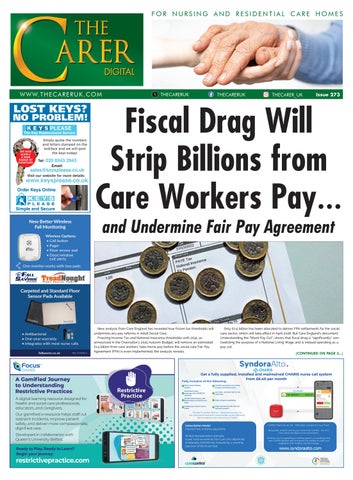
Care England warns that frozen income tax and National Insurance thresholds will remove an estimated £1.4 billion from care workers' take-home pay before the Fair Pay Agreement even comes into force in April 2028.
Let that sink in. While government trumpets its commitment to fair pay for care workers, fiscal drag will quietly strip £1.4 billion from their pockets.
Meanwhile, only £0.5 billion has been allocated to deliver the Fair Pay Agreement itself. The government is taking three times more from care workers than it's giving back.
This really is unfair, and in real terms leaves care workers very little better off – possibly worse off by the time inflation is factored in.
We've just seen a U-turn in the hospitality sector regarding business rates after a hard and sustained campaign. Watch out this year for similar campaigns for the care sector.
The sector needs to organise, mobilise and make its voice heard. Care providers, care workers and families need to unite behind a clear message: enough is enough.
The cost of care is indeed the elephant in the room. But elephants don't go away if we ignore them. They just get bigger, heavier and more impossible to move. Scotland tried to tackle this elephant and found the task beyond its means. England's elephant is ten times larger.
Unless we confront the fundamental question of how we properly fund social care –not through accounting tricks or fiscal sleight of hand, but through genuine reform backed by genuine resources – we're simply postponing the inevitable crisis. And every day we postpone it, the crisis grows worse.
The question isn't whether we can afford a National Care Service. The question is whether we can afford not to have one. But based on Scotland's experience and current government policy, we appear to be heading towards finding out the hard way.
We'll be watching the Casey commission's work closely. But we won't be holding our breath.
I would encourage our readers to sign up for our bi-weekly digital newsletter at www.thecareruk.com and follow us on social media for all the latest news.
I can always be contacted at editor@thecareruk.com
The Carer is published by RBC Publishing Ltd, 3 Carlton Mount, 2 Cranborne Road, Bournemouth, Dorset BH2 5BR. Contributions are welcome for
or damage. Views expressed within this publication are not necessarily those of the publisher or the editorial team. Whilst every care is taken when compiling
the
will assume

responsibility for any effects, errors or omissions therefrom. All rights reserved, reproduction is forbidden unless written permission is obtained. All material is assumed copyright

Care England’s modelling shows that fiscal drag caused by thresholds remaining frozen until 2031 following the decision taken by this Government in the 2025 Autumn Budget, significantly contradicts the purpose of a National Living Wage; and is instead operating as a “silent pay cut”, leading to sub-inflation pay awards across adult social care, with a growing share of headline pay increases absorbed through higher deductions before they reach workers.
LOSE PAY “EACH YEAR”
A care worker, the report says, paid at the National Living Wage will lose take-home pay each year purely because thresholds are frozen, before any change in hours, role, or seniority. This effect applies whether a worker is part-time or full-time, making it a simple and unavoidable consequence of the tax system rather than individual working patterns.
When these individual effects are aggregated, the scale becomes clear. Fiscal drag removes hundreds of millions of pounds from care workers’ take-home pay each year. By 2028/29, the annual loss is estimated at around £720 million, rising to close to £1 billion per year thereafter.
Even if only around 80% of the adult social care workforce were above Income Tax and National Insurance thresholds, reflecting earnings data that places the 20th percentile of care worker pay close to the personal allowance, fiscal drag would still remove hundreds of millions of pounds from care workers’ take-home pay each year by 2028/29.
Key findings of the report are:
In 2026/27, frozen tax thresholds will remove the equivalent of around 0.7% of pay from the adult social care workforce, costing workers approximately £230 million in take-home pay that year.
• By 2027/28, the annual loss rises to around £470 million, equivalent to around 1.5% of pay.
In 2028/29, the first year the Fair Pay Agreement takes effect, frozen thresholds remove around £720 million, equivalent to over 2% of pay.
With a cumulative cost since 2025/26 of £1.4 billion. By 2029/30, frozen thresholds will be removing the equivalent of over
3% of pay each year, costing close to £1 billion annually, following several years of cumulative losses that cannot be recovered with the FPA settlement.
Alongside this, frozen employer National Insurance thresholds add an immediate £41 million to provider costs in 2026/27, rising to £176 million per year by 2029/30, with a £430 million cumulative cost over four years.
Professor Martin Green OBE, Chief Executive of Care England, said: “The Fair Pay Agreement is being treated as the answer to some of the biggest challenges facing adult social care, including how we recruit and retain enough people to meet growing demand. It is being used to justify major workforce decisions on the basis that better pay will finally make care work more attractive.
“But our analysis shows that, unless Government deals with the impact of frozen tax thresholds, care workers will not feel better off in reality. If pay reform does not translate into higher take-home pay, it will not rebuild trust, it will not stabilise the workforce, and it will not deliver the change the sector has been promised by the Fair Pay Agreement. The risk now is that expectations have been raised, but outcomes will not improve, leaving both care workers and the system itself less secure than before.”
Supporting the evidence, Dr Jane Townson OBE, Chief Executive of the Homecare Association, added: “This analysis shows why so many care workers feel no better off despite rising wages. Frozen tax thresholds are quietly taking back a growing share of pay increases. If pay reform is to improve retention and recruitment, it must deliver real improvements in take-home pay, not just higher headline rates.”
The Homecare Association is calling on Government to act now through a coherent, integrated package of reform to ensure pay reform delivers real improvements in care workers’ take-home pay and a sustainable homecare system. This is vital now that international recruitment in social care has effectively ceased. This must include:
Reforming Income Tax and National Insurance thresholds for low-paid workers, so pay increases translate into genuine improvements in take-home pay rather than being eroded by fiscal drag.
• Fully funding pay reform in adult social care, recognising that frozen tax thresholds increase the level of gross pay - and therefore fundingrequired to deliver real pay parity in practice.
• Addressing the homecare funding deficit through increased central government investment. Our analysis shows we need £3.25 billion to achieve pay parity with NHS band 3 roles with 2+ years’ experience. This figure does not yet account for the additional erosion of pay caused by frozen tax thresholds, which further increases the funding required to deliver genuine pay parity in practice.
• Introducing a National Contract for Care Services, establishing a transparent, evidence-based minimum price for homecare that applies consistently across councils, the NHS and private purchasers.
• Reforming commissioning and contracting, moving away from fragmented, time-and-task purchasing towards models that support planned capacity, continuity of care and workforce stability. Care England is calling on Government to take three urgent steps to ensure pay reform succeeds:
• Increase Fair Pay Agreement funding to account for the impact of frozen Income Tax and National Insurance thresholds and protect the value of pay reform.
Use the Spending Review to act before April 2028 and address the immediate erosion of care workers’ take-home pay, rather than allowing losses to build up ahead of reform.
Ensure care workers are better off in practice by using a targeted fiscal measure, such as care worker-specific tax relief.
Together, these measures are essential if the Fair Pay Agreement is to strengthen recruitment and retention and deliver the outcomes ministers are relying on.
SYSTEM “WILL WEAKEN”
Professor Martin Green continued: “This ultimately comes down to how we value the people who provide care. Care workers are being asked to do more, to stay longer, and to believe that change is coming, while their take-home pay is quietly reduced year after year. Providers are being asked to hold services together under mounting pressure, absorbing costs that the system does not fund. The consequences are being felt now; And if the Government allows this to continue, the system will weaken further, and it will be far harder to put right later.”

By Konrad Ludkowski, Millard House (https://carefulfilment.co.uk/millard-house/about)

Does Blue Monday really exist? Or is it simply a catchy label we use to describe something we all recognise — that dip in mood, energy and motivation that seems to arrive every January, right on time, like an unwelcome guest?
In adult social care, we don’t have the luxury of debating it in abstract. If January brings a shift in confidence, movement, hydration and sleep, it can quickly show up in something far more serious: falls.
Millard House is a residential and dementia-friendly care home designed for 42 residents. We analyse our data every month, but we also compare year with year. When we compared 2023 and 2024, we were proud to see a reduction in falls of almost 30%. That’s not a small change. It reflects training, culture, digital systems, learning from incidents, and a team that genuinely cares about doing better.
And yet, one stubborn pattern refused to move. January.
In both 2024 and 2025, the curve on our chart climbed sharply in January. Higher than other months. Higher than we were comfortable with. It was like a seasonal “black month” for resident safety — and we decided we weren’t going to accept it as normal. So throughout 2025, we worked with a clear intention: prevent January from being our predictable risk month.
We strengthened what you’d expect a well-run home to strengthen. We modified our digitally recorded risk assessments for every resident in line with PROSPER methodology. We looked closely at vitamin D and calcium, especially across winter. We reviewed infection levels through
December and January and considered how illness, weakness and fatigue may affect balance. We analysed every fall in detail — not just what happened, but what led up to it: appetite, sleep, mood, hydration, mobility changes, routines.
We even made small lifestyle tweaks that can support wellbeing in older age — for example, adding decaffeinated coffee to our choice menu, mindful that sleep disruption and dehydration can quietly increase risk.
The team worked hard. Really hard. And then we reached a conclusion that surprised us, not because it was complicated, but because it was so human.
We realised that December overstimulates, and January under-stimulates.
December is full of lights, music, decorations, visitors, events, energy and expectation. Many residents enjoy it — but for some, especially people living with dementia, it can also be exhausting. Then January arrives, and suddenly the world goes quiet. Fewer events. Less colour. Less “reason” to get up, join in, or move with confidence.
And that emptiness — that post-Christmas drop — can affect how people walk, eat, drink, and engage. Which affects falls.
So we did something that might sound simple but took real discipline.
In December 2025, we intentionally slowed things down. We reduced the pressure of constant festive activity and agreed that one of our lounges would become a relaxation space: calm music, gentle routine, and — importantly — no decorations. Not because we don’t love Christmas, but because we wanted residents to have a place to rest from it.
We told families what we were doing and why. This was not “less effort”. It was strategic care.
Then in January, we did the opposite — with intention.
Under the umbrella of our 60th anniversary celebrations, we created a unique atmosphere of what I’d call calm joy — not overstimulation, not boredom, but a steady, uplifting rhythm. We brought together our champions: Hydration Champions, our Falls Prevention Champion (AET Manual Handling qualified), and the wider team who understand that safety isn’t only about policies — it’s about how people feel in the

Welcome to Blue Rain - our activity store is

building.
We introduced events that gave residents something to look forward to: Diversity Day, Hydration Games, and more engagement with partner organisations delivering gentle fitness and entertainment. Our friends from RETHINK Art and Social Group supported residents to prepare decorations for our final big celebration on 21 January. We launched Millard Choir with very own song. The home felt alive — not noisy, not chaotic — just purposeful and warm.
And something fascinating happened.
Residents felt different. Staff felt different. The building felt different. There wasn’t that “January drop” into greyness. There wasn’t that sense of “nothing happening now”. We didn’t remove risk by pretending it doesn’t exist — we reduced it by changing the emotional weather inside the home.
Now, let me be honest: working in this grey area is risky. When you make a link between falls and psychological needs — between safety and atmosphere — you need humility. Things can go wrong. Your thesis can be wrong. Correlation isn’t always causation. And no care home should ever promise magic.
But we measured outcomes, and we learned.
In January 2026, our residents experienced only few falls — a significant reduction compared with January patterns in 2024 (80% reduction) and 2025 (70% reduction). For us, that mattered. Not as a headline, but as a message: seasonal falls risk can be influenced, and wellbeing can be a real part of prevention.
So, do I believe in Blue Monday? Not really. Not as a fixed day with fixed power. But I do believe in something else: a “blue mindset” that can settle over winter if we let it — and I believe care homes can actively design against it.
The lesson from Millard House is not that we found a miracle solution. It’s that we stopped treating January as inevitable. We used data, yes — but we also used curiosity, courage, and the willingness to ask a different question:
What if we treated atmosphere as a safety intervention, not just a “nice extra”?
This January, we created sunshine. Not the weather kind — the human kind. And it made people steadier on their feet.

• We specialise in the sale and purchase of quality used wheelchair accessible vehicles and ambulances.
• They can be bought as seen or refurbished and sign-written to your own requirements.
• Fully serviced, new mot & warranty
• Engineers inspection supplied if required.
• Free delivery
•
•
•


Alzheimer’s Society has published – for the first time – data revealing the true extent of delays to discharge from hospital for people living with dementia, and the knock-on effect for NHS winter pressures. Figures show that around a quarter (24%) of people aged 65 and over who are fit to be discharged but are kept in hospital for a week longer than necessary are believed to have dementia – nearly 29,000 people in one year.
The NHS England data, analysed by HSJ Information and Alzheimer’s Society, also shows the impact of dementia on delayed discharge gets worse the longer people stay in hospital. The proportion of people believed to have dementia rises to almost a third (31%) for patients kept in for at least 21 days longer than they should be.
Delayed discharge from hospital happens when someone is deemed medically fit for discharge but is unable to return home. While the insights released today do not include the reasons for delays, it is well known that the causes are often poor planning and availability of dementia-appropriate follow-on support in health and social care services.
Delayed discharge reduces the numbers of beds available, creating bottlenecks that affect other parts of the NHS and exacerbate current winter pressures.
Staying in hospital unnecessarily increases a person’s risk of complications. Delayed discharge can be especially damaging for people living with dementia, who are more likely to struggle with the unfamiliar and often distressing hospital ward environment. Risks include infections, falls, worsening cognitive function, poor mental health, malnutrition and dehydration.
The figures also reveal wide-spread variation at a local level, with some integrated care boards (ICBs) faring much worse than others. For example, Suffolk and North East Essex ICB reports that one in five people (19%) aged over 65 kept in hospital for 21 days longer than necessary were believed to have dementia. This proportion more than doubles at North Central London ICB, where 44% of over 65s kept in longer than 21 days were believed to have dementia.
Michelle Dyson CB, CEO of Alzheimer’s Society said: “Every year, the NHS faces extreme winter pressures and we see time and time again the struggle to cope with the numbers of people needing urgent care. It is clear from these figures that dementia is a key part of the puzzle. People living with dementia are being left stranded in hospital, which is neither good for them nor the NHS.
“Tackling dementia care and support would make a huge difference to the NHS’s ability to cope at this time of year. Early diagnosis and
access to appropriate services can help to prevent hospital admissions in the first place, while better care and support would also mean those in hospital could leave when they are well enough.
“The Government has a once-in-a-decade opportunity to fix this, as it prepares its new blueprint for dementia health and social care, the Modern Service Framework. Dementia is the UK’s biggest killer and the greatest challenge facing health and social care services. The new plan must rise to the magnitude of the challenge, improving care to keep people healthier for longer and ultimately reduce the devastation caused by dementia.”
Martin Farran, 64, is a semi-retired director of social care services who lives in West Yorkshire. His mum, Sarah, is 88 and lives in a care home in Lancashire. She was diagnosed with Alzheimer’s disease in 2018.
Sarah has had multiple hospital admissions over the years as a result of falls and urinary tract infections (UTIs). Once in hospital, she has routinely been kept in longer than necessary, despite a care package being in place for her to return to her accommodation.
In 2023, Sarah spent a month on a surgical ward. She had not had –and nor did she need – surgery. Martin was away at the time and says his sisters were fobbed off when they asked questions about why she was there and when she would be discharged. Martin eventually insisted on taking her home, but even then had to persuade staff that he could come back to the hospital later to collect a prescription, instead of keeping her in several more hours to wait for it.
Martin says: “I know from my professional career how big a challenge dementia is for health and social care but it wasn’t until mum became unwell that I understood the gravity of what it is to live with it. I am generally very positive about the NHS – and the staff who have looked after mum at various times have been very kind – but the system just isn’t set up to deal with dementia.
“When she was in sheltered accommodation, nearly every fall or UTI resulted in a hospital visit, which was completely unnecessary. Those hospital stays really affected mum. The staff don’t usually have the time or the training to talk to patients, get to know them and help them understand what’s happening. As a result, she was confused and very isolated, which wasn’t good for her mental health. Her physical health has taken a hit too – if you don’t support someone with dementia to stay active, their mobility can decline very quickly.
“Now she is in a care home, she’s getting much better support. They are better equipped to manage dementia, which prevents the need for disruptive hospital visits. With my mum, for example, they are good at
helping her stay hydrated, which in turn reduces the risk of UTIs and falls. She’s finally getting the dementia-specific care she needs and the impact is really clear – her physical health is good, she sleeps really well and she has people around her for company, which makes a huge difference to her mental wellbeing.”
Professor Martin Green OBE, Chief Executive of Care England, said: “The system is not working for people with dementia, and I am very grateful for the important work Alzheimer’s Society is doing to bring this issue to light.
“Social care should be seen as a critical partner to the NHS, receiving the funding needed to deliver the best outcomes for people living with dementia. This is particularly important in the context of winter pressures; the capacity in social care needs to be utilised in order to ease pressure on the NHS and deliver for patients.”
Adam Gordon, Professor of the Care of Older People atthe Academic Centre for Healthy Ageing, Queen Mary University of London,and Chair of Alzheimer’s Society’s Clinical Advisory Group, said:
“Thesefigurespaint a stark picture of delayed discharge from hospital for people living with dementia.As a practicing clinician, I see the real trauma that these delayscause topeople living with dementia and their families.
The knock-on effect caused byunnecessaryadditionalpressure on the NHS during its busiest winter monthsmakes it difficult for us to give our patients the care they deserve.
“That’swhy we need toaddress the root causes of avoidable hospital admissions, byimproving early andaccuratediagnosis, and the quality of care and support people living with dementia receive.We also need moretimelyand expert care for people living with dementia when they need to come into hospital, to ensure they can return home promptly and in the best possible health.The Modern Service Frameworkfor Frailty and Dementia offers a vital opportunityto fix these foundations,throughaclear focus on improving dementia care pathways. We must make the most of thisopportunity.”
Rates of delayed discharge from hospital have risen steadily since the pandemic but as yet data on dementia specifically has not been publicly available.
The data comes from NHS England and has been analysed by HSJ Information and Alzheimer’s Society. It includes use of private beds by the NHS. In total, keeping people living with dementia in hospital unnecessarily accounts for 584,080 bed days, which the charity estimates cost the NHS £328m in 2024/25.

Financial and legal planning can seem complicated and overwhelming, particularly when it comes to supporting ageing parents or older loved ones. When there is already a lot to think about day-to-day, such as health concerns and care, these decisions are often delayed or overlooked despite being important for protecting someone in case they lose capacity or pass away unexpectedly.
Discussing these topics can be personal and difficult for both parties.
However, having these conversations early can provide reassurance for the whole family. To help make the process easier, Andrea Layton Care Home Manager of Barton Manor, part of Care UK shares four decisions your loved one needs to make, and how you can support them.What is Lasting Power of Attorney?
“A Lasting Power of Attorney (LPA) allows someone you trust to step in and make decisions on your behalf if you are no longer able to do so yourself,” explains Andrea, from the care home in Cambridgeshire.

“In line with legal guidelines in the UK, a person has mental capacity if they can fully understand the relevant information, remember the details for long enough to make a decision, weigh up the different options and communicate their choice. Communication doesn’t have to be verbal; it could be through gestures like a nod or shake of the head – it could just be by blinking.”
1. SET UP LASTING POWER OF ATTORNEY FOR PROPERTY AND FINANCES
“Helping your loved one set up a Lasting Power of Attorney for their property and finances is incredibly important. It enables a trusted person to help manage things like property, bank accounts, investments and bills if a loved one is no longer able to do so themselves.
“This type of LPA can also be used while someone still has capacity, if they choose, for example if they need support managing finances day-to-day. Whilst many people choose to seek help from a solicitor, it isn’t a legal requirement, and the forms can be done using the government process. However professional advice can be helpful in more complex situations to avoid costly mistakes.”
“If this has not been set up and your loved one loses capacity, a family member would have to apply to court to be appointed, which can be a costly and long process.”
2. SET UP LASTING POWER OF ATTORNEY FOR HEALTH AND WELFARE
“A Health and Welfare Lasting Power of Attorney allows a nominated person to make decisions about care and medical treatment if someone loses capacity. This can include choices around care routines, medical treatments or moving to a care home,” says Andrea.
“If this has not been set up, your loved one loses the right to choose who they want to represent their decisions if they lose capacity, and the decisions will fall to medical profes-
sionals, or a family member will need to apply to court.”
3. MAKE A WILL
"Often completed at the same time as setting up a Lasting Power of Attorney, a will is another incredibly important legal document your older loved one should have in place. It sets out exactly who will receive your loved one’s property and possessions when they die.”
"Everyone should consider making a will as soon as they have something of value to pass on, for example, owning their home. Whilst it can be a difficult topic to discuss with your older loved one, having a will in place is the only way they can be certain their wishes are followed.”
"Without a will in place, an estate will be distributed by legal default, which may mean people such as unmarried partners or close friends are not provided for, even if that was your loved one’s intention.”
4. PUT A CARE PLAN IN PLACE
“A care plan helps your loved one control what treatment and care they receive in the future, should their capacity decrease or their health conditions progress. It can be a collaborative document involving family and care professionals, ensuring your loved one is going to continue to be safe, content and their wishes are being met,” says Andrea.
“Whilst not a legal document, this plan is invaluable for budgeting and helping arrange your loved one’s care. The plan can change over time depending on circumstance, always remaining person centric. The plans give health care professionals a clear understanding of a person’s wishes and requirements, should they be unable to convey this. The best way to get started with a care plan is by having a care assessment – you can do this by contacting your local council.”
“At Barton Manor, we work closely with prospective residents, family members and their current care professionals to ensure the transition and ongoing care of your loved one is smooth. With all these plans, your loved one is at the centre of why all the decisions are being made. Although it can be difficult to set these things up, it is very often in their best interests to persevere.”
In April 2025, the Supporting the Provider Market (STPM) team in County Durham published a new report evaluating the use of pobroll® — a waterproof bed-bathing wrap designed to improve dignity, comfort, and ease during personal care.
Written by Pat O’Brien of pobroll
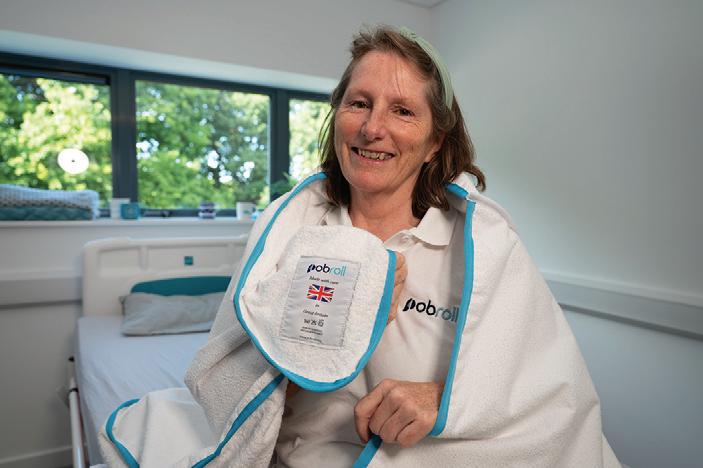
This evaluation was carried out across 10 care homes with high numbers of residents living with dementia. Each setting was given one or more pobroll® units and invited to share feedback through a structured survey. The findings reveal how even simple tools can make a significant difference in everyday care.
How was pobroll® used?
Most care homes used pobroll® daily or several times per week, showing it quickly became part of regular practice. Staff noted that one of the biggest challenges was not having enough units — all homes requested additional stock after the trial, highlighting a clear appetite for wider adoption.
What did care teams think?
Feedback from the care homes showed strong support for the tool:
Ease of use was rated highly, with an average score of 4.4 out of 5. Staff found pobroll® straightforward to incorporate into care routines.
Training was rated slightly lower, at 3.8 out of 5, suggesting that while the wrap is easy to use, additional training resources could improve onboarding for new users.
Resident response was positive. Three in ten care homes reported improved mood or behaviour dur-
ing bed bathing for dementia patients.
• Key benefits included greater warmth, coverage, and dignity for residents, especially those who might find conventional methods distressing. Some teams also found it particularly useful for end-of-life care Would they recommend pobroll® for bed bathing for dementia patients?
Absolutely. Homes rated their likelihood to recommend pobroll® at 4.3 out of 5, with half of respondents giving it a full 5 out of 5. The overall feedback was clear: this is a valued, meaningful addition to personal care.
Would they recommend pobroll® for bed bathing for dementia patients?
The results of this trial reinforce what many professionals already believe — that small, thoughtful design changes can significantly improve care. For residents who are bedbound or living with dementia, personal care can often be a distressing experience. But with the right tools, it doesn’t have to be.
The pobroll® isn’t a complex device. It’s a simple, dual-layered cotton towelling wrap. But its thoughtful design — offering full coverage, comfort, and support — makes a real difference where it matters most.
If you’re part of a care home, hospice, or hospital and would like to explore how pobroll® could benefit your residents or service users, get in touch. We’re here to support compassionate, dignified care — one small change at a time.
See the advert on the facing page for details, or
Councils have called for a collaborative role in negotiations to improve the pay and conditions for care workers, with local authorities fearing they are being asked to ‘shoulder the policy’s risk without having a meaningful say’.
Last Autumn the government announced £500m for its first Fair Pay Agreement, designed to improve pay and conditions for care workers, allocated from 2028/29 to councils. The government suggests this could fund a 3% pay rise but has only committed to fund the Fair Pay Agreement for a year.
Ahead of the agreement being introduced, an Adult Social Care Negotiating Body is to be constituted this year to begin negotiating improvements in wages and terms. However, this will platform unions and care providers only, with local government to be at best offered an ‘observer role’, despite councils being responsible for commissioning and funding the majority of care services in England.

The County Councils Network argues local government should have a full and formal role in negotiations, with local authorities the largest commissioners of adult social care in England and holders of responsibilities to local care markets.
New modelling by LaingBuisson commissioned by the CCN shows rolling out a 3% increase across all parts of the social care system, including what the NHS and private ‘self-funders’ pay for care, could cost £853m a year. Unless government fully funds these costs, a 3% increase could create a £350m shortfall, which would be likely to fall on already-stretched councils.
With no commitment beyond the initial £500m and growing concern that this sum will be insufficient by the time the agreement is introduced in 2028, the CCN warns that unless the government commits to fully funding Fair Pay Agreements – and future governments funding them beyond this Parliament – there could be ‘serious unintended consequences’ to what is a well-intentioned policy.
Local authorities would be footing the bill at a time when their adult social care budgets are under signifi-
cant strain. Last week, the CCN released new analysis revealing that councils will be spending £16.5bn more a year on services by 2028/29 when the first Fair Pay Agreement is set to be introduced, compared to what they are spending this current financial year.
With scarce local government funds to pay for these increases, councils may have little choice but to reduce provision of and access to services, leading to poorer experiences for those who draw on care.
There are also concerns that some providers may hand contracts back to councils if they cannot afford higher wages, leaving vulnerable people in limbo. Higher wages could also push more private self-funders to seek council support earlier, adding further pressure to public finances.
If pay rises were negotiated above 3%, the financial impact of a Fair Pay Agreement would be even greater. LaingBuisson’s modelling for CCN shows a 5% increase could cost nearly £1.5bn in 2028/29 – three times the funding currently set aside by government.
Cllr Glen Sanderson, Adult Social Care Spokesperson for the County Councils Network, said: “The Fair Pay Agreement is a positive and much-needed policy.
The care sector has long struggled to recruit and retain staff, and improving pay and conditions for care workers who do a brilliant job is absolutely right.
“With negotiations set to begin this year, it is incomprehensible that councils, the largest commissioners of care services are effectively spectators. We have a statutory duty to our residents and to manage our care markets yet we are being asked to shoulder the policy’s risk without having a meaningful say.
“Unless central government fully funds these pay increases, there could be serious unintended consequences, with councils unable to absorb the costs involved, even at a 3% wage rise. We do not want to be put in the position of having to cut services and reduce access to social care.
Rather, we want to collaborate to make Fair Pay Agreements a success, but we need councils to have a full and formal role on the negotiating body to do so”.
to continuing to support the organisation as it grows its impact and reach.”
The sector-driven platform, which works to raise standards and enhance public awareness of social care, aims to challenge outdated perceptions whilst building a national community of ambassadors and supporters across the care sector.
Championing Social Care delivers innovative programmes designed to highlight the work of those who live and work within social care, with the ambition of creating a future where the sector is valued, celebrated and sustainable for generations to come.
Speaking at a reception attended by more than 70 Championing Social Care Ambassadors, Avnish Goyal said: “Championing Social Care goes from strength to strength. I am incredibly proud of what we have built together – a movement that celebrates the people at the heart of social care and brings their stories into the public eye. I am delighted to hand over the role of Chair to Vishal Shah, who brings deep sector experience, values-driven leadership and enormous enthusiasm for our mission. I look forward

Vishal Shah added: “It is a real privilege to have been elected into the role of Chair of Championing Social Care at such an important and exciting time. Our mission to ensure social care is understood, valued and celebrated has never been more vital.
“Through programmes such as Care Sector’s Got Talent, Care Home Open Week, The Great British Care Cycle Relay, the Care Sector Christmas Lunch and new initiatives including the CSC Masterclass and the ‘Who Cares Wins’ care careers conference, we are creating powerful opportunities to showcase excellence, talent and innovation across the sector.
“Together with our Patrons, Ambassadors, supporters and partners, we will continue to build pride in social care, strengthen public understanding, and help create a future where the sector and its workforce are truly recognised for their transformative impact.”
Avnish Goyal will remain an active supporter of Championing Social Care and a member of the Board of Directors, supporting the organisation as it seeks to expand its reach, deepen public engagement and strengthen its national voice.

The cast was made up of staff members as well several residents, with Joanne carefully scripting the panto which short lines to allow residents living with dementia fulfil their roles.
The home's dining room was converted into a stage, and the audience was made up of a mixture of residents and their family members. MHA Greenways provides residential and residential dementia care for our 44 residents.
Speaking after the performance Joanne said: “Everyone had a great time, and it was lovely to see our residents having so much fun.
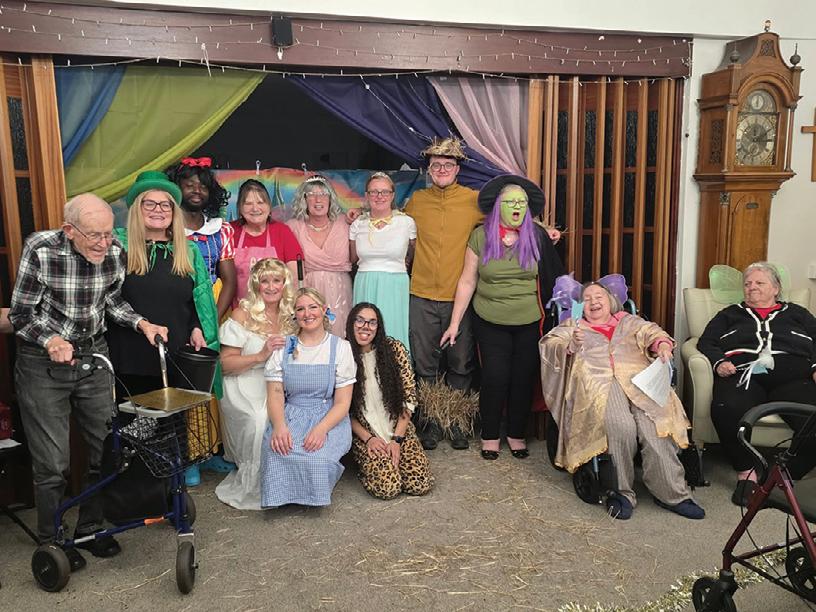
“I must have watched the movie about half a dozen times, to get a grasp of the lines.
“I wanted to make the pantomime as inclusive as possible so that's where the idea of making it dementia friendly came in.
“Our residents were brilliant in remembering their lines and all of them deserve a lot of credit.
“I made sure to include some humour to keep guests entertained.
“The audience was great on the day, the performances of both the residents and staff kept them engaged and you could see how much they were enjoying themselves.
“We received some lovely feedback from the audience and from loved ones on the home's Facebook page.
“Other MHA homes have also been inspired by this, and I do feel that other homes will attempt something like this going forward.”





By Lisa Morgan, head of the nursing care fee recovery team at Hugh James Solicitors

The Government’s new Market Sustainability and Improvement Fund (MSIF) 2025-26 report has published, illustrating the increasing pressures that the adult social care sector is facing. The report shows a 5 – 6% increase across most adult social care services as the cost of care homes continues to rise sharply. With most councils paying below the true cost of care, a funding gap has to be filled.
That gap comes in the form of ‘top-up fees’, which are extra weekly payments that a care home charges when fees become higher than the rate councils are willing to pay. These fees can reach hundreds of pounds a week which are most often paid for by family members.
Care homes, which can reach upwards of £6,000 per month, are under scrutiny over ‘top up fees’, specifically who should be liable for paying them and in what circumstances. A top-up fee becomes payable when the cost of a person’s care home exceeds the council’s budget. Councils’ budgets operate a base funding to pay for those people who qualify, but above that base, a third-party contribution, or top up fee, may be collected.
Given the new figures published by MSIF, councils are likely to feel increased pressure to rely more on top up fees to help bridge the gap between their rates and the real cost of care. However, where top up fees are concerned, care homes would do well to recognise that many councils are failing to fulfil their legal
obligations with regards to charging these fees.
People who qualify for council-funded care do so because their capital is under £23,250, meaning the council must find them an affordable care home. Only where care homes fees increase above what the council’s budget will allow or where patients’ loved ones choose a more expensive care home do top up fees become payable.
When top up fees are due, the council has a legal duty to offer the family a genuine alternative within the council’s budget; this must be done in a fully informed, transparent manner so that the family has fully understood what they are committing to.
There have been examples where councils have failed to provide these options where top up fees are concerned, landing them in hot water with the ombudsman. Birmingham Council, for example, was mandated to pay 11 years’ worth of top up fees having failed to provide an affordable alternative care home or provide clear information about the fees to one family. Similarly, Derbyshire Council was made to refund top-up charges as it failed to demonstrate that it had offered the resident a ‘genuine choice’ of alternative care home.
These cases should act as warnings for councils who do not understand the risks associated with charging family members top-up fees willy nilly, especially given the sharp rise in care fees over recent years. The cost of care means councils are often struggling to find placements at their usual rates. Turning to families to make up this difference, instead of increasing what they are prepared to pay, can be a risky move.
A council is legally required to cover the full cost of a person’s care if there is no affordable care home alternative. This is irrespective of the budget pressures facing councils, rather it is their legal duty. They can only ask family members for top up fees if they have provided a suitable, affordable option first which the family has freely chosen to decline in favour of a more expensive care home.
At a time when councils are under significant budget pressures, it is more important than ever that they follow their legal duties where top up fees in care homes are concerned. The financial and reputational risks of failing on this matter far outweigh the cost of funding a placement properly in the first instance. It could mean years of repayments, significant compensation and huge administrative burdens.
Margielyn Gonzaga, Home Manager at The Burlington care home in Shepperton, has been named Recipient of the Eminent Woman of Impact Award at the 2026 Women’s Community Impact Awards Dorset.
The awards, organised by Arts for Survival in celebration of International Women’s Day, recognise women making profound differences in communities across Dorset, the UK, and beyond. Gonzaga will receive her award at a gala ceremony on Saturday, 7th March 2026, at the Hilton Bournemouth Hotel.
The recognition celebrates not only Gonzaga’s extraordinary leadership at The Burlington, but her wider commitment to empowering others and creating lasting change across multiple communities.
“I’m genuinely humbled to receive this award,” said Gonzaga. “But honestly, any impact I’ve made comes from working alongside incredible people, our team at The Burlington, the women I serve with at Women’s Voice, and the Aklanon community here in the UK. We create spaces where people feel valued and where their voices matter. That’s what drives me, and knowing that this work has made a difference means the world.”

Gonzaga’s impact reaches far beyond The Burlington’s walls. As an Executive Board Member of Women’s Voice and President of the Aklanon Community in the UK and Ireland, she has been a tireless advocate for the vulnerable and a champion for community empowerment. She has also led international charitable initiatives, bringing her passion for service to a global stage.
With more than three decades of nursing expertise, Gonzaga has redefined excellence in healthcare. Originally from the Philippines and a member of the UK’s Nursing and Midwifery Council since 2003, she has transformed care standards and mentored the next generation of nursing leaders with compassion and integrity.
Under Gonzaga’s leadership, The Burlington has earned the Care Quality Commission’s highest possible rating, ‘Outstanding’, for being responsive to people’s needs, and achieved ‘Good’ ratings across all other categories.
The home has also won the Physical Activity Award at the National Activity Awards in 2025 and was crowned Champion of People and Progress at the Surrey Care Awards 2025.
Gonzaga has pioneered intergenerational programmes with local schools, including partnerships with Saxon Primary School that bring children and residents together for activities like
National Puzzle Day. These initiatives create moments of genuine joy that benefit both generations, fostering relationships that enrich the whole community.
Ameet Kotecha, Founder and Managing Director of Boutique Care Homes, said: “This award recognises what the company sees every single day, a leader who doesn’t just manage, but truly cares.
Margie’s passion for people, her commitment to excellence, and her genuine love for residents, their families, and the team shine through in everything she does. She’s created something special at The Burlington: a place where residents feel at home, families feel reassured, and staff feel inspired to be their best. Margie embodies everything Boutique Care Homes stands for.”
The cleaning and facilities management landscape is shifting faster than ever. As we move into 2026, the industry is no longer just about "maintenance"—it’s about technology, sustainability, and the well-being of the people who keep our buildings running. For professionals across the North and beyond, there is one date that needs to be circled in the calendar: 18-19 February.
The Cleaning Show returns to Manchester Central, transforming the heart of the city into a hub of innovation. Whether you are managing a healthcare estate, a retail portfolio, or a growing cleaning enterprise, the challenges remain the same: how do we drive efficiency while managing rising costs and labour shortages? This year’s event is designed to answer those questions. Moving away from the buzzwords of the past, the show floor is a practical, "boots-on-the-ground" environment where the latest tech—from autonomous robotics to smart building sensors—is available for live demonstration. It’s one thing to see a machine in a brochure; it’s quite another to see it navigating a busy floor in person.

of new sustainability legislation, the roadmap to Net Zero, and strategies for better staff retention. In an era of remote meetings, the value of face-to-face networking at Manchester Central cannot be overstated. It’s where deals are struck, partnerships are formed, and the "unfiltered" advice of your peers is shared over a coffee.
For those in the healthcare and social care sectors, the stakes are even higher. The show offers a unique opportunity to source non-disruptive, highperformance solutions that meet stringent hygiene standards without compromising on resident or patient comfort.
Why pre-register? Time is the most valuable asset in facilities management. By pre-registering now, you ensure a seamless entry to the event, bypassing the queues and gaining early access to the exhibitor list and seminar schedule. Most importantly, trade registration is completely free for those who sign up in advance.
But the show is more than just a showroom. It is a vital meeting point for the industry. The seminar programme features some of the sector’s brightest minds, tackling the issues that matter right now: the impact
Don’t miss the chance to see where the industry is heading. Join us in Manchester this February to find the tools, the tech, and the people that will help you future-proof your business.
Secure your free pass today at www.thecleaningshow.co.uk
Nutrition & Hydration Week will return from 16th to 22nd March 2026, with care homes and NHS Trusts across the UK expected to participate in the week-long celebration of good nutritional practices and hydration awareness.
Now in its 14th year, the initiative has grown significantly since its inception, with organisers planning a series of themed daily activities designed to engage residents, staff, and families in promoting healthy eating and drinking habits.
Daily Themes for 2026
The week will feature a different focus each day:
• Monday will kick off with a breakfast theme, encouraging participants to "start the week as you do your day" with a focus on the importance of morning nutrition.

• Tuesday has been designated "Snacky Tuesday," highlighting the role of healthy snacking throughout the day.
• Wednesday will host the week's centrepiece event – a Global Tea Party – bringing communities together for the main celebration.
• Thursday turns attention to "Thirsty Thursday," with a dedicated focus on hydration and fluid intake.
• Friday offers flexibility with either a "Fishy Friday" or "Fruity Friday" theme, promoting omega-3 rich foods or vitamin-packed fruits.
Saturday takes a more relaxed approach with "Lazy Start Saturday" featuring brunch-themed activities.
The week concludes on Sunday with "Smoothie Sunday," encouraging nutritious blended drinks and shakes.
Looking Ahead to 2027
Organisers have already confirmed dates for 2027's event, which will run from 15th to 21st March and mark the initiative's 15th anniversary. Special events and themes are being planned to commemorate the milestone.
Andy Jones, one of the organisers, reflected on the initiative's remarkable growth: "The Week has a life of its own, with us just overseeing it. It grows each year and people keep sharing their good practices and ideas that have been fantastic."
He added: "From such humble beginnings, the week grew beyond our expectations and was achieved above and beyond our day jobs. Hopefully the week can continue to move forward. With 2027 being our 15th Birthday, we intend doing some special events and themes."
Care homes wishing to participate can promote their own good practices and share key messages throughout the week, contributing to a nationwide conversation about the vital importance of nutrition and hydration in residential and nursing care settings.
Residents and staff at a Leighton Buzzard care home have taken part in Greene King’s nationwide Tub2Pub campaign in support of Macmillan Cancer Support.
Leighton Rose, part of Macc Care Group, collected 120 empty plastic tubs throughout January in aid of the recycling campaign with the help of the local community.
The people of Leighton Buzzard came together to donate their empty confectionery tubs, which were personally delivered to The Globe Inn in Leighton Buzzard, one of the many Greene King pubs participating in this year’s Tub2Pub initiative.
All tubs donated as part of the campaign are sent to a specialist plastics reprocessing centre, where they are shredded and sold on to manufacturers to be
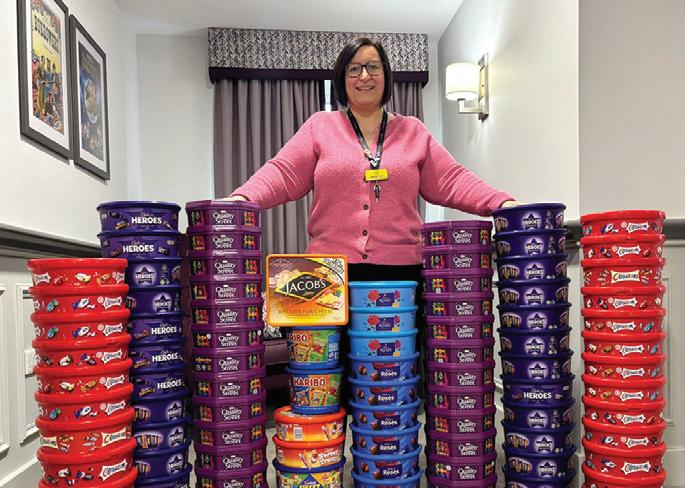
reused in place of virgin plastic. Every penny raised from the sale of the plastic goes directly to Macmillan, helping fund vital cancer support services across the UK.
In 2025, the campaign saw over 240,000 tubs collected and more than £10,900 raised for the charity, and this year’s total is expected to exceed that once again.
Bhav Amlani, Director of Macc Care, said: “We are thrilled to have played our part in such a meaningful and environmentally-conscious initiative. Supporting campaigns like Tub2Pub not only reinforces our commitment to social responsibility, but also brings our residents and local community together with a shared purpose. A huge thank you to everyone in Leighton Buzzard who donated their tubs – your kindness will help make a real difference.”

Increasing demand for services and higher thresholds for admission are leading to long waits for mental health care, CQC’s annual report into the use of the Mental Health Act highlighted today, 29 January 2026. The Monitoring the Mental Health Act 2024/2025 report, which was built on interviews with over 3,000 patients and over 700 family members and carers, revealed worrying reoccurring issues of staff shortages, a lack of beds, and inconsistencies in experiences.
WHILE THE REPORT HIGHLIGHTED THE POSITIVE IMPACT OF HARD-WORKING, CARING, AND COMPASSIONATE STAFF IT ALSO REVEALED:
• People continue to be placed far from home, with out-of-area placements on the rise even though there was a national commitment to end this practice by March 2021.

• People living in deprived areas are 3.6 times more likely to be detained under the Mental Health Act. (Compared with people living in the least deprived areas.)
• Concerns continue around racial inequalities, yet in 3 out of 4 services visited, staff hadn’t heard of the Patient and Carer Race Equality Framework (based on 103 visits carried out between January and March 2025) – a framework required of all NHS mental health services to tackle racism.
Building a positive relationship with healthcare staff is key to a person’s recovery but with nearly 1 in 10 roles in NHS mental health trusts unfilled (as of March 2025) and a reliance on agency workers, staff don’t always have the capacity to achieve this. This can mean that staff struggle to de-escalate patients in distress and are developing burn out. Meanwhile patients report feeling unsafe as there aren’t enough staff on each ward.
With not enough beds, people are being placed in inappropriate environments. This can include children being placed in adult wards, people placed far from home so that it’s difficult for their loved ones to visit, and in some cases people facing more restrictions than necessary, such as not being able to go outside even though it may be safe to do so. While some wards are clean, tidy, and designed in a way that supports people’s needs, some patients recall noisy, dirty, and loud wards, with one parent describing “blood on the walls” and a “disgusting” toilet.
People’s experiences remain inconsistent, with Black people being detained at 4 times the rate of white people. Despite this, in the majority of services visited (51%) staff had not received training about racial inequalities. (Based on 103 visits carried out between January and March 2025).
Additionally, some staff appear to lack the right skills to support autistic people or people with a learning disability. People reported feeling misunderstood or spoken to in ways that felt undignified.
The regulator is calling for a system-wide approach to improve mental health care so that people like Emily don’t need to spend months or even years of their life in hospital.
Chris Dzikiti, Interim Chief inspector of Mental Health at the Care Quality Commission said: “It’s deeply disappointing to again be highlighting the same issues of overworked healthcare workers, unequal experiences, people being placed in inappropriate environments, and ultimately people struggling to get the care they need.
“Many people who are detained under the Mental Health Act have exhausted all other avenues of care, yet they still face long waits, with families sometimes forced to supervise them constantly while they wait.
“For Black people, autistic people, and people with a learning disability, the barriers to appropriate care are even greater.
“We have a long way to go to meet the needs of people struggling with their mental health. We need a bigger, more robust workforce, enough beds to meet all needs, and appropriate support for staff so that they can provide personalised care.
“However, I do want to thank the countless hard-working people in mental health care who provide person-centred and compassionate care in these challenging circumstances.
“We welcome the revised Mental Health Act and its ambitions to improve patient autonomy, give patients a greater role in decision-making and ultimately to improve the experience of people in mental health care. We will work closely with the government and others to support these aims.”
Residents at Woodbury Manor Care Home are continuing to support local pubs as they enter their 6th year running their monthly lunch club.
The long-standing initiative sees residents visiting a different local pub each month, with several residents having taken part in the outings consistently since they first began – making the lunches a well-established part of life at the care home.
Staff at the home regularly comment that residents are actively involved throughout the experience, from choosing the pub to engaging with pub staff and other customers.
Care Home Manager, Benjamin Oni, said: “We’re lucky to have so many wonderful local pubs right on our doorstep. Spending time out in
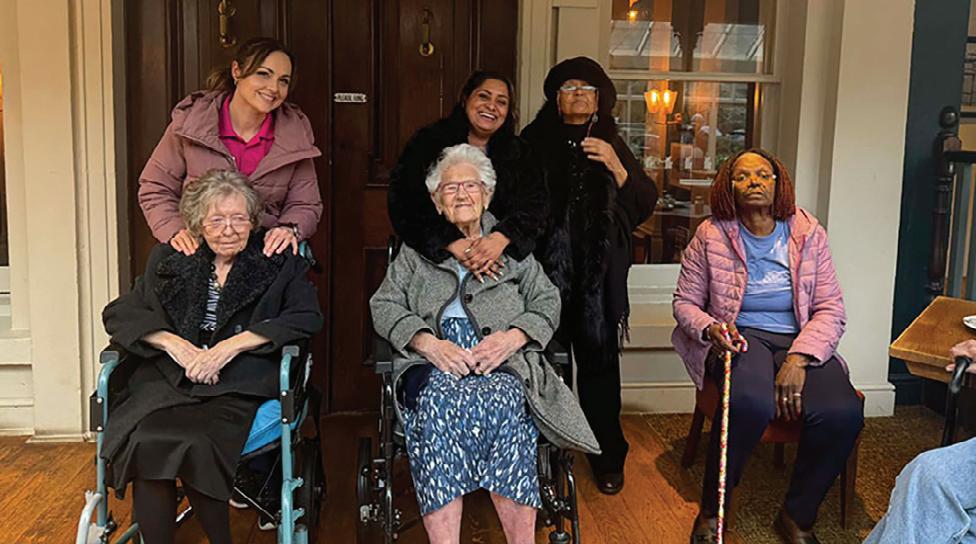
the community always has a noticeable impact on our residents. They are more confident, more engaged and take real pride in making their own decisions. These visits provide a strong sense of normality and independence, and residents continue talking about their experiences long after they return to the home.”
The monthly outings are designed to promote independence, confidence, and social connection, forming part of Woodbury Manor’s wider commitment to supporting residents’ wellbeing through meaningful activities.
The lunches also highlight the important role local pubs play as community hubs, providing welcoming spaces that bring people together.
The law is changing for care homes, but understanding your obligations has never been easier
Providing both comfort and dignity to those in your care is at the core of the Care homes profession, but when it comes to both residents and their families, one of the most important things you can offer is trust.
Moving to a care home can be an emotional time for some and transparency and fairness are key in reassuring prospective residents and their families that they will be cared for with compassion and respect - This, and compliance with the law.
Earlier this year we saw the introduction of the Digital Markets, Competition and Consumers Act 2024 (DMCCA) - a landmark piece of legislation that affects business and how they are required by law to safeguard their customer with fair trading practices. These changes may sound like legal jargon, but they directly impact how care homes operate, communicate, and contract with residents.
Compliance can be complex and that’s why the Business Companion Care Homes Guidance is essential reading for anyone working in the Care Homes sector. Written by legal experts this free and easy-to-read guide will walk you through all the steps to ensure you are safeguarding your customers and operating within the law.
WHAT’S CHANGED UNDER THE DMCCA?
The introduction of the DMCCA represents one of the biggest shifts in consumer law in over a decade. It replaces the old Consumer Protection from Unfair Trading Regulations and introduces stricter rules to protect consumers from misleading or unfair practices across

almost all sectors. For care homes, this means:
• Clearer Pricing and Transparency: The Act bans “drip pricing” which is when unavoidable fees are hidden until late in the process. Care homes must now present the full cost of services upfront, including any mandatory charges.
Fake Reviews and Misleading Endorsements: The DMCCA prohibits the use of fabricated or manipulated reviews. With care homes increasingly relying on their online reputation, ensuring authenticity is now a legal obligation.
Stronger Enforcement Powers: The Competition and Markets Authority (CMA) can now impose fines of up to £300,000 - or 10% of global turnover - for breaches. Compliance isn’t optional; it’s critical.
• and much more!
These changes underline the importance of reviewing your policies, contracts, and marketing materials. The Care Homes Guidance on Business Companion provides practical steps to help you stay compliant and avoid costly mistakes.
KEEPING CONSUMER VULNERABILITY IN MIND
Vulnerability can arise from a number of different situations and factors throughout a person’s life, such as age, health, bereavement, or financial stress. As someone working in the Care homes sector, you’re
dealing with vulnerable individuals on a daily basis and recognising these factors isn’t just good practice; it’s a legal and ethical responsibility.
The Business Companion Consumer Vulnerability Guide offers checklists and practical advice to help you identify and support your residents who may be vulnerable when it comes to things like decision making and communication, ensuring your care home delivers not only compliance but compassion.
Your Go-To Resource for Compliance
Business Companion is more than just a care home resource - it’s a comprehensive hub for businesses across a broad range of sectors. From selling online to handling complaints, delivery charges, and even net zero strategies, the platform covers hundreds of topics delivered to you through clear, easy-to-read guidance. Backed by the Chartered Trading Standards Institute and the Department for Business & Trade, Business Companion is free, authoritative, and regularly updated by legal experts.
Act Now
The DMCCA is already in force, and enforcement powers are live. Don’t wait for a compliance issue to arise - visit Business Companion’s Care Homes Guidance today. Review your contracts, pricing structures, and communication strategies and explore the wider resources available to future-proof your business against legal pitfalls.
In a sector built on trust, staying informed isn’t just smart - it’s essential.
To find out more, visit: www.businesscompanion.info
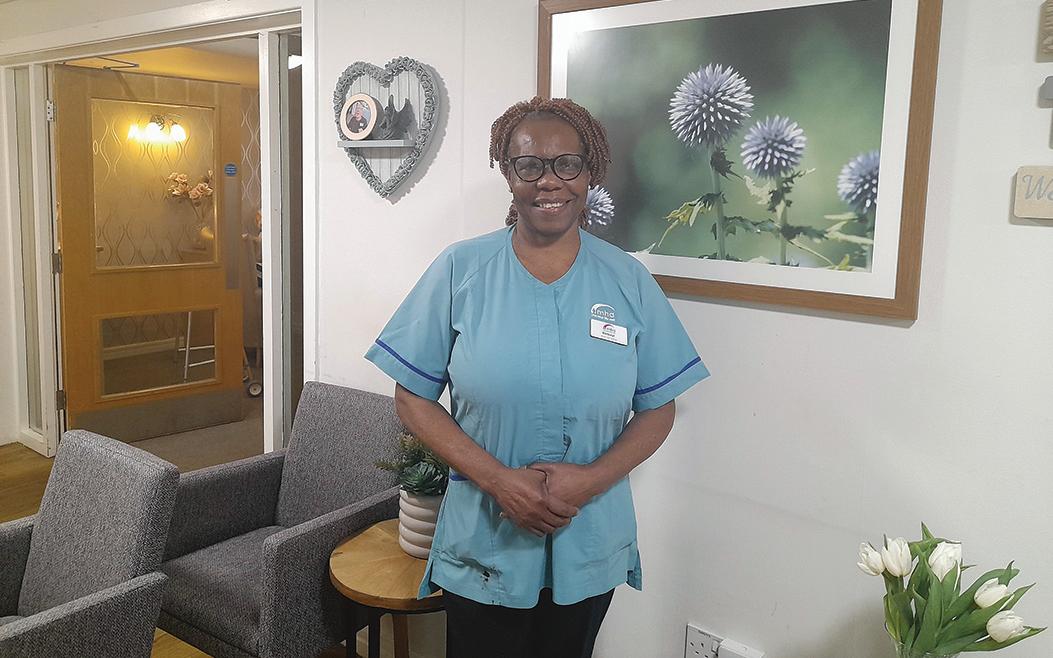
A senior care assistant at an Altrincham home says the support for development within the organisation she works for is there, but individuals have to show the willingness to succeed
Netsayi Saidi (67) works as a senior care assistant at MHA Handsworth and has been working at the home for more than 20 years. Working in care was not something Netsayi always did, and it was only after caring for her mum she realised it's something she had a huge passion for.
After moving to the UK from Zimbabwe, Netsayi started working in various care homes before applying for a permanent position at MHA Handsworth, her first full time role in care until today
Since joining the home, she has progressed from a care assistant to senior care assistant, a role she has been doing for more than 15 years. We spoke with Netsayi as part of MHA’s new initiative aiming to shine a spotlight on their senior care assistants and what led them to develop into these roles..
Speaking of her time at the home Netsayi said: “ When I arrived in the UK from Zimbabwe, I started working for an agency and one of the homes I worked at was MHA Handsworth.
“I loved the home from the beginning and when I saw they were
recruiting for a care assistant role, I applied for it immediately.
“It's been 21 years that I have been working at the home, a lot has changed but the support from management and colleagues has always been there.
“I was a care assistant for around five years and then the manage-
ment team at the time pushed me to progress and become a senior carer, something which I didn't think I was ready for initially, however when I got the confidence from management I decided to go for it.
“Part of duties include updating and checking records on nourish, management of drug rounds and doing the handover from the night staff.
“I can't see myself even considering retiring, I love my job and it keeps me busy and active, which is crucial for me.
“I love spending time with residents, they are very interesting people and talking to them is something I really enjoy.
“Progressing to a senior carer is something I would always recommend if I see the individual has the ability to progress, but it must come from them.
“You have to be prepared to learn new things, showcase your interest and willingness to learn and also not be afraid to ask questions.
“Sometimes I like to show the care assistants the additional tasks you have to do to instil confidence in them to think they can do it.
“I love working for MHA, the organisation really looks after its people, and I feel the sky is the limit with MHA. ”
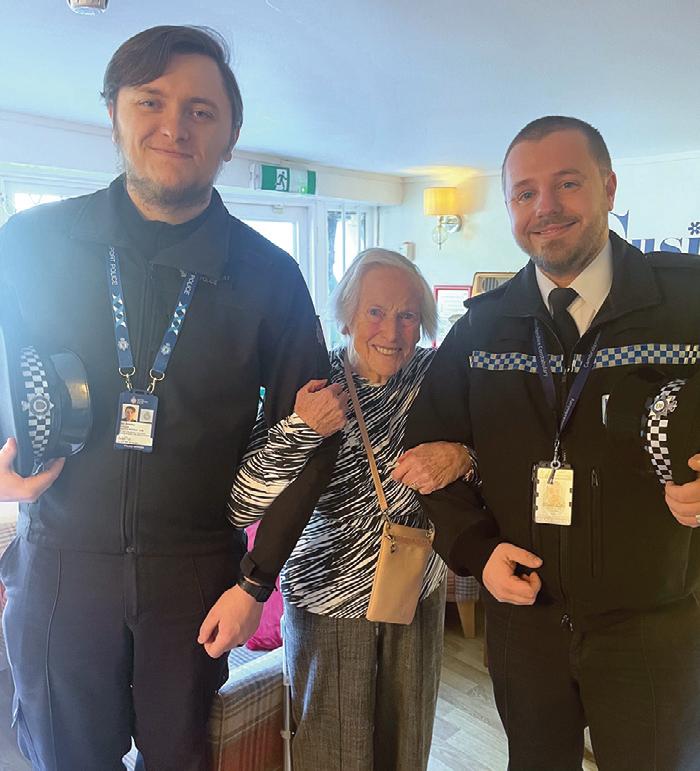
Vera Farrell, who has been a resident at Friends of the Elderly’s Little Bramingham Farm Residential Care Home in Luton since June 2025, has had a wonderful visit from the two Police Officers who helped to save and comforted her following a harrowing and shocking road accident last February.
On 24th February last year, Vera was sadly involved in a traumatic accident, which left her unconscious and stranded, lying half on and half off the pavement of a busy road in Luton. “I can’t really remember what happened,” said Vera. “One minute I was walking on the pavement, and the next I was laying on the cold concreate floor with two lovely Policemen by my side.
“Constable Jake Bowden of The British Transport Police and Constable Dan Nunn from the Cambridgeshire Constabulary (formerly of British Transport Police), were such gentlemen and I was so lucky they were there to help me. They told me that they just happened to see the accident as they were in the wrong area, literally passing by, when it happened. I do remember that, quite randomly, we got on to the subject of football – can you imagine it? There I was on the pavement with two Policemen talking about The Hatters.”
One of the Police Officers remarked that Vera’s shopping trolley had been badly crushed in the accident – and Vera’s response was immediate and heartfelt –despite the seriousness of the situation, and her sense of humour quickly shone through. “I wasn’t worried about my trolley,” said Vera. “I was more worried about my cheese sandwich inside it. I was having that later.”
Vera’s injuries were extensive, and she was air lifted by an Air Ambulance Helicopter to London’s King’s College Hospital, one of the country’s largest and busiest teaching hospitals. “I was very lucky to be taken to King’s College Hospital as it has a 24/7 rooftop helipad which has direct access for the air ambulances to its trauma centre,” added Vera.
Following surgery, which sadly included the amputation of one of Vera’s legs, and a stay at King’s College Hospital, Vera was transferred to The Lambeth Community Centre which specialises in supporting patients with their rehabilitation after an amputation. “The care I received following my operation to
remove my leg and recover, was amazing. Everyone was so kind and thoughtful,” continued Vera. “After a time, I was moved closer to home to Bedford Hospital, where the nursing team were also very kind.”
In June 2025, Vera moved into Friends of the Elderly’s Little Bramingham Farm in Luton for a respite and recouperation stay at the care home. “When I arrived, I immediately felt safe and at home,” said Vera.
“By the time I arrived for my respite break, I had already been fitted with my new prosthetic leg, and all the care team were so attentive and kind, helping me and encouraging me. They all made sure – and still do – that I was 100% safe that I was as mobile and independent as possible. Having that 24/7 continuous care and help made it an easy decision for me to make Little Bramingham Farm my new home on a permanent basis.”
“Vera is extremely active, and doesn’t let anything stand in her way,” said Jo Rumney, Deputy Manager at Little Bramingham Farm. “Vera is now known at the care home for her determination and positive outlook. She’s extremely active and doesn’t let anything stand in her way,” added Karen Charity, Activities Coordinator at Little Bramingham Farm. “She turns even a short walk into an exercise session and joins in enthusiastically with our activities. She’s a real force of nature.”
Knowing how much she wanted to see and thank Constable Bowden and Constable Nunn, Vera’s Niece, Maureen, reached out to them to see if it would be possible for them to visit her Aunt at the care home and, on 5th January, Vera’s wish was granted.
“I was over the moon to see my two ‘Policemen Stars’ again,” said Vera. “We had a lovely time catching up over a cuppa. I cannot tell you how much I appreciated them taking time out of their busy days to come to see me. They really are my very own heroes.”
“It was truly wonderful to see Vera reunited with the officers who helped save her life. She didn’t stop smiling, and it meant so much to her. Moments like this show the power of kindness and connection,” concluded Emma.
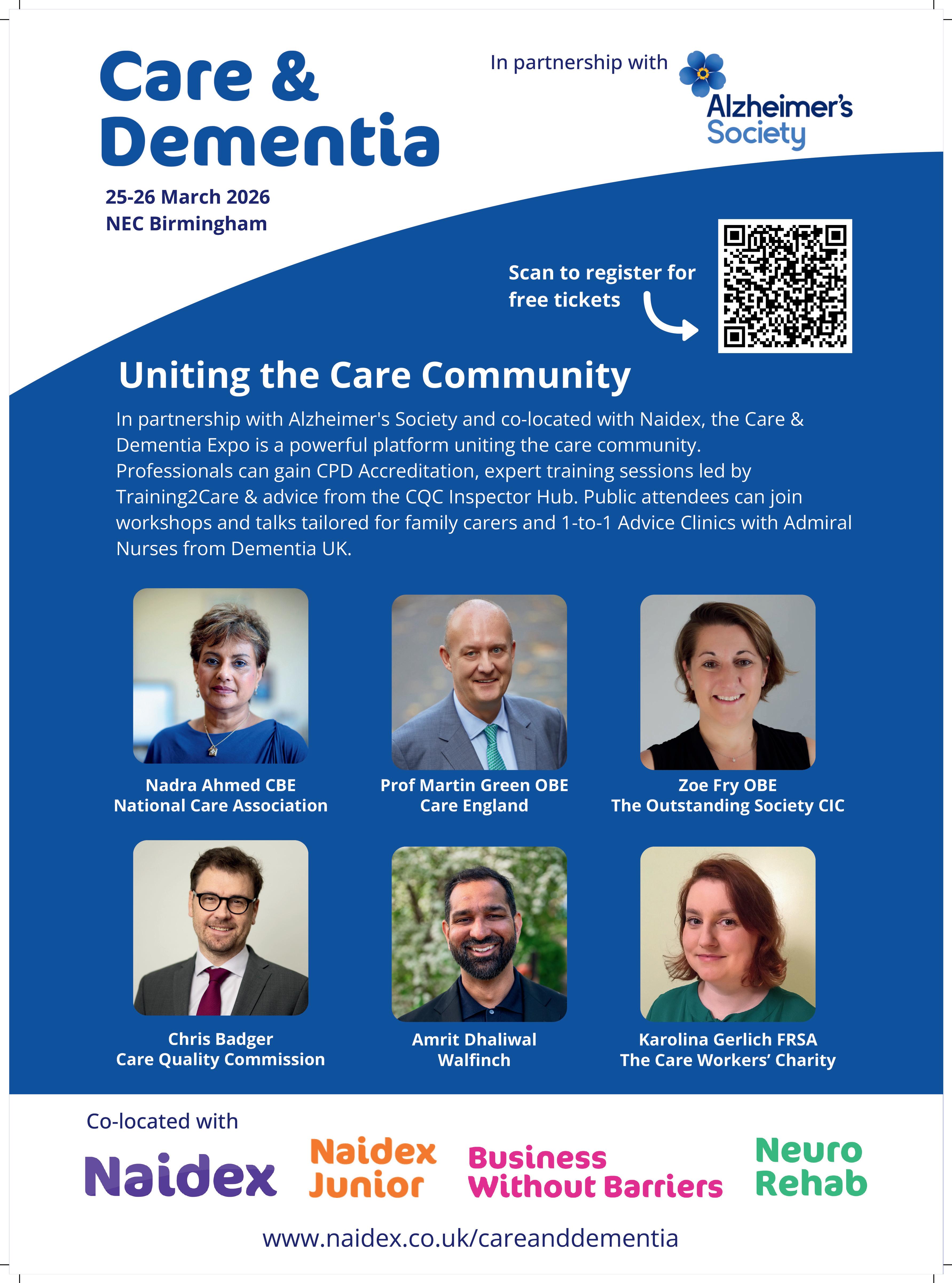
Care & Dementia is the UK’s leading event for transforming social care and improving the lives of people living with dementia. Building on the successful foundation of The Alzheimer’s & Dementia Show and UK Care Week, it creates an essential, dedicated platform for both care professionals and the public.
Taking place on 25-26 March at the NEC in Birmingham, this event represents a powerful evolution in the sector. Combined with the incredible momentum of Naidex, it creates a vibrant environment where vital communities meet to explore best practices, support services, and innovative products.
A WORLD-CLASS SPEAKER PROGRAMME
Carefully curated CPD sessions bridge the gap between industry innovation and personal care. The full programme is now live, featuring expert voices designed to provide actionable insights for every attendee.
CARE KEYNOTE THEATRE

A must-attend for those looking to stay ahead of industry trends. Featuring leading voices from the CQC, Alzheimer's Society, Dementia UK, National Care Forum, and Care England, these sessions explore policy changes, funding models, and the future of the care sector. Sessions include Where is Social Care on the Political Agenda? with Damien Green from the Social Care Foundation. This is followed by a collaborative discussion titled Building Knowledge of the Sector - One Mind at a Time, featuring Amrit Dhaliwal (Walfinch), Samantha Crawley (EQ Care Group), and Sam Monaghan (Chief Executive at Methodist Homes MHA).
DEMENTIA MATTERS THEATRE
This theatre provides practical support for both professionals and family carers. The programme features
Dementia devastates lives, innovation transforms them: Alzheimer’s Society Innovation Team (Alzheimer’s Society) and Dementia and SafeguardingProtecting Rights, Reducing Risks: Kirsty Dallison-Perry (Dementia UK). These are complemented by In Conversation: A Carer’s Perspective: Frances Lawrence (Dementia Carers Count) & Rosie Brooks (Dementia Carers Count) and a highly informative Learn about dementia from people living with dementia Q&A: Ronnie Dean, Beth Britton MBE & George Rook (Dementia campaigner). INTERACTIVE FEATURES & PRACTICAL SUPPORT
Alongside the conference sessions, the event features a range of interactive experiences designed to provide practical support. Professionals can earn up to 12 CPD points through the accredited programme while accessing tailored advice at the CQC Inspector Hub. New for 2026, visitors can access a complimentary, confidential consultation to explore available options for early dementia or mild cognitive impairment at the Re:Cognition Health Assessment Clinic. For families and caregivers, the event offers 1-to-1 Advice Clinics with Admiral Nurses from Dementia UK, the Dementia Interpreters Workshop, and immersive training experiences like the Virtual Dementia Tour and the Autism Reality Experience. Visitors can also explore the Innovation Hub to discover the latest technologies and solutions for social care and rehabilitation. Attendance is free. Ensure you are part of the UK’s

Paying privately for a care home is now the norm, not the exception for families across the UK, with new data suggesting many people are not eligible for public funding, unaware of it, or they are forced to self-fund while waiting for assessments or decisions.
New analysis from, carehome.co.uk shows that 62% of people enquiring about care expect to pay for it themselves, despite the availability of NHS and local authority funding.
The data also reveals a clear regional divide, with nearly three-quarters (73%) of care seekers in South East and South West England self-funding their care, compared with 46% in Scotland, 50% in North East England and 55% in Wales.
STARK REGIONAL INEQUALITIES IN ACCESS TO NHS CHC

The data highlights stark regional inequalities in access to NHS Continuing Healthcare (NHS CHC) – the only form of care funding that is not means tested and fully covers social care costs for adults with complex health needs.
People in the North are significantly more likely to rely on NHS funding. More than one in ten (11%) care seekers in North East England and 10% in North West England expect NHS CHC to pay for their care. In contrast, just 5% of people in South East, South West and East of England expect to receive this support.
The findings reinforce long-standing concerns that NHS CHC operates as a postcode lottery, with wide variation in eligibility and outcomes depending on location. The findings from carehome.co.uk are in line with research from the Nuffield Trust which also found a North/South divide in eligibility and funding for NHS CHC. While eligibility was higher in the North, this region also received less spending per eligible recipient, according to the research.
In response to the findings Lisa Morgan, head of the nursing care fee recovery team at Hugh James, said; “These findings are deeply troubling but, sadly, what families experience every day. Too often, people end up paying privately for care because funding is delayed, unclear or never properly explored. Families regularly seek advice exhausted and distressed, having been told there is ‘no funding available’ or left to selffund for months while they wait for assessments or decisions.
“NHS Continuing Healthcare is meant to fully fund care for people with complex health needs, yet access to it remains highly inconsistent. Many people who may be eligible are not assessed at the right time, are wrongly turned down, or are left in limbo while decisions are reviewed. The regional differences highlighted here mirror what we see in practice, where outcomes can depend more on where someone lives than on
their actual needs.
“Even where local authority funding is available, it often falls short of the true cost of care. Families are regularly asked to pay top-up fees unlawfully, without being offered a genuine alternative placement that meets assessed needs within the authority’s budget, as the law requires. What should be the exception has become routine.
“Earlier intervention is critical. Proper assessments before placements are made, transparent decision-making and access to specialist advice from the outset are essential if the financial burden of care is to sit with the public bodies legally responsible for funding it.”
Alongside NHS funding, one in five care seekers (19%) rely on meanstested local authority funding, with the highest proportions seen in Scotland (35%), North East England (25%), and Yorkshire (21%).
Again it is people living in South East England and South West England who are least likely to be in receipt of local authority support.
However, rising care home costs mean public funding often falls short, forcing families to make up the difference. Top up fees come into play when the chosen care home is too expensive for the council to pay in full, with the care seeker paying the difference between the total cost and the local authority funding. According to carehome.co.uk, 12% are paying top-up fees on top of local authority support. It is people in Wales who are more likely to pay top up fees with 18% doing so, while those in the south of England least likely to pay top up fees.
Sue Learner, editor of carehome.co.uk, said: “These figures suggest that paying privately has become the norm, not the exception. Families are often making urgent care decisions with limited information, and many don’t realise support may be available until they’ve already committed to significant costs.”
She added: “Care funding in Britain has become fragmented and difficult to navigate. With multiple routes into care – each with different rules, assessments and financial implications, many families are left confused at exactly the time when they need the most clarity.
“With the average cost of a residential care home for self-funders now close to £67,500 a year, this is a major financial decision. People need clear, accessible information much earlier, before they reach a crisis point.”
A deeply moving moment of reflection and connection recently took place at Rowena House Care Home, part of the Runwood Homes Group, as resident Averill revisited cherished memories of her late mother, who had been a resident at the home 22 years ago.
While speaking with Debbie, Lifestyle Coordinator at Rowena House, Averill shared how meaningful it felt to now be living in the same place where her mother once resided. Debbie, who has worked at Rowena House for over 40 years, remembered Averill’s mother well and suggested looking through the home’s photo archives to see if any memories had been preserved.
Together with her two daughters, Home Manager Vickie, and Debbie, Averill spent time exploring decades of archived photographs of former residents and community life at Rowena House. During this emotional and joyful reminiscence session, Averill discovered several photographs of her mother,
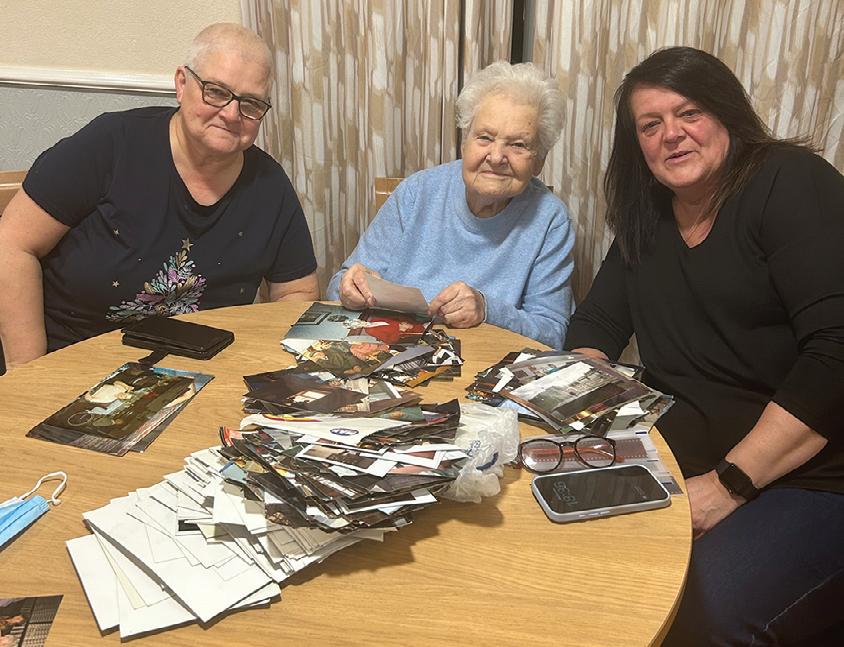
along with images of other local residents she had known and grown up with.
One particularly special moment came when Averill found the first photograph of her mum and smiled, saying:
“This is amazing — I look just like my mum.”
The atmosphere throughout the experience was warm, happy, and deeply emotional. It created a space for storytelling, reflection, and shared memories, strengthening bonds between Averill, her family, and the Rowena House team.
This moment was especially important as it brought back happy memories for Averill, allowed her to reconnect with her personal history, and gave her the opportunity to share meaningful stories about her mother with her daughters and staff, all with a smile. The experience had a profoundly positive effect on her wellbeing and emotional health.

In today’s highly regulated health and social care environment, providers face the dual challenge of ensuring compliance while striving to deliver safe, high-quality, and commercially sustainable services. Care Inspections UK Limited (CiUK) has emerged as a trusted partner in this landscape, providing a professional and independent inspection service that goes beyond the standard requirements of the Care Quality Commission (CQC), The Care Inspectorate Wales (CIW) and the Care Inspectorate (Scotland), collectively “The Inspectorates”
What sets CiUK apart is its status as a registered inspection body, operating with the highest levels of professionalism and governance. This official recognition imbues care providers with confidence that inspections are carried out with rigour, objectivity, and an unwavering focus on evidence. Every report is underpinned by validated, research-based methodology, ensuring the outcomes are credible, balanced, and practical.
BEYOND CQC/ CIW/ CI STANDARDS
While CQC/ CIW/ CI inspections focus on fundamental areas such as safety, effectiveness, responsiveness, and leadership, CiUK’s approach extends further. Each CiUK inspection covers all the domains CQC/ CIW/ CI would expect, but also incorporates additional layers of analysis essential for continuous improvement. This Includes:
• Operational risk management involves identifying risks before they become incidents, reducing exposure for service users and providers.
• Quality enhancement: Assessing opportunities to raise standards in care delivery, staff engagement, and governance.
• Commercial sustainability: Offering insight into how operational practices influence financial performance, helping providers balance compliance with business viability. The result is an inspection report that is not only regulatory-ready but also a strategic tool for improvement.
By Kevin Groombridge
Professionalism is at the heart of CiUK’s ethos. Inspections are conducted by highly experienced professionals who bring frontline expertise from clinical, managerial, and governance roles in the care sector. This depth of knowledge allows CiUK to deliver meaningful feedback that resonates with staff at every level, from frontline carers to boardroom directors.
Independence is equally vital. As an external registered inspection body, CiUK reassures providers that its findings are unbiased and transparent. In a sector where credibility matters, this impartiality is invaluable in preparing for CQC inspections and demonstrating accountability to commissioners, investors, and the wider community.
Care providers today operate in an environment of heightened scrutiny and rising expectations. CIUK’s inspections do more than highlight compliance gaps; they provide a clear roadmap for reducing risk, enhancing quality, and driving organisational improvement.
By identifying weaknesses early, providers can take corrective action before issues escalate. At the same time, CiUK’s focus on strengths and opportunities supports a culture of positive development. This balanced approach ensures that inspection outcomes are constructive, not punitive, fostering continuous organisational improvement.
One of the most overlooked aspects of care provision is its commercial dimension. Poor compliance and weak governance inevitably carry financial consequences, from reputational damage to contract loss. CiUK recognises this and integrates commercial insight into every inspection. CiUK helps providers achieve operational excellence and commercial resilience by aligning care quality with business performance.
THE CIUK DIFFERENCE
Choosing Care Inspections UK Limited means selecting a partner committed to professionalism, independence, and comprehensive excellence. CiUK inspections do more than prepare organisations for regulatory visits—they empower providers to deliver safer, higher-quality care while protecting their reputation and commercial future.
CiUK delivers evidence-based assurance and
Hesley Group has announced its growth plan to transform specialist learning disability and autism friendly living and support across the North and South Yorkshire region.
Expanding at pace, Hesley Group will develop 20 new purpose-built homes in 2026, providing tailored living environments that will increase capacity and are designed to meet the needs of the people that Hesley supports.
Ten of the new homes will be allocated to Mercury College, Hesley Group’s college, enabling students to hold their own tenancy agreement whilst continuing their education. Alongside their studies, young-adult students will be supported to build essential life skills, helping them make a confident transition into independent living.
As part of the 2026 developments, Hesley Group will create new employment opportunities across a wide range of roles, including support workers and the many professional and operational teams that sit behind high quality care and education services.

Virigina Perkins, CEO, Hesley Group says, “All of our homes are carefully designed with autism friendly principles at their core, creating calm, safe and capable environments where people can thrive. This approach to development reflects Hesley Group’s longstanding commitment to person-centred
support, combining education, housing and care in a way that promotes choice, dignity and long-term independence.”
Hesley Group’s ambitions extend well beyond the short-term. By 2030, the Group plans to deliver a total of 60 new homes and create 600 new jobs, representing one of the most significant periods of expansion in its history. While the targets are ambitious, the organisation is clear that the foundations are already in place to deliver sustainable high-quality growth. Continued investment in safe services, skilled colleagues and strong leadership will remain a priority at every stage of expansion.
This long-term vision is driven by rising demand for specialist, autism specific provision and by Hesley Group’s determination to be part of the solution, offering modern housing, innovative education pathways and skilled compassionate support.
Virginia Perkins adds, “We are clear on our purpose and have confidence in our path to delivery. Detailed plans have already been drawn up and we’re working with the relevant bodies to drive plans forward and create a better future for even more people who can benefit from the care services Hesley has to offer.”
Karuna Manor Care Home residents recently joyfully celebrated Makar Sankranti with a special visit from the children of Little Star Nursery.
The celebration brought together two generations, as the nursery children joined the elderly residents in marking the harvest festival, symbolizing gratitude, hope, and new beginnings.
Dressed in colourful attire, the children delighted everyone with their cheerful presence, festive pooja, and playful interactions, creating an atmosphere of happiness and togetherness.
Residents of Karuna Manor warmly welcomed the children, sharing smiles, stories, and blessings. The exchange created touching moments, reminding everyone of the importance of compassion, community bonding, and inter-

generational connection. Traditional Sankranti elements such as decorations, sweets, and festive greetings added to the spirit of the occasion.
The management of Karuna Manor expressed his appreciation to Little Star Nursery for their thoughtful visit and participation. “Celebrations like these uplift our residents emotionally and bring immense joy. Seeing the children interact with our elders truly made this Makar Sankranti special,” said by Payal Chhabra(Home Manager)
The event concluded with shared refreshments, group photographs, and memorable moments that will be cherished by both the residents and the young visitors.
A fall- the F word- is massively on the increase: among older people, up 57% last year!(1). More than 40,000 people are hospitalised each year because of a fall on stairs(2)
Falls cost on many levels: ambulance call-outs, stays in hospital, admission into care, provision of home care. There is the psychological cost too: people become wary doing everyday activities.
Yet, with prescription of appropriate equipment, many of those could be avoided.
AAT’s S-Max Sella stairclimbing wheelchair is proven over 20 years to make traversing stairs safe for people with mobility issues/ a disability(3). Battery powered, Sella not only travels up and down stairs, but outside steps too.
It removes the barrier(s) that prevents someone- young or old- being able to fully access their home environment.
Unlike alternative solutions, it is completely mobile/portable. The Sella stairclimber requires no installation nor electric supply to function. It is not limited to the staircase, meaning it can be used to move its passenger anywhere in the property and beyond without them needing to transfer off it.
Sella has an impeccable safety record and is the stairclimbing choice for virtually every local authority in the UK. As a result, it has the unique capability to be re-prescribed (re-issued) multiple times, giving the council best value and use of equipment resources.
The Nelson family demonstrates Sella’s value. They were prescribed one by their OT Fran Richardson after numerous “near misses” carrying their disabled son on the stairs.
Fran commented,” “The stairclimber eliminates the risks associated with using the stairs for the family. Its versatility ensures it effectively addresses their current challenges and supports their long-term needs. The Sella cost less than half of the alternative options.”
Full details of the Sella stairclimber, including video of it in action, and how to book a free no obligation assessment, can be found @ www.aatgb.com/s-maxsella/
(1) https://operabeds.com/blogs/knowledge-hub/falls-in-the-elderly-uk-65-injury-and-accident-statistics
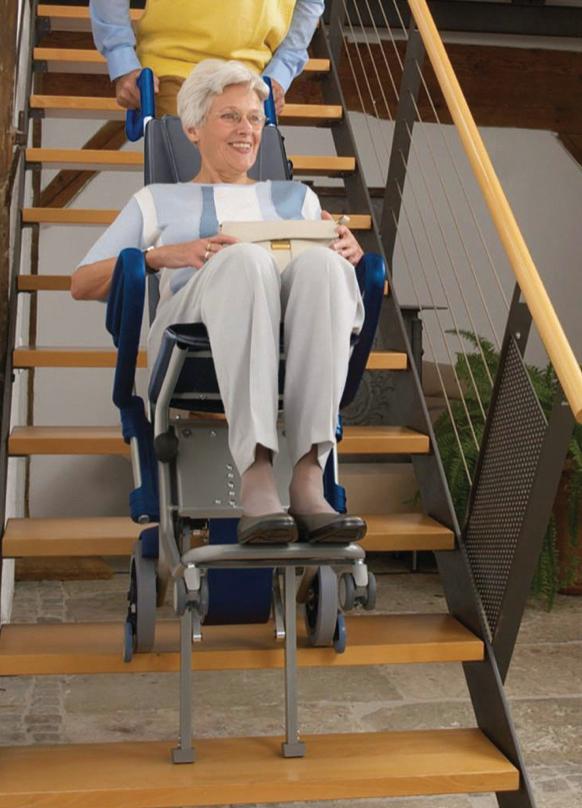
Residents (who the home fondly refers to as family members) living at Thistle Court Care Home recently experienced a visit that brought something a little different into the home. Two alpacas, Tolly and Murphy, arrived to spend time with everyone.
The visit was led by Steve from Bedrock Alpacas, who brought Tolly and Murphy along for their first visit to the home. Known for their gentle and calm temperament, the alpacas moved quietly through the home, creating moments of curiosity, engagement and calm wherever they went. Family members were given carrots to feed them and were encouraged to stroke them, taking time to connect at their own pace. Care was taken to ensure everyone could be involved, including family members being cared for in bed. The alpacas visited all areas of the home, moving between rooms and even navigating the stairs, allowing the experience to be shared by everyone rather than limited to a single space.

Steve cares for around 20 alpacas, alongside a range of other animals including donkeys, Shetland ponies and pygmy goats. For this first visit to Thistle Court, he chose Tolly and Murphy for their calm nature and familiarity with new environments. After seeing the response from family members and team members, plans are already being discussed for future visits, with the possibility of
bringing more animal’s next time.
What stood out most during the visit was not just the novelty of the animals, but the response they prompted. Smiles appeared and conversations followed as family members watched, touched and fed the alpacas. For some, it became a shared topic of conversation long after the visit had ended; for others, it was simply the calm presence of the animals that brought comfort.
At Thistle Court, activities are not seen as something planned or scheduled to fit a timetable. They are a continuation of everyday life, the familiar routines and moments that bring comfort, purpose and connection. Whether that is folding laundry, tending to the garden, sharing a cup of tea, or welcoming animals into the home, it is often these small, unplanned moments that matter most.
These are the moments the team refer to as magic moments, the times when someone feels connected, familiar and valued without needing to be prompted or directed. By allowing experiences like this to unfold naturally and reach everyone, the home continues to support a sense of belonging, shared experience and emotional safety. It is these ordinary, human moments that help Thistle Court remain a place where people feel at home.
The Care Software Providers Association (CASPA) has published a new suite of cyber security guidance for care technology suppliers, reinforcing the sector’s commitment to maintaining safety, trust and resilience as digital adoption in adult social care continues to accelerate.
While social care is often characterised as being at an early stage of digital maturity, the care software market itself is highly developed, with specialist suppliers delivering complex platforms that support care delivery, clinical safety, workforce management and data sharing at scale. As these platforms become more interconnected – in line with the NHS 10Year Plan’s shift from analogue to digital – maintaining high standards of cyber security is increasingly central to sustaining trust in digital care.
DEVELOPED BY CASPA’S CYBER SECURITY WORKING GROUP, THE GUIDANCE FOCUSES ON THREE PRIORITY RISK AREAS FOR CARE SOFTWARE SUPPLIERS:
• secure software development lifecycle (SDLC) practices,
• effective management of third-party software dependencies, and • protection against supply chain attacks.

Together, these areas address some of the most common causes of cyber incidents affecting health and care technology, with practical steps designed to strengthen resilience without slowing innovation.
Martin Lowthian, Chair of the CASPA Cyber Security Working Group, said: “Care software is already sophisticated and deeply embedded in day-to-day care delivery. Our members care enormously about the sector they serve and understand that trust is hard won and easily lost. This guidance is about protecting that trust
– ensuring digital systems remain safe, reliable and worthy of the confidence placed in them by providers, regulators and the people who rely on care services.”
The guidance also supports CASPA’s work with the NHS on the Social Care Interoperability Platform (SCIP), the national programme to enable safe, consistent data sharing between social care systems and the wider health and care ecosystem. Strong cyber security and supply chain assurance are essential foundations for interoperability, ensuring that increased connectivity enhances outcomes without introducing new risks.
“Over the next few years care software will increasingly be linking up with other systems both within social care and with health. It is therefore crucial that systems are built on solid foundations of safety and security. Effective cyber security will be a prerequisite for linking systems together and I would expect cyber standards to only be enhanced over time.” –
Peter Skinner, Programme Director for Digitising Social Care, NHS England.
“Digital Care Hub welcomes this clear guidance for tech suppliers. We know that cyber security needs a multi-pronged approach, so it is great to see CASPA’s guidance reflecting many of the key issues that care providers raise with us – especially supply chain attacks. We know that attacks on software that is embedded within tech systems can go unnoticed, until it impacts on everyone involved – including care providers and the people they support. Like CASPA, we strongly recommend that suppliers and care providers develop clear service level agreements around supply chain issues, and a business continuity plan covering who will do what if things go wrong.” – Michelle Corrigan, Chief Executive Office, Digital Care Hub.
Care UK and Essex County Fire and Rescue Service (ECFRS) are marking ten years of a lifesaving partnership that has strengthened fire safety standards and helped protect residents and their loved ones, Care UK colleagues and visitors.
Over the past decade, the partnership has focused on building a clear, consistent approach to fire safety that works day to day across Care UK’s care homes.
The partnership operates through the Primary Authority Scheme, which allows organisations operating across multiple locations to receive consistent fire safety advice through a single fire and rescue service.
For Care UK, this has meant working closely with ECFRS to develop and maintain a clear and consistent way of managing fire safety across a large and varied estate.
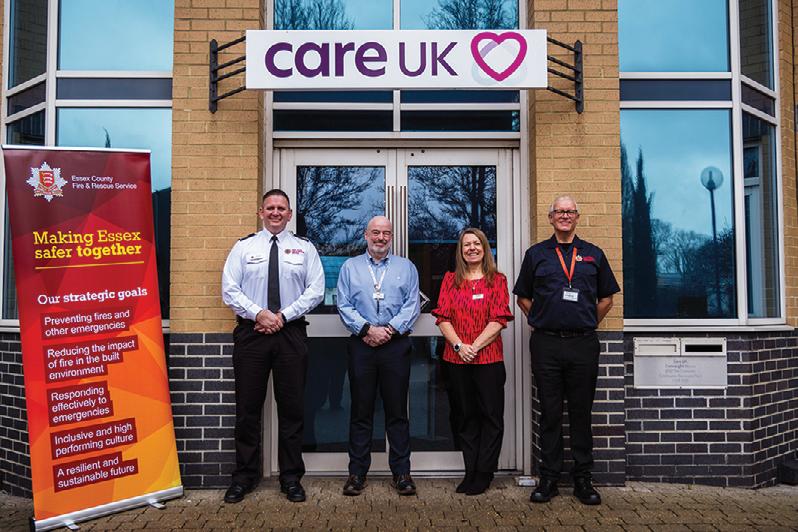
Through the partnership, ECFRS has supported Care UK with ongoing advice and guidance on fire safety policies, evacuation arrangements and staff training.
The focus has been on ensuring these arrangements are practical, proportionate and able to evolve as services, buildings and teams change over time.
Phil Clarke, Head of Health, Safety and Wellbeing at Care UK, said: “The most valuable aspect of the Primary Authority Scheme has been the support in helping us review our approach to fire safety, from policy development through to evacuation planning and drill training. The scheme has helped us achieve con-
sistency across the many different Fire and Rescue Services we work with, and the direct involvement of our liaison manager has been invaluable.
“It has also provided assurance to organisations we work with, particularly local authorities, that we have a robust and proactive approach to fire safety.”
Over the course of the partnership, Primary Authority working has supported ongoing learning and improvements in how fire safety is governed, reviewed and applied across Care UK’s services.
As a result, regular review of fire safety policies, procedures, training and risk assessments has become an established part of how fire safety is managed across Care UK’s homes.
Jonathan Dixson, Primary Authority Scheme Manager at Essex County Fire and Rescue Service, said: “This partnership has not only improved fire safety standards but has also fostered a culture of learning and assurance.
“We are proud of what we’ve achieved together and look forward to another decade of making a difference.”
Dave Bond, Area Manager for Prevention and Protection at Essex County Fire and Rescue Service, added: “We are delighted with the success of this ten-year partnership and the positive difference it continues to make in protecting people.
"By working closely with Care UK, we’ve been able to provide consistent, practical fire safety advice that supports safer environments and gives confidence to both staff and residents.”
Technology decisions in adult social care are no longer confined to IT teams or procurement processes. They shape everyday experiences. They influence how people are supported, how staff work, and how services demonstrate that they are safe, effective and accountable. At the same time, the sector is under immense strain. Demand is rising. Workforces are stretched. Regulation is intensifying. Digital tools are increasingly positioned as part of the solution, expected to stabilise systems that are already under pressure.
It is no surprise, then, that social care has leaned heavily on frameworks, standards and guidance to help make sense of risk, data and technology. These are important. But they are not enough on their own. When you step away from policy documents and listen to lived experience, a more complicated picture emerges.
Families may experience monitoring tools as reassuring. People drawing on care can experience those same tools as intrusive, empowering, or something in between. Care leaders are often focused on accountability, liability and safety. All of these perspectives are valid, yet they rarely point in the same direction.
The danger is not disagreement. It is pretending these tensions do not exist.
Safety often becomes the organising principle for digital decisions. Sensors, alerts and data sharing systems are introduced to reduce risk and provide reassurance in a system where staffing is limited and time is scarce.
For some people, this technology creates freedom and confidence. For others, it feels like constant visibility. Even where consent is given, the emotional experience of being monitored is not always fully
explored.
These decisions may be made in assessments and meetings, but their impact is felt in bedrooms and living rooms. Dignity and privacy are not technical concepts. They are personal, value-based, and deeply contextual.
How often do we revisit these choices?
How clear are we about what data is collected and why? What happens when one person’s sense of safety conflicts with another’s sense of dignity?
Consent in digital care is often treated as a single action. A form signed. A box ticked. A decision made.
In reality, consent is fragile and changeable. Technologies are frequently introduced during moments of transition, or gradually become part of daily routines before anyone has time to reflect. What starts as a choice can quietly become the default.
As systems grow more complex, understanding becomes harder too. Many people, including professionals, are still learning how data is stored, shared and analysed. That makes meaningful consent difficult to sustain over time.
True consent requires revisiting, re-explaining and re-negotiating. It also requires making refusal possible, even when doing so feels uncomfortable or increases perceived risk.
WHO BENEFITS, AND WHO CARRIES THE COST?
Technology is often discussed in terms of efficiency and innovation. For care workers, the experience can be mixed. New systems promise time savings, but sometimes introduce extra steps, new pressures and new forms of oversight.
At the same time, when tools are designed and introduced well, they can reduce duplication, improve coordination and support better care. The difference is rarely the technology itself. It is whether people were involved in shaping it, and whether their expertise was respected. When systems fail, it is frontline staff who absorb the impact. They manage workarounds, late alerts and broken workflows. How organisations acknowledge that reality shapes trust far more than any digital strategy document.
Having honest conversations about technology in care is uncomfortable. It forces us to confront trade-offs rather than hiding behind process or policy. But discomfort is not failure. It is a signal that something important is being examined.
Throughout March, Digital Care Hub is creating space for these difficult conversations, from privacy and consent to robotics and the future of care work. Because comfort is easy. But courage is what leads to better decisions.
Technology is the topic, but dignity, safety and relationships are what’s truly at stake.
Join the conversation at www.digitalcarehub.co.uk/digital-care-in-focus #DigitalCareInFocus #DifficultConversations


Health service leaders have warned that the NHS remains under severe strain despite some improvements in emergency care performance, as hospitals continue to grapple with dangerous bed occupancy levels, thousands of patients stuck in wards awaiting discharge, and surging norovirus infections that threaten to compound an already challenging winter period.
Responding to the latest NHS urgent and emergency care situation reports, Rory Deighton, acute and community care director speaking on behalf of NHS Providers and the NHS Confederation said:
“It is clear that the NHS remains incredibly busy, with high levels of seasonal viruses, hundreds of thousands of calls to NHS 111, hospital bed occupancy remaining at unsafe levels, and rising numbers of delayed discharges.

“NHS leaders and their teams are working incredibly hard to keep patients safe and provide care as quickly as possible. The improvements in ambulance handover times sug-

gests that the extensive planning ahead of winter and extraordinary effort of staff is resulting in more timely care.
“But despite the drop in flu, winter is not over yet, with norovirus levels continuing to mount and more than 14,000 delayed discharge patients causing bottlenecks in systems. When patients can’t leave hospital due to a lack of social or community care the knock-on impact is significant, with ambulances taking longer to get back on the road, and A&E staff struggling to find beds for patients coming in, forcing them to treat patients in corridors and other inappropriate settings.
“Health leaders are under no illusions that there is still a long way to go to tackle these issues and hit the NHS’ key performance targets. This will require sustained focus, realistic planning and continued support, especially in the context of workforce pressures, constrained finances and the potential for yet more industrial action.”
A former fashion model, who shared London flats with Mick Jagger’s brother and attended Rolling Stones parties, is now living at Gibraltar Nursing Home in Monmouth and his remarkable life story is being shared for the first time.
William (Bill) Chenail, born in Casablanca in 1948 to a Scottish mother and French father, lived a life shaped by creativity, independence and unexpected turns. From running away from school as a teenager to finding himself swept into London’s Swinging Sixties, Bill fell into modelling almost by accident, working with celebrated designer Ossie Clark during a time when British fashion was finding its edge.
His connections placed him at the heart of a vibrant cultural moment. Bill moved in overlapping creative and celebrity circles, and briefly dated Linda Keith - later referenced by Keith Richards in Life, where Richards wrote of discovering she had “taken up with some poet… Bill Chenail,” before explaining that the heartbreak inspired Ruby Tuesday.
The story of Bill’s life, including reflections from his family and one of his own poems, can be read here: www.gibraltarnursinghome.com/bill-chenail-a-life-ofextraordinary-chapters-monmouth-nursing-home/
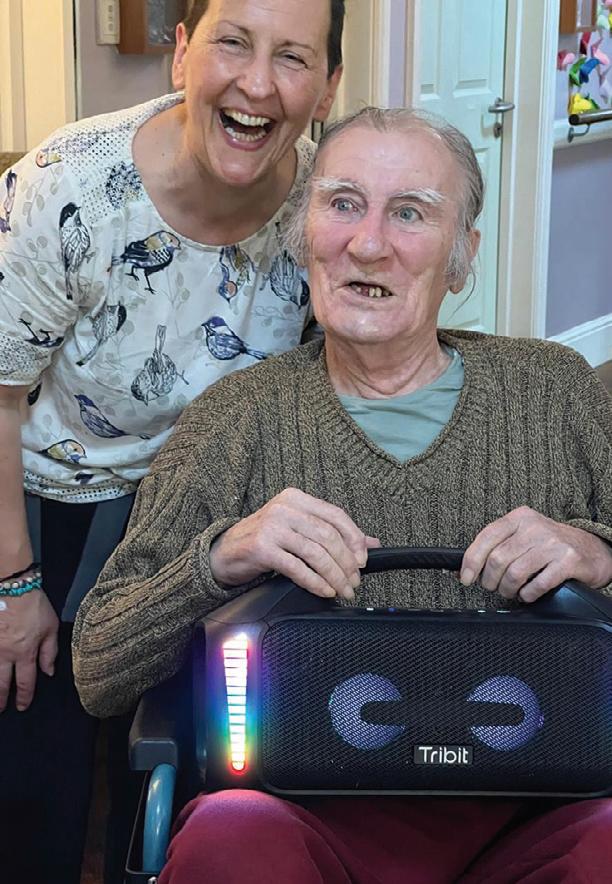
t2 group empowers care professionals through apprenticeships that drive quality, consistency, and retention.
Level 5 Leadership and Management
For over 25 years, we’ve partnered with care providers across England to help their teams grow through apprenticeships
Invest in your people. Improve your care quality. Scan the QR code to learn more.

Kailash Manor came alive with colour, music and heartfelt patriotism as residents and staff gathered to celebrate India’s 77th Republic Day. Observed annually on 26 January, Republic Day commemorates the adoption of the Constitution of India in 1950, marking the nation’s transition to a sovereign, democratic republic governed by the rule of law, institutional accountability, and the collective will of its people.
This year’s celebration was particularly special, as 2026 also marks the 150th anniversary of “Vande Mataram,” India’s national song, which has inspired generations with its message of unity, resilience and love for the motherland. Republic Day serves as a reminder of India’s democratic values, cultural richness and shared heritage—principles that resonate with people across communities and nations.
To mark the occasion, Kailash Manor was decorated in the colours of the Indian national flag. The tricolour was proudly hoisted near the temple, and festive flag bunting adorned the walls, transforming

the space with vibrant shades of orange, white and green. Residents and staff dressed in their finest traditional and festive attire, creating a joyful and dignified atmosphere as they prepared to celebrate through music and dance.
The highlight of the event was a musical performance by the Geetanjali Academy of Fine Arts (GAOFAL), led by Director Jayeeta Ghosh and accompanied by renowned multi-instrumentalist Sunil Jadhav. The GAOFAL ensemble treated the audience to a rich and diverse programme that included Republic Day–themed patriotic songs, Hindustani classical raag, light classical sangeet, and muchloved popular favourites. Their soulful performance transported listeners through India’s musical heritage, evoking memories, emotions and pride.
The performance concluded with a powerful and rousing rendition of the Indian National Anthem, followed by hearty applause and the spirited chant of “Bharat Mata Ki Jai” (Victory to Mother India), echoing throughout Kailash Manor.

The postcode lottery in social care remains one of the most pressing challenges facing England’s care system a report has revealed, highlighting that two people with identical needs can receive vastly different support – one benefiting from timely, person-centred care that preserves their independence, the other facing lengthy waits, restrictive eligibility criteria and fundamental needs going unmet.
Where someone lives shouldn’t determine the quality of care they receive, the report says, yet local variations in funding, capacity and policy interpretation continue to create a system where geography trumps need. The human cost is considerable: vulnerable people’s safety and dignity are compromised, whilst unpaid family carers shoulder ever-increasing burdens. These inequalities hit marginalised communities hardest.
The Government’s Casey Commission represents an important opportunity to address these disparities through the development of a National Care Service with consistent national standards.
However, critical questions remain: what should these standards encompass? How will they work in practice? And crucially, can they truly deliver the consistency and quality that service users and their families deserve?
SCIE’s new report, titled ‘Towards a National Care Service: raising national standards of care’, supported by The Access Group, follows extensive engagement with the sector. It argues that the core challenge facing social care is not a lack of values or vision, but the inconsistent translation of those shared principles into people’s day-to-day experiences of care and support. England already has strong foundations in the Care Act 2014 and a widely shared understanding of what good care should enable – people living the lives they choose, with dignity, connection and control.
However, those values are applied unevenly across the country. This
inconsistency is what has produced the postcode lottery in access, quality and outcomes. The report, therefore, frames national standards of care not as a prescriptive blueprint for services, but as a mechanism for clarifying expectations so that people can rely on a consistent baseline regardless of where they live.
SCIE’s proposed framework sets out how national standards could define what is essential and non-negotiable, while deliberately protecting flexibility in how outcomes are achieved locally. The emphasis is on standards that specify what good care delivers for people, rather than mandating uniform processes or service models. In this way, national standards could help expose and reduce unjustified variation, strengthen accountability, and support learning and improvement across the system, without stifling innovation or personalisation.
Crucially, the report is clear that national standards alone cannot fix the deep-rooted challenges facing social care, including workforce shortages and financial pressures. Their impact depends on how they are designed and implemented, and whether they are supported by the right system conditions, from data and accountability to commissioning capability and co-production infrastructure.
Kathryn Marsden OBE, Chief Executive of SCIE, said:
“It is indefensible that, in this country, two people with the same social care needs, living only a few miles apart, can experience completely different levels of support. That postcode lottery undermines people’s dignity, independence and safety, and it places intolerable pressure on families and unpaid carers who are left to fill the gaps.
“National standards of care offer a practical way to close that gap –not by imposing a one-size-fits-all model, but by making clear what people should be able to expect from the system wherever they live. Done well, they can translate long-standing values in social care into clearer, outcomes-focused expectations that are rooted in lived experi-
ence and backed by accountability.
“But we also need to be honest about the context. Social care operates in a complex, resource-constrained system, shaped by workforce shortages, financial pressures and shifting political priorities. Poorly designed standards risk becoming symbolic, compliance-driven or disconnected from reality. This is not about quick fixes. Ending the postcode lottery will require sustained commitment, careful implementation and a focus on learning and improvement – not just ambition on paper.
“As the Casey Commission builds momentum towards its final report in 2028, this is the moment to get the foundations right – starting with clarity about what good care should deliver, and how we reduce variation in people’s experiences without losing what makes care personal and local.”
Sojan Joseph, MP for Ashford, said: “The levels of inequality in our adult social care services have been far too high for far too long. We cannot build an NHS fit for the future unless we address these deep structural issues in our adult social care system.
“I am pleased the Government is taking steps to address the significant challenges in our adult social care sector, both through funding and fundamental reforms to the sector, such as funding for home modifications to give people more independence and allow them to be discharged from hospitals, embracing new technology, and making social care a desirable and respected profession – both through the pay increase given to carers last year and through a shift in culture.
“I look forward to working with the Government after Baroness Casey’s Commission concludes to ensure that her findings are implemented and our adult social care system is fixed for everyone, not just those fortunate enough to live in a postcode that provides better services.”
A total of 57 talented chefs from the class of 2025 have reached a major milestone, as they celebrate graduating from the Barchester Chef Academy. The year-long Academy helps Barchester chefs sharpen their existing skills and develop new ones, under the expert guidance of Barchester’s Hospitality Commissioning and Academy Manager, Mervyn Knights.
The Academy was established four years ago by Knights, with the aim of supporting chefs at every stage of their career, from Kitchen Assistant to Head Chef, by creating opportunities to develop skill sets and progress.
Knights joined Barchester 24 years ago, beginning his career as a Kitchen Assistant and working his way up through the ranks to head chef, later transitioning into a companywide role overseeing hospitality training across the whole of Barchester.

Along with the rest of the hospitality team, it is Mervyn’s job to ensure that the food being produced in all of Barchester’s 268 care homes and private hospitals for all 13,800 residents and patients meets Barchester’s very high standards in terms of quality, taste, nutrition and presentation, and that dishes are being prepared to the exact requirements of individual residents.
The Academy covers a range of modules including cooking for residents living with dementia, budget-
ing, balancing flavours, minimising wastage, presentation skills and so much more. The 57 chefs who completed this year’s course had the chance to perfect new techniques and recipes, share hints and tips, to network and make new contacts and to expand their skill set. Back in their divisions, these chefs will help to train the hospitality teams in their sister homes.
Reflecting on the Academy, Mervyn Knights commented: “I am so proud of all 57 talented chefs. It was wonderful to see them not only learning from their trainers but also from one another. Witnessing the growth and confidence of each chef from their first day at the academy to the graduation has been an absolute joy. I’m looking forward to the Chef Academy 2026, as it continues to grow from strength to strength.”
Dr Pete Calveley, CEO of Barchester Healthcare, added: “The Chef Academy is an excellent programme, each year I have the opportunity to enjoy a selection of impressive dishes created by our talented chefs and I am always blown away by the exceptional presentation and quality of food served. It’s inspiring to see the many elements the Academy incorporates, not only culinary skills but also building a deeper understanding of menus, budgeting and cost management. I am so proud of the chefs that took part in the Chef Academy 2025 and the remarkable progress they have made.”
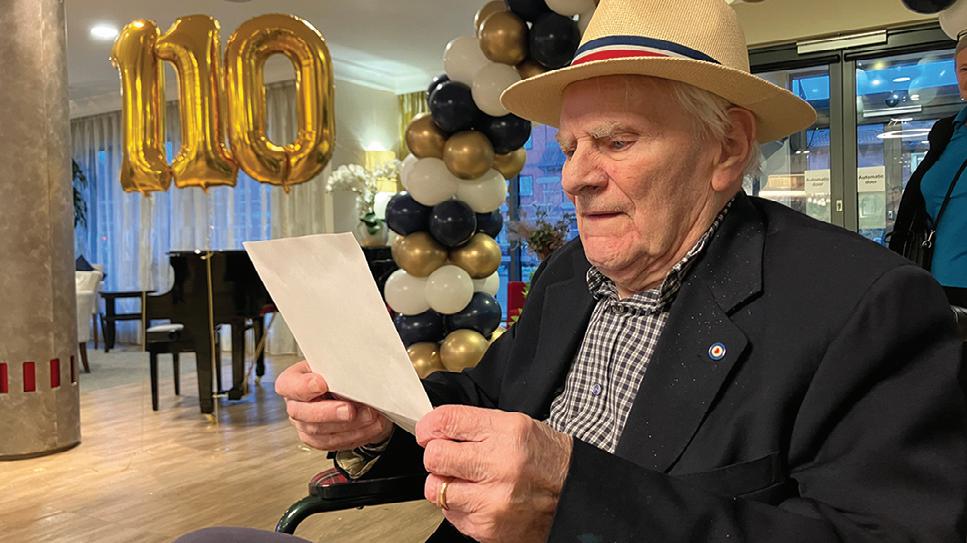
Residents living at Royal Star & Garter Homes have received a letter from its Patron, Her Royal Highness The Princess Royal, as the charity celebrates its 110th anniversary. The Princess Royal sent them her “best wishes for a wonderful celebration” in the letter, which was given to each resident at Royal Star & Garter Homes in Solihull, Surbiton and High Wycombe. It comes as the charity marks its landmark anniversary in 2026.
Royal Star & Garter was established on 14 January 1916 to care for severely injured men returning from WWI battlegrounds, following concern expressed by Queen Mary. She charged the British Red Cross Society with finding a ‘permanent haven’ for severely disabled young men returning from war. It is still supporting the nation’s military family, providing loving, compassionate care to veterans and their families, living with disability or dementia, through its Homes. The charity also provides services reaching into the community, including Lunch Clubs, Day Care and a national Telephone Friendship Service. In her letter, Her Royal Highness lists key dates in the charity’s history, including its participation in the 1948 Stoke Mandeville Games - which launched the Paralympic movement - and the sale of its Home on Richmond Hill, which allowed for the building of three new state-of-the-art Homes. She also mentions her recent visit to Surbiton and ends her letter with: “As Patron of Royal Star & Garter, I look forward to meeting many more of you in the coming years and I send you my best wishes for a wonderful celebration.” Celebrations took place at the Homes on January 14, and also on Friday 30 January when oak trees were
planted in each of their gardens to mark the occasion. This tied-in with the nationwide community-led Veterans’ Oaks initiative.
In Surbiton, 25 singers from Singology choir performed for residents, who also enjoyed afternoon tea. Guests included Kingston upon Thames Mayor Noel Hadjimichael, who planted the oak tree, and pupils from the Combined Cadet Force at Southborough High School.
The High Wycombe Home also hosted a tea party, attended by its local Mayor Majid Hussain. He helped plant the tree, along with Wing Commander Michael Adamson from RAF High Wycombe, who also joined in the celebrations.
The Solihull Home was decorated to mark the anniversary. Residents enjoyed live music, and tucked into a bespoke 110th birthday cake. Dr Neil Shastri-Hurst, Conservative MP for Solihull West & Shirley, was also on hand at the Home to help plant the oak tree, with Mayor Annette Mackenzie also in attendance.

Royal Star & Garter Chair Richard Williams MC said: “The letter from The Princess Royal is a wonderful gift from our Patron to our residents and the planting of the oak trees, which symbolise strength, endurance and our belief in the future, will act as a living reminder of this anniversary for many years to come. This is a particular moment of pride and reflection and reminds us that we must build on our storied past to secure our services for future beneficiaries. Since 1916 we have provided exceptional care and unwavering support to veterans and their families. Today, as we plan to expand our services further, we look forward to continuing our necessary work.”
Excelcare has confirmed a substantial pipeline of new developments, strengthening its portfolio with around 500 additional care home beds and an expansion into children’s services.
Excelcare has delivered person-centred care since 1989. Today, the group operates 30 care homes across Cambridge, Essex, London and Milton Keynes, and a home care service in East London, supporting people in a wide range of community settings.
The development programme includes new care homes planned for Ely, Guildford and Sidcup, alongside major redevelopment projects in Essex and Cambridgeshire, where existing homes will be rebuilt or significantly upgraded to meet modern design and care standards. Together, these projects will create environments better suited to the evolving

needs and expectations of the people who live and work there.
Alongside its continued investment in older people’s care, Excelcare is also progressing plans for its first children’s home in Cambridgeshire. Designed to support children and young people aged 6–17, the service will provide a safe, stable and nurturing setting for those who may have experienced trauma, emotional or behavioural difficulties, learning disabilities, or challenges in forming secure and trusting attachments.
Commenting on the announcement, Chief Executive Officer Osman Ertosun said: “As we continue to evolve our portfolio, our focus remains on building and sustaining homes that deliver excellence in care and support. These developments mark an important milestone in Excelcare’s growth and modernisation strategy.”
Five students from the Oxford Brookes university have completed a successful placement at a Carterton home.
All five students are currently studying paramedic science and as part of their qualification are required to do work placements as part of their progression and development.
Chris Botha, Isabel Moore, Lauren Watts, Joseph Ridgway and Marcus Suntharalingam all spent two weeks at MHA The Homestead where they worked with residents and supported staff members in dealing with the needs of the residents.
The students also went out on day trips where they supported staff members, something they all really enjoyed.
The home provides residential and residential dementia care for 68 residents, and it was those living with dementia who the students spent most of their time with.
Speaking after the placement Marcus said: “Starting my care home placement I was incredibly sceptical as I already had a large amount of experience working with older adults, and previous students had told me that the care home placement was one of their worst placements. However, I feel like I can confidently say that I have massively benefited from my time at The
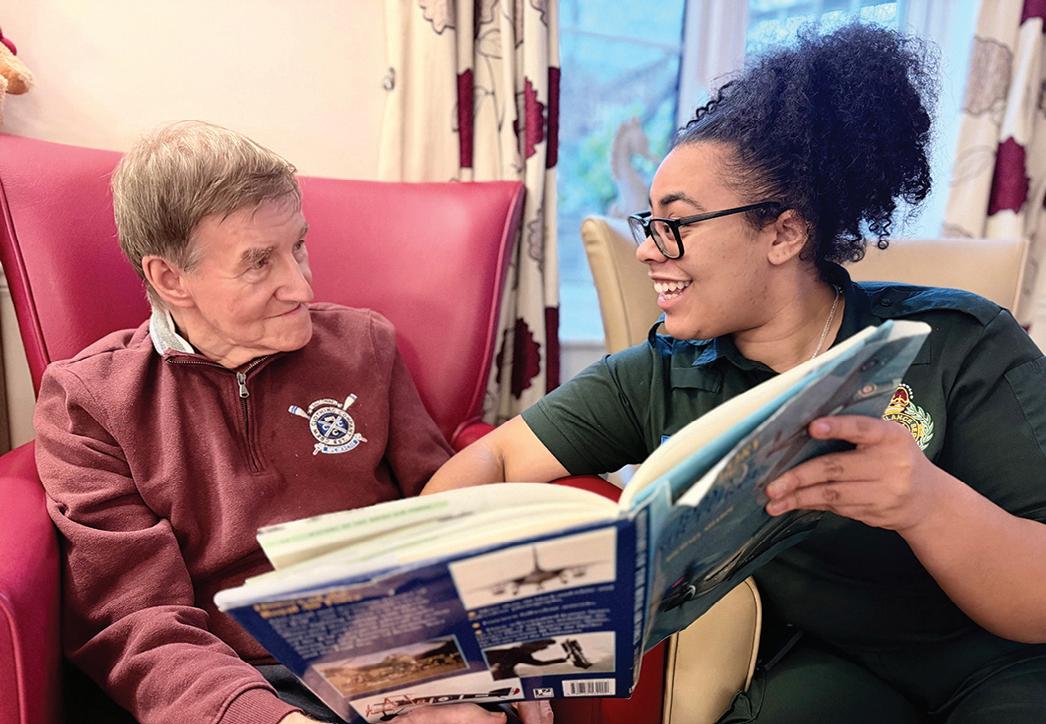
Homestead, I feel significantly more confident communicating with older adults, and this has really reflected on my practice both at work and on my ambulance placements.
Another student Isobel added: “I enjoyed meeting all the residents and learnt amazing things about their lives.
“Doing the placement has helped me to understand so much more about personal care and I would love to come back and spend more time at the home.”
Pawel Wisniowski, home manager said: “As home manager at The Homestead, I am committed to providing a high-quality placement environment for student paramedics that supports learning, professional development, and compassionate care.
“Through close collaboration with our multidisciplinary team, students gain valuable insight into holistic, person-centred care and the vital role of teamwork in achieving the best outcomes for residents.
“By supporting and mentoring student paramedics, we are not only enhancing their clinical understanding but also helping to shape the future of care by promoting strong values, effective communication, and collaborative practice across health and social care settings.”
Care Show London 2026 running on 29-30 April at Excel London, will be opening its doors for the third consecutive year to the whole care community. Matthew Moore, Show Manager highlights what is on offer at Care Show London as well as key speakers and sessions to look out for.
KEY THEMES AND GOALS FOR CARE SHOW LONDON THIS YEAR
Care Show London is the meeting place for the social care community, united by a shared commitment to delivering the highest standards of care. The show provides a platform to learn best practice, explore innovative products and services, and develop practical skills to support day-to-day work.
The focus this year is on helping you confidently navigate the future of care. Through expert-led sessions and sector insight, you’ll gain the clarity, support, and direction needed to prepare for what’s next, with key themes including workforce, regulation, policy, AI and technology, business sustainability, palliative care, and more.
CONFERENCE PROGRAMME
Care Show London conference programme covers key challenges within the sector, matching these with established care professionals who are able to provide solutions to these. With over 180 experts in the sector speaking at the show, we'll cover everything from strategic business support to specialised dementia care, to sustainability wins and so much more!
With seven dedicated theatres hosting sessions across the two days and over 60 hours of world-class education, attending this event will provide you with the tools and solutions to improve the quality of care you provide. Must see sessions:
• Keynote Theatre – CQC update: our journey, priorities, and what’s next for adult social care
People & Business Theatre - Winning self-funded clients through strategic marketing and sales
Technology Theatre - What's happening internationally? How social

care across the globe is using technology to improve outcomes
Catering, Hydration and Nutrition Theatre - Cognition-supporting Vitamin B12 needs our attention: how to incorporate more into meals with ease
IHSCM Leadership in Tough Times Theatre - How to build an effective team
Care Providers’ Voice Masterclasses - What will the care workforce look like in 2030?
The Outstanding Society Learning Lounge - Safe medicines management: complex medication and reporting
Key speakers: Chris Badger, Chief Inspector of Adult Social Care & Integrated Care, CQC
Isaac Samuels OBE, Co-Chair, NCAG & TLAP
Fran Vandelli, Dementia Lead, Bupa Care UK
Aneurin Brown, CEO, Hallmark Luxury Care Homes
Emma Jane Tinkler, Programme Manager, HC-One
Kevin Humphrys, CEO, Oakland Care Group
• Michelle Corrigan, Programme Director, Digital Care Hub
Clare Jefferies, Business Director, Home Instead Wimbledon & Kingston
Giuseppe Di Martino, Learning Disability and Autism Commissioner, Slough Borough Council
Katy Hague, Chief of Staff, Crystal Care Homes
Lucy Campbell, CEO, Right at Home UK
Sarah Sabater, CEO, CareYourWay
Charles Taylor, Owner, Taylor & Taylor Care Group
Alyson Vale, Business & Operations Director, Abbotsford Care Ltd TOP SUPPLIERS
Alongside the dedicated conference programme, Care Show London hosts over 200 top suppliers from the sector, offering a wide range of products and solutions to help improve your business. From catering suppliers to software providers, you’re sure to find an exhibitor with what you’re looking for.
With so much happening at the show, don’t forget to make time to connect with sector peers. With over 3,750 care professionals expected at Care Show London, it’s a great opportunity to meet like-minded professionals who understand your challenges and desire to build strong relationships.
Care Show London 2026 is your opportunity to confidently navigate the future of social care. With expert-led sessions, innovative suppliers, and thousands of professionals under one roof, the show provides the knowledge, connections, and tools you need to stay ahead and succeed in a changing landscape.
Register now to join your community for two days of learning, networking and inspiration. Visit the Care Show London website or click visit https://forms.reg.buzz/care-show-london-2026/carer To view the conference programme, visit: https://www.careshowlondon.co.uk/thecarer26

Ready-to-use activity products designed to support meaningful engagement in everyday life.
Everything you need to inspire connection, stimulation and wellbeing CREATIVE & SENSORY ACTIVITIES
Art, craft and sensory products designed to engage, calm and inspire. COGNITIVE & REMINISCENCE
Memory-based activities and conversation starters that encourage connection. GAMES & GROUP ACTIVITIES
Inclusive games and group activities suitable for a wide range of abilities. ONE-TO-ONE & MEANINGFUL ENGAGEMENT
Personalised activity products that support wellbeing and individual needs. Thoughtfully selected to be accessible, inclusive and easy to use in busy care environments.
Explore our full activity range - www.bluerain.store where you will also find our informative blogs and contact form as friendly advice is always on hand.
See thee advert on page 4.
HipSaver Soft Hip Protectors protect the elderly and disabled people from fallrelated hip fractures.
Designed to protect elderly people from fall related hip fractures, HipSavers are a leading brand of soft hip protectors. Used in the NHS since 2002, HipSaver Soft Hip Protectors are user friendly, affordable and cost-effective personal protective garments. Soft, comfortable, effective and compatible with incontinence protection, HipSaver Soft Hip Protectors are perfect for use in care homes and by elderly people living independently.

HipSavers should be worn day and night for 24 hour protection and especially during physical and recreational activities, when accidental falls, slips and trips can lead to hip fractures.
Available as comfortable underwear or long casual pants in several sizes for men and women, HipSavers feature soft protective airPads permanently sewn into the garments over the hip areas prone to injuries and fractures. HipSaver TailBone models have an
additional protective airPad over the coccyx on lower back for protection during swaying, accidental knocks, bumps and backward falling.
Machine washable at high temperature and tumble drier friendly, HipSavers are practical, hygienic and durable.
HipSaver Soft Hip Protectors - affordable protective garments for the elderly and disabled people! For more information, contact Win Health Medical Ltd - 01835 864866 - www.win-health.com
See the advert on page 3 for further products.
MAG Laundry Equipment is a multiaward-winning supplier of commercial washing machines & tumble dryers that supports over 10,000 care homes across the UK.
Clean laundry and bedding is critical for care homes, hospices, nursing homes, hospitals and other healthcare organisations. With a nationwide fleet of accredited engineers MAG Laundry Equipment has successfully assisted over ten thousand care homes with their products, services, information and support.
affordable machines on the market. Care homes have peace-of-mind that their laundry machines can quickly be maintained and repaired as MAG Laundry Equipment supply, install and service equipment across England, Scotland and Wales.
If you are looking for high quality wash results that remove stubborn stains then speak with MAG for their recommendations. Complete thermal disinfection is a standard feature on their washing machines for nursing homes.
MAG’s product range includes commercial washing machines, tumble dryers, ironers, presses and detergents. For 100 years, since 1922, MAG’s products have been developed and improved to become some of the most reliable, energy-efficient and
To find out more about how MAG can support your care home telephone 01353 883025 or visit www.maglaundryequipment.co.uk. See the advert onthe back cover of this issue.
Repose Furniture is one of the UK’s leading manufacturers of bespoke seating solutions, with a reputation built on craftsmanship, innovation, and a strong commitment to improving the quality of life for its customers. Established in 1999 and based in the West Midlands, the company has grown from a small family business into a trusted supplier to both the domestic and healthcare markets. Every chair produced by Repose is handmade in the UK, with an emphasis on quality, durability, and comfort, ensuring that each product meets the specific needs of its user. Whether for home use or demanding healthcare environments, Repose combines skilled upholstery techniques with modern engineering to create chairs that provide postural support, pressure management, and ease of use. Their wide product portfolio includes rise and recline chairs, hospital and care home seating, bariatric solutions, and specialist products designed to address particular medical and lifestyle needs. An essential element of their offering is flexibility: customers can choose from a range of back styles, seat cushions, mechanisms, and fabrics, allowing each chair to be tailored to the individual. Interchangeable parts mean that a chair can adapt as a user’s requirements change, extending the product’s longevity and ensuring value for money. The healthcare sector is a particular area of expertise for Repose. They strive to design chairs that balance comfort with clinical functionality. Features such as tilt-in-space mechanisms, adjustable cushioning, and pressure relief options make their healthcare seating particularly suited to long-term use in hospitals, hospices, and


Meadow View Nursing Home in Chesterfield has found a grand(e) way to support a new resident with scoliosis- an innovative vacuum posture cushion.
The middle-aged client joined the home after a spell in hospital: underweight and fragile, she needed additional skeletal support and 1:1 care. Meadow View- part of Emh Care & Support- could provide the high quality round-the-clock attention she required.
The home’s nurses responsible for the lady were struggling to find a way to keep her comfortable and safe in bed. They raised the issue with the home’s Occupational Therapist, who suggested AAT’s Grande mattress with Treat-Eezi cover.
Using vacuum technology, the mattress-sized beanbag can be contoured exactly by the staff exactly as needed, to provide the lady with a secure yet comfortable position without pressure points.
By using the vacuum principle, any air in the cushion is removed, thereby fixing the moulded shape and removing the need for frequent re-positioning. The shape and firmness of the Grande can be adjusted as little or much as needed. The cushion can be precisely moulded to create abduction and adduction wedges, or an asymmetrical body position- all by the care-givers, within minutes(1). The addition of the Teat-Eezi overlay helps maintain blood flow and

gives an extra layer of protection against the risk of ulcers.
Meadow View Manager Gillian Kent comments, “The Grande gives support to her overall body structure, yet is soft and comfortable. The team find it’s easy to reform when she is supine, so they can ensure her continued relief and security when she’s lying in her bed. It has really helped her overall daily and nightly relaxation.”
Find out more about AAT’s Grande vacuum posture cushions here: www.aatgb.com/grande
care homes. The company’s bariatric range demonstrates the same careful attention to detail, offering robust yet comfortable solutions for larger users.
While customisation is the centre of the Repose offering, they also recognise the urgency often faced in healthcare settings. To address this, Repose have developed their Healthcare Express Chairs, designed to deliver high-quality healthcare seating at speed. The models in this range can be despatched within just five
continues to be a trusted partner in multiple sectors throughout the country and beyond.
In combining bespoke design with reliable express options, Repose Furniture stands out as a manufacturer that truly understands the diverse needs of its customers. For over 25 years, it has delivered not just chairs, but comfort, dignity and independence
Adults aged 80 and over, as well as all residents in care homes for older adults, will become eligible for the NHS respiratory syncytial virus (RSV) vaccine from 1 April 2026, NHS England (NHSE) and the UK Health Security Agency (UKHSA) have announced.
The government has decided, in line withJCVIadvice, that the RSV vaccine should be offered to additional groups in the population most vulnerable to serious outcomes from RSV infection and who are therefore most likely to benefit from vaccination.
VACCINATION WILL THEREFORE BE OFFERED IN ENGLAND FROM 1 APRIL 2026 TO:
• adults aged 80 years and over
• all residents in care homes for older adults
THIS IS IN ADDITION TO THE EXISTING PROGRAMME, WHICH OFFERS RSV VACCINATION TO:
• adults turning 75 years
• adults aged 75 to 79 years when the programme began
• pregnant women (to protect their newborn babies)

Those who are eligible for both RSV and COVID-19 vaccinations will be able to get both vaccines at the same appointment once the spring 2026 COVID-19 campaign begins on 13 April 2026, in line with JCVI guidance. Individuals eligible for both programmes include people who have not already had an RSV vaccine and are either:
• aged 75 or over
• a resident in a care home for older adults
Stephen Kinnock, Health Minister, said: “RSV can cause serious illness in older people, which is why this government introduced new year-round vaccination programmes in September 2024. By expanding this life-saving vaccination programme to also include adults aged 80 and over, and residents in care homes for older adults, we are taking another important step to protect those most at risk.
“I am pleased to accept the advice from the JCVI, which has carefully reviewed the evidence showing the clear benefits of extending this programme.
“I would encourage everyone who becomes eligible for the RSV vaccine from April to come forward and get vaccinated as soon as they have been invited to do so by their GP. Getting vaccinated is the best way to protect yourself and reduce pressure on the NHS during winter months.”
Dr Conall Watson, Consultant Epidemiologist at the UK Health Security Agency, said: “RSV lung infection is less well known than COVID or flu but for older adults it puts thousands in hospital each year with a risk to life.
“This extension of the RSV vaccination programme to everyone over 80 or living in a care home for older adults means many more will soon be able to get protected. This follows advice from JCVI based on new evidence showing the clear benefit of vaccination for these groups.”
Analysis has shown those aged 75 to 79 already getting the vaccine are much less likely to be hospitalised. And the evidence is clear that the RSV vaccine offered to pregnant women is providing excellent protection to babies. When you are offered the vaccine, don’t hesitate.
Rownhams Manor care home recently celebrated the 101st birthday of resident Brendon Cooke and his extraordinary life, defined by adventure, dedication, and family.
Brendon, a lifelong sailor, began his distinguished maritime career at just 17 years old as a cadet. Over the course of more than 40 years at sea, he built an impressive legacy in the shipping industry, including 20 years serving as a captain with the P&O Steamship Company.
His career took him across the globe, with voyages to destinations including Japan, India, and Australia, where Brendon and his wife married.
Brendon is the proud father of three daughters, and despite his many professional accomplishments and worldwide travels, he considers his family to be his greatest achievement.
Reflecting on his long and fulfilling life, Brendon offers simple but powerful advice: “If you want something, don’t stop until you have it.”
Brendon’s family and friends, and the team at Rownhams Manor, gathered to celebrate his birthday in the home, where the kitchen team bakes him a surprise nautical inspired cake.
Samantha Squibb, the General Manager at Rownhams Manor, said, “Celebrating Brendon’s 101st birthday has been a privilege for everyone at Rownhams Manor.
His remarkable life, from decades at sea to the family he is so proud of, is truly inspiring. Supporting residents like Brendon to celebrate milestones such as this is central to what we do, as it allows us to honour their stories they continue to share with us.”
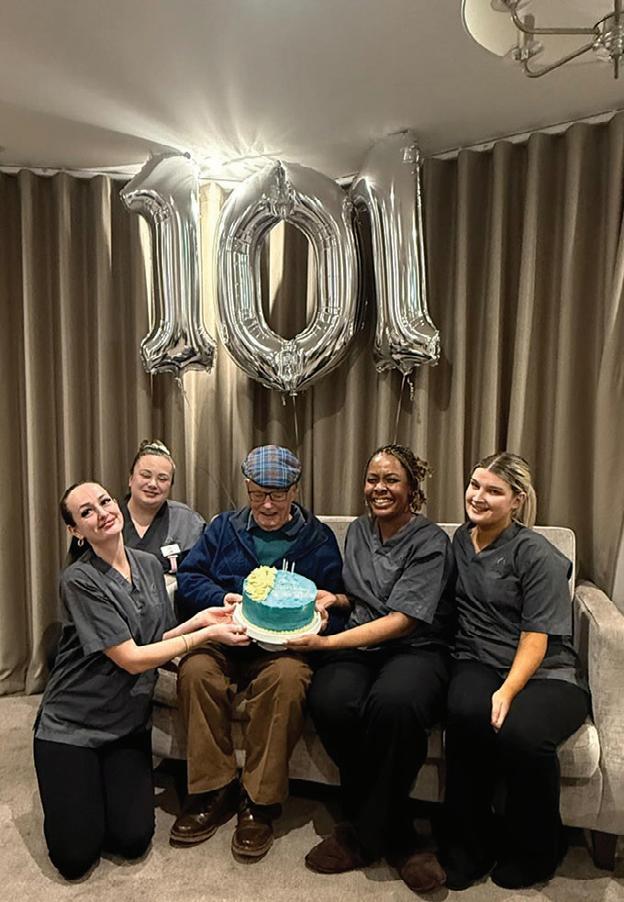
Leading independent healthcare waste management specialist Anenta, which acts on behalf care homes and nursing homes throughout England, has been named UK Healthcare Waste Management Services Company of the Year for the second year running at the international Healthcare Business Review Europe Awards 2026.
The back-to-back win reinforces Anenta’s position as the UK’s leading independent healthcare waste management company, recognising the continued impact of its technology-led approach, sector expertise and commitment to driving efficiency, compliance and cost control across healthcare estates.
Anenta was selected following a rigorous evaluation by a panel of C-suite executives, industry experts, and the editorial board of Healthcare Business Review. Judges highlighted the continued evolution of Anenta’s proprietary Vector platform, alongside the company’s proven ability to deliver measurable financial and operational benefits for healthcare organisations.
Saving clients millions
Highlights identified by the judges include Anenta’s work to save primary care clients over £13m in charges and the equivalent of £35m in efficiencies by cutting the amount of client staff time spent handling waste administration, auditing and dispute resolution.

This has been made possible through Anenta’s use of its proprietary Vector technology, which analyses hundreds of thousands of data points each month to identify any instances of waste collection or disposal partner billing inaccuracies so that these can be addressed before payment.
This rigorous yet collaborative approach, which identifies and addresses cases of overbilling, contract non-compliance or inefficiencies, was described by the judges as ‘setting a benchmark for best practice, valued by both healthcare providers and waste contractors for its focus on transparency, accuracy and continuous improvement.’
Alex D’Souza, Managing Editor of Healthcare Business Review Europe, commented on the award, saying: “Anenta continues to stand head and shoulders above other healthcare waste management service providers. Retaining this award reflects both Anenta’s consistency and outstanding leadership, as it continues to set itself apart through innovation, depth of sector knowledge and a clear focus on delivering tangi-
ble outcomes for healthcare organisations.”
D’Souza added: “The 2026 award recognises Anenta’s continued leadership in supporting NHS Integrated Care Boards (ICBs), helping unify complex waste arrangements under a single service specification, with consistent contract terms and a common environmental model. This scalable approach is raising standards across the healthcare waste management landscape, setting the bar for efficiency and collaboration.”
Graham Flynn, Managing Director of Anenta, commented: “This is a tremendous endorsement of our team, our technology and our approach. It is particularly meaningful because recognition comes from senior decision-makers who understand the operational and compliance pressures facing healthcare providers.”
Graham added: “As we move through 2026, we look forward to making a significant difference to an increasing number of businesses in the healthcare sector, enhancing levels of efficiency, compliance and cost control for healthcare estates, private healthcare businesses, dentists and care homes. Our focus remains on being a trusted partner — helping organisations operate with confidence, while continuously raising standards of healthcare waste management across the sector.”
Looking ahead, Anenta aims to build strong growth across its client base, with care homes and dental practices identified as key expansion areas. This reflects increasing regulatory scrutiny and risk in these environments, where correct segregation and management of clinical and healthcare waste is critical and time-consuming.
Anenta currently acts on behalf of more than 9,000 GP practices and 9,000 pharmacies across England, handling in excess of 39,000 healthcare waste management queries each year. It supports NHS organisations, GP practices, pharmacies, laboratories, dental practices and care homes. Its services include the provision of remote duty of care, and pre-acceptance audits, supported by free, standardised e-learning programmes. This approach helps clients meet their compliance obligations while reducing risk, enabling healthcare organisations to focus frontline teams on patient and resident care rather than administrative burdens associated with waste management. For more
Effective hygiene and odour management forms the cornerstone of quality care in residential and nursing home settings. Beyond mere cleanliness, these practices directly impact resident dignity, health outcomes, and the overall therapeutic environment that supports recovery and wellbeing.
THE FOUNDATION OF DIGNIFIED CARE
Personal hygiene represents far more than basic cleanliness—it embodies respect for the individual and recognition of their inherent worth. When residents feel clean and comfortable, their self-esteem improves, social interactions flourish, and psychological wellbeing strengthens. Conversely, poor hygiene practices can lead to social isolation, depression, and a profound loss of personal dignity.
HEALTH AND SAFETY IMPERATIVES
Proper hygiene protocols serve as the first line of defence against healthcare-associated infections. In residential settings where vulnerable populations live in close proximity, maintaining rigorous standards becomes critical for preventing cross-contamination and protecting community health.
Poor odour control often signals underlying health issues requiring immediate attention. Persistent odours may indicate skin breakdown, urinary tract infections, or inadequate wound care management. Staff trained to recognise these warning signs can intervene early, preventing minor concerns from escalating into serious medical complications.
Regular hygiene assessments should form part of comprehensive care planning, with individualised approaches reflecting each resident's preferences, cultural background, and physical capabilities.
BEST PRACTICE FRAMEWORK
Person-Centred Approach: Every hygiene intervention should begin with respectful communication. Explain procedures clearly, seek consent where possible, and honour personal preferences regarding timing, prod-
ucts, and assistance levels. This collaborative approach maintains autonomy whilst ensuring necessary care delivery.
Environmental Management: Maintain optimal room ventilation, use appropriate air fresheners sparingly, and address sources of odour promptly rather than masking them. Regular deep cleaning schedules, combined with immediate response to accidents, create pleasant living environments for all residents.
Product Selection: Choose gentle, pH-balanced cleansing products suitable for sensitive or compromised skin. Avoid harsh chemicals that may cause irritation or allergic reactions. Consider fragrance-free options for residents with respiratory sensitivities or cognitive conditions that may cause distress with strong scents.
Staff Training and Support: Comprehensive training programmes should cover infection control principles, dignity preservation techniques, and proper use of personal protective equipment. Regular refresher sessions ensure consistent standards across all care teams.
DIGNITY-PRESERVING
Maintaining privacy during personal care represents a fundamental aspect of dignified treatment. Use privacy screens, ensure doors remain closed, and limit the number of staff present to those directly involved in care delivery. Explain each step of the process and pause if residents express discomfort or distress.
Timing considerations prove equally important. Schedule hygiene activities around residents' natural rhythms and preferences where possible. Some individuals prefer morning care, whilst others feel more comfortable with evening routines. Flexibility demonstrates respect for individual choices and promotes cooperation.
Cultural sensitivity requires ongoing attention. Some residents may have specific religious or cultural requirements regarding personal care practices. Understanding and accommodating these needs shows respect
for diversity and supports emotional wellbeing.
When residents resist hygiene care, often due to cognitive impairment or past traumatic experiences, staff require specialised approaches. Gentle persistence, distraction techniques, and breaking tasks into smaller steps can reduce anxiety and promote acceptance.
For residents with dementia, maintaining familiar routines and using consistent caregivers helps reduce confusion and resistance. Simple, clear instructions and positive reinforcement encourage participation and preserve remaining independence.
BUILDING SUSTAINABLE SYSTEMS
Effective hygiene programmes require robust documentation, regular auditing, and continuous quality improvement processes. Track infection rates, resident satisfaction scores, and family feedback to identify areas for enhancement.
Invest in appropriate equipment and supplies to support best practice implementation. This includes adequate changing facilities, proper lifting equipment, and sufficient staffing levels to avoid rushing through personal care tasks.
CONCLUSION
Excellence in hygiene and odour control represents a fundamental expression of caring that extends far beyond basic cleanliness. When implemented thoughtfully, these practices preserve dignity, protect health, and create environments where residents can thrive with confidence and comfort.
The investment in comprehensive hygiene programmes yields dividends in improved health outcomes, enhanced resident satisfaction, and strengthened family relationships. Most importantly, it affirms the value and worth of every individual in our care, supporting their right to live with dignity and respect throughout their residential care journey.
Chiltern Water & Environment was established in 1991 by Robert Hunt after gaining 25 years' experience as an operational
We

professional but personable manner. Our steady growth has reflected our clients' trust in our services. Our current clients include large housing associations, pharmaceutical companies and facilities management companies, as well as individual landlords and small busi-
nesses. We ensure all our customers receive the same level of care and attention to detail.
Duty Holders of all commercial and public building premises are legally required to assess the risk from legionella to anyone using the water systems and put in place legionella control measures if required. The HSE has produced ACoP L8 and HSG274 as guidance for Duty Holders obligations.
We have clients throughout the South East, London and the Midlands, and carry out water tests nationally and internationally. We currently provide regular water sampling and testing for over 500 sites.
Tel: 01844 347678
Email: info@chilternwater.co.uk. Web: www.chilternwater.co.uk


Remedial works • Swimming and spa pool testing
Tel: 01844 347678
Email: info@chilternwater.co.uk www.chilternwater.co.uk

Angloplas are a UK manufacturer who specialise in producing dispensers for the health and hygiene industry. Although these are designed to keep the workplace tidy and uncluttered they are, more importantly, built knowing the control of healthcare-associated infections (HCAIs) are a priority for healthcare providers, and who are employing a combination of infection prevention and control strategies, including hand hygiene, cleaning, training and the adoption of new technologies, to tackle the problem.

As a result, a wide range of infection control products and technologies are emerging on the market, including antimicrobial technology. Angloplas’ range of dispensers are produced in the world’s first proven Antimicrobial PVC with silver ion technology and which is exclusive to Angloplas. This helps reduce the risk of cross infection by stopping the growth of bacteria and mould and works continuously for the lifetime of the product, reducing levels of bacteria such as MRSA, E Coli, Legionella, Salmonella and mould by up to 99.99%. For non-clinical environments Angloplas has recently launched its new Budget Range of products which are made to the same exacting standards as the antimicrobial protected ones but with lower price tags.
You can order Angloplas products directly from its website at www.angloplas.co.uk

by Lorcan Meikitarian, Chair of the CHSA

The world is changing, becoming more complex and challenging. It’s easy for business ethics to be a casualty but at the CHSA, we argue they have never been more important.
Ethical businesses operate with integrity, fairness and respect for people, communities and the environment. Rooted in the oganisation’s publicly stated core values, an ethical approach provides a framework for decision-making that brings with it reliability and accountability. These businesses are transparent in their dealings. They do not mislead, and they provide evidence that justifies the claims they make. This approach also fosters integrity and fairness, which inspires confidence and loyalty. It can also be a powerful motivator, attracting new talent and fostering commitment amongst the existing workforce. Ultimately, it underpins long term relationships, which in turn generate a better financial performance.
The words are meaningless if not backed up with the right action. For us at the CHSA, putting the talk about ethics into practice means five things:
1. adhering to national and international laws;
2. respecting human rights;
3. treading lightly environmentally;
4. cutting no corners when it comes to giving the customer what they believe they are paying for; and
5. and finally, being truthful, meaningful and transparent in all sales and marketing claims.
Adhering to the law is a given. Respect for human rights may be more complex. UK businesses in our

sector are likely to have it baked into their day-to-day operations. The challenge may come when examining their supply chains. In response we introduced a preference for an ethical audit for all CHSA manufacturing members. For CHSA Accredited Product, the manufacturer, whether based in the UK or overseas, must provide a copy of their most recent official ethical audit report. The report must meet the CHSA’s minimum requirement, and encompass labour standards, and health and safety. Compliance will be compulsory by the end of 2027. It will be a requirement of membership for those who fall within the Scope.
We all need to tread lightly environmentally. In 2022 we developed our Roadmap to Sustainability. It provides members with a framework for moving to sustainable solutions. Key to making a substantive, long term change is a thorough assessment of the corporate environmental impact. This requires a detailed understanding of carbon emissions at the product and corporate level. Calculating these emissions is complex. To support members, we delivered a webinar with a panel of experts able to provide guidance on overall approaches and the pros and cons of the different methodologies.
An ethical business supplies what it sells, without cutting corners. Setting and maintaining standards is in our DNA. We set up our Accreditation Schemes to tackle the problem of businesses selling product short or not fit for purpose. The Schemes have been incredibly successful. The logo for each Accreditation Scheme is a formally registered Trademark. It means every company displaying one must comply with the relevant standard and technical regulations. We audit accordingly and act wherever we find an infringement.
The fifth and final strand of our approach to ethics in business is honesty in sales and marketing. Our members do not play fast and loose with their sales and marketing messages and product claims, and they want their suppliers and the wider industry to know and understand this. This is why they introduced


a commitment to ethical marketing. It has four ethical principles:
1. All statements and claims are truthful.
2. Supporting evidence, such as data sheets, reports and certificates is available on request to substantiate all product and service claims.
3. All statements and claims are transparent. For example, it is clearly indicated if the claim applies to the product, the packaging or both.
4. All statements and claims are meaningful. For example, the term eco-friendly must be defined in relation to all aspects of the product and substantiated across the full lifecycle.
We are in the process of getting every member to sign this commitment.
Our Code of Practice underpins our entire ethical approach at the CHSA. Every member joining the CHSA makes a commitment to live by the Code; signing it is a requirement of membership. At its heart is a commitment made by every member to “maintain a high standard in the conduct of its business”.
In more detail it requires every member to conduct business dealings ‘in an open honest, fair and proper manner’, to ‘ensure all public statements made by and on behalf of the member are decent, honest and truthful’, to ‘hold and provide evidence on request for product and service claims’, and to ‘refrain from making inaccurate, misleading or malicious statements’. In essence it demands members trade ethically.
Our goal at the CHSA is always to advocate an ethical approach. Over recent years we have introduced many initiatives designed to bring this approach to life in very practical ways. This means our members’ customers and suppliers can trust them to trade honestly and fairly.


Sustainability and efficiency are top priorities for UK healthcare providers. With the government’s Net Zero 2050 target and NHS contracts requiring Carbon Reduction Plans that include Scope 3 emissions, kitchens must reduce food and plastic waste while controlling costs and protecting service users. It’s a challenging balancing act made much easier with the right tools. The Speedwrap Pro is the perfect example of a tool that delivers small, practical improvements that add up to major gains in productivity, safety, and sustainability.
It uses a patented safety blade that only unsheathes once the lid is pressed, reducing accidental cuts and lost time injuries. BioCote® antimicrobial protection inhibits harmful microbes, simplifying hygiene routines. And its intuitive design enables staff of all abilities to work efficiently, reducing food waste and ensuring proper storage and wrapping practices.
Hospitals like Stepping Hill in Stockport have already enjoyed all of these benefits, as well as the benefits of Ecocling - a PVC-free, recyclable film
exclusively compatible with Speedwrap Pro. It allows food waste and cling film to be separated for recycling; with food helping to power the national grid, and film being converted to refuse-derived fuel.
Erica Bell from Stepping Hill says: “As a trust, we love that Ecocling is recycle-ready and works with our food waste recycling process. The dispensers and refill rolls are modern, easy to clean, and safer to use. They make a real difference to our day-to-day operations."
Speedwrap Pro’s new refill rolls for cling film, foil, and parchment are plastic-free, replacing old adapters with cardboard cores. One catering service saved over 27,000 plastic adapters annually, cutting 178kg of plastic and enough CO2 to charge 1.2 million smartphones.
For healthcare kitchens, Speedwrap Pro is more than a dispenser – it’s a vital tool that cuts waste, improves staff safety, and reduces costs, all while maintaining the quality and hygiene standards critical to patient care.
Learn more at www.prowrap.co.uk or email sales@wrapex.co.uk
Mobile Kitchens Ltd specialises in the hire or sale of temporary catering facilities and foodservice equipment.
Ideal for events or to provide temporary catering facilities during your kitchen refurbishment, our versatile units and equipment offer an efficient and economic solution to the caterers’ needs.
Production Kitchens, Preparation Kitchens, Ware-washing Units, Dry Store Units, Cold Rooms and Restaurant Units are available as individual units in their own right or they can be linked together on site to form a complete complex. Alternatively, we can offer modular, open-plan facilities, usually for larger, longer-term hires.
We offer a free design service, and project management from concept through to delivery and installation on site, plus full technical support throughout the hire period.
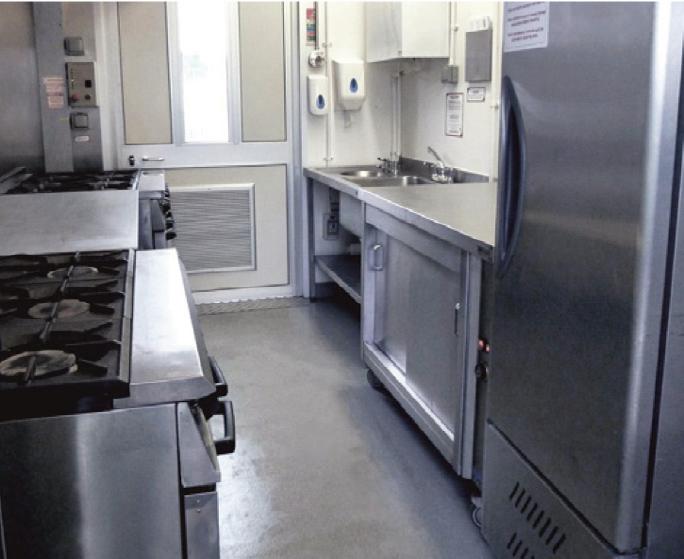
We have many tried and tested design layouts and would be pleased to put forward our recommendations for your project.
So if you’re planning a refurbishment or need to cater for an event then why not give us a call and we’ll be happy to provide advice and put forward a competitive proposal.
For further information or to arrange a site visit, email: sales@mk-hire.co.uk or call us on 0345 812 0800, or visit our website: www.mk-hire.co.uk

Disease-related malnutrition remains one of the most persistent challenges in UK residential and nursing care. It affects millions, increases vulnerability to illness, slows recovery, drives hospital admissions, and places strain on already stretched care teams. Yet despite the scale of the problem, the tools available to homes have not kept pace with the needs of increasingly complex residents.
Hiquid Food, a Norwegian medical nutrition company, is entering the UK market with a clear mission: to make effective nutritional support simpler, more acceptable for residents, and easier for staff to deliver.
Simple, seamless meal enrichment
Many residents struggle to consume enough calories and protein, even with carefully prepared meals.
Hiquid Food’s freeze-dried powders, made from organic whole foods, allow caregivers to enrich everyday dishes like porridge, soups, puddings, purees, and drinks. This discreet approach reduces refusals and preserves dignity, helping residents receive the nutrition they need through meals they already enjoy.
ORAL NUTRITIONAL SUPPLEMENTS WITH HIGH ACCEPTANCE
For individuals at greater nutritional risk, Hiquid Food offers compact, nutrient-dense oral nutritional supplements designed for those with low appetite or increased medical demands. They are easy to consume, well tolerated, and provide balanced support in small volumes.
WHOLE FOOD GASTROSTOMY NUTRITION
For residents requiring enteral feeding, Hiquid Food’s whole-food gastrostomy products offer a
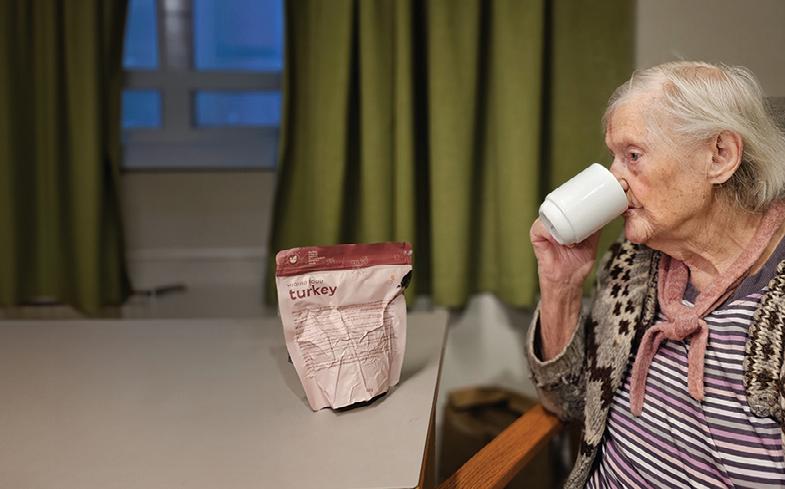
gentle, reliable option created with a focus on tolerance, safety, and long-term stability.
Better outcomes and operational efficiency
Care providers face rising acuity and workforce pressure. Hiquid Food products reduce complexity through easy mixing, no additives, and no large volumes while supporting improved resident strength, immunity, and recovery. Better nutritional status means improved wellbeing and lower overall care costs. With long shelf-life, low weight, and high versatility, the products are also environmentally responsible and easily integrated into a wide variety of meals.
As Hiquid Food launches in the UK through Food Untethered, they look forward to working closely with care homes, clinicians, and NHS commissioners to strengthen nutritional care in a practical, residentcentred way.
For more
information: contact@fooduntethered.com
See the advert below for further information.


Care homes across the UK are transforming how they deliver care thanks to SyndoraAlto, the newly rebranded name behind CHARIS, the UK’s most advanced digital nurse call system.
Fully supplied, installed, and maintained from just £6.40 per bed, per month, CHARIS delivers smarter, safer, and more connected care through real-time alerts, mobile integration, and intuitive smart displays that help staff respond faster when residents need them most.
Every CHARIS system comes fully inclusive with 15” smart displays, help buttons, pull cords, guaranteed radio coverage, and 24/7 UK technical support, all backed by SyndoraAlto’s trusted installation and maintenance team.
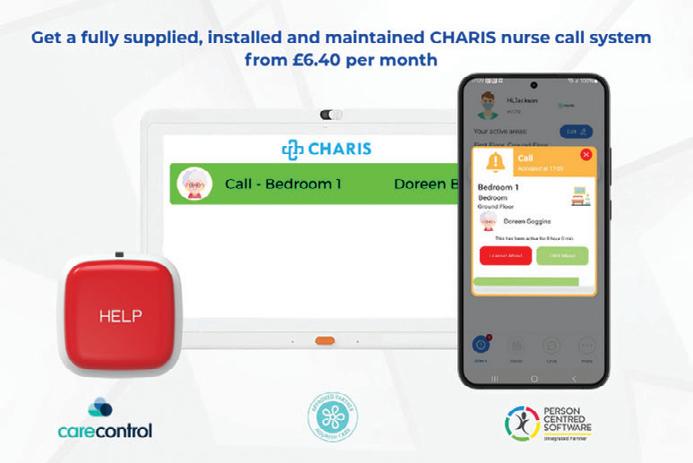
For care providers not yet ready to replace their existing nurse call system, AltoEnhance offers the perfect first step into digital care.
Available from just £129.00 per month, AltoEnhance seamlessly connects to your current nurse call system, bringing digital reporting, mobile alerts, and actionable insights without the need for a full system upgrade.
“Technology should make care easier, not harder,” says Louis Johnson, Managing Director. “CHARIS and AltoEnhance connect people, information, and action empowering care teams to deliver truly person-centred care.”
Meet the team & learn more at www.syndoraalto.com
See the advert on the front cover for more information.
Alarm Radio Monitoring is the market leader in the design, manufacture and installation of bespoke, end-to-end, wireless alarm systems and solutions for the healthcare, leisure, custodial and education industries.
We have been providing wireless alarm and nurse call systems for over 30 years. Supplying care homes and hospitals with an essential lifeline that supports the delivery of outstanding care.
We believe in excellence which translates into: Advanced Technology Industry-leading wireless alarm technologies and software
Bespoke Solutions
We design systems to your needs rather than your team having to work around

Falls are a significant concern for vulnerable individuals, especially seniors and patients at risk. Medpage, a leader in assistive technology, offers a range of cuttingedge products designed to enhance safety and provide peace of mind for caregivers and families. Here’s an in-depth look at some of their standout solutions:
MPRCG1 (2023) BED LEAVING DETECTION ALARM WITH CAREGIVER RADIO PAGER
The MPRCG1 is a comprehensive system tailored for fall prevention in domestic, commercial, and NHS care settings. This all-inclusive kit includes a bed pressure mat sensor, a BTX21-MP alarm sensor transmitter, and an MP-PAG31 radio pager. The system is designed to alert caregivers when a patient leaves their bed, reducing the risk of falls.
HDKMB2 HOSPITAL DISCHARGE KIT FOR FALLS RISK PATIENTS
The HDKMB2 is a thoughtfully curated kit aimed at supporting patients transitioning from hospital to home care. It includes essential tools to mitigate fall risks and promote recovery. This kit is ideal for caregivers seeking a comprehensive solution to enhance patient safety during the critical post-discharge period.
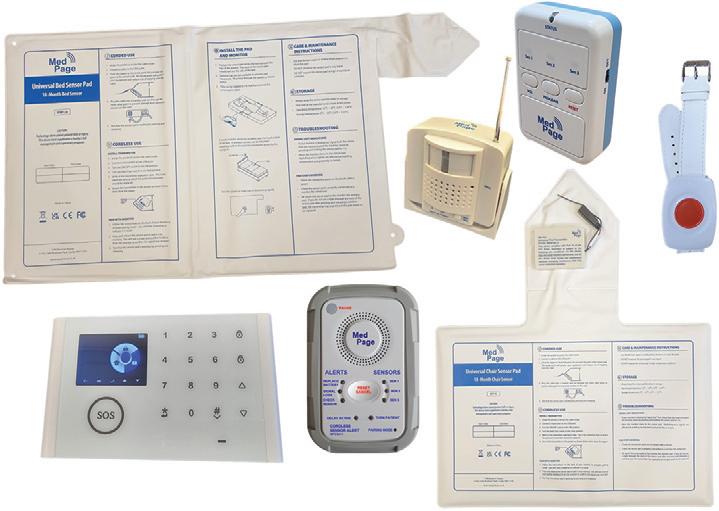
CMEX-21 MULTI-PORT WIRELESS SENSOR INPUT EXPANDER FOR NURSE CALL CONNECTION
The CMEX-21 is Medpage’s latest innovation, designed to integrate seamlessly with existing nurse call systems. This multi-port expander allows for the connection of multiple wireless sensors, enhancing the monitoring capabilities of healthcare facilities. Its versatility makes it a valuable addition to any care environment, ensuring timely responses to patient needs. RON-WC2 WATERPROOF DISABLED PULL CORD ALARM TRANSMITTER WITH WIRELESS ALARM RECEIVER
The RON-WC2 is a robust solution for disabled individuals requiring immediate assistance. This waterproof pull cord alarm is ideal for use in bathrooms and other high-risk areas. Paired with a wireless alarm receiver, it ensures that help is just a pull away.
For more information, visit Medpage’s official website or contact their team to explore these products further. Safety starts with the right tools, and Medpage delivers just that. www.easylinkuk.co.uk
T: 01536 264 869
The wireless ARM Nurse Call system has been developed over 30 years with both the client and user in mind.
It enables staff to efficiently answer calls, making the management of resources more flexible and provides the functionality you would expect of any nurse call system.
The system is quick and easy to install and works wirelessly, using radio communication between both the call points and the system infrastructure. Call messages can be sent direct to staff to speed up response times and can also be integrated to work with smart phones & messaging. Data Analysis software provides a full audit trail of events
The all-new call logging software from ARM enhances the functionality of your care call system dramatically.
• It can help you track the quality of your service to your residents.
• It can help you demonstrate compliance with your aims and best practices, both to relatives and to authorities.
• It can help you find bottlenecks in service provision, track staffing requirements, and allow you to ensure staff are meeting expectations.
• Most importantly, it provides assurance that you know and can demonstrate what is happening in your care home.
Courtney Thorne, a long-standing innovator in healthcare communication systems, is setting new standards in the care home sector with its advanced wireless nurse call technology—designed to improve resident safety, enhance staff efficiency, and support a more responsive care environment.
With over 30 years of experience serving the UK healthcare market, Courtney Thorne’s systems are now trusted by thousands of care homes nationwide. Unlike traditional hardwired solutions, their wireless nurse call systems offer non-invasive installation, scalability, and smart analytics—making them ideal for both new builds and retrofit projects.
“At the heart of our technology is the belief that better communication leads to better care,” says Graham Vickrage, Managing Director at Courtney Thorne. “Our wireless systems not only reduce response times but also empower staff with the tools they need to deliver safe, person-centred care.”
Care providers are increasingly choosing wireless systems for their flexibility, reliability, and cost-effectiveness. With a full suite of accessories—including neck pendants, door monitors, fall detection, and
bed sensors—Courtney Thorne systems can be tailored to meet the specific needs of each home and resident.
In an industry where compliance, safety, and staff pressures are always front of mind, Courtney Thorne provides more than just products—they offer ongoing support, training, and a commitment to innovation that helps care homes future-proof their operations.
For more information or to book a free demo, visit www.c-t.co.uk or contact info@c-t.co.uk.
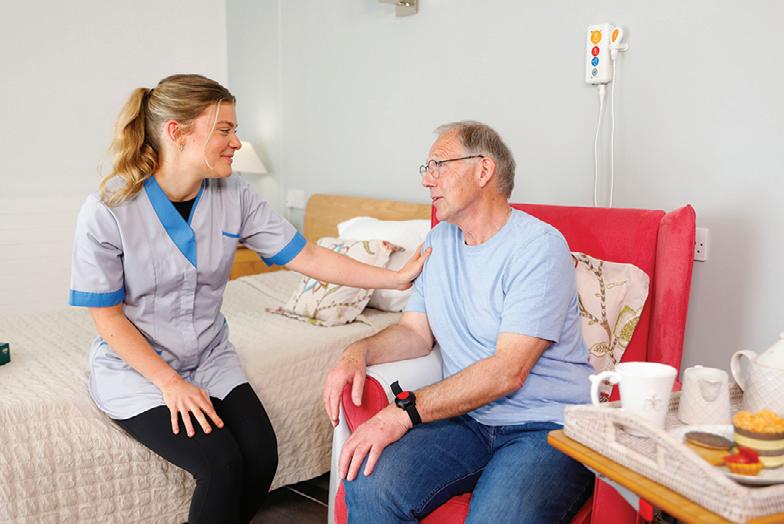
We here at Edison Telecom Ltd have been providing specialist solutions to your call system requirements tailor-made to each customers needs for over 25 years, says director Bob Johnson. Is your current Nurse Call “legacy”, obsolete, so full of software bugs or commercially not viable for your current supplier/maintainer to maintain?
We may have just the part and expertise that you are looking for to give your nurse call a further extension to life, adds Bob, “Edison will treat your nurse call with the same compassion that you give to those in your care. There will come a time when your equipment is beyond repair but Edison are experts in extending the life of obsolete systems.” www.edisontelecom.co.uk


Every day, care organisations are working tirelessly to deliver essential support in the face of growing needs and rising costs. However, too many providers are stuck balancing tight budgets, having ‘just enough’ to stay afloat. The hard truth is, just enough isn’t enough—not for the providers, not for the employees, and certainly not for the clients who depend on them.
Rising operational costs—from wages and the Fair Pay Agreement to energy bills—compound historic underfunding and financial pressures. And demand for care continues to increase, creating a widening gap that organisations are often forced to fill with limited resources.
Providers then end up in survival mode, unable to invest in improving their services for today and the future.
THE NEED TO RETHINK FINANCIAL STABILITY
Care providers need to have healthy finances in social care, and that doesn’t come at odds with delivering compassionate care.
A financially strong organisation has the breathing room to improve services, retain employees, and innovate to make a meaningful difference to the lives of people they support. And having this financial security means providers can actually plan for the future rather than constantly reacting to the present.
BENEATH THE SURFACE
Social care organisations face a web of financial intricacies. Local authori-

ty support often comes with layers of red tape. Managing aged debt and resolving invoicing errors take a significant amount of time that few organisations can spare. Regulation and compliance require meticulous reporting, and the sheer volume of admin work to manage all these leaves teams stretched thin.
At the same time, there’s an expectation for providers to keep doing more. But without the right tools and systems in place, these compounded financial struggles threaten to overwhelm this indispensable sector.
PAVING A SUSTAINABLE WAY FORWARD
Social care providers aren’t just keeping their organisations alive; they’re safeguarding the wellbeing of countless individuals and families.
Providers need to be able to prioritise long-term financial resilience. And part of this means having the tools—including robust financial management softwaresimplify manual processes, optimise resources, and reduce inefficiencies.
By championing financial sustainability, we’re creating conditions where employees can thrive, where clients receive the quality of care they deserve, and where the sector can confidently meet future challenges.
Find out more at: www.oneadvanced.com/ai
See the advert on the back cover of this issue.
FALL SAVERS ® WIRELESS MONITOR
Eliminate all cables with our new generation falls management solutions!
Upgrade your falls programme with the latest technology from Fall Savers®. The NEW Fall Savers® Wireless eliminates the cord between the monitor and sensor pad. This results in less work for nursing staff, improved safety for patients and reduced wear and tear on sensor pads. Wireless advantages include the ability to use one monitor with two sensor pads simultaneously and support for many new wireless devices.
BENEFITS INCLUDE:
Safer for patients; less work for staff
Bed and chair pads available
One monitor works with two sensor pads
Integrates with most nurse call systems
A variety of options, including: Call button Pager
The TreadNought® Floor Sensor Pad is built to last with a durable construction that far out lasts the competition. Our anti-bacterial floor sensor pad is compatible with most nurse call systems or can be used with a portable pager to sound an alert when a person steps on to the sensor pad. Caregivers typically place the sensor pad at the bedside, in a doorway or other locations to monitor persons at risk for falls or wandering. An optional anti-slip mesh reduces the potential for slippage on hard surface floors.
FEATURES INCLUDE:
Connects directly to most nurse call systems
High Quality anti-bacterial Floor Sensor Pad
Large Size Pad: Measures (L) 91cm x (H) 61cm
Options (sold separately):
Anti-slip mesh for hard surface floors
See the advert on this page for further details or visit www.fallsavers.co.uk.



Working in social care is demanding. It is one of the most heavily regulated yet underfunded sectors, with providers expected to comply with regulations, meet Quality Statements, follow good practice guidance, respond to local authority monitoring, and operate under constant scrutiny.
Regulation itself isn’t the problem — it protects people and improves standards. The challenge is capacity. Larger organisations may have in-house quality assurance teams, but smaller providers rarely have the time or budget to review compliance in depth. Many owners and managers tell us they feel overwhelmed and unsure how well their service is really performing, especially since the introduction of the Single Assessment Framework.
For many, confidence in compliance is the number one concern — not because standards are poor, but because there simply isn’t time to step back and take a full, objective view.
CAN AN EXTERNAL AUDIT HELP?
In short, yes — when it’s done properly. A high-quality external audit provides:
• A clear snapshot of current performance
• Identification of good practice and priority risks

• Practical advice on how to improve
• Evidence to support action plans and improvement journeys
• Demonstration of good governance and continuous improvement — a key CQC focus
• Reassurance for owners, directors, and managers
HOW W&P CAN HELP
W&P have supported health and social care providers for nearly 25 years, completing hundreds of audits across a wide range of services. This experience gives us deep insight into what regulators look for — and what genuinely improves outcomes.
Our audits are supportive, non-judgmental, and practical. They typically include around six hours on-site, followed by a detailed report that links evidence to regulations and Quality Statements. Reports also include clear guidance, tips, and sources to help you respond confidently.
Every audit is tailored to your needs — whether that’s safeguarding, medication management, or overall governance — ensuring it is truly fit for purpose.
If you would like to know more, then please contact us on audits@wandptrainng.co.uk or call 01305
767104 for a no-obligation chat on how our audits can help you. See the advert on page 2 for details.
Competency assessment might not be anyone’s favourite phrase, but in domiciliary, residential, and specialist care, it is the backbone of safe, highquality support. The challenge is making it genuinely useful, not just another hoop to jump through.
Care staff need more than theory. They need time to learn, practise, and make mistakes in a safe environment before they are expected to apply new skills with real people. That is where a blended learning approach truly shines. High quality eLearning builds consistent knowledge. Virtual sessions keep teams connected and engaged. Face to face training gives carers the chance to try techniques, ask questions, and build confidence before working directly with residents and service users in their homes or care settings.
But learning does not stop in the classroom. Competency assessments in real care environments provide the feedback carers need to know they are using best practice techniques, communicating well, and delivering safe, person-centred care. It is the


bridge between “I know it” and “I can do it.”
This balance of learning plus real world assessment creates confident, capable staff who trust their own skills and feel supported rather than judged. Managers also get clear, reliable evidence for CQC and Skills for Care requirements without drowning in admin.
At myAko, we have developed tools with our long term partners, that make this process simple and sustainable. Better learning, better practice, better competency. It is a straightforward formula that leads to stronger teams and better outcomes for residents and service users.
Because when staff feel skilled, supported, and confident, the quality of care speaks for itself.
Kevin Ashley
Founder I CEO, myAko
myako.online/care
"23 years, operating 4 Devon Nursing homes, has been pretty tough, as anyone in social care, knows, only too well. And if it was hard already, after 2024 budget, it's just got harder.
Anyway, at heart, I am just customer of Eden Alternative, and it was a stroke of luck to come across this whilst on holiday in New Zealand in 2009. It started in USA in 1994 and now runs in 22 countries.
The fact that I am now involved with this not-for-profit organisation (in the UK area) came about when one of the 2 main UK directors died suddenly just before Covid. But it's something I have run with for 11 years to help make 'vision' a reality, not a struggle. So, being both a customer and helping the admin seems quite natural.
It is a modern philosophy of care, but moreover, it's a programme that is straight forward, tried and tested for 30 years and really works.

Its member care organisations generally become trainers for their own teams, and run it themselves.
The programme is run in person over 2-3 days or online 1 hr a wk for 7 weeks. You choose.
It addresses loneliness, helplessness and boredom and operates through 10 principles to underpin 7 critical domains of wellbeing.
Moreover, it's effective, transformational and really works. As residents, and team members wellbeing, matter so much , it's a must, in my opinion.
Geoffrey Cox
Southernhealthcare.co.uk
eden-alternative.co.uk"
Restrictive practices such as physical restraint, bed rails, or lap belts remain one of the most challenging aspects of health and social care. Intended to keep patients safe, they can also cause harm, distress, and loss of dignity when used unnecessarily. Across the UK, the principle is clear: care must always use the least restrictive option.
Legislation provides the framework, but culture and staff behaviour shape daily practice. Nurses, carers, and clinicians often make quick decisions balancing safety with autonomy. Without training, restrictive practices risk becoming routine. To change this, staff need better understanding of the human impact and confidence to use alternatives.
That’s where Restrictive Practice makes a difference. Developed through codesign workshops with patients and carers, this gamified e-resource gives a voice to those most affected by restraint. Their lived experiences shaped the learning, helping staff see restraint
not as a neutral safety tool, but often as something frightening or disempowering.
The results are powerful. Staff trained with the resource led Quality Improvement projects, achieving measurable reductions:
- Bed rails dropped from 360 to 277 incidents
- Bed bumpers from 303 to 227
- Lap belt use halved, from 46 to 22
These improvements represent safer, more compassionate care and reassurance for families.
Restrictive practices may never disappear entirely, but they should be the exception, not the rule. With the right knowledge and tools, staff can choose safer alternatives and build a culture of dignity, compassion, and respect across UK care services.
See our advert on the front cover or visit
Global assists clients throughout the U.K. who specialise in the healthcare sector to achieve their objectives of purchase, development and refinance.
We have organised over £1.8bn for clients in the past 30 years, providing clients with competitively priced funding to refinance existing debt, ease cashflow and develop businesses further.

From helping clients make their first purchase through to allowing groups to grow significantly in size we