
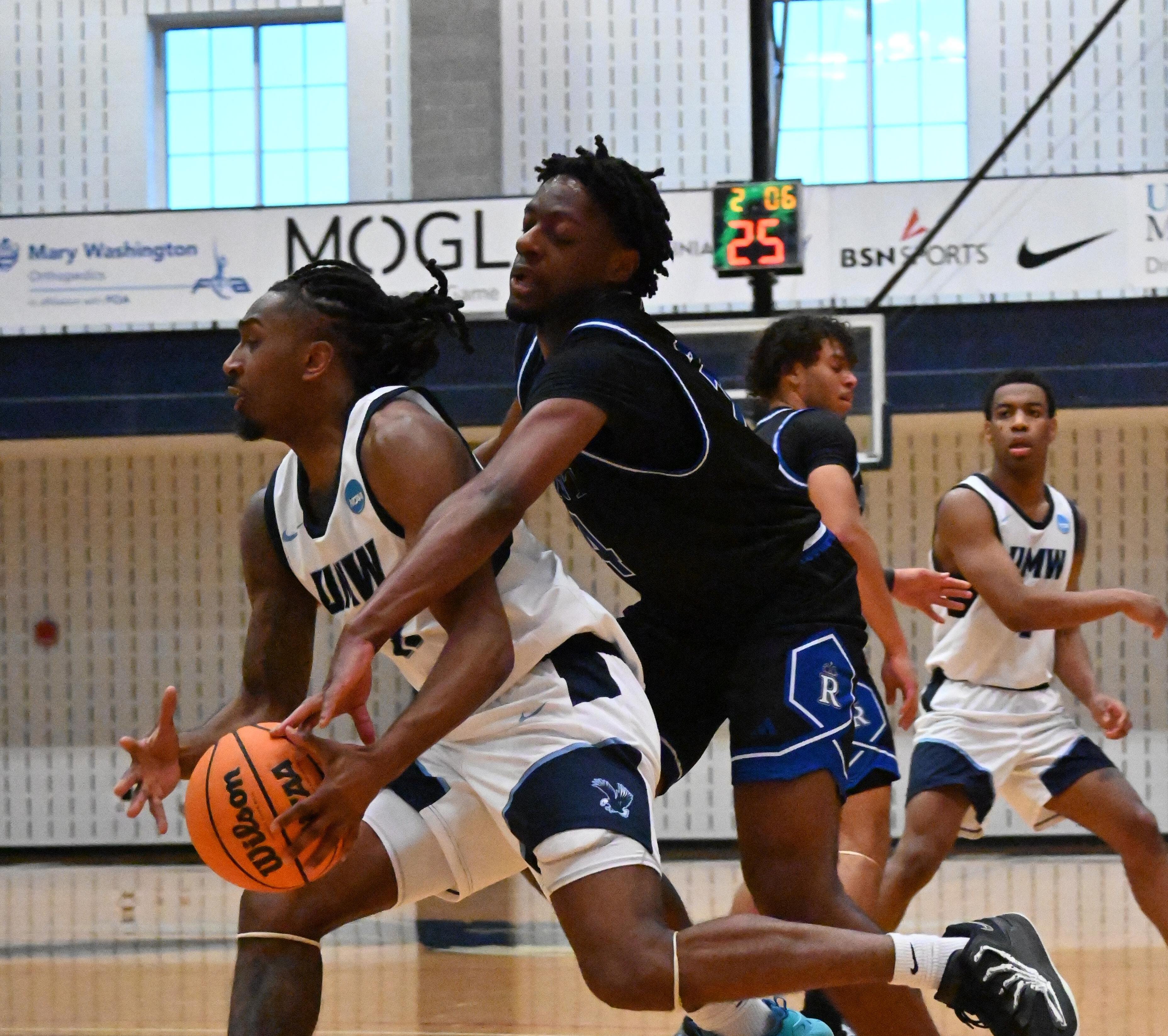

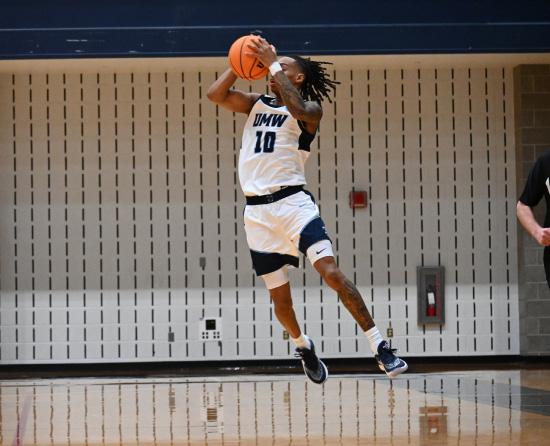
Junior Jay Randall plays as foward during a game against Regent University.
Anna Goodman / The Weekly Ringer
Editor-in-Chief
Callie Harkins
Executive Editor
JENNA ROBERTSON Staff Writer
Associate Editors
Emma Kingkeo
Grace Wagner
Thomas Jackson
News Editor Ky Huynh
Meaghan Van Dyke
Opinion Editor
Ella Cordle
Life Editor
Chloe McCann
Sports Editor
Enya Cea-Lavin
Online Editor Sophia Tompkins
weeklyringer.executive@gmail.com
Last semester, the UMW Landscape and Grounds team and The Good Steward Farm entered into a partnership to support a natural landscaping initiative on campus: goats that help manage vegetation and clear land designated for future campus development through eating the greenery. These fluffy workers arrived on campus last semester, and in the early afternoon of Dec.16, 2025, all escaped from their enclosure.
weeklyringer.online@gmail.com weeklyringer.sports@gmail.com weeklyringer.life@gmail.com weeklyringer.opinion@gmail.com weeklyringer.news@gmail.com weeklyringer.associate@gmail.com
Photography Editors
Anna Goodman
Violet Ayers
weeklyringer.photos@gmail.com
Copy Editor
Kyra Donlon weeklyringer.copy@gmail.com
Faculty Advisor
Sushma Subramanian
Corrections
Please report any corrections to Callie Harkins at weeklyringer.eic@gmail.com or Sushma Subramanian at ssubrama@umw.edu
Advertisement
Please directs all advertising inquiries to Callie Harkins at weeklyringer.eic@gmail.com. weeklyringer.eic@gmail.com ssubrama@umw.edu
Bell tower logo designed by Bernadette D’Auria ‘22
The UMW Landscape and Grounds team was quickly contacted after community members alerted UMW police, who then notified the goats’ owners. Personnel from both groups responded quickly, equipped with dog leashes, and safely returned the goats to their enclosure.
Every morning, staff from The Good Steward Farm care for the goats by checking their water, food and fence line.
“You have to drop everything when the goats get out because we don’t want anything bad to happen to them, and we also don’t want them to be a nuisance.”
- Carly Brown
“From our perspective, it seemed like everything was great,” said Carly Brown, a representative from The Good Steward Farm.
Due to the high winds, a single branch fell, creating a breach in the electric fence that allowed the goats to escape.
“Apparently, a limb fell and created a breach…and those sneaky devils (goats and devils are interchangeable!) took advantage of the field trip opportunity,” said Director of Landscape and Grounds Holly Chinchester-Morby in an email.
While it is unknown which goat exited the pen first, Chinchester-Morby suspects


Edna led the escape. As goats live in a matriarchal herd structure, Edna’s leadership likely prompted the rest of the herd to follow her onto Monument Avenue and subsequently alarm neighbors.
UMW Chief of Police and Associate Vice President of Public Safety Michael Hall was notified and promptly contacted Chinchester-Morby, who then reached out to Brown to inform her of the goats’ unexpected excursion. During this time, UMW Police Department officers were dispatched to the scene to contain the situation and minimize damage to nearby rose bushes.
Since the herd was loose, ensuring the goats’ safety became a top priority.
“It doesn’t matter if I’ve sat down for dinner and I’m having a glass of wine, or if we’ve made some sort of plans. It never matters,” said Brown. “You have to drop everything when the goats get out because we don’t want anything bad to happen to them, and we also don’t want them to be a nuisance.”
The successful return of the goats was made possible through community cooperation. Neighbors provided extra dog leashes, Chinchester-Morby quickly grabbed Edna and led her back and Officer Alexis Santiago from the UMW Police Department assisted by leashing Jeff the goat—an experience he reportedly enjoyed.
Once the goats were safely returned to their temporary home, Brown conducted another inspection of the fence line and discovered the branch that ultimately caused the escape.
“Fences are kind of like a suggestion to goats, but as long as we keep them happy with food, water and tension, those goats are not going anywhere,” she said.
Brown also emphasized the goats’ friendly nature.
“I believe that Jeff would walk up and down and eventually find himself in one of those halls and find a class to hang out with, because he just seeks people out,” she said.
Chinchester-Morby said that Landscaping is not worried about a potential future
goat escape.
“The goats are great ambassadors, and aside from a love of rose foliage, they are harmless to the neighborhood,” she said. “The response to the goats being here has been nothing but welcoming.”
In the event of another escape, Brown shared several key points for students and community members to keep in mind. The goats are unlikely to travel far from their home base, where food, water, shelter and a mineral block are readily available.
“The goats are great ambassadors, and aside from a love of rose foliage, they are harmless to the neighborhood. The response to the goats being here has been nothing but welcoming.”
- Holly Chichester-Morby
“If somebody can hang out with them, that’s always awesome and very appreciated, but not required,” she said.
Brown also emphasized the importance of contacting the farm directly, adding, “We understand that we’re on call 24/7—it’s the nature of this sort of business. So please give us a call.”
While the escape was not ideal, those involved described it as a fun and educational experience.
“It’s pretty cool to watch the whole thing,” said Hall, referring to the coordination required to manage the goats.
He also expressed surprise at their awareness, saying, “They knew that the fence was not electric anymore [...] unless they saw it and realized something wasn’t working.”
January 23, 2026
The gym is more than a resolution, it’s a lifestyle
AVA NJORE Staff Writer
New year, new us, or so we like to think at UMW. With a new spring semester ahead, students want to put their best foot forward: new classes, new schedules and maybe even new goals. But the real question is whether we can actually keep those goals? Or are these goals just quick hits of self-validation, little promises we make to feel good in the moment, even though we know we won’t keep them?
“The too-small gym and lack of long term fitness programming at UMW create a chaotic three-week surge instead of supporting real, lasting fitness habits.”
- Ava Njore
For the past three years on this campus, I have observed the cycle of college students’ New Year’s resolutions. They are often half-hearted and don’t last long, inspired by TikTok wellness trends rather than the desire to achieve real change. One of the most significant examples of this, and the one that affects me the most, is the influx of resolution gym-goers.
Every January, UMW’s gym transforms into a crowded stage for “New Year, New Me” performances. This shortlived, disruptive surge exposes how the university’s lack of long-term wellness support fails students and drives an unsustainable fitness cycle.
The too-small gym and lack of long-term fitness programming at UMW create a chaotic three-week surge instead of supporting real, lasting fitness habits—demonstrating that the issue lies in the university’s approach, not in student motivation.
For students like me, who have been working out and weightlifting for years, it is a cyclical and predictable disturbance.
Hear me out, I am all for self-improvement. But when I’m elbow-to-elbow with someone doing their first-ever
squat during my routine gym trips, it can be hard to feel supportive.
I have been a consistent gym-goer since the fall of my freshman year. Since then, over the past two years, I have watched this January cycle unfold. The gym is packed, people are waiting around for machines, it’s basically a Lamaze class on the stretch mats and the cardio area feels like the Hunger Games.
But I take a deep breath, knowing most of the January crowd will disappear by February. The lack of routine and discipline makes it difficult for these new people to keep up once the “New Year, New Me” energy wears off.
It is not that I am anti-new people, it’s that I don’t like the UMW system that turns wellness into a trend. But why is it this way? It’s deeper than “the gym is crowded.”
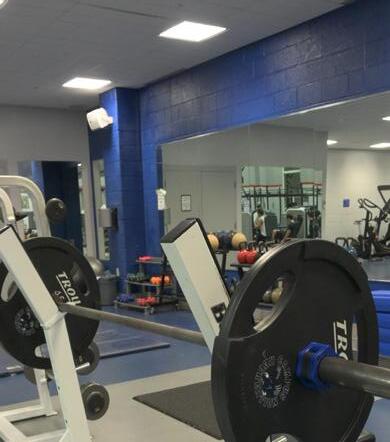
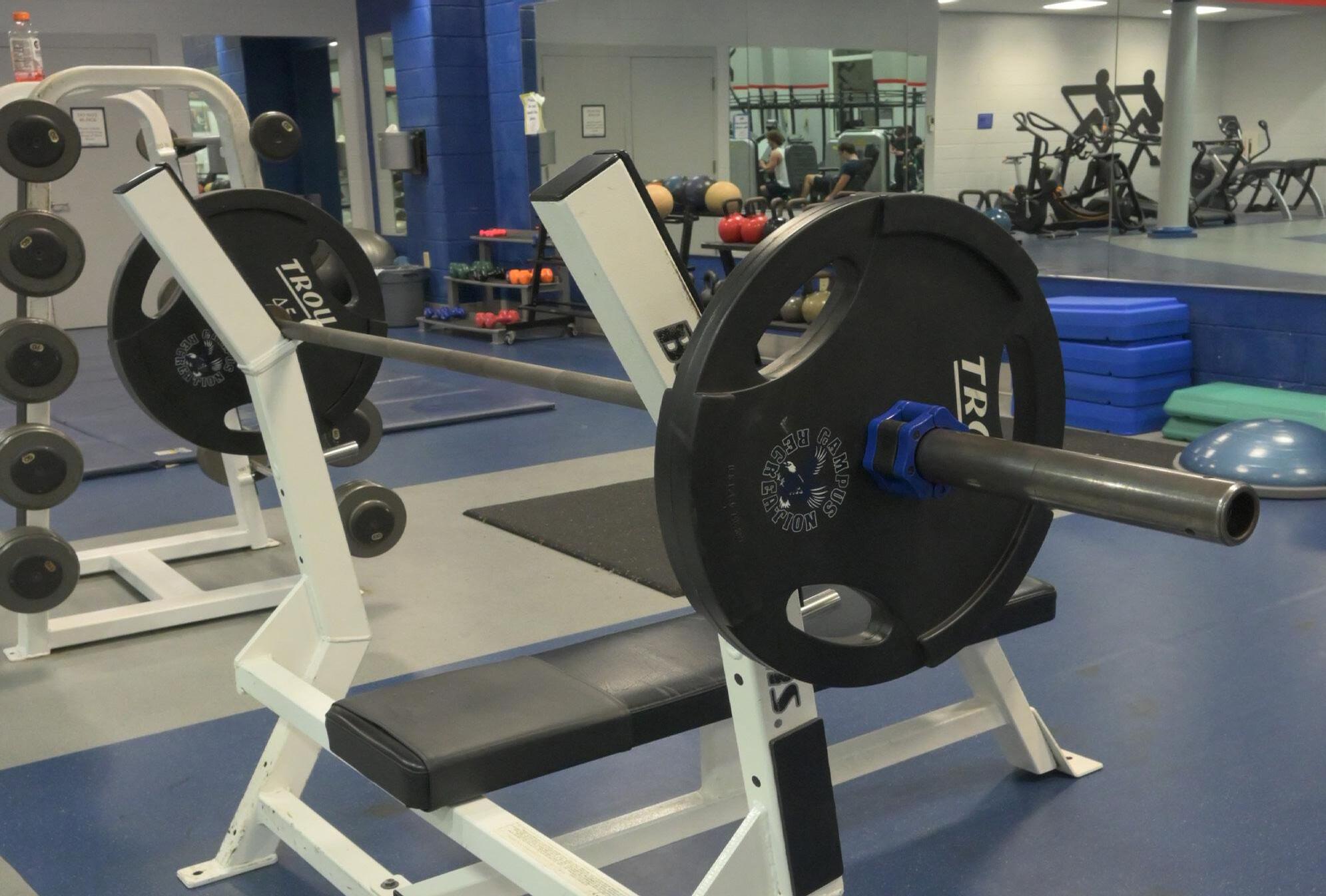
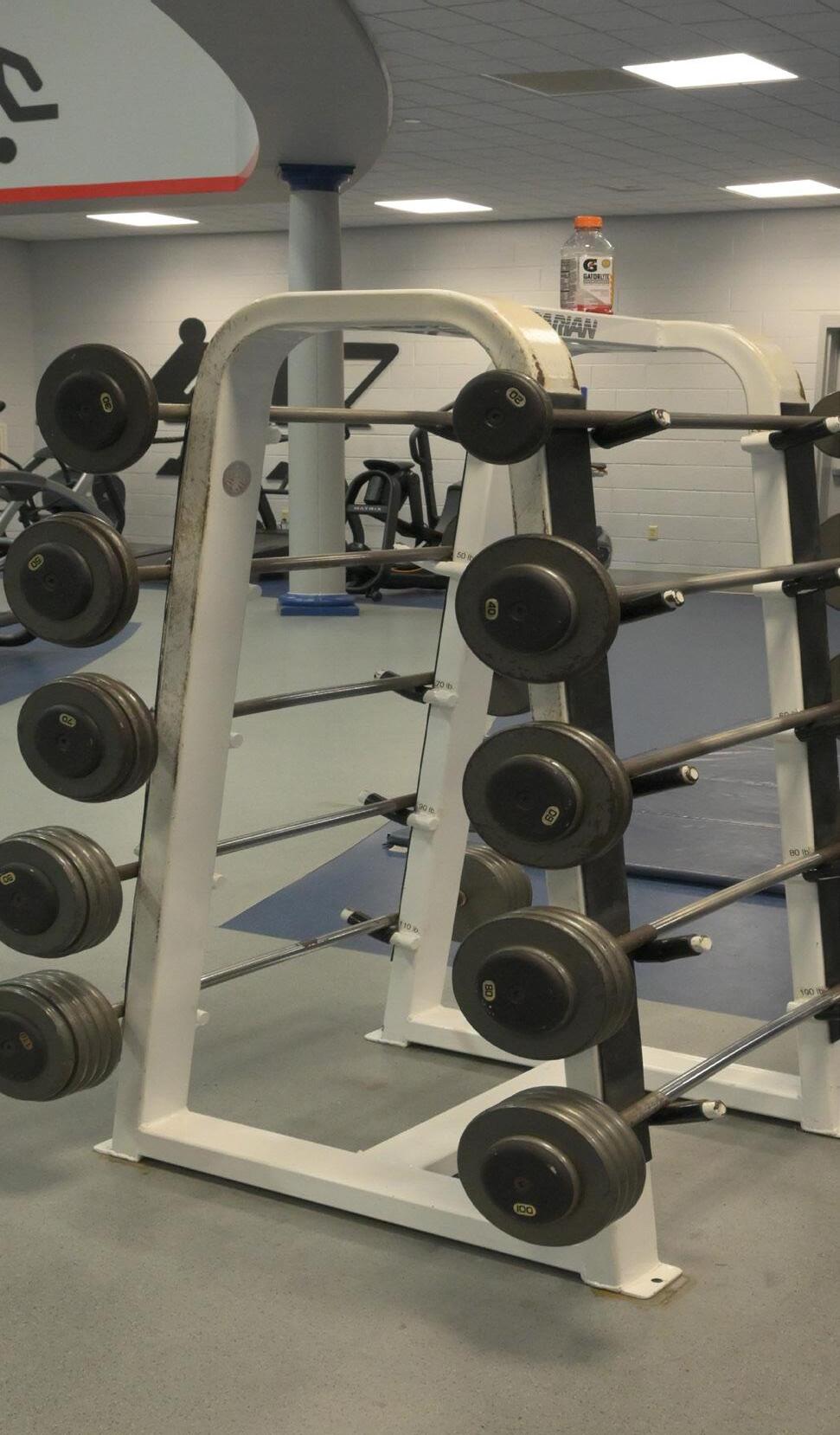
The UMW gym has an odd layout, which makes the space naturally feel cramped. It is 19,000 square feet of good intentions and bad layout. On paper, that space could fit a few hundred people. In reality, it feels full the second a lost freshman walks in.
The two big strength rigs sit dead center like towers, blocking every possible walking path. The dumbbell area and stretch mats are basically pressed against the mirrors, so even with two people, it feels like you’re lifting inside a broom closet. Make it 10 people, and suddenly you’re in a “who can get out of here faster” challenge.
Then there’s the back of the gym: the squat racks and Smith machine are squeezed so close to the windows you can practically fog them up mid-rep. Because the bathrooms are placed in the back corner, directly in the walkway of the squatting mats, every stretch feels like I’m dodging a stranger stepping over me on their way to pee.
“There is no long-term fitness‑related support from UMW. No extended fitness programs that are marketed beyond the gym.”
- Ava Njore
We students are paying to be here. Using campus amenities shouldn’t feel like a competitive sport.
But the more I think about it, the more I realize the problem isn’t the students—it’s the system. UMW doesn’t offer enough structured wellness support.
Now, we do have the UMW Recreation Center fitness classes offered every week. But they are passive, shortlived, 45-minute to an hour classes that do not help beginners build routines that last until February. Students also must pay a fee of $25 for the academic year or a $5 drop-in fee per class, paid at the gym front desk on top of tuition.
There is no long-term fitness-related support from UMW. No extended fitness programs that are marketed beyond the gym. Sure, the gym’s Instagram page features a few 20-second videos with the newest TikTok trend that occasionally gets a few glances—maybe even a chuckle— but it doesn’t motivate anyone to actually show up.
A long-term program is what students need to get into fitness. Learning information like how to rack and unrack a barbell, gym etiquette, learning what weight works for you, progressive overload, making a split, etc.
These classes could be a great way for students to slowly start their fitness journeys instead of jumping in the deep end and disrupting seasoned gym-goers.
But we do not have that, so by February, the giant January fishbowl always shrinks into a much smaller school of fish, because most of the New Year swimmers can’t keep the pace.
Entering any fitness journey is great, and January is an understandable start. But UMW is unintentionally creating this boom-and-bust cycle for students wanting to get into fitness. Thus making gym-goers, like myself, lives much harder.
I would like to see some change as this semester goes on, but my money says that by Feb. 1, I’ll be back to my quiet gym and no lost wandering eyes. And I’ll double bet it will happen all over again come January 2027.

When junior psychology major Kin Dillon returned to campus after spending the Fall 2025 semester abroad in Milan, she expected excitement over seeing familiar faces again.
What she didn’t expect, however, was how strange it would feel to shift back into daily responsibilities and routines. While studying in Italy, Dillon recalls her schedule looking completely different than the typical UMW one.
“I had class for maybe four hours one day a week, so I had a lot of free time,” she said. Although returning to campus brought some comfort to Dillon, the adjustment was certainly not without its challenges, the hardest part being a combination of time-zone exhaustion and adapting to a completely different environment.
“Coming back and having to work and feel like an actual human being again is kind of odd, because you’re not just doing fun things and traveling on the weekends,” she said. “You actually have to do work in school.”
Aside from getting used to the workload again, Dillon reflects on how the change in her character while abroad added to the weight of her adjustment back on campus.
“I feel like I’ve changed a lot as a person. It’s like putting the person I have changed into in a new environment. It’s kind of like readjusting all over again,” she said.
For most students who go abroad, the worrying conversation of comfortable adaptation typically revolves around being away from home. On the other hand, there are numerous readjustments and struggles students face when returning from weeks of education abroad that are underdiscussed.
Junior communication and digital studies major Emma Lusk, who studied abroad at

the University of Reading in England during the Spring 2025 semester, said she didn’t anticipate much of a struggle when returning home.
“I wasn’t expecting anything to be that different. I honestly kind of transitioned back here really easily, so I was very comfortable coming back,” she said.
Despite her presumptions, adjustment for Lusk still came with unexpected challenges. While studying abroad, she found herself becoming more outgoing out of necessity, meeting new people and navigating foreign areas on her own. In comparison, returning to campus felt much quieter and more relaxed.
“I was making my own friends and going out there and doing stuff. Then I came back here and I kind of spent every day by myself,” she said. “Not a bad thing, but definitely different.”
Emotionally, Lusk described the first few weeks back as a mix of excitement and sadness.
“I was excited to come back,” she said. “But I was also kind of sad when I realized, yeah, everybody’s busy.”
That sense of returning to “real life” was something Lusk felt almost immediately upon returning.
“It was super fun, and I like talking about it, but I was a little bit like, okay, back to your normal thing. This is real life now. You can’t be in Fantasyland now that you’re back at your real school,” she said.
The abroad experiences made available to students vary widely. For some, the challenge of returning is shaped by where they studied and how deeply they immersed themselves. Junior history major William Goodman, who studied abroad in Cairo, Egypt, during the Fall 2025 semester, recalled a different experience.

For Goodman, leaving behind the relationships he formed abroad was one of the hardest parts of returning.
“You’re forced to make friendships with all these people, and then you develop them for four months. You only have each other to rely on. And then you’re just like, ‘okay, bye.’” he said. “You kind of have to accept you’re not gonna see a lot of these people again in your lifetime.”
He also described the cultural whiplash of returning to campus life after adjusting to a very different lifestyle overseas.
“You kind of get back, and you’re like, okay, guys, let’s go to Target,” Goodman said, noting the shift from an extravagant, fast-paced environment abroad to a more familiar routine at home.
Despite each student’s different experiences, each of them emphasized the importance of routine and familiarity when adjusting back to campus life. Dillon said getting back into a structured schedule helped ground her after returning.
“Seeing my friends again and getting into a routine of having class and work helped a lot,” she said. “Abroad, I didn’t have a routine, which is nice in some ways, but you don’t get as much work done.”
For students preparing to return from abroad, Dillon emphasized the importance of patience and self-compassion.
“Prioritize how you’re feeling and your emotional well-being. If you need help, reach out to friends who care about you,” she said. “They’re going to be there for you and you won’t have to do things alone.”
ONNOLEE SLATEN Staff Writer
The 2026 spring semester welcomes a new flair on campus: UMW’s first drag club.
Co-founders of the Drag Club, sophomore mathematics major Jocelyn Borges and freshman Shelby Shepard, had initially met at a drag history event on campus, where they shared the same wish for a community to celebrate and enjoy drag.

“It had been like a seed in my mind,” said Shepard. “And Jocelyn and I both just happened to go to Shenandoah’s drag history event on campus.”
The Club’s main goal, according to Borges, is to educate others on drag as a form of expression and to harbor an inclusive environment where everyone feels welcome.
“It’s a big friendship/family kind of bonding experience,” said Borges. “Everybody gets up and goes, ‘oh does this look nice?’ or ‘can you help me with this?’”
While still in its early stages, the Club’s initial meetings have set the foundation for fun projects in the future. These include a Black Excellence drag show during the month of February and a “Fight Night” that will feature students in drag competing in lip sync battles, talent shows and runway walks.


For its events, the Club plans on partnering with established drag queens in the area, such as Shenandoah, a Mary Washington alum and prominent Fredericksburg performer, to speak at workshops and judge in these competitions.
Borges—drag name is Juicy Cunture—emphasizes that there are no gender, sexuality or ability requirements in order to become a member. Shepard—drag name is Loosey Buttons—echoes this sentiment.
“I want to see drag queens. I want to see drag kings. I want to see drag things all around,” Shepard said.
While the club is currently composed of only a handful of students, Borges has aspirations of expanding outreach and reaching those who may see drag as something inaccessible or overwhelming.
I would like to have a lot more diversity,” Borges said.” There are a lot of women and non-binary people who are in the club, and that’s not a bad thing, but I want everyone to feel welcome.”
Secretary of the Drag Club and junior international relations major Vivian Wilkins—drag name is Clamme Chowda—explains that her favorite thing about the Drag Club is that it allows UMW students to get their foot in the door of a vast community.
“It’s just a way for us to start networking with each other and to get other people introduced,” said Wilkins.
Despite Fredericksburg’s location as a southern city, the drag culture is rich and continuing to grow.
“Every single queen I’ve talked to is so nice around here, and they’re all excited and welcoming and just happy to see more drag in Fredericksburg,” Shepard said.
For Treasurer of the Drag Club and freshman Mary Clare Pelczynski—drag name is Feste Vulva— her favorite thing about the club is the creativity associated with drag.
“Drag Club is finally what pushed me to create my own drag character and experiment with who that character is, what their personality is like,” said Pelczynski.
When asked about any potential setbacks the club had to face when starting it, all the founders agreed that affordability was the biggest challenge when creating a drag look. To mitigate this, the club plans on running excursions downtown and helping others thrift for performance-worthy ensembles.
“I want us to be prepared, I want us to be involved,” Borges said.
Understanding that some students may be hesitant to participate because of potential judgment, Drag Club leadership is taking steps to ensure the comfort of all members, regardless of experience or eagerness to get on stage.
“I want to make sure that it’s very clear that if you don’t want to perform, you don’t have to perform, and if you do want to perform, we don’t have to take pictures of you. We don’t have to post about you,” Borges said.

For anyone who is interested in the art of drag, there will be a seminar on Jan. 26 for creating a drag name and persona. Contact @dontcallmejuicy on Instagram for more information.
“I’m really excited to bring out the drag community and queer community at UMW. I think campus in particular is a really good place for that,” Shepard said.

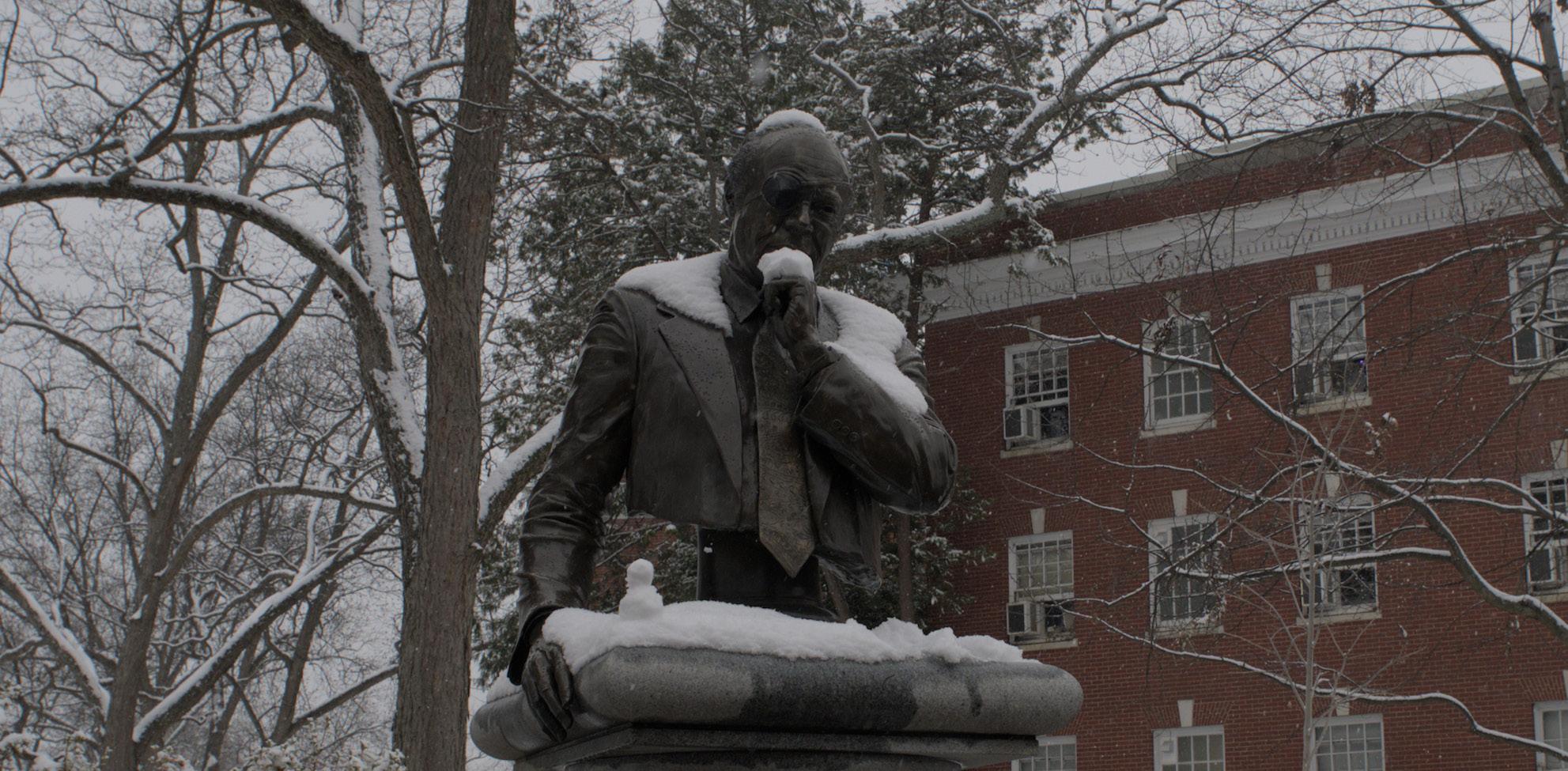
Starting this spring semester, professors will be permitted to hold classes in alternative formats during inclement-weather closures, according to an email sent by Executive Director of University Communications Amy Jessee on Jan. 9.
During such closures, in-person class meetings will not take place. Faculty members will instead have the discretion to move classes to another format or assign alternative work, including holding classes virtually. If virtual instruction includes a synchronous meeting, it must take place during the regularly scheduled class time.
“Many faculty already made decisions to cancel class, extend an assignment or change how class sessions would be made-up during inclement weather changes to the schedule,” said Jessee. “This update notes these practices and reminds students to check for class changes during inclement weather as well as assess the weather conditions in their locations for any impacts.”
Faculty are responsible for communicating any changes to students. The policy also emphasizes that students may not be penalized if they are unable to attend virtual classes or complete assignments due to weather or technology issues.
Updates on closures, delays and schedule changes will be shared through UMW email and posted on the university’s website, which will continue to serve as the primary source of information during inclement weather.
Students and employees are encouraged to assess
weather and road conditions in their own locations. If campus operations remain normal but travel is impacted by weather, individuals should contact instructors or supervisors to make arrangements for missed classes or work.
“This update offers academic continuity and flexibility for faculty and students during inclement weather changes,” said Jessee. “We appreciate the feedback from the campus community and the input through academic leadership including Provost’s Council and Cabinet as we made our messaging more consistent with practices on our campus and with colleges across the state.”
Associate Professor of German Marcel Rotter said he supports the university’s decision to allow alternative class formats during inclement weather, particularly when it helps maintain academic continuity.
“I prefer to do it online rather than canceling it,” said Rotter. “Especially when you’re working toward something, two snow days can really throw everything off.”
At the same time, Rotter acknowledged that virtual instruction during severe weather may not be equally accessible for all students, particularly those who commute or live in areas with unreliable internet or power.
“For students who live on campus, it shouldn’t be a problem, but commuters are the issue,” he said. “During Covid, I had a student who had to drive to his grandparents every time we had class because they had internet and he didn’t at home. I don’t know how much better that situation is now.”
Students are pointing out similar challenges with ac-
MEAGHAN VAN DYKE News Editor
The Crime Column is based on UMW Police reports from Dec. 3 to Jan. 21
There has been no crime reported since The Weekly Ringer’s last publication on Dec. 5.
cess and expectations during severe weather.
“For some students, internet access and power outages are real concerns, and that can make online classes rather stressful than helpful,” said freshman Madeleine Gillikin. “Even if professors say students won’t be penalized, there is still pressure to keep up or not fall behind.”
She continued, “One professor might cancel, the other might hold a Zoom class, and that inconsistency can be stressful too.”
Despite concerns about access, others said the new policy offers important academic benefits during weather-related closures.
Evan Sowards, a junior cybersecurity major, said he views the policy as a reasonable and flexible approach to snow days.
“The policy seems rather reasonable to me,” Sowards said. “I found the stipulation that students can not be punished for not attending virtual meetings to be surprisingly forgiving and the fact that there is no mandate to do virtual class is nice.”
Sowards also noted that online instruction could improve safety for students who commute.
“One professor might cancel, the other might hold a Zoom class, and that inconsistency can be stressful too.”
- Madeleine Gillikin
“The option of online is a great benefit for commuter students,” said Sowards. “I believe we had an instance some time in the past where snow caused the unfortunate passing of a student, so being able to give commuters more leeway seems like a great idea to me.”
Other students expressed similar views, saying the policy helps them stay on track academically during severe weather.
“I think it’s actually a really good option, because our education shouldn’t suffer because of the weather,” said freshman Awa Fall. “Education is so expensive, so I think we should be able to have class no matter what.”
While she supports the policy overall, Fall said clearer communication about how it will be implemented during inclement weather would be helpful.
“I wasn’t even aware of the policy until now. I feel like the university should talk about it a bit more,” she said.
ERIN CALLEY & KATIE HERNANDEZ Staff Writers
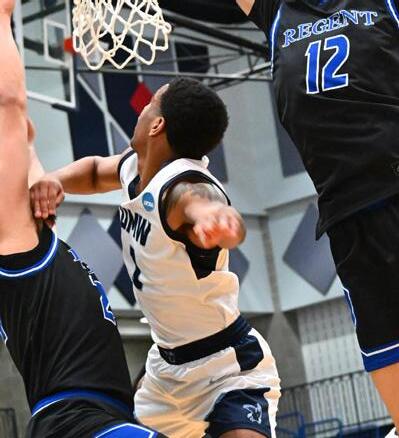
UMW men’s basketball team commences the spring semester by celebrating Head Coach Marcus Kahn’s 400th NCAA win in an 84–58 victory over Regent University on Jan. 17. Kahn joined the team as head coach in 2014, beginning his coaching career in 1998 at Wesley College. Following six successful seasons at Cabrini College, Kahn’s 12 years at the helm of UMW’s men’s basketball program have led the Eagles to continuous success, including through the post-season. Kahn led the team to two Coast-to-Coast Conference Championships in 2023 and 2025, winning the conference in 2025, as well as the Sweet 16 of the NCAA tournament in the previous season.
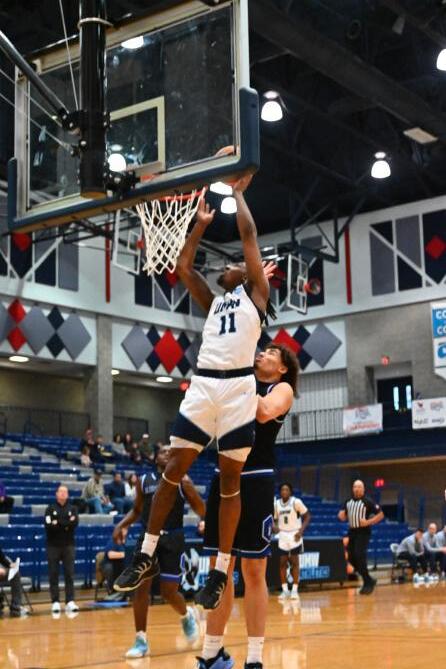
UMW men’s basketball assistant coach Chris Lomax praises the influence and dedication of his leadership.
“Coach Kahn is the team’s biggest influence and leader,” said Lomax. “He’s the engine that makes us go. He’s got 400 victories today, with a lot of knowledge and experience there.”
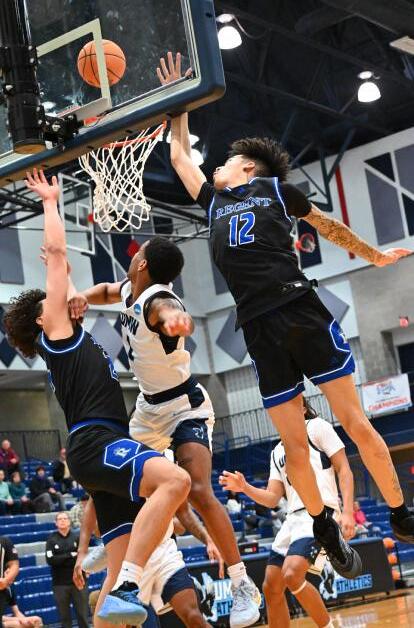
The 400th victory against Regent University for Kahn was due to his skill in collaborating with a hard-working and motivated team, such as junior business administration major Jay Randall, who opened up the scoring within the first minute.
UMW remained in the lead for the entire game, with a halftime score of 48–23. This lead was expanded by sophomore business administration major Kye Robinson, who led the game with 19 points. The Eagles cemented their win with a final score of 84–58.
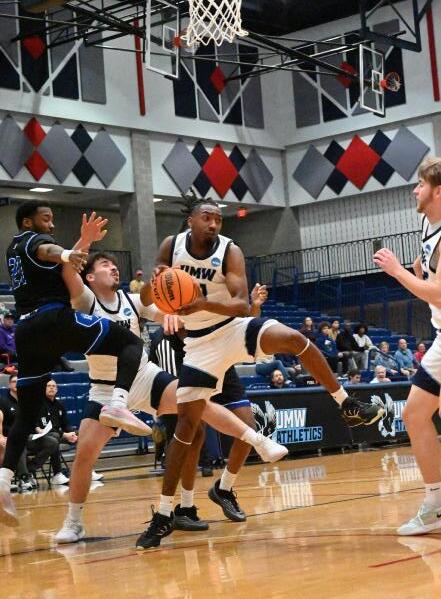
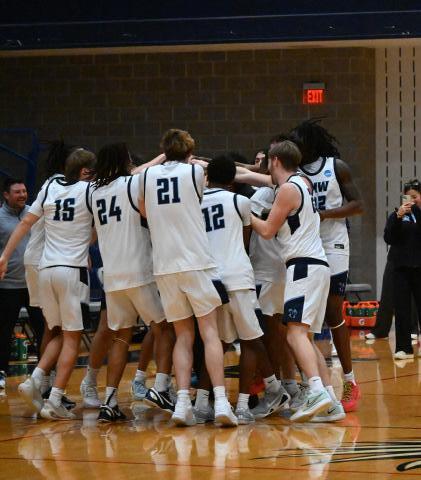
Teamwork and on-court cohesion contributed to the Eagles’ victory, with 13 different players scoring for Mary Washington.
“It was fun out there seeing everybody go out there and play, we all work well together,” Randall said.

ENYA CEA-LAVIN Sports Editor
Men’s Basketball (15-1)
Jan. 24 at Penn State Abington
Jan. 28 at Salisbury University
Men’s Swim and Dive (6-1)
Jan. 23 at Marymount University
Jan. 24 at University of Maryland Baltimore County
Winter Track and Field
“Coach Kahn is the team’s biggest influence and leader. He’s the engine that makes us go. He’s got 400 victories today, with a lot of knowledge and experience.”
- Chris Lomax
The team works in preparation for their future, as Lomax briefly stated that there is no specific team he is anxious for, just preparing for the practice ahead.
“Honestly, for us, I’m most excited about our next practice because it’s all about us at the end of the day. And just focus on what we need to do to get better.”
UMW’s next game will be at Pennsylvania State University, Abington, on Saturday, Jan. 24.
Jan. 23 at Virginia Military Institute Invitational
Jan. 23 at Liberty University Open
Jan. 30 at Virginia Wesleyan University Marlin Invitationa
Women’s Basketball (7-12)
Jan. 23 vs Regent University
Jan. 24 at Salisbury University
Women’s Swim and Dive (6-1)
Jan. 23 at Marymount University
Jan. 24 at University of Maryland Baltimore County
Games are available to watch via livestream on the UMW Athletics webpage www.eagles.com/composite