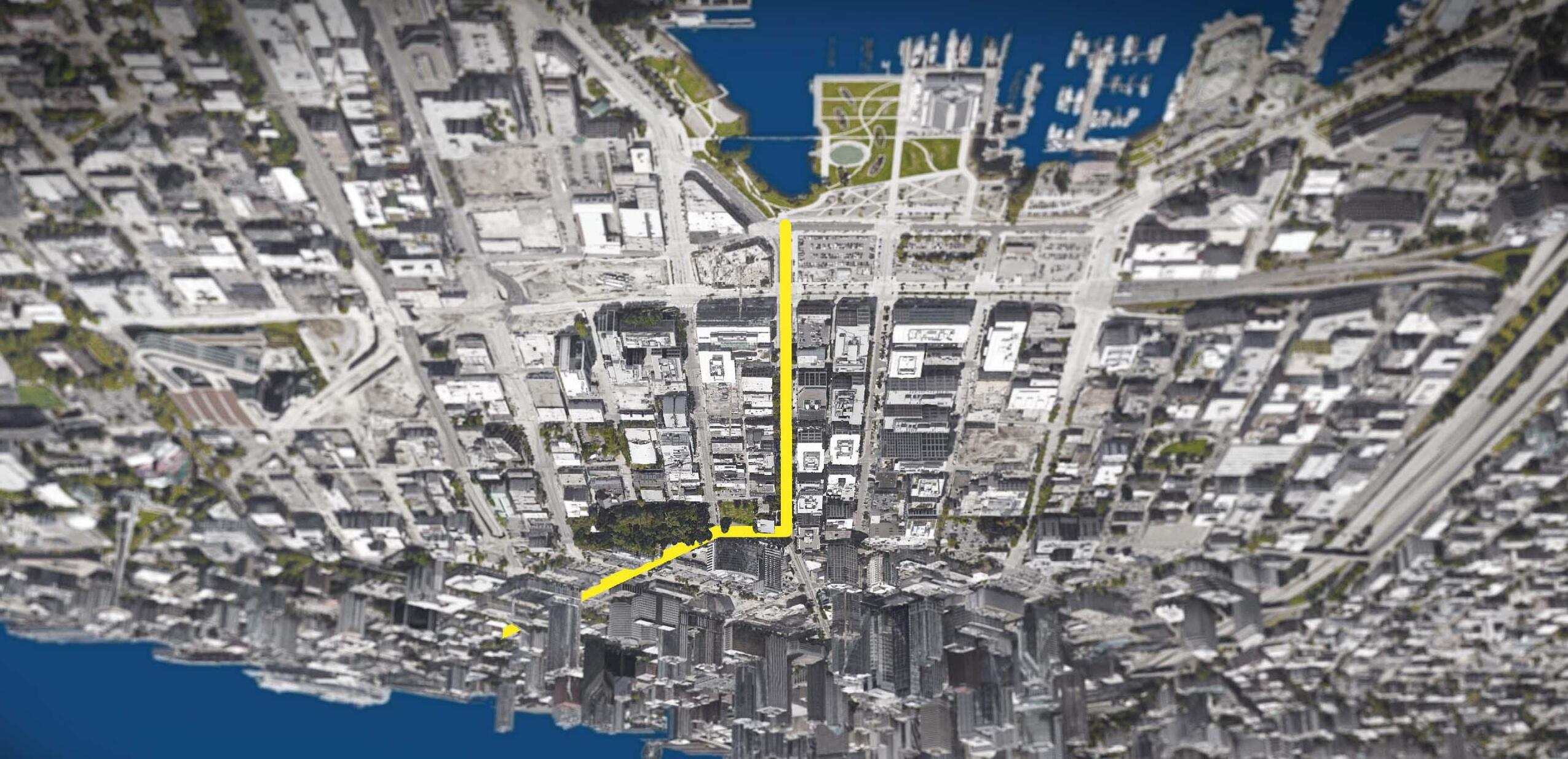
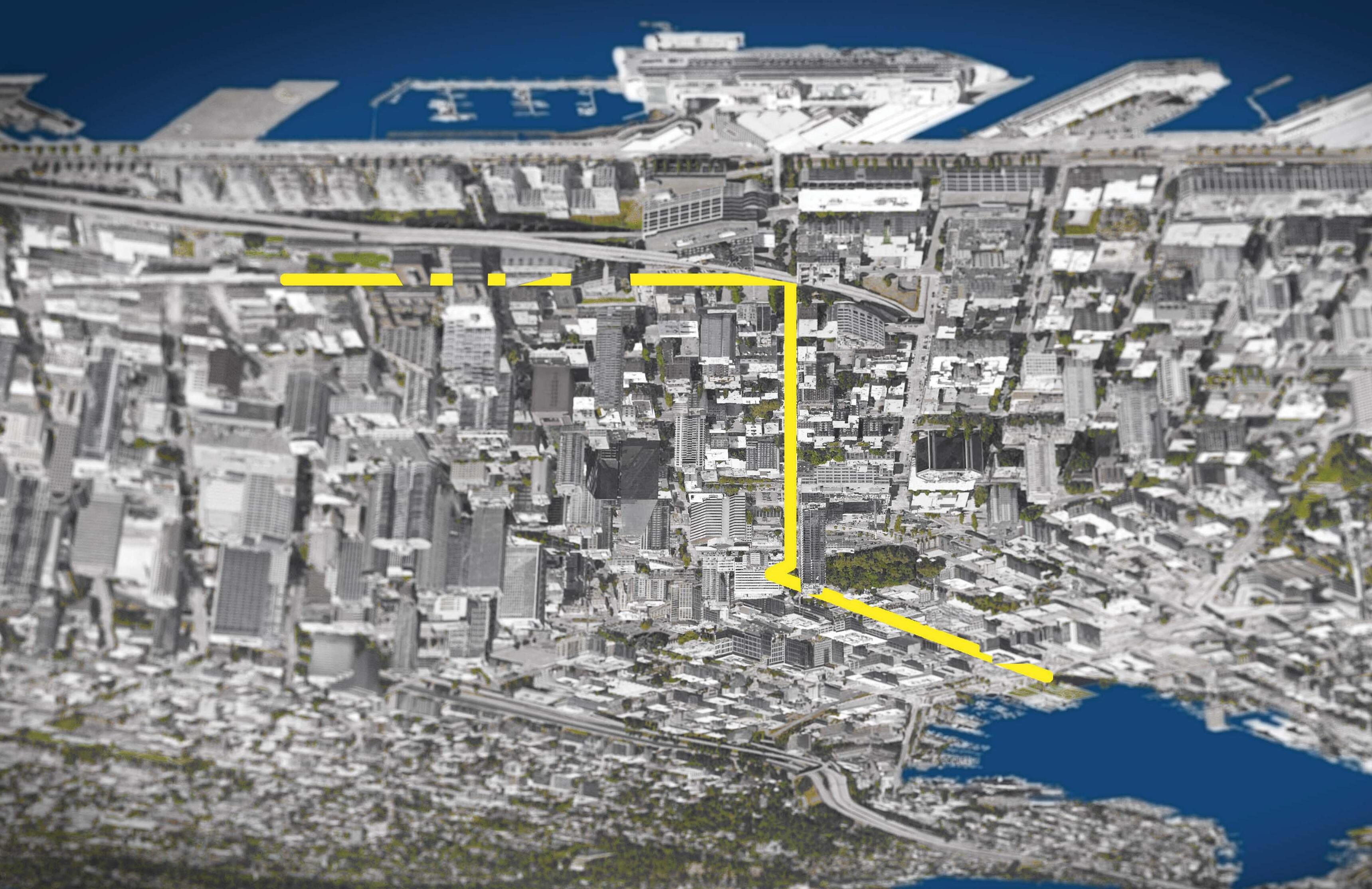
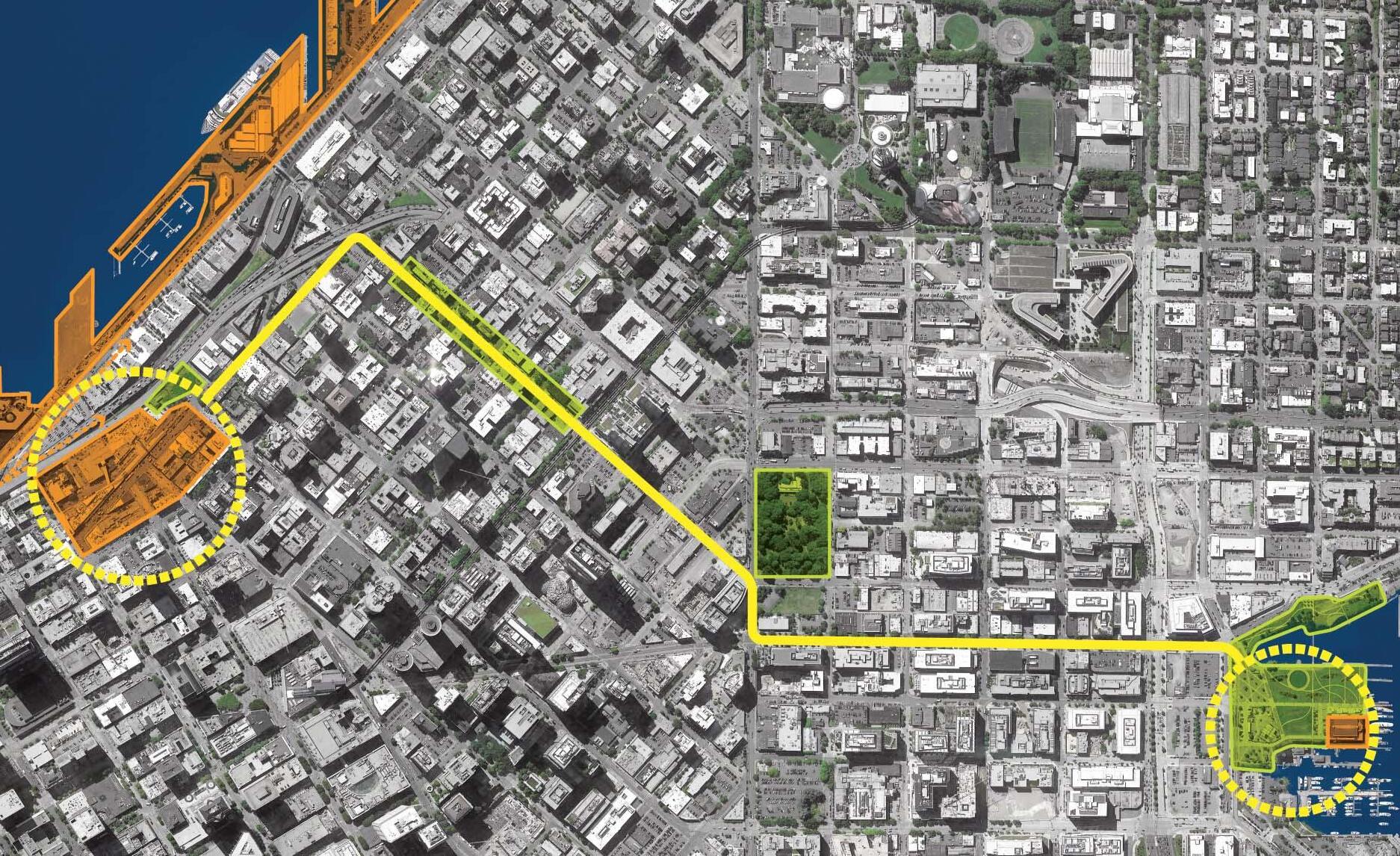
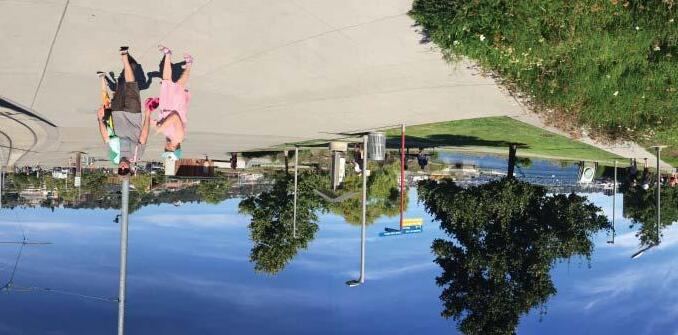
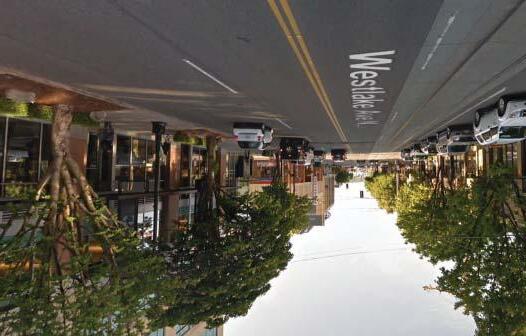
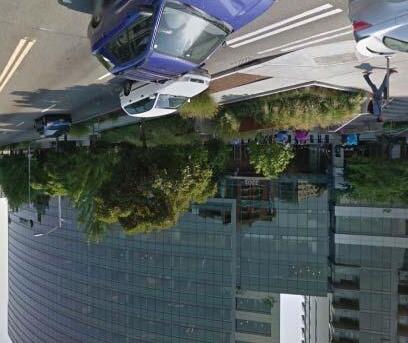
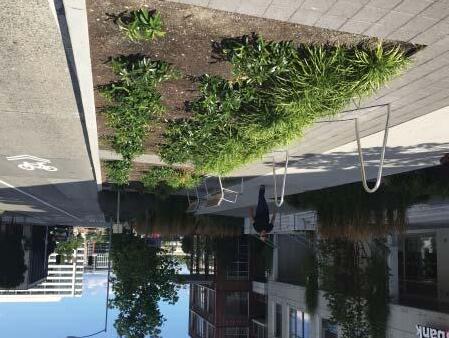
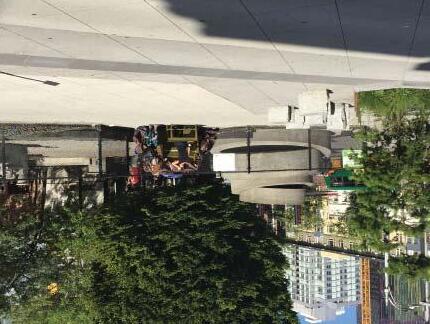
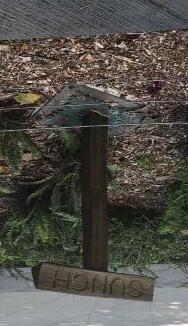
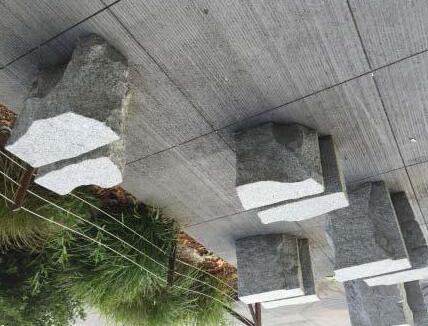
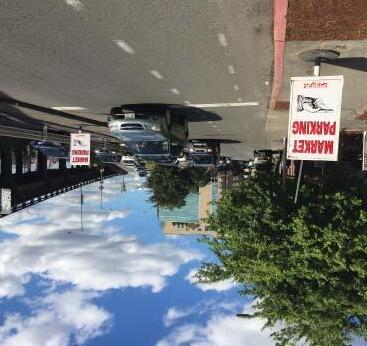
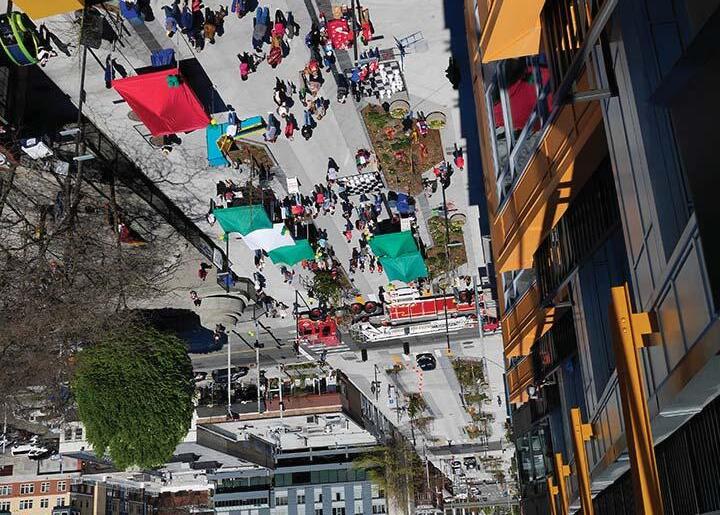
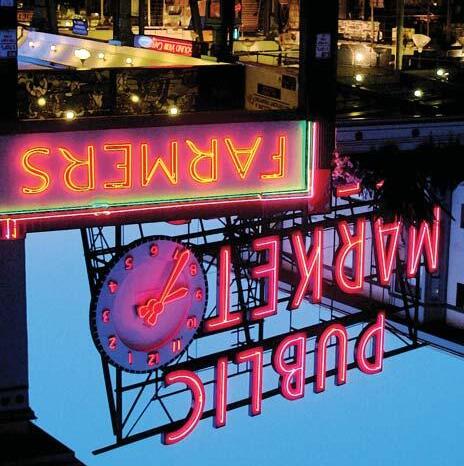
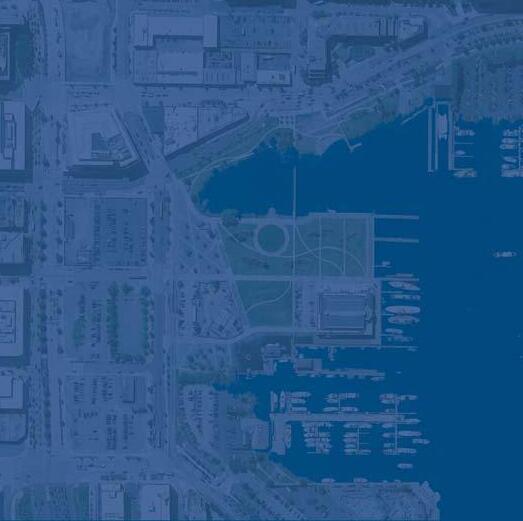
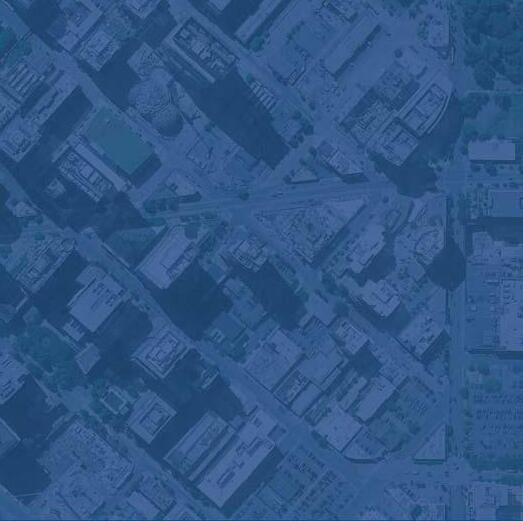
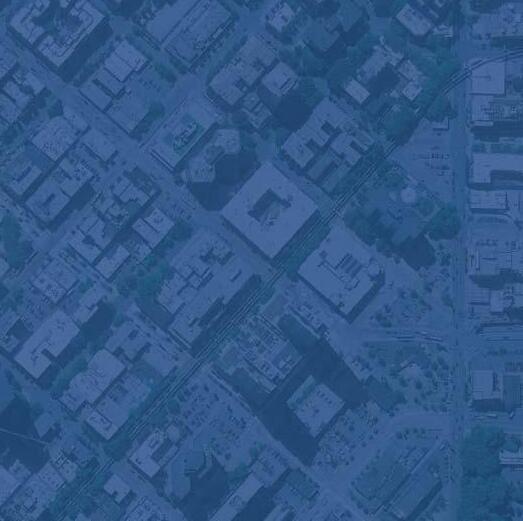
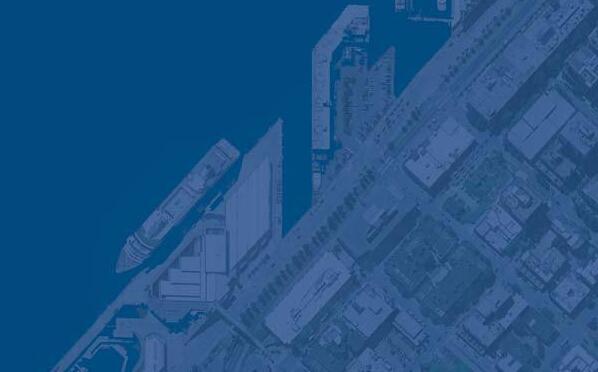
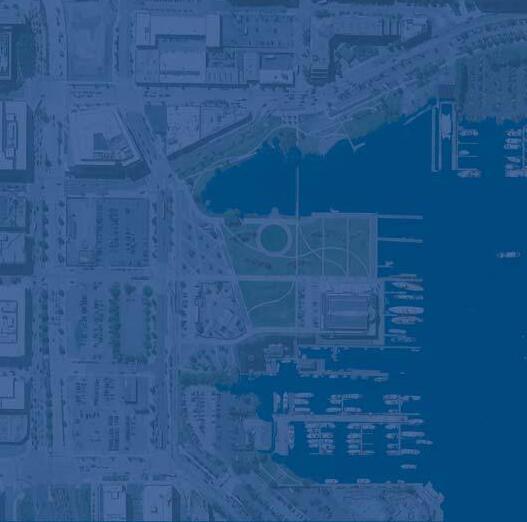
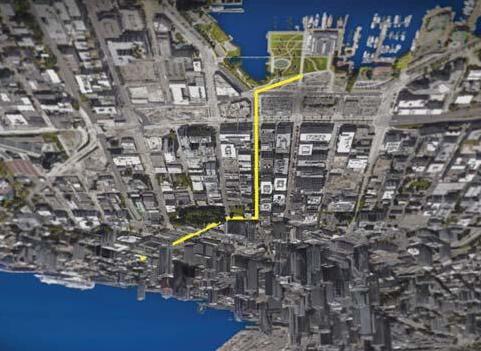
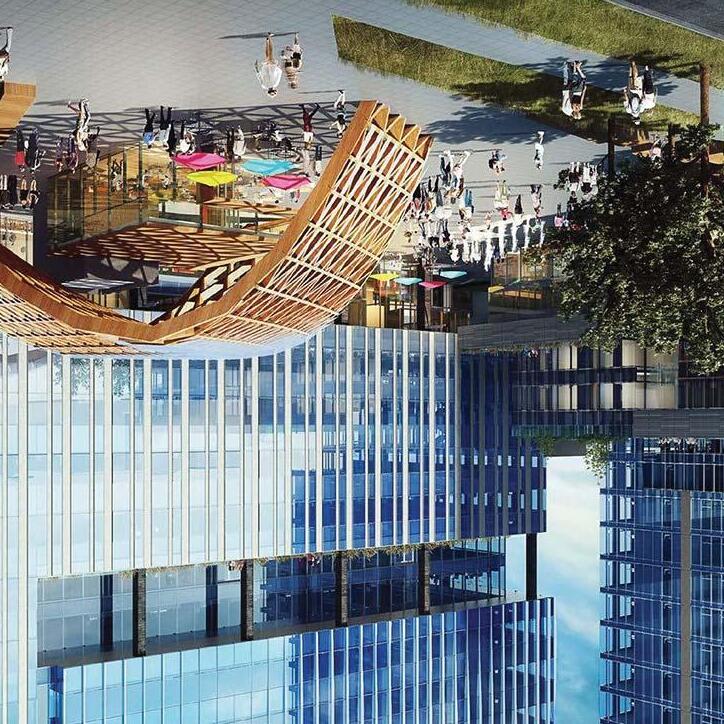
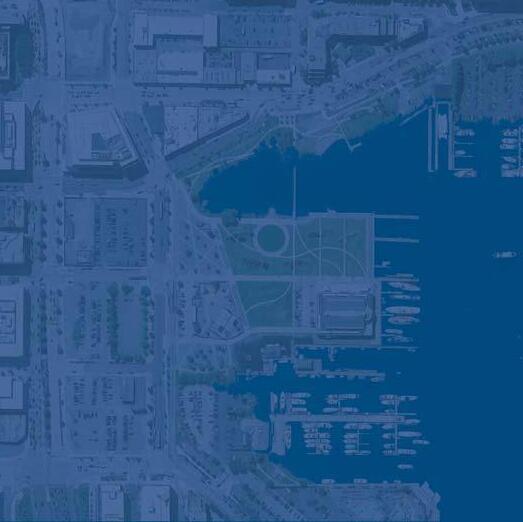
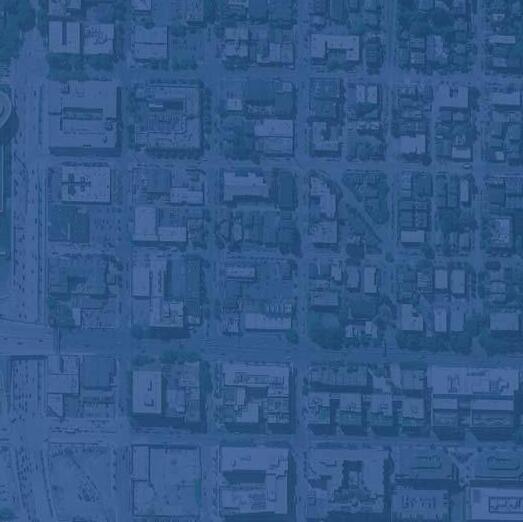
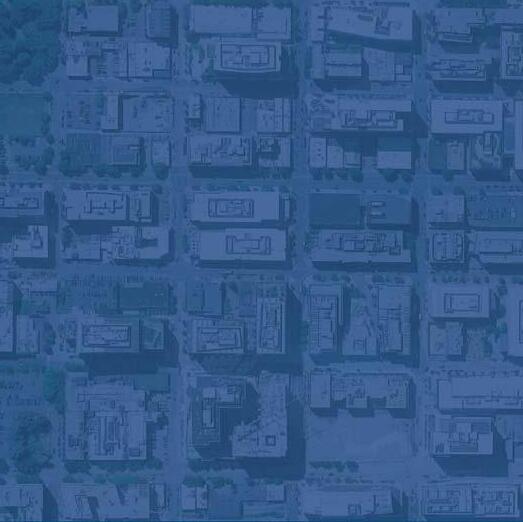
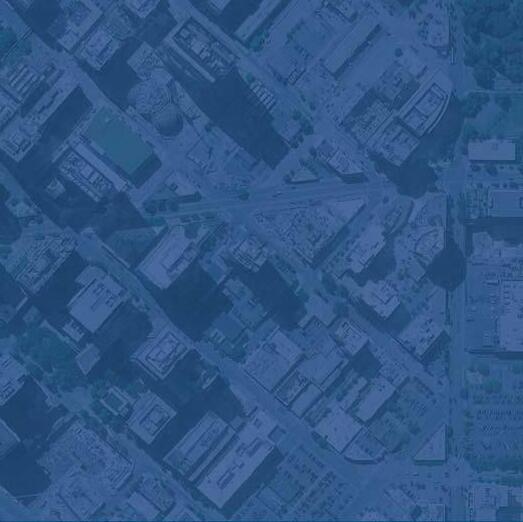
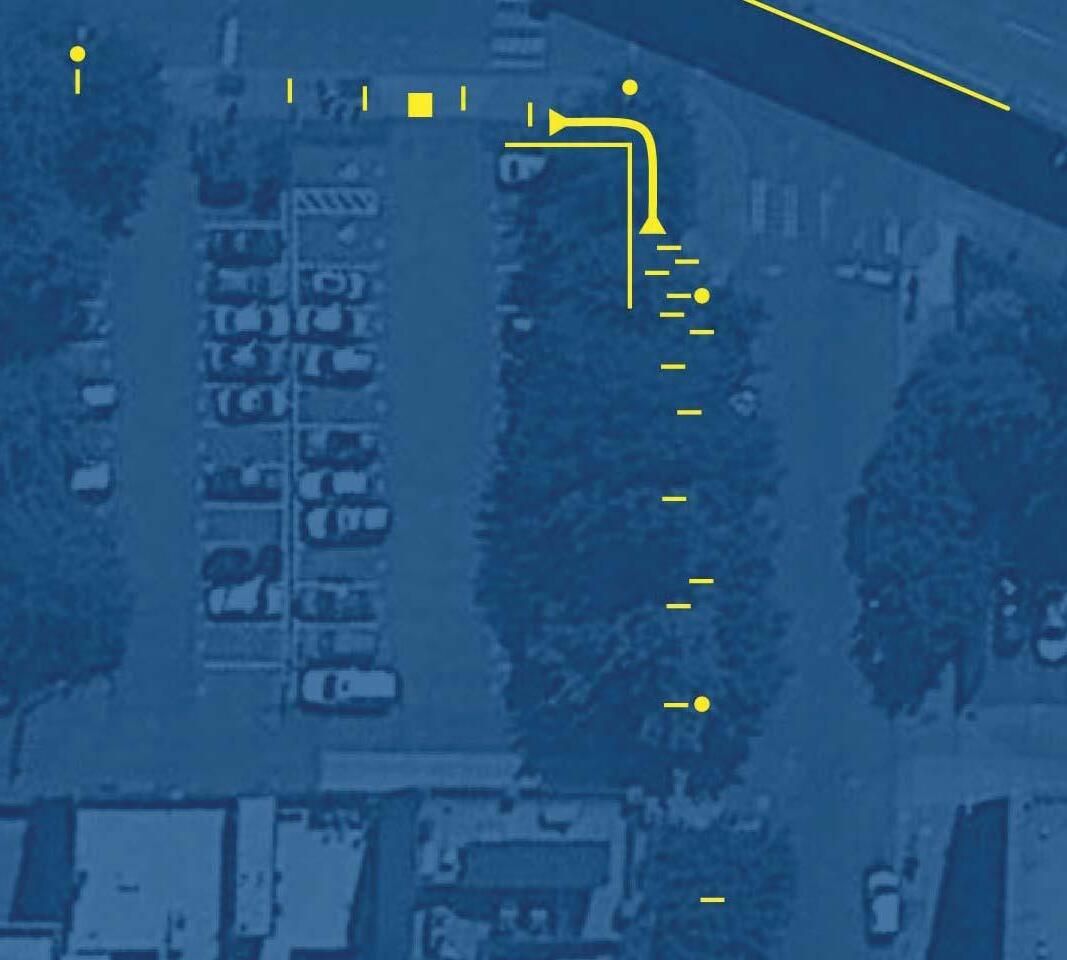
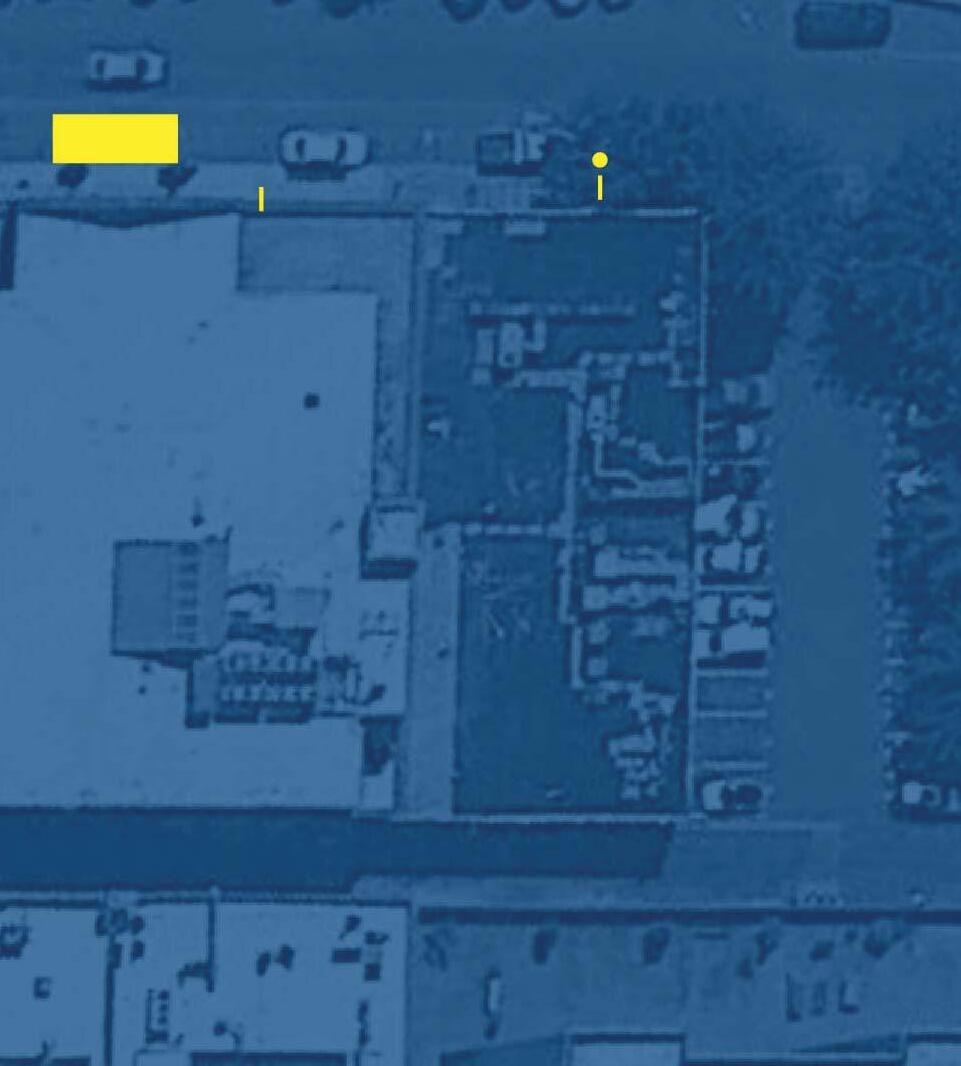
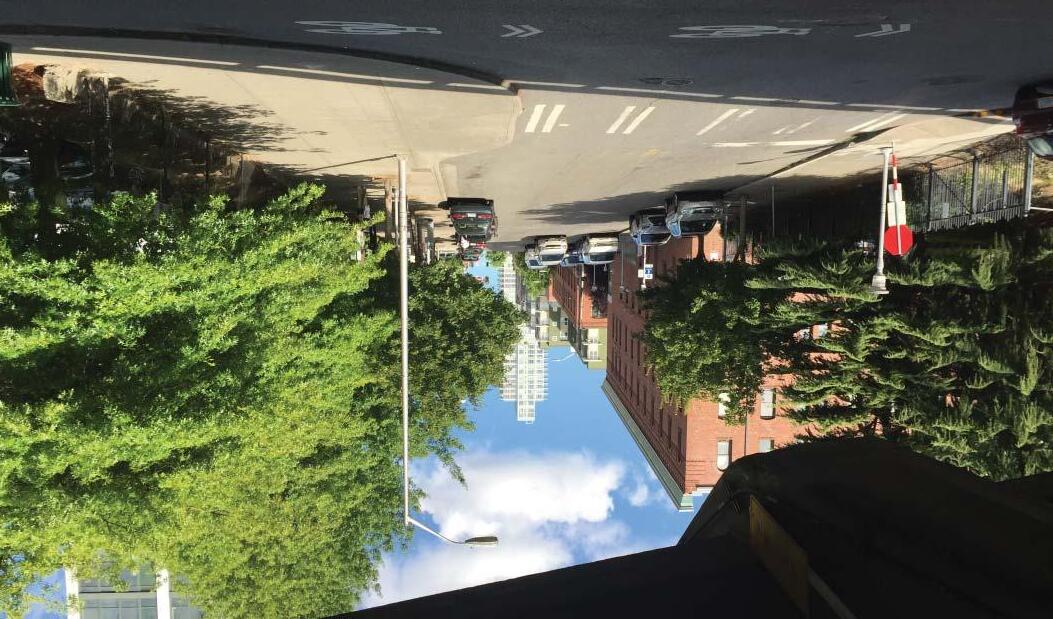
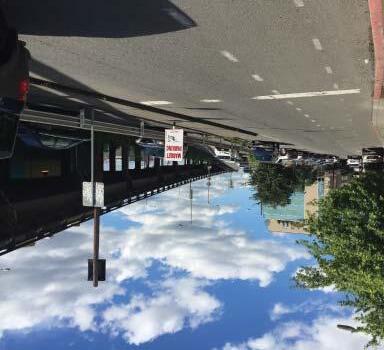
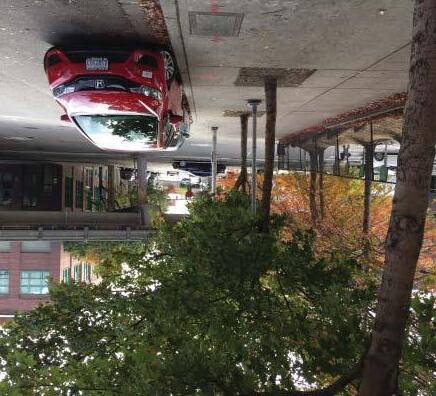
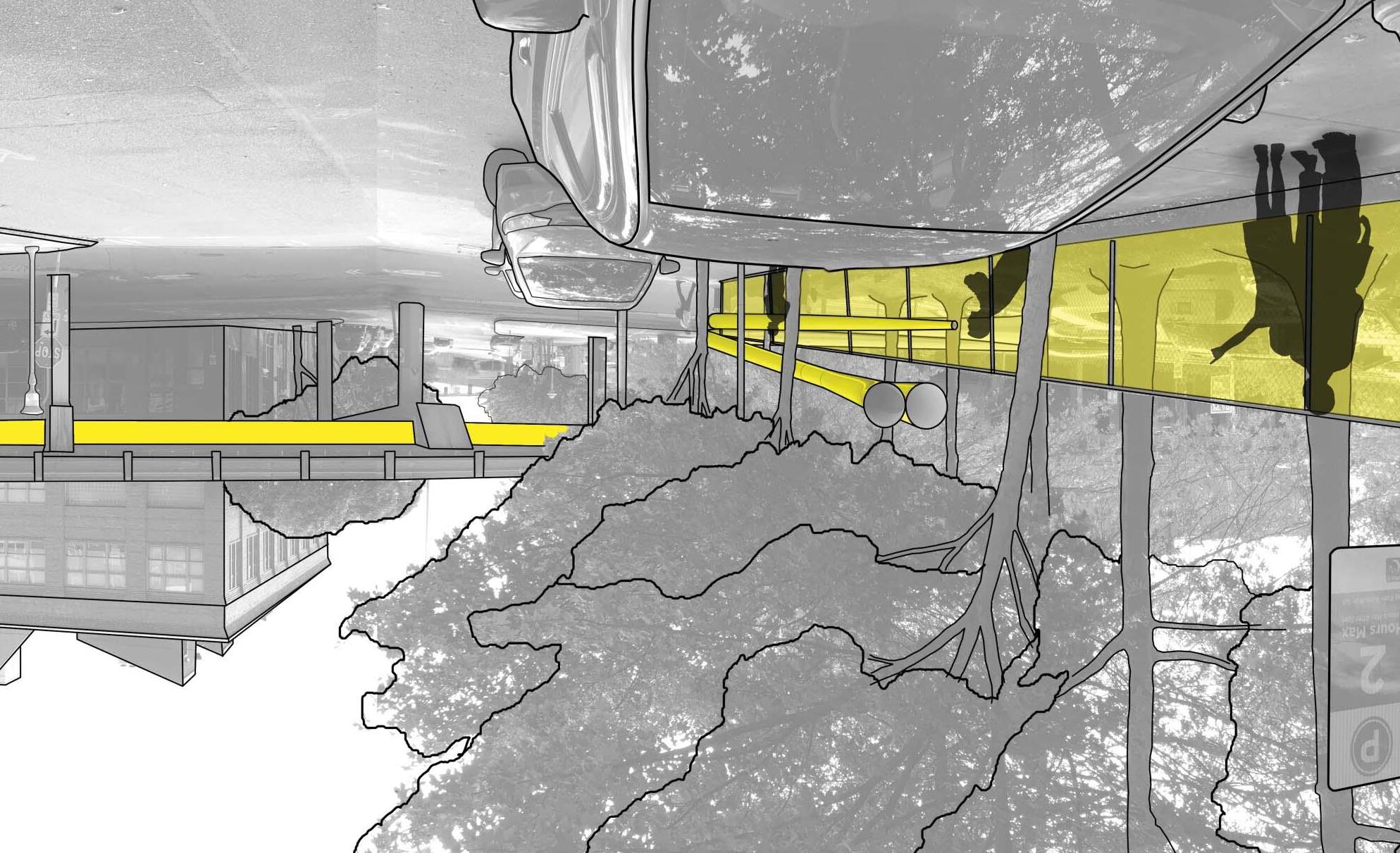
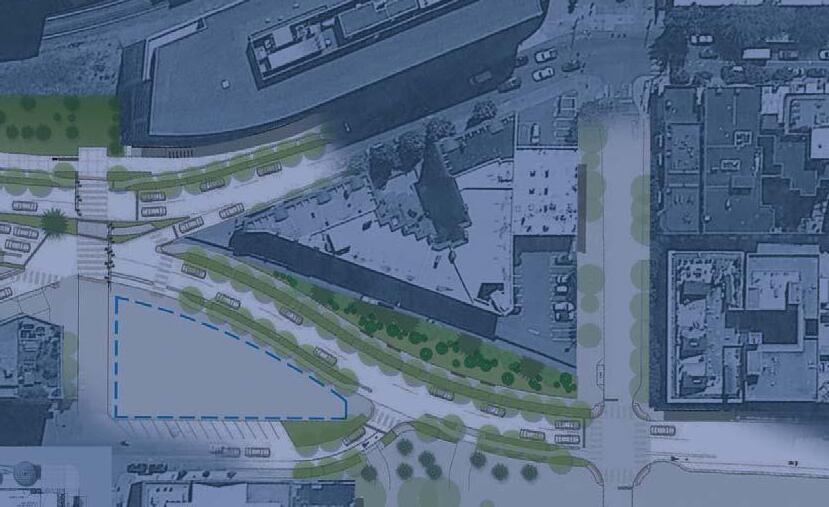
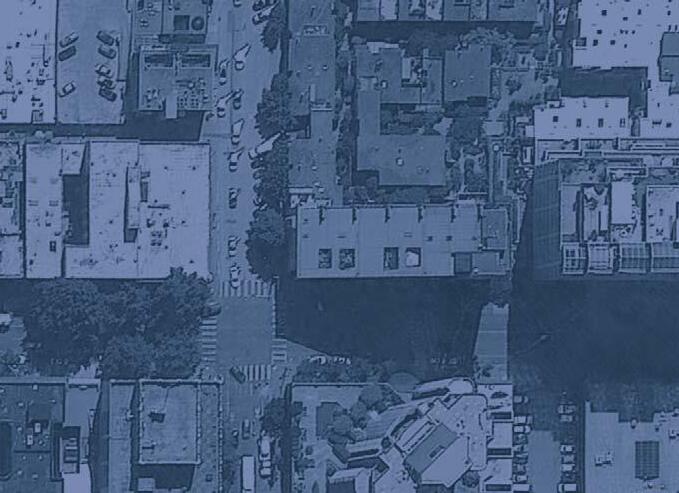
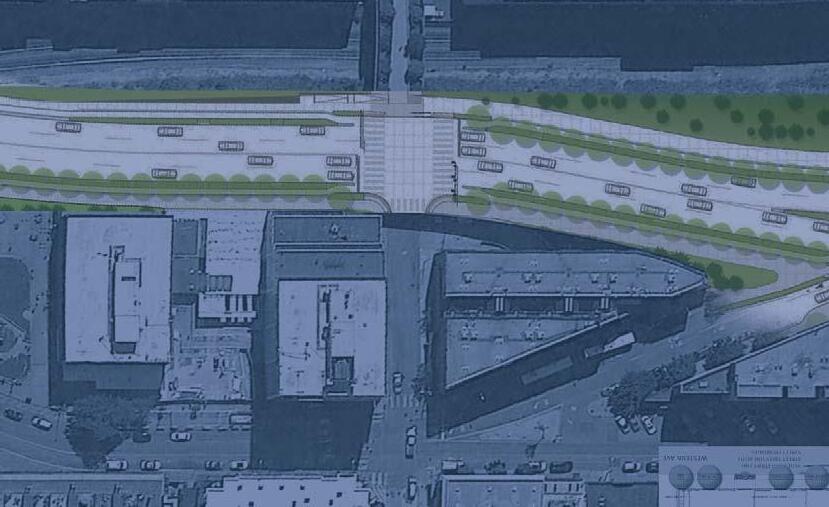
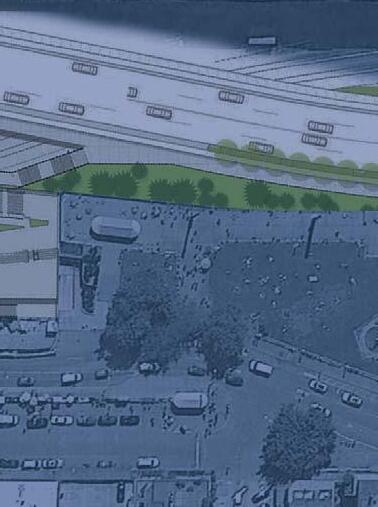
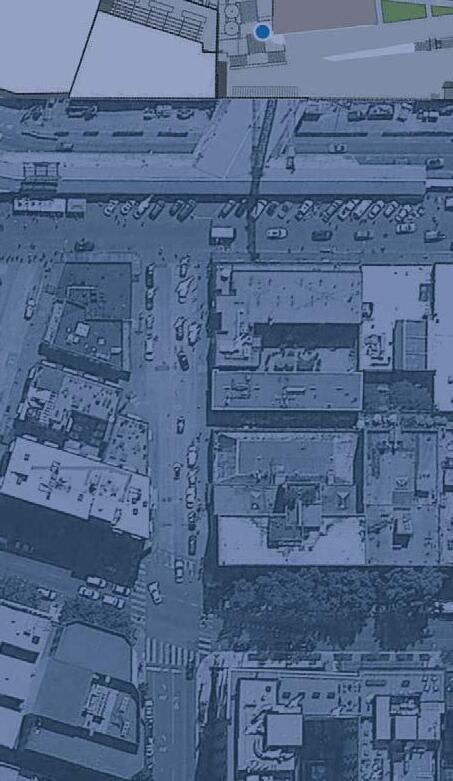
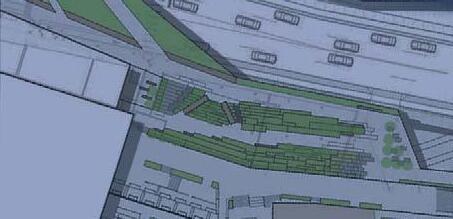
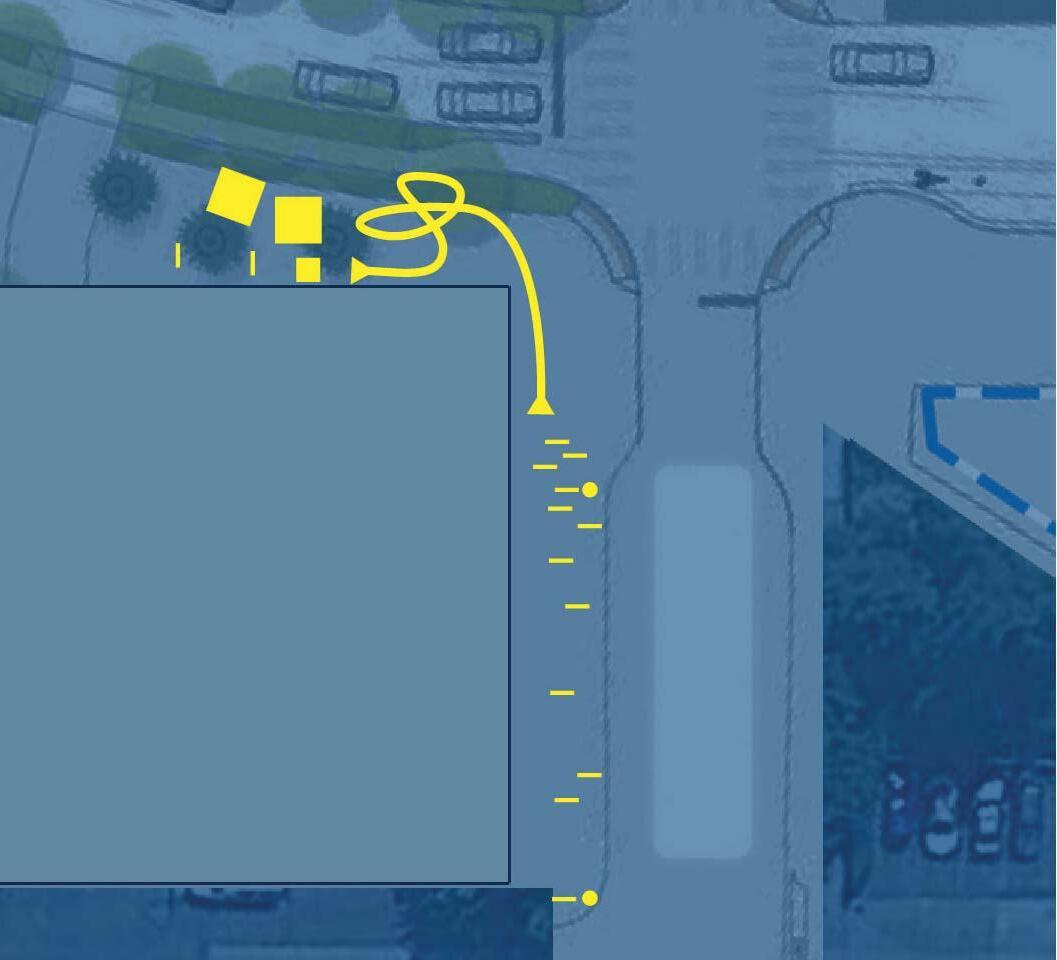
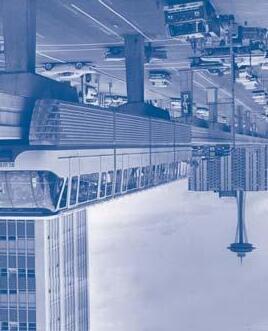
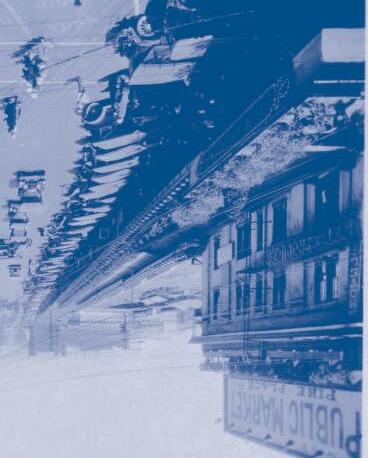
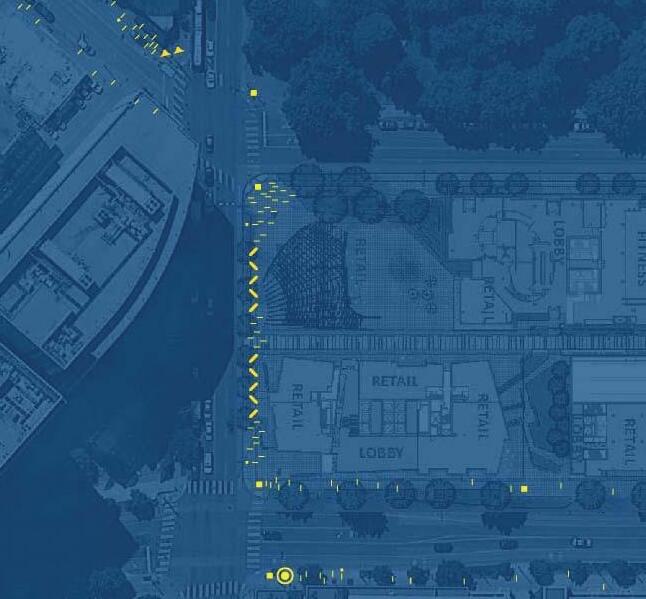
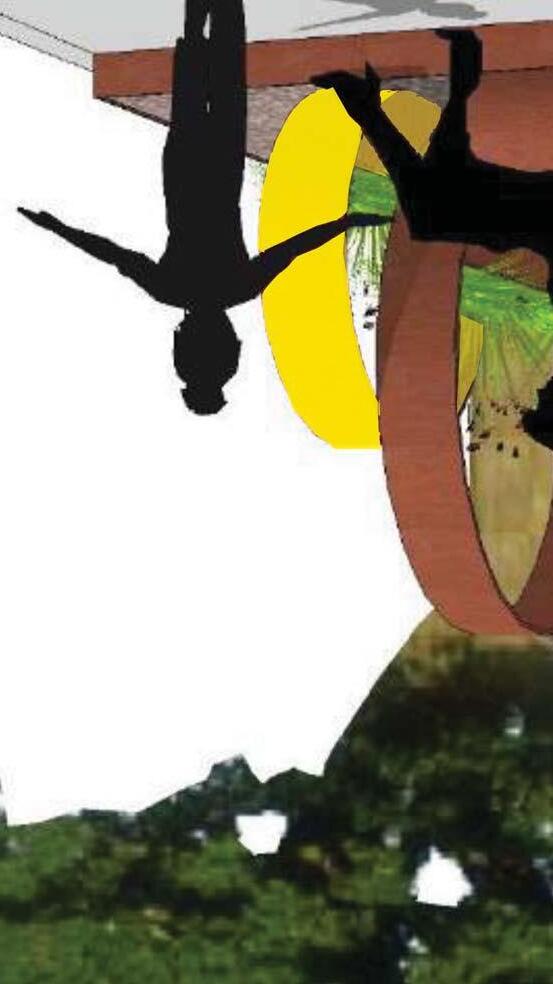
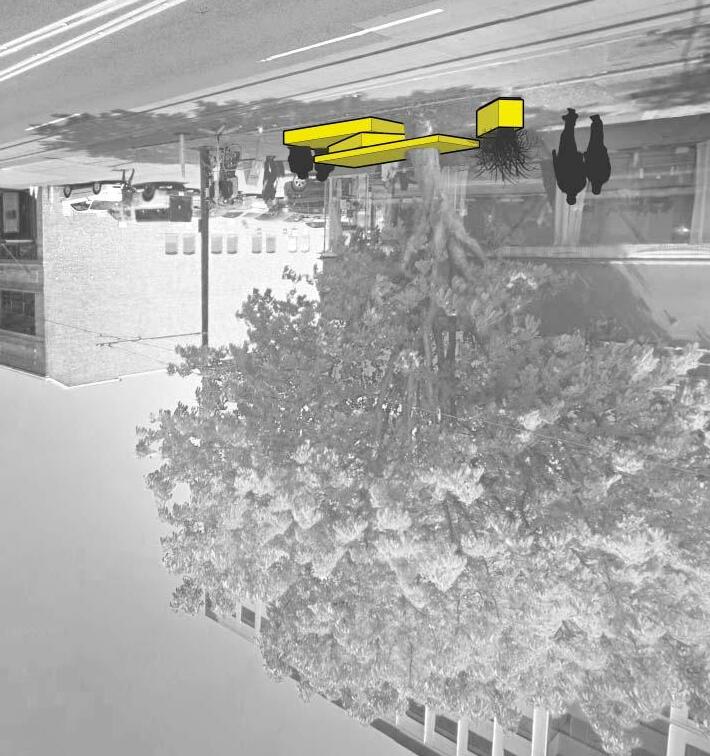
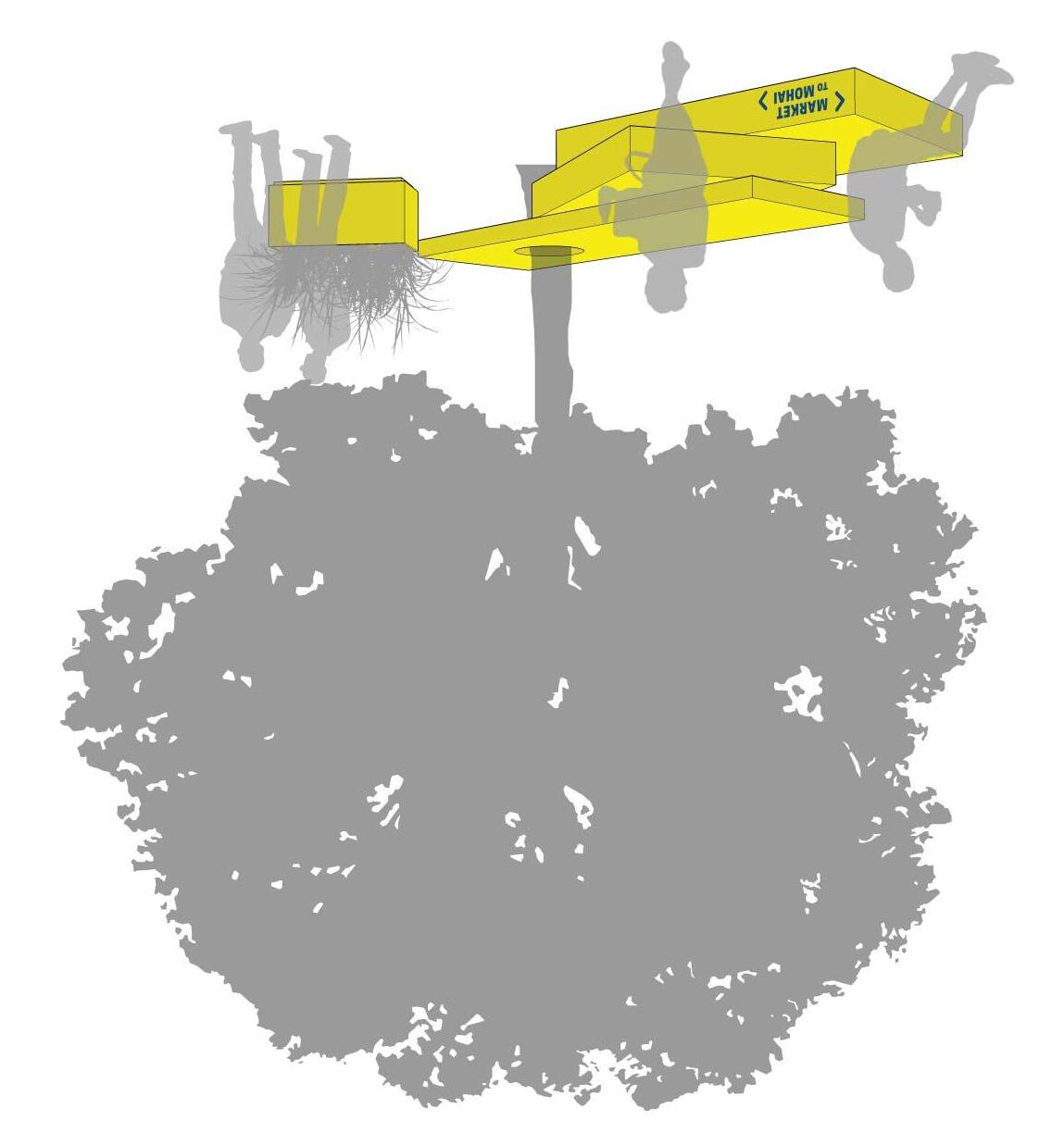
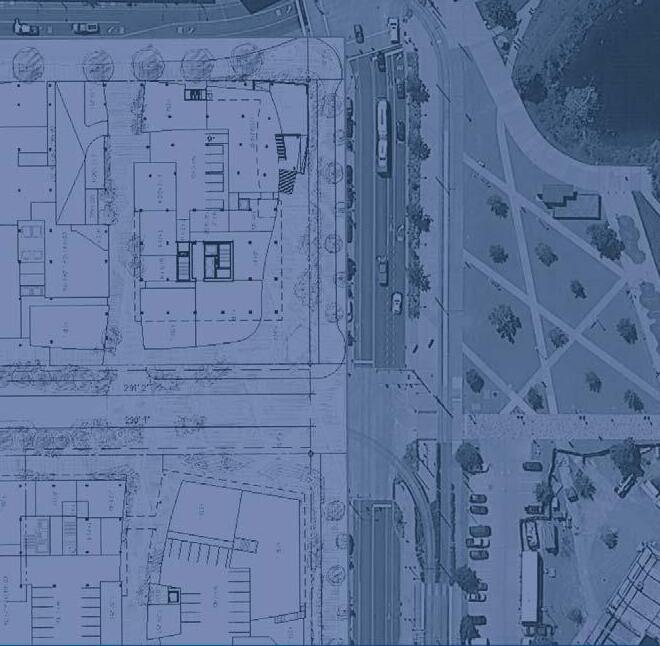
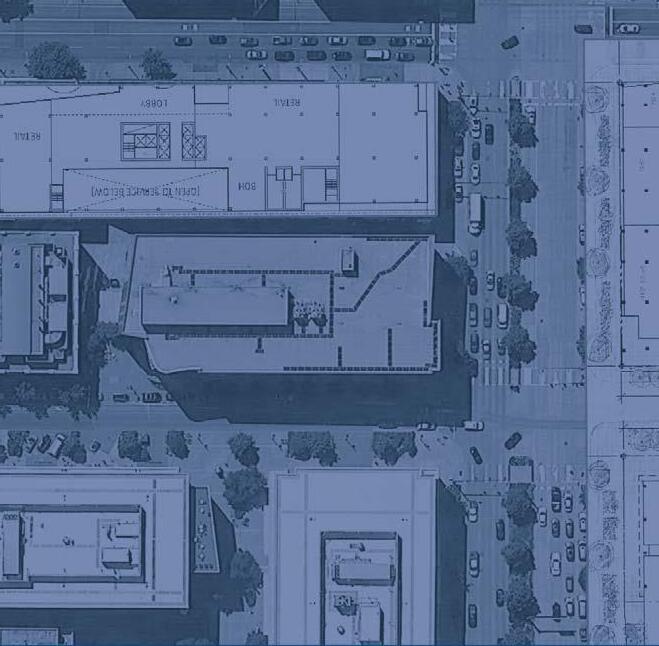
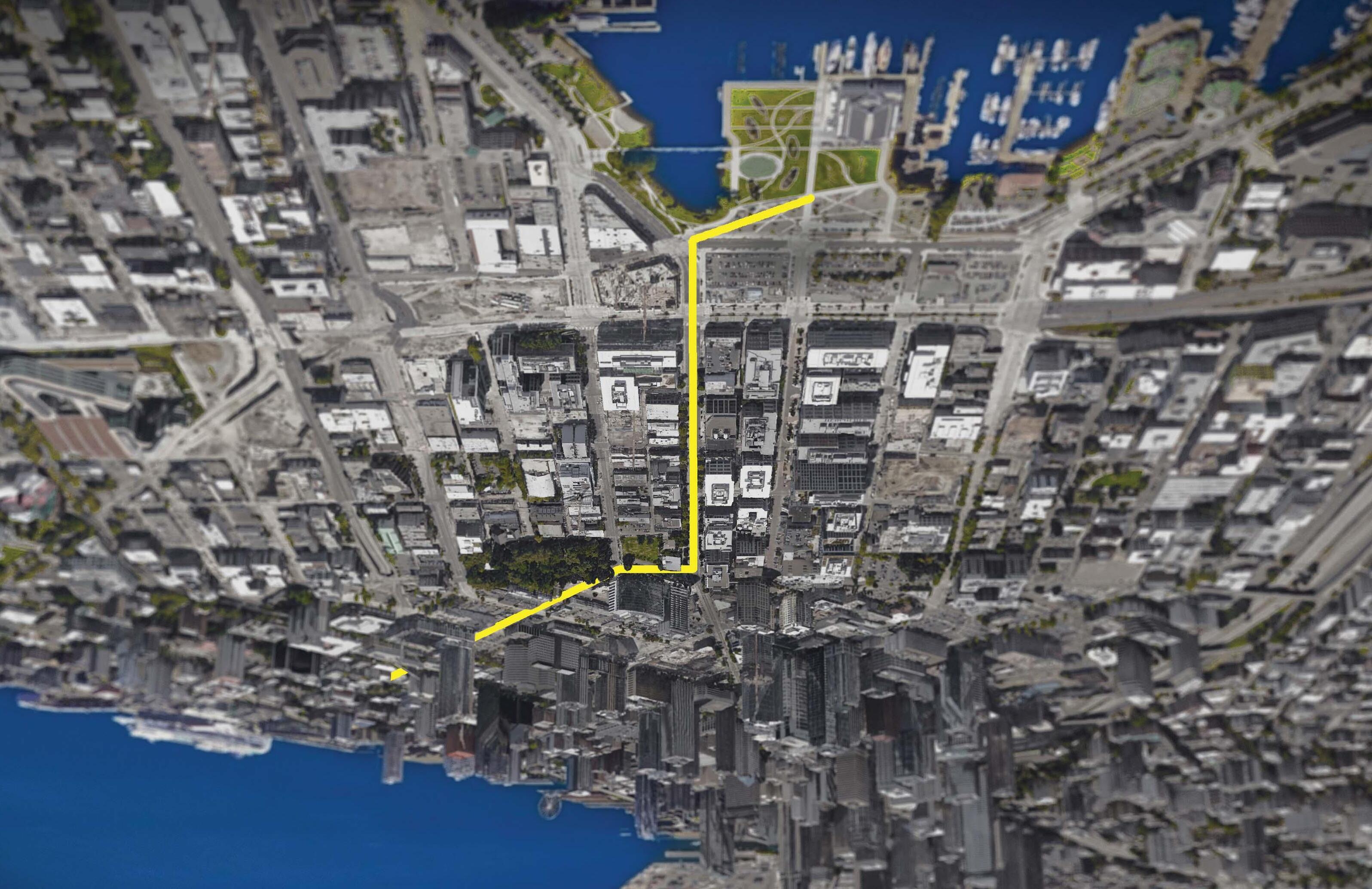
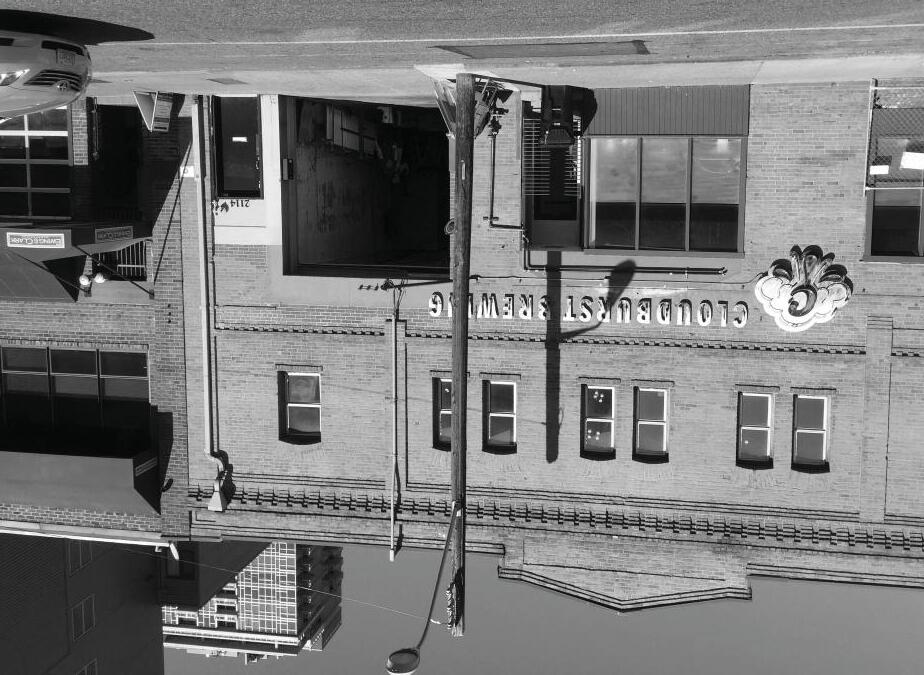
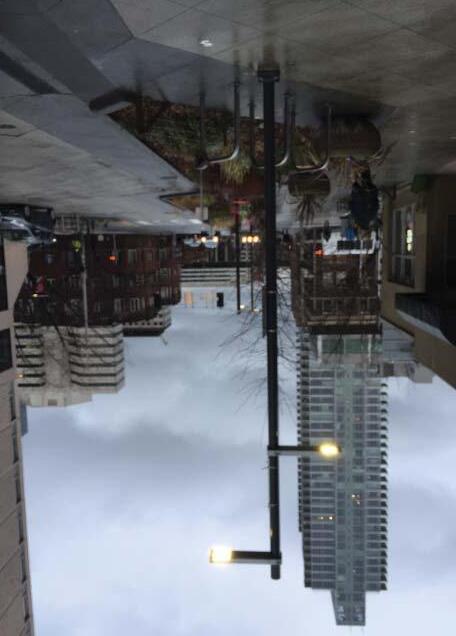
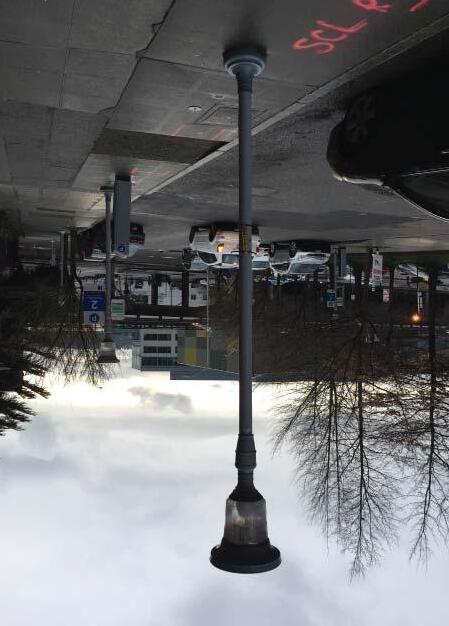
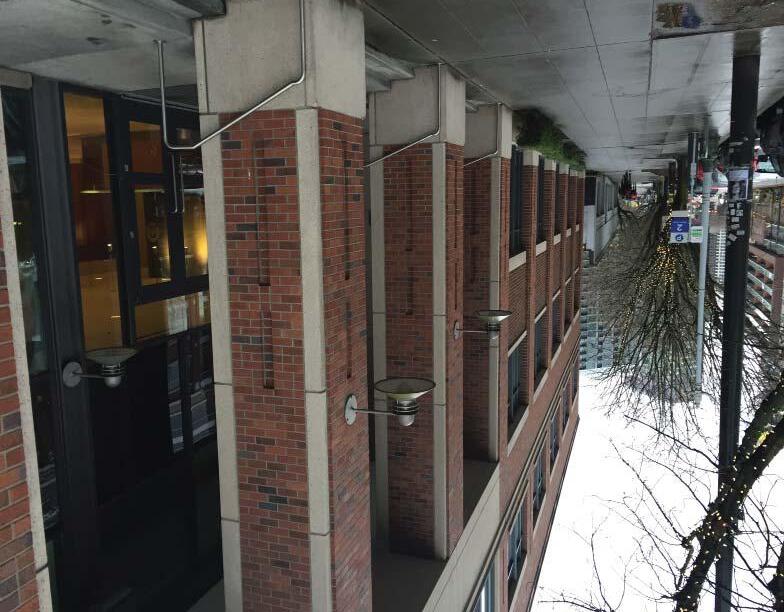
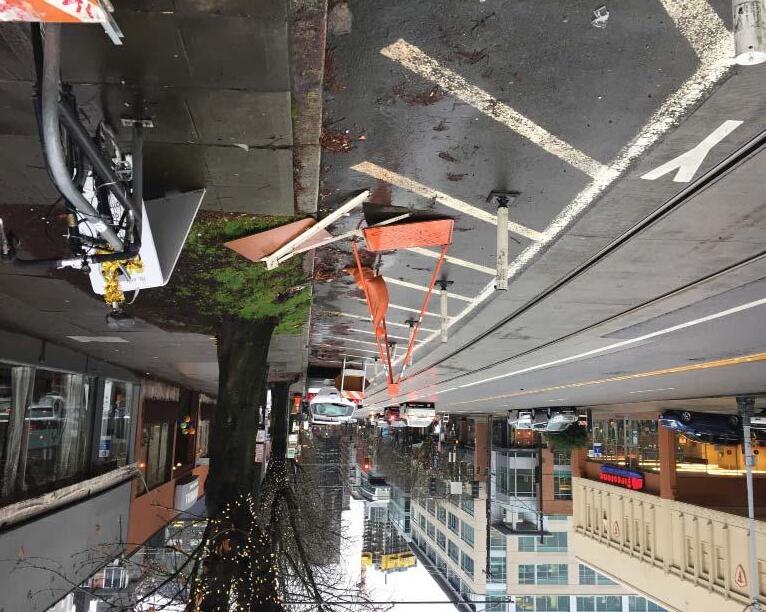
Market to MOHAI is a safe, engaging, well-lit, and well-marked pedestrian corridor connecting six of Seattle’s Parks and some of Seattle’s great public spaces, from the Central Waterfront and Pike Place Market to Lake Union Park and MOHAI. This corridor serves pedestrians, as they commute to work, shop and enjoy the opportunities for recreation in this vibrant, evolving, urban environment of the Waterfront, Belltown, Denny Triangle and South Lake Union neighborhoods.
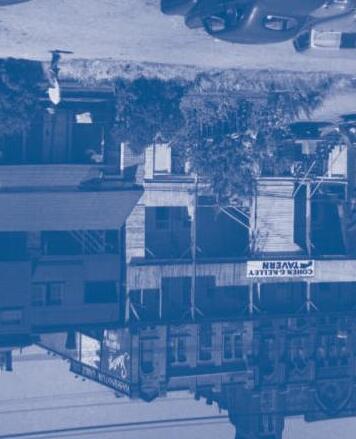
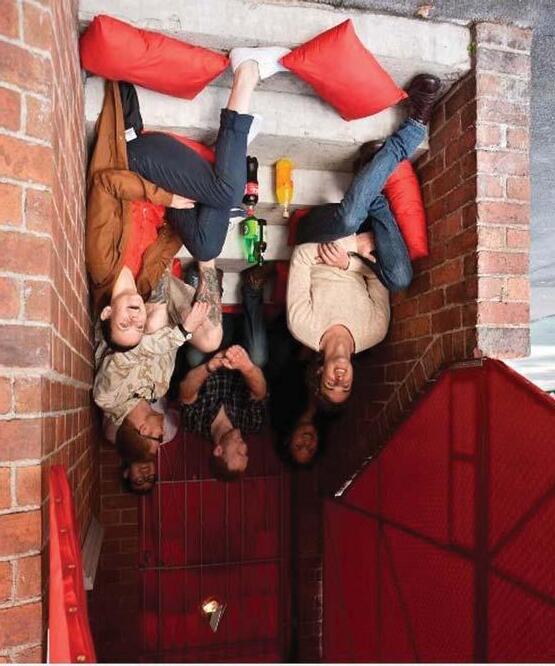
A city isn’t so unlike a person. They both have the marks to show they have many stories to tell. They see many faces. They tear things down and make new again.
RASMENIA MASSOUD
WELCOME
This document is a critical first step in creating the Market to MOHAI pedestrian corridor as a positive and significant addition to our city’s pedestrian realm. It is an extension of the successful work in the Belltown Neighborhood and the establishment of Bell Street Park. The idea of this 20-block corridor became feasible with the Waterfront Seattle planning on Bell Street and Western Avenue, and the significant developments planned for the Denny Triangle Neighborhood along Bell Street. The extension through South Lake Union to Lake Union Park seems natural with the unprecedented growth of high-rise office and residential development in that neighborhood. The progress to date represents the hard work of city residents, local businesses, neighborhood organizations and city officials, all led by the Market to MOHAI Steering Committee. Now, and with the city’s help, we need to make this happen.
JOHN PEHRSON, CHAIR - MARKET TO MOHAI STEERING COMMITTEE
Market to MOHAI Steering Committee
CHAIR
John Pehrson SLU CC, Project Contact
pehrsonj@gmail.com - (206) 254-1570
Jennifer Casillas Downtown Seattle Association • Fiscal Agent
Alice Stenstrom MOHAI
Danah Abarr SLU Chamber
Dianna Goodsell Pike Place Market PDA
Elizabeth Campbell Belltown Housing and Land Use
Heidi Hughes Friends of Waterfront Seattle
Howard Anderson Denny Triangle Neighborhood Association
Phil Fujii Vulcan Inc
Sabrina Villanueva Clise Properties
Sherry Lawson Amazon.com
Thatcher Bailey Seattle Parks Foundation
Gary Johnson Seattle Center City Coordinator
Kristen Ramirez Seattle • Office of Arts and Culture
Lyle Bicknell Seattle • OPCD
Michael Shiosaki Seattle • Parks and Recreation Department
Susan McLaughlin Seattle • SDOT
This work was funded in part by a grant from the City of Seattle’s Department of Neighborhoods (Neighborhood Matching Fund).
THE SITE
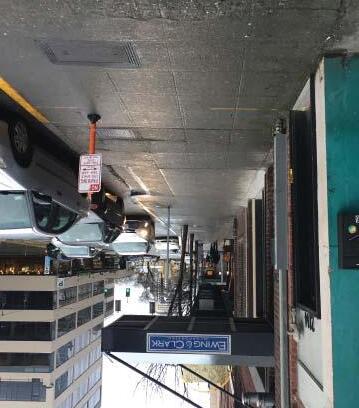
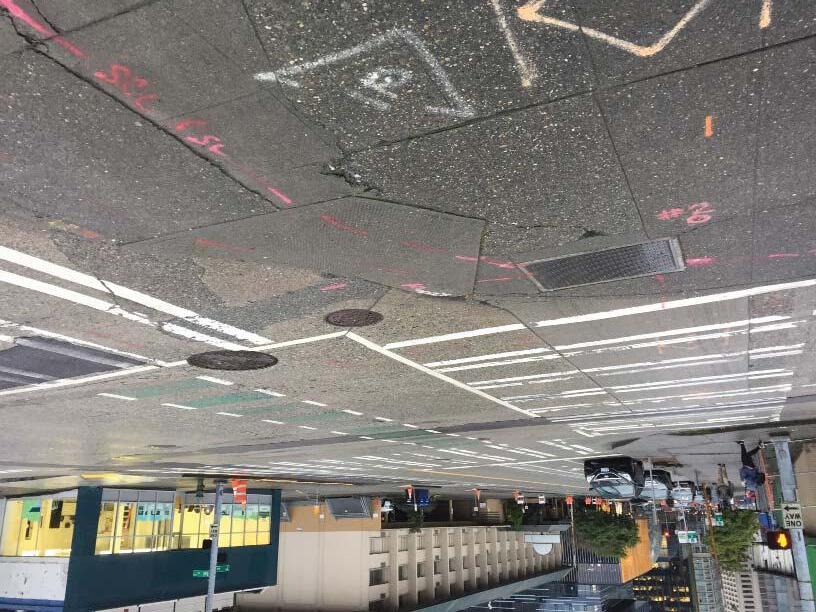
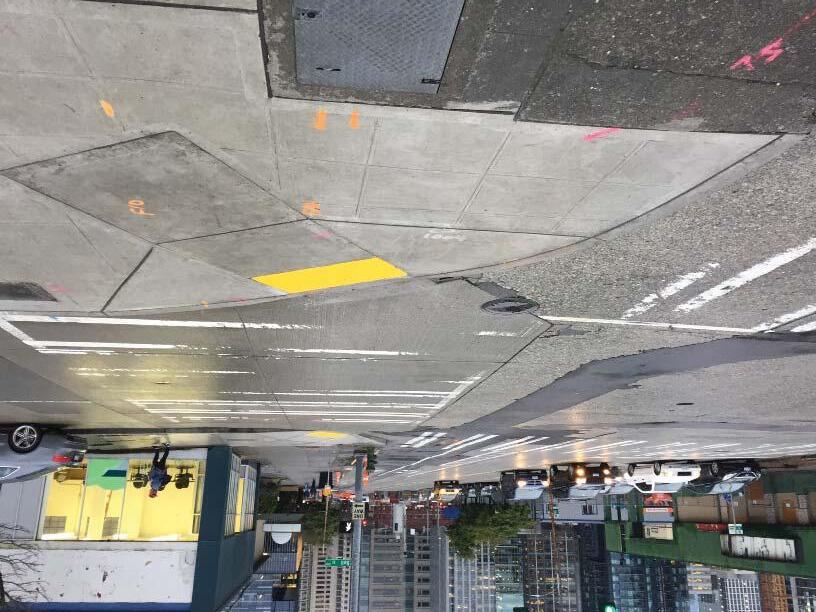
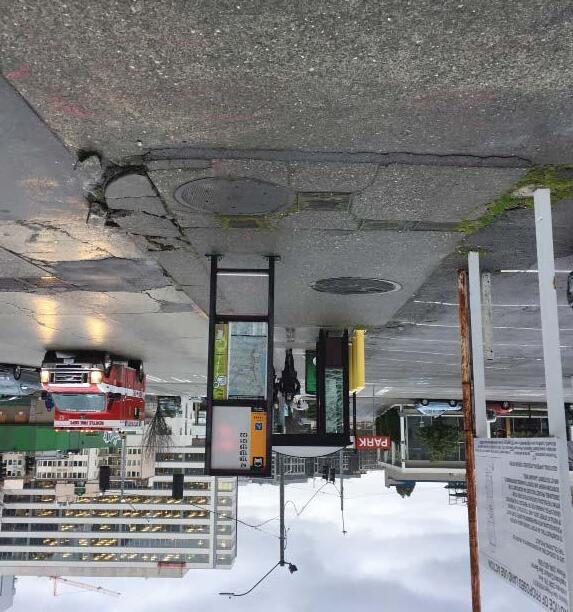
The Market to MOHAI site exists today as a collection of urban streetscapes with varying conditions and levels of development. Proposed interventions are strategic in their location and layered in approach to leverage public streetscapes, spaces, and adjacent property owners and businesses to forge a vital new connection between and through Seattle’s thriving business districts, high-density neighborhoods, and cultural institutions.
The Pike Place Market
Seattle’s most visited tourist attraction draws up to 10 million annual visitors (between 20,000 and 40,000 daily).
Bell Street Cruise Terminal
The newly remodeled facility welcomes nearly a million passengers annually (growing at 3% per year) as part of Seattle’s $459 million cruise-related annual business revenue.
Belltown & Denny Triangle
One of the state’s densest areas continues to grow and thrive with new businesses and residents.
South Lake Union
A thriving urban revitalization continues to build as a major regional transportation hub and state-wide economic engine with leaders in e-commerce, cloud computing, health sciences research, philanthropy, and biotech research and engineering, totaling 40,000 residents and employees.
Lake Union Park and MOHAI (Museum of History and Industry)
The northern anchor of the corridor, MOHAI and the newly expanded Center for Wooden Boats are a destination for tourists and residents alike, as is the recently completed Lake Union Park in which they reside.
NORTH
CLAIM IT NOW!
Market to MOHAI begins as a space claiming, branding, and wayfinding exercise. The great opportunity is to shape the existing corridor into an immediately identifiable space that is intuitive to navigate and a sought-after connection and destination.
Apply graphic elements
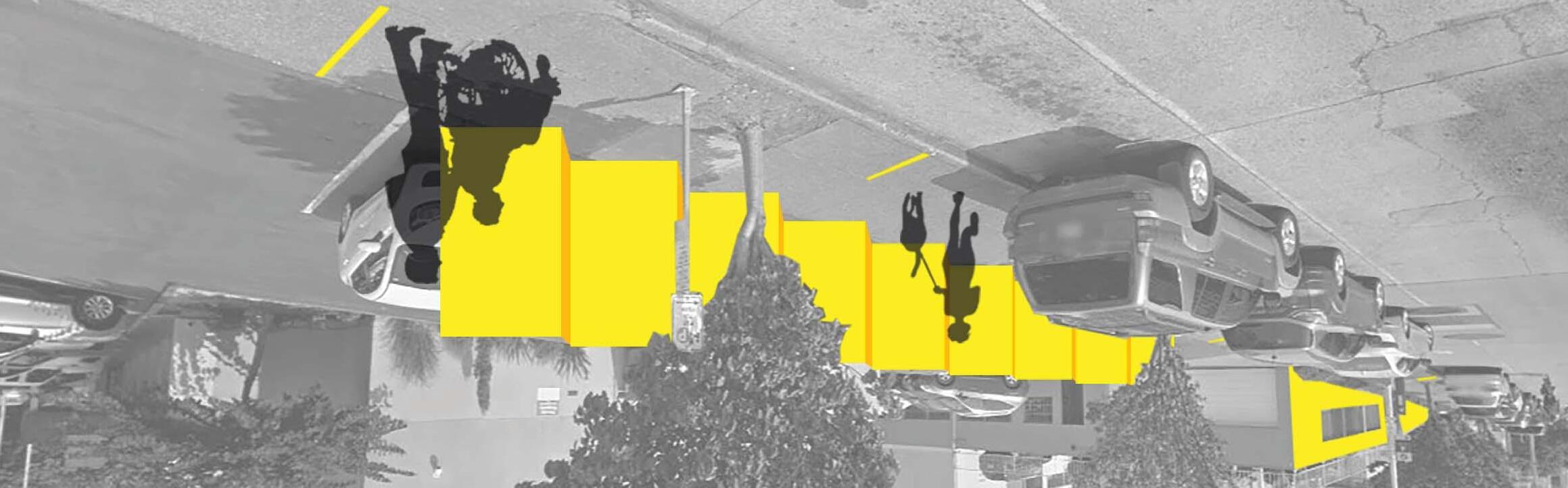
The most expedient way to claim the corridor is by creating a “kit of parts,” common elements that can easily and inexpensively be applied to unify the diversity of streetscapes along the corridor and graphically enhance existing elements, such as paving, lighting, furnishings, utility poles, ADA ramps, and crosswalks.
Integrate built elements
Once claimed with applied elements, the corridor can be enhanced with a suite of common elements that can be installed as surgical interventions. Integrated elements will further brand the holistic nature of the corridor and bring added amenities, richness, and community value. These elements could be “area rugs” of enriched paving, eddies of unique furnishings and pedestrian amenities, experiential lighting, and brilliant, atypical wayfinding signage.
Craft a framework for culture
Empowering the community to take ownership of the corridor will create a “living corridor” that changes over time and rewards returning visitors. The Market to MOHAI plan should develop a framework to be a catalyst for stakeholders to take ownership of the corridor with ephemeral elements from art to performance. Imagine seasonal interventions that could arise from the minds of MadArt, Cornish, Pivot, or any of the multitude of cultural organizations near the corridor.
Do It!
Implement the first layer of interventions as soon as there is adequate funding to claim the whole corridor from Market to MOHAI. As time and funding allow, add additional interventions to enrich the route. Market to MOHAI can and will become ingrained into Seattle’s city life.
WESTLAKE AVE
BELL ST
WESTERN AVE
PLANNING IN CONTEXT
Market to MOHAI exists within a larger planning and urban framework. It is complemented by similar projects aimed at improving adjacent pedestrian corridors such as Lake2Bay and the Cheshiahud Loop. These projects work together to create greater pedestrian connectivity and experience.
FREMONT
DENNY PARK
CAPITOL HILL
DOWNTOWN, PIONEER SQUARE, FIRST HILL, CAPITOL HILL
MOHAI
PIKE PLACE MARKET
All truly great thoughts are conceived while walking.
BRAND
THE BRAND
Engaging, local, fresh and evolving — these brand qualities are communicated by the visual identity of Market to MOHAI. The logo suggests an open eye, and also provides directional indication along the two-way trail. The tagline and interchangeable variations on the logo provide a flexible set of parts for different applications while still maintaining a strong connection to the core Market to MOHAI brand.
The yellow color was selected as the primary brand color for its cheerful quality and high visibility in outdoor applications. The dark blue complements the vibrant yellow and represents the two bodies of water connected by the trail.
The typeface Sanuk was selected for its legibility and friendly character, and because ‘feet’ details on some letters suggest walking.
Typeface: Sanuk
KIT OF PARTS
KIT OF PARTS CLAIMING THE CORRIDOR
The Market to MOHAI corridor is built from a kit-of-parts to be applied or implemented along existing streetscapes to provide fun and intuitive navigation of the route while enriching the corridor with “discoveries” to enhance the experience of walking and lingering.
The Kit is PROTOTYPICAL & CUSTOMIZABLE UNIQUE & SITE SPECIFIC INTUITIVELY GUIDING NAVIGATION ENRICHING EXPERIENCE
MOHAI
WHERE DO WE BUILD MARKET TO MOHAI
Intersections
Market to MOHAI should be an intuitive route to navigate and not require extensive signage or maps. In this system, intersections are key wayfinding and decision points. To maintain continuity and guide navigation, Kit-of-Parts elements have an increasing intensity at intersection locations but maintain a small footprint so as not to interfere with traffic.
There is a range of existing and planned wayfinding systems, including maps, in the city. Intersections offer the opportunity to embrace these other systems within the Market to MOHAI project.
Midblocks
Midblock locations offer expanded room for larger or collections of pedestrian amenities. These zones present opportunities for lingering.
Adjacent Properties
By leveraging existing and new development, adjacent properties can serve as extensions of the corridor.
Make the Ordinary EXTRAORDINARY
Elevate the standard and required elements
Create the EXTRAORDINARY
BREADCRUMBS
The First Step!
Breadcrumbs are the basic building blocks of the Kit of Parts and consist of standard elements that can occur along the length of the corridor. They are connective elements that bring consistency and branding to the route.
MOHAI
HISTORY BLADE
Three elements—the Sidewalk Strip, Sidewalk Tile, and History Blade—are used as consistent ‘breadcrumbs’ along the trail and occur with high frequency. They are designed to be inserted with relative ease into a typical sidewalk setting.
SIDEWALK TILE
SIDEWALK STRIP
Breadcrumbs
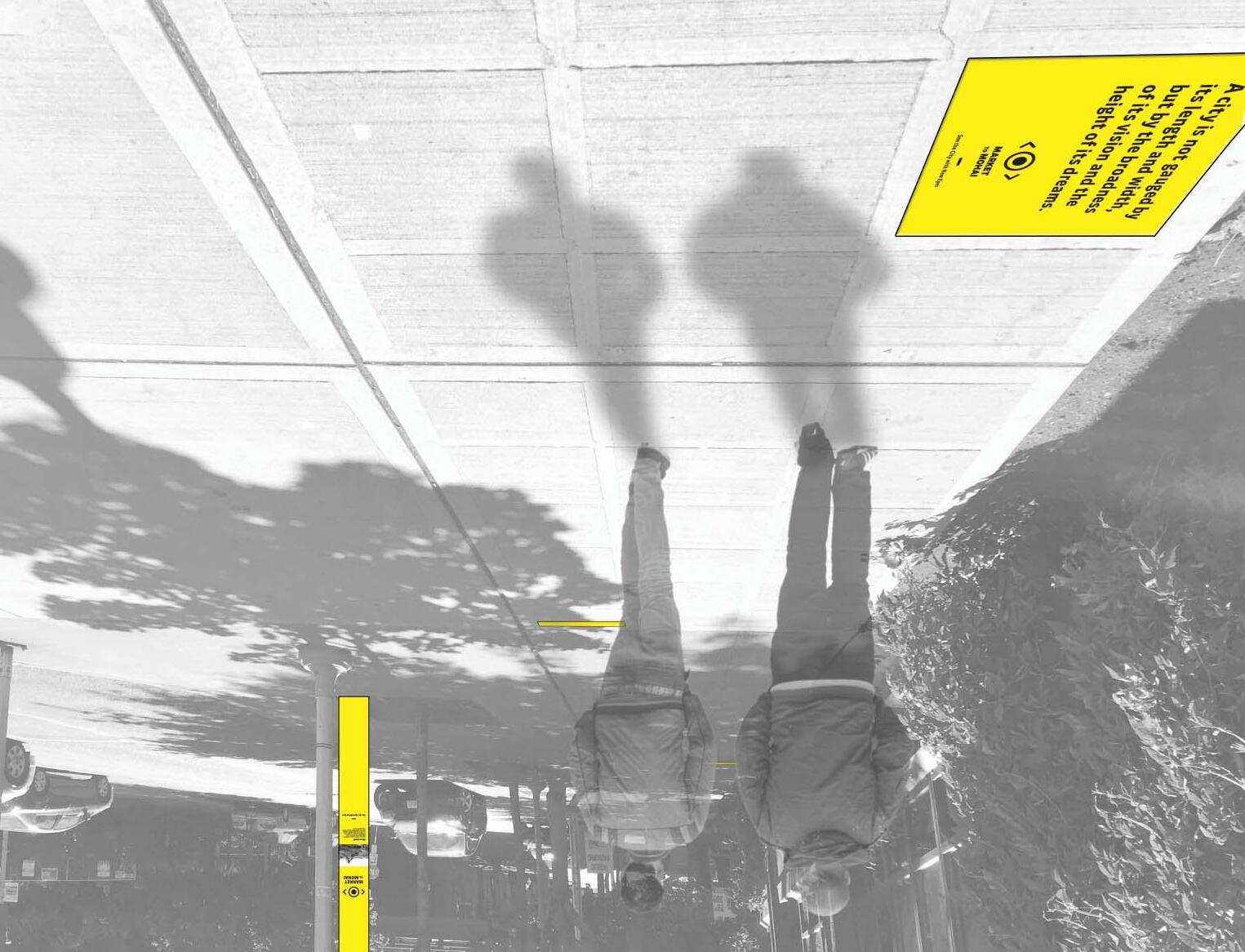
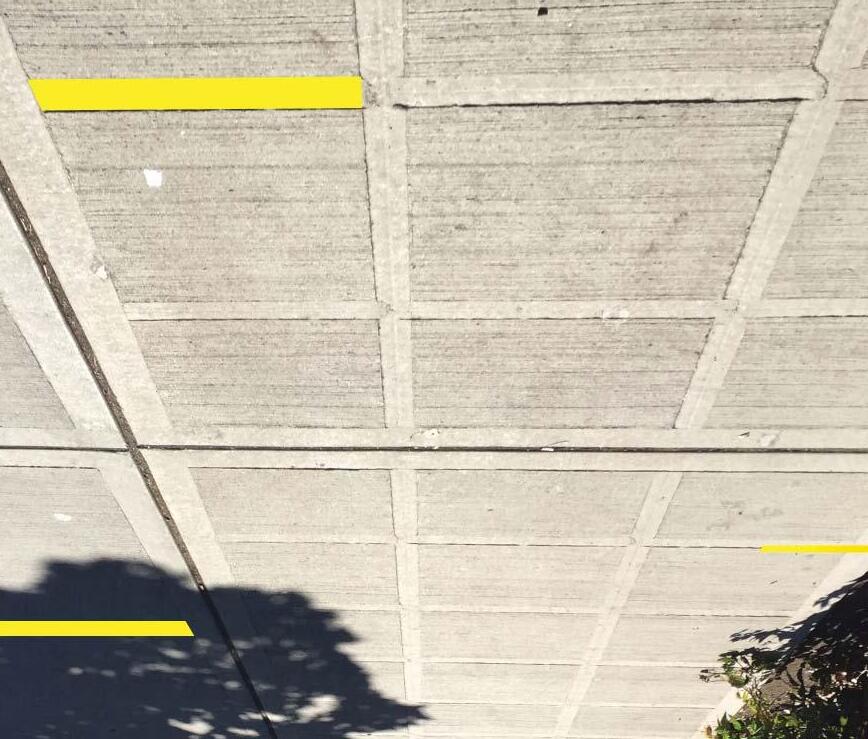
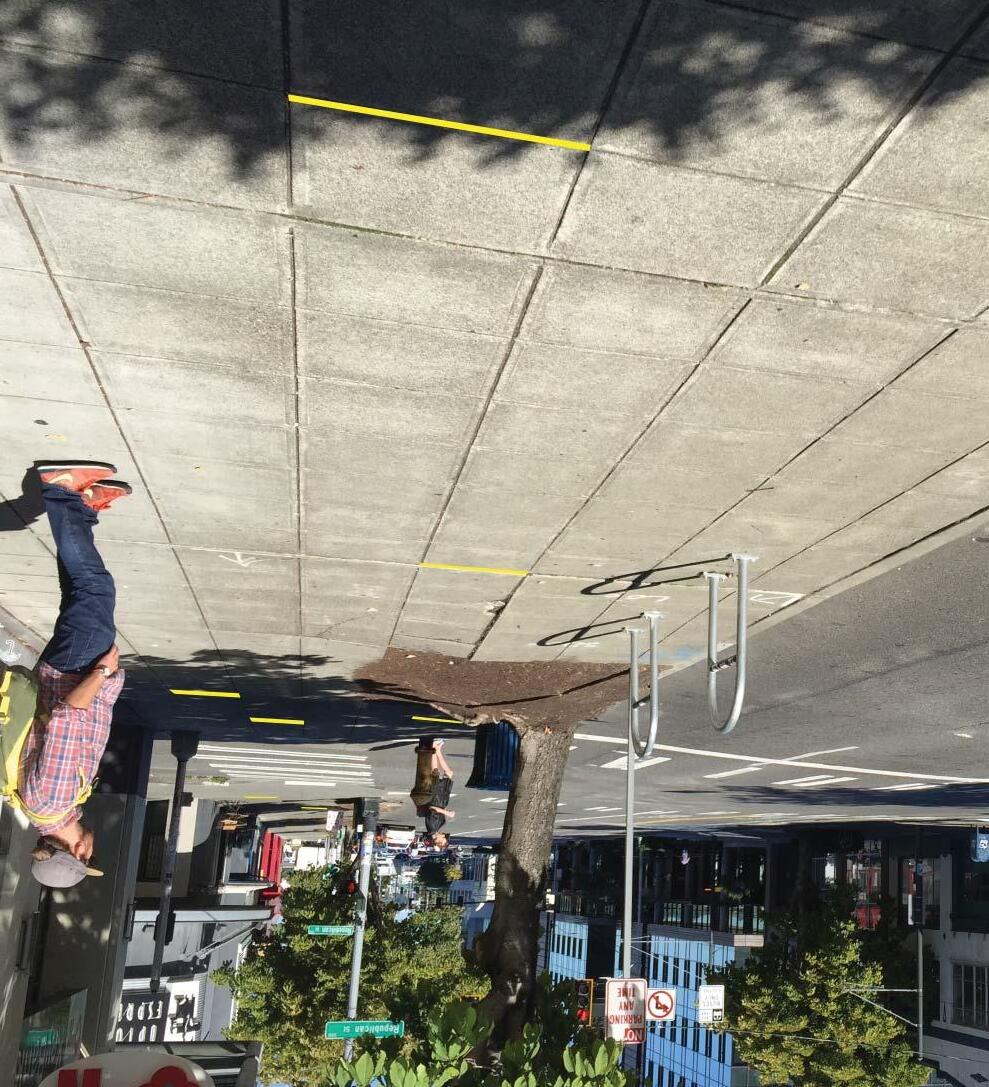
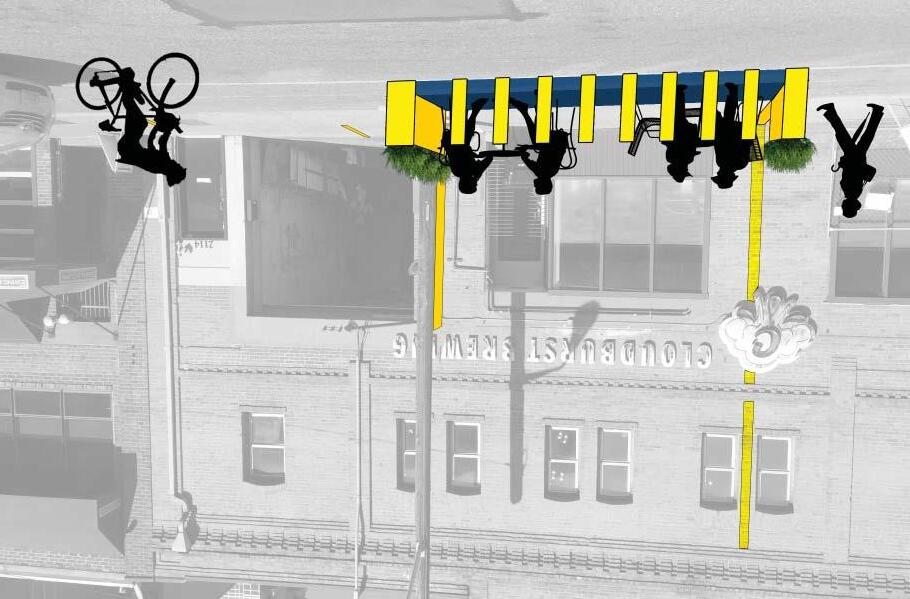
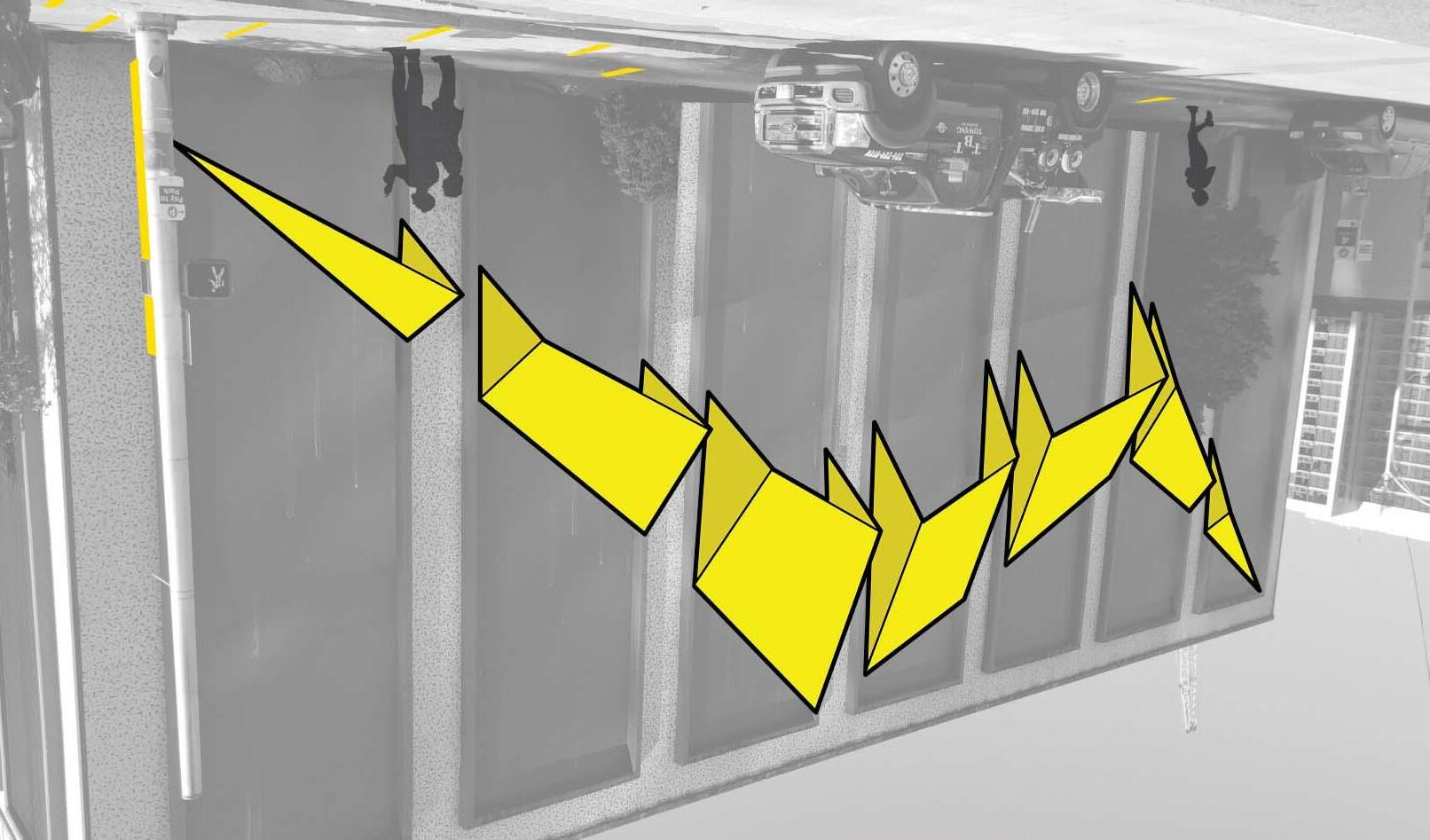
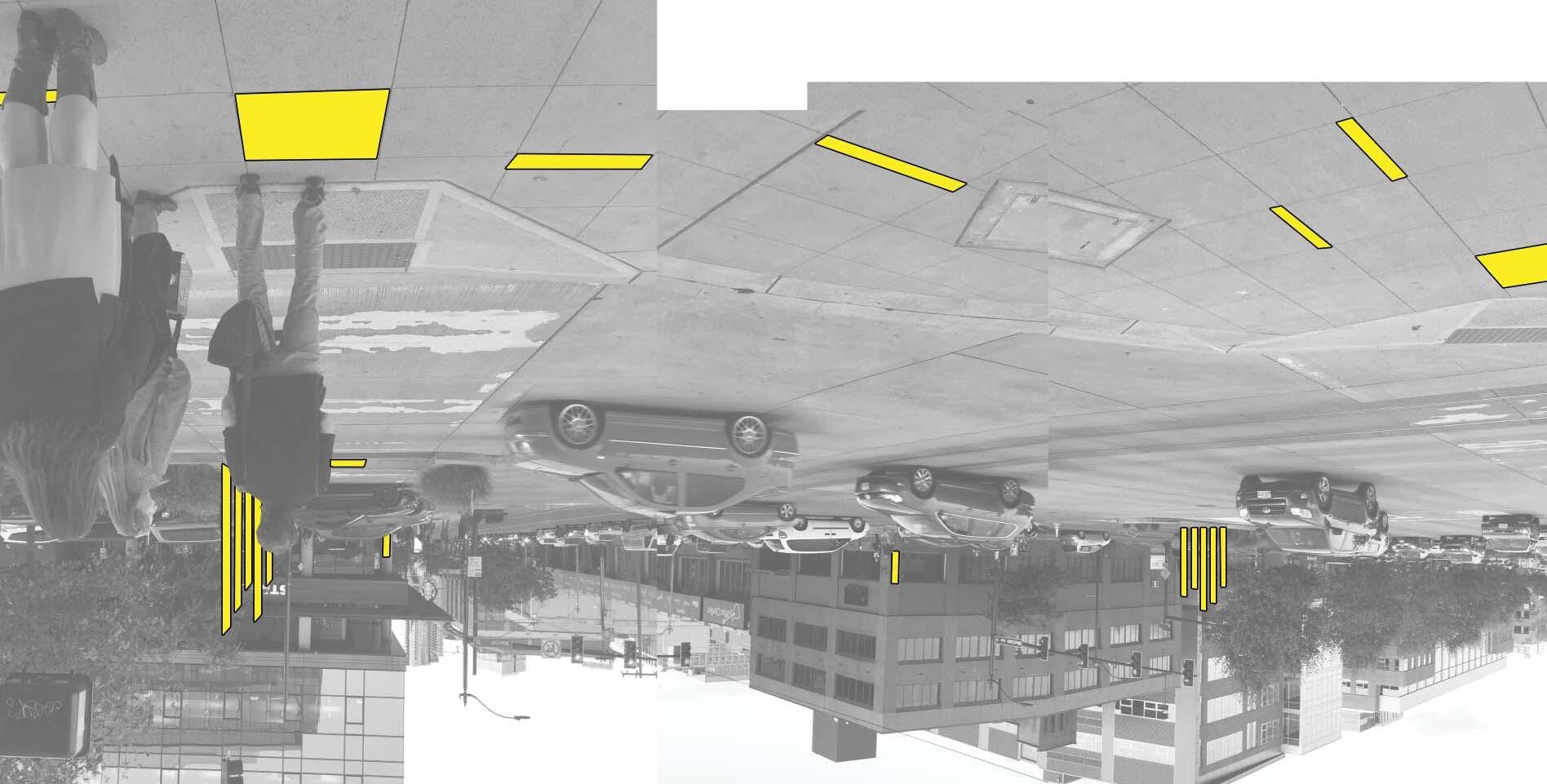
Yellow bands in the sidewalk, inserted into existing paving gaps or applied within Seattle’s standard sidewalk paving patterns. By subtly highlighting existing visual rhythms of sidewalk patterns with yellow bands at an appropriate frequency, trail users can comfortably navigate along the corridor without the need for excessive navigational signage. Short-term application would be a quality elastomeric coating (highly durable paint). Longer term integration would involve embedding another material; for example, metal, precast concrete, stone, or glass into the sidewalk paving.
ROM COSTS
Near Term: $150 applied
Long Term: $400 embedded
Sidewalk Strip
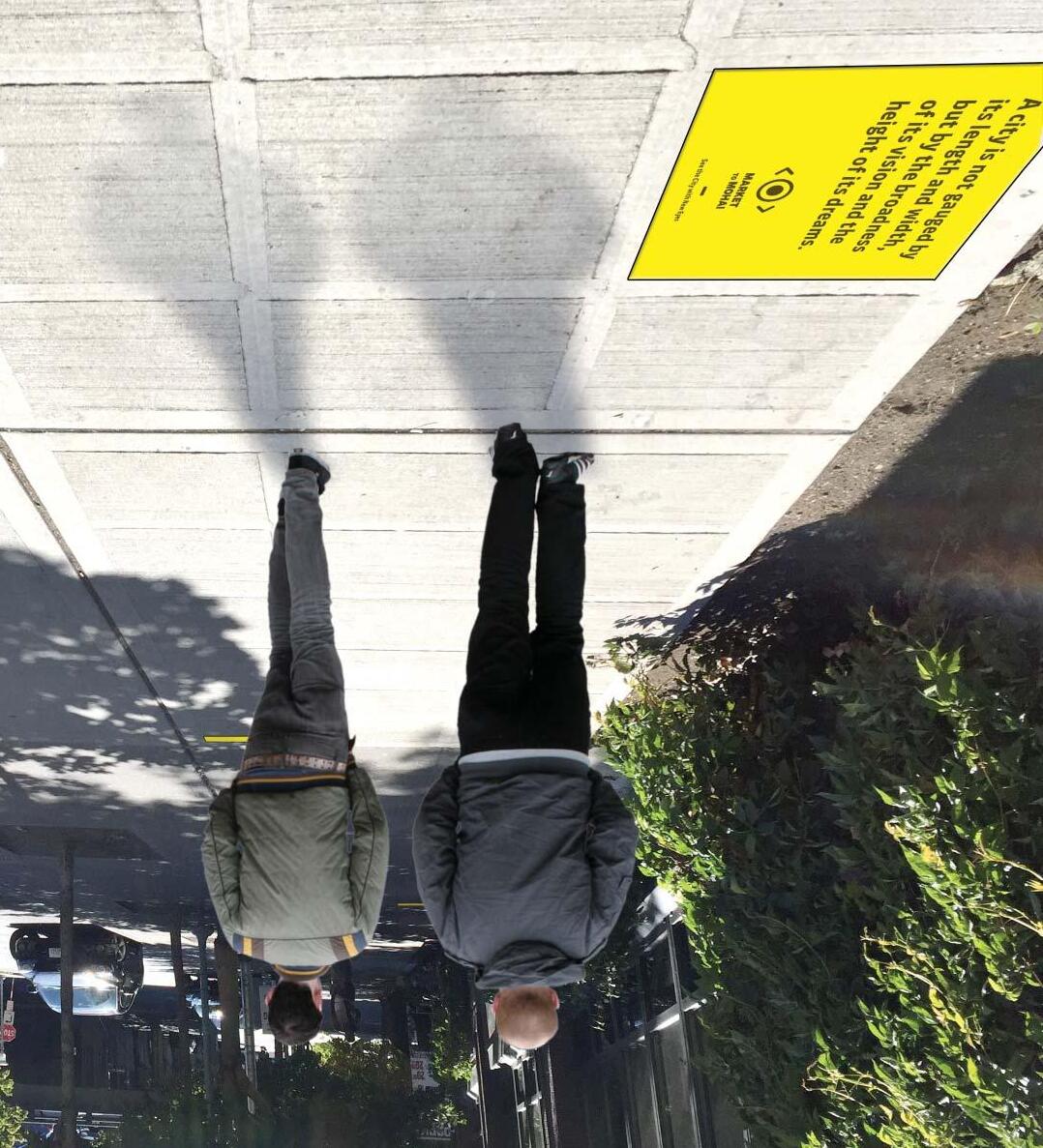
A city is not gauged by its length and width, but by the broadness of its vision and the height of its dreams.
Yellow graphics in the sidewalk applied to existing sidewalk tiles. A short-term application would be a quality elastomeric coating (highly durable paint). Longer term application would involve swapping out existing tiles for another material; for example, metal or precast concrete.
ROM COSTS
Near Term: $900 applied
Long Term: $1500 embedded
Sidewalk Tile
History Blade
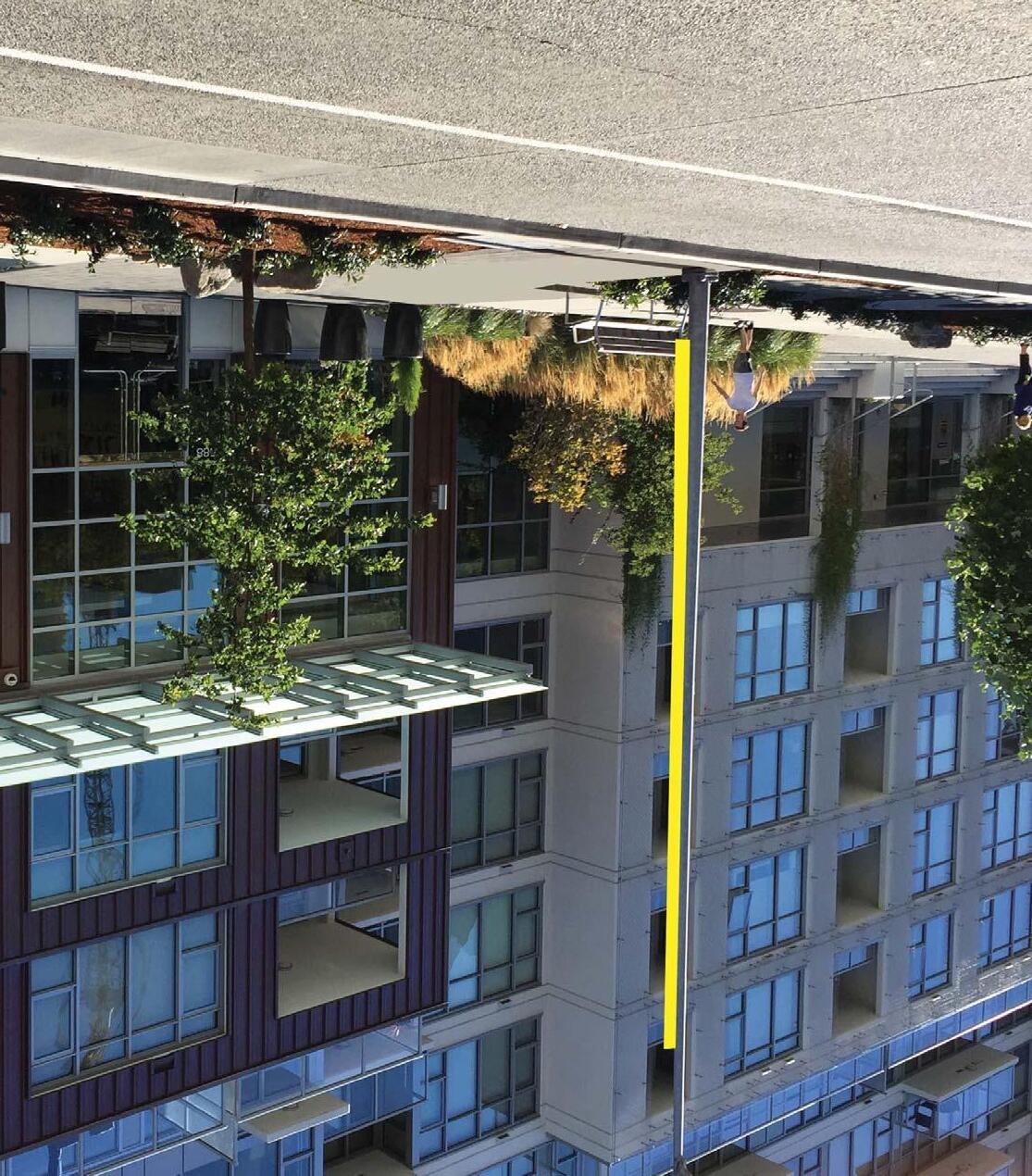
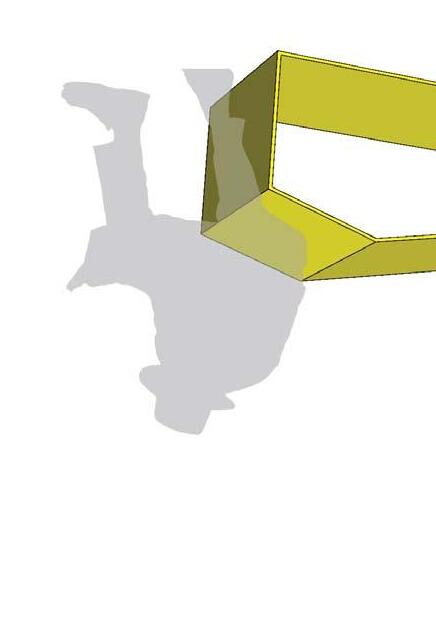
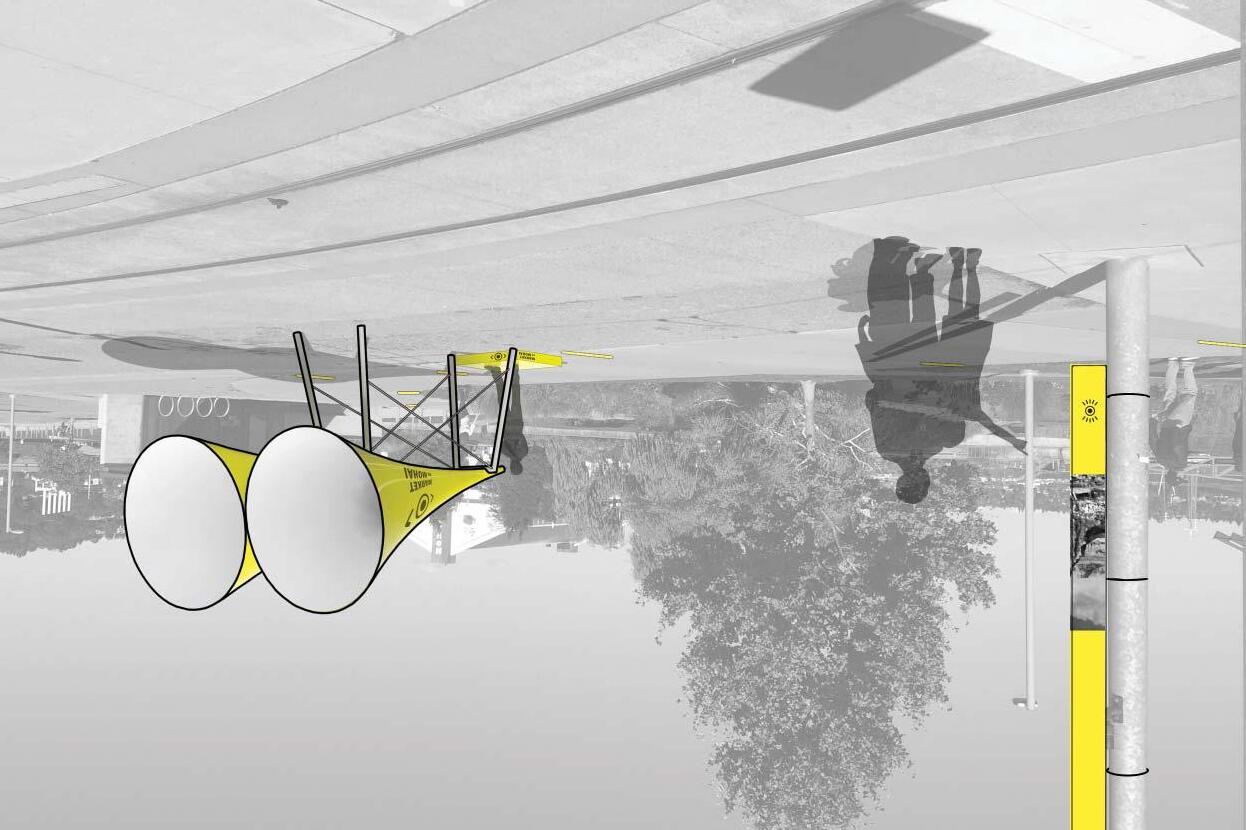
History Blades act as wayfinding markers to guide users along the trail while also providing storytelling moments. In collaboration with MOHAI (Seattle’s renowned Museum of History & Industry), selected texts and historical images give a glimpse into the history of the location on which you stand, or the view which has transformed through the decades. The yellow blades are affixed to existing light posts and other common street elements. A near-term application could be a graphic “pole wrap,” while the long-term version is an aluminum panel with permanent graphics. All or select locations could additionally incorporate lighting to provide a luminous effect along the corridor (lighting not included in costs below).
ROM COSTS
Near Term: $1,300 Pole Wrap
Long Term: $4,000 Applied
Did you know?
Lorem ipsum dolor sit amet, consectetur adipiscing elit. Ut sed est risus. Sed tristique aliquet ipsum, eu iaculis varius non. Donec at ex neque. Mauris congue et dolor non fringilla. Pellentesque ac lacus at leo consectetur mattis.
PIKE PLACE MARKET, 1910
2ND & BELL, 1902
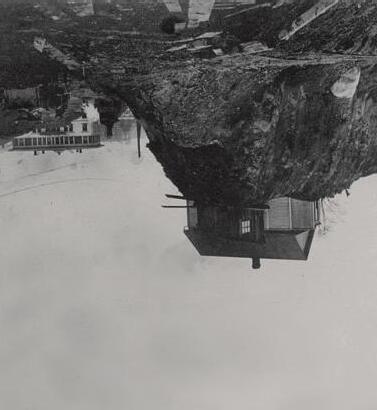
BELLTOWN, 1882
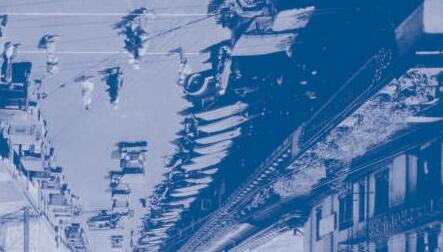
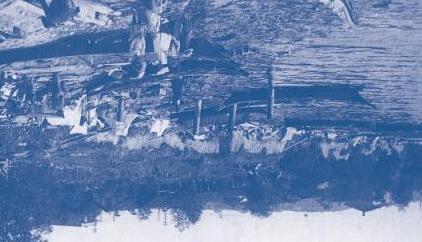
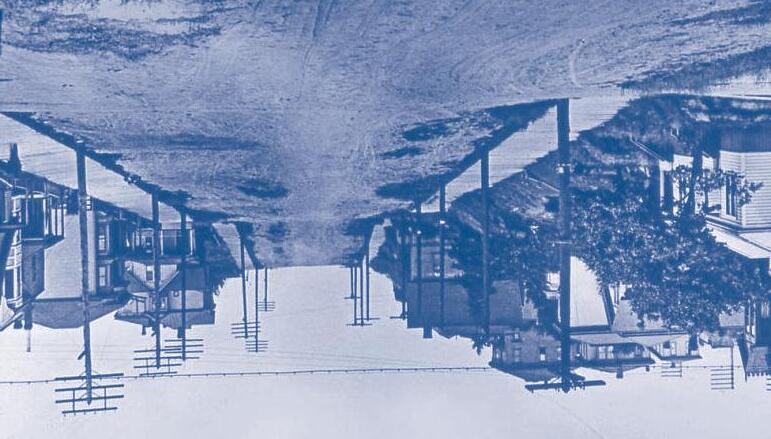
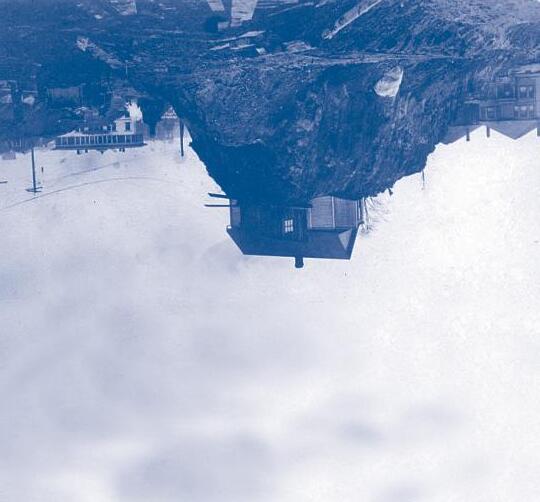
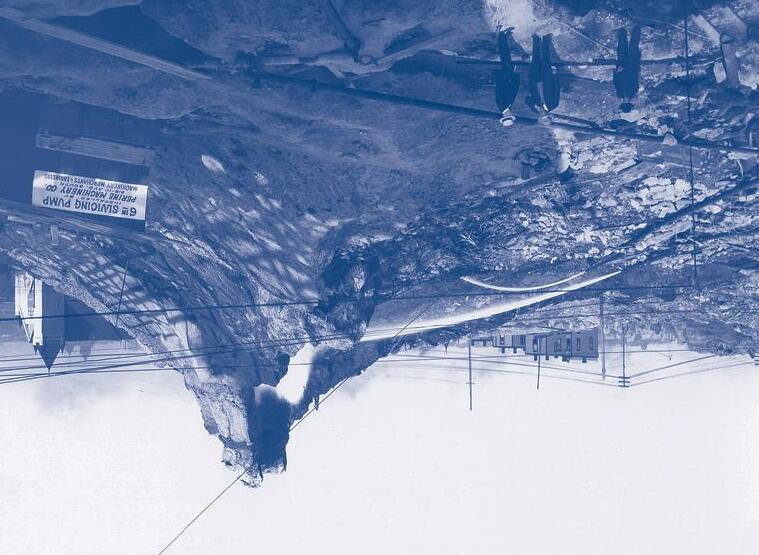
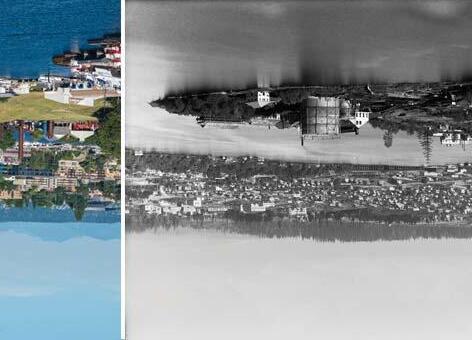
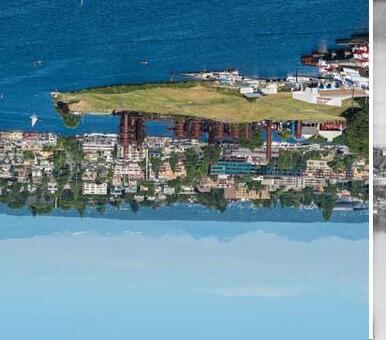
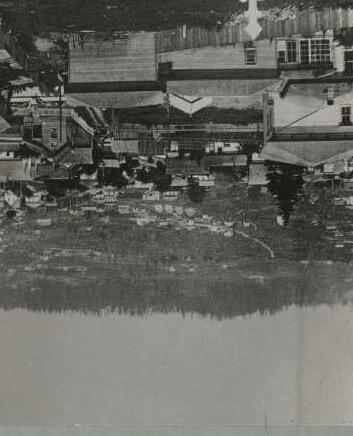
Seattle didn’t always look the way it does today.
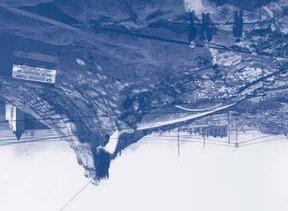
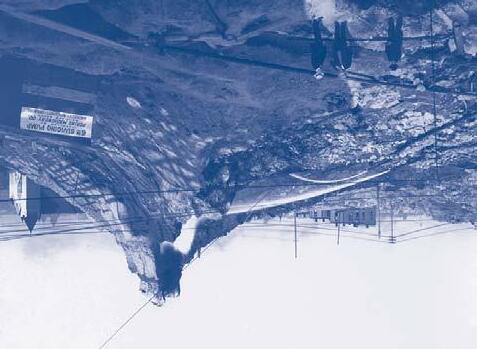
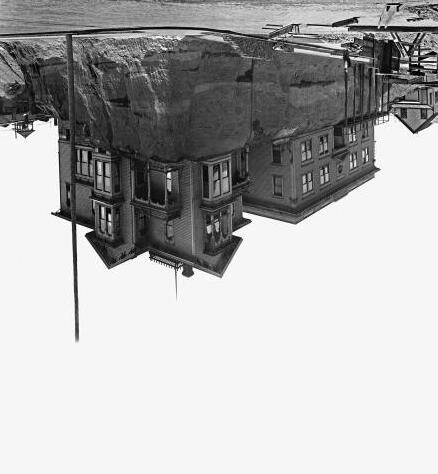
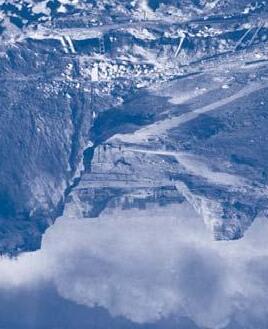
Seattle was radically altered by a series of regrades in the city’s first century of urban settlement. This is what you would have seen in 1920.
History Blade — Variation
Variation on the History Blade providing a ‘peephole’ into the history of the spot on which you stand.
ROM COSTS
Long Term: $4000 Applied
Measurements
based on a 6” wide blade sign
Yellow background with blue tagline
Did you know?
Lorem ipsum dolor sit amet, consectetur adipiscing elit. Ut sed est risus. Sed tristique aliquet ipsum, eu iaculis varius non. Donec at ex neque. Mauris congue et dolor non fringilla. Pellentesque ac lacus at leo consectetur mattis.
History panels should include photograph when possible
See the City with New Eyes
Sanuk Bold Header 26pt/32pt leading 50 Characters
Sanuk Regular Body 16pt/22pt leading 400 Characters
Measurements based on a 24”x24” pavement insert
Sanuk Bold 40pt/50pt leading 140 Characters
aliquet. Mauris ante velit, lobortis id eros eu.
DISCOVERIES
Pedestrian Amenities!
Discoveries expand the formal language of breadcrumbs into a series of interventions and pedestrian-focused elements that invite interaction. They offer places to linger, rest, or meet a friend.
PROTOTYPICAL UNIQUE TEMPORARY PERMANENT
EXPERIENCE + navigation
engage, excite, linger
MOHAI
Prototypical Site Furnishings
Market to MOHAI is to be interspersed with a range of furnishings from seating elements to planters. Offering places to rest or provide greenery, the furnishings maintain the color and form of the brand to reinforce connectivity. The site furnishings are intended to be flexible elements that can easily be installed without supporting infrastructure. However, all or select locations could additionally incorporate lighting to provide a luminous effect along the corridor (lighting not included in costs below).
ROM COSTS
$1,000 - $3,000 per element
Site-Specific Pedestrian Amenities
In addition to the prototypical amenities, a range of site-specific elements are proposed for the corridor. These elements are typically larger in scale and complexity with the potential for specialty lighting. Refer to ‘Map the Kit’ for sitespecific elements along the corridor.
BEACONS
Big Moments!
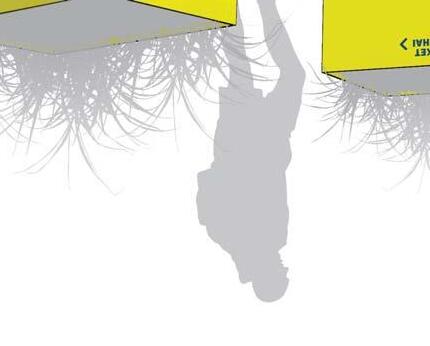
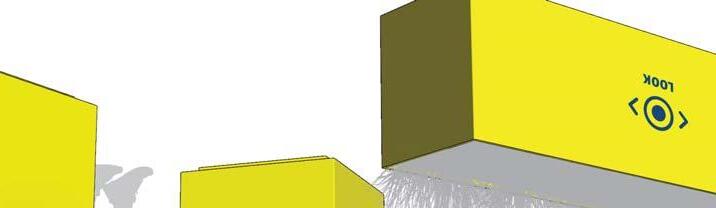
Beacons are reserved for key locations along the route: start, finish, and critical decision points. They serve as large-scale expressions of ‘seeing the city through new eyes’ and iconic elements for the city streetscape. There is flexibility to the final form and execution of the beacons; they can be permanent, temporary, or curated and changing. Beacons are also key opportunities for experiential lighting to provide nighttime interest.
BIG PRESENCE CULTURAL CONTENT
NAVIGATION
+
EXPERIENCE
MOHAI
I like long walks, especially when they are taken by people who annoy me.
NOËL COWARD
MAP THE KIT
FOCUS ZONES
Market to MOHAI consists of three significantly enhanced streetscapes.
Western Avenue
With the removal of the viaduct, Western Avenue will become a greatly enhanced and desirable pedestrian route, forming the western stretch of the corridor connecting to the Pike Place Market.
Bell Street Park
Bell Street Park forms the middle stretch of Market to MOHAI. Through already completed or planned new streetscape projects, the street’s common character of rich pedestrian amenities will connect from the Bell Street cruise terminal to Denny Way.
Westlake Avenue
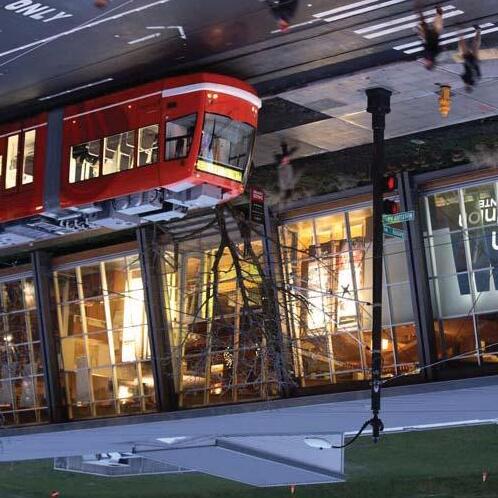
Westlake Avenue, already home to vital commerce and a new, thriving transit corridor, will be enhanced with the Westlake Micro-Parks reclaiming underutilized streetscape areas as treasured spaces to linger and engage with others.
WESTLAKE
DENNY
MOHAI
WESTERN AVE: NEAR TERM
Awaiting the Viaduct Coming Down!
With significant future change coming to the Western corridor between Bell and Blanchard, hardscape improvements (curb, curb ramp, sidewalk and planting) are not proposed in the near term.
SIDEWALK MARKERS: 57
HISTORY BLADES: 9
DISCOVERIES: 4
BEACONS: 2
a A one-sided streetscape, east-side weighted, north of Lenora (west side is inhospitable near term).*
b Existing sidewalk and curb remains, an atypically narrow streetscape for existing and future pedestrian circulation.*
c Market to MOHAI efforts to focus on claiming the corridor with near-term, surficial applied elements (awaiting far term).*
d Southern beacon: Perhaps initially an interim installation but transitioning to permanent, an icon at a visual endpoint and under-claimed piece of public ROW. (The under-claimed piece of ROW is neither PPM land nor Parks property, and therefore, less politically challenging to propose interventions.)*
e Deploy breadcrumbs on existing streetscape (sidewalk strips, sidewalk tiles and History Blades).*
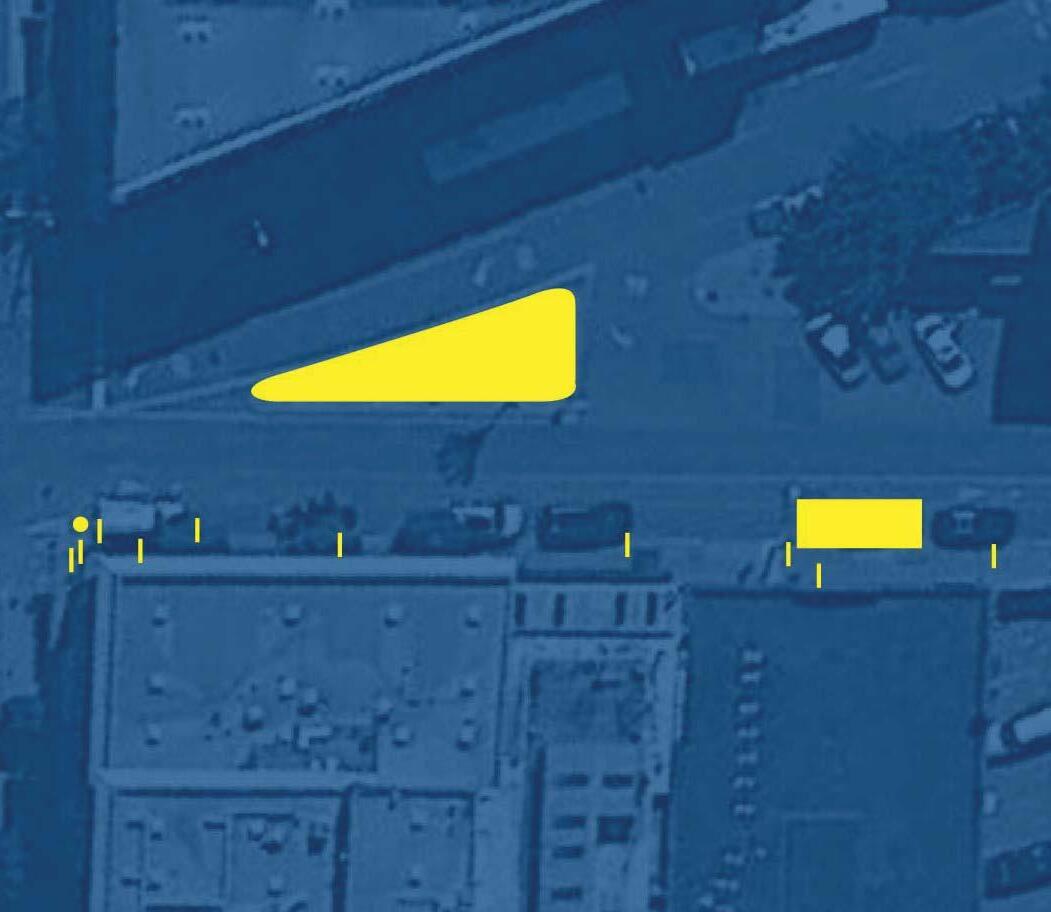
f Claim the underutilized and under-cared-for Angie’s Umbrella triangle landscape as part of the Market to MOHAI brand.*
g Expand sidewalk with prototypical parklets (in association with partner businesses and property owners empowered to customize). (*Potential sites shown, subject to adjacent support.)*
h Leverage one existing new development project (in construction) with enhanced streetscape improvements, recommended Western curb bulb, and integration of permanent breadcrumbs in the sidewalk and potential branding or discovery element in the architecture.*
i Claim the Bell and Western corner with beacon, breadcrumbs, brand and temporary discoveries that reinforce the current edges of the route and screen the existing surface parking lot.*
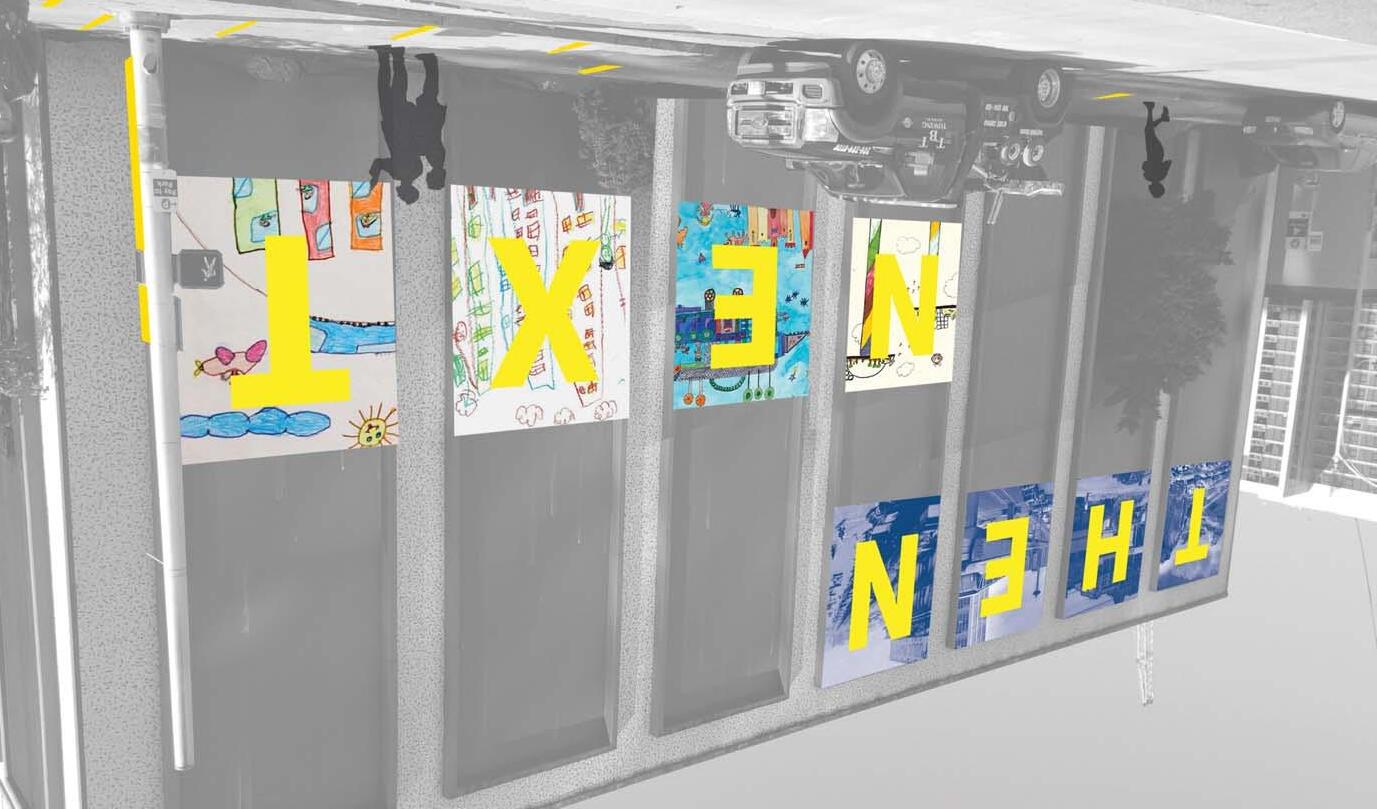
i1. Next step: Content for the wall/screen claiming the corner is not yet determined, but could be focused on the now/then theme or be juxtaposed content that reflects the two ends of the corridor, Market/Waterfront contrasted with MOHAI/Lake Union (outreach or art opportunity).
i2. Next step: Consider working with adjacent property owner to demolish existing, protruding retaining wall and “cut” the corner, currently soil and landscape, as pedestrian paving.
j Claim the existing Bell Street Park (and the westward extension when complete) primarily with breadcrumbs and branding. While the park provides already existing experiences, there may be the opportunity for M-to-M-initiated and branded experiences as well, be they permanent or ephemeral.*
*Improvements identified as a potential Waterfront Seattle Opportunity Fund project.
Steinbrueck Park
This playful viewing opportunity at the Market end of the trail looks back toward a sister installation at the MOHAI/South Lake Union end of the trail. Users play with a ‘ViewMaster’ style interactive to check out a series of images; for example, features along the trail (to encourage pedestrian use of the trail), and a combination of past, present and future Seattle. The installation could be temporary during several summer months, or a permanent fixture. Installation would need to be coordinated with the Pike Place Market Historical Commission.
ROM COST
Near Term: $35,000 Temporary Installation
Long Term: $70,000 Permanent Installation
Beacon on Western Avenue
Users can click through a series of images; for example, features along the trail (to encourage pedestrian use of the trail), quotes, and a combination of past, present and future Seattle.
Thereisnothing permanent exceptchange.
Beacon on Western Avenue: ViewMaster Concept
A city is not gauged by its length and width, but by the broadness of its vision and the height of its dreams.
Western Avenue is envisioned as an extension of the energy and identity of Pike Place Market. The corridor begins at the market edge with a beacon and continues along Western with sidewalk markers and history blades, as well as larger, sitespecific interventions.
Western Ave: Virginia to Lenora
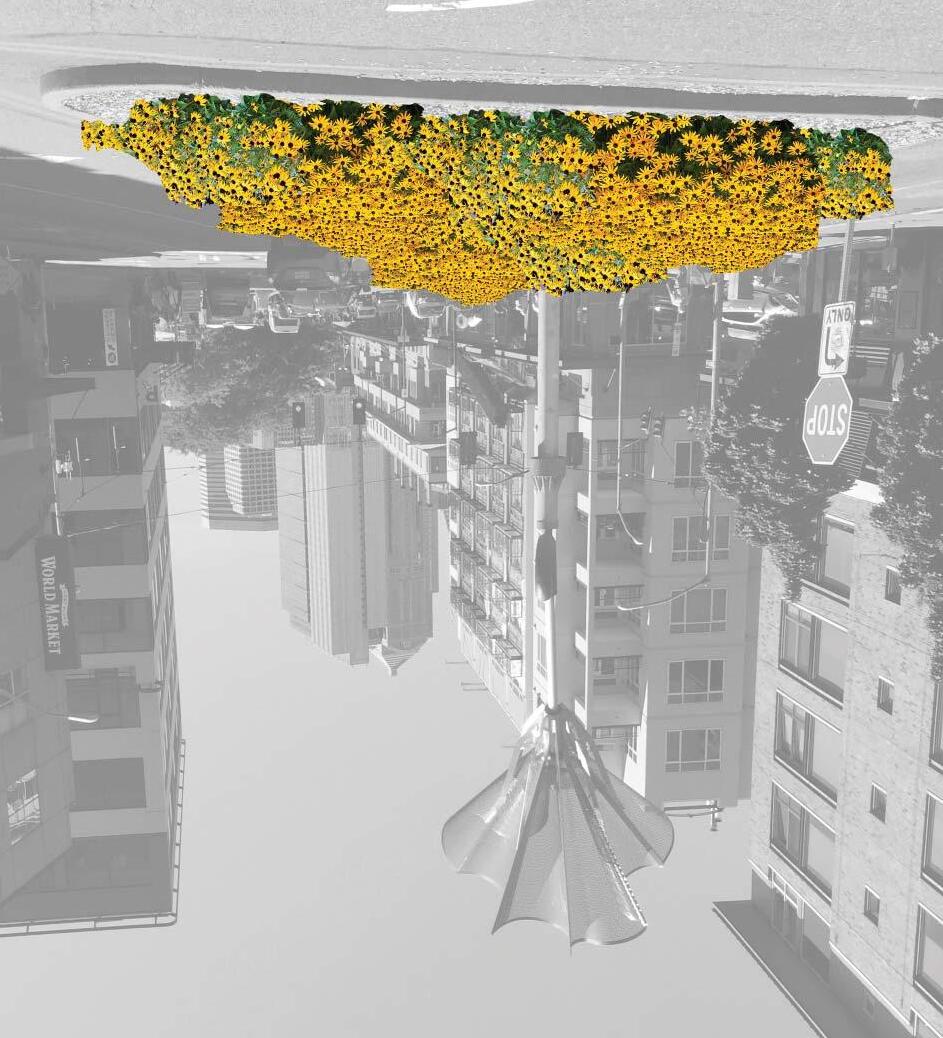
Angie’s Umbrella Triangle
This neat, funky landmark created by Jim Pridgeon and Benson Shaw is an icon that this project can claim and celebrate.
In the near term, simply planting the base with a color palette that calls to the corridor will greatly improve the space.
In the long term, this triangle can be claimed with more permanent experiential elements and hardscape to make an enhanced pedestrian connection along the south side of Western.
ROM COST
Near Term: $8,000 Planting
Long Term: $$$ Permanent elements and hardscape
Parklets
Adjacent businesses can help claim the corridor for the good of their clientele. These projects can be either near term or long term, perhaps indicating spaces for future curb bulbs as the streetscape develops. Parklets are also key opportunities for increased lighting.
ROM COST
Near & Long Term: $6,000 $$$
Near term claim with
The Bell & Western corner is a challenging location for two primary reasons: one physical and one navigational. The existing sidewalk condition is quite constrained and the intersection is a decision point where pedestrians change direction. Given these challenges, a beacon is located at this corner.
Bell & Western: Near Term
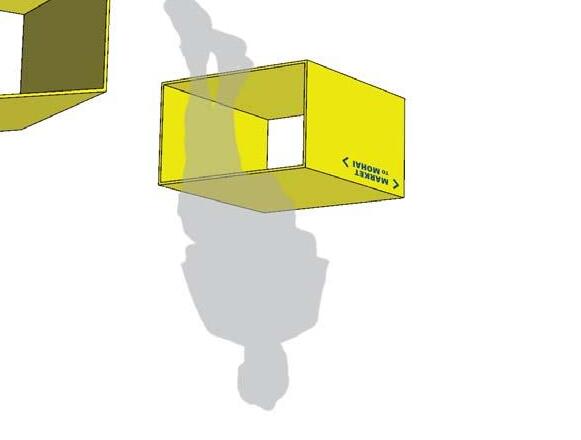
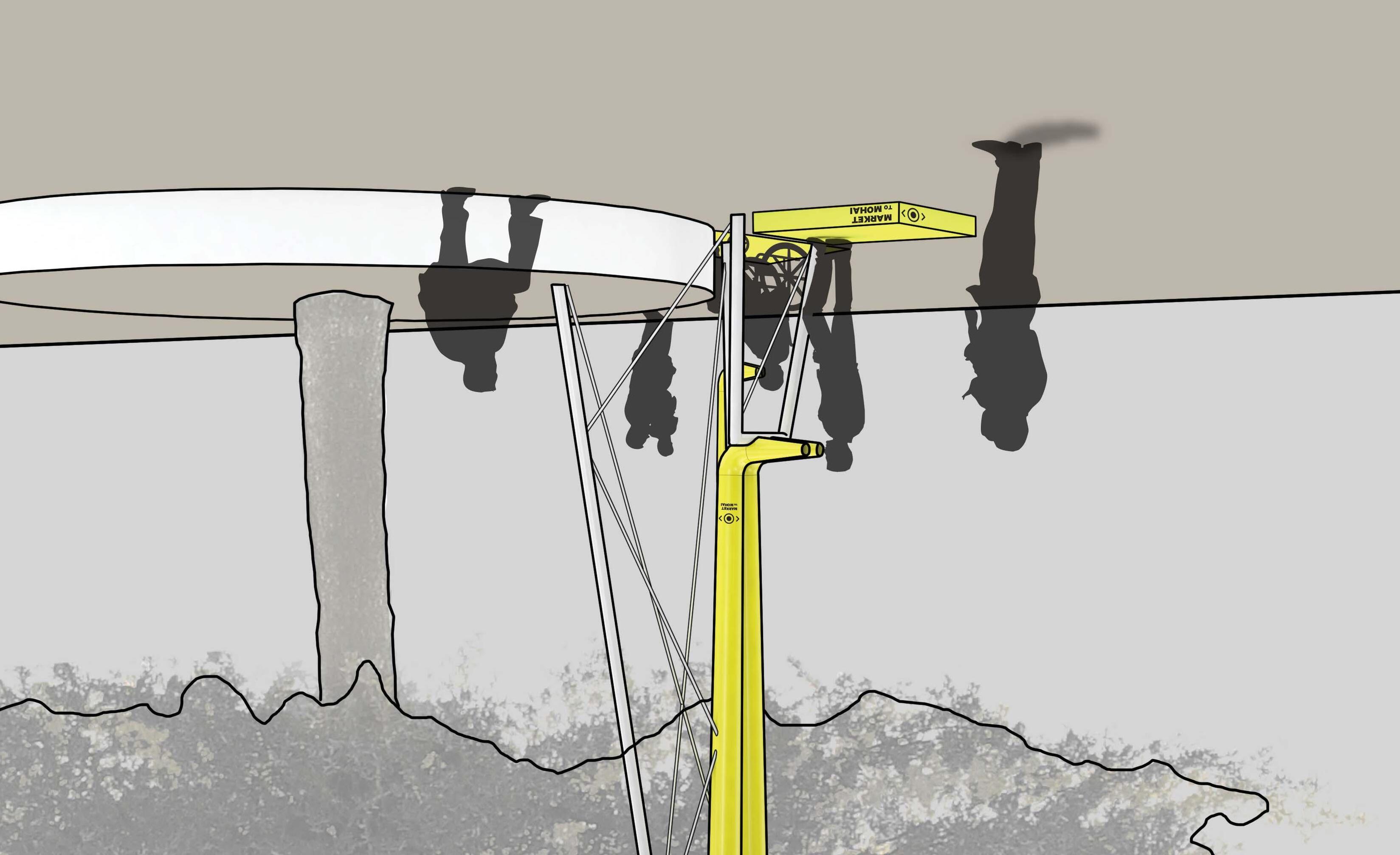
The power to see around corners comes to life! This installation sits at one of the trickiest navigation points along the trail, where pedestrians take an abrupt turn along the trail. This ‘beacon’ provides a playful viewing device to peek around the corner—coming from either direction—and could feature an actual view around the corner, or a view further along the trail in each direction, acting as an incentive to walk and further explore.
ROM COST
Near Term: $25,000 Temporary Installation
Long Term: $50,000 Permanent Installation
Beacon at Corner of Bell & Western
WESTERN AVE: FUTURE
Elliott Way Arrives!
Removing and replacing the viaduct with a new roadway, Elliott Way, as well as corresponding changes to adjacent roads, properties and public realm, anticipated for 2019, will profoundly reshape portions of Western and improve/ strengthen the Market to MOHAI corridor. The far-term vision includes a future park at the existing tunnel portal, Bell Street Park extended to Elliott, an opportunity site that will be either a new building or public space, an improved Blanchard Street (plaza or cul-de-sac) and new streetscape (vehicular and sidewalk) through the Blanchard and Western intersection.
SIDEWALK MARKERS: 50-60
HISTORY BLADES: 9
DISCOVERIES: 6
BEACONS: 2
1 Western becomes a two-sided streetscape from Bell to the Market, with a primary focus on enhancing the east-side streetscape, and more distant secondary focus on enhancing the west side.*
2 Critical navigation and wayfinding opportunity for Market to MOHAI and the Waterfront: Both stakeholder groups recognize that the intuitive and desirable pedestrian connection from the corner of Western and Bell to the new waterfront is likely via the Market to MOHAI stretch of Western through Victor Steinbrueck Park, the new Pike Place Market Waterfront Entrance and the new Overlook Walk. This stretch provides a high level of activation, views and passive park features.*
3 Reimagine Western Avenue as a slower speed street ending in a stop sign perpendicular to Elliott, reducing speeds and gaining added space for pedestrian/public realm (completed in association with the Waterfront).*
4 Leverage the Western/Bell bulb with a new permanent beacon and site-specific design elements to “bend” the corner from Bell to Western.*
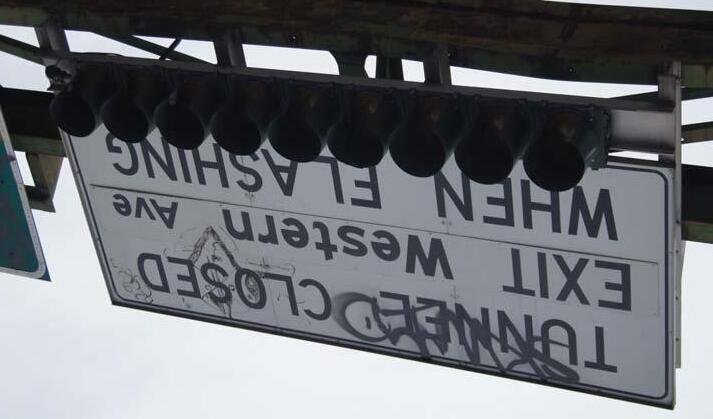
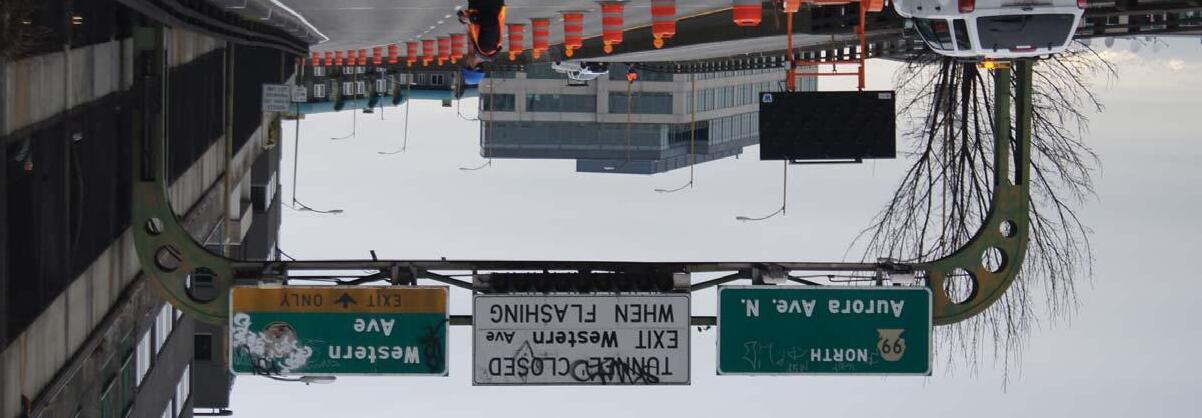
5 Echoes of the past: Alaskan Way Viaduct Sign Bridge. With significant and fast growth changing the route, there will be opportunities to collect and repurpose fixtures along the corridor, such as the sign bridge, that might otherwise be erased.*
6 Widen the east-side streetscape of Western in connection with this rebuilding and include typically required street-scale elements such as street trees and planting, as well as ordinary elements branded to become the extraordinary. Continue proposed waterfront streetscape improvements that currently end at the south side of a reconstructed Western/ Bell bulb onto Lenora (and possibly Virginia) with curb bulbs added to the Western/Lenora and Western/Blanchard intersections.*
7
Establish a new west-side streetscape along the new opportunity site, though westside development is considered secondary to enhancements on the east side of Western.* 8
Utilize the opportunity site as an open space connection, per earlier versions of the waterfront master planning, as a site for active recreation, potentially a playground or a flexible space for community events like food trucks, etc. The Belltown community, long under-served with park space and access to the waterfront, would benefit from that site in combination with the park portal site to meet critical open space needs (active and passive) and maintain view corridors from Belltown south to Elliott Bay.*
9
Create new pedestrian connections to move people from the west side of Western north to the Market (in the area around the umbrella triangle).
Consider eliminating the existing left turn lane from southbound Elliott to northbound Western (at the umbrella) to increase pedestrian space and form a stronger, more standardized pedestrian connection to the Market.*
10
Embrace new infill projects.
*Improvements identified as a potential Waterfront Seattle Opportunity Fund project.
COST RANGE
$ 1,000,000 - $1,400,000
Long term claim with ENLARGED BEACON BRAND
NEW SPACE AND EXPERIENCE
NEW NEIGHBORS
Bell & Western: Long Term
The constraints of the existing Bell & Western intersection can be addressed in the long term with the waterfront development and new Elliott Way streetscape. With this new street configuration, a larger pedestrian realm is created and provides an opportunity for expanded kit-of-parts elements and pedestrian amenities.
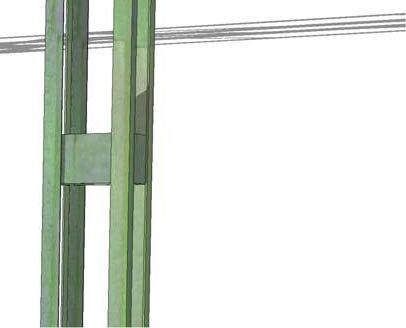
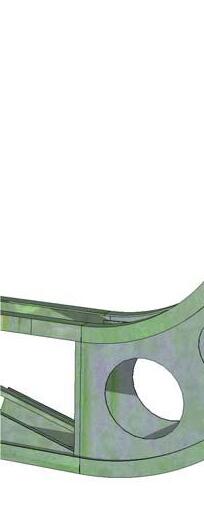
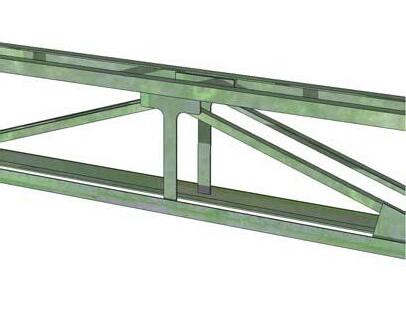
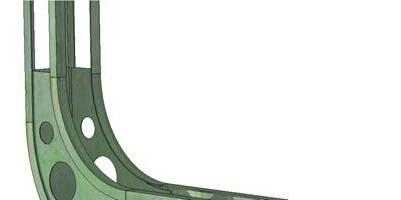
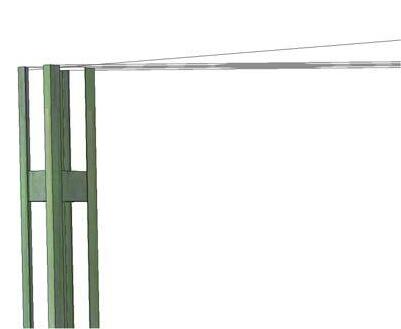
Alaskan Way Viaduct Sign Bridge
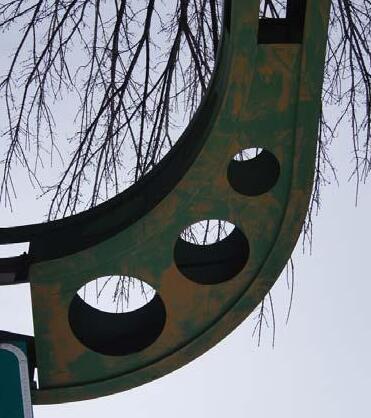
Reimagined sign bridge: As the Western and Bell intersection undergoes dramatic change with the removal of Hwy. 99, the ghost of the viaduct is memorialized in the reimagining of the salvaged sign bridge, relocated and repurposed a short distance from where it has been a portal to downtown for the last half century. The sign bridge is a piece of civil architecture, custom fabricated with art deco detailing in a time when such details were valued. Relocating the sign bridge to the Bell and Western bulb, over Western, provides a valued large-scale and highly visible element at the pivot point from Western to Bell, and intuitively draws people down the Market to MOHAI corridor. Beyond scale and history, the sign bridge can be reimagined with new cultural content and experiential lighting to reflect its new use as a pedestrian wayfinding device. The Market to MOHAI brand can be judiciously applied to the sign bridge, but the sign bridge is more than a canvas for branding.
BELL / DENNY / WESTLAKE
Bell Street Grows!
Bell Street Park is completed from First Avenue to Fifth Avenue and can easily (and inexpensively) welcome the Market to MOHAI corridor, primarily through the addition of navigational breadcrumbs including sidewalk strips and tiles and history blades. A new phase of the enhanced Bell Street streetscape is to be extended from Fifth Avenue to Denny Way by implementing the already completed Bell Street Concept Plan. This stretch is already undergoing rapid change with redevelopment of adjacent properties planned or imminent on a majority of the adjacent sites. This concept plan proposes interim improvements to many existing adjacent property conditions to create the Market to MOHAI corridor in the near term, while also recognizing the long-term opportunities to finalize Bell Street with the redevelopment of adjacent parcels.
SIDEWALK MARKERS: 152
HISTORY BLADES: 40
DISCOVERIES: 9 (+MICRO PARKS)
BEACONS: 2
WestlakeAve DennyWay
a Monorail columns immediately north and south of Bell can be claimed with surficial Market to MOHAI branding and storytelling to demarcate Fifth Avenue’s crossing of the corridor.
b The recently completed Insignia landscape is to be improved with the addition of navigation breadcrumbs, branded furnishings and new pedestrian lighting on existing poles.
c Near term, in addition to navigation breadcrumbs and branded furnishings, a temporary graphic/storytelling wall screens and provides an edge to the surface parking lot. This edge may also be an opportunity site to welcome mobile or temporary pop-up shops and food trucks to activate the street edge.
d Long term, new permanent streetscape and discovery elements are to be completed as part of the Market to MOHAI project.* (While redevelopment is likely, it is not imminent.)
e Long term, the planned private redevelopment of this site will include the completion of the Bell Street Concept Plan. (Development is assumed to be highly likely in the near future.)
f In addition to navigation breadcrumbs and branded furnishings, the blank face along the existing Denny garage is to be enhanced with design interventions to turn the architecture into an asset and attraction.
g Near term, in addition to navigation breadcrumbs and branded furnishings, the existing adjacent concrete wall is to be to be branded and a temporary graphic/storytelling wall screen will provide an edge to the surface parking lot.
h Long term, while part of this block is a recent streetscape, and there are two other possible development sites, Market to MOHAI proposes to develop the full block with new streetscape and permanent discovery elements.* (While redevelopment is possible, it is not imminent. Given the critical location of the intersection of Bell Street and Denny Way, a significant streetscape redevelopment is needed to make navigation intuitive and easy to follow. This should be targeted for completion as soon as possible.)
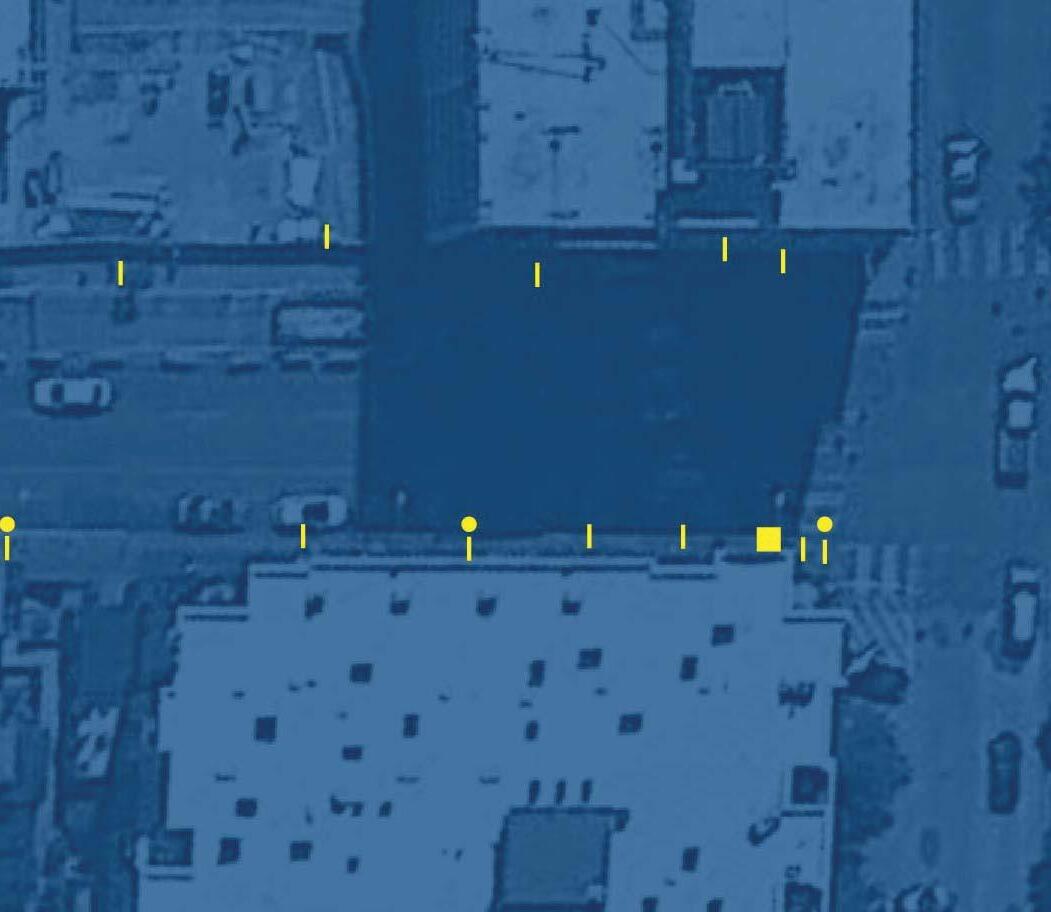
i A major beacon element is located at the prow formed at the intersection of Denny Way and Bell Street.
j Navigation breadcrumbs, furnishings, and smaller scale beacon elements are to be used to reinforce intuitive navigation from Bell to Westlake Avenue, with the designated alignment of the corridor shifting exclusively to the north side of Denny Way.
k Proposed private redevelopment (imminent) will help intuitively reinforce the corridor’s connection along the north side of Denny and north onto Westlake Avenue.
l A minor beacon element reinforces the corridor’s transition from Westlake Avenue, down
beacon.
and up Bell with views of the
m While not a branded part of Market to MOHAI, the historic Denny Park is a natural destination and discovery along the corridor. Its lawn and trees are a welcomed relief in the urban landscape.
n Existing, underutilized soil-filled tree pit areas are to be reclaimed with Micro Parks (see Westlake Avenue detail for more information).
*Improvements identified as a potential Waterfront Seattle Opportunity Fund project.
COST RANGE
$500,000 - $2,250,000
Bell St
Denny
Denny/Bell major
Denny Way Garage Enhancements
Currently a blank façade, the existing architectural decoration that makes up the building’s north elevation is to be viewed as frames that welcome content, such as flat applied graphics or hanging three-dimensional interventions that contain elements of storytelling and interest when viewed from the sidewalk. This could possibly include projections. The content may be curated to welcome change and maximize ongoing interest along the corridor.
Near-Term Edge Treatments
At multiple locations, the corridor is bordered by undeveloped sites, such as parking lots. Given the future development potential of these locations, shortterm or temporary interventions are prioritized to create an inviting edge and screen the parking beyond. Such interventions provide an immediate benefit while remaining flexible enough to accommodate future construction. Fencing or panels become canvases for the project branding, either with directional messages or quotations.
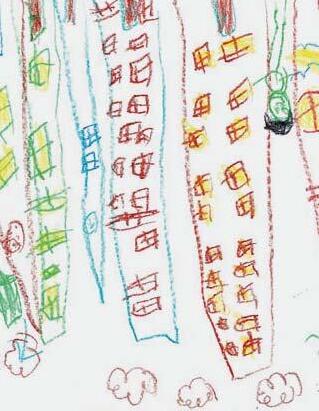
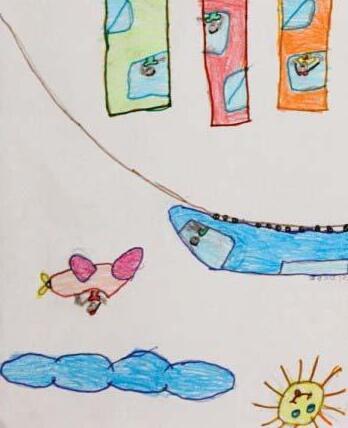
N E T H N E T X
YOUR MIND IS YOUR BEST CAMERA... GO OUT AND TAKE SOME BEAUTIFUL PICTURES. DARYL
RYMAN
Claim with INTENSIVE USE OF BREADCRUMBS (NORTH WEIGHTED)
SERPENTINE BEACON (WESTERLY FOCUSED)
Similar to Bell & Western, this section of the corridor is a critical decision point where navigation must be clear and intuitive. Breadcrumbs are used with an increased density to signal the shift in direction and an extended beacon is used to connect the two nearby intersections.
NORTH
Denny Ave: Bell to Westlake
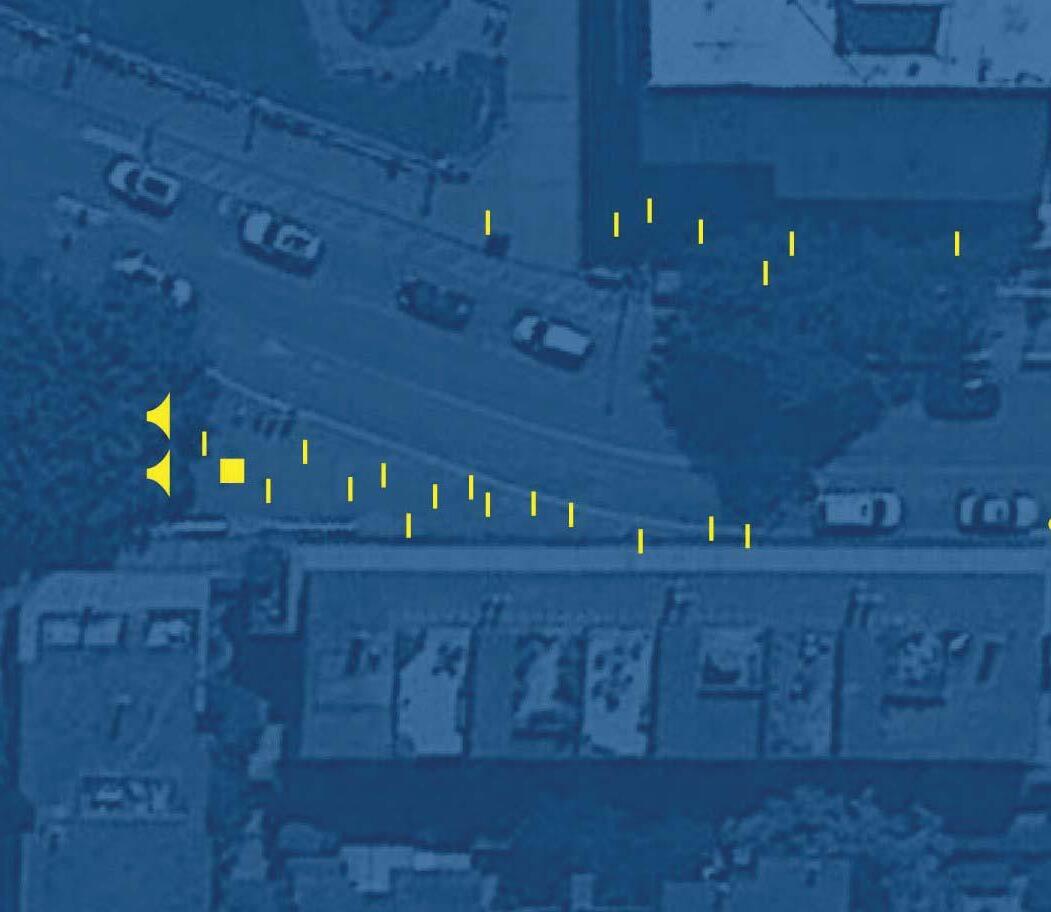
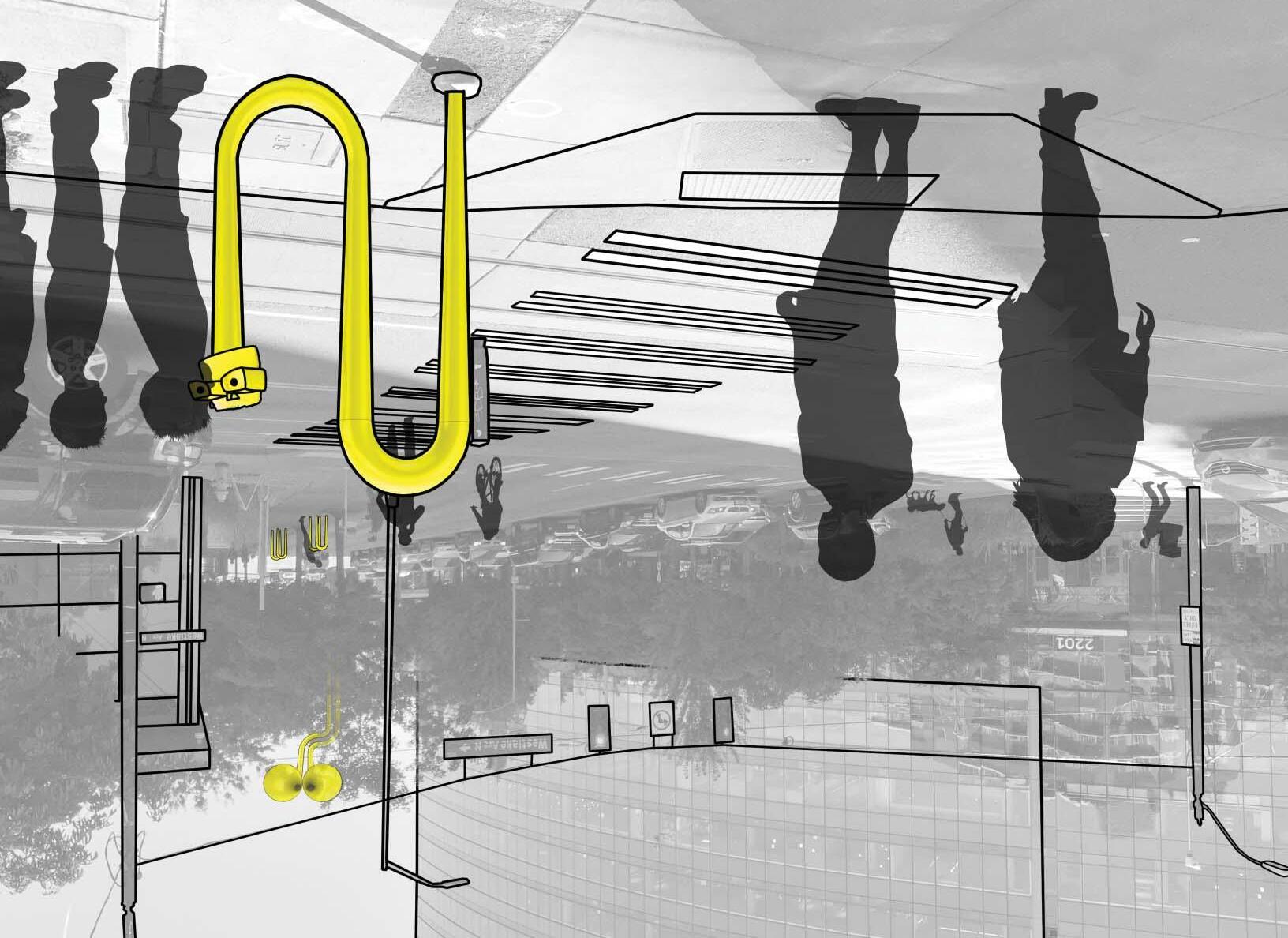
Beacon at Denny and Westlake
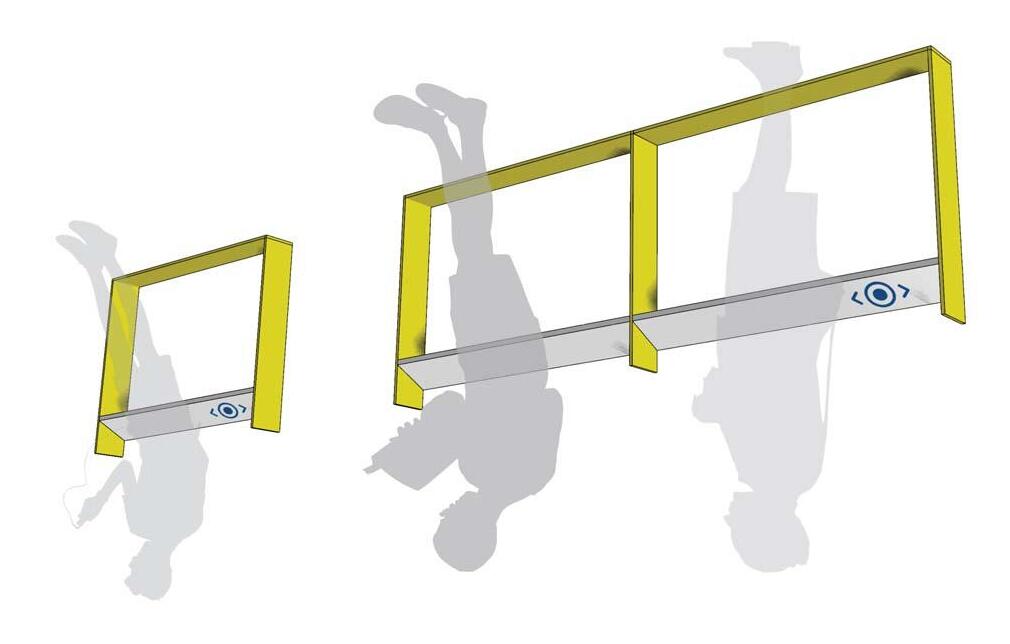
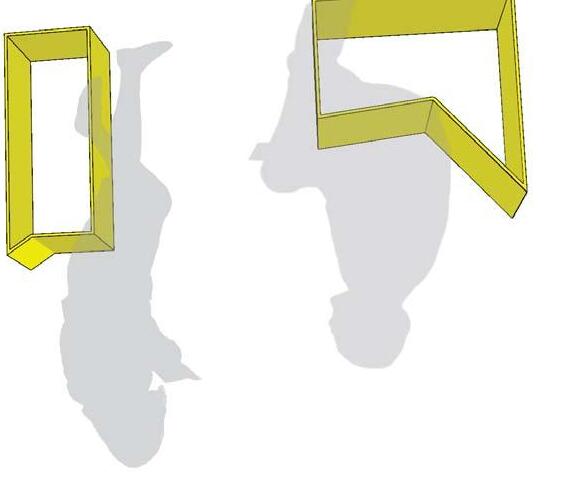
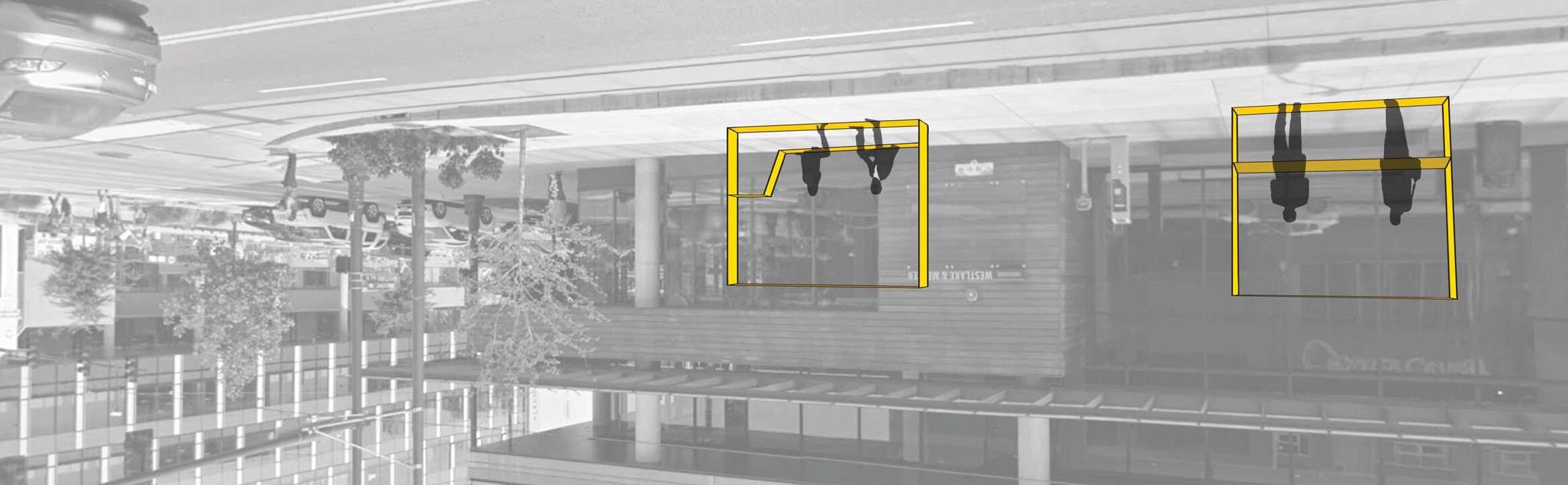
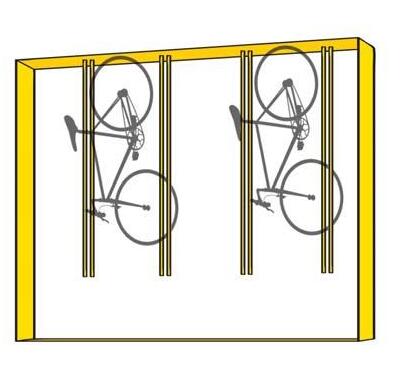
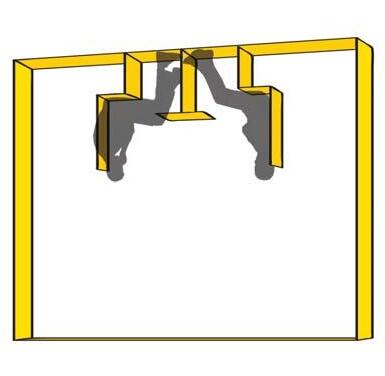
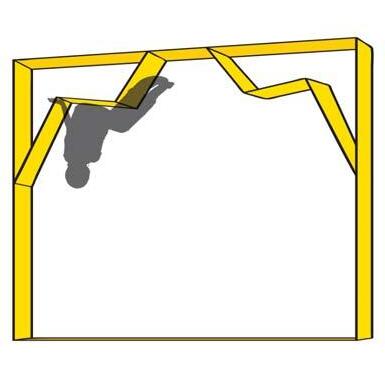
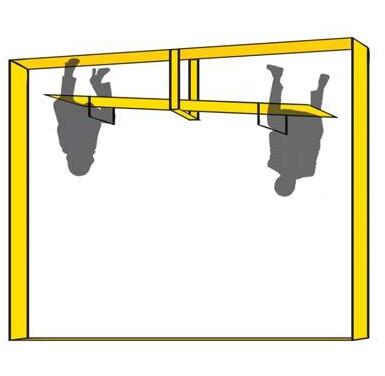
A pair of playful installations works together to entice pedestrians along a jog in the trail, adjacent to Denny Park. The view from each beacon allows an unusual perspective on the streetscape. Yellow bike racks act as a visual link between the two larger installations while also serving a practical function in this rapidly growing Seattle neighborhood.
ROM COST
Near Term: $50,000 Temporary Installation
Long Term: $120,000 Permanent Installation
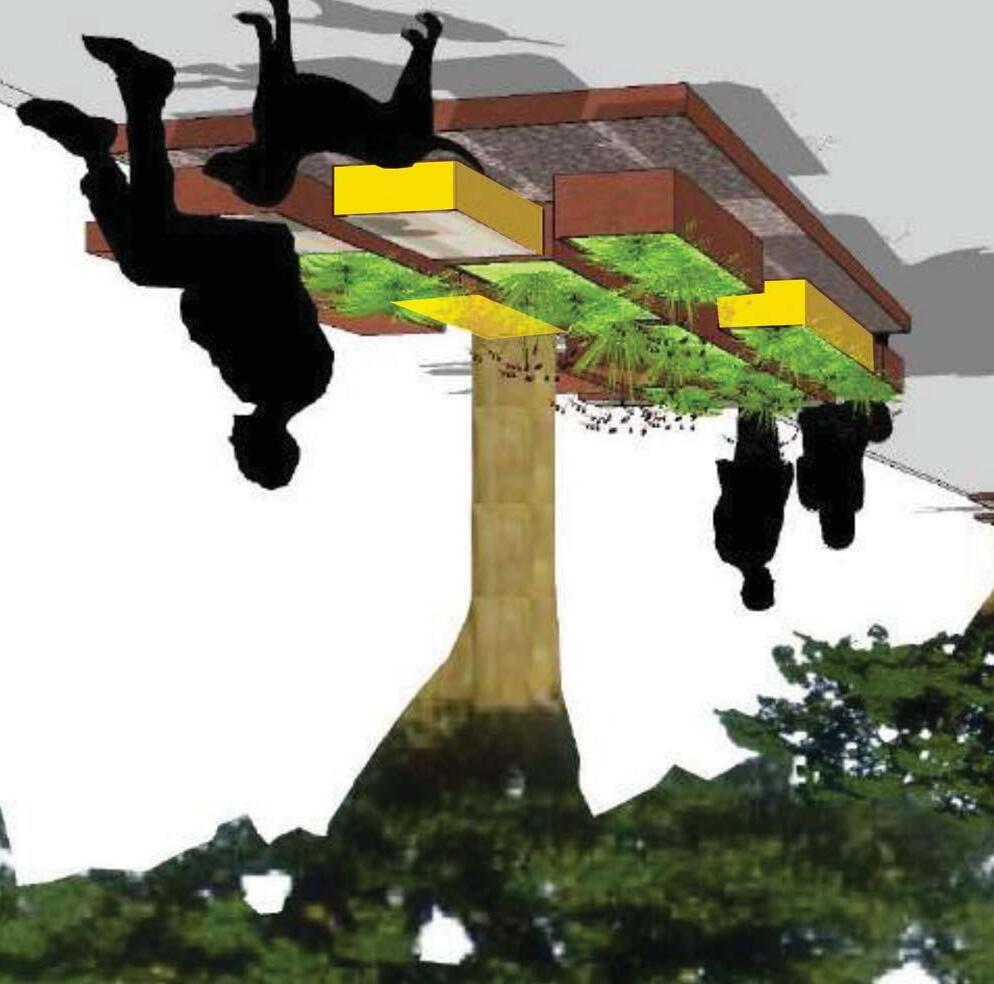
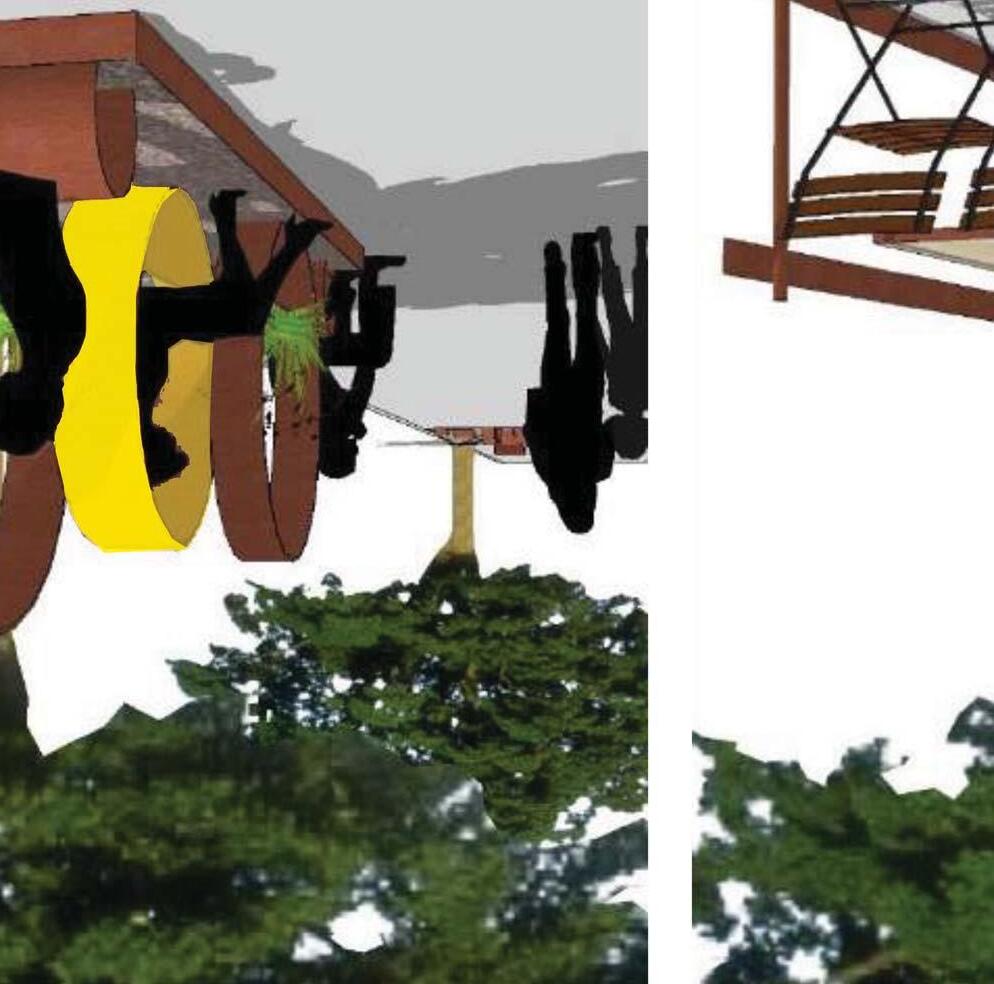
Central to the Market to MOHAI experience is the creation of the Westlake Micro Parks. These parks reclaim underutilized tree pit areas as constructed interventions that provide seating and gathering spaces as well as aesthetic enhancements and interpretive storytelling (particularly with 21 “sister city” Micro Parks). These Micro Parks enhance the corridor, carry the Market to MOHAI branding and reinforce continuity.
Westlake Avenue Micro Parks: Initially developed as part of a separate, but complementary planning process to the Market to MOHAI vision, the corridor welcomes the Micro Parks as an integral element to the corridor’s success in two ways.
1. Six of the Micro Park sites (existing tree pits) between Denny and Lake Union Park are fully claimed by Market to MOHAI themed interventions, primarily sculptural seating elements with experiential lighting that can contain storytelling content customized to each specific location yet within the larger framework of the theme, “Seeing the city through new eyes.”
2. The remaining Micro Park sites are to be developed in keeping with the three prototypical park designs developed through a separate public process, but minimally modified to carry Market to MOHAI branding, and possibly to welcome content and storytelling as part of the Market to MOHAI theme. Of the three typologies, the “ringed” design is intended to be implemented at 21 of the sites to be reflective of Seattle’s sister cities, and may be a particularly rich opportunity to incorporate and curate storytelling as part of the design.
Westlake Micro Parks
The Market to MOHAI stakeholders and Micro Parks stakeholders will define the optimal approach to moving both projects forward to continue to support both projects’ goals.
Westlake Micro Parks
WESTLAKE
Westlake Improves!
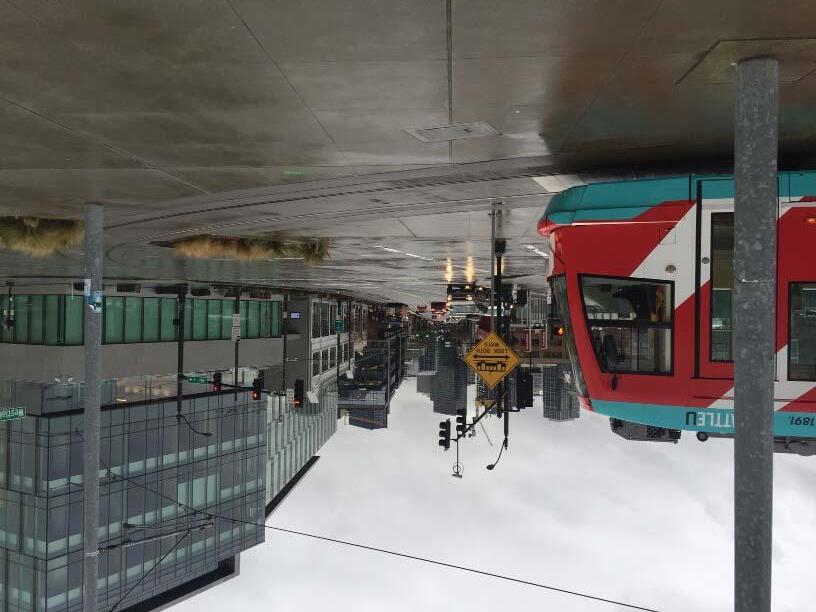
Westlake Avenue is already one of Seattle’s grand streets, connecting the heart of downtown and the retail district through South Lake Union to Lake Union itself. The street hums with vibrant businesses, a high volume of pedestrian and vehicular traffic, and is home to Seattle’s newest transit corridor that includes the Seattle Streetcar. The sidewalks, while relatively wide and blessed with beautiful, mature street trees, are busy with activity. The Market to MOHAI project enriches the Westlake Avenue Streetscape by reclaiming small areas of underutilized space (soil-filled tree pits) and surgically inserting Market to MOHAI branded furnishings and interventions to enrich the journey.
SIDEWALK MARKERS: 225
HISTORY BLADES: 36
DISCOVERIES: 5 (+MICRO PARKS)
BEACONS: 1
a Existing, underutilized soil-filled tree pit areas are to be reclaimed with Micro Parks that add interest and amenities to Westlake Avenue. Six of these Micro Parks are to be fully claimed as Market to MOHAI interventions, while the remaining Micro Park sites are to be developed per the already developed concepts with the integration of subtly incorporated Market to MOHAI branding and storytelling.
b Newly expanded transit platforms are to receive “slim seats” that bring added amenities to streetscape and transit users while occupying a minimal footprint between transit and typical sidewalk.
c New planned developments can implement Market to MOHAI interventions as part of their planned ROW street improvement plans, as can immediately adjacent architecture and open space on private sites if coordinated with the Market to MOHAI stakeholders.
d Mercer crossing: An expanded assembly of freestanding history blades claims the corners and planting islands of the Mercer Street crossing to provide interest and safe, intuitive crossing.
e Northern beacon: Perhaps initially an interim installation but transitioning to permanent, an icon at a visual endpoint at the entrance to Lake Union Park and the terminus to the Westlake Avenue view corridor.
Westlake Ave
MOHAI
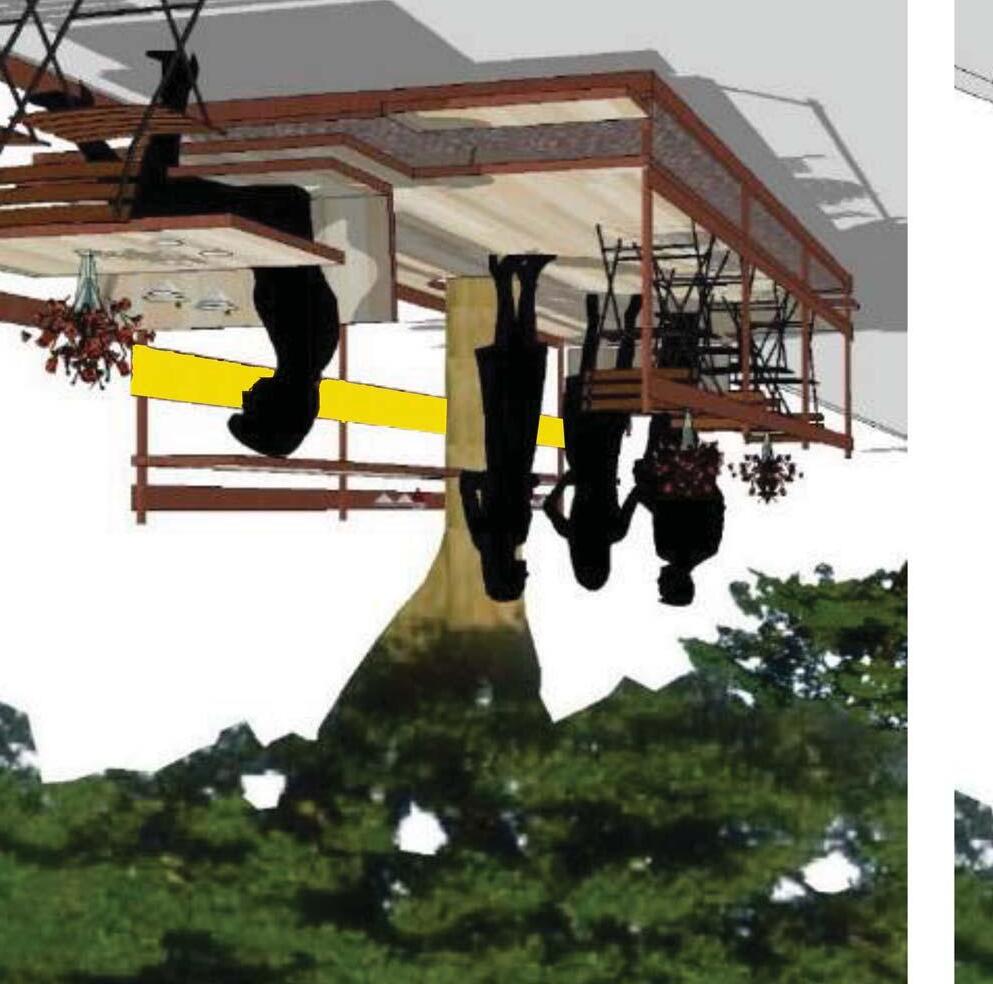
Designed to provide a branded amenity for people to passively enjoy and linger or support for bikers and adjacent businesses, slim seats occupy a minimal footprint along the already busy streetscape. A variety of elements and uses can be incorporated into a common “frame” and footprint.
Westlake Slim Seats
Mercer Crossing
A long crossing in terms of both distance and streetlight timings, a special assembly of freestanding history blades occupy all four corners of the intersection and the two protected mid-crossing islands. These history blades are curated to tell an expanded story to engage pedestrians crossing the street. Beyond merely written word and image, they might also use other magnetic elements to engage the senses, including sound and potentially tactile interactive storytelling features. Beyond engaging pedestrians during long waits at the corners, the collection of blades create a visible portal that those moving along the Mercer corridor will experience, alerting them to the fact that they are crossing a unique streetscape and corridor in the city.
Beacon at Mercer Street (South Lake Union Park)
This playful viewing opportunity at the MOHAI end of the trail looks toward a sister installation at the Pike Place Market terminus. The view could feature an image of what you would have seen from this spot decades before when a railroad traveled along Westlake. A series of images featuring highlights along the trail may come into view encouraging viewers to take a stroll. Alternatively, a live video feed from the Market end of the trail could be displayed, highlighting a vibrant section of the city just minutes away by foot.
The installation could be temporary during several summer months or a permanent fixture.
ROM COST
Near Term: $30,000 Temporary Installation
Long Term: $60,000 Permanent Installation
MARKET
MOHAI
Everywhere is walking distance if you have the time.
STEVEN WRIGHT
APPENDIX
GOOD NEIGHBOR GUIDELINES
While the majority of Market to MOHAI interventions and investments are in the public right-of-way (ROW), the success of the corridor depends on the support and vibrant activity of private properties and businesses along the corridor.
This concept plan and the Market to MOHAI steering committee have been developed to be a catalyst and welcome participation and support from adjacent private businesses.
The Name and Brand
While the name and brand for the corridor are the property of the Market to MOHAI stakeholder group (through the Downtown Seattle Association), the stakeholder group welcomes the use of this brand with permission and when used within guidelines.
Locations
Market to MOHAI design elements are intended to be used on the designated corridor and immediately adjacent spaces and elements. It is not the intent to extend Market to MOHAI elements deep into adjacent sites or down adjacent cross streets, as that will dilute the clear and intuitive demarcation of the route.
Development-Specific Wayfinding
Many new developments along the corridor, particularly larger developments, have their own internal wayfinding systems to navigate their site. Incorporating directions to the Market to MOHAI corridor to these internal wayfinding systems would be welcomed, and the Market to MOHAI branding can be used on these systems to reinforce connection to the corridor.
Adopt an Intervention
The Market to MOHAI plan calls for a variety of interventions in the public ROW, from parklets and Micro Parks to a host of other furnishings and interventions big and small. Market to MOHAI welcomes and encourages adjacent businesses or property owners to adopt these elements as they will perform best if there is ownership and management on a day-to-day basis.
Construction Fencing and Access Treatments
Continued change and development along the corridor is inevitable. These changes to the typical streetscape function can be embraced as an opportunity for temporary interventions or branding, storytelling and experience that can enrich the corridor.
Private Site Opportunities
While there are countless opportunities that can be imagined for adjacent sites to reinforce the corridor, some include:
• Architecture: Architectural details on new or existing buildings can subtly integrate brand, color or cultural content.
• Lighting: With a desire to enhance not only the amount of light (foot-candles) on the corridor, but also to elevate light as a rich experiential element, lighting on and as part of adjacent developments is an exceptional opportunity to enhance the corridor. Such lighting interventions could be as simple as the addition of sconces or overheard canopy lighting to richly integrated lighting effects and even potentially light projections onto or along the corridor.
• While not public art, the integration of privately owned, publicly accessible art along the corridor is welcomed and encouraged, becoming part of the rich experience of the corridor. This art can be permanent, collected or site specific, temporary or ephemeral. (The presence of MadArt and Cornish on or near the corridor may be an exceptional opportunity to elevate and curate the presence of art.)
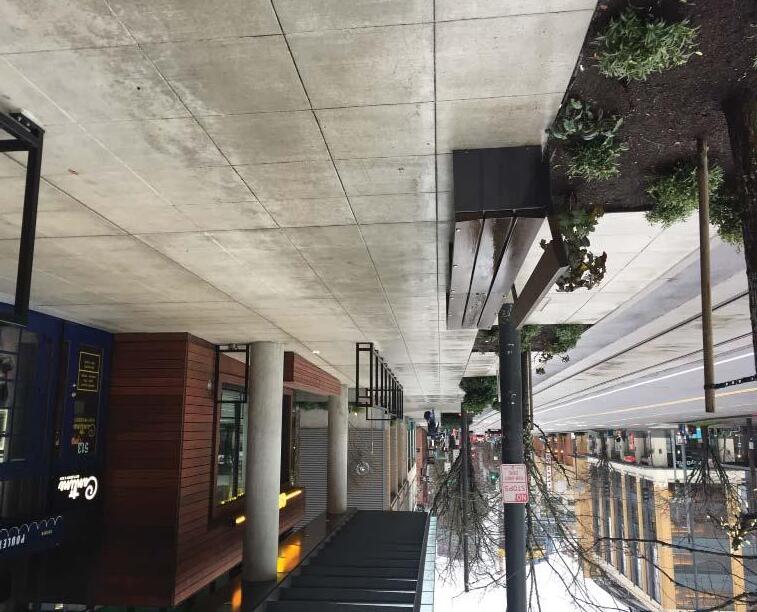
• Glazing along sidewalks: Many of the new larger scaled buildings on the corridor are designed to welcome future retail frontages as demand for these spaces grow, but in the near term are nicely detailed glazed facades that do not yet activate the corridor. These facades of glazing could be considered as canvases for storytelling, where applied to the outside, or a featured, curated exhibit inside the building.
Sponsorship and Recognition
As Market to MOHAI needs and encourages partnerships with adjacent businesses and owners, it also welcomes the opportunity for those partners to be recognized for their efforts. A next step in forwarding the Market to MOHAI corridor to reality will be to develop guidelines for how to appropriately integrate and recognize partners along the corridor.
Curating Content
Reaching out to the communities along the corridor and MOHAI to identify content opportunities for Kit-of-Parts elements.
LIGHTING BASIS OF DESIGN
The following observations and considerations related to lighting of the Market to MOHAI corridor have been developed in conjunction with Jill Cody of Dark | Light.
Existing Conditions:
As an urban corridor, the Market to MOHAI route is entirely covered by streetlights, predominately cobra head fixtures located on light poles, and in places, pedestrian lights as well. While it is lighted along the whole route, the reality is that cobra heads do a marginal job of lighting the sidewalks due to large distances between on-center spacing and light blockage from street trees and other urban conditions. In addition to lighting from the right-of-way, sidewalk areas are also lit from adjacent buildings, both from building-frontage spill light and building-mounted sconces and canopy lighting; however, this additional lighting is sporadic and unpredictable. We have walked the route after sunset to assess lighting levels and perceptions of lighting levels. Perceptions is an important distinction; there are many areas that may have what is deemed to be a reasonable level of lighting, but still may not feel like a comfortable level of lighting. This memo discusses lighting issues real and perceived.
Introducing New Pedestrian Lighting:
The SDOT Right-of-Way Improvements Manual is a crucial resource in future design and implementation of all Market to MOHAI improvements, including pedestrian lighting, in particular, section 4.16 Street Lighting. The manual identifies Seattle City Light (SCL) pre-approved pedestrian fixtures that can be added to the public ROW (as a cost to the Market to MOHAI project) as either new fixtures mounted to existing poles or new freestanding poles (with a far greater initial cost). The use of non-approved fixtures is challenging, with a lengthy review process and use/ maintenance agreements. It is recommended that new pedestrian lighting on the corridor utilize approved fixtures. An exception may be the implementation of the Bell Street concept plan from 5th Avenue to Denny Way, where existing fixtures on the Bell Street Park (1st to 5th Avenues) could be used; however, this would be subject to further coordination with SDOT and SCL. New SDOT and SCL pedestrian light standards are to be released in spring of 2017, which will require an update of the lighting recommendations.
Street-by-Street Considerations:
The summary below identifies areas of the corridor by street:
Western Avenue:
Between Virginia Street and Bell Street, light levels, particularly on the east side of the road that is the near-term focus, pedestrian lighting is provided by cobra streetlights and is perceived as under lighted, perhaps exacerbated by the presence of the adjacent viaduct (that is to be removed). There is a precedent for a freestanding pedestrian pole and fixture on Western on the existing
streetscape north of Battery (SCL pre-approved fixture Z-11, on freestanding poles). In the nearterm, it is a priority to extend existing pedestrian lighting southward to Virginia, mounted onto existing poles.
Future conditions and recommendations: When the corridor is redeveloped, in part in conjunction with the Seattle Waterfront Project, new pedestrian fixtures, both mounted to existing poles and new freestanding pedestrian light poles, should be added to Western Avenue to provide higher levels of uniform pedestrian lighting. The selected fixture could match the existing Western fixtures (SCL pre-approved fixture Z-11, in textured black, with the APR4 pole) or the new Bell Street Park pedestrian fixtures could be extended south from Bell to the Market.
Bell Street:
At the new Bell Street Park between 1st and 5th Avenues, new pedestrian lighting fixtures provide a high level of lighting and new lighting is not required. The existing stretch from 5th Avenue to Denny Way is perceived as under lighted. When Bell Street improvements are extended in the future (implementing the Bell Street Concept Plan), existing Bell Street lighting and light levels should be extended east to Denny Way and west to Western Avenue. In the near term, as concept plan implementation awaits associated developments for completion, the addition of new SCL-approved fixtures to existing poles is recommended. We recommend the Z-15 fixture be used (in textured black with bolt-on bracket arm) to create fixture continuity with the recommended fixtures on Westlake Avenue.
Denny Way and Westlake Avenue:
Currently, cobra heads light the corridor along Denny Way and Westlake Avenue. With the significant mature trees along the route, pedestrian lighting levels are perceived as low. This stretch does benefit from significant new development along much of the route, much of it with new wall-mounted sconces and canopy-mounted downlights. Additional new developments are forthcoming; however, there are numerous frontages that are not planned for redevelopment and should be considered for supplemental pedestrian lighting. We recommend the Z-15 fixture be used (in textured black with bolt-on bracket arm) or on freestanding pole (APR4) on blocks slated for redevelopment or added to existing poles as needed to provide uniform pedestrian lighting levels.
Lighting Opportunities within the Market to MOHAI “Kit of Parts”
The proposed Market to MOHAI “kit of parts” included in the concept plan provides additional opportunities for lighting integration to increase visibility and continuity of the corridor in the evening, night and early morning, which would highlight the experience of the corridor. Lighting of kit-of-parts elements would provide interest and experience, but is not intended to be a significant source of foot-candles to increase light level on the corridor. Beyond the lighting effects themselves, there are complexities associated with power supply to these elements that can add cost and require right-of-way use agreements with SDOT and potentially
Seattle City Light. (An opportunity to minimize these costs is to complete this work in association with adjacent developments.)
History Blades: The opportunity to light these vertical blades, either lighting the face or an integral light to allow the blades to “glow” could greatly enhance these design elements in the evening. Electrification of the elements would require negotiation and maintenance agreement with Seattle City Light.
Prototypical Site Furnishings, including Slim Seats: The integration of lighting into lean-rail, benches and slim seats can provide a glowing under light or luminous elements highlighting these amenities. Solar-powered fixtures traditionally deliver marginal performance but with new technology could emerge as a viable option.
Beacons: The visibility of beacons in the dark as well as daylight hours is critical to achieve the high visibility from afar that is desired. The elements could be lighted from within to glow, or washed with lights mounted on the exterior of the beacons or even from adjacent poles of buildings.
Alaskan Way Sign-Bridge: This one-off installation is an exceptional opportunity for specialty lighting.
Denny Way Garage Enhancements: Because this intervention requires the complete coordination and integration with the building to which it is integrated, lighting (supplied from the building) is an exceptional opportunity for this intervention.
Near-Term Edge Treatments: These temporary walls and interventions are an opportunity to enhance both experience and the perception of light along one of the corridor’s least activated and underlighted stretches. Lighting would likely be down lighting mounted to the wall with electrical supply provided by the adjacent properties or a standalone power drop.
Westlake Micro Parks: The integration of experiential lighting into micro parks to create warm pools of light within and under park elements can enhance the parks’ use into the evening.
Mercer Crossing: The lighting of the freestanding elements, particularly those in the street medians are a unique opportunity to mark the crossing of the Market to MOHAI corridor by Mercer Street.
CIVIL BASIS OF DESIGN
Existing Conditions:
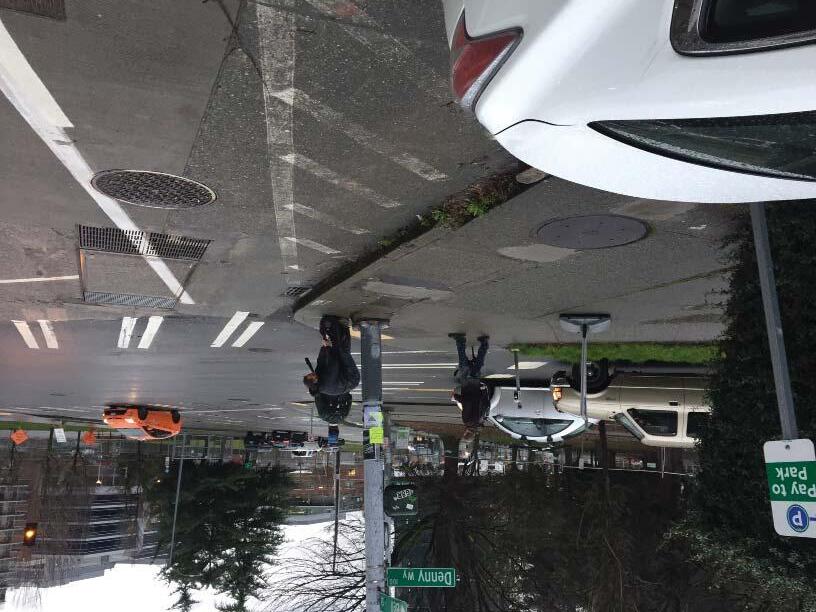
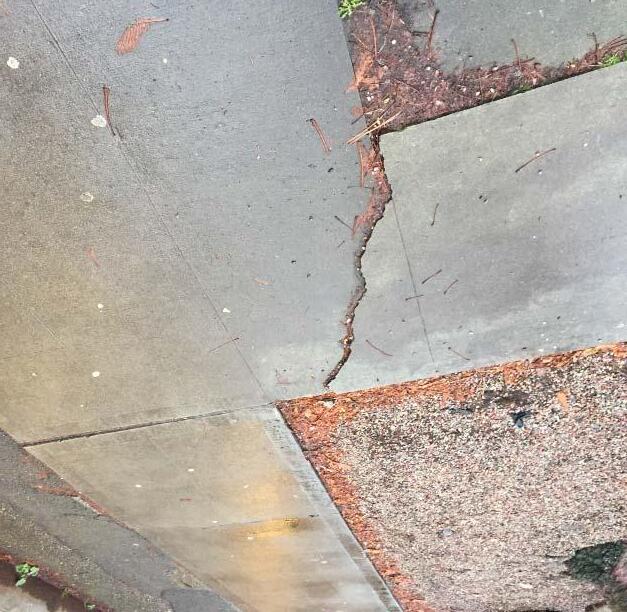
The existing Market to MOHAI corridor consists of a wide variety of streetscape and roadway conditions along its course. While the concept plan is focused on additive interventions to existing streetscapes and a desire to avoid heavy civil construction, the observations herein may guide future civil engineering needs and opportunities. The corridor is noteworthy for the quantity of new streetscape conditions constructed as part of new development projects and for the number of streetscape frontages targeted to be redeveloped in the near future with projects already in planning and design. This provides a streetscape condition that is predominately in accordance with SDOT guidelines. However, there are several existing blocks along the route that are neither new nor slated for new development but that have civilrelated issues, primarily deteriorating sidewalk surfaces, which are worth noting and working with the city for repair or replacement.
Market to MOHAI – Future Design Considerations:
As the design moves into further development, a critical resource will be the SDOT Right-ofWay Improvements Manual that provides guidance on all elements added or placed in the ROW. Key sections shaping Market to MOHAI include:
• 4.11 Sidewalks
• 4.14 Street Trees and Landscape Architectural Standards
• 4.16 Street Lighting
• 4.21 Clearances
• 4.25 Transit Zones
These sections lay out best management practices for spatial and performance expectations for all elements in the ROW. It is worth noting that even on new projects along the corridor, there are conditions and circumstances where these guidelines are not adhered to.
Street-by-Street Considerations:
The summary below identifies areas of the corridor by street:
Western Avenue:
The stretch between Virginia Street and Bell Street is generally undersized for existing and anticipated growing traffic associated with Market to MOHAI.
• New projects are required to have a first floor setback to provide minimum sidewalk widths; however, older existing structures cannot be modified, so sidewalk widths are substandard. Some sidewalk passages are narrower than four feet between fixed vertical obstructions.
• Substandard sidewalks are still being developed (such as on the Livery Stables Building) with street trees and plantings that are an SDOT requirement. It may be worth seeking exemptions from unnecessary urban design features, in particular street trees and planting strips on substandard sidewalks. It is worth noting that in addition to SDOT requirements, these planting areas are incentivized by Green Factor (SDCI).
• There are several street trees that have been removed with open depressed soil pits left in their place. It is recommended these be filled with flush paving upon approval of SDOT.
• Pedestrian flows from the west-side sidewalk are problematic at the intersection with Elliott Way and should be clarified.
• The current pinch point at the corner of Western and Bell will be alleviated as part of the Waterfront Seattle improvements; however, in the interim there are few options for alleviating this pinch point (as narrow as 4’) without engaging the adjacent private property to do so.
• The intersection of Western and Blanchard Street, already existing to the north and to be redeveloped to the south as part of existing SIP plans, is a candidate for curb bulbing, subject to traffic studies. Such a curb bulb would narrow the crossing distance and provide added sidewalk width adjacent to the intersection on a stretch where the sidewalk is otherwise undersized.
• The Western and Lenora intersection does not appear to be a candidate for curb bulbs due to the traffic volumes and patterns associated with a signalized intersection.
• The stretch of sidewalk from Lenora Street to Virginia Street, while substandard width, does not have street trees, which appears to help with pedestrian traffic flows.
Bell Street:
The new Bell Street Park between 1st and 5th Avenues is an atypical SDOT street, completed through extensive negotiations and design process. This atypical street is to continue to Denny Way as part of the Bell Street Concept Plan. Until the completion of the Bell Street concept plan, there are numerous constraints that do not meet SDOT guidelines on the stretch between 5th Avenue and Denny Way.
• Numerous ADA ramps do not meet ADA guidelines or SDOT standards; however, several have been recently replaced to bring them into conformance.
• The sidewalk surface and curb are in poor condition in many locations.
• An opportunity for an enlarged sidewalk and curb bulb is the west side of the intersection of Bell Street with Denny Way (the Shilla Site).
• Presumably addressed as part of the Bell Street concept plan, this stretch of Bell is heavily used by METRO for bus staging. Bus needs must continue to be accommodated.
A more detailed summary of issues associated with widths is not being completed due to its planned renovation to accommodate the Bell Street concept plan.
Denny Way and Westlake Avenue:
The one-block stretch along Denny and the whole of Westlake have been significantly redeveloped or targeted for redevelopment in the near future, providing sidewalk widths and conditions in accordance with SDOT guidelines. We offer the following site-specific observations.
• The north side of Denny, from Bell to Westlake, is undersized in current conditions, particularly at the corner of Westlake and Denny. These constraints will be addressed as part of forthcoming redevelopment of the block.
• There is a significant piece of ROW “public realm” at the intersection of 9th and Denny Way that might be leveraged to make an intuitive M-to-M crossing across Denny.
• Numerous tree pits with mature (and great) street trees along Westlake (predominately horse chestnuts) have severe root heaving and have grown closer to face of curb. Assuming preservation of these trees remains a priority (and advocated by the M-to-M project) then interventions, particularly Westlake micro parks, need to have vertical elements
and structure clear of the heaving roots, and to do so, could include new structure that encroaches on the 3’-6” typical vertical clearance zone from face of curb.
• On a case-by-case basis, some curb lines adjacent to mature trees could be rebuilt further from trees using existing parking, loading or unclaimed space between the existing curb and southbound trolley tracks.
• In addition to heaving root crowns with tree pits, in many instances, roots are also heaving sidewalks providing uneven walking surfaces (on both new and older sidewalk areas). Root heaving will continue and should be managed as a routine, if infrequent, part of sidewalk maintenance. It may be possible to treat heaving-prone areas with an alternative paving to SDOT CIP concrete standard.
• There are sporadic areas of parking or underutilized road space between the existing Westlake curb and southbound trolley tracks (on the west side of Westlake). These underutilized spaces might be captured as pedestrian spaces for the corridor and provide more intuitive guidance to drivers, clearer guidance for parking and loading areas, and reduce potential conflicts with trolleys.
• The NE corner of the Westlake and Valley intersection is very atypical with the integration of the trolley tracks and high volumes of bike and pedestrian traffic. While traffic patterns, car and trolley are fixed, there may be opportunities to improve safe and intuitive queuing and passage at this corner for bikers and pedestrians.
Western Streetscape
Bell Streetscape
Westlake Streetscape
Date: October 10, 2016
To: Brad McGuirt, Berger Partnership
From: Justin McCaffree, EnviroIssues
Subject: Market to MOHAI Outreach Strategy Recommendations
MEMORANDUM
EnviroIssues appreciates the opportunity to support Berger Partnership in developing an outreach approach for the Market to MOHAI project. This memo includes recommendations on outreach strategies and tactics to help advance the development of landscape design concepts from September through December 2016.
Project background
The Market to MOHAI project seeks to complete a conceptual landscape design and branding study for a pedestrian corridor stretching from Pike Place Market to South Lake Union Park. The proposed Market to MOHAI corridor covers 18 blocks, four neighborhoods (Waterfront, Belltown, Denny Triangle, South Lake Union) and four major parks (Waterfront Park, Bell Street Park, Denny Park, South Lake Union Park).
Given the intimate connection and relationship between streetscape design and the places where people live, work and play, engagement with the neighborhoods and communities along the corridor is critical to the project’s success. Appropriately, the project’s Steering Committee has requested that the final design incorporate ideas taken from the four neighborhoods through which the corridor passes, plus input from City of Seattle departments and offices, and from potential private funding sponsors.
Effective and inclusive stakeholder outreach will share the “what/where/why” of the project, build relationships and excitement with the public and key stakeholders, and lay the groundwork for ongoing communication and collaboration throughout the design process and potential future project phases.
Outreach objectives
For this phase of the project (September – December 2016), we see the following primary objectives for public outreach:
1.Tell the project’s story in a variety of ways and formats (who, what, when, where and why)
2.Build momentum, energy and excitement around potential opportunities, while setting clear expectations
3.Obtain actionable feedback on design concepts
4.Engage and empower potential project champions along the corridor
5.Keep key stakeholders engaged and in the loop
Challenges and strategies
The following challenges and strategies should be considered when planning and implementing public engagement:
Berger Partnership Market to MOHAI Outreach Strategy Recommendations October 10, 2016
Challenge – Multiple projects (both public and private) occurring within the project corridor could create confusion about who is leading the Market to MOHAI effort and how it aligns with other projects
o Strategy – Set clear expectations by clearly and simply explaining the “who, what, when, where and why” of the project in all project materials and by highlighting the unique collaborative relationship between the various public and private entities that comprise the Steering Committee.
o Strategy – Develop informational materials that are simple, eye catching and highly visual.
Challenge – Short timeframe to build project awareness and “buzz”
o Strategy – Develop suite of project materials that can be easily shared and distributed (e.g., social media posts; basic project PowerPoint presentation; project blurbs for inclusion in email updates, community newsletters, print materials, etc.).
o Strategy – Place highly visual, attention grabbing displays along the project corridor.
o Strategy – Seek the assistance of Steering Committee members in sharing and distributing project informational materials, promoting upcoming Market to MOHAI outreach activities, and in helping to spread the word among other stakeholder organizations.
Challenge – Collecting feedback that helps shape and inform project design concepts
o Strategy – Make it easy for the public and key stakeholders to share their thoughts and ideas by providing multiple ways to engage, including individual interviews, large public events, online tools.
o Strategy – Help build trust with key stakeholders at each step of the design process by sharing public feedback received to date and highlighting how public feedback has been incorporated into the latest project design concepts.
Key audiences
Potential audiences for this phase of outreach include:
1.Small businesses/residents/property owners
Waterfront Landings condos
Businesses/residents adjacent to key focus zones
Developers of planned projects along the corridor
2. Major employers
Google
Fred Hutch
UW Medicine
Gates Foundation
Berger Partnership Market to MOHAI Outreach Strategy Recommendations October 10, 2016
MEMORANDUM
3.Community/neighborhood groups and advocacy organizations
Belltown Business Association
Belltown Community Council
Chief Seattle Club
Downtown Residents Council
Feet First
King County Mobility Coalition
Pike Place Market Preservation and Development Authority
Lighthouse for the Blind
Museum of History and Industry (MOHAI)
Transportation Choices Coalition
Washington Council of the Blind
West Edge Neighborhood Association
4.City of Seattle Boards and Commissions
Seattle Commission for People with disAbilities
Seattle Arts Commission
Seattle Pedestrian Advisory Board
See attached Appendix for additional information on developments and businesses along the corridor.
Outreach tactics
1.Stakeholder interviews
a. Approach – Brief interviews with key stakeholders (five to seven total) should be held early in the design development process to share general information about the project, seek input on key design elements and establish relationships with the project team.
Interview participants should represent a variety of perspectives (e.g., developers, major employers, small business owners, community organization representatives, residents, etc.) and have a connection to one of the key project focus zones, if possible.
Follow up with key stakeholders should take place at major design milestones to share updates and provide a forum for additional conversation and feedback.
b. Benefits – Stakeholder interviews are particularly valuable when paired with broad reach tactics like open houses and surveys. Interviews provide an opportunity for obtaining qualitative, in depth perspective and feedback, and can help build meaningful relationships between the project team and those who are most likely to be affected by the project. Early relationship building can also help sustain support and momentum for the project as it moves forward.
c. Potential stakeholder interview questions:
What do you see as the theme/story of your neighborhood?
Berger Partnership Market to MOHAI Outreach Strategy Recommendations October 10, 2016
What is a great spot in your neighborhood today?
What works about the street/sidewalk currently? What doesn’t work?
How do you use the street/sidewalk?
How do your tenants/customers/members use the street/sidewalk?
What ideas do you have that you’d like to share with us?
What issues or concerns should we be aware of?
Who else should we be talking to?
2.Web and social media engagement
a. Approach – Project information should be shared online to the extent possible, through straightforward and low cost tools such as a project “splash page” style webpage and social media outlets.
A simple project webpage would do the following things:
Provide a simple project overview (the “elevator pitch” version)
Show the map and latest concept images
List date, time and location information for upcoming open houses
Link to other project materials such as fact sheets or infographics (if available)
Contain a call to action, such as signing up for an email list or taking an online survey (if available)
A Facebook page would complement the webpage by being a way to create events, share updates, and direct people to the website. In later project phases, a small Facebook ad budget could target businesses and residents along the corridor to advertise open houses or other outreach activities.
b. Benefits – Having a central web based resource, such as a project webpage, will provide a “one stop shop” for sharing information about the project. One single URL showing all pertinent information also simplifies Steering Committee outreach, and ensures message and material consistency.
Having an online presence also helps engage audiences who might not be able to participate at in person events.
3.Pop up displays of example design elements
a. Approach – Simple, eye catching “pop up” displays highlighting potential design elements and basic project information should be placed at focus zones during key public outreach periods. Example approaches:
i.Informational table or booth (volunteer or intern help from a Steering Committee member would minimize staffing costs) with print materials and example street elements, in a space donated by a property owner project champion along the corridor
ii.Sample streetscape installation, such as a Parking Day installation
Berger Partnership Market to MOHAI Outreach Strategy Recommendations
October 10, 2016
iii.Branded construction fencing at private development project sites
iv.Sidewalk chalking
v.Before/After graphics showing current streetscape and proposed streetscape, placed on side walls owned by a property owner project champion along the corridor
vi.Branded banners with fun facts about the corridor placed on construction fencing or in the vicinity of key project focus areas (e.g., “Did you know?”)
b. Benefits – Simple, highly visual on corridor displays of potential design elements will build buzz and excitement, draw pedestrian traffic that would not be caught by web based outreach, and help visual learners better understand the project.
4. Easily sharable project materials
a. Approach – Develop simple informational materials that can be easily shared and distributed by the Steering Committee and other stakeholders. Materials can be shared online, at project events, or at existing community events, such as MOHAI First Thursdays.
b. Benefits – Steering Committee members have valuable pre existing relationships with neighborhood stakeholders. Developing easily sharable project materials will help committee members leverage those relationships to build project awareness and seek input on design concepts.
c. Potential materials:
Eye catching postcard announcing upcoming open houses/public events
Facebook posts from Market to MOHAI page
Pre written social media content to be shared by Steering Committee members and project champions
Project brochure or fact sheet
PowerPoint slides
Project “blurbs” for including in email updates or newsletters
5.Email updates
a. Approach – Project email updates should be distributed at key project milestones. Email updates would share the latest project news, provide links to additional information, and promote upcoming outreach activities or opportunities to provide input.
b. Benefits – Regular project email updates are an effective and efficient way to keep people engaged as the project develops and to support relationships with key stakeholders.
Berger Partnership Market to MOHAI Outreach Strategy Recommendations
October 10, 2016
6.Media outreach
a. Approach – Engage The Urbanist blog and Feet First Seattle about the project, and offer an interview one to two weeks ahead of a public open house.
b. Benefits – Targeting local media interested in this type of project can boost attendance at open houses and help diversify the range of input.
Proposed outreach timeline
October Develop updated design concepts/focus zones
Oct. 27: Open house #2 to share and seek feedback on updated design concepts and discuss how previous feedback was incorporated
November Ongoing design development
December Develop final design concepts/focus zones
Early December: Open house #3 to share and seek feedback on final design concepts, discuss how previous feedback was incorporated and preview next steps
Stakeholder interviews/follow up Email update
Updates to project informational materials/online content
Develop/launch online content
Pop up activity
Email update Pop up activity
Email update
Stakeholder follow up Pop up activity
Updates to project informational materials/online content
Berger Partnership Market to MOHAI Outreach Strategy Recommendations October 10, 2016
Appendix A – Key Stakeholder Contact Information
Ongoing development projects along corridor
1st Avenue projects – none n/a
Bell Street projects – 6 projects, 5 at review stage or earlier
Address Stage Contact info
2234 2nd Ave
DPD#: 3020027
8 story structure
DPD link
2302 4th Ave
DPD#: 3018968
24 story tower
DPD link
2229 6th Ave
DPD #: 3018131
11 story tower
DPD link
Early design guidance
Owner: Minglian Realty, LLC
Richmond BL, Canada
604.276.0400
Architect: Studio 19 Architects Seattle, WA
206.466.1225
Early design guidance Owner: TeamRise Group Architects: Studio 19 Architects Seattle, WA
206.466.1225
Architects: RTKI Associates Inc. Los Angeles, CA
213.633.6000
Application accepted Owner: Clise Properties Seattle, WA
Ben Barron: 206.623.7500 bbaron@cliseproperties.com
Note for the purposes of estimating, Westlake is not a street designated for major civil construction (though there will be several private development projects and associated SIP work); therefore, there is no differentiation between near term and long term interventions (all are assumed to be long term).