2026 THE RED PAPER WEALTH AND MARKET REPORT
CONTENTS TABLE OF
04-05 Letter From Our Leadership
GLOBAL MARKET
Global Markets Remain in Flux
Where We're Going Next 28-30 Concessions Are Back—and Getting More Creative
The Luxury Rental Revolution
Where Condos Are Hot—And Not
U.S. Dollar Fluctuations and Their Impact
Want to Know What’s Trending? Ask the Locals
Second-Home Markets
to Shine
Road Ahead: Facing a New Climate Reality
Top Design Trends for 2026
The Next-Gen’s Increasing Purchasing Power
The Rise of the Wellness Wing
Trending in Luxury Spending
the Megamansion Sweet Spot
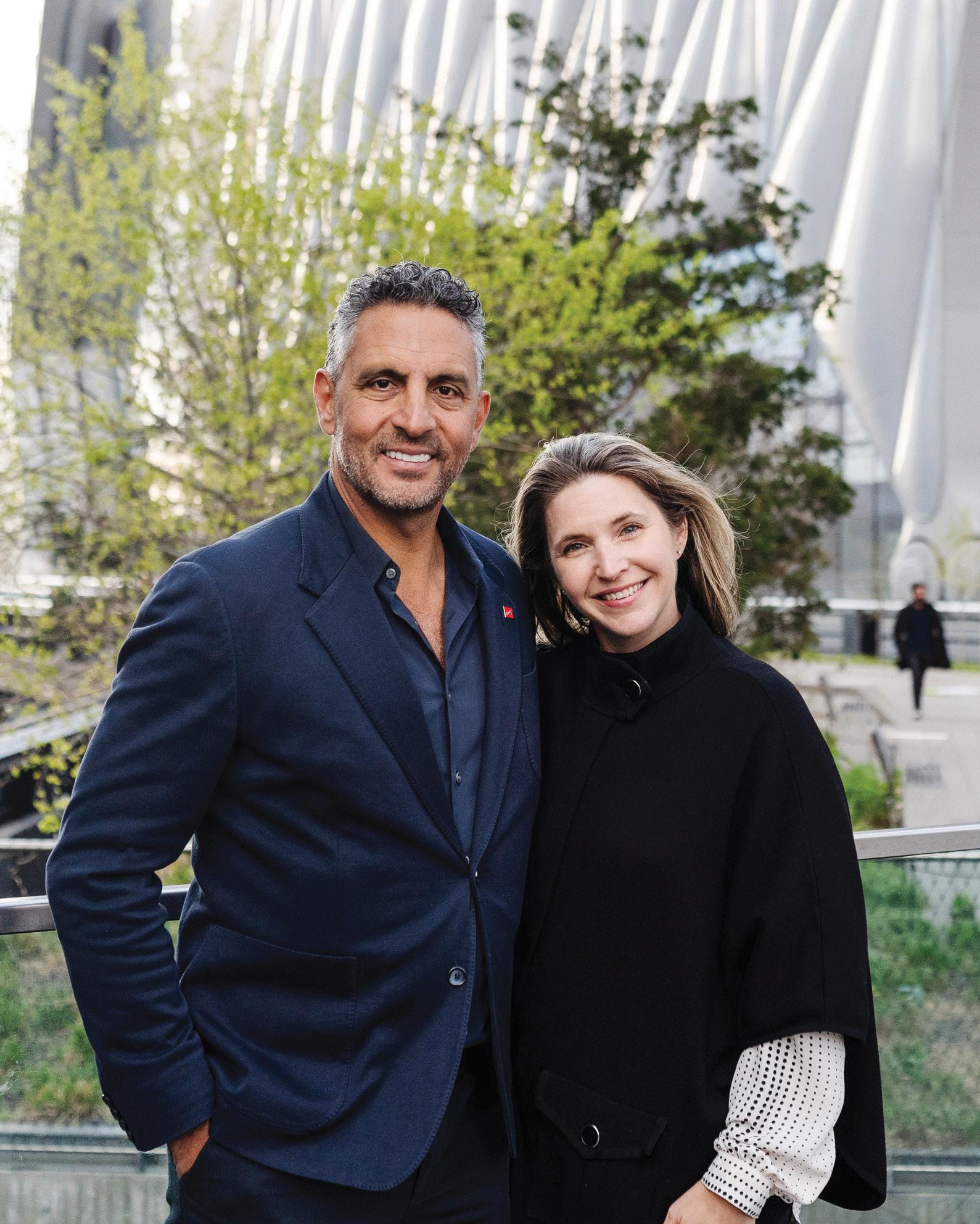
Welcome to The Agency's 2026 Red Paper Annual Wealth Report
THIS YEAR, THE GLOBAL REAL ESTATE MARKET HAS ENTERED A NEW ERA OF CHANGE.
In this issue of The Red Paper, we explore how U.S. currency fluctuations are impacting global real estate markets and how the Great Wealth Transfer is fueling new demand for luxury real estate—as younger generations inherit capital and transform how and where luxury consumers live and invest based on their values.
We showcase the lifestyle considerations making some destinations irresistible to second- and tertiary-home buyers, and take a deep dive into the economic forces and evolving preferences that are transforming a more opulent and amenity-rich rental market. Discover which condo markets are on the rise, which are cooling, and how developers are tailoring their offerings to the distinctive preferences of local resident buyers.

Rainy Hake Austin PRESIDENT
Learn which home features resonate most with high-net-worth buyers today, and how climate considerations are influencing their next purchase or build. Our lifestyle coverage spotlights seven top design trends and the emergence of holistic home wellness retreats alongside the most sought-after amenities. Finally, we reveal the sweet spot for megamansion sizes across markets and share our leadership’s market expectations for the year ahead.
Throughout this issue, we explore the lifestyle preferences and purpose-driven sensibilities guiding the highest end of the real estate market today. We invite you to dive into this year’s insights, perspectives, and data to better understand the moment we’re in—and where we’re headed next.

Mauricio Umansky FOUNDER & CEO
THE AGENCY’S 2025 ACCOLADES
The Agency garnered tens of thousands of media hits and billions of impressions this year—alongside our well-established global television presence on network news and our worldwide recognition as a leader in the real estate industry.
GLOBAL BROKERAGE
#1 Among the U.S.’s Top 50 Firms in Average Sales by Sides at $2.5M
#2 Largest Privately Held Independent Brokerage in the Nation
#13 Among Top 500 Residential Real Estate Brokerages REALTRENDS
5 Years As One of the Americas’ Fastest Growing Companies
FINANCIAL TIMES
Inman, The Real Deal, HousingWire, Los Angeles Magazine, Variety, The Hollywood Reporter, Los Angeles Business Journal, T360 A POWERFUL
Recognized as a Top Luxury Brokerage and Most Innovative Brokerage
Best Sales & Marketing Campaign for a Luxury Home/Property
INMAN 2025
7 Years As One of America’s Fastest-Growing Private Companies
INC. 5000
The Agency and our agents consistently earn top industry rankings and recognition in:
A POWERHOUSE LEADERSHIP
Swanpoel Power 200
MAURICIO UMANSKY, RANKED 33RD
Swanpoel SP 200 Watchlist
RAINY HAKE AUSTIN
Los Angeles Business Journal’s LA500 List
MAURICIO UMANSKY
The Hollywood Reporter’s 5th Annual Power Broker Awards
MAURICIO UMANSKY, MEDIA MAVERICK

Inman’s 2025 Power Players
MAURICIO UMANSKY
HousingWire's Women of Influence 2025
RAINY HAKE AUSTIN
Named Inman’s 2025 Class of Marketing All-Stars for the Second Consecutive Year
LAURA CORRIGAN, SVP OF MARKETING AND PR
Los Angeles Business Journal 2025 Corporate Counsel
BRANDON BRAGA, GENERAL COUNSEL
Awards
Our leadership team and top agents took the stage at prestigious industry events and conferences this year, including Inman Connect New York, Inman Connect Miami, and Inman Connect San Diego. Their voices were heard on network news channels, including Bloomberg, Fox News, and their thought leadership was published in the pages of industryleading publications, including Inman and HousingWire
MAKING HEADLINES
The Agency’s bi-coastal, award-winning in-house PR team sparked conversations and drove influential industry narratives this year, garnering global coverage and securing feature articles in more than 2,000 premier publications and media outlets to reach an audience of 33 billion.

AUDIENCE VIEWERS 2 , 000+
FEATURED ARTICLES
33B+
With our unrivaled reach, deep bench of media expertise, and targeted approach, we tend to get people talking


When we tell your story, the whole world listens.
The Agency Magazine, our luxury lifestyle publication, offers perspectives on life and luxury. Beautifully designed and thoughtfully curated, it features editorial on design, architecture, travel, fashion, wellness, and cuisine—and showcases The Agency’s most coveted property listings to a global high-net-worth audience. Produced twice a year, The Agency Magazine is distributed by direct mail to our offices and clients, on private jets, and across digital channels.
The Agency Journal is an owned media channel and serves as an invaluable online source for market intelligence and insights, design and architectural trends, property listings, industry happenings, and luxury lifestyle editorial for a global audience of engaged readers. The Agency Edit is a weekly newsletter that helps to share The Agency Journal’s editorial content to one million weekly subscribers.
In 2025, The Agency expanded its social media footprint across multiple platforms, creating targeted and strategic campaigns that generated millions of brand impressions.
OUR NUMBERS DON’T LIE
Our media platforms serve as powerful communication channels that engage a global audience of discerning, like-minded readers, fans, and followers—connecting them to the people, properties, and perspectives that shape luxury real estate—resulting in inquiries and sales.
909,000
WEEKLY SUBSCRIBERS, THE AGENCY EDIT NEWSLETTER
511K+
FOLLOWERS AND 36.5M
IMPRESSIONS ON INSTAGRAM @THEAGENCYRE
171M+
TOTAL IMPRESSIONS ON ALL SOCIAL PLATFORMS, UP BY 100K YEAR OVER YEAR
The Agency Magazine
DISTRIBUTED TO HIGH-NET-WORTH CLIENTS AND THE AGENCY OFFICES AROUND THE WORLD
334,000+
FOLLOWERS ACROSS LINKEDIN, YOUTUBE, X, TIKTOK, FACEBOOK AND THREADS.
500,000+
UNIQUE VISITORS EACH YEAR, THE AGENCY JOURNAL

ADAPTABILITY AND LOCAL CONTEXT ARE KEY
The global real estate landscape is still being reshaped by the aftershocks of the pandemic—a period that ushered in distributed work. As remote and hybrid arrangements untethered millions from traditional offices, longstanding migration patterns shifted, driven by lifestyle preferences and economic opportunity, and accelerated by politics. A boom in global nearshoring and values-driven real estate purchases are transforming demand.
To cool heated markets, governments stepped in with new regulations, but in many cases well-meaning interventions have created market distortions, complicating housing supply, investment, and affordability. The result: A market that remains in flux, where adaptability and local context matter more than ever.


CANADA
WHERE GLOBAL TRENDS PLAY OUT LOCALLY
In Canada, global real estate trends—including lifestyle migration, political uncertainty, supply constraints, and policy responses—are playing out locally, creating both opportunities and challenges.
After the lockdown restrictions, people wanted to be with family again,” says Jason Binab, Managing Partner of The Agency Victoria in British Columbia. “They wanted their own recreational properties with a connection to nature and room for everyone,” he says. Between 2021 and 2023, Canada experienced a massive internal migration surge as people fled expensive urban centers like Toronto and Vancouver for more affordable regions—with rural Alberta and British Columbia seeing the largest population gains, according to the government agency Statistics Canada.
That housing boom met head-on with supply constraints and surging construction costs, and was further complicated by the country’s mandatory five-year mortgage renewal system. “In Canada mortgages are offered at one-, two-, three-, or fiveyear terms,” Binab says. “Every five years, homeowners have to sit down with the bank and negotiate their loan. If interest rates go up, or the owner’s income drops by 15%, they may not qualify for their home anymore. Often people end up having to sell.”
In attempts to stabilize the overheated housing market, the Canadian government implemented a 20% foreign buyer tax at the beginning of 2023, in addition to its 2% to 3% speculation tax. According to Binab, these restrictions often miss their target.
Canadians still made up the majority of foreign buyers to various U.S. cities.
“Foreign buyers make up only 1% to 2% of total sales,” he says. “Most foreign transactions are luxury properties that don’t compete with the average buyer.”
In 2025, the inter-Canadian migration surge has cooled. “Last year we had 15 sales above the C$5 million range. This year so far we’ve only had eight,” he says. However, some of those transactions are being replaced by a surge of Canadian-Americans returning from the U.S., with 33% of his sales this year being done by Canadians who are relocating back to Canada from the U.S., he says. “They’re worried about political instability. Also, the strong U.S. dollar offers a strong financial advantage to Canadian-Americans returning home.”
Canada enjoys low unemployment, strong natural resource sectors, and stable financial institutions, but rising inflation is driving up its housing costs. New tariffs on steel and equipment from the U.S. further compound pressures. Despite these challenges, Canada’s natural beauty continues attracting lifestyle buyers, with strong economic fundamentals and political stability providing underlying market support. Recent rate cuts are stimulating demand for properties priced around the C$1.5 million price point. “That market is heating up,” Binab says. “Especially if the properties have an extra rental suite that will generate extra income.”
NAPLES, FLORIDA
CAPE CORAL, FLORIDA
REALTOR.COM 57.5% PHOENIX, ARIZONA
NORTH PORT, FLORIDA

MEXICO
A NEARSHORING MECCA UNDER THREAT
Residential markets in Mexico are facing some difficult dynamics–a knock-on effect spurred by security issues, political instability, and the threat of a trade war.
The luxury market [US $600,000 and above] is driven by local high-net-worth buyers,” says Ricardo Umansky, Managing Partner of The Agency Mexico City. “We’re seeing a trend of high-net-worth individuals leaving the country, many moving to Spain [where they may be eligible for citizenship through ancestry or fasttracked visas available to Latin American residents, according to Spain’s government website] or relocating their businesses and residences to the U.S. to avoid politics impacting their net worth.”
Moderately priced markets that fluctuate between US $150,000 and US $350,000, especially in popular tourist areas of Mexico City and other regions, are being affected by international buyers. “International buyers with higher incomes than the average Mexican citizen have increased prices in sought-after neighborhoods such as Roma Norte, Condesa, and Juarez,” he says. Popular tourist regions like Tulum and smaller towns along the Pacific Coast are also rising in value, driven in part by retirees from the U.S. and Europe.
Commercial real estate and development has been a strong cornerstone of Mexico’s economic growth
over the past decade. “Mexico has always benefited from its strong commercial relationship with the U.S., but now we’re struggling with uncertainty because of the U.S.’s tariff politics,” Umansky says. “The possibility of a tariff war remains the biggest threat to the economy right now.”
A trade war could undermine the nearshoring advantage that has been driving Mexico’s economic growth. Nearshoring, a business strategy where companies move supply-chain operations to a neighboring country to reduce costs, creates more opportunities for Mexico, especially on the commercial real estate side.
Even with the threat of a trade war, Umansky sees Mexico’s commercial real estate as a potential bright spot over the coming months. “Commercial spaces are still seeing the biggest returns on investment, especially storage and industry dedicated spaces near the U.S.-Mexico border,” he says. “Our biggest economic potential lies in continuing with the nearshoring bonanza, providing products and services for the U.S. large commercial investments led by real estate investment trusts can help ensure stability for foreign investors.” Foreign
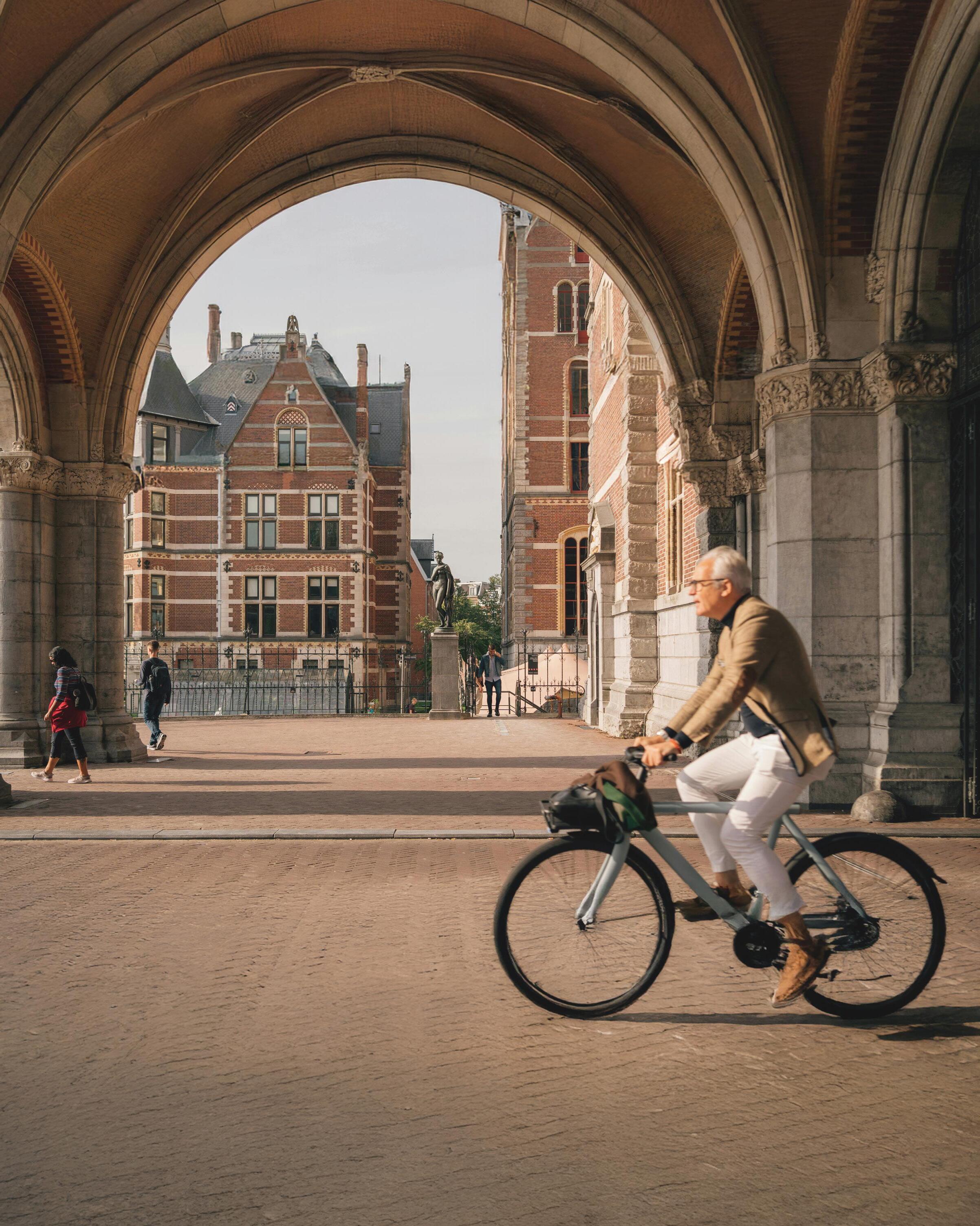
NETHERLANDS THE
POLICY BACKLASH CREATES MARKET DISTORTIONS
Like Canada, the Netherlands exemplifies how well-intentioned housing policies can sometimes create the opposite of their intended effect.
Popular with Europeans and expatriates for its laid-back lifestyle and culture, the country has long attracted foreign companies and investments. Since 2020, the country has faced severe housing supply shortages. “We’ve added about 70,000 homes a year but that’s short of the 100,000 needed,” says Karina Nipperus, Managing Partner of The Agency Amsterdam and The Agency Palma. “At the same time construction costs rose from €1,500 per square meter to €2,500 per square meter.”
In response, the government implemented new rental restrictions and a 10.4% transfer tax for nonresident buyers. “It was supposed to help locals,” Nipperus says. “However, when expats come into Amsterdam they can’t find an affordable rental, so they start buying.” Bureaucratic protections have pushed the value of owning a rental property down. “Many investors don’t want rental properties anymore, because there are few protections for owners,” Nipperus
says. “Over the past year the Dutch market, especially in Amsterdam, has strengthened with a 15% rise in transactions each year and an average sales price at €580,000, according to data gathered by NVM [the Netherlands’ largest association of real estate agents]. Middle-market apartments and townhouses often sell within a month, and nearly 80% go above asking price.”
But some large companies have left the country, which has an effect on real estate. “High taxes are driving bigger companies out of the country,” says Nipperus, pointing to companies like Unilever and Shell. According to Nipperus, others are considering leaving “because it doesn’t make financial sense to stay and grow the company in the Netherlands. Taxes and regulations are deterring American companies from investing here as well.” Yet, currently, the Netherlands’ technology, logistics, and renewable energy sectors are keeping the economy buoyant with GDP growth holding at 1% to 1.5%, and unemployment staying low.
15 %
rise has been seen in the Dutch market in 2025
the average sales price in the Dutch market has risen

SPAIN
LIFESTYLE APPEAL DRIVES SUSTAINABLE GROWTH
Spain’s Costa del Sol demonstrates the successful balance between foreign investment and market stability.
The market has performed exceptionally well this year,” says Leif Orthmann, Managing Partner of The Agency Marbella. “The average price across markets has risen by 14%.” The region’s luxury markets are particularly resilient with transactions on Marbella’s Golden Mile approaching €30,000 per square meter, and the broader “Golden Triangle”— Marbella, Estepona, and Benahavís—averaging €4,260 per square meter, doubling neighboring regions. Despite higher mortgage rates, cash-rich luxury buyers remain active and undeterred by the end of Spain’s Golden Visa. International demand, especially from the U.S., Belgium, the Netherlands, and Poland, continues to grow. “American demand has also surged,” says Orthmann. “U.S. citizens now account for 2% of all foreign transactions, which is four times higher than in 2020. They also are paying the highest prices for luxury real estate [€3 million and above].”
“Today’s buyers are increasingly looking to buy into a lifestyle,” says Orthmann. “Branded residences
1 4 %
rise in the average price across Spanish markets in 2025
LEIF ORTHMANN Managing Partner, The Agency Marbella
offering concierge services, receptions, clubhouses, and gyms command 10% premiums.” Still, challenges persist and long-term viability depends on sustainable community costs. “The region’s popularity has led to pressure on roads, water supply, and urban infrastructure,” Orthmann says. Slow municipal permitting and tightening rental regulations could further limit growth.
“Economically, Spain is outpacing the eurozone, supported by tourism, consumer spending, and European Union funds,” says Orthmann. “However, high youth unemployment, public debt, and housing shortages in major cities present risks. If Spain effectively channels EU investment into infrastructure, digitalization, and housing, it stands to turn these into long-term strengths.”
Spain’s potential in the green energy sector is also promising. Overall, sentiment remains cautiously optimistic, especially in prime coastal markets where fundamentals remain strong, supported by sustained lifestyle demand and political stability.
€30K
price per square meter in Marbella's Golden Mile
LEIF ORTHMANN Managing Partner, The Agency Marbella
RICA COSTA

THE DIVERSIFICATION ADVANTAGE
Costa Rica stands apart as a model of sustainable growth through economic diversification beyond tourism
.
The real estate market continues to benefit from strong demand, fueled by economic diversification, lifestyle migration, and investor-friendly policies. “We are reaping the benefits from decisions made 40 to 50 years ago,” says Andres Riggioni, Managing Partner of The Agency Costa Rica.
While coastal property prices have stabilized following several years of sharp increases, the capitalization rate on investment properties remains over 10%. “Second-home demand remains strong in beach and mountain regions,” Riggioni says. “Prices are stabilizing after years of doubledigit gains.”
In San José, primary luxury markets continue to attract both domestic and international buyers. Foreign interest, particularly from North America, remains high, supported by straightforward ownership rights, a $150,000 investor visa, and a popular digital nomad visa. European and Latin American interest is also rising due to improved
airport infrastructure and Costa Rica’s reputation for stability.
Wellness-oriented communities and branded ecodevelopments are gaining momentum throughout the country as more people around the world put the health of the planet and their personal health front and center.
Costa Rica’s broader economic outlook is strong, too. The country’s shift beyond tourism into hightech, medical manufacturing, and nearshore service hubs underpins real estate fundamentals. Political stability, fiscal discipline, and human capital investment attract skilled migrants and family relocations. Challenges include infrastructure strain, water limitations in parts of the country, and local pushback on international real estate investment.
However, the long-term outlook remains positive, with a maturing luxury market anchored by real demand and sustainable growth. “Costa Rica is evolving into a balance of lifestyle-driven buyers and serious investors,” Riggioni says.
“ COSTA RICA IS EVOLVING INTO A BALANCE OF LIFESTYLE-DRIVEN BUYERS AND SERIOUS INVESTORS.
ANDRES RIGGIONI Managing Partner, The Agency Costa Rica

WHERE WE’RE GOING NEXT CONCESSIONS ARE BACK & GETTING MORE CREATIVE THE LUXURY RENTAL REVOLUTION WHERE CONDOS ARE HOT—AND NOT U.S. DOLLAR FLUCTUATIONS AND THEIR IMPACT WANT TO KNOW WHAT’S TRENDING? ASK THE LOCALS SECOND-HOME MARKETS CONTINUE TO SHINE THE ROAD AHEAD: FACING A NEW CLIMATE REALITY

Where We’re Headed Next
BOLD PREDICTIONS FROM THE AGENCY’S TOP AGENTS AND LEADERS
Across markets, our global real estate industry leaders are forecasting a renewed sense of optimism and confidence for the year ahead, following the more restrained growth of 2025. In many parts of the world, there’s continued vigor at the uppermost echelons of the market, where the most exclusive properties are traded and where affluent buyers are not beholden to fluctuating interest rates.
With the Fed cutting rates in late 2025, mortgage rates are projected to decline gradually through 2026. In a recent press release, Fannie Mae predicts rates could fall below six percent by next year’s end, potentially reigniting momentum and more brisk trading in the mid-tier of the market.
Meanwhile, investment outside the U.S. continues to gain traction as high-net-worth buyers look to diversify their portfolios while embracing the lifestyles of new destinations. In California, The Agency's Co-founder and Vice Chairman Billy Rose anticipates upward pressure on pricing, suggesting that this may be the ideal moment to buy before the next climb.

HERE ARE WHAT SOME OF OUR GLOBAL REAL ESTATE EXPERTS ARE PREDICTING FOR 2026.

VICTORIA LEVITAM
Managing Partner, The Agency Panama
“Panama City is poised for its next leap, from regional hub to global benchmark. With over 120 years of a dollarized economy, worldclass connectivity, and a secure, international community, Panama is redefining what it means to live, invest, and innovate in the Americas. 2026 will mark the moment top entrepreneurs and investors from North America and Brazil recognize Panama not just as a destination, but as the launchpad for the region’s next decade of growth.”

JULIET CLAPP
Senior Vice President and Managing Partner, Northeast, The Agency
“I anticipate a year of renewed optimism and strategic growth. The market will favor those who adapt quickly—leveraging data, storytelling, and a deep understanding of shifting wealth dynamics. The Northeast, and New York in particular, will continue to outperform as buyers look for stability, prestige, and long-term value creation.”

ALBY EUESDEN
Managing Partner, The Agency Mallorca

IAN HURDLE
Managing Partner, The Agency Turks & Caicos and The Agency Jamaica
“I expect 2026 to follow a similar pattern to this year—fewer deals overall, but a higher total dollar volume. The shift toward highend, luxury transactions will continue to define the strength of the Turks and Caicos market.”
“For 2026, we anticipate a strengthening of the ultra-prime segment in the Balearics, with renewed demand for properties above €10M following the cautious pace of 2025. The mid-prime bracket (€3–6M) will remain active, but increasing international appetite for trophy homes and limited supply at the top end should drive stronger performance and price resilience in the luxury market overall.”

BILLY ROSE
Co-Founder and Vice Chairman of The Agency
“I believe pricing is poised to materially increase over the next 12 to 24 months. Construction costs are already climbing as a result of recently imposed immigration policies and tariffs, and in Los Angeles, rebuilding after the fires will further drive up demand for labor and materials.
Most buyers still need to sell a home to buy one, and only a small fraction of homeowners who lost their properties have received full insurance payouts and sold their lots. As those funds are released, many of those displaced owners will re-enter the market at once, creating a surge in home-buying demand.
Just as we saw in the first eight months of COVID—when uncertainty briefly masked a historic buying opportunity— I think we’ll look back at late 2025 and 2026 as a similar moment. In hindsight, it will have been a prime window to purchase a new home before prices and replacement costs move sharply higher.”

STEVE BAILEY
Managing Partner, The Agency Waterloo, Oakville, Muskoka, Brantford, Toronto West, York Region Halifax and Sarasota, Florida
“2026 will be the year confidence quietly returns. We’ll see disciplined buyers and sellers re-engage as rates stabilize, creating one of the healthiest, most strategic markets we’ve had in years.”
Concessions Are Back and Getting More Creative

FROM MORTGAGE BUYDOWNS TO INSURANCE CREDITS AND MORE, HERE ARE SOME OF THE INCENTIVES AGENTS ARE SEEING OFFERED TO BUYERS
The Atlanta metro—including Atlanta, Sandy Springs, and Roswell—has seen a 20% increase in listings priced above $1 million year over year, according to Realtor.com.
As the market shifts to a more balanced buyer-seller playing field, concessions have become the name of the game. In fact, in a survey of The Agency brokers, more than 60% said they’re seeing more concessions this year compared with a year ago.
With sellers wanting to stick to their asking prices (or stay as close to them as possible), agents are
using creative solutions to entice buyers—from including furnishings and golf carts to paying for security staff for several months.
“Concessions aren’t a sign of desperation,” says Deborah Morton, Managing Partner of The Agency Atlanta, who says concessions are common in her area. “They’re a sign that you know how to get deals done. The most successful agents and sellers are using them smartly, tailoring each deal to fit the buyer’s needs while protecting the seller’s bottom line. That’s what it takes to win right now.”
CONCESSIONS THAT TRANSLATE TO DOLLARS SAVED—OR EARNED
Because of relatively high interest rates, more sellers are marketing their homes with assumable loans that have lower rates than current ones or are offering to buy down buyers’ mortgage interest rates in an effort to lessen monthly payments amid higher interest rates, says Jen Cameron, Managing Partner of The Agency Seattle, says. One of her more inventive concessions occurred in the recent sale of a vacation investment property that had been on the market in the Seattle area for more than a year.
The seller had already reduced the price so that it was well below nearby comps, she says, “but the real turning point came when we proposed a rent-to-own scenario while my client, the buyer, completed the process to assume the seller’s loan.”
It was a winning proposition for both parties. “My buyer could immediately begin renting the property on VRBO during the peak vacation season—even before closing,” Cameron says. “While making a modest rental payment to the seller in the interim, he’s now positioned to generate nearly double in rental income, offsetting his costs and maximizing cash flow while we finalize the loan assumption. For the seller, this strategy helped offset holding costs and finally moved a longstagnant property toward closing.”
She adds that solutions like this are becoming more prevalent in her area, where it’s shifting from a full-on seller’s market to a more balanced landscape. Concessions are playing a larger role in the second-home and investment-property market, she says, where financing can be more complex.
Sometimes, concessions can act as the primary tools for fixing errors, including unrealistic pricing. In the case of a rent-
THE AGENCY'S GLOBAL SURVEY
Are you seeing sellers offer more concessions in 2025 compared to 2024?
stabilized townhouse in New York City’s West Village that sat on the market for 450 days, broker Mike Biryla helped finally close the deal with concessions that included a seller-backed $10,000 postclosing escrow to ensure that outstanding building-code violations were signed off on; giving the buyer unlimited access to visit the property after the contract was signed, and an agreement to release money for some items, including large, backyard statues that couldn’t be moved in time for the closing.
COVERING THE HIGH COST OF INSURANCE AND WARRANTIES
High-cost home insurance, particularly in high-risk fire-prone zones of Los Angeles, has become a sticking point that has been slowing sales, says Michelle Schwartz, Managing Partner and founding agent of The Agency, covering Sherman Oaks, Studio City, and Calabasas. Buyers bear the brunt: It’s significantly more costly to get a new policy.
In one recent property sale, several potential buyers were reluctant to commit because of the impact the rising cost of homeowner’s insurance would have on their monthly expenses, Schwartz says. The house had been on the market for more than 60 days, and the seller was eager to complete the deal, but without dropping the price. As a concession, he offered to cover the buyer’s first year of insurance premiums. “It was a win-win,”
Schwartz says. In other L.A. sales, sellers have offered to cover the cost of a private security staff for six or more months, a tactic that’s becoming more common in celebrity neighborhoods, where safety and privacy are prime concerns.
Some sellers raise the stakes by offering multiyear home warranties instead of the standard one-year coverage. Such coverage costs $800 to $1,500 per year and typically includes the repair or replacement of major systems and appliances or their parts that break down. Some warranties even include pool and spa equipment, HVAC systems, electrical and plumbing, pool and spa equipment, leaking-roof repairs, and structural components.
“In Los Angeles specifically, where inventory is climbing again but pricing hasn’t fully corrected, these kinds of creative concessions are often more palatable to sellers than reducing their list price, and they give buyers a sense of short-term financial relief,” Schwartz says.
MORE ON ‘CREATIVE CONCESSIONS’
In the Atlanta metro area, some listings are still getting immediate offers while others sit for 60 or 90 days. According to Morton, they’re “seeing concessions used in more layered, strategic ways— especially since August 2024, when the long-standing practice of advertising buyer-agent compensation in the multiple
listing service effectively ended.” Before the passage of that law, the seller typically paid the fee for the buyer’s agent, but now who pays that fee has become a key component of the concession package.
“Most sellers are still covering the fee, but now it’s treated as a line item, just like a closing-cost credit or a mortgage interest-rate buydown,” Morton says. “And since sellers care most about net proceeds, all of it is evaluated together.”
In addition to the standard concessions, sellers of newly constructed homes sometimes go so far as to offer upgraded appliances and design packages to entice buyers. Even during bidding wars, creative concessions are being used as leverage by buyers, according to Traci Garontakos, Managing Partner of The Agency Indianapolis.
When a custom home in the Holliday Farms Golf Community just northwest of Indianapolis recently came on the market, it elicited several offers in the first six hours. The winning bidder offered $2.875 million—$25,000 over the asking price. But there were some strings: He requested that the golf cart, the pool and outdoor furniture, and several pieces of furniture be included in the price.
It wasn’t the first time concessions closed a deal in the area—as several of the builders offered premium golf memberships as incentives, Garontakos says. But when it came to the $2.875 million deal, although the concessions weren’t initially listed as inclusions, “the seller recognized the value of a clean, strong offer above list price and agreed,” Garontakos says, adding that “dollars are only part of the equation—convenience and speed can matter just as much.”
Even in hot markets, buyers sometimes can use concessions to their best advantage. In Mallorca, Spain, a buyer seeking a vacation home in a rustic
area close to the southeast village of Santanyi fell in love with a property that had a main residence and a guest house. The seller, a developer, had left the interior guest house unfurnished. The buyer, however, had other ideas, and successfully requested that the home be finished to the same standard as the main house. He insisted upon several items, including the installation of curtains and blinds and solar panels that had enough batteries to power the entire structure.
“Usually such concessions are unheard of because demand for newly constructed properties is extremely high, but naturally, as in any market, some opportunities arise, and our client, the buyer, managed to capitalize on that,” says Alby Euesden, Managing Partner of The Agency Mallorca.

CITIES LEADING THE RISE IN MILLION-DOLLAR HOMES
WORTH, TX
NASHVILLE-FRANKLIN, TN
NORTH PORT-SARASOTA, FL
ROSA-PETALUMA, CA
TAMPA-ST. PETERSBURG, FL
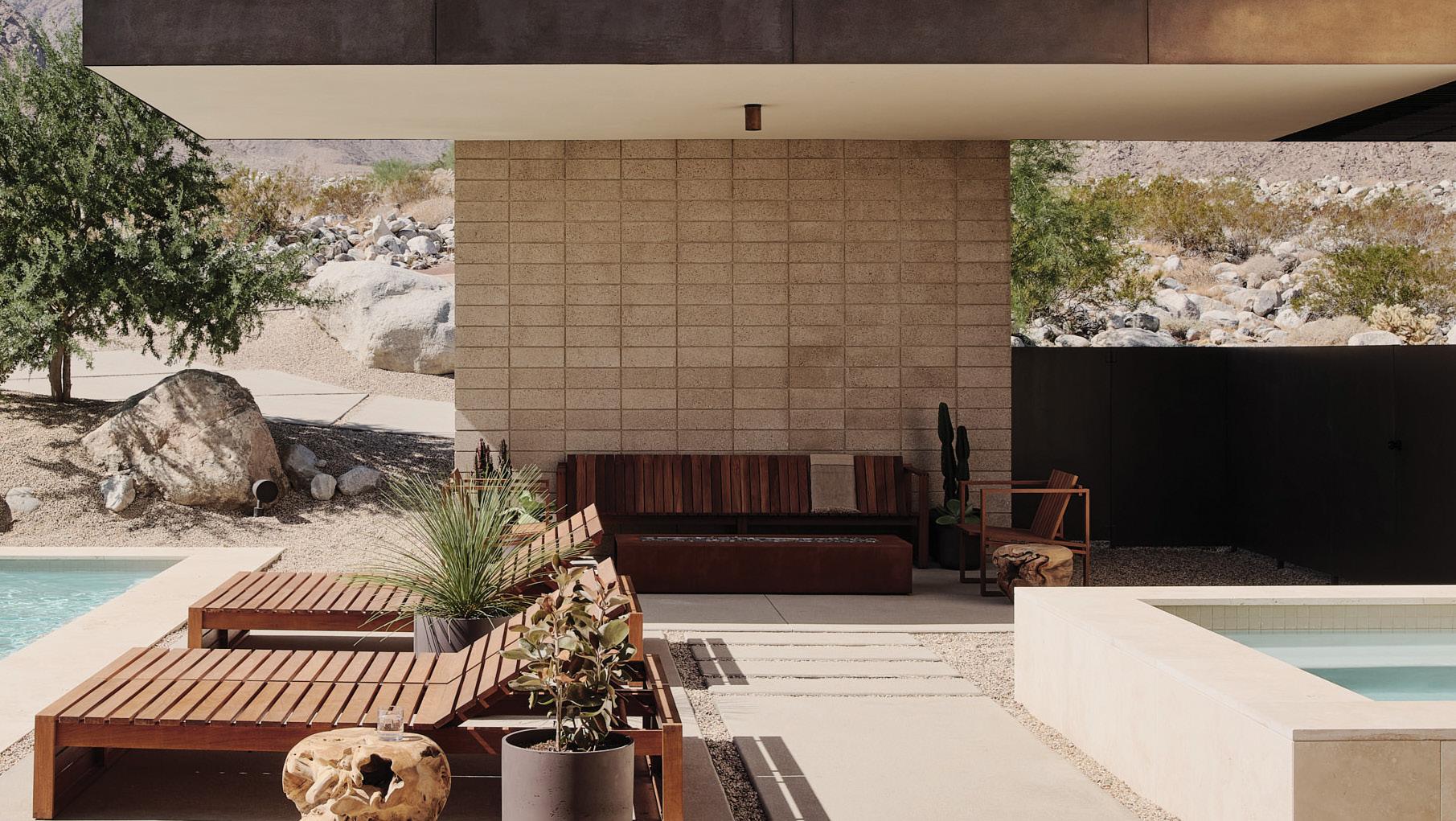
The Luxury Rental Revolution
ECONOMIC FORCES AND LIFESTYLE SHIFTS ARE REDEFINING HIGH-END HOUSING
The luxury rental market is evolving. Tight inventory as well as the rising cost of property insurance and maintenance are driving a growing wave of people opting out of homeownership. For some it’s a short-term wait-andsee strategy. However, a growing number of upscale renters are abandoning homeownership altogether, making longer-term lifestyle choices that prioritize flexibility and a hands-off, maintenance-free lifestyle.
Developers are taking note of these shifting demographics. With more high-net-worth individuals choosing the flexibility and freedom
that renting offers, and young families opting to rent their first homes as they wait out a lack of inventory in the sales market, there’s a growing demand for amenity-rich rentals. Rather than viewing a rental as a compromise or a temporary solution, it’s become a strategic tool for making better long-term choices. In markets where carrying costs have risen dramatically, where inventory constraints limit options, and where lifestyle priorities are shifting toward service and flexibility over ownership, luxury renting has evolved from a short-term solution to a preferred approach.
HOLDING OUT FOR ‘THE ONE’
In New York City, the luxury rental market is booming. “The rental market prices we’ve seen in the past few months have increased about 10%,” says Anthony Raimondi, a broker at The Agency New York. The Big Apple’s housing market is unique, but it’s also a microcosm showcasing broader trends. “Prices are continuing to rise and that’s true across the country,” says Ashlie Roberson, a broker who’s also with the Agency New York. “We can say it’s inflation, we can say it’s a lot of things, but really it’s just simple supply and demand.”
New residents have traditionally rented as a way to “shop” New York’s varied five boroughs. However, a lack of inventory—especially in family-friendly neighborhoods—is keeping people in the rental pool when they would traditionally be ready to buy. “Low inventory is an issue throughout New York City, but it’s especially true for two- to three-bedroom homes,” Raimondi explains. Families “are holding out for the right home.”
The challenge is particularly acute in neighborhoods such as Park Slope, Brooklyn, where the historic brownstone character—and landmark district status —constrains supply. This has created a dynamic where young families are
increasingly treating rental periods as extended house-hunting phases, using them to truly understand what they want before committing to a major purchase. “The waiting game is very real,” Roberson notes. “People are sticking with rentals that work for them until they find homes that suit their criteria.”
RIGHTSIZING INTO RENTALS
While many young families are opting for greener, roomier pastures, laterin-life renters are gravitating in the opposite direction—straight back into Manhattan. “People on the other side of building their wealth are looking for ease, which Manhattan’s luxury rentals with full-time doormen and elevators will absolutely provide,” Roberson says. Shopping and cultural amenities are a draw, too, of course.
Building developers are taking notice, incorporating increasingly sophisticated amenities into luxury rentals that attract high-end retirees. “I’m seeing more buildings offer senior-focused workout classes and full gyms, often with pools,” Raimondi says. “Saunas and massage rooms are becoming standard, as well as dedicated rooms where you can bring in a physical therapist or other health practitioners.”
How would you describe renting in your local market in 2025? 42.31%
DOING THE MATH IN SOUTH FLORIDA
Steven Seigel, an agent with The Agency Fort Lauderdale, is noting similar trends in South Florida, where the rising cost of maintenance and high interest rates are complicating the rent-versusbuy equation. “We have the gamut of people moving here,” he explains. “It’s a combination of retirees, high-net-worth individuals, and people who want a second or third home.” The prevalence of remote work continues to fuel the temperate weather migration, he says.
However, it’s more than lifestyle driving South Florida’s luxury rental boom—it’s also simple math. The 2021 Surfside condominium collapse fundamentally changed the economics of condo ownership in the region, leading to stricter building codes, mandatory financial reserves, and extensive retrofitting requirements— all dramatically increasing maintenance fees. “I represent many luxury oceanfront condos,” Seigel says, and “between insurance costs, maintenance fees, and the reserves needed, it increasingly makes more sense to rent rather than buy.”
PRIORITIZING AMENITIES IN FLORIDA
The luxury rental market in South Florida has responded to this demand shift by matching or even exceeding the amenities found in high-end condominiums. “Rental buildings are offering as many amenities as luxury condo buildings,” Seigel says. “Every single luxury high rise has a doorman, concierge, and delivery.” Traditional luxury amenities such as fitness centers, pools, and spas are standard. Coworking spaces remain in high demand. And even pickleball courts are appearing beside pool decks throughout South Florida’s newest projects. THE AGENCY'S GLOBAL SURVEY
THE AGENCY'S GLOBAL SURVEY
Some agents have reported shifts in renter demographics and behavior in their local market in 2025, as compared to previous years, while others have seen very little change.
Renters are enjoying a more substantial amenity: flexibility. Seigel doesn’t see the trend cooling anytime soon. “I don’t see insurance costs and maintenance fees going down,” he says. “We’re seeing many empty nesters and older clients rent instead of buy and their highest priority is flexibility.” Many are moving to Southeast Florida, but aren’t ready to make a longer-term investment. “They often rent to make sure they like the area, with the option of purchasing in the future or continuing to rent.”
RENTING AS RESEARCH
As more affluent Americans choose renting as a long-term strategy, there’s an emergence of a new rental class that isn’t defined by financial constraints, but by lifestyle optimization. This group is driving demand for rental properties that match or exceed the amenities and services traditionally associated with ownership, creating a market that prioritizes experience over equity. In some major markets, renting has become more accepted, and indeed, advantageous—a trend that appears positioned to reshape the high-end housing landscape for years to come.

AND NOT WHERE CONDOS ARE HOT

AMID AN OVERALL DOWNTURN IN CONDO SALES, THE LUXURY SECTOR HAS TAKEN A HIT IN SOME REGIONS BUT IS REACHING NEW HEIGHTS IN OTHERS, WITH SMALL BOUTIQUE DEVELOPMENTS PARTICULARLY IN DEMAND
In the U.S. condo market, the median sales price dropped by 2.2% year over year in May 2025, according to data from Redfin. The oversupply of condos on the market, with roughly 80% more sellers than buyers, is in part driven by high homeowners association fees and insurance costs, as well as high interest rates, which are pushing many buyers toward singlefamily homes.
But the higher end has been a bit of a bright spot, as the aforementioned factors tend not to be as much of a deterrent for buyers in the luxury condo sector, which has proven more resilient in some markets. Demand varies widely from city to city, with some areas seeing a slowdown in sales while others have seen interest pick up over the course of the year. Heading into 2026, we take the temperature of markets across North America, moving from cold, to tepid, to searing.
In 2025, North America's challenging housing market has cooled condo demand.
TORONTO'S MARKET FEELS COLD, BUT IS A THAW COMING?
In Toronto and the Greater Toronto Area (GTA), the appetite for condos, once seemingly insatiable, has waned over the past year, largely due to “a lot of external factors,” says Peter Torkan, Managing Partner of The Agency Toronto and The Agency Dominican Republic. A federally mandated ban on foreign buyers has prevented overseas investors from purchasing Canadian real estate for the past two years. This has led to a reduction in demand that has been compounded this year by U.S. foreign policy shifts and the impact of tariff negotiations on the global economy, he says. “All the big developers that I know are putting things on pause until those policies change and there’s more stability in the world.”
Sales of condos in the GTA dropped 6% year over year in the second quarter of 2025, he says. By contrast, “sales of $10 million-plus properties have been up 200% in the first half of the year, compared with the first half of last year,” primarily driven by a strong demand among high-net-worth buyers for singlefamily homes. In July this year, “the increase in sales for detached homes was 10.9%, while condo sales were down
%
Condo prices have dropped slightly in 2025
20%,” he says, adding that days on market for condos have increased by 30% and inventory has increased by 40%.
But it’s not all doom and gloom. “I do think that as we get to the last quarter of the year things are going to pick up,” Torkan says. The election of a new prime minister earlier this year has helped stabilize the political landscape and “things are settling down.” Anticipated Canadian interest-rate cuts toward the end of the year “will bring more confidence back into the market and more money into buyers’ hands,” he says.
CONDO SALES DIP AS MARKET IN VANCOUVER STALLS, BUT OPTIMISM BUILDS FOR 2026
The desirability of luxury condos in Vancouver varies widely from neighborhood to neighborhood, resulting in a mixed market profile this year, says Kit Matkaluk, Managing Partner of The Agency Vancouver. “Ever since Covid, downtown has been very soft,” he says, in part due to rapid development leading to an oversupply of condos, coupled with a federal ban on foreign buyers. But other areas, including North and West Vancouver, continue to attract rightsizers looking to spend in the $3 million to $5 million range on luxury condos.
Prices in West Vancouver, North Vancouver, and the city’s West Side may have come down 5% to 10% since the pandemic peak of mid-2022, “but there’s not a ton of development there,” says Hugh Cooper, Managing Partner of The Agency Vancouver. “They are popular neighborhoods and there’s only so many places, so those areas have done just fine.”
But even the most desirable locations aren’t entirely immune to a slowdown, such as that seen across the greater Vancouver area this year. “From February until August would be the slowest real estate market in probably over 15 years,” Matkaluk says, adding that “when the prices come down in detached homes, then the prices have to come down in the high-end condo market, because there’s such a trickledown effect between the two.” Looking at all sales across greater Vancouver in August, volumes were up slightly year over year but down 19.2% over a 10-year seasonal average, he says. For apartments, there was a 5.5% decrease in sales year over year, as well as a 4.5% decrease in price over the same period.
Political instability has had the biggest role to play in damping sales this year, he says. “January was extremely busy. And then the government changed in the U.S. and then everything changed just on policy,” Matkaluk says. Tariffs in particular have had a big impact on sales, he adds. “Vancouver is a very resourcebased city and export-based economy, so it’s very sensitive to that.”
But the future looks brighter. “We’re seeing the light at the end of the tunnel for tariffs, which is great,” he says. “We are expecting a few rate drops in the U.S., which means there will be rates dropping in Canada, so we’re expecting fall through next year to be more of an optimistic return to normalcy.” Given market structures, condos are always the first to drop in value and the last to go up in value, he says, “so I think in late spring next year they will start moving.”
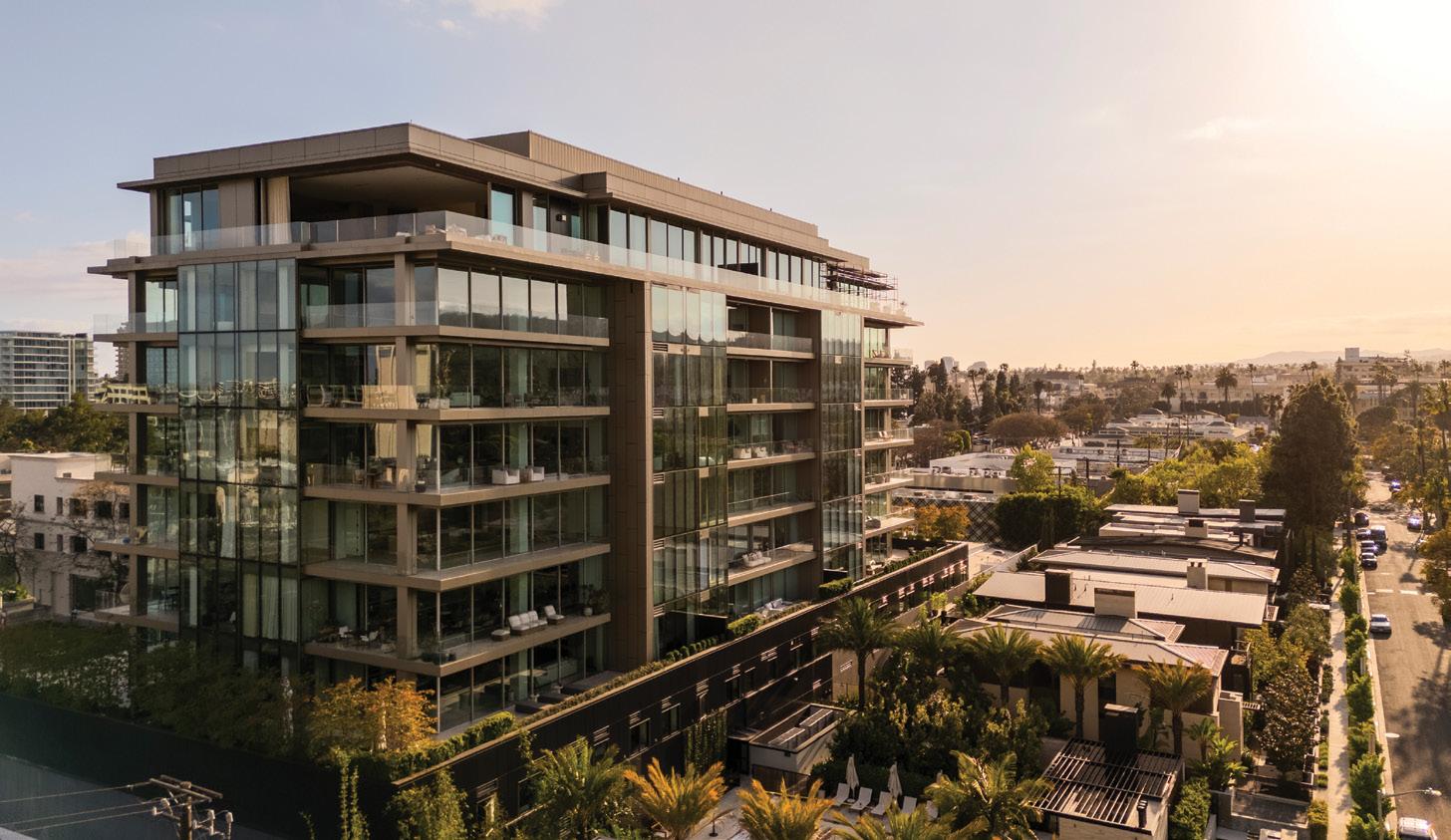
IN SOUTH FLORIDA, THE $5-MILLION-PLUS CONDO MARKET IS BUCKING TRENDS
A slow compilation of factors has led to a downturn in demand for condos in South Florida, long a favorite destination for second-home buyers looking for a lock-up-and-leave property in the sun. Overall, condo prices and sales fell further in Florida than anywhere else across the U.S. in May this year, Redfin data show. Howard Elfman, Managing Partner of The Agency Fort Lauderdale, Miami, and Palm Beach, attributes the cooling of the condo market to two major factors: a 2023 law prohibiting buyers from certain countries from purchasing properties near critical infrastructure, including cruise ports and airports, and the collapse of a Surfside condo tower in 2021 that led to laws requiring costly safety assessments for many existing condo buildings.
This year, demand for condos has been outstripped by a desire among high-networth buyers for single-family homes, he says. But while more modestly priced properties are floundering, the top end of the luxury condo market has bucked the wider downward trend. Looking at condos priced at $5 million and above, “the active inventory is up 10% and closed sales are up 19%,” he says, citing data from the Multiple Listing Service comparing the first half of 2025 with the first half of
2024. By contrast, comparing the same period for the overall condo market, closed sales are down 10%. But even at the top end of the market, while asking prices are holding steady, “I’ve seen more negotiation in the price,” he says.
Looking forward to 2026, a new trend for branded residences may help make the condo king once again. “We have more of those being built right now than we probably ever have,” Elfman says, adding that brand-name developments—such as Lamborghini, Armani, Fendi, and Dolce & Gabbana—tend to attract higher-net-worth buyers.
Overall demand is also likely to pick up if financial portfolios continue to stabilize heading into 2026, Elfman says. Questions surrounding the costs of safety assessments have also been answered with the implementation of amended housing laws in July, relieving uncertainty about resale condos, he adds.
LOS ANGELES’ CONDO MARKET HEATS UP
Historically a city dominated by the single-family home, L.A.’s luxury landscape is undergoing a transformation as branded residences move in, creating new opportunities for high-net-worth buyers attracted by the condo lifestyle. “That type of offering often appeals
80% more condo sellers vs. buyers in the market in 2025 compared to 2024
to those who like to lock up and leave and have their property professionally managed in their absence," says Billy Rose, Founder and Vice Chairman of The Agency, and based in Los Angeles. "It is only in the last few years that L.A. has begun to be perceived by the ultraluxury buyer as a place that they’d like to have a secondary or tertiary home."
As proven by the selling out of the Four Seasons Private Residences, Rose says there’s been a sharp increase in demand for condos in 2025, in part due to displacement caused by the Palisades Fire in January. “Frankly, we don’t have tons of options here that are of a global luxury level. It’s a new thing for us,” he says.
Time will tell whether demand for branded residences will be strong enough to meet their comparatively high price points, he says. “You can buy the greatest single-family home for $3,000 to $4,000 per square foot, and Aman’s asking $7,000,” he says, referring to a luxury residential development by the Swiss hospitality company slated for completion in Beverly Hills in 2027. “That’s not uncommon in London, Hong Kong, New York, and maybe Miami, but in L.A. that would be another magnitude.”
Additional costs in the form of HOA fees and the fact that “you’re sharing a wall, a ceiling, a garage, a pool” mean that “it tends to attract a certain kind of
8899 BEVERLY, LOS ANGELES
buyer profile—someone who often owns multiple homes and appreciates the ease and lifestyle offering of a branded residence,” Rose says.
DALLAS’ LUXURY CONDOS OUTPERFORM THE REST
Texas has seen one of the biggest drops in overall condo sales across the U.S. this year, but in Dallas, luxury condos are weathering the storm. While sales in the overall condo market dropped “a hefty 32.29% year over year in DallasFort Worth as of May 2025, the luxury segment is holding strong with more resilience,” says Megan Williamson, Managing Partner of The Agency Dallas. Million-dollar-plus homes, including luxury condos, saw a 14% increase year over year in the first half of 2025. Inventory rose by 13.2% in the same period and average days on market increased, but prices are holding firm, with the median price climbing, she says. “The ultra-wealthy are still splashing cash on penthouses and posh pads, even with the broader trend of declining condo sales.”
High mortgage rates, along with rising insurance costs and HOA fees, are a deterrent to some potential condo buyers, she says, but “Dallas’ booming economy and influx of high-net-worth folks from places like California are keeping demand spicy.” Limited inventory in sought-after locations including Uptown and Highland Park is also helping to maintain a balanced market and “downsizing execs and retirees are craving that lowmaintenance, amenity-packed lifestyle, which keeps luxury condos in the spotlight,” she adds.
Heading into 2026, “demand should stay strong, fueled by corporate relocations and Texas’ no-income-tax allure,” but she doesn’t expect the wild bidding wars of yesteryear. “Inventory is creeping
up, which might cool price growth, but prime properties in high-demand areas will likely hold their value.”
New developments in the city’s hot neighborhoods will add to supply, “but prime inventory, such as penthouses with killer views, will stay tight, keeping competition fierce,” she adds. “Expect a market that’s lively but not reckless.”
%
reported drop in condo sales in 2025
REDFIN.COM
INDIANAPOLIS IS STEADY AND COMPETITIVE, WITH AN APPETITE FOR OFF-PLAN CONDOS
In Indianapolis, demand for luxury condos has remained “surprisingly resilient,” with a particular appetite for small new-build developments with plenty of luxury amenities, says Traci Garontakos, Managing Partner of The Agency Indianapolis. “We’re not seeing the sharp declines in sales volume that other cities are reporting,” she says. “Instead, the luxury segment has been marked by stable prices, relatively quick absorption of well-located units, and a continued sense of demand that outpaces available inventory.” Particularly in areas of the city that didn’t used to offer luxury condo living, like the popular suburbs of Carmel and Zionsville, “there’s definitely a demand for it that was never met previously,” she says.
A slight decline in the number of transactions year over year reflects “inventory constraints rather than lack of
buyer demand,” she says. “Days on market for well-positioned luxury condos has actually shortened compared with last year, as demand is outpacing available supply. Sales prices have held steady, and in some cases we’re seeing modest appreciation, particularly in boutique buildings and those with premium amenities like concierge services, fitness facilities, and covered parking.”
Particularly popular with rightsizers and relocating executives, high-end offplan condos are selling quickly, even before breaking ground. “If it has all the amenities they’re looking for, they’ll pay for it.” Given that inventory is unlikely to increase any time soon, Garontakos foresees “gradual appreciation in prices due to limited supply.” Going into 2026, she expects the market “to remain steady and competitive, particularly in the most desirable locations,” she says. “We’re just scratching the surface, so I don’t really foresee us hitting that demand for years to come.”
NEW PRICE BENCHMARK STOKES OPTIMISM HEADING INTO THE CAYMAN ISLANDS’
BUSY SEASON
Although sales volumes for luxury condos on Seven Mile Beach, one of the most desirable locations in the Cayman Islands, have fallen by around 10% to 15% year over year, prices have risen by 10% to 15% in the same period, says Stefan Cohen, Managing Partner of The Agency Cayman Islands. Prices for some prime beachfront and redevelopment properties climbed 15% to 20%. Luxury condo prices in the islands have historically tended to average around US $2,500 per square foot, but “we are trending toward the $3,000 per square foot mark for the newer developments and condos on Seven Mile Beach, which is pretty groundbreaking for Cayman,” he says.
The slight cooling of the Cayman Islands real estate market overall in 2025 reflects its tendency to mimic patterns within the U.S. market, but “luxury real estate has held up well despite a softer overall market,” he says, with price growth reflecting “both the scarcity of quality inventory and the sustained demand for Cayman’s most prestigious addresses.”
Shortage of inventory is not the only factor that has lowered transaction rates in 2025, as revealed by a slight increase in days on market. For resale properties, setting realistic price expectations among sellers has been a challenge, with many clinging to pandemic-era values despite a shift in market conditions, he says. But the primary factor that’s led to a slowdown this year is political uncertainty, particularly changes of government in both the U.S. and the Cayman Islands. “Now that things are looking a lot more stable, we are seeing a lot more movement,” he says. High-net-worth buyers from Canada and the U.K. are showing particular interest in properties valued at US $2.4 million and up, the threshold for obtaining permanent residency in the islands, he adds. U.K. citizens have been additionally motivated to purchase in this British Overseas Territory by the recent abolition of tax exemptions for nondomiciled residents. The recent increase in transaction volumes is set to grow heading into 2026 as the market enters its busy season, which runs from the end of the year to the end of April. “Our busy season actually started earlier this year,” says Fleur Coleman, Managing Partner of The Agency Cayman Islands. Sales began to pick up significantly in mid-September, she says, “and it’s been fantastic so far, so we are expecting a really busy season this year.” With a new price benchmark having been set for prime properties and a strong, early start to the season, luxury beachside condos with top-of-the-range amenities look set to be a hot commodity heading into 2026.
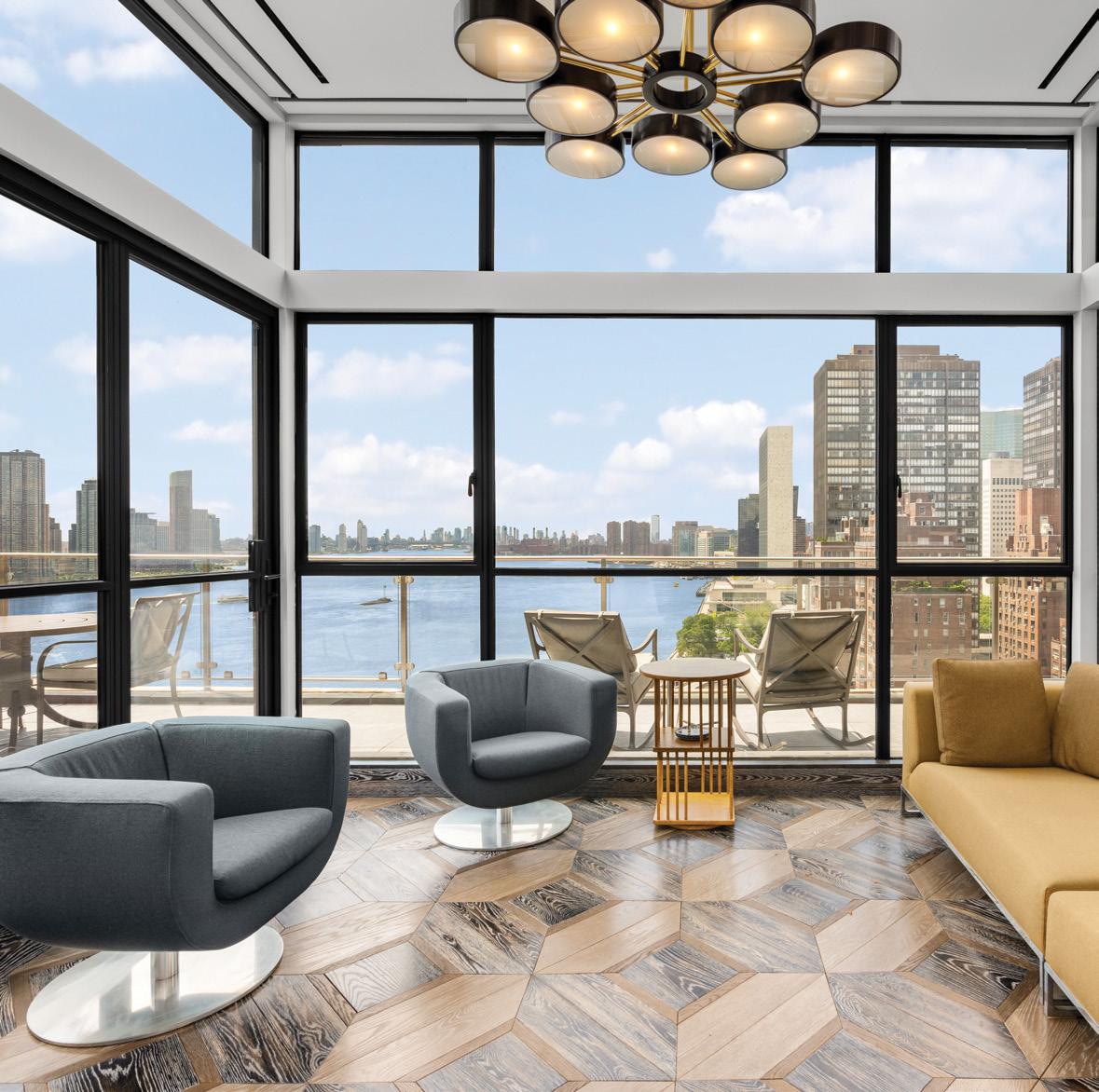
NEW YORK BUCKS NATIONAL TREND WITH HOTTER THAN HOT CONDO MARKET
Bucking the trend across the wider U.S., in New York, the condo is having a moment. While sales volumes for coops have remained relatively stable in 2025, sales volumes for condos priced at $4 million-plus rose 18% year over year in the second quarter of this year, says Mike Biryla, head of the Mike Biryla Team at The Agency New York. “Condos are definitely the hot thing.”
That’s due to a large transfer of wealth, he says. “A lot of young buyers don’t want the restrictiveness of co-ops, which have approval processes and limitations on subletting. Younger, more affluent buyers are seeking condos,” Biryla says, because “they can rent it if they need to; they can use it as freely as they want; there are no restrictions on a pied-à-terre, and a lot of the luxury condos that we’re seeing now are just ultra-high luxury, and amenity-
rich.” New boutique developments with a very limited number of units are particularly popular, he adds, with prices trending upward and new records being set. That said, “on the luxury market there’s not a ton of inventory, so anything that’s priced well in a resale building is also selling really quickly,” he says.
Unlike other areas of North America, where some buyers are waiting for more economic stability before committing to a purchase, buyers in New York are showing no hesitation. “People always feel confident in real estate in New York City as a purchase because it’s just a stable, strong market,” he says. “With the amount of inventory being relatively stable and prices going up, I think we’re going to continue to see a strong luxury market through the rest of the year.”
450 E 52ND ST, NEW YORK CITY
As U.S. Dollar Fluctuates, Americans Temporarily Pull Back From Certain Markets
IN SOME SECOND-HOME DESTINATIONS, OPPORTUNITIES HAVE OPENED UP FOR LOCALS
In the first half of 2025, the U.S. dollar fell 10.7%—its biggest loss in over 50 years. The currency’s reversal of fate has sent ripples through luxury real estate markets worldwide. (As of Sept. 1, the dollar has fallen 9.7% since the beginning of the year.)
Agents say that Americans haven’t retreated from international property purchases entirely, though. Many have found ways to get around the volatility—through peso purchases in Mexico, leveraging negotiating power in Portugal’s calmer
market, or embracing crypto payment methods in Panama, for example.
The markets that continue to attract U.S. buyers all have something special—compelling lifestyle benefits, regulatory advantages, or significant cost savings—which transcend the short-term exchange-rate concerns. And while currency fluctuations can complicate the decision to buy, they haven’t fundamentally changed the underlying desire for international real estate among high-net-worth Americans.


SPAIN, PORTUGAL SEE UNEVEN RESPONSE TO FLUCTUATIONS
Portugal’s luxury market has proven remarkably resilient in the face of currency challenges, said Ayres Neto, Managing Partner of The Agency Portugal.
Prices in Portugal’s luxury segment have held strong; in Lisbon, they're projected to rise another 4.5% by the end of 2025, he says. “But the weaker dollar has made euro-denominated properties feel more expensive for American buyers.”
While some American clients have paused or pushed back purchases in the face of unfavorable exchange rates, the fundamental appeal of Portugal real estate remains intact, Neto says. “Currency might slow decisions, but it hasn’t changed desire,” he adds, noting that many Americans still see long-term value when comparing Lisbon or Comporta to price points in Los Angeles, Miami, or New York.
The profile of American buyers has evolved, too. “Today’s U.S. buyer is different. They’re investing while also establishing a second home they plan to enjoy immediately or in retirement,” Neto says. Those buying in Portugal may actually find themselves with more negotiating power, given the weakened competition, he adds.
In Spain, Alby Euesden, Managing Partner of The Agency Mallorca, has seen a pullback of American clients. That’s left an opening for locals, along with buyers from other European neighbors, who benefit from direct flight connections and geographic proximity. “In Mallorca’s high-end market, almost 95% of transactions are foreign buyers, with the majority coming from Northern European countries…mostly from Germany, Scandinavia, and the U.K.,” he says.
Foreign Ownership Decreases 50% After Canada’s Residential Purchase Ban, But Prices Remain Largely Flat
Though the U.S. dollar exchange rate may make Canada look appealingly inexpensive to global investors, they won’t be able to buy in the country’s urban centers due to a ban on foreign investment set to run through 2027.
Since the ban began in 2023, the share of properties owned by non-Canadians has dropped to an estimated 1% nationwide, down from earlier estimates of 2% to 3%, says Steve Bailey, Managing Partner of The Agency in Ontario and The Agency in Sarasota, Florida.
Home prices in Ontario and British Columbia dipped by 2.9% and 2.4% respectively, according to the Canadian Real Estate Association. “Any market cooldown in Ontario has been more tied to interest rates and inventory levels than geography or buyer origin,” Bailey adds, noting that foreign purchases weren’t a major force in Ontario’s residential market to begin with.
Have you seen a decrease in foreign buyers in your market in 2025?

THE AGENCY'S GLOBAL SURVEY
MEXICO: PESO PURCHASES AND CROSS-BORDER COMMUTING
Mexico’s Baja California region has undergone a notable demographic shift in recent years. “It used to be Mexican nationals living in Baja and working in the U.S., and now we are seeing more U.S. residents purchasing in Baja and commuting to the U.S. for work,” says Jeff Davidson, a Broker Associate with The Agency San Diego.
But as the dollar-to-peso exchange rate slid from 20.8 pesos in January
to 18.7 pesos in September—a 10% decrease—he’s noticed an increase in buyers purchasing in pesos.
Still, the property tax savings are often high enough for American clients to justify a move. Taxes on a $375,000 oceanfront condo in northern coastal Baja might run approximately $400 per year compared with $4,300 annually for a similarly priced property in neighboring San Diego, he says.

CENTRAL AMERICA: PRICES REMAIN STABLE AS BUYER POOL DIVERSIFIES
In Panama, the currency fluxes have been partially offset by other economic and political factors.
“While a weaker dollar in early 2025 certainly enhanced purchasing power for buyers using stronger currencies like euros, Canadian dollars, or various Latin American currencies, Panama’s pricing has largely remained stable,” says Victoria Levitam, Managing Partner of The Agency Panama.
The market has seen a significant diversification of buyers. “While U.S. buyers continue to be active, particularly from key markets like Florida, California, and Texas, we are now seeing Canada, Spain, France, Italy, Chile, and Colombia leading inbound demand,” she says.
Panama has also seen an increase in crypto-affluent investors entering the market. The country offers a number of residency-linked property incentives, including the Qualified Investor Visa requiring an investment of at least $300,000 for permanent residency within a month.
Further north in Nicaragua, the market took a hit following the recent U.S. presidential election, says Joao Mucciolo, Managing Partner of The Agency Nicaragua. The months between November and April, typically the market’s peak buying season, saw sales come to a halt. “Foreign and local buyers all froze because of what Trump was doing with tariffs,” Mucciolo says. “Now, as the stock market has normalized, we’re seeing more people feel confident and taking chances.”
The Aftermath of the Golden Visa’s End
In 2023, several nations across Europe had wound down their “Golden Visa” programs, which had allowed foreigners to gain their residency via real estate investment. The end of the programs was meant to help calm hot housing markets around Portugal and Spain that had become too pricey for locals.
For Alby Euesden in Mallorca, the end of the golden visa has impacted Asian buyers more than American or European buyers. Chinese investors topped the list of those awarded the visa, by nationality, followed by Russians.
These days, the vast majority of Euesden’s buyers are coming from Northern European regions with direct flights to the island. “There are always different buyers ready to take advantage of a downturn,” he says.
In Portugal, Neto says the end of the programs helped to stabilize and cool the housing frenzy that had taken over Lisbon and Porto.
“We’ve seen a more balanced, less speculative market,” Neto says.
Buyers coming in are looking to stay long term. “They’re motivated by the lifestyle, climate, schools, and safety found here, in addition to the residency benefit,” Neto says. “In many ways, the change has made the market healthier and more sustainable.”
Want to Know What’s Trending? Ask the Locals
WHETHER THEY’RE MOVING UP OR DOWNSIZING, RESIDENT HOME BUYERS KNOW WHAT THEY WANT—AND DEVELOPERS ARE LISTENING
Most housing markets include a mix of local and regional buyers and relocation buyers from other parts of the U.S. or the globe. Since tracking where the next influx of out-of-town buyers may come from can be challenging, many builders and developers rely on local residents and their real estate agents for insights into what they’re looking for and the latest trends. Priorities depend on market conditions and traditions, which are often influenced by regional differences.

TRADING
UP WHILE STAYING TRADITIONAL IN CLEVELAND
When Taylor Swift and Travis Kelce (who grew up in the Cleveland suburbs) were seen house hunting in Chagrin Falls, Ohio, speculation was rampant that the couple would buy one of the many luxury estates there.
“That visit from Taylor Swift and Travis Kelce gave the Cleveland real estate market a big bump of attention,” says David Ayers, a Managing Partner of The
Agency Cleveland. “But the Cleveland area is affluent, and we have many local homeowners here who own properties all over the world.”
Ayers says high-net-worth households in Cleveland include C-suite executives, medical professionals, well-known athletes along with a variety of manufacturing and industrial business-owners.
“There’s a Midwestern mindset about money, so often these buyers will quietly purchase multimillion-dollar homes while living unostentatiously,” he says. “Cleveland has a great number of old money families and Gilded Age homes rather than new construction. It’s a very traditional market and even in new construction, buyers want a traditional home.” Over in nearby Columbus, new construction homes tend to be a little bit more modern with indoor-outdoor living, he says.
“Our biggest challenge right now is managing expectations,” Ayers says. “Relocation buyers appreciate the value in these homes, but locals are frustrated that something that would have cost $750,000 a few years ago now sells for $1 million.”
Local buyers in Cleveland include older baby boomers who are downsizing, as well as young Gen Z buyers snapping up more affordable houses.
“The problem is that many older sellers haven’t done much to their homes for the past 15 or 20 years, but buyers want minimal work,” Ayers says. “Anything new—of which there’s very little—or in turnkey condition, sells quickly.”
FRISCO, TEXAS TRENDS: SINGLE-STORY AND MULTIGENERATIONAL HOMES
Frisco, Texas, saw an influx of luxury home buyers over the past five to seven years, buyers who are looking to upgrade their ideal home now that there’s more inventory, says Heather Stevens, a Managing Partner of The Agency Frisco and The Agency Rockwall.
“If they bought years ago and have built up equity, homeowners want to move into something they like better,” Stevens says. “Other people who relocated here years ago now know the area and want to move to a different neighborhood for the lifestyle.”
“[CLEVELAND] IS A VERY TRADITIONAL MARKET; BUYERS WANT A TRADITIONAL HOME.”
DAVID
AYERS Managing Partner, The Agency Cleveland
While two-story homes were more popular in the past, more of Stevens’ clients are asking for single-story homes now—and builders are responding with more one-level floor plans.
“We’ve also got more buyers looking for multigenerational layouts so they can bring family members to live with them or visit for long periods of time,” she says.
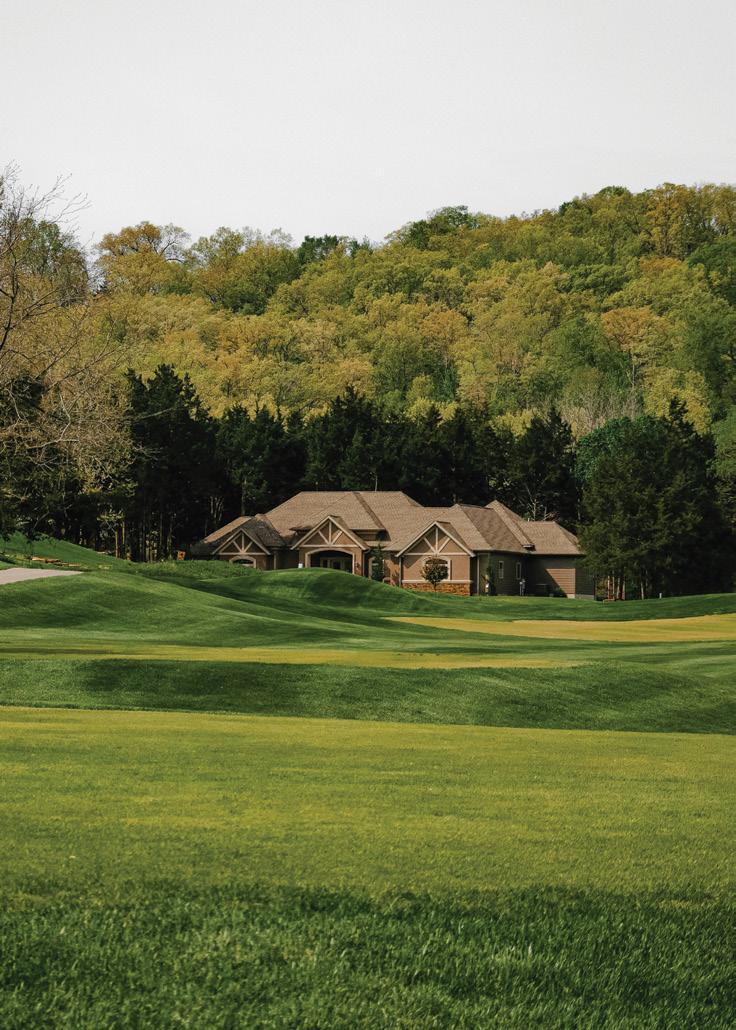
The Fields master-planned community, now headquarters for the Professional Golfers’ Association of America (PGA), includes the Preserve, an exclusive gated community, which has custom multigenerational homes built on lots priced from $1 million and above with golf course views.
“I get 10 requests a month for a one-story 5,000-square-foot house on one acre in the $1 million to $1.5 million price range,” Stevens says. “People want more functionality than flashiness now, so they want two offices or at least one office and a flexible workspace, plus they want a first floor guest suite and a second prep kitchen.”
Stevens says prices are a little lower than they were three years ago, but still way above pre-Covid prices.
25.5 %
uptick in $1M+ listings in Charlotte in 2025
REALTOR.COM
LIFESTYLE AND LOCATION GETS CHARLOTTE BUYERS TO MOVE
“Our market has remained steady, with prices up substantially compared to five years ago,” Miller says. “Most of our local luxury buyers are downsizing or changing locations to be closer to the city or to new communities with amenities.”
”
“ CLIENTS WANT MORE FUNCTIONALITY THAN FLASHINESS NOW.
HEATHER STEVENS Managing Partner, The Agency Frisco and The Agency Rockwall
Close to the city, builders are redeveloping older homes into luxury townhomes and condos, Miller says.
“Theyre building new ‘duet’ style homes, which are not rows of townhouses but just two homes that share one wall,” she says. “These are larger than a townhouse and have very luxurious finishes that appeal to downsizing buyers.”

A little farther from the city, contractors who used to primarily do renovations are now building new, large, and expensive homes that appeal to families in communities with pools, walking trails, and a clubhouse, she says.
“There used to be more tract houses developed, but a new trend is that more of these are custom homes,” Miller says. “We’ve always been a relatively traditional market, but in these newer homes we’re starting to see builders bring in a little bit of West Coast design elements with lighter, brighter, cleaner designs and a more open-floor plan.”
Charlotte is much larger and more spread out than some people realize, spanning nearly 300 square miles. The CharlotteConcord-Gastonia metro has seen a 25.5% uptick in million dollar listings, year-over-year, according to Realtor.com data pulled exclusively for The Agency. Nearby Wilmington, along the coast, has seen a 48% increase in seven-figure property listings in the same period.
“North of Charlotte is more about the lake lifestyle, while south of Charlotte is growing with more shopping and entertainment,” Miller says. “People choose where to move based on their
lifestyle and the school districts. We’ve got several elite private schools as well as school districts with high ratings.”
NO RENOVATIONS PLEASE IN D.C.
The Washington, D.C. housing market and local economy have always been resilient, in part because of the steady presence of the federal government, says Nurit Coombe, Managing Partner of The Agency D.C. Metro, The Agency Frederick, and The Agency Dominican Republic.
“We’ve always been considered to be recession-proof, and now with funding cuts, job cuts, and uncertainty, we’re still selling houses and doing fine,” Coombe says. “Prices are still going up, but we are seeing a little bit of a slower pace of sales,” she adds. “Everyone is just feeling a little uncertain.”
In the early days of 2025, luxury relocation buyers included executives recruited to work in the administration and others who wanted to be near the seat of power, she says. Now, buyers are primarily locals who move from one neighborhood to another or people who moved farther away from the
4 1 %
increase has been seen in the DC Metro area for $1M+ listings in 2025, compared to 2024
REALTOR.COM
city when they worked remotely and are moving back because of returnto-office mandates, she says. “It’s still a seller’s market, but everyone is more realistic,” Coombe says. “There are more transactions with contingencies and negotiating takes a little longer.”
Most of all, she says, people prefer a move-in-ready house that doesn’t require any renovations. “People are too busy here, plus everyone wants to keep extra cash in reserve because of the economic uncertainty,” Coombe says. “There is still some new construction, primarily luxury townhouse communities and one or two homes on infill lots, because there’s just not a lot of available land in this area. Builders are continuing to build because they’re optimistic that the market will improve, but for now they’re offering incentives.”
According to Realtor.com data, the D.C. metro area, inclusive of Washington, Arlington and Alexandria, has seen a 41% increase in million-dollarplus listings in the 12 months ending August 2025. While some buyers hope to find a bargain given the shifting local economy, sellers are typically not willing to drop their prices and will just postpone a sale instead, Coombe says.
62%
RECENT BUYERS WERE MARRIED COUPLES
BUYERS AND SELLERS BY THE NUMBERS
20%
RECENT BUYERS WERE SINGLE FEMALES
63 YEARS THE TYPICAL AGE OF HOME SELLERS IN 2024, THE HIGHEST EVER RECORDED
10%
MOVED DUE TO A LESS DESIRABLE NEIGHBORHOOD
36% OF SELLERS TRADED UP AND PURCHASED A HOME THAT WAS LARGER IN SIZE THAN WHAT THEY PREVIOUSLY OWNED
10 YEARS THE MEDIAN DURATION OF HOMEOWNERSHIP FOR SELLERS IN 2024
73% OF BUYERS WITHOUT CHILDREN IN THE HOME— THE HIGHEST SHARE RECORDED
DATA PROVIDED BY NAR
23%
MOVED CLOSER TO FRIENDS & FAMILY
12%
MOVED DUE TO SMALL HOME SIZE
11%
MOVED DUE TO LARGE HOME SIZE
WHETHER BUYING A SECOND, THIRD, OR FOURTH HOME, HIGH-NET-WORTH HOME BUYERS LOOK FOR LIFESTYLE UPGRADES WHEN CHOOSING THEIR PART-TIME RESIDENCE
Luxury housing markets that attract secondhome buyers were hot in 2025 and are poised for steady demand in 2026.
On the international scale, according to the Henley & Partners Private Wealth Migration Report 2025, the following countries top the list when it comes to millionaire migration over the last 10 years—UAE, US, Italy, Switzerland, Saudi Arabia, Singapore, Portugal, Greece, Canada and Australia.
According to Altrata’s 2025 “Wealth-X Report: Global Ultra-Wealthy Residential Trends and Luxury Real Estate Hotspots,” among the top-tier global cities for ultra-high-net-worth individuals,

London stands out as a second-home location.
The British capital has the second-highest share of secondary-home owners (59%) among the top 10 UHNW cities, after Miami. It’s followed by Beijing, Hong Kong, Singapore, and Geneva for non-U.S. secondary home ownership locations, according to Altrata.
Traditional U.S. resort areas such as the Hamptons, Aspen, and Naples continue to appeal to buyers, and destinations in Mexico, Spain, Utah, and Montana are gaining in popularity, too. Whether it’s for the beaches, mountains, or lakes—natural beauty beckons in these resort communities, often with a side of culture and nightlife.
THE HAMPTONS
While economic uncertainty and rainy weekends led to a slightly sluggish spring in the Hamptons, the market on the East End of Long Island picked up in June, particularly for homes with water views in the $20 million and up price range, according to Dana Trotter, Managing Partner of The Agency Hamptons.
“We’re just lacking inventory in every price range,” Trotter says. “We’ve seen more activity in the $20 million to $25 million range because there’s a little more available, but there are lots of buyers in that range, too.”
Zoning restrictions limit new homes to 6,000 to 8,000 square feet in coastal areas, while you can build a 10,000-square-foot house inland, Trotter says. There are also wetland setbacks and restrictions to keep the area from being overbuilt.
Most buyers are New Yorkers, but Trotter has seen an increase recently among buyers who moved to Florida or Texas from New York and still want to spend the summers in the Hamptons.
“People want to hunker down out here with space for a fitness room and an office, so they don’t have to go anywhere,” Trotter says. “Developers are aware of that and continue to build where they can because the demand is always there.”

WHETHER IT’S FOR THE BEACHES, MOUNTAINS, OR LAKES—NATURAL BEAUTY BECKONS IN THESE RESORT COMMUNITIES, OFTEN WITH A SIDE OF CULTURE AND NIGHTLIFE.
MONTANA
New generations of ultra-high-net-worth individuals are discovering the outdoor lifestyle in Montana, says Joy Vance, Managing Partner of The Agency Bozeman and The Agency Big Sky. While several areas entice second-home buyers and investors from California and other U.S. markets, Big Sky attracts the wealthiest, especially skiers.
“In Big Sky, there’s a big winter population of skiers, but we also have people come in the summer for fly-fishing, hiking, and other outdoor activities,” she says. “Plus, we’re only 40 minutes from Yellowstone.”
In Bozeman, luxury condos downtown draw buyers, often because of a tie to the area, such as an adult child who attended college in the area and stayed, Vance says. New condos in downtown Bozeman are priced from $900 per square foot and up, she says, and hold special appeal to buyers from New York and Chicago.
Buyers looking for more privacy or a legacy for a ski family will look for larger properties, such as the 40-acre estate in Big Sky that Vance recently sold for $5.2 million.
“An emerging trend in this area is branded residences and condo-hotels that offer full-blown concierge services and a lock-and-leave lifestyle,” Vance says. “Some of the wealthier people also want access to exclusive clubs and private experiences, such as hiring a guide to take them on expeditions.”
SALT LAKE CITY, UTAH, AND SURROUNDING COMMUNITIES
Luxurious second homes are common in ski resorts near Salt Lake City, but investors are snapping up properties within the city now in anticipation of the 2034 Winter Olympics, says Molly Jones, Managing Partner of The Agency Salt Lake City and The Agency Nephi.
“Buyers are picking homes in downtown Salt Lake City for themselves and as an investment, especially from California, because our tax basis is low,” Jones says. “They expect to benefit from a huge boom eight years from now.”
Rental income during the Olympics is anticipated to be high, and Jones says
interest in the area and property values increased after the 2002 games.
In the meantime, these buyers benefit from a robust midterm rental market to tenants staying three months or longer while they work at healthcare facilities or construction and infrastructure projects related to the Olympic sites, she says.
In the mountains, inventory shortages in Park City have driven buyers to new areas, such as Ogden Valley, about 70 miles north of Park City, which offers excellent skiing but fewer resort amenities than Park City, Jones says.
“The Heber Valley is seeing huge investment growth, and on the east side of Deer Valley, a Four Seasons resort is being developed,” she says. “Singlefamily homes and townhouses are being built close to skiing in Deer Valley, with prices expected to go up when the Four Seasons opens in 2028, she says.
Second-home buyers come from Texas, New York, and California, Jones says. “Our airport is a big Delta hub, so we’re getting more people who fly into Salt Lake City and then just Uber to a ski resort,” she says. “No one needs a private plane to get here.”
ASPEN, COLORADO
Aspen has become a four-season destination for its unique mix of a small mountain town, spectacular natural beauty, and cosmopolitan amenities, according to Heather Sinclair, Managing Partner of The Agency Aspen. “There’s not a lot of inventory and there are lots of buyers,” she says. “People know that real estate here has been a great investment over years and decades.”
Aspen has become a destination for social media influencers, Sinclair says, which brings a younger crowd and keeps the luxury rental market thriving. Short-term rentals are unrestricted in the “lodging district” near hotels and condos within walking distance of restaurants.

NAPLES, FLORIDA
While the pace of sales in Naples has slowed a little earlier this year, new custom homes earned record prices per square foot, according to Chris Resop, Managing Partner of The Agency Naples.
“The luxury market is moving faster because it’s not impacted by mortgage rates,” Resop says. “New construction luxury homes sell for $6 million and up for 5,000 to 12,000 square feet, but it takes three years or so to build them. We work with builders on spec houses and sell custom homes the original buyers decided not to keep.”
Recently, Resop sold an $85 million home that took five years to build.
“We’ve got music festivals twice a year, high fashion shows, and the X Games next year that bring in renters,” she says. “In addition to buyers from affluent U.S. markets, we’re attracting buyers from Australia and Brazil who come here for the winter.”
Condos in Aspen close to downtown typically sell for $5,000 to $6,000 per square foot, Sinclair says. “A lot of people want to build custom homes here, but there are restrictions on the size and style,” she says. “The [local] government is trying to keep Aspen charming, so it’s hard to get permits and approvals.”

“By the time it was finished the buyers didn’t want it after all,” he says.
Some buyers in Naples want waterfront property with navigable water, but others prefer a larger yard or a beachfront property, Resop says.
“There are some luxury branded condo residences that sell well and a few subdivisions with homes priced up to $2 million, but we find that people really want that ‘one of one’ unique home,” he says. “Our buyers come from the Northeast, Midwest, and California and keep these homes for their own use and as a family legacy.”

BARCELONA, SPAIN
Despite Spain’s Golden Visa program ending at the beginning of 2025, the market for second—and third and fourth—homes is strong in Barcelona, says Josep Turro Barrols, Managing Partner of The Agency Barcelona. The city, which is bordered by the sea and the mountains, is particularly attractive for those with a more nomadic lifestyle, especially people tied to the digital economy and the arts, he says. The fact that it’s not a capital city works to its benefit, Turro Barrols says, appealing to creatives, entrepreneurs, and people who travel often thanks to easy access to a busy airport.
Second home buyers, who are non-tax residents, often take the place of wealthier Spanish residents who are moving out of the city because of high taxes.
Turro Barrols says his buyers come from a diverse group of countries, particularly France, Holland, and England, and increasingly, the U.S. “I think we’re at the beginning of the trend of creatives coming from the U.S.—especially musicians,” he says. “You also get people from smaller countries like Switzerland and Luxembourg that are looking for that European flavor and the cosmopolitan lifestyle.”
Turro Barrols says there was a rush to secure properties before the end of the Golden Visa program, but wealthy buyers have found ways to purchase that are advantageous for them even without the program. Barriers to rentals have discouraged some middle-of-the-road transactions and encouraged investment among the upper echelon, since those owners don’t rely on rental income, Turro Barrols says. He estimates that prices in high-demand areas of Barcelona have gone up around 10% annually, with properties suited to international buyers in good neighborhoods— that don’t need much work—achieving north of 8,000 euro per square meter.
“Refurbishing properties is a difficult endeavor,” he says, which is increasing the prices of move-in ready homes, which in Barcelona encompasses apartments, city-style townhomes and less commonly large, villa-style homes that easily go for 10, 20 or even 30 million euro, he says.
THE AGENCY'S GLOBAL SURVEY
Mexico's market is becoming more evenly balanced between foreign and domestic buyers.
SAN MIGUEL DE ALLENDE, MEXICO
Despite a slight slowdown in the early spring, luxury home sales in San Miguel de Allende and Los Cabos rebounded into record breaking territory through the summer, says Juan Diaz Rivera, Managing Partner of The Agency San Miguel de Allende and The Agency Dominican Republic.
“San Miguel has an artsy, alternative culture,” Rivera says. “At least half of our buyers this year were people looking to exit the U.S. There’s high demand from Americans for the central historic district and for master-planned communities just outside the city.”
More than two-thirds (65%) of luxury home buyers in San Miguel de Allende are American, with the rest from Mexico. “It used to be that 95% of luxury buyers in Cabo were from the U.S. or Canada, but now it’s about 70% North Americans and 30% Mexicans,” Rivera says. “We get a few international buyers in Cabo, especially Germans now that there’s a direct flight to Frankfurt.”
Luxury second-home purchases in Cabo were boosted by the stock market rebound in late spring 2025, with Americans purchasing single-family homes in that area and Mexicans primarily buying condos, he says.
Rivera anticipates continued strength among luxury buyers in both his markets, despite some politically polarizing times. Some Americans feel confident in their financial situation and ability to spend on a second home while some others want to leave the U.S. altogether in favor of Mexico.
The Road Ahead

More frequent and extreme weather events are adding complexity and nuance to home-purchasing decisions across the globe—and luxury buyers and sellers are taking note. “Beyond typical inspections, many buyers are asking more detailed questions about defensible space, brush clearance, fire-resistant building materials, insurance, and community evacuation plans,” says The Agency’s CEO and Founder Mauricio Umansky.
Umansky is referring specifically to areas such as Southern California, the Pacific Northwest, the Mountain West, and Western Canada, where intense wildfire and smoke events are becoming almostannual occurrences. A changing climate is also increasing the severity of all kinds of weather, from tornado season in the Midwest to storm surge in Florida and hurricanes in the Caribbean.
Chris Resop, Managing Partner of The Agency Naples, notes that as of October 2024, Florida state law requires all homeowners to provide a flood disclosure in advance of a sale, detailing if the home had ever endured flood damage or applied for federal assistance as a result of flooding. He adds that in light of increasing rains and encroaching shorelines, most new homes and renovations are built higher off the ground, and builders finish areas like garages in full tile so they have a better chance of withstanding water damage.
New to the area are installed “flood planks” that provide a two-to-four-foot, ground-bolted wall that provides an extra barrier against rising water. According to Resop, those with the resources to install them will do so at every open point— door entries, screen doors, and more. “It’s as close of a guarantee (for water protection) as you can find,” he says.
When Hurricane Dorian ripped through the Abacos Islands in 2019, it marked a turning point when landowners began revising their ideas of the type of structures required to withstand major hurricanes. Concrete and steel are still the most common materials used, but in different applications, such as block and freeform slabs.
“The country didn’t redo the building code, but folks were more engaged before they started building, asking if their home could withstand winds of more than 200 miles per hour,” says Danny Lowe, Managing Partner of The Agency The Bahamas.
Dorian hasn’t deterred would-be buyers from looking at beachfront and waterfront properties, but Lowe says they’re much savvier now than they used to be, looking at the details and resilience of a home more before purchasing. “Folks are just saying, ‘well, I have to build a stronger house,’” he adds.
The fierce winds of tornadoes are nothing new in Oklahoma, but some luxury home buyers are doubling down and looking for peace of mind in light of increasing climate-related and geopolitical issues. This kind of thinking has led to the creation of a self-sustaining community, Hollow Point Ranch.
“This is a first for me and a first for Oklahoma,” says Wyatt Poindexter, Managing Partner of The Agency Oklahoma City, who is representing the purpose-built planned community situated between Oklahoma City and Dallas. Initially, there will be 50 homesites for sale, with plans that include prepared and bespoke shelter and bunker options. The community will be built with natural disaster resilience in mind, having its own water and electricity sources so it can run primarily off-grid should the need arise. (A small section of home construction is already under way with a larger allotment of lots expected to be released in early 2026.)
Outside these communities, others are fortifying their existing homes or adding suitable storm shelters, which can hold as few as a family of four or up to 10 people. Poindexter says that while underground shelters have largely been the norm for Oklahomans, new transplants, especially those from California, prefer to have shelters built above ground.
What’s clear is that, across the board, luxury homeowners are not being deterred from building or owning in a specific area, but rather are factoring in the cost of a rebuild should their home or property be damaged or destroyed. Gone are the days of relying on insurance or navigating government processes to aid financially or logistically with rebuilding.
“We have people here that are selfinsured and are putting away $30,000 to $40,000 each year so they can pay for a rebuild themselves,” Resop says.

7 TOP DESIGN TRENDS FOR 2026
THE NEXT-GEN’S INCREASING PURCHASING POWER
THE RISE OF THE WELLNESS WING
WHAT’S TRENDING IN LUXURY SPENDING
FINDING THE MEGAMANSION SWEET SPOT

7 DESIGN TRENDS TO WATCH FOR 2026

As we head into a new year, we’re seeing design and culture being shaped by a deeper pull toward individuality, craft, and intentional living. From a resurgence of retro motifs to a renewed passion for homestead couture, these ideas will influence how we dress, decorate, and design our lives—now and well into 2026.
GETTING THE BLUES
2026’s top contender marks a tonal shift from 2025’s color of the year, Mocha Mousse. Now, deep blues and teals are taking the lead. Cool yet rich, these hues evoke calm while still being bold. Jewel tones, electric purples, and pops of elemental cobalt blue are gaining ground in home and in fashion. Craving a more muted version? Go for a silvery gray or a eucalyptus hue—it's subtle but still moving with the current.
RETRO COLOR PAIRINGS
“Retro” can mean lots of things, so let us be specific. This trend is all about unexpected color pairings, ones we haven’t seen since the ’90s, ‘70s—or maybe, ever. Think burnt orange with yellow, baby blue with chocolate brown, or denim with brown leather.


THE FARMER'S MARKET PALETTE
Feeling hungry? It might be the “farmer’s market palette” being served up across fashion and home decor. We’re seeing dill green, butter yellow (still thriving after its summer spotlight), and tomato reds—pairings that feel fresh but with a bit of retro inspo. These combos lean toward warmth, comfort, and nostalgia. These tones also serve up craft-forward quirk, rebel against sterile greys of the past, and touch on another strengthening trend: homestead couture.

HOMESTEAD COUTURE
In a digital-first world, homestead-inspired living is flourishing. Rooted in nostalgia and self-sufficiency, the aesthetic spans interiors, fashion, and food. Think handcrafted ceramics, heritage patterns and produce-as-decor that looks good enough to eat—like fresh strawberry or stonefruit centerpieces, and blueberry-shaped candles. New brands, from cult launches to more mainstream celebrity-backed lines, have embraced the look, though not always authentically. Soul wins over spin. If something feels too staged or saccharine, consumers will pass.
ANIMAL HOUSE
This season and beyond, self-expression takes the lead—and animal prints are on the move, prancing across fashion prints and home fabrics with fresh energy. While leopard, zebra, and snakeskin remain staples, Dalmatian is the one to watch; it’s graphic, modern, and surprisingly versatile. At home, animal style jumps out on cushions, accent chairs, and rugs. Pair these patterns with neutral tones and natural textures for a look that feels eclectic and grounded.

CYBERPUNK
CRAFT CORE
Coastal and country-core influences reach a crescendo with a wave of richly textured, hand-touched designs. Pervasive across home decor and fashion accessories, this aesthetic leans into individuality (and sometimes, even imperfection). Passion for typography that looks like real handwriting, unique illustrations, and tactile design elements reflect a growing rejection of algorithm-driven, mass-produced, you-have-what-Ihave sameness. Consumers are craving detail, texture, and pieces that feel one-of-a-kind—or at least one of a few.

Part Burning Man ingenuity, part eco-conscious utopia, Solarpunk is the revved-up engine driving trends like Craft Core and Homestead Couture. Both a design and lifestyle movement, Solarpunk blends tenets like sustainability and true community with of-the-moment tech. In fashion, it's expressed in biodegradable fabrics like hemp and mycelium leather, repair-friendly construction, and nature-inspired motifs (yes, animal prints count). In home decor, this movement shows up as solarintegrated lighting, reclaimed wood furniture, and biophilic design. It prefers DIY over add-to-cart and longer-lasting designs over mass-produced waste. At its heart, Solarpunk is a hopeful, hands-on vision of the future. We can get on board with that.

Next-Gen: A Demographic with Increasing Purchasing Power

In a survey of brokers from The Agency, 62% said younger buyers are their fastest growing demographic. It’s a trend that’s likely to continue, as members of Gen X, Millennials and Gen Z inherit the wealth of Baby Boomers and the Silent Generation. For those under 25, the rate of homeownership has held steady at almost 24% from the second quarter of 2024 to the second quarter of this year, according to Realtor.com data provided to The Agency.
An estimated $84 trillion of U.S. wealth will change hands by 2045, with the majority going to Gen X and Millennial heirs, according to Cerulli Associates, a Boston-based research and consulting firm in the financial services industry. Cerulli projects that of the $84.4 trillion that will be transferred within the next 20 years,
$72.6 trillion in assets will be transferred to heirs and $11.9 trillion donated to charities. More than $53 trillion will be transferred from households in the Baby Boomer generation (63%). Silent Generation households stand to transfer $15.8 trillion, the firm says.
“ AN ESTIMATED $84 TRILLION OF U.S WEALTH WILL CHANGE HANDS BY 2045.”
CERULLI ASSOCIATES
Baby Boomers, America’s wealthiest generation, amassed their fortunes during a post- World War II economic boom
that featured rising financial markets and falling tax rates.
And this shift is not happening only in the U.S. According to a UBS Survey from earlier this year, the percentage of super wealthy families globally that have a will or estate plan in place increased to 53% from 47%, as the transfer of wealth to heirs picks up steam.
In fact, while Baby Boomers still control most of the global wealth, the transfer to younger generations is well underway around the globe, according to this year’s Knight Frank Wealth Report. Interestingly, in the first-ever Next Generation Survey, Knight Frank found that high-end real estate topped the luxury asset list for this younger cohort, beating out cars, jets, and yachts.
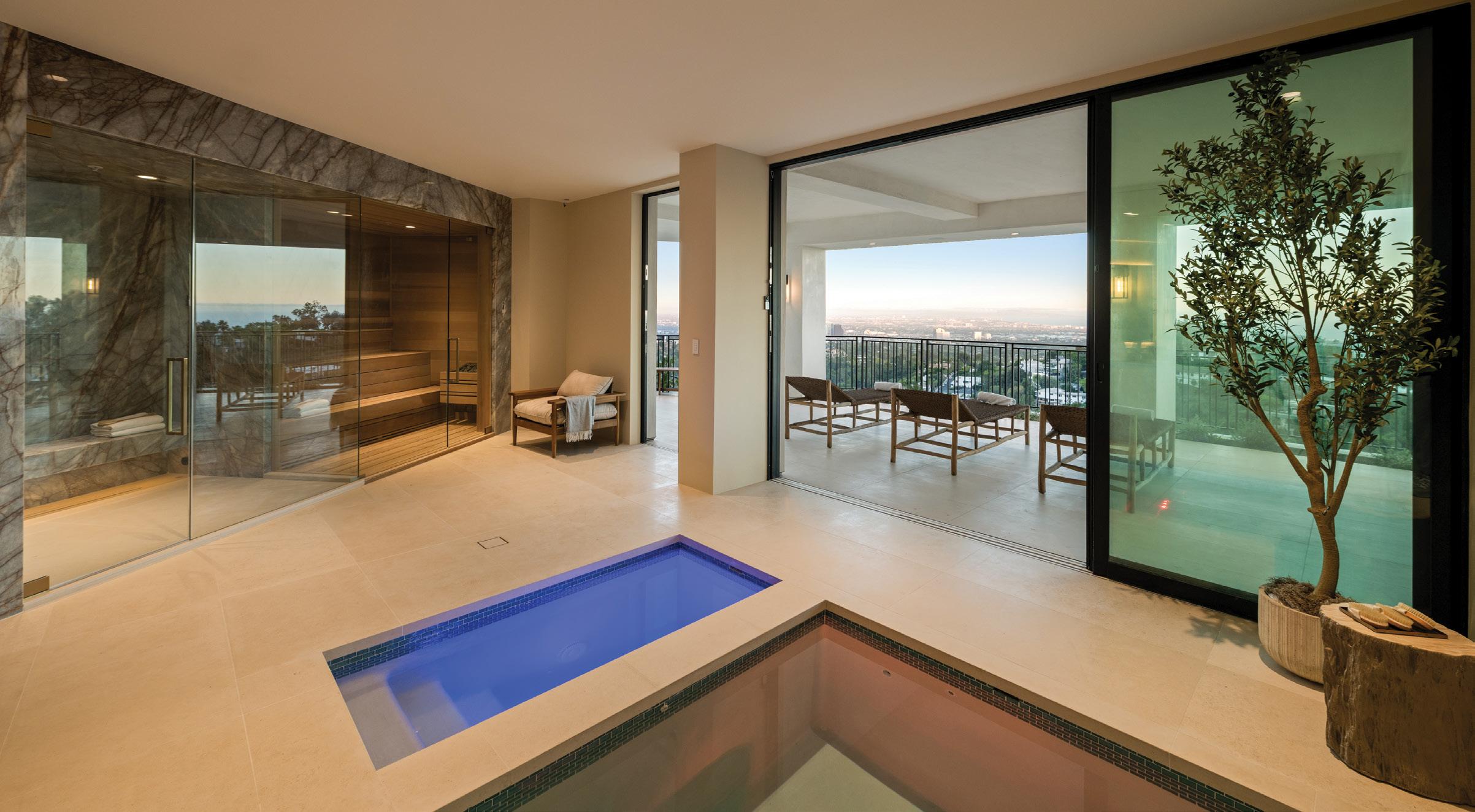
The Rise of the Wellness Wing
SMALL AMENITIES ARE NO LONGER ENOUGH AS BUYERS AND BUILDERS DOUBLE DOWN ON PROMOTING HEALTH AND LONGEVITY AT HOME
In the not-so-distant past, wellness features in high-end homes meant saunas, home gyms, or sports courts—the hallmarks of healthy living. But as our collective view of well-being has evolved, so, too, has the definition of wellness in the home. What was once seen as extraordinary now feels expected, setting the stage for a new era of highly customized mind-body and longevity systems. These nextlevel enhancements, amenities such as hyperbaric chambers, cold plunges and red-light therapy rooms, are the types of treatments and technology once reserved for cutting-edge clinics and elite spas.
“There’s a growing awareness that health and wellbeing are the most important priorities in life right now,” says Santiago Arana, Principal at The Agency. “People are more conscious about selfcare and longevity and creating environments that support a healthier lifestyle.”
What’s more, as homeowners are spending more time at home, they want, or even expect, their personal daily health routines to be immediately accessible, says Sandro Dazzan, Managing Partner of The Agency Malibu.
Ultra-premium, off-the-charts self-care spaces are on the rise because people are craving control, vitality, and a sense of calm within their daily lives, says Sedona, Arizona-based interior designer Stephanie Larsen, who’s known for design that merges luxury and well-being. “People want wellness at their fingertips, woven into their routines instead of something separate that they need to step out of their way to acquire,” she says. “Wellness amenities help homeowners cut through the noise and create spaces that support them physically, mentally, and spiritually—it’s all about environments that look beautiful and feel beautiful to be in,” she says.
PERSONALIZATION IS KEY
Beyond the typical spa-inspired additions, homeowners are taking a personalized approach to their well-being that essentially fills a prescription for their space. “The focus is on blending technology and luxury design with preventive, performance-based amenities that not only help us relax but also boost our longevity and enable us to live better, happier lives through every moment,” Larsen says. Some of her clients are achieving this by installing bespoke elements such as lighting systems that mirror circadian rhythms, living herb walls, edible gardens within reach of the kitchen and soundproof sanctuaries designed for meditation, quiet reading, and moments of solitude.
These days, people consider their house and surrounding property as more than just a place to call home. “They’re viewed as spaces that support a healthier, more balanced lifestyle,” says Jason Davis, San Francisco-based studio director for Marmol Radziner, a designbuild firm that specializes in creating seamless indoor-outdoor spaces. “We now see more trending amenities like pickleball and bocce courts, chicken coops, vegetable gardens, spas, and cold plunges,” he says.
In limited spaces, closets are being traded for saunas, and gyms are replacing media rooms. “It’s about more than just convenience or luxury. Our clients increasingly recognize the importance of reducing stress and maintaining a strong focus on health,” Davis says. “Many of these aspects were once considered luxuries, but they have since become priorities, or even necessities, in what people now expect from their homes.”
And sometimes one dedicated space is simply not enough. For example, Dazzan is showing homes with entire wellness floors or wings with separate rooms designated for different activities.
THE AGENCY'S GLOBAL SURVEY
Would you say that wellness the most popular amenity for high-net-worth individuals?
“I recently saw a property that had a dedicated infrared heated room for practicing Pilates and yoga,” he says. “The home gym has evolved into a whole wellness center, designed to complement fitness with holistic well-being.”

Even when every square foot is spoken for, homeowners are finding creative workarounds. Some are dropping fully outfitted shipping containers onto their properties, which double as standalone wellness sanctuaries. According to Dazzan, these sleek structures can house anything from cedar barrel saunas and cold plunges to cuttingedge gym equipment. Finished with hardwood floors, mirrored walls, and
a roll-up door, they transform into high-end, freestanding retreats. “It’s an instant kind of health and wellness setup,” he says. Dazzan is also seeing homeowners without space to spare making the most of their basements. “They’re adding living walls, bringing in natural light and elite equipment to turn even a subterranean space into a soothing sanctuary.”
WELLNESS FROM THE GROUND UP
Beyond adding wellness amenities after the fact, homeowners are now prioritizing healthier living environments from the very foundation of the home. For HQ Residences Miami, a development project Arana is working on in Miami, “we’re incorporating cold plunges, saunas, and other wellness-focused spaces directly into the design.”
Larsen prefers to think of wellness as the bones of a space when designing a space. “The goal is to make it effortless, automatic, and elevated through every design choice. It’s about building support for our well-being into every room as a foundational, permanent fixture, rather than an add-on or afterthought. She prioritizes natural light, surrounding views, systems for promoting air quality and noise management and focuses on the flexibility of the space to encourage rest, connection, and mindfulness.
Billy Rose, Founder and Vice Chairman of The Agency, has observed a growing focus on the health of the home itself— air purification, sound attenuation, and lighting systems designed to align with natural circadian rhythms. “Homeowners are bringing in specialists to make the entire home healthier,” Rose says.
Rose is also noticing a trend among homeowners to nurture themselves from the inside out—literally, by cultivating organic fruits, vegetables, and herbs in gardens, greenhouses, or high-end planter boxes.
“WELLNESS AMENITIES HELP HOMEOWNERS CUT THROUGH THE NOISE AND CREATE SPACES THAT SUPPORT [THEIR WELL-BEING].”
STEPHANIE LARSEN Interior Designer
WHAT THE INVESTMENT REALLY MEANS
Wellness is so much more than a passing trend—it’s the future of design. The industry is projected to grow to nearly $10 trillion in just a few years, Larsen says. “By introducing wellness amenities into the home now, homeowners benefit not only in the short term but also gain a competitive edge in the future market, building resilient investments that will hold value for buyers in the long term—especially for younger generations who are prioritizing wellness in their decision-making processes,” she says.
Like any sought-after amenity—whether it’s a theater, chef’s kitchen, or wine cellar—wellness features create emotional appeal, Arana says. “Buyers connect with them on a personal level, and that emotional connection often translates into a willingness to pay a premium.”
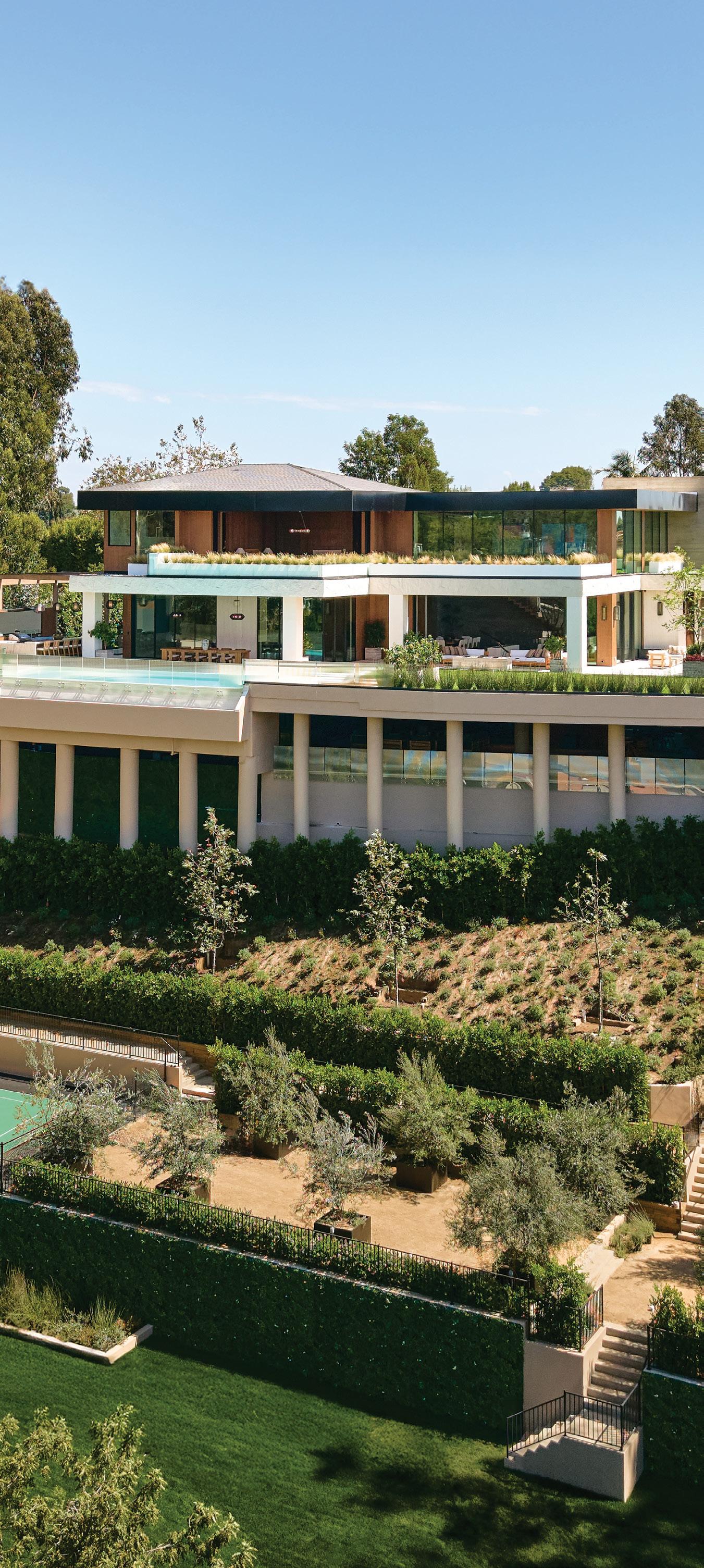

As a younger generation inherits wealth, consumers crave experiences, personalization, and authenticity above anything else.

Luxury spending trends are evolving rapidly, shaped by shifting consumer values, global economic dynamics, and the growing influence of the digitally savvy younger generations. No longer motivated solely by status symbols or exclusivity, today’s high-networth individuals and aspirational buyers alike are increasingly prioritizing personalization and purpose in their purchases—whether that means investing in timeless craftsmanship, immersive travel, or experience-driven pursuits.
GROWTH OF ONLINE PURCHASING POWER
As one of the most enduring effects of the Covid-19 lockdown, buyers have become more comfortable purchasing with more frequency
and at higher values online, with the digital sites supporting these endeavors having quickly become more sophisticated, personalized, and secure.
From 2014 to 2024, Christie’s New York saw a 248% increase in new buyers participating in an auction digitally (in live and online auctions). For in-person auctions across all luxury categories, the first half of 2025 saw a 30% increase year over year, with buyers having successfully spent $52 million in luxury goods via online channels in the first half of 2025, a 133% increase from the same period in 2024.
“We’re seeing clients underbidding and buying jewels and watches in excess of a million dollars via online platforms, something we would have never envisioned 15 years ago,” says Kimberly Miller, Christie’s Senior Vice President and Regional Managing Director of the Luxury Division.
ART WORLD ‘RECALIBRATION’
In the art world, the shift toward online purchasing is happening out of necessity, as a raft of longstanding galleries have closed around the world over the past year.
“The art market is in the midst of a transformation. While headlines often focus on contraction at the top or the wave of gallery closures, I see this period less as decline and more as recalibration,”

GENERATIONAL SHIFTS
According to Kapoor, perhaps no field is being affected by this more than the art world.
“This shift is changing the way art is collected. Younger generations are less interested in trophy works bought only for prestige and more focused on pieces that reflect identity, values, and cultural relevance,” she says. “They discover art through digital platforms, Instagram, and transparent online sales, and they want to support diverse voices, female artists, artists of color, and emerging names.”
With older collectors increasingly looking to downsize or pass on their estates, notes Kapoor, more important
says Arushi Kapoor, an art advisor and founder of The Agency Art House. “Many gallerists are pivoting toward project-based models, online platforms, or collaborative frameworks that are more nimble and sustainable. This is not the end of the gallery system, but a reminder that it must evolve to meet a new generation of collectors and cultural consumers.”
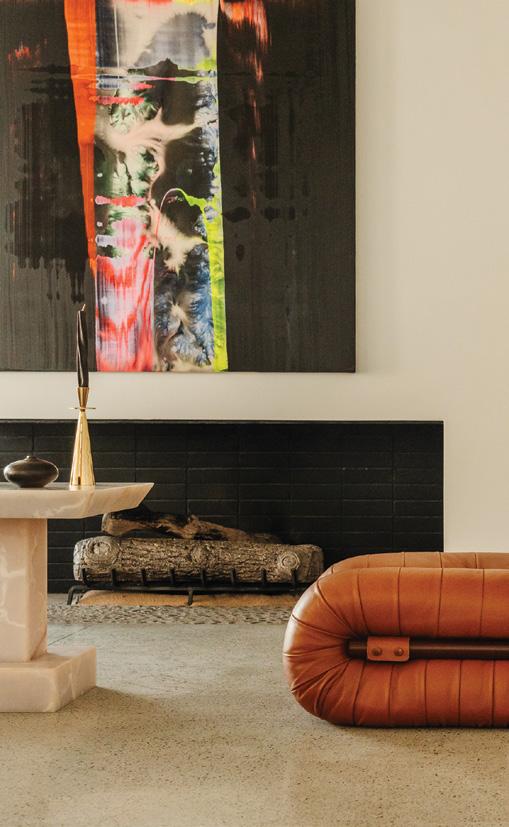
works are entering the market, creating opportunities for new buyers to access both blue-chip and undervalued pieces.
“This moment represents a unique chance to build meaningful collections while prices and availability are more favorable.” At The Agency Art House, their staging services help bridge the gap by placing artworks in luxury homes and architectural spaces, allowing collectors to see how pieces live and breathe in real environments. “The art world is not shrinking,” she says, “it’s evolving and for thoughtful collectors, this generational shift is the perfect moment to enter, expand, and shape collections for the future.”
According to agents, the most sought-after collectibles among their clients range from fine wines, fine art, and luxury cars to coveted accessories like designer handbags, jewelry, and watches.
81% CARS
77%
JEWELRY AND WATCHES
69%
WINE
58% ART
4 2% HANDBAGS

JEWELRY: THE FLIGHT TO REAL VALUE
In a climate of economic uncertainty, jewelry represents a tangible asset. As such, gold has hit record highs in 2025, reflecting demand for a secure investment amid geopolitical tensions. Jewelry trade group Rapaport forecasts the global estate and vintage jewelry retail market to reach $5.2 billion by 2031, up from $4.4 billion in 2023.
According to Olshan, jewelry is maintaining a 5% compound annual growth rate (CAGR) while other luxury goods like apparel and handbags are contracting. “When markets get volatile, smart money flows to assets that hold value,” he explains. “A Cartier watch isn’t just jewelry—it’s a store of value you can wear to dinner.”
LUXURY SHOPPING GRAVITATES
FROM THE SHOWROOM TO THE WEBSITE
As a digitally native company, Saatva, celebrating its 15th anniversary in 2025, was one of the first brands to sell luxury mattresses online, and it prominently displays its website in all of its showrooms to emphasize the continuity between its online and offline presence.
“ RETAIL IS NO LONGER ABOUT SELLING; IT’S ABOUT BELONGING.”
MARCO CREDENDINO CEO & Co-Founder of
Artemest
“Collectors today aren’t just buying jewelry for adornment; they’re also buying it as an investment to pass down through generations,” says Tyler Moradof, principal at Yafa Signed Jewels. “Collectors view rare, signed high jewelry not only as adornment, but as resilient assets that hold cultural and financial value, carrying provenance and scarcity that can outperform more volatile markets.”
Christopher Olshan, chairman and CEO of The Luxury Council, believes that a growing consensus is forming among luxury customers—they aren’t just buying jewelry, they’re buying insurance against uncertainty. “Van Cleef pieces get passed down through generations,” he says. “Logo handbags get dated in three seasons.”
Luxury retail growth has been slowing, and countless brands are shifting their retail approach from pure product sales to experiential touchpoints. Flagship stores are now doubling as cultural hubs with restaurants, cafes, and VIP lounges.
“Retail is no longer about selling; it’s about belonging,” says Marco Credendino, CEO and co-founder of Artemest, an online destination for Italian home decor. “Culture, hospitality, and experiences that customers cannot replicate” is what people are looking for, he says.
According to Jeff Klein, Chief Financial Officer at luxury bedding company Saatva, one of the biggest trends in luxury shopping today revolves around digital integration and the use of technology.
“Successful brands are those that are digitally native or digitally savvy, offering consumers a seamless experience between their digital and brick-andmortar touchpoints,” he says. “In fact, [according to McKinsey,] 80% of luxury sales are now digitally influenced.”
“The customer journey and decisionmaking process is no longer all in stores or all online,” Klein notes. “Customers now expect that companies will use technology to meet them where they are in their decision-making process, and tailor their experience accordingly, including customizing the products they’re shown and the customer service they receive.”
When a customer enters a Saatva location, they’re met with state-of-theart technology (through a partnership with Samsung) that allows them to personalize their visit and product recommendations.
E-commerce sales in the U.S. are growing exponentially faster than brick and mortar, notes luxury goods expert Graham Wetzbarger, which dovetails with the rise of the digitalheavy resale market. “Resale provides more value to consumers, and with an all-time high of 68% of consumers participating, market projections are much more bullish for the compound annual growth rate of digital-driven resale vs retail,” says Wetzbarger, founder and CEO of Luxury Appraisals & Authentication. “Key online platforms like The RealReal, ThredUp, and eBay all posted better-than-expected growth for the first half of the year.”
EXPERIENTIAL SPENDING IS ON FIRE
Experiential spending, including travel, is increasingly being favored by highnet-worth individuals, with reports from Bain & Co. and McKinsey highlighting that luxury experiences (like hospitality and dining) and experiential goods (yachts, jets) are seeing strong growth.
According to 2025 trend reports from luxury travel company Zicasso, spending on luxury travel continued to rise substantially, ticking up 23.5% year over year. Brian Tan, Zicasso’s CEO and founder, attributes much of the increase to the explosive growth of the experience economy.
“The convergence of authenticity, exclusivity, personalization, and timing illustrates that for many travelers, the highest form of luxury in an overconnected world lies in experiences that cannot be replicated online or mass-produced,” he says.
With the sports tourism market projected to reach $74.32 billion by 2036, and 60% of luxury travelers planning to attend major sporting events in 2025, Tan points to a mass shift in travel motivation.
“This extends far beyond sports,” he observes. “Our travelers are building entire vacations around solar eclipses, art exhibitions, wildlife migrations, and cultural festivals. The common thread is irreplaceability; these experiences cannot be rescheduled or relocated.”
These patterns point to a broader trend: Affluent travelers are moving beyond “safe bets” of recent years and leaning into global, experiential luxury— whether that’s extended stays in Europe during shoulder season or higher-spend sailings on luxury cruises.
Ellidore, a lifestyle management service for ultra-high-net-worth entrepreneurs,
reports that client trips are increasingly structured around cultural, sporting, and arts events where the first—and most important—component is access.
“The trip is no longer just about the accommodation. It’s the tickets, wardrobe, table reservations, afterparties, and the experience. This is about bragging rights, but also immersion,” explains Ed Farrelly, Ellidore’s director of travel.
“The true marker of status in 2025 is coming home with a story no one else can match—which is why we’re seeing demand for Antarctica, the North Pole, and East Africa,” adds Simon Blackford, Ellidore’s co-founder and chief growth officer.
IN TRAVEL, AQUATIC ADVENTURES ARE ON THE RISE
With overtourism affecting many of the world’s most popular destinations, luxury travelers are increasingly casting their gaze to the water.
While all travel categories have been showing growth, according to Virtuoso, cruise and tour bookings are projected to see an exceptionally steady rise. The company’s consumer survey data indicate 30% of luxury travelers from the U.S. and 20% from Canada plan to cruise within the next year, and they expect to
THE AGENCY'S GLOBAL SURVEY
spend on luxury sailings. Virtuoso future cruise sales one to two years out that exceed $50,000 per booking are up 43% compared with the same time last year.
Anders Kurtén, CEO of Fraser Yachts, has observed an increase in superyacht charters that has been driven by a more wide-ranging clientele. “Covid changed the game. People who’d never considered a yacht charter suddenly saw it as the safest, most private luxury vacation option,” he says. “First-time clients jumped from about 10% of charter bookings to nearly 30%.”
According to Kurtén, Fraser has established a new baseline, with higher average demand, more diverse client expectations, and a wider demographic footprint. “We see a broader mix of charter clients, including young families, adventure travelers, and that diversity is expanding the charter market,” he adds.
The caliber of aquatic adventures is also improving, as evidenced by the growth of ultra-luxe boating trips. "Fishing in remote, pristine waters has always carried an air of adventure, but what’s changing is the level of sophistication around it,” says Captain Craig “Brutus” Newbold of Australia’s Lizard Island Resort, a Relais & Châteaux member. “Today’s luxury travelers expect privacy, space, and the ability to disconnect from the wider world in raw luxury.”
When it comes to buyer demographics, which groups are growing in 2025?
Less Flash, More Focus: Finding the Megamansion Sweet Spot
TODAY’S MEGAMANSIONS MUST CONVEY POWER AND PEDIGREE WHILE STILL OFFERING INTIMACY AND LIVABILITY
For many of the world’s wealthiest, real estate is the ultimate status symbol and oftentimes a competition of extremes—the biggest footprint, the steepest price, the most lavish perks. As estates swell to extravagant proportions, one question cuts through: When is big simply too big?
Though there’s no official size designation for a megamansion, these large and expensive singlefamily homes often span well beyond 10,000 square feet, and it’s not uncommon to find homes in these top corners of the market spanning 50,000 square feet, brimming with every possible amenity, staff quarters, entertaining areas, and dozens of bedrooms to accommodate family and friends. Santiago Arana, Principal at The Agency, is also a real estate developer in Los Angeles, who has built and sold multimillion-dollar estates to LeBron James, Petra Ecclestone, and more. In his projects, he prioritizes warm materials and layouts that speak to the nature of intimate living that retain a homey feel. In his view, the ideal megamansion measures 20,000 square feet or less.
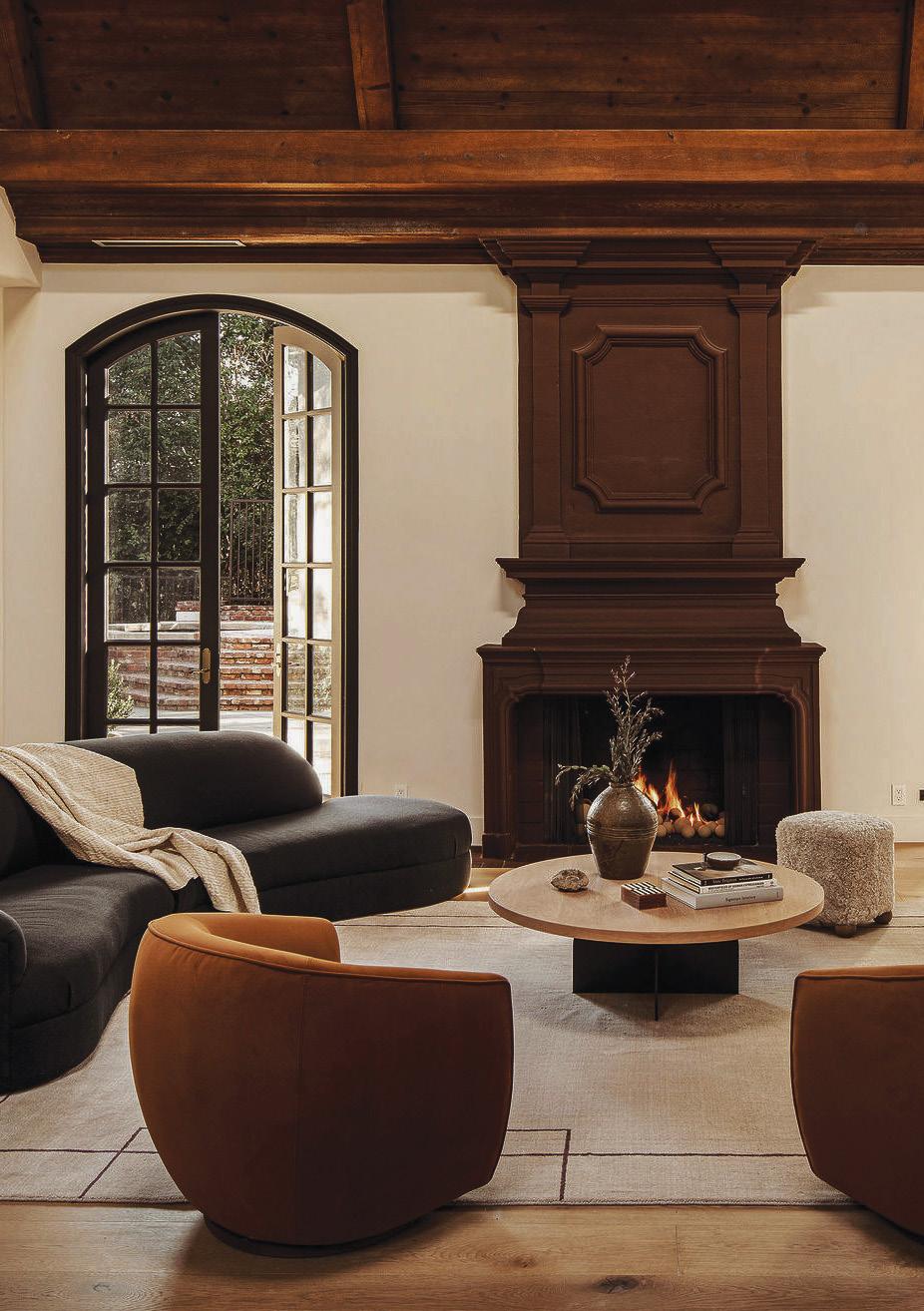
“You never want to feel like you’re living in a museum,” Arana explains. “Making a megamansion feel cozy lies in more understated materials and finishes—no heavy marble, shiny walls, or bling. I like to use materials such as Portuguese limestone, natural French oak, Roman plaster subtly rich in texture, and organic, grounding materials.”
AS ESTATES SWELL TO EXTRAVAGANT PROPORTIONS, ONE QUESTION CUTS THROUGH: WHEN IS BIG SIMPLY TOO BIG ?
Developers are at the mercy of local governments that may restrict building heights, square footage, lot coverage ratios, the number and size of accessory dwelling units (ADUs), and structural setbacks. Eric Haskell, Managing Partner of The Agency Montecito in California, says many clients in the area seek to build megamansions up to 30,000 square feet, similar to their primary property in L.A., but Montecito has unique restrictions.
1484 RUTHERFORD ROAD, PASADENA
“People are getting creative and will get an ADU and combine that with the main body of the house, and then the other amenities they once had inside their homes live outside the house,” Haskell says. “A lot of architecture in the area is Spanish Revival style or Mediterraneaninfluenced versus super-modern. Still, clients want it to function like a modern house with high-tech features, clean lines, and smart systems that offer convenience and turnkey living.”
Haskell explains that despite a home’s size or modern functions, these large homes are a far cry from ultra-modern, cold mansions, instead featuring patina surfaces, antiques, large-format art,
oak cabinets, and beautiful stonework. Proportional furnishings are also crucial to a space, as are the size and layout of each room. For instance, Arana says bedrooms shouldn’t feel like sleeping in an oversized living room and instead act as personal sanctuaries with fireplaces and welcoming sitting areas to fill space in a useful way. Blair Chang, CoFounder and Partner of The Agency, echoes this sentiment.
“It’s so much about how you furnish them, and if you can get more eclectic furnishings it helps humanize the house a bit more,” Chang explains. “What we’re also seeing in newer homes that are being built for the specific family is, though
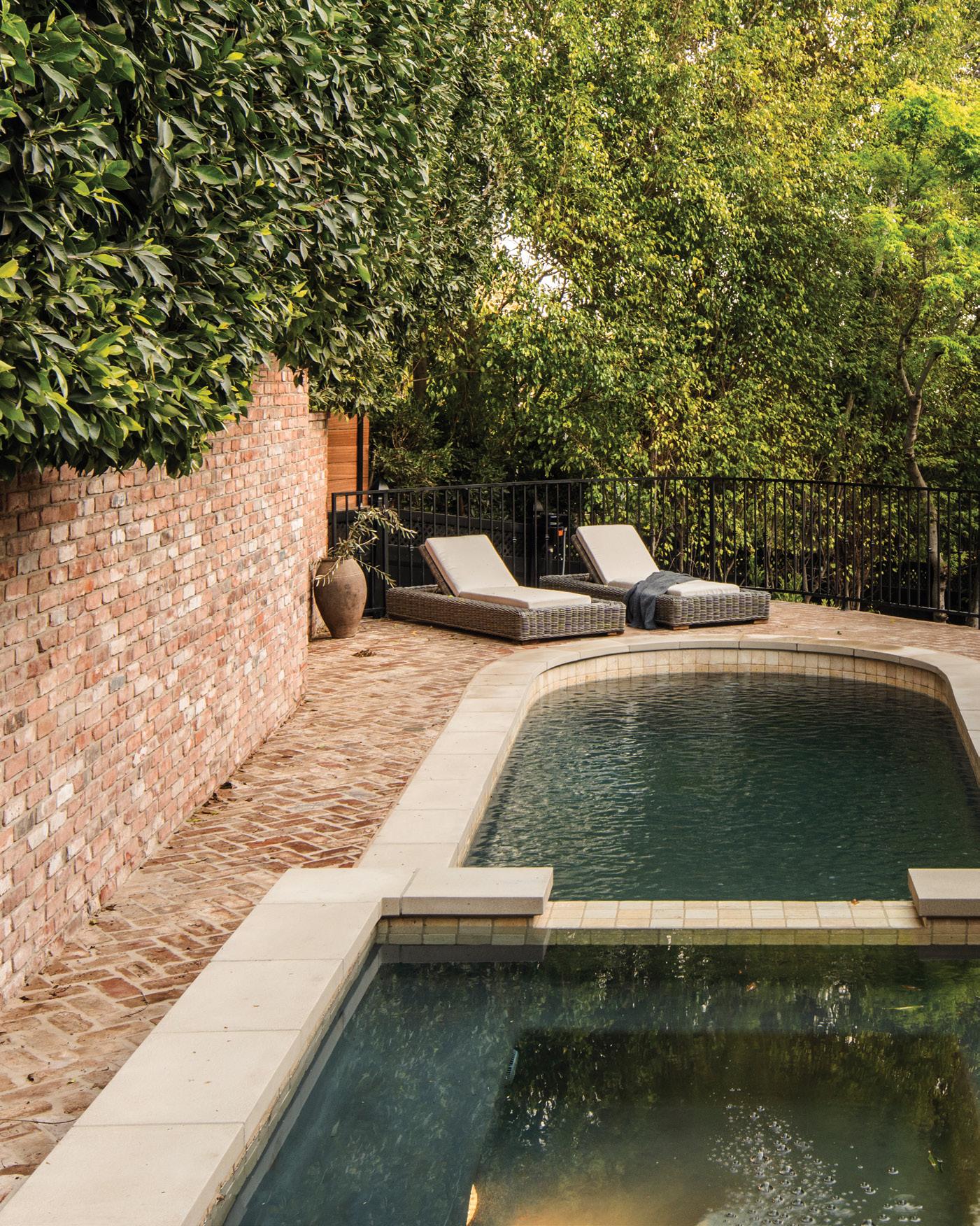
they’re all still large—like up to 20,000 square feet—the rooms are scaled on a smaller level. Say the family isn’t together and you want to sit by yourself in a living room, it won’t feel overwhelming.”
Amenity layouts are important, too, and how they are presented can make a big difference. Don’t expect a variety of amenities to line up in one section of the home like they may have once done. The bar may not be combined with a game room, but strategically placed within a chic library or movie theater. A garage might not be located off a kitchen but in another wing entirely, outfitted with a car gallery to fit 16 vehicles and a man cave or a whiskey vault.
MOST AGENTS AGREE: [THE KEY] TO MAKING MEGAMANSIONS FEEL PERSONAL RELIES ON ONE THING: INTENTION.
The Agency’s Glen Stegemann, Managing Director of The Agency Northwest Florida Beaches and The Agency Madrid, says 15,000 to 20,000 square feet seems to be the sweet spot for a cadre of global buyers—and many of The Agency’s real estate experts from around the world agree. In fact, according to a survey of The Agency brokers, 80% said the “sweet spot” for a megamansion was under 15,000 square feet.
“This size is still manageable to staff, maintain, and occupy year-round or seasonally; easily accommodates a full suite of amenities; and it fits the highend market without feeling excessive or wasteful,” Stegemann explains. “It’s attractive to a broader group of luxury buyers, especially those relocating from high-density markets or looking for trophy second homes.”
However, every buyer has a unique motivation and perspective. Some purchase residences that will also accommodate philanthropic events or large-scale entertaining for hundreds of people.
Others are motivated to purchase trophy megamansions that are a marker of pedigree, status, and power. Headlinegrabbing homes, such as the 137acre Lyon Estate in Orange County, California, built for U.S. Air Force Reserve Commander and real estate magnate Major General William Lyon; the sprawling Sanctuary at Loon Point, a 22-acre oceanfront mansion on the California coast; Green Gables, a 74acre legacy property in Woodside, California, and the famed, 40-acre Merv Griffin estate in La Quinta, California, are all beautiful and grand, but owning them also represents cultural cachet at the highest level.
“I believe it’s the clout or the bragging rights, especially in older areas of L.A.,” Chang says. “Many megamansions have a long-established lineage of pedigreed owners. People like that they’ve purchased a piece of history and the cachet that comes with that.”
In Turks and Caicos, the appeal of a megamansion is about access to the beach and outdoor activities, says Ian Hurdle, Managing Partner of The Agency Turks and Caicos. He’s currently representing the 19,000-square-foot Mandalay villa as well as the 50,000-square-foot Triton property. He says the first priority for buyers of these types of homes is the quality of the location, which is usually beachfront. Next are architecture and finishes. But return on investment is of utmost importance, too, since most high-net-worth buyers of these homes are looking to rent them out for at least part of the year when they’re not using them.
“People think, when I’m not here, this home needs to work for me. They’re
doing the math and want to know what the occupancy is, what the cost is, and what they stand to make,” he says.
In terms of who will buy one of the megamansions he’s currently marketing— either of which will easily break a record for the island—subtelty is not likely their goal, he says.
“You’re not pulling the trigger on a house like this unless you want people to know what you’re doing and what you’re buying.”
Above all, most agents seem to agree that making a megamansion feel personal relies on one thing: intention. Intentional, meaningful spaces matter, versus having dozens of rooms just to have them.
“It’s about creating moments and spaces in the house rather than filling it with impressive things,” Arana says. “We went through a period in L.A. where people thought the bigger the better and the flashier the better. Megamansions should be designed to offer everything without being too exaggerated.”
Across global markets, the traditional megamansion, once defined by sheer square footage and excess, is being reimagined. Today’s affluent buyers are
THE AGENCY'S GLOBAL SURVEY
looking to blend space with purpose, lifestyle with efficiency, and grandeur with functionality—without tipping into the realm of underutilized excess.
Rather than oversized and ostentatious, buyers are looking for bespoke and liveable homes. Statement elements like wine cellars, home theatres, golf simulators, and spa-style en-suites are still bug draws, but they’re designed with a level of restraint.
There's also a generational shift at play. Younger luxury buyers are less interested in traditional displays of wealth and more focused on lifestyle. For them, the ideal estate supports overall wellness, daily remote work, and occasional entertaining. Efficiency and long-term livability are of utmost importance.
Energy costs, property taxes, and maintenance considerations are also influencing decisions. Even ultra-highnet-worth individuals are approaching purchases with practicality in mind. The Agency’s teams in the U.S. and Canada have relayed that a welldesigned 5,000-square-foot home with panoramic views, smart technology, and seamless indoor-outdoor flow holds far more appeal than a 10,000-square-foot estate with rooms that rarely get used.
What would you say is the “sweet spot” when it comes to the size of a megamansion?

THE AGENCY IS A LEADING GLOBAL BOUTIQUE BROKERAGE WITH OFFICES IN 150 MARKETS WORLDWIDE. CONNECT WITH US TODAY TO EXPLORE YOUR REAL ESTATE GOALS FOR 2026 AND BEYOND.

The Red Paper – The Agency Report 2026 (this “Report”), and the information contained in it, including without limitation all text, data, graphs, and charts (collectively, the “Information”) is the property of The Agency Holdco, Inc. or its subsidiaries (collectively, “The Agency”), and is provided for informational purposes only. The Information may not be modified, reverse-engineered, or reproduced, in whole or in part without prior written permission of The Agency. The Agency reserves all rights in the Information and the Report. This Report contains general information about The Agency and its franchisees and its undertakings from time to time, including without limitation information related to the real estate markets in which it and they do business; and the real estate industry generally. The data, estimates, and views expressed in this Report are based upon past or current market conditions and/or data and information provided by public sources, unless otherwise identified in the Report. Although every effort has been made to assure the accuracy of the data contained in this Report, The Agency makes no warranty or representation, either expressed or implied, with respect to quality, performance, or fitness for a particular purpose. Certain information set forth in this Report contains forward-looking statements that are based on The Agency’s and its franchisee’s current internal expectations, estimates, projections, assumptions and beliefs,