

Notre Dame holds Mass for immigration reform
By Lucy Loes News Writer
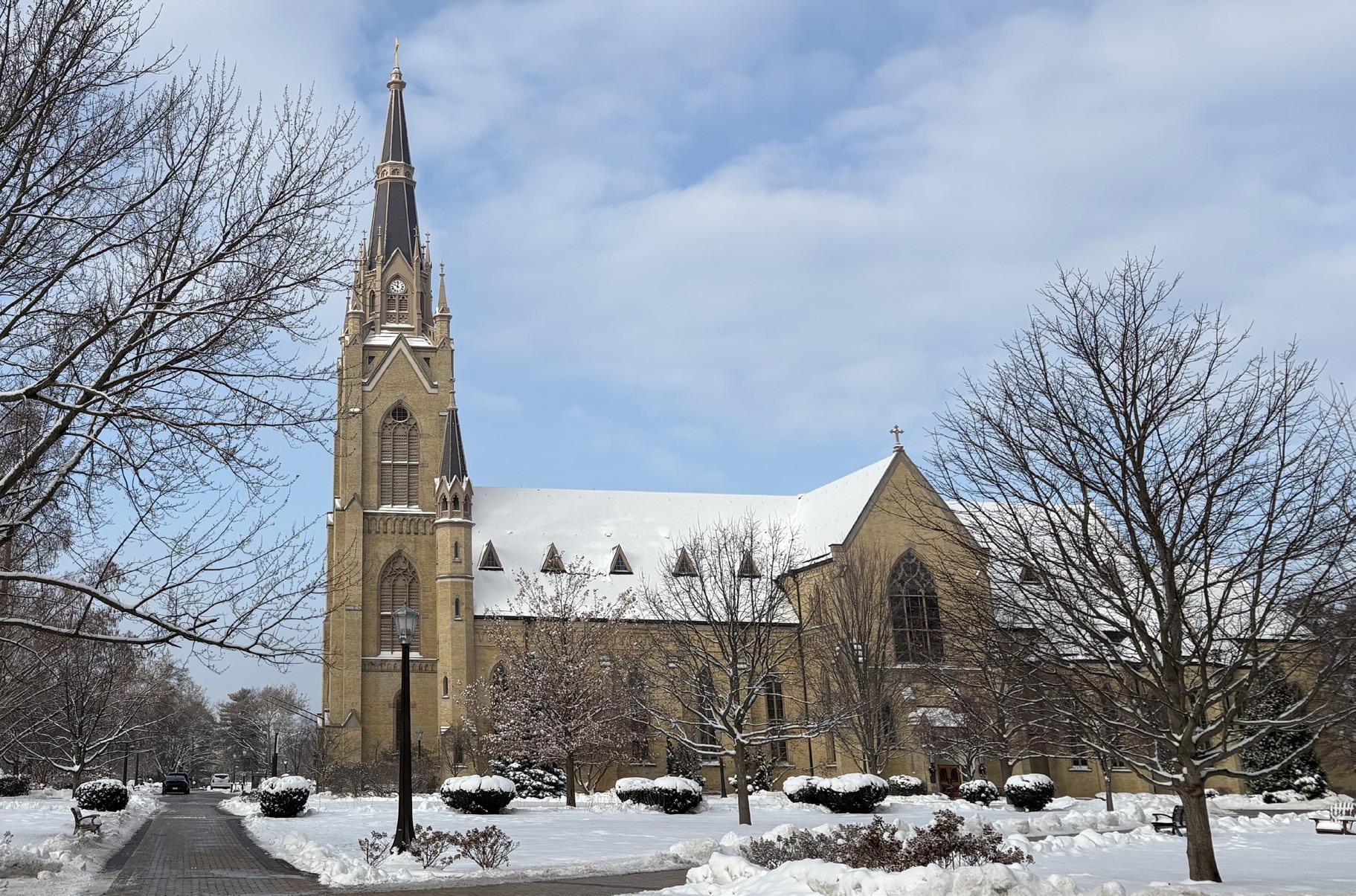
Notre Dame held a Mass at the Basilica of the Sacred Heart for immigrants and immigration reform on Monday. The event was followed by a trip to the Grotto for prayer and further reflection on the state of immigration policy in the United States.
University President Fr. Robert Dowd said that the Mass was inspired by his meeting with Pope Leo XIV and the rare special message from the United States Conference of Catholic Bishops condemning “indiscriminate mass deportation” and advocating for immigration reform.
“For some time, I have been thinking a great deal about the immigration issue in our country. A few weeks ago, during the visit that other university leaders and I had with Pope Leo, we talked about a number of things, including his concerns for immigrants in the United States these days. Just before that visit, the United States Conference of Catholic Bishops (USCCB) issued a special message on immigration. It was clear to me that it was time for us, as members of the Notre Dame family, to gather in prayer for immigrants as well as for sensible
MARA HALL| The Observer
University President Fr. Robert Dowd presided over a Basilica mass this past Monday dedicated to immigrants and immigration advocacy in response to the USCCB’s condemnation of federal deportation policy.
and humane immigration reform,” Dowd said in an email interview.
dignity and respect. And that’s really not what’s happening right now,” Sanchez said.
Sanchez further emphasized the relevance of this message in light of recent changes in immigration policy and enforcement. “There’s just so much anti-immigrant rhetoric that people are not being treated with basic dignity. People following processes they’re supposed to do are losing their immigration status arbitrarily … People are being arrested at their green card interviews. People who are in the process to have their applications heard are having their cases just canceled out of nowhere. This is not a normal environment. It makes it impossible for people [to] play by the rules,” she said.
Law School professor and director of the Notre Dame Immigration Clinic Ashley Sanchez said the USCCB’s message was not a call for open borders, but rather an appeal for the need to recognize human dignity.
“One thing that I really liked out of the bishops’ statement was saying that human dignity and national security are not in conflict … I think a lot of people just assume that you
Fire Department responds to chemical leak in Stepan Hall
Observer Staff Report
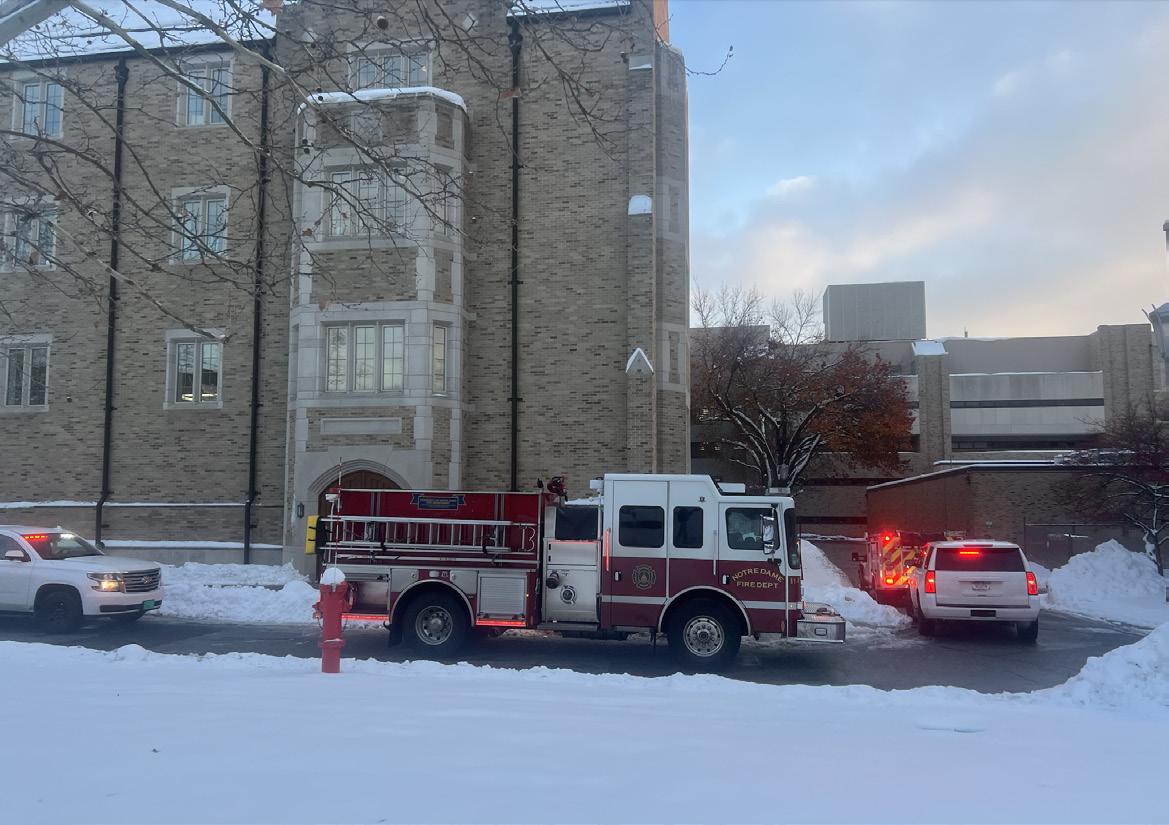
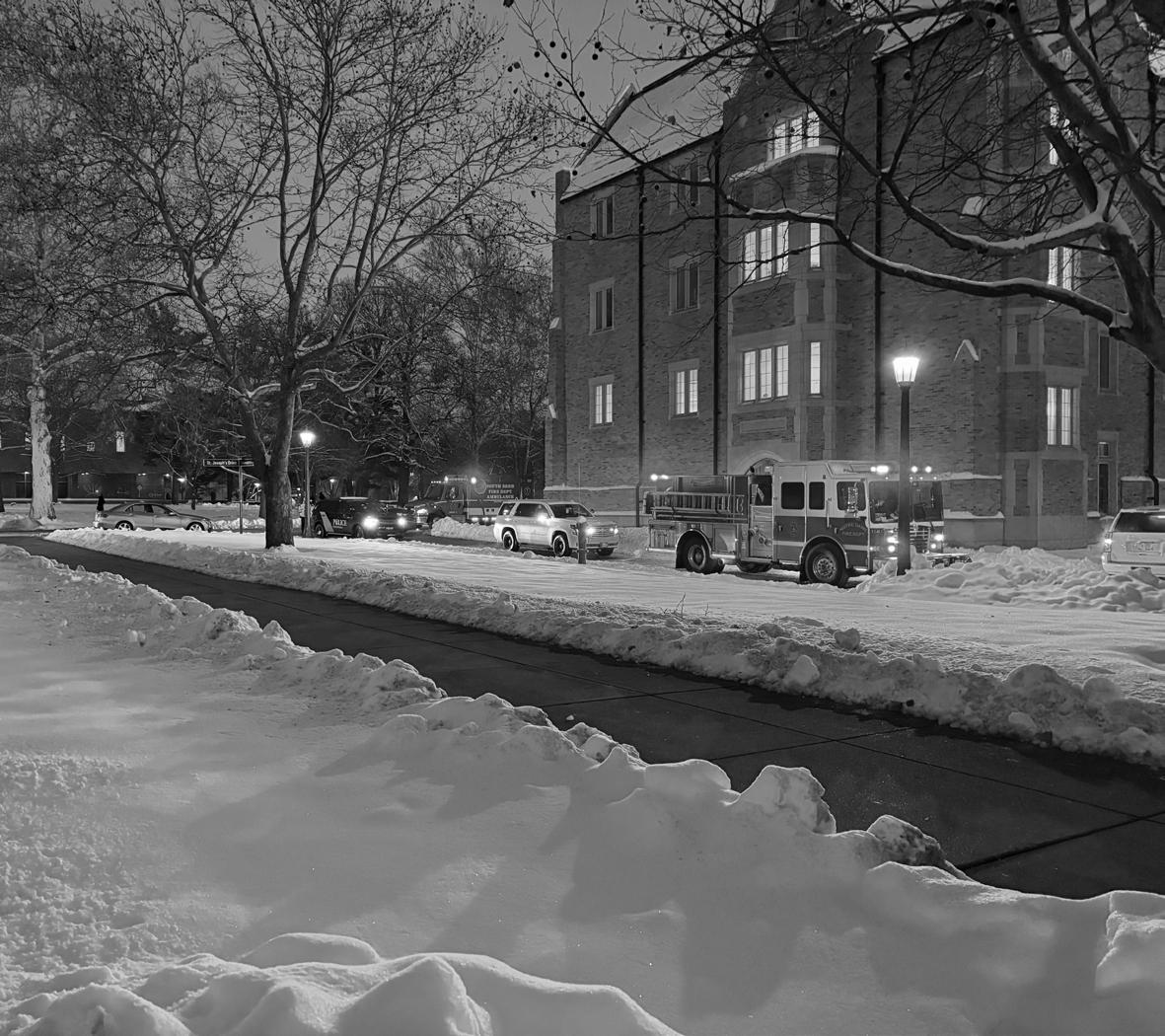
At 3:30 p.m. Tuesday, a lab on the second floor of Stepan Chemistry Hall alerted emergency responders to a “suspicious odor,” according to a statement from a University spokesperson. Following the incident, four people were taken to the Notre Dame Wellness Center to be evaluated.
A coalition of emergency teams arrived at the scene. The University deployed units from the Notre Dame Police Department, Fire Department and Risk Management teams. The South Bend Fire Department was also called to assist. Over a dozen vehicles remained parked around the north and southeast entrances to the building for at least three hours. According to the spokesperson, the chemicals causing the odor were discovered and disposed of. “The lab remains offline until a refrigerator can be replaced,” the spokesperson wrote.
NEWS | PAGE 2
Pope Leo XIV
The pope embarked on his first official trip away from Rome visitng Turkey and Lebanon.
have to choose either between hard line immigration and national security. And as immigration advocates, that’s not what we’re arguing for … We want people to follow laws, but the whole idea is to treat the people who are in the system with
Alexandra Gonzalez-Amaro, a junior and member of Notre Dame’s Student Coalition for Immigration Advocacy, mentioned what she sees as the impact that Bishop Kevin Rhoades of the Diocese of Fort Wayne-South Bend has had on Notre Dame’s recent focus on immigration reform after his visit to the Law School in early November.
“Bishop Rhoades reminded us of our Catholic duty, duty that precedes any political affiliation, whether
see “Immigration” on page 2
Students complain of heat in SDH
By Mara Hall News Writer
In addition to navigating the temporary serving areas in South Dining Hall’s west dining room and the partially-under-construction former serving area amid renovations, students have been facing abnormally warm temperatures as they eat in South’s east dining room.
more noticeable during seasonal transitions, the holiday break will enable us to shut down the building for several days and make system adjustments intended to mitigate the balance issues. We appreciate our campus community’s continued patience as we work to improve their mealtime experience,” a spokesperson for ND Dining wrote.
The Notre Dame Fire Department was still responding to a 3:30 p.m. report of a chemial leak in Stepan Chemistry Hall at 4:45 p.m.
OPINION | PAGE 5 Howard Hall
A former Howard Hall resident reflects on life in the historic dorm, set to be retired next year.
Four individuals brought to the Wellness Center were evaluated “out of an abundance of caution.” All
see “Leak” on page 3 GRAY NOCJAR | The Observer
SCENE | PAGE 7 ND math band vinyl
Despite no longer actively performing, Hiene Borel and the Finite Subcovers lives on.
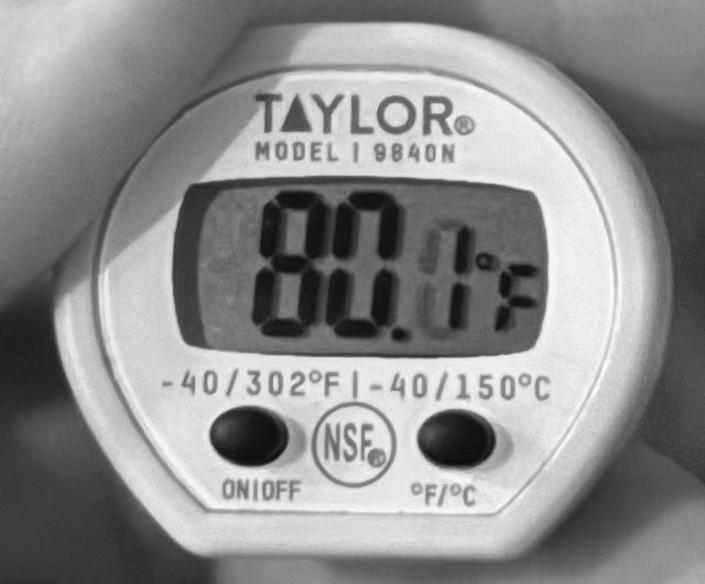
On Dec. 3, measurements taken by The Observer found that dining hall temperatures reached up to 80.1 Fahrenheit.
In a statement, ND Dining confirmed that the renovation efforts are temporarily affecting the heat balance and wrote they hope to resolve the issue over the upcoming Christmas break.
“While that effect is much
SPORTS | PAGE 8 Hockey
Irish gear up for this weekend’s challenging matchups against No. 2 Wisconsin at home.
Grace Shaible, Michael Agsam, Ryan King and Jack Knorr, Notre Dame students who frequent South Dining Hall described the dining hall as “unbearable,” “excessively [hot]” “inconvenient” and “very uncomfortable,” respectively.
Despite their displeasure with the temperature, all four of these students said it was not affecting their choice of
see “Temperature” on page 3
SPORTS | PAGE 12
Women’s basketball
Irish fall to No. 13 Ole Miss after leading at the half. The next matchup is FSU away.

ndsmcobserver.com
“TO UNCOVER THE TRUTH AND REPORT IT ACCURATELY”
900 Hesburgh Library, Notre Dame, IN 46556
Editor-in-Chief
Liam Kelly
Managing Editor Gray Nocjar
Asst. Managing Editor: Aynslee Dellacca
Asst. Managing Editor: Grace Tadajweski
Asst. Managing Editor: Henry Jagodzinski
Notre Dame News Editor: Sophie Hanawalt
SMC News Editor: Berhan Hagezom
Opinion Editor: Redmond Bernhold
Sports Editor: Noah Cahill
Scene Editor: Peter Mikulski
Photo Editor: Mariella Taddonio
Graphics Editor: Isabelle Rutland
Social Media Editor: Duncan Stangel
Ad Design Manager: Isabelle Rutland
Business Manager: Zack Pohlman
Systems Administrator: Jack MapelLentz
Advertising advertising@ndsmcobserver.com
Editor-in-Chief lkelly8@nd.edu
Managing Editor gnocjar@nd.edu
Assistant Managing Editors adellacca01@saintmarys.edu, gtadajwe@nd.edu, hjagodzi@nd.edu
Business Manager zpohlma2@nd.edu
Notre Dame News Desk shanawal@nd.edu
Saint Mary’s News Desk bhagezom01@saintmarys.edu
Opinion Desk rbernho2@nd.edu
Sports Desk ncahill2@nd.edu
Scene Desk pmikulsk@nd.edu
Photo Desk mtaddonio01@saintmarys.edu
Systems & Web Administrators webmaster@ndsmcobserver.com
Policies The Observer is the independent, daily newspaper published in print and online by the students of the University of Notre Dame du Lac, Saint Mary’s College and Holy Cross College. Editorial content, including advertisements, is not governed by policies of the administration of any institution. The Observer reserves the right to refuse advertisements based on content.
ND reflects on Pope’s visit to Lebanon
By Mara Hall News Writer
This past week, Pope Leo XIV made his first papal pilgrimage outside of Rome. His first stop was Turkey in order to celebrate the 1,700th anniversary of the Council of Nicaea, before continuing on to visit Lebanon.
Fr. Paul Kollman, C.S.C. a Holy Cross priest in residence in Welsh Family Hall and associate professor of theology, shared his belief that the visit to Lebanon was prompted by the visit to Turkey for this anniversary. Kollman noted the Council of Nicaea defined “that Jesus was fully God and fully human ... [and gave] us the Nicene Creed, which is central to almost every Christian group in the world.”
Daniel Philpott, professor of political science, shared why he sees Lebanon as in need of the Pope’s support and attention.
“[Lebanon] is a deeply divided and violent society on several different dimensions, but there is a lot of tension between the Christian community and the Muslim Community,” Philpott said. “Even to speak for the Muslim community is a little bit simplistic because the Muslims are divided between Shia Muslims and Sunni Muslims. The country is roughly one third Christian, Shia [Muslim] and Suni Muslim. For these communities to get along is a tall
Immigration
Continued from page 1
whether Democrat or Republican. He noted that our society has become polarized, and that this polarization has caused many to overlook the humanity at the heart of the immigration issue,” Gonzalez-Amaro said.
Sanchez felt that this message of putting politics aside in favor of shared humanity was evident at the Mass on Monday.
order.”
Holy Cross priest, professor of theology and global affairs, and associate provost for undergraduate education Fr. Daniel Groody said the country “is marked by a lot of political violence, economic instability and a tremendous influx of refugees especially from Syrian and Iraqi outflows.”
Philpott explained that in recent history, Lebanon was overrun with civil war, and there is still a strong presence of the Hezbollah group in the country, which is a Shia Muslim political militant community with an enormous amount of power but no official status.
“[Hezbollah] controls territory, it controls aspects of the economy, aspects of the government, but really through military force. It was formed in 1982 and produces an enormous amount of instability in Lebanon,” Philpott said.
In the face of this instability, Rashied Omar, associate teaching professor of Islamic studies and peacebuilding, stated his support of the pope’s visit.
“I welcome the visit of Pope Leo XIV to Lebanon at this critical moment in the country’s history,” Omar wrote. “His presence offers a profound opportunity to bear witness to the deep suffering of the Lebanese people, Christians and Muslims, citizens of every tradition, who continue to endure immense economic hardship, political paralysis and daily insecurity.”
Others echoed this sentiment of the immense power the presence of
the pope brings.
“Popes have an ability to garner these massive crowds, massive followings in a way that few other world leaders or religious leaders do,” Philpott said.
Mark Mikhail, a student in O’Neill Family Hall, similarly praised the visit.
“That kind of stage in having a billion people following the pope and the Vatican and all the orders, it sets an opportunity for the pope to carry out peace and carry out what the church wants in terms of what Christ has asked the church to do,” he said.
Groody noted the need for the pope to connect with those of different religions.
“The word pontiff means ‘bridge builder,’ and I think that is really something that is to bring people together and to allow people to respond and relate to each other in ways that respects human freedom, respects human dignity and also in this case, respects other people’s religions,” he said. “It is a universal mission, and I think in the same way that Paul is one the first apostles in the early church, it is a message and a mission that encompasses all people and encompasses all nations and in that sense, the pope is really an extension of that message and really is the most public face of that message in the contemporary world.”
Philpott noted that popes traveling is a relatively new phenomenon that began with Pope John Paul II.
Many are eagerly watching Leo’s
actions to better understand his character as pope at the beginning of his tenure.
“He has shown already that he is a person who listens carefully and he listens extensively, and what I think he is listening to ultimately is where God is at work in the world, and also what are the pains and sufferings of the people,” Groody said.
The pope has urged young people to see hope, telling them in Lebanon Monday, “Dear young people — perhaps you regret inheriting a world torn apart by wars and disfigured by social injustice but there is hope and there is hope within you.”
Kollman emphasized the role of young people in the church saying, “Young people are the church, just like everybody else.”
Omar elaborated on the impact of Leo’s visit.
“This pilgrimage of solidarity can serve as a powerful moral call to the international community to act with urgency and unity in supporting a sustainable peace in Lebanon,” she said. “The world must not turn away from the people’s cries for dignity, justice and economic relief. Their resilience deserves global accompaniment, not neglect. May this visit rekindle hope and strengthen collective resolve toward justice, peace and human dignity for all the people of Lebanon.”
Contact Mara Hall at mhall27@nd.edu
Today’s Staff
Corrections
The Observer regards itself as a professional publication and strives for the highest standards of journalism at all times. We do, however, recognize that we will make mistakes. If we have made a mistake, please contact us at editor@ ndsmcobserver.com so we can correct our error.
“I really like the homily from the Mass that, you know, Jesus is present in the most vulnerable people. And I think that’s just really what’s going on right now is people are forgetting that. They’re putting their politics at the center of everything that they’re doing, instead of just remembering that every single person is a child of God … If you really buy into the idea that everyone deserves dignity, you realize that there’s something wrong happening,” Sanchez said.
Betsy Weber, a freshman theology major who attended the Mass, said the message on immigration felt especially relevant during the season of Advent. “I didn’t realize the connection between beginning Advent and how Mary and Joseph were migrants too … I think these readings fit really well,” Weber said.
However, she felt the message imparted at the Mass was
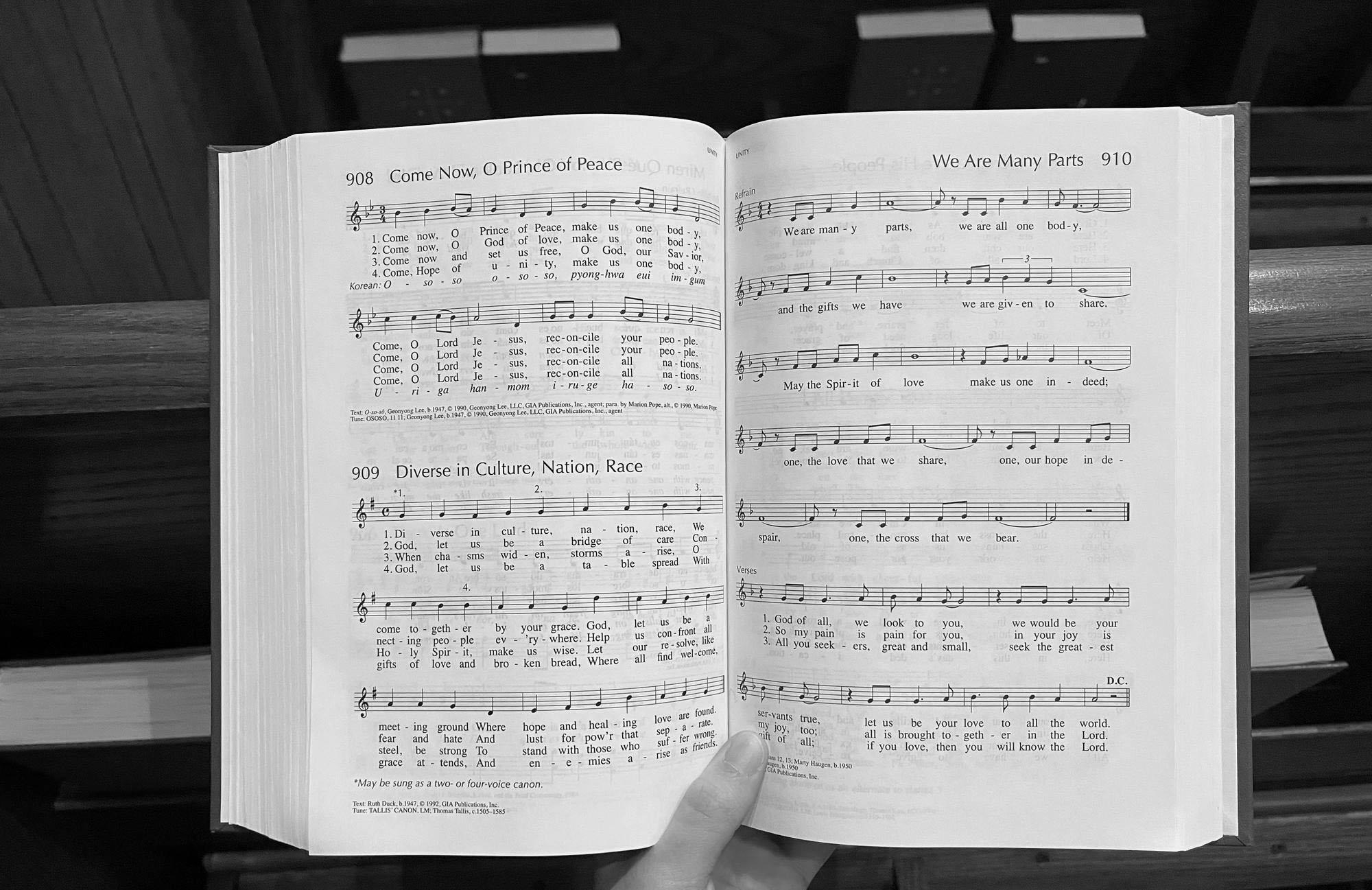
Hymns from the Mass for immigrants and immigration advocacy at the Basilica of the Sacred Heart, held Monday in response to the USCCB’s condemnation of the Trump administration’s immigration tactics.
incomplete. “Coming from Texas, it’s kind of hard because we get that whole situation it’s close to, and so I’m glad that they’re talking about the human person, but [there are] a bunch of other issues I wish were also addressed as well,” Weber said.
According to Gonzalez-Amaro, Notre Dame’s decision to act upon the USCCB’s call aligns directly with Catholic social teaching.
“It is important for Notre Dame to highlight issues surrounding
immigration because they’re fundamentally connected to our Catholic mission, and specifically … our commitment to the dignity of every human person, especially in a time when national discourse has become polarized,” she said.
“The Catholic university has a responsibility to bring more clarity to this conversation and to ground it in compassion.”
At the end of the Mass, Dowd echoed this sentiment in his call for the Notre Dame community to turn faith into action. “As
I noted in my homily, we must always do more than complain about a social problem. My hope is that we here at Notre Dame deepen our understanding of the complexity of this problem, keep the importance of respect for human dignity at the forefront of our efforts, and work with others to propose sensible and humane solutions,” he said.
Contact Lucy Loes at lloes@nd.edu
LUCY LOES | The Observer
Continued from page 1
which dining hall to visit, as South is more convenient given its proximity to their residence halls.
Ariana Yeganeh, another student, said the temperature was okay and had not noticed changes throughout the year.
The issue has caused enough frustration amongst the student body to cause Student Body President Jerry Vielhauer to speak with Campus Dining. Vielhauer wrote in a statement that executive director of retail dining Luigi Alberganti and executive director of institutional dining strategy David McDonald “assured us that they are aware of the problem and working to address it. Due to the construction in SDH, the heating and cooling system has been out of whack and they are just as frustrated with it as we are, as they are working in an already hot kitchen.”
Dining hall workers also shared frustrations about the impact of the heat on their work.
Brittany Buhr, a dining hall worker, said,
“It is hard to work when it is really hot.”
Nakiya Wilkins, a dining hall worker, added, “I swear someone said they was gonna turn it down, but I don’t think they did.”
Anders Ivie, a cook, described the whole building as hot, specifically citing that the upstairs locker rooms for dining hall staff were warm.
Buhr said the staff must “rotate fruit all the time because the heat
in here will cook it.” Ivie, however, reported that the heat is not changing food production.
“It is not changing how we prepare the food because we have to make sure it is up to temp. We make sure that all the stuff is kept up to temp anyways. It would be more of a concern if it were colder,” Ivie said.
Contact Mara Hall at mhall27@nd.edu
Leak
Continued from page 1
were discharged by 11 a.m. Thursday at the latest.
The Office of Risk Management & Safety maintains a group of officers who are trained to address hazmat incidents. The South Bend Fire Department also maintained a hazardous materials team. NDPD policy dictates that SBFD should be alerted if a hazardous materials
emergency is deemed major.
In a similar incident in December 2024, SBFD was called to campus when a chemical spill was reported in Fitzpatrick Hall of Engineering.
The Risk Management team recommends those experiencing emergencies involving hazardous materials should contact NDPD at 574-631-5555, specify the location of the chemical and then evacuate the area.
2025 Dean’s Speaker Series Presents:
Managing Your Happiness
MARA HALL | The Observer
Vehicles were outside Stepan Hall for over two hours Tuesday. Four people were brought to the Wellness Center due to a chemical leak.
MARA HALL | The Observer
Temperature of 80.1 degrees was recorded in parts of the east dining room in South Dining Hall using a kitchen thermometer on Dec. 3.
Residence Halls give back during holiday season
By Emily Barlett News Writer
Each year, Notre Dame students have the opportunity to embrace the season of giving by participating in fundraising and volunteering events through their residence halls.
Howard Hall held its annual “Howard Halliday,” a Christmas tree sale open to the Notre Dame community, Tuesday and Thursday this week. Community members were able to purchase mini artificial Christmas trees, ornaments and decorating supplies at the event. This year marked the event’s first time spanning two days. On Tuesday, the sale was held outside of South Dining Hall
and on Thursday, it took place on Fieldhouse Mall.
“A mini tree for your dorm room is a great way to keep Christmas traditions alive even when you’re away from home,” Howard Hall president Athena Westland wrote in a statement.
Also available at the sale were crafts, hot chocolate and other holiday treats.
The proceeds of the sale went to the South Bend YWCA, a women’s shelter for survivors of abuse. “My favorite part of the Christmas tree sale is the ability to bring holiday cheer to campus while supporting a great cause!” Westland wrote.
Duncan Hall residents are also spending December fundraising for those in need. At
Duncan’s ice cream sandwich service event, in its first year, residents made ice cream sandwiches and sold them to community members.
“Service events in our hall bring our dorm’s community together and connect us with the broader Notre Dame campus,” Duncan Hall vice president Matt Wich wrote in a statement.
The money raised from the event will go towards purchasing Christmas gifts for children in local hospitals.
“Highlanders united in pursuit of the common goal of bettering society and serving as the ‘force for good’ Notre Dame calls its students to be,” Wich wrote on the event’s impact.
On Sunday, Welsh Family
Hall residents will shop for Adopt a Family at Notre Dame as part of the organization’s Christmas Shopping Day. Students will go to Meijer’s to shop with funding from the organization, and then wrap the gifts they purchased for the organization in Stepan Center.
Adopt a Family at Notre Dame also invited dorms to help out with the organization’s Thanksgiving meal shopping in November.
“I really enjoy whenever Welsh Fam has the opportunity to make an impact on our community, and these events are always very popular with our residents because they offer such a rewarding experience,” Welsh Family Hall president Kara Gallagher
wrote in a statement. “It’s important to plan service events for the dorm because they really strengthen our dorm community, as well as our larger sense of community on campus.”
Badin Hall’s hop-a-thon, which begins Friday and will conclude Dec. 18, is a Notre Dame-wide step count contest. Participants, who must first make a donation, will compete for prizes as they tally their steps. Dorms will also compete against each other. Proceeds from the event will benefit St. Margaret’s House, a center for women and children.
Contact Emily Barlett at ebarlett@nd.edu
VR enables language students to explore culture
By Claire Lee News Writer
At most universities, learning a foreign language consists of tracing characters, memorizing vocabulary and comprehending texts. But professor Hana Kang’s Korean language course at Notre Dame can look quite different. On Nov. 20, students of all levels stepped into the world of virtual reality, entering a traditional Korean scholar’s lounge to experience their lessons on classical poetry and centuries of scholarly tradition come to life.
In class, first, second and third-year Korean students wrote their own personal poems in the Pyeong Sijo style, the most common and refined form of the broader tradition of classical Korean Sijo poetry.
According to Kang’s course materials, Sijo is “known for its musical origins, expressive tone, and compact elegance.” A Sijo poem traditionally consists of three lines, each of which can be divided into two parts to establish its distinctive rhythmic flow.
The artistry of Sijo is closely tied to the structure of the Korean writing system. In Korean, each letter of the alphabet represents a specific sound but is unable to stand alone; instead, letters are combined into ‘syllable blocks’ of two or more characters. As each Sijo poem is made up of 44 to 46 syllables, its form reflects the unique nature of the Korean language.
Freshman Owen Nichols described the intricacies of the language. “It’s very difficult at first, especially learning a new character system, like trying to make new sounds that aren’t in English. The grammar can also be a little bit of a challenge. But over time, it gets a little bit easier,” he said.
Alongside poetry, students also examined the culture of traditional Korean scholarship. Key
concepts included seonbi, historic Korean scholars, and the sarangbang, a scholar’s private study.
Students learned that seonbi embodied scholarship, integrity and moral leadership during the Joseon era (14th century to early 20th century) of Korea. A seonbi’s “lifelong pursuit of su-yang, or moral self-cultivation, was grounded in rigorous academic study,” and “as intellectual and moral leaders, [they] upheld and taught Confucian values, shaping the culture and ethical foundations of their communities,” Kang’s course materials said. For modern Korea, seonbi continue to symbolize disciplined thought, humility and a commitment to justice and social good.
The sarangbang was a space “dedicated to reading, writing, artistic practice and intellectual conversation. Its minimalist aesthetic of white walls, low furniture and intentional arrangement reflected the seonbi’s devotion to modesty, clarity and disciplined thinking,” according to the course materials. Using virtual reality, students were able to take on the perspective of seonbi themselves.
Surrounded by essential furnishings and artifacts, students got to explore what it was like to be in a sarangbang, experiencing firsthand the environment in which classical scholars wrote, studied and exchanged ideas. Elements within the space included a writing desk, shelf, porcelain jar, scholar’s hat and storage case and writing utensils. In addition, students were able to play a geomungo, a Korean zither instrument.
A notable feature of the virtual space was the placement of students’ poems throughout the room, each one discoverable by interacting with different artifacts. As they explored, students could uncover their peers’ work and listen to audio recordings of
classmates reading their poems aloud.
Freshman Leonard Siegal emphasized the uniqueness of the experience. “I’m surprised that we got to do it for this class. Out of any class, I wouldn’t have thought it would be Korean. But I really appreciate that we got the chance to use it … there’s a lot of thought and intention behind it,” he said.
This virtual reality experience came about through a collaboration between Kang and Adam Heet, Hesburgh Library’s digital projects specialist. Having worked with Kang before, Heet said he wondered, “What else could we offer with our tools or technology to help faculty be successful, or to just make something more engaging for the students?“
Heet said he “realized that there was an opportunity to come up with a virtual environment of the spaces that [Kang] was teaching about.”
“Instead of just showing a graphic on paper or a picture in slides [of] what a scholar’s lounge looks like, let’s recreate it so [students] get a sense of what it’s like to actually be in the space emotionally, rather than just mentally.”
Heet explained that the room was designed through several iterations. “At one point you could be outside, inside, there was nighttime and some fog.” But ultimately, the collaborators wanted “to make sure that this space reflected the actual kind of solitary mental pursuits that should be happening in this space, and not just be fun and interactive.”
Kang said that their goal was “to make classical Korean culture tangible, interactive and accessible to all learners, regardless of Korean language proficiency.”
In addition to this virtual reality experience, Kang integrates technology into her course in
many unconventional ways. Blending traditional Korean painting principles with modern tools, students recreated artwork for their poems by combining hand-drawn sketches, digital design software and generative AI. Each poem also featured a QR code that linked to an audio recording of the student reciting their poem in Korean.
In a previous class, students designed their own personalized dojang, or traditional Korean name seal. Using the Navari Family Center for Digital Scholarship’s 3D printers, these hand-drawn designs were turned into physical stamps that students used to sign their poems.
Freshman Emily Schmidt said that these activities enhance her classroom experience. “It definitely helps foster curiosity, seeing how the grammar, sentences and words interact with culture. It makes you think about it in a way you don’t really think about it with your native language,” she said.
Many students praised Kang’s efforts in teaching Korean, sharing that she often brings in Korean snacks and artifacts to class to supplement the course content.
Nichols said he likes that the class is “not just sitting there and just learning the language. [We] embrace the language in terms of culture, different food, different customs, different traditions and actually like learning about the whole [country], not just the language.”
Similarly, Siegal said that he enjoys the class “because it has so many different components to it. There’s a very large emphasis on the Korean tradition. This isn’t just a language class, which I really appreciate. It’s a Korean culture class in a lot of different ways, which has been very enjoyable.”
Freshman Anna Kim said she
believes “it’s obvious how much [Kang] cares in trying to teach us the language, but also the culture ... Last week we made kimchi together, which is super cool. I’m not doing that in any other class.”
Kang said her teaching approach stems from the knowledge that her students are “smart, they’re motivated and they know that they can even self-study.” However, she believes that “one thing they may lack is the community learning experience which they cannot have through study[ing] Korean by themselves.” Thus, she tries to showcase facets of the culture, such as art and beauty, that are hard to access or students may have a misconception of.
In addition to conventional avenues, Heet believes immersive experiences can provide students a richer understanding of what they learn in class.
“Students that take the time to walk around the space, and [create] their own interactions in trying to find things that work [within] the space, so what they take away from it is a much more unique interaction with the content,” he said.
“Our position in the Navari Family Center for Digital Scholarship is that we want people to come in and bring an idea with them … come in and ask, and we’ll talk about it with you, and we’ll see if it’s viable,” Heet said. “My job here, ultimately, is to keep our doors open to people who want to understand or participate in the VR ecosystem. That might be making something that’s incredibly academic, or they just heard that they could swing lasers around in VR, and they want to try for fun. Our door is open to all of those types of requests.”
Contact Claire Lee at clee35@nd.edu
Don’t fight in front of the mashed potatoes
By Sam Robinson Columnist
It is unfortunate that dur ing the holiday season, dinner tables and happy gath erings of family and friends are transformed into min iature war zones of politics. Far-flung relatives challenge everyone’s political views, and supposedly “rebellious” kids disagree vehemently with their parents. What about Donald Trump, Zohran Mamdani, illegal immigra tion and healthcare? These topics become common in a sadly hostile, uncomfortable way during the Thanksgiving and Christmas seasons. Families are torn apart, and friendships are ended based on the political winds of the day. Familial estrange ment has become common place and is increasingly driven by political differences. For whatever reason, people seem unable to separate political beliefs from their own personal relationships. Associating with those on the other side has become a point of shame rather than one of pride. The increase in animosity, or polarization, is a constant feature in our political environment, and, sadly, at our dinner tables. Many people cannot be civil with their family members because of how they voted in the last election, or others make jabbing comments about the political failures of the other side. Who wants that during a lovely Thanksgiving or Christmas dinner? I definitely do not.

Looking at the seemingly broken state of our national discourse, even at the familial level, disagreement must be embraced joyfully and cannot be a barrier to genuine human connection. I love disagreeing with others. Nothing to me is more enjoyable than attempting to dissect an opposing viewpoint in an effort to understand it. However, I have met some who openly proclaim that if you disagree with them on issues like healthcare or taxation, our friendship can only go so far. I am unable to wrap my mind around this way of living. This desire for only agreement in one’s circle of
friends or family, I find, is detrimental to our society at large. Disagreement should not evoke visceral reactions, but rather, attempts at understanding. Relationships can be built in the absence of agreement on political issues. Some of my closest friends are people I will never agree with, and I have found that relationships and groups with heterogeneity in political beliefs are the most rewarding. One can only grow when challenged with alternative opinions, and jousting with ideas never gets old. It is a sad day when one closes the door to personal growth and new experiences by creating
LETTER TO THE EDITOR
limiting, arbitrary boundaries for political discourse and association. This same approach must be taken at dinner tables across the country this holiday season: seek understanding and do not create an additional barrier to human connection. Why purposefully attempt to start a heated conversation during a time of year that is intended to be one of togetherness and family? Why even try to argue points of view? While I attempt to avoid political conversations during nice events and dinners, if one is to dive into politics at gatherings of family and friends, do so with the intention of
Ode to Howard Hall
I was disheartened to read in The Observer last month that Howard Hall, where I lived for all four of my undergraduate years, will be shut down next summer. It pains me to contribute to the ancient, tired tradition of alumni writing angry letters, but the destruction of our nest, I think, entitles us Ducks to a few curmudgeonly words.
Howard Hall has more cockroaches than residents. Its rooms are smaller than many prison cells; it is unbearably hot in the summer and nearly as warm in the winter, thanks to its loud and uncontrollable radiators. It is cramped, quirky and uncomfortable.
But, for more than 100 years, it has been a home for generations of Notre Dame students — and one that most of us deeply love.
To me, Howard has always encapsulated the kind of
life that should draw a student to Notre Dame. From my room in Howard Hall, I could be awoken by bagpipes on football Saturdays as festivities kicked off behind my building. I could see couples driving away from the basilica with “Just Married” banners streaming off the backs of their cars. I could make it from my bed to the dining hall in less than five minutes, and down the quad to O’Shaughnessy in seven.
In Howard, we lived in the very center of Notre Dame’s thrumming heartbeat, in a building with nearly as much history as the university itself.
I know that buildings close and that, with time, campus footprints and student preferences change.
I understand the building deficiencies that would cause some residents to cheer when the dorm’s closure was announced, as you
reported. I certainly see the inequity in forcing families to pay the same room and board whether their child is placed in an amenity-poor building like Howard or in a gleaming new dorm more luxurious than many city apartments.
But I hope the University understands that something is lost when a residence hall as historic as this one is shut down.
With this announcement, nearly one in seven of the dorms on campus have been decommissioned as permanent residence halls in the 11 years since I was a student. More than 20% of campus dorm capacity now sits in buildings constructed in 2015 or later. This robs thousands of students and alumni of one of Notre Dame’s best icebreakers: asking “what dorm did you live in?” and knowing that
seeking understanding, not to win an argument. As cliché as it is, have an open mind. Your opinions will probably not be changed, but at least you will have a better understanding of where the other side is coming from. I have been involved in countless political debates, and my mind has rarely been changed. But my empathy for the other side has grown.
This is the only way that the vast divide in our country can begin to be bridged. This holiday season, I challenge everyone to embrace disagreement and not allow it to weigh down their relationships. Remember that even Ruth Bader Ginsburg and Antonin Scalia, two polar opposites on the political spectrum, were actually great friends who bonded over their love for opera. This should be the model for society. We should debate ideas and not people. Do not take disagreements personally and recognize that different opinions present an opportunity to learn and to grow as an individual. We will always disagree with others, but how we do so matters. This holiday season, do not allow politics to hinder your celebrations. Embrace disagreement and recognize that different beliefs should not make or break relationships.
The views expressed in this column are those of the author and not necessarily those of The Observer.
Contact Sam Robinson at srobin23@nd.edu
someone decades your junior or senior may share your same response.
Notre Dame is already a place where pragmatic business programs are so popular that they require enrollment caps, while humanities departments struggle to recruit. It is increasingly a place where students order their lunch from a robot, rather than going to the dining hall and speaking aloud with the people who work there. Changes like these — which have also occurred in the mind-bogglingly transformative decade since my graduation — are endemic to education well beyond the borders of Notre Dame, and there is little any one university can do to halt or reverse their progress. But as a place rooted in mission and community — in educating the heart as well as the mind, as the saying so often goes — Notre Dame
should, I’d say, be invested in doing all it can to slow them.
The decision on Howard has already been made. But, if other residence halls come up against the potential chopping block, I would encourage the university to consider the kind of place it is called to be. A campus whose students live on the periphery, whose buildings gleam with amenities but lack tradition, doesn’t feel like Notre Dame to me. A place whose best real estate goes to student life, and whose sense of community is measured in generations, not semesters — that feels like Notre Dame, as it has since the university was young and Howard Hall was brand new.
With a mournful quack, Sarah Cahalan Class of 2014 Dec. 3
ALYSSA SIRICHOKTNASUP | The Observer
Australia’s social media ban wouldn’t work here
By Redmond Bernhold Opinion Editor
Australia is banning social media for children younger than 16 years old. Sounds impossible to do, right?
That’s because it partly is.
The law — the first of its kind in the world — goes into effect on Dec. 10, and it requires 10 tech firms to take “reasonable steps” to prohibit youth from possessing social media accounts, according to Australian communications minister Anika Wells in an interview with the BBC. If children have an existing social media account, then it will be deleted. The affected platforms include YouTube, TikTok, Snapchat, Instagram, Facebook, X and more.
Two weeks ago, Meta deactivated hundreds of thousands of these accounts. Despite this, public officials have acknowledged the ban will not be 100% effective. Some users will always find ways to circumvent it, they say.
The interesting thing about this mandate is that Australia isn’t punishing children for their use and parents or guardians for knowing about their children’s use. Instead, the government is imposing fines on companies up to $50 million AUD, around $32.8 million USD, if they don’t comply.
American companies involved in the ban are backed by President Trump, who favors keeping tech firms away from government regulation. Shortly after his second inauguration, he restored TikTok after its momentary outage. He revoked an executive order by former President Joe Biden’s that

ern responsible AI use. Instead, Trump issued “Winning the Race: America’s AI Action Plan” to accelerate its development. Trump claims these orders and laws, though implemented on the international level, are attacks on U.S. firms. Trump and his supporters see these tech powerhouses as a bastion of American innovation and excellence. They relentlessly defend the First Amendment and the right to free speech. A blow to these tenets infringes the whole system.
Australia does not have the same explicit protection on speech and expression, but they do follow the UN’s enshrined protections on “opinions without interference” and “freedom of expression.” Even so, Australia places the policies under certain restrictions. These
of others” and “for the protection of national security or of public order, or of public health or morals.”
The Australian government says limiting social media use for minors limits cyberbullying, contact with predators and exposure to sensitive and explicit content. Additionally, the ban aims to protect young mental health, a problem facing both the U.S. and Australia.
According to eSafety Commissioner, an Australian independent government organization that tracks online safety, over 1 million social media accounts would be affected.
Snapchat has 440,000 users aged 13 to 15, Instagram has 350,000, YouTube has 325,000 and TikTok reported 200,000. These numbers are a conservative estimate according to the
LETTER TO THE EDITOR
On Dec. 1, a report from Queensland University of Technology cited that 86 Aussies aged 12 to 15 years old said they want social media reform, but not a complete ban on certain apps.
When young Americans were asked about how social media impacts their livelihoods, their responses were similar.
According to an April report by Pew Research Center, 48% of teens aged 13-17 years old say social media have a mostly negative impact on people their age, up from 32% in 2022. They claimed the platforms contained few merits . A majority of participants said social media makes them feel more connected to their friends and can show off their creative side.
When TikTok went dark in January for a few hours, a situation not too far from Australia’s
situation, alternative apps sprouted. Trump stopped their rise when he signed TikTok back into our lives. Aussies are looking for alternatives, so they’re following the American way.
“We watched what American kids did when TikTok went blank. They went to RedNote. They went to Lemon8,” said Julie Inman Grant, Australia’s eSafety Commissioner. “Some of that is going to happen, inevitably, but that’s what teenagers do.”
At the time, the largest factor when choosing to ban TikTok was the fear that if Beijing pressed ByteDance for user data, TikTok would be forced to give over Americans’ data. Despite this concern among many adults on top of growing mental health worries, TikTok is still active.
In 2023, over 20% of Americans aged 12-17 years old reported a current, diagnosed mental or behavioral health condition, up from 15% in 2016. In 2021, 39% of Australians who were 16-24 years old had “operationally defined mental disorders,” up from 26% in 2007. These percentages are not the same, but they indicate something similar. If mental health issues keep rising, in part thanks to social media, it’s paramount (and hopefully bipartisan) to find a solution. What that solution may be depends on which side of the Pacific you’re on.
The views expressed in this column are those of the author and not necessarily those of The Observer.
Contact Redmond Bernhold at rbernho2@nd.edu
A call for coyote representation at St. Marmot’s
This is an open letter to the esteemed faculty mice of St. Marmot’s College, written by the unofficial Squirrels for Coyotes Committee, formerly known as the Squirrels Against Squirrels Association.
I, for one, am absolutely appalled by the lack of coyote representation on this allrodent campus. Is it not the goal — nay — core value of St. Marmot’s College to promote inclusivity across mammals of all backgrounds?
The Squirrels for Coyotes Committee will not stand for the flagrant discrimination that this college performs by prohibiting coyotes from predominantly rodent-occupied spaces.
One of my peers recently published a letter claiming that the Squirrels for Coyotes Committee is “directly harmful” to rodent values and that “the coyotes obviously want to eat the student body.” This disgusting assumption is exactly
why we need canine voices to be heard and moreover welcomed into the student body with open arms. I speak to you, esteemed rodents, as president of the Squirrels for Coyotes Committee, and I am here to tell you coyotes are exactly what this school for small rodents desperately needs.
The true shortcoming of St. Marmot’s College is its abhorrent dedication to exclusivity. Though the institution was founded as a refuge for small critters like myself and my fellow peers, and although we pride ourselves on our long history of chasing predator supremacists out of the city of South Burrow, I truly believe that coyotes are the missing piece to a stunning mosaic of diverse voices. Several coyotes have promised me personally, jowls drooling with integrity, that they have no intention of taking advantage of their access to small rodent students.
I don’t know about you, but I
see no reason whatsoever to believe that a coyote, natural predator or not, would lie to me in order to breach the security that St. Marmot’s offers woodland prey.
I would also like to take a moment to address the letter recently written and published by the Groundhog Culture Club. The letter in question begins with a startling contradiction: While the groundhogs pledge their dedication to inclusivity, they simultaneously demand protection from coyotes who have historically only ever eaten small rodents. Open your beady little eyes! The groundhogs are not defending pluralism; this letter is a confession of mammalian tyranny! Do we not find this absolutely absurd? I am beyond outraged and embarrassed to be a student at a rodent-led institution that would deny representation to large predators.
This is exactly why the
Squirrels for Coyotes Committee would be such an important official presence on this campus. We pledge to bring in the hawks, foxes and house cats that our administration is too scared to invite to campus. We seek to lay out the mouse traps that vole professors won’t tolerate in the classroom, and we give procoyote rodents the platform that we are consistently denied. While close-minded gerbils may seek to monopolize the valuable education offered by St. Marmot’s, the Squirrels for Coyotes Committee exists to extend a hand to larger, toothier and hungrier activists. We seek to widen the tunnels dug by our groundhog founders and make escape impossible for those cornered in their burrows. Only when every nest and tunnel is clawed open and exposed will we ever truly achieve equality.
In closing, no, the Squirrels for Coyotes Committee isn’t
a “slap in the acorn” to St. Marmot’s College. The real insult to this ecosystem’s legacy is telling the hamsters of this institution the only acceptable way to be an empowered rodent is to make blind judgements against those whose mouths are perfectly shaped to tear our tiny furry bodies apart. Moreover, I — A Call For Coyote Representation at St. Marmot’s College by Margaret Q. Marmot was never published as she was sadly eaten by her Squirrels for Coyotes Committee cofounder, Ian Wolf, before its completion. Members of the active Squirrels for Coyotes Committee still passionately carry on her legacy by advocating for predator presence on campus in spite of this unforeseen tragedy.
Piper Jakeway Saint Mary’s College Class of 2026
LIAM FLYNN | The Observer
By Mara Hall Scene Writer
Notre Dame math band now on vinyl
Heine Borel and the Finite Subcovers began in 2022 as a joke when a group of honors math majors were learning about the Heine-Borel theorem in a class during fall of their sophomore year. While hanging out outside of class, they realized they shared musical talents and joked about forming a band. In the spring semester, this dream became a reality.
Gavin Dooley, a band member and graduate student at Notre Dame, explained that the band’s name is a series of layered puns born from the group riffing to come up with a funny name.
“Heine Borel is not one person, so that is the first part of the joke. It is actually two people, but it sounds like one person. There is a theorem called the HeineBorel theorem named after mathematicians Heine and Borel. They proved that any closed and bounded set of real numbers and any cover of that set admits a finite subcover, so the Heine-Borel theorem has to do with finite subcovers. Another pun is that we would play covers of songs and sometimes those covers would be shorter, so they were subcovers,” Dooley said.
Today, the group is not actively making more music due to their geographic distance, but their first full album, “Greatest Hits and Least Upper Bounds,” is newly out on vinyl.
Dooley explained that as graduation was approaching, the band members felt the need to record their music, doing so during their senior week.
“We are all novices when it comes to mixing, mastering and editing, so it took us over a year to actually produce the album. Finally, we got this printed up on vinyl a few months ago after a long period of further procrastination.”
For Dooley and Ella Pfaff, another band member and graduate student at Notre Dame, a particularly memorable performance was their second one, taking place in 2022 on Tuesday, Feb. 22 (“2/22/22”). The band led up to this performance with a countdown to 10:22 p.m., which is “22:22” in 24-hour time. In this performance, which took place in the basement of Hayes-Healy Hall, they performed a variety of songs with numbers in the title and replaced all of the numbers with “two.”
“‘If I Had $1000000’ [became] ‘If I Had $2,’” Pfaff said. Dooley said, “A lot of our
performances involved kicking out all these poor students who are trying to study in the basement [of Hayes-Healy] and then hijacking the basement and turning it into a concert venue.”
“Approved by the math department, of course,” added Pfaff.
Although united in favorite performance, Pfaff and Dooley have different favorite songs, and Pfaff’s favorite is not even on the album.
Dooley explained, “This was only the cream of the crop that made it on the album. My personal favorite might be ‘The Monster Math,’ which is also the one that I sing on … I am also partial to this one — ‘The Intermediate Value Theorem’ — because unlike some of the other songs, this one is actually mathematically accurate. A lot of our other songs are full of misinformation that would only confuse students.”
Pfaff noted, “I think my favorite is “Scooter Boy.” It is a parody of “Sk8er Boi” but obviously having to do with scooters and the scooter culture that used to exist here. But of course, it was mathematical too. I think it was our very first math parody. I still keep the lyrics on my phone and look at them, and it makes me laugh all the time.”
At this time, the album can be
listened to on YouTube. The group is working to get it onto Spotify and Apple Music, but with the nature of it being parody, they are facing greater copyright challenges with these platforms.
In reminiscing over the founding of the band, Dooley shared that he thought there was an innate connection between mathematics and comedy music, citing the work of Tom Lehrer in the ‘50s and ‘60s and The Klein Four.
Dooley said, “If you are a mathematician, it is fairly normal to start writing songs about math.”
“Right, because math is so funny,” added Pfaff.
The Notre Dame math department reported on the group in 2022, giving an overview of its members: “The group consists of Gavin Dooley (cello, piano, vocals), Jack Herzog (vocals), Andrew Glover (guitar, vocals), Tony Masso-Rivetti (melodica, viola, vocals), Jonathan Pal (guitar, piano, vocals), Gabe Sargent (piano, melodica, vocals), Bill Kim (piano, melodica, vocals), Ella Pfaff (flute, vocals) and Madeline Kosobucki (manager, percussion). The members have individually been a part of other musical groups on campus, including folk choir, bagpipe band, and jazz band. To the group’s knowledge, they are the first and only math
band at Notre Dame.”
William Kim is also a featured member of the band in this album.
Today, Kim works in consulting, Dooley and Pfaff are math Ph.D. students at Notre Dame, Herzog is a Holy Cross seminarian currently taking a vow of silence in the mountains of Colorado, and the other members are in graduate school around the country.
Dooley said, “Right now, there are no future plans to record more music, but I will always leave the door open to anything that might happen in the future … I think there is always the potential for a reunion concert … Notre Dame 15th or 20th reunion?”
For now, Dooley recommends listening to the officially recorded versions over videos of their live performances, noting that on the recordings they had percussion — usually missing from their live shows.
“Our live performances never fulfilled our vision because we were always scrambling to get everything done and trying to find people to play all the instruments, but in a studio, you are really able to do things the way they should be done,” Dooley said.
Contact Mara Hall at mhall27@nd.edu
Notre Dame Dance Company fills Washington Hall
By Marie Stier Scene Writer
Since its founding in 2004, Notre Dame Dance Company has hosted an event each semester exhibiting student-choreographed dances. With over 70 students and 27 dances featured in this year’s fall showcase, the production filled Washington Hall for two sold-out shows on Nov. 20 and 21.
Dance Company president and senior Kelley Rood leads the organizational and logistical preparations for the showcases.
“Before the semester started, I was reserving rehearsal space every week because we have weekly rehearsals for each dance in the show and making sure that all the other officers know what their duties are throughout the semester, dividing up that work so that we’re all productive together,” Rood said. “It’s a lot of making sure that we have the space and willpower to do everything, and then for the actual showcase, making sure we have all of our crew up to date with everything and that everything is going smoothly and going as planned.” Rood has been involved with the company since the beginning of her time at Notre Dame. “I joined Dance Company freshman fall, and I auditioned for nine dances. It was a lot of dances for a freshman, and I did all of them. It was the best semester ever, best year, and all the upperclassmen were so welcoming
and inviting.”
Rood said one of her goals was to uphold the program’s success and tight-knit community.
“From that point, I knew that I wanted to stick with Dance Company and keep that culture alive throughout my time here, so after I leave it continues to thrive and prosper,” Rood said.
After preparing for the semester, Rood noted how the event’s success relies on the hard work from all members.
“It starts mostly with the student choreographers. Everything is student-run, so all of the dances are choreographed by students,” she said. “We have a choreographer showcase at the beginning of the semester where everyone who wants to choreograph can show 30 seconds of what they would have, and then the company votes on what dances they want to be in the show.”
Sophomore Belle Smith choreographed her first dance for the company this year for the fall showcase.
“After all the dances are picked, if your dance is selected, you get to audition people to be in your piece, which is really cool,” Smith said.
Smith choreographed dances before coming to Notre Dame, and she highlighted how the process takes time and experimentation.
“In high school, my friend and I were in the same company, and that was also student choreographed. Everyone’s process is really different, but first we pick a song and
what style we want it to be, and then we start doing different things, testing them out to see if we like how it looks,” Smith said. “It’s trial and error. We would choreograph something, and then go back to it later and be like, ‘Never mind. That’s ugly.’”
After being selected for dances, students attend hour-long weekly rehearsals with their choreographers to refine the dances.
“People worry about if it’s going to be too big of a commitment. It’s really nice you can do as much or as little as you want to do,” Smith said. “You could try out for one piece and have one hour each week that you’re dancing.” Some dancers, however, perform in over a dozen dances. “It’s very much whatever you put into it is what you get out of it,” she added.
By the time the showcase began Nov. 20, dancers had put weeks of preparation into their routines.
Caroline Bens, a senior who has been on the team since she was a freshman, is now the social commissioner for the company.
Beginning Nov. 17, the group held multiple run-throughs to ensure the dancers and lighting and crew teams were ready for the performance. For Bens, one of the highlights is how the showcase is a student-led effort.
“We are fully student organized. During the show, we have help from the staff at Washington Hall to set everything up, but during the year,
we have rehearsals for all different dances, and all the shows are put together by the different officers and helped from everyone in the company,” Bens said.
The show proved to be a success, with both performance nights selling out of tickets.
“It’s super fun to see so many people involved. We were doing bows at the end of the show, and I feel like there’s more and more people on stage,” Rood said.
With more than 130 students involved in the company, Bens helps foster community by organizing events for the dancers to get to know each other.
Smith joined the group last spring after being impressed by the fall showcase and hearing members emphasize the strength of the club’s community.
“I was debating doing it. I didn’t do it fall semester since I wanted to take a break from dance for a while, and then I had gone to their fall show, and I was like, ‘This is something I need to be a part of.’ Everyone who’s been in it says it’s the best community of people. You’re so close with everyone, so it’s really fun,” Smith said.
Freshman Evelyn Finn danced in two ballet dances during the fall showcase as a part of Ballet Club. Though not part of Notre Dame Dance Company, Finn especially enjoyed the community during show week.
“[Ballet Club] is integrated into it
since they want ballet in the show. Dance Company will reach out to the Ballet Club, and then the Ballet Club always has at least one piece in the showcase. But we also do our own showcases,” Finn said. “I loved being in Dance Company’s showcase. It was a lot of hours, with dress rehearsal, but I have good friends in Ballet Club, and I hadn’t performed in a while, so I wanted to again. I had never met all the girls before and they were all so nice and welcoming.”
Rood cited the shared commitment and support among performers as a defining part of the experience.
“It’s such an amazing community of people. Everyone’s so supportive and wants the best for everyone, which I think is really amazing. It’s so fulfilling to cheer on everyone on the side of the stage and to see everyone’s hard work shine on the stage. It’s such a team effort and wouldn’t be possible without everyone in the club participating.” Rood said. “It holds such a special place in my heart. It’s the highlight of my day to see everyone and dance with everyone and get to continue doing what we love. It’s so special because you can tell that everyone who’s there wants to be there, really loves it and cares about it so much, so it’s really encouraging to be in that kind of environment.”
Contact Marie Stier at mstier@nd.edu
Irish prepare for battle against No. 2 Wisconsin
By Nikki Stachurski Sports Writer
Notre Dame hockey is gearing up for No. 2 Wisconsin, an impressive Big 10 opponent who has steadily climbed the rankings.
Over Thanksgiving break, the Irish traveled to Massachusetts to face Merrimack College and No. 15 Boston College. The Irish split the road trip, earning an electric 5-4 win over Merrimack. Two days later, the Irish fell 5-3 to Boston College, despite getting on the board first with a power play goal by junior forward Danny Nelson.
The weekend before Thanksgiving, the Badgers traveled to No. 3 Michigan State and won both games. The first was a 5-4 victory, followed by a thrilling 2-1 victory in overtime.
Against Boston College, Notre Dame was able to score one goal in each period. The consistency of the Irish offensive production is vital for a team that has struggled to maintain momentum for an entire game. As predicted,
the Irish have grown steadier and more consistent, and their ability to stay focused and search for scoring opportunities against a powerhouse like Boston College will prove valuable as the season progresses. Junior forward Evan Werner led the Irish offensive effort with one goal and one assist while sophomore goaltender Nick Kempf recorded 29 high-quality saves from an Eagles team that is notorious for precise shots.
Scoring has been an area for improvement for the Irish, especially when preparing for a high-scoring team like Wisconsin. Graduate student forward Sutter Muzzatti leads the Irish in points, with seven goals and six assists, and juniors defenseman Paul Fischer and forward Cole Knuble tallied nine assists each. Notre Dame has struggled with scoring, being outscored by opponents 39-49, but the quality of its goals is its strength. Most shots are precise snipes from a distance and come off the sticks of brilliant playmakers like Fischer and Knuble,
proving that when the Irish score, they score in excellent fashion.
Regardless, Wisconsin is a team who centers its style of play around scoring fast and strong, with lethal puck movement and communication that leaves defenses scrambling to anticipate its next moves. Senior forward Christian Fitzgerald leads the Badgers with nine goals and four assists, and sophomore forward Gavin Morrissey takes the title of playmaker with three goals and 10 assists. The Badgers significantly outscore their opponents in most games, with a 55-34 goal comparison.
Despite their different records, Notre Dame and Wisconsin have similar styles of play. The upcoming matchups are going to be decided based on penalty minutes, power play goal statistics and goaltender performance.
The Irish have a tendency to rack up penalties, accruing 193 minutes, far higher than the 145 combined minutes of their opponents. Notre Dame recorded 13 power-play goals
this season, and they have only allowed eight of the same kind. Wisconsin is similar on the ice, with 196 minutes compared to their opponents’ 259. The teams have served similar minutes, but when compared to their opponents, Notre Dame serves proportionately more.
The Irish have proven they can capitalize on power-play goals, and the one-man advantage is the edge the Irish need to find the back of the net. The Irish are a small team in terms of size, and they know they must capitalize on as many advantages as possible, especially when facing the dominant defensemen in the Big 10. The Badgers have more than doubled their opponents’ production on the powerplay, with 19 goals for Wisconsin and only eight for its opponents.
The Irish must be successful in limiting their penalties, especially errant high-sticks and unnecessary tripping calls, so they do not give up any goals to a Wisconsin team that can and will take advantage.
Goaltending is perhaps the most interesting aspect of the upcoming games. In net for the Irish, Kempf has played all 14 games and has a .902 save percentage, which is less than Wisconsin freshman goaltender Daniel Hauser, who has a .913 save percentage in 12 of Wisconsin’s 14 games. Interestingly, Hauser was not in the projected lineup for Team Canada in the upcoming 2026 World Juniors Tournament, whereas Kempf is projected to start for Team USA, a significant difference in the quality of the goaltenders. On paper, Hauser holds the better record, but Kempf has made 415 saves in comparison to Hauser’s 272. Between the two goaltenders, Kempf blocks harder, more impressive shots than Hauser and the matchup between the two will determine who emerges victorious.
The Irish take the ice against the Badgers at 7 p.m. Friday and 5 p.m. Saturday in Compton Family Ice Arena.
Contact Nikki Stachurski at mstachu2@nd.edu

Notre Dame junior forward Cole Knuble rushes past Michigan State sophomore Owen West on his way to the puck, as Irish sophomore defenseman Jaedon Kerr confronts Spartan junior Gavin O’Connell in Compton Family Ice Arena last weekend. The Irish fell in both homeslate matchups against
QUESTION OF THE DAY:
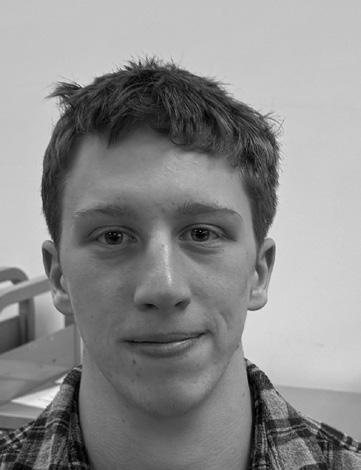
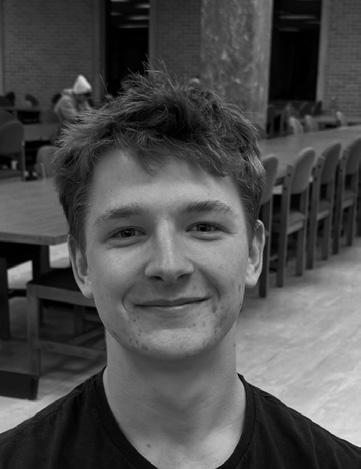
Mark Fohner freshman Dillon Hall
“Three.”
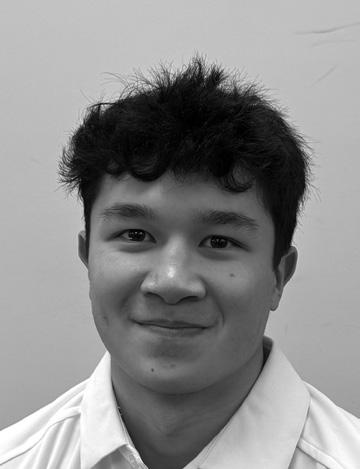
Quinn Fleming freshman Dillon Hall
“Four.”
Gavin Caulfield freshman Keough Hall “Four.”
Saturday
CROSSWORD | WILL
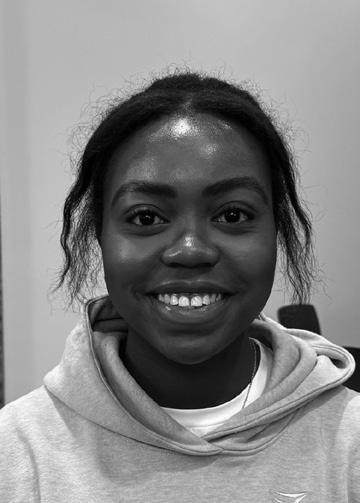
Allyson Lazarre law student Off campus “Zero.”
By how long were you delayed coming back from break? How
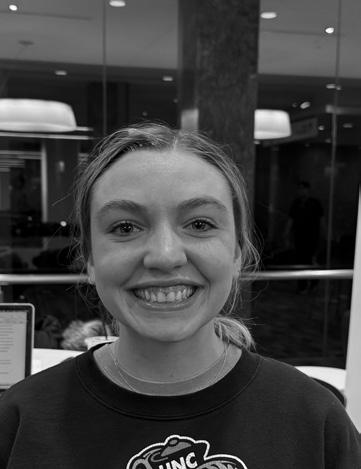
Nikki Rafferty law student Off campus “One.”
SOCIAL MEDIA POLL
Have an idea for a poll? Email dstangel@nd.edu
THE NEXT FIVE DAYS
Want your event included here? Email news@ndsmcobserver.com
Friday
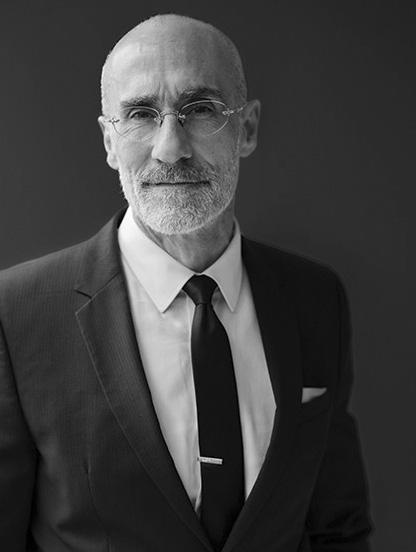
Lecture: “Managing Your Happiness” with Arthur Brooks Learn how happiness leads to success with best-selling author Mendoza College of Business, Jordan Auditorium 12:30 - 1:30 p.m.
Saturday
Notre Dame Hockey vs. Wisconsin Watch the Irish take on the Badgers Compton Family Ice Arena 5 p.m.
Sunday
ND Opera Presents Bernstein’s “Candide” Musical performance followed by panel discussion DeBartolo Performing Arts Center 2:30 - 4:30 p.m
Monday
Vespers with ND Children’s Choir Chanted psalms, sung prayers, and Magnificat. Church of Our Lady of Loretto at Saint Mary’s College 4:30 - 5 p.m.
Tuesday
Performance: “Beyond This Point” Percussion performance by Chicago-based musicians DeBartolo Performing Arts Center 7 - 8:30 p.m.
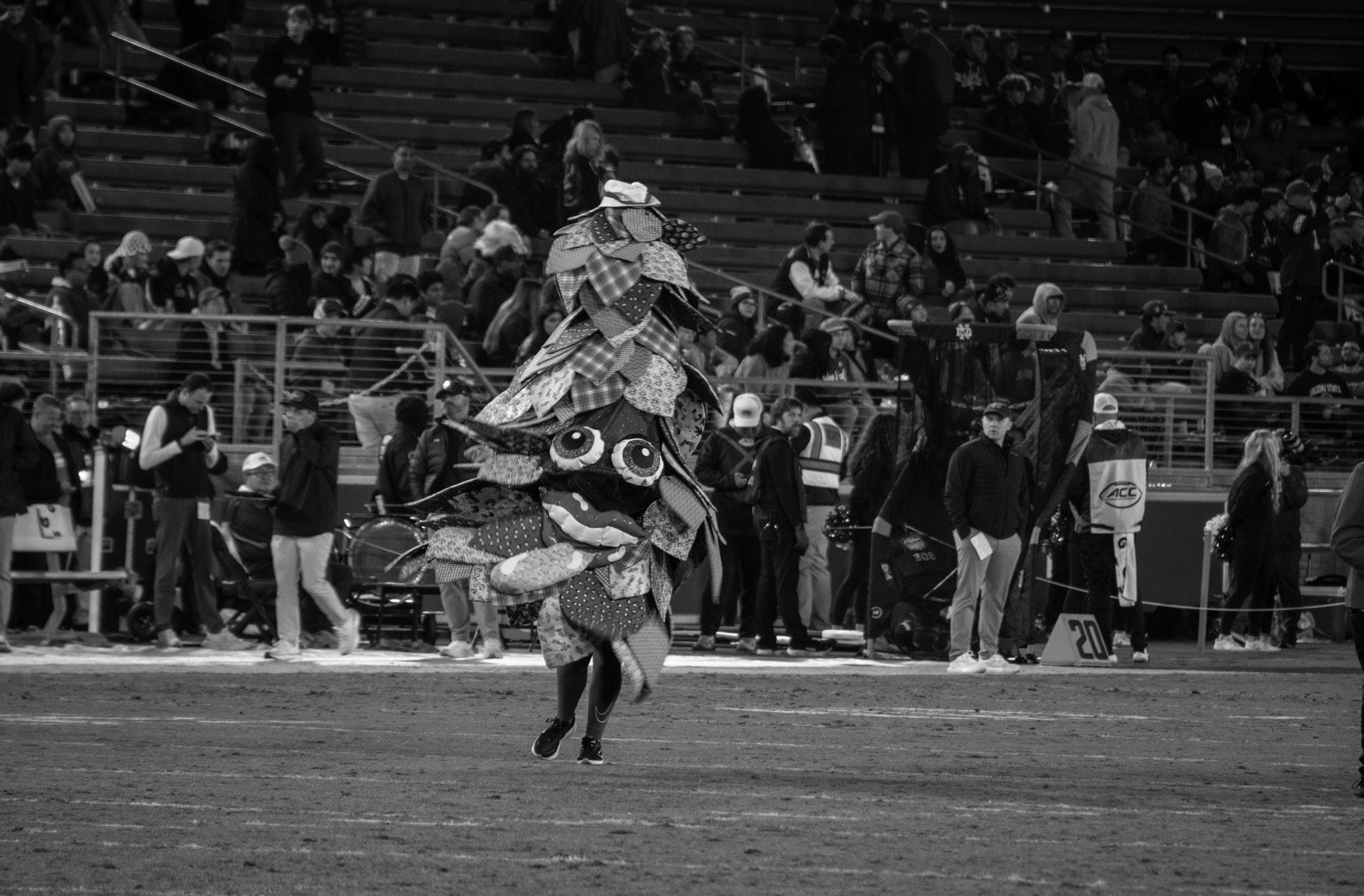
PHOTO OF THE DAY
On
Nov. 29, the Fighting Irish football team faced off against the Stanford Cardinal. The game ended with ND winning 49-20. Stanford’s tree mascot is depicted running around the field during the game.
MARIELLA TADDONIO | The Observer
SPORTS
Irish face TCU for the first time since 1997
By Payton Dymek Sports Writer
Notre Dame men’s basketball will travel to play the Big 12’s top-ranked Horned Frogs in their sixth-ever matchup, entering the game at 6-3 in first in the ACC. The Irish lead the all-time series 5-0 against TCU, but the energy of Fort Worth presents a new challenge.
Micah Shrewsberry’s team has struggled against top competition such as Ohio State, Kansas and Houston; however, the largest margin of loss was only 10 points. Despite these losses in the Players Era Tournament, Notre Dame has bounced back to earn wins against Long Island University, Detroit Mercy, Eastern Illinois, Bellarmine, Rutgers and, most recently, Missouri in the ACC/SEC challenge.
Considered an underdog against Missouri in the ACC/ SEC challenge, Notre Dame was up for a big test against the undefeated Tigers. The Irish went into the matchup with a win probability of only 40.5%, but showed off immense basketball IQ, teamwork and, most importantly, scoring in the final minutes with a diversity of shots from all angles of the court. Junior guard Markus Burton led the Irish to their win, scoring 18 points, making all four of his free throws and securing his first career double-double.
Although the statistics speak for themselves, Burton took 15 field goal attempts, the most on the team by six, showing his desire to put up as many aggressive points for his team. Burton has had a great tenure with Notre Dame, gaining a spot on the 2024 ACC All freshman Team, 2024 Third Team All-ACC and 2025 Second Team All-ACC, and was ACC leading scorer in 2025. Aside from Burton, sophomore guard Cole Certa has been the talk of campus for his 14-point stunner against Missouri.
Certa, coming off the bench, had the game-winning shot and converted three triples in the final four-and-a-half minutes. It was essential for the Irish to find momentum in a close game after losses to quality opponents from scoring lulls in the second half; Certa provided this spark. In his sophomore year, Certa has already out-shined his freshman year in every metric and is looking to excel through the end of the season. Riding off this dominant win over one of the top programs in the country, the Irish are eager to play and put up big points against TCU.
The Horned Frogs are
currently 5-2 on the year and have climbed to the top of the Big 12, outscoring their opponents by an average of 13.8 points per game. TCU has only lost to Michigan and University of New Orleans in a season opening stunner. However, the Horned Frogs have also posted over 100 points against Saint Francis University and found wins over the defending national champion University of Florida, and, most recently, Wisconsin.
Throughout the season, sophomore forward David Punch has excelled in the Big 12, ranking 13th overall in scoring with 12.7 points and 7 rebounds. Punch, as a freshman, was ranked 10th among the Big 12 freshmen and had a season high of 19 points. He tied this mark against Florida this season, including five free-throws made, which matched his season high from last year in a game against Baylor.
Aside from Punch, junior guard Brock Harding, who was named to the Big 12 starting five after his performance at Rady Children’s Invitational, will be tough for Notre Dame to shut down. Harding has been very productive in the Big 12, ranking eighth in steals per game with 3.3 and third in assists with 6.1 per game, while managing a 2.69 assist to turnover ratio. Although Harding spent his freshman and sophomore seasons at
PAID ADVERTISEMENT
Iowa, he has already made a name for himself with the Horned Frogs and is looking to lead the team through the end of the season into March Madness.
Notre Dame tips off in Forth Worth, Texas at 8 p.m. ET on Friday on ESPN+. The Irish will look to build off the season’s best win against Missouri facing a red-hot TCU.
Contact Payton Dymek at pdymek@nd.edu

KEIRA JONES | The Observer
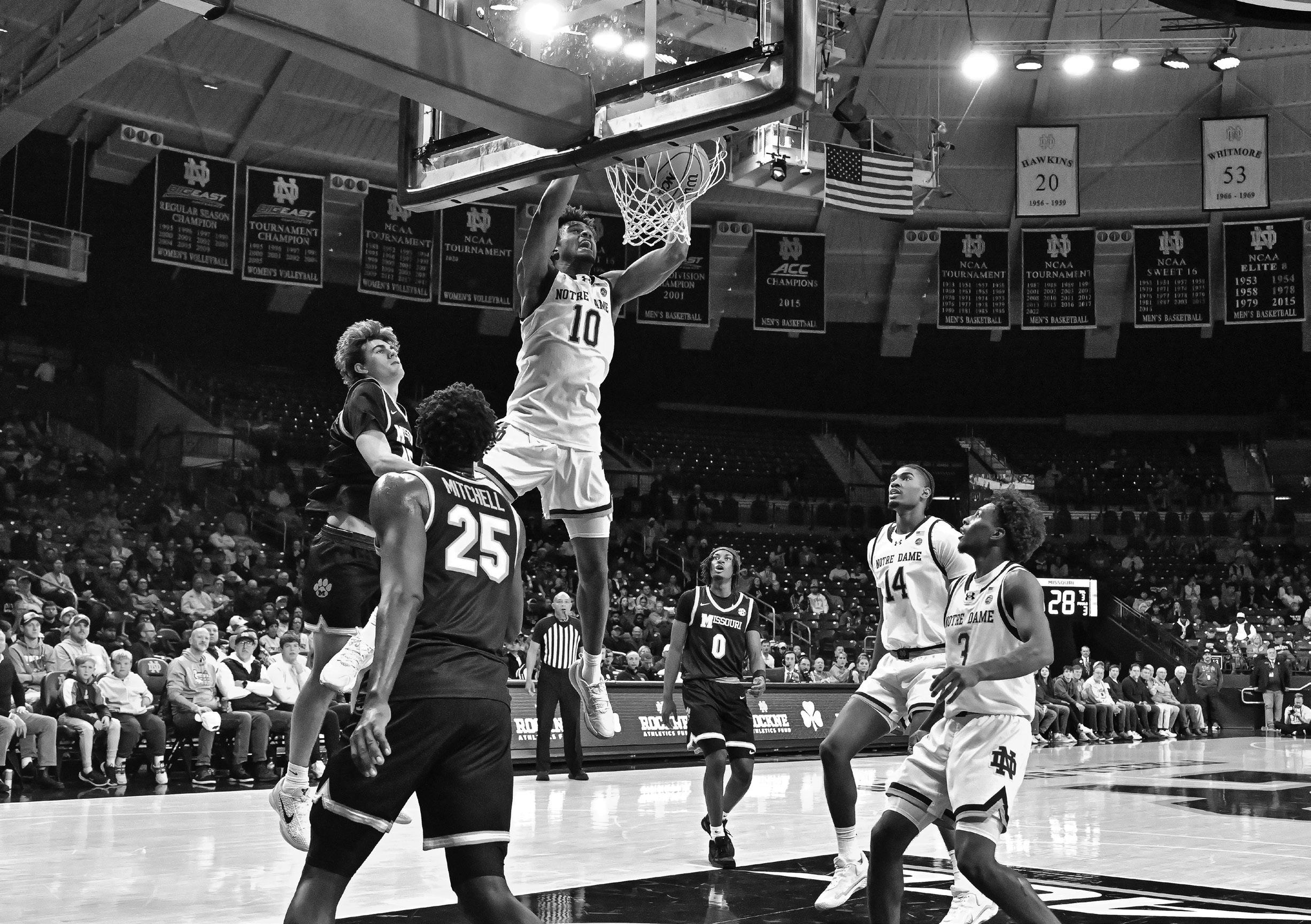
Irish freshman guard Jalen Haralson dunks the ball amidst Missouri Tiger defenders in a 76-71 Notre Dame victory on Dec. 2 in Purcell Pavillion. Haralson tallied 13 points and 4 rebounds, second on the team behind junior and fellow guard Markus Burton, who amassed 18 and 5, respectively.
Irish goalie Kempf named to World Juniors
By Ryan Murphy Sports Writer
Notre Dame made some news on the recruiting trail this week, adding 2009-born forward Braiden Scuderi.
Scuderi, a Haddon Heights, New Jersey, native, currently plays in the top flight of American junior hockey with the USHL’s Cedar Rapids Roughriders. His 10 points in 21 games at Cedar Rapids has him tied for eighth in USHL rookie scoring. Scuderi is a product of Rhode Island’s Mount St. Charles Hockey Academy.
Brock Sheahan and his staff have quietly amassed a solid recruiting haul in their first full year in charge. According to national scouting service PuckProspects, Scuderi becomes Notre Dame’s third five-star prospect to commit to the Irish this cycle, joining the National Team Development Program’s Cannon Thibodeau and Diego Gutierrez.
Irish still seeking connection in their game
Much ink has been spilled in these pages over Notre Dame hockey’s search for consistency. The Irish seemingly took one step closer to that goal by snapping a six game losing streak last week at Merrimack. Though the team lost the following game
to No. 15 Boston College, that game was there for the taking too.
“It was actually really nice to see us play more to our capability, five-on-five throughout both games,” Sheahan said this week. “Over time, if we can continue to build on that, you’ll start to see more consistent results.”
Notre Dame hadn’t scored at five-on-five in two weeks prior to its 5-4 win over Merrimack last Wednesday. The two game non-conference road trip broke that spell, but the Irish still need to prove that the team can replicate its play into the Big Ten, where the record has begun 0-6 to start the year. Notre Dame has only one five-on-five goal in conference play this season.
“Some of that’s us being disconnected in the way we play, a lot of that’s offensively: just not supporting the puck, not playing fast, not getting depth in the [offensive] zone, unwillingness to spend time in the [offensive] zone [and] just getting rid of the puck. If you do all those things, you’re not going to play offense,” he said. “When things aren’t going well, you have guys that try to do things by themselves. So when I say disconnected, you’ll see guys in isolation -- on line rush four, neutral zone [offense] -- just by themselves, right?”
The Irish cannot afford to play selfish hockey against the Badgers. Keep an eye on Notre Dame’s cohesiveness this weekend. It will be a strong indicator of its success against Wisconsin.
Kempf named to World Junior team
Netminder Nicholas Kempf earned some hard-earned recognition this week, as he was named to the USA Hockey team that will represent the country at the IIHF World Junior Championship in Minnesota.
Kempf has started all 14 games for Notre Dame this season as a sophomore, currently posting a .902 save percentage and 3.44 goals against average. He would have already been on USA Hockey’s radar, too, from his time with the National Team Development Program where he spent two years prior to joining the Irish.
“Nick is an elite goaltender,” Sheahan said. “I think over time here, people are going to see he’s got the capability and hopefully he continues to realize that potential that he’s one of the best goalies in the country of his age.”
Sheahan believes that Kempf’s selection to the team only serves as confirmation of that. If anything, it should serve as a confidence booster for Kempf, who has played
HOCKEY
well but has not necessarily had a smooth transition to college hockey. Being a young netminder is rarely smooth, and even last game at Boston College he allowed a pair that any goaltender might like to have back.
“Forget about our record and his numbers, he’s given us a chance to win every night from the start of the season until the Boston College game. And yeah, would he like – it’s probably the first and the fourth goal – back? Of course. But he also made some elite saves in the game. He’s not the reason we lost the game,” Sheahan said.
He may very well be the reason that USA wins a few games in Minneapolis come December. Regardless, it’s set to be a special year for the Americans at the World Juniors: the USA will go for its third straight gold medal, on home ice too. Kempf is set to play a big part in it.
Brown’s Breakout a Boon Freshman forward Cole Brown showed up in a big way last Wednesday against Merrimack, scoring twice in the third period to complete an Irish comeback. It was the New Jersey Devils prospect’s first career multi-goal game. Coming over from the OHL’s Brantford Bulldogs in the offseason, Brown has taken
some time to adjust to college hockey. Cashing in on the scoresheet had to have felt good.
“It’s been frustrating for him, a guy who’s used to producing,” Sheahan said of Brown. “But it’s harder to score at this level. What I’ve appreciated with him is that he’s really stuck to what we’re asking him to do, which is play inside contact, initiating contact, possessing the puck and working off the puck to be a support for his teammates.”
That work paid off when Brown celebrated his first goal last Wednesday. And it didn’t stop there, either. His line, with junior forward Cole Knuble and senior forward Sutter Muzzatti, was arguably Notre Dame’s best last week. Brown still has to grow into his frame, which is lanky at 6’3, 190lb. But there’s time for that, and plenty of potential to follow.
“That’s the reason he’s here, and not in New Jersey’s organization… yet,” Sheahan said. “We’re really excited to have him, and when I’ve talked to New Jersey about him, I’ve talked about, what does he look like in the second half of the year? And I think we are starting to see it.”
Contact Ryan Murphy at rmurph22@nd.edu
Canadians, hockey and NCAA: what to know
By Nikki Stachurski Sports Writer
Of all the major league sports in North America, the National Hockey League has the largest number of Canadian teams. With such a large Canadian audience and following, players and athletic staff began to debate if Canadians and American players were receiving the same amount of support and development to prepare for the major leagues.
For decades, most American NHL players, apart from extremely high draft picks, would go to play collegiate hockey in the U.S. to prepare for the League. On the other side of the border, Canadians would play in the Canadian Hockey League (CHL) junior league for extra development. Many believed the Juniors were more intense and yielded better quality players like Sidney Crosby, Tie Domi, and Patrick Kane. Yet as hockey grew and received more funding in the United States, collegiate programs made the
gradual progress necessary to keep up with the Juniors. Since 2018, the United States’ university system has established strong hockey programs where players such as Matthew Knies, Macklin Celebrini, and Riley Leonard were able to gain recognition.
The divide between the collegiate or Juniors’ route has been the topic of discussion stemming from the NHL. In the past five years, the hockey community has debated whether or not Canadians should be able to play collegiate hockey in the United States since Canadian universities do not have athletic programs to the same caliber as Americans.
In November of 2024, the National Collegiate Athletic Association (NCAA) met and voted to put the debate to rest. Hockey fans across North America waited with bated breath, and the NCAA agreed to lift restrictions preventing Juniors players from playing college hockey in the United States.
The new regulations going
into effect Aug. 1, 2025, stated that players who played in the CHL could commit to play Division I or Division II hockey at an American university, provided they did not sign an NHL contract before returning to CHL play. CHL players can enter as freshman student-athletes before they turn 20.
While the regulation changes were phenomenal for Canadian players wanting to step foot into the world of collegiate hockey, many Americans disapproved of the changes. Because many hockey players enter the CHL around age 16, many held the belief that CHL players would play four years of CHL hockey then go to the NCAA programs, where their talent would outshine Americans who did not get the extensive Juniors experience in addition to collegiate play. However, many collegiate teams were thrilled with the changes, especially for programs that would benefit from recruiting Canadian players to add additional
talent to their teams.
17-year-old Gavin McKenna, born Dec. 20, 2007, is a prime example of the divided beliefs of both sides. The Canadian left winger previously played three seasons for the Western Hockey League (WHL) CHL affiliate the Medicine Hat Tigers. While in the CHL, McKenna received the 2024 Rookie of the Year Award and the 2025 Player of the Year Award. Many Canadians believed he was a sure-shot for the Juniors-to-Majors pipeline that made Canadian hockey so dominant, so his decision to commit to play hockey at Penn State shocked the hockey community.
According to NHL affiliates at Penn State’s first home game, there were over 50 NHL scouts in attendance, setting a new record. The hockey world knew they were there primarily to watch McKenna play, and he has emerged as the consensus No. 1 Overall Draft Pick for the 2026 NHL Draft. While the young player and his accolades are impressive, he will likely leave the
Penn State program after one year of play. Many Americans disapproved of the move because they believe McKenna is the first in a long line of players who will milk the NCAA hockey program for one or two years before going to the Draft. If there is one thing American hockey culture refuses to budge on, it is the loyalty to a collegiate program, something the new regulations may diminish.
The current season of collegiate hockey will be one for the books, and the hockey community all across North America is watching closely to see how the season will play out. Allowing CHL players to enter the world of American collegiate hockey is a decision with both prominent advantages and disadvantages, and the unprecedented 2025-2026 season will yield interesting results as championships are won and players are drafted.
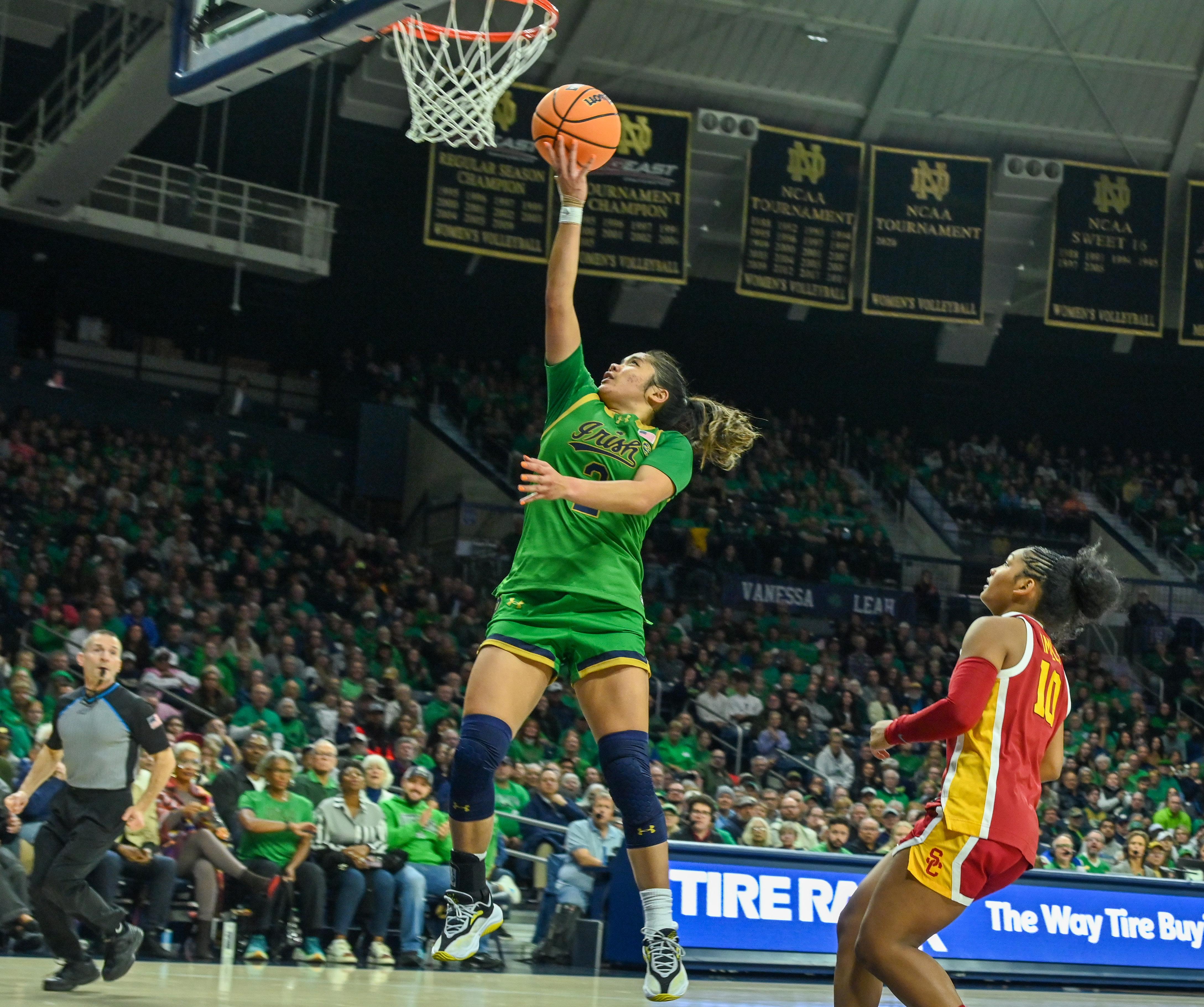
Irish senior guard Vanessa de Jesus, a Duke transfer, scores a layup as Trojan defenders trail behind in No. 18
Jesus, averaging 11 points per game this season, contributed 13 in the
Irish give up lead to undefeated Ole Miss
By Nikki Stachurski Sports Writer
No. 18 Notre Dame women’s basketball could not hold onto their early lead over No. 13 Ole Miss in the ACC/ SEC Challenge in Mississippi Thursday night, losing to the Rebels 69-62.
The 5-1 Irish came into the game relaxed after a confident win over Central Michigan, where they emerged with an 83-51 victory, and junior guard Hannah Hidalgo continued to shine with 25 points.
The Rebels stepped onto the court with an undefeated record in their first seven games. Their most recent victory was over George Mason, where senior forward Christeen Iwuala led Ole Miss to an 81-67 win with 21 points and 10 assists.
In South Bend, Ole Miss was disorganized right after tipoff and they struggled to make strong drives to the basket.
The Rebels were able to land 14 points on the board after falling into their rhythm late into the first quarter, thanks to efforts by senior forward Cotie McMahon. Despite the late start and disadvantage of being the away team, Notre Dame wasted no time in their offensive efforts to get ahead.
The Irish built a comfortable 26-point lead with Hidalgo scoring 14 points herself.
Notre Dame’s dominance early in the first was due to their rebounding ability, earning seven rebounds in comparison to the Rebels’ five.
The Rebels continued to score and grow more confident in their play and their momentum carried over from the first quarter likely due to the rotation of players on the court. Ole Miss went deeper into their bench, and the fresh legs may have been the change needed to get the Rebels on the scoring trend that allowed
them to lead the quarter with 15 points. The Rebels’ defense was slowly adapting to the Irish offense. Notre Dame was limited to only 11 points in the second quarter, which was less than half of the points they scored in the first.
Halftime was a much-needed break for an Irish team battling frustration and they needed to refocus and realign their style of play to maintain the 37-29 lead that was slowly dwindling.
Despite the Irish efforts, Ole Miss was determined to keep the score within reach, and the Rebels outplayed a Notre Dame team that could not seem to find the success they had in the first quarter. The Irish only put up 12 points, eight of which came from the paint and recorded no steals. The quarter was uncharacteristic for this Irish team that typically specializes in gritty offense central on the attack.
Ole Miss was wide awake now, their frustration in the first period forgotten as they put up 21 points to make the score 54-52, the Irish barely holding onto the lead. The Rebels outplayed the Irish on offense, diving after any loose ball and forcing opportunities to go their way, aided by their impressive 13 rebounds in the third quarter.
The Irish tried to rally coming into the fourth, working to maintain their lead but ultimately could not beat the energetic Rebels to the basket.
The Rebels took the lead for the first time since the game started and, despite late shots by Hidalgo and graduate student forward Malaya Cowles, the Irish could not quite manage to catch up to the Rebels. Ole Miss scored 19 points in the fourth quarter, and unfortunately the 13 points for the Irish could not overcome the deficit. Ole Miss had a deeper
rotation of players they could rely on, building their confidence and padding their lead until the clock ran out. The Irish did not give up, playing strong basketball and trying to force plays to go their way but just could not find the success they needed to win.
The Irish will continue their road trip as they travel to Tallahassee to face Florida State University, their first ACC opponent of the year. The Seminoles are 4-5 so far this season, and the Irish have ample time to prepare and refocus for a game they must win to maintain their ranking and prove they belong in the tough conference of ACC basketball. The Irish will battle it out against the Seminoles on Sunday, Dec. 7, at 2 p.m. in a must-win in the Sunshine State.
Contact Nikki Stachurski at mstachu2@nd.edu
ND WOMEN’S BASKETBALL
MARIELLA TADDONIO | The Observer
Notre Dame’s 61-59 win over No. 16 USC on Nov. 21 in Purcell Pavillion. De
Irish victory on five-for-10 shooting from the field; junior guard Hannah Hidalgo paced the squad with 22 points.