OUR SERVICES

PR MANAGEMENT
C-LEVEL ROUNT TABLE
WEBSITE DEVELOPMENT
EVENT MANAGEMENT
LEAD GENERATION
STAND BOOTH BUILDING
SOCIAL MEDIA MANAGEMENT
Dear Readers,
As we step into 2026, one thing is clear: growth is no longer defined by speed alone—it is defined by intelligence, resilience, and purpose.
Across the Middle East and Africa, organizations are navigating a pivotal moment. Digital transformation has matured, cybersecurity threats have intensified, and leaders are being challenged to build technology ecosystems that are not only innovative, but secure, scalable, and sustainable. This is the era of Intelligent Growth—where strategy meets execution, and technology delivers real business impact.
Our January 2026 issue of TechPulse Middle East & Africa explores this shift in depth. From secure digital infrastructure and AI-driven decision-making to cloud modernization and cyber resilience, this edition highlights how enterprises are moving beyond experimentation toward measurable outcomes.
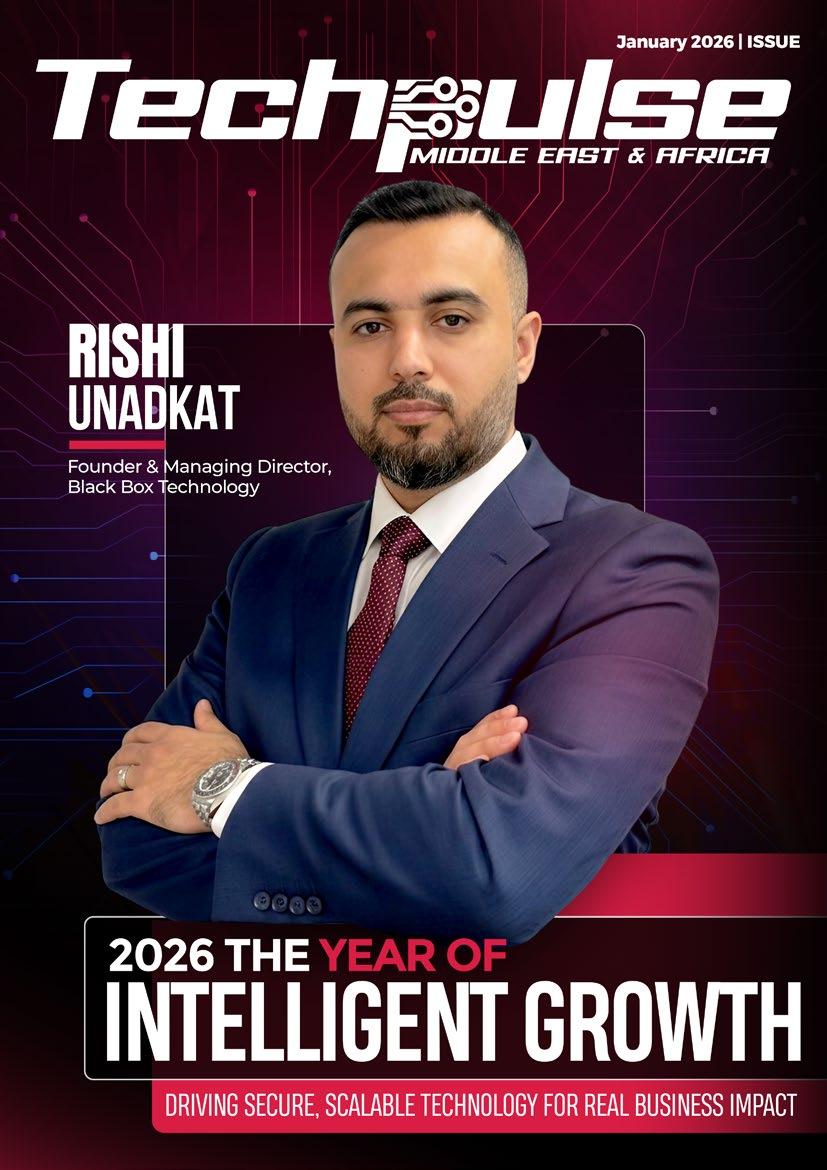
Gracing our cover is Rishi Unadkat, Founder & Managing Director of Black Box Technology, whose leadership perspective reflects the very essence of this transformation. His insights underscore the importance of building future-ready systems that empower businesses to scale with confidence while safeguarding their most critical assets.
At TechPulse, our mission remains steadfast: to amplify the voices of technology leaders, innovators, and decisionmakers shaping the region’s digital future. As we begin 2026, we reaffirm our commitment to delivering thought



Dolly Lakhani
CEO & Chief Editor
Email - editor@techpulsemea.com Mobile - 050 674 1731
Pooja Panjwani
Co-founder & Managing Editor
Email - pooja@techpulsemea.com Mobile - 052 564 8788
Dolly Lakhani
Nabeel Khan PR & Social Channel Manager
Faisal Farooq Head Developer
Developer Team





Cloudera
Veeam - Hidden Vulnerabilities: Why
DIEZ - The Autonomous Enterprise: Why CIOs Must Lead the Agentic AI Revolution
RØDE




ManageEngine - When should humans step in: Rethinking the role of AI in customer
14 Zand - Agentic AI: Powering the Future of Finance


19
21


Patchifi - EvanssionLondon-Headquartered Patchifi Appoints Evanssion as First Middle East Distributor, Launches Channel-First Strategy with UAE Data Hosting INTERVIEW
OpsTree - Shaping the Future of Digital Transformation: Kaushal of OpsTree Global
Milestone - Leading with Vision: Louise Bou Rached on Shaping the Future of Video Technology at Milestone
Hessa Almatrooshiv - Leading the Cyber Frontline: Hessa Al Matrooshi on Securing the Digital Future
Crowdstrike - AI Is Shrinking the Time to Breach—Here’s How Defenders Take It Back 25
Innovo Group - How AI is Driving Smarter, More Efficient Operations at Scale




2026 The Year of Intelligent Growth
Rishi Unadkat, Founder & Managing Director is Black Box Technology
With over 15 years of experience in business development and account management, Rishi Unadkat, Founder & Managing Director of Black Box Technology, is driving a vision where technology is not just innovative but secure, scalable, and purpose-built for real business outcomes.
Founded under his leadership, Black Box Technology was created to address a critical gap in the market: the need for trusted, security-focused IT solutions that can support organizations in an era defined by digital acceleration. Drawing on his expertise in cybersecurity, AI, and BI solutions, and his experience in advancing strategic growth and key account management, Rishi has positioned Black box technology as a reliable technology partner for enterprises across the banking and telecom sectors.
At the core of Black Box Technology’s approach is a customer-first philosophy, strengthened by deep vendor relationships, operational excellence, and collaborative

leadership. The company’s mission centers on empowering organizations and teams to achieve strategic objectives through resilient infrastructure, intelligent systems, and future-ready digital solutions.
Beyond Black Box Technology, the growing Unadkat Group reflects a broader vision; contributing to the nation’s long-term goals through a diversified business ecosystem built on innovation, integrity, and sustainable growth.
Q1. What were the early challenges you faced, and how did those experiences shape your leadership mindset today?
In the early days of building Black Box Technology, the real challenge was not the technology, it was laying the right foundation. We entered a highly competitive market where established players already had strong brand recognition and long term client relationships. As a new company, we understood that building a name from the ground up required intention behind every interaction, every delivery, and every commitment we made.
Very early on, it became clear that trust was our most valuable currency. Prospective clients were not only assessing our technical capabilities, they were evaluating our reliability, our stability, and whether we could be a long term partner. That realization shaped my mindset as a leader. I came to believe that reputation is built through small, consistent actions.
During that period, I was also wearing multiple hats across the business, spanning strategy, sales, project oversight, and client engagement. While demanding, that experience provided a holistic view of how interconnected every function truly is.
Those formative experiences ultimately shaped my leadership philosophy. I learned that leadership is not only about driving growth, but about creating clarity for the team, for clients, and for the future direction of the business. Today, I lead with a focus on consistency, transparency, and long term thinking. Technical expertise will always be essential, but trust, focus, and a clear identity are what ultimately build a company that stands the test of time.
Q2. Looking ahead to 2026, what do you see as the biggest strategic challenges/ opportunities for the industry you operate in?
As we move into 2026, the pace of technological change continues to accelerate, and that brings both complexity and opportunity. One of
the biggest challenges for our Black Box Technology is helping organizations adopt emerging technologies in a way that is strategic rather than reactive. There is a great deal of excitement around AI, automation, and advanced data platforms ensuring these innovations create meaningful impact at an industry and economic level.
Another key challenge is the growing demand for specialized talent. Technology ecosystems are becoming more sophisticated, and businesses need experts who understand not only the technical architecture but also the business context behind it. Building and retaining teams with that combination of skills requires continuous investment in learning, mentorship, and a culture that encourages innovation.
At the same time, these shifts open the door to significant opportunities. One of the most important is the increasing focus on responsible and secure technology adoption.Companies that can design solutions with transparency, resilience, and compliance built in will stand out as long term partners rather than short term vendors.
Overall, 2026 will favor technology companies that combine technical depth with strategic insight, invest in strong teams, and lead with a responsible approach to innovation.
Q3. What leadership qualities do you believe will be most critical for executives entering 2026 and beyond?
“Great leaders turn change into opportunity and guide their teams with clarity and purpose.”
As we head into 2026 and beyond, leadership is becoming more human, not just more strategic. The pace of change across technology and business continues to accelerate, and the leaders who will stand out are those who can provide direction even when every detail is not certain. Teams look for confidence, consistency, and a clear sense of purpose, qualities that help everyone move forward together.
Adaptability will be essential. Markets shift, technologies evolve, and customer expectations continue to rise. Strong leaders stay curious, are willing to adjust when needed, and make thoughtful decisions while keeping long term goals in sight. It is about being flexible without losing focus.
Finally, leaders understand the power of collaboration. Building strong teams, encouraging diverse perspectives, and creating environments where people feel empowered and heard will be critical. The challenges ahead are complex, and collective strength drives success.
Q4. How has your leadership style evolved over the years as your responsibilities grew?
As my responsibilities have grown, my leadership style has shifted from managing tasks to shaping culture. Early on, it was about making sure things got done, meeting deadlines, solving problems, and keeping projects on track.
I have also learned that leadership is not a one size fits all approach. Different situations, teams, and challenges require different styles. Sometimes decisiveness is key, and other times listening and facilitating leads to better outcomes. The ability to adapt while staying grounded in the company’s values has become central to how I lead.
Another evolution has been in perspective. With growth, the stakes are higher and the impact of decisions is broader. That has reinforced the importance of long term thinking, not just hitting targets, but ensuring the business, the team, and our clients are all moving forward sustainably.
In essence, leadership for me today is about creating clarity, fostering trust, and empowering others to do their best work while keeping an eye on the bigger picture.
From Data Sovereignty to AI Readiness: Why Local Cloud Infrastructure Matters in the UAE
Shailesh Davey, Co-founder & CEO, Zoho Corporation
AAcross the Middle East, and particularly in the UAE, conversations around cloud adoption have matured rapidly. What was once framed largely in terms of cost efficiency and scalability is now increasingly shaped by questions of data sovereignty, cybersecurity, regulatory compliance, and long-term economic resilience. This shift reflects a broader global trend, but one that is unfolding with particular clarity in markets where digital transformation is being actively guided by policy as well as enterprise demand.
The UAE’s regulatory environment has played a central role in accelerating this evolution. As governments and regulators place greater emphasis on where data resides, how it is governed, and who has jurisdiction over it, cloud infrastructure decisions are no longer purely technical. They have become strategic choices that affect trust, risk management, and an organisation’s ability to innovate responsibly.
Local data centres are emerging as a critical enabler in this context. Hosting data closer to users reduces latency, improving application performance and user experience, an increasingly important factor as businesses deploy AI-driven tools that rely on real-time data processing. At the same time, local infrastructure provides clarity and assurance around compliance with national data protection and cybersecurity frameworks, which is particularly important for sectors such as finance, healthcare, logistics, and government services.
This emphasis on local infrastructure is also closely tied to AI
readiness. While much of the public discourse around AI focuses on models and applications, the underlying infrastructure often receives less attention. In practice, scalable and secure AI deployment depends heavily on reliable cloud foundations, predictable performance, and clear data governance. Without these, AI initiatives risk remaining fragmented pilots rather than becoming embedded, valuegenerating capabilities.
From an investment perspective, the trend signals a move away from short-term experimentation toward long-term capacity building. Rather than overbuilding, many technology providers are adopting disciplined approaches, right-sizing infrastructure based on observed demand, reviewing capacity regularly, and expanding incrementally as usage grows. This reflects a more sustainable model of digital growth, aligned with actual business adoption rather than speculative forecasts.
Companies such as Zoho, which recently opened data centres in the UAE, illustrate how global technology firms are adapting to these expectations by aligning infrastructure decisions with local regulatory and market realities. More broadly, the direction is clear: the UAE is positioning itself not just as a consumer of cloud and AI technologies, but as a market where infrastructure, policy, and enterprise needs are increasingly in sync.
As digital transformation deepens across the region, local cloud infrastructure will continue
to play a defining role, quietly but decisively shaping how organisations innovate, compete, and build trust in an increasingly data-driven economy.
About Shailesh Davey
Shailesh Davey is the CEO and Co-founder of Zoho Corporation. Davey has been an integral part of Zoho Corp’s growth from a fledgling startup to a multi-product, multi brand organisation. He plays a key role in implementing and refining engineering processes across the organisation. Currently, he devotes much of his time to three important Ds of any SaaS organisation - Data, Databases and Datacentres.

Private AI Aligning Data Privacy with Strategic Growth
Ahmad Shakora, Group Vice President- META, Cloudera Middle East
Data is at the heart of digital transformation, and one question is being asked with renewed clarity: how can we harness the power of artificial intelligence (AI) without compromising our organization's most sensitive information?
According to Stanford's AI Index Report 2025, AI-related privacy and security incidents are on the rise: they jumped 56.4% in one year, with 233 cases reported in 2024, ranging from data breaches to algorithmic failures compromising sensitive information.
As data sovereignty becomes a priority for all European companies, regardless of their sector or size, maintaining control over the data that feeds AI models is becoming a real challenge, and organizations need to address it today. Far from being a passing trend, private AI is thus a response to a legitimate concern for enterprises.
Defining private AI
Private AI refers to the deployment of AI systems in a controlled environment where data privacy and security are maintained throughout the AI lifecycle. Unlike public AI models that process data in shared or external environments, private AI ensures all data remains within an organization's infrastructure, whether on-premises or in a private cloud.
This distinction between private and public AI is not insignificant. It reflects a radically different philosophy, advocating complete control. Organizations retain full ownership of their models, data, and intellectual property.
For highly regulated sectors (healthcare, finance, public sector, etc.), this requirement is nothing new. But it is gradually making its way into other sectors. After all,
why should a retail company accept that its customer data is passed on to third parties?
Private AI, a sustainable investment
The adoption of private AI is not without its challenges. Organizations must invest heavily in infrastructure and specialized expertise, as the management and maintenance of private AI systems require advanced skills.
However, business leaders and IT decision-makers cannot underestimate the long-term benefits that this choice brings in terms of data sovereignty, security, and governance. By keeping its data under its own jurisdiction, an organization strengthens its compliance with local and international regulations, significantly reduces the risk of breaches, and benefits from total oversight of its AI models and data, thereby consolidating governance and accountability toward all of its stakeholders.
Beyond compliance, private AI offers other tangible benefits for businesses. First, companies can tailor AI models to their specific needs, customize algorithms to their business objectives, and develop solutions that are more relevant to their use cases. By keeping data and models in a secure environment, companies prevent leaks or misuse of sensitive information, thereby maintaining their competitive advantage. In addition, automating recurring tasks and accelerating decision-making processes improves productivity and frees up teams for more strategic initiatives.
Finally, although the initial investment is substantial, the savings achieved by reducing dependence on third-party cloud services, such as storage,
processing, and licensing fees, can be significant.
Towards more responsible and controlled AI
Private AI is not a passing fad, but rather a pragmatic response to the tension between innovation and caution that organizations currently face. Operating entirely within a trusted environment, it allows companies to exercise complete control over their models, data, and intellectual property.
With data privacy becoming paramount and digital regulations tightening, private AI is much more than a technological choice—it is becoming a vital part of business strategies. For organizations willing


Hidden Vulnerabilities: Why Data Resilience Demands a Ground-Up Approach
As organizations rely on increasingly complex IT networks and third-party providers, hidden vulnerabilities put data resilience and business continuity at greater risk
Dave Russell, Senior Vice President, Head of Strategy at Veeam
With sprawling data estates and an ever-increasing number of third-party suppliers, organizations are struggling to keep up, inadvertently leaving gaps in their data resilience for threat actors to abuse. But with so much to address, where should organizations start? It might not be the answer they want to hear, but they need to start from the bottom up. With the sheer scale of data estates and third-party networks, a patchwork approach will simply make matters worse. Instead of responding reactively to threats and compliance changes, organizations need to approach data resilience holistically. Otherwise, the gaps will only multiply.
1. Data’s growing pains
Well, you don’t know what you don’t know, right? For organizations looking to address their data estates, the first priority is getting an accurate view of their full landscape.
Data as a whole is on a trajectory of exponential growth. In 2010, the entire digital universe only took up 2 ZetaBytes, whereas in 2024 alone, we generated 147 ZB. And enterprise data is a huge part of this, exploding over the last decade. With AI now firmly in the picture, this is only going to ramp up further, with the market for enterprise data management expected to double again over the next few years, from roughly $111 billion in 2025, to $243 billion by 2032 So if organizations don’t act now, they’ll never be able to catch up.
For many, the introduction of AI will have required more than a few ad-hoc changes to their approach to data, how it’s stored, and what tools are being used with it. And, the pace at which many moved to adopt the technology has likely resulted in more than a few changes being implemented to estates without the most thorough of processes. Unintentionally, this has created siloes as different departments utilise AI in different ways, leaving significant reams of data outside of traditional organizational jurisdiction. Organizations may think they can see
everything, but in reality, they’re missing the full picture.
After all, there’s little point in applying new risk management practices if you’re missing out on swathes of your IT estate or entire elements of your technology stack simply because you don’t know they’re there.
2. Exploring the thinking inside the box
Unfortunately, enterprise data sprawl is by no means limited to the organization’s owned and operated tech stack. The interrogation into data estates must also include third-party solutions. According to research from the Cyber Risk Alliance, the average organization uses 88 IT third parties, often relying on their solutions completely. But, these solutions are often ‘black boxes’, offering little to no transparency on not just the data housed within them, but also on the data resilience methods used to secure them.
With regulations like the EU’s NIS2 and DORA specifically calling out the risk management for data held or handled by third parties, organizations need to take a closer look at how their suppliers are delivering their solutions.
3. Is regulation falling short?
Despite regulations being introduced across the globe to try and tackle data resilience, research on the data resilience of large enterprises from McKinsey has highlighted that many organizations still fall short. 30% of organizations believe they are more resilient than their actual benchmarked capabilities, and this knowledge gap is due largely to a lack of awareness of the sheer scope of data estates and third-party suppliers.
Take the EU’s DORA for example. Specifically addressing financial services sector organizations, it called for increased attention to be paid to the data resilience of third parties. Yet, 34% of organizations called that element of the regulation the most challenging to implement, likely due to the previously unknown scale of their third-party networks. And six months
on from its implementation, 96% of EMEA organizations still feel their data resilience needs work, highlighting the ‘reality check’ given by this regulation.
4. Tackling it from the ground up
So, what to do? Rather than waiting for a threat actor to take advantage of one of these gaps, blind spots, or backdoors, organizations need to find, and close them. This will be no small task, but it is a vital one for organizations to address their data resilience shortcomings effectively. This should take the form of critical assessments of not just internal data resilience measures, but also those of suppliers to expose vulnerabilities and dependencies. Weak links in the third-party supply chain, hidden data siloes, and any other gaps need to be identified and addressed before a threat actor can take advantage of them.
Make no mistake, it's a big, broad job that can't be done alone. Assessing and improving data resilience at this scale requires collaboration across not just the business, but third-party suppliers as well. As with anything of this size and complexity, having the right framework to follow makes all the difference. For example, the Data Resilience Maturity Model is a vendor-neutral industry standard that includes a robust self-assessment and a framework for building a plan to strengthen resilience over time.


The Autonomous Enterprise: Why CIOs Must Lead the Agentic AI Revolution
Dr. Fayid Kadambodan, Assistant Director - Enterprise Solutions - Digital, DIEZ
1. The Autonomous Enterprise: Why CIOs Must Lead the Agentic AI Revolution
For years, we have spoken about digital transformation as if it were a destination—cloud adoption completed, ERP modernized, dashboards deployed. Yet across enterprises, especially in the Middle East, a fundamental truth remains: most organizations are still operating reactively. Systems wait for instructions. Processes pause for approvals. Intelligence exists, but action does not.
That model is breaking.
We are now entering the age of the Autonomous Enterprise, powered by Agentic AI—AI systems capable of reasoning, deciding, and acting independently within defined boundaries. This shift is not evolutionary; it is structural. And it places the Chief Information Officer (CIO) at the center of enterprise leadership in a way we have never seen before.
“Agentic AI is not just another technology upgrade—it is a new operating model for the enterprise.”
2. From Automation to Autonomy
Automation has long been the backbone of efficiency. In the UAE and across the GCC, governments and enterprises have invested heavily in digitization—smart services, paperless workflows, shared platforms, and AI-assisted decision support. These efforts have delivered speed and scale.
But automation still follows scripts.
Agentic AI goes further. It introduces systems that can:
• Understand objectives and constraints
• Break goals into executable tasks
• Collaborate with other AI agents and enterprise systems
• Learn from outcomes and adapt continuously
In practical terms, this means systems that no longer wait. Procurement agents that autonomously manage renewals within policy limits. Cybersecurity agents that detect, decide, and respond in real time. Financial agents that continuously forecast and recommend corrective actions—not quarterly, but continuously.
The enterprise becomes selfoptimizing.
3. Why the Autonomous Enterprise Matters in the UAE
Few regions are better positioned for this shift than the UAE and the wider Middle East.
National strategies such as the UAE National AI Strategy 2031, smart government initiatives, and cloud-first mandates have created a fertile foundation. Governments here are not merely digitizing services; they are reimagining governance itself—speed, trust, sovereignty, and citizen experience at scale.
However, ambition alone is not enough.
As enterprises grow more complex and interconnected, the ability to sense, decide, and act at machine speed becomes a competitive and operational necessity. The autonomous enterprise is not about replacing human judgment—it is about ensuring that human judgment is applied where it matters most.
“In high-growth, high-expectation environments like the Middle East, speed without intelligence is risk—and intelligence without action is waste.”
4. Why This Revolution Must Be CIO-Led
Agentic AI is often discussed as a business innovation or an AI initiative. That framing is incomplete. This is an enterprise architecture transformation, and it must be led by the CIO.
Autonomy Is an Architecture Problem
Agentic systems do not live in isolation. They depend on:
• Trusted enterprise data
• Secure integration across ERP, BPM, CRM, and cloud platforms
• Orchestration layers that coordinate decisions across agents
Only the CIO has the horizontal view required to design and govern this ecosystem responsibly. Without architectural discipline, autonomy quickly becomes chaos.
Governance, Trust, and Sovereignty Are Non-Negotiable
In the UAE, questions of data sovereignty, regulatory compliance, and public trust are paramount—particularly in government and regulated sectors.
Autonomous systems raise critical questions:
• Who is accountable for AI-driven decisions?
• How do we audit and explain autonomous actions?
• How do we ensure ethical alignment with national values and policies?
CIOs already own cybersecurity, data governance, and enterprise risk. Extending these into AI governance frameworks— guardrails, approval thresholds,
ethical constraints, and killswitches—is a natural evolution of our mandate.
“Autonomy without governance is risk. Governance without autonomy is stagnation.”
5. Redefining Work, Not Replacing People
One of the biggest misconceptions about agentic AI is that it is primarily about cost reduction or workforce replacement. In reality, it is about work redesign.
As AI agents take over executionheavy, rules-driven, and decisionintensive tasks, human roles shift toward:
• Strategic oversight
• Exception management
• Policy design
• Innovation and relationshipdriven work
In government and large enterprises, this shift is especially powerful. It allows institutions to scale services without scaling bureaucracy, while enabling employees to focus on higher-value outcomes.
For CIOs, this means partnering closely with HR and leadership to ensure reskilling, transparency, and trust throughout the transition.
6. The Autonomous Enterprise in Practice
What does this look like on the ground?
• Operations: AI agents monitor performance, predict failures, and dynamically reallocate resources.
• Finance: Continuous forecasting replaces static annual budgets, improving fiscal agility.
• Procurement: Agents manage vendor performance and negotiations within predefined policy boundaries.
• Cybersecurity: Threats are detected and neutralized autonomously—often before human teams are alerted.
The result is not just efficiency, but institutional resilience—the ability to adapt in real time.
“Resilience is no longer about recovery speed; it is about continuous adaptation.”
7. From Control to Confidence: A New Governance Mindset
Autonomous enterprises cannot be micromanaged. The CIO’s role shifts from controlling systems to designing confidence into them.
This requires:
• Clear objectives and decision boundaries
• Policy-driven autonomy, not unrestricted freedom
• Continuous monitoring, learning, and refinement
In the Middle East, where public trust and accountability are central, this balance is critical. Autonomy must enhance transparency, not erode it.
9 The CIO Skillset for the Agentic Era
To lead this transformation, CIOs must evolve beyond traditional technology leadership.
The agentic era demands CIOs who:
• Think in systems, not applications
• Understand AI ethics, policy, and regulation
• Communicate technology strategy in business and societal terms
• Build cross-functional coalitions
• Lead cultural change with empathy and clarity
The CIO is no longer just the head of IT. We are becoming enterprise co-pilots, shaping outcomes in real time through intelligent systems.
10. A Call to Action
The autonomous enterprise is not a future concept—it is already emerging. Organizations that delay
will find themselves constrained by slow decision cycles, rigid processes, and legacy operating models.
For CIOs, the choice is clear:
• Remain custodians of systems, or
• Become architects of intelligent, adaptive enterprises
Agentic AI is redefining what organizations can be. CIOs must now redefine what leadership means.
“Those who lead the agentic transformation will not just modernize their enterprises—they will shape the future of governance, business, and society itself.”
QUICK FIRE CIO BOX
(Answer in 1 word)
• One word to describe the future enterprise: Autonomous
• Biggest challenge for CIOs in the AI era: Trust
• Most underrated CIO skill today: Translation
• Technology that will redefine leadership: AgenticAI
• One word every CIO should remember: Responsibility

Op-Ed: 2026 MENA Predictions in Consumer Tech & Creator Economy Space
Lara Sous – Marketing & PR Lead for RØDE, MENA
As we turn the page into 2026, one thing is clear: the MENA region is no longer simply “emerging”. It has firmly taken center-stage as a leader in consumer tech and the creator economy space. What makes the MENA region unique isn’t just its youth or its rapid adoption of AI-driven solutions, but the speed at which culture, technology and creators intersect in real time to build a creative ecosystem like no other. Creators in the MENA region are no longer reacting to global trends, they are actively shaping them through their own formats, voices, styles and standards. Bringing strong local cultural relevance to global initiatives. Here’s what we can expect more of in 2026:
1. Audio Will Continue to Become the Region’s Most Powerful Medium
In a region built on storytelling & cultural conversation, audio is finally having (& will continue to have) its moment.
By 2026, we will see:
• Increased investment in studio-quality home setups across the region. It’s no longer just about having strong visuals; creators are matching their aesthetics with sharp and professional sound.
• Continued growth in Arabicfirst audio & video podcasts alongside genuine and
authentic live talk formats.
• A shift from “content for platforms” to “content for community”. The audience wants content that doesn’t just look or sound good, but content they can learn and truly benefit from.
2. MENA Creators Are Maturing into the Media Scene
The MENA Creator Economy is growing at a rapid pace, paving the way for creators to confidently tap into the media space. In 2026, we will see:
• More creators hosting long-form shows and vodcasts.
• Strategic partnerships between creators, local entities, brands, and platforms.
• Selective creator access to exclusive KOL’s, spaces and communities from the above-mentioned partnerships & relations.
A creator’s follower count is no longer the primary benchmark; Creator success in 2026 - and in the years to come - will be greatly defined by the creator’s credibility, consistency, and cultural relevance.
The market witnessed this shift few years back, but this has accelerated since then, particularly amongst tech reviewers, educators, podcasters & niche creators who thrive on
loyal audiences and connections because they are trusted. What does this mean for tech brands? This evolution opens the door for tech brands to move away from short-term campaign hauls to long-term co-created methodologies that allow creators to deliver content in a unique and a sustained way; a way that resonates with both the creator and the brand.
3. Brand & Creator Partnerships Become Strategic, Not Transactional
In 2026, we may see brands move away from one-off influencer deals and more towards
• long-term partnerships
• meaningful on-ground activations
• shared storytelling and knowledge exchange.
It’s no longer a one size fits all and it’s certainly no longer about the number of followers; The creators who will stand out in 2026 and the years to come are those who will bring depth, originality, creativity and production quality.
4. Hybrid Creation Is the New Normal
Creators in MENA are inherently hybrid, which means they produce content in multiple languages, across multiple platforms, between home studios, events, and on-the-go locations.

By 2026, the demand will be for tech that:
• Is portable yet powerful
• Integrates seamlessly and effortlessly across workflows
• Enables creators to go live, record, and distribute without any hurdles
This fast-paced hybrid reality is shaping how creators choose their tools and why ease of use reliability, and compatibility matter more than ever.
In conclusion, the region’s creators are building communities and defining new creative standards when it comes to reviews, authenticity, culture and innovation.
Success here is measured by brands who truly understand local nuances, actively support the creator economy and empower creators to continue sharing their unique stories.

When should humans step in: Rethinking the role of AI in customer support
Shobana Sruthi Mohan is an enterprise analyst at ManageEngine
Generative AI has reshaped customer support faster than most teams anticipated. It answers instantly, scales infinitely, and handles repetitive queries with impressive consistency. For organizations managing thousands of service tickets a day, the efficiency gains are real, and measurable.
Large-scale studies now reinforce what many support leaders have observed first-hand: AI works best not as a replacement, but as a multiplier. Productivity gains of around 15% are common, especially among newer agents. With instant access to contextual knowledge, suggested responses, and guided workflows, AI shortens the learning curve dramatically. What once took months of experience can now be achieved in weeks.
But the story doesn’t end there. As agents become more experienced, the returns from AI assistance begin to plateau. In some cases, they even decline. Rigid adherence to machinegenerated suggestions can flatten conversations, dilute nuance, and make interactions feel formulaic. Skilled agents rely on judgment, emotional intelligence, and improvisation: capabilities that don’t always translate cleanly into prompts or predictions.
1. The problem isn’t automation; it’s overreach
Anyone who has interacted with a chatbot long enough has encountered the same pattern.
You explain the issue. The bot misunderstands.
It suggests a help article that you’ve already read.
You rephrase your request. The bot repeats itself.
You ask for a human. It insists it can help.
Welcome to the chatbot doom loop.
Chatbots excel in structured environments, like FAQs, predictable workflows, simple troubleshooting. But customer support is rarely neat. Emotion enters quickly: frustration, urgency, anxiety, confusion. These are signals that don’t fit cleanly into decision trees.
When emotional context rises, correctness alone is not enough. A response can be technically accurate and still deeply unsatisfying. Not because the system is slow or inaccurate, but because it refuses to recognize when it is no longer the right tool for the job.
2. The real question: When should AI step back?
AI is exceptionally good at first-touch triage, gathering context, categorizing issues, detecting patterns, and routing requests efficiently. These are mechanical advantages. Machines should own them.
But the moment a user expresses frustration, confusion, or urgency, the equation changes. Human
judgment begins to matter more than speed. Tone matters more than syntax. Understanding matters more than efficiency.
The mistake many systems make is forcing the bot to persist, trying one more response, one more workflow, one more deflection, when the user has already signalled they want a human.
The transition from AI to human is where most support experiences break down. When performed poorly, it resets the conversation. When working well, it feels seamless. The best hand-offs share three characteristics:
Make the option to talk to a human obvious: Customers shouldn’t have to beg for human help. A clear, accessible option signals respect. It tells users you trust their judgment about when automation is no longer enough.
Context preservation: Nothing erodes customer confidence faster than repeating the same issue after escalation. Effective handoffs carry forward the entire conversation: the previous messages and attempted solutions that the customer experienced as well as the metadata and sentiment indicators that the bot captured behind the scenes.
Emotional acknowledgment: Before solving the problem, acknowledge the customer experience. A sentence like “I can see this has been frustrating. Let me help.” can reset the entire interaction. Humans do this
instinctively. AI must be designed to acknowledge customers' emotions, not dismiss them.
3. The future of support is not complete automation
AI will continue to improve. It will get better at summarization, intent detection, and recommendation. It will become faster, more accurate, and more context-aware. But customer support has never been only about information delivery. It’s about judgment, empathy, knowing when to follow the process, and when to bend it. The most effective support systems of the future won’t ask whether AI or humans should lead. They’ll design for collaboration:
• AI handling volume and velocity
• Humans handling and trust
• Seamle the two
Customers don’t want a choice between efficiency and empathy. They want both to work together seamlessly. And that’s the real evolution of customer support: not replacing humans with machines, but letting machines do what they do best, so humans accomplish what only humans can.
About Shobana Sruthi Mohan
Shobana Sruthi Mohan is an enterprise analyst at ManageEngine, a division of Zoho Corporation, where she analyzes technology trends and transforms complex ideas into clear, engaging narratives for a wide audience. Over the course of her five year career, she has worn many hats, transitioning from writing to product marketing and now to public relations. Her enduring love for the written word continues to drive her across every role she takes on. When she isn't working, you'll likely find her immersed in a book, binge-watching her favorite shows, or unwinding by cooking





Agentic AI: Powering the Future of Finance
Written by Haishan Wu, Head of Innovation, AI & Data at Zand Bank
Agentic AI is set to revolutionize the world of finance in ways we're only beginning to imagine. Unlike traditional AI, agentic systems can autonomously reason, plan, and execute complex tasks through collaborative frameworks like A2A (Agent-to-Agent) and MCP (Model Context Protocol), enabling multiple AI agents to work together seamlessly.
Across banking and Fintech, AI’s impact is transformative in several key areas, including the user experience, client onboarding, operational efficiency, security and anti-fraud, and payments.
Enhanced User Experience
Agentic AI will deliver hyperpersonalized banking experiences. Imagine AI agents handling client onboarding with intelligent document verification, providing 24/7 digital human customer service with emotional intelligence, and powering conversational banking that anticipates needs before they’re expressed.
For corporate clients and wealth management, these agents will offer sophisticated portfolio optimization and tailored financial strategies that adapt dynamically to customer goals.
Client Onboarding
AI agents can autonomously verify documents, cross-check data against regulatory databases, and flag anomalies in real time. This not only helps ensure compliance with regulatory standards but also streamlines the onboarding process for retail and corporate clients alike.
Operational Efficiency
Agentic AI brings unprecedented operational efficiency to banking by automating repetitive tasks and optimizing complex workflows, such as transaction reconciliation, loan processing, and report generation. Unlike traditional automation, agentic AI adapts dynamically to changing conditions, making decisions in real time and collaborating with other AI agents to solve problems.
Security and Anti-Fraud
In an era of increasing cyber threats and rapidly evolving fraud schemes, agentic AI is a game-changer for security and anti-fraud measures. Its ability to autonomously analyze vast amounts of data and detect anomalies in real time helps ensure a proactive approach to safeguarding financial systems.
Payments
As an AI and blockchain-powered digital bank, Zand aims to build the next-generation agentic AI infrastructure for the digital economy. By developing super banking agents, we're creating an entirely new paradigm of AI-driven banking services that will redefine how customers interact with financial institutions.
The future of banking isn't just automated—it’s autonomous, intelligent, and deeply personal. And we’re excited to lead this transformation.
Through purpose-built MCPs, agentic AI dramatically enhances onboarding and compliance workflows. Banks can achieve faster KYT (Know Your Transaction), KYC (Know Your Customer), and KYB (Know Your Business) verifications across both traditional banking and digital assets. By automating these processes, agentic AI reduces friction for customers while strengthening
The emergence of agentic payment protocols will enable AI agents to securely execute payments using stablecoins, representing users in financial transactions while maintaining personalized spending patterns and preferences.



London-Headquartered Patchifi Appoints Evanssion as First Middle East Distributor, Launches Channel-First Strategy with UAE Data Hosting
Dubai, UAE - Patchifi, headquartered in London, United Kingdom, announced the appointment of Evanssion as its first distributor in the Middle East, marking a key milestone in the company’s channel-first growth strategy for the region.
The partnership positions Evanssion to lead partner onboarding, enablement, and market expansion for Patchifi across the Middle East, bringing intelligent, automated patch management capabilities to enterprises seeking stronger cyber resilience.
As part of its regional commitment, Patchifi has also confirmed local data hosting on Microsoft Azure in the UAE, enabling customers to meet regional data residency and compliance requirements while benefiting from high availability and enterprise-grade security.
“Moving forward, our strategy is deliberate and executionfocused,” said Pavin Varughese, Founder of Patchifi. “From our headquarters in London, we are building Patchifi as a globally trusted platform with strong regional presence. The Middle East is a priority market for us, and our channel-first approachstarting with Evanssion - allows us to scale through proven local expertise. Hosting customer data on Microsoft Azure in the UAE
further reinforces our commitment to security, compliance, and trust in the region.”
“Moving forward, our strategy is deliberate and executionfocused,” said Pavin Varughese, Founder of Patchifi. “From our headquarters in London, we are building Patchifi as a globally trusted platform with strong regional presence. The Middle East is a priority market for us, and our channel-first approachstarting with Evanssion - allows us to scale through proven local expertise. Hosting customer data on Microsoft Azure in the UAE further reinforces our commitment to security, compliance, and trust in the region.”
About Patchifi
Patchifi is headquartered in London, United Kingdom, and is a cloud-native patch management and software deployment platform built for modern IT and security teams. The platform delivers automation, compliance, and continuous protection for distributed enterprises.

Pavin Varughese
Founder of Patchifi

Dilip Kalliyat,
President – Evanssion,
said:
"Patch management is no longer just an IT administrator’s function - it has become a foundational pillar of every modern cybersecurity strategy. As threats evolve and attack surfaces expand, timely and intelligent patching is essential to maintaining cyber resilience. We are excited to bring Patchifi’s advanced patch management capabilities to the Middle East, empowering our customers with a solution that is both proactive and security-driven."
Mohan Krishnamurthy General Manager – Evanssion

Mohan Krishnamurthy, General Manager – Evanssion, added:
"Patch management powered by AI, as delivered by Patchifi, completes the cycle of defense for organizations of all sizes. It adds a critical layer to the cybersecurity armoury by ensuring vulnerabilities are remediated before they can be exploited. We are proud to introduce Patchifi to the region and enable our partners and customers to strengthen their security posture with automation and intelligence at scale."
Patchifi’s cloud-native platform eliminates the need for on-premise infrastructure, enabling organizations to manage patching and software deployment across distributed environments with speed, visibility, and control.
About Evanssion
Evanssion is a value-added distributor specializing in cybersecurity and technology solutions across the Middle East, supporting partners and customers with innovative platforms and deep regional expertise.


































Viacom 18, Mobikwik, Fareportal
Shaping the Future of Digital Transformation: Vedant Kaushal of OpsTree Global

Vedant K
Sales Director, OpsTree Global
Vedant brings over 20 years of global leadership experience across enterprise sales, strategic accounts, and alliances management. With exposure across APAC, the US, and EMEA, he has partnered closely with CXO leaders on large-scale technology modernization and digital engineering transformation initiatives.
At OpsTree, he focuses on driving enterprise growth and expanding global market presence, with a focus on GCC countries, across Data & AI, DevSecOps, platform engineering and cloud modernization services.
Q1. What inspired you to focus your career on cloud engineering and DevSecOps, and how did that lead you to OpsTree?
My journey into cloud engineering and DevSecOps has been shaped by observing how rapidly software delivery expectations have evolved over the last two decades. In my early years working with global enterprises, one recurring challenge I observed was how infrastructure provisioning and application releases were slow, manual, and fragmented across teams. As cloud adoption increased, it became evident that true transformation was less about tools and more about aligning people, processes, and security models.
This philosophy naturally aligned with OpsTree’s engineering-first approach. The company focuses on helping enterprises build scalable cloud-native platforms where automation, compliance,

and developer productivity coexist. With the rise of platform engineering and internal developer platforms like BuildPiper, OpsTree is solving real enterprise problems around standardization, visibility and secure software delivery which made the journey a very natural fit for me.
DevSecOps resonated strongly with me because it brings together speed, reliability, and security into a single operating model. I have always believed that security and governance should be embedded into delivery pipelines rather than treated as checkpoints at the end.
Q2. With the rise of AI-assisted development, how are you integrating GenAI tools to improve software workflows?
We see GenAI as a powerful accelerator rather than a replacement for engineering judgment. Its true value lies in reducing friction across the software lifecycle and enabling teams to focus on higher-value work.
From an operational standpoint, GenAI is being integrated into areas such as intelligent pipeline insights, automated documentation, faster onboarding of developers, and contextual recommendations during build and release cycles. These capabilities help teams understand failures quicker, optimize deployments, and reduce cognitive load.
Within platforms like BuildPiper, GenAI enhances decision-making by correlating data across CI/CD pipelines, environments, and
security policies. This allows enterprises to move from reactive troubleshooting to proactive optimization.
For organizations in the GCC, where large-scale digital programs are moving at high velocity, GenAI helps balance speed with governance which ensures innovation continues without compromising reliability or compliance.
Q3. How important is it for tech teams to contribute to open-source tooling and knowledge sharing?
Open source plays a foundational role in modern cloud and DevOps ecosystems. Most enterprise platforms today are built on open technologies, and contributing back is both a responsibility and a strategic advantage.
Active participation in open source encourages transparency, accelerates innovation, and builds stronger engineering practices. It also enables organizations to tailor tooling in ways that reflect real-world enterprise requirements, such as security, scalability and observability.
At OpsTree, we strongly believe in knowledge sharing, whether through open-source contributions, community engagement, or sharing practical implementation insights. This approach not only strengthens the ecosystem but also builds trust with customers who value openness and long-term sustainability over vendor lock-in.
Q4. What’s your take on multi-cloud vs. hybrid cloud strategies — and how should organizations decide between them?
There is no one-size-fits-all answer. The right strategy depends on regulatory requirements, legacy systems, data sensitivity and business
Hybrid cloud remains the preferred approach for many large enterprises, particularly in regulated industries, as it allows organizations to modernize while retaining control over sensitive workloads. This model is especially relevant across the GCC, where data residency and compliance are critical considerations.
Multi-cloud, on the other hand, is often driven by resilience, vendor diversification, or best-of-breed service adoption. However, without strong governance and platform consistency, it can introduce unnecessary complexity.
The key is to focus less on where workloads run and more on how they are managed. A unified platform approach covering CI/CD, security, observability, and policy management enables organizations to operate seamlessly across hybrid or multi-cloud environments without increasing operational overhead.
Q5. Which emerging technologies (e.g., cloud native, SRE, security automation) do you think will have the biggest impact in the next 3–5 years?
Several technologies will significantly shape enterprise IT over the coming years.
Platform engineering and internal developer platforms will become mainstream as organizations seek consistency, governance and faster delivery at scale. Cloud-native architectures will continue to evolve, with greater emphasis on resilience, cost optimization, and operational simplicity rather than pure microservices adoption.
DevSecOps automation will deepen, particularly around policy-as-code, automated compliance, and secure software supply chains. Site Reliability Engineering (SRE) principles will increasingly guide enterprise operations, helping organizations define reliability as a measurable business outcome.
I focused on cloud engineering and DevSecOps after seeing how slow and fragmented enterprise software delivery was. OpsTree’s engineering-first approach aligns with my belief that security and automation should be built into the pipeline. GenAI helps us deliver faster, more secure, and reliable platforms. Together, these practices enable enterprises to scale innovation with confidence. goals.
Finally, GenAI-driven operations will play a critical role in advancing Site Reliability Engineering by enabling real-time anomaly detection, predictive incident insights and intelligent root-cause analysis. This will help enterprises improve system reliability, optimize performance and operate complex cloud environments with greater confidence and control.
Video Technology at Milestone
Louise Bou Rached Sales Director, Milestone

Q1. What upcoming milestone excites you the most for the next phase of your journey?
2026 is going to be a milestone year, where we will see some of the most transformative changes we’ve ever made to our platform, our partner tools, and the way we drive value across the ecosystem. The launch of Milestone Systems' next-generation Vision Language Model (VLM), along with XProtect Video Summarization and VLM-as-a-Service, is a good example of this. These innovations expand our AI portfolio. They are currently available in a US and EU version, and we are looking to talk to partners in the MENA region to explore data licensing for a high-quality region-specific VLM.
Q2. How do you see technology reshaping leadership roles
over the next five years?
Technology will reshape leadership roles by emphasizing data transformation into actionable insights for smarter decisions. Over the next five years, AI-driven capabilities like our open-platform VMS will empower leaders to focus on operational excellence, safety, and resilience in smart cities and critical infrastructure.
Q3. How do you evaluate emerging technologies before integrating them into core business operations?
We evaluate emerging technologies through alignment with our open-platform strategy, ensuring scalability, security, and interoperability with regional AI and IoT systems. Integration
occurs when they deliver responsible AI solutions that future-proof deployments and convert video data into intelligence, as seen with VLM innovations.
Q4. How do you measure success today—beyond revenue and growth?
Success today goes beyond revenue and growth to tangible business outcomes like enhanced safety, efficiency, and informed decision-making. We measure it by how well our solutions transform surveillance into proactive insights supporting smart city goals, cyber-resilience, and OT/IT unification.
Q5. What legacy do you hope to leave within the organization and the broader tech ecosystem?
I hope to leave a legacy of pioneering AI-powered safety that accelerates the Middle East's digital transformation and creates a safer world through data-driven video technology. Within Milestone and the tech ecosystem, this means an open-platform foundation that protects investments and enables predictive, resilient operations across industries.
2026 is a milestone year with AI innovations like Vision Language Models. My focus is on building responsible platforms that drive safety, efficiency, and digital transformation.
Leading the Cyber Frontline: Hessa Al Matrooshi on Securing the Digital Future

Hessa Almatrooshi A CISO with 13+years of expertise and a WICSME board member
The CISO role today is fundamentally about enabling the business to operate and grow securely. Based on my experience, security is most effective when it is integrated into strategy, digital transformation, and operational decision-making—not positioned as a control function at the end. A mature CISO helps leadership understand risk in business terms, supports innovation with clear guardrails, and ensures compliance and resilience without slowing execution.
Q2. What are the most critical cyber threats organizations in the Middle East must prioritize today?
expand cloud environments, the exposure of sensitive data increases. I’ve seen that without strong data classification, encryption, and access governance, even well-secured environments remain vulnerable. Protecting data at rest ensures that critical information remains secure even when other security layers are compromised.
Q3. What barriers still exist for women in cybersecurity leadership, and how can the industry address them?
In the UAE, there has been meaningful progress in empowering women in
cybersecurity, and this is clearly reflected across leadership and professional roles. However, from experience, one remaining challenge is active participation in critical decision-making during high-risk situations or major security incidents. Addressing this requires organizational trust in expertise, inclusive leadership cultures, and ensuring women leaders are consistently involved in risk and incident response decisions where their judgment and experience are essential.
Q4. How do national cybersecurity strategies in the UAE influence enterprise-level security practices?
National cybersecurity strategies in the UAE play a strong role in shaping enterprise security maturity. In practice, they drive alignment around governance, risk management, data protection, and resilience. I’ve seen how these frameworks encourage organizations to adopt structured security programs, improve accountability, and align security investments with both regulatory requirements and national digital objectives.
Q6. What emerging technologies do you believe will redefine cybersecurity over the next five years?
Over the next five years, cybersecurity will be increasingly shaped by AI-driven security, automation, and identity-centric models. AI will enhance threat detection and response capabilities, while automation will help reduce operational overhead. At the same time, Zero Trust and data-centric security approaches will become standard as organizations continue to scale cloud services and interconnected digital ecosystems.
Data Privacy
Compliance
Data privacy, also known as information privacy, is essential for businesses in today's regulatory landscape. With regulations like GDPR, CPRA, PDPA, NESA, and DPDP, protecting unauthorized access to sensitive data is critical. Effective data privacy practices not only safeguard consumer information but also enhance brand value, customer trust and provide a competitive edge. Implementing robust data privacy compliance solutions ensures adherence to these regulations.
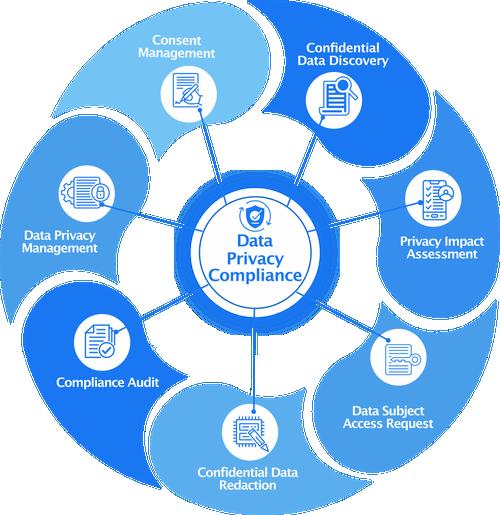
Data Safeguard’s Products Are Built with 7 Data Privacy Tenets:
• Consent Management: Obtain and manage explicit consent from users.
• Con�dential Data Discovery: Identify and classify personal and sensitive data.
• Privacy Impact Assessment: Assess, Evaluate and mitigate privacy risks.
• Data Subject Access Request: Manage requests from individuals about their data.
• Con�dential Data Redaction/Masking: Protect personal and sensitive data from unauthorized access.
• Compliance Audit: Regularly review and ensure compliance with data privacy laws.
• Data Privacy Management: Oversee and improve data privacy practices.
Our Data Privacy products leverage Artificial Intelligence and Machine Learning technologies to ensure the highest accuracy and compliance.


AI Is Shrinking the Time to Breach—Here’s How Defenders Take It Back
Adam Meyers Head of Counter Adversary Operations
Q1. How are modern cybercriminals leveraging AI in their daily operations?
Sophisticated adversaries are using AI to move faster, hide better, and persist longer. But for lower-level actors, AI can be a double-edged sword — it can produce errors, noisy code, or tactics that make them easier to detect. The availability of these tools lowers the barrier for entry and increases the volume of attacks defenders need to manage. As adversaries increasingly adopt AI, defenders must accelerate their own adoption intelligently at scale to automate repetitive tasks and enhance threat response capabilities.
Q2. What concrete examples have been observed where LLMs were used to design or deploy malware faster?
CrowdStrike has observed adversaries use LLMs to accelerate malware development and scale campaigns. FunkLocker ransomware, for example, was built using WormGPT — an unrestricted large language model on the Dark Web. SparkCat mobile malware uses AI-driven optical character recognition to scan images for sensitive data and exfiltrate it selectively. These are real-world examples of how adversaries are using LLMs not just to write code faster, but to enhance malware with capabilities that make it stealthier and more effective.
Q3. What defensive technologies can match the response speed of adversaries using AI?
Adversaries are weaponizing AI to accelerate attacks, shrinking the time defenders have to act. That’s where agentic AI comes in: autonomous systems that can
reason, decide, and take action on their own within defined guardrails, putting the advantage back into the hands of the defender. Agentic defense elevates SOC analysts from handlers to orchestrators, commanding fleets of intelligent agents that reason over massive datasets, decide with judgement of an expert analyst and act at machine speed within customer guardrails. Agentic AI gives defenders time back, so humans can focus on strategy, judgment, and commanding outcomes, resulting in faster, smarter, and more scalable security operations.
Dilip Kalliyat President - Evanssion
Q4. How should corporate cybersecurity strategy change in this new era of automated attacks?
In the era of automated attacks, reactive security is obsolete. Organizations need real-time, adaptive defense with unified visibility across endpoint, cloud, and identity. Agentic AI is central to this shift. These systems can interpret context, make bounded decisions, and act autonomously to supercharge defense. They reduce noise, accelerate investigations, and enable response at machine speed while keeping humans in control. That’s how organizations move from chasing alerts to stopping breaches.
Cybercriminals are using AI to scale faster, stealthier attacks, making agentic AI–driven, real-time defense essential to stay ahead at enterprise scale worldwide.
How AI is Driving Smarter, More Efficient
Operations at Scale
Dr. Sonia Zahiroddiny Chief Information Officer (CIO), Innovo Group
Q1. Which AI technologies are currently having the biggest impact on real estate operations — and why?

The biggest impact today is from the application of AI in live, operating assets rather than experimental use cases. In real estate, this is most visible post-construction, where AIenabled digital twins and smart building platforms are improving how buildings run.
By combining digital twins with AI analytics and IoT data, owners gain real-time visibility into building performance, allowing for predictive maintenance, faster fault detection, and energy and resource efficiency. The result is lower operating costs, and fewer disruptions.
AI is also helping operators move from reactive maintenance to planned intervention, which improves reliability and extends asset life. These practical gains are delivering value in real estate operations today.
Q2. What role does AI play in Innovo’s competitive differentiation in the UAE and broader MENA market?
AI is improving how we deliver projects. By adopting AI and emerging technologies, we are reducing risk, and delivering more consistent outcomes for our clients, in a shorter timeframe. It also enables higher productivity across the organisation by improving planning, coordination, and decision-making.
Equally important is how AI is
adopted. Innovo is taking a people-first approach, recognising that successful use of AI depends on winning the hearts and minds of our workforce. By supporting teams through change, education, providing clarity on how AI helps them work better, and embedding it into everyday processes, we ensure adoption is practical, trusted, and effective. This focus on people is what allows technology to deliver real, sustained value.
Q3. How are you integrating generative AI or machine learning with your existing property management systems?
We are on a digital transformation journey, and not treating AI as a single switch, but as a set of capabilities layered into existing platforms and workflows over time.
We are capitalising on AI features already embedded within our ERP and CRM systems, to improve forecasting, reporting, and operational visibility. This allows us to generate value without major system change.
We are introducing AI-enabled automation into key property management workflows, including leasing, finance, asset operations, and maintenance. This helps reduce manual effort, improve response times, and support more consistent decision-making. Also we are building and scaling AI capability based on clearly defined, high-ROI use cases. This ensures investment is focused on areas that deliver measurable operational benefits, while allowing solutions to mature and scale in a controlled way.
Q4. In your view, what will be the biggest AI-driven transformation milestone for the real estate industry by 2030?
The key transformation will be the shift from isolated digital tools to fully integrated, AI-enabled ecosystems that connect design, operations, and investment decisions across real estate assets.
Buildings and districts will become more adaptive, using real-time data to optimise energy use, maintenance, and occupant comfort. Achieving this will depend as much on strong data foundations and skills as on technology itself.
The UAE, specifically Dubai, has made great strides with initiatives such as the Smart Dubai 2021 Strategy, which laid the groundwork by establishing city-wide digital infrastructure and connectivity, making today’s AI-led transformation a natural
progression rather than an aspiration.
Ultimately, the biggest milestone will be cultural as much as technical, where AI enables better alignment and decision-making at scale, rather than simply automating individual tasks.
Q4. Which emerging AI technologies or capabilities do you think real estate leaders should begin experimenting with now?
For mixed-use developments, there is an opportunity to combine smart building technologies with advanced analytics and cognitive computing. Sensors that track occupancy, energy use, equipment performance, or issues such as water leaks generate valuable operational data. When this data is fed into an AI layer, you get earlier fault detection, predictive maintenance, and more efficient energy management across residential,
commercial, and retail assets. Cognitive computing adds another practical layer by allowing teams to interact with systems. Rather than relying on dashboards alone, operators can query maintenance status, performance trends, or alerts through conversational interfaces that are more intelligent and context-aware than traditional chatbots. This improves response times and supports faster, better-informed decisions.
Technologies such as tokenisation and blockchain are also gaining attention in real estate, particularly in areas such as ownership models and transaction efficiency. However, their real impact will depend less on adoption itself and more on how they are linked to operational outcomes and long-term asset value.
AI is transforming real estate operations through digital twins, smart buildings, and predictive maintenance that reduce costs and improve asset performance. At Innovo, AI is a people-first capability layered into existing systems to improve planning, productivity, and decision-making. By 2030, the industry will shift from isolated tools to fully integrated AI-driven ecosystems connecting design, operations, and investment decisions. This transformation will be as much cultural as it is technological, enabling smarter, data-led outcomes at scale.