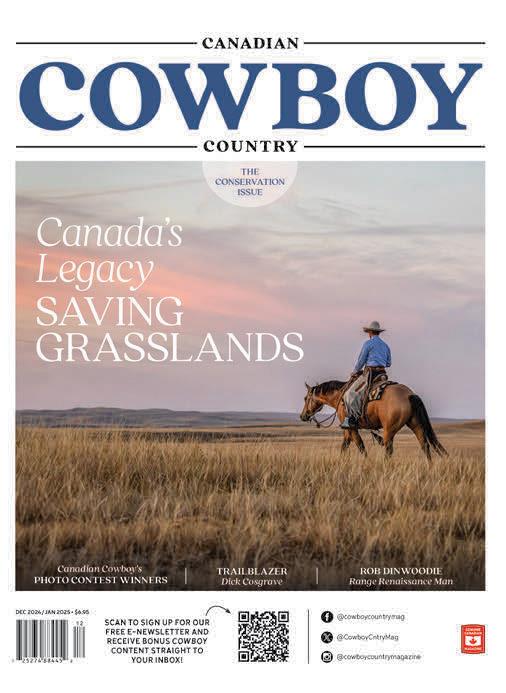
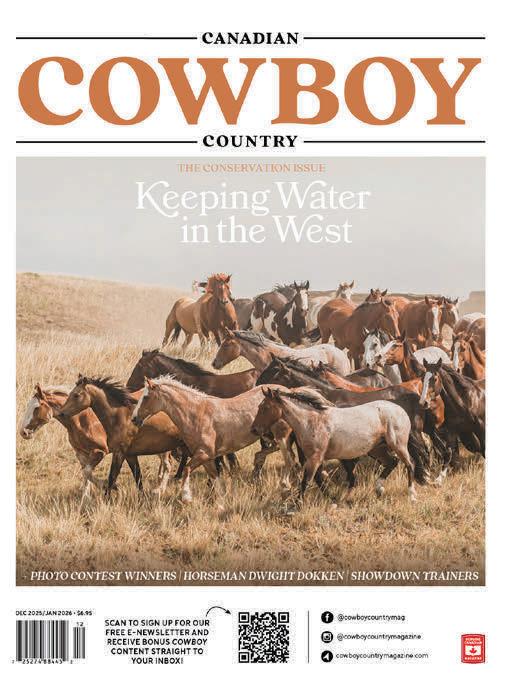
Canadian Cowboy Country December 2025/January 2026 Digital Subscription
16 PHOTO CONTEST!
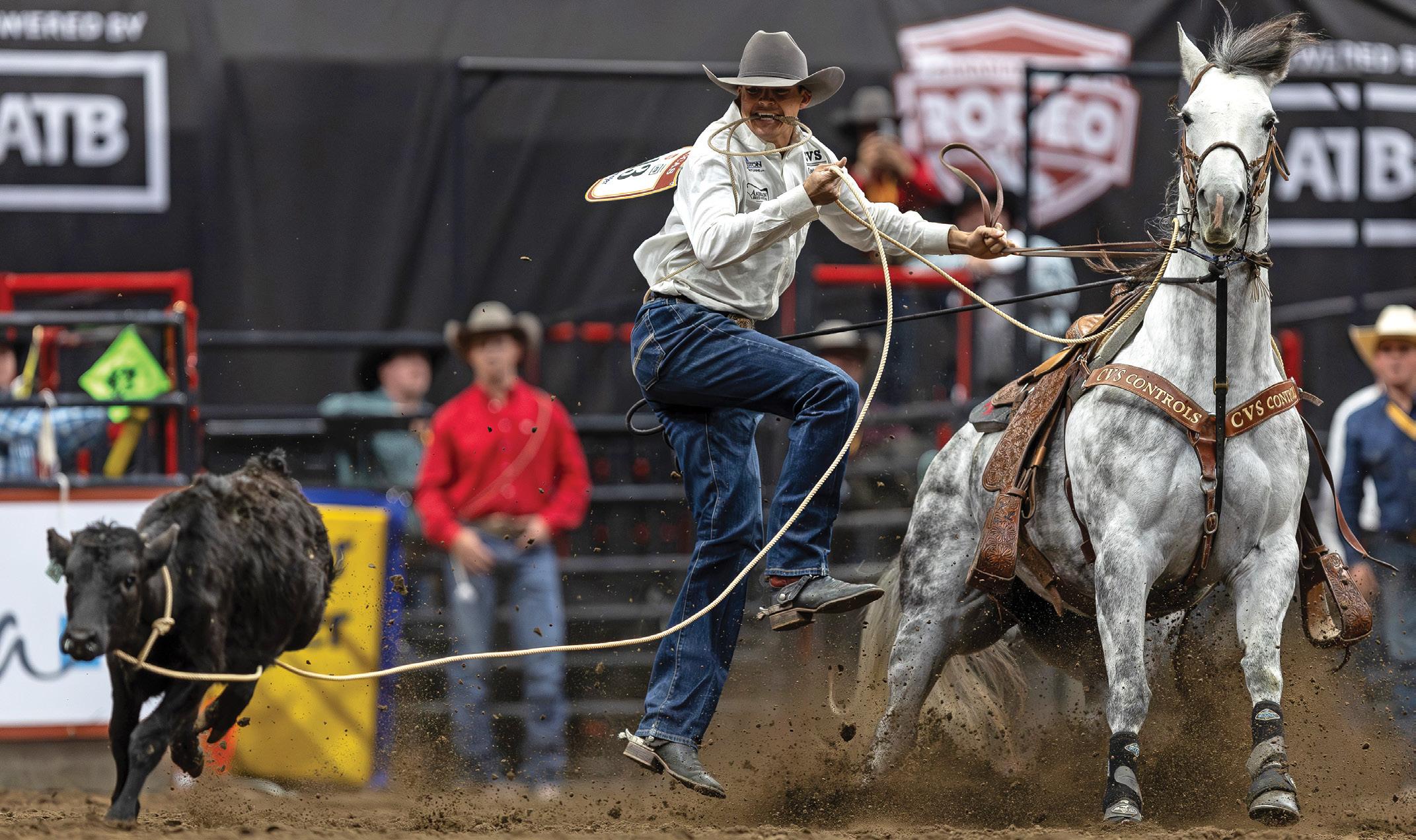
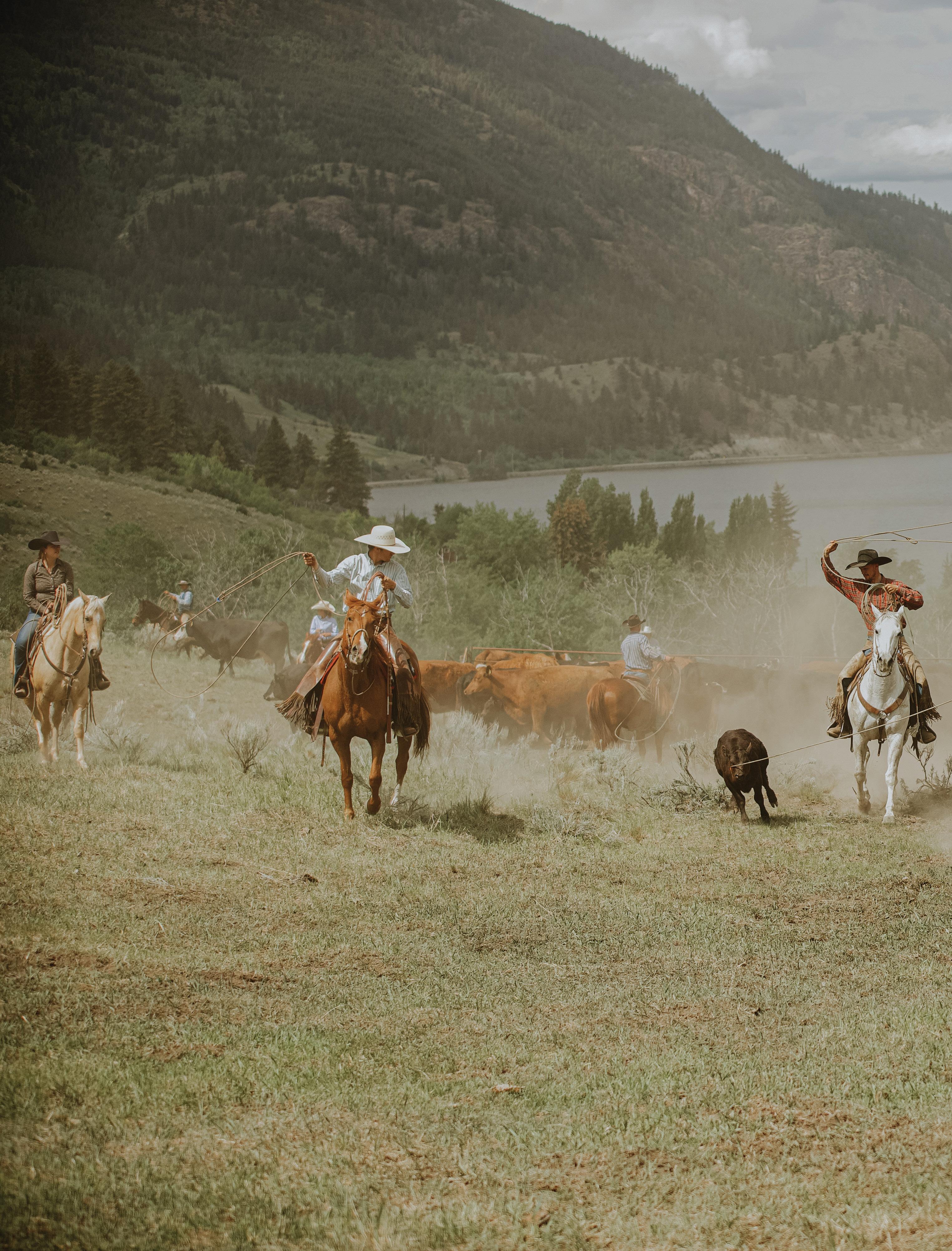
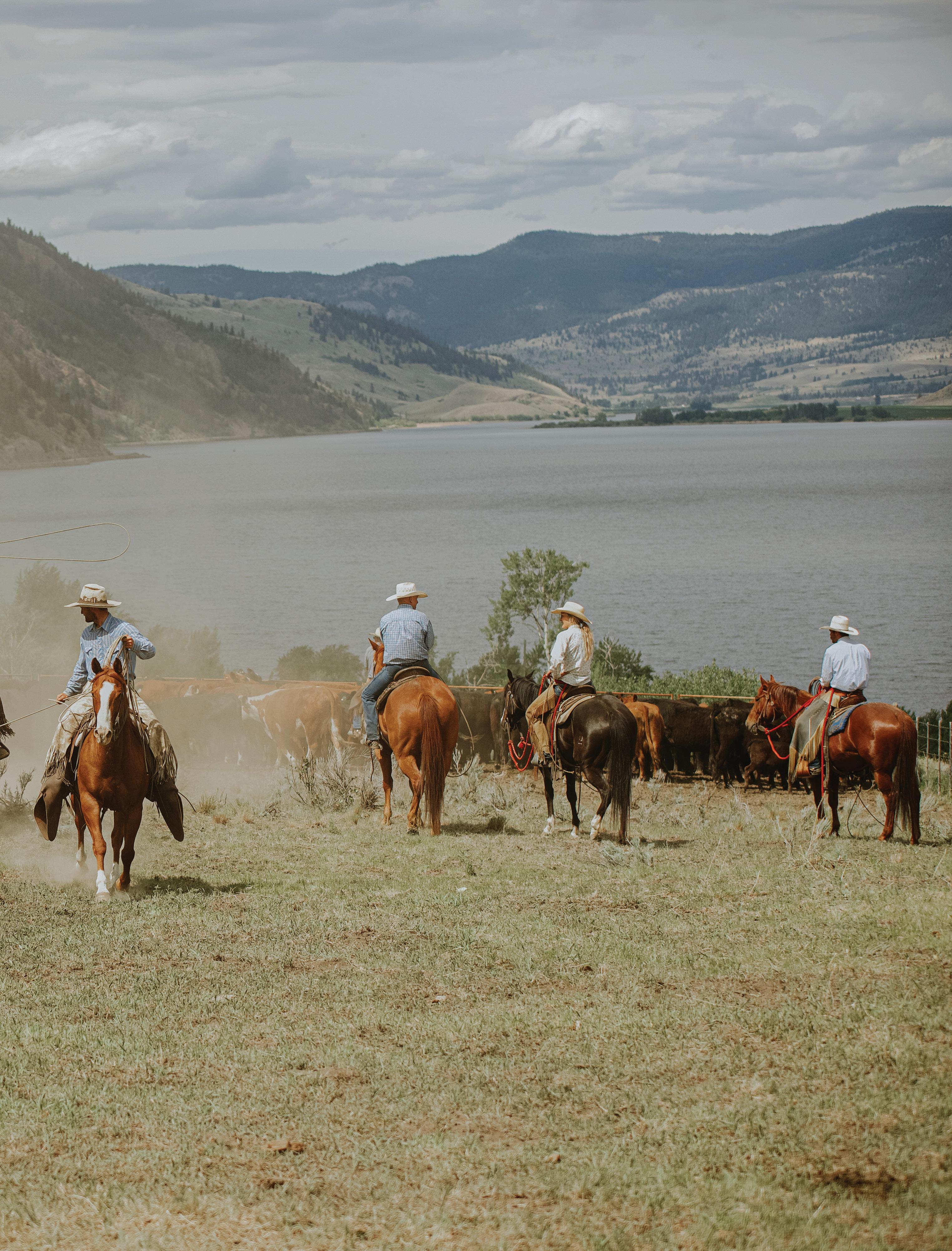
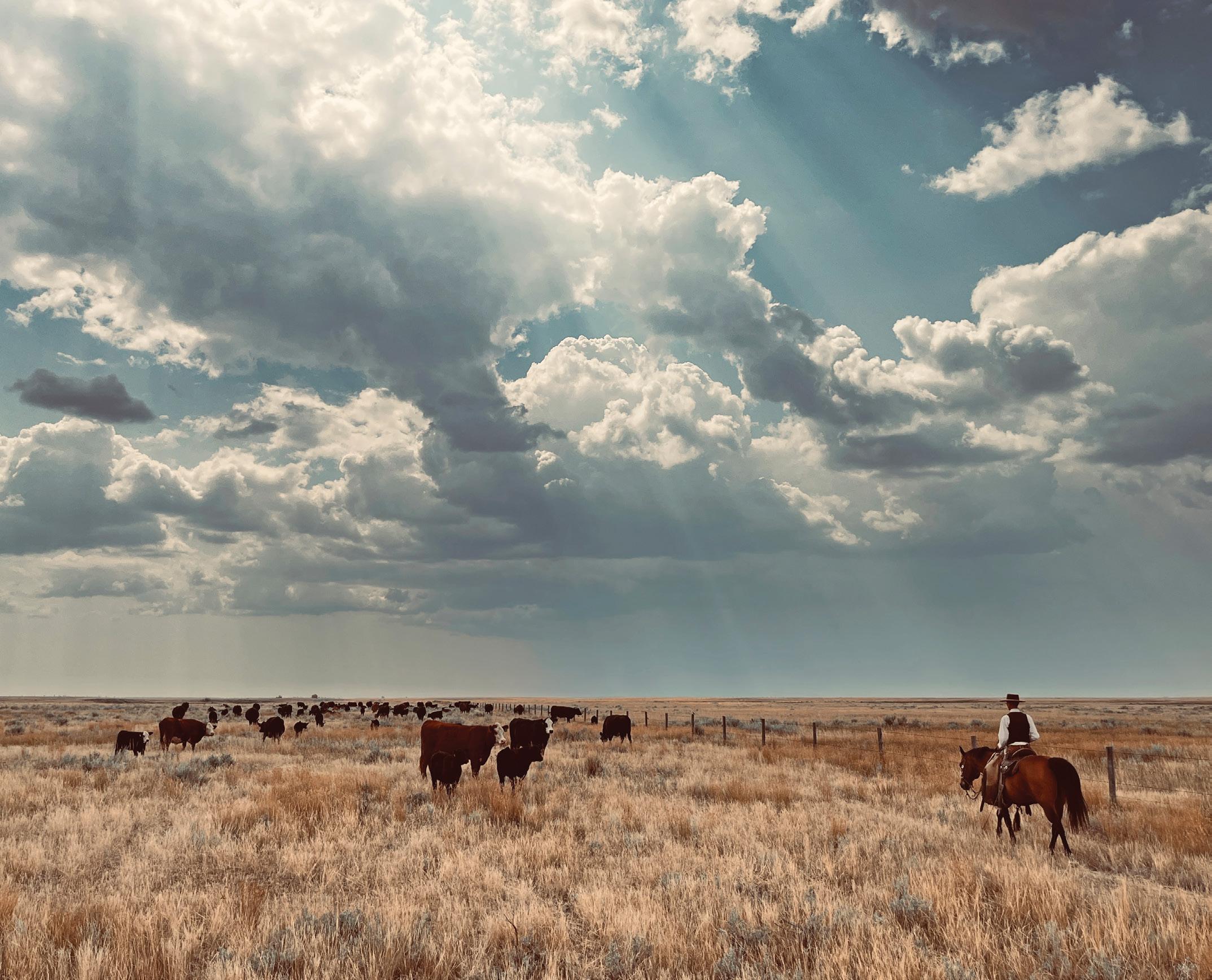
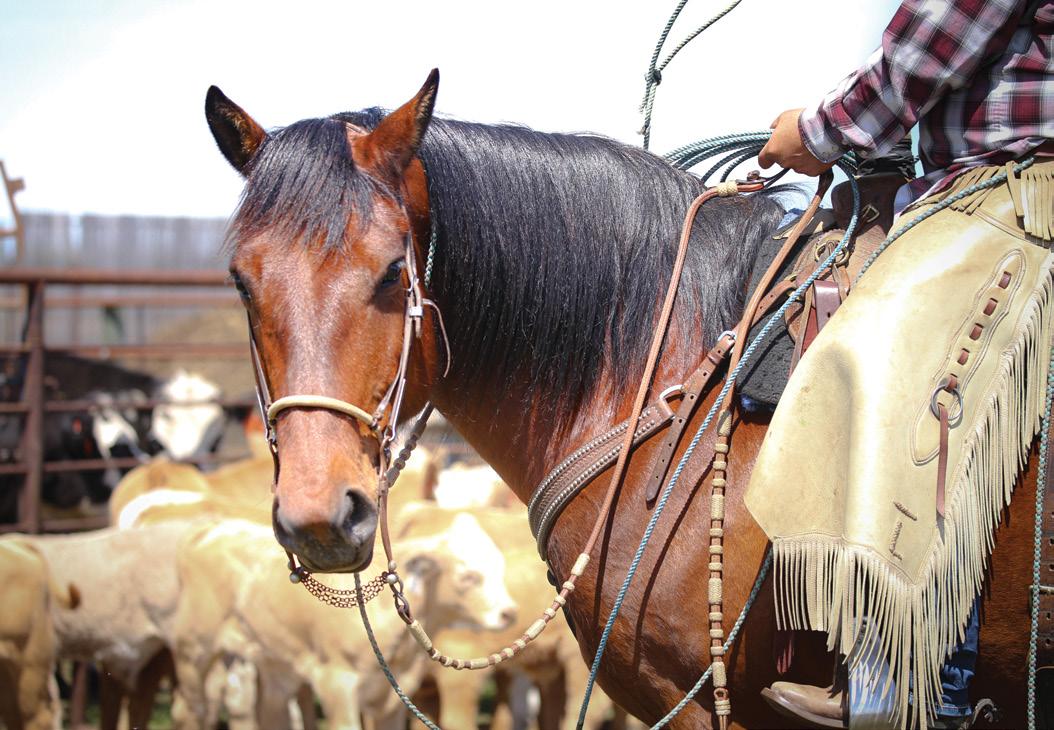
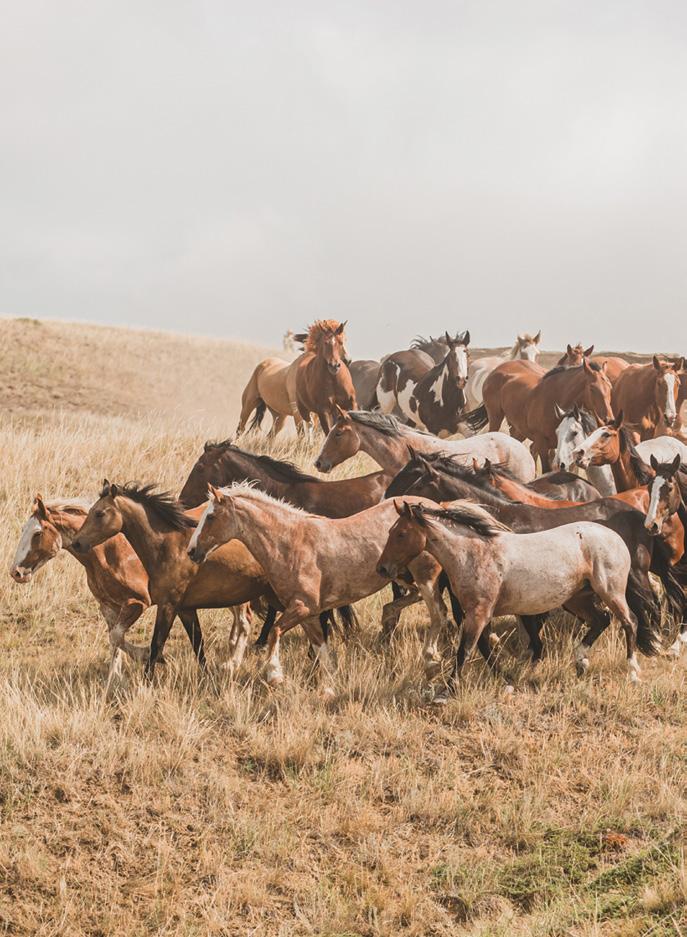
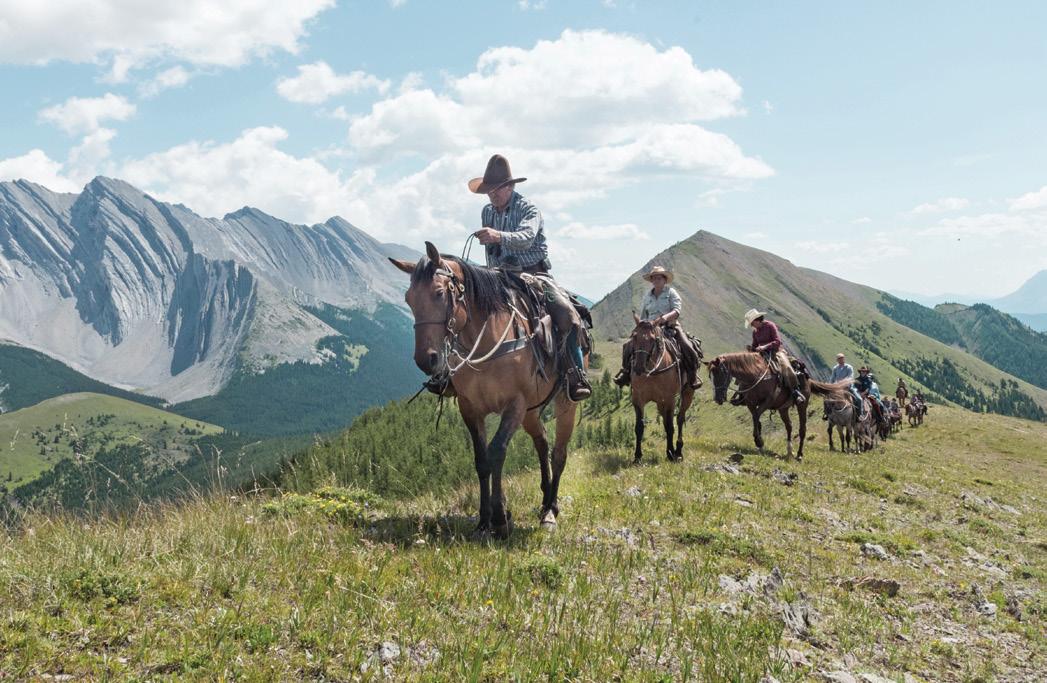
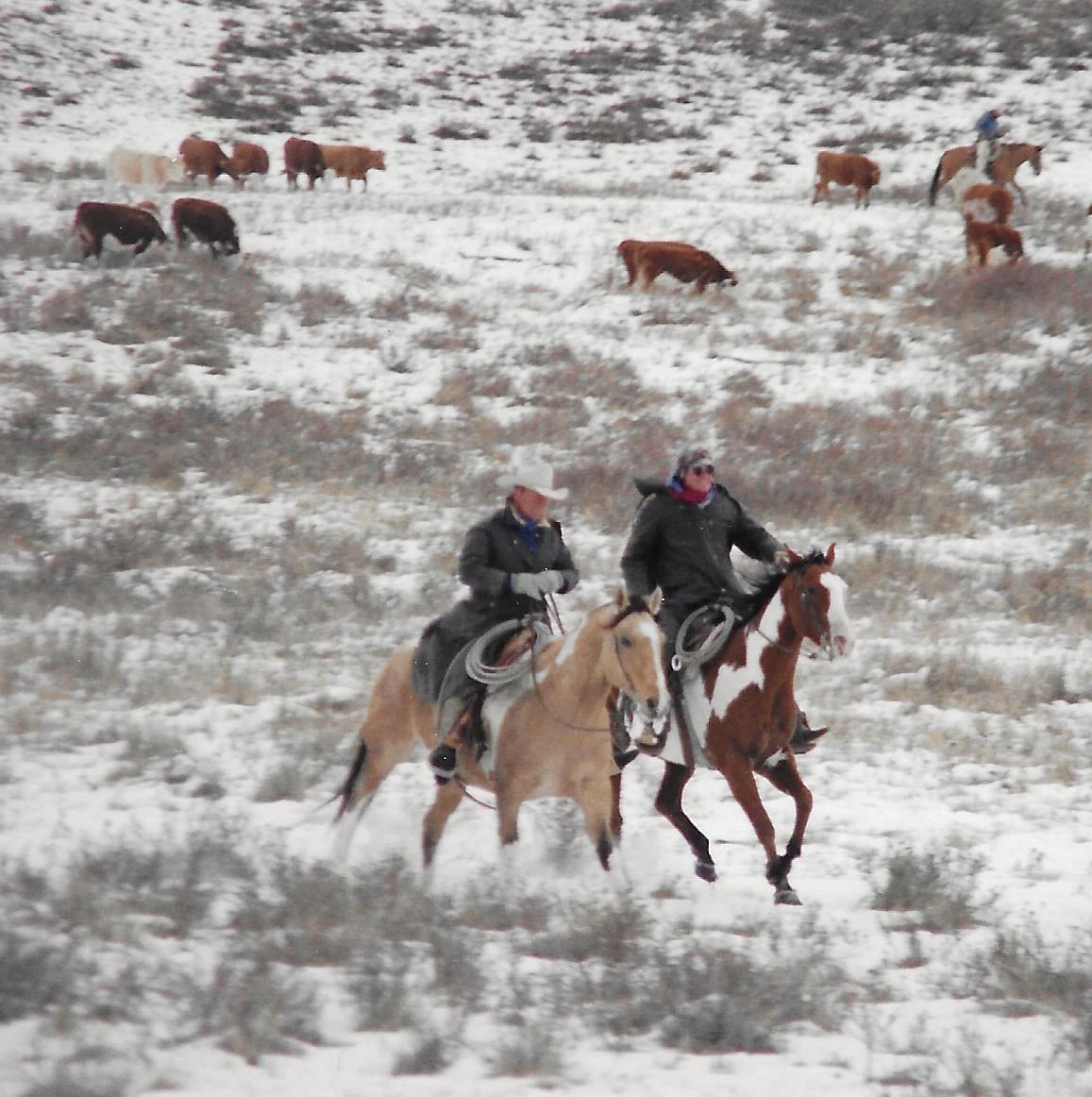
From exciting to calm, fun to breathtaking, the Summer in the Saddle photo contest is a winner!
21 COOL, CLEAR WATER
Dr John Pomeroy writes on learned lessons and the history of hydrology, and how ranchers can help themselves and the range.
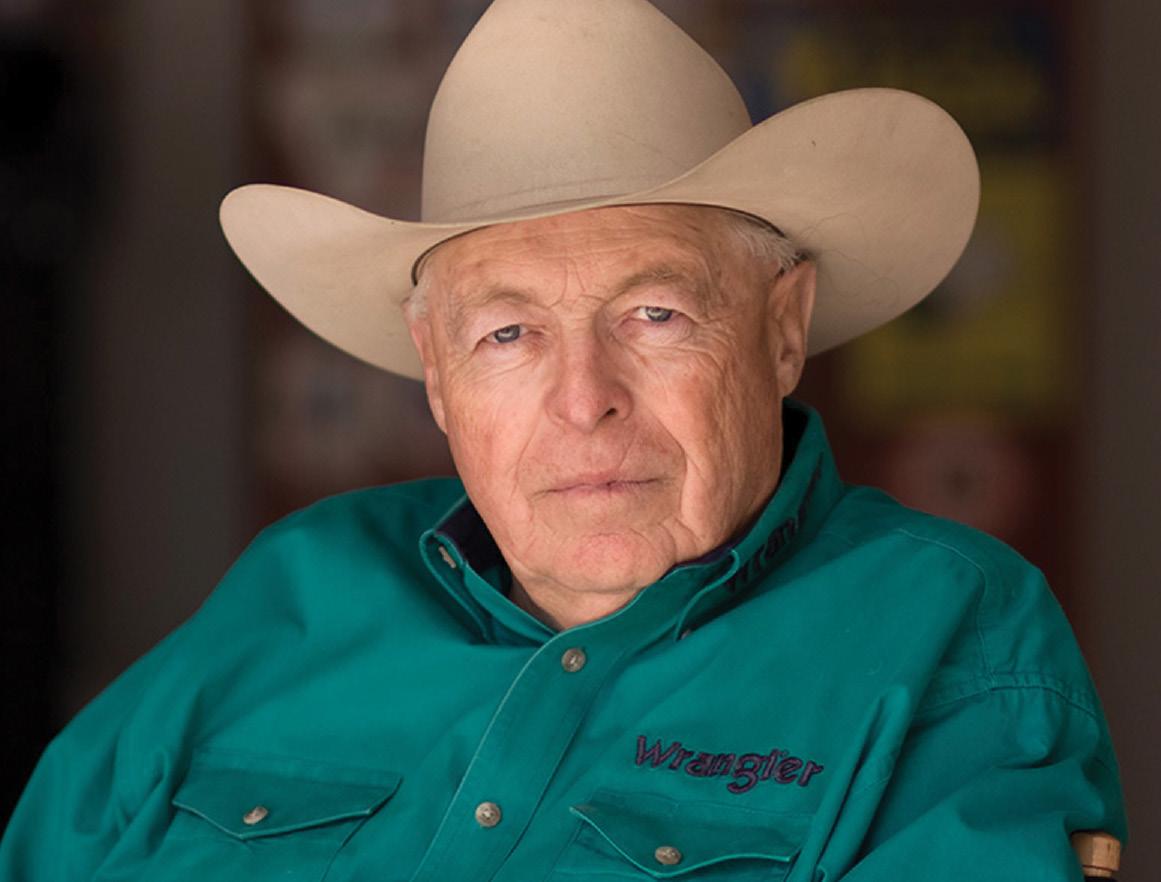
27 LIVING LEGEND — DWIGHT DOKKEN
Always grinning, Dwight’s journey through life has been on horseback.
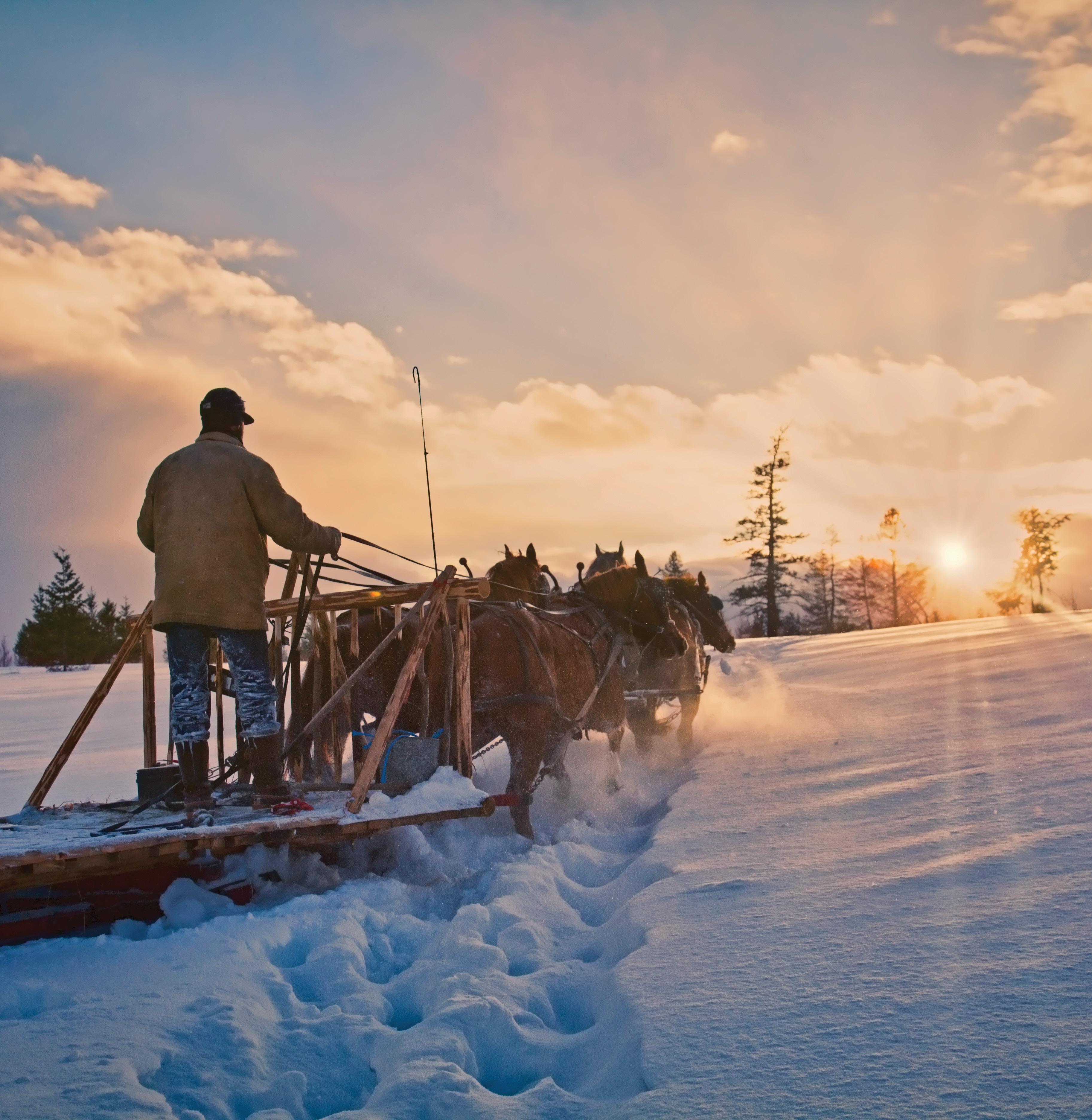
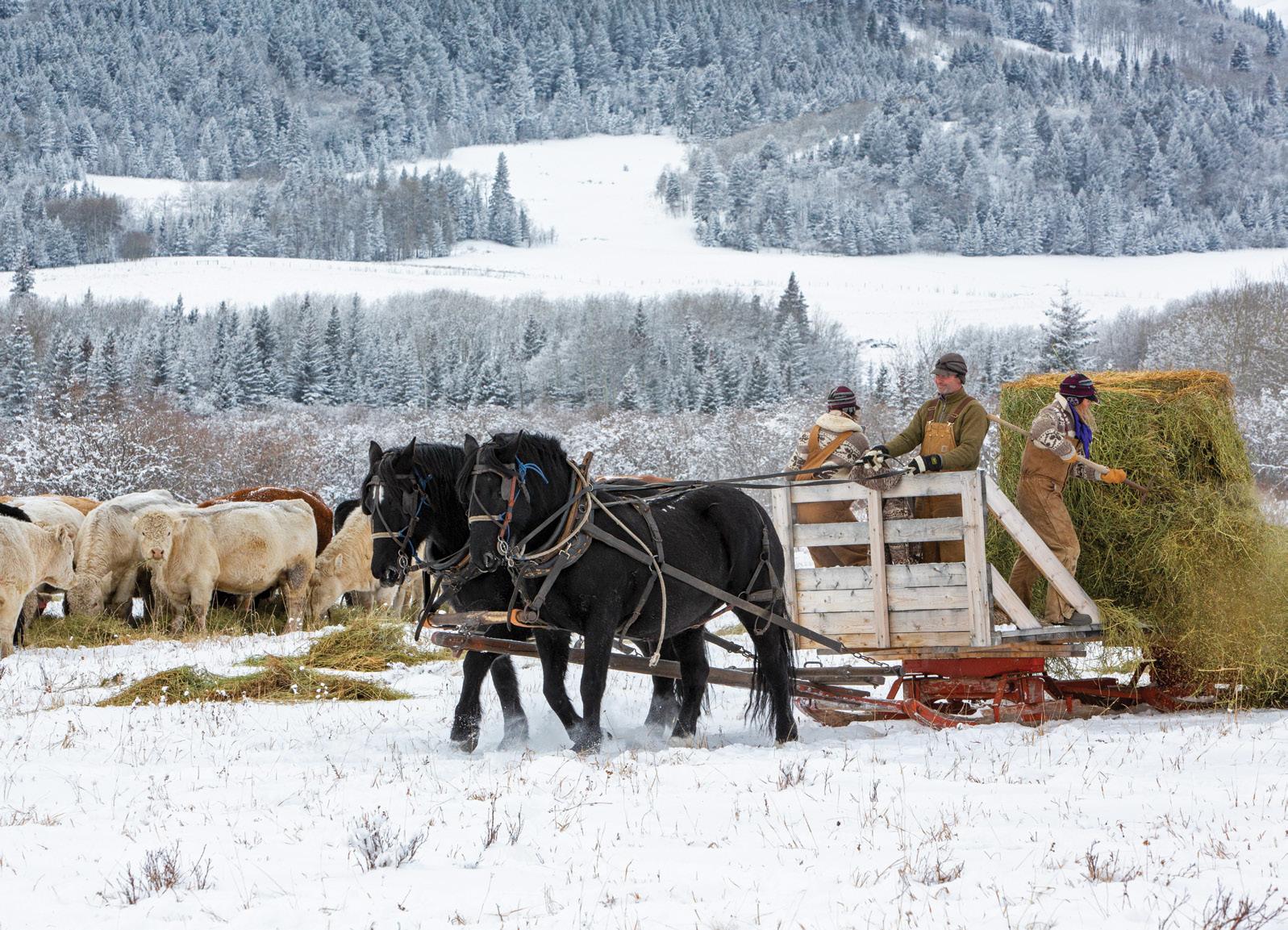
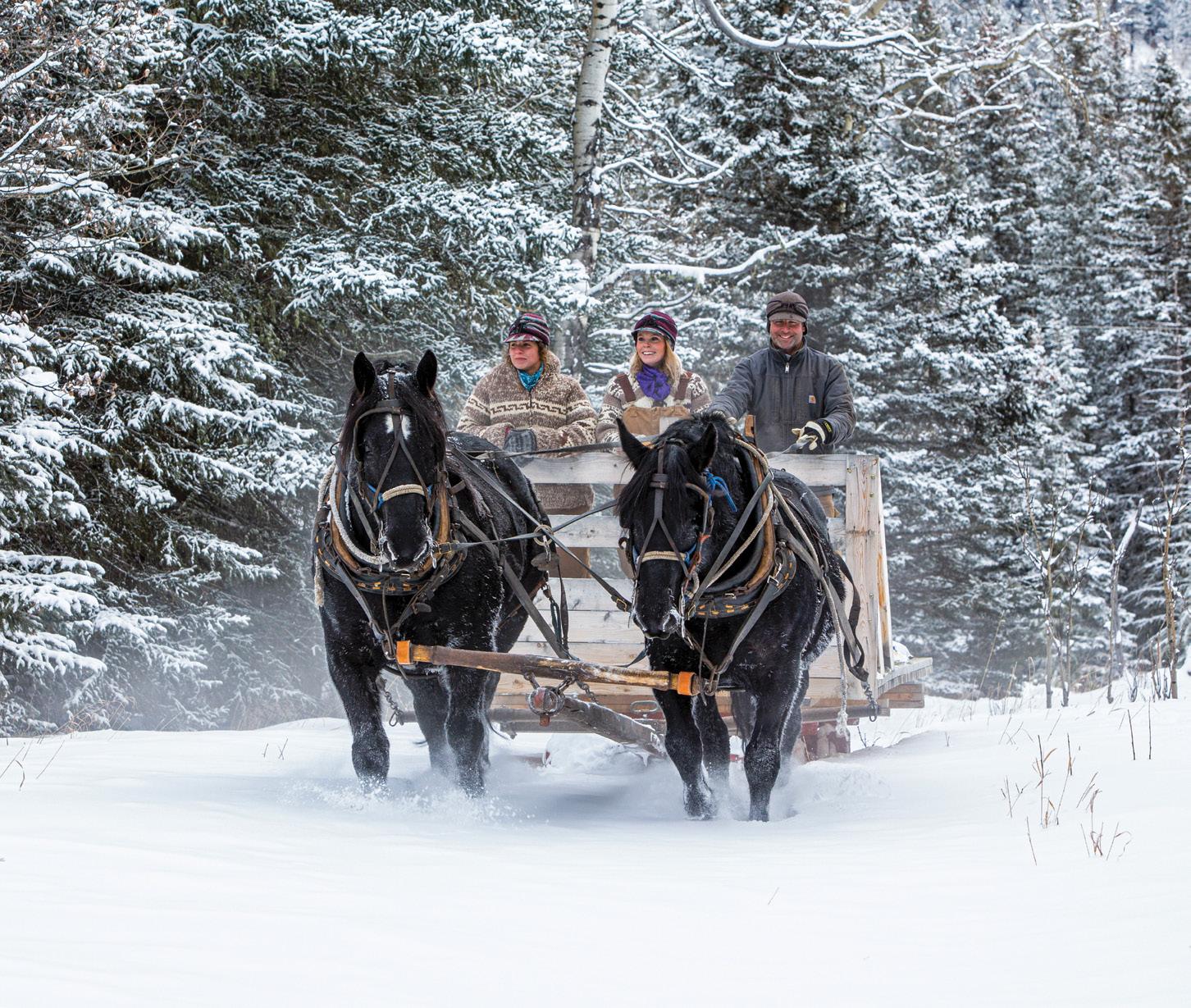
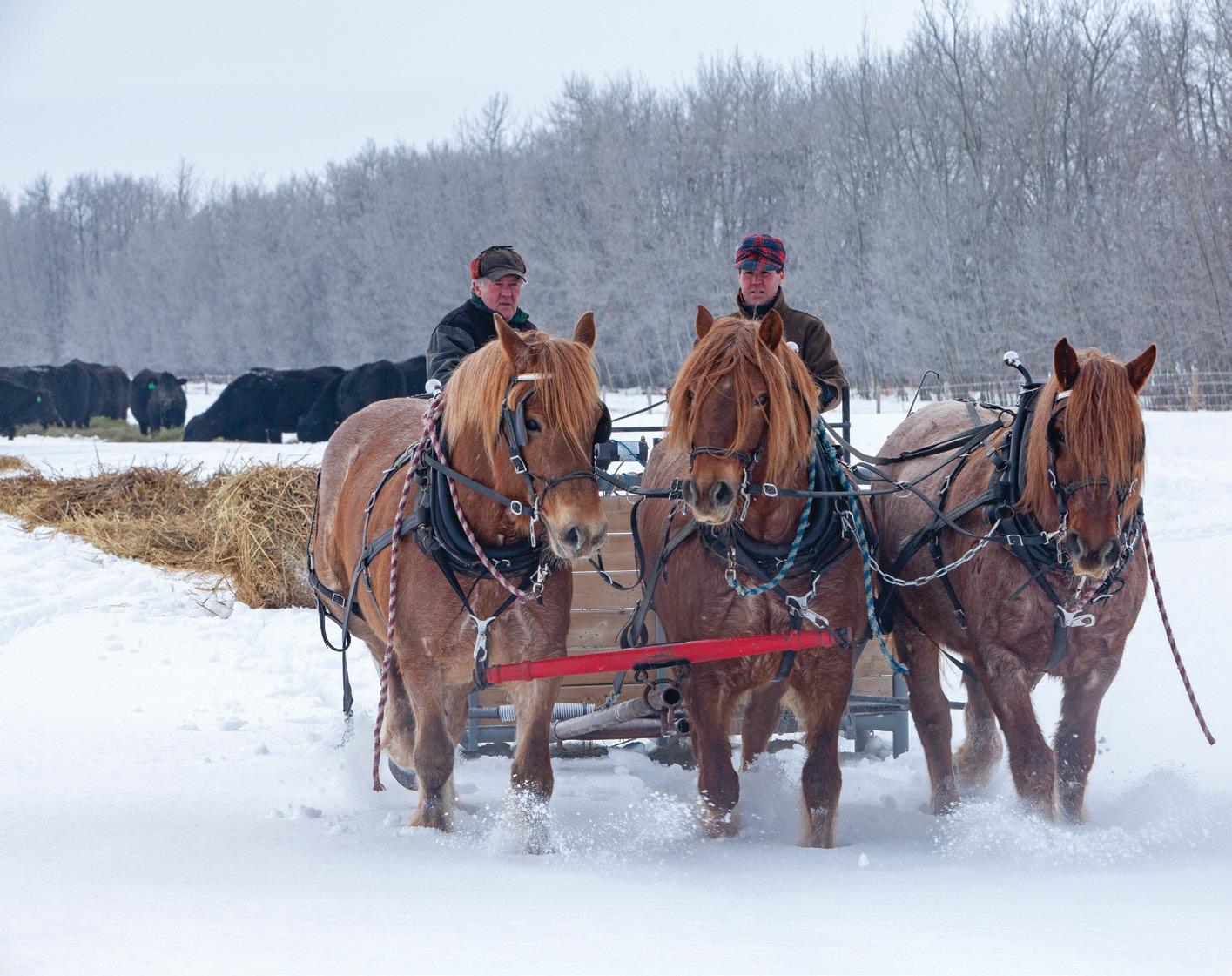
32 FEEDING WITH TEAMS
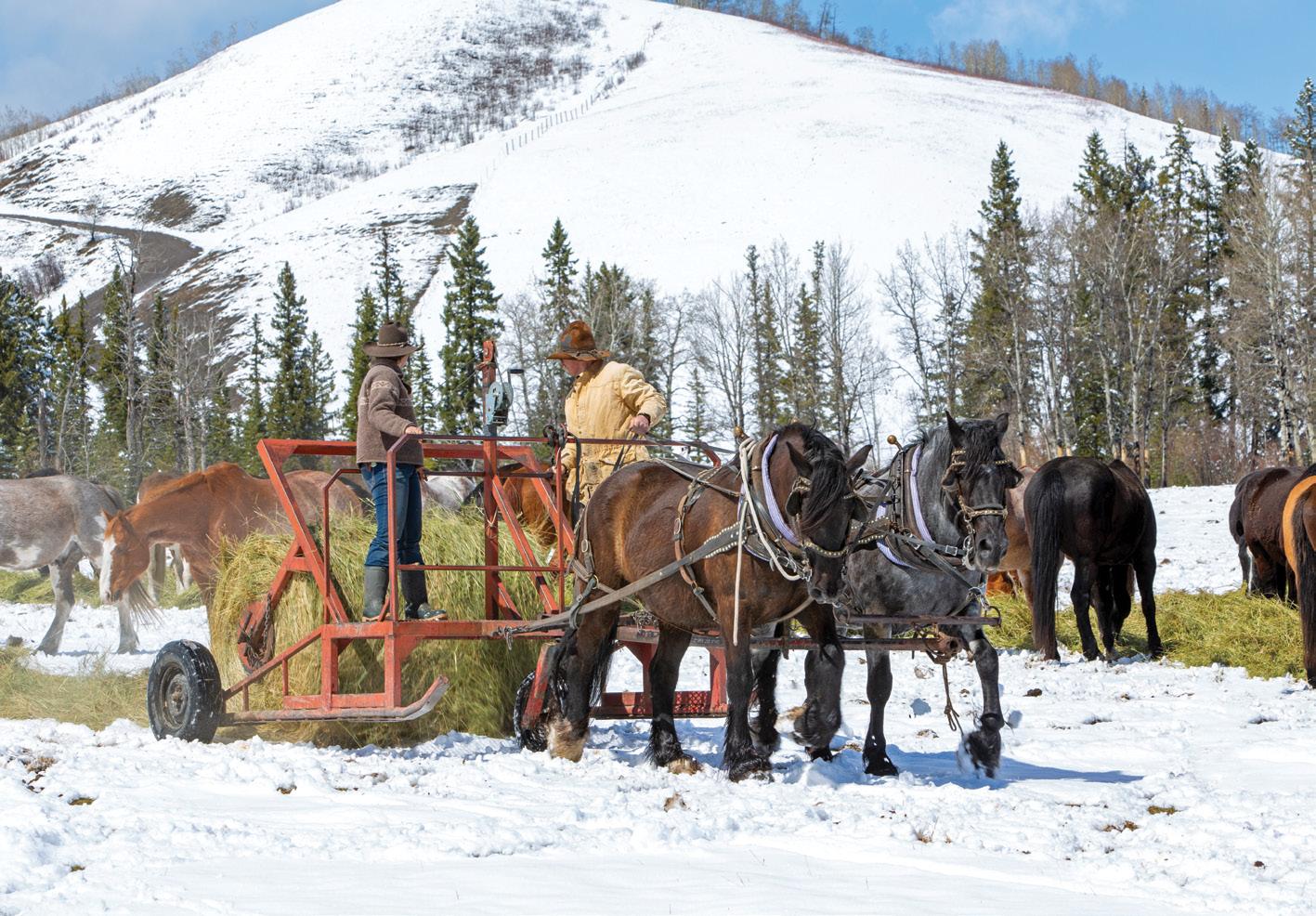
I asked these men, “Why do you feed with horses?” Their answers will delight you.
37 THE SHOWDOWN
The hottest performance horse competition is coming!
40 TRAILBLAZERS: GREY OWL
Call him what you want, but Grey Owl put conservation at the forefront.
MY POINT OF VIEW
It's Just Not a Cowboy Year Without Draft Horses
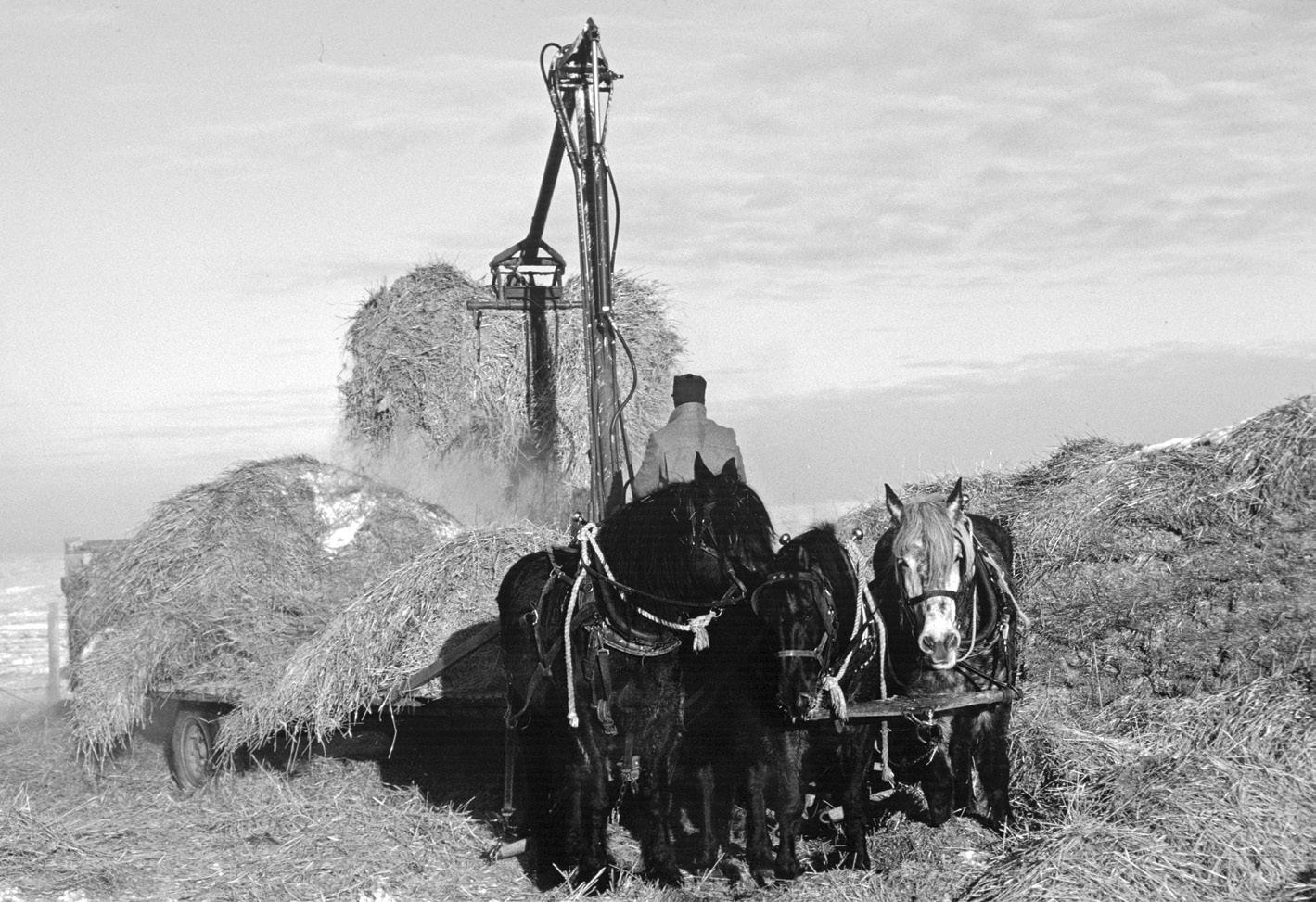
took
as a Hydrafork. “It’s all hydraulic,” explained
“Probably powered by a
Wisconsin
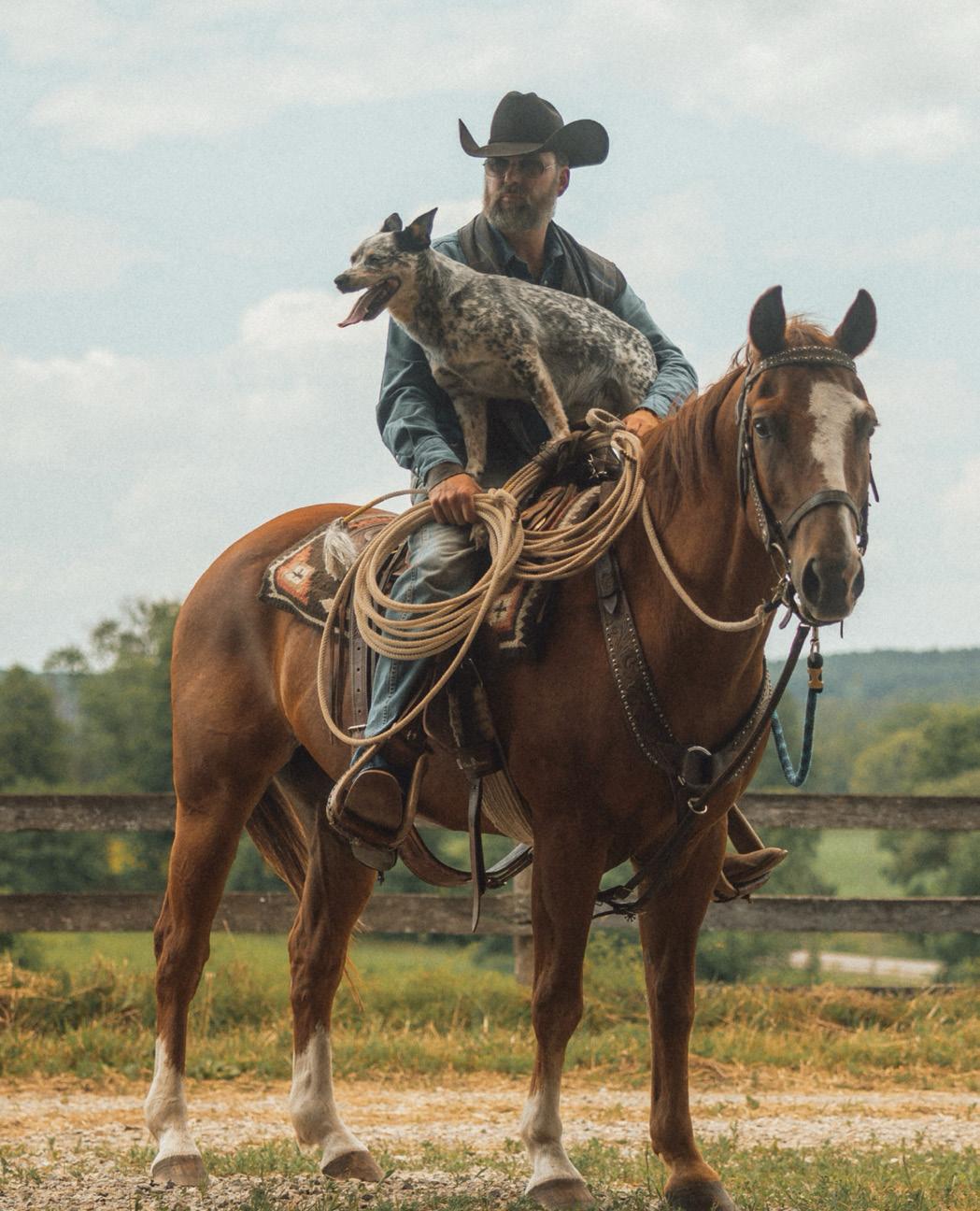
Those Hydraforks can fold up and lie flat on the deck. Often, guys would lower them onto the hay to hold the load as they headed out to feed. I sure wish I'd had the chance to speak with Howard..."
I've always loved draft horses, and I especially love working with them.
I’ve horse-logged, mowed hay, run a dump rake, a side rake, shared the seat on a stook loader, operated a rod weeder, bundle wagon, am a retired Walking Plow champion, ran a sulky plow (dangerous), hauled tons of hay and kids, helped build a quarter mile of road using all horsepower at Reynolds Alberta Museum—and even had the honour of “parking” a 30-horse hitch. Believe me—it was the longest two minutes of my life!
So, it’s no surprise that I asked photographer Kim Taylor to work with me on a narrative photo essay, sharing a selection of her shots from over the years, paired with my interviews with the teamsters. Thanks to the “boys on the lines” for the chats; I hope you enjoy this as much as I did!
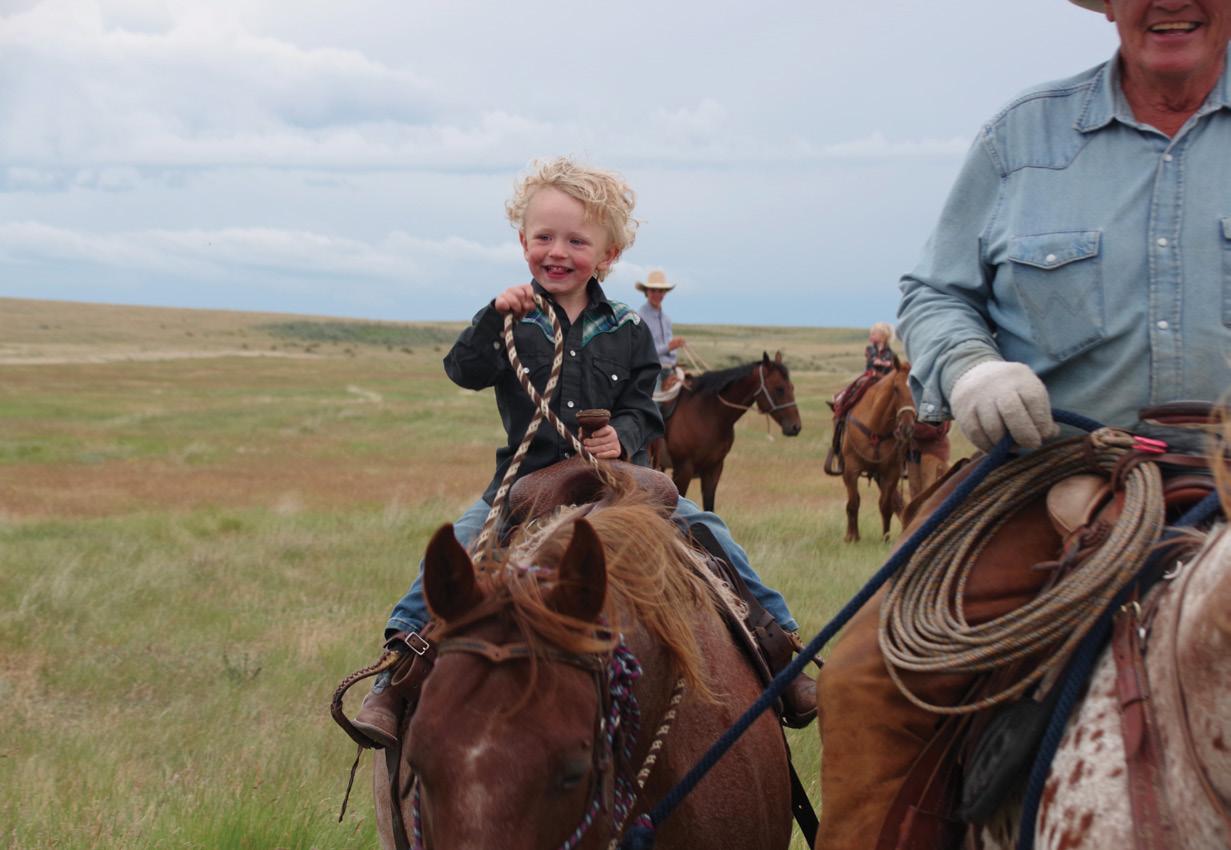
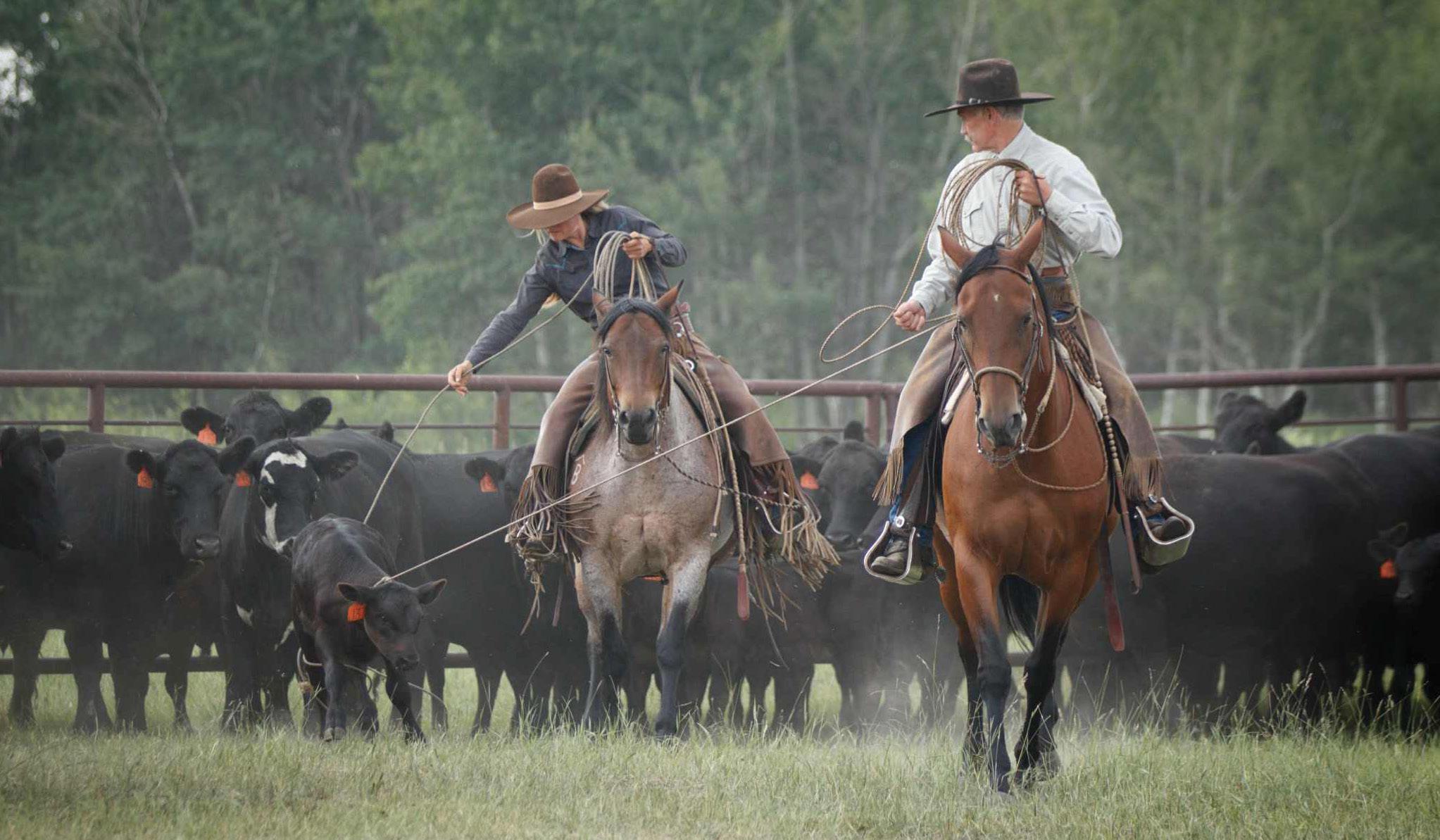
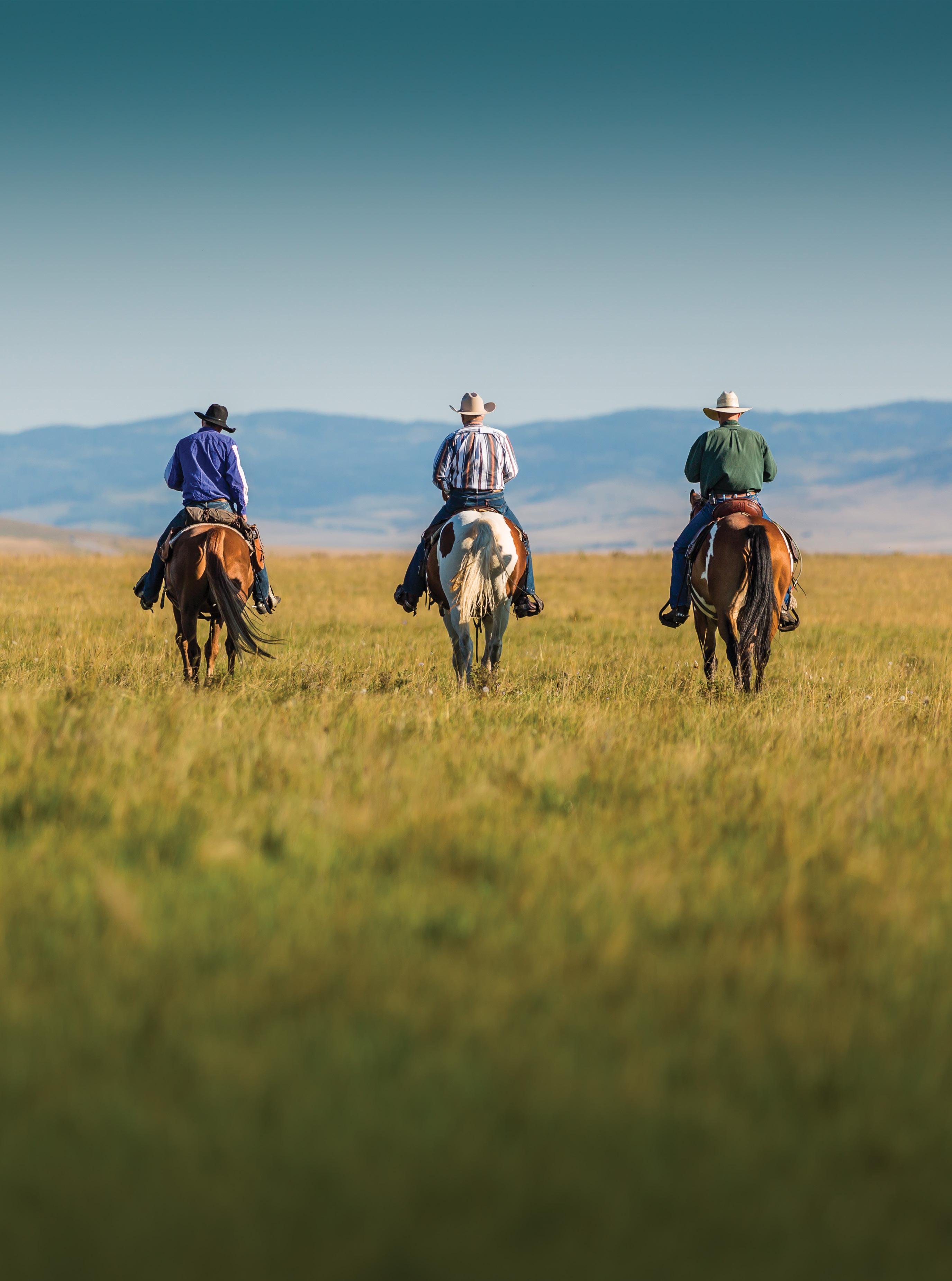
We also have a wealth of photos that perfectly highlight Summer in the Saddle! From kids being ponied by grandpa, to rodear brandings, moving cattle, and always—great ranch horses.
Our Living Legend is a hard-riding cowboy, Dwight Dokken. He has an incredible resume—and he’s got the pictures to prove it!
Special thanks to Distinguished Professor Dr John Pomeroy for writing our pinnacle article on water for our Conservation issue. John is a world traveller, a renowned expert in hydrology, and heads departments at the University of Saskatchewan, Canmore, and the University of Wales, training folks wherever water flows. His article is fascinating, and he has some practical tips for ranchers, too.
All this, and I’m now turning the page to a new year of fresh stories and exciting adventures. From our outfit to yours, all the best this holiday season, wherever you are, here in Canadian Cowboy Country.
Terri Mason, Editor
PHOTO: KIM TAYLOR
Kim Taylor
this photo years ago of a Maple Creek-area rancher named Howard Jones, who has since passed. I sent the pix to my buddy, Robin Reding, and he identified the rig he’s using to load the loose hay
Robin.
2-cylinder
engine.
December 2025/January 2026 Vol. 29, No. 4
“World Champion” sponsor of Miss Rodeo Canada Proud member of the Canadian Pro Rodeo Hall of Fame
Publisher Rob Tanner
rob@cowboycountrymagazine.com
Editor Terri Mason
terri@cowboycountrymagazine.com
Art Director Shannon Swanson shannon@tanneryoung.com
Subscription/Circulation Marie Tanner circ@cowboycountrymagazine.com
Accounting/Administrator Marie Tanner admin@cowboycountrymagazine.com
Columnists
Brittney Chomistek, Tim Ellis, Niki Flundra, Jackie Rae Greening, Hugh McLennan, Billy Melville
Contributors
CrAsh Cooper, Billie-Jean Duff, Dr John Pomeroy FRSC, FRGS, AGU
Fellow, Kim Taylor, Tim Lasiuta, Tom Reardon and John Tilley. Special thanks to Kyle Elliott, Geoff Hoar, Bob Koch, Dewey Matthews and Jeff Taylor for sharing their world of why they feed with teams.
Tanner Young Publishing Group
Box 13, 22106 South Cooking Lake Road Cooking Lake, AB T8E 1J1
Tel: 780-465-3362 | Toll Free: 1-800-943-7336
Website: cowboycountrymagazine.com
E-mail: askus @cowboycountrymagazine.com
SUBSCRIPTIONS: Call Marie at 1-800-943-7336
Make all cheques payable to Tanner Young Marketing Ltd
Canadian Cowboy Country magazine is published six times per year by Tanner Young Publishing Group
PUBLICATIONS MAIL AGREEMENT NO. 40070720
ISSN 1701-1132
Please return undeliverable addresses to:
Canadian Cowboy Country Magazine
c/o Tanner Young Publishing Group Administration Office
Box 13, 22106 South Cooking Lake Road Cooking Lake, AB T8E 1J1
FREELANCE POLICY
Canadian Cowboy Country welcomes freelance contributions but will not be held responsible for unsolicited text or photographs. Direct all freelance enquiries to: editor@cowboycountrymagazine.com
PRIVACY POLICY
At Tanner Young Publishing Group, we value your privacy. For our complete privacy policy go to tanneryoung.com/privacy.html or call us at 1-800-943-7336
Canadian Cowboy Country makes every effort to ensure the accuracy of the information it publishes, but cannot be held responsible for any consequences arising from errors or omissions.
“
This magazine is a proud member of the Alberta Magazine Publishers Association, and Magazines Canada, abiding by the standards of the Canadian Society of Magazine Editors. Visit albertamagazines.com ORDER
“This project is funded [in part] by the Government of Canada.” «Ce projet est financé [en partie] par le gouvernement du Canada.»
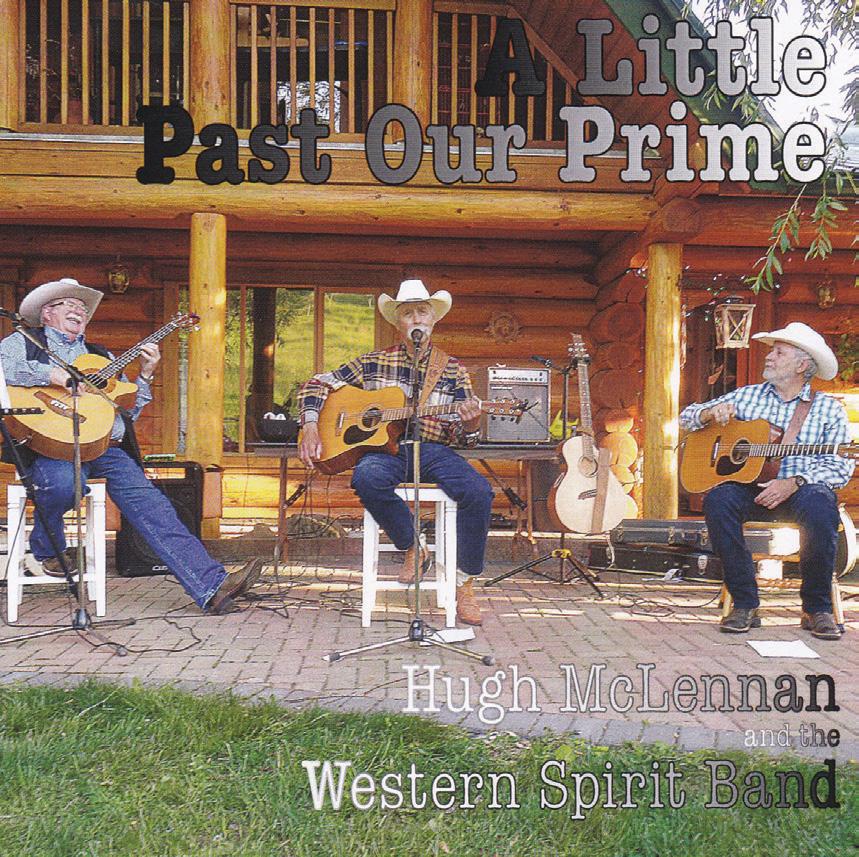
Darell Arnold, former Editor of Western Horseman had this to say in his review: “I went back to the start of this terrific selection of songs and listened all the way through. Man, I sure do like this CD. Hugh has an endearingly mellow bass voice that is a pure pleasure to listen to. This entire album reminds me of what one might call “cowboy easy listening.”
IN THE CORRAL
//// NEWS & HAPPENINGS ACROSS THE WEST ////
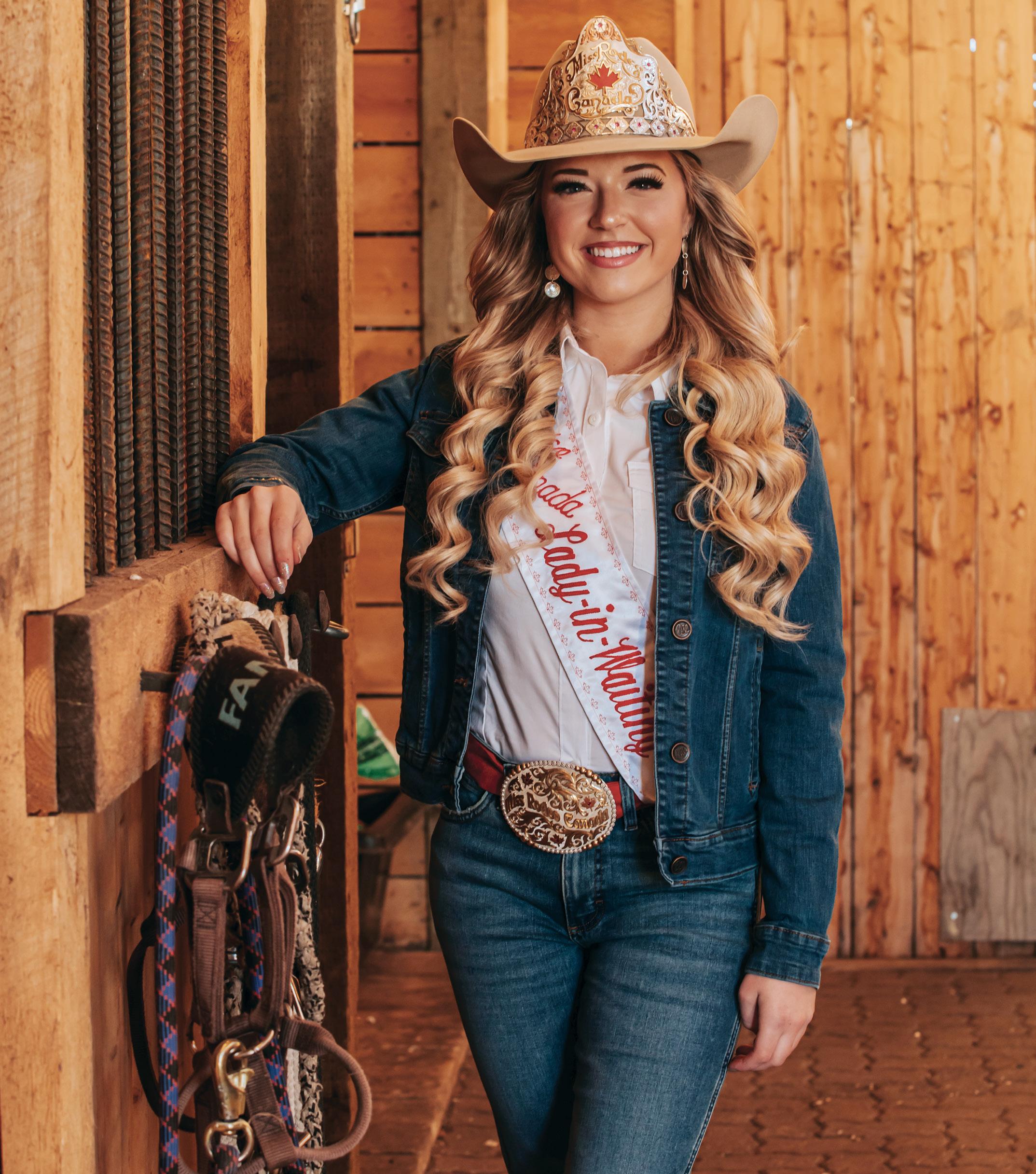
2026 MISS RODEO CANADA!
CONGRATULATIONS TO MISS Rodeo Agribition, Abbey Harty, who was crowned at the 2025 Canadian Finals Rodeo.
Abbey will begin her journey representing as the First Lady of Canadian Pro Rodeo in the new year.
Many thanks to the stellar job done by 2025 MRC Codi Wilson, who impressed everyone she met. Canadian Cowboy Country is a “World Champion” sponsor of the MRC program. For more, visit missrodeocanada.ca
JOHN SCOTT AWARDED
YOU’VE SEEN HIS stunts, his horses, his ranch and his horsemanship training on the big screen for years, and now Alberta’s John Scott has received one of the highest civilian honours from the province, the Alberta Order of Excellence.
The legendary horseman, who literally brought the movie industry to Alberta, has worked closely with some of the biggest stars, from Jackie Chan to Clint Eastwood, Kevin Costner to Brad Pitt, and, along the way, has showcased the province's beauty in Oscar-winning films.
"It's quite an honour," he said. "We've made seven Academy Award-winning pictures here in Alberta."
John is being recognized for his five-decade career wrangling animals, scouting locations, and providing livestock for Hollywood and Canadian movie sets, as well as for his advocacy for Alberta's motion picture industry.
With this prestigious award, John is joining a stellar group, ranging from premiers to veterans, each well-deserving of this award.
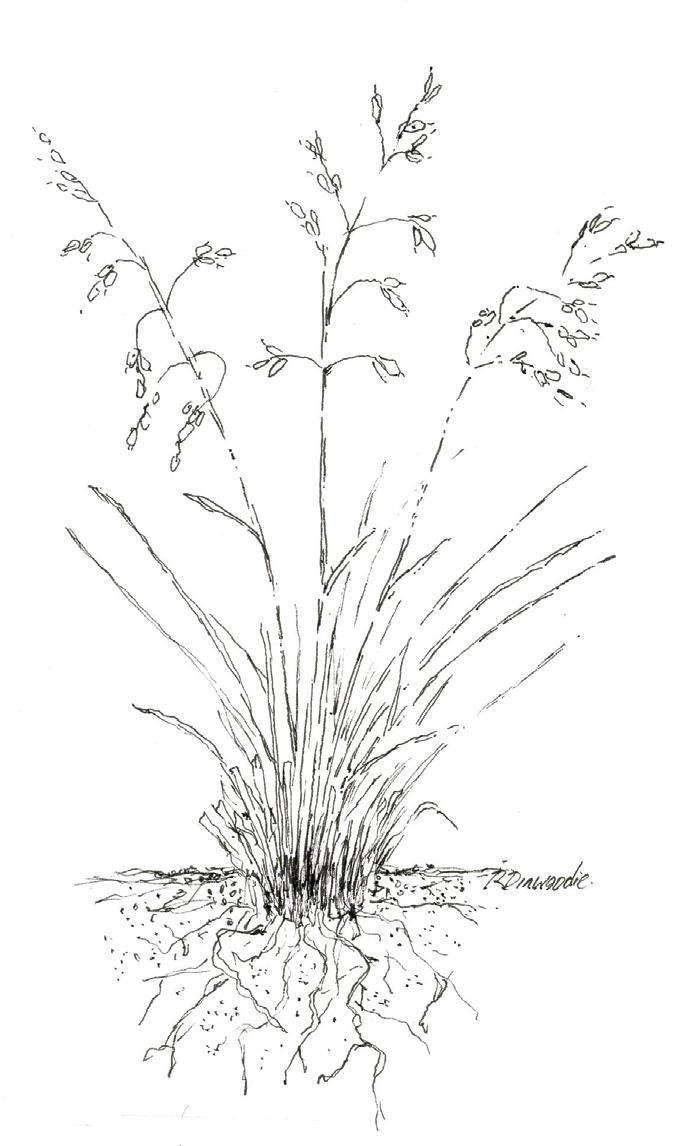
INTRODUCING: NATIVE GRASSES
A NEW SERIES BY ARTIST AND RANGEMAN ROB DINWOODIE
ROUGH FESCUE (FESTUCA CAMPESTRIS)
THE LEGENDARY PRAIRIE WOOL BY ROB DINWOODIE PAG.
Rough Fescue, also called Prairie Wool, is one of the more iconic grasses in Western Canada, nourishing our historic herds of plains bison and greatly aiding the early beef industry.
Rough Fescue has the unique ability to “cure on the stem.” Once the plant has flowered and set seed, the nutrients in the plant will remain in the leaf material, keeping its nutritional value.
The downside is that the tillers (new growing points) are above ground in the tussock crown, making it vulnerable to both overgrazing and fire.
Identifying parts of the plant are the royal purple base of leaf (sheath), round leaves, rough leaves (can feel texture when pulled through fingers) and a tussock or bunched appearance.
For Rough Fescue to thrive, it’s vital to ensure enough growth in spring before using—and never overgraze.
Grasslands are the most threatened ecosystem in the world.
PHOTO: COURTNEY LANGDON
COMMITTEES OF THE YEAR!
COMMITTEES AWARDED
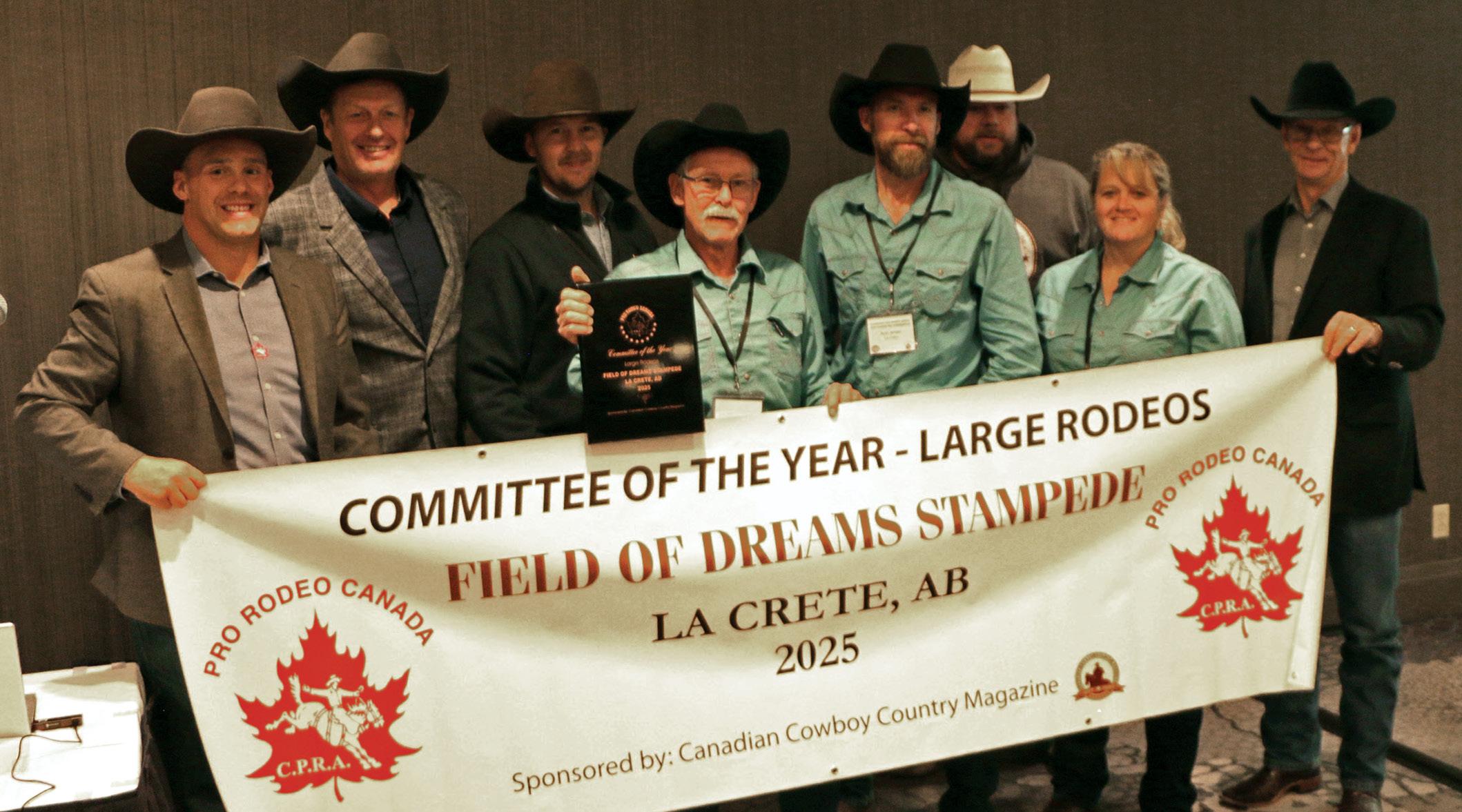
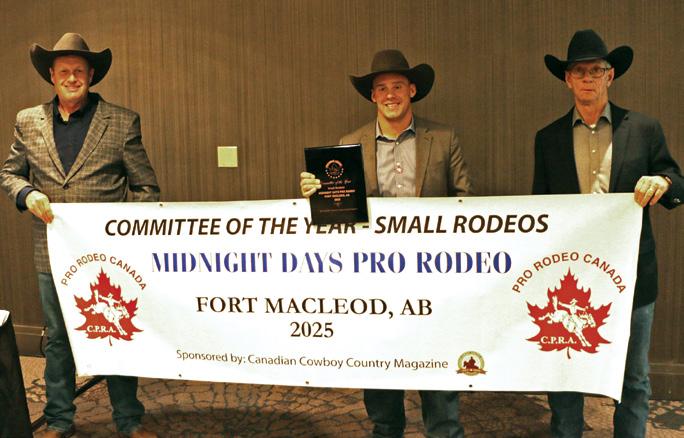
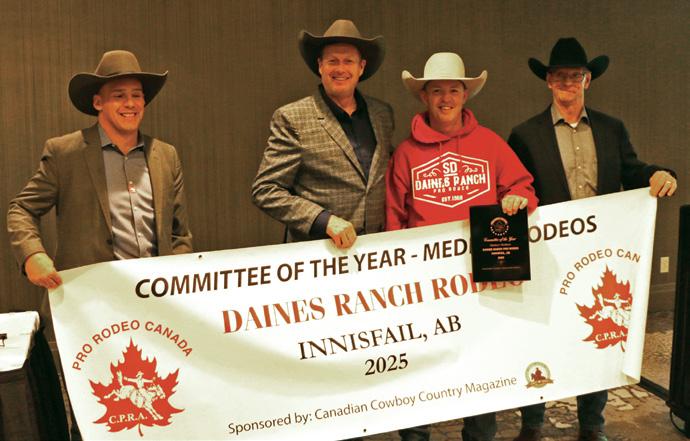
Congratulations to the winners of the Committees of the Year! The Award, voted on by contestants, is sponsored by long-time supporter, Canadian Cowboy Country magazine.
The committee for Midnight Days Pro Rodeo of Fort Macleod (held June 24–26, 2025) won the Small Rodeo award, Daines Ranch Rodeo of Innisfail (held June 13–15, 2025) won the Medium Rodeo award, and the almost-perennial winner LaCrete Field of Dreams Pro Rodeo (held Aug 5–6, 2025) won the Large Rodeo Award. LaCrete also won the 2025 Best Ground Award. Since it began in 2003, LaCrete’s pro rodeo has won Committee of the Year in each category as it has grown. Congratulations to everyone!
STOCKING THE HERD
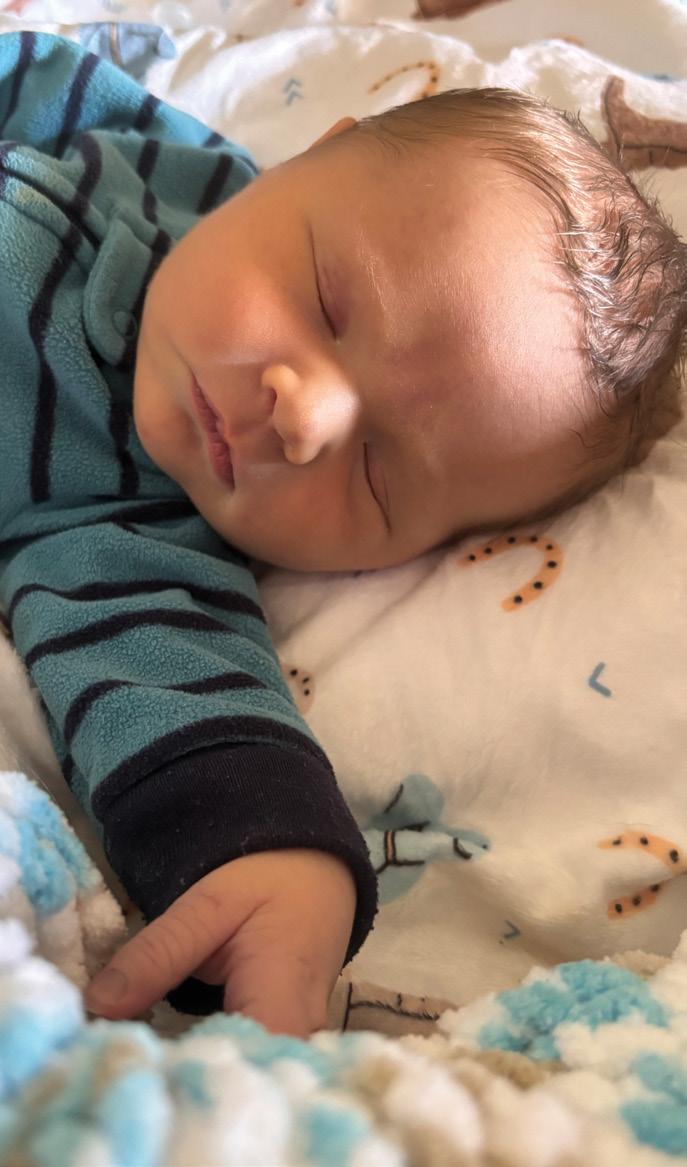
SETH LELAND BOYD
Congratulations to Gralyn and Caleb Boyd on the birth of their first child, Seth Leland Boyd. He was born on Sept 20 and weighed 8 lbs, 10 oz. Gralyn is a CPRA-carded photographer whose work appears in digital and print magazines featuring professional rodeo. Gralyn’s husband, Caleb, is a custom welder and popular spur maker for rodeo cowboys. The young family make their home near Rimbey, Alta.
SID
MARTY WINS GOLD!
CONGRATULATIONS TO MULTI-AWARDwinning writer Sid Marty, who was awarded Gold—Alberta Story for his article: Corb Lund on El Viejo & Alberta’s Greasy Politics , published in the Apr/May 2024 issue of Canadian Cowboy Country . The engraved glass statue was accepted by our publisher, Rob Tanner, at the annual Alberta Magazine Publishers Association Awards gala held in September.
This isn’t the first time that Sid has won a prestigious writing award for an article we commissioned. In the Apr/May 2021 edition,
Sid rattled the West with his highly rated environmental expose entitled, You Can’t Rebuild a Mountain about the proposed coal mine on Grassy Mountain in southern Alberta. That article was awarded the Silver.
A local lettered hero known for his songwriting and poetry, Sid came to international prominence with his first book, Men for the Mountains, about his experiences as a Park Warden in Alberta’s National Parks.
Sid and his wife, Myrna, live on their holdings at the base of the Livingstone Range in southern Alberta.
WHERE IN THE WORLD IS CANADIAN COWBOY?
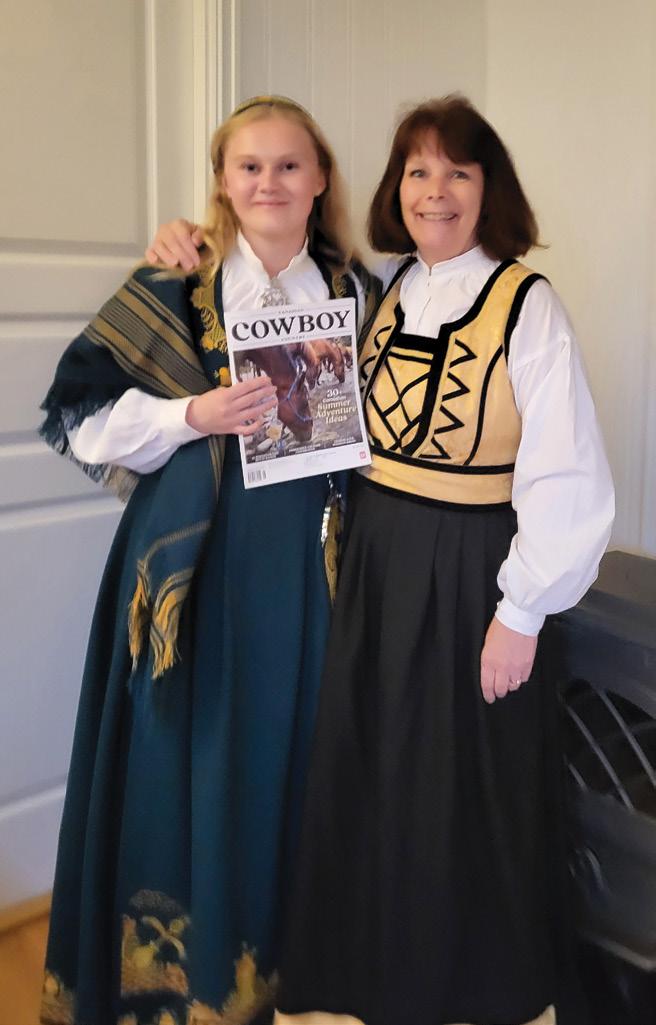
Aurskog, Norway
ESTABLISHED IN 1838, Aurskog is best known for serenity, birdwatching, and having Canadian relatives pop in for a special occasion!
Pictured is 15-year-old Adele Haugerud and her Albertan relative, Ann Stocking. Adele celebrated her confirmation dressed in "bunad," the traditional Norwegian folk costume, alongside her family, in their hometown of Aurskog.
“It was raining, so we were inside by the wood stove,” explained Ann. “The magazine stayed in Norway with Adele, as she loves all things cowboy." Ann made the long trek from Clyde, Alta.
RODEO IS A FAMILY AFFAIR
THEY SAY RODEO IS like a big family. Turns out, that’s true.
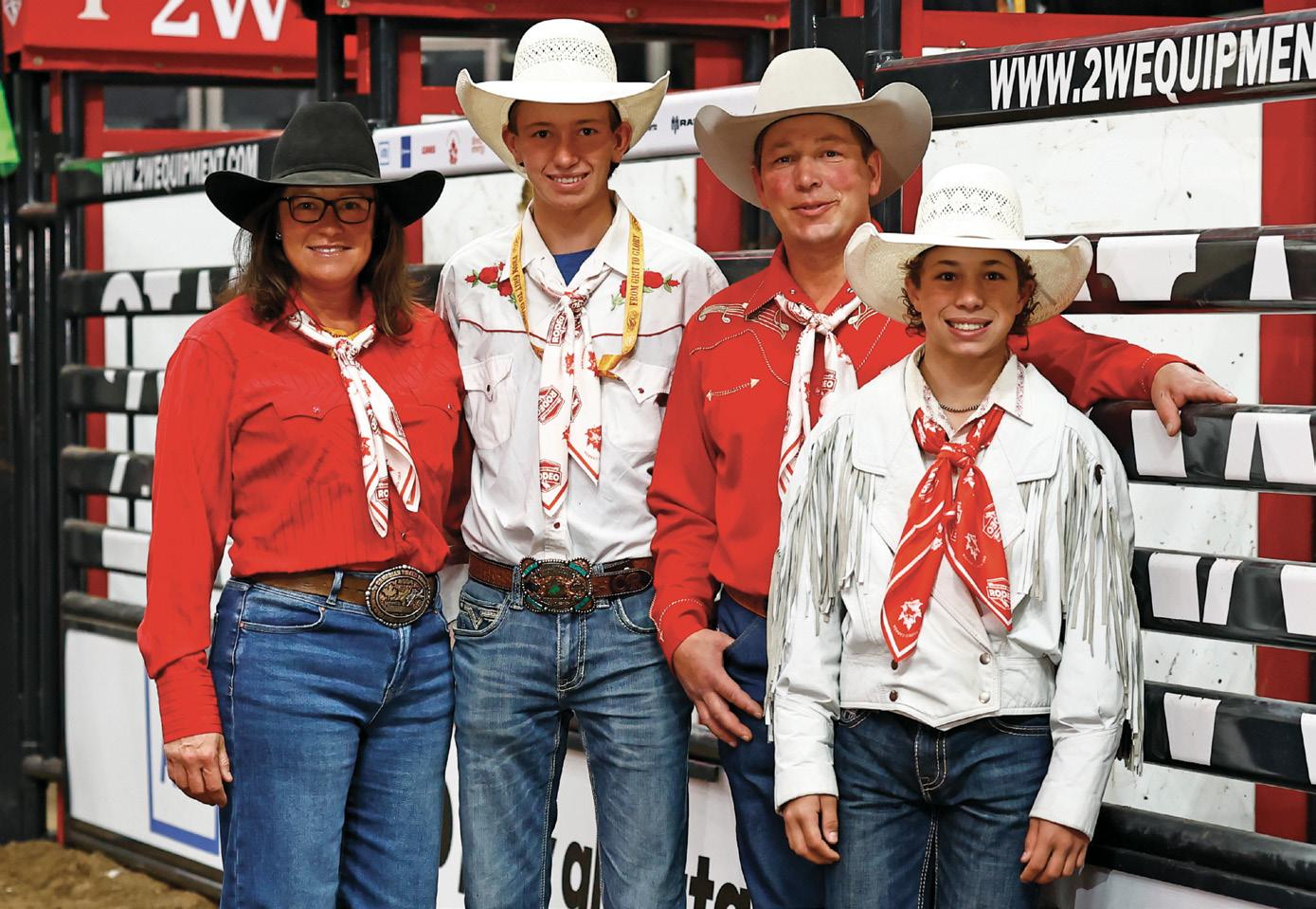
At the 2025 Canadian Finals Rodeo, these four and a bunch more were the unsung heroes —a partnership of good hands who worked out of the limelight and were appreciated by the cowboys, stock contractors, and organizers.
These are the fourth-generation Richards family. from Devil's Head Ranch west of Cochrane, Alta. The Richards have been involved in the sport since the 1930s, and this generation played a silent role in the smooth running of Canada’s greatest rodeo.
Sarah Richards and that tall drink of water beside her, Colt, ran the “stripping” chutes— removing bareback riggings, halters, and bronc saddles from the rough stock horses.
Out front, Billy was one of the men who ran the neck ropes. Each rough stock horse
in the chute had a short rope looped around their neck and hand twisted around a chute gate bar. The reason? To physically prevent any horse from flipping over backwards and injuring a cowboy or themselves. The moment the latch was tripped, the neck rope was released, and the horse was free to do their best.
The youngest of the crew was Chet, and he received applause from the crowd as he would race into the arena with his fringe a’ flying to pick up flank straps sometimes dropped by the pick up men and returning it back to the chutes for the next horse.
The Richards family were one small part of a behind-the-chutes ballet of stock crews, stock, and competitors. Like every big event, a lot goes on behind the scenes to make it all happen, and it was nice to see that even in the pro ranks, rodeo is still a family affair.
DID YOU KNOW…
AT RODEOS, MOST bareback and saddle bronc horses have a temporary neck rope preventing the animal from flipping over in the chutes. What is common is that you often see the same neck rope leave the chute with the bronc, flipping and flopping before it finally falls off.
But did you know… in the last four years, not one neck rope has left the chutes with the bronc at the CFR? Out front, Gordie McKie and Billy Richards manned that department. We did the math; over 636 horses over four years, and not one neck rope left the chutes. That is impressive.
Adele and Ann
From left, Sarah, Colt, Billy and Chet Richards
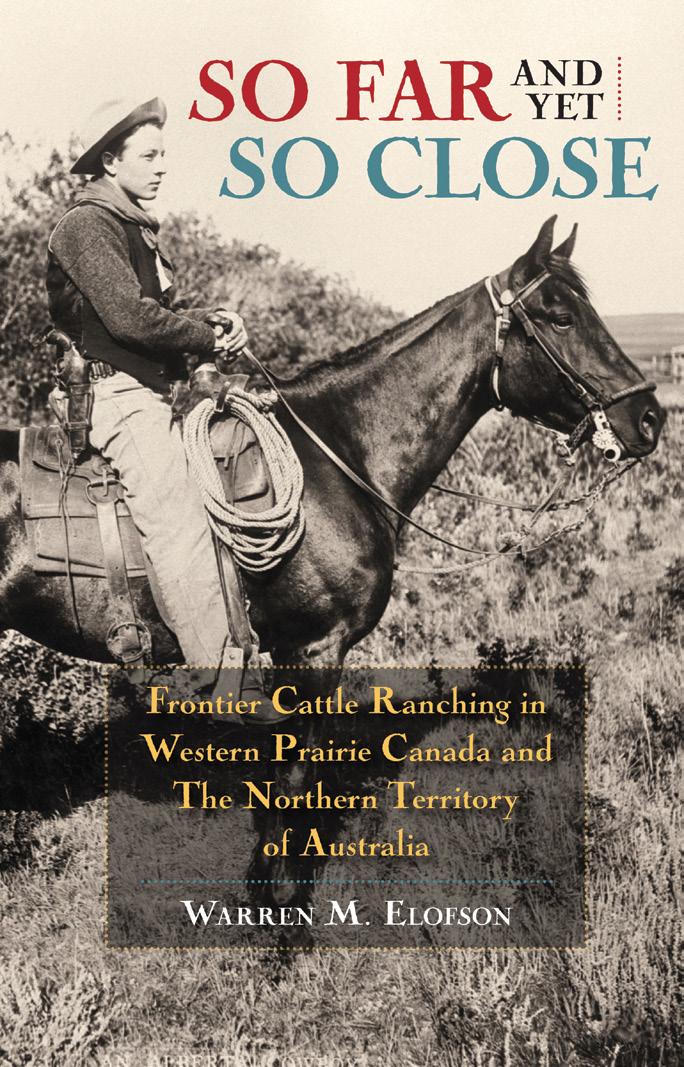
SO FAR AND YET SO CLOSE
FRONTIER CATTLE RANCHING IN WESTERN CANADA AND THE NORTHERN TERRITORY OF AUSTRALIA
AS A WRITER who has interviewed ranchers for decades, So Far and Yet So Close hit close to home. Drawing on his dual expertise as historian and rancher, Warren Elofson paints a vivid picture of frontier ranching in both Western Canada and Australia.
The book dives deep into the challenges of open-range cattle operations, weather, disease, and the sheer scale of the land—and what really stood out was his take on “crew culture.” Life on a ranch isn’t just about cattle; it’s about the people who ride with you, share the work, and shape the rhythm of daily life. Elofson captures that bond with honesty and respect.
If you’ve ever run cattle or lived out on the range, this book will speak to you. It’s not just history—it’s a mirror of the life ranchers know, across continents.
So Far and Yet So Close
Author Warren Elonson | Softcover 330 pages Publisher University of Calgary Press press.ucalgary.ca
BYE BYE, JACKIE RAE
THIS IS GOING to be my last article in Cowboy Country magazine. No, they didn’t fire me because I’ve been boring you… I think. I’m actually retiring from CFCW in November, and our morning gal, Stella Stevens, will take over this space in the new year.
My career started back in 1982 in Red Deer when I did the midnight shift on 1170 CKGY (now New Country 95.5). From there, it was 1370 CFOK in Westlock (now New Country 97.9). And then it was Q-91 in Drumheller (now New Country 92.5). My last stop, for the past 36 years, has been the legendary CFCW. Interestingly, ALL of these stations are now owned by the same company, Stingray.
job where you get to play music and talk, pretty sweet. If I can say something to the readers of Cowboy Country, there’s a pretty good chance that you live in rural Alberta if you read this wonderful magazine. The legacy and learning that I’ve left the team with at CFCW is that it was rural Alberta that brought CFCW to the dance, and it’s rural Alberta that keeps us dancing. Because of your loyalty, we have won Canada’s Country Station of the Year four of the last five years, and the past five years, we’ve been Alberta’s Country Station of the Year. We’re pretty proud of those achievements.
That 21-year-old who started in Red Deer would have never dreamed of the career she would have, and it may be true that I put the “broad” in broadcasting! If you have been a listener at any of these radio stations, thank you. Think about a
Jackie Rae Greening
840 CFCW Program Director & Mid-Days
Honourary Doctorate MacEwan University
CCMA & Country Music Alberta Hall of Fame
So, cue the music: “Happy Trails to You,” or “Bye, Bye,” or “It’s Hard to Kiss the Lips at Night that Chew Your Ass Out All Day Long.” (That is a song, fact check it! ) We will see you at a rodeo, curling, golfing, a campsite, or a Blue Jays game; you just never know where I’ll end up. My motto: “Work Hard. Play Hard. Be Kind to People.”
Hear Jackie Rae weekdays on 840 CFCW! Email Jackie Rae with column suggestions: jrgreening@stingray.com
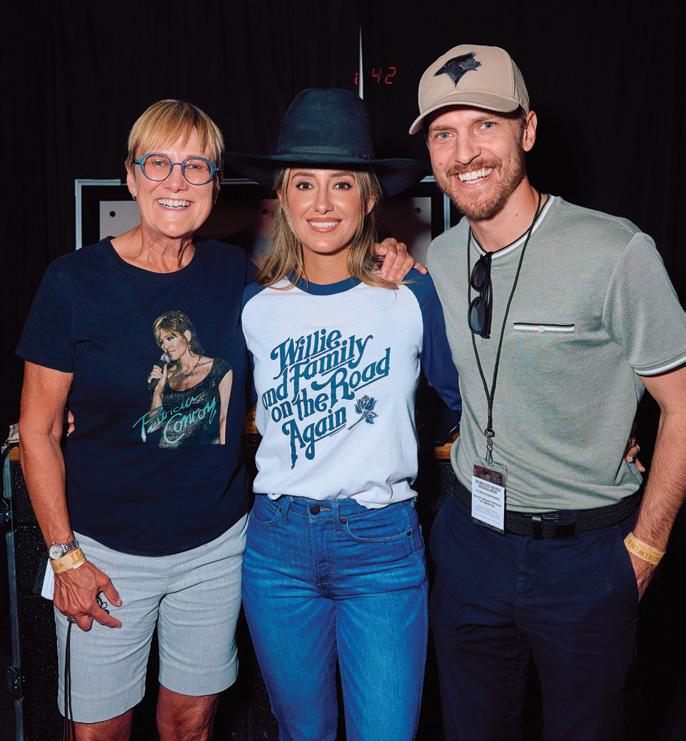
Jackie Rae, Lainey Wilson and A.J. Kelelr
Becca’s Sleep Over
BY HUGH MCLENNAN
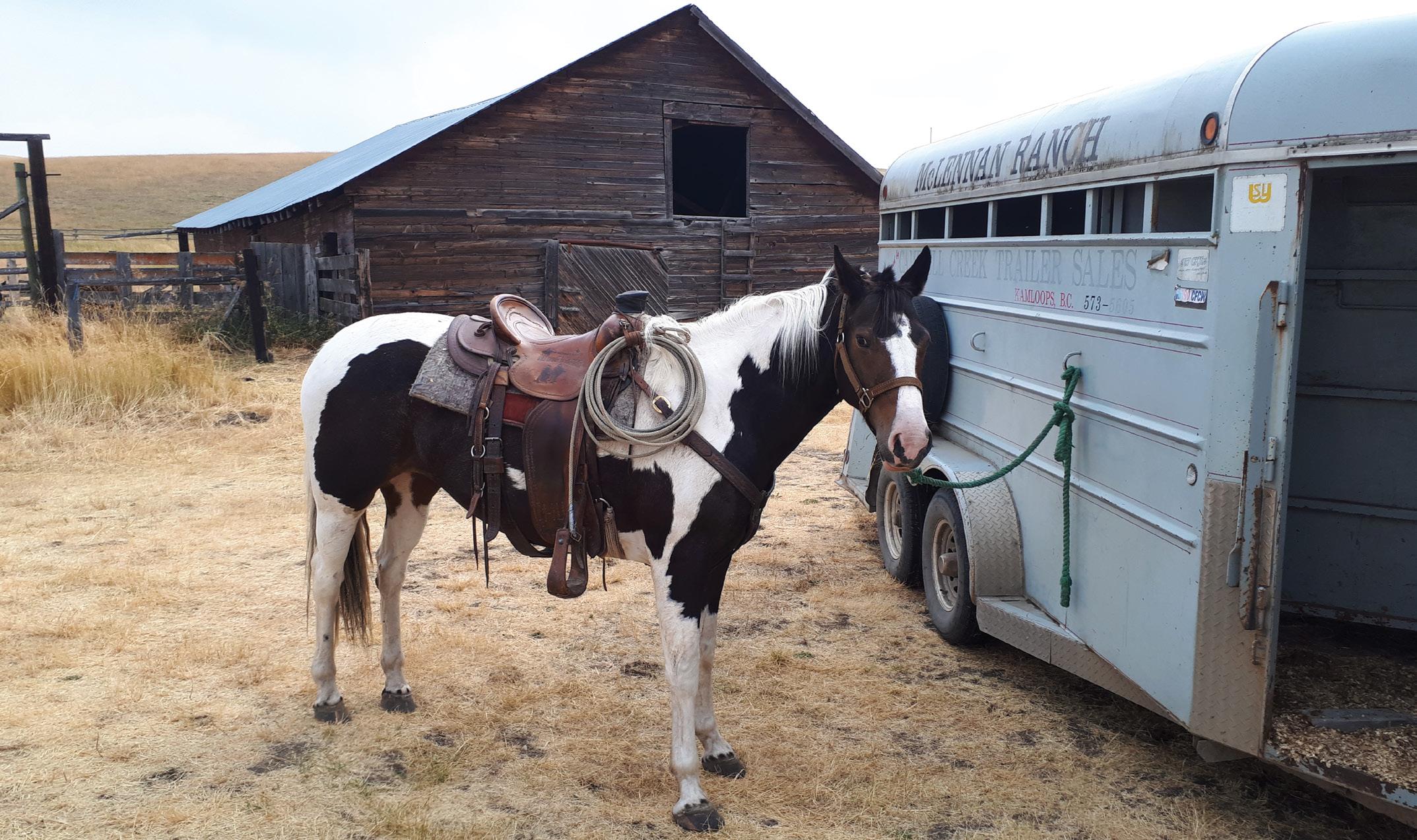
Hugh's pinto mare, Becca
Some of the most enjoyable riding I do is at the Deleeuw Ranch on Rose Hill overlooking the city of Kamloops. It’s close to cowboy heaven, with rolling bunchgrass-covered hills. The sight lines and viewpoints are spectacular. Every summer, between 5 and 600 yearlings graze that nutritious bunchgrass. It takes me a little over an hour to make the drive, and it's well worth it.
A savvy group of riders, including Lyn and Barb Deleeuw, Lael Robillard, neighbours Scott Mann, cowboy photographer Mike Anfield, and me, have been doing this for many years and have a good working chemistry. The highlight of the season for me is the week we gather the yearlings for shipping. Scott was riding an eye-catching young mare when he joined the crew a few years ago. I thought she was a paint, dark brown on a pure white background
with a flowing mane and tail, and a lot of cow sense. It turns out she was a feral horse from a herd from the rugged country around Pavilion Lake. Technically, she is not a paint, she is a pinto. My good mare Cody is getting up in years, and I was persuasive enough to talk him into selling her to me. Since then, she’s turned into my top ranch horse. An old cowboy superstition says changing a horse’s name is bad luck, so she still has her original name, “Becca.”
During the roundup for shipping, I loaded Becca into our trailer and headed out the gate at about 5:00 a.m. We’d be riding for at least a couple of days, so when we finished, I unhooked my trailer, left Becca in a little pasture close to the other horses, and I think she enjoyed the sleepover. I drove in the pickup, home and was back at sunrise the next morning. I backed the truck up to the trailer, so all I had to do was drop the hitch onto the ball
and hook up. Then, I could load my horse and head home.
Now this is where the symptoms of an ol’ cowboy’s lack of focus can show up. The liners were all loaded; we had a good visit, knowing this would be the last time we’d ride here this year. I rode back to the trailer, exchanged my bridle for the halter, and Becca walked in. I phoned Billie to tell her we were on our way home. I put the truck in gear and pulled ahead, BUT when I looked back, the trailer wasn’t coming! That’s when I remembered. I had not hooked it up. Becca had a puzzled look on her face as if to say: “I like it here, but I’d rather come home with you.” So, I had to unload her, hook up the trailer, put her back in, and then we were on our way.
Now there’s a little note hanging from the dashboard that says: Make sure the trailer is attached to the truck before you load your horse. c
For Better or Worse
BY NIKI FLUNDRA
About the time this article is due, the trucks are also due to arrive for weaning and shipping. Fall around here means lots of riding, getting the cows closer to home, preg-checking, and getting everything ready for winter.
Working cattle with your spouse can be one of the most rewarding but also the most challenging thing you’ll do together. Dustin and I definitely don't have all the answers, but over the years, we have learned how to make it work pretty well together. We know each other as well as we know ourselves, and this comes in handy when working together —except for reading some of his hand signals; there have been a few times when they have remained a mystery to me.
I think one of the best things is that he is pretty easy-going and gets over my many mess-ups really fast. We also try not to hold a grudge for very long when we do get frustrated with each other, either.
Dustin has always told me he likes his mares a little spicy, so naturally, I encourage him to hang onto that mentality when dealing with his sometimes colourful, lessthan-patient wife. Last week, we headed out to move the yearlings, and the kids had me close to the last straw that morning. I may have replied to my poor, innocent husband with a choice word or two when he tried to give me some direction—in good humour, he said, "Oh, good- I see we are skipping right to the cussing me out portion today."
Poor guy, no wonder he prefers to just take his dogs sometimes.
Jokes aside, the things that help us are having a plan, but knowing it's probably going to change. Chatting about which way we are taking the cows, which gates are best to go through, whether gates are set or not and who is riding ahead to open or staying behind to close, etc....
We try to maintain a sense of humour and a relaxed attitude, but sometimes
“A thank-you goes a long way for both of us.”
things get intense, and if someone messes up, it can be another day or two of added work, so it's a balance of taking it seriously to get it done but not too seriously.
The job has to be the priority—period. When it is done, we can chat about how to make it work better next time, but chances are there isn't time for that in the moment, so just put hard feelings or whatever is going on aside for the moment and get it done.
We try to be generous with praise and careful and meaningful with criticism or advice. A thank-you goes a long way for both of us. We lucked out in that our strengths and weaknesses differ a bit, so we make up for each other where the other falls short.
Working cattle with your husband or wife can be a bit of a roller coaster. There will probably be moments when you wonder why you ever signed up for it—but there will also be sunrises and sunsets that take your breath away, and rides together where your worries get carried away with the wind. The best days are when we get the work successfully done together with our boys and even share some laughs along the way.
So we will keep after it, and maybe after another 15 years together, I will learn to read those hand signals. c
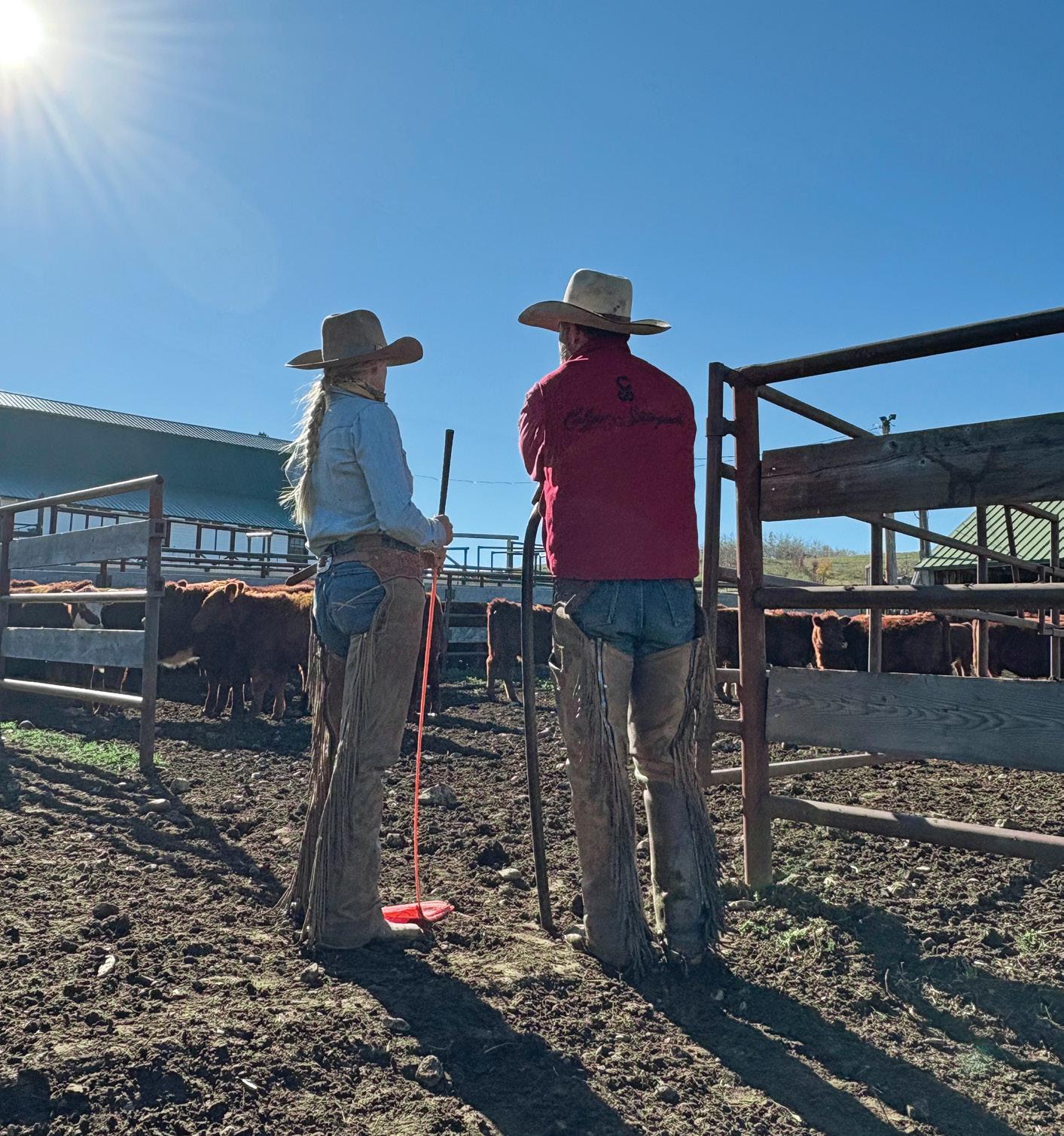
Niki and Dustin making a plan before sorting
Pressure Makes Diamonds
THE REBIRTH OF TROY FLAD
BY BILLY MELVILLE
United States Army General George S. Patton Jr. once said, “Pressure makes diamonds.”
At the end of the 2024 WPCA chuckwagon season, few knew that quote would so perfectly describe the year to come for veteran driver Troy Flad.
After 33 seasons on the track, Flad endured the toughest finish of his career in 2024—36th in the World Standings—costing him full status for the 2025 WPCA Pro Tour. For the first time since joining the WPCA in 1996, he would enter the new season with only conditional status as a permit driver. That meant if he wanted to continue racing, he’d need to finish in the
top four among twelve permit drivers after the second tour stop in Bonnyville to keep his spot on the 2025 circuit.
“I was done,” admits Flad. “I didn’t want to race.”
But his sons, Gage and Trez, had other ideas. Unwilling to see their dad walk away from the sport that had defined his life, they took matters into their own hands. When spring training arrived, Troy was content to drive the tractor on the family farm while the boys started working the chuckwagon horses, getting them ready for the season opener in Grande Prairie.
It wasn’t until a week before the first show that Troy finally left the tractor and
climbed back onto the wagon seat. Even then, his enthusiasm was muted—but he recognized the effort his sons had poured into the team and didn’t want to let them down.
At Grande Prairie, under the weight of family expectations and the uncertainty of permit status, Troy delivered. He finished 10th overall, a performance that reignited something deep within him. He followed it
“I was done,” admits Flad. “I didn’t want to race.”
up with another strong showing in Bonnyville, securing his place for the remainder of the season.
From there, momentum took over. Flad posted additional top ten finishes in Medicine Hat and Strathmore, rediscovering not just his form, but his love for the sport.
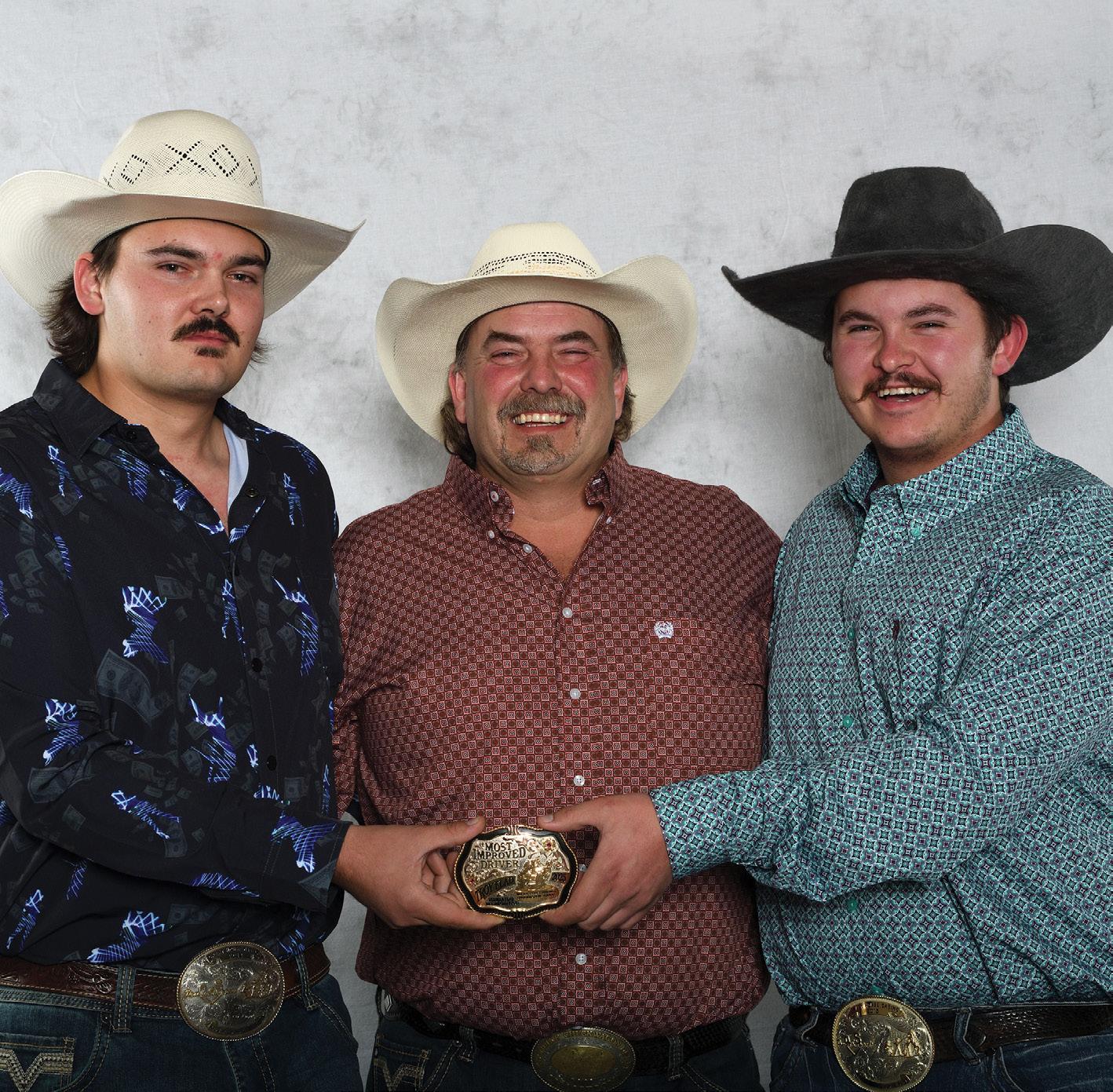
By season’s end, Troy had climbed all the way to 15th place overall, earned recognition as one of the least penalized drivers on the WPCA Tour, and was named the 2025 Herman Flad Memorial Award winner for Most Improved Driver—an honour made even more special as the award, named after his late father, was presented to him by Gage and Trez.
“The boys trained hard this spring, and I went farming,” laughs Troy. “I couldn’t care less about racing, but thanks to Trez and Gage, I had the most fun running a wagon in my entire life. I’ve never been more motivated to come back and compete.”
Troy may have started the 2025 season as a lump of coal, but he finished as a diamond. It seems General Patton was right after all—pressure really does make diamonds. c
BY:
PHOTO
PAUL AND CAROL EASTON
Troy Flad (centre) receives the Herman Flad Memorial Buckle, named in honour of his father, from his two sons, Gage (left) and Trez (right), at the 2025 WPCA Awards Gala.
Kyle Lucas
VEGAS BOUND
BY TIM ELLIS
Kyle Lucas’ journey along his road to the Wrangler National Finals Rodeo has been a long one. Some 13 seasons after buying his PRCA card and after six years of top-35 finishes in the world tie-down roping standings, Lucas has his elusive NFR qualification.
“I had to keep my emotions in check for that last month of the season, so I wasn’t able to get too excited about it right away,” admits Lucas, who finished 14th in this year’s world standings, less than $5,000 inside the qualifying cut line. “Honestly, I’ve got such big goals and dreams that this is just one of them to check off.”
“There are a lot of times we may cut some corners, and it doesn’t matter that much. But those last three weeks, I was
doing all the little things. I figured by the end of it, if I didn’t make it and I gave it all I had, at least I could be happy with myself instead of looking back and wishing I had done this and that.”
The closest the 31-year-old had come to making the trip to Las Vegas before this year was in 2021, when the Carstairs, Alta., roper finished 17th.
“I think a really good winter set me up this year,” offers Lucas, who used friend Logan Bird’s multi-award-winning mount, Peso, to help win over $43,000 by the end of March. “After that, it was just staying on good horses and being consistent.”
“It took more of me than I thought it was going to. I hope some up-and-coming ropers understand what that means. It’s always going to be a lot harder than you think. But, if you can put in the hours with
all the behind-the-scenes work necessary, when you get the rodeo, the hard work is already done.”
The trip to the Thomas & Mack Center for Lucas comes two months after winning his first Canadian championship in Edmonton.
“Competing at the NFR has always been the plan,” says Lucas. “And now I feel like I get a chance to buy some NFR tickets to pay back all of my family and friends who have supported me along the way.”
Lucas is joining Vegas-bound team ropers Kolton Schmidt, Dawson, and Dillon Graham, 5X Canadian champion steer wrestler, Scott Guenthner, and four saddle bronc riders—4X World champ, Zeke Thurston, six-time qualifier, Dawson Hay, NFR rookie, Quinten Taylor and four-time qualifier, Ben Andersen. c
Kyle winning CFR Round 3 on Tim Bagnell’s grey, Bunny
SUMMER IN THE SADDLE
Stories of summer, told through the lens of our 2025 photo contest winners
Photo by
Bree Patterson
STORIES OF DUSTY TRAILS AND TEAMWORK...
Photo by Cheyenne Meijers
Photo by Sarah Lehn
Photo by Brittany Ross
...AND OF GOOD DAYS SPENT IN GREAT COMPANY.
Photo by Mike Ross
Photo by Robin Flicek
Photo by Gordon Hodgkinson
Photo By Jill Jenkins
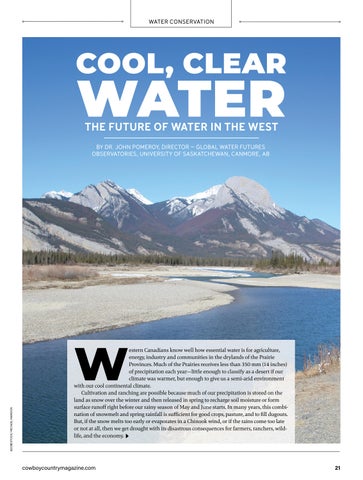
COOL, CLEAR WATER
THE FUTURE OF WATER IN THE WEST
BY DR. JOHN POMEROY, DIRECTOR – GLOBAL WATER FUTURES OBSERVATORIES, UNIVERSITY OF SASKATCHEWAN,
CANMORE, AB
Western Canadians know well how essential water is for agriculture, energy, industry and communities in the drylands of the Prairie Provinces. Much of the Prairies receives less than 350 mm (14 inches) of precipitation each year—little enough to classify as a desert if our climate was warmer, but enough to give us a semi-arid environment with our cool continental climate.
Cultivation and ranching are possible because much of our precipitation is stored on the land as snow over the winter and then released in spring to recharge soil moisture or form surface runoff right before our rainy season of May and June starts. In many years, this combination of snowmelt and spring rainfall is sufficient for good crops, pasture, and to fill dugouts. But, if the snow melts too early or evaporates in a Chinook wind, or if the rains come too late or not at all, then we get drought with its disastrous consequences for farmers, ranchers, wildlife, and the economy.
In the driest parts of the Palliser Triangle (southern Alberta and SW Saskatchewan), dryland farming can be enhanced by irrigation. Over a century of irrigation development has produced vertically integrated agricultural production and processing powerhouses in southern Alberta in the Bow and Oldman River Basins, and promises to provide greater production near Lake Diefenbaker in Saskatchewan.
We have also experienced the ravages of drought in this region—from the Dirty ‘30s to the even more severe drought from 1999-2004 that led to a $6 billion loss to the agricultural economy and a recent decade long drought in the South Saskatchewan River Basin (Bow, Oldman and Red Deer river basins combined) that has led to record low river flows, unfilled reservoirs, limitations on irrigation, reduced crop yields, decimated herds and shortages of feed.
So, asking what our water future is in this dry region is an important question that affects the decisions that will be made for agricultural development, from ranch to farm to irrigation district and for the region. Answering this question has been very challenging.
We were fortunate to have received substantial federal funding from the
WE KNEW THAT THE ROCKIES WERE OUR “WATER TOWERS,” BUT THIS SHOWED HOW IMPORTANT THE WINTER SNOWPACK IS TO THE WATER SUPPLY.
Canada First Research Excellence Fund for the Global Water Futures program at the University of Saskatchewan from 2016 to 2025. With partners from 23 universities across Canada, we set out to answer what the water availability, use and management options would
be for Canada through the 21st century. We developed cutting-edge hydrological and water management models, and high-resolution climate models, and tested these, then coupled them so that we could provide simulations of recent and future water supply over five million square kilometres (1.931 million square miles) of Canada—an area larger than the European Union. It was the first time this was done and involved the largest team of hydrological modellers ever assembled in Canada.
What we found is important to every resident of the Prairies. For the Saskatchewan River Basin (the South Saskatchewan and the North Saskatchewan basins stretching from the Rockies to Manitoba), we confirmed that most streamflow is generated in the Canadian Rockies and foothills, and about 70 percent is sourced from mountain snowmelt. In contrast,
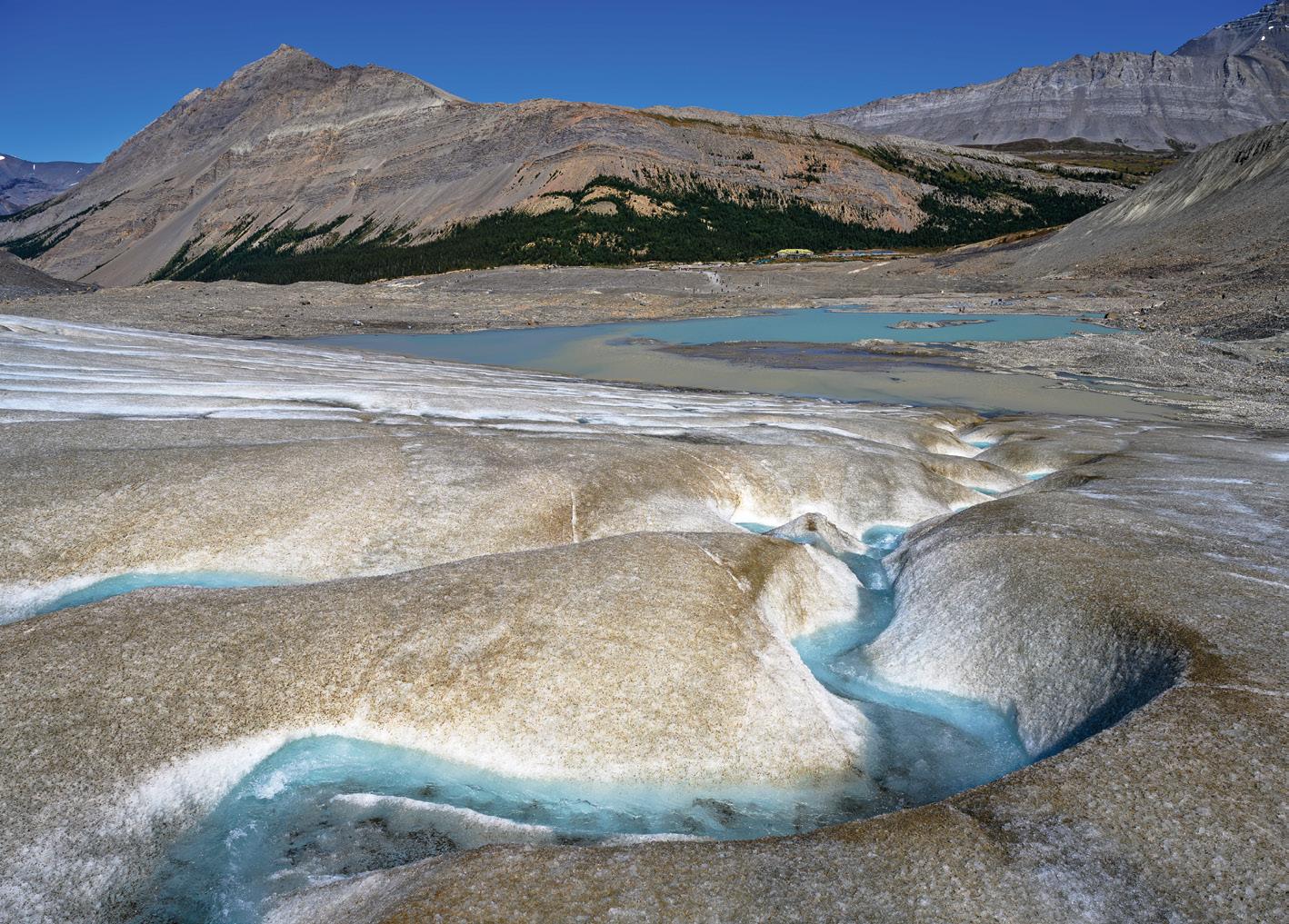
Summer sun melting ice on the Athabasca Glacier in Jasper National Park
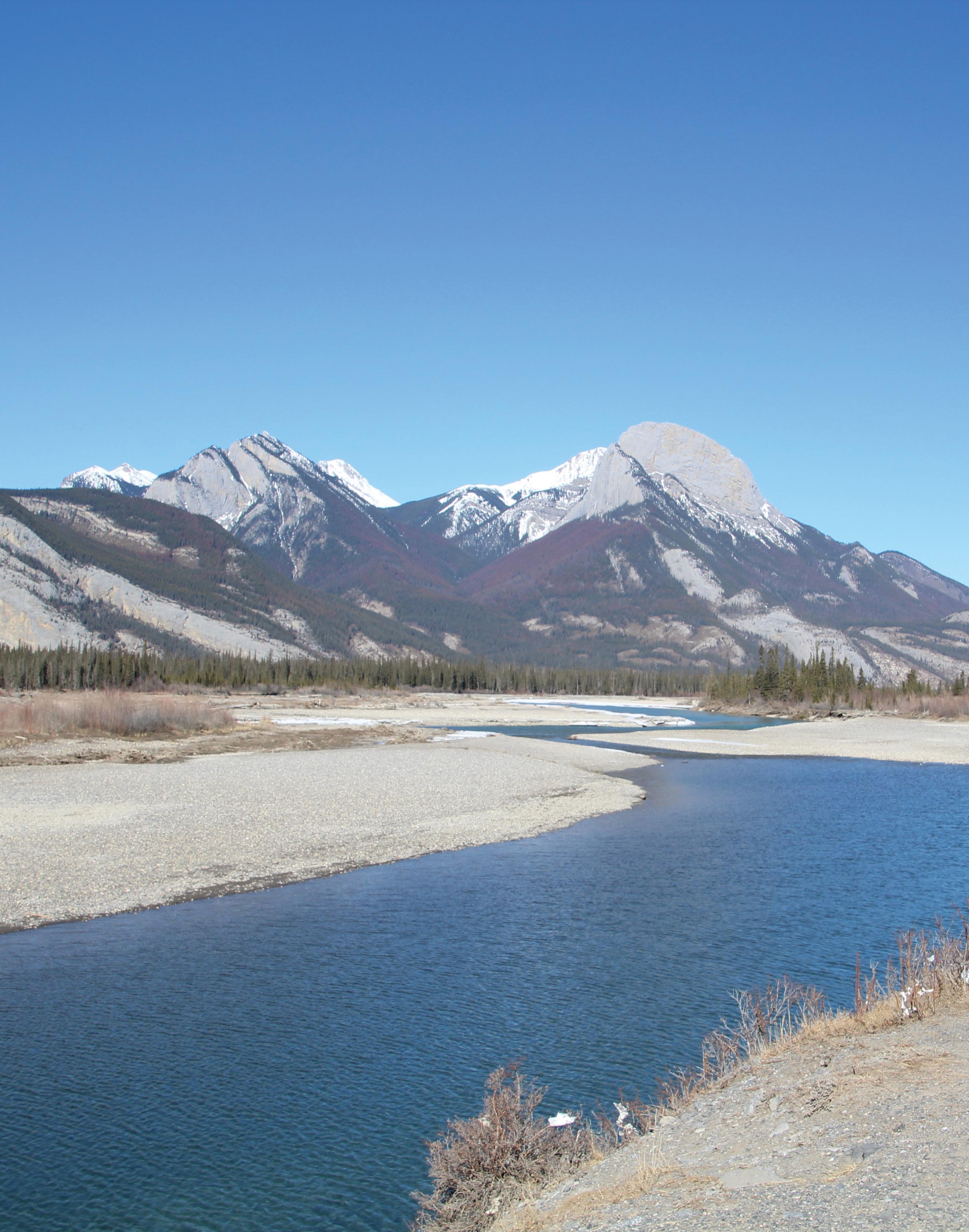
Previous page: Athabasca River, Jasper National Park, Alberta
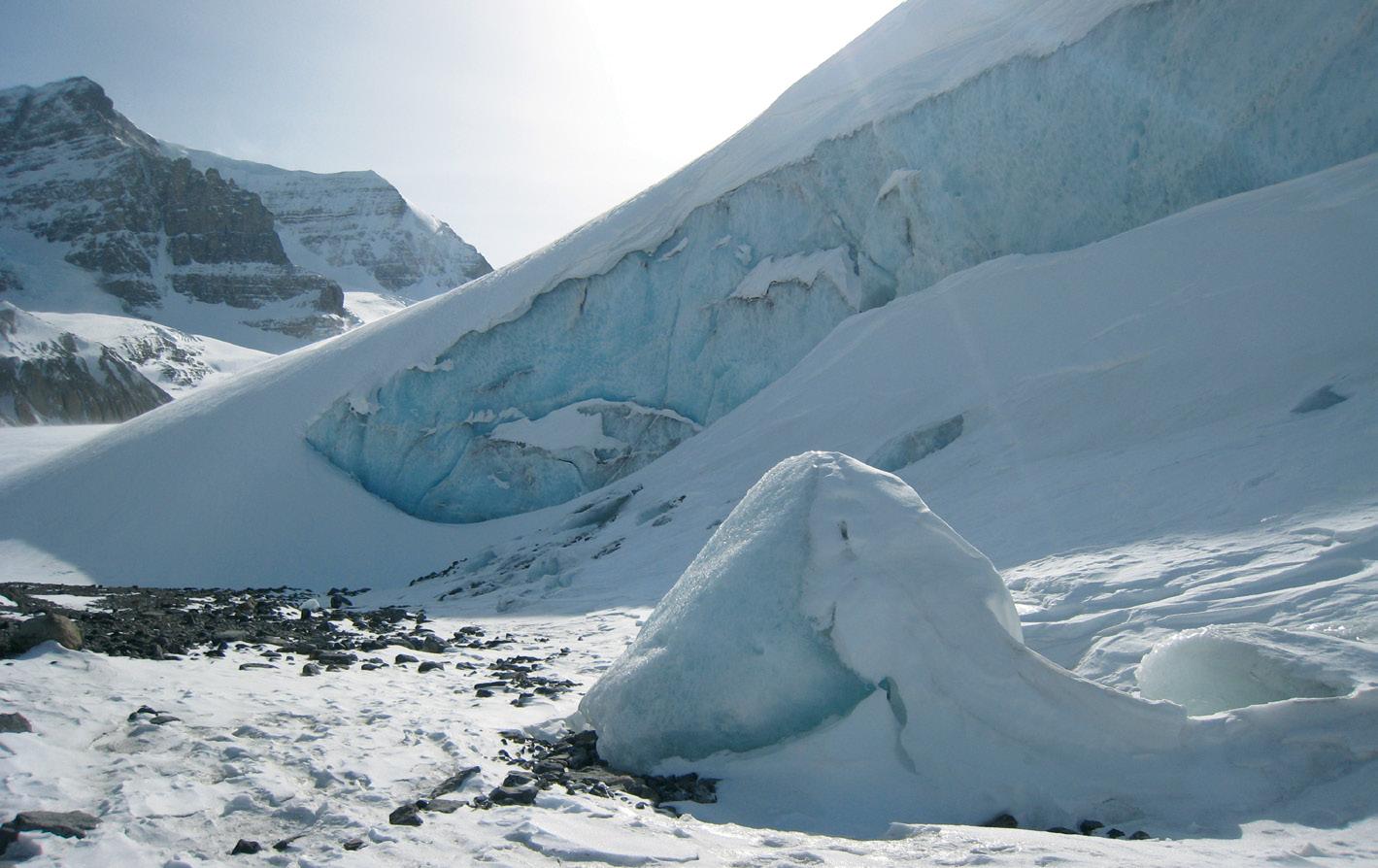
The "toe" of the Athabasca Glacier in the Columbia Icefield
PHOTO BY JOHN POMEROY, PH.D; ADOBESTOCK/ FERENC
the glaciers have retreated so much that their ice melt now contributes less than 1 percent to this streamflow; we estimate that this used to be much higher. We knew that the Rockies were our “water towers,” but this showed how important the winter snowpack is to the water supply.
But rivers flowing from the Rockies are changing as well. The estimated “natural flow” of the South Saskatchewan River, which would have occurred without irrigation, cities and dams, has dropped about 15 percent since the early 1900s. This decline is due to the warming climate and declining snowmelt contribution to runoff generation in the mountains. The actual measured flow of this river as it leaves Alberta has dropped 40 percent over that period; the larger decline is mostly due to irrigation development and evaporation of irrigated water.
For local Prairie water supplies, snowmelt has historically provided about 80 percent of local runoff that fills dugouts, sloughs, lakes, and creeks. But this is declining, and rainfall has been dominating runoff generation in the eastern Prairies for the last 20 years. The Prairie snow season has become shorter and rainfall more variable, with more intense
multiple-day rainstorms and longer periods between rainstorms.
Going forward, our warming climate is projected to give us much warmer summers and winters, with milder warming in spring by the end of the century. How much warming occurs depends on human emissions of greenhouse gases, and so far, we are not controlling these very effectively.
This information suggests that we could see average temperature increases of 5 to 6°C with summer increases of 7 to 8°C
PALLISER TRIANGLE
(45–46°F) and winter increases closer to 5°C (41°F) in the Palliser Triangle. This is massive, but the changes to precipitation are also important. Overall, precipitation is expected to increase 25 to 35 percent over the year, but most of this will be in winter and spring, and much of the extra precipitation will fall as rain. Summer rainfall is likely to decrease by 10 percent or less. This shift to much warmer, drier summers and rainier, warmer winters and springs will challenge our current agricultural and pasture management methods. It will make irrigation expansion more attractive, it may mean that winter crops are more viable, and it will mean persistent summer drought.
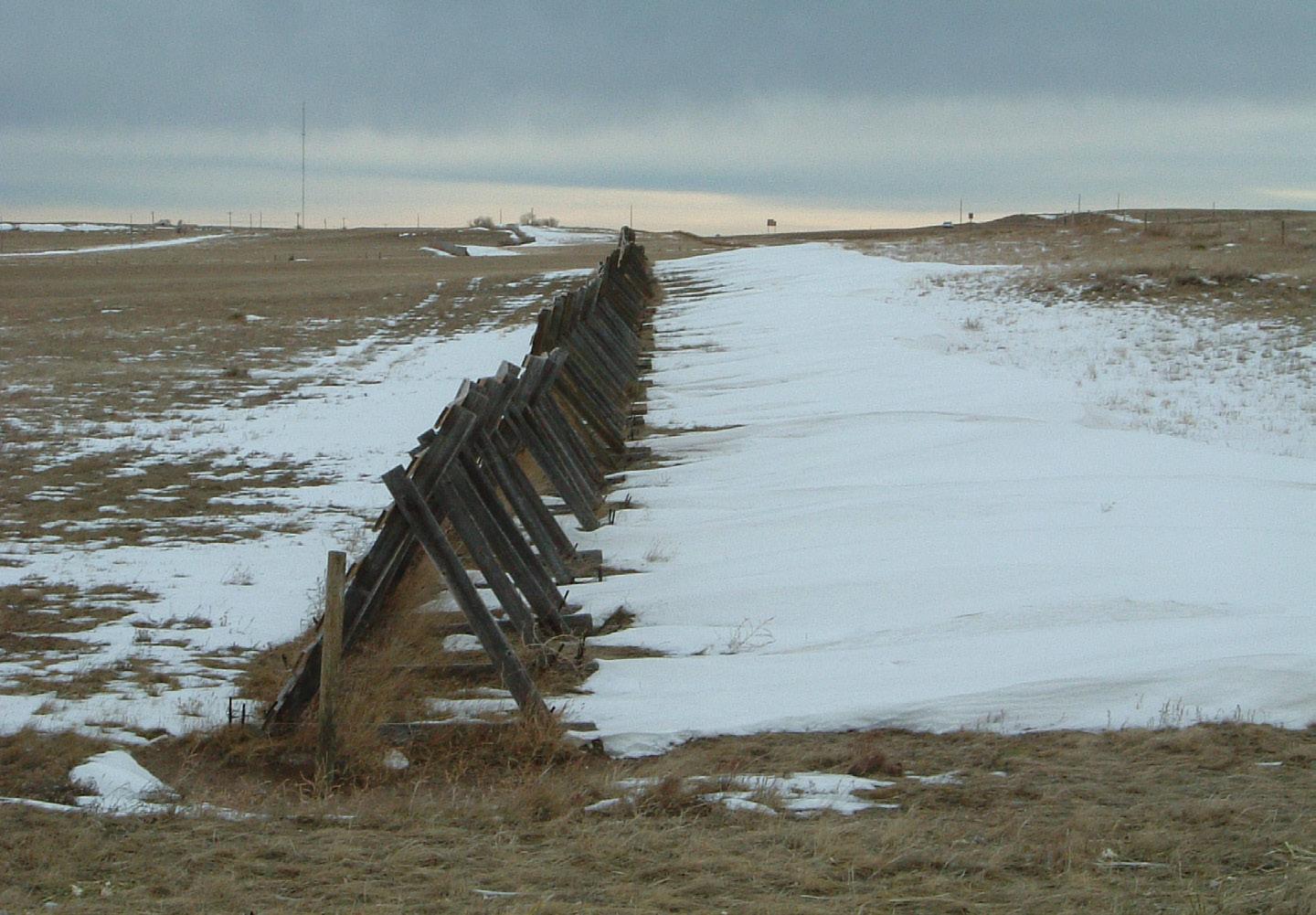
We should still be able to trap snow using tall standing stubble, tall grasses, shelterbelts, and snow fences, and this snow management might be the key to success in dryland farming and ranching. It will mean keeping the snow from blowing across fields, where it evaporates rapidly during a snowstorm. We know how to do this using leave strips, tall stubble and ensuring that summer fallowing is a technique of the past. Tall snow fences have proven useful ways to accumulate deep snow drifts that can fill dugouts—this works well in the Prairies, and the taller the fence, the better. Shelterbelts can do the same thing if they drain into a water retention pond. The ponded water recharges groundwater, helping to keep farm wells viable.
What about irrigation prospects? Overall, our rivers should see a notable increase in streamflow due to increased rainfall in the Canadian Rockies, but much of this will be in winter and spring. Streamflow peaks will come earlier by a month or more, well before current irrigation demand peaks. Summer discharges in the rivers
are expected to decline substantially, making water supply management even more challenging. The variability of streamflow will increase because mountain rainfall is less dependable than snowmelt as a water source.
What can we do about this? First, humanity must slow climate change by
WE WILL NOT HAVE THE GLACIER MELT DAMPENING OF DROUGHT IMPACTS ON OUR MAJOR RIVERS, AND SO WILL NEED TO MANAGE WATER MORE CAREFULLY IN DROUGHT YEARS.
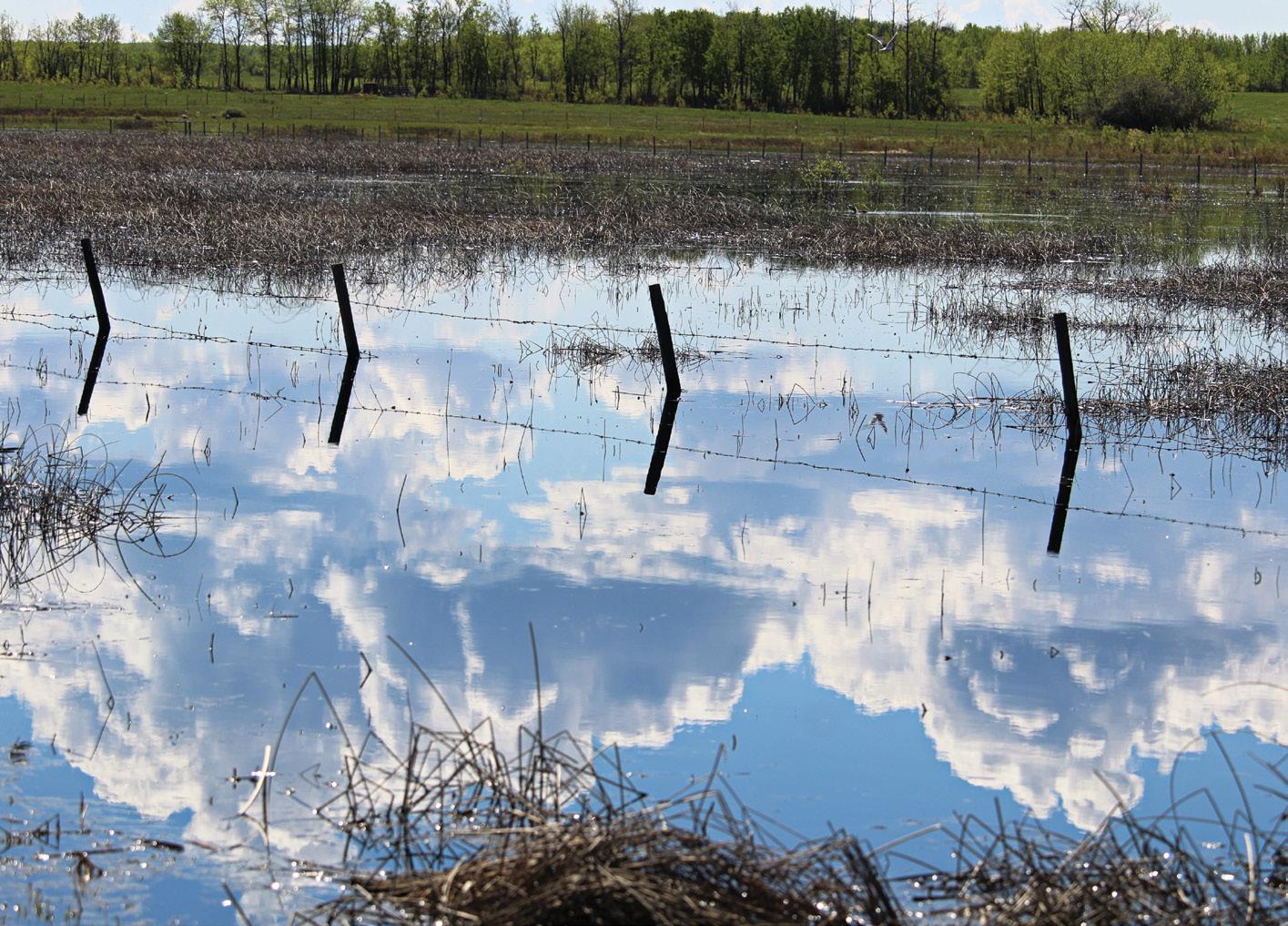
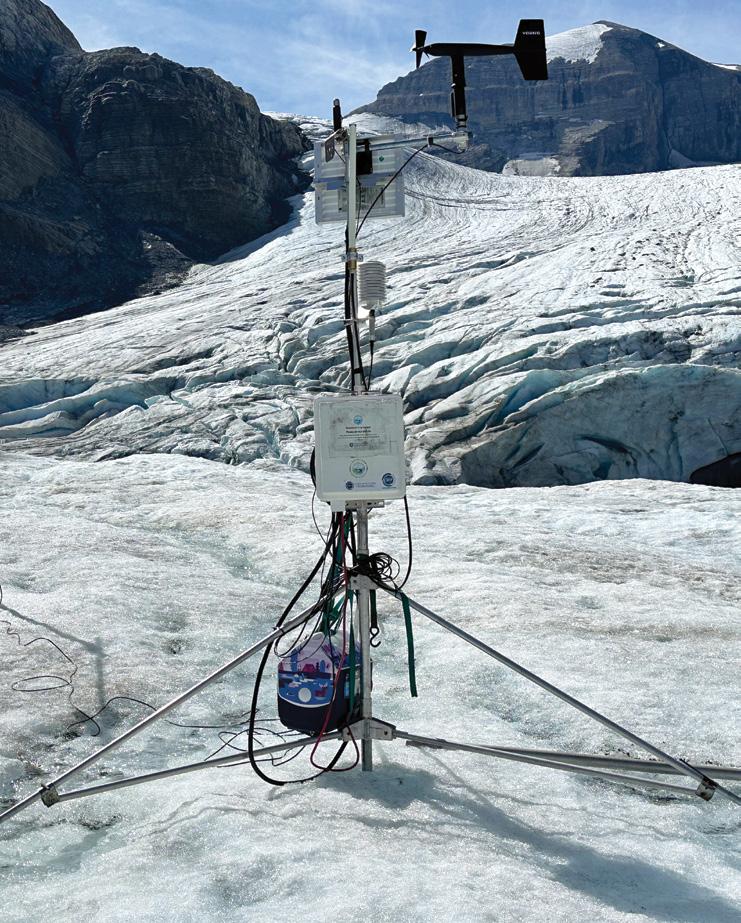
Clockwise from top: Glacier meteorological and snow and ice measurement station on Peyto Glacier, Banff National Park; a prairie shelterbelt; snow trapped on a stubble field; drifts formed behind a snow fence.
reducing greenhouse gas emissions to the atmosphere. This necessary first step is behind track, and so it will take decades, if not centuries, to restore our climate. In the meantime, we need to see if greater water storage in wetlands, lakes, ponds and reservoirs can make up for the reliability of snowmelt and glacier melt that we are losing with climate warming. We will not have the glacier melt dampening of drought impacts on our major rivers, and so will need to manage water more carefully in drought years.
We will have to carefully allocate water between our growing cities and ever more valuable agriculture and ensure that new
PHOTO BY JOHN POMEROY, PH.D (3X);
IT’S NOT GOING TO BE EASY, AND IT WILL NOT WORK WELL FOR EVERYONE, EVERY YEAR, BUT WE CAN DO BETTER THAN WE MANAGE OUR WATERS NOW.
reservoir development does not cost us more in evaporative losses than it gains in water storage flexibility. Crop types and decisions about cultivation, pastures, herd sizes and irrigation will have to change throughout this century. New crop varieties adapted for a hotter, drier climate will be important. Snow management for forage, grains, oilseeds, and pulses can be viable if trash is left on the field between snowmelt and seeding to reduce water evaporation from the soil, and if soil cracking from minimum tillage systems allows snowmelt water to infiltrate deep into the soil.
With improved measurements of our mountain and prairie water supply, coupled to better computer modelling prediction systems, we can make precision adaptive water resource allocations and preserve our water for transboundary flows and competing uses for food, communities, hydropower, ecosystems, recreation and culture. It’s not going to be easy, and it will not work well for everyone, every year, but we can do better than we manage our waters now.
Farmers and ranchers have always adapted to our changing environment in Western Canada, and I am sure can meet these challenges if they have more information made available to them from improved predictions of floods, water supply and droughts. Water intelligence will be the key to prosperity in Western Canada as we deal with these changes. c
The new Global Water Futures Observatories project at the University of Saskatchewan and eight other universities (gwfo.ca) is a national water research monitoring system that provides critical data to support this water intelligence.
DWIGHT DOKKEN
PICTURE THIS
BY TOM REARDON
The late British leader Sir Winston Churchill wrote, “No hour of life is wasted that is spent in the saddle.” If that’s the case, Dwight Dokken has wasted a lot less time than most of us—and he has the pictures to prove it.
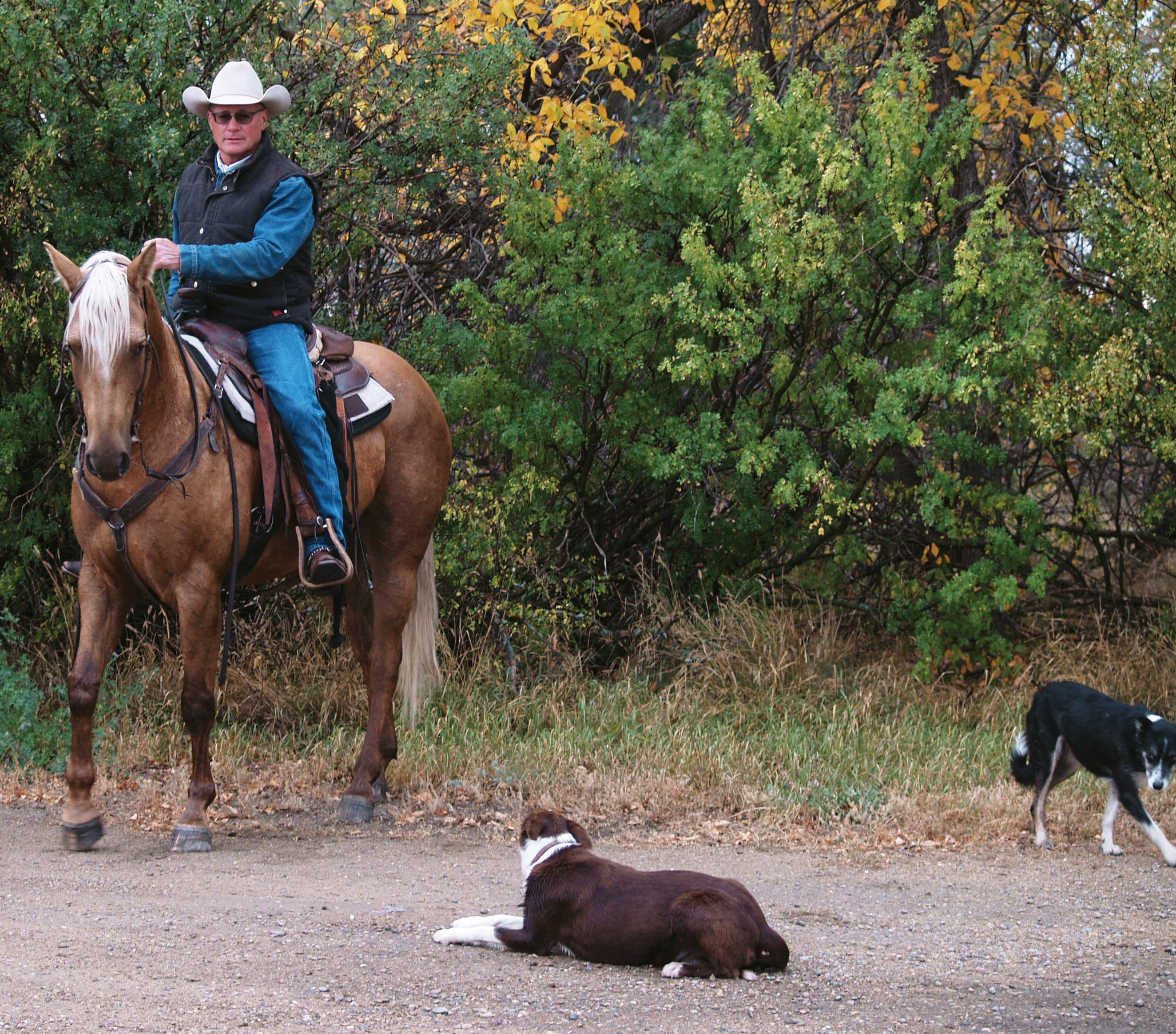
The mare in training, Blondie, and two of Dwight’s good dogs after a morning of shipping cattle this past fall, 2025.
He was raised on a mixed farm south of Cabri, Saskatchewan. A confirmed adrenaline junkie, he found that horses could ‘scratch that itch’ so he took to breaking colts for neighbours. Dwight’s mother took a picture of her son on the first horse he ever broke. Taking a photo before a horse goes home wasn’t part of a big master plan, but it turned into a tradition, and he’s kept them all, originally in albums, now electronically.
Dwight’s craving for action led to rodeo, and in 1984, he was the Canadian Cowboys Association Champion Bareback Rider. He turned pro the next year and qualified for the Canadian Finals Rodeo.
Disaster struck while returning from the Labour Day rodeos in B.C. He was sound asleep in the camper when
there was a devastating highway accident. The rig was totalled; his buddies in the cab suffered injuries, but none as serious as Dwight’s three crushed vertebrae. In those days, the CFR was a showdown with everyone starting equal; it was 10 contestants for six rounds in five days during the second week in November. That gave the gritty 23-year-old nine weeks to heal. He spent CFR week wrapped in ice packs but ignored the pain long enough to compete and darn near won it, finishing second.
Buoyed by his CFR earnings, Dwight went south that winter. He held his own and placed a few times, but after two spring rodeos in Canada, he knew riggin’ riding was too demanding for his still compromised body, so he packed it in. That meant no rodeos but still plenty of riding; his summer job was 40 minutes to the southwest at the Millie Community Pasture. That 60,000-acre playpen required riding rough sandhills in big fields and moving or doctoring cattle. His lengthy lariat had a traditional tied hondo with a plastic breakaway hondo on the other
PHOTO BY TONIA THOMPSON SMITH
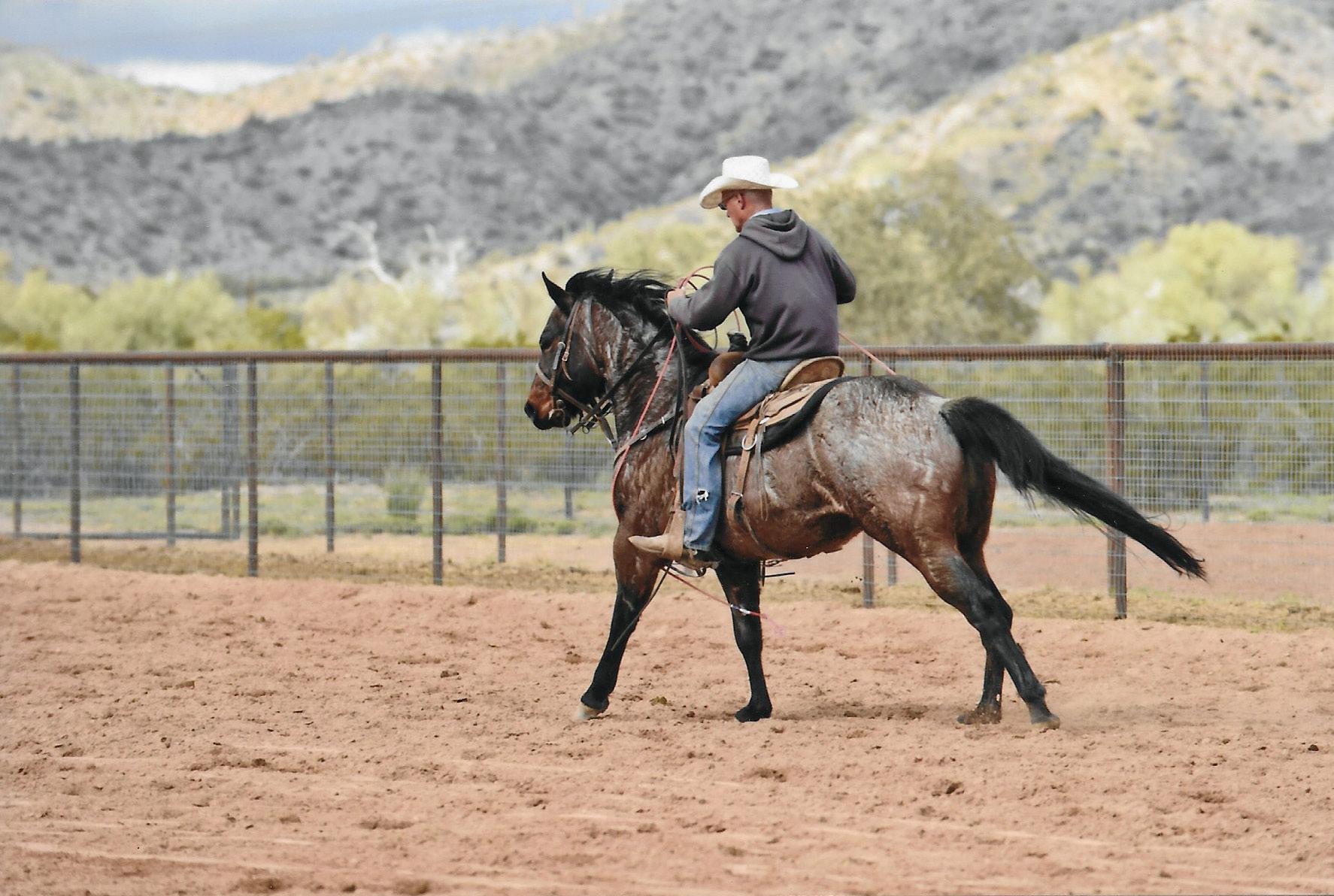
1. Dwight with one of the many horses in training at his place in Maricopa County, Arizona
2. No matter the weather, Dwight made sure he got a photo of each horse he trained; this young horse was photographed in 1986. Note his angora chaps. 3.The author, Tom, and Dwight, loping to the cook tent on the 1992 Cypress Hills West Block round-up.
“THE PANDEMIC MADE ME REALLY APPRECIATE WHAT I’VE GOT IN ARIZONA, I’M SURE THANKFUL FOR THAT.”
end. When riding a relatively green horse, he roped anything and everything with the plastic end (sage brush, tree stumps, bulls at waterholes), but if something needed treating, he’d rebuild his coils and use the business end. When his pasture duties were done, he’d go home and work with numerous other horses before calling it a day.
In 1989, he was competing again and won the CCA Bareback Riding championship, plus the All-Around title because he also roped calves and team roped. In the early 90s, his reputation as a top-notch horseman earned him a pick-up man job with Barry and Sherry Quam’s Rodeo Company. They had a rodeo pretty much every weekend, and Dwight had a palomino gelding he called Madonna. Mid-week, he cowboyed on him at the pasture. Come the weekend, the yellow horse was in Dwight’s trailer because he was in the draw for the Bareback Riding, after which Dwight would pick up the Saddle Bronc Riding on him. There’s a limited market for horses like that, so eventually he sold the enigmatic equine to a group that was heading to the Las Vegas bucking horse sale. A Texas stock contractor bought the blonde outlaw and bucked him for several years.
Old timers still talk of the time that Dwight mounted a colt in the round pen at the Millie. Suddenly, a three-way dog fight erupted right under the horse, which understandably took to bucking. Somehow, the dogs avoided the hooves and kept scrapping. It was like an Ash Cooper cartoon with sound effects. In spite of the yipping of the dogs and the snorting and squealing of the bronc, you could hear Dwight loud and clear… he was giggling. Moments later, with the dog dispute defused and the colt lined out, the crew rode off to gather bulls. Last summer, when reminded of that day 35 years ago, Dwight said, “I try to avoid that kind of thing now. I guess I’ve mellowed.” Then he paused, grinned and added, “Or maybe matured, I like to think I’ve learned a thing or two along the way.” That’s a major understatement; he’s been to several horsemanship clinics, initially as a student, later as the instructor.
In 1985, Dwight had an indoor facility built on the land his great-grandfather
5
homesteaded in 1911. It was 60’ X 60’ with a 20’ X 60’ lean-to barn. Always modest, he described it as, “Basically a glorified round pen, but it worked.” Yeah, it worked so well that he needed hired hands to get through the workload. Ten years later, he added another 100’ in length. Reminiscing about it, Dwight said, “Boy, we went through a pile of horses in those years, 18 outside horses at any given time, with a two-year waiting list. It was never-ending.” He still has his angora chaps from those days; the outer sides of the woollies are fine, but the inside of the leggings has been wore out and replaced four times. He said, “I practically lived in these things for a lot of winters.” There was just one problem—he got feeling lethargic in the winter from the cold air mixed with the humidity in the building. As a result, it got harder and harder to enjoy doing what he loved, so in 2012, he changed his program and purchased an acreage in Arizona. He takes a load of horses for the winter (up to 13 head) and brings back finished products in the spring. Dwight explained, “When COVID was big, I couldn’t go, so I booked some horses and dogs to train at home, and once again I got feeling run down in the winter.” Then he added, “The pandemic made me really appreciate what I’ve got in Arizona, I’m sure thankful for that.”
Getting back to the aforementioned photo collection, the tally is now over 5,500. That’s right, folks; Dwight Dokken has schooled more than fifty-five hundred different horses. He’s no onetrick pony; he can start a colt for you or train a horse to be a competitive mount in Cutting, Reining, Barrel Racing or any roping event.
For the last eight summers, he has been the manager at the 23,000-acre Swift Current-Webb Community Pasture, a mere 35 minutes southeast of home. He’s been chosen to pick up the CCA Finals many times, including 2025, and the horseman with the ever-ready smile was named the association’s ‘Cowboy of the Year’ in 2024.
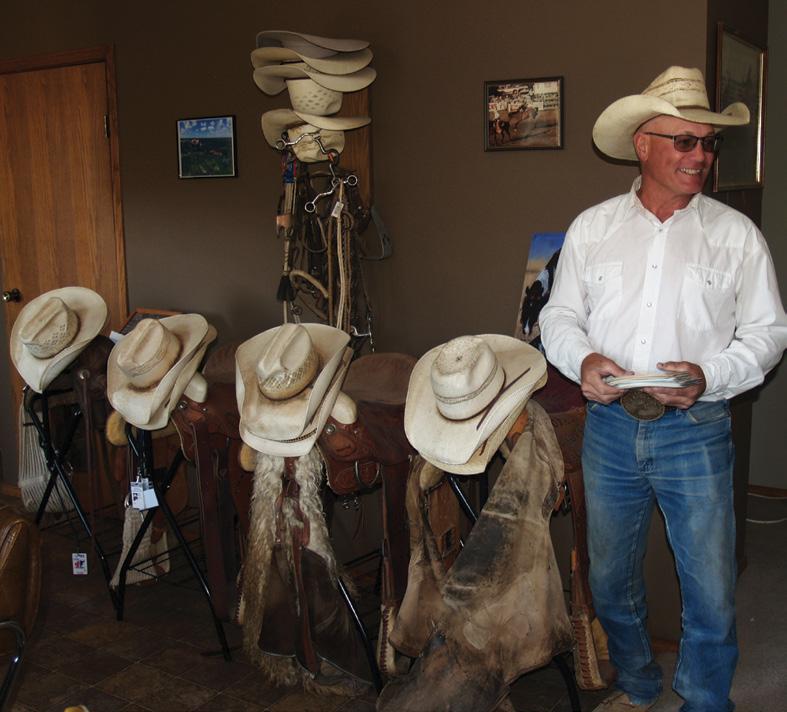
4. Dwight’s Championship saddles and a stunning array of worn straw hats; “I go through at least three a year,” he laughed.
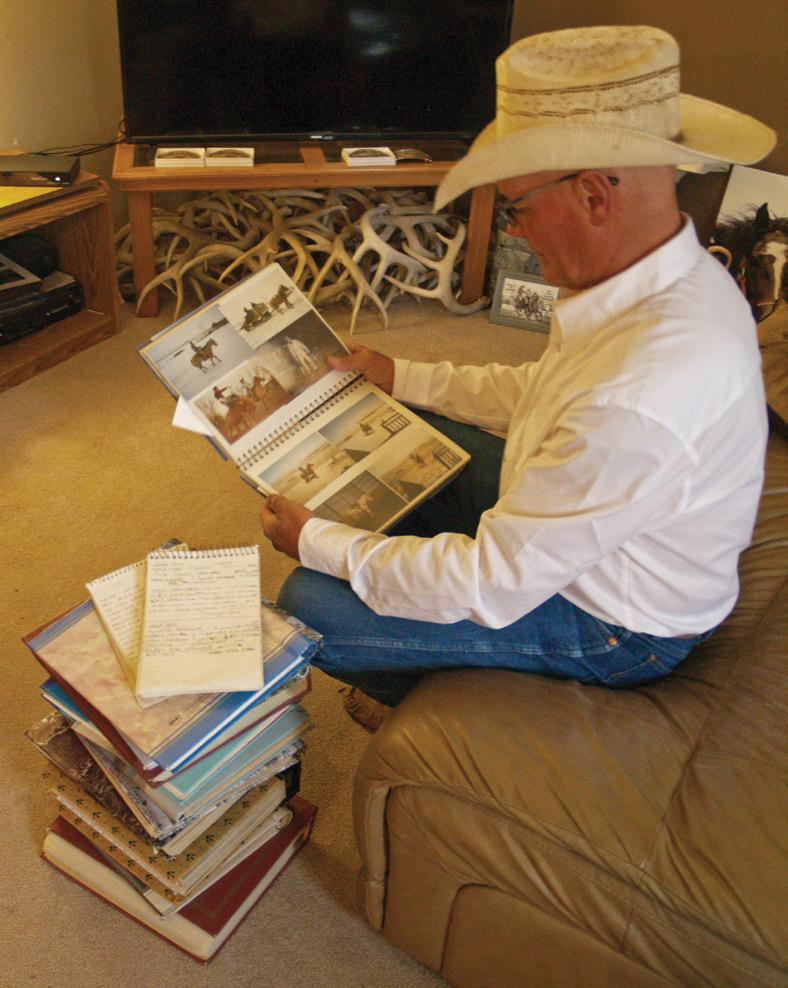
5. Dwight at home with a small percentage of his horse training photo albums
These days, his pattern is pretty predictable: Arizona in the winter, Community Pasture in the summer, picking up at rodeos or roping at bull ridings on weekends all summer long—repeat annually. c
WHY DO YOU …?
FEEDING WITH TEAMS
BY TERRI MASON | PHOTOS BY SLIDIN U PHOTOGRAPHY/KIM TAYLOR
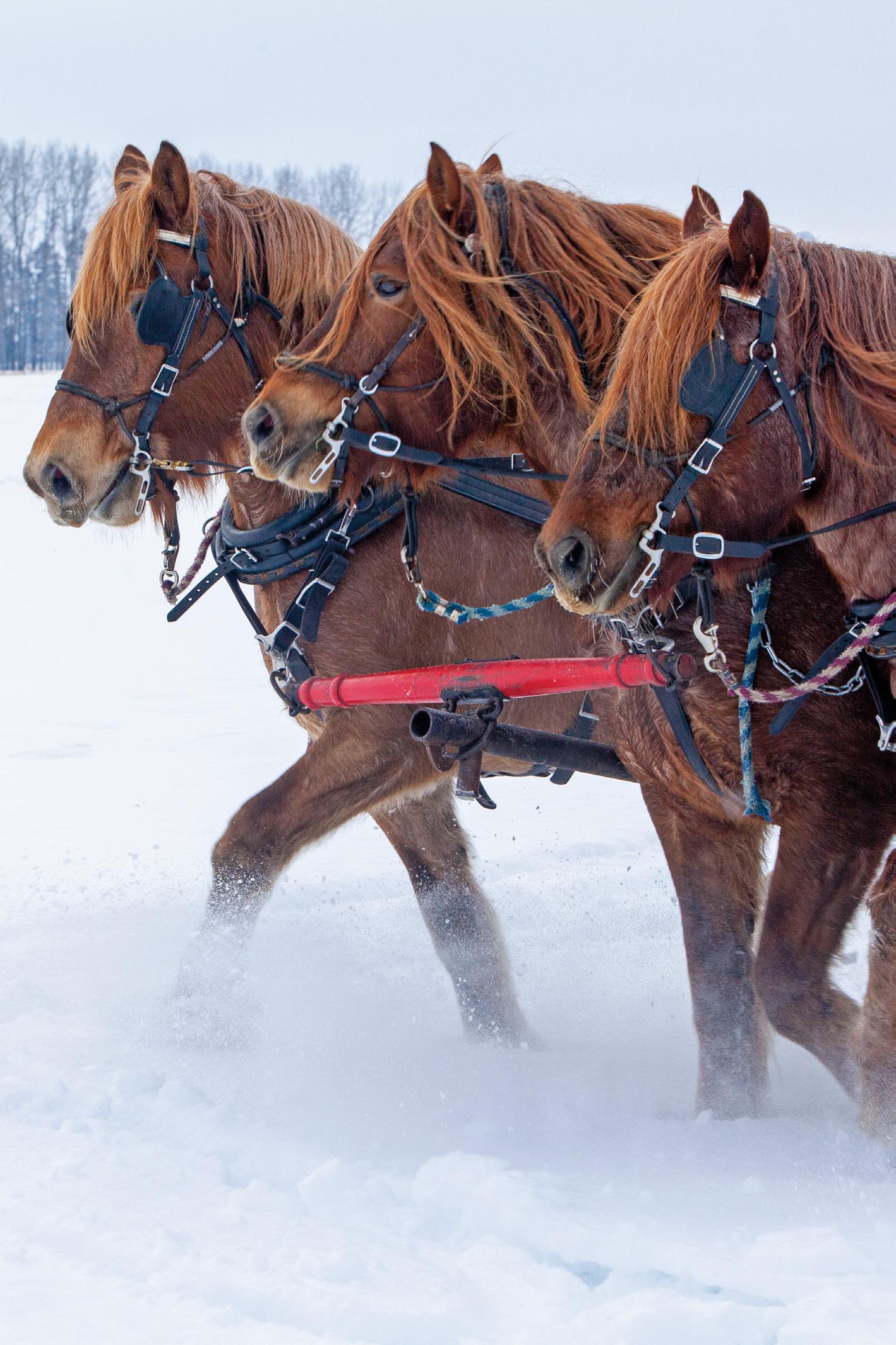
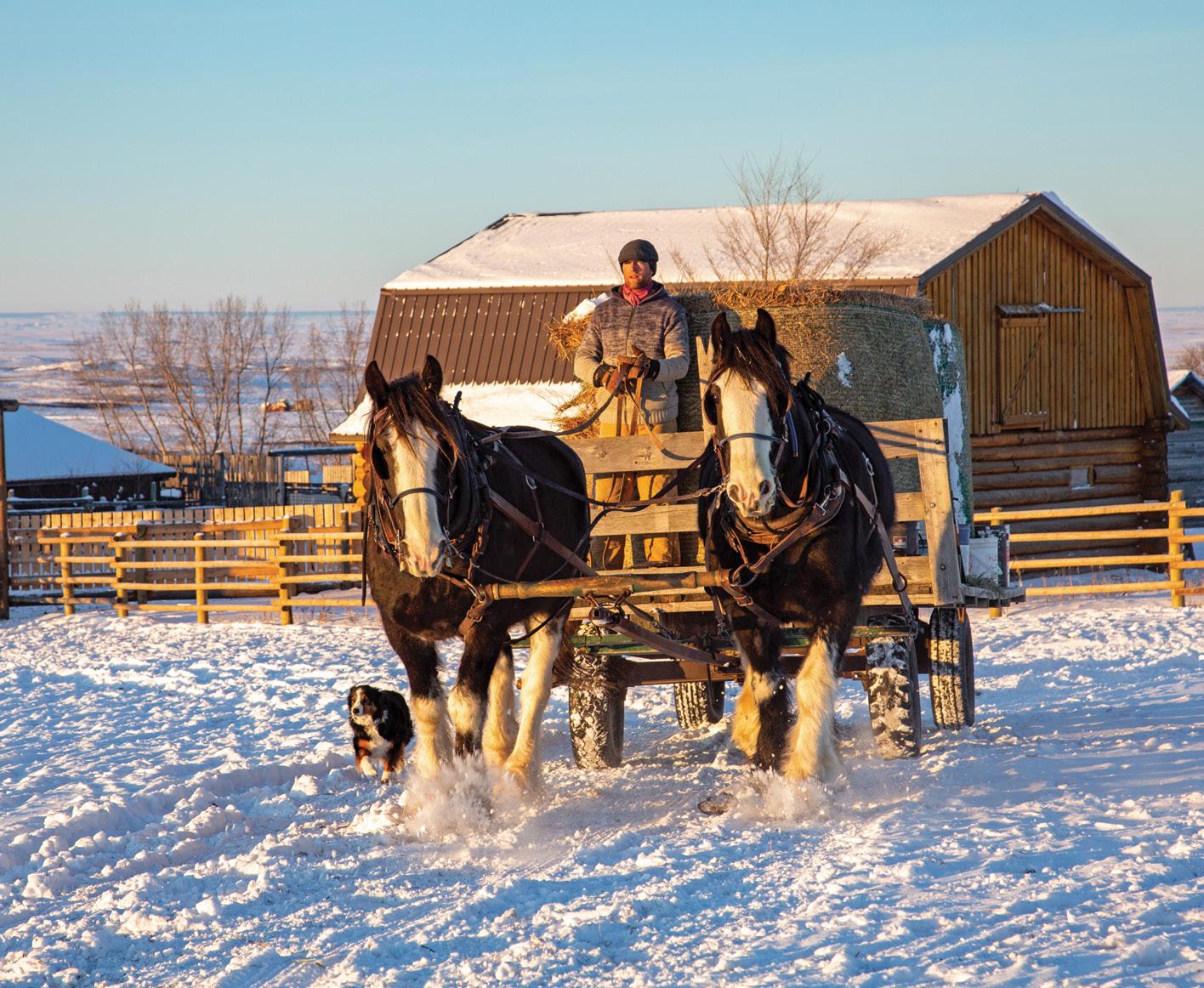
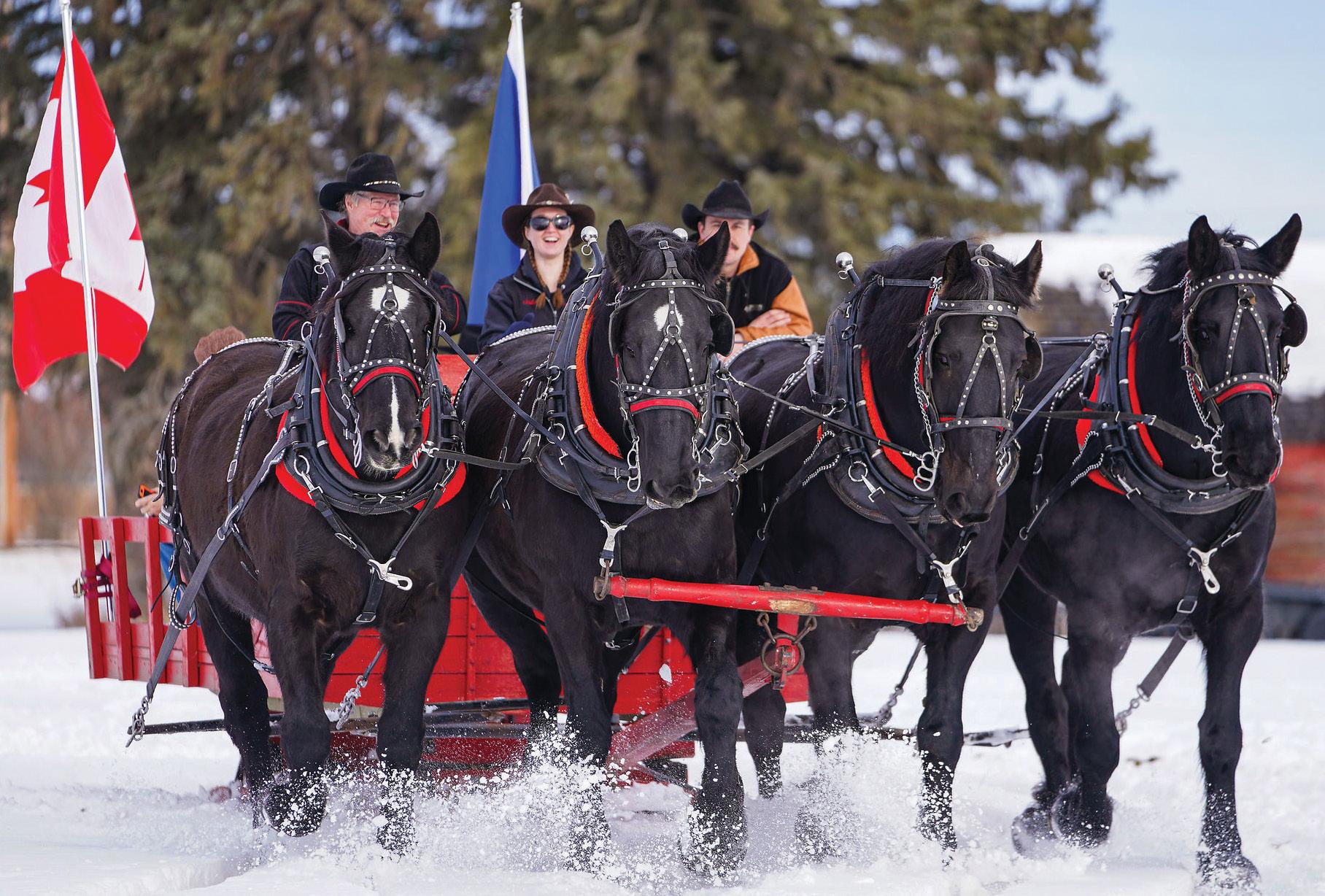
Feeding livestock with a team, or an even bigger hitch, is a throwback to a slower pace of life, yet it remains steeped in practicality.
I asked award-winning photographer Kim Taylor to share a few of her favourite photos of cowboys and ranchers and the hitches they drive, and I asked them, ‘Why do you still do it?’ Many thanks to Dewey, Geoff, Bob, Kyle and Jeff for sharing their world.
Jeff Taylor, rancher, trainer, Flying O Land & Livestock, Quesnel, BC
“I would say probably my biggest reason why I still use a team is because I enjoy it. For one thing, it is getting to be a lost art, and it is something I'd like to preserve. I'm always trying to find a practical way to utilize old technology. They always start, and they are a lot more reliable than a tractor. They just present a few more challenges when it comes to loading.
But a team, you can add value to it, and a tractor just depreciates.”
Jeff Taylor heading for home, driving his four-up.
Bob Koch, rancher and working cowboy, Porcupine Hills, west of Nanton, Alta.
“I do a bunch of different things with my team, and honestly, the reason why is because we had them and wanted to make as much good work for them as we can, rather than just hooking them up and going for a little circle.
We used to winter bulls up at the West place, and it was honestly just a good excuse to use the team. I also haul in mineral and lots of fencing material for custom fencing that I do.
Our family also has teams, so every year we do a big wagon trip. We’ve been up the Clearwater, and we’re going up the Panther this year. I like these pictures because I don't always get lucky and have a bunch of pretty girls riding with me. There's a lot of days I've had to do both the driving and the work, but I just like using the team.”
From left, Natasha Gaff, Laura and Bob Koch (pronounced Cook). Team is Jen and Jake (teamster view).
Bob Koch and crew heading in after feeding bulls
—Interview with Geoff Hoar, NRCHA judge, performance horse trainer, Innisfail, Alta
“We broke these draft horses and did a lot of feeding for a couple of winters when it was really dry here around Innisfail, and we didn't have a lot of feed. Now we've got a lot more swath grazing, but we don’t drive as much as we did.
We usually drive three-across. This photo is of our original three. They were in foal, and this year we’ll be starting their foals. I don't train many drafts because I'm so busy riding other horses, but yes, we break all our own.
We’ll compete with them, too. We take them to Chore Horse competitions when we can. The roans have won the Bar U competition twice and won the feed team race at Red Deer. We like doing that when it fits, but driving is mostly a winter thing for us; we feed and sleigh ride.
We spend every day with horses, and I don't really have a hobby, but sometimes doing something else with horses, like learning how to drive a team, is a challenge. And once horses are in your blood, they're there for life.”
Dewey Matthews, Anchor D Guiding & Outfitting, Turner Valley, Alta
“I feed with teams because you've always got a legged up, broke team—always. So, it doesn't matter what you're doing—if you need to go pull a moose out of the swamp for somebody, or if you need to get somebody unstuck, or if somebody books a sleigh ride.
They also don't stink like diesels. And the other thing, it's good for your soul.
When you're out there with, in my case, that big herd of horses, whether they’re horses or cows, you're getting a far better look at them in a more natural way. You can look at them, hear them, and see how they're walking.
Every farm should have a team, except that means that every farm should have at least one horseman.”
From left, Dave and Geoff Hoar, driving their Belgians, May, Molly and Maude
From left, Franzie, Dewey driving Blue and Sampson
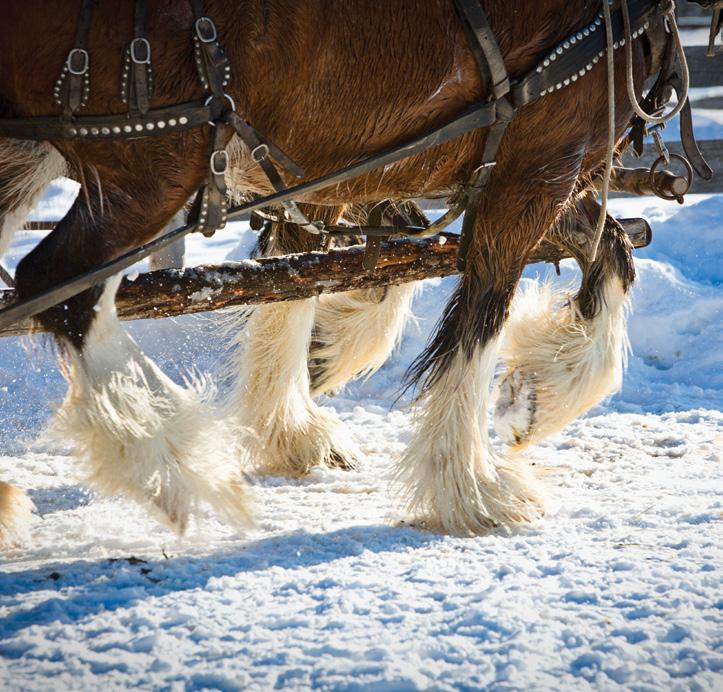
Clydesdale feathers and a hand hewn pole
Kyle Elliott, rancher & pasture manager, Maple Creek, Sask.
“I still drive a team because people actually want to come with you when you’ve got a team. Nobody wants to come or do nothing with you when you're in a tractor. I also drive a team because nobody else is doing it, because everybody else in this ******* world is too soft.
I sell some that I’ve broke, but that's not the priority. If you're in a tractor, you don't see anything. When you're out with the team, you actually see what's going on out there.”
Kylie heading out of the home place yard to feed with his team, Max and Lance
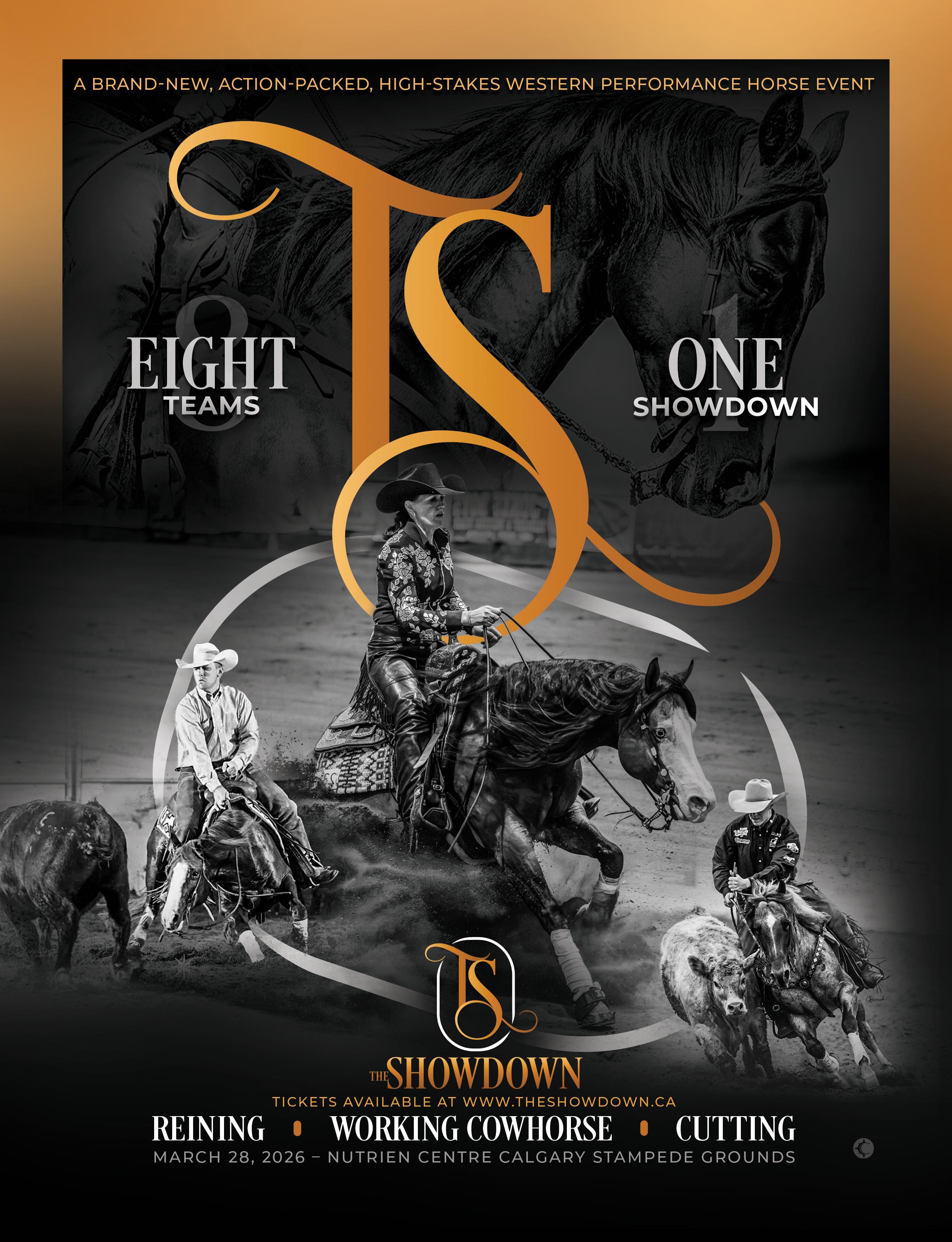
THE SHOWDOWN 2026
WHERE WESTERN LEGENDS RIDE
BY TERRI MASON
On March 28, 2026, Calgary’s Nutrien Western Event Centre will host The Showdown, a weekend featuring the crown jewel of Western performance horses, competing at an event that’s set to redefine the nature of these sports in Western Canada.
This high-energy spectacle brings together eight elite teams, each composed of three riders, to compete in three demanding disciplines: Reining, Cutting, and Working Cow Horse.
What makes The Showdown unique is its format. Each team must field riders across all three disciplines, showcasing not only individual talent but also collaborative strength. The result will be a fast-paced, exciting contest that blends precision, speed, and grit.
Reining tests the horse’s ability to execute spins, stops, and lead changes with finesse. Cutting demands
sharp instincts as horse and rider separate a single cow from the herd. Working Cow Horse combines elements of both, requiring control, agility, and courage as horse and rider manage a cow through a series of maneuvers.
This event is geared to attract and excite competitors and horse owners, so whether you’re a seasoned rider, a fan or a curious newcomer, The Showdown offers a rare opportunity to witness the best Western performance horses, riders and competition in one thrilling competition.
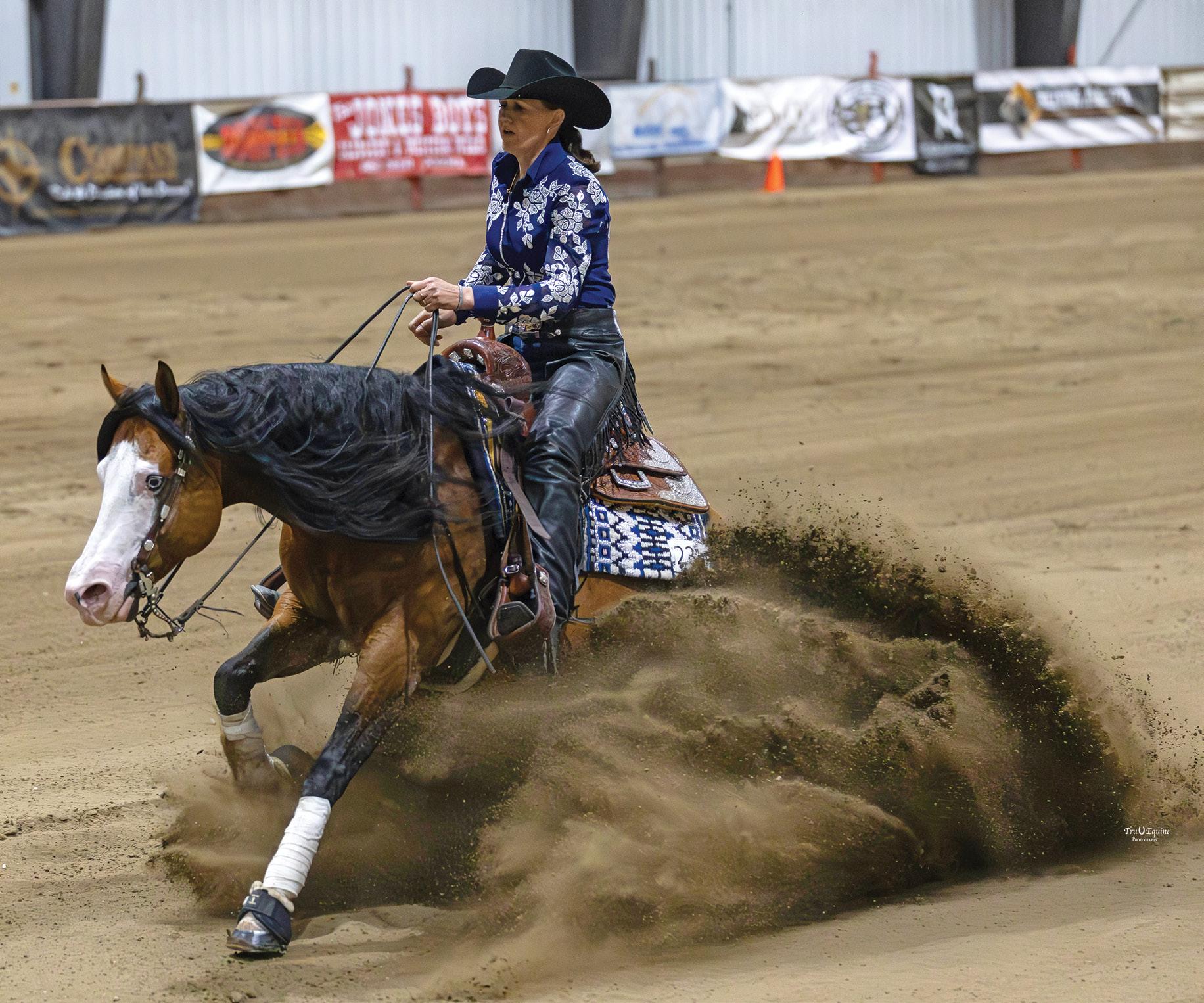
Shawna Sapergia showing HA Tune of a Mobster
BRINGING THE SHOWDOWN TO LIFE
Canadian Cowboy is proud to be a premium supporter of The Showdown, so I had the opportunity to chat with Kelsey Knott, a reining horse owner and co-founder of The Showdown, to get a full view of what we’ll be witnessing in March.
My first question was simple: Where did you get the idea for The Showdown?
“There is a show in the States just like this, and founder Austin Seelhof and I knew this was something we had to bring here,” said Kelsey. “In no time, we had the organizing team in place: Carin Thai-Sponsorship, Colten Hall-PR, Melanie Meert-Photographer, Madison LaFrentz-Designer, Wacey AndersonVideographer and announcer Brad Bowie.”
“The top eight riders in Canadian earnings in their reining, cutting or cowhorse association will be issued an invitation to compete,” explained Kelsey. “We will have the final list in early December, and the eight teams of three competitors will literally be drawn from a hat. And between each competition, there will be high-end entertainment as the arena is reset for the next event.”
I was curious what the reaction was when the competitors were first approached. “There was a mix,” said Kelsey. “And to be really honest, Terri, it was a big mix. Some were very positive, some were skeptical. But one of the biggest things I heard from every single discipline was, ‘We’ve got to keep growing this sport.’
The original idea quickly evolved into an event, a one-day competition that spans the weekend. “You don't want to miss the back number ceremony dinner on Friday night,” said Kelsey. “You don't want to miss the event and entertainment on Saturday afternoon, and you definitely don't want to miss the after-party on Saturday!”
Here, the competitors will have the unique opportunity to meet competitors from other events. For fans and potential competitors, this will be their chance to meet the best of the best riders, horse owners, trainers, and sponsors.
At the heart of The Showdown is the horse, and nothing pulls a bunch of strangers together faster than the horse.
What do you believe is the most important foundation for a successful performance horse?
Rempel: “If you have the pedigree and you have the athletic ability, trainability is the most important thing.”
How do you decide when a horse is ready to compete?
Rempel: “A horse is ready to compete when you feel confident that you can get a cow cut and get on both sides of the cow. The horse has to be confident. To show a horse well, and to push hard, that horse has to be confident in his job, and then you can be confident to show aggressively.”
When you are selecting a young cutting horse prospect, what qualities do you prioritize?
Rempel: “Athletic ability, pedigree and mind. And there are some aspects of physicality, athleticism, and true strength.”
What is the most valuable lesson you've learned from training horses?
Rempel: “That they're just a horse. They don't think like us. Keep it simple. Show them through repetition. Let them have some wins and make them understand the losses.”
Favourite podcast?
“The Converse Cowboy.”
“The horse has to be confident.”
PHOTO: MELANIE MEERT
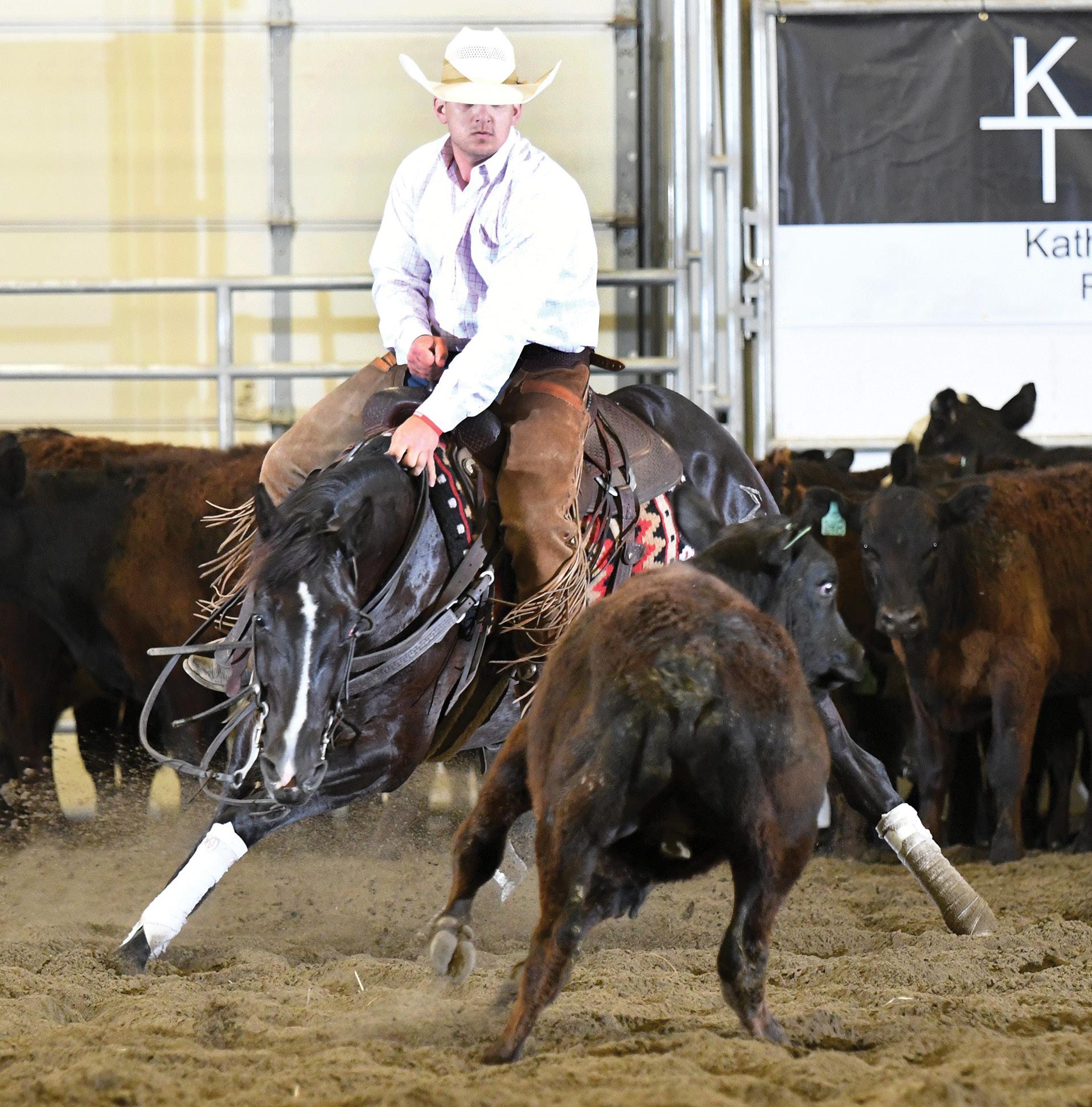
Travis Rempel showing CR Tuff To Be Me
Few Canadians have generated the controversy that Archibald Stansfield Belaney did in the 1930s.
You may know him as Grey Owl, yet for most of his lifetime, he was just Archie. That is where the story begins, and the mystery deepens.
Archibald Stansfield Belaney was born on September 18, 1888, in Hastings, England, to George Furmage Belaney and Kathleen Verena Cox. Raised by his aunts, Ada and Carrie, after his parents were deemed unfit to raise a child, Archie developed a lifelong love of literature, music, and the North American Indians and wildlife. At a young age, he took long, solitary walks in search of plants and animals. In grammar school at Hastings, he excelled in English and religious classes, but was less proficient in others, which ultimately led to his leaving school at the age of 15.
His deep interest in Indian culture led him to become a voracious reader, and at 17, he successfully pleaded with his aunt to allow him to move to Canada to live in the forest. His transformation had begun; in his mind and in his tales, a fictitious Scottish frontiersman and an Apache woman replaced his errant English parents.
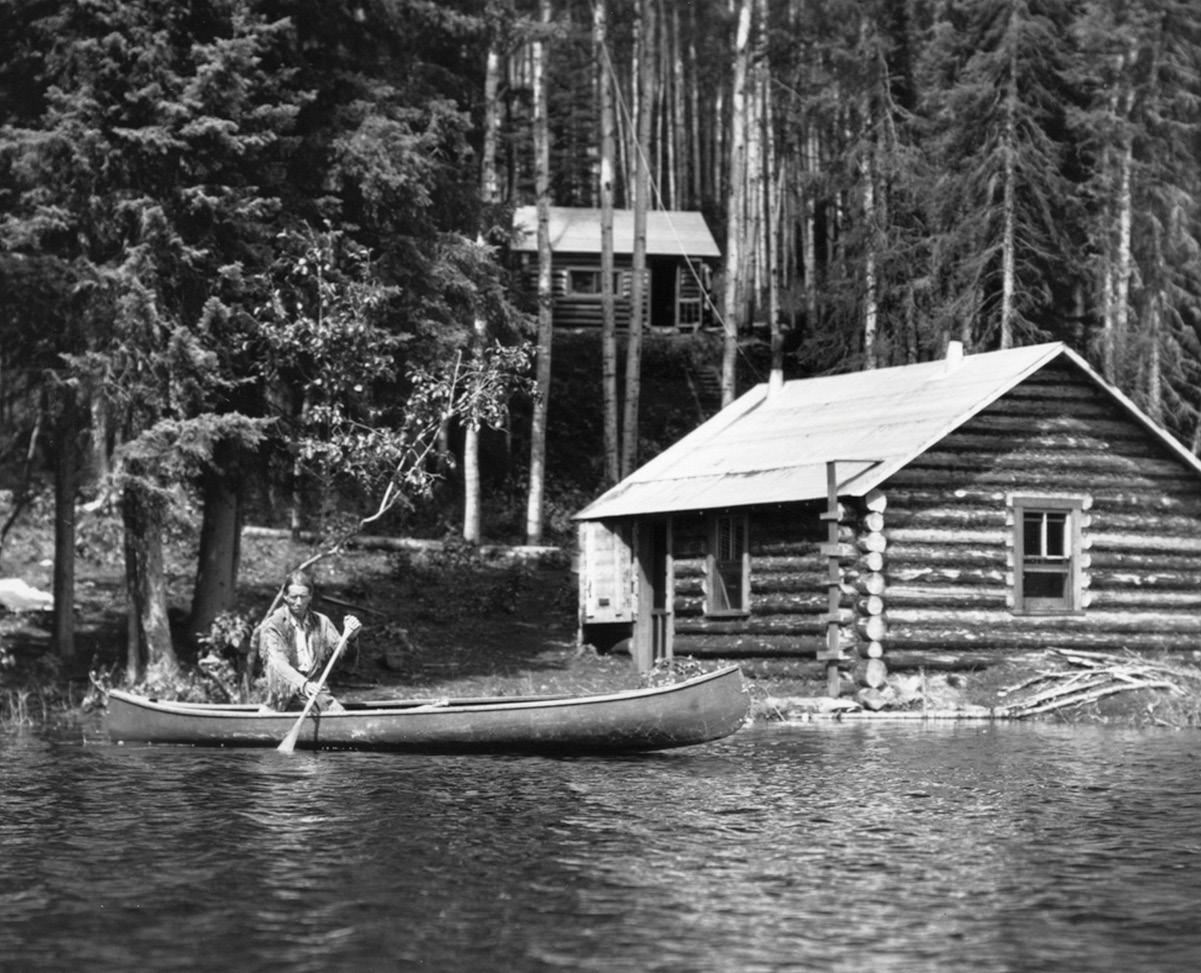
Over the next few years, Archie would learn canoeing and trapping in an Ojibway community at Lake Temagami (400 km (250 miles) north-east of Sudbury), as well as forest rangering and guiding in Bisco. He would marry three times, father numerous children, and then enlist in World War I, falsely claiming he served in the Mexican Scouts, 28th Dragoons. He did serve as a sniper in the Canadian Army, was injured and sent to England to convalesce, where he married again in 1917 and later abandoned his fourth wife.
Returning to Canada, Archie was overwhelmed by the horrors of the war. By the early 1920s, he befriended the Ojibway family, the Espaniels, who allowed him to stay with them on their trapping route in Ontario, on the condition that he abstain
Grey Owl HIS ENDURING LEGACY
BY TIM LASIUTA
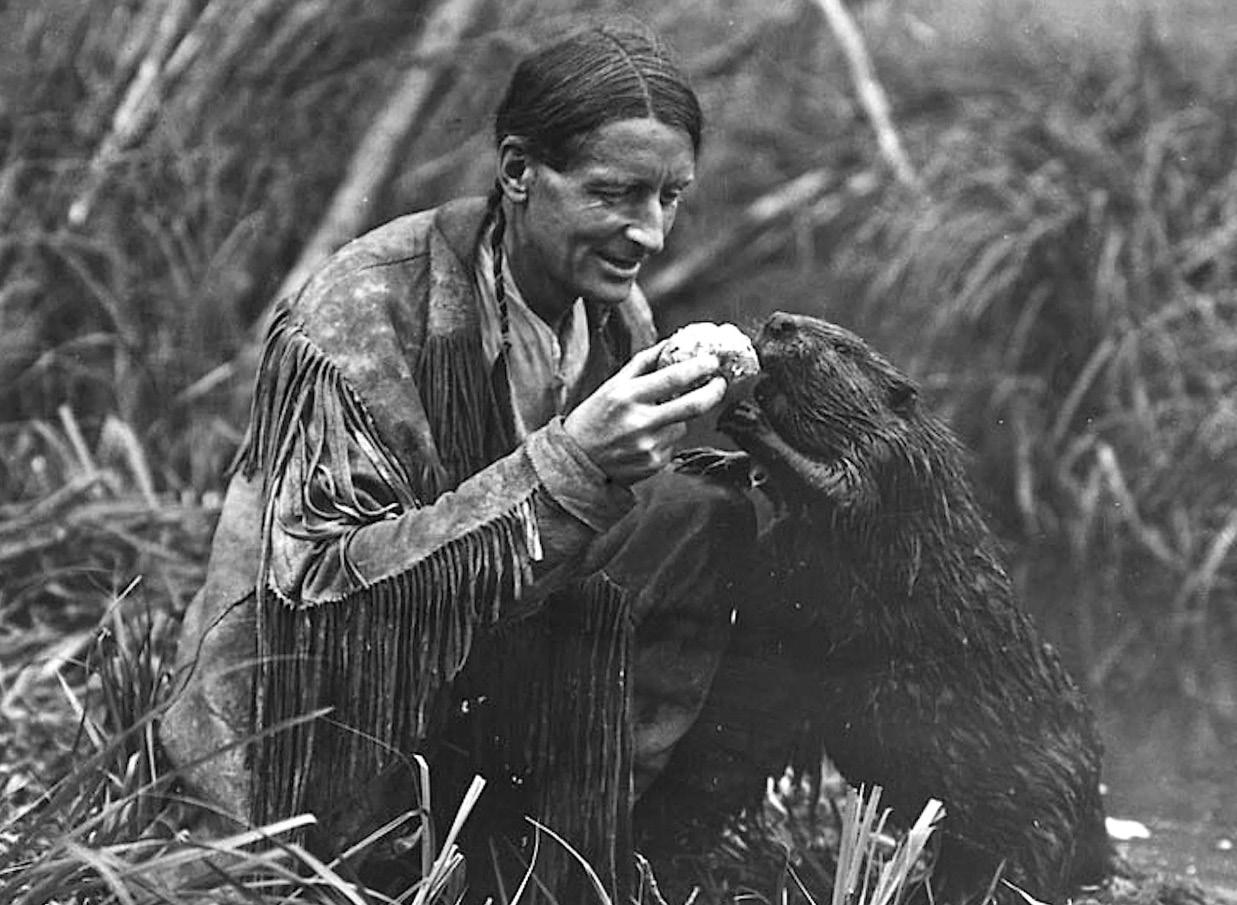
Grey Owl is credited with saving the beaver from extinction.
from drinking. During this time, he gained a new appreciation for the Northern forests and mastered Ojibway. In 1925, he met Gertrude Bernard, an Iroquois woman with whom he trapped in Quebec over the next year, discovering one more key to his future conservationism, particularly in relation to trapping.
Gertrude, now known as Anaharero, encouraged Archie to save two beaver kits, which would later become central to his conservation crusade.
His first published article was in 1929, in English Country Life, and the next was published a year later in Forest and Outdoors, in Kingston, Ontario.
Just as Gertrude became Anaharero, Archie became Grey Owl, Wa-sha-quon-asin in Ojibway, and just as Aunt Ada had prayed for, he made something of himself and began his life’s work in conservation.
“...in his mind and in his tales, a fictitious Scottish frontiersman and an Apache woman replaced his errant English parents.”
Forest and Outdoors began his legacy in Men of the Last Frontier, accredited to “Grey Owl,” in 1931, which in turn led to his appointment as conservation officer of park animals in Riding Mountain National Park in Manitoba, and then later to Prince Albert National Park in Saskatchewan, where he spent the last years of his life.
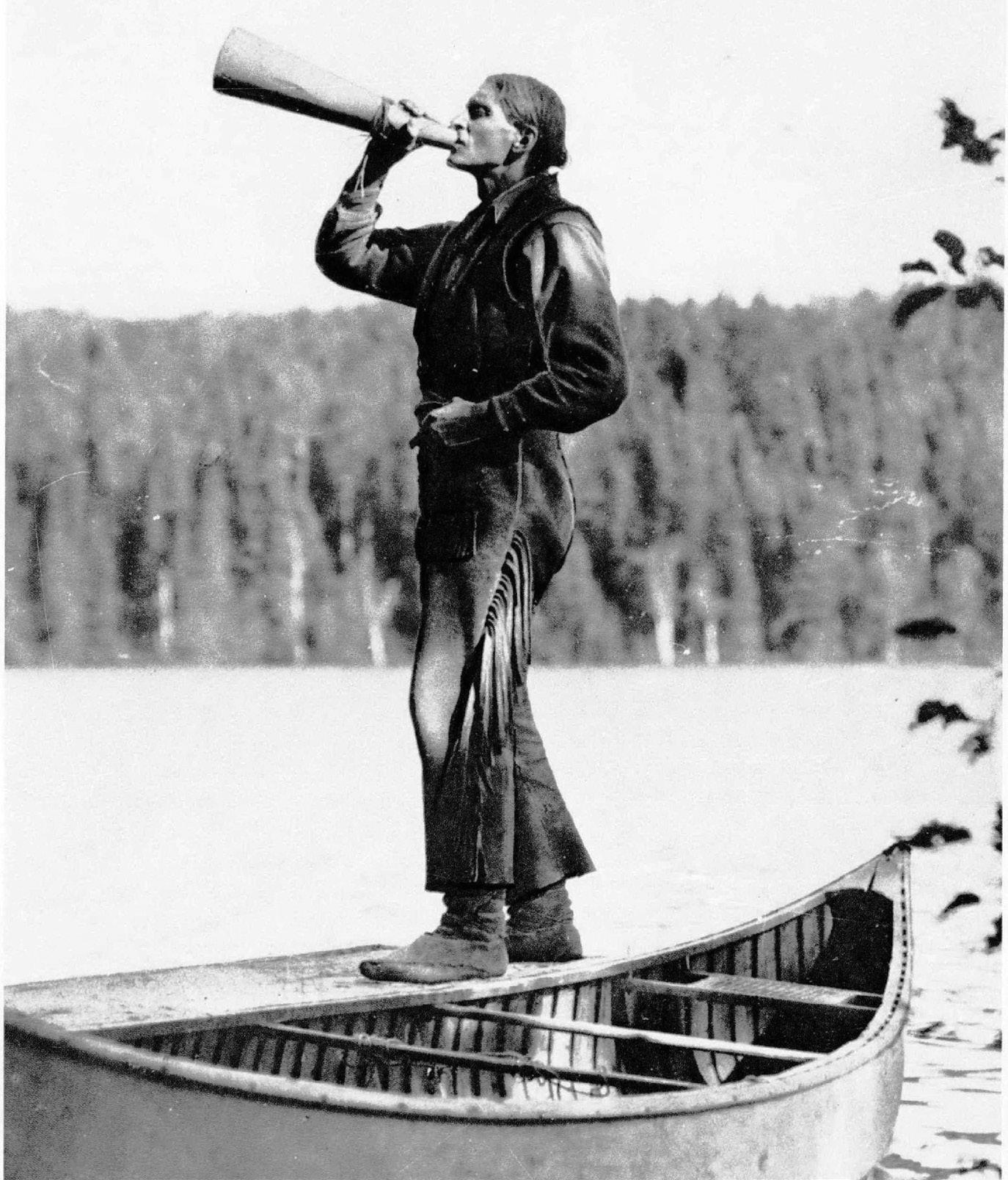
Here, he wrote three more books, produced films and became internationally known. In Britain, he toured tirelessly until 1936, lecturing and showing nature films, including a visit to Buckingham Palace, at the Queen’s invitation. One of his books, Pilgrims of the Wild, told the story of how Anaherero encouraged him to become a conservationist. He was called by his publisher, a “Modern Hiawatha,” and left his audiences with a theme, “Remember you belong to nature, not nature to you.”
Famed conservationist David Attenborough credits Grey Owl as the inspiration for his pursuit of international conservation.
At the 1936 Toronto Book Fair, Archie proclaimed: “Canada’s greatest asset today is her forest lands… we can’t replace the natural resources we are destroying as fast as we can.” In Canada, Grey Owl pleaded, there was no longer an overabundance of wild country and wildlife. He called for an end to the plundering of the country’s hinterland.
Two years later, Grey Owl contracted pneumonia and died on April 13, 1938. Immediately after his death, his British ancestry was revealed, and his books and films were abandoned. Interestingly, his writings and films were “rediscovered” in the 1970s, and in 1999, Pierce Brosnan starred in a feature film about his life.
Grey Owl’s contributions to the welfare of Canada’s wildlife cannot be denied, as he blazed the trail leading to the conservation of Canada’s wilderness. Without his championing of the cause, our National Park systems would not be the same today. The ripples caused by his canoe paddle are still felt, 87 years later.
Grey Owl is buried near his Prince Albert Cabin, on Ajawaan Lake. Anaherero was later buried alongside. c
FOR MORE
To see Grey Owl on film, find the 1932 documentary on YouTube under “AI restored, Grey Owl's Strange Guests (1936 documentary).”
(Note: This doc was filmed in 1932 and is not sensitive to today’s sensibilities, so watch at your own risk. —Ed.)
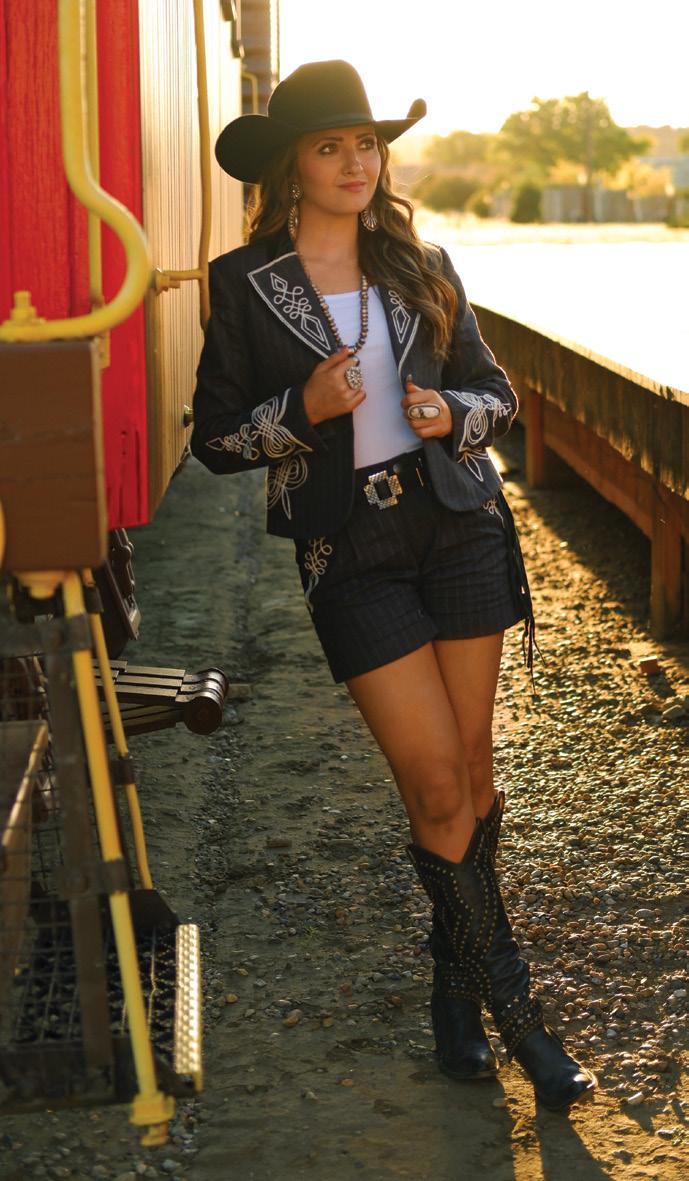
Suit Up and Look Sharp
BY BRITTNEY CHOMISTEK
Photographer: Sullivan Photography | Brittney’s Hair: The Social by Red Velvet | Brittney’s
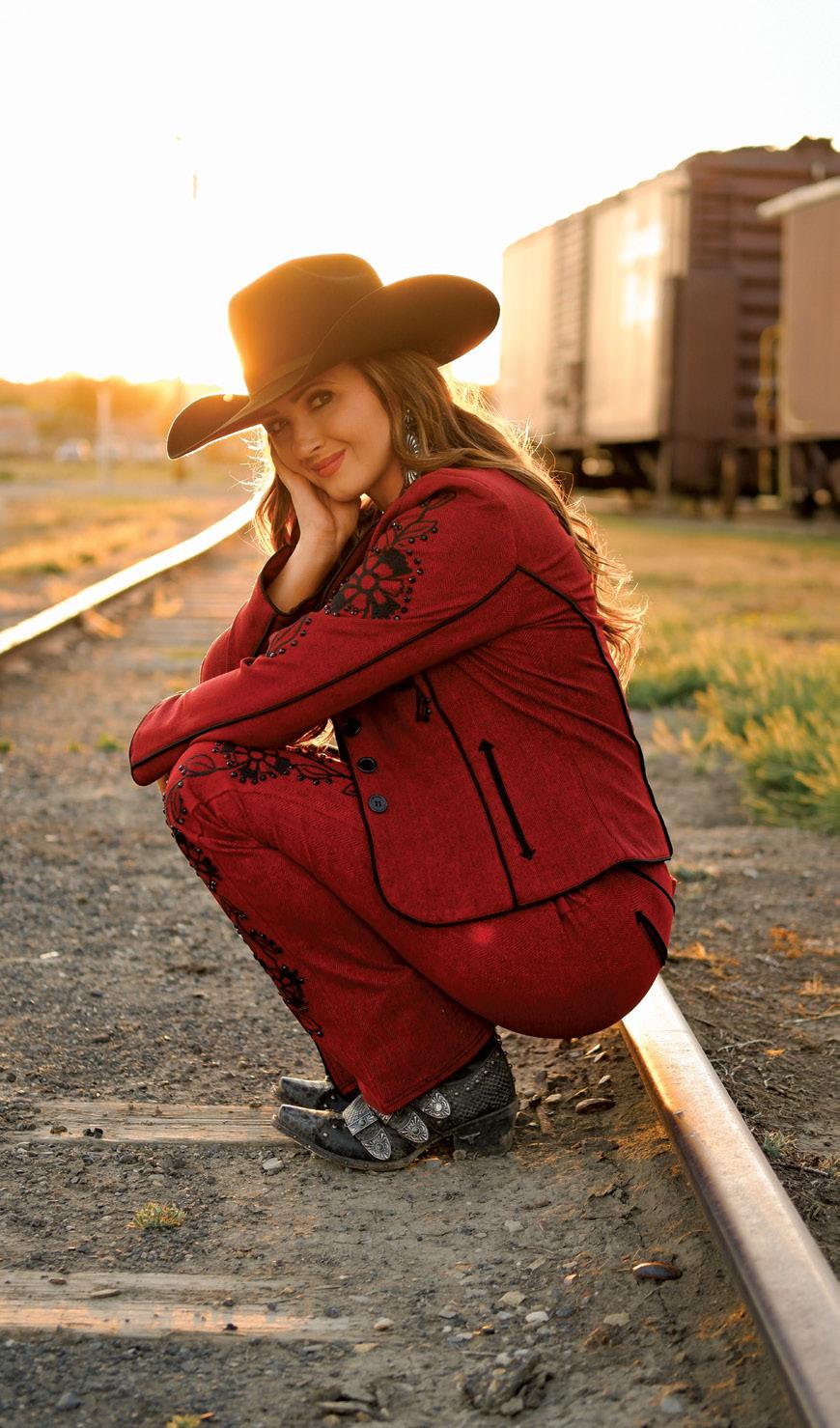
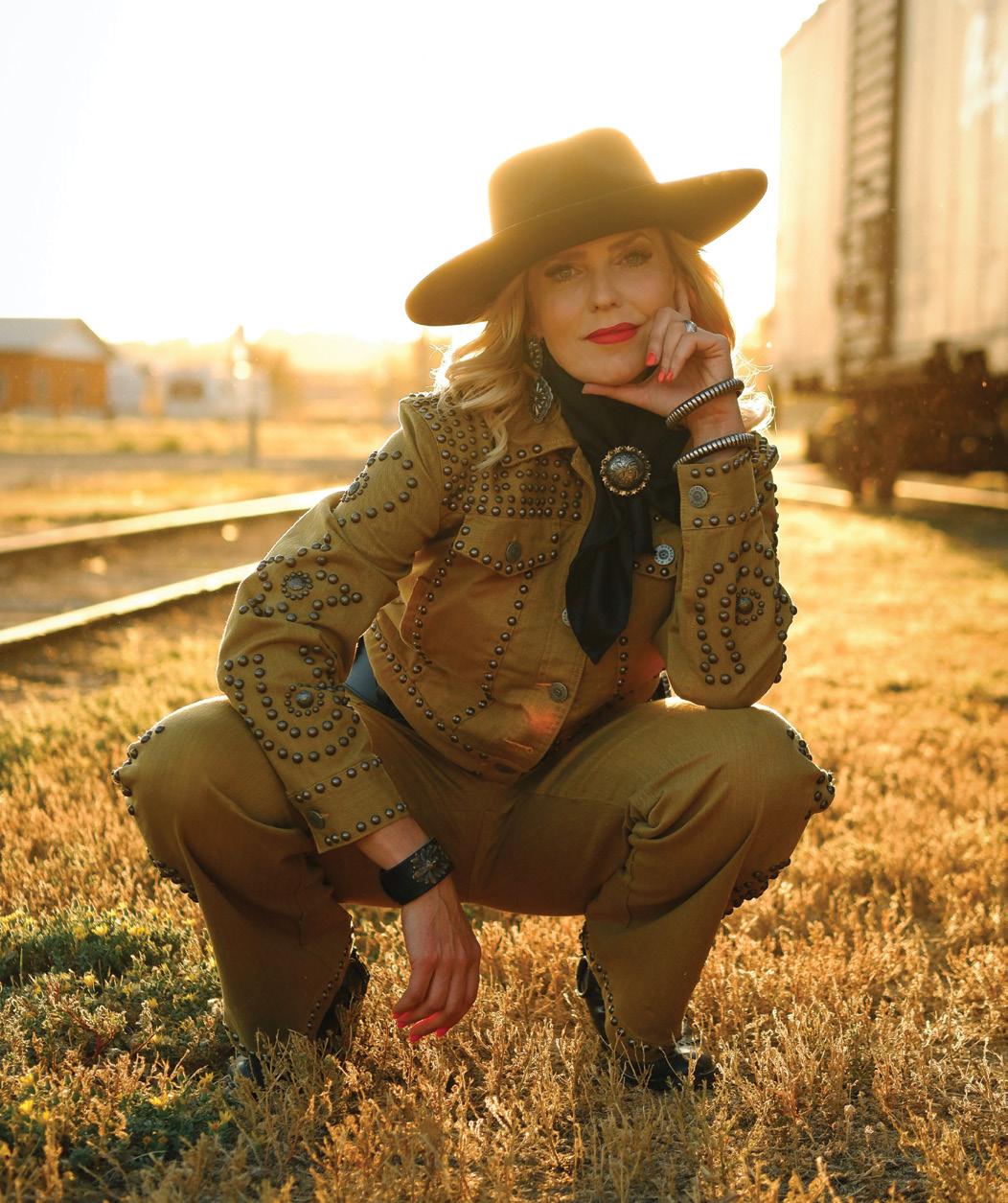
In the 1960s, pantsuits emerged as a powerful symbol of defiance and empowerment for women. Often crafted in navy or black with sharp pinstripes, these suits were a bold statement of independence. By the 1970s and 1980s, the pantsuit had expanded beyond its corporate roots to become a wardrobe staple in the Western fashion industry. Rodeo queens jumped on this trend and would often pair their suits with gloves for added flair. Fast forward to 2025, and this timeless classic remains a versatile and empowering
fashion choice. Today, these suits are available in a wide array of styles, colours, and textures, reflecting their adaptability for modern tastes. There are no hard-and-fast rules for how to wear it anymore, and Westerninspired pantsuits are no longer confined to formal events. They can be dressed down with tooled leather runners, shorts or a simple white t-shirt for a laid-back vibe. Or pair it with cowboy boots and a crisp button-up for a more polished, refined look.
What I love most about the pantsuit is its versatility. It’s a multi-use wardrobe
essential — wear the jacket and trousers together for a coordinated look or mix and match them with other pieces for endless outfit possibilities.
If you're looking to update your wardrobe with a new statement piece, a great pantsuit is an investment that will always pay off. Don't be afraid to have a little fun with your choices. Experiment with vibrant colours, sequins, or embroidery to add a unique twist to this timeless garment. You will feel comfortable, chic and suitably dressed for any occasion. c
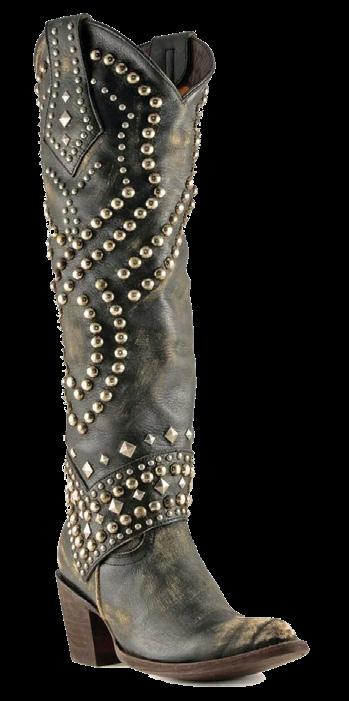
Hat: JW Brooks Pantsuit: Double D Ranch Boots: Old Gringo
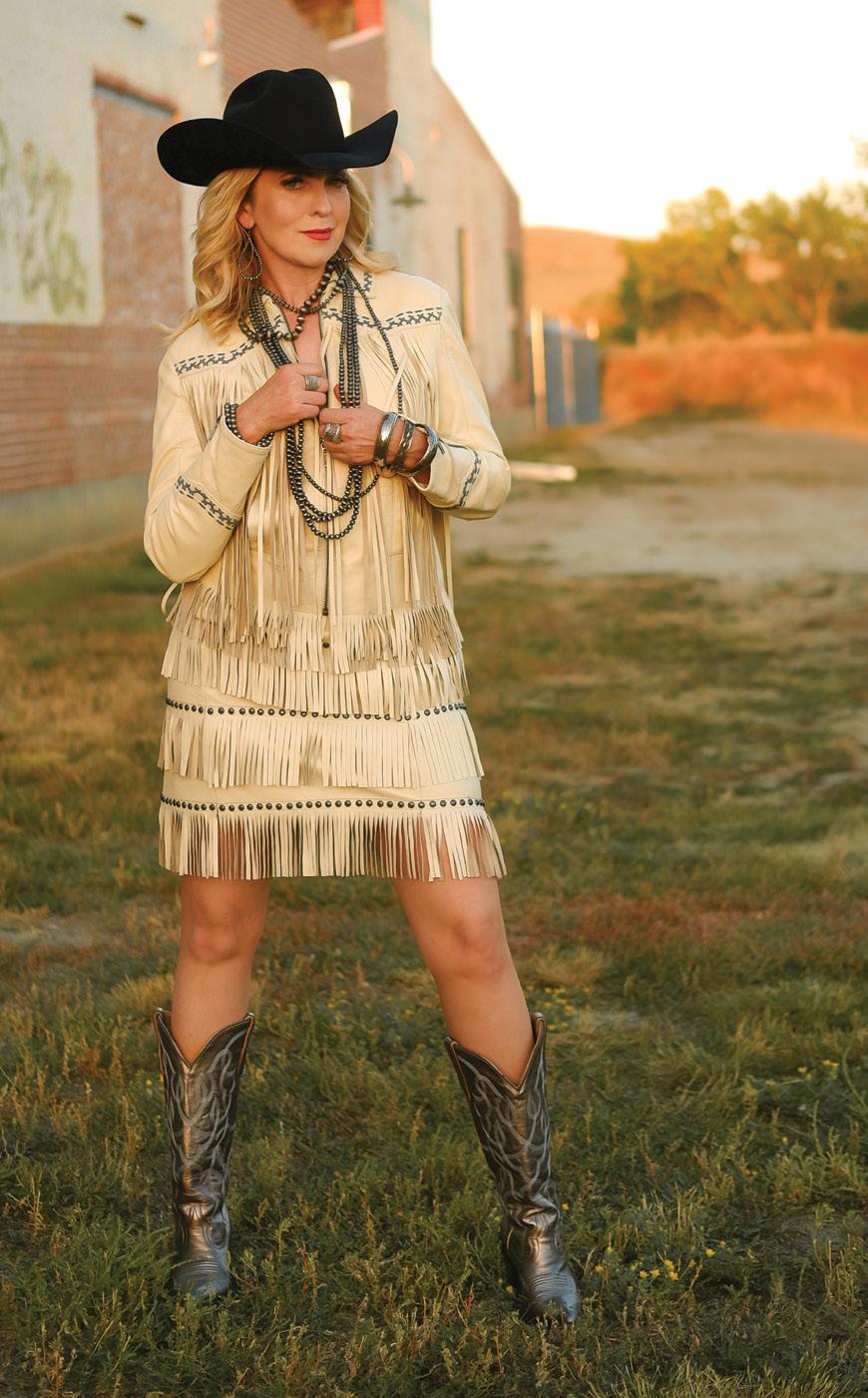
Hat: Smithbilt Hats
Pantsuit: Double D Ranch
Boots: Lane Boots
Gringo
Belinda boots
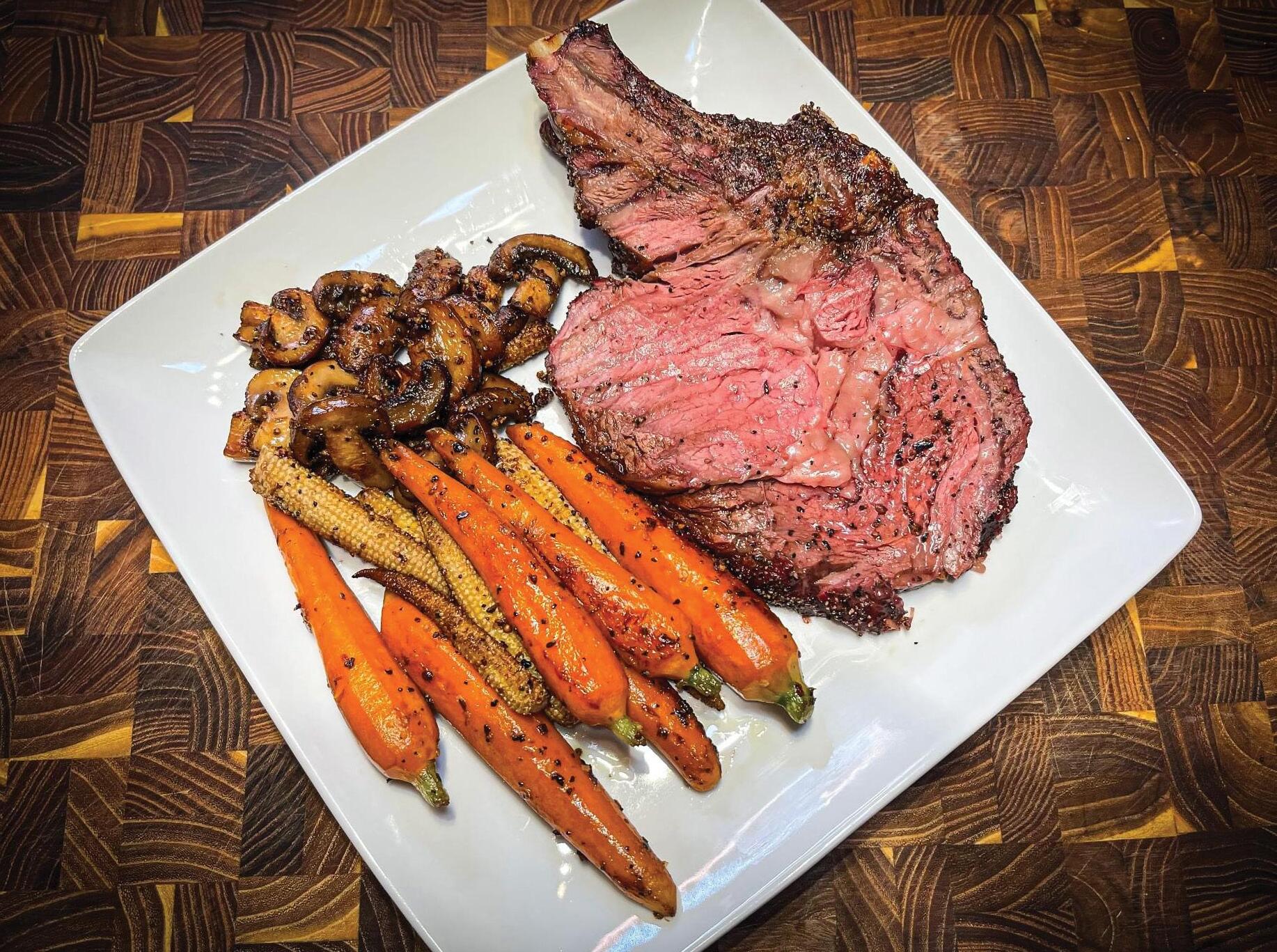
Great Canadian Beef!
The holiday season is so special, and at this time we'd like to celebrate the reason for ranches, range riders and good horses—great Canadian beef! From our outfit to yours, Merry Christmas!
RECIPES COURTESY CANADA BEEF
CHARCOAL-GRILLED PRIME RIB BEEF ROAST FOR TWO
This prime rib for two features a method for charcoal grilling.
INGREDIENTS
• 2 lb (1 kg) Beef Prime Rib Premium Oven Roast, about 2 inches (5 cm) thick (1 rib)
• 2 garlic cloves, minced
• Salt and fresh ground pepper
• Natural lump charcoal
DIRECTIONS
1. Rub roast with garlic, and salt and pepper to your taste. Cover loosely and refrigerate while you prepare the grill.
2 Load fire bowl with natural lump charcoal in an even 2-inch (5 cm) thick layer. Place a half-moon plate (griddle/plancha) over one side of the fire bowl. Fill a foil drip pan part way with water and place on the
TIP: If you don’t have a halfmoon plate/griddle accessory for your barbecue, push the charcoal to one side and place the drip pan under the grill on the other side. Or, you can reverse-sear: cook the roast at a constant 350°F (180°C) until 15°F (9°C) below the desired final doneness temperature. Remove roast to platter and elevate the heat to 400°F (200°C); sear the roast over the open flame to the final temperature you want, about 2 minutes per side.
plate (see Tip). Light the charcoal with a paper towel in the coals or charcoal-safe fire starter and replace the grill grate on the lowest position over the coals.
Close lid and preheat to medium-high (400°F/200°C), adjusting the top and bottom vent to achieve this constant temperature. Depending on the grill it should take about 15 minutes. When ready, the coals should be mostly grey with a red centre and it should feel hot when you briefly hold your hand above the grill.
3. Place beef on grill over red charcoal flame and sear for 5 minutes per side.
4. Move roast to grill over the drip pan (the coals underneath will be hot but won’t sear the roast). Insert oven-safe programmable meat thermometer sideways into meat, avoiding touching bone or fat. Close lid and cook with indirect heat, maintaining the grill at a temp of 400°F (200°C), for about 50 minutes for medium-rare, removing from grill when 5°F (3°C) below desired finished temperature (145°F/63°C for medium-rare, or 160°F/71°C for medium, or 170°F/77°C for well-done).
5. Transfer to cutting board, cover with foil and let rest for 15 minutes before carving into slices.
NOTE: the recipe was developed and tested on The Big Green Egg brand of charcoal grill/smoker. Most charcoal grills are similar; vents and lids differ but have the same purpose. Always refer to the user manual for light up, heating instructions and indirect heat cooking for your grill.
Recipe adaptation from the Canadian Beef Information Gateway gateway.cdnbeef.ca by Mel Chmilar Jr @darksideofthegrill Cdnbeef.ca is a vast library of recipes, beef cuts, nutrition, producers, and even where to find beef!
NOTE: ‘Time-to-cook’ figures are rough guidelines only as cook time is dependent on so many factors such as: barbecue and thermometer accuracy, starting temperature of roast, roast shape and cut. A good thermometer is one of your best kitchen investments.
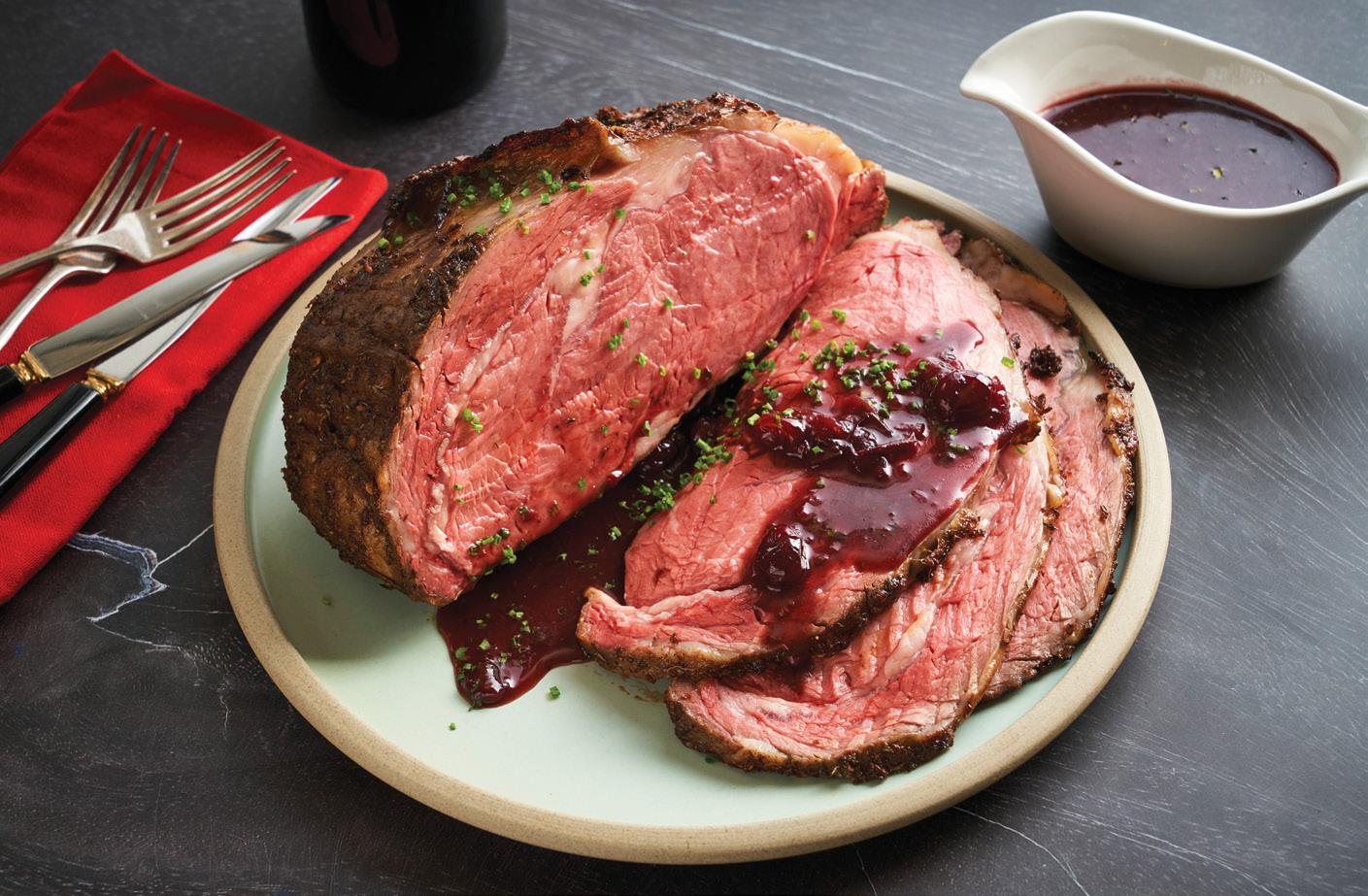
HOLIDAY OVEN ROAST WITH CRANBERRY PAN SAUCE
This succulent beef roast recipe celebrates all the classic winter holiday flavours.
INGREDIENTS
• 2 tbsp (30 mL) EACH vegetable oil, soy sauce and packed brown sugar
• 1 tbsp (15 mL) grainy Dijon mustard
• 2 tsp (10 mL) EACH dried thyme leaves and salt
• 1 tsp (5 mL) EACH paprika and fresh ground pepper
• ½ tsp (2 mL) EACH ground cinnamon and ginger
• ¼ tsp (1 mL) ground nutmeg
• 3 cloves garlic, minced
• 4 lb (2 kg) Beef Rib Eye Oven Roast or Boneless Beef Prime Rib Premium Oven Roast
CRANBERRY PAN SAUCE
• 2 shallots, finely chopped
• 1 cup (250 mL) dry red wine
• ¾ cup (175 mL) reduced-sodium beef broth
• 1 cup (250 mL) whole berry cranberry sauce
• ¼ tsp (1 mL) EACH salt and freshly ground pepper
• 2 tbsp (30 mL) finely chopped fresh chives
DIRECTIONS
1. Combine oil, soy sauce, sugar, mustard, thyme, salt, paprika, pepper, cinnamon, ginger, nutmeg and garlic in a small bowl. Transfer 2 tbsp (30 mL) of the spice paste
to another small bowl; set aside. Rub the remaining spice paste all over the roast.
2. Place the roast fat side up on a rack in a shallow roasting pan. Insert meat thermometer into centre of roast. Oven-sear in a preheated 450°F oven for 10 minutes. Reduce heat to 275°F; roast, uncovered, for about 3 to 3¼ hours for medium-rare, removing from oven when 5°F (3°C) below desired finished temperature (145°F/63°C for medium-rare, or 160°F/71°C for medium, or 170°F/77°C for well-done).
3. Transfer roast to cutting board, cover with foil and let rest for 15 minutes before carving.
CRANBERRY PAN SAUCE
1. Meanwhile, drain off the fat from the drippings and discard it. Heat the pan drippings in the roasting pan over mediumhigh heat. Add shallots; cook, stirring, for about 2 minutes or until softened.
2. Gradually stir in red wine, beef broth and the reserved spice paste. Bring to a boil, stirring up any browned bits from pan. Reduce the heat and simmer for 8 to 10 minutes or until sauce reduces to about 1½ cups (375 mL). Stir in the cranberry sauce and return to a boil. Cook, stirring often, for 3 to 4 minutes, or until the sauce has thickened to a syrupy consistency. Season with salt and pepper. Stir in chives.
3. Carve roast across the grain into slices and serve with Cranberry Pan Sauce.
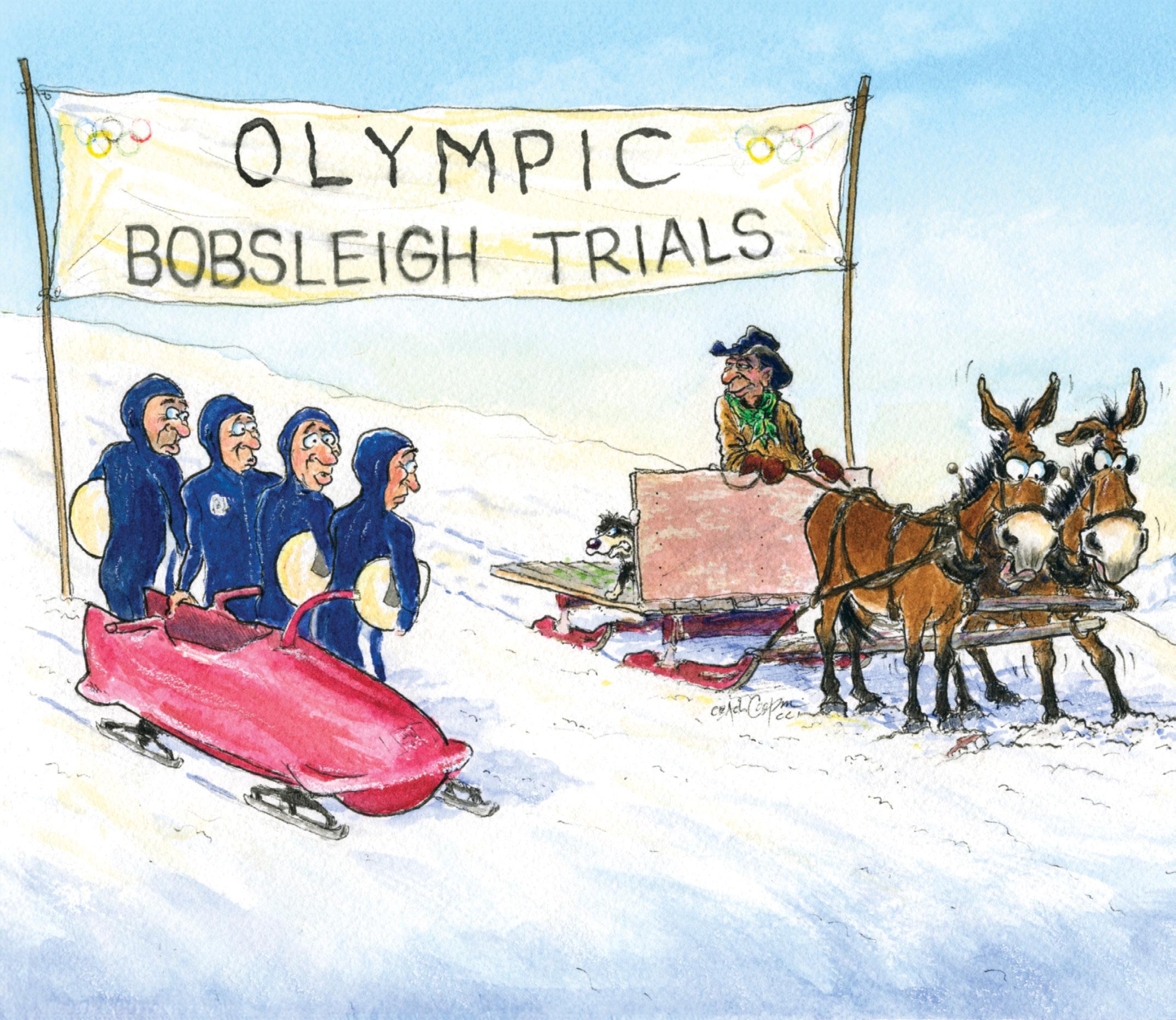
“Merry
Christmas & Happy New Year, and good luck to the Canadian Bobsleigh Team at the 2026 Winter Olympics!”
— CrAsh Cooper
WESTERN EVENTS
CPKC HOLIDAY TRAIN 2025
Canada-wide cpkcr.com/en/community/HolidayTrain
ALBERTA
MIRACLE ON 34 TH STREET
Nov 7–Dec 23
Rosebud Theatre, Rosebud, AB rosebudtheatre.com
CALGARY ZOOLIGHTS
Nov 14–Jan 4
1300 Zoo Road NE, Calgary, AB calgaryzoo.com/zoolights
THE POLAR EXPRESS AT ASPEN CROSSING
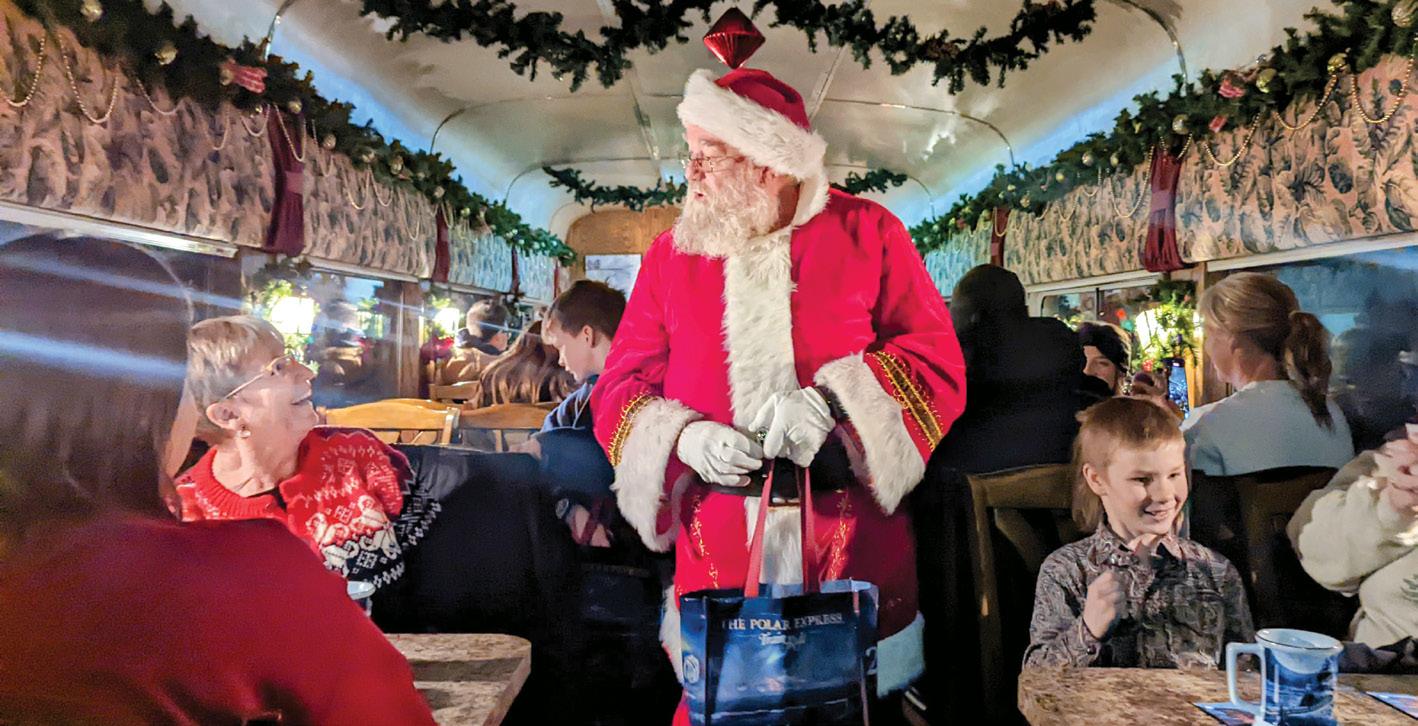
Nov 21–Dec 24 | Mossleigh, AB aspencrossing.com
CHRISTMAS IN THE COULEE
Dec 5–6, 12–13
110 Century Dr W, East Coulee, AB atlascoalmine.ab.ca/christmas
ANCHOR D SLEIGH RIDES
Black Diamond, AB anchord.com
BREWSTER SLEIGH RIDES
111 Lake Louise Drive, Lake Louise, AB brewsteradventures.com
DOUBLE T PERCHERONS
SLEIGH & WAGON RIDES
1178 Hwy 54, near Innisfail, AB doubletpercherons.com
JASPER RIDING STABLES –PYRAMID LAKE ROAD SLEIGH RIDES
1 Pyramid Lake Rd, Jasper, AB jasperstables.com
PIGEON LAKE HORSE DRAWN RIDES
Pigeon Lake, AB albertahorsedrawnrides.com
BOUNDARY RANCH
Kananaskis, AB boundaryranch.com
SASKATCHEWAN
GLOW SASKATOON
Nov 27–Dec 28 glowyxe.com
CARLYLE'S DICKENS VILLAGE FESTIVAL
Dec 5–Dec 6 | Carlyle townofcarlyle.com/p/dickens-village-festival
SASKATOON SYMPHONY ORCHESTRA HANDEL’S MESSIAH
Dec 12 | Knox United Church 838 Spadina Crescent E, Saskatoon, SK saskatoonsymphony.org/event/handels-messiah-3/
WESTERN EVENTS
T Percherons Sleigh Rides
JAKE VAADELAND & THE STURGEON RIVER BOYS
GOODNESS GRACIOUS, IT'S CHRISTMAS!
Dec 13 | TCU Place, Saskatoon
RIVERS NORTH RANCH
SLEIGH RIDES
Donnybrook Road, Macdowall, SK facebook.com/RiversNorthRanch/
CHAMPÊTRE COUNTY
SLEIGH RIDES East of Saskatoon champetrecounty.com
BRITISH COLUMBIA
KAMLOOPS FESTIVAL OF TREES
Nov 14–Jan 5 | Delta Kamloops Hotel
CHAMBERS HORSE DRAWN SLEIGH RIDES
Baldonnel, BC chambersfarm.ca
CRAZY M RANCH SLEIGH RIDES
Prince George / Vanderhoof area crazymranch.weebly.com
KAMLOOPS SYMPHONY ORCHESTRA
THE WHO AND LED ZEPPELIN GUEST CONDUCTOR DAVID BUI, JEANS 'N CLASSICS
Jan 10–11 kamloopssymphony.com
WESTERN CANADA THEATRE LIARS AT A FUNERAL
Jan 23 | Sagebrush Theatre, Kamloops, BC wctlive.ca
CARAVAN FARM THEATRE
A CHRISTMAS CAROL SLEIGH RIDE Armstrong, BC caravanfarmtheatre.com
Double
Polar Express at Aspen Crossing
A December To Remember
BY JOHN TILLEY
Horses galloped through my mind, since I was just a lad
They’re all that I could think about, I wanted one so bad I’d make a bedroll on the floor, with stick horse grazing there
Dreams of wild horses, a boy without care
I wore out cowboy stories and my folks' ears every day
“I really want a horse!” is all that I could say
They never did say yes, but they never did say no The problem was we lived in town, no place for it to go
My Aunt Willa had a place, with several horses, too I’d follow her around with lots of chores to do
When my eleventh birthday came, chores still needed done We headed out to beat December’s early setting sun
We slid the barn door open, and there, standing with her hay was a tiny weanling filly, a skinny little bay
I said, “Dad, why is this horse here? I thought we came for chores?”
He said, “We did, now feed her, cause this little horse is yours.”
My eyes filled up with tears, I had no words to say
A feeling each December, I remember to this day I called the horse December Doll, off together we would go With tough and happy times, together we would grow
John Tilley of
I’ve had lots of presents that cost a pretty dime
But this one was the first I couldn’t break by suppertime
My new present lacked instructions or a fancy box
But it came with paid tuition to the school of hard knocks
The theory “learn together,” I wouldn’t recommend For many kids, this kind of way would be a certain end But I wanted it so badly, though it scared me some inside I was bound and sure determined that I’d have this colt to ride
We made a lot of memories, like riding into town
Loping back at evening before the sun went down
And doing lots of wild things, but coming back alive
And helping out the ranchers with their yearly cattle drive
I kept her all through high school, but sold her after grad I was heading off to rodeo and needed money bad to have to part this way left me feeling some remorse
But Joy came knowing that a kid had found their special horse
I hope that my Aunt Willa’s there to brush and feed you hay and take care of you, Dolly, till we meet again someday
Every year, a birthday has always went, then came
But since that one in ’90, my life has never been the same.
Sask, is a horse trainer and clinician who teaches horsemanship, cow work and stockmanship, young horse handling and ranch
clinics. As you’ve just read, he’s also a working cowboy poet. For more on John, visit tilleyscustomcolts.ca